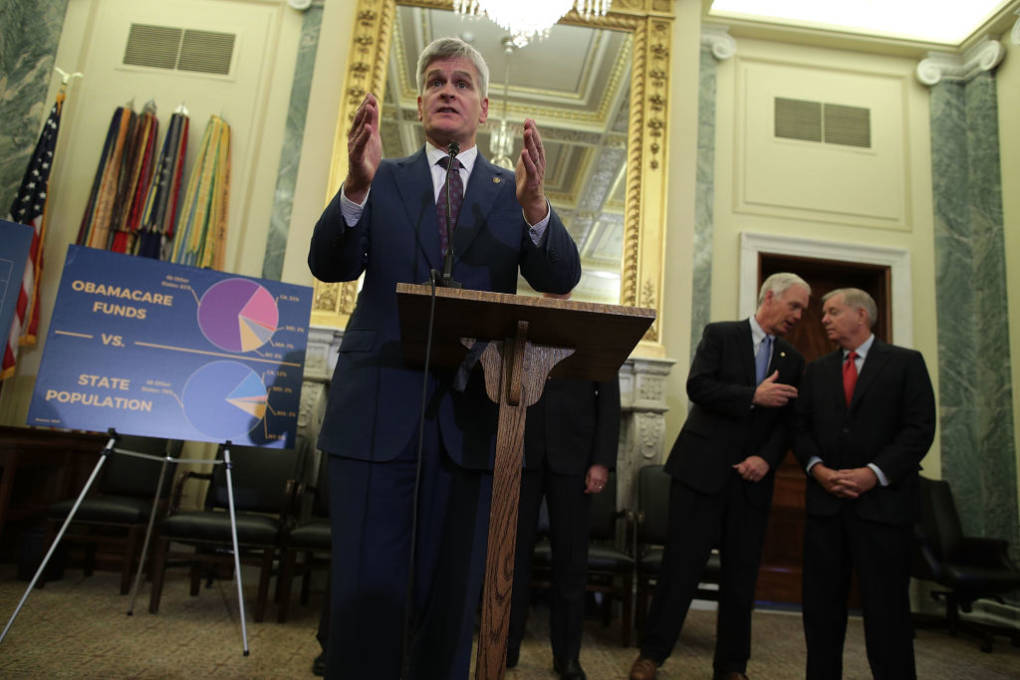
The Affordable Care Act celebrates its seventh birthday this year. California has embraced the law, but will it survive a new Congress and President?
A New Message for California Hospitals: Shape Up, or Get Kicked Out of Obamacare Networks
A Rush to Get Health Insurance for 2018, Before California Deadline
Head of Covered California: State Exchange ‘Here for the Long Haul’
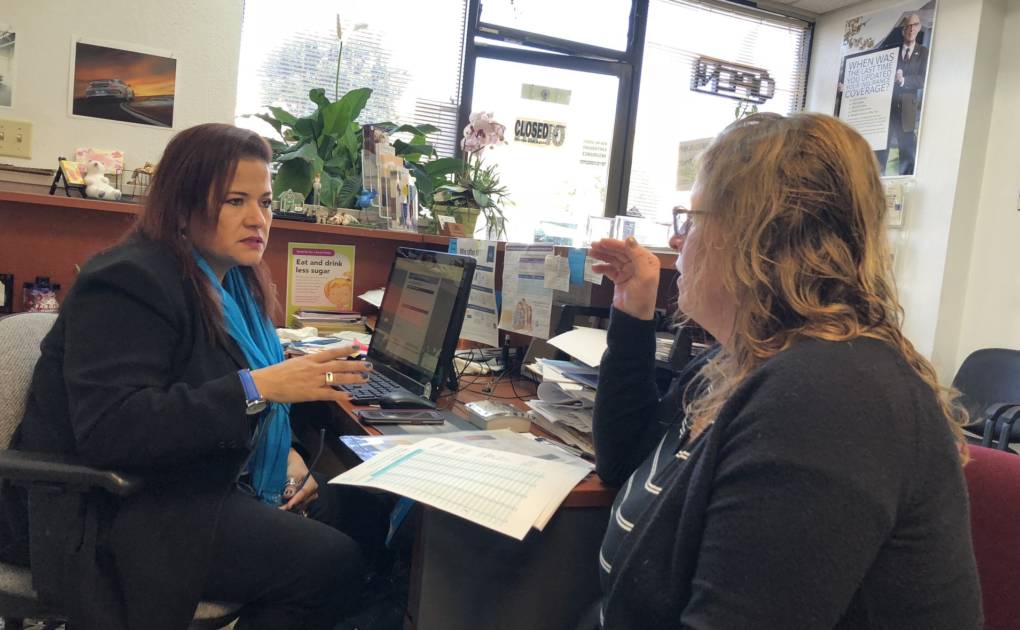
Human Psychology Makes Health Insurance a Hard Sell – Especially for Latino Consumers
California Frets Over Funding After Congress Misses Health Care Deadlines
Other States Closely Watching Fate of California’s Drug Price Transparency Bill
Congress’ Cold Shoulder Sends Shivers Through Community Health Centers
'Devastating' Cuts to Come: How California Would Suffer Under GOP Health Plan
A Tale of Two States: California Loses and Texas Wins Under GOP Health Plan
Sponsored
window.__IS_SSR__=true
window.__INITIAL_STATE__={"attachmentsReducer":{"audio_0":{"type":"attachments","id":"audio_0","imgSizes":{"kqedFullSize":{"file":"https://ww2.kqed.org/news/wp-content/themes/KQED-unified/img/audio_bgs/background0.jpg"}}},"audio_1":{"type":"attachments","id":"audio_1","imgSizes":{"kqedFullSize":{"file":"https://ww2.kqed.org/news/wp-content/themes/KQED-unified/img/audio_bgs/background1.jpg"}}},"audio_2":{"type":"attachments","id":"audio_2","imgSizes":{"kqedFullSize":{"file":"https://ww2.kqed.org/news/wp-content/themes/KQED-unified/img/audio_bgs/background2.jpg"}}},"audio_3":{"type":"attachments","id":"audio_3","imgSizes":{"kqedFullSize":{"file":"https://ww2.kqed.org/news/wp-content/themes/KQED-unified/img/audio_bgs/background3.jpg"}}},"audio_4":{"type":"attachments","id":"audio_4","imgSizes":{"kqedFullSize":{"file":"https://ww2.kqed.org/news/wp-content/themes/KQED-unified/img/audio_bgs/background4.jpg"}}},"placeholder":{"type":"attachments","id":"placeholder","imgSizes":{"thumbnail":{"file":"https://ww2.kqed.org/wp-content/uploads/sites/10/2018/01/GettyImages-896326950-160x96.jpg","width":160,"height":96,"mimeType":"image/jpeg"},"medium":{"file":"https://ww2.kqed.org/wp-content/uploads/sites/10/2018/01/GettyImages-896326950-800x478.jpg","width":800,"height":478,"mimeType":"image/jpeg"},"large":{"file":"https://ww2.kqed.org/wp-content/uploads/sites/10/2018/01/GettyImages-896326950-1020x610.jpg","width":1020,"height":610,"mimeType":"image/jpeg"},"fd-lrg":{"file":"https://ww2.kqed.org/wp-content/uploads/sites/10/2018/01/GettyImages-896326950-1920x1148.jpg","width":1920,"height":1148,"mimeType":"image/jpeg"},"fd-med":{"file":"https://ww2.kqed.org/wp-content/uploads/sites/10/2018/01/GettyImages-896326950-1180x705.jpg","width":1180,"height":705,"mimeType":"image/jpeg"},"fd-sm":{"file":"https://ww2.kqed.org/wp-content/uploads/sites/10/2018/01/GettyImages-896326950-960x574.jpg","width":960,"height":574,"mimeType":"image/jpeg"},"post-thumbnail":{"file":"https://ww2.kqed.org/wp-content/uploads/sites/10/2018/01/GettyImages-896326950-672x372.jpg","width":672,"height":372,"mimeType":"image/jpeg"},"twentyfourteen-full-width":{"file":"https://ww2.kqed.org/wp-content/uploads/sites/10/2018/01/GettyImages-896326950-1038x576.jpg","width":1038,"height":576,"mimeType":"image/jpeg"},"xxsmall":{"file":"https://ww2.kqed.org/wp-content/uploads/sites/10/2018/01/GettyImages-896326950-240x143.jpg","width":240,"height":143,"mimeType":"image/jpeg"},"xsmall":{"file":"https://ww2.kqed.org/wp-content/uploads/sites/10/2018/01/GettyImages-896326950-375x224.jpg","width":375,"height":224,"mimeType":"image/jpeg"},"small":{"file":"https://ww2.kqed.org/wp-content/uploads/sites/10/2018/01/GettyImages-896326950-520x311.jpg","width":520,"height":311,"mimeType":"image/jpeg"},"xlarge":{"file":"https://ww2.kqed.org/wp-content/uploads/sites/10/2018/01/GettyImages-896326950-1180x705.jpg","width":1180,"height":705,"mimeType":"image/jpeg"},"full-width":{"file":"https://ww2.kqed.org/wp-content/uploads/sites/10/2018/01/GettyImages-896326950-1920x1148.jpg","width":1920,"height":1148,"mimeType":"image/jpeg"},"guest-author-32":{"file":"https://ww2.kqed.org/wp-content/uploads/sites/10/2018/01/GettyImages-896326950-32x32.jpg","width":32,"height":32,"mimeType":"image/jpeg"},"guest-author-50":{"file":"https://ww2.kqed.org/wp-content/uploads/sites/10/2018/01/GettyImages-896326950-50x50.jpg","width":50,"height":50,"mimeType":"image/jpeg"},"guest-author-64":{"file":"https://ww2.kqed.org/wp-content/uploads/sites/10/2018/01/GettyImages-896326950-64x64.jpg","width":64,"height":64,"mimeType":"image/jpeg"},"guest-author-96":{"file":"https://ww2.kqed.org/wp-content/uploads/sites/10/2018/01/GettyImages-896326950-96x96.jpg","width":96,"height":96,"mimeType":"image/jpeg"},"guest-author-128":{"file":"https://ww2.kqed.org/wp-content/uploads/sites/10/2018/01/GettyImages-896326950-128x128.jpg","width":128,"height":128,"mimeType":"image/jpeg"},"detail":{"file":"https://ww2.kqed.org/wp-content/uploads/sites/10/2018/01/GettyImages-896326950-150x150.jpg","width":150,"height":150,"mimeType":"image/jpeg"},"kqedFullSize":{"file":"https://ww2.kqed.org/wp-content/uploads/sites/10/2018/01/GettyImages-896326950-e1514998105161.jpg","width":1920,"height":1148}}},"stateofhealth_363029":{"type":"attachments","id":"stateofhealth_363029","meta":{"index":"attachments_1591205162","site":"stateofhealth","id":"363029","found":true},"title":"Hospital rooms with medical personnels, doctors and patients. Clinic building vector illustrations","publishDate":1521828555,"status":"inherit","parent":362982,"modified":1521828602,"caption":null,"credit":"iStock/Getty Images","description":"Hospital rooms with medical personnels, doctors and patients. Clinic building vector illustrations. Interior of clinical or hospital, medical reception office department clinic","imgSizes":{"thumbnail":{"file":"https://ww2.kqed.org/app/uploads/sites/27/2018/03/iStock-hospital-functions-160x120.jpg","width":160,"height":120,"mimeType":"image/jpeg"},"medium":{"file":"https://ww2.kqed.org/app/uploads/sites/27/2018/03/iStock-hospital-functions-800x600.jpg","width":800,"height":600,"mimeType":"image/jpeg"},"medium_large":{"file":"https://ww2.kqed.org/app/uploads/sites/27/2018/03/iStock-hospital-functions-768x576.jpg","width":768,"height":576,"mimeType":"image/jpeg"},"large":{"file":"https://ww2.kqed.org/app/uploads/sites/27/2018/03/iStock-hospital-functions-1020x764.jpg","width":1020,"height":764,"mimeType":"image/jpeg"},"fd-lrg":{"file":"https://ww2.kqed.org/app/uploads/sites/27/2018/03/iStock-hospital-functions-1920x1439.jpg","width":1920,"height":1439,"mimeType":"image/jpeg"},"fd-med":{"file":"https://ww2.kqed.org/app/uploads/sites/27/2018/03/iStock-hospital-functions-1180x884.jpg","width":1180,"height":884,"mimeType":"image/jpeg"},"fd-sm":{"file":"https://ww2.kqed.org/app/uploads/sites/27/2018/03/iStock-hospital-functions-960x720.jpg","width":960,"height":720,"mimeType":"image/jpeg"},"post-thumbnail":{"file":"https://ww2.kqed.org/app/uploads/sites/27/2018/03/iStock-hospital-functions-672x372.jpg","width":672,"height":372,"mimeType":"image/jpeg"},"twentyfourteen-full-width":{"file":"https://ww2.kqed.org/app/uploads/sites/27/2018/03/iStock-hospital-functions-1038x576.jpg","width":1038,"height":576,"mimeType":"image/jpeg"},"xxsmall":{"file":"https://ww2.kqed.org/app/uploads/sites/27/2018/03/iStock-hospital-functions-240x180.jpg","width":240,"height":180,"mimeType":"image/jpeg"},"xsmall":{"file":"https://ww2.kqed.org/app/uploads/sites/27/2018/03/iStock-hospital-functions-375x281.jpg","width":375,"height":281,"mimeType":"image/jpeg"},"small":{"file":"https://ww2.kqed.org/app/uploads/sites/27/2018/03/iStock-hospital-functions-520x390.jpg","width":520,"height":390,"mimeType":"image/jpeg"},"xlarge":{"file":"https://ww2.kqed.org/app/uploads/sites/27/2018/03/iStock-hospital-functions-1180x884.jpg","width":1180,"height":884,"mimeType":"image/jpeg"},"full-width":{"file":"https://ww2.kqed.org/app/uploads/sites/27/2018/03/iStock-hospital-functions-1920x1439.jpg","width":1920,"height":1439,"mimeType":"image/jpeg"},"guest-author-32":{"file":"https://ww2.kqed.org/app/uploads/sites/27/2018/03/iStock-hospital-functions-32x32.jpg","width":32,"height":32,"mimeType":"image/jpeg"},"guest-author-50":{"file":"https://ww2.kqed.org/app/uploads/sites/27/2018/03/iStock-hospital-functions-50x50.jpg","width":50,"height":50,"mimeType":"image/jpeg"},"guest-author-64":{"file":"https://ww2.kqed.org/app/uploads/sites/27/2018/03/iStock-hospital-functions-64x64.jpg","width":64,"height":64,"mimeType":"image/jpeg"},"guest-author-96":{"file":"https://ww2.kqed.org/app/uploads/sites/27/2018/03/iStock-hospital-functions-96x96.jpg","width":96,"height":96,"mimeType":"image/jpeg"},"guest-author-128":{"file":"https://ww2.kqed.org/app/uploads/sites/27/2018/03/iStock-hospital-functions-128x128.jpg","width":128,"height":128,"mimeType":"image/jpeg"},"detail":{"file":"https://ww2.kqed.org/app/uploads/sites/27/2018/03/iStock-hospital-functions-150x150.jpg","width":150,"height":150,"mimeType":"image/jpeg"},"kqedFullSize":{"file":"https://ww2.kqed.org/app/uploads/sites/27/2018/03/iStock-hospital-functions.jpg","width":2000,"height":1499}},"fetchFailed":false,"isLoading":false},"stateofhealth_362589":{"type":"attachments","id":"stateofhealth_362589","meta":{"index":"attachments_1591205162","site":"stateofhealth","id":"362589","found":true},"title":"RS29075_mon1-qut","publishDate":1517363763,"status":"inherit","parent":362576,"modified":1517442087,"caption":"Certified insurance agent for Covered California Monica Tracht (left) speaks to Marie Crinnion (right) about health insurance options. ","credit":"Laura Klivans/KQED","description":"Certified insurance agent for Covered California Monica Tracht (left) speaks to Marie Crinnion (right) about health insurance options. ","imgSizes":{"thumbnail":{"file":"https://ww2.kqed.org/app/uploads/sites/27/2018/01/RS29075_mon1-qut-e1517448142759-160x99.jpg","width":160,"height":99,"mimeType":"image/jpeg"},"medium":{"file":"https://ww2.kqed.org/app/uploads/sites/27/2018/01/RS29075_mon1-qut-e1517448142759-800x494.jpg","width":800,"height":494,"mimeType":"image/jpeg"},"medium_large":{"file":"https://ww2.kqed.org/app/uploads/sites/27/2018/01/RS29075_mon1-qut-e1517448142759-768x474.jpg","width":768,"height":474,"mimeType":"image/jpeg"},"large":{"file":"https://ww2.kqed.org/app/uploads/sites/27/2018/01/RS29075_mon1-qut-e1517448142759-1020x630.jpg","width":1020,"height":630,"mimeType":"image/jpeg"},"fd-lrg":{"file":"https://ww2.kqed.org/app/uploads/sites/27/2018/01/RS29075_mon1-qut-1920x1440.jpg","width":1920,"height":1440,"mimeType":"image/jpeg"},"fd-med":{"file":"https://ww2.kqed.org/app/uploads/sites/27/2018/01/RS29075_mon1-qut-e1517448142759-1180x729.jpg","width":1180,"height":729,"mimeType":"image/jpeg"},"fd-sm":{"file":"https://ww2.kqed.org/app/uploads/sites/27/2018/01/RS29075_mon1-qut-e1517448142759-960x593.jpg","width":960,"height":593,"mimeType":"image/jpeg"},"post-thumbnail":{"file":"https://ww2.kqed.org/app/uploads/sites/27/2018/01/RS29075_mon1-qut-e1517448142759-672x372.jpg","width":672,"height":372,"mimeType":"image/jpeg"},"twentyfourteen-full-width":{"file":"https://ww2.kqed.org/app/uploads/sites/27/2018/01/RS29075_mon1-qut-e1517448142759-1038x576.jpg","width":1038,"height":576,"mimeType":"image/jpeg"},"xxsmall":{"file":"https://ww2.kqed.org/app/uploads/sites/27/2018/01/RS29075_mon1-qut-e1517448142759-240x148.jpg","width":240,"height":148,"mimeType":"image/jpeg"},"xsmall":{"file":"https://ww2.kqed.org/app/uploads/sites/27/2018/01/RS29075_mon1-qut-e1517448142759-375x232.jpg","width":375,"height":232,"mimeType":"image/jpeg"},"small":{"file":"https://ww2.kqed.org/app/uploads/sites/27/2018/01/RS29075_mon1-qut-e1517448142759-520x321.jpg","width":520,"height":321,"mimeType":"image/jpeg"},"xlarge":{"file":"https://ww2.kqed.org/app/uploads/sites/27/2018/01/RS29075_mon1-qut-e1517448142759-1180x729.jpg","width":1180,"height":729,"mimeType":"image/jpeg"},"full-width":{"file":"https://ww2.kqed.org/app/uploads/sites/27/2018/01/RS29075_mon1-qut-1920x1440.jpg","width":1920,"height":1440,"mimeType":"image/jpeg"},"guest-author-32":{"file":"https://ww2.kqed.org/app/uploads/sites/27/2018/01/RS29075_mon1-qut-e1517448142759-32x32.jpg","width":32,"height":32,"mimeType":"image/jpeg"},"guest-author-50":{"file":"https://ww2.kqed.org/app/uploads/sites/27/2018/01/RS29075_mon1-qut-e1517448142759-50x50.jpg","width":50,"height":50,"mimeType":"image/jpeg"},"guest-author-64":{"file":"https://ww2.kqed.org/app/uploads/sites/27/2018/01/RS29075_mon1-qut-e1517448142759-64x64.jpg","width":64,"height":64,"mimeType":"image/jpeg"},"guest-author-96":{"file":"https://ww2.kqed.org/app/uploads/sites/27/2018/01/RS29075_mon1-qut-e1517448142759-96x96.jpg","width":96,"height":96,"mimeType":"image/jpeg"},"guest-author-128":{"file":"https://ww2.kqed.org/app/uploads/sites/27/2018/01/RS29075_mon1-qut-e1517448142759-128x128.jpg","width":128,"height":128,"mimeType":"image/jpeg"},"detail":{"file":"https://ww2.kqed.org/app/uploads/sites/27/2018/01/RS29075_mon1-qut-e1517448142759-150x150.jpg","width":150,"height":150,"mimeType":"image/jpeg"},"kqedFullSize":{"file":"https://ww2.kqed.org/app/uploads/sites/27/2018/01/RS29075_mon1-qut-e1517448142759.jpg","width":1910,"height":1180}},"fetchFailed":false,"isLoading":false},"stateofhealth_16356":{"type":"attachments","id":"stateofhealth_16356","meta":{"index":"attachments_1591205162","site":"stateofhealth","id":"16356","found":true},"title":"187909355","publishDate":1385142260,"status":"inherit","parent":16349,"modified":1503015017,"caption":"Peter Lee, executive director of Covered California.","credit":"Max Whitaker/Getty Images","description":"Peter Lee, executive director of Covered California.","imgSizes":{"thumbnail":{"file":"https://ww2.kqed.org/app/uploads/sites/27/2013/11/187909355-e1516843269703-160x75.jpg","width":160,"height":75,"mimeType":"image/jpeg"},"fd-sm":{"file":"https://ww2.kqed.org/app/uploads/sites/27/2013/11/187909355-e1385142271347-320x213.jpg","width":320,"height":213,"mimeType":"image/jpeg"},"post-thumbnail":{"file":"https://ww2.kqed.org/app/uploads/sites/27/2013/11/187909355-e1516843174520-641x372.jpg","width":641,"height":372,"mimeType":"image/jpeg"},"guest-author-32":{"file":"https://ww2.kqed.org/app/uploads/sites/27/2013/11/187909355-e1516843269703-32x32.jpg","width":32,"height":32,"mimeType":"image/jpeg"},"guest-author-64":{"file":"https://ww2.kqed.org/app/uploads/sites/27/2013/11/187909355-e1516843269703-64x64.jpg","width":64,"height":64,"mimeType":"image/jpeg"},"guest-author-96":{"file":"https://ww2.kqed.org/app/uploads/sites/27/2013/11/187909355-e1516843269703-96x96.jpg","width":96,"height":96,"mimeType":"image/jpeg"},"guest-author-128":{"file":"https://ww2.kqed.org/app/uploads/sites/27/2013/11/187909355-e1516843269703-128x128.jpg","width":128,"height":128,"mimeType":"image/jpeg"},"detail":{"file":"https://ww2.kqed.org/app/uploads/sites/27/2013/11/187909355-e1516843269703-150x150.jpg","width":150,"height":150,"mimeType":"image/jpeg"},"xxsmall":{"file":"https://ww2.kqed.org/app/uploads/sites/27/2013/11/187909355-e1516843269703-240x112.jpg","width":240,"height":112,"mimeType":"image/jpeg"},"xsmall":{"file":"https://ww2.kqed.org/app/uploads/sites/27/2013/11/187909355-e1516843269703-375x175.jpg","width":375,"height":175,"mimeType":"image/jpeg"},"small":{"file":"https://ww2.kqed.org/app/uploads/sites/27/2013/11/187909355-e1516843269703-520x243.jpg","width":520,"height":243,"mimeType":"image/jpeg"},"guest-author-50":{"file":"https://ww2.kqed.org/app/uploads/sites/27/2013/11/187909355-e1516843269703-50x50.jpg","width":50,"height":50,"mimeType":"image/jpeg"},"kqedFullSize":{"file":"https://ww2.kqed.org/app/uploads/sites/27/2013/11/187909355-e1516843269703.jpg","width":639,"height":298}},"fetchFailed":false,"isLoading":false},"stateofhealth_361838":{"type":"attachments","id":"stateofhealth_361838","meta":{"index":"attachments_1591205162","site":"stateofhealth","id":"361838","found":true},"title":"Guadalupe's Story","publishDate":1509408936,"status":"inherit","parent":361837,"modified":1509410268,"caption":"Covered California is sending videos like \"Guadalupe's Story\" to potential customers, to encourage them to sign up for health insurance.","credit":"Covered California","description":null,"imgSizes":{"thumbnail":{"file":"https://ww2.kqed.org/app/uploads/sites/27/2017/10/Screen-Shot-2017-10-30-at-5.10.13-PM-160x89.png","width":160,"height":89,"mimeType":"image/png"},"medium":{"file":"https://ww2.kqed.org/app/uploads/sites/27/2017/10/Screen-Shot-2017-10-30-at-5.10.13-PM-800x447.png","width":800,"height":447,"mimeType":"image/png"},"medium_large":{"file":"https://ww2.kqed.org/app/uploads/sites/27/2017/10/Screen-Shot-2017-10-30-at-5.10.13-PM-768x429.png","width":768,"height":429,"mimeType":"image/png"},"large":{"file":"https://ww2.kqed.org/app/uploads/sites/27/2017/10/Screen-Shot-2017-10-30-at-5.10.13-PM-1020x570.png","width":1020,"height":570,"mimeType":"image/png"},"fd-med":{"file":"https://ww2.kqed.org/app/uploads/sites/27/2017/10/Screen-Shot-2017-10-30-at-5.10.13-PM-1180x659.png","width":1180,"height":659,"mimeType":"image/png"},"fd-sm":{"file":"https://ww2.kqed.org/app/uploads/sites/27/2017/10/Screen-Shot-2017-10-30-at-5.10.13-PM-960x536.png","width":960,"height":536,"mimeType":"image/png"},"post-thumbnail":{"file":"https://ww2.kqed.org/app/uploads/sites/27/2017/10/Screen-Shot-2017-10-30-at-5.10.13-PM-672x372.png","width":672,"height":372,"mimeType":"image/png"},"twentyfourteen-full-width":{"file":"https://ww2.kqed.org/app/uploads/sites/27/2017/10/Screen-Shot-2017-10-30-at-5.10.13-PM-1038x576.png","width":1038,"height":576,"mimeType":"image/png"},"xxsmall":{"file":"https://ww2.kqed.org/app/uploads/sites/27/2017/10/Screen-Shot-2017-10-30-at-5.10.13-PM-240x134.png","width":240,"height":134,"mimeType":"image/png"},"xsmall":{"file":"https://ww2.kqed.org/app/uploads/sites/27/2017/10/Screen-Shot-2017-10-30-at-5.10.13-PM-375x209.png","width":375,"height":209,"mimeType":"image/png"},"small":{"file":"https://ww2.kqed.org/app/uploads/sites/27/2017/10/Screen-Shot-2017-10-30-at-5.10.13-PM-520x290.png","width":520,"height":290,"mimeType":"image/png"},"xlarge":{"file":"https://ww2.kqed.org/app/uploads/sites/27/2017/10/Screen-Shot-2017-10-30-at-5.10.13-PM-1180x659.png","width":1180,"height":659,"mimeType":"image/png"},"guest-author-32":{"file":"https://ww2.kqed.org/app/uploads/sites/27/2017/10/Screen-Shot-2017-10-30-at-5.10.13-PM-32x32.png","width":32,"height":32,"mimeType":"image/png"},"guest-author-50":{"file":"https://ww2.kqed.org/app/uploads/sites/27/2017/10/Screen-Shot-2017-10-30-at-5.10.13-PM-50x50.png","width":50,"height":50,"mimeType":"image/png"},"guest-author-64":{"file":"https://ww2.kqed.org/app/uploads/sites/27/2017/10/Screen-Shot-2017-10-30-at-5.10.13-PM-64x64.png","width":64,"height":64,"mimeType":"image/png"},"guest-author-96":{"file":"https://ww2.kqed.org/app/uploads/sites/27/2017/10/Screen-Shot-2017-10-30-at-5.10.13-PM-96x96.png","width":96,"height":96,"mimeType":"image/png"},"guest-author-128":{"file":"https://ww2.kqed.org/app/uploads/sites/27/2017/10/Screen-Shot-2017-10-30-at-5.10.13-PM-128x128.png","width":128,"height":128,"mimeType":"image/png"},"detail":{"file":"https://ww2.kqed.org/app/uploads/sites/27/2017/10/Screen-Shot-2017-10-30-at-5.10.13-PM-150x150.png","width":150,"height":150,"mimeType":"image/png"},"kqedFullSize":{"file":"https://ww2.kqed.org/app/uploads/sites/27/2017/10/Screen-Shot-2017-10-30-at-5.10.13-PM-e1509409020657.png","width":1318,"height":736}},"fetchFailed":false,"isLoading":false},"stateofhealth_361343":{"type":"attachments","id":"stateofhealth_361343","meta":{"index":"attachments_1591205162","site":"stateofhealth","id":"361343","found":true},"title":"Pediatrician makes vaccination to small boy","publishDate":1507160888,"status":"inherit","parent":361316,"modified":1507234473,"caption":"A pediatrician vaccinates a small boy","credit":"iStock","description":null,"imgSizes":{"thumbnail":{"file":"https://ww2.kqed.org/app/uploads/sites/27/2017/10/Baby-at-doctor-160x107.jpg","width":160,"height":107,"mimeType":"image/jpeg"},"medium":{"file":"https://ww2.kqed.org/app/uploads/sites/27/2017/10/Baby-at-doctor-800x533.jpg","width":800,"height":533,"mimeType":"image/jpeg"},"medium_large":{"file":"https://ww2.kqed.org/app/uploads/sites/27/2017/10/Baby-at-doctor-768x512.jpg","width":768,"height":512,"mimeType":"image/jpeg"},"large":{"file":"https://ww2.kqed.org/app/uploads/sites/27/2017/10/Baby-at-doctor-1020x680.jpg","width":1020,"height":680,"mimeType":"image/jpeg"},"fd-lrg":{"file":"https://ww2.kqed.org/app/uploads/sites/27/2017/10/Baby-at-doctor-1920x1280.jpg","width":1920,"height":1280,"mimeType":"image/jpeg"},"fd-med":{"file":"https://ww2.kqed.org/app/uploads/sites/27/2017/10/Baby-at-doctor-1180x787.jpg","width":1180,"height":787,"mimeType":"image/jpeg"},"fd-sm":{"file":"https://ww2.kqed.org/app/uploads/sites/27/2017/10/Baby-at-doctor-960x640.jpg","width":960,"height":640,"mimeType":"image/jpeg"},"post-thumbnail":{"file":"https://ww2.kqed.org/app/uploads/sites/27/2017/10/Baby-at-doctor-672x372.jpg","width":672,"height":372,"mimeType":"image/jpeg"},"twentyfourteen-full-width":{"file":"https://ww2.kqed.org/app/uploads/sites/27/2017/10/Baby-at-doctor-1038x576.jpg","width":1038,"height":576,"mimeType":"image/jpeg"},"xxsmall":{"file":"https://ww2.kqed.org/app/uploads/sites/27/2017/10/Baby-at-doctor-240x160.jpg","width":240,"height":160,"mimeType":"image/jpeg"},"xsmall":{"file":"https://ww2.kqed.org/app/uploads/sites/27/2017/10/Baby-at-doctor-375x250.jpg","width":375,"height":250,"mimeType":"image/jpeg"},"small":{"file":"https://ww2.kqed.org/app/uploads/sites/27/2017/10/Baby-at-doctor-520x347.jpg","width":520,"height":347,"mimeType":"image/jpeg"},"xlarge":{"file":"https://ww2.kqed.org/app/uploads/sites/27/2017/10/Baby-at-doctor-1180x787.jpg","width":1180,"height":787,"mimeType":"image/jpeg"},"full-width":{"file":"https://ww2.kqed.org/app/uploads/sites/27/2017/10/Baby-at-doctor-1920x1280.jpg","width":1920,"height":1280,"mimeType":"image/jpeg"},"guest-author-32":{"file":"https://ww2.kqed.org/app/uploads/sites/27/2017/10/Baby-at-doctor-32x32.jpg","width":32,"height":32,"mimeType":"image/jpeg"},"guest-author-50":{"file":"https://ww2.kqed.org/app/uploads/sites/27/2017/10/Baby-at-doctor-50x50.jpg","width":50,"height":50,"mimeType":"image/jpeg"},"guest-author-64":{"file":"https://ww2.kqed.org/app/uploads/sites/27/2017/10/Baby-at-doctor-64x64.jpg","width":64,"height":64,"mimeType":"image/jpeg"},"guest-author-96":{"file":"https://ww2.kqed.org/app/uploads/sites/27/2017/10/Baby-at-doctor-96x96.jpg","width":96,"height":96,"mimeType":"image/jpeg"},"guest-author-128":{"file":"https://ww2.kqed.org/app/uploads/sites/27/2017/10/Baby-at-doctor-128x128.jpg","width":128,"height":128,"mimeType":"image/jpeg"},"detail":{"file":"https://ww2.kqed.org/app/uploads/sites/27/2017/10/Baby-at-doctor-150x150.jpg","width":150,"height":150,"mimeType":"image/jpeg"},"kqedFullSize":{"file":"https://ww2.kqed.org/app/uploads/sites/27/2017/10/Baby-at-doctor.jpg","width":2121,"height":1414}},"fetchFailed":false,"isLoading":false},"stateofhealth_361264":{"type":"attachments","id":"stateofhealth_361264","meta":{"index":"attachments_1591205162","site":"stateofhealth","id":"361264","found":true},"title":"Lobbyists drug prices 2","publishDate":1506711868,"status":"inherit","parent":361263,"modified":1506729375,"caption":"Drug lobbyists and consumer health advocates fill the halls of the state Capitol to see how Assembly members vote on a controversial drug price transparency bill.","credit":"Tam Ma/Health Access","description":null,"imgSizes":{"thumbnail":{"file":"https://ww2.kqed.org/app/uploads/sites/27/2017/09/Lobbyists-drug-prices-2-160x120.jpg","width":160,"height":120,"mimeType":"image/jpeg"},"medium":{"file":"https://ww2.kqed.org/app/uploads/sites/27/2017/09/Lobbyists-drug-prices-2-800x600.jpg","width":800,"height":600,"mimeType":"image/jpeg"},"medium_large":{"file":"https://ww2.kqed.org/app/uploads/sites/27/2017/09/Lobbyists-drug-prices-2-768x576.jpg","width":768,"height":576,"mimeType":"image/jpeg"},"large":{"file":"https://ww2.kqed.org/app/uploads/sites/27/2017/09/Lobbyists-drug-prices-2-1020x765.jpg","width":1020,"height":765,"mimeType":"image/jpeg"},"fd-lrg":{"file":"https://ww2.kqed.org/app/uploads/sites/27/2017/09/Lobbyists-drug-prices-2-1920x1440.jpg","width":1920,"height":1440,"mimeType":"image/jpeg"},"fd-med":{"file":"https://ww2.kqed.org/app/uploads/sites/27/2017/09/Lobbyists-drug-prices-2-1180x885.jpg","width":1180,"height":885,"mimeType":"image/jpeg"},"fd-sm":{"file":"https://ww2.kqed.org/app/uploads/sites/27/2017/09/Lobbyists-drug-prices-2-960x720.jpg","width":960,"height":720,"mimeType":"image/jpeg"},"post-thumbnail":{"file":"https://ww2.kqed.org/app/uploads/sites/27/2017/09/Lobbyists-drug-prices-2-672x372.jpg","width":672,"height":372,"mimeType":"image/jpeg"},"twentyfourteen-full-width":{"file":"https://ww2.kqed.org/app/uploads/sites/27/2017/09/Lobbyists-drug-prices-2-1038x576.jpg","width":1038,"height":576,"mimeType":"image/jpeg"},"xxsmall":{"file":"https://ww2.kqed.org/app/uploads/sites/27/2017/09/Lobbyists-drug-prices-2-240x180.jpg","width":240,"height":180,"mimeType":"image/jpeg"},"xsmall":{"file":"https://ww2.kqed.org/app/uploads/sites/27/2017/09/Lobbyists-drug-prices-2-375x281.jpg","width":375,"height":281,"mimeType":"image/jpeg"},"small":{"file":"https://ww2.kqed.org/app/uploads/sites/27/2017/09/Lobbyists-drug-prices-2-520x390.jpg","width":520,"height":390,"mimeType":"image/jpeg"},"xlarge":{"file":"https://ww2.kqed.org/app/uploads/sites/27/2017/09/Lobbyists-drug-prices-2-1180x885.jpg","width":1180,"height":885,"mimeType":"image/jpeg"},"full-width":{"file":"https://ww2.kqed.org/app/uploads/sites/27/2017/09/Lobbyists-drug-prices-2-1920x1440.jpg","width":1920,"height":1440,"mimeType":"image/jpeg"},"guest-author-32":{"file":"https://ww2.kqed.org/app/uploads/sites/27/2017/09/Lobbyists-drug-prices-2-32x32.jpg","width":32,"height":32,"mimeType":"image/jpeg"},"guest-author-50":{"file":"https://ww2.kqed.org/app/uploads/sites/27/2017/09/Lobbyists-drug-prices-2-50x50.jpg","width":50,"height":50,"mimeType":"image/jpeg"},"guest-author-64":{"file":"https://ww2.kqed.org/app/uploads/sites/27/2017/09/Lobbyists-drug-prices-2-64x64.jpg","width":64,"height":64,"mimeType":"image/jpeg"},"guest-author-96":{"file":"https://ww2.kqed.org/app/uploads/sites/27/2017/09/Lobbyists-drug-prices-2-96x96.jpg","width":96,"height":96,"mimeType":"image/jpeg"},"guest-author-128":{"file":"https://ww2.kqed.org/app/uploads/sites/27/2017/09/Lobbyists-drug-prices-2-128x128.jpg","width":128,"height":128,"mimeType":"image/jpeg"},"detail":{"file":"https://ww2.kqed.org/app/uploads/sites/27/2017/09/Lobbyists-drug-prices-2-150x150.jpg","width":150,"height":150,"mimeType":"image/jpeg"},"kqedFullSize":{"file":"https://ww2.kqed.org/app/uploads/sites/27/2017/09/Lobbyists-drug-prices-2-e1506711898788.jpg","width":1920,"height":1440}},"fetchFailed":false,"isLoading":false},"stateofhealth_361253":{"type":"attachments","id":"stateofhealth_361253","meta":{"index":"attachments_1591205162","site":"stateofhealth","id":"361253","found":true},"title":"RS5806_Daytime Exterior La Clinica Pano 1","publishDate":1506637510,"status":"inherit","parent":361251,"modified":1506637852,"caption":"La Clinica de la Raza in Oakland is one of 1,400 community clinics nationwide that could lose a key source of federal funds by Sept. 30, if Congress does not act quickly to reauthorize the Community Health Center Fund. ","credit":null,"description":null,"imgSizes":{"thumbnail":{"file":"https://ww2.kqed.org/app/uploads/sites/27/2017/09/RS5806_Daytime-Exterior-La-Clinica-Pano-1-160x156.jpg","width":160,"height":156,"mimeType":"image/jpeg"},"medium":{"file":"https://ww2.kqed.org/app/uploads/sites/27/2017/09/RS5806_Daytime-Exterior-La-Clinica-Pano-1-800x782.jpg","width":800,"height":782,"mimeType":"image/jpeg"},"medium_large":{"file":"https://ww2.kqed.org/app/uploads/sites/27/2017/09/RS5806_Daytime-Exterior-La-Clinica-Pano-1-768x751.jpg","width":768,"height":751,"mimeType":"image/jpeg"},"large":{"file":"https://ww2.kqed.org/app/uploads/sites/27/2017/09/RS5806_Daytime-Exterior-La-Clinica-Pano-1-1020x997.jpg","width":1020,"height":997,"mimeType":"image/jpeg"},"fd-lrg":{"file":"https://ww2.kqed.org/app/uploads/sites/27/2017/09/RS5806_Daytime-Exterior-La-Clinica-Pano-1-1920x1877.jpg","width":1920,"height":1877,"mimeType":"image/jpeg"},"fd-med":{"file":"https://ww2.kqed.org/app/uploads/sites/27/2017/09/RS5806_Daytime-Exterior-La-Clinica-Pano-1-1180x1153.jpg","width":1180,"height":1153,"mimeType":"image/jpeg"},"fd-sm":{"file":"https://ww2.kqed.org/app/uploads/sites/27/2017/09/RS5806_Daytime-Exterior-La-Clinica-Pano-1-960x938.jpg","width":960,"height":938,"mimeType":"image/jpeg"},"post-thumbnail":{"file":"https://ww2.kqed.org/app/uploads/sites/27/2017/09/RS5806_Daytime-Exterior-La-Clinica-Pano-1-672x372.jpg","width":672,"height":372,"mimeType":"image/jpeg"},"twentyfourteen-full-width":{"file":"https://ww2.kqed.org/app/uploads/sites/27/2017/09/RS5806_Daytime-Exterior-La-Clinica-Pano-1-1038x576.jpg","width":1038,"height":576,"mimeType":"image/jpeg"},"xxsmall":{"file":"https://ww2.kqed.org/app/uploads/sites/27/2017/09/RS5806_Daytime-Exterior-La-Clinica-Pano-1-240x235.jpg","width":240,"height":235,"mimeType":"image/jpeg"},"xsmall":{"file":"https://ww2.kqed.org/app/uploads/sites/27/2017/09/RS5806_Daytime-Exterior-La-Clinica-Pano-1-375x367.jpg","width":375,"height":367,"mimeType":"image/jpeg"},"small":{"file":"https://ww2.kqed.org/app/uploads/sites/27/2017/09/RS5806_Daytime-Exterior-La-Clinica-Pano-1-520x508.jpg","width":520,"height":508,"mimeType":"image/jpeg"},"xlarge":{"file":"https://ww2.kqed.org/app/uploads/sites/27/2017/09/RS5806_Daytime-Exterior-La-Clinica-Pano-1-1180x1153.jpg","width":1180,"height":1153,"mimeType":"image/jpeg"},"full-width":{"file":"https://ww2.kqed.org/app/uploads/sites/27/2017/09/RS5806_Daytime-Exterior-La-Clinica-Pano-1-1920x1877.jpg","width":1920,"height":1877,"mimeType":"image/jpeg"},"guest-author-32":{"file":"https://ww2.kqed.org/app/uploads/sites/27/2017/09/RS5806_Daytime-Exterior-La-Clinica-Pano-1-32x32.jpg","width":32,"height":32,"mimeType":"image/jpeg"},"guest-author-50":{"file":"https://ww2.kqed.org/app/uploads/sites/27/2017/09/RS5806_Daytime-Exterior-La-Clinica-Pano-1-50x50.jpg","width":50,"height":50,"mimeType":"image/jpeg"},"guest-author-64":{"file":"https://ww2.kqed.org/app/uploads/sites/27/2017/09/RS5806_Daytime-Exterior-La-Clinica-Pano-1-64x64.jpg","width":64,"height":64,"mimeType":"image/jpeg"},"guest-author-96":{"file":"https://ww2.kqed.org/app/uploads/sites/27/2017/09/RS5806_Daytime-Exterior-La-Clinica-Pano-1-96x96.jpg","width":96,"height":96,"mimeType":"image/jpeg"},"guest-author-128":{"file":"https://ww2.kqed.org/app/uploads/sites/27/2017/09/RS5806_Daytime-Exterior-La-Clinica-Pano-1-128x128.jpg","width":128,"height":128,"mimeType":"image/jpeg"},"detail":{"file":"https://ww2.kqed.org/app/uploads/sites/27/2017/09/RS5806_Daytime-Exterior-La-Clinica-Pano-1-150x150.jpg","width":150,"height":150,"mimeType":"image/jpeg"},"kqedFullSize":{"file":"https://ww2.kqed.org/app/uploads/sites/27/2017/09/RS5806_Daytime-Exterior-La-Clinica-Pano-1.jpg","width":2880,"height":2815}},"fetchFailed":false,"isLoading":false},"stateofhealth_361209":{"type":"attachments","id":"stateofhealth_361209","meta":{"index":"attachments_1591205162","site":"stateofhealth","id":"361209","found":true},"title":"Senate Finance Committee Holds Hearing On Graham-Cassidy Healthcare Bill","publishDate":1506367913,"status":"inherit","parent":361160,"modified":1506367970,"caption":"Sen. Bill Cassidy (R-LA) talks with members of his staff as protesters interrupt a hearing Monday of the Senate Finance Committee about the proposed Graham-Cassidy healthcare bill.","credit":"Chip Somodevilla/Getty Images","description":null,"imgSizes":{"thumbnail":{"file":"https://ww2.kqed.org/app/uploads/sites/27/2017/09/GettyImages-853725330-160x107.jpg","width":160,"height":107,"mimeType":"image/jpeg"},"medium":{"file":"https://ww2.kqed.org/app/uploads/sites/27/2017/09/GettyImages-853725330-800x534.jpg","width":800,"height":534,"mimeType":"image/jpeg"},"medium_large":{"file":"https://ww2.kqed.org/app/uploads/sites/27/2017/09/GettyImages-853725330-768x512.jpg","width":768,"height":512,"mimeType":"image/jpeg"},"large":{"file":"https://ww2.kqed.org/app/uploads/sites/27/2017/09/GettyImages-853725330-1020x680.jpg","width":1020,"height":680,"mimeType":"image/jpeg"},"fd-sm":{"file":"https://ww2.kqed.org/app/uploads/sites/27/2017/09/GettyImages-853725330-960x640.jpg","width":960,"height":640,"mimeType":"image/jpeg"},"post-thumbnail":{"file":"https://ww2.kqed.org/app/uploads/sites/27/2017/09/GettyImages-853725330-672x372.jpg","width":672,"height":372,"mimeType":"image/jpeg"},"twentyfourteen-full-width":{"file":"https://ww2.kqed.org/app/uploads/sites/27/2017/09/GettyImages-853725330-1024x576.jpg","width":1024,"height":576,"mimeType":"image/jpeg"},"xxsmall":{"file":"https://ww2.kqed.org/app/uploads/sites/27/2017/09/GettyImages-853725330-240x160.jpg","width":240,"height":160,"mimeType":"image/jpeg"},"xsmall":{"file":"https://ww2.kqed.org/app/uploads/sites/27/2017/09/GettyImages-853725330-375x250.jpg","width":375,"height":250,"mimeType":"image/jpeg"},"small":{"file":"https://ww2.kqed.org/app/uploads/sites/27/2017/09/GettyImages-853725330-520x347.jpg","width":520,"height":347,"mimeType":"image/jpeg"},"guest-author-32":{"file":"https://ww2.kqed.org/app/uploads/sites/27/2017/09/GettyImages-853725330-32x32.jpg","width":32,"height":32,"mimeType":"image/jpeg"},"guest-author-50":{"file":"https://ww2.kqed.org/app/uploads/sites/27/2017/09/GettyImages-853725330-50x50.jpg","width":50,"height":50,"mimeType":"image/jpeg"},"guest-author-64":{"file":"https://ww2.kqed.org/app/uploads/sites/27/2017/09/GettyImages-853725330-64x64.jpg","width":64,"height":64,"mimeType":"image/jpeg"},"guest-author-96":{"file":"https://ww2.kqed.org/app/uploads/sites/27/2017/09/GettyImages-853725330-96x96.jpg","width":96,"height":96,"mimeType":"image/jpeg"},"guest-author-128":{"file":"https://ww2.kqed.org/app/uploads/sites/27/2017/09/GettyImages-853725330-128x128.jpg","width":128,"height":128,"mimeType":"image/jpeg"},"detail":{"file":"https://ww2.kqed.org/app/uploads/sites/27/2017/09/GettyImages-853725330-150x150.jpg","width":150,"height":150,"mimeType":"image/jpeg"},"kqedFullSize":{"file":"https://ww2.kqed.org/app/uploads/sites/27/2017/09/GettyImages-853725330.jpg","width":1024,"height":683}},"fetchFailed":false,"isLoading":false},"stateofhealth_361149":{"type":"attachments","id":"stateofhealth_361149","meta":{"index":"attachments_1591205162","site":"stateofhealth","id":"361149","found":true},"title":"Group Of Republican Senators Introduce The Graham-Cassidy-Heller-Johnson Proposal To Reform Healthcare","publishDate":1506112292,"status":"inherit","parent":361137,"modified":1506113729,"caption":"Sen. Bill Cassidy (R-LA) unveils the newest Senate health care bill to \"repeal and replace\" Obamacare on Sept. 13 on Capitol Hill. Sen. Ron Johnson (R-WI) and Sen. Lindsey Graham (R-SC) are behind him. ","credit":"Photo by Alex Wong/Getty Images","description":null,"imgSizes":{"thumbnail":{"file":"https://ww2.kqed.org/app/uploads/sites/27/2017/09/GettyImages-Graham-Cassidy-intro-160x107.jpg","width":160,"height":107,"mimeType":"image/jpeg"},"medium":{"file":"https://ww2.kqed.org/app/uploads/sites/27/2017/09/GettyImages-Graham-Cassidy-intro-800x534.jpg","width":800,"height":534,"mimeType":"image/jpeg"},"medium_large":{"file":"https://ww2.kqed.org/app/uploads/sites/27/2017/09/GettyImages-Graham-Cassidy-intro-768x512.jpg","width":768,"height":512,"mimeType":"image/jpeg"},"large":{"file":"https://ww2.kqed.org/app/uploads/sites/27/2017/09/GettyImages-Graham-Cassidy-intro-1020x680.jpg","width":1020,"height":680,"mimeType":"image/jpeg"},"fd-sm":{"file":"https://ww2.kqed.org/app/uploads/sites/27/2017/09/GettyImages-Graham-Cassidy-intro-960x640.jpg","width":960,"height":640,"mimeType":"image/jpeg"},"post-thumbnail":{"file":"https://ww2.kqed.org/app/uploads/sites/27/2017/09/GettyImages-Graham-Cassidy-intro-672x372.jpg","width":672,"height":372,"mimeType":"image/jpeg"},"twentyfourteen-full-width":{"file":"https://ww2.kqed.org/app/uploads/sites/27/2017/09/GettyImages-Graham-Cassidy-intro-1024x576.jpg","width":1024,"height":576,"mimeType":"image/jpeg"},"xxsmall":{"file":"https://ww2.kqed.org/app/uploads/sites/27/2017/09/GettyImages-Graham-Cassidy-intro-240x160.jpg","width":240,"height":160,"mimeType":"image/jpeg"},"xsmall":{"file":"https://ww2.kqed.org/app/uploads/sites/27/2017/09/GettyImages-Graham-Cassidy-intro-375x250.jpg","width":375,"height":250,"mimeType":"image/jpeg"},"small":{"file":"https://ww2.kqed.org/app/uploads/sites/27/2017/09/GettyImages-Graham-Cassidy-intro-520x347.jpg","width":520,"height":347,"mimeType":"image/jpeg"},"guest-author-32":{"file":"https://ww2.kqed.org/app/uploads/sites/27/2017/09/GettyImages-Graham-Cassidy-intro-32x32.jpg","width":32,"height":32,"mimeType":"image/jpeg"},"guest-author-50":{"file":"https://ww2.kqed.org/app/uploads/sites/27/2017/09/GettyImages-Graham-Cassidy-intro-50x50.jpg","width":50,"height":50,"mimeType":"image/jpeg"},"guest-author-64":{"file":"https://ww2.kqed.org/app/uploads/sites/27/2017/09/GettyImages-Graham-Cassidy-intro-64x64.jpg","width":64,"height":64,"mimeType":"image/jpeg"},"guest-author-96":{"file":"https://ww2.kqed.org/app/uploads/sites/27/2017/09/GettyImages-Graham-Cassidy-intro-96x96.jpg","width":96,"height":96,"mimeType":"image/jpeg"},"guest-author-128":{"file":"https://ww2.kqed.org/app/uploads/sites/27/2017/09/GettyImages-Graham-Cassidy-intro-128x128.jpg","width":128,"height":128,"mimeType":"image/jpeg"},"detail":{"file":"https://ww2.kqed.org/app/uploads/sites/27/2017/09/GettyImages-Graham-Cassidy-intro-150x150.jpg","width":150,"height":150,"mimeType":"image/jpeg"},"kqedFullSize":{"file":"https://ww2.kqed.org/app/uploads/sites/27/2017/09/GettyImages-Graham-Cassidy-intro.jpg","width":1024,"height":683}},"fetchFailed":false,"isLoading":false}},"audioPlayerReducer":{"postId":"stream_live"},"authorsReducer":{"byline_stateofhealth_361251":{"type":"authors","id":"byline_stateofhealth_361251","meta":{"override":true},"slug":"byline_stateofhealth_361251","name":"\u003ca href=\"http://khn.org/news/author/rachel-bluth/\" rel=\"noopener\" target=\"_blank\">\u003cstrong>Rachel Bluth\u003c/strong>\u003c/a>, Kaiser Health News","isLoading":false},"byline_stateofhealth_361137":{"type":"authors","id":"byline_stateofhealth_361137","meta":{"override":true},"slug":"byline_stateofhealth_361137","name":"\u003cstrong>April Dembosky\u003c/strong>, KQED and \u003cstrong>Ashley Lopez\u003c/strong>, KUT","isLoading":false},"adembosky":{"type":"authors","id":"3205","meta":{"index":"authors_1591205172","id":"3205","found":true},"name":"April Dembosky","firstName":"April","lastName":"Dembosky","slug":"adembosky","email":"adembosky@kqed.org","display_author_email":false,"staff_mastheads":["news","science"],"title":"KQED Health Correspondent","bio":"April Dembosky is the health correspondent for KQED News and a regular contributor to NPR. She specializes in covering altered states of mind, from postpartum depression to methamphetamine-induced psychosis to the insanity defense. Her investigative series on insurance companies sidestepping mental health laws won multiple awards, including first place in beat reporting from the national Association of Health Care Journalists. She is the recipient of numerous other prizes and fellowships, including a national Edward R. Murrow award for investigative reporting, a Society of Professional Journalists award for long-form storytelling, and a Carter Center Fellowship for Mental Health Journalism.\r\n\r\nDembosky reported and produced \u003cem>Soundtrack of Silence\u003c/em>, an audio documentary about music and memory that is currently being made into a feature film by Paramount Pictures.\r\n\r\nBefore joining KQED in 2013, Dembosky covered technology and Silicon Valley for \u003cem>The Financial Times of London,\u003c/em> and contributed business and arts stories to \u003cem>Marketplace \u003c/em>and \u003cem>The New York Times.\u003c/em> She got her undergraduate degree in philosophy from Smith College and her master's in journalism from the University of California, Berkeley. She is a classically trained violinist and proud alum of the first symphony orchestra at Burning Man.","avatar":"https://secure.gravatar.com/avatar/ef92999be4ceb9ea60701e7dc276f813?s=600&d=blank&r=g","twitter":"adembosky","facebook":null,"instagram":null,"linkedin":null,"sites":[{"site":"arts","roles":["author"]},{"site":"news","roles":["editor"]},{"site":"futureofyou","roles":["author"]},{"site":"stateofhealth","roles":["editor"]},{"site":"science","roles":["editor"]},{"site":"forum","roles":["editor"]}],"headData":{"title":"April Dembosky | KQED","description":"KQED Health Correspondent","ogImgSrc":"https://secure.gravatar.com/avatar/ef92999be4ceb9ea60701e7dc276f813?s=600&d=blank&r=g","twImgSrc":"https://secure.gravatar.com/avatar/ef92999be4ceb9ea60701e7dc276f813?s=600&d=blank&r=g"},"isLoading":false,"link":"/author/adembosky"},"lklivans":{"type":"authors","id":"8648","meta":{"index":"authors_1591205172","id":"8648","found":true},"name":"Laura Klivans","firstName":"Laura","lastName":"Klivans","slug":"lklivans","email":"lklivans@kqed.org","display_author_email":true,"staff_mastheads":["news","science"],"title":"Reporter and Host","bio":"Laura Klivans is a science reporter and the host of KQED's video series about tiny, amazing animals, \u003cem>Deep Look\u003c/em>. Her work can also be heard on NPR, \u003cem>Here & Now, \u003c/em>and PRI. Before working in audio, she taught, leading groups of students abroad. One of her favorite jobs was teaching on the Thai-Burmese border, working with immigrants and refugees.\r\n\r\nLaura has won three Northern California Area Emmys along with her Deep Look colleagues. She's won the North Gate Award for Excellence in Audio Reporting and the Gobind Behari Lal Award for a radio documentary about adults with imaginary friends. She's a fellowship junkie, completing the USC Center for Health Journalism's California Fellowship, UC Berkeley's Human Rights Fellowship and the Coro Fellowship in Public Affairs. Laura has a master’s in journalism from UC Berkeley and a master’s in education from Harvard.\r\n\r\nShe likes to eat chocolate for breakfast. She's also open to eating it all day long.","avatar":"https://secure.gravatar.com/avatar/af8e757bb8ce7b7fee6160ba66e37327?s=600&d=blank&r=g","twitter":"lauraklivans","facebook":null,"instagram":null,"linkedin":null,"sites":[{"site":"news","roles":["editor"]},{"site":"stateofhealth","roles":["contributor","editor"]},{"site":"science","roles":["editor"]},{"site":"forum","roles":["editor"]}],"headData":{"title":"Laura Klivans | KQED","description":"Reporter and Host","ogImgSrc":"https://secure.gravatar.com/avatar/af8e757bb8ce7b7fee6160ba66e37327?s=600&d=blank&r=g","twImgSrc":"https://secure.gravatar.com/avatar/af8e757bb8ce7b7fee6160ba66e37327?s=600&d=blank&r=g"},"isLoading":false,"link":"/author/lklivans"},"cfeibel":{"type":"authors","id":"11314","meta":{"index":"authors_1591205172","id":"11314","found":true},"name":"Carrie Feibel","firstName":"Carrie","lastName":"Feibel","slug":"cfeibel","email":"cfeibel@KQED.org","display_author_email":false,"staff_mastheads":[],"title":"KQED Contributor","bio":"Carrie Feibel is a former health editor at KQED, where she has also reported for radio and online. Her stories have appeared on the national NPR shows \u003cem>Morning Edition\u003c/em>, \u003cem>All Things Considered\u003c/em>, and \u003cem>Here & Now\u003c/em>, and on the national website, Kaiser Health News. Her print career included stints at the \u003cem>Houston Chronicle\u003c/em>, \u003cem>The (Bergen) Record,\u003c/em> and the Associated Press in New York City. A native of St. Louis, Feibel attended Cornell University, and earned a master's in journalism from Columbia University.","avatar":"https://secure.gravatar.com/avatar/c64a7e3c9a910e1bffd4ad32a5264aa9?s=600&d=blank&r=g","twitter":"KQEDHealth","facebook":null,"instagram":null,"linkedin":null,"sites":[{"site":"news","roles":["subscriber"]},{"site":"stateofhealth","roles":["administrator"]}],"headData":{"title":"Carrie Feibel | KQED","description":"KQED Contributor","ogImgSrc":"https://secure.gravatar.com/avatar/c64a7e3c9a910e1bffd4ad32a5264aa9?s=600&d=blank&r=g","twImgSrc":"https://secure.gravatar.com/avatar/c64a7e3c9a910e1bffd4ad32a5264aa9?s=600&d=blank&r=g"},"isLoading":false,"link":"/author/cfeibel"}},"breakingNewsReducer":{},"campaignFinanceReducer":{},"firebase":{"requesting":{},"requested":{},"timestamps":{},"data":{},"ordered":{},"auth":{"isLoaded":false,"isEmpty":true},"authError":null,"profile":{"isLoaded":false,"isEmpty":true},"listeners":{"byId":{},"allIds":[]},"isInitializing":false,"errors":[]},"navBarReducer":{"navBarId":"home","fullView":true,"showPlayer":false},"navMenuReducer":{"menus":[{"key":"menu1","items":[{"name":"News","link":"/","type":"title"},{"name":"Politics","link":"/politics"},{"name":"Science","link":"/science"},{"name":"Education","link":"/educationnews"},{"name":"Housing","link":"/housing"},{"name":"Immigration","link":"/immigration"},{"name":"Criminal Justice","link":"/criminaljustice"},{"name":"Silicon Valley","link":"/siliconvalley"},{"name":"Forum","link":"/forum"},{"name":"The California Report","link":"/californiareport"}]},{"key":"menu2","items":[{"name":"Arts & Culture","link":"/arts","type":"title"},{"name":"Critics’ Picks","link":"/thedolist"},{"name":"Cultural Commentary","link":"/artscommentary"},{"name":"Food & Drink","link":"/food"},{"name":"Bay Area Hip-Hop","link":"/bayareahiphop"},{"name":"Rebel Girls","link":"/rebelgirls"},{"name":"Arts Video","link":"/artsvideos"}]},{"key":"menu3","items":[{"name":"Podcasts","link":"/podcasts","type":"title"},{"name":"Bay Curious","link":"/podcasts/baycurious"},{"name":"Rightnowish","link":"/podcasts/rightnowish"},{"name":"The Bay","link":"/podcasts/thebay"},{"name":"On Our Watch","link":"/podcasts/onourwatch"},{"name":"Mindshift","link":"/podcasts/mindshift"},{"name":"Consider This","link":"/podcasts/considerthis"},{"name":"Political Breakdown","link":"/podcasts/politicalbreakdown"}]},{"key":"menu4","items":[{"name":"Live Radio","link":"/radio","type":"title"},{"name":"TV","link":"/tv","type":"title"},{"name":"Events","link":"/events","type":"title"},{"name":"For Educators","link":"/education","type":"title"},{"name":"Support KQED","link":"/support","type":"title"},{"name":"About","link":"/about","type":"title"},{"name":"Help Center","link":"https://kqed-helpcenter.kqed.org/s","type":"title"}]}]},"pagesReducer":{},"postsReducer":{"stream_live":{"type":"live","id":"stream_live","audioUrl":"https://streams.kqed.org/kqedradio","title":"Live Stream","excerpt":"Live Stream information currently unavailable.","link":"/radio","featImg":"","label":{"name":"KQED Live","link":"/"}},"stream_kqedNewscast":{"type":"posts","id":"stream_kqedNewscast","audioUrl":"https://www.kqed.org/.stream/anon/radio/RDnews/newscast.mp3?_=1","title":"KQED Newscast","featImg":"","label":{"name":"88.5 FM","link":"/"}},"stateofhealth_362982":{"type":"posts","id":"stateofhealth_362982","meta":{"index":"posts_1591205157","site":"stateofhealth","id":"362982","score":null,"sort":[1522082717000]},"guestAuthors":[],"slug":"a-new-message-for-california-hospitals-shape-up-or-get-kicked-out-of-obamacare-networks","title":"A New Message for California Hospitals: Shape Up, or Get Kicked Out of Obamacare Networks","publishDate":1522082717,"format":"audio","headTitle":"State of Health | KQED News","labelTerm":{"site":"stateofhealth"},"content":"\u003cp>While most of the recent debate around health care has been around cost -- especially the predictions about skyrocketing Obamacare premiums -- there are 100 pages in the Affordable Care Act devoted solely to improving the \u003ca href=\"https://www.kff.org/health-reform/fact-sheet/summary-of-the-affordable-care-act/\" target=\"_blank\" rel=\"noopener\">\u003cem>quality \u003c/em>of the health care\u003c/a> Americans are paying so much for.\u003c/p>\n\u003cp>\u003ca href=\"http://www.coveredca.com\" target=\"_blank\" rel=\"noopener\">Covered California\u003c/a>, the state’s Obamacare marketplace, is taking that mandate under the law seriously, and is now making a bold move to improve quality in a concrete way, and ultimately, ensure that California consumers get more value for their premium dollars.\u003c/p>\n\u003cp>In the next three-year contract that Covered California strikes with insurance companies, there will be a quality-focused stipulation: any hospital that doesn't meet certain targets for safety and quality can be excluded from the health plans sold through the marketplace.\u003c/p>\n\u003cp>“We’re saying ‘time’s up,’” said \u003ca href=\"https://www.bizjournals.com/sacramento/news/2015/05/22/covered-california-hires-chief-medical-officer.html\" target=\"_blank\" rel=\"noopener\">Lance Lang\u003c/a>, the chief medical officer for Covered California. “We’ve told health plans that by the end of 2019, we want networks to only include hospitals that have achieved that target.”\u003c/p>\n\u003cp>Lang says every hospital in California should be able to reach the quality targets, though some may need help identifying and fixing obstacles along the way. The chosen targets require hospitals to perform fewer unnecessary C-sections, reduce hospital-acquired infections, improve patient experience, and reduce excessive costs.\u003c/p>\n\u003cp>[ad fullwidth]\u003c/p>\n\u003cp>For example, C-sections. Hospitals get paid more to do them, and they usually take less time: 40 minutes for a scheduled procedure versus 24-hour on-call staffing for vaginal deliveries. Although C-sections are often medically prudent when the mother or fetus has a high risk of complication, many women who don’t need a C-section often get one anyway. Even in low-risk cases, some California hospitals are delivering 70 percent of those babies by C-section.\u003c/p>\n\u003cp>“That means that when a woman goes to a hospital, it’s the culture of the hospital that really determines whether or not she gets a cesarean section, not so much her own health,” said Lang.\u003c/p>\n\u003cp>Unnecessary C-sections create unnecessary risks: infection, hemorrhage, even death. Babies delivered by C-section are more likely to have complications and spend more time in the neonatal intensive care unit.\u003c/p>\n\u003cp>That’s not quality health care, said Lang, and that’s why Covered California is telling hospitals they need to reduce their C-section rates to 23.9 percent or lower, for low-risk births. \"Low risk\" is defined as a healthy, first-time mom carrying a single baby with its head down, all the way to full term (\u003ca href=\"https://www.nichd.nih.gov/news/resources/spotlight/102413-redefining-term\" target=\"_blank\" rel=\"noopener\">39 weeks gestation\u003c/a>).\u003c/p>\n\u003cp>Covered California is joined by \u003ca href=\"https://www.coveredca.com/medi-cal/\" target=\"_blank\" rel=\"noopener\">Medi-Cal\u003c/a>, the state health program for low-income residents, \u003ca href=\"https://www.calpers.ca.gov/\" target=\"_blank\" rel=\"noopener\">CalPERS\u003c/a>, the retirement program for state employees, and the \u003ca href=\"http://www.pbgh.org/\" target=\"_blank\" rel=\"noopener\">Pacific Business Group on Health\u003c/a>, which represents self-insured employers. Together, these groups pay for the health care of 16 million Californians, or 40 percent of the state, which gives them substantial leverage with hospitals.\u003c/p>\n\u003cp>But only Covered California is telling hospitals that if don’t play by the rules, they’ll be benched.\u003c/p>\n\u003cp>“It’s probably the boldest move we’ve seen in maternity care ever,” said Leah Binder, CEO of the \u003ca href=\"http://www.leapfroggroup.org/\" target=\"_blank\" rel=\"noopener\">Leapfrog Group\u003c/a>, a Washington, DC-based nonprofit that rates hospitals on quality.\u003c/p>\n\u003cp>Quality control for hospitals is a recent phenomenon, and still largely voluntary, she said.\u003c/p>\n\u003cp>“Back in the '80s and '90s, nobody ever thought that hospitals should have to report to anyone on how they were doing,” she said. “There’s never been a culture of accountability.”\u003c/p>\n\u003cp>Covered California’s move is nationally significant, Binder said, given the consequences for hospitals, and the agency’s reach – 1.4 million people buy coverage through the marketplace, and they shop among plans offered by 11 state-approved insurance companies.\u003c/p>\n\u003cp>Insurers and business groups across the country are already keeping an eye on California’s effort, she said, to see how they might band together to demand similar change from the hospitals in their regions.\u003c/p>\n\u003cp>“The Northeast Business Group on Health, which covers New York and Massachusetts and Connecticut, they will definitely be watching this to see what could be done,” Binder said.\u003c/p>\n\u003cp>Overall, California’s hospitals are on board with the goal. Of the 243 maternity hospitals in the state, 40 percent have already met the target, Lang said, and another 40 percent have taken advantage of coaching and consulting, to help educate the doctors on how they can adjust their practice, and to educate patients who request C-sections about the risks.\u003c/p>\n\u003cp>“While many may prefer that, when having the full information about the risk that they may be putting themselves and their babies in, they elect not to move in that direction,” said Julie Morath, CEO of the \u003ca href=\"http://www.hqinstitute.org/\" target=\"_blank\" rel=\"noopener\">Hospital Quality Institute\u003c/a>, a subsidiary of the \u003ca href=\"https://www.calhospital.org/\" target=\"_blank\" rel=\"noopener\">California Hospital Association\u003c/a>, both of which support the C-section reduction goals as “the right thing to do.”\u003c/p>\n\u003cp>The effort has raised some concerns among mothers who hear about the 23.9 percent target and worry about rationing.\u003c/p>\n\u003cp>“We don't just chase rates,” Morath said, in counter to that concern, “but rather look at what the clinical needs are and best respond to those. So if there is an indication for a cesarean section, the mother will receive a cesarean section.”\u003c/p>\n\u003cp>But the coaching, and the kind of system change and staffing levels that can be required to lower C-section rates, might be too costly for some hospitals. State data show there are about 40 hospitals that are still far off the target, including a cluster of hospitals in East Los Angeles that treat low-income, often uninsured, patients.\u003c/p>\n\u003cp>The target rate may not be fair for these hospitals, said Malini Nijagal, an OB/GYN at Zuckerberg San Francisco General Hospital. Her hospital’s C-section rate is already below the target, but she said it won’t be easy for others with more diverse patients.\u003c/p>\n\u003cp>“So if you have somebody who is on methamphetamines and is homeless and has not gotten any prenatal care, her chance of a C-section is way higher than someone who is not all those things,” she said. “And so the problem is, how do you adjust for the patient population of a hospital?”\u003c/p>\n\u003cp>At Memorial Hospital of Gardena, the C-section rate is 45.2 percent. At East Los Angeles Doctors Hospital, the rate is 48.1 percent, according to publicly-available state data listed on \u003ca href=\"http://calhospitalcompare.org/\" target=\"_blank\" rel=\"noopener\">CalHospital Compare\u003c/a> and \u003ca href=\"https://www.kqed.org/stateofhealth/358760/yelp-adds-c-section-rates-and-childbirth-data-to-reviews-of-california-hospitals\" target=\"_blank\" rel=\"noopener\">Yelp\u003c/a>.\u003c/p>\n\u003cp>Both hospitals are working diligently to lower the rates, according to Amie Boersma, director for communications for \u003ca href=\"http://avantihospitals.com/\" target=\"_blank\" rel=\"noopener\">Avanti Hospitals\u003c/a>, which owns both hospitals.\u003c/p>\n\u003cp>She said the hospitals will meet the 23.9 percent benchmark and are committed to doing so for the sake of their patients. Being excluded from Covered California health plan networks, she added, would make it even more difficult for those patients to get care. They would either have to pay \"out-of-network\" fees to be seen there, or they would have to travel farther to another facility that was still in the network.\u003c/p>\n\u003cp>“We are in under-served, economically challenged urban neighborhoods and it is vitally important that we continue to provide appropriate, high-quality care for our communities,” Boersma said.\u003c/p>\n\u003cp>Health plans can request exceptions to Covered California’s contract rules, in order to keep non-complying hospitals in their networks, as long as they document their reasoning.\u003c/p>\n\u003cp>“That is flexibility that we asked for to ensure that we maintain adequate access to providers,” said Charles Bacchi, CEO of the \u003ca href=\"http://www.calhealthplans.org/\" target=\"_blank\" rel=\"noopener\">California Association of Health Plans\u003c/a>, a trade group for insurers. “Any major changes to health plan networks must be filed with regulators, and health plans have to ensure that patients continue to receive services in a timely manner.”\u003c/p>\n\u003cp>So far, the prospect of exclusion, plus the coaching and education, have functioned as an effective motivator. By the 2020 deadline, Covered California’s Dr. Lang believes all hospitals will either have met the target or be on their way. While the consequences are real, and while it may take some awkward conversations to get there, he said the ultimate goal is to get hospitals to deliver better, safer care to patients.\u003c/p>\n\u003cp>“It's a quality improvement project,” Lang said, “but with a deadline.”\u003c/p>\n\u003cp>[ad floatright]\u003c/p>\n\u003cp>\u003cem>CORRECTION: An earlier version of this story incorrectly listed the quality-care targets hospitals would have to meet to be included in Covered California insurance plans. \u003c/em>\u003c/p>\n\n","blocks":[],"excerpt":"Covered California, the state's insurance marketplace, has been actively focused on cost control for years. Now the agency is demanding more on quality measures such as C-section rates and hospital-acquired infections. ","status":"publish","parent":0,"modified":1534298703,"stats":{"hasAudio":false,"hasVideo":false,"hasChartOrMap":false,"iframeSrcs":[],"hasGoogleForm":false,"hasGallery":false,"hasHearkenModule":false,"hasPolis":false,"paragraphCount":35,"wordCount":1464},"headData":{"title":"A New Message for California Hospitals: Shape Up, or Get Kicked Out of Obamacare Networks | KQED","description":"Covered California, the state's insurance marketplace, has been actively focused on cost control for years. Now the agency is demanding more on quality measures such as C-section rates and hospital-acquired infections. ","ogTitle":"","ogDescription":"","ogImgId":"","twTitle":"","twDescription":"","twImgId":"","schema":{"@context":"http://schema.org","@type":"Article","headline":"A New Message for California Hospitals: Shape Up, or Get Kicked Out of Obamacare Networks","datePublished":"2018-03-26T16:45:17.000Z","dateModified":"2018-08-15T02:05:03.000Z","image":"https://cdn.kqed.org/wp-content/uploads/2020/02/KQED-OG-Image@1x.png"}},"disqusIdentifier":"362982 https://ww2.kqed.org/stateofhealth/?p=362982","disqusUrl":"https://ww2.kqed.org/stateofhealth/2018/03/26/a-new-message-for-california-hospitals-shape-up-or-get-kicked-out-of-obamacare-networks/","disqusTitle":"A New Message for California Hospitals: Shape Up, or Get Kicked Out of Obamacare Networks","audioUrl":"https://www.kqed.org/.stream/anon/radio/tcr/2018/03/DemboskyHospitalQuality.mp3","audioTrackLength":214,"path":"/stateofhealth/362982/a-new-message-for-california-hospitals-shape-up-or-get-kicked-out-of-obamacare-networks","parsedContent":[{"type":"contentString","content":"\u003cdiv class=\"post-body\">\u003cp>\u003cp>While most of the recent debate around health care has been around cost -- especially the predictions about skyrocketing Obamacare premiums -- there are 100 pages in the Affordable Care Act devoted solely to improving the \u003ca href=\"https://www.kff.org/health-reform/fact-sheet/summary-of-the-affordable-care-act/\" target=\"_blank\" rel=\"noopener\">\u003cem>quality \u003c/em>of the health care\u003c/a> Americans are paying so much for.\u003c/p>\n\u003cp>\u003ca href=\"http://www.coveredca.com\" target=\"_blank\" rel=\"noopener\">Covered California\u003c/a>, the state’s Obamacare marketplace, is taking that mandate under the law seriously, and is now making a bold move to improve quality in a concrete way, and ultimately, ensure that California consumers get more value for their premium dollars.\u003c/p>\n\u003cp>In the next three-year contract that Covered California strikes with insurance companies, there will be a quality-focused stipulation: any hospital that doesn't meet certain targets for safety and quality can be excluded from the health plans sold through the marketplace.\u003c/p>\n\u003cp>“We’re saying ‘time’s up,’” said \u003ca href=\"https://www.bizjournals.com/sacramento/news/2015/05/22/covered-california-hires-chief-medical-officer.html\" target=\"_blank\" rel=\"noopener\">Lance Lang\u003c/a>, the chief medical officer for Covered California. “We’ve told health plans that by the end of 2019, we want networks to only include hospitals that have achieved that target.”\u003c/p>\n\u003cp>Lang says every hospital in California should be able to reach the quality targets, though some may need help identifying and fixing obstacles along the way. The chosen targets require hospitals to perform fewer unnecessary C-sections, reduce hospital-acquired infections, improve patient experience, and reduce excessive costs.\u003c/p>\n\u003cp>\u003c/p>\u003c/div>","attributes":{"named":{},"numeric":[]}},{"type":"component","content":"","name":"ad","attributes":{"named":{"label":"fullwidth"},"numeric":["fullwidth"]}},{"type":"contentString","content":"\u003cdiv class=\"post-body\">\u003cp>\u003c/p>\n\u003cp>For example, C-sections. Hospitals get paid more to do them, and they usually take less time: 40 minutes for a scheduled procedure versus 24-hour on-call staffing for vaginal deliveries. Although C-sections are often medically prudent when the mother or fetus has a high risk of complication, many women who don’t need a C-section often get one anyway. Even in low-risk cases, some California hospitals are delivering 70 percent of those babies by C-section.\u003c/p>\n\u003cp>“That means that when a woman goes to a hospital, it’s the culture of the hospital that really determines whether or not she gets a cesarean section, not so much her own health,” said Lang.\u003c/p>\n\u003cp>Unnecessary C-sections create unnecessary risks: infection, hemorrhage, even death. Babies delivered by C-section are more likely to have complications and spend more time in the neonatal intensive care unit.\u003c/p>\n\u003cp>That’s not quality health care, said Lang, and that’s why Covered California is telling hospitals they need to reduce their C-section rates to 23.9 percent or lower, for low-risk births. \"Low risk\" is defined as a healthy, first-time mom carrying a single baby with its head down, all the way to full term (\u003ca href=\"https://www.nichd.nih.gov/news/resources/spotlight/102413-redefining-term\" target=\"_blank\" rel=\"noopener\">39 weeks gestation\u003c/a>).\u003c/p>\n\u003cp>Covered California is joined by \u003ca href=\"https://www.coveredca.com/medi-cal/\" target=\"_blank\" rel=\"noopener\">Medi-Cal\u003c/a>, the state health program for low-income residents, \u003ca href=\"https://www.calpers.ca.gov/\" target=\"_blank\" rel=\"noopener\">CalPERS\u003c/a>, the retirement program for state employees, and the \u003ca href=\"http://www.pbgh.org/\" target=\"_blank\" rel=\"noopener\">Pacific Business Group on Health\u003c/a>, which represents self-insured employers. Together, these groups pay for the health care of 16 million Californians, or 40 percent of the state, which gives them substantial leverage with hospitals.\u003c/p>\n\u003cp>But only Covered California is telling hospitals that if don’t play by the rules, they’ll be benched.\u003c/p>\n\u003cp>“It’s probably the boldest move we’ve seen in maternity care ever,” said Leah Binder, CEO of the \u003ca href=\"http://www.leapfroggroup.org/\" target=\"_blank\" rel=\"noopener\">Leapfrog Group\u003c/a>, a Washington, DC-based nonprofit that rates hospitals on quality.\u003c/p>\n\u003cp>Quality control for hospitals is a recent phenomenon, and still largely voluntary, she said.\u003c/p>\n\u003cp>“Back in the '80s and '90s, nobody ever thought that hospitals should have to report to anyone on how they were doing,” she said. “There’s never been a culture of accountability.”\u003c/p>\n\u003cp>Covered California’s move is nationally significant, Binder said, given the consequences for hospitals, and the agency’s reach – 1.4 million people buy coverage through the marketplace, and they shop among plans offered by 11 state-approved insurance companies.\u003c/p>\n\u003cp>Insurers and business groups across the country are already keeping an eye on California’s effort, she said, to see how they might band together to demand similar change from the hospitals in their regions.\u003c/p>\n\u003cp>“The Northeast Business Group on Health, which covers New York and Massachusetts and Connecticut, they will definitely be watching this to see what could be done,” Binder said.\u003c/p>\n\u003cp>Overall, California’s hospitals are on board with the goal. Of the 243 maternity hospitals in the state, 40 percent have already met the target, Lang said, and another 40 percent have taken advantage of coaching and consulting, to help educate the doctors on how they can adjust their practice, and to educate patients who request C-sections about the risks.\u003c/p>\n\u003cp>“While many may prefer that, when having the full information about the risk that they may be putting themselves and their babies in, they elect not to move in that direction,” said Julie Morath, CEO of the \u003ca href=\"http://www.hqinstitute.org/\" target=\"_blank\" rel=\"noopener\">Hospital Quality Institute\u003c/a>, a subsidiary of the \u003ca href=\"https://www.calhospital.org/\" target=\"_blank\" rel=\"noopener\">California Hospital Association\u003c/a>, both of which support the C-section reduction goals as “the right thing to do.”\u003c/p>\n\u003cp>The effort has raised some concerns among mothers who hear about the 23.9 percent target and worry about rationing.\u003c/p>\n\u003cp>“We don't just chase rates,” Morath said, in counter to that concern, “but rather look at what the clinical needs are and best respond to those. So if there is an indication for a cesarean section, the mother will receive a cesarean section.”\u003c/p>\n\u003cp>But the coaching, and the kind of system change and staffing levels that can be required to lower C-section rates, might be too costly for some hospitals. State data show there are about 40 hospitals that are still far off the target, including a cluster of hospitals in East Los Angeles that treat low-income, often uninsured, patients.\u003c/p>\n\u003cp>The target rate may not be fair for these hospitals, said Malini Nijagal, an OB/GYN at Zuckerberg San Francisco General Hospital. Her hospital’s C-section rate is already below the target, but she said it won’t be easy for others with more diverse patients.\u003c/p>\n\u003cp>“So if you have somebody who is on methamphetamines and is homeless and has not gotten any prenatal care, her chance of a C-section is way higher than someone who is not all those things,” she said. “And so the problem is, how do you adjust for the patient population of a hospital?”\u003c/p>\n\u003cp>At Memorial Hospital of Gardena, the C-section rate is 45.2 percent. At East Los Angeles Doctors Hospital, the rate is 48.1 percent, according to publicly-available state data listed on \u003ca href=\"http://calhospitalcompare.org/\" target=\"_blank\" rel=\"noopener\">CalHospital Compare\u003c/a> and \u003ca href=\"https://www.kqed.org/stateofhealth/358760/yelp-adds-c-section-rates-and-childbirth-data-to-reviews-of-california-hospitals\" target=\"_blank\" rel=\"noopener\">Yelp\u003c/a>.\u003c/p>\n\u003cp>Both hospitals are working diligently to lower the rates, according to Amie Boersma, director for communications for \u003ca href=\"http://avantihospitals.com/\" target=\"_blank\" rel=\"noopener\">Avanti Hospitals\u003c/a>, which owns both hospitals.\u003c/p>\n\u003cp>She said the hospitals will meet the 23.9 percent benchmark and are committed to doing so for the sake of their patients. Being excluded from Covered California health plan networks, she added, would make it even more difficult for those patients to get care. They would either have to pay \"out-of-network\" fees to be seen there, or they would have to travel farther to another facility that was still in the network.\u003c/p>\n\u003cp>“We are in under-served, economically challenged urban neighborhoods and it is vitally important that we continue to provide appropriate, high-quality care for our communities,” Boersma said.\u003c/p>\n\u003cp>Health plans can request exceptions to Covered California’s contract rules, in order to keep non-complying hospitals in their networks, as long as they document their reasoning.\u003c/p>\n\u003cp>“That is flexibility that we asked for to ensure that we maintain adequate access to providers,” said Charles Bacchi, CEO of the \u003ca href=\"http://www.calhealthplans.org/\" target=\"_blank\" rel=\"noopener\">California Association of Health Plans\u003c/a>, a trade group for insurers. “Any major changes to health plan networks must be filed with regulators, and health plans have to ensure that patients continue to receive services in a timely manner.”\u003c/p>\n\u003cp>So far, the prospect of exclusion, plus the coaching and education, have functioned as an effective motivator. By the 2020 deadline, Covered California’s Dr. Lang believes all hospitals will either have met the target or be on their way. While the consequences are real, and while it may take some awkward conversations to get there, he said the ultimate goal is to get hospitals to deliver better, safer care to patients.\u003c/p>\n\u003cp>“It's a quality improvement project,” Lang said, “but with a deadline.”\u003c/p>\n\u003cp>\u003c/p>\u003c/div>","attributes":{"named":{},"numeric":[]}},{"type":"component","content":"","name":"ad","attributes":{"named":{"label":"floatright"},"numeric":["floatright"]}},{"type":"contentString","content":"\u003cdiv class=\"post-body\">\u003cp>\u003c/p>\n\u003cp>\u003cem>CORRECTION: An earlier version of this story incorrectly listed the quality-care targets hospitals would have to meet to be included in Covered California insurance plans. \u003c/em>\u003c/p>\n\n\u003c/div>\u003c/p>","attributes":{"named":{},"numeric":[]}}],"link":"/stateofhealth/362982/a-new-message-for-california-hospitals-shape-up-or-get-kicked-out-of-obamacare-networks","authors":["3205"],"categories":["stateofhealth_11","stateofhealth_15","stateofhealth_14","stateofhealth_13"],"tags":["stateofhealth_38","stateofhealth_3138","stateofhealth_368","stateofhealth_2808","stateofhealth_3231","stateofhealth_2519","stateofhealth_365"],"featImg":"stateofhealth_363029","label":"stateofhealth"},"stateofhealth_362576":{"type":"posts","id":"stateofhealth_362576","meta":{"index":"posts_1591205157","site":"stateofhealth","id":"362576","score":null,"sort":[1517442197000]},"guestAuthors":[],"slug":"a-rush-to-get-health-insurance-for-2018-before-california-deadline","title":"A Rush to Get Health Insurance for 2018, Before California Deadline","publishDate":1517442197,"format":"audio","headTitle":"State of Health | KQED News","labelTerm":{"site":"stateofhealth"},"content":"\u003cp>\u003cspan style=\"font-weight: 400\">The open enrollment period to get insurance through \u003ca href=\"https://www.coveredca.com/\" target=\"_blank\" rel=\"noopener\">Covered California\u003c/a> closes at midnight tonight. \u003c/span>\u003c/p>\n\u003cp>\u003cspan style=\"font-weight: 400\">Agents like Monica Tracht are feeling the looming deadline. \u003c/span>Tracht is a certified insurance agent for Covered California, based in San Francisco. She's spent recent nights fielding calls, at home, even past 10 p.m. At her office, she's booked back-to-back appointments, between which she accommodates walk-ins.\u003c/p>\n\u003cp>\u003cspan style=\"font-weight: 400\">San Francisco insurance brokers like Tracht are logging extra hours to sign up new enrollees for Covered California in 2018. These enrollment numbers, which \u003ca href=\"https://coveredcanews.blogspot.com/2018/01/covered-california-announces-continued.html\" target=\"_blank\" rel=\"noopener\">surpass last year's numbers\u003c/a>, are strong — despite actions by President Trump and Congressional Republicans that have weakened the Affordable Care Act (ACA). \u003c/span>\u003c/p>\n\u003cp>Tracht runs a \u003ca href=\"http://storefronts.coveredca.com/agent-signage/\" target=\"_blank\" rel=\"noopener\">Covered California \"Storefront,\"\u003c/a> a permanent location open to walk-in traffic with Covered California signage. The \"Storefront\" designation also means her office is prominently listed on the health care exchange website. Tracht says that's how most of her clients find her.\u003c/p>\n\u003cp>\"I'd advertised in a local magazine in Spanish,\" Tracht said, \"A couple people came because of the magazine.\" But Tracht realized she could save her advertising money, because Covered California was promoting the health care coverage for her. \"They're everywhere,\" she said. \"The TV, the radio, the newspapers.\"\u003c/p>\n\u003cp>[ad fullwidth]\u003c/p>\n\u003cp>While the Trump Administration cut advertising budgets for the ACA, Covered California officials boosted their own marketing budget, to more than $100 million.\u003c/p>\n\u003cfigure id=\"attachment_362588\" class=\"wp-caption aligncenter\" style=\"max-width: 800px\">\u003cimg class=\"wp-image-362588 size-medium\" src=\"https://ww2.kqed.org/stateofhealth/wp-content/uploads/sites/27/2018/01/RS29076_mon2-qut-800x600.jpg\" alt=\"Monica Tracht used to advertise her health insurance business in a local, Spanish language magazine. But she's found she no longer needs to. Her clients find her through Covered California's own marketing efforts.\" width=\"800\" height=\"600\" srcset=\"https://ww2.kqed.org/app/uploads/sites/27/2018/01/RS29076_mon2-qut-800x600.jpg 800w, https://ww2.kqed.org/app/uploads/sites/27/2018/01/RS29076_mon2-qut-160x120.jpg 160w, https://ww2.kqed.org/app/uploads/sites/27/2018/01/RS29076_mon2-qut-768x576.jpg 768w, https://ww2.kqed.org/app/uploads/sites/27/2018/01/RS29076_mon2-qut-1020x765.jpg 1020w, https://ww2.kqed.org/app/uploads/sites/27/2018/01/RS29076_mon2-qut-1180x885.jpg 1180w, https://ww2.kqed.org/app/uploads/sites/27/2018/01/RS29076_mon2-qut-960x720.jpg 960w, https://ww2.kqed.org/app/uploads/sites/27/2018/01/RS29076_mon2-qut-240x180.jpg 240w, https://ww2.kqed.org/app/uploads/sites/27/2018/01/RS29076_mon2-qut-375x281.jpg 375w, https://ww2.kqed.org/app/uploads/sites/27/2018/01/RS29076_mon2-qut-520x390.jpg 520w\" sizes=\"(max-width: 800px) 100vw, 800px\">\u003cfigcaption class=\"wp-caption-text\">Monica Tracht used to advertise her health insurance business in a local, Spanish language magazine. But she's found she no longer needs to. Her clients find her through Covered California's own marketing efforts. \u003ccite>(Laura Klivans/KQED)\u003c/cite>\u003c/figcaption>\u003c/figure>\n\u003cp>Marie Crinnion had an appointment with Tracht the day before the deadline. Crinnion is currently enrolled in\u003cspan style=\"font-weight: 400\"> \u003ca href=\"https://www.medi-cal.ca.gov/\" target=\"_blank\" rel=\"noopener\">Medi-Cal,\u003c/a> a government insurance program for low-income people, but thinks she will no longer qualify this year because her income will increase. Crinnion's mother died recently and now, Crinnion will collect rent from a property she inherited. \u003c/span>\u003c/p>\n\u003cp>\"I looked online for an actual person to be able to talk to, because my insurance situation is changing and it’s a little complicated,\" Crinnion said. \"I wanted to be able to explain it to a live person and get advice.\"\u003c/p>\n\u003cp>\u003cspan style=\"font-weight: 400\">Crinnion wants to avoid a lapse in coverage because she has chronic immune problems and is partially blind. After going over her options with Tracht for a half hour, she learned her income will be too high this year to qualify for any insurance subsidies offered through Covered California. Crinnion felt she'd get a better deal by shopping outside of the Covered California exchange. She was especially interested in some of the individual plans offered by a local organization, \u003ca href=\"https://www.cchphealthplan.com/\" target=\"_blank\" rel=\"noopener\">Chinese Community Health Plan\u003c/a>. \u003c/span>\u003c/p>\n\u003cp>\u003cspan style=\"font-weight: 400\">In many other states, where consumers are using the federally-run marketplace, enrollment ended on Dec. 15. The Trump Administration shortened the enrollment period on the federal exchange from three months to six weeks. \u003c/span>\u003c/p>\n\u003cp>But all states will be affected by another new change to the ACA -- the Congressional tax bill, which removed the penalty for not having health insurance, starting in 2019.\u003c/p>\n\u003cp>\u003cspan style=\"font-weight: 400\">Tracht said some consumers were a bit confused about the different deadlines, but said no one had questions about whether the penalty was still in effect. It is for 2018. \u003c/span>\u003c/p>\n\u003cp>Covered California officials are trying to accommodate last-minute sign-ups. Although the official deadline is January 31st, if consumers have started an application before midnight, but are struggling to complete it, they \"will be allowed to finish the process on Thursday or Friday with a certified enroller,\" according to James Scullary, a spokesman for Covered California.\u003c/p>\n\u003cp>\u003c/p>\n\u003cp>People who complete applications by February 2 will have coverage beginning on March 1.\u003c/p>\n\n","blocks":[],"excerpt":"Midnight on January 31 is the cutoff for enrolling in a Covered California plan this year.","status":"publish","parent":0,"modified":1517448156,"stats":{"hasAudio":false,"hasVideo":false,"hasChartOrMap":false,"iframeSrcs":[],"hasGoogleForm":false,"hasGallery":false,"hasHearkenModule":false,"hasPolis":false,"paragraphCount":16,"wordCount":637},"headData":{"title":"A Rush to Get Health Insurance for 2018, Before California Deadline | KQED","description":"Midnight on January 31 is the cutoff for enrolling in a Covered California plan this year.","ogTitle":"","ogDescription":"","ogImgId":"","twTitle":"","twDescription":"","twImgId":"","schema":{"@context":"http://schema.org","@type":"Article","headline":"A Rush to Get Health Insurance for 2018, Before California Deadline","datePublished":"2018-01-31T23:43:17.000Z","dateModified":"2018-02-01T01:22:36.000Z","image":"https://cdn.kqed.org/wp-content/uploads/2020/02/KQED-OG-Image@1x.png"}},"disqusIdentifier":"362576 https://ww2.kqed.org/stateofhealth/?p=362576","disqusUrl":"https://ww2.kqed.org/stateofhealth/2018/01/31/a-rush-to-get-health-insurance-for-2018-before-california-deadline/","disqusTitle":"A Rush to Get Health Insurance for 2018, Before California Deadline","audioUrl":"https://www.kqed.org/.stream/anon/radio/tcr/2018/01/CoveredCADeadlineKlivans.mp3","path":"/stateofhealth/362576/a-rush-to-get-health-insurance-for-2018-before-california-deadline","audioDuration":null,"audioTrackLength":null,"parsedContent":[{"type":"contentString","content":"\u003cdiv class=\"post-body\">\u003cp>\u003cp>\u003cspan style=\"font-weight: 400\">The open enrollment period to get insurance through \u003ca href=\"https://www.coveredca.com/\" target=\"_blank\" rel=\"noopener\">Covered California\u003c/a> closes at midnight tonight. \u003c/span>\u003c/p>\n\u003cp>\u003cspan style=\"font-weight: 400\">Agents like Monica Tracht are feeling the looming deadline. \u003c/span>Tracht is a certified insurance agent for Covered California, based in San Francisco. She's spent recent nights fielding calls, at home, even past 10 p.m. At her office, she's booked back-to-back appointments, between which she accommodates walk-ins.\u003c/p>\n\u003cp>\u003cspan style=\"font-weight: 400\">San Francisco insurance brokers like Tracht are logging extra hours to sign up new enrollees for Covered California in 2018. These enrollment numbers, which \u003ca href=\"https://coveredcanews.blogspot.com/2018/01/covered-california-announces-continued.html\" target=\"_blank\" rel=\"noopener\">surpass last year's numbers\u003c/a>, are strong — despite actions by President Trump and Congressional Republicans that have weakened the Affordable Care Act (ACA). \u003c/span>\u003c/p>\n\u003cp>Tracht runs a \u003ca href=\"http://storefronts.coveredca.com/agent-signage/\" target=\"_blank\" rel=\"noopener\">Covered California \"Storefront,\"\u003c/a> a permanent location open to walk-in traffic with Covered California signage. The \"Storefront\" designation also means her office is prominently listed on the health care exchange website. Tracht says that's how most of her clients find her.\u003c/p>\n\u003cp>\"I'd advertised in a local magazine in Spanish,\" Tracht said, \"A couple people came because of the magazine.\" But Tracht realized she could save her advertising money, because Covered California was promoting the health care coverage for her. \"They're everywhere,\" she said. \"The TV, the radio, the newspapers.\"\u003c/p>\n\u003cp>\u003c/p>\u003c/div>","attributes":{"named":{},"numeric":[]}},{"type":"component","content":"","name":"ad","attributes":{"named":{"label":"fullwidth"},"numeric":["fullwidth"]}},{"type":"contentString","content":"\u003cdiv class=\"post-body\">\u003cp>\u003c/p>\n\u003cp>While the Trump Administration cut advertising budgets for the ACA, Covered California officials boosted their own marketing budget, to more than $100 million.\u003c/p>\n\u003cfigure id=\"attachment_362588\" class=\"wp-caption aligncenter\" style=\"max-width: 800px\">\u003cimg class=\"wp-image-362588 size-medium\" src=\"https://ww2.kqed.org/stateofhealth/wp-content/uploads/sites/27/2018/01/RS29076_mon2-qut-800x600.jpg\" alt=\"Monica Tracht used to advertise her health insurance business in a local, Spanish language magazine. But she's found she no longer needs to. Her clients find her through Covered California's own marketing efforts.\" width=\"800\" height=\"600\" srcset=\"https://ww2.kqed.org/app/uploads/sites/27/2018/01/RS29076_mon2-qut-800x600.jpg 800w, https://ww2.kqed.org/app/uploads/sites/27/2018/01/RS29076_mon2-qut-160x120.jpg 160w, https://ww2.kqed.org/app/uploads/sites/27/2018/01/RS29076_mon2-qut-768x576.jpg 768w, https://ww2.kqed.org/app/uploads/sites/27/2018/01/RS29076_mon2-qut-1020x765.jpg 1020w, https://ww2.kqed.org/app/uploads/sites/27/2018/01/RS29076_mon2-qut-1180x885.jpg 1180w, https://ww2.kqed.org/app/uploads/sites/27/2018/01/RS29076_mon2-qut-960x720.jpg 960w, https://ww2.kqed.org/app/uploads/sites/27/2018/01/RS29076_mon2-qut-240x180.jpg 240w, https://ww2.kqed.org/app/uploads/sites/27/2018/01/RS29076_mon2-qut-375x281.jpg 375w, https://ww2.kqed.org/app/uploads/sites/27/2018/01/RS29076_mon2-qut-520x390.jpg 520w\" sizes=\"(max-width: 800px) 100vw, 800px\">\u003cfigcaption class=\"wp-caption-text\">Monica Tracht used to advertise her health insurance business in a local, Spanish language magazine. But she's found she no longer needs to. Her clients find her through Covered California's own marketing efforts. \u003ccite>(Laura Klivans/KQED)\u003c/cite>\u003c/figcaption>\u003c/figure>\n\u003cp>Marie Crinnion had an appointment with Tracht the day before the deadline. Crinnion is currently enrolled in\u003cspan style=\"font-weight: 400\"> \u003ca href=\"https://www.medi-cal.ca.gov/\" target=\"_blank\" rel=\"noopener\">Medi-Cal,\u003c/a> a government insurance program for low-income people, but thinks she will no longer qualify this year because her income will increase. Crinnion's mother died recently and now, Crinnion will collect rent from a property she inherited. \u003c/span>\u003c/p>\n\u003cp>\"I looked online for an actual person to be able to talk to, because my insurance situation is changing and it’s a little complicated,\" Crinnion said. \"I wanted to be able to explain it to a live person and get advice.\"\u003c/p>\n\u003cp>\u003cspan style=\"font-weight: 400\">Crinnion wants to avoid a lapse in coverage because she has chronic immune problems and is partially blind. After going over her options with Tracht for a half hour, she learned her income will be too high this year to qualify for any insurance subsidies offered through Covered California. Crinnion felt she'd get a better deal by shopping outside of the Covered California exchange. She was especially interested in some of the individual plans offered by a local organization, \u003ca href=\"https://www.cchphealthplan.com/\" target=\"_blank\" rel=\"noopener\">Chinese Community Health Plan\u003c/a>. \u003c/span>\u003c/p>\n\u003cp>\u003cspan style=\"font-weight: 400\">In many other states, where consumers are using the federally-run marketplace, enrollment ended on Dec. 15. The Trump Administration shortened the enrollment period on the federal exchange from three months to six weeks. \u003c/span>\u003c/p>\n\u003cp>But all states will be affected by another new change to the ACA -- the Congressional tax bill, which removed the penalty for not having health insurance, starting in 2019.\u003c/p>\n\u003cp>\u003cspan style=\"font-weight: 400\">Tracht said some consumers were a bit confused about the different deadlines, but said no one had questions about whether the penalty was still in effect. It is for 2018. \u003c/span>\u003c/p>\n\u003cp>Covered California officials are trying to accommodate last-minute sign-ups. Although the official deadline is January 31st, if consumers have started an application before midnight, but are struggling to complete it, they \"will be allowed to finish the process on Thursday or Friday with a certified enroller,\" according to James Scullary, a spokesman for Covered California.\u003c/p>\n\u003cp>\u003c/p>\n\u003cp>People who complete applications by February 2 will have coverage beginning on March 1.\u003c/p>\n\n\u003c/div>\u003c/p>","attributes":{"named":{},"numeric":[]}}],"link":"/stateofhealth/362576/a-rush-to-get-health-insurance-for-2018-before-california-deadline","authors":["8648"],"categories":["stateofhealth_2442","stateofhealth_15","stateofhealth_14","stateofhealth_1"],"tags":["stateofhealth_368","stateofhealth_2808","stateofhealth_2519","stateofhealth_3217"],"featImg":"stateofhealth_362589","label":"stateofhealth"},"stateofhealth_362498":{"type":"posts","id":"stateofhealth_362498","meta":{"index":"posts_1591205157","site":"stateofhealth","id":"362498","score":null,"sort":[1517027336000]},"guestAuthors":[],"slug":"despite-ongoing-threats-to-the-affordable-care-act-the-head-of-covered-california-says-its-here-for-the-long-haul","title":"Head of Covered California: State Exchange ‘Here for the Long Haul’","publishDate":1517027336,"format":"audio","headTitle":"State of Health | KQED News","labelTerm":{"site":"stateofhealth"},"content":"\u003cp>\u003cspan style=\"font-weight: 400\">Californians have until Jan. 31 to buy a health plan through the state’s health exchange, \u003ca href=\"http://www.coveredca.com/%E2%80%8E\" target=\"_blank\" rel=\"noopener\">Covered California\u003c/a>.\u003c/span>\u003c/p>\n\u003cp>Despite ongoing uncertainty around the Affordable Care Act (ACA) on a national level, the state's insurance marketplace, Covered California, is recording higher enrollment numbers this year when compared to the same time last year. The instability around the ACA is due to several factors, including Republican attempts to repeal and replace the bill, a shortened, six-week enrollment period in other states (California decided to keep the standard three-month enrollment), and the recent passage in Congress of a \u003ca href=\"https://www.npr.org/2017/12/15/571258698/chart-how-the-new-version-of-the-republican-tax-bill-would-affect-you\" target=\"_blank\" rel=\"noopener\">tax reform bill\u003c/a>, which removed the law's penalty for people who failed to buy health coverage. That coverage \"mandate\" is still in effect this year, but will expire starting in 2019.\u003c/p>\n\u003cp>KQED spoke to Covered California's executive director, Peter V. Lee, who emphasized that despite these challenges, his program remains solid.\u003c/p>\n\u003cp>\u003cem>This interview has been edited for brevity and clarity.\u003c/em>\u003c/p>\n\u003cp>\u003cstrong>Can people still sign up for health insurance through Covered California? \u003c/strong>\u003c/p>\n\u003cp>[ad fullwidth]\u003c/p>\n\u003cp>\u003cspan style=\"font-weight: 400\">\u003cstrong>Peter V. Lee:\u003c/strong> We're in the very end of open enrollment. Many people are confused because in much of the country open enrollment ended Dec. 15. We’re open through Jan. 31 -- the end of the month. \u003c/span>\u003c/p>\n\u003cp>\u003cspan style=\"font-weight: 400\">Anyone that doesn't have insurance should come to our website and check it out. \u003c/span>Three-quarters of those eligible don't know (that they're eligible).\u003c/p>\n\u003cp>Click on “\u003ca href=\"https://www.coveredca.com/find-help/\" target=\"_blank\" rel=\"noopener\">find help near me\u003c/a>,” and you can find a local insurance agent. They're always going to be free. We have people that speak Cantonese, Spanish, and they all speak insurance.\u003c/p>\n\u003cp>\u003cstrong>Right, it feels like another language. You released numbers this past Monday showing how many people enrolled for the very first time, and those numbers are up from this time last year. Why do you think that is?\u003c/strong>\u003c/p>\n\u003cp>\u003cspan style=\"font-weight: 400\">\u003cstrong>Lee:\u003c/strong> This last year has been sort of crazy -- a lot of roller-coaster effects. We've done everything we can to have things be stable for consumers. \u003c/span>\u003c/p>\n\u003cp>\u003cspan style=\"font-weight: 400\">One of the reasons we've seen more people sign up is it's cheaper for many people. About 1.1 million of California consumers get financial help, which lowers their premiums. For them, their health care costs went \u003cem>down\u003c/em> 10 percent. \u003c/span>\u003c/p>\n\u003cp>\u003cspan style=\"font-weight: 400\">For those for whom it's not cheaper, which means they don't get a subsidy, it may be on average 10 percent more expensive than last year.\u003c/span>\u003c/p>\n\u003cp>\u003cspan style=\"font-weight: 400\">We're out there pounding the pavement, we're running ads, we're getting the word out through social media, through radio and through TV. People are getting the word out. \u003c/span>\u003c/p>\n\u003cp>\u003cspan style=\"font-weight: 400\">This is the fifth year for open enrollment, and at this point we've become a pretty well-known brand in California. People are used to hearing about us and they come back.\u003c/span>\u003c/p>\n\u003cp>\u003cstrong>What percentage of people on Covered California get subsidies?\u003c/strong>\u003c/p>\n\u003cp>\u003cspan style=\"font-weight: 400\">\u003cstrong>Lee:\u003c/strong> There's two numbers. First, the individual market has about 2.5 million people. Half of them buy direct from their health plans. \u003c/span>\u003c/p>\n\u003cp>\u003cspan style=\"font-weight: 400\">You can only get a subsidy if you buy from us. So at Covered California about 85 percent of the people that sign up with us get a subsidy. \u003c/span>\u003c/p>\n\u003cp>\u003cstrong>You released a report on Jan. 18 predicting that individual insurance markets in all states would see rate hikes in 2019 between 16 and 30 percent. And you called it a \"roller coaster for consumers.\" How will that impact California in 2019?\u003c/strong>\u003c/p>\n\u003cp>\u003cspan style=\"font-weight: 400\">\u003cstrong>Lee:\u003c/strong> First, that projection is for next year. I want to be really clear that for Californians shopping now that get subsidies, their rates went \u003cem>down\u003c/em> in 2018. \u003c/span>\u003c/p>\n\u003cp>\u003cspan style=\"font-weight: 400\">But nationally there's removal of the tax penalty [for not buying insurance]. Projections are that some healthier people will drop out of buying insurance. On average, that would increase premiums in California probably eigh,t percent on top of underlying health care costs. So we might see premiums go up next year by 15 percent in California. In other states, it could go up 30 percent or more. \u003c/span>\u003c/p>\n\u003cp>\u003cstrong>What is your plan for keeping Covered California afloat in the future?\u003c/strong>\u003c/p>\n\u003cp>\u003cspan style=\"font-weight: 400\">\u003cstrong>Lee:\u003c/strong> Number one: Covered California is totally afloat. The worst case is, and this is bad, there might be a few hundred thousand fewer Californians with health insurance. \u003c/span>\u003c/p>\n\u003cp>\u003cspan style=\"font-weight: 400\">The penalty being there, or not being there, isn't the glue that holds the Affordable Care Act together. We're here for the long haul and we operate like a business. We've got hundreds of millions of dollars in reserves. We use zero state funds, and zero federal funds. So we're a going proposition. \u003c/span>\u003c/p>\n\u003cp>\u003cspan style=\"font-weight: 400\">The issue for 2019 is what this means for people that get no subsidies. They will be saying, “Holy mother of God, I got a 15 percent rate increase!\"\u003c/span>\u003c/p>\n\u003cp>\u003cstrong>What would you like to add?\u003c/strong>\u003c/p>\n\u003cp>\u003cspan style=\"font-weight: 400\">\u003cstrong>Lee:\u003c/strong> This last year, there were interminable attempts to repeal and replace [the Affordable Care Act]. Didn't happen.\u003c/span>\u003c/p>\n\u003cp>\u003c/p>\n\u003cp>\u003cspan style=\"font-weight: 400\"> One of the things that I am most surprised by is how much the health care debate has changed from six years ago before the Affordable Care Act. People took for granted that we could be in a world where, if you had diabetes or asthma or cancer, you could be denied getting health care forever. No one wants to go back to those days. That's a huge change.\u003c/span>\u003c/p>\n\n","blocks":[],"excerpt":"Covered California Executive Director Peter V. Lee says premiums are down for people with subsidies and enrollment is up.","status":"publish","parent":0,"modified":1517088030,"stats":{"hasAudio":false,"hasVideo":false,"hasChartOrMap":false,"iframeSrcs":[],"hasGoogleForm":false,"hasGallery":false,"hasHearkenModule":false,"hasPolis":false,"paragraphCount":29,"wordCount":907},"headData":{"title":"Head of Covered California: State Exchange ‘Here for the Long Haul’ | KQED","description":"Covered California Executive Director Peter V. Lee says premiums are down for people with subsidies and enrollment is up.","ogTitle":"","ogDescription":"","ogImgId":"","twTitle":"","twDescription":"","twImgId":"","schema":{"@context":"http://schema.org","@type":"Article","headline":"Head of Covered California: State Exchange ‘Here for the Long Haul’","datePublished":"2018-01-27T04:28:56.000Z","dateModified":"2018-01-27T21:20:30.000Z","image":"https://cdn.kqed.org/wp-content/uploads/2020/02/KQED-OG-Image@1x.png"}},"disqusIdentifier":"362498 https://ww2.kqed.org/stateofhealth/?p=362498","disqusUrl":"https://ww2.kqed.org/stateofhealth/2018/01/26/despite-ongoing-threats-to-the-affordable-care-act-the-head-of-covered-california-says-its-here-for-the-long-haul/","disqusTitle":"Head of Covered California: State Exchange ‘Here for the Long Haul’","audioUrl":"https://www.kqed.org/.stream/anon/radio/RDnews/2018/01/2wayKlivansCoveredCASignups.mp3","path":"/stateofhealth/362498/despite-ongoing-threats-to-the-affordable-care-act-the-head-of-covered-california-says-its-here-for-the-long-haul","audioDuration":null,"audioTrackLength":null,"parsedContent":[{"type":"contentString","content":"\u003cdiv class=\"post-body\">\u003cp>\u003cp>\u003cspan style=\"font-weight: 400\">Californians have until Jan. 31 to buy a health plan through the state’s health exchange, \u003ca href=\"http://www.coveredca.com/%E2%80%8E\" target=\"_blank\" rel=\"noopener\">Covered California\u003c/a>.\u003c/span>\u003c/p>\n\u003cp>Despite ongoing uncertainty around the Affordable Care Act (ACA) on a national level, the state's insurance marketplace, Covered California, is recording higher enrollment numbers this year when compared to the same time last year. The instability around the ACA is due to several factors, including Republican attempts to repeal and replace the bill, a shortened, six-week enrollment period in other states (California decided to keep the standard three-month enrollment), and the recent passage in Congress of a \u003ca href=\"https://www.npr.org/2017/12/15/571258698/chart-how-the-new-version-of-the-republican-tax-bill-would-affect-you\" target=\"_blank\" rel=\"noopener\">tax reform bill\u003c/a>, which removed the law's penalty for people who failed to buy health coverage. That coverage \"mandate\" is still in effect this year, but will expire starting in 2019.\u003c/p>\n\u003cp>KQED spoke to Covered California's executive director, Peter V. Lee, who emphasized that despite these challenges, his program remains solid.\u003c/p>\n\u003cp>\u003cem>This interview has been edited for brevity and clarity.\u003c/em>\u003c/p>\n\u003cp>\u003cstrong>Can people still sign up for health insurance through Covered California? \u003c/strong>\u003c/p>\n\u003cp>\u003c/p>\u003c/div>","attributes":{"named":{},"numeric":[]}},{"type":"component","content":"","name":"ad","attributes":{"named":{"label":"fullwidth"},"numeric":["fullwidth"]}},{"type":"contentString","content":"\u003cdiv class=\"post-body\">\u003cp>\u003c/p>\n\u003cp>\u003cspan style=\"font-weight: 400\">\u003cstrong>Peter V. Lee:\u003c/strong> We're in the very end of open enrollment. Many people are confused because in much of the country open enrollment ended Dec. 15. We’re open through Jan. 31 -- the end of the month. \u003c/span>\u003c/p>\n\u003cp>\u003cspan style=\"font-weight: 400\">Anyone that doesn't have insurance should come to our website and check it out. \u003c/span>Three-quarters of those eligible don't know (that they're eligible).\u003c/p>\n\u003cp>Click on “\u003ca href=\"https://www.coveredca.com/find-help/\" target=\"_blank\" rel=\"noopener\">find help near me\u003c/a>,” and you can find a local insurance agent. They're always going to be free. We have people that speak Cantonese, Spanish, and they all speak insurance.\u003c/p>\n\u003cp>\u003cstrong>Right, it feels like another language. You released numbers this past Monday showing how many people enrolled for the very first time, and those numbers are up from this time last year. Why do you think that is?\u003c/strong>\u003c/p>\n\u003cp>\u003cspan style=\"font-weight: 400\">\u003cstrong>Lee:\u003c/strong> This last year has been sort of crazy -- a lot of roller-coaster effects. We've done everything we can to have things be stable for consumers. \u003c/span>\u003c/p>\n\u003cp>\u003cspan style=\"font-weight: 400\">One of the reasons we've seen more people sign up is it's cheaper for many people. About 1.1 million of California consumers get financial help, which lowers their premiums. For them, their health care costs went \u003cem>down\u003c/em> 10 percent. \u003c/span>\u003c/p>\n\u003cp>\u003cspan style=\"font-weight: 400\">For those for whom it's not cheaper, which means they don't get a subsidy, it may be on average 10 percent more expensive than last year.\u003c/span>\u003c/p>\n\u003cp>\u003cspan style=\"font-weight: 400\">We're out there pounding the pavement, we're running ads, we're getting the word out through social media, through radio and through TV. People are getting the word out. \u003c/span>\u003c/p>\n\u003cp>\u003cspan style=\"font-weight: 400\">This is the fifth year for open enrollment, and at this point we've become a pretty well-known brand in California. People are used to hearing about us and they come back.\u003c/span>\u003c/p>\n\u003cp>\u003cstrong>What percentage of people on Covered California get subsidies?\u003c/strong>\u003c/p>\n\u003cp>\u003cspan style=\"font-weight: 400\">\u003cstrong>Lee:\u003c/strong> There's two numbers. First, the individual market has about 2.5 million people. Half of them buy direct from their health plans. \u003c/span>\u003c/p>\n\u003cp>\u003cspan style=\"font-weight: 400\">You can only get a subsidy if you buy from us. So at Covered California about 85 percent of the people that sign up with us get a subsidy. \u003c/span>\u003c/p>\n\u003cp>\u003cstrong>You released a report on Jan. 18 predicting that individual insurance markets in all states would see rate hikes in 2019 between 16 and 30 percent. And you called it a \"roller coaster for consumers.\" How will that impact California in 2019?\u003c/strong>\u003c/p>\n\u003cp>\u003cspan style=\"font-weight: 400\">\u003cstrong>Lee:\u003c/strong> First, that projection is for next year. I want to be really clear that for Californians shopping now that get subsidies, their rates went \u003cem>down\u003c/em> in 2018. \u003c/span>\u003c/p>\n\u003cp>\u003cspan style=\"font-weight: 400\">But nationally there's removal of the tax penalty [for not buying insurance]. Projections are that some healthier people will drop out of buying insurance. On average, that would increase premiums in California probably eigh,t percent on top of underlying health care costs. So we might see premiums go up next year by 15 percent in California. In other states, it could go up 30 percent or more. \u003c/span>\u003c/p>\n\u003cp>\u003cstrong>What is your plan for keeping Covered California afloat in the future?\u003c/strong>\u003c/p>\n\u003cp>\u003cspan style=\"font-weight: 400\">\u003cstrong>Lee:\u003c/strong> Number one: Covered California is totally afloat. The worst case is, and this is bad, there might be a few hundred thousand fewer Californians with health insurance. \u003c/span>\u003c/p>\n\u003cp>\u003cspan style=\"font-weight: 400\">The penalty being there, or not being there, isn't the glue that holds the Affordable Care Act together. We're here for the long haul and we operate like a business. We've got hundreds of millions of dollars in reserves. We use zero state funds, and zero federal funds. So we're a going proposition. \u003c/span>\u003c/p>\n\u003cp>\u003cspan style=\"font-weight: 400\">The issue for 2019 is what this means for people that get no subsidies. They will be saying, “Holy mother of God, I got a 15 percent rate increase!\"\u003c/span>\u003c/p>\n\u003cp>\u003cstrong>What would you like to add?\u003c/strong>\u003c/p>\n\u003cp>\u003cspan style=\"font-weight: 400\">\u003cstrong>Lee:\u003c/strong> This last year, there were interminable attempts to repeal and replace [the Affordable Care Act]. Didn't happen.\u003c/span>\u003c/p>\n\u003cp>\u003c/p>\n\u003cp>\u003cspan style=\"font-weight: 400\"> One of the things that I am most surprised by is how much the health care debate has changed from six years ago before the Affordable Care Act. People took for granted that we could be in a world where, if you had diabetes or asthma or cancer, you could be denied getting health care forever. No one wants to go back to those days. That's a huge change.\u003c/span>\u003c/p>\n\n\u003c/div>\u003c/p>","attributes":{"named":{},"numeric":[]}}],"link":"/stateofhealth/362498/despite-ongoing-threats-to-the-affordable-care-act-the-head-of-covered-california-says-its-here-for-the-long-haul","authors":["8648"],"categories":["stateofhealth_11","stateofhealth_2442","stateofhealth_15","stateofhealth_14","stateofhealth_1"],"tags":["stateofhealth_38","stateofhealth_368","stateofhealth_2808","stateofhealth_2519","stateofhealth_3210"],"featImg":"stateofhealth_16356","label":"stateofhealth"},"stateofhealth_361837":{"type":"posts","id":"stateofhealth_361837","meta":{"index":"posts_1591205157","site":"stateofhealth","id":"361837","score":null,"sort":[1509414698000]},"guestAuthors":[],"slug":"human-psychology-makes-health-insurance-a-hard-sell-especially-for-latino-consumers","title":"Human Psychology Makes Health Insurance a Hard Sell – Especially for Latino Consumers","publishDate":1509414698,"format":"standard","headTitle":"State of Health | KQED News","labelTerm":{"site":"stateofhealth"},"content":"\u003cp>The way human brains are wired, it just doesn’t make sense to us to buy something now that we may not need for years in the future.\u003c/p>\n\u003cp>“Health insurance has to be the toughest thing on earth to sell,” said \u003ca href=\"http://www.ogilvy.com/ogilvy-mather-board/christopher-graves/\" target=\"_blank\" rel=\"noopener\">Christopher Graves\u003c/a>, president and founder of Ogilvy’s Behavioral Science Center. “Especially if you're trying to sell it to somebody who's young, healthy and has not had some catastrophe health-wise.\u003c/p>\n\u003cp>That would be most Latinos in California, \u003ca href=\"https://ww2.kqed.org/stateofhealth/2014/02/17/missteps-in-covered-californias-marketing-campaign-to-latinos/\" target=\"_blank\" rel=\"noopener\">a primary target\u003c/a> of the marketing and outreach strategy for \u003ca href=\"https://www.coveredca.com/\" target=\"_blank\" rel=\"noopener\">Covered California\u003c/a>, the state’s insurance marketplace. The more healthy Latinos sign up for insurance, the more their premiums help balance the costs of caring for older, sicker Californians.\u003c/p>\n\u003cp>Latinos represent 38 percent of the marketplace’s potential customer base but about 30 percent of people who actually enroll, so Covered California sees marketing to the demographic as a good return on investment for the whole exchange.\u003c/p>\n\u003cp>But the Trump administration has made the already difficult task, of selling a product people don’t want to think about, even harder. Federal health officials slashed the national budget for marketing around the Affordable Care Act.\u003c/p>\n\u003cp>[ad fullwidth]\u003c/p>\n\u003cp>“It’s over for Obamacare,” President Trump has been saying since his campaign. “Let Obamacare implode.”\u003c/p>\n\u003cp>https://www.youtube.com/watch?v=FAJfWfzKSxs\u003c/p>\n\u003cp>But California controls its own marketing budget and plans to invest $111 million to counteract the negative press from the feds. It will also spend 30 percent of its media buy on Spanish-language ads. But in terms of the creative message, California is on the defensive.\u003c/p>\n\u003cp>“Even if they're hearing you know the Affordable Care Act is going away, we're saying ‘No, no, not yet, not yet,' ” said Lizelda Lopez, who helps direct Latino outreach for Covered California as the agency’s deputy director of communications. “We're still here.”\u003c/p>\n\u003cp>That’s the mantra for this year, she said: “We are open for business. We are here. Financial assistance is still available. Open enrollment is Nov. 1 to Jan. 31. We are here.”\u003c/p>\n\u003cp>Such simple messages may work for people who already bought coverage in previous years and just need to renew their plan, said Carlos Santiago, chief strategist at \u003ca href=\"http://santiagosolutionsgroup.com/\" target=\"_blank\" rel=\"noopener\">Santiago Solutions Group\u003c/a>, a research consulting firm. But they could be too simple for new customers.\u003c/p>\n\u003cp>“To convince someone that was uninsured to get it for the first time? Obviously that message is not going to work,” Santiago said. “Especially not this year.”\u003c/p>\n\u003cp>Plus, the belief that illness won’t happen to you -- Santiago said this is especially entrenched in Latino culture.\u003c/p>\n\u003cp>“Latinos are extremely, extremely positive and overly optimistic,” he said, one reason Latinos have higher rates of going uninsured.\u003c/p>\n\u003cp>“We don't need to worry so much about today. Things will be OK,” he said. “And obviously when it comes to insurance, that's not exactly what it's all about.\"\u003c/p>\n\u003cp>On that front, Covered California has some more dramatic ads featuring ambulances and overturned bicycles, or a scene of a \u003ca href=\"https://vimeopro.com/coveredcanews/instant-tv/video/239171245\" target=\"_blank\" rel=\"noopener\">ladder falling backward\u003c/a>. It also plans to push a series of videos on social media. Its market research shows Latina women are very active video sharers, Lopez said.\u003c/p>\n\u003cp>“Mi nombre es Guadalupe,” says a young woman in\u003ca href=\"https://player.vimeo.com/video/215252751/?autoplay=1\" target=\"_blank\" rel=\"noopener\"> one video\u003c/a>, as she shows pictures from her wedding day and talks about suddenly finding out she needed a heart transplant.\u003c/p>\n\u003cp>Without her health plan from Covered California, she said she never would have been able to afford the cost of surgery: $1.5 million.\u003c/p>\n\u003cp>This kind of personal story, which other Latinas can relate to, is good, Santiago said. But Latinos don’t respond to fear, he added, so if the message is too scary, it could backfire.\u003c/p>\n\u003cp>\u003c/p>\n\u003cp>“It’s a tug of war,” said Christopher Graves. “That trade-off is, people stop taking action. They basically become paralyzed by how overwhelming it is. There needs to be a balance.”\u003c/p>\n\n","blocks":[],"excerpt":"Covered California is doubling down on Obamacare marketing to counteract negative press from the Trump administration.","status":"publish","parent":0,"modified":1509493760,"stats":{"hasAudio":false,"hasVideo":true,"hasChartOrMap":false,"iframeSrcs":[],"hasGoogleForm":false,"hasGallery":false,"hasHearkenModule":false,"hasPolis":false,"paragraphCount":21,"wordCount":695},"headData":{"title":"Human Psychology Makes Health Insurance a Hard Sell – Especially for Latino Consumers | KQED","description":"Covered California is doubling down on Obamacare marketing to counteract negative press from the Trump administration.","ogTitle":"","ogDescription":"","ogImgId":"","twTitle":"","twDescription":"","twImgId":"","schema":{"@context":"http://schema.org","@type":"Article","headline":"Human Psychology Makes Health Insurance a Hard Sell – Especially for Latino Consumers","datePublished":"2017-10-31T01:51:38.000Z","dateModified":"2017-10-31T23:49:20.000Z","image":"https://cdn.kqed.org/wp-content/uploads/2020/02/KQED-OG-Image@1x.png"}},"disqusIdentifier":"361837 https://ww2.kqed.org/stateofhealth/?p=361837","disqusUrl":"https://ww2.kqed.org/stateofhealth/2017/10/30/human-psychology-makes-health-insurance-a-hard-sell-especially-for-latino-consumers/","disqusTitle":"Human Psychology Makes Health Insurance a Hard Sell – Especially for Latino Consumers","path":"/stateofhealth/361837/human-psychology-makes-health-insurance-a-hard-sell-especially-for-latino-consumers","audioTrackLength":null,"parsedContent":[{"type":"contentString","content":"\u003cdiv class=\"post-body\">\u003cp>\u003cp>The way human brains are wired, it just doesn’t make sense to us to buy something now that we may not need for years in the future.\u003c/p>\n\u003cp>“Health insurance has to be the toughest thing on earth to sell,” said \u003ca href=\"http://www.ogilvy.com/ogilvy-mather-board/christopher-graves/\" target=\"_blank\" rel=\"noopener\">Christopher Graves\u003c/a>, president and founder of Ogilvy’s Behavioral Science Center. “Especially if you're trying to sell it to somebody who's young, healthy and has not had some catastrophe health-wise.\u003c/p>\n\u003cp>That would be most Latinos in California, \u003ca href=\"https://ww2.kqed.org/stateofhealth/2014/02/17/missteps-in-covered-californias-marketing-campaign-to-latinos/\" target=\"_blank\" rel=\"noopener\">a primary target\u003c/a> of the marketing and outreach strategy for \u003ca href=\"https://www.coveredca.com/\" target=\"_blank\" rel=\"noopener\">Covered California\u003c/a>, the state’s insurance marketplace. The more healthy Latinos sign up for insurance, the more their premiums help balance the costs of caring for older, sicker Californians.\u003c/p>\n\u003cp>Latinos represent 38 percent of the marketplace’s potential customer base but about 30 percent of people who actually enroll, so Covered California sees marketing to the demographic as a good return on investment for the whole exchange.\u003c/p>\n\u003cp>But the Trump administration has made the already difficult task, of selling a product people don’t want to think about, even harder. Federal health officials slashed the national budget for marketing around the Affordable Care Act.\u003c/p>\n\u003cp>\u003c/p>\u003c/div>","attributes":{"named":{},"numeric":[]}},{"type":"component","content":"","name":"ad","attributes":{"named":{"label":"fullwidth"},"numeric":["fullwidth"]}},{"type":"contentString","content":"\u003cdiv class=\"post-body\">\u003cp>\u003c/p>\n\u003cp>“It’s over for Obamacare,” President Trump has been saying since his campaign. “Let Obamacare implode.”\u003c/p>\u003c/p>\u003cp>\u003cspan class='utils-parseShortcode-shortcodes-__youtubeShortcode__embedYoutube'>\n \u003cspan class='utils-parseShortcode-shortcodes-__youtubeShortcode__embedYoutubeInside'>\n \u003ciframe\n loading='lazy'\n class='utils-parseShortcode-shortcodes-__youtubeShortcode__youtubePlayer'\n type='text/html'\n src='//www.youtube.com/embed/FAJfWfzKSxs'\n title='//www.youtube.com/embed/FAJfWfzKSxs'\n allowfullscreen='true'\n style='border:0;'>\u003c/iframe>\n \u003c/span>\n \u003c/span>\u003c/p>\u003cp>\u003cp>But California controls its own marketing budget and plans to invest $111 million to counteract the negative press from the feds. It will also spend 30 percent of its media buy on Spanish-language ads. But in terms of the creative message, California is on the defensive.\u003c/p>\n\u003cp>“Even if they're hearing you know the Affordable Care Act is going away, we're saying ‘No, no, not yet, not yet,' ” said Lizelda Lopez, who helps direct Latino outreach for Covered California as the agency’s deputy director of communications. “We're still here.”\u003c/p>\n\u003cp>That’s the mantra for this year, she said: “We are open for business. We are here. Financial assistance is still available. Open enrollment is Nov. 1 to Jan. 31. We are here.”\u003c/p>\n\u003cp>Such simple messages may work for people who already bought coverage in previous years and just need to renew their plan, said Carlos Santiago, chief strategist at \u003ca href=\"http://santiagosolutionsgroup.com/\" target=\"_blank\" rel=\"noopener\">Santiago Solutions Group\u003c/a>, a research consulting firm. But they could be too simple for new customers.\u003c/p>\n\u003cp>“To convince someone that was uninsured to get it for the first time? Obviously that message is not going to work,” Santiago said. “Especially not this year.”\u003c/p>\n\u003cp>Plus, the belief that illness won’t happen to you -- Santiago said this is especially entrenched in Latino culture.\u003c/p>\n\u003cp>“Latinos are extremely, extremely positive and overly optimistic,” he said, one reason Latinos have higher rates of going uninsured.\u003c/p>\n\u003cp>“We don't need to worry so much about today. Things will be OK,” he said. “And obviously when it comes to insurance, that's not exactly what it's all about.\"\u003c/p>\n\u003cp>On that front, Covered California has some more dramatic ads featuring ambulances and overturned bicycles, or a scene of a \u003ca href=\"https://vimeopro.com/coveredcanews/instant-tv/video/239171245\" target=\"_blank\" rel=\"noopener\">ladder falling backward\u003c/a>. It also plans to push a series of videos on social media. Its market research shows Latina women are very active video sharers, Lopez said.\u003c/p>\n\u003cp>“Mi nombre es Guadalupe,” says a young woman in\u003ca href=\"https://player.vimeo.com/video/215252751/?autoplay=1\" target=\"_blank\" rel=\"noopener\"> one video\u003c/a>, as she shows pictures from her wedding day and talks about suddenly finding out she needed a heart transplant.\u003c/p>\n\u003cp>Without her health plan from Covered California, she said she never would have been able to afford the cost of surgery: $1.5 million.\u003c/p>\n\u003cp>This kind of personal story, which other Latinas can relate to, is good, Santiago said. But Latinos don’t respond to fear, he added, so if the message is too scary, it could backfire.\u003c/p>\n\u003cp>\u003c/p>\n\u003cp>“It’s a tug of war,” said Christopher Graves. “That trade-off is, people stop taking action. They basically become paralyzed by how overwhelming it is. There needs to be a balance.”\u003c/p>\n\n\u003c/div>\u003c/p>","attributes":{"named":{},"numeric":[]}}],"link":"/stateofhealth/361837/human-psychology-makes-health-insurance-a-hard-sell-especially-for-latino-consumers","authors":["3205"],"categories":["stateofhealth_15","stateofhealth_14"],"tags":["stateofhealth_38","stateofhealth_368","stateofhealth_3192","stateofhealth_3191","stateofhealth_2519","stateofhealth_365"],"featImg":"stateofhealth_361838","label":"stateofhealth"},"stateofhealth_361316":{"type":"posts","id":"stateofhealth_361316","meta":{"index":"posts_1591205157","site":"stateofhealth","id":"361316","score":null,"sort":[1507164500000]},"guestAuthors":[],"slug":"california-frets-over-funding-after-congress-misses-health-care-deadlines","title":"California Frets Over Funding After Congress Misses Health Care Deadlines","publishDate":1507164500,"format":"standard","headTitle":"State of Health | KQED News","labelTerm":{"site":"stateofhealth"},"content":"\u003cp>More than a million California children get their health insurance from the Children's Health Insurance Program, also know as \"CHIP.\" Like they do with Medicaid, states split the costs for CHIP with the federal government. But Congress missed an Oct. 1 deadline to renew CHIP funding -- a lapse that many blame on the drawn-out effort to repeal the Affordable Care Act. That fight put other health care priorities on the back burner, and anxiety is growing about when -- or if -- Congress will reauthorize the money to pay for them.\u003c/p>\n\u003cp>\u003cem>What exactly is CHIP?\u003c/em>\u003c/p>\n\u003cp>CHIP is a little-known program but very important. Everyone knows about Medi-Cal, which covers lots of low-income children (and many adults as well), but CHIP is for children whose parents make too much money to qualify them for Medi-Cal, but don't have insurance through their jobs.\u003c/p>\n\u003cp>\"It saddens me because, I mean, they're children. Children should not be politicized,\" said Dr. Porshia Mack, chief medical officer at the \u003ca href=\"http://www.tvhc.org/Home.aspx\" target=\"_blank\" rel=\"noopener\">Tiburcio Vasquez Health Center\u003c/a> in Hayward.\u003c/p>\n\u003cp>A lot of people agree with Mack. CHIP has never been a controversial program, unlike the Affordable Care Act. It's always had bipartisan support since its start in 1997. Everyone professes a desire to insure children, and kids are relatively cheap to insure, compared to adults and seniors.\u003c/p>\n\u003cp>[ad fullwidth]\u003c/p>\n\u003cp>\u003cem>So what happened?\u003c/em>\u003c/p>\n\u003cp>Congress simply missed the deadline to renew the funding. In September, the Senate decided to try yet again to repeal and replace the Affordable Care Act, and it was so busy that CHIP was one of many programs that just didn't get voted on in time.\u003c/p>\n\u003cp>This week, Congress is starting to discuss reauthorizing the money for CHIP, but some of the ideas include ratcheting down the funding amounts. In recent years, CHIP funding had gotten a financial boost from the Affordable Care Act. Right now, California's share of CHIP's costs amount to $364 million a year, but some of the new funding proposals being floated in Congress would increase California's CHIP contribution to $1.5 billion a year.\u003c/p>\n\u003cp>California's CHIP program does have enough money to keep going through the end of 2017, according to the state's Medicaid director, Mari Cantwell. If the federal funding does not come back by January, the state could face some difficult decisions. Cantwell said most children won't actually be kicked off of their insurance, but California would have to pay much more to move them into Medi-Cal plans to keep them insured.\u003c/p>\n\u003cp>\u003cem>What else has been put on the back burner while Congress debated the Affordable Care Act?\u003c/em>\u003c/p>\n\u003cp>There were a number of health programs that also had funding deadlines of Sept. 30. One \u003ca href=\"https://khn.org/news/congress-cold-shoulder-sends-shivers-through-community-health-centers/\" target=\"_blank\" rel=\"noopener\">program\u003c/a> provides federal funding for community health clinics like Tiburcio Vasquez in Hayward. These are safety-net clinics that typically treat low-income people on Medi-Cal, and also provide a last resort for uninsured or undocumented people who have no other options. In California, the federal funding for these clinics came to $1.6 billion over the past five years. Clinic directors in California have been \u003ca href=\"https://www.sfccc.org/blog/2017/9/19/time-to-fight-back-against-graham-cassidy-repeal-bill-and-health-center-funding-cliff\" target=\"_blank\" rel=\"noopener\">vocal\u003c/a> about the importance of this money over the past few weeks, and are especially anxious now that the deadline has been missed. They're saying Congress really has to act soon.\u003c/p>\n\u003cp>\u003cem>What about the future of Obamacare itself? It seems to be very unclear about which direction it's heading.\u003c/em>\u003c/p>\n\u003cp>The repeal efforts seem to have stopped for now, or at least for 2017. But there was also a separate bill to fix one of the chief problems plaguing Obamacare, and that has also been delayed. The bill would have stabilized the individual insurance markets in the states by locking in funding that the Trump administration has threatened to cut. As a result of the ongoing uncertainty, some insurance companies have dropped out of the markets, and some have raised premiums for 2018.\u003c/p>\n\u003cp>\u003c/p>\n\u003cp>Some states are waiting to see if that bill gets passed, and there is \u003ca href=\"http://thehill.com/policy/healthcare/353671-gop-willing-to-give-ground-on-obamacare-subsidies\" target=\"_blank\" rel=\"noopener\">movement\u003c/a> this week to revive it. But others have already announced that the premiums are going to increase. In Georgia, for example, premiums are set to go up by 50 percent for 2018 -- all because Congress hasn't yet fixed this funding gap. California still hasn't released the rates for Covered California plans for 2018, but they will have to do that soon, because open enrollment for 2018 starts on Nov. 1.\u003c/p>\n\n","blocks":[],"excerpt":"A program that covers more than a million children is in funding limbo. Community clinics and Covered California are also waiting on Congress to take action. ","status":"publish","parent":0,"modified":1507250658,"stats":{"hasAudio":false,"hasVideo":false,"hasChartOrMap":false,"iframeSrcs":[],"hasGoogleForm":false,"hasGallery":false,"hasHearkenModule":false,"hasPolis":false,"paragraphCount":16,"wordCount":753},"headData":{"title":"California Frets Over Funding After Congress Misses Health Care Deadlines | KQED","description":"A program that covers more than a million children is in funding limbo. Community clinics and Covered California are also waiting on Congress to take action. ","ogTitle":"","ogDescription":"","ogImgId":"","twTitle":"","twDescription":"","twImgId":"","schema":{"@context":"http://schema.org","@type":"Article","headline":"California Frets Over Funding After Congress Misses Health Care Deadlines","datePublished":"2017-10-05T00:48:20.000Z","dateModified":"2017-10-06T00:44:18.000Z","image":"https://cdn.kqed.org/wp-content/uploads/2020/02/KQED-OG-Image@1x.png"}},"disqusIdentifier":"361316 https://ww2.kqed.org/stateofhealth/?p=361316","disqusUrl":"https://ww2.kqed.org/stateofhealth/2017/10/04/california-frets-over-funding-after-congress-misses-health-care-deadlines/","disqusTitle":"California Frets Over Funding After Congress Misses Health Care Deadlines","path":"/stateofhealth/361316/california-frets-over-funding-after-congress-misses-health-care-deadlines","audioTrackLength":null,"parsedContent":[{"type":"contentString","content":"\u003cdiv class=\"post-body\">\u003cp>\u003cp>More than a million California children get their health insurance from the Children's Health Insurance Program, also know as \"CHIP.\" Like they do with Medicaid, states split the costs for CHIP with the federal government. But Congress missed an Oct. 1 deadline to renew CHIP funding -- a lapse that many blame on the drawn-out effort to repeal the Affordable Care Act. That fight put other health care priorities on the back burner, and anxiety is growing about when -- or if -- Congress will reauthorize the money to pay for them.\u003c/p>\n\u003cp>\u003cem>What exactly is CHIP?\u003c/em>\u003c/p>\n\u003cp>CHIP is a little-known program but very important. Everyone knows about Medi-Cal, which covers lots of low-income children (and many adults as well), but CHIP is for children whose parents make too much money to qualify them for Medi-Cal, but don't have insurance through their jobs.\u003c/p>\n\u003cp>\"It saddens me because, I mean, they're children. Children should not be politicized,\" said Dr. Porshia Mack, chief medical officer at the \u003ca href=\"http://www.tvhc.org/Home.aspx\" target=\"_blank\" rel=\"noopener\">Tiburcio Vasquez Health Center\u003c/a> in Hayward.\u003c/p>\n\u003cp>A lot of people agree with Mack. CHIP has never been a controversial program, unlike the Affordable Care Act. It's always had bipartisan support since its start in 1997. Everyone professes a desire to insure children, and kids are relatively cheap to insure, compared to adults and seniors.\u003c/p>\n\u003cp>\u003c/p>\u003c/div>","attributes":{"named":{},"numeric":[]}},{"type":"component","content":"","name":"ad","attributes":{"named":{"label":"fullwidth"},"numeric":["fullwidth"]}},{"type":"contentString","content":"\u003cdiv class=\"post-body\">\u003cp>\u003c/p>\n\u003cp>\u003cem>So what happened?\u003c/em>\u003c/p>\n\u003cp>Congress simply missed the deadline to renew the funding. In September, the Senate decided to try yet again to repeal and replace the Affordable Care Act, and it was so busy that CHIP was one of many programs that just didn't get voted on in time.\u003c/p>\n\u003cp>This week, Congress is starting to discuss reauthorizing the money for CHIP, but some of the ideas include ratcheting down the funding amounts. In recent years, CHIP funding had gotten a financial boost from the Affordable Care Act. Right now, California's share of CHIP's costs amount to $364 million a year, but some of the new funding proposals being floated in Congress would increase California's CHIP contribution to $1.5 billion a year.\u003c/p>\n\u003cp>California's CHIP program does have enough money to keep going through the end of 2017, according to the state's Medicaid director, Mari Cantwell. If the federal funding does not come back by January, the state could face some difficult decisions. Cantwell said most children won't actually be kicked off of their insurance, but California would have to pay much more to move them into Medi-Cal plans to keep them insured.\u003c/p>\n\u003cp>\u003cem>What else has been put on the back burner while Congress debated the Affordable Care Act?\u003c/em>\u003c/p>\n\u003cp>There were a number of health programs that also had funding deadlines of Sept. 30. One \u003ca href=\"https://khn.org/news/congress-cold-shoulder-sends-shivers-through-community-health-centers/\" target=\"_blank\" rel=\"noopener\">program\u003c/a> provides federal funding for community health clinics like Tiburcio Vasquez in Hayward. These are safety-net clinics that typically treat low-income people on Medi-Cal, and also provide a last resort for uninsured or undocumented people who have no other options. In California, the federal funding for these clinics came to $1.6 billion over the past five years. Clinic directors in California have been \u003ca href=\"https://www.sfccc.org/blog/2017/9/19/time-to-fight-back-against-graham-cassidy-repeal-bill-and-health-center-funding-cliff\" target=\"_blank\" rel=\"noopener\">vocal\u003c/a> about the importance of this money over the past few weeks, and are especially anxious now that the deadline has been missed. They're saying Congress really has to act soon.\u003c/p>\n\u003cp>\u003cem>What about the future of Obamacare itself? It seems to be very unclear about which direction it's heading.\u003c/em>\u003c/p>\n\u003cp>The repeal efforts seem to have stopped for now, or at least for 2017. But there was also a separate bill to fix one of the chief problems plaguing Obamacare, and that has also been delayed. The bill would have stabilized the individual insurance markets in the states by locking in funding that the Trump administration has threatened to cut. As a result of the ongoing uncertainty, some insurance companies have dropped out of the markets, and some have raised premiums for 2018.\u003c/p>\n\u003cp>\u003c/p>\n\u003cp>Some states are waiting to see if that bill gets passed, and there is \u003ca href=\"http://thehill.com/policy/healthcare/353671-gop-willing-to-give-ground-on-obamacare-subsidies\" target=\"_blank\" rel=\"noopener\">movement\u003c/a> this week to revive it. But others have already announced that the premiums are going to increase. In Georgia, for example, premiums are set to go up by 50 percent for 2018 -- all because Congress hasn't yet fixed this funding gap. California still hasn't released the rates for Covered California plans for 2018, but they will have to do that soon, because open enrollment for 2018 starts on Nov. 1.\u003c/p>\n\n\u003c/div>\u003c/p>","attributes":{"named":{},"numeric":[]}}],"link":"/stateofhealth/361316/california-frets-over-funding-after-congress-misses-health-care-deadlines","authors":["11314"],"categories":["stateofhealth_2442","stateofhealth_15","stateofhealth_14","stateofhealth_1"],"tags":["stateofhealth_3175","stateofhealth_2808","stateofhealth_2845","stateofhealth_2519"],"featImg":"stateofhealth_361343","label":"stateofhealth"},"stateofhealth_361263":{"type":"posts","id":"stateofhealth_361263","meta":{"index":"posts_1591205157","site":"stateofhealth","id":"361263","score":null,"sort":[1506844850000]},"guestAuthors":[],"slug":"other-states-closely-watching-fate-of-californias-drug-price-transparency-bill","title":"Other States Closely Watching Fate of California’s Drug Price Transparency Bill","publishDate":1506844850,"format":"standard","headTitle":"State of Health | KQED News","labelTerm":{"site":"stateofhealth"},"content":"\u003cp>Insurers, hospitals and health advocates are waiting for Gov. Jerry Brown to deal the drug lobby a rare defeat, by signing legislation that would force pharmaceutical companies to justify big price hikes on drugs in California.\u003c/p>\n\u003cp>Drugmakers have spent $16.8 million on lobbying since January 2015 to kill an array of drug legislation in California, according to data from the Secretary of State's Office. For the pricing bill alone, the industry hired 45 lobbyists or firms to fight it. Against the backdrop of this opposition campaign, Brown must decide by Oct.15 whether to sign or veto the bill.\u003c/p>\n\u003cp>“If it gets signed by this governor, it's going to send shock waves throughout the country,” said state \u003ca href=\"http://sd22.senate.ca.gov/\" target=\"_blank\" rel=\"noopener\">Sen. Ed Hernandez\u003c/a> (D-West Covina), the bill's author and an optometrist. “A lot of other states have the same concerns we have, and you're going to see other states try to emulate what we did.”\u003c/p>\n\u003cp>The bill, SB 17, would require drug companies to give California 60 days notice anytime they plan to raise the price of a drug by 16 percent or more over two years. They’d also have to explain why the increases are necessary. In addition, health insurers would have to report what percentage of premium increases are caused by drug spending.\u003c/p>\n\u003cp>This is the second go-round for this drug price bill. Last summer, the same legislation crashed and burned. Its intended regulations were gutted so extensively that Hernandez decided to pull it. But two key things happened after that, he said, which set the stage for a successful second attempt.\u003c/p>\n\u003cp>[ad fullwidth]\u003c/p>\n\u003cp>First, in August 2016, less than a week after Hernandez pulled the bill, a firestorm of controversy erupted nationally over the price of EpiPens spiking nearly 500 percent. The increase inspired a chorus of outrage from parents who carry the auto-injectors to save their children from life-threatening allergic reactions.\u003c/p>\n\u003cp>Momentum grew among federal lawmakers last September to do something. They called for hearings. Several proposed bills aimed to reign in drug prices across the country.\u003c/p>\n\u003cp>But then, the election of November 2016 disrupted all order of health care business in Washington. After Donald Trump was elected and Republicans took control of Congress, the number one health policy priority became repealing and replacing the Affordable Care Act.\u003c/p>\n\u003cp>As federal lawmakers focused on taking away health coverage from millions of Americans, Hernandez said he saw another opportunity for state lawmakers to act on drug prices. He reintroduced his bill in early 2017, and this time political support grew quickly, beyond the usual suspects.\u003c/p>\n\u003cp>“It wasn’t just labor,” he recalled. “It was consumer groups, it was health plans. It was the Chambers of Commerce, it was the Hospital Association.”\u003c/p>\n\u003cp>Hernandez is optimistic the governor will sign SB 17 into law. But he knows nothing’s certain. That's because of what happened on Sept. 11, the day the bill came up for a key vote in the state Assembly -- the same place it went down the year before. Hernandez thought he’d secured all the votes he needed, but at the last minute the votes started slipping away.\u003c/p>\n\u003cp>The bill needed 41 votes to pass the Assembly. During the roll call, the tally stalled around 35. Hernandez said he had plenty of colleagues willing to cast the 42nd vote, but with drug lobbyists swarming the Capitol, no legislators wanted to be the one to cast the \u003cem>deciding\u003c/em> vote.\u003c/p>\n\u003cp>“If the bill fails and you’re stuck out there, then you’re the person that’s attacking the industry,” Hernandez said.\u003c/p>\n\u003cp>On the second round of voting, the bill crossed the 41-vote threshold quickly, and the remaining lawmakers glommed on. In the end, the bill passed with 66 votes. All the Democrats and half the Republicans in the state Assembly voted for it.\u003c/p>\n\u003cp>This was much to the dismay of drug companies, which lobbied hard and issued a blitz of advertising in the last weeks before the vote.\u003c/p>\n\u003cp>The Pharmaceutical Research and Manufacturers of America, or \u003ca href=\"http://www.phrma.org/\" target=\"_blank\" rel=\"noopener\">PhRMA\u003c/a>, the industry’s trade group, argued that SB 17 was full of “false promises” that wouldn’t help consumers pay for their medicines, and would instead stifle innovation with cumbersome regulatory compliance.\u003c/p>\n\u003cp>“That takes up a lot of resources and will take up a lot of time,” said Priscilla VanderVeer, deputy vice president of public affairs for PhRMA. “And that could mean pulling resources from research and development and having to put it into the reporting structure.”\u003c/p>\n\u003cp>Experts say the drug industry doesn’t want a large influential state like California forcing them to share their data.\u003c/p>\n\u003cp>“When they have to justify in California, de facto, they have to justify it to the other 49 states,” said \u003ca href=\"https://www.jhsph.edu/faculty/directory/profile/11/gerard-anderson\" target=\"_blank\" rel=\"noopener\">Gerard Anderson\u003c/a>, a public health professor at Johns Hopkins University. “So other states essentially get to piggyback on the good efforts of California, and hopefully, because they might have difficulty justifying the price increases, everybody’s prices around the country will be lower.”\u003c/p>\n\u003cp>Other states, like Maryland, Vermont, Nevada and New York, have passed similar laws aimed at bringing more transparency to prices and curbing price gouging. But the pharmaceutical industry has fought the hardest in California. If drug companies don’t like the disclosure laws in smaller states, they could decide not to sell their drugs there, Anderson said, but the market in California is just too big to ignore.\u003c/p>\n\u003cp>“States like Maryland are just not as powerful,” he said. “It just doesn’t have the clout that a state like California has.”\u003c/p>\n\u003cp>But drugmakers are likely already devising ways to work around the California bill, Anderson warned. They’ve filed lawsuits to try to slow or stop laws from being implemented in other states, or to weaken the rules if and when they go into effect. Policy experts are watching to see what kinds of legal challenges the California law might be vulnerable to, and if it can withstand them.\u003c/p>\n\u003cp>“We learn from the mistakes of other states,” Anderson said. “Legislation is an iterative process. We have 50 states and hopefully, by some time, we'll get it right. We’re looking for California to take the lead on this.”\u003c/p>\n\u003cp>[ad floatright]\u003c/p>\n\u003cp>[documentcloud url=\"http://www.documentcloud.org/documents/4065249-CA-Rx-Lobbying-Expenditures-Jan-15-June-17.html\" width=800 height=900]\u003c/p>\n\n","blocks":[],"excerpt":"Despite fierce lobbying from the drug industry, California lawmakers sent a bill to the governor's desk that would expose drug pricing data to the whole country.","status":"publish","parent":0,"modified":1507143366,"stats":{"hasAudio":false,"hasVideo":false,"hasChartOrMap":false,"iframeSrcs":[],"hasGoogleForm":false,"hasGallery":false,"hasHearkenModule":false,"hasPolis":false,"paragraphCount":26,"wordCount":1106},"headData":{"title":"Other States Closely Watching Fate of California’s Drug Price Transparency Bill | KQED","description":"Despite fierce lobbying from the drug industry, California lawmakers sent a bill to the governor's desk that would expose drug pricing data to the whole country.","ogTitle":"","ogDescription":"","ogImgId":"","twTitle":"","twDescription":"","twImgId":"","schema":{"@context":"http://schema.org","@type":"Article","headline":"Other States Closely Watching Fate of California’s Drug Price Transparency Bill","datePublished":"2017-10-01T08:00:50.000Z","dateModified":"2017-10-04T18:56:06.000Z","image":"https://cdn.kqed.org/wp-content/uploads/2020/02/KQED-OG-Image@1x.png"}},"disqusIdentifier":"361263 https://ww2.kqed.org/stateofhealth/?p=361263","disqusUrl":"https://ww2.kqed.org/stateofhealth/2017/10/01/other-states-closely-watching-fate-of-californias-drug-price-transparency-bill/","disqusTitle":"Other States Closely Watching Fate of California’s Drug Price Transparency Bill","path":"/stateofhealth/361263/other-states-closely-watching-fate-of-californias-drug-price-transparency-bill","audioTrackLength":null,"parsedContent":[{"type":"contentString","content":"\u003cdiv class=\"post-body\">\u003cp>\u003cp>Insurers, hospitals and health advocates are waiting for Gov. Jerry Brown to deal the drug lobby a rare defeat, by signing legislation that would force pharmaceutical companies to justify big price hikes on drugs in California.\u003c/p>\n\u003cp>Drugmakers have spent $16.8 million on lobbying since January 2015 to kill an array of drug legislation in California, according to data from the Secretary of State's Office. For the pricing bill alone, the industry hired 45 lobbyists or firms to fight it. Against the backdrop of this opposition campaign, Brown must decide by Oct.15 whether to sign or veto the bill.\u003c/p>\n\u003cp>“If it gets signed by this governor, it's going to send shock waves throughout the country,” said state \u003ca href=\"http://sd22.senate.ca.gov/\" target=\"_blank\" rel=\"noopener\">Sen. Ed Hernandez\u003c/a> (D-West Covina), the bill's author and an optometrist. “A lot of other states have the same concerns we have, and you're going to see other states try to emulate what we did.”\u003c/p>\n\u003cp>The bill, SB 17, would require drug companies to give California 60 days notice anytime they plan to raise the price of a drug by 16 percent or more over two years. They’d also have to explain why the increases are necessary. In addition, health insurers would have to report what percentage of premium increases are caused by drug spending.\u003c/p>\n\u003cp>This is the second go-round for this drug price bill. Last summer, the same legislation crashed and burned. Its intended regulations were gutted so extensively that Hernandez decided to pull it. But two key things happened after that, he said, which set the stage for a successful second attempt.\u003c/p>\n\u003cp>\u003c/p>\u003c/div>","attributes":{"named":{},"numeric":[]}},{"type":"component","content":"","name":"ad","attributes":{"named":{"label":"fullwidth"},"numeric":["fullwidth"]}},{"type":"contentString","content":"\u003cdiv class=\"post-body\">\u003cp>\u003c/p>\n\u003cp>First, in August 2016, less than a week after Hernandez pulled the bill, a firestorm of controversy erupted nationally over the price of EpiPens spiking nearly 500 percent. The increase inspired a chorus of outrage from parents who carry the auto-injectors to save their children from life-threatening allergic reactions.\u003c/p>\n\u003cp>Momentum grew among federal lawmakers last September to do something. They called for hearings. Several proposed bills aimed to reign in drug prices across the country.\u003c/p>\n\u003cp>But then, the election of November 2016 disrupted all order of health care business in Washington. After Donald Trump was elected and Republicans took control of Congress, the number one health policy priority became repealing and replacing the Affordable Care Act.\u003c/p>\n\u003cp>As federal lawmakers focused on taking away health coverage from millions of Americans, Hernandez said he saw another opportunity for state lawmakers to act on drug prices. He reintroduced his bill in early 2017, and this time political support grew quickly, beyond the usual suspects.\u003c/p>\n\u003cp>“It wasn’t just labor,” he recalled. “It was consumer groups, it was health plans. It was the Chambers of Commerce, it was the Hospital Association.”\u003c/p>\n\u003cp>Hernandez is optimistic the governor will sign SB 17 into law. But he knows nothing’s certain. That's because of what happened on Sept. 11, the day the bill came up for a key vote in the state Assembly -- the same place it went down the year before. Hernandez thought he’d secured all the votes he needed, but at the last minute the votes started slipping away.\u003c/p>\n\u003cp>The bill needed 41 votes to pass the Assembly. During the roll call, the tally stalled around 35. Hernandez said he had plenty of colleagues willing to cast the 42nd vote, but with drug lobbyists swarming the Capitol, no legislators wanted to be the one to cast the \u003cem>deciding\u003c/em> vote.\u003c/p>\n\u003cp>“If the bill fails and you’re stuck out there, then you’re the person that’s attacking the industry,” Hernandez said.\u003c/p>\n\u003cp>On the second round of voting, the bill crossed the 41-vote threshold quickly, and the remaining lawmakers glommed on. In the end, the bill passed with 66 votes. All the Democrats and half the Republicans in the state Assembly voted for it.\u003c/p>\n\u003cp>This was much to the dismay of drug companies, which lobbied hard and issued a blitz of advertising in the last weeks before the vote.\u003c/p>\n\u003cp>The Pharmaceutical Research and Manufacturers of America, or \u003ca href=\"http://www.phrma.org/\" target=\"_blank\" rel=\"noopener\">PhRMA\u003c/a>, the industry’s trade group, argued that SB 17 was full of “false promises” that wouldn’t help consumers pay for their medicines, and would instead stifle innovation with cumbersome regulatory compliance.\u003c/p>\n\u003cp>“That takes up a lot of resources and will take up a lot of time,” said Priscilla VanderVeer, deputy vice president of public affairs for PhRMA. “And that could mean pulling resources from research and development and having to put it into the reporting structure.”\u003c/p>\n\u003cp>Experts say the drug industry doesn’t want a large influential state like California forcing them to share their data.\u003c/p>\n\u003cp>“When they have to justify in California, de facto, they have to justify it to the other 49 states,” said \u003ca href=\"https://www.jhsph.edu/faculty/directory/profile/11/gerard-anderson\" target=\"_blank\" rel=\"noopener\">Gerard Anderson\u003c/a>, a public health professor at Johns Hopkins University. “So other states essentially get to piggyback on the good efforts of California, and hopefully, because they might have difficulty justifying the price increases, everybody’s prices around the country will be lower.”\u003c/p>\n\u003cp>Other states, like Maryland, Vermont, Nevada and New York, have passed similar laws aimed at bringing more transparency to prices and curbing price gouging. But the pharmaceutical industry has fought the hardest in California. If drug companies don’t like the disclosure laws in smaller states, they could decide not to sell their drugs there, Anderson said, but the market in California is just too big to ignore.\u003c/p>\n\u003cp>“States like Maryland are just not as powerful,” he said. “It just doesn’t have the clout that a state like California has.”\u003c/p>\n\u003cp>But drugmakers are likely already devising ways to work around the California bill, Anderson warned. They’ve filed lawsuits to try to slow or stop laws from being implemented in other states, or to weaken the rules if and when they go into effect. Policy experts are watching to see what kinds of legal challenges the California law might be vulnerable to, and if it can withstand them.\u003c/p>\n\u003cp>“We learn from the mistakes of other states,” Anderson said. “Legislation is an iterative process. We have 50 states and hopefully, by some time, we'll get it right. We’re looking for California to take the lead on this.”\u003c/p>\n\u003cp>\u003c/p>\u003c/div>","attributes":{"named":{},"numeric":[]}},{"type":"component","content":"","name":"ad","attributes":{"named":{"label":"floatright"},"numeric":["floatright"]}},{"type":"contentString","content":"\u003cdiv class=\"post-body\">\u003cp>\u003c/p>\n\u003cp>\u003c/p>\u003c/div>","attributes":{"named":{},"numeric":[]}},{"type":"component","content":"","name":"documentcloud","attributes":{"named":{"url":"http://www.documentcloud.org/documents/4065249-CA-Rx-Lobbying-Expenditures-Jan-15-June-17.html","width":"800","height":"900","label":""},"numeric":[]}},{"type":"contentString","content":"\u003cdiv class=\"post-body\">\u003cp>\u003c/p>\n\n\u003c/div>\u003c/p>","attributes":{"named":{},"numeric":[]}}],"link":"/stateofhealth/361263/other-states-closely-watching-fate-of-californias-drug-price-transparency-bill","authors":["3205"],"categories":["stateofhealth_15","stateofhealth_14"],"tags":["stateofhealth_2640","stateofhealth_2519"],"featImg":"stateofhealth_361264","label":"stateofhealth"},"stateofhealth_361251":{"type":"posts","id":"stateofhealth_361251","meta":{"index":"posts_1591205157","site":"stateofhealth","id":"361251","score":null,"sort":[1506638042000]},"guestAuthors":[],"slug":"congress-cold-shoulder-sends-shivers-through-community-health-centers","title":"Congress’ Cold Shoulder Sends Shivers Through Community Health Centers","publishDate":1506638042,"format":"standard","headTitle":"California Healthline | State of Health | KQED News","labelTerm":{"term":3036,"site":"stateofhealth"},"content":"\u003cp>One community health center in New York has frozen hiring. Another in Missouri can’t get a bank loan to expand.\u003c/p>\n\u003cp>The nation’s 1,400 community health centers are carefully watching expenses in case the financial rescue they hope Congress delivers this week doesn’t arrive. With four days left in the government’s fiscal year, Congress has not voted on reauthorizing billions of dollars now going to community health centers and other health programs for the 2018 budget year that starts Sunday.\u003c/p>\n\u003cp>“The anxiety level is increasing on almost a daily basis,” said Dan Hawkins, senior vice president of the National Association of Community Health Centers (NACHC) in Washington, D.C. “There is broad support and agreement in Congress that it should get done, but we are working against a ticking clock and a crowded legislative calendar.”\u003c/p>\n\u003cp>For the past two weeks, the GOP’s scramble to repeal the Affordable Care Act before the month ends pushed other health care matters off the congressional agenda. That effort ended Tuesday when Senate Republicans said they would not seek a vote this week because they lacked enough support to pass the bill.\u003c/p>\n\u003cp>It’s not clear if lawmakers’ lighter agenda will now leave room for funding health centers or deciding other issues, such as renewing the Children’s Health Insurance Program (CHIP), which also expires Saturday. At a hearing Monday, Senate Finance Committee Chairman Orrin Hatch (R-Utah) urged his colleagues to work with the Senate’s health committee to settle the matter. NACHC officials privately express optimism that a deal might come later in October if not by Sunday.\u003c/p>\n\u003cp>[ad fullwidth]\u003c/p>\n\u003cp>Community health centers operate in more than 9,500 locations, serving 27 million people, according to the NACHC. They are the main source of health care for many low-income Americans — and the only source of primary care in many underserved areas.\u003c/p>\n\u003cp>Health centers provide preventive care, counseling, dentistry and primary care to everyone, whether or not they can pay. A sliding fee scale based on income and family size is available to patients without insurance.\u003c/p>\n\u003cp>In 2015, nearly 1 in 6 Medicaid beneficiaries received health center services, the Kaiser Family Foundation \u003ca href=\"http://www.kff.org/medicaid/issue-brief/community-health-centers-recent-growth-and-the-role-of-the-aca/\">reported\u003c/a> this year. (Kaiser Health News is an editorially independent program of the foundation.)\u003c/p>\n\u003cp>“The end result is these are people who will be locked out of health care” without new funding, Hawkins said.\u003c/p>\n\u003cp>Community health centers gained billions of dollars in federal revenue under the ACA, which created a special trust fund to support them from 2011 through 2015. The Community Health Center Fund was extended in 2015 for two years with an additional $3.6 billion annually.\u003c/p>\n\u003cp>That money represents 70 percent of all federal grants to health centers and about a fifth of their annual revenue. Medicaid reimbursements account for the largest share, about 40 percent.\u003c/p>\n\u003cp>One beneficiary is Pamela Richardson, a 60-year-old patient of Valley Community Healthcare in North Hollywood, California, who suffers from an iron absorption disorder called hereditary hemochromatosis. She was unable to get health insurance before Obamacare prohibited insurers from excluding people with preexisting medical conditions. The clinic helped her sign up for coverage through the Medi-Cal expansion.\u003c/p>\n\u003cp>Once Richardson was covered, she received long-delayed primary care, which revealed she had “scary high” blood pressure and a lump in one breast (which proved benign). “When you don’t have insurance you don’t get breast exams. You don’t have Pap smears,” she \u003ca href=\"http://khn.org/news/californias-community-clinics-big-aca-beneficiaries-worry-about-their-future/\">told\u003c/a> a KHN reporter earlier this year. “I wish people had a little more patience with Obamacare. Once you get what’s wrong with you under control, the cost would come down.”\u003c/p>\n\u003cp>California has by far the most federally funded health centers and they serve 6.2 million Californians, according to CaliforniaHealth+ Advocates, which represents state clinics. They have received over $1.6 billion from 2011 through 2016 from the Community Health Center Fund, more than any other state, the Congressional Research Service \u003ca href=\"https://www.everycrsreport.com/files/20170113_R43911_852eca9ca6e96b41176e6609d8cb068ba7e770ed.pdf\">reported\u003c/a> in January.\u003c/p>\n\u003cp>If health centers receive no new funds for 2018, the ensuing financial crunch would cost 51,000 jobs, force the centers to close 2,800 locations and cause 9 million people to lose health care services, according to a budget document that the Health and Human Services Department gave Congress in July.\u003c/p>\n\u003cp>Uncertainty about what Congress will do now is already causing problems. Hawkins said his members call him and his staff every day, fretting about employment contracts, lease agreements and equipment rentals that run past Oct. 1.\u003c/p>\n\u003cp>Neighborhood Health in Nashville, Tennessee, has federal grant money that will carry it through Jan. 31, but CEO Mary Bufwack said some of her 180 staff members live paycheck to paycheck and are getting nervous about Neighborhood’s stability.\u003c/p>\n\u003cp>Bufwack is worried the health center won’t receive money it needs to replace a clinic, a project now being planned.\u003c/p>\n\u003cp>She fears that a new doctor she recruited to join Neighborhood next June will take another job before she can get his signature on an employment contract. And she doesn’t want to do that until she’s sure about her budget.\u003c/p>\n\u003cp>Mostly, she worries that whatever Congress gives her will be only for one year.\u003c/p>\n\u003cp>“We’re already worried about next Sept. 30,” Bufwack said.\u003c/p>\n\u003cp>\u003c/p>\n\u003cp>\u003ca href=\"http://www.kaiserhealthnews.org/\">Kaiser Health News\u003c/a> (KHN) is a national health policy news service. It is an editorially independent program of the \u003ca href=\"http://www.kff.org/\">Henry J. Kaiser Family Foundation\u003c/a>.\u003c/p>\n\n","blocks":[],"excerpt":"The clinics, which serve many poor people, are tightening spending in case Congress doesn’t approve new funding for them before the government’s 2018 fiscal year starts Sunday. California has the most at stake.","status":"publish","parent":0,"modified":1506640984,"stats":{"hasAudio":false,"hasVideo":false,"hasChartOrMap":false,"iframeSrcs":[],"hasGoogleForm":false,"hasGallery":false,"hasHearkenModule":false,"hasPolis":false,"paragraphCount":24,"wordCount":939},"headData":{"title":"Congress’ Cold Shoulder Sends Shivers Through Community Health Centers | KQED","description":"The clinics, which serve many poor people, are tightening spending in case Congress doesn’t approve new funding for them before the government’s 2018 fiscal year starts Sunday. California has the most at stake.","ogTitle":"","ogDescription":"","ogImgId":"","twTitle":"","twDescription":"","twImgId":"","schema":{"@context":"http://schema.org","@type":"Article","headline":"Congress’ Cold Shoulder Sends Shivers Through Community Health Centers","datePublished":"2017-09-28T22:34:02.000Z","dateModified":"2017-09-28T23:23:04.000Z","image":"https://cdn.kqed.org/wp-content/uploads/2020/02/KQED-OG-Image@1x.png"}},"disqusIdentifier":"361251 https://ww2.kqed.org/stateofhealth/?p=361251","disqusUrl":"https://ww2.kqed.org/stateofhealth/2017/09/28/congress-cold-shoulder-sends-shivers-through-community-health-centers/","disqusTitle":"Congress’ Cold Shoulder Sends Shivers Through Community Health Centers","nprByline":"\u003ca href=\"http://khn.org/news/author/rachel-bluth/\" rel=\"noopener\" target=\"_blank\">\u003cstrong>Rachel Bluth\u003c/strong>\u003c/a>, Kaiser Health News","path":"/stateofhealth/361251/congress-cold-shoulder-sends-shivers-through-community-health-centers","audioTrackLength":null,"parsedContent":[{"type":"contentString","content":"\u003cdiv class=\"post-body\">\u003cp>\u003cp>One community health center in New York has frozen hiring. Another in Missouri can’t get a bank loan to expand.\u003c/p>\n\u003cp>The nation’s 1,400 community health centers are carefully watching expenses in case the financial rescue they hope Congress delivers this week doesn’t arrive. With four days left in the government’s fiscal year, Congress has not voted on reauthorizing billions of dollars now going to community health centers and other health programs for the 2018 budget year that starts Sunday.\u003c/p>\n\u003cp>“The anxiety level is increasing on almost a daily basis,” said Dan Hawkins, senior vice president of the National Association of Community Health Centers (NACHC) in Washington, D.C. “There is broad support and agreement in Congress that it should get done, but we are working against a ticking clock and a crowded legislative calendar.”\u003c/p>\n\u003cp>For the past two weeks, the GOP’s scramble to repeal the Affordable Care Act before the month ends pushed other health care matters off the congressional agenda. That effort ended Tuesday when Senate Republicans said they would not seek a vote this week because they lacked enough support to pass the bill.\u003c/p>\n\u003cp>It’s not clear if lawmakers’ lighter agenda will now leave room for funding health centers or deciding other issues, such as renewing the Children’s Health Insurance Program (CHIP), which also expires Saturday. At a hearing Monday, Senate Finance Committee Chairman Orrin Hatch (R-Utah) urged his colleagues to work with the Senate’s health committee to settle the matter. NACHC officials privately express optimism that a deal might come later in October if not by Sunday.\u003c/p>\n\u003cp>\u003c/p>\u003c/div>","attributes":{"named":{},"numeric":[]}},{"type":"component","content":"","name":"ad","attributes":{"named":{"label":"fullwidth"},"numeric":["fullwidth"]}},{"type":"contentString","content":"\u003cdiv class=\"post-body\">\u003cp>\u003c/p>\n\u003cp>Community health centers operate in more than 9,500 locations, serving 27 million people, according to the NACHC. They are the main source of health care for many low-income Americans — and the only source of primary care in many underserved areas.\u003c/p>\n\u003cp>Health centers provide preventive care, counseling, dentistry and primary care to everyone, whether or not they can pay. A sliding fee scale based on income and family size is available to patients without insurance.\u003c/p>\n\u003cp>In 2015, nearly 1 in 6 Medicaid beneficiaries received health center services, the Kaiser Family Foundation \u003ca href=\"http://www.kff.org/medicaid/issue-brief/community-health-centers-recent-growth-and-the-role-of-the-aca/\">reported\u003c/a> this year. (Kaiser Health News is an editorially independent program of the foundation.)\u003c/p>\n\u003cp>“The end result is these are people who will be locked out of health care” without new funding, Hawkins said.\u003c/p>\n\u003cp>Community health centers gained billions of dollars in federal revenue under the ACA, which created a special trust fund to support them from 2011 through 2015. The Community Health Center Fund was extended in 2015 for two years with an additional $3.6 billion annually.\u003c/p>\n\u003cp>That money represents 70 percent of all federal grants to health centers and about a fifth of their annual revenue. Medicaid reimbursements account for the largest share, about 40 percent.\u003c/p>\n\u003cp>One beneficiary is Pamela Richardson, a 60-year-old patient of Valley Community Healthcare in North Hollywood, California, who suffers from an iron absorption disorder called hereditary hemochromatosis. She was unable to get health insurance before Obamacare prohibited insurers from excluding people with preexisting medical conditions. The clinic helped her sign up for coverage through the Medi-Cal expansion.\u003c/p>\n\u003cp>Once Richardson was covered, she received long-delayed primary care, which revealed she had “scary high” blood pressure and a lump in one breast (which proved benign). “When you don’t have insurance you don’t get breast exams. You don’t have Pap smears,” she \u003ca href=\"http://khn.org/news/californias-community-clinics-big-aca-beneficiaries-worry-about-their-future/\">told\u003c/a> a KHN reporter earlier this year. “I wish people had a little more patience with Obamacare. Once you get what’s wrong with you under control, the cost would come down.”\u003c/p>\n\u003cp>California has by far the most federally funded health centers and they serve 6.2 million Californians, according to CaliforniaHealth+ Advocates, which represents state clinics. They have received over $1.6 billion from 2011 through 2016 from the Community Health Center Fund, more than any other state, the Congressional Research Service \u003ca href=\"https://www.everycrsreport.com/files/20170113_R43911_852eca9ca6e96b41176e6609d8cb068ba7e770ed.pdf\">reported\u003c/a> in January.\u003c/p>\n\u003cp>If health centers receive no new funds for 2018, the ensuing financial crunch would cost 51,000 jobs, force the centers to close 2,800 locations and cause 9 million people to lose health care services, according to a budget document that the Health and Human Services Department gave Congress in July.\u003c/p>\n\u003cp>Uncertainty about what Congress will do now is already causing problems. Hawkins said his members call him and his staff every day, fretting about employment contracts, lease agreements and equipment rentals that run past Oct. 1.\u003c/p>\n\u003cp>Neighborhood Health in Nashville, Tennessee, has federal grant money that will carry it through Jan. 31, but CEO Mary Bufwack said some of her 180 staff members live paycheck to paycheck and are getting nervous about Neighborhood’s stability.\u003c/p>\n\u003cp>Bufwack is worried the health center won’t receive money it needs to replace a clinic, a project now being planned.\u003c/p>\n\u003cp>She fears that a new doctor she recruited to join Neighborhood next June will take another job before she can get his signature on an employment contract. And she doesn’t want to do that until she’s sure about her budget.\u003c/p>\n\u003cp>Mostly, she worries that whatever Congress gives her will be only for one year.\u003c/p>\n\u003cp>“We’re already worried about next Sept. 30,” Bufwack said.\u003c/p>\n\u003cp>\u003c/p>\n\u003cp>\u003ca href=\"http://www.kaiserhealthnews.org/\">Kaiser Health News\u003c/a> (KHN) is a national health policy news service. It is an editorially independent program of the \u003ca href=\"http://www.kff.org/\">Henry J. Kaiser Family Foundation\u003c/a>.\u003c/p>\n\n\u003c/div>\u003c/p>","attributes":{"named":{},"numeric":[]}}],"link":"/stateofhealth/361251/congress-cold-shoulder-sends-shivers-through-community-health-centers","authors":["byline_stateofhealth_361251"],"categories":["stateofhealth_11","stateofhealth_15","stateofhealth_14","stateofhealth_1"],"tags":["stateofhealth_3037","stateofhealth_2808","stateofhealth_99","stateofhealth_2519"],"affiliates":["stateofhealth_3036"],"featImg":"stateofhealth_361253","label":"stateofhealth_3036"},"stateofhealth_361160":{"type":"posts","id":"stateofhealth_361160","meta":{"index":"posts_1591205157","site":"stateofhealth","id":"361160","score":null,"sort":[1506368071000]},"guestAuthors":[],"slug":"devastating-cuts-to-come-how-california-would-suffer-under-gop-health-plan","title":"'Devastating' Cuts to Come: How California Would Suffer Under GOP Health Plan","publishDate":1506368071,"format":"standard","headTitle":"State of Health | KQED News","labelTerm":{"site":"stateofhealth"},"content":"\u003cp>State officials are sounding the alarm over a last-minute push by Republican Senators to \"replace and replace\" the Affordable Care Act. Health officials warn it's the worst proposal yet, with California set to \u003ca href=\"http://www.dhcs.ca.gov/Documents/Graham_Cassidy_Impact_Memo_DHCS_092217.pdf\" target=\"_blank\" rel=\"noopener noreferrer\">lose billions of dollars\u003c/a>.\u003c/p>\n\u003cp>\"Simply stated, this proposal is the most devastating of the three federal health care proposals that we have evaluated this year,\" said Jennifer Kent, Director of the Department of Health Care Services.\u003c/p>\n\u003cp>The two previous plans debated in Congress only partially dismantled the structures that undergird the Affordable Care Act.\u003c/p>\n\u003cp>But the new Graham-Cassidy proposal would blow up those ACA structures, and retract the money that currently pays for them, starting in 2020. After lopping off more than $200 billion from the retracted money, the federal government would use a new formula to scatter the remaining funds across the 50 states and District of Columbia.\u003c/p>\n\u003cp>Prominent losers in this scenario include states like California that eagerly embraced the Affordable Care Act. Health consulting firm Avalere \u003ca href=\"http://avalere.com/expertise/life-sciences/insights/graham-cassidy-heller-johnson-bill-would-reduce-federal-funding-to-sta\" target=\"_blank\" rel=\"noopener noreferrer\">predicts\u003c/a> 34 states and DC would experience funding cuts, and 16 states would see an increase.\u003c/p>\n\u003cp>[ad fullwidth]\u003c/p>\n\u003cp>\u003cstrong>What Graham-Cassidy does, starting in 2020:\u003c/strong>\u003c/p>\n\u003cp>\u003cspan style=\"text-decoration: underline\">Ends payments\u003c/span> for Medicaid expansion, which allowed 3.8 million Californians to join Medi-Cal.\u003c/p>\n\u003cp>\u003cspan style=\"text-decoration: underline\">Ends federal subsidies\u003c/span> for private insurance coverage sold through \"Covered California,\" which cover more than one million Californians.\u003c/p>\n\u003cp>\u003cspan style=\"text-decoration: underline\">Removes guarantees\u003c/span> that insurance plans cannot charge higher prices to patients with pre-existing conditions to pay more for coverage, or must offer plans that include a basic suite of services, such as prescriptions, maternity care, and mental health treatment. States could opt out of many of these protections, although most experts agree that California would try to maintain them.\u003c/p>\n\u003cp>But that could be an empty promise, warns Peter Lee, executive director of Covered California. Even if California continued the protections for sick people, the insurance market could collapse as healthy people stop buying coverage when federal subsidies end.\u003c/p>\n\u003cp>\u003cstrong>California's \u003ca href=\"http://laborcenter.berkeley.edu/the-gops-last-ditch-effort-to-repeal-the-affordable-care-act-is-the-worst-one-yet-for-california/\" target=\"_blank\" rel=\"noopener noreferrer\">projected losses\u003c/a>:\u003c/strong>\u003c/p>\n\u003cp>\u003cspan style=\"text-decoration: underline\">Number of uninsured:\u003c/span> More than 10 million Californians will lose health coverage by 2027, according to an \u003ca href=\"http://www.coveredca.com/news/pdfs/CoveredCA_Potential_Impacts_Graham-Cassidy-9-25-17.pdf\" target=\"_blank\" rel=\"noopener noreferrer\">new analysis \u003c/a>by Covered California. (UC Berkeley has a \u003ca href=\"http://laborcenter.berkeley.edu/projected-health-insurance-coverage-loss-by-county-2027-under-graham-cassidy/\" target=\"_blank\" rel=\"noopener noreferrer\">breakdown\u003c/a> by Congressional district and county).\u003c/p>\n\u003cp>\u003cem>That's nearly 1 in 4 Californians under age 65, worse than pre-Obamacare levels. \u003c/em>\u003c/p>\n\u003cp>\u003cspan style=\"text-decoration: underline\">Federal funds loss:\u003c/span> Total losses for health care in California ratchet up to $28 billion/year by 2026, then increase dramatically to $57.5 billion a year later, in 2027. That's equivalent to more than a third of all General Fund spending in California's budget.\u003c/p>\n\u003cp>\u003cspan style=\"text-decoration: underline\">Medi-Cal changes:\u003c/span> In addition to changes to the Affordable Care Act, the Graham-Cassidy proposal radically changes how traditional Medicaid, dating back to 1965, is funded. 14 million Californians depend on Medi-Cal coverage, and it's particularly critical for people with disabilities and residents of nursing homes.\u003c/p>\n\u003cp>California stands to lose the most money of all the states.\u003c/p>\n\u003cp>Supporters of the new plan's redistribution formulas explain that it's a matter of fairness to all states.\u003c/p>\n\u003cp>“Four states get 40 percent of the money under Obamacare: New York, California, Massachusetts, and Maryland,\" said Senator Lindsey Graham. \"Our goal is by 2026 to make sure every patient in every state gets the same contribution, roughly, from the federal government.”\u003c/p>\n\u003cp>Opponents of the repeal efforts point out that California gets more money under the law because it has the largest population in the country, and because it embraced the Affordable Care Act's funding opportunities.\u003c/p>\n\u003cp>\u003c/p>\n\u003cp>Other states such as Texas didn't get as much money under the ACA not because the distribution wasn't fair, but because officials in those states refused to expand Medicaid to more residents, so they didn’t pull down the federal money to pay for that. Under the new plan, Texas will get $35 billion more in federal funds by 2026.\u003c/p>\n\n","blocks":[],"excerpt":"After a decade, more than 10 million Californians will lose insurance coverage as money moves to other states. ","status":"publish","parent":0,"modified":1506374897,"stats":{"hasAudio":false,"hasVideo":false,"hasChartOrMap":false,"iframeSrcs":[],"hasGoogleForm":false,"hasGallery":false,"hasHearkenModule":false,"hasPolis":false,"paragraphCount":22,"wordCount":650},"headData":{"title":"'Devastating' Cuts to Come: How California Would Suffer Under GOP Health Plan | KQED","description":"After a decade, more than 10 million Californians will lose insurance coverage as money moves to other states. ","ogTitle":"","ogDescription":"","ogImgId":"","twTitle":"","twDescription":"","twImgId":"","schema":{"@context":"http://schema.org","@type":"Article","headline":"'Devastating' Cuts to Come: How California Would Suffer Under GOP Health Plan","datePublished":"2017-09-25T19:34:31.000Z","dateModified":"2017-09-25T21:28:17.000Z","image":"https://cdn.kqed.org/wp-content/uploads/2020/02/KQED-OG-Image@1x.png"}},"disqusIdentifier":"361160 https://ww2.kqed.org/stateofhealth/?p=361160","disqusUrl":"https://ww2.kqed.org/stateofhealth/2017/09/25/devastating-cuts-to-come-how-california-would-suffer-under-gop-health-plan/","disqusTitle":"'Devastating' Cuts to Come: How California Would Suffer Under GOP Health Plan","path":"/stateofhealth/361160/devastating-cuts-to-come-how-california-would-suffer-under-gop-health-plan","audioTrackLength":null,"parsedContent":[{"type":"contentString","content":"\u003cdiv class=\"post-body\">\u003cp>\u003cp>State officials are sounding the alarm over a last-minute push by Republican Senators to \"replace and replace\" the Affordable Care Act. Health officials warn it's the worst proposal yet, with California set to \u003ca href=\"http://www.dhcs.ca.gov/Documents/Graham_Cassidy_Impact_Memo_DHCS_092217.pdf\" target=\"_blank\" rel=\"noopener noreferrer\">lose billions of dollars\u003c/a>.\u003c/p>\n\u003cp>\"Simply stated, this proposal is the most devastating of the three federal health care proposals that we have evaluated this year,\" said Jennifer Kent, Director of the Department of Health Care Services.\u003c/p>\n\u003cp>The two previous plans debated in Congress only partially dismantled the structures that undergird the Affordable Care Act.\u003c/p>\n\u003cp>But the new Graham-Cassidy proposal would blow up those ACA structures, and retract the money that currently pays for them, starting in 2020. After lopping off more than $200 billion from the retracted money, the federal government would use a new formula to scatter the remaining funds across the 50 states and District of Columbia.\u003c/p>\n\u003cp>Prominent losers in this scenario include states like California that eagerly embraced the Affordable Care Act. Health consulting firm Avalere \u003ca href=\"http://avalere.com/expertise/life-sciences/insights/graham-cassidy-heller-johnson-bill-would-reduce-federal-funding-to-sta\" target=\"_blank\" rel=\"noopener noreferrer\">predicts\u003c/a> 34 states and DC would experience funding cuts, and 16 states would see an increase.\u003c/p>\n\u003cp>\u003c/p>\u003c/div>","attributes":{"named":{},"numeric":[]}},{"type":"component","content":"","name":"ad","attributes":{"named":{"label":"fullwidth"},"numeric":["fullwidth"]}},{"type":"contentString","content":"\u003cdiv class=\"post-body\">\u003cp>\u003c/p>\n\u003cp>\u003cstrong>What Graham-Cassidy does, starting in 2020:\u003c/strong>\u003c/p>\n\u003cp>\u003cspan style=\"text-decoration: underline\">Ends payments\u003c/span> for Medicaid expansion, which allowed 3.8 million Californians to join Medi-Cal.\u003c/p>\n\u003cp>\u003cspan style=\"text-decoration: underline\">Ends federal subsidies\u003c/span> for private insurance coverage sold through \"Covered California,\" which cover more than one million Californians.\u003c/p>\n\u003cp>\u003cspan style=\"text-decoration: underline\">Removes guarantees\u003c/span> that insurance plans cannot charge higher prices to patients with pre-existing conditions to pay more for coverage, or must offer plans that include a basic suite of services, such as prescriptions, maternity care, and mental health treatment. States could opt out of many of these protections, although most experts agree that California would try to maintain them.\u003c/p>\n\u003cp>But that could be an empty promise, warns Peter Lee, executive director of Covered California. Even if California continued the protections for sick people, the insurance market could collapse as healthy people stop buying coverage when federal subsidies end.\u003c/p>\n\u003cp>\u003cstrong>California's \u003ca href=\"http://laborcenter.berkeley.edu/the-gops-last-ditch-effort-to-repeal-the-affordable-care-act-is-the-worst-one-yet-for-california/\" target=\"_blank\" rel=\"noopener noreferrer\">projected losses\u003c/a>:\u003c/strong>\u003c/p>\n\u003cp>\u003cspan style=\"text-decoration: underline\">Number of uninsured:\u003c/span> More than 10 million Californians will lose health coverage by 2027, according to an \u003ca href=\"http://www.coveredca.com/news/pdfs/CoveredCA_Potential_Impacts_Graham-Cassidy-9-25-17.pdf\" target=\"_blank\" rel=\"noopener noreferrer\">new analysis \u003c/a>by Covered California. (UC Berkeley has a \u003ca href=\"http://laborcenter.berkeley.edu/projected-health-insurance-coverage-loss-by-county-2027-under-graham-cassidy/\" target=\"_blank\" rel=\"noopener noreferrer\">breakdown\u003c/a> by Congressional district and county).\u003c/p>\n\u003cp>\u003cem>That's nearly 1 in 4 Californians under age 65, worse than pre-Obamacare levels. \u003c/em>\u003c/p>\n\u003cp>\u003cspan style=\"text-decoration: underline\">Federal funds loss:\u003c/span> Total losses for health care in California ratchet up to $28 billion/year by 2026, then increase dramatically to $57.5 billion a year later, in 2027. That's equivalent to more than a third of all General Fund spending in California's budget.\u003c/p>\n\u003cp>\u003cspan style=\"text-decoration: underline\">Medi-Cal changes:\u003c/span> In addition to changes to the Affordable Care Act, the Graham-Cassidy proposal radically changes how traditional Medicaid, dating back to 1965, is funded. 14 million Californians depend on Medi-Cal coverage, and it's particularly critical for people with disabilities and residents of nursing homes.\u003c/p>\n\u003cp>California stands to lose the most money of all the states.\u003c/p>\n\u003cp>Supporters of the new plan's redistribution formulas explain that it's a matter of fairness to all states.\u003c/p>\n\u003cp>“Four states get 40 percent of the money under Obamacare: New York, California, Massachusetts, and Maryland,\" said Senator Lindsey Graham. \"Our goal is by 2026 to make sure every patient in every state gets the same contribution, roughly, from the federal government.”\u003c/p>\n\u003cp>Opponents of the repeal efforts point out that California gets more money under the law because it has the largest population in the country, and because it embraced the Affordable Care Act's funding opportunities.\u003c/p>\n\u003cp>\u003c/p>\n\u003cp>Other states such as Texas didn't get as much money under the ACA not because the distribution wasn't fair, but because officials in those states refused to expand Medicaid to more residents, so they didn’t pull down the federal money to pay for that. Under the new plan, Texas will get $35 billion more in federal funds by 2026.\u003c/p>\n\n\u003c/div>\u003c/p>","attributes":{"named":{},"numeric":[]}}],"link":"/stateofhealth/361160/devastating-cuts-to-come-how-california-would-suffer-under-gop-health-plan","authors":["11314"],"categories":["stateofhealth_15","stateofhealth_14","stateofhealth_1"],"tags":["stateofhealth_294","stateofhealth_2808","stateofhealth_99","stateofhealth_2519","stateofhealth_3105"],"featImg":"stateofhealth_361209","label":"stateofhealth"},"stateofhealth_361137":{"type":"posts","id":"stateofhealth_361137","meta":{"index":"posts_1591205157","site":"stateofhealth","id":"361137","score":null,"sort":[1506114368000]},"guestAuthors":[],"slug":"a-tale-of-two-states-california-loses-and-texas-wins-under-gop-health-plan","title":"A Tale of Two States: California Loses and Texas Wins Under GOP Health Plan","publishDate":1506114368,"format":"standard","headTitle":"State of Health | KQED News","labelTerm":{"site":"stateofhealth"},"content":"\u003cp>California stands to lose billions in health care funding under the GOP’s latest plan to repeal and replace the Affordable Care Act, resulting in millions of Californians losing coverage.\u003c/p>\n\u003cp>The Graham-Cassidy legislation under discussion in the Senate would redistribute the funds now used to pay for the Affordable Care Act, effectively taking money from states that embraced all aspects of the law, like California, and redistributing it to other states, that didn't, like Texas.\u003c/p>\n\u003cp style=\"font-style: inherit;font-weight: inherit\">“For a state like California or a Massachusetts or a New York, exactly the states that might be most motivated to at least try to preserve the ACA coverage gains - those are the states that would face the deepest cuts to their federal resources,” said Aviva Aron-Dine, senior fellow at the \u003ca href=\"https://www.cbpp.org/\">Center on Budget and Policy Priorities\u003c/a>.\u003c/p>\n\u003cp style=\"font-style: inherit;font-weight: inherit\">The bill's Republican authors say redistributing the health funds is about fairness, and will give states more \"flexibility\" to redesign their own health systems.\u003c/p>\n\u003cp style=\"font-style: inherit;font-weight: inherit\">But health officials in California predict dire consequences if the measure were to pass.\u003c/p>\n\u003cp>[ad fullwidth]\u003c/p>\n\u003cp>“Simply stated, this proposal is the most devastating of the three federal health care proposals that we have evaluated this year,” top officials from the state Department of Health Care Services wrote in \u003ca href=\"https://californiahealthline.files.wordpress.com/2017/09/graham_cassidy_impact_memo_dhcs_092217.pdf\" target=\"_blank\" rel=\"noopener noreferrer\">an analysis\u003c/a> released Friday. “If this amendment is adopted and becomes law, California will be faced with tens of billions of dollars in new costs [and] will require difficult decisions regarding the populations and benefits we choose to cover and how much we pay providers and plans for the services they provide.”\u003c/p>\n\u003cp> \u003c/p>\n\u003cp style=\"font-style: inherit;font-weight: inherit\">By 2026, California would lose $85.7 billion in federal funds, and by 2027 it would lose $138.8 billion, according to the analysis. That could cause 6.7 million Californians to lose insurance coverage, according to \u003ca href=\"http://laborcenter.berkeley.edu/the-gops-last-ditch-effort-to-repeal-the-affordable-care-act-is-the-worst-one-yet-for-california/\">estimates\u003c/a> from the The UC Berkeley Labor Center.\u003c/p>\n\u003cp>A lot of those people are entrepreneurs or their employees. Under the Affordable Care Act in California, half a million self-employed entrepreneurs -- and a million employees who work for small businesses -- got health coverage because of the ACA, either through the expansion of Medi-Cal, or through a subsidized personal insurance plan on the state exchange, Covered California.\u003c/p>\n\u003cp>\"It would be very difficult for entrepreneurs and self employed folks to access some level of coverage,\" said Mark Herbert, California director for the \u003ca href=\"http://www.smallbusinessmajority.org/states/california\" target=\"_blank\" rel=\"noopener noreferrer\">Small Business Majority\u003c/a>. \"So it would be massively destabilizing to the ability of small employers to attract talent.\"\u003c/p>\n\u003cp>Beyond that, there would be damaging ripple effects, Herbert added: \"There's no way that you can remove those sorts of dollars out of our local communities and not see some sort of economic impact on small businesses.\"\u003c/p>\n\u003cp>Under the Graham-Cassidy bill’s redistribution formula, several states that shunned the Affordable Care Act would get more money, according to a \u003ca href=\"http://avalere.com/expertise/life-sciences/insights/graham-cassidy-heller-johnson-bill-would-reduce-federal-funding-to-sta\" target=\"_blank\" rel=\"noopener noreferrer\">study\u003c/a> by health consulting firm Avalare.\u003c/p>\n\u003cp>Texas will get a windfall of $35 billion in health funding over the next ten years, more than any other state. State officials would get to decide how they want to spend that money. But advocates and analysts say more money for Texas doesn't necessarily guarantee an improved health care system.\u003c/p>\n\u003cp style=\"font-style: inherit;font-weight: inherit\">“Regardless of the size of the block grant, there's just no assurance that it would translate into good coverage, or coverage that's as affordable as what we have today,” said Stacey Pogue with the \u003ca href=\"http://bettertexasblog.org/2017/09/harmful-medicaid-cutaca-repeal-bill-resurfaces-senate/\" target=\"_blank\" rel=\"noopener noreferrer\">Center for Public Policy Priorities \u003c/a>in Austin.\u003c/p>\n\u003cp style=\"font-style: inherit;font-weight: inherit\">Texas already has the highest number of uninsured folks, and Pogue says the state just doesn't have the infrastructure in place to expand coverage to more people. It didn't expand Medicaid in 2014, which was optional under the ACA, and the state didn't set up its own exchange, like California did with \"Covered California.\" Texans who wanted subsidized insurance plans had to use the federal exchange, healthcare.gov, which meant Texas had less flexibility when it came to regulating insurers.\u003c/p>\n\u003cp style=\"font-style: inherit;font-weight: inherit\">“There's no planning and no thought put into, 'How would we create affordable coverage for low-income Texans?\" Pogue said, \"Unlike the 31 states that have expanded Medicaid, have done some central planning. And Texas would be starting from scratch.”\u003c/p>\n\u003cp style=\"font-style: inherit;font-weight: inherit\">It would also take a lot of political will to make sure the state is actually expanding health care, Pogue added, and that motivation has been lacking among state lawmakers for years. In order to get the block grant, states would need to create a workable health infrastructure by 2020. For comparison, it took Massachusetts four years to set up its pre-Obamacare statewide insurance market.\u003c/p>\n\u003cp style=\"font-style: inherit;font-weight: inherit\">“We are very concerned,” said Stacy Wilson, president of the Children's Hospital Association of Texas.\u003c/p>\n\u003cp>Wilson said this pot of money from Cassidy-Graham wouldn't solve chronic problems with Medicaid, 70 percent of which covers children. Wilson explained that's because the federal government would pay a fixed amount per person, under a per capita cap. That formula locks in how much the state gets per Medicaid enrollee, no matter how much treatment those enrollees need.\u003c/p>\n\u003cp style=\"font-style: inherit;font-weight: inherit\">“We have very low per-capita costs already, and we get locked into that forever,” Wilson said.\u003c/p>\n\u003cp>\u003c/p>\n\u003cp style=\"font-style: inherit;font-weight: inherit\">A conservative policy group in Texas, \u003ca href=\"https://www.texaspolicy.com/press_release/detail/tppf-statement-on-graham-cassidy-health-care-bill\" target=\"_blank\" rel=\"noopener noreferrer\">The Texas Public Policy Foundation\u003c/a>, is also not happy about the bill, but their concern is that it doesn't go far enough to repeal Obamacare.\u003c/p>\n\n","blocks":[],"excerpt":"The Graham-Cassidy bill to repeal and replace the Affordable Care Act redistributes money from states that worked hard to implement Obamacare and gives it to states that refused Obamacare funding. ","status":"publish","parent":0,"modified":1506126021,"stats":{"hasAudio":false,"hasVideo":false,"hasChartOrMap":false,"iframeSrcs":[],"hasGoogleForm":false,"hasGallery":false,"hasHearkenModule":false,"hasPolis":false,"paragraphCount":11,"wordCount":915},"headData":{"title":"A Tale of Two States: California Loses and Texas Wins Under GOP Health Plan | KQED","description":"The Graham-Cassidy bill to repeal and replace the Affordable Care Act redistributes money from states that worked hard to implement Obamacare and gives it to states that refused Obamacare funding. ","ogTitle":"","ogDescription":"","ogImgId":"","twTitle":"","twDescription":"","twImgId":"","schema":{"@context":"http://schema.org","@type":"Article","headline":"A Tale of Two States: California Loses and Texas Wins Under GOP Health Plan","datePublished":"2017-09-22T21:06:08.000Z","dateModified":"2017-09-23T00:20:21.000Z","image":"https://cdn.kqed.org/wp-content/uploads/2020/02/KQED-OG-Image@1x.png"}},"disqusIdentifier":"361137 https://ww2.kqed.org/stateofhealth/?p=361137","disqusUrl":"https://ww2.kqed.org/stateofhealth/2017/09/22/a-tale-of-two-states-california-loses-and-texas-wins-under-gop-health-plan/","disqusTitle":"A Tale of Two States: California Loses and Texas Wins Under GOP Health Plan","nprByline":"\u003cstrong>April Dembosky\u003c/strong>, KQED and \u003cstrong>Ashley Lopez\u003c/strong>, KUT","path":"/stateofhealth/361137/a-tale-of-two-states-california-loses-and-texas-wins-under-gop-health-plan","audioTrackLength":null,"parsedContent":[{"type":"contentString","content":"\u003cdiv class=\"post-body\">\u003cp>\u003cp>California stands to lose billions in health care funding under the GOP’s latest plan to repeal and replace the Affordable Care Act, resulting in millions of Californians losing coverage.\u003c/p>\n\u003cp>The Graham-Cassidy legislation under discussion in the Senate would redistribute the funds now used to pay for the Affordable Care Act, effectively taking money from states that embraced all aspects of the law, like California, and redistributing it to other states, that didn't, like Texas.\u003c/p>\n\u003cp style=\"font-style: inherit;font-weight: inherit\">“For a state like California or a Massachusetts or a New York, exactly the states that might be most motivated to at least try to preserve the ACA coverage gains - those are the states that would face the deepest cuts to their federal resources,” said Aviva Aron-Dine, senior fellow at the \u003ca href=\"https://www.cbpp.org/\">Center on Budget and Policy Priorities\u003c/a>.\u003c/p>\n\u003cp style=\"font-style: inherit;font-weight: inherit\">The bill's Republican authors say redistributing the health funds is about fairness, and will give states more \"flexibility\" to redesign their own health systems.\u003c/p>\n\u003cp style=\"font-style: inherit;font-weight: inherit\">But health officials in California predict dire consequences if the measure were to pass.\u003c/p>\n\u003cp>\u003c/p>\u003c/div>","attributes":{"named":{},"numeric":[]}},{"type":"component","content":"","name":"ad","attributes":{"named":{"label":"fullwidth"},"numeric":["fullwidth"]}},{"type":"contentString","content":"\u003cdiv class=\"post-body\">\u003cp>\u003c/p>\n\u003cp>“Simply stated, this proposal is the most devastating of the three federal health care proposals that we have evaluated this year,” top officials from the state Department of Health Care Services wrote in \u003ca href=\"https://californiahealthline.files.wordpress.com/2017/09/graham_cassidy_impact_memo_dhcs_092217.pdf\" target=\"_blank\" rel=\"noopener noreferrer\">an analysis\u003c/a> released Friday. “If this amendment is adopted and becomes law, California will be faced with tens of billions of dollars in new costs [and] will require difficult decisions regarding the populations and benefits we choose to cover and how much we pay providers and plans for the services they provide.”\u003c/p>\n\u003cp> \u003c/p>\n\u003cp style=\"font-style: inherit;font-weight: inherit\">By 2026, California would lose $85.7 billion in federal funds, and by 2027 it would lose $138.8 billion, according to the analysis. That could cause 6.7 million Californians to lose insurance coverage, according to \u003ca href=\"http://laborcenter.berkeley.edu/the-gops-last-ditch-effort-to-repeal-the-affordable-care-act-is-the-worst-one-yet-for-california/\">estimates\u003c/a> from the The UC Berkeley Labor Center.\u003c/p>\n\u003cp>A lot of those people are entrepreneurs or their employees. Under the Affordable Care Act in California, half a million self-employed entrepreneurs -- and a million employees who work for small businesses -- got health coverage because of the ACA, either through the expansion of Medi-Cal, or through a subsidized personal insurance plan on the state exchange, Covered California.\u003c/p>\n\u003cp>\"It would be very difficult for entrepreneurs and self employed folks to access some level of coverage,\" said Mark Herbert, California director for the \u003ca href=\"http://www.smallbusinessmajority.org/states/california\" target=\"_blank\" rel=\"noopener noreferrer\">Small Business Majority\u003c/a>. \"So it would be massively destabilizing to the ability of small employers to attract talent.\"\u003c/p>\n\u003cp>Beyond that, there would be damaging ripple effects, Herbert added: \"There's no way that you can remove those sorts of dollars out of our local communities and not see some sort of economic impact on small businesses.\"\u003c/p>\n\u003cp>Under the Graham-Cassidy bill’s redistribution formula, several states that shunned the Affordable Care Act would get more money, according to a \u003ca href=\"http://avalere.com/expertise/life-sciences/insights/graham-cassidy-heller-johnson-bill-would-reduce-federal-funding-to-sta\" target=\"_blank\" rel=\"noopener noreferrer\">study\u003c/a> by health consulting firm Avalare.\u003c/p>\n\u003cp>Texas will get a windfall of $35 billion in health funding over the next ten years, more than any other state. State officials would get to decide how they want to spend that money. But advocates and analysts say more money for Texas doesn't necessarily guarantee an improved health care system.\u003c/p>\n\u003cp style=\"font-style: inherit;font-weight: inherit\">“Regardless of the size of the block grant, there's just no assurance that it would translate into good coverage, or coverage that's as affordable as what we have today,” said Stacey Pogue with the \u003ca href=\"http://bettertexasblog.org/2017/09/harmful-medicaid-cutaca-repeal-bill-resurfaces-senate/\" target=\"_blank\" rel=\"noopener noreferrer\">Center for Public Policy Priorities \u003c/a>in Austin.\u003c/p>\n\u003cp style=\"font-style: inherit;font-weight: inherit\">Texas already has the highest number of uninsured folks, and Pogue says the state just doesn't have the infrastructure in place to expand coverage to more people. It didn't expand Medicaid in 2014, which was optional under the ACA, and the state didn't set up its own exchange, like California did with \"Covered California.\" Texans who wanted subsidized insurance plans had to use the federal exchange, healthcare.gov, which meant Texas had less flexibility when it came to regulating insurers.\u003c/p>\n\u003cp style=\"font-style: inherit;font-weight: inherit\">“There's no planning and no thought put into, 'How would we create affordable coverage for low-income Texans?\" Pogue said, \"Unlike the 31 states that have expanded Medicaid, have done some central planning. And Texas would be starting from scratch.”\u003c/p>\n\u003cp style=\"font-style: inherit;font-weight: inherit\">It would also take a lot of political will to make sure the state is actually expanding health care, Pogue added, and that motivation has been lacking among state lawmakers for years. In order to get the block grant, states would need to create a workable health infrastructure by 2020. For comparison, it took Massachusetts four years to set up its pre-Obamacare statewide insurance market.\u003c/p>\n\u003cp style=\"font-style: inherit;font-weight: inherit\">“We are very concerned,” said Stacy Wilson, president of the Children's Hospital Association of Texas.\u003c/p>\n\u003cp>Wilson said this pot of money from Cassidy-Graham wouldn't solve chronic problems with Medicaid, 70 percent of which covers children. Wilson explained that's because the federal government would pay a fixed amount per person, under a per capita cap. That formula locks in how much the state gets per Medicaid enrollee, no matter how much treatment those enrollees need.\u003c/p>\n\u003cp style=\"font-style: inherit;font-weight: inherit\">“We have very low per-capita costs already, and we get locked into that forever,” Wilson said.\u003c/p>\n\u003cp>\u003c/p>\n\u003cp style=\"font-style: inherit;font-weight: inherit\">A conservative policy group in Texas, \u003ca href=\"https://www.texaspolicy.com/press_release/detail/tppf-statement-on-graham-cassidy-health-care-bill\" target=\"_blank\" rel=\"noopener noreferrer\">The Texas Public Policy Foundation\u003c/a>, is also not happy about the bill, but their concern is that it doesn't go far enough to repeal Obamacare.\u003c/p>\n\n\u003c/div>\u003c/p>","attributes":{"named":{},"numeric":[]}}],"link":"/stateofhealth/361137/a-tale-of-two-states-california-loses-and-texas-wins-under-gop-health-plan","authors":["byline_stateofhealth_361137"],"categories":["stateofhealth_2442","stateofhealth_15","stateofhealth_14","stateofhealth_1"],"tags":["stateofhealth_294","stateofhealth_368","stateofhealth_2808","stateofhealth_3169","stateofhealth_2519","stateofhealth_365","stateofhealth_3105"],"featImg":"stateofhealth_361149","label":"stateofhealth"}},"programsReducer":{"possible":{"id":"possible","title":"Possible","info":"Possible is hosted by entrepreneur Reid Hoffman and writer Aria Finger. Together in Possible, Hoffman and Finger lead enlightening discussions about building a brighter collective future. The show features interviews with visionary guests like Trevor Noah, Sam Altman and Janette Sadik-Khan. Possible paints an optimistic portrait of the world we can create through science, policy, business, art and our shared humanity. It asks: What if everything goes right for once? How can we get there? Each episode also includes a short fiction story generated by advanced AI GPT-4, serving as a thought-provoking springboard to speculate how humanity could leverage technology for good.","airtime":"SUN 2pm","imageSrc":"https://cdn.kqed.org/wp-content/uploads/2024/04/Possible-Podcast-Tile-360x360-1.jpg","officialWebsiteLink":"https://www.possible.fm/","meta":{"site":"news","source":"Possible"},"link":"/radio/program/possible","subscribe":{"apple":"https://podcasts.apple.com/us/podcast/possible/id1677184070","spotify":"https://open.spotify.com/show/730YpdUSNlMyPQwNnyjp4k"}},"1a":{"id":"1a","title":"1A","info":"1A is home to the national conversation. 1A brings on great guests and frames the best debate in ways that make you think, share and engage.","airtime":"MON-THU 11pm-12am","imageSrc":"https://ww2.kqed.org/radio/wp-content/uploads/sites/50/2018/04/1a.jpg","officialWebsiteLink":"https://the1a.org/","meta":{"site":"news","source":"npr"},"link":"/radio/program/1a","subscribe":{"npr":"https://rpb3r.app.goo.gl/RBrW","apple":"https://itunes.apple.com/WebObjects/MZStore.woa/wa/viewPodcast?s=143441&mt=2&id=1188724250&at=11l79Y&ct=nprdirectory","tuneIn":"https://tunein.com/radio/1A-p947376/","rss":"https://feeds.npr.org/510316/podcast.xml"}},"all-things-considered":{"id":"all-things-considered","title":"All Things Considered","info":"Every weekday, \u003cem>All Things Considered\u003c/em> hosts Robert Siegel, Audie Cornish, Ari Shapiro, and Kelly McEvers present the program's trademark mix of news, interviews, commentaries, reviews, and offbeat features. Michel Martin hosts on the weekends.","airtime":"MON-FRI 1pm-2pm, 4:30pm-6:30pm\u003cbr />SAT-SUN 5pm-6pm","imageSrc":"https://cdn.kqed.org/wp-content/uploads/2024/04/All-Things-Considered-Podcast-Tile-360x360-1.jpg","officialWebsiteLink":"https://www.npr.org/programs/all-things-considered/","meta":{"site":"news","source":"npr"},"link":"/radio/program/all-things-considered"},"american-suburb-podcast":{"id":"american-suburb-podcast","title":"American Suburb: The Podcast","tagline":"The flip side of gentrification, told through one town","info":"Gentrification is changing cities across America, forcing people from neighborhoods they have long called home. Call them the displaced. Now those priced out of the Bay Area are looking for a better life in an unlikely place. American Suburb follows this migration to one California town along the Delta, 45 miles from San Francisco. But is this once sleepy suburb ready for them?","imageSrc":"https://cdn.kqed.org/wp-content/uploads/2024/04/American-Suburb-Podcast-Tile-703x703-1.jpg","officialWebsiteLink":"/news/series/american-suburb-podcast","meta":{"site":"news","source":"kqed","order":"13"},"link":"/news/series/american-suburb-podcast/","subscribe":{"npr":"https://rpb3r.app.goo.gl/RBrW","apple":"https://itunes.apple.com/WebObjects/MZStore.woa/wa/viewPodcast?mt=2&id=1287748328","tuneIn":"https://tunein.com/radio/American-Suburb-p1086805/","rss":"https://ww2.kqed.org/news/series/american-suburb-podcast/feed/podcast","google":"https://podcasts.google.com/feed/aHR0cHM6Ly9mZWVkcy5tZWdhcGhvbmUuZm0vS1FJTkMzMDExODgxNjA5"}},"baycurious":{"id":"baycurious","title":"Bay Curious","tagline":"Exploring the Bay Area, one question at a time","info":"KQED’s new podcast, Bay Curious, gets to the bottom of the mysteries — both profound and peculiar — that give the Bay Area its unique identity. And we’ll do it with your help! You ask the questions. You decide what Bay Curious investigates. And you join us on the journey to find the answers.","imageSrc":"https://cdn.kqed.org/wp-content/uploads/2024/04/Bay-Curious-Podcast-Tile-703x703-1.jpg","imageAlt":"\"KQED Bay Curious","officialWebsiteLink":"/news/series/baycurious","meta":{"site":"news","source":"kqed","order":"4"},"link":"/podcasts/baycurious","subscribe":{"apple":"https://podcasts.apple.com/us/podcast/bay-curious/id1172473406","npr":"https://www.npr.org/podcasts/500557090/bay-curious","rss":"https://ww2.kqed.org/news/category/bay-curious-podcast/feed/podcast","google":"https://podcasts.google.com/feed/aHR0cHM6Ly93dzIua3FlZC5vcmcvbmV3cy9jYXRlZ29yeS9iYXktY3VyaW91cy1wb2RjYXN0L2ZlZWQvcG9kY2FzdA","stitcher":"https://www.stitcher.com/podcast/kqed/bay-curious","spotify":"https://open.spotify.com/show/6O76IdmhixfijmhTZLIJ8k"}},"bbc-world-service":{"id":"bbc-world-service","title":"BBC World Service","info":"The day's top stories from BBC News compiled twice daily in the week, once at weekends.","airtime":"MON-FRI 9pm-10pm, TUE-FRI 1am-2am","imageSrc":"https://cdn.kqed.org/wp-content/uploads/2024/04/BBC-World-Service-Podcast-Tile-360x360-1.jpg","officialWebsiteLink":"https://www.bbc.co.uk/sounds/play/live:bbc_world_service","meta":{"site":"news","source":"BBC World Service"},"link":"/radio/program/bbc-world-service","subscribe":{"apple":"https://itunes.apple.com/us/podcast/global-news-podcast/id135067274?mt=2","tuneIn":"https://tunein.com/radio/BBC-World-Service-p455581/","rss":"https://podcasts.files.bbci.co.uk/p02nq0gn.rss"}},"code-switch-life-kit":{"id":"code-switch-life-kit","title":"Code Switch / Life Kit","info":"\u003cem>Code Switch\u003c/em>, which listeners will hear in the first part of the hour, has fearless and much-needed conversations about race. Hosted by journalists of color, the show tackles the subject of race head-on, exploring how it impacts every part of society — from politics and pop culture to history, sports and more.\u003cbr />\u003cbr />\u003cem>Life Kit\u003c/em>, which will be in the second part of the hour, guides you through spaces and feelings no one prepares you for — from finances to mental health, from workplace microaggressions to imposter syndrome, from relationships to parenting. The show features experts with real world experience and shares their knowledge. Because everyone needs a little help being human.\u003cbr />\u003cbr />\u003ca href=\"https://www.npr.org/podcasts/510312/codeswitch\">\u003cem>Code Switch\u003c/em> offical site and podcast\u003c/a>\u003cbr />\u003ca href=\"https://www.npr.org/lifekit\">\u003cem>Life Kit\u003c/em> offical site and podcast\u003c/a>\u003cbr />","airtime":"SUN 9pm-10pm","imageSrc":"https://cdn.kqed.org/wp-content/uploads/2024/04/Code-Switch-Life-Kit-Podcast-Tile-360x360-1.jpg","meta":{"site":"radio","source":"npr"},"link":"/radio/program/code-switch-life-kit","subscribe":{"apple":"https://podcasts.apple.com/podcast/1112190608?mt=2&at=11l79Y&ct=nprdirectory","google":"https://podcasts.google.com/feed/aHR0cHM6Ly93d3cubnByLm9yZy9yc3MvcG9kY2FzdC5waHA_aWQ9NTEwMzEy","spotify":"https://open.spotify.com/show/3bExJ9JQpkwNhoHvaIIuyV","rss":"https://feeds.npr.org/510312/podcast.xml"}},"commonwealth-club":{"id":"commonwealth-club","title":"Commonwealth Club of California Podcast","info":"The Commonwealth Club of California is the nation's oldest and largest public affairs forum. As a non-partisan forum, The Club brings to the public airwaves diverse viewpoints on important topics. The Club's weekly radio broadcast - the oldest in the U.S., dating back to 1924 - is carried across the nation on public radio stations and is now podcasting. Our website archive features audio of our recent programs, as well as selected speeches from our long and distinguished history. This podcast feed is usually updated twice a week and is always un-edited.","airtime":"THU 10pm, FRI 1am","imageSrc":"https://cdn.kqed.org/wp-content/uploads/2024/04/Commonwealth-Club-Podcast-Tile-360x360-1.jpg","officialWebsiteLink":"https://www.commonwealthclub.org/podcasts","meta":{"site":"news","source":"Commonwealth Club of California"},"link":"/radio/program/commonwealth-club","subscribe":{"apple":"https://itunes.apple.com/us/podcast/commonwealth-club-of-california-podcast/id976334034?mt=2","google":"https://podcasts.google.com/feed/aHR0cDovL3d3dy5jb21tb253ZWFsdGhjbHViLm9yZy9hdWRpby9wb2RjYXN0L3dlZWtseS54bWw","tuneIn":"https://tunein.com/radio/Commonwealth-Club-of-California-p1060/"}},"considerthis":{"id":"considerthis","title":"Consider This","tagline":"Make sense of the day","info":"Make sense of the day. Every weekday afternoon, Consider This helps you consider the major stories of the day in less than 15 minutes, featuring the reporting and storytelling resources of NPR. Plus, KQED’s Bianca Taylor brings you the local KQED news you need to know.","imageSrc":"https://cdn.kqed.org/wp-content/uploads/2024/04/Consider-This-Podcast-Tile-703x703-1.jpg","imageAlt":"Consider This from NPR and KQED","officialWebsiteLink":"/podcasts/considerthis","meta":{"site":"news","source":"kqed","order":"7"},"link":"/podcasts/considerthis","subscribe":{"apple":"https://podcasts.apple.com/podcast/id1503226625?mt=2&at=11l79Y&ct=nprdirectory","npr":"https://rpb3r.app.goo.gl/coronavirusdaily","google":"https://podcasts.google.com/feed/aHR0cHM6Ly9mZWVkcy5ucHIub3JnLzUxMDM1NS9wb2RjYXN0LnhtbA","spotify":"https://open.spotify.com/show/3Z6JdCS2d0eFEpXHKI6WqH"}},"forum":{"id":"forum","title":"Forum","tagline":"The conversation starts here","info":"KQED’s live call-in program discussing local, state, national and international issues, as well as in-depth interviews.","airtime":"MON-FRI 9am-11am, 10pm-11pm","imageSrc":"https://cdn.kqed.org/wp-content/uploads/2024/04/Forum-Podcast-Tile-703x703-1.jpg","imageAlt":"KQED Forum with Mina Kim and Alexis Madrigal","officialWebsiteLink":"/forum","meta":{"site":"news","source":"kqed","order":"8"},"link":"/forum","subscribe":{"apple":"https://podcasts.apple.com/us/podcast/kqeds-forum/id73329719","google":"https://podcasts.google.com/feed/aHR0cHM6Ly9mZWVkcy5tZWdhcGhvbmUuZm0vS1FJTkM5NTU3MzgxNjMz","npr":"https://www.npr.org/podcasts/432307980/forum","stitcher":"https://www.stitcher.com/podcast/kqedfm-kqeds-forum-podcast","rss":"https://feeds.megaphone.fm/KQINC9557381633"}},"freakonomics-radio":{"id":"freakonomics-radio","title":"Freakonomics Radio","info":"Freakonomics Radio is a one-hour award-winning podcast and public-radio project hosted by Stephen Dubner, with co-author Steve Levitt as a regular guest. It is produced in partnership with WNYC.","imageSrc":"https://ww2.kqed.org/news/wp-content/uploads/sites/10/2018/05/freakonomicsRadio.png","officialWebsiteLink":"http://freakonomics.com/","airtime":"SUN 1am-2am, SAT 3pm-4pm","meta":{"site":"radio","source":"WNYC"},"link":"/radio/program/freakonomics-radio","subscribe":{"npr":"https://rpb3r.app.goo.gl/4s8b","apple":"https://itunes.apple.com/us/podcast/freakonomics-radio/id354668519","tuneIn":"https://tunein.com/podcasts/WNYC-Podcasts/Freakonomics-Radio-p272293/","rss":"https://feeds.feedburner.com/freakonomicsradio"}},"fresh-air":{"id":"fresh-air","title":"Fresh Air","info":"Hosted by Terry Gross, \u003cem>Fresh Air from WHYY\u003c/em> is the Peabody Award-winning weekday magazine of contemporary arts and issues. One of public radio's most popular programs, Fresh Air features intimate conversations with today's biggest luminaries.","airtime":"MON-FRI 7pm-8pm","imageSrc":"https://cdn.kqed.org/wp-content/uploads/2024/04/Fresh-Air-Podcast-Tile-360x360-1.jpg","officialWebsiteLink":"https://www.npr.org/programs/fresh-air/","meta":{"site":"radio","source":"npr"},"link":"/radio/program/fresh-air","subscribe":{"npr":"https://rpb3r.app.goo.gl/4s8b","apple":"https://itunes.apple.com/WebObjects/MZStore.woa/wa/viewPodcast?s=143441&mt=2&id=214089682&at=11l79Y&ct=nprdirectory","tuneIn":"https://tunein.com/radio/Fresh-Air-p17/","rss":"https://feeds.npr.org/381444908/podcast.xml"}},"here-and-now":{"id":"here-and-now","title":"Here & Now","info":"A live production of NPR and WBUR Boston, in collaboration with stations across the country, Here & Now reflects the fluid world of news as it's happening in the middle of the day, with timely, in-depth news, interviews and conversation. Hosted by Robin Young, Jeremy Hobson and Tonya Mosley.","airtime":"MON-THU 11am-12pm","imageSrc":"https://cdn.kqed.org/wp-content/uploads/2024/04/Here-And-Now-Podcast-Tile-360x360-1.jpg","officialWebsiteLink":"http://www.wbur.org/hereandnow","meta":{"site":"news","source":"npr"},"link":"/radio/program/here-and-now","subsdcribe":{"apple":"https://itunes.apple.com/WebObjects/MZStore.woa/wa/viewPodcast?mt=2&id=426698661","tuneIn":"https://tunein.com/radio/Here--Now-p211/","rss":"https://feeds.npr.org/510051/podcast.xml"}},"how-i-built-this":{"id":"how-i-built-this","title":"How I Built This with Guy Raz","info":"Guy Raz dives into the stories behind some of the world's best known companies. How I Built This weaves a narrative journey about innovators, entrepreneurs and idealists—and the movements they built.","imageSrc":"https://ww2.kqed.org/news/wp-content/uploads/sites/10/2018/05/howIBuiltThis.png","officialWebsiteLink":"https://www.npr.org/podcasts/510313/how-i-built-this","airtime":"SUN 7:30pm-8pm","meta":{"site":"news","source":"npr"},"link":"/radio/program/how-i-built-this","subscribe":{"npr":"https://rpb3r.app.goo.gl/3zxy","apple":"https://itunes.apple.com/us/podcast/how-i-built-this-with-guy-raz/id1150510297?mt=2","tuneIn":"https://tunein.com/podcasts/Arts--Culture-Podcasts/How-I-Built-This-p910896/","rss":"https://feeds.npr.org/510313/podcast.xml"}},"inside-europe":{"id":"inside-europe","title":"Inside Europe","info":"Inside Europe, a one-hour weekly news magazine hosted by Helen Seeney and Keith Walker, explores the topical issues shaping the continent. No other part of the globe has experienced such dynamic political and social change in recent years.","airtime":"SAT 3am-4am","imageSrc":"https://cdn.kqed.org/wp-content/uploads/2024/04/Inside-Europe-Podcast-Tile-300x300-1.jpg","meta":{"site":"news","source":"Deutsche Welle"},"link":"/radio/program/inside-europe","subscribe":{"apple":"https://itunes.apple.com/us/podcast/inside-europe/id80106806?mt=2","tuneIn":"https://tunein.com/radio/Inside-Europe-p731/","rss":"https://partner.dw.com/xml/podcast_inside-europe"}},"latino-usa":{"id":"latino-usa","title":"Latino USA","airtime":"MON 1am-2am, SUN 6pm-7pm","info":"Latino USA, the radio journal of news and culture, is the only national, English-language radio program produced from a Latino perspective.","imageSrc":"https://ww2.kqed.org/radio/wp-content/uploads/sites/50/2018/04/latinoUsa.jpg","officialWebsiteLink":"http://latinousa.org/","meta":{"site":"news","source":"npr"},"link":"/radio/program/latino-usa","subscribe":{"npr":"https://rpb3r.app.goo.gl/xtTd","apple":"https://itunes.apple.com/WebObjects/MZStore.woa/wa/viewPodcast?s=143441&mt=2&id=79681317&at=11l79Y&ct=nprdirectory","tuneIn":"https://tunein.com/radio/Latino-USA-p621/","rss":"https://feeds.npr.org/510016/podcast.xml"}},"live-from-here-highlights":{"id":"live-from-here-highlights","title":"Live from Here Highlights","info":"Chris Thile steps to the mic as the host of Live from Here (formerly A Prairie Home Companion), a live public radio variety show. Download Chris’s Song of the Week plus other highlights from the broadcast. Produced by American Public Media.","airtime":"SAT 6pm-8pm, SUN 11am-1pm","imageSrc":"https://cdn.kqed.org/wp-content/uploads/2024/04/Live-From-Here-Podcast-Tile-360x360-1.jpg","officialWebsiteLink":"https://www.livefromhere.org/","meta":{"site":"arts","source":"american public media"},"link":"/radio/program/live-from-here-highlights","subscribe":{"apple":"https://itunes.apple.com/us/podcast/id1167173941","tuneIn":"https://tunein.com/radio/Live-from-Here-Highlights-p921744/","rss":"https://feeds.publicradio.org/public_feeds/a-prairie-home-companion-highlights/rss/rss"}},"marketplace":{"id":"marketplace","title":"Marketplace","info":"Our flagship program, helmed by Kai Ryssdal, examines what the day in money delivered, through stories, conversations, newsworthy numbers and more. Updated Monday through Friday at about 3:30 p.m. PT.","airtime":"MON-FRI 4pm-4:30pm, MON-WED 6:30pm-7pm","imageSrc":"https://cdn.kqed.org/wp-content/uploads/2024/04/Marketplace-Podcast-Tile-360x360-1.jpg","officialWebsiteLink":"https://www.marketplace.org/","meta":{"site":"news","source":"American Public Media"},"link":"/radio/program/marketplace","subscribe":{"apple":"https://itunes.apple.com/WebObjects/MZStore.woa/wa/viewPodcast?s=143441&mt=2&id=201853034&at=11l79Y&ct=nprdirectory","tuneIn":"https://tunein.com/radio/APM-Marketplace-p88/","rss":"https://feeds.publicradio.org/public_feeds/marketplace-pm/rss/rss"}},"mindshift":{"id":"mindshift","title":"MindShift","tagline":"A podcast about the future of learning and how we raise our kids","info":"The MindShift podcast explores the innovations in education that are shaping how kids learn. Hosts Ki Sung and Katrina Schwartz introduce listeners to educators, researchers, parents and students who are developing effective ways to improve how kids learn. We cover topics like how fed-up administrators are developing surprising tactics to deal with classroom disruptions; how listening to podcasts are helping kids develop reading skills; the consequences of overparenting; and why interdisciplinary learning can engage students on all ends of the traditional achievement spectrum. This podcast is part of the MindShift education site, a division of KQED News. KQED is an NPR/PBS member station based in San Francisco. You can also visit the MindShift website for episodes and supplemental blog posts or tweet us \u003ca href=\"https://twitter.com/MindShiftKQED\">@MindShiftKQED\u003c/a> or visit us at \u003ca href=\"/mindshift\">MindShift.KQED.org\u003c/a>","imageSrc":"https://cdn.kqed.org/wp-content/uploads/2024/04/Mindshift-Podcast-Tile-703x703-1.jpg","imageAlt":"KQED MindShift: How We Will Learn","officialWebsiteLink":"/mindshift/","meta":{"site":"news","source":"kqed","order":"2"},"link":"/podcasts/mindshift","subscribe":{"apple":"https://podcasts.apple.com/us/podcast/mindshift-podcast/id1078765985","google":"https://podcasts.google.com/feed/aHR0cHM6Ly9mZWVkcy5tZWdhcGhvbmUuZm0vS1FJTkM1NzY0NjAwNDI5","npr":"https://www.npr.org/podcasts/464615685/mind-shift-podcast","stitcher":"https://www.stitcher.com/podcast/kqed/stories-teachers-share","spotify":"https://open.spotify.com/show/0MxSpNYZKNprFLCl7eEtyx"}},"morning-edition":{"id":"morning-edition","title":"Morning Edition","info":"\u003cem>Morning Edition\u003c/em> takes listeners around the country and the world with multi-faceted stories and commentaries every weekday. Hosts Steve Inskeep, David Greene and Rachel Martin bring you the latest breaking news and features to prepare you for the day.","airtime":"MON-FRI 3am-9am","imageSrc":"https://cdn.kqed.org/wp-content/uploads/2024/04/Morning-Edition-Podcast-Tile-360x360-1.jpg","officialWebsiteLink":"https://www.npr.org/programs/morning-edition/","meta":{"site":"news","source":"npr"},"link":"/radio/program/morning-edition"},"onourwatch":{"id":"onourwatch","title":"On Our Watch","tagline":"Police secrets, unsealed","info":"For decades, the process for how police police themselves has been inconsistent – if not opaque. In some states, like California, these proceedings were completely hidden. After a new police transparency law unsealed scores of internal affairs files, our reporters set out to examine these cases and the shadow world of police discipline. On Our Watch brings listeners into the rooms where officers are questioned and witnesses are interrogated to find out who this system is really protecting. Is it the officers, or the public they've sworn to serve?","imageSrc":"https://cdn.kqed.org/wp-content/uploads/2024/04/On-Our-Watch-Podcast-Tile-703x703-1.jpg","imageAlt":"On Our Watch from NPR and KQED","officialWebsiteLink":"/podcasts/onourwatch","meta":{"site":"news","source":"kqed","order":"1"},"link":"/podcasts/onourwatch","subscribe":{"apple":"https://podcasts.apple.com/podcast/id1567098962","google":"https://podcasts.google.com/feed/aHR0cHM6Ly9mZWVkcy5ucHIub3JnLzUxMDM2MC9wb2RjYXN0LnhtbD9zYz1nb29nbGVwb2RjYXN0cw","npr":"https://rpb3r.app.goo.gl/onourwatch","spotify":"https://open.spotify.com/show/0OLWoyizopu6tY1XiuX70x","tuneIn":"https://tunein.com/radio/On-Our-Watch-p1436229/","stitcher":"https://www.stitcher.com/show/on-our-watch","rss":"https://feeds.npr.org/510360/podcast.xml"}},"on-the-media":{"id":"on-the-media","title":"On The Media","info":"Our weekly podcast explores how the media 'sausage' is made, casts an incisive eye on fluctuations in the marketplace of ideas, and examines threats to the freedom of information and expression in America and abroad. For one hour a week, the show tries to lift the veil from the process of \"making media,\" especially news media, because it's through that lens that we see the world and the world sees us","airtime":"SUN 2pm-3pm, MON 12am-1am","imageSrc":"https://ww2.kqed.org/radio/wp-content/uploads/sites/50/2018/04/onTheMedia.png","officialWebsiteLink":"https://www.wnycstudios.org/shows/otm","meta":{"site":"news","source":"wnyc"},"link":"/radio/program/on-the-media","subscribe":{"apple":"https://itunes.apple.com/us/podcast/on-the-media/id73330715?mt=2","tuneIn":"https://tunein.com/radio/On-the-Media-p69/","rss":"http://feeds.wnyc.org/onthemedia"}},"our-body-politic":{"id":"our-body-politic","title":"Our Body Politic","info":"Presented by KQED, KCRW and KPCC, and created and hosted by award-winning journalist Farai Chideya, Our Body Politic is unapologetically centered on reporting on not just how women of color experience the major political events of today, but how they’re impacting those very issues.","airtime":"SAT 6pm-7pm, SUN 1am-2am","imageSrc":"https://cdn.kqed.org/wp-content/uploads/2024/04/Our-Body-Politic-Podcast-Tile-360x360-1.jpg","officialWebsiteLink":"https://our-body-politic.simplecast.com/","meta":{"site":"news","source":"kcrw"},"link":"/radio/program/our-body-politic","subscribe":{"apple":"https://podcasts.apple.com/us/podcast/our-body-politic/id1533069868","google":"https://podcasts.google.com/feed/aHR0cHM6Ly9mZWVkcy5zaW1wbGVjYXN0LmNvbS9feGFQaHMxcw","spotify":"https://open.spotify.com/show/4ApAiLT1kV153TttWAmqmc","rss":"https://feeds.simplecast.com/_xaPhs1s","tuneIn":"https://tunein.com/podcasts/News--Politics-Podcasts/Our-Body-Politic-p1369211/"}},"pbs-newshour":{"id":"pbs-newshour","title":"PBS NewsHour","info":"Analysis, background reports and updates from the PBS NewsHour putting today's news in context.","airtime":"MON-FRI 3pm-4pm","imageSrc":"https://cdn.kqed.org/wp-content/uploads/2024/04/PBS-News-Hour-Podcast-Tile-360x360-1.jpg","officialWebsiteLink":"https://www.pbs.org/newshour/","meta":{"site":"news","source":"pbs"},"link":"/radio/program/pbs-newshour","subscribe":{"apple":"https://itunes.apple.com/us/podcast/pbs-newshour-full-show/id394432287?mt=2","tuneIn":"https://tunein.com/radio/PBS-NewsHour---Full-Show-p425698/","rss":"https://www.pbs.org/newshour/feeds/rss/podcasts/show"}},"perspectives":{"id":"perspectives","title":"Perspectives","tagline":"KQED's series of of daily listener commentaries since 1991","info":"KQED's series of of daily listener commentaries since 1991.","imageSrc":"https://cdn.kqed.org/wp-content/uploads/2024/04/Perspectives-Podcast-Tile-703x703-1.jpg","officialWebsiteLink":"/perspectives/","meta":{"site":"radio","source":"kqed","order":"15"},"link":"/perspectives","subscribe":{"apple":"https://podcasts.apple.com/us/podcast/id73801135","npr":"https://www.npr.org/podcasts/432309616/perspectives","rss":"https://ww2.kqed.org/perspectives/category/perspectives/feed/","google":"https://podcasts.google.com/feed/aHR0cHM6Ly93dzIua3FlZC5vcmcvcGVyc3BlY3RpdmVzL2NhdGVnb3J5L3BlcnNwZWN0aXZlcy9mZWVkLw"}},"planet-money":{"id":"planet-money","title":"Planet Money","info":"The economy explained. Imagine you could call up a friend and say, Meet me at the bar and tell me what's going on with the economy. Now imagine that's actually a fun evening.","airtime":"SUN 3pm-4pm","imageSrc":"https://ww2.kqed.org/radio/wp-content/uploads/sites/50/2018/04/planetmoney.jpg","officialWebsiteLink":"https://www.npr.org/sections/money/","meta":{"site":"news","source":"npr"},"link":"/radio/program/planet-money","subscribe":{"npr":"https://rpb3r.app.goo.gl/M4f5","apple":"https://itunes.apple.com/us/podcast/planet-money/id290783428?mt=2","tuneIn":"https://tunein.com/podcasts/Business--Economics-Podcasts/Planet-Money-p164680/","rss":"https://feeds.npr.org/510289/podcast.xml"}},"politicalbreakdown":{"id":"politicalbreakdown","title":"Political Breakdown","tagline":"Politics from a personal perspective","info":"Political Breakdown is a new series that explores the political intersection of California and the nation. Each week hosts Scott Shafer and Marisa Lagos are joined with a new special guest to unpack politics -- with personality — and offer an insider’s glimpse at how politics happens.","airtime":"THU 6:30pm-7pm","imageSrc":"https://cdn.kqed.org/wp-content/uploads/2024/04/Political-Breakdown-2024-Podcast-Tile-703x703-1.jpg","imageAlt":"KQED Political Breakdown","officialWebsiteLink":"/podcasts/politicalbreakdown","meta":{"site":"radio","source":"kqed","order":"11"},"link":"/podcasts/politicalbreakdown","subscribe":{"apple":"https://podcasts.apple.com/us/podcast/political-breakdown/id1327641087","google":"https://podcasts.google.com/feed/aHR0cHM6Ly9mZWVkcy5tZWdhcGhvbmUuZm0vS1FJTkM5Nzk2MzI2MTEx","npr":"https://www.npr.org/podcasts/572155894/political-breakdown","stitcher":"https://www.stitcher.com/podcast/kqed/political-breakdown","spotify":"https://open.spotify.com/show/07RVyIjIdk2WDuVehvBMoN","rss":"https://ww2.kqed.org/news/tag/political-breakdown/feed/podcast"}},"pri-the-world":{"id":"pri-the-world","title":"PRI's The World: Latest Edition","info":"Each weekday, host Marco Werman and his team of producers bring you the world's most interesting stories in an hour of radio that reminds us just how small our planet really is.","airtime":"MON-FRI 2pm-3pm","imageSrc":"https://cdn.kqed.org/wp-content/uploads/2024/04/The-World-Podcast-Tile-360x360-1.jpg","officialWebsiteLink":"https://www.pri.org/programs/the-world","meta":{"site":"news","source":"PRI"},"link":"/radio/program/pri-the-world","subscribe":{"apple":"https://itunes.apple.com/us/podcast/pris-the-world-latest-edition/id278196007?mt=2","tuneIn":"https://tunein.com/podcasts/News--Politics-Podcasts/PRIs-The-World-p24/","rss":"http://feeds.feedburner.com/pri/theworld"}},"radiolab":{"id":"radiolab","title":"Radiolab","info":"A two-time Peabody Award-winner, Radiolab is an investigation told through sounds and stories, and centered around one big idea. In the Radiolab world, information sounds like music and science and culture collide. Hosted by Jad Abumrad and Robert Krulwich, the show is designed for listeners who demand skepticism, but appreciate wonder. WNYC Studios is the producer of other leading podcasts including Freakonomics Radio, Death, Sex & Money, On the Media and many more.","airtime":"SUN 12am-1am, SAT 2pm-3pm","imageSrc":"https://ww2.kqed.org/radio/wp-content/uploads/sites/50/2018/04/radiolab1400.png","officialWebsiteLink":"https://www.wnycstudios.org/shows/radiolab/","meta":{"site":"science","source":"WNYC"},"link":"/radio/program/radiolab","subscribe":{"apple":"https://itunes.apple.com/us/podcast/radiolab/id152249110?mt=2","tuneIn":"https://tunein.com/radio/RadioLab-p68032/","rss":"https://feeds.wnyc.org/radiolab"}},"reveal":{"id":"reveal","title":"Reveal","info":"Created by The Center for Investigative Reporting and PRX, Reveal is public radios first one-hour weekly radio show and podcast dedicated to investigative reporting. Credible, fact based and without a partisan agenda, Reveal combines the power and artistry of driveway moment storytelling with data-rich reporting on critically important issues. The result is stories that inform and inspire, arming our listeners with information to right injustices, hold the powerful accountable and improve lives.Reveal is hosted by Al Letson and showcases the award-winning work of CIR and newsrooms large and small across the nation. In a radio and podcast market crowded with choices, Reveal focuses on important and often surprising stories that illuminate the world for our listeners.","airtime":"SAT 4pm-5pm","imageSrc":"https://ww2.kqed.org/radio/wp-content/uploads/sites/50/2018/04/reveal300px.png","officialWebsiteLink":"https://www.revealnews.org/episodes/","meta":{"site":"news","source":"npr"},"link":"/radio/program/reveal","subscribe":{"apple":"https://itunes.apple.com/us/podcast/reveal/id886009669","tuneIn":"https://tunein.com/radio/Reveal-p679597/","rss":"http://feeds.revealradio.org/revealpodcast"}},"says-you":{"id":"says-you","title":"Says You!","info":"Public radio's game show of bluff and bluster, words and whimsy. The warmest, wittiest cocktail party - it's spirited and civil, brainy and boisterous, peppered with musical interludes. Fast paced and playful, it's the most fun you can have with language without getting your mouth washed out with soap. Our motto: It's not important to know the answers, it's important to like the answers!","airtime":"SUN 4pm-5pm","imageSrc":"https://cdn.kqed.org/wp-content/uploads/2024/04/Says-You-Podcast-Tile-360x360-1.jpg","officialWebsiteLink":"http://www.saysyouradio.com/","meta":{"site":"comedy","source":"Pipit and Finch"},"link":"/radio/program/says-you","subscribe":{"apple":"https://itunes.apple.com/us/podcast/says-you!/id1050199826","tuneIn":"https://tunein.com/radio/Says-You-p480/","rss":"https://saysyou.libsyn.com/rss"}},"science-friday":{"id":"science-friday","title":"Science Friday","info":"Science Friday is a weekly science talk show, broadcast live over public radio stations nationwide. Each week, the show focuses on science topics that are in the news and tries to bring an educated, balanced discussion to bear on the scientific issues at hand. Panels of expert guests join host Ira Flatow, a veteran science journalist, to discuss science and to take questions from listeners during the call-in portion of the program.","airtime":"FRI 11am-1pm","imageSrc":"https://cdn.kqed.org/wp-content/uploads/2024/04/Science-Friday-Podcast-Tile-360x360-1.jpg","officialWebsiteLink":"https://www.wnycstudios.org/shows/science-friday","meta":{"site":"news","source":"npr"},"link":"/radio/program/science-friday","subscribe":{"apple":"https://itunes.apple.com/WebObjects/MZStore.woa/wa/viewPodcast?s=143441&mt=2&id=73329284&at=11l79Y&ct=nprdirectory","tuneIn":"https://tunein.com/radio/Science-Friday-p394/","rss":"http://feeds.wnyc.org/science-friday"}},"science-podcast":{"id":"science-podcast","title":"KQED Science News","tagline":"From the lab, to your ears","info":"KQED Science explores science and environment news, trends, and events from the Bay Area and beyond.","imageSrc":"https://cdn.kqed.org/wp-content/uploads/2024/04/Science-News-Podcast-Tile-703x703-1.jpg","officialWebsiteLink":"https://ww2.kqed.org/science/category/science-podcast/","meta":{"site":"science","source":"kqed","order":"17"},"link":"/science/category/science-podcast","subscribe":{"apple":"https://podcasts.apple.com/us/podcast/kqed-science-news/id214663465","google":"https://podcasts.google.com/feed/aHR0cDovL2Jsb2dzLmtxZWQub3JnL3NjaWVuY2UvZmVlZC8","stitcher":"https://www.stitcher.com/podcast/kqed-science-news","rss":"https://ww2.kqed.org/science/category/science-podcast/feed/podcast"}},"selected-shorts":{"id":"selected-shorts","title":"Selected Shorts","info":"Spellbinding short stories by established and emerging writers take on a new life when they are performed by stars of the stage and screen.","airtime":"SAT 8pm-9pm","imageSrc":"https://cdn.kqed.org/wp-content/uploads/2024/04/Selected-Shorts-Podcast-Tile-360x360-1.jpg","officialWebsiteLink":"https://www.pri.org/programs/selected-shorts","meta":{"site":"arts","source":"pri"},"link":"/radio/program/selected-shorts","subscribe":{"apple":"https://itunes.apple.com/WebObjects/MZStore.woa/wa/viewPodcast?s=143441&mt=2&id=253191824&at=11l79Y&ct=nprdirectory","tuneIn":"https://tunein.com/radio/Selected-Shorts-p31792/","rss":"https://feeds.megaphone.fm/selectedshorts"}},"snap-judgment":{"id":"snap-judgment","title":"Snap Judgment","info":"Snap Judgment (Storytelling, with a BEAT) mixes real stories with killer beats to produce cinematic, dramatic, kick-ass radio. Snap’s raw, musical brand of storytelling dares listeners to see the world through the eyes of another. WNYC studios is the producer of leading podcasts including Radiolab, Freakonomics Radio, Note To Self, Here’s The Thing With Alec Baldwin, and more.","airtime":"SAT 1pm-2pm, 9pm-10pm","imageSrc":"https://ww2.kqed.org/radio/wp-content/uploads/sites/50/2018/04/snapJudgement.jpg","officialWebsiteLink":"https://snapjudgment.org","meta":{"site":"arts","source":"WNYC"},"link":"/radio/program/snap-judgment","subscribe":{"apple":"https://itunes.apple.com/WebObjects/MZStore.woa/wa/viewPodcast?s=143441&mt=2&id=283657561&at=11l79Y&ct=nprdirectory","tuneIn":"https://tunein.com/radio/Snap-Judgment-p243817/","rss":"https://feeds.feedburner.com/snapjudgment-wnyc"}},"soldout":{"id":"soldout","title":"SOLD OUT: Rethinking Housing in America","tagline":"A new future for housing","info":"Sold Out: Rethinking Housing in America","imageSrc":"https://cdn.kqed.org/wp-content/uploads/2024/04/Sold-Out-Podcast-Tile-703x703-1.jpg","imageAlt":"KQED Sold Out: Rethinking Housing in America","officialWebsiteLink":"/podcasts/soldout","meta":{"site":"news","source":"kqed","order":3},"link":"/podcasts/soldout","subscribe":{"npr":"https://www.npr.org/podcasts/911586047/s-o-l-d-o-u-t-a-new-future-for-housing","apple":"https://podcasts.apple.com/us/podcast/introducing-sold-out-rethinking-housing-in-america/id1531354937","rss":"https://feeds.megaphone.fm/soldout","spotify":"https://open.spotify.com/show/38dTBSk2ISFoPiyYNoKn1X","stitcher":"https://www.stitcher.com/podcast/kqed/sold-out-rethinking-housing-in-america","tunein":"https://tunein.com/radio/SOLD-OUT-Rethinking-Housing-in-America-p1365871/","google":"https://podcasts.google.com/feed/aHR0cHM6Ly9mZWVkcy5tZWdhcGhvbmUuZm0vc29sZG91dA"}},"ted-radio-hour":{"id":"ted-radio-hour","title":"TED Radio Hour","info":"The TED Radio Hour is a journey through fascinating ideas, astonishing inventions, fresh approaches to old problems, and new ways to think and create.","airtime":"SUN 3pm-4pm, SAT 10pm-11pm","imageSrc":"https://ww2.kqed.org/radio/wp-content/uploads/sites/50/2018/04/tedRadioHour.jpg","officialWebsiteLink":"https://www.npr.org/programs/ted-radio-hour/?showDate=2018-06-22","meta":{"site":"news","source":"npr"},"link":"/radio/program/ted-radio-hour","subscribe":{"npr":"https://rpb3r.app.goo.gl/8vsS","apple":"https://itunes.apple.com/WebObjects/MZStore.woa/wa/viewPodcast?s=143441&mt=2&id=523121474&at=11l79Y&ct=nprdirectory","tuneIn":"https://tunein.com/radio/TED-Radio-Hour-p418021/","rss":"https://feeds.npr.org/510298/podcast.xml"}},"tech-nation":{"id":"tech-nation","title":"Tech Nation Radio Podcast","info":"Tech Nation is a weekly public radio program, hosted by Dr. Moira Gunn. Founded in 1993, it has grown from a simple interview show to a multi-faceted production, featuring conversations with noted technology and science leaders, and a weekly science and technology-related commentary.","airtime":"FRI 10pm","imageSrc":"https://cdn.kqed.org/wp-content/uploads/2024/04/Tech-Nation-Radio-Podcast-Tile-360x360-1.jpg","officialWebsiteLink":"http://technation.podomatic.com/","meta":{"site":"science","source":"Tech Nation Media"},"link":"/radio/program/tech-nation","subscribe":{"rss":"https://technation.podomatic.com/rss2.xml"}},"thebay":{"id":"thebay","title":"The Bay","tagline":"Local news to keep you rooted","info":"Host Devin Katayama walks you through the biggest story of the day with reporters and newsmakers.","imageSrc":"https://cdn.kqed.org/wp-content/uploads/2024/04/The-Bay-Podcast-Tile-703x703-1.jpg","imageAlt":"\"KQED The Bay","officialWebsiteLink":"/podcasts/thebay","meta":{"site":"radio","source":"kqed","order":"6"},"link":"/podcasts/thebay","subscribe":{"apple":"https://podcasts.apple.com/us/podcast/the-bay/id1350043452","google":"https://podcasts.google.com/feed/aHR0cHM6Ly9mZWVkcy5tZWdhcGhvbmUuZm0vS1FJTkM4MjU5Nzg2MzI3","npr":"https://www.npr.org/podcasts/586725995/the-bay","stitcher":"https://www.stitcher.com/podcast/kqed/the-bay","spotify":"https://open.spotify.com/show/4BIKBKIujizLHlIlBNaAqQ","rss":"https://feeds.megaphone.fm/KQINC8259786327"}},"californiareport":{"id":"californiareport","title":"The California Report","tagline":"California, day by day","info":"KQED’s statewide radio news program providing daily coverage of issues, trends and public policy decisions.","imageSrc":"https://cdn.kqed.org/wp-content/uploads/2024/04/The-California-Report-Podcast-Tile-703x703-1.jpg","imageAlt":"KQED The California Report","officialWebsiteLink":"/californiareport","meta":{"site":"news","source":"kqed","order":"9"},"link":"/californiareport","subscribe":{"apple":"https://podcasts.apple.com/us/podcast/kqeds-the-california-report/id79681292","google":"https://podcasts.google.com/feed/aHR0cHM6Ly9mZWVkcy5tZWdhcGhvbmUuZm0vS1FJTkM1MDAyODE4NTgz","npr":"https://www.npr.org/podcasts/432285393/the-california-report","stitcher":"https://www.stitcher.com/podcast/kqedfm-kqeds-the-california-report-podcast-8838","rss":"https://ww2.kqed.org/news/tag/tcram/feed/podcast"}},"californiareportmagazine":{"id":"californiareportmagazine","title":"The California Report Magazine","tagline":"Your state, your stories","info":"Every week, The California Report Magazine takes you on a road trip for the ears: to visit the places and meet the people who make California unique. The in-depth storytelling podcast from the California Report.","airtime":"FRI 4:30pm-5pm, 6:30pm-7pm, 11pm-11:30pm","imageSrc":"https://cdn.kqed.org/wp-content/uploads/2024/04/The-California-Report-Magazine-Podcast-Tile-703x703-1.jpg","officialWebsiteLink":"/californiareportmagazine","meta":{"site":"news","source":"kqed","order":"10"},"link":"/californiareportmagazine","subscribe":{"apple":"https://podcasts.apple.com/us/podcast/the-california-report-magazine/id1314750545","google":"https://podcasts.google.com/feed/aHR0cHM6Ly9mZWVkcy5tZWdhcGhvbmUuZm0vS1FJTkM3NjkwNjk1OTAz","npr":"https://www.npr.org/podcasts/564733126/the-california-report-magazine","stitcher":"https://www.stitcher.com/podcast/kqed/the-california-report-magazine","rss":"https://ww2.kqed.org/news/tag/tcrmag/feed/podcast"}},"theleap":{"id":"theleap","title":"The Leap","tagline":"What if you closed your eyes, and jumped?","info":"Stories about people making dramatic, risky changes, told by award-winning public radio reporter Judy Campbell.","imageSrc":"https://cdn.kqed.org/wp-content/uploads/2024/04/The-Leap-Podcast-Tile-703x703-1.jpg","imageAlt":"KQED The Leap","officialWebsiteLink":"/podcasts/theleap","meta":{"site":"news","source":"kqed","order":"14"},"link":"/podcasts/theleap","subscribe":{"apple":"https://podcasts.apple.com/us/podcast/the-leap/id1046668171","google":"https://podcasts.google.com/feed/aHR0cHM6Ly9mZWVkcy5tZWdhcGhvbmUuZm0vS1FJTkM0NTcwODQ2MjY2","npr":"https://www.npr.org/podcasts/447248267/the-leap","stitcher":"https://www.stitcher.com/podcast/kqed/the-leap","spotify":"https://open.spotify.com/show/3sSlVHHzU0ytLwuGs1SD1U","rss":"https://ww2.kqed.org/news/programs/the-leap/feed/podcast"}},"masters-of-scale":{"id":"masters-of-scale","title":"Masters of Scale","info":"Masters of Scale is an original podcast in which LinkedIn co-founder and Greylock Partner Reid Hoffman sets out to describe and prove theories that explain how great entrepreneurs take their companies from zero to a gazillion in ingenious fashion.","airtime":"Every other Wednesday June 12 through October 16 at 8pm (repeats Thursdays at 2am)","imageSrc":"https://cdn.kqed.org/wp-content/uploads/2024/04/Masters-of-Scale-Podcast-Tile-360x360-1.jpg","officialWebsiteLink":"https://mastersofscale.com/","meta":{"site":"radio","source":"WaitWhat"},"link":"/radio/program/masters-of-scale","subscribe":{"apple":"http://mastersofscale.app.link/","rss":"https://rss.art19.com/masters-of-scale"}},"the-moth-radio-hour":{"id":"the-moth-radio-hour","title":"The Moth Radio Hour","info":"Since its launch in 1997, The Moth has presented thousands of true stories, told live and without notes, to standing-room-only crowds worldwide. Moth storytellers stand alone, under a spotlight, with only a microphone and a roomful of strangers. The storyteller and the audience embark on a high-wire act of shared experience which is both terrifying and exhilarating. Since 2008, The Moth podcast has featured many of our favorite stories told live on Moth stages around the country. For information on all of our programs and live events, visit themoth.org.","airtime":"SAT 8pm-9pm and SUN 11am-12pm","imageSrc":"https://ww2.kqed.org/radio/wp-content/uploads/sites/50/2018/04/theMoth.jpg","officialWebsiteLink":"https://themoth.org/","meta":{"site":"arts","source":"prx"},"link":"/radio/program/the-moth-radio-hour","subscribe":{"apple":"https://itunes.apple.com/us/podcast/the-moth-podcast/id275699983?mt=2","tuneIn":"https://tunein.com/radio/The-Moth-p273888/","rss":"http://feeds.themoth.org/themothpodcast"}},"the-new-yorker-radio-hour":{"id":"the-new-yorker-radio-hour","title":"The New Yorker Radio Hour","info":"The New Yorker Radio Hour is a weekly program presented by the magazine's editor, David Remnick, and produced by WNYC Studios and The New Yorker. Each episode features a diverse mix of interviews, profiles, storytelling, and an occasional burst of humor inspired by the magazine, and shaped by its writers, artists, and editors. This isn't a radio version of a magazine, but something all its own, reflecting the rich possibilities of audio storytelling and conversation. Theme music for the show was composed and performed by Merrill Garbus of tUnE-YArDs.","airtime":"SAT 10am-11am","imageSrc":"https://cdn.kqed.org/wp-content/uploads/2024/04/The-New-Yorker-Podcast-Tile-360x360-1.jpg","officialWebsiteLink":"https://www.wnycstudios.org/shows/tnyradiohour","meta":{"site":"arts","source":"WNYC"},"link":"/radio/program/the-new-yorker-radio-hour","subscribe":{"apple":"https://itunes.apple.com/us/podcast/id1050430296","tuneIn":"https://tunein.com/podcasts/WNYC-Podcasts/New-Yorker-Radio-Hour-p803804/","rss":"https://feeds.feedburner.com/newyorkerradiohour"}},"the-takeaway":{"id":"the-takeaway","title":"The Takeaway","info":"The Takeaway is produced in partnership with its national audience. It delivers perspective and analysis to help us better understand the day’s news. Be a part of the American conversation on-air and online.","airtime":"MON-THU 12pm-1pm","imageSrc":"https://cdn.kqed.org/wp-content/uploads/2024/04/The-Takeaway-Podcast-Tile-360x360-1.jpg","officialWebsiteLink":"https://www.wnycstudios.org/shows/takeaway","meta":{"site":"news","source":"WNYC"},"link":"/radio/program/the-takeaway","subscribe":{"apple":"https://itunes.apple.com/us/podcast/the-takeaway/id363143310?mt=2","tuneIn":"http://tunein.com/radio/The-Takeaway-p150731/","rss":"https://feeds.feedburner.com/takeawaypodcast"}},"this-american-life":{"id":"this-american-life","title":"This American Life","info":"This American Life is a weekly public radio show, heard by 2.2 million people on more than 500 stations. Another 2.5 million people download the weekly podcast. It is hosted by Ira Glass, produced in collaboration with Chicago Public Media, delivered to stations by PRX The Public Radio Exchange, and has won all of the major broadcasting awards.","airtime":"SAT 12pm-1pm, 7pm-8pm","imageSrc":"https://ww2.kqed.org/radio/wp-content/uploads/sites/50/2018/04/thisAmericanLife.png","officialWebsiteLink":"https://www.thisamericanlife.org/","meta":{"site":"news","source":"wbez"},"link":"/radio/program/this-american-life","subscribe":{"apple":"https://itunes.apple.com/WebObjects/MZStore.woa/wa/viewPodcast?s=143441&mt=2&id=201671138&at=11l79Y&ct=nprdirectory","rss":"https://www.thisamericanlife.org/podcast/rss.xml"}},"truthbetold":{"id":"truthbetold","title":"Truth Be Told","tagline":"Advice by and for people of color","info":"We’re the friend you call after a long day, the one who gets it. Through wisdom from some of the greatest thinkers of our time, host Tonya Mosley explores what it means to grow and thrive as a Black person in America, while discovering new ways of being that serve as a portal to more love, more healing, and more joy.","airtime":"","imageSrc":"https://cdn.kqed.org/wp-content/uploads/2024/04/Truth-Be-Told-Podcast-Tile-360x360-1.jpg","imageAlt":"KQED Truth Be Told with Tonya Mosley","officialWebsiteLink":"https://www.kqed.ord/podcasts/truthbetold","meta":{"site":"news","source":"npr","order":"12"},"link":"/podcasts/truthbetold","subscribe":{"apple":"https://podcasts.apple.com/us/podcast/truth-be-told/id1462216572","google":"https://podcasts.google.com/feed/aHR0cHM6Ly93dzIua3FlZC5vcmcvbmV3cy9jYXRlZ29yeS90cnV0aC1iZS10b2xkLXBvZGNhc3QvZmVlZA","npr":"https://www.npr.org/podcasts/719210818/truth-be-told","stitcher":"https://www.stitcher.com/s?fid=398170&refid=stpr","spotify":"https://open.spotify.com/show/587DhwTBxke6uvfwDfaV5N"}},"wait-wait-dont-tell-me":{"id":"wait-wait-dont-tell-me","title":"Wait Wait... Don't Tell Me!","info":"Peter Sagal and Bill Kurtis host the weekly NPR News quiz show alongside some of the best and brightest news and entertainment personalities.","airtime":"SUN 10am-11am, SAT 11am-12pm, SAT 6pm-7pm","imageSrc":"https://cdn.kqed.org/wp-content/uploads/2024/04/Wait-Wait-Podcast-Tile-300x300-1.jpg","officialWebsiteLink":"https://www.npr.org/programs/wait-wait-dont-tell-me/","meta":{"site":"news","source":"npr"},"link":"/radio/program/wait-wait-dont-tell-me","subscribe":{"npr":"https://rpb3r.app.goo.gl/Xogv","apple":"https://itunes.apple.com/WebObjects/MZStore.woa/wa/viewPodcast?s=143441&mt=2&id=121493804&at=11l79Y&ct=nprdirectory","tuneIn":"https://tunein.com/radio/Wait-Wait-Dont-Tell-Me-p46/","rss":"https://feeds.npr.org/344098539/podcast.xml"}},"washington-week":{"id":"washington-week","title":"Washington Week","info":"For 50 years, Washington Week has been the most intelligent and up to date conversation about the most important news stories of the week. Washington Week is the longest-running news and public affairs program on PBS and features journalists -- not pundits -- lending insight and perspective to the week's important news stories.","airtime":"SAT 1:30am-2am","imageSrc":"https://ww2.kqed.org/radio/wp-content/uploads/sites/50/2018/04/washington-week.jpg","officialWebsiteLink":"http://www.pbs.org/weta/washingtonweek/","meta":{"site":"news","source":"pbs"},"link":"/radio/program/washington-week","subscribe":{"apple":"https://itunes.apple.com/us/podcast/washington-week-audio-pbs/id83324702?mt=2","tuneIn":"https://tunein.com/podcasts/Current-Affairs/Washington-Week-p693/","rss":"http://feeds.pbs.org/pbs/weta/washingtonweek-audio"}},"weekend-edition-saturday":{"id":"weekend-edition-saturday","title":"Weekend Edition Saturday","info":"Weekend Edition Saturday wraps up the week's news and offers a mix of analysis and features on a wide range of topics, including arts, sports, entertainment, and human interest stories. The two-hour program is hosted by NPR's Peabody Award-winning Scott Simon.","airtime":"SAT 5am-10am","imageSrc":"https://cdn.kqed.org/wp-content/uploads/2024/04/Weekend-Edition-Podcast-Tile-360x360-1.jpg","officialWebsiteLink":"https://www.npr.org/programs/weekend-edition-saturday/","meta":{"site":"news","source":"npr"},"link":"/radio/program/weekend-edition-saturday"},"weekend-edition-sunday":{"id":"weekend-edition-sunday","title":"Weekend Edition Sunday","info":"Weekend Edition Sunday features interviews with newsmakers, artists, scientists, politicians, musicians, writers, theologians and historians. The program has covered news events from Nelson Mandela's 1990 release from a South African prison to the capture of Saddam Hussein.","airtime":"SUN 5am-10am","imageSrc":"https://cdn.kqed.org/wp-content/uploads/2024/04/Weekend-Edition-Podcast-Tile-360x360-1.jpg","officialWebsiteLink":"https://www.npr.org/programs/weekend-edition-sunday/","meta":{"site":"news","source":"npr"},"link":"/radio/program/weekend-edition-sunday"},"world-affairs":{"id":"world-affairs","title":"World Affairs","info":"The world as we knew it is undergoing a rapid transformation…so what's next? Welcome to WorldAffairs, your guide to a changing world. We give you the context you need to navigate across borders and ideologies. Through sound-rich stories and in-depth interviews, we break down what it means to be a global citizen on a hot, crowded planet. Our hosts, Ray Suarez, Teresa Cotsirilos and Philip Yun help you make sense of an uncertain world, one story at a time.","airtime":"MON 10pm, TUE 1am, SAT 3am","imageSrc":"https://cdn.kqed.org/wp-content/uploads/2024/04/World-Affairs-Podcast-Tile-360x360-1.jpg ","officialWebsiteLink":"https://www.worldaffairs.org/","meta":{"site":"news","source":"World Affairs"},"link":"/radio/program/world-affairs","subscribe":{"apple":"https://itunes.apple.com/us/podcast/world-affairs/id101215657?mt=2","tuneIn":"https://tunein.com/radio/WorldAffairs-p1665/","rss":"https://worldaffairs.libsyn.com/rss"}},"on-shifting-ground":{"id":"on-shifting-ground","title":"On Shifting Ground with Ray Suarez","info":"Geopolitical turmoil. A warming planet. Authoritarians on the rise. We live in a chaotic world that’s rapidly shifting around us. “On Shifting Ground with Ray Suarez” explores international fault lines and how they impact us all. Each week, NPR veteran Ray Suarez hosts conversations with journalists, leaders and policy experts to help us read between the headlines – and give us hope for human resilience.","airtime":"MON 10pm, TUE 1am, SAT 3am","imageSrc":"https://ww2.kqed.org/app/uploads/2022/12/onshiftingground-600x600-1.png","officialWebsiteLink":"https://worldaffairs.org/radio-podcast/","meta":{"site":"news","source":"On Shifting Ground"},"link":"/radio/program/on-shifting-ground","subscribe":{"apple":"https://podcasts.apple.com/ie/podcast/on-shifting-ground/id101215657","rss":"https://feeds.libsyn.com/36668/rss"}},"hidden-brain":{"id":"hidden-brain","title":"Hidden Brain","info":"Shankar Vedantam uses science and storytelling to reveal the unconscious patterns that drive human behavior, shape our choices and direct our relationships.","imageSrc":"https://ww2.kqed.org/radio/wp-content/uploads/sites/50/2018/05/hiddenbrain.jpg","officialWebsiteLink":"https://www.npr.org/series/423302056/hidden-brain","airtime":"SUN 7pm-8pm","meta":{"site":"news","source":"NPR"},"link":"/radio/program/hidden-brain","subscribe":{"apple":"https://itunes.apple.com/us/podcast/hidden-brain/id1028908750?mt=2","tuneIn":"https://tunein.com/podcasts/Science-Podcasts/Hidden-Brain-p787503/","rss":"https://feeds.npr.org/510308/podcast.xml"}},"city-arts":{"id":"city-arts","title":"City Arts & Lectures","info":"A one-hour radio program to hear celebrated writers, artists and thinkers address contemporary ideas and values, often discussing the creative process. Please note: tapes or transcripts are not available","imageSrc":"https://ww2.kqed.org/radio/wp-content/uploads/sites/50/2018/05/cityartsandlecture-300x300.jpg","officialWebsiteLink":"https://www.cityarts.net/","airtime":"SUN 1pm-2pm, TUE 10pm, WED 1am","meta":{"site":"news","source":"City Arts & Lectures"},"link":"https://www.cityarts.net","subscribe":{"tuneIn":"https://tunein.com/radio/City-Arts-and-Lectures-p692/","rss":"https://www.cityarts.net/feed/"}},"white-lies":{"id":"white-lies","title":"White Lies","info":"In 1965, Rev. James Reeb was murdered in Selma, Alabama. Three men were tried and acquitted, but no one was ever held to account. Fifty years later, two journalists from Alabama return to the city where it happened, expose the lies that kept the murder from being solved and uncover a story about guilt and memory that says as much about America today as it does about the past.","imageSrc":"https://cdn.kqed.org/wp-content/uploads/2024/04/White-Lies-Podcast-Tile-360x360-1.jpg","officialWebsiteLink":"https://www.npr.org/podcasts/510343/white-lies","meta":{"site":"news","source":"npr"},"link":"/radio/program/white-lies","subscribe":{"npr":"https://rpb3r.app.goo.gl/whitelies","apple":"https://podcasts.apple.com/podcast/id1462650519?mt=2&at=11l79Y&ct=nprdirectory","google":"https://podcasts.google.com/feed/aHR0cHM6Ly9mZWVkcy5ucHIub3JnLzUxMDM0My9wb2RjYXN0LnhtbA","spotify":"https://open.spotify.com/show/12yZ2j8vxqhc0QZyRES3ft?si=LfWYEK6URA63hueKVxRLAw","rss":"https://feeds.npr.org/510343/podcast.xml"}},"rightnowish":{"id":"rightnowish","title":"Rightnowish","tagline":"Art is where you find it","info":"Rightnowish digs into life in the Bay Area right now… ish. Journalist Pendarvis Harshaw takes us to galleries painted on the sides of liquor stores in West Oakland. We'll dance in warehouses in the Bayview, make smoothies with kids in South Berkeley, and listen to classical music in a 1984 Cutlass Supreme in Richmond. Every week, Pen talks to movers and shakers about how the Bay Area shapes what they create, and how they shape the place we call home.","imageSrc":"https://cdn.kqed.org/wp-content/uploads/2024/04/Rightnowish-Podcast-Tile-500x500-1.jpg","imageAlt":"KQED Rightnowish with Pendarvis Harshaw","officialWebsiteLink":"/podcasts/rightnowish","meta":{"site":"arts","source":"kqed","order":"5"},"link":"/podcasts/rightnowish","subscribe":{"npr":"https://www.npr.org/podcasts/721590300/rightnowish","rss":"https://ww2.kqed.org/arts/programs/rightnowish/feed/podcast","apple":"https://podcasts.apple.com/us/podcast/rightnowish/id1482187648","stitcher":"https://www.stitcher.com/podcast/kqed/rightnowish","google":"https://podcasts.google.com/feed/aHR0cHM6Ly9mZWVkcy5tZWdhcGhvbmUuZm0vS1FJTkMxMjU5MTY3NDc4","spotify":"https://open.spotify.com/show/7kEJuafTzTVan7B78ttz1I"}},"jerrybrown":{"id":"jerrybrown","title":"The Political Mind of Jerry Brown","tagline":"Lessons from a lifetime in politics","info":"The Political Mind of Jerry Brown brings listeners the wisdom of the former Governor, Mayor, and presidential candidate. Scott Shafer interviewed Brown for more than 40 hours, covering the former governor's life and half-century in the political game – and Brown has some lessons he'd like to share. ","imageSrc":"https://cdn.kqed.org/wp-content/uploads/2024/04/The-Political-Mind-of-Jerry-Brown-Podcast-Tile-703x703-1.jpg","imageAlt":"KQED The Political Mind of Jerry Brown","officialWebsiteLink":"/podcasts/jerrybrown","meta":{"site":"news","source":"kqed","order":"16"},"link":"/podcasts/jerrybrown","subscribe":{"npr":"https://www.npr.org/podcasts/790253322/the-political-mind-of-jerry-brown","apple":"https://itunes.apple.com/us/podcast/id1492194549","rss":"https://ww2.kqed.org/news/series/jerrybrown/feed/podcast/","tuneIn":"http://tun.in/pjGcK","stitcher":"https://www.stitcher.com/podcast/kqed/the-political-mind-of-jerry-brown","spotify":"https://open.spotify.com/show/54C1dmuyFyKMFttY6X2j6r?si=K8SgRCoISNK6ZbjpXrX5-w","google":"https://podcasts.google.com/feed/aHR0cHM6Ly93dzIua3FlZC5vcmcvbmV3cy9zZXJpZXMvamVycnlicm93bi9mZWVkL3BvZGNhc3Qv"}},"the-splendid-table":{"id":"the-splendid-table","title":"The Splendid Table","info":"\u003cem>The Splendid Table\u003c/em> hosts our nation's conversations about cooking, sustainability and food culture.","imageSrc":"https://cdn.kqed.org/wp-content/uploads/2024/04/The-Splendid-Table-Podcast-Tile-360x360-1.jpg","officialWebsiteLink":"https://www.splendidtable.org/","airtime":"SUN 10-11 pm","meta":{"site":"radio","source":"npr"},"link":"/radio/program/the-splendid-table"}},"racesReducer":{"5921":{"id":"5921","type":"apRace","location":"State of California","raceName":"U.S. House of Representatives, District 7","raceDescription":"Top candidate wins seat.","raceType":"top2","totalVotes":158422,"precinctsReportPercentage":98.97,"eevp":99,"tabulationStatus":"Tabulation Paused","dateUpdated":"March 22, 2024","timeUpdated":"4:48 PM","source":"AP","candidates":[{"candidateName":"Doris Matsui","candidateIncumbent":true,"candidateParty":"D","voteCount":89456,"isWinner":true},{"candidateName":"Tom Silva","candidateIncumbent":false,"candidateParty":"R","voteCount":48920,"isWinner":true},{"candidateName":"David Mandel","candidateIncumbent":false,"candidateParty":"D","voteCount":20046,"isWinner":false}],"winnerDateTime":"2024-03-09T01:00:38.194Z"},"5922":{"id":"5922","type":"apRace","location":"State of California","raceName":"U.S. House of Representatives, District 8","raceDescription":"Top candidate wins seat.","raceType":"top2","totalVotes":0,"uncontested":true,"precinctsReportPercentage":0,"eevp":0,"tabulationStatus":"Tabulation Paused","dateUpdated":"March 22, 2024","timeUpdated":"4:20 PM","source":"AP","candidates":[{"candidateName":"Rudy Recile","candidateIncumbent":false,"candidateParty":"R","voteCount":0,"isWinner":true},{"candidateName":"John Garamendi","candidateIncumbent":true,"candidateParty":"D","voteCount":0,"isWinner":true}],"winnerDateTime":"2024-03-06T04:00:30.000Z"},"5924":{"id":"5924","type":"apRace","location":"State of California","raceName":"U.S. House of Representatives, District 10","raceDescription":"Top candidate wins seat.","raceType":"top2","totalVotes":185034,"precinctsReportPercentage":99.07,"eevp":99,"tabulationStatus":"Tabulation Paused","dateUpdated":"March 22, 2024","timeUpdated":"4:48 PM","source":"AP","candidates":[{"candidateName":"Mark DeSaulnier","candidateIncumbent":true,"candidateParty":"D","voteCount":121265,"isWinner":true},{"candidateName":"Katherine Piccinini","candidateIncumbent":false,"candidateParty":"R","voteCount":34883,"isWinner":true},{"candidateName":"Nolan Chen","candidateIncumbent":false,"candidateParty":"R","voteCount":19459,"isWinner":false},{"candidateName":"Joe Sweeney","candidateIncumbent":false,"candidateParty":"NPP","voteCount":7606,"isWinner":false},{"candidateName":"Mohamed Elsherbini","candidateIncumbent":false,"candidateParty":"NPP","voteCount":1821,"isWinner":false}],"winnerDateTime":"2024-03-09T01:02:32.415Z"},"5926":{"id":"5926","type":"apRace","location":"State of California","raceName":"U.S. House of Representatives, District 12","raceDescription":"Top candidate wins seat.","raceType":"top2","totalVotes":153801,"precinctsReportPercentage":98.88,"eevp":99,"tabulationStatus":"Tabulation Paused","dateUpdated":"March 20, 2024","timeUpdated":"4:41 PM","source":"AP","candidates":[{"candidateName":"Lateefah Simon","candidateIncumbent":false,"candidateParty":"D","voteCount":85905,"isWinner":true},{"candidateName":"Jennifer Tran","candidateIncumbent":false,"candidateParty":"D","voteCount":22964,"isWinner":true},{"candidateName":"Tony Daysog","candidateIncumbent":false,"candidateParty":"D","voteCount":17197,"isWinner":false},{"candidateName":"Stephen Slauson","candidateIncumbent":false,"candidateParty":"R","voteCount":9699,"isWinner":false},{"candidateName":"Glenn Kaplan","candidateIncumbent":false,"candidateParty":"D","voteCount":6785,"isWinner":false},{"candidateName":"Eric Wilson","candidateIncumbent":false,"candidateParty":"D","voteCount":4243,"isWinner":false},{"candidateName":"Abdur Sikder","candidateIncumbent":false,"candidateParty":"D","voteCount":2847,"isWinner":false},{"candidateName":"Ned Nuerge","candidateIncumbent":false,"candidateParty":"R","voteCount":2532,"isWinner":false},{"candidateName":"Andre Todd","candidateIncumbent":false,"candidateParty":"D","voteCount":1629,"isWinner":false}],"winnerDateTime":"2024-03-16T00:22:36.062Z"},"5928":{"id":"5928","type":"apRace","location":"State of California","raceName":"U.S. House of Representatives, District 14","raceDescription":"Top candidate wins seat.","raceType":"top2","totalVotes":125831,"precinctsReportPercentage":99.14,"eevp":99,"tabulationStatus":"Tabulation Paused","dateUpdated":"March 20, 2024","timeUpdated":"4:41 PM","source":"AP","candidates":[{"candidateName":"Eric Swalwell","candidateIncumbent":true,"candidateParty":"D","voteCount":83989,"isWinner":true},{"candidateName":"Vin Kruttiventi","candidateIncumbent":false,"candidateParty":"R","voteCount":22106,"isWinner":true},{"candidateName":"Alison Hayden","candidateIncumbent":false,"candidateParty":"R","voteCount":11928,"isWinner":false},{"candidateName":"Luis Reynoso","candidateIncumbent":false,"candidateParty":"R","voteCount":7808,"isWinner":false}],"winnerDateTime":"2024-03-12T00:51:36.366Z"},"5930":{"id":"5930","type":"apRace","location":"State of California","raceName":"U.S. House of Representatives, District 16","raceDescription":"Top candidate wins seat.","raceType":"top2","totalVotes":182135,"precinctsReportPercentage":98.91,"eevp":99,"tabulationStatus":"Tabulation Paused","dateUpdated":"April 3, 2024","timeUpdated":"3:04 PM","source":"AP","candidates":[{"candidateName":"Sam Liccardo","candidateIncumbent":false,"candidateParty":"D","voteCount":38489,"isWinner":true},{"candidateName":"Evan Low","candidateIncumbent":false,"candidateParty":"D","voteCount":30249,"isWinner":false},{"candidateName":"Joe Simitian","candidateIncumbent":false,"candidateParty":"D","voteCount":30249,"isWinner":false},{"candidateName":"Peter Ohtaki","candidateIncumbent":false,"candidateParty":"R","voteCount":23275,"isWinner":false},{"candidateName":"Peter Dixon","candidateIncumbent":false,"candidateParty":"D","voteCount":14673,"isWinner":false},{"candidateName":"Rishi Kumar","candidateIncumbent":false,"candidateParty":"D","voteCount":12377,"isWinner":false},{"candidateName":"Karl Ryan","candidateIncumbent":false,"candidateParty":"R","voteCount":11557,"isWinner":false},{"candidateName":"Julie Lythcott-Haims","candidateIncumbent":false,"candidateParty":"D","voteCount":11383,"isWinner":false},{"candidateName":"Ahmed Mostafa","candidateIncumbent":false,"candidateParty":"D","voteCount":5811,"isWinner":false},{"candidateName":"Greg Tanaka","candidateIncumbent":false,"candidateParty":"D","voteCount":2421,"isWinner":false},{"candidateName":"Joby Bernstein","candidateIncumbent":false,"candidateParty":"D","voteCount":1651,"isWinner":false}],"winnerDateTime":"2024-03-12T00:32:05.002Z"},"5931":{"id":"5931","type":"apRace","location":"State of California","raceName":"U.S. House of Representatives, District 17","raceDescription":"Top candidate wins seat.","raceType":"top2","totalVotes":117534,"precinctsReportPercentage":98.92,"eevp":99,"tabulationStatus":"Tabulation Paused","dateUpdated":"March 22, 2024","timeUpdated":"4:20 PM","source":"AP","candidates":[{"candidateName":"Ro Khanna","candidateIncumbent":true,"candidateParty":"D","voteCount":73941,"isWinner":true},{"candidateName":"Anita Chen","candidateIncumbent":false,"candidateParty":"R","voteCount":31539,"isWinner":true},{"candidateName":"Ritesh Tandon","candidateIncumbent":false,"candidateParty":"D","voteCount":5728,"isWinner":false},{"candidateName":"Mario Ramirez","candidateIncumbent":false,"candidateParty":"D","voteCount":4491,"isWinner":false},{"candidateName":"Joe Dehn","candidateIncumbent":false,"candidateParty":"Lib","voteCount":1835,"isWinner":false}],"winnerDateTime":"2024-03-08T01:50:53.956Z"},"5932":{"id":"5932","type":"apRace","location":"State of California","raceName":"U.S. House of Representatives, District 18","raceDescription":"Top candidate wins seat.","raceType":"top2","totalVotes":96302,"precinctsReportPercentage":98.93,"eevp":98.83,"tabulationStatus":"Tabulation Paused","dateUpdated":"March 25, 2024","timeUpdated":"5:47 AM","source":"AP","candidates":[{"candidateName":"Zoe Lofgren","candidateIncumbent":true,"candidateParty":"D","voteCount":49323,"isWinner":true},{"candidateName":"Peter Hernandez","candidateIncumbent":false,"candidateParty":"R","voteCount":31622,"isWinner":true},{"candidateName":"Charlene Nijmeh","candidateIncumbent":false,"candidateParty":"D","voteCount":10614,"isWinner":false},{"candidateName":"Lawrence Milan","candidateIncumbent":false,"candidateParty":"D","voteCount":2712,"isWinner":false},{"candidateName":"Luele Kifle","candidateIncumbent":false,"candidateParty":"D","voteCount":2031,"isWinner":false}],"winnerDateTime":"2024-03-12T00:26:02.706Z"},"5963":{"id":"5963","type":"apRace","location":"State of California","raceName":"State House, District 2","raceDescription":"Top candidate wins seat.","raceType":"top2","totalVotes":139085,"precinctsReportPercentage":98.62,"eevp":98.6,"tabulationStatus":"Tabulation Paused","dateUpdated":"March 22, 2024","timeUpdated":"4:20 PM","source":"AP","candidates":[{"candidateName":"Michael Greer","candidateIncumbent":false,"candidateParty":"R","voteCount":38079,"isWinner":true},{"candidateName":"Chris Rogers","candidateIncumbent":false,"candidateParty":"D","voteCount":27126,"isWinner":true},{"candidateName":"Rusty Hicks","candidateIncumbent":false,"candidateParty":"D","voteCount":25615,"isWinner":false},{"candidateName":"Ariel Kelley","candidateIncumbent":false,"candidateParty":"D","voteCount":19483,"isWinner":false},{"candidateName":"Frankie Myers","candidateIncumbent":false,"candidateParty":"D","voteCount":17694,"isWinner":false},{"candidateName":"Ted Williams","candidateIncumbent":false,"candidateParty":"D","voteCount":9550,"isWinner":false},{"candidateName":"Cynthia Click","candidateIncumbent":false,"candidateParty":"D","voteCount":1538,"isWinner":false}],"winnerDateTime":"2024-03-22T21:38:36.711Z"},"5972":{"id":"5972","type":"apRace","location":"State of California","raceName":"State House, District 11","raceDescription":"Top candidate wins seat.","raceType":"top2","totalVotes":99775,"precinctsReportPercentage":99,"eevp":99,"tabulationStatus":"Tabulation Paused","dateUpdated":"March 22, 2024","timeUpdated":"4:48 PM","source":"AP","candidates":[{"candidateName":"Lori Wilson","candidateIncumbent":true,"candidateParty":"D","voteCount":50085,"isWinner":true},{"candidateName":"Dave Ennis","candidateIncumbent":false,"candidateParty":"R","voteCount":26074,"isWinner":true},{"candidateName":"Wanda Wallis","candidateIncumbent":false,"candidateParty":"R","voteCount":14638,"isWinner":false},{"candidateName":"Jeffrey Flack","candidateIncumbent":false,"candidateParty":"D","voteCount":8978,"isWinner":false}],"winnerDateTime":"2024-03-08T02:01:24.524Z"},"5973":{"id":"5973","type":"apRace","location":"State of California","raceName":"State House, District 12","raceDescription":"Top candidate wins seat.","raceType":"top2","totalVotes":143532,"precinctsReportPercentage":99.19,"eevp":99,"tabulationStatus":"Tabulation Paused","dateUpdated":"March 22, 2024","timeUpdated":"4:38 PM","source":"AP","candidates":[{"candidateName":"Damon Connolly","candidateIncumbent":true,"candidateParty":"D","voteCount":111275,"isWinner":true},{"candidateName":"Andy Podshadley","candidateIncumbent":false,"candidateParty":"R","voteCount":17240,"isWinner":true},{"candidateName":"Eryn Cervantes","candidateIncumbent":false,"candidateParty":"R","voteCount":15017,"isWinner":false}],"winnerDateTime":"2024-03-21T00:25:32.262Z"},"5975":{"id":"5975","type":"apRace","location":"State of California","raceName":"State House, District 14","raceDescription":"Top candidate wins seat.","raceType":"top2","totalVotes":106997,"precinctsReportPercentage":99.06,"eevp":99,"tabulationStatus":"Tabulation Paused","dateUpdated":"March 22, 2024","timeUpdated":"4:48 PM","source":"AP","candidates":[{"candidateName":"Buffy Wicks","candidateIncumbent":true,"candidateParty":"D","voteCount":78678,"isWinner":true},{"candidateName":"Margot Smith","candidateIncumbent":false,"candidateParty":"D","voteCount":18251,"isWinner":true},{"candidateName":"Utkarsh Jain","candidateIncumbent":false,"candidateParty":"R","voteCount":10068,"isWinner":false}],"winnerDateTime":"2024-03-15T01:30:34.539Z"},"5976":{"id":"5976","type":"apRace","location":"State of California","raceName":"State House, District 15","raceDescription":"Top candidate wins seat.","raceType":"top2","totalVotes":97144,"precinctsReportPercentage":98.98,"eevp":99,"tabulationStatus":"Tabulation Paused","dateUpdated":"March 22, 2024","timeUpdated":"4:48 PM","source":"AP","candidates":[{"candidateName":"Sonia Ledo","candidateIncumbent":false,"candidateParty":"R","voteCount":30946,"isWinner":true},{"candidateName":"Anamarie Farias","candidateIncumbent":false,"candidateParty":"D","voteCount":29512,"isWinner":true},{"candidateName":"Monica Wilson","candidateIncumbent":false,"candidateParty":"D","voteCount":24775,"isWinner":false},{"candidateName":"Karen Mitchoff","candidateIncumbent":false,"candidateParty":"D","voteCount":11911,"isWinner":false}],"winnerDateTime":"2024-03-14T00:19:38.858Z"},"5977":{"id":"5977","type":"apRace","location":"State of California","raceName":"State House, District 16","raceDescription":"Top candidate wins seat.","raceType":"top2","totalVotes":0,"uncontested":true,"precinctsReportPercentage":0,"eevp":0,"tabulationStatus":"Tabulation Paused","dateUpdated":"March 22, 2024","timeUpdated":"4:20 PM","source":"AP","candidates":[{"candidateName":"Joseph Rubay","candidateIncumbent":false,"candidateParty":"R","voteCount":0,"isWinner":true},{"candidateName":"Rebecca Bauer-Kahan","candidateIncumbent":true,"candidateParty":"D","voteCount":0,"isWinner":true}],"winnerDateTime":"2024-03-06T04:00:30.000Z"},"5978":{"id":"5978","type":"apRace","location":"State of California","raceName":"State House, District 17","raceDescription":"Top candidate wins seat.","raceType":"top2","totalVotes":111003,"precinctsReportPercentage":98.99,"eevp":99,"tabulationStatus":"Tabulation Paused","dateUpdated":"March 22, 2024","timeUpdated":"8:25 AM","source":"AP","candidates":[{"candidateName":"Matt Haney","candidateIncumbent":true,"candidateParty":"D","voteCount":90915,"isWinner":true},{"candidateName":"Manuel Noris-Barrera","candidateIncumbent":false,"candidateParty":"R","voteCount":13843,"isWinner":true},{"candidateName":"Otto Duke","candidateIncumbent":false,"candidateParty":"D","voteCount":6245,"isWinner":false}],"winnerDateTime":"2024-03-12T00:36:19.697Z"},"5979":{"id":"5979","type":"apRace","location":"State of California","raceName":"State House, District 18","raceDescription":"Top candidate wins seat.","raceType":"top2","totalVotes":86008,"precinctsReportPercentage":99.1,"eevp":99,"tabulationStatus":"Tabulation Paused","dateUpdated":"March 20, 2024","timeUpdated":"4:41 PM","source":"AP","candidates":[{"candidateName":"Mia Bonta","candidateIncumbent":true,"candidateParty":"D","voteCount":73040,"isWinner":true},{"candidateName":"Andre Sandford","candidateIncumbent":false,"candidateParty":"AIP","voteCount":4575,"isWinner":false},{"candidateName":"Mindy Pechenuk","candidateIncumbent":false,"candidateParty":"R","voteCount":4389,"isWinner":false},{"candidateName":"Cheyenne Kenney","candidateIncumbent":false,"candidateParty":"R","voteCount":4004,"isWinner":false}],"winnerDateTime":"2024-03-06T08:03:23.729Z"},"5980":{"id":"5980","type":"apRace","location":"State of California","raceName":"State House, District 19","raceDescription":"Top candidate wins seat.","raceType":"top2","totalVotes":113959,"precinctsReportPercentage":98.8,"eevp":99,"tabulationStatus":"Tabulation Paused","dateUpdated":"March 22, 2024","timeUpdated":"4:20 PM","source":"AP","candidates":[{"candidateName":"Catherine Stefani","candidateIncumbent":false,"candidateParty":"D","voteCount":64960,"isWinner":true},{"candidateName":"David Lee","candidateIncumbent":false,"candidateParty":"D","voteCount":33035,"isWinner":true},{"candidateName":"Nadia Flamenco","candidateIncumbent":false,"candidateParty":"R","voteCount":8335,"isWinner":false},{"candidateName":"Arjun Sodhani","candidateIncumbent":false,"candidateParty":"R","voteCount":7629,"isWinner":false}],"winnerDateTime":"2024-03-11T23:50:23.109Z"},"5981":{"id":"5981","type":"apRace","location":"State of California","raceName":"State House, District 20","raceDescription":"Top candidate wins seat.","raceType":"top2","totalVotes":0,"uncontested":true,"precinctsReportPercentage":0,"eevp":0,"tabulationStatus":"Tabulation Paused","dateUpdated":"March 20, 2024","timeUpdated":"4:36 PM","source":"AP","candidates":[{"candidateName":"Liz Ortega","candidateIncumbent":true,"candidateParty":"D","voteCount":0,"isWinner":true}],"winnerDateTime":"2024-03-06T04:00:30.000Z"},"5982":{"id":"5982","type":"apRace","location":"State of California","raceName":"State House, District 21","raceDescription":"Top candidate wins seat.","raceType":"top2","totalVotes":0,"uncontested":true,"precinctsReportPercentage":0,"eevp":0,"tabulationStatus":"Tabulation Paused","dateUpdated":"March 22, 2024","timeUpdated":"4:20 PM","source":"AP","candidates":[{"candidateName":"Mark Gilham","candidateIncumbent":false,"candidateParty":"R","voteCount":0,"isWinner":true},{"candidateName":"Diane Papan","candidateIncumbent":true,"candidateParty":"D","voteCount":0,"isWinner":true}],"winnerDateTime":"2024-03-06T04:00:30.000Z"},"5984":{"id":"5984","type":"apRace","location":"State of California","raceName":"State House, District 23","raceDescription":"Top candidate wins seat.","raceType":"top2","totalVotes":116963,"precinctsReportPercentage":98.91,"eevp":99,"tabulationStatus":"Tabulation Paused","dateUpdated":"March 22, 2024","timeUpdated":"4:20 PM","source":"AP","candidates":[{"candidateName":"Marc Berman","candidateIncumbent":true,"candidateParty":"D","voteCount":67106,"isWinner":true},{"candidateName":"Lydia Kou","candidateIncumbent":false,"candidateParty":"D","voteCount":23699,"isWinner":true},{"candidateName":"Gus Mattammal","candidateIncumbent":false,"candidateParty":"R","voteCount":13277,"isWinner":false},{"candidateName":"Allan Marson","candidateIncumbent":false,"candidateParty":"R","voteCount":12881,"isWinner":false}],"winnerDateTime":"2024-03-12T01:13:06.280Z"},"5987":{"id":"5987","type":"apRace","location":"State of California","raceName":"State House, District 26","raceDescription":"Top candidate wins seat.","raceType":"top2","totalVotes":72753,"precinctsReportPercentage":99.19,"eevp":99,"tabulationStatus":"Tabulation Paused","dateUpdated":"March 22, 2024","timeUpdated":"4:20 PM","source":"AP","candidates":[{"candidateName":"Patrick Ahrens","candidateIncumbent":false,"candidateParty":"D","voteCount":25036,"isWinner":true},{"candidateName":"Tara Sreekrishnan","candidateIncumbent":false,"candidateParty":"D","voteCount":19600,"isWinner":true},{"candidateName":"Sophie Song","candidateIncumbent":false,"candidateParty":"R","voteCount":15954,"isWinner":false},{"candidateName":"Omar Din","candidateIncumbent":false,"candidateParty":"D","voteCount":8772,"isWinner":false},{"candidateName":"Bob Goodwyn","candidateIncumbent":false,"candidateParty":"Lib","voteCount":2170,"isWinner":false},{"candidateName":"Ashish Garg","candidateIncumbent":false,"candidateParty":"NPP","voteCount":1221,"isWinner":false}],"winnerDateTime":"2024-03-13T21:06:29.070Z"},"5989":{"id":"5989","type":"apRace","location":"State of California","raceName":"State House, District 28","raceDescription":"Top candidate wins seat.","raceType":"top2","totalVotes":0,"uncontested":true,"precinctsReportPercentage":0,"eevp":0,"tabulationStatus":"Tabulation Paused","dateUpdated":"March 22, 2024","timeUpdated":"5:10 PM","source":"AP","candidates":[{"candidateName":"Gail Pellerin","candidateIncumbent":true,"candidateParty":"D","voteCount":0,"isWinner":true},{"candidateName":"Liz Lawler","candidateIncumbent":false,"candidateParty":"R","voteCount":0,"isWinner":true}],"winnerDateTime":"2024-03-06T04:00:30.000Z"},"6010":{"id":"6010","type":"apRace","location":"State of California","raceName":"State House, District 49","raceDescription":"Top candidate wins seat.","raceType":"top2","totalVotes":0,"uncontested":true,"precinctsReportPercentage":0,"eevp":0,"tabulationStatus":"Tabulation Paused","dateUpdated":"March 22, 2024","timeUpdated":"4:36 PM","source":"AP","candidates":[{"candidateName":"Mike Fong","candidateIncumbent":true,"candidateParty":"D","voteCount":0,"isWinner":true},{"candidateName":"Long Liu","candidateIncumbent":false,"candidateParty":"R","voteCount":0,"isWinner":true}],"winnerDateTime":"2024-03-06T04:00:30.000Z"},"6018":{"id":"6018","type":"apRace","location":"State of California","raceName":"U.S. House of Representatives, District 2","raceDescription":"Top candidate wins seat.","raceType":"top2","totalVotes":229348,"precinctsReportPercentage":99.05,"eevp":99,"tabulationStatus":"Tabulation Paused","dateUpdated":"March 22, 2024","timeUpdated":"4:38 PM","source":"AP","candidates":[{"candidateName":"Jared Huffman","candidateIncumbent":true,"candidateParty":"D","voteCount":169005,"isWinner":true},{"candidateName":"Chris Coulombe","candidateIncumbent":false,"candidateParty":"R","voteCount":37372,"isWinner":true},{"candidateName":"Tief Gibbs","candidateIncumbent":false,"candidateParty":"R","voteCount":18437,"isWinner":false},{"candidateName":"Jolian Kangas","candidateIncumbent":false,"candidateParty":"NPP","voteCount":3166,"isWinner":false},{"candidateName":"Jason Brisendine","candidateIncumbent":false,"candidateParty":"NPP","voteCount":1368,"isWinner":false}],"winnerDateTime":"2024-03-12T00:46:10.103Z"},"6020":{"id":"6020","type":"apRace","location":"State of California","raceName":"U.S. House of Representatives, District 4","raceDescription":"Top candidate wins seat.","raceType":"top2","totalVotes":187640,"precinctsReportPercentage":96.32,"eevp":96.36,"tabulationStatus":"Tabulation Paused","dateUpdated":"March 22, 2024","timeUpdated":"4:20 PM","source":"AP","candidates":[{"candidateName":"Mike Thompson","candidateIncumbent":true,"candidateParty":"D","voteCount":118147,"isWinner":true},{"candidateName":"John Munn","candidateIncumbent":false,"candidateParty":"R","voteCount":56232,"isWinner":true},{"candidateName":"Andrew Engdahl","candidateIncumbent":false,"candidateParty":"D","voteCount":11202,"isWinner":false},{"candidateName":"Niket Patwardhan","candidateIncumbent":false,"candidateParty":"NPP","voteCount":2059,"isWinner":false}],"winnerDateTime":"2024-03-07T00:30:57.980Z"},"6025":{"id":"6025","type":"apRace","location":"State of California","raceName":"U.S. House of Representatives, District 9","raceDescription":"Top candidate wins seat.","raceType":"top2","totalVotes":121271,"precinctsReportPercentage":99.17,"eevp":99,"tabulationStatus":"Tabulation Paused","dateUpdated":"March 22, 2024","timeUpdated":"5:10 PM","source":"AP","candidates":[{"candidateName":"Josh Harder","candidateIncumbent":true,"candidateParty":"D","voteCount":60396,"isWinner":true},{"candidateName":"Kevin Lincoln","candidateIncumbent":false,"candidateParty":"R","voteCount":36346,"isWinner":true},{"candidateName":"John McBride","candidateIncumbent":false,"candidateParty":"R","voteCount":15525,"isWinner":false},{"candidateName":"Khalid Jafri","candidateIncumbent":false,"candidateParty":"R","voteCount":9004,"isWinner":false}],"winnerDateTime":"2024-03-12T00:49:44.113Z"},"6031":{"id":"6031","type":"apRace","location":"State of California","raceName":"U.S. House of Representatives, District 15","raceDescription":"Top candidate wins seat.","raceType":"top2","totalVotes":0,"uncontested":true,"precinctsReportPercentage":0,"eevp":0,"tabulationStatus":"Tabulation Paused","dateUpdated":"March 22, 2024","timeUpdated":"4:20 PM","source":"AP","candidates":[{"candidateName":"Anna Kramer","candidateIncumbent":false,"candidateParty":"R","voteCount":0,"isWinner":true},{"candidateName":"Kevin Mullin","candidateIncumbent":true,"candidateParty":"D","voteCount":0,"isWinner":true}],"winnerDateTime":"2024-03-06T04:00:30.000Z"},"6035":{"id":"6035","type":"apRace","location":"State of California","raceName":"U.S. House of Representatives, District 19","raceDescription":"Top candidate wins seat.","raceType":"top2","totalVotes":203670,"precinctsReportPercentage":99.11,"eevp":99,"tabulationStatus":"Tabulation Paused","dateUpdated":"March 25, 2024","timeUpdated":"5:47 AM","source":"AP","candidates":[{"candidateName":"Jimmy Panetta","candidateIncumbent":true,"candidateParty":"D","voteCount":132540,"isWinner":true},{"candidateName":"Jason Anderson","candidateIncumbent":false,"candidateParty":"R","voteCount":58120,"isWinner":true},{"candidateName":"Sean Dougherty","candidateIncumbent":false,"candidateParty":"Grn","voteCount":13010,"isWinner":false}],"winnerDateTime":"2024-03-07T00:23:46.779Z"},"6066":{"id":"6066","type":"apRace","location":"State of California","raceName":"State House, District 3","raceDescription":"Top candidate wins seat.","raceType":"top2","totalVotes":0,"uncontested":true,"precinctsReportPercentage":0,"eevp":0,"tabulationStatus":"Tabulation Paused","dateUpdated":"March 22, 2024","timeUpdated":"5:10 PM","source":"AP","candidates":[{"candidateName":"Jamie Gallagher","candidateIncumbent":true,"candidateParty":"R","voteCount":0,"isWinner":true},{"candidateName":"Aaron Draper","candidateIncumbent":false,"candidateParty":"D","voteCount":0,"isWinner":true}],"winnerDateTime":"2024-03-06T04:00:30.000Z"},"6067":{"id":"6067","type":"apRace","location":"State of California","raceName":"State House, District 4","raceDescription":"Top candidate wins seat.","raceType":"top2","totalVotes":0,"uncontested":true,"precinctsReportPercentage":0,"eevp":0,"tabulationStatus":"Tabulation Paused","dateUpdated":"March 22, 2024","timeUpdated":"4:20 PM","source":"AP","candidates":[{"candidateName":"Cecilia Aguiar-Curry","candidateIncumbent":true,"candidateParty":"D","voteCount":0,"isWinner":true}],"winnerDateTime":"2024-03-06T04:00:30.000Z"},"6087":{"id":"6087","type":"apRace","location":"State of California","raceName":"State House, District 24","raceDescription":"Top candidate wins seat.","raceType":"top2","totalVotes":66643,"precinctsReportPercentage":99.19,"eevp":99,"tabulationStatus":"Tabulation Paused","dateUpdated":"March 22, 2024","timeUpdated":"4:20 PM","source":"AP","candidates":[{"candidateName":"Alex Lee","candidateIncumbent":true,"candidateParty":"D","voteCount":45544,"isWinner":true},{"candidateName":"Bob Brunton","candidateIncumbent":false,"candidateParty":"R","voteCount":14951,"isWinner":true},{"candidateName":"Marti Souza","candidateIncumbent":false,"candidateParty":"R","voteCount":6148,"isWinner":false}],"winnerDateTime":"2024-03-14T23:23:49.770Z"},"6088":{"id":"6088","type":"apRace","location":"State of California","raceName":"State House, District 25","raceDescription":"Top candidate wins seat.","raceType":"top2","totalVotes":69560,"precinctsReportPercentage":99.31,"eevp":99,"tabulationStatus":"Tabulation Paused","dateUpdated":"March 22, 2024","timeUpdated":"4:20 PM","source":"AP","candidates":[{"candidateName":"Ash Kalra","candidateIncumbent":true,"candidateParty":"D","voteCount":35821,"isWinner":true},{"candidateName":"Ted Stroll","candidateIncumbent":false,"candidateParty":"R","voteCount":18255,"isWinner":true},{"candidateName":"Lan Ngo","candidateIncumbent":false,"candidateParty":"D","voteCount":15484,"isWinner":false}],"winnerDateTime":"2024-03-14T02:40:57.200Z"},"6092":{"id":"6092","type":"apRace","location":"State of California","raceName":"State House, District 29","raceDescription":"Top candidate wins seat.","raceType":"top2","totalVotes":0,"uncontested":true,"precinctsReportPercentage":0,"eevp":0,"tabulationStatus":"Tabulation Paused","dateUpdated":"March 25, 2024","timeUpdated":"5:47 AM","source":"AP","candidates":[{"candidateName":"Robert Rivas","candidateIncumbent":true,"candidateParty":"D","voteCount":0,"isWinner":true},{"candidateName":"J.W. Paine","candidateIncumbent":false,"candidateParty":"R","voteCount":0,"isWinner":true}],"winnerDateTime":"2024-03-06T04:00:30.000Z"},"6223":{"id":"6223","type":"apRace","location":"State of California","raceName":"U.S. House of Representatives, District 46","raceDescription":"Top candidate wins seat.","raceType":"top2","totalVotes":0,"uncontested":true,"precinctsReportPercentage":0,"eevp":0,"tabulationStatus":"Tabulation Paused","dateUpdated":"March 22, 2024","timeUpdated":"5:16 PM","source":"AP","candidates":[{"candidateName":"Lou Correa","candidateIncumbent":true,"candidateParty":"D","voteCount":0,"isWinner":true},{"candidateName":"David Pan","candidateIncumbent":false,"candidateParty":"R","voteCount":0,"isWinner":true}],"winnerDateTime":"2024-03-06T04:00:30.000Z"},"6530":{"id":"6530","type":"apRace","location":"State of California","raceName":"State Senate, District 3","raceDescription":"Top candidate wins seat.","raceType":"top2","totalVotes":222193,"precinctsReportPercentage":98.99,"eevp":99,"tabulationStatus":"Tabulation Paused","dateUpdated":"March 22, 2024","timeUpdated":"4:48 PM","source":"AP","candidates":[{"candidateName":"Thom Bogue","candidateIncumbent":false,"candidateParty":"R","voteCount":61776,"isWinner":true},{"candidateName":"Christopher Cabaldon","candidateIncumbent":false,"candidateParty":"D","voteCount":59041,"isWinner":true},{"candidateName":"Rozzana Verder-Aliga","candidateIncumbent":false,"candidateParty":"D","voteCount":45546,"isWinner":false},{"candidateName":"Jackie Elward","candidateIncumbent":false,"candidateParty":"D","voteCount":41127,"isWinner":false},{"candidateName":"Jimih Jones","candidateIncumbent":false,"candidateParty":"R","voteCount":14703,"isWinner":false}],"winnerDateTime":"2024-03-15T01:24:31.539Z"},"6531":{"id":"6531","type":"apRace","location":"State of California","raceName":"State Senate, District 5","raceDescription":"Top candidate wins seat.","raceType":"top2","totalVotes":171623,"precinctsReportPercentage":99.09,"eevp":99,"tabulationStatus":"Tabulation Paused","dateUpdated":"March 22, 2024","timeUpdated":"5:10 PM","source":"AP","candidates":[{"candidateName":"Jim Shoemaker","candidateIncumbent":false,"candidateParty":"R","voteCount":74935,"isWinner":true},{"candidateName":"Jerry McNerney","candidateIncumbent":false,"candidateParty":"D","voteCount":57040,"isWinner":true},{"candidateName":"Carlos Villapudua","candidateIncumbent":false,"candidateParty":"D","voteCount":39648,"isWinner":false}],"winnerDateTime":"2024-03-13T20:07:46.382Z"},"6532":{"id":"6532","type":"apRace","location":"State of California","raceName":"State Senate, District 7","raceDescription":"Top candidate wins seat.","raceType":"top2","totalVotes":192446,"precinctsReportPercentage":98.72,"eevp":98.78,"tabulationStatus":"Tabulation Paused","dateUpdated":"March 22, 2024","timeUpdated":"4:48 PM","source":"AP","candidates":[{"candidateName":"Jesse Arreguín","candidateIncumbent":false,"candidateParty":"D","voteCount":61837,"isWinner":true},{"candidateName":"Jovanka Beckles","candidateIncumbent":false,"candidateParty":"D","voteCount":34025,"isWinner":true},{"candidateName":"Dan Kalb","candidateIncumbent":false,"candidateParty":"D","voteCount":28842,"isWinner":false},{"candidateName":"Kathryn Lybarger","candidateIncumbent":false,"candidateParty":"D","voteCount":28041,"isWinner":false},{"candidateName":"Sandre Swanson","candidateIncumbent":false,"candidateParty":"D","voteCount":22862,"isWinner":false},{"candidateName":"Jeanne Solnordal","candidateIncumbent":false,"candidateParty":"R","voteCount":16839,"isWinner":false}],"winnerDateTime":"2024-03-16T00:58:11.533Z"},"6533":{"id":"6533","type":"apRace","location":"State of California","raceName":"State Senate, District 9","raceDescription":"Top candidate wins seat.","raceType":"top2","totalVotes":0,"uncontested":true,"precinctsReportPercentage":0,"eevp":0,"tabulationStatus":"Tabulation Paused","dateUpdated":"March 22, 2024","timeUpdated":"4:20 PM","source":"AP","candidates":[{"candidateName":"Tim Grayson","candidateIncumbent":false,"candidateParty":"D","voteCount":0,"isWinner":true},{"candidateName":"Marisol Rubio","candidateIncumbent":false,"candidateParty":"D","voteCount":0,"isWinner":true}],"winnerDateTime":"2024-03-06T04:00:30.000Z"},"6534":{"id":"6534","type":"apRace","location":"State of California","raceName":"State Senate, District 11","raceDescription":"Top candidate wins seat.","raceType":"top2","totalVotes":228260,"precinctsReportPercentage":99.09,"eevp":99,"tabulationStatus":"Tabulation Paused","dateUpdated":"March 22, 2024","timeUpdated":"4:20 PM","source":"AP","candidates":[{"candidateName":"Scott Wiener","candidateIncumbent":true,"candidateParty":"D","voteCount":166592,"isWinner":true},{"candidateName":"Yvette Corkrean","candidateIncumbent":false,"candidateParty":"R","voteCount":34438,"isWinner":true},{"candidateName":"Cynthia Cravens","candidateIncumbent":false,"candidateParty":"D","voteCount":18513,"isWinner":false},{"candidateName":"Jing Xiong","candidateIncumbent":false,"candidateParty":"NPP","voteCount":8717,"isWinner":false}],"winnerDateTime":"2024-03-12T02:01:51.597Z"},"6535":{"id":"6535","type":"apRace","location":"State of California","raceName":"State Senate, District 13","raceDescription":"Top candidate wins seat.","raceType":"top2","totalVotes":227191,"precinctsReportPercentage":98.88,"eevp":99,"tabulationStatus":"Tabulation Paused","dateUpdated":"March 22, 2024","timeUpdated":"4:20 PM","source":"AP","candidates":[{"candidateName":"Josh Becker","candidateIncumbent":true,"candidateParty":"D","voteCount":167127,"isWinner":true},{"candidateName":"Alexander Glew","candidateIncumbent":false,"candidateParty":"R","voteCount":42788,"isWinner":true},{"candidateName":"Christina Laskowski","candidateIncumbent":false,"candidateParty":"R","voteCount":17276,"isWinner":false}],"winnerDateTime":"2024-03-12T01:56:24.964Z"},"6536":{"id":"6536","type":"apRace","location":"State of California","raceName":"State Senate, District 15","raceDescription":"Top candidate wins seat.","raceType":"top2","totalVotes":180231,"precinctsReportPercentage":98.81,"eevp":98.95,"tabulationStatus":"Tabulation Paused","dateUpdated":"March 22, 2024","timeUpdated":"4:20 PM","source":"AP","candidates":[{"candidateName":"Dave Cortese","candidateIncumbent":true,"candidateParty":"D","voteCount":124440,"isWinner":true},{"candidateName":"Robert Howell","candidateIncumbent":false,"candidateParty":"R","voteCount":34173,"isWinner":true},{"candidateName":"Tony Loaiza","candidateIncumbent":false,"candidateParty":"R","voteCount":21618,"isWinner":false}],"winnerDateTime":"2024-03-13T01:15:45.365Z"},"6548":{"id":"6548","type":"apRace","location":"State of California","raceName":"State Senate, District 39","raceDescription":"Top candidate wins seat.","raceType":"top2","totalVotes":0,"uncontested":true,"precinctsReportPercentage":0,"eevp":0,"tabulationStatus":"Tabulation Paused","dateUpdated":"March 20, 2024","timeUpdated":"4:55 PM","source":"AP","candidates":[{"candidateName":"Akilah Weber","candidateIncumbent":false,"candidateParty":"D","voteCount":0,"isWinner":true},{"candidateName":"Bob Divine","candidateIncumbent":false,"candidateParty":"R","voteCount":0,"isWinner":true}],"winnerDateTime":"2024-03-06T04:00:30.000Z"},"6611":{"id":"6611","type":"apRace","location":"State of California","raceName":"U.S. House of Representatives, District 11","raceDescription":"Top candidate wins seat.","raceType":"top2","totalVotes":188732,"precinctsReportPercentage":98.89,"eevp":99,"tabulationStatus":"Tabulation Paused","dateUpdated":"March 22, 2024","timeUpdated":"8:25 AM","source":"AP","candidates":[{"candidateName":"Nancy Pelosi","candidateIncumbent":true,"candidateParty":"D","voteCount":138285,"isWinner":true},{"candidateName":"Bruce Lou","candidateIncumbent":false,"candidateParty":"R","voteCount":16285,"isWinner":true},{"candidateName":"Marjorie Mikels","candidateIncumbent":false,"candidateParty":"D","voteCount":9363,"isWinner":false},{"candidateName":"Bianca Von Krieg","candidateIncumbent":false,"candidateParty":"D","voteCount":7634,"isWinner":false},{"candidateName":"Jason Zeng","candidateIncumbent":false,"candidateParty":"R","voteCount":6607,"isWinner":false},{"candidateName":"Jason Boyce","candidateIncumbent":false,"candidateParty":"D","voteCount":4325,"isWinner":false},{"candidateName":"Larry Nichelson","candidateIncumbent":false,"candidateParty":"R","voteCount":3482,"isWinner":false},{"candidateName":"Eve Del Castello","candidateIncumbent":false,"candidateParty":"R","voteCount":2751,"isWinner":false}],"winnerDateTime":"2024-03-12T00:31:55.445Z"},"8589":{"id":"8589","type":"apRace","location":"State of California","raceName":"U.S. Senate, Class I","raceDescription":"Top candidate wins seat.","raceType":"top2","totalVotes":7276537,"precinctsReportPercentage":99,"eevp":99,"tabulationStatus":"Tabulation Paused","dateUpdated":"March 25, 2024","timeUpdated":"5:47 AM","source":"AP","candidates":[{"candidateName":"Adam Schiff","candidateIncumbent":false,"candidateParty":"D","voteCount":2299507,"isWinner":true},{"candidateName":"Steve Garvey","candidateIncumbent":false,"candidateParty":"R","voteCount":2292414,"isWinner":true},{"candidateName":"Katie Porter","candidateIncumbent":false,"candidateParty":"D","voteCount":1115606,"isWinner":false},{"candidateName":"Barbara Lee","candidateIncumbent":false,"candidateParty":"D","voteCount":714408,"isWinner":false},{"candidateName":"Eric Early","candidateIncumbent":false,"candidateParty":"R","voteCount":240723,"isWinner":false},{"candidateName":"James Bradley","candidateIncumbent":false,"candidateParty":"R","voteCount":98180,"isWinner":false},{"candidateName":"Christina Pascucci","candidateIncumbent":false,"candidateParty":"D","voteCount":61755,"isWinner":false},{"candidateName":"Sharleta Bassett","candidateIncumbent":false,"candidateParty":"R","voteCount":54422,"isWinner":false},{"candidateName":"Sarah Liew","candidateIncumbent":false,"candidateParty":"R","voteCount":38483,"isWinner":false},{"candidateName":"Laura Garza ","candidateIncumbent":false,"candidateParty":"NPP","voteCount":34320,"isWinner":false},{"candidateName":"Jonathan Reiss","candidateIncumbent":false,"candidateParty":"R","voteCount":34283,"isWinner":false},{"candidateName":"Sepi Gilani","candidateIncumbent":false,"candidateParty":"D","voteCount":34056,"isWinner":false},{"candidateName":"Gail Lightfoot","candidateIncumbent":false,"candidateParty":"Lib","voteCount":33046,"isWinner":false},{"candidateName":"Denice Gary-Pandol","candidateIncumbent":false,"candidateParty":"R","voteCount":25494,"isWinner":false},{"candidateName":"James Macauley","candidateIncumbent":false,"candidateParty":"R","voteCount":23168,"isWinner":false},{"candidateName":"Harmesh Kumar","candidateIncumbent":false,"candidateParty":"D","voteCount":21522,"isWinner":false},{"candidateName":"David Peterson","candidateIncumbent":false,"candidateParty":"D","voteCount":21076,"isWinner":false},{"candidateName":"Douglas Pierce","candidateIncumbent":false,"candidateParty":"D","voteCount":19371,"isWinner":false},{"candidateName":"Major Singh","candidateIncumbent":false,"candidateParty":"NPP","voteCount":16965,"isWinner":false},{"candidateName":"John Rose","candidateIncumbent":false,"candidateParty":"D","voteCount":14577,"isWinner":false},{"candidateName":"Perry Pound","candidateIncumbent":false,"candidateParty":"D","voteCount":14134,"isWinner":false},{"candidateName":"Raji Rab","candidateIncumbent":false,"candidateParty":"D","voteCount":13558,"isWinner":false},{"candidateName":"Mark Ruzon","candidateIncumbent":false,"candidateParty":"NPP","voteCount":13429,"isWinner":false},{"candidateName":"Forrest Jones","candidateIncumbent":false,"candidateParty":"AIP","voteCount":13027,"isWinner":false},{"candidateName":"Stefan Simchowitz","candidateIncumbent":false,"candidateParty":"R","voteCount":12717,"isWinner":false},{"candidateName":"Martin Veprauskas","candidateIncumbent":false,"candidateParty":"R","voteCount":9714,"isWinner":false},{"candidateName":"Don Grundmann","candidateIncumbent":false,"candidateParty":"NPP","voteCount":6582,"isWinner":false}],"winnerDateTime":"2024-03-06T05:01:46.589Z"},"8686":{"id":"8686","type":"apRace","location":"State of California","raceName":"President,","raceDescription":"Top candidate wins seat.","raceType":"top1","totalVotes":3589127,"precinctsReportPercentage":99,"eevp":99,"tabulationStatus":"Tabulation Paused","dateUpdated":"March 25, 2024","timeUpdated":"5:48 AM","source":"AP","candidates":[{"candidateName":"Joe Biden","candidateIncumbent":true,"candidateParty":"D","voteCount":3200188,"isWinner":true},{"candidateName":"Marianne Williamson","candidateIncumbent":false,"candidateParty":"D","voteCount":145690,"isWinner":false},{"candidateName":"Dean Phillips","candidateIncumbent":false,"candidateParty":"D","voteCount":99981,"isWinner":false},{"candidateName":"Armando Perez-Serrato","candidateIncumbent":false,"candidateParty":"D","voteCount":42925,"isWinner":false},{"candidateName":"Gabriel Cornejo","candidateIncumbent":false,"candidateParty":"D","voteCount":41261,"isWinner":false},{"candidateName":"President Boddie","candidateIncumbent":false,"candidateParty":"D","voteCount":25373,"isWinner":false},{"candidateName":"Stephen Lyons","candidateIncumbent":false,"candidateParty":"D","voteCount":21008,"isWinner":false},{"candidateName":"Eban Cambridge","candidateIncumbent":false,"candidateParty":"D","voteCount":12701,"isWinner":false}],"winnerDateTime":"2024-03-06T04:12:27.559Z"},"8688":{"id":"8688","type":"apRace","location":"State of California","raceName":"President,","raceDescription":"Top candidate wins seat.","raceType":"top1","totalVotes":2466569,"precinctsReportPercentage":99,"eevp":99,"tabulationStatus":"Tabulation Paused","dateUpdated":"March 25, 2024","timeUpdated":"5:47 AM","source":"AP","candidates":[{"candidateName":"Donald Trump","candidateIncumbent":false,"candidateParty":"R","voteCount":1953947,"isWinner":true},{"candidateName":"Nikki Haley","candidateIncumbent":false,"candidateParty":"R","voteCount":430792,"isWinner":false},{"candidateName":"Ron DeSantis","candidateIncumbent":false,"candidateParty":"R","voteCount":35581,"isWinner":false},{"candidateName":"Chris Christie","candidateIncumbent":false,"candidateParty":"R","voteCount":20164,"isWinner":false},{"candidateName":"Vivek Ramaswamy","candidateIncumbent":false,"candidateParty":"R","voteCount":11069,"isWinner":false},{"candidateName":"Rachel Swift","candidateIncumbent":false,"candidateParty":"R","voteCount":4231,"isWinner":false},{"candidateName":"David Stuckenberg","candidateIncumbent":false,"candidateParty":"R","voteCount":3895,"isWinner":false},{"candidateName":"Ryan Binkley","candidateIncumbent":false,"candidateParty":"R","voteCount":3563,"isWinner":false},{"candidateName":"Asa Hutchinson","candidateIncumbent":false,"candidateParty":"R","voteCount":3327,"isWinner":false}],"winnerDateTime":"2024-03-06T04:13:19.766Z"},"81993":{"id":"81993","type":"apRace","location":"State of California","raceName":"U.S. Senate, Class I Unexpired Term","raceDescription":"Top candidate wins seat.","raceType":"top2","totalVotes":7358837,"precinctsReportPercentage":99,"eevp":99,"tabulationStatus":"Tabulation Paused","dateUpdated":"March 25, 2024","timeUpdated":"5:47 AM","source":"AP","candidates":[{"candidateName":"Steve Garvey","candidateIncumbent":false,"candidateParty":"R","voteCount":2444940,"isWinner":true},{"candidateName":"Adam Schiff","candidateIncumbent":false,"candidateParty":"D","voteCount":2155146,"isWinner":true},{"candidateName":"Katie Porter","candidateIncumbent":false,"candidateParty":"D","voteCount":1269194,"isWinner":false},{"candidateName":"Barbara Lee","candidateIncumbent":false,"candidateParty":"D","voteCount":863278,"isWinner":false},{"candidateName":"Eric Early","candidateIncumbent":false,"candidateParty":"R","voteCount":448788,"isWinner":false},{"candidateName":"Christina Pascucci","candidateIncumbent":false,"candidateParty":"D","voteCount":109421,"isWinner":false},{"candidateName":"Sepi Gilani","candidateIncumbent":false,"candidateParty":"D","voteCount":68070,"isWinner":false}],"winnerDateTime":"2024-03-06T04:31:08.186Z"},"82014":{"id":"82014","type":"apRace","location":"State of California","raceName":"Proposition, 1 - Behavioral Health Services Program","raceDescription":"Top candidate wins seat.","raceType":"top1","totalVotes":7221972,"precinctsReportPercentage":99,"eevp":99,"tabulationStatus":"Tabulation Paused","dateUpdated":"March 25, 2024","timeUpdated":"5:47 AM","source":"AP","candidates":[{"candidateName":"Yes","candidateIncumbent":false,"candidateParty":null,"voteCount":3624998,"isWinner":true},{"candidateName":"No","candidateIncumbent":false,"candidateParty":null,"voteCount":3596974,"isWinner":false}],"winnerDateTime":"2024-03-21T00:11:06.265Z"},"timeLoaded":"April 27, 2024 5:58 PM","nationalRacesLoaded":true,"localRacesLoaded":true,"overrides":[{"id":"5921","raceName":"U.S. House of Representatives, District 7","raceDescription":"Top two candidates advance to general election.","raceReadTheStory":""},{"id":"5922","raceName":"U.S. House of Representatives, District 8","raceDescription":"Top two candidates advance to general election.","raceReadTheStory":""},{"id":"5924","raceName":"U.S. House of Representatives, District 10","raceDescription":"Top two candidates advance to general election.","raceReadTheStory":""},{"id":"5926","raceName":"U.S. House of Representatives, District 12","raceDescription":"Top two candidates advance to general election.","raceReadTheStory":"https://www.kqed.org/elections/results/alameda/congress-12th-district"},{"id":"5928","raceName":"U.S. House of Representatives, District 14","raceDescription":"Top two candidates advance to general election.","raceReadTheStory":""},{"id":"5930","raceName":"U.S. House of Representatives, District 16","raceDescription":"Top two candidates advance to general election.","raceReadTheStory":"https://www.kqed.org/elections/results/california/congress-16th-district"},{"id":"5931","raceName":"U.S. House of Representatives, District 17","raceDescription":"Top two candidates advance to general election.","raceReadTheStory":""},{"id":"5932","raceName":"U.S. House of Representatives, District 18","raceDescription":"Top two candidates advance to general election.","raceReadTheStory":""},{"id":"5963","raceName":"State Assembly, District 2","raceDescription":"Top two candidates advance to general election.","raceReadTheStory":""},{"id":"5972","raceName":"State Assembly, District 11","raceDescription":"Top two candidates advance to general election.","raceReadTheStory":""},{"id":"5973","raceName":"State Assembly, District 12","raceDescription":"Top two candidates advance to general election.","raceReadTheStory":""},{"id":"5975","raceName":"State Assembly, District 14","raceDescription":"Top two candidates advance to general election.","raceReadTheStory":""},{"id":"5976","raceName":"State Assembly, District 15","raceDescription":"Top two candidates advance to general election.","raceReadTheStory":"https://www.kqed.org/elections/results/contracosta/state-assembly"},{"id":"5977","raceName":"State Assembly, District 16","raceDescription":"Top two candidates advance to general election.","raceReadTheStory":""},{"id":"5978","raceName":"State Assembly, District 17","raceDescription":"Top two candidates advance to general election.","raceReadTheStory":""},{"id":"5979","raceName":"State Assembly, District 18","raceDescription":"Top two candidates advance to general election.","raceReadTheStory":""},{"id":"5980","raceName":"State Assembly, District 19","raceDescription":"Top two candidates advance to general election.","raceReadTheStory":""},{"id":"5981","raceName":"State Assembly, District 20","raceDescription":"Top two candidates advance to general election.","raceReadTheStory":""},{"id":"5982","raceName":"State Assembly, District 21","raceDescription":"Top two candidates advance to general election.","raceReadTheStory":""},{"id":"5984","raceName":"State Assembly, District 23","raceDescription":"Top two candidates advance to general election.","raceReadTheStory":"https://www.kqed.org/elections/results/california/state-assembly-23rd-district"},{"id":"5987","raceName":"State Assembly, District 26","raceDescription":"Top two candidates advance to general election.","raceReadTheStory":"https://www.kqed.org/elections/results/santaclara/state-assembly-26th-district"},{"id":"5989","raceName":"State Assembly, District 28","raceDescription":"Top two candidates advance to general election.","raceReadTheStory":""},{"id":"6010","raceName":"State Assembly, District 4","raceDescription":"Top two candidates advance to general election.","raceReadTheStory":""},{"id":"6018","raceName":"U.S. House of Representatives, District 2","raceDescription":"Top two candidates advance to general election.","raceReadTheStory":""},{"id":"6020","raceName":"U.S. House of Representatives, District 4","raceDescription":"Top two candidates advance to general election.","raceReadTheStory":""},{"id":"6025","raceName":"U.S. House of Representatives, District 9","raceDescription":"Top two candidates advance to general election.","raceReadTheStory":""},{"id":"6031","raceName":"U.S. House of Representatives, District 15","raceDescription":"Top two candidates advance to general election.","raceReadTheStory":""},{"id":"6035","raceName":"U.S. House of Representatives, District 19","raceDescription":"Top two candidates advance to general election.","raceReadTheStory":""},{"id":"6067","raceName":"State Assembly, District 4","raceDescription":"Top two candidates advance to general election.","raceReadTheStory":""},{"id":"6087","raceName":"State Assembly, District 24","raceDescription":"Top two candidates advance to general election.","raceReadTheStory":""},{"id":"6088","raceName":"State Assembly, District 25","raceDescription":"Top two candidates advance to general election.","raceReadTheStory":""},{"id":"6092","raceName":"State Assembly, District 29","raceDescription":"Top two candidates advance to general election.","raceReadTheStory":""},{"id":"6223","raceName":"U.S. House of Representatives, District 4","raceDescription":"Top two candidates advance to general election.","raceReadTheStory":""},{"id":"6530","raceName":"State Senate, District 3","raceDescription":"Top two candidates advance to general election.","raceReadTheStory":"https://www.kqed.org/elections/results/california/state-senate-3rd-district"},{"id":"6531","raceName":"State Senate, District 5","raceDescription":"Top two candidates advance to general election.","raceReadTheStory":""},{"id":"6532","raceName":"State Senate, District 7","raceDescription":"Top two candidates advance to general election.","raceReadTheStory":"https://www.kqed.org/elections/results/california/state-senate-7th-district"},{"id":"6533","raceName":"State Senate, District 9","raceDescription":"Top two candidates advance to general election.","raceReadTheStory":""},{"id":"6534","raceName":"State Senate, District 11","raceDescription":"Top two candidates advance to general election.","raceReadTheStory":""},{"id":"6535","raceName":"State Senate, District 13","raceDescription":"Top two candidates advance to general election.","raceReadTheStory":""},{"id":"6536","raceName":"State Senate, District 15","raceDescription":"Top two candidates advance to general election.","raceReadTheStory":""},{"id":"6611","raceName":"U.S. House of Representatives, District 11","raceDescription":"Top two candidates advance to general election.","raceReadTheStory":""},{"id":"8589","raceName":"U.S. Senate (Full Term)","raceDescription":"Top two candidates advance to general election.","raceReadTheStory":"https://www.kqed.org/elections/results/california/senator"},{"id":"8686","raceName":"California Democratic Presidential Primary","raceDescription":"Candidates are competing for 496 delegates.","raceReadTheStory":"https://www.kqed.org/elections/results/president/democrat"},{"id":"8688","raceName":"California Republican Presidential Primary","raceDescription":"Candidates are competing for 169 delegates.","raceReadTheStory":"https://kqed.org/elections/results/president/republican"},{"id":"81993","raceName":"U.S. Senate (Partial/Unexpired Term)","raceDescription":"Top two candidates advance to general election."},{"id":"82014","raceName":"Proposition 1","raceDescription":"Bond and mental health reforms. Passes with majority vote.","raceReadTheStory":"https://www.kqed.org/elections/results/california/proposition-1"}],"AlamedaJudge5":{"id":"AlamedaJudge5","type":"localRace","location":"Alameda","raceName":"Superior Court Judge, Office 5","raceDescription":"Top candidate wins seat.","raceReadTheStory":"","raceType":"top1","timeUpdated":"7:02 PM","dateUpdated":"April 1, 2024","totalVotes":200601,"candidates":[{"candidateName":"Terry Wiley","candidateIncumbent":true,"candidateParty":"","voteCount":200601}]},"AlamedaJudge12":{"id":"AlamedaJudge12","type":"localRace","location":"Alameda","raceName":"Superior Court Judge, Office 12","raceDescription":"Top candidate wins seat.","raceReadTheStory":"","raceType":"top1","timeUpdated":"7:02 PM","dateUpdated":"April 1, 2024","totalVotes":240853,"candidates":[{"candidateName":"Mark Fickes","candidateIncumbent":false,"candidateParty":"","voteCount":133009},{"candidateName":"Michael P. Johnson","candidateIncumbent":false,"candidateParty":"","voteCount":107844}]},"AlamedaBoard2":{"id":"AlamedaBoard2","type":"localRace","location":"Alameda","raceName":"Board of Education, Trustee Area 2","raceDescription":"Top candidate wins seat.","raceReadTheStory":"","raceType":"top1","timeUpdated":"7:02 PM","dateUpdated":"April 1, 2024","totalVotes":33580,"candidates":[{"candidateName":"John Lewis","candidateIncumbent":false,"candidateParty":"","voteCount":6943},{"candidateName":"Angela Normand","candidateIncumbent":true,"candidateParty":"","voteCount":26637}]},"AlamedaBoard5":{"id":"AlamedaBoard5","type":"localRace","location":"Alameda","raceName":"Board of Education, Trustee Area 5","raceDescription":"Top candidate wins seat.","raceReadTheStory":"","raceType":"top1","timeUpdated":"7:02 PM","dateUpdated":"April 1, 2024","totalVotes":26072,"candidates":[{"candidateName":"Guadalupe \"Lupe\" Angulo","candidateIncumbent":false,"candidateParty":"","voteCount":7521},{"candidateName":"Janevette Cole","candidateIncumbent":true,"candidateParty":"","voteCount":13338},{"candidateName":"Joe Orlando Ramos","candidateIncumbent":false,"candidateParty":"","voteCount":5213}]},"AlamedaBoard6":{"id":"AlamedaBoard6","type":"localRace","location":"Alameda","raceName":"Board of Education, Trustee Area 6","raceDescription":"Top candidate wins seat.","raceReadTheStory":"","raceType":"top1","timeUpdated":"7:02 PM","dateUpdated":"April 1, 2024","totalVotes":30864,"candidates":[{"candidateName":"John Guerrero","candidateIncumbent":false,"candidateParty":"","voteCount":9989},{"candidateName":"Eileen McDonald","candidateIncumbent":true,"candidateParty":"","voteCount":20875}]},"AlamedaSup1":{"id":"AlamedaSup1","type":"localRace","location":"Alameda","raceName":"Board of Supervisors, District 1","raceDescription":"Candidate with majority vote wins seat. If no candidate reaches majority, top two candidates advance to runoff in general election.","raceReadTheStory":"","raceType":"top1","timeUpdated":"7:02 PM","dateUpdated":"April 1, 2024","totalVotes":41038,"candidates":[{"candidateName":"David Haubert","candidateIncumbent":true,"candidateParty":"","voteCount":41038}]},"AlamedaSup2":{"id":"AlamedaSup2","type":"localRace","location":"Alameda","raceName":"Board of Supervisors, District 2","raceDescription":"Candidate with majority vote wins seat. If no candidate reaches majority, top two candidates advance to runoff in general election.","raceReadTheStory":"","raceType":"top2","timeUpdated":"7:02 PM","dateUpdated":"April 1, 2024","totalVotes":31034,"candidates":[{"candidateName":"Elisa Márquez","candidateIncumbent":true,"candidateParty":"","voteCount":31034}]},"AlamedaSup4":{"id":"AlamedaSup4","type":"localRace","location":"Alameda","raceName":"Board of Supervisors, District 4","raceDescription":"Candidate with majority vote wins seat. If no candidate reaches majority, top two candidates advance to runoff in general election.","raceReadTheStory":"https://www.kqed.org/elections/results/alameda/supervisor-4th-district","raceType":"top2","timeUpdated":"7:02 PM","dateUpdated":"April 1, 2024","totalVotes":57007,"candidates":[{"candidateName":"Jennifer Esteen","candidateIncumbent":false,"candidateParty":"","voteCount":22400},{"candidateName":"Nate Miley","candidateIncumbent":true,"candidateParty":"","voteCount":34607}]},"AlamedaSup5":{"id":"AlamedaSup5","type":"localRace","location":"Alameda","raceName":"Board of Supervisors, District 5","raceDescription":"Candidate with majority vote wins seat. If no candidate reaches majority, top two candidates advance to runoff in general election.","raceReadTheStory":"https://www.kqed.org/elections/results/alameda/supervisor-5th-district","raceType":"top2","timeUpdated":"7:02 PM","dateUpdated":"April 1, 2024","totalVotes":81059,"candidates":[{"candidateName":"Ben Bartlett","candidateIncumbent":false,"candidateParty":"","voteCount":13518},{"candidateName":"Nikki Fortunato Bas","candidateIncumbent":false,"candidateParty":"","voteCount":27597},{"candidateName":"John J. Bauters","candidateIncumbent":false,"candidateParty":"","voteCount":16783},{"candidateName":"Ken Berrick","candidateIncumbent":false,"candidateParty":"","voteCount":7520},{"candidateName":"Omar Farmer","candidateIncumbent":false,"candidateParty":"","voteCount":1240},{"candidateName":"Gregory Hodge","candidateIncumbent":false,"candidateParty":"","voteCount":3419},{"candidateName":"Chris Moore","candidateIncumbent":false,"candidateParty":"","voteCount":7428},{"candidateName":"Gerald Pechenuk","candidateIncumbent":false,"candidateParty":"","voteCount":305},{"candidateName":"Lorrel Plimier","candidateIncumbent":false,"candidateParty":"","voteCount":3249}]},"AlamedaBoard7":{"id":"AlamedaBoard7","type":"localRace","location":"Alameda","raceName":"Flood Control & Water Conservation District Director, Zone 7, Full Term","raceDescription":"Top three candidates win seat.","raceReadTheStory":"","raceType":"top3","timeUpdated":"7:02 PM","dateUpdated":"April 1, 2024","totalVotes":134340,"candidates":[{"candidateName":"Alan Burnham","candidateIncumbent":false,"candidateParty":"","voteCount":15723},{"candidateName":"Sandy Figuers","candidateIncumbent":false,"candidateParty":"","voteCount":22454},{"candidateName":"Laurene K. Green","candidateIncumbent":false,"candidateParty":"","voteCount":30343},{"candidateName":"Kathy Narum","candidateIncumbent":true,"candidateParty":"","voteCount":23833},{"candidateName":"Seema Badar","candidateIncumbent":false,"candidateParty":"","voteCount":7468},{"candidateName":"Catherine Brown","candidateIncumbent":false,"candidateParty":"","voteCount":34519}]},"AlamedaAuditor":{"id":"AlamedaAuditor","type":"localRace","location":"Alameda","raceName":"Oakland Auditor","raceDescription":"Top candidate wins seat.","raceReadTheStory":"","raceType":"top1","timeUpdated":"7:02 PM","dateUpdated":"April 1, 2024","totalVotes":59227,"candidates":[{"candidateName":"Michael Houston","candidateIncumbent":true,"candidateParty":"","voteCount":59227}]},"AlamedaMeasureA":{"id":"AlamedaMeasureA","type":"localRace","location":"Alameda","raceName":"Measure A","raceDescription":"Alameda County. Civil service. Passes with majority vote.","raceReadTheStory":"","raceType":"yesNo","timeUpdated":"7:02 PM","dateUpdated":"April 1, 2024","totalVotes":282335,"candidates":[{"candidateName":"Yes","candidateIncumbent":false,"candidateParty":"","voteCount":167903},{"candidateName":"No","candidateIncumbent":false,"candidateParty":"","voteCount":114432}]},"AlamedaMeasureB":{"id":"AlamedaMeasureB","type":"localRace","location":"Alameda","raceName":"Measure B","raceDescription":"Alameda County. Recall rules. Passes with majority vote.","raceReadTheStory":"https://www.kqed.org/elections/results/alameda/measure-b","raceType":"yesNo","timeUpdated":"7:02 PM","dateUpdated":"April 1, 2024","totalVotes":282683,"candidates":[{"candidateName":"Yes","candidateIncumbent":false,"candidateParty":"","voteCount":182200},{"candidateName":"No","candidateIncumbent":false,"candidateParty":"","voteCount":100483}]},"AlamedaMeasureD":{"id":"AlamedaMeasureD","type":"localRace","location":"Alameda","raceName":"Measure D","raceDescription":"Oakland. Appropriations limit. Passes with majority vote.","raceReadTheStory":"","raceType":"yesNo","timeUpdated":"7:02 PM","dateUpdated":"April 1, 2024","totalVotes":79797,"candidates":[{"candidateName":"Yes","candidateIncumbent":false,"candidateParty":"","voteCount":59852},{"candidateName":"No","candidateIncumbent":false,"candidateParty":"","voteCount":19945}]},"AlamedaMeasureE":{"id":"AlamedaMeasureE","type":"localRace","location":"Alameda","raceName":"Measure E","raceDescription":"Alameda Unified School District. Parcel tax. Passes with 2/3 vote.","raceReadTheStory":"","raceType":"yesNo","timeUpdated":"7:02 PM","dateUpdated":"April 1, 2024","totalVotes":22692,"candidates":[{"candidateName":"Yes","candidateIncumbent":false,"candidateParty":"","voteCount":17280},{"candidateName":"No","candidateIncumbent":false,"candidateParty":"","voteCount":5412}]},"AlamedaMeasureF":{"id":"AlamedaMeasureF","type":"localRace","location":"Alameda","raceName":"Measure F","raceDescription":"Piedmont. Parcel tax. Passes with 2/3 vote.","raceReadTheStory":"","raceType":"yesNo","timeUpdated":"7:02 PM","dateUpdated":"April 1, 2024","totalVotes":4855,"candidates":[{"candidateName":"Yes","candidateIncumbent":false,"candidateParty":"","voteCount":3673},{"candidateName":"No","candidateIncumbent":false,"candidateParty":"","voteCount":1182}]},"AlamedaMeasureG":{"id":"AlamedaMeasureG","type":"localRace","location":"Alameda","raceName":"Measure G","raceDescription":"Albany Unified School District. Parcel tax. Passes with 2/3 vote. ","raceReadTheStory":"","raceType":"yesNo","timeUpdated":"7:02 PM","dateUpdated":"April 1, 2024","totalVotes":5898,"candidates":[{"candidateName":"Yes","candidateIncumbent":false,"candidateParty":"","voteCount":4651},{"candidateName":"No","candidateIncumbent":false,"candidateParty":"","voteCount":1247}]},"AlamedaMeasureH":{"id":"AlamedaMeasureH","type":"localRace","location":"Alameda","raceName":"Measure H","raceDescription":"Berkeley Unified School District. Parcel tax. Passes with 2/3 vote.","raceReadTheStory":"","raceType":"yesNo","timeUpdated":"7:02 PM","dateUpdated":"April 1, 2024","totalVotes":33331,"candidates":[{"candidateName":"Yes","candidateIncumbent":false,"candidateParty":"","voteCount":29418},{"candidateName":"No","candidateIncumbent":false,"candidateParty":"","voteCount":3913}]},"AlamedaMeasureI":{"id":"AlamedaMeasureI","type":"localRace","location":"Alameda","raceName":"Measure I","raceDescription":"Hayward Unified School District. School bond. Passes with 55% vote.","raceReadTheStory":"","raceType":"yesNo","timeUpdated":"7:02 PM","dateUpdated":"April 1, 2024","totalVotes":21929,"candidates":[{"candidateName":"Yes","candidateIncumbent":false,"candidateParty":"","voteCount":14151},{"candidateName":"No","candidateIncumbent":false,"candidateParty":"","voteCount":7778}]},"AlamedaMeasureJ":{"id":"AlamedaMeasureJ","type":"localRace","location":"Alameda","raceName":"Measure J","raceDescription":"San Leandro Unified School District. School bond. Passes with 55% vote.","raceReadTheStory":"","raceType":"yesNo","timeUpdated":"7:02 PM","dateUpdated":"April 1, 2024","totalVotes":12338,"candidates":[{"candidateName":"Yes","candidateIncumbent":false,"candidateParty":"","voteCount":7784},{"candidateName":"No","candidateIncumbent":false,"candidateParty":"","voteCount":4554}]},"CCD2":{"id":"CCD2","type":"localRace","location":"Contra Costa","raceName":"Board of Supervisors, District 2","raceDescription":"Candidate with majority vote wins seat. If no candidate reaches majority, top two candidates advance to runoff in general election.","raceReadTheStory":"","raceType":"yesNo","timeUpdated":"6:45 PM","dateUpdated":"March 28, 2024","totalVotes":45776,"candidates":[{"candidateName":"Candace Andersen","candidateIncumbent":true,"candidateParty":"","voteCount":45776}]},"CCD3":{"id":"CCD3","type":"localRace","location":"Contra Costa","raceName":"Board of Supervisors, District 3","raceDescription":"Candidate with majority vote wins seat. If no candidate reaches majority, top two candidates advance to runoff in general election.","raceReadTheStory":"","raceType":"top1","timeUpdated":"6:45 PM","dateUpdated":"March 28, 2024","totalVotes":25120,"candidates":[{"candidateName":"Diane Burgis","candidateIncumbent":true,"candidateParty":"","voteCount":25120}]},"CCD5":{"id":"CCD5","type":"localRace","location":"Contra Costa","raceName":"Board of Supervisors, District 5","raceDescription":"Candidate with majority vote wins seat. If no candidate reaches majority, top two candidates advance to runoff in general election.","raceReadTheStory":"https://www.kqed.org/elections/results/contracosta/supervisor-5th-district","raceType":"top2","timeUpdated":"6:45 PM","dateUpdated":"March 28, 2024","totalVotes":37045,"candidates":[{"candidateName":"Mike Barbanica","candidateIncumbent":false,"candidateParty":"","voteCount":14338},{"candidateName":"Jelani Killings","candidateIncumbent":false,"candidateParty":"","voteCount":5683},{"candidateName":"Shanelle Scales-Preston","candidateIncumbent":false,"candidateParty":"","voteCount":12993},{"candidateName":"Iztaccuauhtli Hector Gonzalez","candidateIncumbent":false,"candidateParty":"","voteCount":4031}]},"CCMeasureA":{"id":"CCMeasureA","type":"localRace","location":"Contra Costa","raceName":"Measure A","raceDescription":"Martinez. Appoint City Clerk. Passes with a majority vote.","raceReadTheStory":"","raceType":"yesNo","timeUpdated":"6:45 PM","dateUpdated":"March 28, 2024","totalVotes":11513,"candidates":[{"candidateName":"Yes","candidateIncumbent":false,"candidateParty":"","voteCount":7554},{"candidateName":"No","candidateIncumbent":false,"candidateParty":"","voteCount":3959}]},"CCMeasureB":{"id":"CCMeasureB","type":"localRace","location":"Contra Costa","raceName":"Measure B","raceDescription":"Antioch Unified School District. School bond. Passes with 55% vote.","raceReadTheStory":"","raceType":"yesNo","timeUpdated":"6:45 PM","dateUpdated":"March 28, 2024","totalVotes":17971,"candidates":[{"candidateName":"Yes","candidateIncumbent":false,"candidateParty":"","voteCount":10397},{"candidateName":"No","candidateIncumbent":false,"candidateParty":"","voteCount":7574}]},"CCMeasureC":{"id":"CCMeasureC","type":"localRace","location":"Contra Costa","raceName":"Measure C","raceDescription":"Martinez Unified School District. Parcel tax. Passes with 2/3 vote.","raceReadTheStory":"","raceType":"yesNo","timeUpdated":"6:45 PM","dateUpdated":"March 28, 2024","totalVotes":9230,"candidates":[{"candidateName":"Yes","candidateIncumbent":false,"candidateParty":"","voteCount":6917},{"candidateName":"No","candidateIncumbent":false,"candidateParty":"","voteCount":2313}]},"CCMeasureD":{"id":"CCMeasureD","type":"localRace","location":"Contra Costa","raceName":"Measure D","raceDescription":"Moraga School District. School bond. Passes with 55% vote.","raceReadTheStory":"","raceType":"yesNo","timeUpdated":"6:45 PM","dateUpdated":"March 28, 2024","totalVotes":6007,"candidates":[{"candidateName":"Yes","candidateIncumbent":false,"candidateParty":"","voteCount":4052},{"candidateName":"No","candidateIncumbent":false,"candidateParty":"","voteCount":1955}]},"MarinD2":{"id":"MarinD2","type":"localRace","location":"Marin","raceName":"Board of Supervisors, District 2","raceDescription":"Candidate with majority vote wins seat. If no candidate reaches majority, top two candidates advance to runoff in general election.","raceReadTheStory":"https://www.kqed.org/elections/results/marin/supervisor-2nd-district","raceType":"top2","timeUpdated":"6:54 PM","dateUpdated":"March 27, 2024","totalVotes":18466,"candidates":[{"candidateName":"Brian Colbert","candidateIncumbent":false,"candidateParty":"","voteCount":7971},{"candidateName":"Heather McPhail Sridharan","candidateIncumbent":false,"candidateParty":"","voteCount":4851},{"candidateName":"Ryan O'Neil","candidateIncumbent":false,"candidateParty":"","voteCount":2647},{"candidateName":"Gabe Paulson","candidateIncumbent":false,"candidateParty":"","voteCount":2997}]},"MarinD3":{"id":"MarinD3","type":"localRace","location":"Marin","raceName":"Board of Supervisors, District 3","raceDescription":"Candidate with majority vote wins seat. If no candidate reaches majority, top two candidates advance to runoff in general election.","raceReadTheStory":"","raceType":"top1","timeUpdated":"6:54 PM","dateUpdated":"March 27, 2024","totalVotes":13274,"candidates":[{"candidateName":"Stephanie Moulton-Peters","candidateIncumbent":true,"candidateParty":"","voteCount":13274}]},"MarinD4":{"id":"MarinD4","type":"localRace","location":"Marin","raceName":"Board of Supervisors, District 4","raceDescription":"Candidate with majority vote wins seat. If no candidate reaches majority, top two candidates advance to runoff in general election.","raceReadTheStory":"","raceType":"top1","timeUpdated":"6:54 PM","dateUpdated":"March 27, 2024","totalVotes":12986,"candidates":[{"candidateName":"Dennis Rodoni","candidateIncumbent":true,"candidateParty":"","voteCount":10086},{"candidateName":"Francis Drouillard","candidateIncumbent":false,"candidateParty":"","voteCount":2900}]},"MarinLarkspurCC":{"id":"MarinLarkspurCC","type":"localRace","location":"Marin","raceName":"Larkspur City Council (Short Term)","raceDescription":"Top candidate wins seat.","raceReadTheStory":"","raceType":"top1","timeUpdated":"6:54 PM","dateUpdated":"March 27, 2024","totalVotes":4176,"candidates":[{"candidateName":"Stephanie Andre","candidateIncumbent":false,"candidateParty":"","voteCount":2514},{"candidateName":"Claire Paquette","candidateIncumbent":false,"candidateParty":"","voteCount":1008},{"candidateName":"Lana Scott","candidateIncumbent":false,"candidateParty":"","voteCount":654}]},"MarinRossCouncil":{"id":"MarinRossCouncil","type":"localRace","location":"Marin","raceName":"Ross Town Council","raceDescription":"Top three candidates win seat.","raceReadTheStory":"","raceType":"top3","timeUpdated":"6:54 PM","dateUpdated":"March 27, 2024","totalVotes":1740,"candidates":[{"candidateName":"Charles William \"Bill\" Kircher, Jr.","candidateIncumbent":false,"candidateParty":"","voteCount":536},{"candidateName":"Mathew Salter","candidateIncumbent":false,"candidateParty":"","voteCount":502},{"candidateName":"Shadi Aboukhater","candidateIncumbent":false,"candidateParty":"","voteCount":187},{"candidateName":"Teri Dowling","candidateIncumbent":false,"candidateParty":"","voteCount":515}]},"MarinMeasureA":{"id":"MarinMeasureA","type":"localRace","location":"Marin","raceName":"Measure A","raceDescription":"Tamalpais Union High School District. School bond. Passes with 55% vote.","raceReadTheStory":"","raceType":"yesNo","timeUpdated":"6:54 PM","dateUpdated":"March 27, 2024","totalVotes":45345,"candidates":[{"candidateName":"Yes","candidateIncumbent":false,"candidateParty":"","voteCount":24376},{"candidateName":"No","candidateIncumbent":false,"candidateParty":"","voteCount":20969}]},"MarinMeasureB":{"id":"MarinMeasureB","type":"localRace","location":"Marin","raceName":"Measure B","raceDescription":"Petaluma Joint Union High School District. Parcel tax. Passes with 2/3 vote.","raceReadTheStory":"","raceType":"yesNo","timeUpdated":"6:54 PM","dateUpdated":"March 27, 2024","totalVotes":132,"candidates":[{"candidateName":"Yes","candidateIncumbent":false,"candidateParty":"","voteCount":62},{"candidateName":"No","candidateIncumbent":false,"candidateParty":"","voteCount":70}]},"MarinMeasureC":{"id":"MarinMeasureC","type":"localRace","location":"Marin","raceName":"Measure C","raceDescription":"Belvedere. Appropriation limit. Passes with majority vote.","raceReadTheStory":"","raceType":"yesNo","timeUpdated":"6:54 PM","dateUpdated":"March 27, 2024","totalVotes":870,"candidates":[{"candidateName":"Yes","candidateIncumbent":false,"candidateParty":"","voteCount":679},{"candidateName":"No","candidateIncumbent":false,"candidateParty":"","voteCount":191}]},"MarinMeasureD":{"id":"MarinMeasureD","type":"localRace","location":"Marin","raceName":"Measure D","raceDescription":"Larkspur. Rent stabilization. Passes with majority vote.","raceReadTheStory":"https://www.kqed.org/elections/results/marin/measure-d","raceType":"yesNo","timeUpdated":"6:54 PM","dateUpdated":"March 27, 2024","totalVotes":4955,"candidates":[{"candidateName":"Yes","candidateIncumbent":false,"candidateParty":"","voteCount":2573},{"candidateName":"No","candidateIncumbent":false,"candidateParty":"","voteCount":2382}]},"MarinMeasureE":{"id":"MarinMeasureE","type":"localRace","location":"Marin","raceName":"Measure E","raceDescription":"Ross. Special tax. Passes with 2/3 vote.","raceReadTheStory":"https://www.kqed.org/elections/results/marin/measure-e","raceType":"yesNo","timeUpdated":"6:54 PM","dateUpdated":"March 27, 2024","totalVotes":874,"candidates":[{"candidateName":"Yes","candidateIncumbent":false,"candidateParty":"","voteCount":683},{"candidateName":"No","candidateIncumbent":false,"candidateParty":"","voteCount":191}]},"MarinMeasureF":{"id":"MarinMeasureF","type":"localRace","location":"Marin","raceName":"Measure F","raceDescription":"San Anselmo. Flood Control and Water Conservation District. Passes with majority vote.","raceReadTheStory":"","raceType":"yesNo","timeUpdated":"6:54 PM","dateUpdated":"March 27, 2024","totalVotes":5193,"candidates":[{"candidateName":"Yes","candidateIncumbent":false,"candidateParty":"","voteCount":3083},{"candidateName":"No","candidateIncumbent":false,"candidateParty":"","voteCount":2110}]},"MarinMeasureG":{"id":"MarinMeasureG","type":"localRace","location":"Marin","raceName":"Measure G","raceDescription":"Bel Marin Keys Community Services District. Special tax. Passes with 2/3 vote.","raceReadTheStory":"","raceType":"yesNo","timeUpdated":"6:54 PM","dateUpdated":"March 27, 2024","totalVotes":830,"candidates":[{"candidateName":"Yes","candidateIncumbent":false,"candidateParty":"","voteCount":661},{"candidateName":"No","candidateIncumbent":false,"candidateParty":"","voteCount":169}]},"MarinMeasureH":{"id":"MarinMeasureH","type":"localRace","location":"Marin","raceName":"Measure H","raceDescription":"Marinwood Community Services District. Appropriations limit, fire protection. Passes with a majority vote.","raceReadTheStory":"","raceType":"yesNo","timeUpdated":"6:54 PM","dateUpdated":"March 27, 2024","totalVotes":1738,"candidates":[{"candidateName":"Yes","candidateIncumbent":false,"candidateParty":"","voteCount":1369},{"candidateName":"No","candidateIncumbent":false,"candidateParty":"","voteCount":369}]},"MarinMeasureI":{"id":"MarinMeasureI","type":"localRace","location":"Marin","raceName":"Measure I","raceDescription":"Marinwood Community Services District. Appropriations limit, parks. Passes with a majority vote.","raceReadTheStory":"","raceType":"yesNo","timeUpdated":"6:54 PM","dateUpdated":"March 27, 2024","totalVotes":1735,"candidates":[{"candidateName":"Yes","candidateIncumbent":false,"candidateParty":"","voteCount":1336},{"candidateName":"No","candidateIncumbent":false,"candidateParty":"","voteCount":399}]},"NapaD2":{"id":"NapaD2","type":"localRace","location":"Napa","raceName":"Board of Supervisors, District 2","raceDescription":"Candidate with majority vote wins seat. If no candidate reaches majority, top two candidates advance to runoff in general election.","raceReadTheStory":"","raceType":"top1","timeUpdated":"6:50 PM","dateUpdated":"April 3, 2024","totalVotes":8351,"candidates":[{"candidateName":"Liz Alessio","candidateIncumbent":false,"candidateParty":"","voteCount":6340},{"candidateName":"Doris Gentry","candidateIncumbent":false,"candidateParty":"","voteCount":2011}]},"NapaD4":{"id":"NapaD4","type":"localRace","location":"Napa","raceName":"Board of Supervisors, District 4","raceDescription":"Candidate with majority vote wins seat. If no candidate reaches majority, top two candidates advance to runoff in general election.","raceReadTheStory":"https://www.kqed.org/elections/results/napa/supervisor-4th-district","raceType":"top1","timeUpdated":"6:50 PM","dateUpdated":"April 3, 2024","totalVotes":7306,"candidates":[{"candidateName":"Amber Manfree","candidateIncumbent":false,"candidateParty":"","voteCount":3913},{"candidateName":"Pete Mott","candidateIncumbent":false,"candidateParty":"","voteCount":3393}]},"NapaD5":{"id":"NapaD5","type":"localRace","location":"Napa","raceName":"Board of Supervisors, District 5","raceDescription":"Candidate with majority vote wins seat. If no candidate reaches majority, top two candidates advance to runoff in general election.","raceReadTheStory":"https://www.kqed.org/elections/results/napa/supervisor-5th-district","raceType":"top1","timeUpdated":"6:50 PM","dateUpdated":"April 3, 2024","totalVotes":5356,"candidates":[{"candidateName":"Mariam Aboudamous","candidateIncumbent":false,"candidateParty":"","voteCount":2379},{"candidateName":"Belia Ramos","candidateIncumbent":true,"candidateParty":"","voteCount":2977}]},"NapaMeasureD":{"id":"NapaMeasureD","type":"localRace","location":"Napa","raceName":"Measure D","raceDescription":"Howell Mountain Elementary School District. School bond. Passes with 55% vote.","raceReadTheStory":"","raceType":"yesNo","timeUpdated":"6:50 PM","dateUpdated":"April 3, 2024","totalVotes":741,"candidates":[{"candidateName":"Yes","candidateIncumbent":false,"candidateParty":"","voteCount":367},{"candidateName":"No","candidateIncumbent":false,"candidateParty":"","voteCount":374}]},"NapaMeasureU":{"id":"NapaMeasureU","type":"localRace","location":"Napa","raceName":"Measure U","raceDescription":"Lake Berryessa Resort Improvement District. Appropriations limit. Passes with majority vote. ","raceReadTheStory":"","raceType":"yesNo","timeUpdated":"6:50 PM","dateUpdated":"April 3, 2024","totalVotes":86,"candidates":[{"candidateName":"Yes","candidateIncumbent":false,"candidateParty":"","voteCount":63},{"candidateName":"No","candidateIncumbent":false,"candidateParty":"","voteCount":23}]},"NapaMeasureU1":{"id":"NapaMeasureU1","type":"localRace","location":"Napa","raceName":"Measure U","raceDescription":"Yountville. Appropriations limit. Passes with majority vote. ","raceReadTheStory":"","raceType":"yesNo","timeUpdated":"6:50 PM","dateUpdated":"April 3, 2024","totalVotes":925,"candidates":[{"candidateName":"Yes","candidateIncumbent":false,"candidateParty":"","voteCount":793},{"candidateName":"No","candidateIncumbent":false,"candidateParty":"","voteCount":132}]},"SFJudge1":{"id":"SFJudge1","type":"localRace","location":"San Francisco","raceName":"Superior Court Judge, Seat 1","raceDescription":"Candidate with majority vote wins seat. If no candidate reaches majority, top two candidates advance to runoff in general election.","raceReadTheStory":"https://www.kqed.org/elections/results/sanfrancisco/superior-court-seat-1","raceType":"top1","timeUpdated":"6:50 PM","dateUpdated":"March 21, 2024","totalVotes":202960,"candidates":[{"candidateName":"Michael Begert","candidateIncumbent":true,"candidateParty":"","voteCount":124943},{"candidateName":"Chip Zecher","candidateIncumbent":false,"candidateParty":"","voteCount":78017}]},"SFJudge13":{"id":"SFJudge13","type":"localRace","location":"San Francisco","raceName":"Superior Court Judge, Seat 13","raceDescription":"Candidate with majority vote wins seat. If no candidate reaches majority, top two candidates advance to runoff in general election.","raceReadTheStory":"https://www.kqed.org/elections/results/sanfrancisco/superior-court-seat-13","raceType":"top1","timeUpdated":"6:50 PM","dateUpdated":"March 21, 2024","totalVotes":202386,"candidates":[{"candidateName":"Jean Myungjin Roland","candidateIncumbent":false,"candidateParty":"","voteCount":90012},{"candidateName":"Patrick S. Thompson","candidateIncumbent":true,"candidateParty":"","voteCount":112374}]},"SFPropA":{"id":"SFPropA","type":"localRace","location":"San Francisco","raceName":"Proposition A","raceDescription":"Housing bond. Passes with 2/3 vote.","raceReadTheStory":"https://www.kqed.org/elections/results/sanfrancisco/proposition-a","raceType":"yesNo","timeUpdated":"6:50 PM","dateUpdated":"March 21, 2024","totalVotes":225187,"candidates":[{"candidateName":"Yes","candidateIncumbent":false,"candidateParty":"","voteCount":158497},{"candidateName":"No","candidateIncumbent":false,"candidateParty":"","voteCount":66690}]},"SFPropB":{"id":"SFPropB","type":"localRace","location":"San Francisco","raceName":"Proposition B","raceDescription":"Police staffing. Passes with majority vote.","raceReadTheStory":"","raceType":"yesNo","timeUpdated":"6:50 PM","dateUpdated":"March 21, 2024","totalVotes":222954,"candidates":[{"candidateName":"Yes","candidateIncumbent":false,"candidateParty":"","voteCount":61580},{"candidateName":"No","candidateIncumbent":false,"candidateParty":"","voteCount":161374}]},"SFPropC":{"id":"SFPropC","type":"localRace","location":"San Francisco","raceName":"Proposition C","raceDescription":"Transfer tax exemption. Passes with majority vote.","raceReadTheStory":"","raceType":"yesNo","timeUpdated":"6:50 PM","dateUpdated":"March 21, 2024","totalVotes":220349,"candidates":[{"candidateName":"Yes","candidateIncumbent":false,"candidateParty":"","voteCount":116311},{"candidateName":"No","candidateIncumbent":false,"candidateParty":"","voteCount":104038}]},"SFPropD":{"id":"SFPropD","type":"localRace","location":"San Francisco","raceName":"Proposition D","raceDescription":"Ethics laws. Passes with majority vote.","raceReadTheStory":"","raceType":"yesNo","timeUpdated":"6:50 PM","dateUpdated":"March 21, 2024","totalVotes":222615,"candidates":[{"candidateName":"Yes","candidateIncumbent":false,"candidateParty":"","voteCount":198584},{"candidateName":"No","candidateIncumbent":false,"candidateParty":"","voteCount":24031}]},"SFPropE":{"id":"SFPropE","type":"localRace","location":"San Francisco","raceName":"Proposition E","raceDescription":"Police policies. Passes with majority vote.","raceReadTheStory":"https://www.kqed.org/elections/results/sanfrancisco/proposition-e","raceType":"yesNo","timeUpdated":"6:50 PM","dateUpdated":"March 21, 2024","totalVotes":222817,"candidates":[{"candidateName":"Yes","candidateIncumbent":false,"candidateParty":"","voteCount":120529},{"candidateName":"No","candidateIncumbent":false,"candidateParty":"","voteCount":102288}]},"SFPropF":{"id":"SFPropF","type":"localRace","location":"San Francisco","raceName":"Proposition F","raceDescription":"Drug screening. Passes with majority vote.","raceReadTheStory":"https://www.kqed.org/elections/results/sanfrancisco/proposition-f","raceType":"yesNo","timeUpdated":"6:50 PM","dateUpdated":"March 21, 2024","totalVotes":224004,"candidates":[{"candidateName":"Yes","candidateIncumbent":false,"candidateParty":"","voteCount":130214},{"candidateName":"No","candidateIncumbent":false,"candidateParty":"","voteCount":93790}]},"SFPropG":{"id":"SFPropG","type":"localRace","location":"San Francisco","raceName":"Proposition G","raceDescription":"Eighth-grade algebra. Passes with majority vote.","raceReadTheStory":"","raceType":"yesNo","timeUpdated":"6:50 PM","dateUpdated":"March 21, 2024","totalVotes":222704,"candidates":[{"candidateName":"Yes","candidateIncumbent":false,"candidateParty":"","voteCount":182066},{"candidateName":"No","candidateIncumbent":false,"candidateParty":"","voteCount":40638}]},"SMJudge4":{"id":"SMJudge4","type":"localRace","location":"San Mateo","raceName":"Superior Court Judge, Office 4","raceDescription":"Candidate with majority vote wins seat. If no candidate reaches majority, top two candidates advance to runoff in general election.","raceReadTheStory":"","raceType":"top1","timeUpdated":"6:56 PM","dateUpdated":"April 4, 2024","totalVotes":108919,"candidates":[{"candidateName":"Sarah Burdick","candidateIncumbent":false,"candidateParty":"","voteCount":108919}]},"SMD1":{"id":"SMD1","type":"localRace","location":"San Mateo","raceName":"Board of Supervisors, District 1","raceDescription":"Candidate with majority vote wins seat. If no candidate reaches majority, top two candidates advance to runoff in general election.","raceReadTheStory":"https://www.kqed.org/elections/results/sanmateo/supervisor-1st-district","raceType":"top1","timeUpdated":"6:56 PM","dateUpdated":"April 4, 2024","totalVotes":29650,"candidates":[{"candidateName":"Jackie Speier","candidateIncumbent":false,"candidateParty":"","voteCount":20353},{"candidateName":"Ann Schneider","candidateIncumbent":false,"candidateParty":"","voteCount":9297}]},"SMD4":{"id":"SMD4","type":"localRace","location":"San Mateo","raceName":"Board of Supervisors, District 4","raceDescription":"Candidate with majority vote wins seat. If no candidate reaches majority, top two candidates advance to runoff in general election.","raceReadTheStory":"https://www.kqed.org/elections/results/sanmateo/supervisor-4th-district","raceType":"top2","timeUpdated":"6:56 PM","dateUpdated":"April 4, 2024","totalVotes":22725,"candidates":[{"candidateName":"Antonio Lopez","candidateIncumbent":false,"candidateParty":"","voteCount":5730},{"candidateName":"Lisa Gauthier","candidateIncumbent":false,"candidateParty":"","voteCount":10358},{"candidateName":"Celeste Brevard","candidateIncumbent":false,"candidateParty":"","voteCount":1268},{"candidateName":"Paul Bocanegra","candidateIncumbent":false,"candidateParty":"","voteCount":1909},{"candidateName":"Maggie Cornejo","candidateIncumbent":false,"candidateParty":"","voteCount":3460}]},"SMD5":{"id":"SMD5","type":"localRace","location":"San Mateo","raceName":"Board of Supervisors, District 5","raceDescription":"Candidate with majority vote wins seat. If no candidate reaches majority, top two candidates advance to runoff in general election.","raceReadTheStory":"","raceType":"top1","timeUpdated":"6:56 PM","dateUpdated":"April 4, 2024","totalVotes":19937,"candidates":[{"candidateName":"David Canepa","candidateIncumbent":true,"candidateParty":"","voteCount":19937}]},"SMMeasureB":{"id":"SMMeasureB","type":"localRace","location":"San Mateo","raceName":"Measure B","raceDescription":"County Service Area #1 (Highlands). Special tax. Passes with 2/3 vote.","raceReadTheStory":"","raceType":"yesNo","timeUpdated":"6:56 PM","dateUpdated":"April 4, 2024","totalVotes":1549,"candidates":[{"candidateName":"Yes","candidateIncumbent":false,"candidateParty":"","voteCount":1360},{"candidateName":"No","candidateIncumbent":false,"candidateParty":"","voteCount":189}]},"SMMeasureC":{"id":"SMMeasureC","type":"localRace","location":"San Mateo","raceName":"Measure C","raceDescription":"Jefferson Elementary School District. Parcel tax. Passes with 2/3 vote","raceReadTheStory":"","raceType":"yesNo","timeUpdated":"6:56 PM","dateUpdated":"April 4, 2024","totalVotes":12234,"candidates":[{"candidateName":"Yes","candidateIncumbent":false,"candidateParty":"","voteCount":8543},{"candidateName":"No","candidateIncumbent":false,"candidateParty":"","voteCount":3691}]},"SMMeasureE":{"id":"SMMeasureE","type":"localRace","location":"San Mateo","raceName":"Measure E","raceDescription":"Woodside Elementary School District. School bond. Passes with 55% vote.","raceReadTheStory":"","raceType":"yesNo","timeUpdated":"6:56 PM","dateUpdated":"April 4, 2024","totalVotes":1392,"candidates":[{"candidateName":"Yes","candidateIncumbent":false,"candidateParty":"","voteCount":910},{"candidateName":"No","candidateIncumbent":false,"candidateParty":"","voteCount":482}]},"SMMeasureG":{"id":"SMMeasureG","type":"localRace","location":"San Mateo","raceName":"Measure G","raceDescription":"Pacifica School District. School bond. Passes with 55% vote.","raceReadTheStory":"","raceType":"yesNo","timeUpdated":"6:56 PM","dateUpdated":"April 4, 2024","totalVotes":11548,"candidates":[{"candidateName":"Yes","candidateIncumbent":false,"candidateParty":"","voteCount":7067},{"candidateName":"No","candidateIncumbent":false,"candidateParty":"","voteCount":4481}]},"SMMeasureH":{"id":"SMMeasureH","type":"localRace","location":"San Mateo","raceName":"Measure H","raceDescription":"San Carlos School District. School bond. Passes with 55% vote.","raceReadTheStory":"","raceType":"yesNo","timeUpdated":"6:56 PM","dateUpdated":"April 4, 2024","totalVotes":9938,"candidates":[{"candidateName":"Yes","candidateIncumbent":false,"candidateParty":"","voteCount":6283},{"candidateName":"No","candidateIncumbent":false,"candidateParty":"","voteCount":3655}]},"SCJudge5":{"id":"SCJudge5","type":"localRace","location":"Santa Clara","raceName":"Superior Court Judge, Office 5","raceDescription":"Candidate with majority vote wins seat. If no candidate reaches majority, top two candidates advance to runoff in general election.","raceReadTheStory":"","raceType":"top1","timeUpdated":"7:05 PM","dateUpdated":"April 4, 2024","totalVotes":301953,"candidates":[{"candidateName":"Jay Boyarsky","candidateIncumbent":false,"candidateParty":"","voteCount":142549},{"candidateName":"Nicole M. Ford","candidateIncumbent":false,"candidateParty":"","voteCount":52147},{"candidateName":"Johnene Linda Stebbins","candidateIncumbent":false,"candidateParty":"","voteCount":107257}]},"SCD2":{"id":"SCD2","type":"localRace","location":"Santa Clara","raceName":"Board of Supervisors, District 2","raceDescription":"Candidate with majority vote wins seat. If no candidate reaches majority, top two candidates advance to runoff in general election.","raceReadTheStory":"https://www.kqed.org/elections/results/santaclara/supervisor-2nd-district","raceType":"top2","timeUpdated":"7:05 PM","dateUpdated":"April 4, 2024","totalVotes":44059,"candidates":[{"candidateName":"Corina Herrera-Loera","candidateIncumbent":false,"candidateParty":"","voteCount":10519},{"candidateName":"Jennifer Margaret Celaya","candidateIncumbent":false,"candidateParty":"","voteCount":2394},{"candidateName":"Madison Nguyen","candidateIncumbent":false,"candidateParty":"","voteCount":12794},{"candidateName":"Betty Duong","candidateIncumbent":false,"candidateParty":"","voteCount":14031},{"candidateName":"Nelson McElmurry","candidateIncumbent":false,"candidateParty":"","voteCount":4321}]},"SCD3":{"id":"SCD3","type":"localRace","location":"Santa Clara","raceName":"Board of Supervisors, District 3","raceDescription":"Candidate with majority vote wins seat. If no candidate reaches majority, top two candidates advance to runoff in general election.","raceReadTheStory":"","raceType":"top1","timeUpdated":"7:05 PM","dateUpdated":"April 4, 2024","totalVotes":42549,"candidates":[{"candidateName":"Otto Lee","candidateIncumbent":true,"candidateParty":"","voteCount":42549}]},"SCD5":{"id":"SCD5","type":"localRace","location":"Santa Clara","raceName":"Board of Supervisors, District 5","raceDescription":"Candidate with majority vote wins seat. If no candidate reaches majority, top two candidates advance to runoff in general election.","raceReadTheStory":"https://www.kqed.org/elections/results/santaclara/supervisor-5th-district","raceType":"top2","timeUpdated":"7:05 PM","dateUpdated":"April 4, 2024","totalVotes":88712,"candidates":[{"candidateName":"Margaret Abe-Koga","candidateIncumbent":false,"candidateParty":"","voteCount":37172},{"candidateName":"Sally J. Lieber","candidateIncumbent":false,"candidateParty":"","voteCount":21962},{"candidateName":"Barry Chang","candidateIncumbent":false,"candidateParty":"","voteCount":6164},{"candidateName":"Peter C. Fung","candidateIncumbent":false,"candidateParty":"","voteCount":17892},{"candidateName":"Sandy Sans","candidateIncumbent":false,"candidateParty":"","voteCount":5522}]},"SCSJMayor":{"id":"SCSJMayor","type":"localRace","location":"Santa Clara","raceName":"San José Mayor","raceDescription":"Candidate with majority vote wins seat. If no candidate reaches majority, top two candidates advance to runoff in general election.","raceReadTheStory":"","raceType":"top1","timeUpdated":"7:05 PM","dateUpdated":"April 4, 2024","totalVotes":167064,"candidates":[{"candidateName":"Matt Mahan","candidateIncumbent":true,"candidateParty":"","voteCount":144701},{"candidateName":"Tyrone Wade","candidateIncumbent":false,"candidateParty":"","voteCount":22363}]},"SCSJD2":{"id":"SCSJD2","type":"localRace","location":"Santa Clara","raceName":"San José City Council, District 2","raceDescription":"Candidate with majority vote wins seat. If no candidate reaches majority, top two candidates advance to runoff in general election.","raceReadTheStory":"","raceType":"top2","timeUpdated":"7:05 PM","dateUpdated":"April 4, 2024","totalVotes":14131,"candidates":[{"candidateName":"Joe Lopez","candidateIncumbent":false,"candidateParty":"","voteCount":4950},{"candidateName":"Pamela Campos","candidateIncumbent":false,"candidateParty":"","voteCount":3436},{"candidateName":"Vanessa Sandoval","candidateIncumbent":false,"candidateParty":"","voteCount":2719},{"candidateName":"Babu Prasad","candidateIncumbent":false,"candidateParty":"","voteCount":3026}]},"SCSJD4":{"id":"SCSJD4","type":"localRace","location":"Santa Clara","raceName":"San José City Council, District 4","raceDescription":"Candidate with majority vote wins seat. If no candidate reaches majority, top two candidates advance to runoff in general election.","raceReadTheStory":"","raceType":"top1","timeUpdated":"7:05 PM","dateUpdated":"April 4, 2024","totalVotes":14322,"candidates":[{"candidateName":"Kansen Chu","candidateIncumbent":false,"candidateParty":"","voteCount":5931},{"candidateName":"David Cohen","candidateIncumbent":true,"candidateParty":"","voteCount":8391}]},"SCSJD6":{"id":"SCSJD6","type":"localRace","location":"Santa Clara","raceName":"San José City Council, District 6","raceDescription":"Candidate with majority vote wins seat. If no candidate reaches majority, top two candidates advance to runoff in general election.","raceReadTheStory":"","raceType":"top2","timeUpdated":"7:05 PM","dateUpdated":"April 4, 2024","totalVotes":25108,"candidates":[{"candidateName":"David Cohen","candidateIncumbent":false,"candidateParty":"","voteCount":9875},{"candidateName":"Alex Shoor","candidateIncumbent":false,"candidateParty":"","voteCount":3850},{"candidateName":"Angelo \"A.J.\" Pasciuti","candidateIncumbent":false,"candidateParty":"","voteCount":2688},{"candidateName":"Michael Mulcahy","candidateIncumbent":false,"candidateParty":"","voteCount":8695}]},"SCSJD8":{"id":"SCSJD8","type":"localRace","location":"Santa Clara","raceName":"San José City Council, District 8","raceDescription":"Candidate with majority vote wins seat. If no candidate reaches majority, top two candidates advance to runoff in general election.","raceReadTheStory":"","raceType":"top2","timeUpdated":"7:05 PM","dateUpdated":"April 4, 2024","totalVotes":21462,"candidates":[{"candidateName":"Tam Truong","candidateIncumbent":false,"candidateParty":"","voteCount":6982},{"candidateName":"Domingo Candelas","candidateIncumbent":true,"candidateParty":"","voteCount":8466},{"candidateName":"Sukhdev Singh Bainiwal","candidateIncumbent":false,"candidateParty":"","voteCount":5513},{"candidateName":"Surinder Kaur Dhaliwal","candidateIncumbent":false,"candidateParty":"","voteCount":501}]},"SCSJD10":{"id":"SCSJD10","type":"localRace","location":"Santa Clara","raceName":"San José City Council, District 10","raceDescription":"Candidate with majority vote wins seat. If no candidate reaches majority, top two candidates advance to runoff in general election.","raceReadTheStory":"","raceType":"top2","timeUpdated":"7:05 PM","dateUpdated":"April 4, 2024","totalVotes":22799,"candidates":[{"candidateName":"George Casey","candidateIncumbent":false,"candidateParty":"","voteCount":8805},{"candidateName":"Arjun Batra","candidateIncumbent":true,"candidateParty":"","voteCount":8354},{"candidateName":"Lenka Wright","candidateIncumbent":false,"candidateParty":"","voteCount":5640}]},"SCMeasureA":{"id":"SCMeasureA","type":"localRace","location":"Santa Clara","raceName":"Measure A","raceDescription":"Santa Clara. Appointed city clerk. Passes with majority vote.","raceReadTheStory":"","raceType":"yesNo","timeUpdated":"7:05 PM","dateUpdated":"April 4, 2024","totalVotes":20315,"candidates":[{"candidateName":"Yes","candidateIncumbent":false,"candidateParty":"","voteCount":6580},{"candidateName":"No","candidateIncumbent":false,"candidateParty":"","voteCount":13735}]},"SCMeasureB":{"id":"SCMeasureB","type":"localRace","location":"Santa Clara","raceName":"Measure B","raceDescription":"Santa Clara. Appointed police chief. Passes with majority vote.","raceReadTheStory":"","raceType":"yesNo","timeUpdated":"7:05 PM","dateUpdated":"April 4, 2024","totalVotes":20567,"candidates":[{"candidateName":"Yes","candidateIncumbent":false,"candidateParty":"","voteCount":5680},{"candidateName":"No","candidateIncumbent":false,"candidateParty":"","voteCount":14887}]},"SCMeasureC":{"id":"SCMeasureC","type":"localRace","location":"Santa Clara","raceName":"Measure C","raceDescription":"Sunnyvale School District. School bond. Passes with 55% vote.","raceReadTheStory":"","raceType":"yesNo","timeUpdated":"7:05 PM","dateUpdated":"April 4, 2024","totalVotes":14656,"candidates":[{"candidateName":"Yes","candidateIncumbent":false,"candidateParty":"","voteCount":10261},{"candidateName":"No","candidateIncumbent":false,"candidateParty":"","voteCount":4395}]},"SolanoD15":{"id":"SolanoD15","type":"localRace","location":"Solano","raceName":"Superior Court Judge, Department 15","raceDescription":"Candidate with majority vote wins seat. If no candidate reaches majority, top two candidates advance to runoff in general election.","raceReadTheStory":"","raceType":"","timeUpdated":"7:08 PM","dateUpdated":"March 28, 2024","totalVotes":81709,"candidates":[{"candidateName":"Mike Thompson","candidateIncumbent":false,"candidateParty":"","voteCount":36844},{"candidateName":"Bryan J. Kim","candidateIncumbent":false,"candidateParty":"","voteCount":44865}]},"SolanoD1":{"id":"SolanoD1","type":"localRace","location":"Solano","raceName":"Board of Supervisors, District 1","raceDescription":"Candidate with majority vote wins seat. If no candidate reaches majority, top two candidates advance to runoff in general election.","raceReadTheStory":"https://www.kqed.org/elections/results/solano/supervisor-1st-district","raceType":"","timeUpdated":"7:08 PM","dateUpdated":"March 28, 2024","totalVotes":13786,"candidates":[{"candidateName":"Michael Wilson","candidateIncumbent":false,"candidateParty":"","voteCount":6401},{"candidateName":"Cassandra James","candidateIncumbent":false,"candidateParty":"","voteCount":7385}]},"SolanoD2":{"id":"SolanoD2","type":"localRace","location":"Solano","raceName":"Board of Supervisors, District 2","raceDescription":"Candidate with majority vote wins seat. If no candidate reaches majority, top two candidates advance to runoff in general election.","raceReadTheStory":"","raceType":"","timeUpdated":"7:08 PM","dateUpdated":"March 28, 2024","totalVotes":19903,"candidates":[{"candidateName":"Monica Brown","candidateIncumbent":true,"candidateParty":"","voteCount":10951},{"candidateName":"Nora Dizon","candidateIncumbent":false,"candidateParty":"","voteCount":3135},{"candidateName":"Rochelle Sherlock","candidateIncumbent":false,"candidateParty":"","voteCount":5817}]},"SolanoD5":{"id":"SolanoD5","type":"localRace","location":"Solano","raceName":"Board of Supervisors, District 5","raceDescription":"Candidate with majority vote wins seat. If no candidate reaches majority, top two candidates advance to runoff in general election.","raceReadTheStory":"","raceType":"","timeUpdated":"7:08 PM","dateUpdated":"March 28, 2024","totalVotes":17888,"candidates":[{"candidateName":"Mitch Mashburn","candidateIncumbent":true,"candidateParty":"","voteCount":11210},{"candidateName":"Chadwick J. Ledoux","candidateIncumbent":false,"candidateParty":"","voteCount":6678}]},"SolanoEducation":{"id":"SolanoEducation","type":"localRace","location":"Solano","raceName":"Sacramento County Board of Education","raceDescription":"Candidate with majority vote wins seat. If no candidate reaches majority, top two candidates advance to runoff in general election.","raceReadTheStory":"","raceType":"","timeUpdated":"7:08 PM","dateUpdated":"March 28, 2024","totalVotes":3650,"candidates":[{"candidateName":"Heather Davis","candidateIncumbent":true,"candidateParty":"","voteCount":2960},{"candidateName":"Shazleen Khan","candidateIncumbent":false,"candidateParty":"","voteCount":690}]},"SolanoMeasureA":{"id":"SolanoMeasureA","type":"localRace","location":"Solano","raceName":"Measure A","raceDescription":"Benicia. Hotel tax. Passes with majority vote.","raceReadTheStory":"https://www.kqed.org/elections/results/solano/measure-a","raceType":"yesNo","timeUpdated":"7:08 PM","dateUpdated":"March 28, 2024","totalVotes":10136,"candidates":[{"candidateName":"Yes","candidateIncumbent":false,"candidateParty":"","voteCount":7869},{"candidateName":"No","candidateIncumbent":false,"candidateParty":"","voteCount":2267}]},"SolanoMeasureB":{"id":"SolanoMeasureB","type":"localRace","location":"Solano","raceName":"Measure B","raceDescription":"Benicia. Sales tax. Passes with majority vote.","raceReadTheStory":"https://www.kqed.org/elections/results/solano/measure-b","raceType":"yesNo","timeUpdated":"7:08 PM","dateUpdated":"March 28, 2024","totalVotes":10164,"candidates":[{"candidateName":"Yes","candidateIncumbent":false,"candidateParty":"","voteCount":7335},{"candidateName":"No","candidateIncumbent":false,"candidateParty":"","voteCount":2829}]},"SolanoMeasureC":{"id":"SolanoMeasureC","type":"localRace","location":"Solano","raceName":"Measure C","raceDescription":"Benicia Unified School District. School bond. Passes with 55% vote.","raceReadTheStory":"","raceType":"yesNo","timeUpdated":"7:08 PM","dateUpdated":"March 28, 2024","totalVotes":10112,"candidates":[{"candidateName":"Yes","candidateIncumbent":false,"candidateParty":"","voteCount":6316},{"candidateName":"No","candidateIncumbent":false,"candidateParty":"","voteCount":3796}]},"SolanoMeasureN":{"id":"SolanoMeasureN","type":"localRace","location":"Solano","raceName":"Measure N","raceDescription":"Davis Joint Unified School District. Parcel tax. Passes with 2/3 vote.","raceReadTheStory":"","raceType":"yesNo","timeUpdated":"7:08 PM","dateUpdated":"March 28, 2024","totalVotes":15,"candidates":[{"candidateName":"Yes","candidateIncumbent":false,"candidateParty":"","voteCount":5},{"candidateName":"No","candidateIncumbent":false,"candidateParty":"","voteCount":10}]},"SonomaJudge3":{"id":"SonomaJudge3","type":"localRace","location":"Sonoma","raceName":"Superior Court Judge, Office 3","raceDescription":"Candidate with majority vote wins seat. If no candidate reaches majority, top two candidates advance to runoff in general election.","raceReadTheStory":"","raceType":"top1","timeUpdated":"6:51 PM","dateUpdated":"March 29, 2024","totalVotes":115405,"candidates":[{"candidateName":"Kristine M. Burk","candidateIncumbent":false,"candidateParty":"","voteCount":79498},{"candidateName":"Beki Berrey","candidateIncumbent":false,"candidateParty":"","voteCount":35907}]},"SonomaJudge4":{"id":"SonomaJudge4","type":"localRace","location":"Sonoma","raceName":"Superior Court Judge, Office 4","raceDescription":"Candidate with majority vote wins seat. If no candidate reaches majority, top two candidates advance to runoff in general election.","raceReadTheStory":"","raceType":"top1","timeUpdated":"6:51 PM","dateUpdated":"March 29, 2024","totalVotes":86789,"candidates":[{"candidateName":"Paul J. Lozada","candidateIncumbent":false,"candidateParty":"","voteCount":86789}]},"SonomaJudge6":{"id":"SonomaJudge6","type":"localRace","location":"Sonoma","raceName":"Superior Court Judge, Office 6","raceDescription":"Candidate with majority vote wins seat. If no candidate reaches majority, top two candidates advance to runoff in general election.","raceReadTheStory":"","raceType":"top1","timeUpdated":"6:51 PM","dateUpdated":"March 29, 2024","totalVotes":117990,"candidates":[{"candidateName":"Omar Figueroa","candidateIncumbent":false,"candidateParty":"","voteCount":42236},{"candidateName":"Kenneth English","candidateIncumbent":false,"candidateParty":"","voteCount":75754}]},"SonomaD1":{"id":"SonomaD1","type":"localRace","location":"Sonoma","raceName":"Board of Supervisors, District 1","raceDescription":"Candidate with majority vote wins seat. If no candidate reaches majority, top two candidates advance to runoff in general election.","raceReadTheStory":"","raceType":"top1","timeUpdated":"6:51 PM","dateUpdated":"March 29, 2024","totalVotes":30348,"candidates":[{"candidateName":"Rebecca Hermosillo","candidateIncumbent":false,"candidateParty":"","voteCount":23958},{"candidateName":"Jonathan Mathieu","candidateIncumbent":false,"candidateParty":"","voteCount":6390}]},"SonomaD3":{"id":"SonomaD3","type":"localRace","location":"Sonoma","raceName":"Board of Supervisors, District 3","raceDescription":"Candidate with majority vote wins seat. If no candidate reaches majority, top two candidates advance to runoff in general election.","raceReadTheStory":"https://www.kqed.org/elections/results/sonoma/supervisor-3rd-district","raceType":"top1","timeUpdated":"6:51 PM","dateUpdated":"March 29, 2024","totalVotes":16312,"candidates":[{"candidateName":"Chris Coursey","candidateIncumbent":true,"candidateParty":"","voteCount":11346},{"candidateName":"Omar Medina","candidateIncumbent":false,"candidateParty":"","voteCount":4966}]},"SonomaD5":{"id":"SonomaD5","type":"localRace","location":"Sonoma","raceName":"Board of Supervisors, District 5","raceDescription":"Candidate with majority vote wins seat. If no candidate reaches majority, top two candidates advance to runoff in general election.","raceReadTheStory":"","raceType":"top1","timeUpdated":"6:51 PM","dateUpdated":"March 29, 2024","totalVotes":23356,"candidates":[{"candidateName":"Lynda Hopkins","candidateIncumbent":true,"candidateParty":"","voteCount":23356}]},"SonomaMeasureA":{"id":"SonomaMeasureA","type":"localRace","location":"Sonoma","raceName":"Measure A","raceDescription":"Cotati-Rohnert Park Unified School District. Parcel tax. Passes with 2/3 vote.","raceReadTheStory":"","raceType":"yesNo","timeUpdated":"6:51 PM","dateUpdated":"March 29, 2024","totalVotes":13756,"candidates":[{"candidateName":"Yes","candidateIncumbent":false,"candidateParty":"","voteCount":10320},{"candidateName":"No","candidateIncumbent":false,"candidateParty":"","voteCount":3436}]},"SonomaMeasureB":{"id":"SonomaMeasureB","type":"localRace","location":"Sonoma","raceName":"Measure B","raceDescription":"Petaluma Joint Union High School District. Parcel tax. Passes with 2/3 vote.","raceReadTheStory":"","raceType":"yesNo","timeUpdated":"6:51 PM","dateUpdated":"March 29, 2024","totalVotes":24877,"candidates":[{"candidateName":"Yes","candidateIncumbent":false,"candidateParty":"","voteCount":15795},{"candidateName":"No","candidateIncumbent":false,"candidateParty":"","voteCount":9082}]},"SonomaMeasureC":{"id":"SonomaMeasureC","type":"localRace","location":"Sonoma","raceName":"Measure C","raceDescription":"Fort Ross School District. School bond. Passes with 55% vote.","raceReadTheStory":"","raceType":"yesNo","timeUpdated":"6:51 PM","dateUpdated":"March 29, 2024","totalVotes":286,"candidates":[{"candidateName":"Yes","candidateIncumbent":false,"candidateParty":"","voteCount":159},{"candidateName":"No","candidateIncumbent":false,"candidateParty":"","voteCount":127}]},"SonomaMeasureD":{"id":"SonomaMeasureD","type":"localRace","location":"Sonoma","raceName":"Measure D","raceDescription":"Harmony Union School District. School bond. Passes with 55% vote.","raceReadTheStory":"","raceType":"yesNo","timeUpdated":"6:51 PM","dateUpdated":"March 29, 2024","totalVotes":1925,"candidates":[{"candidateName":"Yes","candidateIncumbent":false,"candidateParty":"","voteCount":1089},{"candidateName":"No","candidateIncumbent":false,"candidateParty":"","voteCount":836}]},"SonomaMeasureE":{"id":"SonomaMeasureE","type":"localRace","location":"Sonoma","raceName":"Measure E","raceDescription":"Petaluma City (Elementary) School District. Parcel tax. Passes with 2/3 vote.","raceReadTheStory":"","raceType":"yesNo","timeUpdated":"6:51 PM","dateUpdated":"March 29, 2024","totalVotes":11133,"candidates":[{"candidateName":"Yes","candidateIncumbent":false,"candidateParty":"","voteCount":7622},{"candidateName":"No","candidateIncumbent":false,"candidateParty":"","voteCount":3511}]},"SonomaMeasureG":{"id":"SonomaMeasureG","type":"localRace","location":"Sonoma","raceName":"Measure G","raceDescription":"Rincon Valley Union School District. School bond. Passes with 55% vote.","raceReadTheStory":"","raceType":"yesNo","timeUpdated":"6:51 PM","dateUpdated":"March 29, 2024","totalVotes":14577,"candidates":[{"candidateName":"Yes","candidateIncumbent":false,"candidateParty":"","voteCount":8668},{"candidateName":"No","candidateIncumbent":false,"candidateParty":"","voteCount":5909}]},"SonomaMeasureH":{"id":"SonomaMeasureH","type":"localRace","location":"Sonoma","raceName":"Measure H","raceDescription":"Sonoma County. Sales tax. Passes with majority vote.","raceReadTheStory":"https://www.kqed.org/elections/results/sonoma/measure-h","raceType":"yesNo","timeUpdated":"6:51 PM","dateUpdated":"March 29, 2024","totalVotes":145261,"candidates":[{"candidateName":"Yes","candidateIncumbent":false,"candidateParty":"","voteCount":89646},{"candidateName":"No","candidateIncumbent":false,"candidateParty":"","voteCount":55615}]}},"radioSchedulesReducer":{},"listsReducer":{"posts/stateofhealth?category=reform":{"isFetching":false,"latestQuery":{"from":0,"postsToRender":9},"tag":null,"vitalsOnly":true,"totalRequested":9,"isLoading":false,"isLoadingMore":true,"total":450,"items":["stateofhealth_362982","stateofhealth_362576","stateofhealth_362498","stateofhealth_361837","stateofhealth_361316","stateofhealth_361263","stateofhealth_361251","stateofhealth_361160","stateofhealth_361137"]}},"recallGuideReducer":{"intros":{},"policy":{},"candidates":{}},"savedPostsReducer":{},"pfsSessionReducer":{},"siteSettingsReducer":{},"subscriptionsReducer":{},"termsReducer":{"about":{"name":"About","type":"terms","id":"about","slug":"about","link":"/about","taxonomy":"site"},"arts":{"name":"Arts & Culture","grouping":["arts","pop","trulyca"],"description":"KQED Arts provides daily in-depth coverage of the Bay Area's music, art, film, performing arts, literature and arts news, as well as cultural commentary and criticism.","type":"terms","id":"arts","slug":"arts","link":"/arts","taxonomy":"site"},"artschool":{"name":"Art School","parent":"arts","type":"terms","id":"artschool","slug":"artschool","link":"/artschool","taxonomy":"site"},"bayareabites":{"name":"KQED food","grouping":["food","bayareabites","checkplease"],"parent":"food","type":"terms","id":"bayareabites","slug":"bayareabites","link":"/food","taxonomy":"site"},"bayareahiphop":{"name":"Bay Area Hiphop","type":"terms","id":"bayareahiphop","slug":"bayareahiphop","link":"/bayareahiphop","taxonomy":"site"},"campaign21":{"name":"Campaign 21","type":"terms","id":"campaign21","slug":"campaign21","link":"/campaign21","taxonomy":"site"},"checkplease":{"name":"KQED food","grouping":["food","bayareabites","checkplease"],"parent":"food","type":"terms","id":"checkplease","slug":"checkplease","link":"/food","taxonomy":"site"},"education":{"name":"Education","grouping":["education"],"type":"terms","id":"education","slug":"education","link":"/education","taxonomy":"site"},"elections":{"name":"Elections","type":"terms","id":"elections","slug":"elections","link":"/elections","taxonomy":"site"},"events":{"name":"Events","type":"terms","id":"events","slug":"events","link":"/events","taxonomy":"site"},"event":{"name":"Event","alias":"events","type":"terms","id":"event","slug":"event","link":"/event","taxonomy":"site"},"filmschoolshorts":{"name":"Film School Shorts","type":"terms","id":"filmschoolshorts","slug":"filmschoolshorts","link":"/filmschoolshorts","taxonomy":"site"},"food":{"name":"KQED food","grouping":["food","bayareabites","checkplease"],"type":"terms","id":"food","slug":"food","link":"/food","taxonomy":"site"},"forum":{"name":"Forum","relatedContentQuery":"posts/forum?","parent":"news","type":"terms","id":"forum","slug":"forum","link":"/forum","taxonomy":"site"},"futureofyou":{"name":"Future of You","grouping":["science","futureofyou"],"parent":"science","type":"terms","id":"futureofyou","slug":"futureofyou","link":"/futureofyou","taxonomy":"site"},"jpepinheart":{"name":"KQED food","relatedContentQuery":"trending/food,bayareabites,checkplease","parent":"food","type":"terms","id":"jpepinheart","slug":"jpepinheart","link":"/food","taxonomy":"site"},"liveblog":{"name":"Live Blog","type":"terms","id":"liveblog","slug":"liveblog","link":"/liveblog","taxonomy":"site"},"livetv":{"name":"Live TV","parent":"tv","type":"terms","id":"livetv","slug":"livetv","link":"/livetv","taxonomy":"site"},"lowdown":{"name":"The Lowdown","relatedContentQuery":"posts/lowdown?","parent":"news","type":"terms","id":"lowdown","slug":"lowdown","link":"/lowdown","taxonomy":"site"},"mindshift":{"name":"Mindshift","parent":"news","description":"MindShift explores the future of education by highlighting the innovative – and sometimes counterintuitive – ways educators and parents are helping all children succeed.","type":"terms","id":"mindshift","slug":"mindshift","link":"/mindshift","taxonomy":"site"},"news":{"name":"News","grouping":["news","forum"],"type":"terms","id":"news","slug":"news","link":"/news","taxonomy":"site"},"perspectives":{"name":"Perspectives","parent":"radio","type":"terms","id":"perspectives","slug":"perspectives","link":"/perspectives","taxonomy":"site"},"podcasts":{"name":"Podcasts","type":"terms","id":"podcasts","slug":"podcasts","link":"/podcasts","taxonomy":"site"},"pop":{"name":"Pop","parent":"arts","type":"terms","id":"pop","slug":"pop","link":"/pop","taxonomy":"site"},"pressroom":{"name":"Pressroom","type":"terms","id":"pressroom","slug":"pressroom","link":"/pressroom","taxonomy":"site"},"quest":{"name":"Quest","parent":"science","type":"terms","id":"quest","slug":"quest","link":"/quest","taxonomy":"site"},"radio":{"name":"Radio","grouping":["forum","perspectives"],"description":"Listen to KQED Public Radio – home of Forum and The California Report – on 88.5 FM in San Francisco, 89.3 FM in Sacramento, 88.3 FM in Santa Rosa and 88.1 FM in Martinez.","type":"terms","id":"radio","slug":"radio","link":"/radio","taxonomy":"site"},"root":{"name":"KQED","image":"https://ww2.kqed.org/app/uploads/2020/02/KQED-OG-Image@1x.png","imageWidth":1200,"imageHeight":630,"headData":{"title":"KQED | News, Radio, Podcasts, TV | Public Media for Northern California","description":"KQED provides public radio, television, and independent reporting on issues that matter to the Bay Area. We’re the NPR and PBS member station for Northern California."},"type":"terms","id":"root","slug":"root","link":"/root","taxonomy":"site"},"science":{"name":"Science","grouping":["science","futureofyou"],"description":"KQED Science brings you award-winning science and environment coverage from the Bay Area and beyond.","type":"terms","id":"science","slug":"science","link":"/science","taxonomy":"site"},"stateofhealth":{"name":"State of Health","parent":"science","type":"terms","id":"stateofhealth","slug":"stateofhealth","link":"/stateofhealth","taxonomy":"site"},"support":{"name":"Support","type":"terms","id":"support","slug":"support","link":"/support","taxonomy":"site"},"thedolist":{"name":"The Do List","parent":"arts","type":"terms","id":"thedolist","slug":"thedolist","link":"/thedolist","taxonomy":"site"},"trulyca":{"name":"Truly CA","grouping":["arts","pop","trulyca"],"parent":"arts","type":"terms","id":"trulyca","slug":"trulyca","link":"/trulyca","taxonomy":"site"},"tv":{"name":"TV","type":"terms","id":"tv","slug":"tv","link":"/tv","taxonomy":"site"},"voterguide":{"name":"Voter Guide","parent":"elections","alias":"elections","type":"terms","id":"voterguide","slug":"voterguide","link":"/voterguide","taxonomy":"site"},"stateofhealth_15":{"type":"terms","id":"stateofhealth_15","meta":{"index":"terms_1591234321","site":"stateofhealth","id":"15","found":true},"relationships":{},"included":{},"name":"Obamacare","slug":"reform","taxonomy":"category","description":"The Affordable Care Act celebrates its seventh birthday this year. California has embraced the law, but will it survive a new Congress and President? \r\n","featImg":null,"headData":{"title":"Obamacare Archives | KQED Arts","description":"The Affordable Care Act celebrates its seventh birthday this year. California has embraced the law, but will it survive a new Congress and President?","ogTitle":null,"ogDescription":null,"ogImgId":null,"twTitle":null,"twDescription":null,"twImgId":null,"imageData":{"ogImageSize":{"file":"https://cdn.kqed.org/wp-content/uploads/2020/02/KQED-OG-Image@1x.png","width":1200,"height":630},"twImageSize":{"file":"https://cdn.kqed.org/wp-content/uploads/2020/02/KQED-OG-Image@1x.png"},"twitterCard":"summary_large_image"}},"ttid":15,"isLoading":false,"link":"/stateofhealth/category/reform"},"stateofhealth_11":{"type":"terms","id":"stateofhealth_11","meta":{"index":"terms_1591234321","site":"stateofhealth","id":"11","found":true},"relationships":{},"included":{},"name":"Community Health","slug":"place-matters","taxonomy":"category","description":"\r\n\r\nFrom rural California to urban neighborhoods, where you live affects your health","featImg":null,"headData":{"title":"Community Health Archives | KQED Arts","description":"From rural California to urban neighborhoods, where you live affects your health","ogTitle":null,"ogDescription":null,"ogImgId":null,"twTitle":null,"twDescription":null,"twImgId":null},"ttid":11,"isLoading":false,"link":"/stateofhealth/category/place-matters"},"stateofhealth_14":{"type":"terms","id":"stateofhealth_14","meta":{"index":"terms_1591234321","site":"stateofhealth","id":"14","found":true},"relationships":{},"included":{},"name":"Policy","slug":"policy","taxonomy":"category","description":"Actions by people in power – lawmakers, regulators and the like – can make a difference to your health, for better or for worse. We keep you informed","featImg":null,"headData":{"title":"Policy Archives | KQED Arts","description":"Actions by people in power – lawmakers, regulators and the like – can make a difference to your health, for better or for worse. We keep you informed","ogTitle":null,"ogDescription":null,"ogImgId":null,"twTitle":null,"twDescription":null,"twImgId":null},"ttid":14,"isLoading":false,"link":"/stateofhealth/category/policy"},"stateofhealth_13":{"type":"terms","id":"stateofhealth_13","meta":{"index":"terms_1591234321","site":"stateofhealth","id":"13","found":true},"relationships":{},"included":{},"name":"Tests & Treatments","slug":"tests-treatments","taxonomy":"category","description":"Information and new research about advances in discovering and treating diseases and conditions.","featImg":null,"headData":{"title":"Tests & Treatments Archives | KQED Arts","description":"Information and new research about advances in discovering and treating diseases and conditions.","ogTitle":null,"ogDescription":null,"ogImgId":null,"twTitle":null,"twDescription":null,"twImgId":null},"ttid":13,"isLoading":false,"link":"/stateofhealth/category/tests-treatments"},"stateofhealth_38":{"type":"terms","id":"stateofhealth_38","meta":{"index":"terms_1591234321","site":"stateofhealth","id":"38","found":true},"relationships":{},"included":{},"name":"Affordable Care Act","slug":"affordable-care-act","taxonomy":"tag","description":null,"featImg":null,"headData":{"title":"Affordable Care Act Archives | KQED Arts","description":null,"ogTitle":null,"ogDescription":null,"ogImgId":null,"twTitle":null,"twDescription":null,"twImgId":null},"ttid":38,"isLoading":false,"link":"/stateofhealth/tag/affordable-care-act"},"stateofhealth_3138":{"type":"terms","id":"stateofhealth_3138","meta":{"index":"terms_1591234321","site":"stateofhealth","id":"3138","found":true},"relationships":{},"included":{},"name":"C-Section","slug":"c-section","taxonomy":"tag","description":null,"featImg":null,"headData":{"title":"C-Section Archives | KQED Arts","description":null,"ogTitle":null,"ogDescription":null,"ogImgId":null,"twTitle":null,"twDescription":null,"twImgId":null},"ttid":3147,"isLoading":false,"link":"/stateofhealth/tag/c-section"},"stateofhealth_368":{"type":"terms","id":"stateofhealth_368","meta":{"index":"terms_1591234321","site":"stateofhealth","id":"368","found":true},"relationships":{},"included":{},"name":"Covered California","slug":"covered-california","taxonomy":"tag","description":null,"featImg":null,"headData":{"title":"Covered California Archives | KQED Arts","description":null,"ogTitle":null,"ogDescription":null,"ogImgId":null,"twTitle":null,"twDescription":null,"twImgId":null},"ttid":369,"isLoading":false,"link":"/stateofhealth/tag/covered-california"},"stateofhealth_2808":{"type":"terms","id":"stateofhealth_2808","meta":{"index":"terms_1591234321","site":"stateofhealth","id":"2808","found":true},"relationships":{},"included":{},"name":"featured","slug":"featured","taxonomy":"tag","description":null,"featImg":null,"headData":{"title":"featured Archives | KQED Arts","description":null,"ogTitle":null,"ogDescription":null,"ogImgId":null,"twTitle":null,"twDescription":null,"twImgId":null},"ttid":2817,"isLoading":false,"link":"/stateofhealth/tag/featured"},"stateofhealth_3231":{"type":"terms","id":"stateofhealth_3231","meta":{"index":"terms_1591234321","site":"stateofhealth","id":"3231","found":true},"relationships":{},"included":{},"name":"hospital quality","slug":"hospital-quality","taxonomy":"tag","description":null,"featImg":null,"headData":{"title":"hospital quality Archives | KQED Arts","description":null,"ogTitle":null,"ogDescription":null,"ogImgId":null,"twTitle":null,"twDescription":null,"twImgId":null},"ttid":3240,"isLoading":false,"link":"/stateofhealth/tag/hospital-quality"},"stateofhealth_2519":{"type":"terms","id":"stateofhealth_2519","meta":{"index":"terms_1591234321","site":"stateofhealth","id":"2519","found":true},"relationships":{},"included":{},"name":"News","slug":"news","taxonomy":"tag","description":null,"featImg":null,"headData":{"title":"News Archives | KQED Arts","description":null,"ogTitle":null,"ogDescription":null,"ogImgId":null,"twTitle":null,"twDescription":null,"twImgId":null},"ttid":2528,"isLoading":false,"link":"/stateofhealth/tag/news"},"stateofhealth_365":{"type":"terms","id":"stateofhealth_365","meta":{"index":"terms_1591234321","site":"stateofhealth","id":"365","found":true},"relationships":{},"included":{},"name":"Obamacare","slug":"obamacare","taxonomy":"tag","description":null,"featImg":null,"headData":{"title":"Obamacare Archives | KQED Arts","description":null,"ogTitle":null,"ogDescription":null,"ogImgId":null,"twTitle":null,"twDescription":null,"twImgId":null},"ttid":366,"isLoading":false,"link":"/stateofhealth/tag/obamacare"},"stateofhealth_2442":{"type":"terms","id":"stateofhealth_2442","meta":{"index":"terms_1591234321","site":"stateofhealth","id":"2442","found":true},"relationships":{},"included":{},"name":"Health Insurance","slug":"health-insurance","taxonomy":"category","description":null,"featImg":null,"headData":{"title":"Health Insurance Archives | KQED Arts","description":null,"ogTitle":null,"ogDescription":null,"ogImgId":null,"twTitle":null,"twDescription":null,"twImgId":null},"ttid":2453,"isLoading":false,"link":"/stateofhealth/category/health-insurance"},"stateofhealth_1":{"type":"terms","id":"stateofhealth_1","meta":{"index":"terms_1591234321","site":"stateofhealth","id":"1","found":true},"relationships":{},"included":{},"name":"Uncategorized","slug":"uncategorized","taxonomy":"category","description":null,"featImg":null,"headData":{"title":"Uncategorized Archives | KQED Arts","description":null,"ogTitle":null,"ogDescription":null,"ogImgId":null,"twTitle":null,"twDescription":null,"twImgId":null},"ttid":1,"isLoading":false,"link":"/stateofhealth/category/uncategorized"},"stateofhealth_3217":{"type":"terms","id":"stateofhealth_3217","meta":{"index":"terms_1591234321","site":"stateofhealth","id":"3217","found":true},"relationships":{},"included":{},"name":"Open Enrollment","slug":"open-enrollment","taxonomy":"tag","description":null,"featImg":null,"headData":{"title":"Open Enrollment Archives | KQED Arts","description":null,"ogTitle":null,"ogDescription":null,"ogImgId":null,"twTitle":null,"twDescription":null,"twImgId":null},"ttid":3226,"isLoading":false,"link":"/stateofhealth/tag/open-enrollment"},"stateofhealth_3210":{"type":"terms","id":"stateofhealth_3210","meta":{"index":"terms_1591234321","site":"stateofhealth","id":"3210","found":true},"relationships":{},"included":{},"name":"Peter Lee","slug":"peter-lee","taxonomy":"tag","description":null,"featImg":null,"headData":{"title":"Peter Lee Archives | KQED Arts","description":null,"ogTitle":null,"ogDescription":null,"ogImgId":null,"twTitle":null,"twDescription":null,"twImgId":null},"ttid":3219,"isLoading":false,"link":"/stateofhealth/tag/peter-lee"},"stateofhealth_3192":{"type":"terms","id":"stateofhealth_3192","meta":{"index":"terms_1591234321","site":"stateofhealth","id":"3192","found":true},"relationships":{},"included":{},"name":"Latinos","slug":"latinos","taxonomy":"tag","description":null,"featImg":null,"headData":{"title":"Latinos Archives | KQED Arts","description":null,"ogTitle":null,"ogDescription":null,"ogImgId":null,"twTitle":null,"twDescription":null,"twImgId":null},"ttid":3201,"isLoading":false,"link":"/stateofhealth/tag/latinos"},"stateofhealth_3191":{"type":"terms","id":"stateofhealth_3191","meta":{"index":"terms_1591234321","site":"stateofhealth","id":"3191","found":true},"relationships":{},"included":{},"name":"Marketing","slug":"marketing","taxonomy":"tag","description":null,"featImg":null,"headData":{"title":"Marketing Archives | KQED Arts","description":null,"ogTitle":null,"ogDescription":null,"ogImgId":null,"twTitle":null,"twDescription":null,"twImgId":null},"ttid":3200,"isLoading":false,"link":"/stateofhealth/tag/marketing"},"stateofhealth_3175":{"type":"terms","id":"stateofhealth_3175","meta":{"index":"terms_1591234321","site":"stateofhealth","id":"3175","found":true},"relationships":{},"included":{},"name":"CHIP","slug":"chip","taxonomy":"tag","description":null,"featImg":null,"headData":{"title":"CHIP Archives | KQED Arts","description":null,"ogTitle":null,"ogDescription":null,"ogImgId":null,"twTitle":null,"twDescription":null,"twImgId":null},"ttid":3184,"isLoading":false,"link":"/stateofhealth/tag/chip"},"stateofhealth_2845":{"type":"terms","id":"stateofhealth_2845","meta":{"index":"terms_1591234321","site":"stateofhealth","id":"2845","found":true},"relationships":{},"included":{},"name":"Insurance","slug":"insurance","taxonomy":"tag","description":null,"featImg":null,"headData":{"title":"Insurance Archives | KQED Arts","description":null,"ogTitle":null,"ogDescription":null,"ogImgId":null,"twTitle":null,"twDescription":null,"twImgId":null},"ttid":2854,"isLoading":false,"link":"/stateofhealth/tag/insurance"},"stateofhealth_2640":{"type":"terms","id":"stateofhealth_2640","meta":{"index":"terms_1591234321","site":"stateofhealth","id":"2640","found":true},"relationships":{},"included":{},"name":"Drug Prices","slug":"drug-prices","taxonomy":"tag","description":null,"featImg":null,"headData":{"title":"Drug Prices Archives | KQED Arts","description":null,"ogTitle":null,"ogDescription":null,"ogImgId":null,"twTitle":null,"twDescription":null,"twImgId":null},"ttid":2649,"isLoading":false,"link":"/stateofhealth/tag/drug-prices"},"stateofhealth_3037":{"type":"terms","id":"stateofhealth_3037","meta":{"index":"terms_1591234321","site":"stateofhealth","id":"3037","found":true},"relationships":{},"included":{},"name":"community health clinic","slug":"community-health-clinic","taxonomy":"tag","description":null,"featImg":null,"headData":{"title":"community health clinic Archives | KQED Arts","description":null,"ogTitle":null,"ogDescription":null,"ogImgId":null,"twTitle":null,"twDescription":null,"twImgId":null},"ttid":3046,"isLoading":false,"link":"/stateofhealth/tag/community-health-clinic"},"stateofhealth_99":{"type":"terms","id":"stateofhealth_99","meta":{"index":"terms_1591234321","site":"stateofhealth","id":"99","found":true},"relationships":{},"included":{},"name":"Medi-Cal","slug":"medi-cal","taxonomy":"tag","description":null,"featImg":null,"headData":{"title":"Medi-Cal Archives | KQED Arts","description":null,"ogTitle":null,"ogDescription":null,"ogImgId":null,"twTitle":null,"twDescription":null,"twImgId":null},"ttid":99,"isLoading":false,"link":"/stateofhealth/tag/medi-cal"},"stateofhealth_3036":{"type":"terms","id":"stateofhealth_3036","meta":{"index":"terms_1591234321","site":"stateofhealth","id":"3036","found":true},"relationships":{},"included":{},"name":"California Healthline","slug":"california-healthline","taxonomy":"affiliate","description":null,"featImg":null,"headData":{"title":"California Healthline Archives | KQED Arts","description":null,"ogTitle":null,"ogDescription":null,"ogImgId":null,"twTitle":null,"twDescription":null,"twImgId":null},"ttid":3045,"isLoading":false,"link":"/stateofhealth/affiliate/california-healthline"},"stateofhealth_294":{"type":"terms","id":"stateofhealth_294","meta":{"index":"terms_1591234321","site":"stateofhealth","id":"294","found":true},"relationships":{},"included":{},"name":"ACA","slug":"aca","taxonomy":"tag","description":null,"featImg":null,"headData":{"title":"ACA Archives | KQED Arts","description":null,"ogTitle":null,"ogDescription":null,"ogImgId":null,"twTitle":null,"twDescription":null,"twImgId":null},"ttid":295,"isLoading":false,"link":"/stateofhealth/tag/aca"},"stateofhealth_3105":{"type":"terms","id":"stateofhealth_3105","meta":{"index":"terms_1591234321","site":"stateofhealth","id":"3105","found":true},"relationships":{},"included":{},"name":"repeal and replace","slug":"repeal-and-replace","taxonomy":"tag","description":null,"featImg":null,"headData":{"title":"repeal and replace Archives | KQED Arts","description":null,"ogTitle":null,"ogDescription":null,"ogImgId":null,"twTitle":null,"twDescription":null,"twImgId":null},"ttid":3114,"isLoading":false,"link":"/stateofhealth/tag/repeal-and-replace"},"stateofhealth_3169":{"type":"terms","id":"stateofhealth_3169","meta":{"index":"terms_1591234321","site":"stateofhealth","id":"3169","found":true},"relationships":{},"included":{},"name":"Graham-Cassidy","slug":"graham-cassidy","taxonomy":"tag","description":null,"featImg":null,"headData":{"title":"Graham-Cassidy Archives | KQED Arts","description":null,"ogTitle":null,"ogDescription":null,"ogImgId":null,"twTitle":null,"twDescription":null,"twImgId":null},"ttid":3178,"isLoading":false,"link":"/stateofhealth/tag/graham-cassidy"}},"userAgentReducer":{"userAgent":"Mozilla/5.0 AppleWebKit/537.36 (KHTML, like Gecko; compatible; ClaudeBot/1.0; +claudebot@anthropic.com)","isBot":true},"userPermissionsReducer":{"wpLoggedIn":false},"localStorageReducer":{},"browserHistoryReducer":[],"eventsReducer":{},"fssReducer":{},"tvDailyScheduleReducer":{},"tvWeeklyScheduleReducer":{},"tvPrimetimeScheduleReducer":{},"tvMonthlyScheduleReducer":{},"userAccountReducer":{"routeTo":"","showDeleteConfirmModal":false,"user":{"userId":"","isFound":false,"firstName":"","lastName":"","phoneNumber":"","email":"","articles":[]}},"youthMediaReducer":{},"checkPleaseReducer":{"filterData":{},"restaurantData":[]},"reframeReducer":{"attendee":null},"location":{"pathname":"/stateofhealth/category/reform/","previousPathname":"/"}}