California’s Health Insurance Exchange Sets Plans, Premiums; No Apparent ‘Rate Shock’

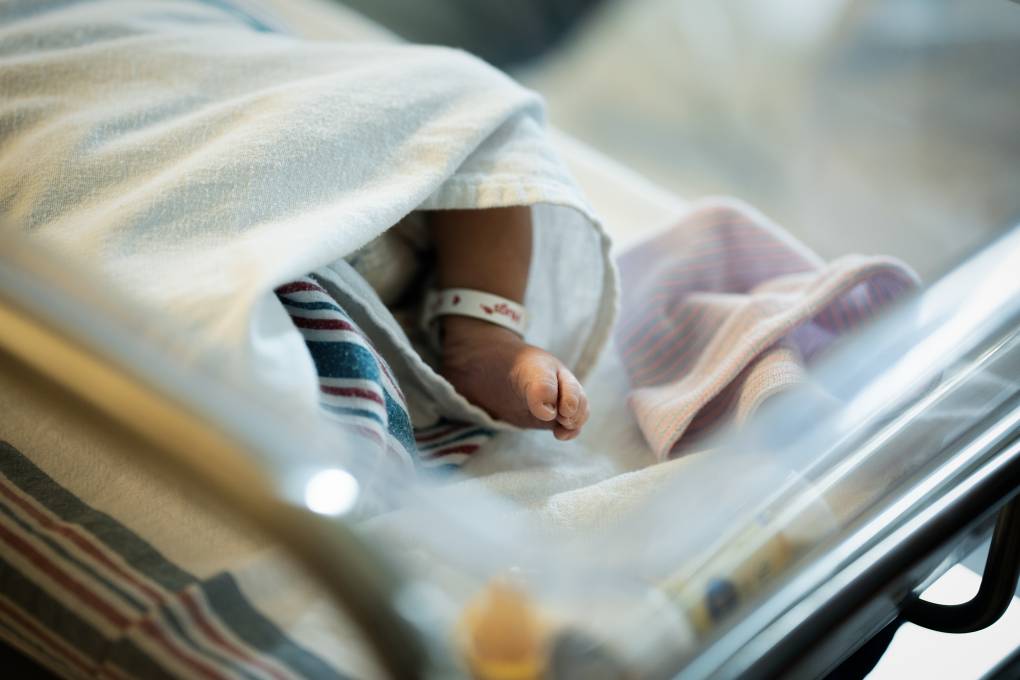
California's insurance marketplace, Covered California, will open in October, 2013. People will be able to buy insurance, which will take effect January 1, 2014.

California’s insurance marketplace, Covered California, will open in October, 2013. People will be able to buy insurance, which will take effect January 1, 2014.

The state’s health insurance exchange, Covered California, announced Thursday morning the plans and premiums that will be available to people statewide to millions of Californians.

And what everyone wants to know is: how much will it cost. Experts had warned of “rate shock,” that premiums might skyrocket for all kinds of reasons. That has not happened.

Covered California says that individuals will pay an average premium of $321 per month for a “silver” plan. (More on silver plans below.) Many people will be eligible for subsidies to reduce that cost further.

Across the state, people who had been working toward this day seemed to heave a collective sigh of relief.

“This is a home run for consumers in every region of California,” said Peter Lee, executive director of Covered California, in a release to reporters. “Californians should be proud of how not only health plans in this state, but doctors, medical groups and hospitals have stepped up — creating a market that will allow millions of consumers to enroll in affordably priced products.”

Charles Bacchi, executive vice president with the California Association of Health Plans called it an “important day” and commended both insurance companies and providers for working together “to deliver quality, affordable health care. We couldn’t have done this without providers willing to join us to make the Affordable Care Act a success,” he said in a reference to provider groups working to keep rates low.

The plans on the exchange are required to offer a standard set of comprehensive benefits. It’s hard to compare premiums next year to what’s in place this year, since there is no standard set of benefits at present. Covered California chose as the best comparison the average premium for a small business plan. The rates in Covered California range from 2 percent above to 29 percent below that benchmark. Continue reading

Powerful Documentary Highlights ‘The Power of Two’

Every 10 minutes, someone’s name is added to a waiting list — a waiting list for a new kidney, heart, lung or other organ. And every day, about 18 people die waiting.

Starting today, San Francisco’s Link TV is screening a remarkable documentary, “The Power of Two.” Twin sisters with fatal cystic fibrosis each received a double lung transplant. In the clip below, they travel to the National Donor Memorial in Richmond, VA.”In a way it was like a pilgrimage to a Mecca,” says Ana, one of the twins. “Because this is the place where our country pays tribute to all the people who have said ‘yes’ to organ donation.”

You can watch the complete documentary online at LinkTV.

And, if you’re not already, you can sign up to be an organ donor.

More Single Boomers Share Homes — and Health Support

By Julie Rovner, NPR

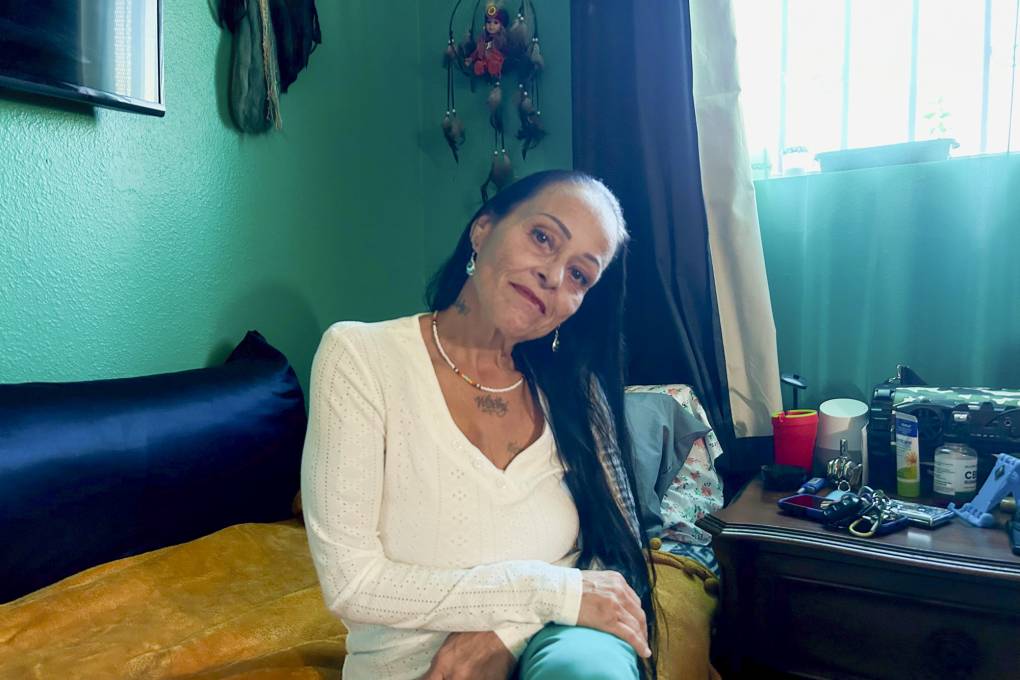
Lorene Solivan moved into the "Golden Girls" house in October after seeing an ad on Craigslist. An event manager at a food company, Solivan says she often cooks dinner for the group. (Maggie Starbard/NPR)

Lorene Solivan moved into the “Golden Girls” house in October after seeing an ad on Craigslist. An event manager at a food company, Solivan says she often cooks dinner for the group. (Maggie Starbard/NPR)

Today more than 1 in every 3 baby boomers — that huge glut of people born between 1948 and 1964 — is unmarried. And those unmarried boomers are disproportionately women. As this vast generation rushes into retirement, there’s a growing concern among experts on aging: Who will take care of all these people when they’re too old to care for themselves?

It’s a question many of the experts take personally. “That is what scares me,” says Sara Rix, who works for the AARP Public Policy Institute, studying the economic prospects of women in the workforce. “Because I am one of those people,” she says, “and I do think about it.”

“Oh, I’ve got wonderful nieces and nephews,” Rix says, noting that’s what a lot of her boomer peers claim, too. “Well, in fact, they’ve got their families. They’ve got their in-laws. They’ve got their parents. And I don’t think it’s reasonable to expect much out of them.”

Kathleen Kelly, who runs the Family Caregiver Alliance and the National Center on Caregiving in San Francisco, says she’s seeing the same sort of concern in her social circle. “I’m in my 50s, and my friends are all talking about, ‘Could we all move in together? Could we buy an apartment building and all live together?’ There are all sorts of permutations of this conversation,” Kelly says. “But it really is something that people are thinking about, particularly women.”

And, because boomers are boomers, some are doing more than just thinking about it. Already, there’s a small but apparently growing movement of boomer women forming group houses with their single peers. Continue reading

Where You Live Affects What Kind of Surgery You’ll Have: Look It Up

(Getty Images)

(Getty Images)

Where you live matters. And in health care, it matters in all sorts of ways you might not think of immediately. If you’re having elective surgery, one of the major factors determining what kind of treatment you will receive depends on where you live, according to new research released Tuesday.

In health policy, “elective” does not necessarily mean cosmetic surgery. Treatments for early stage cancers are considered “elective” because there are a range of options. The California Healthcare Foundation (CHCF) has been following this issue in its “All Over the Map” project. Previously, the foundation has examined variation in heart procedures, joint replacement and c-sections. Tuesday the foundation added a detailed look at geographic variation in treatments for three more conditions: breast cancer, prostate cancer, and back and neck pain.

PIcking out eyebrow-raising numbers was no problem:

  • Men in Indio (Riverside County) receive brachytherapy, known commonly as radiation seeds, to treat prostate cancer at almost five times the statewide average.
  • Women in Healdsburg (Sonoma County) receive lumpectomy without radiation for early stage breast cancer at 270 percent of the statewide average.
  • People in Brawley (Imperial County) are nearly three times as likely to receive cervical fusion, where two vertebrae in the neck are fused together, for neck problems compared to statewide.

CHCF_AllOverTheMap_Banner2_200513_R1SingleLow rates are easy to find, too. To name just one: women in Lancaster, northeast of Los Angeles, with early stage breast cancer receive lumpectomy with radiation at just 26 percent of the statewide average.

The question is why. Maribeth Shannon with the foundation says the variation is “just puzzling to us.” She stressed that the statewide average is not necessarily the “right” rate, but the state average is an estimate that’s easy to use as a benchmark.

In its analysis, the foundation accounted and adjusted for a host of patient characteristics that might skew the numbers. Still, the broad variation is there. Shannon pointed out that it would be “unusual” that patients would differ so significantly in what treatments they wanted, simply according to where they lived.

“It’s much more likely,” Shannon said, “that physicians practicing in that area tend to rely on that course of treatment over others. … It does seem to be more the physician preference than the patient preference.” Continue reading

Easy to Do, Inexpensive; Music Calms Some ICU Patients

By Leslie Harris O’Hanlon

(Getty Images)

(Ryan McVay/Getty Images)

The adage stems from the 18th century: music has charms to sooth the savage breast. It’s probably safe to say that someone in an intensive care unit, who needs a machine to help them breathe, is in need of soothing. Usually, doctors and nurses administer drugs, powerful sedatives to help calm patients. Now, a study shows that a different kind of intervention might help: music. The study, published Monday in the Journal of the American Medical Association, adds to a growing body of research on how listening to music has a host of health benefits.

Patients in the music group received 38 percent fewer doses of sedatives.
Researchers at Ohio State University looked at ICU patients on mechanical ventilators for respiratory failure. Those who listened to the music of their choice not only had greater reduction in anxiety but also used fewer sedation drugs and lower doses compared to patients who did not have access to music — they received usual ICU care. Mechanical ventilation, or ventilatory support, is when a patient is connected to a machine, called a ventilator, to help him or her breath.

Researchers call this “patient-directed music” because patients could select their own music and put headphones on whenever they wanted.

The “intervention empowered patients to use music to manage their own anxiety whenever they felt they needed the use of music to help them relax or when they desired some quiet time,” said lead author Professor Linda L. Chlan at Ohio State. “Music does not induce adverse side effects, which are sometimes evident with sedative agents administered to these patients.” Continue reading

Quick Read: When Medicare Launched, Nobody Had Any Clue Whether It Would Work

Washington Post WonkBlog reporter Sarah Kliff tweeted Friday morning that this piece is “fun with newspaper archives.” And indeed it is.

Kliff embedded and artfully linked together clips from newspapers past, clips that tell the story of the Medicare rollout.

It’s almost as if today’s Obamacare rollout news is ripped from yesterday’s headlines: “5,000 Aged To Be Hired in New Medicare Drive” or “Selling Elderly on Medicare is Not Easy.”


“Medicare workers in Washington are learning that door-to-door selling is a rugged job,” a writer in this newspaper declared 47 years ago.
It was March 3, 1966, after a Washington Post reporter had spent the day trailing Medicare workers who tried to sign seniors up for new program. Some didn’t answer the door.

Read more at: www.washingtonpost.com

Alameda County Details How Transit Cuts Harm Health

By Rachel Dornhelm

(Getty Images)

(Getty Images)

At first glance, you might not think that cuts to public transportation might affect someone’s health. But Devilla Ervin understands the impact firsthand. The 23-year-old lives in West Oakland and a few years ago worked the graveyard shift at McDonald’s.

“I got off work at 4 a.m. and there was no bus service,” he describes. “And so I was walking in my community of West Oakland, with shootings and violence, 45 minutes to an hour to get home.”

Yet, in addition to the threat of violence, Ervin also described a sense of social isolation that he’s felt as a result of recent cuts to bus service in his area.

“It’s not good for physical and mental health,” he says. “It wasn’t good for my spiritual health too, because I couldn’t get to church. A lot of the bus cuts were around International Boulevard where my church is.”

Access to public transportation is what policy types call a “social determinant of health” or SDOH. Health is about much more than health care, than simply seeing a doctor.

Now, in a new study, the Alameda County Public Health Department documents the link Ervin has experienced between health and access to reliable public transportation. Continue reading

What’s a BRCA Gene Anyway?

(Gage Skidmore/Flickr)

(Gage Skidmore/Flickr)

The first thing you need to know about the BRCA gene is that you have it.

Don’t panic. Everyone does. In fact, we all have two of them — the BRCA1 and 2 genes. They are normal genes that “have an important function in the cell. They are involved in repairing DNA damage,” explained Dr. Robert Nussbaum, a medical geneticist at UCSF. “When they’re functioning normally, they do a good job for us.”

We all have two copies of the BRCA genes. Men, too.
The problem is what happens when they don’t function normally. We’ll get to that in a minute. But first, in our call, Nussbaum gave me a helpful primer in basic genetics.

For starters, we all have two copies of each of the BRCA genes. Men, too. We get one copy from each parent.  These genes are “like sentences,” Nussbaum said. ”They are made up of words.” When they’re spelled right, all is well.

But “you can have all kinds of misspellings,” Nussbaum said. “Red becomes reed. All kinds of things can happen that will alter the meaning of that sentence.” Continue reading

Brown Backs State-Run Medi-Cal Expansion

By Mina Kim

(Justin Sullivan/Getty Images)

(Justin Sullivan/Getty Images)

Gov. Jerry Brown’s revised budget plan is a mixed bag for health advocates and some county officials.

Brown said the state would take the lead on a key provision of the federal health law — expanding Medi-Cal to more than one million Californians. Brown scrapped earlier plans to consider a more complicated, county-based system.

But Brown anticipates recouping more than $300 million from the counties next fiscal year – money that pays for public health programs and care for the uninsured. Brown’s rationale? With the full implementation of federal health reform next year, more people will enroll in Medi-Cal and fewer people will show up to county emergency rooms.

Farrah McDaid Ting with the California State Association of Counties says Brown’s proposal makes no sense. She says plenty of people will still rely on county services in 2014.

They are “people who qualify for Medi-Cal but don’t sign up, people who have a hard time signing up or staying on programs, the undocumented in our communities and those who are in between private health plans,” McDaid Ting said. “We need to retain enough funds to serve those people.” Continue reading

California’s Health Insurance Exchange Builds Critical Outreach Network

Covered California, the state’s health insurance exchange, announced the recipients of $37 million in education and outreach grants on Tuesday. It’s a critical step in the drive toward the full implementation of the federal health law on Jan. 1. “This program now belongs to California … and to Californians, and we have to make it work,” said Dr. Robert Ross, a Covered California board member.

The grants were awarded to 48 lead organizations, which will be supported by 226 community partner groups. They will focus on education and outreach to the 5.3 million Californians the exchange seeks to enroll, with an estimated 2.6 million of those people eligible for subsidies to help them afford insurance. Five of the recipients will target their outreach to small businesses.

Californians will be able to shop for insurance on the new marketplace starting Oct. 1, with coverage going into effect on Jan. 1. Most people must have insurance or pay a penalty. In 2014 the penalty is $95 per person or 1 percent of income (whichever is greater), and the penalty rises to $695 or 2.5 percent of income (again, whichever is greater) by 2016.  Continue reading