Who Made Your T-Shirt? The Hidden Cost of Cheap Fashion

Includes video/audio clips and infographics

(Photo by Art Cummings/Flickr)


Everyone likes a good deal.

And for that reason, most of us have flocked to clothing stores like H&M and Old Navy for the unbelievably cheap and expansive selection they offer.

T-shirts for five bucks; jeans and dresses for under $20. It’s almost like you can’t afford to not buy it.

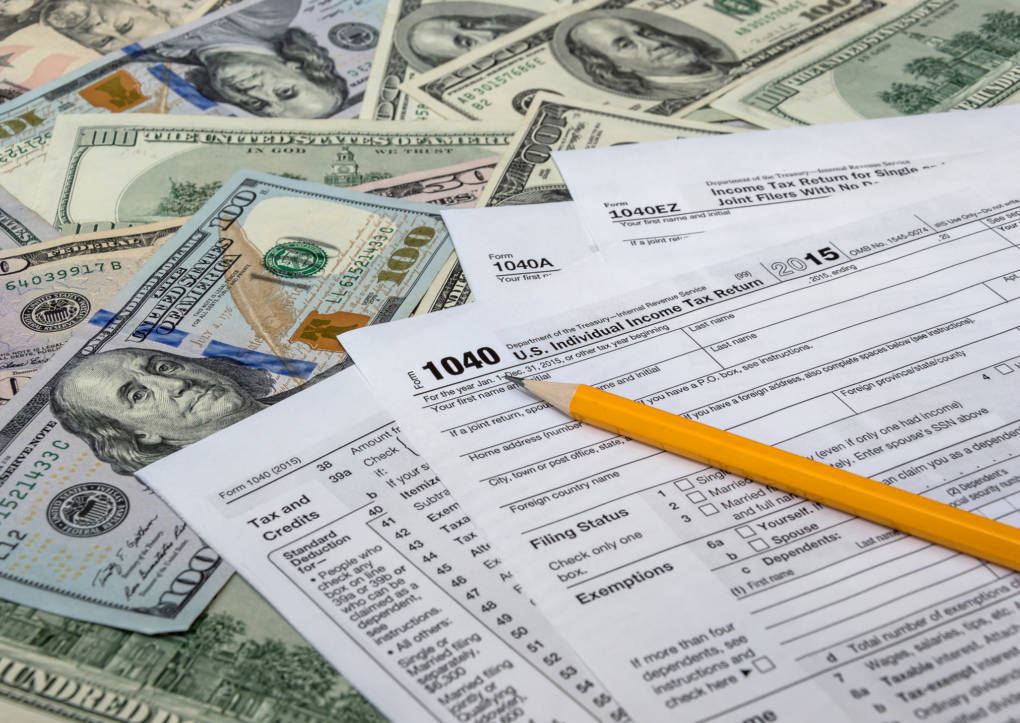
Clothing is cheaper now than it’s ever been: today average Americans spend less than four percent of their total income on their wardrobes, about half what was spent 50 years ago, according to the Bureau of Labor Statistics.

It’s almost cheaper today to buy a whole new wardrobe than to pay to wash your old one (a bit of an exaggeration, yes, but really not all that far off).

But you know the saying that there’s no such thing as a free lunch? Same thing goes with your $5 t-shirt – it comes with some steep hidden costs. There’s no possible way retailers like H&M could be making billions in profits selling clothing at such low prices without there being some catch.

So what are we, the consumers, not seeing?

Continue reading

Lesson Plan: An Educator’s Guide to Teaching Gun Control Issues

Includes downloadable lesson plan

guncontrol_guide_final2_Page_1

As part of a collaboration with the National Writing Project, this is the first in a series of teacher-created educator guides on key topical issues. Written by two NWP-affiliated high school English and media arts teachers – Kirsten Spall of Natomas Charter High School (Sacramento) and Chris Sloan of Judge Memorial Catholic School (Salt Lake City) – the guide helps teachers explore and navigate the highly-charged political and emotional issues behind the topic of gun control. Based on content featured on The Lowdown, the guide provides ideas for integrating the issues into English language arts and social studies curriculum. It includes Common Core Standards Alignment, a synopsis of key background information, integration tips, and lists of issue pros and cons, creative writing prompts and best classroom practices.

Download the entire guide here (PDF)

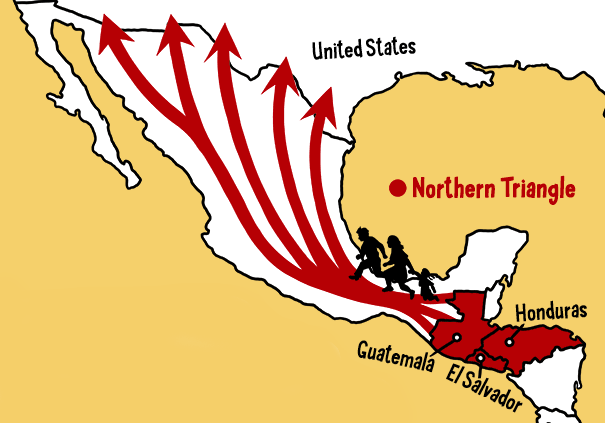
11 Million Strong: Counting America’s Undocumented Immigrants

Includes interactive map
Credit: Flickr/Jonathon Mcintosh

A roadside sign just north of the Tijuana border crossing. (Credit: Flickr/Jonathon Mcintosh)

What’s the plan for America’s 11.1 million undocumented immigrants?

It’s the million dollar question, and the most divisive element of the Senate’s sprawling new effort to overhaul the country’s messy immigration system. After months of painstaking negotiation, a bipartisan group of senators, known as the “Gang of Eight”, recently unveiled a proposal to — among other things — create a path to citizenship for the millions who live here in the shadows. But legislators have made abundantly clear that this proposal is a far cry from “amnesty”. The path they outlined for almost all the undocumented (except for young “DREAMers” who would be on a streamlined 5-year path) is a tedious, decade-plus-long process full of steep hurdles and strict conditions, in which citizenship is a distant destination at the end of a long journey. Continue reading

Infographic: How Has Immigration to America Changed in the Last 50 Years?

Includes infographic

census_infographic_snippetOver the last 50 years, America’s foreign-born population has changed dramatically in size, origins, and geographic distribution. According to the U.S. Census Bureau, in 1960 immigrants (both legal and undocumented) represented roughly 1 in 20 residents in the U.S. Most of them came from European countries and settled in the Northeast and Midwest. Today, it’s a whole new ballgame: about 1 in 8 U.S. residents are now foreign-born, the vast majority are from Latin America and Asia, and most live in the West and South.

The infographic below, produced by the Census Bureau, uses data from the decennial census and the American Community Survey to illustrate the massive changes that have occurred over the last half century. Continue reading

History of Immigration in America: A Turbulent Timeline

Includes interactive timeline and chart

Recently arrived Irish immigrants in the the mid-1800s.

Ever since the first Europeans landed here over four centuries ago, America has had a conflicted relationship with its newcomers. It’s a serial drama that continues today in the halls of Congress, as legislators wrestle with a new generation of immigration reform. We are, of course, a nation of immigrants: the U.S. has less than five percent of the world’s population, but is home to about 20 percent of its migrants. And the vast majority of us – everyone, in fact, except for American Indians – can trace our roots to foreign lands. Despite that common thread, though, America has not always treated its newest residents with the most empathy.

There have been four major waves of immigration to America, the last of which – mainly from Mexico and other Latin American countries - continues today. Several themes play out consistently in all four chapters:

  • Each successive wave of immigrants has been, to an extent, a reflection of conditions elsewhere in the world.
  • Each cycle of newcomers has faced animosity and backlash from the already assimilated.
  • The history of America’s immigration policy is one of continual repetition and vacillation, a revolving door that often swings open during periods of economic prosperity and slams shut when times get tough.

Scroll through the timeline below to follow the tangled history of America’s ever-changing immigration policies. The interactive chart beneath it shows rates of legal immigration from 1820 to the present (use the scroll bar to zoom into specific chunks of time).

Number of Foreign-Born Legal Permanent Residents, 1820 to 2012

Source: Department of Homeland Security, Office of Immigration Statistics

View data table

Could You Pass the U.S. Citizenship Test?

Interactive quiz
georgewbush-whitehouse.archives.gov

georgewbush-whitehouse.archives.gov

One of the final requirements in the long road to becoming an American citizen (in addition to an application, an FBI background check, and a three-part English language exam) is passing a short civics test. Applicants are given 10 questions about American history and government (randomly selected from a batch of 100 questions that they are allowed to preview beforehand). The test is given orally, so unlike the quiz below, there is no multiple choice. To pass, applicants must answer at least six questions correctly. The questions in this quiz are adapted from the list of 100 possible questions that could be asked.

So … how would you do? Give it a shot!

14 Key Infographics About America’s Immigrant Population

Includes infographics

A Portrait of U.S. Immigrants

As Congress haggles over comprehensive immigration reform, it’s worth taking a look who America’s immigrant population actually is. The following infographics, compiled and designed by the Pew Research Hispanic Center, illustrate findings from its analysis of the nation’s foreign-born population. The information is based on data from the U.S. Census Bureau’s 2011 American Community Survey, which counts both legal and undocumented immigrants. Continue reading

May Day Explained: An Overlooked Milestone in the Fight for Workers’ Rights

Includes video

Correction note: The original version of this post stated incorrect information about the history of Labor Day. It was established in 1894 by President Grover Cleveland (not 1955). The information has been updated to reflect this change.

The Haymarket affair, as depicted in a Harper’s Magazine engraving (Wikimedia Commons)


For some, May Day means prancing awkwardly around a feather-wreathed pole.

But that ancient Druid rite of Spring is likely not what today’s immigrant rights protestors have in mind.

In about 80 countries throughout the world, May Day is actually an official labor holiday, often commemorated with large strikes, rallies, and demonstrations in support of workers rights. The day’s roots date back to a heated struggle for something that most of us now take for granted: the eight-hour work day. Continue reading

How Well Do You Know the Voting Rules in Your State?

Includes interactive map and video
class="wp-media-credit">Flickr:Miish

class=”wp-media-credit”>Flickr:Miish

When it comes to America’s eclectic patchwork of voting laws, there is certainly no lack of variety. Rules often vary dramatically from one state to another, and voting in some areas is a significantly harder feat than in others.

Take Virginia and West Virginia. While the latter doesn’t require any ID to vote, its neighbor to the east has one of the strictest ID laws in the nation. And while Virginia permanently strips certain types of violent ex-felons from voting, ex-felons in West Virgina convicted of the same exact crimes can regain the right to vote after completion of their parole.

To add to the confusion, a number of states have recently attempted to dramatically change their own rules on voter ID requirements, resulting in a constantly changing set of laws that can often leave voters feeling baffled and unprepared as elections approach (see examples at the bottom).

In February, the U.S. Supreme Court heard a challenge to a provision in the 1965 Voting Rights Act, a landmark law that is widely considered among the most effective and successful pieces of U.S. civil rights legislation. At issue is a provision in the law called Section 5 that applies only to specific parts of the country with a history of discriminatory voting practices. It covers nine states, mainly in the South, plus regions within seven other states (including California). The law requires that all covered areas receive approval from the U.S. Justice Department before implementing any changes to voting laws.

The map below helps sort through the hodgepodge of individual state laws that determine who can vote. We’ve ranked and color-coded each state by the severity of its voting laws (taking voter ID, felon voting, early voting, and Section 5 into account). See the notes below the map for explanations on asterisked states that have recently changed laws, are waiting for federal approval to do so, or just happen to have their own unique rules.

State ID Legend Continue reading

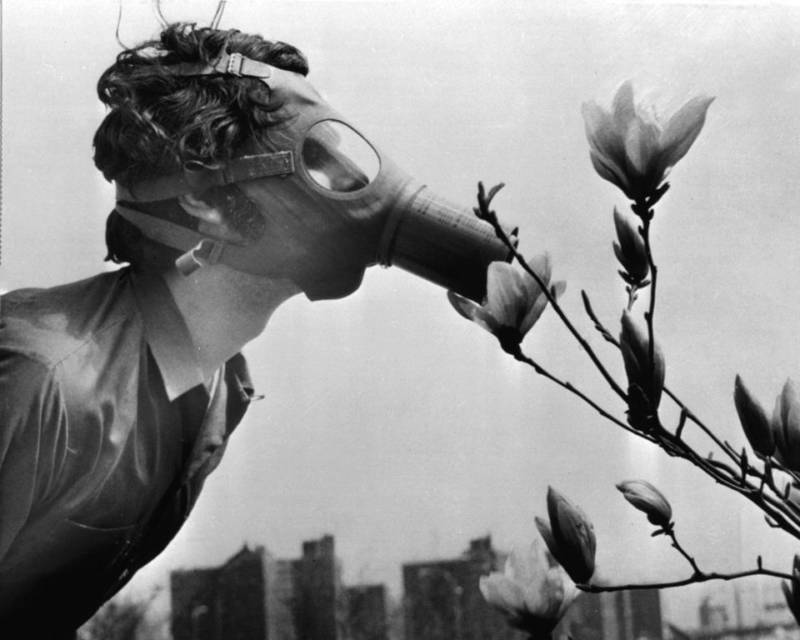
The First Earth Day: How It Began And What It Did For The Environment

Includes: archival photos and video

A gas-mask wearing demonstrator during the first Earth Day celebration in 1970. (Associated Press)


Happy Earth Day!
To start, a quick quiz:

1. Who said the following quote:

“Restoring nature to its natural state is a cause beyond party and beyond factions. It has become a common cause of all the people of this country. It is a cause of particular concern to young Americans, because they, more than we, will wreak the grim consequences of our failure to act on programs which are needed now if we are to prevent disaster later.”

2. Which organization contributed the most money and support to the first Earth Day?

(Yup, you guessed it: you gotta read the post to find the answers.)

Continue reading