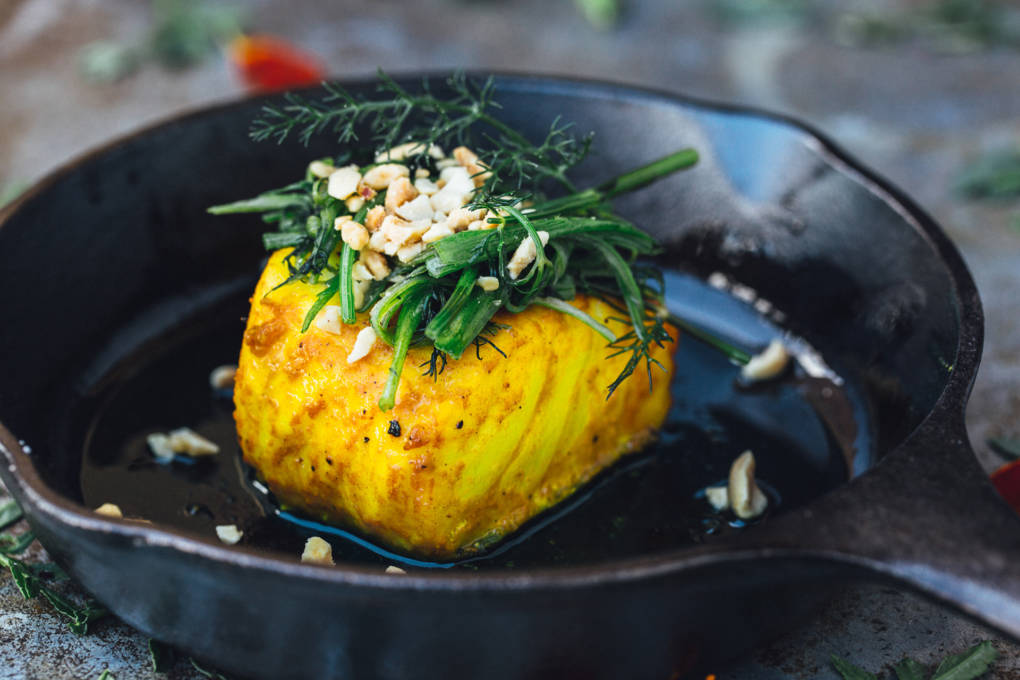
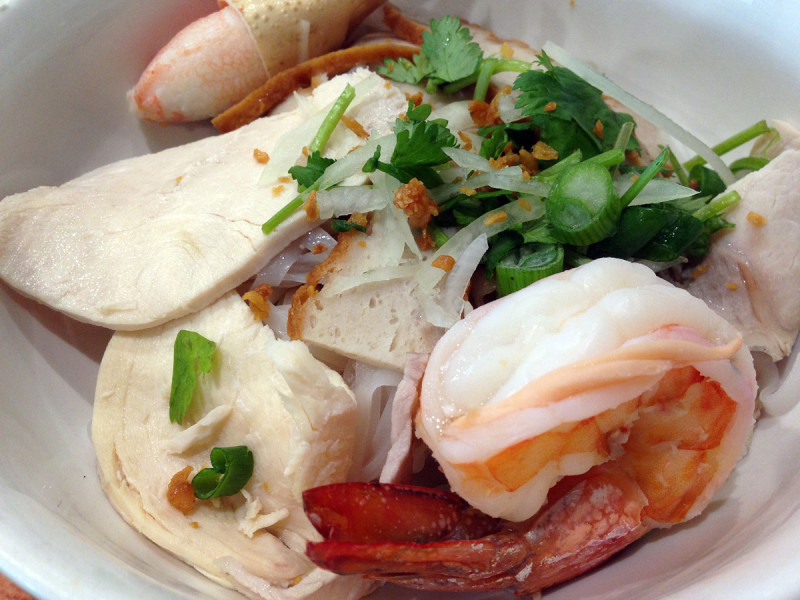
Khai Vietnamese Nouveau Reinvents Contemporary Asian Cooking
Which Way Should I Lean In The Current War Over Vietnamese Cuisine?
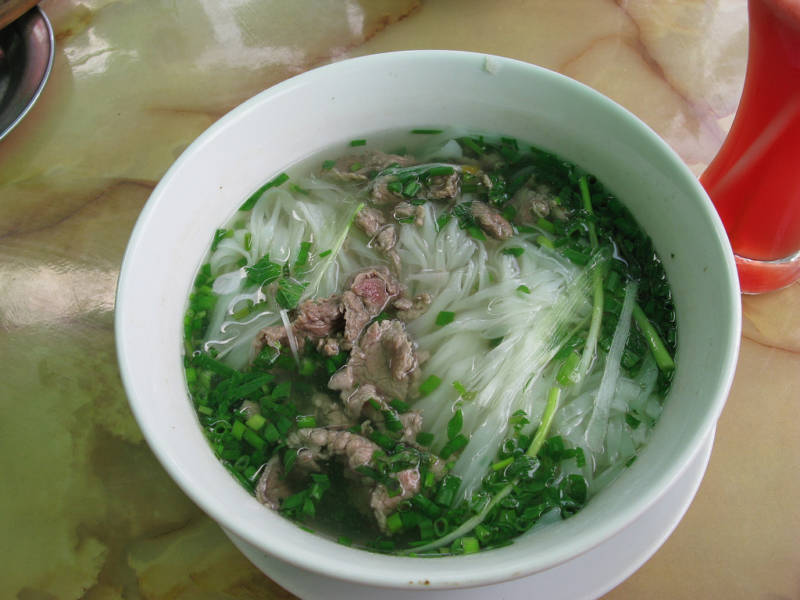
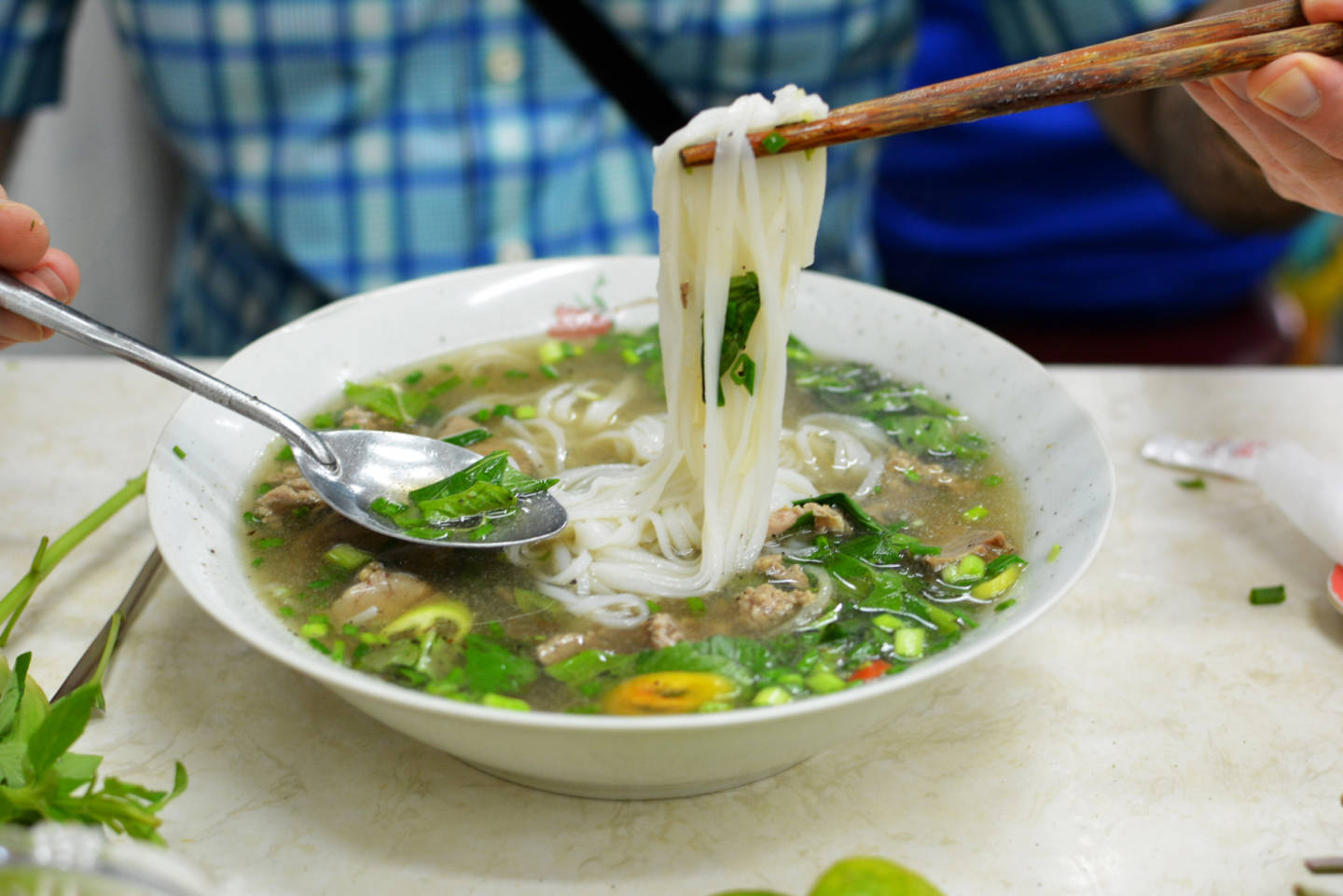
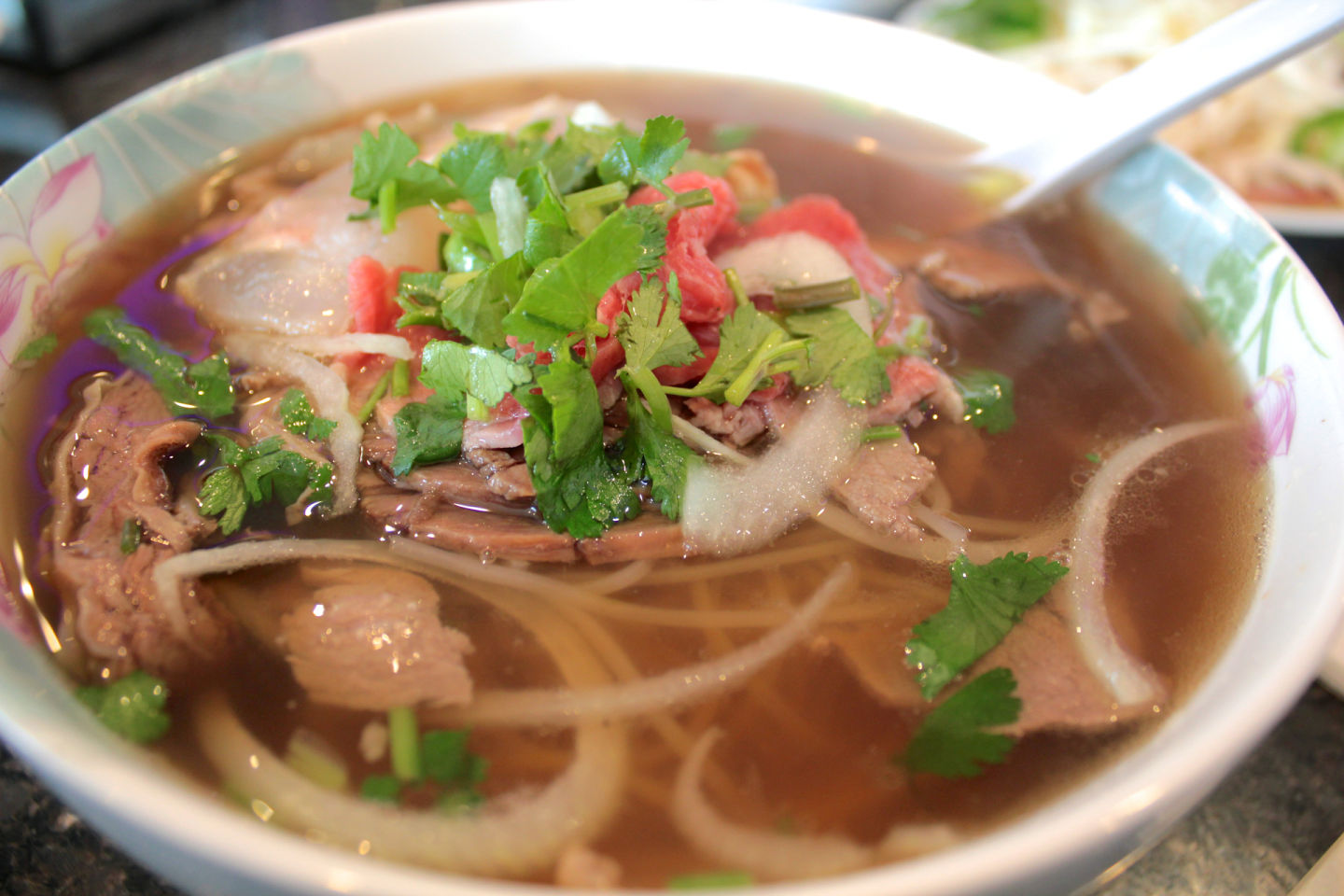
Don't Call It 'The New Ramen': Why Pho Is Central To Vietnamese Identity
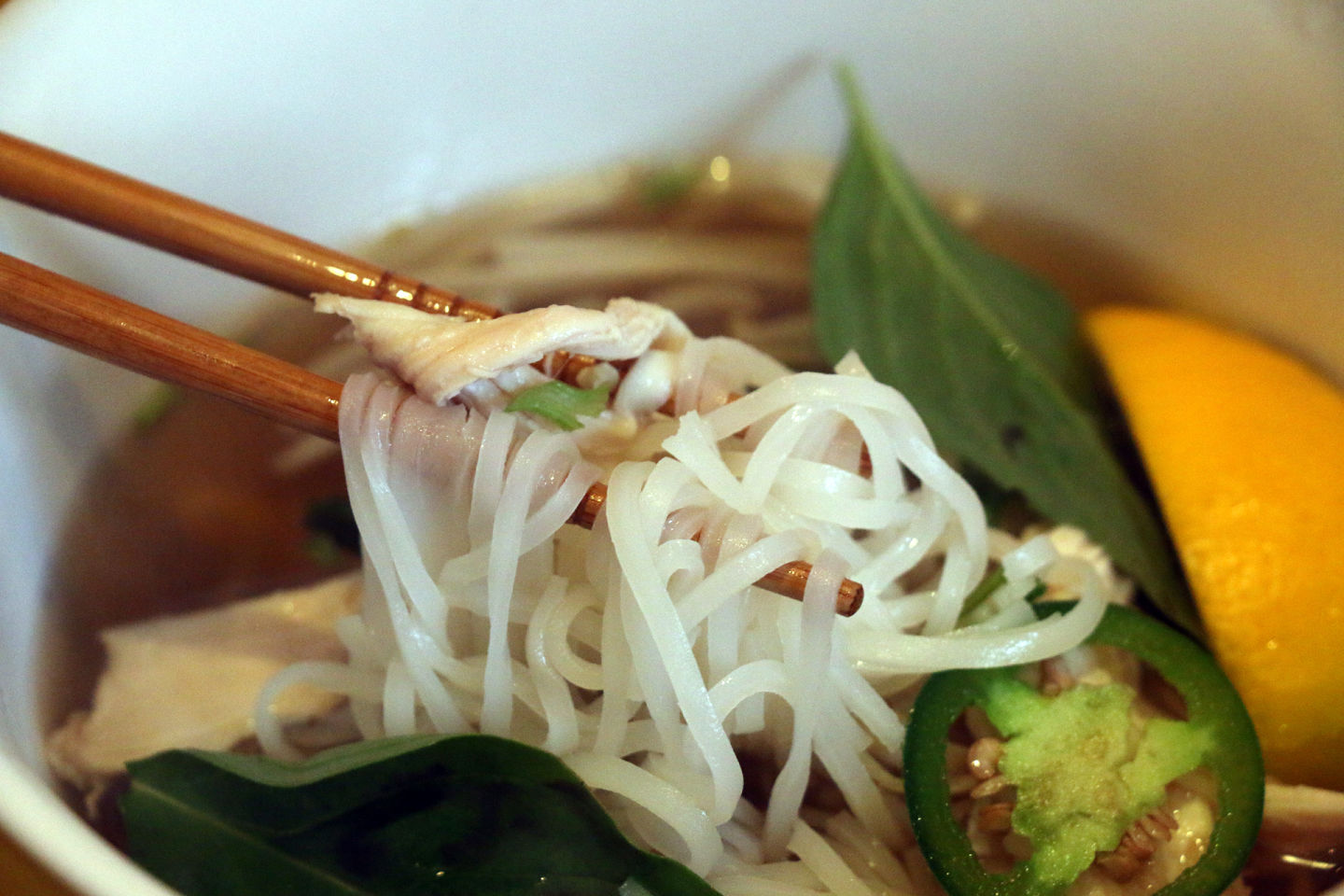
Bay Area Bites Guide to 10 Favorite South Bay Pho Restaurants
Belly-Warming Asian Comfort Food: 3 Delicious Oakland Pho Spots
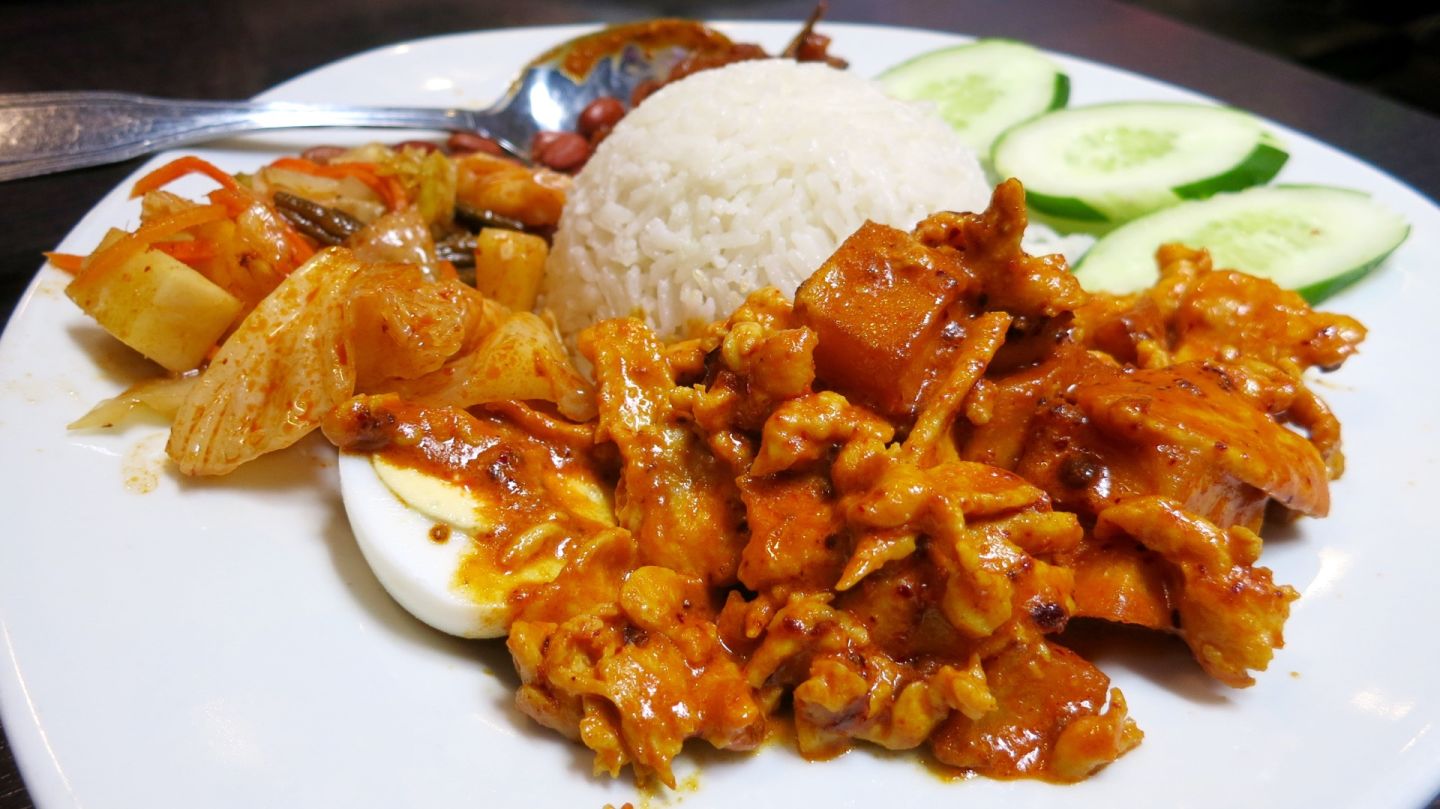
5 Bites: A-List Asian Rice Plates in Oakland
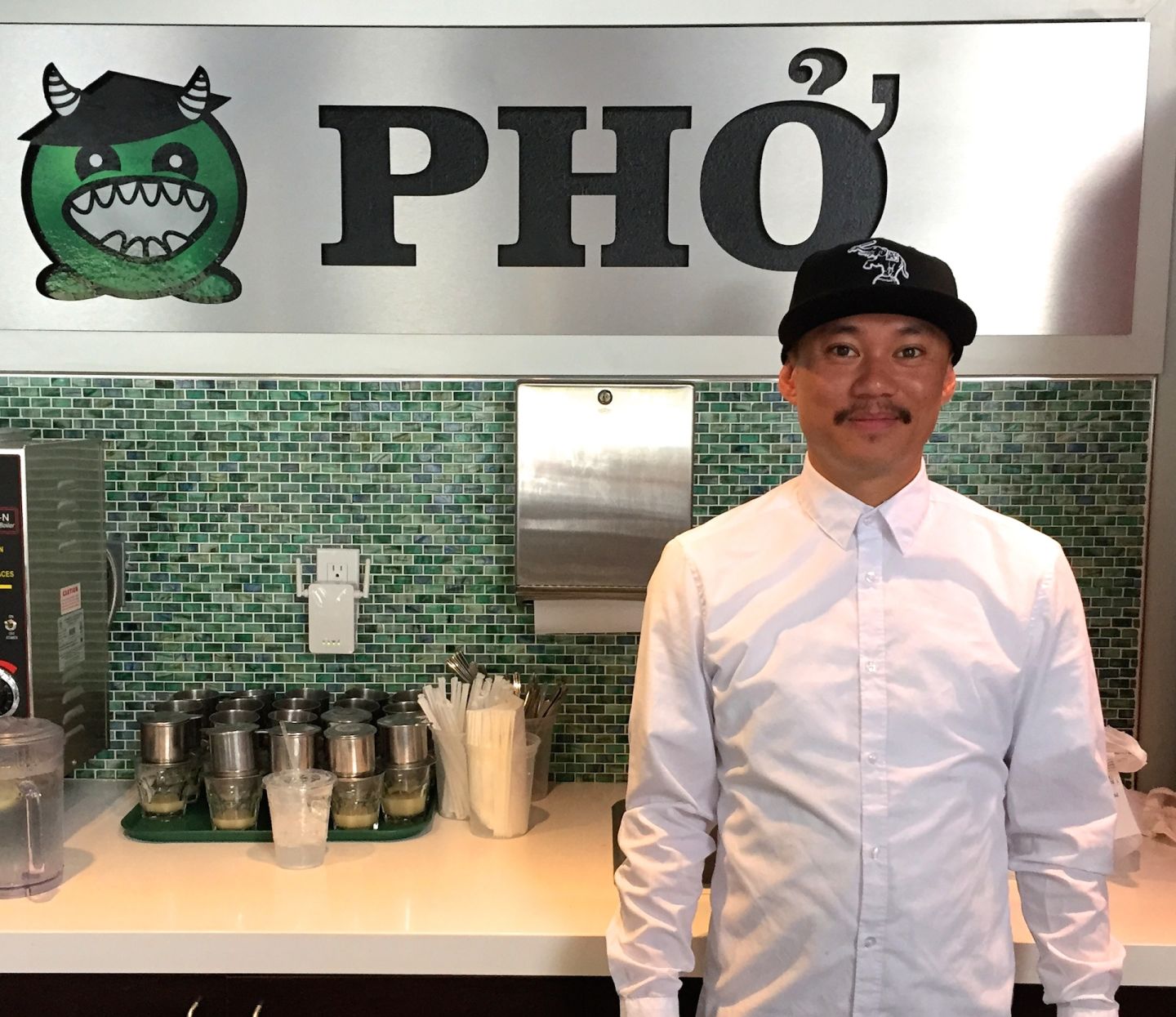
Tee Tran’s Monster Pho Conquers Oakland with Traditional Vietnamese Cooking
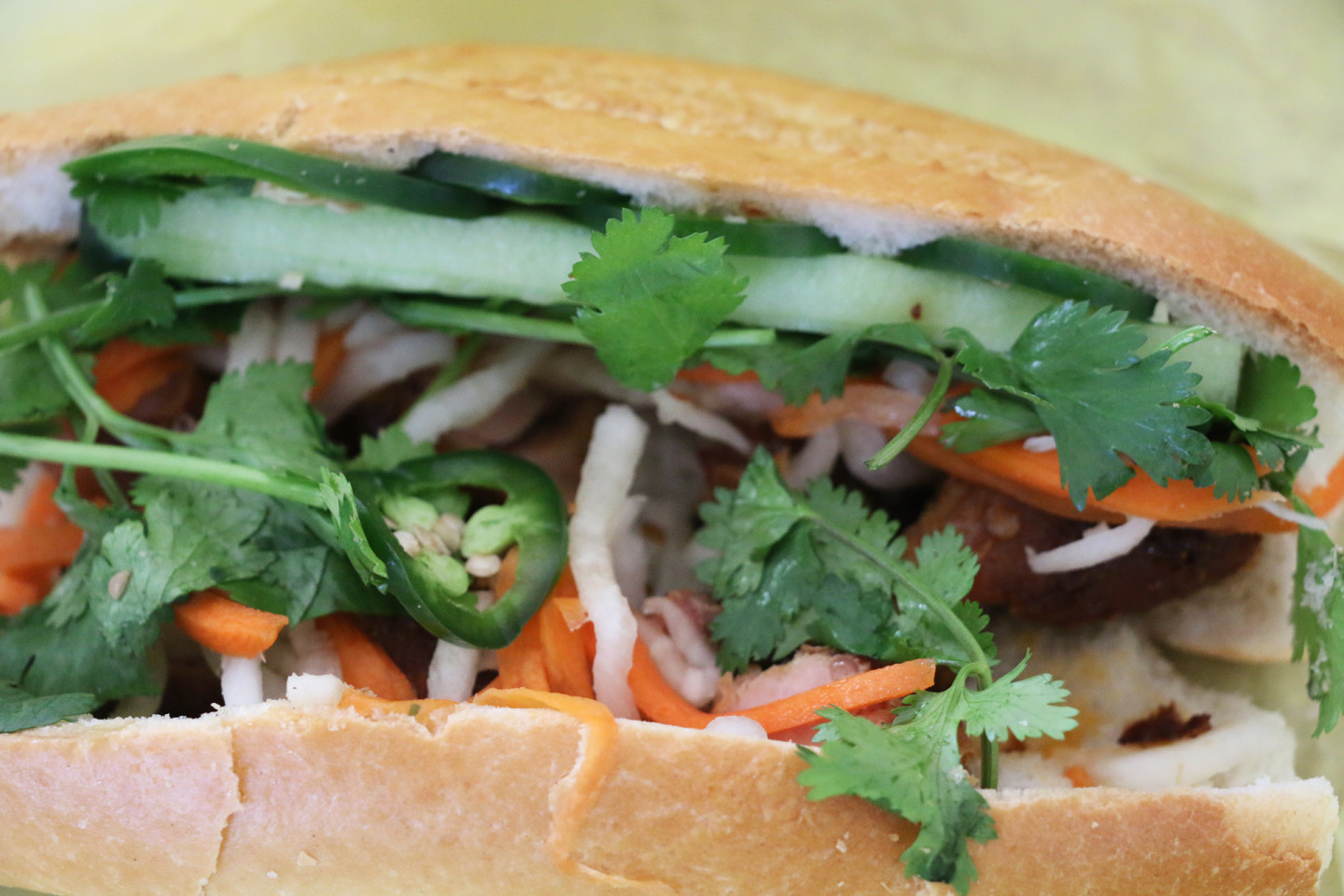
Bay Area Bites Guide to 7 Favorite East Bay Banh Mi Spots
40 Years of Vietnamese Food in California: A Conversation with Andrew Lam
Sponsored
window.__IS_SSR__=true
window.__INITIAL_STATE__={"attachmentsReducer":{"audio_0":{"type":"attachments","id":"audio_0","imgSizes":{"kqedFullSize":{"file":"https://ww2.kqed.org/news/wp-content/themes/KQED-unified/img/audio_bgs/background0.jpg"}}},"audio_1":{"type":"attachments","id":"audio_1","imgSizes":{"kqedFullSize":{"file":"https://ww2.kqed.org/news/wp-content/themes/KQED-unified/img/audio_bgs/background1.jpg"}}},"audio_2":{"type":"attachments","id":"audio_2","imgSizes":{"kqedFullSize":{"file":"https://ww2.kqed.org/news/wp-content/themes/KQED-unified/img/audio_bgs/background2.jpg"}}},"audio_3":{"type":"attachments","id":"audio_3","imgSizes":{"kqedFullSize":{"file":"https://ww2.kqed.org/news/wp-content/themes/KQED-unified/img/audio_bgs/background3.jpg"}}},"audio_4":{"type":"attachments","id":"audio_4","imgSizes":{"kqedFullSize":{"file":"https://ww2.kqed.org/news/wp-content/themes/KQED-unified/img/audio_bgs/background4.jpg"}}},"placeholder":{"type":"attachments","id":"placeholder","imgSizes":{"thumbnail":{"file":"https://ww2.kqed.org/wp-content/uploads/sites/10/2018/01/GettyImages-896326950-160x96.jpg","width":160,"height":96,"mimeType":"image/jpeg"},"medium":{"file":"https://ww2.kqed.org/wp-content/uploads/sites/10/2018/01/GettyImages-896326950-800x478.jpg","width":800,"height":478,"mimeType":"image/jpeg"},"large":{"file":"https://ww2.kqed.org/wp-content/uploads/sites/10/2018/01/GettyImages-896326950-1020x610.jpg","width":1020,"height":610,"mimeType":"image/jpeg"},"fd-lrg":{"file":"https://ww2.kqed.org/wp-content/uploads/sites/10/2018/01/GettyImages-896326950-1920x1148.jpg","width":1920,"height":1148,"mimeType":"image/jpeg"},"fd-med":{"file":"https://ww2.kqed.org/wp-content/uploads/sites/10/2018/01/GettyImages-896326950-1180x705.jpg","width":1180,"height":705,"mimeType":"image/jpeg"},"fd-sm":{"file":"https://ww2.kqed.org/wp-content/uploads/sites/10/2018/01/GettyImages-896326950-960x574.jpg","width":960,"height":574,"mimeType":"image/jpeg"},"post-thumbnail":{"file":"https://ww2.kqed.org/wp-content/uploads/sites/10/2018/01/GettyImages-896326950-672x372.jpg","width":672,"height":372,"mimeType":"image/jpeg"},"twentyfourteen-full-width":{"file":"https://ww2.kqed.org/wp-content/uploads/sites/10/2018/01/GettyImages-896326950-1038x576.jpg","width":1038,"height":576,"mimeType":"image/jpeg"},"xxsmall":{"file":"https://ww2.kqed.org/wp-content/uploads/sites/10/2018/01/GettyImages-896326950-240x143.jpg","width":240,"height":143,"mimeType":"image/jpeg"},"xsmall":{"file":"https://ww2.kqed.org/wp-content/uploads/sites/10/2018/01/GettyImages-896326950-375x224.jpg","width":375,"height":224,"mimeType":"image/jpeg"},"small":{"file":"https://ww2.kqed.org/wp-content/uploads/sites/10/2018/01/GettyImages-896326950-520x311.jpg","width":520,"height":311,"mimeType":"image/jpeg"},"xlarge":{"file":"https://ww2.kqed.org/wp-content/uploads/sites/10/2018/01/GettyImages-896326950-1180x705.jpg","width":1180,"height":705,"mimeType":"image/jpeg"},"full-width":{"file":"https://ww2.kqed.org/wp-content/uploads/sites/10/2018/01/GettyImages-896326950-1920x1148.jpg","width":1920,"height":1148,"mimeType":"image/jpeg"},"guest-author-32":{"file":"https://ww2.kqed.org/wp-content/uploads/sites/10/2018/01/GettyImages-896326950-32x32.jpg","width":32,"height":32,"mimeType":"image/jpeg"},"guest-author-50":{"file":"https://ww2.kqed.org/wp-content/uploads/sites/10/2018/01/GettyImages-896326950-50x50.jpg","width":50,"height":50,"mimeType":"image/jpeg"},"guest-author-64":{"file":"https://ww2.kqed.org/wp-content/uploads/sites/10/2018/01/GettyImages-896326950-64x64.jpg","width":64,"height":64,"mimeType":"image/jpeg"},"guest-author-96":{"file":"https://ww2.kqed.org/wp-content/uploads/sites/10/2018/01/GettyImages-896326950-96x96.jpg","width":96,"height":96,"mimeType":"image/jpeg"},"guest-author-128":{"file":"https://ww2.kqed.org/wp-content/uploads/sites/10/2018/01/GettyImages-896326950-128x128.jpg","width":128,"height":128,"mimeType":"image/jpeg"},"detail":{"file":"https://ww2.kqed.org/wp-content/uploads/sites/10/2018/01/GettyImages-896326950-150x150.jpg","width":150,"height":150,"mimeType":"image/jpeg"},"kqedFullSize":{"file":"https://ww2.kqed.org/wp-content/uploads/sites/10/2018/01/GettyImages-896326950-e1514998105161.jpg","width":1920,"height":1148}}},"bayareabites_117743":{"type":"attachments","id":"bayareabites_117743","meta":{"index":"attachments_1591205162","site":"bayareabites","id":"117743","found":true},"title":"butterfishNEW","publishDate":1495757257,"status":"inherit","parent":117741,"modified":1495758044,"caption":"Baked butterfish with fresh galangal, turmeric, dill and scallions.","credit":"courtesy of Khai","description":null,"imgSizes":{"thumbnail":{"file":"https://ww2.kqed.org/app/uploads/sites/24/2017/05/butterfishNEW-160x107.jpg","width":160,"height":107,"mimeType":"image/jpeg"},"medium":{"file":"https://ww2.kqed.org/app/uploads/sites/24/2017/05/butterfishNEW-800x533.jpg","width":800,"height":533,"mimeType":"image/jpeg"},"medium_large":{"file":"https://ww2.kqed.org/app/uploads/sites/24/2017/05/butterfishNEW-768x512.jpg","width":768,"height":512,"mimeType":"image/jpeg"},"large":{"file":"https://ww2.kqed.org/app/uploads/sites/24/2017/05/butterfishNEW-1020x680.jpg","width":1020,"height":680,"mimeType":"image/jpeg"},"fd-lrg":{"file":"https://ww2.kqed.org/app/uploads/sites/24/2017/05/butterfishNEW-1920x1280.jpg","width":1920,"height":1280,"mimeType":"image/jpeg"},"fd-med":{"file":"https://ww2.kqed.org/app/uploads/sites/24/2017/05/butterfishNEW-1180x787.jpg","width":1180,"height":787,"mimeType":"image/jpeg"},"fd-sm":{"file":"https://ww2.kqed.org/app/uploads/sites/24/2017/05/butterfishNEW-960x640.jpg","width":960,"height":640,"mimeType":"image/jpeg"},"post-thumbnail":{"file":"https://ww2.kqed.org/app/uploads/sites/24/2017/05/butterfishNEW-672x372.jpg","width":672,"height":372,"mimeType":"image/jpeg"},"twentyfourteen-full-width":{"file":"https://ww2.kqed.org/app/uploads/sites/24/2017/05/butterfishNEW-1038x576.jpg","width":1038,"height":576,"mimeType":"image/jpeg"},"xxsmall":{"file":"https://ww2.kqed.org/app/uploads/sites/24/2017/05/butterfishNEW-240x160.jpg","width":240,"height":160,"mimeType":"image/jpeg"},"xsmall":{"file":"https://ww2.kqed.org/app/uploads/sites/24/2017/05/butterfishNEW-375x250.jpg","width":375,"height":250,"mimeType":"image/jpeg"},"small":{"file":"https://ww2.kqed.org/app/uploads/sites/24/2017/05/butterfishNEW-520x347.jpg","width":520,"height":347,"mimeType":"image/jpeg"},"xlarge":{"file":"https://ww2.kqed.org/app/uploads/sites/24/2017/05/butterfishNEW-1180x787.jpg","width":1180,"height":787,"mimeType":"image/jpeg"},"full-width":{"file":"https://ww2.kqed.org/app/uploads/sites/24/2017/05/butterfishNEW-1920x1280.jpg","width":1920,"height":1280,"mimeType":"image/jpeg"},"guest-author-32":{"file":"https://ww2.kqed.org/app/uploads/sites/24/2017/05/butterfishNEW-32x32.jpg","width":32,"height":32,"mimeType":"image/jpeg"},"guest-author-50":{"file":"https://ww2.kqed.org/app/uploads/sites/24/2017/05/butterfishNEW-50x50.jpg","width":50,"height":50,"mimeType":"image/jpeg"},"guest-author-64":{"file":"https://ww2.kqed.org/app/uploads/sites/24/2017/05/butterfishNEW-64x64.jpg","width":64,"height":64,"mimeType":"image/jpeg"},"guest-author-96":{"file":"https://ww2.kqed.org/app/uploads/sites/24/2017/05/butterfishNEW-96x96.jpg","width":96,"height":96,"mimeType":"image/jpeg"},"guest-author-128":{"file":"https://ww2.kqed.org/app/uploads/sites/24/2017/05/butterfishNEW-128x128.jpg","width":128,"height":128,"mimeType":"image/jpeg"},"detail":{"file":"https://ww2.kqed.org/app/uploads/sites/24/2017/05/butterfishNEW-150x150.jpg","width":150,"height":150,"mimeType":"image/jpeg"},"kqedFullSize":{"file":"https://ww2.kqed.org/app/uploads/sites/24/2017/05/butterfishNEW.jpg","width":1920,"height":1280}},"fetchFailed":false,"isLoading":false},"bayareabites_112187":{"type":"attachments","id":"bayareabites_112187","meta":{"index":"attachments_1591205162","site":"bayareabites","id":"112187","found":true},"title":"pho-Vietnamese-pho-caitriana-via-FlickrCreative-Commons-","publishDate":1474569118,"status":"inherit","parent":112181,"modified":1474569177,"caption":"Pho","credit":"caitriana via Flickr/Creative Commons","description":null,"imgSizes":{"thumbnail":{"file":"https://ww2.kqed.org/app/uploads/sites/24/2016/09/pho-Vietnamese-pho-caitriana-via-FlickrCreative-Commons--400x300.jpg","width":400,"height":300,"mimeType":"image/jpeg"},"medium":{"file":"https://ww2.kqed.org/app/uploads/sites/24/2016/09/pho-Vietnamese-pho-caitriana-via-FlickrCreative-Commons--800x600.jpg","width":800,"height":600,"mimeType":"image/jpeg"},"medium_large":{"file":"https://ww2.kqed.org/app/uploads/sites/24/2016/09/pho-Vietnamese-pho-caitriana-via-FlickrCreative-Commons--768x576.jpg","width":768,"height":576,"mimeType":"image/jpeg"},"fd-sm":{"file":"https://ww2.kqed.org/app/uploads/sites/24/2016/09/pho-Vietnamese-pho-caitriana-via-FlickrCreative-Commons--960x720.jpg","width":960,"height":720,"mimeType":"image/jpeg"},"post-thumbnail":{"file":"https://ww2.kqed.org/app/uploads/sites/24/2016/09/pho-Vietnamese-pho-caitriana-via-FlickrCreative-Commons--672x372.jpg","width":672,"height":372,"mimeType":"image/jpeg"},"twentyfourteen-full-width":{"file":"https://ww2.kqed.org/app/uploads/sites/24/2016/09/pho-Vietnamese-pho-caitriana-via-FlickrCreative-Commons--1024x576.jpg","width":1024,"height":576,"mimeType":"image/jpeg"},"cat_post_thumb_sizecategory-posts-2":{"file":"https://ww2.kqed.org/app/uploads/sites/24/2016/09/pho-Vietnamese-pho-caitriana-via-FlickrCreative-Commons--150x150.jpg","width":150,"height":150,"mimeType":"image/jpeg"},"guest-author-32":{"file":"https://ww2.kqed.org/app/uploads/sites/24/2016/09/pho-Vietnamese-pho-caitriana-via-FlickrCreative-Commons--32x32.jpg","width":32,"height":32,"mimeType":"image/jpeg"},"guest-author-50":{"file":"https://ww2.kqed.org/app/uploads/sites/24/2016/09/pho-Vietnamese-pho-caitriana-via-FlickrCreative-Commons--50x50.jpg","width":50,"height":50,"mimeType":"image/jpeg"},"guest-author-64":{"file":"https://ww2.kqed.org/app/uploads/sites/24/2016/09/pho-Vietnamese-pho-caitriana-via-FlickrCreative-Commons--64x64.jpg","width":64,"height":64,"mimeType":"image/jpeg"},"guest-author-96":{"file":"https://ww2.kqed.org/app/uploads/sites/24/2016/09/pho-Vietnamese-pho-caitriana-via-FlickrCreative-Commons--96x96.jpg","width":96,"height":96,"mimeType":"image/jpeg"},"guest-author-128":{"file":"https://ww2.kqed.org/app/uploads/sites/24/2016/09/pho-Vietnamese-pho-caitriana-via-FlickrCreative-Commons--128x128.jpg","width":128,"height":128,"mimeType":"image/jpeg"},"detail":{"file":"https://ww2.kqed.org/app/uploads/sites/24/2016/09/pho-Vietnamese-pho-caitriana-via-FlickrCreative-Commons--150x150.jpg","width":150,"height":150,"mimeType":"image/jpeg"},"kqedFullSize":{"file":"https://ww2.kqed.org/app/uploads/sites/24/2016/09/pho-Vietnamese-pho-caitriana-via-FlickrCreative-Commons-.jpg","width":1024,"height":768}},"fetchFailed":false,"isLoading":false},"bayareabites_112047":{"type":"attachments","id":"bayareabites_112047","meta":{"index":"attachments_1591205162","site":"bayareabites","id":"112047","found":true},"title":"A bowl of pho, a beef and noodle soup, served in Ho Chi Minh City, formerly Saigon. Pho has a rich role in Vietnamese, Vietnamese-American, and now, American culture.","publishDate":1473797804,"status":"inherit","parent":112046,"modified":1473798140,"caption":"A bowl of pho, a beef and noodle soup, served in Ho Chi Minh City, formerly Saigon. Pho has a rich role in Vietnamese, Vietnamese-American, and now, American culture.","credit":"Andrea Nguyen for NPR","description":"A bowl of pho, a beef and noodle soup, served in Ho Chi Minh City, formerly Saigon. Pho has a rich role in Vietnamese, Vietnamese-American, and now, American culture","imgSizes":{"thumbnail":{"file":"https://ww2.kqed.org/app/uploads/sites/24/2016/09/pho_custom-42207673f8dd89f18f96e7b036979be917035120-400x267.jpg","width":400,"height":267,"mimeType":"image/jpeg"},"medium":{"file":"https://ww2.kqed.org/app/uploads/sites/24/2016/09/pho_custom-42207673f8dd89f18f96e7b036979be917035120-800x534.jpg","width":800,"height":534,"mimeType":"image/jpeg"},"medium_large":{"file":"https://ww2.kqed.org/app/uploads/sites/24/2016/09/pho_custom-42207673f8dd89f18f96e7b036979be917035120-768x513.jpg","width":768,"height":513,"mimeType":"image/jpeg"},"large":{"file":"https://ww2.kqed.org/app/uploads/sites/24/2016/09/pho_custom-42207673f8dd89f18f96e7b036979be917035120-1440x961.jpg","width":1440,"height":961,"mimeType":"image/jpeg"},"fd-lrg":{"file":"https://ww2.kqed.org/app/uploads/sites/24/2016/09/pho_custom-42207673f8dd89f18f96e7b036979be917035120-1920x1282.jpg","width":1920,"height":1282,"mimeType":"image/jpeg"},"fd-med":{"file":"https://ww2.kqed.org/app/uploads/sites/24/2016/09/pho_custom-42207673f8dd89f18f96e7b036979be917035120-1180x788.jpg","width":1180,"height":788,"mimeType":"image/jpeg"},"fd-sm":{"file":"https://ww2.kqed.org/app/uploads/sites/24/2016/09/pho_custom-42207673f8dd89f18f96e7b036979be917035120-960x641.jpg","width":960,"height":641,"mimeType":"image/jpeg"},"post-thumbnail":{"file":"https://ww2.kqed.org/app/uploads/sites/24/2016/09/pho_custom-42207673f8dd89f18f96e7b036979be917035120-672x372.jpg","width":672,"height":372,"mimeType":"image/jpeg"},"twentyfourteen-full-width":{"file":"https://ww2.kqed.org/app/uploads/sites/24/2016/09/pho_custom-42207673f8dd89f18f96e7b036979be917035120-1038x576.jpg","width":1038,"height":576,"mimeType":"image/jpeg"},"cat_post_thumb_sizecategory-posts-2":{"file":"https://ww2.kqed.org/app/uploads/sites/24/2016/09/pho_custom-42207673f8dd89f18f96e7b036979be917035120-150x150.jpg","width":150,"height":150,"mimeType":"image/jpeg"},"guest-author-32":{"file":"https://ww2.kqed.org/app/uploads/sites/24/2016/09/pho_custom-42207673f8dd89f18f96e7b036979be917035120-32x32.jpg","width":32,"height":32,"mimeType":"image/jpeg"},"guest-author-50":{"file":"https://ww2.kqed.org/app/uploads/sites/24/2016/09/pho_custom-42207673f8dd89f18f96e7b036979be917035120-50x50.jpg","width":50,"height":50,"mimeType":"image/jpeg"},"guest-author-64":{"file":"https://ww2.kqed.org/app/uploads/sites/24/2016/09/pho_custom-42207673f8dd89f18f96e7b036979be917035120-64x64.jpg","width":64,"height":64,"mimeType":"image/jpeg"},"guest-author-96":{"file":"https://ww2.kqed.org/app/uploads/sites/24/2016/09/pho_custom-42207673f8dd89f18f96e7b036979be917035120-96x96.jpg","width":96,"height":96,"mimeType":"image/jpeg"},"guest-author-128":{"file":"https://ww2.kqed.org/app/uploads/sites/24/2016/09/pho_custom-42207673f8dd89f18f96e7b036979be917035120-128x128.jpg","width":128,"height":128,"mimeType":"image/jpeg"},"detail":{"file":"https://ww2.kqed.org/app/uploads/sites/24/2016/09/pho_custom-42207673f8dd89f18f96e7b036979be917035120-150x150.jpg","width":150,"height":150,"mimeType":"image/jpeg"},"kqedFullSize":{"file":"https://ww2.kqed.org/app/uploads/sites/24/2016/09/pho_custom-42207673f8dd89f18f96e7b036979be917035120.jpg","width":2000,"height":1335}},"fetchFailed":false,"isLoading":false},"bayareabites_106100":{"type":"attachments","id":"bayareabites_106100","meta":{"index":"attachments_1591205162","site":"bayareabites","id":"106100","found":true},"title":"Pho Kim Long","publishDate":1453330180,"status":"inherit","parent":106089,"modified":1453515783,"caption":"The popular #8 combination pho with rare filet mignon, well-done brisket, flank and tendon.","credit":"Jeff Cianci","description":"The popular #8 combination pho with rare filet mignon, well-done brisket, flank and tendon.","imgSizes":{"thumbnail":{"file":"https://ww2.kqed.org/app/uploads/sites/24/2016/01/PhoKimLong-400x267.jpg","width":400,"height":267,"mimeType":"image/jpeg"},"medium":{"file":"https://ww2.kqed.org/app/uploads/sites/24/2016/01/PhoKimLong-800x533.jpg","width":800,"height":533,"mimeType":"image/jpeg"},"medium_large":{"file":"https://ww2.kqed.org/app/uploads/sites/24/2016/01/PhoKimLong-768x512.jpg","width":768,"height":512,"mimeType":"image/jpeg"},"large":{"file":"https://ww2.kqed.org/app/uploads/sites/24/2016/01/PhoKimLong-1440x960.jpg","width":1440,"height":960,"mimeType":"image/jpeg"},"fd-lrg":{"file":"https://ww2.kqed.org/app/uploads/sites/24/2016/01/PhoKimLong-1920x1280.jpg","width":1920,"height":1280,"mimeType":"image/jpeg"},"fd-med":{"file":"https://ww2.kqed.org/app/uploads/sites/24/2016/01/PhoKimLong-1180x787.jpg","width":1180,"height":787,"mimeType":"image/jpeg"},"fd-sm":{"file":"https://ww2.kqed.org/app/uploads/sites/24/2016/01/PhoKimLong-960x640.jpg","width":960,"height":640,"mimeType":"image/jpeg"},"post-thumbnail":{"file":"https://ww2.kqed.org/app/uploads/sites/24/2016/01/PhoKimLong-672x372.jpg","width":672,"height":372,"mimeType":"image/jpeg"},"twentyfourteen-full-width":{"file":"https://ww2.kqed.org/app/uploads/sites/24/2016/01/PhoKimLong-1038x576.jpg","width":1038,"height":576,"mimeType":"image/jpeg"},"guest-author-32":{"file":"https://ww2.kqed.org/app/uploads/sites/24/2016/01/PhoKimLong-32x32.jpg","width":32,"height":32,"mimeType":"image/jpeg"},"guest-author-64":{"file":"https://ww2.kqed.org/app/uploads/sites/24/2016/01/PhoKimLong-64x64.jpg","width":64,"height":64,"mimeType":"image/jpeg"},"guest-author-96":{"file":"https://ww2.kqed.org/app/uploads/sites/24/2016/01/PhoKimLong-96x96.jpg","width":96,"height":96,"mimeType":"image/jpeg"},"guest-author-128":{"file":"https://ww2.kqed.org/app/uploads/sites/24/2016/01/PhoKimLong-128x128.jpg","width":128,"height":128,"mimeType":"image/jpeg"},"cat_post_thumb_sizecategory-posts-2":{"file":"https://ww2.kqed.org/app/uploads/sites/24/2016/01/PhoKimLong-150x150.jpg","width":150,"height":150,"mimeType":"image/jpeg"},"detail":{"file":"https://ww2.kqed.org/app/uploads/sites/24/2016/01/PhoKimLong-75x75.jpg","width":75,"height":75,"mimeType":"image/jpeg"},"kqedFullSize":{"file":"https://ww2.kqed.org/app/uploads/sites/24/2016/01/PhoKimLong.jpg","width":1920,"height":1280}},"fetchFailed":false,"isLoading":false},"bayareabites_105873":{"type":"attachments","id":"bayareabites_105873","meta":{"index":"attachments_1591205162","site":"bayareabites","id":"105873","found":true},"title":"Pho84_chicken_2-1920","publishDate":1452562206,"status":"inherit","parent":105867,"modified":1452564802,"caption":"A hearty bowl of Pho Ga (chicken) at Pho 84 in downtown Oakland. ","credit":"Kim Westerman","description":"A hearty bowl of Pho Ga (chicken) at Pho 84 in downtown Oakland. ","imgSizes":{"thumbnail":{"file":"https://ww2.kqed.org/app/uploads/sites/24/2016/01/Pho84_chicken_2-1920-400x267.jpg","width":400,"height":267,"mimeType":"image/jpeg"},"medium":{"file":"https://ww2.kqed.org/app/uploads/sites/24/2016/01/Pho84_chicken_2-1920-800x533.jpg","width":800,"height":533,"mimeType":"image/jpeg"},"medium_large":{"file":"https://ww2.kqed.org/app/uploads/sites/24/2016/01/Pho84_chicken_2-1920-768x512.jpg","width":768,"height":512,"mimeType":"image/jpeg"},"large":{"file":"https://ww2.kqed.org/app/uploads/sites/24/2016/01/Pho84_chicken_2-1920-1440x960.jpg","width":1440,"height":960,"mimeType":"image/jpeg"},"fd-lrg":{"file":"https://ww2.kqed.org/app/uploads/sites/24/2016/01/Pho84_chicken_2-1920-1920x1280.jpg","width":1920,"height":1280,"mimeType":"image/jpeg"},"fd-med":{"file":"https://ww2.kqed.org/app/uploads/sites/24/2016/01/Pho84_chicken_2-1920-1180x787.jpg","width":1180,"height":787,"mimeType":"image/jpeg"},"fd-sm":{"file":"https://ww2.kqed.org/app/uploads/sites/24/2016/01/Pho84_chicken_2-1920-960x640.jpg","width":960,"height":640,"mimeType":"image/jpeg"},"post-thumbnail":{"file":"https://ww2.kqed.org/app/uploads/sites/24/2016/01/Pho84_chicken_2-1920-672x372.jpg","width":672,"height":372,"mimeType":"image/jpeg"},"twentyfourteen-full-width":{"file":"https://ww2.kqed.org/app/uploads/sites/24/2016/01/Pho84_chicken_2-1920-1038x576.jpg","width":1038,"height":576,"mimeType":"image/jpeg"},"guest-author-32":{"file":"https://ww2.kqed.org/app/uploads/sites/24/2016/01/Pho84_chicken_2-1920-32x32.jpg","width":32,"height":32,"mimeType":"image/jpeg"},"guest-author-64":{"file":"https://ww2.kqed.org/app/uploads/sites/24/2016/01/Pho84_chicken_2-1920-64x64.jpg","width":64,"height":64,"mimeType":"image/jpeg"},"guest-author-96":{"file":"https://ww2.kqed.org/app/uploads/sites/24/2016/01/Pho84_chicken_2-1920-96x96.jpg","width":96,"height":96,"mimeType":"image/jpeg"},"guest-author-128":{"file":"https://ww2.kqed.org/app/uploads/sites/24/2016/01/Pho84_chicken_2-1920-128x128.jpg","width":128,"height":128,"mimeType":"image/jpeg"},"cat_post_thumb_sizecategory-posts-2":{"file":"https://ww2.kqed.org/app/uploads/sites/24/2016/01/Pho84_chicken_2-1920-150x150.jpg","width":150,"height":150,"mimeType":"image/jpeg"},"detail":{"file":"https://ww2.kqed.org/app/uploads/sites/24/2016/01/Pho84_chicken_2-1920-75x75.jpg","width":75,"height":75,"mimeType":"image/jpeg"},"kqedFullSize":{"file":"https://ww2.kqed.org/app/uploads/sites/24/2016/01/Pho84_chicken_2-1920.jpg","width":1920,"height":1280}},"fetchFailed":false,"isLoading":false},"bayareabites_101925":{"type":"attachments","id":"bayareabites_101925","meta":{"index":"attachments_1591205162","site":"bayareabites","id":"101925","found":true},"title":"Nasi lemak, the national dish of Malaysia, at Chilli Padi.","publishDate":1444342224,"status":"inherit","parent":101881,"modified":1444342252,"caption":"Nasi lemak, the national dish of Malaysia, at Chilli Padi.","credit":"Jenny Oh","description":"Nasi lemak, the national dish of Malaysia, at Chilli Padi.","imgSizes":{"thumbnail":{"file":"https://ww2.kqed.org/app/uploads/sites/24/2015/10/IMG_6292-1-400x225.jpg","width":400,"height":225,"mimeType":"image/jpeg"},"medium":{"file":"https://ww2.kqed.org/app/uploads/sites/24/2015/10/IMG_6292-1-800x450.jpg","width":800,"height":450,"mimeType":"image/jpeg"},"large":{"file":"https://ww2.kqed.org/app/uploads/sites/24/2015/10/IMG_6292-1-1440x809.jpg","width":1440,"height":809,"mimeType":"image/jpeg"},"fd-lrg":{"file":"https://ww2.kqed.org/app/uploads/sites/24/2015/10/IMG_6292-1-1920x1079.jpg","width":1920,"height":1079,"mimeType":"image/jpeg"},"fd-med":{"file":"https://ww2.kqed.org/app/uploads/sites/24/2015/10/IMG_6292-1-1180x663.jpg","width":1180,"height":663,"mimeType":"image/jpeg"},"fd-sm":{"file":"https://ww2.kqed.org/app/uploads/sites/24/2015/10/IMG_6292-1-960x540.jpg","width":960,"height":540,"mimeType":"image/jpeg"},"post-thumbnail":{"file":"https://ww2.kqed.org/app/uploads/sites/24/2015/10/IMG_6292-1-672x372.jpg","width":672,"height":372,"mimeType":"image/jpeg"},"twentyfourteen-full-width":{"file":"https://ww2.kqed.org/app/uploads/sites/24/2015/10/IMG_6292-1-1038x576.jpg","width":1038,"height":576,"mimeType":"image/jpeg"},"guest-author-32":{"file":"https://ww2.kqed.org/app/uploads/sites/24/2015/10/IMG_6292-1-32x32.jpg","width":32,"height":32,"mimeType":"image/jpeg"},"guest-author-64":{"file":"https://ww2.kqed.org/app/uploads/sites/24/2015/10/IMG_6292-1-64x64.jpg","width":64,"height":64,"mimeType":"image/jpeg"},"guest-author-96":{"file":"https://ww2.kqed.org/app/uploads/sites/24/2015/10/IMG_6292-1-96x96.jpg","width":96,"height":96,"mimeType":"image/jpeg"},"guest-author-128":{"file":"https://ww2.kqed.org/app/uploads/sites/24/2015/10/IMG_6292-1-128x128.jpg","width":128,"height":128,"mimeType":"image/jpeg"},"cat_post_thumb_sizecategory-posts-2":{"file":"https://ww2.kqed.org/app/uploads/sites/24/2015/10/IMG_6292-1-150x150.jpg","width":150,"height":150,"mimeType":"image/jpeg"},"detail":{"file":"https://ww2.kqed.org/app/uploads/sites/24/2015/10/IMG_6292-1-75x75.jpg","width":75,"height":75,"mimeType":"image/jpeg"},"kqedFullSize":{"file":"https://ww2.kqed.org/app/uploads/sites/24/2015/10/IMG_6292-1.jpg","width":1920,"height":1079}},"fetchFailed":false,"isLoading":false},"bayareabites_99880":{"type":"attachments","id":"bayareabites_99880","meta":{"index":"attachments_1591205162","site":"bayareabites","id":"99880","found":true},"title":"Monster Pho's Tee Tran.","publishDate":1440971860,"status":"inherit","parent":99879,"modified":1441050547,"caption":"Monster Pho's Tee Tran. ","credit":"Anna Mindess","description":"Monster Pho's Tee Tran. ","imgSizes":{"thumbnail":{"file":"https://ww2.kqed.org/app/uploads/sites/24/2015/08/MP-TT-400x346.jpg","width":400,"height":346,"mimeType":"image/jpeg"},"medium":{"file":"https://ww2.kqed.org/app/uploads/sites/24/2015/08/MP-TT-800x692.jpg","width":800,"height":692,"mimeType":"image/jpeg"},"large":{"file":"https://ww2.kqed.org/app/uploads/sites/24/2015/08/MP-TT-1440x1245.jpg","width":1440,"height":1245,"mimeType":"image/jpeg"},"fd-lrg":{"file":"https://ww2.kqed.org/app/uploads/sites/24/2015/08/MP-TT-1920x1660.jpg","width":1920,"height":1660,"mimeType":"image/jpeg"},"fd-med":{"file":"https://ww2.kqed.org/app/uploads/sites/24/2015/08/MP-TT-1180x1020.jpg","width":1180,"height":1020,"mimeType":"image/jpeg"},"fd-sm":{"file":"https://ww2.kqed.org/app/uploads/sites/24/2015/08/MP-TT-960x830.jpg","width":960,"height":830,"mimeType":"image/jpeg"},"post-thumbnail":{"file":"https://ww2.kqed.org/app/uploads/sites/24/2015/08/MP-TT-672x372.jpg","width":672,"height":372,"mimeType":"image/jpeg"},"twentyfourteen-full-width":{"file":"https://ww2.kqed.org/app/uploads/sites/24/2015/08/MP-TT-1038x576.jpg","width":1038,"height":576,"mimeType":"image/jpeg"},"guest-author-32":{"file":"https://ww2.kqed.org/app/uploads/sites/24/2015/08/MP-TT-32x32.jpg","width":32,"height":32,"mimeType":"image/jpeg"},"guest-author-64":{"file":"https://ww2.kqed.org/app/uploads/sites/24/2015/08/MP-TT-64x64.jpg","width":64,"height":64,"mimeType":"image/jpeg"},"guest-author-96":{"file":"https://ww2.kqed.org/app/uploads/sites/24/2015/08/MP-TT-96x96.jpg","width":96,"height":96,"mimeType":"image/jpeg"},"guest-author-128":{"file":"https://ww2.kqed.org/app/uploads/sites/24/2015/08/MP-TT-128x128.jpg","width":128,"height":128,"mimeType":"image/jpeg"},"cat_post_thumb_sizecategory-posts-2":{"file":"https://ww2.kqed.org/app/uploads/sites/24/2015/08/MP-TT-150x150.jpg","width":150,"height":150,"mimeType":"image/jpeg"},"detail":{"file":"https://ww2.kqed.org/app/uploads/sites/24/2015/08/MP-TT-75x75.jpg","width":75,"height":75,"mimeType":"image/jpeg"},"kqedFullSize":{"file":"https://ww2.kqed.org/app/uploads/sites/24/2015/08/MP-TT.jpg","width":1920,"height":1660}},"fetchFailed":false,"isLoading":false},"bayareabites_95145":{"type":"attachments","id":"bayareabites_95145","meta":{"index":"attachments_1591205162","site":"bayareabites","id":"95145","found":true},"title":"ba-le-grilled-chicken1920","publishDate":1429146499,"status":"inherit","parent":95133,"modified":1429146661,"caption":"Ba Le grilled chicken banh mi","credit":"Kim Westerman","description":null,"imgSizes":{"thumbnail":{"file":"https://ww2.kqed.org/app/uploads/sites/24/2015/04/ba-le-grilled-chicken1920-400x267.jpg","width":400,"height":267,"mimeType":"image/jpeg"},"medium":{"file":"https://ww2.kqed.org/app/uploads/sites/24/2015/04/ba-le-grilled-chicken1920-800x533.jpg","width":800,"height":533,"mimeType":"image/jpeg"},"large":{"file":"https://ww2.kqed.org/app/uploads/sites/24/2015/04/ba-le-grilled-chicken1920-1440x960.jpg","width":1440,"height":960,"mimeType":"image/jpeg"},"fd-lrg":{"file":"https://ww2.kqed.org/app/uploads/sites/24/2015/04/ba-le-grilled-chicken1920-1180x787.jpg","width":1180,"height":787,"mimeType":"image/jpeg"},"fd-med":{"file":"https://ww2.kqed.org/app/uploads/sites/24/2015/04/ba-le-grilled-chicken1920-768x512.jpg","width":768,"height":512,"mimeType":"image/jpeg"},"fd-sm":{"file":"https://ww2.kqed.org/app/uploads/sites/24/2015/04/ba-le-grilled-chicken1920-320x213.jpg","width":320,"height":213,"mimeType":"image/jpeg"},"post-thumbnail":{"file":"https://ww2.kqed.org/app/uploads/sites/24/2015/04/ba-le-grilled-chicken1920-672x372.jpg","width":672,"height":372,"mimeType":"image/jpeg"},"twentyfourteen-full-width":{"file":"https://ww2.kqed.org/app/uploads/sites/24/2015/04/ba-le-grilled-chicken1920-1038x576.jpg","width":1038,"height":576,"mimeType":"image/jpeg"},"guest-author-32":{"file":"https://ww2.kqed.org/app/uploads/sites/24/2015/04/ba-le-grilled-chicken1920-32x32.jpg","width":32,"height":32,"mimeType":"image/jpeg"},"guest-author-64":{"file":"https://ww2.kqed.org/app/uploads/sites/24/2015/04/ba-le-grilled-chicken1920-64x64.jpg","width":64,"height":64,"mimeType":"image/jpeg"},"guest-author-96":{"file":"https://ww2.kqed.org/app/uploads/sites/24/2015/04/ba-le-grilled-chicken1920-96x96.jpg","width":96,"height":96,"mimeType":"image/jpeg"},"guest-author-128":{"file":"https://ww2.kqed.org/app/uploads/sites/24/2015/04/ba-le-grilled-chicken1920-128x128.jpg","width":128,"height":128,"mimeType":"image/jpeg"},"cat_post_thumb_sizecategory-posts-2":{"file":"https://ww2.kqed.org/app/uploads/sites/24/2015/04/ba-le-grilled-chicken1920-150x150.jpg","width":150,"height":150,"mimeType":"image/jpeg"},"detail":{"file":"https://ww2.kqed.org/app/uploads/sites/24/2015/04/ba-le-grilled-chicken1920-75x75.jpg","width":75,"height":75,"mimeType":"image/jpeg"},"kqedFullSize":{"file":"https://ww2.kqed.org/app/uploads/sites/24/2015/04/ba-le-grilled-chicken1920.jpg","width":1920,"height":1280}},"fetchFailed":false,"isLoading":false},"bayareabites_93333":{"type":"attachments","id":"bayareabites_93333","meta":{"index":"attachments_1591205162","site":"bayareabites","id":"93333","found":true},"title":"Hu-Tieu-1200","publishDate":1424300077,"status":"inherit","parent":93275,"modified":1424300127,"caption":"There’s no one way to prepare hủ tiếu, a noodle dish that could be considered a cousin of the more famous phở, but Dalat, one of the oldest restaurants in San Jose, is well respected for its version. Photo: Rachael Myrow","credit":null,"description":null,"imgSizes":{"medium":{"file":"https://ww2.kqed.org/app/uploads/sites/24/2015/02/Hu-Tieu-1200-800x600.jpg","width":800,"height":600,"mimeType":"image/jpeg"},"fd-lrg":{"file":"https://ww2.kqed.org/app/uploads/sites/24/2015/02/Hu-Tieu-1200-1180x885.jpg","width":1180,"height":885,"mimeType":"image/jpeg"},"fd-med":{"file":"https://ww2.kqed.org/app/uploads/sites/24/2015/02/Hu-Tieu-1200-768x576.jpg","width":768,"height":576,"mimeType":"image/jpeg"},"fd-sm":{"file":"https://ww2.kqed.org/app/uploads/sites/24/2015/02/Hu-Tieu-1200-320x240.jpg","width":320,"height":240,"mimeType":"image/jpeg"},"post-thumbnail":{"file":"https://ww2.kqed.org/app/uploads/sites/24/2015/02/Hu-Tieu-1200-672x372.jpg","width":672,"height":372,"mimeType":"image/jpeg"},"twentyfourteen-full-width":{"file":"https://ww2.kqed.org/app/uploads/sites/24/2015/02/Hu-Tieu-1200-1038x576.jpg","width":1038,"height":576,"mimeType":"image/jpeg"},"guest-author-32":{"file":"https://ww2.kqed.org/app/uploads/sites/24/2015/02/Hu-Tieu-1200-32x32.jpg","width":32,"height":32,"mimeType":"image/jpeg"},"guest-author-64":{"file":"https://ww2.kqed.org/app/uploads/sites/24/2015/02/Hu-Tieu-1200-64x64.jpg","width":64,"height":64,"mimeType":"image/jpeg"},"guest-author-96":{"file":"https://ww2.kqed.org/app/uploads/sites/24/2015/02/Hu-Tieu-1200-96x96.jpg","width":96,"height":96,"mimeType":"image/jpeg"},"guest-author-128":{"file":"https://ww2.kqed.org/app/uploads/sites/24/2015/02/Hu-Tieu-1200-128x128.jpg","width":128,"height":128,"mimeType":"image/jpeg"},"cat_post_thumb_sizecategory-posts-2":{"file":"https://ww2.kqed.org/app/uploads/sites/24/2015/02/Hu-Tieu-1200-50x50.jpg","width":50,"height":50,"mimeType":"image/jpeg"},"detail":{"file":"https://ww2.kqed.org/app/uploads/sites/24/2015/02/Hu-Tieu-1200-75x75.jpg","width":75,"height":75,"mimeType":"image/jpeg"},"kqedFullSize":{"file":"https://ww2.kqed.org/app/uploads/sites/24/2015/02/Hu-Tieu-1200.jpg","width":1200,"height":900}},"fetchFailed":false,"isLoading":false}},"audioPlayerReducer":{"postId":"stream_live"},"authorsReducer":{"byline_bayareabites_112181":{"type":"authors","id":"byline_bayareabites_112181","meta":{"override":true},"slug":"byline_bayareabites_112181","name":"Andrew Lam, \u003ca href=\"https://ww2.kqed.org/bayareabites/author/caamedia/\">CAAM\u003c/a>","isLoading":false},"byline_bayareabites_112046":{"type":"authors","id":"byline_bayareabites_112046","meta":{"override":true},"slug":"byline_bayareabites_112046","name":"Andrea Nguyen, NPR Food","isLoading":false},"rachael-myrow":{"type":"authors","id":"251","meta":{"index":"authors_1591205172","id":"251","found":true},"name":"Rachael Myrow","firstName":"Rachael","lastName":"Myrow","slug":"rachael-myrow","email":"rmyrow@kqed.org","display_author_email":false,"staff_mastheads":["news"],"title":"Senior Editor of KQED's Silicon Valley News Desk","bio":"Rachael Myrow is Senior Editor of KQED's Silicon Valley News Desk. You can hear her work on \u003ca href=\"https://www.npr.org/search?query=Rachael%20Myrow&page=1\">NPR\u003c/a>, \u003ca href=\"https://theworld.org/people/rachael-myrow\">The World\u003c/a>, WBUR's \u003ca href=\"https://www.wbur.org/search?q=Rachael%20Myrow\">\u003ci>Here & Now\u003c/i>\u003c/a> and the BBC. \u003c/i>She also guest hosts for KQED's \u003ci>\u003ca href=\"https://www.kqed.org/forum/tag/rachael-myrow\">Forum\u003c/a>\u003c/i>. Over the years, she's talked with Kamau Bell, David Byrne, Kamala Harris, Tony Kushner, Armistead Maupin, Van Dyke Parks, Arnold Schwarzenegger and Tommie Smith, among others.\r\n\r\nBefore all this, she hosted \u003cem>The California Report\u003c/em> for 7+ years, reporting on topics like \u003ca href=\"https://soundcloud.com/rmyrow/on-a-mission-to-reform-assisted-living\">assisted living facilities\u003c/a>, the \u003ca href=\"https://www.npr.org/sections/alltechconsidered/2014/12/01/367703789/amazon-unleashes-robot-army-to-send-your-holiday-packages-faster\">robot takeover\u003c/a> of Amazon, and \u003ca href=\"https://www.kqed.org/bayareabites/50822/in-search-of-the-chocolate-persimmon\" rel=\"noopener noreferrer\">chocolate persimmons\u003c/a>.\r\n\r\nAwards? Sure: Peabody, Edward R. Murrow, Regional Edward R. Murrow, RTNDA, Northern California RTNDA, SPJ Northern California Chapter, LA Press Club, Golden Mic. Prior to joining KQED, Rachael worked in Los Angeles at KPCC and Marketplace. She holds degrees in English and journalism from UC Berkeley (where she got her start in public radio on KALX-FM).\r\n\r\nOutside of the studio, you'll find Rachael hiking Bay Area trails and whipping up Instagram-ready meals in her kitchen.","avatar":"https://secure.gravatar.com/avatar/87bf8cb5874e045cdff430523a6d48b1?s=600&d=blank&r=g","twitter":"rachaelmyrow","facebook":null,"instagram":null,"linkedin":"https://www.linkedin.com/in/rachaelmyrow/","sites":[{"site":"arts","roles":["administrator"]},{"site":"news","roles":["edit_others_posts","editor"]},{"site":"futureofyou","roles":["editor"]},{"site":"bayareabites","roles":["editor"]},{"site":"stateofhealth","roles":["editor"]},{"site":"science","roles":["editor"]},{"site":"food","roles":["editor"]},{"site":"forum","roles":["editor"]}],"headData":{"title":"Rachael Myrow | KQED","description":"Senior Editor of KQED's Silicon Valley News Desk","ogImgSrc":"https://secure.gravatar.com/avatar/87bf8cb5874e045cdff430523a6d48b1?s=600&d=blank&r=g","twImgSrc":"https://secure.gravatar.com/avatar/87bf8cb5874e045cdff430523a6d48b1?s=600&d=blank&r=g"},"isLoading":false,"link":"/author/rachael-myrow"},"jennyoh":{"type":"authors","id":"2100","meta":{"index":"authors_1591205172","id":"2100","found":true},"name":"Jenny Oh","firstName":"Jenny","lastName":"Oh","slug":"jennyoh","email":"joh@kqed.org","display_author_email":false,"staff_mastheads":["science"],"title":"Audience Engagement Producer, Deep Look","bio":"Jenny is an Emmy Award-winning producer and is currently the Audience Engagement Producer for KQED Science's \u003cem>Deep Look\u003c/em> online video series. She was also a long-time contributor to Bay Area Bites, KQED's popular food blog. Jenny graduated with honors from New York University’s Tisch School of the Arts Film and Television program and has worked for WNET/PBS, The Learning Channel, Sundance Channel, HBO and the University of California.","avatar":"https://secure.gravatar.com/avatar/7ddda0ed657e46dbe66083f569967752?s=600&d=blank&r=g","twitter":null,"facebook":null,"instagram":null,"linkedin":null,"sites":[{"site":"arts","roles":["editor"]},{"site":"pop","roles":["contributor"]},{"site":"futureofyou","roles":["editor"]},{"site":"jpepinheart","roles":["editor"]},{"site":"about","roles":["editor"]},{"site":"bayareabites","roles":["editor"]},{"site":"science","roles":["administrator"]},{"site":"education","roles":["author"]},{"site":"quest","roles":["editor"]},{"site":"food","roles":["administrator"]}],"headData":{"title":"Jenny Oh | KQED","description":"Audience Engagement Producer, Deep Look","ogImgSrc":"https://secure.gravatar.com/avatar/7ddda0ed657e46dbe66083f569967752?s=600&d=blank&r=g","twImgSrc":"https://secure.gravatar.com/avatar/7ddda0ed657e46dbe66083f569967752?s=600&d=blank&r=g"},"isLoading":false,"link":"/author/jennyoh"},"annamindess":{"type":"authors","id":"5283","meta":{"index":"authors_1591205172","id":"5283","found":true},"name":"Anna Mindess","firstName":"Anna","lastName":"Mindess","slug":"annamindess","email":"amindess@aol.com","display_author_email":false,"staff_mastheads":[],"title":null,"bio":"My passion is exploring the connections between food, travel and culture. I am a regular contributor to AFAR, Edible East Bay Magazine, Oakland Magazine, Berkeleyside's NOSH and other publications. I usually take a route that's slightly off the beaten path, like \u003ca href=\"http://edibleeastbay.com/online-magazine/fall-harvest-2017/fun-with-food-insults/\">collecting food-related insults\u003c/a> around the world or \u003ca href=\"https://www.afar.com/magazine/what-i-learned-hawking-sweet-potatoes-with-a-street-vendor-in-taiwan?email=amindess%40aol.com&utm_source=Sailthru&utm_medium=email&utm_campaign=Doctors%20Without%20Borders&utm_term=Daily%20Wander%20Newsletter\">volunteering with a Sweet Potato Mama\u003c/a> (street food seller) in Tapei.\r\n\r\nCulture is the thread that ties together my several careers. I also work as a sign language interpreter, educator and author. My study of Deaf culture has taken me around the world, where I am always on a quest to find Deaf-owned restaurants. I love making connections between my different worlds, for example in this AFAR story where I share \u003ca href=\"https://www.afar.com/magazine/tips-from-a-sign-language-interpreter-for-overcoming-language-barriers\">tips for communicating across cultures\u003c/a> that I learned from the real experts, Deaf people. Or this \u003ca href=\"http://edibleeastbay.com/online-magazine/fall-harvest-2017/deaf-chefs-compete/\">profile of a Deaf chef and culinary arts instructor\u003c/a> at the California School for the Deaf.\r\n\r\nTo see my visual/edible take on the world, follow me on Instagram: \u003ca href=\"https://www.instagram.com/annamindess/\">annamindess. \u003c/a>\r\n\r\nFor more of my stories: visit Contently \u003ca href=\"http://annamindess.contently.com\">annamindess.contently.com\u003c/a>","avatar":"https://secure.gravatar.com/avatar/5c0a68a51a07d3996f57634ef0cddaa6?s=600&d=blank&r=g","twitter":null,"facebook":null,"instagram":null,"linkedin":null,"sites":[{"site":"arts","roles":["author"]},{"site":"bayareabites","roles":["author"]},{"site":"food","roles":["contributor"]}],"headData":{"title":"Anna Mindess | KQED","description":null,"ogImgSrc":"https://secure.gravatar.com/avatar/5c0a68a51a07d3996f57634ef0cddaa6?s=600&d=blank&r=g","twImgSrc":"https://secure.gravatar.com/avatar/5c0a68a51a07d3996f57634ef0cddaa6?s=600&d=blank&r=g"},"isLoading":false,"link":"/author/annamindess"},"kimwesterman":{"type":"authors","id":"5575","meta":{"index":"authors_1591205172","id":"5575","found":true},"name":"Kim Westerman","firstName":"Kim","lastName":"Westerman","slug":"kimwesterman","email":"kim.westerman@gmail.com","display_author_email":false,"staff_mastheads":[],"title":null,"bio":"Kim Westerman has been writing about food and wine for most of her adult life. Originally from North Carolina, she moved to Berkeley in 2006 to pursue the California dream, which, it turns out, is all it’s cracked up to be. She’s a farmers' market junkie, a lover of all things tomato, and Champagne-obsessed. She loves to cook with her kids, eight and three, and she makes frequent pilgrimages to International Boulevard in search of her next favorite Mexican dish. She spends an inordinate amount of time thinking about food and wine pairing, often starting with the wine and working backwards when planning menus. She is a Level I Sommelier and a Licensed Q-Grader. Her work has appeared in KQED's Bay Area Bites, Forbes.com, the New York Times, the San Francisco Chronicle, Tasting Table, Fodor’s Travel Guides, and lots of other publications. You can follow Kim on Twitter and Instagram @throughtraveler.","avatar":"https://secure.gravatar.com/avatar/2eb7f890ab19ead33f77fd8554ac4c39?s=600&d=blank&r=g","twitter":null,"facebook":null,"instagram":null,"linkedin":null,"sites":[{"site":"bayareabites","roles":["contributor"]},{"site":"food","roles":["contributor"]}],"headData":{"title":"Kim Westerman | KQED","description":null,"ogImgSrc":"https://secure.gravatar.com/avatar/2eb7f890ab19ead33f77fd8554ac4c39?s=600&d=blank&r=g","twImgSrc":"https://secure.gravatar.com/avatar/2eb7f890ab19ead33f77fd8554ac4c39?s=600&d=blank&r=g"},"isLoading":false,"link":"/author/kimwesterman"},"jeffcianci":{"type":"authors","id":"5580","meta":{"index":"authors_1591205172","id":"5580","found":true},"name":"Jeff Cianci","firstName":"Jeff","lastName":"Cianci","slug":"jeffcianci","email":"jcianci610@gmail.com","display_author_email":false,"staff_mastheads":[],"title":null,"bio":"Jeff Cianci is a freelance food writer based in San Jose. While studying journalism in college, Jeff’s curiosity landed him at a busy California bistro where he experienced a crash course in culinary training over two summer breaks, learning on the job with a very patient chef as his mentor. Around the same time, Jeff married his journalism degree to his appreciation for the restaurant world and determined food writing would be his career path. In his work Jeff most enjoys profiling chefs and learning their background, finding a new favorite restaurant and sharing his experiences with others through his reviews and social media. In addition to KQED's Bay Area Bites, Jeff writes restaurant reviews for Metro Silicon Valley and new restaurant guides for Eater National. Follow Jeff on Twitter \u003ca href=\"https://twitter.com/Cheffreycianci\" target=_blank\">@Cheffreycianci\u003c/a>.","avatar":"https://secure.gravatar.com/avatar/153d8e37568b0912b46a21bfecf27feb?s=600&d=blank&r=g","twitter":null,"facebook":null,"instagram":null,"linkedin":"jeffcianci","sites":[{"site":"bayareabites","roles":["contributor"]},{"site":"food","roles":["contributor"]}],"headData":{"title":"Jeff Cianci | KQED","description":null,"ogImgSrc":"https://secure.gravatar.com/avatar/153d8e37568b0912b46a21bfecf27feb?s=600&d=blank&r=g","twImgSrc":"https://secure.gravatar.com/avatar/153d8e37568b0912b46a21bfecf27feb?s=600&d=blank&r=g"},"isLoading":false,"link":"/author/jeffcianci"}},"breakingNewsReducer":{},"campaignFinanceReducer":{},"firebase":{"requesting":{},"requested":{},"timestamps":{},"data":{},"ordered":{},"auth":{"isLoaded":false,"isEmpty":true},"authError":null,"profile":{"isLoaded":false,"isEmpty":true},"listeners":{"byId":{},"allIds":[]},"isInitializing":false,"errors":[]},"navBarReducer":{"navBarId":"arts","fullView":true,"showPlayer":false},"navMenuReducer":{"menus":[{"key":"menu1","items":[{"name":"News","link":"/","type":"title"},{"name":"Politics","link":"/politics"},{"name":"Science","link":"/science"},{"name":"Education","link":"/educationnews"},{"name":"Housing","link":"/housing"},{"name":"Immigration","link":"/immigration"},{"name":"Criminal Justice","link":"/criminaljustice"},{"name":"Silicon Valley","link":"/siliconvalley"},{"name":"Forum","link":"/forum"},{"name":"The California Report","link":"/californiareport"}]},{"key":"menu2","items":[{"name":"Arts & Culture","link":"/arts","type":"title"},{"name":"Critics’ Picks","link":"/thedolist"},{"name":"Cultural Commentary","link":"/artscommentary"},{"name":"Food & Drink","link":"/food"},{"name":"Bay Area Hip-Hop","link":"/bayareahiphop"},{"name":"Rebel Girls","link":"/rebelgirls"},{"name":"Arts Video","link":"/artsvideos"}]},{"key":"menu3","items":[{"name":"Podcasts","link":"/podcasts","type":"title"},{"name":"Bay Curious","link":"/podcasts/baycurious"},{"name":"Rightnowish","link":"/podcasts/rightnowish"},{"name":"The Bay","link":"/podcasts/thebay"},{"name":"On Our Watch","link":"/podcasts/onourwatch"},{"name":"Mindshift","link":"/podcasts/mindshift"},{"name":"Consider This","link":"/podcasts/considerthis"},{"name":"Political Breakdown","link":"/podcasts/politicalbreakdown"}]},{"key":"menu4","items":[{"name":"Live Radio","link":"/radio","type":"title"},{"name":"TV","link":"/tv","type":"title"},{"name":"Events","link":"/events","type":"title"},{"name":"For Educators","link":"/education","type":"title"},{"name":"Support KQED","link":"/support","type":"title"},{"name":"About","link":"/about","type":"title"},{"name":"Help Center","link":"https://kqed-helpcenter.kqed.org/s","type":"title"}]}]},"pagesReducer":{},"postsReducer":{"stream_live":{"type":"live","id":"stream_live","audioUrl":"https://streams.kqed.org/kqedradio","title":"Live Stream","excerpt":"Live Stream information currently unavailable.","link":"/radio","featImg":"","label":{"name":"KQED Live","link":"/"}},"stream_kqedNewscast":{"type":"posts","id":"stream_kqedNewscast","audioUrl":"https://www.kqed.org/.stream/anon/radio/RDnews/newscast.mp3?_=1","title":"KQED Newscast","featImg":"","label":{"name":"88.5 FM","link":"/"}},"bayareabites_117741":{"type":"posts","id":"bayareabites_117741","meta":{"index":"posts_1591205157","site":"bayareabites","id":"117741","score":null,"sort":[1495760069000]},"guestAuthors":[],"slug":"khai-vietnamese-nouveau-reinvents-contemporary-asian-cooking","title":"Khai Vietnamese Nouveau Reinvents Contemporary Asian Cooking","publishDate":1495760069,"format":"image","headTitle":"Bay Area Bites | KQED Food","labelTerm":{},"content":"\u003cp>Khai Vietnamese Nouveau, which opened on Townsend and 7th Street at the end of 2016, implies a kind of fusion food, the likes of which we’ve seen before. Maybe French-inflected Vietnamese cooking, I thought, or pan-Asian hybrid dishes that incorporate local ingredients into traditional cooking styles. It is neither of these things. Rather, Khai is an homage to chef Khai Duong’s home, Nha Trang (a coastal city in southern Vietnam); the classical cooking techniques he learned at Le Cordon Bleu; and his large imagination for envisioning unique flavor combinations for both our local bounty and for special imported ingredients you won’t see elsewhere in the U.S.\u003c/p>\n\u003cp>Case in point is dish number one of ten in Duong’s leisurely tasting menu: fresh seaweed salad with onion, mint, chili dressing, chopped peanuts and shallots. The seaweed is a deep-water white variety found only in parts of Vietnam, for which there are no U.S. importers. So, his family in Nha Trang sends him a batch every two weeks. Duong, better known as Chef Khai, explains that this seaweed is difficult to get even in Vietnam because most of it is exported to Japan for collagen extraction. Besides being gorgeous, the dish is flavor-saturated, the seaweed crisp and succulent. \u003c/p>\n\u003cfigure id=\"attachment_117752\" class=\"wp-caption aligncenter\" style=\"max-width: 1000px\">\u003cimg src=\"https://ww2.kqed.org/bayareabites/wp-content/uploads/sites/24/2017/05/seaweed_2NEW.jpg\" alt=\"Fresh seaweed salad with onion, mint, chili dressing, chopped peanuts and shallots.\" width=\"1000\" height=\"1333\" class=\"size-full wp-image-117752\" srcset=\"https://ww2.kqed.org/app/uploads/sites/24/2017/05/seaweed_2NEW.jpg 1000w, https://ww2.kqed.org/app/uploads/sites/24/2017/05/seaweed_2NEW-160x213.jpg 160w, https://ww2.kqed.org/app/uploads/sites/24/2017/05/seaweed_2NEW-800x1066.jpg 800w, https://ww2.kqed.org/app/uploads/sites/24/2017/05/seaweed_2NEW-768x1024.jpg 768w, https://ww2.kqed.org/app/uploads/sites/24/2017/05/seaweed_2NEW-960x1280.jpg 960w, https://ww2.kqed.org/app/uploads/sites/24/2017/05/seaweed_2NEW-240x320.jpg 240w, https://ww2.kqed.org/app/uploads/sites/24/2017/05/seaweed_2NEW-375x500.jpg 375w, https://ww2.kqed.org/app/uploads/sites/24/2017/05/seaweed_2NEW-520x693.jpg 520w\" sizes=\"(max-width: 1000px) 100vw, 1000px\">\u003cfigcaption class=\"wp-caption-text\">Fresh seaweed salad with onion, mint, chili dressing, chopped peanuts and shallots. \u003ccite>(Kim Westerman)\u003c/cite>\u003c/figcaption>\u003c/figure>\n\u003cp>The next dish, wildly creative and equally precise as the seaweed salad, is a wild matsutake mushroom paté served with homemade rice crackers, presented on a piece of coral with honey and pink Himalayan salt. It’s an attractive dish as well as a delicious one, allowing you to experiment with proportions of sweet, salty and umami flavors.\u003c/p>\n\u003cfigure id=\"attachment_117749\" class=\"wp-caption aligncenter\" style=\"max-width: 1000px\">\u003cimg src=\"https://ww2.kqed.org/bayareabites/wp-content/uploads/sites/24/2017/05/rice-crackerNEW.jpg\" alt=\"Matsutake mushroom paté with rice crackers.\" width=\"1000\" height=\"1333\" class=\"size-full wp-image-117749\" srcset=\"https://ww2.kqed.org/app/uploads/sites/24/2017/05/rice-crackerNEW.jpg 1000w, https://ww2.kqed.org/app/uploads/sites/24/2017/05/rice-crackerNEW-160x213.jpg 160w, https://ww2.kqed.org/app/uploads/sites/24/2017/05/rice-crackerNEW-800x1066.jpg 800w, https://ww2.kqed.org/app/uploads/sites/24/2017/05/rice-crackerNEW-768x1024.jpg 768w, https://ww2.kqed.org/app/uploads/sites/24/2017/05/rice-crackerNEW-960x1280.jpg 960w, https://ww2.kqed.org/app/uploads/sites/24/2017/05/rice-crackerNEW-240x320.jpg 240w, https://ww2.kqed.org/app/uploads/sites/24/2017/05/rice-crackerNEW-375x500.jpg 375w, https://ww2.kqed.org/app/uploads/sites/24/2017/05/rice-crackerNEW-520x693.jpg 520w\" sizes=\"(max-width: 1000px) 100vw, 1000px\">\u003cfigcaption class=\"wp-caption-text\">Matsutake mushroom paté with rice crackers. \u003ccite>(Kim Westerman)\u003c/cite>\u003c/figcaption>\u003c/figure>\n\u003cp>The crab sausage course is a very rich couple of bites of firm, smooth-textured sausage with more of those earthy-sweet matsutake mushrooms and magrut lime-jalapeño sauce, an ethereal yet complex dish I can’t even imagine trying to replicate, presented simply on a pickled watermelon radish. While any dish on this menu could become a signature for Chef Khai, I predict that this one will become synonymous with his evolving style.\u003c/p>\n\u003cfigure id=\"attachment_117751\" class=\"wp-caption aligncenter\" style=\"max-width: 1920px\">\u003cimg src=\"https://ww2.kqed.org/bayareabites/wp-content/uploads/sites/24/2017/05/sausageNEW.jpg\" alt=\"Chef Khai Duong’s homemade crab sausage.\" width=\"1920\" height=\"1440\" class=\"size-full wp-image-117751\" srcset=\"https://ww2.kqed.org/app/uploads/sites/24/2017/05/sausageNEW.jpg 1920w, https://ww2.kqed.org/app/uploads/sites/24/2017/05/sausageNEW-160x120.jpg 160w, https://ww2.kqed.org/app/uploads/sites/24/2017/05/sausageNEW-800x600.jpg 800w, https://ww2.kqed.org/app/uploads/sites/24/2017/05/sausageNEW-768x576.jpg 768w, https://ww2.kqed.org/app/uploads/sites/24/2017/05/sausageNEW-1020x765.jpg 1020w, https://ww2.kqed.org/app/uploads/sites/24/2017/05/sausageNEW-1180x885.jpg 1180w, https://ww2.kqed.org/app/uploads/sites/24/2017/05/sausageNEW-960x720.jpg 960w, https://ww2.kqed.org/app/uploads/sites/24/2017/05/sausageNEW-240x180.jpg 240w, https://ww2.kqed.org/app/uploads/sites/24/2017/05/sausageNEW-375x281.jpg 375w, https://ww2.kqed.org/app/uploads/sites/24/2017/05/sausageNEW-520x390.jpg 520w\" sizes=\"(max-width: 1920px) 100vw, 1920px\">\u003cfigcaption class=\"wp-caption-text\">Chef Khai Duong’s homemade crab sausage. \u003ccite>(Kim Westerman)\u003c/cite>\u003c/figcaption>\u003c/figure>\n\u003cp>Duong mills about the room in between each course, serving guests and discussing the nuances of each dish. He has set up shop—just six two-top tables and a larger table in back—in somewhat of a permanent pop-up style, having rented the Bonjour Patisserie space for his two evening seatings, Tuesday through Saturday. He was forced out of the space that housed the much-loved, elegant, but more traditional Ana Mandara in 2012, after 12 years there, and then he spent four years traveling, mostly through Vietnam, to re-invent himself as a chef. His inspiration shows on each plate and throughout the tasting menu.\u003c/p>\n\u003cfigure id=\"attachment_117755\" class=\"wp-caption aligncenter\" style=\"max-width: 1000px\">\u003cimg src=\"https://ww2.kqed.org/bayareabites/wp-content/uploads/sites/24/2017/05/Chef_1NEW.jpg\" alt=\"Chef Khai Duong in his new namesake restaurant in SoMa.\" width=\"1000\" height=\"1333\" class=\"size-full wp-image-117755\" srcset=\"https://ww2.kqed.org/app/uploads/sites/24/2017/05/Chef_1NEW.jpg 1000w, https://ww2.kqed.org/app/uploads/sites/24/2017/05/Chef_1NEW-160x213.jpg 160w, https://ww2.kqed.org/app/uploads/sites/24/2017/05/Chef_1NEW-800x1066.jpg 800w, https://ww2.kqed.org/app/uploads/sites/24/2017/05/Chef_1NEW-768x1024.jpg 768w, https://ww2.kqed.org/app/uploads/sites/24/2017/05/Chef_1NEW-960x1280.jpg 960w, https://ww2.kqed.org/app/uploads/sites/24/2017/05/Chef_1NEW-240x320.jpg 240w, https://ww2.kqed.org/app/uploads/sites/24/2017/05/Chef_1NEW-375x500.jpg 375w, https://ww2.kqed.org/app/uploads/sites/24/2017/05/Chef_1NEW-520x693.jpg 520w\" sizes=\"(max-width: 1000px) 100vw, 1000px\">\u003cfigcaption class=\"wp-caption-text\">Chef Khai Duong in his new namesake restaurant in SoMa. \u003ccite>(Kim Westerman)\u003c/cite>\u003c/figcaption>\u003c/figure>\n\u003cp>One of my favorite dishes, wild salmon ceviche with pork belly, rice noodle, egg, green apple, and banana sauce arrived next, a delicate, decadent salad-style ceviche in which the fish is not disguised with heavy citrus or other seasonings, but rather presented as the anchor on a plate of complementary flavors. \u003c/p>\n\u003cfigure id=\"attachment_117750\" class=\"wp-caption aligncenter\" style=\"max-width: 1000px\">\u003cimg src=\"https://ww2.kqed.org/bayareabites/wp-content/uploads/sites/24/2017/05/salmonNEW.jpg\" alt=\"Wild salmon ceviche with banana sauce.\" width=\"1000\" height=\"1333\" class=\"size-full wp-image-117750\" srcset=\"https://ww2.kqed.org/app/uploads/sites/24/2017/05/salmonNEW.jpg 1000w, https://ww2.kqed.org/app/uploads/sites/24/2017/05/salmonNEW-160x213.jpg 160w, https://ww2.kqed.org/app/uploads/sites/24/2017/05/salmonNEW-800x1066.jpg 800w, https://ww2.kqed.org/app/uploads/sites/24/2017/05/salmonNEW-768x1024.jpg 768w, https://ww2.kqed.org/app/uploads/sites/24/2017/05/salmonNEW-960x1280.jpg 960w, https://ww2.kqed.org/app/uploads/sites/24/2017/05/salmonNEW-240x320.jpg 240w, https://ww2.kqed.org/app/uploads/sites/24/2017/05/salmonNEW-375x500.jpg 375w, https://ww2.kqed.org/app/uploads/sites/24/2017/05/salmonNEW-520x693.jpg 520w\" sizes=\"(max-width: 1000px) 100vw, 1000px\">\u003cfigcaption class=\"wp-caption-text\">Wild salmon ceviche with banana sauce. \u003ccite>(Kim Westerman)\u003c/cite>\u003c/figcaption>\u003c/figure>\n\u003cp>Up to now we’d been drinking a Noria Chardonnay, a Sonoma Coast bottling modeled after junmai-ginjo sake. Chef Khai’s approach to wine pairings is simple, even austere, and this philosophy works with his menu. The wine is not a distraction from the food in any sense, but a harmonious partner. We switched to red for the remainder of the meal, a Santa Rita Hills Pinot Noir that was appropriately more subtle than many Santa Barbara Pinot Noirs, but still came across as American in style.\u003c/p>\n\u003cp>[ad fullwidth]\u003c/p>\n\u003cp>The most Frenchified dish on the menu, delicately smoked beef tartare, is also Vietnam-forward, with onion, coriander and tamarind, along with plantain, which reads a bit like green banana in this presentation.\u003c/p>\n\u003cfigure id=\"attachment_117754\" class=\"wp-caption aligncenter\" style=\"max-width: 1920px\">\u003cimg src=\"https://ww2.kqed.org/bayareabites/wp-content/uploads/sites/24/2017/05/tartareNEW.jpg\" alt=\"Smoked beef tartare with onion, coriander, tamarind, and plantain.\" width=\"1920\" height=\"1440\" class=\"size-full wp-image-117754\" srcset=\"https://ww2.kqed.org/app/uploads/sites/24/2017/05/tartareNEW.jpg 1920w, https://ww2.kqed.org/app/uploads/sites/24/2017/05/tartareNEW-160x120.jpg 160w, https://ww2.kqed.org/app/uploads/sites/24/2017/05/tartareNEW-800x600.jpg 800w, https://ww2.kqed.org/app/uploads/sites/24/2017/05/tartareNEW-768x576.jpg 768w, https://ww2.kqed.org/app/uploads/sites/24/2017/05/tartareNEW-1020x765.jpg 1020w, https://ww2.kqed.org/app/uploads/sites/24/2017/05/tartareNEW-1180x885.jpg 1180w, https://ww2.kqed.org/app/uploads/sites/24/2017/05/tartareNEW-960x720.jpg 960w, https://ww2.kqed.org/app/uploads/sites/24/2017/05/tartareNEW-240x180.jpg 240w, https://ww2.kqed.org/app/uploads/sites/24/2017/05/tartareNEW-375x281.jpg 375w, https://ww2.kqed.org/app/uploads/sites/24/2017/05/tartareNEW-520x390.jpg 520w\" sizes=\"(max-width: 1920px) 100vw, 1920px\">\u003cfigcaption class=\"wp-caption-text\">Smoked beef tartare with onion, coriander, tamarind, and plantain.\u003c/figcaption>\u003c/figure>\n\u003cp>One of my favorite dishes of the evening was the baked butterfish with fresh galangal, turmeric, dill and scallions, a twist on the Japanese miso-marinated butterfish that we often see. The turmeric rub grounds the buttery filet, while the galangal lifts it off the plate. And the contrasting colors on the plate are very compelling to look at before you devour each bite.\u003c/p>\n\u003cfigure id=\"attachment_117743\" class=\"wp-caption aligncenter\" style=\"max-width: 1920px\">\u003cimg src=\"https://ww2.kqed.org/bayareabites/wp-content/uploads/sites/24/2017/05/butterfishNEW.jpg\" alt=\"Baked butterfish with fresh galangal, turmeric, dill and scallions.\" width=\"1920\" height=\"1280\" class=\"size-full wp-image-117743\" srcset=\"https://ww2.kqed.org/app/uploads/sites/24/2017/05/butterfishNEW.jpg 1920w, https://ww2.kqed.org/app/uploads/sites/24/2017/05/butterfishNEW-160x107.jpg 160w, https://ww2.kqed.org/app/uploads/sites/24/2017/05/butterfishNEW-800x533.jpg 800w, https://ww2.kqed.org/app/uploads/sites/24/2017/05/butterfishNEW-768x512.jpg 768w, https://ww2.kqed.org/app/uploads/sites/24/2017/05/butterfishNEW-1020x680.jpg 1020w, https://ww2.kqed.org/app/uploads/sites/24/2017/05/butterfishNEW-1180x787.jpg 1180w, https://ww2.kqed.org/app/uploads/sites/24/2017/05/butterfishNEW-960x640.jpg 960w, https://ww2.kqed.org/app/uploads/sites/24/2017/05/butterfishNEW-240x160.jpg 240w, https://ww2.kqed.org/app/uploads/sites/24/2017/05/butterfishNEW-375x250.jpg 375w, https://ww2.kqed.org/app/uploads/sites/24/2017/05/butterfishNEW-520x347.jpg 520w\" sizes=\"(max-width: 1920px) 100vw, 1920px\">\u003cfigcaption class=\"wp-caption-text\">Baked butterfish with fresh galangal, turmeric, dill and scallions. \u003ccite>(courtesy of Khai)\u003c/cite>\u003c/figcaption>\u003c/figure>\n\u003cp>Crispy quail with roasted garlic, salted egg and mashed cassava is about as heavy as Duong’s cooking gets, which is to say, not very. But this is a very rich dish, and one I couldn’t quite finish, knowing I was only on the seventh course and had three more to go.\u003c/p>\n\u003cfigure id=\"attachment_117748\" class=\"wp-caption aligncenter\" style=\"max-width: 1920px\">\u003cimg src=\"https://ww2.kqed.org/bayareabites/wp-content/uploads/sites/24/2017/05/quailNEW.jpg\" alt=\"Crispy quail with roasted garlic, salted egg and mashed cassava.\" width=\"1920\" height=\"1440\" class=\"size-full wp-image-117748\" srcset=\"https://ww2.kqed.org/app/uploads/sites/24/2017/05/quailNEW.jpg 1920w, https://ww2.kqed.org/app/uploads/sites/24/2017/05/quailNEW-160x120.jpg 160w, https://ww2.kqed.org/app/uploads/sites/24/2017/05/quailNEW-800x600.jpg 800w, https://ww2.kqed.org/app/uploads/sites/24/2017/05/quailNEW-768x576.jpg 768w, https://ww2.kqed.org/app/uploads/sites/24/2017/05/quailNEW-1020x765.jpg 1020w, https://ww2.kqed.org/app/uploads/sites/24/2017/05/quailNEW-1180x885.jpg 1180w, https://ww2.kqed.org/app/uploads/sites/24/2017/05/quailNEW-960x720.jpg 960w, https://ww2.kqed.org/app/uploads/sites/24/2017/05/quailNEW-240x180.jpg 240w, https://ww2.kqed.org/app/uploads/sites/24/2017/05/quailNEW-375x281.jpg 375w, https://ww2.kqed.org/app/uploads/sites/24/2017/05/quailNEW-520x390.jpg 520w\" sizes=\"(max-width: 1920px) 100vw, 1920px\">\u003cfigcaption class=\"wp-caption-text\">Crispy quail with roasted garlic, salted egg and mashed cassava. \u003ccite>(Kim Westerman)\u003c/cite>\u003c/figcaption>\u003c/figure>\n\u003cp>The one red-meat course, pan-seared rack of lamb, is rubbed with Vietnamese spices and cooked to medium-rare, then plated with, lemongrass and eggplant, all doused in a grassy scallion oil. Though I don’t know the dish’s origin, it’s the one I most associate with Duong’s cooking at Ana Mandara.\u003c/p>\n\u003cfigure id=\"attachment_117747\" class=\"wp-caption aligncenter\" style=\"max-width: 1920px\">\u003cimg src=\"https://ww2.kqed.org/bayareabites/wp-content/uploads/sites/24/2017/05/lambNEW.jpg\" alt=\"Rack of lamb with Vietnamese spices.\" width=\"1920\" height=\"1440\" class=\"size-full wp-image-117747\" srcset=\"https://ww2.kqed.org/app/uploads/sites/24/2017/05/lambNEW.jpg 1920w, https://ww2.kqed.org/app/uploads/sites/24/2017/05/lambNEW-160x120.jpg 160w, https://ww2.kqed.org/app/uploads/sites/24/2017/05/lambNEW-800x600.jpg 800w, https://ww2.kqed.org/app/uploads/sites/24/2017/05/lambNEW-768x576.jpg 768w, https://ww2.kqed.org/app/uploads/sites/24/2017/05/lambNEW-1020x765.jpg 1020w, https://ww2.kqed.org/app/uploads/sites/24/2017/05/lambNEW-1180x885.jpg 1180w, https://ww2.kqed.org/app/uploads/sites/24/2017/05/lambNEW-960x720.jpg 960w, https://ww2.kqed.org/app/uploads/sites/24/2017/05/lambNEW-240x180.jpg 240w, https://ww2.kqed.org/app/uploads/sites/24/2017/05/lambNEW-375x281.jpg 375w, https://ww2.kqed.org/app/uploads/sites/24/2017/05/lambNEW-520x390.jpg 520w\" sizes=\"(max-width: 1920px) 100vw, 1920px\">\u003cfigcaption class=\"wp-caption-text\">Rack of lamb with Vietnamese spices. \u003ccite>(Kim Westerman)\u003c/cite>\u003c/figcaption>\u003c/figure>\n\u003cp>Dessert is course nine, and it’s a love-or-hate affair, depending on how you feel about durian. This was the most high-falutin’ presentation of the pungent fruit I’d ever tried, and I quite loved it, despite the fact that I’ve never eaten it regularly enough to be the kind of person who craves it, though I have several friends who are. Silky coconut rolls are filled with durian and gooseberry and served in a mint-infused coconut sauce. The bright, tart gooseberry is a nice counterpoint to the low-toned, almost skunky, durian, and gives the dish a puckery punch.\u003c/p>\n\u003cfigure id=\"attachment_117745\" class=\"wp-caption aligncenter\" style=\"max-width: 1920px\">\u003cimg src=\"https://ww2.kqed.org/bayareabites/wp-content/uploads/sites/24/2017/05/dessertNEW.jpg\" alt=\"Coconut rolls with durian and gooseberry.\" width=\"1920\" height=\"1440\" class=\"size-full wp-image-117745\" srcset=\"https://ww2.kqed.org/app/uploads/sites/24/2017/05/dessertNEW.jpg 1920w, https://ww2.kqed.org/app/uploads/sites/24/2017/05/dessertNEW-160x120.jpg 160w, https://ww2.kqed.org/app/uploads/sites/24/2017/05/dessertNEW-800x600.jpg 800w, https://ww2.kqed.org/app/uploads/sites/24/2017/05/dessertNEW-768x576.jpg 768w, https://ww2.kqed.org/app/uploads/sites/24/2017/05/dessertNEW-1020x765.jpg 1020w, https://ww2.kqed.org/app/uploads/sites/24/2017/05/dessertNEW-1180x885.jpg 1180w, https://ww2.kqed.org/app/uploads/sites/24/2017/05/dessertNEW-960x720.jpg 960w, https://ww2.kqed.org/app/uploads/sites/24/2017/05/dessertNEW-240x180.jpg 240w, https://ww2.kqed.org/app/uploads/sites/24/2017/05/dessertNEW-375x281.jpg 375w, https://ww2.kqed.org/app/uploads/sites/24/2017/05/dessertNEW-520x390.jpg 520w\" sizes=\"(max-width: 1920px) 100vw, 1920px\">\u003cfigcaption class=\"wp-caption-text\">Coconut rolls with durian and gooseberry. \u003ccite>(Kim Westerman)\u003c/cite>\u003c/figcaption>\u003c/figure>\n\u003cp>Luckily for my stomach, the tenth course is a relaxing lemongrass tea, also with a hint of durian, but in the context of sweetly spicy candied ginger.\u003c/p>\n\u003cp>This is destination dining for those inclined toward tasting menus of any kind, and a value in the Bay Area for 10 courses at $95. And Chef Khai, with his charming presence, is a wonderful guide to the meal and to the cooking style he’s inventing, practically before your eyes.\u003c/p>\n\u003cp>[ad floatright]\u003c/p>\n\u003cp>\u003ca href=\"http://chefkhai.com/\" target=\"_blank\">\u003cstrong>Khai Vietnamese Nouveau\u003c/strong>\u003c/a>\u003cbr>\n655 Townsend St.\u003cbr>\nSan Francisco, CA 94103 [\u003ca href=\"https://goo.gl/C1fKeZ\" target=\"_blank\">Map\u003c/a>]\u003cbr>\nPh: (415) 724-2325\u003cbr>\nHours: Tues-Sat, seatings at 5:30pm and 8:30pm\u003cbr>\nPrice Range: $$$$ ($95 tasting menu)\u003cbr>\nFacebook: \u003ca href=\"https://www.facebook.com/khairestaurant/\" target=\"_blank\">Khai Restaurant\u003c/a>\u003cbr>\nInstagram: \u003ca href=\"https://www.instagram.com/khairestaurant/\" target=\"_blank\">@khairestaurant\u003c/a> \u003c/p>\n\n","blocks":[],"excerpt":"French-trained Vietnamese chef Khai Duong has opened his namesake restaurant in SoMa, where he serves an inspired ten-course tasting menu.","status":"publish","parent":0,"modified":1495897664,"stats":{"hasAudio":false,"hasVideo":false,"hasChartOrMap":false,"iframeSrcs":[],"hasGoogleForm":false,"hasGallery":false,"hasHearkenModule":false,"hasPolis":false,"paragraphCount":17,"wordCount":1149},"headData":{"title":"Khai Vietnamese Nouveau Reinvents Contemporary Asian Cooking | KQED","description":"French-trained Vietnamese chef Khai Duong has opened his namesake restaurant in SoMa, where he serves an inspired ten-course tasting menu.","ogTitle":"","ogDescription":"","ogImgId":"","twTitle":"","twDescription":"","twImgId":"","schema":{"@context":"http://schema.org","@type":"Article","headline":"Khai Vietnamese Nouveau Reinvents Contemporary Asian Cooking","datePublished":"2017-05-26T00:54:29.000Z","dateModified":"2017-05-27T15:07:44.000Z","image":"https://cdn.kqed.org/wp-content/uploads/2020/02/KQED-OG-Image@1x.png"}},"disqusIdentifier":"117741 https://ww2.kqed.org/bayareabites/?p=117741","disqusUrl":"https://ww2.kqed.org/bayareabites/2017/05/25/khai-vietnamese-nouveau-reinvents-contemporary-asian-cooking/","disqusTitle":"Khai Vietnamese Nouveau Reinvents Contemporary Asian Cooking","source":"Restaurants, Bars, Cafes, Pop-Ups","sourceUrl":"https://ww2.kqed.org/bayareabites/category/restaurants-and-bars/","path":"/bayareabites/117741/khai-vietnamese-nouveau-reinvents-contemporary-asian-cooking","audioTrackLength":null,"parsedContent":[{"type":"contentString","content":"\u003cdiv class=\"post-body\">\u003cp>\u003cp>Khai Vietnamese Nouveau, which opened on Townsend and 7th Street at the end of 2016, implies a kind of fusion food, the likes of which we’ve seen before. Maybe French-inflected Vietnamese cooking, I thought, or pan-Asian hybrid dishes that incorporate local ingredients into traditional cooking styles. It is neither of these things. Rather, Khai is an homage to chef Khai Duong’s home, Nha Trang (a coastal city in southern Vietnam); the classical cooking techniques he learned at Le Cordon Bleu; and his large imagination for envisioning unique flavor combinations for both our local bounty and for special imported ingredients you won’t see elsewhere in the U.S.\u003c/p>\n\u003cp>Case in point is dish number one of ten in Duong’s leisurely tasting menu: fresh seaweed salad with onion, mint, chili dressing, chopped peanuts and shallots. The seaweed is a deep-water white variety found only in parts of Vietnam, for which there are no U.S. importers. So, his family in Nha Trang sends him a batch every two weeks. Duong, better known as Chef Khai, explains that this seaweed is difficult to get even in Vietnam because most of it is exported to Japan for collagen extraction. Besides being gorgeous, the dish is flavor-saturated, the seaweed crisp and succulent. \u003c/p>\n\u003cfigure id=\"attachment_117752\" class=\"wp-caption aligncenter\" style=\"max-width: 1000px\">\u003cimg src=\"https://ww2.kqed.org/bayareabites/wp-content/uploads/sites/24/2017/05/seaweed_2NEW.jpg\" alt=\"Fresh seaweed salad with onion, mint, chili dressing, chopped peanuts and shallots.\" width=\"1000\" height=\"1333\" class=\"size-full wp-image-117752\" srcset=\"https://ww2.kqed.org/app/uploads/sites/24/2017/05/seaweed_2NEW.jpg 1000w, https://ww2.kqed.org/app/uploads/sites/24/2017/05/seaweed_2NEW-160x213.jpg 160w, https://ww2.kqed.org/app/uploads/sites/24/2017/05/seaweed_2NEW-800x1066.jpg 800w, https://ww2.kqed.org/app/uploads/sites/24/2017/05/seaweed_2NEW-768x1024.jpg 768w, https://ww2.kqed.org/app/uploads/sites/24/2017/05/seaweed_2NEW-960x1280.jpg 960w, https://ww2.kqed.org/app/uploads/sites/24/2017/05/seaweed_2NEW-240x320.jpg 240w, https://ww2.kqed.org/app/uploads/sites/24/2017/05/seaweed_2NEW-375x500.jpg 375w, https://ww2.kqed.org/app/uploads/sites/24/2017/05/seaweed_2NEW-520x693.jpg 520w\" sizes=\"(max-width: 1000px) 100vw, 1000px\">\u003cfigcaption class=\"wp-caption-text\">Fresh seaweed salad with onion, mint, chili dressing, chopped peanuts and shallots. \u003ccite>(Kim Westerman)\u003c/cite>\u003c/figcaption>\u003c/figure>\n\u003cp>The next dish, wildly creative and equally precise as the seaweed salad, is a wild matsutake mushroom paté served with homemade rice crackers, presented on a piece of coral with honey and pink Himalayan salt. It’s an attractive dish as well as a delicious one, allowing you to experiment with proportions of sweet, salty and umami flavors.\u003c/p>\n\u003cfigure id=\"attachment_117749\" class=\"wp-caption aligncenter\" style=\"max-width: 1000px\">\u003cimg src=\"https://ww2.kqed.org/bayareabites/wp-content/uploads/sites/24/2017/05/rice-crackerNEW.jpg\" alt=\"Matsutake mushroom paté with rice crackers.\" width=\"1000\" height=\"1333\" class=\"size-full wp-image-117749\" srcset=\"https://ww2.kqed.org/app/uploads/sites/24/2017/05/rice-crackerNEW.jpg 1000w, https://ww2.kqed.org/app/uploads/sites/24/2017/05/rice-crackerNEW-160x213.jpg 160w, https://ww2.kqed.org/app/uploads/sites/24/2017/05/rice-crackerNEW-800x1066.jpg 800w, https://ww2.kqed.org/app/uploads/sites/24/2017/05/rice-crackerNEW-768x1024.jpg 768w, https://ww2.kqed.org/app/uploads/sites/24/2017/05/rice-crackerNEW-960x1280.jpg 960w, https://ww2.kqed.org/app/uploads/sites/24/2017/05/rice-crackerNEW-240x320.jpg 240w, https://ww2.kqed.org/app/uploads/sites/24/2017/05/rice-crackerNEW-375x500.jpg 375w, https://ww2.kqed.org/app/uploads/sites/24/2017/05/rice-crackerNEW-520x693.jpg 520w\" sizes=\"(max-width: 1000px) 100vw, 1000px\">\u003cfigcaption class=\"wp-caption-text\">Matsutake mushroom paté with rice crackers. \u003ccite>(Kim Westerman)\u003c/cite>\u003c/figcaption>\u003c/figure>\n\u003cp>The crab sausage course is a very rich couple of bites of firm, smooth-textured sausage with more of those earthy-sweet matsutake mushrooms and magrut lime-jalapeño sauce, an ethereal yet complex dish I can’t even imagine trying to replicate, presented simply on a pickled watermelon radish. While any dish on this menu could become a signature for Chef Khai, I predict that this one will become synonymous with his evolving style.\u003c/p>\n\u003cfigure id=\"attachment_117751\" class=\"wp-caption aligncenter\" style=\"max-width: 1920px\">\u003cimg src=\"https://ww2.kqed.org/bayareabites/wp-content/uploads/sites/24/2017/05/sausageNEW.jpg\" alt=\"Chef Khai Duong’s homemade crab sausage.\" width=\"1920\" height=\"1440\" class=\"size-full wp-image-117751\" srcset=\"https://ww2.kqed.org/app/uploads/sites/24/2017/05/sausageNEW.jpg 1920w, https://ww2.kqed.org/app/uploads/sites/24/2017/05/sausageNEW-160x120.jpg 160w, https://ww2.kqed.org/app/uploads/sites/24/2017/05/sausageNEW-800x600.jpg 800w, https://ww2.kqed.org/app/uploads/sites/24/2017/05/sausageNEW-768x576.jpg 768w, https://ww2.kqed.org/app/uploads/sites/24/2017/05/sausageNEW-1020x765.jpg 1020w, https://ww2.kqed.org/app/uploads/sites/24/2017/05/sausageNEW-1180x885.jpg 1180w, https://ww2.kqed.org/app/uploads/sites/24/2017/05/sausageNEW-960x720.jpg 960w, https://ww2.kqed.org/app/uploads/sites/24/2017/05/sausageNEW-240x180.jpg 240w, https://ww2.kqed.org/app/uploads/sites/24/2017/05/sausageNEW-375x281.jpg 375w, https://ww2.kqed.org/app/uploads/sites/24/2017/05/sausageNEW-520x390.jpg 520w\" sizes=\"(max-width: 1920px) 100vw, 1920px\">\u003cfigcaption class=\"wp-caption-text\">Chef Khai Duong’s homemade crab sausage. \u003ccite>(Kim Westerman)\u003c/cite>\u003c/figcaption>\u003c/figure>\n\u003cp>Duong mills about the room in between each course, serving guests and discussing the nuances of each dish. He has set up shop—just six two-top tables and a larger table in back—in somewhat of a permanent pop-up style, having rented the Bonjour Patisserie space for his two evening seatings, Tuesday through Saturday. He was forced out of the space that housed the much-loved, elegant, but more traditional Ana Mandara in 2012, after 12 years there, and then he spent four years traveling, mostly through Vietnam, to re-invent himself as a chef. His inspiration shows on each plate and throughout the tasting menu.\u003c/p>\n\u003cfigure id=\"attachment_117755\" class=\"wp-caption aligncenter\" style=\"max-width: 1000px\">\u003cimg src=\"https://ww2.kqed.org/bayareabites/wp-content/uploads/sites/24/2017/05/Chef_1NEW.jpg\" alt=\"Chef Khai Duong in his new namesake restaurant in SoMa.\" width=\"1000\" height=\"1333\" class=\"size-full wp-image-117755\" srcset=\"https://ww2.kqed.org/app/uploads/sites/24/2017/05/Chef_1NEW.jpg 1000w, https://ww2.kqed.org/app/uploads/sites/24/2017/05/Chef_1NEW-160x213.jpg 160w, https://ww2.kqed.org/app/uploads/sites/24/2017/05/Chef_1NEW-800x1066.jpg 800w, https://ww2.kqed.org/app/uploads/sites/24/2017/05/Chef_1NEW-768x1024.jpg 768w, https://ww2.kqed.org/app/uploads/sites/24/2017/05/Chef_1NEW-960x1280.jpg 960w, https://ww2.kqed.org/app/uploads/sites/24/2017/05/Chef_1NEW-240x320.jpg 240w, https://ww2.kqed.org/app/uploads/sites/24/2017/05/Chef_1NEW-375x500.jpg 375w, https://ww2.kqed.org/app/uploads/sites/24/2017/05/Chef_1NEW-520x693.jpg 520w\" sizes=\"(max-width: 1000px) 100vw, 1000px\">\u003cfigcaption class=\"wp-caption-text\">Chef Khai Duong in his new namesake restaurant in SoMa. \u003ccite>(Kim Westerman)\u003c/cite>\u003c/figcaption>\u003c/figure>\n\u003cp>One of my favorite dishes, wild salmon ceviche with pork belly, rice noodle, egg, green apple, and banana sauce arrived next, a delicate, decadent salad-style ceviche in which the fish is not disguised with heavy citrus or other seasonings, but rather presented as the anchor on a plate of complementary flavors. \u003c/p>\n\u003cfigure id=\"attachment_117750\" class=\"wp-caption aligncenter\" style=\"max-width: 1000px\">\u003cimg src=\"https://ww2.kqed.org/bayareabites/wp-content/uploads/sites/24/2017/05/salmonNEW.jpg\" alt=\"Wild salmon ceviche with banana sauce.\" width=\"1000\" height=\"1333\" class=\"size-full wp-image-117750\" srcset=\"https://ww2.kqed.org/app/uploads/sites/24/2017/05/salmonNEW.jpg 1000w, https://ww2.kqed.org/app/uploads/sites/24/2017/05/salmonNEW-160x213.jpg 160w, https://ww2.kqed.org/app/uploads/sites/24/2017/05/salmonNEW-800x1066.jpg 800w, https://ww2.kqed.org/app/uploads/sites/24/2017/05/salmonNEW-768x1024.jpg 768w, https://ww2.kqed.org/app/uploads/sites/24/2017/05/salmonNEW-960x1280.jpg 960w, https://ww2.kqed.org/app/uploads/sites/24/2017/05/salmonNEW-240x320.jpg 240w, https://ww2.kqed.org/app/uploads/sites/24/2017/05/salmonNEW-375x500.jpg 375w, https://ww2.kqed.org/app/uploads/sites/24/2017/05/salmonNEW-520x693.jpg 520w\" sizes=\"(max-width: 1000px) 100vw, 1000px\">\u003cfigcaption class=\"wp-caption-text\">Wild salmon ceviche with banana sauce. \u003ccite>(Kim Westerman)\u003c/cite>\u003c/figcaption>\u003c/figure>\n\u003cp>Up to now we’d been drinking a Noria Chardonnay, a Sonoma Coast bottling modeled after junmai-ginjo sake. Chef Khai’s approach to wine pairings is simple, even austere, and this philosophy works with his menu. The wine is not a distraction from the food in any sense, but a harmonious partner. We switched to red for the remainder of the meal, a Santa Rita Hills Pinot Noir that was appropriately more subtle than many Santa Barbara Pinot Noirs, but still came across as American in style.\u003c/p>\n\u003cp>\u003c/p>\u003c/div>","attributes":{"named":{},"numeric":[]}},{"type":"component","content":"","name":"ad","attributes":{"named":{"label":"fullwidth"},"numeric":["fullwidth"]}},{"type":"contentString","content":"\u003cdiv class=\"post-body\">\u003cp>\u003c/p>\n\u003cp>The most Frenchified dish on the menu, delicately smoked beef tartare, is also Vietnam-forward, with onion, coriander and tamarind, along with plantain, which reads a bit like green banana in this presentation.\u003c/p>\n\u003cfigure id=\"attachment_117754\" class=\"wp-caption aligncenter\" style=\"max-width: 1920px\">\u003cimg src=\"https://ww2.kqed.org/bayareabites/wp-content/uploads/sites/24/2017/05/tartareNEW.jpg\" alt=\"Smoked beef tartare with onion, coriander, tamarind, and plantain.\" width=\"1920\" height=\"1440\" class=\"size-full wp-image-117754\" srcset=\"https://ww2.kqed.org/app/uploads/sites/24/2017/05/tartareNEW.jpg 1920w, https://ww2.kqed.org/app/uploads/sites/24/2017/05/tartareNEW-160x120.jpg 160w, https://ww2.kqed.org/app/uploads/sites/24/2017/05/tartareNEW-800x600.jpg 800w, https://ww2.kqed.org/app/uploads/sites/24/2017/05/tartareNEW-768x576.jpg 768w, https://ww2.kqed.org/app/uploads/sites/24/2017/05/tartareNEW-1020x765.jpg 1020w, https://ww2.kqed.org/app/uploads/sites/24/2017/05/tartareNEW-1180x885.jpg 1180w, https://ww2.kqed.org/app/uploads/sites/24/2017/05/tartareNEW-960x720.jpg 960w, https://ww2.kqed.org/app/uploads/sites/24/2017/05/tartareNEW-240x180.jpg 240w, https://ww2.kqed.org/app/uploads/sites/24/2017/05/tartareNEW-375x281.jpg 375w, https://ww2.kqed.org/app/uploads/sites/24/2017/05/tartareNEW-520x390.jpg 520w\" sizes=\"(max-width: 1920px) 100vw, 1920px\">\u003cfigcaption class=\"wp-caption-text\">Smoked beef tartare with onion, coriander, tamarind, and plantain.\u003c/figcaption>\u003c/figure>\n\u003cp>One of my favorite dishes of the evening was the baked butterfish with fresh galangal, turmeric, dill and scallions, a twist on the Japanese miso-marinated butterfish that we often see. The turmeric rub grounds the buttery filet, while the galangal lifts it off the plate. And the contrasting colors on the plate are very compelling to look at before you devour each bite.\u003c/p>\n\u003cfigure id=\"attachment_117743\" class=\"wp-caption aligncenter\" style=\"max-width: 1920px\">\u003cimg src=\"https://ww2.kqed.org/bayareabites/wp-content/uploads/sites/24/2017/05/butterfishNEW.jpg\" alt=\"Baked butterfish with fresh galangal, turmeric, dill and scallions.\" width=\"1920\" height=\"1280\" class=\"size-full wp-image-117743\" srcset=\"https://ww2.kqed.org/app/uploads/sites/24/2017/05/butterfishNEW.jpg 1920w, https://ww2.kqed.org/app/uploads/sites/24/2017/05/butterfishNEW-160x107.jpg 160w, https://ww2.kqed.org/app/uploads/sites/24/2017/05/butterfishNEW-800x533.jpg 800w, https://ww2.kqed.org/app/uploads/sites/24/2017/05/butterfishNEW-768x512.jpg 768w, https://ww2.kqed.org/app/uploads/sites/24/2017/05/butterfishNEW-1020x680.jpg 1020w, https://ww2.kqed.org/app/uploads/sites/24/2017/05/butterfishNEW-1180x787.jpg 1180w, https://ww2.kqed.org/app/uploads/sites/24/2017/05/butterfishNEW-960x640.jpg 960w, https://ww2.kqed.org/app/uploads/sites/24/2017/05/butterfishNEW-240x160.jpg 240w, https://ww2.kqed.org/app/uploads/sites/24/2017/05/butterfishNEW-375x250.jpg 375w, https://ww2.kqed.org/app/uploads/sites/24/2017/05/butterfishNEW-520x347.jpg 520w\" sizes=\"(max-width: 1920px) 100vw, 1920px\">\u003cfigcaption class=\"wp-caption-text\">Baked butterfish with fresh galangal, turmeric, dill and scallions. \u003ccite>(courtesy of Khai)\u003c/cite>\u003c/figcaption>\u003c/figure>\n\u003cp>Crispy quail with roasted garlic, salted egg and mashed cassava is about as heavy as Duong’s cooking gets, which is to say, not very. But this is a very rich dish, and one I couldn’t quite finish, knowing I was only on the seventh course and had three more to go.\u003c/p>\n\u003cfigure id=\"attachment_117748\" class=\"wp-caption aligncenter\" style=\"max-width: 1920px\">\u003cimg src=\"https://ww2.kqed.org/bayareabites/wp-content/uploads/sites/24/2017/05/quailNEW.jpg\" alt=\"Crispy quail with roasted garlic, salted egg and mashed cassava.\" width=\"1920\" height=\"1440\" class=\"size-full wp-image-117748\" srcset=\"https://ww2.kqed.org/app/uploads/sites/24/2017/05/quailNEW.jpg 1920w, https://ww2.kqed.org/app/uploads/sites/24/2017/05/quailNEW-160x120.jpg 160w, https://ww2.kqed.org/app/uploads/sites/24/2017/05/quailNEW-800x600.jpg 800w, https://ww2.kqed.org/app/uploads/sites/24/2017/05/quailNEW-768x576.jpg 768w, https://ww2.kqed.org/app/uploads/sites/24/2017/05/quailNEW-1020x765.jpg 1020w, https://ww2.kqed.org/app/uploads/sites/24/2017/05/quailNEW-1180x885.jpg 1180w, https://ww2.kqed.org/app/uploads/sites/24/2017/05/quailNEW-960x720.jpg 960w, https://ww2.kqed.org/app/uploads/sites/24/2017/05/quailNEW-240x180.jpg 240w, https://ww2.kqed.org/app/uploads/sites/24/2017/05/quailNEW-375x281.jpg 375w, https://ww2.kqed.org/app/uploads/sites/24/2017/05/quailNEW-520x390.jpg 520w\" sizes=\"(max-width: 1920px) 100vw, 1920px\">\u003cfigcaption class=\"wp-caption-text\">Crispy quail with roasted garlic, salted egg and mashed cassava. \u003ccite>(Kim Westerman)\u003c/cite>\u003c/figcaption>\u003c/figure>\n\u003cp>The one red-meat course, pan-seared rack of lamb, is rubbed with Vietnamese spices and cooked to medium-rare, then plated with, lemongrass and eggplant, all doused in a grassy scallion oil. Though I don’t know the dish’s origin, it’s the one I most associate with Duong’s cooking at Ana Mandara.\u003c/p>\n\u003cfigure id=\"attachment_117747\" class=\"wp-caption aligncenter\" style=\"max-width: 1920px\">\u003cimg src=\"https://ww2.kqed.org/bayareabites/wp-content/uploads/sites/24/2017/05/lambNEW.jpg\" alt=\"Rack of lamb with Vietnamese spices.\" width=\"1920\" height=\"1440\" class=\"size-full wp-image-117747\" srcset=\"https://ww2.kqed.org/app/uploads/sites/24/2017/05/lambNEW.jpg 1920w, https://ww2.kqed.org/app/uploads/sites/24/2017/05/lambNEW-160x120.jpg 160w, https://ww2.kqed.org/app/uploads/sites/24/2017/05/lambNEW-800x600.jpg 800w, https://ww2.kqed.org/app/uploads/sites/24/2017/05/lambNEW-768x576.jpg 768w, https://ww2.kqed.org/app/uploads/sites/24/2017/05/lambNEW-1020x765.jpg 1020w, https://ww2.kqed.org/app/uploads/sites/24/2017/05/lambNEW-1180x885.jpg 1180w, https://ww2.kqed.org/app/uploads/sites/24/2017/05/lambNEW-960x720.jpg 960w, https://ww2.kqed.org/app/uploads/sites/24/2017/05/lambNEW-240x180.jpg 240w, https://ww2.kqed.org/app/uploads/sites/24/2017/05/lambNEW-375x281.jpg 375w, https://ww2.kqed.org/app/uploads/sites/24/2017/05/lambNEW-520x390.jpg 520w\" sizes=\"(max-width: 1920px) 100vw, 1920px\">\u003cfigcaption class=\"wp-caption-text\">Rack of lamb with Vietnamese spices. \u003ccite>(Kim Westerman)\u003c/cite>\u003c/figcaption>\u003c/figure>\n\u003cp>Dessert is course nine, and it’s a love-or-hate affair, depending on how you feel about durian. This was the most high-falutin’ presentation of the pungent fruit I’d ever tried, and I quite loved it, despite the fact that I’ve never eaten it regularly enough to be the kind of person who craves it, though I have several friends who are. Silky coconut rolls are filled with durian and gooseberry and served in a mint-infused coconut sauce. The bright, tart gooseberry is a nice counterpoint to the low-toned, almost skunky, durian, and gives the dish a puckery punch.\u003c/p>\n\u003cfigure id=\"attachment_117745\" class=\"wp-caption aligncenter\" style=\"max-width: 1920px\">\u003cimg src=\"https://ww2.kqed.org/bayareabites/wp-content/uploads/sites/24/2017/05/dessertNEW.jpg\" alt=\"Coconut rolls with durian and gooseberry.\" width=\"1920\" height=\"1440\" class=\"size-full wp-image-117745\" srcset=\"https://ww2.kqed.org/app/uploads/sites/24/2017/05/dessertNEW.jpg 1920w, https://ww2.kqed.org/app/uploads/sites/24/2017/05/dessertNEW-160x120.jpg 160w, https://ww2.kqed.org/app/uploads/sites/24/2017/05/dessertNEW-800x600.jpg 800w, https://ww2.kqed.org/app/uploads/sites/24/2017/05/dessertNEW-768x576.jpg 768w, https://ww2.kqed.org/app/uploads/sites/24/2017/05/dessertNEW-1020x765.jpg 1020w, https://ww2.kqed.org/app/uploads/sites/24/2017/05/dessertNEW-1180x885.jpg 1180w, https://ww2.kqed.org/app/uploads/sites/24/2017/05/dessertNEW-960x720.jpg 960w, https://ww2.kqed.org/app/uploads/sites/24/2017/05/dessertNEW-240x180.jpg 240w, https://ww2.kqed.org/app/uploads/sites/24/2017/05/dessertNEW-375x281.jpg 375w, https://ww2.kqed.org/app/uploads/sites/24/2017/05/dessertNEW-520x390.jpg 520w\" sizes=\"(max-width: 1920px) 100vw, 1920px\">\u003cfigcaption class=\"wp-caption-text\">Coconut rolls with durian and gooseberry. \u003ccite>(Kim Westerman)\u003c/cite>\u003c/figcaption>\u003c/figure>\n\u003cp>Luckily for my stomach, the tenth course is a relaxing lemongrass tea, also with a hint of durian, but in the context of sweetly spicy candied ginger.\u003c/p>\n\u003cp>This is destination dining for those inclined toward tasting menus of any kind, and a value in the Bay Area for 10 courses at $95. And Chef Khai, with his charming presence, is a wonderful guide to the meal and to the cooking style he’s inventing, practically before your eyes.\u003c/p>\n\u003cp>\u003c/p>\u003c/div>","attributes":{"named":{},"numeric":[]}},{"type":"component","content":"","name":"ad","attributes":{"named":{"label":"floatright"},"numeric":["floatright"]}},{"type":"contentString","content":"\u003cdiv class=\"post-body\">\u003cp>\u003c/p>\n\u003cp>\u003ca href=\"http://chefkhai.com/\" target=\"_blank\">\u003cstrong>Khai Vietnamese Nouveau\u003c/strong>\u003c/a>\u003cbr>\n655 Townsend St.\u003cbr>\nSan Francisco, CA 94103 [\u003ca href=\"https://goo.gl/C1fKeZ\" target=\"_blank\">Map\u003c/a>]\u003cbr>\nPh: (415) 724-2325\u003cbr>\nHours: Tues-Sat, seatings at 5:30pm and 8:30pm\u003cbr>\nPrice Range: $$$$ ($95 tasting menu)\u003cbr>\nFacebook: \u003ca href=\"https://www.facebook.com/khairestaurant/\" target=\"_blank\">Khai Restaurant\u003c/a>\u003cbr>\nInstagram: \u003ca href=\"https://www.instagram.com/khairestaurant/\" target=\"_blank\">@khairestaurant\u003c/a> \u003c/p>\n\n\u003c/div>\u003c/p>","attributes":{"named":{},"numeric":[]}}],"link":"/bayareabites/117741/khai-vietnamese-nouveau-reinvents-contemporary-asian-cooking","authors":["5575"],"categories":["bayareabites_2998","bayareabites_109","bayareabites_1875","bayareabites_1807","bayareabites_10","bayareabites_90"],"tags":["bayareabites_15863","bayareabites_68"],"featImg":"bayareabites_117743","label":"source_bayareabites_117741"},"bayareabites_112181":{"type":"posts","id":"bayareabites_112181","meta":{"index":"posts_1591205157","site":"bayareabites","id":"112181","score":null,"sort":[1474569934000]},"guestAuthors":[],"slug":"which-way-should-i-lean-in-the-current-war-over-vietnamese-cuisine","title":"Which Way Should I Lean In The Current War Over Vietnamese Cuisine?","publishDate":1474569934,"format":"standard","headTitle":"Bay Area Bites | KQED Food","labelTerm":{"site":"bayareabites"},"content":"\u003cp>People take pride in the food they eat, and ethnic communities especially form and retain their identities around their traditional cuisines. What’s Italian without pasta? Or the Thai without their Tom Yum Goong?\u003c/p>\n\u003cp>For the Vietnamese, it is, of course, pho soup, that delectable and aromatic noodle dish that have Vietnamese fighting \u003ci>each other\u003c/i> over how best to make it—northerners and southerners have their own interpretation—and pho now finds itself in a \u003ca href=\"https://ww2.kqed.org/bayareabites/2016/09/13/dont-call-it-the-new-ramen-why-pho-is-central-to-vietnamese-identity/\" target=\"_blank\">controversy over a video made by \u003cem>Bon Appétit\u003c/em> featuring a white chef\u003c/a> telling people how to enjoy the dish.\u003c/p>\n\u003cp>At one end, there are those who bristle at a white man telling them how to eat their own food, claiming that \u003cem>Bon Appétit\u003c/em> is practicing cultural appropriation. At the other end, there are those who speak of freedom of expression— freedom to eat and cook whatever they want, it’s a free a country, and it’s all protected by the first amendment. [The \u003ca href=\"http://www.bonappetit.com/story/how-you-should-eating-pho\" target=\"_blank\">\u003cem>Bon Appétit\u003c/em> video has since been pulled\u003c/a>].\u003c/p>\n\u003cp>My feeling on this is a little complicated. To even get to the issue of cultural appropriation, it is inevitable that one should ask first and foremost, “what is authentic?”\u003c/p>\n\u003cp>If you go for back far enough, everything is borrowed. Pasta, a combination of noodle and tomato, makes a national dish but it is a combination of noodle and tomato. Marco Polo, as legend has it, brought back the noodle from China, and the tomato which makes the sauce came back with the conquistadors who conquered South America.\u003c/p>\n\u003cp>[ad fullwidth]\u003c/p>\n\u003cp>Vietnamese cooking has been anything but authentic if you go back far enough. Vietnam had her hands in many pots, from India to France, from Thailand to China. The Banh Mi, which now dominates the sandwich industry in the U.S., is a borrowed fare from the French baguette. Yet in Vietnam, hardly anyone thinks about France when they sit down and eat their favorite dish in the morning.\u003c/p>\n\u003cfigure id=\"attachment_112186\" class=\"wp-caption alignright\" style=\"max-width: 400px\">\u003cimg src=\"http://ww2.kqed.org/bayareabites/wp-content/uploads/sites/24/2016/09/FullSizeRender-6-768x1024-400x533.jpg\" alt=\"Pate’ Chaud is a Vietnamese dish adapted from the French, eaten daily in Vietnam.\" width=\"400\" height=\"533\" class=\"size-thumbnail wp-image-112186\" srcset=\"https://ww2.kqed.org/app/uploads/sites/24/2016/09/FullSizeRender-6-768x1024-400x533.jpg 400w, https://ww2.kqed.org/app/uploads/sites/24/2016/09/FullSizeRender-6-768x1024.jpg 768w\" sizes=\"(max-width: 400px) 100vw, 400px\">\u003cfigcaption class=\"wp-caption-text\">Pate’ Chaud is a Vietnamese dish adapted from the French, eaten daily in Vietnam. \u003ccite>(Andrew Lam)\u003c/cite>\u003c/figcaption>\u003c/figure>\n\u003cp>Indeed, appropriation and adaptations are the survival instincts of the Vietnamese who have to deal with a long and arduous history of being dominated and colonized by one powerful country after the next. Vietnamese language itself is an almagamation of Chinese, French, Khmer and an array of colliding local tribal dialects. The same can be said of its spirituality: Atop a traditional Vietnamese altar, a visitor will find various Buddhas, faded images of grandpa and grandma, and statues of Taoist saints. This combination of Mahayana Buddhism, Confucianism, and Taoism known as \u003cem>tam giao\u003c/em> is the result of efforts to integrate religious ideas that arrived in the country over the millennia. Ancestor worship is mixed with yearnings for Buddhist nirvana while the temporal world is measured through the Taoist flow of life force known as the \u003cem>qi\u003c/em>.\u003c/p>\n\u003cp>Then there is the story of Vietnam’s indigenous religion, Cao Dai, established in the mid-1920s, which goes so far as to integrate and reconcile the world’s major religions. In its cosmos it perceives Hinduism, Judaism, Zoroastrianism, Buddhism, Taoism, Confucianism, Christianity, and Islam all as human efforts to worship and communicate with the one Supreme Being. It numbers Moses, Joan of Arc, Louis Pasteur, Victor Hugo, Sun Yat-Sen, Jesus Christ, and the Vietnamese poet Trạng Trình among its many prophets and saints. Graham Greene, in his Vietnam novel \u003cem>The Quiet American\u003c/em>, called Cao Dai the “prophecy of planchette,” as its spiritualists receive messages of wisdom from the various saints in séances.\u003c/p>\n\u003cp>Little wonder that we would see a mixture in Vietnamese cuisine as well. In \u003cem>bò kho\u003c/em>, or beef stew, to cite but one example, there’s beef, carrot, and tomato brought by the French, curry powder from India, cinnamon from Ceylon, star anise from China, and chilies, lemongrass, and fish sauce from Vietnam itself. If you feel like it, pour in a little red wine from Bordeaux and it will still work beautifully. Vietnamese cooking thrives on integrating new ingredients to achieve new balances. What is invention, after all, if not one part theft and two parts reinterpretation?\u003c/p>\n\u003cp>Pho, too, arguably the most authentic Vietnamese dish, didn’t come into being without the help of other civilizations. What’s almost certain is that it came from North Vietnam, specifically Hanoi, about a century ago. What is less certain is how. Seminars on the dish have scholars from all over the world arguing whether the word came from the French word \u003cem>feu\u003c/em> (fire) – as in the dish \u003cem>pot-au-feu\u003c/em> – or whether it descended from the word \u003cem>Fen\u003c/em>– Chinese for rice noodle. Star anise, native to southwest China, is used in combination with Vietnamese fish sauce to give it its distinct flavor, but French onion is also used to sweeten the broth. Cardamom comes from India but noodle is definitely Chinese. Yet in Vietnam, beef was rarely eaten until the French came in the late 1800s.\u003c/p>\n\u003cp>The nature of all creativity is to borrow and remake – that is to say, transgression and appropriation. Some of today’s newly invented dishes are a marriage from various traditions, an add on, a homage. The Chicago deep dish pizza was once thin and simple from Naples. And if you haven’t tasted a Korean barbecue short-rib taco, popularly known as the Kogi, you must. Chased with chili salsa, kimchi and crushed sesame seeds, the Kogi is an invention daring that it started with roaming trucks in Southern California but people lined the street waiting for their arrival. What is avant-garde today may very well become traditional fare \u003cspan class=\"aBn\" tabindex=\"0\" data-term=\"goog_220180236\">tomorrow\u003c/span>.\u003c/p>\n\u003cfigure id=\"attachment_112188\" class=\"wp-caption alignright\" style=\"max-width: 300px\">\u003cimg src=\"http://ww2.kqed.org/bayareabites/wp-content/uploads/sites/24/2016/09/Screen-Shot-2016-07-20-at-11.38.34-AM-1-300x204.png\" alt=\"Andrew Lam\" width=\"300\" height=\"204\" class=\"size-full wp-image-112188\">\u003cfigcaption class=\"wp-caption-text\">Andrew Lam\u003c/figcaption>\u003c/figure>\n\u003cp>Having said all this, however, as a Vietnamese American, I confess to sharing that feeling of being slighted in seeing my own traditional dishes being “explained” by an “outsider.” Why? Because in the modern world, those who sell themselves off as experts while ignoring those who have been practicing their living culinary tradition for generations are committing the sin of omission. It is like having an intellectual panel on America’s diversity but the panelists are all white males. Or casting Matt Damon as the lead hero in films like \u003cem>The Great Wall\u003c/em>, or god forbid, a white actress to play Mulan in the next Disney film, inserting whiteness at the center of the story when historically there was none. That insistence on being the center of someone else’s story is both at once myopic and narcissistic, and the lack of awareness or perhaps mere laziness of not reaching out to the other is jarring, if not damning, and that self importance backfires in the age of social media and global consciousness.\u003c/p>\n\u003cp>I wonder: would it be a lot of work for \u003cem>Bon Appétit\u003c/em> to ask an array of Vietnamese American chefs known for cooking amazing pho to chime in on what makes a Vietnamese dish taste good and how to prepare it? Wouldn’t it be more wonderful if we see different interpretations of the dish but still nodding to the living culinary culture of a people as practiced everyday?\u003c/p>\n\u003cp>In our world, free and full of creativity, you should have the right to make any dishes you like, and reinvent and resell it.\u003c/p>\n\u003cp>But at the same time, you shouldn’t be able to get away with it when you pretend to have expertise of others’ cultures while ignoring the people who practice them. One should at the very least pay the proper homage, and be humble as one the many practitioners in the tasting game – and not claiming oneself as its master.\u003c/p>\n\u003cp>[ad floatright]\u003c/p>\n\u003cp>\u003cem>\u003cstrong>Andrew Lam\u003c/strong> is an editor at New America Media in San Francisco and the author of “\u003ca href=\"https://www.amazon.com/Birds-Paradise-Lost-Andrew-Lam/dp/1597092681/188-1751668-8340735?ie=UTF8&*Version*=1&*entries*=0\" target=\"_blank\" data-saferedirecturl=\"https://www.google.com/url?hl=en&q=https://www.amazon.com/Birds-Paradise-Lost-Andrew-Lam/dp/1597092681/188-1751668-8340735?ie%3DUTF8%26*Version*%3D1%26*entries*%3D0&source=gmail&ust=1474481153981000&usg=AFQjCNEqegprjaCYcRdYtS61O6YG_Xu3wA\">Birds of Paradise Lost\u003c/a>,” a collection of stories about Vietnamese refugees in San Francisco, “\u003ca href=\"https://www.amazon.com/East-Eats-West-Writing-Hemispheres/dp/1597141380/ref=pd_sim_14_2?ie=UTF8&dpID=51RyxVec2fL&dpSrc=sims&preST=_AC_UL320_SR208%2C320_&psc=1&refRID=V41T34VP5V3JFPFNX93E\" target=\"_blank\" data-saferedirecturl=\"https://www.google.com/url?hl=en&q=https://www.amazon.com/East-Eats-West-Writing-Hemispheres/dp/1597141380/ref%3Dpd_sim_14_2?ie%3DUTF8%26dpID%3D51RyxVec2fL%26dpSrc%3Dsims%26preST%3D_AC_UL320_SR208%252C320_%26psc%3D1%26refRID%3DV41T34VP5V3JFPFNX93E&source=gmail&ust=1474481153981000&usg=AFQjCNHxAkA8H5by8xoZeiI5R3LETJceMw\">East Eats West: Writing in Two Hemispheres\u003c/a>,” a book of essays on East-West relations, and a memoir, “\u003ca href=\"https://www.amazon.com/Perfume-Dreams-Reflections-Vietnamese-Diaspora/dp/1597140201/ref=pd_sim_14_3?ie=UTF8&dpID=41KMCE84YDL&dpSrc=sims&preST=_AC_UL320_SR194%2C320_&psc=1&refRID=72B6VF120CAV4JKQ685A\" target=\"_blank\" data-saferedirecturl=\"https://www.google.com/url?hl=en&q=https://www.amazon.com/Perfume-Dreams-Reflections-Vietnamese-Diaspora/dp/1597140201/ref%3Dpd_sim_14_3?ie%3DUTF8%26dpID%3D41KMCE84YDL%26dpSrc%3Dsims%26preST%3D_AC_UL320_SR194%252C320_%26psc%3D1%26refRID%3D72B6VF120CAV4JKQ685A&source=gmail&ust=1474481153981000&usg=AFQjCNEEIz058B9ujsJu5QNikI4hp_IxaA\">Perfume Dreams: Reflections on the Vietnamese Diaspora.\u003c/a>\"\u003c/em>\u003c/p>\n\n","blocks":[],"excerpt":"Andrew Lam weighs in on the pho controversy started by a video made by Bon Appétit featuring a white chef telling people how to enjoy the dish.","status":"publish","parent":0,"modified":1474570007,"stats":{"hasAudio":false,"hasVideo":false,"hasChartOrMap":false,"iframeSrcs":[],"hasGoogleForm":false,"hasGallery":false,"hasHearkenModule":false,"hasPolis":false,"paragraphCount":18,"wordCount":1418},"headData":{"title":"Which Way Should I Lean In The Current War Over Vietnamese Cuisine? | KQED","description":"Andrew Lam weighs in on the pho controversy started by a video made by Bon Appétit featuring a white chef telling people how to enjoy the dish.","ogTitle":"","ogDescription":"","ogImgId":"","twTitle":"","twDescription":"","twImgId":"","schema":{"@context":"http://schema.org","@type":"Article","headline":"Which Way Should I Lean In The Current War Over Vietnamese Cuisine?","datePublished":"2016-09-22T18:45:34.000Z","dateModified":"2016-09-22T18:46:47.000Z","image":"https://cdn.kqed.org/wp-content/uploads/2020/02/KQED-OG-Image@1x.png"}},"disqusIdentifier":"112181 http://ww2.kqed.org/bayareabites/?p=112181","disqusUrl":"https://ww2.kqed.org/bayareabites/2016/09/22/which-way-should-i-lean-in-the-current-war-over-vietnamese-cuisine/","disqusTitle":"Which Way Should I Lean In The Current War Over Vietnamese Cuisine?","nprByline":"Andrew Lam, \u003ca href=\"https://ww2.kqed.org/bayareabites/author/caamedia/\">CAAM\u003c/a>","path":"/bayareabites/112181/which-way-should-i-lean-in-the-current-war-over-vietnamese-cuisine","audioTrackLength":null,"parsedContent":[{"type":"contentString","content":"\u003cdiv class=\"post-body\">\u003cp>\u003cp>People take pride in the food they eat, and ethnic communities especially form and retain their identities around their traditional cuisines. What’s Italian without pasta? Or the Thai without their Tom Yum Goong?\u003c/p>\n\u003cp>For the Vietnamese, it is, of course, pho soup, that delectable and aromatic noodle dish that have Vietnamese fighting \u003ci>each other\u003c/i> over how best to make it—northerners and southerners have their own interpretation—and pho now finds itself in a \u003ca href=\"https://ww2.kqed.org/bayareabites/2016/09/13/dont-call-it-the-new-ramen-why-pho-is-central-to-vietnamese-identity/\" target=\"_blank\">controversy over a video made by \u003cem>Bon Appétit\u003c/em> featuring a white chef\u003c/a> telling people how to enjoy the dish.\u003c/p>\n\u003cp>At one end, there are those who bristle at a white man telling them how to eat their own food, claiming that \u003cem>Bon Appétit\u003c/em> is practicing cultural appropriation. At the other end, there are those who speak of freedom of expression— freedom to eat and cook whatever they want, it’s a free a country, and it’s all protected by the first amendment. [The \u003ca href=\"http://www.bonappetit.com/story/how-you-should-eating-pho\" target=\"_blank\">\u003cem>Bon Appétit\u003c/em> video has since been pulled\u003c/a>].\u003c/p>\n\u003cp>My feeling on this is a little complicated. To even get to the issue of cultural appropriation, it is inevitable that one should ask first and foremost, “what is authentic?”\u003c/p>\n\u003cp>If you go for back far enough, everything is borrowed. Pasta, a combination of noodle and tomato, makes a national dish but it is a combination of noodle and tomato. Marco Polo, as legend has it, brought back the noodle from China, and the tomato which makes the sauce came back with the conquistadors who conquered South America.\u003c/p>\n\u003cp>\u003c/p>\u003c/div>","attributes":{"named":{},"numeric":[]}},{"type":"component","content":"","name":"ad","attributes":{"named":{"label":"fullwidth"},"numeric":["fullwidth"]}},{"type":"contentString","content":"\u003cdiv class=\"post-body\">\u003cp>\u003c/p>\n\u003cp>Vietnamese cooking has been anything but authentic if you go back far enough. Vietnam had her hands in many pots, from India to France, from Thailand to China. The Banh Mi, which now dominates the sandwich industry in the U.S., is a borrowed fare from the French baguette. Yet in Vietnam, hardly anyone thinks about France when they sit down and eat their favorite dish in the morning.\u003c/p>\n\u003cfigure id=\"attachment_112186\" class=\"wp-caption alignright\" style=\"max-width: 400px\">\u003cimg src=\"http://ww2.kqed.org/bayareabites/wp-content/uploads/sites/24/2016/09/FullSizeRender-6-768x1024-400x533.jpg\" alt=\"Pate’ Chaud is a Vietnamese dish adapted from the French, eaten daily in Vietnam.\" width=\"400\" height=\"533\" class=\"size-thumbnail wp-image-112186\" srcset=\"https://ww2.kqed.org/app/uploads/sites/24/2016/09/FullSizeRender-6-768x1024-400x533.jpg 400w, https://ww2.kqed.org/app/uploads/sites/24/2016/09/FullSizeRender-6-768x1024.jpg 768w\" sizes=\"(max-width: 400px) 100vw, 400px\">\u003cfigcaption class=\"wp-caption-text\">Pate’ Chaud is a Vietnamese dish adapted from the French, eaten daily in Vietnam. \u003ccite>(Andrew Lam)\u003c/cite>\u003c/figcaption>\u003c/figure>\n\u003cp>Indeed, appropriation and adaptations are the survival instincts of the Vietnamese who have to deal with a long and arduous history of being dominated and colonized by one powerful country after the next. Vietnamese language itself is an almagamation of Chinese, French, Khmer and an array of colliding local tribal dialects. The same can be said of its spirituality: Atop a traditional Vietnamese altar, a visitor will find various Buddhas, faded images of grandpa and grandma, and statues of Taoist saints. This combination of Mahayana Buddhism, Confucianism, and Taoism known as \u003cem>tam giao\u003c/em> is the result of efforts to integrate religious ideas that arrived in the country over the millennia. Ancestor worship is mixed with yearnings for Buddhist nirvana while the temporal world is measured through the Taoist flow of life force known as the \u003cem>qi\u003c/em>.\u003c/p>\n\u003cp>Then there is the story of Vietnam’s indigenous religion, Cao Dai, established in the mid-1920s, which goes so far as to integrate and reconcile the world’s major religions. In its cosmos it perceives Hinduism, Judaism, Zoroastrianism, Buddhism, Taoism, Confucianism, Christianity, and Islam all as human efforts to worship and communicate with the one Supreme Being. It numbers Moses, Joan of Arc, Louis Pasteur, Victor Hugo, Sun Yat-Sen, Jesus Christ, and the Vietnamese poet Trạng Trình among its many prophets and saints. Graham Greene, in his Vietnam novel \u003cem>The Quiet American\u003c/em>, called Cao Dai the “prophecy of planchette,” as its spiritualists receive messages of wisdom from the various saints in séances.\u003c/p>\n\u003cp>Little wonder that we would see a mixture in Vietnamese cuisine as well. In \u003cem>bò kho\u003c/em>, or beef stew, to cite but one example, there’s beef, carrot, and tomato brought by the French, curry powder from India, cinnamon from Ceylon, star anise from China, and chilies, lemongrass, and fish sauce from Vietnam itself. If you feel like it, pour in a little red wine from Bordeaux and it will still work beautifully. Vietnamese cooking thrives on integrating new ingredients to achieve new balances. What is invention, after all, if not one part theft and two parts reinterpretation?\u003c/p>\n\u003cp>Pho, too, arguably the most authentic Vietnamese dish, didn’t come into being without the help of other civilizations. What’s almost certain is that it came from North Vietnam, specifically Hanoi, about a century ago. What is less certain is how. Seminars on the dish have scholars from all over the world arguing whether the word came from the French word \u003cem>feu\u003c/em> (fire) – as in the dish \u003cem>pot-au-feu\u003c/em> – or whether it descended from the word \u003cem>Fen\u003c/em>– Chinese for rice noodle. Star anise, native to southwest China, is used in combination with Vietnamese fish sauce to give it its distinct flavor, but French onion is also used to sweeten the broth. Cardamom comes from India but noodle is definitely Chinese. Yet in Vietnam, beef was rarely eaten until the French came in the late 1800s.\u003c/p>\n\u003cp>The nature of all creativity is to borrow and remake – that is to say, transgression and appropriation. Some of today’s newly invented dishes are a marriage from various traditions, an add on, a homage. The Chicago deep dish pizza was once thin and simple from Naples. And if you haven’t tasted a Korean barbecue short-rib taco, popularly known as the Kogi, you must. Chased with chili salsa, kimchi and crushed sesame seeds, the Kogi is an invention daring that it started with roaming trucks in Southern California but people lined the street waiting for their arrival. What is avant-garde today may very well become traditional fare \u003cspan class=\"aBn\" tabindex=\"0\" data-term=\"goog_220180236\">tomorrow\u003c/span>.\u003c/p>\n\u003cfigure id=\"attachment_112188\" class=\"wp-caption alignright\" style=\"max-width: 300px\">\u003cimg src=\"http://ww2.kqed.org/bayareabites/wp-content/uploads/sites/24/2016/09/Screen-Shot-2016-07-20-at-11.38.34-AM-1-300x204.png\" alt=\"Andrew Lam\" width=\"300\" height=\"204\" class=\"size-full wp-image-112188\">\u003cfigcaption class=\"wp-caption-text\">Andrew Lam\u003c/figcaption>\u003c/figure>\n\u003cp>Having said all this, however, as a Vietnamese American, I confess to sharing that feeling of being slighted in seeing my own traditional dishes being “explained” by an “outsider.” Why? Because in the modern world, those who sell themselves off as experts while ignoring those who have been practicing their living culinary tradition for generations are committing the sin of omission. It is like having an intellectual panel on America’s diversity but the panelists are all white males. Or casting Matt Damon as the lead hero in films like \u003cem>The Great Wall\u003c/em>, or god forbid, a white actress to play Mulan in the next Disney film, inserting whiteness at the center of the story when historically there was none. That insistence on being the center of someone else’s story is both at once myopic and narcissistic, and the lack of awareness or perhaps mere laziness of not reaching out to the other is jarring, if not damning, and that self importance backfires in the age of social media and global consciousness.\u003c/p>\n\u003cp>I wonder: would it be a lot of work for \u003cem>Bon Appétit\u003c/em> to ask an array of Vietnamese American chefs known for cooking amazing pho to chime in on what makes a Vietnamese dish taste good and how to prepare it? Wouldn’t it be more wonderful if we see different interpretations of the dish but still nodding to the living culinary culture of a people as practiced everyday?\u003c/p>\n\u003cp>In our world, free and full of creativity, you should have the right to make any dishes you like, and reinvent and resell it.\u003c/p>\n\u003cp>But at the same time, you shouldn’t be able to get away with it when you pretend to have expertise of others’ cultures while ignoring the people who practice them. One should at the very least pay the proper homage, and be humble as one the many practitioners in the tasting game – and not claiming oneself as its master.\u003c/p>\n\u003cp>\u003c/p>\u003c/div>","attributes":{"named":{},"numeric":[]}},{"type":"component","content":"","name":"ad","attributes":{"named":{"label":"floatright"},"numeric":["floatright"]}},{"type":"contentString","content":"\u003cdiv class=\"post-body\">\u003cp>\u003c/p>\n\u003cp>\u003cem>\u003cstrong>Andrew Lam\u003c/strong> is an editor at New America Media in San Francisco and the author of “\u003ca href=\"https://www.amazon.com/Birds-Paradise-Lost-Andrew-Lam/dp/1597092681/188-1751668-8340735?ie=UTF8&*Version*=1&*entries*=0\" target=\"_blank\" data-saferedirecturl=\"https://www.google.com/url?hl=en&q=https://www.amazon.com/Birds-Paradise-Lost-Andrew-Lam/dp/1597092681/188-1751668-8340735?ie%3DUTF8%26*Version*%3D1%26*entries*%3D0&source=gmail&ust=1474481153981000&usg=AFQjCNEqegprjaCYcRdYtS61O6YG_Xu3wA\">Birds of Paradise Lost\u003c/a>,” a collection of stories about Vietnamese refugees in San Francisco, “\u003ca href=\"https://www.amazon.com/East-Eats-West-Writing-Hemispheres/dp/1597141380/ref=pd_sim_14_2?ie=UTF8&dpID=51RyxVec2fL&dpSrc=sims&preST=_AC_UL320_SR208%2C320_&psc=1&refRID=V41T34VP5V3JFPFNX93E\" target=\"_blank\" data-saferedirecturl=\"https://www.google.com/url?hl=en&q=https://www.amazon.com/East-Eats-West-Writing-Hemispheres/dp/1597141380/ref%3Dpd_sim_14_2?ie%3DUTF8%26dpID%3D51RyxVec2fL%26dpSrc%3Dsims%26preST%3D_AC_UL320_SR208%252C320_%26psc%3D1%26refRID%3DV41T34VP5V3JFPFNX93E&source=gmail&ust=1474481153981000&usg=AFQjCNHxAkA8H5by8xoZeiI5R3LETJceMw\">East Eats West: Writing in Two Hemispheres\u003c/a>,” a book of essays on East-West relations, and a memoir, “\u003ca href=\"https://www.amazon.com/Perfume-Dreams-Reflections-Vietnamese-Diaspora/dp/1597140201/ref=pd_sim_14_3?ie=UTF8&dpID=41KMCE84YDL&dpSrc=sims&preST=_AC_UL320_SR194%2C320_&psc=1&refRID=72B6VF120CAV4JKQ685A\" target=\"_blank\" data-saferedirecturl=\"https://www.google.com/url?hl=en&q=https://www.amazon.com/Perfume-Dreams-Reflections-Vietnamese-Diaspora/dp/1597140201/ref%3Dpd_sim_14_3?ie%3DUTF8%26dpID%3D41KMCE84YDL%26dpSrc%3Dsims%26preST%3D_AC_UL320_SR194%252C320_%26psc%3D1%26refRID%3D72B6VF120CAV4JKQ685A&source=gmail&ust=1474481153981000&usg=AFQjCNEEIz058B9ujsJu5QNikI4hp_IxaA\">Perfume Dreams: Reflections on the Vietnamese Diaspora.\u003c/a>\"\u003c/em>\u003c/p>\n\n\u003c/div>\u003c/p>","attributes":{"named":{},"numeric":[]}}],"link":"/bayareabites/112181/which-way-should-i-lean-in-the-current-war-over-vietnamese-cuisine","authors":["byline_bayareabites_112181"],"categories":["bayareabites_2998","bayareabites_2090","bayareabites_2035"],"tags":["bayareabites_15623","bayareabites_15363","bayareabites_15365","bayareabites_1278","bayareabites_68"],"featImg":"bayareabites_112187","label":"bayareabites"},"bayareabites_112046":{"type":"posts","id":"bayareabites_112046","meta":{"index":"posts_1591205157","site":"bayareabites","id":"112046","score":null,"sort":[1473798436000]},"guestAuthors":[],"slug":"dont-call-it-the-new-ramen-why-pho-is-central-to-vietnamese-identity","title":"Don't Call It 'The New Ramen': Why Pho Is Central To Vietnamese Identity","publishDate":1473798436,"format":"standard","headTitle":"Bay Area Bites | KQED Food","labelTerm":{"site":"bayareabites"},"content":"\u003cp>I fell for pho in Saigon in 1974, when I was 5 years old. When my family came to America in 1975, my mom satisfied our family's cravings for the aromatic beef noodle soup with homemade batches, served on Sundays after Morning Mass. As Vietnamese expatriates, we savored pho as a very special food, a gateway to our cultural roots. When we didn't have pho at home, we went out for it in Orange County, California's Little Saigon, patronizing mom-and-pop shops that welcomed us with the perfume of pho broth.\u003c/p>\n\u003cp>Nowadays, there are many more pho options beyond the Vietnamese communities and I love to check them out whenever possible. From the cooks in the kitchen to the servers and customers in the dining room, more non-Vietnamese people are getting into the pho scene. As a cookbook author and cooking teacher, I also know first-hand that a multicultural mix of home cooks across America is interested in making pho.\u003c/p>\n\u003cp>The soup's crossover from Asian enclaves into the mainstream is surely what inspired the editors of Bon Appétit to launch last week's ill-fated instructional video for eating pho. By now, you may have heard of the debacle: The magazine invited a non-Asian chef to explain the differences between ramen, another popular Asian noodle soup, and pho and to share his best-practices for how to eat the noodle soup. They pitched the video as a public service announcement: \"PSA: This is How You Should be Eating Pho.\" Encouraging the food-obsessed to follow their lead, they declared that \"Pho Is the New Ramen.\" The video went viral — but for all the wrong reasons. The backlash — accusations of cultural appropriation and imperialism — caused a virtual boil over. Bon Appétit quickly removed the video and \u003ca href=\"http://www.bonappetit.com/story/how-you-should-eating-pho\">issued an apology\u003c/a>. (You can still see the \u003ca href=\"http://www.cosmopolitan.com/food-cocktails/news/a63868/bon-appetit-pho-controversy/\">video here\u003c/a>.)\u003c/p>\n\u003cp>Much of the anger centered around the choice of a white person to authoritatively speak about an Asian food. As the chef shared his personal insights, he never mentioned his fondness for the soup, his personal connections to it. That omission was an editorial mistake. Treating pho as merely a fashionable food negated its rich role in Vietnamese, Vietnamese-American, and now, American culture.\u003c/p>\n\u003cp>Pho has always been unpretentious and democratic, inviting everyone to experience and appreciate it. However, pho also represents the history of Vietnam and its push for self-determination. Born during the French colonial period, this dish persisted through political upheaval and economic hardship, then resettled and flourished with Vietnamese immigrants all over the globe.\u003c/p>\n\u003cp>[ad fullwidth]\u003c/p>\n\u003cp>Pho has a story that's much longer than a noodle strand. The noodle soup was created at the beginning of the 20th century as genius make-do cooking. French colonials in Vietnam ordered the slaughtering of cows for the steaks they craved. The bones and tough cuts were left to local cooks, who were used to cows as draft animals but soon found a way to turn the leftovers into delicious broth with rice noodles and thinly sliced meat. It was sold as affordable street food that vendors customized for each diner. Pho fans came from all backgrounds, as the soup's popularity spread — from Hanoi in the north to Saigon (now Ho Chi Minh City) in the south. Inspiring cooks and even poets, it became Vietnam's national food.\u003c/p>\n\u003cp>Vietnamese people are nationalistic, and pho is not only part of their cuisine but also their pride. Yes, it was the French who made beef scraps available, and yes, many of the initial pho cooks were Chinese, but the noodle soup was created in Vietnam. The Vietnamese people made the best of their circumstances and turned the situation into something of their own. No one may claim pho but the Vietnamese, whom, as history has proven, are a feisty bunch.\u003c/p>\n\u003cp>We'll never know how aware the critics who took Bon Appétit to task were of pho's history and meaning. As a Vietnamese-American, I wasn't angered that the chef featured in the video was white; I'm glad that this soup that forms such a rich part of my cultural identity is gaining new fans, and I welcome all into the kitchen to cook it. But, for an authoritative lesson on pho, which is what this video purported to be, why not tap one of the many Vietnamese-American mom-and-pop shops that have long kept this traditional soup simmering around the country? Or, how about letting a Vietnamese-American chef compare notes with the non-Asian chef?\u003c/p>\n\u003cp>At Mic, a news site with a millennial audience, the controversy was framed as \"\u003ca href=\"https://mic.com/articles/153733/bon-appetit-video-of-white-chef-explaining-how-to-eat-pho-is-peak-cuisine-columbusing#.kAzGT5uPf\">Columbusing\u003c/a>\" – a word that describes when white people \"discover\" something that has been around for years, or even centuries. The term was new to me, but the concept was not. For years, some people conjectured that pho had strong French roots because it resembled\u003cem> feu \u003c/em>(\"fire\" in French), as in \u003cem>pot-au-feu\u003c/em>, the boiled beef dinner. The noodle soup's name most likely evolved from the Vietnamese pronunciation of \u003cem>fen\u003c/em>, the Chinese term for flat rice noodles. In applying the Columbus metaphor, Mic signaled that pho had truly become part of America's multicultural table. It had become a vehicle for having a difficult, important conversation about race.\u003c/p>\n\u003cp>This controversy will likely dissipate, like so many things on the Internet. But if there's anything to be learned from the video fiasco, it's this: Food can — and should — be a way for us to foster deeper understanding of one another.\u003c/p>\n\u003chr>\n\u003cp>\u003cem>Andrea Nguyen is a teacher, consultant and author of the forthcoming work\u003c/em> The Pho Cookbook. \u003c/p>\n\u003cp>\u003c/p>\n\u003cp> \u003cem>Copyright 2016 \u003ca href=\"http://www.npr.org/\" target=\"_blank\">NPR\u003c/a>.\u003c/em>\u003c/p>\n\n","blocks":[],"excerpt":"Pho has a rich role in Vietnamese, Vietnamese-American, and now, American culture. Which is why a video featuring a white chef explaining how to eat pho as the next trendy food angered so many.","status":"publish","parent":0,"modified":1473798436,"stats":{"hasAudio":false,"hasVideo":false,"hasChartOrMap":false,"iframeSrcs":[],"hasGoogleForm":false,"hasGallery":false,"hasHearkenModule":false,"hasPolis":false,"paragraphCount":14,"wordCount":963},"headData":{"title":"Don't Call It 'The New Ramen': Why Pho Is Central To Vietnamese Identity | KQED","description":"Pho has a rich role in Vietnamese, Vietnamese-American, and now, American culture. Which is why a video featuring a white chef explaining how to eat pho as the next trendy food angered so many.","ogTitle":"","ogDescription":"","ogImgId":"","twTitle":"","twDescription":"","twImgId":"","schema":{"@context":"http://schema.org","@type":"Article","headline":"Don't Call It 'The New Ramen': Why Pho Is Central To Vietnamese Identity","datePublished":"2016-09-13T20:27:16.000Z","dateModified":"2016-09-13T20:27:16.000Z","image":"https://cdn.kqed.org/wp-content/uploads/2020/02/KQED-OG-Image@1x.png"}},"disqusIdentifier":"112046 http://ww2.kqed.org/bayareabites/?p=112046","disqusUrl":"https://ww2.kqed.org/bayareabites/2016/09/13/dont-call-it-the-new-ramen-why-pho-is-central-to-vietnamese-identity/","disqusTitle":"Don't Call It 'The New Ramen': Why Pho Is Central To Vietnamese Identity","nprByline":"Andrea Nguyen, NPR Food","nprImageAgency":"Andrea Nguyen for NPR","nprStoryId":"493322073","nprApiLink":"http://api.npr.org/query?id=493322073&apiKey=MDAxOTAwOTE4MDEyMTkxMDAzNjczZDljZA004","nprHtmlLink":"http://www.npr.org/sections/thesalt/2016/09/13/493322073/dont-call-it-the-new-ramen-why-pho-is-central-to-vietnamese-identity?ft=nprml&f=493322073","nprRetrievedStory":"1","nprPubDate":"Tue, 13 Sep 2016 10:34:00 -0400","nprStoryDate":"Tue, 13 Sep 2016 07:00:00 -0400","nprLastModifiedDate":"Tue, 13 Sep 2016 10:34:26 -0400","path":"/bayareabites/112046/dont-call-it-the-new-ramen-why-pho-is-central-to-vietnamese-identity","audioTrackLength":null,"parsedContent":[{"type":"contentString","content":"\u003cdiv class=\"post-body\">\u003cp>\u003cp>I fell for pho in Saigon in 1974, when I was 5 years old. When my family came to America in 1975, my mom satisfied our family's cravings for the aromatic beef noodle soup with homemade batches, served on Sundays after Morning Mass. As Vietnamese expatriates, we savored pho as a very special food, a gateway to our cultural roots. When we didn't have pho at home, we went out for it in Orange County, California's Little Saigon, patronizing mom-and-pop shops that welcomed us with the perfume of pho broth.\u003c/p>\n\u003cp>Nowadays, there are many more pho options beyond the Vietnamese communities and I love to check them out whenever possible. From the cooks in the kitchen to the servers and customers in the dining room, more non-Vietnamese people are getting into the pho scene. As a cookbook author and cooking teacher, I also know first-hand that a multicultural mix of home cooks across America is interested in making pho.\u003c/p>\n\u003cp>The soup's crossover from Asian enclaves into the mainstream is surely what inspired the editors of Bon Appétit to launch last week's ill-fated instructional video for eating pho. By now, you may have heard of the debacle: The magazine invited a non-Asian chef to explain the differences between ramen, another popular Asian noodle soup, and pho and to share his best-practices for how to eat the noodle soup. They pitched the video as a public service announcement: \"PSA: This is How You Should be Eating Pho.\" Encouraging the food-obsessed to follow their lead, they declared that \"Pho Is the New Ramen.\" The video went viral — but for all the wrong reasons. The backlash — accusations of cultural appropriation and imperialism — caused a virtual boil over. Bon Appétit quickly removed the video and \u003ca href=\"http://www.bonappetit.com/story/how-you-should-eating-pho\">issued an apology\u003c/a>. (You can still see the \u003ca href=\"http://www.cosmopolitan.com/food-cocktails/news/a63868/bon-appetit-pho-controversy/\">video here\u003c/a>.)\u003c/p>\n\u003cp>Much of the anger centered around the choice of a white person to authoritatively speak about an Asian food. As the chef shared his personal insights, he never mentioned his fondness for the soup, his personal connections to it. That omission was an editorial mistake. Treating pho as merely a fashionable food negated its rich role in Vietnamese, Vietnamese-American, and now, American culture.\u003c/p>\n\u003cp>Pho has always been unpretentious and democratic, inviting everyone to experience and appreciate it. However, pho also represents the history of Vietnam and its push for self-determination. Born during the French colonial period, this dish persisted through political upheaval and economic hardship, then resettled and flourished with Vietnamese immigrants all over the globe.\u003c/p>\n\u003cp>\u003c/p>\u003c/div>","attributes":{"named":{},"numeric":[]}},{"type":"component","content":"","name":"ad","attributes":{"named":{"label":"fullwidth"},"numeric":["fullwidth"]}},{"type":"contentString","content":"\u003cdiv class=\"post-body\">\u003cp>\u003c/p>\n\u003cp>Pho has a story that's much longer than a noodle strand. The noodle soup was created at the beginning of the 20th century as genius make-do cooking. French colonials in Vietnam ordered the slaughtering of cows for the steaks they craved. The bones and tough cuts were left to local cooks, who were used to cows as draft animals but soon found a way to turn the leftovers into delicious broth with rice noodles and thinly sliced meat. It was sold as affordable street food that vendors customized for each diner. Pho fans came from all backgrounds, as the soup's popularity spread — from Hanoi in the north to Saigon (now Ho Chi Minh City) in the south. Inspiring cooks and even poets, it became Vietnam's national food.\u003c/p>\n\u003cp>Vietnamese people are nationalistic, and pho is not only part of their cuisine but also their pride. Yes, it was the French who made beef scraps available, and yes, many of the initial pho cooks were Chinese, but the noodle soup was created in Vietnam. The Vietnamese people made the best of their circumstances and turned the situation into something of their own. No one may claim pho but the Vietnamese, whom, as history has proven, are a feisty bunch.\u003c/p>\n\u003cp>We'll never know how aware the critics who took Bon Appétit to task were of pho's history and meaning. As a Vietnamese-American, I wasn't angered that the chef featured in the video was white; I'm glad that this soup that forms such a rich part of my cultural identity is gaining new fans, and I welcome all into the kitchen to cook it. But, for an authoritative lesson on pho, which is what this video purported to be, why not tap one of the many Vietnamese-American mom-and-pop shops that have long kept this traditional soup simmering around the country? Or, how about letting a Vietnamese-American chef compare notes with the non-Asian chef?\u003c/p>\n\u003cp>At Mic, a news site with a millennial audience, the controversy was framed as \"\u003ca href=\"https://mic.com/articles/153733/bon-appetit-video-of-white-chef-explaining-how-to-eat-pho-is-peak-cuisine-columbusing#.kAzGT5uPf\">Columbusing\u003c/a>\" – a word that describes when white people \"discover\" something that has been around for years, or even centuries. The term was new to me, but the concept was not. For years, some people conjectured that pho had strong French roots because it resembled\u003cem> feu \u003c/em>(\"fire\" in French), as in \u003cem>pot-au-feu\u003c/em>, the boiled beef dinner. The noodle soup's name most likely evolved from the Vietnamese pronunciation of \u003cem>fen\u003c/em>, the Chinese term for flat rice noodles. In applying the Columbus metaphor, Mic signaled that pho had truly become part of America's multicultural table. It had become a vehicle for having a difficult, important conversation about race.\u003c/p>\n\u003cp>This controversy will likely dissipate, like so many things on the Internet. But if there's anything to be learned from the video fiasco, it's this: Food can — and should — be a way for us to foster deeper understanding of one another.\u003c/p>\n\u003chr>\n\u003cp>\u003cem>Andrea Nguyen is a teacher, consultant and author of the forthcoming work\u003c/em> The Pho Cookbook. \u003c/p>\n\u003cp>\u003c/p>\n\u003cp> \u003cem>Copyright 2016 \u003ca href=\"http://www.npr.org/\" target=\"_blank\">NPR\u003c/a>.\u003c/em>\u003c/p>\n\n\u003c/div>\u003c/p>","attributes":{"named":{},"numeric":[]}}],"link":"/bayareabites/112046/dont-call-it-the-new-ramen-why-pho-is-central-to-vietnamese-identity","authors":["byline_bayareabites_112046"],"categories":["bayareabites_2998","bayareabites_2035"],"tags":["bayareabites_335","bayareabites_1278","bayareabites_4042","bayareabites_68"],"featImg":"bayareabites_112047","label":"bayareabites"},"bayareabites_106089":{"type":"posts","id":"bayareabites_106089","meta":{"index":"posts_1591205157","site":"bayareabites","id":"106089","score":null,"sort":[1453513781000]},"guestAuthors":[],"slug":"bay-area-bites-guide-to-10-favorite-south-bay-pho-restaurants","title":"Bay Area Bites Guide to 10 Favorite South Bay Pho Restaurants","publishDate":1453513781,"format":"image","headTitle":"Bay Area Bites | KQED Food","labelTerm":{},"content":"\u003cp>As El Niño brings grey and rainy days to the Bay Area, a large steaming bowl of pho noodle soup may be the tastiest way to warm your soul and lift your damp spirits. Vietnamese noodle soup, with its savory broth and thin slices of beef is easily customizable by adding different condiments and garnishes. The South Bay Area has a wealth of Vietnamese restaurants serving pho and each restaurant has its own specialty and offerings of beef cuts. Here is a collection of 10 tasty South Bay spots to slurp pho. If I missed your favorite please be sure to share it in the comments.\u003c/p>\n\u003cfigure id=\"attachment_106094\" class=\"wp-caption aligncenter\" style=\"max-width: 1920px\">\u003cimg src=\"http://ww2.kqed.org/bayareabites/wp-content/uploads/sites/24/2016/01/Pho-Lovers.jpg\" alt=\"The Lovers special noodle with rare steak, beef balls, at ox tail.\" width=\"1920\" height=\"1280\" class=\"size-full wp-image-106094\" srcset=\"https://ww2.kqed.org/app/uploads/sites/24/2016/01/Pho-Lovers.jpg 1920w, https://ww2.kqed.org/app/uploads/sites/24/2016/01/Pho-Lovers-400x267.jpg 400w, https://ww2.kqed.org/app/uploads/sites/24/2016/01/Pho-Lovers-800x533.jpg 800w, https://ww2.kqed.org/app/uploads/sites/24/2016/01/Pho-Lovers-768x512.jpg 768w, https://ww2.kqed.org/app/uploads/sites/24/2016/01/Pho-Lovers-1440x960.jpg 1440w, https://ww2.kqed.org/app/uploads/sites/24/2016/01/Pho-Lovers-1180x787.jpg 1180w, https://ww2.kqed.org/app/uploads/sites/24/2016/01/Pho-Lovers-960x640.jpg 960w\" sizes=\"(max-width: 1920px) 100vw, 1920px\">\u003cfigcaption class=\"wp-caption-text\">The Lovers special noodle with rare steak, beef balls, at ox tail. \u003ccite>(Jeff Cianci)\u003c/cite>\u003c/figcaption>\u003c/figure>\n\u003cp>\u003cstrong>Pho Lovers\u003c/strong> is a popular, family-run restaurant in Sunnyvale serves a small offering of pho in addition to traditional vietnamese dishes. The signature \"Lovers Special\" features rare steak, meatballs and ox tail. The broth is very light, predominant flavors are fresh onion and cilantro. The meatballs are surprisingly tender while the oxtail meat practically melts off the bone. The tableside jar of oiled chili flakes is a perfect condiment to add a touch of spice. Do be aware that Pho Lovers will not take credit cards for checks less than $10.\u003c/p>\n\u003cp>\u003ca href=\"http://www.yelp.com/biz/pho-lovers-sunnyvale\" target=\"_blank\">\u003cstrong>Pho Lovers\u003c/strong>\u003c/a>\u003cbr>\n253 E Maude Ave. [\u003ca href=\"https://goo.gl/6byTCI\" target=\"_blank\">map\u003c/a>]\u003cbr>\nSunnyvale, CA 94085\u003cbr>\nPh: (408) 530-8583\u003cbr>\nHours: Mon-Sun 10am-9pm\u003cbr>\nPrice Range: $ (entrees under $10)\u003c/p>\n\u003cfigure id=\"attachment_106098\" class=\"wp-caption aligncenter\" style=\"max-width: 1920px\">\u003cimg src=\"http://ww2.kqed.org/bayareabites/wp-content/uploads/sites/24/2016/01/PhoFactory.jpg\" alt=\"Pho dac biet at Pho Factory with rare filet mignon, well-done flank, brisket, tendon and tripe.\" width=\"1920\" height=\"1280\" class=\"size-full wp-image-106098\" srcset=\"https://ww2.kqed.org/app/uploads/sites/24/2016/01/PhoFactory.jpg 1920w, https://ww2.kqed.org/app/uploads/sites/24/2016/01/PhoFactory-400x267.jpg 400w, https://ww2.kqed.org/app/uploads/sites/24/2016/01/PhoFactory-800x533.jpg 800w, https://ww2.kqed.org/app/uploads/sites/24/2016/01/PhoFactory-768x512.jpg 768w, https://ww2.kqed.org/app/uploads/sites/24/2016/01/PhoFactory-1440x960.jpg 1440w, https://ww2.kqed.org/app/uploads/sites/24/2016/01/PhoFactory-1180x787.jpg 1180w, https://ww2.kqed.org/app/uploads/sites/24/2016/01/PhoFactory-960x640.jpg 960w\" sizes=\"(max-width: 1920px) 100vw, 1920px\">\u003cfigcaption class=\"wp-caption-text\">Pho dac biet at Pho Factory with rare filet mignon, well-done flank, brisket, tendon and tripe. \u003ccite>(Jeff Cianci)\u003c/cite>\u003c/figcaption>\u003c/figure>\n\u003cp>\u003cstrong>Pho Factory\u003c/strong> serves bowls of pho in a clean, modern setting with friendly servers who take customer orders on iPads. The house specialty is a smoked veal pho. The veal arrives on a plate raw and is quickly cooked in the hot broth. A special shrimp sauce served alongside the veal pho adds a unique sweet and salty flavor to the broth. Perfect for meat lovers, the #11 features tender slices of filet mignon, flank, brisket, tripe and tendon served in a broth seasoned with star anise and white pepper.\u003c/p>\n\u003cfigure id=\"attachment_106099\" class=\"wp-caption aligncenter\" style=\"max-width: 1920px\">\u003cimg src=\"http://ww2.kqed.org/bayareabites/wp-content/uploads/sites/24/2016/01/PhoFactoryVeal.jpg\" alt=\"The smoked veal special pho at Pho Factory. \" width=\"1920\" height=\"1280\" class=\"size-full wp-image-106099\" srcset=\"https://ww2.kqed.org/app/uploads/sites/24/2016/01/PhoFactoryVeal.jpg 1920w, https://ww2.kqed.org/app/uploads/sites/24/2016/01/PhoFactoryVeal-400x267.jpg 400w, https://ww2.kqed.org/app/uploads/sites/24/2016/01/PhoFactoryVeal-800x533.jpg 800w, https://ww2.kqed.org/app/uploads/sites/24/2016/01/PhoFactoryVeal-768x512.jpg 768w, https://ww2.kqed.org/app/uploads/sites/24/2016/01/PhoFactoryVeal-1440x960.jpg 1440w, https://ww2.kqed.org/app/uploads/sites/24/2016/01/PhoFactoryVeal-1180x787.jpg 1180w, https://ww2.kqed.org/app/uploads/sites/24/2016/01/PhoFactoryVeal-960x640.jpg 960w\" sizes=\"(max-width: 1920px) 100vw, 1920px\">\u003cfigcaption class=\"wp-caption-text\">The smoked veal special pho at Pho Factory. \u003ccite>(Jeff Cianci)\u003c/cite>\u003c/figcaption>\u003c/figure>\n\u003cp>\u003ca href=\"http://www.yelp.com/biz/pho-factory-milpitas-2\" target=\"_blank\">\u003cstrong>Pho Factory\u003c/strong>\u003c/a>\u003cbr>\n888 E Capitol Ave. [\u003ca href=\"https://goo.gl/QQeZ5n\" target=\"_blank\">map\u003c/a>]\u003cbr>\nMilpitas, CA 95035\u003cbr>\nPh: (408) 956-1888\u003cbr>\nHours: Tue-Sun 10am-9:30pm; Closed Monday\u003cbr>\nFacebook: \u003ca href=\"https://www.facebook.com/pages/Pho-Factory/235684553294998?fref=ts\" target=\"_blank\">Pho Factory\u003c/a>\u003cbr>\nPrice Range: $ (entrees under $10)\u003c/p>\n\u003cfigure id=\"attachment_106100\" class=\"wp-caption aligncenter\" style=\"max-width: 1920px\">\u003cimg src=\"http://ww2.kqed.org/bayareabites/wp-content/uploads/sites/24/2016/01/PhoKimLong.jpg\" alt=\"The popular #8 combination pho with rare filet mignon, well-done brisket, flank and tendon.\" width=\"1920\" height=\"1280\" class=\"size-full wp-image-106100\" srcset=\"https://ww2.kqed.org/app/uploads/sites/24/2016/01/PhoKimLong.jpg 1920w, https://ww2.kqed.org/app/uploads/sites/24/2016/01/PhoKimLong-400x267.jpg 400w, https://ww2.kqed.org/app/uploads/sites/24/2016/01/PhoKimLong-800x533.jpg 800w, https://ww2.kqed.org/app/uploads/sites/24/2016/01/PhoKimLong-768x512.jpg 768w, https://ww2.kqed.org/app/uploads/sites/24/2016/01/PhoKimLong-1440x960.jpg 1440w, https://ww2.kqed.org/app/uploads/sites/24/2016/01/PhoKimLong-1180x787.jpg 1180w, https://ww2.kqed.org/app/uploads/sites/24/2016/01/PhoKimLong-960x640.jpg 960w\" sizes=\"(max-width: 1920px) 100vw, 1920px\">\u003cfigcaption class=\"wp-caption-text\">The popular #8 combination pho with rare filet mignon, well-done brisket, flank and tendon. \u003ccite>(Jeff Cianci)\u003c/cite>\u003c/figcaption>\u003c/figure>\n\u003cp>\u003cstrong>Pho Kim Long\u003c/strong> enjoys being the crowd favorite for pho in the South Bay. The restaurant's popularity and quick flying service means you are likely to be squeezed onto a table with another party — take it or leave it. The popular #8 combination features rare filet mignon, well-done brisket, flank and tendon. The extremely fresh tender cuts of beef give the broth a deep, savory flavor complemented by a heaping garnish of cilantro. Pho Kim Long accepts cash only.\u003c/p>\n\u003cp>[ad fullwidth]\u003c/p>\n\u003cp>\u003ca href=\"http://www.yelp.com/biz/pho-kim-long-restaurant-san-jose?search_key=75648\" target=\"_blank\">\u003cstrong>Pho Kim Long Restaurant\u003c/strong>\u003c/a>\u003cbr>\n2082 N Capitol Ave [\u003ca href=\"https://goo.gl/aIXRcf\" target=\"_blank\">map\u003c/a>]\u003cbr>\nSan Jose, CA 95132\u003cbr>\nPh: (408) 946-2181\u003cbr>\nHours: Mon-Sun 9am-9:30pm\u003cbr>\nFacebook: \u003ca href=\"https://www.facebook.com/pages/Pho-Kim-Long/118263878189905?fref=ts\" target=\"_blank\">Pho Kim Long\u003c/a>\u003cbr>\nPrice Range: $ (entrees under $10) \u003cstrong>Cash Only\u003c/strong>\u003c/p>\n\u003cfigure id=\"attachment_106091\" class=\"wp-caption aligncenter\" style=\"max-width: 1920px\">\u003cimg src=\"http://ww2.kqed.org/bayareabites/wp-content/uploads/sites/24/2016/01/Bun-Bo-Hue-An-Nam.jpg\" alt=\"The spicy beef noodle pho with ox pizzle and pork blood. \" width=\"1920\" height=\"1280\" class=\"size-full wp-image-106091\" srcset=\"https://ww2.kqed.org/app/uploads/sites/24/2016/01/Bun-Bo-Hue-An-Nam.jpg 1920w, https://ww2.kqed.org/app/uploads/sites/24/2016/01/Bun-Bo-Hue-An-Nam-400x267.jpg 400w, https://ww2.kqed.org/app/uploads/sites/24/2016/01/Bun-Bo-Hue-An-Nam-800x533.jpg 800w, https://ww2.kqed.org/app/uploads/sites/24/2016/01/Bun-Bo-Hue-An-Nam-768x512.jpg 768w, https://ww2.kqed.org/app/uploads/sites/24/2016/01/Bun-Bo-Hue-An-Nam-1440x960.jpg 1440w, https://ww2.kqed.org/app/uploads/sites/24/2016/01/Bun-Bo-Hue-An-Nam-1180x787.jpg 1180w, https://ww2.kqed.org/app/uploads/sites/24/2016/01/Bun-Bo-Hue-An-Nam-960x640.jpg 960w\" sizes=\"(max-width: 1920px) 100vw, 1920px\">\u003cfigcaption class=\"wp-caption-text\">The spicy beef noodle pho with ox pizzle and pork blood. \u003ccite>(Jeff Cianci)\u003c/cite>\u003c/figcaption>\u003c/figure>\n\u003cp>Tucked away in a San Jose strip mall, \u003cstrong>Bun Bo Hue An Nam\u003c/strong> is a popular location for pho and is known for its add-on ingredients. The signature bun bo hue is a spicy beef noodle soup. For an extra charge, customers can add pork blood cake as well as ox pizzle (braised ox penis). The pork blood cake has an acquired gamey and iron flavor. The ox pizzle is chewy and while it may give you some bragging rights, it offers little to no flavor to the soup. The regular beef pho broth has a very pleasant lemongrass aroma. Bun Bo Hue An Nam accepts cash only.\u003c/p>\n\u003cfigure id=\"attachment_106092\" class=\"wp-caption aligncenter\" style=\"max-width: 1920px\">\u003cimg src=\"http://ww2.kqed.org/bayareabites/wp-content/uploads/sites/24/2016/01/BunBoHueAnNamFilet.jpg\" alt=\"Pho with thin slices of filet mignon at Bun Bo Hue An Nam in East San Jose.\" width=\"1920\" height=\"1280\" class=\"size-full wp-image-106092\" srcset=\"https://ww2.kqed.org/app/uploads/sites/24/2016/01/BunBoHueAnNamFilet.jpg 1920w, https://ww2.kqed.org/app/uploads/sites/24/2016/01/BunBoHueAnNamFilet-400x267.jpg 400w, https://ww2.kqed.org/app/uploads/sites/24/2016/01/BunBoHueAnNamFilet-800x533.jpg 800w, https://ww2.kqed.org/app/uploads/sites/24/2016/01/BunBoHueAnNamFilet-768x512.jpg 768w, https://ww2.kqed.org/app/uploads/sites/24/2016/01/BunBoHueAnNamFilet-1440x960.jpg 1440w, https://ww2.kqed.org/app/uploads/sites/24/2016/01/BunBoHueAnNamFilet-1180x787.jpg 1180w, https://ww2.kqed.org/app/uploads/sites/24/2016/01/BunBoHueAnNamFilet-960x640.jpg 960w\" sizes=\"(max-width: 1920px) 100vw, 1920px\">\u003cfigcaption class=\"wp-caption-text\">Pho with thin slices of filet mignon at Bun Bo Hue An Nam in East San Jose. \u003ccite>(Jeff Cianci)\u003c/cite>\u003c/figcaption>\u003c/figure>\n\u003cp>\u003ca href=\"http://www.yelp.com/biz/bun-bo-hue-an-nam-san-jose\" target=\"_blank\">\u003cstrong>Bun Bo Hue An Nam\u003c/strong>\u003c/a>\u003cbr>\n740 Story Rd. Ste 3 [\u003ca href=\"https://goo.gl/cNlcCM\" target=\"_blank\">map\u003c/a>]\u003cbr>\nSan Jose, CA 95122\u003cbr>\nPh: (408) 993-1755\u003cbr>\nHours: Mon 9am-9pm; Wed-Sun 9am-9pm; Closed Tuesday.\u003cbr>\nFacebook: \u003ca href=\"https://www.facebook.com/BunBoHueAnNam\" target=\"_blank\">Bun Bo Hue An Nam\u003c/a>\u003cbr>\nPrice Range: $ (entrees under $10) \u003cstrong>Cash Only\u003c/strong>\u003c/p>\n\u003cfigure id=\"attachment_106095\" class=\"wp-caption aligncenter\" style=\"max-width: 1920px\">\u003cimg src=\"http://ww2.kqed.org/bayareabites/wp-content/uploads/sites/24/2016/01/Pho-Y-1.jpg\" alt=\"Pho Y special with eye of round steak, well-done flank, fatty brisket, soft tendon and meat ball.\" width=\"1920\" height=\"1280\" class=\"size-full wp-image-106095\" srcset=\"https://ww2.kqed.org/app/uploads/sites/24/2016/01/Pho-Y-1.jpg 1920w, https://ww2.kqed.org/app/uploads/sites/24/2016/01/Pho-Y-1-400x267.jpg 400w, https://ww2.kqed.org/app/uploads/sites/24/2016/01/Pho-Y-1-800x533.jpg 800w, https://ww2.kqed.org/app/uploads/sites/24/2016/01/Pho-Y-1-768x512.jpg 768w, https://ww2.kqed.org/app/uploads/sites/24/2016/01/Pho-Y-1-1440x960.jpg 1440w, https://ww2.kqed.org/app/uploads/sites/24/2016/01/Pho-Y-1-1180x787.jpg 1180w, https://ww2.kqed.org/app/uploads/sites/24/2016/01/Pho-Y-1-960x640.jpg 960w\" sizes=\"(max-width: 1920px) 100vw, 1920px\">\u003cfigcaption class=\"wp-caption-text\">Pho Y special with eye of round steak, well-done flank, fatty brisket, soft tendon and meat ball. \u003ccite>(Jeff Cianci)\u003c/cite>\u003c/figcaption>\u003c/figure>\n\u003cp>\u003cstrong>Pho Y #1\u003c/strong> is a sparsely decorated yet popular dive for pho in East San Jose. The pho served here arrives so hot the menu makes note to warn you. The Pho Y special features eye of round steak, well-done flank, fatty brisket, soft tendon and meatballs. After you’ve let your piping hot pho cool down, you are rewarded with a delicious balance of savory and slightly sweet broth swimming with a bounty of tender cuts of beef. Pho Y #1 only accepts cash.\u003c/p>\n\u003cp>\u003ca href=\"http://www.pho1vn.com/\" target=\"_blank\">\u003cstrong>Pho Y #1\u003c/strong>\u003c/a>\u003cbr>\n1660 E Capitol Expy [\u003ca href=\"https://goo.gl/AhcTbC\" target=\"_blank\">map\u003c/a>]\u003cbr>\nSan Jose, CA 95121\u003cbr>\nPh: (408) 274-1769\u003cbr>\nHours: Mon-Sun 10:30am-9pm\u003cbr>\nFacebook: \u003ca href=\"https://www.facebook.com/pho1vn\" target=\"_blank\">Pho #1\u003c/a>\u003cbr>\nPrice Range: $ (entrees under $10) \u003cstrong>Cash Only\u003c/strong>\u003c/p>\n\u003cfigure id=\"attachment_106204\" class=\"wp-caption aligncenter\" style=\"max-width: 1920px\">\u003cimg src=\"http://ww2.kqed.org/bayareabites/wp-content/uploads/sites/24/2016/01/PhoCongLy-new.jpg\" alt=\"The Pho Gourmet with rare steak, lean brisket, flank, tendon and tripe. \" width=\"1920\" height=\"1280\" class=\"size-full wp-image-106204\" srcset=\"https://ww2.kqed.org/app/uploads/sites/24/2016/01/PhoCongLy-new.jpg 1920w, https://ww2.kqed.org/app/uploads/sites/24/2016/01/PhoCongLy-new-400x267.jpg 400w, https://ww2.kqed.org/app/uploads/sites/24/2016/01/PhoCongLy-new-800x533.jpg 800w, https://ww2.kqed.org/app/uploads/sites/24/2016/01/PhoCongLy-new-768x512.jpg 768w, https://ww2.kqed.org/app/uploads/sites/24/2016/01/PhoCongLy-new-1440x960.jpg 1440w, https://ww2.kqed.org/app/uploads/sites/24/2016/01/PhoCongLy-new-1180x787.jpg 1180w, https://ww2.kqed.org/app/uploads/sites/24/2016/01/PhoCongLy-new-960x640.jpg 960w\" sizes=\"(max-width: 1920px) 100vw, 1920px\">\u003cfigcaption class=\"wp-caption-text\">The Pho Gourmet with rare steak, lean brisket, flank, tendon and tripe. \u003ccite>(Jeff Cianci)\u003c/cite>\u003c/figcaption>\u003c/figure>\n\u003cp>\u003cstrong>Pho Cong Ly\u003c/strong> serves as a popular pho option for SJSU students and downtown San Jose residents alike. Pho can be ordered in small, medium or large sizes. The popular Pho Gourmet features a mix of oxtail, beef shank, rare filet mignon and beef tongue. The tender oxtail is indescribably savory and the mix of different beef cuts give the broth a bold and salty flavor. A large glass of water is a must.\u003c/p>\n\u003cp>\u003ca href=\"http://www.yelp.com/biz/pho-cong-ly-san-jose-3\" target=\"_blank\">\u003cstrong>Pho Cong Ly\u003c/strong>\u003c/a>\u003cbr>\n460 E William St [\u003ca href=\"https://goo.gl/NyBALh\" target=\"_blank\">map\u003c/a>]\u003cbr>\nSan Jose, CA 95112\u003cbr>\nPh: (408) 610-9849\u003cbr>\nHours: Mon-Sun 9am-10pm\u003cbr>\nFacebook: \u003ca href=\"https://www.facebook.com/Conglyrestaurent/\" target=\"_blank\">Pho Cong Ly\u003c/a>\u003cbr>\nPrice Range: $ (entrees under $10)\u003c/p>\n\u003cfigure id=\"attachment_106200\" class=\"wp-caption aligncenter\" style=\"max-width: 1920px\">\u003cimg src=\"http://ww2.kqed.org/bayareabites/wp-content/uploads/sites/24/2016/01/PhoNam-new.jpg\" alt=\"The house special pho at Pho Nam in Sunnyvale with steak, lean brisket, flank, tendon and tripe.\" width=\"1920\" height=\"1280\" class=\"size-full wp-image-106200\" srcset=\"https://ww2.kqed.org/app/uploads/sites/24/2016/01/PhoNam-new.jpg 1920w, https://ww2.kqed.org/app/uploads/sites/24/2016/01/PhoNam-new-400x267.jpg 400w, https://ww2.kqed.org/app/uploads/sites/24/2016/01/PhoNam-new-800x533.jpg 800w, https://ww2.kqed.org/app/uploads/sites/24/2016/01/PhoNam-new-768x512.jpg 768w, https://ww2.kqed.org/app/uploads/sites/24/2016/01/PhoNam-new-1440x960.jpg 1440w, https://ww2.kqed.org/app/uploads/sites/24/2016/01/PhoNam-new-1180x787.jpg 1180w, https://ww2.kqed.org/app/uploads/sites/24/2016/01/PhoNam-new-960x640.jpg 960w\" sizes=\"(max-width: 1920px) 100vw, 1920px\">\u003cfigcaption class=\"wp-caption-text\">The house special pho at Pho Nam in Sunnyvale with steak, lean brisket, flank, tendon and tripe. \u003ccite>(Jeff Cianci)\u003c/cite>\u003c/figcaption>\u003c/figure>\n\u003cp>\u003cstrong>Pho Nam\u003c/strong> serves a menu of beef and chicken pho as well as traditional Vietnamese dishes in a clean and friendly setting. The restaurant also offers special toppings such as green onions in oil and kimchi. The house special pho features rare steak, lean brisket, flank, tendon and tripe. The meaty broth gets a subtly sweet touch from a garnish of fresh white onions. The green onions and oil add an additional bright, sweet flavor to the mix. Pho Nam also serves a special pho and smoothie combination.\u003c/p>\n\u003cfigure id=\"attachment_106203\" class=\"wp-caption aligncenter\" style=\"max-width: 1920px\">\u003cimg src=\"http://ww2.kqed.org/bayareabites/wp-content/uploads/sites/24/2016/01/PhoNamChicken-new.jpg\" alt=\"Pho ga at Pho Nam in Sunnyvale.\" width=\"1920\" height=\"1280\" class=\"size-full wp-image-106203\" srcset=\"https://ww2.kqed.org/app/uploads/sites/24/2016/01/PhoNamChicken-new.jpg 1920w, https://ww2.kqed.org/app/uploads/sites/24/2016/01/PhoNamChicken-new-400x267.jpg 400w, https://ww2.kqed.org/app/uploads/sites/24/2016/01/PhoNamChicken-new-800x533.jpg 800w, https://ww2.kqed.org/app/uploads/sites/24/2016/01/PhoNamChicken-new-768x512.jpg 768w, https://ww2.kqed.org/app/uploads/sites/24/2016/01/PhoNamChicken-new-1440x960.jpg 1440w, https://ww2.kqed.org/app/uploads/sites/24/2016/01/PhoNamChicken-new-1180x787.jpg 1180w, https://ww2.kqed.org/app/uploads/sites/24/2016/01/PhoNamChicken-new-960x640.jpg 960w\" sizes=\"(max-width: 1920px) 100vw, 1920px\">\u003cfigcaption class=\"wp-caption-text\">Pho ga at Pho Nam in Sunnyvale. \u003ccite>(Jeff Cianci)\u003c/cite>\u003c/figcaption>\u003c/figure>\n\u003cp>\u003ca href=\"http://www.yelp.com/biz/pho-nam-sunnyvale-2\" target=\"_blank\">\u003cstrong>Pho Nam Restaurant\u003c/strong>\u003c/a>\u003cbr>\n844 W El Camino Real [\u003ca href=\"https://goo.gl/3kimO4\" target=\"_blank\">map\u003c/a>]\u003cbr>\nSunnyvale, CA 94087\u003cbr>\nPh: (408) 737-1086\u003cbr>\nHours: Sun-Thu 10am-8pm; Fri-Sat 10am-9pm\u003cbr>\nFacebook: \u003ca href=\"https://www.facebook.com/pages/Pho-Nam-Restaurant/111525455554221?fref=ts\" target=\"_blank\">Pho Nam Restaurant\u003c/a>\u003cbr>\nPrice Range: $ (entrees under $10)\u003c/p>\n\u003cfigure id=\"attachment_106096\" class=\"wp-caption aligncenter\" style=\"max-width: 1920px\">\u003cimg src=\"http://ww2.kqed.org/bayareabites/wp-content/uploads/sites/24/2016/01/Pho90.jpg\" alt=\"The smoked veal special pho at Pho 90 Degree.\" width=\"1920\" height=\"1280\" class=\"size-full wp-image-106096\" srcset=\"https://ww2.kqed.org/app/uploads/sites/24/2016/01/Pho90.jpg 1920w, https://ww2.kqed.org/app/uploads/sites/24/2016/01/Pho90-400x267.jpg 400w, https://ww2.kqed.org/app/uploads/sites/24/2016/01/Pho90-800x533.jpg 800w, https://ww2.kqed.org/app/uploads/sites/24/2016/01/Pho90-768x512.jpg 768w, https://ww2.kqed.org/app/uploads/sites/24/2016/01/Pho90-1440x960.jpg 1440w, https://ww2.kqed.org/app/uploads/sites/24/2016/01/Pho90-1180x787.jpg 1180w, https://ww2.kqed.org/app/uploads/sites/24/2016/01/Pho90-960x640.jpg 960w\" sizes=\"(max-width: 1920px) 100vw, 1920px\">\u003cfigcaption class=\"wp-caption-text\">The smoked veal special pho at Pho 90 Degree. \u003ccite>(Jeff Cianci)\u003c/cite>\u003c/figcaption>\u003c/figure>\n\u003cp>\u003cstrong>Pho 90 Degree\u003c/strong> serves pho featuring cuts of Certified Angus Beef in a dining room that resembles a Venetian palace. Servers take orders using iPads and are available by the push of a tableside button. The house special is a smoked veal pho served in a salty, piping hot broth that quickly cooks the thin slices of raw veal. The restaurant also serves a vè dòn pho which features stir-fried flank steak.\u003c/p>\n\u003cp>\u003ca href=\"http://www.yelp.com/biz/pho-90-degree-san-jose?search_key=59646\" target=\"_blank\">\u003cstrong>Pho 90 Degree\u003c/strong>\u003c/a>\u003cbr>\nSan Jose Vietnam Town, 999 Story Rd. [\u003ca href=\"https://goo.gl/rCJy0z\" target=\"_blank\">map\u003c/a>]\u003cbr>\nSan Jose, CA 95122\u003cbr>\nPh: (408) 993-9090\u003cbr>\nHours: Sun-Thu 9am-12am; Fri-Sat 9am-3am\u003cbr>\nFacebook: \u003ca href=\"https://www.facebook.com/pages/Pho-90/376569239096601?fref=ts\" target=\"_blank\">Pho 90\u003c/a>\u003cbr>\nPrice Range: $ (entrees under $10)\u003c/p>\n\u003cfigure id=\"attachment_106103\" class=\"wp-caption aligncenter\" style=\"max-width: 1920px\">\u003cimg src=\"http://ww2.kqed.org/bayareabites/wp-content/uploads/sites/24/2016/01/PhoNguyen.jpg\" alt=\"The number 1 house special pho at Pho Nguyen in Milpitas.\" width=\"1920\" height=\"1280\" class=\"size-full wp-image-106103\" srcset=\"https://ww2.kqed.org/app/uploads/sites/24/2016/01/PhoNguyen.jpg 1920w, https://ww2.kqed.org/app/uploads/sites/24/2016/01/PhoNguyen-400x267.jpg 400w, https://ww2.kqed.org/app/uploads/sites/24/2016/01/PhoNguyen-800x533.jpg 800w, https://ww2.kqed.org/app/uploads/sites/24/2016/01/PhoNguyen-768x512.jpg 768w, https://ww2.kqed.org/app/uploads/sites/24/2016/01/PhoNguyen-1440x960.jpg 1440w, https://ww2.kqed.org/app/uploads/sites/24/2016/01/PhoNguyen-1180x787.jpg 1180w, https://ww2.kqed.org/app/uploads/sites/24/2016/01/PhoNguyen-960x640.jpg 960w\" sizes=\"(max-width: 1920px) 100vw, 1920px\">\u003cfigcaption class=\"wp-caption-text\">The number 1 house special pho at Pho Nguyen in Milpitas. \u003ccite>(Jeff Cianci)\u003c/cite>\u003c/figcaption>\u003c/figure>\n\u003cp>\u003cstrong>Pho Nguyen\u003c/strong> is set in a busy shopping center in Milpitas. The bustling restaurant serves a large menu of pho, other noodle soups and traditional Vietnamese dishes. A steaming pot of complimentary hot tea is served at each table. The #1 special beef noodle is an excellent choice for first-timers (as well as regulars) with its salty and savory broth complemented by copious amounts of fresh green onions. The spicy beef noodle soup is also a crowd favorite.\u003c/p>\n\u003cp>\u003ca href=\"http://www.yelp.com/biz/pho-nguyen-milpitas?search_key=61994\" target=\"_blank\">\u003cstrong>Pho Nguyen Vietnamese\u003c/strong>\u003c/a>\u003cbr>\n275 W Calaveras Blvd. [\u003ca href=\"https://goo.gl/Pp2dDm\" target=\"_blank\">map\u003c/a>]\u003cbr>\nMilpitas, CA 95035\u003cbr>\nHours: Mon-Sat 9am-9:45pm; Sun 9am-8:45pm\u003cbr>\nFacebook: \u003ca href=\"https://www.facebook.com/pages/Pho-Nguyen-Restaurant/111722522199078?fref=ts\" target=\"_blank\">Pho Nguyen Restaurant\u003c/a>\u003cbr>\nPrice Range: $ (entrees under $10)\u003c/p>\n\u003cfigure id=\"attachment_106197\" class=\"wp-caption aligncenter\" style=\"max-width: 1920px\">\u003cimg src=\"http://ww2.kqed.org/bayareabites/wp-content/uploads/sites/24/2016/01/HouseofPho-new.jpg\" alt=\"House special combination of beef and beef balls at House of Pho.\" width=\"1920\" height=\"1280\" class=\"size-full wp-image-106197\" srcset=\"https://ww2.kqed.org/app/uploads/sites/24/2016/01/HouseofPho-new.jpg 1920w, https://ww2.kqed.org/app/uploads/sites/24/2016/01/HouseofPho-new-400x267.jpg 400w, https://ww2.kqed.org/app/uploads/sites/24/2016/01/HouseofPho-new-800x533.jpg 800w, https://ww2.kqed.org/app/uploads/sites/24/2016/01/HouseofPho-new-768x512.jpg 768w, https://ww2.kqed.org/app/uploads/sites/24/2016/01/HouseofPho-new-1440x960.jpg 1440w, https://ww2.kqed.org/app/uploads/sites/24/2016/01/HouseofPho-new-1180x787.jpg 1180w, https://ww2.kqed.org/app/uploads/sites/24/2016/01/HouseofPho-new-960x640.jpg 960w\" sizes=\"(max-width: 1920px) 100vw, 1920px\">\u003cfigcaption class=\"wp-caption-text\">#2 House special combination of beef and beef balls at House of Pho. \u003ccite>(Jeff Cianci)\u003c/cite>\u003c/figcaption>\u003c/figure>\n\u003cp>\u003cstrong>House of Pho\u003c/strong> serves consistently tasty bowls of pho. The #2 combination features rare steak, tripe, well-done flank and brisket. The salty and savory broth is nothing phenomenal, but the inexpensive generous portions served in a clean, comfortable setting makes House of Pho a popular South Bay destination.\u003c/p>\n\u003cp>[ad floatright]\u003c/p>\n\u003cp>\u003ca href=\"http://house-of-pho.blogspot.com/\" target=\"_blank\">\u003cstrong>House of Pho\u003c/strong>\u003c/a>\u003cbr>\n1066 E El Camino Real [\u003ca href=\"https://goo.gl/JkyT6x\" target=\"_blank\">map\u003c/a>]\u003cbr>\nSunnyvale, CA 94087\u003cbr>\nPh: (408) 260-8410\u003cbr>\nHours: Mon-Sun 10am-9pm\u003cbr>\nFacebook: \u003ca href=\"https://www.facebook.com/pages/House-of-Pho/145122622199606?fref=ts\" target=\"_blank\">House of Pho\u003c/a>\u003cbr>\nPrice Range: $ (entrees under $10)\u003c/p>\n\n","blocks":[],"excerpt":"As El Niño brings grey and rainy days to the Bay Area, a large steaming bowl of pho noodle soup may be the tastiest way to warm your soul and lift your damp spirits. Here are 10 great Vietnamese spots serving up hearty tasty bowls of Pho. ","status":"publish","parent":0,"modified":1481134092,"stats":{"hasAudio":false,"hasVideo":false,"hasChartOrMap":false,"iframeSrcs":[],"hasGoogleForm":false,"hasGallery":false,"hasHearkenModule":false,"hasPolis":false,"paragraphCount":23,"wordCount":1453},"headData":{"title":"Bay Area Bites Guide to 10 Favorite South Bay Pho Restaurants | KQED","description":"As El Niño brings grey and rainy days to the Bay Area, a large steaming bowl of pho noodle soup may be the tastiest way to warm your soul and lift your damp spirits. Here are 10 great Vietnamese spots serving up hearty tasty bowls of Pho. ","ogTitle":"","ogDescription":"","ogImgId":"","twTitle":"","twDescription":"","twImgId":"","schema":{"@context":"http://schema.org","@type":"Article","headline":"Bay Area Bites Guide to 10 Favorite South Bay Pho Restaurants","datePublished":"2016-01-23T01:49:41.000Z","dateModified":"2016-12-07T18:08:12.000Z","image":"https://cdn.kqed.org/wp-content/uploads/2020/02/KQED-OG-Image@1x.png"}},"disqusIdentifier":"106089 http://ww2.kqed.org/bayareabites/?p=106089","disqusUrl":"https://ww2.kqed.org/bayareabites/2016/01/22/bay-area-bites-guide-to-10-favorite-south-bay-pho-restaurants/","disqusTitle":"Bay Area Bites Guide to 10 Favorite South Bay Pho Restaurants","source":"Guides","sourceUrl":"https://ww2.kqed.org/bayareabites/category/guides-2/","path":"/bayareabites/106089/bay-area-bites-guide-to-10-favorite-south-bay-pho-restaurants","audioTrackLength":null,"parsedContent":[{"type":"contentString","content":"\u003cdiv class=\"post-body\">\u003cp>\u003cp>As El Niño brings grey and rainy days to the Bay Area, a large steaming bowl of pho noodle soup may be the tastiest way to warm your soul and lift your damp spirits. Vietnamese noodle soup, with its savory broth and thin slices of beef is easily customizable by adding different condiments and garnishes. The South Bay Area has a wealth of Vietnamese restaurants serving pho and each restaurant has its own specialty and offerings of beef cuts. Here is a collection of 10 tasty South Bay spots to slurp pho. If I missed your favorite please be sure to share it in the comments.\u003c/p>\n\u003cfigure id=\"attachment_106094\" class=\"wp-caption aligncenter\" style=\"max-width: 1920px\">\u003cimg src=\"http://ww2.kqed.org/bayareabites/wp-content/uploads/sites/24/2016/01/Pho-Lovers.jpg\" alt=\"The Lovers special noodle with rare steak, beef balls, at ox tail.\" width=\"1920\" height=\"1280\" class=\"size-full wp-image-106094\" srcset=\"https://ww2.kqed.org/app/uploads/sites/24/2016/01/Pho-Lovers.jpg 1920w, https://ww2.kqed.org/app/uploads/sites/24/2016/01/Pho-Lovers-400x267.jpg 400w, https://ww2.kqed.org/app/uploads/sites/24/2016/01/Pho-Lovers-800x533.jpg 800w, https://ww2.kqed.org/app/uploads/sites/24/2016/01/Pho-Lovers-768x512.jpg 768w, https://ww2.kqed.org/app/uploads/sites/24/2016/01/Pho-Lovers-1440x960.jpg 1440w, https://ww2.kqed.org/app/uploads/sites/24/2016/01/Pho-Lovers-1180x787.jpg 1180w, https://ww2.kqed.org/app/uploads/sites/24/2016/01/Pho-Lovers-960x640.jpg 960w\" sizes=\"(max-width: 1920px) 100vw, 1920px\">\u003cfigcaption class=\"wp-caption-text\">The Lovers special noodle with rare steak, beef balls, at ox tail. \u003ccite>(Jeff Cianci)\u003c/cite>\u003c/figcaption>\u003c/figure>\n\u003cp>\u003cstrong>Pho Lovers\u003c/strong> is a popular, family-run restaurant in Sunnyvale serves a small offering of pho in addition to traditional vietnamese dishes. The signature \"Lovers Special\" features rare steak, meatballs and ox tail. The broth is very light, predominant flavors are fresh onion and cilantro. The meatballs are surprisingly tender while the oxtail meat practically melts off the bone. The tableside jar of oiled chili flakes is a perfect condiment to add a touch of spice. Do be aware that Pho Lovers will not take credit cards for checks less than $10.\u003c/p>\n\u003cp>\u003ca href=\"http://www.yelp.com/biz/pho-lovers-sunnyvale\" target=\"_blank\">\u003cstrong>Pho Lovers\u003c/strong>\u003c/a>\u003cbr>\n253 E Maude Ave. [\u003ca href=\"https://goo.gl/6byTCI\" target=\"_blank\">map\u003c/a>]\u003cbr>\nSunnyvale, CA 94085\u003cbr>\nPh: (408) 530-8583\u003cbr>\nHours: Mon-Sun 10am-9pm\u003cbr>\nPrice Range: $ (entrees under $10)\u003c/p>\n\u003cfigure id=\"attachment_106098\" class=\"wp-caption aligncenter\" style=\"max-width: 1920px\">\u003cimg src=\"http://ww2.kqed.org/bayareabites/wp-content/uploads/sites/24/2016/01/PhoFactory.jpg\" alt=\"Pho dac biet at Pho Factory with rare filet mignon, well-done flank, brisket, tendon and tripe.\" width=\"1920\" height=\"1280\" class=\"size-full wp-image-106098\" srcset=\"https://ww2.kqed.org/app/uploads/sites/24/2016/01/PhoFactory.jpg 1920w, https://ww2.kqed.org/app/uploads/sites/24/2016/01/PhoFactory-400x267.jpg 400w, https://ww2.kqed.org/app/uploads/sites/24/2016/01/PhoFactory-800x533.jpg 800w, https://ww2.kqed.org/app/uploads/sites/24/2016/01/PhoFactory-768x512.jpg 768w, https://ww2.kqed.org/app/uploads/sites/24/2016/01/PhoFactory-1440x960.jpg 1440w, https://ww2.kqed.org/app/uploads/sites/24/2016/01/PhoFactory-1180x787.jpg 1180w, https://ww2.kqed.org/app/uploads/sites/24/2016/01/PhoFactory-960x640.jpg 960w\" sizes=\"(max-width: 1920px) 100vw, 1920px\">\u003cfigcaption class=\"wp-caption-text\">Pho dac biet at Pho Factory with rare filet mignon, well-done flank, brisket, tendon and tripe. \u003ccite>(Jeff Cianci)\u003c/cite>\u003c/figcaption>\u003c/figure>\n\u003cp>\u003cstrong>Pho Factory\u003c/strong> serves bowls of pho in a clean, modern setting with friendly servers who take customer orders on iPads. The house specialty is a smoked veal pho. The veal arrives on a plate raw and is quickly cooked in the hot broth. A special shrimp sauce served alongside the veal pho adds a unique sweet and salty flavor to the broth. Perfect for meat lovers, the #11 features tender slices of filet mignon, flank, brisket, tripe and tendon served in a broth seasoned with star anise and white pepper.\u003c/p>\n\u003cfigure id=\"attachment_106099\" class=\"wp-caption aligncenter\" style=\"max-width: 1920px\">\u003cimg src=\"http://ww2.kqed.org/bayareabites/wp-content/uploads/sites/24/2016/01/PhoFactoryVeal.jpg\" alt=\"The smoked veal special pho at Pho Factory. \" width=\"1920\" height=\"1280\" class=\"size-full wp-image-106099\" srcset=\"https://ww2.kqed.org/app/uploads/sites/24/2016/01/PhoFactoryVeal.jpg 1920w, https://ww2.kqed.org/app/uploads/sites/24/2016/01/PhoFactoryVeal-400x267.jpg 400w, https://ww2.kqed.org/app/uploads/sites/24/2016/01/PhoFactoryVeal-800x533.jpg 800w, https://ww2.kqed.org/app/uploads/sites/24/2016/01/PhoFactoryVeal-768x512.jpg 768w, https://ww2.kqed.org/app/uploads/sites/24/2016/01/PhoFactoryVeal-1440x960.jpg 1440w, https://ww2.kqed.org/app/uploads/sites/24/2016/01/PhoFactoryVeal-1180x787.jpg 1180w, https://ww2.kqed.org/app/uploads/sites/24/2016/01/PhoFactoryVeal-960x640.jpg 960w\" sizes=\"(max-width: 1920px) 100vw, 1920px\">\u003cfigcaption class=\"wp-caption-text\">The smoked veal special pho at Pho Factory. \u003ccite>(Jeff Cianci)\u003c/cite>\u003c/figcaption>\u003c/figure>\n\u003cp>\u003ca href=\"http://www.yelp.com/biz/pho-factory-milpitas-2\" target=\"_blank\">\u003cstrong>Pho Factory\u003c/strong>\u003c/a>\u003cbr>\n888 E Capitol Ave. [\u003ca href=\"https://goo.gl/QQeZ5n\" target=\"_blank\">map\u003c/a>]\u003cbr>\nMilpitas, CA 95035\u003cbr>\nPh: (408) 956-1888\u003cbr>\nHours: Tue-Sun 10am-9:30pm; Closed Monday\u003cbr>\nFacebook: \u003ca href=\"https://www.facebook.com/pages/Pho-Factory/235684553294998?fref=ts\" target=\"_blank\">Pho Factory\u003c/a>\u003cbr>\nPrice Range: $ (entrees under $10)\u003c/p>\n\u003cfigure id=\"attachment_106100\" class=\"wp-caption aligncenter\" style=\"max-width: 1920px\">\u003cimg src=\"http://ww2.kqed.org/bayareabites/wp-content/uploads/sites/24/2016/01/PhoKimLong.jpg\" alt=\"The popular #8 combination pho with rare filet mignon, well-done brisket, flank and tendon.\" width=\"1920\" height=\"1280\" class=\"size-full wp-image-106100\" srcset=\"https://ww2.kqed.org/app/uploads/sites/24/2016/01/PhoKimLong.jpg 1920w, https://ww2.kqed.org/app/uploads/sites/24/2016/01/PhoKimLong-400x267.jpg 400w, https://ww2.kqed.org/app/uploads/sites/24/2016/01/PhoKimLong-800x533.jpg 800w, https://ww2.kqed.org/app/uploads/sites/24/2016/01/PhoKimLong-768x512.jpg 768w, https://ww2.kqed.org/app/uploads/sites/24/2016/01/PhoKimLong-1440x960.jpg 1440w, https://ww2.kqed.org/app/uploads/sites/24/2016/01/PhoKimLong-1180x787.jpg 1180w, https://ww2.kqed.org/app/uploads/sites/24/2016/01/PhoKimLong-960x640.jpg 960w\" sizes=\"(max-width: 1920px) 100vw, 1920px\">\u003cfigcaption class=\"wp-caption-text\">The popular #8 combination pho with rare filet mignon, well-done brisket, flank and tendon. \u003ccite>(Jeff Cianci)\u003c/cite>\u003c/figcaption>\u003c/figure>\n\u003cp>\u003cstrong>Pho Kim Long\u003c/strong> enjoys being the crowd favorite for pho in the South Bay. The restaurant's popularity and quick flying service means you are likely to be squeezed onto a table with another party — take it or leave it. The popular #8 combination features rare filet mignon, well-done brisket, flank and tendon. The extremely fresh tender cuts of beef give the broth a deep, savory flavor complemented by a heaping garnish of cilantro. Pho Kim Long accepts cash only.\u003c/p>\n\u003cp>\u003c/p>\u003c/div>","attributes":{"named":{},"numeric":[]}},{"type":"component","content":"","name":"ad","attributes":{"named":{"label":"fullwidth"},"numeric":["fullwidth"]}},{"type":"contentString","content":"\u003cdiv class=\"post-body\">\u003cp>\u003c/p>\n\u003cp>\u003ca href=\"http://www.yelp.com/biz/pho-kim-long-restaurant-san-jose?search_key=75648\" target=\"_blank\">\u003cstrong>Pho Kim Long Restaurant\u003c/strong>\u003c/a>\u003cbr>\n2082 N Capitol Ave [\u003ca href=\"https://goo.gl/aIXRcf\" target=\"_blank\">map\u003c/a>]\u003cbr>\nSan Jose, CA 95132\u003cbr>\nPh: (408) 946-2181\u003cbr>\nHours: Mon-Sun 9am-9:30pm\u003cbr>\nFacebook: \u003ca href=\"https://www.facebook.com/pages/Pho-Kim-Long/118263878189905?fref=ts\" target=\"_blank\">Pho Kim Long\u003c/a>\u003cbr>\nPrice Range: $ (entrees under $10) \u003cstrong>Cash Only\u003c/strong>\u003c/p>\n\u003cfigure id=\"attachment_106091\" class=\"wp-caption aligncenter\" style=\"max-width: 1920px\">\u003cimg src=\"http://ww2.kqed.org/bayareabites/wp-content/uploads/sites/24/2016/01/Bun-Bo-Hue-An-Nam.jpg\" alt=\"The spicy beef noodle pho with ox pizzle and pork blood. \" width=\"1920\" height=\"1280\" class=\"size-full wp-image-106091\" srcset=\"https://ww2.kqed.org/app/uploads/sites/24/2016/01/Bun-Bo-Hue-An-Nam.jpg 1920w, https://ww2.kqed.org/app/uploads/sites/24/2016/01/Bun-Bo-Hue-An-Nam-400x267.jpg 400w, https://ww2.kqed.org/app/uploads/sites/24/2016/01/Bun-Bo-Hue-An-Nam-800x533.jpg 800w, https://ww2.kqed.org/app/uploads/sites/24/2016/01/Bun-Bo-Hue-An-Nam-768x512.jpg 768w, https://ww2.kqed.org/app/uploads/sites/24/2016/01/Bun-Bo-Hue-An-Nam-1440x960.jpg 1440w, https://ww2.kqed.org/app/uploads/sites/24/2016/01/Bun-Bo-Hue-An-Nam-1180x787.jpg 1180w, https://ww2.kqed.org/app/uploads/sites/24/2016/01/Bun-Bo-Hue-An-Nam-960x640.jpg 960w\" sizes=\"(max-width: 1920px) 100vw, 1920px\">\u003cfigcaption class=\"wp-caption-text\">The spicy beef noodle pho with ox pizzle and pork blood. \u003ccite>(Jeff Cianci)\u003c/cite>\u003c/figcaption>\u003c/figure>\n\u003cp>Tucked away in a San Jose strip mall, \u003cstrong>Bun Bo Hue An Nam\u003c/strong> is a popular location for pho and is known for its add-on ingredients. The signature bun bo hue is a spicy beef noodle soup. For an extra charge, customers can add pork blood cake as well as ox pizzle (braised ox penis). The pork blood cake has an acquired gamey and iron flavor. The ox pizzle is chewy and while it may give you some bragging rights, it offers little to no flavor to the soup. The regular beef pho broth has a very pleasant lemongrass aroma. Bun Bo Hue An Nam accepts cash only.\u003c/p>\n\u003cfigure id=\"attachment_106092\" class=\"wp-caption aligncenter\" style=\"max-width: 1920px\">\u003cimg src=\"http://ww2.kqed.org/bayareabites/wp-content/uploads/sites/24/2016/01/BunBoHueAnNamFilet.jpg\" alt=\"Pho with thin slices of filet mignon at Bun Bo Hue An Nam in East San Jose.\" width=\"1920\" height=\"1280\" class=\"size-full wp-image-106092\" srcset=\"https://ww2.kqed.org/app/uploads/sites/24/2016/01/BunBoHueAnNamFilet.jpg 1920w, https://ww2.kqed.org/app/uploads/sites/24/2016/01/BunBoHueAnNamFilet-400x267.jpg 400w, https://ww2.kqed.org/app/uploads/sites/24/2016/01/BunBoHueAnNamFilet-800x533.jpg 800w, https://ww2.kqed.org/app/uploads/sites/24/2016/01/BunBoHueAnNamFilet-768x512.jpg 768w, https://ww2.kqed.org/app/uploads/sites/24/2016/01/BunBoHueAnNamFilet-1440x960.jpg 1440w, https://ww2.kqed.org/app/uploads/sites/24/2016/01/BunBoHueAnNamFilet-1180x787.jpg 1180w, https://ww2.kqed.org/app/uploads/sites/24/2016/01/BunBoHueAnNamFilet-960x640.jpg 960w\" sizes=\"(max-width: 1920px) 100vw, 1920px\">\u003cfigcaption class=\"wp-caption-text\">Pho with thin slices of filet mignon at Bun Bo Hue An Nam in East San Jose. \u003ccite>(Jeff Cianci)\u003c/cite>\u003c/figcaption>\u003c/figure>\n\u003cp>\u003ca href=\"http://www.yelp.com/biz/bun-bo-hue-an-nam-san-jose\" target=\"_blank\">\u003cstrong>Bun Bo Hue An Nam\u003c/strong>\u003c/a>\u003cbr>\n740 Story Rd. Ste 3 [\u003ca href=\"https://goo.gl/cNlcCM\" target=\"_blank\">map\u003c/a>]\u003cbr>\nSan Jose, CA 95122\u003cbr>\nPh: (408) 993-1755\u003cbr>\nHours: Mon 9am-9pm; Wed-Sun 9am-9pm; Closed Tuesday.\u003cbr>\nFacebook: \u003ca href=\"https://www.facebook.com/BunBoHueAnNam\" target=\"_blank\">Bun Bo Hue An Nam\u003c/a>\u003cbr>\nPrice Range: $ (entrees under $10) \u003cstrong>Cash Only\u003c/strong>\u003c/p>\n\u003cfigure id=\"attachment_106095\" class=\"wp-caption aligncenter\" style=\"max-width: 1920px\">\u003cimg src=\"http://ww2.kqed.org/bayareabites/wp-content/uploads/sites/24/2016/01/Pho-Y-1.jpg\" alt=\"Pho Y special with eye of round steak, well-done flank, fatty brisket, soft tendon and meat ball.\" width=\"1920\" height=\"1280\" class=\"size-full wp-image-106095\" srcset=\"https://ww2.kqed.org/app/uploads/sites/24/2016/01/Pho-Y-1.jpg 1920w, https://ww2.kqed.org/app/uploads/sites/24/2016/01/Pho-Y-1-400x267.jpg 400w, https://ww2.kqed.org/app/uploads/sites/24/2016/01/Pho-Y-1-800x533.jpg 800w, https://ww2.kqed.org/app/uploads/sites/24/2016/01/Pho-Y-1-768x512.jpg 768w, https://ww2.kqed.org/app/uploads/sites/24/2016/01/Pho-Y-1-1440x960.jpg 1440w, https://ww2.kqed.org/app/uploads/sites/24/2016/01/Pho-Y-1-1180x787.jpg 1180w, https://ww2.kqed.org/app/uploads/sites/24/2016/01/Pho-Y-1-960x640.jpg 960w\" sizes=\"(max-width: 1920px) 100vw, 1920px\">\u003cfigcaption class=\"wp-caption-text\">Pho Y special with eye of round steak, well-done flank, fatty brisket, soft tendon and meat ball. \u003ccite>(Jeff Cianci)\u003c/cite>\u003c/figcaption>\u003c/figure>\n\u003cp>\u003cstrong>Pho Y #1\u003c/strong> is a sparsely decorated yet popular dive for pho in East San Jose. The pho served here arrives so hot the menu makes note to warn you. The Pho Y special features eye of round steak, well-done flank, fatty brisket, soft tendon and meatballs. After you’ve let your piping hot pho cool down, you are rewarded with a delicious balance of savory and slightly sweet broth swimming with a bounty of tender cuts of beef. Pho Y #1 only accepts cash.\u003c/p>\n\u003cp>\u003ca href=\"http://www.pho1vn.com/\" target=\"_blank\">\u003cstrong>Pho Y #1\u003c/strong>\u003c/a>\u003cbr>\n1660 E Capitol Expy [\u003ca href=\"https://goo.gl/AhcTbC\" target=\"_blank\">map\u003c/a>]\u003cbr>\nSan Jose, CA 95121\u003cbr>\nPh: (408) 274-1769\u003cbr>\nHours: Mon-Sun 10:30am-9pm\u003cbr>\nFacebook: \u003ca href=\"https://www.facebook.com/pho1vn\" target=\"_blank\">Pho #1\u003c/a>\u003cbr>\nPrice Range: $ (entrees under $10) \u003cstrong>Cash Only\u003c/strong>\u003c/p>\n\u003cfigure id=\"attachment_106204\" class=\"wp-caption aligncenter\" style=\"max-width: 1920px\">\u003cimg src=\"http://ww2.kqed.org/bayareabites/wp-content/uploads/sites/24/2016/01/PhoCongLy-new.jpg\" alt=\"The Pho Gourmet with rare steak, lean brisket, flank, tendon and tripe. \" width=\"1920\" height=\"1280\" class=\"size-full wp-image-106204\" srcset=\"https://ww2.kqed.org/app/uploads/sites/24/2016/01/PhoCongLy-new.jpg 1920w, https://ww2.kqed.org/app/uploads/sites/24/2016/01/PhoCongLy-new-400x267.jpg 400w, https://ww2.kqed.org/app/uploads/sites/24/2016/01/PhoCongLy-new-800x533.jpg 800w, https://ww2.kqed.org/app/uploads/sites/24/2016/01/PhoCongLy-new-768x512.jpg 768w, https://ww2.kqed.org/app/uploads/sites/24/2016/01/PhoCongLy-new-1440x960.jpg 1440w, https://ww2.kqed.org/app/uploads/sites/24/2016/01/PhoCongLy-new-1180x787.jpg 1180w, https://ww2.kqed.org/app/uploads/sites/24/2016/01/PhoCongLy-new-960x640.jpg 960w\" sizes=\"(max-width: 1920px) 100vw, 1920px\">\u003cfigcaption class=\"wp-caption-text\">The Pho Gourmet with rare steak, lean brisket, flank, tendon and tripe. \u003ccite>(Jeff Cianci)\u003c/cite>\u003c/figcaption>\u003c/figure>\n\u003cp>\u003cstrong>Pho Cong Ly\u003c/strong> serves as a popular pho option for SJSU students and downtown San Jose residents alike. Pho can be ordered in small, medium or large sizes. The popular Pho Gourmet features a mix of oxtail, beef shank, rare filet mignon and beef tongue. The tender oxtail is indescribably savory and the mix of different beef cuts give the broth a bold and salty flavor. A large glass of water is a must.\u003c/p>\n\u003cp>\u003ca href=\"http://www.yelp.com/biz/pho-cong-ly-san-jose-3\" target=\"_blank\">\u003cstrong>Pho Cong Ly\u003c/strong>\u003c/a>\u003cbr>\n460 E William St [\u003ca href=\"https://goo.gl/NyBALh\" target=\"_blank\">map\u003c/a>]\u003cbr>\nSan Jose, CA 95112\u003cbr>\nPh: (408) 610-9849\u003cbr>\nHours: Mon-Sun 9am-10pm\u003cbr>\nFacebook: \u003ca href=\"https://www.facebook.com/Conglyrestaurent/\" target=\"_blank\">Pho Cong Ly\u003c/a>\u003cbr>\nPrice Range: $ (entrees under $10)\u003c/p>\n\u003cfigure id=\"attachment_106200\" class=\"wp-caption aligncenter\" style=\"max-width: 1920px\">\u003cimg src=\"http://ww2.kqed.org/bayareabites/wp-content/uploads/sites/24/2016/01/PhoNam-new.jpg\" alt=\"The house special pho at Pho Nam in Sunnyvale with steak, lean brisket, flank, tendon and tripe.\" width=\"1920\" height=\"1280\" class=\"size-full wp-image-106200\" srcset=\"https://ww2.kqed.org/app/uploads/sites/24/2016/01/PhoNam-new.jpg 1920w, https://ww2.kqed.org/app/uploads/sites/24/2016/01/PhoNam-new-400x267.jpg 400w, https://ww2.kqed.org/app/uploads/sites/24/2016/01/PhoNam-new-800x533.jpg 800w, https://ww2.kqed.org/app/uploads/sites/24/2016/01/PhoNam-new-768x512.jpg 768w, https://ww2.kqed.org/app/uploads/sites/24/2016/01/PhoNam-new-1440x960.jpg 1440w, https://ww2.kqed.org/app/uploads/sites/24/2016/01/PhoNam-new-1180x787.jpg 1180w, https://ww2.kqed.org/app/uploads/sites/24/2016/01/PhoNam-new-960x640.jpg 960w\" sizes=\"(max-width: 1920px) 100vw, 1920px\">\u003cfigcaption class=\"wp-caption-text\">The house special pho at Pho Nam in Sunnyvale with steak, lean brisket, flank, tendon and tripe. \u003ccite>(Jeff Cianci)\u003c/cite>\u003c/figcaption>\u003c/figure>\n\u003cp>\u003cstrong>Pho Nam\u003c/strong> serves a menu of beef and chicken pho as well as traditional Vietnamese dishes in a clean and friendly setting. The restaurant also offers special toppings such as green onions in oil and kimchi. The house special pho features rare steak, lean brisket, flank, tendon and tripe. The meaty broth gets a subtly sweet touch from a garnish of fresh white onions. The green onions and oil add an additional bright, sweet flavor to the mix. Pho Nam also serves a special pho and smoothie combination.\u003c/p>\n\u003cfigure id=\"attachment_106203\" class=\"wp-caption aligncenter\" style=\"max-width: 1920px\">\u003cimg src=\"http://ww2.kqed.org/bayareabites/wp-content/uploads/sites/24/2016/01/PhoNamChicken-new.jpg\" alt=\"Pho ga at Pho Nam in Sunnyvale.\" width=\"1920\" height=\"1280\" class=\"size-full wp-image-106203\" srcset=\"https://ww2.kqed.org/app/uploads/sites/24/2016/01/PhoNamChicken-new.jpg 1920w, https://ww2.kqed.org/app/uploads/sites/24/2016/01/PhoNamChicken-new-400x267.jpg 400w, https://ww2.kqed.org/app/uploads/sites/24/2016/01/PhoNamChicken-new-800x533.jpg 800w, https://ww2.kqed.org/app/uploads/sites/24/2016/01/PhoNamChicken-new-768x512.jpg 768w, https://ww2.kqed.org/app/uploads/sites/24/2016/01/PhoNamChicken-new-1440x960.jpg 1440w, https://ww2.kqed.org/app/uploads/sites/24/2016/01/PhoNamChicken-new-1180x787.jpg 1180w, https://ww2.kqed.org/app/uploads/sites/24/2016/01/PhoNamChicken-new-960x640.jpg 960w\" sizes=\"(max-width: 1920px) 100vw, 1920px\">\u003cfigcaption class=\"wp-caption-text\">Pho ga at Pho Nam in Sunnyvale. \u003ccite>(Jeff Cianci)\u003c/cite>\u003c/figcaption>\u003c/figure>\n\u003cp>\u003ca href=\"http://www.yelp.com/biz/pho-nam-sunnyvale-2\" target=\"_blank\">\u003cstrong>Pho Nam Restaurant\u003c/strong>\u003c/a>\u003cbr>\n844 W El Camino Real [\u003ca href=\"https://goo.gl/3kimO4\" target=\"_blank\">map\u003c/a>]\u003cbr>\nSunnyvale, CA 94087\u003cbr>\nPh: (408) 737-1086\u003cbr>\nHours: Sun-Thu 10am-8pm; Fri-Sat 10am-9pm\u003cbr>\nFacebook: \u003ca href=\"https://www.facebook.com/pages/Pho-Nam-Restaurant/111525455554221?fref=ts\" target=\"_blank\">Pho Nam Restaurant\u003c/a>\u003cbr>\nPrice Range: $ (entrees under $10)\u003c/p>\n\u003cfigure id=\"attachment_106096\" class=\"wp-caption aligncenter\" style=\"max-width: 1920px\">\u003cimg src=\"http://ww2.kqed.org/bayareabites/wp-content/uploads/sites/24/2016/01/Pho90.jpg\" alt=\"The smoked veal special pho at Pho 90 Degree.\" width=\"1920\" height=\"1280\" class=\"size-full wp-image-106096\" srcset=\"https://ww2.kqed.org/app/uploads/sites/24/2016/01/Pho90.jpg 1920w, https://ww2.kqed.org/app/uploads/sites/24/2016/01/Pho90-400x267.jpg 400w, https://ww2.kqed.org/app/uploads/sites/24/2016/01/Pho90-800x533.jpg 800w, https://ww2.kqed.org/app/uploads/sites/24/2016/01/Pho90-768x512.jpg 768w, https://ww2.kqed.org/app/uploads/sites/24/2016/01/Pho90-1440x960.jpg 1440w, https://ww2.kqed.org/app/uploads/sites/24/2016/01/Pho90-1180x787.jpg 1180w, https://ww2.kqed.org/app/uploads/sites/24/2016/01/Pho90-960x640.jpg 960w\" sizes=\"(max-width: 1920px) 100vw, 1920px\">\u003cfigcaption class=\"wp-caption-text\">The smoked veal special pho at Pho 90 Degree. \u003ccite>(Jeff Cianci)\u003c/cite>\u003c/figcaption>\u003c/figure>\n\u003cp>\u003cstrong>Pho 90 Degree\u003c/strong> serves pho featuring cuts of Certified Angus Beef in a dining room that resembles a Venetian palace. Servers take orders using iPads and are available by the push of a tableside button. The house special is a smoked veal pho served in a salty, piping hot broth that quickly cooks the thin slices of raw veal. The restaurant also serves a vè dòn pho which features stir-fried flank steak.\u003c/p>\n\u003cp>\u003ca href=\"http://www.yelp.com/biz/pho-90-degree-san-jose?search_key=59646\" target=\"_blank\">\u003cstrong>Pho 90 Degree\u003c/strong>\u003c/a>\u003cbr>\nSan Jose Vietnam Town, 999 Story Rd. [\u003ca href=\"https://goo.gl/rCJy0z\" target=\"_blank\">map\u003c/a>]\u003cbr>\nSan Jose, CA 95122\u003cbr>\nPh: (408) 993-9090\u003cbr>\nHours: Sun-Thu 9am-12am; Fri-Sat 9am-3am\u003cbr>\nFacebook: \u003ca href=\"https://www.facebook.com/pages/Pho-90/376569239096601?fref=ts\" target=\"_blank\">Pho 90\u003c/a>\u003cbr>\nPrice Range: $ (entrees under $10)\u003c/p>\n\u003cfigure id=\"attachment_106103\" class=\"wp-caption aligncenter\" style=\"max-width: 1920px\">\u003cimg src=\"http://ww2.kqed.org/bayareabites/wp-content/uploads/sites/24/2016/01/PhoNguyen.jpg\" alt=\"The number 1 house special pho at Pho Nguyen in Milpitas.\" width=\"1920\" height=\"1280\" class=\"size-full wp-image-106103\" srcset=\"https://ww2.kqed.org/app/uploads/sites/24/2016/01/PhoNguyen.jpg 1920w, https://ww2.kqed.org/app/uploads/sites/24/2016/01/PhoNguyen-400x267.jpg 400w, https://ww2.kqed.org/app/uploads/sites/24/2016/01/PhoNguyen-800x533.jpg 800w, https://ww2.kqed.org/app/uploads/sites/24/2016/01/PhoNguyen-768x512.jpg 768w, https://ww2.kqed.org/app/uploads/sites/24/2016/01/PhoNguyen-1440x960.jpg 1440w, https://ww2.kqed.org/app/uploads/sites/24/2016/01/PhoNguyen-1180x787.jpg 1180w, https://ww2.kqed.org/app/uploads/sites/24/2016/01/PhoNguyen-960x640.jpg 960w\" sizes=\"(max-width: 1920px) 100vw, 1920px\">\u003cfigcaption class=\"wp-caption-text\">The number 1 house special pho at Pho Nguyen in Milpitas. \u003ccite>(Jeff Cianci)\u003c/cite>\u003c/figcaption>\u003c/figure>\n\u003cp>\u003cstrong>Pho Nguyen\u003c/strong> is set in a busy shopping center in Milpitas. The bustling restaurant serves a large menu of pho, other noodle soups and traditional Vietnamese dishes. A steaming pot of complimentary hot tea is served at each table. The #1 special beef noodle is an excellent choice for first-timers (as well as regulars) with its salty and savory broth complemented by copious amounts of fresh green onions. The spicy beef noodle soup is also a crowd favorite.\u003c/p>\n\u003cp>\u003ca href=\"http://www.yelp.com/biz/pho-nguyen-milpitas?search_key=61994\" target=\"_blank\">\u003cstrong>Pho Nguyen Vietnamese\u003c/strong>\u003c/a>\u003cbr>\n275 W Calaveras Blvd. [\u003ca href=\"https://goo.gl/Pp2dDm\" target=\"_blank\">map\u003c/a>]\u003cbr>\nMilpitas, CA 95035\u003cbr>\nHours: Mon-Sat 9am-9:45pm; Sun 9am-8:45pm\u003cbr>\nFacebook: \u003ca href=\"https://www.facebook.com/pages/Pho-Nguyen-Restaurant/111722522199078?fref=ts\" target=\"_blank\">Pho Nguyen Restaurant\u003c/a>\u003cbr>\nPrice Range: $ (entrees under $10)\u003c/p>\n\u003cfigure id=\"attachment_106197\" class=\"wp-caption aligncenter\" style=\"max-width: 1920px\">\u003cimg src=\"http://ww2.kqed.org/bayareabites/wp-content/uploads/sites/24/2016/01/HouseofPho-new.jpg\" alt=\"House special combination of beef and beef balls at House of Pho.\" width=\"1920\" height=\"1280\" class=\"size-full wp-image-106197\" srcset=\"https://ww2.kqed.org/app/uploads/sites/24/2016/01/HouseofPho-new.jpg 1920w, https://ww2.kqed.org/app/uploads/sites/24/2016/01/HouseofPho-new-400x267.jpg 400w, https://ww2.kqed.org/app/uploads/sites/24/2016/01/HouseofPho-new-800x533.jpg 800w, https://ww2.kqed.org/app/uploads/sites/24/2016/01/HouseofPho-new-768x512.jpg 768w, https://ww2.kqed.org/app/uploads/sites/24/2016/01/HouseofPho-new-1440x960.jpg 1440w, https://ww2.kqed.org/app/uploads/sites/24/2016/01/HouseofPho-new-1180x787.jpg 1180w, https://ww2.kqed.org/app/uploads/sites/24/2016/01/HouseofPho-new-960x640.jpg 960w\" sizes=\"(max-width: 1920px) 100vw, 1920px\">\u003cfigcaption class=\"wp-caption-text\">#2 House special combination of beef and beef balls at House of Pho. \u003ccite>(Jeff Cianci)\u003c/cite>\u003c/figcaption>\u003c/figure>\n\u003cp>\u003cstrong>House of Pho\u003c/strong> serves consistently tasty bowls of pho. The #2 combination features rare steak, tripe, well-done flank and brisket. The salty and savory broth is nothing phenomenal, but the inexpensive generous portions served in a clean, comfortable setting makes House of Pho a popular South Bay destination.\u003c/p>\n\u003cp>\u003c/p>\u003c/div>","attributes":{"named":{},"numeric":[]}},{"type":"component","content":"","name":"ad","attributes":{"named":{"label":"floatright"},"numeric":["floatright"]}},{"type":"contentString","content":"\u003cdiv class=\"post-body\">\u003cp>\u003c/p>\n\u003cp>\u003ca href=\"http://house-of-pho.blogspot.com/\" target=\"_blank\">\u003cstrong>House of Pho\u003c/strong>\u003c/a>\u003cbr>\n1066 E El Camino Real [\u003ca href=\"https://goo.gl/JkyT6x\" target=\"_blank\">map\u003c/a>]\u003cbr>\nSunnyvale, CA 94087\u003cbr>\nPh: (408) 260-8410\u003cbr>\nHours: Mon-Sun 10am-9pm\u003cbr>\nFacebook: \u003ca href=\"https://www.facebook.com/pages/House-of-Pho/145122622199606?fref=ts\" target=\"_blank\">House of Pho\u003c/a>\u003cbr>\nPrice Range: $ (entrees under $10)\u003c/p>\n\n\u003c/div>\u003c/p>","attributes":{"named":{},"numeric":[]}}],"link":"/bayareabites/106089/bay-area-bites-guide-to-10-favorite-south-bay-pho-restaurants","authors":["5580"],"categories":["bayareabites_2998","bayareabites_109","bayareabites_13746","bayareabites_1875","bayareabites_1807","bayareabites_10","bayareabites_91"],"tags":["bayareabites_15210","bayareabites_1278","bayareabites_439","bayareabites_68"],"featImg":"bayareabites_106100","label":"source_bayareabites_106089"},"bayareabites_105867":{"type":"posts","id":"bayareabites_105867","meta":{"index":"posts_1591205157","site":"bayareabites","id":"105867","score":null,"sort":[1452795628000]},"guestAuthors":[],"slug":"belly-warming-asian-comfort-food-3-delicious-oakland-pho-spots","title":"Belly-Warming Asian Comfort Food: 3 Delicious Oakland Pho Spots","publishDate":1452795628,"format":"image","headTitle":"Bay Area Bites | KQED Food","labelTerm":{},"content":"\u003cp>While the \u003ca href=\"http://ww2.kqed.org/bayareabites/2014/11/03/bay-area-bites-guide-to-10-favorite-south-bay-ramen-shops/\" target=\"_blank\">ramen craze\u003c/a> still rages on across the Bay Area, with no end in sight, let us not forget that there are other soulful and warming soups out there to prop us up through all this much-needed wet weather. Pho is a particularly nice choice because the best stuff has a base of homemade bone broth that is as good for your immune system as it is fortifying. The dish is also protein-laden enough to get you through your day. Here are three options for easy East Bay access: two classic places and one somewhat of a discovery. \u003c/p>\n\u003cp>I tried two different pho preparations at each restaurant, one house combo and one other highly recommended version. Please let me know in the comments section below if you have a favorite I should scout out.\u003c/p>\n\u003ch2>Pho 84\u003c/h2>\n\u003cfigure id=\"attachment_105875\" class=\"wp-caption aligncenter\" style=\"max-width: 1920px\">\u003cimg src=\"http://ww2.kqed.org/bayareabites/wp-content/uploads/sites/24/2016/01/Pho84_combo-1920.jpg\" alt=\"Pho 84’s Pho Bo, a combination of rare beef, well-done flank steak, beef tendon, and beef meatballs.\" width=\"1920\" height=\"1280\" class=\"size-full wp-image-105875\" srcset=\"https://ww2.kqed.org/app/uploads/sites/24/2016/01/Pho84_combo-1920.jpg 1920w, https://ww2.kqed.org/app/uploads/sites/24/2016/01/Pho84_combo-1920-400x267.jpg 400w, https://ww2.kqed.org/app/uploads/sites/24/2016/01/Pho84_combo-1920-800x533.jpg 800w, https://ww2.kqed.org/app/uploads/sites/24/2016/01/Pho84_combo-1920-768x512.jpg 768w, https://ww2.kqed.org/app/uploads/sites/24/2016/01/Pho84_combo-1920-1440x960.jpg 1440w, https://ww2.kqed.org/app/uploads/sites/24/2016/01/Pho84_combo-1920-1180x787.jpg 1180w, https://ww2.kqed.org/app/uploads/sites/24/2016/01/Pho84_combo-1920-960x640.jpg 960w\" sizes=\"(max-width: 1920px) 100vw, 1920px\">\u003cfigcaption class=\"wp-caption-text\">Pho 84’s Pho Bo, a combination of rare beef, well-done flank steak, beef tendon, and beef meatballs. \u003ccite>(Kim Westerman)\u003c/cite>\u003c/figcaption>\u003c/figure>\n\u003cp>When I used to visit the Bay Area from my home in Tucson before I moved out here permanently more than a decade ago, I always tried to make time for a \u003ca href=\"http://pho84.com/\" target=\"_blank\">\u003cstrong>Pho 84\u003c/strong>\u003c/a> run. This little restaurant was one of the only reliable places for pho at the time, long before Stag’s Lunchette moved in next door, and generally before Oakland became Oakland as we now know it, all hipster-fied. Pho 84 remains true to its roots, serving up lovingly made, inexpensive Vietnamese food. I was happy to find that the pho, in particular, had stood the test of time.\u003c/p>\n\u003cp>The combo pho, \u003cstrong>Pho Bo\u003c/strong>, billed as the restaurant’s signature soup, is made from homemade bone broth that is slightly more redolent of fennel than the others and deeply sweet in an oniony, root-vegetable kind of way. It comes with thinly sliced rare steak, well-done flank steak, meatballs, and a few slices of beef tendon. The meatballs have a sausage-like consistency and are particularly sweet among the meat selections. The rare steak is always my topping of choice because I can eat it before it gets cooked all the way through. The flank was nicely marbled and tender.\u003c/p>\n\u003cp>I also tried the all-white-meat chicken pho, \u003cstrong>Pho Ga\u003c/strong>, served in the same hearty beef broth as the beef soups and laced with pulled chicken, which is as tender and juicy as can be. The rice noodles in all the pho dishes here are a bit thicker and slightly flatter than in most places, so more chewy and substantial.\u003c/p>\n\u003cfigure id=\"attachment_105874\" class=\"wp-caption aligncenter\" style=\"max-width: 1920px\">\u003cimg src=\"http://ww2.kqed.org/bayareabites/wp-content/uploads/sites/24/2016/01/Pho84_chicken-1920.jpg\" alt=\"A hearty bowl of Pho Ga (chicken) at Pho 84 in downtown Oakland. \" width=\"1920\" height=\"1280\" class=\"size-full wp-image-105874\" srcset=\"https://ww2.kqed.org/app/uploads/sites/24/2016/01/Pho84_chicken-1920.jpg 1920w, https://ww2.kqed.org/app/uploads/sites/24/2016/01/Pho84_chicken-1920-400x267.jpg 400w, https://ww2.kqed.org/app/uploads/sites/24/2016/01/Pho84_chicken-1920-800x533.jpg 800w, https://ww2.kqed.org/app/uploads/sites/24/2016/01/Pho84_chicken-1920-768x512.jpg 768w, https://ww2.kqed.org/app/uploads/sites/24/2016/01/Pho84_chicken-1920-1440x960.jpg 1440w, https://ww2.kqed.org/app/uploads/sites/24/2016/01/Pho84_chicken-1920-1180x787.jpg 1180w, https://ww2.kqed.org/app/uploads/sites/24/2016/01/Pho84_chicken-1920-960x640.jpg 960w\" sizes=\"(max-width: 1920px) 100vw, 1920px\">\u003cfigcaption class=\"wp-caption-text\">A hearty bowl of Pho Ga (chicken) at Pho 84 in downtown Oakland. \u003ccite>(Kim Westerman)\u003c/cite>\u003c/figcaption>\u003c/figure>\n\u003cp>Both bowls are garnished with chopped cilantro and thinly sliced white onion. Many people add hoisin sauce, but I prefer sriracha; both condiments are on the table. As is traditional, all pho orders come with Thai basil (more herbaceous and spicy than the Italian varieties), and bean sprouts on the side. In this case, though, the typical lime wedges are replaced by even sweeter Meyer lemons, a lovely addition.\u003c/p>\n\u003cp>[ad fullwidth]\u003c/p>\n\u003cp>\u003ca href=\"http://pho84.com/\" target=\"_blank\">\u003cstrong>Pho 84\u003c/strong>\u003c/a>\u003cbr>\n354 17th St. [\u003ca href=\"https://goo.gl/iPamJb\" target=\"_blank\">Map\u003c/a>]\u003cbr>\nOakland, CA 94612\u003cbr>\nPh: (510) 832-1338\u003cbr>\nHours: Mon-Thurs, 11am-3pm and 5-9pm; Fri, 11am-3pm and 5:30-10pm; Sat, noon-3pm and 5:30-9:30pm; closed Sun\u003cbr>\nPrice range: $ Pho ($10)\u003c/p>\n\u003ch2>Le Cheval\u003c/h2>\n\u003cfigure id=\"attachment_105872\" class=\"wp-caption aligncenter\" style=\"max-width: 1920px\">\u003cimg src=\"http://ww2.kqed.org/bayareabites/wp-content/uploads/sites/24/2016/01/Cheval_combo_credit_Olin_Ness-1920.jpg\" alt=\"Le Cheval’s combo pho with your choice of three meats.\" width=\"1920\" height=\"1280\" class=\"size-full wp-image-105872\" srcset=\"https://ww2.kqed.org/app/uploads/sites/24/2016/01/Cheval_combo_credit_Olin_Ness-1920.jpg 1920w, https://ww2.kqed.org/app/uploads/sites/24/2016/01/Cheval_combo_credit_Olin_Ness-1920-400x267.jpg 400w, https://ww2.kqed.org/app/uploads/sites/24/2016/01/Cheval_combo_credit_Olin_Ness-1920-800x533.jpg 800w, https://ww2.kqed.org/app/uploads/sites/24/2016/01/Cheval_combo_credit_Olin_Ness-1920-768x512.jpg 768w, https://ww2.kqed.org/app/uploads/sites/24/2016/01/Cheval_combo_credit_Olin_Ness-1920-1440x960.jpg 1440w, https://ww2.kqed.org/app/uploads/sites/24/2016/01/Cheval_combo_credit_Olin_Ness-1920-1180x787.jpg 1180w, https://ww2.kqed.org/app/uploads/sites/24/2016/01/Cheval_combo_credit_Olin_Ness-1920-960x640.jpg 960w\" sizes=\"(max-width: 1920px) 100vw, 1920px\">\u003cfigcaption class=\"wp-caption-text\">Le Cheval’s combo pho with your choice of three meats. \u003ccite>(Olin Ness)\u003c/cite>\u003c/figcaption>\u003c/figure>\n\u003cp>\u003ca href=\"http://www.lecheval.co/\" target=\"_blank\">\u003cstrong>Le Cheval\u003c/strong>\u003c/a>’s secret broth recipe involves bone marrow, and that must be why it is so deeply savory. Of all the dishes on the extensive menu, it’s the pho that stands out as a real destination dish. \u003c/p>\n\u003cp>\u003cstrong>The combo\u003c/strong> comes with your choice of three meats, and I got rare beef (tai), flank steak (nam) and beef balls (bo vien). The silky ribbons of well-done flank were almost as tender as the rare meat, which arrived just barely cooked. The meatballs were mild, the texture of a coarse hot dog. Other options include beef shank, crunchy flank, and brisket.\u003c/p>\n\u003cp>\u003cstrong>Pho ga\u003c/strong> (chicken), also served in the deeply rich beef broth, arrives simply garnished with sweet white onions and chopped cilantro. The noodles here are of the traditional vermicelli style; what is labeled as sriracha is actually better: a bittersweet, coarsely ground red chile paste. All pho dishes come with the requisite slices of lime, Thai basil, and a copious pile of bean sprouts.\u003c/p>\n\u003cfigure id=\"attachment_105870\" class=\"wp-caption aligncenter\" style=\"max-width: 1920px\">\u003cimg src=\"http://ww2.kqed.org/bayareabites/wp-content/uploads/sites/24/2016/01/Cheval_chicken_2-1920.jpg\" alt=\"Tucking in to a steaming bowl of pho ga (chicken) at Le Cheval.\" width=\"1920\" height=\"1280\" class=\"size-full wp-image-105870\" srcset=\"https://ww2.kqed.org/app/uploads/sites/24/2016/01/Cheval_chicken_2-1920.jpg 1920w, https://ww2.kqed.org/app/uploads/sites/24/2016/01/Cheval_chicken_2-1920-400x267.jpg 400w, https://ww2.kqed.org/app/uploads/sites/24/2016/01/Cheval_chicken_2-1920-800x533.jpg 800w, https://ww2.kqed.org/app/uploads/sites/24/2016/01/Cheval_chicken_2-1920-768x512.jpg 768w, https://ww2.kqed.org/app/uploads/sites/24/2016/01/Cheval_chicken_2-1920-1440x960.jpg 1440w, https://ww2.kqed.org/app/uploads/sites/24/2016/01/Cheval_chicken_2-1920-1180x787.jpg 1180w, https://ww2.kqed.org/app/uploads/sites/24/2016/01/Cheval_chicken_2-1920-960x640.jpg 960w\" sizes=\"(max-width: 1920px) 100vw, 1920px\">\u003cfigcaption class=\"wp-caption-text\">Tucking in to a steaming bowl of pho ga (chicken) at Le Cheval. \u003ccite>(Kim Westerman)\u003c/cite>\u003c/figcaption>\u003c/figure>\n\u003cp>\u003ca href=\"http://www.lecheval.co/\" target=\"_blank\">\u003cstrong>Le Cheval\u003c/strong>\u003c/a>\u003cbr>\n1007 Clay St. [\u003ca href=\"https://goo.gl/zUTQOg\" target=\"_blank\">Map\u003c/a>]\u003cbr>\nOakland, CA 94607\u003cbr>\nPh: (510) 763-8495\u003cbr>\nHours: Mon-Thurs, 11am-9pm; Fri-Sat, 11am-9:30pm; Sun, 4-9pm\u003cbr>\nPrice range: $ Pho ($10-$12)\u003c/p>\n\u003ch2>Pho Thang Long\u003c/h2>\n\u003cfigure id=\"attachment_105876\" class=\"wp-caption aligncenter\" style=\"max-width: 1920px\">\u003cimg src=\"http://ww2.kqed.org/bayareabites/wp-content/uploads/sites/24/2016/01/PhoTang_combo_2-1920.jpg\" alt=\"A combination pho with rare beef, tripe, flank steak, and meatball at Pho Thang Long.\" width=\"1920\" height=\"1280\" class=\"size-full wp-image-105876\" srcset=\"https://ww2.kqed.org/app/uploads/sites/24/2016/01/PhoTang_combo_2-1920.jpg 1920w, https://ww2.kqed.org/app/uploads/sites/24/2016/01/PhoTang_combo_2-1920-400x267.jpg 400w, https://ww2.kqed.org/app/uploads/sites/24/2016/01/PhoTang_combo_2-1920-800x533.jpg 800w, https://ww2.kqed.org/app/uploads/sites/24/2016/01/PhoTang_combo_2-1920-768x512.jpg 768w, https://ww2.kqed.org/app/uploads/sites/24/2016/01/PhoTang_combo_2-1920-1440x960.jpg 1440w, https://ww2.kqed.org/app/uploads/sites/24/2016/01/PhoTang_combo_2-1920-1180x787.jpg 1180w, https://ww2.kqed.org/app/uploads/sites/24/2016/01/PhoTang_combo_2-1920-960x640.jpg 960w\" sizes=\"(max-width: 1920px) 100vw, 1920px\">\u003cfigcaption class=\"wp-caption-text\">A combination pho with rare beef, tripe, flank steak, and meatball at Pho Thang Long. \u003ccite>(Kim Westerman)\u003c/cite>\u003c/figcaption>\u003c/figure>\n\u003cp>I had never really noticed \u003ca href=\"http://www.yelp.com/biz/pho-thang-long-oakland-3\" target=\"_blank\">\u003cstrong>Pho Thang Long\u003c/strong>\u003c/a> until recently when I was making a taco run on International Boulevard in East Oakland. But something drew me in, and I immediately learned that it must have the beaming friendliness of the women who run the place, whose energy and warmth overflowed. The place was empty, but they welcomed me and my son as if to a party. I only hoped the food was as inviting.\u003c/p>\n\u003cp>We ordered the \u003cstrong>Pho Tang combo\u003c/strong>, which included rare beef, flank, tripe and meatball, and the \u003cstrong>rare beef pho\u003c/strong> as a solo affair. Both were excellent, steeped in a dark, rich broth, a bit fattier than the others, but not at all greasy. It seemed that maybe there was hint of clove or a bitter spice in there, but I can’t be sure. In any case, it was a nice balance to the sweetness of the slivers of onion floating in each bowl. Noodles here are the standard rice vermicelli, perhaps cooked a bit longer than others, so less toothsome. And there are even kid-sized versions of three types of pho for a mere $4.50.\u003c/p>\n\u003cp>All the meats were carefully prepared, in particular the rare beef, which was just rested on top of the cooked ingredients and left to slowly steam. There were stalks of Thai basil, of course, and lime and bean sprouts. But most of all, a delightful staff that ensured we’d be back.\u003c/p>\n\u003cfigure id=\"attachment_105878\" class=\"wp-caption aligncenter\" style=\"max-width: 1920px\">\u003cimg src=\"http://ww2.kqed.org/bayareabites/wp-content/uploads/sites/24/2016/01/PhoTang_rarebeef-1920.jpg\" alt=\"Pho tai, or rare beef pho, at Pho Thang Long in East Oakland.\" width=\"1920\" height=\"1280\" class=\"size-full wp-image-105878\" srcset=\"https://ww2.kqed.org/app/uploads/sites/24/2016/01/PhoTang_rarebeef-1920.jpg 1920w, https://ww2.kqed.org/app/uploads/sites/24/2016/01/PhoTang_rarebeef-1920-400x267.jpg 400w, https://ww2.kqed.org/app/uploads/sites/24/2016/01/PhoTang_rarebeef-1920-800x533.jpg 800w, https://ww2.kqed.org/app/uploads/sites/24/2016/01/PhoTang_rarebeef-1920-768x512.jpg 768w, https://ww2.kqed.org/app/uploads/sites/24/2016/01/PhoTang_rarebeef-1920-1440x960.jpg 1440w, https://ww2.kqed.org/app/uploads/sites/24/2016/01/PhoTang_rarebeef-1920-1180x787.jpg 1180w, https://ww2.kqed.org/app/uploads/sites/24/2016/01/PhoTang_rarebeef-1920-960x640.jpg 960w\" sizes=\"(max-width: 1920px) 100vw, 1920px\">\u003cfigcaption class=\"wp-caption-text\">Pho tai, or rare beef pho, at Pho Thang Long in East Oakland. \u003ccite>(Kim Westerman)\u003c/cite>\u003c/figcaption>\u003c/figure>\n\u003cp>[ad floatright]\u003c/p>\n\u003cp>\u003ca href=\"http://www.yelp.com/biz/pho-thang-long-oakland-3\" target=\"_blank\">\u003cstrong>Pho Thang Long\u003c/strong>\u003c/a>\u003cbr>\n2211 International Blvd. [\u003ca href=\"https://goo.gl/pdIXuS\" target=\"_blank\">Map\u003c/a>]\u003cbr>\nOakland, CA 94606\u003cbr>\nPh: (510) 502-2727\u003cbr>\nHours: Thurs-Tues, 9am-9pm; closed Wed\u003cbr>\nPrice range: $ Pho (under $10)\u003c/p>\n\n","blocks":[],"excerpt":"When you’re looking for respite from the cold and rain, these Vietnamese soup noodles hit the spot. \r\n","status":"publish","parent":0,"modified":1453227849,"stats":{"hasAudio":false,"hasVideo":false,"hasChartOrMap":false,"iframeSrcs":[],"hasGoogleForm":false,"hasGallery":false,"hasHearkenModule":false,"hasPolis":false,"paragraphCount":17,"wordCount":1097},"headData":{"title":"Belly-Warming Asian Comfort Food: 3 Delicious Oakland Pho Spots | KQED","description":"When you’re looking for respite from the cold and rain, these Vietnamese soup noodles hit the spot. \r\n","ogTitle":"","ogDescription":"","ogImgId":"","twTitle":"","twDescription":"","twImgId":"","schema":{"@context":"http://schema.org","@type":"Article","headline":"Belly-Warming Asian Comfort Food: 3 Delicious Oakland Pho Spots","datePublished":"2016-01-14T18:20:28.000Z","dateModified":"2016-01-19T18:24:09.000Z","image":"https://cdn.kqed.org/wp-content/uploads/2020/02/KQED-OG-Image@1x.png"}},"disqusIdentifier":"105867 http://ww2.kqed.org/bayareabites/?p=105867","disqusUrl":"https://ww2.kqed.org/bayareabites/2016/01/14/belly-warming-asian-comfort-food-3-delicious-oakland-pho-spots/","disqusTitle":"Belly-Warming Asian Comfort Food: 3 Delicious Oakland Pho Spots","source":"Restaurant Guides","sourceUrl":"https://ww2.kqed.org/bayareabites/category/guides-2/","path":"/bayareabites/105867/belly-warming-asian-comfort-food-3-delicious-oakland-pho-spots","audioTrackLength":null,"parsedContent":[{"type":"contentString","content":"\u003cdiv class=\"post-body\">\u003cp>\u003cp>While the \u003ca href=\"http://ww2.kqed.org/bayareabites/2014/11/03/bay-area-bites-guide-to-10-favorite-south-bay-ramen-shops/\" target=\"_blank\">ramen craze\u003c/a> still rages on across the Bay Area, with no end in sight, let us not forget that there are other soulful and warming soups out there to prop us up through all this much-needed wet weather. Pho is a particularly nice choice because the best stuff has a base of homemade bone broth that is as good for your immune system as it is fortifying. The dish is also protein-laden enough to get you through your day. Here are three options for easy East Bay access: two classic places and one somewhat of a discovery. \u003c/p>\n\u003cp>I tried two different pho preparations at each restaurant, one house combo and one other highly recommended version. Please let me know in the comments section below if you have a favorite I should scout out.\u003c/p>\n\u003ch2>Pho 84\u003c/h2>\n\u003cfigure id=\"attachment_105875\" class=\"wp-caption aligncenter\" style=\"max-width: 1920px\">\u003cimg src=\"http://ww2.kqed.org/bayareabites/wp-content/uploads/sites/24/2016/01/Pho84_combo-1920.jpg\" alt=\"Pho 84’s Pho Bo, a combination of rare beef, well-done flank steak, beef tendon, and beef meatballs.\" width=\"1920\" height=\"1280\" class=\"size-full wp-image-105875\" srcset=\"https://ww2.kqed.org/app/uploads/sites/24/2016/01/Pho84_combo-1920.jpg 1920w, https://ww2.kqed.org/app/uploads/sites/24/2016/01/Pho84_combo-1920-400x267.jpg 400w, https://ww2.kqed.org/app/uploads/sites/24/2016/01/Pho84_combo-1920-800x533.jpg 800w, https://ww2.kqed.org/app/uploads/sites/24/2016/01/Pho84_combo-1920-768x512.jpg 768w, https://ww2.kqed.org/app/uploads/sites/24/2016/01/Pho84_combo-1920-1440x960.jpg 1440w, https://ww2.kqed.org/app/uploads/sites/24/2016/01/Pho84_combo-1920-1180x787.jpg 1180w, https://ww2.kqed.org/app/uploads/sites/24/2016/01/Pho84_combo-1920-960x640.jpg 960w\" sizes=\"(max-width: 1920px) 100vw, 1920px\">\u003cfigcaption class=\"wp-caption-text\">Pho 84’s Pho Bo, a combination of rare beef, well-done flank steak, beef tendon, and beef meatballs. \u003ccite>(Kim Westerman)\u003c/cite>\u003c/figcaption>\u003c/figure>\n\u003cp>When I used to visit the Bay Area from my home in Tucson before I moved out here permanently more than a decade ago, I always tried to make time for a \u003ca href=\"http://pho84.com/\" target=\"_blank\">\u003cstrong>Pho 84\u003c/strong>\u003c/a> run. This little restaurant was one of the only reliable places for pho at the time, long before Stag’s Lunchette moved in next door, and generally before Oakland became Oakland as we now know it, all hipster-fied. Pho 84 remains true to its roots, serving up lovingly made, inexpensive Vietnamese food. I was happy to find that the pho, in particular, had stood the test of time.\u003c/p>\n\u003cp>The combo pho, \u003cstrong>Pho Bo\u003c/strong>, billed as the restaurant’s signature soup, is made from homemade bone broth that is slightly more redolent of fennel than the others and deeply sweet in an oniony, root-vegetable kind of way. It comes with thinly sliced rare steak, well-done flank steak, meatballs, and a few slices of beef tendon. The meatballs have a sausage-like consistency and are particularly sweet among the meat selections. The rare steak is always my topping of choice because I can eat it before it gets cooked all the way through. The flank was nicely marbled and tender.\u003c/p>\n\u003cp>I also tried the all-white-meat chicken pho, \u003cstrong>Pho Ga\u003c/strong>, served in the same hearty beef broth as the beef soups and laced with pulled chicken, which is as tender and juicy as can be. The rice noodles in all the pho dishes here are a bit thicker and slightly flatter than in most places, so more chewy and substantial.\u003c/p>\n\u003cfigure id=\"attachment_105874\" class=\"wp-caption aligncenter\" style=\"max-width: 1920px\">\u003cimg src=\"http://ww2.kqed.org/bayareabites/wp-content/uploads/sites/24/2016/01/Pho84_chicken-1920.jpg\" alt=\"A hearty bowl of Pho Ga (chicken) at Pho 84 in downtown Oakland. \" width=\"1920\" height=\"1280\" class=\"size-full wp-image-105874\" srcset=\"https://ww2.kqed.org/app/uploads/sites/24/2016/01/Pho84_chicken-1920.jpg 1920w, https://ww2.kqed.org/app/uploads/sites/24/2016/01/Pho84_chicken-1920-400x267.jpg 400w, https://ww2.kqed.org/app/uploads/sites/24/2016/01/Pho84_chicken-1920-800x533.jpg 800w, https://ww2.kqed.org/app/uploads/sites/24/2016/01/Pho84_chicken-1920-768x512.jpg 768w, https://ww2.kqed.org/app/uploads/sites/24/2016/01/Pho84_chicken-1920-1440x960.jpg 1440w, https://ww2.kqed.org/app/uploads/sites/24/2016/01/Pho84_chicken-1920-1180x787.jpg 1180w, https://ww2.kqed.org/app/uploads/sites/24/2016/01/Pho84_chicken-1920-960x640.jpg 960w\" sizes=\"(max-width: 1920px) 100vw, 1920px\">\u003cfigcaption class=\"wp-caption-text\">A hearty bowl of Pho Ga (chicken) at Pho 84 in downtown Oakland. \u003ccite>(Kim Westerman)\u003c/cite>\u003c/figcaption>\u003c/figure>\n\u003cp>Both bowls are garnished with chopped cilantro and thinly sliced white onion. Many people add hoisin sauce, but I prefer sriracha; both condiments are on the table. As is traditional, all pho orders come with Thai basil (more herbaceous and spicy than the Italian varieties), and bean sprouts on the side. In this case, though, the typical lime wedges are replaced by even sweeter Meyer lemons, a lovely addition.\u003c/p>\n\u003cp>\u003c/p>\u003c/div>","attributes":{"named":{},"numeric":[]}},{"type":"component","content":"","name":"ad","attributes":{"named":{"label":"fullwidth"},"numeric":["fullwidth"]}},{"type":"contentString","content":"\u003cdiv class=\"post-body\">\u003cp>\u003c/p>\n\u003cp>\u003ca href=\"http://pho84.com/\" target=\"_blank\">\u003cstrong>Pho 84\u003c/strong>\u003c/a>\u003cbr>\n354 17th St. [\u003ca href=\"https://goo.gl/iPamJb\" target=\"_blank\">Map\u003c/a>]\u003cbr>\nOakland, CA 94612\u003cbr>\nPh: (510) 832-1338\u003cbr>\nHours: Mon-Thurs, 11am-3pm and 5-9pm; Fri, 11am-3pm and 5:30-10pm; Sat, noon-3pm and 5:30-9:30pm; closed Sun\u003cbr>\nPrice range: $ Pho ($10)\u003c/p>\n\u003ch2>Le Cheval\u003c/h2>\n\u003cfigure id=\"attachment_105872\" class=\"wp-caption aligncenter\" style=\"max-width: 1920px\">\u003cimg src=\"http://ww2.kqed.org/bayareabites/wp-content/uploads/sites/24/2016/01/Cheval_combo_credit_Olin_Ness-1920.jpg\" alt=\"Le Cheval’s combo pho with your choice of three meats.\" width=\"1920\" height=\"1280\" class=\"size-full wp-image-105872\" srcset=\"https://ww2.kqed.org/app/uploads/sites/24/2016/01/Cheval_combo_credit_Olin_Ness-1920.jpg 1920w, https://ww2.kqed.org/app/uploads/sites/24/2016/01/Cheval_combo_credit_Olin_Ness-1920-400x267.jpg 400w, https://ww2.kqed.org/app/uploads/sites/24/2016/01/Cheval_combo_credit_Olin_Ness-1920-800x533.jpg 800w, https://ww2.kqed.org/app/uploads/sites/24/2016/01/Cheval_combo_credit_Olin_Ness-1920-768x512.jpg 768w, https://ww2.kqed.org/app/uploads/sites/24/2016/01/Cheval_combo_credit_Olin_Ness-1920-1440x960.jpg 1440w, https://ww2.kqed.org/app/uploads/sites/24/2016/01/Cheval_combo_credit_Olin_Ness-1920-1180x787.jpg 1180w, https://ww2.kqed.org/app/uploads/sites/24/2016/01/Cheval_combo_credit_Olin_Ness-1920-960x640.jpg 960w\" sizes=\"(max-width: 1920px) 100vw, 1920px\">\u003cfigcaption class=\"wp-caption-text\">Le Cheval’s combo pho with your choice of three meats. \u003ccite>(Olin Ness)\u003c/cite>\u003c/figcaption>\u003c/figure>\n\u003cp>\u003ca href=\"http://www.lecheval.co/\" target=\"_blank\">\u003cstrong>Le Cheval\u003c/strong>\u003c/a>’s secret broth recipe involves bone marrow, and that must be why it is so deeply savory. Of all the dishes on the extensive menu, it’s the pho that stands out as a real destination dish. \u003c/p>\n\u003cp>\u003cstrong>The combo\u003c/strong> comes with your choice of three meats, and I got rare beef (tai), flank steak (nam) and beef balls (bo vien). The silky ribbons of well-done flank were almost as tender as the rare meat, which arrived just barely cooked. The meatballs were mild, the texture of a coarse hot dog. Other options include beef shank, crunchy flank, and brisket.\u003c/p>\n\u003cp>\u003cstrong>Pho ga\u003c/strong> (chicken), also served in the deeply rich beef broth, arrives simply garnished with sweet white onions and chopped cilantro. The noodles here are of the traditional vermicelli style; what is labeled as sriracha is actually better: a bittersweet, coarsely ground red chile paste. All pho dishes come with the requisite slices of lime, Thai basil, and a copious pile of bean sprouts.\u003c/p>\n\u003cfigure id=\"attachment_105870\" class=\"wp-caption aligncenter\" style=\"max-width: 1920px\">\u003cimg src=\"http://ww2.kqed.org/bayareabites/wp-content/uploads/sites/24/2016/01/Cheval_chicken_2-1920.jpg\" alt=\"Tucking in to a steaming bowl of pho ga (chicken) at Le Cheval.\" width=\"1920\" height=\"1280\" class=\"size-full wp-image-105870\" srcset=\"https://ww2.kqed.org/app/uploads/sites/24/2016/01/Cheval_chicken_2-1920.jpg 1920w, https://ww2.kqed.org/app/uploads/sites/24/2016/01/Cheval_chicken_2-1920-400x267.jpg 400w, https://ww2.kqed.org/app/uploads/sites/24/2016/01/Cheval_chicken_2-1920-800x533.jpg 800w, https://ww2.kqed.org/app/uploads/sites/24/2016/01/Cheval_chicken_2-1920-768x512.jpg 768w, https://ww2.kqed.org/app/uploads/sites/24/2016/01/Cheval_chicken_2-1920-1440x960.jpg 1440w, https://ww2.kqed.org/app/uploads/sites/24/2016/01/Cheval_chicken_2-1920-1180x787.jpg 1180w, https://ww2.kqed.org/app/uploads/sites/24/2016/01/Cheval_chicken_2-1920-960x640.jpg 960w\" sizes=\"(max-width: 1920px) 100vw, 1920px\">\u003cfigcaption class=\"wp-caption-text\">Tucking in to a steaming bowl of pho ga (chicken) at Le Cheval. \u003ccite>(Kim Westerman)\u003c/cite>\u003c/figcaption>\u003c/figure>\n\u003cp>\u003ca href=\"http://www.lecheval.co/\" target=\"_blank\">\u003cstrong>Le Cheval\u003c/strong>\u003c/a>\u003cbr>\n1007 Clay St. [\u003ca href=\"https://goo.gl/zUTQOg\" target=\"_blank\">Map\u003c/a>]\u003cbr>\nOakland, CA 94607\u003cbr>\nPh: (510) 763-8495\u003cbr>\nHours: Mon-Thurs, 11am-9pm; Fri-Sat, 11am-9:30pm; Sun, 4-9pm\u003cbr>\nPrice range: $ Pho ($10-$12)\u003c/p>\n\u003ch2>Pho Thang Long\u003c/h2>\n\u003cfigure id=\"attachment_105876\" class=\"wp-caption aligncenter\" style=\"max-width: 1920px\">\u003cimg src=\"http://ww2.kqed.org/bayareabites/wp-content/uploads/sites/24/2016/01/PhoTang_combo_2-1920.jpg\" alt=\"A combination pho with rare beef, tripe, flank steak, and meatball at Pho Thang Long.\" width=\"1920\" height=\"1280\" class=\"size-full wp-image-105876\" srcset=\"https://ww2.kqed.org/app/uploads/sites/24/2016/01/PhoTang_combo_2-1920.jpg 1920w, https://ww2.kqed.org/app/uploads/sites/24/2016/01/PhoTang_combo_2-1920-400x267.jpg 400w, https://ww2.kqed.org/app/uploads/sites/24/2016/01/PhoTang_combo_2-1920-800x533.jpg 800w, https://ww2.kqed.org/app/uploads/sites/24/2016/01/PhoTang_combo_2-1920-768x512.jpg 768w, https://ww2.kqed.org/app/uploads/sites/24/2016/01/PhoTang_combo_2-1920-1440x960.jpg 1440w, https://ww2.kqed.org/app/uploads/sites/24/2016/01/PhoTang_combo_2-1920-1180x787.jpg 1180w, https://ww2.kqed.org/app/uploads/sites/24/2016/01/PhoTang_combo_2-1920-960x640.jpg 960w\" sizes=\"(max-width: 1920px) 100vw, 1920px\">\u003cfigcaption class=\"wp-caption-text\">A combination pho with rare beef, tripe, flank steak, and meatball at Pho Thang Long. \u003ccite>(Kim Westerman)\u003c/cite>\u003c/figcaption>\u003c/figure>\n\u003cp>I had never really noticed \u003ca href=\"http://www.yelp.com/biz/pho-thang-long-oakland-3\" target=\"_blank\">\u003cstrong>Pho Thang Long\u003c/strong>\u003c/a> until recently when I was making a taco run on International Boulevard in East Oakland. But something drew me in, and I immediately learned that it must have the beaming friendliness of the women who run the place, whose energy and warmth overflowed. The place was empty, but they welcomed me and my son as if to a party. I only hoped the food was as inviting.\u003c/p>\n\u003cp>We ordered the \u003cstrong>Pho Tang combo\u003c/strong>, which included rare beef, flank, tripe and meatball, and the \u003cstrong>rare beef pho\u003c/strong> as a solo affair. Both were excellent, steeped in a dark, rich broth, a bit fattier than the others, but not at all greasy. It seemed that maybe there was hint of clove or a bitter spice in there, but I can’t be sure. In any case, it was a nice balance to the sweetness of the slivers of onion floating in each bowl. Noodles here are the standard rice vermicelli, perhaps cooked a bit longer than others, so less toothsome. And there are even kid-sized versions of three types of pho for a mere $4.50.\u003c/p>\n\u003cp>All the meats were carefully prepared, in particular the rare beef, which was just rested on top of the cooked ingredients and left to slowly steam. There were stalks of Thai basil, of course, and lime and bean sprouts. But most of all, a delightful staff that ensured we’d be back.\u003c/p>\n\u003cfigure id=\"attachment_105878\" class=\"wp-caption aligncenter\" style=\"max-width: 1920px\">\u003cimg src=\"http://ww2.kqed.org/bayareabites/wp-content/uploads/sites/24/2016/01/PhoTang_rarebeef-1920.jpg\" alt=\"Pho tai, or rare beef pho, at Pho Thang Long in East Oakland.\" width=\"1920\" height=\"1280\" class=\"size-full wp-image-105878\" srcset=\"https://ww2.kqed.org/app/uploads/sites/24/2016/01/PhoTang_rarebeef-1920.jpg 1920w, https://ww2.kqed.org/app/uploads/sites/24/2016/01/PhoTang_rarebeef-1920-400x267.jpg 400w, https://ww2.kqed.org/app/uploads/sites/24/2016/01/PhoTang_rarebeef-1920-800x533.jpg 800w, https://ww2.kqed.org/app/uploads/sites/24/2016/01/PhoTang_rarebeef-1920-768x512.jpg 768w, https://ww2.kqed.org/app/uploads/sites/24/2016/01/PhoTang_rarebeef-1920-1440x960.jpg 1440w, https://ww2.kqed.org/app/uploads/sites/24/2016/01/PhoTang_rarebeef-1920-1180x787.jpg 1180w, https://ww2.kqed.org/app/uploads/sites/24/2016/01/PhoTang_rarebeef-1920-960x640.jpg 960w\" sizes=\"(max-width: 1920px) 100vw, 1920px\">\u003cfigcaption class=\"wp-caption-text\">Pho tai, or rare beef pho, at Pho Thang Long in East Oakland. \u003ccite>(Kim Westerman)\u003c/cite>\u003c/figcaption>\u003c/figure>\n\u003cp>\u003c/p>\u003c/div>","attributes":{"named":{},"numeric":[]}},{"type":"component","content":"","name":"ad","attributes":{"named":{"label":"floatright"},"numeric":["floatright"]}},{"type":"contentString","content":"\u003cdiv class=\"post-body\">\u003cp>\u003c/p>\n\u003cp>\u003ca href=\"http://www.yelp.com/biz/pho-thang-long-oakland-3\" target=\"_blank\">\u003cstrong>Pho Thang Long\u003c/strong>\u003c/a>\u003cbr>\n2211 International Blvd. [\u003ca href=\"https://goo.gl/pdIXuS\" target=\"_blank\">Map\u003c/a>]\u003cbr>\nOakland, CA 94606\u003cbr>\nPh: (510) 502-2727\u003cbr>\nHours: Thurs-Tues, 9am-9pm; closed Wed\u003cbr>\nPrice range: $ Pho (under $10)\u003c/p>\n\n\u003c/div>\u003c/p>","attributes":{"named":{},"numeric":[]}}],"link":"/bayareabites/105867/belly-warming-asian-comfort-food-3-delicious-oakland-pho-spots","authors":["5575"],"categories":["bayareabites_2998","bayareabites_8770","bayareabites_13746","bayareabites_366","bayareabites_1807","bayareabites_10"],"tags":["bayareabites_14003","bayareabites_13007","bayareabites_14757","bayareabites_1278","bayareabites_15205","bayareabites_15204","bayareabites_439","bayareabites_68"],"featImg":"bayareabites_105873","label":"source_bayareabites_105867"},"bayareabites_101881":{"type":"posts","id":"bayareabites_101881","meta":{"index":"posts_1591205157","site":"bayareabites","id":"101881","score":null,"sort":[1445011250000]},"guestAuthors":[],"slug":"5-bites-a-list-asian-rice-plates-in-oakland","title":"5 Bites: A-List Asian Rice Plates in Oakland","publishDate":1445011250,"format":"image","headTitle":"Bay Area Bites | KQED Food","labelTerm":{"site":"bayareabites"},"content":"\u003cp>Sandwiches, burritos, slices of pizza -- these are all solid options if you want a fast, affordable meal. But as a Korean-American who grew up eating rice with breakfast, lunch and dinner, my idea of a \"meat and three\" often includes this staple grain from Asia. Given the \u003ca href=\"http://www.sfgate.com/bayarea/article/Asian-population-swells-in-Bay-Area-state-nation-3425777.php\" target=\"_blank\">diverse ethnic population of the Bay Area\u003c/a>, there's no shortage of restaurants to order a humble rice plate -- in its numerous incarnations -- around the clock. Here's five places that I've selected to show the range of tasty rice plates that are available in Oakland; please let us know your favorites in the comments. (And stay tuned for my follow-up post about rice bowls.)\u003c/p>\n\u003ch3>\u003cstrong>Tastiest Breakfast-For-Dinner Rice Plate\u003c/strong>\u003c/h3>\n\u003cfigure id=\"attachment_101920\" class=\"wp-caption aligncenter\" style=\"max-width: 1920px\">\u003cimg class=\"size-full wp-image-101920\" src=\"http://ww2.kqed.org/bayareabites/wp-content/uploads/sites/24/2015/10/IMG_6283.jpg\" alt=\"Chilli Padi's nasi lemak is a spicy melange of salty, fishy and savory flavors.\" width=\"1920\" height=\"1079\" srcset=\"https://ww2.kqed.org/app/uploads/sites/24/2015/10/IMG_6283.jpg 1920w, https://ww2.kqed.org/app/uploads/sites/24/2015/10/IMG_6283-400x225.jpg 400w, https://ww2.kqed.org/app/uploads/sites/24/2015/10/IMG_6283-800x450.jpg 800w, https://ww2.kqed.org/app/uploads/sites/24/2015/10/IMG_6283-1440x809.jpg 1440w, https://ww2.kqed.org/app/uploads/sites/24/2015/10/IMG_6283-1180x663.jpg 1180w, https://ww2.kqed.org/app/uploads/sites/24/2015/10/IMG_6283-960x540.jpg 960w\" sizes=\"(max-width: 1920px) 100vw, 1920px\">\u003cfigcaption class=\"wp-caption-text\">Chilli Padi's nasi lemak is a spicy melange of salty, fishy and savory flavors. \u003ccite>(Jenny Oh)\u003c/cite>\u003c/figcaption>\u003c/figure>\n\u003cp>Whenever I head to \u003cstrong>\u003ca href=\"http://chillipadimalaysiancuisine.com/index.html\" target=\"_blank\">Chilli Padi Malaysian Cuisine\u003c/a>\u003c/strong> -- which is located right in the heart of downtown Oakland's Chinatown -- I admit I'm rather lazy and default to ordering one of two of my favorite Malay dishes: a big bowl of \u003ca href=\"https://en.wikipedia.org/wiki/Laksa\" target=\"_blank\">\u003cem>laksa mee\u003c/em>\u003c/a>, a spicy coconut milk noodle soup, or \u003cem>\u003ca href=\"https://en.wikipedia.org/wiki/Nasi_lemak\" target=\"_blank\">nasi lemak\u003c/a>, \u003c/em>which is considered\u003cem> \u003c/em>the country's national dish. Typically eaten for breakfast, it's now consumed all day in Malaysia and neighboring Southeast Asian countries. There's myriad incarnations, but a traditional version, like the one served at Chilli Padi, contains the following mini-buffet: stir-fried, chili-infused anchovies; roasted, salted peanuts; half of a hard-boiled egg, curried meat (in this case, tender slices chicken with potatoes); fresh cucumbers; and \u003cem>\u003ca href=\"https://en.wikipedia.org/wiki/Sambal\" target=\"_blank\">sambal\u003c/a>\u003c/em>, or chili paste. They also include a small side of pickled cabbage that's reminiscent of a milder form of \u003cem>\u003ca href=\"https://en.wikipedia.org/wiki/Kimchi\" target=\"_blank\">kimchi\u003c/a>\u003c/em>. But the most alluring component is its centerpiece: an aromatic mound of coconut milk rice flavored with cloves and \u003cem>\u003ca href=\"https://en.wikipedia.org/wiki/Pandanus\" target=\"_blank\">pandan\u003c/a>\u003c/em> leaves. (Sometimes the entire dish is wrapped in or served on top of one of these leaves as well.) Its rich flavor lives up to the dish's name, as \u003cem>nasi lemak \u003c/em>translates to \"fat rice\" (although from a culinary standpoint, \u003ca href=\"http://zesterdaily.com/cooking/malaysian-rice-dish-nasi-lemak-recipe/\" target=\"_blank\">it means \"enriched\"\u003c/a>.) There's a good chance you'll leave the restaurant a little bit fatter and happier afterwards.\u003c/p>\n\u003cp>\u003cstrong>\u003ca href=\"http://chillipadimalaysiancuisine.com/index.html\" target=\"_blank\">Chilli Padi\u003c/a>\u003c/strong>\u003cbr>\n366 8th Street [\u003ca href=\"https://goo.gl/maps/Px7wDH83gDr\" target=\"_blank\">Map\u003c/a>]\u003cbr>\nOakland, CA 94607\u003cbr>\nPh: (510) 891-8862\u003cbr>\nHours: Mon-Thu and Sun 11am-10pm; Fri-Sat 11am-10:30pm\u003cbr>\nFacebook: \u003ca href=\"https://www.facebook.com/chillipadimalaysiancuisine\" target=\"_blank\">Chilli Padi Malaysian Cuisine\u003c/a>\u003cbr>\nPrice range: $ (Rice Plates $10 and under)\u003c/p>\n\u003ch3>\u003cstrong>Best Cinderella-esque Rice Plate\u003c/strong>\u003c/h3>\n\u003cfigure id=\"attachment_102179\" class=\"wp-caption aligncenter\" style=\"max-width: 1920px\">\u003cimg src=\"http://ww2.kqed.org/bayareabites/wp-content/uploads/sites/24/2015/10/BUN.jpg\" alt=\"Bún Mam Sóc Trang's plentiful broken rice plate also comes with a small bowl of clear chicken-pork broth. \" width=\"1920\" height=\"1079\" class=\"size-full wp-image-102179\" srcset=\"https://ww2.kqed.org/app/uploads/sites/24/2015/10/BUN.jpg 1920w, https://ww2.kqed.org/app/uploads/sites/24/2015/10/BUN-400x225.jpg 400w, https://ww2.kqed.org/app/uploads/sites/24/2015/10/BUN-800x450.jpg 800w, https://ww2.kqed.org/app/uploads/sites/24/2015/10/BUN-1440x809.jpg 1440w, https://ww2.kqed.org/app/uploads/sites/24/2015/10/BUN-1180x663.jpg 1180w, https://ww2.kqed.org/app/uploads/sites/24/2015/10/BUN-960x540.jpg 960w\" sizes=\"(max-width: 1920px) 100vw, 1920px\">\u003cfigcaption class=\"wp-caption-text\">Bún Mam Sóc Trang's plentiful broken rice plate also comes with a small bowl of clear chicken-pork broth. \u003ccite>(Jenny Oh)\u003c/cite>\u003c/figcaption>\u003c/figure>\n\u003cp>I've heaped loads of praise upon \u003cstrong>\u003ca href=\"http://www.yelp.com/biz/b%C3%BAn-mam-s%C3%B3c-trang-oakland-2\" target=\"_blank\">Bún Mam Sóc Trang\u003c/a> \u003c/strong>in my previous '5 Bites' write-up about \u003ca href=\"http://ww2.kqed.org/bayareabites/2013/07/30/5-bites-un-pho-gettable-vietnamese-food-in-oakland/\" target=\"_blank\">excellent Vietnamese food in Oakland\u003c/a>. It's worth trekking out to East Oakland to eat anything and everything that emerges from their homestyle kitchen -- but you can't go wrong with ordering the beloved Saigon (Ho Chi Minh City) street food dish, \u003cem>\u003ca href=\"https://en.wikipedia.org/wiki/C%C6%A1m_t%E1%BA%A5m\" target=\"_blank\">cơm tấm\u003c/a>\u003c/em>, or broken rice plates. (The dish originates from southern Vietnamese farmers that repurposed the unsellable grains that were broken during the milling process into cheap meals.) There's 11 to choose from on their menu, depending on whether you want grilled or shredded pork, crispy chicken or simmered prawns. They're paired with great sides such as \u003cem>s\u003c/em>\u003ci>trứng hấp, \u003c/i>or steamed\u003ci> \u003c/i>egg cakes filled with translucent noodles and pork and fried shrimp cakes with a delicate, flaky crust. Be sure to dip your meat in the \u003cem>nuoc cham\u003c/em> made from fermented fish sauce.\u003c/p>\n\u003cp>\u003cstrong>\u003ca href=\"http://www.yelp.com/biz/b%C3%BAn-mam-s%C3%B3c-trang-oakland-2\" target=\"_blank\">Bún Mam Sóc Trang\u003c/a>\u003c/strong>\u003cbr>\n1326 E 18th Street [\u003ca href=\"http://goo.gl/maps/lCuGK\" target=\"_blank\">Map\u003c/a>]\u003cbr>\nOakland, CA 94606\u003cbr>\nPh: (510) 534-2828\u003cbr>\nHours: Tue-Sun 8am-6pm; From 4-6pm, Take-Out Only\u003cbr>\nPrice range: $ (Rice Plates $10 and under)\u003cbr>\nCash only \u003c/p>\n\u003ch3>\u003cstrong>The Best Polynesian Rice Plate with Thanksgiving-Sized Portions\u003c/strong>\u003c/h3>\n\u003cfigure id=\"attachment_102024\" class=\"wp-caption aligncenter\" style=\"max-width: 1920px\">\u003cimg class=\"size-full wp-image-102024\" src=\"http://ww2.kqed.org/bayareabites/wp-content/uploads/sites/24/2015/10/IMG_6357.jpg\" alt=\"The overflowing BBQ Plate at Mo's Hut is more like a full-size platter of food.\" width=\"1920\" height=\"1080\" srcset=\"https://ww2.kqed.org/app/uploads/sites/24/2015/10/IMG_6357.jpg 1920w, https://ww2.kqed.org/app/uploads/sites/24/2015/10/IMG_6357-400x225.jpg 400w, https://ww2.kqed.org/app/uploads/sites/24/2015/10/IMG_6357-800x450.jpg 800w, https://ww2.kqed.org/app/uploads/sites/24/2015/10/IMG_6357-1440x810.jpg 1440w, https://ww2.kqed.org/app/uploads/sites/24/2015/10/IMG_6357-1180x664.jpg 1180w, https://ww2.kqed.org/app/uploads/sites/24/2015/10/IMG_6357-960x540.jpg 960w\" sizes=\"(max-width: 1920px) 100vw, 1920px\">\u003cfigcaption class=\"wp-caption-text\">The overflowing BBQ Plate at Mo's Hut is more like a full-size platter of food. \u003ccite>(Jenny Oh)\u003c/cite>\u003c/figcaption>\u003c/figure>\n\u003cp>As global explorers landed on Hawaii's shores throughout its history of settlement, native foods that were gradually introduced -- such as \u003cem>\u003ca href=\"https://en.wikipedia.org/wiki/Malasada\" target=\"_blank\">malasadas\u003c/a>\u003c/em> (Portugal) and \u003cem>\u003ca href=\"https://en.wikipedia.org/wiki/Cha_siu_bao\" target=\"_blank\">manapua\u003c/a>\u003c/em> (China) -- helped create a diverse indigenous cuisine. Japan's influence is most evident, with unique dishes like \u003ca href=\"https://en.wikipedia.org/wiki/Spam_musubi\" target=\"_blank\">Spam \u003cem>musubi\u003c/em>\u003c/a>, \u003cem>\u003ca href=\"https://en.wikipedia.org/wiki/Poke_(fish_salad)\" target=\"_blank\">poke\u003c/a>\u003c/em> and \u003ca href=\"https://en.wikipedia.org/wiki/Shave_ice\" target=\"_blank\">shave ice\u003c/a>. Over at \u003cstrong>\u003ca href=\"http://www.yelp.com/biz/mos-hut-oakland\" target=\"_blank\">Mo's Hut\u003c/a>\u003c/strong>, a cozy \u003ca href=\"http://www.eastbayexpress.com/oakland/food-tastes-better-when-youre-having-fun/Content?oid=4247574\" target=\"_blank\">Samoan-Hawaiian venue\u003c/a> in Fruitvale, you can get a quintessential Hawaiian \u003ca href=\"https://en.wikipedia.org/wiki/Plate_lunch\" target=\"_blank\">plate lunch\u003c/a> with platter-sized portions. The standard two scoops of white rice and macaroni salad (with a hefty addition of potatoes and imitation crab) are crammed into a container that barely holds a huge pile of grilled short ribs (prepared and seasoned like Korean \u003cem>\u003ca href=\"https://en.wikipedia.org/wiki/Galbi\" target=\"_blank\">kalbi\u003c/a>\u003c/em>) and barbecued chicken thighs and beef that are glazed with a sweet teriyaki sauce. This feast will easily feed two people, so sharing is encouraged. If you're in the mood for something different, they also have the \"Mo's Special\" with corned beef, \u003cem>chop suey\u003c/em>, barbecued chicken and coconut milk bananas.\u003c/p>\n\u003cp>[ad fullwidth]\u003c/p>\n\u003cp>\u003cstrong>\u003ca href=\"http://www.yelp.com/biz/mos-hut-oakland\" target=\"_blank\">Mo's Hut\u003c/a>\u003c/strong>\u003cbr>\n2676 Fruitvale Avenue [\u003ca href=\"https://goo.gl/maps/k7sn2iuxAT52\" target=\"_blank\">Map\u003c/a>]\u003cbr>\nOakland, CA 94601\u003cbr>\nPh: (510) 328-1677\u003cbr>\nHours: Tue-Fri 10am-7pm; Sat 9am-7pm\u003cbr>\nFacebook: \u003ca href=\"https://www.facebook.com/mos.hut.7\" target=\"_blank\">Mo's Hut\u003c/a>\u003cbr>\nPrice range: $$ (Rice Plates $11-$17)\u003c/p>\n\u003ch3>\u003cstrong>The Rice Plate with the Best International Pedigree\u003c/strong>\u003c/h3>\n\u003cfigure id=\"attachment_101991\" class=\"wp-caption aligncenter\" style=\"max-width: 1920px\">\u003cimg class=\"size-full wp-image-101991\" src=\"http://ww2.kqed.org/bayareabites/wp-content/uploads/sites/24/2015/10/Dama.jpg\" alt=\"Juicy pork tonkatsu swims in a pool of savory curry sauce from AS B-Dama.\" width=\"1920\" height=\"1079\" srcset=\"https://ww2.kqed.org/app/uploads/sites/24/2015/10/Dama.jpg 1920w, https://ww2.kqed.org/app/uploads/sites/24/2015/10/Dama-400x225.jpg 400w, https://ww2.kqed.org/app/uploads/sites/24/2015/10/Dama-800x450.jpg 800w, https://ww2.kqed.org/app/uploads/sites/24/2015/10/Dama-1440x809.jpg 1440w, https://ww2.kqed.org/app/uploads/sites/24/2015/10/Dama-1180x663.jpg 1180w, https://ww2.kqed.org/app/uploads/sites/24/2015/10/Dama-960x540.jpg 960w\" sizes=\"(max-width: 1920px) 100vw, 1920px\">\u003cfigcaption class=\"wp-caption-text\">Juicy pork tonkatsu swims in a pool of savory curry sauce from AS B-Dama. \u003ccite>(Jenny Oh)\u003c/cite>\u003c/figcaption>\u003c/figure>\n\u003cp>Curry rice, or \u003cem>\u003ca href=\"https://en.wikipedia.org/wiki/Japanese_curry\" target=\"_blank\">karē raisu\u003c/a>\u003c/em>, is a fusion dish that dates back to the 19th century. \u003ca href=\"http://www.seriouseats.com/2010/06/big-in-japan-kare-raisu-japanese-curry-rice.html\" target=\"_blank\">It was introduced to the Japanese by the British\u003c/a> (who developed a taste for curry during the era of colonial rule in India.) A part of my mom's repertoire of Korean \"fast food,\" it was one of the quick-and-easy dinners she'd throw together for my brother and me. She'd sautée chopped onions, carrots and potatoes with chunks of beef, then simmer the mixture with water and cubes of concentrated curry spices from the popular \u003ca href=\"http://www.sbfoods-worldwide.com/foodCulture/curry/foods.html\" target=\"_blank\">S & B \"Golden Curry\" brand\u003c/a>. (Koreans also became partial to curry rice through similar wartime circumstances; they were influenced by Japanese culture during the \u003ca href=\"https://en.wikipedia.org/wiki/Korea_under_Japanese_rule\" target=\"_blank\">35-year period of occupation\u003c/a> in the early 20th century.) The \u003ci>katsu-karē\u003c/i> variant comes with a breaded, deep-fried pork cutlet that downtown Oakland's \u003cstrong>\u003ca href=\"http://www.asbdama.com/\" target=\"_blank\">AS B-Dama\u003c/a>\u003c/strong> offers on its lunchtime menu. With no added vegetables, their earthy, flavorful curry is less like a stew and functions more as a dipping sauce for their juicy \u003cem>\u003ca href=\"https://en.wikipedia.org/wiki/Tonkatsu\" target=\"_blank\">tonkatsu\u003c/a>\u003c/em>. And a fresh garden salad with ginger dressing nicely balances the substantial helpings of starch and protein. \u003c/p>\n\u003cp>\u003cstrong>\u003ca href=\"http://www.asbdama.com/\" target=\"_blank\">AS B-Dama\u003c/a>\u003c/strong>\u003cbr>\nSwan’s Market, 907 Washington Street [\u003ca href=\"https://goo.gl/maps/k2qXvgaucZx\" target=\"_blank\">Map\u003c/a>]\u003cbr>\nOakland, CA 94607\u003cbr>\nPh: (510) 251-1113\u003cbr>\nHours: Everyday 11:30am-2pm; 5:30-10pm; Closed Sunday\u003cbr>\nFacebook: \u003ca href=\"https://www.facebook.com/asbdama\" target=\"_blank\">AS B-Dama\u003c/a>\u003cbr>\nPrice range: $$ (Rice Plates $11-$17)\u003c/p>\n\u003ch3>\u003cstrong>Best Thai Comfort Food Rice Plate\u003c/strong>\u003c/h3>\n\u003cfigure id=\"attachment_101923\" class=\"wp-caption aligncenter\" style=\"max-width: 1920px\">\u003cimg class=\"size-full wp-image-101923\" src=\"http://ww2.kqed.org/bayareabites/wp-content/uploads/sites/24/2015/10/IMG_6279.jpg\" alt=\"Khao mun gai is a classic Thai comfort food dish.\" width=\"1920\" height=\"1079\" srcset=\"https://ww2.kqed.org/app/uploads/sites/24/2015/10/IMG_6279.jpg 1920w, https://ww2.kqed.org/app/uploads/sites/24/2015/10/IMG_6279-400x225.jpg 400w, https://ww2.kqed.org/app/uploads/sites/24/2015/10/IMG_6279-800x450.jpg 800w, https://ww2.kqed.org/app/uploads/sites/24/2015/10/IMG_6279-1440x809.jpg 1440w, https://ww2.kqed.org/app/uploads/sites/24/2015/10/IMG_6279-1180x663.jpg 1180w, https://ww2.kqed.org/app/uploads/sites/24/2015/10/IMG_6279-960x540.jpg 960w\" sizes=\"(max-width: 1920px) 100vw, 1920px\">\u003cfigcaption class=\"wp-caption-text\">Khao mun gai is a classic Thai comfort food dish. \u003ccite>(Jenny Oh)\u003c/cite>\u003c/figcaption>\u003c/figure>\n\u003cp>I've been a fan of Oakland's \u003cstrong>\u003ca href=\"http://www.hawkerfare.com/\" target=\"_blank\">Hawker Fare\u003c/a>\u003c/strong> since its opening back in 2011 when I first \u003ca href=\"http://ww2.kqed.org/bayareabites/2011/06/04/hawker-fare/\" target=\"_blank\">reviewed it for Bay Area Bites\u003c/a>. They've tweaked their offerings over the years and now serve nine rice plates, instead of bowls, at lunchtime. It's no surprise that \u003ca title=\"Hainanese chicken rice\" href=\"https://en.wikipedia.org/wiki/Hainanese_chicken_rice\">Hainanese chicken rice\u003c/a>, one of Singapore's national dishes (which originally hailed from southern China), is featured on Hawker Fare's street food-centric menu. They serve the Thai rendition here (\u003cem>khao mun gai\u003c/em>) but the basic components are similar: poached, boneless chicken that's silkily soft in texture; unctuous rice cooked in chicken broth and fat; crisp cucumber slices; sprigs of cilantro; and a thick, fermented bean dipping sauce. (Chili sauce or chicken broth often accompanies the Singapore or Malay versions.) Be sure to add an over easy fried egg for $1.50 to up the umami quotient.\u003c/p>\n\u003cp>[ad floatright]\u003c/p>\n\u003cp>\u003cstrong>\u003ca href=\"http://www.hawkerfare.com/\" target=\"_blank\">Hawker Fare\u003c/a>\u003c/strong>\u003cbr>\nAddress: 2300 Webster Street [\u003ca href=\"https://goo.gl/maps/GNPZALUqjvR2\" target=\"_blank\">Map\u003c/a>]\u003cbr>\nOakland, CA 94612\u003cbr>\nPh: (510) 832-8896\u003cbr>\nHours: Lunch: Mon–Fri 11am–2:30pm; Dinner: Tue–Thu 5:30pm-9:30pm Fri-Sat 5:30pm–10pm\u003cbr>\nFacebook: \u003ca href=\"https://www.facebook.com/pages/Hawker-Fare/149165815151519\" target=\"_blank\">Hawker Fare\u003c/a>\u003cbr>\nTwitter: \u003ca href=\"https://twitter.com/hawkerfareOAK\">@hawkerfareOAK\u003c/a>\u003cbr>\nPrice range: $$ (Rice Plates $11-$17)\u003c/p>\n\n","blocks":[],"excerpt":"Sandwiches, burritos, slices of pizza — these are all solid options if you want a fast, affordable meal. But as a Korean-American who grew up eating rice with breakfast, lunch and dinner, my idea of a “meat and three” often includes this staple grain from Asia.","status":"publish","parent":0,"modified":1481592633,"stats":{"hasAudio":false,"hasVideo":false,"hasChartOrMap":false,"iframeSrcs":[],"hasGoogleForm":false,"hasGallery":false,"hasHearkenModule":false,"hasPolis":false,"paragraphCount":13,"wordCount":1388},"headData":{"title":"5 Bites: A-List Asian Rice Plates in Oakland | KQED","description":"Sandwiches, burritos, slices of pizza — these are all solid options if you want a fast, affordable meal. But as a Korean-American who grew up eating rice with breakfast, lunch and dinner, my idea of a “meat and three” often includes this staple grain from Asia.","ogTitle":"","ogDescription":"","ogImgId":"","twTitle":"","twDescription":"","twImgId":"","schema":{"@context":"http://schema.org","@type":"Article","headline":"5 Bites: A-List Asian Rice Plates in Oakland","datePublished":"2015-10-16T16:00:50.000Z","dateModified":"2016-12-13T01:30:33.000Z","image":"https://cdn.kqed.org/wp-content/uploads/2020/02/KQED-OG-Image@1x.png"}},"disqusIdentifier":"101881 http://ww2.kqed.org/bayareabites/?p=101881","disqusUrl":"https://ww2.kqed.org/bayareabites/2015/10/16/5-bites-a-list-asian-rice-plates-in-oakland/","disqusTitle":"5 Bites: A-List Asian Rice Plates in Oakland","path":"/bayareabites/101881/5-bites-a-list-asian-rice-plates-in-oakland","audioTrackLength":null,"parsedContent":[{"type":"contentString","content":"\u003cdiv class=\"post-body\">\u003cp>\u003cp>Sandwiches, burritos, slices of pizza -- these are all solid options if you want a fast, affordable meal. But as a Korean-American who grew up eating rice with breakfast, lunch and dinner, my idea of a \"meat and three\" often includes this staple grain from Asia. Given the \u003ca href=\"http://www.sfgate.com/bayarea/article/Asian-population-swells-in-Bay-Area-state-nation-3425777.php\" target=\"_blank\">diverse ethnic population of the Bay Area\u003c/a>, there's no shortage of restaurants to order a humble rice plate -- in its numerous incarnations -- around the clock. Here's five places that I've selected to show the range of tasty rice plates that are available in Oakland; please let us know your favorites in the comments. (And stay tuned for my follow-up post about rice bowls.)\u003c/p>\n\u003ch3>\u003cstrong>Tastiest Breakfast-For-Dinner Rice Plate\u003c/strong>\u003c/h3>\n\u003cfigure id=\"attachment_101920\" class=\"wp-caption aligncenter\" style=\"max-width: 1920px\">\u003cimg class=\"size-full wp-image-101920\" src=\"http://ww2.kqed.org/bayareabites/wp-content/uploads/sites/24/2015/10/IMG_6283.jpg\" alt=\"Chilli Padi's nasi lemak is a spicy melange of salty, fishy and savory flavors.\" width=\"1920\" height=\"1079\" srcset=\"https://ww2.kqed.org/app/uploads/sites/24/2015/10/IMG_6283.jpg 1920w, https://ww2.kqed.org/app/uploads/sites/24/2015/10/IMG_6283-400x225.jpg 400w, https://ww2.kqed.org/app/uploads/sites/24/2015/10/IMG_6283-800x450.jpg 800w, https://ww2.kqed.org/app/uploads/sites/24/2015/10/IMG_6283-1440x809.jpg 1440w, https://ww2.kqed.org/app/uploads/sites/24/2015/10/IMG_6283-1180x663.jpg 1180w, https://ww2.kqed.org/app/uploads/sites/24/2015/10/IMG_6283-960x540.jpg 960w\" sizes=\"(max-width: 1920px) 100vw, 1920px\">\u003cfigcaption class=\"wp-caption-text\">Chilli Padi's nasi lemak is a spicy melange of salty, fishy and savory flavors. \u003ccite>(Jenny Oh)\u003c/cite>\u003c/figcaption>\u003c/figure>\n\u003cp>Whenever I head to \u003cstrong>\u003ca href=\"http://chillipadimalaysiancuisine.com/index.html\" target=\"_blank\">Chilli Padi Malaysian Cuisine\u003c/a>\u003c/strong> -- which is located right in the heart of downtown Oakland's Chinatown -- I admit I'm rather lazy and default to ordering one of two of my favorite Malay dishes: a big bowl of \u003ca href=\"https://en.wikipedia.org/wiki/Laksa\" target=\"_blank\">\u003cem>laksa mee\u003c/em>\u003c/a>, a spicy coconut milk noodle soup, or \u003cem>\u003ca href=\"https://en.wikipedia.org/wiki/Nasi_lemak\" target=\"_blank\">nasi lemak\u003c/a>, \u003c/em>which is considered\u003cem> \u003c/em>the country's national dish. Typically eaten for breakfast, it's now consumed all day in Malaysia and neighboring Southeast Asian countries. There's myriad incarnations, but a traditional version, like the one served at Chilli Padi, contains the following mini-buffet: stir-fried, chili-infused anchovies; roasted, salted peanuts; half of a hard-boiled egg, curried meat (in this case, tender slices chicken with potatoes); fresh cucumbers; and \u003cem>\u003ca href=\"https://en.wikipedia.org/wiki/Sambal\" target=\"_blank\">sambal\u003c/a>\u003c/em>, or chili paste. They also include a small side of pickled cabbage that's reminiscent of a milder form of \u003cem>\u003ca href=\"https://en.wikipedia.org/wiki/Kimchi\" target=\"_blank\">kimchi\u003c/a>\u003c/em>. But the most alluring component is its centerpiece: an aromatic mound of coconut milk rice flavored with cloves and \u003cem>\u003ca href=\"https://en.wikipedia.org/wiki/Pandanus\" target=\"_blank\">pandan\u003c/a>\u003c/em> leaves. (Sometimes the entire dish is wrapped in or served on top of one of these leaves as well.) Its rich flavor lives up to the dish's name, as \u003cem>nasi lemak \u003c/em>translates to \"fat rice\" (although from a culinary standpoint, \u003ca href=\"http://zesterdaily.com/cooking/malaysian-rice-dish-nasi-lemak-recipe/\" target=\"_blank\">it means \"enriched\"\u003c/a>.) There's a good chance you'll leave the restaurant a little bit fatter and happier afterwards.\u003c/p>\n\u003cp>\u003cstrong>\u003ca href=\"http://chillipadimalaysiancuisine.com/index.html\" target=\"_blank\">Chilli Padi\u003c/a>\u003c/strong>\u003cbr>\n366 8th Street [\u003ca href=\"https://goo.gl/maps/Px7wDH83gDr\" target=\"_blank\">Map\u003c/a>]\u003cbr>\nOakland, CA 94607\u003cbr>\nPh: (510) 891-8862\u003cbr>\nHours: Mon-Thu and Sun 11am-10pm; Fri-Sat 11am-10:30pm\u003cbr>\nFacebook: \u003ca href=\"https://www.facebook.com/chillipadimalaysiancuisine\" target=\"_blank\">Chilli Padi Malaysian Cuisine\u003c/a>\u003cbr>\nPrice range: $ (Rice Plates $10 and under)\u003c/p>\n\u003ch3>\u003cstrong>Best Cinderella-esque Rice Plate\u003c/strong>\u003c/h3>\n\u003cfigure id=\"attachment_102179\" class=\"wp-caption aligncenter\" style=\"max-width: 1920px\">\u003cimg src=\"http://ww2.kqed.org/bayareabites/wp-content/uploads/sites/24/2015/10/BUN.jpg\" alt=\"Bún Mam Sóc Trang's plentiful broken rice plate also comes with a small bowl of clear chicken-pork broth. \" width=\"1920\" height=\"1079\" class=\"size-full wp-image-102179\" srcset=\"https://ww2.kqed.org/app/uploads/sites/24/2015/10/BUN.jpg 1920w, https://ww2.kqed.org/app/uploads/sites/24/2015/10/BUN-400x225.jpg 400w, https://ww2.kqed.org/app/uploads/sites/24/2015/10/BUN-800x450.jpg 800w, https://ww2.kqed.org/app/uploads/sites/24/2015/10/BUN-1440x809.jpg 1440w, https://ww2.kqed.org/app/uploads/sites/24/2015/10/BUN-1180x663.jpg 1180w, https://ww2.kqed.org/app/uploads/sites/24/2015/10/BUN-960x540.jpg 960w\" sizes=\"(max-width: 1920px) 100vw, 1920px\">\u003cfigcaption class=\"wp-caption-text\">Bún Mam Sóc Trang's plentiful broken rice plate also comes with a small bowl of clear chicken-pork broth. \u003ccite>(Jenny Oh)\u003c/cite>\u003c/figcaption>\u003c/figure>\n\u003cp>I've heaped loads of praise upon \u003cstrong>\u003ca href=\"http://www.yelp.com/biz/b%C3%BAn-mam-s%C3%B3c-trang-oakland-2\" target=\"_blank\">Bún Mam Sóc Trang\u003c/a> \u003c/strong>in my previous '5 Bites' write-up about \u003ca href=\"http://ww2.kqed.org/bayareabites/2013/07/30/5-bites-un-pho-gettable-vietnamese-food-in-oakland/\" target=\"_blank\">excellent Vietnamese food in Oakland\u003c/a>. It's worth trekking out to East Oakland to eat anything and everything that emerges from their homestyle kitchen -- but you can't go wrong with ordering the beloved Saigon (Ho Chi Minh City) street food dish, \u003cem>\u003ca href=\"https://en.wikipedia.org/wiki/C%C6%A1m_t%E1%BA%A5m\" target=\"_blank\">cơm tấm\u003c/a>\u003c/em>, or broken rice plates. (The dish originates from southern Vietnamese farmers that repurposed the unsellable grains that were broken during the milling process into cheap meals.) There's 11 to choose from on their menu, depending on whether you want grilled or shredded pork, crispy chicken or simmered prawns. They're paired with great sides such as \u003cem>s\u003c/em>\u003ci>trứng hấp, \u003c/i>or steamed\u003ci> \u003c/i>egg cakes filled with translucent noodles and pork and fried shrimp cakes with a delicate, flaky crust. Be sure to dip your meat in the \u003cem>nuoc cham\u003c/em> made from fermented fish sauce.\u003c/p>\n\u003cp>\u003cstrong>\u003ca href=\"http://www.yelp.com/biz/b%C3%BAn-mam-s%C3%B3c-trang-oakland-2\" target=\"_blank\">Bún Mam Sóc Trang\u003c/a>\u003c/strong>\u003cbr>\n1326 E 18th Street [\u003ca href=\"http://goo.gl/maps/lCuGK\" target=\"_blank\">Map\u003c/a>]\u003cbr>\nOakland, CA 94606\u003cbr>\nPh: (510) 534-2828\u003cbr>\nHours: Tue-Sun 8am-6pm; From 4-6pm, Take-Out Only\u003cbr>\nPrice range: $ (Rice Plates $10 and under)\u003cbr>\nCash only \u003c/p>\n\u003ch3>\u003cstrong>The Best Polynesian Rice Plate with Thanksgiving-Sized Portions\u003c/strong>\u003c/h3>\n\u003cfigure id=\"attachment_102024\" class=\"wp-caption aligncenter\" style=\"max-width: 1920px\">\u003cimg class=\"size-full wp-image-102024\" src=\"http://ww2.kqed.org/bayareabites/wp-content/uploads/sites/24/2015/10/IMG_6357.jpg\" alt=\"The overflowing BBQ Plate at Mo's Hut is more like a full-size platter of food.\" width=\"1920\" height=\"1080\" srcset=\"https://ww2.kqed.org/app/uploads/sites/24/2015/10/IMG_6357.jpg 1920w, https://ww2.kqed.org/app/uploads/sites/24/2015/10/IMG_6357-400x225.jpg 400w, https://ww2.kqed.org/app/uploads/sites/24/2015/10/IMG_6357-800x450.jpg 800w, https://ww2.kqed.org/app/uploads/sites/24/2015/10/IMG_6357-1440x810.jpg 1440w, https://ww2.kqed.org/app/uploads/sites/24/2015/10/IMG_6357-1180x664.jpg 1180w, https://ww2.kqed.org/app/uploads/sites/24/2015/10/IMG_6357-960x540.jpg 960w\" sizes=\"(max-width: 1920px) 100vw, 1920px\">\u003cfigcaption class=\"wp-caption-text\">The overflowing BBQ Plate at Mo's Hut is more like a full-size platter of food. \u003ccite>(Jenny Oh)\u003c/cite>\u003c/figcaption>\u003c/figure>\n\u003cp>As global explorers landed on Hawaii's shores throughout its history of settlement, native foods that were gradually introduced -- such as \u003cem>\u003ca href=\"https://en.wikipedia.org/wiki/Malasada\" target=\"_blank\">malasadas\u003c/a>\u003c/em> (Portugal) and \u003cem>\u003ca href=\"https://en.wikipedia.org/wiki/Cha_siu_bao\" target=\"_blank\">manapua\u003c/a>\u003c/em> (China) -- helped create a diverse indigenous cuisine. Japan's influence is most evident, with unique dishes like \u003ca href=\"https://en.wikipedia.org/wiki/Spam_musubi\" target=\"_blank\">Spam \u003cem>musubi\u003c/em>\u003c/a>, \u003cem>\u003ca href=\"https://en.wikipedia.org/wiki/Poke_(fish_salad)\" target=\"_blank\">poke\u003c/a>\u003c/em> and \u003ca href=\"https://en.wikipedia.org/wiki/Shave_ice\" target=\"_blank\">shave ice\u003c/a>. Over at \u003cstrong>\u003ca href=\"http://www.yelp.com/biz/mos-hut-oakland\" target=\"_blank\">Mo's Hut\u003c/a>\u003c/strong>, a cozy \u003ca href=\"http://www.eastbayexpress.com/oakland/food-tastes-better-when-youre-having-fun/Content?oid=4247574\" target=\"_blank\">Samoan-Hawaiian venue\u003c/a> in Fruitvale, you can get a quintessential Hawaiian \u003ca href=\"https://en.wikipedia.org/wiki/Plate_lunch\" target=\"_blank\">plate lunch\u003c/a> with platter-sized portions. The standard two scoops of white rice and macaroni salad (with a hefty addition of potatoes and imitation crab) are crammed into a container that barely holds a huge pile of grilled short ribs (prepared and seasoned like Korean \u003cem>\u003ca href=\"https://en.wikipedia.org/wiki/Galbi\" target=\"_blank\">kalbi\u003c/a>\u003c/em>) and barbecued chicken thighs and beef that are glazed with a sweet teriyaki sauce. This feast will easily feed two people, so sharing is encouraged. If you're in the mood for something different, they also have the \"Mo's Special\" with corned beef, \u003cem>chop suey\u003c/em>, barbecued chicken and coconut milk bananas.\u003c/p>\n\u003cp>\u003c/p>\u003c/div>","attributes":{"named":{},"numeric":[]}},{"type":"component","content":"","name":"ad","attributes":{"named":{"label":"fullwidth"},"numeric":["fullwidth"]}},{"type":"contentString","content":"\u003cdiv class=\"post-body\">\u003cp>\u003c/p>\n\u003cp>\u003cstrong>\u003ca href=\"http://www.yelp.com/biz/mos-hut-oakland\" target=\"_blank\">Mo's Hut\u003c/a>\u003c/strong>\u003cbr>\n2676 Fruitvale Avenue [\u003ca href=\"https://goo.gl/maps/k7sn2iuxAT52\" target=\"_blank\">Map\u003c/a>]\u003cbr>\nOakland, CA 94601\u003cbr>\nPh: (510) 328-1677\u003cbr>\nHours: Tue-Fri 10am-7pm; Sat 9am-7pm\u003cbr>\nFacebook: \u003ca href=\"https://www.facebook.com/mos.hut.7\" target=\"_blank\">Mo's Hut\u003c/a>\u003cbr>\nPrice range: $$ (Rice Plates $11-$17)\u003c/p>\n\u003ch3>\u003cstrong>The Rice Plate with the Best International Pedigree\u003c/strong>\u003c/h3>\n\u003cfigure id=\"attachment_101991\" class=\"wp-caption aligncenter\" style=\"max-width: 1920px\">\u003cimg class=\"size-full wp-image-101991\" src=\"http://ww2.kqed.org/bayareabites/wp-content/uploads/sites/24/2015/10/Dama.jpg\" alt=\"Juicy pork tonkatsu swims in a pool of savory curry sauce from AS B-Dama.\" width=\"1920\" height=\"1079\" srcset=\"https://ww2.kqed.org/app/uploads/sites/24/2015/10/Dama.jpg 1920w, https://ww2.kqed.org/app/uploads/sites/24/2015/10/Dama-400x225.jpg 400w, https://ww2.kqed.org/app/uploads/sites/24/2015/10/Dama-800x450.jpg 800w, https://ww2.kqed.org/app/uploads/sites/24/2015/10/Dama-1440x809.jpg 1440w, https://ww2.kqed.org/app/uploads/sites/24/2015/10/Dama-1180x663.jpg 1180w, https://ww2.kqed.org/app/uploads/sites/24/2015/10/Dama-960x540.jpg 960w\" sizes=\"(max-width: 1920px) 100vw, 1920px\">\u003cfigcaption class=\"wp-caption-text\">Juicy pork tonkatsu swims in a pool of savory curry sauce from AS B-Dama. \u003ccite>(Jenny Oh)\u003c/cite>\u003c/figcaption>\u003c/figure>\n\u003cp>Curry rice, or \u003cem>\u003ca href=\"https://en.wikipedia.org/wiki/Japanese_curry\" target=\"_blank\">karē raisu\u003c/a>\u003c/em>, is a fusion dish that dates back to the 19th century. \u003ca href=\"http://www.seriouseats.com/2010/06/big-in-japan-kare-raisu-japanese-curry-rice.html\" target=\"_blank\">It was introduced to the Japanese by the British\u003c/a> (who developed a taste for curry during the era of colonial rule in India.) A part of my mom's repertoire of Korean \"fast food,\" it was one of the quick-and-easy dinners she'd throw together for my brother and me. She'd sautée chopped onions, carrots and potatoes with chunks of beef, then simmer the mixture with water and cubes of concentrated curry spices from the popular \u003ca href=\"http://www.sbfoods-worldwide.com/foodCulture/curry/foods.html\" target=\"_blank\">S & B \"Golden Curry\" brand\u003c/a>. (Koreans also became partial to curry rice through similar wartime circumstances; they were influenced by Japanese culture during the \u003ca href=\"https://en.wikipedia.org/wiki/Korea_under_Japanese_rule\" target=\"_blank\">35-year period of occupation\u003c/a> in the early 20th century.) The \u003ci>katsu-karē\u003c/i> variant comes with a breaded, deep-fried pork cutlet that downtown Oakland's \u003cstrong>\u003ca href=\"http://www.asbdama.com/\" target=\"_blank\">AS B-Dama\u003c/a>\u003c/strong> offers on its lunchtime menu. With no added vegetables, their earthy, flavorful curry is less like a stew and functions more as a dipping sauce for their juicy \u003cem>\u003ca href=\"https://en.wikipedia.org/wiki/Tonkatsu\" target=\"_blank\">tonkatsu\u003c/a>\u003c/em>. And a fresh garden salad with ginger dressing nicely balances the substantial helpings of starch and protein. \u003c/p>\n\u003cp>\u003cstrong>\u003ca href=\"http://www.asbdama.com/\" target=\"_blank\">AS B-Dama\u003c/a>\u003c/strong>\u003cbr>\nSwan’s Market, 907 Washington Street [\u003ca href=\"https://goo.gl/maps/k2qXvgaucZx\" target=\"_blank\">Map\u003c/a>]\u003cbr>\nOakland, CA 94607\u003cbr>\nPh: (510) 251-1113\u003cbr>\nHours: Everyday 11:30am-2pm; 5:30-10pm; Closed Sunday\u003cbr>\nFacebook: \u003ca href=\"https://www.facebook.com/asbdama\" target=\"_blank\">AS B-Dama\u003c/a>\u003cbr>\nPrice range: $$ (Rice Plates $11-$17)\u003c/p>\n\u003ch3>\u003cstrong>Best Thai Comfort Food Rice Plate\u003c/strong>\u003c/h3>\n\u003cfigure id=\"attachment_101923\" class=\"wp-caption aligncenter\" style=\"max-width: 1920px\">\u003cimg class=\"size-full wp-image-101923\" src=\"http://ww2.kqed.org/bayareabites/wp-content/uploads/sites/24/2015/10/IMG_6279.jpg\" alt=\"Khao mun gai is a classic Thai comfort food dish.\" width=\"1920\" height=\"1079\" srcset=\"https://ww2.kqed.org/app/uploads/sites/24/2015/10/IMG_6279.jpg 1920w, https://ww2.kqed.org/app/uploads/sites/24/2015/10/IMG_6279-400x225.jpg 400w, https://ww2.kqed.org/app/uploads/sites/24/2015/10/IMG_6279-800x450.jpg 800w, https://ww2.kqed.org/app/uploads/sites/24/2015/10/IMG_6279-1440x809.jpg 1440w, https://ww2.kqed.org/app/uploads/sites/24/2015/10/IMG_6279-1180x663.jpg 1180w, https://ww2.kqed.org/app/uploads/sites/24/2015/10/IMG_6279-960x540.jpg 960w\" sizes=\"(max-width: 1920px) 100vw, 1920px\">\u003cfigcaption class=\"wp-caption-text\">Khao mun gai is a classic Thai comfort food dish. \u003ccite>(Jenny Oh)\u003c/cite>\u003c/figcaption>\u003c/figure>\n\u003cp>I've been a fan of Oakland's \u003cstrong>\u003ca href=\"http://www.hawkerfare.com/\" target=\"_blank\">Hawker Fare\u003c/a>\u003c/strong> since its opening back in 2011 when I first \u003ca href=\"http://ww2.kqed.org/bayareabites/2011/06/04/hawker-fare/\" target=\"_blank\">reviewed it for Bay Area Bites\u003c/a>. They've tweaked their offerings over the years and now serve nine rice plates, instead of bowls, at lunchtime. It's no surprise that \u003ca title=\"Hainanese chicken rice\" href=\"https://en.wikipedia.org/wiki/Hainanese_chicken_rice\">Hainanese chicken rice\u003c/a>, one of Singapore's national dishes (which originally hailed from southern China), is featured on Hawker Fare's street food-centric menu. They serve the Thai rendition here (\u003cem>khao mun gai\u003c/em>) but the basic components are similar: poached, boneless chicken that's silkily soft in texture; unctuous rice cooked in chicken broth and fat; crisp cucumber slices; sprigs of cilantro; and a thick, fermented bean dipping sauce. (Chili sauce or chicken broth often accompanies the Singapore or Malay versions.) Be sure to add an over easy fried egg for $1.50 to up the umami quotient.\u003c/p>\n\u003cp>\u003c/p>\u003c/div>","attributes":{"named":{},"numeric":[]}},{"type":"component","content":"","name":"ad","attributes":{"named":{"label":"floatright"},"numeric":["floatright"]}},{"type":"contentString","content":"\u003cdiv class=\"post-body\">\u003cp>\u003c/p>\n\u003cp>\u003cstrong>\u003ca href=\"http://www.hawkerfare.com/\" target=\"_blank\">Hawker Fare\u003c/a>\u003c/strong>\u003cbr>\nAddress: 2300 Webster Street [\u003ca href=\"https://goo.gl/maps/GNPZALUqjvR2\" target=\"_blank\">Map\u003c/a>]\u003cbr>\nOakland, CA 94612\u003cbr>\nPh: (510) 832-8896\u003cbr>\nHours: Lunch: Mon–Fri 11am–2:30pm; Dinner: Tue–Thu 5:30pm-9:30pm Fri-Sat 5:30pm–10pm\u003cbr>\nFacebook: \u003ca href=\"https://www.facebook.com/pages/Hawker-Fare/149165815151519\" target=\"_blank\">Hawker Fare\u003c/a>\u003cbr>\nTwitter: \u003ca href=\"https://twitter.com/hawkerfareOAK\">@hawkerfareOAK\u003c/a>\u003cbr>\nPrice range: $$ (Rice Plates $11-$17)\u003c/p>\n\n\u003c/div>\u003c/p>","attributes":{"named":{},"numeric":[]}}],"link":"/bayareabites/101881/5-bites-a-list-asian-rice-plates-in-oakland","authors":["2100"],"categories":["bayareabites_13036","bayareabites_2998","bayareabites_109","bayareabites_8770","bayareabites_13746","bayareabites_1875","bayareabites_366","bayareabites_1807"],"tags":["bayareabites_13938","bayareabites_14953","bayareabites_14956","bayareabites_14957","bayareabites_14937","bayareabites_475","bayareabites_1573","bayareabites_2165","bayareabites_9365","bayareabites_14938","bayareabites_14952","bayareabites_14936","bayareabites_14955","bayareabites_14954","bayareabites_68"],"featImg":"bayareabites_101925","label":"bayareabites"},"bayareabites_99879":{"type":"posts","id":"bayareabites_99879","meta":{"index":"posts_1591205157","site":"bayareabites","id":"99879","score":null,"sort":[1441053464000]},"guestAuthors":[],"slug":"tee-trans-monster-pho-conquers-oakland-with-traditional-vietnamese-cooking","title":"Tee Tran’s Monster Pho Conquers Oakland with Traditional Vietnamese Cooking","publishDate":1441053464,"format":"standard","headTitle":"Bay Area Bites | KQED Food","labelTerm":{"site":"bayareabites"},"content":"\u003cp>When the woman at the Small Business Administration discovered that 25-year old Tee Tran wanted a loan to open a Vietnamese restaurant even though he had absolutely no experience in the food business, she laughed at him. “You’re kidding me, right? Do you know your chances of getting a business loan,” she asked rhetorically. “It’s zero! Don’t even think about it.” Rather than discourage him, those cutting remarks inspired Tran to prove her wrong.\u003c/p>\n\u003cfigure id=\"attachment_99881\" class=\"wp-caption aligncenter\" style=\"max-width: 1920px\">\u003cimg src=\"http://ww2.kqed.org/bayareabites/wp-content/uploads/sites/24/2015/08/Monster-pho-pho.jpg\" alt=\"Pho at Monster Pho.\" width=\"1920\" height=\"1440\" class=\"size-full wp-image-99881\" srcset=\"https://ww2.kqed.org/app/uploads/sites/24/2015/08/Monster-pho-pho.jpg 1920w, https://ww2.kqed.org/app/uploads/sites/24/2015/08/Monster-pho-pho-400x300.jpg 400w, https://ww2.kqed.org/app/uploads/sites/24/2015/08/Monster-pho-pho-800x600.jpg 800w, https://ww2.kqed.org/app/uploads/sites/24/2015/08/Monster-pho-pho-1440x1080.jpg 1440w, https://ww2.kqed.org/app/uploads/sites/24/2015/08/Monster-pho-pho-1180x885.jpg 1180w, https://ww2.kqed.org/app/uploads/sites/24/2015/08/Monster-pho-pho-960x720.jpg 960w\" sizes=\"(max-width: 1920px) 100vw, 1920px\">\u003cfigcaption class=\"wp-caption-text\">Pho at Monster Pho. \u003ccite>(Anna Mindess)\u003c/cite>\u003c/figcaption>\u003c/figure>\n\u003cp>\u003ca href=\"http://www.monsterpho.com\" target=\"_blank\">Monster Pho\u003c/a>, his often-mobbed, year-old Oakland restaurant is a testament to Tran’s tenacity. At lunchtime, the airy dining room is buzzing with banter and tables are filled with a blue-green sea of scrubs, sported by numerous Kaiser Medical Center employees. It’s not just proximity that repeatedly brings Kaiser folks, Cal students and locals alike to the restaurant with the cute monster logo, but gracious service and dependably fresh, traditional Vietnamese cooking. Hearty bowls of pho soup, vermicelli noodle plates, crispy imperial rolls, Vietnamese crepes and banh mi sandwiches are served in a welcoming, light-filled room. Unfailingly polite, Tran treats both his customers and employees like family.\u003c/p>\n\u003cp>Opening a successful restaurant is not the first time this family has beaten the odds. When he was a toddler, Tran, his parents and two older brothers escaped from Vietnam in 1989 as “boat people.” After spending two long years in refugee camps in Thailand and the Philippines, they landed in Oakland--with literally nothing. He remembers the five of them sleeping huddled together for warmth on their bare living room floor.\u003c/p>\n\u003cfigure id=\"attachment_99882\" class=\"wp-caption aligncenter\" style=\"max-width: 1920px\">\u003cimg src=\"http://ww2.kqed.org/bayareabites/wp-content/uploads/sites/24/2015/08/TT-and-Mom.jpg\" alt=\"Tee Tran and mom, Tina Le.\" width=\"1920\" height=\"1603\" class=\"size-full wp-image-99882\" srcset=\"https://ww2.kqed.org/app/uploads/sites/24/2015/08/TT-and-Mom.jpg 1920w, https://ww2.kqed.org/app/uploads/sites/24/2015/08/TT-and-Mom-400x334.jpg 400w, https://ww2.kqed.org/app/uploads/sites/24/2015/08/TT-and-Mom-800x668.jpg 800w, https://ww2.kqed.org/app/uploads/sites/24/2015/08/TT-and-Mom-1440x1202.jpg 1440w, https://ww2.kqed.org/app/uploads/sites/24/2015/08/TT-and-Mom-1180x985.jpg 1180w, https://ww2.kqed.org/app/uploads/sites/24/2015/08/TT-and-Mom-960x802.jpg 960w\" sizes=\"(max-width: 1920px) 100vw, 1920px\">\u003cfigcaption class=\"wp-caption-text\">Tee Tran and mom, Tina Le. \u003ccite>(Anna Mindess)\u003c/cite>\u003c/figcaption>\u003c/figure>\n\u003cp>Tran’s mother, Tina Le, has always been his hero, mentor and inspiration. “She worked four jobs to keep the family afloat [as a dishwasher, babysitter, caregiver and seamstress]. She never took 'failure' as an answer,\" says Tran. Part of his motivation to open a restaurant was to honor his mother and make sure he could take of her, the way she had taken care of the family. Ironically, his devotion to the family recipes resulted in Le’s insistence on working in his kitchen daily to prepare her sauces.\u003c/p>\n\u003cp>Tran, now 31, has been an ingenious entrepreneur since the age of eight, when he borrowed money from his mother to purchase candy bars, which he then went door to door and sold for double what he paid. The whole family worked together on paper routes and sewing upholstery samples to earn money for the household. Tran also learned from his mother that no matter the difficulties thrown in one’s path, one should still treat others with respect and kindness.\u003c/p>\n\u003cfigure id=\"attachment_99883\" class=\"wp-caption aligncenter\" style=\"max-width: 1920px\">\u003cimg src=\"http://ww2.kqed.org/bayareabites/wp-content/uploads/sites/24/2015/08/Mp-spring-roll.jpg\" alt=\"Monster Pho's spring roll.\" width=\"1920\" height=\"2762\" class=\"size-full wp-image-99883\" srcset=\"https://ww2.kqed.org/app/uploads/sites/24/2015/08/Mp-spring-roll.jpg 1920w, https://ww2.kqed.org/app/uploads/sites/24/2015/08/Mp-spring-roll-400x575.jpg 400w, https://ww2.kqed.org/app/uploads/sites/24/2015/08/Mp-spring-roll-800x1151.jpg 800w, https://ww2.kqed.org/app/uploads/sites/24/2015/08/Mp-spring-roll-1440x2072.jpg 1440w, https://ww2.kqed.org/app/uploads/sites/24/2015/08/Mp-spring-roll-1180x1697.jpg 1180w, https://ww2.kqed.org/app/uploads/sites/24/2015/08/Mp-spring-roll-960x1381.jpg 960w\" sizes=\"(max-width: 1920px) 100vw, 1920px\">\u003cfigcaption class=\"wp-caption-text\">Monster Pho's spring roll. \u003ccite>(Anna Mindess)\u003c/cite>\u003c/figcaption>\u003c/figure>\n\u003cp>The Monster in his restaurant’s name stemmed from Tran’s desire to be different and appeal to kids. Its family-friendly atmosphere includes crayons and coloring book pages to keep little diners busy; plus scissors and small bowls are provided so parents can cut up noodles and pieces of meat into kid-sized bites--in the traditional way. Tran has also made his restaurant 100% peanut-free, an unusual move for a Vietnamese restaurant--where peanuts are regularly ground into sauces or crushed and sprinkled over dishes for texture--but one that has parents of children with peanut allergies cheering\u003cem>. \u003c/em>Tran aims to cater to a range of diners, so his Vegetable Pho uses a 100% vegetarian broth and his Chicken Pho is made with a chicken broth (without beef).\u003c/p>\n\u003cp>[ad fullwidth]\u003c/p>\n\u003cp>Using her son as an interpreter, Tina Le explains shyly that growing up in Vietnam she was the second oldest of 10 children and helped take care of her siblings. Those duties, plus the fact that her family moved many times, prevented her from regularly attending school. The reason she wanted to bring her family to the U.S. was so that they could get the education she didn’t.\u003c/p>\n\u003cp>Monster Pho’s menu is simple and straightforward. “Everything is as Mom and Grandma made it,” says Tran. “If you start playing around with fusion, stuffing the spring rolls with all kinds of things, you lose where you came from.”\u003c/p>\n\u003cfigure id=\"attachment_99884\" class=\"wp-caption aligncenter\" style=\"max-width: 1920px\">\u003cimg src=\"http://ww2.kqed.org/bayareabites/wp-content/uploads/sites/24/2015/08/mp-pandan.jpg\" alt=\"Monster Pho's pandan waffle dessert.\" width=\"1920\" height=\"1440\" class=\"size-full wp-image-99884\" srcset=\"https://ww2.kqed.org/app/uploads/sites/24/2015/08/mp-pandan.jpg 1920w, https://ww2.kqed.org/app/uploads/sites/24/2015/08/mp-pandan-400x300.jpg 400w, https://ww2.kqed.org/app/uploads/sites/24/2015/08/mp-pandan-800x600.jpg 800w, https://ww2.kqed.org/app/uploads/sites/24/2015/08/mp-pandan-1440x1080.jpg 1440w, https://ww2.kqed.org/app/uploads/sites/24/2015/08/mp-pandan-1180x885.jpg 1180w, https://ww2.kqed.org/app/uploads/sites/24/2015/08/mp-pandan-960x720.jpg 960w\" sizes=\"(max-width: 1920px) 100vw, 1920px\">\u003cfigcaption class=\"wp-caption-text\">Monster Pho's pandan waffle dessert. \u003ccite>(Anna Mindess)\u003c/cite>\u003c/figcaption>\u003c/figure>\n\u003cp>“In Vietnamese culture,” Tran says, “you don’t throw anything away; you use every part of the cow and the chicken.” For the soup broth, he daily simmers 100 pounds of beef bones in a 160-quart pot with onions and spices such as star anise, coriander and ginger. Tran admits they are always fine-tuning the broth. After months of trial and error, they also came up with a version of kelly-green pandan waffles, a popular Vietnamese street food, usually eaten plain. But Tran tops his decadent dessert waffle with ice cream and whipped cream.\u003c/p>\n\u003cp>Prior to opening Monster Pho, Tran worked for seven years at an auto dealership, that’s coincidentally just down the street. His deeply held feelings about honesty and integrity didn’t exactly match up with the standard operating procedure for car dealers. Tran stubbornly followed his own internal compass, but found out that his fellow car salesmen had a wager going, on how soon he would be fired or quit. “That lit a fire under me,” says Tran “and in my third month, I sold so many cars I almost made ‘Salesman of the Month.’” Although Tran did well selling cars, he knew his future lay elsewhere.\u003c/p>\n\u003cp>While working at the dealership, he kept a notebook of possible ideas for businesses. After he finally decided to open a Vietnamese restaurant, he scouted the Bay Area for a good location and was surprised to see a For Rent sign in a print shop, down the block from the car dealership. When he approached the landlords with his plan, however, they thought he was joking or crazy. “They brushed me off, but that’s always something that motivates me,” says Tran, smiling. “If people tell me I can’t do something, then I \u003cem>have\u003c/em> to do it. Six months later, he came back and the storefront was still available.\u003c/p>\n\u003cfigure id=\"attachment_99887\" class=\"wp-caption aligncenter\" style=\"max-width: 1920px\">\u003cimg src=\"http://ww2.kqed.org/bayareabites/wp-content/uploads/sites/24/2015/08/Monster-pho-flan1.jpg\" alt=\"Monster Pho's flan with coffee syrup.\" width=\"1920\" height=\"1920\" class=\"size-full wp-image-99887\" srcset=\"https://ww2.kqed.org/app/uploads/sites/24/2015/08/Monster-pho-flan1.jpg 1920w, https://ww2.kqed.org/app/uploads/sites/24/2015/08/Monster-pho-flan1-400x400.jpg 400w, https://ww2.kqed.org/app/uploads/sites/24/2015/08/Monster-pho-flan1-800x800.jpg 800w, https://ww2.kqed.org/app/uploads/sites/24/2015/08/Monster-pho-flan1-1440x1440.jpg 1440w, https://ww2.kqed.org/app/uploads/sites/24/2015/08/Monster-pho-flan1-1180x1180.jpg 1180w, https://ww2.kqed.org/app/uploads/sites/24/2015/08/Monster-pho-flan1-960x960.jpg 960w, https://ww2.kqed.org/app/uploads/sites/24/2015/08/Monster-pho-flan1-32x32.jpg 32w, https://ww2.kqed.org/app/uploads/sites/24/2015/08/Monster-pho-flan1-64x64.jpg 64w, https://ww2.kqed.org/app/uploads/sites/24/2015/08/Monster-pho-flan1-96x96.jpg 96w, https://ww2.kqed.org/app/uploads/sites/24/2015/08/Monster-pho-flan1-128x128.jpg 128w, https://ww2.kqed.org/app/uploads/sites/24/2015/08/Monster-pho-flan1-150x150.jpg 150w, https://ww2.kqed.org/app/uploads/sites/24/2015/08/Monster-pho-flan1-75x75.jpg 75w\" sizes=\"(max-width: 1920px) 100vw, 1920px\">\u003cfigcaption class=\"wp-caption-text\">Monster Pho's flan with coffee syrup. \u003ccite>(Anna Mindess)\u003c/cite>\u003c/figcaption>\u003c/figure>\n\u003cp>Now, Tran is riding high. He happily greets his loyal customers and oversees the dining room. At Monster Pho, there is often a waiting list to be seated. Oh, and that woman from the Small Business Association who was so discouraging, Tran would like to find her again – to thank her.\u003c/p>\n\u003cp>[ad floatright]\u003c/p>\n\u003cp>\u003ca href=\"http://www.monsterpho.com\" target=\"_blank\">Monster Pho\u003c/a>\u003cbr>\n3905 Broadway, Oakland [\u003ca href=\"https://goo.gl/UGdRcT\" target=\"_blank\">Map\u003c/a>]\u003cbr>\nPh: 510-788-4459\u003cbr>\nHours: Wed-Mon 11am-9pm, Closed Tuesday\u003cbr>\nFacebook: \u003ca href=\"https://www.facebook.com/MonsterPHO?fref=ts\" target=\"_blank\">Monster Pho\u003c/a>\u003cbr>\nTwitter: \u003ca href=\"https://twitter.com/MONSTERPHO\" target=\"_blank\">@MONSTERPHO\u003c/a>\u003cbr>\nPrice Range: $ (entrees $9-$13)\u003c/p>\n\n","blocks":[],"excerpt":"Tee Tran's Monster Pho defies expectations. Tran, who opened this Oakland Vietnamese eatery last year, was warned repeatedly that as a first-time restaurant-owner with no previous experience, that his plan was \"impossible\" and \"doomed to fail.\" He has proven his critics wrong with simple, traditional dishes from his mother's recipes, served in a hip, family-friendly atmosphere (that is also 100% peanut-free). ","status":"publish","parent":0,"modified":1441136130,"stats":{"hasAudio":false,"hasVideo":false,"hasChartOrMap":false,"iframeSrcs":[],"hasGoogleForm":false,"hasGallery":false,"hasHearkenModule":false,"hasPolis":false,"paragraphCount":15,"wordCount":1154},"headData":{"title":"Tee Tran’s Monster Pho Conquers Oakland with Traditional Vietnamese Cooking | KQED","description":"Tee Tran's Monster Pho defies expectations. Tran, who opened this Oakland Vietnamese eatery last year, was warned repeatedly that as a first-time restaurant-owner with no previous experience, that his plan was "impossible" and "doomed to fail." He has proven his critics wrong with simple, traditional dishes from his mother's recipes, served in a hip, family-friendly atmosphere (that is also 100% peanut-free). ","ogTitle":"","ogDescription":"","ogImgId":"","twTitle":"","twDescription":"","twImgId":"","schema":{"@context":"http://schema.org","@type":"Article","headline":"Tee Tran’s Monster Pho Conquers Oakland with Traditional Vietnamese Cooking","datePublished":"2015-08-31T20:37:44.000Z","dateModified":"2015-09-01T19:35:30.000Z","image":"https://cdn.kqed.org/wp-content/uploads/2020/02/KQED-OG-Image@1x.png"}},"disqusIdentifier":"99879 http://ww2.kqed.org/bayareabites/?p=99879","disqusUrl":"https://ww2.kqed.org/bayareabites/2015/08/31/tee-trans-monster-pho-conquers-oakland-with-traditional-vietnamese-cooking/","disqusTitle":"Tee Tran’s Monster Pho Conquers Oakland with Traditional Vietnamese Cooking","path":"/bayareabites/99879/tee-trans-monster-pho-conquers-oakland-with-traditional-vietnamese-cooking","audioTrackLength":null,"parsedContent":[{"type":"contentString","content":"\u003cdiv class=\"post-body\">\u003cp>\u003cp>When the woman at the Small Business Administration discovered that 25-year old Tee Tran wanted a loan to open a Vietnamese restaurant even though he had absolutely no experience in the food business, she laughed at him. “You’re kidding me, right? Do you know your chances of getting a business loan,” she asked rhetorically. “It’s zero! Don’t even think about it.” Rather than discourage him, those cutting remarks inspired Tran to prove her wrong.\u003c/p>\n\u003cfigure id=\"attachment_99881\" class=\"wp-caption aligncenter\" style=\"max-width: 1920px\">\u003cimg src=\"http://ww2.kqed.org/bayareabites/wp-content/uploads/sites/24/2015/08/Monster-pho-pho.jpg\" alt=\"Pho at Monster Pho.\" width=\"1920\" height=\"1440\" class=\"size-full wp-image-99881\" srcset=\"https://ww2.kqed.org/app/uploads/sites/24/2015/08/Monster-pho-pho.jpg 1920w, https://ww2.kqed.org/app/uploads/sites/24/2015/08/Monster-pho-pho-400x300.jpg 400w, https://ww2.kqed.org/app/uploads/sites/24/2015/08/Monster-pho-pho-800x600.jpg 800w, https://ww2.kqed.org/app/uploads/sites/24/2015/08/Monster-pho-pho-1440x1080.jpg 1440w, https://ww2.kqed.org/app/uploads/sites/24/2015/08/Monster-pho-pho-1180x885.jpg 1180w, https://ww2.kqed.org/app/uploads/sites/24/2015/08/Monster-pho-pho-960x720.jpg 960w\" sizes=\"(max-width: 1920px) 100vw, 1920px\">\u003cfigcaption class=\"wp-caption-text\">Pho at Monster Pho. \u003ccite>(Anna Mindess)\u003c/cite>\u003c/figcaption>\u003c/figure>\n\u003cp>\u003ca href=\"http://www.monsterpho.com\" target=\"_blank\">Monster Pho\u003c/a>, his often-mobbed, year-old Oakland restaurant is a testament to Tran’s tenacity. At lunchtime, the airy dining room is buzzing with banter and tables are filled with a blue-green sea of scrubs, sported by numerous Kaiser Medical Center employees. It’s not just proximity that repeatedly brings Kaiser folks, Cal students and locals alike to the restaurant with the cute monster logo, but gracious service and dependably fresh, traditional Vietnamese cooking. Hearty bowls of pho soup, vermicelli noodle plates, crispy imperial rolls, Vietnamese crepes and banh mi sandwiches are served in a welcoming, light-filled room. Unfailingly polite, Tran treats both his customers and employees like family.\u003c/p>\n\u003cp>Opening a successful restaurant is not the first time this family has beaten the odds. When he was a toddler, Tran, his parents and two older brothers escaped from Vietnam in 1989 as “boat people.” After spending two long years in refugee camps in Thailand and the Philippines, they landed in Oakland--with literally nothing. He remembers the five of them sleeping huddled together for warmth on their bare living room floor.\u003c/p>\n\u003cfigure id=\"attachment_99882\" class=\"wp-caption aligncenter\" style=\"max-width: 1920px\">\u003cimg src=\"http://ww2.kqed.org/bayareabites/wp-content/uploads/sites/24/2015/08/TT-and-Mom.jpg\" alt=\"Tee Tran and mom, Tina Le.\" width=\"1920\" height=\"1603\" class=\"size-full wp-image-99882\" srcset=\"https://ww2.kqed.org/app/uploads/sites/24/2015/08/TT-and-Mom.jpg 1920w, https://ww2.kqed.org/app/uploads/sites/24/2015/08/TT-and-Mom-400x334.jpg 400w, https://ww2.kqed.org/app/uploads/sites/24/2015/08/TT-and-Mom-800x668.jpg 800w, https://ww2.kqed.org/app/uploads/sites/24/2015/08/TT-and-Mom-1440x1202.jpg 1440w, https://ww2.kqed.org/app/uploads/sites/24/2015/08/TT-and-Mom-1180x985.jpg 1180w, https://ww2.kqed.org/app/uploads/sites/24/2015/08/TT-and-Mom-960x802.jpg 960w\" sizes=\"(max-width: 1920px) 100vw, 1920px\">\u003cfigcaption class=\"wp-caption-text\">Tee Tran and mom, Tina Le. \u003ccite>(Anna Mindess)\u003c/cite>\u003c/figcaption>\u003c/figure>\n\u003cp>Tran’s mother, Tina Le, has always been his hero, mentor and inspiration. “She worked four jobs to keep the family afloat [as a dishwasher, babysitter, caregiver and seamstress]. She never took 'failure' as an answer,\" says Tran. Part of his motivation to open a restaurant was to honor his mother and make sure he could take of her, the way she had taken care of the family. Ironically, his devotion to the family recipes resulted in Le’s insistence on working in his kitchen daily to prepare her sauces.\u003c/p>\n\u003cp>Tran, now 31, has been an ingenious entrepreneur since the age of eight, when he borrowed money from his mother to purchase candy bars, which he then went door to door and sold for double what he paid. The whole family worked together on paper routes and sewing upholstery samples to earn money for the household. Tran also learned from his mother that no matter the difficulties thrown in one’s path, one should still treat others with respect and kindness.\u003c/p>\n\u003cfigure id=\"attachment_99883\" class=\"wp-caption aligncenter\" style=\"max-width: 1920px\">\u003cimg src=\"http://ww2.kqed.org/bayareabites/wp-content/uploads/sites/24/2015/08/Mp-spring-roll.jpg\" alt=\"Monster Pho's spring roll.\" width=\"1920\" height=\"2762\" class=\"size-full wp-image-99883\" srcset=\"https://ww2.kqed.org/app/uploads/sites/24/2015/08/Mp-spring-roll.jpg 1920w, https://ww2.kqed.org/app/uploads/sites/24/2015/08/Mp-spring-roll-400x575.jpg 400w, https://ww2.kqed.org/app/uploads/sites/24/2015/08/Mp-spring-roll-800x1151.jpg 800w, https://ww2.kqed.org/app/uploads/sites/24/2015/08/Mp-spring-roll-1440x2072.jpg 1440w, https://ww2.kqed.org/app/uploads/sites/24/2015/08/Mp-spring-roll-1180x1697.jpg 1180w, https://ww2.kqed.org/app/uploads/sites/24/2015/08/Mp-spring-roll-960x1381.jpg 960w\" sizes=\"(max-width: 1920px) 100vw, 1920px\">\u003cfigcaption class=\"wp-caption-text\">Monster Pho's spring roll. \u003ccite>(Anna Mindess)\u003c/cite>\u003c/figcaption>\u003c/figure>\n\u003cp>The Monster in his restaurant’s name stemmed from Tran’s desire to be different and appeal to kids. Its family-friendly atmosphere includes crayons and coloring book pages to keep little diners busy; plus scissors and small bowls are provided so parents can cut up noodles and pieces of meat into kid-sized bites--in the traditional way. Tran has also made his restaurant 100% peanut-free, an unusual move for a Vietnamese restaurant--where peanuts are regularly ground into sauces or crushed and sprinkled over dishes for texture--but one that has parents of children with peanut allergies cheering\u003cem>. \u003c/em>Tran aims to cater to a range of diners, so his Vegetable Pho uses a 100% vegetarian broth and his Chicken Pho is made with a chicken broth (without beef).\u003c/p>\n\u003cp>\u003c/p>\u003c/div>","attributes":{"named":{},"numeric":[]}},{"type":"component","content":"","name":"ad","attributes":{"named":{"label":"fullwidth"},"numeric":["fullwidth"]}},{"type":"contentString","content":"\u003cdiv class=\"post-body\">\u003cp>\u003c/p>\n\u003cp>Using her son as an interpreter, Tina Le explains shyly that growing up in Vietnam she was the second oldest of 10 children and helped take care of her siblings. Those duties, plus the fact that her family moved many times, prevented her from regularly attending school. The reason she wanted to bring her family to the U.S. was so that they could get the education she didn’t.\u003c/p>\n\u003cp>Monster Pho’s menu is simple and straightforward. “Everything is as Mom and Grandma made it,” says Tran. “If you start playing around with fusion, stuffing the spring rolls with all kinds of things, you lose where you came from.”\u003c/p>\n\u003cfigure id=\"attachment_99884\" class=\"wp-caption aligncenter\" style=\"max-width: 1920px\">\u003cimg src=\"http://ww2.kqed.org/bayareabites/wp-content/uploads/sites/24/2015/08/mp-pandan.jpg\" alt=\"Monster Pho's pandan waffle dessert.\" width=\"1920\" height=\"1440\" class=\"size-full wp-image-99884\" srcset=\"https://ww2.kqed.org/app/uploads/sites/24/2015/08/mp-pandan.jpg 1920w, https://ww2.kqed.org/app/uploads/sites/24/2015/08/mp-pandan-400x300.jpg 400w, https://ww2.kqed.org/app/uploads/sites/24/2015/08/mp-pandan-800x600.jpg 800w, https://ww2.kqed.org/app/uploads/sites/24/2015/08/mp-pandan-1440x1080.jpg 1440w, https://ww2.kqed.org/app/uploads/sites/24/2015/08/mp-pandan-1180x885.jpg 1180w, https://ww2.kqed.org/app/uploads/sites/24/2015/08/mp-pandan-960x720.jpg 960w\" sizes=\"(max-width: 1920px) 100vw, 1920px\">\u003cfigcaption class=\"wp-caption-text\">Monster Pho's pandan waffle dessert. \u003ccite>(Anna Mindess)\u003c/cite>\u003c/figcaption>\u003c/figure>\n\u003cp>“In Vietnamese culture,” Tran says, “you don’t throw anything away; you use every part of the cow and the chicken.” For the soup broth, he daily simmers 100 pounds of beef bones in a 160-quart pot with onions and spices such as star anise, coriander and ginger. Tran admits they are always fine-tuning the broth. After months of trial and error, they also came up with a version of kelly-green pandan waffles, a popular Vietnamese street food, usually eaten plain. But Tran tops his decadent dessert waffle with ice cream and whipped cream.\u003c/p>\n\u003cp>Prior to opening Monster Pho, Tran worked for seven years at an auto dealership, that’s coincidentally just down the street. His deeply held feelings about honesty and integrity didn’t exactly match up with the standard operating procedure for car dealers. Tran stubbornly followed his own internal compass, but found out that his fellow car salesmen had a wager going, on how soon he would be fired or quit. “That lit a fire under me,” says Tran “and in my third month, I sold so many cars I almost made ‘Salesman of the Month.’” Although Tran did well selling cars, he knew his future lay elsewhere.\u003c/p>\n\u003cp>While working at the dealership, he kept a notebook of possible ideas for businesses. After he finally decided to open a Vietnamese restaurant, he scouted the Bay Area for a good location and was surprised to see a For Rent sign in a print shop, down the block from the car dealership. When he approached the landlords with his plan, however, they thought he was joking or crazy. “They brushed me off, but that’s always something that motivates me,” says Tran, smiling. “If people tell me I can’t do something, then I \u003cem>have\u003c/em> to do it. Six months later, he came back and the storefront was still available.\u003c/p>\n\u003cfigure id=\"attachment_99887\" class=\"wp-caption aligncenter\" style=\"max-width: 1920px\">\u003cimg src=\"http://ww2.kqed.org/bayareabites/wp-content/uploads/sites/24/2015/08/Monster-pho-flan1.jpg\" alt=\"Monster Pho's flan with coffee syrup.\" width=\"1920\" height=\"1920\" class=\"size-full wp-image-99887\" srcset=\"https://ww2.kqed.org/app/uploads/sites/24/2015/08/Monster-pho-flan1.jpg 1920w, https://ww2.kqed.org/app/uploads/sites/24/2015/08/Monster-pho-flan1-400x400.jpg 400w, https://ww2.kqed.org/app/uploads/sites/24/2015/08/Monster-pho-flan1-800x800.jpg 800w, https://ww2.kqed.org/app/uploads/sites/24/2015/08/Monster-pho-flan1-1440x1440.jpg 1440w, https://ww2.kqed.org/app/uploads/sites/24/2015/08/Monster-pho-flan1-1180x1180.jpg 1180w, https://ww2.kqed.org/app/uploads/sites/24/2015/08/Monster-pho-flan1-960x960.jpg 960w, https://ww2.kqed.org/app/uploads/sites/24/2015/08/Monster-pho-flan1-32x32.jpg 32w, https://ww2.kqed.org/app/uploads/sites/24/2015/08/Monster-pho-flan1-64x64.jpg 64w, https://ww2.kqed.org/app/uploads/sites/24/2015/08/Monster-pho-flan1-96x96.jpg 96w, https://ww2.kqed.org/app/uploads/sites/24/2015/08/Monster-pho-flan1-128x128.jpg 128w, https://ww2.kqed.org/app/uploads/sites/24/2015/08/Monster-pho-flan1-150x150.jpg 150w, https://ww2.kqed.org/app/uploads/sites/24/2015/08/Monster-pho-flan1-75x75.jpg 75w\" sizes=\"(max-width: 1920px) 100vw, 1920px\">\u003cfigcaption class=\"wp-caption-text\">Monster Pho's flan with coffee syrup. \u003ccite>(Anna Mindess)\u003c/cite>\u003c/figcaption>\u003c/figure>\n\u003cp>Now, Tran is riding high. He happily greets his loyal customers and oversees the dining room. At Monster Pho, there is often a waiting list to be seated. Oh, and that woman from the Small Business Association who was so discouraging, Tran would like to find her again – to thank her.\u003c/p>\n\u003cp>\u003c/p>\u003c/div>","attributes":{"named":{},"numeric":[]}},{"type":"component","content":"","name":"ad","attributes":{"named":{"label":"floatright"},"numeric":["floatright"]}},{"type":"contentString","content":"\u003cdiv class=\"post-body\">\u003cp>\u003c/p>\n\u003cp>\u003ca href=\"http://www.monsterpho.com\" target=\"_blank\">Monster Pho\u003c/a>\u003cbr>\n3905 Broadway, Oakland [\u003ca href=\"https://goo.gl/UGdRcT\" target=\"_blank\">Map\u003c/a>]\u003cbr>\nPh: 510-788-4459\u003cbr>\nHours: Wed-Mon 11am-9pm, Closed Tuesday\u003cbr>\nFacebook: \u003ca href=\"https://www.facebook.com/MonsterPHO?fref=ts\" target=\"_blank\">Monster Pho\u003c/a>\u003cbr>\nTwitter: \u003ca href=\"https://twitter.com/MONSTERPHO\" target=\"_blank\">@MONSTERPHO\u003c/a>\u003cbr>\nPrice Range: $ (entrees $9-$13)\u003c/p>\n\n\u003c/div>\u003c/p>","attributes":{"named":{},"numeric":[]}}],"link":"/bayareabites/99879/tee-trans-monster-pho-conquers-oakland-with-traditional-vietnamese-cooking","authors":["5283"],"categories":["bayareabites_2998","bayareabites_109","bayareabites_8770","bayareabites_1246","bayareabites_1875","bayareabites_366","bayareabites_1807"],"tags":["bayareabites_14783","bayareabites_14784","bayareabites_2929","bayareabites_68"],"featImg":"bayareabites_99880","label":"bayareabites"},"bayareabites_95133":{"type":"posts","id":"bayareabites_95133","meta":{"index":"posts_1591205157","site":"bayareabites","id":"95133","score":null,"sort":[1429667552000]},"guestAuthors":[],"slug":"bay-area-bites-guide-to-8-favorite-east-bay-banh-mi-spots","title":"Bay Area Bites Guide to 7 Favorite East Bay Banh Mi Spots","publishDate":1429667552,"format":"standard","headTitle":"Our Top 20 Guides From 2015 | Bay Area Bites | KQED Food","labelTerm":{},"content":"\u003cp>While banh mi shops abound in the East Bay, they are not all created equal. Here are the seven spots we love best, some classic and some new discoveries. Feel free to add your favorites in the comments.\u003c/p>\n\u003cp>[gallery type=\"slideshow\" link=\"none\" size=\"full\" ids=\"95145,95147,95146,95143,95148,95144\"]\u003c/p>\n\u003cp>There are two popular banh mi joints in the East Bay with the name “Ba Le,” one on Oakland’s International Blvd. and one in El Cerrito, owned by the niece of the Oakland shop’s owner. It is the former that most locals talk about as a destination, and rightly so, as it has the most diverse menu (including vegetarian options) and almost always strikes the right ratio of protein of choice to pickles and raw veggies. Both the egg (fried over-easy) and the tofu (cut into small cubes and pan-seared) are solid choices for vegetarians, while the more traditional options, like grilled chicken and pork (the latter infused with lemongrass), are less sweet than many versions, and that’s a good thing in my book. \u003c/p>\n\u003cp>\u003ca href=\"http://www.yelp.com/biz/banh-mi-ba-le-oakland\" target=\"_blank\">\u003cstrong>Banh Mi Ba Le - Ba Le Vietnamese Sandwich\u003c/strong>\u003c/a>\u003cbr>\n1909 International Blvd. Oakland [\u003ca href=\"http://goo.gl/ZXqjS0\" target=\"_blank\">map\u003c/a>]\u003cbr>\nPh: (510) 261-9800\u003cbr>\nHours: Tues-Sun, 6:30am-6pm; closed Mondays\u003cbr>\nPrice Range: $ (Under $11)\u003cbr>\nCash only\u003c/p>\n\u003cp>[gallery type=\"slideshow\" link=\"none\" size=\"full\" ids=\"95171,95169,95170,95168\"]\u003c/p>\n\u003cp>This friendly spot always seems to have a fast-moving line, with just one person taking orders while making the previous order simultaneously. We tried the meatball and the grilled pork banh mi, and while the meat is on the light side, the bread is especially toasty—something I overheard several customers complain about, but a quality I appreciate. If you fall into the “lightly toasted” camp, your request will be happily honored. There’s also a nice selection of Thai and Vietnamese snacks, including dried, unsalted banana chips. This place tends to use more raw cucumber than average, and fewer pickles. \u003c/p>\n\u003cp>[ad fullwidth]\u003c/p>\n\u003cp>\u003ca href=\"http://www.yelp.com/biz/banh-mi-ba-le-vietnamese-sandwich-deli-el-cerrito\" target=\"_blank\">\u003cstrong>Banh Mi Ba Le Vietnamese Sandwich Deli\u003c/strong>\u003c/a>\u003cbr>\n10174 San Pablo Ave., El Cerrito [\u003ca href=\"http://goo.gl/Ytnz2v\" target=\"_blank\">map\u003c/a>]\u003cbr>\nPh: (510) 528-8882\u003cbr>\nHours: Mon-Sat, 8am-6pm; closed Sundays\u003cbr>\nPrice Range: $ (Under $11)\u003cbr>\nCash only\u003c/p>\n\u003cp>[gallery type=\"slideshow\" link=\"none\" size=\"full\" ids=\"95284,95283,95282,95281\"]\u003c/p>\n\u003cp>Of the traditional banh mi stops I tried, Cam Huong and the Ba Le in Oakland continue to duke it out for top honors. At the former, the bread is crusty, the pickles ample, and the meat, as everyone says on Yelp, is rather scant—but not too scant for me. In fact, when I returned to order one with “double meat,” which intuitively sounded like a mistake, I received a sandwich with torpedo-like heft. (But if you must, the extra meat will only cost you a dollar.) Two good choices here are the grilled chicken—small pieces of perfectly cooked dark meat— and pork with “anchovies,” meaning fish sauce—a fatty, salty combination that is just right. “With everything” includes carrot and daikon pickles, jalapenos, and cilantro.\u003c/p>\n\u003cp>\u003ca href=\"http://www.yelp.com/biz/cam-huong-restaurant-oakland\" target=\"_blank\">\u003cstrong>Cam Huong\u003c/strong>\u003c/a>\u003cbr>\n920 Webster St., Oakland [\u003ca href=\"http://goo.gl/hVWztr\" target=\"_blank\">map\u003c/a>]\u003cbr>\nPh: (510) 444-8800\u003cbr>\nHours: Daily, 7am-7pm\u003cbr>\nPrice Range: $ (Under $11)\u003cbr>\nCash only\u003c/p>\n\u003cp>[gallery type=\"slideshow\" link=\"none\" size=\"full\" ids=\"95287,95288,95286\"]\u003c/p>\n\u003cp>Thank goodness I was tipped off by a friend about Nomad Café as a banh mi destination as I’d never even been in, even for coffee. So, I had no idea that the Vietnamese owners serve four made-to-order banh mi daily: chicken, pork, tofu, and meatball. On my first pass, I tried the chicken, and was immediately impressed by the bread. Flatter than most and uniformly crisp on the outside, Nomad’s roll holds together the many ingredients better than the vertical competition. The chicken was very tender and slightly sweet, a nice ballast for the fiery jalapeno on top. The pickles here are solo carrots, paired up with raw (unpickled) cucumber. And the kitchen is not shy with the cilantro, a tendency I applaud. And because I have a vegetarian son, I tried the tofu version for fun; while I wouldn’t personally gravitate towards this, it is a respectable choice for a more principled person than me with a hankering for banh mi.\u003c/p>\n\u003cp>\u003ca href=\"http://www.yelp.com/biz/nomad-cafe-oakland\" target=\"_blank\">\u003cstrong>Nomad Café\u003c/strong>\u003c/a>\u003cbr>\n6500 Shattuck Ave., Oakland [\u003ca href=\"http://goo.gl/YaXan7\" target=\"_blank\">map\u003c/a>]\u003cbr>\nPh: (510) 595-5345\u003cbr>\nHours: Daily, 7am-7pm\u003cbr>\nPrice Range: $ (Under $11)\u003c/p>\n\u003cp>[gallery type=\"slideshow\" link=\"none\" size=\"full\" ids=\"95290,95291,95292,95293\"]\u003c/p>\n\u003cp>While I’d driven by Mint Leaf many times on my way to and from Berkeley Bowl West, I had never stopped in, and when I finally did, I was surprised to find a banh mi on the large menu of salads, juices, and other light fare. So, I skeptically ordered the grilled chicken and was delighted by how packed it was with vegetables, both pickled and raw. And the meat, in much larger chunks than the norm, was more savory than sweet and perfectly cooked. It’s a real plus to be able to enjoy a banh mi with fresh-squeezed juices, such as carrot, orange, and ginger. I also couldn’t resist ordering the rare beef salad, another winner, seared tableside with hot oil.\u003c/p>\n\u003cp>\u003ca href=\"http://www.mintleafvr.com/Home.html\" target=\"_blank\">\u003cstrong>Mint Leaf\u003c/strong>\u003c/a>\u003cbr>\n2865 7th St., Berkeley [\u003ca href=\"http://goo.gl/q7isOE\" target=\"_blank\">map\u003c/a>]\u003cbr>\nPh: (510) 898-1609\u003cbr>\nHours: Daily, 11am-9pm\u003cbr>\nPrice Range: $ (Under $11)\u003c/p>\n\u003cp>[gallery type=\"slideshow\" link=\"none\" size=\"full\" ids=\"95298,95301,95299,95302,95295,95297,95300,95296\"]\u003c/p>\n\u003cp>By far the strangest place I visited on my banh mi expeditions, Saigon Sandwich Deli is a delightful enigma. Part Vietnamese sandwich counter, part taqueria, the place is packed every day with people enjoying a banh mi with a side of carne al pastor taco, or vice versa. While I’ll be back to try the full range of Mexican offerings, the focus this time was the sandwiches. If you appreciate paté, head cheese, and other forcemeat-style banh mi, this is your place. The combo has a schmear of pork pate, several thin slices of head cheese, and a thicker layer of pressed pork. The simpler barbecued chicken is sweet and tender; both are piled high with fat length-wise slices of jalapeno, fresh cucumber, and the requisite pickles.\u003c/p>\n\u003cp>\u003ca href=\"http://www.yelp.com/biz/saigon-deli-sandwich-oakland-3\" target=\"_blank\">\u003cstrong>Saigon Deli Sandwich\u003c/strong>\u003c/a>\u003cbr>\n1414 14th Ave., Oakland [\u003ca href=\"http://goo.gl/QQgmHu\" target=\"_blank\">map\u003c/a>]\u003cbr>\nPh: (510) 536-4746\u003cbr>\nHours: Sun-Thurs, 5:30-10pm; Fri-Sat, 5:30-11pm\u003cbr>\nPrice Range: $ (Under $11)\u003cbr>\nCash only\u003c/p>\n\u003cp>[gallery type=\"slideshow\" link=\"none\" size=\"full\" ids=\"95304,95306,95305\"]\u003c/p>\n\u003cp>Another under-the-radar banh mi spot is Victory Burger, locally famous for its Five Dot Ranch burgers and fries cooked up in rice bran oil. It would be a big mistake to miss out on the chicken banh mi on an Acme bun with homemade chicken-skin mayo. The pickles are also homemade, piled on in lieu of raw, unpickled vegetables, a good call. It’s not that the Straus vanilla milkshakes are particularly good with this sandwich, but they’re certainly a must for dessert.\u003c/p>\n\u003cp>[ad floatright]\u003c/p>\n\u003cp>\u003ca href=\"http://www.victoryburger.com/\" target=\"_blank\">\u003cstrong>Victory Burger\u003c/strong>\u003c/a>\u003cbr>\n1099 Alcatraz Ave., Oakland [\u003ca href=\"http://goo.gl/OLMVIj\" target=\"_blank\">map\u003c/a>]\u003cbr>\nPh: (510) 653-8322\u003cbr>\nHours: Mon-Fri, 11:30am-3pm; Fri, 5-9pm; Sat-Sun, noon-9pm\u003cbr>\nPrice Range: $ (Under $11)\u003cbr>\nFacebook: \u003ca href=\"https://www.facebook.com/victoryburger?_rdr\" target=\"_blank\">Victory Burger\u003c/a>\u003cbr>\nTwitter: @\u003ca href=\"https://twitter.com/victoryburger\" target=\"_blank\">victoryburger\u003c/a>\u003cbr>\nPrice Range: $ (Under $11)\u003c/p>\n\n","blocks":[],"excerpt":"While banh mi shops abound in the East Bay, they are not all created equal. Here are the seven spots we love best, some classic and some new discoveries.","status":"publish","parent":0,"modified":1463934384,"stats":{"hasAudio":false,"hasVideo":false,"hasChartOrMap":false,"iframeSrcs":[],"hasGoogleForm":false,"hasGallery":true,"hasHearkenModule":false,"hasPolis":false,"paragraphCount":24,"wordCount":1219},"headData":{"title":"Bay Area Bites Guide to 7 Favorite East Bay Banh Mi Spots | KQED","description":"While banh mi shops abound in the East Bay, they are not all created equal. Here are the seven spots we love best, some classic and some new discoveries.","ogTitle":"","ogDescription":"","ogImgId":"","twTitle":"","twDescription":"","twImgId":"","schema":{"@context":"http://schema.org","@type":"Article","headline":"Bay Area Bites Guide to 7 Favorite East Bay Banh Mi Spots","datePublished":"2015-04-22T01:52:32.000Z","dateModified":"2016-05-22T16:26:24.000Z","image":"https://cdn.kqed.org/wp-content/uploads/2020/02/KQED-OG-Image@1x.png"}},"disqusIdentifier":"95133 http://ww2.kqed.org/bayareabites/?p=95133","disqusUrl":"https://ww2.kqed.org/bayareabites/2015/04/21/bay-area-bites-guide-to-8-favorite-east-bay-banh-mi-spots/","disqusTitle":"Bay Area Bites Guide to 7 Favorite East Bay Banh Mi Spots","source":"Guides","sourceUrl":"https://ww2.kqed.org/bayareabites/category/guides-2/","path":"/bayareabites/95133/bay-area-bites-guide-to-8-favorite-east-bay-banh-mi-spots","audioTrackLength":null,"parsedContent":[{"type":"contentString","content":"\u003cdiv class=\"post-body\">\u003cp>\u003cp>While banh mi shops abound in the East Bay, they are not all created equal. Here are the seven spots we love best, some classic and some new discoveries. Feel free to add your favorites in the comments.\u003c/p>\n\u003cp>\u003c/p>\u003c/div>","attributes":{"named":{},"numeric":[]}},{"type":"component","content":"","name":"gallery","attributes":{"named":{"type":"slideshow","link":"none","size":"full","ids":"95145,95147,95146,95143,95148,95144","label":""},"numeric":[]}},{"type":"contentString","content":"\u003cdiv class=\"post-body\">\u003cp>\u003c/p>\n\u003cp>There are two popular banh mi joints in the East Bay with the name “Ba Le,” one on Oakland’s International Blvd. and one in El Cerrito, owned by the niece of the Oakland shop’s owner. It is the former that most locals talk about as a destination, and rightly so, as it has the most diverse menu (including vegetarian options) and almost always strikes the right ratio of protein of choice to pickles and raw veggies. Both the egg (fried over-easy) and the tofu (cut into small cubes and pan-seared) are solid choices for vegetarians, while the more traditional options, like grilled chicken and pork (the latter infused with lemongrass), are less sweet than many versions, and that’s a good thing in my book. \u003c/p>\n\u003cp>\u003ca href=\"http://www.yelp.com/biz/banh-mi-ba-le-oakland\" target=\"_blank\">\u003cstrong>Banh Mi Ba Le - Ba Le Vietnamese Sandwich\u003c/strong>\u003c/a>\u003cbr>\n1909 International Blvd. Oakland [\u003ca href=\"http://goo.gl/ZXqjS0\" target=\"_blank\">map\u003c/a>]\u003cbr>\nPh: (510) 261-9800\u003cbr>\nHours: Tues-Sun, 6:30am-6pm; closed Mondays\u003cbr>\nPrice Range: $ (Under $11)\u003cbr>\nCash only\u003c/p>\n\u003cp>\u003c/p>\u003c/div>","attributes":{"named":{},"numeric":[]}},{"type":"component","content":"","name":"gallery","attributes":{"named":{"type":"slideshow","link":"none","size":"full","ids":"95171,95169,95170,95168","label":""},"numeric":[]}},{"type":"contentString","content":"\u003cdiv class=\"post-body\">\u003cp>\u003c/p>\n\u003cp>This friendly spot always seems to have a fast-moving line, with just one person taking orders while making the previous order simultaneously. We tried the meatball and the grilled pork banh mi, and while the meat is on the light side, the bread is especially toasty—something I overheard several customers complain about, but a quality I appreciate. If you fall into the “lightly toasted” camp, your request will be happily honored. There’s also a nice selection of Thai and Vietnamese snacks, including dried, unsalted banana chips. This place tends to use more raw cucumber than average, and fewer pickles. \u003c/p>\n\u003cp>\u003c/p>\u003c/div>","attributes":{"named":{},"numeric":[]}},{"type":"component","content":"","name":"ad","attributes":{"named":{"label":"fullwidth"},"numeric":["fullwidth"]}},{"type":"contentString","content":"\u003cdiv class=\"post-body\">\u003cp>\u003c/p>\n\u003cp>\u003ca href=\"http://www.yelp.com/biz/banh-mi-ba-le-vietnamese-sandwich-deli-el-cerrito\" target=\"_blank\">\u003cstrong>Banh Mi Ba Le Vietnamese Sandwich Deli\u003c/strong>\u003c/a>\u003cbr>\n10174 San Pablo Ave., El Cerrito [\u003ca href=\"http://goo.gl/Ytnz2v\" target=\"_blank\">map\u003c/a>]\u003cbr>\nPh: (510) 528-8882\u003cbr>\nHours: Mon-Sat, 8am-6pm; closed Sundays\u003cbr>\nPrice Range: $ (Under $11)\u003cbr>\nCash only\u003c/p>\n\u003cp>\u003c/p>\u003c/div>","attributes":{"named":{},"numeric":[]}},{"type":"component","content":"","name":"gallery","attributes":{"named":{"type":"slideshow","link":"none","size":"full","ids":"95284,95283,95282,95281","label":""},"numeric":[]}},{"type":"contentString","content":"\u003cdiv class=\"post-body\">\u003cp>\u003c/p>\n\u003cp>Of the traditional banh mi stops I tried, Cam Huong and the Ba Le in Oakland continue to duke it out for top honors. At the former, the bread is crusty, the pickles ample, and the meat, as everyone says on Yelp, is rather scant—but not too scant for me. In fact, when I returned to order one with “double meat,” which intuitively sounded like a mistake, I received a sandwich with torpedo-like heft. (But if you must, the extra meat will only cost you a dollar.) Two good choices here are the grilled chicken—small pieces of perfectly cooked dark meat— and pork with “anchovies,” meaning fish sauce—a fatty, salty combination that is just right. “With everything” includes carrot and daikon pickles, jalapenos, and cilantro.\u003c/p>\n\u003cp>\u003ca href=\"http://www.yelp.com/biz/cam-huong-restaurant-oakland\" target=\"_blank\">\u003cstrong>Cam Huong\u003c/strong>\u003c/a>\u003cbr>\n920 Webster St., Oakland [\u003ca href=\"http://goo.gl/hVWztr\" target=\"_blank\">map\u003c/a>]\u003cbr>\nPh: (510) 444-8800\u003cbr>\nHours: Daily, 7am-7pm\u003cbr>\nPrice Range: $ (Under $11)\u003cbr>\nCash only\u003c/p>\n\u003cp>\u003c/p>\u003c/div>","attributes":{"named":{},"numeric":[]}},{"type":"component","content":"","name":"gallery","attributes":{"named":{"type":"slideshow","link":"none","size":"full","ids":"95287,95288,95286","label":""},"numeric":[]}},{"type":"contentString","content":"\u003cdiv class=\"post-body\">\u003cp>\u003c/p>\n\u003cp>Thank goodness I was tipped off by a friend about Nomad Café as a banh mi destination as I’d never even been in, even for coffee. So, I had no idea that the Vietnamese owners serve four made-to-order banh mi daily: chicken, pork, tofu, and meatball. On my first pass, I tried the chicken, and was immediately impressed by the bread. Flatter than most and uniformly crisp on the outside, Nomad’s roll holds together the many ingredients better than the vertical competition. The chicken was very tender and slightly sweet, a nice ballast for the fiery jalapeno on top. The pickles here are solo carrots, paired up with raw (unpickled) cucumber. And the kitchen is not shy with the cilantro, a tendency I applaud. And because I have a vegetarian son, I tried the tofu version for fun; while I wouldn’t personally gravitate towards this, it is a respectable choice for a more principled person than me with a hankering for banh mi.\u003c/p>\n\u003cp>\u003ca href=\"http://www.yelp.com/biz/nomad-cafe-oakland\" target=\"_blank\">\u003cstrong>Nomad Café\u003c/strong>\u003c/a>\u003cbr>\n6500 Shattuck Ave., Oakland [\u003ca href=\"http://goo.gl/YaXan7\" target=\"_blank\">map\u003c/a>]\u003cbr>\nPh: (510) 595-5345\u003cbr>\nHours: Daily, 7am-7pm\u003cbr>\nPrice Range: $ (Under $11)\u003c/p>\n\u003cp>\u003c/p>\u003c/div>","attributes":{"named":{},"numeric":[]}},{"type":"component","content":"","name":"gallery","attributes":{"named":{"type":"slideshow","link":"none","size":"full","ids":"95290,95291,95292,95293","label":""},"numeric":[]}},{"type":"contentString","content":"\u003cdiv class=\"post-body\">\u003cp>\u003c/p>\n\u003cp>While I’d driven by Mint Leaf many times on my way to and from Berkeley Bowl West, I had never stopped in, and when I finally did, I was surprised to find a banh mi on the large menu of salads, juices, and other light fare. So, I skeptically ordered the grilled chicken and was delighted by how packed it was with vegetables, both pickled and raw. And the meat, in much larger chunks than the norm, was more savory than sweet and perfectly cooked. It’s a real plus to be able to enjoy a banh mi with fresh-squeezed juices, such as carrot, orange, and ginger. I also couldn’t resist ordering the rare beef salad, another winner, seared tableside with hot oil.\u003c/p>\n\u003cp>\u003ca href=\"http://www.mintleafvr.com/Home.html\" target=\"_blank\">\u003cstrong>Mint Leaf\u003c/strong>\u003c/a>\u003cbr>\n2865 7th St., Berkeley [\u003ca href=\"http://goo.gl/q7isOE\" target=\"_blank\">map\u003c/a>]\u003cbr>\nPh: (510) 898-1609\u003cbr>\nHours: Daily, 11am-9pm\u003cbr>\nPrice Range: $ (Under $11)\u003c/p>\n\u003cp>\u003c/p>\u003c/div>","attributes":{"named":{},"numeric":[]}},{"type":"component","content":"","name":"gallery","attributes":{"named":{"type":"slideshow","link":"none","size":"full","ids":"95298,95301,95299,95302,95295,95297,95300,95296","label":""},"numeric":[]}},{"type":"contentString","content":"\u003cdiv class=\"post-body\">\u003cp>\u003c/p>\n\u003cp>By far the strangest place I visited on my banh mi expeditions, Saigon Sandwich Deli is a delightful enigma. Part Vietnamese sandwich counter, part taqueria, the place is packed every day with people enjoying a banh mi with a side of carne al pastor taco, or vice versa. While I’ll be back to try the full range of Mexican offerings, the focus this time was the sandwiches. If you appreciate paté, head cheese, and other forcemeat-style banh mi, this is your place. The combo has a schmear of pork pate, several thin slices of head cheese, and a thicker layer of pressed pork. The simpler barbecued chicken is sweet and tender; both are piled high with fat length-wise slices of jalapeno, fresh cucumber, and the requisite pickles.\u003c/p>\n\u003cp>\u003ca href=\"http://www.yelp.com/biz/saigon-deli-sandwich-oakland-3\" target=\"_blank\">\u003cstrong>Saigon Deli Sandwich\u003c/strong>\u003c/a>\u003cbr>\n1414 14th Ave., Oakland [\u003ca href=\"http://goo.gl/QQgmHu\" target=\"_blank\">map\u003c/a>]\u003cbr>\nPh: (510) 536-4746\u003cbr>\nHours: Sun-Thurs, 5:30-10pm; Fri-Sat, 5:30-11pm\u003cbr>\nPrice Range: $ (Under $11)\u003cbr>\nCash only\u003c/p>\n\u003cp>\u003c/p>\u003c/div>","attributes":{"named":{},"numeric":[]}},{"type":"component","content":"","name":"gallery","attributes":{"named":{"type":"slideshow","link":"none","size":"full","ids":"95304,95306,95305","label":""},"numeric":[]}},{"type":"contentString","content":"\u003cdiv class=\"post-body\">\u003cp>\u003c/p>\n\u003cp>Another under-the-radar banh mi spot is Victory Burger, locally famous for its Five Dot Ranch burgers and fries cooked up in rice bran oil. It would be a big mistake to miss out on the chicken banh mi on an Acme bun with homemade chicken-skin mayo. The pickles are also homemade, piled on in lieu of raw, unpickled vegetables, a good call. It’s not that the Straus vanilla milkshakes are particularly good with this sandwich, but they’re certainly a must for dessert.\u003c/p>\n\u003cp>\u003c/p>\u003c/div>","attributes":{"named":{},"numeric":[]}},{"type":"component","content":"","name":"ad","attributes":{"named":{"label":"floatright"},"numeric":["floatright"]}},{"type":"contentString","content":"\u003cdiv class=\"post-body\">\u003cp>\u003c/p>\n\u003cp>\u003ca href=\"http://www.victoryburger.com/\" target=\"_blank\">\u003cstrong>Victory Burger\u003c/strong>\u003c/a>\u003cbr>\n1099 Alcatraz Ave., Oakland [\u003ca href=\"http://goo.gl/OLMVIj\" target=\"_blank\">map\u003c/a>]\u003cbr>\nPh: (510) 653-8322\u003cbr>\nHours: Mon-Fri, 11:30am-3pm; Fri, 5-9pm; Sat-Sun, noon-9pm\u003cbr>\nPrice Range: $ (Under $11)\u003cbr>\nFacebook: \u003ca href=\"https://www.facebook.com/victoryburger?_rdr\" target=\"_blank\">Victory Burger\u003c/a>\u003cbr>\nTwitter: @\u003ca href=\"https://twitter.com/victoryburger\" target=\"_blank\">victoryburger\u003c/a>\u003cbr>\nPrice Range: $ (Under $11)\u003c/p>\n\n\u003c/div>\u003c/p>","attributes":{"named":{},"numeric":[]}}],"link":"/bayareabites/95133/bay-area-bites-guide-to-8-favorite-east-bay-banh-mi-spots","authors":["5575"],"series":["bayareabites_15150"],"categories":["bayareabites_2998","bayareabites_109","bayareabites_264","bayareabites_8770","bayareabites_13746","bayareabites_1875","bayareabites_366","bayareabites_1807"],"tags":["bayareabites_10749","bayareabites_1180","bayareabites_68"],"featImg":"bayareabites_95145","label":"source_bayareabites_95133"},"bayareabites_93275":{"type":"posts","id":"bayareabites_93275","meta":{"index":"posts_1591205157","site":"bayareabites","id":"93275","score":null,"sort":[1424370549000]},"guestAuthors":[],"slug":"40-years-of-vietnamese-food-in-california-a-conversation-with-andrew-lam","title":"40 Years of Vietnamese Food in California: A Conversation with Andrew Lam","publishDate":1424370549,"format":"aside","headTitle":"Bay Area Bites | KQED Food","labelTerm":{"site":"bayareabites"},"content":"\u003cfigure id=\"attachment_93333\" class=\"wp-caption aligncenter\" style=\"max-width: 1200px\">\u003ca href=\"http://ww2.kqed.org/bayareabites/wp-content/uploads/sites/24/2015/02/Hu-Tieu-1200.jpg\">\u003cimg class=\"size-full wp-image-93333\" src=\"http://ww2.kqed.org/bayareabites/wp-content/uploads/sites/24/2015/02/Hu-Tieu-1200.jpg\" alt=\"There’s no one way to prepare hủ tiếu, a noodle dish that could be considered a cousin of the more famous phở, but Dalat, one of the oldest restaurants in San Jose, is well respected for its version. Photo: Rachael Myrow\" width=\"1200\" height=\"900\" srcset=\"https://ww2.kqed.org/app/uploads/sites/24/2015/02/Hu-Tieu-1200.jpg 1200w, https://ww2.kqed.org/app/uploads/sites/24/2015/02/Hu-Tieu-1200-800x600.jpg 800w, https://ww2.kqed.org/app/uploads/sites/24/2015/02/Hu-Tieu-1200-1180x885.jpg 1180w, https://ww2.kqed.org/app/uploads/sites/24/2015/02/Hu-Tieu-1200-768x576.jpg 768w, https://ww2.kqed.org/app/uploads/sites/24/2015/02/Hu-Tieu-1200-320x240.jpg 320w\" sizes=\"(max-width: 1200px) 100vw, 1200px\">\u003c/a>\u003cfigcaption class=\"wp-caption-text\">There’s no one way to prepare hủ tiếu, a noodle dish that could be considered a cousin of the more famous phở, but Dalat, one of the oldest restaurants in San Jose, is well respected for its version. Photo: Rachael Myrow\u003c/figcaption>\u003c/figure>\n\u003cp>Like many Americans, I'm highly suggestible when it comes to food. Tell me that Tết has arrived, for example, and I'm suddenly, compulsively in the mood for Vietnamese food. This Lunar New Year has a special historical resonance, too: we're coming up on the 40th anniversary of the \u003ca href=\"http://en.wikipedia.org/wiki/Fall_of_Saigon\" target=\"_blank\" rel=\"noopener noreferrer\">Fall of Saigon\u003c/a>.\u003c/p>\n\u003cp>It wasn't long after 1975 that \u003ca href=\"http://www.yelp.com/biz/dalat-restaurant-san-jose\" target=\"_blank\" rel=\"noopener noreferrer\">Dalat\u003c/a> opened in San Jose, one of California's twin hubs for Vietnamese culture in California, along with Orange County. Today, Dalat is a popular brunch and lunch destination, especially for those in the mood for hủ tiếu, a noodle dish that could be considered a cousin of the phenomenally famous phở.\u003c/p>\n\u003cp>There's no one way to prepare hủ tiếu, but Andrew Lam is game to try describing the dish. He's a writer and editor with \u003ca href=\"http://newamericamedia.org/author/andrew-lam/\" target=\"_blank\" rel=\"noopener noreferrer\">New American Media\u003c/a> and the author of three books, including \u003ca href=\"http://www.amazon.com/East-Eats-West-Writing-Hemispheres/dp/1597141380\" target=\"_blank\" rel=\"noopener noreferrer\">East Eats West\u003c/a>. Hủ tiếu, he says, is \"kind of pan-Asian,\" something the South Vietnamese borrowed from neighbors in Cambodia, Thailand and China and then proceeded to modify. This mashup approach appears to be a theme with Vietnamese cuisine.\u003c/p>\n\u003cfigure id=\"attachment_93339\" class=\"wp-caption aligncenter\" style=\"max-width: 1200px\">\u003ca href=\"http://ww2.kqed.org/bayareabites/wp-content/uploads/sites/24/2015/02/Andrew-digs-in-1200.jpg\">\u003cimg class=\"size-full wp-image-93339\" src=\"http://ww2.kqed.org/bayareabites/wp-content/uploads/sites/24/2015/02/Andrew-digs-in-1200.jpg\" alt=\"Andrew Lam digs in at Dalet in San Jose. Photo: Rachael Myrow\" width=\"1200\" height=\"900\" srcset=\"https://ww2.kqed.org/app/uploads/sites/24/2015/02/Andrew-digs-in-1200.jpg 1200w, https://ww2.kqed.org/app/uploads/sites/24/2015/02/Andrew-digs-in-1200-800x600.jpg 800w, https://ww2.kqed.org/app/uploads/sites/24/2015/02/Andrew-digs-in-1200-1180x885.jpg 1180w, https://ww2.kqed.org/app/uploads/sites/24/2015/02/Andrew-digs-in-1200-768x576.jpg 768w, https://ww2.kqed.org/app/uploads/sites/24/2015/02/Andrew-digs-in-1200-320x240.jpg 320w\" sizes=\"(max-width: 1200px) 100vw, 1200px\">\u003c/a>\u003cfigcaption class=\"wp-caption-text\">Andrew Lam digs in at Dalet in San Jose. Photo: Rachael Myrow\u003c/figcaption>\u003c/figure>\n\u003cp>The way Dalat makes it, there's a lovely pork bone-based broth, rice noodle, shrimp, crab, sliced pork, green onion, cilantro, sauteed garlic and shallots. \"Especially Southern dishes tend to have a lot of herbs and vegetables, cause it's a tropical world,\" says Lam. A lot of Vietnamese like to order it with the soup on the side and the noodle dry, and that's how we order it, spooning the broth over the noodles. For those game to try this at home, here's \u003ca href=\"http://vietworldkitchen.typepad.com/blog/2007/11/hu-tieu-nam-van.html\" target=\"_blank\" rel=\"noopener noreferrer\">one recipe\u003c/a>.\u003c/p>\n\u003cp>In the first days after the Vietnam War, refugees landed in many cities throughout the United States. They began to gather in large numbers in San Jose in the 1980s to take advantage of the manufacturing work available in Silicon Valley. A couple of entrepreneurs, Chieu Le and Henry Le, had a stroke of brilliance: Why not serve banh mi to the hungry masses at lunch out of a food truck? Thus, the chain \u003ca href=\"http://leesandwiches.com/mobile/home.php?act=prodetail&catid=8\" target=\"_blank\" rel=\"noopener noreferrer\">Lee's Sandwiches\u003c/a> was born.\u003c/p>\n\u003cp>[ad fullwidth]\u003c/p>\n\u003cp>The Vietnamese sandwich grew out of French colonialism and the introduction of the baguette, pate, carrots, and mayonnaise. Add chili peppers, cilantro, daikon, and any one of a wide variety of meats or tofu prepared in a Vietnamese fashion, and you have banh mi. Change Le to Lee and you have a going business proposition in the U.S., a business with 55 locations across the American West. Of course, there's no one right way to make banh mi, and aside from the California addition of the jalepeno, chefs are experimenting with a seemingly infinite number of \u003ca href=\"http://www.chow.com/food-news/112081/the-ever-morphing-banh-mi/\" target=\"_blank\" rel=\"noopener noreferrer\">permutations\u003c/a>.\u003c/p>\n\u003cp>Another Vietnamese immigrant, David Tran, came up with the version of sriracha many of us are now addicted to. \u003ca href=\"http://www.huyfong.com/\" target=\"_blank\" rel=\"noopener noreferrer\">Huy Fong Foods\u003c/a> of Irwindale in Southern California makes a hot sauce so ubiquitous on restaurant tables of all kinds, Lam says \"It's become sort of like ketchup.\"\u003c/p>\n\u003cp>By far, the most successful Vietnamese import is pho. Lam muses \"You can tell your dish is successful when \u003ca href=\"http://www.rachaelrayshow.com/recipe/14255_Phunky_BBQ_Pho_with_Pork/\" target=\"_blank\" rel=\"noopener noreferrer\">Rachel Ray\u003c/a> kind of screws it up! You know, it's when someone else teaches your mother's cooking back to you, that's when it transcends ethnic borders to become universal. What once belonged to you, now belongs to the world. Which is the natural progression, I think, of globalization.\"\u003c/p>\n\u003cp>[youtube https://www.youtube.com/watch?v=uwqmwAGXXk8]\u003c/p>\n\u003cp>I suppose it's fair to say all food is fair game for reinterpretation, but Ray does mispronounce sriracha. (Say \"sir-RAH-cha\").\u003c/p>\n\u003cp>Pho is served in a variety of ways in Vietnam. In the North, you don't find the profusion of herbs you find in the South. It's as much a function of geography as anything else, as the South is warmer. Lam has been back to Vietnam several times, and he says pho here in California is notably different from what gets served in the home country. The biggest difference? Portion size. Americans have super-sized their pho. \"In America, what you call extra large is big enough for a family in Vietnam.\"\u003c/p>\n\u003cfigure id=\"attachment_93335\" class=\"wp-caption aligncenter\" style=\"max-width: 1200px\">\u003ca href=\"http://ww2.kqed.org/bayareabites/wp-content/uploads/sites/24/2015/02/goi-mit-tom-thit-1200.jpg\">\u003cimg class=\"size-full wp-image-93335\" src=\"http://ww2.kqed.org/bayareabites/wp-content/uploads/sites/24/2015/02/goi-mit-tom-thit-1200.jpg\" alt=\"Gỏi sứa tôm thịt: Shrimp, jelly fish, pork, lotus stems, mint, peanut, cilantro, carrots, daikon = delicious! Photo: Rachael Myrow\" width=\"1200\" height=\"900\" srcset=\"https://ww2.kqed.org/app/uploads/sites/24/2015/02/goi-mit-tom-thit-1200.jpg 1200w, https://ww2.kqed.org/app/uploads/sites/24/2015/02/goi-mit-tom-thit-1200-800x600.jpg 800w, https://ww2.kqed.org/app/uploads/sites/24/2015/02/goi-mit-tom-thit-1200-1180x885.jpg 1180w, https://ww2.kqed.org/app/uploads/sites/24/2015/02/goi-mit-tom-thit-1200-768x576.jpg 768w, https://ww2.kqed.org/app/uploads/sites/24/2015/02/goi-mit-tom-thit-1200-320x240.jpg 320w\" sizes=\"(max-width: 1200px) 100vw, 1200px\">\u003c/a>\u003cfigcaption class=\"wp-caption-text\">Gỏi sứa tôm thịt: Shrimp, jelly fish, pork, lotus stems, mint, peanut, cilantro, carrots, daikon = delicious! Photo: Rachael Myrow\u003c/figcaption>\u003c/figure>\n\u003cp>\u003c/p>\n\u003cp>As the palate of many Californians grows more sophisticated and adventurous, Lam has no doubt Vietnamese cuisine has other culinary blockbusters waiting in the wings. \"People want that kind of authentic cooking.\"\u003c/p>\n\n","blocks":[],"excerpt":"In the 40 years since Vietnamese came to California in great numbers, they've given us three culinary blockbusters: pho, banh mi and sriracha sauce. \"What once belonged to you, now belongs to the world,\" says author Andrew Lam.","status":"publish","parent":0,"modified":1617137627,"stats":{"hasAudio":false,"hasVideo":true,"hasChartOrMap":false,"iframeSrcs":[],"hasGoogleForm":false,"hasGallery":false,"hasHearkenModule":false,"hasPolis":false,"paragraphCount":14,"wordCount":835},"headData":{"title":"40 Years of Vietnamese Food in California: A Conversation with Andrew Lam | KQED","description":"In the 40 years since Vietnamese came to California in great numbers, they've given us three culinary blockbusters: pho, banh mi and sriracha sauce. "What once belonged to you, now belongs to the world," says author Andrew Lam.","ogTitle":"","ogDescription":"","ogImgId":"","twTitle":"","twDescription":"","twImgId":"","schema":{"@context":"http://schema.org","@type":"Article","headline":"40 Years of Vietnamese Food in California: A Conversation with Andrew Lam","datePublished":"2015-02-19T18:29:09.000Z","dateModified":"2021-03-30T20:53:47.000Z","image":"https://cdn.kqed.org/wp-content/uploads/2020/02/KQED-OG-Image@1x.png"}},"disqusIdentifier":"93275 http://blogs.kqed.org/bayareabites/?p=93275","disqusUrl":"https://ww2.kqed.org/bayareabites/2015/02/19/40-years-of-vietnamese-food-in-california-a-conversation-with-andrew-lam/","disqusTitle":"40 Years of Vietnamese Food in California: A Conversation with Andrew Lam","path":"/bayareabites/93275/40-years-of-vietnamese-food-in-california-a-conversation-with-andrew-lam","audioTrackLength":null,"parsedContent":[{"type":"contentString","content":"\u003cdiv class=\"post-body\">\u003cp>\u003cfigure id=\"attachment_93333\" class=\"wp-caption aligncenter\" style=\"max-width: 1200px\">\u003ca href=\"http://ww2.kqed.org/bayareabites/wp-content/uploads/sites/24/2015/02/Hu-Tieu-1200.jpg\">\u003cimg class=\"size-full wp-image-93333\" src=\"http://ww2.kqed.org/bayareabites/wp-content/uploads/sites/24/2015/02/Hu-Tieu-1200.jpg\" alt=\"There’s no one way to prepare hủ tiếu, a noodle dish that could be considered a cousin of the more famous phở, but Dalat, one of the oldest restaurants in San Jose, is well respected for its version. Photo: Rachael Myrow\" width=\"1200\" height=\"900\" srcset=\"https://ww2.kqed.org/app/uploads/sites/24/2015/02/Hu-Tieu-1200.jpg 1200w, https://ww2.kqed.org/app/uploads/sites/24/2015/02/Hu-Tieu-1200-800x600.jpg 800w, https://ww2.kqed.org/app/uploads/sites/24/2015/02/Hu-Tieu-1200-1180x885.jpg 1180w, https://ww2.kqed.org/app/uploads/sites/24/2015/02/Hu-Tieu-1200-768x576.jpg 768w, https://ww2.kqed.org/app/uploads/sites/24/2015/02/Hu-Tieu-1200-320x240.jpg 320w\" sizes=\"(max-width: 1200px) 100vw, 1200px\">\u003c/a>\u003cfigcaption class=\"wp-caption-text\">There’s no one way to prepare hủ tiếu, a noodle dish that could be considered a cousin of the more famous phở, but Dalat, one of the oldest restaurants in San Jose, is well respected for its version. Photo: Rachael Myrow\u003c/figcaption>\u003c/figure>\n\u003cp>Like many Americans, I'm highly suggestible when it comes to food. Tell me that Tết has arrived, for example, and I'm suddenly, compulsively in the mood for Vietnamese food. This Lunar New Year has a special historical resonance, too: we're coming up on the 40th anniversary of the \u003ca href=\"http://en.wikipedia.org/wiki/Fall_of_Saigon\" target=\"_blank\" rel=\"noopener noreferrer\">Fall of Saigon\u003c/a>.\u003c/p>\n\u003cp>It wasn't long after 1975 that \u003ca href=\"http://www.yelp.com/biz/dalat-restaurant-san-jose\" target=\"_blank\" rel=\"noopener noreferrer\">Dalat\u003c/a> opened in San Jose, one of California's twin hubs for Vietnamese culture in California, along with Orange County. Today, Dalat is a popular brunch and lunch destination, especially for those in the mood for hủ tiếu, a noodle dish that could be considered a cousin of the phenomenally famous phở.\u003c/p>\n\u003cp>There's no one way to prepare hủ tiếu, but Andrew Lam is game to try describing the dish. He's a writer and editor with \u003ca href=\"http://newamericamedia.org/author/andrew-lam/\" target=\"_blank\" rel=\"noopener noreferrer\">New American Media\u003c/a> and the author of three books, including \u003ca href=\"http://www.amazon.com/East-Eats-West-Writing-Hemispheres/dp/1597141380\" target=\"_blank\" rel=\"noopener noreferrer\">East Eats West\u003c/a>. Hủ tiếu, he says, is \"kind of pan-Asian,\" something the South Vietnamese borrowed from neighbors in Cambodia, Thailand and China and then proceeded to modify. This mashup approach appears to be a theme with Vietnamese cuisine.\u003c/p>\n\u003cfigure id=\"attachment_93339\" class=\"wp-caption aligncenter\" style=\"max-width: 1200px\">\u003ca href=\"http://ww2.kqed.org/bayareabites/wp-content/uploads/sites/24/2015/02/Andrew-digs-in-1200.jpg\">\u003cimg class=\"size-full wp-image-93339\" src=\"http://ww2.kqed.org/bayareabites/wp-content/uploads/sites/24/2015/02/Andrew-digs-in-1200.jpg\" alt=\"Andrew Lam digs in at Dalet in San Jose. Photo: Rachael Myrow\" width=\"1200\" height=\"900\" srcset=\"https://ww2.kqed.org/app/uploads/sites/24/2015/02/Andrew-digs-in-1200.jpg 1200w, https://ww2.kqed.org/app/uploads/sites/24/2015/02/Andrew-digs-in-1200-800x600.jpg 800w, https://ww2.kqed.org/app/uploads/sites/24/2015/02/Andrew-digs-in-1200-1180x885.jpg 1180w, https://ww2.kqed.org/app/uploads/sites/24/2015/02/Andrew-digs-in-1200-768x576.jpg 768w, https://ww2.kqed.org/app/uploads/sites/24/2015/02/Andrew-digs-in-1200-320x240.jpg 320w\" sizes=\"(max-width: 1200px) 100vw, 1200px\">\u003c/a>\u003cfigcaption class=\"wp-caption-text\">Andrew Lam digs in at Dalet in San Jose. Photo: Rachael Myrow\u003c/figcaption>\u003c/figure>\n\u003cp>The way Dalat makes it, there's a lovely pork bone-based broth, rice noodle, shrimp, crab, sliced pork, green onion, cilantro, sauteed garlic and shallots. \"Especially Southern dishes tend to have a lot of herbs and vegetables, cause it's a tropical world,\" says Lam. A lot of Vietnamese like to order it with the soup on the side and the noodle dry, and that's how we order it, spooning the broth over the noodles. For those game to try this at home, here's \u003ca href=\"http://vietworldkitchen.typepad.com/blog/2007/11/hu-tieu-nam-van.html\" target=\"_blank\" rel=\"noopener noreferrer\">one recipe\u003c/a>.\u003c/p>\n\u003cp>In the first days after the Vietnam War, refugees landed in many cities throughout the United States. They began to gather in large numbers in San Jose in the 1980s to take advantage of the manufacturing work available in Silicon Valley. A couple of entrepreneurs, Chieu Le and Henry Le, had a stroke of brilliance: Why not serve banh mi to the hungry masses at lunch out of a food truck? Thus, the chain \u003ca href=\"http://leesandwiches.com/mobile/home.php?act=prodetail&catid=8\" target=\"_blank\" rel=\"noopener noreferrer\">Lee's Sandwiches\u003c/a> was born.\u003c/p>\n\u003cp>\u003c/p>\u003c/div>","attributes":{"named":{},"numeric":[]}},{"type":"component","content":"","name":"ad","attributes":{"named":{"label":"fullwidth"},"numeric":["fullwidth"]}},{"type":"contentString","content":"\u003cdiv class=\"post-body\">\u003cp>\u003c/p>\n\u003cp>The Vietnamese sandwich grew out of French colonialism and the introduction of the baguette, pate, carrots, and mayonnaise. Add chili peppers, cilantro, daikon, and any one of a wide variety of meats or tofu prepared in a Vietnamese fashion, and you have banh mi. Change Le to Lee and you have a going business proposition in the U.S., a business with 55 locations across the American West. Of course, there's no one right way to make banh mi, and aside from the California addition of the jalepeno, chefs are experimenting with a seemingly infinite number of \u003ca href=\"http://www.chow.com/food-news/112081/the-ever-morphing-banh-mi/\" target=\"_blank\" rel=\"noopener noreferrer\">permutations\u003c/a>.\u003c/p>\n\u003cp>Another Vietnamese immigrant, David Tran, came up with the version of sriracha many of us are now addicted to. \u003ca href=\"http://www.huyfong.com/\" target=\"_blank\" rel=\"noopener noreferrer\">Huy Fong Foods\u003c/a> of Irwindale in Southern California makes a hot sauce so ubiquitous on restaurant tables of all kinds, Lam says \"It's become sort of like ketchup.\"\u003c/p>\n\u003cp>By far, the most successful Vietnamese import is pho. Lam muses \"You can tell your dish is successful when \u003ca href=\"http://www.rachaelrayshow.com/recipe/14255_Phunky_BBQ_Pho_with_Pork/\" target=\"_blank\" rel=\"noopener noreferrer\">Rachel Ray\u003c/a> kind of screws it up! You know, it's when someone else teaches your mother's cooking back to you, that's when it transcends ethnic borders to become universal. What once belonged to you, now belongs to the world. Which is the natural progression, I think, of globalization.\"\u003c/p>\n\u003cp>\u003c/p>\u003cp>\u003cspan class='utils-parseShortcode-shortcodes-__youtubeShortcode__embedYoutube'>\n \u003cspan class='utils-parseShortcode-shortcodes-__youtubeShortcode__embedYoutubeInside'>\n \u003ciframe\n loading='lazy'\n class='utils-parseShortcode-shortcodes-__youtubeShortcode__youtubePlayer'\n type='text/html'\n src='//www.youtube.com/embed/uwqmwAGXXk8'\n title='//www.youtube.com/embed/uwqmwAGXXk8'\n allowfullscreen='true'\n style='border:0;'>\u003c/iframe>\n \u003c/span>\n \u003c/span>\u003c/p>\u003cp>\u003c/p>\n\u003cp>I suppose it's fair to say all food is fair game for reinterpretation, but Ray does mispronounce sriracha. (Say \"sir-RAH-cha\").\u003c/p>\n\u003cp>Pho is served in a variety of ways in Vietnam. In the North, you don't find the profusion of herbs you find in the South. It's as much a function of geography as anything else, as the South is warmer. Lam has been back to Vietnam several times, and he says pho here in California is notably different from what gets served in the home country. The biggest difference? Portion size. Americans have super-sized their pho. \"In America, what you call extra large is big enough for a family in Vietnam.\"\u003c/p>\n\u003cfigure id=\"attachment_93335\" class=\"wp-caption aligncenter\" style=\"max-width: 1200px\">\u003ca href=\"http://ww2.kqed.org/bayareabites/wp-content/uploads/sites/24/2015/02/goi-mit-tom-thit-1200.jpg\">\u003cimg class=\"size-full wp-image-93335\" src=\"http://ww2.kqed.org/bayareabites/wp-content/uploads/sites/24/2015/02/goi-mit-tom-thit-1200.jpg\" alt=\"Gỏi sứa tôm thịt: Shrimp, jelly fish, pork, lotus stems, mint, peanut, cilantro, carrots, daikon = delicious! Photo: Rachael Myrow\" width=\"1200\" height=\"900\" srcset=\"https://ww2.kqed.org/app/uploads/sites/24/2015/02/goi-mit-tom-thit-1200.jpg 1200w, https://ww2.kqed.org/app/uploads/sites/24/2015/02/goi-mit-tom-thit-1200-800x600.jpg 800w, https://ww2.kqed.org/app/uploads/sites/24/2015/02/goi-mit-tom-thit-1200-1180x885.jpg 1180w, https://ww2.kqed.org/app/uploads/sites/24/2015/02/goi-mit-tom-thit-1200-768x576.jpg 768w, https://ww2.kqed.org/app/uploads/sites/24/2015/02/goi-mit-tom-thit-1200-320x240.jpg 320w\" sizes=\"(max-width: 1200px) 100vw, 1200px\">\u003c/a>\u003cfigcaption class=\"wp-caption-text\">Gỏi sứa tôm thịt: Shrimp, jelly fish, pork, lotus stems, mint, peanut, cilantro, carrots, daikon = delicious! Photo: Rachael Myrow\u003c/figcaption>\u003c/figure>\n\u003cp>\u003c/p>\n\u003cp>As the palate of many Californians grows more sophisticated and adventurous, Lam has no doubt Vietnamese cuisine has other culinary blockbusters waiting in the wings. \"People want that kind of authentic cooking.\"\u003c/p>\n\n\u003c/div>\u003c/p>","attributes":{"named":{},"numeric":[]}}],"link":"/bayareabites/93275/40-years-of-vietnamese-food-in-california-a-conversation-with-andrew-lam","authors":["251"],"categories":["bayareabites_2998","bayareabites_109","bayareabites_1875","bayareabites_265","bayareabites_91"],"tags":["bayareabites_10749","bayareabites_14163","bayareabites_3529","bayareabites_1278","bayareabites_17080","bayareabites_14752","bayareabites_8900","bayareabites_8892","bayareabites_68","bayareabites_10756","bayareabites_17079"],"featImg":"bayareabites_93333","label":"bayareabites"}},"programsReducer":{"possible":{"id":"possible","title":"Possible","info":"Possible is hosted by entrepreneur Reid Hoffman and writer Aria Finger. Together in Possible, Hoffman and Finger lead enlightening discussions about building a brighter collective future. The show features interviews with visionary guests like Trevor Noah, Sam Altman and Janette Sadik-Khan. Possible paints an optimistic portrait of the world we can create through science, policy, business, art and our shared humanity. It asks: What if everything goes right for once? How can we get there? Each episode also includes a short fiction story generated by advanced AI GPT-4, serving as a thought-provoking springboard to speculate how humanity could leverage technology for good.","airtime":"SUN 2pm","imageSrc":"https://cdn.kqed.org/wp-content/uploads/2024/04/Possible-Podcast-Tile-360x360-1.jpg","officialWebsiteLink":"https://www.possible.fm/","meta":{"site":"news","source":"Possible"},"link":"/radio/program/possible","subscribe":{"apple":"https://podcasts.apple.com/us/podcast/possible/id1677184070","spotify":"https://open.spotify.com/show/730YpdUSNlMyPQwNnyjp4k"}},"1a":{"id":"1a","title":"1A","info":"1A is home to the national conversation. 1A brings on great guests and frames the best debate in ways that make you think, share and engage.","airtime":"MON-THU 11pm-12am","imageSrc":"https://ww2.kqed.org/radio/wp-content/uploads/sites/50/2018/04/1a.jpg","officialWebsiteLink":"https://the1a.org/","meta":{"site":"news","source":"npr"},"link":"/radio/program/1a","subscribe":{"npr":"https://rpb3r.app.goo.gl/RBrW","apple":"https://itunes.apple.com/WebObjects/MZStore.woa/wa/viewPodcast?s=143441&mt=2&id=1188724250&at=11l79Y&ct=nprdirectory","tuneIn":"https://tunein.com/radio/1A-p947376/","rss":"https://feeds.npr.org/510316/podcast.xml"}},"all-things-considered":{"id":"all-things-considered","title":"All Things Considered","info":"Every weekday, \u003cem>All Things Considered\u003c/em> hosts Robert Siegel, Audie Cornish, Ari Shapiro, and Kelly McEvers present the program's trademark mix of news, interviews, commentaries, reviews, and offbeat features. Michel Martin hosts on the weekends.","airtime":"MON-FRI 1pm-2pm, 4:30pm-6:30pm\u003cbr />SAT-SUN 5pm-6pm","imageSrc":"https://cdn.kqed.org/wp-content/uploads/2024/04/All-Things-Considered-Podcast-Tile-360x360-1.jpg","officialWebsiteLink":"https://www.npr.org/programs/all-things-considered/","meta":{"site":"news","source":"npr"},"link":"/radio/program/all-things-considered"},"american-suburb-podcast":{"id":"american-suburb-podcast","title":"American Suburb: The Podcast","tagline":"The flip side of gentrification, told through one town","info":"Gentrification is changing cities across America, forcing people from neighborhoods they have long called home. Call them the displaced. Now those priced out of the Bay Area are looking for a better life in an unlikely place. American Suburb follows this migration to one California town along the Delta, 45 miles from San Francisco. But is this once sleepy suburb ready for them?","imageSrc":"https://cdn.kqed.org/wp-content/uploads/2024/04/American-Suburb-Podcast-Tile-703x703-1.jpg","officialWebsiteLink":"/news/series/american-suburb-podcast","meta":{"site":"news","source":"kqed","order":"13"},"link":"/news/series/american-suburb-podcast/","subscribe":{"npr":"https://rpb3r.app.goo.gl/RBrW","apple":"https://itunes.apple.com/WebObjects/MZStore.woa/wa/viewPodcast?mt=2&id=1287748328","tuneIn":"https://tunein.com/radio/American-Suburb-p1086805/","rss":"https://ww2.kqed.org/news/series/american-suburb-podcast/feed/podcast","google":"https://podcasts.google.com/feed/aHR0cHM6Ly9mZWVkcy5tZWdhcGhvbmUuZm0vS1FJTkMzMDExODgxNjA5"}},"baycurious":{"id":"baycurious","title":"Bay Curious","tagline":"Exploring the Bay Area, one question at a time","info":"KQED’s new podcast, Bay Curious, gets to the bottom of the mysteries — both profound and peculiar — that give the Bay Area its unique identity. And we’ll do it with your help! You ask the questions. You decide what Bay Curious investigates. And you join us on the journey to find the answers.","imageSrc":"https://cdn.kqed.org/wp-content/uploads/2024/04/Bay-Curious-Podcast-Tile-703x703-1.jpg","imageAlt":"\"KQED Bay Curious","officialWebsiteLink":"/news/series/baycurious","meta":{"site":"news","source":"kqed","order":"4"},"link":"/podcasts/baycurious","subscribe":{"apple":"https://podcasts.apple.com/us/podcast/bay-curious/id1172473406","npr":"https://www.npr.org/podcasts/500557090/bay-curious","rss":"https://ww2.kqed.org/news/category/bay-curious-podcast/feed/podcast","google":"https://podcasts.google.com/feed/aHR0cHM6Ly93dzIua3FlZC5vcmcvbmV3cy9jYXRlZ29yeS9iYXktY3VyaW91cy1wb2RjYXN0L2ZlZWQvcG9kY2FzdA","stitcher":"https://www.stitcher.com/podcast/kqed/bay-curious","spotify":"https://open.spotify.com/show/6O76IdmhixfijmhTZLIJ8k"}},"bbc-world-service":{"id":"bbc-world-service","title":"BBC World Service","info":"The day's top stories from BBC News compiled twice daily in the week, once at weekends.","airtime":"MON-FRI 9pm-10pm, TUE-FRI 1am-2am","imageSrc":"https://cdn.kqed.org/wp-content/uploads/2024/04/BBC-World-Service-Podcast-Tile-360x360-1.jpg","officialWebsiteLink":"https://www.bbc.co.uk/sounds/play/live:bbc_world_service","meta":{"site":"news","source":"BBC World Service"},"link":"/radio/program/bbc-world-service","subscribe":{"apple":"https://itunes.apple.com/us/podcast/global-news-podcast/id135067274?mt=2","tuneIn":"https://tunein.com/radio/BBC-World-Service-p455581/","rss":"https://podcasts.files.bbci.co.uk/p02nq0gn.rss"}},"code-switch-life-kit":{"id":"code-switch-life-kit","title":"Code Switch / Life Kit","info":"\u003cem>Code Switch\u003c/em>, which listeners will hear in the first part of the hour, has fearless and much-needed conversations about race. Hosted by journalists of color, the show tackles the subject of race head-on, exploring how it impacts every part of society — from politics and pop culture to history, sports and more.\u003cbr />\u003cbr />\u003cem>Life Kit\u003c/em>, which will be in the second part of the hour, guides you through spaces and feelings no one prepares you for — from finances to mental health, from workplace microaggressions to imposter syndrome, from relationships to parenting. The show features experts with real world experience and shares their knowledge. Because everyone needs a little help being human.\u003cbr />\u003cbr />\u003ca href=\"https://www.npr.org/podcasts/510312/codeswitch\">\u003cem>Code Switch\u003c/em> offical site and podcast\u003c/a>\u003cbr />\u003ca href=\"https://www.npr.org/lifekit\">\u003cem>Life Kit\u003c/em> offical site and podcast\u003c/a>\u003cbr />","airtime":"SUN 9pm-10pm","imageSrc":"https://cdn.kqed.org/wp-content/uploads/2024/04/Code-Switch-Life-Kit-Podcast-Tile-360x360-1.jpg","meta":{"site":"radio","source":"npr"},"link":"/radio/program/code-switch-life-kit","subscribe":{"apple":"https://podcasts.apple.com/podcast/1112190608?mt=2&at=11l79Y&ct=nprdirectory","google":"https://podcasts.google.com/feed/aHR0cHM6Ly93d3cubnByLm9yZy9yc3MvcG9kY2FzdC5waHA_aWQ9NTEwMzEy","spotify":"https://open.spotify.com/show/3bExJ9JQpkwNhoHvaIIuyV","rss":"https://feeds.npr.org/510312/podcast.xml"}},"commonwealth-club":{"id":"commonwealth-club","title":"Commonwealth Club of California Podcast","info":"The Commonwealth Club of California is the nation's oldest and largest public affairs forum. As a non-partisan forum, The Club brings to the public airwaves diverse viewpoints on important topics. The Club's weekly radio broadcast - the oldest in the U.S., dating back to 1924 - is carried across the nation on public radio stations and is now podcasting. Our website archive features audio of our recent programs, as well as selected speeches from our long and distinguished history. This podcast feed is usually updated twice a week and is always un-edited.","airtime":"THU 10pm, FRI 1am","imageSrc":"https://cdn.kqed.org/wp-content/uploads/2024/04/Commonwealth-Club-Podcast-Tile-360x360-1.jpg","officialWebsiteLink":"https://www.commonwealthclub.org/podcasts","meta":{"site":"news","source":"Commonwealth Club of California"},"link":"/radio/program/commonwealth-club","subscribe":{"apple":"https://itunes.apple.com/us/podcast/commonwealth-club-of-california-podcast/id976334034?mt=2","google":"https://podcasts.google.com/feed/aHR0cDovL3d3dy5jb21tb253ZWFsdGhjbHViLm9yZy9hdWRpby9wb2RjYXN0L3dlZWtseS54bWw","tuneIn":"https://tunein.com/radio/Commonwealth-Club-of-California-p1060/"}},"considerthis":{"id":"considerthis","title":"Consider This","tagline":"Make sense of the day","info":"Make sense of the day. Every weekday afternoon, Consider This helps you consider the major stories of the day in less than 15 minutes, featuring the reporting and storytelling resources of NPR. Plus, KQED’s Bianca Taylor brings you the local KQED news you need to know.","imageSrc":"https://cdn.kqed.org/wp-content/uploads/2024/04/Consider-This-Podcast-Tile-703x703-1.jpg","imageAlt":"Consider This from NPR and KQED","officialWebsiteLink":"/podcasts/considerthis","meta":{"site":"news","source":"kqed","order":"7"},"link":"/podcasts/considerthis","subscribe":{"apple":"https://podcasts.apple.com/podcast/id1503226625?mt=2&at=11l79Y&ct=nprdirectory","npr":"https://rpb3r.app.goo.gl/coronavirusdaily","google":"https://podcasts.google.com/feed/aHR0cHM6Ly9mZWVkcy5ucHIub3JnLzUxMDM1NS9wb2RjYXN0LnhtbA","spotify":"https://open.spotify.com/show/3Z6JdCS2d0eFEpXHKI6WqH"}},"forum":{"id":"forum","title":"Forum","tagline":"The conversation starts here","info":"KQED’s live call-in program discussing local, state, national and international issues, as well as in-depth interviews.","airtime":"MON-FRI 9am-11am, 10pm-11pm","imageSrc":"https://cdn.kqed.org/wp-content/uploads/2024/04/Forum-Podcast-Tile-703x703-1.jpg","imageAlt":"KQED Forum with Mina Kim and Alexis Madrigal","officialWebsiteLink":"/forum","meta":{"site":"news","source":"kqed","order":"8"},"link":"/forum","subscribe":{"apple":"https://podcasts.apple.com/us/podcast/kqeds-forum/id73329719","google":"https://podcasts.google.com/feed/aHR0cHM6Ly9mZWVkcy5tZWdhcGhvbmUuZm0vS1FJTkM5NTU3MzgxNjMz","npr":"https://www.npr.org/podcasts/432307980/forum","stitcher":"https://www.stitcher.com/podcast/kqedfm-kqeds-forum-podcast","rss":"https://feeds.megaphone.fm/KQINC9557381633"}},"freakonomics-radio":{"id":"freakonomics-radio","title":"Freakonomics Radio","info":"Freakonomics Radio is a one-hour award-winning podcast and public-radio project hosted by Stephen Dubner, with co-author Steve Levitt as a regular guest. It is produced in partnership with WNYC.","imageSrc":"https://ww2.kqed.org/news/wp-content/uploads/sites/10/2018/05/freakonomicsRadio.png","officialWebsiteLink":"http://freakonomics.com/","airtime":"SUN 1am-2am, SAT 3pm-4pm","meta":{"site":"radio","source":"WNYC"},"link":"/radio/program/freakonomics-radio","subscribe":{"npr":"https://rpb3r.app.goo.gl/4s8b","apple":"https://itunes.apple.com/us/podcast/freakonomics-radio/id354668519","tuneIn":"https://tunein.com/podcasts/WNYC-Podcasts/Freakonomics-Radio-p272293/","rss":"https://feeds.feedburner.com/freakonomicsradio"}},"fresh-air":{"id":"fresh-air","title":"Fresh Air","info":"Hosted by Terry Gross, \u003cem>Fresh Air from WHYY\u003c/em> is the Peabody Award-winning weekday magazine of contemporary arts and issues. One of public radio's most popular programs, Fresh Air features intimate conversations with today's biggest luminaries.","airtime":"MON-FRI 7pm-8pm","imageSrc":"https://cdn.kqed.org/wp-content/uploads/2024/04/Fresh-Air-Podcast-Tile-360x360-1.jpg","officialWebsiteLink":"https://www.npr.org/programs/fresh-air/","meta":{"site":"radio","source":"npr"},"link":"/radio/program/fresh-air","subscribe":{"npr":"https://rpb3r.app.goo.gl/4s8b","apple":"https://itunes.apple.com/WebObjects/MZStore.woa/wa/viewPodcast?s=143441&mt=2&id=214089682&at=11l79Y&ct=nprdirectory","tuneIn":"https://tunein.com/radio/Fresh-Air-p17/","rss":"https://feeds.npr.org/381444908/podcast.xml"}},"here-and-now":{"id":"here-and-now","title":"Here & Now","info":"A live production of NPR and WBUR Boston, in collaboration with stations across the country, Here & Now reflects the fluid world of news as it's happening in the middle of the day, with timely, in-depth news, interviews and conversation. Hosted by Robin Young, Jeremy Hobson and Tonya Mosley.","airtime":"MON-THU 11am-12pm","imageSrc":"https://cdn.kqed.org/wp-content/uploads/2024/04/Here-And-Now-Podcast-Tile-360x360-1.jpg","officialWebsiteLink":"http://www.wbur.org/hereandnow","meta":{"site":"news","source":"npr"},"link":"/radio/program/here-and-now","subsdcribe":{"apple":"https://itunes.apple.com/WebObjects/MZStore.woa/wa/viewPodcast?mt=2&id=426698661","tuneIn":"https://tunein.com/radio/Here--Now-p211/","rss":"https://feeds.npr.org/510051/podcast.xml"}},"how-i-built-this":{"id":"how-i-built-this","title":"How I Built This with Guy Raz","info":"Guy Raz dives into the stories behind some of the world's best known companies. How I Built This weaves a narrative journey about innovators, entrepreneurs and idealists—and the movements they built.","imageSrc":"https://ww2.kqed.org/news/wp-content/uploads/sites/10/2018/05/howIBuiltThis.png","officialWebsiteLink":"https://www.npr.org/podcasts/510313/how-i-built-this","airtime":"SUN 7:30pm-8pm","meta":{"site":"news","source":"npr"},"link":"/radio/program/how-i-built-this","subscribe":{"npr":"https://rpb3r.app.goo.gl/3zxy","apple":"https://itunes.apple.com/us/podcast/how-i-built-this-with-guy-raz/id1150510297?mt=2","tuneIn":"https://tunein.com/podcasts/Arts--Culture-Podcasts/How-I-Built-This-p910896/","rss":"https://feeds.npr.org/510313/podcast.xml"}},"inside-europe":{"id":"inside-europe","title":"Inside Europe","info":"Inside Europe, a one-hour weekly news magazine hosted by Helen Seeney and Keith Walker, explores the topical issues shaping the continent. No other part of the globe has experienced such dynamic political and social change in recent years.","airtime":"SAT 3am-4am","imageSrc":"https://cdn.kqed.org/wp-content/uploads/2024/04/Inside-Europe-Podcast-Tile-300x300-1.jpg","meta":{"site":"news","source":"Deutsche Welle"},"link":"/radio/program/inside-europe","subscribe":{"apple":"https://itunes.apple.com/us/podcast/inside-europe/id80106806?mt=2","tuneIn":"https://tunein.com/radio/Inside-Europe-p731/","rss":"https://partner.dw.com/xml/podcast_inside-europe"}},"latino-usa":{"id":"latino-usa","title":"Latino USA","airtime":"MON 1am-2am, SUN 6pm-7pm","info":"Latino USA, the radio journal of news and culture, is the only national, English-language radio program produced from a Latino perspective.","imageSrc":"https://ww2.kqed.org/radio/wp-content/uploads/sites/50/2018/04/latinoUsa.jpg","officialWebsiteLink":"http://latinousa.org/","meta":{"site":"news","source":"npr"},"link":"/radio/program/latino-usa","subscribe":{"npr":"https://rpb3r.app.goo.gl/xtTd","apple":"https://itunes.apple.com/WebObjects/MZStore.woa/wa/viewPodcast?s=143441&mt=2&id=79681317&at=11l79Y&ct=nprdirectory","tuneIn":"https://tunein.com/radio/Latino-USA-p621/","rss":"https://feeds.npr.org/510016/podcast.xml"}},"live-from-here-highlights":{"id":"live-from-here-highlights","title":"Live from Here Highlights","info":"Chris Thile steps to the mic as the host of Live from Here (formerly A Prairie Home Companion), a live public radio variety show. Download Chris’s Song of the Week plus other highlights from the broadcast. Produced by American Public Media.","airtime":"SAT 6pm-8pm, SUN 11am-1pm","imageSrc":"https://cdn.kqed.org/wp-content/uploads/2024/04/Live-From-Here-Podcast-Tile-360x360-1.jpg","officialWebsiteLink":"https://www.livefromhere.org/","meta":{"site":"arts","source":"american public media"},"link":"/radio/program/live-from-here-highlights","subscribe":{"apple":"https://itunes.apple.com/us/podcast/id1167173941","tuneIn":"https://tunein.com/radio/Live-from-Here-Highlights-p921744/","rss":"https://feeds.publicradio.org/public_feeds/a-prairie-home-companion-highlights/rss/rss"}},"marketplace":{"id":"marketplace","title":"Marketplace","info":"Our flagship program, helmed by Kai Ryssdal, examines what the day in money delivered, through stories, conversations, newsworthy numbers and more. Updated Monday through Friday at about 3:30 p.m. PT.","airtime":"MON-FRI 4pm-4:30pm, MON-WED 6:30pm-7pm","imageSrc":"https://cdn.kqed.org/wp-content/uploads/2024/04/Marketplace-Podcast-Tile-360x360-1.jpg","officialWebsiteLink":"https://www.marketplace.org/","meta":{"site":"news","source":"American Public Media"},"link":"/radio/program/marketplace","subscribe":{"apple":"https://itunes.apple.com/WebObjects/MZStore.woa/wa/viewPodcast?s=143441&mt=2&id=201853034&at=11l79Y&ct=nprdirectory","tuneIn":"https://tunein.com/radio/APM-Marketplace-p88/","rss":"https://feeds.publicradio.org/public_feeds/marketplace-pm/rss/rss"}},"mindshift":{"id":"mindshift","title":"MindShift","tagline":"A podcast about the future of learning and how we raise our kids","info":"The MindShift podcast explores the innovations in education that are shaping how kids learn. Hosts Ki Sung and Katrina Schwartz introduce listeners to educators, researchers, parents and students who are developing effective ways to improve how kids learn. We cover topics like how fed-up administrators are developing surprising tactics to deal with classroom disruptions; how listening to podcasts are helping kids develop reading skills; the consequences of overparenting; and why interdisciplinary learning can engage students on all ends of the traditional achievement spectrum. This podcast is part of the MindShift education site, a division of KQED News. KQED is an NPR/PBS member station based in San Francisco. You can also visit the MindShift website for episodes and supplemental blog posts or tweet us \u003ca href=\"https://twitter.com/MindShiftKQED\">@MindShiftKQED\u003c/a> or visit us at \u003ca href=\"/mindshift\">MindShift.KQED.org\u003c/a>","imageSrc":"https://cdn.kqed.org/wp-content/uploads/2024/04/Mindshift-Podcast-Tile-703x703-1.jpg","imageAlt":"KQED MindShift: How We Will Learn","officialWebsiteLink":"/mindshift/","meta":{"site":"news","source":"kqed","order":"2"},"link":"/podcasts/mindshift","subscribe":{"apple":"https://podcasts.apple.com/us/podcast/mindshift-podcast/id1078765985","google":"https://podcasts.google.com/feed/aHR0cHM6Ly9mZWVkcy5tZWdhcGhvbmUuZm0vS1FJTkM1NzY0NjAwNDI5","npr":"https://www.npr.org/podcasts/464615685/mind-shift-podcast","stitcher":"https://www.stitcher.com/podcast/kqed/stories-teachers-share","spotify":"https://open.spotify.com/show/0MxSpNYZKNprFLCl7eEtyx"}},"morning-edition":{"id":"morning-edition","title":"Morning Edition","info":"\u003cem>Morning Edition\u003c/em> takes listeners around the country and the world with multi-faceted stories and commentaries every weekday. Hosts Steve Inskeep, David Greene and Rachel Martin bring you the latest breaking news and features to prepare you for the day.","airtime":"MON-FRI 3am-9am","imageSrc":"https://cdn.kqed.org/wp-content/uploads/2024/04/Morning-Edition-Podcast-Tile-360x360-1.jpg","officialWebsiteLink":"https://www.npr.org/programs/morning-edition/","meta":{"site":"news","source":"npr"},"link":"/radio/program/morning-edition"},"onourwatch":{"id":"onourwatch","title":"On Our Watch","tagline":"Police secrets, unsealed","info":"For decades, the process for how police police themselves has been inconsistent – if not opaque. In some states, like California, these proceedings were completely hidden. After a new police transparency law unsealed scores of internal affairs files, our reporters set out to examine these cases and the shadow world of police discipline. On Our Watch brings listeners into the rooms where officers are questioned and witnesses are interrogated to find out who this system is really protecting. Is it the officers, or the public they've sworn to serve?","imageSrc":"https://cdn.kqed.org/wp-content/uploads/2024/04/On-Our-Watch-Podcast-Tile-703x703-1.jpg","imageAlt":"On Our Watch from NPR and KQED","officialWebsiteLink":"/podcasts/onourwatch","meta":{"site":"news","source":"kqed","order":"1"},"link":"/podcasts/onourwatch","subscribe":{"apple":"https://podcasts.apple.com/podcast/id1567098962","google":"https://podcasts.google.com/feed/aHR0cHM6Ly9mZWVkcy5ucHIub3JnLzUxMDM2MC9wb2RjYXN0LnhtbD9zYz1nb29nbGVwb2RjYXN0cw","npr":"https://rpb3r.app.goo.gl/onourwatch","spotify":"https://open.spotify.com/show/0OLWoyizopu6tY1XiuX70x","tuneIn":"https://tunein.com/radio/On-Our-Watch-p1436229/","stitcher":"https://www.stitcher.com/show/on-our-watch","rss":"https://feeds.npr.org/510360/podcast.xml"}},"on-the-media":{"id":"on-the-media","title":"On The Media","info":"Our weekly podcast explores how the media 'sausage' is made, casts an incisive eye on fluctuations in the marketplace of ideas, and examines threats to the freedom of information and expression in America and abroad. For one hour a week, the show tries to lift the veil from the process of \"making media,\" especially news media, because it's through that lens that we see the world and the world sees us","airtime":"SUN 2pm-3pm, MON 12am-1am","imageSrc":"https://ww2.kqed.org/radio/wp-content/uploads/sites/50/2018/04/onTheMedia.png","officialWebsiteLink":"https://www.wnycstudios.org/shows/otm","meta":{"site":"news","source":"wnyc"},"link":"/radio/program/on-the-media","subscribe":{"apple":"https://itunes.apple.com/us/podcast/on-the-media/id73330715?mt=2","tuneIn":"https://tunein.com/radio/On-the-Media-p69/","rss":"http://feeds.wnyc.org/onthemedia"}},"our-body-politic":{"id":"our-body-politic","title":"Our Body Politic","info":"Presented by KQED, KCRW and KPCC, and created and hosted by award-winning journalist Farai Chideya, Our Body Politic is unapologetically centered on reporting on not just how women of color experience the major political events of today, but how they’re impacting those very issues.","airtime":"SAT 6pm-7pm, SUN 1am-2am","imageSrc":"https://cdn.kqed.org/wp-content/uploads/2024/04/Our-Body-Politic-Podcast-Tile-360x360-1.jpg","officialWebsiteLink":"https://our-body-politic.simplecast.com/","meta":{"site":"news","source":"kcrw"},"link":"/radio/program/our-body-politic","subscribe":{"apple":"https://podcasts.apple.com/us/podcast/our-body-politic/id1533069868","google":"https://podcasts.google.com/feed/aHR0cHM6Ly9mZWVkcy5zaW1wbGVjYXN0LmNvbS9feGFQaHMxcw","spotify":"https://open.spotify.com/show/4ApAiLT1kV153TttWAmqmc","rss":"https://feeds.simplecast.com/_xaPhs1s","tuneIn":"https://tunein.com/podcasts/News--Politics-Podcasts/Our-Body-Politic-p1369211/"}},"pbs-newshour":{"id":"pbs-newshour","title":"PBS NewsHour","info":"Analysis, background reports and updates from the PBS NewsHour putting today's news in context.","airtime":"MON-FRI 3pm-4pm","imageSrc":"https://cdn.kqed.org/wp-content/uploads/2024/04/PBS-News-Hour-Podcast-Tile-360x360-1.jpg","officialWebsiteLink":"https://www.pbs.org/newshour/","meta":{"site":"news","source":"pbs"},"link":"/radio/program/pbs-newshour","subscribe":{"apple":"https://itunes.apple.com/us/podcast/pbs-newshour-full-show/id394432287?mt=2","tuneIn":"https://tunein.com/radio/PBS-NewsHour---Full-Show-p425698/","rss":"https://www.pbs.org/newshour/feeds/rss/podcasts/show"}},"perspectives":{"id":"perspectives","title":"Perspectives","tagline":"KQED's series of of daily listener commentaries since 1991","info":"KQED's series of of daily listener commentaries since 1991.","imageSrc":"https://cdn.kqed.org/wp-content/uploads/2024/04/Perspectives-Podcast-Tile-703x703-1.jpg","officialWebsiteLink":"/perspectives/","meta":{"site":"radio","source":"kqed","order":"15"},"link":"/perspectives","subscribe":{"apple":"https://podcasts.apple.com/us/podcast/id73801135","npr":"https://www.npr.org/podcasts/432309616/perspectives","rss":"https://ww2.kqed.org/perspectives/category/perspectives/feed/","google":"https://podcasts.google.com/feed/aHR0cHM6Ly93dzIua3FlZC5vcmcvcGVyc3BlY3RpdmVzL2NhdGVnb3J5L3BlcnNwZWN0aXZlcy9mZWVkLw"}},"planet-money":{"id":"planet-money","title":"Planet Money","info":"The economy explained. Imagine you could call up a friend and say, Meet me at the bar and tell me what's going on with the economy. Now imagine that's actually a fun evening.","airtime":"SUN 3pm-4pm","imageSrc":"https://ww2.kqed.org/radio/wp-content/uploads/sites/50/2018/04/planetmoney.jpg","officialWebsiteLink":"https://www.npr.org/sections/money/","meta":{"site":"news","source":"npr"},"link":"/radio/program/planet-money","subscribe":{"npr":"https://rpb3r.app.goo.gl/M4f5","apple":"https://itunes.apple.com/us/podcast/planet-money/id290783428?mt=2","tuneIn":"https://tunein.com/podcasts/Business--Economics-Podcasts/Planet-Money-p164680/","rss":"https://feeds.npr.org/510289/podcast.xml"}},"politicalbreakdown":{"id":"politicalbreakdown","title":"Political Breakdown","tagline":"Politics from a personal perspective","info":"Political Breakdown is a new series that explores the political intersection of California and the nation. Each week hosts Scott Shafer and Marisa Lagos are joined with a new special guest to unpack politics -- with personality — and offer an insider’s glimpse at how politics happens.","airtime":"THU 6:30pm-7pm","imageSrc":"https://cdn.kqed.org/wp-content/uploads/2024/04/Political-Breakdown-2024-Podcast-Tile-703x703-1.jpg","imageAlt":"KQED Political Breakdown","officialWebsiteLink":"/podcasts/politicalbreakdown","meta":{"site":"radio","source":"kqed","order":"11"},"link":"/podcasts/politicalbreakdown","subscribe":{"apple":"https://podcasts.apple.com/us/podcast/political-breakdown/id1327641087","google":"https://podcasts.google.com/feed/aHR0cHM6Ly9mZWVkcy5tZWdhcGhvbmUuZm0vS1FJTkM5Nzk2MzI2MTEx","npr":"https://www.npr.org/podcasts/572155894/political-breakdown","stitcher":"https://www.stitcher.com/podcast/kqed/political-breakdown","spotify":"https://open.spotify.com/show/07RVyIjIdk2WDuVehvBMoN","rss":"https://ww2.kqed.org/news/tag/political-breakdown/feed/podcast"}},"pri-the-world":{"id":"pri-the-world","title":"PRI's The World: Latest Edition","info":"Each weekday, host Marco Werman and his team of producers bring you the world's most interesting stories in an hour of radio that reminds us just how small our planet really is.","airtime":"MON-FRI 2pm-3pm","imageSrc":"https://cdn.kqed.org/wp-content/uploads/2024/04/The-World-Podcast-Tile-360x360-1.jpg","officialWebsiteLink":"https://www.pri.org/programs/the-world","meta":{"site":"news","source":"PRI"},"link":"/radio/program/pri-the-world","subscribe":{"apple":"https://itunes.apple.com/us/podcast/pris-the-world-latest-edition/id278196007?mt=2","tuneIn":"https://tunein.com/podcasts/News--Politics-Podcasts/PRIs-The-World-p24/","rss":"http://feeds.feedburner.com/pri/theworld"}},"radiolab":{"id":"radiolab","title":"Radiolab","info":"A two-time Peabody Award-winner, Radiolab is an investigation told through sounds and stories, and centered around one big idea. In the Radiolab world, information sounds like music and science and culture collide. Hosted by Jad Abumrad and Robert Krulwich, the show is designed for listeners who demand skepticism, but appreciate wonder. WNYC Studios is the producer of other leading podcasts including Freakonomics Radio, Death, Sex & Money, On the Media and many more.","airtime":"SUN 12am-1am, SAT 2pm-3pm","imageSrc":"https://ww2.kqed.org/radio/wp-content/uploads/sites/50/2018/04/radiolab1400.png","officialWebsiteLink":"https://www.wnycstudios.org/shows/radiolab/","meta":{"site":"science","source":"WNYC"},"link":"/radio/program/radiolab","subscribe":{"apple":"https://itunes.apple.com/us/podcast/radiolab/id152249110?mt=2","tuneIn":"https://tunein.com/radio/RadioLab-p68032/","rss":"https://feeds.wnyc.org/radiolab"}},"reveal":{"id":"reveal","title":"Reveal","info":"Created by The Center for Investigative Reporting and PRX, Reveal is public radios first one-hour weekly radio show and podcast dedicated to investigative reporting. Credible, fact based and without a partisan agenda, Reveal combines the power and artistry of driveway moment storytelling with data-rich reporting on critically important issues. The result is stories that inform and inspire, arming our listeners with information to right injustices, hold the powerful accountable and improve lives.Reveal is hosted by Al Letson and showcases the award-winning work of CIR and newsrooms large and small across the nation. In a radio and podcast market crowded with choices, Reveal focuses on important and often surprising stories that illuminate the world for our listeners.","airtime":"SAT 4pm-5pm","imageSrc":"https://ww2.kqed.org/radio/wp-content/uploads/sites/50/2018/04/reveal300px.png","officialWebsiteLink":"https://www.revealnews.org/episodes/","meta":{"site":"news","source":"npr"},"link":"/radio/program/reveal","subscribe":{"apple":"https://itunes.apple.com/us/podcast/reveal/id886009669","tuneIn":"https://tunein.com/radio/Reveal-p679597/","rss":"http://feeds.revealradio.org/revealpodcast"}},"says-you":{"id":"says-you","title":"Says You!","info":"Public radio's game show of bluff and bluster, words and whimsy. The warmest, wittiest cocktail party - it's spirited and civil, brainy and boisterous, peppered with musical interludes. Fast paced and playful, it's the most fun you can have with language without getting your mouth washed out with soap. Our motto: It's not important to know the answers, it's important to like the answers!","airtime":"SUN 4pm-5pm","imageSrc":"https://cdn.kqed.org/wp-content/uploads/2024/04/Says-You-Podcast-Tile-360x360-1.jpg","officialWebsiteLink":"http://www.saysyouradio.com/","meta":{"site":"comedy","source":"Pipit and Finch"},"link":"/radio/program/says-you","subscribe":{"apple":"https://itunes.apple.com/us/podcast/says-you!/id1050199826","tuneIn":"https://tunein.com/radio/Says-You-p480/","rss":"https://saysyou.libsyn.com/rss"}},"science-friday":{"id":"science-friday","title":"Science Friday","info":"Science Friday is a weekly science talk show, broadcast live over public radio stations nationwide. Each week, the show focuses on science topics that are in the news and tries to bring an educated, balanced discussion to bear on the scientific issues at hand. Panels of expert guests join host Ira Flatow, a veteran science journalist, to discuss science and to take questions from listeners during the call-in portion of the program.","airtime":"FRI 11am-1pm","imageSrc":"https://cdn.kqed.org/wp-content/uploads/2024/04/Science-Friday-Podcast-Tile-360x360-1.jpg","officialWebsiteLink":"https://www.wnycstudios.org/shows/science-friday","meta":{"site":"news","source":"npr"},"link":"/radio/program/science-friday","subscribe":{"apple":"https://itunes.apple.com/WebObjects/MZStore.woa/wa/viewPodcast?s=143441&mt=2&id=73329284&at=11l79Y&ct=nprdirectory","tuneIn":"https://tunein.com/radio/Science-Friday-p394/","rss":"http://feeds.wnyc.org/science-friday"}},"science-podcast":{"id":"science-podcast","title":"KQED Science News","tagline":"From the lab, to your ears","info":"KQED Science explores science and environment news, trends, and events from the Bay Area and beyond.","imageSrc":"https://cdn.kqed.org/wp-content/uploads/2024/04/Science-News-Podcast-Tile-703x703-1.jpg","officialWebsiteLink":"https://ww2.kqed.org/science/category/science-podcast/","meta":{"site":"science","source":"kqed","order":"17"},"link":"/science/category/science-podcast","subscribe":{"apple":"https://podcasts.apple.com/us/podcast/kqed-science-news/id214663465","google":"https://podcasts.google.com/feed/aHR0cDovL2Jsb2dzLmtxZWQub3JnL3NjaWVuY2UvZmVlZC8","stitcher":"https://www.stitcher.com/podcast/kqed-science-news","rss":"https://ww2.kqed.org/science/category/science-podcast/feed/podcast"}},"selected-shorts":{"id":"selected-shorts","title":"Selected Shorts","info":"Spellbinding short stories by established and emerging writers take on a new life when they are performed by stars of the stage and screen.","airtime":"SAT 8pm-9pm","imageSrc":"https://cdn.kqed.org/wp-content/uploads/2024/04/Selected-Shorts-Podcast-Tile-360x360-1.jpg","officialWebsiteLink":"https://www.pri.org/programs/selected-shorts","meta":{"site":"arts","source":"pri"},"link":"/radio/program/selected-shorts","subscribe":{"apple":"https://itunes.apple.com/WebObjects/MZStore.woa/wa/viewPodcast?s=143441&mt=2&id=253191824&at=11l79Y&ct=nprdirectory","tuneIn":"https://tunein.com/radio/Selected-Shorts-p31792/","rss":"https://feeds.megaphone.fm/selectedshorts"}},"snap-judgment":{"id":"snap-judgment","title":"Snap Judgment","info":"Snap Judgment (Storytelling, with a BEAT) mixes real stories with killer beats to produce cinematic, dramatic, kick-ass radio. Snap’s raw, musical brand of storytelling dares listeners to see the world through the eyes of another. WNYC studios is the producer of leading podcasts including Radiolab, Freakonomics Radio, Note To Self, Here’s The Thing With Alec Baldwin, and more.","airtime":"SAT 1pm-2pm, 9pm-10pm","imageSrc":"https://ww2.kqed.org/radio/wp-content/uploads/sites/50/2018/04/snapJudgement.jpg","officialWebsiteLink":"https://snapjudgment.org","meta":{"site":"arts","source":"WNYC"},"link":"/radio/program/snap-judgment","subscribe":{"apple":"https://itunes.apple.com/WebObjects/MZStore.woa/wa/viewPodcast?s=143441&mt=2&id=283657561&at=11l79Y&ct=nprdirectory","tuneIn":"https://tunein.com/radio/Snap-Judgment-p243817/","rss":"https://feeds.feedburner.com/snapjudgment-wnyc"}},"soldout":{"id":"soldout","title":"SOLD OUT: Rethinking Housing in America","tagline":"A new future for housing","info":"Sold Out: Rethinking Housing in America","imageSrc":"https://cdn.kqed.org/wp-content/uploads/2024/04/Sold-Out-Podcast-Tile-703x703-1.jpg","imageAlt":"KQED Sold Out: Rethinking Housing in America","officialWebsiteLink":"/podcasts/soldout","meta":{"site":"news","source":"kqed","order":3},"link":"/podcasts/soldout","subscribe":{"npr":"https://www.npr.org/podcasts/911586047/s-o-l-d-o-u-t-a-new-future-for-housing","apple":"https://podcasts.apple.com/us/podcast/introducing-sold-out-rethinking-housing-in-america/id1531354937","rss":"https://feeds.megaphone.fm/soldout","spotify":"https://open.spotify.com/show/38dTBSk2ISFoPiyYNoKn1X","stitcher":"https://www.stitcher.com/podcast/kqed/sold-out-rethinking-housing-in-america","tunein":"https://tunein.com/radio/SOLD-OUT-Rethinking-Housing-in-America-p1365871/","google":"https://podcasts.google.com/feed/aHR0cHM6Ly9mZWVkcy5tZWdhcGhvbmUuZm0vc29sZG91dA"}},"ted-radio-hour":{"id":"ted-radio-hour","title":"TED Radio Hour","info":"The TED Radio Hour is a journey through fascinating ideas, astonishing inventions, fresh approaches to old problems, and new ways to think and create.","airtime":"SUN 3pm-4pm, SAT 10pm-11pm","imageSrc":"https://ww2.kqed.org/radio/wp-content/uploads/sites/50/2018/04/tedRadioHour.jpg","officialWebsiteLink":"https://www.npr.org/programs/ted-radio-hour/?showDate=2018-06-22","meta":{"site":"news","source":"npr"},"link":"/radio/program/ted-radio-hour","subscribe":{"npr":"https://rpb3r.app.goo.gl/8vsS","apple":"https://itunes.apple.com/WebObjects/MZStore.woa/wa/viewPodcast?s=143441&mt=2&id=523121474&at=11l79Y&ct=nprdirectory","tuneIn":"https://tunein.com/radio/TED-Radio-Hour-p418021/","rss":"https://feeds.npr.org/510298/podcast.xml"}},"tech-nation":{"id":"tech-nation","title":"Tech Nation Radio Podcast","info":"Tech Nation is a weekly public radio program, hosted by Dr. Moira Gunn. Founded in 1993, it has grown from a simple interview show to a multi-faceted production, featuring conversations with noted technology and science leaders, and a weekly science and technology-related commentary.","airtime":"FRI 10pm","imageSrc":"https://cdn.kqed.org/wp-content/uploads/2024/04/Tech-Nation-Radio-Podcast-Tile-360x360-1.jpg","officialWebsiteLink":"http://technation.podomatic.com/","meta":{"site":"science","source":"Tech Nation Media"},"link":"/radio/program/tech-nation","subscribe":{"rss":"https://technation.podomatic.com/rss2.xml"}},"thebay":{"id":"thebay","title":"The Bay","tagline":"Local news to keep you rooted","info":"Host Devin Katayama walks you through the biggest story of the day with reporters and newsmakers.","imageSrc":"https://cdn.kqed.org/wp-content/uploads/2024/04/The-Bay-Podcast-Tile-703x703-1.jpg","imageAlt":"\"KQED The Bay","officialWebsiteLink":"/podcasts/thebay","meta":{"site":"radio","source":"kqed","order":"6"},"link":"/podcasts/thebay","subscribe":{"apple":"https://podcasts.apple.com/us/podcast/the-bay/id1350043452","google":"https://podcasts.google.com/feed/aHR0cHM6Ly9mZWVkcy5tZWdhcGhvbmUuZm0vS1FJTkM4MjU5Nzg2MzI3","npr":"https://www.npr.org/podcasts/586725995/the-bay","stitcher":"https://www.stitcher.com/podcast/kqed/the-bay","spotify":"https://open.spotify.com/show/4BIKBKIujizLHlIlBNaAqQ","rss":"https://feeds.megaphone.fm/KQINC8259786327"}},"californiareport":{"id":"californiareport","title":"The California Report","tagline":"California, day by day","info":"KQED’s statewide radio news program providing daily coverage of issues, trends and public policy decisions.","imageSrc":"https://cdn.kqed.org/wp-content/uploads/2024/04/The-California-Report-Podcast-Tile-703x703-1.jpg","imageAlt":"KQED The California Report","officialWebsiteLink":"/californiareport","meta":{"site":"news","source":"kqed","order":"9"},"link":"/californiareport","subscribe":{"apple":"https://podcasts.apple.com/us/podcast/kqeds-the-california-report/id79681292","google":"https://podcasts.google.com/feed/aHR0cHM6Ly9mZWVkcy5tZWdhcGhvbmUuZm0vS1FJTkM1MDAyODE4NTgz","npr":"https://www.npr.org/podcasts/432285393/the-california-report","stitcher":"https://www.stitcher.com/podcast/kqedfm-kqeds-the-california-report-podcast-8838","rss":"https://ww2.kqed.org/news/tag/tcram/feed/podcast"}},"californiareportmagazine":{"id":"californiareportmagazine","title":"The California Report Magazine","tagline":"Your state, your stories","info":"Every week, The California Report Magazine takes you on a road trip for the ears: to visit the places and meet the people who make California unique. The in-depth storytelling podcast from the California Report.","airtime":"FRI 4:30pm-5pm, 6:30pm-7pm, 11pm-11:30pm","imageSrc":"https://cdn.kqed.org/wp-content/uploads/2024/04/The-California-Report-Magazine-Podcast-Tile-703x703-1.jpg","officialWebsiteLink":"/californiareportmagazine","meta":{"site":"news","source":"kqed","order":"10"},"link":"/californiareportmagazine","subscribe":{"apple":"https://podcasts.apple.com/us/podcast/the-california-report-magazine/id1314750545","google":"https://podcasts.google.com/feed/aHR0cHM6Ly9mZWVkcy5tZWdhcGhvbmUuZm0vS1FJTkM3NjkwNjk1OTAz","npr":"https://www.npr.org/podcasts/564733126/the-california-report-magazine","stitcher":"https://www.stitcher.com/podcast/kqed/the-california-report-magazine","rss":"https://ww2.kqed.org/news/tag/tcrmag/feed/podcast"}},"theleap":{"id":"theleap","title":"The Leap","tagline":"What if you closed your eyes, and jumped?","info":"Stories about people making dramatic, risky changes, told by award-winning public radio reporter Judy Campbell.","imageSrc":"https://cdn.kqed.org/wp-content/uploads/2024/04/The-Leap-Podcast-Tile-703x703-1.jpg","imageAlt":"KQED The Leap","officialWebsiteLink":"/podcasts/theleap","meta":{"site":"news","source":"kqed","order":"14"},"link":"/podcasts/theleap","subscribe":{"apple":"https://podcasts.apple.com/us/podcast/the-leap/id1046668171","google":"https://podcasts.google.com/feed/aHR0cHM6Ly9mZWVkcy5tZWdhcGhvbmUuZm0vS1FJTkM0NTcwODQ2MjY2","npr":"https://www.npr.org/podcasts/447248267/the-leap","stitcher":"https://www.stitcher.com/podcast/kqed/the-leap","spotify":"https://open.spotify.com/show/3sSlVHHzU0ytLwuGs1SD1U","rss":"https://ww2.kqed.org/news/programs/the-leap/feed/podcast"}},"masters-of-scale":{"id":"masters-of-scale","title":"Masters of Scale","info":"Masters of Scale is an original podcast in which LinkedIn co-founder and Greylock Partner Reid Hoffman sets out to describe and prove theories that explain how great entrepreneurs take their companies from zero to a gazillion in ingenious fashion.","airtime":"Every other Wednesday June 12 through October 16 at 8pm (repeats Thursdays at 2am)","imageSrc":"https://cdn.kqed.org/wp-content/uploads/2024/04/Masters-of-Scale-Podcast-Tile-360x360-1.jpg","officialWebsiteLink":"https://mastersofscale.com/","meta":{"site":"radio","source":"WaitWhat"},"link":"/radio/program/masters-of-scale","subscribe":{"apple":"http://mastersofscale.app.link/","rss":"https://rss.art19.com/masters-of-scale"}},"the-moth-radio-hour":{"id":"the-moth-radio-hour","title":"The Moth Radio Hour","info":"Since its launch in 1997, The Moth has presented thousands of true stories, told live and without notes, to standing-room-only crowds worldwide. Moth storytellers stand alone, under a spotlight, with only a microphone and a roomful of strangers. The storyteller and the audience embark on a high-wire act of shared experience which is both terrifying and exhilarating. Since 2008, The Moth podcast has featured many of our favorite stories told live on Moth stages around the country. For information on all of our programs and live events, visit themoth.org.","airtime":"SAT 8pm-9pm and SUN 11am-12pm","imageSrc":"https://ww2.kqed.org/radio/wp-content/uploads/sites/50/2018/04/theMoth.jpg","officialWebsiteLink":"https://themoth.org/","meta":{"site":"arts","source":"prx"},"link":"/radio/program/the-moth-radio-hour","subscribe":{"apple":"https://itunes.apple.com/us/podcast/the-moth-podcast/id275699983?mt=2","tuneIn":"https://tunein.com/radio/The-Moth-p273888/","rss":"http://feeds.themoth.org/themothpodcast"}},"the-new-yorker-radio-hour":{"id":"the-new-yorker-radio-hour","title":"The New Yorker Radio Hour","info":"The New Yorker Radio Hour is a weekly program presented by the magazine's editor, David Remnick, and produced by WNYC Studios and The New Yorker. Each episode features a diverse mix of interviews, profiles, storytelling, and an occasional burst of humor inspired by the magazine, and shaped by its writers, artists, and editors. This isn't a radio version of a magazine, but something all its own, reflecting the rich possibilities of audio storytelling and conversation. Theme music for the show was composed and performed by Merrill Garbus of tUnE-YArDs.","airtime":"SAT 10am-11am","imageSrc":"https://cdn.kqed.org/wp-content/uploads/2024/04/The-New-Yorker-Podcast-Tile-360x360-1.jpg","officialWebsiteLink":"https://www.wnycstudios.org/shows/tnyradiohour","meta":{"site":"arts","source":"WNYC"},"link":"/radio/program/the-new-yorker-radio-hour","subscribe":{"apple":"https://itunes.apple.com/us/podcast/id1050430296","tuneIn":"https://tunein.com/podcasts/WNYC-Podcasts/New-Yorker-Radio-Hour-p803804/","rss":"https://feeds.feedburner.com/newyorkerradiohour"}},"the-takeaway":{"id":"the-takeaway","title":"The Takeaway","info":"The Takeaway is produced in partnership with its national audience. It delivers perspective and analysis to help us better understand the day’s news. Be a part of the American conversation on-air and online.","airtime":"MON-THU 12pm-1pm","imageSrc":"https://cdn.kqed.org/wp-content/uploads/2024/04/The-Takeaway-Podcast-Tile-360x360-1.jpg","officialWebsiteLink":"https://www.wnycstudios.org/shows/takeaway","meta":{"site":"news","source":"WNYC"},"link":"/radio/program/the-takeaway","subscribe":{"apple":"https://itunes.apple.com/us/podcast/the-takeaway/id363143310?mt=2","tuneIn":"http://tunein.com/radio/The-Takeaway-p150731/","rss":"https://feeds.feedburner.com/takeawaypodcast"}},"this-american-life":{"id":"this-american-life","title":"This American Life","info":"This American Life is a weekly public radio show, heard by 2.2 million people on more than 500 stations. Another 2.5 million people download the weekly podcast. It is hosted by Ira Glass, produced in collaboration with Chicago Public Media, delivered to stations by PRX The Public Radio Exchange, and has won all of the major broadcasting awards.","airtime":"SAT 12pm-1pm, 7pm-8pm","imageSrc":"https://ww2.kqed.org/radio/wp-content/uploads/sites/50/2018/04/thisAmericanLife.png","officialWebsiteLink":"https://www.thisamericanlife.org/","meta":{"site":"news","source":"wbez"},"link":"/radio/program/this-american-life","subscribe":{"apple":"https://itunes.apple.com/WebObjects/MZStore.woa/wa/viewPodcast?s=143441&mt=2&id=201671138&at=11l79Y&ct=nprdirectory","rss":"https://www.thisamericanlife.org/podcast/rss.xml"}},"truthbetold":{"id":"truthbetold","title":"Truth Be Told","tagline":"Advice by and for people of color","info":"We’re the friend you call after a long day, the one who gets it. Through wisdom from some of the greatest thinkers of our time, host Tonya Mosley explores what it means to grow and thrive as a Black person in America, while discovering new ways of being that serve as a portal to more love, more healing, and more joy.","airtime":"","imageSrc":"https://cdn.kqed.org/wp-content/uploads/2024/04/Truth-Be-Told-Podcast-Tile-360x360-1.jpg","imageAlt":"KQED Truth Be Told with Tonya Mosley","officialWebsiteLink":"https://www.kqed.ord/podcasts/truthbetold","meta":{"site":"news","source":"npr","order":"12"},"link":"/podcasts/truthbetold","subscribe":{"apple":"https://podcasts.apple.com/us/podcast/truth-be-told/id1462216572","google":"https://podcasts.google.com/feed/aHR0cHM6Ly93dzIua3FlZC5vcmcvbmV3cy9jYXRlZ29yeS90cnV0aC1iZS10b2xkLXBvZGNhc3QvZmVlZA","npr":"https://www.npr.org/podcasts/719210818/truth-be-told","stitcher":"https://www.stitcher.com/s?fid=398170&refid=stpr","spotify":"https://open.spotify.com/show/587DhwTBxke6uvfwDfaV5N"}},"wait-wait-dont-tell-me":{"id":"wait-wait-dont-tell-me","title":"Wait Wait... Don't Tell Me!","info":"Peter Sagal and Bill Kurtis host the weekly NPR News quiz show alongside some of the best and brightest news and entertainment personalities.","airtime":"SUN 10am-11am, SAT 11am-12pm, SAT 6pm-7pm","imageSrc":"https://cdn.kqed.org/wp-content/uploads/2024/04/Wait-Wait-Podcast-Tile-300x300-1.jpg","officialWebsiteLink":"https://www.npr.org/programs/wait-wait-dont-tell-me/","meta":{"site":"news","source":"npr"},"link":"/radio/program/wait-wait-dont-tell-me","subscribe":{"npr":"https://rpb3r.app.goo.gl/Xogv","apple":"https://itunes.apple.com/WebObjects/MZStore.woa/wa/viewPodcast?s=143441&mt=2&id=121493804&at=11l79Y&ct=nprdirectory","tuneIn":"https://tunein.com/radio/Wait-Wait-Dont-Tell-Me-p46/","rss":"https://feeds.npr.org/344098539/podcast.xml"}},"washington-week":{"id":"washington-week","title":"Washington Week","info":"For 50 years, Washington Week has been the most intelligent and up to date conversation about the most important news stories of the week. Washington Week is the longest-running news and public affairs program on PBS and features journalists -- not pundits -- lending insight and perspective to the week's important news stories.","airtime":"SAT 1:30am-2am","imageSrc":"https://ww2.kqed.org/radio/wp-content/uploads/sites/50/2018/04/washington-week.jpg","officialWebsiteLink":"http://www.pbs.org/weta/washingtonweek/","meta":{"site":"news","source":"pbs"},"link":"/radio/program/washington-week","subscribe":{"apple":"https://itunes.apple.com/us/podcast/washington-week-audio-pbs/id83324702?mt=2","tuneIn":"https://tunein.com/podcasts/Current-Affairs/Washington-Week-p693/","rss":"http://feeds.pbs.org/pbs/weta/washingtonweek-audio"}},"weekend-edition-saturday":{"id":"weekend-edition-saturday","title":"Weekend Edition Saturday","info":"Weekend Edition Saturday wraps up the week's news and offers a mix of analysis and features on a wide range of topics, including arts, sports, entertainment, and human interest stories. The two-hour program is hosted by NPR's Peabody Award-winning Scott Simon.","airtime":"SAT 5am-10am","imageSrc":"https://cdn.kqed.org/wp-content/uploads/2024/04/Weekend-Edition-Podcast-Tile-360x360-1.jpg","officialWebsiteLink":"https://www.npr.org/programs/weekend-edition-saturday/","meta":{"site":"news","source":"npr"},"link":"/radio/program/weekend-edition-saturday"},"weekend-edition-sunday":{"id":"weekend-edition-sunday","title":"Weekend Edition Sunday","info":"Weekend Edition Sunday features interviews with newsmakers, artists, scientists, politicians, musicians, writers, theologians and historians. The program has covered news events from Nelson Mandela's 1990 release from a South African prison to the capture of Saddam Hussein.","airtime":"SUN 5am-10am","imageSrc":"https://cdn.kqed.org/wp-content/uploads/2024/04/Weekend-Edition-Podcast-Tile-360x360-1.jpg","officialWebsiteLink":"https://www.npr.org/programs/weekend-edition-sunday/","meta":{"site":"news","source":"npr"},"link":"/radio/program/weekend-edition-sunday"},"world-affairs":{"id":"world-affairs","title":"World Affairs","info":"The world as we knew it is undergoing a rapid transformation…so what's next? Welcome to WorldAffairs, your guide to a changing world. We give you the context you need to navigate across borders and ideologies. Through sound-rich stories and in-depth interviews, we break down what it means to be a global citizen on a hot, crowded planet. Our hosts, Ray Suarez, Teresa Cotsirilos and Philip Yun help you make sense of an uncertain world, one story at a time.","airtime":"MON 10pm, TUE 1am, SAT 3am","imageSrc":"https://cdn.kqed.org/wp-content/uploads/2024/04/World-Affairs-Podcast-Tile-360x360-1.jpg ","officialWebsiteLink":"https://www.worldaffairs.org/","meta":{"site":"news","source":"World Affairs"},"link":"/radio/program/world-affairs","subscribe":{"apple":"https://itunes.apple.com/us/podcast/world-affairs/id101215657?mt=2","tuneIn":"https://tunein.com/radio/WorldAffairs-p1665/","rss":"https://worldaffairs.libsyn.com/rss"}},"on-shifting-ground":{"id":"on-shifting-ground","title":"On Shifting Ground with Ray Suarez","info":"Geopolitical turmoil. A warming planet. Authoritarians on the rise. We live in a chaotic world that’s rapidly shifting around us. “On Shifting Ground with Ray Suarez” explores international fault lines and how they impact us all. Each week, NPR veteran Ray Suarez hosts conversations with journalists, leaders and policy experts to help us read between the headlines – and give us hope for human resilience.","airtime":"MON 10pm, TUE 1am, SAT 3am","imageSrc":"https://ww2.kqed.org/app/uploads/2022/12/onshiftingground-600x600-1.png","officialWebsiteLink":"https://worldaffairs.org/radio-podcast/","meta":{"site":"news","source":"On Shifting Ground"},"link":"/radio/program/on-shifting-ground","subscribe":{"apple":"https://podcasts.apple.com/ie/podcast/on-shifting-ground/id101215657","rss":"https://feeds.libsyn.com/36668/rss"}},"hidden-brain":{"id":"hidden-brain","title":"Hidden Brain","info":"Shankar Vedantam uses science and storytelling to reveal the unconscious patterns that drive human behavior, shape our choices and direct our relationships.","imageSrc":"https://ww2.kqed.org/radio/wp-content/uploads/sites/50/2018/05/hiddenbrain.jpg","officialWebsiteLink":"https://www.npr.org/series/423302056/hidden-brain","airtime":"SUN 7pm-8pm","meta":{"site":"news","source":"NPR"},"link":"/radio/program/hidden-brain","subscribe":{"apple":"https://itunes.apple.com/us/podcast/hidden-brain/id1028908750?mt=2","tuneIn":"https://tunein.com/podcasts/Science-Podcasts/Hidden-Brain-p787503/","rss":"https://feeds.npr.org/510308/podcast.xml"}},"city-arts":{"id":"city-arts","title":"City Arts & Lectures","info":"A one-hour radio program to hear celebrated writers, artists and thinkers address contemporary ideas and values, often discussing the creative process. Please note: tapes or transcripts are not available","imageSrc":"https://ww2.kqed.org/radio/wp-content/uploads/sites/50/2018/05/cityartsandlecture-300x300.jpg","officialWebsiteLink":"https://www.cityarts.net/","airtime":"SUN 1pm-2pm, TUE 10pm, WED 1am","meta":{"site":"news","source":"City Arts & Lectures"},"link":"https://www.cityarts.net","subscribe":{"tuneIn":"https://tunein.com/radio/City-Arts-and-Lectures-p692/","rss":"https://www.cityarts.net/feed/"}},"white-lies":{"id":"white-lies","title":"White Lies","info":"In 1965, Rev. James Reeb was murdered in Selma, Alabama. Three men were tried and acquitted, but no one was ever held to account. Fifty years later, two journalists from Alabama return to the city where it happened, expose the lies that kept the murder from being solved and uncover a story about guilt and memory that says as much about America today as it does about the past.","imageSrc":"https://cdn.kqed.org/wp-content/uploads/2024/04/White-Lies-Podcast-Tile-360x360-1.jpg","officialWebsiteLink":"https://www.npr.org/podcasts/510343/white-lies","meta":{"site":"news","source":"npr"},"link":"/radio/program/white-lies","subscribe":{"npr":"https://rpb3r.app.goo.gl/whitelies","apple":"https://podcasts.apple.com/podcast/id1462650519?mt=2&at=11l79Y&ct=nprdirectory","google":"https://podcasts.google.com/feed/aHR0cHM6Ly9mZWVkcy5ucHIub3JnLzUxMDM0My9wb2RjYXN0LnhtbA","spotify":"https://open.spotify.com/show/12yZ2j8vxqhc0QZyRES3ft?si=LfWYEK6URA63hueKVxRLAw","rss":"https://feeds.npr.org/510343/podcast.xml"}},"rightnowish":{"id":"rightnowish","title":"Rightnowish","tagline":"Art is where you find it","info":"Rightnowish digs into life in the Bay Area right now… ish. Journalist Pendarvis Harshaw takes us to galleries painted on the sides of liquor stores in West Oakland. We'll dance in warehouses in the Bayview, make smoothies with kids in South Berkeley, and listen to classical music in a 1984 Cutlass Supreme in Richmond. Every week, Pen talks to movers and shakers about how the Bay Area shapes what they create, and how they shape the place we call home.","imageSrc":"https://cdn.kqed.org/wp-content/uploads/2024/04/Rightnowish-Podcast-Tile-500x500-1.jpg","imageAlt":"KQED Rightnowish with Pendarvis Harshaw","officialWebsiteLink":"/podcasts/rightnowish","meta":{"site":"arts","source":"kqed","order":"5"},"link":"/podcasts/rightnowish","subscribe":{"npr":"https://www.npr.org/podcasts/721590300/rightnowish","rss":"https://ww2.kqed.org/arts/programs/rightnowish/feed/podcast","apple":"https://podcasts.apple.com/us/podcast/rightnowish/id1482187648","stitcher":"https://www.stitcher.com/podcast/kqed/rightnowish","google":"https://podcasts.google.com/feed/aHR0cHM6Ly9mZWVkcy5tZWdhcGhvbmUuZm0vS1FJTkMxMjU5MTY3NDc4","spotify":"https://open.spotify.com/show/7kEJuafTzTVan7B78ttz1I"}},"jerrybrown":{"id":"jerrybrown","title":"The Political Mind of Jerry Brown","tagline":"Lessons from a lifetime in politics","info":"The Political Mind of Jerry Brown brings listeners the wisdom of the former Governor, Mayor, and presidential candidate. Scott Shafer interviewed Brown for more than 40 hours, covering the former governor's life and half-century in the political game – and Brown has some lessons he'd like to share. ","imageSrc":"https://cdn.kqed.org/wp-content/uploads/2024/04/The-Political-Mind-of-Jerry-Brown-Podcast-Tile-703x703-1.jpg","imageAlt":"KQED The Political Mind of Jerry Brown","officialWebsiteLink":"/podcasts/jerrybrown","meta":{"site":"news","source":"kqed","order":"16"},"link":"/podcasts/jerrybrown","subscribe":{"npr":"https://www.npr.org/podcasts/790253322/the-political-mind-of-jerry-brown","apple":"https://itunes.apple.com/us/podcast/id1492194549","rss":"https://ww2.kqed.org/news/series/jerrybrown/feed/podcast/","tuneIn":"http://tun.in/pjGcK","stitcher":"https://www.stitcher.com/podcast/kqed/the-political-mind-of-jerry-brown","spotify":"https://open.spotify.com/show/54C1dmuyFyKMFttY6X2j6r?si=K8SgRCoISNK6ZbjpXrX5-w","google":"https://podcasts.google.com/feed/aHR0cHM6Ly93dzIua3FlZC5vcmcvbmV3cy9zZXJpZXMvamVycnlicm93bi9mZWVkL3BvZGNhc3Qv"}},"the-splendid-table":{"id":"the-splendid-table","title":"The Splendid Table","info":"\u003cem>The Splendid Table\u003c/em> hosts our nation's conversations about cooking, sustainability and food culture.","imageSrc":"https://cdn.kqed.org/wp-content/uploads/2024/04/The-Splendid-Table-Podcast-Tile-360x360-1.jpg","officialWebsiteLink":"https://www.splendidtable.org/","airtime":"SUN 10-11 pm","meta":{"site":"radio","source":"npr"},"link":"/radio/program/the-splendid-table"}},"racesReducer":{"5921":{"id":"5921","type":"apRace","location":"State of California","raceName":"U.S. House of Representatives, District 7","raceDescription":"Top candidate wins seat.","raceType":"top2","totalVotes":158422,"precinctsReportPercentage":98.97,"eevp":99,"tabulationStatus":"Tabulation Paused","dateUpdated":"March 22, 2024","timeUpdated":"4:48 PM","source":"AP","candidates":[{"candidateName":"Doris Matsui","candidateIncumbent":true,"candidateParty":"D","voteCount":89456,"isWinner":true},{"candidateName":"Tom Silva","candidateIncumbent":false,"candidateParty":"R","voteCount":48920,"isWinner":true},{"candidateName":"David Mandel","candidateIncumbent":false,"candidateParty":"D","voteCount":20046,"isWinner":false}],"winnerDateTime":"2024-03-09T01:00:38.194Z"},"5922":{"id":"5922","type":"apRace","location":"State of California","raceName":"U.S. House of Representatives, District 8","raceDescription":"Top candidate wins seat.","raceType":"top2","totalVotes":0,"uncontested":true,"precinctsReportPercentage":0,"eevp":0,"tabulationStatus":"Tabulation Paused","dateUpdated":"March 22, 2024","timeUpdated":"4:20 PM","source":"AP","candidates":[{"candidateName":"Rudy Recile","candidateIncumbent":false,"candidateParty":"R","voteCount":0,"isWinner":true},{"candidateName":"John Garamendi","candidateIncumbent":true,"candidateParty":"D","voteCount":0,"isWinner":true}],"winnerDateTime":"2024-03-06T04:00:30.000Z"},"5924":{"id":"5924","type":"apRace","location":"State of California","raceName":"U.S. House of Representatives, District 10","raceDescription":"Top candidate wins seat.","raceType":"top2","totalVotes":185034,"precinctsReportPercentage":99.07,"eevp":99,"tabulationStatus":"Tabulation Paused","dateUpdated":"March 22, 2024","timeUpdated":"4:48 PM","source":"AP","candidates":[{"candidateName":"Mark DeSaulnier","candidateIncumbent":true,"candidateParty":"D","voteCount":121265,"isWinner":true},{"candidateName":"Katherine Piccinini","candidateIncumbent":false,"candidateParty":"R","voteCount":34883,"isWinner":true},{"candidateName":"Nolan Chen","candidateIncumbent":false,"candidateParty":"R","voteCount":19459,"isWinner":false},{"candidateName":"Joe Sweeney","candidateIncumbent":false,"candidateParty":"NPP","voteCount":7606,"isWinner":false},{"candidateName":"Mohamed Elsherbini","candidateIncumbent":false,"candidateParty":"NPP","voteCount":1821,"isWinner":false}],"winnerDateTime":"2024-03-09T01:02:32.415Z"},"5926":{"id":"5926","type":"apRace","location":"State of California","raceName":"U.S. House of Representatives, District 12","raceDescription":"Top candidate wins seat.","raceType":"top2","totalVotes":153801,"precinctsReportPercentage":98.88,"eevp":99,"tabulationStatus":"Tabulation Paused","dateUpdated":"March 20, 2024","timeUpdated":"4:41 PM","source":"AP","candidates":[{"candidateName":"Lateefah Simon","candidateIncumbent":false,"candidateParty":"D","voteCount":85905,"isWinner":true},{"candidateName":"Jennifer Tran","candidateIncumbent":false,"candidateParty":"D","voteCount":22964,"isWinner":true},{"candidateName":"Tony Daysog","candidateIncumbent":false,"candidateParty":"D","voteCount":17197,"isWinner":false},{"candidateName":"Stephen Slauson","candidateIncumbent":false,"candidateParty":"R","voteCount":9699,"isWinner":false},{"candidateName":"Glenn Kaplan","candidateIncumbent":false,"candidateParty":"D","voteCount":6785,"isWinner":false},{"candidateName":"Eric Wilson","candidateIncumbent":false,"candidateParty":"D","voteCount":4243,"isWinner":false},{"candidateName":"Abdur Sikder","candidateIncumbent":false,"candidateParty":"D","voteCount":2847,"isWinner":false},{"candidateName":"Ned Nuerge","candidateIncumbent":false,"candidateParty":"R","voteCount":2532,"isWinner":false},{"candidateName":"Andre Todd","candidateIncumbent":false,"candidateParty":"D","voteCount":1629,"isWinner":false}],"winnerDateTime":"2024-03-16T00:22:36.062Z"},"5928":{"id":"5928","type":"apRace","location":"State of California","raceName":"U.S. House of Representatives, District 14","raceDescription":"Top candidate wins seat.","raceType":"top2","totalVotes":125831,"precinctsReportPercentage":99.14,"eevp":99,"tabulationStatus":"Tabulation Paused","dateUpdated":"March 20, 2024","timeUpdated":"4:41 PM","source":"AP","candidates":[{"candidateName":"Eric Swalwell","candidateIncumbent":true,"candidateParty":"D","voteCount":83989,"isWinner":true},{"candidateName":"Vin Kruttiventi","candidateIncumbent":false,"candidateParty":"R","voteCount":22106,"isWinner":true},{"candidateName":"Alison Hayden","candidateIncumbent":false,"candidateParty":"R","voteCount":11928,"isWinner":false},{"candidateName":"Luis Reynoso","candidateIncumbent":false,"candidateParty":"R","voteCount":7808,"isWinner":false}],"winnerDateTime":"2024-03-12T00:51:36.366Z"},"5930":{"id":"5930","type":"apRace","location":"State of California","raceName":"U.S. House of Representatives, District 16","raceDescription":"Top candidate wins seat.","raceType":"top2","totalVotes":182135,"precinctsReportPercentage":98.91,"eevp":99,"tabulationStatus":"Tabulation Paused","dateUpdated":"April 3, 2024","timeUpdated":"3:04 PM","source":"AP","candidates":[{"candidateName":"Sam Liccardo","candidateIncumbent":false,"candidateParty":"D","voteCount":38489,"isWinner":true},{"candidateName":"Evan Low","candidateIncumbent":false,"candidateParty":"D","voteCount":30249,"isWinner":false},{"candidateName":"Joe Simitian","candidateIncumbent":false,"candidateParty":"D","voteCount":30249,"isWinner":false},{"candidateName":"Peter Ohtaki","candidateIncumbent":false,"candidateParty":"R","voteCount":23275,"isWinner":false},{"candidateName":"Peter Dixon","candidateIncumbent":false,"candidateParty":"D","voteCount":14673,"isWinner":false},{"candidateName":"Rishi Kumar","candidateIncumbent":false,"candidateParty":"D","voteCount":12377,"isWinner":false},{"candidateName":"Karl Ryan","candidateIncumbent":false,"candidateParty":"R","voteCount":11557,"isWinner":false},{"candidateName":"Julie Lythcott-Haims","candidateIncumbent":false,"candidateParty":"D","voteCount":11383,"isWinner":false},{"candidateName":"Ahmed Mostafa","candidateIncumbent":false,"candidateParty":"D","voteCount":5811,"isWinner":false},{"candidateName":"Greg Tanaka","candidateIncumbent":false,"candidateParty":"D","voteCount":2421,"isWinner":false},{"candidateName":"Joby Bernstein","candidateIncumbent":false,"candidateParty":"D","voteCount":1651,"isWinner":false}],"winnerDateTime":"2024-03-12T00:32:05.002Z"},"5931":{"id":"5931","type":"apRace","location":"State of California","raceName":"U.S. House of Representatives, District 17","raceDescription":"Top candidate wins seat.","raceType":"top2","totalVotes":117534,"precinctsReportPercentage":98.92,"eevp":99,"tabulationStatus":"Tabulation Paused","dateUpdated":"March 22, 2024","timeUpdated":"4:20 PM","source":"AP","candidates":[{"candidateName":"Ro Khanna","candidateIncumbent":true,"candidateParty":"D","voteCount":73941,"isWinner":true},{"candidateName":"Anita Chen","candidateIncumbent":false,"candidateParty":"R","voteCount":31539,"isWinner":true},{"candidateName":"Ritesh Tandon","candidateIncumbent":false,"candidateParty":"D","voteCount":5728,"isWinner":false},{"candidateName":"Mario Ramirez","candidateIncumbent":false,"candidateParty":"D","voteCount":4491,"isWinner":false},{"candidateName":"Joe Dehn","candidateIncumbent":false,"candidateParty":"Lib","voteCount":1835,"isWinner":false}],"winnerDateTime":"2024-03-08T01:50:53.956Z"},"5932":{"id":"5932","type":"apRace","location":"State of California","raceName":"U.S. House of Representatives, District 18","raceDescription":"Top candidate wins seat.","raceType":"top2","totalVotes":96302,"precinctsReportPercentage":98.93,"eevp":98.83,"tabulationStatus":"Tabulation Paused","dateUpdated":"March 25, 2024","timeUpdated":"5:47 AM","source":"AP","candidates":[{"candidateName":"Zoe Lofgren","candidateIncumbent":true,"candidateParty":"D","voteCount":49323,"isWinner":true},{"candidateName":"Peter Hernandez","candidateIncumbent":false,"candidateParty":"R","voteCount":31622,"isWinner":true},{"candidateName":"Charlene Nijmeh","candidateIncumbent":false,"candidateParty":"D","voteCount":10614,"isWinner":false},{"candidateName":"Lawrence Milan","candidateIncumbent":false,"candidateParty":"D","voteCount":2712,"isWinner":false},{"candidateName":"Luele Kifle","candidateIncumbent":false,"candidateParty":"D","voteCount":2031,"isWinner":false}],"winnerDateTime":"2024-03-12T00:26:02.706Z"},"5963":{"id":"5963","type":"apRace","location":"State of California","raceName":"State House, District 2","raceDescription":"Top candidate wins seat.","raceType":"top2","totalVotes":139085,"precinctsReportPercentage":98.62,"eevp":98.6,"tabulationStatus":"Tabulation Paused","dateUpdated":"March 22, 2024","timeUpdated":"4:20 PM","source":"AP","candidates":[{"candidateName":"Michael Greer","candidateIncumbent":false,"candidateParty":"R","voteCount":38079,"isWinner":true},{"candidateName":"Chris Rogers","candidateIncumbent":false,"candidateParty":"D","voteCount":27126,"isWinner":true},{"candidateName":"Rusty Hicks","candidateIncumbent":false,"candidateParty":"D","voteCount":25615,"isWinner":false},{"candidateName":"Ariel Kelley","candidateIncumbent":false,"candidateParty":"D","voteCount":19483,"isWinner":false},{"candidateName":"Frankie Myers","candidateIncumbent":false,"candidateParty":"D","voteCount":17694,"isWinner":false},{"candidateName":"Ted Williams","candidateIncumbent":false,"candidateParty":"D","voteCount":9550,"isWinner":false},{"candidateName":"Cynthia Click","candidateIncumbent":false,"candidateParty":"D","voteCount":1538,"isWinner":false}],"winnerDateTime":"2024-03-22T21:38:36.711Z"},"5972":{"id":"5972","type":"apRace","location":"State of California","raceName":"State House, District 11","raceDescription":"Top candidate wins seat.","raceType":"top2","totalVotes":99775,"precinctsReportPercentage":99,"eevp":99,"tabulationStatus":"Tabulation Paused","dateUpdated":"March 22, 2024","timeUpdated":"4:48 PM","source":"AP","candidates":[{"candidateName":"Lori Wilson","candidateIncumbent":true,"candidateParty":"D","voteCount":50085,"isWinner":true},{"candidateName":"Dave Ennis","candidateIncumbent":false,"candidateParty":"R","voteCount":26074,"isWinner":true},{"candidateName":"Wanda Wallis","candidateIncumbent":false,"candidateParty":"R","voteCount":14638,"isWinner":false},{"candidateName":"Jeffrey Flack","candidateIncumbent":false,"candidateParty":"D","voteCount":8978,"isWinner":false}],"winnerDateTime":"2024-03-08T02:01:24.524Z"},"5973":{"id":"5973","type":"apRace","location":"State of California","raceName":"State House, District 12","raceDescription":"Top candidate wins seat.","raceType":"top2","totalVotes":143532,"precinctsReportPercentage":99.19,"eevp":99,"tabulationStatus":"Tabulation Paused","dateUpdated":"March 22, 2024","timeUpdated":"4:38 PM","source":"AP","candidates":[{"candidateName":"Damon Connolly","candidateIncumbent":true,"candidateParty":"D","voteCount":111275,"isWinner":true},{"candidateName":"Andy Podshadley","candidateIncumbent":false,"candidateParty":"R","voteCount":17240,"isWinner":true},{"candidateName":"Eryn Cervantes","candidateIncumbent":false,"candidateParty":"R","voteCount":15017,"isWinner":false}],"winnerDateTime":"2024-03-21T00:25:32.262Z"},"5975":{"id":"5975","type":"apRace","location":"State of California","raceName":"State House, District 14","raceDescription":"Top candidate wins seat.","raceType":"top2","totalVotes":106997,"precinctsReportPercentage":99.06,"eevp":99,"tabulationStatus":"Tabulation Paused","dateUpdated":"March 22, 2024","timeUpdated":"4:48 PM","source":"AP","candidates":[{"candidateName":"Buffy Wicks","candidateIncumbent":true,"candidateParty":"D","voteCount":78678,"isWinner":true},{"candidateName":"Margot Smith","candidateIncumbent":false,"candidateParty":"D","voteCount":18251,"isWinner":true},{"candidateName":"Utkarsh Jain","candidateIncumbent":false,"candidateParty":"R","voteCount":10068,"isWinner":false}],"winnerDateTime":"2024-03-15T01:30:34.539Z"},"5976":{"id":"5976","type":"apRace","location":"State of California","raceName":"State House, District 15","raceDescription":"Top candidate wins seat.","raceType":"top2","totalVotes":97144,"precinctsReportPercentage":98.98,"eevp":99,"tabulationStatus":"Tabulation Paused","dateUpdated":"March 22, 2024","timeUpdated":"4:48 PM","source":"AP","candidates":[{"candidateName":"Sonia Ledo","candidateIncumbent":false,"candidateParty":"R","voteCount":30946,"isWinner":true},{"candidateName":"Anamarie Farias","candidateIncumbent":false,"candidateParty":"D","voteCount":29512,"isWinner":true},{"candidateName":"Monica Wilson","candidateIncumbent":false,"candidateParty":"D","voteCount":24775,"isWinner":false},{"candidateName":"Karen Mitchoff","candidateIncumbent":false,"candidateParty":"D","voteCount":11911,"isWinner":false}],"winnerDateTime":"2024-03-14T00:19:38.858Z"},"5977":{"id":"5977","type":"apRace","location":"State of California","raceName":"State House, District 16","raceDescription":"Top candidate wins seat.","raceType":"top2","totalVotes":0,"uncontested":true,"precinctsReportPercentage":0,"eevp":0,"tabulationStatus":"Tabulation Paused","dateUpdated":"March 22, 2024","timeUpdated":"4:20 PM","source":"AP","candidates":[{"candidateName":"Joseph Rubay","candidateIncumbent":false,"candidateParty":"R","voteCount":0,"isWinner":true},{"candidateName":"Rebecca Bauer-Kahan","candidateIncumbent":true,"candidateParty":"D","voteCount":0,"isWinner":true}],"winnerDateTime":"2024-03-06T04:00:30.000Z"},"5978":{"id":"5978","type":"apRace","location":"State of California","raceName":"State House, District 17","raceDescription":"Top candidate wins seat.","raceType":"top2","totalVotes":111003,"precinctsReportPercentage":98.99,"eevp":99,"tabulationStatus":"Tabulation Paused","dateUpdated":"March 22, 2024","timeUpdated":"8:25 AM","source":"AP","candidates":[{"candidateName":"Matt Haney","candidateIncumbent":true,"candidateParty":"D","voteCount":90915,"isWinner":true},{"candidateName":"Manuel Noris-Barrera","candidateIncumbent":false,"candidateParty":"R","voteCount":13843,"isWinner":true},{"candidateName":"Otto Duke","candidateIncumbent":false,"candidateParty":"D","voteCount":6245,"isWinner":false}],"winnerDateTime":"2024-03-12T00:36:19.697Z"},"5979":{"id":"5979","type":"apRace","location":"State of California","raceName":"State House, District 18","raceDescription":"Top candidate wins seat.","raceType":"top2","totalVotes":86008,"precinctsReportPercentage":99.1,"eevp":99,"tabulationStatus":"Tabulation Paused","dateUpdated":"March 20, 2024","timeUpdated":"4:41 PM","source":"AP","candidates":[{"candidateName":"Mia Bonta","candidateIncumbent":true,"candidateParty":"D","voteCount":73040,"isWinner":true},{"candidateName":"Andre Sandford","candidateIncumbent":false,"candidateParty":"AIP","voteCount":4575,"isWinner":false},{"candidateName":"Mindy Pechenuk","candidateIncumbent":false,"candidateParty":"R","voteCount":4389,"isWinner":false},{"candidateName":"Cheyenne Kenney","candidateIncumbent":false,"candidateParty":"R","voteCount":4004,"isWinner":false}],"winnerDateTime":"2024-03-06T08:03:23.729Z"},"5980":{"id":"5980","type":"apRace","location":"State of California","raceName":"State House, District 19","raceDescription":"Top candidate wins seat.","raceType":"top2","totalVotes":113959,"precinctsReportPercentage":98.8,"eevp":99,"tabulationStatus":"Tabulation Paused","dateUpdated":"March 22, 2024","timeUpdated":"4:20 PM","source":"AP","candidates":[{"candidateName":"Catherine Stefani","candidateIncumbent":false,"candidateParty":"D","voteCount":64960,"isWinner":true},{"candidateName":"David Lee","candidateIncumbent":false,"candidateParty":"D","voteCount":33035,"isWinner":true},{"candidateName":"Nadia Flamenco","candidateIncumbent":false,"candidateParty":"R","voteCount":8335,"isWinner":false},{"candidateName":"Arjun Sodhani","candidateIncumbent":false,"candidateParty":"R","voteCount":7629,"isWinner":false}],"winnerDateTime":"2024-03-11T23:50:23.109Z"},"5981":{"id":"5981","type":"apRace","location":"State of California","raceName":"State House, District 20","raceDescription":"Top candidate wins seat.","raceType":"top2","totalVotes":0,"uncontested":true,"precinctsReportPercentage":0,"eevp":0,"tabulationStatus":"Tabulation Paused","dateUpdated":"March 20, 2024","timeUpdated":"4:36 PM","source":"AP","candidates":[{"candidateName":"Liz Ortega","candidateIncumbent":true,"candidateParty":"D","voteCount":0,"isWinner":true}],"winnerDateTime":"2024-03-06T04:00:30.000Z"},"5982":{"id":"5982","type":"apRace","location":"State of California","raceName":"State House, District 21","raceDescription":"Top candidate wins seat.","raceType":"top2","totalVotes":0,"uncontested":true,"precinctsReportPercentage":0,"eevp":0,"tabulationStatus":"Tabulation Paused","dateUpdated":"March 22, 2024","timeUpdated":"4:20 PM","source":"AP","candidates":[{"candidateName":"Mark Gilham","candidateIncumbent":false,"candidateParty":"R","voteCount":0,"isWinner":true},{"candidateName":"Diane Papan","candidateIncumbent":true,"candidateParty":"D","voteCount":0,"isWinner":true}],"winnerDateTime":"2024-03-06T04:00:30.000Z"},"5984":{"id":"5984","type":"apRace","location":"State of California","raceName":"State House, District 23","raceDescription":"Top candidate wins seat.","raceType":"top2","totalVotes":116963,"precinctsReportPercentage":98.91,"eevp":99,"tabulationStatus":"Tabulation Paused","dateUpdated":"March 22, 2024","timeUpdated":"4:20 PM","source":"AP","candidates":[{"candidateName":"Marc Berman","candidateIncumbent":true,"candidateParty":"D","voteCount":67106,"isWinner":true},{"candidateName":"Lydia Kou","candidateIncumbent":false,"candidateParty":"D","voteCount":23699,"isWinner":true},{"candidateName":"Gus Mattammal","candidateIncumbent":false,"candidateParty":"R","voteCount":13277,"isWinner":false},{"candidateName":"Allan Marson","candidateIncumbent":false,"candidateParty":"R","voteCount":12881,"isWinner":false}],"winnerDateTime":"2024-03-12T01:13:06.280Z"},"5987":{"id":"5987","type":"apRace","location":"State of California","raceName":"State House, District 26","raceDescription":"Top candidate wins seat.","raceType":"top2","totalVotes":72753,"precinctsReportPercentage":99.19,"eevp":99,"tabulationStatus":"Tabulation Paused","dateUpdated":"March 22, 2024","timeUpdated":"4:20 PM","source":"AP","candidates":[{"candidateName":"Patrick Ahrens","candidateIncumbent":false,"candidateParty":"D","voteCount":25036,"isWinner":true},{"candidateName":"Tara Sreekrishnan","candidateIncumbent":false,"candidateParty":"D","voteCount":19600,"isWinner":true},{"candidateName":"Sophie Song","candidateIncumbent":false,"candidateParty":"R","voteCount":15954,"isWinner":false},{"candidateName":"Omar Din","candidateIncumbent":false,"candidateParty":"D","voteCount":8772,"isWinner":false},{"candidateName":"Bob Goodwyn","candidateIncumbent":false,"candidateParty":"Lib","voteCount":2170,"isWinner":false},{"candidateName":"Ashish Garg","candidateIncumbent":false,"candidateParty":"NPP","voteCount":1221,"isWinner":false}],"winnerDateTime":"2024-03-13T21:06:29.070Z"},"5989":{"id":"5989","type":"apRace","location":"State of California","raceName":"State House, District 28","raceDescription":"Top candidate wins seat.","raceType":"top2","totalVotes":0,"uncontested":true,"precinctsReportPercentage":0,"eevp":0,"tabulationStatus":"Tabulation Paused","dateUpdated":"March 22, 2024","timeUpdated":"5:10 PM","source":"AP","candidates":[{"candidateName":"Gail Pellerin","candidateIncumbent":true,"candidateParty":"D","voteCount":0,"isWinner":true},{"candidateName":"Liz Lawler","candidateIncumbent":false,"candidateParty":"R","voteCount":0,"isWinner":true}],"winnerDateTime":"2024-03-06T04:00:30.000Z"},"6010":{"id":"6010","type":"apRace","location":"State of California","raceName":"State House, District 49","raceDescription":"Top candidate wins seat.","raceType":"top2","totalVotes":0,"uncontested":true,"precinctsReportPercentage":0,"eevp":0,"tabulationStatus":"Tabulation Paused","dateUpdated":"March 22, 2024","timeUpdated":"4:36 PM","source":"AP","candidates":[{"candidateName":"Mike Fong","candidateIncumbent":true,"candidateParty":"D","voteCount":0,"isWinner":true},{"candidateName":"Long Liu","candidateIncumbent":false,"candidateParty":"R","voteCount":0,"isWinner":true}],"winnerDateTime":"2024-03-06T04:00:30.000Z"},"6018":{"id":"6018","type":"apRace","location":"State of California","raceName":"U.S. House of Representatives, District 2","raceDescription":"Top candidate wins seat.","raceType":"top2","totalVotes":229348,"precinctsReportPercentage":99.05,"eevp":99,"tabulationStatus":"Tabulation Paused","dateUpdated":"March 22, 2024","timeUpdated":"4:38 PM","source":"AP","candidates":[{"candidateName":"Jared Huffman","candidateIncumbent":true,"candidateParty":"D","voteCount":169005,"isWinner":true},{"candidateName":"Chris Coulombe","candidateIncumbent":false,"candidateParty":"R","voteCount":37372,"isWinner":true},{"candidateName":"Tief Gibbs","candidateIncumbent":false,"candidateParty":"R","voteCount":18437,"isWinner":false},{"candidateName":"Jolian Kangas","candidateIncumbent":false,"candidateParty":"NPP","voteCount":3166,"isWinner":false},{"candidateName":"Jason Brisendine","candidateIncumbent":false,"candidateParty":"NPP","voteCount":1368,"isWinner":false}],"winnerDateTime":"2024-03-12T00:46:10.103Z"},"6020":{"id":"6020","type":"apRace","location":"State of California","raceName":"U.S. House of Representatives, District 4","raceDescription":"Top candidate wins seat.","raceType":"top2","totalVotes":187640,"precinctsReportPercentage":96.32,"eevp":96.36,"tabulationStatus":"Tabulation Paused","dateUpdated":"March 22, 2024","timeUpdated":"4:20 PM","source":"AP","candidates":[{"candidateName":"Mike Thompson","candidateIncumbent":true,"candidateParty":"D","voteCount":118147,"isWinner":true},{"candidateName":"John Munn","candidateIncumbent":false,"candidateParty":"R","voteCount":56232,"isWinner":true},{"candidateName":"Andrew Engdahl","candidateIncumbent":false,"candidateParty":"D","voteCount":11202,"isWinner":false},{"candidateName":"Niket Patwardhan","candidateIncumbent":false,"candidateParty":"NPP","voteCount":2059,"isWinner":false}],"winnerDateTime":"2024-03-07T00:30:57.980Z"},"6025":{"id":"6025","type":"apRace","location":"State of California","raceName":"U.S. House of Representatives, District 9","raceDescription":"Top candidate wins seat.","raceType":"top2","totalVotes":121271,"precinctsReportPercentage":99.17,"eevp":99,"tabulationStatus":"Tabulation Paused","dateUpdated":"March 22, 2024","timeUpdated":"5:10 PM","source":"AP","candidates":[{"candidateName":"Josh Harder","candidateIncumbent":true,"candidateParty":"D","voteCount":60396,"isWinner":true},{"candidateName":"Kevin Lincoln","candidateIncumbent":false,"candidateParty":"R","voteCount":36346,"isWinner":true},{"candidateName":"John McBride","candidateIncumbent":false,"candidateParty":"R","voteCount":15525,"isWinner":false},{"candidateName":"Khalid Jafri","candidateIncumbent":false,"candidateParty":"R","voteCount":9004,"isWinner":false}],"winnerDateTime":"2024-03-12T00:49:44.113Z"},"6031":{"id":"6031","type":"apRace","location":"State of California","raceName":"U.S. House of Representatives, District 15","raceDescription":"Top candidate wins seat.","raceType":"top2","totalVotes":0,"uncontested":true,"precinctsReportPercentage":0,"eevp":0,"tabulationStatus":"Tabulation Paused","dateUpdated":"March 22, 2024","timeUpdated":"4:20 PM","source":"AP","candidates":[{"candidateName":"Anna Kramer","candidateIncumbent":false,"candidateParty":"R","voteCount":0,"isWinner":true},{"candidateName":"Kevin Mullin","candidateIncumbent":true,"candidateParty":"D","voteCount":0,"isWinner":true}],"winnerDateTime":"2024-03-06T04:00:30.000Z"},"6035":{"id":"6035","type":"apRace","location":"State of California","raceName":"U.S. House of Representatives, District 19","raceDescription":"Top candidate wins seat.","raceType":"top2","totalVotes":203670,"precinctsReportPercentage":99.11,"eevp":99,"tabulationStatus":"Tabulation Paused","dateUpdated":"March 25, 2024","timeUpdated":"5:47 AM","source":"AP","candidates":[{"candidateName":"Jimmy Panetta","candidateIncumbent":true,"candidateParty":"D","voteCount":132540,"isWinner":true},{"candidateName":"Jason Anderson","candidateIncumbent":false,"candidateParty":"R","voteCount":58120,"isWinner":true},{"candidateName":"Sean Dougherty","candidateIncumbent":false,"candidateParty":"Grn","voteCount":13010,"isWinner":false}],"winnerDateTime":"2024-03-07T00:23:46.779Z"},"6066":{"id":"6066","type":"apRace","location":"State of California","raceName":"State House, District 3","raceDescription":"Top candidate wins seat.","raceType":"top2","totalVotes":0,"uncontested":true,"precinctsReportPercentage":0,"eevp":0,"tabulationStatus":"Tabulation Paused","dateUpdated":"March 22, 2024","timeUpdated":"5:10 PM","source":"AP","candidates":[{"candidateName":"Jamie Gallagher","candidateIncumbent":true,"candidateParty":"R","voteCount":0,"isWinner":true},{"candidateName":"Aaron Draper","candidateIncumbent":false,"candidateParty":"D","voteCount":0,"isWinner":true}],"winnerDateTime":"2024-03-06T04:00:30.000Z"},"6067":{"id":"6067","type":"apRace","location":"State of California","raceName":"State House, District 4","raceDescription":"Top candidate wins seat.","raceType":"top2","totalVotes":0,"uncontested":true,"precinctsReportPercentage":0,"eevp":0,"tabulationStatus":"Tabulation Paused","dateUpdated":"March 22, 2024","timeUpdated":"4:20 PM","source":"AP","candidates":[{"candidateName":"Cecilia Aguiar-Curry","candidateIncumbent":true,"candidateParty":"D","voteCount":0,"isWinner":true}],"winnerDateTime":"2024-03-06T04:00:30.000Z"},"6087":{"id":"6087","type":"apRace","location":"State of California","raceName":"State House, District 24","raceDescription":"Top candidate wins seat.","raceType":"top2","totalVotes":66643,"precinctsReportPercentage":99.19,"eevp":99,"tabulationStatus":"Tabulation Paused","dateUpdated":"March 22, 2024","timeUpdated":"4:20 PM","source":"AP","candidates":[{"candidateName":"Alex Lee","candidateIncumbent":true,"candidateParty":"D","voteCount":45544,"isWinner":true},{"candidateName":"Bob Brunton","candidateIncumbent":false,"candidateParty":"R","voteCount":14951,"isWinner":true},{"candidateName":"Marti Souza","candidateIncumbent":false,"candidateParty":"R","voteCount":6148,"isWinner":false}],"winnerDateTime":"2024-03-14T23:23:49.770Z"},"6088":{"id":"6088","type":"apRace","location":"State of California","raceName":"State House, District 25","raceDescription":"Top candidate wins seat.","raceType":"top2","totalVotes":69560,"precinctsReportPercentage":99.31,"eevp":99,"tabulationStatus":"Tabulation Paused","dateUpdated":"March 22, 2024","timeUpdated":"4:20 PM","source":"AP","candidates":[{"candidateName":"Ash Kalra","candidateIncumbent":true,"candidateParty":"D","voteCount":35821,"isWinner":true},{"candidateName":"Ted Stroll","candidateIncumbent":false,"candidateParty":"R","voteCount":18255,"isWinner":true},{"candidateName":"Lan Ngo","candidateIncumbent":false,"candidateParty":"D","voteCount":15484,"isWinner":false}],"winnerDateTime":"2024-03-14T02:40:57.200Z"},"6092":{"id":"6092","type":"apRace","location":"State of California","raceName":"State House, District 29","raceDescription":"Top candidate wins seat.","raceType":"top2","totalVotes":0,"uncontested":true,"precinctsReportPercentage":0,"eevp":0,"tabulationStatus":"Tabulation Paused","dateUpdated":"March 25, 2024","timeUpdated":"5:47 AM","source":"AP","candidates":[{"candidateName":"Robert Rivas","candidateIncumbent":true,"candidateParty":"D","voteCount":0,"isWinner":true},{"candidateName":"J.W. Paine","candidateIncumbent":false,"candidateParty":"R","voteCount":0,"isWinner":true}],"winnerDateTime":"2024-03-06T04:00:30.000Z"},"6223":{"id":"6223","type":"apRace","location":"State of California","raceName":"U.S. House of Representatives, District 46","raceDescription":"Top candidate wins seat.","raceType":"top2","totalVotes":0,"uncontested":true,"precinctsReportPercentage":0,"eevp":0,"tabulationStatus":"Tabulation Paused","dateUpdated":"March 22, 2024","timeUpdated":"5:16 PM","source":"AP","candidates":[{"candidateName":"Lou Correa","candidateIncumbent":true,"candidateParty":"D","voteCount":0,"isWinner":true},{"candidateName":"David Pan","candidateIncumbent":false,"candidateParty":"R","voteCount":0,"isWinner":true}],"winnerDateTime":"2024-03-06T04:00:30.000Z"},"6530":{"id":"6530","type":"apRace","location":"State of California","raceName":"State Senate, District 3","raceDescription":"Top candidate wins seat.","raceType":"top2","totalVotes":222193,"precinctsReportPercentage":98.99,"eevp":99,"tabulationStatus":"Tabulation Paused","dateUpdated":"March 22, 2024","timeUpdated":"4:48 PM","source":"AP","candidates":[{"candidateName":"Thom Bogue","candidateIncumbent":false,"candidateParty":"R","voteCount":61776,"isWinner":true},{"candidateName":"Christopher Cabaldon","candidateIncumbent":false,"candidateParty":"D","voteCount":59041,"isWinner":true},{"candidateName":"Rozzana Verder-Aliga","candidateIncumbent":false,"candidateParty":"D","voteCount":45546,"isWinner":false},{"candidateName":"Jackie Elward","candidateIncumbent":false,"candidateParty":"D","voteCount":41127,"isWinner":false},{"candidateName":"Jimih Jones","candidateIncumbent":false,"candidateParty":"R","voteCount":14703,"isWinner":false}],"winnerDateTime":"2024-03-15T01:24:31.539Z"},"6531":{"id":"6531","type":"apRace","location":"State of California","raceName":"State Senate, District 5","raceDescription":"Top candidate wins seat.","raceType":"top2","totalVotes":171623,"precinctsReportPercentage":99.09,"eevp":99,"tabulationStatus":"Tabulation Paused","dateUpdated":"March 22, 2024","timeUpdated":"5:10 PM","source":"AP","candidates":[{"candidateName":"Jim Shoemaker","candidateIncumbent":false,"candidateParty":"R","voteCount":74935,"isWinner":true},{"candidateName":"Jerry McNerney","candidateIncumbent":false,"candidateParty":"D","voteCount":57040,"isWinner":true},{"candidateName":"Carlos Villapudua","candidateIncumbent":false,"candidateParty":"D","voteCount":39648,"isWinner":false}],"winnerDateTime":"2024-03-13T20:07:46.382Z"},"6532":{"id":"6532","type":"apRace","location":"State of California","raceName":"State Senate, District 7","raceDescription":"Top candidate wins seat.","raceType":"top2","totalVotes":192446,"precinctsReportPercentage":98.72,"eevp":98.78,"tabulationStatus":"Tabulation Paused","dateUpdated":"March 22, 2024","timeUpdated":"4:48 PM","source":"AP","candidates":[{"candidateName":"Jesse Arreguín","candidateIncumbent":false,"candidateParty":"D","voteCount":61837,"isWinner":true},{"candidateName":"Jovanka Beckles","candidateIncumbent":false,"candidateParty":"D","voteCount":34025,"isWinner":true},{"candidateName":"Dan Kalb","candidateIncumbent":false,"candidateParty":"D","voteCount":28842,"isWinner":false},{"candidateName":"Kathryn Lybarger","candidateIncumbent":false,"candidateParty":"D","voteCount":28041,"isWinner":false},{"candidateName":"Sandre Swanson","candidateIncumbent":false,"candidateParty":"D","voteCount":22862,"isWinner":false},{"candidateName":"Jeanne Solnordal","candidateIncumbent":false,"candidateParty":"R","voteCount":16839,"isWinner":false}],"winnerDateTime":"2024-03-16T00:58:11.533Z"},"6533":{"id":"6533","type":"apRace","location":"State of California","raceName":"State Senate, District 9","raceDescription":"Top candidate wins seat.","raceType":"top2","totalVotes":0,"uncontested":true,"precinctsReportPercentage":0,"eevp":0,"tabulationStatus":"Tabulation Paused","dateUpdated":"March 22, 2024","timeUpdated":"4:20 PM","source":"AP","candidates":[{"candidateName":"Tim Grayson","candidateIncumbent":false,"candidateParty":"D","voteCount":0,"isWinner":true},{"candidateName":"Marisol Rubio","candidateIncumbent":false,"candidateParty":"D","voteCount":0,"isWinner":true}],"winnerDateTime":"2024-03-06T04:00:30.000Z"},"6534":{"id":"6534","type":"apRace","location":"State of California","raceName":"State Senate, District 11","raceDescription":"Top candidate wins seat.","raceType":"top2","totalVotes":228260,"precinctsReportPercentage":99.09,"eevp":99,"tabulationStatus":"Tabulation Paused","dateUpdated":"March 22, 2024","timeUpdated":"4:20 PM","source":"AP","candidates":[{"candidateName":"Scott Wiener","candidateIncumbent":true,"candidateParty":"D","voteCount":166592,"isWinner":true},{"candidateName":"Yvette Corkrean","candidateIncumbent":false,"candidateParty":"R","voteCount":34438,"isWinner":true},{"candidateName":"Cynthia Cravens","candidateIncumbent":false,"candidateParty":"D","voteCount":18513,"isWinner":false},{"candidateName":"Jing Xiong","candidateIncumbent":false,"candidateParty":"NPP","voteCount":8717,"isWinner":false}],"winnerDateTime":"2024-03-12T02:01:51.597Z"},"6535":{"id":"6535","type":"apRace","location":"State of California","raceName":"State Senate, District 13","raceDescription":"Top candidate wins seat.","raceType":"top2","totalVotes":227191,"precinctsReportPercentage":98.88,"eevp":99,"tabulationStatus":"Tabulation Paused","dateUpdated":"March 22, 2024","timeUpdated":"4:20 PM","source":"AP","candidates":[{"candidateName":"Josh Becker","candidateIncumbent":true,"candidateParty":"D","voteCount":167127,"isWinner":true},{"candidateName":"Alexander Glew","candidateIncumbent":false,"candidateParty":"R","voteCount":42788,"isWinner":true},{"candidateName":"Christina Laskowski","candidateIncumbent":false,"candidateParty":"R","voteCount":17276,"isWinner":false}],"winnerDateTime":"2024-03-12T01:56:24.964Z"},"6536":{"id":"6536","type":"apRace","location":"State of California","raceName":"State Senate, District 15","raceDescription":"Top candidate wins seat.","raceType":"top2","totalVotes":180231,"precinctsReportPercentage":98.81,"eevp":98.95,"tabulationStatus":"Tabulation Paused","dateUpdated":"March 22, 2024","timeUpdated":"4:20 PM","source":"AP","candidates":[{"candidateName":"Dave Cortese","candidateIncumbent":true,"candidateParty":"D","voteCount":124440,"isWinner":true},{"candidateName":"Robert Howell","candidateIncumbent":false,"candidateParty":"R","voteCount":34173,"isWinner":true},{"candidateName":"Tony Loaiza","candidateIncumbent":false,"candidateParty":"R","voteCount":21618,"isWinner":false}],"winnerDateTime":"2024-03-13T01:15:45.365Z"},"6548":{"id":"6548","type":"apRace","location":"State of California","raceName":"State Senate, District 39","raceDescription":"Top candidate wins seat.","raceType":"top2","totalVotes":0,"uncontested":true,"precinctsReportPercentage":0,"eevp":0,"tabulationStatus":"Tabulation Paused","dateUpdated":"March 20, 2024","timeUpdated":"4:55 PM","source":"AP","candidates":[{"candidateName":"Akilah Weber","candidateIncumbent":false,"candidateParty":"D","voteCount":0,"isWinner":true},{"candidateName":"Bob Divine","candidateIncumbent":false,"candidateParty":"R","voteCount":0,"isWinner":true}],"winnerDateTime":"2024-03-06T04:00:30.000Z"},"6611":{"id":"6611","type":"apRace","location":"State of California","raceName":"U.S. House of Representatives, District 11","raceDescription":"Top candidate wins seat.","raceType":"top2","totalVotes":188732,"precinctsReportPercentage":98.89,"eevp":99,"tabulationStatus":"Tabulation Paused","dateUpdated":"March 22, 2024","timeUpdated":"8:25 AM","source":"AP","candidates":[{"candidateName":"Nancy Pelosi","candidateIncumbent":true,"candidateParty":"D","voteCount":138285,"isWinner":true},{"candidateName":"Bruce Lou","candidateIncumbent":false,"candidateParty":"R","voteCount":16285,"isWinner":true},{"candidateName":"Marjorie Mikels","candidateIncumbent":false,"candidateParty":"D","voteCount":9363,"isWinner":false},{"candidateName":"Bianca Von Krieg","candidateIncumbent":false,"candidateParty":"D","voteCount":7634,"isWinner":false},{"candidateName":"Jason Zeng","candidateIncumbent":false,"candidateParty":"R","voteCount":6607,"isWinner":false},{"candidateName":"Jason Boyce","candidateIncumbent":false,"candidateParty":"D","voteCount":4325,"isWinner":false},{"candidateName":"Larry Nichelson","candidateIncumbent":false,"candidateParty":"R","voteCount":3482,"isWinner":false},{"candidateName":"Eve Del Castello","candidateIncumbent":false,"candidateParty":"R","voteCount":2751,"isWinner":false}],"winnerDateTime":"2024-03-12T00:31:55.445Z"},"8589":{"id":"8589","type":"apRace","location":"State of California","raceName":"U.S. Senate, Class I","raceDescription":"Top candidate wins seat.","raceType":"top2","totalVotes":7276537,"precinctsReportPercentage":99,"eevp":99,"tabulationStatus":"Tabulation Paused","dateUpdated":"March 25, 2024","timeUpdated":"5:47 AM","source":"AP","candidates":[{"candidateName":"Adam Schiff","candidateIncumbent":false,"candidateParty":"D","voteCount":2299507,"isWinner":true},{"candidateName":"Steve Garvey","candidateIncumbent":false,"candidateParty":"R","voteCount":2292414,"isWinner":true},{"candidateName":"Katie Porter","candidateIncumbent":false,"candidateParty":"D","voteCount":1115606,"isWinner":false},{"candidateName":"Barbara Lee","candidateIncumbent":false,"candidateParty":"D","voteCount":714408,"isWinner":false},{"candidateName":"Eric Early","candidateIncumbent":false,"candidateParty":"R","voteCount":240723,"isWinner":false},{"candidateName":"James Bradley","candidateIncumbent":false,"candidateParty":"R","voteCount":98180,"isWinner":false},{"candidateName":"Christina Pascucci","candidateIncumbent":false,"candidateParty":"D","voteCount":61755,"isWinner":false},{"candidateName":"Sharleta Bassett","candidateIncumbent":false,"candidateParty":"R","voteCount":54422,"isWinner":false},{"candidateName":"Sarah Liew","candidateIncumbent":false,"candidateParty":"R","voteCount":38483,"isWinner":false},{"candidateName":"Laura Garza ","candidateIncumbent":false,"candidateParty":"NPP","voteCount":34320,"isWinner":false},{"candidateName":"Jonathan Reiss","candidateIncumbent":false,"candidateParty":"R","voteCount":34283,"isWinner":false},{"candidateName":"Sepi Gilani","candidateIncumbent":false,"candidateParty":"D","voteCount":34056,"isWinner":false},{"candidateName":"Gail Lightfoot","candidateIncumbent":false,"candidateParty":"Lib","voteCount":33046,"isWinner":false},{"candidateName":"Denice Gary-Pandol","candidateIncumbent":false,"candidateParty":"R","voteCount":25494,"isWinner":false},{"candidateName":"James Macauley","candidateIncumbent":false,"candidateParty":"R","voteCount":23168,"isWinner":false},{"candidateName":"Harmesh Kumar","candidateIncumbent":false,"candidateParty":"D","voteCount":21522,"isWinner":false},{"candidateName":"David Peterson","candidateIncumbent":false,"candidateParty":"D","voteCount":21076,"isWinner":false},{"candidateName":"Douglas Pierce","candidateIncumbent":false,"candidateParty":"D","voteCount":19371,"isWinner":false},{"candidateName":"Major Singh","candidateIncumbent":false,"candidateParty":"NPP","voteCount":16965,"isWinner":false},{"candidateName":"John Rose","candidateIncumbent":false,"candidateParty":"D","voteCount":14577,"isWinner":false},{"candidateName":"Perry Pound","candidateIncumbent":false,"candidateParty":"D","voteCount":14134,"isWinner":false},{"candidateName":"Raji Rab","candidateIncumbent":false,"candidateParty":"D","voteCount":13558,"isWinner":false},{"candidateName":"Mark Ruzon","candidateIncumbent":false,"candidateParty":"NPP","voteCount":13429,"isWinner":false},{"candidateName":"Forrest Jones","candidateIncumbent":false,"candidateParty":"AIP","voteCount":13027,"isWinner":false},{"candidateName":"Stefan Simchowitz","candidateIncumbent":false,"candidateParty":"R","voteCount":12717,"isWinner":false},{"candidateName":"Martin Veprauskas","candidateIncumbent":false,"candidateParty":"R","voteCount":9714,"isWinner":false},{"candidateName":"Don Grundmann","candidateIncumbent":false,"candidateParty":"NPP","voteCount":6582,"isWinner":false}],"winnerDateTime":"2024-03-06T05:01:46.589Z"},"8686":{"id":"8686","type":"apRace","location":"State of California","raceName":"President,","raceDescription":"Top candidate wins seat.","raceType":"top1","totalVotes":3589127,"precinctsReportPercentage":99,"eevp":99,"tabulationStatus":"Tabulation Paused","dateUpdated":"March 25, 2024","timeUpdated":"5:48 AM","source":"AP","candidates":[{"candidateName":"Joe Biden","candidateIncumbent":true,"candidateParty":"D","voteCount":3200188,"isWinner":true},{"candidateName":"Marianne Williamson","candidateIncumbent":false,"candidateParty":"D","voteCount":145690,"isWinner":false},{"candidateName":"Dean Phillips","candidateIncumbent":false,"candidateParty":"D","voteCount":99981,"isWinner":false},{"candidateName":"Armando Perez-Serrato","candidateIncumbent":false,"candidateParty":"D","voteCount":42925,"isWinner":false},{"candidateName":"Gabriel Cornejo","candidateIncumbent":false,"candidateParty":"D","voteCount":41261,"isWinner":false},{"candidateName":"President Boddie","candidateIncumbent":false,"candidateParty":"D","voteCount":25373,"isWinner":false},{"candidateName":"Stephen Lyons","candidateIncumbent":false,"candidateParty":"D","voteCount":21008,"isWinner":false},{"candidateName":"Eban Cambridge","candidateIncumbent":false,"candidateParty":"D","voteCount":12701,"isWinner":false}],"winnerDateTime":"2024-03-06T04:12:27.559Z"},"8688":{"id":"8688","type":"apRace","location":"State of California","raceName":"President,","raceDescription":"Top candidate wins seat.","raceType":"top1","totalVotes":2466569,"precinctsReportPercentage":99,"eevp":99,"tabulationStatus":"Tabulation Paused","dateUpdated":"March 25, 2024","timeUpdated":"5:47 AM","source":"AP","candidates":[{"candidateName":"Donald Trump","candidateIncumbent":false,"candidateParty":"R","voteCount":1953947,"isWinner":true},{"candidateName":"Nikki Haley","candidateIncumbent":false,"candidateParty":"R","voteCount":430792,"isWinner":false},{"candidateName":"Ron DeSantis","candidateIncumbent":false,"candidateParty":"R","voteCount":35581,"isWinner":false},{"candidateName":"Chris Christie","candidateIncumbent":false,"candidateParty":"R","voteCount":20164,"isWinner":false},{"candidateName":"Vivek Ramaswamy","candidateIncumbent":false,"candidateParty":"R","voteCount":11069,"isWinner":false},{"candidateName":"Rachel Swift","candidateIncumbent":false,"candidateParty":"R","voteCount":4231,"isWinner":false},{"candidateName":"David Stuckenberg","candidateIncumbent":false,"candidateParty":"R","voteCount":3895,"isWinner":false},{"candidateName":"Ryan Binkley","candidateIncumbent":false,"candidateParty":"R","voteCount":3563,"isWinner":false},{"candidateName":"Asa Hutchinson","candidateIncumbent":false,"candidateParty":"R","voteCount":3327,"isWinner":false}],"winnerDateTime":"2024-03-06T04:13:19.766Z"},"81993":{"id":"81993","type":"apRace","location":"State of California","raceName":"U.S. Senate, Class I Unexpired Term","raceDescription":"Top candidate wins seat.","raceType":"top2","totalVotes":7358837,"precinctsReportPercentage":99,"eevp":99,"tabulationStatus":"Tabulation Paused","dateUpdated":"March 25, 2024","timeUpdated":"5:47 AM","source":"AP","candidates":[{"candidateName":"Steve Garvey","candidateIncumbent":false,"candidateParty":"R","voteCount":2444940,"isWinner":true},{"candidateName":"Adam Schiff","candidateIncumbent":false,"candidateParty":"D","voteCount":2155146,"isWinner":true},{"candidateName":"Katie Porter","candidateIncumbent":false,"candidateParty":"D","voteCount":1269194,"isWinner":false},{"candidateName":"Barbara Lee","candidateIncumbent":false,"candidateParty":"D","voteCount":863278,"isWinner":false},{"candidateName":"Eric Early","candidateIncumbent":false,"candidateParty":"R","voteCount":448788,"isWinner":false},{"candidateName":"Christina Pascucci","candidateIncumbent":false,"candidateParty":"D","voteCount":109421,"isWinner":false},{"candidateName":"Sepi Gilani","candidateIncumbent":false,"candidateParty":"D","voteCount":68070,"isWinner":false}],"winnerDateTime":"2024-03-06T04:31:08.186Z"},"82014":{"id":"82014","type":"apRace","location":"State of California","raceName":"Proposition, 1 - Behavioral Health Services Program","raceDescription":"Top candidate wins seat.","raceType":"top1","totalVotes":7221972,"precinctsReportPercentage":99,"eevp":99,"tabulationStatus":"Tabulation Paused","dateUpdated":"March 25, 2024","timeUpdated":"5:47 AM","source":"AP","candidates":[{"candidateName":"Yes","candidateIncumbent":false,"candidateParty":null,"voteCount":3624998,"isWinner":true},{"candidateName":"No","candidateIncumbent":false,"candidateParty":null,"voteCount":3596974,"isWinner":false}],"winnerDateTime":"2024-03-21T00:11:06.265Z"},"timeLoaded":"April 26, 2024 2:28 AM","nationalRacesLoaded":true,"localRacesLoaded":true,"overrides":[{"id":"5921","raceName":"U.S. House of Representatives, District 7","raceDescription":"Top two candidates advance to general election.","raceReadTheStory":""},{"id":"5922","raceName":"U.S. House of Representatives, District 8","raceDescription":"Top two candidates advance to general election.","raceReadTheStory":""},{"id":"5924","raceName":"U.S. House of Representatives, District 10","raceDescription":"Top two candidates advance to general election.","raceReadTheStory":""},{"id":"5926","raceName":"U.S. House of Representatives, District 12","raceDescription":"Top two candidates advance to general election.","raceReadTheStory":"https://www.kqed.org/elections/results/alameda/congress-12th-district"},{"id":"5928","raceName":"U.S. House of Representatives, District 14","raceDescription":"Top two candidates advance to general election.","raceReadTheStory":""},{"id":"5930","raceName":"U.S. House of Representatives, District 16","raceDescription":"Top two candidates advance to general election.","raceReadTheStory":"https://www.kqed.org/elections/results/california/congress-16th-district"},{"id":"5931","raceName":"U.S. House of Representatives, District 17","raceDescription":"Top two candidates advance to general election.","raceReadTheStory":""},{"id":"5932","raceName":"U.S. House of Representatives, District 18","raceDescription":"Top two candidates advance to general election.","raceReadTheStory":""},{"id":"5963","raceName":"State Assembly, District 2","raceDescription":"Top two candidates advance to general election.","raceReadTheStory":""},{"id":"5972","raceName":"State Assembly, District 11","raceDescription":"Top two candidates advance to general election.","raceReadTheStory":""},{"id":"5973","raceName":"State Assembly, District 12","raceDescription":"Top two candidates advance to general election.","raceReadTheStory":""},{"id":"5975","raceName":"State Assembly, District 14","raceDescription":"Top two candidates advance to general election.","raceReadTheStory":""},{"id":"5976","raceName":"State Assembly, District 15","raceDescription":"Top two candidates advance to general election.","raceReadTheStory":"https://www.kqed.org/elections/results/contracosta/state-assembly"},{"id":"5977","raceName":"State Assembly, District 16","raceDescription":"Top two candidates advance to general election.","raceReadTheStory":""},{"id":"5978","raceName":"State Assembly, District 17","raceDescription":"Top two candidates advance to general election.","raceReadTheStory":""},{"id":"5979","raceName":"State Assembly, District 18","raceDescription":"Top two candidates advance to general election.","raceReadTheStory":""},{"id":"5980","raceName":"State Assembly, District 19","raceDescription":"Top two candidates advance to general election.","raceReadTheStory":""},{"id":"5981","raceName":"State Assembly, District 20","raceDescription":"Top two candidates advance to general election.","raceReadTheStory":""},{"id":"5982","raceName":"State Assembly, District 21","raceDescription":"Top two candidates advance to general election.","raceReadTheStory":""},{"id":"5984","raceName":"State Assembly, District 23","raceDescription":"Top two candidates advance to general election.","raceReadTheStory":"https://www.kqed.org/elections/results/california/state-assembly-23rd-district"},{"id":"5987","raceName":"State Assembly, District 26","raceDescription":"Top two candidates advance to general election.","raceReadTheStory":"https://www.kqed.org/elections/results/santaclara/state-assembly-26th-district"},{"id":"5989","raceName":"State Assembly, District 28","raceDescription":"Top two candidates advance to general election.","raceReadTheStory":""},{"id":"6010","raceName":"State Assembly, District 4","raceDescription":"Top two candidates advance to general election.","raceReadTheStory":""},{"id":"6018","raceName":"U.S. House of Representatives, District 2","raceDescription":"Top two candidates advance to general election.","raceReadTheStory":""},{"id":"6020","raceName":"U.S. House of Representatives, District 4","raceDescription":"Top two candidates advance to general election.","raceReadTheStory":""},{"id":"6025","raceName":"U.S. House of Representatives, District 9","raceDescription":"Top two candidates advance to general election.","raceReadTheStory":""},{"id":"6031","raceName":"U.S. House of Representatives, District 15","raceDescription":"Top two candidates advance to general election.","raceReadTheStory":""},{"id":"6035","raceName":"U.S. House of Representatives, District 19","raceDescription":"Top two candidates advance to general election.","raceReadTheStory":""},{"id":"6067","raceName":"State Assembly, District 4","raceDescription":"Top two candidates advance to general election.","raceReadTheStory":""},{"id":"6087","raceName":"State Assembly, District 24","raceDescription":"Top two candidates advance to general election.","raceReadTheStory":""},{"id":"6088","raceName":"State Assembly, District 25","raceDescription":"Top two candidates advance to general election.","raceReadTheStory":""},{"id":"6092","raceName":"State Assembly, District 29","raceDescription":"Top two candidates advance to general election.","raceReadTheStory":""},{"id":"6223","raceName":"U.S. House of Representatives, District 4","raceDescription":"Top two candidates advance to general election.","raceReadTheStory":""},{"id":"6530","raceName":"State Senate, District 3","raceDescription":"Top two candidates advance to general election.","raceReadTheStory":"https://www.kqed.org/elections/results/california/state-senate-3rd-district"},{"id":"6531","raceName":"State Senate, District 5","raceDescription":"Top two candidates advance to general election.","raceReadTheStory":""},{"id":"6532","raceName":"State Senate, District 7","raceDescription":"Top two candidates advance to general election.","raceReadTheStory":"https://www.kqed.org/elections/results/california/state-senate-7th-district"},{"id":"6533","raceName":"State Senate, District 9","raceDescription":"Top two candidates advance to general election.","raceReadTheStory":""},{"id":"6534","raceName":"State Senate, District 11","raceDescription":"Top two candidates advance to general election.","raceReadTheStory":""},{"id":"6535","raceName":"State Senate, District 13","raceDescription":"Top two candidates advance to general election.","raceReadTheStory":""},{"id":"6536","raceName":"State Senate, District 15","raceDescription":"Top two candidates advance to general election.","raceReadTheStory":""},{"id":"6611","raceName":"U.S. House of Representatives, District 11","raceDescription":"Top two candidates advance to general election.","raceReadTheStory":""},{"id":"8589","raceName":"U.S. Senate (Full Term)","raceDescription":"Top two candidates advance to general election.","raceReadTheStory":"https://www.kqed.org/elections/results/california/senator"},{"id":"8686","raceName":"California Democratic Presidential Primary","raceDescription":"Candidates are competing for 496 delegates.","raceReadTheStory":"https://www.kqed.org/elections/results/president/democrat"},{"id":"8688","raceName":"California Republican Presidential Primary","raceDescription":"Candidates are competing for 169 delegates.","raceReadTheStory":"https://kqed.org/elections/results/president/republican"},{"id":"81993","raceName":"U.S. Senate (Partial/Unexpired Term)","raceDescription":"Top two candidates advance to general election."},{"id":"82014","raceName":"Proposition 1","raceDescription":"Bond and mental health reforms. Passes with majority vote.","raceReadTheStory":"https://www.kqed.org/elections/results/california/proposition-1"}],"AlamedaJudge5":{"id":"AlamedaJudge5","type":"localRace","location":"Alameda","raceName":"Superior Court Judge, Office 5","raceDescription":"Top candidate wins seat.","raceReadTheStory":"","raceType":"top1","timeUpdated":"7:02 PM","dateUpdated":"April 1, 2024","totalVotes":200601,"candidates":[{"candidateName":"Terry Wiley","candidateIncumbent":true,"candidateParty":"","voteCount":200601}]},"AlamedaJudge12":{"id":"AlamedaJudge12","type":"localRace","location":"Alameda","raceName":"Superior Court Judge, Office 12","raceDescription":"Top candidate wins seat.","raceReadTheStory":"","raceType":"top1","timeUpdated":"7:02 PM","dateUpdated":"April 1, 2024","totalVotes":240853,"candidates":[{"candidateName":"Mark Fickes","candidateIncumbent":false,"candidateParty":"","voteCount":133009},{"candidateName":"Michael P. Johnson","candidateIncumbent":false,"candidateParty":"","voteCount":107844}]},"AlamedaBoard2":{"id":"AlamedaBoard2","type":"localRace","location":"Alameda","raceName":"Board of Education, Trustee Area 2","raceDescription":"Top candidate wins seat.","raceReadTheStory":"","raceType":"top1","timeUpdated":"7:02 PM","dateUpdated":"April 1, 2024","totalVotes":33580,"candidates":[{"candidateName":"John Lewis","candidateIncumbent":false,"candidateParty":"","voteCount":6943},{"candidateName":"Angela Normand","candidateIncumbent":true,"candidateParty":"","voteCount":26637}]},"AlamedaBoard5":{"id":"AlamedaBoard5","type":"localRace","location":"Alameda","raceName":"Board of Education, Trustee Area 5","raceDescription":"Top candidate wins seat.","raceReadTheStory":"","raceType":"top1","timeUpdated":"7:02 PM","dateUpdated":"April 1, 2024","totalVotes":26072,"candidates":[{"candidateName":"Guadalupe \"Lupe\" Angulo","candidateIncumbent":false,"candidateParty":"","voteCount":7521},{"candidateName":"Janevette Cole","candidateIncumbent":true,"candidateParty":"","voteCount":13338},{"candidateName":"Joe Orlando Ramos","candidateIncumbent":false,"candidateParty":"","voteCount":5213}]},"AlamedaBoard6":{"id":"AlamedaBoard6","type":"localRace","location":"Alameda","raceName":"Board of Education, Trustee Area 6","raceDescription":"Top candidate wins seat.","raceReadTheStory":"","raceType":"top1","timeUpdated":"7:02 PM","dateUpdated":"April 1, 2024","totalVotes":30864,"candidates":[{"candidateName":"John Guerrero","candidateIncumbent":false,"candidateParty":"","voteCount":9989},{"candidateName":"Eileen McDonald","candidateIncumbent":true,"candidateParty":"","voteCount":20875}]},"AlamedaSup1":{"id":"AlamedaSup1","type":"localRace","location":"Alameda","raceName":"Board of Supervisors, District 1","raceDescription":"Candidate with majority vote wins seat. If no candidate reaches majority, top two candidates advance to runoff in general election.","raceReadTheStory":"","raceType":"top1","timeUpdated":"7:02 PM","dateUpdated":"April 1, 2024","totalVotes":41038,"candidates":[{"candidateName":"David Haubert","candidateIncumbent":true,"candidateParty":"","voteCount":41038}]},"AlamedaSup2":{"id":"AlamedaSup2","type":"localRace","location":"Alameda","raceName":"Board of Supervisors, District 2","raceDescription":"Candidate with majority vote wins seat. If no candidate reaches majority, top two candidates advance to runoff in general election.","raceReadTheStory":"","raceType":"top2","timeUpdated":"7:02 PM","dateUpdated":"April 1, 2024","totalVotes":31034,"candidates":[{"candidateName":"Elisa Márquez","candidateIncumbent":true,"candidateParty":"","voteCount":31034}]},"AlamedaSup4":{"id":"AlamedaSup4","type":"localRace","location":"Alameda","raceName":"Board of Supervisors, District 4","raceDescription":"Candidate with majority vote wins seat. If no candidate reaches majority, top two candidates advance to runoff in general election.","raceReadTheStory":"https://www.kqed.org/elections/results/alameda/supervisor-4th-district","raceType":"top2","timeUpdated":"7:02 PM","dateUpdated":"April 1, 2024","totalVotes":57007,"candidates":[{"candidateName":"Jennifer Esteen","candidateIncumbent":false,"candidateParty":"","voteCount":22400},{"candidateName":"Nate Miley","candidateIncumbent":true,"candidateParty":"","voteCount":34607}]},"AlamedaSup5":{"id":"AlamedaSup5","type":"localRace","location":"Alameda","raceName":"Board of Supervisors, District 5","raceDescription":"Candidate with majority vote wins seat. If no candidate reaches majority, top two candidates advance to runoff in general election.","raceReadTheStory":"https://www.kqed.org/elections/results/alameda/supervisor-5th-district","raceType":"top2","timeUpdated":"7:02 PM","dateUpdated":"April 1, 2024","totalVotes":81059,"candidates":[{"candidateName":"Ben Bartlett","candidateIncumbent":false,"candidateParty":"","voteCount":13518},{"candidateName":"Nikki Fortunato Bas","candidateIncumbent":false,"candidateParty":"","voteCount":27597},{"candidateName":"John J. Bauters","candidateIncumbent":false,"candidateParty":"","voteCount":16783},{"candidateName":"Ken Berrick","candidateIncumbent":false,"candidateParty":"","voteCount":7520},{"candidateName":"Omar Farmer","candidateIncumbent":false,"candidateParty":"","voteCount":1240},{"candidateName":"Gregory Hodge","candidateIncumbent":false,"candidateParty":"","voteCount":3419},{"candidateName":"Chris Moore","candidateIncumbent":false,"candidateParty":"","voteCount":7428},{"candidateName":"Gerald Pechenuk","candidateIncumbent":false,"candidateParty":"","voteCount":305},{"candidateName":"Lorrel Plimier","candidateIncumbent":false,"candidateParty":"","voteCount":3249}]},"AlamedaBoard7":{"id":"AlamedaBoard7","type":"localRace","location":"Alameda","raceName":"Flood Control & Water Conservation District Director, Zone 7, Full Term","raceDescription":"Top three candidates win seat.","raceReadTheStory":"","raceType":"top3","timeUpdated":"7:02 PM","dateUpdated":"April 1, 2024","totalVotes":134340,"candidates":[{"candidateName":"Alan Burnham","candidateIncumbent":false,"candidateParty":"","voteCount":15723},{"candidateName":"Sandy Figuers","candidateIncumbent":false,"candidateParty":"","voteCount":22454},{"candidateName":"Laurene K. Green","candidateIncumbent":false,"candidateParty":"","voteCount":30343},{"candidateName":"Kathy Narum","candidateIncumbent":true,"candidateParty":"","voteCount":23833},{"candidateName":"Seema Badar","candidateIncumbent":false,"candidateParty":"","voteCount":7468},{"candidateName":"Catherine Brown","candidateIncumbent":false,"candidateParty":"","voteCount":34519}]},"AlamedaAuditor":{"id":"AlamedaAuditor","type":"localRace","location":"Alameda","raceName":"Oakland Auditor","raceDescription":"Top candidate wins seat.","raceReadTheStory":"","raceType":"top1","timeUpdated":"7:02 PM","dateUpdated":"April 1, 2024","totalVotes":59227,"candidates":[{"candidateName":"Michael Houston","candidateIncumbent":true,"candidateParty":"","voteCount":59227}]},"AlamedaMeasureA":{"id":"AlamedaMeasureA","type":"localRace","location":"Alameda","raceName":"Measure A","raceDescription":"Alameda County. Civil service. Passes with majority vote.","raceReadTheStory":"","raceType":"yesNo","timeUpdated":"7:02 PM","dateUpdated":"April 1, 2024","totalVotes":282335,"candidates":[{"candidateName":"Yes","candidateIncumbent":false,"candidateParty":"","voteCount":167903},{"candidateName":"No","candidateIncumbent":false,"candidateParty":"","voteCount":114432}]},"AlamedaMeasureB":{"id":"AlamedaMeasureB","type":"localRace","location":"Alameda","raceName":"Measure B","raceDescription":"Alameda County. Recall rules. Passes with majority vote.","raceReadTheStory":"https://www.kqed.org/elections/results/alameda/measure-b","raceType":"yesNo","timeUpdated":"7:02 PM","dateUpdated":"April 1, 2024","totalVotes":282683,"candidates":[{"candidateName":"Yes","candidateIncumbent":false,"candidateParty":"","voteCount":182200},{"candidateName":"No","candidateIncumbent":false,"candidateParty":"","voteCount":100483}]},"AlamedaMeasureD":{"id":"AlamedaMeasureD","type":"localRace","location":"Alameda","raceName":"Measure D","raceDescription":"Oakland. Appropriations limit. Passes with majority vote.","raceReadTheStory":"","raceType":"yesNo","timeUpdated":"7:02 PM","dateUpdated":"April 1, 2024","totalVotes":79797,"candidates":[{"candidateName":"Yes","candidateIncumbent":false,"candidateParty":"","voteCount":59852},{"candidateName":"No","candidateIncumbent":false,"candidateParty":"","voteCount":19945}]},"AlamedaMeasureE":{"id":"AlamedaMeasureE","type":"localRace","location":"Alameda","raceName":"Measure E","raceDescription":"Alameda Unified School District. Parcel tax. Passes with 2/3 vote.","raceReadTheStory":"","raceType":"yesNo","timeUpdated":"7:02 PM","dateUpdated":"April 1, 2024","totalVotes":22692,"candidates":[{"candidateName":"Yes","candidateIncumbent":false,"candidateParty":"","voteCount":17280},{"candidateName":"No","candidateIncumbent":false,"candidateParty":"","voteCount":5412}]},"AlamedaMeasureF":{"id":"AlamedaMeasureF","type":"localRace","location":"Alameda","raceName":"Measure F","raceDescription":"Piedmont. Parcel tax. Passes with 2/3 vote.","raceReadTheStory":"","raceType":"yesNo","timeUpdated":"7:02 PM","dateUpdated":"April 1, 2024","totalVotes":4855,"candidates":[{"candidateName":"Yes","candidateIncumbent":false,"candidateParty":"","voteCount":3673},{"candidateName":"No","candidateIncumbent":false,"candidateParty":"","voteCount":1182}]},"AlamedaMeasureG":{"id":"AlamedaMeasureG","type":"localRace","location":"Alameda","raceName":"Measure G","raceDescription":"Albany Unified School District. Parcel tax. Passes with 2/3 vote. ","raceReadTheStory":"","raceType":"yesNo","timeUpdated":"7:02 PM","dateUpdated":"April 1, 2024","totalVotes":5898,"candidates":[{"candidateName":"Yes","candidateIncumbent":false,"candidateParty":"","voteCount":4651},{"candidateName":"No","candidateIncumbent":false,"candidateParty":"","voteCount":1247}]},"AlamedaMeasureH":{"id":"AlamedaMeasureH","type":"localRace","location":"Alameda","raceName":"Measure H","raceDescription":"Berkeley Unified School District. Parcel tax. Passes with 2/3 vote.","raceReadTheStory":"","raceType":"yesNo","timeUpdated":"7:02 PM","dateUpdated":"April 1, 2024","totalVotes":33331,"candidates":[{"candidateName":"Yes","candidateIncumbent":false,"candidateParty":"","voteCount":29418},{"candidateName":"No","candidateIncumbent":false,"candidateParty":"","voteCount":3913}]},"AlamedaMeasureI":{"id":"AlamedaMeasureI","type":"localRace","location":"Alameda","raceName":"Measure I","raceDescription":"Hayward Unified School District. School bond. Passes with 55% vote.","raceReadTheStory":"","raceType":"yesNo","timeUpdated":"7:02 PM","dateUpdated":"April 1, 2024","totalVotes":21929,"candidates":[{"candidateName":"Yes","candidateIncumbent":false,"candidateParty":"","voteCount":14151},{"candidateName":"No","candidateIncumbent":false,"candidateParty":"","voteCount":7778}]},"AlamedaMeasureJ":{"id":"AlamedaMeasureJ","type":"localRace","location":"Alameda","raceName":"Measure J","raceDescription":"San Leandro Unified School District. School bond. Passes with 55% vote.","raceReadTheStory":"","raceType":"yesNo","timeUpdated":"7:02 PM","dateUpdated":"April 1, 2024","totalVotes":12338,"candidates":[{"candidateName":"Yes","candidateIncumbent":false,"candidateParty":"","voteCount":7784},{"candidateName":"No","candidateIncumbent":false,"candidateParty":"","voteCount":4554}]},"CCD2":{"id":"CCD2","type":"localRace","location":"Contra Costa","raceName":"Board of Supervisors, District 2","raceDescription":"Candidate with majority vote wins seat. If no candidate reaches majority, top two candidates advance to runoff in general election.","raceReadTheStory":"","raceType":"yesNo","timeUpdated":"6:45 PM","dateUpdated":"March 28, 2024","totalVotes":45776,"candidates":[{"candidateName":"Candace Andersen","candidateIncumbent":true,"candidateParty":"","voteCount":45776}]},"CCD3":{"id":"CCD3","type":"localRace","location":"Contra Costa","raceName":"Board of Supervisors, District 3","raceDescription":"Candidate with majority vote wins seat. If no candidate reaches majority, top two candidates advance to runoff in general election.","raceReadTheStory":"","raceType":"top1","timeUpdated":"6:45 PM","dateUpdated":"March 28, 2024","totalVotes":25120,"candidates":[{"candidateName":"Diane Burgis","candidateIncumbent":true,"candidateParty":"","voteCount":25120}]},"CCD5":{"id":"CCD5","type":"localRace","location":"Contra Costa","raceName":"Board of Supervisors, District 5","raceDescription":"Candidate with majority vote wins seat. If no candidate reaches majority, top two candidates advance to runoff in general election.","raceReadTheStory":"https://www.kqed.org/elections/results/contracosta/supervisor-5th-district","raceType":"top2","timeUpdated":"6:45 PM","dateUpdated":"March 28, 2024","totalVotes":37045,"candidates":[{"candidateName":"Mike Barbanica","candidateIncumbent":false,"candidateParty":"","voteCount":14338},{"candidateName":"Jelani Killings","candidateIncumbent":false,"candidateParty":"","voteCount":5683},{"candidateName":"Shanelle Scales-Preston","candidateIncumbent":false,"candidateParty":"","voteCount":12993},{"candidateName":"Iztaccuauhtli Hector Gonzalez","candidateIncumbent":false,"candidateParty":"","voteCount":4031}]},"CCMeasureA":{"id":"CCMeasureA","type":"localRace","location":"Contra Costa","raceName":"Measure A","raceDescription":"Martinez. Appoint City Clerk. Passes with a majority vote.","raceReadTheStory":"","raceType":"yesNo","timeUpdated":"6:45 PM","dateUpdated":"March 28, 2024","totalVotes":11513,"candidates":[{"candidateName":"Yes","candidateIncumbent":false,"candidateParty":"","voteCount":7554},{"candidateName":"No","candidateIncumbent":false,"candidateParty":"","voteCount":3959}]},"CCMeasureB":{"id":"CCMeasureB","type":"localRace","location":"Contra Costa","raceName":"Measure B","raceDescription":"Antioch Unified School District. School bond. Passes with 55% vote.","raceReadTheStory":"","raceType":"yesNo","timeUpdated":"6:45 PM","dateUpdated":"March 28, 2024","totalVotes":17971,"candidates":[{"candidateName":"Yes","candidateIncumbent":false,"candidateParty":"","voteCount":10397},{"candidateName":"No","candidateIncumbent":false,"candidateParty":"","voteCount":7574}]},"CCMeasureC":{"id":"CCMeasureC","type":"localRace","location":"Contra Costa","raceName":"Measure C","raceDescription":"Martinez Unified School District. Parcel tax. Passes with 2/3 vote.","raceReadTheStory":"","raceType":"yesNo","timeUpdated":"6:45 PM","dateUpdated":"March 28, 2024","totalVotes":9230,"candidates":[{"candidateName":"Yes","candidateIncumbent":false,"candidateParty":"","voteCount":6917},{"candidateName":"No","candidateIncumbent":false,"candidateParty":"","voteCount":2313}]},"CCMeasureD":{"id":"CCMeasureD","type":"localRace","location":"Contra Costa","raceName":"Measure D","raceDescription":"Moraga School District. School bond. Passes with 55% vote.","raceReadTheStory":"","raceType":"yesNo","timeUpdated":"6:45 PM","dateUpdated":"March 28, 2024","totalVotes":6007,"candidates":[{"candidateName":"Yes","candidateIncumbent":false,"candidateParty":"","voteCount":4052},{"candidateName":"No","candidateIncumbent":false,"candidateParty":"","voteCount":1955}]},"MarinD2":{"id":"MarinD2","type":"localRace","location":"Marin","raceName":"Board of Supervisors, District 2","raceDescription":"Candidate with majority vote wins seat. If no candidate reaches majority, top two candidates advance to runoff in general election.","raceReadTheStory":"https://www.kqed.org/elections/results/marin/supervisor-2nd-district","raceType":"top2","timeUpdated":"6:54 PM","dateUpdated":"March 27, 2024","totalVotes":18466,"candidates":[{"candidateName":"Brian Colbert","candidateIncumbent":false,"candidateParty":"","voteCount":7971},{"candidateName":"Heather McPhail Sridharan","candidateIncumbent":false,"candidateParty":"","voteCount":4851},{"candidateName":"Ryan O'Neil","candidateIncumbent":false,"candidateParty":"","voteCount":2647},{"candidateName":"Gabe Paulson","candidateIncumbent":false,"candidateParty":"","voteCount":2997}]},"MarinD3":{"id":"MarinD3","type":"localRace","location":"Marin","raceName":"Board of Supervisors, District 3","raceDescription":"Candidate with majority vote wins seat. If no candidate reaches majority, top two candidates advance to runoff in general election.","raceReadTheStory":"","raceType":"top1","timeUpdated":"6:54 PM","dateUpdated":"March 27, 2024","totalVotes":13274,"candidates":[{"candidateName":"Stephanie Moulton-Peters","candidateIncumbent":true,"candidateParty":"","voteCount":13274}]},"MarinD4":{"id":"MarinD4","type":"localRace","location":"Marin","raceName":"Board of Supervisors, District 4","raceDescription":"Candidate with majority vote wins seat. If no candidate reaches majority, top two candidates advance to runoff in general election.","raceReadTheStory":"","raceType":"top1","timeUpdated":"6:54 PM","dateUpdated":"March 27, 2024","totalVotes":12986,"candidates":[{"candidateName":"Dennis Rodoni","candidateIncumbent":true,"candidateParty":"","voteCount":10086},{"candidateName":"Francis Drouillard","candidateIncumbent":false,"candidateParty":"","voteCount":2900}]},"MarinLarkspurCC":{"id":"MarinLarkspurCC","type":"localRace","location":"Marin","raceName":"Larkspur City Council (Short Term)","raceDescription":"Top candidate wins seat.","raceReadTheStory":"","raceType":"top1","timeUpdated":"6:54 PM","dateUpdated":"March 27, 2024","totalVotes":4176,"candidates":[{"candidateName":"Stephanie Andre","candidateIncumbent":false,"candidateParty":"","voteCount":2514},{"candidateName":"Claire Paquette","candidateIncumbent":false,"candidateParty":"","voteCount":1008},{"candidateName":"Lana Scott","candidateIncumbent":false,"candidateParty":"","voteCount":654}]},"MarinRossCouncil":{"id":"MarinRossCouncil","type":"localRace","location":"Marin","raceName":"Ross Town Council","raceDescription":"Top three candidates win seat.","raceReadTheStory":"","raceType":"top3","timeUpdated":"6:54 PM","dateUpdated":"March 27, 2024","totalVotes":1740,"candidates":[{"candidateName":"Charles William \"Bill\" Kircher, Jr.","candidateIncumbent":false,"candidateParty":"","voteCount":536},{"candidateName":"Mathew Salter","candidateIncumbent":false,"candidateParty":"","voteCount":502},{"candidateName":"Shadi Aboukhater","candidateIncumbent":false,"candidateParty":"","voteCount":187},{"candidateName":"Teri Dowling","candidateIncumbent":false,"candidateParty":"","voteCount":515}]},"MarinMeasureA":{"id":"MarinMeasureA","type":"localRace","location":"Marin","raceName":"Measure A","raceDescription":"Tamalpais Union High School District. School bond. Passes with 55% vote.","raceReadTheStory":"","raceType":"yesNo","timeUpdated":"6:54 PM","dateUpdated":"March 27, 2024","totalVotes":45345,"candidates":[{"candidateName":"Yes","candidateIncumbent":false,"candidateParty":"","voteCount":24376},{"candidateName":"No","candidateIncumbent":false,"candidateParty":"","voteCount":20969}]},"MarinMeasureB":{"id":"MarinMeasureB","type":"localRace","location":"Marin","raceName":"Measure B","raceDescription":"Petaluma Joint Union High School District. Parcel tax. Passes with 2/3 vote.","raceReadTheStory":"","raceType":"yesNo","timeUpdated":"6:54 PM","dateUpdated":"March 27, 2024","totalVotes":132,"candidates":[{"candidateName":"Yes","candidateIncumbent":false,"candidateParty":"","voteCount":62},{"candidateName":"No","candidateIncumbent":false,"candidateParty":"","voteCount":70}]},"MarinMeasureC":{"id":"MarinMeasureC","type":"localRace","location":"Marin","raceName":"Measure C","raceDescription":"Belvedere. Appropriation limit. Passes with majority vote.","raceReadTheStory":"","raceType":"yesNo","timeUpdated":"6:54 PM","dateUpdated":"March 27, 2024","totalVotes":870,"candidates":[{"candidateName":"Yes","candidateIncumbent":false,"candidateParty":"","voteCount":679},{"candidateName":"No","candidateIncumbent":false,"candidateParty":"","voteCount":191}]},"MarinMeasureD":{"id":"MarinMeasureD","type":"localRace","location":"Marin","raceName":"Measure D","raceDescription":"Larkspur. Rent stabilization. Passes with majority vote.","raceReadTheStory":"https://www.kqed.org/elections/results/marin/measure-d","raceType":"yesNo","timeUpdated":"6:54 PM","dateUpdated":"March 27, 2024","totalVotes":4955,"candidates":[{"candidateName":"Yes","candidateIncumbent":false,"candidateParty":"","voteCount":2573},{"candidateName":"No","candidateIncumbent":false,"candidateParty":"","voteCount":2382}]},"MarinMeasureE":{"id":"MarinMeasureE","type":"localRace","location":"Marin","raceName":"Measure E","raceDescription":"Ross. Special tax. Passes with 2/3 vote.","raceReadTheStory":"https://www.kqed.org/elections/results/marin/measure-e","raceType":"yesNo","timeUpdated":"6:54 PM","dateUpdated":"March 27, 2024","totalVotes":874,"candidates":[{"candidateName":"Yes","candidateIncumbent":false,"candidateParty":"","voteCount":683},{"candidateName":"No","candidateIncumbent":false,"candidateParty":"","voteCount":191}]},"MarinMeasureF":{"id":"MarinMeasureF","type":"localRace","location":"Marin","raceName":"Measure F","raceDescription":"San Anselmo. Flood Control and Water Conservation District. Passes with majority vote.","raceReadTheStory":"","raceType":"yesNo","timeUpdated":"6:54 PM","dateUpdated":"March 27, 2024","totalVotes":5193,"candidates":[{"candidateName":"Yes","candidateIncumbent":false,"candidateParty":"","voteCount":3083},{"candidateName":"No","candidateIncumbent":false,"candidateParty":"","voteCount":2110}]},"MarinMeasureG":{"id":"MarinMeasureG","type":"localRace","location":"Marin","raceName":"Measure G","raceDescription":"Bel Marin Keys Community Services District. Special tax. Passes with 2/3 vote.","raceReadTheStory":"","raceType":"yesNo","timeUpdated":"6:54 PM","dateUpdated":"March 27, 2024","totalVotes":830,"candidates":[{"candidateName":"Yes","candidateIncumbent":false,"candidateParty":"","voteCount":661},{"candidateName":"No","candidateIncumbent":false,"candidateParty":"","voteCount":169}]},"MarinMeasureH":{"id":"MarinMeasureH","type":"localRace","location":"Marin","raceName":"Measure H","raceDescription":"Marinwood Community Services District. Appropriations limit, fire protection. Passes with a majority vote.","raceReadTheStory":"","raceType":"yesNo","timeUpdated":"6:54 PM","dateUpdated":"March 27, 2024","totalVotes":1738,"candidates":[{"candidateName":"Yes","candidateIncumbent":false,"candidateParty":"","voteCount":1369},{"candidateName":"No","candidateIncumbent":false,"candidateParty":"","voteCount":369}]},"MarinMeasureI":{"id":"MarinMeasureI","type":"localRace","location":"Marin","raceName":"Measure I","raceDescription":"Marinwood Community Services District. Appropriations limit, parks. Passes with a majority vote.","raceReadTheStory":"","raceType":"yesNo","timeUpdated":"6:54 PM","dateUpdated":"March 27, 2024","totalVotes":1735,"candidates":[{"candidateName":"Yes","candidateIncumbent":false,"candidateParty":"","voteCount":1336},{"candidateName":"No","candidateIncumbent":false,"candidateParty":"","voteCount":399}]},"NapaD2":{"id":"NapaD2","type":"localRace","location":"Napa","raceName":"Board of Supervisors, District 2","raceDescription":"Candidate with majority vote wins seat. If no candidate reaches majority, top two candidates advance to runoff in general election.","raceReadTheStory":"","raceType":"top1","timeUpdated":"6:50 PM","dateUpdated":"April 3, 2024","totalVotes":8351,"candidates":[{"candidateName":"Liz Alessio","candidateIncumbent":false,"candidateParty":"","voteCount":6340},{"candidateName":"Doris Gentry","candidateIncumbent":false,"candidateParty":"","voteCount":2011}]},"NapaD4":{"id":"NapaD4","type":"localRace","location":"Napa","raceName":"Board of Supervisors, District 4","raceDescription":"Candidate with majority vote wins seat. If no candidate reaches majority, top two candidates advance to runoff in general election.","raceReadTheStory":"https://www.kqed.org/elections/results/napa/supervisor-4th-district","raceType":"top1","timeUpdated":"6:50 PM","dateUpdated":"April 3, 2024","totalVotes":7306,"candidates":[{"candidateName":"Amber Manfree","candidateIncumbent":false,"candidateParty":"","voteCount":3913},{"candidateName":"Pete Mott","candidateIncumbent":false,"candidateParty":"","voteCount":3393}]},"NapaD5":{"id":"NapaD5","type":"localRace","location":"Napa","raceName":"Board of Supervisors, District 5","raceDescription":"Candidate with majority vote wins seat. If no candidate reaches majority, top two candidates advance to runoff in general election.","raceReadTheStory":"https://www.kqed.org/elections/results/napa/supervisor-5th-district","raceType":"top1","timeUpdated":"6:50 PM","dateUpdated":"April 3, 2024","totalVotes":5356,"candidates":[{"candidateName":"Mariam Aboudamous","candidateIncumbent":false,"candidateParty":"","voteCount":2379},{"candidateName":"Belia Ramos","candidateIncumbent":true,"candidateParty":"","voteCount":2977}]},"NapaMeasureD":{"id":"NapaMeasureD","type":"localRace","location":"Napa","raceName":"Measure D","raceDescription":"Howell Mountain Elementary School District. School bond. Passes with 55% vote.","raceReadTheStory":"","raceType":"yesNo","timeUpdated":"6:50 PM","dateUpdated":"April 3, 2024","totalVotes":741,"candidates":[{"candidateName":"Yes","candidateIncumbent":false,"candidateParty":"","voteCount":367},{"candidateName":"No","candidateIncumbent":false,"candidateParty":"","voteCount":374}]},"NapaMeasureU":{"id":"NapaMeasureU","type":"localRace","location":"Napa","raceName":"Measure U","raceDescription":"Lake Berryessa Resort Improvement District. Appropriations limit. Passes with majority vote. ","raceReadTheStory":"","raceType":"yesNo","timeUpdated":"6:50 PM","dateUpdated":"April 3, 2024","totalVotes":86,"candidates":[{"candidateName":"Yes","candidateIncumbent":false,"candidateParty":"","voteCount":63},{"candidateName":"No","candidateIncumbent":false,"candidateParty":"","voteCount":23}]},"NapaMeasureU1":{"id":"NapaMeasureU1","type":"localRace","location":"Napa","raceName":"Measure U","raceDescription":"Yountville. Appropriations limit. Passes with majority vote. ","raceReadTheStory":"","raceType":"yesNo","timeUpdated":"6:50 PM","dateUpdated":"April 3, 2024","totalVotes":925,"candidates":[{"candidateName":"Yes","candidateIncumbent":false,"candidateParty":"","voteCount":793},{"candidateName":"No","candidateIncumbent":false,"candidateParty":"","voteCount":132}]},"SFJudge1":{"id":"SFJudge1","type":"localRace","location":"San Francisco","raceName":"Superior Court Judge, Seat 1","raceDescription":"Candidate with majority vote wins seat. If no candidate reaches majority, top two candidates advance to runoff in general election.","raceReadTheStory":"https://www.kqed.org/elections/results/sanfrancisco/superior-court-seat-1","raceType":"top1","timeUpdated":"6:50 PM","dateUpdated":"March 21, 2024","totalVotes":202960,"candidates":[{"candidateName":"Michael Begert","candidateIncumbent":true,"candidateParty":"","voteCount":124943},{"candidateName":"Chip Zecher","candidateIncumbent":false,"candidateParty":"","voteCount":78017}]},"SFJudge13":{"id":"SFJudge13","type":"localRace","location":"San Francisco","raceName":"Superior Court Judge, Seat 13","raceDescription":"Candidate with majority vote wins seat. If no candidate reaches majority, top two candidates advance to runoff in general election.","raceReadTheStory":"https://www.kqed.org/elections/results/sanfrancisco/superior-court-seat-13","raceType":"top1","timeUpdated":"6:50 PM","dateUpdated":"March 21, 2024","totalVotes":202386,"candidates":[{"candidateName":"Jean Myungjin Roland","candidateIncumbent":false,"candidateParty":"","voteCount":90012},{"candidateName":"Patrick S. Thompson","candidateIncumbent":true,"candidateParty":"","voteCount":112374}]},"SFPropA":{"id":"SFPropA","type":"localRace","location":"San Francisco","raceName":"Proposition A","raceDescription":"Housing bond. Passes with 2/3 vote.","raceReadTheStory":"https://www.kqed.org/elections/results/sanfrancisco/proposition-a","raceType":"yesNo","timeUpdated":"6:50 PM","dateUpdated":"March 21, 2024","totalVotes":225187,"candidates":[{"candidateName":"Yes","candidateIncumbent":false,"candidateParty":"","voteCount":158497},{"candidateName":"No","candidateIncumbent":false,"candidateParty":"","voteCount":66690}]},"SFPropB":{"id":"SFPropB","type":"localRace","location":"San Francisco","raceName":"Proposition B","raceDescription":"Police staffing. Passes with majority vote.","raceReadTheStory":"","raceType":"yesNo","timeUpdated":"6:50 PM","dateUpdated":"March 21, 2024","totalVotes":222954,"candidates":[{"candidateName":"Yes","candidateIncumbent":false,"candidateParty":"","voteCount":61580},{"candidateName":"No","candidateIncumbent":false,"candidateParty":"","voteCount":161374}]},"SFPropC":{"id":"SFPropC","type":"localRace","location":"San Francisco","raceName":"Proposition C","raceDescription":"Transfer tax exemption. Passes with majority vote.","raceReadTheStory":"","raceType":"yesNo","timeUpdated":"6:50 PM","dateUpdated":"March 21, 2024","totalVotes":220349,"candidates":[{"candidateName":"Yes","candidateIncumbent":false,"candidateParty":"","voteCount":116311},{"candidateName":"No","candidateIncumbent":false,"candidateParty":"","voteCount":104038}]},"SFPropD":{"id":"SFPropD","type":"localRace","location":"San Francisco","raceName":"Proposition D","raceDescription":"Ethics laws. Passes with majority vote.","raceReadTheStory":"","raceType":"yesNo","timeUpdated":"6:50 PM","dateUpdated":"March 21, 2024","totalVotes":222615,"candidates":[{"candidateName":"Yes","candidateIncumbent":false,"candidateParty":"","voteCount":198584},{"candidateName":"No","candidateIncumbent":false,"candidateParty":"","voteCount":24031}]},"SFPropE":{"id":"SFPropE","type":"localRace","location":"San Francisco","raceName":"Proposition E","raceDescription":"Police policies. Passes with majority vote.","raceReadTheStory":"https://www.kqed.org/elections/results/sanfrancisco/proposition-e","raceType":"yesNo","timeUpdated":"6:50 PM","dateUpdated":"March 21, 2024","totalVotes":222817,"candidates":[{"candidateName":"Yes","candidateIncumbent":false,"candidateParty":"","voteCount":120529},{"candidateName":"No","candidateIncumbent":false,"candidateParty":"","voteCount":102288}]},"SFPropF":{"id":"SFPropF","type":"localRace","location":"San Francisco","raceName":"Proposition F","raceDescription":"Drug screening. Passes with majority vote.","raceReadTheStory":"https://www.kqed.org/elections/results/sanfrancisco/proposition-f","raceType":"yesNo","timeUpdated":"6:50 PM","dateUpdated":"March 21, 2024","totalVotes":224004,"candidates":[{"candidateName":"Yes","candidateIncumbent":false,"candidateParty":"","voteCount":130214},{"candidateName":"No","candidateIncumbent":false,"candidateParty":"","voteCount":93790}]},"SFPropG":{"id":"SFPropG","type":"localRace","location":"San Francisco","raceName":"Proposition G","raceDescription":"Eighth-grade algebra. Passes with majority vote.","raceReadTheStory":"","raceType":"yesNo","timeUpdated":"6:50 PM","dateUpdated":"March 21, 2024","totalVotes":222704,"candidates":[{"candidateName":"Yes","candidateIncumbent":false,"candidateParty":"","voteCount":182066},{"candidateName":"No","candidateIncumbent":false,"candidateParty":"","voteCount":40638}]},"SMJudge4":{"id":"SMJudge4","type":"localRace","location":"San Mateo","raceName":"Superior Court Judge, Office 4","raceDescription":"Candidate with majority vote wins seat. If no candidate reaches majority, top two candidates advance to runoff in general election.","raceReadTheStory":"","raceType":"top1","timeUpdated":"6:56 PM","dateUpdated":"April 4, 2024","totalVotes":108919,"candidates":[{"candidateName":"Sarah Burdick","candidateIncumbent":false,"candidateParty":"","voteCount":108919}]},"SMD1":{"id":"SMD1","type":"localRace","location":"San Mateo","raceName":"Board of Supervisors, District 1","raceDescription":"Candidate with majority vote wins seat. If no candidate reaches majority, top two candidates advance to runoff in general election.","raceReadTheStory":"https://www.kqed.org/elections/results/sanmateo/supervisor-1st-district","raceType":"top1","timeUpdated":"6:56 PM","dateUpdated":"April 4, 2024","totalVotes":29650,"candidates":[{"candidateName":"Jackie Speier","candidateIncumbent":false,"candidateParty":"","voteCount":20353},{"candidateName":"Ann Schneider","candidateIncumbent":false,"candidateParty":"","voteCount":9297}]},"SMD4":{"id":"SMD4","type":"localRace","location":"San Mateo","raceName":"Board of Supervisors, District 4","raceDescription":"Candidate with majority vote wins seat. If no candidate reaches majority, top two candidates advance to runoff in general election.","raceReadTheStory":"https://www.kqed.org/elections/results/sanmateo/supervisor-4th-district","raceType":"top2","timeUpdated":"6:56 PM","dateUpdated":"April 4, 2024","totalVotes":22725,"candidates":[{"candidateName":"Antonio Lopez","candidateIncumbent":false,"candidateParty":"","voteCount":5730},{"candidateName":"Lisa Gauthier","candidateIncumbent":false,"candidateParty":"","voteCount":10358},{"candidateName":"Celeste Brevard","candidateIncumbent":false,"candidateParty":"","voteCount":1268},{"candidateName":"Paul Bocanegra","candidateIncumbent":false,"candidateParty":"","voteCount":1909},{"candidateName":"Maggie Cornejo","candidateIncumbent":false,"candidateParty":"","voteCount":3460}]},"SMD5":{"id":"SMD5","type":"localRace","location":"San Mateo","raceName":"Board of Supervisors, District 5","raceDescription":"Candidate with majority vote wins seat. If no candidate reaches majority, top two candidates advance to runoff in general election.","raceReadTheStory":"","raceType":"top1","timeUpdated":"6:56 PM","dateUpdated":"April 4, 2024","totalVotes":19937,"candidates":[{"candidateName":"David Canepa","candidateIncumbent":true,"candidateParty":"","voteCount":19937}]},"SMMeasureB":{"id":"SMMeasureB","type":"localRace","location":"San Mateo","raceName":"Measure B","raceDescription":"County Service Area #1 (Highlands). Special tax. Passes with 2/3 vote.","raceReadTheStory":"","raceType":"yesNo","timeUpdated":"6:56 PM","dateUpdated":"April 4, 2024","totalVotes":1549,"candidates":[{"candidateName":"Yes","candidateIncumbent":false,"candidateParty":"","voteCount":1360},{"candidateName":"No","candidateIncumbent":false,"candidateParty":"","voteCount":189}]},"SMMeasureC":{"id":"SMMeasureC","type":"localRace","location":"San Mateo","raceName":"Measure C","raceDescription":"Jefferson Elementary School District. Parcel tax. Passes with 2/3 vote","raceReadTheStory":"","raceType":"yesNo","timeUpdated":"6:56 PM","dateUpdated":"April 4, 2024","totalVotes":12234,"candidates":[{"candidateName":"Yes","candidateIncumbent":false,"candidateParty":"","voteCount":8543},{"candidateName":"No","candidateIncumbent":false,"candidateParty":"","voteCount":3691}]},"SMMeasureE":{"id":"SMMeasureE","type":"localRace","location":"San Mateo","raceName":"Measure E","raceDescription":"Woodside Elementary School District. School bond. Passes with 55% vote.","raceReadTheStory":"","raceType":"yesNo","timeUpdated":"6:56 PM","dateUpdated":"April 4, 2024","totalVotes":1392,"candidates":[{"candidateName":"Yes","candidateIncumbent":false,"candidateParty":"","voteCount":910},{"candidateName":"No","candidateIncumbent":false,"candidateParty":"","voteCount":482}]},"SMMeasureG":{"id":"SMMeasureG","type":"localRace","location":"San Mateo","raceName":"Measure G","raceDescription":"Pacifica School District. School bond. Passes with 55% vote.","raceReadTheStory":"","raceType":"yesNo","timeUpdated":"6:56 PM","dateUpdated":"April 4, 2024","totalVotes":11548,"candidates":[{"candidateName":"Yes","candidateIncumbent":false,"candidateParty":"","voteCount":7067},{"candidateName":"No","candidateIncumbent":false,"candidateParty":"","voteCount":4481}]},"SMMeasureH":{"id":"SMMeasureH","type":"localRace","location":"San Mateo","raceName":"Measure H","raceDescription":"San Carlos School District. School bond. Passes with 55% vote.","raceReadTheStory":"","raceType":"yesNo","timeUpdated":"6:56 PM","dateUpdated":"April 4, 2024","totalVotes":9938,"candidates":[{"candidateName":"Yes","candidateIncumbent":false,"candidateParty":"","voteCount":6283},{"candidateName":"No","candidateIncumbent":false,"candidateParty":"","voteCount":3655}]},"SCJudge5":{"id":"SCJudge5","type":"localRace","location":"Santa Clara","raceName":"Superior Court Judge, Office 5","raceDescription":"Candidate with majority vote wins seat. If no candidate reaches majority, top two candidates advance to runoff in general election.","raceReadTheStory":"","raceType":"top1","timeUpdated":"7:05 PM","dateUpdated":"April 4, 2024","totalVotes":301953,"candidates":[{"candidateName":"Jay Boyarsky","candidateIncumbent":false,"candidateParty":"","voteCount":142549},{"candidateName":"Nicole M. Ford","candidateIncumbent":false,"candidateParty":"","voteCount":52147},{"candidateName":"Johnene Linda Stebbins","candidateIncumbent":false,"candidateParty":"","voteCount":107257}]},"SCD2":{"id":"SCD2","type":"localRace","location":"Santa Clara","raceName":"Board of Supervisors, District 2","raceDescription":"Candidate with majority vote wins seat. If no candidate reaches majority, top two candidates advance to runoff in general election.","raceReadTheStory":"https://www.kqed.org/elections/results/santaclara/supervisor-2nd-district","raceType":"top2","timeUpdated":"7:05 PM","dateUpdated":"April 4, 2024","totalVotes":44059,"candidates":[{"candidateName":"Corina Herrera-Loera","candidateIncumbent":false,"candidateParty":"","voteCount":10519},{"candidateName":"Jennifer Margaret Celaya","candidateIncumbent":false,"candidateParty":"","voteCount":2394},{"candidateName":"Madison Nguyen","candidateIncumbent":false,"candidateParty":"","voteCount":12794},{"candidateName":"Betty Duong","candidateIncumbent":false,"candidateParty":"","voteCount":14031},{"candidateName":"Nelson McElmurry","candidateIncumbent":false,"candidateParty":"","voteCount":4321}]},"SCD3":{"id":"SCD3","type":"localRace","location":"Santa Clara","raceName":"Board of Supervisors, District 3","raceDescription":"Candidate with majority vote wins seat. If no candidate reaches majority, top two candidates advance to runoff in general election.","raceReadTheStory":"","raceType":"top1","timeUpdated":"7:05 PM","dateUpdated":"April 4, 2024","totalVotes":42549,"candidates":[{"candidateName":"Otto Lee","candidateIncumbent":true,"candidateParty":"","voteCount":42549}]},"SCD5":{"id":"SCD5","type":"localRace","location":"Santa Clara","raceName":"Board of Supervisors, District 5","raceDescription":"Candidate with majority vote wins seat. If no candidate reaches majority, top two candidates advance to runoff in general election.","raceReadTheStory":"https://www.kqed.org/elections/results/santaclara/supervisor-5th-district","raceType":"top2","timeUpdated":"7:05 PM","dateUpdated":"April 4, 2024","totalVotes":88712,"candidates":[{"candidateName":"Margaret Abe-Koga","candidateIncumbent":false,"candidateParty":"","voteCount":37172},{"candidateName":"Sally J. Lieber","candidateIncumbent":false,"candidateParty":"","voteCount":21962},{"candidateName":"Barry Chang","candidateIncumbent":false,"candidateParty":"","voteCount":6164},{"candidateName":"Peter C. Fung","candidateIncumbent":false,"candidateParty":"","voteCount":17892},{"candidateName":"Sandy Sans","candidateIncumbent":false,"candidateParty":"","voteCount":5522}]},"SCSJMayor":{"id":"SCSJMayor","type":"localRace","location":"Santa Clara","raceName":"San José Mayor","raceDescription":"Candidate with majority vote wins seat. If no candidate reaches majority, top two candidates advance to runoff in general election.","raceReadTheStory":"","raceType":"top1","timeUpdated":"7:05 PM","dateUpdated":"April 4, 2024","totalVotes":167064,"candidates":[{"candidateName":"Matt Mahan","candidateIncumbent":true,"candidateParty":"","voteCount":144701},{"candidateName":"Tyrone Wade","candidateIncumbent":false,"candidateParty":"","voteCount":22363}]},"SCSJD2":{"id":"SCSJD2","type":"localRace","location":"Santa Clara","raceName":"San José City Council, District 2","raceDescription":"Candidate with majority vote wins seat. If no candidate reaches majority, top two candidates advance to runoff in general election.","raceReadTheStory":"","raceType":"top2","timeUpdated":"7:05 PM","dateUpdated":"April 4, 2024","totalVotes":14131,"candidates":[{"candidateName":"Joe Lopez","candidateIncumbent":false,"candidateParty":"","voteCount":4950},{"candidateName":"Pamela Campos","candidateIncumbent":false,"candidateParty":"","voteCount":3436},{"candidateName":"Vanessa Sandoval","candidateIncumbent":false,"candidateParty":"","voteCount":2719},{"candidateName":"Babu Prasad","candidateIncumbent":false,"candidateParty":"","voteCount":3026}]},"SCSJD4":{"id":"SCSJD4","type":"localRace","location":"Santa Clara","raceName":"San José City Council, District 4","raceDescription":"Candidate with majority vote wins seat. If no candidate reaches majority, top two candidates advance to runoff in general election.","raceReadTheStory":"","raceType":"top1","timeUpdated":"7:05 PM","dateUpdated":"April 4, 2024","totalVotes":14322,"candidates":[{"candidateName":"Kansen Chu","candidateIncumbent":false,"candidateParty":"","voteCount":5931},{"candidateName":"David Cohen","candidateIncumbent":true,"candidateParty":"","voteCount":8391}]},"SCSJD6":{"id":"SCSJD6","type":"localRace","location":"Santa Clara","raceName":"San José City Council, District 6","raceDescription":"Candidate with majority vote wins seat. If no candidate reaches majority, top two candidates advance to runoff in general election.","raceReadTheStory":"","raceType":"top2","timeUpdated":"7:05 PM","dateUpdated":"April 4, 2024","totalVotes":25108,"candidates":[{"candidateName":"David Cohen","candidateIncumbent":false,"candidateParty":"","voteCount":9875},{"candidateName":"Alex Shoor","candidateIncumbent":false,"candidateParty":"","voteCount":3850},{"candidateName":"Angelo \"A.J.\" Pasciuti","candidateIncumbent":false,"candidateParty":"","voteCount":2688},{"candidateName":"Michael Mulcahy","candidateIncumbent":false,"candidateParty":"","voteCount":8695}]},"SCSJD8":{"id":"SCSJD8","type":"localRace","location":"Santa Clara","raceName":"San José City Council, District 8","raceDescription":"Candidate with majority vote wins seat. If no candidate reaches majority, top two candidates advance to runoff in general election.","raceReadTheStory":"","raceType":"top2","timeUpdated":"7:05 PM","dateUpdated":"April 4, 2024","totalVotes":21462,"candidates":[{"candidateName":"Tam Truong","candidateIncumbent":false,"candidateParty":"","voteCount":6982},{"candidateName":"Domingo Candelas","candidateIncumbent":true,"candidateParty":"","voteCount":8466},{"candidateName":"Sukhdev Singh Bainiwal","candidateIncumbent":false,"candidateParty":"","voteCount":5513},{"candidateName":"Surinder Kaur Dhaliwal","candidateIncumbent":false,"candidateParty":"","voteCount":501}]},"SCSJD10":{"id":"SCSJD10","type":"localRace","location":"Santa Clara","raceName":"San José City Council, District 10","raceDescription":"Candidate with majority vote wins seat. If no candidate reaches majority, top two candidates advance to runoff in general election.","raceReadTheStory":"","raceType":"top2","timeUpdated":"7:05 PM","dateUpdated":"April 4, 2024","totalVotes":22799,"candidates":[{"candidateName":"George Casey","candidateIncumbent":false,"candidateParty":"","voteCount":8805},{"candidateName":"Arjun Batra","candidateIncumbent":true,"candidateParty":"","voteCount":8354},{"candidateName":"Lenka Wright","candidateIncumbent":false,"candidateParty":"","voteCount":5640}]},"SCMeasureA":{"id":"SCMeasureA","type":"localRace","location":"Santa Clara","raceName":"Measure A","raceDescription":"Santa Clara. Appointed city clerk. Passes with majority vote.","raceReadTheStory":"","raceType":"yesNo","timeUpdated":"7:05 PM","dateUpdated":"April 4, 2024","totalVotes":20315,"candidates":[{"candidateName":"Yes","candidateIncumbent":false,"candidateParty":"","voteCount":6580},{"candidateName":"No","candidateIncumbent":false,"candidateParty":"","voteCount":13735}]},"SCMeasureB":{"id":"SCMeasureB","type":"localRace","location":"Santa Clara","raceName":"Measure B","raceDescription":"Santa Clara. Appointed police chief. Passes with majority vote.","raceReadTheStory":"","raceType":"yesNo","timeUpdated":"7:05 PM","dateUpdated":"April 4, 2024","totalVotes":20567,"candidates":[{"candidateName":"Yes","candidateIncumbent":false,"candidateParty":"","voteCount":5680},{"candidateName":"No","candidateIncumbent":false,"candidateParty":"","voteCount":14887}]},"SCMeasureC":{"id":"SCMeasureC","type":"localRace","location":"Santa Clara","raceName":"Measure C","raceDescription":"Sunnyvale School District. School bond. Passes with 55% vote.","raceReadTheStory":"","raceType":"yesNo","timeUpdated":"7:05 PM","dateUpdated":"April 4, 2024","totalVotes":14656,"candidates":[{"candidateName":"Yes","candidateIncumbent":false,"candidateParty":"","voteCount":10261},{"candidateName":"No","candidateIncumbent":false,"candidateParty":"","voteCount":4395}]},"SolanoD15":{"id":"SolanoD15","type":"localRace","location":"Solano","raceName":"Superior Court Judge, Department 15","raceDescription":"Candidate with majority vote wins seat. If no candidate reaches majority, top two candidates advance to runoff in general election.","raceReadTheStory":"","raceType":"","timeUpdated":"7:08 PM","dateUpdated":"March 28, 2024","totalVotes":81709,"candidates":[{"candidateName":"Mike Thompson","candidateIncumbent":false,"candidateParty":"","voteCount":36844},{"candidateName":"Bryan J. Kim","candidateIncumbent":false,"candidateParty":"","voteCount":44865}]},"SolanoD1":{"id":"SolanoD1","type":"localRace","location":"Solano","raceName":"Board of Supervisors, District 1","raceDescription":"Candidate with majority vote wins seat. If no candidate reaches majority, top two candidates advance to runoff in general election.","raceReadTheStory":"https://www.kqed.org/elections/results/solano/supervisor-1st-district","raceType":"","timeUpdated":"7:08 PM","dateUpdated":"March 28, 2024","totalVotes":13786,"candidates":[{"candidateName":"Michael Wilson","candidateIncumbent":false,"candidateParty":"","voteCount":6401},{"candidateName":"Cassandra James","candidateIncumbent":false,"candidateParty":"","voteCount":7385}]},"SolanoD2":{"id":"SolanoD2","type":"localRace","location":"Solano","raceName":"Board of Supervisors, District 2","raceDescription":"Candidate with majority vote wins seat. If no candidate reaches majority, top two candidates advance to runoff in general election.","raceReadTheStory":"","raceType":"","timeUpdated":"7:08 PM","dateUpdated":"March 28, 2024","totalVotes":19903,"candidates":[{"candidateName":"Monica Brown","candidateIncumbent":true,"candidateParty":"","voteCount":10951},{"candidateName":"Nora Dizon","candidateIncumbent":false,"candidateParty":"","voteCount":3135},{"candidateName":"Rochelle Sherlock","candidateIncumbent":false,"candidateParty":"","voteCount":5817}]},"SolanoD5":{"id":"SolanoD5","type":"localRace","location":"Solano","raceName":"Board of Supervisors, District 5","raceDescription":"Candidate with majority vote wins seat. If no candidate reaches majority, top two candidates advance to runoff in general election.","raceReadTheStory":"","raceType":"","timeUpdated":"7:08 PM","dateUpdated":"March 28, 2024","totalVotes":17888,"candidates":[{"candidateName":"Mitch Mashburn","candidateIncumbent":true,"candidateParty":"","voteCount":11210},{"candidateName":"Chadwick J. Ledoux","candidateIncumbent":false,"candidateParty":"","voteCount":6678}]},"SolanoEducation":{"id":"SolanoEducation","type":"localRace","location":"Solano","raceName":"Sacramento County Board of Education","raceDescription":"Candidate with majority vote wins seat. If no candidate reaches majority, top two candidates advance to runoff in general election.","raceReadTheStory":"","raceType":"","timeUpdated":"7:08 PM","dateUpdated":"March 28, 2024","totalVotes":3650,"candidates":[{"candidateName":"Heather Davis","candidateIncumbent":true,"candidateParty":"","voteCount":2960},{"candidateName":"Shazleen Khan","candidateIncumbent":false,"candidateParty":"","voteCount":690}]},"SolanoMeasureA":{"id":"SolanoMeasureA","type":"localRace","location":"Solano","raceName":"Measure A","raceDescription":"Benicia. Hotel tax. Passes with majority vote.","raceReadTheStory":"https://www.kqed.org/elections/results/solano/measure-a","raceType":"yesNo","timeUpdated":"7:08 PM","dateUpdated":"March 28, 2024","totalVotes":10136,"candidates":[{"candidateName":"Yes","candidateIncumbent":false,"candidateParty":"","voteCount":7869},{"candidateName":"No","candidateIncumbent":false,"candidateParty":"","voteCount":2267}]},"SolanoMeasureB":{"id":"SolanoMeasureB","type":"localRace","location":"Solano","raceName":"Measure B","raceDescription":"Benicia. Sales tax. Passes with majority vote.","raceReadTheStory":"https://www.kqed.org/elections/results/solano/measure-b","raceType":"yesNo","timeUpdated":"7:08 PM","dateUpdated":"March 28, 2024","totalVotes":10164,"candidates":[{"candidateName":"Yes","candidateIncumbent":false,"candidateParty":"","voteCount":7335},{"candidateName":"No","candidateIncumbent":false,"candidateParty":"","voteCount":2829}]},"SolanoMeasureC":{"id":"SolanoMeasureC","type":"localRace","location":"Solano","raceName":"Measure C","raceDescription":"Benicia Unified School District. School bond. Passes with 55% vote.","raceReadTheStory":"","raceType":"yesNo","timeUpdated":"7:08 PM","dateUpdated":"March 28, 2024","totalVotes":10112,"candidates":[{"candidateName":"Yes","candidateIncumbent":false,"candidateParty":"","voteCount":6316},{"candidateName":"No","candidateIncumbent":false,"candidateParty":"","voteCount":3796}]},"SolanoMeasureN":{"id":"SolanoMeasureN","type":"localRace","location":"Solano","raceName":"Measure N","raceDescription":"Davis Joint Unified School District. Parcel tax. Passes with 2/3 vote.","raceReadTheStory":"","raceType":"yesNo","timeUpdated":"7:08 PM","dateUpdated":"March 28, 2024","totalVotes":15,"candidates":[{"candidateName":"Yes","candidateIncumbent":false,"candidateParty":"","voteCount":5},{"candidateName":"No","candidateIncumbent":false,"candidateParty":"","voteCount":10}]},"SonomaJudge3":{"id":"SonomaJudge3","type":"localRace","location":"Sonoma","raceName":"Superior Court Judge, Office 3","raceDescription":"Candidate with majority vote wins seat. If no candidate reaches majority, top two candidates advance to runoff in general election.","raceReadTheStory":"","raceType":"top1","timeUpdated":"6:51 PM","dateUpdated":"March 29, 2024","totalVotes":115405,"candidates":[{"candidateName":"Kristine M. Burk","candidateIncumbent":false,"candidateParty":"","voteCount":79498},{"candidateName":"Beki Berrey","candidateIncumbent":false,"candidateParty":"","voteCount":35907}]},"SonomaJudge4":{"id":"SonomaJudge4","type":"localRace","location":"Sonoma","raceName":"Superior Court Judge, Office 4","raceDescription":"Candidate with majority vote wins seat. If no candidate reaches majority, top two candidates advance to runoff in general election.","raceReadTheStory":"","raceType":"top1","timeUpdated":"6:51 PM","dateUpdated":"March 29, 2024","totalVotes":86789,"candidates":[{"candidateName":"Paul J. Lozada","candidateIncumbent":false,"candidateParty":"","voteCount":86789}]},"SonomaJudge6":{"id":"SonomaJudge6","type":"localRace","location":"Sonoma","raceName":"Superior Court Judge, Office 6","raceDescription":"Candidate with majority vote wins seat. If no candidate reaches majority, top two candidates advance to runoff in general election.","raceReadTheStory":"","raceType":"top1","timeUpdated":"6:51 PM","dateUpdated":"March 29, 2024","totalVotes":117990,"candidates":[{"candidateName":"Omar Figueroa","candidateIncumbent":false,"candidateParty":"","voteCount":42236},{"candidateName":"Kenneth English","candidateIncumbent":false,"candidateParty":"","voteCount":75754}]},"SonomaD1":{"id":"SonomaD1","type":"localRace","location":"Sonoma","raceName":"Board of Supervisors, District 1","raceDescription":"Candidate with majority vote wins seat. If no candidate reaches majority, top two candidates advance to runoff in general election.","raceReadTheStory":"","raceType":"top1","timeUpdated":"6:51 PM","dateUpdated":"March 29, 2024","totalVotes":30348,"candidates":[{"candidateName":"Rebecca Hermosillo","candidateIncumbent":false,"candidateParty":"","voteCount":23958},{"candidateName":"Jonathan Mathieu","candidateIncumbent":false,"candidateParty":"","voteCount":6390}]},"SonomaD3":{"id":"SonomaD3","type":"localRace","location":"Sonoma","raceName":"Board of Supervisors, District 3","raceDescription":"Candidate with majority vote wins seat. If no candidate reaches majority, top two candidates advance to runoff in general election.","raceReadTheStory":"https://www.kqed.org/elections/results/sonoma/supervisor-3rd-district","raceType":"top1","timeUpdated":"6:51 PM","dateUpdated":"March 29, 2024","totalVotes":16312,"candidates":[{"candidateName":"Chris Coursey","candidateIncumbent":true,"candidateParty":"","voteCount":11346},{"candidateName":"Omar Medina","candidateIncumbent":false,"candidateParty":"","voteCount":4966}]},"SonomaD5":{"id":"SonomaD5","type":"localRace","location":"Sonoma","raceName":"Board of Supervisors, District 5","raceDescription":"Candidate with majority vote wins seat. If no candidate reaches majority, top two candidates advance to runoff in general election.","raceReadTheStory":"","raceType":"top1","timeUpdated":"6:51 PM","dateUpdated":"March 29, 2024","totalVotes":23356,"candidates":[{"candidateName":"Lynda Hopkins","candidateIncumbent":true,"candidateParty":"","voteCount":23356}]},"SonomaMeasureA":{"id":"SonomaMeasureA","type":"localRace","location":"Sonoma","raceName":"Measure A","raceDescription":"Cotati-Rohnert Park Unified School District. Parcel tax. Passes with 2/3 vote.","raceReadTheStory":"","raceType":"yesNo","timeUpdated":"6:51 PM","dateUpdated":"March 29, 2024","totalVotes":13756,"candidates":[{"candidateName":"Yes","candidateIncumbent":false,"candidateParty":"","voteCount":10320},{"candidateName":"No","candidateIncumbent":false,"candidateParty":"","voteCount":3436}]},"SonomaMeasureB":{"id":"SonomaMeasureB","type":"localRace","location":"Sonoma","raceName":"Measure B","raceDescription":"Petaluma Joint Union High School District. Parcel tax. Passes with 2/3 vote.","raceReadTheStory":"","raceType":"yesNo","timeUpdated":"6:51 PM","dateUpdated":"March 29, 2024","totalVotes":24877,"candidates":[{"candidateName":"Yes","candidateIncumbent":false,"candidateParty":"","voteCount":15795},{"candidateName":"No","candidateIncumbent":false,"candidateParty":"","voteCount":9082}]},"SonomaMeasureC":{"id":"SonomaMeasureC","type":"localRace","location":"Sonoma","raceName":"Measure C","raceDescription":"Fort Ross School District. School bond. Passes with 55% vote.","raceReadTheStory":"","raceType":"yesNo","timeUpdated":"6:51 PM","dateUpdated":"March 29, 2024","totalVotes":286,"candidates":[{"candidateName":"Yes","candidateIncumbent":false,"candidateParty":"","voteCount":159},{"candidateName":"No","candidateIncumbent":false,"candidateParty":"","voteCount":127}]},"SonomaMeasureD":{"id":"SonomaMeasureD","type":"localRace","location":"Sonoma","raceName":"Measure D","raceDescription":"Harmony Union School District. School bond. Passes with 55% vote.","raceReadTheStory":"","raceType":"yesNo","timeUpdated":"6:51 PM","dateUpdated":"March 29, 2024","totalVotes":1925,"candidates":[{"candidateName":"Yes","candidateIncumbent":false,"candidateParty":"","voteCount":1089},{"candidateName":"No","candidateIncumbent":false,"candidateParty":"","voteCount":836}]},"SonomaMeasureE":{"id":"SonomaMeasureE","type":"localRace","location":"Sonoma","raceName":"Measure E","raceDescription":"Petaluma City (Elementary) School District. Parcel tax. Passes with 2/3 vote.","raceReadTheStory":"","raceType":"yesNo","timeUpdated":"6:51 PM","dateUpdated":"March 29, 2024","totalVotes":11133,"candidates":[{"candidateName":"Yes","candidateIncumbent":false,"candidateParty":"","voteCount":7622},{"candidateName":"No","candidateIncumbent":false,"candidateParty":"","voteCount":3511}]},"SonomaMeasureG":{"id":"SonomaMeasureG","type":"localRace","location":"Sonoma","raceName":"Measure G","raceDescription":"Rincon Valley Union School District. School bond. Passes with 55% vote.","raceReadTheStory":"","raceType":"yesNo","timeUpdated":"6:51 PM","dateUpdated":"March 29, 2024","totalVotes":14577,"candidates":[{"candidateName":"Yes","candidateIncumbent":false,"candidateParty":"","voteCount":8668},{"candidateName":"No","candidateIncumbent":false,"candidateParty":"","voteCount":5909}]},"SonomaMeasureH":{"id":"SonomaMeasureH","type":"localRace","location":"Sonoma","raceName":"Measure H","raceDescription":"Sonoma County. Sales tax. Passes with majority vote.","raceReadTheStory":"https://www.kqed.org/elections/results/sonoma/measure-h","raceType":"yesNo","timeUpdated":"6:51 PM","dateUpdated":"March 29, 2024","totalVotes":145261,"candidates":[{"candidateName":"Yes","candidateIncumbent":false,"candidateParty":"","voteCount":89646},{"candidateName":"No","candidateIncumbent":false,"candidateParty":"","voteCount":55615}]}},"radioSchedulesReducer":{},"listsReducer":{"posts/bayareabites?tag=vietnamese":{"isFetching":false,"latestQuery":{"from":0,"postsToRender":9},"tag":null,"vitalsOnly":true,"totalRequested":9,"isLoading":false,"isLoadingMore":true,"total":31,"items":["bayareabites_117741","bayareabites_112181","bayareabites_112046","bayareabites_106089","bayareabites_105867","bayareabites_101881","bayareabites_99879","bayareabites_95133","bayareabites_93275"]}},"recallGuideReducer":{"intros":{},"policy":{},"candidates":{}},"savedPostsReducer":{},"pfsSessionReducer":{},"siteSettingsReducer":{},"subscriptionsReducer":{},"termsReducer":{"about":{"name":"About","type":"terms","id":"about","slug":"about","link":"/about","taxonomy":"site"},"arts":{"name":"Arts & Culture","grouping":["arts","pop","trulyca"],"description":"KQED Arts provides daily in-depth coverage of the Bay Area's music, art, film, performing arts, literature and arts news, as well as cultural commentary and criticism.","type":"terms","id":"arts","slug":"arts","link":"/arts","taxonomy":"site"},"artschool":{"name":"Art School","parent":"arts","type":"terms","id":"artschool","slug":"artschool","link":"/artschool","taxonomy":"site"},"bayareabites":{"name":"KQED food","grouping":["food","bayareabites","checkplease"],"parent":"food","type":"terms","id":"bayareabites","slug":"bayareabites","link":"/food","taxonomy":"site"},"bayareahiphop":{"name":"Bay Area Hiphop","type":"terms","id":"bayareahiphop","slug":"bayareahiphop","link":"/bayareahiphop","taxonomy":"site"},"campaign21":{"name":"Campaign 21","type":"terms","id":"campaign21","slug":"campaign21","link":"/campaign21","taxonomy":"site"},"checkplease":{"name":"KQED food","grouping":["food","bayareabites","checkplease"],"parent":"food","type":"terms","id":"checkplease","slug":"checkplease","link":"/food","taxonomy":"site"},"education":{"name":"Education","grouping":["education"],"type":"terms","id":"education","slug":"education","link":"/education","taxonomy":"site"},"elections":{"name":"Elections","type":"terms","id":"elections","slug":"elections","link":"/elections","taxonomy":"site"},"events":{"name":"Events","type":"terms","id":"events","slug":"events","link":"/events","taxonomy":"site"},"event":{"name":"Event","alias":"events","type":"terms","id":"event","slug":"event","link":"/event","taxonomy":"site"},"filmschoolshorts":{"name":"Film School Shorts","type":"terms","id":"filmschoolshorts","slug":"filmschoolshorts","link":"/filmschoolshorts","taxonomy":"site"},"food":{"name":"KQED food","grouping":["food","bayareabites","checkplease"],"type":"terms","id":"food","slug":"food","link":"/food","taxonomy":"site"},"forum":{"name":"Forum","relatedContentQuery":"posts/forum?","parent":"news","type":"terms","id":"forum","slug":"forum","link":"/forum","taxonomy":"site"},"futureofyou":{"name":"Future of You","grouping":["science","futureofyou"],"parent":"science","type":"terms","id":"futureofyou","slug":"futureofyou","link":"/futureofyou","taxonomy":"site"},"jpepinheart":{"name":"KQED food","relatedContentQuery":"trending/food,bayareabites,checkplease","parent":"food","type":"terms","id":"jpepinheart","slug":"jpepinheart","link":"/food","taxonomy":"site"},"liveblog":{"name":"Live Blog","type":"terms","id":"liveblog","slug":"liveblog","link":"/liveblog","taxonomy":"site"},"livetv":{"name":"Live TV","parent":"tv","type":"terms","id":"livetv","slug":"livetv","link":"/livetv","taxonomy":"site"},"lowdown":{"name":"The Lowdown","relatedContentQuery":"posts/lowdown?","parent":"news","type":"terms","id":"lowdown","slug":"lowdown","link":"/lowdown","taxonomy":"site"},"mindshift":{"name":"Mindshift","parent":"news","description":"MindShift explores the future of education by highlighting the innovative – and sometimes counterintuitive – ways educators and parents are helping all children succeed.","type":"terms","id":"mindshift","slug":"mindshift","link":"/mindshift","taxonomy":"site"},"news":{"name":"News","grouping":["news","forum"],"type":"terms","id":"news","slug":"news","link":"/news","taxonomy":"site"},"perspectives":{"name":"Perspectives","parent":"radio","type":"terms","id":"perspectives","slug":"perspectives","link":"/perspectives","taxonomy":"site"},"podcasts":{"name":"Podcasts","type":"terms","id":"podcasts","slug":"podcasts","link":"/podcasts","taxonomy":"site"},"pop":{"name":"Pop","parent":"arts","type":"terms","id":"pop","slug":"pop","link":"/pop","taxonomy":"site"},"pressroom":{"name":"Pressroom","type":"terms","id":"pressroom","slug":"pressroom","link":"/pressroom","taxonomy":"site"},"quest":{"name":"Quest","parent":"science","type":"terms","id":"quest","slug":"quest","link":"/quest","taxonomy":"site"},"radio":{"name":"Radio","grouping":["forum","perspectives"],"description":"Listen to KQED Public Radio – home of Forum and The California Report – on 88.5 FM in San Francisco, 89.3 FM in Sacramento, 88.3 FM in Santa Rosa and 88.1 FM in Martinez.","type":"terms","id":"radio","slug":"radio","link":"/radio","taxonomy":"site"},"root":{"name":"KQED","image":"https://ww2.kqed.org/app/uploads/2020/02/KQED-OG-Image@1x.png","imageWidth":1200,"imageHeight":630,"headData":{"title":"KQED | News, Radio, Podcasts, TV | Public Media for Northern California","description":"KQED provides public radio, television, and independent reporting on issues that matter to the Bay Area. We’re the NPR and PBS member station for Northern California."},"type":"terms","id":"root","slug":"root","link":"/root","taxonomy":"site"},"science":{"name":"Science","grouping":["science","futureofyou"],"description":"KQED Science brings you award-winning science and environment coverage from the Bay Area and beyond.","type":"terms","id":"science","slug":"science","link":"/science","taxonomy":"site"},"stateofhealth":{"name":"State of Health","parent":"science","type":"terms","id":"stateofhealth","slug":"stateofhealth","link":"/stateofhealth","taxonomy":"site"},"support":{"name":"Support","type":"terms","id":"support","slug":"support","link":"/support","taxonomy":"site"},"thedolist":{"name":"The Do List","parent":"arts","type":"terms","id":"thedolist","slug":"thedolist","link":"/thedolist","taxonomy":"site"},"trulyca":{"name":"Truly CA","grouping":["arts","pop","trulyca"],"parent":"arts","type":"terms","id":"trulyca","slug":"trulyca","link":"/trulyca","taxonomy":"site"},"tv":{"name":"TV","type":"terms","id":"tv","slug":"tv","link":"/tv","taxonomy":"site"},"voterguide":{"name":"Voter Guide","parent":"elections","alias":"elections","type":"terms","id":"voterguide","slug":"voterguide","link":"/voterguide","taxonomy":"site"},"bayareabites_68":{"type":"terms","id":"bayareabites_68","meta":{"index":"terms_1591234321","site":"bayareabites","id":"68","found":true},"relationships":{},"included":{},"name":"vietnamese","slug":"vietnamese","taxonomy":"tag","description":null,"featImg":null,"headData":{"title":"vietnamese Archives | KQED Bay Area Bites","description":null,"ogTitle":null,"ogDescription":null,"ogImgId":null,"twTitle":null,"twDescription":null,"twImgId":null,"imageData":{"ogImageSize":{"file":"https://cdn.kqed.org/wp-content/uploads/2020/02/KQED-OG-Image@1x.png","width":1200,"height":630},"twImageSize":{"file":"https://cdn.kqed.org/wp-content/uploads/2020/02/KQED-OG-Image@1x.png"},"twitterCard":"summary_large_image"}},"ttid":32,"isLoading":false,"link":"/bayareabites/tag/vietnamese"},"source_bayareabites_117741":{"type":"terms","id":"source_bayareabites_117741","meta":{"override":true},"name":"Restaurants, Bars, Cafes, Pop-Ups","link":"https://ww2.kqed.org/bayareabites/category/restaurants-and-bars/","isLoading":false},"source_bayareabites_106089":{"type":"terms","id":"source_bayareabites_106089","meta":{"override":true},"name":"Guides","link":"https://ww2.kqed.org/bayareabites/category/guides-2/","isLoading":false},"source_bayareabites_105867":{"type":"terms","id":"source_bayareabites_105867","meta":{"override":true},"name":"Restaurant Guides","link":"https://ww2.kqed.org/bayareabites/category/guides-2/","isLoading":false},"source_bayareabites_95133":{"type":"terms","id":"source_bayareabites_95133","meta":{"override":true},"name":"Guides","link":"https://ww2.kqed.org/bayareabites/category/guides-2/","isLoading":false},"bayareabites_2998":{"type":"terms","id":"bayareabites_2998","meta":{"index":"terms_1591234321","site":"bayareabites","id":"2998","found":true},"relationships":{},"included":{},"name":"asian food and drink","slug":"asian-food-and-drink","taxonomy":"category","description":null,"featImg":null,"headData":{"title":"asian food and drink Archives | KQED Bay Area Bites","description":null,"ogTitle":null,"ogDescription":null,"ogImgId":null,"twTitle":null,"twDescription":null,"twImgId":null},"ttid":58,"isLoading":false,"link":"/bayareabites/category/asian-food-and-drink"},"bayareabites_109":{"type":"terms","id":"bayareabites_109","meta":{"index":"terms_1591234321","site":"bayareabites","id":"109","found":true},"relationships":{},"included":{},"name":"bay area","slug":"bay-area","taxonomy":"category","description":null,"featImg":null,"headData":{"title":"bay area Archives | KQED Bay Area Bites","description":null,"ogTitle":null,"ogDescription":null,"ogImgId":null,"twTitle":null,"twDescription":null,"twImgId":null},"ttid":73,"isLoading":false,"link":"/bayareabites/category/bay-area"},"bayareabites_1875":{"type":"terms","id":"bayareabites_1875","meta":{"index":"terms_1591234321","site":"bayareabites","id":"1875","found":true},"relationships":{},"included":{},"name":"local food businesses","slug":"local-food-businesses","taxonomy":"category","description":null,"featImg":null,"headData":{"title":"local food businesses Archives | KQED Bay Area Bites","description":null,"ogTitle":null,"ogDescription":null,"ogImgId":null,"twTitle":null,"twDescription":null,"twImgId":null},"ttid":1453,"isLoading":false,"link":"/bayareabites/category/local-food-businesses"},"bayareabites_1807":{"type":"terms","id":"bayareabites_1807","meta":{"index":"terms_1591234321","site":"bayareabites","id":"1807","found":true},"relationships":{},"included":{},"name":"restaurants, bars, cafes, pop-ups","slug":"restaurants-and-bars","taxonomy":"category","description":null,"featImg":null,"headData":{"title":"restaurants, bars, cafes, pop-ups Archives | KQED Bay Area Bites","description":null,"ogTitle":null,"ogDescription":null,"ogImgId":null,"twTitle":null,"twDescription":null,"twImgId":null},"ttid":56,"isLoading":false,"link":"/bayareabites/category/restaurants-and-bars"},"bayareabites_10":{"type":"terms","id":"bayareabites_10","meta":{"index":"terms_1591234321","site":"bayareabites","id":"10","found":true},"relationships":{},"included":{},"name":"reviews","slug":"reviews","taxonomy":"category","description":null,"featImg":null,"headData":{"title":"reviews Archives | KQED Bay Area Bites","description":null,"ogTitle":null,"ogDescription":null,"ogImgId":null,"twTitle":null,"twDescription":null,"twImgId":null},"ttid":24,"isLoading":false,"link":"/bayareabites/category/reviews"},"bayareabites_90":{"type":"terms","id":"bayareabites_90","meta":{"index":"terms_1591234321","site":"bayareabites","id":"90","found":true},"relationships":{},"included":{},"name":"san francisco","slug":"san-francisco","taxonomy":"category","description":null,"featImg":null,"headData":{"title":"san francisco Archives | KQED Bay Area Bites","description":null,"ogTitle":null,"ogDescription":null,"ogImgId":null,"twTitle":null,"twDescription":null,"twImgId":null},"ttid":54,"isLoading":false,"link":"/bayareabites/category/san-francisco"},"bayareabites_15863":{"type":"terms","id":"bayareabites_15863","meta":{"index":"terms_1591234321","site":"bayareabites","id":"15863","found":true},"relationships":{},"included":{},"name":"Khai","slug":"khai","taxonomy":"tag","description":null,"featImg":null,"headData":{"title":"Khai Archives | KQED Bay Area Bites","description":null,"ogTitle":null,"ogDescription":null,"ogImgId":null,"twTitle":null,"twDescription":null,"twImgId":null},"ttid":100193,"isLoading":false,"link":"/bayareabites/tag/khai"},"bayareabites_2090":{"type":"terms","id":"bayareabites_2090","meta":{"index":"terms_1591234321","site":"bayareabites","id":"2090","found":true},"relationships":{},"included":{},"name":"food history and celebrities","slug":"food-history-and-celebrities","taxonomy":"category","description":null,"featImg":null,"headData":{"title":"food history and celebrities Archives | KQED Bay Area Bites","description":null,"ogTitle":null,"ogDescription":null,"ogImgId":null,"twTitle":null,"twDescription":null,"twImgId":null},"ttid":1561,"isLoading":false,"link":"/bayareabites/category/food-history-and-celebrities"},"bayareabites_2035":{"type":"terms","id":"bayareabites_2035","meta":{"index":"terms_1591234321","site":"bayareabites","id":"2035","found":true},"relationships":{},"included":{},"name":"politics, activism, food safety","slug":"politics-activism-food-safety","taxonomy":"category","description":null,"featImg":null,"headData":{"title":"politics, activism, food safety Archives | KQED Bay Area Bites","description":null,"ogTitle":null,"ogDescription":null,"ogImgId":null,"twTitle":null,"twDescription":null,"twImgId":null},"ttid":943,"isLoading":false,"link":"/bayareabites/category/politics-activism-food-safety"},"bayareabites_15623":{"type":"terms","id":"bayareabites_15623","meta":{"index":"terms_1591234321","site":"bayareabites","id":"15623","found":true},"relationships":{},"included":{},"name":"Andrew Lam","slug":"andrew-lam","taxonomy":"tag","description":null,"featImg":null,"headData":{"title":"Andrew Lam Archives | KQED Bay Area Bites","description":null,"ogTitle":null,"ogDescription":null,"ogImgId":null,"twTitle":null,"twDescription":null,"twImgId":null},"ttid":99953,"isLoading":false,"link":"/bayareabites/tag/andrew-lam"},"bayareabites_15363":{"type":"terms","id":"bayareabites_15363","meta":{"index":"terms_1591234321","site":"bayareabites","id":"15363","found":true},"relationships":{},"included":{},"name":"appropriation","slug":"appropriation","taxonomy":"tag","description":null,"featImg":null,"headData":{"title":"appropriation Archives | KQED Bay Area Bites","description":null,"ogTitle":null,"ogDescription":null,"ogImgId":null,"twTitle":null,"twDescription":null,"twImgId":null},"ttid":99693,"isLoading":false,"link":"/bayareabites/tag/appropriation"},"bayareabites_15365":{"type":"terms","id":"bayareabites_15365","meta":{"index":"terms_1591234321","site":"bayareabites","id":"15365","found":true},"relationships":{},"included":{},"name":"cultural appropriation","slug":"cultural-appropriation","taxonomy":"tag","description":null,"featImg":null,"headData":{"title":"cultural appropriation Archives | KQED Bay Area Bites","description":null,"ogTitle":null,"ogDescription":null,"ogImgId":null,"twTitle":null,"twDescription":null,"twImgId":null},"ttid":99695,"isLoading":false,"link":"/bayareabites/tag/cultural-appropriation"},"bayareabites_1278":{"type":"terms","id":"bayareabites_1278","meta":{"index":"terms_1591234321","site":"bayareabites","id":"1278","found":true},"relationships":{},"included":{},"name":"pho","slug":"pho","taxonomy":"tag","description":null,"featImg":null,"headData":{"title":"pho Archives | KQED Bay Area Bites","description":null,"ogTitle":null,"ogDescription":null,"ogImgId":null,"twTitle":null,"twDescription":null,"twImgId":null},"ttid":1119,"isLoading":false,"link":"/bayareabites/tag/pho"},"bayareabites_335":{"type":"terms","id":"bayareabites_335","meta":{"index":"terms_1591234321","site":"bayareabites","id":"335","found":true},"relationships":{},"included":{},"name":"Japanese","slug":"japanese","taxonomy":"tag","description":null,"featImg":null,"headData":{"title":"Japanese Archives | KQED Bay Area Bites","description":null,"ogTitle":null,"ogDescription":null,"ogImgId":null,"twTitle":null,"twDescription":null,"twImgId":null},"ttid":300,"isLoading":false,"link":"/bayareabites/tag/japanese"},"bayareabites_4042":{"type":"terms","id":"bayareabites_4042","meta":{"index":"terms_1591234321","site":"bayareabites","id":"4042","found":true},"relationships":{},"included":{},"name":"ramen","slug":"ramen","taxonomy":"tag","description":null,"featImg":null,"headData":{"title":"ramen Archives | KQED Bay Area Bites","description":null,"ogTitle":null,"ogDescription":null,"ogImgId":null,"twTitle":null,"twDescription":null,"twImgId":null},"ttid":2547,"isLoading":false,"link":"/bayareabites/tag/ramen"},"bayareabites_13746":{"type":"terms","id":"bayareabites_13746","meta":{"index":"terms_1591234321","site":"bayareabites","id":"13746","found":true},"relationships":{},"included":{},"name":"guides","slug":"guides-2","taxonomy":"category","description":null,"featImg":null,"headData":{"title":"guides Archives | KQED Bay Area Bites","description":null,"ogTitle":null,"ogDescription":null,"ogImgId":null,"twTitle":null,"twDescription":null,"twImgId":null},"ttid":8219,"isLoading":false,"link":"/bayareabites/category/guides-2"},"bayareabites_91":{"type":"terms","id":"bayareabites_91","meta":{"index":"terms_1591234321","site":"bayareabites","id":"91","found":true},"relationships":{},"included":{},"name":"south bay","slug":"south-bay","taxonomy":"category","description":null,"featImg":null,"headData":{"title":"south bay Archives | KQED Bay Area Bites","description":null,"ogTitle":null,"ogDescription":null,"ogImgId":null,"twTitle":null,"twDescription":null,"twImgId":null},"ttid":8157,"isLoading":false,"link":"/bayareabites/category/south-bay"},"bayareabites_15210":{"type":"terms","id":"bayareabites_15210","meta":{"index":"terms_1591234321","site":"bayareabites","id":"15210","found":true},"relationships":{},"included":{},"name":"noodle soup","slug":"noodle-soup","taxonomy":"tag","description":null,"featImg":null,"headData":{"title":"noodle soup Archives | KQED Bay Area Bites","description":null,"ogTitle":null,"ogDescription":null,"ogImgId":null,"twTitle":null,"twDescription":null,"twImgId":null},"ttid":99540,"isLoading":false,"link":"/bayareabites/tag/noodle-soup"},"bayareabites_439":{"type":"terms","id":"bayareabites_439","meta":{"index":"terms_1591234321","site":"bayareabites","id":"439","found":true},"relationships":{},"included":{},"name":"soup","slug":"soup","taxonomy":"tag","description":null,"featImg":null,"headData":{"title":"soup Archives | KQED Bay Area Bites","description":null,"ogTitle":null,"ogDescription":null,"ogImgId":null,"twTitle":null,"twDescription":null,"twImgId":null},"ttid":404,"isLoading":false,"link":"/bayareabites/tag/soup"},"bayareabites_8770":{"type":"terms","id":"bayareabites_8770","meta":{"index":"terms_1591234321","site":"bayareabites","id":"8770","found":true},"relationships":{},"included":{},"name":"east bay","slug":"east-bay","taxonomy":"category","description":null,"featImg":null,"headData":{"title":"east bay Archives | KQED Bay Area Bites","description":null,"ogTitle":null,"ogDescription":null,"ogImgId":null,"twTitle":null,"twDescription":null,"twImgId":null},"ttid":7634,"isLoading":false,"link":"/bayareabites/category/east-bay"},"bayareabites_366":{"type":"terms","id":"bayareabites_366","meta":{"index":"terms_1591234321","site":"bayareabites","id":"366","found":true},"relationships":{},"included":{},"name":"oakland","slug":"oakland","taxonomy":"category","description":null,"featImg":null,"headData":{"title":"oakland Archives | KQED Bay Area Bites","description":null,"ogTitle":null,"ogDescription":null,"ogImgId":null,"twTitle":null,"twDescription":null,"twImgId":null},"ttid":7635,"isLoading":false,"link":"/bayareabites/category/oakland"},"bayareabites_14003":{"type":"terms","id":"bayareabites_14003","meta":{"index":"terms_1591234321","site":"bayareabites","id":"14003","found":true},"relationships":{},"included":{},"name":"asian soup","slug":"asian-soup","taxonomy":"tag","description":null,"featImg":null,"headData":{"title":"asian soup Archives | KQED Bay Area Bites","description":null,"ogTitle":null,"ogDescription":null,"ogImgId":null,"twTitle":null,"twDescription":null,"twImgId":null},"ttid":8477,"isLoading":false,"link":"/bayareabites/tag/asian-soup"},"bayareabites_13007":{"type":"terms","id":"bayareabites_13007","meta":{"index":"terms_1591234321","site":"bayareabites","id":"13007","found":true},"relationships":{},"included":{},"name":"Le Cheval","slug":"le-cheval","taxonomy":"tag","description":null,"featImg":null,"headData":{"title":"Le Cheval Archives | KQED Bay Area Bites","description":null,"ogTitle":null,"ogDescription":null,"ogImgId":null,"twTitle":null,"twDescription":null,"twImgId":null},"ttid":7470,"isLoading":false,"link":"/bayareabites/tag/le-cheval"},"bayareabites_14757":{"type":"terms","id":"bayareabites_14757","meta":{"index":"terms_1591234321","site":"bayareabites","id":"14757","found":true},"relationships":{},"included":{},"name":"oakland","slug":"oakland","taxonomy":"tag","description":null,"featImg":null,"headData":{"title":"oakland Archives | KQED Bay Area Bites","description":null,"ogTitle":null,"ogDescription":null,"ogImgId":null,"twTitle":null,"twDescription":null,"twImgId":null},"ttid":331,"isLoading":false,"link":"/bayareabites/tag/oakland"},"bayareabites_15205":{"type":"terms","id":"bayareabites_15205","meta":{"index":"terms_1591234321","site":"bayareabites","id":"15205","found":true},"relationships":{},"included":{},"name":"Pho 84","slug":"pho-84","taxonomy":"tag","description":null,"featImg":null,"headData":{"title":"Pho 84 Archives | KQED Bay Area Bites","description":null,"ogTitle":null,"ogDescription":null,"ogImgId":null,"twTitle":null,"twDescription":null,"twImgId":null},"ttid":99535,"isLoading":false,"link":"/bayareabites/tag/pho-84"},"bayareabites_15204":{"type":"terms","id":"bayareabites_15204","meta":{"index":"terms_1591234321","site":"bayareabites","id":"15204","found":true},"relationships":{},"included":{},"name":"Pho Thang Long","slug":"pho-thang-long","taxonomy":"tag","description":null,"featImg":null,"headData":{"title":"Pho Thang Long Archives | KQED Bay Area Bites","description":null,"ogTitle":null,"ogDescription":null,"ogImgId":null,"twTitle":null,"twDescription":null,"twImgId":null},"ttid":99534,"isLoading":false,"link":"/bayareabites/tag/pho-thang-long"},"bayareabites_13036":{"type":"terms","id":"bayareabites_13036","meta":{"index":"terms_1591234321","site":"bayareabites","id":"13036","found":true},"relationships":{},"included":{},"name":"5 Bites Restaurant Roundups","slug":"5-bites-restaurant-roundups","taxonomy":"category","description":null,"featImg":null,"headData":{"title":"5 Bites Restaurant Roundups Archives | KQED Bay Area Bites","description":null,"ogTitle":null,"ogDescription":null,"ogImgId":null,"twTitle":null,"twDescription":null,"twImgId":null},"ttid":7499,"isLoading":false,"link":"/bayareabites/category/5-bites-restaurant-roundups"},"bayareabites_13938":{"type":"terms","id":"bayareabites_13938","meta":{"index":"terms_1591234321","site":"bayareabites","id":"13938","found":true},"relationships":{},"included":{},"name":"as b-dama","slug":"as-b-dama","taxonomy":"tag","description":null,"featImg":null,"headData":{"title":"as b-dama Archives | KQED Bay Area Bites","description":null,"ogTitle":null,"ogDescription":null,"ogImgId":null,"twTitle":null,"twDescription":null,"twImgId":null},"ttid":8412,"isLoading":false,"link":"/bayareabites/tag/as-b-dama"},"bayareabites_14953":{"type":"terms","id":"bayareabites_14953","meta":{"index":"terms_1591234321","site":"bayareabites","id":"14953","found":true},"relationships":{},"included":{},"name":"BBQ platter","slug":"bbq-platter","taxonomy":"tag","description":null,"featImg":null,"headData":{"title":"BBQ platter Archives | KQED Bay Area Bites","description":null,"ogTitle":null,"ogDescription":null,"ogImgId":null,"twTitle":null,"twDescription":null,"twImgId":null},"ttid":99283,"isLoading":false,"link":"/bayareabites/tag/bbq-platter"},"bayareabites_14956":{"type":"terms","id":"bayareabites_14956","meta":{"index":"terms_1591234321","site":"bayareabites","id":"14956","found":true},"relationships":{},"included":{},"name":"broken rice","slug":"broken-rice","taxonomy":"tag","description":null,"featImg":null,"headData":{"title":"broken rice Archives | KQED Bay Area Bites","description":null,"ogTitle":null,"ogDescription":null,"ogImgId":null,"twTitle":null,"twDescription":null,"twImgId":null},"ttid":99286,"isLoading":false,"link":"/bayareabites/tag/broken-rice"},"bayareabites_14957":{"type":"terms","id":"bayareabites_14957","meta":{"index":"terms_1591234321","site":"bayareabites","id":"14957","found":true},"relationships":{},"included":{},"name":"bun mam soc trang","slug":"bun-mam-soc-trang","taxonomy":"tag","description":null,"featImg":null,"headData":{"title":"bun mam soc trang Archives | KQED Bay Area Bites","description":null,"ogTitle":null,"ogDescription":null,"ogImgId":null,"twTitle":null,"twDescription":null,"twImgId":null},"ttid":99287,"isLoading":false,"link":"/bayareabites/tag/bun-mam-soc-trang"},"bayareabites_14937":{"type":"terms","id":"bayareabites_14937","meta":{"index":"terms_1591234321","site":"bayareabites","id":"14937","found":true},"relationships":{},"included":{},"name":"chilli padi","slug":"chilli-padi","taxonomy":"tag","description":null,"featImg":null,"headData":{"title":"chilli padi Archives | KQED Bay Area Bites","description":null,"ogTitle":null,"ogDescription":null,"ogImgId":null,"twTitle":null,"twDescription":null,"twImgId":null},"ttid":99267,"isLoading":false,"link":"/bayareabites/tag/chilli-padi"},"bayareabites_475":{"type":"terms","id":"bayareabites_475","meta":{"index":"terms_1591234321","site":"bayareabites","id":"475","found":true},"relationships":{},"included":{},"name":"chinese","slug":"chinese","taxonomy":"tag","description":null,"featImg":null,"headData":{"title":"chinese Archives | KQED Bay Area Bites","description":null,"ogTitle":null,"ogDescription":null,"ogImgId":null,"twTitle":null,"twDescription":null,"twImgId":null},"ttid":440,"isLoading":false,"link":"/bayareabites/tag/chinese"},"bayareabites_1573":{"type":"terms","id":"bayareabites_1573","meta":{"index":"terms_1591234321","site":"bayareabites","id":"1573","found":true},"relationships":{},"included":{},"name":"curry","slug":"curry","taxonomy":"tag","description":null,"featImg":null,"headData":{"title":"curry Archives | KQED Bay Area Bites","description":null,"ogTitle":null,"ogDescription":null,"ogImgId":null,"twTitle":null,"twDescription":null,"twImgId":null},"ttid":1279,"isLoading":false,"link":"/bayareabites/tag/curry"},"bayareabites_2165":{"type":"terms","id":"bayareabites_2165","meta":{"index":"terms_1591234321","site":"bayareabites","id":"2165","found":true},"relationships":{},"included":{},"name":"Hawaiian","slug":"hawaiian","taxonomy":"tag","description":null,"featImg":null,"headData":{"title":"Hawaiian Archives | KQED Bay Area Bites","description":null,"ogTitle":null,"ogDescription":null,"ogImgId":null,"twTitle":null,"twDescription":null,"twImgId":null},"ttid":2192,"isLoading":false,"link":"/bayareabites/tag/hawaiian"},"bayareabites_9365":{"type":"terms","id":"bayareabites_9365","meta":{"index":"terms_1591234321","site":"bayareabites","id":"9365","found":true},"relationships":{},"included":{},"name":"hawker fare","slug":"hawker-fare","taxonomy":"tag","description":null,"featImg":null,"headData":{"title":"hawker fare Archives | KQED Bay Area Bites","description":null,"ogTitle":null,"ogDescription":null,"ogImgId":null,"twTitle":null,"twDescription":null,"twImgId":null},"ttid":3819,"isLoading":false,"link":"/bayareabites/tag/hawker-fare"},"bayareabites_14938":{"type":"terms","id":"bayareabites_14938","meta":{"index":"terms_1591234321","site":"bayareabites","id":"14938","found":true},"relationships":{},"included":{},"name":"khao mun gai","slug":"khao-mun-gai","taxonomy":"tag","description":null,"featImg":null,"headData":{"title":"khao mun gai Archives | KQED Bay Area Bites","description":null,"ogTitle":null,"ogDescription":null,"ogImgId":null,"twTitle":null,"twDescription":null,"twImgId":null},"ttid":99268,"isLoading":false,"link":"/bayareabites/tag/khao-mun-gai"},"bayareabites_14952":{"type":"terms","id":"bayareabites_14952","meta":{"index":"terms_1591234321","site":"bayareabites","id":"14952","found":true},"relationships":{},"included":{},"name":"mo's hut","slug":"mos-hut","taxonomy":"tag","description":null,"featImg":null,"headData":{"title":"mo's hut Archives | KQED Bay Area Bites","description":null,"ogTitle":null,"ogDescription":null,"ogImgId":null,"twTitle":null,"twDescription":null,"twImgId":null},"ttid":99282,"isLoading":false,"link":"/bayareabites/tag/mos-hut"},"bayareabites_14936":{"type":"terms","id":"bayareabites_14936","meta":{"index":"terms_1591234321","site":"bayareabites","id":"14936","found":true},"relationships":{},"included":{},"name":"nasi lemak","slug":"nasi-lemak","taxonomy":"tag","description":null,"featImg":null,"headData":{"title":"nasi lemak Archives | KQED Bay Area Bites","description":null,"ogTitle":null,"ogDescription":null,"ogImgId":null,"twTitle":null,"twDescription":null,"twImgId":null},"ttid":99266,"isLoading":false,"link":"/bayareabites/tag/nasi-lemak"},"bayareabites_14955":{"type":"terms","id":"bayareabites_14955","meta":{"index":"terms_1591234321","site":"bayareabites","id":"14955","found":true},"relationships":{},"included":{},"name":"samoan","slug":"samoan","taxonomy":"tag","description":null,"featImg":null,"headData":{"title":"samoan Archives | KQED Bay Area Bites","description":null,"ogTitle":null,"ogDescription":null,"ogImgId":null,"twTitle":null,"twDescription":null,"twImgId":null},"ttid":99285,"isLoading":false,"link":"/bayareabites/tag/samoan"},"bayareabites_14954":{"type":"terms","id":"bayareabites_14954","meta":{"index":"terms_1591234321","site":"bayareabites","id":"14954","found":true},"relationships":{},"included":{},"name":"tonkatsu","slug":"tonkatsu","taxonomy":"tag","description":null,"featImg":null,"headData":{"title":"tonkatsu Archives | KQED Bay Area Bites","description":null,"ogTitle":null,"ogDescription":null,"ogImgId":null,"twTitle":null,"twDescription":null,"twImgId":null},"ttid":99284,"isLoading":false,"link":"/bayareabites/tag/tonkatsu"},"bayareabites_1246":{"type":"terms","id":"bayareabites_1246","meta":{"index":"terms_1591234321","site":"bayareabites","id":"1246","found":true},"relationships":{},"included":{},"name":"kids and family","slug":"kids-and-family","taxonomy":"category","description":null,"featImg":null,"headData":{"title":"kids and family Archives | KQED Bay Area Bites","description":null,"ogTitle":null,"ogDescription":null,"ogImgId":null,"twTitle":null,"twDescription":null,"twImgId":null},"ttid":1085,"isLoading":false,"link":"/bayareabites/category/kids-and-family"},"bayareabites_14783":{"type":"terms","id":"bayareabites_14783","meta":{"index":"terms_1591234321","site":"bayareabites","id":"14783","found":true},"relationships":{},"included":{},"name":"Monster Pho","slug":"monster-pho","taxonomy":"tag","description":null,"featImg":null,"headData":{"title":"Monster Pho Archives | KQED Bay Area Bites","description":null,"ogTitle":null,"ogDescription":null,"ogImgId":null,"twTitle":null,"twDescription":null,"twImgId":null},"ttid":99113,"isLoading":false,"link":"/bayareabites/tag/monster-pho"},"bayareabites_14784":{"type":"terms","id":"bayareabites_14784","meta":{"index":"terms_1591234321","site":"bayareabites","id":"14784","found":true},"relationships":{},"included":{},"name":"Tee Tran","slug":"tee-tran","taxonomy":"tag","description":null,"featImg":null,"headData":{"title":"Tee Tran Archives | KQED Bay Area Bites","description":null,"ogTitle":null,"ogDescription":null,"ogImgId":null,"twTitle":null,"twDescription":null,"twImgId":null},"ttid":99114,"isLoading":false,"link":"/bayareabites/tag/tee-tran"},"bayareabites_2929":{"type":"terms","id":"bayareabites_2929","meta":{"index":"terms_1591234321","site":"bayareabites","id":"2929","found":true},"relationships":{},"included":{},"name":"vietnam","slug":"vietnam","taxonomy":"tag","description":null,"featImg":null,"headData":{"title":"vietnam Archives | KQED Bay Area Bites","description":null,"ogTitle":null,"ogDescription":null,"ogImgId":null,"twTitle":null,"twDescription":null,"twImgId":null},"ttid":2040,"isLoading":false,"link":"/bayareabites/tag/vietnam"},"bayareabites_15150":{"type":"terms","id":"bayareabites_15150","meta":{"index":"terms_1591234321","site":"bayareabites","id":"15150","found":true},"relationships":{},"included":{},"name":"Our Top 20 Guides From 2015","slug":"our-top-20-guides-from-2015","taxonomy":"series","description":"[caption id=\"attachment_92613\" align=\"aligncenter\" width=\"1000\"]\u003ca href=\"https://ww2.kqed.org/bayareabites/2015/02/02/bay-area-bites-guide-to-10-popular-south-bay-banh-mi-shops/\" rel=\"attachment wp-att-92613\">\u003cimg src=\"https://ww2.kqed.org/bayareabites/wp-content/uploads/sites/24/2015/01/PhatTriSpecial.jpg\" alt=\"The Phat Tri special bánh mì with a generous smear of pâté. Photo: Jeff Cianci\" width=\"1000\" height=\"667\" class=\"size-full wp-image-92613\" />\u003c/a> The Phat Tri special bánh mì with a generous smear of pâté[/caption]\r\n\r\n\u003ca href=\"https://ww2.kqed.org/bayareabites/2015/02/02/bay-area-bites-guide-to-10-popular-south-bay-banh-mi-shops/\" target=\"_blank\">Bánh mì\u003c/a> topped the list of your favorite foods to eat in 2015 (and in the \u003ca href=\"https://ww2.kqed.org/bayareabites/2015/04/21/bay-area-bites-guide-to-8-favorite-east-bay-banh-mi-spots/\" target=\"_blank\">East Bay\u003c/a>, too.) Here's your favorite guides from our Bay Area Bites contributors -- visit these restaurants and shops again by bookmarking this handy list.","featImg":null,"headData":{"title":"Our Top 20 Guides From 2015 Archives | KQED Bay Area Bites","description":"[caption id=\"attachment_92613\" align=\"aligncenter\" width=\"1000\"] The Phat Tri special bánh mì with a generous smear of pâté[/caption] Bánh mì topped the list of your favorite foods to eat in 2015 (and in the East Bay, too.) Here's your favorite guides from our Bay Area Bites contributors -- visit these restaurants and shops again by bookmarking this handy list.","ogTitle":null,"ogDescription":null,"ogImgId":null,"twTitle":null,"twDescription":null,"twImgId":null},"ttid":99480,"isLoading":false,"link":"/bayareabites/series/our-top-20-guides-from-2015"},"bayareabites_264":{"type":"terms","id":"bayareabites_264","meta":{"index":"terms_1591234321","site":"bayareabites","id":"264","found":true},"relationships":{},"included":{},"name":"berkeley","slug":"berkeley","taxonomy":"category","description":null,"featImg":null,"headData":{"title":"berkeley Archives | KQED Bay Area Bites","description":null,"ogTitle":null,"ogDescription":null,"ogImgId":null,"twTitle":null,"twDescription":null,"twImgId":null},"ttid":7636,"isLoading":false,"link":"/bayareabites/category/berkeley"},"bayareabites_10749":{"type":"terms","id":"bayareabites_10749","meta":{"index":"terms_1591234321","site":"bayareabites","id":"10749","found":true},"relationships":{},"included":{},"name":"banh mi","slug":"banh-mi","taxonomy":"tag","description":null,"featImg":null,"headData":{"title":"banh mi Archives | KQED Bay Area Bites","description":null,"ogTitle":null,"ogDescription":null,"ogImgId":null,"twTitle":null,"twDescription":null,"twImgId":null},"ttid":5203,"isLoading":false,"link":"/bayareabites/tag/banh-mi"},"bayareabites_1180":{"type":"terms","id":"bayareabites_1180","meta":{"index":"terms_1591234321","site":"bayareabites","id":"1180","found":true},"relationships":{},"included":{},"name":"sandwiches","slug":"sandwiches","taxonomy":"tag","description":null,"featImg":null,"headData":{"title":"sandwiches Archives | KQED Bay Area Bites","description":null,"ogTitle":null,"ogDescription":null,"ogImgId":null,"twTitle":null,"twDescription":null,"twImgId":null},"ttid":1040,"isLoading":false,"link":"/bayareabites/tag/sandwiches"},"bayareabites_265":{"type":"terms","id":"bayareabites_265","meta":{"index":"terms_1591234321","site":"bayareabites","id":"265","found":true},"relationships":{},"included":{},"name":"san jose","slug":"san-jose","taxonomy":"category","description":null,"featImg":null,"headData":{"title":"san jose Archives | KQED Bay Area Bites","description":null,"ogTitle":null,"ogDescription":null,"ogImgId":null,"twTitle":null,"twDescription":null,"twImgId":null},"ttid":8158,"isLoading":false,"link":"/bayareabites/category/san-jose"},"bayareabites_14163":{"type":"terms","id":"bayareabites_14163","meta":{"index":"terms_1591234321","site":"bayareabites","id":"14163","found":true},"relationships":{},"included":{},"name":"hu tieu","slug":"hu-tieu","taxonomy":"tag","description":null,"featImg":null,"headData":{"title":"hu tieu Archives | KQED Bay Area Bites","description":null,"ogTitle":null,"ogDescription":null,"ogImgId":null,"twTitle":null,"twDescription":null,"twImgId":null},"ttid":8639,"isLoading":false,"link":"/bayareabites/tag/hu-tieu"},"bayareabites_3529":{"type":"terms","id":"bayareabites_3529","meta":{"index":"terms_1591234321","site":"bayareabites","id":"3529","found":true},"relationships":{},"included":{},"name":"lunar new year","slug":"lunar-new-year","taxonomy":"tag","description":null,"featImg":null,"headData":{"title":"lunar new year Archives | KQED Bay Area Bites","description":null,"ogTitle":null,"ogDescription":null,"ogImgId":null,"twTitle":null,"twDescription":null,"twImgId":null},"ttid":2343,"isLoading":false,"link":"/bayareabites/tag/lunar-new-year"},"bayareabites_17080":{"type":"terms","id":"bayareabites_17080","meta":{"index":"terms_1591234321","site":"bayareabites","id":"17080","found":true},"relationships":{},"included":{},"name":"Rachael Myrow","slug":"rachael-myrow","taxonomy":"tag","description":null,"featImg":null,"headData":{"title":"Rachael Myrow Archives | KQED Bay Area Bites","description":null,"ogTitle":null,"ogDescription":null,"ogImgId":null,"twTitle":null,"twDescription":null,"twImgId":null},"ttid":101410,"isLoading":false,"link":"/bayareabites/tag/rachael-myrow"},"bayareabites_14752":{"type":"terms","id":"bayareabites_14752","meta":{"index":"terms_1591234321","site":"bayareabites","id":"14752","found":true},"relationships":{},"included":{},"name":"san jose","slug":"san-jose","taxonomy":"tag","description":null,"featImg":null,"headData":{"title":"san jose Archives | KQED Bay Area Bites","description":null,"ogTitle":null,"ogDescription":null,"ogImgId":null,"twTitle":null,"twDescription":null,"twImgId":null},"ttid":230,"isLoading":false,"link":"/bayareabites/tag/san-jose"},"bayareabites_8900":{"type":"terms","id":"bayareabites_8900","meta":{"index":"terms_1591234321","site":"bayareabites","id":"8900","found":true},"relationships":{},"included":{},"name":"tet","slug":"tet","taxonomy":"tag","description":null,"featImg":null,"headData":{"title":"tet Archives | KQED Bay Area Bites","description":null,"ogTitle":null,"ogDescription":null,"ogImgId":null,"twTitle":null,"twDescription":null,"twImgId":null},"ttid":3353,"isLoading":false,"link":"/bayareabites/tag/tet"},"bayareabites_8892":{"type":"terms","id":"bayareabites_8892","meta":{"index":"terms_1591234321","site":"bayareabites","id":"8892","found":true},"relationships":{},"included":{},"name":"Tet vietnamese new year","slug":"tet-vietnamese-new-year","taxonomy":"tag","description":null,"featImg":null,"headData":{"title":"Tet vietnamese new year Archives | KQED Bay Area Bites","description":null,"ogTitle":null,"ogDescription":null,"ogImgId":null,"twTitle":null,"twDescription":null,"twImgId":null},"ttid":3345,"isLoading":false,"link":"/bayareabites/tag/tet-vietnamese-new-year"},"bayareabites_10756":{"type":"terms","id":"bayareabites_10756","meta":{"index":"terms_1591234321","site":"bayareabites","id":"10756","found":true},"relationships":{},"included":{},"name":"vietnamese food","slug":"vietnamese-food","taxonomy":"tag","description":null,"featImg":null,"headData":{"title":"vietnamese food Archives | KQED Bay Area Bites","description":null,"ogTitle":null,"ogDescription":null,"ogImgId":null,"twTitle":null,"twDescription":null,"twImgId":null},"ttid":5210,"isLoading":false,"link":"/bayareabites/tag/vietnamese-food"},"bayareabites_17079":{"type":"terms","id":"bayareabites_17079","meta":{"index":"terms_1591234321","site":"bayareabites","id":"17079","found":true},"relationships":{},"included":{},"name":"Vietnamese-Americans","slug":"vietnamese-americans","taxonomy":"tag","description":null,"featImg":null,"headData":{"title":"Vietnamese-Americans Archives | KQED Bay Area Bites","description":null,"ogTitle":null,"ogDescription":null,"ogImgId":null,"twTitle":null,"twDescription":null,"twImgId":null},"ttid":101409,"isLoading":false,"link":"/bayareabites/tag/vietnamese-americans"}},"userAgentReducer":{"userAgent":"Mozilla/5.0 AppleWebKit/537.36 (KHTML, like Gecko; compatible; ClaudeBot/1.0; +claudebot@anthropic.com)","isBot":true},"userPermissionsReducer":{"wpLoggedIn":false},"localStorageReducer":{},"browserHistoryReducer":[],"eventsReducer":{},"fssReducer":{},"tvDailyScheduleReducer":{},"tvWeeklyScheduleReducer":{},"tvPrimetimeScheduleReducer":{},"tvMonthlyScheduleReducer":{},"userAccountReducer":{"routeTo":"","showDeleteConfirmModal":false,"user":{"userId":"","isFound":false,"firstName":"","lastName":"","phoneNumber":"","email":"","articles":[]}},"youthMediaReducer":{},"checkPleaseReducer":{"filterData":{},"restaurantData":[]},"reframeReducer":{"attendee":null},"location":{"pathname":"/bayareabites/tag/vietnamese/","previousPathname":"/"}}