• Bay Area Bites

  • Culinary Rants & Raves from Bay Area Foodies and Professionals

Posts Tagged ‘summer fruit’


Reviving a Love of Summer Fruit with an Apricot Cream Tart

Friday, July 22nd, 2011

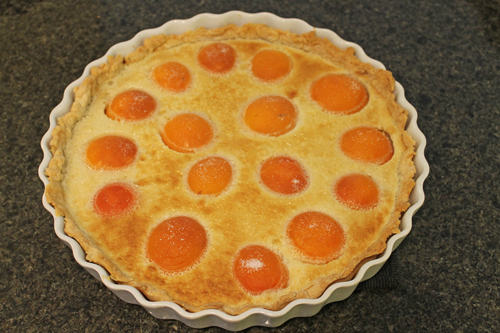
apricot cream tart

After two months of relishing the transient taste of summer fruit, I've reached the midsummer doldrums. Suddenly I'm not as obsessively smitten with the cavalcade of fruit available this time of year. Of course I still enjoy eating a ripe peach or crisp cherries, but after spending most of May and June smelling and caressing each peach or apricot as I pick through the lot to find the perfect one, I'm a little over it. Nope. At this point I now simply toss four or five pieces of stone fruit into a bag, cart them home with everything else, place them in a bowl on the counter and hope that someone eats them in the next day or two so they don't molder and collect fruit flies. The more I think about it, the more I find that my relationship with summer fruit is sort of like a romance. You start off all hot and bothered by the unique amazing characteristics that make you fall in love, and end up taking the object of your devotion for granted later when life returns to normal. But that doesn't mean that my time romancing summer fruit is over, because baking brings out a whole new sense of wonder.

Each summer I try to find one or two new fruit recipes. Last year I couldn't seem to make my cherry almond tea cake enough, and I still find that recipe to be very appealing. This summer it's an apricot cream tart. Like so much in life, a series of mishaps led to the creation of this recipe. I was going to make a peach tart, but then the peaches I had bought turned out to be flavorless (more evidence of my waning devotion to picking the perfect summer fruit). So with only eight apricots on hand, I stared at my blind-baked tart crust and began to imagine new possibilities.

The idea of a cream tart sounded intriguing, and so with some advice to check out Julia Child's Tarte Normande aux Pommes recipe from Mastering the Art of French Cooking, I proceeded. As with most Julia Child recipes, the cream filling in the recipe had a lot of actual heavy whipping cream in it, an ingredient I didn't have on hand. Plus I am trying to reduce the use of whipping cream in my life (and arteries). So after doubling the recipe and altering some key ingredients, I laid my apricots on top of my crust with some sprinkled sugar and then poured in the filling. After about a half hour I opened the oven door to find one of the prettiest tarts I've made in ages. But would the taste live up to the presentation? As a matter of fact, it did. The cream filling was rich and dense while the apricots nestled within offered not only sweetness, but also a welcome hint of tartness to counterbalance the flavors.

My love affair with summer fruit is now revived.

APRICOT CREAM TART

An apricot tart with cream filling inspired by the Tarte Normande aux Pommes recipe from Mastering the Art of French Cooking by Julia Child, Louisette Bertholle and Simone Beck

Prep time:
10 minutes
Cook time: 30 minutes
Total time: 40 minutes
Yield: One 10-inch tart

Ingredients:

1 pre-baked tart crust (recipe below)
8 medium to large apricots (you can also use peaches, apriums, pluots or nectarines)
2 large eggs
2/3 cup sugar for the cream filling plus 1/4 cup for the fruit
1/3 cup flour
1 cup whole milk
1 Tbsp brandy or 1 tsp vanilla extract
2 Tbsp apricot jam (optional)

Instructions:

1. Line the bottom of the pre-baked tart crust with apricot jam if using.

2. In a medium bowl, whip the eggs with 2/3 cup of sugar for about one minute. Add in the milk, flour and brandy (or vanilla extract) and then whip until fully incorporated.

3. Cut the fruit in half and remove the pits and mix with the remaining sugar. Lay the fruit on the tart crust in a circular pattern.

4. Gently pour the filling into the crust, being careful not to cover the fruit.

5. Bake for 20 - 25 minutes, or until the filling is just firm.

6. Remove tart from oven and let cool before serving.

CREAM CHEESE TART CRUST

Prep time: 10 minutes
Cook time: 20 minutes
Total time: 35 minutes
Yield: One 10-inch tart crust

Ingredients :

1 stick cold unsalted butter (cut into small pieces)
3 Tbsp cold cream cheese
1 3/4 cups flour
1/2 Tsp salt
~5 Tbsp cold water

Instructions:

1. Mix butter and salt into flour with your fingers, a pastry cutter or in a food processor while pulsing until mostly incorporated.

2. Add in cream cheese the same way you added in the butter.

3. Slowly mix in the water (being sure that it's very cold) until the flour mixture starts to hold together and then stop.

4. Wrap the dough in plastic wrap or dump in a large ziplock bag (I prefer the latter) and refrigerate for at least a half hour (or up to one day).

5. Preheat oven to 350 degrees (or 325 in a convection oven) while you roll out your dough and then place in a 10-inch tart plate.

6. Poke some holes with a fork on the bottom of the tart crust, line the dough with foil or parchment paper and then lay some pie weights or dried beans on top.

7. Bake for 15 minutes and then remove the pie weights/beans and foil/parchment paper and bake for another 7-10 minutes or until just barely turning golden.

8. Remove crust from oven and let cool.

posted by | posted in baking and bakeries, dessert and chocolate, food and drink, recipes | Comments Off
tags: , , , ,

Summer Trifle

Monday, July 20th, 2009

peaches for trifle

The best summer desserts are simple to make, portable for picnics, and highlight the season's sweet, luscious fruit. Trifle would be at the top of my own list.

While its name might lead you to think that this dish is of little consequence, it belongs in the pantheon of fantastic frugal food, along with panzanella (another wonderful summer dish) and pain perdue (good anytime of the year or day). Back when little bits of bread or cake were far too valuable to toss away, even if stale as a board, cooks invented ingenious ways to use up every last crumb. Dry cake has a way of soaking up endless flavor and, in the process, transforming itself into a silken gift.

booze for trifle

A recent pile of cake trimmings, a bit too much creme fraiche in my refrigerator, and a few overripe peaches, combined with favorite pantry staples, Knob Creek Bourbon and Sonoma Syrup, melted together into a most heavenly dessert. Sherry, amaretto, Cointreau, or even orange juice could have stood in for the simple syrup and booze, but do keep in mind that the English call this Tipsy Cake for good reason.

While trifle properly appears in a glass-footed, straight-sided bowl, making it in a portable container means you can bring this dessert to a picnic to share its goodness.

Following its humble, serendipitous origins, I think it best to avoid recipes when making trifle, as no two will be the same. (Otherwise, you've actually gone out to buy all the ingredients rather than looking around your kitchen for odds and ends to use up.) A quick run to the corner store is fine for one or two, but if you're ticking off every ingredient on the list while at a grocery store, then you've kinda, sorta lost the heart of this dish.

trifle cake

MAKING SUMMER TRIFLE

What you'll need:

1. Enough stale cake or cookies to fill 1/3 of your container.

2. Enough fresh, summer fruit to fill another 1/3. If you don't have enough, good-quality jam is good, too.

3. Enough yogurt, whipped cream, mascarpone, creme fraiche or similar creamy ingredient to fill the final 1/3.

4. Booze or juice sweetened gently with simple syrup or sugar or jam.

5. If desired, flavorful gilding such as vanilla, citrus zest, fresh herbs or cocoa powder.

Like a lasagna, it's all about layering and eyeballing. The most important steps are making sure the cake gets brushed with plenty of liquid and that it's in direct contact with the creamy diary. That's how it will melt into lusciousness. If you're fancy, you can take extra time to arrange the fruit into colorful layers, like those sand-filled souvenirs you see at truck stops.

Finish by smoothing the top with a creamy layer. You can reserve a few pieces of fruit for garnish later, or enjoy -- like I do -- that lovely expanse of white that magically hides so many layers beneath.

Now comes the tough part: waiting. The trifle needs its beauty rest just like we do. A four-hour nap in the fridge will bring together the ingredients, but eight hours is what it really needs, if not a full-on, twelve- to twenty-four hour deep sleep. After that, a few serving bowls and spoons are all you need to serve and enjoy.

peach trifle finished

posted by | posted in dessert and chocolate | 1 Comment
tags: , , , , , ,

Plumalicious Summer Plum Jam

Thursday, July 10th, 2008

plums for making plum jam"splat"
"splat"
"splat"

Every night, for the past week, we've been awakened by the sound of fat, juicy plums plummeting from the trees in our backyard to the ground. We pick them as fast as we can, but some are simply out of reach, and others just sneak up on us, ripening suddenly and then hurling themselves out of the tree.

We somehow managed to pick about six pounds of plums before I decided that something must be done.

So, as I did last year, I decided to make plum jam.

A few things have changed, though, since I last made jam. First of all, I moved. Last year's plums were harvested in the heart of the Mission: small yellow plums that were subtle and pleasantly sweet-tart. We managed to spin those into many jars of jam and chutney before we moved.

Secondly, I realized that over the past year I've learned a bit about pectin. The jam we made last year, while delicious, was a bit thin and watery. I wasn't about to make that mistake again. Pectin causes jams and jellies to gel, and some fruits have more and some have less. Apples, it turns out, have a lot of pectin. So when you are trying to make jam with fruits that are low in pectin, like berries or plums, it's a good idea to use an apple, peel and all (trust me, you will never know it's even in the jam). Also, you need the right balance of pectin, acid, and sugar with the fruit to make it all balance and gel correctly.

Anyway, here in our new house we have not only one, or two, but four different plum trees. Lucky for the trees that I love plum jam too, since they've been somewhat neglected over the years (we unfortunately moved just after the plum harvest last year and missed the whole thing). And lucky for me that my husband is tall and can reach all those rogue plums, even though we still wake up every morning to a smattering of plums.

Plumalicious Jam

plum jam

Makes: 13 half-pint jars

Ingredients:
About 12 cups (about 6 lbs) pitted and roughly chopped plums
1 or 2 green apples
Juice of 1 lemon or lime
2 lbs granulated sugar
2 small plates in the freezer

Preparation:
1. Cut up all the plums and put them into a heavy, 5-quart stockpot.

put plums in 5-quart stockpot

2. Grate the apple, skin and all (but not the core), on a box shredder-grater. Add the apples, lemon or lime juice, and sugar to the plums.

grate the apple on a box shredder-grater

3. Stir the plum mixture thoroughly, place over medium-high heat, and bring to a boil.

plum jam cooking

4. Lower the heat to medium and let boil, skimming the foam occasionally and smashing the fruit as it cooks. Boil for about 20 minutes.

plum jam cooking

5. When the jam starts to look thickened, start testing it by spooning a small amount onto one of the chilled plates. This will chill it quickly and let you see how thick it is. Keep testing it until the jam is thick enough, but don't cook it longer than about 30-35 minutes. If it's not thick enough for your liking, next time add an extra apple. Don’t worry, the jam will still be great.

6. Once the jam has thickened, get your clean jars set up. You can re-use the glass jars, but you should get new lids and rings each time. If you have a canning funnel, it makes your life a lot easier for filling jars.

plum jam jars

7. Fill each jar to about 1/2 inch from the top, leaving a little breathing room. Screw on the lid, but not too tight.

plum jam in jar

8. Turn the jars over at once so they stand upside down on their lids and let them cool to room temperature. This should seal the lids. If the lids are sealed, the top will be indented. You can store the jam in a cool dark place for up to a year. If not, store in the refrigerator and use within about 1 month.

plum jam jars turned over

posted by | posted in recipes | 3 Comments
tags: , , , , , ,

Ze’ev Vered’s Garden

Sunday, August 19th, 2007

The pot of chives was waiting for me in Moraga. Little did I know there was an entire afternoon of wonder in store for me when I went to pick it up.

With just his hands, a shovel and a wheelbarrow, 79-year old Ze'ev Vered has shaped seven terraces of gardens and orchards. Trees bearing pistachio, quince and pomegranate push up against the golden hills. A 6-foot cyclone fence that encircles his garden, to deter the insistent deer, has long been covered with the rambling vines of eight different varieties of grapes. The paths between each hand-weeded bed switch back several times, a steep trail that leads from one beautiful, delicious plant to another.

Raised on an Israeli farm and then trained in forestry, Vered landed four decades ago in the Bay Area. He settled into insurance work to help raise his family, but much of his free time was spent building up his garden and cooking -- he handled all the savory food while his wife took care of the sweets. When he retired, Vered finally launched a business that expressed his passion: Herb Gardens by Ze'ev. He specializes in culinary herbs, helping his customers grow unique gardens that reflect their favorite cuisines, from my little chive pot to complex, professionally tended installations.

Vered treated me to a lunch: Salad Caprese with his own sun-warmed tomatoes and a lovely barley soup made from the herb-stuffed carcass of a spit-roasted turkey. After I'd had enough to eat, he walked me slowly through his garden.

Here are some highlights from my amazing tour, sprinkled lightly with Vered's salty jokes and stories:


After many years, Vered has perfected his own secret blend of soil. For example, powdered dolomite lime sweetens the mix to provide the basic pH that culinary herbs prefer.


Whenever his wife and he traveled to Mexico, they'd bring back a few pots. If you find one you like, he'll sell it to you.


Vered sequesters his newly potted plants inside wire cages for a week to protect them from squirrels, who love to dig up the plants. His plants all have well-established root systems, and as soon as you get your herb pot home, you can begin harvesting and cooking.

At one of his lectures, a skeptic kept asking Vered, "Are you sure that your plants are organic?" He answered patiently until the third time, when he couldn't help adding, "Yes, these plants are organic. And not only that, they're orgasmic -- I get a real charge out of growing them!"


Welcoming visitors at the entrance to his herb garden are pots of low-spreading, tiny-leafed Corsican mint.


The herb invites you to caress its velvety surface and then imbues your hand with its fresh, summery perfume. Someday, I'm going to have a garden path with Corsican mint growing in the cracks between stones.


The leaves of this slightly bronzed peppermint has a sharp flavor that lingers long. I could feel its menthol in my sinuses.


Spearmint has a softer, rounder flavor. Growing in this large patch is what Vered calls "Safeway mint."

A much-lauded celebrity chef, who will here remain nameless, needed fresh mint for his cooking show. Vered gets a call from the chef's assistant. "What kind of mint does he need?" Vered asks, referring to the many varieties he grows. A pause on the phone. "You know, the Safeway kind."


Three sages hold court along his retaining wall.


For the first time, I came face to face with a fresh caper. If you don't pick and pickle the small bud, it opens into a beautiful white and pink-tinged blossom.


Recently planted caper bushes that Vered hopes will soon cascade down part of his hillside.


Enough horseradish to feed a small village. Vered likes using its leaves in salads before pulling up their roots and bottling his own sauces.


Mediterranean bay, known as true laurel, has a sweeter, less harsh flavor than California bay. Here, small plants spring up from a potted tree's crown roots.


Tomatoes grow two levels down from his fruit and nut trees. Asked if he shares his fruits and vegetables with his neighbors, Vered says "Back when they used to be nice to me!"


Golden quince with their soft, delicate fuzz.

At the top of one hill, just past the plum and pistachio trees, Vered placed a bench in the shade of grape vines. He can sit and gaze across the valley. I asked him if he sat here with his wife, while she was still alive, and he smiled mischievously. "Oh yes...and sometimes we held hands."


Pistachio nuts just beginning to blush.


Over the next several months, this tiny bud will flower, fruit and ripen into a juicy pomegranate.


Vered grows a rare variety of Asian pear, the only sand pear that resembles its European cousin in shape.

Vered picked some tomatoes and plums for me to take home, and then asked if I wanted to taste some of his green tomato pickles. Uh, yes, I LOVE green tomato pickles!


The tiny, still green cherry tomatoes are tart, a nice pick-me-up after the hot afternoon sun. They're preserved in his own special brine.

To a colleague who asks for the recipe to his kosher dill pickles: "Well, first you cut the tip off each little cucumber...."

Herb Gardens by Ze'ev
Ze'ev Vered, M.S.
(510) 631-0199 (925)631-0199
P.O. Box 6486
Moraga, CA 94570

posted by | posted in Uncategorized | 6 Comments
tags: , , , , , , , , ,

Peach Advice.

Monday, August 6th, 2007

Love is in the air: peaches are here, and all is right with the world. Yes, my sunglasses are rose- tinted, why do you ask?

I've been on the road, taking my show with me. First NYC, then Portland and most recently, Chicago. It's been fun, educational, hot, and delicious, but I've missed being home. Home is where the peaches are. Home is where I know the season's signage at my local farmers' market is. I wait and pine for strawberries, cherries soon follow, and after cherries, O Glorious stone fruit arrives, bang! a cornucopia drops out of the sky and lands on my head! It's fast. It's furious. And no one can keep up. Chefs and pastry chefs change menus daily, attempting to think of newfangled dishes to highlight summer's overwhelming, non-stop conveyor belt of tree fruit to farm, to market. It's all about pitting and prepping and ripening, and those of us who really care, trying to keep our fruit out of walk-ins.

We want our diners to get a taste of what we felt when scooping up the first apricots, felt their soft downy skin and licked our chins attempting to keep every last drop of apricot nectar, spilling out like the well which Micky and the sinister brooms let loose in the night.

This past weekend I had the extraordinary pleasure of working for my favorite peach farmer, Carl Rosato of Woodleaf Farm. On Saturday and Sunday I joined an exceptional crew to sell August's first Cassie peaches, pears, a few undercover Pink Pearl Apples (!!!), tiny sweet green grapes, red pears, mixed figs, white peaches, a dozen or so nectarines and Suncrest peaches.

Cassie peaches, in my humble opinion, are a reason for living.

While working at the markets this weekend I gave out a lot of peach advice. Peach advice for ripening, baking, storing, freezing, jamming, eating, and handling. I received a funny email, in fact, from my friend Guy today,
"That was cool running in to you yesterday, selling peaches. Can't imagine what the customers though when they asked, 'Do you have any good ideas what to do with them?' AHAHHAHAH."

A fruit-inspired pastry chef could not be happier having a job wherein he was surrounded by exquisite fruit all the day long. Fruit is an exciting field of study because not all fruit is created equal. One must know the inner workings of the family of fruit when one approaches a new branch.

Some fruit must always be picked unripe from the tree, the best example being pears. Certain fruits will continue to ripen off the tree, two examples are pineapples, and most stone fruit. There are cranky fruits who do not like to be picked with a machine, cherries, for example. And there are laid back fruits which can go either way, they're easy, like oranges or walnuts.

Peaches will ripen off the tree, on your counter, if you so wish. A good farmer will pick fruit right at the moment where she/he can get it to market looking alright and then allow the eater to ripen it a bit more to get it where it's desired. Many fruits will get softer but not sweeter if picked too early; mangoes are a great example of a fruit whose perfume is stolen when picked green or green-ish.

This weekend, in the midst of excitedly talking a mile-a-minute about peaches, I heard some great peach advice from customers. My favorite tidbit came from a fellow at the San Rafael market in Marin named Patrick. It made me stop dead in my tracks and so I wanted to share it with y'all.

What works for me, and so I share it with others is this: place peaches shoulder side down (aka "stem end"), on a flat surface, at room temperature, just until there's a bit of give under the skin, then refrigerate or eat.

But Patrick had a brilliant idea. Refrigerate peaches/stone fruit all at once and take out, placing on counter (or plate) as I've described, a few days before eating. Refrigerating fruit at home, (as opposed to the massive cold storage facilities in the "produce stream" wherein "refrigerators" are the size of private airplane hangers and temperatures are kept between 30-34F), means the fruit's ripening process is slowed down, but not stopped. With Patrick's method you don't have a lot of really ripe fruit in the fridge at once. And, also, you horde a some power over the ripening process, therefore giving yourself more time to relax, find recipes you love, and do with that fruit what you want without the pressure of doing that right now!

Patrick's method also allows you to buy a little more fruit than you might need or want to consume in one day or week. (Which of course makes the farmers happy.)

Every peach is a snowflake. Every varietal is different, every farm growing a particular varietal grows them differently. Every soil and location and method will produce a different peach. Every tree on in that orchard growing that peach will ripen and concentrate its sugars and acids differently. Depending on how much of one kind a farmer has, and which market they're selling them at, will determine or fetch a different price. And every mouth eating that peach like a snowflake will react to it differently.

We all know at what point exactly we like to eat a banana. Even within one family each member will like a slightly more or less green specimen.

My Peach Advice? Jot down the names and details of the peaches and the farmers with whom you interacted with this year so that next year you will leap at the chance to buy your favorites, have mouth notes from which to comparison shop/eat, and ripen gently and slowly the fruit you choose to buy.

And if you see me selling peaches, please stop by and say hello, I'd love to expound further, or just introduce you to my favorite fruit!

posted by | posted in farmers markets | 6 Comments
tags: , , , , , , ,

Plum Chutney: Tales from the Backyard

Saturday, July 28th, 2007

Canning for me conjures up childhood memories of being in the kitchen with my mom and her friends, usually on a hot steamy Texas summer day, and "putting up" bread and butter pickles, fresh raspberry jam (with seeds!), and ripe whole tomatoes. Even with the sweat pouring down your face, there's no better time to can than in the middle of the summer, at the height of the season, when everything is bursting with flavor: crisp cucumbers, ripe red tomatoes, juicy stone fruits, plump berries. Better still when you can pick that fruit out of your own garden.

We are lucky enough to have a big shady plum tree, right smack in the middle of our little garden, right smack in the heart of the Mission in San Francisco. If you think that isn't fair, then start making friends with people who have fruit trees and vegetable gardens; we always seem to have more than we can eat or harvest and are looking for others who will enjoy it.

Tales of plum wine gone awry (think essence of gasoline) from years past still haunt my flat and the flats above me. And last year we missed the boat and the plums ripened before we could harvest them. Which meant tracking slimy fruit globs into the house, sticky matted fur on the cat, and drunken birds and rats feasting on the fermenting fruit. In an effort to avoid that joyous occurrence (have I not painted a lovely picture?), my roommate Gary (staunch believer in preparing for the revolution) made a concerted effort to rally the troops and plan for the big harvest.

So a few weeks ago, when the tree was bursting with perfectly ripe, big juicy green plums, we set aside our sunny Sunday and three of us--armed with our giant canning pot, a ladder, and numerous plastic grocery bags--plucked all of the plums we could reach.

After throwing around elaborate ideas of jams and jellies and syrups and pickles and more, including drawing up a chart of flavors that go well with plum (including but not limited to cardamom, ginger, and whisky) as well as different preparations (including roasting the plums) we arrived at a consensus: to prepare a simple plum jam that would let the tart yet subtle plum flavor shine, and a more interesting plum and apple chutney.

It took all day, but after a while, the cold beers came out, the sweat started pouring down our faces, and it was all worth it.

G-Street Plum Chutney
Makes about 14 8-oz jars

2 cups sugar (or a bit less if the plums are very sweet)
1 1/2 cups white vinegar
1 cup water
1 teaspoon salt
2 sticks cinnamon, broken into 1-inch pieces
1 2-inch piece fresh ginger, peeled and thickly sliced
1 teaspoon whole allspice
Cheesecloth
About 6 1/2 lbs plums, pitted and quartered
2 large apples, such as Granny Smith, peeled, cored, and diced
1/2 large yellow onion, peeled and finely diced

In a large, heavy pot, combine the sugar, vinegar, water, and salt. In a 6-inch square of cheesecloth, tie the cinnamon sticks, ginger, and allspice into a pouch and add it to the pot. Heat the mixture over medium-high heat until boiling, stirring occasionally. Reduce the heat to medium and simmer for about 5 minutes until the mixture becomes syrupy.

Add the plums, apples, and onions. Cook, stirring often, over low heat, until the mixture is thickened, about 40-60 minutes. Remove the spice bag. Seal in hot sterilized jars.

For proper canning instructions, check out:

A very serious and official guide

A good online step-by-step guide

Paul and Bernice, who are awesome!

special thanks to Gary and Keith for the lovely plummy pix

posted by | posted in food and drink, recipes | Comments Off
tags: , , , , ,

Subscribe to BABrss posts

BAB Archives

  • Calendar

  • February 2012
    M T W T F S S
    « Jan    
     12345
    6789101112
    13141516171819
    20212223242526
    272829  
  • Sponsored by