• Bay Area Bites

  • Culinary Rants & Raves from Bay Area Foodies and Professionals

Posts Tagged ‘preserving’


DIY: Seville Orange Marmalade

Sunday, January 16th, 2011

jars of marmalade

Being an enthusiastic jam maker means never arriving empty-handed. It also means heavy luggage that has to be checked, especially if you're being hosted by several different kind folks over the span of a week or so, as I was during an East Coast holiday jaunt last month.

But it's worth schlepping a dozen glass jars among the socks and sweaters, if you can send an old friend into eye-rolling, toe-scrunching ecstasy with one spoonful of last winter's Seville Orange Marmalade. Here, on an icy, slushy Manhattan morning, was the concentrated sunshine of a California summer, brought to full ripeness by the cold, simmered down into an aromatic, bronze-y gold essence.

Of course, it helped that this friend once owned a ruined castle in a glen and is mad for all things Scottish. Not everyone loves marmalade; like chutney, it has its diehard fans, who have strong opinions on whether the citrus peel within should be in meltingly fine shreds or rambunctious fall-off-the-toast strips, or if the marmalade itself should be cheery and sunny or bitingly bittersweet. I can give a jar of strawberry jam to anyone; with marmalade, I ask first, because there are many people out there who would rather put anything, even the cheap grape jelly found in those little foil tubs at the diner, onto their toast instead.

In my experience, though, people with an affinity for Scottish things, even just plaid and a tot of Ardbeg, are more likely than not to appreciate a good marmalade. According to "Maximum Marmalade," a well-researched and entertaining chapter in John Thorne's most recent book, Mouth Wide Open: A Cook and His Appetite, marmalade found its way onto the Scottish breakfast table at about the same time as the morning's masculine "wee dram" of chill-chasing whisky was being replaced by the gentler, more feminine pot of tea. What could, in its brawn and bite, slap a man's tastebuds awake and give him the strength to face the damp, the fog, and the accents of Glasgow? Why, marmalade, sharp and complex, tart and snappy with just the cheekiest edge of sweetness. (And if you want to celebrate Burns Night, coming up on January 25th, why not start the day properly with porridge, oatcakes, and marmalade?)

But what is marmalade, anyway, and how is it different from jelly or jam? First off, it's made from citrus, traditionally oranges but potentially any kind or combination of citrus fruit, from Rangpur limes to grapefruits. Unlike jelly, made from juice only, or jam, made from crushed fruit (or fruits) with all their juice, marmalade is made from the juice, pulp, and peel of citrus fruits, cooked with sugar and (usually) water. The peel may not always be visible in the finished product (it can be strained out for clarity after cooking), but the fragrant oils in the peel are what gives marmalade its unique flavor. Without peel, you'd just have orange jelly.

As noted earlier, you can make marmalade with just about any citrus fruit. But true-blue British marmalade lovers know that the most classic marmalade is made from just one fruit: the Seville orange, a knobbly, seedy, green-patched fruit cultivated not for its scant and sour juice but for its ravishingly aromatic peel. These Spanish-born oranges, which make a marmalade of rich complexity, were for a long time the only oranges used for marmalade in Britain. (For a deep and fascinating dive into the centuries-old history of British preserving, C. Anne Wilson's The Book of Marmalade is a must-read.) I've made numerous marmalades over the years, and nothing compares in depth and intrigue to one made with Sevilles.

Local jam makers like June Taylor do make wonderful marmalades, but alas, the high price of those itty-bitty jars can be prohibitive to a daily toast habit. Anyway, aren't we all making our own now? Making homemade marmalade can be a sticky business, but one cold afternoon's worth of effort can produce months of happy mornings. And if you have any oranges left over, you can make duck à l'orange, or the tangy, garlicky Cuban marinade known as mojo.

Seville oranges, sugar, and equipment
Seville oranges, lemons, sugar, and equipment (from left: jar lid, jars, wide-mouth funnel, muslin bag, jar lifter tongs)

Now is the time to find Seville oranges: they have only a brief winter season, and are grown on only the smallest commercial scale even in California. The only grower I've found with a steady supply of Sevilles in season is the DeSantis Farm from the Central Valley. They sell these and many other beautiful specialty varieties at the Alemany Farmers' Market on Saturdays, the Marin Civic Center market on Thursdays and Sundays, and the Heart of the City Farmers' Market on Wednesdays.

A warning: don't buy anything unless it's clearly marked and sold as a Seville orange. Unless they work for an orchard specializing in odd varieties of citrus, like Buddha's Hand or bergamot, few farmers' market sellers will have any idea what a Seville orange is. Just asking for Sevilles, or for good marmalade oranges, isn't enough; sellers are in the business of selling, and the easiest way to deal with a customer's weird request is simply to sell her whatever's already on the table, be it a navel or a satsuma. Currently, both Berkeley Bowl and Bi-Rite Market have Seville oranges for sale, for $1.69/lb and $3.99/lb, respectively.

If you make jam on any kind of a regular basis, you should already have the basic gear: a scale, a wide-mouth funnel, a jar lifter, a bunch of canning jars, and a wide, heavy pot for cooking. If not, make the small investment and go to the hardware store and at least get the scale and the jar lifter. Trying to wrestle slippery hot jars in and out of a potful of boiling water with a pair of tongs is a crazy-making endeavor, trust me. And to measure fruit and sugar accurately, you really do need a small, preferably digital kitchen scale, available at any well-stocked kitchen-supply or hardware store.

Something else to know about marmalade: sometimes, you do everything right, and it doesn't seem to gel up. Don't despair, and don't cook it to death trying to get it to thicken. Once you've added the sugar, cooking it longer (say, more than an hour) won't always give you better results. Overly long cooking can break down the pectin and/or caramelize the sugar, giving a heavier, darker taste that's not so bright and citrusy.

If everything else about it seems right, jar it up and put it away for a week or two. I've had this happen to me--imagining that I'll have to re-open the jars and try boiling down the whole mess a second time--only to find that, left to its own devices for a while, the marmalade has gelled up perfectly all by itself. It happens. So, don't despair right away.

Seville Orange Marmalade
Particularly heavenly with hot tea and toast made from last year's recipe for Easy Multi-Grain Bread.

Makes: 8 half-pint jars

Ingredients:
3 lbs Seville oranges, approximately 8-10 oranges
2 lemons
2 quarts plus 1 cup water
3 lbs granulated sugar, preferably the pale-blond, organic kind

    Special Equipment:

  • small muslin jelly bag or 8"x8" doubled square of cheesecloth
  • wide-mouth funnel
  • jar-lifting tongs
  • 8 half-pint canning jars or 4 pint canning jars, with metal rings and flat lids
  • a wide, heavy, non-reactive pot, such as copper, stainless steel, or enameled cast iron
  • a tall, deep pot
  • candy thermometer (optional)
  • a few saucers, in the freezer

Preparation:

1. Wash oranges and lemons well. Halve fruit and squeeze juice into a bowl. Pour the juice through a strainer, and drop the seeds into a separate bowl.

2. Using your fingers, and possibly a serrated-edged grapefruit spoon if necessary, pull out the remaining pulp, seeds, and membrane from inside the fruit halves. Using the spoon, scrape out as much white pith from the inside of the fruit halves as you can. Put the pulp, seeds, membrane and pith into the bowl of seeds.

3. Cut the now-scraped halves into quarters. If you have a food processor, shred the quarters using the slicing disk. Otherwise, use a mandoline or a very sharp knife to slice the peel into fine strips.

4. Scoop the pulp, pith, and seeds into a muslin bag or a square of cheesecloth. Tie the bag shut, or knot the pointed ends of the cheesecloth square together firmly.

Simmering the peel to make marmalade

5. Pour the juice, water, and shredded peel into a large, heavy pot. Add the bag of pulp. Bring to a simmer over medium-low heat. Cover and let simmer gently for about an hour, until peel is very tender.

6. Remove pot from heat. Lift out bag, put it in a bowl and let cool for 15 or 20 minutes, until it can be comfortably handled.

7. While bag is cooling, add sugar to pot, stirring until dissolved and mixture is clear.

8. When bag is cool enough to handle, hold bag over the pot and squeeze firmly to get all the liquid out. Yes, it will feel slimy; this is a good thing. That slimy-feeling stuff is the natural pectin present in the seeds and membranes, and it's what will make your marmalade gel.

Marmalade ready to be jarred

9. Bring pot to a fierce boil, stirring frequently to make sure it doesn't burn or stick. It should reach the setting point in about 20-30 minutes. Visually, it should look dark amber in color, with a maple-syrupy consistency. The peels should look thinned down and translucent.

    To check the set:

  • Use a candy thermometer. The setting point should be reached around 220 degrees F. Or,
  • Remove pot from heat. Take a saucer out of the freezer and drop a spoonful onto the saucer. Return it to the freezer for a minute or two. Push the spoonful of marmalade with your finger. If it feels like warm honey and sets in one place rather than running all over the saucer, it's done. If not, return pot to heat and cook, stirring, for a few more minutes, then test again. Don't expect it to be as thick as store-bought marmalade at this point; it won't fully gel up until cold.

10. Let the marmalade sit for 30 minutes, in order to keep all the peel from floating up to the top of the jars. Meanwhile, fill a large, deep pot with hot water. Sink jars into the water--they should be covered by at least an inch. Bring to a boil and simmer for 10 minutes to sterilize jars.

11. Lift jars out of the pot. Using a ladle and a wide-mouthed funnel, fill jars to within 1/4" inch of the rim. Wipe rim with a wet paper towel or clean dish towel dipped in hot water. Top with flat lid. Screw on ring finger-tight.

12. Replace jars in pot of hot water. Bring pot to a boil and simmer for 8 minutes. Cover a tray or nearby counter with a clean, dry dishtowel. Lift jars out of hot water and let cool completely on towel. Don't disturb the jars while they're cooling. As they cool, you should hear a sharp popping noise from each jar as it seals.

13. When jars are completely cool, check lids for seal by pressing in the middle of lid. Lid should not move. If lid pops up and down, it didn't seal. Store any unsealed jars in the refrigerator and eat within a month.

14. Loosen rings and wipe off any accumulated moisture. Replace rings, if desired, and store sealed jars in a cool, dry, dark place. Once opened, store in the refrigerator and eat within a month.

posted by | posted in cooking techniques and tips, DIY and urban homesteading, farmers markets, food and drink, recipes | 1 Comment
tags: , , , , ,

Ten Top Food News Stories of 2010: Part One

Saturday, January 1st, 2011

Food, glorious, food. It's that time of year people: Bay Area Bites brings you the best in food news for 2010.

In this two-part package, we look at the national trends and topics that sizzled over the past 12 months and serve up some local flavor on the side.

Feel free to weigh in with your own edible highlights from the year that was. In no particular order:

eggs1. Food Safety

From previous years we've learned that what we eat can make us sick (tainted peanut butter, beef gone bad, and salmonella-laced spinach ring any bells?).

This year's food alerts: A massive egg recall and lingering questions about health risks associated with Gulf seafood.

Thankfully, late in the year Congress passed the Food Safety Modernization Act to protect consumers from food products hiding harmful poisons or pathogens like E. coli and salmonella, a food policy coup that greatly strengthens the Food and Drug Administration's ability to keep unsafe food off supermarket shelves and restaurant plates by expanding the agency's recall abilities and access to records.

Local angle: Bay Area-based media consultant Naomi Starkman kept the spotlight on potentially dangerous foods for sale in reports on Civil Eats and Huffington Post, including a story about a Consumers' Report study that found packaged salad laden with fecal bacteria.

DIY - Canning2. D.I.Y. Food

Age-old practices such as canning, jamming, foraging, fermenting, growing and gleaning are suddenly new (and cool) again. Chickens are the au courant backyard animal of choice. And classes in the Domestic Arts all the rage.

The New York Times Magazine traveled west to take pretty pictures of urban homesteaders from the Bay Area, The Washington Post chronicled the canning trend long strong here, and Vogue got down and dirty with city farmer Novella Carpenter, who donned a pink cardigan in a concession to fashion for a photo shoot with the stylish mag's scribe Hamish Bowles. (Carpenter seemed to pop up everywhere last year, including on KQED.)

Local angle: In addition to Novella Carpenter's Ghost Town Farm in Oakland, the Bay Area D.I.Y. brigade created a kind of cottage industry, hawking their homemade wares at venues like SF Underground Market (Underground Market on BAB) and East Bay Underground Market, as well as the Pop-Up General Store.

And they wrote about it too; notable D.I.Y. books this year included Rachel Saunders' tome The Blue Chair Jam Cookbook, Napa forager Connie Green's The Wild Table (featured on The California Report), and D.I.Y. Delicious by Vanessa Barrington. Online, San Francisco's Sean Timberlake launched Punk Domestics, a curated space for D.I.Y.-driven cyber self-publishers.

Classes in baking, brewing, beekeeping, bottling, animal husbandry and more were in high demand at venues like 18 Reasons, Urban Kitchen SF, the Institute of Urban Homesteading, and BioFuel Oasis, a worker-owned cooperative begun by Carpenter and friends.

Obama Farmers. Photo collage by Roger Doiron at Eat The View

Obama Farmers. Photo collage by Roger Doiron at Eat The View

3. Food Politics

In an era of identity politics and culture wars, food fights join the fray. What you eat (and what you choose not to consume) speaks volumes about your political persuasions. First Lady Michelle Obama, dubbed America's foodie-in-chief by The Atlantic, talked about ending obesity and increasing activity with her Let's Move initiative. She also championed growing food and farmers' markets -- and brought to her kitchen top chefs like Sam Kass. On the other hand, Rush Limbaugh mounted a modern-day Twinkie defense (this time citing the fact that a man lost weight on a diet consisting mostly of the infamous junk food as evidence that all nutrition science is bogus). Sarah Palin showed up at a Pennsylvania school bearing cookies and dished up s'mores at a diner in a calculated countermove to a Michelle Obama dessert comment. Professional rager Glenn Beck even weighed in. Sigh...

The task of putting the food wars in context fell to ex-Washington Post writer Jane Black, who has moved to Huntington, West Virginia with new husband editor Brent Cunningham to see what happens to the community's eating habits now that celebrity chef Jamie Oliver has skipped town.

Local angle: Taking the happy out of Happy Meals: Outgoing SF Mayor Gavin Newsom vetoed a Board of Supervisors ban on plastic toys in fast-food meals. But the supes struck back, ensuring that no child in the city will be tempted to eat junk food simply to get their hands on a cheap trinket that will likely break before you can say Big Mac.

Jamie Oliver Food Revolution. Photo by Colleen Laffey

Jamie Oliver -- Food Revolution. Photo by Colleen Laffey

4. School Food

For the majority of schoolchildren around the country school lunch sucks. Big time.

But change is coming. This year, Jamie Oliver brought his Food Revolution to the States, an anonymous teacher chronicled what she ate every day in her school cafeteria in her blog Fed Up With Lunch, and President Obama signed into law the much-anticipated Healthy, Hunger-Free Kids Act of 2010. The legislation bans some junk food, and gives a small, though historically significant, six-cent increase per child per lunch (the first such boost in the reimbursement rate in 30 years), and there may be more lunch money tucked inside the bill to boot.

Local angle: Veteran school food reformer Alice Waters claimed victory for her Edible Schoolyard model following the results of a study on Berkeley's School Lunch Initiative from University of California at Berkeley researchers.

street food - chairman bao truck in san francisco

Chairman Bao truck in San Francisco

5. Street Food

Fueled by Twitter feeds, gourmet grub on the go continued to attract a growing following around the country as food trucks hit the streets in increasingly more legitimate ways, boasting inspired names and bright colors, to wit The Best Wurst in Austin, Big Gay Ice Cream Truck in New York City, and Chairman Bao in San Francisco.

Food trucks went a step further in size, too, with the introduction of bustaurants, stripped former public transit buses reconfigured as a mobile kitchen, and, in some cases, even offering eat-in seating. In L.A. the double decker Worldfare dished up ethnic eats, while closer to home Le Truc in San Francisco served up gastro-pub fare, and Diamond Lil debuted to a small crowd and a camera crew.

Los Angeles officials announced it may regulate mobile carts, a move that could see other cities follow suit.

Local angle: With mild-mannered accountant Matt Cohen at the helm, the mobile food fest Off the Grid launched in Fort Mason and sprouted several neighborhood locations, including Golden Gate Park, McCoppin Hub, Civic Center, and UN Plaza. Officials in San Francisco passed reforms making it easier and cheaper for mobile vendors to serve street eats, while in the East Bay the city of Emeryville saw pushback from local brick-and-mortar businesses and Berkeley residents bemoaned missing out on most of the mobile food fun (for now).

Check BAB tomorrow for the rest of the best of 2010 food news.

posted by | posted in bay area, books, magazines, newspapers, cookbooks, culinary education and classes, DIY and urban homesteading, food trends and technology, politics, activism, food safety, street food and fast food | 9 Comments
tags: , , , , , , , , , , , , , , , , , , , , , , , , , , , , , , , , , , , , , , , , , , , , , , , , , , , , , , , , , , ,

Canning for a Cause: Let’s Preserve

Saturday, December 11th, 2010

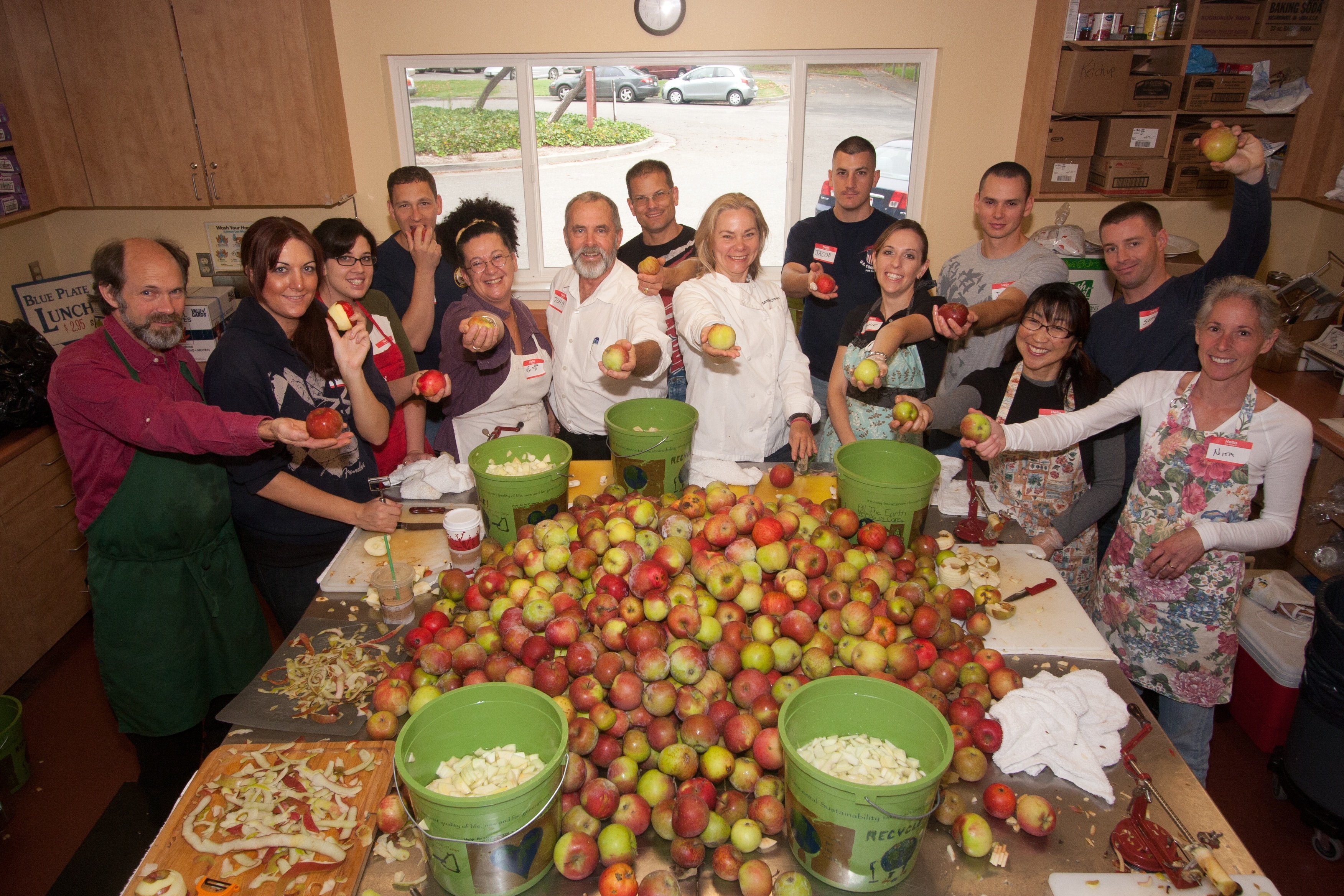
Lets Preserve group ready to make applesauce
Let's Preserve volunteers get ready to make apple sauce. Photo: Agustin Gutierrez

Foraging with friends and gleaning for good is very much back in vogue. Locally folks like Asiya Wadud of Forage Oakland and Iso Rabins of forageSF, as well as North Berkeley Harvest, PUEBLO Urban Youth Harvest in Oakland, and Anna Chan (aka The Lemon Lady) in Clayton have that covered.

And D.I.Y. canning is also au courant, with Bay Area cookbook authors like Vanessa Barrington encouraging urban homesteaders to put up provisions in their pantry.

Now comes canning for a cause. The Sonoma County group Let's Preserve a community effort to continue old-fashioned (now newly chic) food traditions, make good use of excess produce, and help those in need.

This past harvest season in Healdsburg, Santa Rosa, and Petaluma thousands of pounds of gleaned apples, tomatoes, and quince were preserved and donated to local food pantries, in an effort, says one organizer, to close the gap between waste and want. Apples and tomatoes were canned for sauce, the quince became filling for empanadas that were frozen for future use.

Chef Merrilee Olson

Chef Merrilee Olson. Photo: Agustin Gutierrez

Merrilee Olson, who runs her own Sebastapol-based food business PRESERVEsonoma, didn't grow up hungry but her family needed help to put food on the table. Raised by a single mom, who supported three kids on a state salary in Lincoln, Nebraska, food stamps frequently helped to provide dinner. Now a professional chef who works with local farmers and artisan food and wine clients, Olson wanted to find a way to give back through food.

She teamed up with Judy Christensen from Slow Harvest in Healdsburg and Elissa Rubin-Mahon of Artisan Preserves in Forestville and last summer offered a training workshop for volunteers who want to galvanize their community to preserve surplus produce.

Last month, she led a group of volunteers who peeled, cut, cooked, and canned hundreds of pounds of apples to benefit the COTS Petaluma Kitchen.

Food pantries will accept preserved products that have been processed in a commercial kitchen under the supervision of someone who is food-safety certified, says Olson.

Nobody doubts the need is out there. NPR reported this week that the number of people on food stamps hit a new all-time high; as of September nearly 43 million people were using the program, according to data released this week. "Food insecurity is reaching frightening levels," says Olson. "We believe we can make a difference in our communities by preserving and making healthy food available where it's needed."

Last month, KQED's Forum addressed hunger in the Bay Area. In San Francisco, one of every five children is at risk of going hungry and the numbers are similar in other local counties. During this holiday season, food bank and soup kitchen operators are reporting a spike in the number of families that are seeking food.

Let's Preserve apple sauce on its way to needy homes.

Let's Preserve apple sauce on its way to needy homes. Photo: Jennie Kimmel

"I'd love to see every community in the Bay Area doing its own preserving and feeding their neighbors in need," says Olson, who notes that groups as far away as Minneapolis have been inspired by the Let's Preserve model to can food for the needy. She also points to Anya Fernald's Commando Canning events, Yes We Can Food, in Oakland as a local example of community canning.

In the future, Olson would like to include other preservation methods, such as pickling, drying, and curing, to ensure that good produce -- including vegetables -- finds its way to the underserved. She'd also like to teach families in need preservation techniques so they can can for themselves.

Clearly, community canning events do good. They're also fun. "We get volunteers from 18 on up -- at our last event we had eight young adults from the Coast Guard -- and everyone had a good time sharing stories in the kitchen and around a table at a potluck afterwards," says Olson. "There's nothing like food to build community."

To learn more about how to start something similar in your area or to sign up for future community canning events, visit Let's Preserve.

Do you know of similar efforts in your area? Let us know below.

[Thanks to Jennie Kimmel and Agustin Guiterrez for sharing their photos.]

posted by | posted in bay area, DIY and urban homesteading, food banks, hunger, volunteer | 16 Comments
tags: , , , , , , ,

Ketchup: Of Being and Next-to-Nothingness

Friday, August 28th, 2009

ketchupIf there is one fruit that stands out in my mind as the poster child for late summer, it is the tomato. It bursts upon the scene in July, crowding farmers markets and restaurant menus.

With the possible exception of my sister, people I know can't seem to get enough of tomatoes. We slice them, dice them, pickle them, stew them, can them, stuff them, and do just about everything decent and indecent one can think of to them. The Spanish are so overwhelmed by them that the strip down and throw them at each other in what is possibly the largest single-item, annual food fight in the world.

Then suddenly, like all good things, their season comes to an end. The Spaniards clean up their mess, the marketeers start pimping other fruit like persimmons (which, to the extremely myopic, might look like anemic tomatoes), the rest of us move on to the next ripe thing that catches our eye, and summer just goes away.

For most people, anyhow.

I seem to know a lot of folks who are doing their damnedest to bottle up enough summer to warm themselves and their loved ones in the upcoming colder months. For example, the gentlemen over at Hedonia recently processed 200 pounds of tomatoes and have offered their services to help friends do the same. And there are others. Thanks to the connective powers of Facebook, I was recently re-acquainted with a fellow named Kevin West, who is not only saving his tomatoes, but seemingly anything and everything that can be pickled, jammed, or otherwise preserved in a burst of worker ant hyper-activity.

After reading West's blog, I had to admit to myself that preserves and other "put-up" items are an enormous weakness of mine, in terms of both affection and, sadly, experience. Why have I never preserved anything beyond cherries for my winter Manhattans? I decided I must do something about both my inexperience and my bad habit of playing Aesop's grasshopper, while my worker ant friends toiled away with an eye toward winter. I decided to stop fiddling around and roll up my sleeves.

I gave my début into the society of preservationists some thought. I was going to bottle up my own bit of summer as brightly as a child collecting fireflies in a Mason jar. Noting that I owned a few empty Mason jars, but that fireflies are rather difficult to come by in San Francisco, I opted for tomatoes instead. Yes, I would create something that I thought best captured the essence of the tomato's warm, summer ripeness.

Ketchup.

Why I chose ketchup is rather hard to say. I may have thought a lot about it, but I never said that my thinking wasn't fundamentally flawed.

While discussing this condiment that the Reagan administration legally defined as a vegetable with my friend Jay, I was wondering aloud about how it was made. "Well, Mikey, ketchup doesn't just happen, you know," implying that somebody has to make it. I decided to become that somebody who happens to make ketchup.

I bought the loveliest tomatoes I could find and waited for them to ripen. I pored over dozens of ketchup recipes, selectively hybridizing them the way growers create new strains of corn or pumpkins. I even added my own, secret touches to add depth. I would start small and see what became of my creation.

Three pounds of beautiful tomatoes, ripe and bursting with juice, sat on my cutting board. I saluted them and told them how lucky they were to be giving their lives for such a time-honored experiment in preservation before hacking them to pieces and throwing them into my dutch oven.

I added the shallots, the vinegar, and the spices neatly tied up in cheese cloth. I let them all stew, stirred them with care, puréed them, and sieved the sauce according to direction. Everything was perfect. I reduced it and then I reduced it some more. I added sugar and salt.

I took a bit of the sauce and spooned it onto a cold plate. Not as thick as the Heinz variety, not nearly as runny as soup. It had both the color and viscosity of arterial blood, which seemed to me the perfect metaphor of essence-- a sort of tomato life force. Three pounds of gorgeous tomatoes reduced to slightly more than half a cup of sauce.

And then I tasted it.

It tasted exactly like ketchup. Of course, that's what it was supposed to taste like. It just didn't taste much like summer. More correctly, it tasted as much of summer as the yellow mustard that typically sits next to the ketchup at an outdoor barbecue. I had taken those three pounds of tomatoes and turned them into next-to-nothingness. The concentration of tomato flavor was there, but it was obscured by the twelve or so other ingredients it shared space with. It was as though someone had taken their grandmother's ashes and dumped them into a giant ashtray. You know she's there but, unless she was known as a heavy smoker, her true essence has been lost in a mix of menthols and ultra-lights.

The experiment was not a total disaster, since I actually learned how to make ketchup-- mediocre ketchup, to be sure, but ketchup, nevertheless. Spending $30.00 to make a half cup of passable ketch, however, is not exactly cost-effective. In the future, I shall stick to my beloved Muir Glen brand and let them do all the work.

This doesn't mean I'm giving up on the canning and preserving idea. Quite the opposite, in fact. If anything, I have learned that I have a lot to learn about technique, subtlety, and, above all, patience.

In the meantime I will move on to other fruits that are ripe for experiment. I'll leave tomatoes alone, save to occasionally slice one and decorate it with a drizzle of olive oil and a sprinkle of sea salt until I have had my fill of them for the season. Then, when it's colder, I will beg my more productive friends for a jar or two of their efforts to tide me over until next year. That is, if they take pity upon a poor grasshopper like me.

posted by | posted in DIY and urban homesteading, food and drink | 5 Comments
tags: , ,

Recipe: Apricot Jam

Saturday, June 13th, 2009

Underappreciated fruits and vegetables will always have a special place in my heart. Rhubarb, nettles, quince: all these things, so tasty when cooked, used to be very popular until they got shouldered aside by easier pleasures that didn't sting the unwary picker into welts, or weren't so sour or astringent at first bite as to make you wince. Artichokes' dip-scooping leaves were probably its saving grace. But for its use as a nifty delivery system for melted butter and lemon mayonnaise, it would be a forgotten thistle today.

Apricots, while more accessible, still have a certain forgotten-fruit quality to them. Just as quince gets described as apple's tough, weird older sister, so apricots are often just a placeholder for peach-lovers, something sweet and orange with a pit that will do until the real goodies come along.

But apricots are good for cooking in a way that peaches aren't, their flavor intensifying into an ineffable tangy sweetness that leans just right against a crumbly, buttery short crust or a piece of whole-grain toast, especially one spread with mild fresh chevre. Too often, though, all that the marketplace offers is the big bland Patterson, so smooth-skinned, so bright, so uniform and so utterly dull.

What you really want, especially for jam, are Blenheims, also called Royal Blenheims. You have to trust in these, because they're not so pretty. Mostly they're small, often green-shouldered, often freckly. At peak ripeness, they're almost deliquescent, their pulp turning to jam right inside the skin.

But, oh, what juicy, sticky-dripping flavor! Slurpy-good right off the tree, they're sublime for jam. I like to use the same overnight-sugar macerating technique as for strawberries, although these apricots don't throw off enough liquid to make straining necessary. Instead, they subside gracefully into a pool of satiny slush that's part pulp, part skin, part juice, and all divine.

apricot jam

Being wildly uncommercial—too small, too funny-looking, too mushy, too short a season—Blenheims have to be hunted out, either from soft-hearted orchardists or friends with an old tree in the backyard. Everything Under the Sun (the folks with the "Sampling is Mandatory-We're Watching!" sign) at the Ferry Plaza Farmers' Market had them last week, and probably this week, but not for much longer. Carpe diem! Get out your jars!

Apricot Jam
Of all the jams I make, this one remains my favorite. Letting the fruit and sugar macerate together before cooking mellows the sweetness and helps thickens the final product without the need for long cooking. This preserves the fruit's naturally vivid flavor and color.

Yield: 4 to 5 8-oz jars.
Prep Time: 15-20 minutes, plus 10-16 hours resting time
Cook Time: 30-40 minutes
Total: 1 hour, plus 10-16 hours resting time

Ingredients:
3 lb apricots
2 1/2 cups sugar
1/4 cup fresh lemon juice (1-2 lemons)

Preparation:
1. Halve apricots and pop out pits. Cut fruit into quarters if large. Toss apricots, sugar, and lemon juice together in a glass or ceramic bowl. Cover with a towel and set aside for several hours at room temperature, or overnight in the refrigerator. Stir occasionally to help the sugar dissolve evenly, if you feel like it.

2. When all the sugar has been dissolved, pour the mixture into a wide, heavy-bottomed nonreactive pot and bring to a boil over medium heat. Reduce heat to low and simmer 10 minutes, stirring gently but frequently. Cook for another 8 minutes, until the fruit looks translucent and is beginning to break down. It's easy to scorch it at this stage, so stir frequently and don't wander off.

3. Pour mixture back into the bowl, let cool, then cover with a towel and set aside at room temperature for at least six hours, or overnight in the refrigerator.

4. Return fruit mixture to the large pot. Over low heat, bring to a simmer, stirring frequently. Cook for another 10-12 minutes, until fruit has mostly broken down and juices look syrupy. Scoop a small amount of juice onto a clean metal spoon. Tip the spoon sideways and let juice run off the edge. When juice has reached the jelly point, the last few drops will look thicker and run together into one viscous drop. Remove from heat. Ladle into clean, sterilized jars.

5. Set jars on a clean towel and do not touch or move them until they are completely cool. If you're using canning jars, listen for the slurpy sucking pop of the jars vacuum-sealing. Sealed jars will keep up to 1 year in a cool, dry place. If jar isn't sealed, store in fridge and eat within 2-3 weeks.

posted by | posted in dessert and chocolate, farmers markets, food and drink, recipes | 18 Comments
tags: , , ,

Subscribe to BABrss posts

BAB Archives

  • Calendar

  • February 2012
    M T W T F S S
    « Jan    
     12345
    6789101112
    13141516171819
    20212223242526
    272829  
  • Sponsored by