In West Marin, a Restaurant Renaissance Along the Coast
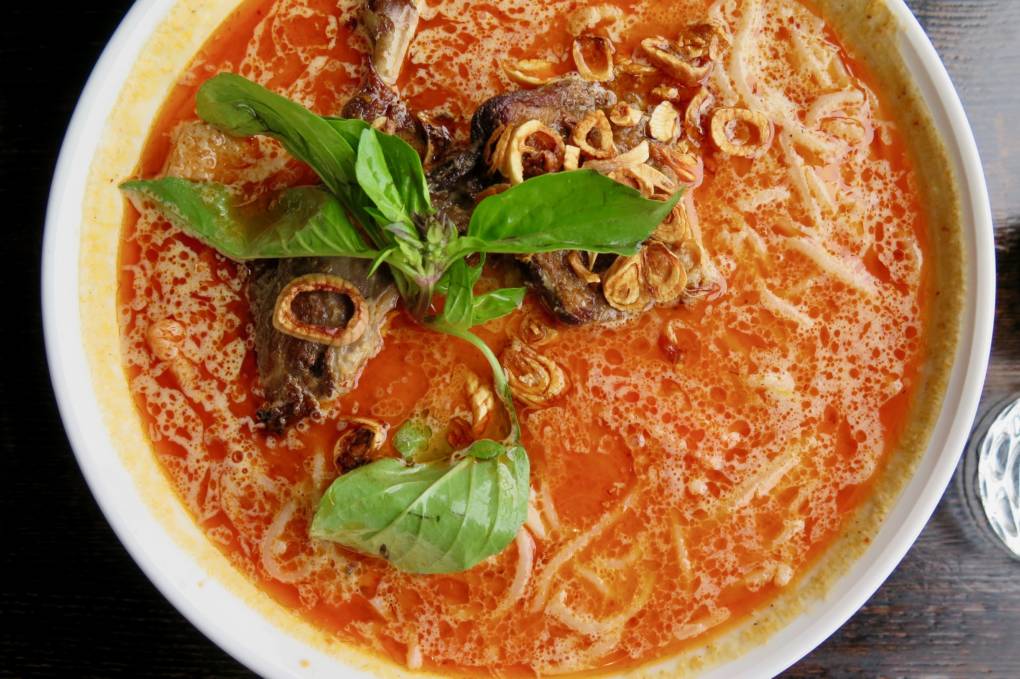
Table Talk: Inner Richmond’s Breadbelly and Tuezday Noodz, Oysters, and Sake!
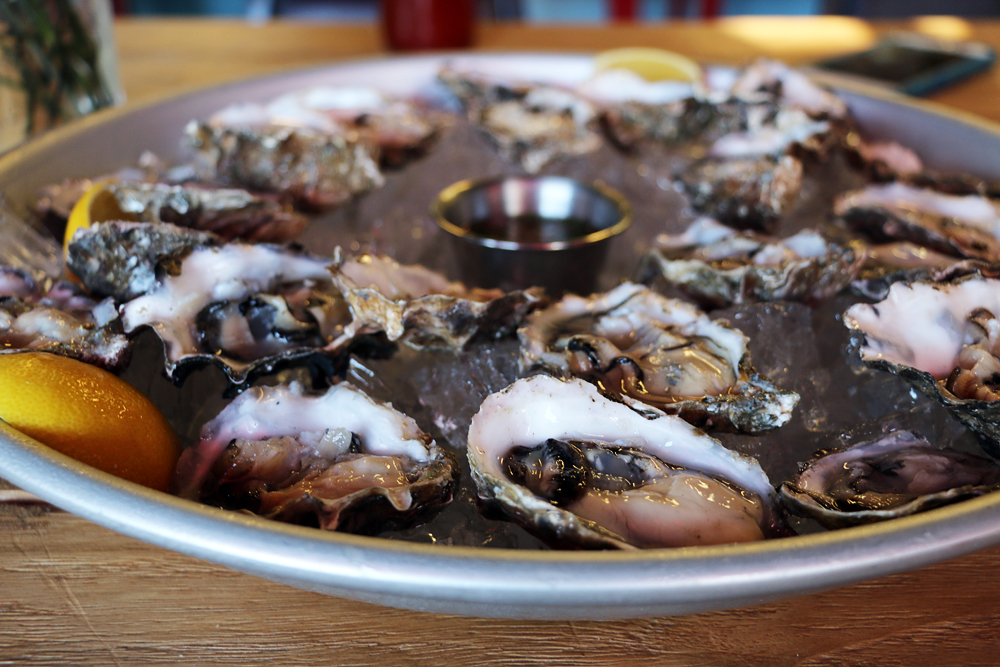
Bay Area Bites Guide to 10 Favorite Raw Oyster Spots in the East Bay
Hog Island Oyster Farm Fights Climate Change as Demand Soars
Jack’s Oyster Bar & Fish House: Oysters with a uniquely Oakland view in Jack London Square
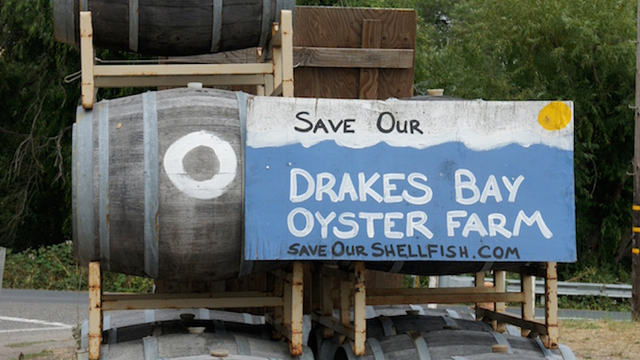
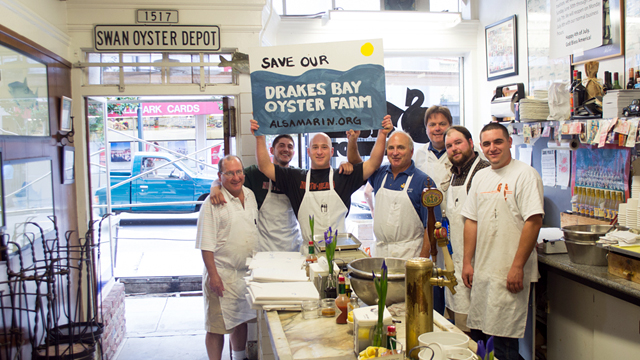
Drakes Bay Oyster Company Gets 30 More Days as Restaurants File Lawsuit to Keep Farm Going
For the Love of Oysters: How a Kiss From the Sea Evokes Passion
Can Oysters With No Sex Life Repopulate The Chesapeake Bay?
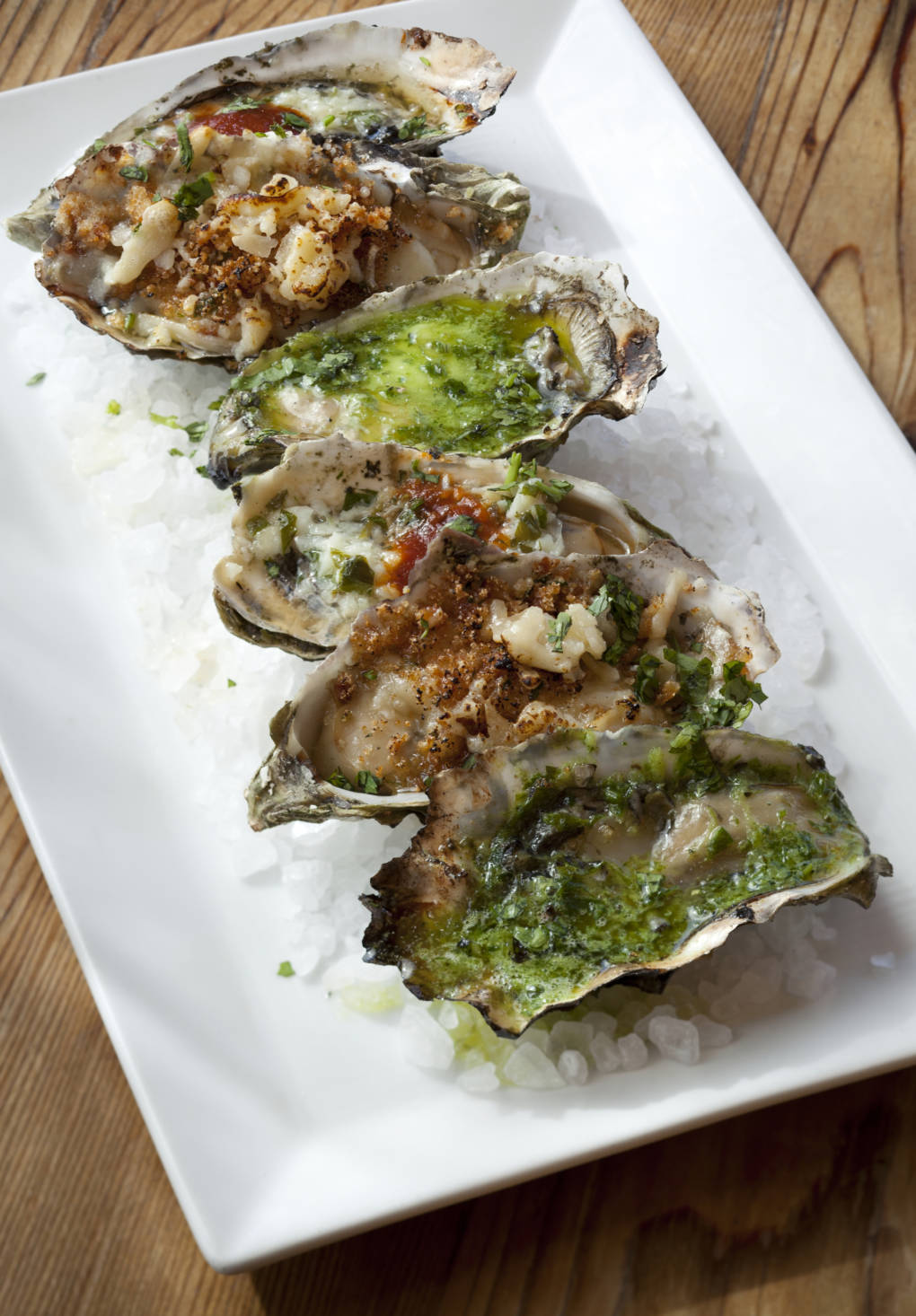
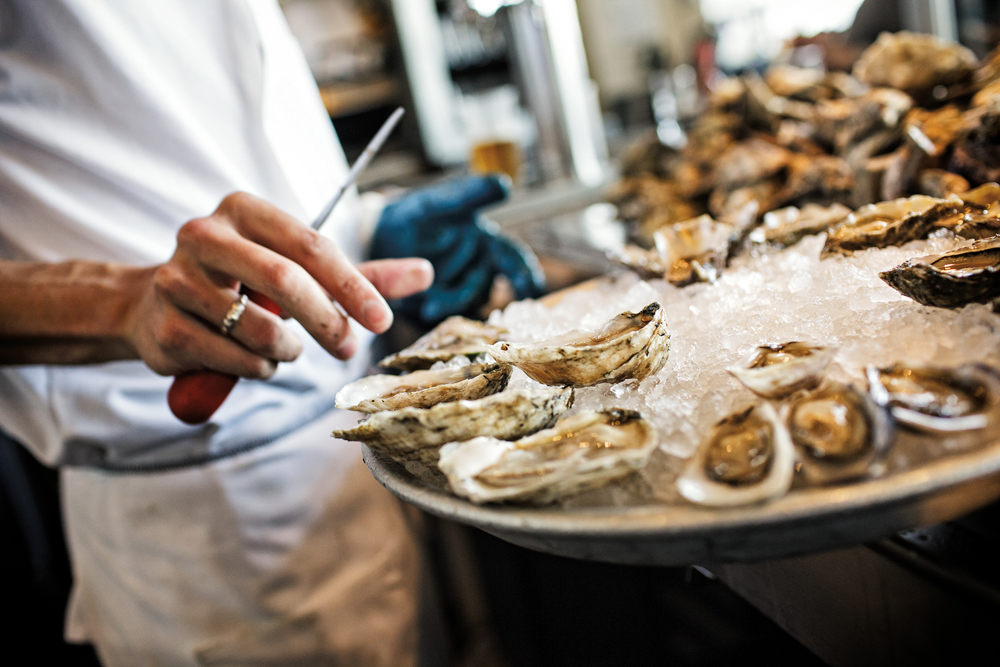
Kevin Sancimino from Swan Oyster Depot Shares Grilling Tips and the Best Types of Oysters to BBQ
Sponsored
window.__IS_SSR__=true
window.__INITIAL_STATE__={"attachmentsReducer":{"audio_0":{"type":"attachments","id":"audio_0","imgSizes":{"kqedFullSize":{"file":"https://ww2.kqed.org/news/wp-content/themes/KQED-unified/img/audio_bgs/background0.jpg"}}},"audio_1":{"type":"attachments","id":"audio_1","imgSizes":{"kqedFullSize":{"file":"https://ww2.kqed.org/news/wp-content/themes/KQED-unified/img/audio_bgs/background1.jpg"}}},"audio_2":{"type":"attachments","id":"audio_2","imgSizes":{"kqedFullSize":{"file":"https://ww2.kqed.org/news/wp-content/themes/KQED-unified/img/audio_bgs/background2.jpg"}}},"audio_3":{"type":"attachments","id":"audio_3","imgSizes":{"kqedFullSize":{"file":"https://ww2.kqed.org/news/wp-content/themes/KQED-unified/img/audio_bgs/background3.jpg"}}},"audio_4":{"type":"attachments","id":"audio_4","imgSizes":{"kqedFullSize":{"file":"https://ww2.kqed.org/news/wp-content/themes/KQED-unified/img/audio_bgs/background4.jpg"}}},"placeholder":{"type":"attachments","id":"placeholder","imgSizes":{"thumbnail":{"file":"https://ww2.kqed.org/wp-content/uploads/sites/10/2018/01/GettyImages-896326950-160x96.jpg","width":160,"height":96,"mimeType":"image/jpeg"},"medium":{"file":"https://ww2.kqed.org/wp-content/uploads/sites/10/2018/01/GettyImages-896326950-800x478.jpg","width":800,"height":478,"mimeType":"image/jpeg"},"large":{"file":"https://ww2.kqed.org/wp-content/uploads/sites/10/2018/01/GettyImages-896326950-1020x610.jpg","width":1020,"height":610,"mimeType":"image/jpeg"},"fd-lrg":{"file":"https://ww2.kqed.org/wp-content/uploads/sites/10/2018/01/GettyImages-896326950-1920x1148.jpg","width":1920,"height":1148,"mimeType":"image/jpeg"},"fd-med":{"file":"https://ww2.kqed.org/wp-content/uploads/sites/10/2018/01/GettyImages-896326950-1180x705.jpg","width":1180,"height":705,"mimeType":"image/jpeg"},"fd-sm":{"file":"https://ww2.kqed.org/wp-content/uploads/sites/10/2018/01/GettyImages-896326950-960x574.jpg","width":960,"height":574,"mimeType":"image/jpeg"},"post-thumbnail":{"file":"https://ww2.kqed.org/wp-content/uploads/sites/10/2018/01/GettyImages-896326950-672x372.jpg","width":672,"height":372,"mimeType":"image/jpeg"},"twentyfourteen-full-width":{"file":"https://ww2.kqed.org/wp-content/uploads/sites/10/2018/01/GettyImages-896326950-1038x576.jpg","width":1038,"height":576,"mimeType":"image/jpeg"},"xxsmall":{"file":"https://ww2.kqed.org/wp-content/uploads/sites/10/2018/01/GettyImages-896326950-240x143.jpg","width":240,"height":143,"mimeType":"image/jpeg"},"xsmall":{"file":"https://ww2.kqed.org/wp-content/uploads/sites/10/2018/01/GettyImages-896326950-375x224.jpg","width":375,"height":224,"mimeType":"image/jpeg"},"small":{"file":"https://ww2.kqed.org/wp-content/uploads/sites/10/2018/01/GettyImages-896326950-520x311.jpg","width":520,"height":311,"mimeType":"image/jpeg"},"xlarge":{"file":"https://ww2.kqed.org/wp-content/uploads/sites/10/2018/01/GettyImages-896326950-1180x705.jpg","width":1180,"height":705,"mimeType":"image/jpeg"},"full-width":{"file":"https://ww2.kqed.org/wp-content/uploads/sites/10/2018/01/GettyImages-896326950-1920x1148.jpg","width":1920,"height":1148,"mimeType":"image/jpeg"},"guest-author-32":{"file":"https://ww2.kqed.org/wp-content/uploads/sites/10/2018/01/GettyImages-896326950-32x32.jpg","width":32,"height":32,"mimeType":"image/jpeg"},"guest-author-50":{"file":"https://ww2.kqed.org/wp-content/uploads/sites/10/2018/01/GettyImages-896326950-50x50.jpg","width":50,"height":50,"mimeType":"image/jpeg"},"guest-author-64":{"file":"https://ww2.kqed.org/wp-content/uploads/sites/10/2018/01/GettyImages-896326950-64x64.jpg","width":64,"height":64,"mimeType":"image/jpeg"},"guest-author-96":{"file":"https://ww2.kqed.org/wp-content/uploads/sites/10/2018/01/GettyImages-896326950-96x96.jpg","width":96,"height":96,"mimeType":"image/jpeg"},"guest-author-128":{"file":"https://ww2.kqed.org/wp-content/uploads/sites/10/2018/01/GettyImages-896326950-128x128.jpg","width":128,"height":128,"mimeType":"image/jpeg"},"detail":{"file":"https://ww2.kqed.org/wp-content/uploads/sites/10/2018/01/GettyImages-896326950-150x150.jpg","width":150,"height":150,"mimeType":"image/jpeg"},"kqedFullSize":{"file":"https://ww2.kqed.org/wp-content/uploads/sites/10/2018/01/GettyImages-896326950-e1514998105161.jpg","width":1920,"height":1148}}},"bayareabites_134371":{"type":"attachments","id":"bayareabites_134371","meta":{"index":"attachments_1591205162","site":"bayareabites","id":"134371","found":true},"title":"NIcks-Cove-BBQ-Rockerfeller-and-Mornay-Oysters-credit-Justin-Lewis-1020x1466 copy","publishDate":1565280715,"status":"inherit","parent":134195,"modified":1565280744,"caption":"NIck's Cove BBQ, Rockerfeller and Mornay Oysters","credit":"Justin Lewis","description":"NIck's Cove BBQ, Rockerfeller and Mornay Oysters","imgSizes":{"thumbnail":{"file":"https://ww2.kqed.org/app/uploads/sites/24/2019/08/NIcks-Cove-BBQ-Rockerfeller-and-Mornay-Oysters-credit-Justin-Lewis-1020x1466-copy-160x230.jpg","width":160,"height":230,"mimeType":"image/jpeg"},"medium":{"file":"https://ww2.kqed.org/app/uploads/sites/24/2019/08/NIcks-Cove-BBQ-Rockerfeller-and-Mornay-Oysters-credit-Justin-Lewis-1020x1466-copy-800x1150.jpg","width":800,"height":1150,"mimeType":"image/jpeg"},"medium_large":{"file":"https://ww2.kqed.org/app/uploads/sites/24/2019/08/NIcks-Cove-BBQ-Rockerfeller-and-Mornay-Oysters-credit-Justin-Lewis-1020x1466-copy-768x1104.jpg","width":768,"height":1104,"mimeType":"image/jpeg"},"large":{"file":"https://ww2.kqed.org/app/uploads/sites/24/2019/08/NIcks-Cove-BBQ-Rockerfeller-and-Mornay-Oysters-credit-Justin-Lewis-1020x1466-copy-1020x1466.jpg","width":1020,"height":1466,"mimeType":"image/jpeg"},"complete_open_graph":{"file":"https://ww2.kqed.org/app/uploads/sites/24/2019/08/NIcks-Cove-BBQ-Rockerfeller-and-Mornay-Oysters-credit-Justin-Lewis-1020x1466-copy-835x1200.jpg","width":835,"height":1200,"mimeType":"image/jpeg"},"post-thumbnail":{"file":"https://ww2.kqed.org/app/uploads/sites/24/2019/08/NIcks-Cove-BBQ-Rockerfeller-and-Mornay-Oysters-credit-Justin-Lewis-1020x1466-copy-672x372.jpg","width":672,"height":372,"mimeType":"image/jpeg"},"twentyfourteen-full-width":{"file":"https://ww2.kqed.org/app/uploads/sites/24/2019/08/NIcks-Cove-BBQ-Rockerfeller-and-Mornay-Oysters-credit-Justin-Lewis-1020x1466-copy-1020x576.jpg","width":1020,"height":576,"mimeType":"image/jpeg"},"kqedFullSize":{"file":"https://ww2.kqed.org/app/uploads/sites/24/2019/08/NIcks-Cove-BBQ-Rockerfeller-and-Mornay-Oysters-credit-Justin-Lewis-1020x1466-copy.jpg","width":1020,"height":1466}},"fetchFailed":false,"isLoading":false},"bayareabites_130079":{"type":"attachments","id":"bayareabites_130079","meta":{"index":"attachments_1591205162","site":"bayareabites","id":"130079","found":true},"title":"The rich curry duck vermicelli soup at Le Soleil’s Tuezday Noodz Day.","publishDate":1534186393,"status":"inherit","parent":130077,"modified":1534186500,"caption":"The rich curry duck vermicelli soup at Le Soleil’s Tuezday Noodz Day.","credit":"tablehopper.com","description":"The rich curry duck vermicelli soup at Le Soleil’s Tuezday Noodz Day.","imgSizes":{"thumbnail":{"file":"https://ww2.kqed.org/app/uploads/sites/24/2018/08/noodz-curryduck-160x107.jpg","width":160,"height":107,"mimeType":"image/jpeg"},"medium":{"file":"https://ww2.kqed.org/app/uploads/sites/24/2018/08/noodz-curryduck-800x533.jpg","width":800,"height":533,"mimeType":"image/jpeg"},"medium_large":{"file":"https://ww2.kqed.org/app/uploads/sites/24/2018/08/noodz-curryduck-768x511.jpg","width":768,"height":511,"mimeType":"image/jpeg"},"large":{"file":"https://ww2.kqed.org/app/uploads/sites/24/2018/08/noodz-curryduck-1020x679.jpg","width":1020,"height":679,"mimeType":"image/jpeg"},"complete_open_graph":{"file":"https://ww2.kqed.org/app/uploads/sites/24/2018/08/noodz-curryduck-1200x799.jpg","width":1200,"height":799,"mimeType":"image/jpeg"},"fd-lrg":{"file":"https://ww2.kqed.org/app/uploads/sites/24/2018/08/noodz-curryduck-1920x1279.jpg","width":1920,"height":1279,"mimeType":"image/jpeg"},"fd-med":{"file":"https://ww2.kqed.org/app/uploads/sites/24/2018/08/noodz-curryduck-1180x786.jpg","width":1180,"height":786,"mimeType":"image/jpeg"},"fd-sm":{"file":"https://ww2.kqed.org/app/uploads/sites/24/2018/08/noodz-curryduck-960x639.jpg","width":960,"height":639,"mimeType":"image/jpeg"},"post-thumbnail":{"file":"https://ww2.kqed.org/app/uploads/sites/24/2018/08/noodz-curryduck-672x372.jpg","width":672,"height":372,"mimeType":"image/jpeg"},"twentyfourteen-full-width":{"file":"https://ww2.kqed.org/app/uploads/sites/24/2018/08/noodz-curryduck-1038x576.jpg","width":1038,"height":576,"mimeType":"image/jpeg"},"xxsmall":{"file":"https://ww2.kqed.org/app/uploads/sites/24/2018/08/noodz-curryduck-240x160.jpg","width":240,"height":160,"mimeType":"image/jpeg"},"xsmall":{"file":"https://ww2.kqed.org/app/uploads/sites/24/2018/08/noodz-curryduck-375x250.jpg","width":375,"height":250,"mimeType":"image/jpeg"},"small":{"file":"https://ww2.kqed.org/app/uploads/sites/24/2018/08/noodz-curryduck-520x346.jpg","width":520,"height":346,"mimeType":"image/jpeg"},"xlarge":{"file":"https://ww2.kqed.org/app/uploads/sites/24/2018/08/noodz-curryduck-1180x786.jpg","width":1180,"height":786,"mimeType":"image/jpeg"},"full-width":{"file":"https://ww2.kqed.org/app/uploads/sites/24/2018/08/noodz-curryduck-1920x1279.jpg","width":1920,"height":1279,"mimeType":"image/jpeg"},"guest-author-32":{"file":"https://ww2.kqed.org/app/uploads/sites/24/2018/08/noodz-curryduck-32x32.jpg","width":32,"height":32,"mimeType":"image/jpeg"},"guest-author-50":{"file":"https://ww2.kqed.org/app/uploads/sites/24/2018/08/noodz-curryduck-50x50.jpg","width":50,"height":50,"mimeType":"image/jpeg"},"guest-author-64":{"file":"https://ww2.kqed.org/app/uploads/sites/24/2018/08/noodz-curryduck-64x64.jpg","width":64,"height":64,"mimeType":"image/jpeg"},"guest-author-96":{"file":"https://ww2.kqed.org/app/uploads/sites/24/2018/08/noodz-curryduck-96x96.jpg","width":96,"height":96,"mimeType":"image/jpeg"},"guest-author-128":{"file":"https://ww2.kqed.org/app/uploads/sites/24/2018/08/noodz-curryduck-128x128.jpg","width":128,"height":128,"mimeType":"image/jpeg"},"detail":{"file":"https://ww2.kqed.org/app/uploads/sites/24/2018/08/noodz-curryduck-150x150.jpg","width":150,"height":150,"mimeType":"image/jpeg"},"kqedFullSize":{"file":"https://ww2.kqed.org/app/uploads/sites/24/2018/08/noodz-curryduck-e1534186455518.jpg","width":1920,"height":1279}},"fetchFailed":false,"isLoading":false},"bayareabites_92689":{"type":"attachments","id":"bayareabites_92689","meta":{"index":"attachments_1591205162","site":"bayareabites","id":"92689","found":true},"title":"Cook-oysters1000","publishDate":1422681213,"status":"inherit","parent":92680,"modified":1422934243,"caption":"Oysters at The Cook and Her Farmer","credit":null,"description":null,"imgSizes":{"kqedFullSize":{"file":"https://ww2.kqed.org/app/uploads/sites/24/2015/01/Cook-oysters1000.jpg","width":1000,"height":667}},"fetchFailed":false,"isLoading":false},"bayareabites_87649":{"type":"attachments","id":"bayareabites_87649","meta":{"index":"attachments_1591205162","site":"bayareabites","id":"87649","found":true},"title":"Shucking-Oysters.-Hog-Island-Oyster-Bar-San-Francisco.-Ed-Anderson-1000","publishDate":1410978174,"status":"inherit","parent":87643,"modified":1410978174,"caption":"Shucking oysters at Hog Island Oyster Bar in SF. Photo courtesy of Hog Island Oyster Co.","credit":null,"description":null,"imgSizes":{"kqedFullSize":{"file":"https://ww2.kqed.org/app/uploads/sites/24/2014/09/Shucking-Oysters.-Hog-Island-Oyster-Bar-San-Francisco.-Ed-Anderson-1000.jpg","width":1000,"height":667}},"fetchFailed":false,"isLoading":false},"bayareabites_86722":{"type":"attachments","id":"bayareabites_86722","meta":{"index":"attachments_1591205162","site":"bayareabites","id":"86722","found":true},"title":"fish-bar","publishDate":1409100525,"status":"inherit","parent":86710,"modified":1409100525,"caption":"The raw bar provides a centerpiece for the space.","credit":null,"description":null,"imgSizes":{"kqedFullSize":{"file":"https://ww2.kqed.org/app/uploads/sites/24/2014/08/fish-bar.jpg","width":1100,"height":825}},"fetchFailed":false,"isLoading":false},"bayareabites_85238":{"type":"attachments","id":"bayareabites_85238","meta":{"index":"attachments_1591205162","site":"bayareabites","id":"85238","found":true},"title":"save-Drake's-Bay-sign640x360","publishDate":1406523538,"status":"inherit","parent":85212,"modified":1406523538,"caption":null,"credit":null,"description":null,"imgSizes":{"kqedFullSize":{"file":"https://ww2.kqed.org/app/uploads/sites/24/2014/07/save-Drakes-Bay-sign640x360.jpg","width":640,"height":360}},"fetchFailed":false,"isLoading":false},"bayareabites_78304":{"type":"attachments","id":"bayareabites_78304","meta":{"index":"attachments_1591205162","site":"bayareabites","id":"78304","found":true},"title":"oysters","publishDate":1392510611,"status":"inherit","parent":78293,"modified":1392510611,"caption":"The stories linking oysters and other shellfish to lust go back to at least the ancient Greeks. (Maggie Starbard/NPR)","credit":null,"description":"The stories linking oysters and other shellfish to lust go back to at least the ancient Greeks. (Maggie Starbard/NPR)","imgSizes":{"kqedFullSize":{"file":"https://ww2.kqed.org/app/uploads/sites/24/2014/02/oysters_wide-2c16a2ce1b5b79623d7d153994380fa9546444e3-s4.jpg","width":624,"height":350}},"fetchFailed":false,"isLoading":false},"bayareabites_65510":{"type":"attachments","id":"bayareabites_65510","meta":{"index":"attachments_1591205162","site":"bayareabites","id":"65510","found":true},"title":"gettyimages_107966858","publishDate":1374013629,"status":"inherit","parent":65503,"modified":1374013629,"caption":null,"credit":null,"description":"Young oysters live on old oyster shells and slowly mature while forming a complete shell.","imgSizes":{"kqedFullSize":{"file":"https://ww2.kqed.org/app/uploads/sites/24/2013/07/oyster1-sm.jpg","width":624,"height":350}},"fetchFailed":false,"isLoading":false},"bayareabites_64528":{"type":"attachments","id":"bayareabites_64528","meta":{"index":"attachments_1591205162","site":"bayareabites","id":"64528","found":true},"title":"swanoysterdepot640x360-","publishDate":1372831421,"status":"inherit","parent":64334,"modified":1372831421,"caption":null,"credit":null,"description":null,"imgSizes":{"kqedFullSize":{"file":"https://ww2.kqed.org/app/uploads/sites/24/2013/07/swanoysterdepot640x360-.jpg","width":640,"height":360}},"fetchFailed":false,"isLoading":false}},"audioPlayerReducer":{"postId":"stream_live"},"authorsReducer":{"byline_bayareabites_78293":{"type":"authors","id":"byline_bayareabites_78293","meta":{"override":true},"slug":"byline_bayareabites_78293","name":"Allison Aubrey","isLoading":false},"byline_bayareabites_65503":{"type":"authors","id":"byline_bayareabites_65503","meta":{"override":true},"slug":"byline_bayareabites_65503","name":"Pamela D'Angelo","isLoading":false},"ginascialabba":{"type":"authors","id":"2451","meta":{"index":"authors_1591205172","id":"2451","found":true},"name":"Gina Scialabba","firstName":"Gina","lastName":"Scialabba","slug":"ginascialabba","email":"ginajournalist@gmail.com","display_author_email":false,"staff_mastheads":[],"title":null,"bio":"Gina Scialabba is a journalist and practicing attorney based in San Francisco. She's a regular contributor to KQED Pop and now Bay Area Bites. When she's not reading a novel, newspaper or watching Mad Men, Sons of Anarchy or Anthony Bourdain, she's taking advantage of the richness and diversity of Bay Area culinary life. She also loves to travel. Next Stop: Vietnam, Thailand and Korea.","avatar":"https://secure.gravatar.com/avatar/e4df716be95aadc7807274c2405ccac8?s=600&d=blank&r=g","twitter":"Journalist_Gina","facebook":null,"instagram":null,"linkedin":null,"sites":[{"site":"pop","roles":["contributor"]},{"site":"bayareabites","roles":["contributor"]}],"headData":{"title":"Gina Scialabba | KQED","description":null,"ogImgSrc":"https://secure.gravatar.com/avatar/e4df716be95aadc7807274c2405ccac8?s=600&d=blank&r=g","twImgSrc":"https://secure.gravatar.com/avatar/e4df716be95aadc7807274c2405ccac8?s=600&d=blank&r=g"},"isLoading":false,"link":"/author/ginascialabba"},"sarahhenry":{"type":"authors","id":"5125","meta":{"index":"authors_1591205172","id":"5125","found":true},"name":"Sarah Henry","firstName":"Sarah","lastName":"Henry","slug":"sarahhenry","email":"sarahhenry0509@gmail.com","display_author_email":false,"staff_mastheads":[],"title":null,"bio":"\u003ca href=\"http://www.sarahhenrywriter.com/\">Sarah Henry\u003c/a> hails from Sydney, Australia, where she grew up eating lamingtons, Vegemite, and prawns (not shrimp) on the barbie (barbecue). Sarah has called the Bay Area home for the past two decades and remembers how delighted she was when a modest farmers' market sprouted in downtown San Francisco years ago. As a freelance writer Sarah has covered local food people, places, politics, culture, and news for the \u003ca href=\"http://www.sfgate.com/food/article/Latina-entrepreneurs-share-wealth-knowledge-2693764.php\">San Francisco Chronicle\u003c/a>, \u003ca href=\"http://www.mercurynews.com/food-wine/ci_21619882/good-eggs-pie-subscriptions-and-seafood-deliveries\">San Jose Mercury News\u003c/a>, \u003ca href=\"http://alumni.berkeley.edu/news/california-magazine/fall-2011-good-fight/justice%E2%80%94and-good-grub%E2%80%94-all\">California\u003c/a>, \u003ca href=\"http://www.modernluxury.com/san-francisco\">San Francisco\u003c/a>, \u003ca href=\"http://www.diablomag.com/Diablo-Magazine/November-2012/Artisan-Eats/\">Diablo\u003c/a>, \u003ca href=\"http://www.ediblecommunities.com/eastbay/fall-2012/school-lunch-20.htm\">Edible East Bay\u003c/a>, \u003ca href=\"http://www.ediblecommunities.com/marinandwinecountry/summer-2012-issue-14/getting-wild-at-a-west-marin-supper-club.htm\">Edible Marin & Wine Country\u003c/a>, and \u003ca href=\"http://www.berkeleyside.com/\">Berkeleyside\u003c/a>. A contributor to the national food policy site \u003ca href=\"http://civileats.com/\">Civil Eats\u003c/a>, her stories have also appeared in \u003ca href=\"http://www.theatlantic.com/sarah-henry/\">The Atlantic\u003c/a>, \u003ca href=\"http://www.afar.com/highlights/kamal-mouzawaks-beirut-lebanon\">AFAR\u003c/a>, \u003ca href=\"http://www.gilttaste.com/stories/5207-a-family-tied-together-by-apron-strings\">Gilt Taste\u003c/a>, \u003ca href=\"http://www.lhj.com/community/your-stories/whats-for-dinner-dude/?page=1\">Ladies' Home Journal\u003c/a>, \u003ca href=\"http://grist.org/author/sarah-henry/\">Grist\u003c/a>, \u003ca href=\"http://www.shareable.net/users/sarah-henry\">Shareable\u003c/a>, and \u003ca href=\"http://www.eatingwell.com/food_news_origins/green_sustainable/host_a_diy_food_swap\">Eating Well\u003c/a>. An epicurean tour guide for \u003ca href=\"http://edibleexcursions.net/\">Edible Excursions\u003c/a>, Sarah is the voice behind the blog \u003ca href=\"http://lettuceeatkale.com/\">Lettuce Eat Kale\u003c/a> and \u003ca href=\"http://twitter.com/lettuceeatkale\">tweets\u003c/a> under that moniker too.","avatar":"https://secure.gravatar.com/avatar/3fcd7301e44f9b621f8c9fc7ad678ac7?s=600&d=blank&r=g","twitter":"lettuceeatkale","facebook":"pages/Lettuce-Eat-Kale/239312194611","instagram":null,"linkedin":null,"sites":[{"site":"bayareabites","roles":["contributor"]},{"site":"food","roles":["contributor"]}],"headData":{"title":"Sarah Henry | KQED","description":null,"ogImgSrc":"https://secure.gravatar.com/avatar/3fcd7301e44f9b621f8c9fc7ad678ac7?s=600&d=blank&r=g","twImgSrc":"https://secure.gravatar.com/avatar/3fcd7301e44f9b621f8c9fc7ad678ac7?s=600&d=blank&r=g"},"isLoading":false,"link":"/author/sarahhenry"},"oaklandlocal":{"type":"authors","id":"5475","meta":{"index":"authors_1591205172","id":"5475","found":true},"name":"Oakland Local","firstName":"Oakland","lastName":"Local","slug":"oaklandlocal","email":"oaklandlocal@oaklandlocal.com","display_author_email":false,"staff_mastheads":[],"title":null,"bio":"\u003ca href=\"http://oaklandlocal.com/\">Oakland Local\u003c/a>, Oakland's leading news & community site, is filled with people who love to eat, drink and talk about food equity issues, sometimes all at the same time. We're avid about farm to table, affordable local restaurants, food artisans, intense chefs, butchers, bakers, and gardeners and everyone who wants to talk about what tastes good--and where to get it/make it or grow it--in Oakland, CA","avatar":"https://secure.gravatar.com/avatar/487293d74fcce97c7016ed0309409181?s=600&d=blank&r=g","twitter":"oaklandlocal","facebook":"oaklocal","instagram":null,"linkedin":null,"sites":[{"site":"bayareabites","roles":["contributor"]}],"headData":{"title":"Oakland Local | KQED","description":null,"ogImgSrc":"https://secure.gravatar.com/avatar/487293d74fcce97c7016ed0309409181?s=600&d=blank&r=g","twImgSrc":"https://secure.gravatar.com/avatar/487293d74fcce97c7016ed0309409181?s=600&d=blank&r=g"},"isLoading":false,"link":"/author/oaklandlocal"},"angelajohnston":{"type":"authors","id":"5568","meta":{"index":"authors_1591205172","id":"5568","found":true},"name":"Angela Johnston","firstName":"Angela","lastName":"Johnston","slug":"angelajohnston","email":"anj618@gmail.com","display_author_email":false,"staff_mastheads":[],"title":null,"bio":"Angela Johnston is an independent radio reporter and producer who recently moved back home to the Bay Area after spending the past six years on the east coast of Canada. She has a Master’s Degree in broadcast journalism and is currently making radio stories for KALW's daily news magazine, Crosscurrents. When she's not writing and reporting, she's surfing surf small waves on her longboard or perfecting her paella recipe.","avatar":"https://secure.gravatar.com/avatar/29104f87db909d4901d06df73b9db604?s=600&d=blank&r=g","twitter":"ang_johnston","facebook":null,"instagram":null,"linkedin":null,"sites":[{"site":"bayareabites","roles":["contributor"]}],"headData":{"title":"Angela Johnston | KQED","description":null,"ogImgSrc":"https://secure.gravatar.com/avatar/29104f87db909d4901d06df73b9db604?s=600&d=blank&r=g","twImgSrc":"https://secure.gravatar.com/avatar/29104f87db909d4901d06df73b9db604?s=600&d=blank&r=g"},"isLoading":false,"link":"/author/angelajohnston"},"kimwesterman":{"type":"authors","id":"5575","meta":{"index":"authors_1591205172","id":"5575","found":true},"name":"Kim Westerman","firstName":"Kim","lastName":"Westerman","slug":"kimwesterman","email":"kim.westerman@gmail.com","display_author_email":false,"staff_mastheads":[],"title":null,"bio":"Kim Westerman has been writing about food and wine for most of her adult life. Originally from North Carolina, she moved to Berkeley in 2006 to pursue the California dream, which, it turns out, is all it’s cracked up to be. She’s a farmers' market junkie, a lover of all things tomato, and Champagne-obsessed. She loves to cook with her kids, eight and three, and she makes frequent pilgrimages to International Boulevard in search of her next favorite Mexican dish. She spends an inordinate amount of time thinking about food and wine pairing, often starting with the wine and working backwards when planning menus. She is a Level I Sommelier and a Licensed Q-Grader. Her work has appeared in KQED's Bay Area Bites, Forbes.com, the New York Times, the San Francisco Chronicle, Tasting Table, Fodor’s Travel Guides, and lots of other publications. You can follow Kim on Twitter and Instagram @throughtraveler.","avatar":"https://secure.gravatar.com/avatar/2eb7f890ab19ead33f77fd8554ac4c39?s=600&d=blank&r=g","twitter":null,"facebook":null,"instagram":null,"linkedin":null,"sites":[{"site":"bayareabites","roles":["contributor"]},{"site":"food","roles":["contributor"]}],"headData":{"title":"Kim Westerman | KQED","description":null,"ogImgSrc":"https://secure.gravatar.com/avatar/2eb7f890ab19ead33f77fd8554ac4c39?s=600&d=blank&r=g","twImgSrc":"https://secure.gravatar.com/avatar/2eb7f890ab19ead33f77fd8554ac4c39?s=600&d=blank&r=g"},"isLoading":false,"link":"/author/kimwesterman"},"marciagagliardi":{"type":"authors","id":"11398","meta":{"index":"authors_1591205172","id":"11398","found":true},"name":"Marcia Gagliardi","firstName":"Marcia","lastName":"Gagliardi","slug":"marciagagliardi","email":"marcia@tablehopper.com","display_author_email":false,"staff_mastheads":[],"title":null,"bio":"\u003cstrong>Marcia Gagliardi\u003c/strong> writes a popular insider e-column about the SF dining and drinking scene, get all the latest news at \u003ca href=\"http://www.tablehopper.com\">tablehopper.com\u003c/a>. Follow @tablehopper on \u003ca href=\"https://twitter.com/tablehopper\">Twitter\u003c/a> and \u003ca href=\"https://instagram.com/tablehopper/\">Instagram\u003c/a> for more culinary finds! She also writes about low-dose and high-quality cannabis products in her weekly mymilligram newsletter at \u003ca href=\"http://www.mymilligram.com\">mymilligram.com\u003c/a>.","avatar":"https://secure.gravatar.com/avatar/5d0caa5ce4f7e7b9746d41093f503928?s=600&d=blank&r=g","twitter":null,"facebook":null,"instagram":null,"linkedin":null,"sites":[{"site":"bayareabites","roles":["contributor"]},{"site":"food","roles":["contributor"]}],"headData":{"title":"Marcia Gagliardi | KQED","description":null,"ogImgSrc":"https://secure.gravatar.com/avatar/5d0caa5ce4f7e7b9746d41093f503928?s=600&d=blank&r=g","twImgSrc":"https://secure.gravatar.com/avatar/5d0caa5ce4f7e7b9746d41093f503928?s=600&d=blank&r=g"},"isLoading":false,"link":"/author/marciagagliardi"},"christinamueller":{"type":"authors","id":"11555","meta":{"index":"authors_1591205172","id":"11555","found":true},"name":"Christina Mueller","firstName":"Christina","lastName":"Mueller","slug":"christinamueller","email":"Cmw@christinamueller.com","display_author_email":false,"staff_mastheads":[],"title":null,"bio":"\u003cp class=\"p1\">\u003cspan class=\"s1\">Christina Mueller has been writing about restaurants, chefs, and culinary trends for more than 10 years. She has published recipes and written a cookbook that is still in a stained manila folder close to the stove. She spends her free time sharing favorite restaurants around the world with anyone who asks.\u003c/span>\u003c/p>","avatar":"https://secure.gravatar.com/avatar/70961638525c4f9bcfdeb17f47174937?s=600&d=blank&r=g","twitter":"eatdrinkthink","facebook":null,"instagram":null,"linkedin":null,"sites":[{"site":"bayareabites","roles":["author"]}],"headData":{"title":"Christina Mueller | KQED","description":null,"ogImgSrc":"https://secure.gravatar.com/avatar/70961638525c4f9bcfdeb17f47174937?s=600&d=blank&r=g","twImgSrc":"https://secure.gravatar.com/avatar/70961638525c4f9bcfdeb17f47174937?s=600&d=blank&r=g"},"isLoading":false,"link":"/author/christinamueller"}},"breakingNewsReducer":{},"campaignFinanceReducer":{},"firebase":{"requesting":{},"requested":{},"timestamps":{},"data":{},"ordered":{},"auth":{"isLoaded":false,"isEmpty":true},"authError":null,"profile":{"isLoaded":false,"isEmpty":true},"listeners":{"byId":{},"allIds":[]},"isInitializing":false,"errors":[]},"navBarReducer":{"navBarId":"arts","fullView":true,"showPlayer":false},"navMenuReducer":{"menus":[{"key":"menu1","items":[{"name":"News","link":"/","type":"title"},{"name":"Politics","link":"/politics"},{"name":"Science","link":"/science"},{"name":"Education","link":"/educationnews"},{"name":"Housing","link":"/housing"},{"name":"Immigration","link":"/immigration"},{"name":"Criminal Justice","link":"/criminaljustice"},{"name":"Silicon Valley","link":"/siliconvalley"},{"name":"Forum","link":"/forum"},{"name":"The California Report","link":"/californiareport"}]},{"key":"menu2","items":[{"name":"Arts & Culture","link":"/arts","type":"title"},{"name":"Critics’ Picks","link":"/thedolist"},{"name":"Cultural Commentary","link":"/artscommentary"},{"name":"Food & Drink","link":"/food"},{"name":"Bay Area Hip-Hop","link":"/bayareahiphop"},{"name":"Rebel Girls","link":"/rebelgirls"},{"name":"Arts Video","link":"/artsvideos"}]},{"key":"menu3","items":[{"name":"Podcasts","link":"/podcasts","type":"title"},{"name":"Bay Curious","link":"/podcasts/baycurious"},{"name":"Rightnowish","link":"/podcasts/rightnowish"},{"name":"The Bay","link":"/podcasts/thebay"},{"name":"On Our Watch","link":"/podcasts/onourwatch"},{"name":"Mindshift","link":"/podcasts/mindshift"},{"name":"Consider This","link":"/podcasts/considerthis"},{"name":"Political Breakdown","link":"/podcasts/politicalbreakdown"}]},{"key":"menu4","items":[{"name":"Live Radio","link":"/radio","type":"title"},{"name":"TV","link":"/tv","type":"title"},{"name":"Events","link":"/events","type":"title"},{"name":"For Educators","link":"/education","type":"title"},{"name":"Support KQED","link":"/support","type":"title"},{"name":"About","link":"/about","type":"title"},{"name":"Help Center","link":"https://kqed-helpcenter.kqed.org/s","type":"title"}]}]},"pagesReducer":{},"postsReducer":{"stream_live":{"type":"live","id":"stream_live","audioUrl":"https://streams.kqed.org/kqedradio","title":"Live Stream","excerpt":"Live Stream information currently unavailable.","link":"/radio","featImg":"","label":{"name":"KQED Live","link":"/"}},"stream_kqedNewscast":{"type":"posts","id":"stream_kqedNewscast","audioUrl":"https://www.kqed.org/.stream/anon/radio/RDnews/newscast.mp3?_=1","title":"KQED Newscast","featImg":"","label":{"name":"88.5 FM","link":"/"}},"bayareabites_134195":{"type":"posts","id":"bayareabites_134195","meta":{"index":"posts_1591205157","site":"bayareabites","id":"134195","score":null,"sort":[1565278688000]},"guestAuthors":[],"slug":"in-west-marin-a-restaurant-renaissance-along-the-coast","title":"In West Marin, a Restaurant Renaissance Along the Coast","publishDate":1565278688,"format":"standard","headTitle":"Bay Area Bites | KQED Food","labelTerm":{"site":"bayareabites"},"content":"\u003cp>[aside postID='bayareabites_133756,checkplease_20154' label='More North Bay Eats']\u003c/p>\n\u003cp>Summer is West Marin’s season. The fog blanketing the coast tempers the season’s heat but often breaks by midday, giving way to brisk sunshine. The fresh breeze and green hills are a reminder that you really are “over the hill” as locals say, in a bucolic locale with natural air conditioning and enough cows and goats to keep the local maker economy humming.\u003c/p>\n\u003cp>Stretched along the sweep of coastline that extends from the Sonoma County border along Tomales Bay to the town of Olema, a new form of West Marin crop is emerging: hip restaurants. Some with hotels attached, they hearken back (in a very modern way) to the days when West Marin served as a seaside vacation destination and refueling stop for those headed north.\u003c/p>\n\u003cp>And when the day calls for an adventure of the eating sort, West Marin’s bevy of new places has just what the day calls for.\u003c/p>\n\u003ch2>Dillon Beach Resort\u003c/h2>\n\u003cp>\u003ca href=\"https://www.google.com/maps/place/1+Beach+Ave,+Dillon+Beach,+CA+94929/@38.2497566,-122.9669502,17z/data=!3m1!4b1!4m5!3m4!1s0x80842c5e48444837:0x52b224e073d796ef!8m2!3d38.2497524!4d-122.9647615\">1 Beach Ave.\u003c/a>\u003cbr>\nDillon Beach, CA 94929\u003c/p>\n\u003cfigure id=\"attachment_134226\" class=\"wp-caption alignnone\" style=\"max-width: 800px\">\u003cimg class=\"size-medium wp-image-134226\" src=\"https://ww2.kqed.org/bayareabites/wp-content/uploads/sites/24/2019/07/Dillon-Beach-atmosphere-photo-credit-Christina-Mueller-800x1067.jpg\" alt=\"Restaurant at Dillon Beach Resort,\" width=\"800\" height=\"1067\" srcset=\"https://ww2.kqed.org/app/uploads/sites/24/2019/07/Dillon-Beach-atmosphere-photo-credit-Christina-Mueller-800x1067.jpg 800w, https://ww2.kqed.org/app/uploads/sites/24/2019/07/Dillon-Beach-atmosphere-photo-credit-Christina-Mueller-160x213.jpg 160w, https://ww2.kqed.org/app/uploads/sites/24/2019/07/Dillon-Beach-atmosphere-photo-credit-Christina-Mueller-768x1024.jpg 768w, https://ww2.kqed.org/app/uploads/sites/24/2019/07/Dillon-Beach-atmosphere-photo-credit-Christina-Mueller-1020x1360.jpg 1020w, https://ww2.kqed.org/app/uploads/sites/24/2019/07/Dillon-Beach-atmosphere-photo-credit-Christina-Mueller-900x1200.jpg 900w\" sizes=\"(max-width: 800px) 100vw, 800px\">\u003cfigcaption class=\"wp-caption-text\">Restaurant at Dillon Beach Resort: photo Christina Mueller \u003ccite>(Christina Mueller)\u003c/cite>\u003c/figcaption>\u003c/figure>\n\u003cp>The speck of a town called Dillon Beach is home to \u003ca href=\"https://www.dillonbeachresort.com/\">Dillon Beach Resort\u003c/a>, a recently refurbished resort in a 130-year-old building. Stand-alone cabins, perfect for an overnight after an all-day adventure, peer over the Pacific Ocean and the long beach that snakes along the resort’s 55-acre oceanfront property. The restaurant, too, faces the ocean and enjoys its abundant breezes.\u003c/p>\n\u003cp>[ad fullwidth]\u003c/p>\n\u003cp>The team here wisely extended the indoor space with wrap-around, clear windbreakers, doubling the interior space and providing a much-needed wind break. In the tiny kitchen, Chef Matt Elias (Saltwater Oyster Depot) built a menu that reflects the bounty of local seas and the sources pristine ingredients from local farms.\u003c/p>\n\u003cp>Of course, there are oysters and here, they are served on the half shell or baked. Local ingredients define the menu such as the Lasagna, made with Valley Ford’s Double 8 Dairy ricotta, colorful house-made pickles are a great introduction to the seasonal menu and Elias also knows his way around a beet, pairing golden ones with fresh labneh and greens from County Line.\u003c/p>\n\u003cp>For a touch of the Middle East in Marin, his falafel plate is made with fresh green chickpeas and is the essence of early summer. It will surely disappear before tomato season is in full swing.\u003c/p>\n\u003ch2>William Tell House Saloon & Inn\u003c/h2>\n\u003cp>\u003ca href=\"https://www.google.com/maps/place/26955+CA-1,+Tomales,+CA+94971/@38.245921,-122.9072745,17z/data=!3m1!4b1!4m5!3m4!1s0x80842d5de8ba320b:0x514f54c9af9500df!8m2!3d38.2459168!4d-122.9050858\">26955 California State Route 1\u003c/a>\u003cbr>\nTomales, CA 94971\u003c/p>\n\u003cfigure id=\"attachment_134227\" class=\"wp-caption alignnone\" style=\"max-width: 800px\">\u003cimg class=\"size-medium wp-image-134227\" src=\"https://ww2.kqed.org/bayareabites/wp-content/uploads/sites/24/2019/07/WilliamTellHouse_100year-oldBar_CreditAngelaDeCenzo-800x533.jpg\" alt=\"The 100 year-old bar at William Tell House\" width=\"800\" height=\"533\" srcset=\"https://ww2.kqed.org/app/uploads/sites/24/2019/07/WilliamTellHouse_100year-oldBar_CreditAngelaDeCenzo-800x533.jpg 800w, https://ww2.kqed.org/app/uploads/sites/24/2019/07/WilliamTellHouse_100year-oldBar_CreditAngelaDeCenzo-160x107.jpg 160w, https://ww2.kqed.org/app/uploads/sites/24/2019/07/WilliamTellHouse_100year-oldBar_CreditAngelaDeCenzo-768x512.jpg 768w, https://ww2.kqed.org/app/uploads/sites/24/2019/07/WilliamTellHouse_100year-oldBar_CreditAngelaDeCenzo-1020x680.jpg 1020w, https://ww2.kqed.org/app/uploads/sites/24/2019/07/WilliamTellHouse_100year-oldBar_CreditAngelaDeCenzo-1200x800.jpg 1200w\" sizes=\"(max-width: 800px) 100vw, 800px\">\u003cfigcaption class=\"wp-caption-text\">The 100 year-old bar at William Tell House; photo Angela DeCenzo \u003ccite>(Angela DeCenzo)\u003c/cite>\u003c/figcaption>\u003c/figure>\n\u003cp>Just a short drive up the hill from Dillon Beach is Tomales, the home of the \u003ca href=\"https://www.williamtellhouse.com/\">William Tell House Saloon & Inn\u003c/a>. Established in 1877, the William Tell Saloon & Inn is reported to be the oldest, continually operating bar in Marin. Perhaps knowing this, when East Bay-based restaurateur Ted Wilson took over the property in 2018, he kept the saloon running at full steam while he and his team renovated the restaurant and the lodge.\u003c/p>\n\u003cp>Along with Mixologist Ethan Terry, Wilson rebuilt the cocktail menu to include an apple brandy-laced beverage. It is an homage to the Swiss folk hero for whom the building is named (and who split an apple perched on a child’s head with an arrow), an ideal introduction to the tales sure to be spun at the revamped saloon.\u003c/p>\n\u003cp>The restaurant helmed by Chef Austin Perkins (Cyrus, Nick’s Cove) strives to anchor your eating experience to the farms and fisheries of Tomales. You can do no wrong with the Stemple Creek burger. Sourced from cows fed only on nearby grass and topped with cheese made down the road a stretch, the flavor is fresh, simple, 100 percent Marin. Or try the Tomales Bay cioppino with shellfish pulled from Tomales Bay and, in season, Dungeness crab. It’s a taste of old-time Marin that, in its simplicity, tastes utterly modern.\u003c/p>\n\u003ch2>Nick’s Cove\u003c/h2>\n\u003cp>\u003ca href=\"https://www.google.com/maps/place/23240+CA-1,+Marshall,+CA+94940/@38.1999696,-122.9224245,17z/data=!3m1!4b1!4m5!3m4!1s0x8085d294a4148d1d:0x34740f558312959d!8m2!3d38.1999654!4d-122.9202358\">23240 Highway One\u003c/a>\u003cbr>\nMarshall, CA 94940\u003c/p>\n\u003cfigure id=\"attachment_134228\" class=\"wp-caption alignnone\" style=\"max-width: 800px\">\u003cimg class=\"size-medium wp-image-134228\" src=\"https://ww2.kqed.org/bayareabites/wp-content/uploads/sites/24/2019/07/Nicks-Cove-Dungeness-Crab-Louie-credit-Kellie-Delario-800x533.jpg\" alt=\"Nick's Cove Dungeness Crab Louie\" width=\"800\" height=\"533\" srcset=\"https://ww2.kqed.org/app/uploads/sites/24/2019/07/Nicks-Cove-Dungeness-Crab-Louie-credit-Kellie-Delario-800x533.jpg 800w, https://ww2.kqed.org/app/uploads/sites/24/2019/07/Nicks-Cove-Dungeness-Crab-Louie-credit-Kellie-Delario-160x107.jpg 160w, https://ww2.kqed.org/app/uploads/sites/24/2019/07/Nicks-Cove-Dungeness-Crab-Louie-credit-Kellie-Delario-768x512.jpg 768w, https://ww2.kqed.org/app/uploads/sites/24/2019/07/Nicks-Cove-Dungeness-Crab-Louie-credit-Kellie-Delario-1020x680.jpg 1020w, https://ww2.kqed.org/app/uploads/sites/24/2019/07/Nicks-Cove-Dungeness-Crab-Louie-credit-Kellie-Delario-1200x800.jpg 1200w\" sizes=\"(max-width: 800px) 100vw, 800px\">\u003cfigcaption class=\"wp-caption-text\">Nick's Cove Dungeness Crab Louie; photo Kellie Delario \u003ccite>(Kellie Delario)\u003c/cite>\u003c/figcaption>\u003c/figure>\n\u003cp>It’s a windy, seven-mile shot down Highway One, skirting the shores of Tomales Bay, to reach \u003ca href=\"https://nickscove.com/\">Nick’s Cove\u003c/a>. The cabins perched over the water and the room-warming, fog-evaporating log fireplace in the main building are a draw for the regulars who return here year after year.\u003c/p>\n\u003cp>The property’s Croft, a lush garden and sitting area across the street, is a not too secret hidden gem, a source for much of the restaurant’s produce and an escape from the bustle of the main dining room. Hang out and play a round of bocce or chill in the garden with the birds and the bees before heading inside to eat.\u003c/p>\n\u003cp>Executive Chef Kua Speer took over the reins in the kitchen after Chef Perkins’ departure for William Tell House. He has kept the classic dishes (oysters Nickerfeller with spinach and Pernod, crab mac n’ cheese) while updating the rest of the menus with seasonal dishes, many with Croft-sourced ingredients like the Fennel Risotto and Fork and Knife Salad.\u003c/p>\n\u003cp>While you're there, a stroll on the long pier or a pause in the enclosed Tule Deck is a great way to appreciate the body of water right in front of you and the glorious seafood it produces.\u003c/p>\n\u003ch2>Hog Island Oyster Co.\u003c/h2>\n\u003cp>\u003ca href=\"https://www.google.com/maps/place/20215+Shoreline+Hwy,+Marshall,+CA+94940/@38.1621287,-122.8957365,17z/data=!3m1!4b1!4m5!3m4!1s0x8085cdf9671c8151:0x622e4f262866679a!8m2!3d38.1621245!4d-122.8935478\">20215 Shoreline Highway\u003c/a>\u003cbr>\nMarshall, CA 94940\u003c/p>\n\u003cfigure id=\"attachment_134229\" class=\"wp-caption alignnone\" style=\"max-width: 800px\">\u003cimg class=\"size-medium wp-image-134229\" src=\"https://ww2.kqed.org/bayareabites/wp-content/uploads/sites/24/2019/07/Hog-Island-theboat-shuck-your-own-picnic-photo-credit-Remy-Hale-800x534.jpg\" alt=\"Hog Island oysters \" width=\"800\" height=\"534\" srcset=\"https://ww2.kqed.org/app/uploads/sites/24/2019/07/Hog-Island-theboat-shuck-your-own-picnic-photo-credit-Remy-Hale-800x534.jpg 800w, https://ww2.kqed.org/app/uploads/sites/24/2019/07/Hog-Island-theboat-shuck-your-own-picnic-photo-credit-Remy-Hale-160x107.jpg 160w, https://ww2.kqed.org/app/uploads/sites/24/2019/07/Hog-Island-theboat-shuck-your-own-picnic-photo-credit-Remy-Hale-768x512.jpg 768w, https://ww2.kqed.org/app/uploads/sites/24/2019/07/Hog-Island-theboat-shuck-your-own-picnic-photo-credit-Remy-Hale-1020x681.jpg 1020w, https://ww2.kqed.org/app/uploads/sites/24/2019/07/Hog-Island-theboat-shuck-your-own-picnic-photo-credit-Remy-Hale-1200x801.jpg 1200w\" sizes=\"(max-width: 800px) 100vw, 800px\">\u003cfigcaption class=\"wp-caption-text\">Hog Island oysters from The Boat at their shuck-your-own-picnic; photo credit Remy Hale \u003ccite>(Remy Hale)\u003c/cite>\u003c/figcaption>\u003c/figure>\n\u003cp>Continuing south a few miles down the eastern shore of Tomales Bay brings you to \u003ca href=\"https://hogislandoysters.com/\">Hog Island Oyster Co.\u003c/a> This is the original location, the Hog Island epicenter, the farm from which the beautiful briny bivalves pulled from Tomales Bay are sourced, shuck central.\u003c/p>\n\u003cp>It’s a casual affair with reservable picnic tables and grills and a three-hour reservation window to enjoy your Hog Island picnic. From the Hog Shack at the front of the farm, purchase any amount of unshucked oysters and take them to go. Or book a table at The Boat Oyster Bar where trained hands will shuck oysters for you. \u003c/p>\n\u003cp>Can’t get the grill lighted? Chipotle Bourbon BBQ oysters can be purchased here as well as a few local cheeses, crackers, wine and beer. Get to know your neighbor and share a table–they seat up to 15 people.\u003c/p>\n\u003cp>Seasonality is not a big issue at Hog Island–the farm pulls all varieties from these waters year-round–but “certain oysters respond to environmental conditions differently and therefore take on a seasonal aspect,” said Brenna Schlagenhauf of Hog Island’s communications team, “Our Hog Island Atlantics (\u003cem>Crassostrea virginica\u003c/em>) are a beautiful 'summer' oyster here on the West Coast.”\u003c/p>\n\u003ch2>Due West Restaurant\u003c/h2>\n\u003cp>\u003ca href=\"https://www.google.com/maps/place/10005+CA-1,+Olema,+CA+94950/@38.040251,-122.7904802,17z/data=!3m1!4b1!4m5!3m4!1s0x8085c6b5a9765427:0x5350f09017e68eda!8m2!3d38.0402468!4d-122.7882915\">10005 Coastal Highway One\u003c/a>\u003cbr>\nOlema, CA 94950\u003c/p>\n\u003cfigure id=\"attachment_134230\" class=\"wp-caption aligncenter\" style=\"max-width: 1920px\">\u003cimg class=\"size-full wp-image-134230\" src=\"https://ww2.kqed.org/bayareabites/wp-content/uploads/sites/24/2019/07/Due-West-food-and-ambiance-photo-credit-Jamie-Mesenburg.jpg\" alt=\"Due West at Olema House\" width=\"1920\" height=\"1280\" srcset=\"https://ww2.kqed.org/app/uploads/sites/24/2019/07/Due-West-food-and-ambiance-photo-credit-Jamie-Mesenburg.jpg 1920w, https://ww2.kqed.org/app/uploads/sites/24/2019/07/Due-West-food-and-ambiance-photo-credit-Jamie-Mesenburg-160x107.jpg 160w, https://ww2.kqed.org/app/uploads/sites/24/2019/07/Due-West-food-and-ambiance-photo-credit-Jamie-Mesenburg-800x533.jpg 800w, https://ww2.kqed.org/app/uploads/sites/24/2019/07/Due-West-food-and-ambiance-photo-credit-Jamie-Mesenburg-768x512.jpg 768w, https://ww2.kqed.org/app/uploads/sites/24/2019/07/Due-West-food-and-ambiance-photo-credit-Jamie-Mesenburg-1020x680.jpg 1020w, https://ww2.kqed.org/app/uploads/sites/24/2019/07/Due-West-food-and-ambiance-photo-credit-Jamie-Mesenburg-1200x800.jpg 1200w\" sizes=\"(max-width: 1920px) 100vw, 1920px\">\u003cfigcaption class=\"wp-caption-text\">Due West food and ambiance; photo credit Jamie Mesenburg \u003ccite>(Due West.)\u003c/cite>\u003c/figcaption>\u003c/figure>\n\u003cp>Continue south past the south end of Tomales Bay and through the town of Point Reyes Station to find more delights in Olema, the junction where Highway One doglegs with Sir Francis Drake Boulevard. This is the home of \u003ca href=\"https://olemahouse.com/due-west-restaurant/\">Due West Restaurant\u003c/a> and the adjacent Olema House.\u003c/p>\n\u003cp>The Inn’s 22 modern rooms and two stand-alone cottages overlook four acres of planted gardens and a rambling creek that burbles all year long. A pop-up market inside an Airstream sells a finely tuned assortment of picnic and beach supplies until the under-construction Due West Market opens this fall. The wide bar beckons to visitors and the Reyes Cup with Pimm’s No. One, lemon and cucumber is a summery spin on the classic Pimm’s Cup cocktail for resting travelers.\u003c/p>\n\u003cp>Finish off a decadent day in West Marin with the House-smoked Chicken Salad. It artfully balances subtle smoky flavors with Point Reyes Blue cheese and currants, coming together to form a savory flavor that only cheese aged nearby can provide.\u003c/p>\n\u003cp>[ad floatright]\u003c/p>\n\u003cp>It is the perfect ending for this Marin story.\u003c/p>\n\n","blocks":[],"excerpt":"Stretched along a sweep of Marin's coastline, a new form of West Marin crop is emerging: hip restaurants. Make a weekend of exploring Marin's freshest eats.","status":"publish","parent":0,"modified":1565639375,"stats":{"hasAudio":false,"hasVideo":false,"hasChartOrMap":false,"iframeSrcs":[],"hasGoogleForm":false,"hasGallery":false,"hasHearkenModule":false,"hasPolis":false,"paragraphCount":30,"wordCount":1369},"headData":{"title":"In West Marin, a Restaurant Renaissance Along the Coast | KQED","description":"Stretched along a sweep of Marin's coastline, a new form of West Marin crop is emerging: hip restaurants. Make a weekend of exploring Marin's freshest eats.","ogTitle":"","ogDescription":"","ogImgId":"","twTitle":"","twDescription":"","twImgId":"","schema":{"@context":"http://schema.org","@type":"Article","headline":"In West Marin, a Restaurant Renaissance Along the Coast","datePublished":"2019-08-08T15:38:08.000Z","dateModified":"2019-08-12T19:49:35.000Z","image":"https://cdn.kqed.org/wp-content/uploads/2020/02/KQED-OG-Image@1x.png"}},"disqusIdentifier":"134195 https://ww2.kqed.org/bayareabites/?p=134195","disqusUrl":"https://ww2.kqed.org/bayareabites/2019/08/08/in-west-marin-a-restaurant-renaissance-along-the-coast/","disqusTitle":"In West Marin, a Restaurant Renaissance Along the Coast","path":"/bayareabites/134195/in-west-marin-a-restaurant-renaissance-along-the-coast","audioTrackLength":null,"parsedContent":[{"type":"contentString","content":"\u003cdiv class=\"post-body\">\u003cp>\u003cp>\u003c/p>\u003c/div>","attributes":{"named":{},"numeric":[]}},{"type":"component","content":"","name":"aside","attributes":{"named":{"postid":"bayareabites_133756,checkplease_20154","label":"More North Bay Eats "},"numeric":[]}},{"type":"contentString","content":"\u003cdiv class=\"post-body\">\u003cp>\u003c/p>\n\u003cp>Summer is West Marin’s season. The fog blanketing the coast tempers the season’s heat but often breaks by midday, giving way to brisk sunshine. The fresh breeze and green hills are a reminder that you really are “over the hill” as locals say, in a bucolic locale with natural air conditioning and enough cows and goats to keep the local maker economy humming.\u003c/p>\n\u003cp>Stretched along the sweep of coastline that extends from the Sonoma County border along Tomales Bay to the town of Olema, a new form of West Marin crop is emerging: hip restaurants. Some with hotels attached, they hearken back (in a very modern way) to the days when West Marin served as a seaside vacation destination and refueling stop for those headed north.\u003c/p>\n\u003cp>And when the day calls for an adventure of the eating sort, West Marin’s bevy of new places has just what the day calls for.\u003c/p>\n\u003ch2>Dillon Beach Resort\u003c/h2>\n\u003cp>\u003ca href=\"https://www.google.com/maps/place/1+Beach+Ave,+Dillon+Beach,+CA+94929/@38.2497566,-122.9669502,17z/data=!3m1!4b1!4m5!3m4!1s0x80842c5e48444837:0x52b224e073d796ef!8m2!3d38.2497524!4d-122.9647615\">1 Beach Ave.\u003c/a>\u003cbr>\nDillon Beach, CA 94929\u003c/p>\n\u003cfigure id=\"attachment_134226\" class=\"wp-caption alignnone\" style=\"max-width: 800px\">\u003cimg class=\"size-medium wp-image-134226\" src=\"https://ww2.kqed.org/bayareabites/wp-content/uploads/sites/24/2019/07/Dillon-Beach-atmosphere-photo-credit-Christina-Mueller-800x1067.jpg\" alt=\"Restaurant at Dillon Beach Resort,\" width=\"800\" height=\"1067\" srcset=\"https://ww2.kqed.org/app/uploads/sites/24/2019/07/Dillon-Beach-atmosphere-photo-credit-Christina-Mueller-800x1067.jpg 800w, https://ww2.kqed.org/app/uploads/sites/24/2019/07/Dillon-Beach-atmosphere-photo-credit-Christina-Mueller-160x213.jpg 160w, https://ww2.kqed.org/app/uploads/sites/24/2019/07/Dillon-Beach-atmosphere-photo-credit-Christina-Mueller-768x1024.jpg 768w, https://ww2.kqed.org/app/uploads/sites/24/2019/07/Dillon-Beach-atmosphere-photo-credit-Christina-Mueller-1020x1360.jpg 1020w, https://ww2.kqed.org/app/uploads/sites/24/2019/07/Dillon-Beach-atmosphere-photo-credit-Christina-Mueller-900x1200.jpg 900w\" sizes=\"(max-width: 800px) 100vw, 800px\">\u003cfigcaption class=\"wp-caption-text\">Restaurant at Dillon Beach Resort: photo Christina Mueller \u003ccite>(Christina Mueller)\u003c/cite>\u003c/figcaption>\u003c/figure>\n\u003cp>The speck of a town called Dillon Beach is home to \u003ca href=\"https://www.dillonbeachresort.com/\">Dillon Beach Resort\u003c/a>, a recently refurbished resort in a 130-year-old building. Stand-alone cabins, perfect for an overnight after an all-day adventure, peer over the Pacific Ocean and the long beach that snakes along the resort’s 55-acre oceanfront property. The restaurant, too, faces the ocean and enjoys its abundant breezes.\u003c/p>\n\u003cp>\u003c/p>\u003c/div>","attributes":{"named":{},"numeric":[]}},{"type":"component","content":"","name":"ad","attributes":{"named":{"label":"fullwidth"},"numeric":["fullwidth"]}},{"type":"contentString","content":"\u003cdiv class=\"post-body\">\u003cp>\u003c/p>\n\u003cp>The team here wisely extended the indoor space with wrap-around, clear windbreakers, doubling the interior space and providing a much-needed wind break. In the tiny kitchen, Chef Matt Elias (Saltwater Oyster Depot) built a menu that reflects the bounty of local seas and the sources pristine ingredients from local farms.\u003c/p>\n\u003cp>Of course, there are oysters and here, they are served on the half shell or baked. Local ingredients define the menu such as the Lasagna, made with Valley Ford’s Double 8 Dairy ricotta, colorful house-made pickles are a great introduction to the seasonal menu and Elias also knows his way around a beet, pairing golden ones with fresh labneh and greens from County Line.\u003c/p>\n\u003cp>For a touch of the Middle East in Marin, his falafel plate is made with fresh green chickpeas and is the essence of early summer. It will surely disappear before tomato season is in full swing.\u003c/p>\n\u003ch2>William Tell House Saloon & Inn\u003c/h2>\n\u003cp>\u003ca href=\"https://www.google.com/maps/place/26955+CA-1,+Tomales,+CA+94971/@38.245921,-122.9072745,17z/data=!3m1!4b1!4m5!3m4!1s0x80842d5de8ba320b:0x514f54c9af9500df!8m2!3d38.2459168!4d-122.9050858\">26955 California State Route 1\u003c/a>\u003cbr>\nTomales, CA 94971\u003c/p>\n\u003cfigure id=\"attachment_134227\" class=\"wp-caption alignnone\" style=\"max-width: 800px\">\u003cimg class=\"size-medium wp-image-134227\" src=\"https://ww2.kqed.org/bayareabites/wp-content/uploads/sites/24/2019/07/WilliamTellHouse_100year-oldBar_CreditAngelaDeCenzo-800x533.jpg\" alt=\"The 100 year-old bar at William Tell House\" width=\"800\" height=\"533\" srcset=\"https://ww2.kqed.org/app/uploads/sites/24/2019/07/WilliamTellHouse_100year-oldBar_CreditAngelaDeCenzo-800x533.jpg 800w, https://ww2.kqed.org/app/uploads/sites/24/2019/07/WilliamTellHouse_100year-oldBar_CreditAngelaDeCenzo-160x107.jpg 160w, https://ww2.kqed.org/app/uploads/sites/24/2019/07/WilliamTellHouse_100year-oldBar_CreditAngelaDeCenzo-768x512.jpg 768w, https://ww2.kqed.org/app/uploads/sites/24/2019/07/WilliamTellHouse_100year-oldBar_CreditAngelaDeCenzo-1020x680.jpg 1020w, https://ww2.kqed.org/app/uploads/sites/24/2019/07/WilliamTellHouse_100year-oldBar_CreditAngelaDeCenzo-1200x800.jpg 1200w\" sizes=\"(max-width: 800px) 100vw, 800px\">\u003cfigcaption class=\"wp-caption-text\">The 100 year-old bar at William Tell House; photo Angela DeCenzo \u003ccite>(Angela DeCenzo)\u003c/cite>\u003c/figcaption>\u003c/figure>\n\u003cp>Just a short drive up the hill from Dillon Beach is Tomales, the home of the \u003ca href=\"https://www.williamtellhouse.com/\">William Tell House Saloon & Inn\u003c/a>. Established in 1877, the William Tell Saloon & Inn is reported to be the oldest, continually operating bar in Marin. Perhaps knowing this, when East Bay-based restaurateur Ted Wilson took over the property in 2018, he kept the saloon running at full steam while he and his team renovated the restaurant and the lodge.\u003c/p>\n\u003cp>Along with Mixologist Ethan Terry, Wilson rebuilt the cocktail menu to include an apple brandy-laced beverage. It is an homage to the Swiss folk hero for whom the building is named (and who split an apple perched on a child’s head with an arrow), an ideal introduction to the tales sure to be spun at the revamped saloon.\u003c/p>\n\u003cp>The restaurant helmed by Chef Austin Perkins (Cyrus, Nick’s Cove) strives to anchor your eating experience to the farms and fisheries of Tomales. You can do no wrong with the Stemple Creek burger. Sourced from cows fed only on nearby grass and topped with cheese made down the road a stretch, the flavor is fresh, simple, 100 percent Marin. Or try the Tomales Bay cioppino with shellfish pulled from Tomales Bay and, in season, Dungeness crab. It’s a taste of old-time Marin that, in its simplicity, tastes utterly modern.\u003c/p>\n\u003ch2>Nick’s Cove\u003c/h2>\n\u003cp>\u003ca href=\"https://www.google.com/maps/place/23240+CA-1,+Marshall,+CA+94940/@38.1999696,-122.9224245,17z/data=!3m1!4b1!4m5!3m4!1s0x8085d294a4148d1d:0x34740f558312959d!8m2!3d38.1999654!4d-122.9202358\">23240 Highway One\u003c/a>\u003cbr>\nMarshall, CA 94940\u003c/p>\n\u003cfigure id=\"attachment_134228\" class=\"wp-caption alignnone\" style=\"max-width: 800px\">\u003cimg class=\"size-medium wp-image-134228\" src=\"https://ww2.kqed.org/bayareabites/wp-content/uploads/sites/24/2019/07/Nicks-Cove-Dungeness-Crab-Louie-credit-Kellie-Delario-800x533.jpg\" alt=\"Nick's Cove Dungeness Crab Louie\" width=\"800\" height=\"533\" srcset=\"https://ww2.kqed.org/app/uploads/sites/24/2019/07/Nicks-Cove-Dungeness-Crab-Louie-credit-Kellie-Delario-800x533.jpg 800w, https://ww2.kqed.org/app/uploads/sites/24/2019/07/Nicks-Cove-Dungeness-Crab-Louie-credit-Kellie-Delario-160x107.jpg 160w, https://ww2.kqed.org/app/uploads/sites/24/2019/07/Nicks-Cove-Dungeness-Crab-Louie-credit-Kellie-Delario-768x512.jpg 768w, https://ww2.kqed.org/app/uploads/sites/24/2019/07/Nicks-Cove-Dungeness-Crab-Louie-credit-Kellie-Delario-1020x680.jpg 1020w, https://ww2.kqed.org/app/uploads/sites/24/2019/07/Nicks-Cove-Dungeness-Crab-Louie-credit-Kellie-Delario-1200x800.jpg 1200w\" sizes=\"(max-width: 800px) 100vw, 800px\">\u003cfigcaption class=\"wp-caption-text\">Nick's Cove Dungeness Crab Louie; photo Kellie Delario \u003ccite>(Kellie Delario)\u003c/cite>\u003c/figcaption>\u003c/figure>\n\u003cp>It’s a windy, seven-mile shot down Highway One, skirting the shores of Tomales Bay, to reach \u003ca href=\"https://nickscove.com/\">Nick’s Cove\u003c/a>. The cabins perched over the water and the room-warming, fog-evaporating log fireplace in the main building are a draw for the regulars who return here year after year.\u003c/p>\n\u003cp>The property’s Croft, a lush garden and sitting area across the street, is a not too secret hidden gem, a source for much of the restaurant’s produce and an escape from the bustle of the main dining room. Hang out and play a round of bocce or chill in the garden with the birds and the bees before heading inside to eat.\u003c/p>\n\u003cp>Executive Chef Kua Speer took over the reins in the kitchen after Chef Perkins’ departure for William Tell House. He has kept the classic dishes (oysters Nickerfeller with spinach and Pernod, crab mac n’ cheese) while updating the rest of the menus with seasonal dishes, many with Croft-sourced ingredients like the Fennel Risotto and Fork and Knife Salad.\u003c/p>\n\u003cp>While you're there, a stroll on the long pier or a pause in the enclosed Tule Deck is a great way to appreciate the body of water right in front of you and the glorious seafood it produces.\u003c/p>\n\u003ch2>Hog Island Oyster Co.\u003c/h2>\n\u003cp>\u003ca href=\"https://www.google.com/maps/place/20215+Shoreline+Hwy,+Marshall,+CA+94940/@38.1621287,-122.8957365,17z/data=!3m1!4b1!4m5!3m4!1s0x8085cdf9671c8151:0x622e4f262866679a!8m2!3d38.1621245!4d-122.8935478\">20215 Shoreline Highway\u003c/a>\u003cbr>\nMarshall, CA 94940\u003c/p>\n\u003cfigure id=\"attachment_134229\" class=\"wp-caption alignnone\" style=\"max-width: 800px\">\u003cimg class=\"size-medium wp-image-134229\" src=\"https://ww2.kqed.org/bayareabites/wp-content/uploads/sites/24/2019/07/Hog-Island-theboat-shuck-your-own-picnic-photo-credit-Remy-Hale-800x534.jpg\" alt=\"Hog Island oysters \" width=\"800\" height=\"534\" srcset=\"https://ww2.kqed.org/app/uploads/sites/24/2019/07/Hog-Island-theboat-shuck-your-own-picnic-photo-credit-Remy-Hale-800x534.jpg 800w, https://ww2.kqed.org/app/uploads/sites/24/2019/07/Hog-Island-theboat-shuck-your-own-picnic-photo-credit-Remy-Hale-160x107.jpg 160w, https://ww2.kqed.org/app/uploads/sites/24/2019/07/Hog-Island-theboat-shuck-your-own-picnic-photo-credit-Remy-Hale-768x512.jpg 768w, https://ww2.kqed.org/app/uploads/sites/24/2019/07/Hog-Island-theboat-shuck-your-own-picnic-photo-credit-Remy-Hale-1020x681.jpg 1020w, https://ww2.kqed.org/app/uploads/sites/24/2019/07/Hog-Island-theboat-shuck-your-own-picnic-photo-credit-Remy-Hale-1200x801.jpg 1200w\" sizes=\"(max-width: 800px) 100vw, 800px\">\u003cfigcaption class=\"wp-caption-text\">Hog Island oysters from The Boat at their shuck-your-own-picnic; photo credit Remy Hale \u003ccite>(Remy Hale)\u003c/cite>\u003c/figcaption>\u003c/figure>\n\u003cp>Continuing south a few miles down the eastern shore of Tomales Bay brings you to \u003ca href=\"https://hogislandoysters.com/\">Hog Island Oyster Co.\u003c/a> This is the original location, the Hog Island epicenter, the farm from which the beautiful briny bivalves pulled from Tomales Bay are sourced, shuck central.\u003c/p>\n\u003cp>It’s a casual affair with reservable picnic tables and grills and a three-hour reservation window to enjoy your Hog Island picnic. From the Hog Shack at the front of the farm, purchase any amount of unshucked oysters and take them to go. Or book a table at The Boat Oyster Bar where trained hands will shuck oysters for you. \u003c/p>\n\u003cp>Can’t get the grill lighted? Chipotle Bourbon BBQ oysters can be purchased here as well as a few local cheeses, crackers, wine and beer. Get to know your neighbor and share a table–they seat up to 15 people.\u003c/p>\n\u003cp>Seasonality is not a big issue at Hog Island–the farm pulls all varieties from these waters year-round–but “certain oysters respond to environmental conditions differently and therefore take on a seasonal aspect,” said Brenna Schlagenhauf of Hog Island’s communications team, “Our Hog Island Atlantics (\u003cem>Crassostrea virginica\u003c/em>) are a beautiful 'summer' oyster here on the West Coast.”\u003c/p>\n\u003ch2>Due West Restaurant\u003c/h2>\n\u003cp>\u003ca href=\"https://www.google.com/maps/place/10005+CA-1,+Olema,+CA+94950/@38.040251,-122.7904802,17z/data=!3m1!4b1!4m5!3m4!1s0x8085c6b5a9765427:0x5350f09017e68eda!8m2!3d38.0402468!4d-122.7882915\">10005 Coastal Highway One\u003c/a>\u003cbr>\nOlema, CA 94950\u003c/p>\n\u003cfigure id=\"attachment_134230\" class=\"wp-caption aligncenter\" style=\"max-width: 1920px\">\u003cimg class=\"size-full wp-image-134230\" src=\"https://ww2.kqed.org/bayareabites/wp-content/uploads/sites/24/2019/07/Due-West-food-and-ambiance-photo-credit-Jamie-Mesenburg.jpg\" alt=\"Due West at Olema House\" width=\"1920\" height=\"1280\" srcset=\"https://ww2.kqed.org/app/uploads/sites/24/2019/07/Due-West-food-and-ambiance-photo-credit-Jamie-Mesenburg.jpg 1920w, https://ww2.kqed.org/app/uploads/sites/24/2019/07/Due-West-food-and-ambiance-photo-credit-Jamie-Mesenburg-160x107.jpg 160w, https://ww2.kqed.org/app/uploads/sites/24/2019/07/Due-West-food-and-ambiance-photo-credit-Jamie-Mesenburg-800x533.jpg 800w, https://ww2.kqed.org/app/uploads/sites/24/2019/07/Due-West-food-and-ambiance-photo-credit-Jamie-Mesenburg-768x512.jpg 768w, https://ww2.kqed.org/app/uploads/sites/24/2019/07/Due-West-food-and-ambiance-photo-credit-Jamie-Mesenburg-1020x680.jpg 1020w, https://ww2.kqed.org/app/uploads/sites/24/2019/07/Due-West-food-and-ambiance-photo-credit-Jamie-Mesenburg-1200x800.jpg 1200w\" sizes=\"(max-width: 1920px) 100vw, 1920px\">\u003cfigcaption class=\"wp-caption-text\">Due West food and ambiance; photo credit Jamie Mesenburg \u003ccite>(Due West.)\u003c/cite>\u003c/figcaption>\u003c/figure>\n\u003cp>Continue south past the south end of Tomales Bay and through the town of Point Reyes Station to find more delights in Olema, the junction where Highway One doglegs with Sir Francis Drake Boulevard. This is the home of \u003ca href=\"https://olemahouse.com/due-west-restaurant/\">Due West Restaurant\u003c/a> and the adjacent Olema House.\u003c/p>\n\u003cp>The Inn’s 22 modern rooms and two stand-alone cottages overlook four acres of planted gardens and a rambling creek that burbles all year long. A pop-up market inside an Airstream sells a finely tuned assortment of picnic and beach supplies until the under-construction Due West Market opens this fall. The wide bar beckons to visitors and the Reyes Cup with Pimm’s No. One, lemon and cucumber is a summery spin on the classic Pimm’s Cup cocktail for resting travelers.\u003c/p>\n\u003cp>Finish off a decadent day in West Marin with the House-smoked Chicken Salad. It artfully balances subtle smoky flavors with Point Reyes Blue cheese and currants, coming together to form a savory flavor that only cheese aged nearby can provide.\u003c/p>\n\u003cp>\u003c/p>\u003c/div>","attributes":{"named":{},"numeric":[]}},{"type":"component","content":"","name":"ad","attributes":{"named":{"label":"floatright"},"numeric":["floatright"]}},{"type":"contentString","content":"\u003cdiv class=\"post-body\">\u003cp>\u003c/p>\n\u003cp>It is the perfect ending for this Marin story.\u003c/p>\n\n\u003c/div>\u003c/p>","attributes":{"named":{},"numeric":[]}}],"link":"/bayareabites/134195/in-west-marin-a-restaurant-renaissance-along-the-coast","authors":["11555"],"categories":["bayareabites_752","bayareabites_15153","bayareabites_15155","bayareabites_1807","bayareabites_61"],"tags":["bayareabites_9689","bayareabites_16442","bayareabites_1021","bayareabites_3926","bayareabites_92","bayareabites_9690"],"featImg":"bayareabites_134371","label":"bayareabites"},"bayareabites_130077":{"type":"posts","id":"bayareabites_130077","meta":{"index":"posts_1591205157","site":"bayareabites","id":"130077","score":null,"sort":[1534187996000]},"guestAuthors":[],"slug":"table-talk-inner-richmonds-breadbelly-and-tuezday-noodz-oysters-and-sake","title":"Table Talk: Inner Richmond’s Breadbelly and Tuezday Noodz, Oysters, and Sake!","publishDate":1534187996,"format":"standard","headTitle":"KQED’s Table Talk | Bay Area Bites | KQED Food","labelTerm":{"term":16115,"site":"bayareabites"},"content":"\u003cp>This week, learn where can get your carbs on—at Breadbelly’s Asian-American bread delivery and pop-ups, and Tuezday Noodz Day at Le Soleil—and get tickets for OysterFest at Waterbar, and Sake Day before it sells out!\u003c/p>\n\u003ch2>Don’t Miss This Pop-Up’s Asian-American Breads and Pastries\u003c/h2>\n\u003cp>\u003cb>\u003ca href=\"http://breadbellysf.com/\">Breadbelly\u003c/a>\u003c/b>\u003cbr>\nVarious locations and delivery\u003cbr>\nUpdates on \u003ca href=\"https://www.instagram.com/breadbellysf/\">Instagram\u003c/a>\u003c/p>\n\u003cp>Can you even imagine having a box of fresh-baked and tasty Asian-American breads and treats arrive at your front door on a weekend morning, just as you’re waking up? And what if they were made by alums of top SF kitchens, like Atelier Crenn, Coi, and Hakkasan? I know, magic. \u003c/p>\n\u003cfigure id=\"attachment_130080\" class=\"wp-caption aligncenter\" style=\"max-width: 1920px\">\u003cimg src=\"https://ww2.kqed.org/bayareabites/wp-content/uploads/sites/24/2018/08/breadbelly-sampler-e1534186616155.jpg\" alt=\"A sampling of baked goods in the Pastry Box from Breadbelly.\" width=\"1920\" height=\"2883\" class=\"size-full wp-image-130080\">\u003cfigcaption class=\"wp-caption-text\">A sampling of baked goods in the Pastry Box from Breadbelly. \u003ccite>(tablehopper.com)\u003c/cite>\u003c/figcaption>\u003c/figure>\n\u003cp>A couple weeks ago, I had a pastry box delivered for $25 (plus tax), and it was stuffed with a savory ham and cheese ensaymada (a tasty spin on the Filipino brioche treat with ham inside, topped with pecorino and buttercream/sugar), Ovaltine coffee cake, spongy castella cake, brown butter and peanut mochi, piaya, a Filipino street treat which was new to me: an unleavened flatbread filled with muscovado sugar (that was brought from an auntie direct from the Philippines!), banana and macadamia loaf, and soba koh chocolate chip cookies (made with buckwheat). \u003c/p>\n\u003cp>The trio (Clement Hsu, Katherine Campecino, and James Wong) have been baking out of Sababa in the Financial District, and are preparing to open their own Asian-American bakery in the former Heartbaker in the Inner Richmond in the fall (1408 Clement St.). They will be offering a café-style setting for coffee and pastry, both savory and sweet. A solid brunch will also be a part of the plan, and beer and wine and dinner are all being discussed. They’re looking forward to creating a comfortable neighborhood spot. \u003c/p>\n\u003cfigure id=\"attachment_130085\" class=\"wp-caption aligncenter\" style=\"max-width: 1920px\">\u003cimg src=\"https://ww2.kqed.org/bayareabites/wp-content/uploads/sites/24/2018/08/breadbelly-ensaymada-e1534186928739.jpg\" alt=\"The ham and cheese ensaymada from Breadbelly is something you’ll want to chase down. \" width=\"1920\" height=\"2883\" class=\"size-full wp-image-130085\">\u003cfigcaption class=\"wp-caption-text\">The ham and cheese ensaymada from Breadbelly is something you’ll want to chase down. \u003ccite>(tablehopper.com)\u003c/cite>\u003c/figcaption>\u003c/figure>\n\u003cp>In the meantime, you can order delivery or visit their bake sale and brunch pop-ups! The treats are always rotating; you can see what they’re making next on their Instagram at \u003ca href=\"https://www.instagram.com/breadbellysf/\">@breadbellysf\u003c/a>, like kaya toast with pandan. They’re exploring their interpretation of Asian-American baked goods, from nostalgic Chinese and Filipino treats to using Korean techniques for puffing the buckwheat. And great news: they’re starting East Bay delivery too!\u003c/p>\n\u003cp>[ad fullwidth]\u003c/p>\n\u003cp>As for their brunch pop-ups, you can try some of their dishes like soufflé pancakes! (They have been collaborating with former colleague Mark Liberman, formerly of AQ.)\u003c/p>\n\u003cp>Here are upcoming dates for their bake sales (where you can pick up freshly baked goods) and brunches:\u003c/p>\n\u003cli>Saturday 8/18: Bake Sale at Andytown's Roastery (3016 Taraval St.)\u003c/li>\n\u003cli>Saturday 8/25: Breadbelly Brunch at The Board (1077 Mission St.)\u003c/li>\n\u003cp>\u003cbr>\nThey are already filling up with orders for delivery in September, so don’t delay (email clem@breadbellysf.com):\u003c/p>\n\u003cli>Saturday 9/1: Breadbelly Box Delivery in East Bay\u003c/li>\n\u003cli>Sunday 9/2: Breadbelly Box Delivery in SF\u003c/li>\n\u003cp>\u003c/p>\n\u003ch2>You’ll Want to Make Every Tuesday Noodz Day\u003c/h2>\n\u003cp>\u003cb>\u003ca href=\"https://www.facebook.com/TUEZDAYNOODZDAY/\">Tuezday Noodz Day\u003c/a>\u003c/b>\u003cbr>\nat Le Soleil\u003cbr>\n\u003ca href=\"https://goo.gl/maps/8QkCCEWNoDM2\">133 Clement St., San Francisco\u003c/a>\u003cbr>\nTuesdays, 11:30am–3:30pm\u003c/p>\n\u003cp>Noodle soups can be an obsession for many, from Vietnamese pho to Thai tom yum to Chinese wonton noodle soup to Japanese ramen. And in foggy San Francisco, we can enjoy them year-round. So what if I told you there was a noodle pop-up focused on offering almost 10 different kinds of noodle soups from all over the world? At the family-run Le Soleil in the Inner Richmond, Tuesday lunch becomes Tuezday Noodz Day, served from 11:30am–3:30pm or so. \u003c/p>\n\u003cp>You’ll find black garlic turmeric noodles from Vietnam with pork belly, egg, prawn, cilantro, and scallion ($13), or a rich curry duck vermicelli ($13), a crossover with a curry dish they serve at Le Soleil, with carrot, potato, onion, bean sprout, basil, shallot, basil, chile, lemon, and a curry duck leg resting on top. \u003c/p>\n\u003cfigure id=\"attachment_130086\" class=\"wp-caption aligncenter\" style=\"max-width: 1920px\">\u003cimg src=\"https://ww2.kqed.org/bayareabites/wp-content/uploads/sites/24/2018/08/noodz-sichuan-e1534187024682.jpg\" alt=\"Warm up your body (and your face) with the Sichuan sole ramen at Tuezday Noodz Day.\" width=\"1920\" height=\"2883\" class=\"size-full wp-image-130086\">\u003cfigcaption class=\"wp-caption-text\">Warm up your body (and your face) with the Sichuan sole ramen at Tuezday Noodz Day. \u003ccite>(tablehopper.com)\u003c/cite>\u003c/figcaption>\u003c/figure>\n\u003cp>The last vestiges of my cold were cleared away with the Sichuan sole ramen ($13), a variation of the classic Sichuan dish of tender boiled fish in chile oil, but the soup version here with ramen noodles also featured pickled mustard greens (a favorite of mine, so tangy), plus bean sprouts, scallion, shallot, and chile oil (bring on the numbing \u003ci>ma-la\u003c/i> sensation!). I’m coming back for their Hainan chicken pho and Teochew dry noodles.\u003c/p>\n\u003cp>There are also some Vietnamese starters you don’t want to pass up, including the banh cuon ($13), a special dish they only make for Tuesday lunch: tender steamed rice noodle rolls filled with pork and wood ear mushrooms, topped with fried shallots, bean sprouts, lettuce, and chile nuoc nam on the side. \u003c/p>\n\u003cfigure id=\"attachment_130087\" class=\"wp-caption aligncenter\" style=\"max-width: 1920px\">\u003cimg src=\"https://ww2.kqed.org/bayareabites/wp-content/uploads/sites/24/2018/08/noodz-banhcuon-e1534187536896.jpg\" alt=\"Don’t miss the banh cuon, a special dish only on Tuezday Noodz Day.\" width=\"1920\" height=\"1279\" class=\"size-full wp-image-130087\">\u003cfigcaption class=\"wp-caption-text\">Don’t miss the banh cuon, a special dish only on Tuezday Noodz Day. \u003ccite>(tablehopper.com)\u003c/cite>\u003c/figcaption>\u003c/figure>\n\u003cp>Vietnamese coffee will perk you out of your food coma at the end of the meal, these bowls are bountiful.\u003c/p>\n\u003cp>The Noodz pop-up is an experiment from the owner’s daughter, Bianca Wong, who collaborates with her father Dennis on the menu. She also has two sisters and a brother-in-law helping with the pop-up. Since Le Soleil is closed on Tuesdays, the sisters thought it would be fun to try something new and focus on contemporary Asian noodles. They source a number of their noodles from their dad’s friend who has a local noodle factory—Le Soleil has been open since 1993, so Pops has the connections. Tuezday Noodz Day has been running since January—come by for this multi-generational pop-up and start working your way through the menu.\u003c/p>\n\u003ch2>Aw, Shucks: Don’t Miss OysterFest This Month\u003c/h2>\n\u003cp>\u003cb>OysterFest\u003c/b>\u003cbr>\nWaterbar\u003cbr>\n\u003ca href=\"https://goo.gl/maps/cgvCMq3y46v\">399 The Embarcadero South, San Francisco\u003c/a>\u003cbr>\nSunday, August 26\u003cbr>\n12pm–3pm\u003cbr>\n\u003ca href=\"https://www.eventbrite.com/e/oysterfest-2018-tickets-47197424768?aff=ebdssbdestsearch\">Tickets: $90/person (plus convenience fees), all inclusive\u003c/a>\u003c/p>\n\u003cfigure id=\"attachment_130088\" class=\"wp-caption aligncenter\" style=\"max-width: 1920px\">\u003cimg src=\"https://ww2.kqed.org/bayareabites/wp-content/uploads/sites/24/2018/08/waterbar-oysterfest-e1534187604887.jpg\" alt=\"OysterFest will be an oyster-lover’s paradise on the patio at Waterbar.\" width=\"1920\" height=\"1280\" class=\"size-full wp-image-130088\">\u003cfigcaption class=\"wp-caption-text\">OysterFest will be an oyster-lover’s paradise on the patio at Waterbar. \u003ccite>(Waterbar)\u003c/cite>\u003c/figcaption>\u003c/figure>\n\u003cp>Oyster lovers, don’t miss Waterbar’s annual OysterFest on Sunday, August 26. Waterbar is known for having one of the largest (and most sustainable) oyster selections in the city, so you can imagine their tenth annual OysterFest party is going to be abundant. Just to give you an idea, more than 5,000 oysters were served during OysterFest 2017. \u003c/p>\n\u003cp>This outdoor party will feature small bites from oyster lovin’ restaurants and farms, including Waterbar (of course), neighboring EPIC Steak, Farallon, Homestead, Dobbs Ferry, Leo’s, and more. A selection of local wines and microbrews (including Bare Bottle and Trumer Pils) will be served. There will also be live music, some contests (including oyster shucking), and you can’t beat that view from the bayside patio. \u003c/p>\n\u003cp>Proceeds from ticket sales will benefit The San Francisco Surfrider Foundation, which is dedicated to the protection and enjoyment of the world’s oceans and beaches. Last year, OysterFest raised $20,000!\u003c/p>\n\u003ch2>You Will Say, “Kanpai” All Evening at Sake Day\u003c/h2>\n\u003cp>\u003cb>\u003ca href=\"www.sakeday.com\">Sake Day\u003c/a>\u003c/b>\u003cbr>\nHotel Kabuki\u003cbr>\n\u003ca href=\"https://goo.gl/maps/3d72sGL89E72\">1625 Post St. San Francisco\u003c/a>\u003cbr>\nSaturday, September 29\u003cbr>\n4pm–8pm\u003cbr>\nTickets: $80\u003cbr>\n21 and over with a valid ID\u003c/p>\n\u003cfigure id=\"attachment_130089\" class=\"wp-caption aligncenter\" style=\"max-width: 1920px\">\u003cimg src=\"https://ww2.kqed.org/bayareabites/wp-content/uploads/sites/24/2018/08/sakeday-e1534187669795.jpg\" alt=\"Explore and taste special sakes that aren’t available in the U.S. at Sake Day.\" width=\"1920\" height=\"1080\" class=\"size-full wp-image-130089\">\u003cfigcaption class=\"wp-caption-text\">Explore and taste special sakes that aren’t available in the U.S. at Sake Day. \u003ccite>(Sake Day)\u003c/cite>\u003c/figcaption>\u003c/figure>\n\u003cp>Anyone who loves or wants to learn more about sake will want to get tickets to Sake Day 2018 on Saturday, September 29 at Hotel Kabuki. Beau Timken (sake enthusiast, evangelist, educator, and owner of True Sake) started the tasting event in 2004, a celebration of \u003ci>Nihonshu no Hi\u003c/i>, or the Day of Sake (celebrated in Japan on October 1).\u003c/p>\n\u003cp>Sake brewery owners travel from Japan to be there, as well as sake importers, distributors, and craft brewers, who all pour their best sakes and want to educate guests as much as possible. Guests can try over 200 different sakes at this event. Most are produced in Japan and some are not even available in the U.S., so you will only be able to taste them here. A vast majority of the sake at Sake Day will be available for purchase at the event, and free delivery (California only) is available for all event-day purchases.\u003c/p>\n\u003cp>[ad floatright]\u003c/p>\n\u003cp>You can see why this event is known to sell out, so get your ticket soon. Proceeds benefit the Japanese Cultural and Community Center of Northern California (JCCCNC).\u003c/p>\n\n","blocks":[],"excerpt":"Take a look at pop-ups from the Inner Richmond’s Breadbelly and Tuezday Noodz, plus OysterFest, and Sake Day!","status":"publish","parent":0,"modified":1534792593,"stats":{"hasAudio":false,"hasVideo":false,"hasChartOrMap":false,"iframeSrcs":[],"hasGoogleForm":false,"hasGallery":false,"hasHearkenModule":false,"hasPolis":false,"paragraphCount":27,"wordCount":1446},"headData":{"title":"Table Talk: Inner Richmond’s Breadbelly and Tuezday Noodz, Oysters, and Sake! | KQED","description":"Take a look at pop-ups from the Inner Richmond’s Breadbelly and Tuezday Noodz, plus OysterFest, and Sake Day!","ogTitle":"","ogDescription":"","ogImgId":"","twTitle":"","twDescription":"","twImgId":"","schema":{"@context":"http://schema.org","@type":"Article","headline":"Table Talk: Inner Richmond’s Breadbelly and Tuezday Noodz, Oysters, and Sake!","datePublished":"2018-08-13T19:19:56.000Z","dateModified":"2018-08-20T19:16:33.000Z","image":"https://cdn.kqed.org/wp-content/uploads/2020/02/KQED-OG-Image@1x.png"}},"disqusIdentifier":"130077 https://ww2.kqed.org/bayareabites/?p=130077","disqusUrl":"https://ww2.kqed.org/bayareabites/2018/08/13/table-talk-inner-richmonds-breadbelly-and-tuezday-noodz-oysters-and-sake/","disqusTitle":"Table Talk: Inner Richmond’s Breadbelly and Tuezday Noodz, Oysters, and Sake!","path":"/bayareabites/130077/table-talk-inner-richmonds-breadbelly-and-tuezday-noodz-oysters-and-sake","audioTrackLength":null,"parsedContent":[{"type":"contentString","content":"\u003cdiv class=\"post-body\">\u003cp>\u003cp>This week, learn where can get your carbs on—at Breadbelly’s Asian-American bread delivery and pop-ups, and Tuezday Noodz Day at Le Soleil—and get tickets for OysterFest at Waterbar, and Sake Day before it sells out!\u003c/p>\n\u003ch2>Don’t Miss This Pop-Up’s Asian-American Breads and Pastries\u003c/h2>\n\u003cp>\u003cb>\u003ca href=\"http://breadbellysf.com/\">Breadbelly\u003c/a>\u003c/b>\u003cbr>\nVarious locations and delivery\u003cbr>\nUpdates on \u003ca href=\"https://www.instagram.com/breadbellysf/\">Instagram\u003c/a>\u003c/p>\n\u003cp>Can you even imagine having a box of fresh-baked and tasty Asian-American breads and treats arrive at your front door on a weekend morning, just as you’re waking up? And what if they were made by alums of top SF kitchens, like Atelier Crenn, Coi, and Hakkasan? I know, magic. \u003c/p>\n\u003cfigure id=\"attachment_130080\" class=\"wp-caption aligncenter\" style=\"max-width: 1920px\">\u003cimg src=\"https://ww2.kqed.org/bayareabites/wp-content/uploads/sites/24/2018/08/breadbelly-sampler-e1534186616155.jpg\" alt=\"A sampling of baked goods in the Pastry Box from Breadbelly.\" width=\"1920\" height=\"2883\" class=\"size-full wp-image-130080\">\u003cfigcaption class=\"wp-caption-text\">A sampling of baked goods in the Pastry Box from Breadbelly. \u003ccite>(tablehopper.com)\u003c/cite>\u003c/figcaption>\u003c/figure>\n\u003cp>A couple weeks ago, I had a pastry box delivered for $25 (plus tax), and it was stuffed with a savory ham and cheese ensaymada (a tasty spin on the Filipino brioche treat with ham inside, topped with pecorino and buttercream/sugar), Ovaltine coffee cake, spongy castella cake, brown butter and peanut mochi, piaya, a Filipino street treat which was new to me: an unleavened flatbread filled with muscovado sugar (that was brought from an auntie direct from the Philippines!), banana and macadamia loaf, and soba koh chocolate chip cookies (made with buckwheat). \u003c/p>\n\u003cp>The trio (Clement Hsu, Katherine Campecino, and James Wong) have been baking out of Sababa in the Financial District, and are preparing to open their own Asian-American bakery in the former Heartbaker in the Inner Richmond in the fall (1408 Clement St.). They will be offering a café-style setting for coffee and pastry, both savory and sweet. A solid brunch will also be a part of the plan, and beer and wine and dinner are all being discussed. They’re looking forward to creating a comfortable neighborhood spot. \u003c/p>\n\u003cfigure id=\"attachment_130085\" class=\"wp-caption aligncenter\" style=\"max-width: 1920px\">\u003cimg src=\"https://ww2.kqed.org/bayareabites/wp-content/uploads/sites/24/2018/08/breadbelly-ensaymada-e1534186928739.jpg\" alt=\"The ham and cheese ensaymada from Breadbelly is something you’ll want to chase down. \" width=\"1920\" height=\"2883\" class=\"size-full wp-image-130085\">\u003cfigcaption class=\"wp-caption-text\">The ham and cheese ensaymada from Breadbelly is something you’ll want to chase down. \u003ccite>(tablehopper.com)\u003c/cite>\u003c/figcaption>\u003c/figure>\n\u003cp>In the meantime, you can order delivery or visit their bake sale and brunch pop-ups! The treats are always rotating; you can see what they’re making next on their Instagram at \u003ca href=\"https://www.instagram.com/breadbellysf/\">@breadbellysf\u003c/a>, like kaya toast with pandan. They’re exploring their interpretation of Asian-American baked goods, from nostalgic Chinese and Filipino treats to using Korean techniques for puffing the buckwheat. And great news: they’re starting East Bay delivery too!\u003c/p>\n\u003cp>\u003c/p>\u003c/div>","attributes":{"named":{},"numeric":[]}},{"type":"component","content":"","name":"ad","attributes":{"named":{"label":"fullwidth"},"numeric":["fullwidth"]}},{"type":"contentString","content":"\u003cdiv class=\"post-body\">\u003cp>\u003c/p>\n\u003cp>As for their brunch pop-ups, you can try some of their dishes like soufflé pancakes! (They have been collaborating with former colleague Mark Liberman, formerly of AQ.)\u003c/p>\n\u003cp>Here are upcoming dates for their bake sales (where you can pick up freshly baked goods) and brunches:\u003c/p>\n\u003cli>Saturday 8/18: Bake Sale at Andytown's Roastery (3016 Taraval St.)\u003c/li>\n\u003cli>Saturday 8/25: Breadbelly Brunch at The Board (1077 Mission St.)\u003c/li>\n\u003cp>\u003cbr>\nThey are already filling up with orders for delivery in September, so don’t delay (email clem@breadbellysf.com):\u003c/p>\n\u003cli>Saturday 9/1: Breadbelly Box Delivery in East Bay\u003c/li>\n\u003cli>Sunday 9/2: Breadbelly Box Delivery in SF\u003c/li>\n\u003cp>\u003c/p>\n\u003ch2>You’ll Want to Make Every Tuesday Noodz Day\u003c/h2>\n\u003cp>\u003cb>\u003ca href=\"https://www.facebook.com/TUEZDAYNOODZDAY/\">Tuezday Noodz Day\u003c/a>\u003c/b>\u003cbr>\nat Le Soleil\u003cbr>\n\u003ca href=\"https://goo.gl/maps/8QkCCEWNoDM2\">133 Clement St., San Francisco\u003c/a>\u003cbr>\nTuesdays, 11:30am–3:30pm\u003c/p>\n\u003cp>Noodle soups can be an obsession for many, from Vietnamese pho to Thai tom yum to Chinese wonton noodle soup to Japanese ramen. And in foggy San Francisco, we can enjoy them year-round. So what if I told you there was a noodle pop-up focused on offering almost 10 different kinds of noodle soups from all over the world? At the family-run Le Soleil in the Inner Richmond, Tuesday lunch becomes Tuezday Noodz Day, served from 11:30am–3:30pm or so. \u003c/p>\n\u003cp>You’ll find black garlic turmeric noodles from Vietnam with pork belly, egg, prawn, cilantro, and scallion ($13), or a rich curry duck vermicelli ($13), a crossover with a curry dish they serve at Le Soleil, with carrot, potato, onion, bean sprout, basil, shallot, basil, chile, lemon, and a curry duck leg resting on top. \u003c/p>\n\u003cfigure id=\"attachment_130086\" class=\"wp-caption aligncenter\" style=\"max-width: 1920px\">\u003cimg src=\"https://ww2.kqed.org/bayareabites/wp-content/uploads/sites/24/2018/08/noodz-sichuan-e1534187024682.jpg\" alt=\"Warm up your body (and your face) with the Sichuan sole ramen at Tuezday Noodz Day.\" width=\"1920\" height=\"2883\" class=\"size-full wp-image-130086\">\u003cfigcaption class=\"wp-caption-text\">Warm up your body (and your face) with the Sichuan sole ramen at Tuezday Noodz Day. \u003ccite>(tablehopper.com)\u003c/cite>\u003c/figcaption>\u003c/figure>\n\u003cp>The last vestiges of my cold were cleared away with the Sichuan sole ramen ($13), a variation of the classic Sichuan dish of tender boiled fish in chile oil, but the soup version here with ramen noodles also featured pickled mustard greens (a favorite of mine, so tangy), plus bean sprouts, scallion, shallot, and chile oil (bring on the numbing \u003ci>ma-la\u003c/i> sensation!). I’m coming back for their Hainan chicken pho and Teochew dry noodles.\u003c/p>\n\u003cp>There are also some Vietnamese starters you don’t want to pass up, including the banh cuon ($13), a special dish they only make for Tuesday lunch: tender steamed rice noodle rolls filled with pork and wood ear mushrooms, topped with fried shallots, bean sprouts, lettuce, and chile nuoc nam on the side. \u003c/p>\n\u003cfigure id=\"attachment_130087\" class=\"wp-caption aligncenter\" style=\"max-width: 1920px\">\u003cimg src=\"https://ww2.kqed.org/bayareabites/wp-content/uploads/sites/24/2018/08/noodz-banhcuon-e1534187536896.jpg\" alt=\"Don’t miss the banh cuon, a special dish only on Tuezday Noodz Day.\" width=\"1920\" height=\"1279\" class=\"size-full wp-image-130087\">\u003cfigcaption class=\"wp-caption-text\">Don’t miss the banh cuon, a special dish only on Tuezday Noodz Day. \u003ccite>(tablehopper.com)\u003c/cite>\u003c/figcaption>\u003c/figure>\n\u003cp>Vietnamese coffee will perk you out of your food coma at the end of the meal, these bowls are bountiful.\u003c/p>\n\u003cp>The Noodz pop-up is an experiment from the owner’s daughter, Bianca Wong, who collaborates with her father Dennis on the menu. She also has two sisters and a brother-in-law helping with the pop-up. Since Le Soleil is closed on Tuesdays, the sisters thought it would be fun to try something new and focus on contemporary Asian noodles. They source a number of their noodles from their dad’s friend who has a local noodle factory—Le Soleil has been open since 1993, so Pops has the connections. Tuezday Noodz Day has been running since January—come by for this multi-generational pop-up and start working your way through the menu.\u003c/p>\n\u003ch2>Aw, Shucks: Don’t Miss OysterFest This Month\u003c/h2>\n\u003cp>\u003cb>OysterFest\u003c/b>\u003cbr>\nWaterbar\u003cbr>\n\u003ca href=\"https://goo.gl/maps/cgvCMq3y46v\">399 The Embarcadero South, San Francisco\u003c/a>\u003cbr>\nSunday, August 26\u003cbr>\n12pm–3pm\u003cbr>\n\u003ca href=\"https://www.eventbrite.com/e/oysterfest-2018-tickets-47197424768?aff=ebdssbdestsearch\">Tickets: $90/person (plus convenience fees), all inclusive\u003c/a>\u003c/p>\n\u003cfigure id=\"attachment_130088\" class=\"wp-caption aligncenter\" style=\"max-width: 1920px\">\u003cimg src=\"https://ww2.kqed.org/bayareabites/wp-content/uploads/sites/24/2018/08/waterbar-oysterfest-e1534187604887.jpg\" alt=\"OysterFest will be an oyster-lover’s paradise on the patio at Waterbar.\" width=\"1920\" height=\"1280\" class=\"size-full wp-image-130088\">\u003cfigcaption class=\"wp-caption-text\">OysterFest will be an oyster-lover’s paradise on the patio at Waterbar. \u003ccite>(Waterbar)\u003c/cite>\u003c/figcaption>\u003c/figure>\n\u003cp>Oyster lovers, don’t miss Waterbar’s annual OysterFest on Sunday, August 26. Waterbar is known for having one of the largest (and most sustainable) oyster selections in the city, so you can imagine their tenth annual OysterFest party is going to be abundant. Just to give you an idea, more than 5,000 oysters were served during OysterFest 2017. \u003c/p>\n\u003cp>This outdoor party will feature small bites from oyster lovin’ restaurants and farms, including Waterbar (of course), neighboring EPIC Steak, Farallon, Homestead, Dobbs Ferry, Leo’s, and more. A selection of local wines and microbrews (including Bare Bottle and Trumer Pils) will be served. There will also be live music, some contests (including oyster shucking), and you can’t beat that view from the bayside patio. \u003c/p>\n\u003cp>Proceeds from ticket sales will benefit The San Francisco Surfrider Foundation, which is dedicated to the protection and enjoyment of the world’s oceans and beaches. Last year, OysterFest raised $20,000!\u003c/p>\n\u003ch2>You Will Say, “Kanpai” All Evening at Sake Day\u003c/h2>\n\u003cp>\u003cb>\u003ca href=\"www.sakeday.com\">Sake Day\u003c/a>\u003c/b>\u003cbr>\nHotel Kabuki\u003cbr>\n\u003ca href=\"https://goo.gl/maps/3d72sGL89E72\">1625 Post St. San Francisco\u003c/a>\u003cbr>\nSaturday, September 29\u003cbr>\n4pm–8pm\u003cbr>\nTickets: $80\u003cbr>\n21 and over with a valid ID\u003c/p>\n\u003cfigure id=\"attachment_130089\" class=\"wp-caption aligncenter\" style=\"max-width: 1920px\">\u003cimg src=\"https://ww2.kqed.org/bayareabites/wp-content/uploads/sites/24/2018/08/sakeday-e1534187669795.jpg\" alt=\"Explore and taste special sakes that aren’t available in the U.S. at Sake Day.\" width=\"1920\" height=\"1080\" class=\"size-full wp-image-130089\">\u003cfigcaption class=\"wp-caption-text\">Explore and taste special sakes that aren’t available in the U.S. at Sake Day. \u003ccite>(Sake Day)\u003c/cite>\u003c/figcaption>\u003c/figure>\n\u003cp>Anyone who loves or wants to learn more about sake will want to get tickets to Sake Day 2018 on Saturday, September 29 at Hotel Kabuki. Beau Timken (sake enthusiast, evangelist, educator, and owner of True Sake) started the tasting event in 2004, a celebration of \u003ci>Nihonshu no Hi\u003c/i>, or the Day of Sake (celebrated in Japan on October 1).\u003c/p>\n\u003cp>Sake brewery owners travel from Japan to be there, as well as sake importers, distributors, and craft brewers, who all pour their best sakes and want to educate guests as much as possible. Guests can try over 200 different sakes at this event. Most are produced in Japan and some are not even available in the U.S., so you will only be able to taste them here. A vast majority of the sake at Sake Day will be available for purchase at the event, and free delivery (California only) is available for all event-day purchases.\u003c/p>\n\u003cp>\u003c/p>\u003c/div>","attributes":{"named":{},"numeric":[]}},{"type":"component","content":"","name":"ad","attributes":{"named":{"label":"floatright"},"numeric":["floatright"]}},{"type":"contentString","content":"\u003cdiv class=\"post-body\">\u003cp>\u003c/p>\n\u003cp>You can see why this event is known to sell out, so get your ticket soon. Proceeds benefit the Japanese Cultural and Community Center of Northern California (JCCCNC).\u003c/p>\n\n\u003c/div>\u003c/p>","attributes":{"named":{},"numeric":[]}}],"link":"/bayareabites/130077/table-talk-inner-richmonds-breadbelly-and-tuezday-noodz-oysters-and-sake","authors":["11398"],"series":["bayareabites_16115"],"categories":["bayareabites_2998","bayareabites_1516","bayareabites_109","bayareabites_13306","bayareabites_1244","bayareabites_50","bayareabites_11028","bayareabites_10028","bayareabites_1875","bayareabites_1807"],"tags":["bayareabites_15210","bayareabites_1021","bayareabites_1191"],"featImg":"bayareabites_130079","label":"bayareabites_16115"},"bayareabites_92680":{"type":"posts","id":"bayareabites_92680","meta":{"index":"posts_1591205157","site":"bayareabites","id":"92680","score":null,"sort":[1422987377000]},"guestAuthors":[],"slug":"bay-area-bites-guide-to-10-favorite-raw-oyster-spots-in-the-east-bay","title":"Bay Area Bites Guide to 10 Favorite Raw Oyster Spots in the East Bay","publishDate":1422987377,"format":"aside","headTitle":"Our Top 20 Guides From 2015 | Bay Area Bites | KQED Food","labelTerm":{"term":15150,"site":"bayareabites"},"content":"\u003cp>Few people have a middling relationship to raw oysters—this mysterious, ubiquitous bivalve is loved and loathed in equal measure. These ten East Bay spots fall on the love end of the spectrum, and offer the best quality and presentation of these strange and healthful sea creatures on the east side of the bay. (Let me know if I missed your favorite oyster destination in the comments below.)\u003c/p>\n\u003cp>[gallery type=\"slideshow\" link=\"file\" size=\"full\" ids=\"92684,92683,92682\"]\u003c/p>\n\u003cp>One of two classic French bistros in the East Bay (the other being Café Rouge), \u003cstrong>À Côté\u003c/strong> is a solid destination for a simple plate of oysters, though they don’t even appear as a choice on the online menu. There’s usually only a couple of options, and on our last visit they were Marin Miyagi, the most commonly grown oyster variety on the West Coast, and Steamboat, from Steamboat Island in Puget Sound, served with a savory granite with a chile kick. (You can ask for cocktail sauce or mignonette, if you prefer.) The former, named after the region in Japan where Miyagis originated, tend to be mildly briny, medium-crisp, and quite meaty, while the Steamboats are sweeter, with a melon undercurrent. The wine list is a huge strength of the restaurant, featuring natural wines (a rarity on this side of the bay) and an oft-changing series of flights from Lesbos, Croatia, or some other region you’ve most likely not drunk your way through—yet.\u003c/p>\n\u003cp>\u003ca href=\"http://acoterestaurant.com\" target=\"_blank\">\u003cstrong>À Côté\u003c/strong>\u003c/a>\u003cbr>\n5478 College Ave., Oakland [\u003ca href=\"http://bit.ly/1CslRnr\" target=\"_blank\">map\u003c/a>]\u003cbr>\nPh: (510) 655-6469\u003cbr>\nHours: Sun-Thurs, 5:30-10pm; Fri-Sat, 5:30-11pm\u003cbr>\nPrice Range: $$ (Entrees $11-$17)\u003c/p>\n\u003cp>[gallery type=\"slideshow\" link=\"file\" size=\"full\" ids=\"92687,92686,92685\"]\u003c/p>\n\u003cp>One of Oakland’s most happening new restaurants, \u003cstrong>alaMar\u003c/strong> is a perfect pairing with a flick at \u003ca href=\"http://thenewparkway.com/wp/\" target=\"_blank\">The New Parkway Theater\u003c/a>, and while the menu is mostly about all kinds of seafood other than oysters, it’s one of the few places I recommend that serves them up in any way other than simply shucked, with sauce on the side. These Kumiai bivalves (named after the native residents of Baja) are small and deep-cupped, so always juicy. They’re also very briny, so chef Nelson German’s light-handed addition of cilantro, ginger, and hickory-smoked Tabasco makes sense. I wish the wine list branched out beyond California, but I might be a minority in this regard.\u003c/p>\n\u003cp>[ad fullwidth]\u003c/p>\n\u003cp>\u003ca href=\"http://bit.ly/15DC4tT\" target=\"_blank\">\u003cstrong>alaMar\u003c/strong>\u003c/a>\u003cbr>\n100 Grand Ave., Oakland [\u003ca href=\"http://goo.gl/42f8j9\" target=\"_blank\">map\u003c/a>]\u003cbr>\nPh: (510) 907-7555\u003cbr>\nHours: Mon, 11:30am-2:30pm and 5pm-9pm; Fri, 11:30am-2:30pm and 5pm-10:30pm ; Sat, 5-10:30pm; closed Sun\u003cbr>\nFacebook: \u003ca href=\"https://www.facebook.com/alamaroak\" target=\"_blank\">alaMar\u003c/a>\u003cbr>\nTwitter: \u003ca href=\"https://twitter.com/alamaroakland\" target=\"_blank\">@alamaroakland\u003c/a>\u003cbr>\nPrice Range: $$ (Entrees $11-$17)\u003c/p>\n\u003cp>[gallery type=\"slideshow\" link=\"file\" size=\"full\" ids=\"92705,92704,92703\"]\u003c/p>\n\u003cp>A dozen oysters at \u003cstrong>Café Rouge\u003c/strong>, followed by a burger and fries, is one of the best dinners in Berkeley, if you ask me. This lovely spot down on Fourth Street has long been an anchor in the East Bay food scene, with its careful attention to sourcing ingredients and always-simple presentation. There are typically four oyster choices. We recently had Hog Island Sweets, Kumamotos, Rock Points, and Beausoleils, a nice mix. Hog Islands are, perhaps, the most-seen oyster on Bay Area menus, as they come from right up the road in Marshall, a speck of a town near Point Reyes. And they’re the oyster that I would long for if lived elsewhere, as they’ve rooted a great nostalgia in me for their mineral flavor and perfect balance between saltiness and sweetness. Pretty little Kumamotos are a Japanese variety now grown throughout coastal Washington and in far Northern California. They’re more sweet than briny, with a medium firmness. Rock Points from Quilcene, Washington are their opposite cousin: medium-size, crisp oysters with more brininess than sweetness. Beau Soleils, from New Brunswick, are raised in floating bags, constantly rubbing up against their neighbors, which leaves them clean and consistently formed. They are firm and mild, among the mildest oysters available.\u003c/p>\n\u003cp>\u003ca href=\"http://www.caferouge.net\" target=\"_blank\">\u003cstrong>Café Rouge\u003c/strong>\u003c/a>\u003cbr>\n1782 Fourth St., Berkeley [\u003ca href=\"http://goo.gl/coRTaI\" target=\"_blank\">map\u003c/a>]\u003cbr>\nPh: (510) 525-1440\u003cbr>\nHours: Mon-Thurs, 11:30am-9:30pm; Fri-Sat, 11:30am-10pm and 5pm-10pm; Sun, 11am-9pm\u003cbr>\nTwitter: \u003ca href=\"https://twitter.com/Cafe_Rouge\" target=\"_blank\">@Cafe_Rouge\u003c/a>\u003cbr>\nPrice Range: $$ (Entrees $11-$17)\u003c/p>\n\u003cp>[gallery type=\"slideshow\" link=\"file\" size=\"full\" ids=\"92721,92720,92719\"]\u003c/p>\n\u003cp>May I just cut to the chase and say that \u003cstrong>Hopscotch\u003c/strong> is my absolute favorite oyster destination on this quite marvelous list? This quaint restaurant, with a stellar menu of cooked foods, such as black cod marinated in sake lees, buttermilk fried chicken, and a very respectable burger, offers the most beautifully shucked and presented oysters I’ve had anywhere in California south of Tomales Bay. When I visited, the oyster of the day was shigoku, which means “ultimate” in Japanese. Grown in Willapa Bay, WA, they are lightly briny, with a crisp texture and mild artichoke flavor. And Hopscotch serves them with the best mignonette I tried on this go-‘round, hands down. The secret? Instead of straight vinegar with shallots, chef Kyle Itani balances the vinegar with a bit of sparkling wine, which sweetens it slightly (but not too much), and takes the acidic edge off. Even more special is his treatment of these beautiful bivalves in what he calls “yonsei” style, with sea urchin, salmon roe, and ponzu. Just the best. And there’s a Loire Valley Muscadet from Domaine Vinet that is the perfect pairing for either style of oyster.\u003c/p>\n\u003cp>\u003ca href=\"http://hopscotchoakland.com/\" target=\"_blank\">\u003cstrong>Hopscotch\u003c/strong>\u003c/a>\u003cbr>\n1915 San Pablo Ave., Oakland [\u003ca href=\"http://goo.gl/5dUFLF\" target=\"_blank\">map\u003c/a>]\u003cbr>\nPh: (510) 788-6217\u003cbr>\nHours: Mon-Thurs, 11:30am-10pm; Fri, 11:30am-11pm; Sat, 10:30am-11pm; Sun, 10:30am-10pm\u003cbr>\nFacebook: \u003ca href=\"https://www.facebook.com/hopscotchoak\" target=\"_blank\">Hopscotch\u003c/a>\u003cbr>\nTwitter: \u003ca href=\"https://twitter.com/scotch1rock\" target=\"_blank\">@scotch1rock\u003c/a>\u003cbr>\nPrice Range: $$$ (Entrees $17-$24)\u003c/p>\n\u003cp>[gallery type=\"slideshow\" link=\"file\" size=\"full\" ids=\"92724,92723,92722\"]\u003c/p>\n\u003cp>Like many new restaurants these days, \u003cstrong>Hutch Bar & Kitchen\u003c/strong>, in uptown Oakland, wants to be a bar that serves compelling food, and to some extent, it does. But the focus on oysters that’s implied by the signage outside is a bit misleading. They do have oysters, and they’re good, but they only have Marin Miyagis, which is one of the most commonly found in these parts. And about all they have to drink with them is whiskey. That said, tequila goes very nicely with oysters, unlike the bourbons and scotches that populate the list. The rest of the food menu, which is heavily influenced by New Orleans and points south, is pricey and, frankly, odd, given that this is primarily a whiskey bar. So, I recommend this joint for oysters (served with cider mignonette) and Espolon tequila. Now that’s a nice pairing.\u003c/p>\n\u003cp>\u003ca href=\"http://www.hutchoakland.com\" target=\"_blank\">\u003cstrong>Hutch Bar & Kitchen\u003c/strong>\u003c/a>\u003cbr>\n2022 Telegraph Ave., Oakland [\u003ca href=\"http://goo.gl/CT07F3\" target=\"_blank\">map\u003c/a>]\u003cbr>\nPh: (510) 419-0622\u003cbr>\nHours: Tues-Sat, 4-10pm; Sun, 5-9\u003cbr>\nFacebook: \u003ca href=\"https://www.facebook.com/hutchbarandkitchen\" target=\"_blank\">Hutch bar & kitchen\u003c/a>\u003cbr>\nTwitter: \u003ca href=\"https://twitter.com/hutchoakland\" target=\"_blank\">@hutchoakland\u003c/a>\u003cbr>\nPrice Range: $$$ (Entrees $17-$24)\u003c/p>\n\u003cp>[gallery type=\"slideshow\" link=\"file\" size=\"full\" ids=\"92693,92692,92691\"]\u003c/p>\n\u003cp>\u003cstrong>Jack’s Oyster Bar and Fish House\u003c/strong> is my favorite discovery on this list. A 2014 newcomer to the Oakland Embarcadero scene, Jack’s has the look and feel of a bonafide oyster bar, with piles of the main event on display up front. They also have the biggest variety around, and on our last stop we enjoyed perfectly shucked Kusshis, Fanny Bays, Kumamotos, and Marin Miyagis (on daily special @$1.50 a pop). And there’s a wealth of other seafood options than oysters, so you can easily have a happy seafood extravaganza.\u003c/p>\n\u003cp>\u003ca href=\"http://www.jacksoakland.com\" target=\"_blank\">\u003cstrong>Jack’s Oyster Bar and Fish House\u003c/strong>\u003c/a>\u003cbr>\n336 Water St., Jack London Square, Oakland [\u003ca href=\"http://bit.ly/1GH23kc\" target=\"_blank\">map\u003c/a>]\u003cbr>\nPh: (510) 271-7952\u003cbr>\nHours: Mon-Thurs, 11:30am-9:30pm; Fri-Sat, 11:30am-10pm; Sun, 11am-9pm\u003cbr>\nFacebook: \u003ca href=\"https://www.facebook.com/pages/Jacks-Oyster-Bar-Fish-House/799736230044301\" target=\"_blank\">Jack's Oyster Bar & Fish House\u003c/a>\u003cbr>\nTwitter: \u003ca href=\"https://twitter.com/jacksoakland\" target=\"_blank\">@jacksoakland\u003c/a>\u003cbr>\nPrice Range: $$$ (Entrees $17-$24)\u003c/p>\n\u003cp>[gallery type=\"slideshow\" link=\"file\" size=\"full\" ids=\"92696,92694,92695\"]\u003c/p>\n\u003cp>\u003cstrong>Marc 49\u003c/strong> is not a dining destination, but it is a cheap-oyster destination. On Sundays and Wednesdays, there’s a $1 oyster special, and it’s never the measly rejects on offer at some other local happy hours that shall remained unnamed (unless you ask me). Recently, cleanly shucked Churchills from Washington were served super-cold, with a classic mignonette (and the kitchen produced two dozen within five minutes of our ordering them). While the wine list is nothing to write home about, there are some worthy cocktails, my favorite being the Farewell to Arms, with Herradura reposado, Nonino amaro, vanilla bitters, and Campari.\u003c/p>\n\u003cp>\u003ca href=\"http://www.marc49.com\" target=\"_blank\">\u003cstrong>Marc 49\u003c/strong>\u003c/a>\u003cbr>\n4915 Telegraph Ave., Oakland [\u003ca href=\"http://goo.gl/AJJ5g0\" target=\"_blank\">map\u003c/a>]\u003cbr>\nPh: (510) 652-2100\u003cbr>\nHours: Mon-Fri, 5pm-closing; Sat, noon-closing; Sun, 11am-closing\u003cbr>\nFacebook: \u003ca href=\"https://www.facebook.com/marc.fortynine.3\" target=\"_blank\">Marc Forty-Nine\u003c/a>\u003cbr>\nTwitter: \u003ca href=\"https://twitter.com/Marc49_CA\" target=\"_blank\">@Marc49_CA\u003c/a>\u003cbr>\nPrice Range: $$ (Entrees $11-$17)\u003c/p>\n\u003cp>[gallery type=\"slideshow\" link=\"file\" size=\"full\" ids=\"92699,92698,92697\"]\u003c/p>\n\u003cp>A sleeper of a restaurant, mostly known to residents of North Oakland, \u003cstrong>Marica\u003c/strong> is a small, lively spot that has fresh oysters every day. There’s usually only one variety, and the Kumiai has been the go-to of late. Sit at the pretty bar and order a dozen with Roederer Brut by the glass. Marica is also among the friendliest restaurants in town. It’s obvious from casual eavesdropping that this family-owned place serves many happy regulars.\u003c/p>\n\u003cp>\u003ca href=\"https://maricafood.wordpress.com\" target=\"_blank\">\u003cstrong>Marica\u003c/strong>\u003c/a>\u003cbr>\n5301 College Ave., Oakland [\u003ca href=\"http://bit.ly/1GH7bVu\" target=\"_blank\">map\u003c/a>]\u003cbr>\nPh: (510) 985-8388\u003cbr>\nHours: Daily, 5:30-9:30pm\u003cbr>\nFacebook: \u003ca href=\"https://www.facebook.com/MaricaRestaurant\" target=\"_blank\">Marica Restaurant\u003c/a>\u003cbr>\nPrice Range: $$$ (Entrees $17-$24)\u003c/p>\n\u003cp>[gallery type=\"slideshow\" link=\"file\" size=\"full\" ids=\"92702,92701,92700\"]\u003c/p>\n\u003cp>My other big discovery on this elongated oyster adventure was \u003cstrong>Rockin’ Crawfish\u003c/strong>, a dive if there ever was one, with graffiti-covered walls, empty cans as “art,” and more rolls of paper towels than Costco. And what’s more, they don’t serve wine! Beer lovers are in luck, as are devotees of quality oysters. We had a dozen Kusshis for $22.99, and these would’ve been $12 if we’d thought to go on a Monday or Tuesday. Suffice it to say we’ll be back for the crawfish.\u003c/p>\n\u003cp>\u003ca href=\"http://www.therockincrawfish.com/index\" target=\"_blank\">\u003cstrong>Rockin’ Crawfish\u003c/strong>\u003c/a>\u003cbr>\n211 Foothill Blvd., Oakland [\u003ca href=\"http://goo.gl/3GFtZq\" target=\"_blank\">map\u003c/a>]\u003cbr>\nPh: (510) 251-1657\u003cbr>\nHours: Daily, 11:30am-2:30pm and 5pm-10pm\u003cbr>\nFacebook: \u003ca href=\"https://www.facebook.com/pages/The-Rockin-Crawfish/111667318870214\" target=\"_blank\">The Rockin' Crawfish\u003c/a>\u003cbr>\nPrice Range: $$$ (Entrees $17-$24)\u003c/p>\n\u003cp>[gallery type=\"slideshow\" link=\"file\" size=\"full\" ids=\"92689,92688,92690\"]\u003c/p>\n\u003cp>While \u003cstrong>The Cook and Her Farmer\u003c/strong> launched last year in Old Oakland as primarily an oyster bar, the po’ boys, mussels, grilled cheese sandwiches, and homemade pickles seem to get more traction. So, when we visited, there was only one kind of bivalve on the menu—Marin Miyagi— but they were lovingly shucked before our eyes and served with lemon and mignonette. Next to the homemade Kennebec fries and a kale salad for good measure, a meal worthy of repeating was born.\u003c/p>\n\u003cp>[ad floatright]\u003c/p>\n\u003cp>\u003ca href=\"http://www.thecookandherfarmer.com\" target=\"_blank\">\u003cstrong>The Cook and Her Farmer\u003c/strong>\u003c/a>\u003cbr>\n907 Washington St., Swan’s Marketplace, Old Oakland [\u003ca href=\"http://goo.gl/s24sCo\" target=\"_blank\">map\u003c/a>]\u003cbr>\nPh: (510) 285-6140\u003cbr>\nHours: Tues-Wed, 9am-6pm; Thurs, 9am-9pm; Fri-Sat, 9am-10pm; Closed Sun-Mon\u003cbr>\nFacebook: \u003ca href=\"https://www.facebook.com/thecookandherfarmer\" target=\"_blank\">The Cook and Her Farmer\u003c/a>\u003cbr>\nTwitter: \u003ca href=\"https://twitter.com/tcahfoakland\" target=\"_blank\">@tcahfoakland\u003c/a>\u003cbr>\nPrice Range: $$ (Entrees $11-$17)\u003c/p>\n\n","blocks":[],"excerpt":"Few people have a middling relationship to raw oysters—this mysterious, ubiquitous bivalve is loved and loathed in equal measure. These ten East Bay spots fall on the love end of the spectrum, and offer the best quality and presentation of these strange and healthful sea creatures on the east side of the bay. ","status":"publish","parent":0,"modified":1450204002,"stats":{"hasAudio":false,"hasVideo":false,"hasChartOrMap":false,"iframeSrcs":[],"hasGoogleForm":false,"hasGallery":true,"hasHearkenModule":false,"hasPolis":false,"paragraphCount":33,"wordCount":1885},"headData":{"title":"Bay Area Bites Guide to 10 Favorite Raw Oyster Spots in the East Bay | KQED","description":"Few people have a middling relationship to raw oysters—this mysterious, ubiquitous bivalve is loved and loathed in equal measure. These ten East Bay spots fall on the love end of the spectrum, and offer the best quality and presentation of these strange and healthful sea creatures on the east side of the bay. ","ogTitle":"","ogDescription":"","ogImgId":"","twTitle":"","twDescription":"","twImgId":"","schema":{"@context":"http://schema.org","@type":"Article","headline":"Bay Area Bites Guide to 10 Favorite Raw Oyster Spots in the East Bay","datePublished":"2015-02-03T18:16:17.000Z","dateModified":"2015-12-15T18:26:42.000Z","image":"https://cdn.kqed.org/wp-content/uploads/2020/02/KQED-OG-Image@1x.png"}},"disqusIdentifier":"92680 http://blogs.kqed.org/bayareabites/?p=92680","disqusUrl":"https://ww2.kqed.org/bayareabites/2015/02/03/bay-area-bites-guide-to-10-favorite-raw-oyster-spots-in-the-east-bay/","disqusTitle":"Bay Area Bites Guide to 10 Favorite Raw Oyster Spots in the East Bay","path":"/bayareabites/92680/bay-area-bites-guide-to-10-favorite-raw-oyster-spots-in-the-east-bay","audioTrackLength":null,"parsedContent":[{"type":"contentString","content":"\u003cdiv class=\"post-body\">\u003cp>\u003cp>Few people have a middling relationship to raw oysters—this mysterious, ubiquitous bivalve is loved and loathed in equal measure. These ten East Bay spots fall on the love end of the spectrum, and offer the best quality and presentation of these strange and healthful sea creatures on the east side of the bay. (Let me know if I missed your favorite oyster destination in the comments below.)\u003c/p>\n\u003cp>\u003c/p>\u003c/div>","attributes":{"named":{},"numeric":[]}},{"type":"component","content":"","name":"gallery","attributes":{"named":{"type":"slideshow","link":"file","size":"full","ids":"92684,92683,92682","label":""},"numeric":[]}},{"type":"contentString","content":"\u003cdiv class=\"post-body\">\u003cp>\u003c/p>\n\u003cp>One of two classic French bistros in the East Bay (the other being Café Rouge), \u003cstrong>À Côté\u003c/strong> is a solid destination for a simple plate of oysters, though they don’t even appear as a choice on the online menu. There’s usually only a couple of options, and on our last visit they were Marin Miyagi, the most commonly grown oyster variety on the West Coast, and Steamboat, from Steamboat Island in Puget Sound, served with a savory granite with a chile kick. (You can ask for cocktail sauce or mignonette, if you prefer.) The former, named after the region in Japan where Miyagis originated, tend to be mildly briny, medium-crisp, and quite meaty, while the Steamboats are sweeter, with a melon undercurrent. The wine list is a huge strength of the restaurant, featuring natural wines (a rarity on this side of the bay) and an oft-changing series of flights from Lesbos, Croatia, or some other region you’ve most likely not drunk your way through—yet.\u003c/p>\n\u003cp>\u003ca href=\"http://acoterestaurant.com\" target=\"_blank\">\u003cstrong>À Côté\u003c/strong>\u003c/a>\u003cbr>\n5478 College Ave., Oakland [\u003ca href=\"http://bit.ly/1CslRnr\" target=\"_blank\">map\u003c/a>]\u003cbr>\nPh: (510) 655-6469\u003cbr>\nHours: Sun-Thurs, 5:30-10pm; Fri-Sat, 5:30-11pm\u003cbr>\nPrice Range: $$ (Entrees $11-$17)\u003c/p>\n\u003cp>\u003c/p>\u003c/div>","attributes":{"named":{},"numeric":[]}},{"type":"component","content":"","name":"gallery","attributes":{"named":{"type":"slideshow","link":"file","size":"full","ids":"92687,92686,92685","label":""},"numeric":[]}},{"type":"contentString","content":"\u003cdiv class=\"post-body\">\u003cp>\u003c/p>\n\u003cp>One of Oakland’s most happening new restaurants, \u003cstrong>alaMar\u003c/strong> is a perfect pairing with a flick at \u003ca href=\"http://thenewparkway.com/wp/\" target=\"_blank\">The New Parkway Theater\u003c/a>, and while the menu is mostly about all kinds of seafood other than oysters, it’s one of the few places I recommend that serves them up in any way other than simply shucked, with sauce on the side. These Kumiai bivalves (named after the native residents of Baja) are small and deep-cupped, so always juicy. They’re also very briny, so chef Nelson German’s light-handed addition of cilantro, ginger, and hickory-smoked Tabasco makes sense. I wish the wine list branched out beyond California, but I might be a minority in this regard.\u003c/p>\n\u003cp>\u003c/p>\u003c/div>","attributes":{"named":{},"numeric":[]}},{"type":"component","content":"","name":"ad","attributes":{"named":{"label":"fullwidth"},"numeric":["fullwidth"]}},{"type":"contentString","content":"\u003cdiv class=\"post-body\">\u003cp>\u003c/p>\n\u003cp>\u003ca href=\"http://bit.ly/15DC4tT\" target=\"_blank\">\u003cstrong>alaMar\u003c/strong>\u003c/a>\u003cbr>\n100 Grand Ave., Oakland [\u003ca href=\"http://goo.gl/42f8j9\" target=\"_blank\">map\u003c/a>]\u003cbr>\nPh: (510) 907-7555\u003cbr>\nHours: Mon, 11:30am-2:30pm and 5pm-9pm; Fri, 11:30am-2:30pm and 5pm-10:30pm ; Sat, 5-10:30pm; closed Sun\u003cbr>\nFacebook: \u003ca href=\"https://www.facebook.com/alamaroak\" target=\"_blank\">alaMar\u003c/a>\u003cbr>\nTwitter: \u003ca href=\"https://twitter.com/alamaroakland\" target=\"_blank\">@alamaroakland\u003c/a>\u003cbr>\nPrice Range: $$ (Entrees $11-$17)\u003c/p>\n\u003cp>\u003c/p>\u003c/div>","attributes":{"named":{},"numeric":[]}},{"type":"component","content":"","name":"gallery","attributes":{"named":{"type":"slideshow","link":"file","size":"full","ids":"92705,92704,92703","label":""},"numeric":[]}},{"type":"contentString","content":"\u003cdiv class=\"post-body\">\u003cp>\u003c/p>\n\u003cp>A dozen oysters at \u003cstrong>Café Rouge\u003c/strong>, followed by a burger and fries, is one of the best dinners in Berkeley, if you ask me. This lovely spot down on Fourth Street has long been an anchor in the East Bay food scene, with its careful attention to sourcing ingredients and always-simple presentation. There are typically four oyster choices. We recently had Hog Island Sweets, Kumamotos, Rock Points, and Beausoleils, a nice mix. Hog Islands are, perhaps, the most-seen oyster on Bay Area menus, as they come from right up the road in Marshall, a speck of a town near Point Reyes. And they’re the oyster that I would long for if lived elsewhere, as they’ve rooted a great nostalgia in me for their mineral flavor and perfect balance between saltiness and sweetness. Pretty little Kumamotos are a Japanese variety now grown throughout coastal Washington and in far Northern California. They’re more sweet than briny, with a medium firmness. Rock Points from Quilcene, Washington are their opposite cousin: medium-size, crisp oysters with more brininess than sweetness. Beau Soleils, from New Brunswick, are raised in floating bags, constantly rubbing up against their neighbors, which leaves them clean and consistently formed. They are firm and mild, among the mildest oysters available.\u003c/p>\n\u003cp>\u003ca href=\"http://www.caferouge.net\" target=\"_blank\">\u003cstrong>Café Rouge\u003c/strong>\u003c/a>\u003cbr>\n1782 Fourth St., Berkeley [\u003ca href=\"http://goo.gl/coRTaI\" target=\"_blank\">map\u003c/a>]\u003cbr>\nPh: (510) 525-1440\u003cbr>\nHours: Mon-Thurs, 11:30am-9:30pm; Fri-Sat, 11:30am-10pm and 5pm-10pm; Sun, 11am-9pm\u003cbr>\nTwitter: \u003ca href=\"https://twitter.com/Cafe_Rouge\" target=\"_blank\">@Cafe_Rouge\u003c/a>\u003cbr>\nPrice Range: $$ (Entrees $11-$17)\u003c/p>\n\u003cp>\u003c/p>\u003c/div>","attributes":{"named":{},"numeric":[]}},{"type":"component","content":"","name":"gallery","attributes":{"named":{"type":"slideshow","link":"file","size":"full","ids":"92721,92720,92719","label":""},"numeric":[]}},{"type":"contentString","content":"\u003cdiv class=\"post-body\">\u003cp>\u003c/p>\n\u003cp>May I just cut to the chase and say that \u003cstrong>Hopscotch\u003c/strong> is my absolute favorite oyster destination on this quite marvelous list? This quaint restaurant, with a stellar menu of cooked foods, such as black cod marinated in sake lees, buttermilk fried chicken, and a very respectable burger, offers the most beautifully shucked and presented oysters I’ve had anywhere in California south of Tomales Bay. When I visited, the oyster of the day was shigoku, which means “ultimate” in Japanese. Grown in Willapa Bay, WA, they are lightly briny, with a crisp texture and mild artichoke flavor. And Hopscotch serves them with the best mignonette I tried on this go-‘round, hands down. The secret? Instead of straight vinegar with shallots, chef Kyle Itani balances the vinegar with a bit of sparkling wine, which sweetens it slightly (but not too much), and takes the acidic edge off. Even more special is his treatment of these beautiful bivalves in what he calls “yonsei” style, with sea urchin, salmon roe, and ponzu. Just the best. And there’s a Loire Valley Muscadet from Domaine Vinet that is the perfect pairing for either style of oyster.\u003c/p>\n\u003cp>\u003ca href=\"http://hopscotchoakland.com/\" target=\"_blank\">\u003cstrong>Hopscotch\u003c/strong>\u003c/a>\u003cbr>\n1915 San Pablo Ave., Oakland [\u003ca href=\"http://goo.gl/5dUFLF\" target=\"_blank\">map\u003c/a>]\u003cbr>\nPh: (510) 788-6217\u003cbr>\nHours: Mon-Thurs, 11:30am-10pm; Fri, 11:30am-11pm; Sat, 10:30am-11pm; Sun, 10:30am-10pm\u003cbr>\nFacebook: \u003ca href=\"https://www.facebook.com/hopscotchoak\" target=\"_blank\">Hopscotch\u003c/a>\u003cbr>\nTwitter: \u003ca href=\"https://twitter.com/scotch1rock\" target=\"_blank\">@scotch1rock\u003c/a>\u003cbr>\nPrice Range: $$$ (Entrees $17-$24)\u003c/p>\n\u003cp>\u003c/p>\u003c/div>","attributes":{"named":{},"numeric":[]}},{"type":"component","content":"","name":"gallery","attributes":{"named":{"type":"slideshow","link":"file","size":"full","ids":"92724,92723,92722","label":""},"numeric":[]}},{"type":"contentString","content":"\u003cdiv class=\"post-body\">\u003cp>\u003c/p>\n\u003cp>Like many new restaurants these days, \u003cstrong>Hutch Bar & Kitchen\u003c/strong>, in uptown Oakland, wants to be a bar that serves compelling food, and to some extent, it does. But the focus on oysters that’s implied by the signage outside is a bit misleading. They do have oysters, and they’re good, but they only have Marin Miyagis, which is one of the most commonly found in these parts. And about all they have to drink with them is whiskey. That said, tequila goes very nicely with oysters, unlike the bourbons and scotches that populate the list. The rest of the food menu, which is heavily influenced by New Orleans and points south, is pricey and, frankly, odd, given that this is primarily a whiskey bar. So, I recommend this joint for oysters (served with cider mignonette) and Espolon tequila. Now that’s a nice pairing.\u003c/p>\n\u003cp>\u003ca href=\"http://www.hutchoakland.com\" target=\"_blank\">\u003cstrong>Hutch Bar & Kitchen\u003c/strong>\u003c/a>\u003cbr>\n2022 Telegraph Ave., Oakland [\u003ca href=\"http://goo.gl/CT07F3\" target=\"_blank\">map\u003c/a>]\u003cbr>\nPh: (510) 419-0622\u003cbr>\nHours: Tues-Sat, 4-10pm; Sun, 5-9\u003cbr>\nFacebook: \u003ca href=\"https://www.facebook.com/hutchbarandkitchen\" target=\"_blank\">Hutch bar & kitchen\u003c/a>\u003cbr>\nTwitter: \u003ca href=\"https://twitter.com/hutchoakland\" target=\"_blank\">@hutchoakland\u003c/a>\u003cbr>\nPrice Range: $$$ (Entrees $17-$24)\u003c/p>\n\u003cp>\u003c/p>\u003c/div>","attributes":{"named":{},"numeric":[]}},{"type":"component","content":"","name":"gallery","attributes":{"named":{"type":"slideshow","link":"file","size":"full","ids":"92693,92692,92691","label":""},"numeric":[]}},{"type":"contentString","content":"\u003cdiv class=\"post-body\">\u003cp>\u003c/p>\n\u003cp>\u003cstrong>Jack’s Oyster Bar and Fish House\u003c/strong> is my favorite discovery on this list. A 2014 newcomer to the Oakland Embarcadero scene, Jack’s has the look and feel of a bonafide oyster bar, with piles of the main event on display up front. They also have the biggest variety around, and on our last stop we enjoyed perfectly shucked Kusshis, Fanny Bays, Kumamotos, and Marin Miyagis (on daily special @$1.50 a pop). And there’s a wealth of other seafood options than oysters, so you can easily have a happy seafood extravaganza.\u003c/p>\n\u003cp>\u003ca href=\"http://www.jacksoakland.com\" target=\"_blank\">\u003cstrong>Jack’s Oyster Bar and Fish House\u003c/strong>\u003c/a>\u003cbr>\n336 Water St., Jack London Square, Oakland [\u003ca href=\"http://bit.ly/1GH23kc\" target=\"_blank\">map\u003c/a>]\u003cbr>\nPh: (510) 271-7952\u003cbr>\nHours: Mon-Thurs, 11:30am-9:30pm; Fri-Sat, 11:30am-10pm; Sun, 11am-9pm\u003cbr>\nFacebook: \u003ca href=\"https://www.facebook.com/pages/Jacks-Oyster-Bar-Fish-House/799736230044301\" target=\"_blank\">Jack's Oyster Bar & Fish House\u003c/a>\u003cbr>\nTwitter: \u003ca href=\"https://twitter.com/jacksoakland\" target=\"_blank\">@jacksoakland\u003c/a>\u003cbr>\nPrice Range: $$$ (Entrees $17-$24)\u003c/p>\n\u003cp>\u003c/p>\u003c/div>","attributes":{"named":{},"numeric":[]}},{"type":"component","content":"","name":"gallery","attributes":{"named":{"type":"slideshow","link":"file","size":"full","ids":"92696,92694,92695","label":""},"numeric":[]}},{"type":"contentString","content":"\u003cdiv class=\"post-body\">\u003cp>\u003c/p>\n\u003cp>\u003cstrong>Marc 49\u003c/strong> is not a dining destination, but it is a cheap-oyster destination. On Sundays and Wednesdays, there’s a $1 oyster special, and it’s never the measly rejects on offer at some other local happy hours that shall remained unnamed (unless you ask me). Recently, cleanly shucked Churchills from Washington were served super-cold, with a classic mignonette (and the kitchen produced two dozen within five minutes of our ordering them). While the wine list is nothing to write home about, there are some worthy cocktails, my favorite being the Farewell to Arms, with Herradura reposado, Nonino amaro, vanilla bitters, and Campari.\u003c/p>\n\u003cp>\u003ca href=\"http://www.marc49.com\" target=\"_blank\">\u003cstrong>Marc 49\u003c/strong>\u003c/a>\u003cbr>\n4915 Telegraph Ave., Oakland [\u003ca href=\"http://goo.gl/AJJ5g0\" target=\"_blank\">map\u003c/a>]\u003cbr>\nPh: (510) 652-2100\u003cbr>\nHours: Mon-Fri, 5pm-closing; Sat, noon-closing; Sun, 11am-closing\u003cbr>\nFacebook: \u003ca href=\"https://www.facebook.com/marc.fortynine.3\" target=\"_blank\">Marc Forty-Nine\u003c/a>\u003cbr>\nTwitter: \u003ca href=\"https://twitter.com/Marc49_CA\" target=\"_blank\">@Marc49_CA\u003c/a>\u003cbr>\nPrice Range: $$ (Entrees $11-$17)\u003c/p>\n\u003cp>\u003c/p>\u003c/div>","attributes":{"named":{},"numeric":[]}},{"type":"component","content":"","name":"gallery","attributes":{"named":{"type":"slideshow","link":"file","size":"full","ids":"92699,92698,92697","label":""},"numeric":[]}},{"type":"contentString","content":"\u003cdiv class=\"post-body\">\u003cp>\u003c/p>\n\u003cp>A sleeper of a restaurant, mostly known to residents of North Oakland, \u003cstrong>Marica\u003c/strong> is a small, lively spot that has fresh oysters every day. There’s usually only one variety, and the Kumiai has been the go-to of late. Sit at the pretty bar and order a dozen with Roederer Brut by the glass. Marica is also among the friendliest restaurants in town. It’s obvious from casual eavesdropping that this family-owned place serves many happy regulars.\u003c/p>\n\u003cp>\u003ca href=\"https://maricafood.wordpress.com\" target=\"_blank\">\u003cstrong>Marica\u003c/strong>\u003c/a>\u003cbr>\n5301 College Ave., Oakland [\u003ca href=\"http://bit.ly/1GH7bVu\" target=\"_blank\">map\u003c/a>]\u003cbr>\nPh: (510) 985-8388\u003cbr>\nHours: Daily, 5:30-9:30pm\u003cbr>\nFacebook: \u003ca href=\"https://www.facebook.com/MaricaRestaurant\" target=\"_blank\">Marica Restaurant\u003c/a>\u003cbr>\nPrice Range: $$$ (Entrees $17-$24)\u003c/p>\n\u003cp>\u003c/p>\u003c/div>","attributes":{"named":{},"numeric":[]}},{"type":"component","content":"","name":"gallery","attributes":{"named":{"type":"slideshow","link":"file","size":"full","ids":"92702,92701,92700","label":""},"numeric":[]}},{"type":"contentString","content":"\u003cdiv class=\"post-body\">\u003cp>\u003c/p>\n\u003cp>My other big discovery on this elongated oyster adventure was \u003cstrong>Rockin’ Crawfish\u003c/strong>, a dive if there ever was one, with graffiti-covered walls, empty cans as “art,” and more rolls of paper towels than Costco. And what’s more, they don’t serve wine! Beer lovers are in luck, as are devotees of quality oysters. We had a dozen Kusshis for $22.99, and these would’ve been $12 if we’d thought to go on a Monday or Tuesday. Suffice it to say we’ll be back for the crawfish.\u003c/p>\n\u003cp>\u003ca href=\"http://www.therockincrawfish.com/index\" target=\"_blank\">\u003cstrong>Rockin’ Crawfish\u003c/strong>\u003c/a>\u003cbr>\n211 Foothill Blvd., Oakland [\u003ca href=\"http://goo.gl/3GFtZq\" target=\"_blank\">map\u003c/a>]\u003cbr>\nPh: (510) 251-1657\u003cbr>\nHours: Daily, 11:30am-2:30pm and 5pm-10pm\u003cbr>\nFacebook: \u003ca href=\"https://www.facebook.com/pages/The-Rockin-Crawfish/111667318870214\" target=\"_blank\">The Rockin' Crawfish\u003c/a>\u003cbr>\nPrice Range: $$$ (Entrees $17-$24)\u003c/p>\n\u003cp>\u003c/p>\u003c/div>","attributes":{"named":{},"numeric":[]}},{"type":"component","content":"","name":"gallery","attributes":{"named":{"type":"slideshow","link":"file","size":"full","ids":"92689,92688,92690","label":""},"numeric":[]}},{"type":"contentString","content":"\u003cdiv class=\"post-body\">\u003cp>\u003c/p>\n\u003cp>While \u003cstrong>The Cook and Her Farmer\u003c/strong> launched last year in Old Oakland as primarily an oyster bar, the po’ boys, mussels, grilled cheese sandwiches, and homemade pickles seem to get more traction. So, when we visited, there was only one kind of bivalve on the menu—Marin Miyagi— but they were lovingly shucked before our eyes and served with lemon and mignonette. Next to the homemade Kennebec fries and a kale salad for good measure, a meal worthy of repeating was born.\u003c/p>\n\u003cp>\u003c/p>\u003c/div>","attributes":{"named":{},"numeric":[]}},{"type":"component","content":"","name":"ad","attributes":{"named":{"label":"floatright"},"numeric":["floatright"]}},{"type":"contentString","content":"\u003cdiv class=\"post-body\">\u003cp>\u003c/p>\n\u003cp>\u003ca href=\"http://www.thecookandherfarmer.com\" target=\"_blank\">\u003cstrong>The Cook and Her Farmer\u003c/strong>\u003c/a>\u003cbr>\n907 Washington St., Swan’s Marketplace, Old Oakland [\u003ca href=\"http://goo.gl/s24sCo\" target=\"_blank\">map\u003c/a>]\u003cbr>\nPh: (510) 285-6140\u003cbr>\nHours: Tues-Wed, 9am-6pm; Thurs, 9am-9pm; Fri-Sat, 9am-10pm; Closed Sun-Mon\u003cbr>\nFacebook: \u003ca href=\"https://www.facebook.com/thecookandherfarmer\" target=\"_blank\">The Cook and Her Farmer\u003c/a>\u003cbr>\nTwitter: \u003ca href=\"https://twitter.com/tcahfoakland\" target=\"_blank\">@tcahfoakland\u003c/a>\u003cbr>\nPrice Range: $$ (Entrees $11-$17)\u003c/p>\n\n\u003c/div>\u003c/p>","attributes":{"named":{},"numeric":[]}}],"link":"/bayareabites/92680/bay-area-bites-guide-to-10-favorite-raw-oyster-spots-in-the-east-bay","authors":["5575"],"series":["bayareabites_15150"],"categories":["bayareabites_109","bayareabites_752","bayareabites_264","bayareabites_8770","bayareabites_13746","bayareabites_1875","bayareabites_366","bayareabites_1807"],"tags":["bayareabites_14773","bayareabites_2415","bayareabites_1021"],"featImg":"bayareabites_92689","label":"bayareabites_15150"},"bayareabites_87643":{"type":"posts","id":"bayareabites_87643","meta":{"index":"posts_1591205157","site":"bayareabites","id":"87643","score":null,"sort":[1410981017000]},"guestAuthors":[],"slug":"hog-island-oyster-farm-fights-climate-change-as-demand-soars","title":" Hog Island Oyster Farm Fights Climate Change as Demand Soars","publishDate":1410981017,"format":"aside","headTitle":"Bay Area Bites | KQED Food","labelTerm":{"site":"bayareabites"},"content":"\u003cfigure id=\"attachment_87648\" class=\"wp-caption aligncenter\" style=\"max-width: 680px\">\u003ca href=\"http://ww2.kqed.org/bayareabites/wp-content/uploads/sites/24/2014/09/Hog-Island-Oyster-Leases.-Photo-Courtesy-Hog-Island-Oyster-Co.jpg\">\u003cimg src=\"http://ww2.kqed.org/bayareabites/wp-content/uploads/sites/24/2014/09/Hog-Island-Oyster-Leases.-Photo-Courtesy-Hog-Island-Oyster-Co.jpg\" alt=\"Hog Island Oyster Leases. Photo courtesy of Hog Island Oyster Co.\" width=\"680\" height=\"376\" class=\"size-full wp-image-87648\">\u003c/a>\u003cfigcaption class=\"wp-caption-text\">Hog Island Oyster Leases. Photo courtesy of Hog Island Oyster Co.\u003c/figcaption>\u003c/figure>\n\u003cp>By \u003ca href=\"http://civileats.com/author/shenry/\" target=\"_blank\">Sarah Henry\u003c/a>, \u003ca href=\"http://civileats.com/2014/09/10/iconic-oyster-farm-fights-climate-change-as-demand-soars/\" target=\"_blank\">Civil Eats\u003c/a> (9/10/14)\u003c/p>\n\u003cp>Oysters are big business. That might not be immediately apparent on a visit to \u003ca href=\"http://hogislandoysters.com/\" target=\"_blank\">Hog Island Oyster Company\u003c/a> in Northern California’s bucolic Tomales Bay, where the place still has a seafood shack sensibility. The farm was started more than 30 years ago by two marine biologists who borrowed $500 from parents and a boat from neighbors and began cultivating briny bivalves in five-acres of intertidal waters.\u003c/p>\n\u003cp>As a small seafood business and sustainable farm, Hog Island has weathered its share of hardships, including significant oyster seed shortages and the threat of species extinction, courtesy of environmental challenges.\u003c/p>\n\u003cp>It has stayed afloat, though. In fact, three decades on, Hog Island has quite the cult following around the country and it has earned respect as a leader in the shellfish industry. These days, founders John Finger and Terry Sawyer preside over a $12 million operation that employs almost 200, farms 160 acres, and harvests over 3.5 million oysters, clams, and mussels every year.\u003c/p>\n\u003cp>In addition to the flagship farm, the company boasts an oyster bar in Napa (that survived the recent earthquake unscathed) and the \u003ca href=\"http://hogislandoysters.com/visit/san-francisco\" target=\"_blank\">recently expanded oyster bar in San Francisco’s Ferry Building\u003c/a>, where prospective diners still wait an hour or more to snag a seat before they’re happily slurping salty, meaty morsels off the half shell. The beloved restaurant is now double its original size and features an updated, chef-driven menu and an au courant cocktail program. In the 10 years the oyster bar overlooking San Francisco Bay has been in business it’s shucked nearly 10 million oysters. At the current rate of demand, they expect to shuck 2 million oysters a year, says Finger.\u003c/p>\n\u003cfigure id=\"attachment_87649\" class=\"wp-caption aligncenter\" style=\"max-width: 1000px\">\u003ca href=\"http://ww2.kqed.org/bayareabites/wp-content/uploads/sites/24/2014/09/Shucking-Oysters.-Hog-Island-Oyster-Bar-San-Francisco.-Ed-Anderson-1000.jpg\">\u003cimg src=\"http://ww2.kqed.org/bayareabites/wp-content/uploads/sites/24/2014/09/Shucking-Oysters.-Hog-Island-Oyster-Bar-San-Francisco.-Ed-Anderson-1000.jpg\" alt=\"Shucking oysters at Hog Island Oyster Bar in SF. Photo courtesy of Hog Island Oyster Co.\" width=\"1000\" height=\"667\" class=\"size-full wp-image-87649\">\u003c/a>\u003cfigcaption class=\"wp-caption-text\">Shucking oysters at Hog Island Oyster Bar in SF. Photo courtesy of Hog Island Oyster Co.\u003c/figcaption>\u003c/figure>\n\u003cp>The biggest threat to business? Not the new crop of oyster bars popping up around town and elsewhere in the nation. Nor is it keeping up with consumer demand—for now. No, Hog Island is dealing with a different kind of problem: A quandary known as \u003ca href=\"http://www.pmel.noaa.gov/co2/story/What+is+Ocean+Acidification%3F\" target=\"_blank\">ocean acidification\u003c/a> or climate change’s caustic cousin. The company has been \u003ca href=\"http://civileats.com/2012/12/03/troubled-waters-farmers-and-scientists-work-together-to-save-oysters/\" target=\"_blank\">working with scientists to study the impact\u003c/a> of this sea change in shellfish habitat that’s killing off billions of baby oysters in the Pacific Northwest and beyond. They’re also blazing a trail on the political outreach and public education front.\u003c/p>\n\u003cp>[ad fullwidth]\u003c/p>\n\u003cp>“We’re trying to quantify the problem in our collaborations with academics so that we can get policy makers to make the kinds of changes on the alternative energy front to address it,” says Sawyer, who believes America’s addiction to fossil fuels and their accompanying carbon dioxide emissions are at the root of the problem.\u003c/p>\n\u003cp>Ocean acidification is a big bummer for baby oysters. Here’s why: Much of the carbon dioxide released into the atmosphere is taken up by oceans, dramatically lowering pH levels in the process, and creating a chemical change that makes the ocean water more acidic. That increase in acidity creates a hostile habitat for oyster seeds (also called spat) and other marine life. Ocean acidification is especially harmful to oysters at their larval stage, when they’re building their protective coverings. Their fragile calcium carbonate shells don’t form well under increased acidic conditions, stunting their growth, making them more vulnerable to predators, and sometimes killing them outright. This sea shift can also stress small oysters, making them more susceptible to disease, says Sawyer.\u003c/p>\n\u003cfigure id=\"attachment_87646\" class=\"wp-caption aligncenter\" style=\"max-width: 1000px\">\u003ca href=\"http://ww2.kqed.org/bayareabites/wp-content/uploads/sites/24/2014/09/Dr.-Tessa-Hill-UC-Davis-Bodega-Bay-Marine-Lab.-Examining-Ocean-Acidification_PH-Monitoring-Sensoring.-Hog-ISland-Oyster-Farm1000.jpg\">\u003cimg src=\"http://ww2.kqed.org/bayareabites/wp-content/uploads/sites/24/2014/09/Dr.-Tessa-Hill-UC-Davis-Bodega-Bay-Marine-Lab.-Examining-Ocean-Acidification_PH-Monitoring-Sensoring.-Hog-ISland-Oyster-Farm1000.jpg\" alt=\"Dr. Tessa Hill from UC Davis Bodega Bay Marine Lab examining ocean acidification. Photo courtesy of Hog Island Oyster Co.\" width=\"1000\" height=\"667\" class=\"size-full wp-image-87646\">\u003c/a>\u003cfigcaption class=\"wp-caption-text\">Dr. Tessa Hill from UC Davis Bodega Bay Marine Lab examining ocean acidification. Photo courtesy of Hog Island Oyster Co.\u003c/figcaption>\u003c/figure>\n\u003cp>The Hog Island team closely monitor changes in water temperature, salinity, oxygen, and pH at the farm and respond as needed. But that’s not enough. “It’s going to take a paradigm shift in behavior to address this,” says Sawyer. “We have no choice but to face it: We’re on the leading edge of what climate change and fossil fuels are doing to our waters.”\u003c/p>\n\u003cp>\u003cstrong>Oysters as Endangered Species?\u003c/strong>\u003c/p>\n\u003cp>Could the end of oysters be near? These veteran shellfish farmers aren’t prone to such histrionic proclamations. But they are concerned about supply and the farm is looking beyond science for solutions. It’s beginning to diversify, which as all farmers know, can be a saving grace during tough times.\u003c/p>\n\u003cp>Hog Island is expanding its aquaculture operation. It plans to open an oyster hatchery in Northern California’s Humboldt Bay that will provide seeds to grow in Tomales Bay; permits have been approved and baby bivalve cultivation is expected to start later this year. It’s a practical response to the Pacific Northwest’s spat shortage. Eventually, the site will harvest some of its own oysters as well and sell seeds to other oyster farmers.\u003c/p>\n\u003cp>“Running a hatchery is a tricky and expensive undertaking,” says Finger, who adds that the $1.5 million enterprise will take two years to complete. “We never thought we’d need to go into the hatchery business but the oyster seed shortage changed that.”\u003c/p>\n\u003cp>Hog island has also partnered with another shellfish farm in Discovery Bay, Washington, where it sources a popular Pacific oyster. The water at Discovery Bay offer a different marroir (think \u003cem>terroir\u003c/em>, only the sea version) than Tomales Bay–it’s colder and more oceanic for starters. And, bonus, the oysters grown there, called Cliffsides, offer customers a more mineral-like taste than your typical Pacifics.\u003c/p>\n\u003cp>For geoduck clam farmers Peter and Robyn Downey of it’s a win-win. The Downeys were looking for a way to diversify their income and offer steadier work to their employees. And the Hog Island crew needed a reliable supplemental source of oysters. The nascent relationship has yielded around 400,000 oysters to date.\u003c/p>\n\u003cp>Hog Island does ship in oysters from Washington state and the East Coast to add variety, but it hasn’t had to import oysters in the past couple of years due to shortages, says Finger. Still, it has dramatically scaled back its wholesale business to high-end restaurants due to supply issues.\u003c/p>\n\u003cp>Hog Island is especially known for their extra-small Pacifics, dubbed Sweetwaters. Now, the oyster farm is working closely with \u003ca href=\"http://edibleeastbay.com/online-magazine/fall-harvest-2013/side-dish-2/\" target=\"_blank\">conservation organizations\u003c/a> to reestablish the Olympia, the only indigenous San Francisco oyster. A staple in the diet of coastal Native Americans, overharvesting, development, and pollution all but wiped out these tiny but mighty mollusks during and after the Gold Rush. Since then, these bivalves–known for their cucumber finish and slightly metallic taste–have been hard to find in local waters.\u003c/p>\n\u003cp>“Olympias offer a blast of copper on the palate but they’re difficult to grow and sensitive little guys,” says Sawyer. While it might be years before these gems are harvested for public consumption, the Hog Island farmers are committed to reestablishing a native species in a marine ecosystem.\u003c/p>\n\u003cfigure id=\"attachment_87647\" class=\"wp-caption aligncenter\" style=\"max-width: 1000px\">\u003ca href=\"http://ww2.kqed.org/bayareabites/wp-content/uploads/sites/24/2014/09/Hog-Island-Oyster-Farm.-MARSHALL.-Harvest.-RIna-Jordan-1000.jpg\">\u003cimg src=\"http://ww2.kqed.org/bayareabites/wp-content/uploads/sites/24/2014/09/Hog-Island-Oyster-Farm.-MARSHALL.-Harvest.-RIna-Jordan-1000.jpg\" alt=\"Harvesting oysters at Hog Island Oyster Farm. Photo courtesy of Hog Island Oyster Co.\" width=\"1000\" height=\"668\" class=\"size-full wp-image-87647\">\u003c/a>\u003cfigcaption class=\"wp-caption-text\">Harvesting oysters at Hog Island Oyster Farm. Photo courtesy of Hog Island Oyster Co.\u003c/figcaption>\u003c/figure>\n\u003cp>\u003cstrong>A Big Hit on the Half Shell\u003c/strong>\u003c/p>\n\u003cp>Planned aquaculture farms like Hog Island have supplanted the wild oyster population for decades now and the tiny town of Marshall in Tomales Bay, home to Hog Island, is Northern California’s Oyster HQ, with five commercial oyster companies in the mix. \u003ca href=\"http://www.drakesbayoyster.com/\" target=\"_blank\">Drakes Bay Oyster Company\u003c/a>, which the company claims supplied around 40 percent of the state’s oysters, closed its retail operation and cannery in July following unsuccessful efforts to keep operating in the Point Reyes National Seashore after its 40-year lease with the National Park Service expired.\u003c/p>\n\u003cp>A major supplier to Bay Area restaurants, its unclear where chefs will source local oysters once the farm stops harvesting altogether. This summer, The \u003ca href=\"http://tomalesbayoysters.com/\" target=\"_blank\">Tomales Bay Oyster Company\u003c/a> and several West Marin restaurants filed a \u003ca href=\"http://saveourshellfish.com/SaveOurShellfish.com/Drakes_Estero_Advocacy.html\" target=\"_blank\">lawsuit to prevent the closure\u003c/a>. On September 9, a federal judge \u003ca href=\"http://www.sfgate.com/bayarea/article/Friends-of-Drakes-Bay-Oyster-Co-lose-in-court-5744770.php\" target=\"_blank\">rejected\u003c/a> their efforts.\u003c/p>\n\u003cp>John Finger would like to see new oyster farms established, but says the expense and bureaucracy is a major impediment in California. “It can take two years and $200,000 just to get the permits approved; it shouldn’t be that time-consuming or that expensive,” he says, noting that oyster farms in states such as Virginia, Maryland, and New Jersey have more streamlined approval processes in place for budding shellfish farmers.\u003c/p>\n\u003cp>On any given day some one million oysters are growing at Hog Island. The farm shoots for harvesting about four million per year but mortality rates are high–around 50 percent. It’s an industry hazard that oyster farmers plan for; a survival of the fittest situation and ocean acidification doesn’t help an oyster’s odds of making it to the juicy, plump size consumers have come to expect.\u003c/p>\n\u003cp>In recent years oysters have seen a pendulum swing in popularity. Readily available until the early 1900s in San Francisco, they were an everyday food enjoyed by people at every economic level. Their reputation as a luxury, boutique item came later. These days, farmed oysters are being touted as an ecologically-responsible, lean protein alternative. \u003ca href=\"http://paulgreenberg.org/\" target=\"_blank\">\u003cem>American Catch\u003c/em>\u003c/a> author \u003ca href=\"http://civileats.com/2014/07/08/10-things-you-should-know-about-the-american-seafood-supply/\" target=\"_blank\">Paul Greenberg\u003c/a>, for example, includes Atlantic oysters and other filter feeders in his short list of locally raised sustainable seafood that get the thumbs up for regular eating by U.S. consumers.\u003c/p>\n\u003cp>[ad floatright]\u003c/p>\n\u003cp>Meanwhile, the shellfish farmers at Hog Island are doing all they can to protect both a sustainable food source and their own livelihoods. That’s welcome news to die-hard bivalve fans, who maintain there’s something special, even exciting, about slurping a raw, live oyster off its shell.\u003c/p>\n\n","blocks":[],"excerpt":"The biggest threat to business? Not the new crop of oyster bars popping up around town and elsewhere in the nation. Nor is it keeping up with consumer demand—for now. No, Hog Island is dealing with a different kind of problem.","status":"publish","parent":0,"modified":1411420429,"stats":{"hasAudio":false,"hasVideo":false,"hasChartOrMap":false,"iframeSrcs":[],"hasGoogleForm":false,"hasGallery":false,"hasHearkenModule":false,"hasPolis":false,"paragraphCount":27,"wordCount":1657},"headData":{"title":"Hog Island Oyster Farm Fights Climate Change as Demand Soars | KQED","description":"The biggest threat to business? Not the new crop of oyster bars popping up around town and elsewhere in the nation. Nor is it keeping up with consumer demand—for now. No, Hog Island is dealing with a different kind of problem.","ogTitle":"","ogDescription":"","ogImgId":"","twTitle":"","twDescription":"","twImgId":"","schema":{"@context":"http://schema.org","@type":"Article","headline":" Hog Island Oyster Farm Fights Climate Change as Demand Soars","datePublished":"2014-09-17T19:10:17.000Z","dateModified":"2014-09-22T21:13:49.000Z","image":"https://cdn.kqed.org/wp-content/uploads/2020/02/KQED-OG-Image@1x.png"}},"disqusIdentifier":"87643 http://blogs.kqed.org/bayareabites/?p=87643","disqusUrl":"https://ww2.kqed.org/bayareabites/2014/09/17/hog-island-oyster-farm-fights-climate-change-as-demand-soars/","disqusTitle":" Hog Island Oyster Farm Fights Climate Change as Demand Soars","path":"/bayareabites/87643/hog-island-oyster-farm-fights-climate-change-as-demand-soars","audioTrackLength":null,"parsedContent":[{"type":"contentString","content":"\u003cdiv class=\"post-body\">\u003cp>\u003cfigure id=\"attachment_87648\" class=\"wp-caption aligncenter\" style=\"max-width: 680px\">\u003ca href=\"http://ww2.kqed.org/bayareabites/wp-content/uploads/sites/24/2014/09/Hog-Island-Oyster-Leases.-Photo-Courtesy-Hog-Island-Oyster-Co.jpg\">\u003cimg src=\"http://ww2.kqed.org/bayareabites/wp-content/uploads/sites/24/2014/09/Hog-Island-Oyster-Leases.-Photo-Courtesy-Hog-Island-Oyster-Co.jpg\" alt=\"Hog Island Oyster Leases. Photo courtesy of Hog Island Oyster Co.\" width=\"680\" height=\"376\" class=\"size-full wp-image-87648\">\u003c/a>\u003cfigcaption class=\"wp-caption-text\">Hog Island Oyster Leases. Photo courtesy of Hog Island Oyster Co.\u003c/figcaption>\u003c/figure>\n\u003cp>By \u003ca href=\"http://civileats.com/author/shenry/\" target=\"_blank\">Sarah Henry\u003c/a>, \u003ca href=\"http://civileats.com/2014/09/10/iconic-oyster-farm-fights-climate-change-as-demand-soars/\" target=\"_blank\">Civil Eats\u003c/a> (9/10/14)\u003c/p>\n\u003cp>Oysters are big business. That might not be immediately apparent on a visit to \u003ca href=\"http://hogislandoysters.com/\" target=\"_blank\">Hog Island Oyster Company\u003c/a> in Northern California’s bucolic Tomales Bay, where the place still has a seafood shack sensibility. The farm was started more than 30 years ago by two marine biologists who borrowed $500 from parents and a boat from neighbors and began cultivating briny bivalves in five-acres of intertidal waters.\u003c/p>\n\u003cp>As a small seafood business and sustainable farm, Hog Island has weathered its share of hardships, including significant oyster seed shortages and the threat of species extinction, courtesy of environmental challenges.\u003c/p>\n\u003cp>It has stayed afloat, though. In fact, three decades on, Hog Island has quite the cult following around the country and it has earned respect as a leader in the shellfish industry. These days, founders John Finger and Terry Sawyer preside over a $12 million operation that employs almost 200, farms 160 acres, and harvests over 3.5 million oysters, clams, and mussels every year.\u003c/p>\n\u003cp>In addition to the flagship farm, the company boasts an oyster bar in Napa (that survived the recent earthquake unscathed) and the \u003ca href=\"http://hogislandoysters.com/visit/san-francisco\" target=\"_blank\">recently expanded oyster bar in San Francisco’s Ferry Building\u003c/a>, where prospective diners still wait an hour or more to snag a seat before they’re happily slurping salty, meaty morsels off the half shell. The beloved restaurant is now double its original size and features an updated, chef-driven menu and an au courant cocktail program. In the 10 years the oyster bar overlooking San Francisco Bay has been in business it’s shucked nearly 10 million oysters. At the current rate of demand, they expect to shuck 2 million oysters a year, says Finger.\u003c/p>\n\u003cfigure id=\"attachment_87649\" class=\"wp-caption aligncenter\" style=\"max-width: 1000px\">\u003ca href=\"http://ww2.kqed.org/bayareabites/wp-content/uploads/sites/24/2014/09/Shucking-Oysters.-Hog-Island-Oyster-Bar-San-Francisco.-Ed-Anderson-1000.jpg\">\u003cimg src=\"http://ww2.kqed.org/bayareabites/wp-content/uploads/sites/24/2014/09/Shucking-Oysters.-Hog-Island-Oyster-Bar-San-Francisco.-Ed-Anderson-1000.jpg\" alt=\"Shucking oysters at Hog Island Oyster Bar in SF. Photo courtesy of Hog Island Oyster Co.\" width=\"1000\" height=\"667\" class=\"size-full wp-image-87649\">\u003c/a>\u003cfigcaption class=\"wp-caption-text\">Shucking oysters at Hog Island Oyster Bar in SF. Photo courtesy of Hog Island Oyster Co.\u003c/figcaption>\u003c/figure>\n\u003cp>The biggest threat to business? Not the new crop of oyster bars popping up around town and elsewhere in the nation. Nor is it keeping up with consumer demand—for now. No, Hog Island is dealing with a different kind of problem: A quandary known as \u003ca href=\"http://www.pmel.noaa.gov/co2/story/What+is+Ocean+Acidification%3F\" target=\"_blank\">ocean acidification\u003c/a> or climate change’s caustic cousin. The company has been \u003ca href=\"http://civileats.com/2012/12/03/troubled-waters-farmers-and-scientists-work-together-to-save-oysters/\" target=\"_blank\">working with scientists to study the impact\u003c/a> of this sea change in shellfish habitat that’s killing off billions of baby oysters in the Pacific Northwest and beyond. They’re also blazing a trail on the political outreach and public education front.\u003c/p>\n\u003cp>\u003c/p>\u003c/div>","attributes":{"named":{},"numeric":[]}},{"type":"component","content":"","name":"ad","attributes":{"named":{"label":"fullwidth"},"numeric":["fullwidth"]}},{"type":"contentString","content":"\u003cdiv class=\"post-body\">\u003cp>\u003c/p>\n\u003cp>“We’re trying to quantify the problem in our collaborations with academics so that we can get policy makers to make the kinds of changes on the alternative energy front to address it,” says Sawyer, who believes America’s addiction to fossil fuels and their accompanying carbon dioxide emissions are at the root of the problem.\u003c/p>\n\u003cp>Ocean acidification is a big bummer for baby oysters. Here’s why: Much of the carbon dioxide released into the atmosphere is taken up by oceans, dramatically lowering pH levels in the process, and creating a chemical change that makes the ocean water more acidic. That increase in acidity creates a hostile habitat for oyster seeds (also called spat) and other marine life. Ocean acidification is especially harmful to oysters at their larval stage, when they’re building their protective coverings. Their fragile calcium carbonate shells don’t form well under increased acidic conditions, stunting their growth, making them more vulnerable to predators, and sometimes killing them outright. This sea shift can also stress small oysters, making them more susceptible to disease, says Sawyer.\u003c/p>\n\u003cfigure id=\"attachment_87646\" class=\"wp-caption aligncenter\" style=\"max-width: 1000px\">\u003ca href=\"http://ww2.kqed.org/bayareabites/wp-content/uploads/sites/24/2014/09/Dr.-Tessa-Hill-UC-Davis-Bodega-Bay-Marine-Lab.-Examining-Ocean-Acidification_PH-Monitoring-Sensoring.-Hog-ISland-Oyster-Farm1000.jpg\">\u003cimg src=\"http://ww2.kqed.org/bayareabites/wp-content/uploads/sites/24/2014/09/Dr.-Tessa-Hill-UC-Davis-Bodega-Bay-Marine-Lab.-Examining-Ocean-Acidification_PH-Monitoring-Sensoring.-Hog-ISland-Oyster-Farm1000.jpg\" alt=\"Dr. Tessa Hill from UC Davis Bodega Bay Marine Lab examining ocean acidification. Photo courtesy of Hog Island Oyster Co.\" width=\"1000\" height=\"667\" class=\"size-full wp-image-87646\">\u003c/a>\u003cfigcaption class=\"wp-caption-text\">Dr. Tessa Hill from UC Davis Bodega Bay Marine Lab examining ocean acidification. Photo courtesy of Hog Island Oyster Co.\u003c/figcaption>\u003c/figure>\n\u003cp>The Hog Island team closely monitor changes in water temperature, salinity, oxygen, and pH at the farm and respond as needed. But that’s not enough. “It’s going to take a paradigm shift in behavior to address this,” says Sawyer. “We have no choice but to face it: We’re on the leading edge of what climate change and fossil fuels are doing to our waters.”\u003c/p>\n\u003cp>\u003cstrong>Oysters as Endangered Species?\u003c/strong>\u003c/p>\n\u003cp>Could the end of oysters be near? These veteran shellfish farmers aren’t prone to such histrionic proclamations. But they are concerned about supply and the farm is looking beyond science for solutions. It’s beginning to diversify, which as all farmers know, can be a saving grace during tough times.\u003c/p>\n\u003cp>Hog Island is expanding its aquaculture operation. It plans to open an oyster hatchery in Northern California’s Humboldt Bay that will provide seeds to grow in Tomales Bay; permits have been approved and baby bivalve cultivation is expected to start later this year. It’s a practical response to the Pacific Northwest’s spat shortage. Eventually, the site will harvest some of its own oysters as well and sell seeds to other oyster farmers.\u003c/p>\n\u003cp>“Running a hatchery is a tricky and expensive undertaking,” says Finger, who adds that the $1.5 million enterprise will take two years to complete. “We never thought we’d need to go into the hatchery business but the oyster seed shortage changed that.”\u003c/p>\n\u003cp>Hog island has also partnered with another shellfish farm in Discovery Bay, Washington, where it sources a popular Pacific oyster. The water at Discovery Bay offer a different marroir (think \u003cem>terroir\u003c/em>, only the sea version) than Tomales Bay–it’s colder and more oceanic for starters. And, bonus, the oysters grown there, called Cliffsides, offer customers a more mineral-like taste than your typical Pacifics.\u003c/p>\n\u003cp>For geoduck clam farmers Peter and Robyn Downey of it’s a win-win. The Downeys were looking for a way to diversify their income and offer steadier work to their employees. And the Hog Island crew needed a reliable supplemental source of oysters. The nascent relationship has yielded around 400,000 oysters to date.\u003c/p>\n\u003cp>Hog Island does ship in oysters from Washington state and the East Coast to add variety, but it hasn’t had to import oysters in the past couple of years due to shortages, says Finger. Still, it has dramatically scaled back its wholesale business to high-end restaurants due to supply issues.\u003c/p>\n\u003cp>Hog Island is especially known for their extra-small Pacifics, dubbed Sweetwaters. Now, the oyster farm is working closely with \u003ca href=\"http://edibleeastbay.com/online-magazine/fall-harvest-2013/side-dish-2/\" target=\"_blank\">conservation organizations\u003c/a> to reestablish the Olympia, the only indigenous San Francisco oyster. A staple in the diet of coastal Native Americans, overharvesting, development, and pollution all but wiped out these tiny but mighty mollusks during and after the Gold Rush. Since then, these bivalves–known for their cucumber finish and slightly metallic taste–have been hard to find in local waters.\u003c/p>\n\u003cp>“Olympias offer a blast of copper on the palate but they’re difficult to grow and sensitive little guys,” says Sawyer. While it might be years before these gems are harvested for public consumption, the Hog Island farmers are committed to reestablishing a native species in a marine ecosystem.\u003c/p>\n\u003cfigure id=\"attachment_87647\" class=\"wp-caption aligncenter\" style=\"max-width: 1000px\">\u003ca href=\"http://ww2.kqed.org/bayareabites/wp-content/uploads/sites/24/2014/09/Hog-Island-Oyster-Farm.-MARSHALL.-Harvest.-RIna-Jordan-1000.jpg\">\u003cimg src=\"http://ww2.kqed.org/bayareabites/wp-content/uploads/sites/24/2014/09/Hog-Island-Oyster-Farm.-MARSHALL.-Harvest.-RIna-Jordan-1000.jpg\" alt=\"Harvesting oysters at Hog Island Oyster Farm. Photo courtesy of Hog Island Oyster Co.\" width=\"1000\" height=\"668\" class=\"size-full wp-image-87647\">\u003c/a>\u003cfigcaption class=\"wp-caption-text\">Harvesting oysters at Hog Island Oyster Farm. Photo courtesy of Hog Island Oyster Co.\u003c/figcaption>\u003c/figure>\n\u003cp>\u003cstrong>A Big Hit on the Half Shell\u003c/strong>\u003c/p>\n\u003cp>Planned aquaculture farms like Hog Island have supplanted the wild oyster population for decades now and the tiny town of Marshall in Tomales Bay, home to Hog Island, is Northern California’s Oyster HQ, with five commercial oyster companies in the mix. \u003ca href=\"http://www.drakesbayoyster.com/\" target=\"_blank\">Drakes Bay Oyster Company\u003c/a>, which the company claims supplied around 40 percent of the state’s oysters, closed its retail operation and cannery in July following unsuccessful efforts to keep operating in the Point Reyes National Seashore after its 40-year lease with the National Park Service expired.\u003c/p>\n\u003cp>A major supplier to Bay Area restaurants, its unclear where chefs will source local oysters once the farm stops harvesting altogether. This summer, The \u003ca href=\"http://tomalesbayoysters.com/\" target=\"_blank\">Tomales Bay Oyster Company\u003c/a> and several West Marin restaurants filed a \u003ca href=\"http://saveourshellfish.com/SaveOurShellfish.com/Drakes_Estero_Advocacy.html\" target=\"_blank\">lawsuit to prevent the closure\u003c/a>. On September 9, a federal judge \u003ca href=\"http://www.sfgate.com/bayarea/article/Friends-of-Drakes-Bay-Oyster-Co-lose-in-court-5744770.php\" target=\"_blank\">rejected\u003c/a> their efforts.\u003c/p>\n\u003cp>John Finger would like to see new oyster farms established, but says the expense and bureaucracy is a major impediment in California. “It can take two years and $200,000 just to get the permits approved; it shouldn’t be that time-consuming or that expensive,” he says, noting that oyster farms in states such as Virginia, Maryland, and New Jersey have more streamlined approval processes in place for budding shellfish farmers.\u003c/p>\n\u003cp>On any given day some one million oysters are growing at Hog Island. The farm shoots for harvesting about four million per year but mortality rates are high–around 50 percent. It’s an industry hazard that oyster farmers plan for; a survival of the fittest situation and ocean acidification doesn’t help an oyster’s odds of making it to the juicy, plump size consumers have come to expect.\u003c/p>\n\u003cp>In recent years oysters have seen a pendulum swing in popularity. Readily available until the early 1900s in San Francisco, they were an everyday food enjoyed by people at every economic level. Their reputation as a luxury, boutique item came later. These days, farmed oysters are being touted as an ecologically-responsible, lean protein alternative. \u003ca href=\"http://paulgreenberg.org/\" target=\"_blank\">\u003cem>American Catch\u003c/em>\u003c/a> author \u003ca href=\"http://civileats.com/2014/07/08/10-things-you-should-know-about-the-american-seafood-supply/\" target=\"_blank\">Paul Greenberg\u003c/a>, for example, includes Atlantic oysters and other filter feeders in his short list of locally raised sustainable seafood that get the thumbs up for regular eating by U.S. consumers.\u003c/p>\n\u003cp>\u003c/p>\u003c/div>","attributes":{"named":{},"numeric":[]}},{"type":"component","content":"","name":"ad","attributes":{"named":{"label":"floatright"},"numeric":["floatright"]}},{"type":"contentString","content":"\u003cdiv class=\"post-body\">\u003cp>\u003c/p>\n\u003cp>Meanwhile, the shellfish farmers at Hog Island are doing all they can to protect both a sustainable food source and their own livelihoods. That’s welcome news to die-hard bivalve fans, who maintain there’s something special, even exciting, about slurping a raw, live oyster off its shell.\u003c/p>\n\n\u003c/div>\u003c/p>","attributes":{"named":{},"numeric":[]}}],"link":"/bayareabites/87643/hog-island-oyster-farm-fights-climate-change-as-demand-soars","authors":["5125"],"categories":["bayareabites_109","bayareabites_13718","bayareabites_1874","bayareabites_10028","bayareabites_1875","bayareabites_60"],"tags":["bayareabites_836","bayareabites_10898","bayareabites_8932","bayareabites_2415","bayareabites_1021","bayareabites_14742"],"featImg":"bayareabites_87649","label":"bayareabites"},"bayareabites_86710":{"type":"posts","id":"bayareabites_86710","meta":{"index":"posts_1591205157","site":"bayareabites","id":"86710","score":null,"sort":[1409102277000]},"guestAuthors":[],"slug":"jacks-oyster-bar-fish-house-oysters-with-a-uniquely-oakland-view-in-jack-london-square","title":" Jack’s Oyster Bar & Fish House: Oysters with a uniquely Oakland view in Jack London Square","publishDate":1409102277,"format":"aside","headTitle":"Bay Area Bites | KQED Food","labelTerm":{"site":"bayareabites"},"content":"\u003cfigure id=\"attachment_86717\" class=\"wp-caption aligncenter\" style=\"max-width: 659px\">\u003ca href=\"http://ww2.kqed.org/bayareabites/wp-content/uploads/sites/24/2014/08/looking-outside-659x494.jpg\">\u003cimg src=\"http://ww2.kqed.org/bayareabites/wp-content/uploads/sites/24/2014/08/looking-outside-659x494.jpg\" alt=\" Jack’s Oyster Bar and Fish House\" width=\"659\" height=\"494\" class=\"size-full wp-image-86717\">\u003c/a>\u003cfigcaption class=\"wp-caption-text\">Jack’s Oyster Bar and Fish House\u003c/figcaption>\u003c/figure>\n\u003cp>by \u003ca href=\"http://oaklandlocal.com/author/chrisoldaker/\" target=\"_blank\">chrisoldaker\u003c/a>, \u003ca href=\"http://oaklandlocal.com/2014/08/oysters-with-a-uniquely-oakland-view-in-jack-london-square/\" target=\"_blank\">Oakland Local\u003c/a> (8/26/14)\u003c/p>\n\u003cp>Almost once a week, after a particularly long day on the grind, when the stress starts to overwhelm me, I get a serious craving for oysters. It’s become my way of hitting the reset and regrouping. I’ll take ‘em just about anywhere they’re fresh, but if I can manage to have those delectable mollusks on a nice patio overlooking the waterfront at sunset with a strong cocktail in hand, then I’m pretty much in heaven.\u003c/p>\n\u003cfigure id=\"attachment_86721\" class=\"wp-caption aligncenter\" style=\"max-width: 1100px\">\u003ca href=\"http://ww2.kqed.org/bayareabites/wp-content/uploads/sites/24/2014/08/drinks.jpg\">\u003cimg src=\"http://ww2.kqed.org/bayareabites/wp-content/uploads/sites/24/2014/08/drinks.jpg\" alt=\"The Dill-icious cocktail is just that.\" width=\"1100\" height=\"825\" class=\"size-full wp-image-86721\">\u003c/a>\u003cfigcaption class=\"wp-caption-text\">The Dill-icious cocktail is just that.\u003c/figcaption>\u003c/figure>\n\u003cp>It just so happens that \u003ca href=\"http://jacksoakland.com/\" target=\"_blank\">Jack’s Oyster Bar & Fish House\u003c/a> delivers exactly that. Situated right next to \u003ca href=\"http://www.bocanova.com/\" target=\"_blank\">Bocanova\u003c/a>’s waterfront side in \u003ca href=\"http://www.jacklondonsquare.com/\" target=\"_blank\">Jack London Square\u003c/a>, the new restaurant offers a full bar with handcrafted cocktails, a great beer and wine list and a menu focusing on classic California seafood with a few interesting twists.\u003c/p>\n\u003cfigure id=\"attachment_86722\" class=\"wp-caption aligncenter\" style=\"max-width: 1100px\">\u003ca href=\"http://ww2.kqed.org/bayareabites/wp-content/uploads/sites/24/2014/08/fish-bar.jpg\">\u003cimg src=\"http://ww2.kqed.org/bayareabites/wp-content/uploads/sites/24/2014/08/fish-bar.jpg\" alt=\"The raw bar provides a centerpiece for the space.\" width=\"1100\" height=\"825\" class=\"size-full wp-image-86722\">\u003c/a>\u003cfigcaption class=\"wp-caption-text\">The raw bar provides a centerpiece for the space.\u003c/figcaption>\u003c/figure>\n\u003cp>Chef-owner Rick Hackett and Meredith Melville, who opened neighboring Bocanova five years ago, have completely revamped the space with sleek, modern architecture and beautiful artwork. With an outdoor patio section overlooking the harbor, Jack’s provides the perfect environment for enjoying their plethora of amazing seafood options. The back of the restaurant is adorned with a large-scale wheat-paste mural installed by local artists Becky Carter and Michael de la Torre, giving the interior a whimsical and uniquely Oakland flare.\u003c/p>\n\u003cfigure id=\"attachment_86723\" class=\"wp-caption aligncenter\" style=\"max-width: 1100px\">\u003ca href=\"http://ww2.kqed.org/bayareabites/wp-content/uploads/sites/24/2014/08/mural.jpg\">\u003cimg src=\"http://ww2.kqed.org/bayareabites/wp-content/uploads/sites/24/2014/08/mural.jpg\" alt=\"Oakland mural.\" width=\"1100\" height=\"825\" class=\"size-full wp-image-86723\">\u003c/a>\u003cfigcaption class=\"wp-caption-text\">Oakland mural.\u003c/figcaption>\u003c/figure>\n\u003cp>Executive Chef Peter Villegas’ menu keeps it simple with a focus on sustainability and freshness. In addition to the extensive raw bar, Jack’s offers traditional East-Coast items such as lobster rolls, chowders and crab cakes with a California twist, pulling influences from Vellegas’ globe-trotting culinary experiences to craft original dishes like his battered soft shell crab on a bed of kimchi, drizzled in black garlic, or the baked sardines with radish and salsa verde.\u003c/p>\n\u003cfigure id=\"attachment_86725\" class=\"wp-caption aligncenter\" style=\"max-width: 1100px\">\u003ca href=\"http://ww2.kqed.org/bayareabites/wp-content/uploads/sites/24/2014/08/sardines.jpg\">\u003cimg src=\"http://ww2.kqed.org/bayareabites/wp-content/uploads/sites/24/2014/08/sardines.jpg\" alt=\"Baked sardines.\" width=\"1100\" height=\"734\" class=\"size-full wp-image-86725\">\u003c/a>\u003cfigcaption class=\"wp-caption-text\">Baked sardines.\u003c/figcaption>\u003c/figure>\n\u003cp>Adding to their focus on sustainability, a portion of their featured oyster specials are donated to \u003ca href=\"http://www.thewatershedproject.org/home.php\" target=\"_blank\">The Watershed Project\u003c/a>, a nonprofit devoted to research and monitoring of the San Francisco Bay.\u003c/p>\n\u003cfigure id=\"attachment_86724\" class=\"wp-caption aligncenter\" style=\"max-width: 1100px\">\u003ca href=\"http://ww2.kqed.org/bayareabites/wp-content/uploads/sites/24/2014/08/oysters.jpg\">\u003cimg src=\"http://ww2.kqed.org/bayareabites/wp-content/uploads/sites/24/2014/08/oysters.jpg\" alt=\"Freshly shucked oysters on ice.\" width=\"1100\" height=\"826\" class=\"size-full wp-image-86724\">\u003c/a>\u003cfigcaption class=\"wp-caption-text\">Freshly shucked oysters on ice.\u003c/figcaption>\u003c/figure>\n\u003cp>\u003ca href=\"http://jacksoakland.com/\" target=\"_blank\">\u003cstrong>Jack’s Oyster Bar & Fish House\u003c/strong>\u003c/a>\u003cbr>\n336 Water Street\u003cbr>\nJack London Square\u003cbr>\nOakland, CA 94607\u003cbr>\n(510) 271-7952\u003cbr>\nMon.-Fri. 11:30am -10:00pm, Sat. 11am-10pm, Sun. 11am-9:30pm\u003c/p>\n\u003cp>[ad fullwidth]\u003c/p>\u003cp>\u003c/p>\n","blocks":[],"excerpt":"Situated right next to Bocanova’s waterfront side in Jack London Square, Jack’s Oyster Bar & Fish House offers a full bar with handcrafted cocktails, a great beer and wine list and a menu focusing on classic California seafood with a few interesting twists.","status":"publish","parent":0,"modified":1409102277,"stats":{"hasAudio":false,"hasVideo":false,"hasChartOrMap":false,"iframeSrcs":[],"hasGoogleForm":false,"hasGallery":false,"hasHearkenModule":false,"hasPolis":false,"paragraphCount":9,"wordCount":411},"headData":{"title":"Jack’s Oyster Bar & Fish House: Oysters with a uniquely Oakland view in Jack London Square | KQED","description":"Situated right next to Bocanova’s waterfront side in Jack London Square, Jack’s Oyster Bar & Fish House offers a full bar with handcrafted cocktails, a great beer and wine list and a menu focusing on classic California seafood with a few interesting twists.","ogTitle":"","ogDescription":"","ogImgId":"","twTitle":"","twDescription":"","twImgId":"","schema":{"@context":"http://schema.org","@type":"Article","headline":" Jack’s Oyster Bar & Fish House: Oysters with a uniquely Oakland view in Jack London Square","datePublished":"2014-08-27T01:17:57.000Z","dateModified":"2014-08-27T01:17:57.000Z","image":"https://cdn.kqed.org/wp-content/uploads/2020/02/KQED-OG-Image@1x.png"}},"disqusIdentifier":"86710 http://blogs.kqed.org/bayareabites/?p=86710","disqusUrl":"https://ww2.kqed.org/bayareabites/2014/08/26/jacks-oyster-bar-fish-house-oysters-with-a-uniquely-oakland-view-in-jack-london-square/","disqusTitle":" Jack’s Oyster Bar & Fish House: Oysters with a uniquely Oakland view in Jack London Square","path":"/bayareabites/86710/jacks-oyster-bar-fish-house-oysters-with-a-uniquely-oakland-view-in-jack-london-square","audioTrackLength":null,"parsedContent":[{"type":"contentString","content":"\u003cdiv class=\"post-body\">\u003cp>\u003cfigure id=\"attachment_86717\" class=\"wp-caption aligncenter\" style=\"max-width: 659px\">\u003ca href=\"http://ww2.kqed.org/bayareabites/wp-content/uploads/sites/24/2014/08/looking-outside-659x494.jpg\">\u003cimg src=\"http://ww2.kqed.org/bayareabites/wp-content/uploads/sites/24/2014/08/looking-outside-659x494.jpg\" alt=\" Jack’s Oyster Bar and Fish House\" width=\"659\" height=\"494\" class=\"size-full wp-image-86717\">\u003c/a>\u003cfigcaption class=\"wp-caption-text\">Jack’s Oyster Bar and Fish House\u003c/figcaption>\u003c/figure>\n\u003cp>by \u003ca href=\"http://oaklandlocal.com/author/chrisoldaker/\" target=\"_blank\">chrisoldaker\u003c/a>, \u003ca href=\"http://oaklandlocal.com/2014/08/oysters-with-a-uniquely-oakland-view-in-jack-london-square/\" target=\"_blank\">Oakland Local\u003c/a> (8/26/14)\u003c/p>\n\u003cp>Almost once a week, after a particularly long day on the grind, when the stress starts to overwhelm me, I get a serious craving for oysters. It’s become my way of hitting the reset and regrouping. I’ll take ‘em just about anywhere they’re fresh, but if I can manage to have those delectable mollusks on a nice patio overlooking the waterfront at sunset with a strong cocktail in hand, then I’m pretty much in heaven.\u003c/p>\n\u003cfigure id=\"attachment_86721\" class=\"wp-caption aligncenter\" style=\"max-width: 1100px\">\u003ca href=\"http://ww2.kqed.org/bayareabites/wp-content/uploads/sites/24/2014/08/drinks.jpg\">\u003cimg src=\"http://ww2.kqed.org/bayareabites/wp-content/uploads/sites/24/2014/08/drinks.jpg\" alt=\"The Dill-icious cocktail is just that.\" width=\"1100\" height=\"825\" class=\"size-full wp-image-86721\">\u003c/a>\u003cfigcaption class=\"wp-caption-text\">The Dill-icious cocktail is just that.\u003c/figcaption>\u003c/figure>\n\u003cp>It just so happens that \u003ca href=\"http://jacksoakland.com/\" target=\"_blank\">Jack’s Oyster Bar & Fish House\u003c/a> delivers exactly that. Situated right next to \u003ca href=\"http://www.bocanova.com/\" target=\"_blank\">Bocanova\u003c/a>’s waterfront side in \u003ca href=\"http://www.jacklondonsquare.com/\" target=\"_blank\">Jack London Square\u003c/a>, the new restaurant offers a full bar with handcrafted cocktails, a great beer and wine list and a menu focusing on classic California seafood with a few interesting twists.\u003c/p>\n\u003cfigure id=\"attachment_86722\" class=\"wp-caption aligncenter\" style=\"max-width: 1100px\">\u003ca href=\"http://ww2.kqed.org/bayareabites/wp-content/uploads/sites/24/2014/08/fish-bar.jpg\">\u003cimg src=\"http://ww2.kqed.org/bayareabites/wp-content/uploads/sites/24/2014/08/fish-bar.jpg\" alt=\"The raw bar provides a centerpiece for the space.\" width=\"1100\" height=\"825\" class=\"size-full wp-image-86722\">\u003c/a>\u003cfigcaption class=\"wp-caption-text\">The raw bar provides a centerpiece for the space.\u003c/figcaption>\u003c/figure>\n\u003cp>Chef-owner Rick Hackett and Meredith Melville, who opened neighboring Bocanova five years ago, have completely revamped the space with sleek, modern architecture and beautiful artwork. With an outdoor patio section overlooking the harbor, Jack’s provides the perfect environment for enjoying their plethora of amazing seafood options. The back of the restaurant is adorned with a large-scale wheat-paste mural installed by local artists Becky Carter and Michael de la Torre, giving the interior a whimsical and uniquely Oakland flare.\u003c/p>\n\u003cfigure id=\"attachment_86723\" class=\"wp-caption aligncenter\" style=\"max-width: 1100px\">\u003ca href=\"http://ww2.kqed.org/bayareabites/wp-content/uploads/sites/24/2014/08/mural.jpg\">\u003cimg src=\"http://ww2.kqed.org/bayareabites/wp-content/uploads/sites/24/2014/08/mural.jpg\" alt=\"Oakland mural.\" width=\"1100\" height=\"825\" class=\"size-full wp-image-86723\">\u003c/a>\u003cfigcaption class=\"wp-caption-text\">Oakland mural.\u003c/figcaption>\u003c/figure>\n\u003cp>Executive Chef Peter Villegas’ menu keeps it simple with a focus on sustainability and freshness. In addition to the extensive raw bar, Jack’s offers traditional East-Coast items such as lobster rolls, chowders and crab cakes with a California twist, pulling influences from Vellegas’ globe-trotting culinary experiences to craft original dishes like his battered soft shell crab on a bed of kimchi, drizzled in black garlic, or the baked sardines with radish and salsa verde.\u003c/p>\n\u003cfigure id=\"attachment_86725\" class=\"wp-caption aligncenter\" style=\"max-width: 1100px\">\u003ca href=\"http://ww2.kqed.org/bayareabites/wp-content/uploads/sites/24/2014/08/sardines.jpg\">\u003cimg src=\"http://ww2.kqed.org/bayareabites/wp-content/uploads/sites/24/2014/08/sardines.jpg\" alt=\"Baked sardines.\" width=\"1100\" height=\"734\" class=\"size-full wp-image-86725\">\u003c/a>\u003cfigcaption class=\"wp-caption-text\">Baked sardines.\u003c/figcaption>\u003c/figure>\n\u003cp>Adding to their focus on sustainability, a portion of their featured oyster specials are donated to \u003ca href=\"http://www.thewatershedproject.org/home.php\" target=\"_blank\">The Watershed Project\u003c/a>, a nonprofit devoted to research and monitoring of the San Francisco Bay.\u003c/p>\n\u003cfigure id=\"attachment_86724\" class=\"wp-caption aligncenter\" style=\"max-width: 1100px\">\u003ca href=\"http://ww2.kqed.org/bayareabites/wp-content/uploads/sites/24/2014/08/oysters.jpg\">\u003cimg src=\"http://ww2.kqed.org/bayareabites/wp-content/uploads/sites/24/2014/08/oysters.jpg\" alt=\"Freshly shucked oysters on ice.\" width=\"1100\" height=\"826\" class=\"size-full wp-image-86724\">\u003c/a>\u003cfigcaption class=\"wp-caption-text\">Freshly shucked oysters on ice.\u003c/figcaption>\u003c/figure>\n\u003cp>\u003ca href=\"http://jacksoakland.com/\" target=\"_blank\">\u003cstrong>Jack’s Oyster Bar & Fish House\u003c/strong>\u003c/a>\u003cbr>\n336 Water Street\u003cbr>\nJack London Square\u003cbr>\nOakland, CA 94607\u003cbr>\n(510) 271-7952\u003cbr>\nMon.-Fri. 11:30am -10:00pm, Sat. 11am-10pm, Sun. 11am-9:30pm\u003c/p>\n\u003cp>\u003c/p>\u003c/div>","attributes":{"named":{},"numeric":[]}},{"type":"component","content":"","name":"ad","attributes":{"named":{"label":"fullwidth"},"numeric":["fullwidth"]}},{"type":"contentString","content":"\u003cdiv class=\"post-body\">\u003cp>\u003c/p>\u003cp>\u003c/p>\n\u003c/div>\u003c/p>","attributes":{"named":{},"numeric":[]}}],"link":"/bayareabites/86710/jacks-oyster-bar-fish-house-oysters-with-a-uniquely-oakland-view-in-jack-london-square","authors":["5475"],"categories":["bayareabites_109","bayareabites_13306","bayareabites_1244","bayareabites_8770","bayareabites_1875","bayareabites_366","bayareabites_12093","bayareabites_1807"],"tags":["bayareabites_13749","bayareabites_14757","bayareabites_1021"],"featImg":"bayareabites_86722","label":"bayareabites"},"bayareabites_85212":{"type":"posts","id":"bayareabites_85212","meta":{"index":"posts_1591205157","site":"bayareabites","id":"85212","score":null,"sort":[1406558276000]},"guestAuthors":[],"slug":"drakes-bay-oyster-company-gets-30-more-days-as-restaurants-file-lawsuit-to-keep-farm-going","title":"Drakes Bay Oyster Company Gets 30 More Days as Restaurants File Lawsuit to Keep Farm Going","publishDate":1406558276,"format":"aside","headTitle":"Bay Area Bites | KQED Food","labelTerm":{"site":"bayareabites"},"content":"\u003cfigure id=\"attachment_85221\" class=\"wp-caption aligncenter\" style=\"max-width: 1000px\">\u003ca href=\"http://ww2.kqed.org/bayareabites/wp-content/uploads/sites/24/2014/07/Jorge-Mata-has-been-workign-at-Drakes-Bay-since-1984.jpg\">\u003cimg src=\"http://ww2.kqed.org/bayareabites/wp-content/uploads/sites/24/2014/07/Jorge-Mata-has-been-workign-at-Drakes-Bay-since-1984.jpg\" alt=\"Jorge Mata has been working at Drakes Bay since 1984. Photo: Angela Johnston\" width=\"1000\" height=\"666\" class=\"size-full wp-image-85221\">\u003c/a>\u003cfigcaption class=\"wp-caption-text\">Jorge Mata has been working at Drakes Bay since 1984. Photo: Angela Johnston\u003c/figcaption>\u003c/figure>\n\u003cp>Drakes Bay Oyster farmer Jorge Mata was devastated when he heard he had to start throwing away heaps of plastic poles with of hundreds baby oysters attached to them. Mata has worked harvesting oysters from Drakes Estero for over 30 years, currently for the \u003ca href=\"http://www.drakesbayoyster.com/\" target=\"_blank\">Drakes Bay Oyster Company\u003c/a> and previously for Johnson’s Oyster Farm. A few weeks ago, the farm received a final notice from the federal government that said they had to close their cannery and retail store, pack up their supplies and vacate their land by July 31. But thanks to a last minute lawsuit by a group of restaurants and local business owners who rely on the oysters from Drakes Bay, Mata and the rest of the farm get at least another month’s reprieve. \u003c/p>\n\u003cp>For decades, Drakes Bay Oyster Company had been leasing offshore seabeds from Point Reyes National Seashore and the U.S Department of the Interior. However, their 40 year lease expired in 2012, and the department said it would not renew the lease because it wants to include the over a thousand acres of land in a marine-wilderness property. The farm has been involved in \u003ca href=\"http://ww2.kqed.org/bayareabites/2012/12/05/kqeds-forum-drakes-bay-oyster-company-sues-to-stay/\" target=\"_blank\">legal battles\u003c/a> and campaigns to keep it running for the past few years. \u003c/p>\n\u003cfigure id=\"attachment_85380\" class=\"wp-caption aligncenter\" style=\"max-width: 1024px\">\u003ca href=\"http://ww2.kqed.org/bayareabites/wp-content/uploads/sites/24/2014/07/Drakes-Bay-Mueller-024.jpg.jpeg\">\u003cimg src=\"http://ww2.kqed.org/bayareabites/wp-content/uploads/sites/24/2014/07/Drakes-Bay-Mueller-024.jpg.jpeg\" alt=\"Drakes Bay Oyster Company Owner Kevin Lunny. Photo: Cyrus Musiker\" width=\"1024\" height=\"768\" class=\"size-full wp-image-85380\">\u003c/a>\u003cfigcaption class=\"wp-caption-text\">Drakes Bay Oyster Company Owner Kevin Lunny. Photo: Cyrus Musiker\u003c/figcaption>\u003c/figure>\n\u003cp>While owners Kevin and Nancy Lunny asked for an extension, earlier this month the Supreme Court refused to hear their appeal. Except for the lawsuit, the farm had exhausted most legal options to keep the company open while they continue litigation. \u003c/p>\n\u003cfigure id=\"attachment_85223\" class=\"wp-caption aligncenter\" style=\"max-width: 1000px\">\u003ca href=\"http://ww2.kqed.org/bayareabites/wp-content/uploads/sites/24/2014/07/Jorge-Mata-stands-next-to-one-of-the-boats-he-uses-to-go-check-on-the-oysters-out-in-the-estero.jpg\">\u003cimg src=\"http://ww2.kqed.org/bayareabites/wp-content/uploads/sites/24/2014/07/Jorge-Mata-stands-next-to-one-of-the-boats-he-uses-to-go-check-on-the-oysters-out-in-the-estero.jpg\" alt=\"Jorge Mata stands next to one of the boats he uses to go check on the oysters out in the estero. He lives on the farm with the other workers, and his daughter was born and raised on the farm. Photo: Angela Johnston\" width=\"1000\" height=\"666\" class=\"size-full wp-image-85223\">\u003c/a>\u003cfigcaption class=\"wp-caption-text\">Jorge Mata stands next to one of the boats he uses to go check on the oysters out in the estero. He lives on the farm with the other workers, and his daughter was born and raised on the farm. Photo: Angela Johnston\u003c/figcaption>\u003c/figure>\n\u003cp>Lunny, who purchased the oyster farm eight years before the lease ended, says he knew the lease was expiring, but had hoped the government would realize how important the oyster farm is for the surrounding community.\u003c/p>\n\u003cfigure id=\"attachment_85230\" class=\"wp-caption aligncenter\" style=\"max-width: 1000px\">\u003ca href=\"http://ww2.kqed.org/bayareabites/wp-content/uploads/sites/24/2014/07/Visitors-line-up-to-buy-bags-oysters-at-the-shack.-The-shack-along-with-the-cannery-is-set-to-close-on-July-31st.-.jpg\">\u003cimg src=\"http://ww2.kqed.org/bayareabites/wp-content/uploads/sites/24/2014/07/Visitors-line-up-to-buy-bags-oysters-at-the-shack.-The-shack-along-with-the-cannery-is-set-to-close-on-July-31st.-.jpg\" alt=\"Visitors line up to buy bags oysters at the shack. The shack, along with the cannery, is set to close on July 31. Photo: Angela Johnston\" width=\"1000\" height=\"666\" class=\"size-full wp-image-85230\">\u003c/a>\u003cfigcaption class=\"wp-caption-text\">Visitors line up to buy bags oysters at the shack. The shack, along with the cannery, is set to close on July 31. Photo: Angela Johnston\u003c/figcaption>\u003c/figure>\n\u003cblockquote>\u003cp>“We get over 50,000 visitors a year and what’s most memorable and important is the direct connection to the public. We are living the dream producing high quality food and connecting with the public and sharing how to do it right. I can’t think of another way to have your cake and eat it too,” Lunny says.\u003c/p>\u003c/blockquote>\n\u003cp>The oysters the company plants and harvests are enjoyed by restaurants and families all over Northern California, and it’s this community that has granted Drakes at least another month of oyster production. \u003c/p>\n\u003cblockquote>\u003cp>“The lawsuit fundamentally is about insuring and protecting to the maximum extent possible the supply of locally grown oysters in the Bay Area as well as California grown oysters for a lot of folks who are outside the Bay Area,” says Stuart Gross, the attorney representing the restaurants and the other businesses who are the plaintiffs.\n\u003c/p>\u003c/blockquote>\n\u003cp>The \u003ca href=\"http://tomalesbayoysters.com/\" target=\"_blank\">Tomales Bay Oyster Company\u003c/a>, \u003ca href=\"http://osteriastellina.com/\" target=\"_blank\">Osteria Stellina\u003c/a> and \u003ca href=\"http://www.yelp.com/biz/cafe-reyes-point-reyes-station\" target=\"_blank\">Cafe Reyes\u003c/a> in Point Reyes Station, \u003ca href=\"http://www.saltwateroysterdepot.com/about-2-2/\" target=\"_blank\">Saltwater Oyster Depot\u003c/a> in Inverness, \u003ca href=\"http://sirandstar.com/\" target=\"_blank\">The Sir and Star\u003c/a> in Olema, and the \u003ca href=\"http://www.hayesstreetgrill.com/\" target=\"_blank\">Hayes Street Grill\u003c/a> in San Francisco argue that having this local supply of oysters is key to their business. \u003c/p>\n\u003cp>[ad fullwidth]\u003c/p>\n\u003cp>“Their businesses depends on having local, sustainably grown oysters to sell,” Gross says. “For a number of these restaurants in addition to dollars, one of the main selling points is the farm to table setting that they’re able to provide and without Drakes Bay Oyster Company that’s not going include local oysters.” \u003c/p>\n\u003cp>Plaintiffs also include the \u003ca href=\"http://www.alsamarin.org/\" target=\"_blank\">Alliance for Local and Sustainable Agriculture\u003c/a> (ASLA); ALSA board member and rangeland ecologist Jeff Creque; and oyster farm employee Loretta Murphy. \u003c/p>\n\u003cp>“From their perspective, the closure of Drakes Bay Oyster Company is an extremely wrongheaded action from an environmental perspective. These oysters are about the most sustainably grown source of protein that you could imagine. It’s about making sure that local source of protein that’s grown in a way that has very little environmental impact, doesn’t go away.”\u003c/p>\n\u003cfigure id=\"attachment_85243\" class=\"wp-caption aligncenter\" style=\"max-width: 1000px\">\u003ca href=\"http://ww2.kqed.org/bayareabites/wp-content/uploads/sites/24/2014/07/Families-and-friends-gather-by-the-water-at-Drakes-Bay-to-enjoy-oysters-together.jpg\">\u003cimg src=\"http://ww2.kqed.org/bayareabites/wp-content/uploads/sites/24/2014/07/Families-and-friends-gather-by-the-water-at-Drakes-Bay-to-enjoy-oysters-together.jpg\" alt=\"Families and friends gather by the water at Drakes Bay to enjoy oysters together. Photo: Angela Johnston\" width=\"1000\" height=\"666\" class=\"size-full wp-image-85243\">\u003c/a>\u003cfigcaption class=\"wp-caption-text\">Families and friends gather by the water at Drakes Bay to enjoy oysters together. Photo: Angela Johnston\u003c/figcaption>\u003c/figure>\n\u003cp>Gross says they’ve challenged the U.S Department of the Interior’s decision to close the farm based on the fact that they didn’t follow procedural laws when making their decision. \u003c/p>\n\u003cp>They argue that the then-Secretary of the Interior - Ken Salazar did not follow proper procedure because he did not consult with a federal aquaculture coordinating group before making his 2012 decision to not renew the company’s permit. They say failure to do so violated the \u003ca href=\"http://www.archives.gov/federal-register/laws/administrative-procedure/\" target=\"_blank\">Administrative Procedures Act\u003c/a> and harmed the interests of local businesses that rely on Drakes Bay. Gross says that another policy that wasn’t followed was California’s policy that coastal land that’s being used for agricultural use can not be converted to nonagricultural use unless its no longer practicable. Drakes is California’s last operating oyster cannery and restaurants cannot get shucked oysters from anywhere else in the state. \u003c/p>\n\u003cfigure id=\"attachment_85215\" class=\"wp-caption aligncenter\" style=\"max-width: 1000px\">\u003ca href=\"http://ww2.kqed.org/bayareabites/wp-content/uploads/sites/24/2014/07/A-Save-Drakes-Bay-sign-near-Point-Reyes-Station.-The-Lunnys-and-the-community-have-been-involved-in-a-long-legal-battle-to-keep-the-farm-open.jpg\">\u003cimg src=\"http://ww2.kqed.org/bayareabites/wp-content/uploads/sites/24/2014/07/A-Save-Drakes-Bay-sign-near-Point-Reyes-Station.-The-Lunnys-and-the-community-have-been-involved-in-a-long-legal-battle-to-keep-the-farm-open.jpg\" alt=\"A Save Drakes Bay sign near Point Reyes Station. The Lunny's and the community have been involved in a long legal battle to keep the farm open. Photo: Angela Johnston\" width=\"1000\" height=\"1502\" class=\"size-full wp-image-85215\">\u003c/a>\u003cfigcaption class=\"wp-caption-text\">A Save Drakes Bay sign near Point Reyes Station. The Lunny's and the community have been involved in a long legal battle to keep the farm open. Photo: Angela Johnston\u003c/figcaption>\u003c/figure>\n\u003cp>“I don’t know what we will do without the oysters on the menu,” says \u003ca href=\"http://untermanonfood.com/author/patricia/\" target=\"_blank\">Patricia Unterman\u003c/a>, the founder and co-owner of the \u003ca href=\"http://www.hayesstreetgrill.com/\" target=\"_blank\">Hayes Street Grill\u003c/a> in San Francisco. “People love them on our menu, and people love that they come from only 45 minutes away. It’s a terrible, terrible loss if we couldn’t continue to serve these.”\u003c/p>\n\u003cp>Co-owner and Chef Daniel Delong of the \u003ca href=\"http://sirandstar.com/\" target=\"_blank\">Sir and Star\u003c/a> in Olema says he and his partner Margaret Gradé use Drakes oysters in several popular dishes on the menu - served raw with pickled kelp and mustard seeds, fried with potatoes and duck egg hollandaise. DeLong says he not only is disappointed he may not be able to cook with them anymore; he’s also sad to be losing a local food source, that’s why they are part of the lawsuit.\u003c/p>\n\u003cp>“It would be like winning the lottery for them, we just don’t really think we are ready to give up. I think it’s too important to give up. I think to lose such a valuable piece of California’s history would be a shame.”\u003c/p>\n\u003cp>DeLong and Grandé say they’ll fight until the very last second to keep this important food supply running. \u003c/p>\n\u003cp>“Whatever you got, you may as well bring it now, because when it’s over, it’s over,” says Tod Friend, the owner of \u003ca href=\"http://tomalesbayoysters.com/\" target=\"_blank\">Tomales Bay Oyster Company\u003c/a> (TBOC). TBOC buys a quarter million oysters from Drakes annually to supplement their demand. The alternative, Friend says, is getting them from the North West, which costs extra for transportation and packaging. \u003c/p>\n\u003cfigure id=\"attachment_85217\" class=\"wp-caption aligncenter\" style=\"max-width: 1000px\">\u003ca href=\"http://ww2.kqed.org/bayareabites/wp-content/uploads/sites/24/2014/07/Bags-of-oyster-shells-at-Drakes-Bay-Oyster-Company.jpg\">\u003cimg src=\"http://ww2.kqed.org/bayareabites/wp-content/uploads/sites/24/2014/07/Bags-of-oyster-shells-at-Drakes-Bay-Oyster-Company.jpg\" alt=\"Bags of oyster shells at Drakes Bay Oyster Company. Photo: Angela Johnston\" width=\"1000\" height=\"666\" class=\"size-full wp-image-85217\">\u003c/a>\u003cfigcaption class=\"wp-caption-text\">Bags of oyster shells at Drakes Bay Oyster Company. Photo: Angela Johnston\u003c/figcaption>\u003c/figure>\n\u003cp>Kevin Lunny sees this new lawsuit as extremely important because he says it demonstrates a community sentiment that has been here since the beginning of the debate.\u003c/p>\n\u003cblockquote>\u003cp>“There is this collective disbelief that we are actually closing, and this is just another example of the community coming together and saying this cannot happen. They raise some very sound arguments about the state’s right to grow selfish and I hope it will help sort out some important questions,” he says.\u003c/p>\u003c/blockquote>\n\u003cp>On Friday, the restaurants and business owners filed a motion for a temporary restraining order combined with a motion for a preliminary injunction. \u003c/p>\n\u003cp>“We basically went to the court and said we cannot wait for a full briefing because if we do wait, the farm will have already closed and we will suffer irreparable harm from not having that local supply of fresh protein,” Gross says.\u003c/p>\n\u003cfigure id=\"attachment_85228\" class=\"wp-caption aligncenter\" style=\"max-width: 1000px\">\u003ca href=\"http://ww2.kqed.org/bayareabites/wp-content/uploads/sites/24/2014/07/Rosa-Meza-sorts-baby-oysters-based-on-their-size.jpg\">\u003cimg src=\"http://ww2.kqed.org/bayareabites/wp-content/uploads/sites/24/2014/07/Rosa-Meza-sorts-baby-oysters-based-on-their-size.jpg\" alt=\"Drakes Bay biologist Rosa Meza sorts baby oysters based on their size. Photo: Angela Johnston\" width=\"1000\" height=\"666\" class=\"size-full wp-image-85228\">\u003c/a>\u003cfigcaption class=\"wp-caption-text\">Drakes Bay biologist Rosa Meza sorts baby oysters based on their size. Photo: Angela Johnston\u003c/figcaption>\u003c/figure>\n\u003cp>Now, Drakes Bay can continue harvesting for thirty days while the plaintiffs pursue their case, and the government will not require Drakes Bay to remove any oysters or any of the frames in the Estero without giving them a 30-day notice.\u003c/p>\n\u003cp>“So every day that goes by there’s at least 30 more where Drakes Bay Oyster Company can harvest oysters. We hope that in September, we can litigate our case and have the courts set aside the decision that closed the oyster farm, and require the department of the Interior to revisit it but in compliance of the law and all of the procedures the failed to address. ”\u003c/p>\n\u003cfigure id=\"attachment_85225\" class=\"wp-caption aligncenter\" style=\"max-width: 1000px\">\u003ca href=\"http://ww2.kqed.org/bayareabites/wp-content/uploads/sites/24/2014/07/Lorena-Pablo-shucks-oysters-in-a-shipping-container-behind-the-farm.-.jpg\">\u003cimg src=\"http://ww2.kqed.org/bayareabites/wp-content/uploads/sites/24/2014/07/Lorena-Pablo-shucks-oysters-in-a-shipping-container-behind-the-farm.-.jpg\" alt=\"Lorena Pablo shucks oysters in a shipping container behind the farm. Photo: Angela Johnston\" width=\"1000\" height=\"1503\" class=\"size-full wp-image-85225\">\u003c/a>\u003cfigcaption class=\"wp-caption-text\">Lorena Pablo shucks oysters in a shipping container behind the farm. Photo: Angela Johnston\u003c/figcaption>\u003c/figure>\n\u003cp>Kevin Lunny says they are also trying to evaluate every possibility for keeping his staff employed, including looking at relocating to a small spot in Tomales Bay, an area of Humboldt Bay, or as far away as Baja California. \u003c/p>\n\u003cp>“We are keeping our eyes wide open. We need something to work so that we can keep these wonderful people on at work. They’ve known for years their job is on the line and they had every reason to find another job before this thing happened but they didn’t, they stuck with us. Their hope only makes us more hopeful.”\u003c/p>\n\u003cfigure id=\"attachment_85224\" class=\"wp-caption aligncenter\" style=\"max-width: 1000px\">\u003ca href=\"http://ww2.kqed.org/bayareabites/wp-content/uploads/sites/24/2014/07/Lorena-Pablo-serves-customers-some-oysters-from-inside-the-shack.jpg\">\u003cimg src=\"http://ww2.kqed.org/bayareabites/wp-content/uploads/sites/24/2014/07/Lorena-Pablo-serves-customers-some-oysters-from-inside-the-shack.jpg\" alt=\"Lorena Pablo serves customers some oysters from inside the shack. Photo: Angela Johnston\" width=\"1000\" height=\"666\" class=\"size-full wp-image-85224\">\u003c/a>\u003cfigcaption class=\"wp-caption-text\">Lorena Pablo serves customers some oysters from inside the shack. Photo: Angela Johnston\u003c/figcaption>\u003c/figure>\n\u003cp>Drakes Bay Oyster Company will still close retail operations on Thursday, July 31, but will continue to harvest oysters. The group’s request for an injunction will likely be heard on September 9. \u003c/p>\n\u003cp>Listen to KQED News report on the closing of the retail operation at Drake's Bay Oyster Company:\u003cbr>\n\u003ciframe width=\"100%\" height=\"166\" scrolling=\"no\" frameborder=\"no\" src=\"https://w.soundcloud.com/player/?url=https%3A//api.soundcloud.com/tracks/161180039&color=ff5500&auto_play=false&hide_related=false&show_comments=true&show_user=true&show_reposts=false\">\u003c/iframe>\u003c/p>\n\u003cp>[ad floatright]\u003c/p>\n\u003cp>Watch a KQED News video on last day of the retail operation at Drake's Bay Oyster Company:\u003cbr>\n[vimeo 102581161]\u003c/p>\n\n","blocks":[],"excerpt":"Drakes Bay Oyster Company is the one of largest operating oyster farms in California, and after month’s of legal battles, it’s being ordered to shut down by the federal government who has refused to renew the farm’s lease on park land. But a group of restaurant owners have filed a last minute lawsuit to keep this important local food source afloat. ","status":"publish","parent":0,"modified":1411660931,"stats":{"hasAudio":true,"hasVideo":true,"hasChartOrMap":true,"iframeSrcs":["https://w.soundcloud.com/player/"],"hasGoogleForm":false,"hasGallery":false,"hasHearkenModule":false,"hasPolis":false,"paragraphCount":31,"wordCount":1724},"headData":{"title":"Drakes Bay Oyster Company Gets 30 More Days as Restaurants File Lawsuit to Keep Farm Going | KQED","description":"Drakes Bay Oyster Company is the one of largest operating oyster farms in California, and after month’s of legal battles, it’s being ordered to shut down by the federal government who has refused to renew the farm’s lease on park land. But a group of restaurant owners have filed a last minute lawsuit to keep this important local food source afloat. ","ogTitle":"","ogDescription":"","ogImgId":"","twTitle":"","twDescription":"","twImgId":"","schema":{"@context":"http://schema.org","@type":"Article","headline":"Drakes Bay Oyster Company Gets 30 More Days as Restaurants File Lawsuit to Keep Farm Going","datePublished":"2014-07-28T14:37:56.000Z","dateModified":"2014-09-25T16:02:11.000Z","image":"https://cdn.kqed.org/wp-content/uploads/2020/02/KQED-OG-Image@1x.png"}},"disqusIdentifier":"85212 http://blogs.kqed.org/bayareabites/?p=85212","disqusUrl":"https://ww2.kqed.org/bayareabites/2014/07/28/drakes-bay-oyster-company-gets-30-more-days-as-restaurants-file-lawsuit-to-keep-farm-going/","disqusTitle":"Drakes Bay Oyster Company Gets 30 More Days as Restaurants File Lawsuit to Keep Farm Going","path":"/bayareabites/85212/drakes-bay-oyster-company-gets-30-more-days-as-restaurants-file-lawsuit-to-keep-farm-going","audioTrackLength":null,"parsedContent":[{"type":"contentString","content":"\u003cdiv class=\"post-body\">\u003cp>\u003cfigure id=\"attachment_85221\" class=\"wp-caption aligncenter\" style=\"max-width: 1000px\">\u003ca href=\"http://ww2.kqed.org/bayareabites/wp-content/uploads/sites/24/2014/07/Jorge-Mata-has-been-workign-at-Drakes-Bay-since-1984.jpg\">\u003cimg src=\"http://ww2.kqed.org/bayareabites/wp-content/uploads/sites/24/2014/07/Jorge-Mata-has-been-workign-at-Drakes-Bay-since-1984.jpg\" alt=\"Jorge Mata has been working at Drakes Bay since 1984. Photo: Angela Johnston\" width=\"1000\" height=\"666\" class=\"size-full wp-image-85221\">\u003c/a>\u003cfigcaption class=\"wp-caption-text\">Jorge Mata has been working at Drakes Bay since 1984. Photo: Angela Johnston\u003c/figcaption>\u003c/figure>\n\u003cp>Drakes Bay Oyster farmer Jorge Mata was devastated when he heard he had to start throwing away heaps of plastic poles with of hundreds baby oysters attached to them. Mata has worked harvesting oysters from Drakes Estero for over 30 years, currently for the \u003ca href=\"http://www.drakesbayoyster.com/\" target=\"_blank\">Drakes Bay Oyster Company\u003c/a> and previously for Johnson’s Oyster Farm. A few weeks ago, the farm received a final notice from the federal government that said they had to close their cannery and retail store, pack up their supplies and vacate their land by July 31. But thanks to a last minute lawsuit by a group of restaurants and local business owners who rely on the oysters from Drakes Bay, Mata and the rest of the farm get at least another month’s reprieve. \u003c/p>\n\u003cp>For decades, Drakes Bay Oyster Company had been leasing offshore seabeds from Point Reyes National Seashore and the U.S Department of the Interior. However, their 40 year lease expired in 2012, and the department said it would not renew the lease because it wants to include the over a thousand acres of land in a marine-wilderness property. The farm has been involved in \u003ca href=\"http://ww2.kqed.org/bayareabites/2012/12/05/kqeds-forum-drakes-bay-oyster-company-sues-to-stay/\" target=\"_blank\">legal battles\u003c/a> and campaigns to keep it running for the past few years. \u003c/p>\n\u003cfigure id=\"attachment_85380\" class=\"wp-caption aligncenter\" style=\"max-width: 1024px\">\u003ca href=\"http://ww2.kqed.org/bayareabites/wp-content/uploads/sites/24/2014/07/Drakes-Bay-Mueller-024.jpg.jpeg\">\u003cimg src=\"http://ww2.kqed.org/bayareabites/wp-content/uploads/sites/24/2014/07/Drakes-Bay-Mueller-024.jpg.jpeg\" alt=\"Drakes Bay Oyster Company Owner Kevin Lunny. Photo: Cyrus Musiker\" width=\"1024\" height=\"768\" class=\"size-full wp-image-85380\">\u003c/a>\u003cfigcaption class=\"wp-caption-text\">Drakes Bay Oyster Company Owner Kevin Lunny. Photo: Cyrus Musiker\u003c/figcaption>\u003c/figure>\n\u003cp>While owners Kevin and Nancy Lunny asked for an extension, earlier this month the Supreme Court refused to hear their appeal. Except for the lawsuit, the farm had exhausted most legal options to keep the company open while they continue litigation. \u003c/p>\n\u003cfigure id=\"attachment_85223\" class=\"wp-caption aligncenter\" style=\"max-width: 1000px\">\u003ca href=\"http://ww2.kqed.org/bayareabites/wp-content/uploads/sites/24/2014/07/Jorge-Mata-stands-next-to-one-of-the-boats-he-uses-to-go-check-on-the-oysters-out-in-the-estero.jpg\">\u003cimg src=\"http://ww2.kqed.org/bayareabites/wp-content/uploads/sites/24/2014/07/Jorge-Mata-stands-next-to-one-of-the-boats-he-uses-to-go-check-on-the-oysters-out-in-the-estero.jpg\" alt=\"Jorge Mata stands next to one of the boats he uses to go check on the oysters out in the estero. He lives on the farm with the other workers, and his daughter was born and raised on the farm. Photo: Angela Johnston\" width=\"1000\" height=\"666\" class=\"size-full wp-image-85223\">\u003c/a>\u003cfigcaption class=\"wp-caption-text\">Jorge Mata stands next to one of the boats he uses to go check on the oysters out in the estero. He lives on the farm with the other workers, and his daughter was born and raised on the farm. Photo: Angela Johnston\u003c/figcaption>\u003c/figure>\n\u003cp>Lunny, who purchased the oyster farm eight years before the lease ended, says he knew the lease was expiring, but had hoped the government would realize how important the oyster farm is for the surrounding community.\u003c/p>\n\u003cfigure id=\"attachment_85230\" class=\"wp-caption aligncenter\" style=\"max-width: 1000px\">\u003ca href=\"http://ww2.kqed.org/bayareabites/wp-content/uploads/sites/24/2014/07/Visitors-line-up-to-buy-bags-oysters-at-the-shack.-The-shack-along-with-the-cannery-is-set-to-close-on-July-31st.-.jpg\">\u003cimg src=\"http://ww2.kqed.org/bayareabites/wp-content/uploads/sites/24/2014/07/Visitors-line-up-to-buy-bags-oysters-at-the-shack.-The-shack-along-with-the-cannery-is-set-to-close-on-July-31st.-.jpg\" alt=\"Visitors line up to buy bags oysters at the shack. The shack, along with the cannery, is set to close on July 31. Photo: Angela Johnston\" width=\"1000\" height=\"666\" class=\"size-full wp-image-85230\">\u003c/a>\u003cfigcaption class=\"wp-caption-text\">Visitors line up to buy bags oysters at the shack. The shack, along with the cannery, is set to close on July 31. Photo: Angela Johnston\u003c/figcaption>\u003c/figure>\n\u003cblockquote>\u003cp>“We get over 50,000 visitors a year and what’s most memorable and important is the direct connection to the public. We are living the dream producing high quality food and connecting with the public and sharing how to do it right. I can’t think of another way to have your cake and eat it too,” Lunny says.\u003c/p>\u003c/blockquote>\n\u003cp>The oysters the company plants and harvests are enjoyed by restaurants and families all over Northern California, and it’s this community that has granted Drakes at least another month of oyster production. \u003c/p>\n\u003cblockquote>\u003cp>“The lawsuit fundamentally is about insuring and protecting to the maximum extent possible the supply of locally grown oysters in the Bay Area as well as California grown oysters for a lot of folks who are outside the Bay Area,” says Stuart Gross, the attorney representing the restaurants and the other businesses who are the plaintiffs.\n\u003c/p>\u003c/blockquote>\n\u003cp>The \u003ca href=\"http://tomalesbayoysters.com/\" target=\"_blank\">Tomales Bay Oyster Company\u003c/a>, \u003ca href=\"http://osteriastellina.com/\" target=\"_blank\">Osteria Stellina\u003c/a> and \u003ca href=\"http://www.yelp.com/biz/cafe-reyes-point-reyes-station\" target=\"_blank\">Cafe Reyes\u003c/a> in Point Reyes Station, \u003ca href=\"http://www.saltwateroysterdepot.com/about-2-2/\" target=\"_blank\">Saltwater Oyster Depot\u003c/a> in Inverness, \u003ca href=\"http://sirandstar.com/\" target=\"_blank\">The Sir and Star\u003c/a> in Olema, and the \u003ca href=\"http://www.hayesstreetgrill.com/\" target=\"_blank\">Hayes Street Grill\u003c/a> in San Francisco argue that having this local supply of oysters is key to their business. \u003c/p>\n\u003cp>\u003c/p>\u003c/div>","attributes":{"named":{},"numeric":[]}},{"type":"component","content":"","name":"ad","attributes":{"named":{"label":"fullwidth"},"numeric":["fullwidth"]}},{"type":"contentString","content":"\u003cdiv class=\"post-body\">\u003cp>\u003c/p>\n\u003cp>“Their businesses depends on having local, sustainably grown oysters to sell,” Gross says. “For a number of these restaurants in addition to dollars, one of the main selling points is the farm to table setting that they’re able to provide and without Drakes Bay Oyster Company that’s not going include local oysters.” \u003c/p>\n\u003cp>Plaintiffs also include the \u003ca href=\"http://www.alsamarin.org/\" target=\"_blank\">Alliance for Local and Sustainable Agriculture\u003c/a> (ASLA); ALSA board member and rangeland ecologist Jeff Creque; and oyster farm employee Loretta Murphy. \u003c/p>\n\u003cp>“From their perspective, the closure of Drakes Bay Oyster Company is an extremely wrongheaded action from an environmental perspective. These oysters are about the most sustainably grown source of protein that you could imagine. It’s about making sure that local source of protein that’s grown in a way that has very little environmental impact, doesn’t go away.”\u003c/p>\n\u003cfigure id=\"attachment_85243\" class=\"wp-caption aligncenter\" style=\"max-width: 1000px\">\u003ca href=\"http://ww2.kqed.org/bayareabites/wp-content/uploads/sites/24/2014/07/Families-and-friends-gather-by-the-water-at-Drakes-Bay-to-enjoy-oysters-together.jpg\">\u003cimg src=\"http://ww2.kqed.org/bayareabites/wp-content/uploads/sites/24/2014/07/Families-and-friends-gather-by-the-water-at-Drakes-Bay-to-enjoy-oysters-together.jpg\" alt=\"Families and friends gather by the water at Drakes Bay to enjoy oysters together. Photo: Angela Johnston\" width=\"1000\" height=\"666\" class=\"size-full wp-image-85243\">\u003c/a>\u003cfigcaption class=\"wp-caption-text\">Families and friends gather by the water at Drakes Bay to enjoy oysters together. Photo: Angela Johnston\u003c/figcaption>\u003c/figure>\n\u003cp>Gross says they’ve challenged the U.S Department of the Interior’s decision to close the farm based on the fact that they didn’t follow procedural laws when making their decision. \u003c/p>\n\u003cp>They argue that the then-Secretary of the Interior - Ken Salazar did not follow proper procedure because he did not consult with a federal aquaculture coordinating group before making his 2012 decision to not renew the company’s permit. They say failure to do so violated the \u003ca href=\"http://www.archives.gov/federal-register/laws/administrative-procedure/\" target=\"_blank\">Administrative Procedures Act\u003c/a> and harmed the interests of local businesses that rely on Drakes Bay. Gross says that another policy that wasn’t followed was California’s policy that coastal land that’s being used for agricultural use can not be converted to nonagricultural use unless its no longer practicable. Drakes is California’s last operating oyster cannery and restaurants cannot get shucked oysters from anywhere else in the state. \u003c/p>\n\u003cfigure id=\"attachment_85215\" class=\"wp-caption aligncenter\" style=\"max-width: 1000px\">\u003ca href=\"http://ww2.kqed.org/bayareabites/wp-content/uploads/sites/24/2014/07/A-Save-Drakes-Bay-sign-near-Point-Reyes-Station.-The-Lunnys-and-the-community-have-been-involved-in-a-long-legal-battle-to-keep-the-farm-open.jpg\">\u003cimg src=\"http://ww2.kqed.org/bayareabites/wp-content/uploads/sites/24/2014/07/A-Save-Drakes-Bay-sign-near-Point-Reyes-Station.-The-Lunnys-and-the-community-have-been-involved-in-a-long-legal-battle-to-keep-the-farm-open.jpg\" alt=\"A Save Drakes Bay sign near Point Reyes Station. The Lunny's and the community have been involved in a long legal battle to keep the farm open. Photo: Angela Johnston\" width=\"1000\" height=\"1502\" class=\"size-full wp-image-85215\">\u003c/a>\u003cfigcaption class=\"wp-caption-text\">A Save Drakes Bay sign near Point Reyes Station. The Lunny's and the community have been involved in a long legal battle to keep the farm open. Photo: Angela Johnston\u003c/figcaption>\u003c/figure>\n\u003cp>“I don’t know what we will do without the oysters on the menu,” says \u003ca href=\"http://untermanonfood.com/author/patricia/\" target=\"_blank\">Patricia Unterman\u003c/a>, the founder and co-owner of the \u003ca href=\"http://www.hayesstreetgrill.com/\" target=\"_blank\">Hayes Street Grill\u003c/a> in San Francisco. “People love them on our menu, and people love that they come from only 45 minutes away. It’s a terrible, terrible loss if we couldn’t continue to serve these.”\u003c/p>\n\u003cp>Co-owner and Chef Daniel Delong of the \u003ca href=\"http://sirandstar.com/\" target=\"_blank\">Sir and Star\u003c/a> in Olema says he and his partner Margaret Gradé use Drakes oysters in several popular dishes on the menu - served raw with pickled kelp and mustard seeds, fried with potatoes and duck egg hollandaise. DeLong says he not only is disappointed he may not be able to cook with them anymore; he’s also sad to be losing a local food source, that’s why they are part of the lawsuit.\u003c/p>\n\u003cp>“It would be like winning the lottery for them, we just don’t really think we are ready to give up. I think it’s too important to give up. I think to lose such a valuable piece of California’s history would be a shame.”\u003c/p>\n\u003cp>DeLong and Grandé say they’ll fight until the very last second to keep this important food supply running. \u003c/p>\n\u003cp>“Whatever you got, you may as well bring it now, because when it’s over, it’s over,” says Tod Friend, the owner of \u003ca href=\"http://tomalesbayoysters.com/\" target=\"_blank\">Tomales Bay Oyster Company\u003c/a> (TBOC). TBOC buys a quarter million oysters from Drakes annually to supplement their demand. The alternative, Friend says, is getting them from the North West, which costs extra for transportation and packaging. \u003c/p>\n\u003cfigure id=\"attachment_85217\" class=\"wp-caption aligncenter\" style=\"max-width: 1000px\">\u003ca href=\"http://ww2.kqed.org/bayareabites/wp-content/uploads/sites/24/2014/07/Bags-of-oyster-shells-at-Drakes-Bay-Oyster-Company.jpg\">\u003cimg src=\"http://ww2.kqed.org/bayareabites/wp-content/uploads/sites/24/2014/07/Bags-of-oyster-shells-at-Drakes-Bay-Oyster-Company.jpg\" alt=\"Bags of oyster shells at Drakes Bay Oyster Company. Photo: Angela Johnston\" width=\"1000\" height=\"666\" class=\"size-full wp-image-85217\">\u003c/a>\u003cfigcaption class=\"wp-caption-text\">Bags of oyster shells at Drakes Bay Oyster Company. Photo: Angela Johnston\u003c/figcaption>\u003c/figure>\n\u003cp>Kevin Lunny sees this new lawsuit as extremely important because he says it demonstrates a community sentiment that has been here since the beginning of the debate.\u003c/p>\n\u003cblockquote>\u003cp>“There is this collective disbelief that we are actually closing, and this is just another example of the community coming together and saying this cannot happen. They raise some very sound arguments about the state’s right to grow selfish and I hope it will help sort out some important questions,” he says.\u003c/p>\u003c/blockquote>\n\u003cp>On Friday, the restaurants and business owners filed a motion for a temporary restraining order combined with a motion for a preliminary injunction. \u003c/p>\n\u003cp>“We basically went to the court and said we cannot wait for a full briefing because if we do wait, the farm will have already closed and we will suffer irreparable harm from not having that local supply of fresh protein,” Gross says.\u003c/p>\n\u003cfigure id=\"attachment_85228\" class=\"wp-caption aligncenter\" style=\"max-width: 1000px\">\u003ca href=\"http://ww2.kqed.org/bayareabites/wp-content/uploads/sites/24/2014/07/Rosa-Meza-sorts-baby-oysters-based-on-their-size.jpg\">\u003cimg src=\"http://ww2.kqed.org/bayareabites/wp-content/uploads/sites/24/2014/07/Rosa-Meza-sorts-baby-oysters-based-on-their-size.jpg\" alt=\"Drakes Bay biologist Rosa Meza sorts baby oysters based on their size. Photo: Angela Johnston\" width=\"1000\" height=\"666\" class=\"size-full wp-image-85228\">\u003c/a>\u003cfigcaption class=\"wp-caption-text\">Drakes Bay biologist Rosa Meza sorts baby oysters based on their size. Photo: Angela Johnston\u003c/figcaption>\u003c/figure>\n\u003cp>Now, Drakes Bay can continue harvesting for thirty days while the plaintiffs pursue their case, and the government will not require Drakes Bay to remove any oysters or any of the frames in the Estero without giving them a 30-day notice.\u003c/p>\n\u003cp>“So every day that goes by there’s at least 30 more where Drakes Bay Oyster Company can harvest oysters. We hope that in September, we can litigate our case and have the courts set aside the decision that closed the oyster farm, and require the department of the Interior to revisit it but in compliance of the law and all of the procedures the failed to address. ”\u003c/p>\n\u003cfigure id=\"attachment_85225\" class=\"wp-caption aligncenter\" style=\"max-width: 1000px\">\u003ca href=\"http://ww2.kqed.org/bayareabites/wp-content/uploads/sites/24/2014/07/Lorena-Pablo-shucks-oysters-in-a-shipping-container-behind-the-farm.-.jpg\">\u003cimg src=\"http://ww2.kqed.org/bayareabites/wp-content/uploads/sites/24/2014/07/Lorena-Pablo-shucks-oysters-in-a-shipping-container-behind-the-farm.-.jpg\" alt=\"Lorena Pablo shucks oysters in a shipping container behind the farm. Photo: Angela Johnston\" width=\"1000\" height=\"1503\" class=\"size-full wp-image-85225\">\u003c/a>\u003cfigcaption class=\"wp-caption-text\">Lorena Pablo shucks oysters in a shipping container behind the farm. Photo: Angela Johnston\u003c/figcaption>\u003c/figure>\n\u003cp>Kevin Lunny says they are also trying to evaluate every possibility for keeping his staff employed, including looking at relocating to a small spot in Tomales Bay, an area of Humboldt Bay, or as far away as Baja California. \u003c/p>\n\u003cp>“We are keeping our eyes wide open. We need something to work so that we can keep these wonderful people on at work. They’ve known for years their job is on the line and they had every reason to find another job before this thing happened but they didn’t, they stuck with us. Their hope only makes us more hopeful.”\u003c/p>\n\u003cfigure id=\"attachment_85224\" class=\"wp-caption aligncenter\" style=\"max-width: 1000px\">\u003ca href=\"http://ww2.kqed.org/bayareabites/wp-content/uploads/sites/24/2014/07/Lorena-Pablo-serves-customers-some-oysters-from-inside-the-shack.jpg\">\u003cimg src=\"http://ww2.kqed.org/bayareabites/wp-content/uploads/sites/24/2014/07/Lorena-Pablo-serves-customers-some-oysters-from-inside-the-shack.jpg\" alt=\"Lorena Pablo serves customers some oysters from inside the shack. Photo: Angela Johnston\" width=\"1000\" height=\"666\" class=\"size-full wp-image-85224\">\u003c/a>\u003cfigcaption class=\"wp-caption-text\">Lorena Pablo serves customers some oysters from inside the shack. Photo: Angela Johnston\u003c/figcaption>\u003c/figure>\n\u003cp>Drakes Bay Oyster Company will still close retail operations on Thursday, July 31, but will continue to harvest oysters. The group’s request for an injunction will likely be heard on September 9. \u003c/p>\n\u003cp>Listen to KQED News report on the closing of the retail operation at Drake's Bay Oyster Company:\u003cbr>\n\u003ciframe width=\"100%\" height=\"166\" scrolling=\"no\" frameborder=\"no\" src=\"https://w.soundcloud.com/player/?url=https%3A//api.soundcloud.com/tracks/161180039&color=ff5500&auto_play=false&hide_related=false&show_comments=true&show_user=true&show_reposts=false\">\u003c/iframe>\u003c/p>\n\u003cp>\u003c/p>\u003c/div>","attributes":{"named":{},"numeric":[]}},{"type":"component","content":"","name":"ad","attributes":{"named":{"label":"floatright"},"numeric":["floatright"]}},{"type":"contentString","content":"\u003cdiv class=\"post-body\">\u003cp>\u003c/p>\n\u003cp>Watch a KQED News video on last day of the retail operation at Drake's Bay Oyster Company:\u003cbr>\n\u003c/p>\u003c/div>","attributes":{"named":{},"numeric":[]}},{"type":"component","content":"","name":"vimeo","attributes":{"named":{"label":"102581161"},"numeric":["102581161"]}},{"type":"contentString","content":"\u003cdiv class=\"post-body\">\u003cp>\u003c/p>\n\n\u003c/div>\u003c/p>","attributes":{"named":{},"numeric":[]}}],"link":"/bayareabites/85212/drakes-bay-oyster-company-gets-30-more-days-as-restaurants-file-lawsuit-to-keep-farm-going","authors":["5568"],"categories":["bayareabites_109","bayareabites_752","bayareabites_1874","bayareabites_1875","bayareabites_2035","bayareabites_34","bayareabites_60","bayareabites_1593"],"tags":["bayareabites_13621","bayareabites_13622","bayareabites_11075","bayareabites_1021"],"featImg":"bayareabites_85238","label":"bayareabites"},"bayareabites_78293":{"type":"posts","id":"bayareabites_78293","meta":{"index":"posts_1591205157","site":"bayareabites","id":"78293","score":null,"sort":[1392510940000]},"guestAuthors":[],"slug":"for-the-love-of-oysters-how-a-kiss-from-the-sea-evokes-passion","title":"For the Love of Oysters: How a Kiss From the Sea Evokes Passion","publishDate":1392510940,"format":"aside","headTitle":"Bay Area Bites | KQED Food","labelTerm":{"site":"bayareabites"},"content":"\u003cfigure id=\"attachment_78298\" class=\"wp-caption aligncenter\" style=\"max-width: 1449px\">\u003ca href=\"http://ww2.kqed.org/bayareabites/wp-content/uploads/sites/24/2014/02/oysters-de636efa2af93ba326d8c64cf4723b661565b750.jpg\">\u003cimg src=\"http://ww2.kqed.org/bayareabites/wp-content/uploads/sites/24/2014/02/oysters-de636efa2af93ba326d8c64cf4723b661565b750.jpg\" alt=\"The stories linking oysters and other shellfish to lust go back to at least the ancient Greeks. (Maggie Starbard/NPR)\" width=\"1449\" height=\"1086\" class=\"size-full wp-image-78298\">\u003c/a>\u003cfigcaption class=\"wp-caption-text\">The stories linking oysters and other shellfish to lust go back to at least the ancient Greeks. (Maggie Starbard/NPR)\u003c/figcaption>\u003c/figure>\n\u003cp>Post by \u003ca href=\"http://www.npr.org/blogs/thesalt/2014/02/14/276585292/for-the-love-of-oysters-how-a-kiss-from-the-sea-evokes-passion\" target=\"_blank\">Allison Aubrey\u003c/a>, \u003ca href=\"http://www.npr.org/blogs/thesalt/2014/02/14/276585292/for-the-love-of-oysters-how-a-kiss-from-the-sea-evokes-passion\" target=\"_blank\">The Salt at NPR Food\u003c/a> (2/15/2014)\u003c/p>\n\u003cp>\u003cstrong>Listen to the Story\u003c/strong> on \u003ca href=\"http://www.npr.org/blogs/thesalt/2014/02/14/276585292/for-the-love-of-oysters-how-a-kiss-from-the-sea-evokes-passion\">All Things Considered\u003c/a> [audio src=\"http://pd.npr.org/anon.npr-mp3/npr/atc/2014/02/20140214_atc_are_oysters_aphrodisiacs.mp3\"] \u003c/p>\n\u003cp>Question: Which of these foods are said to stir passion? An oyster, an avocado or a turnip? (Scroll down to the bottom for the answer.)\u003c/p>\n\u003cp>One of these, at least, is a gimme. The stories linking oysters and other shellfish to lust go back to at least the ancient Greeks.\u003c/p>\n\u003cp>Think of the image of Aphrodite, the goddess of love, rising out of the sea from the half-shell.\u003c/p>\n\u003cp>[ad fullwidth]\u003c/p>\n\u003cp>\"There's something primal about eating oysters,\" says oyster-lover MJ Gimbar. He describes them as creamy and velvety. \"It's like a kiss from the ocean.\"\u003c/p>\n\u003cfigure id=\"attachment_78299\" class=\"wp-caption aligncenter\" style=\"max-width: 1449px\">\u003ca href=\"http://ww2.kqed.org/bayareabites/wp-content/uploads/sites/24/2014/02/mj-420abca270b8400817a73532d777f1ffe59a2290.jpg\">\u003cimg src=\"http://ww2.kqed.org/bayareabites/wp-content/uploads/sites/24/2014/02/mj-420abca270b8400817a73532d777f1ffe59a2290.jpg\" alt=\"Fishmonger MJ Gimbar serves up some oysters at BlackSalt Fish Market & Restaurant in Washington, D.C. (Maggie Starbard/NPR)\" width=\"1449\" height=\"1086\" class=\"size-full wp-image-78299\">\u003c/a>\u003cfigcaption class=\"wp-caption-text\">Fishmonger MJ Gimbar serves up some oysters at BlackSalt Fish Market & Restaurant in Washington, D.C. (Maggie Starbard/NPR)\u003c/figcaption>\u003c/figure>\n\u003cp>It's a good thing his passions run so deep, because part of his job as fishmonger for the Washington, D.C-region's \u003ca href=\"http://www.blackrestaurantgroup.com/\">Black Restaurant Group\u003c/a> is to introduce newbies to the experience of oysters.\u003c/p>\n\u003cp>His trick: Offer up a big range of tastes. As he describes in his blog \u003ca href=\"http://theedibleocean.blogspot.com/2012/09/new-oyster-in-town.html\">The Edible Ocean\u003c/a>, not all oysters are salty.\u003c/p>\n\u003cp>During a tasting, he serves up a Kumamoto Oyster, which is sweet, almost melon-like.\u003c/p>\n\u003cp>Then he introduces a \u003ca href=\"http://barrenislandoysters.com/\">Barren Island Oyster\u003c/a>, which, by contrast, is buttery and mild, with hints of a mineral-like taste. \"The taste is indicative of where [the oyster] grows.\" Barren Island Oysters are harvested in the Chesapeake Bay.\u003c/p>\n\u003cp>Increasingly, fishmongers play up the equivalent of a wine terroir. \"The water [where the oysters are grown] and the species all make a difference\" to the taste, Gimbar says.\u003c/p>\n\u003cp>Now, when it comes to evoking an aphrodisiac effect? Well, if you talk to oyster-lovers like Gimbar, \u003cem>all\u003c/em> oysters seem to have the potential.\u003c/p>\n\u003cp>\"Isn't it the zinc?\" diners have asked Gimbar. Well, maybe. Oysters do contain zinc. And scientists have found a link between zinc and testosterone levels.\u003c/p>\n\u003cp>But this is a long way from proving that eating a plate-full can stir carnal lust.\u003c/p>\n\u003cp>In recent years, scientists have been studying the amino acids in mollusks, including oysters.\u003c/p>\n\u003cfigure id=\"attachment_78297\" class=\"wp-caption alignleft\" style=\"max-width: 217px\">\u003ca href=\"http://ww2.kqed.org/bayareabites/wp-content/uploads/sites/24/2014/02/oysters_vert-d5271dac1d26d693de53fc9677e292e12677067e.jpe\">\u003cimg src=\"http://ww2.kqed.org/bayareabites/wp-content/uploads/sites/24/2014/02/oysters_vert-d5271dac1d26d693de53fc9677e292e12677067e-217x290.jpe\" alt=\"Lunch with oysters and wine by Frans van Mieris, 1635-1681. (Universal Images Group/UIG via Getty Images)\" width=\"217\" height=\"290\" class=\"size-medium wp-image-78297\">\u003c/a>\u003cfigcaption class=\"wp-caption-text\">Lunch with oysters and wine by Frans van Mieris, 1635-1681. (Universal Images Group/UIG via Getty Images)\u003c/figcaption>\u003c/figure>\n\u003cp>One \u003ca href=\"http://www.ncbi.nlm.nih.gov/pubmed/?term=dl-Aspartic+acid+administration+improves+semen+quality+in+rabbit+bucks\">pape\u003c/a>r published a few years ago in the journal \u003cem>Animal Reproductive Science\u003c/em> documented a link between high levels of the amino acid D-Aspartic acid and improved sperm count — in rabbits.\u003c/p>\n\u003cp>Now, it's not clear how much of this amino acid we're getting when we eat a plate of oysters. And the extent to which this could be true in humans begs a \u003cem>lot\u003c/em> more scientific investigation.\u003c/p>\n\u003cp>But it's intriguing that, centuries after the Greeks made the love connection, scientists are still trying to pin down whether there's something to it.\u003c/p>\n\u003cp>Culinary historian \u003ca href=\"http://www.travel-new-england.com/blog/2012/11/19/an-interview-with-kathleen-wall-colonial-foodways-culinarian-for-plimoth-plantation/\">Kathleen Wall\u003c/a> of the Plimoth Plantation in Massachusetts has a different theory as to why the stories connecting love and oysters have amplified over time.\u003c/p>\n\u003cp>\"It's perception,\" Wall says. \"What people think about food has an effect on the body. It's the placebo effect.\" The stories we tell ourselves become true, she says.\u003c/p>\n\u003cp>She points to 17th-century Dutch paintings where scattered oyster shells are a common symbol of lust.\u003c/p>\n\u003cp>And how about the women who sold oysters in Colonial America? \"Oyster wenches were thought to be a little loose because they were so stirred up by the proximity [to the] oysters,\" Wall says.\u003c/p>\n\u003cp>\"We haven't let go of these [associations],\" Wall says. And over time, they've only become stronger.\u003c/p>\n\u003cp>Whether it's love or lust, oysters carry their past with them.\u003c/p>\n\u003cp>And, oh, I won't leave you in the lurch re: the avocado and the turnip. Turns out, they've all been said to stir up, well you know, desire.\u003c/p>\n\u003cp>Really, the turnip? Yes — \u003ca href=\"http://en.wikipedia.org/wiki/Thomas_Elyot\">Thomas Elyot\u003c/a>, an influential health writer from the 16th century, recommended the turnip to promote carnal lust.\u003c/p>\n\u003cp>So if oysters are not in your Valentine's Day budget, hey, maybe look to that root vegetable for an affordable alternative. \u003c/p>\n\u003ch3>How To Shuck An Oyster\u003c/h3>\n\u003cp>\u003cstrong>Step 1:\u003c/strong>\u003c/p>\n\u003cp>\u003ca href=\"http://ww2.kqed.org/bayareabites/wp-content/uploads/sites/24/2014/02/mg_4146-ba19619501ed429ad30d90d6d108542600921ed7.jpg\">\u003cimg src=\"http://ww2.kqed.org/bayareabites/wp-content/uploads/sites/24/2014/02/mg_4146-ba19619501ed429ad30d90d6d108542600921ed7.jpg\" alt=\"Wiggle (don't jab) the knife in from the hinge of the shell.Turn it like a key. Once you have leverage, MJ says you can pop off the top shell. Make sure the cup-side of the shell is on the bottom.\" width=\"1449\" height=\"1086\" class=\"aligncenter size-full wp-image-78294\">\u003c/a>\u003c/p>\n\u003cp>Wiggle (don't jab) the knife in from the hinge of the shell. Turn it like a key. Once you have leverage, MJ says you can pop off the top shell. Make sure the cup-side of the shell is on the bottom.\u003c/p>\n\u003cp>\u003cstrong>Step 2:\u003c/strong>\u003c/p>\n\u003cp>\u003ca href=\"http://ww2.kqed.org/bayareabites/wp-content/uploads/sites/24/2014/02/mg_4153_wide-21c1ed630febf440050dbf862e04888bbda59663.jpg\">\u003cimg src=\"http://ww2.kqed.org/bayareabites/wp-content/uploads/sites/24/2014/02/mg_4153_wide-21c1ed630febf440050dbf862e04888bbda59663.jpg\" alt=\"Slide the knife along the top to severe the abductor, which is the muscle attached to the shell.\" width=\"1673\" height=\"940\" class=\"aligncenter size-full wp-image-78295\">\u003c/a>\u003c/p>\n\u003cp>Slide the knife along the top to severe the abductor, which is the muscle attached to the shell.\u003c/p>\n\u003cp>\u003cstrong>Step 3:\u003c/strong>\u003c/p>\n\u003cp>\u003ca href=\"http://ww2.kqed.org/bayareabites/wp-content/uploads/sites/24/2014/02/mg_4160_wide-c5bef6325294058a4c2bab68dd3c4f41947a582d.jpg\">\u003cimg src=\"http://ww2.kqed.org/bayareabites/wp-content/uploads/sites/24/2014/02/mg_4160_wide-c5bef6325294058a4c2bab68dd3c4f41947a582d.jpg\" alt=\"Then slice along bottom, make sure you hold steady to preserve the liquor inside. Your oyster will now slide right off.\" width=\"1674\" height=\"940\" class=\"aligncenter size-full wp-image-78296\">\u003c/a>\u003c/p>\n\u003cp>Then slice along bottom, make sure you hold steady to preserve the liquor inside. Your oyster will now slide right off.\u003c/p>\n\u003cp>\u003c/p>\n\u003cp>\u003cem>Copyright 2014 \u003ca href=\"http://www.npr.org/\" target=\"_blank\">NPR\u003c/a>. \u003c/em>\u003c/p>\n\n","blocks":[],"excerpt":"Scientists have made some attempts to link mollusks to increased libido. There's even evidence that consuming heavy doses of an amino acid found in oysters can increase sperm count – in rabbits. But do any of these findings actually prove that oysters can — ahem — amp up arousal? Not so much.","status":"publish","parent":0,"modified":1392511140,"stats":{"hasAudio":true,"hasVideo":false,"hasChartOrMap":false,"iframeSrcs":[],"hasGoogleForm":false,"hasGallery":false,"hasHearkenModule":false,"hasPolis":false,"paragraphCount":39,"wordCount":820},"headData":{"title":"For the Love of Oysters: How a Kiss From the Sea Evokes Passion | KQED","description":"Scientists have made some attempts to link mollusks to increased libido. There's even evidence that consuming heavy doses of an amino acid found in oysters can increase sperm count – in rabbits. But do any of these findings actually prove that oysters can — ahem — amp up arousal? Not so much.","ogTitle":"","ogDescription":"","ogImgId":"","twTitle":"","twDescription":"","twImgId":"","schema":{"@context":"http://schema.org","@type":"Article","headline":"For the Love of Oysters: How a Kiss From the Sea Evokes Passion","datePublished":"2014-02-16T00:35:40.000Z","dateModified":"2014-02-16T00:39:00.000Z","image":"https://cdn.kqed.org/wp-content/uploads/2020/02/KQED-OG-Image@1x.png"}},"disqusIdentifier":"78293 http://blogs.kqed.org/bayareabites/?p=78293","disqusUrl":"https://ww2.kqed.org/bayareabites/2014/02/15/for-the-love-of-oysters-how-a-kiss-from-the-sea-evokes-passion/","disqusTitle":"For the Love of Oysters: How a Kiss From the Sea Evokes Passion","nprByline":"Allison Aubrey","nprStoryId":"276585292","nprApiLink":"http://api.npr.org/query?id=276585292&apiKey=MDAxOTAwOTE4MDEyMTkxMDAzNjczZDljZA004","nprHtmlLink":"http://www.npr.org/blogs/thesalt/2014/02/14/276585292/for-the-love-of-oysters-how-a-kiss-from-the-sea-evokes-passion?ft=3&f=276585292","nprRetrievedStory":"1","nprPubDate":"Fri, 14 Feb 2014 19:58:00 -0500","nprStoryDate":"Fri, 14 Feb 2014 18:29:00 -0500","nprLastModifiedDate":"Fri, 14 Feb 2014 18:36:40 -0500","nprAudio":"http://pd.npr.org/anon.npr-mp3/npr/atc/2014/02/20140214_atc_are_oysters_aphrodisiacs.mp3?orgId=1&topicId=1053&ft=3&f=276585292","nprAudioM3u":"http://api.npr.org/m3u/1277040338-da55da.m3u?orgId=1&topicId=1053&ft=3&f=276585292","path":"/bayareabites/78293/for-the-love-of-oysters-how-a-kiss-from-the-sea-evokes-passion","audioUrl":"http://pd.npr.org/anon.npr-mp3/npr/atc/2014/02/20140214_atc_are_oysters_aphrodisiacs.mp3?orgId=1&topicId=1053&ft=3&f=276585292","audioDuration":null,"audioTrackLength":null,"parsedContent":[{"type":"contentString","content":"\u003cdiv class=\"post-body\">\u003cp>\u003cfigure id=\"attachment_78298\" class=\"wp-caption aligncenter\" style=\"max-width: 1449px\">\u003ca href=\"http://ww2.kqed.org/bayareabites/wp-content/uploads/sites/24/2014/02/oysters-de636efa2af93ba326d8c64cf4723b661565b750.jpg\">\u003cimg src=\"http://ww2.kqed.org/bayareabites/wp-content/uploads/sites/24/2014/02/oysters-de636efa2af93ba326d8c64cf4723b661565b750.jpg\" alt=\"The stories linking oysters and other shellfish to lust go back to at least the ancient Greeks. (Maggie Starbard/NPR)\" width=\"1449\" height=\"1086\" class=\"size-full wp-image-78298\">\u003c/a>\u003cfigcaption class=\"wp-caption-text\">The stories linking oysters and other shellfish to lust go back to at least the ancient Greeks. (Maggie Starbard/NPR)\u003c/figcaption>\u003c/figure>\n\u003cp>Post by \u003ca href=\"http://www.npr.org/blogs/thesalt/2014/02/14/276585292/for-the-love-of-oysters-how-a-kiss-from-the-sea-evokes-passion\" target=\"_blank\">Allison Aubrey\u003c/a>, \u003ca href=\"http://www.npr.org/blogs/thesalt/2014/02/14/276585292/for-the-love-of-oysters-how-a-kiss-from-the-sea-evokes-passion\" target=\"_blank\">The Salt at NPR Food\u003c/a> (2/15/2014)\u003c/p>\n\u003cp>\u003cstrong>Listen to the Story\u003c/strong> on \u003ca href=\"http://www.npr.org/blogs/thesalt/2014/02/14/276585292/for-the-love-of-oysters-how-a-kiss-from-the-sea-evokes-passion\">All Things Considered\u003c/a> \u003c/p>\u003c/div>","attributes":{"named":{},"numeric":[]}},{"type":"component","content":"","name":"audio","attributes":{"named":{"src":"http://pd.npr.org/anon.npr-mp3/npr/atc/2014/02/20140214_atc_are_oysters_aphrodisiacs.mp3","label":""},"numeric":[]}},{"type":"contentString","content":"\u003cdiv class=\"post-body\">\u003cp> \u003c/p>\n\u003cp>Question: Which of these foods are said to stir passion? An oyster, an avocado or a turnip? (Scroll down to the bottom for the answer.)\u003c/p>\n\u003cp>One of these, at least, is a gimme. The stories linking oysters and other shellfish to lust go back to at least the ancient Greeks.\u003c/p>\n\u003cp>Think of the image of Aphrodite, the goddess of love, rising out of the sea from the half-shell.\u003c/p>\n\u003cp>\u003c/p>\u003c/div>","attributes":{"named":{},"numeric":[]}},{"type":"component","content":"","name":"ad","attributes":{"named":{"label":"fullwidth"},"numeric":["fullwidth"]}},{"type":"contentString","content":"\u003cdiv class=\"post-body\">\u003cp>\u003c/p>\n\u003cp>\"There's something primal about eating oysters,\" says oyster-lover MJ Gimbar. He describes them as creamy and velvety. \"It's like a kiss from the ocean.\"\u003c/p>\n\u003cfigure id=\"attachment_78299\" class=\"wp-caption aligncenter\" style=\"max-width: 1449px\">\u003ca href=\"http://ww2.kqed.org/bayareabites/wp-content/uploads/sites/24/2014/02/mj-420abca270b8400817a73532d777f1ffe59a2290.jpg\">\u003cimg src=\"http://ww2.kqed.org/bayareabites/wp-content/uploads/sites/24/2014/02/mj-420abca270b8400817a73532d777f1ffe59a2290.jpg\" alt=\"Fishmonger MJ Gimbar serves up some oysters at BlackSalt Fish Market & Restaurant in Washington, D.C. (Maggie Starbard/NPR)\" width=\"1449\" height=\"1086\" class=\"size-full wp-image-78299\">\u003c/a>\u003cfigcaption class=\"wp-caption-text\">Fishmonger MJ Gimbar serves up some oysters at BlackSalt Fish Market & Restaurant in Washington, D.C. (Maggie Starbard/NPR)\u003c/figcaption>\u003c/figure>\n\u003cp>It's a good thing his passions run so deep, because part of his job as fishmonger for the Washington, D.C-region's \u003ca href=\"http://www.blackrestaurantgroup.com/\">Black Restaurant Group\u003c/a> is to introduce newbies to the experience of oysters.\u003c/p>\n\u003cp>His trick: Offer up a big range of tastes. As he describes in his blog \u003ca href=\"http://theedibleocean.blogspot.com/2012/09/new-oyster-in-town.html\">The Edible Ocean\u003c/a>, not all oysters are salty.\u003c/p>\n\u003cp>During a tasting, he serves up a Kumamoto Oyster, which is sweet, almost melon-like.\u003c/p>\n\u003cp>Then he introduces a \u003ca href=\"http://barrenislandoysters.com/\">Barren Island Oyster\u003c/a>, which, by contrast, is buttery and mild, with hints of a mineral-like taste. \"The taste is indicative of where [the oyster] grows.\" Barren Island Oysters are harvested in the Chesapeake Bay.\u003c/p>\n\u003cp>Increasingly, fishmongers play up the equivalent of a wine terroir. \"The water [where the oysters are grown] and the species all make a difference\" to the taste, Gimbar says.\u003c/p>\n\u003cp>Now, when it comes to evoking an aphrodisiac effect? Well, if you talk to oyster-lovers like Gimbar, \u003cem>all\u003c/em> oysters seem to have the potential.\u003c/p>\n\u003cp>\"Isn't it the zinc?\" diners have asked Gimbar. Well, maybe. Oysters do contain zinc. And scientists have found a link between zinc and testosterone levels.\u003c/p>\n\u003cp>But this is a long way from proving that eating a plate-full can stir carnal lust.\u003c/p>\n\u003cp>In recent years, scientists have been studying the amino acids in mollusks, including oysters.\u003c/p>\n\u003cfigure id=\"attachment_78297\" class=\"wp-caption alignleft\" style=\"max-width: 217px\">\u003ca href=\"http://ww2.kqed.org/bayareabites/wp-content/uploads/sites/24/2014/02/oysters_vert-d5271dac1d26d693de53fc9677e292e12677067e.jpe\">\u003cimg src=\"http://ww2.kqed.org/bayareabites/wp-content/uploads/sites/24/2014/02/oysters_vert-d5271dac1d26d693de53fc9677e292e12677067e-217x290.jpe\" alt=\"Lunch with oysters and wine by Frans van Mieris, 1635-1681. (Universal Images Group/UIG via Getty Images)\" width=\"217\" height=\"290\" class=\"size-medium wp-image-78297\">\u003c/a>\u003cfigcaption class=\"wp-caption-text\">Lunch with oysters and wine by Frans van Mieris, 1635-1681. (Universal Images Group/UIG via Getty Images)\u003c/figcaption>\u003c/figure>\n\u003cp>One \u003ca href=\"http://www.ncbi.nlm.nih.gov/pubmed/?term=dl-Aspartic+acid+administration+improves+semen+quality+in+rabbit+bucks\">pape\u003c/a>r published a few years ago in the journal \u003cem>Animal Reproductive Science\u003c/em> documented a link between high levels of the amino acid D-Aspartic acid and improved sperm count — in rabbits.\u003c/p>\n\u003cp>Now, it's not clear how much of this amino acid we're getting when we eat a plate of oysters. And the extent to which this could be true in humans begs a \u003cem>lot\u003c/em> more scientific investigation.\u003c/p>\n\u003cp>But it's intriguing that, centuries after the Greeks made the love connection, scientists are still trying to pin down whether there's something to it.\u003c/p>\n\u003cp>Culinary historian \u003ca href=\"http://www.travel-new-england.com/blog/2012/11/19/an-interview-with-kathleen-wall-colonial-foodways-culinarian-for-plimoth-plantation/\">Kathleen Wall\u003c/a> of the Plimoth Plantation in Massachusetts has a different theory as to why the stories connecting love and oysters have amplified over time.\u003c/p>\n\u003cp>\"It's perception,\" Wall says. \"What people think about food has an effect on the body. It's the placebo effect.\" The stories we tell ourselves become true, she says.\u003c/p>\n\u003cp>She points to 17th-century Dutch paintings where scattered oyster shells are a common symbol of lust.\u003c/p>\n\u003cp>And how about the women who sold oysters in Colonial America? \"Oyster wenches were thought to be a little loose because they were so stirred up by the proximity [to the] oysters,\" Wall says.\u003c/p>\n\u003cp>\"We haven't let go of these [associations],\" Wall says. And over time, they've only become stronger.\u003c/p>\n\u003cp>Whether it's love or lust, oysters carry their past with them.\u003c/p>\n\u003cp>And, oh, I won't leave you in the lurch re: the avocado and the turnip. Turns out, they've all been said to stir up, well you know, desire.\u003c/p>\n\u003cp>Really, the turnip? Yes — \u003ca href=\"http://en.wikipedia.org/wiki/Thomas_Elyot\">Thomas Elyot\u003c/a>, an influential health writer from the 16th century, recommended the turnip to promote carnal lust.\u003c/p>\n\u003cp>So if oysters are not in your Valentine's Day budget, hey, maybe look to that root vegetable for an affordable alternative. \u003c/p>\n\u003ch3>How To Shuck An Oyster\u003c/h3>\n\u003cp>\u003cstrong>Step 1:\u003c/strong>\u003c/p>\n\u003cp>\u003ca href=\"http://ww2.kqed.org/bayareabites/wp-content/uploads/sites/24/2014/02/mg_4146-ba19619501ed429ad30d90d6d108542600921ed7.jpg\">\u003cimg src=\"http://ww2.kqed.org/bayareabites/wp-content/uploads/sites/24/2014/02/mg_4146-ba19619501ed429ad30d90d6d108542600921ed7.jpg\" alt=\"Wiggle (don't jab) the knife in from the hinge of the shell.Turn it like a key. Once you have leverage, MJ says you can pop off the top shell. Make sure the cup-side of the shell is on the bottom.\" width=\"1449\" height=\"1086\" class=\"aligncenter size-full wp-image-78294\">\u003c/a>\u003c/p>\n\u003cp>Wiggle (don't jab) the knife in from the hinge of the shell. Turn it like a key. Once you have leverage, MJ says you can pop off the top shell. Make sure the cup-side of the shell is on the bottom.\u003c/p>\n\u003cp>\u003cstrong>Step 2:\u003c/strong>\u003c/p>\n\u003cp>\u003ca href=\"http://ww2.kqed.org/bayareabites/wp-content/uploads/sites/24/2014/02/mg_4153_wide-21c1ed630febf440050dbf862e04888bbda59663.jpg\">\u003cimg src=\"http://ww2.kqed.org/bayareabites/wp-content/uploads/sites/24/2014/02/mg_4153_wide-21c1ed630febf440050dbf862e04888bbda59663.jpg\" alt=\"Slide the knife along the top to severe the abductor, which is the muscle attached to the shell.\" width=\"1673\" height=\"940\" class=\"aligncenter size-full wp-image-78295\">\u003c/a>\u003c/p>\n\u003cp>Slide the knife along the top to severe the abductor, which is the muscle attached to the shell.\u003c/p>\n\u003cp>\u003cstrong>Step 3:\u003c/strong>\u003c/p>\n\u003cp>\u003ca href=\"http://ww2.kqed.org/bayareabites/wp-content/uploads/sites/24/2014/02/mg_4160_wide-c5bef6325294058a4c2bab68dd3c4f41947a582d.jpg\">\u003cimg src=\"http://ww2.kqed.org/bayareabites/wp-content/uploads/sites/24/2014/02/mg_4160_wide-c5bef6325294058a4c2bab68dd3c4f41947a582d.jpg\" alt=\"Then slice along bottom, make sure you hold steady to preserve the liquor inside. Your oyster will now slide right off.\" width=\"1674\" height=\"940\" class=\"aligncenter size-full wp-image-78296\">\u003c/a>\u003c/p>\n\u003cp>Then slice along bottom, make sure you hold steady to preserve the liquor inside. Your oyster will now slide right off.\u003c/p>\n\u003cp>\u003c/p>\n\u003cp>\u003cem>Copyright 2014 \u003ca href=\"http://www.npr.org/\" target=\"_blank\">NPR\u003c/a>. \u003c/em>\u003c/p>\n\n\u003c/div>\u003c/p>","attributes":{"named":{},"numeric":[]}}],"link":"/bayareabites/78293/for-the-love-of-oysters-how-a-kiss-from-the-sea-evokes-passion","authors":["byline_bayareabites_78293"],"categories":["bayareabites_2090","bayareabites_1245","bayareabites_10916","bayareabites_34"],"tags":["bayareabites_13081","bayareabites_13080","bayareabites_1021","bayareabites_323"],"featImg":"bayareabites_78304","label":"bayareabites"},"bayareabites_65503":{"type":"posts","id":"bayareabites_65503","meta":{"index":"posts_1591205157","site":"bayareabites","id":"65503","score":null,"sort":[1374025958000]},"guestAuthors":[],"slug":"can-oysters-with-no-sex-life-repopulate-the-chesapeake-bay","title":"Can Oysters With No Sex Life Repopulate The Chesapeake Bay?","publishDate":1374025958,"format":"aside","headTitle":"Bay Area Bites | KQED Food","labelTerm":{"site":"bayareabites"},"content":"\u003cfigure id=\"attachment_65512\" class=\"wp-caption aligncenter\" style=\"max-width: 1024px\">\u003ca href=\"http://ww2.kqed.org/bayareabites/wp-content/uploads/sites/24/2013/07/oysters.jpg\">\u003cimg src=\"http://ww2.kqed.org/bayareabites/wp-content/uploads/sites/24/2013/07/oysters-1024x575.jpg\" alt=\"Young oysters live on old oyster shells and slowly mature while forming a complete shell. Photo: Astrid Riecken/Washington Post/Getty Images\" width=\"1024\" height=\"575\" class=\"size-large wp-image-65512\">\u003c/a>\u003cfigcaption class=\"wp-caption-text\">Young oysters live on old oyster shells and slowly mature while forming a complete shell. Photo: Astrid Riecken/Washington Post/Getty Images\u003c/figcaption>\u003c/figure>\n\u003cp>\u003cstrong>Listen to the Story\u003c/strong> on \u003ca href=\"http://www.npr.org/blogs/thesalt/2013/07/16/202718742/can-oysters-with-no-sex-life-repopulate-the-chesapeake-bay\">All Things Considered\u003c/a> [audio src=\"http://pd.npr.org/anon.npr-mp3/npr/atc/2013/07/20130716_atc_08.mp3\"] \u003c/p>\n\u003cp>Post by Pamela D'Angelo, \u003ca href=\"http://www.npr.org/blogs/thesalt/2013/07/16/202718742/can-oysters-with-no-sex-life-repopulate-the-chesapeake-bay\">The Salt at NPR Food\u003c/a> (7/15/13)\u003c/p>\n\u003cp>The Chesapeake Bay once supplied half the world's oyster market. But pollution, disease and over-harvesting have nearly wiped out the population. It's a dire situation that's united former adversaries to revive the oyster ecosystem and industry.\u003c/p>\n\u003cp>Scientists and watermen have joined forces to plant underwater farms in the bay with a special oyster bred in a lab. Called triploid oysters, they have been selected for attributes like disease tolerance and fast growth.\u003c/p>\n\u003cp>The oysters are sterile, which means that instead of using their energy to reproduce, they use all of it to grow. That allows them to reach market size twice as quickly and be harvested year-round.\u003c/p>\n\u003cp>[ad fullwidth]\u003c/p>\n\u003cp>\"It stays fat all the time,\" notes Tucker Brown, one of about two dozen oystermen collaborating with scientists on the project.\u003c/p>\n\u003cp>And when it comes time to plant these lab-bred oysters, says Dave White, a Maryland state biologist, \"the watermen have a great input in it, because they're more familiar with the bottom than most of the researchers.\"\u003c/p>\n\u003cp>A few years ago, scientists like White might have found themselves fighting with watermen over the best way to manage the oyster. And indeed, decades ago, watermen used to be able to harvest hundreds of thousands of bushels of oysters a year from the Potomac River. But these days, they're lucky to harvest a few thousand, says Jim Wesson, the lead scientist on the project from Virginia.\u003c/p>\n\u003cp>That's led to collaborations like this underwater farm, one of several ongoing projects that officials in Virginia and Maryland hope will help restore Chesapeake Bay oyster populations. As NPR has previously reported, some projects have focused on using \u003ca href=\"http://www.npr.org/templates/story/story.php?storyId=129452345\">man-made reefs\u003c/a> to attract wild baby oysters; others have created \u003ca href=\"http://www.npr.org/templates/story/story.php?storyId=129037024\">oyster sanctuaries\u003c/a> where harvesting would be banned.\u003c/p>\n\u003cfigure id=\"attachment_65511\" class=\"wp-caption aligncenter\" style=\"max-width: 1024px\">\u003ca href=\"http://ww2.kqed.org/bayareabites/wp-content/uploads/sites/24/2013/07/oyster1.jpg\">\u003cimg src=\"http://ww2.kqed.org/bayareabites/wp-content/uploads/sites/24/2013/07/oyster1-1024x768.jpg\" alt=\"A scientist and a waterman examine oysters hauled up from the Potomac River, which flows into the Chesapeake Bay. Photo: Pamela D'Angelo/for NPR\" width=\"1024\" height=\"768\" class=\"size-large wp-image-65511\">\u003c/a>\u003cfigcaption class=\"wp-caption-text\">A scientist and a waterman examine oysters hauled up from the Potomac River, which flows into the Chesapeake Bay. Photo: Pamela D'Angelo/for NPR\u003c/figcaption>\u003c/figure>\n\u003cp>Brown and other watermen are each paying $1,500 to participate in the project. The money goes to pay for things like equipment and oyster larvae — since the triploid oysters can't reproduce, new ones need to be grown each year in giant tanks before they can be planted in the bay. The Potomac River Fisheries Commission kicked in another $150,000.\u003c/p>\n\u003cp>The collaboration, says Brown, just made sense. \"We don't have the education that the scientists have,\" he says. \"They don't have the education that we have out here.\"\u003c/p>\n\u003cp>It took about a year for 20 watermen to commit to the three-year project. They planted the first four acres of river bottom last year. \"Once all of us got to the table,\" Brown says, \"and everybody looked at one another and when we started talking, everybody knew, nobody had to say a word, that we were going to be a team.\"\u003c/p>\n\u003cp>On a recent morning, Brown and other watermen joined White and Wessel as they navigated the Potomac River, looking for a good spot to plant this year's baby oysters. When they anchored their research vessel at one spot, they lowered a giant claw-like scoop to check on oyster populations below. The spot proved to be a graveyard — nothing but empty oyster shells came back up.\u003c/p>\n\u003cp>\"There's not a single live oyster in it,\" Wesson says, shaking his head. \"Nothing's going to happen here if you don't do something like this.\"\u003c/p>\n\u003cp>The shells are a reminder of the bad times that have struck oysters, but they also offer hope: Oyster babies need old shells to anchor themselves as they grow.\u003c/p>\n\u003cp>The scientists selected five acres where they will plant their specially bred oysters. But the site won't be marked in any way on the water. \"We don't want anybody poaching on these oysters,\" explains Ellen Cosby, who oversees the project for the Fisheries Commission. \"We know where it is with the GPS coordinates.\"\u003c/p>\n\u003cp>With a bushel — roughly 300 to 325 oysters — wholesaling for about $40, Cosby says \"oyster pirates\" can be a \"real problem down in Virginia. We're hoping that everybody is kind of keeping an eye on things up here.\"\u003c/p>\n\u003cp>The scientists also checked on last year's oyster plantings: A majority survived but aren't market size. Still, as the group headed to shore, they remained optimistic.\u003c/p>\n\u003cp>If all goes well, the oysters will be ready in time for the big demand of the holidays. Until then, the team will worry about predators, poachers and weather. \u003c/p>\n\u003cp>\u003c/p>\n\u003cp>\u003cem>Copyright 2013 \u003ca href=\"http://www.npr.org/\">NPR\u003c/a>.\u003c/em> \u003c/p>\n\n","blocks":[],"excerpt":"Scientists and watermen have joined forces to plant underwater farms in the Chesapeake with a special oyster bred to be sterile. Instead of using energy to reproduce, these oysters use it all to grow — twice as fast as normal.","status":"publish","parent":0,"modified":1374025958,"stats":{"hasAudio":true,"hasVideo":false,"hasChartOrMap":false,"iframeSrcs":[],"hasGoogleForm":false,"hasGallery":false,"hasHearkenModule":false,"hasPolis":false,"paragraphCount":22,"wordCount":819},"headData":{"title":"Can Oysters With No Sex Life Repopulate The Chesapeake Bay? | KQED","description":"Scientists and watermen have joined forces to plant underwater farms in the Chesapeake with a special oyster bred to be sterile. Instead of using energy to reproduce, these oysters use it all to grow — twice as fast as normal.","ogTitle":"","ogDescription":"","ogImgId":"","twTitle":"","twDescription":"","twImgId":"","schema":{"@context":"http://schema.org","@type":"Article","headline":"Can Oysters With No Sex Life Repopulate The Chesapeake Bay?","datePublished":"2013-07-17T01:52:38.000Z","dateModified":"2013-07-17T01:52:38.000Z","image":"https://cdn.kqed.org/wp-content/uploads/2020/02/KQED-OG-Image@1x.png"}},"disqusIdentifier":"65503 http://blogs.kqed.org/bayareabites/?p=65503","disqusUrl":"https://ww2.kqed.org/bayareabites/2013/07/16/can-oysters-with-no-sex-life-repopulate-the-chesapeake-bay/","disqusTitle":"Can Oysters With No Sex Life Repopulate The Chesapeake Bay?","nprByline":"Pamela D'Angelo","nprStoryId":"202718742","nprApiLink":"http://api.npr.org/query?id=202718742&apiKey=MDAxOTAwOTE4MDEyMTkxMDAzNjczZDljZA004","nprHtmlLink":"http://www.npr.org/blogs/thesalt/2013/07/16/202718742/can-oysters-with-no-sex-life-repopulate-the-chesapeake-bay?ft=3&f=202718742","nprRetrievedStory":"1","nprPubDate":"Tue, 16 Jul 2013 18:09:00 -0400","nprStoryDate":"Tue, 16 Jul 2013 15:00:00 -0400","nprLastModifiedDate":"Tue, 16 Jul 2013 18:09:51 -0400","nprAudio":"http://pd.npr.org/anon.npr-mp3/npr/atc/2013/07/20130716_atc_08.mp3?orgId=1&topicId=1053&ft=3&f=202718742","nprAudioM3u":"http://api.npr.org/m3u/1202729415-efde79.m3u?orgId=1&topicId=1053&ft=3&f=202718742","path":"/bayareabites/65503/can-oysters-with-no-sex-life-repopulate-the-chesapeake-bay","audioUrl":"http://pd.npr.org/anon.npr-mp3/npr/atc/2013/07/20130716_atc_08.mp3?orgId=1&topicId=1053&ft=3&f=202718742","audioDuration":null,"audioTrackLength":null,"parsedContent":[{"type":"contentString","content":"\u003cdiv class=\"post-body\">\u003cp>\u003cfigure id=\"attachment_65512\" class=\"wp-caption aligncenter\" style=\"max-width: 1024px\">\u003ca href=\"http://ww2.kqed.org/bayareabites/wp-content/uploads/sites/24/2013/07/oysters.jpg\">\u003cimg src=\"http://ww2.kqed.org/bayareabites/wp-content/uploads/sites/24/2013/07/oysters-1024x575.jpg\" alt=\"Young oysters live on old oyster shells and slowly mature while forming a complete shell. Photo: Astrid Riecken/Washington Post/Getty Images\" width=\"1024\" height=\"575\" class=\"size-large wp-image-65512\">\u003c/a>\u003cfigcaption class=\"wp-caption-text\">Young oysters live on old oyster shells and slowly mature while forming a complete shell. Photo: Astrid Riecken/Washington Post/Getty Images\u003c/figcaption>\u003c/figure>\n\u003cp>\u003cstrong>Listen to the Story\u003c/strong> on \u003ca href=\"http://www.npr.org/blogs/thesalt/2013/07/16/202718742/can-oysters-with-no-sex-life-repopulate-the-chesapeake-bay\">All Things Considered\u003c/a> \u003c/p>\u003c/div>","attributes":{"named":{},"numeric":[]}},{"type":"component","content":"","name":"audio","attributes":{"named":{"src":"http://pd.npr.org/anon.npr-mp3/npr/atc/2013/07/20130716_atc_08.mp3","label":""},"numeric":[]}},{"type":"contentString","content":"\u003cdiv class=\"post-body\">\u003cp> \u003c/p>\n\u003cp>Post by Pamela D'Angelo, \u003ca href=\"http://www.npr.org/blogs/thesalt/2013/07/16/202718742/can-oysters-with-no-sex-life-repopulate-the-chesapeake-bay\">The Salt at NPR Food\u003c/a> (7/15/13)\u003c/p>\n\u003cp>The Chesapeake Bay once supplied half the world's oyster market. But pollution, disease and over-harvesting have nearly wiped out the population. It's a dire situation that's united former adversaries to revive the oyster ecosystem and industry.\u003c/p>\n\u003cp>Scientists and watermen have joined forces to plant underwater farms in the bay with a special oyster bred in a lab. Called triploid oysters, they have been selected for attributes like disease tolerance and fast growth.\u003c/p>\n\u003cp>The oysters are sterile, which means that instead of using their energy to reproduce, they use all of it to grow. That allows them to reach market size twice as quickly and be harvested year-round.\u003c/p>\n\u003cp>\u003c/p>\u003c/div>","attributes":{"named":{},"numeric":[]}},{"type":"component","content":"","name":"ad","attributes":{"named":{"label":"fullwidth"},"numeric":["fullwidth"]}},{"type":"contentString","content":"\u003cdiv class=\"post-body\">\u003cp>\u003c/p>\n\u003cp>\"It stays fat all the time,\" notes Tucker Brown, one of about two dozen oystermen collaborating with scientists on the project.\u003c/p>\n\u003cp>And when it comes time to plant these lab-bred oysters, says Dave White, a Maryland state biologist, \"the watermen have a great input in it, because they're more familiar with the bottom than most of the researchers.\"\u003c/p>\n\u003cp>A few years ago, scientists like White might have found themselves fighting with watermen over the best way to manage the oyster. And indeed, decades ago, watermen used to be able to harvest hundreds of thousands of bushels of oysters a year from the Potomac River. But these days, they're lucky to harvest a few thousand, says Jim Wesson, the lead scientist on the project from Virginia.\u003c/p>\n\u003cp>That's led to collaborations like this underwater farm, one of several ongoing projects that officials in Virginia and Maryland hope will help restore Chesapeake Bay oyster populations. As NPR has previously reported, some projects have focused on using \u003ca href=\"http://www.npr.org/templates/story/story.php?storyId=129452345\">man-made reefs\u003c/a> to attract wild baby oysters; others have created \u003ca href=\"http://www.npr.org/templates/story/story.php?storyId=129037024\">oyster sanctuaries\u003c/a> where harvesting would be banned.\u003c/p>\n\u003cfigure id=\"attachment_65511\" class=\"wp-caption aligncenter\" style=\"max-width: 1024px\">\u003ca href=\"http://ww2.kqed.org/bayareabites/wp-content/uploads/sites/24/2013/07/oyster1.jpg\">\u003cimg src=\"http://ww2.kqed.org/bayareabites/wp-content/uploads/sites/24/2013/07/oyster1-1024x768.jpg\" alt=\"A scientist and a waterman examine oysters hauled up from the Potomac River, which flows into the Chesapeake Bay. Photo: Pamela D'Angelo/for NPR\" width=\"1024\" height=\"768\" class=\"size-large wp-image-65511\">\u003c/a>\u003cfigcaption class=\"wp-caption-text\">A scientist and a waterman examine oysters hauled up from the Potomac River, which flows into the Chesapeake Bay. Photo: Pamela D'Angelo/for NPR\u003c/figcaption>\u003c/figure>\n\u003cp>Brown and other watermen are each paying $1,500 to participate in the project. The money goes to pay for things like equipment and oyster larvae — since the triploid oysters can't reproduce, new ones need to be grown each year in giant tanks before they can be planted in the bay. The Potomac River Fisheries Commission kicked in another $150,000.\u003c/p>\n\u003cp>The collaboration, says Brown, just made sense. \"We don't have the education that the scientists have,\" he says. \"They don't have the education that we have out here.\"\u003c/p>\n\u003cp>It took about a year for 20 watermen to commit to the three-year project. They planted the first four acres of river bottom last year. \"Once all of us got to the table,\" Brown says, \"and everybody looked at one another and when we started talking, everybody knew, nobody had to say a word, that we were going to be a team.\"\u003c/p>\n\u003cp>On a recent morning, Brown and other watermen joined White and Wessel as they navigated the Potomac River, looking for a good spot to plant this year's baby oysters. When they anchored their research vessel at one spot, they lowered a giant claw-like scoop to check on oyster populations below. The spot proved to be a graveyard — nothing but empty oyster shells came back up.\u003c/p>\n\u003cp>\"There's not a single live oyster in it,\" Wesson says, shaking his head. \"Nothing's going to happen here if you don't do something like this.\"\u003c/p>\n\u003cp>The shells are a reminder of the bad times that have struck oysters, but they also offer hope: Oyster babies need old shells to anchor themselves as they grow.\u003c/p>\n\u003cp>The scientists selected five acres where they will plant their specially bred oysters. But the site won't be marked in any way on the water. \"We don't want anybody poaching on these oysters,\" explains Ellen Cosby, who oversees the project for the Fisheries Commission. \"We know where it is with the GPS coordinates.\"\u003c/p>\n\u003cp>With a bushel — roughly 300 to 325 oysters — wholesaling for about $40, Cosby says \"oyster pirates\" can be a \"real problem down in Virginia. We're hoping that everybody is kind of keeping an eye on things up here.\"\u003c/p>\n\u003cp>The scientists also checked on last year's oyster plantings: A majority survived but aren't market size. Still, as the group headed to shore, they remained optimistic.\u003c/p>\n\u003cp>If all goes well, the oysters will be ready in time for the big demand of the holidays. Until then, the team will worry about predators, poachers and weather. \u003c/p>\n\u003cp>\u003c/p>\n\u003cp>\u003cem>Copyright 2013 \u003ca href=\"http://www.npr.org/\">NPR\u003c/a>.\u003c/em> \u003c/p>\n\n\u003c/div>\u003c/p>","attributes":{"named":{},"numeric":[]}}],"link":"/bayareabites/65503/can-oysters-with-no-sex-life-repopulate-the-chesapeake-bay","authors":["byline_bayareabites_65503"],"categories":["bayareabites_10916","bayareabites_34"],"tags":["bayareabites_1021","bayareabites_12028","bayareabites_12022","bayareabites_10921"],"featImg":"bayareabites_65510","label":"bayareabites"},"bayareabites_64334":{"type":"posts","id":"bayareabites_64334","meta":{"index":"posts_1591205157","site":"bayareabites","id":"64334","score":null,"sort":[1372869089000]},"guestAuthors":[],"slug":"kevin-sancimino-from-swan-oyster-depot-shares-grilling-tips-and-the-best-types-of-oysters-to-bbq","title":"Kevin Sancimino from Swan Oyster Depot Shares Grilling Tips and the Best Types of Oysters to BBQ","publishDate":1372869089,"format":"aside","headTitle":"Bay Area Bites | KQED Food","labelTerm":{"site":"bayareabites"},"content":"\u003cfigure id=\"attachment_64463\" class=\"wp-caption aligncenter\" style=\"max-width: 1000px\">\u003ca href=\"http://ww2.kqed.org/bayareabites/wp-content/uploads/sites/24/2013/07/Group-Shot-.jpg\">\u003cimg src=\"http://ww2.kqed.org/bayareabites/wp-content/uploads/sites/24/2013/07/Group-Shot-.jpg\" alt=\"The Swan Oyster Depot Crew: L to R: Jimmy, Marino, Kevin, Steve, Guy, Erik and Darin. Photo: Sara Bloomberg\" width=\"1000\" height=\"667\" class=\"size-full wp-image-64463\">\u003c/a>\u003cfigcaption class=\"wp-caption-text\">The Swan Oyster Depot Crew: L to R: Jimmy, Marino, Kevin, Steve, Guy, Erik and Darin. Photo: Sara Bloomberg\u003c/figcaption>\u003c/figure>\n\u003cp>This Fourth of July many of us are planning to pull out that checkered tablecloth, fire up the grill and make the perfect all-American meal. It’s a tradition as integral as fireworks. Hot dogs, hamburgers, chicken, ribs and oysters. In the Bay Area, oysters are a great choice to serve to your hungry guests-- one local food that is sure to please. \u003c/p>\n\u003cfigure id=\"attachment_64465\" class=\"wp-caption aligncenter\" style=\"max-width: 1000px\">\u003ca href=\"http://ww2.kqed.org/bayareabites/wp-content/uploads/sites/24/2013/07/Oysters-on-a-platter.jpg\">\u003cimg src=\"http://ww2.kqed.org/bayareabites/wp-content/uploads/sites/24/2013/07/Oysters-on-a-platter.jpg\" alt=\"Oysters on the half shell displayed on ice. Photo: Sara Bloomberg\" width=\"1000\" height=\"667\" class=\"size-full wp-image-64465\">\u003c/a>\u003cfigcaption class=\"wp-caption-text\">Oysters on the half shell displayed on ice. Photo: Sara Bloomberg\u003c/figcaption>\u003c/figure>\n\u003cp>But first, a brief history lesson. \u003ca href=\"http://host.madison.com/lifestyles/food_and_cooking/burgers-on-july-not-for-the-founding-fathers/article_33736a9b-a7fc-5139-bc94-50c0c6360bea.html\">Our founding fathers, think Ben Franklin, Thomas Jefferson and John Adams, probably ate oysters.\u003c/a> The first Independence Day celebration took place at a Philadelphia public house in 1776. Because Philadelphia was a major port city, the meal likely would have included local seafood such as oysters. \u003c/p>\n\u003cfigure id=\"attachment_64340\" class=\"wp-caption aligncenter\" style=\"max-width: 1024px\">\u003ca href=\"http://ww2.kqed.org/bayareabites/wp-content/uploads/sites/24/2013/06/1024px-Declaration_independence.jpg\">\u003cimg src=\"http://ww2.kqed.org/bayareabites/wp-content/uploads/sites/24/2013/06/1024px-Declaration_independence.jpg\" alt=\"John Trumbull's painting, Declaration of Independence. Photography courtesy of US Capitol.\" width=\"1024\" height=\"678\" class=\"size-full wp-image-64340\">\u003c/a>\u003cfigcaption class=\"wp-caption-text\">John Trumbull's painting, Declaration of Independence. \u003ca href=\"http://commons.wikimedia.org/wiki/File:John_Trumbull_-_Declaration_of_Independence_-_WGA23100.jpg\">Photography courtesy of US Capitol\u003c/a>.\u003c/figcaption>\u003c/figure>\n\u003cp>I couldn’t think of a better time to talk about these half-shell delights than with some of the foremost experts on the matter: the Sancimino family from \u003ca href=\"http://www.yelp.com/biz/swan-oyster-depot-san-francisco\">Swan Oyster Depot\u003c/a> in Nob Hill, an 18-seat counter fish market. It’s always packed with hungry patrons willing to wait hours for a coveted seat. Bon Appétit recently named Swan one of the \"\u003ca href=\"http://www.bonappetit.com/magazine/20-most-important-restaurants-2013/restaurants/swan-oyster-depot\">twenty most important restaurants in the America\u003c/a>.\" \u003ca href=\"http://www.travelchannel.com/video/what-to-do-in-san-francisco\">Anthony Bourdain\u003c/a>, Bing Crosby and Francis Ford Coppola have all been known to frequent the joint at one time or another. \u003c/p>\n\u003cfigure id=\"attachment_64358\" class=\"wp-caption aligncenter\" style=\"max-width: 1280px\">\u003ca href=\"http://ww2.kqed.org/bayareabites/wp-content/uploads/sites/24/2013/07/DSCN4775.jpg\">\u003cimg src=\"http://ww2.kqed.org/bayareabites/wp-content/uploads/sites/24/2013/07/DSCN4775.jpg\" alt=\"The Sancimino family preparing for another day of selling seafood. Photo: Gina Scialabba\" width=\"1280\" height=\"960\" class=\"size-full wp-image-64358\">\u003c/a>\u003cfigcaption class=\"wp-caption-text\">The Sancimino family preparing for another day of selling seafood. Photo: Gina Scialabba\u003c/figcaption>\u003c/figure>\n\u003cp>The restaurant has been around for over 100 years. The Sanciminos have owned it in since 1946 and their expertise is revealed through the quality of the food they serve. They seem to know everything about seafood, especially oysters. \u003c/p>\n\u003cp>\"He was a bold man that first ate an oyster, \"so said Jonathan Swift way back when in ye olde’ days of yesteryear. Indeed, oysters, also known as “bivalve mollusks” have a variety of different tastes. Some are briny, an intense salty flavor, others almost sweet. There are so many different types, Kumamoto, Virginica and Olympia--just to name a few. Trying to choose from a variety of oysters can be an intimidating experience. I decided to seek assistance. \u003c/p>\n\u003cp>[ad fullwidth]\u003c/p>\n\u003cp>On a recent Wednesday morning, I had the chance to catch up with Kevin Sancimino, described by his brothers as “the oyster expert.” Kevin has a venerable wealth of oyster knowledge. He explained there are five main types of oyster species consumed in the United States: Pacific Oyster, Atlantic Oyster, Kumamoto, European Flat and the Olympia. Each has it’s own unique size, shape, taste, and texture.\u003c/p>\n\u003cfigure id=\"attachment_64466\" class=\"wp-caption aligncenter\" style=\"max-width: 1000px\">\u003ca href=\"http://ww2.kqed.org/bayareabites/wp-content/uploads/sites/24/2013/07/Kevin-close-up-shot.jpg\">\u003cimg src=\"http://ww2.kqed.org/bayareabites/wp-content/uploads/sites/24/2013/07/Kevin-close-up-shot.jpg\" alt=\"Kevin Sancimino is Swan Oyster Depot’s “oyster expert.” Photo: Sara Bloomberg. \" width=\"1000\" height=\"667\" class=\"size-full wp-image-64466\">\u003c/a>\u003cfigcaption class=\"wp-caption-text\">Kevin Sancimino is Swan Oyster Depot’s “oyster expert.” Photo: Sara Bloomberg.\u003c/figcaption>\u003c/figure>\n\u003cp>Swan’s carries a variety of oysters each day. The menu changes based on what’s fresh. Some are local and come directly from \u003ca href=\"http://ww2.kqed.org/bayareabites/2012/12/05/kqeds-forum-drakes-bay-oyster-company-sues-to-stay/\">Drakes Bay\u003c/a>, while others are shipped from the East Coast. The family picks them up at Pier 33 each morning. \u003c/p>\n\u003cfigure id=\"attachment_64345\" class=\"wp-caption aligncenter\" style=\"max-width: 500px\">\u003ca href=\"http://ww2.kqed.org/bayareabites/wp-content/uploads/sites/24/2013/06/OysterMenu.jpg\">\u003cimg src=\"http://ww2.kqed.org/bayareabites/wp-content/uploads/sites/24/2013/06/OysterMenu.jpg\" alt=\"Daily oyster selections. Photo: Gina Scialabba\" width=\"500\" class=\"size-full wp-image-64345\">\u003c/a>\u003cfigcaption class=\"wp-caption-text\">Daily oyster selections. Photo: Gina Scialabba\u003c/figcaption>\u003c/figure>\n\u003cp>When I visited, he presented me with a platter of oysters on the half shell fit for a queen, or a hungry journalist. \u003c/p>\n\u003cfigure id=\"attachment_64468\" class=\"wp-caption aligncenter\" style=\"max-width: 500px\">\u003ca href=\"http://ww2.kqed.org/bayareabites/wp-content/uploads/sites/24/2013/07/Oyster-Vertical-.jpg\">\u003cimg src=\"http://ww2.kqed.org/bayareabites/wp-content/uploads/sites/24/2013/07/Oyster-Vertical-.jpg\" alt=\"Freshly shucked oysters at Swan Oyster Depot. Photo: Sara Bloomberg.\" width=\"500\" class=\"size-full wp-image-64468\">\u003c/a>\u003cfigcaption class=\"wp-caption-text\">Freshly shucked oysters at Swan Oyster Depot. Photo: Sara Bloomberg.\u003c/figcaption>\u003c/figure>\n\u003cp>One thing is certain, everyone has his or her favorite variety of species. Each family members had their own take on what is the most flavorful oyster. \u003c/p>\n\u003cp>“We keep a variety of oysters because there is no ‘best oyster’\" Kevin said. “People like what they like.”\u003c/p>\n\u003cp>I asked Kevin to give me some tips on the right way to barbecue an oyster. To shuck or not to shuck? He told me that most people don’t bother to shuck the oyster. They simply throw it over an open flame and let it naturally separate. Sounds like a time-saving convenience, right? \u003c/p>\n\u003cfigure id=\"attachment_64347\" class=\"wp-caption aligncenter\" style=\"max-width: 1280px\">\u003ca href=\"http://ww2.kqed.org/bayareabites/wp-content/uploads/sites/24/2013/06/Oysters-Unshucked.jpg\">\u003cimg src=\"http://ww2.kqed.org/bayareabites/wp-content/uploads/sites/24/2013/06/Oysters-Unshucked.jpg\" alt=\"Oysters packed on ice. A shucking tool is the best way to crack one open. Photo: Gina Scialabba\" width=\"1280\" height=\"960\" class=\"size-full wp-image-64347\">\u003c/a>\u003cfigcaption class=\"wp-caption-text\">Oysters packed on ice. A shucking tool is the best way to crack one open. Photo: Gina Scialabba\u003c/figcaption>\u003c/figure>\n\u003cp>While, that might sound like a good idea, Kevin doesn’t recommend it. “The best way is to shuck it. That’s what we do at family events. Separate it. Put it on the barbecue, put some sauce on it, and you wait,” he said. Here's some tips on how to correctly shuck an oyster: \u003c/p>\n\u003cp>[youtube //www.youtube.com/watch?v=6g5_7g9I1gM]\u003c/p>\n\u003cp>But, how long should you cook these delicate sea creatures? Not long. His warning: Don’t let the oyster shrivel up. \u003c/p>\n\u003cblockquote>\u003cp>“Wait until you see a little black dryness start to appear on the shell,” Kevin said. “The oyster will start to shrivel a little bit. That’s when it’s done. The sauce will start to bubble almost like it’s poaching in the shell. To me, that is the best way to barbecue an oyster.”\u003c/p>\u003c/blockquote>\n\u003cp>Kevin told me about three of his favorite oysters. Some are barbecue-worthy, while others aren’t. Check out his picks. Do you agree? What are some of your favorites? \u003c/p>\n\u003ch2>Pacific Oyster/Miyagi\u003c/h2>\n\u003cp> \u003cstrong>Species Name: Crassostrea Gigas\u003c/strong>\u003cbr>\n \u003cstrong>Examples: Fanny Bay, Royal Miyagi, Kusshi, Drakes Bay\u003c/strong>\u003c/p>\n\u003cfigure id=\"attachment_64469\" class=\"wp-caption aligncenter\" style=\"max-width: 1000px\">\u003ca href=\"http://ww2.kqed.org/bayareabites/wp-content/uploads/sites/24/2013/07/Drakes-Bay-.jpg\">\u003cimg src=\"http://ww2.kqed.org/bayareabites/wp-content/uploads/sites/24/2013/07/Drakes-Bay-.jpg\" alt=\"Drakes Bay are some of Kevin’s favorites among local oysters. The farm is facing possible closure, Kevin said he would be upset if they are shut down. Photo: Sara Bloomberg\" width=\"1000\" height=\"667\" class=\"size-full wp-image-64469\">\u003c/a>\u003cfigcaption class=\"wp-caption-text\">\u003ca href=\"http://ww2.kqed.org/bayareabites/2012/12/05/kqeds-forum-drakes-bay-oyster-company-sues-to-stay/\">Drakes Bay\u003c/a> are some of Kevin’s favorites among local oysters. The farm is facing possible closure, Kevin said he would be upset if they are shut down. Photo: Sara Bloomberg\u003c/figcaption>\u003c/figure>\n\u003cp>The Pacific oyster is native to the Pacific coast of Asia. It has become an introduced species in North America, Australia, Europe, and New Zealand. Most farm-raised oysters in the Pacific Northwest are Pacific oysters. They’ve got fluted, pointed shells that are usually rough and jagged. They go by a variety of names: Miyagi, Fanny Bay, Royal Miyagi, Kusshi, Drakes Bay. Some people describe them as creamy or buttery, not overly firm. Others say they are herbaceous, vegetal, or melonly. They can be extremely briny, a fancy way of saying “salty.” Whatever your take on these, the Miyagi is the most commonly grown and consumed oyster on the West Coast. Indeed, Kevin thinks these oysters are the best to barbecue. Whether with hot sauce, barbecue sauce or even a little pesto. \u003c/p>\n\u003cblockquote>\u003cp>“These are by far my favorite oysters to barbecue,” he said. “The sauce cooks on the oysters, so it’s not as overwhelming.”\u003c/p>\u003c/blockquote>\n\u003ch2>The Atlantic Oyster\u003c/h2>\n\u003cp> \u003cstrong> Species Name: Crassostrea Virginica\u003c/strong>\u003cbr>\n \u003cstrong> Examples: Blue Point, Chathams, Beausoleil, Pemaquid, Wellfleet\u003c/strong>\u003c/p>\n\u003cfigure id=\"attachment_64472\" class=\"wp-caption aligncenter\" style=\"max-width: 1000px\">\u003ca href=\"http://ww2.kqed.org/bayareabites/wp-content/uploads/sites/24/2013/07/Blue-Point-.jpg\">\u003cimg src=\"http://ww2.kqed.org/bayareabites/wp-content/uploads/sites/24/2013/07/Blue-Point-.jpg\" alt=\"Blue Point oysters are also a good choice to barbecue. While the cups aren’t as deep as a miyagi, they are able to retain flavor when you put them on the grill. Photo: Sara Bloomberg.\" width=\"1000\" height=\"667\" class=\"size-full wp-image-64472\">\u003c/a>\u003cfigcaption class=\"wp-caption-text\">Blue Point oysters are also a good choice to barbecue. While the cups aren’t as deep as a miyagi, they are able to retain flavor when you put them on the grill. Photo: Sara Bloomberg.\u003c/figcaption>\u003c/figure>\n\u003cp>These are Kevin’s second favorite choice to barbecue, especially the Blue Points. If you’ve only had oysters one time in your life, these are most likely what you consumed. They are the “traditional American oyster,” Kevin said. The Virginica oyster is native to the East Coast, Cape Cod and Nova Scotia, and are distinguished by their tear drop shape, smooth shells, and uniform colors: brown, cream, or forest green. They are dense and flavorful. Chathams, for instance, pack the raw slap of the Atlantic, a pure brine wallop. Really, these are as intense as any oysters on the east coast, unbelievably salty and with a kind of concentrated, anchovyesque savoriness. The shells are the color of Chatham–gray shingles, green sea--and they do indeed seem to open easily every time. Wellfleets oysters tend to be long and strong-shelled. Experienced tasters know that they are plump and clean with a distinctively good balance of creamy sweetness and brine. \u003c/p>\n\u003ch2>The Kumamoto\u003c/h2>\n\u003cp> \u003cstrong> Species Name: Crassostrea Sikamea\u003c/strong>\u003cbr>\n \u003cstrong>Examples: Humboldt Kumamoto, Shelton Kumamoto, Royale Kumamoto\u003c/strong>\u003c/p>\n\u003cfigure id=\"attachment_64474\" class=\"wp-caption aligncenter\" style=\"max-width: 1000px\">\u003ca href=\"http://ww2.kqed.org/bayareabites/wp-content/uploads/sites/24/2013/07/Kumamoto.jpg\">\u003cimg src=\"http://ww2.kqed.org/bayareabites/wp-content/uploads/sites/24/2013/07/Kumamoto.jpg\" alt=\"Kumamoto oysters have small cups, making them difficult to barbecue, Kevin said. He thinks they are better raw. Photo: Sara Bloomberg. \" width=\"1000\" height=\"667\" class=\"size-full wp-image-64474\">\u003c/a>\u003cfigcaption class=\"wp-caption-text\">Kumamoto oysters have small cups, making them difficult to barbecue, Kevin said. He thinks they are better raw. Photo: Sara Bloomberg.\u003c/figcaption>\u003c/figure>\n\u003cp>The Kumamoto oyster is originally from Japan. Kumamotos are known for their small size, deep cup, creamy texture, and cucumber-melon finish. The tastes can vary depending on where they are farmed: Baja California, Humboldt Bay, or Puget Sound. Kumamotos are worshipped for their amazing sweetness and clean, fruity aromas. Kevin does not recommend barbecuing this variety, but he says many people do. That’s why he included it on the list. He knows plenty of people who swear by barbecuing these little suckers. Just don’t overcook them. \u003c/p>\n\u003cblockquote>\u003cp>“You have to be careful with the Kumamoto. You try barbecuing theses guys and they are going to shrivel and wither down to nothing,” he warns.\u003c/p>\u003c/blockquote>\n\u003cp>His suggestion---Just eat them raw with a little mignonette sauce, a condiment usually made with minced shallots, cracked pepper, and vinegar. \u003c/p>\n\u003cfigure id=\"attachment_64354\" class=\"wp-caption aligncenter\" style=\"max-width: 1280px\">\u003ca href=\"http://ww2.kqed.org/bayareabites/wp-content/uploads/sites/24/2013/06/Family-at-Swan.jpg\">\u003cimg src=\"http://ww2.kqed.org/bayareabites/wp-content/uploads/sites/24/2013/06/Family-at-Swan.jpg\" alt=\"People frequently pass by the window at Swan and look at the local seafood on display. Photo: Gina Scialabba\" width=\"1280\" height=\"960\" class=\"size-full wp-image-64354\">\u003c/a>\u003cfigcaption class=\"wp-caption-text\">People frequently pass by the window at Swan and look at the local seafood on display. Photo: Gina Scialabba\u003c/figcaption>\u003c/figure>\n\u003cp>So, this Fourth of July try something special. Unlock the magic of the ocean. Embrace the American spirit of individualism. Throw out the corn on the cob recipe and start shucking. As Shakespeare said in The Merry Wives of Windsor, “The world's mine oyster...”\u003c/p>\n\u003cp>\u003cstrong>Restaurant Information:\u003c/strong>\u003c/p>\n\u003cp>[ad floatright]\u003c/p>\n\u003cp>\u003ca href=\"http://www.yelp.com/biz/swan-oyster-depot-san-francisco\">Swan Oyster Depot\u003c/a>\u003cbr>\n\u003cstrong>Address:\u003c/strong> \u003ca href=\"http://goo.gl/maps/NKpsy\">Map\u003c/a>\u003cbr>\n1517 Polk Street (between California Street & Sacramento Street)\u003cbr>\nSan Francisco, CA 94109\u003cbr>\n\u003cstrong>Phone:\u003c/strong> (415) 673-2757\u003cbr>\n\u003cstrong>Hours:\u003c/strong>\tMonday-Saturday: 10:30am-5:30pm\u003cbr>\n\u003cstrong>Facebook:\u003c/strong> \u003ca href=\"https://www.facebook.com/SwanOysterDepot?ref=ts&fref=ts\">Swan Oyster Depot SF\u003c/a>\u003c/p>\n\n","blocks":[],"excerpt":"Not sure what to serve this Fourth of July? Think oysters. We talked to resident oyster expert Kevin Sancimino from Swan Oyster Depot. He gave us his picks on the best oysters to barbecue this holiday weekend.","status":"publish","parent":0,"modified":1383234840,"stats":{"hasAudio":false,"hasVideo":true,"hasChartOrMap":false,"iframeSrcs":[],"hasGoogleForm":false,"hasGallery":false,"hasHearkenModule":false,"hasPolis":false,"paragraphCount":30,"wordCount":1577},"headData":{"title":"Kevin Sancimino from Swan Oyster Depot Shares Grilling Tips and the Best Types of Oysters to BBQ | KQED","description":"Not sure what to serve this Fourth of July? Think oysters. We talked to resident oyster expert Kevin Sancimino from Swan Oyster Depot. He gave us his picks on the best oysters to barbecue this holiday weekend.","ogTitle":"","ogDescription":"","ogImgId":"","twTitle":"","twDescription":"","twImgId":"","schema":{"@context":"http://schema.org","@type":"Article","headline":"Kevin Sancimino from Swan Oyster Depot Shares Grilling Tips and the Best Types of Oysters to BBQ","datePublished":"2013-07-03T16:31:29.000Z","dateModified":"2013-10-31T15:54:00.000Z","image":"https://cdn.kqed.org/wp-content/uploads/2020/02/KQED-OG-Image@1x.png"}},"disqusIdentifier":"64334 http://blogs.kqed.org/bayareabites/?p=64334","disqusUrl":"https://ww2.kqed.org/bayareabites/2013/07/03/kevin-sancimino-from-swan-oyster-depot-shares-grilling-tips-and-the-best-types-of-oysters-to-bbq/","disqusTitle":"Kevin Sancimino from Swan Oyster Depot Shares Grilling Tips and the Best Types of Oysters to BBQ","path":"/bayareabites/64334/kevin-sancimino-from-swan-oyster-depot-shares-grilling-tips-and-the-best-types-of-oysters-to-bbq","audioTrackLength":null,"parsedContent":[{"type":"contentString","content":"\u003cdiv class=\"post-body\">\u003cp>\u003cfigure id=\"attachment_64463\" class=\"wp-caption aligncenter\" style=\"max-width: 1000px\">\u003ca href=\"http://ww2.kqed.org/bayareabites/wp-content/uploads/sites/24/2013/07/Group-Shot-.jpg\">\u003cimg src=\"http://ww2.kqed.org/bayareabites/wp-content/uploads/sites/24/2013/07/Group-Shot-.jpg\" alt=\"The Swan Oyster Depot Crew: L to R: Jimmy, Marino, Kevin, Steve, Guy, Erik and Darin. Photo: Sara Bloomberg\" width=\"1000\" height=\"667\" class=\"size-full wp-image-64463\">\u003c/a>\u003cfigcaption class=\"wp-caption-text\">The Swan Oyster Depot Crew: L to R: Jimmy, Marino, Kevin, Steve, Guy, Erik and Darin. Photo: Sara Bloomberg\u003c/figcaption>\u003c/figure>\n\u003cp>This Fourth of July many of us are planning to pull out that checkered tablecloth, fire up the grill and make the perfect all-American meal. It’s a tradition as integral as fireworks. Hot dogs, hamburgers, chicken, ribs and oysters. In the Bay Area, oysters are a great choice to serve to your hungry guests-- one local food that is sure to please. \u003c/p>\n\u003cfigure id=\"attachment_64465\" class=\"wp-caption aligncenter\" style=\"max-width: 1000px\">\u003ca href=\"http://ww2.kqed.org/bayareabites/wp-content/uploads/sites/24/2013/07/Oysters-on-a-platter.jpg\">\u003cimg src=\"http://ww2.kqed.org/bayareabites/wp-content/uploads/sites/24/2013/07/Oysters-on-a-platter.jpg\" alt=\"Oysters on the half shell displayed on ice. Photo: Sara Bloomberg\" width=\"1000\" height=\"667\" class=\"size-full wp-image-64465\">\u003c/a>\u003cfigcaption class=\"wp-caption-text\">Oysters on the half shell displayed on ice. Photo: Sara Bloomberg\u003c/figcaption>\u003c/figure>\n\u003cp>But first, a brief history lesson. \u003ca href=\"http://host.madison.com/lifestyles/food_and_cooking/burgers-on-july-not-for-the-founding-fathers/article_33736a9b-a7fc-5139-bc94-50c0c6360bea.html\">Our founding fathers, think Ben Franklin, Thomas Jefferson and John Adams, probably ate oysters.\u003c/a> The first Independence Day celebration took place at a Philadelphia public house in 1776. Because Philadelphia was a major port city, the meal likely would have included local seafood such as oysters. \u003c/p>\n\u003cfigure id=\"attachment_64340\" class=\"wp-caption aligncenter\" style=\"max-width: 1024px\">\u003ca href=\"http://ww2.kqed.org/bayareabites/wp-content/uploads/sites/24/2013/06/1024px-Declaration_independence.jpg\">\u003cimg src=\"http://ww2.kqed.org/bayareabites/wp-content/uploads/sites/24/2013/06/1024px-Declaration_independence.jpg\" alt=\"John Trumbull's painting, Declaration of Independence. Photography courtesy of US Capitol.\" width=\"1024\" height=\"678\" class=\"size-full wp-image-64340\">\u003c/a>\u003cfigcaption class=\"wp-caption-text\">John Trumbull's painting, Declaration of Independence. \u003ca href=\"http://commons.wikimedia.org/wiki/File:John_Trumbull_-_Declaration_of_Independence_-_WGA23100.jpg\">Photography courtesy of US Capitol\u003c/a>.\u003c/figcaption>\u003c/figure>\n\u003cp>I couldn’t think of a better time to talk about these half-shell delights than with some of the foremost experts on the matter: the Sancimino family from \u003ca href=\"http://www.yelp.com/biz/swan-oyster-depot-san-francisco\">Swan Oyster Depot\u003c/a> in Nob Hill, an 18-seat counter fish market. It’s always packed with hungry patrons willing to wait hours for a coveted seat. Bon Appétit recently named Swan one of the \"\u003ca href=\"http://www.bonappetit.com/magazine/20-most-important-restaurants-2013/restaurants/swan-oyster-depot\">twenty most important restaurants in the America\u003c/a>.\" \u003ca href=\"http://www.travelchannel.com/video/what-to-do-in-san-francisco\">Anthony Bourdain\u003c/a>, Bing Crosby and Francis Ford Coppola have all been known to frequent the joint at one time or another. \u003c/p>\n\u003cfigure id=\"attachment_64358\" class=\"wp-caption aligncenter\" style=\"max-width: 1280px\">\u003ca href=\"http://ww2.kqed.org/bayareabites/wp-content/uploads/sites/24/2013/07/DSCN4775.jpg\">\u003cimg src=\"http://ww2.kqed.org/bayareabites/wp-content/uploads/sites/24/2013/07/DSCN4775.jpg\" alt=\"The Sancimino family preparing for another day of selling seafood. Photo: Gina Scialabba\" width=\"1280\" height=\"960\" class=\"size-full wp-image-64358\">\u003c/a>\u003cfigcaption class=\"wp-caption-text\">The Sancimino family preparing for another day of selling seafood. Photo: Gina Scialabba\u003c/figcaption>\u003c/figure>\n\u003cp>The restaurant has been around for over 100 years. The Sanciminos have owned it in since 1946 and their expertise is revealed through the quality of the food they serve. They seem to know everything about seafood, especially oysters. \u003c/p>\n\u003cp>\"He was a bold man that first ate an oyster, \"so said Jonathan Swift way back when in ye olde’ days of yesteryear. Indeed, oysters, also known as “bivalve mollusks” have a variety of different tastes. Some are briny, an intense salty flavor, others almost sweet. There are so many different types, Kumamoto, Virginica and Olympia--just to name a few. Trying to choose from a variety of oysters can be an intimidating experience. I decided to seek assistance. \u003c/p>\n\u003cp>\u003c/p>\u003c/div>","attributes":{"named":{},"numeric":[]}},{"type":"component","content":"","name":"ad","attributes":{"named":{"label":"fullwidth"},"numeric":["fullwidth"]}},{"type":"contentString","content":"\u003cdiv class=\"post-body\">\u003cp>\u003c/p>\n\u003cp>On a recent Wednesday morning, I had the chance to catch up with Kevin Sancimino, described by his brothers as “the oyster expert.” Kevin has a venerable wealth of oyster knowledge. He explained there are five main types of oyster species consumed in the United States: Pacific Oyster, Atlantic Oyster, Kumamoto, European Flat and the Olympia. Each has it’s own unique size, shape, taste, and texture.\u003c/p>\n\u003cfigure id=\"attachment_64466\" class=\"wp-caption aligncenter\" style=\"max-width: 1000px\">\u003ca href=\"http://ww2.kqed.org/bayareabites/wp-content/uploads/sites/24/2013/07/Kevin-close-up-shot.jpg\">\u003cimg src=\"http://ww2.kqed.org/bayareabites/wp-content/uploads/sites/24/2013/07/Kevin-close-up-shot.jpg\" alt=\"Kevin Sancimino is Swan Oyster Depot’s “oyster expert.” Photo: Sara Bloomberg. \" width=\"1000\" height=\"667\" class=\"size-full wp-image-64466\">\u003c/a>\u003cfigcaption class=\"wp-caption-text\">Kevin Sancimino is Swan Oyster Depot’s “oyster expert.” Photo: Sara Bloomberg.\u003c/figcaption>\u003c/figure>\n\u003cp>Swan’s carries a variety of oysters each day. The menu changes based on what’s fresh. Some are local and come directly from \u003ca href=\"http://ww2.kqed.org/bayareabites/2012/12/05/kqeds-forum-drakes-bay-oyster-company-sues-to-stay/\">Drakes Bay\u003c/a>, while others are shipped from the East Coast. The family picks them up at Pier 33 each morning. \u003c/p>\n\u003cfigure id=\"attachment_64345\" class=\"wp-caption aligncenter\" style=\"max-width: 500px\">\u003ca href=\"http://ww2.kqed.org/bayareabites/wp-content/uploads/sites/24/2013/06/OysterMenu.jpg\">\u003cimg src=\"http://ww2.kqed.org/bayareabites/wp-content/uploads/sites/24/2013/06/OysterMenu.jpg\" alt=\"Daily oyster selections. Photo: Gina Scialabba\" width=\"500\" class=\"size-full wp-image-64345\">\u003c/a>\u003cfigcaption class=\"wp-caption-text\">Daily oyster selections. Photo: Gina Scialabba\u003c/figcaption>\u003c/figure>\n\u003cp>When I visited, he presented me with a platter of oysters on the half shell fit for a queen, or a hungry journalist. \u003c/p>\n\u003cfigure id=\"attachment_64468\" class=\"wp-caption aligncenter\" style=\"max-width: 500px\">\u003ca href=\"http://ww2.kqed.org/bayareabites/wp-content/uploads/sites/24/2013/07/Oyster-Vertical-.jpg\">\u003cimg src=\"http://ww2.kqed.org/bayareabites/wp-content/uploads/sites/24/2013/07/Oyster-Vertical-.jpg\" alt=\"Freshly shucked oysters at Swan Oyster Depot. Photo: Sara Bloomberg.\" width=\"500\" class=\"size-full wp-image-64468\">\u003c/a>\u003cfigcaption class=\"wp-caption-text\">Freshly shucked oysters at Swan Oyster Depot. Photo: Sara Bloomberg.\u003c/figcaption>\u003c/figure>\n\u003cp>One thing is certain, everyone has his or her favorite variety of species. Each family members had their own take on what is the most flavorful oyster. \u003c/p>\n\u003cp>“We keep a variety of oysters because there is no ‘best oyster’\" Kevin said. “People like what they like.”\u003c/p>\n\u003cp>I asked Kevin to give me some tips on the right way to barbecue an oyster. To shuck or not to shuck? He told me that most people don’t bother to shuck the oyster. They simply throw it over an open flame and let it naturally separate. Sounds like a time-saving convenience, right? \u003c/p>\n\u003cfigure id=\"attachment_64347\" class=\"wp-caption aligncenter\" style=\"max-width: 1280px\">\u003ca href=\"http://ww2.kqed.org/bayareabites/wp-content/uploads/sites/24/2013/06/Oysters-Unshucked.jpg\">\u003cimg src=\"http://ww2.kqed.org/bayareabites/wp-content/uploads/sites/24/2013/06/Oysters-Unshucked.jpg\" alt=\"Oysters packed on ice. A shucking tool is the best way to crack one open. Photo: Gina Scialabba\" width=\"1280\" height=\"960\" class=\"size-full wp-image-64347\">\u003c/a>\u003cfigcaption class=\"wp-caption-text\">Oysters packed on ice. A shucking tool is the best way to crack one open. Photo: Gina Scialabba\u003c/figcaption>\u003c/figure>\n\u003cp>While, that might sound like a good idea, Kevin doesn’t recommend it. “The best way is to shuck it. That’s what we do at family events. Separate it. Put it on the barbecue, put some sauce on it, and you wait,” he said. Here's some tips on how to correctly shuck an oyster: \u003c/p>\n\u003cp>\u003c/p>\u003cp>\u003cspan class='utils-parseShortcode-shortcodes-__youtubeShortcode__embedYoutube'>\n \u003cspan class='utils-parseShortcode-shortcodes-__youtubeShortcode__embedYoutubeInside'>\n \u003ciframe\n loading='lazy'\n class='utils-parseShortcode-shortcodes-__youtubeShortcode__youtubePlayer'\n type='text/html'\n src='//www.youtube.com/embed/6g5_7g9I1gM'\n title='//www.youtube.com/embed/6g5_7g9I1gM'\n allowfullscreen='true'\n style='border:0;'>\u003c/iframe>\n \u003c/span>\n \u003c/span>\u003c/p>\u003cp>\u003c/p>\n\u003cp>But, how long should you cook these delicate sea creatures? Not long. His warning: Don’t let the oyster shrivel up. \u003c/p>\n\u003cblockquote>\u003cp>“Wait until you see a little black dryness start to appear on the shell,” Kevin said. “The oyster will start to shrivel a little bit. That’s when it’s done. The sauce will start to bubble almost like it’s poaching in the shell. To me, that is the best way to barbecue an oyster.”\u003c/p>\u003c/blockquote>\n\u003cp>Kevin told me about three of his favorite oysters. Some are barbecue-worthy, while others aren’t. Check out his picks. Do you agree? What are some of your favorites? \u003c/p>\n\u003ch2>Pacific Oyster/Miyagi\u003c/h2>\n\u003cp> \u003cstrong>Species Name: Crassostrea Gigas\u003c/strong>\u003cbr>\n \u003cstrong>Examples: Fanny Bay, Royal Miyagi, Kusshi, Drakes Bay\u003c/strong>\u003c/p>\n\u003cfigure id=\"attachment_64469\" class=\"wp-caption aligncenter\" style=\"max-width: 1000px\">\u003ca href=\"http://ww2.kqed.org/bayareabites/wp-content/uploads/sites/24/2013/07/Drakes-Bay-.jpg\">\u003cimg src=\"http://ww2.kqed.org/bayareabites/wp-content/uploads/sites/24/2013/07/Drakes-Bay-.jpg\" alt=\"Drakes Bay are some of Kevin’s favorites among local oysters. The farm is facing possible closure, Kevin said he would be upset if they are shut down. Photo: Sara Bloomberg\" width=\"1000\" height=\"667\" class=\"size-full wp-image-64469\">\u003c/a>\u003cfigcaption class=\"wp-caption-text\">\u003ca href=\"http://ww2.kqed.org/bayareabites/2012/12/05/kqeds-forum-drakes-bay-oyster-company-sues-to-stay/\">Drakes Bay\u003c/a> are some of Kevin’s favorites among local oysters. The farm is facing possible closure, Kevin said he would be upset if they are shut down. Photo: Sara Bloomberg\u003c/figcaption>\u003c/figure>\n\u003cp>The Pacific oyster is native to the Pacific coast of Asia. It has become an introduced species in North America, Australia, Europe, and New Zealand. Most farm-raised oysters in the Pacific Northwest are Pacific oysters. They’ve got fluted, pointed shells that are usually rough and jagged. They go by a variety of names: Miyagi, Fanny Bay, Royal Miyagi, Kusshi, Drakes Bay. Some people describe them as creamy or buttery, not overly firm. Others say they are herbaceous, vegetal, or melonly. They can be extremely briny, a fancy way of saying “salty.” Whatever your take on these, the Miyagi is the most commonly grown and consumed oyster on the West Coast. Indeed, Kevin thinks these oysters are the best to barbecue. Whether with hot sauce, barbecue sauce or even a little pesto. \u003c/p>\n\u003cblockquote>\u003cp>“These are by far my favorite oysters to barbecue,” he said. “The sauce cooks on the oysters, so it’s not as overwhelming.”\u003c/p>\u003c/blockquote>\n\u003ch2>The Atlantic Oyster\u003c/h2>\n\u003cp> \u003cstrong> Species Name: Crassostrea Virginica\u003c/strong>\u003cbr>\n \u003cstrong> Examples: Blue Point, Chathams, Beausoleil, Pemaquid, Wellfleet\u003c/strong>\u003c/p>\n\u003cfigure id=\"attachment_64472\" class=\"wp-caption aligncenter\" style=\"max-width: 1000px\">\u003ca href=\"http://ww2.kqed.org/bayareabites/wp-content/uploads/sites/24/2013/07/Blue-Point-.jpg\">\u003cimg src=\"http://ww2.kqed.org/bayareabites/wp-content/uploads/sites/24/2013/07/Blue-Point-.jpg\" alt=\"Blue Point oysters are also a good choice to barbecue. While the cups aren’t as deep as a miyagi, they are able to retain flavor when you put them on the grill. Photo: Sara Bloomberg.\" width=\"1000\" height=\"667\" class=\"size-full wp-image-64472\">\u003c/a>\u003cfigcaption class=\"wp-caption-text\">Blue Point oysters are also a good choice to barbecue. While the cups aren’t as deep as a miyagi, they are able to retain flavor when you put them on the grill. Photo: Sara Bloomberg.\u003c/figcaption>\u003c/figure>\n\u003cp>These are Kevin’s second favorite choice to barbecue, especially the Blue Points. If you’ve only had oysters one time in your life, these are most likely what you consumed. They are the “traditional American oyster,” Kevin said. The Virginica oyster is native to the East Coast, Cape Cod and Nova Scotia, and are distinguished by their tear drop shape, smooth shells, and uniform colors: brown, cream, or forest green. They are dense and flavorful. Chathams, for instance, pack the raw slap of the Atlantic, a pure brine wallop. Really, these are as intense as any oysters on the east coast, unbelievably salty and with a kind of concentrated, anchovyesque savoriness. The shells are the color of Chatham–gray shingles, green sea--and they do indeed seem to open easily every time. Wellfleets oysters tend to be long and strong-shelled. Experienced tasters know that they are plump and clean with a distinctively good balance of creamy sweetness and brine. \u003c/p>\n\u003ch2>The Kumamoto\u003c/h2>\n\u003cp> \u003cstrong> Species Name: Crassostrea Sikamea\u003c/strong>\u003cbr>\n \u003cstrong>Examples: Humboldt Kumamoto, Shelton Kumamoto, Royale Kumamoto\u003c/strong>\u003c/p>\n\u003cfigure id=\"attachment_64474\" class=\"wp-caption aligncenter\" style=\"max-width: 1000px\">\u003ca href=\"http://ww2.kqed.org/bayareabites/wp-content/uploads/sites/24/2013/07/Kumamoto.jpg\">\u003cimg src=\"http://ww2.kqed.org/bayareabites/wp-content/uploads/sites/24/2013/07/Kumamoto.jpg\" alt=\"Kumamoto oysters have small cups, making them difficult to barbecue, Kevin said. He thinks they are better raw. Photo: Sara Bloomberg. \" width=\"1000\" height=\"667\" class=\"size-full wp-image-64474\">\u003c/a>\u003cfigcaption class=\"wp-caption-text\">Kumamoto oysters have small cups, making them difficult to barbecue, Kevin said. He thinks they are better raw. Photo: Sara Bloomberg.\u003c/figcaption>\u003c/figure>\n\u003cp>The Kumamoto oyster is originally from Japan. Kumamotos are known for their small size, deep cup, creamy texture, and cucumber-melon finish. The tastes can vary depending on where they are farmed: Baja California, Humboldt Bay, or Puget Sound. Kumamotos are worshipped for their amazing sweetness and clean, fruity aromas. Kevin does not recommend barbecuing this variety, but he says many people do. That’s why he included it on the list. He knows plenty of people who swear by barbecuing these little suckers. Just don’t overcook them. \u003c/p>\n\u003cblockquote>\u003cp>“You have to be careful with the Kumamoto. You try barbecuing theses guys and they are going to shrivel and wither down to nothing,” he warns.\u003c/p>\u003c/blockquote>\n\u003cp>His suggestion---Just eat them raw with a little mignonette sauce, a condiment usually made with minced shallots, cracked pepper, and vinegar. \u003c/p>\n\u003cfigure id=\"attachment_64354\" class=\"wp-caption aligncenter\" style=\"max-width: 1280px\">\u003ca href=\"http://ww2.kqed.org/bayareabites/wp-content/uploads/sites/24/2013/06/Family-at-Swan.jpg\">\u003cimg src=\"http://ww2.kqed.org/bayareabites/wp-content/uploads/sites/24/2013/06/Family-at-Swan.jpg\" alt=\"People frequently pass by the window at Swan and look at the local seafood on display. Photo: Gina Scialabba\" width=\"1280\" height=\"960\" class=\"size-full wp-image-64354\">\u003c/a>\u003cfigcaption class=\"wp-caption-text\">People frequently pass by the window at Swan and look at the local seafood on display. Photo: Gina Scialabba\u003c/figcaption>\u003c/figure>\n\u003cp>So, this Fourth of July try something special. Unlock the magic of the ocean. Embrace the American spirit of individualism. Throw out the corn on the cob recipe and start shucking. As Shakespeare said in The Merry Wives of Windsor, “The world's mine oyster...”\u003c/p>\n\u003cp>\u003cstrong>Restaurant Information:\u003c/strong>\u003c/p>\n\u003cp>\u003c/p>\u003c/div>","attributes":{"named":{},"numeric":[]}},{"type":"component","content":"","name":"ad","attributes":{"named":{"label":"floatright"},"numeric":["floatright"]}},{"type":"contentString","content":"\u003cdiv class=\"post-body\">\u003cp>\u003c/p>\n\u003cp>\u003ca href=\"http://www.yelp.com/biz/swan-oyster-depot-san-francisco\">Swan Oyster Depot\u003c/a>\u003cbr>\n\u003cstrong>Address:\u003c/strong> \u003ca href=\"http://goo.gl/maps/NKpsy\">Map\u003c/a>\u003cbr>\n1517 Polk Street (between California Street & Sacramento Street)\u003cbr>\nSan Francisco, CA 94109\u003cbr>\n\u003cstrong>Phone:\u003c/strong> (415) 673-2757\u003cbr>\n\u003cstrong>Hours:\u003c/strong>\tMonday-Saturday: 10:30am-5:30pm\u003cbr>\n\u003cstrong>Facebook:\u003c/strong> \u003ca href=\"https://www.facebook.com/SwanOysterDepot?ref=ts&fref=ts\">Swan Oyster Depot SF\u003c/a>\u003c/p>\n\n\u003c/div>\u003c/p>","attributes":{"named":{},"numeric":[]}}],"link":"/bayareabites/64334/kevin-sancimino-from-swan-oyster-depot-shares-grilling-tips-and-the-best-types-of-oysters-to-bbq","authors":["2451"],"categories":["bayareabites_109","bayareabites_752","bayareabites_2695","bayareabites_2090","bayareabites_1763","bayareabites_1875","bayareabites_12","bayareabites_1807","bayareabites_90"],"tags":["bayareabites_2354","bayareabites_9903","bayareabites_1021","bayareabites_11917","bayareabites_11916"],"featImg":"bayareabites_64528","label":"bayareabites"}},"programsReducer":{"possible":{"id":"possible","title":"Possible","info":"Possible is hosted by entrepreneur Reid Hoffman and writer Aria Finger. Together in Possible, Hoffman and Finger lead enlightening discussions about building a brighter collective future. The show features interviews with visionary guests like Trevor Noah, Sam Altman and Janette Sadik-Khan. Possible paints an optimistic portrait of the world we can create through science, policy, business, art and our shared humanity. It asks: What if everything goes right for once? How can we get there? Each episode also includes a short fiction story generated by advanced AI GPT-4, serving as a thought-provoking springboard to speculate how humanity could leverage technology for good.","airtime":"SUN 2pm","imageSrc":"https://cdn.kqed.org/wp-content/uploads/2024/04/Possible-Podcast-Tile-360x360-1.jpg","officialWebsiteLink":"https://www.possible.fm/","meta":{"site":"news","source":"Possible"},"link":"/radio/program/possible","subscribe":{"apple":"https://podcasts.apple.com/us/podcast/possible/id1677184070","spotify":"https://open.spotify.com/show/730YpdUSNlMyPQwNnyjp4k"}},"1a":{"id":"1a","title":"1A","info":"1A is home to the national conversation. 1A brings on great guests and frames the best debate in ways that make you think, share and engage.","airtime":"MON-THU 11pm-12am","imageSrc":"https://ww2.kqed.org/radio/wp-content/uploads/sites/50/2018/04/1a.jpg","officialWebsiteLink":"https://the1a.org/","meta":{"site":"news","source":"npr"},"link":"/radio/program/1a","subscribe":{"npr":"https://rpb3r.app.goo.gl/RBrW","apple":"https://itunes.apple.com/WebObjects/MZStore.woa/wa/viewPodcast?s=143441&mt=2&id=1188724250&at=11l79Y&ct=nprdirectory","tuneIn":"https://tunein.com/radio/1A-p947376/","rss":"https://feeds.npr.org/510316/podcast.xml"}},"all-things-considered":{"id":"all-things-considered","title":"All Things Considered","info":"Every weekday, \u003cem>All Things Considered\u003c/em> hosts Robert Siegel, Audie Cornish, Ari Shapiro, and Kelly McEvers present the program's trademark mix of news, interviews, commentaries, reviews, and offbeat features. Michel Martin hosts on the weekends.","airtime":"MON-FRI 1pm-2pm, 4:30pm-6:30pm\u003cbr />SAT-SUN 5pm-6pm","imageSrc":"https://cdn.kqed.org/wp-content/uploads/2024/04/All-Things-Considered-Podcast-Tile-360x360-1.jpg","officialWebsiteLink":"https://www.npr.org/programs/all-things-considered/","meta":{"site":"news","source":"npr"},"link":"/radio/program/all-things-considered"},"american-suburb-podcast":{"id":"american-suburb-podcast","title":"American Suburb: The Podcast","tagline":"The flip side of gentrification, told through one town","info":"Gentrification is changing cities across America, forcing people from neighborhoods they have long called home. Call them the displaced. Now those priced out of the Bay Area are looking for a better life in an unlikely place. American Suburb follows this migration to one California town along the Delta, 45 miles from San Francisco. But is this once sleepy suburb ready for them?","imageSrc":"https://cdn.kqed.org/wp-content/uploads/2024/04/American-Suburb-Podcast-Tile-703x703-1.jpg","officialWebsiteLink":"/news/series/american-suburb-podcast","meta":{"site":"news","source":"kqed","order":"13"},"link":"/news/series/american-suburb-podcast/","subscribe":{"npr":"https://rpb3r.app.goo.gl/RBrW","apple":"https://itunes.apple.com/WebObjects/MZStore.woa/wa/viewPodcast?mt=2&id=1287748328","tuneIn":"https://tunein.com/radio/American-Suburb-p1086805/","rss":"https://ww2.kqed.org/news/series/american-suburb-podcast/feed/podcast","google":"https://podcasts.google.com/feed/aHR0cHM6Ly9mZWVkcy5tZWdhcGhvbmUuZm0vS1FJTkMzMDExODgxNjA5"}},"baycurious":{"id":"baycurious","title":"Bay Curious","tagline":"Exploring the Bay Area, one question at a time","info":"KQED’s new podcast, Bay Curious, gets to the bottom of the mysteries — both profound and peculiar — that give the Bay Area its unique identity. And we’ll do it with your help! You ask the questions. You decide what Bay Curious investigates. And you join us on the journey to find the answers.","imageSrc":"https://cdn.kqed.org/wp-content/uploads/2024/04/Bay-Curious-Podcast-Tile-703x703-1.jpg","imageAlt":"\"KQED Bay Curious","officialWebsiteLink":"/news/series/baycurious","meta":{"site":"news","source":"kqed","order":"4"},"link":"/podcasts/baycurious","subscribe":{"apple":"https://podcasts.apple.com/us/podcast/bay-curious/id1172473406","npr":"https://www.npr.org/podcasts/500557090/bay-curious","rss":"https://ww2.kqed.org/news/category/bay-curious-podcast/feed/podcast","google":"https://podcasts.google.com/feed/aHR0cHM6Ly93dzIua3FlZC5vcmcvbmV3cy9jYXRlZ29yeS9iYXktY3VyaW91cy1wb2RjYXN0L2ZlZWQvcG9kY2FzdA","stitcher":"https://www.stitcher.com/podcast/kqed/bay-curious","spotify":"https://open.spotify.com/show/6O76IdmhixfijmhTZLIJ8k"}},"bbc-world-service":{"id":"bbc-world-service","title":"BBC World Service","info":"The day's top stories from BBC News compiled twice daily in the week, once at weekends.","airtime":"MON-FRI 9pm-10pm, TUE-FRI 1am-2am","imageSrc":"https://cdn.kqed.org/wp-content/uploads/2024/04/BBC-World-Service-Podcast-Tile-360x360-1.jpg","officialWebsiteLink":"https://www.bbc.co.uk/sounds/play/live:bbc_world_service","meta":{"site":"news","source":"BBC World Service"},"link":"/radio/program/bbc-world-service","subscribe":{"apple":"https://itunes.apple.com/us/podcast/global-news-podcast/id135067274?mt=2","tuneIn":"https://tunein.com/radio/BBC-World-Service-p455581/","rss":"https://podcasts.files.bbci.co.uk/p02nq0gn.rss"}},"code-switch-life-kit":{"id":"code-switch-life-kit","title":"Code Switch / Life Kit","info":"\u003cem>Code Switch\u003c/em>, which listeners will hear in the first part of the hour, has fearless and much-needed conversations about race. Hosted by journalists of color, the show tackles the subject of race head-on, exploring how it impacts every part of society — from politics and pop culture to history, sports and more.\u003cbr />\u003cbr />\u003cem>Life Kit\u003c/em>, which will be in the second part of the hour, guides you through spaces and feelings no one prepares you for — from finances to mental health, from workplace microaggressions to imposter syndrome, from relationships to parenting. The show features experts with real world experience and shares their knowledge. Because everyone needs a little help being human.\u003cbr />\u003cbr />\u003ca href=\"https://www.npr.org/podcasts/510312/codeswitch\">\u003cem>Code Switch\u003c/em> offical site and podcast\u003c/a>\u003cbr />\u003ca href=\"https://www.npr.org/lifekit\">\u003cem>Life Kit\u003c/em> offical site and podcast\u003c/a>\u003cbr />","airtime":"SUN 9pm-10pm","imageSrc":"https://cdn.kqed.org/wp-content/uploads/2024/04/Code-Switch-Life-Kit-Podcast-Tile-360x360-1.jpg","meta":{"site":"radio","source":"npr"},"link":"/radio/program/code-switch-life-kit","subscribe":{"apple":"https://podcasts.apple.com/podcast/1112190608?mt=2&at=11l79Y&ct=nprdirectory","google":"https://podcasts.google.com/feed/aHR0cHM6Ly93d3cubnByLm9yZy9yc3MvcG9kY2FzdC5waHA_aWQ9NTEwMzEy","spotify":"https://open.spotify.com/show/3bExJ9JQpkwNhoHvaIIuyV","rss":"https://feeds.npr.org/510312/podcast.xml"}},"commonwealth-club":{"id":"commonwealth-club","title":"Commonwealth Club of California Podcast","info":"The Commonwealth Club of California is the nation's oldest and largest public affairs forum. As a non-partisan forum, The Club brings to the public airwaves diverse viewpoints on important topics. The Club's weekly radio broadcast - the oldest in the U.S., dating back to 1924 - is carried across the nation on public radio stations and is now podcasting. Our website archive features audio of our recent programs, as well as selected speeches from our long and distinguished history. This podcast feed is usually updated twice a week and is always un-edited.","airtime":"THU 10pm, FRI 1am","imageSrc":"https://cdn.kqed.org/wp-content/uploads/2024/04/Commonwealth-Club-Podcast-Tile-360x360-1.jpg","officialWebsiteLink":"https://www.commonwealthclub.org/podcasts","meta":{"site":"news","source":"Commonwealth Club of California"},"link":"/radio/program/commonwealth-club","subscribe":{"apple":"https://itunes.apple.com/us/podcast/commonwealth-club-of-california-podcast/id976334034?mt=2","google":"https://podcasts.google.com/feed/aHR0cDovL3d3dy5jb21tb253ZWFsdGhjbHViLm9yZy9hdWRpby9wb2RjYXN0L3dlZWtseS54bWw","tuneIn":"https://tunein.com/radio/Commonwealth-Club-of-California-p1060/"}},"considerthis":{"id":"considerthis","title":"Consider This","tagline":"Make sense of the day","info":"Make sense of the day. Every weekday afternoon, Consider This helps you consider the major stories of the day in less than 15 minutes, featuring the reporting and storytelling resources of NPR. Plus, KQED’s Bianca Taylor brings you the local KQED news you need to know.","imageSrc":"https://cdn.kqed.org/wp-content/uploads/2024/04/Consider-This-Podcast-Tile-703x703-1.jpg","imageAlt":"Consider This from NPR and KQED","officialWebsiteLink":"/podcasts/considerthis","meta":{"site":"news","source":"kqed","order":"7"},"link":"/podcasts/considerthis","subscribe":{"apple":"https://podcasts.apple.com/podcast/id1503226625?mt=2&at=11l79Y&ct=nprdirectory","npr":"https://rpb3r.app.goo.gl/coronavirusdaily","google":"https://podcasts.google.com/feed/aHR0cHM6Ly9mZWVkcy5ucHIub3JnLzUxMDM1NS9wb2RjYXN0LnhtbA","spotify":"https://open.spotify.com/show/3Z6JdCS2d0eFEpXHKI6WqH"}},"forum":{"id":"forum","title":"Forum","tagline":"The conversation starts here","info":"KQED’s live call-in program discussing local, state, national and international issues, as well as in-depth interviews.","airtime":"MON-FRI 9am-11am, 10pm-11pm","imageSrc":"https://cdn.kqed.org/wp-content/uploads/2024/04/Forum-Podcast-Tile-703x703-1.jpg","imageAlt":"KQED Forum with Mina Kim and Alexis Madrigal","officialWebsiteLink":"/forum","meta":{"site":"news","source":"kqed","order":"8"},"link":"/forum","subscribe":{"apple":"https://podcasts.apple.com/us/podcast/kqeds-forum/id73329719","google":"https://podcasts.google.com/feed/aHR0cHM6Ly9mZWVkcy5tZWdhcGhvbmUuZm0vS1FJTkM5NTU3MzgxNjMz","npr":"https://www.npr.org/podcasts/432307980/forum","stitcher":"https://www.stitcher.com/podcast/kqedfm-kqeds-forum-podcast","rss":"https://feeds.megaphone.fm/KQINC9557381633"}},"freakonomics-radio":{"id":"freakonomics-radio","title":"Freakonomics Radio","info":"Freakonomics Radio is a one-hour award-winning podcast and public-radio project hosted by Stephen Dubner, with co-author Steve Levitt as a regular guest. It is produced in partnership with WNYC.","imageSrc":"https://ww2.kqed.org/news/wp-content/uploads/sites/10/2018/05/freakonomicsRadio.png","officialWebsiteLink":"http://freakonomics.com/","airtime":"SUN 1am-2am, SAT 3pm-4pm","meta":{"site":"radio","source":"WNYC"},"link":"/radio/program/freakonomics-radio","subscribe":{"npr":"https://rpb3r.app.goo.gl/4s8b","apple":"https://itunes.apple.com/us/podcast/freakonomics-radio/id354668519","tuneIn":"https://tunein.com/podcasts/WNYC-Podcasts/Freakonomics-Radio-p272293/","rss":"https://feeds.feedburner.com/freakonomicsradio"}},"fresh-air":{"id":"fresh-air","title":"Fresh Air","info":"Hosted by Terry Gross, \u003cem>Fresh Air from WHYY\u003c/em> is the Peabody Award-winning weekday magazine of contemporary arts and issues. One of public radio's most popular programs, Fresh Air features intimate conversations with today's biggest luminaries.","airtime":"MON-FRI 7pm-8pm","imageSrc":"https://cdn.kqed.org/wp-content/uploads/2024/04/Fresh-Air-Podcast-Tile-360x360-1.jpg","officialWebsiteLink":"https://www.npr.org/programs/fresh-air/","meta":{"site":"radio","source":"npr"},"link":"/radio/program/fresh-air","subscribe":{"npr":"https://rpb3r.app.goo.gl/4s8b","apple":"https://itunes.apple.com/WebObjects/MZStore.woa/wa/viewPodcast?s=143441&mt=2&id=214089682&at=11l79Y&ct=nprdirectory","tuneIn":"https://tunein.com/radio/Fresh-Air-p17/","rss":"https://feeds.npr.org/381444908/podcast.xml"}},"here-and-now":{"id":"here-and-now","title":"Here & Now","info":"A live production of NPR and WBUR Boston, in collaboration with stations across the country, Here & Now reflects the fluid world of news as it's happening in the middle of the day, with timely, in-depth news, interviews and conversation. Hosted by Robin Young, Jeremy Hobson and Tonya Mosley.","airtime":"MON-THU 11am-12pm","imageSrc":"https://cdn.kqed.org/wp-content/uploads/2024/04/Here-And-Now-Podcast-Tile-360x360-1.jpg","officialWebsiteLink":"http://www.wbur.org/hereandnow","meta":{"site":"news","source":"npr"},"link":"/radio/program/here-and-now","subsdcribe":{"apple":"https://itunes.apple.com/WebObjects/MZStore.woa/wa/viewPodcast?mt=2&id=426698661","tuneIn":"https://tunein.com/radio/Here--Now-p211/","rss":"https://feeds.npr.org/510051/podcast.xml"}},"how-i-built-this":{"id":"how-i-built-this","title":"How I Built This with Guy Raz","info":"Guy Raz dives into the stories behind some of the world's best known companies. How I Built This weaves a narrative journey about innovators, entrepreneurs and idealists—and the movements they built.","imageSrc":"https://ww2.kqed.org/news/wp-content/uploads/sites/10/2018/05/howIBuiltThis.png","officialWebsiteLink":"https://www.npr.org/podcasts/510313/how-i-built-this","airtime":"SUN 7:30pm-8pm","meta":{"site":"news","source":"npr"},"link":"/radio/program/how-i-built-this","subscribe":{"npr":"https://rpb3r.app.goo.gl/3zxy","apple":"https://itunes.apple.com/us/podcast/how-i-built-this-with-guy-raz/id1150510297?mt=2","tuneIn":"https://tunein.com/podcasts/Arts--Culture-Podcasts/How-I-Built-This-p910896/","rss":"https://feeds.npr.org/510313/podcast.xml"}},"inside-europe":{"id":"inside-europe","title":"Inside Europe","info":"Inside Europe, a one-hour weekly news magazine hosted by Helen Seeney and Keith Walker, explores the topical issues shaping the continent. No other part of the globe has experienced such dynamic political and social change in recent years.","airtime":"SAT 3am-4am","imageSrc":"https://cdn.kqed.org/wp-content/uploads/2024/04/Inside-Europe-Podcast-Tile-300x300-1.jpg","meta":{"site":"news","source":"Deutsche Welle"},"link":"/radio/program/inside-europe","subscribe":{"apple":"https://itunes.apple.com/us/podcast/inside-europe/id80106806?mt=2","tuneIn":"https://tunein.com/radio/Inside-Europe-p731/","rss":"https://partner.dw.com/xml/podcast_inside-europe"}},"latino-usa":{"id":"latino-usa","title":"Latino USA","airtime":"MON 1am-2am, SUN 6pm-7pm","info":"Latino USA, the radio journal of news and culture, is the only national, English-language radio program produced from a Latino perspective.","imageSrc":"https://ww2.kqed.org/radio/wp-content/uploads/sites/50/2018/04/latinoUsa.jpg","officialWebsiteLink":"http://latinousa.org/","meta":{"site":"news","source":"npr"},"link":"/radio/program/latino-usa","subscribe":{"npr":"https://rpb3r.app.goo.gl/xtTd","apple":"https://itunes.apple.com/WebObjects/MZStore.woa/wa/viewPodcast?s=143441&mt=2&id=79681317&at=11l79Y&ct=nprdirectory","tuneIn":"https://tunein.com/radio/Latino-USA-p621/","rss":"https://feeds.npr.org/510016/podcast.xml"}},"live-from-here-highlights":{"id":"live-from-here-highlights","title":"Live from Here Highlights","info":"Chris Thile steps to the mic as the host of Live from Here (formerly A Prairie Home Companion), a live public radio variety show. Download Chris’s Song of the Week plus other highlights from the broadcast. Produced by American Public Media.","airtime":"SAT 6pm-8pm, SUN 11am-1pm","imageSrc":"https://cdn.kqed.org/wp-content/uploads/2024/04/Live-From-Here-Podcast-Tile-360x360-1.jpg","officialWebsiteLink":"https://www.livefromhere.org/","meta":{"site":"arts","source":"american public media"},"link":"/radio/program/live-from-here-highlights","subscribe":{"apple":"https://itunes.apple.com/us/podcast/id1167173941","tuneIn":"https://tunein.com/radio/Live-from-Here-Highlights-p921744/","rss":"https://feeds.publicradio.org/public_feeds/a-prairie-home-companion-highlights/rss/rss"}},"marketplace":{"id":"marketplace","title":"Marketplace","info":"Our flagship program, helmed by Kai Ryssdal, examines what the day in money delivered, through stories, conversations, newsworthy numbers and more. Updated Monday through Friday at about 3:30 p.m. PT.","airtime":"MON-FRI 4pm-4:30pm, MON-WED 6:30pm-7pm","imageSrc":"https://cdn.kqed.org/wp-content/uploads/2024/04/Marketplace-Podcast-Tile-360x360-1.jpg","officialWebsiteLink":"https://www.marketplace.org/","meta":{"site":"news","source":"American Public Media"},"link":"/radio/program/marketplace","subscribe":{"apple":"https://itunes.apple.com/WebObjects/MZStore.woa/wa/viewPodcast?s=143441&mt=2&id=201853034&at=11l79Y&ct=nprdirectory","tuneIn":"https://tunein.com/radio/APM-Marketplace-p88/","rss":"https://feeds.publicradio.org/public_feeds/marketplace-pm/rss/rss"}},"mindshift":{"id":"mindshift","title":"MindShift","tagline":"A podcast about the future of learning and how we raise our kids","info":"The MindShift podcast explores the innovations in education that are shaping how kids learn. Hosts Ki Sung and Katrina Schwartz introduce listeners to educators, researchers, parents and students who are developing effective ways to improve how kids learn. We cover topics like how fed-up administrators are developing surprising tactics to deal with classroom disruptions; how listening to podcasts are helping kids develop reading skills; the consequences of overparenting; and why interdisciplinary learning can engage students on all ends of the traditional achievement spectrum. This podcast is part of the MindShift education site, a division of KQED News. KQED is an NPR/PBS member station based in San Francisco. You can also visit the MindShift website for episodes and supplemental blog posts or tweet us \u003ca href=\"https://twitter.com/MindShiftKQED\">@MindShiftKQED\u003c/a> or visit us at \u003ca href=\"/mindshift\">MindShift.KQED.org\u003c/a>","imageSrc":"https://cdn.kqed.org/wp-content/uploads/2024/04/Mindshift-Podcast-Tile-703x703-1.jpg","imageAlt":"KQED MindShift: How We Will Learn","officialWebsiteLink":"/mindshift/","meta":{"site":"news","source":"kqed","order":"2"},"link":"/podcasts/mindshift","subscribe":{"apple":"https://podcasts.apple.com/us/podcast/mindshift-podcast/id1078765985","google":"https://podcasts.google.com/feed/aHR0cHM6Ly9mZWVkcy5tZWdhcGhvbmUuZm0vS1FJTkM1NzY0NjAwNDI5","npr":"https://www.npr.org/podcasts/464615685/mind-shift-podcast","stitcher":"https://www.stitcher.com/podcast/kqed/stories-teachers-share","spotify":"https://open.spotify.com/show/0MxSpNYZKNprFLCl7eEtyx"}},"morning-edition":{"id":"morning-edition","title":"Morning Edition","info":"\u003cem>Morning Edition\u003c/em> takes listeners around the country and the world with multi-faceted stories and commentaries every weekday. Hosts Steve Inskeep, David Greene and Rachel Martin bring you the latest breaking news and features to prepare you for the day.","airtime":"MON-FRI 3am-9am","imageSrc":"https://cdn.kqed.org/wp-content/uploads/2024/04/Morning-Edition-Podcast-Tile-360x360-1.jpg","officialWebsiteLink":"https://www.npr.org/programs/morning-edition/","meta":{"site":"news","source":"npr"},"link":"/radio/program/morning-edition"},"onourwatch":{"id":"onourwatch","title":"On Our Watch","tagline":"Police secrets, unsealed","info":"For decades, the process for how police police themselves has been inconsistent – if not opaque. In some states, like California, these proceedings were completely hidden. After a new police transparency law unsealed scores of internal affairs files, our reporters set out to examine these cases and the shadow world of police discipline. On Our Watch brings listeners into the rooms where officers are questioned and witnesses are interrogated to find out who this system is really protecting. Is it the officers, or the public they've sworn to serve?","imageSrc":"https://cdn.kqed.org/wp-content/uploads/2024/04/On-Our-Watch-Podcast-Tile-703x703-1.jpg","imageAlt":"On Our Watch from NPR and KQED","officialWebsiteLink":"/podcasts/onourwatch","meta":{"site":"news","source":"kqed","order":"1"},"link":"/podcasts/onourwatch","subscribe":{"apple":"https://podcasts.apple.com/podcast/id1567098962","google":"https://podcasts.google.com/feed/aHR0cHM6Ly9mZWVkcy5ucHIub3JnLzUxMDM2MC9wb2RjYXN0LnhtbD9zYz1nb29nbGVwb2RjYXN0cw","npr":"https://rpb3r.app.goo.gl/onourwatch","spotify":"https://open.spotify.com/show/0OLWoyizopu6tY1XiuX70x","tuneIn":"https://tunein.com/radio/On-Our-Watch-p1436229/","stitcher":"https://www.stitcher.com/show/on-our-watch","rss":"https://feeds.npr.org/510360/podcast.xml"}},"on-the-media":{"id":"on-the-media","title":"On The Media","info":"Our weekly podcast explores how the media 'sausage' is made, casts an incisive eye on fluctuations in the marketplace of ideas, and examines threats to the freedom of information and expression in America and abroad. For one hour a week, the show tries to lift the veil from the process of \"making media,\" especially news media, because it's through that lens that we see the world and the world sees us","airtime":"SUN 2pm-3pm, MON 12am-1am","imageSrc":"https://ww2.kqed.org/radio/wp-content/uploads/sites/50/2018/04/onTheMedia.png","officialWebsiteLink":"https://www.wnycstudios.org/shows/otm","meta":{"site":"news","source":"wnyc"},"link":"/radio/program/on-the-media","subscribe":{"apple":"https://itunes.apple.com/us/podcast/on-the-media/id73330715?mt=2","tuneIn":"https://tunein.com/radio/On-the-Media-p69/","rss":"http://feeds.wnyc.org/onthemedia"}},"our-body-politic":{"id":"our-body-politic","title":"Our Body Politic","info":"Presented by KQED, KCRW and KPCC, and created and hosted by award-winning journalist Farai Chideya, Our Body Politic is unapologetically centered on reporting on not just how women of color experience the major political events of today, but how they’re impacting those very issues.","airtime":"SAT 6pm-7pm, SUN 1am-2am","imageSrc":"https://cdn.kqed.org/wp-content/uploads/2024/04/Our-Body-Politic-Podcast-Tile-360x360-1.jpg","officialWebsiteLink":"https://our-body-politic.simplecast.com/","meta":{"site":"news","source":"kcrw"},"link":"/radio/program/our-body-politic","subscribe":{"apple":"https://podcasts.apple.com/us/podcast/our-body-politic/id1533069868","google":"https://podcasts.google.com/feed/aHR0cHM6Ly9mZWVkcy5zaW1wbGVjYXN0LmNvbS9feGFQaHMxcw","spotify":"https://open.spotify.com/show/4ApAiLT1kV153TttWAmqmc","rss":"https://feeds.simplecast.com/_xaPhs1s","tuneIn":"https://tunein.com/podcasts/News--Politics-Podcasts/Our-Body-Politic-p1369211/"}},"pbs-newshour":{"id":"pbs-newshour","title":"PBS NewsHour","info":"Analysis, background reports and updates from the PBS NewsHour putting today's news in context.","airtime":"MON-FRI 3pm-4pm","imageSrc":"https://cdn.kqed.org/wp-content/uploads/2024/04/PBS-News-Hour-Podcast-Tile-360x360-1.jpg","officialWebsiteLink":"https://www.pbs.org/newshour/","meta":{"site":"news","source":"pbs"},"link":"/radio/program/pbs-newshour","subscribe":{"apple":"https://itunes.apple.com/us/podcast/pbs-newshour-full-show/id394432287?mt=2","tuneIn":"https://tunein.com/radio/PBS-NewsHour---Full-Show-p425698/","rss":"https://www.pbs.org/newshour/feeds/rss/podcasts/show"}},"perspectives":{"id":"perspectives","title":"Perspectives","tagline":"KQED's series of of daily listener commentaries since 1991","info":"KQED's series of of daily listener commentaries since 1991.","imageSrc":"https://cdn.kqed.org/wp-content/uploads/2024/04/Perspectives-Podcast-Tile-703x703-1.jpg","officialWebsiteLink":"/perspectives/","meta":{"site":"radio","source":"kqed","order":"15"},"link":"/perspectives","subscribe":{"apple":"https://podcasts.apple.com/us/podcast/id73801135","npr":"https://www.npr.org/podcasts/432309616/perspectives","rss":"https://ww2.kqed.org/perspectives/category/perspectives/feed/","google":"https://podcasts.google.com/feed/aHR0cHM6Ly93dzIua3FlZC5vcmcvcGVyc3BlY3RpdmVzL2NhdGVnb3J5L3BlcnNwZWN0aXZlcy9mZWVkLw"}},"planet-money":{"id":"planet-money","title":"Planet Money","info":"The economy explained. Imagine you could call up a friend and say, Meet me at the bar and tell me what's going on with the economy. Now imagine that's actually a fun evening.","airtime":"SUN 3pm-4pm","imageSrc":"https://ww2.kqed.org/radio/wp-content/uploads/sites/50/2018/04/planetmoney.jpg","officialWebsiteLink":"https://www.npr.org/sections/money/","meta":{"site":"news","source":"npr"},"link":"/radio/program/planet-money","subscribe":{"npr":"https://rpb3r.app.goo.gl/M4f5","apple":"https://itunes.apple.com/us/podcast/planet-money/id290783428?mt=2","tuneIn":"https://tunein.com/podcasts/Business--Economics-Podcasts/Planet-Money-p164680/","rss":"https://feeds.npr.org/510289/podcast.xml"}},"politicalbreakdown":{"id":"politicalbreakdown","title":"Political Breakdown","tagline":"Politics from a personal perspective","info":"Political Breakdown is a new series that explores the political intersection of California and the nation. Each week hosts Scott Shafer and Marisa Lagos are joined with a new special guest to unpack politics -- with personality — and offer an insider’s glimpse at how politics happens.","airtime":"THU 6:30pm-7pm","imageSrc":"https://cdn.kqed.org/wp-content/uploads/2024/04/Political-Breakdown-2024-Podcast-Tile-703x703-1.jpg","imageAlt":"KQED Political Breakdown","officialWebsiteLink":"/podcasts/politicalbreakdown","meta":{"site":"radio","source":"kqed","order":"11"},"link":"/podcasts/politicalbreakdown","subscribe":{"apple":"https://podcasts.apple.com/us/podcast/political-breakdown/id1327641087","google":"https://podcasts.google.com/feed/aHR0cHM6Ly9mZWVkcy5tZWdhcGhvbmUuZm0vS1FJTkM5Nzk2MzI2MTEx","npr":"https://www.npr.org/podcasts/572155894/political-breakdown","stitcher":"https://www.stitcher.com/podcast/kqed/political-breakdown","spotify":"https://open.spotify.com/show/07RVyIjIdk2WDuVehvBMoN","rss":"https://ww2.kqed.org/news/tag/political-breakdown/feed/podcast"}},"pri-the-world":{"id":"pri-the-world","title":"PRI's The World: Latest Edition","info":"Each weekday, host Marco Werman and his team of producers bring you the world's most interesting stories in an hour of radio that reminds us just how small our planet really is.","airtime":"MON-FRI 2pm-3pm","imageSrc":"https://cdn.kqed.org/wp-content/uploads/2024/04/The-World-Podcast-Tile-360x360-1.jpg","officialWebsiteLink":"https://www.pri.org/programs/the-world","meta":{"site":"news","source":"PRI"},"link":"/radio/program/pri-the-world","subscribe":{"apple":"https://itunes.apple.com/us/podcast/pris-the-world-latest-edition/id278196007?mt=2","tuneIn":"https://tunein.com/podcasts/News--Politics-Podcasts/PRIs-The-World-p24/","rss":"http://feeds.feedburner.com/pri/theworld"}},"radiolab":{"id":"radiolab","title":"Radiolab","info":"A two-time Peabody Award-winner, Radiolab is an investigation told through sounds and stories, and centered around one big idea. In the Radiolab world, information sounds like music and science and culture collide. Hosted by Jad Abumrad and Robert Krulwich, the show is designed for listeners who demand skepticism, but appreciate wonder. WNYC Studios is the producer of other leading podcasts including Freakonomics Radio, Death, Sex & Money, On the Media and many more.","airtime":"SUN 12am-1am, SAT 2pm-3pm","imageSrc":"https://ww2.kqed.org/radio/wp-content/uploads/sites/50/2018/04/radiolab1400.png","officialWebsiteLink":"https://www.wnycstudios.org/shows/radiolab/","meta":{"site":"science","source":"WNYC"},"link":"/radio/program/radiolab","subscribe":{"apple":"https://itunes.apple.com/us/podcast/radiolab/id152249110?mt=2","tuneIn":"https://tunein.com/radio/RadioLab-p68032/","rss":"https://feeds.wnyc.org/radiolab"}},"reveal":{"id":"reveal","title":"Reveal","info":"Created by The Center for Investigative Reporting and PRX, Reveal is public radios first one-hour weekly radio show and podcast dedicated to investigative reporting. Credible, fact based and without a partisan agenda, Reveal combines the power and artistry of driveway moment storytelling with data-rich reporting on critically important issues. The result is stories that inform and inspire, arming our listeners with information to right injustices, hold the powerful accountable and improve lives.Reveal is hosted by Al Letson and showcases the award-winning work of CIR and newsrooms large and small across the nation. In a radio and podcast market crowded with choices, Reveal focuses on important and often surprising stories that illuminate the world for our listeners.","airtime":"SAT 4pm-5pm","imageSrc":"https://ww2.kqed.org/radio/wp-content/uploads/sites/50/2018/04/reveal300px.png","officialWebsiteLink":"https://www.revealnews.org/episodes/","meta":{"site":"news","source":"npr"},"link":"/radio/program/reveal","subscribe":{"apple":"https://itunes.apple.com/us/podcast/reveal/id886009669","tuneIn":"https://tunein.com/radio/Reveal-p679597/","rss":"http://feeds.revealradio.org/revealpodcast"}},"says-you":{"id":"says-you","title":"Says You!","info":"Public radio's game show of bluff and bluster, words and whimsy. The warmest, wittiest cocktail party - it's spirited and civil, brainy and boisterous, peppered with musical interludes. Fast paced and playful, it's the most fun you can have with language without getting your mouth washed out with soap. Our motto: It's not important to know the answers, it's important to like the answers!","airtime":"SUN 4pm-5pm","imageSrc":"https://cdn.kqed.org/wp-content/uploads/2024/04/Says-You-Podcast-Tile-360x360-1.jpg","officialWebsiteLink":"http://www.saysyouradio.com/","meta":{"site":"comedy","source":"Pipit and Finch"},"link":"/radio/program/says-you","subscribe":{"apple":"https://itunes.apple.com/us/podcast/says-you!/id1050199826","tuneIn":"https://tunein.com/radio/Says-You-p480/","rss":"https://saysyou.libsyn.com/rss"}},"science-friday":{"id":"science-friday","title":"Science Friday","info":"Science Friday is a weekly science talk show, broadcast live over public radio stations nationwide. Each week, the show focuses on science topics that are in the news and tries to bring an educated, balanced discussion to bear on the scientific issues at hand. Panels of expert guests join host Ira Flatow, a veteran science journalist, to discuss science and to take questions from listeners during the call-in portion of the program.","airtime":"FRI 11am-1pm","imageSrc":"https://cdn.kqed.org/wp-content/uploads/2024/04/Science-Friday-Podcast-Tile-360x360-1.jpg","officialWebsiteLink":"https://www.wnycstudios.org/shows/science-friday","meta":{"site":"news","source":"npr"},"link":"/radio/program/science-friday","subscribe":{"apple":"https://itunes.apple.com/WebObjects/MZStore.woa/wa/viewPodcast?s=143441&mt=2&id=73329284&at=11l79Y&ct=nprdirectory","tuneIn":"https://tunein.com/radio/Science-Friday-p394/","rss":"http://feeds.wnyc.org/science-friday"}},"science-podcast":{"id":"science-podcast","title":"KQED Science News","tagline":"From the lab, to your ears","info":"KQED Science explores science and environment news, trends, and events from the Bay Area and beyond.","imageSrc":"https://cdn.kqed.org/wp-content/uploads/2024/04/Science-News-Podcast-Tile-703x703-1.jpg","officialWebsiteLink":"https://ww2.kqed.org/science/category/science-podcast/","meta":{"site":"science","source":"kqed","order":"17"},"link":"/science/category/science-podcast","subscribe":{"apple":"https://podcasts.apple.com/us/podcast/kqed-science-news/id214663465","google":"https://podcasts.google.com/feed/aHR0cDovL2Jsb2dzLmtxZWQub3JnL3NjaWVuY2UvZmVlZC8","stitcher":"https://www.stitcher.com/podcast/kqed-science-news","rss":"https://ww2.kqed.org/science/category/science-podcast/feed/podcast"}},"selected-shorts":{"id":"selected-shorts","title":"Selected Shorts","info":"Spellbinding short stories by established and emerging writers take on a new life when they are performed by stars of the stage and screen.","airtime":"SAT 8pm-9pm","imageSrc":"https://cdn.kqed.org/wp-content/uploads/2024/04/Selected-Shorts-Podcast-Tile-360x360-1.jpg","officialWebsiteLink":"https://www.pri.org/programs/selected-shorts","meta":{"site":"arts","source":"pri"},"link":"/radio/program/selected-shorts","subscribe":{"apple":"https://itunes.apple.com/WebObjects/MZStore.woa/wa/viewPodcast?s=143441&mt=2&id=253191824&at=11l79Y&ct=nprdirectory","tuneIn":"https://tunein.com/radio/Selected-Shorts-p31792/","rss":"https://feeds.megaphone.fm/selectedshorts"}},"snap-judgment":{"id":"snap-judgment","title":"Snap Judgment","info":"Snap Judgment (Storytelling, with a BEAT) mixes real stories with killer beats to produce cinematic, dramatic, kick-ass radio. Snap’s raw, musical brand of storytelling dares listeners to see the world through the eyes of another. WNYC studios is the producer of leading podcasts including Radiolab, Freakonomics Radio, Note To Self, Here’s The Thing With Alec Baldwin, and more.","airtime":"SAT 1pm-2pm, 9pm-10pm","imageSrc":"https://ww2.kqed.org/radio/wp-content/uploads/sites/50/2018/04/snapJudgement.jpg","officialWebsiteLink":"https://snapjudgment.org","meta":{"site":"arts","source":"WNYC"},"link":"/radio/program/snap-judgment","subscribe":{"apple":"https://itunes.apple.com/WebObjects/MZStore.woa/wa/viewPodcast?s=143441&mt=2&id=283657561&at=11l79Y&ct=nprdirectory","tuneIn":"https://tunein.com/radio/Snap-Judgment-p243817/","rss":"https://feeds.feedburner.com/snapjudgment-wnyc"}},"soldout":{"id":"soldout","title":"SOLD OUT: Rethinking Housing in America","tagline":"A new future for housing","info":"Sold Out: Rethinking Housing in America","imageSrc":"https://cdn.kqed.org/wp-content/uploads/2024/04/Sold-Out-Podcast-Tile-703x703-1.jpg","imageAlt":"KQED Sold Out: Rethinking Housing in America","officialWebsiteLink":"/podcasts/soldout","meta":{"site":"news","source":"kqed","order":3},"link":"/podcasts/soldout","subscribe":{"npr":"https://www.npr.org/podcasts/911586047/s-o-l-d-o-u-t-a-new-future-for-housing","apple":"https://podcasts.apple.com/us/podcast/introducing-sold-out-rethinking-housing-in-america/id1531354937","rss":"https://feeds.megaphone.fm/soldout","spotify":"https://open.spotify.com/show/38dTBSk2ISFoPiyYNoKn1X","stitcher":"https://www.stitcher.com/podcast/kqed/sold-out-rethinking-housing-in-america","tunein":"https://tunein.com/radio/SOLD-OUT-Rethinking-Housing-in-America-p1365871/","google":"https://podcasts.google.com/feed/aHR0cHM6Ly9mZWVkcy5tZWdhcGhvbmUuZm0vc29sZG91dA"}},"ted-radio-hour":{"id":"ted-radio-hour","title":"TED Radio Hour","info":"The TED Radio Hour is a journey through fascinating ideas, astonishing inventions, fresh approaches to old problems, and new ways to think and create.","airtime":"SUN 3pm-4pm, SAT 10pm-11pm","imageSrc":"https://ww2.kqed.org/radio/wp-content/uploads/sites/50/2018/04/tedRadioHour.jpg","officialWebsiteLink":"https://www.npr.org/programs/ted-radio-hour/?showDate=2018-06-22","meta":{"site":"news","source":"npr"},"link":"/radio/program/ted-radio-hour","subscribe":{"npr":"https://rpb3r.app.goo.gl/8vsS","apple":"https://itunes.apple.com/WebObjects/MZStore.woa/wa/viewPodcast?s=143441&mt=2&id=523121474&at=11l79Y&ct=nprdirectory","tuneIn":"https://tunein.com/radio/TED-Radio-Hour-p418021/","rss":"https://feeds.npr.org/510298/podcast.xml"}},"tech-nation":{"id":"tech-nation","title":"Tech Nation Radio Podcast","info":"Tech Nation is a weekly public radio program, hosted by Dr. Moira Gunn. Founded in 1993, it has grown from a simple interview show to a multi-faceted production, featuring conversations with noted technology and science leaders, and a weekly science and technology-related commentary.","airtime":"FRI 10pm","imageSrc":"https://cdn.kqed.org/wp-content/uploads/2024/04/Tech-Nation-Radio-Podcast-Tile-360x360-1.jpg","officialWebsiteLink":"http://technation.podomatic.com/","meta":{"site":"science","source":"Tech Nation Media"},"link":"/radio/program/tech-nation","subscribe":{"rss":"https://technation.podomatic.com/rss2.xml"}},"thebay":{"id":"thebay","title":"The Bay","tagline":"Local news to keep you rooted","info":"Host Devin Katayama walks you through the biggest story of the day with reporters and newsmakers.","imageSrc":"https://cdn.kqed.org/wp-content/uploads/2024/04/The-Bay-Podcast-Tile-703x703-1.jpg","imageAlt":"\"KQED The Bay","officialWebsiteLink":"/podcasts/thebay","meta":{"site":"radio","source":"kqed","order":"6"},"link":"/podcasts/thebay","subscribe":{"apple":"https://podcasts.apple.com/us/podcast/the-bay/id1350043452","google":"https://podcasts.google.com/feed/aHR0cHM6Ly9mZWVkcy5tZWdhcGhvbmUuZm0vS1FJTkM4MjU5Nzg2MzI3","npr":"https://www.npr.org/podcasts/586725995/the-bay","stitcher":"https://www.stitcher.com/podcast/kqed/the-bay","spotify":"https://open.spotify.com/show/4BIKBKIujizLHlIlBNaAqQ","rss":"https://feeds.megaphone.fm/KQINC8259786327"}},"californiareport":{"id":"californiareport","title":"The California Report","tagline":"California, day by day","info":"KQED’s statewide radio news program providing daily coverage of issues, trends and public policy decisions.","imageSrc":"https://cdn.kqed.org/wp-content/uploads/2024/04/The-California-Report-Podcast-Tile-703x703-1.jpg","imageAlt":"KQED The California Report","officialWebsiteLink":"/californiareport","meta":{"site":"news","source":"kqed","order":"9"},"link":"/californiareport","subscribe":{"apple":"https://podcasts.apple.com/us/podcast/kqeds-the-california-report/id79681292","google":"https://podcasts.google.com/feed/aHR0cHM6Ly9mZWVkcy5tZWdhcGhvbmUuZm0vS1FJTkM1MDAyODE4NTgz","npr":"https://www.npr.org/podcasts/432285393/the-california-report","stitcher":"https://www.stitcher.com/podcast/kqedfm-kqeds-the-california-report-podcast-8838","rss":"https://ww2.kqed.org/news/tag/tcram/feed/podcast"}},"californiareportmagazine":{"id":"californiareportmagazine","title":"The California Report Magazine","tagline":"Your state, your stories","info":"Every week, The California Report Magazine takes you on a road trip for the ears: to visit the places and meet the people who make California unique. The in-depth storytelling podcast from the California Report.","airtime":"FRI 4:30pm-5pm, 6:30pm-7pm, 11pm-11:30pm","imageSrc":"https://cdn.kqed.org/wp-content/uploads/2024/04/The-California-Report-Magazine-Podcast-Tile-703x703-1.jpg","officialWebsiteLink":"/californiareportmagazine","meta":{"site":"news","source":"kqed","order":"10"},"link":"/californiareportmagazine","subscribe":{"apple":"https://podcasts.apple.com/us/podcast/the-california-report-magazine/id1314750545","google":"https://podcasts.google.com/feed/aHR0cHM6Ly9mZWVkcy5tZWdhcGhvbmUuZm0vS1FJTkM3NjkwNjk1OTAz","npr":"https://www.npr.org/podcasts/564733126/the-california-report-magazine","stitcher":"https://www.stitcher.com/podcast/kqed/the-california-report-magazine","rss":"https://ww2.kqed.org/news/tag/tcrmag/feed/podcast"}},"theleap":{"id":"theleap","title":"The Leap","tagline":"What if you closed your eyes, and jumped?","info":"Stories about people making dramatic, risky changes, told by award-winning public radio reporter Judy Campbell.","imageSrc":"https://cdn.kqed.org/wp-content/uploads/2024/04/The-Leap-Podcast-Tile-703x703-1.jpg","imageAlt":"KQED The Leap","officialWebsiteLink":"/podcasts/theleap","meta":{"site":"news","source":"kqed","order":"14"},"link":"/podcasts/theleap","subscribe":{"apple":"https://podcasts.apple.com/us/podcast/the-leap/id1046668171","google":"https://podcasts.google.com/feed/aHR0cHM6Ly9mZWVkcy5tZWdhcGhvbmUuZm0vS1FJTkM0NTcwODQ2MjY2","npr":"https://www.npr.org/podcasts/447248267/the-leap","stitcher":"https://www.stitcher.com/podcast/kqed/the-leap","spotify":"https://open.spotify.com/show/3sSlVHHzU0ytLwuGs1SD1U","rss":"https://ww2.kqed.org/news/programs/the-leap/feed/podcast"}},"masters-of-scale":{"id":"masters-of-scale","title":"Masters of Scale","info":"Masters of Scale is an original podcast in which LinkedIn co-founder and Greylock Partner Reid Hoffman sets out to describe and prove theories that explain how great entrepreneurs take their companies from zero to a gazillion in ingenious fashion.","airtime":"Every other Wednesday June 12 through October 16 at 8pm (repeats Thursdays at 2am)","imageSrc":"https://cdn.kqed.org/wp-content/uploads/2024/04/Masters-of-Scale-Podcast-Tile-360x360-1.jpg","officialWebsiteLink":"https://mastersofscale.com/","meta":{"site":"radio","source":"WaitWhat"},"link":"/radio/program/masters-of-scale","subscribe":{"apple":"http://mastersofscale.app.link/","rss":"https://rss.art19.com/masters-of-scale"}},"the-moth-radio-hour":{"id":"the-moth-radio-hour","title":"The Moth Radio Hour","info":"Since its launch in 1997, The Moth has presented thousands of true stories, told live and without notes, to standing-room-only crowds worldwide. Moth storytellers stand alone, under a spotlight, with only a microphone and a roomful of strangers. The storyteller and the audience embark on a high-wire act of shared experience which is both terrifying and exhilarating. Since 2008, The Moth podcast has featured many of our favorite stories told live on Moth stages around the country. For information on all of our programs and live events, visit themoth.org.","airtime":"SAT 8pm-9pm and SUN 11am-12pm","imageSrc":"https://ww2.kqed.org/radio/wp-content/uploads/sites/50/2018/04/theMoth.jpg","officialWebsiteLink":"https://themoth.org/","meta":{"site":"arts","source":"prx"},"link":"/radio/program/the-moth-radio-hour","subscribe":{"apple":"https://itunes.apple.com/us/podcast/the-moth-podcast/id275699983?mt=2","tuneIn":"https://tunein.com/radio/The-Moth-p273888/","rss":"http://feeds.themoth.org/themothpodcast"}},"the-new-yorker-radio-hour":{"id":"the-new-yorker-radio-hour","title":"The New Yorker Radio Hour","info":"The New Yorker Radio Hour is a weekly program presented by the magazine's editor, David Remnick, and produced by WNYC Studios and The New Yorker. Each episode features a diverse mix of interviews, profiles, storytelling, and an occasional burst of humor inspired by the magazine, and shaped by its writers, artists, and editors. This isn't a radio version of a magazine, but something all its own, reflecting the rich possibilities of audio storytelling and conversation. Theme music for the show was composed and performed by Merrill Garbus of tUnE-YArDs.","airtime":"SAT 10am-11am","imageSrc":"https://cdn.kqed.org/wp-content/uploads/2024/04/The-New-Yorker-Podcast-Tile-360x360-1.jpg","officialWebsiteLink":"https://www.wnycstudios.org/shows/tnyradiohour","meta":{"site":"arts","source":"WNYC"},"link":"/radio/program/the-new-yorker-radio-hour","subscribe":{"apple":"https://itunes.apple.com/us/podcast/id1050430296","tuneIn":"https://tunein.com/podcasts/WNYC-Podcasts/New-Yorker-Radio-Hour-p803804/","rss":"https://feeds.feedburner.com/newyorkerradiohour"}},"the-takeaway":{"id":"the-takeaway","title":"The Takeaway","info":"The Takeaway is produced in partnership with its national audience. It delivers perspective and analysis to help us better understand the day’s news. Be a part of the American conversation on-air and online.","airtime":"MON-THU 12pm-1pm","imageSrc":"https://cdn.kqed.org/wp-content/uploads/2024/04/The-Takeaway-Podcast-Tile-360x360-1.jpg","officialWebsiteLink":"https://www.wnycstudios.org/shows/takeaway","meta":{"site":"news","source":"WNYC"},"link":"/radio/program/the-takeaway","subscribe":{"apple":"https://itunes.apple.com/us/podcast/the-takeaway/id363143310?mt=2","tuneIn":"http://tunein.com/radio/The-Takeaway-p150731/","rss":"https://feeds.feedburner.com/takeawaypodcast"}},"this-american-life":{"id":"this-american-life","title":"This American Life","info":"This American Life is a weekly public radio show, heard by 2.2 million people on more than 500 stations. Another 2.5 million people download the weekly podcast. It is hosted by Ira Glass, produced in collaboration with Chicago Public Media, delivered to stations by PRX The Public Radio Exchange, and has won all of the major broadcasting awards.","airtime":"SAT 12pm-1pm, 7pm-8pm","imageSrc":"https://ww2.kqed.org/radio/wp-content/uploads/sites/50/2018/04/thisAmericanLife.png","officialWebsiteLink":"https://www.thisamericanlife.org/","meta":{"site":"news","source":"wbez"},"link":"/radio/program/this-american-life","subscribe":{"apple":"https://itunes.apple.com/WebObjects/MZStore.woa/wa/viewPodcast?s=143441&mt=2&id=201671138&at=11l79Y&ct=nprdirectory","rss":"https://www.thisamericanlife.org/podcast/rss.xml"}},"truthbetold":{"id":"truthbetold","title":"Truth Be Told","tagline":"Advice by and for people of color","info":"We’re the friend you call after a long day, the one who gets it. Through wisdom from some of the greatest thinkers of our time, host Tonya Mosley explores what it means to grow and thrive as a Black person in America, while discovering new ways of being that serve as a portal to more love, more healing, and more joy.","airtime":"","imageSrc":"https://cdn.kqed.org/wp-content/uploads/2024/04/Truth-Be-Told-Podcast-Tile-360x360-1.jpg","imageAlt":"KQED Truth Be Told with Tonya Mosley","officialWebsiteLink":"https://www.kqed.ord/podcasts/truthbetold","meta":{"site":"news","source":"npr","order":"12"},"link":"/podcasts/truthbetold","subscribe":{"apple":"https://podcasts.apple.com/us/podcast/truth-be-told/id1462216572","google":"https://podcasts.google.com/feed/aHR0cHM6Ly93dzIua3FlZC5vcmcvbmV3cy9jYXRlZ29yeS90cnV0aC1iZS10b2xkLXBvZGNhc3QvZmVlZA","npr":"https://www.npr.org/podcasts/719210818/truth-be-told","stitcher":"https://www.stitcher.com/s?fid=398170&refid=stpr","spotify":"https://open.spotify.com/show/587DhwTBxke6uvfwDfaV5N"}},"wait-wait-dont-tell-me":{"id":"wait-wait-dont-tell-me","title":"Wait Wait... Don't Tell Me!","info":"Peter Sagal and Bill Kurtis host the weekly NPR News quiz show alongside some of the best and brightest news and entertainment personalities.","airtime":"SUN 10am-11am, SAT 11am-12pm, SAT 6pm-7pm","imageSrc":"https://cdn.kqed.org/wp-content/uploads/2024/04/Wait-Wait-Podcast-Tile-300x300-1.jpg","officialWebsiteLink":"https://www.npr.org/programs/wait-wait-dont-tell-me/","meta":{"site":"news","source":"npr"},"link":"/radio/program/wait-wait-dont-tell-me","subscribe":{"npr":"https://rpb3r.app.goo.gl/Xogv","apple":"https://itunes.apple.com/WebObjects/MZStore.woa/wa/viewPodcast?s=143441&mt=2&id=121493804&at=11l79Y&ct=nprdirectory","tuneIn":"https://tunein.com/radio/Wait-Wait-Dont-Tell-Me-p46/","rss":"https://feeds.npr.org/344098539/podcast.xml"}},"washington-week":{"id":"washington-week","title":"Washington Week","info":"For 50 years, Washington Week has been the most intelligent and up to date conversation about the most important news stories of the week. Washington Week is the longest-running news and public affairs program on PBS and features journalists -- not pundits -- lending insight and perspective to the week's important news stories.","airtime":"SAT 1:30am-2am","imageSrc":"https://ww2.kqed.org/radio/wp-content/uploads/sites/50/2018/04/washington-week.jpg","officialWebsiteLink":"http://www.pbs.org/weta/washingtonweek/","meta":{"site":"news","source":"pbs"},"link":"/radio/program/washington-week","subscribe":{"apple":"https://itunes.apple.com/us/podcast/washington-week-audio-pbs/id83324702?mt=2","tuneIn":"https://tunein.com/podcasts/Current-Affairs/Washington-Week-p693/","rss":"http://feeds.pbs.org/pbs/weta/washingtonweek-audio"}},"weekend-edition-saturday":{"id":"weekend-edition-saturday","title":"Weekend Edition Saturday","info":"Weekend Edition Saturday wraps up the week's news and offers a mix of analysis and features on a wide range of topics, including arts, sports, entertainment, and human interest stories. The two-hour program is hosted by NPR's Peabody Award-winning Scott Simon.","airtime":"SAT 5am-10am","imageSrc":"https://cdn.kqed.org/wp-content/uploads/2024/04/Weekend-Edition-Podcast-Tile-360x360-1.jpg","officialWebsiteLink":"https://www.npr.org/programs/weekend-edition-saturday/","meta":{"site":"news","source":"npr"},"link":"/radio/program/weekend-edition-saturday"},"weekend-edition-sunday":{"id":"weekend-edition-sunday","title":"Weekend Edition Sunday","info":"Weekend Edition Sunday features interviews with newsmakers, artists, scientists, politicians, musicians, writers, theologians and historians. The program has covered news events from Nelson Mandela's 1990 release from a South African prison to the capture of Saddam Hussein.","airtime":"SUN 5am-10am","imageSrc":"https://cdn.kqed.org/wp-content/uploads/2024/04/Weekend-Edition-Podcast-Tile-360x360-1.jpg","officialWebsiteLink":"https://www.npr.org/programs/weekend-edition-sunday/","meta":{"site":"news","source":"npr"},"link":"/radio/program/weekend-edition-sunday"},"world-affairs":{"id":"world-affairs","title":"World Affairs","info":"The world as we knew it is undergoing a rapid transformation…so what's next? Welcome to WorldAffairs, your guide to a changing world. We give you the context you need to navigate across borders and ideologies. Through sound-rich stories and in-depth interviews, we break down what it means to be a global citizen on a hot, crowded planet. Our hosts, Ray Suarez, Teresa Cotsirilos and Philip Yun help you make sense of an uncertain world, one story at a time.","airtime":"MON 10pm, TUE 1am, SAT 3am","imageSrc":"https://cdn.kqed.org/wp-content/uploads/2024/04/World-Affairs-Podcast-Tile-360x360-1.jpg ","officialWebsiteLink":"https://www.worldaffairs.org/","meta":{"site":"news","source":"World Affairs"},"link":"/radio/program/world-affairs","subscribe":{"apple":"https://itunes.apple.com/us/podcast/world-affairs/id101215657?mt=2","tuneIn":"https://tunein.com/radio/WorldAffairs-p1665/","rss":"https://worldaffairs.libsyn.com/rss"}},"on-shifting-ground":{"id":"on-shifting-ground","title":"On Shifting Ground with Ray Suarez","info":"Geopolitical turmoil. A warming planet. Authoritarians on the rise. We live in a chaotic world that’s rapidly shifting around us. “On Shifting Ground with Ray Suarez” explores international fault lines and how they impact us all. Each week, NPR veteran Ray Suarez hosts conversations with journalists, leaders and policy experts to help us read between the headlines – and give us hope for human resilience.","airtime":"MON 10pm, TUE 1am, SAT 3am","imageSrc":"https://ww2.kqed.org/app/uploads/2022/12/onshiftingground-600x600-1.png","officialWebsiteLink":"https://worldaffairs.org/radio-podcast/","meta":{"site":"news","source":"On Shifting Ground"},"link":"/radio/program/on-shifting-ground","subscribe":{"apple":"https://podcasts.apple.com/ie/podcast/on-shifting-ground/id101215657","rss":"https://feeds.libsyn.com/36668/rss"}},"hidden-brain":{"id":"hidden-brain","title":"Hidden Brain","info":"Shankar Vedantam uses science and storytelling to reveal the unconscious patterns that drive human behavior, shape our choices and direct our relationships.","imageSrc":"https://ww2.kqed.org/radio/wp-content/uploads/sites/50/2018/05/hiddenbrain.jpg","officialWebsiteLink":"https://www.npr.org/series/423302056/hidden-brain","airtime":"SUN 7pm-8pm","meta":{"site":"news","source":"NPR"},"link":"/radio/program/hidden-brain","subscribe":{"apple":"https://itunes.apple.com/us/podcast/hidden-brain/id1028908750?mt=2","tuneIn":"https://tunein.com/podcasts/Science-Podcasts/Hidden-Brain-p787503/","rss":"https://feeds.npr.org/510308/podcast.xml"}},"city-arts":{"id":"city-arts","title":"City Arts & Lectures","info":"A one-hour radio program to hear celebrated writers, artists and thinkers address contemporary ideas and values, often discussing the creative process. Please note: tapes or transcripts are not available","imageSrc":"https://ww2.kqed.org/radio/wp-content/uploads/sites/50/2018/05/cityartsandlecture-300x300.jpg","officialWebsiteLink":"https://www.cityarts.net/","airtime":"SUN 1pm-2pm, TUE 10pm, WED 1am","meta":{"site":"news","source":"City Arts & Lectures"},"link":"https://www.cityarts.net","subscribe":{"tuneIn":"https://tunein.com/radio/City-Arts-and-Lectures-p692/","rss":"https://www.cityarts.net/feed/"}},"white-lies":{"id":"white-lies","title":"White Lies","info":"In 1965, Rev. James Reeb was murdered in Selma, Alabama. Three men were tried and acquitted, but no one was ever held to account. Fifty years later, two journalists from Alabama return to the city where it happened, expose the lies that kept the murder from being solved and uncover a story about guilt and memory that says as much about America today as it does about the past.","imageSrc":"https://cdn.kqed.org/wp-content/uploads/2024/04/White-Lies-Podcast-Tile-360x360-1.jpg","officialWebsiteLink":"https://www.npr.org/podcasts/510343/white-lies","meta":{"site":"news","source":"npr"},"link":"/radio/program/white-lies","subscribe":{"npr":"https://rpb3r.app.goo.gl/whitelies","apple":"https://podcasts.apple.com/podcast/id1462650519?mt=2&at=11l79Y&ct=nprdirectory","google":"https://podcasts.google.com/feed/aHR0cHM6Ly9mZWVkcy5ucHIub3JnLzUxMDM0My9wb2RjYXN0LnhtbA","spotify":"https://open.spotify.com/show/12yZ2j8vxqhc0QZyRES3ft?si=LfWYEK6URA63hueKVxRLAw","rss":"https://feeds.npr.org/510343/podcast.xml"}},"rightnowish":{"id":"rightnowish","title":"Rightnowish","tagline":"Art is where you find it","info":"Rightnowish digs into life in the Bay Area right now… ish. Journalist Pendarvis Harshaw takes us to galleries painted on the sides of liquor stores in West Oakland. We'll dance in warehouses in the Bayview, make smoothies with kids in South Berkeley, and listen to classical music in a 1984 Cutlass Supreme in Richmond. Every week, Pen talks to movers and shakers about how the Bay Area shapes what they create, and how they shape the place we call home.","imageSrc":"https://cdn.kqed.org/wp-content/uploads/2024/04/Rightnowish-Podcast-Tile-500x500-1.jpg","imageAlt":"KQED Rightnowish with Pendarvis Harshaw","officialWebsiteLink":"/podcasts/rightnowish","meta":{"site":"arts","source":"kqed","order":"5"},"link":"/podcasts/rightnowish","subscribe":{"npr":"https://www.npr.org/podcasts/721590300/rightnowish","rss":"https://ww2.kqed.org/arts/programs/rightnowish/feed/podcast","apple":"https://podcasts.apple.com/us/podcast/rightnowish/id1482187648","stitcher":"https://www.stitcher.com/podcast/kqed/rightnowish","google":"https://podcasts.google.com/feed/aHR0cHM6Ly9mZWVkcy5tZWdhcGhvbmUuZm0vS1FJTkMxMjU5MTY3NDc4","spotify":"https://open.spotify.com/show/7kEJuafTzTVan7B78ttz1I"}},"jerrybrown":{"id":"jerrybrown","title":"The Political Mind of Jerry Brown","tagline":"Lessons from a lifetime in politics","info":"The Political Mind of Jerry Brown brings listeners the wisdom of the former Governor, Mayor, and presidential candidate. Scott Shafer interviewed Brown for more than 40 hours, covering the former governor's life and half-century in the political game – and Brown has some lessons he'd like to share. ","imageSrc":"https://cdn.kqed.org/wp-content/uploads/2024/04/The-Political-Mind-of-Jerry-Brown-Podcast-Tile-703x703-1.jpg","imageAlt":"KQED The Political Mind of Jerry Brown","officialWebsiteLink":"/podcasts/jerrybrown","meta":{"site":"news","source":"kqed","order":"16"},"link":"/podcasts/jerrybrown","subscribe":{"npr":"https://www.npr.org/podcasts/790253322/the-political-mind-of-jerry-brown","apple":"https://itunes.apple.com/us/podcast/id1492194549","rss":"https://ww2.kqed.org/news/series/jerrybrown/feed/podcast/","tuneIn":"http://tun.in/pjGcK","stitcher":"https://www.stitcher.com/podcast/kqed/the-political-mind-of-jerry-brown","spotify":"https://open.spotify.com/show/54C1dmuyFyKMFttY6X2j6r?si=K8SgRCoISNK6ZbjpXrX5-w","google":"https://podcasts.google.com/feed/aHR0cHM6Ly93dzIua3FlZC5vcmcvbmV3cy9zZXJpZXMvamVycnlicm93bi9mZWVkL3BvZGNhc3Qv"}},"the-splendid-table":{"id":"the-splendid-table","title":"The Splendid Table","info":"\u003cem>The Splendid Table\u003c/em> hosts our nation's conversations about cooking, sustainability and food culture.","imageSrc":"https://cdn.kqed.org/wp-content/uploads/2024/04/The-Splendid-Table-Podcast-Tile-360x360-1.jpg","officialWebsiteLink":"https://www.splendidtable.org/","airtime":"SUN 10-11 pm","meta":{"site":"radio","source":"npr"},"link":"/radio/program/the-splendid-table"}},"racesReducer":{"5921":{"id":"5921","type":"apRace","location":"State of California","raceName":"U.S. House of Representatives, District 7","raceDescription":"Top candidate wins seat.","raceType":"top2","totalVotes":158422,"precinctsReportPercentage":98.97,"eevp":99,"tabulationStatus":"Tabulation Paused","dateUpdated":"March 22, 2024","timeUpdated":"4:48 PM","source":"AP","candidates":[{"candidateName":"Doris Matsui","candidateIncumbent":true,"candidateParty":"D","voteCount":89456,"isWinner":true},{"candidateName":"Tom Silva","candidateIncumbent":false,"candidateParty":"R","voteCount":48920,"isWinner":true},{"candidateName":"David Mandel","candidateIncumbent":false,"candidateParty":"D","voteCount":20046,"isWinner":false}],"winnerDateTime":"2024-03-09T01:00:38.194Z"},"5922":{"id":"5922","type":"apRace","location":"State of California","raceName":"U.S. House of Representatives, District 8","raceDescription":"Top candidate wins seat.","raceType":"top2","totalVotes":0,"uncontested":true,"precinctsReportPercentage":0,"eevp":0,"tabulationStatus":"Tabulation Paused","dateUpdated":"March 22, 2024","timeUpdated":"4:20 PM","source":"AP","candidates":[{"candidateName":"Rudy Recile","candidateIncumbent":false,"candidateParty":"R","voteCount":0,"isWinner":true},{"candidateName":"John Garamendi","candidateIncumbent":true,"candidateParty":"D","voteCount":0,"isWinner":true}],"winnerDateTime":"2024-03-06T04:00:30.000Z"},"5924":{"id":"5924","type":"apRace","location":"State of California","raceName":"U.S. House of Representatives, District 10","raceDescription":"Top candidate wins seat.","raceType":"top2","totalVotes":185034,"precinctsReportPercentage":99.07,"eevp":99,"tabulationStatus":"Tabulation Paused","dateUpdated":"March 22, 2024","timeUpdated":"4:48 PM","source":"AP","candidates":[{"candidateName":"Mark DeSaulnier","candidateIncumbent":true,"candidateParty":"D","voteCount":121265,"isWinner":true},{"candidateName":"Katherine Piccinini","candidateIncumbent":false,"candidateParty":"R","voteCount":34883,"isWinner":true},{"candidateName":"Nolan Chen","candidateIncumbent":false,"candidateParty":"R","voteCount":19459,"isWinner":false},{"candidateName":"Joe Sweeney","candidateIncumbent":false,"candidateParty":"NPP","voteCount":7606,"isWinner":false},{"candidateName":"Mohamed Elsherbini","candidateIncumbent":false,"candidateParty":"NPP","voteCount":1821,"isWinner":false}],"winnerDateTime":"2024-03-09T01:02:32.415Z"},"5926":{"id":"5926","type":"apRace","location":"State of California","raceName":"U.S. House of Representatives, District 12","raceDescription":"Top candidate wins seat.","raceType":"top2","totalVotes":153801,"precinctsReportPercentage":98.88,"eevp":99,"tabulationStatus":"Tabulation Paused","dateUpdated":"March 20, 2024","timeUpdated":"4:41 PM","source":"AP","candidates":[{"candidateName":"Lateefah Simon","candidateIncumbent":false,"candidateParty":"D","voteCount":85905,"isWinner":true},{"candidateName":"Jennifer Tran","candidateIncumbent":false,"candidateParty":"D","voteCount":22964,"isWinner":true},{"candidateName":"Tony Daysog","candidateIncumbent":false,"candidateParty":"D","voteCount":17197,"isWinner":false},{"candidateName":"Stephen Slauson","candidateIncumbent":false,"candidateParty":"R","voteCount":9699,"isWinner":false},{"candidateName":"Glenn Kaplan","candidateIncumbent":false,"candidateParty":"D","voteCount":6785,"isWinner":false},{"candidateName":"Eric Wilson","candidateIncumbent":false,"candidateParty":"D","voteCount":4243,"isWinner":false},{"candidateName":"Abdur Sikder","candidateIncumbent":false,"candidateParty":"D","voteCount":2847,"isWinner":false},{"candidateName":"Ned Nuerge","candidateIncumbent":false,"candidateParty":"R","voteCount":2532,"isWinner":false},{"candidateName":"Andre Todd","candidateIncumbent":false,"candidateParty":"D","voteCount":1629,"isWinner":false}],"winnerDateTime":"2024-03-16T00:22:36.062Z"},"5928":{"id":"5928","type":"apRace","location":"State of California","raceName":"U.S. House of Representatives, District 14","raceDescription":"Top candidate wins seat.","raceType":"top2","totalVotes":125831,"precinctsReportPercentage":99.14,"eevp":99,"tabulationStatus":"Tabulation Paused","dateUpdated":"March 20, 2024","timeUpdated":"4:41 PM","source":"AP","candidates":[{"candidateName":"Eric Swalwell","candidateIncumbent":true,"candidateParty":"D","voteCount":83989,"isWinner":true},{"candidateName":"Vin Kruttiventi","candidateIncumbent":false,"candidateParty":"R","voteCount":22106,"isWinner":true},{"candidateName":"Alison Hayden","candidateIncumbent":false,"candidateParty":"R","voteCount":11928,"isWinner":false},{"candidateName":"Luis Reynoso","candidateIncumbent":false,"candidateParty":"R","voteCount":7808,"isWinner":false}],"winnerDateTime":"2024-03-12T00:51:36.366Z"},"5930":{"id":"5930","type":"apRace","location":"State of California","raceName":"U.S. House of Representatives, District 16","raceDescription":"Top candidate wins seat.","raceType":"top2","totalVotes":182135,"precinctsReportPercentage":98.91,"eevp":99,"tabulationStatus":"Tabulation Paused","dateUpdated":"April 3, 2024","timeUpdated":"3:04 PM","source":"AP","candidates":[{"candidateName":"Sam Liccardo","candidateIncumbent":false,"candidateParty":"D","voteCount":38489,"isWinner":true},{"candidateName":"Evan Low","candidateIncumbent":false,"candidateParty":"D","voteCount":30249,"isWinner":false},{"candidateName":"Joe Simitian","candidateIncumbent":false,"candidateParty":"D","voteCount":30249,"isWinner":false},{"candidateName":"Peter Ohtaki","candidateIncumbent":false,"candidateParty":"R","voteCount":23275,"isWinner":false},{"candidateName":"Peter Dixon","candidateIncumbent":false,"candidateParty":"D","voteCount":14673,"isWinner":false},{"candidateName":"Rishi Kumar","candidateIncumbent":false,"candidateParty":"D","voteCount":12377,"isWinner":false},{"candidateName":"Karl Ryan","candidateIncumbent":false,"candidateParty":"R","voteCount":11557,"isWinner":false},{"candidateName":"Julie Lythcott-Haims","candidateIncumbent":false,"candidateParty":"D","voteCount":11383,"isWinner":false},{"candidateName":"Ahmed Mostafa","candidateIncumbent":false,"candidateParty":"D","voteCount":5811,"isWinner":false},{"candidateName":"Greg Tanaka","candidateIncumbent":false,"candidateParty":"D","voteCount":2421,"isWinner":false},{"candidateName":"Joby Bernstein","candidateIncumbent":false,"candidateParty":"D","voteCount":1651,"isWinner":false}],"winnerDateTime":"2024-03-12T00:32:05.002Z"},"5931":{"id":"5931","type":"apRace","location":"State of California","raceName":"U.S. House of Representatives, District 17","raceDescription":"Top candidate wins seat.","raceType":"top2","totalVotes":117534,"precinctsReportPercentage":98.92,"eevp":99,"tabulationStatus":"Tabulation Paused","dateUpdated":"March 22, 2024","timeUpdated":"4:20 PM","source":"AP","candidates":[{"candidateName":"Ro Khanna","candidateIncumbent":true,"candidateParty":"D","voteCount":73941,"isWinner":true},{"candidateName":"Anita Chen","candidateIncumbent":false,"candidateParty":"R","voteCount":31539,"isWinner":true},{"candidateName":"Ritesh Tandon","candidateIncumbent":false,"candidateParty":"D","voteCount":5728,"isWinner":false},{"candidateName":"Mario Ramirez","candidateIncumbent":false,"candidateParty":"D","voteCount":4491,"isWinner":false},{"candidateName":"Joe Dehn","candidateIncumbent":false,"candidateParty":"Lib","voteCount":1835,"isWinner":false}],"winnerDateTime":"2024-03-08T01:50:53.956Z"},"5932":{"id":"5932","type":"apRace","location":"State of California","raceName":"U.S. House of Representatives, District 18","raceDescription":"Top candidate wins seat.","raceType":"top2","totalVotes":96302,"precinctsReportPercentage":98.93,"eevp":98.83,"tabulationStatus":"Tabulation Paused","dateUpdated":"March 25, 2024","timeUpdated":"5:47 AM","source":"AP","candidates":[{"candidateName":"Zoe Lofgren","candidateIncumbent":true,"candidateParty":"D","voteCount":49323,"isWinner":true},{"candidateName":"Peter Hernandez","candidateIncumbent":false,"candidateParty":"R","voteCount":31622,"isWinner":true},{"candidateName":"Charlene Nijmeh","candidateIncumbent":false,"candidateParty":"D","voteCount":10614,"isWinner":false},{"candidateName":"Lawrence Milan","candidateIncumbent":false,"candidateParty":"D","voteCount":2712,"isWinner":false},{"candidateName":"Luele Kifle","candidateIncumbent":false,"candidateParty":"D","voteCount":2031,"isWinner":false}],"winnerDateTime":"2024-03-12T00:26:02.706Z"},"5963":{"id":"5963","type":"apRace","location":"State of California","raceName":"State House, District 2","raceDescription":"Top candidate wins seat.","raceType":"top2","totalVotes":139085,"precinctsReportPercentage":98.62,"eevp":98.6,"tabulationStatus":"Tabulation Paused","dateUpdated":"March 22, 2024","timeUpdated":"4:20 PM","source":"AP","candidates":[{"candidateName":"Michael Greer","candidateIncumbent":false,"candidateParty":"R","voteCount":38079,"isWinner":true},{"candidateName":"Chris Rogers","candidateIncumbent":false,"candidateParty":"D","voteCount":27126,"isWinner":true},{"candidateName":"Rusty Hicks","candidateIncumbent":false,"candidateParty":"D","voteCount":25615,"isWinner":false},{"candidateName":"Ariel Kelley","candidateIncumbent":false,"candidateParty":"D","voteCount":19483,"isWinner":false},{"candidateName":"Frankie Myers","candidateIncumbent":false,"candidateParty":"D","voteCount":17694,"isWinner":false},{"candidateName":"Ted Williams","candidateIncumbent":false,"candidateParty":"D","voteCount":9550,"isWinner":false},{"candidateName":"Cynthia Click","candidateIncumbent":false,"candidateParty":"D","voteCount":1538,"isWinner":false}],"winnerDateTime":"2024-03-22T21:38:36.711Z"},"5972":{"id":"5972","type":"apRace","location":"State of California","raceName":"State House, District 11","raceDescription":"Top candidate wins seat.","raceType":"top2","totalVotes":99775,"precinctsReportPercentage":99,"eevp":99,"tabulationStatus":"Tabulation Paused","dateUpdated":"March 22, 2024","timeUpdated":"4:48 PM","source":"AP","candidates":[{"candidateName":"Lori Wilson","candidateIncumbent":true,"candidateParty":"D","voteCount":50085,"isWinner":true},{"candidateName":"Dave Ennis","candidateIncumbent":false,"candidateParty":"R","voteCount":26074,"isWinner":true},{"candidateName":"Wanda Wallis","candidateIncumbent":false,"candidateParty":"R","voteCount":14638,"isWinner":false},{"candidateName":"Jeffrey Flack","candidateIncumbent":false,"candidateParty":"D","voteCount":8978,"isWinner":false}],"winnerDateTime":"2024-03-08T02:01:24.524Z"},"5973":{"id":"5973","type":"apRace","location":"State of California","raceName":"State House, District 12","raceDescription":"Top candidate wins seat.","raceType":"top2","totalVotes":143532,"precinctsReportPercentage":99.19,"eevp":99,"tabulationStatus":"Tabulation Paused","dateUpdated":"March 22, 2024","timeUpdated":"4:38 PM","source":"AP","candidates":[{"candidateName":"Damon Connolly","candidateIncumbent":true,"candidateParty":"D","voteCount":111275,"isWinner":true},{"candidateName":"Andy Podshadley","candidateIncumbent":false,"candidateParty":"R","voteCount":17240,"isWinner":true},{"candidateName":"Eryn Cervantes","candidateIncumbent":false,"candidateParty":"R","voteCount":15017,"isWinner":false}],"winnerDateTime":"2024-03-21T00:25:32.262Z"},"5975":{"id":"5975","type":"apRace","location":"State of California","raceName":"State House, District 14","raceDescription":"Top candidate wins seat.","raceType":"top2","totalVotes":106997,"precinctsReportPercentage":99.06,"eevp":99,"tabulationStatus":"Tabulation Paused","dateUpdated":"March 22, 2024","timeUpdated":"4:48 PM","source":"AP","candidates":[{"candidateName":"Buffy Wicks","candidateIncumbent":true,"candidateParty":"D","voteCount":78678,"isWinner":true},{"candidateName":"Margot Smith","candidateIncumbent":false,"candidateParty":"D","voteCount":18251,"isWinner":true},{"candidateName":"Utkarsh Jain","candidateIncumbent":false,"candidateParty":"R","voteCount":10068,"isWinner":false}],"winnerDateTime":"2024-03-15T01:30:34.539Z"},"5976":{"id":"5976","type":"apRace","location":"State of California","raceName":"State House, District 15","raceDescription":"Top candidate wins seat.","raceType":"top2","totalVotes":97144,"precinctsReportPercentage":98.98,"eevp":99,"tabulationStatus":"Tabulation Paused","dateUpdated":"March 22, 2024","timeUpdated":"4:48 PM","source":"AP","candidates":[{"candidateName":"Sonia Ledo","candidateIncumbent":false,"candidateParty":"R","voteCount":30946,"isWinner":true},{"candidateName":"Anamarie Farias","candidateIncumbent":false,"candidateParty":"D","voteCount":29512,"isWinner":true},{"candidateName":"Monica Wilson","candidateIncumbent":false,"candidateParty":"D","voteCount":24775,"isWinner":false},{"candidateName":"Karen Mitchoff","candidateIncumbent":false,"candidateParty":"D","voteCount":11911,"isWinner":false}],"winnerDateTime":"2024-03-14T00:19:38.858Z"},"5977":{"id":"5977","type":"apRace","location":"State of California","raceName":"State House, District 16","raceDescription":"Top candidate wins seat.","raceType":"top2","totalVotes":0,"uncontested":true,"precinctsReportPercentage":0,"eevp":0,"tabulationStatus":"Tabulation Paused","dateUpdated":"March 22, 2024","timeUpdated":"4:20 PM","source":"AP","candidates":[{"candidateName":"Joseph Rubay","candidateIncumbent":false,"candidateParty":"R","voteCount":0,"isWinner":true},{"candidateName":"Rebecca Bauer-Kahan","candidateIncumbent":true,"candidateParty":"D","voteCount":0,"isWinner":true}],"winnerDateTime":"2024-03-06T04:00:30.000Z"},"5978":{"id":"5978","type":"apRace","location":"State of California","raceName":"State House, District 17","raceDescription":"Top candidate wins seat.","raceType":"top2","totalVotes":111003,"precinctsReportPercentage":98.99,"eevp":99,"tabulationStatus":"Tabulation Paused","dateUpdated":"March 22, 2024","timeUpdated":"8:25 AM","source":"AP","candidates":[{"candidateName":"Matt Haney","candidateIncumbent":true,"candidateParty":"D","voteCount":90915,"isWinner":true},{"candidateName":"Manuel Noris-Barrera","candidateIncumbent":false,"candidateParty":"R","voteCount":13843,"isWinner":true},{"candidateName":"Otto Duke","candidateIncumbent":false,"candidateParty":"D","voteCount":6245,"isWinner":false}],"winnerDateTime":"2024-03-12T00:36:19.697Z"},"5979":{"id":"5979","type":"apRace","location":"State of California","raceName":"State House, District 18","raceDescription":"Top candidate wins seat.","raceType":"top2","totalVotes":86008,"precinctsReportPercentage":99.1,"eevp":99,"tabulationStatus":"Tabulation Paused","dateUpdated":"March 20, 2024","timeUpdated":"4:41 PM","source":"AP","candidates":[{"candidateName":"Mia Bonta","candidateIncumbent":true,"candidateParty":"D","voteCount":73040,"isWinner":true},{"candidateName":"Andre Sandford","candidateIncumbent":false,"candidateParty":"AIP","voteCount":4575,"isWinner":false},{"candidateName":"Mindy Pechenuk","candidateIncumbent":false,"candidateParty":"R","voteCount":4389,"isWinner":false},{"candidateName":"Cheyenne Kenney","candidateIncumbent":false,"candidateParty":"R","voteCount":4004,"isWinner":false}],"winnerDateTime":"2024-03-06T08:03:23.729Z"},"5980":{"id":"5980","type":"apRace","location":"State of California","raceName":"State House, District 19","raceDescription":"Top candidate wins seat.","raceType":"top2","totalVotes":113959,"precinctsReportPercentage":98.8,"eevp":99,"tabulationStatus":"Tabulation Paused","dateUpdated":"March 22, 2024","timeUpdated":"4:20 PM","source":"AP","candidates":[{"candidateName":"Catherine Stefani","candidateIncumbent":false,"candidateParty":"D","voteCount":64960,"isWinner":true},{"candidateName":"David Lee","candidateIncumbent":false,"candidateParty":"D","voteCount":33035,"isWinner":true},{"candidateName":"Nadia Flamenco","candidateIncumbent":false,"candidateParty":"R","voteCount":8335,"isWinner":false},{"candidateName":"Arjun Sodhani","candidateIncumbent":false,"candidateParty":"R","voteCount":7629,"isWinner":false}],"winnerDateTime":"2024-03-11T23:50:23.109Z"},"5981":{"id":"5981","type":"apRace","location":"State of California","raceName":"State House, District 20","raceDescription":"Top candidate wins seat.","raceType":"top2","totalVotes":0,"uncontested":true,"precinctsReportPercentage":0,"eevp":0,"tabulationStatus":"Tabulation Paused","dateUpdated":"March 20, 2024","timeUpdated":"4:36 PM","source":"AP","candidates":[{"candidateName":"Liz Ortega","candidateIncumbent":true,"candidateParty":"D","voteCount":0,"isWinner":true}],"winnerDateTime":"2024-03-06T04:00:30.000Z"},"5982":{"id":"5982","type":"apRace","location":"State of California","raceName":"State House, District 21","raceDescription":"Top candidate wins seat.","raceType":"top2","totalVotes":0,"uncontested":true,"precinctsReportPercentage":0,"eevp":0,"tabulationStatus":"Tabulation Paused","dateUpdated":"March 22, 2024","timeUpdated":"4:20 PM","source":"AP","candidates":[{"candidateName":"Mark Gilham","candidateIncumbent":false,"candidateParty":"R","voteCount":0,"isWinner":true},{"candidateName":"Diane Papan","candidateIncumbent":true,"candidateParty":"D","voteCount":0,"isWinner":true}],"winnerDateTime":"2024-03-06T04:00:30.000Z"},"5984":{"id":"5984","type":"apRace","location":"State of California","raceName":"State House, District 23","raceDescription":"Top candidate wins seat.","raceType":"top2","totalVotes":116963,"precinctsReportPercentage":98.91,"eevp":99,"tabulationStatus":"Tabulation Paused","dateUpdated":"March 22, 2024","timeUpdated":"4:20 PM","source":"AP","candidates":[{"candidateName":"Marc Berman","candidateIncumbent":true,"candidateParty":"D","voteCount":67106,"isWinner":true},{"candidateName":"Lydia Kou","candidateIncumbent":false,"candidateParty":"D","voteCount":23699,"isWinner":true},{"candidateName":"Gus Mattammal","candidateIncumbent":false,"candidateParty":"R","voteCount":13277,"isWinner":false},{"candidateName":"Allan Marson","candidateIncumbent":false,"candidateParty":"R","voteCount":12881,"isWinner":false}],"winnerDateTime":"2024-03-12T01:13:06.280Z"},"5987":{"id":"5987","type":"apRace","location":"State of California","raceName":"State House, District 26","raceDescription":"Top candidate wins seat.","raceType":"top2","totalVotes":72753,"precinctsReportPercentage":99.19,"eevp":99,"tabulationStatus":"Tabulation Paused","dateUpdated":"March 22, 2024","timeUpdated":"4:20 PM","source":"AP","candidates":[{"candidateName":"Patrick Ahrens","candidateIncumbent":false,"candidateParty":"D","voteCount":25036,"isWinner":true},{"candidateName":"Tara Sreekrishnan","candidateIncumbent":false,"candidateParty":"D","voteCount":19600,"isWinner":true},{"candidateName":"Sophie Song","candidateIncumbent":false,"candidateParty":"R","voteCount":15954,"isWinner":false},{"candidateName":"Omar Din","candidateIncumbent":false,"candidateParty":"D","voteCount":8772,"isWinner":false},{"candidateName":"Bob Goodwyn","candidateIncumbent":false,"candidateParty":"Lib","voteCount":2170,"isWinner":false},{"candidateName":"Ashish Garg","candidateIncumbent":false,"candidateParty":"NPP","voteCount":1221,"isWinner":false}],"winnerDateTime":"2024-03-13T21:06:29.070Z"},"5989":{"id":"5989","type":"apRace","location":"State of California","raceName":"State House, District 28","raceDescription":"Top candidate wins seat.","raceType":"top2","totalVotes":0,"uncontested":true,"precinctsReportPercentage":0,"eevp":0,"tabulationStatus":"Tabulation Paused","dateUpdated":"March 22, 2024","timeUpdated":"5:10 PM","source":"AP","candidates":[{"candidateName":"Gail Pellerin","candidateIncumbent":true,"candidateParty":"D","voteCount":0,"isWinner":true},{"candidateName":"Liz Lawler","candidateIncumbent":false,"candidateParty":"R","voteCount":0,"isWinner":true}],"winnerDateTime":"2024-03-06T04:00:30.000Z"},"6010":{"id":"6010","type":"apRace","location":"State of California","raceName":"State House, District 49","raceDescription":"Top candidate wins seat.","raceType":"top2","totalVotes":0,"uncontested":true,"precinctsReportPercentage":0,"eevp":0,"tabulationStatus":"Tabulation Paused","dateUpdated":"March 22, 2024","timeUpdated":"4:36 PM","source":"AP","candidates":[{"candidateName":"Mike Fong","candidateIncumbent":true,"candidateParty":"D","voteCount":0,"isWinner":true},{"candidateName":"Long Liu","candidateIncumbent":false,"candidateParty":"R","voteCount":0,"isWinner":true}],"winnerDateTime":"2024-03-06T04:00:30.000Z"},"6018":{"id":"6018","type":"apRace","location":"State of California","raceName":"U.S. House of Representatives, District 2","raceDescription":"Top candidate wins seat.","raceType":"top2","totalVotes":229348,"precinctsReportPercentage":99.05,"eevp":99,"tabulationStatus":"Tabulation Paused","dateUpdated":"March 22, 2024","timeUpdated":"4:38 PM","source":"AP","candidates":[{"candidateName":"Jared Huffman","candidateIncumbent":true,"candidateParty":"D","voteCount":169005,"isWinner":true},{"candidateName":"Chris Coulombe","candidateIncumbent":false,"candidateParty":"R","voteCount":37372,"isWinner":true},{"candidateName":"Tief Gibbs","candidateIncumbent":false,"candidateParty":"R","voteCount":18437,"isWinner":false},{"candidateName":"Jolian Kangas","candidateIncumbent":false,"candidateParty":"NPP","voteCount":3166,"isWinner":false},{"candidateName":"Jason Brisendine","candidateIncumbent":false,"candidateParty":"NPP","voteCount":1368,"isWinner":false}],"winnerDateTime":"2024-03-12T00:46:10.103Z"},"6020":{"id":"6020","type":"apRace","location":"State of California","raceName":"U.S. House of Representatives, District 4","raceDescription":"Top candidate wins seat.","raceType":"top2","totalVotes":187640,"precinctsReportPercentage":96.32,"eevp":96.36,"tabulationStatus":"Tabulation Paused","dateUpdated":"March 22, 2024","timeUpdated":"4:20 PM","source":"AP","candidates":[{"candidateName":"Mike Thompson","candidateIncumbent":true,"candidateParty":"D","voteCount":118147,"isWinner":true},{"candidateName":"John Munn","candidateIncumbent":false,"candidateParty":"R","voteCount":56232,"isWinner":true},{"candidateName":"Andrew Engdahl","candidateIncumbent":false,"candidateParty":"D","voteCount":11202,"isWinner":false},{"candidateName":"Niket Patwardhan","candidateIncumbent":false,"candidateParty":"NPP","voteCount":2059,"isWinner":false}],"winnerDateTime":"2024-03-07T00:30:57.980Z"},"6025":{"id":"6025","type":"apRace","location":"State of California","raceName":"U.S. House of Representatives, District 9","raceDescription":"Top candidate wins seat.","raceType":"top2","totalVotes":121271,"precinctsReportPercentage":99.17,"eevp":99,"tabulationStatus":"Tabulation Paused","dateUpdated":"March 22, 2024","timeUpdated":"5:10 PM","source":"AP","candidates":[{"candidateName":"Josh Harder","candidateIncumbent":true,"candidateParty":"D","voteCount":60396,"isWinner":true},{"candidateName":"Kevin Lincoln","candidateIncumbent":false,"candidateParty":"R","voteCount":36346,"isWinner":true},{"candidateName":"John McBride","candidateIncumbent":false,"candidateParty":"R","voteCount":15525,"isWinner":false},{"candidateName":"Khalid Jafri","candidateIncumbent":false,"candidateParty":"R","voteCount":9004,"isWinner":false}],"winnerDateTime":"2024-03-12T00:49:44.113Z"},"6031":{"id":"6031","type":"apRace","location":"State of California","raceName":"U.S. House of Representatives, District 15","raceDescription":"Top candidate wins seat.","raceType":"top2","totalVotes":0,"uncontested":true,"precinctsReportPercentage":0,"eevp":0,"tabulationStatus":"Tabulation Paused","dateUpdated":"March 22, 2024","timeUpdated":"4:20 PM","source":"AP","candidates":[{"candidateName":"Anna Kramer","candidateIncumbent":false,"candidateParty":"R","voteCount":0,"isWinner":true},{"candidateName":"Kevin Mullin","candidateIncumbent":true,"candidateParty":"D","voteCount":0,"isWinner":true}],"winnerDateTime":"2024-03-06T04:00:30.000Z"},"6035":{"id":"6035","type":"apRace","location":"State of California","raceName":"U.S. House of Representatives, District 19","raceDescription":"Top candidate wins seat.","raceType":"top2","totalVotes":203670,"precinctsReportPercentage":99.11,"eevp":99,"tabulationStatus":"Tabulation Paused","dateUpdated":"March 25, 2024","timeUpdated":"5:47 AM","source":"AP","candidates":[{"candidateName":"Jimmy Panetta","candidateIncumbent":true,"candidateParty":"D","voteCount":132540,"isWinner":true},{"candidateName":"Jason Anderson","candidateIncumbent":false,"candidateParty":"R","voteCount":58120,"isWinner":true},{"candidateName":"Sean Dougherty","candidateIncumbent":false,"candidateParty":"Grn","voteCount":13010,"isWinner":false}],"winnerDateTime":"2024-03-07T00:23:46.779Z"},"6066":{"id":"6066","type":"apRace","location":"State of California","raceName":"State House, District 3","raceDescription":"Top candidate wins seat.","raceType":"top2","totalVotes":0,"uncontested":true,"precinctsReportPercentage":0,"eevp":0,"tabulationStatus":"Tabulation Paused","dateUpdated":"March 22, 2024","timeUpdated":"5:10 PM","source":"AP","candidates":[{"candidateName":"Jamie Gallagher","candidateIncumbent":true,"candidateParty":"R","voteCount":0,"isWinner":true},{"candidateName":"Aaron Draper","candidateIncumbent":false,"candidateParty":"D","voteCount":0,"isWinner":true}],"winnerDateTime":"2024-03-06T04:00:30.000Z"},"6067":{"id":"6067","type":"apRace","location":"State of California","raceName":"State House, District 4","raceDescription":"Top candidate wins seat.","raceType":"top2","totalVotes":0,"uncontested":true,"precinctsReportPercentage":0,"eevp":0,"tabulationStatus":"Tabulation Paused","dateUpdated":"March 22, 2024","timeUpdated":"4:20 PM","source":"AP","candidates":[{"candidateName":"Cecilia Aguiar-Curry","candidateIncumbent":true,"candidateParty":"D","voteCount":0,"isWinner":true}],"winnerDateTime":"2024-03-06T04:00:30.000Z"},"6087":{"id":"6087","type":"apRace","location":"State of California","raceName":"State House, District 24","raceDescription":"Top candidate wins seat.","raceType":"top2","totalVotes":66643,"precinctsReportPercentage":99.19,"eevp":99,"tabulationStatus":"Tabulation Paused","dateUpdated":"March 22, 2024","timeUpdated":"4:20 PM","source":"AP","candidates":[{"candidateName":"Alex Lee","candidateIncumbent":true,"candidateParty":"D","voteCount":45544,"isWinner":true},{"candidateName":"Bob Brunton","candidateIncumbent":false,"candidateParty":"R","voteCount":14951,"isWinner":true},{"candidateName":"Marti Souza","candidateIncumbent":false,"candidateParty":"R","voteCount":6148,"isWinner":false}],"winnerDateTime":"2024-03-14T23:23:49.770Z"},"6088":{"id":"6088","type":"apRace","location":"State of California","raceName":"State House, District 25","raceDescription":"Top candidate wins seat.","raceType":"top2","totalVotes":69560,"precinctsReportPercentage":99.31,"eevp":99,"tabulationStatus":"Tabulation Paused","dateUpdated":"March 22, 2024","timeUpdated":"4:20 PM","source":"AP","candidates":[{"candidateName":"Ash Kalra","candidateIncumbent":true,"candidateParty":"D","voteCount":35821,"isWinner":true},{"candidateName":"Ted Stroll","candidateIncumbent":false,"candidateParty":"R","voteCount":18255,"isWinner":true},{"candidateName":"Lan Ngo","candidateIncumbent":false,"candidateParty":"D","voteCount":15484,"isWinner":false}],"winnerDateTime":"2024-03-14T02:40:57.200Z"},"6092":{"id":"6092","type":"apRace","location":"State of California","raceName":"State House, District 29","raceDescription":"Top candidate wins seat.","raceType":"top2","totalVotes":0,"uncontested":true,"precinctsReportPercentage":0,"eevp":0,"tabulationStatus":"Tabulation Paused","dateUpdated":"March 25, 2024","timeUpdated":"5:47 AM","source":"AP","candidates":[{"candidateName":"Robert Rivas","candidateIncumbent":true,"candidateParty":"D","voteCount":0,"isWinner":true},{"candidateName":"J.W. Paine","candidateIncumbent":false,"candidateParty":"R","voteCount":0,"isWinner":true}],"winnerDateTime":"2024-03-06T04:00:30.000Z"},"6223":{"id":"6223","type":"apRace","location":"State of California","raceName":"U.S. House of Representatives, District 46","raceDescription":"Top candidate wins seat.","raceType":"top2","totalVotes":0,"uncontested":true,"precinctsReportPercentage":0,"eevp":0,"tabulationStatus":"Tabulation Paused","dateUpdated":"March 22, 2024","timeUpdated":"5:16 PM","source":"AP","candidates":[{"candidateName":"Lou Correa","candidateIncumbent":true,"candidateParty":"D","voteCount":0,"isWinner":true},{"candidateName":"David Pan","candidateIncumbent":false,"candidateParty":"R","voteCount":0,"isWinner":true}],"winnerDateTime":"2024-03-06T04:00:30.000Z"},"6530":{"id":"6530","type":"apRace","location":"State of California","raceName":"State Senate, District 3","raceDescription":"Top candidate wins seat.","raceType":"top2","totalVotes":222193,"precinctsReportPercentage":98.99,"eevp":99,"tabulationStatus":"Tabulation Paused","dateUpdated":"March 22, 2024","timeUpdated":"4:48 PM","source":"AP","candidates":[{"candidateName":"Thom Bogue","candidateIncumbent":false,"candidateParty":"R","voteCount":61776,"isWinner":true},{"candidateName":"Christopher Cabaldon","candidateIncumbent":false,"candidateParty":"D","voteCount":59041,"isWinner":true},{"candidateName":"Rozzana Verder-Aliga","candidateIncumbent":false,"candidateParty":"D","voteCount":45546,"isWinner":false},{"candidateName":"Jackie Elward","candidateIncumbent":false,"candidateParty":"D","voteCount":41127,"isWinner":false},{"candidateName":"Jimih Jones","candidateIncumbent":false,"candidateParty":"R","voteCount":14703,"isWinner":false}],"winnerDateTime":"2024-03-15T01:24:31.539Z"},"6531":{"id":"6531","type":"apRace","location":"State of California","raceName":"State Senate, District 5","raceDescription":"Top candidate wins seat.","raceType":"top2","totalVotes":171623,"precinctsReportPercentage":99.09,"eevp":99,"tabulationStatus":"Tabulation Paused","dateUpdated":"March 22, 2024","timeUpdated":"5:10 PM","source":"AP","candidates":[{"candidateName":"Jim Shoemaker","candidateIncumbent":false,"candidateParty":"R","voteCount":74935,"isWinner":true},{"candidateName":"Jerry McNerney","candidateIncumbent":false,"candidateParty":"D","voteCount":57040,"isWinner":true},{"candidateName":"Carlos Villapudua","candidateIncumbent":false,"candidateParty":"D","voteCount":39648,"isWinner":false}],"winnerDateTime":"2024-03-13T20:07:46.382Z"},"6532":{"id":"6532","type":"apRace","location":"State of California","raceName":"State Senate, District 7","raceDescription":"Top candidate wins seat.","raceType":"top2","totalVotes":192446,"precinctsReportPercentage":98.72,"eevp":98.78,"tabulationStatus":"Tabulation Paused","dateUpdated":"March 22, 2024","timeUpdated":"4:48 PM","source":"AP","candidates":[{"candidateName":"Jesse Arreguín","candidateIncumbent":false,"candidateParty":"D","voteCount":61837,"isWinner":true},{"candidateName":"Jovanka Beckles","candidateIncumbent":false,"candidateParty":"D","voteCount":34025,"isWinner":true},{"candidateName":"Dan Kalb","candidateIncumbent":false,"candidateParty":"D","voteCount":28842,"isWinner":false},{"candidateName":"Kathryn Lybarger","candidateIncumbent":false,"candidateParty":"D","voteCount":28041,"isWinner":false},{"candidateName":"Sandre Swanson","candidateIncumbent":false,"candidateParty":"D","voteCount":22862,"isWinner":false},{"candidateName":"Jeanne Solnordal","candidateIncumbent":false,"candidateParty":"R","voteCount":16839,"isWinner":false}],"winnerDateTime":"2024-03-16T00:58:11.533Z"},"6533":{"id":"6533","type":"apRace","location":"State of California","raceName":"State Senate, District 9","raceDescription":"Top candidate wins seat.","raceType":"top2","totalVotes":0,"uncontested":true,"precinctsReportPercentage":0,"eevp":0,"tabulationStatus":"Tabulation Paused","dateUpdated":"March 22, 2024","timeUpdated":"4:20 PM","source":"AP","candidates":[{"candidateName":"Tim Grayson","candidateIncumbent":false,"candidateParty":"D","voteCount":0,"isWinner":true},{"candidateName":"Marisol Rubio","candidateIncumbent":false,"candidateParty":"D","voteCount":0,"isWinner":true}],"winnerDateTime":"2024-03-06T04:00:30.000Z"},"6534":{"id":"6534","type":"apRace","location":"State of California","raceName":"State Senate, District 11","raceDescription":"Top candidate wins seat.","raceType":"top2","totalVotes":228260,"precinctsReportPercentage":99.09,"eevp":99,"tabulationStatus":"Tabulation Paused","dateUpdated":"March 22, 2024","timeUpdated":"4:20 PM","source":"AP","candidates":[{"candidateName":"Scott Wiener","candidateIncumbent":true,"candidateParty":"D","voteCount":166592,"isWinner":true},{"candidateName":"Yvette Corkrean","candidateIncumbent":false,"candidateParty":"R","voteCount":34438,"isWinner":true},{"candidateName":"Cynthia Cravens","candidateIncumbent":false,"candidateParty":"D","voteCount":18513,"isWinner":false},{"candidateName":"Jing Xiong","candidateIncumbent":false,"candidateParty":"NPP","voteCount":8717,"isWinner":false}],"winnerDateTime":"2024-03-12T02:01:51.597Z"},"6535":{"id":"6535","type":"apRace","location":"State of California","raceName":"State Senate, District 13","raceDescription":"Top candidate wins seat.","raceType":"top2","totalVotes":227191,"precinctsReportPercentage":98.88,"eevp":99,"tabulationStatus":"Tabulation Paused","dateUpdated":"March 22, 2024","timeUpdated":"4:20 PM","source":"AP","candidates":[{"candidateName":"Josh Becker","candidateIncumbent":true,"candidateParty":"D","voteCount":167127,"isWinner":true},{"candidateName":"Alexander Glew","candidateIncumbent":false,"candidateParty":"R","voteCount":42788,"isWinner":true},{"candidateName":"Christina Laskowski","candidateIncumbent":false,"candidateParty":"R","voteCount":17276,"isWinner":false}],"winnerDateTime":"2024-03-12T01:56:24.964Z"},"6536":{"id":"6536","type":"apRace","location":"State of California","raceName":"State Senate, District 15","raceDescription":"Top candidate wins seat.","raceType":"top2","totalVotes":180231,"precinctsReportPercentage":98.81,"eevp":98.95,"tabulationStatus":"Tabulation Paused","dateUpdated":"March 22, 2024","timeUpdated":"4:20 PM","source":"AP","candidates":[{"candidateName":"Dave Cortese","candidateIncumbent":true,"candidateParty":"D","voteCount":124440,"isWinner":true},{"candidateName":"Robert Howell","candidateIncumbent":false,"candidateParty":"R","voteCount":34173,"isWinner":true},{"candidateName":"Tony Loaiza","candidateIncumbent":false,"candidateParty":"R","voteCount":21618,"isWinner":false}],"winnerDateTime":"2024-03-13T01:15:45.365Z"},"6548":{"id":"6548","type":"apRace","location":"State of California","raceName":"State Senate, District 39","raceDescription":"Top candidate wins seat.","raceType":"top2","totalVotes":0,"uncontested":true,"precinctsReportPercentage":0,"eevp":0,"tabulationStatus":"Tabulation Paused","dateUpdated":"March 20, 2024","timeUpdated":"4:55 PM","source":"AP","candidates":[{"candidateName":"Akilah Weber","candidateIncumbent":false,"candidateParty":"D","voteCount":0,"isWinner":true},{"candidateName":"Bob Divine","candidateIncumbent":false,"candidateParty":"R","voteCount":0,"isWinner":true}],"winnerDateTime":"2024-03-06T04:00:30.000Z"},"6611":{"id":"6611","type":"apRace","location":"State of California","raceName":"U.S. House of Representatives, District 11","raceDescription":"Top candidate wins seat.","raceType":"top2","totalVotes":188732,"precinctsReportPercentage":98.89,"eevp":99,"tabulationStatus":"Tabulation Paused","dateUpdated":"March 22, 2024","timeUpdated":"8:25 AM","source":"AP","candidates":[{"candidateName":"Nancy Pelosi","candidateIncumbent":true,"candidateParty":"D","voteCount":138285,"isWinner":true},{"candidateName":"Bruce Lou","candidateIncumbent":false,"candidateParty":"R","voteCount":16285,"isWinner":true},{"candidateName":"Marjorie Mikels","candidateIncumbent":false,"candidateParty":"D","voteCount":9363,"isWinner":false},{"candidateName":"Bianca Von Krieg","candidateIncumbent":false,"candidateParty":"D","voteCount":7634,"isWinner":false},{"candidateName":"Jason Zeng","candidateIncumbent":false,"candidateParty":"R","voteCount":6607,"isWinner":false},{"candidateName":"Jason Boyce","candidateIncumbent":false,"candidateParty":"D","voteCount":4325,"isWinner":false},{"candidateName":"Larry Nichelson","candidateIncumbent":false,"candidateParty":"R","voteCount":3482,"isWinner":false},{"candidateName":"Eve Del Castello","candidateIncumbent":false,"candidateParty":"R","voteCount":2751,"isWinner":false}],"winnerDateTime":"2024-03-12T00:31:55.445Z"},"8589":{"id":"8589","type":"apRace","location":"State of California","raceName":"U.S. Senate, Class I","raceDescription":"Top candidate wins seat.","raceType":"top2","totalVotes":7276537,"precinctsReportPercentage":99,"eevp":99,"tabulationStatus":"Tabulation Paused","dateUpdated":"March 25, 2024","timeUpdated":"5:47 AM","source":"AP","candidates":[{"candidateName":"Adam Schiff","candidateIncumbent":false,"candidateParty":"D","voteCount":2299507,"isWinner":true},{"candidateName":"Steve Garvey","candidateIncumbent":false,"candidateParty":"R","voteCount":2292414,"isWinner":true},{"candidateName":"Katie Porter","candidateIncumbent":false,"candidateParty":"D","voteCount":1115606,"isWinner":false},{"candidateName":"Barbara Lee","candidateIncumbent":false,"candidateParty":"D","voteCount":714408,"isWinner":false},{"candidateName":"Eric Early","candidateIncumbent":false,"candidateParty":"R","voteCount":240723,"isWinner":false},{"candidateName":"James Bradley","candidateIncumbent":false,"candidateParty":"R","voteCount":98180,"isWinner":false},{"candidateName":"Christina Pascucci","candidateIncumbent":false,"candidateParty":"D","voteCount":61755,"isWinner":false},{"candidateName":"Sharleta Bassett","candidateIncumbent":false,"candidateParty":"R","voteCount":54422,"isWinner":false},{"candidateName":"Sarah Liew","candidateIncumbent":false,"candidateParty":"R","voteCount":38483,"isWinner":false},{"candidateName":"Laura Garza ","candidateIncumbent":false,"candidateParty":"NPP","voteCount":34320,"isWinner":false},{"candidateName":"Jonathan Reiss","candidateIncumbent":false,"candidateParty":"R","voteCount":34283,"isWinner":false},{"candidateName":"Sepi Gilani","candidateIncumbent":false,"candidateParty":"D","voteCount":34056,"isWinner":false},{"candidateName":"Gail Lightfoot","candidateIncumbent":false,"candidateParty":"Lib","voteCount":33046,"isWinner":false},{"candidateName":"Denice Gary-Pandol","candidateIncumbent":false,"candidateParty":"R","voteCount":25494,"isWinner":false},{"candidateName":"James Macauley","candidateIncumbent":false,"candidateParty":"R","voteCount":23168,"isWinner":false},{"candidateName":"Harmesh Kumar","candidateIncumbent":false,"candidateParty":"D","voteCount":21522,"isWinner":false},{"candidateName":"David Peterson","candidateIncumbent":false,"candidateParty":"D","voteCount":21076,"isWinner":false},{"candidateName":"Douglas Pierce","candidateIncumbent":false,"candidateParty":"D","voteCount":19371,"isWinner":false},{"candidateName":"Major Singh","candidateIncumbent":false,"candidateParty":"NPP","voteCount":16965,"isWinner":false},{"candidateName":"John Rose","candidateIncumbent":false,"candidateParty":"D","voteCount":14577,"isWinner":false},{"candidateName":"Perry Pound","candidateIncumbent":false,"candidateParty":"D","voteCount":14134,"isWinner":false},{"candidateName":"Raji Rab","candidateIncumbent":false,"candidateParty":"D","voteCount":13558,"isWinner":false},{"candidateName":"Mark Ruzon","candidateIncumbent":false,"candidateParty":"NPP","voteCount":13429,"isWinner":false},{"candidateName":"Forrest Jones","candidateIncumbent":false,"candidateParty":"AIP","voteCount":13027,"isWinner":false},{"candidateName":"Stefan Simchowitz","candidateIncumbent":false,"candidateParty":"R","voteCount":12717,"isWinner":false},{"candidateName":"Martin Veprauskas","candidateIncumbent":false,"candidateParty":"R","voteCount":9714,"isWinner":false},{"candidateName":"Don Grundmann","candidateIncumbent":false,"candidateParty":"NPP","voteCount":6582,"isWinner":false}],"winnerDateTime":"2024-03-06T05:01:46.589Z"},"8686":{"id":"8686","type":"apRace","location":"State of California","raceName":"President,","raceDescription":"Top candidate wins seat.","raceType":"top1","totalVotes":3589127,"precinctsReportPercentage":99,"eevp":99,"tabulationStatus":"Tabulation Paused","dateUpdated":"March 25, 2024","timeUpdated":"5:48 AM","source":"AP","candidates":[{"candidateName":"Joe Biden","candidateIncumbent":true,"candidateParty":"D","voteCount":3200188,"isWinner":true},{"candidateName":"Marianne Williamson","candidateIncumbent":false,"candidateParty":"D","voteCount":145690,"isWinner":false},{"candidateName":"Dean Phillips","candidateIncumbent":false,"candidateParty":"D","voteCount":99981,"isWinner":false},{"candidateName":"Armando Perez-Serrato","candidateIncumbent":false,"candidateParty":"D","voteCount":42925,"isWinner":false},{"candidateName":"Gabriel Cornejo","candidateIncumbent":false,"candidateParty":"D","voteCount":41261,"isWinner":false},{"candidateName":"President Boddie","candidateIncumbent":false,"candidateParty":"D","voteCount":25373,"isWinner":false},{"candidateName":"Stephen Lyons","candidateIncumbent":false,"candidateParty":"D","voteCount":21008,"isWinner":false},{"candidateName":"Eban Cambridge","candidateIncumbent":false,"candidateParty":"D","voteCount":12701,"isWinner":false}],"winnerDateTime":"2024-03-06T04:12:27.559Z"},"8688":{"id":"8688","type":"apRace","location":"State of California","raceName":"President,","raceDescription":"Top candidate wins seat.","raceType":"top1","totalVotes":2466569,"precinctsReportPercentage":99,"eevp":99,"tabulationStatus":"Tabulation Paused","dateUpdated":"March 25, 2024","timeUpdated":"5:47 AM","source":"AP","candidates":[{"candidateName":"Donald Trump","candidateIncumbent":false,"candidateParty":"R","voteCount":1953947,"isWinner":true},{"candidateName":"Nikki Haley","candidateIncumbent":false,"candidateParty":"R","voteCount":430792,"isWinner":false},{"candidateName":"Ron DeSantis","candidateIncumbent":false,"candidateParty":"R","voteCount":35581,"isWinner":false},{"candidateName":"Chris Christie","candidateIncumbent":false,"candidateParty":"R","voteCount":20164,"isWinner":false},{"candidateName":"Vivek Ramaswamy","candidateIncumbent":false,"candidateParty":"R","voteCount":11069,"isWinner":false},{"candidateName":"Rachel Swift","candidateIncumbent":false,"candidateParty":"R","voteCount":4231,"isWinner":false},{"candidateName":"David Stuckenberg","candidateIncumbent":false,"candidateParty":"R","voteCount":3895,"isWinner":false},{"candidateName":"Ryan Binkley","candidateIncumbent":false,"candidateParty":"R","voteCount":3563,"isWinner":false},{"candidateName":"Asa Hutchinson","candidateIncumbent":false,"candidateParty":"R","voteCount":3327,"isWinner":false}],"winnerDateTime":"2024-03-06T04:13:19.766Z"},"81993":{"id":"81993","type":"apRace","location":"State of California","raceName":"U.S. Senate, Class I Unexpired Term","raceDescription":"Top candidate wins seat.","raceType":"top2","totalVotes":7358837,"precinctsReportPercentage":99,"eevp":99,"tabulationStatus":"Tabulation Paused","dateUpdated":"March 25, 2024","timeUpdated":"5:47 AM","source":"AP","candidates":[{"candidateName":"Steve Garvey","candidateIncumbent":false,"candidateParty":"R","voteCount":2444940,"isWinner":true},{"candidateName":"Adam Schiff","candidateIncumbent":false,"candidateParty":"D","voteCount":2155146,"isWinner":true},{"candidateName":"Katie Porter","candidateIncumbent":false,"candidateParty":"D","voteCount":1269194,"isWinner":false},{"candidateName":"Barbara Lee","candidateIncumbent":false,"candidateParty":"D","voteCount":863278,"isWinner":false},{"candidateName":"Eric Early","candidateIncumbent":false,"candidateParty":"R","voteCount":448788,"isWinner":false},{"candidateName":"Christina Pascucci","candidateIncumbent":false,"candidateParty":"D","voteCount":109421,"isWinner":false},{"candidateName":"Sepi Gilani","candidateIncumbent":false,"candidateParty":"D","voteCount":68070,"isWinner":false}],"winnerDateTime":"2024-03-06T04:31:08.186Z"},"82014":{"id":"82014","type":"apRace","location":"State of California","raceName":"Proposition, 1 - Behavioral Health Services Program","raceDescription":"Top candidate wins seat.","raceType":"top1","totalVotes":7221972,"precinctsReportPercentage":99,"eevp":99,"tabulationStatus":"Tabulation Paused","dateUpdated":"March 25, 2024","timeUpdated":"5:47 AM","source":"AP","candidates":[{"candidateName":"Yes","candidateIncumbent":false,"candidateParty":null,"voteCount":3624998,"isWinner":true},{"candidateName":"No","candidateIncumbent":false,"candidateParty":null,"voteCount":3596974,"isWinner":false}],"winnerDateTime":"2024-03-21T00:11:06.265Z"},"timeLoaded":"April 26, 2024 3:17 AM","nationalRacesLoaded":true,"localRacesLoaded":true,"overrides":[{"id":"5921","raceName":"U.S. House of Representatives, District 7","raceDescription":"Top two candidates advance to general election.","raceReadTheStory":""},{"id":"5922","raceName":"U.S. House of Representatives, District 8","raceDescription":"Top two candidates advance to general election.","raceReadTheStory":""},{"id":"5924","raceName":"U.S. House of Representatives, District 10","raceDescription":"Top two candidates advance to general election.","raceReadTheStory":""},{"id":"5926","raceName":"U.S. House of Representatives, District 12","raceDescription":"Top two candidates advance to general election.","raceReadTheStory":"https://www.kqed.org/elections/results/alameda/congress-12th-district"},{"id":"5928","raceName":"U.S. House of Representatives, District 14","raceDescription":"Top two candidates advance to general election.","raceReadTheStory":""},{"id":"5930","raceName":"U.S. House of Representatives, District 16","raceDescription":"Top two candidates advance to general election.","raceReadTheStory":"https://www.kqed.org/elections/results/california/congress-16th-district"},{"id":"5931","raceName":"U.S. House of Representatives, District 17","raceDescription":"Top two candidates advance to general election.","raceReadTheStory":""},{"id":"5932","raceName":"U.S. House of Representatives, District 18","raceDescription":"Top two candidates advance to general election.","raceReadTheStory":""},{"id":"5963","raceName":"State Assembly, District 2","raceDescription":"Top two candidates advance to general election.","raceReadTheStory":""},{"id":"5972","raceName":"State Assembly, District 11","raceDescription":"Top two candidates advance to general election.","raceReadTheStory":""},{"id":"5973","raceName":"State Assembly, District 12","raceDescription":"Top two candidates advance to general election.","raceReadTheStory":""},{"id":"5975","raceName":"State Assembly, District 14","raceDescription":"Top two candidates advance to general election.","raceReadTheStory":""},{"id":"5976","raceName":"State Assembly, District 15","raceDescription":"Top two candidates advance to general election.","raceReadTheStory":"https://www.kqed.org/elections/results/contracosta/state-assembly"},{"id":"5977","raceName":"State Assembly, District 16","raceDescription":"Top two candidates advance to general election.","raceReadTheStory":""},{"id":"5978","raceName":"State Assembly, District 17","raceDescription":"Top two candidates advance to general election.","raceReadTheStory":""},{"id":"5979","raceName":"State Assembly, District 18","raceDescription":"Top two candidates advance to general election.","raceReadTheStory":""},{"id":"5980","raceName":"State Assembly, District 19","raceDescription":"Top two candidates advance to general election.","raceReadTheStory":""},{"id":"5981","raceName":"State Assembly, District 20","raceDescription":"Top two candidates advance to general election.","raceReadTheStory":""},{"id":"5982","raceName":"State Assembly, District 21","raceDescription":"Top two candidates advance to general election.","raceReadTheStory":""},{"id":"5984","raceName":"State Assembly, District 23","raceDescription":"Top two candidates advance to general election.","raceReadTheStory":"https://www.kqed.org/elections/results/california/state-assembly-23rd-district"},{"id":"5987","raceName":"State Assembly, District 26","raceDescription":"Top two candidates advance to general election.","raceReadTheStory":"https://www.kqed.org/elections/results/santaclara/state-assembly-26th-district"},{"id":"5989","raceName":"State Assembly, District 28","raceDescription":"Top two candidates advance to general election.","raceReadTheStory":""},{"id":"6010","raceName":"State Assembly, District 4","raceDescription":"Top two candidates advance to general election.","raceReadTheStory":""},{"id":"6018","raceName":"U.S. House of Representatives, District 2","raceDescription":"Top two candidates advance to general election.","raceReadTheStory":""},{"id":"6020","raceName":"U.S. House of Representatives, District 4","raceDescription":"Top two candidates advance to general election.","raceReadTheStory":""},{"id":"6025","raceName":"U.S. House of Representatives, District 9","raceDescription":"Top two candidates advance to general election.","raceReadTheStory":""},{"id":"6031","raceName":"U.S. House of Representatives, District 15","raceDescription":"Top two candidates advance to general election.","raceReadTheStory":""},{"id":"6035","raceName":"U.S. House of Representatives, District 19","raceDescription":"Top two candidates advance to general election.","raceReadTheStory":""},{"id":"6067","raceName":"State Assembly, District 4","raceDescription":"Top two candidates advance to general election.","raceReadTheStory":""},{"id":"6087","raceName":"State Assembly, District 24","raceDescription":"Top two candidates advance to general election.","raceReadTheStory":""},{"id":"6088","raceName":"State Assembly, District 25","raceDescription":"Top two candidates advance to general election.","raceReadTheStory":""},{"id":"6092","raceName":"State Assembly, District 29","raceDescription":"Top two candidates advance to general election.","raceReadTheStory":""},{"id":"6223","raceName":"U.S. House of Representatives, District 4","raceDescription":"Top two candidates advance to general election.","raceReadTheStory":""},{"id":"6530","raceName":"State Senate, District 3","raceDescription":"Top two candidates advance to general election.","raceReadTheStory":"https://www.kqed.org/elections/results/california/state-senate-3rd-district"},{"id":"6531","raceName":"State Senate, District 5","raceDescription":"Top two candidates advance to general election.","raceReadTheStory":""},{"id":"6532","raceName":"State Senate, District 7","raceDescription":"Top two candidates advance to general election.","raceReadTheStory":"https://www.kqed.org/elections/results/california/state-senate-7th-district"},{"id":"6533","raceName":"State Senate, District 9","raceDescription":"Top two candidates advance to general election.","raceReadTheStory":""},{"id":"6534","raceName":"State Senate, District 11","raceDescription":"Top two candidates advance to general election.","raceReadTheStory":""},{"id":"6535","raceName":"State Senate, District 13","raceDescription":"Top two candidates advance to general election.","raceReadTheStory":""},{"id":"6536","raceName":"State Senate, District 15","raceDescription":"Top two candidates advance to general election.","raceReadTheStory":""},{"id":"6611","raceName":"U.S. House of Representatives, District 11","raceDescription":"Top two candidates advance to general election.","raceReadTheStory":""},{"id":"8589","raceName":"U.S. Senate (Full Term)","raceDescription":"Top two candidates advance to general election.","raceReadTheStory":"https://www.kqed.org/elections/results/california/senator"},{"id":"8686","raceName":"California Democratic Presidential Primary","raceDescription":"Candidates are competing for 496 delegates.","raceReadTheStory":"https://www.kqed.org/elections/results/president/democrat"},{"id":"8688","raceName":"California Republican Presidential Primary","raceDescription":"Candidates are competing for 169 delegates.","raceReadTheStory":"https://kqed.org/elections/results/president/republican"},{"id":"81993","raceName":"U.S. Senate (Partial/Unexpired Term)","raceDescription":"Top two candidates advance to general election."},{"id":"82014","raceName":"Proposition 1","raceDescription":"Bond and mental health reforms. Passes with majority vote.","raceReadTheStory":"https://www.kqed.org/elections/results/california/proposition-1"}],"AlamedaJudge5":{"id":"AlamedaJudge5","type":"localRace","location":"Alameda","raceName":"Superior Court Judge, Office 5","raceDescription":"Top candidate wins seat.","raceReadTheStory":"","raceType":"top1","timeUpdated":"7:02 PM","dateUpdated":"April 1, 2024","totalVotes":200601,"candidates":[{"candidateName":"Terry Wiley","candidateIncumbent":true,"candidateParty":"","voteCount":200601}]},"AlamedaJudge12":{"id":"AlamedaJudge12","type":"localRace","location":"Alameda","raceName":"Superior Court Judge, Office 12","raceDescription":"Top candidate wins seat.","raceReadTheStory":"","raceType":"top1","timeUpdated":"7:02 PM","dateUpdated":"April 1, 2024","totalVotes":240853,"candidates":[{"candidateName":"Mark Fickes","candidateIncumbent":false,"candidateParty":"","voteCount":133009},{"candidateName":"Michael P. Johnson","candidateIncumbent":false,"candidateParty":"","voteCount":107844}]},"AlamedaBoard2":{"id":"AlamedaBoard2","type":"localRace","location":"Alameda","raceName":"Board of Education, Trustee Area 2","raceDescription":"Top candidate wins seat.","raceReadTheStory":"","raceType":"top1","timeUpdated":"7:02 PM","dateUpdated":"April 1, 2024","totalVotes":33580,"candidates":[{"candidateName":"John Lewis","candidateIncumbent":false,"candidateParty":"","voteCount":6943},{"candidateName":"Angela Normand","candidateIncumbent":true,"candidateParty":"","voteCount":26637}]},"AlamedaBoard5":{"id":"AlamedaBoard5","type":"localRace","location":"Alameda","raceName":"Board of Education, Trustee Area 5","raceDescription":"Top candidate wins seat.","raceReadTheStory":"","raceType":"top1","timeUpdated":"7:02 PM","dateUpdated":"April 1, 2024","totalVotes":26072,"candidates":[{"candidateName":"Guadalupe \"Lupe\" Angulo","candidateIncumbent":false,"candidateParty":"","voteCount":7521},{"candidateName":"Janevette Cole","candidateIncumbent":true,"candidateParty":"","voteCount":13338},{"candidateName":"Joe Orlando Ramos","candidateIncumbent":false,"candidateParty":"","voteCount":5213}]},"AlamedaBoard6":{"id":"AlamedaBoard6","type":"localRace","location":"Alameda","raceName":"Board of Education, Trustee Area 6","raceDescription":"Top candidate wins seat.","raceReadTheStory":"","raceType":"top1","timeUpdated":"7:02 PM","dateUpdated":"April 1, 2024","totalVotes":30864,"candidates":[{"candidateName":"John Guerrero","candidateIncumbent":false,"candidateParty":"","voteCount":9989},{"candidateName":"Eileen McDonald","candidateIncumbent":true,"candidateParty":"","voteCount":20875}]},"AlamedaSup1":{"id":"AlamedaSup1","type":"localRace","location":"Alameda","raceName":"Board of Supervisors, District 1","raceDescription":"Candidate with majority vote wins seat. If no candidate reaches majority, top two candidates advance to runoff in general election.","raceReadTheStory":"","raceType":"top1","timeUpdated":"7:02 PM","dateUpdated":"April 1, 2024","totalVotes":41038,"candidates":[{"candidateName":"David Haubert","candidateIncumbent":true,"candidateParty":"","voteCount":41038}]},"AlamedaSup2":{"id":"AlamedaSup2","type":"localRace","location":"Alameda","raceName":"Board of Supervisors, District 2","raceDescription":"Candidate with majority vote wins seat. If no candidate reaches majority, top two candidates advance to runoff in general election.","raceReadTheStory":"","raceType":"top2","timeUpdated":"7:02 PM","dateUpdated":"April 1, 2024","totalVotes":31034,"candidates":[{"candidateName":"Elisa Márquez","candidateIncumbent":true,"candidateParty":"","voteCount":31034}]},"AlamedaSup4":{"id":"AlamedaSup4","type":"localRace","location":"Alameda","raceName":"Board of Supervisors, District 4","raceDescription":"Candidate with majority vote wins seat. If no candidate reaches majority, top two candidates advance to runoff in general election.","raceReadTheStory":"https://www.kqed.org/elections/results/alameda/supervisor-4th-district","raceType":"top2","timeUpdated":"7:02 PM","dateUpdated":"April 1, 2024","totalVotes":57007,"candidates":[{"candidateName":"Jennifer Esteen","candidateIncumbent":false,"candidateParty":"","voteCount":22400},{"candidateName":"Nate Miley","candidateIncumbent":true,"candidateParty":"","voteCount":34607}]},"AlamedaSup5":{"id":"AlamedaSup5","type":"localRace","location":"Alameda","raceName":"Board of Supervisors, District 5","raceDescription":"Candidate with majority vote wins seat. If no candidate reaches majority, top two candidates advance to runoff in general election.","raceReadTheStory":"https://www.kqed.org/elections/results/alameda/supervisor-5th-district","raceType":"top2","timeUpdated":"7:02 PM","dateUpdated":"April 1, 2024","totalVotes":81059,"candidates":[{"candidateName":"Ben Bartlett","candidateIncumbent":false,"candidateParty":"","voteCount":13518},{"candidateName":"Nikki Fortunato Bas","candidateIncumbent":false,"candidateParty":"","voteCount":27597},{"candidateName":"John J. Bauters","candidateIncumbent":false,"candidateParty":"","voteCount":16783},{"candidateName":"Ken Berrick","candidateIncumbent":false,"candidateParty":"","voteCount":7520},{"candidateName":"Omar Farmer","candidateIncumbent":false,"candidateParty":"","voteCount":1240},{"candidateName":"Gregory Hodge","candidateIncumbent":false,"candidateParty":"","voteCount":3419},{"candidateName":"Chris Moore","candidateIncumbent":false,"candidateParty":"","voteCount":7428},{"candidateName":"Gerald Pechenuk","candidateIncumbent":false,"candidateParty":"","voteCount":305},{"candidateName":"Lorrel Plimier","candidateIncumbent":false,"candidateParty":"","voteCount":3249}]},"AlamedaBoard7":{"id":"AlamedaBoard7","type":"localRace","location":"Alameda","raceName":"Flood Control & Water Conservation District Director, Zone 7, Full Term","raceDescription":"Top three candidates win seat.","raceReadTheStory":"","raceType":"top3","timeUpdated":"7:02 PM","dateUpdated":"April 1, 2024","totalVotes":134340,"candidates":[{"candidateName":"Alan Burnham","candidateIncumbent":false,"candidateParty":"","voteCount":15723},{"candidateName":"Sandy Figuers","candidateIncumbent":false,"candidateParty":"","voteCount":22454},{"candidateName":"Laurene K. Green","candidateIncumbent":false,"candidateParty":"","voteCount":30343},{"candidateName":"Kathy Narum","candidateIncumbent":true,"candidateParty":"","voteCount":23833},{"candidateName":"Seema Badar","candidateIncumbent":false,"candidateParty":"","voteCount":7468},{"candidateName":"Catherine Brown","candidateIncumbent":false,"candidateParty":"","voteCount":34519}]},"AlamedaAuditor":{"id":"AlamedaAuditor","type":"localRace","location":"Alameda","raceName":"Oakland Auditor","raceDescription":"Top candidate wins seat.","raceReadTheStory":"","raceType":"top1","timeUpdated":"7:02 PM","dateUpdated":"April 1, 2024","totalVotes":59227,"candidates":[{"candidateName":"Michael Houston","candidateIncumbent":true,"candidateParty":"","voteCount":59227}]},"AlamedaMeasureA":{"id":"AlamedaMeasureA","type":"localRace","location":"Alameda","raceName":"Measure A","raceDescription":"Alameda County. Civil service. Passes with majority vote.","raceReadTheStory":"","raceType":"yesNo","timeUpdated":"7:02 PM","dateUpdated":"April 1, 2024","totalVotes":282335,"candidates":[{"candidateName":"Yes","candidateIncumbent":false,"candidateParty":"","voteCount":167903},{"candidateName":"No","candidateIncumbent":false,"candidateParty":"","voteCount":114432}]},"AlamedaMeasureB":{"id":"AlamedaMeasureB","type":"localRace","location":"Alameda","raceName":"Measure B","raceDescription":"Alameda County. Recall rules. Passes with majority vote.","raceReadTheStory":"https://www.kqed.org/elections/results/alameda/measure-b","raceType":"yesNo","timeUpdated":"7:02 PM","dateUpdated":"April 1, 2024","totalVotes":282683,"candidates":[{"candidateName":"Yes","candidateIncumbent":false,"candidateParty":"","voteCount":182200},{"candidateName":"No","candidateIncumbent":false,"candidateParty":"","voteCount":100483}]},"AlamedaMeasureD":{"id":"AlamedaMeasureD","type":"localRace","location":"Alameda","raceName":"Measure D","raceDescription":"Oakland. Appropriations limit. Passes with majority vote.","raceReadTheStory":"","raceType":"yesNo","timeUpdated":"7:02 PM","dateUpdated":"April 1, 2024","totalVotes":79797,"candidates":[{"candidateName":"Yes","candidateIncumbent":false,"candidateParty":"","voteCount":59852},{"candidateName":"No","candidateIncumbent":false,"candidateParty":"","voteCount":19945}]},"AlamedaMeasureE":{"id":"AlamedaMeasureE","type":"localRace","location":"Alameda","raceName":"Measure E","raceDescription":"Alameda Unified School District. Parcel tax. Passes with 2/3 vote.","raceReadTheStory":"","raceType":"yesNo","timeUpdated":"7:02 PM","dateUpdated":"April 1, 2024","totalVotes":22692,"candidates":[{"candidateName":"Yes","candidateIncumbent":false,"candidateParty":"","voteCount":17280},{"candidateName":"No","candidateIncumbent":false,"candidateParty":"","voteCount":5412}]},"AlamedaMeasureF":{"id":"AlamedaMeasureF","type":"localRace","location":"Alameda","raceName":"Measure F","raceDescription":"Piedmont. Parcel tax. Passes with 2/3 vote.","raceReadTheStory":"","raceType":"yesNo","timeUpdated":"7:02 PM","dateUpdated":"April 1, 2024","totalVotes":4855,"candidates":[{"candidateName":"Yes","candidateIncumbent":false,"candidateParty":"","voteCount":3673},{"candidateName":"No","candidateIncumbent":false,"candidateParty":"","voteCount":1182}]},"AlamedaMeasureG":{"id":"AlamedaMeasureG","type":"localRace","location":"Alameda","raceName":"Measure G","raceDescription":"Albany Unified School District. Parcel tax. Passes with 2/3 vote. ","raceReadTheStory":"","raceType":"yesNo","timeUpdated":"7:02 PM","dateUpdated":"April 1, 2024","totalVotes":5898,"candidates":[{"candidateName":"Yes","candidateIncumbent":false,"candidateParty":"","voteCount":4651},{"candidateName":"No","candidateIncumbent":false,"candidateParty":"","voteCount":1247}]},"AlamedaMeasureH":{"id":"AlamedaMeasureH","type":"localRace","location":"Alameda","raceName":"Measure H","raceDescription":"Berkeley Unified School District. Parcel tax. Passes with 2/3 vote.","raceReadTheStory":"","raceType":"yesNo","timeUpdated":"7:02 PM","dateUpdated":"April 1, 2024","totalVotes":33331,"candidates":[{"candidateName":"Yes","candidateIncumbent":false,"candidateParty":"","voteCount":29418},{"candidateName":"No","candidateIncumbent":false,"candidateParty":"","voteCount":3913}]},"AlamedaMeasureI":{"id":"AlamedaMeasureI","type":"localRace","location":"Alameda","raceName":"Measure I","raceDescription":"Hayward Unified School District. School bond. Passes with 55% vote.","raceReadTheStory":"","raceType":"yesNo","timeUpdated":"7:02 PM","dateUpdated":"April 1, 2024","totalVotes":21929,"candidates":[{"candidateName":"Yes","candidateIncumbent":false,"candidateParty":"","voteCount":14151},{"candidateName":"No","candidateIncumbent":false,"candidateParty":"","voteCount":7778}]},"AlamedaMeasureJ":{"id":"AlamedaMeasureJ","type":"localRace","location":"Alameda","raceName":"Measure J","raceDescription":"San Leandro Unified School District. School bond. Passes with 55% vote.","raceReadTheStory":"","raceType":"yesNo","timeUpdated":"7:02 PM","dateUpdated":"April 1, 2024","totalVotes":12338,"candidates":[{"candidateName":"Yes","candidateIncumbent":false,"candidateParty":"","voteCount":7784},{"candidateName":"No","candidateIncumbent":false,"candidateParty":"","voteCount":4554}]},"CCD2":{"id":"CCD2","type":"localRace","location":"Contra Costa","raceName":"Board of Supervisors, District 2","raceDescription":"Candidate with majority vote wins seat. If no candidate reaches majority, top two candidates advance to runoff in general election.","raceReadTheStory":"","raceType":"yesNo","timeUpdated":"6:45 PM","dateUpdated":"March 28, 2024","totalVotes":45776,"candidates":[{"candidateName":"Candace Andersen","candidateIncumbent":true,"candidateParty":"","voteCount":45776}]},"CCD3":{"id":"CCD3","type":"localRace","location":"Contra Costa","raceName":"Board of Supervisors, District 3","raceDescription":"Candidate with majority vote wins seat. If no candidate reaches majority, top two candidates advance to runoff in general election.","raceReadTheStory":"","raceType":"top1","timeUpdated":"6:45 PM","dateUpdated":"March 28, 2024","totalVotes":25120,"candidates":[{"candidateName":"Diane Burgis","candidateIncumbent":true,"candidateParty":"","voteCount":25120}]},"CCD5":{"id":"CCD5","type":"localRace","location":"Contra Costa","raceName":"Board of Supervisors, District 5","raceDescription":"Candidate with majority vote wins seat. If no candidate reaches majority, top two candidates advance to runoff in general election.","raceReadTheStory":"https://www.kqed.org/elections/results/contracosta/supervisor-5th-district","raceType":"top2","timeUpdated":"6:45 PM","dateUpdated":"March 28, 2024","totalVotes":37045,"candidates":[{"candidateName":"Mike Barbanica","candidateIncumbent":false,"candidateParty":"","voteCount":14338},{"candidateName":"Jelani Killings","candidateIncumbent":false,"candidateParty":"","voteCount":5683},{"candidateName":"Shanelle Scales-Preston","candidateIncumbent":false,"candidateParty":"","voteCount":12993},{"candidateName":"Iztaccuauhtli Hector Gonzalez","candidateIncumbent":false,"candidateParty":"","voteCount":4031}]},"CCMeasureA":{"id":"CCMeasureA","type":"localRace","location":"Contra Costa","raceName":"Measure A","raceDescription":"Martinez. Appoint City Clerk. Passes with a majority vote.","raceReadTheStory":"","raceType":"yesNo","timeUpdated":"6:45 PM","dateUpdated":"March 28, 2024","totalVotes":11513,"candidates":[{"candidateName":"Yes","candidateIncumbent":false,"candidateParty":"","voteCount":7554},{"candidateName":"No","candidateIncumbent":false,"candidateParty":"","voteCount":3959}]},"CCMeasureB":{"id":"CCMeasureB","type":"localRace","location":"Contra Costa","raceName":"Measure B","raceDescription":"Antioch Unified School District. School bond. Passes with 55% vote.","raceReadTheStory":"","raceType":"yesNo","timeUpdated":"6:45 PM","dateUpdated":"March 28, 2024","totalVotes":17971,"candidates":[{"candidateName":"Yes","candidateIncumbent":false,"candidateParty":"","voteCount":10397},{"candidateName":"No","candidateIncumbent":false,"candidateParty":"","voteCount":7574}]},"CCMeasureC":{"id":"CCMeasureC","type":"localRace","location":"Contra Costa","raceName":"Measure C","raceDescription":"Martinez Unified School District. Parcel tax. Passes with 2/3 vote.","raceReadTheStory":"","raceType":"yesNo","timeUpdated":"6:45 PM","dateUpdated":"March 28, 2024","totalVotes":9230,"candidates":[{"candidateName":"Yes","candidateIncumbent":false,"candidateParty":"","voteCount":6917},{"candidateName":"No","candidateIncumbent":false,"candidateParty":"","voteCount":2313}]},"CCMeasureD":{"id":"CCMeasureD","type":"localRace","location":"Contra Costa","raceName":"Measure D","raceDescription":"Moraga School District. School bond. Passes with 55% vote.","raceReadTheStory":"","raceType":"yesNo","timeUpdated":"6:45 PM","dateUpdated":"March 28, 2024","totalVotes":6007,"candidates":[{"candidateName":"Yes","candidateIncumbent":false,"candidateParty":"","voteCount":4052},{"candidateName":"No","candidateIncumbent":false,"candidateParty":"","voteCount":1955}]},"MarinD2":{"id":"MarinD2","type":"localRace","location":"Marin","raceName":"Board of Supervisors, District 2","raceDescription":"Candidate with majority vote wins seat. If no candidate reaches majority, top two candidates advance to runoff in general election.","raceReadTheStory":"https://www.kqed.org/elections/results/marin/supervisor-2nd-district","raceType":"top2","timeUpdated":"6:54 PM","dateUpdated":"March 27, 2024","totalVotes":18466,"candidates":[{"candidateName":"Brian Colbert","candidateIncumbent":false,"candidateParty":"","voteCount":7971},{"candidateName":"Heather McPhail Sridharan","candidateIncumbent":false,"candidateParty":"","voteCount":4851},{"candidateName":"Ryan O'Neil","candidateIncumbent":false,"candidateParty":"","voteCount":2647},{"candidateName":"Gabe Paulson","candidateIncumbent":false,"candidateParty":"","voteCount":2997}]},"MarinD3":{"id":"MarinD3","type":"localRace","location":"Marin","raceName":"Board of Supervisors, District 3","raceDescription":"Candidate with majority vote wins seat. If no candidate reaches majority, top two candidates advance to runoff in general election.","raceReadTheStory":"","raceType":"top1","timeUpdated":"6:54 PM","dateUpdated":"March 27, 2024","totalVotes":13274,"candidates":[{"candidateName":"Stephanie Moulton-Peters","candidateIncumbent":true,"candidateParty":"","voteCount":13274}]},"MarinD4":{"id":"MarinD4","type":"localRace","location":"Marin","raceName":"Board of Supervisors, District 4","raceDescription":"Candidate with majority vote wins seat. If no candidate reaches majority, top two candidates advance to runoff in general election.","raceReadTheStory":"","raceType":"top1","timeUpdated":"6:54 PM","dateUpdated":"March 27, 2024","totalVotes":12986,"candidates":[{"candidateName":"Dennis Rodoni","candidateIncumbent":true,"candidateParty":"","voteCount":10086},{"candidateName":"Francis Drouillard","candidateIncumbent":false,"candidateParty":"","voteCount":2900}]},"MarinLarkspurCC":{"id":"MarinLarkspurCC","type":"localRace","location":"Marin","raceName":"Larkspur City Council (Short Term)","raceDescription":"Top candidate wins seat.","raceReadTheStory":"","raceType":"top1","timeUpdated":"6:54 PM","dateUpdated":"March 27, 2024","totalVotes":4176,"candidates":[{"candidateName":"Stephanie Andre","candidateIncumbent":false,"candidateParty":"","voteCount":2514},{"candidateName":"Claire Paquette","candidateIncumbent":false,"candidateParty":"","voteCount":1008},{"candidateName":"Lana Scott","candidateIncumbent":false,"candidateParty":"","voteCount":654}]},"MarinRossCouncil":{"id":"MarinRossCouncil","type":"localRace","location":"Marin","raceName":"Ross Town Council","raceDescription":"Top three candidates win seat.","raceReadTheStory":"","raceType":"top3","timeUpdated":"6:54 PM","dateUpdated":"March 27, 2024","totalVotes":1740,"candidates":[{"candidateName":"Charles William \"Bill\" Kircher, Jr.","candidateIncumbent":false,"candidateParty":"","voteCount":536},{"candidateName":"Mathew Salter","candidateIncumbent":false,"candidateParty":"","voteCount":502},{"candidateName":"Shadi Aboukhater","candidateIncumbent":false,"candidateParty":"","voteCount":187},{"candidateName":"Teri Dowling","candidateIncumbent":false,"candidateParty":"","voteCount":515}]},"MarinMeasureA":{"id":"MarinMeasureA","type":"localRace","location":"Marin","raceName":"Measure A","raceDescription":"Tamalpais Union High School District. School bond. Passes with 55% vote.","raceReadTheStory":"","raceType":"yesNo","timeUpdated":"6:54 PM","dateUpdated":"March 27, 2024","totalVotes":45345,"candidates":[{"candidateName":"Yes","candidateIncumbent":false,"candidateParty":"","voteCount":24376},{"candidateName":"No","candidateIncumbent":false,"candidateParty":"","voteCount":20969}]},"MarinMeasureB":{"id":"MarinMeasureB","type":"localRace","location":"Marin","raceName":"Measure B","raceDescription":"Petaluma Joint Union High School District. Parcel tax. Passes with 2/3 vote.","raceReadTheStory":"","raceType":"yesNo","timeUpdated":"6:54 PM","dateUpdated":"March 27, 2024","totalVotes":132,"candidates":[{"candidateName":"Yes","candidateIncumbent":false,"candidateParty":"","voteCount":62},{"candidateName":"No","candidateIncumbent":false,"candidateParty":"","voteCount":70}]},"MarinMeasureC":{"id":"MarinMeasureC","type":"localRace","location":"Marin","raceName":"Measure C","raceDescription":"Belvedere. Appropriation limit. Passes with majority vote.","raceReadTheStory":"","raceType":"yesNo","timeUpdated":"6:54 PM","dateUpdated":"March 27, 2024","totalVotes":870,"candidates":[{"candidateName":"Yes","candidateIncumbent":false,"candidateParty":"","voteCount":679},{"candidateName":"No","candidateIncumbent":false,"candidateParty":"","voteCount":191}]},"MarinMeasureD":{"id":"MarinMeasureD","type":"localRace","location":"Marin","raceName":"Measure D","raceDescription":"Larkspur. Rent stabilization. Passes with majority vote.","raceReadTheStory":"https://www.kqed.org/elections/results/marin/measure-d","raceType":"yesNo","timeUpdated":"6:54 PM","dateUpdated":"March 27, 2024","totalVotes":4955,"candidates":[{"candidateName":"Yes","candidateIncumbent":false,"candidateParty":"","voteCount":2573},{"candidateName":"No","candidateIncumbent":false,"candidateParty":"","voteCount":2382}]},"MarinMeasureE":{"id":"MarinMeasureE","type":"localRace","location":"Marin","raceName":"Measure E","raceDescription":"Ross. Special tax. Passes with 2/3 vote.","raceReadTheStory":"https://www.kqed.org/elections/results/marin/measure-e","raceType":"yesNo","timeUpdated":"6:54 PM","dateUpdated":"March 27, 2024","totalVotes":874,"candidates":[{"candidateName":"Yes","candidateIncumbent":false,"candidateParty":"","voteCount":683},{"candidateName":"No","candidateIncumbent":false,"candidateParty":"","voteCount":191}]},"MarinMeasureF":{"id":"MarinMeasureF","type":"localRace","location":"Marin","raceName":"Measure F","raceDescription":"San Anselmo. Flood Control and Water Conservation District. Passes with majority vote.","raceReadTheStory":"","raceType":"yesNo","timeUpdated":"6:54 PM","dateUpdated":"March 27, 2024","totalVotes":5193,"candidates":[{"candidateName":"Yes","candidateIncumbent":false,"candidateParty":"","voteCount":3083},{"candidateName":"No","candidateIncumbent":false,"candidateParty":"","voteCount":2110}]},"MarinMeasureG":{"id":"MarinMeasureG","type":"localRace","location":"Marin","raceName":"Measure G","raceDescription":"Bel Marin Keys Community Services District. Special tax. Passes with 2/3 vote.","raceReadTheStory":"","raceType":"yesNo","timeUpdated":"6:54 PM","dateUpdated":"March 27, 2024","totalVotes":830,"candidates":[{"candidateName":"Yes","candidateIncumbent":false,"candidateParty":"","voteCount":661},{"candidateName":"No","candidateIncumbent":false,"candidateParty":"","voteCount":169}]},"MarinMeasureH":{"id":"MarinMeasureH","type":"localRace","location":"Marin","raceName":"Measure H","raceDescription":"Marinwood Community Services District. Appropriations limit, fire protection. Passes with a majority vote.","raceReadTheStory":"","raceType":"yesNo","timeUpdated":"6:54 PM","dateUpdated":"March 27, 2024","totalVotes":1738,"candidates":[{"candidateName":"Yes","candidateIncumbent":false,"candidateParty":"","voteCount":1369},{"candidateName":"No","candidateIncumbent":false,"candidateParty":"","voteCount":369}]},"MarinMeasureI":{"id":"MarinMeasureI","type":"localRace","location":"Marin","raceName":"Measure I","raceDescription":"Marinwood Community Services District. Appropriations limit, parks. Passes with a majority vote.","raceReadTheStory":"","raceType":"yesNo","timeUpdated":"6:54 PM","dateUpdated":"March 27, 2024","totalVotes":1735,"candidates":[{"candidateName":"Yes","candidateIncumbent":false,"candidateParty":"","voteCount":1336},{"candidateName":"No","candidateIncumbent":false,"candidateParty":"","voteCount":399}]},"NapaD2":{"id":"NapaD2","type":"localRace","location":"Napa","raceName":"Board of Supervisors, District 2","raceDescription":"Candidate with majority vote wins seat. If no candidate reaches majority, top two candidates advance to runoff in general election.","raceReadTheStory":"","raceType":"top1","timeUpdated":"6:50 PM","dateUpdated":"April 3, 2024","totalVotes":8351,"candidates":[{"candidateName":"Liz Alessio","candidateIncumbent":false,"candidateParty":"","voteCount":6340},{"candidateName":"Doris Gentry","candidateIncumbent":false,"candidateParty":"","voteCount":2011}]},"NapaD4":{"id":"NapaD4","type":"localRace","location":"Napa","raceName":"Board of Supervisors, District 4","raceDescription":"Candidate with majority vote wins seat. If no candidate reaches majority, top two candidates advance to runoff in general election.","raceReadTheStory":"https://www.kqed.org/elections/results/napa/supervisor-4th-district","raceType":"top1","timeUpdated":"6:50 PM","dateUpdated":"April 3, 2024","totalVotes":7306,"candidates":[{"candidateName":"Amber Manfree","candidateIncumbent":false,"candidateParty":"","voteCount":3913},{"candidateName":"Pete Mott","candidateIncumbent":false,"candidateParty":"","voteCount":3393}]},"NapaD5":{"id":"NapaD5","type":"localRace","location":"Napa","raceName":"Board of Supervisors, District 5","raceDescription":"Candidate with majority vote wins seat. If no candidate reaches majority, top two candidates advance to runoff in general election.","raceReadTheStory":"https://www.kqed.org/elections/results/napa/supervisor-5th-district","raceType":"top1","timeUpdated":"6:50 PM","dateUpdated":"April 3, 2024","totalVotes":5356,"candidates":[{"candidateName":"Mariam Aboudamous","candidateIncumbent":false,"candidateParty":"","voteCount":2379},{"candidateName":"Belia Ramos","candidateIncumbent":true,"candidateParty":"","voteCount":2977}]},"NapaMeasureD":{"id":"NapaMeasureD","type":"localRace","location":"Napa","raceName":"Measure D","raceDescription":"Howell Mountain Elementary School District. School bond. Passes with 55% vote.","raceReadTheStory":"","raceType":"yesNo","timeUpdated":"6:50 PM","dateUpdated":"April 3, 2024","totalVotes":741,"candidates":[{"candidateName":"Yes","candidateIncumbent":false,"candidateParty":"","voteCount":367},{"candidateName":"No","candidateIncumbent":false,"candidateParty":"","voteCount":374}]},"NapaMeasureU":{"id":"NapaMeasureU","type":"localRace","location":"Napa","raceName":"Measure U","raceDescription":"Lake Berryessa Resort Improvement District. Appropriations limit. Passes with majority vote. ","raceReadTheStory":"","raceType":"yesNo","timeUpdated":"6:50 PM","dateUpdated":"April 3, 2024","totalVotes":86,"candidates":[{"candidateName":"Yes","candidateIncumbent":false,"candidateParty":"","voteCount":63},{"candidateName":"No","candidateIncumbent":false,"candidateParty":"","voteCount":23}]},"NapaMeasureU1":{"id":"NapaMeasureU1","type":"localRace","location":"Napa","raceName":"Measure U","raceDescription":"Yountville. Appropriations limit. Passes with majority vote. ","raceReadTheStory":"","raceType":"yesNo","timeUpdated":"6:50 PM","dateUpdated":"April 3, 2024","totalVotes":925,"candidates":[{"candidateName":"Yes","candidateIncumbent":false,"candidateParty":"","voteCount":793},{"candidateName":"No","candidateIncumbent":false,"candidateParty":"","voteCount":132}]},"SFJudge1":{"id":"SFJudge1","type":"localRace","location":"San Francisco","raceName":"Superior Court Judge, Seat 1","raceDescription":"Candidate with majority vote wins seat. If no candidate reaches majority, top two candidates advance to runoff in general election.","raceReadTheStory":"https://www.kqed.org/elections/results/sanfrancisco/superior-court-seat-1","raceType":"top1","timeUpdated":"6:50 PM","dateUpdated":"March 21, 2024","totalVotes":202960,"candidates":[{"candidateName":"Michael Begert","candidateIncumbent":true,"candidateParty":"","voteCount":124943},{"candidateName":"Chip Zecher","candidateIncumbent":false,"candidateParty":"","voteCount":78017}]},"SFJudge13":{"id":"SFJudge13","type":"localRace","location":"San Francisco","raceName":"Superior Court Judge, Seat 13","raceDescription":"Candidate with majority vote wins seat. If no candidate reaches majority, top two candidates advance to runoff in general election.","raceReadTheStory":"https://www.kqed.org/elections/results/sanfrancisco/superior-court-seat-13","raceType":"top1","timeUpdated":"6:50 PM","dateUpdated":"March 21, 2024","totalVotes":202386,"candidates":[{"candidateName":"Jean Myungjin Roland","candidateIncumbent":false,"candidateParty":"","voteCount":90012},{"candidateName":"Patrick S. Thompson","candidateIncumbent":true,"candidateParty":"","voteCount":112374}]},"SFPropA":{"id":"SFPropA","type":"localRace","location":"San Francisco","raceName":"Proposition A","raceDescription":"Housing bond. Passes with 2/3 vote.","raceReadTheStory":"https://www.kqed.org/elections/results/sanfrancisco/proposition-a","raceType":"yesNo","timeUpdated":"6:50 PM","dateUpdated":"March 21, 2024","totalVotes":225187,"candidates":[{"candidateName":"Yes","candidateIncumbent":false,"candidateParty":"","voteCount":158497},{"candidateName":"No","candidateIncumbent":false,"candidateParty":"","voteCount":66690}]},"SFPropB":{"id":"SFPropB","type":"localRace","location":"San Francisco","raceName":"Proposition B","raceDescription":"Police staffing. Passes with majority vote.","raceReadTheStory":"","raceType":"yesNo","timeUpdated":"6:50 PM","dateUpdated":"March 21, 2024","totalVotes":222954,"candidates":[{"candidateName":"Yes","candidateIncumbent":false,"candidateParty":"","voteCount":61580},{"candidateName":"No","candidateIncumbent":false,"candidateParty":"","voteCount":161374}]},"SFPropC":{"id":"SFPropC","type":"localRace","location":"San Francisco","raceName":"Proposition C","raceDescription":"Transfer tax exemption. Passes with majority vote.","raceReadTheStory":"","raceType":"yesNo","timeUpdated":"6:50 PM","dateUpdated":"March 21, 2024","totalVotes":220349,"candidates":[{"candidateName":"Yes","candidateIncumbent":false,"candidateParty":"","voteCount":116311},{"candidateName":"No","candidateIncumbent":false,"candidateParty":"","voteCount":104038}]},"SFPropD":{"id":"SFPropD","type":"localRace","location":"San Francisco","raceName":"Proposition D","raceDescription":"Ethics laws. Passes with majority vote.","raceReadTheStory":"","raceType":"yesNo","timeUpdated":"6:50 PM","dateUpdated":"March 21, 2024","totalVotes":222615,"candidates":[{"candidateName":"Yes","candidateIncumbent":false,"candidateParty":"","voteCount":198584},{"candidateName":"No","candidateIncumbent":false,"candidateParty":"","voteCount":24031}]},"SFPropE":{"id":"SFPropE","type":"localRace","location":"San Francisco","raceName":"Proposition E","raceDescription":"Police policies. Passes with majority vote.","raceReadTheStory":"https://www.kqed.org/elections/results/sanfrancisco/proposition-e","raceType":"yesNo","timeUpdated":"6:50 PM","dateUpdated":"March 21, 2024","totalVotes":222817,"candidates":[{"candidateName":"Yes","candidateIncumbent":false,"candidateParty":"","voteCount":120529},{"candidateName":"No","candidateIncumbent":false,"candidateParty":"","voteCount":102288}]},"SFPropF":{"id":"SFPropF","type":"localRace","location":"San Francisco","raceName":"Proposition F","raceDescription":"Drug screening. Passes with majority vote.","raceReadTheStory":"https://www.kqed.org/elections/results/sanfrancisco/proposition-f","raceType":"yesNo","timeUpdated":"6:50 PM","dateUpdated":"March 21, 2024","totalVotes":224004,"candidates":[{"candidateName":"Yes","candidateIncumbent":false,"candidateParty":"","voteCount":130214},{"candidateName":"No","candidateIncumbent":false,"candidateParty":"","voteCount":93790}]},"SFPropG":{"id":"SFPropG","type":"localRace","location":"San Francisco","raceName":"Proposition G","raceDescription":"Eighth-grade algebra. Passes with majority vote.","raceReadTheStory":"","raceType":"yesNo","timeUpdated":"6:50 PM","dateUpdated":"March 21, 2024","totalVotes":222704,"candidates":[{"candidateName":"Yes","candidateIncumbent":false,"candidateParty":"","voteCount":182066},{"candidateName":"No","candidateIncumbent":false,"candidateParty":"","voteCount":40638}]},"SMJudge4":{"id":"SMJudge4","type":"localRace","location":"San Mateo","raceName":"Superior Court Judge, Office 4","raceDescription":"Candidate with majority vote wins seat. If no candidate reaches majority, top two candidates advance to runoff in general election.","raceReadTheStory":"","raceType":"top1","timeUpdated":"6:56 PM","dateUpdated":"April 4, 2024","totalVotes":108919,"candidates":[{"candidateName":"Sarah Burdick","candidateIncumbent":false,"candidateParty":"","voteCount":108919}]},"SMD1":{"id":"SMD1","type":"localRace","location":"San Mateo","raceName":"Board of Supervisors, District 1","raceDescription":"Candidate with majority vote wins seat. If no candidate reaches majority, top two candidates advance to runoff in general election.","raceReadTheStory":"https://www.kqed.org/elections/results/sanmateo/supervisor-1st-district","raceType":"top1","timeUpdated":"6:56 PM","dateUpdated":"April 4, 2024","totalVotes":29650,"candidates":[{"candidateName":"Jackie Speier","candidateIncumbent":false,"candidateParty":"","voteCount":20353},{"candidateName":"Ann Schneider","candidateIncumbent":false,"candidateParty":"","voteCount":9297}]},"SMD4":{"id":"SMD4","type":"localRace","location":"San Mateo","raceName":"Board of Supervisors, District 4","raceDescription":"Candidate with majority vote wins seat. If no candidate reaches majority, top two candidates advance to runoff in general election.","raceReadTheStory":"https://www.kqed.org/elections/results/sanmateo/supervisor-4th-district","raceType":"top2","timeUpdated":"6:56 PM","dateUpdated":"April 4, 2024","totalVotes":22725,"candidates":[{"candidateName":"Antonio Lopez","candidateIncumbent":false,"candidateParty":"","voteCount":5730},{"candidateName":"Lisa Gauthier","candidateIncumbent":false,"candidateParty":"","voteCount":10358},{"candidateName":"Celeste Brevard","candidateIncumbent":false,"candidateParty":"","voteCount":1268},{"candidateName":"Paul Bocanegra","candidateIncumbent":false,"candidateParty":"","voteCount":1909},{"candidateName":"Maggie Cornejo","candidateIncumbent":false,"candidateParty":"","voteCount":3460}]},"SMD5":{"id":"SMD5","type":"localRace","location":"San Mateo","raceName":"Board of Supervisors, District 5","raceDescription":"Candidate with majority vote wins seat. If no candidate reaches majority, top two candidates advance to runoff in general election.","raceReadTheStory":"","raceType":"top1","timeUpdated":"6:56 PM","dateUpdated":"April 4, 2024","totalVotes":19937,"candidates":[{"candidateName":"David Canepa","candidateIncumbent":true,"candidateParty":"","voteCount":19937}]},"SMMeasureB":{"id":"SMMeasureB","type":"localRace","location":"San Mateo","raceName":"Measure B","raceDescription":"County Service Area #1 (Highlands). Special tax. Passes with 2/3 vote.","raceReadTheStory":"","raceType":"yesNo","timeUpdated":"6:56 PM","dateUpdated":"April 4, 2024","totalVotes":1549,"candidates":[{"candidateName":"Yes","candidateIncumbent":false,"candidateParty":"","voteCount":1360},{"candidateName":"No","candidateIncumbent":false,"candidateParty":"","voteCount":189}]},"SMMeasureC":{"id":"SMMeasureC","type":"localRace","location":"San Mateo","raceName":"Measure C","raceDescription":"Jefferson Elementary School District. Parcel tax. Passes with 2/3 vote","raceReadTheStory":"","raceType":"yesNo","timeUpdated":"6:56 PM","dateUpdated":"April 4, 2024","totalVotes":12234,"candidates":[{"candidateName":"Yes","candidateIncumbent":false,"candidateParty":"","voteCount":8543},{"candidateName":"No","candidateIncumbent":false,"candidateParty":"","voteCount":3691}]},"SMMeasureE":{"id":"SMMeasureE","type":"localRace","location":"San Mateo","raceName":"Measure E","raceDescription":"Woodside Elementary School District. School bond. Passes with 55% vote.","raceReadTheStory":"","raceType":"yesNo","timeUpdated":"6:56 PM","dateUpdated":"April 4, 2024","totalVotes":1392,"candidates":[{"candidateName":"Yes","candidateIncumbent":false,"candidateParty":"","voteCount":910},{"candidateName":"No","candidateIncumbent":false,"candidateParty":"","voteCount":482}]},"SMMeasureG":{"id":"SMMeasureG","type":"localRace","location":"San Mateo","raceName":"Measure G","raceDescription":"Pacifica School District. School bond. Passes with 55% vote.","raceReadTheStory":"","raceType":"yesNo","timeUpdated":"6:56 PM","dateUpdated":"April 4, 2024","totalVotes":11548,"candidates":[{"candidateName":"Yes","candidateIncumbent":false,"candidateParty":"","voteCount":7067},{"candidateName":"No","candidateIncumbent":false,"candidateParty":"","voteCount":4481}]},"SMMeasureH":{"id":"SMMeasureH","type":"localRace","location":"San Mateo","raceName":"Measure H","raceDescription":"San Carlos School District. School bond. Passes with 55% vote.","raceReadTheStory":"","raceType":"yesNo","timeUpdated":"6:56 PM","dateUpdated":"April 4, 2024","totalVotes":9938,"candidates":[{"candidateName":"Yes","candidateIncumbent":false,"candidateParty":"","voteCount":6283},{"candidateName":"No","candidateIncumbent":false,"candidateParty":"","voteCount":3655}]},"SCJudge5":{"id":"SCJudge5","type":"localRace","location":"Santa Clara","raceName":"Superior Court Judge, Office 5","raceDescription":"Candidate with majority vote wins seat. If no candidate reaches majority, top two candidates advance to runoff in general election.","raceReadTheStory":"","raceType":"top1","timeUpdated":"7:05 PM","dateUpdated":"April 4, 2024","totalVotes":301953,"candidates":[{"candidateName":"Jay Boyarsky","candidateIncumbent":false,"candidateParty":"","voteCount":142549},{"candidateName":"Nicole M. Ford","candidateIncumbent":false,"candidateParty":"","voteCount":52147},{"candidateName":"Johnene Linda Stebbins","candidateIncumbent":false,"candidateParty":"","voteCount":107257}]},"SCD2":{"id":"SCD2","type":"localRace","location":"Santa Clara","raceName":"Board of Supervisors, District 2","raceDescription":"Candidate with majority vote wins seat. If no candidate reaches majority, top two candidates advance to runoff in general election.","raceReadTheStory":"https://www.kqed.org/elections/results/santaclara/supervisor-2nd-district","raceType":"top2","timeUpdated":"7:05 PM","dateUpdated":"April 4, 2024","totalVotes":44059,"candidates":[{"candidateName":"Corina Herrera-Loera","candidateIncumbent":false,"candidateParty":"","voteCount":10519},{"candidateName":"Jennifer Margaret Celaya","candidateIncumbent":false,"candidateParty":"","voteCount":2394},{"candidateName":"Madison Nguyen","candidateIncumbent":false,"candidateParty":"","voteCount":12794},{"candidateName":"Betty Duong","candidateIncumbent":false,"candidateParty":"","voteCount":14031},{"candidateName":"Nelson McElmurry","candidateIncumbent":false,"candidateParty":"","voteCount":4321}]},"SCD3":{"id":"SCD3","type":"localRace","location":"Santa Clara","raceName":"Board of Supervisors, District 3","raceDescription":"Candidate with majority vote wins seat. If no candidate reaches majority, top two candidates advance to runoff in general election.","raceReadTheStory":"","raceType":"top1","timeUpdated":"7:05 PM","dateUpdated":"April 4, 2024","totalVotes":42549,"candidates":[{"candidateName":"Otto Lee","candidateIncumbent":true,"candidateParty":"","voteCount":42549}]},"SCD5":{"id":"SCD5","type":"localRace","location":"Santa Clara","raceName":"Board of Supervisors, District 5","raceDescription":"Candidate with majority vote wins seat. If no candidate reaches majority, top two candidates advance to runoff in general election.","raceReadTheStory":"https://www.kqed.org/elections/results/santaclara/supervisor-5th-district","raceType":"top2","timeUpdated":"7:05 PM","dateUpdated":"April 4, 2024","totalVotes":88712,"candidates":[{"candidateName":"Margaret Abe-Koga","candidateIncumbent":false,"candidateParty":"","voteCount":37172},{"candidateName":"Sally J. Lieber","candidateIncumbent":false,"candidateParty":"","voteCount":21962},{"candidateName":"Barry Chang","candidateIncumbent":false,"candidateParty":"","voteCount":6164},{"candidateName":"Peter C. Fung","candidateIncumbent":false,"candidateParty":"","voteCount":17892},{"candidateName":"Sandy Sans","candidateIncumbent":false,"candidateParty":"","voteCount":5522}]},"SCSJMayor":{"id":"SCSJMayor","type":"localRace","location":"Santa Clara","raceName":"San José Mayor","raceDescription":"Candidate with majority vote wins seat. If no candidate reaches majority, top two candidates advance to runoff in general election.","raceReadTheStory":"","raceType":"top1","timeUpdated":"7:05 PM","dateUpdated":"April 4, 2024","totalVotes":167064,"candidates":[{"candidateName":"Matt Mahan","candidateIncumbent":true,"candidateParty":"","voteCount":144701},{"candidateName":"Tyrone Wade","candidateIncumbent":false,"candidateParty":"","voteCount":22363}]},"SCSJD2":{"id":"SCSJD2","type":"localRace","location":"Santa Clara","raceName":"San José City Council, District 2","raceDescription":"Candidate with majority vote wins seat. If no candidate reaches majority, top two candidates advance to runoff in general election.","raceReadTheStory":"","raceType":"top2","timeUpdated":"7:05 PM","dateUpdated":"April 4, 2024","totalVotes":14131,"candidates":[{"candidateName":"Joe Lopez","candidateIncumbent":false,"candidateParty":"","voteCount":4950},{"candidateName":"Pamela Campos","candidateIncumbent":false,"candidateParty":"","voteCount":3436},{"candidateName":"Vanessa Sandoval","candidateIncumbent":false,"candidateParty":"","voteCount":2719},{"candidateName":"Babu Prasad","candidateIncumbent":false,"candidateParty":"","voteCount":3026}]},"SCSJD4":{"id":"SCSJD4","type":"localRace","location":"Santa Clara","raceName":"San José City Council, District 4","raceDescription":"Candidate with majority vote wins seat. If no candidate reaches majority, top two candidates advance to runoff in general election.","raceReadTheStory":"","raceType":"top1","timeUpdated":"7:05 PM","dateUpdated":"April 4, 2024","totalVotes":14322,"candidates":[{"candidateName":"Kansen Chu","candidateIncumbent":false,"candidateParty":"","voteCount":5931},{"candidateName":"David Cohen","candidateIncumbent":true,"candidateParty":"","voteCount":8391}]},"SCSJD6":{"id":"SCSJD6","type":"localRace","location":"Santa Clara","raceName":"San José City Council, District 6","raceDescription":"Candidate with majority vote wins seat. If no candidate reaches majority, top two candidates advance to runoff in general election.","raceReadTheStory":"","raceType":"top2","timeUpdated":"7:05 PM","dateUpdated":"April 4, 2024","totalVotes":25108,"candidates":[{"candidateName":"David Cohen","candidateIncumbent":false,"candidateParty":"","voteCount":9875},{"candidateName":"Alex Shoor","candidateIncumbent":false,"candidateParty":"","voteCount":3850},{"candidateName":"Angelo \"A.J.\" Pasciuti","candidateIncumbent":false,"candidateParty":"","voteCount":2688},{"candidateName":"Michael Mulcahy","candidateIncumbent":false,"candidateParty":"","voteCount":8695}]},"SCSJD8":{"id":"SCSJD8","type":"localRace","location":"Santa Clara","raceName":"San José City Council, District 8","raceDescription":"Candidate with majority vote wins seat. If no candidate reaches majority, top two candidates advance to runoff in general election.","raceReadTheStory":"","raceType":"top2","timeUpdated":"7:05 PM","dateUpdated":"April 4, 2024","totalVotes":21462,"candidates":[{"candidateName":"Tam Truong","candidateIncumbent":false,"candidateParty":"","voteCount":6982},{"candidateName":"Domingo Candelas","candidateIncumbent":true,"candidateParty":"","voteCount":8466},{"candidateName":"Sukhdev Singh Bainiwal","candidateIncumbent":false,"candidateParty":"","voteCount":5513},{"candidateName":"Surinder Kaur Dhaliwal","candidateIncumbent":false,"candidateParty":"","voteCount":501}]},"SCSJD10":{"id":"SCSJD10","type":"localRace","location":"Santa Clara","raceName":"San José City Council, District 10","raceDescription":"Candidate with majority vote wins seat. If no candidate reaches majority, top two candidates advance to runoff in general election.","raceReadTheStory":"","raceType":"top2","timeUpdated":"7:05 PM","dateUpdated":"April 4, 2024","totalVotes":22799,"candidates":[{"candidateName":"George Casey","candidateIncumbent":false,"candidateParty":"","voteCount":8805},{"candidateName":"Arjun Batra","candidateIncumbent":true,"candidateParty":"","voteCount":8354},{"candidateName":"Lenka Wright","candidateIncumbent":false,"candidateParty":"","voteCount":5640}]},"SCMeasureA":{"id":"SCMeasureA","type":"localRace","location":"Santa Clara","raceName":"Measure A","raceDescription":"Santa Clara. Appointed city clerk. Passes with majority vote.","raceReadTheStory":"","raceType":"yesNo","timeUpdated":"7:05 PM","dateUpdated":"April 4, 2024","totalVotes":20315,"candidates":[{"candidateName":"Yes","candidateIncumbent":false,"candidateParty":"","voteCount":6580},{"candidateName":"No","candidateIncumbent":false,"candidateParty":"","voteCount":13735}]},"SCMeasureB":{"id":"SCMeasureB","type":"localRace","location":"Santa Clara","raceName":"Measure B","raceDescription":"Santa Clara. Appointed police chief. Passes with majority vote.","raceReadTheStory":"","raceType":"yesNo","timeUpdated":"7:05 PM","dateUpdated":"April 4, 2024","totalVotes":20567,"candidates":[{"candidateName":"Yes","candidateIncumbent":false,"candidateParty":"","voteCount":5680},{"candidateName":"No","candidateIncumbent":false,"candidateParty":"","voteCount":14887}]},"SCMeasureC":{"id":"SCMeasureC","type":"localRace","location":"Santa Clara","raceName":"Measure C","raceDescription":"Sunnyvale School District. School bond. Passes with 55% vote.","raceReadTheStory":"","raceType":"yesNo","timeUpdated":"7:05 PM","dateUpdated":"April 4, 2024","totalVotes":14656,"candidates":[{"candidateName":"Yes","candidateIncumbent":false,"candidateParty":"","voteCount":10261},{"candidateName":"No","candidateIncumbent":false,"candidateParty":"","voteCount":4395}]},"SolanoD15":{"id":"SolanoD15","type":"localRace","location":"Solano","raceName":"Superior Court Judge, Department 15","raceDescription":"Candidate with majority vote wins seat. If no candidate reaches majority, top two candidates advance to runoff in general election.","raceReadTheStory":"","raceType":"","timeUpdated":"7:08 PM","dateUpdated":"March 28, 2024","totalVotes":81709,"candidates":[{"candidateName":"Mike Thompson","candidateIncumbent":false,"candidateParty":"","voteCount":36844},{"candidateName":"Bryan J. Kim","candidateIncumbent":false,"candidateParty":"","voteCount":44865}]},"SolanoD1":{"id":"SolanoD1","type":"localRace","location":"Solano","raceName":"Board of Supervisors, District 1","raceDescription":"Candidate with majority vote wins seat. If no candidate reaches majority, top two candidates advance to runoff in general election.","raceReadTheStory":"https://www.kqed.org/elections/results/solano/supervisor-1st-district","raceType":"","timeUpdated":"7:08 PM","dateUpdated":"March 28, 2024","totalVotes":13786,"candidates":[{"candidateName":"Michael Wilson","candidateIncumbent":false,"candidateParty":"","voteCount":6401},{"candidateName":"Cassandra James","candidateIncumbent":false,"candidateParty":"","voteCount":7385}]},"SolanoD2":{"id":"SolanoD2","type":"localRace","location":"Solano","raceName":"Board of Supervisors, District 2","raceDescription":"Candidate with majority vote wins seat. If no candidate reaches majority, top two candidates advance to runoff in general election.","raceReadTheStory":"","raceType":"","timeUpdated":"7:08 PM","dateUpdated":"March 28, 2024","totalVotes":19903,"candidates":[{"candidateName":"Monica Brown","candidateIncumbent":true,"candidateParty":"","voteCount":10951},{"candidateName":"Nora Dizon","candidateIncumbent":false,"candidateParty":"","voteCount":3135},{"candidateName":"Rochelle Sherlock","candidateIncumbent":false,"candidateParty":"","voteCount":5817}]},"SolanoD5":{"id":"SolanoD5","type":"localRace","location":"Solano","raceName":"Board of Supervisors, District 5","raceDescription":"Candidate with majority vote wins seat. If no candidate reaches majority, top two candidates advance to runoff in general election.","raceReadTheStory":"","raceType":"","timeUpdated":"7:08 PM","dateUpdated":"March 28, 2024","totalVotes":17888,"candidates":[{"candidateName":"Mitch Mashburn","candidateIncumbent":true,"candidateParty":"","voteCount":11210},{"candidateName":"Chadwick J. Ledoux","candidateIncumbent":false,"candidateParty":"","voteCount":6678}]},"SolanoEducation":{"id":"SolanoEducation","type":"localRace","location":"Solano","raceName":"Sacramento County Board of Education","raceDescription":"Candidate with majority vote wins seat. If no candidate reaches majority, top two candidates advance to runoff in general election.","raceReadTheStory":"","raceType":"","timeUpdated":"7:08 PM","dateUpdated":"March 28, 2024","totalVotes":3650,"candidates":[{"candidateName":"Heather Davis","candidateIncumbent":true,"candidateParty":"","voteCount":2960},{"candidateName":"Shazleen Khan","candidateIncumbent":false,"candidateParty":"","voteCount":690}]},"SolanoMeasureA":{"id":"SolanoMeasureA","type":"localRace","location":"Solano","raceName":"Measure A","raceDescription":"Benicia. Hotel tax. Passes with majority vote.","raceReadTheStory":"https://www.kqed.org/elections/results/solano/measure-a","raceType":"yesNo","timeUpdated":"7:08 PM","dateUpdated":"March 28, 2024","totalVotes":10136,"candidates":[{"candidateName":"Yes","candidateIncumbent":false,"candidateParty":"","voteCount":7869},{"candidateName":"No","candidateIncumbent":false,"candidateParty":"","voteCount":2267}]},"SolanoMeasureB":{"id":"SolanoMeasureB","type":"localRace","location":"Solano","raceName":"Measure B","raceDescription":"Benicia. Sales tax. Passes with majority vote.","raceReadTheStory":"https://www.kqed.org/elections/results/solano/measure-b","raceType":"yesNo","timeUpdated":"7:08 PM","dateUpdated":"March 28, 2024","totalVotes":10164,"candidates":[{"candidateName":"Yes","candidateIncumbent":false,"candidateParty":"","voteCount":7335},{"candidateName":"No","candidateIncumbent":false,"candidateParty":"","voteCount":2829}]},"SolanoMeasureC":{"id":"SolanoMeasureC","type":"localRace","location":"Solano","raceName":"Measure C","raceDescription":"Benicia Unified School District. School bond. Passes with 55% vote.","raceReadTheStory":"","raceType":"yesNo","timeUpdated":"7:08 PM","dateUpdated":"March 28, 2024","totalVotes":10112,"candidates":[{"candidateName":"Yes","candidateIncumbent":false,"candidateParty":"","voteCount":6316},{"candidateName":"No","candidateIncumbent":false,"candidateParty":"","voteCount":3796}]},"SolanoMeasureN":{"id":"SolanoMeasureN","type":"localRace","location":"Solano","raceName":"Measure N","raceDescription":"Davis Joint Unified School District. Parcel tax. Passes with 2/3 vote.","raceReadTheStory":"","raceType":"yesNo","timeUpdated":"7:08 PM","dateUpdated":"March 28, 2024","totalVotes":15,"candidates":[{"candidateName":"Yes","candidateIncumbent":false,"candidateParty":"","voteCount":5},{"candidateName":"No","candidateIncumbent":false,"candidateParty":"","voteCount":10}]},"SonomaJudge3":{"id":"SonomaJudge3","type":"localRace","location":"Sonoma","raceName":"Superior Court Judge, Office 3","raceDescription":"Candidate with majority vote wins seat. If no candidate reaches majority, top two candidates advance to runoff in general election.","raceReadTheStory":"","raceType":"top1","timeUpdated":"6:51 PM","dateUpdated":"March 29, 2024","totalVotes":115405,"candidates":[{"candidateName":"Kristine M. Burk","candidateIncumbent":false,"candidateParty":"","voteCount":79498},{"candidateName":"Beki Berrey","candidateIncumbent":false,"candidateParty":"","voteCount":35907}]},"SonomaJudge4":{"id":"SonomaJudge4","type":"localRace","location":"Sonoma","raceName":"Superior Court Judge, Office 4","raceDescription":"Candidate with majority vote wins seat. If no candidate reaches majority, top two candidates advance to runoff in general election.","raceReadTheStory":"","raceType":"top1","timeUpdated":"6:51 PM","dateUpdated":"March 29, 2024","totalVotes":86789,"candidates":[{"candidateName":"Paul J. Lozada","candidateIncumbent":false,"candidateParty":"","voteCount":86789}]},"SonomaJudge6":{"id":"SonomaJudge6","type":"localRace","location":"Sonoma","raceName":"Superior Court Judge, Office 6","raceDescription":"Candidate with majority vote wins seat. If no candidate reaches majority, top two candidates advance to runoff in general election.","raceReadTheStory":"","raceType":"top1","timeUpdated":"6:51 PM","dateUpdated":"March 29, 2024","totalVotes":117990,"candidates":[{"candidateName":"Omar Figueroa","candidateIncumbent":false,"candidateParty":"","voteCount":42236},{"candidateName":"Kenneth English","candidateIncumbent":false,"candidateParty":"","voteCount":75754}]},"SonomaD1":{"id":"SonomaD1","type":"localRace","location":"Sonoma","raceName":"Board of Supervisors, District 1","raceDescription":"Candidate with majority vote wins seat. If no candidate reaches majority, top two candidates advance to runoff in general election.","raceReadTheStory":"","raceType":"top1","timeUpdated":"6:51 PM","dateUpdated":"March 29, 2024","totalVotes":30348,"candidates":[{"candidateName":"Rebecca Hermosillo","candidateIncumbent":false,"candidateParty":"","voteCount":23958},{"candidateName":"Jonathan Mathieu","candidateIncumbent":false,"candidateParty":"","voteCount":6390}]},"SonomaD3":{"id":"SonomaD3","type":"localRace","location":"Sonoma","raceName":"Board of Supervisors, District 3","raceDescription":"Candidate with majority vote wins seat. If no candidate reaches majority, top two candidates advance to runoff in general election.","raceReadTheStory":"https://www.kqed.org/elections/results/sonoma/supervisor-3rd-district","raceType":"top1","timeUpdated":"6:51 PM","dateUpdated":"March 29, 2024","totalVotes":16312,"candidates":[{"candidateName":"Chris Coursey","candidateIncumbent":true,"candidateParty":"","voteCount":11346},{"candidateName":"Omar Medina","candidateIncumbent":false,"candidateParty":"","voteCount":4966}]},"SonomaD5":{"id":"SonomaD5","type":"localRace","location":"Sonoma","raceName":"Board of Supervisors, District 5","raceDescription":"Candidate with majority vote wins seat. If no candidate reaches majority, top two candidates advance to runoff in general election.","raceReadTheStory":"","raceType":"top1","timeUpdated":"6:51 PM","dateUpdated":"March 29, 2024","totalVotes":23356,"candidates":[{"candidateName":"Lynda Hopkins","candidateIncumbent":true,"candidateParty":"","voteCount":23356}]},"SonomaMeasureA":{"id":"SonomaMeasureA","type":"localRace","location":"Sonoma","raceName":"Measure A","raceDescription":"Cotati-Rohnert Park Unified School District. Parcel tax. Passes with 2/3 vote.","raceReadTheStory":"","raceType":"yesNo","timeUpdated":"6:51 PM","dateUpdated":"March 29, 2024","totalVotes":13756,"candidates":[{"candidateName":"Yes","candidateIncumbent":false,"candidateParty":"","voteCount":10320},{"candidateName":"No","candidateIncumbent":false,"candidateParty":"","voteCount":3436}]},"SonomaMeasureB":{"id":"SonomaMeasureB","type":"localRace","location":"Sonoma","raceName":"Measure B","raceDescription":"Petaluma Joint Union High School District. Parcel tax. Passes with 2/3 vote.","raceReadTheStory":"","raceType":"yesNo","timeUpdated":"6:51 PM","dateUpdated":"March 29, 2024","totalVotes":24877,"candidates":[{"candidateName":"Yes","candidateIncumbent":false,"candidateParty":"","voteCount":15795},{"candidateName":"No","candidateIncumbent":false,"candidateParty":"","voteCount":9082}]},"SonomaMeasureC":{"id":"SonomaMeasureC","type":"localRace","location":"Sonoma","raceName":"Measure C","raceDescription":"Fort Ross School District. School bond. Passes with 55% vote.","raceReadTheStory":"","raceType":"yesNo","timeUpdated":"6:51 PM","dateUpdated":"March 29, 2024","totalVotes":286,"candidates":[{"candidateName":"Yes","candidateIncumbent":false,"candidateParty":"","voteCount":159},{"candidateName":"No","candidateIncumbent":false,"candidateParty":"","voteCount":127}]},"SonomaMeasureD":{"id":"SonomaMeasureD","type":"localRace","location":"Sonoma","raceName":"Measure D","raceDescription":"Harmony Union School District. School bond. Passes with 55% vote.","raceReadTheStory":"","raceType":"yesNo","timeUpdated":"6:51 PM","dateUpdated":"March 29, 2024","totalVotes":1925,"candidates":[{"candidateName":"Yes","candidateIncumbent":false,"candidateParty":"","voteCount":1089},{"candidateName":"No","candidateIncumbent":false,"candidateParty":"","voteCount":836}]},"SonomaMeasureE":{"id":"SonomaMeasureE","type":"localRace","location":"Sonoma","raceName":"Measure E","raceDescription":"Petaluma City (Elementary) School District. Parcel tax. Passes with 2/3 vote.","raceReadTheStory":"","raceType":"yesNo","timeUpdated":"6:51 PM","dateUpdated":"March 29, 2024","totalVotes":11133,"candidates":[{"candidateName":"Yes","candidateIncumbent":false,"candidateParty":"","voteCount":7622},{"candidateName":"No","candidateIncumbent":false,"candidateParty":"","voteCount":3511}]},"SonomaMeasureG":{"id":"SonomaMeasureG","type":"localRace","location":"Sonoma","raceName":"Measure G","raceDescription":"Rincon Valley Union School District. School bond. Passes with 55% vote.","raceReadTheStory":"","raceType":"yesNo","timeUpdated":"6:51 PM","dateUpdated":"March 29, 2024","totalVotes":14577,"candidates":[{"candidateName":"Yes","candidateIncumbent":false,"candidateParty":"","voteCount":8668},{"candidateName":"No","candidateIncumbent":false,"candidateParty":"","voteCount":5909}]},"SonomaMeasureH":{"id":"SonomaMeasureH","type":"localRace","location":"Sonoma","raceName":"Measure H","raceDescription":"Sonoma County. Sales tax. Passes with majority vote.","raceReadTheStory":"https://www.kqed.org/elections/results/sonoma/measure-h","raceType":"yesNo","timeUpdated":"6:51 PM","dateUpdated":"March 29, 2024","totalVotes":145261,"candidates":[{"candidateName":"Yes","candidateIncumbent":false,"candidateParty":"","voteCount":89646},{"candidateName":"No","candidateIncumbent":false,"candidateParty":"","voteCount":55615}]}},"radioSchedulesReducer":{},"listsReducer":{"posts/bayareabites?tag=oysters":{"isFetching":false,"latestQuery":{"from":0,"postsToRender":9},"tag":null,"vitalsOnly":true,"totalRequested":9,"isLoading":false,"isLoadingMore":true,"total":18,"items":["bayareabites_134195","bayareabites_130077","bayareabites_92680","bayareabites_87643","bayareabites_86710","bayareabites_85212","bayareabites_78293","bayareabites_65503","bayareabites_64334"]}},"recallGuideReducer":{"intros":{},"policy":{},"candidates":{}},"savedPostsReducer":{},"pfsSessionReducer":{},"siteSettingsReducer":{},"subscriptionsReducer":{},"termsReducer":{"about":{"name":"About","type":"terms","id":"about","slug":"about","link":"/about","taxonomy":"site"},"arts":{"name":"Arts & Culture","grouping":["arts","pop","trulyca"],"description":"KQED Arts provides daily in-depth coverage of the Bay Area's music, art, film, performing arts, literature and arts news, as well as cultural commentary and criticism.","type":"terms","id":"arts","slug":"arts","link":"/arts","taxonomy":"site"},"artschool":{"name":"Art School","parent":"arts","type":"terms","id":"artschool","slug":"artschool","link":"/artschool","taxonomy":"site"},"bayareabites":{"name":"KQED food","grouping":["food","bayareabites","checkplease"],"parent":"food","type":"terms","id":"bayareabites","slug":"bayareabites","link":"/food","taxonomy":"site"},"bayareahiphop":{"name":"Bay Area Hiphop","type":"terms","id":"bayareahiphop","slug":"bayareahiphop","link":"/bayareahiphop","taxonomy":"site"},"campaign21":{"name":"Campaign 21","type":"terms","id":"campaign21","slug":"campaign21","link":"/campaign21","taxonomy":"site"},"checkplease":{"name":"KQED food","grouping":["food","bayareabites","checkplease"],"parent":"food","type":"terms","id":"checkplease","slug":"checkplease","link":"/food","taxonomy":"site"},"education":{"name":"Education","grouping":["education"],"type":"terms","id":"education","slug":"education","link":"/education","taxonomy":"site"},"elections":{"name":"Elections","type":"terms","id":"elections","slug":"elections","link":"/elections","taxonomy":"site"},"events":{"name":"Events","type":"terms","id":"events","slug":"events","link":"/events","taxonomy":"site"},"event":{"name":"Event","alias":"events","type":"terms","id":"event","slug":"event","link":"/event","taxonomy":"site"},"filmschoolshorts":{"name":"Film School Shorts","type":"terms","id":"filmschoolshorts","slug":"filmschoolshorts","link":"/filmschoolshorts","taxonomy":"site"},"food":{"name":"KQED food","grouping":["food","bayareabites","checkplease"],"type":"terms","id":"food","slug":"food","link":"/food","taxonomy":"site"},"forum":{"name":"Forum","relatedContentQuery":"posts/forum?","parent":"news","type":"terms","id":"forum","slug":"forum","link":"/forum","taxonomy":"site"},"futureofyou":{"name":"Future of You","grouping":["science","futureofyou"],"parent":"science","type":"terms","id":"futureofyou","slug":"futureofyou","link":"/futureofyou","taxonomy":"site"},"jpepinheart":{"name":"KQED food","relatedContentQuery":"trending/food,bayareabites,checkplease","parent":"food","type":"terms","id":"jpepinheart","slug":"jpepinheart","link":"/food","taxonomy":"site"},"liveblog":{"name":"Live Blog","type":"terms","id":"liveblog","slug":"liveblog","link":"/liveblog","taxonomy":"site"},"livetv":{"name":"Live TV","parent":"tv","type":"terms","id":"livetv","slug":"livetv","link":"/livetv","taxonomy":"site"},"lowdown":{"name":"The Lowdown","relatedContentQuery":"posts/lowdown?","parent":"news","type":"terms","id":"lowdown","slug":"lowdown","link":"/lowdown","taxonomy":"site"},"mindshift":{"name":"Mindshift","parent":"news","description":"MindShift explores the future of education by highlighting the innovative – and sometimes counterintuitive – ways educators and parents are helping all children succeed.","type":"terms","id":"mindshift","slug":"mindshift","link":"/mindshift","taxonomy":"site"},"news":{"name":"News","grouping":["news","forum"],"type":"terms","id":"news","slug":"news","link":"/news","taxonomy":"site"},"perspectives":{"name":"Perspectives","parent":"radio","type":"terms","id":"perspectives","slug":"perspectives","link":"/perspectives","taxonomy":"site"},"podcasts":{"name":"Podcasts","type":"terms","id":"podcasts","slug":"podcasts","link":"/podcasts","taxonomy":"site"},"pop":{"name":"Pop","parent":"arts","type":"terms","id":"pop","slug":"pop","link":"/pop","taxonomy":"site"},"pressroom":{"name":"Pressroom","type":"terms","id":"pressroom","slug":"pressroom","link":"/pressroom","taxonomy":"site"},"quest":{"name":"Quest","parent":"science","type":"terms","id":"quest","slug":"quest","link":"/quest","taxonomy":"site"},"radio":{"name":"Radio","grouping":["forum","perspectives"],"description":"Listen to KQED Public Radio – home of Forum and The California Report – on 88.5 FM in San Francisco, 89.3 FM in Sacramento, 88.3 FM in Santa Rosa and 88.1 FM in Martinez.","type":"terms","id":"radio","slug":"radio","link":"/radio","taxonomy":"site"},"root":{"name":"KQED","image":"https://ww2.kqed.org/app/uploads/2020/02/KQED-OG-Image@1x.png","imageWidth":1200,"imageHeight":630,"headData":{"title":"KQED | News, Radio, Podcasts, TV | Public Media for Northern California","description":"KQED provides public radio, television, and independent reporting on issues that matter to the Bay Area. We’re the NPR and PBS member station for Northern California."},"type":"terms","id":"root","slug":"root","link":"/root","taxonomy":"site"},"science":{"name":"Science","grouping":["science","futureofyou"],"description":"KQED Science brings you award-winning science and environment coverage from the Bay Area and beyond.","type":"terms","id":"science","slug":"science","link":"/science","taxonomy":"site"},"stateofhealth":{"name":"State of Health","parent":"science","type":"terms","id":"stateofhealth","slug":"stateofhealth","link":"/stateofhealth","taxonomy":"site"},"support":{"name":"Support","type":"terms","id":"support","slug":"support","link":"/support","taxonomy":"site"},"thedolist":{"name":"The Do List","parent":"arts","type":"terms","id":"thedolist","slug":"thedolist","link":"/thedolist","taxonomy":"site"},"trulyca":{"name":"Truly CA","grouping":["arts","pop","trulyca"],"parent":"arts","type":"terms","id":"trulyca","slug":"trulyca","link":"/trulyca","taxonomy":"site"},"tv":{"name":"TV","type":"terms","id":"tv","slug":"tv","link":"/tv","taxonomy":"site"},"voterguide":{"name":"Voter Guide","parent":"elections","alias":"elections","type":"terms","id":"voterguide","slug":"voterguide","link":"/voterguide","taxonomy":"site"},"bayareabites_1021":{"type":"terms","id":"bayareabites_1021","meta":{"index":"terms_1591234321","site":"bayareabites","id":"1021","found":true},"relationships":{},"included":{},"name":"oysters","slug":"oysters","taxonomy":"tag","description":null,"featImg":null,"headData":{"title":"oysters Archives | KQED Bay Area Bites","description":null,"ogTitle":null,"ogDescription":null,"ogImgId":null,"twTitle":null,"twDescription":null,"twImgId":null,"imageData":{"ogImageSize":{"file":"https://cdn.kqed.org/wp-content/uploads/2020/02/KQED-OG-Image@1x.png","width":1200,"height":630},"twImageSize":{"file":"https://cdn.kqed.org/wp-content/uploads/2020/02/KQED-OG-Image@1x.png"},"twitterCard":"summary_large_image"}},"ttid":929,"isLoading":false,"link":"/bayareabites/tag/oysters"},"bayareabites_752":{"type":"terms","id":"bayareabites_752","meta":{"index":"terms_1591234321","site":"bayareabites","id":"752","found":true},"relationships":{},"included":{},"name":"Bay Area Bites Food + Drink","slug":"food-and-drink","taxonomy":"category","description":null,"featImg":null,"headData":{"title":"Bay Area Bites Food + Drink Archives | KQED Bay Area Bites","description":null,"ogTitle":null,"ogDescription":null,"ogImgId":null,"twTitle":null,"twDescription":null,"twImgId":null},"ttid":1,"isLoading":false,"link":"/bayareabites/category/food-and-drink"},"bayareabites_15153":{"type":"terms","id":"bayareabites_15153","meta":{"index":"terms_1591234321","site":"bayareabites","id":"15153","found":true},"relationships":{},"included":{},"name":"marin","slug":"marin","taxonomy":"category","description":null,"featImg":null,"headData":{"title":"marin Archives | KQED Bay Area Bites","description":null,"ogTitle":null,"ogDescription":null,"ogImgId":null,"twTitle":null,"twDescription":null,"twImgId":null},"ttid":99483,"isLoading":false,"link":"/bayareabites/category/marin"},"bayareabites_15155":{"type":"terms","id":"bayareabites_15155","meta":{"index":"terms_1591234321","site":"bayareabites","id":"15155","found":true},"relationships":{},"included":{},"name":"north bay","slug":"north-bay","taxonomy":"category","description":null,"featImg":null,"headData":{"title":"north bay Archives | KQED Bay Area Bites","description":null,"ogTitle":null,"ogDescription":null,"ogImgId":null,"twTitle":null,"twDescription":null,"twImgId":null},"ttid":99485,"isLoading":false,"link":"/bayareabites/category/north-bay"},"bayareabites_1807":{"type":"terms","id":"bayareabites_1807","meta":{"index":"terms_1591234321","site":"bayareabites","id":"1807","found":true},"relationships":{},"included":{},"name":"restaurants, bars, cafes, pop-ups","slug":"restaurants-and-bars","taxonomy":"category","description":null,"featImg":null,"headData":{"title":"restaurants, bars, cafes, pop-ups Archives | KQED Bay Area Bites","description":null,"ogTitle":null,"ogDescription":null,"ogImgId":null,"twTitle":null,"twDescription":null,"twImgId":null},"ttid":56,"isLoading":false,"link":"/bayareabites/category/restaurants-and-bars"},"bayareabites_61":{"type":"terms","id":"bayareabites_61","meta":{"index":"terms_1591234321","site":"bayareabites","id":"61","found":true},"relationships":{},"included":{},"name":"travel","slug":"travel","taxonomy":"category","description":null,"featImg":null,"headData":{"title":"travel Archives | KQED Bay Area Bites","description":null,"ogTitle":null,"ogDescription":null,"ogImgId":null,"twTitle":null,"twDescription":null,"twImgId":null},"ttid":1216,"isLoading":false,"link":"/bayareabites/category/travel"},"bayareabites_9689":{"type":"terms","id":"bayareabites_9689","meta":{"index":"terms_1591234321","site":"bayareabites","id":"9689","found":true},"relationships":{},"included":{},"name":"barbecued oysters","slug":"barbecued-oysters","taxonomy":"tag","description":null,"featImg":null,"headData":{"title":"barbecued oysters Archives | KQED Bay Area Bites","description":null,"ogTitle":null,"ogDescription":null,"ogImgId":null,"twTitle":null,"twDescription":null,"twImgId":null},"ttid":4143,"isLoading":false,"link":"/bayareabites/tag/barbecued-oysters"},"bayareabites_16442":{"type":"terms","id":"bayareabites_16442","meta":{"index":"terms_1591234321","site":"bayareabites","id":"16442","found":true},"relationships":{},"included":{},"name":"Marin restaurants","slug":"marin-restaurants","taxonomy":"tag","description":null,"featImg":null,"headData":{"title":"Marin restaurants Archives | KQED Bay Area Bites","description":null,"ogTitle":null,"ogDescription":null,"ogImgId":null,"twTitle":null,"twDescription":null,"twImgId":null},"ttid":100772,"isLoading":false,"link":"/bayareabites/tag/marin-restaurants"},"bayareabites_3926":{"type":"terms","id":"bayareabites_3926","meta":{"index":"terms_1591234321","site":"bayareabites","id":"3926","found":true},"relationships":{},"included":{},"name":"oysters rockefeller","slug":"oysters-rockefeller","taxonomy":"tag","description":null,"featImg":null,"headData":{"title":"oysters rockefeller Archives | KQED Bay Area Bites","description":null,"ogTitle":null,"ogDescription":null,"ogImgId":null,"twTitle":null,"twDescription":null,"twImgId":null},"ttid":2498,"isLoading":false,"link":"/bayareabites/tag/oysters-rockefeller"},"bayareabites_92":{"type":"terms","id":"bayareabites_92","meta":{"index":"terms_1591234321","site":"bayareabites","id":"92","found":true},"relationships":{},"included":{},"name":"restaurants","slug":"restaurants","taxonomy":"tag","description":null,"featImg":null,"headData":{"title":"restaurants Archives | KQED Bay Area Bites","description":null,"ogTitle":null,"ogDescription":null,"ogImgId":null,"twTitle":null,"twDescription":null,"twImgId":null},"ttid":1598,"isLoading":false,"link":"/bayareabites/tag/restaurants"},"bayareabites_9690":{"type":"terms","id":"bayareabites_9690","meta":{"index":"terms_1591234321","site":"bayareabites","id":"9690","found":true},"relationships":{},"included":{},"name":"west marin","slug":"west-marin","taxonomy":"tag","description":null,"featImg":null,"headData":{"title":"west marin Archives | KQED Bay Area Bites","description":null,"ogTitle":null,"ogDescription":null,"ogImgId":null,"twTitle":null,"twDescription":null,"twImgId":null},"ttid":4144,"isLoading":false,"link":"/bayareabites/tag/west-marin"},"bayareabites_16115":{"type":"terms","id":"bayareabites_16115","meta":{"index":"terms_1591234321","site":"bayareabites","id":"16115","found":true},"relationships":{},"included":{},"name":"KQED's Table Talk","slug":"kqeds-table-talk","taxonomy":"series","description":"KQED's Table Talk is Marcia Gagliardi's new weekly column where she shares five timely and tasty food + drink activities including: events, restaurant openings and pop-ups.\r\n\r\nMarcia has been writing tablehopper, a weekly e-column about the Bay Area dining scene, since 2006. She is a “culinary concierge” and has made her passion for exploring restaurants and the food scene a profession.\r\n\r\nSo, visit Table Talk every Monday to get the scoop on some of the most delicious things to do in the Bay Area right now.","featImg":null,"headData":{"title":"KQED's Table Talk Archives | KQED Bay Area Bites","description":"KQED's Table Talk is Marcia Gagliardi's new weekly column where she shares five timely and tasty food + drink activities including: events, restaurant openings and pop-ups. Marcia has been writing tablehopper, a weekly e-column about the Bay Area dining scene, since 2006. She is a “culinary concierge” and has made her passion for exploring restaurants and the food scene a profession. So, visit Table Talk every Monday to get the scoop on some of the most delicious things to do in the Bay Area right now.","ogTitle":null,"ogDescription":null,"ogImgId":null,"twTitle":null,"twDescription":null,"twImgId":null},"ttid":100445,"isLoading":false,"link":"/bayareabites/series/kqeds-table-talk"},"bayareabites_2998":{"type":"terms","id":"bayareabites_2998","meta":{"index":"terms_1591234321","site":"bayareabites","id":"2998","found":true},"relationships":{},"included":{},"name":"asian food and drink","slug":"asian-food-and-drink","taxonomy":"category","description":null,"featImg":null,"headData":{"title":"asian food and drink Archives | KQED Bay Area Bites","description":null,"ogTitle":null,"ogDescription":null,"ogImgId":null,"twTitle":null,"twDescription":null,"twImgId":null},"ttid":58,"isLoading":false,"link":"/bayareabites/category/asian-food-and-drink"},"bayareabites_1516":{"type":"terms","id":"bayareabites_1516","meta":{"index":"terms_1591234321","site":"bayareabites","id":"1516","found":true},"relationships":{},"included":{},"name":"baking and bakeries","slug":"baking-and-bakeries","taxonomy":"category","description":null,"featImg":null,"headData":{"title":"baking and bakeries Archives | KQED Bay Area Bites","description":null,"ogTitle":null,"ogDescription":null,"ogImgId":null,"twTitle":null,"twDescription":null,"twImgId":null},"ttid":1253,"isLoading":false,"link":"/bayareabites/category/baking-and-bakeries"},"bayareabites_109":{"type":"terms","id":"bayareabites_109","meta":{"index":"terms_1591234321","site":"bayareabites","id":"109","found":true},"relationships":{},"included":{},"name":"bay area","slug":"bay-area","taxonomy":"category","description":null,"featImg":null,"headData":{"title":"bay area Archives | KQED Bay Area Bites","description":null,"ogTitle":null,"ogDescription":null,"ogImgId":null,"twTitle":null,"twDescription":null,"twImgId":null},"ttid":73,"isLoading":false,"link":"/bayareabites/category/bay-area"},"bayareabites_13306":{"type":"terms","id":"bayareabites_13306","meta":{"index":"terms_1591234321","site":"bayareabites","id":"13306","found":true},"relationships":{},"included":{},"name":"beverages","slug":"beverages","taxonomy":"category","description":null,"featImg":null,"headData":{"title":"beverages Archives | KQED Bay Area Bites","description":null,"ogTitle":null,"ogDescription":null,"ogImgId":null,"twTitle":null,"twDescription":null,"twImgId":null},"ttid":7773,"isLoading":false,"link":"/bayareabites/category/beverages"},"bayareabites_1244":{"type":"terms","id":"bayareabites_1244","meta":{"index":"terms_1591234321","site":"bayareabites","id":"1244","found":true},"relationships":{},"included":{},"name":"cocktails and spirits","slug":"cocktails-and-spirits","taxonomy":"category","description":null,"featImg":null,"headData":{"title":"cocktails and spirits Archives | KQED Bay Area Bites","description":null,"ogTitle":null,"ogDescription":null,"ogImgId":null,"twTitle":null,"twDescription":null,"twImgId":null},"ttid":53,"isLoading":false,"link":"/bayareabites/category/cocktails-and-spirits"},"bayareabites_50":{"type":"terms","id":"bayareabites_50","meta":{"index":"terms_1591234321","site":"bayareabites","id":"50","found":true},"relationships":{},"included":{},"name":"events","slug":"events","taxonomy":"category","description":null,"featImg":null,"headData":{"title":"events Archives | KQED Bay Area Bites","description":null,"ogTitle":null,"ogDescription":null,"ogImgId":null,"twTitle":null,"twDescription":null,"twImgId":null},"ttid":750,"isLoading":false,"link":"/bayareabites/category/events"},"bayareabites_11028":{"type":"terms","id":"bayareabites_11028","meta":{"index":"terms_1591234321","site":"bayareabites","id":"11028","found":true},"relationships":{},"included":{},"name":"food art","slug":"food-art","taxonomy":"category","description":null,"featImg":null,"headData":{"title":"food art Archives | KQED Bay Area Bites","description":null,"ogTitle":null,"ogDescription":null,"ogImgId":null,"twTitle":null,"twDescription":null,"twImgId":null},"ttid":7736,"isLoading":false,"link":"/bayareabites/category/food-art"},"bayareabites_10028":{"type":"terms","id":"bayareabites_10028","meta":{"index":"terms_1591234321","site":"bayareabites","id":"10028","found":true},"relationships":{},"included":{},"name":"food news","slug":"food-news","taxonomy":"category","description":null,"featImg":null,"headData":{"title":"food news Archives | KQED Bay Area Bites","description":null,"ogTitle":null,"ogDescription":null,"ogImgId":null,"twTitle":null,"twDescription":null,"twImgId":null},"ttid":8301,"isLoading":false,"link":"/bayareabites/category/food-news"},"bayareabites_1875":{"type":"terms","id":"bayareabites_1875","meta":{"index":"terms_1591234321","site":"bayareabites","id":"1875","found":true},"relationships":{},"included":{},"name":"local food businesses","slug":"local-food-businesses","taxonomy":"category","description":null,"featImg":null,"headData":{"title":"local food businesses Archives | KQED Bay Area Bites","description":null,"ogTitle":null,"ogDescription":null,"ogImgId":null,"twTitle":null,"twDescription":null,"twImgId":null},"ttid":1453,"isLoading":false,"link":"/bayareabites/category/local-food-businesses"},"bayareabites_15210":{"type":"terms","id":"bayareabites_15210","meta":{"index":"terms_1591234321","site":"bayareabites","id":"15210","found":true},"relationships":{},"included":{},"name":"noodle soup","slug":"noodle-soup","taxonomy":"tag","description":null,"featImg":null,"headData":{"title":"noodle soup Archives | KQED Bay Area Bites","description":null,"ogTitle":null,"ogDescription":null,"ogImgId":null,"twTitle":null,"twDescription":null,"twImgId":null},"ttid":99540,"isLoading":false,"link":"/bayareabites/tag/noodle-soup"},"bayareabites_1191":{"type":"terms","id":"bayareabites_1191","meta":{"index":"terms_1591234321","site":"bayareabites","id":"1191","found":true},"relationships":{},"included":{},"name":"sake","slug":"sake","taxonomy":"tag","description":null,"featImg":null,"headData":{"title":"sake Archives | KQED Bay Area Bites","description":null,"ogTitle":null,"ogDescription":null,"ogImgId":null,"twTitle":null,"twDescription":null,"twImgId":null},"ttid":1050,"isLoading":false,"link":"/bayareabites/tag/sake"},"bayareabites_15150":{"type":"terms","id":"bayareabites_15150","meta":{"index":"terms_1591234321","site":"bayareabites","id":"15150","found":true},"relationships":{},"included":{},"name":"Our Top 20 Guides From 2015","slug":"our-top-20-guides-from-2015","taxonomy":"series","description":"[caption id=\"attachment_92613\" align=\"aligncenter\" width=\"1000\"]\u003ca href=\"https://ww2.kqed.org/bayareabites/2015/02/02/bay-area-bites-guide-to-10-popular-south-bay-banh-mi-shops/\" rel=\"attachment wp-att-92613\">\u003cimg src=\"https://ww2.kqed.org/bayareabites/wp-content/uploads/sites/24/2015/01/PhatTriSpecial.jpg\" alt=\"The Phat Tri special bánh mì with a generous smear of pâté. Photo: Jeff Cianci\" width=\"1000\" height=\"667\" class=\"size-full wp-image-92613\" />\u003c/a> The Phat Tri special bánh mì with a generous smear of pâté[/caption]\r\n\r\n\u003ca href=\"https://ww2.kqed.org/bayareabites/2015/02/02/bay-area-bites-guide-to-10-popular-south-bay-banh-mi-shops/\" target=\"_blank\">Bánh mì\u003c/a> topped the list of your favorite foods to eat in 2015 (and in the \u003ca href=\"https://ww2.kqed.org/bayareabites/2015/04/21/bay-area-bites-guide-to-8-favorite-east-bay-banh-mi-spots/\" target=\"_blank\">East Bay\u003c/a>, too.) Here's your favorite guides from our Bay Area Bites contributors -- visit these restaurants and shops again by bookmarking this handy list.","featImg":null,"headData":{"title":"Our Top 20 Guides From 2015 Archives | KQED Bay Area Bites","description":"[caption id=\"attachment_92613\" align=\"aligncenter\" width=\"1000\"] The Phat Tri special bánh mì with a generous smear of pâté[/caption] Bánh mì topped the list of your favorite foods to eat in 2015 (and in the East Bay, too.) Here's your favorite guides from our Bay Area Bites contributors -- visit these restaurants and shops again by bookmarking this handy list.","ogTitle":null,"ogDescription":null,"ogImgId":null,"twTitle":null,"twDescription":null,"twImgId":null},"ttid":99480,"isLoading":false,"link":"/bayareabites/series/our-top-20-guides-from-2015"},"bayareabites_264":{"type":"terms","id":"bayareabites_264","meta":{"index":"terms_1591234321","site":"bayareabites","id":"264","found":true},"relationships":{},"included":{},"name":"berkeley","slug":"berkeley","taxonomy":"category","description":null,"featImg":null,"headData":{"title":"berkeley Archives | KQED Bay Area Bites","description":null,"ogTitle":null,"ogDescription":null,"ogImgId":null,"twTitle":null,"twDescription":null,"twImgId":null},"ttid":7636,"isLoading":false,"link":"/bayareabites/category/berkeley"},"bayareabites_8770":{"type":"terms","id":"bayareabites_8770","meta":{"index":"terms_1591234321","site":"bayareabites","id":"8770","found":true},"relationships":{},"included":{},"name":"east bay","slug":"east-bay","taxonomy":"category","description":null,"featImg":null,"headData":{"title":"east bay Archives | KQED Bay Area Bites","description":null,"ogTitle":null,"ogDescription":null,"ogImgId":null,"twTitle":null,"twDescription":null,"twImgId":null},"ttid":7634,"isLoading":false,"link":"/bayareabites/category/east-bay"},"bayareabites_13746":{"type":"terms","id":"bayareabites_13746","meta":{"index":"terms_1591234321","site":"bayareabites","id":"13746","found":true},"relationships":{},"included":{},"name":"guides","slug":"guides-2","taxonomy":"category","description":null,"featImg":null,"headData":{"title":"guides Archives | KQED Bay Area Bites","description":null,"ogTitle":null,"ogDescription":null,"ogImgId":null,"twTitle":null,"twDescription":null,"twImgId":null},"ttid":8219,"isLoading":false,"link":"/bayareabites/category/guides-2"},"bayareabites_366":{"type":"terms","id":"bayareabites_366","meta":{"index":"terms_1591234321","site":"bayareabites","id":"366","found":true},"relationships":{},"included":{},"name":"oakland","slug":"oakland","taxonomy":"category","description":null,"featImg":null,"headData":{"title":"oakland Archives | KQED Bay Area Bites","description":null,"ogTitle":null,"ogDescription":null,"ogImgId":null,"twTitle":null,"twDescription":null,"twImgId":null},"ttid":7635,"isLoading":false,"link":"/bayareabites/category/oakland"},"bayareabites_14773":{"type":"terms","id":"bayareabites_14773","meta":{"index":"terms_1591234321","site":"bayareabites","id":"14773","found":true},"relationships":{},"included":{},"name":"east bay","slug":"east-bay","taxonomy":"tag","description":null,"featImg":null,"headData":{"title":"east bay Archives | KQED Bay Area Bites","description":null,"ogTitle":null,"ogDescription":null,"ogImgId":null,"twTitle":null,"twDescription":null,"twImgId":null},"ttid":3223,"isLoading":false,"link":"/bayareabites/tag/east-bay"},"bayareabites_2415":{"type":"terms","id":"bayareabites_2415","meta":{"index":"terms_1591234321","site":"bayareabites","id":"2415","found":true},"relationships":{},"included":{},"name":"hog island oyster company","slug":"hog-island-oyster-company","taxonomy":"tag","description":null,"featImg":null,"headData":{"title":"hog island oyster company Archives | KQED Bay Area Bites","description":null,"ogTitle":null,"ogDescription":null,"ogImgId":null,"twTitle":null,"twDescription":null,"twImgId":null},"ttid":1794,"isLoading":false,"link":"/bayareabites/tag/hog-island-oyster-company"},"bayareabites_13718":{"type":"terms","id":"bayareabites_13718","meta":{"index":"terms_1591234321","site":"bayareabites","id":"13718","found":true},"relationships":{},"included":{},"name":"Civil Eats","slug":"civil-eats","taxonomy":"category","description":null,"featImg":null,"headData":{"title":"Civil Eats Archives | KQED Bay Area Bites","description":null,"ogTitle":null,"ogDescription":null,"ogImgId":null,"twTitle":null,"twDescription":null,"twImgId":null},"ttid":8190,"isLoading":false,"link":"/bayareabites/category/civil-eats"},"bayareabites_1874":{"type":"terms","id":"bayareabites_1874","meta":{"index":"terms_1591234321","site":"bayareabites","id":"1874","found":true},"relationships":{},"included":{},"name":"farmers and farms","slug":"farmers-farmers-markets","taxonomy":"category","description":null,"featImg":null,"headData":{"title":"farmers and farms Archives | KQED Bay Area Bites","description":null,"ogTitle":null,"ogDescription":null,"ogImgId":null,"twTitle":null,"twDescription":null,"twImgId":null},"ttid":1452,"isLoading":false,"link":"/bayareabites/category/farmers-farmers-markets"},"bayareabites_60":{"type":"terms","id":"bayareabites_60","meta":{"index":"terms_1591234321","site":"bayareabites","id":"60","found":true},"relationships":{},"included":{},"name":"sustainability, environment, climate change","slug":"sustainability","taxonomy":"category","description":null,"featImg":null,"headData":{"title":"sustainability, environment, climate change Archives | KQED Bay Area Bites","description":null,"ogTitle":null,"ogDescription":null,"ogImgId":null,"twTitle":null,"twDescription":null,"twImgId":null},"ttid":23,"isLoading":false,"link":"/bayareabites/category/sustainability"},"bayareabites_836":{"type":"terms","id":"bayareabites_836","meta":{"index":"terms_1591234321","site":"bayareabites","id":"836","found":true},"relationships":{},"included":{},"name":"climate change","slug":"climate-change","taxonomy":"tag","description":null,"featImg":null,"headData":{"title":"climate change Archives | KQED Bay Area Bites","description":null,"ogTitle":null,"ogDescription":null,"ogImgId":null,"twTitle":null,"twDescription":null,"twImgId":null},"ttid":834,"isLoading":false,"link":"/bayareabites/tag/climate-change"},"bayareabites_10898":{"type":"terms","id":"bayareabites_10898","meta":{"index":"terms_1591234321","site":"bayareabites","id":"10898","found":true},"relationships":{},"included":{},"name":"Drakes Bay Oyster Company","slug":"drakes-bay-oyster-company","taxonomy":"tag","description":null,"featImg":null,"headData":{"title":"Drakes Bay Oyster Company Archives | KQED Bay Area Bites","description":null,"ogTitle":null,"ogDescription":null,"ogImgId":null,"twTitle":null,"twDescription":null,"twImgId":null},"ttid":5356,"isLoading":false,"link":"/bayareabites/tag/drakes-bay-oyster-company"},"bayareabites_8932":{"type":"terms","id":"bayareabites_8932","meta":{"index":"terms_1591234321","site":"bayareabites","id":"8932","found":true},"relationships":{},"included":{},"name":"environment","slug":"environment","taxonomy":"tag","description":null,"featImg":null,"headData":{"title":"environment Archives | KQED Bay Area Bites","description":null,"ogTitle":null,"ogDescription":null,"ogImgId":null,"twTitle":null,"twDescription":null,"twImgId":null},"ttid":3385,"isLoading":false,"link":"/bayareabites/tag/environment"},"bayareabites_14742":{"type":"terms","id":"bayareabites_14742","meta":{"index":"terms_1591234321","site":"bayareabites","id":"14742","found":true},"relationships":{},"included":{},"name":"sustainability, environment, climate change","slug":"sustainability","taxonomy":"tag","description":null,"featImg":null,"headData":{"title":"sustainability, environment, climate change Archives | KQED Bay Area Bites","description":null,"ogTitle":null,"ogDescription":null,"ogImgId":null,"twTitle":null,"twDescription":null,"twImgId":null},"ttid":818,"isLoading":false,"link":"/bayareabites/tag/sustainability"},"bayareabites_12093":{"type":"terms","id":"bayareabites_12093","meta":{"index":"terms_1591234321","site":"bayareabites","id":"12093","found":true},"relationships":{},"included":{},"name":"Oakland Local","slug":"oakland-local","taxonomy":"category","description":null,"featImg":null,"headData":{"title":"Oakland Local Archives | KQED Bay Area Bites","description":null,"ogTitle":null,"ogDescription":null,"ogImgId":null,"twTitle":null,"twDescription":null,"twImgId":null},"ttid":6555,"isLoading":false,"link":"/bayareabites/category/oakland-local"},"bayareabites_13749":{"type":"terms","id":"bayareabites_13749","meta":{"index":"terms_1591234321","site":"bayareabites","id":"13749","found":true},"relationships":{},"included":{},"name":"Jack’s Oyster Bar and Fish House","slug":"jacks-oyster-bar-and-fish-house","taxonomy":"tag","description":null,"featImg":null,"headData":{"title":"Jack’s Oyster Bar and Fish House Archives | KQED Bay Area Bites","description":null,"ogTitle":null,"ogDescription":null,"ogImgId":null,"twTitle":null,"twDescription":null,"twImgId":null},"ttid":8222,"isLoading":false,"link":"/bayareabites/tag/jacks-oyster-bar-and-fish-house"},"bayareabites_14757":{"type":"terms","id":"bayareabites_14757","meta":{"index":"terms_1591234321","site":"bayareabites","id":"14757","found":true},"relationships":{},"included":{},"name":"oakland","slug":"oakland","taxonomy":"tag","description":null,"featImg":null,"headData":{"title":"oakland Archives | KQED Bay Area Bites","description":null,"ogTitle":null,"ogDescription":null,"ogImgId":null,"twTitle":null,"twDescription":null,"twImgId":null},"ttid":331,"isLoading":false,"link":"/bayareabites/tag/oakland"},"bayareabites_2035":{"type":"terms","id":"bayareabites_2035","meta":{"index":"terms_1591234321","site":"bayareabites","id":"2035","found":true},"relationships":{},"included":{},"name":"politics, activism, food safety","slug":"politics-activism-food-safety","taxonomy":"category","description":null,"featImg":null,"headData":{"title":"politics, activism, food safety Archives | KQED Bay Area Bites","description":null,"ogTitle":null,"ogDescription":null,"ogImgId":null,"twTitle":null,"twDescription":null,"twImgId":null},"ttid":943,"isLoading":false,"link":"/bayareabites/category/politics-activism-food-safety"},"bayareabites_34":{"type":"terms","id":"bayareabites_34","meta":{"index":"terms_1591234321","site":"bayareabites","id":"34","found":true},"relationships":{},"included":{},"name":"radio","slug":"radio","taxonomy":"category","description":null,"featImg":null,"headData":{"title":"radio Archives | KQED Bay Area Bites","description":null,"ogTitle":null,"ogDescription":null,"ogImgId":null,"twTitle":null,"twDescription":null,"twImgId":null},"ttid":1158,"isLoading":false,"link":"/bayareabites/category/radio"},"bayareabites_1593":{"type":"terms","id":"bayareabites_1593","meta":{"index":"terms_1591234321","site":"bayareabites","id":"1593","found":true},"relationships":{},"included":{},"name":"tv, film, video, photography","slug":"tv-film-video","taxonomy":"category","description":null,"featImg":null,"headData":{"title":"tv, film, video, photography Archives | KQED Bay Area Bites","description":null,"ogTitle":null,"ogDescription":null,"ogImgId":null,"twTitle":null,"twDescription":null,"twImgId":null},"ttid":9,"isLoading":false,"link":"/bayareabites/category/tv-film-video"},"bayareabites_13621":{"type":"terms","id":"bayareabites_13621","meta":{"index":"terms_1591234321","site":"bayareabites","id":"13621","found":true},"relationships":{},"included":{},"name":"Drakes Bay Oyster Farm","slug":"drakes-bay-oyster-farm","taxonomy":"tag","description":null,"featImg":null,"headData":{"title":"Drakes Bay Oyster Farm Archives | KQED Bay Area Bites","description":null,"ogTitle":null,"ogDescription":null,"ogImgId":null,"twTitle":null,"twDescription":null,"twImgId":null},"ttid":8091,"isLoading":false,"link":"/bayareabites/tag/drakes-bay-oyster-farm"},"bayareabites_13622":{"type":"terms","id":"bayareabites_13622","meta":{"index":"terms_1591234321","site":"bayareabites","id":"13622","found":true},"relationships":{},"included":{},"name":"Kevin Lunny","slug":"kevin-lunny","taxonomy":"tag","description":null,"featImg":null,"headData":{"title":"Kevin Lunny Archives | KQED Bay Area Bites","description":null,"ogTitle":null,"ogDescription":null,"ogImgId":null,"twTitle":null,"twDescription":null,"twImgId":null},"ttid":8092,"isLoading":false,"link":"/bayareabites/tag/kevin-lunny"},"bayareabites_11075":{"type":"terms","id":"bayareabites_11075","meta":{"index":"terms_1591234321","site":"bayareabites","id":"11075","found":true},"relationships":{},"included":{},"name":"lawsuit","slug":"lawsuit","taxonomy":"tag","description":null,"featImg":null,"headData":{"title":"lawsuit Archives | KQED Bay Area Bites","description":null,"ogTitle":null,"ogDescription":null,"ogImgId":null,"twTitle":null,"twDescription":null,"twImgId":null},"ttid":5534,"isLoading":false,"link":"/bayareabites/tag/lawsuit"},"bayareabites_2090":{"type":"terms","id":"bayareabites_2090","meta":{"index":"terms_1591234321","site":"bayareabites","id":"2090","found":true},"relationships":{},"included":{},"name":"food history and celebrities","slug":"food-history-and-celebrities","taxonomy":"category","description":null,"featImg":null,"headData":{"title":"food history and celebrities Archives | KQED Bay Area Bites","description":null,"ogTitle":null,"ogDescription":null,"ogImgId":null,"twTitle":null,"twDescription":null,"twImgId":null},"ttid":1561,"isLoading":false,"link":"/bayareabites/category/food-history-and-celebrities"},"bayareabites_1245":{"type":"terms","id":"bayareabites_1245","meta":{"index":"terms_1591234321","site":"bayareabites","id":"1245","found":true},"relationships":{},"included":{},"name":"health and nutrition","slug":"health-and-nutrition","taxonomy":"category","description":null,"featImg":null,"headData":{"title":"health and nutrition Archives | KQED Bay Area Bites","description":null,"ogTitle":null,"ogDescription":null,"ogImgId":null,"twTitle":null,"twDescription":null,"twImgId":null},"ttid":1078,"isLoading":false,"link":"/bayareabites/category/health-and-nutrition"},"bayareabites_10916":{"type":"terms","id":"bayareabites_10916","meta":{"index":"terms_1591234321","site":"bayareabites","id":"10916","found":true},"relationships":{},"included":{},"name":"NPR food","slug":"npr-food","taxonomy":"category","description":null,"featImg":null,"headData":{"title":"NPR food Archives | KQED Bay Area Bites","description":null,"ogTitle":null,"ogDescription":null,"ogImgId":null,"twTitle":null,"twDescription":null,"twImgId":null},"ttid":5375,"isLoading":false,"link":"/bayareabites/category/npr-food"},"bayareabites_13081":{"type":"terms","id":"bayareabites_13081","meta":{"index":"terms_1591234321","site":"bayareabites","id":"13081","found":true},"relationships":{},"included":{},"name":"amino acid","slug":"amino-acid","taxonomy":"tag","description":null,"featImg":null,"headData":{"title":"amino acid Archives | KQED Bay Area Bites","description":null,"ogTitle":null,"ogDescription":null,"ogImgId":null,"twTitle":null,"twDescription":null,"twImgId":null},"ttid":7544,"isLoading":false,"link":"/bayareabites/tag/amino-acid"},"bayareabites_13080":{"type":"terms","id":"bayareabites_13080","meta":{"index":"terms_1591234321","site":"bayareabites","id":"13080","found":true},"relationships":{},"included":{},"name":"aphrodisiac","slug":"aphrodisiac","taxonomy":"tag","description":null,"featImg":null,"headData":{"title":"aphrodisiac Archives | KQED Bay Area Bites","description":null,"ogTitle":null,"ogDescription":null,"ogImgId":null,"twTitle":null,"twDescription":null,"twImgId":null},"ttid":7543,"isLoading":false,"link":"/bayareabites/tag/aphrodisiac"},"bayareabites_323":{"type":"terms","id":"bayareabites_323","meta":{"index":"terms_1591234321","site":"bayareabites","id":"323","found":true},"relationships":{},"included":{},"name":"seafood","slug":"seafood","taxonomy":"tag","description":null,"featImg":null,"headData":{"title":"seafood Archives | KQED Bay Area Bites","description":null,"ogTitle":null,"ogDescription":null,"ogImgId":null,"twTitle":null,"twDescription":null,"twImgId":null},"ttid":288,"isLoading":false,"link":"/bayareabites/tag/seafood"},"bayareabites_12028":{"type":"terms","id":"bayareabites_12028","meta":{"index":"terms_1591234321","site":"bayareabites","id":"12028","found":true},"relationships":{},"included":{},"name":"sterile oysters","slug":"sterile-oysters","taxonomy":"tag","description":null,"featImg":null,"headData":{"title":"sterile oysters Archives | KQED Bay Area Bites","description":null,"ogTitle":null,"ogDescription":null,"ogImgId":null,"twTitle":null,"twDescription":null,"twImgId":null},"ttid":6490,"isLoading":false,"link":"/bayareabites/tag/sterile-oysters"},"bayareabites_12022":{"type":"terms","id":"bayareabites_12022","meta":{"index":"terms_1591234321","site":"bayareabites","id":"12022","found":true},"relationships":{},"included":{},"name":"The Chesapeake Bay","slug":"the-chesapeake-bay","taxonomy":"tag","description":null,"featImg":null,"headData":{"title":"The Chesapeake Bay Archives | KQED Bay Area Bites","description":null,"ogTitle":null,"ogDescription":null,"ogImgId":null,"twTitle":null,"twDescription":null,"twImgId":null},"ttid":6484,"isLoading":false,"link":"/bayareabites/tag/the-chesapeake-bay"},"bayareabites_10921":{"type":"terms","id":"bayareabites_10921","meta":{"index":"terms_1591234321","site":"bayareabites","id":"10921","found":true},"relationships":{},"included":{},"name":"the salt","slug":"the-salt","taxonomy":"tag","description":null,"featImg":null,"headData":{"title":"the salt Archives | KQED Bay Area Bites","description":null,"ogTitle":null,"ogDescription":null,"ogImgId":null,"twTitle":null,"twDescription":null,"twImgId":null},"ttid":5380,"isLoading":false,"link":"/bayareabites/tag/the-salt"},"bayareabites_2695":{"type":"terms","id":"bayareabites_2695","meta":{"index":"terms_1591234321","site":"bayareabites","id":"2695","found":true},"relationships":{},"included":{},"name":"cooking techniques and tips","slug":"cooking-techniques-and-tips","taxonomy":"category","description":null,"featImg":null,"headData":{"title":"cooking techniques and tips Archives | KQED Bay Area Bites","description":null,"ogTitle":null,"ogDescription":null,"ogImgId":null,"twTitle":null,"twDescription":null,"twImgId":null},"ttid":1905,"isLoading":false,"link":"/bayareabites/category/cooking-techniques-and-tips"},"bayareabites_1763":{"type":"terms","id":"bayareabites_1763","meta":{"index":"terms_1591234321","site":"bayareabites","id":"1763","found":true},"relationships":{},"included":{},"name":"holidays and traditions","slug":"holidays-and-traditions","taxonomy":"category","description":null,"featImg":null,"headData":{"title":"holidays and traditions Archives | KQED Bay Area Bites","description":null,"ogTitle":null,"ogDescription":null,"ogImgId":null,"twTitle":null,"twDescription":null,"twImgId":null},"ttid":1254,"isLoading":false,"link":"/bayareabites/category/holidays-and-traditions"},"bayareabites_12":{"type":"terms","id":"bayareabites_12","meta":{"index":"terms_1591234321","site":"bayareabites","id":"12","found":true},"relationships":{},"included":{},"name":"recipes","slug":"recipes","taxonomy":"category","description":null,"featImg":null,"headData":{"title":"recipes Archives | KQED Bay Area Bites","description":null,"ogTitle":null,"ogDescription":null,"ogImgId":null,"twTitle":null,"twDescription":null,"twImgId":null},"ttid":10,"isLoading":false,"link":"/bayareabites/category/recipes"},"bayareabites_90":{"type":"terms","id":"bayareabites_90","meta":{"index":"terms_1591234321","site":"bayareabites","id":"90","found":true},"relationships":{},"included":{},"name":"san francisco","slug":"san-francisco","taxonomy":"category","description":null,"featImg":null,"headData":{"title":"san francisco Archives | KQED Bay Area Bites","description":null,"ogTitle":null,"ogDescription":null,"ogImgId":null,"twTitle":null,"twDescription":null,"twImgId":null},"ttid":54,"isLoading":false,"link":"/bayareabites/category/san-francisco"},"bayareabites_2354":{"type":"terms","id":"bayareabites_2354","meta":{"index":"terms_1591234321","site":"bayareabites","id":"2354","found":true},"relationships":{},"included":{},"name":"fourth of july","slug":"fourth-of-july","taxonomy":"tag","description":null,"featImg":null,"headData":{"title":"fourth of july Archives | KQED Bay Area Bites","description":null,"ogTitle":null,"ogDescription":null,"ogImgId":null,"twTitle":null,"twDescription":null,"twImgId":null},"ttid":1750,"isLoading":false,"link":"/bayareabites/tag/fourth-of-july"},"bayareabites_9903":{"type":"terms","id":"bayareabites_9903","meta":{"index":"terms_1591234321","site":"bayareabites","id":"9903","found":true},"relationships":{},"included":{},"name":"nob hill","slug":"nob-hill","taxonomy":"tag","description":null,"featImg":null,"headData":{"title":"nob hill Archives | KQED Bay Area Bites","description":null,"ogTitle":null,"ogDescription":null,"ogImgId":null,"twTitle":null,"twDescription":null,"twImgId":null},"ttid":4357,"isLoading":false,"link":"/bayareabites/tag/nob-hill"},"bayareabites_11917":{"type":"terms","id":"bayareabites_11917","meta":{"index":"terms_1591234321","site":"bayareabites","id":"11917","found":true},"relationships":{},"included":{},"name":"Sancimino brothers","slug":"sancimino-brothers","taxonomy":"tag","description":null,"featImg":null,"headData":{"title":"Sancimino brothers Archives | KQED Bay Area Bites","description":null,"ogTitle":null,"ogDescription":null,"ogImgId":null,"twTitle":null,"twDescription":null,"twImgId":null},"ttid":6379,"isLoading":false,"link":"/bayareabites/tag/sancimino-brothers"},"bayareabites_11916":{"type":"terms","id":"bayareabites_11916","meta":{"index":"terms_1591234321","site":"bayareabites","id":"11916","found":true},"relationships":{},"included":{},"name":"Swam Oyster Depot","slug":"swam-oyster-depot","taxonomy":"tag","description":null,"featImg":null,"headData":{"title":"Swam Oyster Depot Archives | KQED Bay Area Bites","description":null,"ogTitle":null,"ogDescription":null,"ogImgId":null,"twTitle":null,"twDescription":null,"twImgId":null},"ttid":6378,"isLoading":false,"link":"/bayareabites/tag/swam-oyster-depot"}},"userAgentReducer":{"userAgent":"Mozilla/5.0 AppleWebKit/537.36 (KHTML, like Gecko; compatible; ClaudeBot/1.0; +claudebot@anthropic.com)","isBot":true},"userPermissionsReducer":{"wpLoggedIn":false},"localStorageReducer":{},"browserHistoryReducer":[],"eventsReducer":{},"fssReducer":{},"tvDailyScheduleReducer":{},"tvWeeklyScheduleReducer":{},"tvPrimetimeScheduleReducer":{},"tvMonthlyScheduleReducer":{},"userAccountReducer":{"routeTo":"","showDeleteConfirmModal":false,"user":{"userId":"","isFound":false,"firstName":"","lastName":"","phoneNumber":"","email":"","articles":[]}},"youthMediaReducer":{},"checkPleaseReducer":{"filterData":{},"restaurantData":[]},"reframeReducer":{"attendee":null},"location":{"pathname":"/bayareabites/tag/oysters/","previousPathname":"/"}}