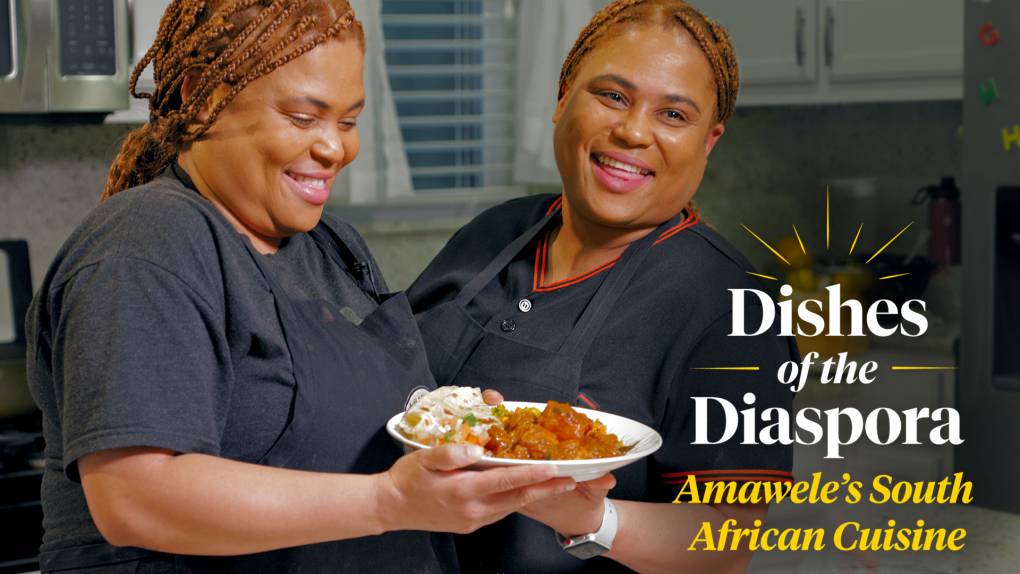
Amawele's Cuisine Brings South African Flavors to San Francisco
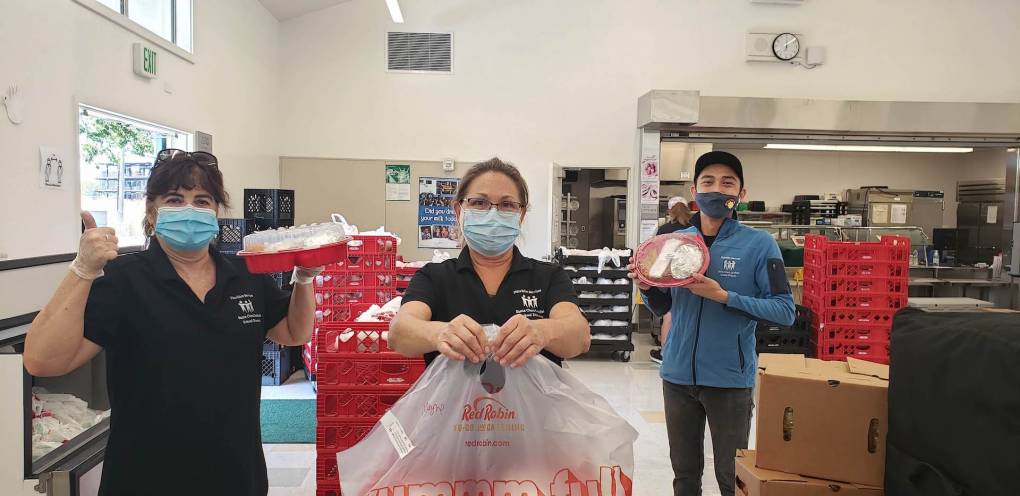
Bay Area School Districts Adapt to Food Distribution in New School Year
San Francisco Restaurants Grapple with Opening for Indoor Dining
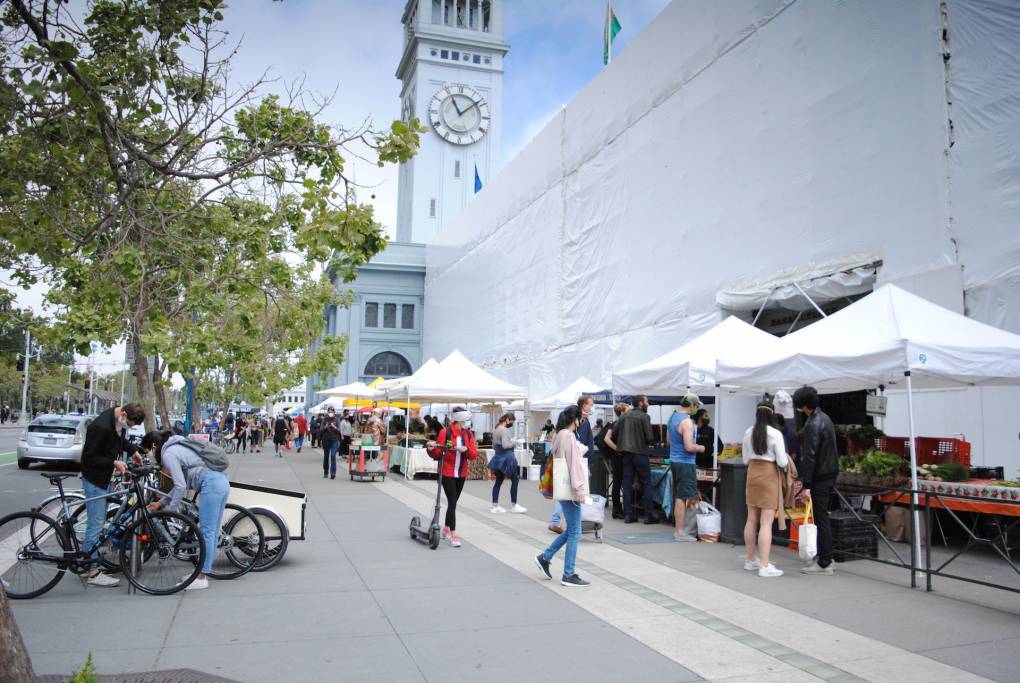
Ferry Building Reopens After Partial Closure
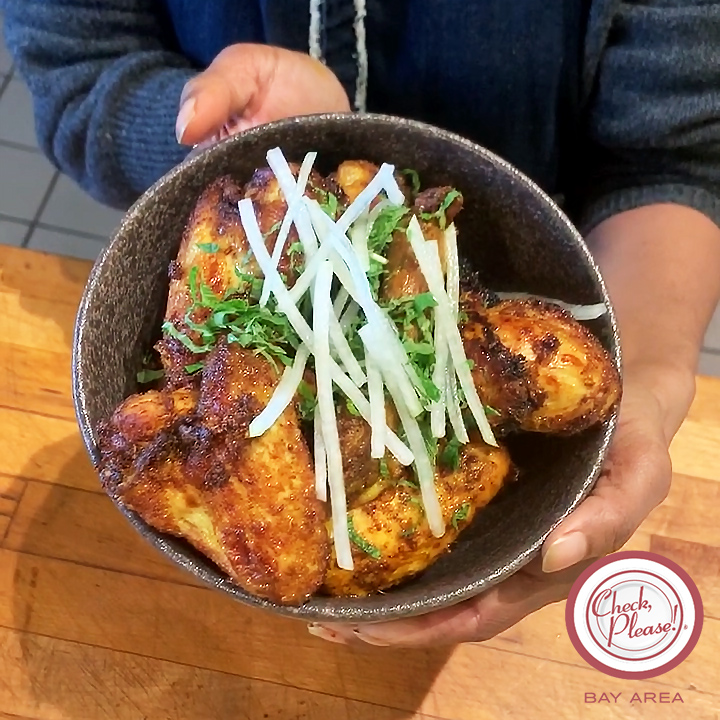
'Check, Please! Bay Area' Presents: Mahila's Mamak Fried Chicken
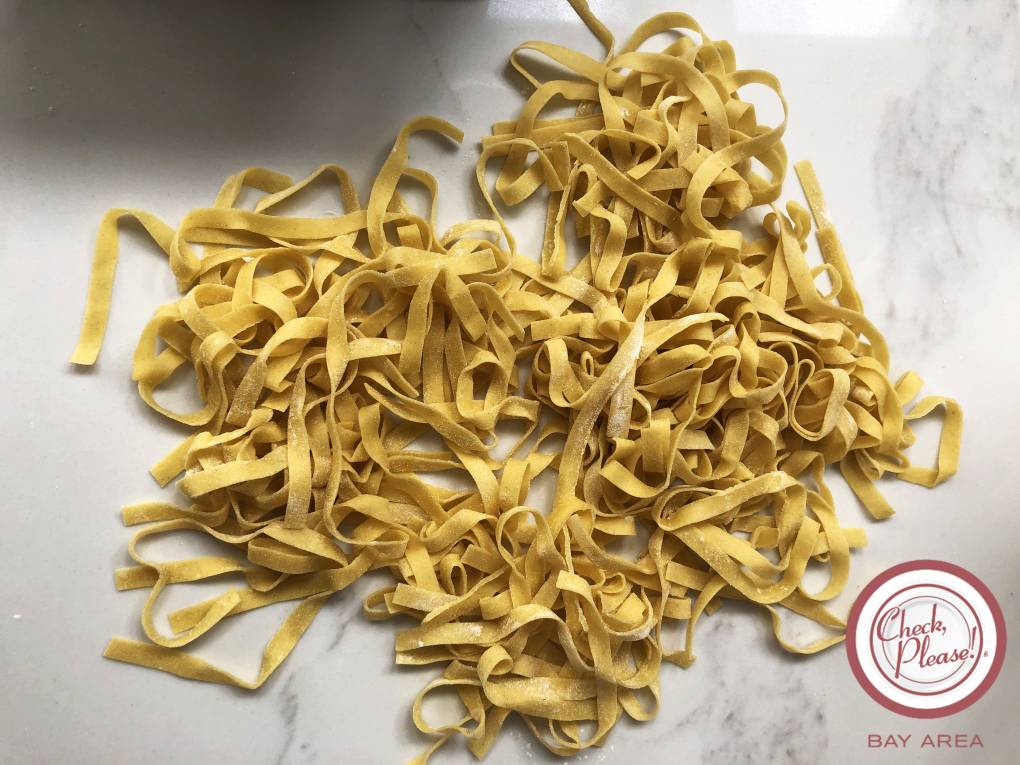
'Check, Please! Bay Area' Presents: a Mano's Handmade Tagliatelle al Pesto Genovese
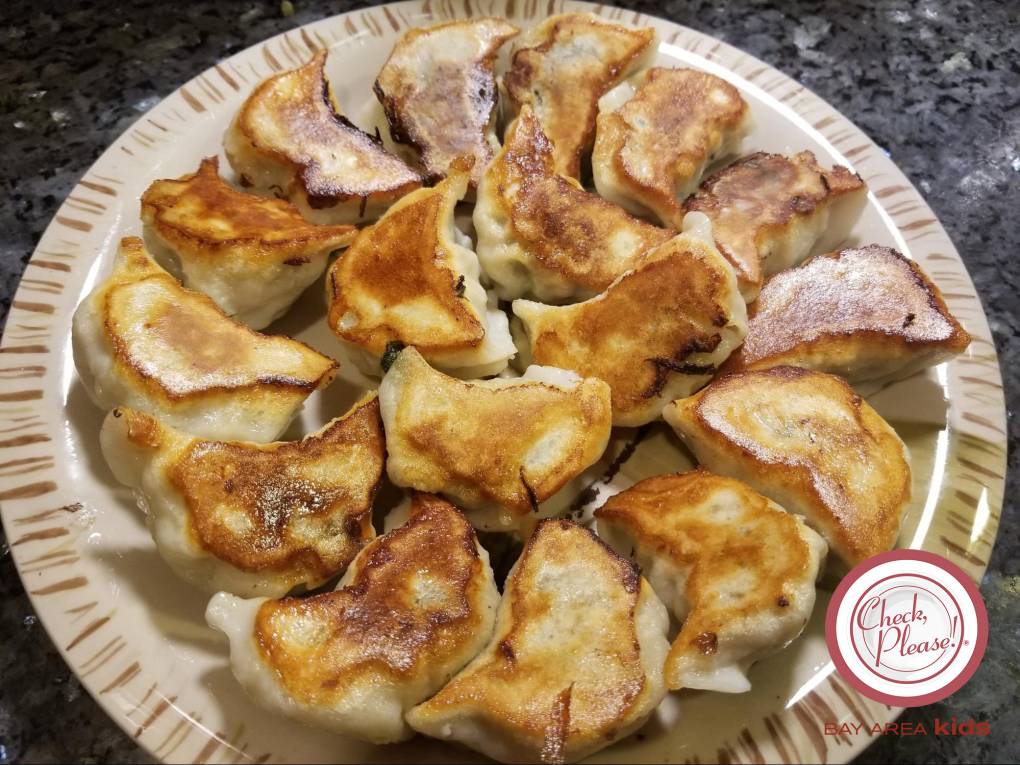
'Check, Please! Bay Area Kids' Presents: Lai Hong Lounge's Pork Potstickers
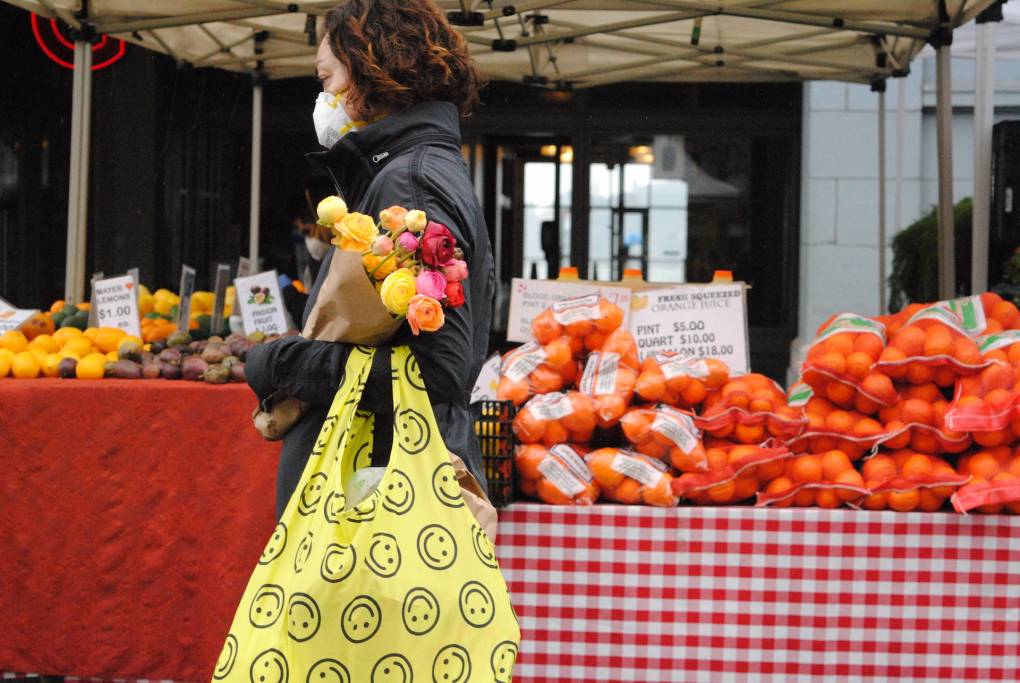
Small Farmers, Local Markets Nimbly Adapt to a New Consumer Landscape
Flavors Worth Finding: Yolk Spill, Vegetarian Value and Fried Rice to Bet On
Sponsored
window.__IS_SSR__=true
window.__INITIAL_STATE__={"attachmentsReducer":{"audio_0":{"type":"attachments","id":"audio_0","imgSizes":{"kqedFullSize":{"file":"https://ww2.kqed.org/news/wp-content/themes/KQED-unified/img/audio_bgs/background0.jpg"}}},"audio_1":{"type":"attachments","id":"audio_1","imgSizes":{"kqedFullSize":{"file":"https://ww2.kqed.org/news/wp-content/themes/KQED-unified/img/audio_bgs/background1.jpg"}}},"audio_2":{"type":"attachments","id":"audio_2","imgSizes":{"kqedFullSize":{"file":"https://ww2.kqed.org/news/wp-content/themes/KQED-unified/img/audio_bgs/background2.jpg"}}},"audio_3":{"type":"attachments","id":"audio_3","imgSizes":{"kqedFullSize":{"file":"https://ww2.kqed.org/news/wp-content/themes/KQED-unified/img/audio_bgs/background3.jpg"}}},"audio_4":{"type":"attachments","id":"audio_4","imgSizes":{"kqedFullSize":{"file":"https://ww2.kqed.org/news/wp-content/themes/KQED-unified/img/audio_bgs/background4.jpg"}}},"placeholder":{"type":"attachments","id":"placeholder","imgSizes":{"thumbnail":{"file":"https://ww2.kqed.org/wp-content/uploads/sites/10/2018/01/GettyImages-896326950-160x96.jpg","width":160,"height":96,"mimeType":"image/jpeg"},"medium":{"file":"https://ww2.kqed.org/wp-content/uploads/sites/10/2018/01/GettyImages-896326950-800x478.jpg","width":800,"height":478,"mimeType":"image/jpeg"},"large":{"file":"https://ww2.kqed.org/wp-content/uploads/sites/10/2018/01/GettyImages-896326950-1020x610.jpg","width":1020,"height":610,"mimeType":"image/jpeg"},"fd-lrg":{"file":"https://ww2.kqed.org/wp-content/uploads/sites/10/2018/01/GettyImages-896326950-1920x1148.jpg","width":1920,"height":1148,"mimeType":"image/jpeg"},"fd-med":{"file":"https://ww2.kqed.org/wp-content/uploads/sites/10/2018/01/GettyImages-896326950-1180x705.jpg","width":1180,"height":705,"mimeType":"image/jpeg"},"fd-sm":{"file":"https://ww2.kqed.org/wp-content/uploads/sites/10/2018/01/GettyImages-896326950-960x574.jpg","width":960,"height":574,"mimeType":"image/jpeg"},"post-thumbnail":{"file":"https://ww2.kqed.org/wp-content/uploads/sites/10/2018/01/GettyImages-896326950-672x372.jpg","width":672,"height":372,"mimeType":"image/jpeg"},"twentyfourteen-full-width":{"file":"https://ww2.kqed.org/wp-content/uploads/sites/10/2018/01/GettyImages-896326950-1038x576.jpg","width":1038,"height":576,"mimeType":"image/jpeg"},"xxsmall":{"file":"https://ww2.kqed.org/wp-content/uploads/sites/10/2018/01/GettyImages-896326950-240x143.jpg","width":240,"height":143,"mimeType":"image/jpeg"},"xsmall":{"file":"https://ww2.kqed.org/wp-content/uploads/sites/10/2018/01/GettyImages-896326950-375x224.jpg","width":375,"height":224,"mimeType":"image/jpeg"},"small":{"file":"https://ww2.kqed.org/wp-content/uploads/sites/10/2018/01/GettyImages-896326950-520x311.jpg","width":520,"height":311,"mimeType":"image/jpeg"},"xlarge":{"file":"https://ww2.kqed.org/wp-content/uploads/sites/10/2018/01/GettyImages-896326950-1180x705.jpg","width":1180,"height":705,"mimeType":"image/jpeg"},"full-width":{"file":"https://ww2.kqed.org/wp-content/uploads/sites/10/2018/01/GettyImages-896326950-1920x1148.jpg","width":1920,"height":1148,"mimeType":"image/jpeg"},"guest-author-32":{"file":"https://ww2.kqed.org/wp-content/uploads/sites/10/2018/01/GettyImages-896326950-32x32.jpg","width":32,"height":32,"mimeType":"image/jpeg"},"guest-author-50":{"file":"https://ww2.kqed.org/wp-content/uploads/sites/10/2018/01/GettyImages-896326950-50x50.jpg","width":50,"height":50,"mimeType":"image/jpeg"},"guest-author-64":{"file":"https://ww2.kqed.org/wp-content/uploads/sites/10/2018/01/GettyImages-896326950-64x64.jpg","width":64,"height":64,"mimeType":"image/jpeg"},"guest-author-96":{"file":"https://ww2.kqed.org/wp-content/uploads/sites/10/2018/01/GettyImages-896326950-96x96.jpg","width":96,"height":96,"mimeType":"image/jpeg"},"guest-author-128":{"file":"https://ww2.kqed.org/wp-content/uploads/sites/10/2018/01/GettyImages-896326950-128x128.jpg","width":128,"height":128,"mimeType":"image/jpeg"},"detail":{"file":"https://ww2.kqed.org/wp-content/uploads/sites/10/2018/01/GettyImages-896326950-150x150.jpg","width":150,"height":150,"mimeType":"image/jpeg"},"kqedFullSize":{"file":"https://ww2.kqed.org/wp-content/uploads/sites/10/2018/01/GettyImages-896326950-e1514998105161.jpg","width":1920,"height":1148}}},"bayareabites_139852":{"type":"attachments","id":"bayareabites_139852","meta":{"index":"attachments_1591205162","site":"bayareabites","id":"139852","found":true},"title":"Dishes_102_Thumbnail_v4","publishDate":1614308371,"status":"inherit","parent":139811,"modified":1614308528,"caption":"Chefs Pam and Wendy Drew show off their South African roti and curry.","credit":"Cecilia Phillips / KQED","altTag":null,"description":"Chefs Pam and Wendy Drew show off their South African roti and curry.","imgSizes":{"medium":{"file":"https://ww2.kqed.org/app/uploads/sites/24/2021/02/Dishes_102_Thumbnail_v4-800x450.jpg","width":800,"height":450,"mimeType":"image/jpeg"},"large":{"file":"https://ww2.kqed.org/app/uploads/sites/24/2021/02/Dishes_102_Thumbnail_v4-1020x574.jpg","width":1020,"height":574,"mimeType":"image/jpeg"},"thumbnail":{"file":"https://ww2.kqed.org/app/uploads/sites/24/2021/02/Dishes_102_Thumbnail_v4-160x90.jpg","width":160,"height":90,"mimeType":"image/jpeg"},"medium_large":{"file":"https://ww2.kqed.org/app/uploads/sites/24/2021/02/Dishes_102_Thumbnail_v4-768x432.jpg","width":768,"height":432,"mimeType":"image/jpeg"},"1536x1536":{"file":"https://ww2.kqed.org/app/uploads/sites/24/2021/02/Dishes_102_Thumbnail_v4-1536x864.jpg","width":1536,"height":864,"mimeType":"image/jpeg"},"post-thumbnail":{"file":"https://ww2.kqed.org/app/uploads/sites/24/2021/02/Dishes_102_Thumbnail_v4-672x372.jpg","width":672,"height":372,"mimeType":"image/jpeg"},"twentyfourteen-full-width":{"file":"https://ww2.kqed.org/app/uploads/sites/24/2021/02/Dishes_102_Thumbnail_v4-1038x576.jpg","width":1038,"height":576,"mimeType":"image/jpeg"},"kqedFullSize":{"file":"https://ww2.kqed.org/app/uploads/sites/24/2021/02/Dishes_102_Thumbnail_v4.jpg","width":1920,"height":1080}},"fetchFailed":false,"isLoading":false},"bayareabites_139204":{"type":"attachments","id":"bayareabites_139204","meta":{"index":"attachments_1591205162","site":"bayareabites","id":"139204","found":true},"title":"santaclaraunifiedschooldistrict_kqed","publishDate":1602099880,"status":"inherit","parent":139203,"modified":1602100480,"caption":"School districts around the Bay Area are adapting to a new model of food distribution including at Santa Clara Unified where 3,400 meals are handed out weekly.","credit":"Courtesy of Santa Clara Unified School District","description":"Three individuals inside a large cafeteria wearing masks and gloves show packed meals to be handed out to families who students at Santa Clara Unified School District. ","imgSizes":{"medium":{"file":"https://ww2.kqed.org/app/uploads/sites/24/2020/10/santaclaraunifiedschooldistrict_kqed-800x389.jpg","width":800,"height":389,"mimeType":"image/jpeg"},"large":{"file":"https://ww2.kqed.org/app/uploads/sites/24/2020/10/santaclaraunifiedschooldistrict_kqed-1020x496.jpg","width":1020,"height":496,"mimeType":"image/jpeg"},"thumbnail":{"file":"https://ww2.kqed.org/app/uploads/sites/24/2020/10/santaclaraunifiedschooldistrict_kqed-160x78.jpg","width":160,"height":78,"mimeType":"image/jpeg"},"medium_large":{"file":"https://ww2.kqed.org/app/uploads/sites/24/2020/10/santaclaraunifiedschooldistrict_kqed-768x373.jpg","width":768,"height":373,"mimeType":"image/jpeg"},"1536x1536":{"file":"https://ww2.kqed.org/app/uploads/sites/24/2020/10/santaclaraunifiedschooldistrict_kqed-1536x746.jpg","width":1536,"height":746,"mimeType":"image/jpeg"},"post-thumbnail":{"file":"https://ww2.kqed.org/app/uploads/sites/24/2020/10/santaclaraunifiedschooldistrict_kqed-672x372.jpg","width":672,"height":372,"mimeType":"image/jpeg"},"twentyfourteen-full-width":{"file":"https://ww2.kqed.org/app/uploads/sites/24/2020/10/santaclaraunifiedschooldistrict_kqed-1038x576.jpg","width":1038,"height":576,"mimeType":"image/jpeg"},"kqedFullSize":{"file":"https://ww2.kqed.org/app/uploads/sites/24/2020/10/santaclaraunifiedschooldistrict_kqed.jpg","width":1920,"height":933}},"fetchFailed":false,"isLoading":false},"bayareabites_139093":{"type":"attachments","id":"bayareabites_139093","meta":{"index":"attachments_1591205162","site":"bayareabites","id":"139093","found":true},"title":"Restaurants in San Francisco can reopen their dining rooms for limited capacity dining as early as tomorrow.","publishDate":1601410462,"status":"inherit","parent":139092,"modified":1601410526,"caption":"Restaurants in San Francisco can reopen their dining rooms for limited capacity dining as early as tomorrow.","credit":"iStock","description":"Two women are sitting and eating apart social distancing concept new normal lifestyle.","imgSizes":{"medium":{"file":"https://ww2.kqed.org/app/uploads/sites/24/2020/09/iStock-1239245066-800x530.jpg","width":800,"height":530,"mimeType":"image/jpeg"},"large":{"file":"https://ww2.kqed.org/app/uploads/sites/24/2020/09/iStock-1239245066-1020x676.jpg","width":1020,"height":676,"mimeType":"image/jpeg"},"thumbnail":{"file":"https://ww2.kqed.org/app/uploads/sites/24/2020/09/iStock-1239245066-160x106.jpg","width":160,"height":106,"mimeType":"image/jpeg"},"medium_large":{"file":"https://ww2.kqed.org/app/uploads/sites/24/2020/09/iStock-1239245066-768x509.jpg","width":768,"height":509,"mimeType":"image/jpeg"},"1536x1536":{"file":"https://ww2.kqed.org/app/uploads/sites/24/2020/09/iStock-1239245066-1536x1018.jpg","width":1536,"height":1018,"mimeType":"image/jpeg"},"post-thumbnail":{"file":"https://ww2.kqed.org/app/uploads/sites/24/2020/09/iStock-1239245066-672x372.jpg","width":672,"height":372,"mimeType":"image/jpeg"},"twentyfourteen-full-width":{"file":"https://ww2.kqed.org/app/uploads/sites/24/2020/09/iStock-1239245066-1038x576.jpg","width":1038,"height":576,"mimeType":"image/jpeg"},"kqedFullSize":{"file":"https://ww2.kqed.org/app/uploads/sites/24/2020/09/iStock-1239245066.jpg","width":1920,"height":1273}},"fetchFailed":false,"isLoading":false},"bayareabites_138336":{"type":"attachments","id":"bayareabites_138336","meta":{"index":"attachments_1591205162","site":"bayareabites","id":"138336","found":true},"title":"cuesa_ferrybuilding","publishDate":1595544244,"status":"inherit","parent":138335,"modified":1595544349,"caption":"Following a brief closure, all of the Ferry Building shops and restaurants are re-open for business. ","credit":"CUESA","description":"An outdoor farmer's market is open in front of the San Francisco Ferry Building as customers line up with masks on in front of stalls. ","imgSizes":{"medium":{"file":"https://ww2.kqed.org/app/uploads/sites/24/2020/07/cuesa_ferrybuilding-800x535.jpg","width":800,"height":535,"mimeType":"image/jpeg"},"large":{"file":"https://ww2.kqed.org/app/uploads/sites/24/2020/07/cuesa_ferrybuilding-1020x683.jpg","width":1020,"height":683,"mimeType":"image/jpeg"},"thumbnail":{"file":"https://ww2.kqed.org/app/uploads/sites/24/2020/07/cuesa_ferrybuilding-160x107.jpg","width":160,"height":107,"mimeType":"image/jpeg"},"medium_large":{"file":"https://ww2.kqed.org/app/uploads/sites/24/2020/07/cuesa_ferrybuilding-768x514.jpg","width":768,"height":514,"mimeType":"image/jpeg"},"1536x1536":{"file":"https://ww2.kqed.org/app/uploads/sites/24/2020/07/cuesa_ferrybuilding-1536x1028.jpg","width":1536,"height":1028,"mimeType":"image/jpeg"},"post-thumbnail":{"file":"https://ww2.kqed.org/app/uploads/sites/24/2020/07/cuesa_ferrybuilding-672x372.jpg","width":672,"height":372,"mimeType":"image/jpeg"},"twentyfourteen-full-width":{"file":"https://ww2.kqed.org/app/uploads/sites/24/2020/07/cuesa_ferrybuilding-1038x576.jpg","width":1038,"height":576,"mimeType":"image/jpeg"},"kqedFullSize":{"file":"https://ww2.kqed.org/app/uploads/sites/24/2020/07/cuesa_ferrybuilding.jpg","width":1920,"height":1285}},"fetchFailed":false,"isLoading":false},"bayareabites_137186":{"type":"attachments","id":"bayareabites_137186","meta":{"index":"attachments_1591205162","site":"bayareabites","id":"137186","found":true},"title":"Chicken Finished (2)","publishDate":1589385863,"status":"inherit","parent":137174,"modified":1589385898,"caption":"Chef Azalina Eusope's Mamak Fried Chicken brings the flavors of Mahila into your home.","credit":"Courtesy of Azalina Eusope","description":null,"imgSizes":{"thumbnail":{"file":"https://ww2.kqed.org/app/uploads/sites/24/2020/05/Chicken-Finished-2-160x160.jpg","width":160,"height":160,"mimeType":"image/jpeg"},"post-thumbnail":{"file":"https://ww2.kqed.org/app/uploads/sites/24/2020/05/Chicken-Finished-2-672x372.jpg","width":672,"height":372,"mimeType":"image/jpeg"},"twentyfourteen-full-width":{"file":"https://ww2.kqed.org/app/uploads/sites/24/2020/05/Chicken-Finished-2-720x576.jpg","width":720,"height":576,"mimeType":"image/jpeg"},"kqedFullSize":{"file":"https://ww2.kqed.org/app/uploads/sites/24/2020/05/Chicken-Finished-2.jpg","width":720,"height":720}},"fetchFailed":false,"isLoading":false},"bayareabites_137166":{"type":"attachments","id":"bayareabites_137166","meta":{"index":"attachments_1591205162","site":"bayareabites","id":"137166","found":true},"title":"cpbataglia","publishDate":1589243328,"status":"inherit","parent":137157,"modified":1589243445,"caption":"Chef Freedom Rains from San Francisco's a Mano shares a simple pasta dough recipe that yields ribbons of eggy tagliatelle.","credit":"Courtesy of Freedom Rains","description":"Chef Freedom Rains from San Francisco's a Mano shares a simple pasta dough recipe that yields ribbons of eggy tagliatelle.","imgSizes":{"thumbnail":{"file":"https://ww2.kqed.org/app/uploads/sites/24/2020/05/cpbataglia-160x120.jpg","width":160,"height":120,"mimeType":"image/jpeg"},"medium":{"file":"https://ww2.kqed.org/app/uploads/sites/24/2020/05/cpbataglia-800x600.jpg","width":800,"height":600,"mimeType":"image/jpeg"},"medium_large":{"file":"https://ww2.kqed.org/app/uploads/sites/24/2020/05/cpbataglia-768x576.jpg","width":768,"height":576,"mimeType":"image/jpeg"},"large":{"file":"https://ww2.kqed.org/app/uploads/sites/24/2020/05/cpbataglia-1020x765.jpg","width":1020,"height":765,"mimeType":"image/jpeg"},"post-thumbnail":{"file":"https://ww2.kqed.org/app/uploads/sites/24/2020/05/cpbataglia-672x372.jpg","width":672,"height":372,"mimeType":"image/jpeg"},"twentyfourteen-full-width":{"file":"https://ww2.kqed.org/app/uploads/sites/24/2020/05/cpbataglia-1038x576.jpg","width":1038,"height":576,"mimeType":"image/jpeg"},"full-width":{"file":"https://ww2.kqed.org/app/uploads/sites/24/2020/05/cpbataglia-1920x1440.jpg","width":1920,"height":1440,"mimeType":"image/jpeg"},"kqedFullSize":{"file":"https://ww2.kqed.org/app/uploads/sites/24/2020/05/cpbataglia.jpg","width":4032,"height":3024}},"fetchFailed":false,"isLoading":false},"bayareabites_137118":{"type":"attachments","id":"bayareabites_137118","meta":{"index":"attachments_1591205162","site":"bayareabites","id":"137118","found":true},"title":"Lai Hong Lounge's Pork Potstickers","publishDate":1588787648,"status":"inherit","parent":137114,"modified":1588787845,"caption":"Featured on the latest episode of 'Check, Please! Bay Area Kids,' Lai Hong Lounge shares their famed pork potstickers that are fun to make and eat with the whole family. ","credit":"Courtesy of Lai Hong Lounge","description":"Featured on the latest episode of 'Check, Please! Bay Area Kids,' Lai Hong Lounge shares their famed pork potstickers that are fun to make and eat with the whole family. ","imgSizes":{"thumbnail":{"file":"https://ww2.kqed.org/app/uploads/sites/24/2020/05/Lai-Hong-Lounge-Potstickers-160x120.jpg","width":160,"height":120,"mimeType":"image/jpeg"},"medium":{"file":"https://ww2.kqed.org/app/uploads/sites/24/2020/05/Lai-Hong-Lounge-Potstickers-800x600.jpg","width":800,"height":600,"mimeType":"image/jpeg"},"medium_large":{"file":"https://ww2.kqed.org/app/uploads/sites/24/2020/05/Lai-Hong-Lounge-Potstickers-768x576.jpg","width":768,"height":576,"mimeType":"image/jpeg"},"large":{"file":"https://ww2.kqed.org/app/uploads/sites/24/2020/05/Lai-Hong-Lounge-Potstickers-1020x765.jpg","width":1020,"height":765,"mimeType":"image/jpeg"},"post-thumbnail":{"file":"https://ww2.kqed.org/app/uploads/sites/24/2020/05/Lai-Hong-Lounge-Potstickers-672x372.jpg","width":672,"height":372,"mimeType":"image/jpeg"},"twentyfourteen-full-width":{"file":"https://ww2.kqed.org/app/uploads/sites/24/2020/05/Lai-Hong-Lounge-Potstickers-1038x576.jpg","width":1038,"height":576,"mimeType":"image/jpeg"},"full-width":{"file":"https://ww2.kqed.org/app/uploads/sites/24/2020/05/Lai-Hong-Lounge-Potstickers-1920x1441.jpg","width":1920,"height":1441,"mimeType":"image/jpeg"},"kqedFullSize":{"file":"https://ww2.kqed.org/app/uploads/sites/24/2020/05/Lai-Hong-Lounge-Potstickers.jpg","width":1999,"height":1500}},"fetchFailed":false,"isLoading":false},"bayareabites_136584":{"type":"attachments","id":"bayareabites_136584","meta":{"index":"attachments_1591205162","site":"bayareabites","id":"136584","found":true},"title":"CUESAFerryBuilding_KQED","publishDate":1585590733,"status":"inherit","parent":136549,"modified":1585590956,"caption":"Farmers Markets in the Bay Area, like CUESA, have taken public health and safety measures to social distance and minimize contact during transactions.","credit":"CUESA","description":"A women with a mask on carries a bright bouquet of flowers while holding a full yellow grocery adorned with smiley faces at the farmers market in San Francisco. ","imgSizes":{"thumbnail":{"file":"https://ww2.kqed.org/app/uploads/sites/24/2020/03/CUESAFerryBuilding_KQED-160x107.jpg","width":160,"height":107,"mimeType":"image/jpeg"},"medium":{"file":"https://ww2.kqed.org/app/uploads/sites/24/2020/03/CUESAFerryBuilding_KQED-800x535.jpg","width":800,"height":535,"mimeType":"image/jpeg"},"medium_large":{"file":"https://ww2.kqed.org/app/uploads/sites/24/2020/03/CUESAFerryBuilding_KQED-768x514.jpg","width":768,"height":514,"mimeType":"image/jpeg"},"large":{"file":"https://ww2.kqed.org/app/uploads/sites/24/2020/03/CUESAFerryBuilding_KQED-1020x683.jpg","width":1020,"height":683,"mimeType":"image/jpeg"},"post-thumbnail":{"file":"https://ww2.kqed.org/app/uploads/sites/24/2020/03/CUESAFerryBuilding_KQED-672x372.jpg","width":672,"height":372,"mimeType":"image/jpeg"},"twentyfourteen-full-width":{"file":"https://ww2.kqed.org/app/uploads/sites/24/2020/03/CUESAFerryBuilding_KQED-1038x576.jpg","width":1038,"height":576,"mimeType":"image/jpeg"},"full-width":{"file":"https://ww2.kqed.org/app/uploads/sites/24/2020/03/CUESAFerryBuilding_KQED-1920x1285.jpg","width":1920,"height":1285,"mimeType":"image/jpeg"},"kqedFullSize":{"file":"https://ww2.kqed.org/app/uploads/sites/24/2020/03/CUESAFerryBuilding_KQED.jpg","width":1920,"height":1285}},"fetchFailed":false,"isLoading":false},"bayareabites_136389":{"type":"attachments","id":"bayareabites_136389","meta":{"index":"attachments_1591205162","site":"bayareabites","id":"136389","found":true},"title":"rintaro_udoncarbonara","publishDate":1583358607,"status":"inherit","parent":136377,"modified":1583358788,"caption":"Rintaro's take on carbonara involves house made udon noodles and katsuobushi.","credit":"Ruth Gebreyesus","description":"The udon carbonara at Mission izakaya Rintaro featuring house made noodles, a fresh egg yolk and flakes of katsuobushi.","imgSizes":{"thumbnail":{"file":"https://ww2.kqed.org/app/uploads/sites/24/2020/03/rintaro_udoncarbonara-160x153.jpg","width":160,"height":153,"mimeType":"image/jpeg"},"medium":{"file":"https://ww2.kqed.org/app/uploads/sites/24/2020/03/rintaro_udoncarbonara-800x764.jpg","width":800,"height":764,"mimeType":"image/jpeg"},"medium_large":{"file":"https://ww2.kqed.org/app/uploads/sites/24/2020/03/rintaro_udoncarbonara-768x733.jpg","width":768,"height":733,"mimeType":"image/jpeg"},"large":{"file":"https://ww2.kqed.org/app/uploads/sites/24/2020/03/rintaro_udoncarbonara-1020x974.jpg","width":1020,"height":974,"mimeType":"image/jpeg"},"post-thumbnail":{"file":"https://ww2.kqed.org/app/uploads/sites/24/2020/03/rintaro_udoncarbonara-672x372.jpg","width":672,"height":372,"mimeType":"image/jpeg"},"twentyfourteen-full-width":{"file":"https://ww2.kqed.org/app/uploads/sites/24/2020/03/rintaro_udoncarbonara-1038x576.jpg","width":1038,"height":576,"mimeType":"image/jpeg"},"full-width":{"file":"https://ww2.kqed.org/app/uploads/sites/24/2020/03/rintaro_udoncarbonara-1920x1833.jpg","width":1920,"height":1833,"mimeType":"image/jpeg"},"kqedFullSize":{"file":"https://ww2.kqed.org/app/uploads/sites/24/2020/03/rintaro_udoncarbonara.jpg","width":1920,"height":1833}},"fetchFailed":false,"isLoading":false}},"audioPlayerReducer":{"postId":"stream_live"},"authorsReducer":{"bayareabites":{"type":"authors","id":"5083","meta":{"index":"authors_1591205172","id":"5083","found":true},"name":"KQED Food Staff","firstName":null,"lastName":null,"slug":"bayareabites","email":"bayareabites@kqed.org","display_author_email":false,"staff_mastheads":[],"title":"KQED Contributor","bio":"Bay Area Bites (BAB), KQED's public media food blog, feeds you visually compelling food-related stories, news, recipes and reviews from the San Francisco Bay Area and beyond.","avatar":"https://secure.gravatar.com/avatar/7113fdeeace4c1251f9bbe4b2fab415a?s=600&d=blank&r=g","twitter":"bayareabites","facebook":"bayareabites","instagram":null,"linkedin":null,"sites":[{"site":"arts","roles":["contributor"]},{"site":"bayareabites","roles":["administrator"]},{"site":"food","roles":["author"]}],"headData":{"title":"KQED Food Staff | KQED","description":"KQED Contributor","ogImgSrc":"https://secure.gravatar.com/avatar/7113fdeeace4c1251f9bbe4b2fab415a?s=600&d=blank&r=g","twImgSrc":"https://secure.gravatar.com/avatar/7113fdeeace4c1251f9bbe4b2fab415a?s=600&d=blank&r=g"},"isLoading":false,"link":"/author/bayareabites"},"owon":{"type":"authors","id":"11614","meta":{"index":"authors_1591205172","id":"11614","found":true},"name":"Olivia Won","firstName":"Olivia","lastName":"Won","slug":"owon","email":"owon@kqed.org","display_author_email":false,"staff_mastheads":[],"title":null,"bio":"\u003cspan style=\"font-weight: 400;\">Olivia Won is a writer, producer, and plant-tender living in her hometown of Oakland, California. She currently works with KQED Food, where she writes about Bay Area food culture and produces \u003c/span>\u003ci>\u003cspan style=\"font-weight: 400;\">Check, Please! Bay Area\u003c/span>\u003c/i>\u003cspan style=\"font-weight: 400;\">. \u003c/span>","avatar":"https://secure.gravatar.com/avatar/a0ce8718461a291f08887a424d1ce561?s=600&d=blank&r=g","twitter":null,"facebook":null,"instagram":null,"linkedin":null,"sites":[{"site":"bayareabites","roles":["editor"]},{"site":"checkplease","roles":["editor"]},{"site":"food","roles":["editor"]}],"headData":{"title":"Olivia Won | KQED","description":null,"ogImgSrc":"https://secure.gravatar.com/avatar/a0ce8718461a291f08887a424d1ce561?s=600&d=blank&r=g","twImgSrc":"https://secure.gravatar.com/avatar/a0ce8718461a291f08887a424d1ce561?s=600&d=blank&r=g"},"isLoading":false,"link":"/author/owon"},"rgebreyesus":{"type":"authors","id":"11625","meta":{"index":"authors_1591205172","id":"11625","found":true},"name":"Ruth Gebreyesus","firstName":"Ruth","lastName":"Gebreyesus","slug":"rgebreyesus","email":"rgebreyesus@KQED.org","display_author_email":false,"staff_mastheads":[],"title":"Food Writer","bio":"Ruth Gebreyesus is a freelance writer and producer based in the Bay Area. Through stories across various mediums, Ruth explores the creation and consumption of cultural products. You can find more of her work \u003ca href=\"https://www.kotetakotet.com/\">here\u003c/a>.","avatar":"https://secure.gravatar.com/avatar/68980beab511750abbb1a58f1c768b45?s=600&d=blank&r=g","twitter":"root_g","facebook":null,"instagram":null,"linkedin":null,"sites":[{"site":"arts","roles":["subscriber"]},{"site":"bayareabites","roles":["subscriber"]},{"site":"checkplease","roles":["editor"]},{"site":"food","roles":["editor"]}],"headData":{"title":"Ruth Gebreyesus | KQED","description":"Food Writer","ogImgSrc":"https://secure.gravatar.com/avatar/68980beab511750abbb1a58f1c768b45?s=600&d=blank&r=g","twImgSrc":"https://secure.gravatar.com/avatar/68980beab511750abbb1a58f1c768b45?s=600&d=blank&r=g"},"isLoading":false,"link":"/author/rgebreyesus"},"aonyejekwe":{"type":"authors","id":"11723","meta":{"index":"authors_1591205172","id":"11723","found":true},"name":"Anthonia Onyejekwe","firstName":"Anthonia","lastName":"Onyejekwe","slug":"aonyejekwe","email":"aonyejekwe@kqed.org","display_author_email":false,"staff_mastheads":[],"title":"KQED Contributor","bio":null,"avatar":"https://secure.gravatar.com/avatar/44c9068b8c006c33ddf0f3c671acfe4c?s=600&d=blank&r=g","twitter":null,"facebook":null,"instagram":"https://www.instagram.com/ahhtonia/","linkedin":null,"sites":[{"site":"bayareabites","roles":["author"]}],"headData":{"title":"Anthonia Onyejekwe | KQED","description":"KQED Contributor","ogImgSrc":"https://secure.gravatar.com/avatar/44c9068b8c006c33ddf0f3c671acfe4c?s=600&d=blank&r=g","twImgSrc":"https://secure.gravatar.com/avatar/44c9068b8c006c33ddf0f3c671acfe4c?s=600&d=blank&r=g"},"isLoading":false,"link":"/author/aonyejekwe"}},"breakingNewsReducer":{},"campaignFinanceReducer":{},"firebase":{"requesting":{},"requested":{},"timestamps":{},"data":{},"ordered":{},"auth":{"isLoaded":false,"isEmpty":true},"authError":null,"profile":{"isLoaded":false,"isEmpty":true},"listeners":{"byId":{},"allIds":[]},"isInitializing":false,"errors":[]},"navBarReducer":{"navBarId":"arts","fullView":true,"showPlayer":false},"navMenuReducer":{"menus":[{"key":"menu1","items":[{"name":"News","link":"/","type":"title"},{"name":"Politics","link":"/politics"},{"name":"Science","link":"/science"},{"name":"Education","link":"/educationnews"},{"name":"Housing","link":"/housing"},{"name":"Immigration","link":"/immigration"},{"name":"Criminal Justice","link":"/criminaljustice"},{"name":"Silicon Valley","link":"/siliconvalley"},{"name":"Forum","link":"/forum"},{"name":"The California Report","link":"/californiareport"}]},{"key":"menu2","items":[{"name":"Arts & Culture","link":"/arts","type":"title"},{"name":"Critics’ Picks","link":"/thedolist"},{"name":"Cultural Commentary","link":"/artscommentary"},{"name":"Food & Drink","link":"/food"},{"name":"Bay Area Hip-Hop","link":"/bayareahiphop"},{"name":"Rebel Girls","link":"/rebelgirls"},{"name":"Arts Video","link":"/artsvideos"}]},{"key":"menu3","items":[{"name":"Podcasts","link":"/podcasts","type":"title"},{"name":"Bay Curious","link":"/podcasts/baycurious"},{"name":"Rightnowish","link":"/podcasts/rightnowish"},{"name":"The Bay","link":"/podcasts/thebay"},{"name":"On Our Watch","link":"/podcasts/onourwatch"},{"name":"Mindshift","link":"/podcasts/mindshift"},{"name":"Consider This","link":"/podcasts/considerthis"},{"name":"Political Breakdown","link":"/podcasts/politicalbreakdown"}]},{"key":"menu4","items":[{"name":"Live Radio","link":"/radio","type":"title"},{"name":"TV","link":"/tv","type":"title"},{"name":"Events","link":"/events","type":"title"},{"name":"For Educators","link":"/education","type":"title"},{"name":"Support KQED","link":"/support","type":"title"},{"name":"About","link":"/about","type":"title"},{"name":"Help Center","link":"https://kqed-helpcenter.kqed.org/s","type":"title"}]}]},"pagesReducer":{},"postsReducer":{"stream_live":{"type":"live","id":"stream_live","audioUrl":"https://streams.kqed.org/kqedradio","title":"Live Stream","excerpt":"Live Stream information currently unavailable.","link":"/radio","featImg":"","label":{"name":"KQED Live","link":"/"}},"stream_kqedNewscast":{"type":"posts","id":"stream_kqedNewscast","audioUrl":"https://www.kqed.org/.stream/anon/radio/RDnews/newscast.mp3?_=1","title":"KQED Newscast","featImg":"","label":{"name":"88.5 FM","link":"/"}},"bayareabites_139811":{"type":"posts","id":"bayareabites_139811","meta":{"index":"posts_1591205157","site":"bayareabites","id":"139811","score":null,"sort":[1614357026000]},"guestAuthors":[],"slug":"amaweles-cuisine-brings-south-african-flavors-to-san-francisco","title":"Amawele's Cuisine Brings South African Flavors to San Francisco","publishDate":1614357026,"format":"video","headTitle":"Bay Area Bites | KQED Food","labelTerm":{"site":"bayareabites"},"content":"\u003cp>\u003cspan style=\"font-weight: 400\">Pam and Wendy Drew are South African identical twins who do everything together; from travel to entering the same career paths and now owning and operating \u003ca href=\"https://amaweles.com/\">Amawele’s Cuisine\u003c/a> in San Francisco. The name of their restaurant came easy—it simply means “The Twins” in Zulu.\u003c/span>\u003c/p>\n\u003cp> \u003c/p>\n\u003cfigure id=\"attachment_139817\" class=\"wp-caption alignnone\" style=\"max-width: 683px\">\u003cimg class=\"wp-image-139817 size-full\" src=\"https://ww2.kqed.org/app/uploads/sites/24/2021/02/FOOD2105_amaweles_chpic_4.jpg\" alt=\"\" width=\"683\" height=\"960\" srcset=\"https://ww2.kqed.org/app/uploads/sites/24/2021/02/FOOD2105_amaweles_chpic_4.jpg 683w, https://ww2.kqed.org/app/uploads/sites/24/2021/02/FOOD2105_amaweles_chpic_4-160x225.jpg 160w\" sizes=\"(max-width: 683px) 100vw, 683px\">\u003cfigcaption class=\"wp-caption-text\">Young Pam and Wendy.\u003c/figcaption>\u003c/figure>\n\u003cp>\u003cspan style=\"font-weight: 400\">Amawele’s Cuisine serves what Wendy and Pam consider to be Durban-inspired dishes. Pam and Wendy grew up in Durban, South Africa, in a culturally diverse community. Not only was their community heavily diverse, so was their family. “We are what they consider as colored because of cultural mix,” says Pam. “Our family is extremely diverse. So we [have] Indian aunties, we have Black uncles, white grandparents. [Also], Cape Malaysian is part of our DNA as well.”\u003c/span>\u003c/p>\n\u003cfigure id=\"attachment_139818\" class=\"wp-caption alignnone\" style=\"max-width: 800px\">\u003cimg class=\"wp-image-139818 size-medium\" src=\"https://ww2.kqed.org/app/uploads/sites/24/2021/02/FOOD2105_amaweles_chpic_7-800x600.jpg\" alt=\"\" width=\"800\" height=\"600\" srcset=\"https://ww2.kqed.org/app/uploads/sites/24/2021/02/FOOD2105_amaweles_chpic_7-800x600.jpg 800w, https://ww2.kqed.org/app/uploads/sites/24/2021/02/FOOD2105_amaweles_chpic_7-1020x765.jpg 1020w, https://ww2.kqed.org/app/uploads/sites/24/2021/02/FOOD2105_amaweles_chpic_7-160x120.jpg 160w, https://ww2.kqed.org/app/uploads/sites/24/2021/02/FOOD2105_amaweles_chpic_7-768x576.jpg 768w, https://ww2.kqed.org/app/uploads/sites/24/2021/02/FOOD2105_amaweles_chpic_7-1536x1152.jpg 1536w, https://ww2.kqed.org/app/uploads/sites/24/2021/02/FOOD2105_amaweles_chpic_7-1920x1440.jpg 1920w, https://ww2.kqed.org/app/uploads/sites/24/2021/02/FOOD2105_amaweles_chpic_7.jpg 2016w\" sizes=\"(max-width: 800px) 100vw, 800px\">\u003cfigcaption class=\"wp-caption-text\">Pam and Wendy as children with their mother Nadia Drew Loretta.\u003c/figcaption>\u003c/figure>\n\u003cp>\u003cspan style=\"font-weight: 400\">As a city, Durban is considered to have the largest concentrated population of Indians outside of India. Indian influences had a major impact on the dishes that Wendy and Pam consumed growing up, and they quickly learned how to prepare such dishes at a young age—many of which can be found on Amawele’s menu today.\u003c/span>\u003c/p>\n\u003cp>\u003cspan style=\"font-weight: 400\">One of the components that they use on their menu is Roti, a buttery, thin Indian flatbread that is dipped in a variety of sauces and curries. Although Roti is traditionally Indian, Pam and Wendy decided to reinvent it with secret spices; they call it South African Roti or Amawele’s Roti. (Currently, their South African Roti is headed to retail nationwide.)\u003c/span>\u003c/p>\n\u003cp>[ad fullwidth]\u003c/p>\n\u003cp>https://www.instagram.com/p/CEDNb4BhMxA/?utm_source=ig_web_copy_link\u003c/p>\n\u003cp>\u003cspan style=\"font-weight: 400\">The idea of opening Amawele’s Cuisine didn’t materialize until they moved to the United States. In South Africa, they had both worked in finance, and were eager to travel. Their initial plan was to move to the U.S. for a year or two, but upon arrival they saw the opportunities for business and decided to stay. While working to pick up jobs to make ends meet, they kept the faith that something bigger and better was heading their direction.\u003c/span>\u003c/p>\n\u003cp>\u003cspan style=\"font-weight: 400\">When South Africa hosted the 2010 World Cup, Pam and Wendy started planning a party with friends. They soon realized that San Francisco didn’t have any South African restaurants that could provide food for the party. Without a beat, they decided to prepare their favorite dishes, and sure enough, their spicy, flavorful meals were a hit. The next day, their friends encouraged them to open a restaurant. \u003c/span>\u003c/p>\n\u003cfigure id=\"attachment_139848\" class=\"wp-caption alignnone\" style=\"max-width: 800px\">\u003cimg class=\"wp-image-139848 size-medium\" src=\"https://ww2.kqed.org/app/uploads/sites/24/2021/02/IMG_6555-800x607.jpg\" alt=\"\" width=\"800\" height=\"607\" srcset=\"https://ww2.kqed.org/app/uploads/sites/24/2021/02/IMG_6555-800x607.jpg 800w, https://ww2.kqed.org/app/uploads/sites/24/2021/02/IMG_6555-1020x774.jpg 1020w, https://ww2.kqed.org/app/uploads/sites/24/2021/02/IMG_6555-160x121.jpg 160w, https://ww2.kqed.org/app/uploads/sites/24/2021/02/IMG_6555-768x583.jpg 768w, https://ww2.kqed.org/app/uploads/sites/24/2021/02/IMG_6555.jpg 1125w\" sizes=\"(max-width: 800px) 100vw, 800px\">\u003cfigcaption class=\"wp-caption-text\">Pam and Wendy with a friend at the World Cup 2010 party.\u003c/figcaption>\u003c/figure>\n\u003cp>\u003cspan style=\"font-weight: 400\">But Amawele’s Cuisine didn’t happen overnight—in fact, it took nearly three years to finally open. In the meantime, Pam and Wendy marketed their business while driving rideshare, saved money by working as nannies, and eventually borrowed $100,000 on credit cards. Although they had supportive friends, the realities of opening a business as two black immigrant women in San Francisco was a challenge. “People didn't look at us and say, ‘Oh, I see success in you.’ It was a little hard,” Pam says. “it wasn't like they just said, ‘Oh, well, yeah, they'll just sign the lease. Go in.’ We had to do a lot of begging and pleading.”\u003c/span>\u003c/p>\n\u003cfigure id=\"attachment_139843\" class=\"wp-caption alignnone\" style=\"max-width: 800px\">\u003cimg class=\"wp-image-139843 size-medium\" src=\"https://ww2.kqed.org/app/uploads/sites/24/2021/02/FOOD2105_amaweles_apic18-800x600.jpg\" alt=\"\" width=\"800\" height=\"600\" srcset=\"https://ww2.kqed.org/app/uploads/sites/24/2021/02/FOOD2105_amaweles_apic18-800x600.jpg 800w, https://ww2.kqed.org/app/uploads/sites/24/2021/02/FOOD2105_amaweles_apic18-1020x765.jpg 1020w, https://ww2.kqed.org/app/uploads/sites/24/2021/02/FOOD2105_amaweles_apic18-160x120.jpg 160w, https://ww2.kqed.org/app/uploads/sites/24/2021/02/FOOD2105_amaweles_apic18-768x576.jpg 768w, https://ww2.kqed.org/app/uploads/sites/24/2021/02/FOOD2105_amaweles_apic18-1536x1152.jpg 1536w, https://ww2.kqed.org/app/uploads/sites/24/2021/02/FOOD2105_amaweles_apic18-1920x1440.jpg 1920w, https://ww2.kqed.org/app/uploads/sites/24/2021/02/FOOD2105_amaweles_apic18.jpg 2000w\" sizes=\"(max-width: 800px) 100vw, 800px\">\u003cfigcaption class=\"wp-caption-text\">Pam and Wendy in 2012 in Las Vegas for the Rugby 7's.\u003c/figcaption>\u003c/figure>\n\u003cp>\u003cspan style=\"font-weight: 400\">In May of 2013, Amawele’s Cuisine finally opened its doors in the Financial District at San Francisco’s Rincon Center. Like most restaurants, the first few days were a struggle. “We went home and we literally cried ourselves to sleep,” Pam says. “We were like, ‘What did we do?’”\u003c/span>\u003c/p>\n\u003cp>\u003ciframe title=\"Twin Sisters Bring South African Comfort Food to the Bay | Dishes of the Diaspora\" width=\"640\" height=\"360\" src=\"https://www.youtube.com/embed/Sm4PAOs4vsQ?feature=oembed\" frameborder=\"0\" allow=\"accelerometer; autoplay; clipboard-write; encrypted-media; gyroscope; picture-in-picture\" allowfullscreen>\u003c/iframe>\u003c/p>\n\u003cfigure id=\"attachment_139842\" class=\"wp-caption alignnone\" style=\"max-width: 750px\">\u003cimg class=\"wp-image-139842 size-full\" src=\"https://ww2.kqed.org/app/uploads/sites/24/2021/02/FOOD2105_amaweles_apic7.jpg\" alt=\"\" width=\"750\" height=\"746\" srcset=\"https://ww2.kqed.org/app/uploads/sites/24/2021/02/FOOD2105_amaweles_apic7.jpg 750w, https://ww2.kqed.org/app/uploads/sites/24/2021/02/FOOD2105_amaweles_apic7-160x159.jpg 160w\" sizes=\"(max-width: 750px) 100vw, 750px\">\u003cfigcaption class=\"wp-caption-text\">Pam and Wendy at the Amawele's Cuisine brick and mortar.\u003c/figcaption>\u003c/figure>\n\u003cfigure id=\"attachment_139841\" class=\"wp-caption alignnone\" style=\"max-width: 800px\">\u003cimg class=\"wp-image-139841 size-medium\" src=\"https://ww2.kqed.org/app/uploads/sites/24/2021/02/FOOD2105_amaweles_apic9-800x1067.jpg\" alt=\"\" width=\"800\" height=\"1067\" srcset=\"https://ww2.kqed.org/app/uploads/sites/24/2021/02/FOOD2105_amaweles_apic9-800x1067.jpg 800w, https://ww2.kqed.org/app/uploads/sites/24/2021/02/FOOD2105_amaweles_apic9-1020x1360.jpg 1020w, https://ww2.kqed.org/app/uploads/sites/24/2021/02/FOOD2105_amaweles_apic9-160x213.jpg 160w, https://ww2.kqed.org/app/uploads/sites/24/2021/02/FOOD2105_amaweles_apic9-768x1024.jpg 768w, https://ww2.kqed.org/app/uploads/sites/24/2021/02/FOOD2105_amaweles_apic9-1152x1536.jpg 1152w, https://ww2.kqed.org/app/uploads/sites/24/2021/02/FOOD2105_amaweles_apic9.jpg 1512w\" sizes=\"(max-width: 800px) 100vw, 800px\">\u003cfigcaption class=\"wp-caption-text\">Pam and Wendy with their mother and brother at the Amawele's brick and mortar.\u003c/figcaption>\u003c/figure>\n\u003cp>\u003cspan style=\"font-weight: 400\">Fortunately, things changed by the end of the week, when customers came fluttering in. Some customers had trouble understanding the dishes, and even asked if the restaurant ever served exotic dishes like ostrich eggs or crocodile meat. “I never had an ostrich in my life, so I'm not going to sell something I don't know,” says Pam. “And again, it's not a typical South African dish, it's not. So there was a lot of educating in terms of...South African Cuisine.” \u003c/span>\u003c/p>\n\u003cp>\u003cspan style=\"font-weight: 400\">One of the most popular dishes at Amawele’s is Bunny Chow, a cross-cultural dish of English, Indian and Zulu cuisine. Bunny Chow is a hollowed-out quarter loaf of sweet white bread filled with either chicken curry, vegetable curry, lamb curry or beef curry, served with a side of pickled carrots to ease the spiciness. The name “Bunny” is another word for \u003ci>Bania\u003c/i>, an Indian caste of merchants who used white bread as bowls to transport their curries. \u003c/span>\u003c/p>\n\u003cp>\u003cspan style=\"font-weight: 400\">Initially the twins were against putting it on the menu; they simply couldn’t imagine seeing men in suits digging into Bunny Chow. So they introduced it to diners as similar to a soup bowl, and it soon became their most popular dish on the menu.\u003c/span>\u003c/p>\n\u003cfigure id=\"attachment_139832\" class=\"wp-caption alignnone\" style=\"max-width: 800px\">\u003cimg class=\"wp-image-139832 size-medium\" src=\"https://ww2.kqed.org/app/uploads/sites/24/2021/02/428A9046-800x533.jpg\" alt=\"\" width=\"800\" height=\"533\" srcset=\"https://ww2.kqed.org/app/uploads/sites/24/2021/02/428A9046-800x533.jpg 800w, https://ww2.kqed.org/app/uploads/sites/24/2021/02/428A9046-1020x680.jpg 1020w, https://ww2.kqed.org/app/uploads/sites/24/2021/02/428A9046-160x107.jpg 160w, https://ww2.kqed.org/app/uploads/sites/24/2021/02/428A9046-768x512.jpg 768w, https://ww2.kqed.org/app/uploads/sites/24/2021/02/428A9046-1536x1024.jpg 1536w, https://ww2.kqed.org/app/uploads/sites/24/2021/02/428A9046-2048x1365.jpg 2048w, https://ww2.kqed.org/app/uploads/sites/24/2021/02/428A9046-1920x1280.jpg 1920w\" sizes=\"(max-width: 800px) 100vw, 800px\">\u003cfigcaption class=\"wp-caption-text\">Preparing the Bunny Chow. \u003ccite>(Cecilia Phillips / KQED)\u003c/cite>\u003c/figcaption>\u003c/figure>\n\u003cfigure id=\"attachment_139830\" class=\"wp-caption alignnone\" style=\"max-width: 800px\">\u003cimg class=\"wp-image-139830 size-medium\" src=\"https://ww2.kqed.org/app/uploads/sites/24/2021/02/428A9056-800x533.jpg\" alt=\"\" width=\"800\" height=\"533\" srcset=\"https://ww2.kqed.org/app/uploads/sites/24/2021/02/428A9056-800x533.jpg 800w, https://ww2.kqed.org/app/uploads/sites/24/2021/02/428A9056-1020x680.jpg 1020w, https://ww2.kqed.org/app/uploads/sites/24/2021/02/428A9056-160x107.jpg 160w, https://ww2.kqed.org/app/uploads/sites/24/2021/02/428A9056-768x512.jpg 768w, https://ww2.kqed.org/app/uploads/sites/24/2021/02/428A9056-1536x1024.jpg 1536w, https://ww2.kqed.org/app/uploads/sites/24/2021/02/428A9056-2048x1365.jpg 2048w, https://ww2.kqed.org/app/uploads/sites/24/2021/02/428A9056-1920x1280.jpg 1920w\" sizes=\"(max-width: 800px) 100vw, 800px\">\u003cfigcaption class=\"wp-caption-text\">The plated Bunny Chow \u003ccite>(Cecilia Phillips / KQED)\u003c/cite>\u003c/figcaption>\u003c/figure>\n\u003cp>\u003cspan style=\"font-weight: 400\">Another best-selling item is their Cape Malay Rice, a popular dish from the Cape Malays of Capetown, South Africa. The rice, vibrant yellow from the tumeric, and made with curry, cinnamon, and vegetables. They like to call it a type of Biryani rice—familiar, but with a different taste. \u003c/span>\u003c/p>\n\u003cp>https://www.instagram.com/p/CK2ZqsrhL5U/?utm_source=ig_web_copy_link\u003c/p>\n\u003cp>\u003cspan style=\"font-weight: 400\">Despite success at their brick and mortar, Pam and Wendy decided to close the restaurant in 2019 and focus primarily on online subscriptions, corporate catering and retail. “I feel like that was a massive blessing in disguise, because none of us knew what was going to happen in 2020,” Wendy says. \u003c/span>\u003c/p>\n\u003cp>\u003cspan style=\"font-weight: 400\">Currently Pam and Wendy rent kitchen space at \u003ca href=\"https://www.eclecticcookery.com/\">Eclectic Cookery\u003c/a>, located in Bayview-Hunters Point, and have a monthly rotating subscription box of South African dishes for customers to order. Says Pam, “Each box has about three full South African meals. [Also], every month a double crusted savory pie is featured, because that's also one of our signature dishes coming from Durban.”\u003c/span>\u003c/p>\n\u003cp>https://www.instagram.com/p/CGD1oywBSuc/?utm_source=ig_web_copy_link\u003c/p>\n\u003cp>\u003cspan style=\"font-weight: 400\">Online, Pam and Wendy also sell \u003ca href=\"https://amaweles.com/order-amaweles/drinks/amaweles-refreshers/\">Rooibos Refreshers\u003c/a>, an herbal brew made from leaves that can only be grown in Capetown, and \u003ca href=\"https://amaweles.com/order-amaweles/sauces/amaweles-peri-peri-hot-sauce/\">Peri Peri hot sauce\u003c/a>. At the moment, Amawele’s only accepts Bay Area orders, but will soon expand nationwide. \u003c/span>\u003c/p>\n\u003cp>https://www.instagram.com/p/CIL92LdhP6w/?utm_source=ig_web_copy_link\u003c/p>\n\u003cp>\u003cimg class=\"alignnone size-medium wp-image-139823\" src=\"https://ww2.kqed.org/app/uploads/sites/24/2021/02/428A8945-800x533.jpg\" alt=\"\" width=\"800\" height=\"533\" srcset=\"https://ww2.kqed.org/app/uploads/sites/24/2021/02/428A8945-800x533.jpg 800w, https://ww2.kqed.org/app/uploads/sites/24/2021/02/428A8945-1020x680.jpg 1020w, https://ww2.kqed.org/app/uploads/sites/24/2021/02/428A8945-160x107.jpg 160w, https://ww2.kqed.org/app/uploads/sites/24/2021/02/428A8945-768x512.jpg 768w, https://ww2.kqed.org/app/uploads/sites/24/2021/02/428A8945-1536x1024.jpg 1536w, https://ww2.kqed.org/app/uploads/sites/24/2021/02/428A8945-2048x1365.jpg 2048w, https://ww2.kqed.org/app/uploads/sites/24/2021/02/428A8945-1920x1280.jpg 1920w\" sizes=\"(max-width: 800px) 100vw, 800px\">\u003c/p>\n\u003cp> \u003c/p>\n\u003cp>\u003cspan style=\"font-weight: 400\">And as for the future? Says Wendy, “We just want to move forward.” \u003c/span>\u003c/p>\n\u003cp> \u003c/p>\n\u003cp>\u003ci>\u003cspan style=\"font-weight: 400\">For authentic Durban South African cuisine, head over to \u003ca href=\"https://amaweles.com/\">Amaweles.com\u003c/a>. \u003c/span>\u003c/i>\u003c/p>\n\u003cp>[ad floatright]\u003c/p>\n\u003cp> \u003c/p>\n\n","blocks":[],"excerpt":null,"status":"publish","parent":0,"modified":1621382491,"stats":{"hasAudio":false,"hasVideo":true,"hasChartOrMap":false,"iframeSrcs":[],"hasGoogleForm":false,"hasGallery":false,"hasHearkenModule":false,"hasPolis":false,"paragraphCount":21,"wordCount":1175},"headData":{"title":"Amawele's Cuisine Brings South African Flavors to San Francisco | KQED","description":"Twin sisters and chefs Pam and Wendy Drew make spicy South African comfort food inspired by their childhood at Amawele's Cuisine in San Francisco.","ogTitle":"","ogDescription":"","ogImgId":"","twTitle":"","twDescription":"","twImgId":"","schema":{"@context":"http://schema.org","@type":"Article","headline":"Amawele's Cuisine Brings South African Flavors to San Francisco","datePublished":"2021-02-26T16:30:26.000Z","dateModified":"2021-05-19T00:01:31.000Z","image":"https://cdn.kqed.org/wp-content/uploads/2020/02/KQED-OG-Image@1x.png"}},"disqusIdentifier":"139811 https://ww2.kqed.org/bayareabites/?p=139811","disqusUrl":"https://ww2.kqed.org/bayareabites/2021/02/26/amaweles-cuisine-brings-south-african-flavors-to-san-francisco/","disqusTitle":"Amawele's Cuisine Brings South African Flavors to San Francisco","videoEmbed":"https://youtu.be/Sm4PAOs4vsQ","templateType":"standard","featuredImageType":"standard","path":"/bayareabites/139811/amaweles-cuisine-brings-south-african-flavors-to-san-francisco","audioTrackLength":null,"parsedContent":[{"type":"contentString","content":"\u003cdiv class=\"post-body\">\u003cp>\u003cp>\u003cspan style=\"font-weight: 400\">Pam and Wendy Drew are South African identical twins who do everything together; from travel to entering the same career paths and now owning and operating \u003ca href=\"https://amaweles.com/\">Amawele’s Cuisine\u003c/a> in San Francisco. The name of their restaurant came easy—it simply means “The Twins” in Zulu.\u003c/span>\u003c/p>\n\u003cp> \u003c/p>\n\u003cfigure id=\"attachment_139817\" class=\"wp-caption alignnone\" style=\"max-width: 683px\">\u003cimg class=\"wp-image-139817 size-full\" src=\"https://ww2.kqed.org/app/uploads/sites/24/2021/02/FOOD2105_amaweles_chpic_4.jpg\" alt=\"\" width=\"683\" height=\"960\" srcset=\"https://ww2.kqed.org/app/uploads/sites/24/2021/02/FOOD2105_amaweles_chpic_4.jpg 683w, https://ww2.kqed.org/app/uploads/sites/24/2021/02/FOOD2105_amaweles_chpic_4-160x225.jpg 160w\" sizes=\"(max-width: 683px) 100vw, 683px\">\u003cfigcaption class=\"wp-caption-text\">Young Pam and Wendy.\u003c/figcaption>\u003c/figure>\n\u003cp>\u003cspan style=\"font-weight: 400\">Amawele’s Cuisine serves what Wendy and Pam consider to be Durban-inspired dishes. Pam and Wendy grew up in Durban, South Africa, in a culturally diverse community. Not only was their community heavily diverse, so was their family. “We are what they consider as colored because of cultural mix,” says Pam. “Our family is extremely diverse. So we [have] Indian aunties, we have Black uncles, white grandparents. [Also], Cape Malaysian is part of our DNA as well.”\u003c/span>\u003c/p>\n\u003cfigure id=\"attachment_139818\" class=\"wp-caption alignnone\" style=\"max-width: 800px\">\u003cimg class=\"wp-image-139818 size-medium\" src=\"https://ww2.kqed.org/app/uploads/sites/24/2021/02/FOOD2105_amaweles_chpic_7-800x600.jpg\" alt=\"\" width=\"800\" height=\"600\" srcset=\"https://ww2.kqed.org/app/uploads/sites/24/2021/02/FOOD2105_amaweles_chpic_7-800x600.jpg 800w, https://ww2.kqed.org/app/uploads/sites/24/2021/02/FOOD2105_amaweles_chpic_7-1020x765.jpg 1020w, https://ww2.kqed.org/app/uploads/sites/24/2021/02/FOOD2105_amaweles_chpic_7-160x120.jpg 160w, https://ww2.kqed.org/app/uploads/sites/24/2021/02/FOOD2105_amaweles_chpic_7-768x576.jpg 768w, https://ww2.kqed.org/app/uploads/sites/24/2021/02/FOOD2105_amaweles_chpic_7-1536x1152.jpg 1536w, https://ww2.kqed.org/app/uploads/sites/24/2021/02/FOOD2105_amaweles_chpic_7-1920x1440.jpg 1920w, https://ww2.kqed.org/app/uploads/sites/24/2021/02/FOOD2105_amaweles_chpic_7.jpg 2016w\" sizes=\"(max-width: 800px) 100vw, 800px\">\u003cfigcaption class=\"wp-caption-text\">Pam and Wendy as children with their mother Nadia Drew Loretta.\u003c/figcaption>\u003c/figure>\n\u003cp>\u003cspan style=\"font-weight: 400\">As a city, Durban is considered to have the largest concentrated population of Indians outside of India. Indian influences had a major impact on the dishes that Wendy and Pam consumed growing up, and they quickly learned how to prepare such dishes at a young age—many of which can be found on Amawele’s menu today.\u003c/span>\u003c/p>\n\u003cp>\u003cspan style=\"font-weight: 400\">One of the components that they use on their menu is Roti, a buttery, thin Indian flatbread that is dipped in a variety of sauces and curries. Although Roti is traditionally Indian, Pam and Wendy decided to reinvent it with secret spices; they call it South African Roti or Amawele’s Roti. (Currently, their South African Roti is headed to retail nationwide.)\u003c/span>\u003c/p>\n\u003cp>\u003c/p>\u003c/div>","attributes":{"named":{},"numeric":[]}},{"type":"component","content":"","name":"ad","attributes":{"named":{"label":"fullwidth"},"numeric":["fullwidth"]}},{"type":"contentString","content":"\u003cdiv class=\"post-body\">\u003cp>\u003c/p>\u003c/p>\u003c/div>","attributes":{"named":{},"numeric":[]}},{"type":"component","content":"","name":"instagramLink","attributes":{"named":{"instagramId":"CEDNb4BhMxA"},"numeric":[]}},{"type":"contentString","content":"\u003cdiv class=\"post-body\">\u003cp>\u003cp>\u003cspan style=\"font-weight: 400\">The idea of opening Amawele’s Cuisine didn’t materialize until they moved to the United States. In South Africa, they had both worked in finance, and were eager to travel. Their initial plan was to move to the U.S. for a year or two, but upon arrival they saw the opportunities for business and decided to stay. While working to pick up jobs to make ends meet, they kept the faith that something bigger and better was heading their direction.\u003c/span>\u003c/p>\n\u003cp>\u003cspan style=\"font-weight: 400\">When South Africa hosted the 2010 World Cup, Pam and Wendy started planning a party with friends. They soon realized that San Francisco didn’t have any South African restaurants that could provide food for the party. Without a beat, they decided to prepare their favorite dishes, and sure enough, their spicy, flavorful meals were a hit. The next day, their friends encouraged them to open a restaurant. \u003c/span>\u003c/p>\n\u003cfigure id=\"attachment_139848\" class=\"wp-caption alignnone\" style=\"max-width: 800px\">\u003cimg class=\"wp-image-139848 size-medium\" src=\"https://ww2.kqed.org/app/uploads/sites/24/2021/02/IMG_6555-800x607.jpg\" alt=\"\" width=\"800\" height=\"607\" srcset=\"https://ww2.kqed.org/app/uploads/sites/24/2021/02/IMG_6555-800x607.jpg 800w, https://ww2.kqed.org/app/uploads/sites/24/2021/02/IMG_6555-1020x774.jpg 1020w, https://ww2.kqed.org/app/uploads/sites/24/2021/02/IMG_6555-160x121.jpg 160w, https://ww2.kqed.org/app/uploads/sites/24/2021/02/IMG_6555-768x583.jpg 768w, https://ww2.kqed.org/app/uploads/sites/24/2021/02/IMG_6555.jpg 1125w\" sizes=\"(max-width: 800px) 100vw, 800px\">\u003cfigcaption class=\"wp-caption-text\">Pam and Wendy with a friend at the World Cup 2010 party.\u003c/figcaption>\u003c/figure>\n\u003cp>\u003cspan style=\"font-weight: 400\">But Amawele’s Cuisine didn’t happen overnight—in fact, it took nearly three years to finally open. In the meantime, Pam and Wendy marketed their business while driving rideshare, saved money by working as nannies, and eventually borrowed $100,000 on credit cards. Although they had supportive friends, the realities of opening a business as two black immigrant women in San Francisco was a challenge. “People didn't look at us and say, ‘Oh, I see success in you.’ It was a little hard,” Pam says. “it wasn't like they just said, ‘Oh, well, yeah, they'll just sign the lease. Go in.’ We had to do a lot of begging and pleading.”\u003c/span>\u003c/p>\n\u003cfigure id=\"attachment_139843\" class=\"wp-caption alignnone\" style=\"max-width: 800px\">\u003cimg class=\"wp-image-139843 size-medium\" src=\"https://ww2.kqed.org/app/uploads/sites/24/2021/02/FOOD2105_amaweles_apic18-800x600.jpg\" alt=\"\" width=\"800\" height=\"600\" srcset=\"https://ww2.kqed.org/app/uploads/sites/24/2021/02/FOOD2105_amaweles_apic18-800x600.jpg 800w, https://ww2.kqed.org/app/uploads/sites/24/2021/02/FOOD2105_amaweles_apic18-1020x765.jpg 1020w, https://ww2.kqed.org/app/uploads/sites/24/2021/02/FOOD2105_amaweles_apic18-160x120.jpg 160w, https://ww2.kqed.org/app/uploads/sites/24/2021/02/FOOD2105_amaweles_apic18-768x576.jpg 768w, https://ww2.kqed.org/app/uploads/sites/24/2021/02/FOOD2105_amaweles_apic18-1536x1152.jpg 1536w, https://ww2.kqed.org/app/uploads/sites/24/2021/02/FOOD2105_amaweles_apic18-1920x1440.jpg 1920w, https://ww2.kqed.org/app/uploads/sites/24/2021/02/FOOD2105_amaweles_apic18.jpg 2000w\" sizes=\"(max-width: 800px) 100vw, 800px\">\u003cfigcaption class=\"wp-caption-text\">Pam and Wendy in 2012 in Las Vegas for the Rugby 7's.\u003c/figcaption>\u003c/figure>\n\u003cp>\u003cspan style=\"font-weight: 400\">In May of 2013, Amawele’s Cuisine finally opened its doors in the Financial District at San Francisco’s Rincon Center. Like most restaurants, the first few days were a struggle. “We went home and we literally cried ourselves to sleep,” Pam says. “We were like, ‘What did we do?’”\u003c/span>\u003c/p>\n\u003cp>\u003ciframe title=\"Twin Sisters Bring South African Comfort Food to the Bay | Dishes of the Diaspora\" width=\"640\" height=\"360\" src=\"https://www.youtube.com/embed/Sm4PAOs4vsQ?feature=oembed\" frameborder=\"0\" allow=\"accelerometer; autoplay; clipboard-write; encrypted-media; gyroscope; picture-in-picture\" allowfullscreen>\u003c/iframe>\u003c/p>\n\u003cfigure id=\"attachment_139842\" class=\"wp-caption alignnone\" style=\"max-width: 750px\">\u003cimg class=\"wp-image-139842 size-full\" src=\"https://ww2.kqed.org/app/uploads/sites/24/2021/02/FOOD2105_amaweles_apic7.jpg\" alt=\"\" width=\"750\" height=\"746\" srcset=\"https://ww2.kqed.org/app/uploads/sites/24/2021/02/FOOD2105_amaweles_apic7.jpg 750w, https://ww2.kqed.org/app/uploads/sites/24/2021/02/FOOD2105_amaweles_apic7-160x159.jpg 160w\" sizes=\"(max-width: 750px) 100vw, 750px\">\u003cfigcaption class=\"wp-caption-text\">Pam and Wendy at the Amawele's Cuisine brick and mortar.\u003c/figcaption>\u003c/figure>\n\u003cfigure id=\"attachment_139841\" class=\"wp-caption alignnone\" style=\"max-width: 800px\">\u003cimg class=\"wp-image-139841 size-medium\" src=\"https://ww2.kqed.org/app/uploads/sites/24/2021/02/FOOD2105_amaweles_apic9-800x1067.jpg\" alt=\"\" width=\"800\" height=\"1067\" srcset=\"https://ww2.kqed.org/app/uploads/sites/24/2021/02/FOOD2105_amaweles_apic9-800x1067.jpg 800w, https://ww2.kqed.org/app/uploads/sites/24/2021/02/FOOD2105_amaweles_apic9-1020x1360.jpg 1020w, https://ww2.kqed.org/app/uploads/sites/24/2021/02/FOOD2105_amaweles_apic9-160x213.jpg 160w, https://ww2.kqed.org/app/uploads/sites/24/2021/02/FOOD2105_amaweles_apic9-768x1024.jpg 768w, https://ww2.kqed.org/app/uploads/sites/24/2021/02/FOOD2105_amaweles_apic9-1152x1536.jpg 1152w, https://ww2.kqed.org/app/uploads/sites/24/2021/02/FOOD2105_amaweles_apic9.jpg 1512w\" sizes=\"(max-width: 800px) 100vw, 800px\">\u003cfigcaption class=\"wp-caption-text\">Pam and Wendy with their mother and brother at the Amawele's brick and mortar.\u003c/figcaption>\u003c/figure>\n\u003cp>\u003cspan style=\"font-weight: 400\">Fortunately, things changed by the end of the week, when customers came fluttering in. Some customers had trouble understanding the dishes, and even asked if the restaurant ever served exotic dishes like ostrich eggs or crocodile meat. “I never had an ostrich in my life, so I'm not going to sell something I don't know,” says Pam. “And again, it's not a typical South African dish, it's not. So there was a lot of educating in terms of...South African Cuisine.” \u003c/span>\u003c/p>\n\u003cp>\u003cspan style=\"font-weight: 400\">One of the most popular dishes at Amawele’s is Bunny Chow, a cross-cultural dish of English, Indian and Zulu cuisine. Bunny Chow is a hollowed-out quarter loaf of sweet white bread filled with either chicken curry, vegetable curry, lamb curry or beef curry, served with a side of pickled carrots to ease the spiciness. The name “Bunny” is another word for \u003ci>Bania\u003c/i>, an Indian caste of merchants who used white bread as bowls to transport their curries. \u003c/span>\u003c/p>\n\u003cp>\u003cspan style=\"font-weight: 400\">Initially the twins were against putting it on the menu; they simply couldn’t imagine seeing men in suits digging into Bunny Chow. So they introduced it to diners as similar to a soup bowl, and it soon became their most popular dish on the menu.\u003c/span>\u003c/p>\n\u003cfigure id=\"attachment_139832\" class=\"wp-caption alignnone\" style=\"max-width: 800px\">\u003cimg class=\"wp-image-139832 size-medium\" src=\"https://ww2.kqed.org/app/uploads/sites/24/2021/02/428A9046-800x533.jpg\" alt=\"\" width=\"800\" height=\"533\" srcset=\"https://ww2.kqed.org/app/uploads/sites/24/2021/02/428A9046-800x533.jpg 800w, https://ww2.kqed.org/app/uploads/sites/24/2021/02/428A9046-1020x680.jpg 1020w, https://ww2.kqed.org/app/uploads/sites/24/2021/02/428A9046-160x107.jpg 160w, https://ww2.kqed.org/app/uploads/sites/24/2021/02/428A9046-768x512.jpg 768w, https://ww2.kqed.org/app/uploads/sites/24/2021/02/428A9046-1536x1024.jpg 1536w, https://ww2.kqed.org/app/uploads/sites/24/2021/02/428A9046-2048x1365.jpg 2048w, https://ww2.kqed.org/app/uploads/sites/24/2021/02/428A9046-1920x1280.jpg 1920w\" sizes=\"(max-width: 800px) 100vw, 800px\">\u003cfigcaption class=\"wp-caption-text\">Preparing the Bunny Chow. \u003ccite>(Cecilia Phillips / KQED)\u003c/cite>\u003c/figcaption>\u003c/figure>\n\u003cfigure id=\"attachment_139830\" class=\"wp-caption alignnone\" style=\"max-width: 800px\">\u003cimg class=\"wp-image-139830 size-medium\" src=\"https://ww2.kqed.org/app/uploads/sites/24/2021/02/428A9056-800x533.jpg\" alt=\"\" width=\"800\" height=\"533\" srcset=\"https://ww2.kqed.org/app/uploads/sites/24/2021/02/428A9056-800x533.jpg 800w, https://ww2.kqed.org/app/uploads/sites/24/2021/02/428A9056-1020x680.jpg 1020w, https://ww2.kqed.org/app/uploads/sites/24/2021/02/428A9056-160x107.jpg 160w, https://ww2.kqed.org/app/uploads/sites/24/2021/02/428A9056-768x512.jpg 768w, https://ww2.kqed.org/app/uploads/sites/24/2021/02/428A9056-1536x1024.jpg 1536w, https://ww2.kqed.org/app/uploads/sites/24/2021/02/428A9056-2048x1365.jpg 2048w, https://ww2.kqed.org/app/uploads/sites/24/2021/02/428A9056-1920x1280.jpg 1920w\" sizes=\"(max-width: 800px) 100vw, 800px\">\u003cfigcaption class=\"wp-caption-text\">The plated Bunny Chow \u003ccite>(Cecilia Phillips / KQED)\u003c/cite>\u003c/figcaption>\u003c/figure>\n\u003cp>\u003cspan style=\"font-weight: 400\">Another best-selling item is their Cape Malay Rice, a popular dish from the Cape Malays of Capetown, South Africa. The rice, vibrant yellow from the tumeric, and made with curry, cinnamon, and vegetables. They like to call it a type of Biryani rice—familiar, but with a different taste. \u003c/span>\u003c/p>\u003c/p>\u003c/div>","attributes":{"named":{},"numeric":[]}},{"type":"component","content":"","name":"instagramLink","attributes":{"named":{"instagramId":"CK2ZqsrhL5U"},"numeric":[]}},{"type":"contentString","content":"\u003cdiv class=\"post-body\">\u003cp>\u003cp>\u003cspan style=\"font-weight: 400\">Despite success at their brick and mortar, Pam and Wendy decided to close the restaurant in 2019 and focus primarily on online subscriptions, corporate catering and retail. “I feel like that was a massive blessing in disguise, because none of us knew what was going to happen in 2020,” Wendy says. \u003c/span>\u003c/p>\n\u003cp>\u003cspan style=\"font-weight: 400\">Currently Pam and Wendy rent kitchen space at \u003ca href=\"https://www.eclecticcookery.com/\">Eclectic Cookery\u003c/a>, located in Bayview-Hunters Point, and have a monthly rotating subscription box of South African dishes for customers to order. Says Pam, “Each box has about three full South African meals. [Also], every month a double crusted savory pie is featured, because that's also one of our signature dishes coming from Durban.”\u003c/span>\u003c/p>\u003c/p>\u003c/div>","attributes":{"named":{},"numeric":[]}},{"type":"component","content":"","name":"instagramLink","attributes":{"named":{"instagramId":"CGD1oywBSuc"},"numeric":[]}},{"type":"contentString","content":"\u003cdiv class=\"post-body\">\u003cp>\u003cp>\u003cspan style=\"font-weight: 400\">Online, Pam and Wendy also sell \u003ca href=\"https://amaweles.com/order-amaweles/drinks/amaweles-refreshers/\">Rooibos Refreshers\u003c/a>, an herbal brew made from leaves that can only be grown in Capetown, and \u003ca href=\"https://amaweles.com/order-amaweles/sauces/amaweles-peri-peri-hot-sauce/\">Peri Peri hot sauce\u003c/a>. At the moment, Amawele’s only accepts Bay Area orders, but will soon expand nationwide. \u003c/span>\u003c/p>\u003c/p>\u003c/div>","attributes":{"named":{},"numeric":[]}},{"type":"component","content":"","name":"instagramLink","attributes":{"named":{"instagramId":"CIL92LdhP6w"},"numeric":[]}},{"type":"contentString","content":"\u003cdiv class=\"post-body\">\u003cp>\u003cp>\u003cimg class=\"alignnone size-medium wp-image-139823\" src=\"https://ww2.kqed.org/app/uploads/sites/24/2021/02/428A8945-800x533.jpg\" alt=\"\" width=\"800\" height=\"533\" srcset=\"https://ww2.kqed.org/app/uploads/sites/24/2021/02/428A8945-800x533.jpg 800w, https://ww2.kqed.org/app/uploads/sites/24/2021/02/428A8945-1020x680.jpg 1020w, https://ww2.kqed.org/app/uploads/sites/24/2021/02/428A8945-160x107.jpg 160w, https://ww2.kqed.org/app/uploads/sites/24/2021/02/428A8945-768x512.jpg 768w, https://ww2.kqed.org/app/uploads/sites/24/2021/02/428A8945-1536x1024.jpg 1536w, https://ww2.kqed.org/app/uploads/sites/24/2021/02/428A8945-2048x1365.jpg 2048w, https://ww2.kqed.org/app/uploads/sites/24/2021/02/428A8945-1920x1280.jpg 1920w\" sizes=\"(max-width: 800px) 100vw, 800px\">\u003c/p>\n\u003cp> \u003c/p>\n\u003cp>\u003cspan style=\"font-weight: 400\">And as for the future? Says Wendy, “We just want to move forward.” \u003c/span>\u003c/p>\n\u003cp> \u003c/p>\n\u003cp>\u003ci>\u003cspan style=\"font-weight: 400\">For authentic Durban South African cuisine, head over to \u003ca href=\"https://amaweles.com/\">Amaweles.com\u003c/a>. \u003c/span>\u003c/i>\u003c/p>\n\u003cp>\u003c/p>\u003c/div>","attributes":{"named":{},"numeric":[]}},{"type":"component","content":"","name":"ad","attributes":{"named":{"label":"floatright"},"numeric":["floatright"]}},{"type":"contentString","content":"\u003cdiv class=\"post-body\">\u003cp>\u003c/p>\n\u003cp> \u003c/p>\n\n\u003c/div>\u003c/p>","attributes":{"named":{},"numeric":[]}}],"link":"/bayareabites/139811/amaweles-cuisine-brings-south-african-flavors-to-san-francisco","authors":["11723"],"categories":["bayareabites_16558","bayareabites_109","bayareabites_63","bayareabites_8770","bayareabites_17082","bayareabites_90"],"tags":["bayareabites_17067","bayareabites_17075","bayareabites_17071","bayareabites_17065","bayareabites_17076","bayareabites_17077","bayareabites_10465","bayareabites_17073","bayareabites_17078","bayareabites_16402","bayareabites_14745","bayareabites_17072","bayareabites_17074"],"featImg":"bayareabites_139852","label":"bayareabites"},"bayareabites_139203":{"type":"posts","id":"bayareabites_139203","meta":{"index":"posts_1591205157","site":"bayareabites","id":"139203","score":null,"sort":[1602100769000]},"guestAuthors":[],"slug":"bay-area-school-districts-adapt-to-food-distribution-in-new-school-year","title":"Bay Area School Districts Adapt to Food Distribution in New School Year","publishDate":1602100769,"format":"standard","headTitle":"Bay Area Bites | KQED Food","labelTerm":{"site":"bayareabites"},"content":"\u003cp>\u003cspan style=\"font-weight: 400\">There’s been a tremendous shift in the challenge of feeding students for public school districts across the nation in the face of the pandemic. As schools started to reopen around the Bay Area in September, nutrition service departments are incorporating lessons from a spring and summer of distanced food distribution for the new school year. \u003c/span>\u003c/p>\n\u003cp>\u003cspan style=\"font-weight: 400\">“Our service has continued since March, and there was no interruption in service through the summer,” says Jennifer LeBarre, director of nutrition services at \u003c/span>\u003ca href=\"https://www.sfusd.edu/services/health-wellness/nutrition-school-meals\">\u003cspan style=\"font-weight: 400\">San Francisco Unified School District\u003c/span>\u003c/a>\u003cspan style=\"font-weight: 400\">. “A lot of the same things that we were doing in March are what we're doing now. What we have changed, though, is we are providing meals—breakfast, lunch and supper—on Wednesdays, and families are able to pick up the entire week's worth of meals on those days.”\u003c/span>\u003c/p>\n\u003cp>\u003cspan style=\"font-weight: 400\">At the beginning of the school year, LaBarre thought the schools might have to charge families for these meals after a summer of federally funded seamless meal service but at the end of August, the \u003c/span>\u003ca href=\"https://www.usda.gov/media/press-releases/2020/08/31/usda-extends-free-meals-kids-through-december-31-2020\">\u003cspan style=\"font-weight: 400\">U.S. Department of Agriculture extended its pandemic free meal program\u003c/span>\u003c/a>\u003cspan style=\"font-weight: 400\"> through the end of 2020. “That was a really great change that happened in August,” she says of the meals whose funding is allocated through a reimbursement program.\u003c/span>\u003c/p>\n\u003cp>\u003cspan style=\"font-weight: 400\">The biggest lesson from spring and summer’s food distribution at campuses across the city was the shift in what families needed. Before the pandemic, LaBarre says that they would buy individually prepackaged meals as part of the service model. “But now we're buying bulk fruit and vegetables,” she says. Increasing the shelf life of fruits, vegetables and other food is a central focus for LaBarre and her colleagues, and bulk-buying things like a pound of carrots has aided with that. Over three million meals deep into their adaptive model, LaBarre and her counterparts across school districts in the Bay Area have been sharing their experiences so others don’t make the same mistakes twice.\u003c/span>\u003cspan style=\"font-weight: 400\">\u003cbr>\nSchools have become central to food distribution and testing across Bay Area counties. A study published \u003c/span>\u003ca href=\"https://pubmed.ncbi.nlm.nih.gov/32959216/\">\u003cspan style=\"font-weight: 400\">in September’s issue of the Journal of Urban Health\u003c/span>\u003c/a>\u003cspan style=\"font-weight: 400\"> found that schools are model sites for food distribution amidst pandemic and other emergencies. Though cities are not without their own gaps in equitable city planning, the distribution of schools around the city and its cafeteria staff and expertise came in handy when SFUSD partnered with the SF Marin Food Bank as pick-up sites.\u003c/span>\u003c/p>\n\u003cfigure id=\"attachment_139205\" class=\"wp-caption aligncenter\" style=\"max-width: 1920px\">\u003cimg class=\"size-full wp-image-139205\" src=\"https://ww2.kqed.org/app/uploads/sites/24/2020/10/santaclaraunified2_kqed.jpg\" alt=\"‘fore I sit soft in your belly\" width=\"1920\" height=\"933\" srcset=\"https://ww2.kqed.org/app/uploads/sites/24/2020/10/santaclaraunified2_kqed.jpg 1920w, https://ww2.kqed.org/app/uploads/sites/24/2020/10/santaclaraunified2_kqed-800x389.jpg 800w, https://ww2.kqed.org/app/uploads/sites/24/2020/10/santaclaraunified2_kqed-1020x496.jpg 1020w, https://ww2.kqed.org/app/uploads/sites/24/2020/10/santaclaraunified2_kqed-160x78.jpg 160w, https://ww2.kqed.org/app/uploads/sites/24/2020/10/santaclaraunified2_kqed-768x373.jpg 768w, https://ww2.kqed.org/app/uploads/sites/24/2020/10/santaclaraunified2_kqed-1536x746.jpg 1536w\" sizes=\"(max-width: 1920px) 100vw, 1920px\">\u003cfigcaption class=\"wp-caption-text\">Santa Clara Unified School District is making use of their 11 acre farm adding fresh vegetables to each meal pack families pick up. \u003ccite>(Courtesy of Santa Clara Unified School District)\u003c/cite>\u003c/figcaption>\u003c/figure>\n\u003cp>\u003cspan style=\"font-weight: 400\">In Santa Clara, the city similarly partnered with Santa Clara Unified School District to distribute weekend meals at the onset of the pandemic as the schools were only allowed to distribute weekday meals. The school district’s director of nutrition services Karen Luna also explains that she considers her district lucky for the farm that they’re able to harvest and distribute food from. “We have an 11 acre farm that we grow produce on,” says Luna.“We've been operating that farm for almost three years,” she says. The harvests from the farm which is next to Peterson Middle School, typically went to the salad bar and other meals on campus. “Once COVID hit, we started just bagging it up and giving it out to the family. So we've been giving out fresh produce from our farm the whole time.” Luna’s district also has a culinary manager and chefs that oversee school distributed home-cooked meals. “We're trying to send home at least one homemade scratch cooked item each week with our meal kits,” Luna said. \u003c/span>\u003c/p>\n\u003cp>[ad fullwidth]\u003c/p>\n\u003cp>\u003cspan style=\"font-weight: 400\">Though their adjustments have been successful, Luna explained that fewer students are being fed through the school compared to a normal school year.. “It's about half of what we normally do on a normal school day,” says Luna.“We give out about 8,200 lunches. And right now we're giving out about 3,400, which surprisingly is about where most school districts are,” she said. SFUSD didn’t see significant drop off from the 150,000 meals they serve weekly through spring and summer with occasional upticks. But fall has brought that number down to between 65,000 and 80,000 meals.\u003c/span>\u003c/p>\n\u003cp>\u003cspan style=\"font-weight: 400\">“Our counts are really down and nobody can really figure out why,” says Luna. “I think that distance learning is so overwhelming for families that it's hard for them to actually make the time to come out and get food.” Luna also points to a fallacy that might be keeping families away from the pick-up sites in her district. “There's a big misconception that if they pick up food, then a needy family won't get it, or it's only for needy families. But it's really for anybody who needs it for economic reasons, or maybe the kids just need it for that peace of mind that school lunch in their cafeterias are still here waiting for them,” she says adding that since school meals are solely funded on reimbursements, their funding drops when less meals get picked up. \u003c/span>\u003c/p>\n\u003cp>\u003c/p>\n\u003cp>\u003cspan style=\"font-weight: 400\">Despite this drop in distributed meals, Luna still counts her staff’s ability to adapt to the circumstances of a pandemic in the middle of a school year and into a new one as a success. “None of us had ever experienced shelter-in-place or a pandemic, but all of my staff was at work that following Monday ready to go in and help our families survive this unusual situation,” she says. “I've got a couple emails [saying] that the kids really enjoy having the food that they're familiar with through the school day because it makes them feel like there's something from school. There's another piece of what is normal to them.”\u003c/span>\u003c/p>\n\n","blocks":[],"excerpt":"After a spring and summer of distanced food distribution, nutrition services rolls into a fall with lessons learned. ","status":"publish","parent":0,"modified":1621632058,"stats":{"hasAudio":false,"hasVideo":false,"hasChartOrMap":false,"iframeSrcs":[],"hasGoogleForm":false,"hasGallery":false,"hasHearkenModule":false,"hasPolis":false,"paragraphCount":10,"wordCount":1030},"headData":{"title":"Bay Area School Districts Adapt to Food Distribution in New School Year | KQED","description":"After a spring and summer of distanced food distribution, nutrition services rolls into a fall with lessons learned. ","ogTitle":"","ogDescription":"","ogImgId":"","twTitle":"","twDescription":"","twImgId":"","schema":{"@context":"http://schema.org","@type":"Article","headline":"Bay Area School Districts Adapt to Food Distribution in New School Year","datePublished":"2020-10-07T19:59:29.000Z","dateModified":"2021-05-21T21:20:58.000Z","image":"https://cdn.kqed.org/wp-content/uploads/2020/02/KQED-OG-Image@1x.png"}},"disqusIdentifier":"139203 https://ww2.kqed.org/bayareabites/?p=139203","disqusUrl":"https://ww2.kqed.org/bayareabites/2020/10/07/bay-area-school-districts-adapt-to-food-distribution-in-new-school-year/","disqusTitle":"Bay Area School Districts Adapt to Food Distribution in New School Year","path":"/bayareabites/139203/bay-area-school-districts-adapt-to-food-distribution-in-new-school-year","audioTrackLength":null,"parsedContent":[{"type":"contentString","content":"\u003cdiv class=\"post-body\">\u003cp>\u003cp>\u003cspan style=\"font-weight: 400\">There’s been a tremendous shift in the challenge of feeding students for public school districts across the nation in the face of the pandemic. As schools started to reopen around the Bay Area in September, nutrition service departments are incorporating lessons from a spring and summer of distanced food distribution for the new school year. \u003c/span>\u003c/p>\n\u003cp>\u003cspan style=\"font-weight: 400\">“Our service has continued since March, and there was no interruption in service through the summer,” says Jennifer LeBarre, director of nutrition services at \u003c/span>\u003ca href=\"https://www.sfusd.edu/services/health-wellness/nutrition-school-meals\">\u003cspan style=\"font-weight: 400\">San Francisco Unified School District\u003c/span>\u003c/a>\u003cspan style=\"font-weight: 400\">. “A lot of the same things that we were doing in March are what we're doing now. What we have changed, though, is we are providing meals—breakfast, lunch and supper—on Wednesdays, and families are able to pick up the entire week's worth of meals on those days.”\u003c/span>\u003c/p>\n\u003cp>\u003cspan style=\"font-weight: 400\">At the beginning of the school year, LaBarre thought the schools might have to charge families for these meals after a summer of federally funded seamless meal service but at the end of August, the \u003c/span>\u003ca href=\"https://www.usda.gov/media/press-releases/2020/08/31/usda-extends-free-meals-kids-through-december-31-2020\">\u003cspan style=\"font-weight: 400\">U.S. Department of Agriculture extended its pandemic free meal program\u003c/span>\u003c/a>\u003cspan style=\"font-weight: 400\"> through the end of 2020. “That was a really great change that happened in August,” she says of the meals whose funding is allocated through a reimbursement program.\u003c/span>\u003c/p>\n\u003cp>\u003cspan style=\"font-weight: 400\">The biggest lesson from spring and summer’s food distribution at campuses across the city was the shift in what families needed. Before the pandemic, LaBarre says that they would buy individually prepackaged meals as part of the service model. “But now we're buying bulk fruit and vegetables,” she says. Increasing the shelf life of fruits, vegetables and other food is a central focus for LaBarre and her colleagues, and bulk-buying things like a pound of carrots has aided with that. Over three million meals deep into their adaptive model, LaBarre and her counterparts across school districts in the Bay Area have been sharing their experiences so others don’t make the same mistakes twice.\u003c/span>\u003cspan style=\"font-weight: 400\">\u003cbr>\nSchools have become central to food distribution and testing across Bay Area counties. A study published \u003c/span>\u003ca href=\"https://pubmed.ncbi.nlm.nih.gov/32959216/\">\u003cspan style=\"font-weight: 400\">in September’s issue of the Journal of Urban Health\u003c/span>\u003c/a>\u003cspan style=\"font-weight: 400\"> found that schools are model sites for food distribution amidst pandemic and other emergencies. Though cities are not without their own gaps in equitable city planning, the distribution of schools around the city and its cafeteria staff and expertise came in handy when SFUSD partnered with the SF Marin Food Bank as pick-up sites.\u003c/span>\u003c/p>\n\u003cfigure id=\"attachment_139205\" class=\"wp-caption aligncenter\" style=\"max-width: 1920px\">\u003cimg class=\"size-full wp-image-139205\" src=\"https://ww2.kqed.org/app/uploads/sites/24/2020/10/santaclaraunified2_kqed.jpg\" alt=\"‘fore I sit soft in your belly\" width=\"1920\" height=\"933\" srcset=\"https://ww2.kqed.org/app/uploads/sites/24/2020/10/santaclaraunified2_kqed.jpg 1920w, https://ww2.kqed.org/app/uploads/sites/24/2020/10/santaclaraunified2_kqed-800x389.jpg 800w, https://ww2.kqed.org/app/uploads/sites/24/2020/10/santaclaraunified2_kqed-1020x496.jpg 1020w, https://ww2.kqed.org/app/uploads/sites/24/2020/10/santaclaraunified2_kqed-160x78.jpg 160w, https://ww2.kqed.org/app/uploads/sites/24/2020/10/santaclaraunified2_kqed-768x373.jpg 768w, https://ww2.kqed.org/app/uploads/sites/24/2020/10/santaclaraunified2_kqed-1536x746.jpg 1536w\" sizes=\"(max-width: 1920px) 100vw, 1920px\">\u003cfigcaption class=\"wp-caption-text\">Santa Clara Unified School District is making use of their 11 acre farm adding fresh vegetables to each meal pack families pick up. \u003ccite>(Courtesy of Santa Clara Unified School District)\u003c/cite>\u003c/figcaption>\u003c/figure>\n\u003cp>\u003cspan style=\"font-weight: 400\">In Santa Clara, the city similarly partnered with Santa Clara Unified School District to distribute weekend meals at the onset of the pandemic as the schools were only allowed to distribute weekday meals. The school district’s director of nutrition services Karen Luna also explains that she considers her district lucky for the farm that they’re able to harvest and distribute food from. “We have an 11 acre farm that we grow produce on,” says Luna.“We've been operating that farm for almost three years,” she says. The harvests from the farm which is next to Peterson Middle School, typically went to the salad bar and other meals on campus. “Once COVID hit, we started just bagging it up and giving it out to the family. So we've been giving out fresh produce from our farm the whole time.” Luna’s district also has a culinary manager and chefs that oversee school distributed home-cooked meals. “We're trying to send home at least one homemade scratch cooked item each week with our meal kits,” Luna said. \u003c/span>\u003c/p>\n\u003cp>\u003c/p>\u003c/div>","attributes":{"named":{},"numeric":[]}},{"type":"component","content":"","name":"ad","attributes":{"named":{"label":"fullwidth"},"numeric":["fullwidth"]}},{"type":"contentString","content":"\u003cdiv class=\"post-body\">\u003cp>\u003c/p>\n\u003cp>\u003cspan style=\"font-weight: 400\">Though their adjustments have been successful, Luna explained that fewer students are being fed through the school compared to a normal school year.. “It's about half of what we normally do on a normal school day,” says Luna.“We give out about 8,200 lunches. And right now we're giving out about 3,400, which surprisingly is about where most school districts are,” she said. SFUSD didn’t see significant drop off from the 150,000 meals they serve weekly through spring and summer with occasional upticks. But fall has brought that number down to between 65,000 and 80,000 meals.\u003c/span>\u003c/p>\n\u003cp>\u003cspan style=\"font-weight: 400\">“Our counts are really down and nobody can really figure out why,” says Luna. “I think that distance learning is so overwhelming for families that it's hard for them to actually make the time to come out and get food.” Luna also points to a fallacy that might be keeping families away from the pick-up sites in her district. “There's a big misconception that if they pick up food, then a needy family won't get it, or it's only for needy families. But it's really for anybody who needs it for economic reasons, or maybe the kids just need it for that peace of mind that school lunch in their cafeterias are still here waiting for them,” she says adding that since school meals are solely funded on reimbursements, their funding drops when less meals get picked up. \u003c/span>\u003c/p>\n\u003cp>\u003c/p>\n\u003cp>\u003cspan style=\"font-weight: 400\">Despite this drop in distributed meals, Luna still counts her staff’s ability to adapt to the circumstances of a pandemic in the middle of a school year and into a new one as a success. “None of us had ever experienced shelter-in-place or a pandemic, but all of my staff was at work that following Monday ready to go in and help our families survive this unusual situation,” she says. “I've got a couple emails [saying] that the kids really enjoy having the food that they're familiar with through the school day because it makes them feel like there's something from school. There's another piece of what is normal to them.”\u003c/span>\u003c/p>\n\n\u003c/div>\u003c/p>","attributes":{"named":{},"numeric":[]}}],"link":"/bayareabites/139203/bay-area-school-districts-adapt-to-food-distribution-in-new-school-year","authors":["11625"],"categories":["bayareabites_109","bayareabites_17082","bayareabites_10028","bayareabites_1246","bayareabites_90","bayareabites_91"],"tags":["bayareabites_16549","bayareabites_971","bayareabites_16557","bayareabites_16980","bayareabites_12977"],"featImg":"bayareabites_139204","label":"bayareabites"},"bayareabites_139092":{"type":"posts","id":"bayareabites_139092","meta":{"index":"posts_1591205157","site":"bayareabites","id":"139092","score":null,"sort":[1601410566000]},"guestAuthors":[],"slug":"san-francisco-restaurants-grapple-with-opening-for-indoor-dining","title":"San Francisco Restaurants Grapple with Opening for Indoor Dining","publishDate":1601410566,"format":"standard","headTitle":"Bay Area Bites | KQED Food","labelTerm":{"site":"bayareabites"},"content":"\u003cp>\u003cspan style=\"font-weight: 400\">San Francisco restaurants can prepare \u003c/span>\u003ca href=\"https://sfmayor.org/article/san-francisco-move-forward-reopening-more-businesses-and-activities-september-30\">\u003cspan style=\"font-weight: 400\">to offer indoor dining\u003c/span>\u003c/a>\u003cspan style=\"font-weight: 400\"> as soon as Sept. 30 as the city and county moved from the state’s coronavirus red tier designation to \u003c/span>\u003ca href=\"https://covid19.ca.gov/safer-economy/\">\u003cspan style=\"font-weight: 400\">orange\u003c/span>\u003c/a>\u003cspan style=\"font-weight: 400\">. Earlier this month, San Francisco Mayor London Breed, in coordination with health and economic city officials, announced the city expects to commence indoor dining at 25% capacity for up to 100 people, while using both state and local indicators for coronavirus infections. The state’s four-color tier system, ranging from purple, red, orange and yellow, factors in new daily cases and total infection as a percentage of the county’s population. \u003c/span>\u003ca href=\"https://data.sfgov.org/stories/s/epem-wyzb\">\u003cspan style=\"font-weight: 400\">San Francisco’s indicators\u003c/span>\u003c/a>\u003cspan style=\"font-weight: 400\"> get more granular accounting for hospitalization data, contact tracing capacity, testing, and PPE supply. \u003c/span>\u003c/p>\n\u003cp>\u003cspan style=\"font-weight: 400\">The city is developing its own indoor dining guidance working closely with the Golden Gate Restaurant Association. “We were pleased today to see that as expected San Francisco has moved into the state’s orange tier,” wrote a representative from GGRA. “We have been working closely with the city on indoor dining guidelines and are looking forward to the release of that final Department of Health guidance tomorrow.” Though, in theory, restaurants could open for limited capacity dining as soon as tomorrow, it’s expected that businesses will take longer than that to digest and adjust to \u003ca href=\"https://www.kqed.org/coronavirusliveupdates/bayareabites/139100/pandemic-dining-san-francisco-releases-guidelines-for-indoor-dining\">the guidelines which were released today\u003c/a>. \u003c/span>\u003c/p>\n\u003cp>\"I don't plan on opening up for [indoor dining]. It just doesn't make sense for financially,\" said Kim Alter, owner and chef at Hayes Valley restaurant \u003ca href=\"https://www.nightbirdrestaurant.com/\">Nightbird\u003c/a>. \"I want to take a breath, see how everyone else is, go eat at a couple places and see what my comfort level is.\"\u003c/p>\n\u003cp>Alter, who's a key member of the \u003ca href=\"https://bayareahospitalitycoalition.com/\">Bay Area Hospitality Coalition\u003c/a>, reviewed the guidelines along with her peers ahead of its release. Even still, she's not convinced about the practicality of indoor dining for many restaurants like hers, mentioning that more casual corporate restaurants are the ones opening right now. \"I think a restaurant that has a bigger footprint, that they could fit in more dinners,\" she said of who this could work for. \"For me, I could have 10 dinners [at limited capacity],\" she added explaining that it would be one of her worst business days by pre-COVID standards.\u003c/p>\n\u003cp>Her priorities are more for towards building parklets, which she isn't in a rush to do either since that comes with its own complications and costs she said. \"I would lose less money if I closed,\" Alter said because of increased insurance and other overhead costs.\u003c/p>\n\u003cp>[ad fullwidth]\u003c/p>\n\u003cp>\"If you look around the neighborhood, it seems that everyone is lowering their prices. To assume that I could get in maybe 20 people a night and charge less than I ever did before at 25% capacity, it just doesn't make sense at all,\" Alter said. \"Maybe at 50% it would make sense.\"\u003c/p>\n\u003cp>\u003c/p>\n\u003cp>\u003ci>\u003cspan style=\"font-weight: 400\">This story was updated on Wednesday 09/30.\u003c/span>\u003c/i>\u003c/p>\n\n","blocks":[],"excerpt":"This would make the city the only Bay Area county currently allowing indoor dining at limited capacity, after others were shut down early on in the reopening process. ","status":"publish","parent":0,"modified":1621632518,"stats":{"hasAudio":false,"hasVideo":false,"hasChartOrMap":false,"iframeSrcs":[],"hasGoogleForm":false,"hasGallery":false,"hasHearkenModule":false,"hasPolis":false,"paragraphCount":9,"wordCount":505},"headData":{"title":"San Francisco Restaurants Grapple with Opening for Indoor Dining | KQED","description":"As interim guidelines for indoor dining were released today, SF restaurants are trying to decide if they should open or remain closed.","ogTitle":"","ogDescription":"","ogImgId":"","twTitle":"","twDescription":"","twImgId":"","schema":{"@context":"http://schema.org","@type":"Article","headline":"San Francisco Restaurants Grapple with Opening for Indoor Dining","datePublished":"2020-09-29T20:16:06.000Z","dateModified":"2021-05-21T21:28:38.000Z","image":"https://cdn.kqed.org/wp-content/uploads/2020/02/KQED-OG-Image@1x.png"}},"disqusIdentifier":"139092 https://ww2.kqed.org/bayareabites/?p=139092","disqusUrl":"https://ww2.kqed.org/bayareabites/2020/09/29/san-francisco-restaurants-grapple-with-opening-for-indoor-dining/","disqusTitle":"San Francisco Restaurants Grapple with Opening for Indoor Dining","path":"/bayareabites/139092/san-francisco-restaurants-grapple-with-opening-for-indoor-dining","audioTrackLength":null,"parsedContent":[{"type":"contentString","content":"\u003cdiv class=\"post-body\">\u003cp>\u003cp>\u003cspan style=\"font-weight: 400\">San Francisco restaurants can prepare \u003c/span>\u003ca href=\"https://sfmayor.org/article/san-francisco-move-forward-reopening-more-businesses-and-activities-september-30\">\u003cspan style=\"font-weight: 400\">to offer indoor dining\u003c/span>\u003c/a>\u003cspan style=\"font-weight: 400\"> as soon as Sept. 30 as the city and county moved from the state’s coronavirus red tier designation to \u003c/span>\u003ca href=\"https://covid19.ca.gov/safer-economy/\">\u003cspan style=\"font-weight: 400\">orange\u003c/span>\u003c/a>\u003cspan style=\"font-weight: 400\">. Earlier this month, San Francisco Mayor London Breed, in coordination with health and economic city officials, announced the city expects to commence indoor dining at 25% capacity for up to 100 people, while using both state and local indicators for coronavirus infections. The state’s four-color tier system, ranging from purple, red, orange and yellow, factors in new daily cases and total infection as a percentage of the county’s population. \u003c/span>\u003ca href=\"https://data.sfgov.org/stories/s/epem-wyzb\">\u003cspan style=\"font-weight: 400\">San Francisco’s indicators\u003c/span>\u003c/a>\u003cspan style=\"font-weight: 400\"> get more granular accounting for hospitalization data, contact tracing capacity, testing, and PPE supply. \u003c/span>\u003c/p>\n\u003cp>\u003cspan style=\"font-weight: 400\">The city is developing its own indoor dining guidance working closely with the Golden Gate Restaurant Association. “We were pleased today to see that as expected San Francisco has moved into the state’s orange tier,” wrote a representative from GGRA. “We have been working closely with the city on indoor dining guidelines and are looking forward to the release of that final Department of Health guidance tomorrow.” Though, in theory, restaurants could open for limited capacity dining as soon as tomorrow, it’s expected that businesses will take longer than that to digest and adjust to \u003ca href=\"https://www.kqed.org/coronavirusliveupdates/bayareabites/139100/pandemic-dining-san-francisco-releases-guidelines-for-indoor-dining\">the guidelines which were released today\u003c/a>. \u003c/span>\u003c/p>\n\u003cp>\"I don't plan on opening up for [indoor dining]. It just doesn't make sense for financially,\" said Kim Alter, owner and chef at Hayes Valley restaurant \u003ca href=\"https://www.nightbirdrestaurant.com/\">Nightbird\u003c/a>. \"I want to take a breath, see how everyone else is, go eat at a couple places and see what my comfort level is.\"\u003c/p>\n\u003cp>Alter, who's a key member of the \u003ca href=\"https://bayareahospitalitycoalition.com/\">Bay Area Hospitality Coalition\u003c/a>, reviewed the guidelines along with her peers ahead of its release. Even still, she's not convinced about the practicality of indoor dining for many restaurants like hers, mentioning that more casual corporate restaurants are the ones opening right now. \"I think a restaurant that has a bigger footprint, that they could fit in more dinners,\" she said of who this could work for. \"For me, I could have 10 dinners [at limited capacity],\" she added explaining that it would be one of her worst business days by pre-COVID standards.\u003c/p>\n\u003cp>Her priorities are more for towards building parklets, which she isn't in a rush to do either since that comes with its own complications and costs she said. \"I would lose less money if I closed,\" Alter said because of increased insurance and other overhead costs.\u003c/p>\n\u003cp>\u003c/p>\u003c/div>","attributes":{"named":{},"numeric":[]}},{"type":"component","content":"","name":"ad","attributes":{"named":{"label":"fullwidth"},"numeric":["fullwidth"]}},{"type":"contentString","content":"\u003cdiv class=\"post-body\">\u003cp>\u003c/p>\n\u003cp>\"If you look around the neighborhood, it seems that everyone is lowering their prices. To assume that I could get in maybe 20 people a night and charge less than I ever did before at 25% capacity, it just doesn't make sense at all,\" Alter said. \"Maybe at 50% it would make sense.\"\u003c/p>\n\u003cp>\u003c/p>\n\u003cp>\u003ci>\u003cspan style=\"font-weight: 400\">This story was updated on Wednesday 09/30.\u003c/span>\u003c/i>\u003c/p>\n\n\u003c/div>\u003c/p>","attributes":{"named":{},"numeric":[]}}],"link":"/bayareabites/139092/san-francisco-restaurants-grapple-with-opening-for-indoor-dining","authors":["11625"],"categories":["bayareabites_109","bayareabites_17082","bayareabites_10028","bayareabites_1875","bayareabites_90"],"tags":["bayareabites_16549","bayareabites_16557","bayareabites_16860","bayareabites_16615","bayareabites_14745"],"featImg":"bayareabites_139093","label":"bayareabites"},"bayareabites_138335":{"type":"posts","id":"bayareabites_138335","meta":{"index":"posts_1591205157","site":"bayareabites","id":"138335","score":null,"sort":[1595544725000]},"guestAuthors":[],"slug":"ferry-building-reopens-after-partial-closure","title":"Ferry Building Reopens After Partial Closure","publishDate":1595544725,"format":"standard","headTitle":"Bay Area Bites | KQED Food","labelTerm":{"site":"bayareabites"},"content":"\u003cp>\u003cspan style=\"font-weight: 400\">Just two days after its announced partial closure, the Ferry Building is fully open for business once more. On Thursday, in accordance with a \u003c/span>\u003ca href=\"https://www.cdph.ca.gov/Programs/CID/DCDC/CDPH%20Document%20Library/COVID-19/SHO%20Order%20Dimming%20Entire%20State%207-13-2020.pdf\">\u003cspan style=\"font-weight: 400\">statewide public health officer order\u003c/span>\u003c/a>\u003cspan style=\"font-weight: 400\"> that restricted indoor activities at malls and other businesses in cities on the state’s watchlist, the Ferry Building closed indoor shops and restaurants that had no direct access to doors that led outside.\u003c/span>\u003c/p>\n\u003cp>\u003cspan style=\"font-weight: 400\">Today, Hudson Pacific Properties, which owns the building, announced that the Ferry Building is now being classified as a transport terminal rather than a shopping mall excluding it from the statewide order. \u003c/span>\u003c/p>\n\u003cp>[aside tag=\"featured-food\" label=\"More News\"]\u003c/p>\n\u003cp>\u003cspan style=\"font-weight: 400\">Over the weekend, Christine Farren, the executive director of \u003c/span>\u003ca href=\"https://cuesa.org/\">\u003cspan style=\"font-weight: 400\">CUESA\u003c/span>\u003c/a>\u003cspan style=\"font-weight: 400\"> which runs the longstanding farmer’s market at the building, heard that this closure order was coming down and was in talks with the building’s manager to host businesses that were forced to close as pop-ups at the organization’s outdoor markets. \u003c/span>\u003c/p>\n\u003cp>\u003cspan style=\"font-weight: 400\">As a tenant of the building's outdoor spaces well practiced in social distancing and sanitization measures, CUESA’s markets have remained open during the pandemic because of its physical positioning and its essential service of providing fresh and prepared foods. \u003c/span>\u003cspan style=\"font-weight: 400\">\u003cbr>\n\u003c/span>\u003cspan style=\"font-weight: 400\">\u003cbr>\n\u003c/span>\u003cspan style=\"font-weight: 400\">“CUESA has a longstanding relationship with almost all of the tenants that are inside of the Ferry Building because we've acted as a small business incubator for many of them,” Farren explained. “At one count, nearly 40% of the businesses inside had started in our farmer's market so these are very personal relationships to us.”\u003c/span>\u003c/p>\n\u003cp>[ad fullwidth]\u003c/p>\n\u003cp>\u003c/p>\n\u003cp>\u003cspan style=\"font-weight: 400\">For now, CUESA and the rest of the businesses at the market can resume business as usual. \u003c/span>\u003c/p>\n\n","blocks":[],"excerpt":"After closing following statewide health code orders, the San Francisco Ferry Building's shops and restaurants are open once again. \r\n","status":"publish","parent":0,"modified":1621633804,"stats":{"hasAudio":false,"hasVideo":false,"hasChartOrMap":false,"iframeSrcs":[],"hasGoogleForm":false,"hasGallery":false,"hasHearkenModule":false,"hasPolis":false,"paragraphCount":8,"wordCount":284},"headData":{"title":"Ferry Building Reopens After Partial Closure | KQED","description":"After closing following statewide health code orders, the San Francisco Ferry Building's shops and restaurants are open once again. \r\n","ogTitle":"","ogDescription":"","ogImgId":"","twTitle":"","twDescription":"","twImgId":"","schema":{"@context":"http://schema.org","@type":"Article","headline":"Ferry Building Reopens After Partial Closure","datePublished":"2020-07-23T22:52:05.000Z","dateModified":"2021-05-21T21:50:04.000Z","image":"https://cdn.kqed.org/wp-content/uploads/2020/02/KQED-OG-Image@1x.png"}},"disqusIdentifier":"138335 https://ww2.kqed.org/bayareabites/?p=138335","disqusUrl":"https://ww2.kqed.org/bayareabites/2020/07/23/ferry-building-reopens-after-partial-closure/","disqusTitle":"Ferry Building Reopens After Partial Closure","path":"/bayareabites/138335/ferry-building-reopens-after-partial-closure","audioTrackLength":null,"parsedContent":[{"type":"contentString","content":"\u003cdiv class=\"post-body\">\u003cp>\u003cp>\u003cspan style=\"font-weight: 400\">Just two days after its announced partial closure, the Ferry Building is fully open for business once more. On Thursday, in accordance with a \u003c/span>\u003ca href=\"https://www.cdph.ca.gov/Programs/CID/DCDC/CDPH%20Document%20Library/COVID-19/SHO%20Order%20Dimming%20Entire%20State%207-13-2020.pdf\">\u003cspan style=\"font-weight: 400\">statewide public health officer order\u003c/span>\u003c/a>\u003cspan style=\"font-weight: 400\"> that restricted indoor activities at malls and other businesses in cities on the state’s watchlist, the Ferry Building closed indoor shops and restaurants that had no direct access to doors that led outside.\u003c/span>\u003c/p>\n\u003cp>\u003cspan style=\"font-weight: 400\">Today, Hudson Pacific Properties, which owns the building, announced that the Ferry Building is now being classified as a transport terminal rather than a shopping mall excluding it from the statewide order. \u003c/span>\u003c/p>\n\u003cp>\u003c/p>\u003c/div>","attributes":{"named":{},"numeric":[]}},{"type":"component","content":"","name":"aside","attributes":{"named":{"tag":"featured-food","label":"More News "},"numeric":[]}},{"type":"contentString","content":"\u003cdiv class=\"post-body\">\u003cp>\u003c/p>\n\u003cp>\u003cspan style=\"font-weight: 400\">Over the weekend, Christine Farren, the executive director of \u003c/span>\u003ca href=\"https://cuesa.org/\">\u003cspan style=\"font-weight: 400\">CUESA\u003c/span>\u003c/a>\u003cspan style=\"font-weight: 400\"> which runs the longstanding farmer’s market at the building, heard that this closure order was coming down and was in talks with the building’s manager to host businesses that were forced to close as pop-ups at the organization’s outdoor markets. \u003c/span>\u003c/p>\n\u003cp>\u003cspan style=\"font-weight: 400\">As a tenant of the building's outdoor spaces well practiced in social distancing and sanitization measures, CUESA’s markets have remained open during the pandemic because of its physical positioning and its essential service of providing fresh and prepared foods. \u003c/span>\u003cspan style=\"font-weight: 400\">\u003cbr>\n\u003c/span>\u003cspan style=\"font-weight: 400\">\u003cbr>\n\u003c/span>\u003cspan style=\"font-weight: 400\">“CUESA has a longstanding relationship with almost all of the tenants that are inside of the Ferry Building because we've acted as a small business incubator for many of them,” Farren explained. “At one count, nearly 40% of the businesses inside had started in our farmer's market so these are very personal relationships to us.”\u003c/span>\u003c/p>\n\u003cp>\u003c/p>\u003c/div>","attributes":{"named":{},"numeric":[]}},{"type":"component","content":"","name":"ad","attributes":{"named":{"label":"fullwidth"},"numeric":["fullwidth"]}},{"type":"contentString","content":"\u003cdiv class=\"post-body\">\u003cp>\u003c/p>\n\u003cp>\u003c/p>\n\u003cp>\u003cspan style=\"font-weight: 400\">For now, CUESA and the rest of the businesses at the market can resume business as usual. \u003c/span>\u003c/p>\n\n\u003c/div>\u003c/p>","attributes":{"named":{},"numeric":[]}}],"link":"/bayareabites/138335/ferry-building-reopens-after-partial-closure","authors":["11625"],"categories":["bayareabites_109","bayareabites_1874","bayareabites_95","bayareabites_17082","bayareabites_1875","bayareabites_16882","bayareabites_90"],"tags":["bayareabites_16863","bayareabites_16549","bayareabites_237","bayareabites_14747","bayareabites_16557","bayareabites_16601","bayareabites_289"],"featImg":"bayareabites_138336","label":"bayareabites"},"bayareabites_137174":{"type":"posts","id":"bayareabites_137174","meta":{"index":"posts_1591205157","site":"bayareabites","id":"137174","score":null,"sort":[1589405131000]},"guestAuthors":[],"slug":"check-please-bay-area-presents-mahilas-mamak-fried-chicken","title":"'Check, Please! Bay Area' Presents: Mahila's Mamak Fried Chicken","publishDate":1589405131,"format":"standard","headTitle":"Bay Area Bites | KQED Food","labelTerm":{"site":"bayareabites"},"content":"\u003cp>[aside postID='bayareabites_137157,bayareabites_137114' label ='More Check, Please! Recipes To Try']\u003c/p>\n\u003cp>Featured on this week's \u003ca href=\"https://www.kqed.org/checkplease\">\u003cem>Check, Please! Bay Area\u003c/em>\u003c/a>,\u003ca href=\"https://www.azalinas.com/\"> Mahila by Azalina's\u003c/a> is the deeply personal project of Chef Azalina Eusope, dedicated to the generations of women who raised her (Mahila translates to \"becoming a woman\"). Azalina, a fifth-generation mamak food vendor, strives to bring mamak Malaysian cuisine into the spotlight with dishes that evoke the meals from her childhood in Penang. Here's Eusope's Mamak Fried Chicken from Mahila that you can make at home.\u003c/p>\n\u003cfigure id=\"attachment_137185\" class=\"wp-caption alignnone\" style=\"max-width: 512px\">\u003cimg class=\"wp-image-137185 size-full\" src=\"https://ww2.kqed.org/app/uploads/sites/24/2020/05/Mahila_5793-e1589385929424.jpg\" alt=\"\" width=\"512\" height=\"435\" srcset=\"https://ww2.kqed.org/app/uploads/sites/24/2020/05/Mahila_5793-e1589385929424.jpg 512w, https://ww2.kqed.org/app/uploads/sites/24/2020/05/Mahila_5793-e1589385929424-160x136.jpg 160w\" sizes=\"(max-width: 512px) 100vw, 512px\">\u003cfigcaption class=\"wp-caption-text\">Chef Azalina Eusope as a child. Her Noe Valley restaurant Mahila is dedicated to the generations of women who raised her. \u003ccite>(Courtesy of Azalina Eusope)\u003c/cite>\u003c/figcaption>\u003c/figure>\n\u003cp>The fried chicken marinade has a variety of spices that really bring it to life. This recipe uses a blender instead of a large mortar and pestle Azalina grew up using in her grandmother's house. A long marination yields a dark, caramelized coating of bloomed spice, perfectly accented by a garnish of fresh mint and crunchy, sharp daikon.\u003c/p>\n\u003cp>\u003cem>To cook alongside Azalina, check out her video tutorial featured on \u003ca href=\"https://www.instagram.com/kqedbayareabites/\">@kqedbayareabites\u003c/a>' Instagram Story.\u003c/em>\u003c/p>\n\u003cfigure id=\"attachment_137180\" class=\"wp-caption alignnone\" style=\"max-width: 720px\">\u003cimg class=\"size-full wp-image-137180\" src=\"https://ww2.kqed.org/app/uploads/sites/24/2020/05/Marinade.png\" alt=\"\" width=\"720\" height=\"1280\" srcset=\"https://ww2.kqed.org/app/uploads/sites/24/2020/05/Marinade.png 720w, https://ww2.kqed.org/app/uploads/sites/24/2020/05/Marinade-160x284.png 160w\" sizes=\"(max-width: 720px) 100vw, 720px\">\u003cfigcaption class=\"wp-caption-text\">Chef Azalina Eusope recommends letting the meat marinate for 24 hours for maximum flavor development. \u003ccite>(Courtesy of Azalina Eusope)\u003c/cite>\u003c/figcaption>\u003c/figure>\n\u003ch3>Mamak Fried Chicken\u003c/h3>\n\u003cp>\u003cstrong>Ingredients\u003c/strong>\u003c/p>\n\u003cul>\n\u003cli>1 whole chicken cut into 14 pieces\u003c/li>\n\u003cli>3 tbsp ginger, peeled and cut into small pieces\u003c/li>\n\u003cli>4 cloves garlic, minced\u003c/li>\n\u003cli>2 whole shallots, finely diced\u003c/li>\n\u003cli>1 tbsp cumin seeds\u003c/li>\n\u003cli>1 tbsp fennel seeds\u003c/li>\n\u003cli>5 stalks lemongrass\u003c/li>\n\u003cli>2 tbsp salt\u003c/li>\n\u003cli>1/3 cup roasted turmeric\u003c/li>\n\u003cli>1/2 cup curry leaves\u003c/li>\n\u003cli>8-12 chili de Arbol\u003c/li>\n\u003cli>1/2 cup honey\u003c/li>\n\u003cli>3 tbsp lemon juice, plus extra for garnish\u003c/li>\n\u003cli>2-4 tbsp water, if needed\u003c/li>\n\u003cli>Rice bran oil to fry*\u003c/li>\n\u003cli>Mint, to garnish\u003c/li>\n\u003cli>Daikon radish, cut in thin sticks, to garnish\u003c/li>\n\u003c/ul>\n\u003cp>*\u003cem>Editor's Note: If you don't have rice bran oil, you can try using any oil with a higher smoke point, like peanut or vegetable oil. \u003c/em>\u003c/p>\n\u003col>\n\u003cli>Wash and rinse chicken. Pat dry.\u003c/li>\n\u003cli>In a blender, add honey, 2 tbsp water, ginger, garlic, onion, lemongrass, fennel, cumin, chili, curry leaves, salt, turmeric, and lemon juice. Purée until all spices breaks down .\u003c/li>\n\u003cli>Rub all or half of the marinade onto the pieces of chicken.\u003c/li>\n\u003cli>Marinate for a minimum of 2-6 hours and up to 24 hours for ideal flavor development.\u003c/li>\n\u003cli>Heat oil for frying to hit 320-325F.\u003c/li>\n\u003cli>Slowly put some of the chicken pieces inside the pot and fry them according to the size and thickness of the chicken to ensure all the pieces cook evenly. Thighs and drumstick cook for 12-15 min, wings, hearts, and neck cook for 10-15 min and breasts cook for 15-20 min.\u003c/li>\n\u003cli>The honey in the marinade will yield a slightly dark color from the caramelization. Azalina notes, \"Don’t be alarmed. It’s utter deliciousness!!\"\u003c/li>\n\u003cli>Finish cooking the remaining of the meat.\u003c/li>\n\u003cli>Garnish with chopped mint, crisp daikon and squeeze of lemon juice .\u003c/li>\n\u003c/ol>\n\u003cfigure id=\"attachment_137181\" class=\"wp-caption alignnone\" style=\"max-width: 720px\">\u003cimg class=\"size-full wp-image-137181\" src=\"https://ww2.kqed.org/app/uploads/sites/24/2020/05/Chicken-fry-3.png\" alt=\"\" width=\"720\" height=\"1280\" srcset=\"https://ww2.kqed.org/app/uploads/sites/24/2020/05/Chicken-fry-3.png 720w, https://ww2.kqed.org/app/uploads/sites/24/2020/05/Chicken-fry-3-160x284.png 160w\" sizes=\"(max-width: 720px) 100vw, 720px\">\u003cfigcaption class=\"wp-caption-text\">Chef Azalina Eusope, achieving \"utter deliciousness\" while frying chicken pieces. \u003ccite>(Courtesy of Azalina Eusope)\u003c/cite>\u003c/figcaption>\u003c/figure>\n\u003cp>\u003cem>Tune in to watch the \u003ca href=\"http://kqed.org/checkplease\">Check, Please! Bay Area episode\u003c/a> featuring Mahila by Azalina's as well as a Mano and Le Paradis, this Thursday at 7:30pm on KQED 9\u003cb>.\u003c/b>\u003c/em>\u003c/p>\n\u003cp>[ad fullwidth]\u003c/p>\u003cp>\u003c/p>\n","blocks":[],"excerpt":"Mahila by Azalina's brings Mamak Malaysian cuisine from 'Check Please! Bay Area' to your home kitchen with Chef Eusope's Mamak Fried Chicken recipe.","status":"publish","parent":0,"modified":1621634349,"stats":{"hasAudio":false,"hasVideo":false,"hasChartOrMap":false,"iframeSrcs":[],"hasGoogleForm":false,"hasGallery":false,"hasHearkenModule":false,"hasPolis":false,"paragraphCount":9,"wordCount":546},"headData":{"title":"'Check, Please! Bay Area' Presents: Mahila's Mamak Fried Chicken | KQED","description":"Mahila by Azalina's brings Mamak Malaysian cuisine from 'Check Please! Bay Area' to your home kitchen with Chef Eusope's Mamak Fried Chicken recipe.","ogTitle":"","ogDescription":"","ogImgId":"","twTitle":"","twDescription":"","twImgId":"","schema":{"@context":"http://schema.org","@type":"Article","headline":"'Check, Please! Bay Area' Presents: Mahila's Mamak Fried Chicken","datePublished":"2020-05-13T21:25:31.000Z","dateModified":"2021-05-21T21:59:09.000Z","image":"https://cdn.kqed.org/wp-content/uploads/2020/02/KQED-OG-Image@1x.png"}},"disqusIdentifier":"137174 https://ww2.kqed.org/bayareabites/?p=137174","disqusUrl":"https://ww2.kqed.org/bayareabites/2020/05/13/check-please-bay-area-presents-mahilas-mamak-fried-chicken/","disqusTitle":"'Check, Please! Bay Area' Presents: Mahila's Mamak Fried Chicken","templateType":"standard","featuredImageType":"standard","path":"/bayareabites/137174/check-please-bay-area-presents-mahilas-mamak-fried-chicken","audioTrackLength":null,"parsedContent":[{"type":"contentString","content":"\u003cdiv class=\"post-body\">\u003cp>\u003cp>\u003c/p>\u003c/div>","attributes":{"named":{},"numeric":[]}},{"type":"component","content":"","name":"aside","attributes":{"named":{"postid":"bayareabites_137157,bayareabites_137114","label":"More Check, Please! Recipes To Try "},"numeric":[]}},{"type":"contentString","content":"\u003cdiv class=\"post-body\">\u003cp>\u003c/p>\n\u003cp>Featured on this week's \u003ca href=\"https://www.kqed.org/checkplease\">\u003cem>Check, Please! Bay Area\u003c/em>\u003c/a>,\u003ca href=\"https://www.azalinas.com/\"> Mahila by Azalina's\u003c/a> is the deeply personal project of Chef Azalina Eusope, dedicated to the generations of women who raised her (Mahila translates to \"becoming a woman\"). Azalina, a fifth-generation mamak food vendor, strives to bring mamak Malaysian cuisine into the spotlight with dishes that evoke the meals from her childhood in Penang. Here's Eusope's Mamak Fried Chicken from Mahila that you can make at home.\u003c/p>\n\u003cfigure id=\"attachment_137185\" class=\"wp-caption alignnone\" style=\"max-width: 512px\">\u003cimg class=\"wp-image-137185 size-full\" src=\"https://ww2.kqed.org/app/uploads/sites/24/2020/05/Mahila_5793-e1589385929424.jpg\" alt=\"\" width=\"512\" height=\"435\" srcset=\"https://ww2.kqed.org/app/uploads/sites/24/2020/05/Mahila_5793-e1589385929424.jpg 512w, https://ww2.kqed.org/app/uploads/sites/24/2020/05/Mahila_5793-e1589385929424-160x136.jpg 160w\" sizes=\"(max-width: 512px) 100vw, 512px\">\u003cfigcaption class=\"wp-caption-text\">Chef Azalina Eusope as a child. Her Noe Valley restaurant Mahila is dedicated to the generations of women who raised her. \u003ccite>(Courtesy of Azalina Eusope)\u003c/cite>\u003c/figcaption>\u003c/figure>\n\u003cp>The fried chicken marinade has a variety of spices that really bring it to life. This recipe uses a blender instead of a large mortar and pestle Azalina grew up using in her grandmother's house. A long marination yields a dark, caramelized coating of bloomed spice, perfectly accented by a garnish of fresh mint and crunchy, sharp daikon.\u003c/p>\n\u003cp>\u003cem>To cook alongside Azalina, check out her video tutorial featured on \u003ca href=\"https://www.instagram.com/kqedbayareabites/\">@kqedbayareabites\u003c/a>' Instagram Story.\u003c/em>\u003c/p>\n\u003cfigure id=\"attachment_137180\" class=\"wp-caption alignnone\" style=\"max-width: 720px\">\u003cimg class=\"size-full wp-image-137180\" src=\"https://ww2.kqed.org/app/uploads/sites/24/2020/05/Marinade.png\" alt=\"\" width=\"720\" height=\"1280\" srcset=\"https://ww2.kqed.org/app/uploads/sites/24/2020/05/Marinade.png 720w, https://ww2.kqed.org/app/uploads/sites/24/2020/05/Marinade-160x284.png 160w\" sizes=\"(max-width: 720px) 100vw, 720px\">\u003cfigcaption class=\"wp-caption-text\">Chef Azalina Eusope recommends letting the meat marinate for 24 hours for maximum flavor development. \u003ccite>(Courtesy of Azalina Eusope)\u003c/cite>\u003c/figcaption>\u003c/figure>\n\u003ch3>Mamak Fried Chicken\u003c/h3>\n\u003cp>\u003cstrong>Ingredients\u003c/strong>\u003c/p>\n\u003cul>\n\u003cli>1 whole chicken cut into 14 pieces\u003c/li>\n\u003cli>3 tbsp ginger, peeled and cut into small pieces\u003c/li>\n\u003cli>4 cloves garlic, minced\u003c/li>\n\u003cli>2 whole shallots, finely diced\u003c/li>\n\u003cli>1 tbsp cumin seeds\u003c/li>\n\u003cli>1 tbsp fennel seeds\u003c/li>\n\u003cli>5 stalks lemongrass\u003c/li>\n\u003cli>2 tbsp salt\u003c/li>\n\u003cli>1/3 cup roasted turmeric\u003c/li>\n\u003cli>1/2 cup curry leaves\u003c/li>\n\u003cli>8-12 chili de Arbol\u003c/li>\n\u003cli>1/2 cup honey\u003c/li>\n\u003cli>3 tbsp lemon juice, plus extra for garnish\u003c/li>\n\u003cli>2-4 tbsp water, if needed\u003c/li>\n\u003cli>Rice bran oil to fry*\u003c/li>\n\u003cli>Mint, to garnish\u003c/li>\n\u003cli>Daikon radish, cut in thin sticks, to garnish\u003c/li>\n\u003c/ul>\n\u003cp>*\u003cem>Editor's Note: If you don't have rice bran oil, you can try using any oil with a higher smoke point, like peanut or vegetable oil. \u003c/em>\u003c/p>\n\u003col>\n\u003cli>Wash and rinse chicken. Pat dry.\u003c/li>\n\u003cli>In a blender, add honey, 2 tbsp water, ginger, garlic, onion, lemongrass, fennel, cumin, chili, curry leaves, salt, turmeric, and lemon juice. Purée until all spices breaks down .\u003c/li>\n\u003cli>Rub all or half of the marinade onto the pieces of chicken.\u003c/li>\n\u003cli>Marinate for a minimum of 2-6 hours and up to 24 hours for ideal flavor development.\u003c/li>\n\u003cli>Heat oil for frying to hit 320-325F.\u003c/li>\n\u003cli>Slowly put some of the chicken pieces inside the pot and fry them according to the size and thickness of the chicken to ensure all the pieces cook evenly. Thighs and drumstick cook for 12-15 min, wings, hearts, and neck cook for 10-15 min and breasts cook for 15-20 min.\u003c/li>\n\u003cli>The honey in the marinade will yield a slightly dark color from the caramelization. Azalina notes, \"Don’t be alarmed. It’s utter deliciousness!!\"\u003c/li>\n\u003cli>Finish cooking the remaining of the meat.\u003c/li>\n\u003cli>Garnish with chopped mint, crisp daikon and squeeze of lemon juice .\u003c/li>\n\u003c/ol>\n\u003cfigure id=\"attachment_137181\" class=\"wp-caption alignnone\" style=\"max-width: 720px\">\u003cimg class=\"size-full wp-image-137181\" src=\"https://ww2.kqed.org/app/uploads/sites/24/2020/05/Chicken-fry-3.png\" alt=\"\" width=\"720\" height=\"1280\" srcset=\"https://ww2.kqed.org/app/uploads/sites/24/2020/05/Chicken-fry-3.png 720w, https://ww2.kqed.org/app/uploads/sites/24/2020/05/Chicken-fry-3-160x284.png 160w\" sizes=\"(max-width: 720px) 100vw, 720px\">\u003cfigcaption class=\"wp-caption-text\">Chef Azalina Eusope, achieving \"utter deliciousness\" while frying chicken pieces. \u003ccite>(Courtesy of Azalina Eusope)\u003c/cite>\u003c/figcaption>\u003c/figure>\n\u003cp>\u003cem>Tune in to watch the \u003ca href=\"http://kqed.org/checkplease\">Check, Please! Bay Area episode\u003c/a> featuring Mahila by Azalina's as well as a Mano and Le Paradis, this Thursday at 7:30pm on KQED 9\u003cb>.\u003c/b>\u003c/em>\u003c/p>\n\u003cp>\u003c/p>\u003c/div>","attributes":{"named":{},"numeric":[]}},{"type":"component","content":"","name":"ad","attributes":{"named":{"label":"fullwidth"},"numeric":["fullwidth"]}},{"type":"contentString","content":"\u003cdiv class=\"post-body\">\u003cp>\u003c/p>\u003cp>\u003c/p>\n\u003c/div>\u003c/p>","attributes":{"named":{},"numeric":[]}}],"link":"/bayareabites/137174/check-please-bay-area-presents-mahilas-mamak-fried-chicken","authors":["5083","11614"],"categories":["bayareabites_109","bayareabites_2695","bayareabites_17082","bayareabites_1246","bayareabites_1875","bayareabites_12","bayareabites_1807","bayareabites_90"],"tags":["bayareabites_16583","bayareabites_16582","bayareabites_757","bayareabites_763","bayareabites_621","bayareabites_330","bayareabites_295","bayareabites_16584","bayareabites_16581","bayareabites_1591","bayareabites_14738","bayareabites_14745"],"featImg":"bayareabites_137186","label":"bayareabites"},"bayareabites_137157":{"type":"posts","id":"bayareabites_137157","meta":{"index":"posts_1591205157","site":"bayareabites","id":"137157","score":null,"sort":[1589323172000]},"guestAuthors":[],"slug":"check-please-bay-area-presents-a-manos-handmade-tagliatelle-al-pesto-genovese","title":"'Check, Please! Bay Area' Presents: a Mano's Handmade Tagliatelle al Pesto Genovese","publishDate":1589323172,"format":"standard","headTitle":"Bay Area Bites | KQED Food","labelTerm":{"site":"bayareabites"},"content":"\u003cp>[aside postID='bayareabites_136855,bayareabites_137009,bayareabites_137114' label='More Check, Please! Recipes To Try']\u003c/p>\n\u003cp> \u003c/p>\n\u003cp>In Hayes Valley, \u003ca href=\"https://amanosf.com/\">a Mano\u003c/a> is renowned for its pasta, made \"by hand.\" Featured on this week’s upcoming episode of \u003ca href=\"https://www.kqed.org/checkplease\">\u003cem>Check, Please! Bay Area\u003c/em>\u003c/a>, this eatery prides itself on marrying California ingredients with traditional Italian techniques in an accessible, welcoming environment. To bring the experience into your home kitchen, Chef Freedom Rains, formerly of Flour + Water and Boulevard, shares a recipe he's been making with his daughter during shelter-in-place.\u003c/p>\n\u003cfigure id=\"attachment_137171\" class=\"wp-caption alignnone\" style=\"max-width: 800px\">\u003cimg class=\"wp-image-137171 size-medium\" src=\"https://ww2.kqed.org/app/uploads/sites/24/2020/05/IMG_7150-e1589299682609-800x603.jpg\" alt=\"\" width=\"800\" height=\"603\" srcset=\"https://ww2.kqed.org/app/uploads/sites/24/2020/05/IMG_7150-e1589299682609-800x603.jpg 800w, https://ww2.kqed.org/app/uploads/sites/24/2020/05/IMG_7150-e1589299682609-160x121.jpg 160w, https://ww2.kqed.org/app/uploads/sites/24/2020/05/IMG_7150-e1589299682609-768x579.jpg 768w, https://ww2.kqed.org/app/uploads/sites/24/2020/05/IMG_7150-e1589299682609-1020x768.jpg 1020w, https://ww2.kqed.org/app/uploads/sites/24/2020/05/IMG_7150-e1589299682609-1920x1446.jpg 1920w\" sizes=\"(max-width: 800px) 100vw, 800px\">\u003cfigcaption class=\"wp-caption-text\">You only need four ingredients to craft handmade pasta at home. \u003ccite>(Courtesy of Freedom Rains)\u003c/cite>\u003c/figcaption>\u003c/figure>\n\u003cp>Making pasta by hand is an intimidating proposition to many home cooks, but Chef Rains offers a straightforward approach that yields thick ribbon noodles. The fresh, eggy tagliatelle pairs well with his improvisational take on Genovese pesto. In lieu of the basil traditionally used in Genoa, Chef Rains swaps in kale from his \u003ca href=\"https://countylineharvest.com/\">County Line Harvest\u003c/a> CSA box. This simple dish is both a well-suited project for the slow days of shelter-in-place and a serendipitous illustration of \u003ca href=\"https://amanosf.com/\">a Mano\u003c/a>'s guiding philosophy: California cooking, influenced by Italy.\u003c/p>\n\u003cp>[aside postID='bayareabites_136549,bayareabites_124323' label='CSA Box Inspiration']\u003c/p>\n\u003ch3>Tagliatelle al Pesto Genovese\u003c/h3>\n\u003cp>\u003cem>Serves 4\u003c/em>\u003c/p>\n\u003cp>[ad fullwidth]\u003c/p>\n\u003cp>\u003cstrong>Ingredients\u003c/strong>\u003cbr>\n\u003cstrong>\u003cem>Pasta Dough\u003c/em>\u003c/strong>\u003c/p>\n\u003cul>\n\u003cli>4 egg yolks\u003c/li>\n\u003cli>150g 00 pasta flour\u003c/li>\n\u003cli>5g water\u003c/li>\n\u003cli>10g extra virgin olive oil\u003c/li>\n\u003c/ul>\n\u003cp>\u003cb>\u003ci>Kale Pesto\u003c/i>\u003c/b>\u003c/p>\n\u003cul>\n\u003cli>2 cloves garlic\u003c/li>\n\u003cli>½ bunch kale\u003c/li>\n\u003cli>100g grated parmagiano\u003c/li>\n\u003cli>105g extra virgin olive oil\u003c/li>\n\u003c/ul>\n\u003cp>\u003cstrong>\u003cem>Making the pasta:\u003c/em>\u003c/strong>\u003c/p>\n\u003col>\n\u003cli>Place flour on a clean workspace. Gather into a pile and create a well on the top.\u003c/li>\n\u003cli>Place egg yolks, water, and oil in center. Mix to gradually incorporate with surrounding flour.\u003c/li>\n\u003cli>Form dough into a ball. It should be smooth. Let rest for 30 minutes.\u003c/li>\n\u003cli> Roll out dough with a rolling pin and feed through pasta machine until you reach a uniformly thin sheet. Cut into thick strips.\u003c/li>\n\u003c/ol>\n\u003cfigure id=\"attachment_137160\" class=\"wp-caption alignnone\" style=\"max-width: 800px\">\u003cimg class=\"size-medium wp-image-137160\" src=\"https://ww2.kqed.org/app/uploads/sites/24/2020/05/IMG_7124-800x600.jpg\" alt=\"\" width=\"800\" height=\"600\" srcset=\"https://ww2.kqed.org/app/uploads/sites/24/2020/05/IMG_7124-800x600.jpg 800w, https://ww2.kqed.org/app/uploads/sites/24/2020/05/IMG_7124-160x120.jpg 160w, https://ww2.kqed.org/app/uploads/sites/24/2020/05/IMG_7124-768x576.jpg 768w, https://ww2.kqed.org/app/uploads/sites/24/2020/05/IMG_7124-1020x765.jpg 1020w, https://ww2.kqed.org/app/uploads/sites/24/2020/05/IMG_7124-1920x1440.jpg 1920w\" sizes=\"(max-width: 800px) 100vw, 800px\">\u003cfigcaption class=\"wp-caption-text\">Create a well in your flour pile to contain the egg, oil, and water. \u003ccite>(Courtesy of Freedom Rains)\u003c/cite>\u003c/figcaption>\u003c/figure>\n\u003cfigure id=\"attachment_137161\" class=\"wp-caption alignnone\" style=\"max-width: 800px\">\u003cimg class=\"size-medium wp-image-137161\" src=\"https://ww2.kqed.org/app/uploads/sites/24/2020/05/IMG_7125-800x600.jpg\" alt=\"\" width=\"800\" height=\"600\" srcset=\"https://ww2.kqed.org/app/uploads/sites/24/2020/05/IMG_7125-800x600.jpg 800w, https://ww2.kqed.org/app/uploads/sites/24/2020/05/IMG_7125-160x120.jpg 160w, https://ww2.kqed.org/app/uploads/sites/24/2020/05/IMG_7125-768x576.jpg 768w, https://ww2.kqed.org/app/uploads/sites/24/2020/05/IMG_7125-1020x765.jpg 1020w, https://ww2.kqed.org/app/uploads/sites/24/2020/05/IMG_7125-1920x1440.jpg 1920w\" sizes=\"(max-width: 800px) 100vw, 800px\">\u003cfigcaption class=\"wp-caption-text\">Pasta dough should be smooth and supple, with no dry spots. \u003ccite>(Courtesy of Freedom Rains)\u003c/cite>\u003c/figcaption>\u003c/figure>\n\u003cfigure id=\"attachment_137162\" class=\"wp-caption alignnone\" style=\"max-width: 800px\">\u003cimg class=\"size-medium wp-image-137162\" src=\"https://ww2.kqed.org/app/uploads/sites/24/2020/05/IMG_7129-800x600.jpg\" alt=\"\" width=\"800\" height=\"600\" srcset=\"https://ww2.kqed.org/app/uploads/sites/24/2020/05/IMG_7129-800x600.jpg 800w, https://ww2.kqed.org/app/uploads/sites/24/2020/05/IMG_7129-160x120.jpg 160w, https://ww2.kqed.org/app/uploads/sites/24/2020/05/IMG_7129-768x576.jpg 768w, https://ww2.kqed.org/app/uploads/sites/24/2020/05/IMG_7129-1020x765.jpg 1020w, https://ww2.kqed.org/app/uploads/sites/24/2020/05/IMG_7129-1920x1440.jpg 1920w\" sizes=\"(max-width: 800px) 100vw, 800px\">\u003cfigcaption class=\"wp-caption-text\">After 30 minutes of rest, you can pre-roll your dough to feed through a pasta machine. \u003ccite>(Courtesy of Freedom Rains)\u003c/cite>\u003c/figcaption>\u003c/figure>\n\u003cfigure id=\"attachment_137170\" class=\"wp-caption alignnone\" style=\"max-width: 800px\">\u003cimg class=\"wp-image-137170 size-medium\" src=\"https://ww2.kqed.org/app/uploads/sites/24/2020/05/IMG_7138-e1589299125238-800x1067.jpg\" alt=\"\" width=\"800\" height=\"1067\" srcset=\"https://ww2.kqed.org/app/uploads/sites/24/2020/05/IMG_7138-e1589299125238-800x1067.jpg 800w, https://ww2.kqed.org/app/uploads/sites/24/2020/05/IMG_7138-e1589299125238-160x213.jpg 160w, https://ww2.kqed.org/app/uploads/sites/24/2020/05/IMG_7138-e1589299125238-768x1024.jpg 768w, https://ww2.kqed.org/app/uploads/sites/24/2020/05/IMG_7138-e1589299125238-1020x1360.jpg 1020w, https://ww2.kqed.org/app/uploads/sites/24/2020/05/IMG_7138-e1589299125238-1920x2560.jpg 1920w\" sizes=\"(max-width: 800px) 100vw, 800px\">\u003cfigcaption class=\"wp-caption-text\">Feed pasta dough through a pasta machine until you reach a thin sheet. \u003ccite>(Courtesy of Freedom Rains)\u003c/cite>\u003c/figcaption>\u003c/figure>\n\u003cp>\u003cstrong>\u003cem>Adding the pesto:\u003c/em>\u003c/strong>\u003c/p>\n\u003col>\n\u003cli>Blanch kale until soft.\u003c/li>\n\u003cli>Puree with parmaigano, garlic, and olive oil. Add salt and pepper to taste.\u003c/li>\n\u003cli>Cook pasta in salted water (about 10g salt per liter of water) until al dente. (Remember, fresh pasta cooks much faster than pantry pasta!)\u003c/li>\n\u003cli>Toss pasta in a sauté pan with pasta cooking water and pesto.\u003c/li>\n\u003cli>Add parmaigiano on top and enjoy!\u003c/li>\n\u003c/ol>\n\u003cfigure id=\"attachment_137194\" class=\"wp-caption alignnone\" style=\"max-width: 800px\">\u003cimg class=\"wp-image-137194 size-medium\" src=\"https://ww2.kqed.org/app/uploads/sites/24/2020/05/IMG_7153-800x1067.jpg\" alt=\"\" width=\"800\" height=\"1067\" srcset=\"https://ww2.kqed.org/app/uploads/sites/24/2020/05/IMG_7153-800x1067.jpg 800w, https://ww2.kqed.org/app/uploads/sites/24/2020/05/IMG_7153-160x213.jpg 160w, https://ww2.kqed.org/app/uploads/sites/24/2020/05/IMG_7153-768x1024.jpg 768w, https://ww2.kqed.org/app/uploads/sites/24/2020/05/IMG_7153-1020x1360.jpg 1020w, https://ww2.kqed.org/app/uploads/sites/24/2020/05/IMG_7153-1920x2560.jpg 1920w\" sizes=\"(max-width: 800px) 100vw, 800px\">\u003cfigcaption class=\"wp-caption-text\">Like Chef Rains, you can combine classic technique and improvisational inspiration from your CSA box. \u003ccite>(Courtesy of Freedom Rains)\u003c/cite>\u003c/figcaption>\u003c/figure>\n\u003cfigure id=\"attachment_137192\" class=\"wp-caption alignnone\" style=\"max-width: 800px\">\u003cimg class=\"size-medium wp-image-137192\" src=\"https://ww2.kqed.org/app/uploads/sites/24/2020/05/IMG_7160-800x1067.jpg\" alt=\"\" width=\"800\" height=\"1067\" srcset=\"https://ww2.kqed.org/app/uploads/sites/24/2020/05/IMG_7160-800x1067.jpg 800w, https://ww2.kqed.org/app/uploads/sites/24/2020/05/IMG_7160-160x213.jpg 160w, https://ww2.kqed.org/app/uploads/sites/24/2020/05/IMG_7160-768x1024.jpg 768w, https://ww2.kqed.org/app/uploads/sites/24/2020/05/IMG_7160-1020x1360.jpg 1020w, https://ww2.kqed.org/app/uploads/sites/24/2020/05/IMG_7160-1920x2560.jpg 1920w\" sizes=\"(max-width: 800px) 100vw, 800px\">\u003cfigcaption class=\"wp-caption-text\">By blanching the kale (briefly cooking and submerging into an ice bath), the pesto ends up with a vibrant green color.. \u003ccite>(Courtesy of Freedom Rains)\u003c/cite>\u003c/figcaption>\u003c/figure>\n\u003cfigure id=\"attachment_137195\" class=\"wp-caption alignnone\" style=\"max-width: 800px\">\u003cimg class=\"size-medium wp-image-137195\" src=\"https://ww2.kqed.org/app/uploads/sites/24/2020/05/IMG_7185-800x1067.jpg\" alt=\"\" width=\"800\" height=\"1067\" srcset=\"https://ww2.kqed.org/app/uploads/sites/24/2020/05/IMG_7185-800x1067.jpg 800w, https://ww2.kqed.org/app/uploads/sites/24/2020/05/IMG_7185-160x213.jpg 160w, https://ww2.kqed.org/app/uploads/sites/24/2020/05/IMG_7185-768x1024.jpg 768w, https://ww2.kqed.org/app/uploads/sites/24/2020/05/IMG_7185-1020x1360.jpg 1020w, https://ww2.kqed.org/app/uploads/sites/24/2020/05/IMG_7185-1920x2560.jpg 1920w\" sizes=\"(max-width: 800px) 100vw, 800px\">\u003cfigcaption class=\"wp-caption-text\">No fresh pasta dish is complete without grated parmagiano! \u003ccite>(Courtesy of Freedom Rains)\u003c/cite>\u003c/figcaption>\u003c/figure>\n\u003cp>\u003c/p>\n\u003cp>\u003cem>Tune in to watch the \u003ca href=\"http://kqed.org/checkplease\">Check, Please! Bay Area episode\u003c/a> featuring a Mano as well as Mahila and Le Paradis, this Thursday at 7:30pm on KQED 9\u003cb>.\u003c/b>\u003c/em>\u003c/p>\n\n","blocks":[],"excerpt":"Hayes Valley's a Mano transports handmade pasta from 'Check Please! Bay Area' to your home kitchen.","status":"publish","parent":0,"modified":1621634358,"stats":{"hasAudio":false,"hasVideo":false,"hasChartOrMap":false,"iframeSrcs":[],"hasGoogleForm":false,"hasGallery":false,"hasHearkenModule":false,"hasPolis":false,"paragraphCount":12,"wordCount":533},"headData":{"title":"'Check, Please! Bay Area' Presents: a Mano's Handmade Tagliatelle al Pesto Genovese | KQED","description":"Hayes Valley's a Mano transports handmade pasta from 'Check Please! Bay Area' to your home kitchen.","ogTitle":"","ogDescription":"","ogImgId":"","twTitle":"","twDescription":"","twImgId":"","schema":{"@context":"http://schema.org","@type":"Article","headline":"'Check, Please! Bay Area' Presents: a Mano's Handmade Tagliatelle al Pesto Genovese","datePublished":"2020-05-12T22:39:32.000Z","dateModified":"2021-05-21T21:59:18.000Z","image":"https://cdn.kqed.org/wp-content/uploads/2020/02/KQED-OG-Image@1x.png"}},"disqusIdentifier":"137157 https://ww2.kqed.org/bayareabites/?p=137157","disqusUrl":"https://ww2.kqed.org/bayareabites/2020/05/12/check-please-bay-area-presents-a-manos-handmade-tagliatelle-al-pesto-genovese/","disqusTitle":"'Check, Please! Bay Area' Presents: a Mano's Handmade Tagliatelle al Pesto Genovese","templateType":"standard","featuredImageType":"standard","path":"/bayareabites/137157/check-please-bay-area-presents-a-manos-handmade-tagliatelle-al-pesto-genovese","audioTrackLength":null,"parsedContent":[{"type":"contentString","content":"\u003cdiv class=\"post-body\">\u003cp>\u003cp>\u003c/p>\u003c/div>","attributes":{"named":{},"numeric":[]}},{"type":"component","content":"","name":"aside","attributes":{"named":{"postid":"bayareabites_136855,bayareabites_137009,bayareabites_137114","label":"More Check, Please! Recipes To Try "},"numeric":[]}},{"type":"contentString","content":"\u003cdiv class=\"post-body\">\u003cp>\u003c/p>\n\u003cp> \u003c/p>\n\u003cp>In Hayes Valley, \u003ca href=\"https://amanosf.com/\">a Mano\u003c/a> is renowned for its pasta, made \"by hand.\" Featured on this week’s upcoming episode of \u003ca href=\"https://www.kqed.org/checkplease\">\u003cem>Check, Please! Bay Area\u003c/em>\u003c/a>, this eatery prides itself on marrying California ingredients with traditional Italian techniques in an accessible, welcoming environment. To bring the experience into your home kitchen, Chef Freedom Rains, formerly of Flour + Water and Boulevard, shares a recipe he's been making with his daughter during shelter-in-place.\u003c/p>\n\u003cfigure id=\"attachment_137171\" class=\"wp-caption alignnone\" style=\"max-width: 800px\">\u003cimg class=\"wp-image-137171 size-medium\" src=\"https://ww2.kqed.org/app/uploads/sites/24/2020/05/IMG_7150-e1589299682609-800x603.jpg\" alt=\"\" width=\"800\" height=\"603\" srcset=\"https://ww2.kqed.org/app/uploads/sites/24/2020/05/IMG_7150-e1589299682609-800x603.jpg 800w, https://ww2.kqed.org/app/uploads/sites/24/2020/05/IMG_7150-e1589299682609-160x121.jpg 160w, https://ww2.kqed.org/app/uploads/sites/24/2020/05/IMG_7150-e1589299682609-768x579.jpg 768w, https://ww2.kqed.org/app/uploads/sites/24/2020/05/IMG_7150-e1589299682609-1020x768.jpg 1020w, https://ww2.kqed.org/app/uploads/sites/24/2020/05/IMG_7150-e1589299682609-1920x1446.jpg 1920w\" sizes=\"(max-width: 800px) 100vw, 800px\">\u003cfigcaption class=\"wp-caption-text\">You only need four ingredients to craft handmade pasta at home. \u003ccite>(Courtesy of Freedom Rains)\u003c/cite>\u003c/figcaption>\u003c/figure>\n\u003cp>Making pasta by hand is an intimidating proposition to many home cooks, but Chef Rains offers a straightforward approach that yields thick ribbon noodles. The fresh, eggy tagliatelle pairs well with his improvisational take on Genovese pesto. In lieu of the basil traditionally used in Genoa, Chef Rains swaps in kale from his \u003ca href=\"https://countylineharvest.com/\">County Line Harvest\u003c/a> CSA box. This simple dish is both a well-suited project for the slow days of shelter-in-place and a serendipitous illustration of \u003ca href=\"https://amanosf.com/\">a Mano\u003c/a>'s guiding philosophy: California cooking, influenced by Italy.\u003c/p>\n\u003cp>\u003c/p>\u003c/div>","attributes":{"named":{},"numeric":[]}},{"type":"component","content":"","name":"aside","attributes":{"named":{"postid":"bayareabites_136549,bayareabites_124323","label":"CSA Box Inspiration "},"numeric":[]}},{"type":"contentString","content":"\u003cdiv class=\"post-body\">\u003cp>\u003c/p>\n\u003ch3>Tagliatelle al Pesto Genovese\u003c/h3>\n\u003cp>\u003cem>Serves 4\u003c/em>\u003c/p>\n\u003cp>\u003c/p>\u003c/div>","attributes":{"named":{},"numeric":[]}},{"type":"component","content":"","name":"ad","attributes":{"named":{"label":"fullwidth"},"numeric":["fullwidth"]}},{"type":"contentString","content":"\u003cdiv class=\"post-body\">\u003cp>\u003c/p>\n\u003cp>\u003cstrong>Ingredients\u003c/strong>\u003cbr>\n\u003cstrong>\u003cem>Pasta Dough\u003c/em>\u003c/strong>\u003c/p>\n\u003cul>\n\u003cli>4 egg yolks\u003c/li>\n\u003cli>150g 00 pasta flour\u003c/li>\n\u003cli>5g water\u003c/li>\n\u003cli>10g extra virgin olive oil\u003c/li>\n\u003c/ul>\n\u003cp>\u003cb>\u003ci>Kale Pesto\u003c/i>\u003c/b>\u003c/p>\n\u003cul>\n\u003cli>2 cloves garlic\u003c/li>\n\u003cli>½ bunch kale\u003c/li>\n\u003cli>100g grated parmagiano\u003c/li>\n\u003cli>105g extra virgin olive oil\u003c/li>\n\u003c/ul>\n\u003cp>\u003cstrong>\u003cem>Making the pasta:\u003c/em>\u003c/strong>\u003c/p>\n\u003col>\n\u003cli>Place flour on a clean workspace. Gather into a pile and create a well on the top.\u003c/li>\n\u003cli>Place egg yolks, water, and oil in center. Mix to gradually incorporate with surrounding flour.\u003c/li>\n\u003cli>Form dough into a ball. It should be smooth. Let rest for 30 minutes.\u003c/li>\n\u003cli> Roll out dough with a rolling pin and feed through pasta machine until you reach a uniformly thin sheet. Cut into thick strips.\u003c/li>\n\u003c/ol>\n\u003cfigure id=\"attachment_137160\" class=\"wp-caption alignnone\" style=\"max-width: 800px\">\u003cimg class=\"size-medium wp-image-137160\" src=\"https://ww2.kqed.org/app/uploads/sites/24/2020/05/IMG_7124-800x600.jpg\" alt=\"\" width=\"800\" height=\"600\" srcset=\"https://ww2.kqed.org/app/uploads/sites/24/2020/05/IMG_7124-800x600.jpg 800w, https://ww2.kqed.org/app/uploads/sites/24/2020/05/IMG_7124-160x120.jpg 160w, https://ww2.kqed.org/app/uploads/sites/24/2020/05/IMG_7124-768x576.jpg 768w, https://ww2.kqed.org/app/uploads/sites/24/2020/05/IMG_7124-1020x765.jpg 1020w, https://ww2.kqed.org/app/uploads/sites/24/2020/05/IMG_7124-1920x1440.jpg 1920w\" sizes=\"(max-width: 800px) 100vw, 800px\">\u003cfigcaption class=\"wp-caption-text\">Create a well in your flour pile to contain the egg, oil, and water. \u003ccite>(Courtesy of Freedom Rains)\u003c/cite>\u003c/figcaption>\u003c/figure>\n\u003cfigure id=\"attachment_137161\" class=\"wp-caption alignnone\" style=\"max-width: 800px\">\u003cimg class=\"size-medium wp-image-137161\" src=\"https://ww2.kqed.org/app/uploads/sites/24/2020/05/IMG_7125-800x600.jpg\" alt=\"\" width=\"800\" height=\"600\" srcset=\"https://ww2.kqed.org/app/uploads/sites/24/2020/05/IMG_7125-800x600.jpg 800w, https://ww2.kqed.org/app/uploads/sites/24/2020/05/IMG_7125-160x120.jpg 160w, https://ww2.kqed.org/app/uploads/sites/24/2020/05/IMG_7125-768x576.jpg 768w, https://ww2.kqed.org/app/uploads/sites/24/2020/05/IMG_7125-1020x765.jpg 1020w, https://ww2.kqed.org/app/uploads/sites/24/2020/05/IMG_7125-1920x1440.jpg 1920w\" sizes=\"(max-width: 800px) 100vw, 800px\">\u003cfigcaption class=\"wp-caption-text\">Pasta dough should be smooth and supple, with no dry spots. \u003ccite>(Courtesy of Freedom Rains)\u003c/cite>\u003c/figcaption>\u003c/figure>\n\u003cfigure id=\"attachment_137162\" class=\"wp-caption alignnone\" style=\"max-width: 800px\">\u003cimg class=\"size-medium wp-image-137162\" src=\"https://ww2.kqed.org/app/uploads/sites/24/2020/05/IMG_7129-800x600.jpg\" alt=\"\" width=\"800\" height=\"600\" srcset=\"https://ww2.kqed.org/app/uploads/sites/24/2020/05/IMG_7129-800x600.jpg 800w, https://ww2.kqed.org/app/uploads/sites/24/2020/05/IMG_7129-160x120.jpg 160w, https://ww2.kqed.org/app/uploads/sites/24/2020/05/IMG_7129-768x576.jpg 768w, https://ww2.kqed.org/app/uploads/sites/24/2020/05/IMG_7129-1020x765.jpg 1020w, https://ww2.kqed.org/app/uploads/sites/24/2020/05/IMG_7129-1920x1440.jpg 1920w\" sizes=\"(max-width: 800px) 100vw, 800px\">\u003cfigcaption class=\"wp-caption-text\">After 30 minutes of rest, you can pre-roll your dough to feed through a pasta machine. \u003ccite>(Courtesy of Freedom Rains)\u003c/cite>\u003c/figcaption>\u003c/figure>\n\u003cfigure id=\"attachment_137170\" class=\"wp-caption alignnone\" style=\"max-width: 800px\">\u003cimg class=\"wp-image-137170 size-medium\" src=\"https://ww2.kqed.org/app/uploads/sites/24/2020/05/IMG_7138-e1589299125238-800x1067.jpg\" alt=\"\" width=\"800\" height=\"1067\" srcset=\"https://ww2.kqed.org/app/uploads/sites/24/2020/05/IMG_7138-e1589299125238-800x1067.jpg 800w, https://ww2.kqed.org/app/uploads/sites/24/2020/05/IMG_7138-e1589299125238-160x213.jpg 160w, https://ww2.kqed.org/app/uploads/sites/24/2020/05/IMG_7138-e1589299125238-768x1024.jpg 768w, https://ww2.kqed.org/app/uploads/sites/24/2020/05/IMG_7138-e1589299125238-1020x1360.jpg 1020w, https://ww2.kqed.org/app/uploads/sites/24/2020/05/IMG_7138-e1589299125238-1920x2560.jpg 1920w\" sizes=\"(max-width: 800px) 100vw, 800px\">\u003cfigcaption class=\"wp-caption-text\">Feed pasta dough through a pasta machine until you reach a thin sheet. \u003ccite>(Courtesy of Freedom Rains)\u003c/cite>\u003c/figcaption>\u003c/figure>\n\u003cp>\u003cstrong>\u003cem>Adding the pesto:\u003c/em>\u003c/strong>\u003c/p>\n\u003col>\n\u003cli>Blanch kale until soft.\u003c/li>\n\u003cli>Puree with parmaigano, garlic, and olive oil. Add salt and pepper to taste.\u003c/li>\n\u003cli>Cook pasta in salted water (about 10g salt per liter of water) until al dente. (Remember, fresh pasta cooks much faster than pantry pasta!)\u003c/li>\n\u003cli>Toss pasta in a sauté pan with pasta cooking water and pesto.\u003c/li>\n\u003cli>Add parmaigiano on top and enjoy!\u003c/li>\n\u003c/ol>\n\u003cfigure id=\"attachment_137194\" class=\"wp-caption alignnone\" style=\"max-width: 800px\">\u003cimg class=\"wp-image-137194 size-medium\" src=\"https://ww2.kqed.org/app/uploads/sites/24/2020/05/IMG_7153-800x1067.jpg\" alt=\"\" width=\"800\" height=\"1067\" srcset=\"https://ww2.kqed.org/app/uploads/sites/24/2020/05/IMG_7153-800x1067.jpg 800w, https://ww2.kqed.org/app/uploads/sites/24/2020/05/IMG_7153-160x213.jpg 160w, https://ww2.kqed.org/app/uploads/sites/24/2020/05/IMG_7153-768x1024.jpg 768w, https://ww2.kqed.org/app/uploads/sites/24/2020/05/IMG_7153-1020x1360.jpg 1020w, https://ww2.kqed.org/app/uploads/sites/24/2020/05/IMG_7153-1920x2560.jpg 1920w\" sizes=\"(max-width: 800px) 100vw, 800px\">\u003cfigcaption class=\"wp-caption-text\">Like Chef Rains, you can combine classic technique and improvisational inspiration from your CSA box. \u003ccite>(Courtesy of Freedom Rains)\u003c/cite>\u003c/figcaption>\u003c/figure>\n\u003cfigure id=\"attachment_137192\" class=\"wp-caption alignnone\" style=\"max-width: 800px\">\u003cimg class=\"size-medium wp-image-137192\" src=\"https://ww2.kqed.org/app/uploads/sites/24/2020/05/IMG_7160-800x1067.jpg\" alt=\"\" width=\"800\" height=\"1067\" srcset=\"https://ww2.kqed.org/app/uploads/sites/24/2020/05/IMG_7160-800x1067.jpg 800w, https://ww2.kqed.org/app/uploads/sites/24/2020/05/IMG_7160-160x213.jpg 160w, https://ww2.kqed.org/app/uploads/sites/24/2020/05/IMG_7160-768x1024.jpg 768w, https://ww2.kqed.org/app/uploads/sites/24/2020/05/IMG_7160-1020x1360.jpg 1020w, https://ww2.kqed.org/app/uploads/sites/24/2020/05/IMG_7160-1920x2560.jpg 1920w\" sizes=\"(max-width: 800px) 100vw, 800px\">\u003cfigcaption class=\"wp-caption-text\">By blanching the kale (briefly cooking and submerging into an ice bath), the pesto ends up with a vibrant green color.. \u003ccite>(Courtesy of Freedom Rains)\u003c/cite>\u003c/figcaption>\u003c/figure>\n\u003cfigure id=\"attachment_137195\" class=\"wp-caption alignnone\" style=\"max-width: 800px\">\u003cimg class=\"size-medium wp-image-137195\" src=\"https://ww2.kqed.org/app/uploads/sites/24/2020/05/IMG_7185-800x1067.jpg\" alt=\"\" width=\"800\" height=\"1067\" srcset=\"https://ww2.kqed.org/app/uploads/sites/24/2020/05/IMG_7185-800x1067.jpg 800w, https://ww2.kqed.org/app/uploads/sites/24/2020/05/IMG_7185-160x213.jpg 160w, https://ww2.kqed.org/app/uploads/sites/24/2020/05/IMG_7185-768x1024.jpg 768w, https://ww2.kqed.org/app/uploads/sites/24/2020/05/IMG_7185-1020x1360.jpg 1020w, https://ww2.kqed.org/app/uploads/sites/24/2020/05/IMG_7185-1920x2560.jpg 1920w\" sizes=\"(max-width: 800px) 100vw, 800px\">\u003cfigcaption class=\"wp-caption-text\">No fresh pasta dish is complete without grated parmagiano! \u003ccite>(Courtesy of Freedom Rains)\u003c/cite>\u003c/figcaption>\u003c/figure>\n\u003cp>\u003c/p>\n\u003cp>\u003cem>Tune in to watch the \u003ca href=\"http://kqed.org/checkplease\">Check, Please! Bay Area episode\u003c/a> featuring a Mano as well as Mahila and Le Paradis, this Thursday at 7:30pm on KQED 9\u003cb>.\u003c/b>\u003c/em>\u003c/p>\n\n\u003c/div>\u003c/p>","attributes":{"named":{},"numeric":[]}}],"link":"/bayareabites/137157/check-please-bay-area-presents-a-manos-handmade-tagliatelle-al-pesto-genovese","authors":["5083","11614"],"categories":["bayareabites_109","bayareabites_2695","bayareabites_17082","bayareabites_1246","bayareabites_1875","bayareabites_12","bayareabites_1807","bayareabites_90"],"tags":["bayareabites_757","bayareabites_763","bayareabites_16580","bayareabites_766","bayareabites_755","bayareabites_14738","bayareabites_14745"],"featImg":"bayareabites_137166","label":"bayareabites"},"bayareabites_137114":{"type":"posts","id":"bayareabites_137114","meta":{"index":"posts_1591205157","site":"bayareabites","id":"137114","score":null,"sort":[1588957254000]},"guestAuthors":[],"slug":"check-please-bay-area-kids-presents-lai-hong-lounges-pork-potstickers","title":"'Check, Please! Bay Area Kids' Presents: Lai Hong Lounge's Pork Potstickers","publishDate":1588957254,"format":"standard","headTitle":"Bay Area Bites | KQED Food","labelTerm":{"site":"bayareabites"},"content":"\u003cp>[aside postID='bayareabites_136855,bayareabites_137009' label='More Check, Please! Recipes To Try']\u003c/p>\n\u003cp>Featured on this week’s \u003ca href=\"https://www.kqed.org/checkplease/20645\">\u003cem>Check, Please! Bay Area Kids\u003c/em>\u003c/a>, \u003ca href=\"https://www.lhklounge.com/\">Lai Hong Lounge\u003c/a> is a destination for family dim sum meals in San Francisco’s historic Chinatown. Guests tick off orders on illustrated menus, choosing from the restaurant’s 130 Cantonese offerings. On most weekends, the tables in the red dining room are filled with multigenerational families conversing and connecting over baskets of steaming siu mai and xiao long bao.\u003c/p>\n\u003cp>The beauty of dim sum, which translates to “little pieces of the heart,” is the experience of gathering together over food. For many, the recent closures of dining rooms have meant the loss of vital social connection and family time.\u003c/p>\n\u003cfigure id=\"attachment_137135\" class=\"wp-caption alignnone\" style=\"max-width: 800px\">\u003cimg class=\"size-medium wp-image-137135\" src=\"https://ww2.kqed.org/app/uploads/sites/24/2020/05/LAIHONGLOUNGEINT-800x450.jpg\" alt=\"\" width=\"800\" height=\"450\" srcset=\"https://ww2.kqed.org/app/uploads/sites/24/2020/05/LAIHONGLOUNGEINT-800x450.jpg 800w, https://ww2.kqed.org/app/uploads/sites/24/2020/05/LAIHONGLOUNGEINT-160x90.jpg 160w, https://ww2.kqed.org/app/uploads/sites/24/2020/05/LAIHONGLOUNGEINT-768x432.jpg 768w, https://ww2.kqed.org/app/uploads/sites/24/2020/05/LAIHONGLOUNGEINT-1020x574.jpg 1020w\" sizes=\"(max-width: 800px) 100vw, 800px\">\u003cfigcaption class=\"wp-caption-text\">Lai Hong Lounge's dining room in February 2020. \u003ccite>(Blake McHugh/KQED)\u003c/cite>\u003c/figcaption>\u003c/figure>\n\u003cp>[aside postID='bayareabites_135331,bayareabites_111374,bayareabites_136067' label='More Dumplings']\u003c/p>\n\u003cp>During shelter-in-place, Lai Hong Lounge is working to bring the dim sum experience into people’s living rooms through takeout and delivery beginning May 13th. The restaurant is also sharing its pork potsticker recipe with KQED. According to Tiffany, the manager and daughter of the owners, ”This recipe is very forgiving. Once you’ve mastered the dough, there are endless possibilities and combinations to fill it.”\u003c/p>\n\u003cp>[ad fullwidth]\u003c/p>\n\u003cp>While we wait to return to leisurely meals in crowded dining rooms, practice making these classic pork potstickers at home to share across a kitchen table.\u003c/p>\n\u003cfigure id=\"attachment_137133\" class=\"wp-caption alignnone\" style=\"max-width: 800px\">\u003cimg class=\"size-medium wp-image-137133\" src=\"https://ww2.kqed.org/app/uploads/sites/24/2020/05/Lai-Hong-dumplings-folded-800x500.jpg\" alt=\"\" width=\"800\" height=\"500\" srcset=\"https://ww2.kqed.org/app/uploads/sites/24/2020/05/Lai-Hong-dumplings-folded-800x500.jpg 800w, https://ww2.kqed.org/app/uploads/sites/24/2020/05/Lai-Hong-dumplings-folded-160x100.jpg 160w, https://ww2.kqed.org/app/uploads/sites/24/2020/05/Lai-Hong-dumplings-folded-768x480.jpg 768w, https://ww2.kqed.org/app/uploads/sites/24/2020/05/Lai-Hong-dumplings-folded-1020x638.jpg 1020w, https://ww2.kqed.org/app/uploads/sites/24/2020/05/Lai-Hong-dumplings-folded.jpg 1280w\" sizes=\"(max-width: 800px) 100vw, 800px\">\u003cfigcaption class=\"wp-caption-text\">With practice, your dumpling folds can look as perfect as the ones prepared at San Francisco's Lai Hong Lounge. \u003ccite>(Lori Halloran/KQED)\u003c/cite>\u003c/figcaption>\u003c/figure>\n\u003ch3>Pork Potstickers\u003c/h3>\n\u003cp>\u003cem>Serves 6-8, Makes about 40 potstickers\u003c/em>\u003c/p>\n\u003cp>\u003cstrong>Ingredients\u003c/strong>\u003cbr>\n\u003cstrong>\u003cem>Dough\u003c/em>\u003c/strong>\u003c/p>\n\u003cul>\n\u003cli>1 lb all-purpose flour plus extra to prevent sticking\u003c/li>\n\u003cli>6 oz boiling water\u003c/li>\n\u003cli>6 oz cool water (room temp is fine)\u003c/li>\n\u003c/ul>\n\u003cp>\u003cb>\u003ci>Filling\u003c/i>\u003c/b>\u003c/p>\n\u003cul>\n\u003cli>1½ lbs ground pork (or any other ground meat)\n\u003cul>\n\u003cli>\u003cem>Tip: If you want a more springy meat, finely chop whole pork or another meat of your choosing until it reaches the consistency of pre-ground meat. It takes a bit of a long time but is well worth the effort.\u003c/em>\u003c/li>\n\u003c/ul>\n\u003c/li>\n\u003c/ul>\n\u003cul>\n\u003cli>¼ lb cabbage (julienne or finely chopped)\u003c/li>\n\u003cli>¼ lb chives (if you want to omit chives, double the amount of cabbage)\n\u003cul>\n\u003cli>\u003cem>Tip: Chives give the filling an extra, acidic flavor that cuts the sweetness of the cabbage. If using a gamier meat, chives also help tone down the gaminess.\u003c/em>\u003c/li>\n\u003c/ul>\n\u003c/li>\n\u003cli>1½ tbsp all-purpose flour\u003c/li>\n\u003cli>1½ tbsp oil (vegetable, corn, canola, avocado, or whatever you prefer)\u003c/li>\n\u003cli>1 tsp sugar\u003c/li>\n\u003cli>½ tsp salt\u003c/li>\n\u003cli>½ tsp soy sauce\u003c/li>\n\u003cli>½ tsp ground white pepper\u003c/li>\n\u003cli>Optional: spices of your choosing, such as chili flakes, cayenne pepper, or paprika\u003c/li>\n\u003c/ul>\n\u003cp>\u003cem>\u003cstrong>Prep work:\u003c/strong>\u003c/em>\u003c/p>\n\u003col>\n\u003cli>In a large mixing bowl, combine the flour with the boiling water. Mix, add the cold water and mix again. You'll know the dough is formed when it resembles a smooth mass that's pliable. Once the dough is formed, cover and let sit for 30 minutes.\u003c/li>\n\u003cli>In a separate bowl, combine the ground pork, sugar, salt, soy sauce and white pepper. Mix until well until it resembles a paste. We like to pick the mixture up and throw it back into the bowl repeatedly to knead the ingredients together.\u003c/li>\n\u003cli>Add the 1½ tbsp of flour. Mix until combined and then add the 1½ tbsp of oil. Mix well.\u003c/li>\n\u003cli>Add the cabbage and chives and mix until evenly distributed.\u003c/li>\n\u003cli>Set your filling aside.\u003c/li>\n\u003cli>After the dough has rested for 30 minutes, dust your workplace generously with some flour.\u003c/li>\n\u003cli>Roll the dough into a log. Cut into about 40 segments. These will be the dumpling wrappers. Dust your workplace and the dough with more flour to prevent sticking. As you begin to roll out the wrappers, cover the dough you aren’t working with a kitchen towel. This will prevent it from drying out.\u003c/li>\n\u003cli>Take a rolling pin (we use one about the size of a boba straw) and roll out each piece of dough into a thin circle. You want the dough to be thin but not so thin that it breaks easily when stuffed. Aim for about the thickness of a credit card. Be sure to keep the middle of the wrapper a little bit thicker than the edges.\u003c/li>\n\u003cli>Once you have all the circles rolled out, it is time to fill! Take about 1 tbsp of the filling and place it into the middle of the circle. Fold the wrapper in half and pinch the edges together to enclose the filling. If you have extra filling leftover, you can flatten it out and pan-fry it like a meat patty.\u003c/li>\n\u003c/ol>\n\u003cfigure id=\"attachment_137136\" class=\"wp-caption alignnone\" style=\"max-width: 640px\">\u003cimg class=\"size-full wp-image-137136\" src=\"https://ww2.kqed.org/app/uploads/sites/24/2020/05/potsticker-4.jpg\" alt=\"\" width=\"640\" height=\"360\" srcset=\"https://ww2.kqed.org/app/uploads/sites/24/2020/05/potsticker-4.jpg 640w, https://ww2.kqed.org/app/uploads/sites/24/2020/05/potsticker-4-160x90.jpg 160w\" sizes=\"(max-width: 640px) 100vw, 640px\">\u003cfigcaption class=\"wp-caption-text\">Place a tablespoon of filling in the center of the wrapper. \u003ccite>(Blake McHugh/KQED)\u003c/cite>\u003c/figcaption>\u003c/figure>\n\u003cfigure id=\"attachment_137137\" class=\"wp-caption alignnone\" style=\"max-width: 640px\">\u003cimg class=\"size-full wp-image-137137\" src=\"https://ww2.kqed.org/app/uploads/sites/24/2020/05/potsticker-6.jpg\" alt=\"\" width=\"640\" height=\"360\" srcset=\"https://ww2.kqed.org/app/uploads/sites/24/2020/05/potsticker-6.jpg 640w, https://ww2.kqed.org/app/uploads/sites/24/2020/05/potsticker-6-160x90.jpg 160w\" sizes=\"(max-width: 640px) 100vw, 640px\">\u003cfigcaption class=\"wp-caption-text\">Fold wrapper in half and crease the top. \u003ccite>(Blake McHugh/KQED)\u003c/cite>\u003c/figcaption>\u003c/figure>\n\u003cp>\u003cem>\u003cstrong>To Cook:\u003c/strong>\u003c/em>\u003c/p>\n\u003col>\n\u003cli>In a pan on high heat, place potstickers around 1 to 1.5 inches apart from each other. Fill the pan with water until it covers to about half the height of the potsticker. Cover.\u003c/li>\n\u003cli>Cook until the water boils. Once the water is boiling, turn to low heat so that the water is still simmering. Continue to cook on low for 8 minutes.\u003c/li>\n\u003cli>Once 8 minutes have passed, pour out any water.\u003c/li>\n\u003cli>Add 1-2 tbsp of a neutral oil of your choice and tilt the pan to ensure the bottom of the pan is completely oiled. Pan fry the potstickers until the bottoms are golden brown.\u003c/li>\n\u003cli>Enjoy!\u003c/li>\n\u003c/ol>\n\u003cp>\u003c/p>\n\u003cp>\u003cem>Check out the \u003ca href=\"https://www.kqed.org/checkplease/20645\">Check, Please! Bay Area Kids episode\u003c/a> featuring \u003cstrong>Lai Hong Lounge\u003c/strong> as well as mini-golf pub-grub bites at San Francisco's \u003cstrong>Urban Putt\u003c/strong> and wood-fired pizzas at Redwood City's \u003cb>Vesta.\u003c/b>\u003c/em>\u003c/p>\n\n","blocks":[],"excerpt":"San Francisco Chinatown's Lai Hong Lounge brings pork potstickers from 'Check Please! Bay Area Kids' to your dining table. ","status":"publish","parent":0,"modified":1588973711,"stats":{"hasAudio":false,"hasVideo":false,"hasChartOrMap":false,"iframeSrcs":[],"hasGoogleForm":false,"hasGallery":false,"hasHearkenModule":false,"hasPolis":false,"paragraphCount":14,"wordCount":949},"headData":{"title":"'Check, Please! Bay Area Kids' Presents: Lai Hong Lounge's Pork Potstickers | KQED","description":"San Francisco Chinatown's Lai Hong Lounge brings pork potstickers from 'Check Please! Bay Area Kids' to your dining table.","ogTitle":"","ogDescription":"","ogImgId":"","twTitle":"","twDescription":"","twImgId":"","schema":{"@context":"http://schema.org","@type":"Article","headline":"'Check, Please! Bay Area Kids' Presents: Lai Hong Lounge's Pork Potstickers","datePublished":"2020-05-08T17:00:54.000Z","dateModified":"2020-05-08T21:35:11.000Z","image":"https://cdn.kqed.org/wp-content/uploads/2020/02/KQED-OG-Image@1x.png"}},"disqusIdentifier":"137114 https://ww2.kqed.org/bayareabites/?p=137114","disqusUrl":"https://ww2.kqed.org/bayareabites/2020/05/08/check-please-bay-area-kids-presents-lai-hong-lounges-pork-potstickers/","disqusTitle":"'Check, Please! Bay Area Kids' Presents: Lai Hong Lounge's Pork Potstickers","templateType":"standard","featuredImageType":"standard","path":"/bayareabites/137114/check-please-bay-area-kids-presents-lai-hong-lounges-pork-potstickers","audioTrackLength":null,"parsedContent":[{"type":"contentString","content":"\u003cdiv class=\"post-body\">\u003cp>\u003cp>\u003c/p>\u003c/div>","attributes":{"named":{},"numeric":[]}},{"type":"component","content":"","name":"aside","attributes":{"named":{"postid":"bayareabites_136855,bayareabites_137009","label":"More Check, Please! Recipes To Try "},"numeric":[]}},{"type":"contentString","content":"\u003cdiv class=\"post-body\">\u003cp>\u003c/p>\n\u003cp>Featured on this week’s \u003ca href=\"https://www.kqed.org/checkplease/20645\">\u003cem>Check, Please! Bay Area Kids\u003c/em>\u003c/a>, \u003ca href=\"https://www.lhklounge.com/\">Lai Hong Lounge\u003c/a> is a destination for family dim sum meals in San Francisco’s historic Chinatown. Guests tick off orders on illustrated menus, choosing from the restaurant’s 130 Cantonese offerings. On most weekends, the tables in the red dining room are filled with multigenerational families conversing and connecting over baskets of steaming siu mai and xiao long bao.\u003c/p>\n\u003cp>The beauty of dim sum, which translates to “little pieces of the heart,” is the experience of gathering together over food. For many, the recent closures of dining rooms have meant the loss of vital social connection and family time.\u003c/p>\n\u003cfigure id=\"attachment_137135\" class=\"wp-caption alignnone\" style=\"max-width: 800px\">\u003cimg class=\"size-medium wp-image-137135\" src=\"https://ww2.kqed.org/app/uploads/sites/24/2020/05/LAIHONGLOUNGEINT-800x450.jpg\" alt=\"\" width=\"800\" height=\"450\" srcset=\"https://ww2.kqed.org/app/uploads/sites/24/2020/05/LAIHONGLOUNGEINT-800x450.jpg 800w, https://ww2.kqed.org/app/uploads/sites/24/2020/05/LAIHONGLOUNGEINT-160x90.jpg 160w, https://ww2.kqed.org/app/uploads/sites/24/2020/05/LAIHONGLOUNGEINT-768x432.jpg 768w, https://ww2.kqed.org/app/uploads/sites/24/2020/05/LAIHONGLOUNGEINT-1020x574.jpg 1020w\" sizes=\"(max-width: 800px) 100vw, 800px\">\u003cfigcaption class=\"wp-caption-text\">Lai Hong Lounge's dining room in February 2020. \u003ccite>(Blake McHugh/KQED)\u003c/cite>\u003c/figcaption>\u003c/figure>\n\u003cp>\u003c/p>\u003c/div>","attributes":{"named":{},"numeric":[]}},{"type":"component","content":"","name":"aside","attributes":{"named":{"postid":"bayareabites_135331,bayareabites_111374,bayareabites_136067","label":"More Dumplings "},"numeric":[]}},{"type":"contentString","content":"\u003cdiv class=\"post-body\">\u003cp>\u003c/p>\n\u003cp>During shelter-in-place, Lai Hong Lounge is working to bring the dim sum experience into people’s living rooms through takeout and delivery beginning May 13th. The restaurant is also sharing its pork potsticker recipe with KQED. According to Tiffany, the manager and daughter of the owners, ”This recipe is very forgiving. Once you’ve mastered the dough, there are endless possibilities and combinations to fill it.”\u003c/p>\n\u003cp>\u003c/p>\u003c/div>","attributes":{"named":{},"numeric":[]}},{"type":"component","content":"","name":"ad","attributes":{"named":{"label":"fullwidth"},"numeric":["fullwidth"]}},{"type":"contentString","content":"\u003cdiv class=\"post-body\">\u003cp>\u003c/p>\n\u003cp>While we wait to return to leisurely meals in crowded dining rooms, practice making these classic pork potstickers at home to share across a kitchen table.\u003c/p>\n\u003cfigure id=\"attachment_137133\" class=\"wp-caption alignnone\" style=\"max-width: 800px\">\u003cimg class=\"size-medium wp-image-137133\" src=\"https://ww2.kqed.org/app/uploads/sites/24/2020/05/Lai-Hong-dumplings-folded-800x500.jpg\" alt=\"\" width=\"800\" height=\"500\" srcset=\"https://ww2.kqed.org/app/uploads/sites/24/2020/05/Lai-Hong-dumplings-folded-800x500.jpg 800w, https://ww2.kqed.org/app/uploads/sites/24/2020/05/Lai-Hong-dumplings-folded-160x100.jpg 160w, https://ww2.kqed.org/app/uploads/sites/24/2020/05/Lai-Hong-dumplings-folded-768x480.jpg 768w, https://ww2.kqed.org/app/uploads/sites/24/2020/05/Lai-Hong-dumplings-folded-1020x638.jpg 1020w, https://ww2.kqed.org/app/uploads/sites/24/2020/05/Lai-Hong-dumplings-folded.jpg 1280w\" sizes=\"(max-width: 800px) 100vw, 800px\">\u003cfigcaption class=\"wp-caption-text\">With practice, your dumpling folds can look as perfect as the ones prepared at San Francisco's Lai Hong Lounge. \u003ccite>(Lori Halloran/KQED)\u003c/cite>\u003c/figcaption>\u003c/figure>\n\u003ch3>Pork Potstickers\u003c/h3>\n\u003cp>\u003cem>Serves 6-8, Makes about 40 potstickers\u003c/em>\u003c/p>\n\u003cp>\u003cstrong>Ingredients\u003c/strong>\u003cbr>\n\u003cstrong>\u003cem>Dough\u003c/em>\u003c/strong>\u003c/p>\n\u003cul>\n\u003cli>1 lb all-purpose flour plus extra to prevent sticking\u003c/li>\n\u003cli>6 oz boiling water\u003c/li>\n\u003cli>6 oz cool water (room temp is fine)\u003c/li>\n\u003c/ul>\n\u003cp>\u003cb>\u003ci>Filling\u003c/i>\u003c/b>\u003c/p>\n\u003cul>\n\u003cli>1½ lbs ground pork (or any other ground meat)\n\u003cul>\n\u003cli>\u003cem>Tip: If you want a more springy meat, finely chop whole pork or another meat of your choosing until it reaches the consistency of pre-ground meat. It takes a bit of a long time but is well worth the effort.\u003c/em>\u003c/li>\n\u003c/ul>\n\u003c/li>\n\u003c/ul>\n\u003cul>\n\u003cli>¼ lb cabbage (julienne or finely chopped)\u003c/li>\n\u003cli>¼ lb chives (if you want to omit chives, double the amount of cabbage)\n\u003cul>\n\u003cli>\u003cem>Tip: Chives give the filling an extra, acidic flavor that cuts the sweetness of the cabbage. If using a gamier meat, chives also help tone down the gaminess.\u003c/em>\u003c/li>\n\u003c/ul>\n\u003c/li>\n\u003cli>1½ tbsp all-purpose flour\u003c/li>\n\u003cli>1½ tbsp oil (vegetable, corn, canola, avocado, or whatever you prefer)\u003c/li>\n\u003cli>1 tsp sugar\u003c/li>\n\u003cli>½ tsp salt\u003c/li>\n\u003cli>½ tsp soy sauce\u003c/li>\n\u003cli>½ tsp ground white pepper\u003c/li>\n\u003cli>Optional: spices of your choosing, such as chili flakes, cayenne pepper, or paprika\u003c/li>\n\u003c/ul>\n\u003cp>\u003cem>\u003cstrong>Prep work:\u003c/strong>\u003c/em>\u003c/p>\n\u003col>\n\u003cli>In a large mixing bowl, combine the flour with the boiling water. Mix, add the cold water and mix again. You'll know the dough is formed when it resembles a smooth mass that's pliable. Once the dough is formed, cover and let sit for 30 minutes.\u003c/li>\n\u003cli>In a separate bowl, combine the ground pork, sugar, salt, soy sauce and white pepper. Mix until well until it resembles a paste. We like to pick the mixture up and throw it back into the bowl repeatedly to knead the ingredients together.\u003c/li>\n\u003cli>Add the 1½ tbsp of flour. Mix until combined and then add the 1½ tbsp of oil. Mix well.\u003c/li>\n\u003cli>Add the cabbage and chives and mix until evenly distributed.\u003c/li>\n\u003cli>Set your filling aside.\u003c/li>\n\u003cli>After the dough has rested for 30 minutes, dust your workplace generously with some flour.\u003c/li>\n\u003cli>Roll the dough into a log. Cut into about 40 segments. These will be the dumpling wrappers. Dust your workplace and the dough with more flour to prevent sticking. As you begin to roll out the wrappers, cover the dough you aren’t working with a kitchen towel. This will prevent it from drying out.\u003c/li>\n\u003cli>Take a rolling pin (we use one about the size of a boba straw) and roll out each piece of dough into a thin circle. You want the dough to be thin but not so thin that it breaks easily when stuffed. Aim for about the thickness of a credit card. Be sure to keep the middle of the wrapper a little bit thicker than the edges.\u003c/li>\n\u003cli>Once you have all the circles rolled out, it is time to fill! Take about 1 tbsp of the filling and place it into the middle of the circle. Fold the wrapper in half and pinch the edges together to enclose the filling. If you have extra filling leftover, you can flatten it out and pan-fry it like a meat patty.\u003c/li>\n\u003c/ol>\n\u003cfigure id=\"attachment_137136\" class=\"wp-caption alignnone\" style=\"max-width: 640px\">\u003cimg class=\"size-full wp-image-137136\" src=\"https://ww2.kqed.org/app/uploads/sites/24/2020/05/potsticker-4.jpg\" alt=\"\" width=\"640\" height=\"360\" srcset=\"https://ww2.kqed.org/app/uploads/sites/24/2020/05/potsticker-4.jpg 640w, https://ww2.kqed.org/app/uploads/sites/24/2020/05/potsticker-4-160x90.jpg 160w\" sizes=\"(max-width: 640px) 100vw, 640px\">\u003cfigcaption class=\"wp-caption-text\">Place a tablespoon of filling in the center of the wrapper. \u003ccite>(Blake McHugh/KQED)\u003c/cite>\u003c/figcaption>\u003c/figure>\n\u003cfigure id=\"attachment_137137\" class=\"wp-caption alignnone\" style=\"max-width: 640px\">\u003cimg class=\"size-full wp-image-137137\" src=\"https://ww2.kqed.org/app/uploads/sites/24/2020/05/potsticker-6.jpg\" alt=\"\" width=\"640\" height=\"360\" srcset=\"https://ww2.kqed.org/app/uploads/sites/24/2020/05/potsticker-6.jpg 640w, https://ww2.kqed.org/app/uploads/sites/24/2020/05/potsticker-6-160x90.jpg 160w\" sizes=\"(max-width: 640px) 100vw, 640px\">\u003cfigcaption class=\"wp-caption-text\">Fold wrapper in half and crease the top. \u003ccite>(Blake McHugh/KQED)\u003c/cite>\u003c/figcaption>\u003c/figure>\n\u003cp>\u003cem>\u003cstrong>To Cook:\u003c/strong>\u003c/em>\u003c/p>\n\u003col>\n\u003cli>In a pan on high heat, place potstickers around 1 to 1.5 inches apart from each other. Fill the pan with water until it covers to about half the height of the potsticker. Cover.\u003c/li>\n\u003cli>Cook until the water boils. Once the water is boiling, turn to low heat so that the water is still simmering. Continue to cook on low for 8 minutes.\u003c/li>\n\u003cli>Once 8 minutes have passed, pour out any water.\u003c/li>\n\u003cli>Add 1-2 tbsp of a neutral oil of your choice and tilt the pan to ensure the bottom of the pan is completely oiled. Pan fry the potstickers until the bottoms are golden brown.\u003c/li>\n\u003cli>Enjoy!\u003c/li>\n\u003c/ol>\n\u003cp>\u003c/p>\n\u003cp>\u003cem>Check out the \u003ca href=\"https://www.kqed.org/checkplease/20645\">Check, Please! Bay Area Kids episode\u003c/a> featuring \u003cstrong>Lai Hong Lounge\u003c/strong> as well as mini-golf pub-grub bites at San Francisco's \u003cstrong>Urban Putt\u003c/strong> and wood-fired pizzas at Redwood City's \u003cb>Vesta.\u003c/b>\u003c/em>\u003c/p>\n\n\u003c/div>\u003c/p>","attributes":{"named":{},"numeric":[]}}],"link":"/bayareabites/137114/check-please-bay-area-kids-presents-lai-hong-lounges-pork-potstickers","authors":["5083","11614"],"categories":["bayareabites_2998","bayareabites_109","bayareabites_2695","bayareabites_1246","bayareabites_1875","bayareabites_12","bayareabites_1807","bayareabites_90"],"tags":["bayareabites_757","bayareabites_763","bayareabites_16579","bayareabites_1269","bayareabites_1544","bayareabites_14738","bayareabites_14745"],"featImg":"bayareabites_137118","label":"bayareabites"},"bayareabites_136549":{"type":"posts","id":"bayareabites_136549","meta":{"index":"posts_1591205157","site":"bayareabites","id":"136549","score":null,"sort":[1585605650000]},"guestAuthors":[],"slug":"small-farmers-local-markets-nimbly-adapt-to-a-new-consumer-landscape","title":"Small Farmers, Local Markets Nimbly Adapt to a New Consumer Landscape","publishDate":1585605650,"format":"standard","headTitle":"Bay Area Bites | KQED Food","labelTerm":{"site":"bayareabites"},"content":"\u003cp>\u003cspan style=\"font-weight: 400\">Despite the coronavirus outbreak's disturbances to daily life, fresh fruits and vegetables are still making their way to farmers markets and community supported agriculture (CSA) boxes. S\u003c/span>ome national grocery store chains might be facing temporary shortages, but local food sources with shorter supply chains have stayed nimble and in demand.\u003c/p>\n\u003cp>\u003cspan style=\"font-weight: 400\">“[Last] Monday, we just started getting an influx of messages and emails asking if people could buy directly from us,” says Helena Sylvester, who runs \u003ca href=\"http://www.happyacrefarm.com/csa2020\" target=\"_blank\" rel=\"noopener noreferrer\">Happy Acre Farm\u003c/a> in Sunol along with her husband. “Our plan was to not start our CSA until June and only sell to restaurants until that happened.” \u003c/span>\u003c/p>\n\u003cp>\u003cspan style=\"font-weight: 400\">Sylvester's plans changed when the farm’s restaurant sales decreased, as many eateries closed their doors once California's shelter-in-place orders mandated take out-only service. “We decided to divert that produce to people instead,” she explains. \u003c/span>\u003c/p>\n\u003cp>https://www.instagram.com/p/B975U9HgYQt/\u003c/p>\n\u003cp>\u003cspan style=\"font-weight: 400\">Today the family-owned and -operated farm supplies around 20 boxes a week on a first come, first served basis, and they can be picked up at the farm or a drop-off site in Oakland. Sylvester says the demand is much higher than when Happy Acre was only supplying to restaurants. \u003c/span>\u003c/p>\n\u003cp>[ad fullwidth]\u003c/p>\n\u003cp>\u003cspan style=\"font-weight: 400\">“[Farms] seem like they're either switching to a farm box or, if they already had one, creating more room in there for new members,” notes Sylvester, who has seen many other small farmers adjusting their business models in recent days. “And it seems like there's almost not enough farms for the demand. A lot of people have waiting lists going.”\u003c/span>\u003c/p>\n\u003cp>\u003cspan style=\"font-weight: 400\">Berkeley’s\u003ca href=\"https://ecologycenter.org/fm/\" target=\"_blank\" rel=\"noopener noreferrer\"> Ecology Center\u003c/a>, which runs three farmers markets, is committed to keeping all of them open through the coronavirus crisis. In accordance with new guidelines from the California Department of Public Health, their markets, along with others throughout the Bay Area, have installed new safety measures, including stoppage on produce sampling, increased hand-washing and sanitizing stations and social distancing rules. \u003c/span>\u003c/p>\n\u003cp>\u003cspan style=\"font-weight: 400\">“It's kind of above and beyond what you'd even see probably at a grocery store,” said Carle Brinkman, the food and farming program director at the Ecology Center. Brinkman explains that each farmer serves one customer at a time, and a designated person handles payment away from the produce.\u003c/span>\u003c/p>\n\u003cfigure id=\"attachment_136585\" class=\"wp-caption aligncenter\" style=\"max-width: 1920px\">\u003cimg class=\"size-full wp-image-136585\" src=\"https://ww2.kqed.org/app/uploads/sites/24/2020/03/CUESAFerryBuilding_3_KQED.jpg\" alt=\"Social distancing guidelines and additional hand washing stations are one of the ways farmers markets like CUESA have adapted to the coronavirus pandemic. \" width=\"1920\" height=\"1285\" srcset=\"https://ww2.kqed.org/app/uploads/sites/24/2020/03/CUESAFerryBuilding_3_KQED.jpg 1920w, https://ww2.kqed.org/app/uploads/sites/24/2020/03/CUESAFerryBuilding_3_KQED-160x107.jpg 160w, https://ww2.kqed.org/app/uploads/sites/24/2020/03/CUESAFerryBuilding_3_KQED-800x535.jpg 800w, https://ww2.kqed.org/app/uploads/sites/24/2020/03/CUESAFerryBuilding_3_KQED-768x514.jpg 768w, https://ww2.kqed.org/app/uploads/sites/24/2020/03/CUESAFerryBuilding_3_KQED-1020x683.jpg 1020w\" sizes=\"(max-width: 1920px) 100vw, 1920px\">\u003cfigcaption class=\"wp-caption-text\">Social distancing guidelines and additional hand washing stations are one of the ways farmers markets like CUESA have adapted to the coronavirus pandemic. \u003ccite>(CUESA)\u003c/cite>\u003c/figcaption>\u003c/figure>\n\u003cp>\u003cspan style=\"font-weight: 400\">Customers are also asked to go into vendor areas one at a time and line up six feet apart as they wait to pay. “We're marking out those six-feet-apart spaces with either chalk or tape or cones to ensure the social distancing,” she says, adding that enforcing social distancing has proven to be the most challenging aspect so far. Ecology Center is also waiving all penalties for vendors who call in sick for the duration of the pandemic.\u003c/span>\u003c/p>\n\u003cp>\u003cspan style=\"font-weight: 400\">\u003ca href=\"https://cuesa.org/article/cuesa%E2%80%99s-guide-farmers-market-food-pickup-and-delivery\" target=\"_blank\" rel=\"noopener noreferrer\">CUESA\u003c/a>, whose San Francisco Ferry Plaza Farmers Market remains open, is taking similar public health precautions. (CUESA’s Jack London Square Farmers Market is currently on hold through May 1o, and their Mission Community Market returns from winter hiatus on April 9.) \u003c/span>\u003c/p>\n\u003cp>\u003cspan style=\"font-weight: 400\">“Our priority is really to make sure that our community is well fed,” says Brie Mazurek, the communications director at CUESA. “There's so much amazing produce in California, so many family farms. We don't want to see any produce sitting in the fields right now when there are hungry people who need to eat.”\u003c/span>\u003c/p>\n\u003cp>\u003cspan style=\"font-weight: 400\">Mazurek noted that open-air farmers markets can easily adapt to social distance-friendly layouts. “There's a lot more room to walk around and maneuver and create space. Especially as some of our vendors have had to opt out,” she says. “It's also just a much shorter supply chain for people. In terms of how this food is getting from the field to the market. There are fewer hands handling it.”\u003c/span>\u003c/p>\n\u003cp>\u003cspan style=\"font-weight: 400\">Though restaurant accounts have significantly dwindled, CUESA, Ecology Center and other farmers markets are sorting out how to effectively and safely get fresh produce and pantry items to the surge of people who are cooking at home. “Farmers markets and small and midsize farmers that sell there are poised for resiliency in that they can potentially pivot more quickly to a different business model,” says Brinkman. \u003c/span>\u003c/p>\n\u003cp>\u003cspan style=\"font-weight: 400\">“The one thing that they're not set up for in terms of resiliency is federal funding,” she continues. “They're often forgotten because they're a smaller size slice of the pie.”\u003c/span>\u003c/p>\n\u003cfigure id=\"attachment_136583\" class=\"wp-caption aligncenter\" style=\"max-width: 1920px\">\u003cimg class=\"size-full wp-image-136583\" src=\"https://ww2.kqed.org/app/uploads/sites/24/2020/03/CUESAFerryBuilding_2_KQED.jpg\" alt=\"Many small farmers across the state depend on farmers markets and restaurants orders that have depleted since shelter-in-place was instituted.\" width=\"1920\" height=\"1285\" srcset=\"https://ww2.kqed.org/app/uploads/sites/24/2020/03/CUESAFerryBuilding_2_KQED.jpg 1920w, https://ww2.kqed.org/app/uploads/sites/24/2020/03/CUESAFerryBuilding_2_KQED-160x107.jpg 160w, https://ww2.kqed.org/app/uploads/sites/24/2020/03/CUESAFerryBuilding_2_KQED-800x535.jpg 800w, https://ww2.kqed.org/app/uploads/sites/24/2020/03/CUESAFerryBuilding_2_KQED-768x514.jpg 768w, https://ww2.kqed.org/app/uploads/sites/24/2020/03/CUESAFerryBuilding_2_KQED-1020x683.jpg 1020w\" sizes=\"(max-width: 1920px) 100vw, 1920px\">\u003cfigcaption class=\"wp-caption-text\">Many small farmers across the state depend on farmers markets and restaurants orders that have depleted since shelter-in-place was instituted. \u003ccite>(CUESA)\u003c/cite>\u003c/figcaption>\u003c/figure>\n\u003cp>\u003cspan style=\"font-weight: 400\">On a local level, Ecology Center, a leading member of the California Alliance of Farmers Markets, is advocating that local officials keep farmers markets open as an essential service across California counties that have invoked stricter measures than the state. Farmers markets in Pleasanton and the Peninsula in the \u003ca href=\"https://pcfma.org/\" target=\"_blank\" rel=\"noopener noreferrer\">Pacific Coast Farmers Market Association\u003c/a> network have temporarily closed, for instance, while others in the South Bay recently reopened after a short hiatus. \u003c/span>\u003c/p>\n\u003cp>\u003cspan style=\"font-weight: 400\">“They're essential for the livelihood of farmers and really essential healthy food access points for the community,” explains Brinkman, emphasizing that CalFresh (formerly known as food stamps) customers rely on farmers markets for fresh produce. \u003c/span>\u003c/p>\n\u003cp>\u003cspan style=\"font-weight: 400\">Federal efforts are also underway by the \u003c/span>\u003ca href=\"https://farmersmarketcoalition.org/farmers-markets-covid19/\" target=\"_blank\" rel=\"noopener noreferrer\">\u003cspan style=\"font-weight: 400\">Farmers Market Coalition\u003c/span>\u003c/a>\u003cspan style=\"font-weight: 400\">, a national group that advocated that federal dollars from the stimulus package go to small and mid-sized farmers. The $2 trillion dollar bill, which the president signed into law, has \u003ca href=\"https://www.nytimes.com/2020/03/27/us/politics/coronavirus-stimulus-bill-farmers.html\" target=\"_blank\" rel=\"noopener noreferrer\">$9.5 billion set aside\u003c/a> for “agricultural producers impacted by coronavirus, including producers of specialty crops, producers that supply local food systems, including farmers markets, restaurants, and schools, and livestock producers, including dairy producers.” Distribution of those funds remains to be seen. [aside postid='bayareabites_136564,bayareabites_136541,bayareabites_136504' label='More Food Stories']\u003c/span>\u003c/p>\n\u003cp>\u003cspan style=\"font-weight: 400\"> “In this time of crisis, maintaining local food systems and ensuring that small and midsize farmers can be viable, and remain, and aren't bought up, feels absolutely essential to the long term health and wellbeing of the Bay Area, the state and the country,” Brinkman says.\u003c/span>\u003c/p>\n\u003cp>\u003cspan style=\"font-weight: 400\">Back at Happy Acre Farm, Sylvester and her husband are preparing to plant squashes, melons, early girl tomatoes for a summer harvest enough for at least 50 weekly CSA boxes. “We're hoping that this spike in interest and demand for regional food sourced straight from the grower isn’t a one time emergency purchase. We're going to plant for it like it's the new normal,” she shares. \u003c/span>\u003c/p>\n\u003cp>[ad floatright]\u003c/p>\n\u003cp>\u003cspan style=\"font-weight: 400\">“As awful as this entire thing has been to watch, watching the resilience of the farmers and their creativity has been really remarkable.”\u003c/span>\u003c/p>\n\n","blocks":[],"excerpt":"With shorter supply chains and an increased demand for home-cooking ingredients, farmers markets are poised to weather coronavirus. ","status":"publish","parent":0,"modified":1585688191,"stats":{"hasAudio":false,"hasVideo":false,"hasChartOrMap":false,"iframeSrcs":[],"hasGoogleForm":false,"hasGallery":false,"hasHearkenModule":false,"hasPolis":false,"paragraphCount":21,"wordCount":1167},"headData":{"title":"Small Farmers, Local Markets Nimbly Adapt to a New Consumer Landscape | KQED","description":"With shorter supply chains and an increased demand for home-cooking ingredients, farmers markets are poised to weather coronavirus. ","ogTitle":"","ogDescription":"","ogImgId":"","twTitle":"","twDescription":"","twImgId":"","schema":{"@context":"http://schema.org","@type":"Article","headline":"Small Farmers, Local Markets Nimbly Adapt to a New Consumer Landscape","datePublished":"2020-03-30T22:00:50.000Z","dateModified":"2020-03-31T20:56:31.000Z","image":"https://cdn.kqed.org/wp-content/uploads/2020/02/KQED-OG-Image@1x.png"}},"disqusIdentifier":"136549 https://ww2.kqed.org/bayareabites/?p=136549","disqusUrl":"https://ww2.kqed.org/bayareabites/2020/03/30/small-farmers-local-markets-nimbly-adapt-to-a-new-consumer-landscape/","disqusTitle":"Small Farmers, Local Markets Nimbly Adapt to a New Consumer Landscape","templateType":"standard","featuredImageType":"standard","path":"/bayareabites/136549/small-farmers-local-markets-nimbly-adapt-to-a-new-consumer-landscape","audioTrackLength":null,"parsedContent":[{"type":"contentString","content":"\u003cdiv class=\"post-body\">\u003cp>\u003cp>\u003cspan style=\"font-weight: 400\">Despite the coronavirus outbreak's disturbances to daily life, fresh fruits and vegetables are still making their way to farmers markets and community supported agriculture (CSA) boxes. S\u003c/span>ome national grocery store chains might be facing temporary shortages, but local food sources with shorter supply chains have stayed nimble and in demand.\u003c/p>\n\u003cp>\u003cspan style=\"font-weight: 400\">“[Last] Monday, we just started getting an influx of messages and emails asking if people could buy directly from us,” says Helena Sylvester, who runs \u003ca href=\"http://www.happyacrefarm.com/csa2020\" target=\"_blank\" rel=\"noopener noreferrer\">Happy Acre Farm\u003c/a> in Sunol along with her husband. “Our plan was to not start our CSA until June and only sell to restaurants until that happened.” \u003c/span>\u003c/p>\n\u003cp>\u003cspan style=\"font-weight: 400\">Sylvester's plans changed when the farm’s restaurant sales decreased, as many eateries closed their doors once California's shelter-in-place orders mandated take out-only service. “We decided to divert that produce to people instead,” she explains. \u003c/span>\u003c/p>\u003c/p>\u003c/div>","attributes":{"named":{},"numeric":[]}},{"type":"component","content":"","name":"instagramLink","attributes":{"named":{"instagramId":"B975U9HgYQt"},"numeric":[]}},{"type":"contentString","content":"\u003cdiv class=\"post-body\">\u003cp>\u003cp>\u003cspan style=\"font-weight: 400\">Today the family-owned and -operated farm supplies around 20 boxes a week on a first come, first served basis, and they can be picked up at the farm or a drop-off site in Oakland. Sylvester says the demand is much higher than when Happy Acre was only supplying to restaurants. \u003c/span>\u003c/p>\n\u003cp>\u003c/p>\u003c/div>","attributes":{"named":{},"numeric":[]}},{"type":"component","content":"","name":"ad","attributes":{"named":{"label":"fullwidth"},"numeric":["fullwidth"]}},{"type":"contentString","content":"\u003cdiv class=\"post-body\">\u003cp>\u003c/p>\n\u003cp>\u003cspan style=\"font-weight: 400\">“[Farms] seem like they're either switching to a farm box or, if they already had one, creating more room in there for new members,” notes Sylvester, who has seen many other small farmers adjusting their business models in recent days. “And it seems like there's almost not enough farms for the demand. A lot of people have waiting lists going.”\u003c/span>\u003c/p>\n\u003cp>\u003cspan style=\"font-weight: 400\">Berkeley’s\u003ca href=\"https://ecologycenter.org/fm/\" target=\"_blank\" rel=\"noopener noreferrer\"> Ecology Center\u003c/a>, which runs three farmers markets, is committed to keeping all of them open through the coronavirus crisis. In accordance with new guidelines from the California Department of Public Health, their markets, along with others throughout the Bay Area, have installed new safety measures, including stoppage on produce sampling, increased hand-washing and sanitizing stations and social distancing rules. \u003c/span>\u003c/p>\n\u003cp>\u003cspan style=\"font-weight: 400\">“It's kind of above and beyond what you'd even see probably at a grocery store,” said Carle Brinkman, the food and farming program director at the Ecology Center. Brinkman explains that each farmer serves one customer at a time, and a designated person handles payment away from the produce.\u003c/span>\u003c/p>\n\u003cfigure id=\"attachment_136585\" class=\"wp-caption aligncenter\" style=\"max-width: 1920px\">\u003cimg class=\"size-full wp-image-136585\" src=\"https://ww2.kqed.org/app/uploads/sites/24/2020/03/CUESAFerryBuilding_3_KQED.jpg\" alt=\"Social distancing guidelines and additional hand washing stations are one of the ways farmers markets like CUESA have adapted to the coronavirus pandemic. \" width=\"1920\" height=\"1285\" srcset=\"https://ww2.kqed.org/app/uploads/sites/24/2020/03/CUESAFerryBuilding_3_KQED.jpg 1920w, https://ww2.kqed.org/app/uploads/sites/24/2020/03/CUESAFerryBuilding_3_KQED-160x107.jpg 160w, https://ww2.kqed.org/app/uploads/sites/24/2020/03/CUESAFerryBuilding_3_KQED-800x535.jpg 800w, https://ww2.kqed.org/app/uploads/sites/24/2020/03/CUESAFerryBuilding_3_KQED-768x514.jpg 768w, https://ww2.kqed.org/app/uploads/sites/24/2020/03/CUESAFerryBuilding_3_KQED-1020x683.jpg 1020w\" sizes=\"(max-width: 1920px) 100vw, 1920px\">\u003cfigcaption class=\"wp-caption-text\">Social distancing guidelines and additional hand washing stations are one of the ways farmers markets like CUESA have adapted to the coronavirus pandemic. \u003ccite>(CUESA)\u003c/cite>\u003c/figcaption>\u003c/figure>\n\u003cp>\u003cspan style=\"font-weight: 400\">Customers are also asked to go into vendor areas one at a time and line up six feet apart as they wait to pay. “We're marking out those six-feet-apart spaces with either chalk or tape or cones to ensure the social distancing,” she says, adding that enforcing social distancing has proven to be the most challenging aspect so far. Ecology Center is also waiving all penalties for vendors who call in sick for the duration of the pandemic.\u003c/span>\u003c/p>\n\u003cp>\u003cspan style=\"font-weight: 400\">\u003ca href=\"https://cuesa.org/article/cuesa%E2%80%99s-guide-farmers-market-food-pickup-and-delivery\" target=\"_blank\" rel=\"noopener noreferrer\">CUESA\u003c/a>, whose San Francisco Ferry Plaza Farmers Market remains open, is taking similar public health precautions. (CUESA’s Jack London Square Farmers Market is currently on hold through May 1o, and their Mission Community Market returns from winter hiatus on April 9.) \u003c/span>\u003c/p>\n\u003cp>\u003cspan style=\"font-weight: 400\">“Our priority is really to make sure that our community is well fed,” says Brie Mazurek, the communications director at CUESA. “There's so much amazing produce in California, so many family farms. We don't want to see any produce sitting in the fields right now when there are hungry people who need to eat.”\u003c/span>\u003c/p>\n\u003cp>\u003cspan style=\"font-weight: 400\">Mazurek noted that open-air farmers markets can easily adapt to social distance-friendly layouts. “There's a lot more room to walk around and maneuver and create space. Especially as some of our vendors have had to opt out,” she says. “It's also just a much shorter supply chain for people. In terms of how this food is getting from the field to the market. There are fewer hands handling it.”\u003c/span>\u003c/p>\n\u003cp>\u003cspan style=\"font-weight: 400\">Though restaurant accounts have significantly dwindled, CUESA, Ecology Center and other farmers markets are sorting out how to effectively and safely get fresh produce and pantry items to the surge of people who are cooking at home. “Farmers markets and small and midsize farmers that sell there are poised for resiliency in that they can potentially pivot more quickly to a different business model,” says Brinkman. \u003c/span>\u003c/p>\n\u003cp>\u003cspan style=\"font-weight: 400\">“The one thing that they're not set up for in terms of resiliency is federal funding,” she continues. “They're often forgotten because they're a smaller size slice of the pie.”\u003c/span>\u003c/p>\n\u003cfigure id=\"attachment_136583\" class=\"wp-caption aligncenter\" style=\"max-width: 1920px\">\u003cimg class=\"size-full wp-image-136583\" src=\"https://ww2.kqed.org/app/uploads/sites/24/2020/03/CUESAFerryBuilding_2_KQED.jpg\" alt=\"Many small farmers across the state depend on farmers markets and restaurants orders that have depleted since shelter-in-place was instituted.\" width=\"1920\" height=\"1285\" srcset=\"https://ww2.kqed.org/app/uploads/sites/24/2020/03/CUESAFerryBuilding_2_KQED.jpg 1920w, https://ww2.kqed.org/app/uploads/sites/24/2020/03/CUESAFerryBuilding_2_KQED-160x107.jpg 160w, https://ww2.kqed.org/app/uploads/sites/24/2020/03/CUESAFerryBuilding_2_KQED-800x535.jpg 800w, https://ww2.kqed.org/app/uploads/sites/24/2020/03/CUESAFerryBuilding_2_KQED-768x514.jpg 768w, https://ww2.kqed.org/app/uploads/sites/24/2020/03/CUESAFerryBuilding_2_KQED-1020x683.jpg 1020w\" sizes=\"(max-width: 1920px) 100vw, 1920px\">\u003cfigcaption class=\"wp-caption-text\">Many small farmers across the state depend on farmers markets and restaurants orders that have depleted since shelter-in-place was instituted. \u003ccite>(CUESA)\u003c/cite>\u003c/figcaption>\u003c/figure>\n\u003cp>\u003cspan style=\"font-weight: 400\">On a local level, Ecology Center, a leading member of the California Alliance of Farmers Markets, is advocating that local officials keep farmers markets open as an essential service across California counties that have invoked stricter measures than the state. Farmers markets in Pleasanton and the Peninsula in the \u003ca href=\"https://pcfma.org/\" target=\"_blank\" rel=\"noopener noreferrer\">Pacific Coast Farmers Market Association\u003c/a> network have temporarily closed, for instance, while others in the South Bay recently reopened after a short hiatus. \u003c/span>\u003c/p>\n\u003cp>\u003cspan style=\"font-weight: 400\">“They're essential for the livelihood of farmers and really essential healthy food access points for the community,” explains Brinkman, emphasizing that CalFresh (formerly known as food stamps) customers rely on farmers markets for fresh produce. \u003c/span>\u003c/p>\n\u003cp>\u003cspan style=\"font-weight: 400\">Federal efforts are also underway by the \u003c/span>\u003ca href=\"https://farmersmarketcoalition.org/farmers-markets-covid19/\" target=\"_blank\" rel=\"noopener noreferrer\">\u003cspan style=\"font-weight: 400\">Farmers Market Coalition\u003c/span>\u003c/a>\u003cspan style=\"font-weight: 400\">, a national group that advocated that federal dollars from the stimulus package go to small and mid-sized farmers. The $2 trillion dollar bill, which the president signed into law, has \u003ca href=\"https://www.nytimes.com/2020/03/27/us/politics/coronavirus-stimulus-bill-farmers.html\" target=\"_blank\" rel=\"noopener noreferrer\">$9.5 billion set aside\u003c/a> for “agricultural producers impacted by coronavirus, including producers of specialty crops, producers that supply local food systems, including farmers markets, restaurants, and schools, and livestock producers, including dairy producers.” Distribution of those funds remains to be seen. \u003c/p>\u003c/div>","attributes":{"named":{},"numeric":[]}},{"type":"component","content":"","name":"aside","attributes":{"named":{"postid":"bayareabites_136564,bayareabites_136541,bayareabites_136504","label":"More Food Stories "},"numeric":[]}},{"type":"contentString","content":"\u003cdiv class=\"post-body\">\u003cp>\u003c/span>\u003c/p>\n\u003cp>\u003cspan style=\"font-weight: 400\"> “In this time of crisis, maintaining local food systems and ensuring that small and midsize farmers can be viable, and remain, and aren't bought up, feels absolutely essential to the long term health and wellbeing of the Bay Area, the state and the country,” Brinkman says.\u003c/span>\u003c/p>\n\u003cp>\u003cspan style=\"font-weight: 400\">Back at Happy Acre Farm, Sylvester and her husband are preparing to plant squashes, melons, early girl tomatoes for a summer harvest enough for at least 50 weekly CSA boxes. “We're hoping that this spike in interest and demand for regional food sourced straight from the grower isn’t a one time emergency purchase. We're going to plant for it like it's the new normal,” she shares. \u003c/span>\u003c/p>\n\u003cp>\u003c/p>\u003c/div>","attributes":{"named":{},"numeric":[]}},{"type":"component","content":"","name":"ad","attributes":{"named":{"label":"floatright"},"numeric":["floatright"]}},{"type":"contentString","content":"\u003cdiv class=\"post-body\">\u003cp>\u003c/p>\n\u003cp>\u003cspan style=\"font-weight: 400\">“As awful as this entire thing has been to watch, watching the resilience of the farmers and their creativity has been really remarkable.”\u003c/span>\u003c/p>\n\n\u003c/div>\u003c/p>","attributes":{"named":{},"numeric":[]}}],"link":"/bayareabites/136549/small-farmers-local-markets-nimbly-adapt-to-a-new-consumer-landscape","authors":["11625"],"categories":["bayareabites_109","bayareabites_264","bayareabites_12276","bayareabites_8770","bayareabites_1962","bayareabites_1874","bayareabites_95","bayareabites_1875","bayareabites_90"],"tags":["bayareabites_3645","bayareabites_16549","bayareabites_16545","bayareabites_237","bayareabites_14747"],"featImg":"bayareabites_136584","label":"bayareabites"},"bayareabites_136377":{"type":"posts","id":"bayareabites_136377","meta":{"index":"posts_1591205157","site":"bayareabites","id":"136377","score":null,"sort":[1583362853000]},"guestAuthors":[],"slug":"flavors-worth-finding-yolk-spill-vegetarian-value-and-fried-rice-to-bet-on","title":"Flavors Worth Finding: Yolk Spill, Vegetarian Value and Fried Rice to Bet On","publishDate":1583362853,"format":"standard","headTitle":"Bay Area Bites | KQED Food","labelTerm":{"site":"bayareabites"},"content":"\u003cp>\u003ci>\u003cspan style=\"font-weight: 400\">Dining in the Bay Area can mean lots of optimized salad bars and grain bowls inhaled between meetings. Here, KQED staffers share recent meals that demanded we slow down and enjoy them thoroughly.\u003c/span>\u003c/i>\u003c/p>\n\u003ch2>Rintaro's Delicate Udon Carbonara\u003c/h2>\n\u003cp>Cracking open the yolk of a semi-cooked egg has become a cheap trick on the internet. Videos of gooey yolk spilling onto bread, rice, or even a bare plate continue to drive people into a frenzy with heart-eyed emojis abound. Though I love eggs, I don't necessarily fall for this trap. Yolk spills that cause the most food envy on the internet are a bit too runny for me. I enjoy a bit more viscosity in my yolks—a honey-slow drip that might be too sluggish to go viral.\u003c/p>\n\u003cp>In any case, when I had dinner at \u003ca href=\"https://izakayarintaro.com/\">Rintaro\u003c/a>, the beautiful and celebrated Mission izakaya, I didn't think an egg would be what captured me—especially since I went looking for its mother. Rintaro's is best known for its yakitori: skewered chicken from almost every part of the bird, seasoned with a light touch and grilled over charcoal not a minute too long. The heart was a surprising dense and flavorful delight. The skin was satisfying and craveable. The gizzard, of which I snagged the last order, continues to be a treasured favorite of mine.\u003c/p>\n\u003cp>I was lucky to go to Rintaro with a couple of friends who live nearby and frequent the restaurant, so despite the barrage of diverse, grilled chicken parts we'd just eaten, they insisted on trying the \u003cstrong>udon carbonara\u003c/strong>. Kneaded and rolled in-house, Rintaro's udon is nearly fluffy were it not for its chew. The restaurant's take on carbonara looked incredibly simple. A bowl held a minimal tableau: a nest of off-white noodles, at its center a bright yellow egg yolk, and, off to the side, pale pink curls of shaved katsuobushi (dried and smoked skipjack tuna). We cracked the yolk—yes, on camera—and mixed in the katsuobushi until all the noodles were coated with both. My first bite was so good, as was my next and the one after that. Maybe yolk spill deserves the hype after all. Especially if it's dissolving flakes of salty, smokey fish, disappearing into a bowl of fresh noodles before it does the same into my mouth. —\u003cem>Ruth Gebreyesus, Food Reporter and Visual Arts Columnist\u003c/em>\u003c/p>\n\u003cp> \u003c/p>\n\u003cfigure id=\"attachment_136388\" class=\"wp-caption aligncenter\" style=\"max-width: 800px\">\u003cimg class=\"size-medium wp-image-136388\" src=\"https://ww2.kqed.org/app/uploads/sites/24/2020/03/OaksCardClub_FriedRice-800x600.jpg\" alt=\"At just six dollars a plate, the vegetable fried rice at the Oaks Card Club might be the safest bet in the house.\" width=\"800\" height=\"600\" srcset=\"https://ww2.kqed.org/app/uploads/sites/24/2020/03/OaksCardClub_FriedRice-800x600.jpg 800w, https://ww2.kqed.org/app/uploads/sites/24/2020/03/OaksCardClub_FriedRice-160x120.jpg 160w, https://ww2.kqed.org/app/uploads/sites/24/2020/03/OaksCardClub_FriedRice-768x576.jpg 768w, https://ww2.kqed.org/app/uploads/sites/24/2020/03/OaksCardClub_FriedRice-1020x765.jpg 1020w, https://ww2.kqed.org/app/uploads/sites/24/2020/03/OaksCardClub_FriedRice.jpg 1920w\" sizes=\"(max-width: 800px) 100vw, 800px\">\u003cfigcaption class=\"wp-caption-text\">At just six dollars a plate, the vegetable fried rice at the Oaks Card Club might be the safest bet in the house. \u003ccite>(Sam Lefebvre)\u003c/cite>\u003c/figcaption>\u003c/figure>\n\u003ch2>Betting Over Fried Rice\u003c/h2>\n\u003cp>I’m clutching a piece of broccoli between chopsticks with one hand, and ceding $75 to a man wearing sunglasses and a Bad Boys Bail Bonds lanyard with the other. I haven’t been robbed while contenting myself with takeout, but it sort of feels that way. I’m at the \u003ca href=\"https://www.oakscardclub.com/\">Oaks Card Club\u003c/a> in Emeryville, eating vegetable fried rice off a porcelain platter at a game of Texas hold ‘em. And what minutes ago seemed like an affordable, generous serving of food is becoming increasingly expensive.\u003c/p>\n\u003cp>The Oaks is attached to a sports bar and cafeteria-style restaurant with a dim-lit warren of cushiony booths. It is a hofbrau—historically, in California, a drinking establishment with trays and carved-to-order beef and poultry—but in an idiosyncrasy befitting the Oaks’ polyglot clientele, there’s also Chinese and Vietnamese fare. (Incidentally, the Oaks is \u003ca href=\"https://www.kqed.org/news/19460/oaks-card-club-owner-says-hearing-on-reopening-tomorrow\">no longer the only local hofbrau\u003c/a> known to federal agents.) The prices are modest, and gamblers receive a discount when they order from the card table. Like the games, some food items are served 24/7.\u003c/p>\n\u003cp>I’d ordered the \u003cstrong>vegetable fried rice with bok choy, mushrooms and broccoli\u003c/strong>. On other visits I added tofu, but found it under-seasoned and undercooked. It cost $6, and I gave the server $10. Karmic deposit? Partly. The Oaks brings in somewhere around $100 million annually, judging by municipal tax documents, yet its union servers have still had to picket for fair wages and healthcare. Anyway, professional critics tend to disparage the food here. But I don’t think they’ve gone broke and taken leftovers with extra garlic chili sauce to go—because the next day, it tastes rich. —\u003cem>Sam Lefebvre, Arts Reporter\u003c/em>\u003c/p>\n\u003cp> \u003c/p>\n\u003cp>https://www.instagram.com/p/BE9IHqKhtWq/\u003c/p>\n\u003ch2>HeyDay's Hard-to-Forget Cauliflower Sandwich\u003c/h2>\n\u003cp>\u003cspan style=\"font-weight: 400\">As an office worker in the land of $15 salads containing little more than just lettuce, I’ve gotten into the habit of bringing a more filling and nutritious lunch from home. But after a weekend of going out too much and missing my regular grocery run, a coworker invited me to \u003ca href=\"http://www.heydaysf.com/\">HeyDay\u003c/a>—my new favorite lunch spot in downtown San Francisco. \u003c/span>\u003c/p>\n\u003cp>\u003cspan style=\"font-weight: 400\">On my first visit, I tried a \u003cstrong>roasted cauliflower sandwich\u003c/strong> with thick, flaky slices of pecorino cheese on an Acme baguette. Dressed with aioli, and with a big helping of arugula inside, the sandwich surprised me with its mingling of different flavors and textures. The flavorful, seasoned cauliflower was moist, and provided a soft counterpoint to the hard cheese and crunchy greens. I paired it with a decadently spiced Moroccan chickpea salad—a combo that came out under $12 and kept me full until my after-work gym sesh.\u003c/span>\u003c/p>\n\u003cp>\u003cspan style=\"font-weight: 400\">[aside postID='bayareabites_118638,bayareabites_136123,bayareabites_136299' label='Still More Flavors Worth Finding']\u003c/span>\u003c/p>\n\u003cp>I couldn’t stop thinking about that lunch in the days that followed—something about the toothsome juxtaposition of well-seasoned cauliflower next to salty cheese. Since that discovery, my HeyDay stamp card has already gotten to be 30% full. I also tried the kale salad with toasted sunflower seeds and yogurt-avocado, as well as a more filling salad with arugula, farro, marinated mushrooms, tofu, beets and dried cranberries.\u003c/p>\n\u003cp>\u003cspan style=\"font-weight: 400\">As someone who tries to eat healthy and vegetarian during the week, and indulges during weekend meals out, HeyDay is sure to become part of my routine. —\u003cem>Nastia Voynovskaya, Associate Arts Editor\u003c/em>\u003c/span>\u003c/p>\n\u003cp> \u003c/p>\n\u003cp>[ad fullwidth]\u003c/p>\n\u003cp>\u003c/p>\n","blocks":[],"excerpt":"Vegetable fried rice that accidentally costs $75, an addictive cauliflower sandwich and an egg-covered udon carbonara round out this week's staff picks.","status":"publish","parent":0,"modified":1596131953,"stats":{"hasAudio":false,"hasVideo":false,"hasChartOrMap":false,"iframeSrcs":[],"hasGoogleForm":false,"hasGallery":false,"hasHearkenModule":false,"hasPolis":false,"paragraphCount":14,"wordCount":1028},"headData":{"title":"Flavors Worth Finding: Yolk Spill, Vegetarian Value and Fried Rice to Bet On | KQED","description":"Vegetable fried rice that accidentally costs $75, an addictive cauliflower sandwich and an egg-covered udon carbonara round out this week's staff picks.","ogTitle":"","ogDescription":"","ogImgId":"","twTitle":"","twDescription":"","twImgId":"","schema":{"@context":"http://schema.org","@type":"Article","headline":"Flavors Worth Finding: Yolk Spill, Vegetarian Value and Fried Rice to Bet On","datePublished":"2020-03-04T23:00:53.000Z","dateModified":"2020-07-30T17:59:13.000Z","image":"https://cdn.kqed.org/wp-content/uploads/2020/02/KQED-OG-Image@1x.png"}},"disqusIdentifier":"136377 https://ww2.kqed.org/bayareabites/?p=136377","disqusUrl":"https://ww2.kqed.org/bayareabites/2020/03/04/flavors-worth-finding-yolk-spill-vegetarian-value-and-fried-rice-to-bet-on/","disqusTitle":"Flavors Worth Finding: Yolk Spill, Vegetarian Value and Fried Rice to Bet On","templateType":"standard","featuredImageType":"standard","path":"/bayareabites/136377/flavors-worth-finding-yolk-spill-vegetarian-value-and-fried-rice-to-bet-on","audioTrackLength":null,"parsedContent":[{"type":"contentString","content":"\u003cdiv class=\"post-body\">\u003cp>\u003cp>\u003ci>\u003cspan style=\"font-weight: 400\">Dining in the Bay Area can mean lots of optimized salad bars and grain bowls inhaled between meetings. Here, KQED staffers share recent meals that demanded we slow down and enjoy them thoroughly.\u003c/span>\u003c/i>\u003c/p>\n\u003ch2>Rintaro's Delicate Udon Carbonara\u003c/h2>\n\u003cp>Cracking open the yolk of a semi-cooked egg has become a cheap trick on the internet. Videos of gooey yolk spilling onto bread, rice, or even a bare plate continue to drive people into a frenzy with heart-eyed emojis abound. Though I love eggs, I don't necessarily fall for this trap. Yolk spills that cause the most food envy on the internet are a bit too runny for me. I enjoy a bit more viscosity in my yolks—a honey-slow drip that might be too sluggish to go viral.\u003c/p>\n\u003cp>In any case, when I had dinner at \u003ca href=\"https://izakayarintaro.com/\">Rintaro\u003c/a>, the beautiful and celebrated Mission izakaya, I didn't think an egg would be what captured me—especially since I went looking for its mother. Rintaro's is best known for its yakitori: skewered chicken from almost every part of the bird, seasoned with a light touch and grilled over charcoal not a minute too long. The heart was a surprising dense and flavorful delight. The skin was satisfying and craveable. The gizzard, of which I snagged the last order, continues to be a treasured favorite of mine.\u003c/p>\n\u003cp>I was lucky to go to Rintaro with a couple of friends who live nearby and frequent the restaurant, so despite the barrage of diverse, grilled chicken parts we'd just eaten, they insisted on trying the \u003cstrong>udon carbonara\u003c/strong>. Kneaded and rolled in-house, Rintaro's udon is nearly fluffy were it not for its chew. The restaurant's take on carbonara looked incredibly simple. A bowl held a minimal tableau: a nest of off-white noodles, at its center a bright yellow egg yolk, and, off to the side, pale pink curls of shaved katsuobushi (dried and smoked skipjack tuna). We cracked the yolk—yes, on camera—and mixed in the katsuobushi until all the noodles were coated with both. My first bite was so good, as was my next and the one after that. Maybe yolk spill deserves the hype after all. Especially if it's dissolving flakes of salty, smokey fish, disappearing into a bowl of fresh noodles before it does the same into my mouth. —\u003cem>Ruth Gebreyesus, Food Reporter and Visual Arts Columnist\u003c/em>\u003c/p>\n\u003cp> \u003c/p>\n\u003cfigure id=\"attachment_136388\" class=\"wp-caption aligncenter\" style=\"max-width: 800px\">\u003cimg class=\"size-medium wp-image-136388\" src=\"https://ww2.kqed.org/app/uploads/sites/24/2020/03/OaksCardClub_FriedRice-800x600.jpg\" alt=\"At just six dollars a plate, the vegetable fried rice at the Oaks Card Club might be the safest bet in the house.\" width=\"800\" height=\"600\" srcset=\"https://ww2.kqed.org/app/uploads/sites/24/2020/03/OaksCardClub_FriedRice-800x600.jpg 800w, https://ww2.kqed.org/app/uploads/sites/24/2020/03/OaksCardClub_FriedRice-160x120.jpg 160w, https://ww2.kqed.org/app/uploads/sites/24/2020/03/OaksCardClub_FriedRice-768x576.jpg 768w, https://ww2.kqed.org/app/uploads/sites/24/2020/03/OaksCardClub_FriedRice-1020x765.jpg 1020w, https://ww2.kqed.org/app/uploads/sites/24/2020/03/OaksCardClub_FriedRice.jpg 1920w\" sizes=\"(max-width: 800px) 100vw, 800px\">\u003cfigcaption class=\"wp-caption-text\">At just six dollars a plate, the vegetable fried rice at the Oaks Card Club might be the safest bet in the house. \u003ccite>(Sam Lefebvre)\u003c/cite>\u003c/figcaption>\u003c/figure>\n\u003ch2>Betting Over Fried Rice\u003c/h2>\n\u003cp>I’m clutching a piece of broccoli between chopsticks with one hand, and ceding $75 to a man wearing sunglasses and a Bad Boys Bail Bonds lanyard with the other. I haven’t been robbed while contenting myself with takeout, but it sort of feels that way. I’m at the \u003ca href=\"https://www.oakscardclub.com/\">Oaks Card Club\u003c/a> in Emeryville, eating vegetable fried rice off a porcelain platter at a game of Texas hold ‘em. And what minutes ago seemed like an affordable, generous serving of food is becoming increasingly expensive.\u003c/p>\n\u003cp>The Oaks is attached to a sports bar and cafeteria-style restaurant with a dim-lit warren of cushiony booths. It is a hofbrau—historically, in California, a drinking establishment with trays and carved-to-order beef and poultry—but in an idiosyncrasy befitting the Oaks’ polyglot clientele, there’s also Chinese and Vietnamese fare. (Incidentally, the Oaks is \u003ca href=\"https://www.kqed.org/news/19460/oaks-card-club-owner-says-hearing-on-reopening-tomorrow\">no longer the only local hofbrau\u003c/a> known to federal agents.) The prices are modest, and gamblers receive a discount when they order from the card table. Like the games, some food items are served 24/7.\u003c/p>\n\u003cp>I’d ordered the \u003cstrong>vegetable fried rice with bok choy, mushrooms and broccoli\u003c/strong>. On other visits I added tofu, but found it under-seasoned and undercooked. It cost $6, and I gave the server $10. Karmic deposit? Partly. The Oaks brings in somewhere around $100 million annually, judging by municipal tax documents, yet its union servers have still had to picket for fair wages and healthcare. Anyway, professional critics tend to disparage the food here. But I don’t think they’ve gone broke and taken leftovers with extra garlic chili sauce to go—because the next day, it tastes rich. —\u003cem>Sam Lefebvre, Arts Reporter\u003c/em>\u003c/p>\n\u003cp> \u003c/p>\u003c/p>\u003c/div>","attributes":{"named":{},"numeric":[]}},{"type":"component","content":"","name":"instagramLink","attributes":{"named":{"instagramId":"BE9IHqKhtWq"},"numeric":[]}},{"type":"contentString","content":"\u003cdiv class=\"post-body\">\u003cp>\u003ch2>HeyDay's Hard-to-Forget Cauliflower Sandwich\u003c/h2>\n\u003cp>\u003cspan style=\"font-weight: 400\">As an office worker in the land of $15 salads containing little more than just lettuce, I’ve gotten into the habit of bringing a more filling and nutritious lunch from home. But after a weekend of going out too much and missing my regular grocery run, a coworker invited me to \u003ca href=\"http://www.heydaysf.com/\">HeyDay\u003c/a>—my new favorite lunch spot in downtown San Francisco. \u003c/span>\u003c/p>\n\u003cp>\u003cspan style=\"font-weight: 400\">On my first visit, I tried a \u003cstrong>roasted cauliflower sandwich\u003c/strong> with thick, flaky slices of pecorino cheese on an Acme baguette. Dressed with aioli, and with a big helping of arugula inside, the sandwich surprised me with its mingling of different flavors and textures. The flavorful, seasoned cauliflower was moist, and provided a soft counterpoint to the hard cheese and crunchy greens. I paired it with a decadently spiced Moroccan chickpea salad—a combo that came out under $12 and kept me full until my after-work gym sesh.\u003c/span>\u003c/p>\n\u003cp>\u003cspan style=\"font-weight: 400\">\u003c/p>\u003c/div>","attributes":{"named":{},"numeric":[]}},{"type":"component","content":"","name":"aside","attributes":{"named":{"postid":"bayareabites_118638,bayareabites_136123,bayareabites_136299","label":"Still More Flavors Worth Finding "},"numeric":[]}},{"type":"contentString","content":"\u003cdiv class=\"post-body\">\u003cp>\u003c/span>\u003c/p>\n\u003cp>I couldn’t stop thinking about that lunch in the days that followed—something about the toothsome juxtaposition of well-seasoned cauliflower next to salty cheese. Since that discovery, my HeyDay stamp card has already gotten to be 30% full. I also tried the kale salad with toasted sunflower seeds and yogurt-avocado, as well as a more filling salad with arugula, farro, marinated mushrooms, tofu, beets and dried cranberries.\u003c/p>\n\u003cp>\u003cspan style=\"font-weight: 400\">As someone who tries to eat healthy and vegetarian during the week, and indulges during weekend meals out, HeyDay is sure to become part of my routine. —\u003cem>Nastia Voynovskaya, Associate Arts Editor\u003c/em>\u003c/span>\u003c/p>\n\u003cp> \u003c/p>\n\u003cp>\u003c/p>\u003c/div>","attributes":{"named":{},"numeric":[]}},{"type":"component","content":"","name":"ad","attributes":{"named":{"label":"fullwidth"},"numeric":["fullwidth"]}},{"type":"contentString","content":"\u003cdiv class=\"post-body\">\u003cp>\u003c/p>\n\u003cp>\u003c/p>\n\u003c/div>\u003c/p>","attributes":{"named":{},"numeric":[]}}],"link":"/bayareabites/136377/flavors-worth-finding-yolk-spill-vegetarian-value-and-fried-rice-to-bet-on","authors":["11625"],"categories":["bayareabites_109","bayareabites_752","bayareabites_8770","bayareabites_1245","bayareabites_334","bayareabites_1875","bayareabites_1807","bayareabites_90","bayareabites_1873"],"tags":["bayareabites_16353","bayareabites_785","bayareabites_16542","bayareabites_16622","bayareabites_16536","bayareabites_12213","bayareabites_16539","bayareabites_10422","bayareabites_16538","bayareabites_16540","bayareabites_15847","bayareabites_16541","bayareabites_16543"],"featImg":"bayareabites_136389","label":"bayareabites"}},"programsReducer":{"possible":{"id":"possible","title":"Possible","info":"Possible is hosted by entrepreneur Reid Hoffman and writer Aria Finger. Together in Possible, Hoffman and Finger lead enlightening discussions about building a brighter collective future. The show features interviews with visionary guests like Trevor Noah, Sam Altman and Janette Sadik-Khan. Possible paints an optimistic portrait of the world we can create through science, policy, business, art and our shared humanity. It asks: What if everything goes right for once? How can we get there? Each episode also includes a short fiction story generated by advanced AI GPT-4, serving as a thought-provoking springboard to speculate how humanity could leverage technology for good.","airtime":"SUN 2pm","imageSrc":"https://cdn.kqed.org/wp-content/uploads/2024/04/Possible-Podcast-Tile-360x360-1.jpg","officialWebsiteLink":"https://www.possible.fm/","meta":{"site":"news","source":"Possible"},"link":"/radio/program/possible","subscribe":{"apple":"https://podcasts.apple.com/us/podcast/possible/id1677184070","spotify":"https://open.spotify.com/show/730YpdUSNlMyPQwNnyjp4k"}},"1a":{"id":"1a","title":"1A","info":"1A is home to the national conversation. 1A brings on great guests and frames the best debate in ways that make you think, share and engage.","airtime":"MON-THU 11pm-12am","imageSrc":"https://ww2.kqed.org/radio/wp-content/uploads/sites/50/2018/04/1a.jpg","officialWebsiteLink":"https://the1a.org/","meta":{"site":"news","source":"npr"},"link":"/radio/program/1a","subscribe":{"npr":"https://rpb3r.app.goo.gl/RBrW","apple":"https://itunes.apple.com/WebObjects/MZStore.woa/wa/viewPodcast?s=143441&mt=2&id=1188724250&at=11l79Y&ct=nprdirectory","tuneIn":"https://tunein.com/radio/1A-p947376/","rss":"https://feeds.npr.org/510316/podcast.xml"}},"all-things-considered":{"id":"all-things-considered","title":"All Things Considered","info":"Every weekday, \u003cem>All Things Considered\u003c/em> hosts Robert Siegel, Audie Cornish, Ari Shapiro, and Kelly McEvers present the program's trademark mix of news, interviews, commentaries, reviews, and offbeat features. Michel Martin hosts on the weekends.","airtime":"MON-FRI 1pm-2pm, 4:30pm-6:30pm\u003cbr />SAT-SUN 5pm-6pm","imageSrc":"https://cdn.kqed.org/wp-content/uploads/2024/04/All-Things-Considered-Podcast-Tile-360x360-1.jpg","officialWebsiteLink":"https://www.npr.org/programs/all-things-considered/","meta":{"site":"news","source":"npr"},"link":"/radio/program/all-things-considered"},"american-suburb-podcast":{"id":"american-suburb-podcast","title":"American Suburb: The Podcast","tagline":"The flip side of gentrification, told through one town","info":"Gentrification is changing cities across America, forcing people from neighborhoods they have long called home. Call them the displaced. Now those priced out of the Bay Area are looking for a better life in an unlikely place. American Suburb follows this migration to one California town along the Delta, 45 miles from San Francisco. But is this once sleepy suburb ready for them?","imageSrc":"https://cdn.kqed.org/wp-content/uploads/2024/04/American-Suburb-Podcast-Tile-703x703-1.jpg","officialWebsiteLink":"/news/series/american-suburb-podcast","meta":{"site":"news","source":"kqed","order":"13"},"link":"/news/series/american-suburb-podcast/","subscribe":{"npr":"https://rpb3r.app.goo.gl/RBrW","apple":"https://itunes.apple.com/WebObjects/MZStore.woa/wa/viewPodcast?mt=2&id=1287748328","tuneIn":"https://tunein.com/radio/American-Suburb-p1086805/","rss":"https://ww2.kqed.org/news/series/american-suburb-podcast/feed/podcast","google":"https://podcasts.google.com/feed/aHR0cHM6Ly9mZWVkcy5tZWdhcGhvbmUuZm0vS1FJTkMzMDExODgxNjA5"}},"baycurious":{"id":"baycurious","title":"Bay Curious","tagline":"Exploring the Bay Area, one question at a time","info":"KQED’s new podcast, Bay Curious, gets to the bottom of the mysteries — both profound and peculiar — that give the Bay Area its unique identity. And we’ll do it with your help! You ask the questions. You decide what Bay Curious investigates. And you join us on the journey to find the answers.","imageSrc":"https://cdn.kqed.org/wp-content/uploads/2024/04/Bay-Curious-Podcast-Tile-703x703-1.jpg","imageAlt":"\"KQED Bay Curious","officialWebsiteLink":"/news/series/baycurious","meta":{"site":"news","source":"kqed","order":"4"},"link":"/podcasts/baycurious","subscribe":{"apple":"https://podcasts.apple.com/us/podcast/bay-curious/id1172473406","npr":"https://www.npr.org/podcasts/500557090/bay-curious","rss":"https://ww2.kqed.org/news/category/bay-curious-podcast/feed/podcast","google":"https://podcasts.google.com/feed/aHR0cHM6Ly93dzIua3FlZC5vcmcvbmV3cy9jYXRlZ29yeS9iYXktY3VyaW91cy1wb2RjYXN0L2ZlZWQvcG9kY2FzdA","stitcher":"https://www.stitcher.com/podcast/kqed/bay-curious","spotify":"https://open.spotify.com/show/6O76IdmhixfijmhTZLIJ8k"}},"bbc-world-service":{"id":"bbc-world-service","title":"BBC World Service","info":"The day's top stories from BBC News compiled twice daily in the week, once at weekends.","airtime":"MON-FRI 9pm-10pm, TUE-FRI 1am-2am","imageSrc":"https://cdn.kqed.org/wp-content/uploads/2024/04/BBC-World-Service-Podcast-Tile-360x360-1.jpg","officialWebsiteLink":"https://www.bbc.co.uk/sounds/play/live:bbc_world_service","meta":{"site":"news","source":"BBC World Service"},"link":"/radio/program/bbc-world-service","subscribe":{"apple":"https://itunes.apple.com/us/podcast/global-news-podcast/id135067274?mt=2","tuneIn":"https://tunein.com/radio/BBC-World-Service-p455581/","rss":"https://podcasts.files.bbci.co.uk/p02nq0gn.rss"}},"code-switch-life-kit":{"id":"code-switch-life-kit","title":"Code Switch / Life Kit","info":"\u003cem>Code Switch\u003c/em>, which listeners will hear in the first part of the hour, has fearless and much-needed conversations about race. Hosted by journalists of color, the show tackles the subject of race head-on, exploring how it impacts every part of society — from politics and pop culture to history, sports and more.\u003cbr />\u003cbr />\u003cem>Life Kit\u003c/em>, which will be in the second part of the hour, guides you through spaces and feelings no one prepares you for — from finances to mental health, from workplace microaggressions to imposter syndrome, from relationships to parenting. The show features experts with real world experience and shares their knowledge. Because everyone needs a little help being human.\u003cbr />\u003cbr />\u003ca href=\"https://www.npr.org/podcasts/510312/codeswitch\">\u003cem>Code Switch\u003c/em> offical site and podcast\u003c/a>\u003cbr />\u003ca href=\"https://www.npr.org/lifekit\">\u003cem>Life Kit\u003c/em> offical site and podcast\u003c/a>\u003cbr />","airtime":"SUN 9pm-10pm","imageSrc":"https://cdn.kqed.org/wp-content/uploads/2024/04/Code-Switch-Life-Kit-Podcast-Tile-360x360-1.jpg","meta":{"site":"radio","source":"npr"},"link":"/radio/program/code-switch-life-kit","subscribe":{"apple":"https://podcasts.apple.com/podcast/1112190608?mt=2&at=11l79Y&ct=nprdirectory","google":"https://podcasts.google.com/feed/aHR0cHM6Ly93d3cubnByLm9yZy9yc3MvcG9kY2FzdC5waHA_aWQ9NTEwMzEy","spotify":"https://open.spotify.com/show/3bExJ9JQpkwNhoHvaIIuyV","rss":"https://feeds.npr.org/510312/podcast.xml"}},"commonwealth-club":{"id":"commonwealth-club","title":"Commonwealth Club of California Podcast","info":"The Commonwealth Club of California is the nation's oldest and largest public affairs forum. As a non-partisan forum, The Club brings to the public airwaves diverse viewpoints on important topics. The Club's weekly radio broadcast - the oldest in the U.S., dating back to 1924 - is carried across the nation on public radio stations and is now podcasting. Our website archive features audio of our recent programs, as well as selected speeches from our long and distinguished history. This podcast feed is usually updated twice a week and is always un-edited.","airtime":"THU 10pm, FRI 1am","imageSrc":"https://cdn.kqed.org/wp-content/uploads/2024/04/Commonwealth-Club-Podcast-Tile-360x360-1.jpg","officialWebsiteLink":"https://www.commonwealthclub.org/podcasts","meta":{"site":"news","source":"Commonwealth Club of California"},"link":"/radio/program/commonwealth-club","subscribe":{"apple":"https://itunes.apple.com/us/podcast/commonwealth-club-of-california-podcast/id976334034?mt=2","google":"https://podcasts.google.com/feed/aHR0cDovL3d3dy5jb21tb253ZWFsdGhjbHViLm9yZy9hdWRpby9wb2RjYXN0L3dlZWtseS54bWw","tuneIn":"https://tunein.com/radio/Commonwealth-Club-of-California-p1060/"}},"considerthis":{"id":"considerthis","title":"Consider This","tagline":"Make sense of the day","info":"Make sense of the day. Every weekday afternoon, Consider This helps you consider the major stories of the day in less than 15 minutes, featuring the reporting and storytelling resources of NPR. Plus, KQED’s Bianca Taylor brings you the local KQED news you need to know.","imageSrc":"https://cdn.kqed.org/wp-content/uploads/2024/04/Consider-This-Podcast-Tile-703x703-1.jpg","imageAlt":"Consider This from NPR and KQED","officialWebsiteLink":"/podcasts/considerthis","meta":{"site":"news","source":"kqed","order":"7"},"link":"/podcasts/considerthis","subscribe":{"apple":"https://podcasts.apple.com/podcast/id1503226625?mt=2&at=11l79Y&ct=nprdirectory","npr":"https://rpb3r.app.goo.gl/coronavirusdaily","google":"https://podcasts.google.com/feed/aHR0cHM6Ly9mZWVkcy5ucHIub3JnLzUxMDM1NS9wb2RjYXN0LnhtbA","spotify":"https://open.spotify.com/show/3Z6JdCS2d0eFEpXHKI6WqH"}},"forum":{"id":"forum","title":"Forum","tagline":"The conversation starts here","info":"KQED’s live call-in program discussing local, state, national and international issues, as well as in-depth interviews.","airtime":"MON-FRI 9am-11am, 10pm-11pm","imageSrc":"https://cdn.kqed.org/wp-content/uploads/2024/04/Forum-Podcast-Tile-703x703-1.jpg","imageAlt":"KQED Forum with Mina Kim and Alexis Madrigal","officialWebsiteLink":"/forum","meta":{"site":"news","source":"kqed","order":"8"},"link":"/forum","subscribe":{"apple":"https://podcasts.apple.com/us/podcast/kqeds-forum/id73329719","google":"https://podcasts.google.com/feed/aHR0cHM6Ly9mZWVkcy5tZWdhcGhvbmUuZm0vS1FJTkM5NTU3MzgxNjMz","npr":"https://www.npr.org/podcasts/432307980/forum","stitcher":"https://www.stitcher.com/podcast/kqedfm-kqeds-forum-podcast","rss":"https://feeds.megaphone.fm/KQINC9557381633"}},"freakonomics-radio":{"id":"freakonomics-radio","title":"Freakonomics Radio","info":"Freakonomics Radio is a one-hour award-winning podcast and public-radio project hosted by Stephen Dubner, with co-author Steve Levitt as a regular guest. It is produced in partnership with WNYC.","imageSrc":"https://ww2.kqed.org/news/wp-content/uploads/sites/10/2018/05/freakonomicsRadio.png","officialWebsiteLink":"http://freakonomics.com/","airtime":"SUN 1am-2am, SAT 3pm-4pm","meta":{"site":"radio","source":"WNYC"},"link":"/radio/program/freakonomics-radio","subscribe":{"npr":"https://rpb3r.app.goo.gl/4s8b","apple":"https://itunes.apple.com/us/podcast/freakonomics-radio/id354668519","tuneIn":"https://tunein.com/podcasts/WNYC-Podcasts/Freakonomics-Radio-p272293/","rss":"https://feeds.feedburner.com/freakonomicsradio"}},"fresh-air":{"id":"fresh-air","title":"Fresh Air","info":"Hosted by Terry Gross, \u003cem>Fresh Air from WHYY\u003c/em> is the Peabody Award-winning weekday magazine of contemporary arts and issues. One of public radio's most popular programs, Fresh Air features intimate conversations with today's biggest luminaries.","airtime":"MON-FRI 7pm-8pm","imageSrc":"https://cdn.kqed.org/wp-content/uploads/2024/04/Fresh-Air-Podcast-Tile-360x360-1.jpg","officialWebsiteLink":"https://www.npr.org/programs/fresh-air/","meta":{"site":"radio","source":"npr"},"link":"/radio/program/fresh-air","subscribe":{"npr":"https://rpb3r.app.goo.gl/4s8b","apple":"https://itunes.apple.com/WebObjects/MZStore.woa/wa/viewPodcast?s=143441&mt=2&id=214089682&at=11l79Y&ct=nprdirectory","tuneIn":"https://tunein.com/radio/Fresh-Air-p17/","rss":"https://feeds.npr.org/381444908/podcast.xml"}},"here-and-now":{"id":"here-and-now","title":"Here & Now","info":"A live production of NPR and WBUR Boston, in collaboration with stations across the country, Here & Now reflects the fluid world of news as it's happening in the middle of the day, with timely, in-depth news, interviews and conversation. Hosted by Robin Young, Jeremy Hobson and Tonya Mosley.","airtime":"MON-THU 11am-12pm","imageSrc":"https://cdn.kqed.org/wp-content/uploads/2024/04/Here-And-Now-Podcast-Tile-360x360-1.jpg","officialWebsiteLink":"http://www.wbur.org/hereandnow","meta":{"site":"news","source":"npr"},"link":"/radio/program/here-and-now","subsdcribe":{"apple":"https://itunes.apple.com/WebObjects/MZStore.woa/wa/viewPodcast?mt=2&id=426698661","tuneIn":"https://tunein.com/radio/Here--Now-p211/","rss":"https://feeds.npr.org/510051/podcast.xml"}},"how-i-built-this":{"id":"how-i-built-this","title":"How I Built This with Guy Raz","info":"Guy Raz dives into the stories behind some of the world's best known companies. How I Built This weaves a narrative journey about innovators, entrepreneurs and idealists—and the movements they built.","imageSrc":"https://ww2.kqed.org/news/wp-content/uploads/sites/10/2018/05/howIBuiltThis.png","officialWebsiteLink":"https://www.npr.org/podcasts/510313/how-i-built-this","airtime":"SUN 7:30pm-8pm","meta":{"site":"news","source":"npr"},"link":"/radio/program/how-i-built-this","subscribe":{"npr":"https://rpb3r.app.goo.gl/3zxy","apple":"https://itunes.apple.com/us/podcast/how-i-built-this-with-guy-raz/id1150510297?mt=2","tuneIn":"https://tunein.com/podcasts/Arts--Culture-Podcasts/How-I-Built-This-p910896/","rss":"https://feeds.npr.org/510313/podcast.xml"}},"inside-europe":{"id":"inside-europe","title":"Inside Europe","info":"Inside Europe, a one-hour weekly news magazine hosted by Helen Seeney and Keith Walker, explores the topical issues shaping the continent. No other part of the globe has experienced such dynamic political and social change in recent years.","airtime":"SAT 3am-4am","imageSrc":"https://cdn.kqed.org/wp-content/uploads/2024/04/Inside-Europe-Podcast-Tile-300x300-1.jpg","meta":{"site":"news","source":"Deutsche Welle"},"link":"/radio/program/inside-europe","subscribe":{"apple":"https://itunes.apple.com/us/podcast/inside-europe/id80106806?mt=2","tuneIn":"https://tunein.com/radio/Inside-Europe-p731/","rss":"https://partner.dw.com/xml/podcast_inside-europe"}},"latino-usa":{"id":"latino-usa","title":"Latino USA","airtime":"MON 1am-2am, SUN 6pm-7pm","info":"Latino USA, the radio journal of news and culture, is the only national, English-language radio program produced from a Latino perspective.","imageSrc":"https://ww2.kqed.org/radio/wp-content/uploads/sites/50/2018/04/latinoUsa.jpg","officialWebsiteLink":"http://latinousa.org/","meta":{"site":"news","source":"npr"},"link":"/radio/program/latino-usa","subscribe":{"npr":"https://rpb3r.app.goo.gl/xtTd","apple":"https://itunes.apple.com/WebObjects/MZStore.woa/wa/viewPodcast?s=143441&mt=2&id=79681317&at=11l79Y&ct=nprdirectory","tuneIn":"https://tunein.com/radio/Latino-USA-p621/","rss":"https://feeds.npr.org/510016/podcast.xml"}},"live-from-here-highlights":{"id":"live-from-here-highlights","title":"Live from Here Highlights","info":"Chris Thile steps to the mic as the host of Live from Here (formerly A Prairie Home Companion), a live public radio variety show. Download Chris’s Song of the Week plus other highlights from the broadcast. Produced by American Public Media.","airtime":"SAT 6pm-8pm, SUN 11am-1pm","imageSrc":"https://cdn.kqed.org/wp-content/uploads/2024/04/Live-From-Here-Podcast-Tile-360x360-1.jpg","officialWebsiteLink":"https://www.livefromhere.org/","meta":{"site":"arts","source":"american public media"},"link":"/radio/program/live-from-here-highlights","subscribe":{"apple":"https://itunes.apple.com/us/podcast/id1167173941","tuneIn":"https://tunein.com/radio/Live-from-Here-Highlights-p921744/","rss":"https://feeds.publicradio.org/public_feeds/a-prairie-home-companion-highlights/rss/rss"}},"marketplace":{"id":"marketplace","title":"Marketplace","info":"Our flagship program, helmed by Kai Ryssdal, examines what the day in money delivered, through stories, conversations, newsworthy numbers and more. Updated Monday through Friday at about 3:30 p.m. PT.","airtime":"MON-FRI 4pm-4:30pm, MON-WED 6:30pm-7pm","imageSrc":"https://cdn.kqed.org/wp-content/uploads/2024/04/Marketplace-Podcast-Tile-360x360-1.jpg","officialWebsiteLink":"https://www.marketplace.org/","meta":{"site":"news","source":"American Public Media"},"link":"/radio/program/marketplace","subscribe":{"apple":"https://itunes.apple.com/WebObjects/MZStore.woa/wa/viewPodcast?s=143441&mt=2&id=201853034&at=11l79Y&ct=nprdirectory","tuneIn":"https://tunein.com/radio/APM-Marketplace-p88/","rss":"https://feeds.publicradio.org/public_feeds/marketplace-pm/rss/rss"}},"mindshift":{"id":"mindshift","title":"MindShift","tagline":"A podcast about the future of learning and how we raise our kids","info":"The MindShift podcast explores the innovations in education that are shaping how kids learn. Hosts Ki Sung and Katrina Schwartz introduce listeners to educators, researchers, parents and students who are developing effective ways to improve how kids learn. We cover topics like how fed-up administrators are developing surprising tactics to deal with classroom disruptions; how listening to podcasts are helping kids develop reading skills; the consequences of overparenting; and why interdisciplinary learning can engage students on all ends of the traditional achievement spectrum. This podcast is part of the MindShift education site, a division of KQED News. KQED is an NPR/PBS member station based in San Francisco. You can also visit the MindShift website for episodes and supplemental blog posts or tweet us \u003ca href=\"https://twitter.com/MindShiftKQED\">@MindShiftKQED\u003c/a> or visit us at \u003ca href=\"/mindshift\">MindShift.KQED.org\u003c/a>","imageSrc":"https://cdn.kqed.org/wp-content/uploads/2024/04/Mindshift-Podcast-Tile-703x703-1.jpg","imageAlt":"KQED MindShift: How We Will Learn","officialWebsiteLink":"/mindshift/","meta":{"site":"news","source":"kqed","order":"2"},"link":"/podcasts/mindshift","subscribe":{"apple":"https://podcasts.apple.com/us/podcast/mindshift-podcast/id1078765985","google":"https://podcasts.google.com/feed/aHR0cHM6Ly9mZWVkcy5tZWdhcGhvbmUuZm0vS1FJTkM1NzY0NjAwNDI5","npr":"https://www.npr.org/podcasts/464615685/mind-shift-podcast","stitcher":"https://www.stitcher.com/podcast/kqed/stories-teachers-share","spotify":"https://open.spotify.com/show/0MxSpNYZKNprFLCl7eEtyx"}},"morning-edition":{"id":"morning-edition","title":"Morning Edition","info":"\u003cem>Morning Edition\u003c/em> takes listeners around the country and the world with multi-faceted stories and commentaries every weekday. Hosts Steve Inskeep, David Greene and Rachel Martin bring you the latest breaking news and features to prepare you for the day.","airtime":"MON-FRI 3am-9am","imageSrc":"https://cdn.kqed.org/wp-content/uploads/2024/04/Morning-Edition-Podcast-Tile-360x360-1.jpg","officialWebsiteLink":"https://www.npr.org/programs/morning-edition/","meta":{"site":"news","source":"npr"},"link":"/radio/program/morning-edition"},"onourwatch":{"id":"onourwatch","title":"On Our Watch","tagline":"Police secrets, unsealed","info":"For decades, the process for how police police themselves has been inconsistent – if not opaque. In some states, like California, these proceedings were completely hidden. After a new police transparency law unsealed scores of internal affairs files, our reporters set out to examine these cases and the shadow world of police discipline. On Our Watch brings listeners into the rooms where officers are questioned and witnesses are interrogated to find out who this system is really protecting. Is it the officers, or the public they've sworn to serve?","imageSrc":"https://cdn.kqed.org/wp-content/uploads/2024/04/On-Our-Watch-Podcast-Tile-703x703-1.jpg","imageAlt":"On Our Watch from NPR and KQED","officialWebsiteLink":"/podcasts/onourwatch","meta":{"site":"news","source":"kqed","order":"1"},"link":"/podcasts/onourwatch","subscribe":{"apple":"https://podcasts.apple.com/podcast/id1567098962","google":"https://podcasts.google.com/feed/aHR0cHM6Ly9mZWVkcy5ucHIub3JnLzUxMDM2MC9wb2RjYXN0LnhtbD9zYz1nb29nbGVwb2RjYXN0cw","npr":"https://rpb3r.app.goo.gl/onourwatch","spotify":"https://open.spotify.com/show/0OLWoyizopu6tY1XiuX70x","tuneIn":"https://tunein.com/radio/On-Our-Watch-p1436229/","stitcher":"https://www.stitcher.com/show/on-our-watch","rss":"https://feeds.npr.org/510360/podcast.xml"}},"on-the-media":{"id":"on-the-media","title":"On The Media","info":"Our weekly podcast explores how the media 'sausage' is made, casts an incisive eye on fluctuations in the marketplace of ideas, and examines threats to the freedom of information and expression in America and abroad. For one hour a week, the show tries to lift the veil from the process of \"making media,\" especially news media, because it's through that lens that we see the world and the world sees us","airtime":"SUN 2pm-3pm, MON 12am-1am","imageSrc":"https://ww2.kqed.org/radio/wp-content/uploads/sites/50/2018/04/onTheMedia.png","officialWebsiteLink":"https://www.wnycstudios.org/shows/otm","meta":{"site":"news","source":"wnyc"},"link":"/radio/program/on-the-media","subscribe":{"apple":"https://itunes.apple.com/us/podcast/on-the-media/id73330715?mt=2","tuneIn":"https://tunein.com/radio/On-the-Media-p69/","rss":"http://feeds.wnyc.org/onthemedia"}},"our-body-politic":{"id":"our-body-politic","title":"Our Body Politic","info":"Presented by KQED, KCRW and KPCC, and created and hosted by award-winning journalist Farai Chideya, Our Body Politic is unapologetically centered on reporting on not just how women of color experience the major political events of today, but how they’re impacting those very issues.","airtime":"SAT 6pm-7pm, SUN 1am-2am","imageSrc":"https://cdn.kqed.org/wp-content/uploads/2024/04/Our-Body-Politic-Podcast-Tile-360x360-1.jpg","officialWebsiteLink":"https://our-body-politic.simplecast.com/","meta":{"site":"news","source":"kcrw"},"link":"/radio/program/our-body-politic","subscribe":{"apple":"https://podcasts.apple.com/us/podcast/our-body-politic/id1533069868","google":"https://podcasts.google.com/feed/aHR0cHM6Ly9mZWVkcy5zaW1wbGVjYXN0LmNvbS9feGFQaHMxcw","spotify":"https://open.spotify.com/show/4ApAiLT1kV153TttWAmqmc","rss":"https://feeds.simplecast.com/_xaPhs1s","tuneIn":"https://tunein.com/podcasts/News--Politics-Podcasts/Our-Body-Politic-p1369211/"}},"pbs-newshour":{"id":"pbs-newshour","title":"PBS NewsHour","info":"Analysis, background reports and updates from the PBS NewsHour putting today's news in context.","airtime":"MON-FRI 3pm-4pm","imageSrc":"https://cdn.kqed.org/wp-content/uploads/2024/04/PBS-News-Hour-Podcast-Tile-360x360-1.jpg","officialWebsiteLink":"https://www.pbs.org/newshour/","meta":{"site":"news","source":"pbs"},"link":"/radio/program/pbs-newshour","subscribe":{"apple":"https://itunes.apple.com/us/podcast/pbs-newshour-full-show/id394432287?mt=2","tuneIn":"https://tunein.com/radio/PBS-NewsHour---Full-Show-p425698/","rss":"https://www.pbs.org/newshour/feeds/rss/podcasts/show"}},"perspectives":{"id":"perspectives","title":"Perspectives","tagline":"KQED's series of of daily listener commentaries since 1991","info":"KQED's series of of daily listener commentaries since 1991.","imageSrc":"https://cdn.kqed.org/wp-content/uploads/2024/04/Perspectives-Podcast-Tile-703x703-1.jpg","officialWebsiteLink":"/perspectives/","meta":{"site":"radio","source":"kqed","order":"15"},"link":"/perspectives","subscribe":{"apple":"https://podcasts.apple.com/us/podcast/id73801135","npr":"https://www.npr.org/podcasts/432309616/perspectives","rss":"https://ww2.kqed.org/perspectives/category/perspectives/feed/","google":"https://podcasts.google.com/feed/aHR0cHM6Ly93dzIua3FlZC5vcmcvcGVyc3BlY3RpdmVzL2NhdGVnb3J5L3BlcnNwZWN0aXZlcy9mZWVkLw"}},"planet-money":{"id":"planet-money","title":"Planet Money","info":"The economy explained. Imagine you could call up a friend and say, Meet me at the bar and tell me what's going on with the economy. Now imagine that's actually a fun evening.","airtime":"SUN 3pm-4pm","imageSrc":"https://ww2.kqed.org/radio/wp-content/uploads/sites/50/2018/04/planetmoney.jpg","officialWebsiteLink":"https://www.npr.org/sections/money/","meta":{"site":"news","source":"npr"},"link":"/radio/program/planet-money","subscribe":{"npr":"https://rpb3r.app.goo.gl/M4f5","apple":"https://itunes.apple.com/us/podcast/planet-money/id290783428?mt=2","tuneIn":"https://tunein.com/podcasts/Business--Economics-Podcasts/Planet-Money-p164680/","rss":"https://feeds.npr.org/510289/podcast.xml"}},"politicalbreakdown":{"id":"politicalbreakdown","title":"Political Breakdown","tagline":"Politics from a personal perspective","info":"Political Breakdown is a new series that explores the political intersection of California and the nation. Each week hosts Scott Shafer and Marisa Lagos are joined with a new special guest to unpack politics -- with personality — and offer an insider’s glimpse at how politics happens.","airtime":"THU 6:30pm-7pm","imageSrc":"https://cdn.kqed.org/wp-content/uploads/2024/04/Political-Breakdown-2024-Podcast-Tile-703x703-1.jpg","imageAlt":"KQED Political Breakdown","officialWebsiteLink":"/podcasts/politicalbreakdown","meta":{"site":"radio","source":"kqed","order":"11"},"link":"/podcasts/politicalbreakdown","subscribe":{"apple":"https://podcasts.apple.com/us/podcast/political-breakdown/id1327641087","google":"https://podcasts.google.com/feed/aHR0cHM6Ly9mZWVkcy5tZWdhcGhvbmUuZm0vS1FJTkM5Nzk2MzI2MTEx","npr":"https://www.npr.org/podcasts/572155894/political-breakdown","stitcher":"https://www.stitcher.com/podcast/kqed/political-breakdown","spotify":"https://open.spotify.com/show/07RVyIjIdk2WDuVehvBMoN","rss":"https://ww2.kqed.org/news/tag/political-breakdown/feed/podcast"}},"pri-the-world":{"id":"pri-the-world","title":"PRI's The World: Latest Edition","info":"Each weekday, host Marco Werman and his team of producers bring you the world's most interesting stories in an hour of radio that reminds us just how small our planet really is.","airtime":"MON-FRI 2pm-3pm","imageSrc":"https://cdn.kqed.org/wp-content/uploads/2024/04/The-World-Podcast-Tile-360x360-1.jpg","officialWebsiteLink":"https://www.pri.org/programs/the-world","meta":{"site":"news","source":"PRI"},"link":"/radio/program/pri-the-world","subscribe":{"apple":"https://itunes.apple.com/us/podcast/pris-the-world-latest-edition/id278196007?mt=2","tuneIn":"https://tunein.com/podcasts/News--Politics-Podcasts/PRIs-The-World-p24/","rss":"http://feeds.feedburner.com/pri/theworld"}},"radiolab":{"id":"radiolab","title":"Radiolab","info":"A two-time Peabody Award-winner, Radiolab is an investigation told through sounds and stories, and centered around one big idea. In the Radiolab world, information sounds like music and science and culture collide. Hosted by Jad Abumrad and Robert Krulwich, the show is designed for listeners who demand skepticism, but appreciate wonder. WNYC Studios is the producer of other leading podcasts including Freakonomics Radio, Death, Sex & Money, On the Media and many more.","airtime":"SUN 12am-1am, SAT 2pm-3pm","imageSrc":"https://ww2.kqed.org/radio/wp-content/uploads/sites/50/2018/04/radiolab1400.png","officialWebsiteLink":"https://www.wnycstudios.org/shows/radiolab/","meta":{"site":"science","source":"WNYC"},"link":"/radio/program/radiolab","subscribe":{"apple":"https://itunes.apple.com/us/podcast/radiolab/id152249110?mt=2","tuneIn":"https://tunein.com/radio/RadioLab-p68032/","rss":"https://feeds.wnyc.org/radiolab"}},"reveal":{"id":"reveal","title":"Reveal","info":"Created by The Center for Investigative Reporting and PRX, Reveal is public radios first one-hour weekly radio show and podcast dedicated to investigative reporting. Credible, fact based and without a partisan agenda, Reveal combines the power and artistry of driveway moment storytelling with data-rich reporting on critically important issues. The result is stories that inform and inspire, arming our listeners with information to right injustices, hold the powerful accountable and improve lives.Reveal is hosted by Al Letson and showcases the award-winning work of CIR and newsrooms large and small across the nation. In a radio and podcast market crowded with choices, Reveal focuses on important and often surprising stories that illuminate the world for our listeners.","airtime":"SAT 4pm-5pm","imageSrc":"https://ww2.kqed.org/radio/wp-content/uploads/sites/50/2018/04/reveal300px.png","officialWebsiteLink":"https://www.revealnews.org/episodes/","meta":{"site":"news","source":"npr"},"link":"/radio/program/reveal","subscribe":{"apple":"https://itunes.apple.com/us/podcast/reveal/id886009669","tuneIn":"https://tunein.com/radio/Reveal-p679597/","rss":"http://feeds.revealradio.org/revealpodcast"}},"says-you":{"id":"says-you","title":"Says You!","info":"Public radio's game show of bluff and bluster, words and whimsy. The warmest, wittiest cocktail party - it's spirited and civil, brainy and boisterous, peppered with musical interludes. Fast paced and playful, it's the most fun you can have with language without getting your mouth washed out with soap. Our motto: It's not important to know the answers, it's important to like the answers!","airtime":"SUN 4pm-5pm","imageSrc":"https://cdn.kqed.org/wp-content/uploads/2024/04/Says-You-Podcast-Tile-360x360-1.jpg","officialWebsiteLink":"http://www.saysyouradio.com/","meta":{"site":"comedy","source":"Pipit and Finch"},"link":"/radio/program/says-you","subscribe":{"apple":"https://itunes.apple.com/us/podcast/says-you!/id1050199826","tuneIn":"https://tunein.com/radio/Says-You-p480/","rss":"https://saysyou.libsyn.com/rss"}},"science-friday":{"id":"science-friday","title":"Science Friday","info":"Science Friday is a weekly science talk show, broadcast live over public radio stations nationwide. Each week, the show focuses on science topics that are in the news and tries to bring an educated, balanced discussion to bear on the scientific issues at hand. Panels of expert guests join host Ira Flatow, a veteran science journalist, to discuss science and to take questions from listeners during the call-in portion of the program.","airtime":"FRI 11am-1pm","imageSrc":"https://cdn.kqed.org/wp-content/uploads/2024/04/Science-Friday-Podcast-Tile-360x360-1.jpg","officialWebsiteLink":"https://www.wnycstudios.org/shows/science-friday","meta":{"site":"news","source":"npr"},"link":"/radio/program/science-friday","subscribe":{"apple":"https://itunes.apple.com/WebObjects/MZStore.woa/wa/viewPodcast?s=143441&mt=2&id=73329284&at=11l79Y&ct=nprdirectory","tuneIn":"https://tunein.com/radio/Science-Friday-p394/","rss":"http://feeds.wnyc.org/science-friday"}},"science-podcast":{"id":"science-podcast","title":"KQED Science News","tagline":"From the lab, to your ears","info":"KQED Science explores science and environment news, trends, and events from the Bay Area and beyond.","imageSrc":"https://cdn.kqed.org/wp-content/uploads/2024/04/Science-News-Podcast-Tile-703x703-1.jpg","officialWebsiteLink":"https://ww2.kqed.org/science/category/science-podcast/","meta":{"site":"science","source":"kqed","order":"17"},"link":"/science/category/science-podcast","subscribe":{"apple":"https://podcasts.apple.com/us/podcast/kqed-science-news/id214663465","google":"https://podcasts.google.com/feed/aHR0cDovL2Jsb2dzLmtxZWQub3JnL3NjaWVuY2UvZmVlZC8","stitcher":"https://www.stitcher.com/podcast/kqed-science-news","rss":"https://ww2.kqed.org/science/category/science-podcast/feed/podcast"}},"selected-shorts":{"id":"selected-shorts","title":"Selected Shorts","info":"Spellbinding short stories by established and emerging writers take on a new life when they are performed by stars of the stage and screen.","airtime":"SAT 8pm-9pm","imageSrc":"https://cdn.kqed.org/wp-content/uploads/2024/04/Selected-Shorts-Podcast-Tile-360x360-1.jpg","officialWebsiteLink":"https://www.pri.org/programs/selected-shorts","meta":{"site":"arts","source":"pri"},"link":"/radio/program/selected-shorts","subscribe":{"apple":"https://itunes.apple.com/WebObjects/MZStore.woa/wa/viewPodcast?s=143441&mt=2&id=253191824&at=11l79Y&ct=nprdirectory","tuneIn":"https://tunein.com/radio/Selected-Shorts-p31792/","rss":"https://feeds.megaphone.fm/selectedshorts"}},"snap-judgment":{"id":"snap-judgment","title":"Snap Judgment","info":"Snap Judgment (Storytelling, with a BEAT) mixes real stories with killer beats to produce cinematic, dramatic, kick-ass radio. Snap’s raw, musical brand of storytelling dares listeners to see the world through the eyes of another. WNYC studios is the producer of leading podcasts including Radiolab, Freakonomics Radio, Note To Self, Here’s The Thing With Alec Baldwin, and more.","airtime":"SAT 1pm-2pm, 9pm-10pm","imageSrc":"https://ww2.kqed.org/radio/wp-content/uploads/sites/50/2018/04/snapJudgement.jpg","officialWebsiteLink":"https://snapjudgment.org","meta":{"site":"arts","source":"WNYC"},"link":"/radio/program/snap-judgment","subscribe":{"apple":"https://itunes.apple.com/WebObjects/MZStore.woa/wa/viewPodcast?s=143441&mt=2&id=283657561&at=11l79Y&ct=nprdirectory","tuneIn":"https://tunein.com/radio/Snap-Judgment-p243817/","rss":"https://feeds.feedburner.com/snapjudgment-wnyc"}},"soldout":{"id":"soldout","title":"SOLD OUT: Rethinking Housing in America","tagline":"A new future for housing","info":"Sold Out: Rethinking Housing in America","imageSrc":"https://cdn.kqed.org/wp-content/uploads/2024/04/Sold-Out-Podcast-Tile-703x703-1.jpg","imageAlt":"KQED Sold Out: Rethinking Housing in America","officialWebsiteLink":"/podcasts/soldout","meta":{"site":"news","source":"kqed","order":3},"link":"/podcasts/soldout","subscribe":{"npr":"https://www.npr.org/podcasts/911586047/s-o-l-d-o-u-t-a-new-future-for-housing","apple":"https://podcasts.apple.com/us/podcast/introducing-sold-out-rethinking-housing-in-america/id1531354937","rss":"https://feeds.megaphone.fm/soldout","spotify":"https://open.spotify.com/show/38dTBSk2ISFoPiyYNoKn1X","stitcher":"https://www.stitcher.com/podcast/kqed/sold-out-rethinking-housing-in-america","tunein":"https://tunein.com/radio/SOLD-OUT-Rethinking-Housing-in-America-p1365871/","google":"https://podcasts.google.com/feed/aHR0cHM6Ly9mZWVkcy5tZWdhcGhvbmUuZm0vc29sZG91dA"}},"ted-radio-hour":{"id":"ted-radio-hour","title":"TED Radio Hour","info":"The TED Radio Hour is a journey through fascinating ideas, astonishing inventions, fresh approaches to old problems, and new ways to think and create.","airtime":"SUN 3pm-4pm, SAT 10pm-11pm","imageSrc":"https://ww2.kqed.org/radio/wp-content/uploads/sites/50/2018/04/tedRadioHour.jpg","officialWebsiteLink":"https://www.npr.org/programs/ted-radio-hour/?showDate=2018-06-22","meta":{"site":"news","source":"npr"},"link":"/radio/program/ted-radio-hour","subscribe":{"npr":"https://rpb3r.app.goo.gl/8vsS","apple":"https://itunes.apple.com/WebObjects/MZStore.woa/wa/viewPodcast?s=143441&mt=2&id=523121474&at=11l79Y&ct=nprdirectory","tuneIn":"https://tunein.com/radio/TED-Radio-Hour-p418021/","rss":"https://feeds.npr.org/510298/podcast.xml"}},"tech-nation":{"id":"tech-nation","title":"Tech Nation Radio Podcast","info":"Tech Nation is a weekly public radio program, hosted by Dr. Moira Gunn. Founded in 1993, it has grown from a simple interview show to a multi-faceted production, featuring conversations with noted technology and science leaders, and a weekly science and technology-related commentary.","airtime":"FRI 10pm","imageSrc":"https://cdn.kqed.org/wp-content/uploads/2024/04/Tech-Nation-Radio-Podcast-Tile-360x360-1.jpg","officialWebsiteLink":"http://technation.podomatic.com/","meta":{"site":"science","source":"Tech Nation Media"},"link":"/radio/program/tech-nation","subscribe":{"rss":"https://technation.podomatic.com/rss2.xml"}},"thebay":{"id":"thebay","title":"The Bay","tagline":"Local news to keep you rooted","info":"Host Devin Katayama walks you through the biggest story of the day with reporters and newsmakers.","imageSrc":"https://cdn.kqed.org/wp-content/uploads/2024/04/The-Bay-Podcast-Tile-703x703-1.jpg","imageAlt":"\"KQED The Bay","officialWebsiteLink":"/podcasts/thebay","meta":{"site":"radio","source":"kqed","order":"6"},"link":"/podcasts/thebay","subscribe":{"apple":"https://podcasts.apple.com/us/podcast/the-bay/id1350043452","google":"https://podcasts.google.com/feed/aHR0cHM6Ly9mZWVkcy5tZWdhcGhvbmUuZm0vS1FJTkM4MjU5Nzg2MzI3","npr":"https://www.npr.org/podcasts/586725995/the-bay","stitcher":"https://www.stitcher.com/podcast/kqed/the-bay","spotify":"https://open.spotify.com/show/4BIKBKIujizLHlIlBNaAqQ","rss":"https://feeds.megaphone.fm/KQINC8259786327"}},"californiareport":{"id":"californiareport","title":"The California Report","tagline":"California, day by day","info":"KQED’s statewide radio news program providing daily coverage of issues, trends and public policy decisions.","imageSrc":"https://cdn.kqed.org/wp-content/uploads/2024/04/The-California-Report-Podcast-Tile-703x703-1.jpg","imageAlt":"KQED The California Report","officialWebsiteLink":"/californiareport","meta":{"site":"news","source":"kqed","order":"9"},"link":"/californiareport","subscribe":{"apple":"https://podcasts.apple.com/us/podcast/kqeds-the-california-report/id79681292","google":"https://podcasts.google.com/feed/aHR0cHM6Ly9mZWVkcy5tZWdhcGhvbmUuZm0vS1FJTkM1MDAyODE4NTgz","npr":"https://www.npr.org/podcasts/432285393/the-california-report","stitcher":"https://www.stitcher.com/podcast/kqedfm-kqeds-the-california-report-podcast-8838","rss":"https://ww2.kqed.org/news/tag/tcram/feed/podcast"}},"californiareportmagazine":{"id":"californiareportmagazine","title":"The California Report Magazine","tagline":"Your state, your stories","info":"Every week, The California Report Magazine takes you on a road trip for the ears: to visit the places and meet the people who make California unique. The in-depth storytelling podcast from the California Report.","airtime":"FRI 4:30pm-5pm, 6:30pm-7pm, 11pm-11:30pm","imageSrc":"https://cdn.kqed.org/wp-content/uploads/2024/04/The-California-Report-Magazine-Podcast-Tile-703x703-1.jpg","officialWebsiteLink":"/californiareportmagazine","meta":{"site":"news","source":"kqed","order":"10"},"link":"/californiareportmagazine","subscribe":{"apple":"https://podcasts.apple.com/us/podcast/the-california-report-magazine/id1314750545","google":"https://podcasts.google.com/feed/aHR0cHM6Ly9mZWVkcy5tZWdhcGhvbmUuZm0vS1FJTkM3NjkwNjk1OTAz","npr":"https://www.npr.org/podcasts/564733126/the-california-report-magazine","stitcher":"https://www.stitcher.com/podcast/kqed/the-california-report-magazine","rss":"https://ww2.kqed.org/news/tag/tcrmag/feed/podcast"}},"theleap":{"id":"theleap","title":"The Leap","tagline":"What if you closed your eyes, and jumped?","info":"Stories about people making dramatic, risky changes, told by award-winning public radio reporter Judy Campbell.","imageSrc":"https://cdn.kqed.org/wp-content/uploads/2024/04/The-Leap-Podcast-Tile-703x703-1.jpg","imageAlt":"KQED The Leap","officialWebsiteLink":"/podcasts/theleap","meta":{"site":"news","source":"kqed","order":"14"},"link":"/podcasts/theleap","subscribe":{"apple":"https://podcasts.apple.com/us/podcast/the-leap/id1046668171","google":"https://podcasts.google.com/feed/aHR0cHM6Ly9mZWVkcy5tZWdhcGhvbmUuZm0vS1FJTkM0NTcwODQ2MjY2","npr":"https://www.npr.org/podcasts/447248267/the-leap","stitcher":"https://www.stitcher.com/podcast/kqed/the-leap","spotify":"https://open.spotify.com/show/3sSlVHHzU0ytLwuGs1SD1U","rss":"https://ww2.kqed.org/news/programs/the-leap/feed/podcast"}},"masters-of-scale":{"id":"masters-of-scale","title":"Masters of Scale","info":"Masters of Scale is an original podcast in which LinkedIn co-founder and Greylock Partner Reid Hoffman sets out to describe and prove theories that explain how great entrepreneurs take their companies from zero to a gazillion in ingenious fashion.","airtime":"Every other Wednesday June 12 through October 16 at 8pm (repeats Thursdays at 2am)","imageSrc":"https://cdn.kqed.org/wp-content/uploads/2024/04/Masters-of-Scale-Podcast-Tile-360x360-1.jpg","officialWebsiteLink":"https://mastersofscale.com/","meta":{"site":"radio","source":"WaitWhat"},"link":"/radio/program/masters-of-scale","subscribe":{"apple":"http://mastersofscale.app.link/","rss":"https://rss.art19.com/masters-of-scale"}},"the-moth-radio-hour":{"id":"the-moth-radio-hour","title":"The Moth Radio Hour","info":"Since its launch in 1997, The Moth has presented thousands of true stories, told live and without notes, to standing-room-only crowds worldwide. Moth storytellers stand alone, under a spotlight, with only a microphone and a roomful of strangers. The storyteller and the audience embark on a high-wire act of shared experience which is both terrifying and exhilarating. Since 2008, The Moth podcast has featured many of our favorite stories told live on Moth stages around the country. For information on all of our programs and live events, visit themoth.org.","airtime":"SAT 8pm-9pm and SUN 11am-12pm","imageSrc":"https://ww2.kqed.org/radio/wp-content/uploads/sites/50/2018/04/theMoth.jpg","officialWebsiteLink":"https://themoth.org/","meta":{"site":"arts","source":"prx"},"link":"/radio/program/the-moth-radio-hour","subscribe":{"apple":"https://itunes.apple.com/us/podcast/the-moth-podcast/id275699983?mt=2","tuneIn":"https://tunein.com/radio/The-Moth-p273888/","rss":"http://feeds.themoth.org/themothpodcast"}},"the-new-yorker-radio-hour":{"id":"the-new-yorker-radio-hour","title":"The New Yorker Radio Hour","info":"The New Yorker Radio Hour is a weekly program presented by the magazine's editor, David Remnick, and produced by WNYC Studios and The New Yorker. Each episode features a diverse mix of interviews, profiles, storytelling, and an occasional burst of humor inspired by the magazine, and shaped by its writers, artists, and editors. This isn't a radio version of a magazine, but something all its own, reflecting the rich possibilities of audio storytelling and conversation. Theme music for the show was composed and performed by Merrill Garbus of tUnE-YArDs.","airtime":"SAT 10am-11am","imageSrc":"https://cdn.kqed.org/wp-content/uploads/2024/04/The-New-Yorker-Podcast-Tile-360x360-1.jpg","officialWebsiteLink":"https://www.wnycstudios.org/shows/tnyradiohour","meta":{"site":"arts","source":"WNYC"},"link":"/radio/program/the-new-yorker-radio-hour","subscribe":{"apple":"https://itunes.apple.com/us/podcast/id1050430296","tuneIn":"https://tunein.com/podcasts/WNYC-Podcasts/New-Yorker-Radio-Hour-p803804/","rss":"https://feeds.feedburner.com/newyorkerradiohour"}},"the-takeaway":{"id":"the-takeaway","title":"The Takeaway","info":"The Takeaway is produced in partnership with its national audience. It delivers perspective and analysis to help us better understand the day’s news. Be a part of the American conversation on-air and online.","airtime":"MON-THU 12pm-1pm","imageSrc":"https://cdn.kqed.org/wp-content/uploads/2024/04/The-Takeaway-Podcast-Tile-360x360-1.jpg","officialWebsiteLink":"https://www.wnycstudios.org/shows/takeaway","meta":{"site":"news","source":"WNYC"},"link":"/radio/program/the-takeaway","subscribe":{"apple":"https://itunes.apple.com/us/podcast/the-takeaway/id363143310?mt=2","tuneIn":"http://tunein.com/radio/The-Takeaway-p150731/","rss":"https://feeds.feedburner.com/takeawaypodcast"}},"this-american-life":{"id":"this-american-life","title":"This American Life","info":"This American Life is a weekly public radio show, heard by 2.2 million people on more than 500 stations. Another 2.5 million people download the weekly podcast. It is hosted by Ira Glass, produced in collaboration with Chicago Public Media, delivered to stations by PRX The Public Radio Exchange, and has won all of the major broadcasting awards.","airtime":"SAT 12pm-1pm, 7pm-8pm","imageSrc":"https://ww2.kqed.org/radio/wp-content/uploads/sites/50/2018/04/thisAmericanLife.png","officialWebsiteLink":"https://www.thisamericanlife.org/","meta":{"site":"news","source":"wbez"},"link":"/radio/program/this-american-life","subscribe":{"apple":"https://itunes.apple.com/WebObjects/MZStore.woa/wa/viewPodcast?s=143441&mt=2&id=201671138&at=11l79Y&ct=nprdirectory","rss":"https://www.thisamericanlife.org/podcast/rss.xml"}},"truthbetold":{"id":"truthbetold","title":"Truth Be Told","tagline":"Advice by and for people of color","info":"We’re the friend you call after a long day, the one who gets it. Through wisdom from some of the greatest thinkers of our time, host Tonya Mosley explores what it means to grow and thrive as a Black person in America, while discovering new ways of being that serve as a portal to more love, more healing, and more joy.","airtime":"","imageSrc":"https://cdn.kqed.org/wp-content/uploads/2024/04/Truth-Be-Told-Podcast-Tile-360x360-1.jpg","imageAlt":"KQED Truth Be Told with Tonya Mosley","officialWebsiteLink":"https://www.kqed.ord/podcasts/truthbetold","meta":{"site":"news","source":"npr","order":"12"},"link":"/podcasts/truthbetold","subscribe":{"apple":"https://podcasts.apple.com/us/podcast/truth-be-told/id1462216572","google":"https://podcasts.google.com/feed/aHR0cHM6Ly93dzIua3FlZC5vcmcvbmV3cy9jYXRlZ29yeS90cnV0aC1iZS10b2xkLXBvZGNhc3QvZmVlZA","npr":"https://www.npr.org/podcasts/719210818/truth-be-told","stitcher":"https://www.stitcher.com/s?fid=398170&refid=stpr","spotify":"https://open.spotify.com/show/587DhwTBxke6uvfwDfaV5N"}},"wait-wait-dont-tell-me":{"id":"wait-wait-dont-tell-me","title":"Wait Wait... Don't Tell Me!","info":"Peter Sagal and Bill Kurtis host the weekly NPR News quiz show alongside some of the best and brightest news and entertainment personalities.","airtime":"SUN 10am-11am, SAT 11am-12pm, SAT 6pm-7pm","imageSrc":"https://cdn.kqed.org/wp-content/uploads/2024/04/Wait-Wait-Podcast-Tile-300x300-1.jpg","officialWebsiteLink":"https://www.npr.org/programs/wait-wait-dont-tell-me/","meta":{"site":"news","source":"npr"},"link":"/radio/program/wait-wait-dont-tell-me","subscribe":{"npr":"https://rpb3r.app.goo.gl/Xogv","apple":"https://itunes.apple.com/WebObjects/MZStore.woa/wa/viewPodcast?s=143441&mt=2&id=121493804&at=11l79Y&ct=nprdirectory","tuneIn":"https://tunein.com/radio/Wait-Wait-Dont-Tell-Me-p46/","rss":"https://feeds.npr.org/344098539/podcast.xml"}},"washington-week":{"id":"washington-week","title":"Washington Week","info":"For 50 years, Washington Week has been the most intelligent and up to date conversation about the most important news stories of the week. Washington Week is the longest-running news and public affairs program on PBS and features journalists -- not pundits -- lending insight and perspective to the week's important news stories.","airtime":"SAT 1:30am-2am","imageSrc":"https://ww2.kqed.org/radio/wp-content/uploads/sites/50/2018/04/washington-week.jpg","officialWebsiteLink":"http://www.pbs.org/weta/washingtonweek/","meta":{"site":"news","source":"pbs"},"link":"/radio/program/washington-week","subscribe":{"apple":"https://itunes.apple.com/us/podcast/washington-week-audio-pbs/id83324702?mt=2","tuneIn":"https://tunein.com/podcasts/Current-Affairs/Washington-Week-p693/","rss":"http://feeds.pbs.org/pbs/weta/washingtonweek-audio"}},"weekend-edition-saturday":{"id":"weekend-edition-saturday","title":"Weekend Edition Saturday","info":"Weekend Edition Saturday wraps up the week's news and offers a mix of analysis and features on a wide range of topics, including arts, sports, entertainment, and human interest stories. The two-hour program is hosted by NPR's Peabody Award-winning Scott Simon.","airtime":"SAT 5am-10am","imageSrc":"https://cdn.kqed.org/wp-content/uploads/2024/04/Weekend-Edition-Podcast-Tile-360x360-1.jpg","officialWebsiteLink":"https://www.npr.org/programs/weekend-edition-saturday/","meta":{"site":"news","source":"npr"},"link":"/radio/program/weekend-edition-saturday"},"weekend-edition-sunday":{"id":"weekend-edition-sunday","title":"Weekend Edition Sunday","info":"Weekend Edition Sunday features interviews with newsmakers, artists, scientists, politicians, musicians, writers, theologians and historians. The program has covered news events from Nelson Mandela's 1990 release from a South African prison to the capture of Saddam Hussein.","airtime":"SUN 5am-10am","imageSrc":"https://cdn.kqed.org/wp-content/uploads/2024/04/Weekend-Edition-Podcast-Tile-360x360-1.jpg","officialWebsiteLink":"https://www.npr.org/programs/weekend-edition-sunday/","meta":{"site":"news","source":"npr"},"link":"/radio/program/weekend-edition-sunday"},"world-affairs":{"id":"world-affairs","title":"World Affairs","info":"The world as we knew it is undergoing a rapid transformation…so what's next? Welcome to WorldAffairs, your guide to a changing world. We give you the context you need to navigate across borders and ideologies. Through sound-rich stories and in-depth interviews, we break down what it means to be a global citizen on a hot, crowded planet. Our hosts, Ray Suarez, Teresa Cotsirilos and Philip Yun help you make sense of an uncertain world, one story at a time.","airtime":"MON 10pm, TUE 1am, SAT 3am","imageSrc":"https://cdn.kqed.org/wp-content/uploads/2024/04/World-Affairs-Podcast-Tile-360x360-1.jpg ","officialWebsiteLink":"https://www.worldaffairs.org/","meta":{"site":"news","source":"World Affairs"},"link":"/radio/program/world-affairs","subscribe":{"apple":"https://itunes.apple.com/us/podcast/world-affairs/id101215657?mt=2","tuneIn":"https://tunein.com/radio/WorldAffairs-p1665/","rss":"https://worldaffairs.libsyn.com/rss"}},"on-shifting-ground":{"id":"on-shifting-ground","title":"On Shifting Ground with Ray Suarez","info":"Geopolitical turmoil. A warming planet. Authoritarians on the rise. We live in a chaotic world that’s rapidly shifting around us. “On Shifting Ground with Ray Suarez” explores international fault lines and how they impact us all. Each week, NPR veteran Ray Suarez hosts conversations with journalists, leaders and policy experts to help us read between the headlines – and give us hope for human resilience.","airtime":"MON 10pm, TUE 1am, SAT 3am","imageSrc":"https://ww2.kqed.org/app/uploads/2022/12/onshiftingground-600x600-1.png","officialWebsiteLink":"https://worldaffairs.org/radio-podcast/","meta":{"site":"news","source":"On Shifting Ground"},"link":"/radio/program/on-shifting-ground","subscribe":{"apple":"https://podcasts.apple.com/ie/podcast/on-shifting-ground/id101215657","rss":"https://feeds.libsyn.com/36668/rss"}},"hidden-brain":{"id":"hidden-brain","title":"Hidden Brain","info":"Shankar Vedantam uses science and storytelling to reveal the unconscious patterns that drive human behavior, shape our choices and direct our relationships.","imageSrc":"https://ww2.kqed.org/radio/wp-content/uploads/sites/50/2018/05/hiddenbrain.jpg","officialWebsiteLink":"https://www.npr.org/series/423302056/hidden-brain","airtime":"SUN 7pm-8pm","meta":{"site":"news","source":"NPR"},"link":"/radio/program/hidden-brain","subscribe":{"apple":"https://itunes.apple.com/us/podcast/hidden-brain/id1028908750?mt=2","tuneIn":"https://tunein.com/podcasts/Science-Podcasts/Hidden-Brain-p787503/","rss":"https://feeds.npr.org/510308/podcast.xml"}},"city-arts":{"id":"city-arts","title":"City Arts & Lectures","info":"A one-hour radio program to hear celebrated writers, artists and thinkers address contemporary ideas and values, often discussing the creative process. Please note: tapes or transcripts are not available","imageSrc":"https://ww2.kqed.org/radio/wp-content/uploads/sites/50/2018/05/cityartsandlecture-300x300.jpg","officialWebsiteLink":"https://www.cityarts.net/","airtime":"SUN 1pm-2pm, TUE 10pm, WED 1am","meta":{"site":"news","source":"City Arts & Lectures"},"link":"https://www.cityarts.net","subscribe":{"tuneIn":"https://tunein.com/radio/City-Arts-and-Lectures-p692/","rss":"https://www.cityarts.net/feed/"}},"white-lies":{"id":"white-lies","title":"White Lies","info":"In 1965, Rev. James Reeb was murdered in Selma, Alabama. Three men were tried and acquitted, but no one was ever held to account. Fifty years later, two journalists from Alabama return to the city where it happened, expose the lies that kept the murder from being solved and uncover a story about guilt and memory that says as much about America today as it does about the past.","imageSrc":"https://cdn.kqed.org/wp-content/uploads/2024/04/White-Lies-Podcast-Tile-360x360-1.jpg","officialWebsiteLink":"https://www.npr.org/podcasts/510343/white-lies","meta":{"site":"news","source":"npr"},"link":"/radio/program/white-lies","subscribe":{"npr":"https://rpb3r.app.goo.gl/whitelies","apple":"https://podcasts.apple.com/podcast/id1462650519?mt=2&at=11l79Y&ct=nprdirectory","google":"https://podcasts.google.com/feed/aHR0cHM6Ly9mZWVkcy5ucHIub3JnLzUxMDM0My9wb2RjYXN0LnhtbA","spotify":"https://open.spotify.com/show/12yZ2j8vxqhc0QZyRES3ft?si=LfWYEK6URA63hueKVxRLAw","rss":"https://feeds.npr.org/510343/podcast.xml"}},"rightnowish":{"id":"rightnowish","title":"Rightnowish","tagline":"Art is where you find it","info":"Rightnowish digs into life in the Bay Area right now… ish. Journalist Pendarvis Harshaw takes us to galleries painted on the sides of liquor stores in West Oakland. We'll dance in warehouses in the Bayview, make smoothies with kids in South Berkeley, and listen to classical music in a 1984 Cutlass Supreme in Richmond. Every week, Pen talks to movers and shakers about how the Bay Area shapes what they create, and how they shape the place we call home.","imageSrc":"https://cdn.kqed.org/wp-content/uploads/2024/04/Rightnowish-Podcast-Tile-500x500-1.jpg","imageAlt":"KQED Rightnowish with Pendarvis Harshaw","officialWebsiteLink":"/podcasts/rightnowish","meta":{"site":"arts","source":"kqed","order":"5"},"link":"/podcasts/rightnowish","subscribe":{"npr":"https://www.npr.org/podcasts/721590300/rightnowish","rss":"https://ww2.kqed.org/arts/programs/rightnowish/feed/podcast","apple":"https://podcasts.apple.com/us/podcast/rightnowish/id1482187648","stitcher":"https://www.stitcher.com/podcast/kqed/rightnowish","google":"https://podcasts.google.com/feed/aHR0cHM6Ly9mZWVkcy5tZWdhcGhvbmUuZm0vS1FJTkMxMjU5MTY3NDc4","spotify":"https://open.spotify.com/show/7kEJuafTzTVan7B78ttz1I"}},"jerrybrown":{"id":"jerrybrown","title":"The Political Mind of Jerry Brown","tagline":"Lessons from a lifetime in politics","info":"The Political Mind of Jerry Brown brings listeners the wisdom of the former Governor, Mayor, and presidential candidate. Scott Shafer interviewed Brown for more than 40 hours, covering the former governor's life and half-century in the political game – and Brown has some lessons he'd like to share. ","imageSrc":"https://cdn.kqed.org/wp-content/uploads/2024/04/The-Political-Mind-of-Jerry-Brown-Podcast-Tile-703x703-1.jpg","imageAlt":"KQED The Political Mind of Jerry Brown","officialWebsiteLink":"/podcasts/jerrybrown","meta":{"site":"news","source":"kqed","order":"16"},"link":"/podcasts/jerrybrown","subscribe":{"npr":"https://www.npr.org/podcasts/790253322/the-political-mind-of-jerry-brown","apple":"https://itunes.apple.com/us/podcast/id1492194549","rss":"https://ww2.kqed.org/news/series/jerrybrown/feed/podcast/","tuneIn":"http://tun.in/pjGcK","stitcher":"https://www.stitcher.com/podcast/kqed/the-political-mind-of-jerry-brown","spotify":"https://open.spotify.com/show/54C1dmuyFyKMFttY6X2j6r?si=K8SgRCoISNK6ZbjpXrX5-w","google":"https://podcasts.google.com/feed/aHR0cHM6Ly93dzIua3FlZC5vcmcvbmV3cy9zZXJpZXMvamVycnlicm93bi9mZWVkL3BvZGNhc3Qv"}},"the-splendid-table":{"id":"the-splendid-table","title":"The Splendid Table","info":"\u003cem>The Splendid Table\u003c/em> hosts our nation's conversations about cooking, sustainability and food culture.","imageSrc":"https://cdn.kqed.org/wp-content/uploads/2024/04/The-Splendid-Table-Podcast-Tile-360x360-1.jpg","officialWebsiteLink":"https://www.splendidtable.org/","airtime":"SUN 10-11 pm","meta":{"site":"radio","source":"npr"},"link":"/radio/program/the-splendid-table"}},"racesReducer":{"5921":{"id":"5921","type":"apRace","location":"State of California","raceName":"U.S. House of Representatives, District 7","raceDescription":"Top candidate wins seat.","raceType":"top2","totalVotes":158422,"precinctsReportPercentage":98.97,"eevp":99,"tabulationStatus":"Tabulation Paused","dateUpdated":"March 22, 2024","timeUpdated":"4:48 PM","source":"AP","candidates":[{"candidateName":"Doris Matsui","candidateIncumbent":true,"candidateParty":"D","voteCount":89456,"isWinner":true},{"candidateName":"Tom Silva","candidateIncumbent":false,"candidateParty":"R","voteCount":48920,"isWinner":true},{"candidateName":"David Mandel","candidateIncumbent":false,"candidateParty":"D","voteCount":20046,"isWinner":false}],"winnerDateTime":"2024-03-09T01:00:38.194Z"},"5922":{"id":"5922","type":"apRace","location":"State of California","raceName":"U.S. House of Representatives, District 8","raceDescription":"Top candidate wins seat.","raceType":"top2","totalVotes":0,"uncontested":true,"precinctsReportPercentage":0,"eevp":0,"tabulationStatus":"Tabulation Paused","dateUpdated":"March 22, 2024","timeUpdated":"4:20 PM","source":"AP","candidates":[{"candidateName":"Rudy Recile","candidateIncumbent":false,"candidateParty":"R","voteCount":0,"isWinner":true},{"candidateName":"John Garamendi","candidateIncumbent":true,"candidateParty":"D","voteCount":0,"isWinner":true}],"winnerDateTime":"2024-03-06T04:00:30.000Z"},"5924":{"id":"5924","type":"apRace","location":"State of California","raceName":"U.S. House of Representatives, District 10","raceDescription":"Top candidate wins seat.","raceType":"top2","totalVotes":185034,"precinctsReportPercentage":99.07,"eevp":99,"tabulationStatus":"Tabulation Paused","dateUpdated":"March 22, 2024","timeUpdated":"4:48 PM","source":"AP","candidates":[{"candidateName":"Mark DeSaulnier","candidateIncumbent":true,"candidateParty":"D","voteCount":121265,"isWinner":true},{"candidateName":"Katherine Piccinini","candidateIncumbent":false,"candidateParty":"R","voteCount":34883,"isWinner":true},{"candidateName":"Nolan Chen","candidateIncumbent":false,"candidateParty":"R","voteCount":19459,"isWinner":false},{"candidateName":"Joe Sweeney","candidateIncumbent":false,"candidateParty":"NPP","voteCount":7606,"isWinner":false},{"candidateName":"Mohamed Elsherbini","candidateIncumbent":false,"candidateParty":"NPP","voteCount":1821,"isWinner":false}],"winnerDateTime":"2024-03-09T01:02:32.415Z"},"5926":{"id":"5926","type":"apRace","location":"State of California","raceName":"U.S. House of Representatives, District 12","raceDescription":"Top candidate wins seat.","raceType":"top2","totalVotes":153801,"precinctsReportPercentage":98.88,"eevp":99,"tabulationStatus":"Tabulation Paused","dateUpdated":"March 20, 2024","timeUpdated":"4:41 PM","source":"AP","candidates":[{"candidateName":"Lateefah Simon","candidateIncumbent":false,"candidateParty":"D","voteCount":85905,"isWinner":true},{"candidateName":"Jennifer Tran","candidateIncumbent":false,"candidateParty":"D","voteCount":22964,"isWinner":true},{"candidateName":"Tony Daysog","candidateIncumbent":false,"candidateParty":"D","voteCount":17197,"isWinner":false},{"candidateName":"Stephen Slauson","candidateIncumbent":false,"candidateParty":"R","voteCount":9699,"isWinner":false},{"candidateName":"Glenn Kaplan","candidateIncumbent":false,"candidateParty":"D","voteCount":6785,"isWinner":false},{"candidateName":"Eric Wilson","candidateIncumbent":false,"candidateParty":"D","voteCount":4243,"isWinner":false},{"candidateName":"Abdur Sikder","candidateIncumbent":false,"candidateParty":"D","voteCount":2847,"isWinner":false},{"candidateName":"Ned Nuerge","candidateIncumbent":false,"candidateParty":"R","voteCount":2532,"isWinner":false},{"candidateName":"Andre Todd","candidateIncumbent":false,"candidateParty":"D","voteCount":1629,"isWinner":false}],"winnerDateTime":"2024-03-16T00:22:36.062Z"},"5928":{"id":"5928","type":"apRace","location":"State of California","raceName":"U.S. House of Representatives, District 14","raceDescription":"Top candidate wins seat.","raceType":"top2","totalVotes":125831,"precinctsReportPercentage":99.14,"eevp":99,"tabulationStatus":"Tabulation Paused","dateUpdated":"March 20, 2024","timeUpdated":"4:41 PM","source":"AP","candidates":[{"candidateName":"Eric Swalwell","candidateIncumbent":true,"candidateParty":"D","voteCount":83989,"isWinner":true},{"candidateName":"Vin Kruttiventi","candidateIncumbent":false,"candidateParty":"R","voteCount":22106,"isWinner":true},{"candidateName":"Alison Hayden","candidateIncumbent":false,"candidateParty":"R","voteCount":11928,"isWinner":false},{"candidateName":"Luis Reynoso","candidateIncumbent":false,"candidateParty":"R","voteCount":7808,"isWinner":false}],"winnerDateTime":"2024-03-12T00:51:36.366Z"},"5930":{"id":"5930","type":"apRace","location":"State of California","raceName":"U.S. House of Representatives, District 16","raceDescription":"Top candidate wins seat.","raceType":"top2","totalVotes":182188,"precinctsReportPercentage":98.91,"eevp":99,"tabulationStatus":"Tabulation Paused","dateUpdated":"May 2, 2024","timeUpdated":"9:31 AM","source":"AP","candidates":[{"candidateName":"Sam Liccardo","candidateIncumbent":false,"candidateParty":"D","voteCount":38492,"isWinner":true},{"candidateName":"Evan Low","candidateIncumbent":false,"candidateParty":"D","voteCount":30261,"isWinner":true},{"candidateName":"Joe Simitian","candidateIncumbent":false,"candidateParty":"D","voteCount":30256,"isWinner":false},{"candidateName":"Peter Ohtaki","candidateIncumbent":false,"candidateParty":"R","voteCount":23283,"isWinner":false},{"candidateName":"Peter Dixon","candidateIncumbent":false,"candidateParty":"D","voteCount":14677,"isWinner":false},{"candidateName":"Rishi Kumar","candidateIncumbent":false,"candidateParty":"D","voteCount":12383,"isWinner":false},{"candidateName":"Karl Ryan","candidateIncumbent":false,"candidateParty":"R","voteCount":11563,"isWinner":false},{"candidateName":"Julie Lythcott-Haims","candidateIncumbent":false,"candidateParty":"D","voteCount":11386,"isWinner":false},{"candidateName":"Ahmed Mostafa","candidateIncumbent":false,"candidateParty":"D","voteCount":5814,"isWinner":false},{"candidateName":"Greg Tanaka","candidateIncumbent":false,"candidateParty":"D","voteCount":2421,"isWinner":false},{"candidateName":"Joby Bernstein","candidateIncumbent":false,"candidateParty":"D","voteCount":1652,"isWinner":false}],"winnerDateTime":"2024-05-02T14:15:13.232Z"},"5931":{"id":"5931","type":"apRace","location":"State of California","raceName":"U.S. House of Representatives, District 17","raceDescription":"Top candidate wins seat.","raceType":"top2","totalVotes":117534,"precinctsReportPercentage":98.92,"eevp":99,"tabulationStatus":"Tabulation Paused","dateUpdated":"March 22, 2024","timeUpdated":"4:20 PM","source":"AP","candidates":[{"candidateName":"Ro Khanna","candidateIncumbent":true,"candidateParty":"D","voteCount":73941,"isWinner":true},{"candidateName":"Anita Chen","candidateIncumbent":false,"candidateParty":"R","voteCount":31539,"isWinner":true},{"candidateName":"Ritesh Tandon","candidateIncumbent":false,"candidateParty":"D","voteCount":5728,"isWinner":false},{"candidateName":"Mario Ramirez","candidateIncumbent":false,"candidateParty":"D","voteCount":4491,"isWinner":false},{"candidateName":"Joe Dehn","candidateIncumbent":false,"candidateParty":"Lib","voteCount":1835,"isWinner":false}],"winnerDateTime":"2024-03-08T01:50:53.956Z"},"5932":{"id":"5932","type":"apRace","location":"State of California","raceName":"U.S. House of Representatives, District 18","raceDescription":"Top candidate wins seat.","raceType":"top2","totalVotes":96302,"precinctsReportPercentage":98.93,"eevp":98.83,"tabulationStatus":"Tabulation Paused","dateUpdated":"March 25, 2024","timeUpdated":"5:47 AM","source":"AP","candidates":[{"candidateName":"Zoe Lofgren","candidateIncumbent":true,"candidateParty":"D","voteCount":49323,"isWinner":true},{"candidateName":"Peter Hernandez","candidateIncumbent":false,"candidateParty":"R","voteCount":31622,"isWinner":true},{"candidateName":"Charlene Nijmeh","candidateIncumbent":false,"candidateParty":"D","voteCount":10614,"isWinner":false},{"candidateName":"Lawrence Milan","candidateIncumbent":false,"candidateParty":"D","voteCount":2712,"isWinner":false},{"candidateName":"Luele Kifle","candidateIncumbent":false,"candidateParty":"D","voteCount":2031,"isWinner":false}],"winnerDateTime":"2024-03-12T00:26:02.706Z"},"5963":{"id":"5963","type":"apRace","location":"State of California","raceName":"State House, District 2","raceDescription":"Top candidate wins seat.","raceType":"top2","totalVotes":139085,"precinctsReportPercentage":98.62,"eevp":98.6,"tabulationStatus":"Tabulation Paused","dateUpdated":"March 22, 2024","timeUpdated":"4:20 PM","source":"AP","candidates":[{"candidateName":"Michael Greer","candidateIncumbent":false,"candidateParty":"R","voteCount":38079,"isWinner":true},{"candidateName":"Chris Rogers","candidateIncumbent":false,"candidateParty":"D","voteCount":27126,"isWinner":true},{"candidateName":"Rusty Hicks","candidateIncumbent":false,"candidateParty":"D","voteCount":25615,"isWinner":false},{"candidateName":"Ariel Kelley","candidateIncumbent":false,"candidateParty":"D","voteCount":19483,"isWinner":false},{"candidateName":"Frankie Myers","candidateIncumbent":false,"candidateParty":"D","voteCount":17694,"isWinner":false},{"candidateName":"Ted Williams","candidateIncumbent":false,"candidateParty":"D","voteCount":9550,"isWinner":false},{"candidateName":"Cynthia Click","candidateIncumbent":false,"candidateParty":"D","voteCount":1538,"isWinner":false}],"winnerDateTime":"2024-03-22T21:38:36.711Z"},"5972":{"id":"5972","type":"apRace","location":"State of California","raceName":"State House, District 11","raceDescription":"Top candidate wins seat.","raceType":"top2","totalVotes":99775,"precinctsReportPercentage":99,"eevp":99,"tabulationStatus":"Tabulation Paused","dateUpdated":"March 22, 2024","timeUpdated":"4:48 PM","source":"AP","candidates":[{"candidateName":"Lori Wilson","candidateIncumbent":true,"candidateParty":"D","voteCount":50085,"isWinner":true},{"candidateName":"Dave Ennis","candidateIncumbent":false,"candidateParty":"R","voteCount":26074,"isWinner":true},{"candidateName":"Wanda Wallis","candidateIncumbent":false,"candidateParty":"R","voteCount":14638,"isWinner":false},{"candidateName":"Jeffrey Flack","candidateIncumbent":false,"candidateParty":"D","voteCount":8978,"isWinner":false}],"winnerDateTime":"2024-03-08T02:01:24.524Z"},"5973":{"id":"5973","type":"apRace","location":"State of California","raceName":"State House, District 12","raceDescription":"Top candidate wins seat.","raceType":"top2","totalVotes":143532,"precinctsReportPercentage":99.19,"eevp":99,"tabulationStatus":"Tabulation Paused","dateUpdated":"March 22, 2024","timeUpdated":"4:38 PM","source":"AP","candidates":[{"candidateName":"Damon Connolly","candidateIncumbent":true,"candidateParty":"D","voteCount":111275,"isWinner":true},{"candidateName":"Andy Podshadley","candidateIncumbent":false,"candidateParty":"R","voteCount":17240,"isWinner":true},{"candidateName":"Eryn Cervantes","candidateIncumbent":false,"candidateParty":"R","voteCount":15017,"isWinner":false}],"winnerDateTime":"2024-03-21T00:25:32.262Z"},"5975":{"id":"5975","type":"apRace","location":"State of California","raceName":"State House, District 14","raceDescription":"Top candidate wins seat.","raceType":"top2","totalVotes":106997,"precinctsReportPercentage":99.06,"eevp":99,"tabulationStatus":"Tabulation Paused","dateUpdated":"March 22, 2024","timeUpdated":"4:48 PM","source":"AP","candidates":[{"candidateName":"Buffy Wicks","candidateIncumbent":true,"candidateParty":"D","voteCount":78678,"isWinner":true},{"candidateName":"Margot Smith","candidateIncumbent":false,"candidateParty":"D","voteCount":18251,"isWinner":true},{"candidateName":"Utkarsh Jain","candidateIncumbent":false,"candidateParty":"R","voteCount":10068,"isWinner":false}],"winnerDateTime":"2024-03-15T01:30:34.539Z"},"5976":{"id":"5976","type":"apRace","location":"State of California","raceName":"State House, District 15","raceDescription":"Top candidate wins seat.","raceType":"top2","totalVotes":97144,"precinctsReportPercentage":98.98,"eevp":99,"tabulationStatus":"Tabulation Paused","dateUpdated":"March 22, 2024","timeUpdated":"4:48 PM","source":"AP","candidates":[{"candidateName":"Sonia Ledo","candidateIncumbent":false,"candidateParty":"R","voteCount":30946,"isWinner":true},{"candidateName":"Anamarie Farias","candidateIncumbent":false,"candidateParty":"D","voteCount":29512,"isWinner":true},{"candidateName":"Monica Wilson","candidateIncumbent":false,"candidateParty":"D","voteCount":24775,"isWinner":false},{"candidateName":"Karen Mitchoff","candidateIncumbent":false,"candidateParty":"D","voteCount":11911,"isWinner":false}],"winnerDateTime":"2024-03-14T00:19:38.858Z"},"5977":{"id":"5977","type":"apRace","location":"State of California","raceName":"State House, District 16","raceDescription":"Top candidate wins seat.","raceType":"top2","totalVotes":0,"uncontested":true,"precinctsReportPercentage":0,"eevp":0,"tabulationStatus":"Tabulation Paused","dateUpdated":"March 22, 2024","timeUpdated":"4:20 PM","source":"AP","candidates":[{"candidateName":"Joseph Rubay","candidateIncumbent":false,"candidateParty":"R","voteCount":0,"isWinner":true},{"candidateName":"Rebecca Bauer-Kahan","candidateIncumbent":true,"candidateParty":"D","voteCount":0,"isWinner":true}],"winnerDateTime":"2024-03-06T04:00:30.000Z"},"5978":{"id":"5978","type":"apRace","location":"State of California","raceName":"State House, District 17","raceDescription":"Top candidate wins seat.","raceType":"top2","totalVotes":111003,"precinctsReportPercentage":98.99,"eevp":99,"tabulationStatus":"Tabulation Paused","dateUpdated":"March 22, 2024","timeUpdated":"8:25 AM","source":"AP","candidates":[{"candidateName":"Matt Haney","candidateIncumbent":true,"candidateParty":"D","voteCount":90915,"isWinner":true},{"candidateName":"Manuel Noris-Barrera","candidateIncumbent":false,"candidateParty":"R","voteCount":13843,"isWinner":true},{"candidateName":"Otto Duke","candidateIncumbent":false,"candidateParty":"D","voteCount":6245,"isWinner":false}],"winnerDateTime":"2024-03-12T00:36:19.697Z"},"5979":{"id":"5979","type":"apRace","location":"State of California","raceName":"State House, District 18","raceDescription":"Top candidate wins seat.","raceType":"top2","totalVotes":86008,"precinctsReportPercentage":99.1,"eevp":99,"tabulationStatus":"Tabulation Paused","dateUpdated":"May 2, 2024","timeUpdated":"7:13 AM","source":"AP","candidates":[{"candidateName":"Mia Bonta","candidateIncumbent":true,"candidateParty":"D","voteCount":73040,"isWinner":true},{"candidateName":"Andre Sandford","candidateIncumbent":false,"candidateParty":"AIP","voteCount":4575,"isWinner":true},{"candidateName":"Mindy Pechenuk","candidateIncumbent":false,"candidateParty":"R","voteCount":4389,"isWinner":false},{"candidateName":"Cheyenne Kenney","candidateIncumbent":false,"candidateParty":"R","voteCount":4004,"isWinner":false}],"winnerDateTime":"2024-05-02T14:13:20.724Z"},"5980":{"id":"5980","type":"apRace","location":"State of California","raceName":"State House, District 19","raceDescription":"Top candidate wins seat.","raceType":"top2","totalVotes":113959,"precinctsReportPercentage":98.8,"eevp":99,"tabulationStatus":"Tabulation Paused","dateUpdated":"March 22, 2024","timeUpdated":"4:20 PM","source":"AP","candidates":[{"candidateName":"Catherine Stefani","candidateIncumbent":false,"candidateParty":"D","voteCount":64960,"isWinner":true},{"candidateName":"David Lee","candidateIncumbent":false,"candidateParty":"D","voteCount":33035,"isWinner":true},{"candidateName":"Nadia Flamenco","candidateIncumbent":false,"candidateParty":"R","voteCount":8335,"isWinner":false},{"candidateName":"Arjun Sodhani","candidateIncumbent":false,"candidateParty":"R","voteCount":7629,"isWinner":false}],"winnerDateTime":"2024-03-11T23:50:23.109Z"},"5981":{"id":"5981","type":"apRace","location":"State of California","raceName":"State House, District 20","raceDescription":"Top candidate wins seat.","raceType":"top2","totalVotes":0,"uncontested":true,"precinctsReportPercentage":0,"eevp":0,"tabulationStatus":"Tabulation Paused","dateUpdated":"March 20, 2024","timeUpdated":"4:36 PM","source":"AP","candidates":[{"candidateName":"Liz Ortega","candidateIncumbent":true,"candidateParty":"D","voteCount":0,"isWinner":true}],"winnerDateTime":"2024-03-06T04:00:30.000Z"},"5982":{"id":"5982","type":"apRace","location":"State of California","raceName":"State House, District 21","raceDescription":"Top candidate wins seat.","raceType":"top2","totalVotes":0,"uncontested":true,"precinctsReportPercentage":0,"eevp":0,"tabulationStatus":"Tabulation Paused","dateUpdated":"March 22, 2024","timeUpdated":"4:20 PM","source":"AP","candidates":[{"candidateName":"Mark Gilham","candidateIncumbent":false,"candidateParty":"R","voteCount":0,"isWinner":true},{"candidateName":"Diane Papan","candidateIncumbent":true,"candidateParty":"D","voteCount":0,"isWinner":true}],"winnerDateTime":"2024-03-06T04:00:30.000Z"},"5984":{"id":"5984","type":"apRace","location":"State of California","raceName":"State House, District 23","raceDescription":"Top candidate wins seat.","raceType":"top2","totalVotes":116963,"precinctsReportPercentage":98.91,"eevp":99,"tabulationStatus":"Tabulation Paused","dateUpdated":"March 22, 2024","timeUpdated":"4:20 PM","source":"AP","candidates":[{"candidateName":"Marc Berman","candidateIncumbent":true,"candidateParty":"D","voteCount":67106,"isWinner":true},{"candidateName":"Lydia Kou","candidateIncumbent":false,"candidateParty":"D","voteCount":23699,"isWinner":true},{"candidateName":"Gus Mattammal","candidateIncumbent":false,"candidateParty":"R","voteCount":13277,"isWinner":false},{"candidateName":"Allan Marson","candidateIncumbent":false,"candidateParty":"R","voteCount":12881,"isWinner":false}],"winnerDateTime":"2024-03-12T01:13:06.280Z"},"5987":{"id":"5987","type":"apRace","location":"State of California","raceName":"State House, District 26","raceDescription":"Top candidate wins seat.","raceType":"top2","totalVotes":72753,"precinctsReportPercentage":99.19,"eevp":99,"tabulationStatus":"Tabulation Paused","dateUpdated":"March 22, 2024","timeUpdated":"4:20 PM","source":"AP","candidates":[{"candidateName":"Patrick Ahrens","candidateIncumbent":false,"candidateParty":"D","voteCount":25036,"isWinner":true},{"candidateName":"Tara Sreekrishnan","candidateIncumbent":false,"candidateParty":"D","voteCount":19600,"isWinner":true},{"candidateName":"Sophie Song","candidateIncumbent":false,"candidateParty":"R","voteCount":15954,"isWinner":false},{"candidateName":"Omar Din","candidateIncumbent":false,"candidateParty":"D","voteCount":8772,"isWinner":false},{"candidateName":"Bob Goodwyn","candidateIncumbent":false,"candidateParty":"Lib","voteCount":2170,"isWinner":false},{"candidateName":"Ashish Garg","candidateIncumbent":false,"candidateParty":"NPP","voteCount":1221,"isWinner":false}],"winnerDateTime":"2024-03-13T21:06:29.070Z"},"5989":{"id":"5989","type":"apRace","location":"State of California","raceName":"State House, District 28","raceDescription":"Top candidate wins seat.","raceType":"top2","totalVotes":0,"uncontested":true,"precinctsReportPercentage":0,"eevp":0,"tabulationStatus":"Tabulation Paused","dateUpdated":"March 22, 2024","timeUpdated":"5:10 PM","source":"AP","candidates":[{"candidateName":"Gail Pellerin","candidateIncumbent":true,"candidateParty":"D","voteCount":0,"isWinner":true},{"candidateName":"Liz Lawler","candidateIncumbent":false,"candidateParty":"R","voteCount":0,"isWinner":true}],"winnerDateTime":"2024-03-06T04:00:30.000Z"},"6010":{"id":"6010","type":"apRace","location":"State of California","raceName":"State House, District 49","raceDescription":"Top candidate wins seat.","raceType":"top2","totalVotes":0,"uncontested":true,"precinctsReportPercentage":0,"eevp":0,"tabulationStatus":"Tabulation Paused","dateUpdated":"March 22, 2024","timeUpdated":"4:36 PM","source":"AP","candidates":[{"candidateName":"Mike Fong","candidateIncumbent":true,"candidateParty":"D","voteCount":0,"isWinner":true},{"candidateName":"Long Liu","candidateIncumbent":false,"candidateParty":"R","voteCount":0,"isWinner":true}],"winnerDateTime":"2024-03-06T04:00:30.000Z"},"6018":{"id":"6018","type":"apRace","location":"State of California","raceName":"U.S. House of Representatives, District 2","raceDescription":"Top candidate wins seat.","raceType":"top2","totalVotes":229348,"precinctsReportPercentage":99.05,"eevp":99,"tabulationStatus":"Tabulation Paused","dateUpdated":"March 22, 2024","timeUpdated":"4:38 PM","source":"AP","candidates":[{"candidateName":"Jared Huffman","candidateIncumbent":true,"candidateParty":"D","voteCount":169005,"isWinner":true},{"candidateName":"Chris Coulombe","candidateIncumbent":false,"candidateParty":"R","voteCount":37372,"isWinner":true},{"candidateName":"Tief Gibbs","candidateIncumbent":false,"candidateParty":"R","voteCount":18437,"isWinner":false},{"candidateName":"Jolian Kangas","candidateIncumbent":false,"candidateParty":"NPP","voteCount":3166,"isWinner":false},{"candidateName":"Jason Brisendine","candidateIncumbent":false,"candidateParty":"NPP","voteCount":1368,"isWinner":false}],"winnerDateTime":"2024-03-12T00:46:10.103Z"},"6020":{"id":"6020","type":"apRace","location":"State of California","raceName":"U.S. House of Representatives, District 4","raceDescription":"Top candidate wins seat.","raceType":"top2","totalVotes":187640,"precinctsReportPercentage":96.32,"eevp":96.36,"tabulationStatus":"Tabulation Paused","dateUpdated":"March 22, 2024","timeUpdated":"4:20 PM","source":"AP","candidates":[{"candidateName":"Mike Thompson","candidateIncumbent":true,"candidateParty":"D","voteCount":118147,"isWinner":true},{"candidateName":"John Munn","candidateIncumbent":false,"candidateParty":"R","voteCount":56232,"isWinner":true},{"candidateName":"Andrew Engdahl","candidateIncumbent":false,"candidateParty":"D","voteCount":11202,"isWinner":false},{"candidateName":"Niket Patwardhan","candidateIncumbent":false,"candidateParty":"NPP","voteCount":2059,"isWinner":false}],"winnerDateTime":"2024-03-07T00:30:57.980Z"},"6025":{"id":"6025","type":"apRace","location":"State of California","raceName":"U.S. House of Representatives, District 9","raceDescription":"Top candidate wins seat.","raceType":"top2","totalVotes":121271,"precinctsReportPercentage":99.17,"eevp":99,"tabulationStatus":"Tabulation Paused","dateUpdated":"March 22, 2024","timeUpdated":"5:10 PM","source":"AP","candidates":[{"candidateName":"Josh Harder","candidateIncumbent":true,"candidateParty":"D","voteCount":60396,"isWinner":true},{"candidateName":"Kevin Lincoln","candidateIncumbent":false,"candidateParty":"R","voteCount":36346,"isWinner":true},{"candidateName":"John McBride","candidateIncumbent":false,"candidateParty":"R","voteCount":15525,"isWinner":false},{"candidateName":"Khalid Jafri","candidateIncumbent":false,"candidateParty":"R","voteCount":9004,"isWinner":false}],"winnerDateTime":"2024-03-12T00:49:44.113Z"},"6031":{"id":"6031","type":"apRace","location":"State of California","raceName":"U.S. House of Representatives, District 15","raceDescription":"Top candidate wins seat.","raceType":"top2","totalVotes":0,"uncontested":true,"precinctsReportPercentage":0,"eevp":0,"tabulationStatus":"Tabulation Paused","dateUpdated":"March 22, 2024","timeUpdated":"4:20 PM","source":"AP","candidates":[{"candidateName":"Anna Kramer","candidateIncumbent":false,"candidateParty":"R","voteCount":0,"isWinner":true},{"candidateName":"Kevin Mullin","candidateIncumbent":true,"candidateParty":"D","voteCount":0,"isWinner":true}],"winnerDateTime":"2024-03-06T04:00:30.000Z"},"6035":{"id":"6035","type":"apRace","location":"State of California","raceName":"U.S. House of Representatives, District 19","raceDescription":"Top candidate wins seat.","raceType":"top2","totalVotes":203670,"precinctsReportPercentage":99.11,"eevp":99,"tabulationStatus":"Tabulation Paused","dateUpdated":"March 25, 2024","timeUpdated":"5:47 AM","source":"AP","candidates":[{"candidateName":"Jimmy Panetta","candidateIncumbent":true,"candidateParty":"D","voteCount":132540,"isWinner":true},{"candidateName":"Jason Anderson","candidateIncumbent":false,"candidateParty":"R","voteCount":58120,"isWinner":true},{"candidateName":"Sean Dougherty","candidateIncumbent":false,"candidateParty":"Grn","voteCount":13010,"isWinner":false}],"winnerDateTime":"2024-03-07T00:23:46.779Z"},"6066":{"id":"6066","type":"apRace","location":"State of California","raceName":"State House, District 3","raceDescription":"Top candidate wins seat.","raceType":"top2","totalVotes":0,"uncontested":true,"precinctsReportPercentage":0,"eevp":0,"tabulationStatus":"Tabulation Paused","dateUpdated":"March 22, 2024","timeUpdated":"5:10 PM","source":"AP","candidates":[{"candidateName":"Jamie Gallagher","candidateIncumbent":true,"candidateParty":"R","voteCount":0,"isWinner":true},{"candidateName":"Aaron Draper","candidateIncumbent":false,"candidateParty":"D","voteCount":0,"isWinner":true}],"winnerDateTime":"2024-03-06T04:00:30.000Z"},"6067":{"id":"6067","type":"apRace","location":"State of California","raceName":"State House, District 4","raceDescription":"Top candidate wins seat.","raceType":"top2","totalVotes":0,"uncontested":true,"precinctsReportPercentage":0,"eevp":0,"tabulationStatus":"Tabulation Paused","dateUpdated":"March 22, 2024","timeUpdated":"4:20 PM","source":"AP","candidates":[{"candidateName":"Cecilia Aguiar-Curry","candidateIncumbent":true,"candidateParty":"D","voteCount":0,"isWinner":true}],"winnerDateTime":"2024-03-06T04:00:30.000Z"},"6087":{"id":"6087","type":"apRace","location":"State of California","raceName":"State House, District 24","raceDescription":"Top candidate wins seat.","raceType":"top2","totalVotes":66643,"precinctsReportPercentage":99.19,"eevp":99,"tabulationStatus":"Tabulation Paused","dateUpdated":"March 22, 2024","timeUpdated":"4:20 PM","source":"AP","candidates":[{"candidateName":"Alex Lee","candidateIncumbent":true,"candidateParty":"D","voteCount":45544,"isWinner":true},{"candidateName":"Bob Brunton","candidateIncumbent":false,"candidateParty":"R","voteCount":14951,"isWinner":true},{"candidateName":"Marti Souza","candidateIncumbent":false,"candidateParty":"R","voteCount":6148,"isWinner":false}],"winnerDateTime":"2024-03-14T23:23:49.770Z"},"6088":{"id":"6088","type":"apRace","location":"State of California","raceName":"State House, District 25","raceDescription":"Top candidate wins seat.","raceType":"top2","totalVotes":69560,"precinctsReportPercentage":99.31,"eevp":99,"tabulationStatus":"Tabulation Paused","dateUpdated":"March 22, 2024","timeUpdated":"4:20 PM","source":"AP","candidates":[{"candidateName":"Ash Kalra","candidateIncumbent":true,"candidateParty":"D","voteCount":35821,"isWinner":true},{"candidateName":"Ted Stroll","candidateIncumbent":false,"candidateParty":"R","voteCount":18255,"isWinner":true},{"candidateName":"Lan Ngo","candidateIncumbent":false,"candidateParty":"D","voteCount":15484,"isWinner":false}],"winnerDateTime":"2024-03-14T02:40:57.200Z"},"6092":{"id":"6092","type":"apRace","location":"State of California","raceName":"State House, District 29","raceDescription":"Top candidate wins seat.","raceType":"top2","totalVotes":0,"uncontested":true,"precinctsReportPercentage":0,"eevp":0,"tabulationStatus":"Tabulation Paused","dateUpdated":"March 25, 2024","timeUpdated":"5:47 AM","source":"AP","candidates":[{"candidateName":"Robert Rivas","candidateIncumbent":true,"candidateParty":"D","voteCount":0,"isWinner":true},{"candidateName":"J.W. Paine","candidateIncumbent":false,"candidateParty":"R","voteCount":0,"isWinner":true}],"winnerDateTime":"2024-03-06T04:00:30.000Z"},"6223":{"id":"6223","type":"apRace","location":"State of California","raceName":"U.S. House of Representatives, District 46","raceDescription":"Top candidate wins seat.","raceType":"top2","totalVotes":0,"uncontested":true,"precinctsReportPercentage":0,"eevp":0,"tabulationStatus":"Tabulation Paused","dateUpdated":"March 22, 2024","timeUpdated":"5:16 PM","source":"AP","candidates":[{"candidateName":"Lou Correa","candidateIncumbent":true,"candidateParty":"D","voteCount":0,"isWinner":true},{"candidateName":"David Pan","candidateIncumbent":false,"candidateParty":"R","voteCount":0,"isWinner":true}],"winnerDateTime":"2024-03-06T04:00:30.000Z"},"6530":{"id":"6530","type":"apRace","location":"State of California","raceName":"State Senate, District 3","raceDescription":"Top candidate wins seat.","raceType":"top2","totalVotes":222193,"precinctsReportPercentage":98.99,"eevp":99,"tabulationStatus":"Tabulation Paused","dateUpdated":"March 22, 2024","timeUpdated":"4:48 PM","source":"AP","candidates":[{"candidateName":"Thom Bogue","candidateIncumbent":false,"candidateParty":"R","voteCount":61776,"isWinner":true},{"candidateName":"Christopher Cabaldon","candidateIncumbent":false,"candidateParty":"D","voteCount":59041,"isWinner":true},{"candidateName":"Rozzana Verder-Aliga","candidateIncumbent":false,"candidateParty":"D","voteCount":45546,"isWinner":false},{"candidateName":"Jackie Elward","candidateIncumbent":false,"candidateParty":"D","voteCount":41127,"isWinner":false},{"candidateName":"Jimih Jones","candidateIncumbent":false,"candidateParty":"R","voteCount":14703,"isWinner":false}],"winnerDateTime":"2024-03-15T01:24:31.539Z"},"6531":{"id":"6531","type":"apRace","location":"State of California","raceName":"State Senate, District 5","raceDescription":"Top candidate wins seat.","raceType":"top2","totalVotes":171623,"precinctsReportPercentage":99.09,"eevp":99,"tabulationStatus":"Tabulation Paused","dateUpdated":"March 22, 2024","timeUpdated":"5:10 PM","source":"AP","candidates":[{"candidateName":"Jim Shoemaker","candidateIncumbent":false,"candidateParty":"R","voteCount":74935,"isWinner":true},{"candidateName":"Jerry McNerney","candidateIncumbent":false,"candidateParty":"D","voteCount":57040,"isWinner":true},{"candidateName":"Carlos Villapudua","candidateIncumbent":false,"candidateParty":"D","voteCount":39648,"isWinner":false}],"winnerDateTime":"2024-03-13T20:07:46.382Z"},"6532":{"id":"6532","type":"apRace","location":"State of California","raceName":"State Senate, District 7","raceDescription":"Top candidate wins seat.","raceType":"top2","totalVotes":192446,"precinctsReportPercentage":98.72,"eevp":98.78,"tabulationStatus":"Tabulation Paused","dateUpdated":"March 22, 2024","timeUpdated":"4:48 PM","source":"AP","candidates":[{"candidateName":"Jesse Arreguín","candidateIncumbent":false,"candidateParty":"D","voteCount":61837,"isWinner":true},{"candidateName":"Jovanka Beckles","candidateIncumbent":false,"candidateParty":"D","voteCount":34025,"isWinner":true},{"candidateName":"Dan Kalb","candidateIncumbent":false,"candidateParty":"D","voteCount":28842,"isWinner":false},{"candidateName":"Kathryn Lybarger","candidateIncumbent":false,"candidateParty":"D","voteCount":28041,"isWinner":false},{"candidateName":"Sandre Swanson","candidateIncumbent":false,"candidateParty":"D","voteCount":22862,"isWinner":false},{"candidateName":"Jeanne Solnordal","candidateIncumbent":false,"candidateParty":"R","voteCount":16839,"isWinner":false}],"winnerDateTime":"2024-03-16T00:58:11.533Z"},"6533":{"id":"6533","type":"apRace","location":"State of California","raceName":"State Senate, District 9","raceDescription":"Top candidate wins seat.","raceType":"top2","totalVotes":0,"uncontested":true,"precinctsReportPercentage":0,"eevp":0,"tabulationStatus":"Tabulation Paused","dateUpdated":"March 22, 2024","timeUpdated":"4:20 PM","source":"AP","candidates":[{"candidateName":"Tim Grayson","candidateIncumbent":false,"candidateParty":"D","voteCount":0,"isWinner":true},{"candidateName":"Marisol Rubio","candidateIncumbent":false,"candidateParty":"D","voteCount":0,"isWinner":true}],"winnerDateTime":"2024-03-06T04:00:30.000Z"},"6534":{"id":"6534","type":"apRace","location":"State of California","raceName":"State Senate, District 11","raceDescription":"Top candidate wins seat.","raceType":"top2","totalVotes":228260,"precinctsReportPercentage":99.09,"eevp":99,"tabulationStatus":"Tabulation Paused","dateUpdated":"March 22, 2024","timeUpdated":"4:20 PM","source":"AP","candidates":[{"candidateName":"Scott Wiener","candidateIncumbent":true,"candidateParty":"D","voteCount":166592,"isWinner":true},{"candidateName":"Yvette Corkrean","candidateIncumbent":false,"candidateParty":"R","voteCount":34438,"isWinner":true},{"candidateName":"Cynthia Cravens","candidateIncumbent":false,"candidateParty":"D","voteCount":18513,"isWinner":false},{"candidateName":"Jing Xiong","candidateIncumbent":false,"candidateParty":"NPP","voteCount":8717,"isWinner":false}],"winnerDateTime":"2024-03-12T02:01:51.597Z"},"6535":{"id":"6535","type":"apRace","location":"State of California","raceName":"State Senate, District 13","raceDescription":"Top candidate wins seat.","raceType":"top2","totalVotes":227191,"precinctsReportPercentage":98.88,"eevp":99,"tabulationStatus":"Tabulation Paused","dateUpdated":"March 22, 2024","timeUpdated":"4:20 PM","source":"AP","candidates":[{"candidateName":"Josh Becker","candidateIncumbent":true,"candidateParty":"D","voteCount":167127,"isWinner":true},{"candidateName":"Alexander Glew","candidateIncumbent":false,"candidateParty":"R","voteCount":42788,"isWinner":true},{"candidateName":"Christina Laskowski","candidateIncumbent":false,"candidateParty":"R","voteCount":17276,"isWinner":false}],"winnerDateTime":"2024-03-12T01:56:24.964Z"},"6536":{"id":"6536","type":"apRace","location":"State of California","raceName":"State Senate, District 15","raceDescription":"Top candidate wins seat.","raceType":"top2","totalVotes":180231,"precinctsReportPercentage":98.81,"eevp":98.95,"tabulationStatus":"Tabulation Paused","dateUpdated":"March 22, 2024","timeUpdated":"4:20 PM","source":"AP","candidates":[{"candidateName":"Dave Cortese","candidateIncumbent":true,"candidateParty":"D","voteCount":124440,"isWinner":true},{"candidateName":"Robert Howell","candidateIncumbent":false,"candidateParty":"R","voteCount":34173,"isWinner":true},{"candidateName":"Tony Loaiza","candidateIncumbent":false,"candidateParty":"R","voteCount":21618,"isWinner":false}],"winnerDateTime":"2024-03-13T01:15:45.365Z"},"6548":{"id":"6548","type":"apRace","location":"State of California","raceName":"State Senate, District 39","raceDescription":"Top candidate wins seat.","raceType":"top2","totalVotes":0,"uncontested":true,"precinctsReportPercentage":0,"eevp":0,"tabulationStatus":"Tabulation Paused","dateUpdated":"March 20, 2024","timeUpdated":"4:55 PM","source":"AP","candidates":[{"candidateName":"Akilah Weber","candidateIncumbent":false,"candidateParty":"D","voteCount":0,"isWinner":true},{"candidateName":"Bob Divine","candidateIncumbent":false,"candidateParty":"R","voteCount":0,"isWinner":true}],"winnerDateTime":"2024-03-06T04:00:30.000Z"},"6611":{"id":"6611","type":"apRace","location":"State of California","raceName":"U.S. House of Representatives, District 11","raceDescription":"Top candidate wins seat.","raceType":"top2","totalVotes":188732,"precinctsReportPercentage":98.89,"eevp":99,"tabulationStatus":"Tabulation Paused","dateUpdated":"March 22, 2024","timeUpdated":"8:25 AM","source":"AP","candidates":[{"candidateName":"Nancy Pelosi","candidateIncumbent":true,"candidateParty":"D","voteCount":138285,"isWinner":true},{"candidateName":"Bruce Lou","candidateIncumbent":false,"candidateParty":"R","voteCount":16285,"isWinner":true},{"candidateName":"Marjorie Mikels","candidateIncumbent":false,"candidateParty":"D","voteCount":9363,"isWinner":false},{"candidateName":"Bianca Von Krieg","candidateIncumbent":false,"candidateParty":"D","voteCount":7634,"isWinner":false},{"candidateName":"Jason Zeng","candidateIncumbent":false,"candidateParty":"R","voteCount":6607,"isWinner":false},{"candidateName":"Jason Boyce","candidateIncumbent":false,"candidateParty":"D","voteCount":4325,"isWinner":false},{"candidateName":"Larry Nichelson","candidateIncumbent":false,"candidateParty":"R","voteCount":3482,"isWinner":false},{"candidateName":"Eve Del Castello","candidateIncumbent":false,"candidateParty":"R","voteCount":2751,"isWinner":false}],"winnerDateTime":"2024-03-12T00:31:55.445Z"},"8589":{"id":"8589","type":"apRace","location":"State of California","raceName":"U.S. Senate, Class I","raceDescription":"Top candidate wins seat.","raceType":"top2","totalVotes":7276537,"precinctsReportPercentage":99,"eevp":99,"tabulationStatus":"Tabulation Paused","dateUpdated":"March 25, 2024","timeUpdated":"5:47 AM","source":"AP","candidates":[{"candidateName":"Adam Schiff","candidateIncumbent":false,"candidateParty":"D","voteCount":2299507,"isWinner":true},{"candidateName":"Steve Garvey","candidateIncumbent":false,"candidateParty":"R","voteCount":2292414,"isWinner":true},{"candidateName":"Katie Porter","candidateIncumbent":false,"candidateParty":"D","voteCount":1115606,"isWinner":false},{"candidateName":"Barbara Lee","candidateIncumbent":false,"candidateParty":"D","voteCount":714408,"isWinner":false},{"candidateName":"Eric Early","candidateIncumbent":false,"candidateParty":"R","voteCount":240723,"isWinner":false},{"candidateName":"James Bradley","candidateIncumbent":false,"candidateParty":"R","voteCount":98180,"isWinner":false},{"candidateName":"Christina Pascucci","candidateIncumbent":false,"candidateParty":"D","voteCount":61755,"isWinner":false},{"candidateName":"Sharleta Bassett","candidateIncumbent":false,"candidateParty":"R","voteCount":54422,"isWinner":false},{"candidateName":"Sarah Liew","candidateIncumbent":false,"candidateParty":"R","voteCount":38483,"isWinner":false},{"candidateName":"Laura Garza ","candidateIncumbent":false,"candidateParty":"NPP","voteCount":34320,"isWinner":false},{"candidateName":"Jonathan Reiss","candidateIncumbent":false,"candidateParty":"R","voteCount":34283,"isWinner":false},{"candidateName":"Sepi Gilani","candidateIncumbent":false,"candidateParty":"D","voteCount":34056,"isWinner":false},{"candidateName":"Gail Lightfoot","candidateIncumbent":false,"candidateParty":"Lib","voteCount":33046,"isWinner":false},{"candidateName":"Denice Gary-Pandol","candidateIncumbent":false,"candidateParty":"R","voteCount":25494,"isWinner":false},{"candidateName":"James Macauley","candidateIncumbent":false,"candidateParty":"R","voteCount":23168,"isWinner":false},{"candidateName":"Harmesh Kumar","candidateIncumbent":false,"candidateParty":"D","voteCount":21522,"isWinner":false},{"candidateName":"David Peterson","candidateIncumbent":false,"candidateParty":"D","voteCount":21076,"isWinner":false},{"candidateName":"Douglas Pierce","candidateIncumbent":false,"candidateParty":"D","voteCount":19371,"isWinner":false},{"candidateName":"Major Singh","candidateIncumbent":false,"candidateParty":"NPP","voteCount":16965,"isWinner":false},{"candidateName":"John Rose","candidateIncumbent":false,"candidateParty":"D","voteCount":14577,"isWinner":false},{"candidateName":"Perry Pound","candidateIncumbent":false,"candidateParty":"D","voteCount":14134,"isWinner":false},{"candidateName":"Raji Rab","candidateIncumbent":false,"candidateParty":"D","voteCount":13558,"isWinner":false},{"candidateName":"Mark Ruzon","candidateIncumbent":false,"candidateParty":"NPP","voteCount":13429,"isWinner":false},{"candidateName":"Forrest Jones","candidateIncumbent":false,"candidateParty":"AIP","voteCount":13027,"isWinner":false},{"candidateName":"Stefan Simchowitz","candidateIncumbent":false,"candidateParty":"R","voteCount":12717,"isWinner":false},{"candidateName":"Martin Veprauskas","candidateIncumbent":false,"candidateParty":"R","voteCount":9714,"isWinner":false},{"candidateName":"Don Grundmann","candidateIncumbent":false,"candidateParty":"NPP","voteCount":6582,"isWinner":false}],"winnerDateTime":"2024-03-06T05:01:46.589Z"},"8686":{"id":"8686","type":"apRace","location":"State of California","raceName":"President,","raceDescription":"Top candidate wins seat.","raceType":"top1","totalVotes":3589127,"precinctsReportPercentage":99,"eevp":99,"tabulationStatus":"Tabulation Paused","dateUpdated":"March 25, 2024","timeUpdated":"5:48 AM","source":"AP","candidates":[{"candidateName":"Joe Biden","candidateIncumbent":true,"candidateParty":"D","voteCount":3200188,"isWinner":true},{"candidateName":"Marianne Williamson","candidateIncumbent":false,"candidateParty":"D","voteCount":145690,"isWinner":false},{"candidateName":"Dean Phillips","candidateIncumbent":false,"candidateParty":"D","voteCount":99981,"isWinner":false},{"candidateName":"Armando Perez-Serrato","candidateIncumbent":false,"candidateParty":"D","voteCount":42925,"isWinner":false},{"candidateName":"Gabriel Cornejo","candidateIncumbent":false,"candidateParty":"D","voteCount":41261,"isWinner":false},{"candidateName":"President Boddie","candidateIncumbent":false,"candidateParty":"D","voteCount":25373,"isWinner":false},{"candidateName":"Stephen Lyons","candidateIncumbent":false,"candidateParty":"D","voteCount":21008,"isWinner":false},{"candidateName":"Eban Cambridge","candidateIncumbent":false,"candidateParty":"D","voteCount":12701,"isWinner":false}],"winnerDateTime":"2024-03-06T04:12:27.559Z"},"8688":{"id":"8688","type":"apRace","location":"State of California","raceName":"President,","raceDescription":"Top candidate wins seat.","raceType":"top1","totalVotes":2466569,"precinctsReportPercentage":99,"eevp":99,"tabulationStatus":"Tabulation Paused","dateUpdated":"March 25, 2024","timeUpdated":"5:47 AM","source":"AP","candidates":[{"candidateName":"Donald Trump","candidateIncumbent":false,"candidateParty":"R","voteCount":1953947,"isWinner":true},{"candidateName":"Nikki Haley","candidateIncumbent":false,"candidateParty":"R","voteCount":430792,"isWinner":false},{"candidateName":"Ron DeSantis","candidateIncumbent":false,"candidateParty":"R","voteCount":35581,"isWinner":false},{"candidateName":"Chris Christie","candidateIncumbent":false,"candidateParty":"R","voteCount":20164,"isWinner":false},{"candidateName":"Vivek Ramaswamy","candidateIncumbent":false,"candidateParty":"R","voteCount":11069,"isWinner":false},{"candidateName":"Rachel Swift","candidateIncumbent":false,"candidateParty":"R","voteCount":4231,"isWinner":false},{"candidateName":"David Stuckenberg","candidateIncumbent":false,"candidateParty":"R","voteCount":3895,"isWinner":false},{"candidateName":"Ryan Binkley","candidateIncumbent":false,"candidateParty":"R","voteCount":3563,"isWinner":false},{"candidateName":"Asa Hutchinson","candidateIncumbent":false,"candidateParty":"R","voteCount":3327,"isWinner":false}],"winnerDateTime":"2024-03-06T04:13:19.766Z"},"81993":{"id":"81993","type":"apRace","location":"State of California","raceName":"U.S. Senate, Class I Unexpired Term","raceDescription":"Top candidate wins seat.","raceType":"top2","totalVotes":7358837,"precinctsReportPercentage":99,"eevp":99,"tabulationStatus":"Tabulation Paused","dateUpdated":"March 25, 2024","timeUpdated":"5:47 AM","source":"AP","candidates":[{"candidateName":"Steve Garvey","candidateIncumbent":false,"candidateParty":"R","voteCount":2444940,"isWinner":true},{"candidateName":"Adam Schiff","candidateIncumbent":false,"candidateParty":"D","voteCount":2155146,"isWinner":true},{"candidateName":"Katie Porter","candidateIncumbent":false,"candidateParty":"D","voteCount":1269194,"isWinner":false},{"candidateName":"Barbara Lee","candidateIncumbent":false,"candidateParty":"D","voteCount":863278,"isWinner":false},{"candidateName":"Eric Early","candidateIncumbent":false,"candidateParty":"R","voteCount":448788,"isWinner":false},{"candidateName":"Christina Pascucci","candidateIncumbent":false,"candidateParty":"D","voteCount":109421,"isWinner":false},{"candidateName":"Sepi Gilani","candidateIncumbent":false,"candidateParty":"D","voteCount":68070,"isWinner":false}],"winnerDateTime":"2024-03-06T04:31:08.186Z"},"82014":{"id":"82014","type":"apRace","location":"State of California","raceName":"Proposition, 1 - Behavioral Health Services Program","raceDescription":"Top candidate wins seat.","raceType":"top1","totalVotes":7221972,"precinctsReportPercentage":99,"eevp":99,"tabulationStatus":"Tabulation Paused","dateUpdated":"March 25, 2024","timeUpdated":"5:47 AM","source":"AP","candidates":[{"candidateName":"Yes","candidateIncumbent":false,"candidateParty":null,"voteCount":3624998,"isWinner":true},{"candidateName":"No","candidateIncumbent":false,"candidateParty":null,"voteCount":3596974,"isWinner":false}],"winnerDateTime":"2024-03-21T00:11:06.265Z"},"timeLoaded":"May 2, 2024 7:57 PM","nationalRacesLoaded":true,"localRacesLoaded":true,"overrides":[{"id":"5921","raceName":"U.S. House of Representatives, District 7","raceDescription":"Top two candidates advance to general election.","raceReadTheStory":""},{"id":"5922","raceName":"U.S. House of Representatives, District 8","raceDescription":"Top two candidates advance to general election.","raceReadTheStory":""},{"id":"5924","raceName":"U.S. House of Representatives, District 10","raceDescription":"Top two candidates advance to general election.","raceReadTheStory":""},{"id":"5926","raceName":"U.S. House of Representatives, District 12","raceDescription":"Top two candidates advance to general election.","raceReadTheStory":"https://www.kqed.org/elections/results/alameda/congress-12th-district"},{"id":"5928","raceName":"U.S. House of Representatives, District 14","raceDescription":"Top two candidates advance to general election.","raceReadTheStory":""},{"id":"5930","raceName":"U.S. House of Representatives, District 16","raceDescription":"Top two candidates advance to general election.","raceReadTheStory":"https://www.kqed.org/elections/results/california/congress-16th-district"},{"id":"5931","raceName":"U.S. House of Representatives, District 17","raceDescription":"Top two candidates advance to general election.","raceReadTheStory":""},{"id":"5932","raceName":"U.S. House of Representatives, District 18","raceDescription":"Top two candidates advance to general election.","raceReadTheStory":""},{"id":"5963","raceName":"State Assembly, District 2","raceDescription":"Top two candidates advance to general election.","raceReadTheStory":""},{"id":"5972","raceName":"State Assembly, District 11","raceDescription":"Top two candidates advance to general election.","raceReadTheStory":""},{"id":"5973","raceName":"State Assembly, District 12","raceDescription":"Top two candidates advance to general election.","raceReadTheStory":""},{"id":"5975","raceName":"State Assembly, District 14","raceDescription":"Top two candidates advance to general election.","raceReadTheStory":""},{"id":"5976","raceName":"State Assembly, District 15","raceDescription":"Top two candidates advance to general election.","raceReadTheStory":"https://www.kqed.org/elections/results/contracosta/state-assembly"},{"id":"5977","raceName":"State Assembly, District 16","raceDescription":"Top two candidates advance to general election.","raceReadTheStory":""},{"id":"5978","raceName":"State Assembly, District 17","raceDescription":"Top two candidates advance to general election.","raceReadTheStory":""},{"id":"5979","raceName":"State Assembly, District 18","raceDescription":"Top two candidates advance to general election.","raceReadTheStory":""},{"id":"5980","raceName":"State Assembly, District 19","raceDescription":"Top two candidates advance to general election.","raceReadTheStory":""},{"id":"5981","raceName":"State Assembly, District 20","raceDescription":"Top two candidates advance to general election.","raceReadTheStory":""},{"id":"5982","raceName":"State Assembly, District 21","raceDescription":"Top two candidates advance to general election.","raceReadTheStory":""},{"id":"5984","raceName":"State Assembly, District 23","raceDescription":"Top two candidates advance to general election.","raceReadTheStory":"https://www.kqed.org/elections/results/california/state-assembly-23rd-district"},{"id":"5987","raceName":"State Assembly, District 26","raceDescription":"Top two candidates advance to general election.","raceReadTheStory":"https://www.kqed.org/elections/results/santaclara/state-assembly-26th-district"},{"id":"5989","raceName":"State Assembly, District 28","raceDescription":"Top two candidates advance to general election.","raceReadTheStory":""},{"id":"6010","raceName":"State Assembly, District 4","raceDescription":"Top two candidates advance to general election.","raceReadTheStory":""},{"id":"6018","raceName":"U.S. House of Representatives, District 2","raceDescription":"Top two candidates advance to general election.","raceReadTheStory":""},{"id":"6020","raceName":"U.S. House of Representatives, District 4","raceDescription":"Top two candidates advance to general election.","raceReadTheStory":""},{"id":"6025","raceName":"U.S. House of Representatives, District 9","raceDescription":"Top two candidates advance to general election.","raceReadTheStory":""},{"id":"6031","raceName":"U.S. House of Representatives, District 15","raceDescription":"Top two candidates advance to general election.","raceReadTheStory":""},{"id":"6035","raceName":"U.S. House of Representatives, District 19","raceDescription":"Top two candidates advance to general election.","raceReadTheStory":""},{"id":"6067","raceName":"State Assembly, District 4","raceDescription":"Top two candidates advance to general election.","raceReadTheStory":""},{"id":"6087","raceName":"State Assembly, District 24","raceDescription":"Top two candidates advance to general election.","raceReadTheStory":""},{"id":"6088","raceName":"State Assembly, District 25","raceDescription":"Top two candidates advance to general election.","raceReadTheStory":""},{"id":"6092","raceName":"State Assembly, District 29","raceDescription":"Top two candidates advance to general election.","raceReadTheStory":""},{"id":"6223","raceName":"U.S. House of Representatives, District 4","raceDescription":"Top two candidates advance to general election.","raceReadTheStory":""},{"id":"6530","raceName":"State Senate, District 3","raceDescription":"Top two candidates advance to general election.","raceReadTheStory":"https://www.kqed.org/elections/results/california/state-senate-3rd-district"},{"id":"6531","raceName":"State Senate, District 5","raceDescription":"Top two candidates advance to general election.","raceReadTheStory":""},{"id":"6532","raceName":"State Senate, District 7","raceDescription":"Top two candidates advance to general election.","raceReadTheStory":"https://www.kqed.org/elections/results/california/state-senate-7th-district"},{"id":"6533","raceName":"State Senate, District 9","raceDescription":"Top two candidates advance to general election.","raceReadTheStory":""},{"id":"6534","raceName":"State Senate, District 11","raceDescription":"Top two candidates advance to general election.","raceReadTheStory":""},{"id":"6535","raceName":"State Senate, District 13","raceDescription":"Top two candidates advance to general election.","raceReadTheStory":""},{"id":"6536","raceName":"State Senate, District 15","raceDescription":"Top two candidates advance to general election.","raceReadTheStory":""},{"id":"6611","raceName":"U.S. House of Representatives, District 11","raceDescription":"Top two candidates advance to general election.","raceReadTheStory":""},{"id":"8589","raceName":"U.S. Senate (Full Term)","raceDescription":"Top two candidates advance to general election.","raceReadTheStory":"https://www.kqed.org/elections/results/california/senator"},{"id":"8686","raceName":"California Democratic Presidential Primary","raceDescription":"Candidates are competing for 496 delegates.","raceReadTheStory":"https://www.kqed.org/elections/results/president/democrat"},{"id":"8688","raceName":"California Republican Presidential Primary","raceDescription":"Candidates are competing for 169 delegates.","raceReadTheStory":"https://kqed.org/elections/results/president/republican"},{"id":"81993","raceName":"U.S. Senate (Partial/Unexpired Term)","raceDescription":"Top two candidates advance to general election."},{"id":"82014","raceName":"Proposition 1","raceDescription":"Bond and mental health reforms. Passes with majority vote.","raceReadTheStory":"https://www.kqed.org/elections/results/california/proposition-1"}],"AlamedaJudge5":{"id":"AlamedaJudge5","type":"localRace","location":"Alameda","raceName":"Superior Court Judge, Office 5","raceDescription":"Top candidate wins seat.","raceReadTheStory":"","raceType":"top1","timeUpdated":"7:02 PM","dateUpdated":"April 1, 2024","totalVotes":200601,"candidates":[{"candidateName":"Terry Wiley","candidateIncumbent":true,"candidateParty":"","voteCount":200601}]},"AlamedaJudge12":{"id":"AlamedaJudge12","type":"localRace","location":"Alameda","raceName":"Superior Court Judge, Office 12","raceDescription":"Top candidate wins seat.","raceReadTheStory":"","raceType":"top1","timeUpdated":"7:02 PM","dateUpdated":"April 1, 2024","totalVotes":240853,"candidates":[{"candidateName":"Mark Fickes","candidateIncumbent":false,"candidateParty":"","voteCount":133009},{"candidateName":"Michael P. Johnson","candidateIncumbent":false,"candidateParty":"","voteCount":107844}]},"AlamedaBoard2":{"id":"AlamedaBoard2","type":"localRace","location":"Alameda","raceName":"Board of Education, Trustee Area 2","raceDescription":"Top candidate wins seat.","raceReadTheStory":"","raceType":"top1","timeUpdated":"7:02 PM","dateUpdated":"April 1, 2024","totalVotes":33580,"candidates":[{"candidateName":"John Lewis","candidateIncumbent":false,"candidateParty":"","voteCount":6943},{"candidateName":"Angela Normand","candidateIncumbent":true,"candidateParty":"","voteCount":26637}]},"AlamedaBoard5":{"id":"AlamedaBoard5","type":"localRace","location":"Alameda","raceName":"Board of Education, Trustee Area 5","raceDescription":"Top candidate wins seat.","raceReadTheStory":"","raceType":"top1","timeUpdated":"7:02 PM","dateUpdated":"April 1, 2024","totalVotes":26072,"candidates":[{"candidateName":"Guadalupe \"Lupe\" Angulo","candidateIncumbent":false,"candidateParty":"","voteCount":7521},{"candidateName":"Janevette Cole","candidateIncumbent":true,"candidateParty":"","voteCount":13338},{"candidateName":"Joe Orlando Ramos","candidateIncumbent":false,"candidateParty":"","voteCount":5213}]},"AlamedaBoard6":{"id":"AlamedaBoard6","type":"localRace","location":"Alameda","raceName":"Board of Education, Trustee Area 6","raceDescription":"Top candidate wins seat.","raceReadTheStory":"","raceType":"top1","timeUpdated":"7:02 PM","dateUpdated":"April 1, 2024","totalVotes":30864,"candidates":[{"candidateName":"John Guerrero","candidateIncumbent":false,"candidateParty":"","voteCount":9989},{"candidateName":"Eileen McDonald","candidateIncumbent":true,"candidateParty":"","voteCount":20875}]},"AlamedaSup1":{"id":"AlamedaSup1","type":"localRace","location":"Alameda","raceName":"Board of Supervisors, District 1","raceDescription":"Candidate with majority vote wins seat. If no candidate reaches majority, top two candidates advance to runoff in general election.","raceReadTheStory":"","raceType":"top1","timeUpdated":"7:02 PM","dateUpdated":"April 1, 2024","totalVotes":41038,"candidates":[{"candidateName":"David Haubert","candidateIncumbent":true,"candidateParty":"","voteCount":41038}]},"AlamedaSup2":{"id":"AlamedaSup2","type":"localRace","location":"Alameda","raceName":"Board of Supervisors, District 2","raceDescription":"Candidate with majority vote wins seat. If no candidate reaches majority, top two candidates advance to runoff in general election.","raceReadTheStory":"","raceType":"top2","timeUpdated":"7:02 PM","dateUpdated":"April 1, 2024","totalVotes":31034,"candidates":[{"candidateName":"Elisa Márquez","candidateIncumbent":true,"candidateParty":"","voteCount":31034}]},"AlamedaSup4":{"id":"AlamedaSup4","type":"localRace","location":"Alameda","raceName":"Board of Supervisors, District 4","raceDescription":"Candidate with majority vote wins seat. If no candidate reaches majority, top two candidates advance to runoff in general election.","raceReadTheStory":"https://www.kqed.org/elections/results/alameda/supervisor-4th-district","raceType":"top2","timeUpdated":"7:02 PM","dateUpdated":"April 1, 2024","totalVotes":57007,"candidates":[{"candidateName":"Jennifer Esteen","candidateIncumbent":false,"candidateParty":"","voteCount":22400},{"candidateName":"Nate Miley","candidateIncumbent":true,"candidateParty":"","voteCount":34607}]},"AlamedaSup5":{"id":"AlamedaSup5","type":"localRace","location":"Alameda","raceName":"Board of Supervisors, District 5","raceDescription":"Candidate with majority vote wins seat. If no candidate reaches majority, top two candidates advance to runoff in general election.","raceReadTheStory":"https://www.kqed.org/elections/results/alameda/supervisor-5th-district","raceType":"top2","timeUpdated":"7:02 PM","dateUpdated":"April 1, 2024","totalVotes":81059,"candidates":[{"candidateName":"Ben Bartlett","candidateIncumbent":false,"candidateParty":"","voteCount":13518},{"candidateName":"Nikki Fortunato Bas","candidateIncumbent":false,"candidateParty":"","voteCount":27597},{"candidateName":"John J. Bauters","candidateIncumbent":false,"candidateParty":"","voteCount":16783},{"candidateName":"Ken Berrick","candidateIncumbent":false,"candidateParty":"","voteCount":7520},{"candidateName":"Omar Farmer","candidateIncumbent":false,"candidateParty":"","voteCount":1240},{"candidateName":"Gregory Hodge","candidateIncumbent":false,"candidateParty":"","voteCount":3419},{"candidateName":"Chris Moore","candidateIncumbent":false,"candidateParty":"","voteCount":7428},{"candidateName":"Gerald Pechenuk","candidateIncumbent":false,"candidateParty":"","voteCount":305},{"candidateName":"Lorrel Plimier","candidateIncumbent":false,"candidateParty":"","voteCount":3249}]},"AlamedaBoard7":{"id":"AlamedaBoard7","type":"localRace","location":"Alameda","raceName":"Flood Control & Water Conservation District Director, Zone 7, Full Term","raceDescription":"Top three candidates win seat.","raceReadTheStory":"","raceType":"top3","timeUpdated":"7:02 PM","dateUpdated":"April 1, 2024","totalVotes":134340,"candidates":[{"candidateName":"Alan Burnham","candidateIncumbent":false,"candidateParty":"","voteCount":15723},{"candidateName":"Sandy Figuers","candidateIncumbent":false,"candidateParty":"","voteCount":22454},{"candidateName":"Laurene K. Green","candidateIncumbent":false,"candidateParty":"","voteCount":30343},{"candidateName":"Kathy Narum","candidateIncumbent":true,"candidateParty":"","voteCount":23833},{"candidateName":"Seema Badar","candidateIncumbent":false,"candidateParty":"","voteCount":7468},{"candidateName":"Catherine Brown","candidateIncumbent":false,"candidateParty":"","voteCount":34519}]},"AlamedaAuditor":{"id":"AlamedaAuditor","type":"localRace","location":"Alameda","raceName":"Oakland Auditor","raceDescription":"Top candidate wins seat.","raceReadTheStory":"","raceType":"top1","timeUpdated":"7:02 PM","dateUpdated":"April 1, 2024","totalVotes":59227,"candidates":[{"candidateName":"Michael Houston","candidateIncumbent":true,"candidateParty":"","voteCount":59227}]},"AlamedaMeasureA":{"id":"AlamedaMeasureA","type":"localRace","location":"Alameda","raceName":"Measure A","raceDescription":"Alameda County. Civil service. Passes with majority vote.","raceReadTheStory":"","raceType":"yesNo","timeUpdated":"7:02 PM","dateUpdated":"April 1, 2024","totalVotes":282335,"candidates":[{"candidateName":"Yes","candidateIncumbent":false,"candidateParty":"","voteCount":167903},{"candidateName":"No","candidateIncumbent":false,"candidateParty":"","voteCount":114432}]},"AlamedaMeasureB":{"id":"AlamedaMeasureB","type":"localRace","location":"Alameda","raceName":"Measure B","raceDescription":"Alameda County. Recall rules. Passes with majority vote.","raceReadTheStory":"https://www.kqed.org/elections/results/alameda/measure-b","raceType":"yesNo","timeUpdated":"7:02 PM","dateUpdated":"April 1, 2024","totalVotes":282683,"candidates":[{"candidateName":"Yes","candidateIncumbent":false,"candidateParty":"","voteCount":182200},{"candidateName":"No","candidateIncumbent":false,"candidateParty":"","voteCount":100483}]},"AlamedaMeasureD":{"id":"AlamedaMeasureD","type":"localRace","location":"Alameda","raceName":"Measure D","raceDescription":"Oakland. Appropriations limit. Passes with majority vote.","raceReadTheStory":"","raceType":"yesNo","timeUpdated":"7:02 PM","dateUpdated":"April 1, 2024","totalVotes":79797,"candidates":[{"candidateName":"Yes","candidateIncumbent":false,"candidateParty":"","voteCount":59852},{"candidateName":"No","candidateIncumbent":false,"candidateParty":"","voteCount":19945}]},"AlamedaMeasureE":{"id":"AlamedaMeasureE","type":"localRace","location":"Alameda","raceName":"Measure E","raceDescription":"Alameda Unified School District. Parcel tax. Passes with 2/3 vote.","raceReadTheStory":"","raceType":"yesNo","timeUpdated":"7:02 PM","dateUpdated":"April 1, 2024","totalVotes":22692,"candidates":[{"candidateName":"Yes","candidateIncumbent":false,"candidateParty":"","voteCount":17280},{"candidateName":"No","candidateIncumbent":false,"candidateParty":"","voteCount":5412}]},"AlamedaMeasureF":{"id":"AlamedaMeasureF","type":"localRace","location":"Alameda","raceName":"Measure F","raceDescription":"Piedmont. Parcel tax. Passes with 2/3 vote.","raceReadTheStory":"","raceType":"yesNo","timeUpdated":"7:02 PM","dateUpdated":"April 1, 2024","totalVotes":4855,"candidates":[{"candidateName":"Yes","candidateIncumbent":false,"candidateParty":"","voteCount":3673},{"candidateName":"No","candidateIncumbent":false,"candidateParty":"","voteCount":1182}]},"AlamedaMeasureG":{"id":"AlamedaMeasureG","type":"localRace","location":"Alameda","raceName":"Measure G","raceDescription":"Albany Unified School District. Parcel tax. Passes with 2/3 vote. ","raceReadTheStory":"","raceType":"yesNo","timeUpdated":"7:02 PM","dateUpdated":"April 1, 2024","totalVotes":5898,"candidates":[{"candidateName":"Yes","candidateIncumbent":false,"candidateParty":"","voteCount":4651},{"candidateName":"No","candidateIncumbent":false,"candidateParty":"","voteCount":1247}]},"AlamedaMeasureH":{"id":"AlamedaMeasureH","type":"localRace","location":"Alameda","raceName":"Measure H","raceDescription":"Berkeley Unified School District. Parcel tax. Passes with 2/3 vote.","raceReadTheStory":"","raceType":"yesNo","timeUpdated":"7:02 PM","dateUpdated":"April 1, 2024","totalVotes":33331,"candidates":[{"candidateName":"Yes","candidateIncumbent":false,"candidateParty":"","voteCount":29418},{"candidateName":"No","candidateIncumbent":false,"candidateParty":"","voteCount":3913}]},"AlamedaMeasureI":{"id":"AlamedaMeasureI","type":"localRace","location":"Alameda","raceName":"Measure I","raceDescription":"Hayward Unified School District. School bond. Passes with 55% vote.","raceReadTheStory":"","raceType":"yesNo","timeUpdated":"7:02 PM","dateUpdated":"April 1, 2024","totalVotes":21929,"candidates":[{"candidateName":"Yes","candidateIncumbent":false,"candidateParty":"","voteCount":14151},{"candidateName":"No","candidateIncumbent":false,"candidateParty":"","voteCount":7778}]},"AlamedaMeasureJ":{"id":"AlamedaMeasureJ","type":"localRace","location":"Alameda","raceName":"Measure J","raceDescription":"San Leandro Unified School District. School bond. Passes with 55% vote.","raceReadTheStory":"","raceType":"yesNo","timeUpdated":"7:02 PM","dateUpdated":"April 1, 2024","totalVotes":12338,"candidates":[{"candidateName":"Yes","candidateIncumbent":false,"candidateParty":"","voteCount":7784},{"candidateName":"No","candidateIncumbent":false,"candidateParty":"","voteCount":4554}]},"CCD2":{"id":"CCD2","type":"localRace","location":"Contra Costa","raceName":"Board of Supervisors, District 2","raceDescription":"Candidate with majority vote wins seat. If no candidate reaches majority, top two candidates advance to runoff in general election.","raceReadTheStory":"","raceType":"yesNo","timeUpdated":"6:45 PM","dateUpdated":"March 28, 2024","totalVotes":45776,"candidates":[{"candidateName":"Candace Andersen","candidateIncumbent":true,"candidateParty":"","voteCount":45776}]},"CCD3":{"id":"CCD3","type":"localRace","location":"Contra Costa","raceName":"Board of Supervisors, District 3","raceDescription":"Candidate with majority vote wins seat. If no candidate reaches majority, top two candidates advance to runoff in general election.","raceReadTheStory":"","raceType":"top1","timeUpdated":"6:45 PM","dateUpdated":"March 28, 2024","totalVotes":25120,"candidates":[{"candidateName":"Diane Burgis","candidateIncumbent":true,"candidateParty":"","voteCount":25120}]},"CCD5":{"id":"CCD5","type":"localRace","location":"Contra Costa","raceName":"Board of Supervisors, District 5","raceDescription":"Candidate with majority vote wins seat. If no candidate reaches majority, top two candidates advance to runoff in general election.","raceReadTheStory":"https://www.kqed.org/elections/results/contracosta/supervisor-5th-district","raceType":"top2","timeUpdated":"6:45 PM","dateUpdated":"March 28, 2024","totalVotes":37045,"candidates":[{"candidateName":"Mike Barbanica","candidateIncumbent":false,"candidateParty":"","voteCount":14338},{"candidateName":"Jelani Killings","candidateIncumbent":false,"candidateParty":"","voteCount":5683},{"candidateName":"Shanelle Scales-Preston","candidateIncumbent":false,"candidateParty":"","voteCount":12993},{"candidateName":"Iztaccuauhtli Hector Gonzalez","candidateIncumbent":false,"candidateParty":"","voteCount":4031}]},"CCMeasureA":{"id":"CCMeasureA","type":"localRace","location":"Contra Costa","raceName":"Measure A","raceDescription":"Martinez. Appoint City Clerk. Passes with a majority vote.","raceReadTheStory":"","raceType":"yesNo","timeUpdated":"6:45 PM","dateUpdated":"March 28, 2024","totalVotes":11513,"candidates":[{"candidateName":"Yes","candidateIncumbent":false,"candidateParty":"","voteCount":7554},{"candidateName":"No","candidateIncumbent":false,"candidateParty":"","voteCount":3959}]},"CCMeasureB":{"id":"CCMeasureB","type":"localRace","location":"Contra Costa","raceName":"Measure B","raceDescription":"Antioch Unified School District. School bond. Passes with 55% vote.","raceReadTheStory":"","raceType":"yesNo","timeUpdated":"6:45 PM","dateUpdated":"March 28, 2024","totalVotes":17971,"candidates":[{"candidateName":"Yes","candidateIncumbent":false,"candidateParty":"","voteCount":10397},{"candidateName":"No","candidateIncumbent":false,"candidateParty":"","voteCount":7574}]},"CCMeasureC":{"id":"CCMeasureC","type":"localRace","location":"Contra Costa","raceName":"Measure C","raceDescription":"Martinez Unified School District. Parcel tax. Passes with 2/3 vote.","raceReadTheStory":"","raceType":"yesNo","timeUpdated":"6:45 PM","dateUpdated":"March 28, 2024","totalVotes":9230,"candidates":[{"candidateName":"Yes","candidateIncumbent":false,"candidateParty":"","voteCount":6917},{"candidateName":"No","candidateIncumbent":false,"candidateParty":"","voteCount":2313}]},"CCMeasureD":{"id":"CCMeasureD","type":"localRace","location":"Contra Costa","raceName":"Measure D","raceDescription":"Moraga School District. School bond. Passes with 55% vote.","raceReadTheStory":"","raceType":"yesNo","timeUpdated":"6:45 PM","dateUpdated":"March 28, 2024","totalVotes":6007,"candidates":[{"candidateName":"Yes","candidateIncumbent":false,"candidateParty":"","voteCount":4052},{"candidateName":"No","candidateIncumbent":false,"candidateParty":"","voteCount":1955}]},"MarinD2":{"id":"MarinD2","type":"localRace","location":"Marin","raceName":"Board of Supervisors, District 2","raceDescription":"Candidate with majority vote wins seat. If no candidate reaches majority, top two candidates advance to runoff in general election.","raceReadTheStory":"https://www.kqed.org/elections/results/marin/supervisor-2nd-district","raceType":"top2","timeUpdated":"6:54 PM","dateUpdated":"March 27, 2024","totalVotes":18466,"candidates":[{"candidateName":"Brian Colbert","candidateIncumbent":false,"candidateParty":"","voteCount":7971},{"candidateName":"Heather McPhail Sridharan","candidateIncumbent":false,"candidateParty":"","voteCount":4851},{"candidateName":"Ryan O'Neil","candidateIncumbent":false,"candidateParty":"","voteCount":2647},{"candidateName":"Gabe Paulson","candidateIncumbent":false,"candidateParty":"","voteCount":2997}]},"MarinD3":{"id":"MarinD3","type":"localRace","location":"Marin","raceName":"Board of Supervisors, District 3","raceDescription":"Candidate with majority vote wins seat. If no candidate reaches majority, top two candidates advance to runoff in general election.","raceReadTheStory":"","raceType":"top1","timeUpdated":"6:54 PM","dateUpdated":"March 27, 2024","totalVotes":13274,"candidates":[{"candidateName":"Stephanie Moulton-Peters","candidateIncumbent":true,"candidateParty":"","voteCount":13274}]},"MarinD4":{"id":"MarinD4","type":"localRace","location":"Marin","raceName":"Board of Supervisors, District 4","raceDescription":"Candidate with majority vote wins seat. If no candidate reaches majority, top two candidates advance to runoff in general election.","raceReadTheStory":"","raceType":"top1","timeUpdated":"6:54 PM","dateUpdated":"March 27, 2024","totalVotes":12986,"candidates":[{"candidateName":"Dennis Rodoni","candidateIncumbent":true,"candidateParty":"","voteCount":10086},{"candidateName":"Francis Drouillard","candidateIncumbent":false,"candidateParty":"","voteCount":2900}]},"MarinLarkspurCC":{"id":"MarinLarkspurCC","type":"localRace","location":"Marin","raceName":"Larkspur City Council (Short Term)","raceDescription":"Top candidate wins seat.","raceReadTheStory":"","raceType":"top1","timeUpdated":"6:54 PM","dateUpdated":"March 27, 2024","totalVotes":4176,"candidates":[{"candidateName":"Stephanie Andre","candidateIncumbent":false,"candidateParty":"","voteCount":2514},{"candidateName":"Claire Paquette","candidateIncumbent":false,"candidateParty":"","voteCount":1008},{"candidateName":"Lana Scott","candidateIncumbent":false,"candidateParty":"","voteCount":654}]},"MarinRossCouncil":{"id":"MarinRossCouncil","type":"localRace","location":"Marin","raceName":"Ross Town Council","raceDescription":"Top three candidates win seat.","raceReadTheStory":"","raceType":"top3","timeUpdated":"6:54 PM","dateUpdated":"March 27, 2024","totalVotes":1740,"candidates":[{"candidateName":"Charles William \"Bill\" Kircher, Jr.","candidateIncumbent":false,"candidateParty":"","voteCount":536},{"candidateName":"Mathew Salter","candidateIncumbent":false,"candidateParty":"","voteCount":502},{"candidateName":"Shadi Aboukhater","candidateIncumbent":false,"candidateParty":"","voteCount":187},{"candidateName":"Teri Dowling","candidateIncumbent":false,"candidateParty":"","voteCount":515}]},"MarinMeasureA":{"id":"MarinMeasureA","type":"localRace","location":"Marin","raceName":"Measure A","raceDescription":"Tamalpais Union High School District. School bond. Passes with 55% vote.","raceReadTheStory":"","raceType":"yesNo","timeUpdated":"6:54 PM","dateUpdated":"March 27, 2024","totalVotes":45345,"candidates":[{"candidateName":"Yes","candidateIncumbent":false,"candidateParty":"","voteCount":24376},{"candidateName":"No","candidateIncumbent":false,"candidateParty":"","voteCount":20969}]},"MarinMeasureB":{"id":"MarinMeasureB","type":"localRace","location":"Marin","raceName":"Measure B","raceDescription":"Petaluma Joint Union High School District. Parcel tax. Passes with 2/3 vote.","raceReadTheStory":"","raceType":"yesNo","timeUpdated":"6:54 PM","dateUpdated":"March 27, 2024","totalVotes":132,"candidates":[{"candidateName":"Yes","candidateIncumbent":false,"candidateParty":"","voteCount":62},{"candidateName":"No","candidateIncumbent":false,"candidateParty":"","voteCount":70}]},"MarinMeasureC":{"id":"MarinMeasureC","type":"localRace","location":"Marin","raceName":"Measure C","raceDescription":"Belvedere. Appropriation limit. Passes with majority vote.","raceReadTheStory":"","raceType":"yesNo","timeUpdated":"6:54 PM","dateUpdated":"March 27, 2024","totalVotes":870,"candidates":[{"candidateName":"Yes","candidateIncumbent":false,"candidateParty":"","voteCount":679},{"candidateName":"No","candidateIncumbent":false,"candidateParty":"","voteCount":191}]},"MarinMeasureD":{"id":"MarinMeasureD","type":"localRace","location":"Marin","raceName":"Measure D","raceDescription":"Larkspur. Rent stabilization. Passes with majority vote.","raceReadTheStory":"https://www.kqed.org/elections/results/marin/measure-d","raceType":"yesNo","timeUpdated":"6:54 PM","dateUpdated":"March 27, 2024","totalVotes":4955,"candidates":[{"candidateName":"Yes","candidateIncumbent":false,"candidateParty":"","voteCount":2573},{"candidateName":"No","candidateIncumbent":false,"candidateParty":"","voteCount":2382}]},"MarinMeasureE":{"id":"MarinMeasureE","type":"localRace","location":"Marin","raceName":"Measure E","raceDescription":"Ross. Special tax. Passes with 2/3 vote.","raceReadTheStory":"https://www.kqed.org/elections/results/marin/measure-e","raceType":"yesNo","timeUpdated":"6:54 PM","dateUpdated":"March 27, 2024","totalVotes":874,"candidates":[{"candidateName":"Yes","candidateIncumbent":false,"candidateParty":"","voteCount":683},{"candidateName":"No","candidateIncumbent":false,"candidateParty":"","voteCount":191}]},"MarinMeasureF":{"id":"MarinMeasureF","type":"localRace","location":"Marin","raceName":"Measure F","raceDescription":"San Anselmo. Flood Control and Water Conservation District. Passes with majority vote.","raceReadTheStory":"","raceType":"yesNo","timeUpdated":"6:54 PM","dateUpdated":"March 27, 2024","totalVotes":5193,"candidates":[{"candidateName":"Yes","candidateIncumbent":false,"candidateParty":"","voteCount":3083},{"candidateName":"No","candidateIncumbent":false,"candidateParty":"","voteCount":2110}]},"MarinMeasureG":{"id":"MarinMeasureG","type":"localRace","location":"Marin","raceName":"Measure G","raceDescription":"Bel Marin Keys Community Services District. Special tax. Passes with 2/3 vote.","raceReadTheStory":"","raceType":"yesNo","timeUpdated":"6:54 PM","dateUpdated":"March 27, 2024","totalVotes":830,"candidates":[{"candidateName":"Yes","candidateIncumbent":false,"candidateParty":"","voteCount":661},{"candidateName":"No","candidateIncumbent":false,"candidateParty":"","voteCount":169}]},"MarinMeasureH":{"id":"MarinMeasureH","type":"localRace","location":"Marin","raceName":"Measure H","raceDescription":"Marinwood Community Services District. Appropriations limit, fire protection. Passes with a majority vote.","raceReadTheStory":"","raceType":"yesNo","timeUpdated":"6:54 PM","dateUpdated":"March 27, 2024","totalVotes":1738,"candidates":[{"candidateName":"Yes","candidateIncumbent":false,"candidateParty":"","voteCount":1369},{"candidateName":"No","candidateIncumbent":false,"candidateParty":"","voteCount":369}]},"MarinMeasureI":{"id":"MarinMeasureI","type":"localRace","location":"Marin","raceName":"Measure I","raceDescription":"Marinwood Community Services District. Appropriations limit, parks. Passes with a majority vote.","raceReadTheStory":"","raceType":"yesNo","timeUpdated":"6:54 PM","dateUpdated":"March 27, 2024","totalVotes":1735,"candidates":[{"candidateName":"Yes","candidateIncumbent":false,"candidateParty":"","voteCount":1336},{"candidateName":"No","candidateIncumbent":false,"candidateParty":"","voteCount":399}]},"NapaD2":{"id":"NapaD2","type":"localRace","location":"Napa","raceName":"Board of Supervisors, District 2","raceDescription":"Candidate with majority vote wins seat. If no candidate reaches majority, top two candidates advance to runoff in general election.","raceReadTheStory":"","raceType":"top1","timeUpdated":"6:50 PM","dateUpdated":"April 3, 2024","totalVotes":8351,"candidates":[{"candidateName":"Liz Alessio","candidateIncumbent":false,"candidateParty":"","voteCount":6340},{"candidateName":"Doris Gentry","candidateIncumbent":false,"candidateParty":"","voteCount":2011}]},"NapaD4":{"id":"NapaD4","type":"localRace","location":"Napa","raceName":"Board of Supervisors, District 4","raceDescription":"Candidate with majority vote wins seat. If no candidate reaches majority, top two candidates advance to runoff in general election.","raceReadTheStory":"https://www.kqed.org/elections/results/napa/supervisor-4th-district","raceType":"top1","timeUpdated":"6:50 PM","dateUpdated":"April 3, 2024","totalVotes":7306,"candidates":[{"candidateName":"Amber Manfree","candidateIncumbent":false,"candidateParty":"","voteCount":3913},{"candidateName":"Pete Mott","candidateIncumbent":false,"candidateParty":"","voteCount":3393}]},"NapaD5":{"id":"NapaD5","type":"localRace","location":"Napa","raceName":"Board of Supervisors, District 5","raceDescription":"Candidate with majority vote wins seat. If no candidate reaches majority, top two candidates advance to runoff in general election.","raceReadTheStory":"https://www.kqed.org/elections/results/napa/supervisor-5th-district","raceType":"top1","timeUpdated":"6:50 PM","dateUpdated":"April 3, 2024","totalVotes":5356,"candidates":[{"candidateName":"Mariam Aboudamous","candidateIncumbent":false,"candidateParty":"","voteCount":2379},{"candidateName":"Belia Ramos","candidateIncumbent":true,"candidateParty":"","voteCount":2977}]},"NapaMeasureD":{"id":"NapaMeasureD","type":"localRace","location":"Napa","raceName":"Measure D","raceDescription":"Howell Mountain Elementary School District. School bond. Passes with 55% vote.","raceReadTheStory":"","raceType":"yesNo","timeUpdated":"6:50 PM","dateUpdated":"April 3, 2024","totalVotes":741,"candidates":[{"candidateName":"Yes","candidateIncumbent":false,"candidateParty":"","voteCount":367},{"candidateName":"No","candidateIncumbent":false,"candidateParty":"","voteCount":374}]},"NapaMeasureU":{"id":"NapaMeasureU","type":"localRace","location":"Napa","raceName":"Measure U","raceDescription":"Lake Berryessa Resort Improvement District. Appropriations limit. Passes with majority vote. ","raceReadTheStory":"","raceType":"yesNo","timeUpdated":"6:50 PM","dateUpdated":"April 3, 2024","totalVotes":86,"candidates":[{"candidateName":"Yes","candidateIncumbent":false,"candidateParty":"","voteCount":63},{"candidateName":"No","candidateIncumbent":false,"candidateParty":"","voteCount":23}]},"NapaMeasureU1":{"id":"NapaMeasureU1","type":"localRace","location":"Napa","raceName":"Measure U","raceDescription":"Yountville. Appropriations limit. Passes with majority vote. ","raceReadTheStory":"","raceType":"yesNo","timeUpdated":"6:50 PM","dateUpdated":"April 3, 2024","totalVotes":925,"candidates":[{"candidateName":"Yes","candidateIncumbent":false,"candidateParty":"","voteCount":793},{"candidateName":"No","candidateIncumbent":false,"candidateParty":"","voteCount":132}]},"SFJudge1":{"id":"SFJudge1","type":"localRace","location":"San Francisco","raceName":"Superior Court Judge, Seat 1","raceDescription":"Candidate with majority vote wins seat. If no candidate reaches majority, top two candidates advance to runoff in general election.","raceReadTheStory":"https://www.kqed.org/elections/results/sanfrancisco/superior-court-seat-1","raceType":"top1","timeUpdated":"6:50 PM","dateUpdated":"March 21, 2024","totalVotes":202960,"candidates":[{"candidateName":"Michael Begert","candidateIncumbent":true,"candidateParty":"","voteCount":124943},{"candidateName":"Chip Zecher","candidateIncumbent":false,"candidateParty":"","voteCount":78017}]},"SFJudge13":{"id":"SFJudge13","type":"localRace","location":"San Francisco","raceName":"Superior Court Judge, Seat 13","raceDescription":"Candidate with majority vote wins seat. If no candidate reaches majority, top two candidates advance to runoff in general election.","raceReadTheStory":"https://www.kqed.org/elections/results/sanfrancisco/superior-court-seat-13","raceType":"top1","timeUpdated":"6:50 PM","dateUpdated":"March 21, 2024","totalVotes":202386,"candidates":[{"candidateName":"Jean Myungjin Roland","candidateIncumbent":false,"candidateParty":"","voteCount":90012},{"candidateName":"Patrick S. Thompson","candidateIncumbent":true,"candidateParty":"","voteCount":112374}]},"SFPropA":{"id":"SFPropA","type":"localRace","location":"San Francisco","raceName":"Proposition A","raceDescription":"Housing bond. Passes with 2/3 vote.","raceReadTheStory":"https://www.kqed.org/elections/results/sanfrancisco/proposition-a","raceType":"yesNo","timeUpdated":"6:50 PM","dateUpdated":"March 21, 2024","totalVotes":225187,"candidates":[{"candidateName":"Yes","candidateIncumbent":false,"candidateParty":"","voteCount":158497},{"candidateName":"No","candidateIncumbent":false,"candidateParty":"","voteCount":66690}]},"SFPropB":{"id":"SFPropB","type":"localRace","location":"San Francisco","raceName":"Proposition B","raceDescription":"Police staffing. Passes with majority vote.","raceReadTheStory":"","raceType":"yesNo","timeUpdated":"6:50 PM","dateUpdated":"March 21, 2024","totalVotes":222954,"candidates":[{"candidateName":"Yes","candidateIncumbent":false,"candidateParty":"","voteCount":61580},{"candidateName":"No","candidateIncumbent":false,"candidateParty":"","voteCount":161374}]},"SFPropC":{"id":"SFPropC","type":"localRace","location":"San Francisco","raceName":"Proposition C","raceDescription":"Transfer tax exemption. Passes with majority vote.","raceReadTheStory":"","raceType":"yesNo","timeUpdated":"6:50 PM","dateUpdated":"March 21, 2024","totalVotes":220349,"candidates":[{"candidateName":"Yes","candidateIncumbent":false,"candidateParty":"","voteCount":116311},{"candidateName":"No","candidateIncumbent":false,"candidateParty":"","voteCount":104038}]},"SFPropD":{"id":"SFPropD","type":"localRace","location":"San Francisco","raceName":"Proposition D","raceDescription":"Ethics laws. Passes with majority vote.","raceReadTheStory":"","raceType":"yesNo","timeUpdated":"6:50 PM","dateUpdated":"March 21, 2024","totalVotes":222615,"candidates":[{"candidateName":"Yes","candidateIncumbent":false,"candidateParty":"","voteCount":198584},{"candidateName":"No","candidateIncumbent":false,"candidateParty":"","voteCount":24031}]},"SFPropE":{"id":"SFPropE","type":"localRace","location":"San Francisco","raceName":"Proposition E","raceDescription":"Police policies. Passes with majority vote.","raceReadTheStory":"https://www.kqed.org/elections/results/sanfrancisco/proposition-e","raceType":"yesNo","timeUpdated":"6:50 PM","dateUpdated":"March 21, 2024","totalVotes":222817,"candidates":[{"candidateName":"Yes","candidateIncumbent":false,"candidateParty":"","voteCount":120529},{"candidateName":"No","candidateIncumbent":false,"candidateParty":"","voteCount":102288}]},"SFPropF":{"id":"SFPropF","type":"localRace","location":"San Francisco","raceName":"Proposition F","raceDescription":"Drug screening. Passes with majority vote.","raceReadTheStory":"https://www.kqed.org/elections/results/sanfrancisco/proposition-f","raceType":"yesNo","timeUpdated":"6:50 PM","dateUpdated":"March 21, 2024","totalVotes":224004,"candidates":[{"candidateName":"Yes","candidateIncumbent":false,"candidateParty":"","voteCount":130214},{"candidateName":"No","candidateIncumbent":false,"candidateParty":"","voteCount":93790}]},"SFPropG":{"id":"SFPropG","type":"localRace","location":"San Francisco","raceName":"Proposition G","raceDescription":"Eighth-grade algebra. Passes with majority vote.","raceReadTheStory":"","raceType":"yesNo","timeUpdated":"6:50 PM","dateUpdated":"March 21, 2024","totalVotes":222704,"candidates":[{"candidateName":"Yes","candidateIncumbent":false,"candidateParty":"","voteCount":182066},{"candidateName":"No","candidateIncumbent":false,"candidateParty":"","voteCount":40638}]},"SMJudge4":{"id":"SMJudge4","type":"localRace","location":"San Mateo","raceName":"Superior Court Judge, Office 4","raceDescription":"Candidate with majority vote wins seat. If no candidate reaches majority, top two candidates advance to runoff in general election.","raceReadTheStory":"","raceType":"top1","timeUpdated":"6:56 PM","dateUpdated":"April 4, 2024","totalVotes":108919,"candidates":[{"candidateName":"Sarah Burdick","candidateIncumbent":false,"candidateParty":"","voteCount":108919}]},"SMD1":{"id":"SMD1","type":"localRace","location":"San Mateo","raceName":"Board of Supervisors, District 1","raceDescription":"Candidate with majority vote wins seat. If no candidate reaches majority, top two candidates advance to runoff in general election.","raceReadTheStory":"https://www.kqed.org/elections/results/sanmateo/supervisor-1st-district","raceType":"top1","timeUpdated":"6:56 PM","dateUpdated":"April 4, 2024","totalVotes":29650,"candidates":[{"candidateName":"Jackie Speier","candidateIncumbent":false,"candidateParty":"","voteCount":20353},{"candidateName":"Ann Schneider","candidateIncumbent":false,"candidateParty":"","voteCount":9297}]},"SMD4":{"id":"SMD4","type":"localRace","location":"San Mateo","raceName":"Board of Supervisors, District 4","raceDescription":"Candidate with majority vote wins seat. If no candidate reaches majority, top two candidates advance to runoff in general election.","raceReadTheStory":"https://www.kqed.org/elections/results/sanmateo/supervisor-4th-district","raceType":"top2","timeUpdated":"6:56 PM","dateUpdated":"April 4, 2024","totalVotes":22725,"candidates":[{"candidateName":"Antonio Lopez","candidateIncumbent":false,"candidateParty":"","voteCount":5730},{"candidateName":"Lisa Gauthier","candidateIncumbent":false,"candidateParty":"","voteCount":10358},{"candidateName":"Celeste Brevard","candidateIncumbent":false,"candidateParty":"","voteCount":1268},{"candidateName":"Paul Bocanegra","candidateIncumbent":false,"candidateParty":"","voteCount":1909},{"candidateName":"Maggie Cornejo","candidateIncumbent":false,"candidateParty":"","voteCount":3460}]},"SMD5":{"id":"SMD5","type":"localRace","location":"San Mateo","raceName":"Board of Supervisors, District 5","raceDescription":"Candidate with majority vote wins seat. If no candidate reaches majority, top two candidates advance to runoff in general election.","raceReadTheStory":"","raceType":"top1","timeUpdated":"6:56 PM","dateUpdated":"April 4, 2024","totalVotes":19937,"candidates":[{"candidateName":"David Canepa","candidateIncumbent":true,"candidateParty":"","voteCount":19937}]},"SMMeasureB":{"id":"SMMeasureB","type":"localRace","location":"San Mateo","raceName":"Measure B","raceDescription":"County Service Area #1 (Highlands). Special tax. Passes with 2/3 vote.","raceReadTheStory":"","raceType":"yesNo","timeUpdated":"6:56 PM","dateUpdated":"April 4, 2024","totalVotes":1549,"candidates":[{"candidateName":"Yes","candidateIncumbent":false,"candidateParty":"","voteCount":1360},{"candidateName":"No","candidateIncumbent":false,"candidateParty":"","voteCount":189}]},"SMMeasureC":{"id":"SMMeasureC","type":"localRace","location":"San Mateo","raceName":"Measure C","raceDescription":"Jefferson Elementary School District. Parcel tax. Passes with 2/3 vote","raceReadTheStory":"","raceType":"yesNo","timeUpdated":"6:56 PM","dateUpdated":"April 4, 2024","totalVotes":12234,"candidates":[{"candidateName":"Yes","candidateIncumbent":false,"candidateParty":"","voteCount":8543},{"candidateName":"No","candidateIncumbent":false,"candidateParty":"","voteCount":3691}]},"SMMeasureE":{"id":"SMMeasureE","type":"localRace","location":"San Mateo","raceName":"Measure E","raceDescription":"Woodside Elementary School District. School bond. Passes with 55% vote.","raceReadTheStory":"","raceType":"yesNo","timeUpdated":"6:56 PM","dateUpdated":"April 4, 2024","totalVotes":1392,"candidates":[{"candidateName":"Yes","candidateIncumbent":false,"candidateParty":"","voteCount":910},{"candidateName":"No","candidateIncumbent":false,"candidateParty":"","voteCount":482}]},"SMMeasureG":{"id":"SMMeasureG","type":"localRace","location":"San Mateo","raceName":"Measure G","raceDescription":"Pacifica School District. School bond. Passes with 55% vote.","raceReadTheStory":"","raceType":"yesNo","timeUpdated":"6:56 PM","dateUpdated":"April 4, 2024","totalVotes":11548,"candidates":[{"candidateName":"Yes","candidateIncumbent":false,"candidateParty":"","voteCount":7067},{"candidateName":"No","candidateIncumbent":false,"candidateParty":"","voteCount":4481}]},"SMMeasureH":{"id":"SMMeasureH","type":"localRace","location":"San Mateo","raceName":"Measure H","raceDescription":"San Carlos School District. School bond. Passes with 55% vote.","raceReadTheStory":"","raceType":"yesNo","timeUpdated":"6:56 PM","dateUpdated":"April 4, 2024","totalVotes":9938,"candidates":[{"candidateName":"Yes","candidateIncumbent":false,"candidateParty":"","voteCount":6283},{"candidateName":"No","candidateIncumbent":false,"candidateParty":"","voteCount":3655}]},"SCJudge5":{"id":"SCJudge5","type":"localRace","location":"Santa Clara","raceName":"Superior Court Judge, Office 5","raceDescription":"Candidate with majority vote wins seat. If no candidate reaches majority, top two candidates advance to runoff in general election.","raceReadTheStory":"","raceType":"top1","timeUpdated":"7:05 PM","dateUpdated":"April 4, 2024","totalVotes":301953,"candidates":[{"candidateName":"Jay Boyarsky","candidateIncumbent":false,"candidateParty":"","voteCount":142549},{"candidateName":"Nicole M. Ford","candidateIncumbent":false,"candidateParty":"","voteCount":52147},{"candidateName":"Johnene Linda Stebbins","candidateIncumbent":false,"candidateParty":"","voteCount":107257}]},"SCD2":{"id":"SCD2","type":"localRace","location":"Santa Clara","raceName":"Board of Supervisors, District 2","raceDescription":"Candidate with majority vote wins seat. If no candidate reaches majority, top two candidates advance to runoff in general election.","raceReadTheStory":"https://www.kqed.org/elections/results/santaclara/supervisor-2nd-district","raceType":"top2","timeUpdated":"7:05 PM","dateUpdated":"April 4, 2024","totalVotes":44059,"candidates":[{"candidateName":"Corina Herrera-Loera","candidateIncumbent":false,"candidateParty":"","voteCount":10519},{"candidateName":"Jennifer Margaret Celaya","candidateIncumbent":false,"candidateParty":"","voteCount":2394},{"candidateName":"Madison Nguyen","candidateIncumbent":false,"candidateParty":"","voteCount":12794},{"candidateName":"Betty Duong","candidateIncumbent":false,"candidateParty":"","voteCount":14031},{"candidateName":"Nelson McElmurry","candidateIncumbent":false,"candidateParty":"","voteCount":4321}]},"SCD3":{"id":"SCD3","type":"localRace","location":"Santa Clara","raceName":"Board of Supervisors, District 3","raceDescription":"Candidate with majority vote wins seat. If no candidate reaches majority, top two candidates advance to runoff in general election.","raceReadTheStory":"","raceType":"top1","timeUpdated":"7:05 PM","dateUpdated":"April 4, 2024","totalVotes":42549,"candidates":[{"candidateName":"Otto Lee","candidateIncumbent":true,"candidateParty":"","voteCount":42549}]},"SCD5":{"id":"SCD5","type":"localRace","location":"Santa Clara","raceName":"Board of Supervisors, District 5","raceDescription":"Candidate with majority vote wins seat. If no candidate reaches majority, top two candidates advance to runoff in general election.","raceReadTheStory":"https://www.kqed.org/elections/results/santaclara/supervisor-5th-district","raceType":"top2","timeUpdated":"7:05 PM","dateUpdated":"April 4, 2024","totalVotes":88712,"candidates":[{"candidateName":"Margaret Abe-Koga","candidateIncumbent":false,"candidateParty":"","voteCount":37172},{"candidateName":"Sally J. Lieber","candidateIncumbent":false,"candidateParty":"","voteCount":21962},{"candidateName":"Barry Chang","candidateIncumbent":false,"candidateParty":"","voteCount":6164},{"candidateName":"Peter C. Fung","candidateIncumbent":false,"candidateParty":"","voteCount":17892},{"candidateName":"Sandy Sans","candidateIncumbent":false,"candidateParty":"","voteCount":5522}]},"SCSJMayor":{"id":"SCSJMayor","type":"localRace","location":"Santa Clara","raceName":"San José Mayor","raceDescription":"Candidate with majority vote wins seat. If no candidate reaches majority, top two candidates advance to runoff in general election.","raceReadTheStory":"","raceType":"top1","timeUpdated":"7:05 PM","dateUpdated":"April 4, 2024","totalVotes":167064,"candidates":[{"candidateName":"Matt Mahan","candidateIncumbent":true,"candidateParty":"","voteCount":144701},{"candidateName":"Tyrone Wade","candidateIncumbent":false,"candidateParty":"","voteCount":22363}]},"SCSJD2":{"id":"SCSJD2","type":"localRace","location":"Santa Clara","raceName":"San José City Council, District 2","raceDescription":"Candidate with majority vote wins seat. If no candidate reaches majority, top two candidates advance to runoff in general election.","raceReadTheStory":"","raceType":"top2","timeUpdated":"7:05 PM","dateUpdated":"April 4, 2024","totalVotes":14131,"candidates":[{"candidateName":"Joe Lopez","candidateIncumbent":false,"candidateParty":"","voteCount":4950},{"candidateName":"Pamela Campos","candidateIncumbent":false,"candidateParty":"","voteCount":3436},{"candidateName":"Vanessa Sandoval","candidateIncumbent":false,"candidateParty":"","voteCount":2719},{"candidateName":"Babu Prasad","candidateIncumbent":false,"candidateParty":"","voteCount":3026}]},"SCSJD4":{"id":"SCSJD4","type":"localRace","location":"Santa Clara","raceName":"San José City Council, District 4","raceDescription":"Candidate with majority vote wins seat. If no candidate reaches majority, top two candidates advance to runoff in general election.","raceReadTheStory":"","raceType":"top1","timeUpdated":"7:05 PM","dateUpdated":"April 4, 2024","totalVotes":14322,"candidates":[{"candidateName":"Kansen Chu","candidateIncumbent":false,"candidateParty":"","voteCount":5931},{"candidateName":"David Cohen","candidateIncumbent":true,"candidateParty":"","voteCount":8391}]},"SCSJD6":{"id":"SCSJD6","type":"localRace","location":"Santa Clara","raceName":"San José City Council, District 6","raceDescription":"Candidate with majority vote wins seat. If no candidate reaches majority, top two candidates advance to runoff in general election.","raceReadTheStory":"","raceType":"top2","timeUpdated":"7:05 PM","dateUpdated":"April 4, 2024","totalVotes":25108,"candidates":[{"candidateName":"David Cohen","candidateIncumbent":false,"candidateParty":"","voteCount":9875},{"candidateName":"Alex Shoor","candidateIncumbent":false,"candidateParty":"","voteCount":3850},{"candidateName":"Angelo \"A.J.\" Pasciuti","candidateIncumbent":false,"candidateParty":"","voteCount":2688},{"candidateName":"Michael Mulcahy","candidateIncumbent":false,"candidateParty":"","voteCount":8695}]},"SCSJD8":{"id":"SCSJD8","type":"localRace","location":"Santa Clara","raceName":"San José City Council, District 8","raceDescription":"Candidate with majority vote wins seat. If no candidate reaches majority, top two candidates advance to runoff in general election.","raceReadTheStory":"","raceType":"top2","timeUpdated":"7:05 PM","dateUpdated":"April 4, 2024","totalVotes":21462,"candidates":[{"candidateName":"Tam Truong","candidateIncumbent":false,"candidateParty":"","voteCount":6982},{"candidateName":"Domingo Candelas","candidateIncumbent":true,"candidateParty":"","voteCount":8466},{"candidateName":"Sukhdev Singh Bainiwal","candidateIncumbent":false,"candidateParty":"","voteCount":5513},{"candidateName":"Surinder Kaur Dhaliwal","candidateIncumbent":false,"candidateParty":"","voteCount":501}]},"SCSJD10":{"id":"SCSJD10","type":"localRace","location":"Santa Clara","raceName":"San José City Council, District 10","raceDescription":"Candidate with majority vote wins seat. If no candidate reaches majority, top two candidates advance to runoff in general election.","raceReadTheStory":"","raceType":"top2","timeUpdated":"7:05 PM","dateUpdated":"April 4, 2024","totalVotes":22799,"candidates":[{"candidateName":"George Casey","candidateIncumbent":false,"candidateParty":"","voteCount":8805},{"candidateName":"Arjun Batra","candidateIncumbent":true,"candidateParty":"","voteCount":8354},{"candidateName":"Lenka Wright","candidateIncumbent":false,"candidateParty":"","voteCount":5640}]},"SCMeasureA":{"id":"SCMeasureA","type":"localRace","location":"Santa Clara","raceName":"Measure A","raceDescription":"Santa Clara. Appointed city clerk. Passes with majority vote.","raceReadTheStory":"","raceType":"yesNo","timeUpdated":"7:05 PM","dateUpdated":"April 4, 2024","totalVotes":20315,"candidates":[{"candidateName":"Yes","candidateIncumbent":false,"candidateParty":"","voteCount":6580},{"candidateName":"No","candidateIncumbent":false,"candidateParty":"","voteCount":13735}]},"SCMeasureB":{"id":"SCMeasureB","type":"localRace","location":"Santa Clara","raceName":"Measure B","raceDescription":"Santa Clara. Appointed police chief. Passes with majority vote.","raceReadTheStory":"","raceType":"yesNo","timeUpdated":"7:05 PM","dateUpdated":"April 4, 2024","totalVotes":20567,"candidates":[{"candidateName":"Yes","candidateIncumbent":false,"candidateParty":"","voteCount":5680},{"candidateName":"No","candidateIncumbent":false,"candidateParty":"","voteCount":14887}]},"SCMeasureC":{"id":"SCMeasureC","type":"localRace","location":"Santa Clara","raceName":"Measure C","raceDescription":"Sunnyvale School District. School bond. Passes with 55% vote.","raceReadTheStory":"","raceType":"yesNo","timeUpdated":"7:05 PM","dateUpdated":"April 4, 2024","totalVotes":14656,"candidates":[{"candidateName":"Yes","candidateIncumbent":false,"candidateParty":"","voteCount":10261},{"candidateName":"No","candidateIncumbent":false,"candidateParty":"","voteCount":4395}]},"SolanoD15":{"id":"SolanoD15","type":"localRace","location":"Solano","raceName":"Superior Court Judge, Department 15","raceDescription":"Candidate with majority vote wins seat. If no candidate reaches majority, top two candidates advance to runoff in general election.","raceReadTheStory":"","raceType":"","timeUpdated":"7:08 PM","dateUpdated":"March 28, 2024","totalVotes":81709,"candidates":[{"candidateName":"Mike Thompson","candidateIncumbent":false,"candidateParty":"","voteCount":36844},{"candidateName":"Bryan J. Kim","candidateIncumbent":false,"candidateParty":"","voteCount":44865}]},"SolanoD1":{"id":"SolanoD1","type":"localRace","location":"Solano","raceName":"Board of Supervisors, District 1","raceDescription":"Candidate with majority vote wins seat. If no candidate reaches majority, top two candidates advance to runoff in general election.","raceReadTheStory":"https://www.kqed.org/elections/results/solano/supervisor-1st-district","raceType":"","timeUpdated":"7:08 PM","dateUpdated":"March 28, 2024","totalVotes":13786,"candidates":[{"candidateName":"Michael Wilson","candidateIncumbent":false,"candidateParty":"","voteCount":6401},{"candidateName":"Cassandra James","candidateIncumbent":false,"candidateParty":"","voteCount":7385}]},"SolanoD2":{"id":"SolanoD2","type":"localRace","location":"Solano","raceName":"Board of Supervisors, District 2","raceDescription":"Candidate with majority vote wins seat. If no candidate reaches majority, top two candidates advance to runoff in general election.","raceReadTheStory":"","raceType":"","timeUpdated":"7:08 PM","dateUpdated":"March 28, 2024","totalVotes":19903,"candidates":[{"candidateName":"Monica Brown","candidateIncumbent":true,"candidateParty":"","voteCount":10951},{"candidateName":"Nora Dizon","candidateIncumbent":false,"candidateParty":"","voteCount":3135},{"candidateName":"Rochelle Sherlock","candidateIncumbent":false,"candidateParty":"","voteCount":5817}]},"SolanoD5":{"id":"SolanoD5","type":"localRace","location":"Solano","raceName":"Board of Supervisors, District 5","raceDescription":"Candidate with majority vote wins seat. If no candidate reaches majority, top two candidates advance to runoff in general election.","raceReadTheStory":"","raceType":"","timeUpdated":"7:08 PM","dateUpdated":"March 28, 2024","totalVotes":17888,"candidates":[{"candidateName":"Mitch Mashburn","candidateIncumbent":true,"candidateParty":"","voteCount":11210},{"candidateName":"Chadwick J. Ledoux","candidateIncumbent":false,"candidateParty":"","voteCount":6678}]},"SolanoEducation":{"id":"SolanoEducation","type":"localRace","location":"Solano","raceName":"Sacramento County Board of Education","raceDescription":"Candidate with majority vote wins seat. If no candidate reaches majority, top two candidates advance to runoff in general election.","raceReadTheStory":"","raceType":"","timeUpdated":"7:08 PM","dateUpdated":"March 28, 2024","totalVotes":3650,"candidates":[{"candidateName":"Heather Davis","candidateIncumbent":true,"candidateParty":"","voteCount":2960},{"candidateName":"Shazleen Khan","candidateIncumbent":false,"candidateParty":"","voteCount":690}]},"SolanoMeasureA":{"id":"SolanoMeasureA","type":"localRace","location":"Solano","raceName":"Measure A","raceDescription":"Benicia. Hotel tax. Passes with majority vote.","raceReadTheStory":"https://www.kqed.org/elections/results/solano/measure-a","raceType":"yesNo","timeUpdated":"7:08 PM","dateUpdated":"March 28, 2024","totalVotes":10136,"candidates":[{"candidateName":"Yes","candidateIncumbent":false,"candidateParty":"","voteCount":7869},{"candidateName":"No","candidateIncumbent":false,"candidateParty":"","voteCount":2267}]},"SolanoMeasureB":{"id":"SolanoMeasureB","type":"localRace","location":"Solano","raceName":"Measure B","raceDescription":"Benicia. Sales tax. Passes with majority vote.","raceReadTheStory":"https://www.kqed.org/elections/results/solano/measure-b","raceType":"yesNo","timeUpdated":"7:08 PM","dateUpdated":"March 28, 2024","totalVotes":10164,"candidates":[{"candidateName":"Yes","candidateIncumbent":false,"candidateParty":"","voteCount":7335},{"candidateName":"No","candidateIncumbent":false,"candidateParty":"","voteCount":2829}]},"SolanoMeasureC":{"id":"SolanoMeasureC","type":"localRace","location":"Solano","raceName":"Measure C","raceDescription":"Benicia Unified School District. School bond. Passes with 55% vote.","raceReadTheStory":"","raceType":"yesNo","timeUpdated":"7:08 PM","dateUpdated":"March 28, 2024","totalVotes":10112,"candidates":[{"candidateName":"Yes","candidateIncumbent":false,"candidateParty":"","voteCount":6316},{"candidateName":"No","candidateIncumbent":false,"candidateParty":"","voteCount":3796}]},"SolanoMeasureN":{"id":"SolanoMeasureN","type":"localRace","location":"Solano","raceName":"Measure N","raceDescription":"Davis Joint Unified School District. Parcel tax. Passes with 2/3 vote.","raceReadTheStory":"","raceType":"yesNo","timeUpdated":"7:08 PM","dateUpdated":"March 28, 2024","totalVotes":15,"candidates":[{"candidateName":"Yes","candidateIncumbent":false,"candidateParty":"","voteCount":5},{"candidateName":"No","candidateIncumbent":false,"candidateParty":"","voteCount":10}]},"SonomaJudge3":{"id":"SonomaJudge3","type":"localRace","location":"Sonoma","raceName":"Superior Court Judge, Office 3","raceDescription":"Candidate with majority vote wins seat. If no candidate reaches majority, top two candidates advance to runoff in general election.","raceReadTheStory":"","raceType":"top1","timeUpdated":"6:51 PM","dateUpdated":"March 29, 2024","totalVotes":115405,"candidates":[{"candidateName":"Kristine M. Burk","candidateIncumbent":false,"candidateParty":"","voteCount":79498},{"candidateName":"Beki Berrey","candidateIncumbent":false,"candidateParty":"","voteCount":35907}]},"SonomaJudge4":{"id":"SonomaJudge4","type":"localRace","location":"Sonoma","raceName":"Superior Court Judge, Office 4","raceDescription":"Candidate with majority vote wins seat. If no candidate reaches majority, top two candidates advance to runoff in general election.","raceReadTheStory":"","raceType":"top1","timeUpdated":"6:51 PM","dateUpdated":"March 29, 2024","totalVotes":86789,"candidates":[{"candidateName":"Paul J. Lozada","candidateIncumbent":false,"candidateParty":"","voteCount":86789}]},"SonomaJudge6":{"id":"SonomaJudge6","type":"localRace","location":"Sonoma","raceName":"Superior Court Judge, Office 6","raceDescription":"Candidate with majority vote wins seat. If no candidate reaches majority, top two candidates advance to runoff in general election.","raceReadTheStory":"","raceType":"top1","timeUpdated":"6:51 PM","dateUpdated":"March 29, 2024","totalVotes":117990,"candidates":[{"candidateName":"Omar Figueroa","candidateIncumbent":false,"candidateParty":"","voteCount":42236},{"candidateName":"Kenneth English","candidateIncumbent":false,"candidateParty":"","voteCount":75754}]},"SonomaD1":{"id":"SonomaD1","type":"localRace","location":"Sonoma","raceName":"Board of Supervisors, District 1","raceDescription":"Candidate with majority vote wins seat. If no candidate reaches majority, top two candidates advance to runoff in general election.","raceReadTheStory":"","raceType":"top1","timeUpdated":"6:51 PM","dateUpdated":"March 29, 2024","totalVotes":30348,"candidates":[{"candidateName":"Rebecca Hermosillo","candidateIncumbent":false,"candidateParty":"","voteCount":23958},{"candidateName":"Jonathan Mathieu","candidateIncumbent":false,"candidateParty":"","voteCount":6390}]},"SonomaD3":{"id":"SonomaD3","type":"localRace","location":"Sonoma","raceName":"Board of Supervisors, District 3","raceDescription":"Candidate with majority vote wins seat. If no candidate reaches majority, top two candidates advance to runoff in general election.","raceReadTheStory":"https://www.kqed.org/elections/results/sonoma/supervisor-3rd-district","raceType":"top1","timeUpdated":"6:51 PM","dateUpdated":"March 29, 2024","totalVotes":16312,"candidates":[{"candidateName":"Chris Coursey","candidateIncumbent":true,"candidateParty":"","voteCount":11346},{"candidateName":"Omar Medina","candidateIncumbent":false,"candidateParty":"","voteCount":4966}]},"SonomaD5":{"id":"SonomaD5","type":"localRace","location":"Sonoma","raceName":"Board of Supervisors, District 5","raceDescription":"Candidate with majority vote wins seat. If no candidate reaches majority, top two candidates advance to runoff in general election.","raceReadTheStory":"","raceType":"top1","timeUpdated":"6:51 PM","dateUpdated":"March 29, 2024","totalVotes":23356,"candidates":[{"candidateName":"Lynda Hopkins","candidateIncumbent":true,"candidateParty":"","voteCount":23356}]},"SonomaMeasureA":{"id":"SonomaMeasureA","type":"localRace","location":"Sonoma","raceName":"Measure A","raceDescription":"Cotati-Rohnert Park Unified School District. Parcel tax. Passes with 2/3 vote.","raceReadTheStory":"","raceType":"yesNo","timeUpdated":"6:51 PM","dateUpdated":"March 29, 2024","totalVotes":13756,"candidates":[{"candidateName":"Yes","candidateIncumbent":false,"candidateParty":"","voteCount":10320},{"candidateName":"No","candidateIncumbent":false,"candidateParty":"","voteCount":3436}]},"SonomaMeasureB":{"id":"SonomaMeasureB","type":"localRace","location":"Sonoma","raceName":"Measure B","raceDescription":"Petaluma Joint Union High School District. Parcel tax. Passes with 2/3 vote.","raceReadTheStory":"","raceType":"yesNo","timeUpdated":"6:51 PM","dateUpdated":"March 29, 2024","totalVotes":24877,"candidates":[{"candidateName":"Yes","candidateIncumbent":false,"candidateParty":"","voteCount":15795},{"candidateName":"No","candidateIncumbent":false,"candidateParty":"","voteCount":9082}]},"SonomaMeasureC":{"id":"SonomaMeasureC","type":"localRace","location":"Sonoma","raceName":"Measure C","raceDescription":"Fort Ross School District. School bond. Passes with 55% vote.","raceReadTheStory":"","raceType":"yesNo","timeUpdated":"6:51 PM","dateUpdated":"March 29, 2024","totalVotes":286,"candidates":[{"candidateName":"Yes","candidateIncumbent":false,"candidateParty":"","voteCount":159},{"candidateName":"No","candidateIncumbent":false,"candidateParty":"","voteCount":127}]},"SonomaMeasureD":{"id":"SonomaMeasureD","type":"localRace","location":"Sonoma","raceName":"Measure D","raceDescription":"Harmony Union School District. School bond. Passes with 55% vote.","raceReadTheStory":"","raceType":"yesNo","timeUpdated":"6:51 PM","dateUpdated":"March 29, 2024","totalVotes":1925,"candidates":[{"candidateName":"Yes","candidateIncumbent":false,"candidateParty":"","voteCount":1089},{"candidateName":"No","candidateIncumbent":false,"candidateParty":"","voteCount":836}]},"SonomaMeasureE":{"id":"SonomaMeasureE","type":"localRace","location":"Sonoma","raceName":"Measure E","raceDescription":"Petaluma City (Elementary) School District. Parcel tax. Passes with 2/3 vote.","raceReadTheStory":"","raceType":"yesNo","timeUpdated":"6:51 PM","dateUpdated":"March 29, 2024","totalVotes":11133,"candidates":[{"candidateName":"Yes","candidateIncumbent":false,"candidateParty":"","voteCount":7622},{"candidateName":"No","candidateIncumbent":false,"candidateParty":"","voteCount":3511}]},"SonomaMeasureG":{"id":"SonomaMeasureG","type":"localRace","location":"Sonoma","raceName":"Measure G","raceDescription":"Rincon Valley Union School District. School bond. Passes with 55% vote.","raceReadTheStory":"","raceType":"yesNo","timeUpdated":"6:51 PM","dateUpdated":"March 29, 2024","totalVotes":14577,"candidates":[{"candidateName":"Yes","candidateIncumbent":false,"candidateParty":"","voteCount":8668},{"candidateName":"No","candidateIncumbent":false,"candidateParty":"","voteCount":5909}]},"SonomaMeasureH":{"id":"SonomaMeasureH","type":"localRace","location":"Sonoma","raceName":"Measure H","raceDescription":"Sonoma County. Sales tax. Passes with majority vote.","raceReadTheStory":"https://www.kqed.org/elections/results/sonoma/measure-h","raceType":"yesNo","timeUpdated":"6:51 PM","dateUpdated":"March 29, 2024","totalVotes":145261,"candidates":[{"candidateName":"Yes","candidateIncumbent":false,"candidateParty":"","voteCount":89646},{"candidateName":"No","candidateIncumbent":false,"candidateParty":"","voteCount":55615}]}},"radioSchedulesReducer":{},"listsReducer":{"posts/bayareabites?category=san-francisco":{"isFetching":false,"latestQuery":{"from":0,"postsToRender":9},"tag":null,"vitalsOnly":true,"totalRequested":9,"isLoading":false,"isLoadingMore":true,"total":650,"items":["bayareabites_139811","bayareabites_139203","bayareabites_139092","bayareabites_138335","bayareabites_137174","bayareabites_137157","bayareabites_137114","bayareabites_136549","bayareabites_136377"]}},"recallGuideReducer":{"intros":{},"policy":{},"candidates":{}},"savedPostsReducer":{},"pfsSessionReducer":{},"siteSettingsReducer":{},"subscriptionsReducer":{},"termsReducer":{"about":{"name":"About","type":"terms","id":"about","slug":"about","link":"/about","taxonomy":"site"},"arts":{"name":"Arts & Culture","grouping":["arts","pop","trulyca"],"description":"KQED Arts provides daily in-depth coverage of the Bay Area's music, art, film, performing arts, literature and arts news, as well as cultural commentary and criticism.","type":"terms","id":"arts","slug":"arts","link":"/arts","taxonomy":"site"},"artschool":{"name":"Art School","parent":"arts","type":"terms","id":"artschool","slug":"artschool","link":"/artschool","taxonomy":"site"},"bayareabites":{"name":"KQED food","grouping":["food","bayareabites","checkplease"],"parent":"food","type":"terms","id":"bayareabites","slug":"bayareabites","link":"/food","taxonomy":"site"},"bayareahiphop":{"name":"Bay Area Hiphop","type":"terms","id":"bayareahiphop","slug":"bayareahiphop","link":"/bayareahiphop","taxonomy":"site"},"campaign21":{"name":"Campaign 21","type":"terms","id":"campaign21","slug":"campaign21","link":"/campaign21","taxonomy":"site"},"checkplease":{"name":"KQED food","grouping":["food","bayareabites","checkplease"],"parent":"food","type":"terms","id":"checkplease","slug":"checkplease","link":"/food","taxonomy":"site"},"education":{"name":"Education","grouping":["education"],"type":"terms","id":"education","slug":"education","link":"/education","taxonomy":"site"},"elections":{"name":"Elections","type":"terms","id":"elections","slug":"elections","link":"/elections","taxonomy":"site"},"events":{"name":"Events","type":"terms","id":"events","slug":"events","link":"/events","taxonomy":"site"},"event":{"name":"Event","alias":"events","type":"terms","id":"event","slug":"event","link":"/event","taxonomy":"site"},"filmschoolshorts":{"name":"Film School Shorts","type":"terms","id":"filmschoolshorts","slug":"filmschoolshorts","link":"/filmschoolshorts","taxonomy":"site"},"food":{"name":"KQED food","grouping":["food","bayareabites","checkplease"],"type":"terms","id":"food","slug":"food","link":"/food","taxonomy":"site"},"forum":{"name":"Forum","relatedContentQuery":"posts/forum?","parent":"news","type":"terms","id":"forum","slug":"forum","link":"/forum","taxonomy":"site"},"futureofyou":{"name":"Future of You","grouping":["science","futureofyou"],"parent":"science","type":"terms","id":"futureofyou","slug":"futureofyou","link":"/futureofyou","taxonomy":"site"},"jpepinheart":{"name":"KQED food","relatedContentQuery":"trending/food,bayareabites,checkplease","parent":"food","type":"terms","id":"jpepinheart","slug":"jpepinheart","link":"/food","taxonomy":"site"},"liveblog":{"name":"Live Blog","type":"terms","id":"liveblog","slug":"liveblog","link":"/liveblog","taxonomy":"site"},"livetv":{"name":"Live TV","parent":"tv","type":"terms","id":"livetv","slug":"livetv","link":"/livetv","taxonomy":"site"},"lowdown":{"name":"The Lowdown","relatedContentQuery":"posts/lowdown?","parent":"news","type":"terms","id":"lowdown","slug":"lowdown","link":"/lowdown","taxonomy":"site"},"mindshift":{"name":"Mindshift","parent":"news","description":"MindShift explores the future of education by highlighting the innovative – and sometimes counterintuitive – ways educators and parents are helping all children succeed.","type":"terms","id":"mindshift","slug":"mindshift","link":"/mindshift","taxonomy":"site"},"news":{"name":"News","grouping":["news","forum"],"type":"terms","id":"news","slug":"news","link":"/news","taxonomy":"site"},"perspectives":{"name":"Perspectives","parent":"radio","type":"terms","id":"perspectives","slug":"perspectives","link":"/perspectives","taxonomy":"site"},"podcasts":{"name":"Podcasts","type":"terms","id":"podcasts","slug":"podcasts","link":"/podcasts","taxonomy":"site"},"pop":{"name":"Pop","parent":"arts","type":"terms","id":"pop","slug":"pop","link":"/pop","taxonomy":"site"},"pressroom":{"name":"Pressroom","type":"terms","id":"pressroom","slug":"pressroom","link":"/pressroom","taxonomy":"site"},"quest":{"name":"Quest","parent":"science","type":"terms","id":"quest","slug":"quest","link":"/quest","taxonomy":"site"},"radio":{"name":"Radio","grouping":["forum","perspectives"],"description":"Listen to KQED Public Radio – home of Forum and The California Report – on 88.5 FM in San Francisco, 89.3 FM in Sacramento, 88.3 FM in Santa Rosa and 88.1 FM in Martinez.","type":"terms","id":"radio","slug":"radio","link":"/radio","taxonomy":"site"},"root":{"name":"KQED","image":"https://ww2.kqed.org/app/uploads/2020/02/KQED-OG-Image@1x.png","imageWidth":1200,"imageHeight":630,"headData":{"title":"KQED | News, Radio, Podcasts, TV | Public Media for Northern California","description":"KQED provides public radio, television, and independent reporting on issues that matter to the Bay Area. We’re the NPR and PBS member station for Northern California."},"type":"terms","id":"root","slug":"root","link":"/root","taxonomy":"site"},"science":{"name":"Science","grouping":["science","futureofyou"],"description":"KQED Science brings you award-winning science and environment coverage from the Bay Area and beyond.","type":"terms","id":"science","slug":"science","link":"/science","taxonomy":"site"},"stateofhealth":{"name":"State of Health","parent":"science","type":"terms","id":"stateofhealth","slug":"stateofhealth","link":"/stateofhealth","taxonomy":"site"},"support":{"name":"Support","type":"terms","id":"support","slug":"support","link":"/support","taxonomy":"site"},"thedolist":{"name":"The Do List","parent":"arts","type":"terms","id":"thedolist","slug":"thedolist","link":"/thedolist","taxonomy":"site"},"trulyca":{"name":"Truly CA","grouping":["arts","pop","trulyca"],"parent":"arts","type":"terms","id":"trulyca","slug":"trulyca","link":"/trulyca","taxonomy":"site"},"tv":{"name":"TV","type":"terms","id":"tv","slug":"tv","link":"/tv","taxonomy":"site"},"voterguide":{"name":"Voter Guide","parent":"elections","alias":"elections","type":"terms","id":"voterguide","slug":"voterguide","link":"/voterguide","taxonomy":"site"},"bayareabites_90":{"type":"terms","id":"bayareabites_90","meta":{"index":"terms_1591234321","site":"bayareabites","id":"90","found":true},"relationships":{},"included":{},"name":"san francisco","slug":"san-francisco","taxonomy":"category","description":null,"featImg":null,"headData":{"title":"san francisco Archives | KQED Bay Area Bites","description":null,"ogTitle":null,"ogDescription":null,"ogImgId":null,"twTitle":null,"twDescription":null,"twImgId":null,"imageData":{"ogImageSize":{"file":"https://cdn.kqed.org/wp-content/uploads/2020/02/KQED-OG-Image@1x.png","width":1200,"height":630},"twImageSize":{"file":"https://cdn.kqed.org/wp-content/uploads/2020/02/KQED-OG-Image@1x.png"},"twitterCard":"summary_large_image"}},"ttid":54,"isLoading":false,"link":"/bayareabites/category/san-francisco"},"bayareabites_16558":{"type":"terms","id":"bayareabites_16558","meta":{"index":"terms_1591234321","site":"bayareabites","id":"16558","found":true},"relationships":{},"included":{},"name":"Arts","slug":"arts","taxonomy":"category","description":null,"featImg":null,"headData":{"title":"Arts Archives | KQED Bay Area Bites","description":null,"ogTitle":null,"ogDescription":null,"ogImgId":null,"twTitle":null,"twDescription":null,"twImgId":null},"ttid":100888,"isLoading":false,"link":"/bayareabites/category/arts"},"bayareabites_109":{"type":"terms","id":"bayareabites_109","meta":{"index":"terms_1591234321","site":"bayareabites","id":"109","found":true},"relationships":{},"included":{},"name":"bay area","slug":"bay-area","taxonomy":"category","description":null,"featImg":null,"headData":{"title":"bay area Archives | KQED Bay Area Bites","description":null,"ogTitle":null,"ogDescription":null,"ogImgId":null,"twTitle":null,"twDescription":null,"twImgId":null},"ttid":73,"isLoading":false,"link":"/bayareabites/category/bay-area"},"bayareabites_63":{"type":"terms","id":"bayareabites_63","meta":{"index":"terms_1591234321","site":"bayareabites","id":"63","found":true},"relationships":{},"included":{},"name":"chefs","slug":"chefs","taxonomy":"category","description":null,"featImg":null,"headData":{"title":"chefs Archives | KQED Bay Area Bites","description":null,"ogTitle":null,"ogDescription":null,"ogImgId":null,"twTitle":null,"twDescription":null,"twImgId":null},"ttid":27,"isLoading":false,"link":"/bayareabites/category/chefs"},"bayareabites_8770":{"type":"terms","id":"bayareabites_8770","meta":{"index":"terms_1591234321","site":"bayareabites","id":"8770","found":true},"relationships":{},"included":{},"name":"east bay","slug":"east-bay","taxonomy":"category","description":null,"featImg":null,"headData":{"title":"east bay Archives | KQED Bay Area Bites","description":null,"ogTitle":null,"ogDescription":null,"ogImgId":null,"twTitle":null,"twDescription":null,"twImgId":null},"ttid":7634,"isLoading":false,"link":"/bayareabites/category/east-bay"},"bayareabites_17082":{"type":"terms","id":"bayareabites_17082","meta":{"index":"terms_1591234321","site":"bayareabites","id":"17082","found":true},"relationships":{},"included":{},"name":"Food","slug":"food","taxonomy":"category","description":null,"featImg":null,"headData":{"title":"Food Archives | KQED Bay Area Bites","description":null,"ogTitle":null,"ogDescription":null,"ogImgId":null,"twTitle":null,"twDescription":null,"twImgId":null},"ttid":101412,"isLoading":false,"link":"/bayareabites/category/food"},"bayareabites_17067":{"type":"terms","id":"bayareabites_17067","meta":{"index":"terms_1591234321","site":"bayareabites","id":"17067","found":true},"relationships":{},"included":{},"name":"African food","slug":"african-food","taxonomy":"tag","description":null,"featImg":null,"headData":{"title":"African food Archives | KQED Bay Area Bites","description":null,"ogTitle":null,"ogDescription":null,"ogImgId":null,"twTitle":null,"twDescription":null,"twImgId":null},"ttid":101397,"isLoading":false,"link":"/bayareabites/tag/african-food"},"bayareabites_17075":{"type":"terms","id":"bayareabites_17075","meta":{"index":"terms_1591234321","site":"bayareabites","id":"17075","found":true},"relationships":{},"included":{},"name":"Amawele's Cuisine","slug":"amaweles-cuisine","taxonomy":"tag","description":null,"featImg":null,"headData":{"title":"Amawele's Cuisine Archives | KQED Bay Area Bites","description":null,"ogTitle":null,"ogDescription":null,"ogImgId":null,"twTitle":null,"twDescription":null,"twImgId":null},"ttid":101405,"isLoading":false,"link":"/bayareabites/tag/amaweles-cuisine"},"bayareabites_17071":{"type":"terms","id":"bayareabites_17071","meta":{"index":"terms_1591234321","site":"bayareabites","id":"17071","found":true},"relationships":{},"included":{},"name":"Bunny Chow","slug":"bunny-chow","taxonomy":"tag","description":null,"featImg":null,"headData":{"title":"Bunny Chow Archives | KQED Bay Area Bites","description":null,"ogTitle":null,"ogDescription":null,"ogImgId":null,"twTitle":null,"twDescription":null,"twImgId":null},"ttid":101401,"isLoading":false,"link":"/bayareabites/tag/bunny-chow"},"bayareabites_17065":{"type":"terms","id":"bayareabites_17065","meta":{"index":"terms_1591234321","site":"bayareabites","id":"17065","found":true},"relationships":{},"included":{},"name":"Dishes of the Diaspora","slug":"dishesdiaspora","taxonomy":"tag","description":"\u003cspan style=\"font-weight: 400\">In \u003cem>Dishes of the Diaspora: African Food In The Bay,\u003c/em> African restaurant owners invite us into their kitchens to share personal experiences, signature dishes and the risks and rewards of introducing unique flavors into Bay Area communities. \u003c/span>","featImg":null,"headData":{"title":"Dishes of the Diaspora Archives | KQED Bay Area Bites","description":"Explore African food around the Bay Area. Restaurant owners invite us into their kitchens to share personal experiences and signature dishes.","ogTitle":null,"ogDescription":null,"ogImgId":null,"twTitle":null,"twDescription":null,"twImgId":null},"ttid":101395,"isLoading":false,"link":"/bayareabites/tag/dishesdiaspora"},"bayareabites_17076":{"type":"terms","id":"bayareabites_17076","meta":{"index":"terms_1591234321","site":"bayareabites","id":"17076","found":true},"relationships":{},"included":{},"name":"Durban","slug":"durban","taxonomy":"tag","description":null,"featImg":null,"headData":{"title":"Durban Archives | KQED Bay Area Bites","description":null,"ogTitle":null,"ogDescription":null,"ogImgId":null,"twTitle":null,"twDescription":null,"twImgId":null},"ttid":101406,"isLoading":false,"link":"/bayareabites/tag/durban"},"bayareabites_17077":{"type":"terms","id":"bayareabites_17077","meta":{"index":"terms_1591234321","site":"bayareabites","id":"17077","found":true},"relationships":{},"included":{},"name":"Durban South Africa","slug":"durban-south-africa","taxonomy":"tag","description":null,"featImg":null,"headData":{"title":"Durban South Africa Archives | KQED Bay Area Bites","description":null,"ogTitle":null,"ogDescription":null,"ogImgId":null,"twTitle":null,"twDescription":null,"twImgId":null},"ttid":101407,"isLoading":false,"link":"/bayareabites/tag/durban-south-africa"},"bayareabites_10465":{"type":"terms","id":"bayareabites_10465","meta":{"index":"terms_1591234321","site":"bayareabites","id":"10465","found":true},"relationships":{},"included":{},"name":"hot sauce","slug":"hot-sauce","taxonomy":"tag","description":null,"featImg":null,"headData":{"title":"hot sauce Archives | KQED Bay Area Bites","description":null,"ogTitle":null,"ogDescription":null,"ogImgId":null,"twTitle":null,"twDescription":null,"twImgId":null},"ttid":4919,"isLoading":false,"link":"/bayareabites/tag/hot-sauce"},"bayareabites_17073":{"type":"terms","id":"bayareabites_17073","meta":{"index":"terms_1591234321","site":"bayareabites","id":"17073","found":true},"relationships":{},"included":{},"name":"Pamela Drew","slug":"pamela-drew","taxonomy":"tag","description":null,"featImg":null,"headData":{"title":"Pamela Drew Archives | KQED Bay Area Bites","description":null,"ogTitle":null,"ogDescription":null,"ogImgId":null,"twTitle":null,"twDescription":null,"twImgId":null},"ttid":101403,"isLoading":false,"link":"/bayareabites/tag/pamela-drew"},"bayareabites_17078":{"type":"terms","id":"bayareabites_17078","meta":{"index":"terms_1591234321","site":"bayareabites","id":"17078","found":true},"relationships":{},"included":{},"name":"Peri Peri","slug":"peri-peri","taxonomy":"tag","description":null,"featImg":null,"headData":{"title":"Peri Peri Archives | KQED Bay Area Bites","description":null,"ogTitle":null,"ogDescription":null,"ogImgId":null,"twTitle":null,"twDescription":null,"twImgId":null},"ttid":101408,"isLoading":false,"link":"/bayareabites/tag/peri-peri"},"bayareabites_16402":{"type":"terms","id":"bayareabites_16402","meta":{"index":"terms_1591234321","site":"bayareabites","id":"16402","found":true},"relationships":{},"included":{},"name":"Rooibos","slug":"rooibos","taxonomy":"tag","description":null,"featImg":null,"headData":{"title":"Rooibos Archives | KQED Bay Area Bites","description":null,"ogTitle":null,"ogDescription":null,"ogImgId":null,"twTitle":null,"twDescription":null,"twImgId":null},"ttid":100732,"isLoading":false,"link":"/bayareabites/tag/rooibos"},"bayareabites_14745":{"type":"terms","id":"bayareabites_14745","meta":{"index":"terms_1591234321","site":"bayareabites","id":"14745","found":true},"relationships":{},"included":{},"name":"san francisco","slug":"san-francisco","taxonomy":"tag","description":null,"featImg":null,"headData":{"title":"san francisco Archives | KQED Bay Area Bites","description":null,"ogTitle":null,"ogDescription":null,"ogImgId":null,"twTitle":null,"twDescription":null,"twImgId":null},"ttid":817,"isLoading":false,"link":"/bayareabites/tag/san-francisco"},"bayareabites_17072":{"type":"terms","id":"bayareabites_17072","meta":{"index":"terms_1591234321","site":"bayareabites","id":"17072","found":true},"relationships":{},"included":{},"name":"South Africa","slug":"south-africa","taxonomy":"tag","description":null,"featImg":null,"headData":{"title":"South Africa Archives | KQED Bay Area Bites","description":null,"ogTitle":null,"ogDescription":null,"ogImgId":null,"twTitle":null,"twDescription":null,"twImgId":null},"ttid":101402,"isLoading":false,"link":"/bayareabites/tag/south-africa"},"bayareabites_17074":{"type":"terms","id":"bayareabites_17074","meta":{"index":"terms_1591234321","site":"bayareabites","id":"17074","found":true},"relationships":{},"included":{},"name":"Wendy Drew","slug":"wendy-drew","taxonomy":"tag","description":null,"featImg":null,"headData":{"title":"Wendy Drew Archives | KQED Bay Area Bites","description":null,"ogTitle":null,"ogDescription":null,"ogImgId":null,"twTitle":null,"twDescription":null,"twImgId":null},"ttid":101404,"isLoading":false,"link":"/bayareabites/tag/wendy-drew"},"bayareabites_10028":{"type":"terms","id":"bayareabites_10028","meta":{"index":"terms_1591234321","site":"bayareabites","id":"10028","found":true},"relationships":{},"included":{},"name":"food news","slug":"food-news","taxonomy":"category","description":null,"featImg":null,"headData":{"title":"food news Archives | KQED Bay Area Bites","description":null,"ogTitle":null,"ogDescription":null,"ogImgId":null,"twTitle":null,"twDescription":null,"twImgId":null},"ttid":8301,"isLoading":false,"link":"/bayareabites/category/food-news"},"bayareabites_1246":{"type":"terms","id":"bayareabites_1246","meta":{"index":"terms_1591234321","site":"bayareabites","id":"1246","found":true},"relationships":{},"included":{},"name":"kids and family","slug":"kids-and-family","taxonomy":"category","description":null,"featImg":null,"headData":{"title":"kids and family Archives | KQED Bay Area Bites","description":null,"ogTitle":null,"ogDescription":null,"ogImgId":null,"twTitle":null,"twDescription":null,"twImgId":null},"ttid":1085,"isLoading":false,"link":"/bayareabites/category/kids-and-family"},"bayareabites_91":{"type":"terms","id":"bayareabites_91","meta":{"index":"terms_1591234321","site":"bayareabites","id":"91","found":true},"relationships":{},"included":{},"name":"south bay","slug":"south-bay","taxonomy":"category","description":null,"featImg":null,"headData":{"title":"south bay Archives | KQED Bay Area Bites","description":null,"ogTitle":null,"ogDescription":null,"ogImgId":null,"twTitle":null,"twDescription":null,"twImgId":null},"ttid":8157,"isLoading":false,"link":"/bayareabites/category/south-bay"},"bayareabites_16549":{"type":"terms","id":"bayareabites_16549","meta":{"index":"terms_1591234321","site":"bayareabites","id":"16549","found":true},"relationships":{},"included":{},"name":"coronavirus","slug":"coronavirus","taxonomy":"tag","description":null,"featImg":null,"headData":{"title":"coronavirus Archives | KQED Bay Area Bites","description":null,"ogTitle":null,"ogDescription":null,"ogImgId":null,"twTitle":null,"twDescription":null,"twImgId":null},"ttid":100879,"isLoading":false,"link":"/bayareabites/tag/coronavirus"},"bayareabites_971":{"type":"terms","id":"bayareabites_971","meta":{"index":"terms_1591234321","site":"bayareabites","id":"971","found":true},"relationships":{},"included":{},"name":"family meals","slug":"family-meals","taxonomy":"tag","description":null,"featImg":null,"headData":{"title":"family meals Archives | KQED Bay Area Bites","description":null,"ogTitle":null,"ogDescription":null,"ogImgId":null,"twTitle":null,"twDescription":null,"twImgId":null},"ttid":881,"isLoading":false,"link":"/bayareabites/tag/family-meals"},"bayareabites_16557":{"type":"terms","id":"bayareabites_16557","meta":{"index":"terms_1591234321","site":"bayareabites","id":"16557","found":true},"relationships":{},"included":{},"name":"featured-food","slug":"featured-food","taxonomy":"tag","description":null,"featImg":null,"headData":{"title":"featured-food Archives | KQED Bay Area Bites","description":null,"ogTitle":null,"ogDescription":null,"ogImgId":null,"twTitle":null,"twDescription":null,"twImgId":null},"ttid":100887,"isLoading":false,"link":"/bayareabites/tag/featured-food"},"bayareabites_16980":{"type":"terms","id":"bayareabites_16980","meta":{"index":"terms_1591234321","site":"bayareabites","id":"16980","found":true},"relationships":{},"included":{},"name":"food and schools","slug":"food-and-schools","taxonomy":"tag","description":null,"featImg":null,"headData":{"title":"food and schools Archives | KQED Bay Area Bites","description":null,"ogTitle":null,"ogDescription":null,"ogImgId":null,"twTitle":null,"twDescription":null,"twImgId":null},"ttid":101310,"isLoading":false,"link":"/bayareabites/tag/food-and-schools"},"bayareabites_12977":{"type":"terms","id":"bayareabites_12977","meta":{"index":"terms_1591234321","site":"bayareabites","id":"12977","found":true},"relationships":{},"included":{},"name":"school lunches","slug":"school-lunches","taxonomy":"tag","description":null,"featImg":null,"headData":{"title":"school lunches Archives | KQED Bay Area Bites","description":null,"ogTitle":null,"ogDescription":null,"ogImgId":null,"twTitle":null,"twDescription":null,"twImgId":null},"ttid":7440,"isLoading":false,"link":"/bayareabites/tag/school-lunches"},"bayareabites_1875":{"type":"terms","id":"bayareabites_1875","meta":{"index":"terms_1591234321","site":"bayareabites","id":"1875","found":true},"relationships":{},"included":{},"name":"local food businesses","slug":"local-food-businesses","taxonomy":"category","description":null,"featImg":null,"headData":{"title":"local food businesses Archives | KQED Bay Area Bites","description":null,"ogTitle":null,"ogDescription":null,"ogImgId":null,"twTitle":null,"twDescription":null,"twImgId":null},"ttid":1453,"isLoading":false,"link":"/bayareabites/category/local-food-businesses"},"bayareabites_16860":{"type":"terms","id":"bayareabites_16860","meta":{"index":"terms_1591234321","site":"bayareabites","id":"16860","found":true},"relationships":{},"included":{},"name":"restaurant news","slug":"restaurant-news","taxonomy":"tag","description":null,"featImg":null,"headData":{"title":"restaurant news Archives | KQED Bay Area Bites","description":null,"ogTitle":null,"ogDescription":null,"ogImgId":null,"twTitle":null,"twDescription":null,"twImgId":null},"ttid":101190,"isLoading":false,"link":"/bayareabites/tag/restaurant-news"},"bayareabites_16615":{"type":"terms","id":"bayareabites_16615","meta":{"index":"terms_1591234321","site":"bayareabites","id":"16615","found":true},"relationships":{},"included":{},"name":"restaurants reopen","slug":"restaurants-reopen","taxonomy":"tag","description":null,"featImg":null,"headData":{"title":"restaurants reopen Archives | KQED Bay Area Bites","description":null,"ogTitle":null,"ogDescription":null,"ogImgId":null,"twTitle":null,"twDescription":null,"twImgId":null},"ttid":100945,"isLoading":false,"link":"/bayareabites/tag/restaurants-reopen"},"bayareabites_1874":{"type":"terms","id":"bayareabites_1874","meta":{"index":"terms_1591234321","site":"bayareabites","id":"1874","found":true},"relationships":{},"included":{},"name":"farmers and farms","slug":"farmers-farmers-markets","taxonomy":"category","description":null,"featImg":null,"headData":{"title":"farmers and farms Archives | KQED Bay Area Bites","description":null,"ogTitle":null,"ogDescription":null,"ogImgId":null,"twTitle":null,"twDescription":null,"twImgId":null},"ttid":1452,"isLoading":false,"link":"/bayareabites/category/farmers-farmers-markets"},"bayareabites_95":{"type":"terms","id":"bayareabites_95","meta":{"index":"terms_1591234321","site":"bayareabites","id":"95","found":true},"relationships":{},"included":{},"name":"farmers markets","slug":"farmers-markets","taxonomy":"category","description":null,"featImg":null,"headData":{"title":"farmers markets Archives | KQED Bay Area Bites","description":null,"ogTitle":null,"ogDescription":null,"ogImgId":null,"twTitle":null,"twDescription":null,"twImgId":null},"ttid":59,"isLoading":false,"link":"/bayareabites/category/farmers-markets"},"bayareabites_16882":{"type":"terms","id":"bayareabites_16882","meta":{"index":"terms_1591234321","site":"bayareabites","id":"16882","found":true},"relationships":{},"included":{},"name":"News","slug":"news","taxonomy":"category","description":null,"featImg":null,"headData":{"title":"News Archives | KQED Bay Area Bites","description":null,"ogTitle":null,"ogDescription":null,"ogImgId":null,"twTitle":null,"twDescription":null,"twImgId":null},"ttid":101212,"isLoading":false,"link":"/bayareabites/category/news"},"bayareabites_16863":{"type":"terms","id":"bayareabites_16863","meta":{"index":"terms_1591234321","site":"bayareabites","id":"16863","found":true},"relationships":{},"included":{},"name":"bay area food news","slug":"bay-area-food-news","taxonomy":"tag","description":null,"featImg":null,"headData":{"title":"bay area food news Archives | KQED Bay Area Bites","description":null,"ogTitle":null,"ogDescription":null,"ogImgId":null,"twTitle":null,"twDescription":null,"twImgId":null},"ttid":101193,"isLoading":false,"link":"/bayareabites/tag/bay-area-food-news"},"bayareabites_237":{"type":"terms","id":"bayareabites_237","meta":{"index":"terms_1591234321","site":"bayareabites","id":"237","found":true},"relationships":{},"included":{},"name":"cuesa","slug":"cuesa","taxonomy":"tag","description":null,"featImg":null,"headData":{"title":"cuesa Archives | KQED Bay Area Bites","description":null,"ogTitle":null,"ogDescription":null,"ogImgId":null,"twTitle":null,"twDescription":null,"twImgId":null},"ttid":202,"isLoading":false,"link":"/bayareabites/tag/cuesa"},"bayareabites_14747":{"type":"terms","id":"bayareabites_14747","meta":{"index":"terms_1591234321","site":"bayareabites","id":"14747","found":true},"relationships":{},"included":{},"name":"farmers markets","slug":"farmers-markets","taxonomy":"tag","description":null,"featImg":null,"headData":{"title":"farmers markets Archives | KQED Bay Area Bites","description":null,"ogTitle":null,"ogDescription":null,"ogImgId":null,"twTitle":null,"twDescription":null,"twImgId":null},"ttid":1612,"isLoading":false,"link":"/bayareabites/tag/farmers-markets"},"bayareabites_16601":{"type":"terms","id":"bayareabites_16601","meta":{"index":"terms_1591234321","site":"bayareabites","id":"16601","found":true},"relationships":{},"included":{},"name":"featured-news","slug":"featured-news","taxonomy":"tag","description":null,"featImg":null,"headData":{"title":"featured-news Archives | KQED Bay Area Bites","description":null,"ogTitle":null,"ogDescription":null,"ogImgId":null,"twTitle":null,"twDescription":null,"twImgId":null},"ttid":100931,"isLoading":false,"link":"/bayareabites/tag/featured-news"},"bayareabites_289":{"type":"terms","id":"bayareabites_289","meta":{"index":"terms_1591234321","site":"bayareabites","id":"289","found":true},"relationships":{},"included":{},"name":"news","slug":"news","taxonomy":"tag","description":null,"featImg":null,"headData":{"title":"news Archives | KQED Bay Area Bites","description":null,"ogTitle":null,"ogDescription":null,"ogImgId":null,"twTitle":null,"twDescription":null,"twImgId":null},"ttid":254,"isLoading":false,"link":"/bayareabites/tag/news"},"bayareabites_2695":{"type":"terms","id":"bayareabites_2695","meta":{"index":"terms_1591234321","site":"bayareabites","id":"2695","found":true},"relationships":{},"included":{},"name":"cooking techniques and tips","slug":"cooking-techniques-and-tips","taxonomy":"category","description":null,"featImg":null,"headData":{"title":"cooking techniques and tips Archives | KQED Bay Area Bites","description":null,"ogTitle":null,"ogDescription":null,"ogImgId":null,"twTitle":null,"twDescription":null,"twImgId":null},"ttid":1905,"isLoading":false,"link":"/bayareabites/category/cooking-techniques-and-tips"},"bayareabites_12":{"type":"terms","id":"bayareabites_12","meta":{"index":"terms_1591234321","site":"bayareabites","id":"12","found":true},"relationships":{},"included":{},"name":"recipes","slug":"recipes","taxonomy":"category","description":null,"featImg":null,"headData":{"title":"recipes Archives | KQED Bay Area Bites","description":null,"ogTitle":null,"ogDescription":null,"ogImgId":null,"twTitle":null,"twDescription":null,"twImgId":null},"ttid":10,"isLoading":false,"link":"/bayareabites/category/recipes"},"bayareabites_1807":{"type":"terms","id":"bayareabites_1807","meta":{"index":"terms_1591234321","site":"bayareabites","id":"1807","found":true},"relationships":{},"included":{},"name":"restaurants, bars, cafes, pop-ups","slug":"restaurants-and-bars","taxonomy":"category","description":null,"featImg":null,"headData":{"title":"restaurants, bars, cafes, pop-ups Archives | KQED Bay Area Bites","description":null,"ogTitle":null,"ogDescription":null,"ogImgId":null,"twTitle":null,"twDescription":null,"twImgId":null},"ttid":56,"isLoading":false,"link":"/bayareabites/category/restaurants-and-bars"},"bayareabites_16583":{"type":"terms","id":"bayareabites_16583","meta":{"index":"terms_1591234321","site":"bayareabites","id":"16583","found":true},"relationships":{},"included":{},"name":"azalina eusope","slug":"azalina-eusope","taxonomy":"tag","description":null,"featImg":null,"headData":{"title":"azalina eusope Archives | KQED Bay Area Bites","description":null,"ogTitle":null,"ogDescription":null,"ogImgId":null,"twTitle":null,"twDescription":null,"twImgId":null},"ttid":100913,"isLoading":false,"link":"/bayareabites/tag/azalina-eusope"},"bayareabites_16582":{"type":"terms","id":"bayareabites_16582","meta":{"index":"terms_1591234321","site":"bayareabites","id":"16582","found":true},"relationships":{},"included":{},"name":"azalinas","slug":"azalinas","taxonomy":"tag","description":null,"featImg":null,"headData":{"title":"azalinas Archives | KQED Bay Area Bites","description":null,"ogTitle":null,"ogDescription":null,"ogImgId":null,"twTitle":null,"twDescription":null,"twImgId":null},"ttid":100912,"isLoading":false,"link":"/bayareabites/tag/azalinas"},"bayareabites_757":{"type":"terms","id":"bayareabites_757","meta":{"index":"terms_1591234321","site":"bayareabites","id":"757","found":true},"relationships":{},"included":{},"name":"check please","slug":"check-please","taxonomy":"tag","description":null,"featImg":null,"headData":{"title":"check please Archives | KQED Bay Area Bites","description":null,"ogTitle":null,"ogDescription":null,"ogImgId":null,"twTitle":null,"twDescription":null,"twImgId":null},"ttid":1361,"isLoading":false,"link":"/bayareabites/tag/check-please"},"bayareabites_763":{"type":"terms","id":"bayareabites_763","meta":{"index":"terms_1591234321","site":"bayareabites","id":"763","found":true},"relationships":{},"included":{},"name":"check please bay area","slug":"check-please-bay-area","taxonomy":"tag","description":null,"featImg":null,"headData":{"title":"check please bay area Archives | KQED Bay Area Bites","description":null,"ogTitle":null,"ogDescription":null,"ogImgId":null,"twTitle":null,"twDescription":null,"twImgId":null},"ttid":2241,"isLoading":false,"link":"/bayareabites/tag/check-please-bay-area"},"bayareabites_621":{"type":"terms","id":"bayareabites_621","meta":{"index":"terms_1591234321","site":"bayareabites","id":"621","found":true},"relationships":{},"included":{},"name":"chicken","slug":"chicken","taxonomy":"tag","description":null,"featImg":null,"headData":{"title":"chicken Archives | KQED Bay Area Bites","description":null,"ogTitle":null,"ogDescription":null,"ogImgId":null,"twTitle":null,"twDescription":null,"twImgId":null},"ttid":586,"isLoading":false,"link":"/bayareabites/tag/chicken"},"bayareabites_330":{"type":"terms","id":"bayareabites_330","meta":{"index":"terms_1591234321","site":"bayareabites","id":"330","found":true},"relationships":{},"included":{},"name":"fried chicken","slug":"fried-chicken","taxonomy":"tag","description":null,"featImg":null,"headData":{"title":"fried chicken Archives | KQED Bay Area Bites","description":null,"ogTitle":null,"ogDescription":null,"ogImgId":null,"twTitle":null,"twDescription":null,"twImgId":null},"ttid":295,"isLoading":false,"link":"/bayareabites/tag/fried-chicken"},"bayareabites_295":{"type":"terms","id":"bayareabites_295","meta":{"index":"terms_1591234321","site":"bayareabites","id":"295","found":true},"relationships":{},"included":{},"name":"La Cocina","slug":"la-cocina","taxonomy":"tag","description":null,"featImg":null,"headData":{"title":"La Cocina Archives | KQED Bay Area Bites","description":null,"ogTitle":null,"ogDescription":null,"ogImgId":null,"twTitle":null,"twDescription":null,"twImgId":null},"ttid":260,"isLoading":false,"link":"/bayareabites/tag/la-cocina"},"bayareabites_16584":{"type":"terms","id":"bayareabites_16584","meta":{"index":"terms_1591234321","site":"bayareabites","id":"16584","found":true},"relationships":{},"included":{},"name":"malaysian","slug":"malaysian","taxonomy":"tag","description":null,"featImg":null,"headData":{"title":"malaysian Archives | KQED Bay Area Bites","description":null,"ogTitle":null,"ogDescription":null,"ogImgId":null,"twTitle":null,"twDescription":null,"twImgId":null},"ttid":100914,"isLoading":false,"link":"/bayareabites/tag/malaysian"},"bayareabites_16581":{"type":"terms","id":"bayareabites_16581","meta":{"index":"terms_1591234321","site":"bayareabites","id":"16581","found":true},"relationships":{},"included":{},"name":"mamak malaysian","slug":"mamak-malaysian","taxonomy":"tag","description":null,"featImg":null,"headData":{"title":"mamak malaysian Archives | KQED Bay Area Bites","description":null,"ogTitle":null,"ogDescription":null,"ogImgId":null,"twTitle":null,"twDescription":null,"twImgId":null},"ttid":100911,"isLoading":false,"link":"/bayareabites/tag/mamak-malaysian"},"bayareabites_1591":{"type":"terms","id":"bayareabites_1591","meta":{"index":"terms_1591234321","site":"bayareabites","id":"1591","found":true},"relationships":{},"included":{},"name":"Noe Valley","slug":"noe-valley","taxonomy":"tag","description":null,"featImg":null,"headData":{"title":"Noe Valley Archives | KQED Bay Area Bites","description":null,"ogTitle":null,"ogDescription":null,"ogImgId":null,"twTitle":null,"twDescription":null,"twImgId":null},"ttid":1293,"isLoading":false,"link":"/bayareabites/tag/noe-valley"},"bayareabites_14738":{"type":"terms","id":"bayareabites_14738","meta":{"index":"terms_1591234321","site":"bayareabites","id":"14738","found":true},"relationships":{},"included":{},"name":"recipes","slug":"recipes","taxonomy":"tag","description":null,"featImg":null,"headData":{"title":"recipes Archives | KQED Bay Area Bites","description":null,"ogTitle":null,"ogDescription":null,"ogImgId":null,"twTitle":null,"twDescription":null,"twImgId":null},"ttid":831,"isLoading":false,"link":"/bayareabites/tag/recipes"},"bayareabites_16580":{"type":"terms","id":"bayareabites_16580","meta":{"index":"terms_1591234321","site":"bayareabites","id":"16580","found":true},"relationships":{},"included":{},"name":"handmade","slug":"handmade","taxonomy":"tag","description":null,"featImg":null,"headData":{"title":"handmade Archives | KQED Bay Area Bites","description":null,"ogTitle":null,"ogDescription":null,"ogImgId":null,"twTitle":null,"twDescription":null,"twImgId":null},"ttid":100910,"isLoading":false,"link":"/bayareabites/tag/handmade"},"bayareabites_766":{"type":"terms","id":"bayareabites_766","meta":{"index":"terms_1591234321","site":"bayareabites","id":"766","found":true},"relationships":{},"included":{},"name":"Italian","slug":"italian","taxonomy":"tag","description":null,"featImg":null,"headData":{"title":"Italian Archives | KQED Bay Area Bites","description":null,"ogTitle":null,"ogDescription":null,"ogImgId":null,"twTitle":null,"twDescription":null,"twImgId":null},"ttid":849,"isLoading":false,"link":"/bayareabites/tag/italian"},"bayareabites_755":{"type":"terms","id":"bayareabites_755","meta":{"index":"terms_1591234321","site":"bayareabites","id":"755","found":true},"relationships":{},"included":{},"name":"pasta","slug":"pasta","taxonomy":"tag","description":null,"featImg":null,"headData":{"title":"pasta Archives | KQED Bay Area Bites","description":null,"ogTitle":null,"ogDescription":null,"ogImgId":null,"twTitle":null,"twDescription":null,"twImgId":null},"ttid":896,"isLoading":false,"link":"/bayareabites/tag/pasta"},"bayareabites_2998":{"type":"terms","id":"bayareabites_2998","meta":{"index":"terms_1591234321","site":"bayareabites","id":"2998","found":true},"relationships":{},"included":{},"name":"asian food and drink","slug":"asian-food-and-drink","taxonomy":"category","description":null,"featImg":null,"headData":{"title":"asian food and drink Archives | KQED Bay Area Bites","description":null,"ogTitle":null,"ogDescription":null,"ogImgId":null,"twTitle":null,"twDescription":null,"twImgId":null},"ttid":58,"isLoading":false,"link":"/bayareabites/category/asian-food-and-drink"},"bayareabites_16579":{"type":"terms","id":"bayareabites_16579","meta":{"index":"terms_1591234321","site":"bayareabites","id":"16579","found":true},"relationships":{},"included":{},"name":"check please bay area kids","slug":"check-please-bay-area-kids","taxonomy":"tag","description":null,"featImg":null,"headData":{"title":"check please bay area kids Archives | KQED Bay Area Bites","description":null,"ogTitle":null,"ogDescription":null,"ogImgId":null,"twTitle":null,"twDescription":null,"twImgId":null},"ttid":100909,"isLoading":false,"link":"/bayareabites/tag/check-please-bay-area-kids"},"bayareabites_1269":{"type":"terms","id":"bayareabites_1269","meta":{"index":"terms_1591234321","site":"bayareabites","id":"1269","found":true},"relationships":{},"included":{},"name":"chinatown","slug":"chinatown","taxonomy":"tag","description":null,"featImg":null,"headData":{"title":"chinatown Archives | KQED Bay Area Bites","description":null,"ogTitle":null,"ogDescription":null,"ogImgId":null,"twTitle":null,"twDescription":null,"twImgId":null},"ttid":1112,"isLoading":false,"link":"/bayareabites/tag/chinatown"},"bayareabites_1544":{"type":"terms","id":"bayareabites_1544","meta":{"index":"terms_1591234321","site":"bayareabites","id":"1544","found":true},"relationships":{},"included":{},"name":"dumplings","slug":"dumplings","taxonomy":"tag","description":null,"featImg":null,"headData":{"title":"dumplings Archives | KQED Bay Area Bites","description":null,"ogTitle":null,"ogDescription":null,"ogImgId":null,"twTitle":null,"twDescription":null,"twImgId":null},"ttid":1266,"isLoading":false,"link":"/bayareabites/tag/dumplings"},"bayareabites_264":{"type":"terms","id":"bayareabites_264","meta":{"index":"terms_1591234321","site":"bayareabites","id":"264","found":true},"relationships":{},"included":{},"name":"berkeley","slug":"berkeley","taxonomy":"category","description":null,"featImg":null,"headData":{"title":"berkeley Archives | KQED Bay Area Bites","description":null,"ogTitle":null,"ogDescription":null,"ogImgId":null,"twTitle":null,"twDescription":null,"twImgId":null},"ttid":7636,"isLoading":false,"link":"/bayareabites/category/berkeley"},"bayareabites_12276":{"type":"terms","id":"bayareabites_12276","meta":{"index":"terms_1591234321","site":"bayareabites","id":"12276","found":true},"relationships":{},"included":{},"name":"CUESA","slug":"cuesa","taxonomy":"category","description":null,"featImg":null,"headData":{"title":"CUESA Archives | KQED Bay Area Bites","description":null,"ogTitle":null,"ogDescription":null,"ogImgId":null,"twTitle":null,"twDescription":null,"twImgId":null},"ttid":6738,"isLoading":false,"link":"/bayareabites/category/cuesa"},"bayareabites_1962":{"type":"terms","id":"bayareabites_1962","meta":{"index":"terms_1591234321","site":"bayareabites","id":"1962","found":true},"relationships":{},"included":{},"name":"economy and food costs","slug":"economy-and-food-costs","taxonomy":"category","description":null,"featImg":null,"headData":{"title":"economy and food costs Archives | KQED Bay Area Bites","description":null,"ogTitle":null,"ogDescription":null,"ogImgId":null,"twTitle":null,"twDescription":null,"twImgId":null},"ttid":1488,"isLoading":false,"link":"/bayareabites/category/economy-and-food-costs"},"bayareabites_3645":{"type":"terms","id":"bayareabites_3645","meta":{"index":"terms_1591234321","site":"bayareabites","id":"3645","found":true},"relationships":{},"included":{},"name":"berkeley farmers' market","slug":"berkeley-farmers-market","taxonomy":"tag","description":null,"featImg":null,"headData":{"title":"berkeley farmers' market Archives | KQED Bay Area Bites","description":null,"ogTitle":null,"ogDescription":null,"ogImgId":null,"twTitle":null,"twDescription":null,"twImgId":null},"ttid":2409,"isLoading":false,"link":"/bayareabites/tag/berkeley-farmers-market"},"bayareabites_16545":{"type":"terms","id":"bayareabites_16545","meta":{"index":"terms_1591234321","site":"bayareabites","id":"16545","found":true},"relationships":{},"included":{},"name":"covid-19","slug":"covid-19","taxonomy":"tag","description":null,"featImg":null,"headData":{"title":"covid-19 Archives | KQED Bay Area Bites","description":null,"ogTitle":null,"ogDescription":null,"ogImgId":null,"twTitle":null,"twDescription":null,"twImgId":null},"ttid":100875,"isLoading":false,"link":"/bayareabites/tag/covid-19"},"bayareabites_752":{"type":"terms","id":"bayareabites_752","meta":{"index":"terms_1591234321","site":"bayareabites","id":"752","found":true},"relationships":{},"included":{},"name":"Bay Area Bites Food + Drink","slug":"food-and-drink","taxonomy":"category","description":null,"featImg":null,"headData":{"title":"Bay Area Bites Food + Drink Archives | KQED Bay Area Bites","description":null,"ogTitle":null,"ogDescription":null,"ogImgId":null,"twTitle":null,"twDescription":null,"twImgId":null},"ttid":1,"isLoading":false,"link":"/bayareabites/category/food-and-drink"},"bayareabites_1245":{"type":"terms","id":"bayareabites_1245","meta":{"index":"terms_1591234321","site":"bayareabites","id":"1245","found":true},"relationships":{},"included":{},"name":"health and nutrition","slug":"health-and-nutrition","taxonomy":"category","description":null,"featImg":null,"headData":{"title":"health and nutrition Archives | KQED Bay Area Bites","description":null,"ogTitle":null,"ogDescription":null,"ogImgId":null,"twTitle":null,"twDescription":null,"twImgId":null},"ttid":1078,"isLoading":false,"link":"/bayareabites/category/health-and-nutrition"},"bayareabites_334":{"type":"terms","id":"bayareabites_334","meta":{"index":"terms_1591234321","site":"bayareabites","id":"334","found":true},"relationships":{},"included":{},"name":"humor","slug":"humor","taxonomy":"category","description":null,"featImg":null,"headData":{"title":"humor Archives | KQED Bay Area Bites","description":null,"ogTitle":null,"ogDescription":null,"ogImgId":null,"twTitle":null,"twDescription":null,"twImgId":null},"ttid":5913,"isLoading":false,"link":"/bayareabites/category/humor"},"bayareabites_1873":{"type":"terms","id":"bayareabites_1873","meta":{"index":"terms_1591234321","site":"bayareabites","id":"1873","found":true},"relationships":{},"included":{},"name":"vegetarian and vegan","slug":"vegetarian-and-vegan","taxonomy":"category","description":null,"featImg":null,"headData":{"title":"vegetarian and vegan Archives | KQED Bay Area Bites","description":null,"ogTitle":null,"ogDescription":null,"ogImgId":null,"twTitle":null,"twDescription":null,"twImgId":null},"ttid":1451,"isLoading":false,"link":"/bayareabites/category/vegetarian-and-vegan"},"bayareabites_16353":{"type":"terms","id":"bayareabites_16353","meta":{"index":"terms_1591234321","site":"bayareabites","id":"16353","found":true},"relationships":{},"included":{},"name":"acme bread company","slug":"acme-bread-company","taxonomy":"tag","description":null,"featImg":null,"headData":{"title":"acme bread company Archives | KQED Bay Area Bites","description":null,"ogTitle":null,"ogDescription":null,"ogImgId":null,"twTitle":null,"twDescription":null,"twImgId":null},"ttid":100683,"isLoading":false,"link":"/bayareabites/tag/acme-bread-company"},"bayareabites_785":{"type":"terms","id":"bayareabites_785","meta":{"index":"terms_1591234321","site":"bayareabites","id":"785","found":true},"relationships":{},"included":{},"name":"cauliflower","slug":"cauliflower","taxonomy":"tag","description":null,"featImg":null,"headData":{"title":"cauliflower Archives | KQED Bay Area Bites","description":null,"ogTitle":null,"ogDescription":null,"ogImgId":null,"twTitle":null,"twDescription":null,"twImgId":null},"ttid":773,"isLoading":false,"link":"/bayareabites/tag/cauliflower"},"bayareabites_16542":{"type":"terms","id":"bayareabites_16542","meta":{"index":"terms_1591234321","site":"bayareabites","id":"16542","found":true},"relationships":{},"included":{},"name":"egg yolk","slug":"egg-yolk","taxonomy":"tag","description":null,"featImg":null,"headData":{"title":"egg yolk Archives | KQED Bay Area Bites","description":null,"ogTitle":null,"ogDescription":null,"ogImgId":null,"twTitle":null,"twDescription":null,"twImgId":null},"ttid":100872,"isLoading":false,"link":"/bayareabites/tag/egg-yolk"},"bayareabites_16622":{"type":"terms","id":"bayareabites_16622","meta":{"index":"terms_1591234321","site":"bayareabites","id":"16622","found":true},"relationships":{},"included":{},"name":"flavors","slug":"flavors","taxonomy":"tag","description":null,"featImg":null,"headData":{"title":"flavors Archives | KQED Bay Area Bites","description":null,"ogTitle":null,"ogDescription":null,"ogImgId":null,"twTitle":null,"twDescription":null,"twImgId":null},"ttid":100952,"isLoading":false,"link":"/bayareabites/tag/flavors"},"bayareabites_16536":{"type":"terms","id":"bayareabites_16536","meta":{"index":"terms_1591234321","site":"bayareabites","id":"16536","found":true},"relationships":{},"included":{},"name":"flavors worth finding","slug":"flavors-worth-finding","taxonomy":"tag","description":null,"featImg":null,"headData":{"title":"flavors worth finding Archives | KQED Bay Area Bites","description":null,"ogTitle":null,"ogDescription":null,"ogImgId":null,"twTitle":null,"twDescription":null,"twImgId":null},"ttid":100866,"isLoading":false,"link":"/bayareabites/tag/flavors-worth-finding"},"bayareabites_12213":{"type":"terms","id":"bayareabites_12213","meta":{"index":"terms_1591234321","site":"bayareabites","id":"12213","found":true},"relationships":{},"included":{},"name":"fried rice","slug":"fried-rice","taxonomy":"tag","description":null,"featImg":null,"headData":{"title":"fried rice Archives | KQED Bay Area Bites","description":null,"ogTitle":null,"ogDescription":null,"ogImgId":null,"twTitle":null,"twDescription":null,"twImgId":null},"ttid":6675,"isLoading":false,"link":"/bayareabites/tag/fried-rice"},"bayareabites_16539":{"type":"terms","id":"bayareabites_16539","meta":{"index":"terms_1591234321","site":"bayareabites","id":"16539","found":true},"relationships":{},"included":{},"name":"heyday","slug":"heyday","taxonomy":"tag","description":null,"featImg":null,"headData":{"title":"heyday Archives | KQED Bay Area Bites","description":null,"ogTitle":null,"ogDescription":null,"ogImgId":null,"twTitle":null,"twDescription":null,"twImgId":null},"ttid":100869,"isLoading":false,"link":"/bayareabites/tag/heyday"},"bayareabites_10422":{"type":"terms","id":"bayareabites_10422","meta":{"index":"terms_1591234321","site":"bayareabites","id":"10422","found":true},"relationships":{},"included":{},"name":"Japanese food","slug":"japanese-food","taxonomy":"tag","description":null,"featImg":null,"headData":{"title":"Japanese food Archives | KQED Bay Area Bites","description":null,"ogTitle":null,"ogDescription":null,"ogImgId":null,"twTitle":null,"twDescription":null,"twImgId":null},"ttid":4876,"isLoading":false,"link":"/bayareabites/tag/japanese-food"},"bayareabites_16538":{"type":"terms","id":"bayareabites_16538","meta":{"index":"terms_1591234321","site":"bayareabites","id":"16538","found":true},"relationships":{},"included":{},"name":"oaks card club","slug":"oaks-card-club","taxonomy":"tag","description":null,"featImg":null,"headData":{"title":"oaks card club Archives | KQED Bay Area Bites","description":null,"ogTitle":null,"ogDescription":null,"ogImgId":null,"twTitle":null,"twDescription":null,"twImgId":null},"ttid":100868,"isLoading":false,"link":"/bayareabites/tag/oaks-card-club"},"bayareabites_16540":{"type":"terms","id":"bayareabites_16540","meta":{"index":"terms_1591234321","site":"bayareabites","id":"16540","found":true},"relationships":{},"included":{},"name":"rintaro","slug":"rintaro","taxonomy":"tag","description":null,"featImg":null,"headData":{"title":"rintaro Archives | KQED Bay Area Bites","description":null,"ogTitle":null,"ogDescription":null,"ogImgId":null,"twTitle":null,"twDescription":null,"twImgId":null},"ttid":100870,"isLoading":false,"link":"/bayareabites/tag/rintaro"},"bayareabites_15847":{"type":"terms","id":"bayareabites_15847","meta":{"index":"terms_1591234321","site":"bayareabites","id":"15847","found":true},"relationships":{},"included":{},"name":"udon","slug":"udon","taxonomy":"tag","description":null,"featImg":null,"headData":{"title":"udon Archives | KQED Bay Area Bites","description":null,"ogTitle":null,"ogDescription":null,"ogImgId":null,"twTitle":null,"twDescription":null,"twImgId":null},"ttid":100177,"isLoading":false,"link":"/bayareabites/tag/udon"},"bayareabites_16541":{"type":"terms","id":"bayareabites_16541","meta":{"index":"terms_1591234321","site":"bayareabites","id":"16541","found":true},"relationships":{},"included":{},"name":"yakitori","slug":"yakitori","taxonomy":"tag","description":null,"featImg":null,"headData":{"title":"yakitori Archives | KQED Bay Area Bites","description":null,"ogTitle":null,"ogDescription":null,"ogImgId":null,"twTitle":null,"twDescription":null,"twImgId":null},"ttid":100871,"isLoading":false,"link":"/bayareabites/tag/yakitori"},"bayareabites_16543":{"type":"terms","id":"bayareabites_16543","meta":{"index":"terms_1591234321","site":"bayareabites","id":"16543","found":true},"relationships":{},"included":{},"name":"yolk spill","slug":"yolk-spill","taxonomy":"tag","description":null,"featImg":null,"headData":{"title":"yolk spill Archives | KQED Bay Area Bites","description":null,"ogTitle":null,"ogDescription":null,"ogImgId":null,"twTitle":null,"twDescription":null,"twImgId":null},"ttid":100873,"isLoading":false,"link":"/bayareabites/tag/yolk-spill"}},"userAgentReducer":{"userAgent":"Mozilla/5.0 AppleWebKit/537.36 (KHTML, like Gecko; compatible; ClaudeBot/1.0; +claudebot@anthropic.com)","isBot":true},"userPermissionsReducer":{"wpLoggedIn":false},"localStorageReducer":{},"browserHistoryReducer":[],"eventsReducer":{},"fssReducer":{},"tvDailyScheduleReducer":{},"tvWeeklyScheduleReducer":{},"tvPrimetimeScheduleReducer":{},"tvMonthlyScheduleReducer":{},"userAccountReducer":{"routeTo":"","showDeleteConfirmModal":false,"user":{"userId":"","isFound":false,"firstName":"","lastName":"","phoneNumber":"","email":"","articles":[]}},"youthMediaReducer":{},"checkPleaseReducer":{"filterData":{},"restaurantData":[]},"reframeReducer":{"attendee":null},"location":{"pathname":"/bayareabites/category/san-francisco/","previousPathname":"/"}}