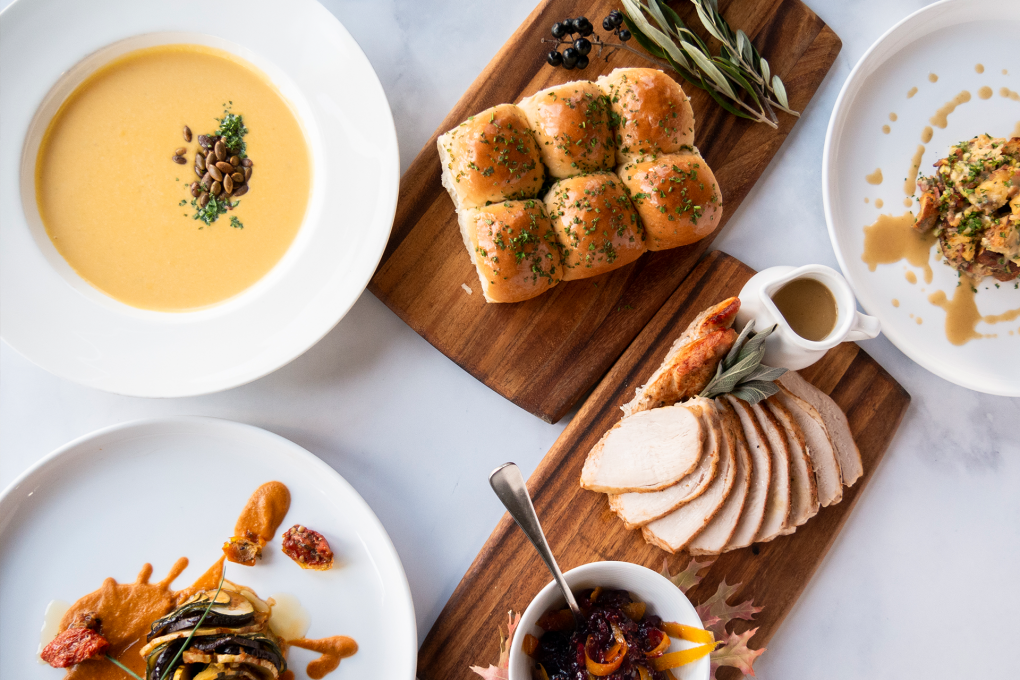
Ordering Thanksgiving Dinner To Go? How Best to Actually Support a Restaurant
Chef Reina Steps Out of the Shadow Of Nick’s on Grand
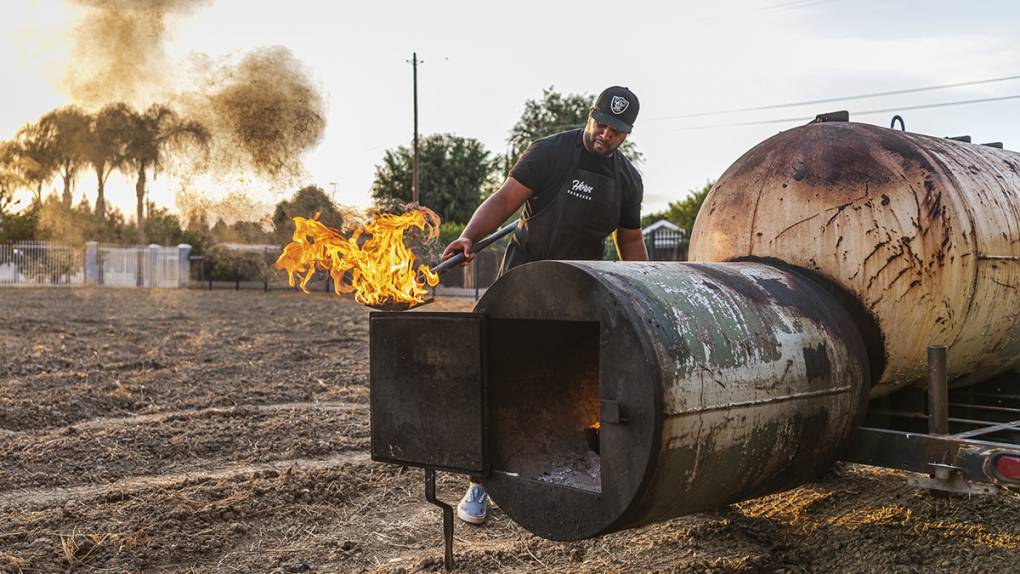
After a Long Wait, Horn Barbecue Opens Saturday in Old Brown Sugar Kitchen Space
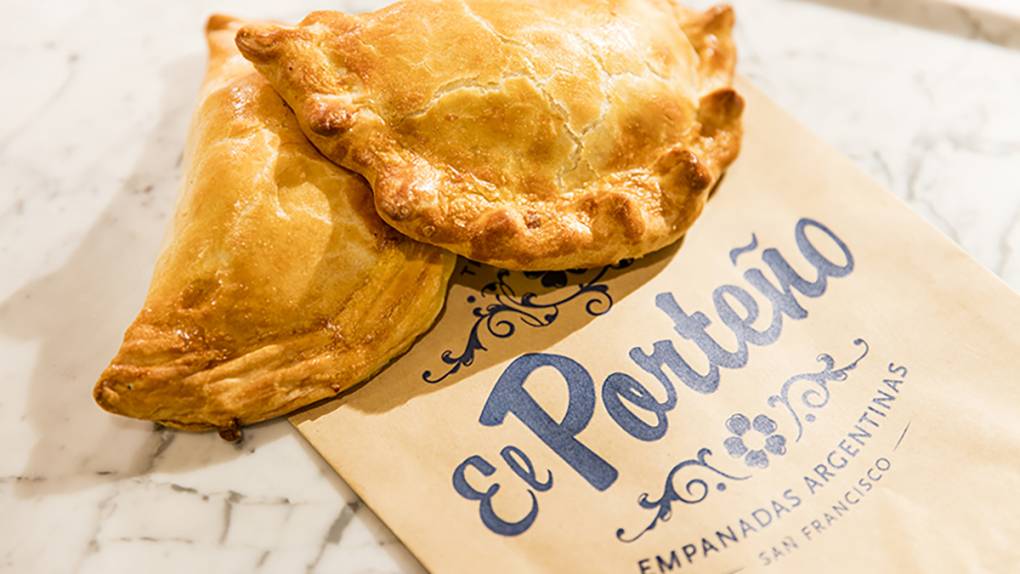
San Francisco Argentinian Grab-and-Go Restaurant Expands to Napa
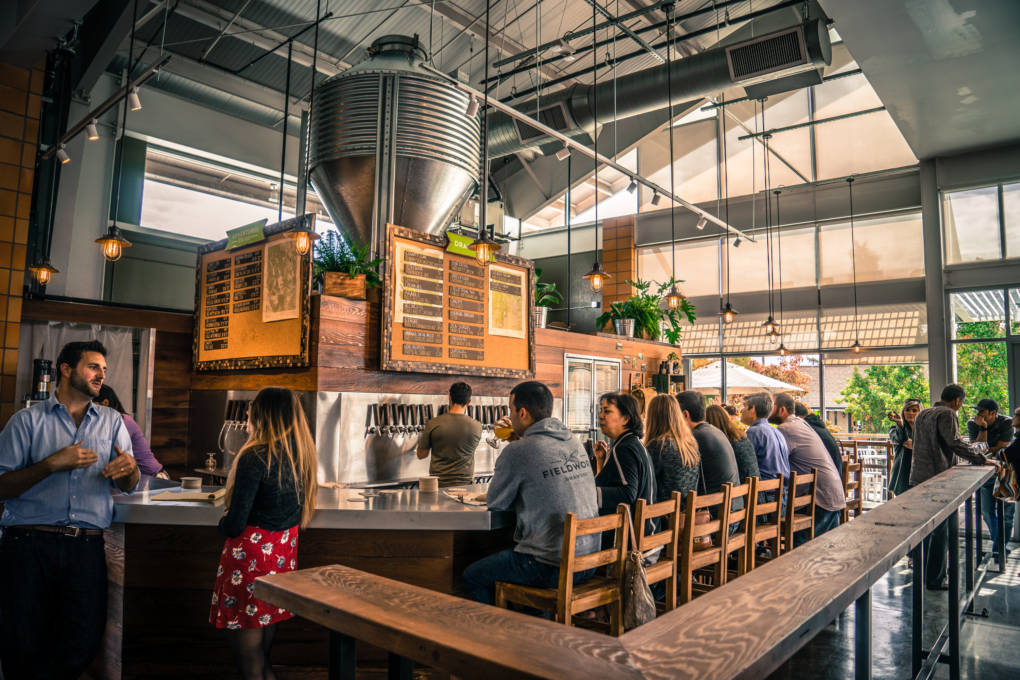
Bay Area Restaurants Start to Reopen as Shelter-In-Place Restrictions relax
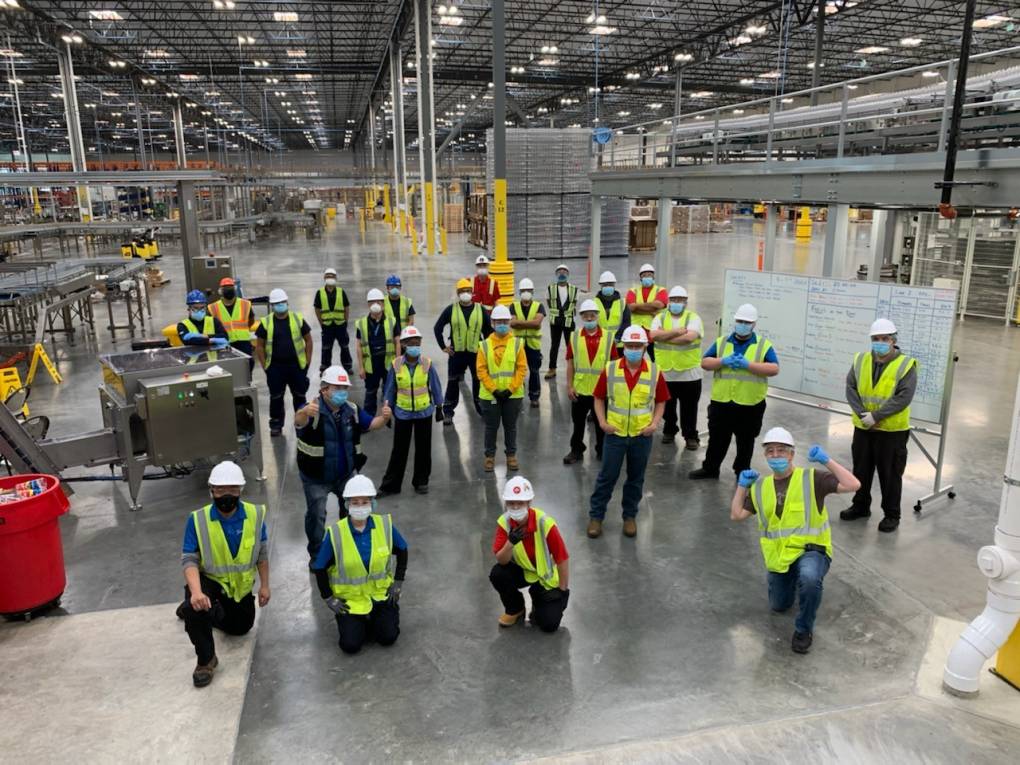
What It’s Like to Move a Food Manufacturing Facility in the Middle of a Pandemic
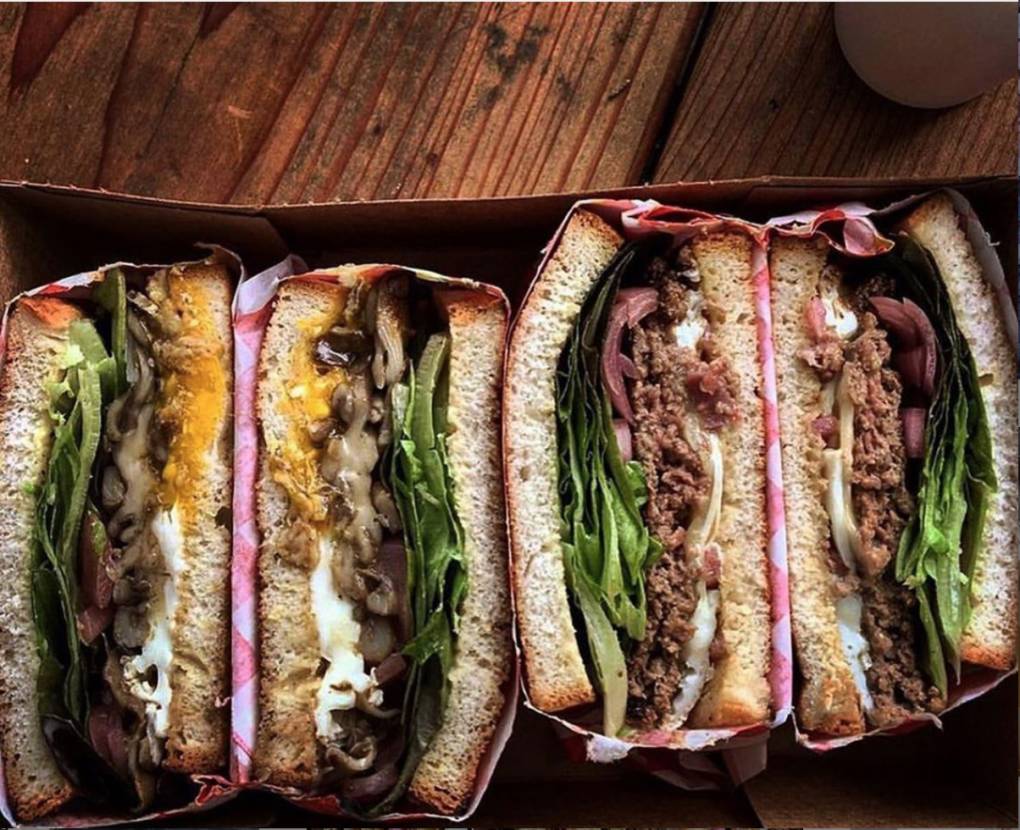
5 South Bay/Peninsula Spots Getting Creative With Takeout Right Now (as Featured on 'Check, Please! Bay Area')
The Bay Area Restaurant System Was Always Broken. How Do We Fix It?
Sponsored
window.__IS_SSR__=true
window.__INITIAL_STATE__={"attachmentsReducer":{"audio_0":{"type":"attachments","id":"audio_0","imgSizes":{"kqedFullSize":{"file":"https://ww2.kqed.org/news/wp-content/themes/KQED-unified/img/audio_bgs/background0.jpg"}}},"audio_1":{"type":"attachments","id":"audio_1","imgSizes":{"kqedFullSize":{"file":"https://ww2.kqed.org/news/wp-content/themes/KQED-unified/img/audio_bgs/background1.jpg"}}},"audio_2":{"type":"attachments","id":"audio_2","imgSizes":{"kqedFullSize":{"file":"https://ww2.kqed.org/news/wp-content/themes/KQED-unified/img/audio_bgs/background2.jpg"}}},"audio_3":{"type":"attachments","id":"audio_3","imgSizes":{"kqedFullSize":{"file":"https://ww2.kqed.org/news/wp-content/themes/KQED-unified/img/audio_bgs/background3.jpg"}}},"audio_4":{"type":"attachments","id":"audio_4","imgSizes":{"kqedFullSize":{"file":"https://ww2.kqed.org/news/wp-content/themes/KQED-unified/img/audio_bgs/background4.jpg"}}},"placeholder":{"type":"attachments","id":"placeholder","imgSizes":{"thumbnail":{"file":"https://ww2.kqed.org/wp-content/uploads/sites/10/2018/01/GettyImages-896326950-160x96.jpg","width":160,"height":96,"mimeType":"image/jpeg"},"medium":{"file":"https://ww2.kqed.org/wp-content/uploads/sites/10/2018/01/GettyImages-896326950-800x478.jpg","width":800,"height":478,"mimeType":"image/jpeg"},"large":{"file":"https://ww2.kqed.org/wp-content/uploads/sites/10/2018/01/GettyImages-896326950-1020x610.jpg","width":1020,"height":610,"mimeType":"image/jpeg"},"fd-lrg":{"file":"https://ww2.kqed.org/wp-content/uploads/sites/10/2018/01/GettyImages-896326950-1920x1148.jpg","width":1920,"height":1148,"mimeType":"image/jpeg"},"fd-med":{"file":"https://ww2.kqed.org/wp-content/uploads/sites/10/2018/01/GettyImages-896326950-1180x705.jpg","width":1180,"height":705,"mimeType":"image/jpeg"},"fd-sm":{"file":"https://ww2.kqed.org/wp-content/uploads/sites/10/2018/01/GettyImages-896326950-960x574.jpg","width":960,"height":574,"mimeType":"image/jpeg"},"post-thumbnail":{"file":"https://ww2.kqed.org/wp-content/uploads/sites/10/2018/01/GettyImages-896326950-672x372.jpg","width":672,"height":372,"mimeType":"image/jpeg"},"twentyfourteen-full-width":{"file":"https://ww2.kqed.org/wp-content/uploads/sites/10/2018/01/GettyImages-896326950-1038x576.jpg","width":1038,"height":576,"mimeType":"image/jpeg"},"xxsmall":{"file":"https://ww2.kqed.org/wp-content/uploads/sites/10/2018/01/GettyImages-896326950-240x143.jpg","width":240,"height":143,"mimeType":"image/jpeg"},"xsmall":{"file":"https://ww2.kqed.org/wp-content/uploads/sites/10/2018/01/GettyImages-896326950-375x224.jpg","width":375,"height":224,"mimeType":"image/jpeg"},"small":{"file":"https://ww2.kqed.org/wp-content/uploads/sites/10/2018/01/GettyImages-896326950-520x311.jpg","width":520,"height":311,"mimeType":"image/jpeg"},"xlarge":{"file":"https://ww2.kqed.org/wp-content/uploads/sites/10/2018/01/GettyImages-896326950-1180x705.jpg","width":1180,"height":705,"mimeType":"image/jpeg"},"full-width":{"file":"https://ww2.kqed.org/wp-content/uploads/sites/10/2018/01/GettyImages-896326950-1920x1148.jpg","width":1920,"height":1148,"mimeType":"image/jpeg"},"guest-author-32":{"file":"https://ww2.kqed.org/wp-content/uploads/sites/10/2018/01/GettyImages-896326950-32x32.jpg","width":32,"height":32,"mimeType":"image/jpeg"},"guest-author-50":{"file":"https://ww2.kqed.org/wp-content/uploads/sites/10/2018/01/GettyImages-896326950-50x50.jpg","width":50,"height":50,"mimeType":"image/jpeg"},"guest-author-64":{"file":"https://ww2.kqed.org/wp-content/uploads/sites/10/2018/01/GettyImages-896326950-64x64.jpg","width":64,"height":64,"mimeType":"image/jpeg"},"guest-author-96":{"file":"https://ww2.kqed.org/wp-content/uploads/sites/10/2018/01/GettyImages-896326950-96x96.jpg","width":96,"height":96,"mimeType":"image/jpeg"},"guest-author-128":{"file":"https://ww2.kqed.org/wp-content/uploads/sites/10/2018/01/GettyImages-896326950-128x128.jpg","width":128,"height":128,"mimeType":"image/jpeg"},"detail":{"file":"https://ww2.kqed.org/wp-content/uploads/sites/10/2018/01/GettyImages-896326950-150x150.jpg","width":150,"height":150,"mimeType":"image/jpeg"},"kqedFullSize":{"file":"https://ww2.kqed.org/wp-content/uploads/sites/10/2018/01/GettyImages-896326950-e1514998105161.jpg","width":1920,"height":1148}}},"bayareabites_139585":{"type":"attachments","id":"bayareabites_139585","meta":{"index":"attachments_1591205162","site":"bayareabites","id":"139585","found":true},"title":"1 Mozzeria's Grand Opening Dec 9, 2011","publishDate":1605823427,"status":"inherit","parent":139583,"modified":1605873925,"caption":"The Deaf community came out to support Melody and Russ Stein on opening night.","credit":"Ken Arcia / Arcia Photography, www.arcia.us","description":null,"imgSizes":{"medium":{"file":"https://ww2.kqed.org/app/uploads/sites/24/2020/11/1-Mozzerias-Grand-Opening-Dec-9-2011-800x571.jpg","width":800,"height":571,"mimeType":"image/jpeg"},"large":{"file":"https://ww2.kqed.org/app/uploads/sites/24/2020/11/1-Mozzerias-Grand-Opening-Dec-9-2011-1020x729.jpg","width":1020,"height":729,"mimeType":"image/jpeg"},"thumbnail":{"file":"https://ww2.kqed.org/app/uploads/sites/24/2020/11/1-Mozzerias-Grand-Opening-Dec-9-2011-160x114.jpg","width":160,"height":114,"mimeType":"image/jpeg"},"medium_large":{"file":"https://ww2.kqed.org/app/uploads/sites/24/2020/11/1-Mozzerias-Grand-Opening-Dec-9-2011-768x549.jpg","width":768,"height":549,"mimeType":"image/jpeg"},"1536x1536":{"file":"https://ww2.kqed.org/app/uploads/sites/24/2020/11/1-Mozzerias-Grand-Opening-Dec-9-2011-1536x1097.jpg","width":1536,"height":1097,"mimeType":"image/jpeg"},"2048x2048":{"file":"https://ww2.kqed.org/app/uploads/sites/24/2020/11/1-Mozzerias-Grand-Opening-Dec-9-2011-2048x1463.jpg","width":2048,"height":1463,"mimeType":"image/jpeg"},"post-thumbnail":{"file":"https://ww2.kqed.org/app/uploads/sites/24/2020/11/1-Mozzerias-Grand-Opening-Dec-9-2011-672x372.jpg","width":672,"height":372,"mimeType":"image/jpeg"},"twentyfourteen-full-width":{"file":"https://ww2.kqed.org/app/uploads/sites/24/2020/11/1-Mozzerias-Grand-Opening-Dec-9-2011-1038x576.jpg","width":1038,"height":576,"mimeType":"image/jpeg"},"full-width":{"file":"https://ww2.kqed.org/app/uploads/sites/24/2020/11/1-Mozzerias-Grand-Opening-Dec-9-2011-1920x1372.jpg","width":1920,"height":1372,"mimeType":"image/jpeg"},"kqedFullSize":{"file":"https://ww2.kqed.org/app/uploads/sites/24/2020/11/1-Mozzerias-Grand-Opening-Dec-9-2011-scaled.jpg","width":2560,"height":1829}},"fetchFailed":false,"isLoading":false},"bayareabites_139568":{"type":"attachments","id":"bayareabites_139568","meta":{"index":"attachments_1591205162","site":"bayareabites","id":"139568","found":true},"title":"thanksgiving-dinner-order","publishDate":1605741810,"status":"inherit","parent":139566,"modified":1605741900,"caption":"The Thanksgiving Menu Kit at San Francisco's Balboa Cafe","credit":"Balboa Cafe","description":null,"imgSizes":{"medium":{"file":"https://ww2.kqed.org/app/uploads/sites/24/2020/11/balboa-800x533.png","width":800,"height":533,"mimeType":"image/png"},"large":{"file":"https://ww2.kqed.org/app/uploads/sites/24/2020/11/balboa-1020x680.png","width":1020,"height":680,"mimeType":"image/png"},"thumbnail":{"file":"https://ww2.kqed.org/app/uploads/sites/24/2020/11/balboa-160x107.png","width":160,"height":107,"mimeType":"image/png"},"medium_large":{"file":"https://ww2.kqed.org/app/uploads/sites/24/2020/11/balboa-768x512.png","width":768,"height":512,"mimeType":"image/png"},"1536x1536":{"file":"https://ww2.kqed.org/app/uploads/sites/24/2020/11/balboa-1536x1024.png","width":1536,"height":1024,"mimeType":"image/png"},"post-thumbnail":{"file":"https://ww2.kqed.org/app/uploads/sites/24/2020/11/balboa-672x372.png","width":672,"height":372,"mimeType":"image/png"},"twentyfourteen-full-width":{"file":"https://ww2.kqed.org/app/uploads/sites/24/2020/11/balboa-1038x576.png","width":1038,"height":576,"mimeType":"image/png"},"kqedFullSize":{"file":"https://ww2.kqed.org/app/uploads/sites/24/2020/11/balboa.png","width":1920,"height":1280}},"fetchFailed":false,"isLoading":false},"bayareabites_139475":{"type":"attachments","id":"bayareabites_139475","meta":{"index":"attachments_1591205162","site":"bayareabites","id":"139475","found":true},"title":"photography by Albert Law : www.porkbellystudio.com","publishDate":1604519340,"status":"inherit","parent":139460,"modified":1604519409,"caption":"Chef Reina Montenegro is stepping out of the shadow of Nick's on Grand with a new venture that's all her own. ","credit":"Albert La / Chef Reina","description":null,"imgSizes":{"medium":{"file":"https://ww2.kqed.org/app/uploads/sites/24/2020/11/VHRhCIsjSu2M7ATIUlUS_2019-Nicks-Restaurant_022-800x534.jpg","width":800,"height":534,"mimeType":"image/jpeg"},"large":{"file":"https://ww2.kqed.org/app/uploads/sites/24/2020/11/VHRhCIsjSu2M7ATIUlUS_2019-Nicks-Restaurant_022-1020x681.jpg","width":1020,"height":681,"mimeType":"image/jpeg"},"thumbnail":{"file":"https://ww2.kqed.org/app/uploads/sites/24/2020/11/VHRhCIsjSu2M7ATIUlUS_2019-Nicks-Restaurant_022-160x107.jpg","width":160,"height":107,"mimeType":"image/jpeg"},"medium_large":{"file":"https://ww2.kqed.org/app/uploads/sites/24/2020/11/VHRhCIsjSu2M7ATIUlUS_2019-Nicks-Restaurant_022-768x513.jpg","width":768,"height":513,"mimeType":"image/jpeg"},"1536x1536":{"file":"https://ww2.kqed.org/app/uploads/sites/24/2020/11/VHRhCIsjSu2M7ATIUlUS_2019-Nicks-Restaurant_022-1536x1025.jpg","width":1536,"height":1025,"mimeType":"image/jpeg"},"post-thumbnail":{"file":"https://ww2.kqed.org/app/uploads/sites/24/2020/11/VHRhCIsjSu2M7ATIUlUS_2019-Nicks-Restaurant_022-672x372.jpg","width":672,"height":372,"mimeType":"image/jpeg"},"twentyfourteen-full-width":{"file":"https://ww2.kqed.org/app/uploads/sites/24/2020/11/VHRhCIsjSu2M7ATIUlUS_2019-Nicks-Restaurant_022-1038x576.jpg","width":1038,"height":576,"mimeType":"image/jpeg"},"full-width":{"file":"https://ww2.kqed.org/app/uploads/sites/24/2020/11/VHRhCIsjSu2M7ATIUlUS_2019-Nicks-Restaurant_022-1920x1282.jpg","width":1920,"height":1282,"mimeType":"image/jpeg"},"kqedFullSize":{"file":"https://ww2.kqed.org/app/uploads/sites/24/2020/11/VHRhCIsjSu2M7ATIUlUS_2019-Nicks-Restaurant_022.jpg","width":2000,"height":1335}},"fetchFailed":false,"isLoading":false},"bayareabites_139390":{"type":"attachments","id":"bayareabites_139390","meta":{"index":"attachments_1591205162","site":"bayareabites","id":"139390","found":true},"title":"matt horn-2","publishDate":1603479108,"status":"inherit","parent":139388,"modified":1603479233,"caption":"Matt Horn of Horn Barbecue at a smoker. ","credit":"Courtesy of Horn Barbecue","description":null,"imgSizes":{"medium":{"file":"https://ww2.kqed.org/app/uploads/sites/24/2020/10/matt-horn-2-800x450.jpg","width":800,"height":450,"mimeType":"image/jpeg"},"large":{"file":"https://ww2.kqed.org/app/uploads/sites/24/2020/10/matt-horn-2-1020x574.jpg","width":1020,"height":574,"mimeType":"image/jpeg"},"thumbnail":{"file":"https://ww2.kqed.org/app/uploads/sites/24/2020/10/matt-horn-2-160x90.jpg","width":160,"height":90,"mimeType":"image/jpeg"},"medium_large":{"file":"https://ww2.kqed.org/app/uploads/sites/24/2020/10/matt-horn-2-768x432.jpg","width":768,"height":432,"mimeType":"image/jpeg"},"post-thumbnail":{"file":"https://ww2.kqed.org/app/uploads/sites/24/2020/10/matt-horn-2-672x372.jpg","width":672,"height":372,"mimeType":"image/jpeg"},"twentyfourteen-full-width":{"file":"https://ww2.kqed.org/app/uploads/sites/24/2020/10/matt-horn-2-1038x576.jpg","width":1038,"height":576,"mimeType":"image/jpeg"},"kqedFullSize":{"file":"https://ww2.kqed.org/app/uploads/sites/24/2020/10/matt-horn-2.jpg","width":1200,"height":675}},"fetchFailed":false,"isLoading":false},"bayareabites_139116":{"type":"attachments","id":"bayareabites_139116","meta":{"index":"attachments_1591205162","site":"bayareabites","id":"139116","found":true},"title":"photo nat gantz, cody gantz","publishDate":1601509512,"status":"inherit","parent":139095,"modified":1601509756,"caption":"Empanadas from El Porteño","credit":"Nat and Cody Gantz / El Porteño","description":null,"imgSizes":{"medium":{"file":"https://ww2.kqed.org/app/uploads/sites/24/2020/09/photo-nat-gantz-cody-gantz-800x450.jpg","width":800,"height":450,"mimeType":"image/jpeg"},"large":{"file":"https://ww2.kqed.org/app/uploads/sites/24/2020/09/photo-nat-gantz-cody-gantz-1020x574.jpg","width":1020,"height":574,"mimeType":"image/jpeg"},"thumbnail":{"file":"https://ww2.kqed.org/app/uploads/sites/24/2020/09/photo-nat-gantz-cody-gantz-160x90.jpg","width":160,"height":90,"mimeType":"image/jpeg"},"medium_large":{"file":"https://ww2.kqed.org/app/uploads/sites/24/2020/09/photo-nat-gantz-cody-gantz-768x432.jpg","width":768,"height":432,"mimeType":"image/jpeg"},"post-thumbnail":{"file":"https://ww2.kqed.org/app/uploads/sites/24/2020/09/photo-nat-gantz-cody-gantz-672x372.jpg","width":672,"height":372,"mimeType":"image/jpeg"},"twentyfourteen-full-width":{"file":"https://ww2.kqed.org/app/uploads/sites/24/2020/09/photo-nat-gantz-cody-gantz-1038x576.jpg","width":1038,"height":576,"mimeType":"image/jpeg"},"kqedFullSize":{"file":"https://ww2.kqed.org/app/uploads/sites/24/2020/09/photo-nat-gantz-cody-gantz.jpg","width":1200,"height":675}},"fetchFailed":false,"isLoading":false},"bayareabites_131117":{"type":"attachments","id":"bayareabites_131117","meta":{"index":"attachments_1591205162","site":"bayareabites","id":"131117","found":true},"title":"Interior of Fieldwork's Oxbow Public Market location","publishDate":1540854529,"status":"inherit","parent":131081,"modified":1541614212,"caption":"Interior of Fieldwork's Oxbow Public Market location","credit":"Fieldwork","description":"Interior of Fieldwork's Oxbow Public Market location","imgSizes":{"thumbnail":{"file":"https://ww2.kqed.org/app/uploads/sites/24/2018/10/Oxbow-Lifestyle_30163767704_o-160x107.jpg","width":160,"height":107,"mimeType":"image/jpeg"},"medium":{"file":"https://ww2.kqed.org/app/uploads/sites/24/2018/10/Oxbow-Lifestyle_30163767704_o-800x533.jpg","width":800,"height":533,"mimeType":"image/jpeg"},"medium_large":{"file":"https://ww2.kqed.org/app/uploads/sites/24/2018/10/Oxbow-Lifestyle_30163767704_o-768x512.jpg","width":768,"height":512,"mimeType":"image/jpeg"},"large":{"file":"https://ww2.kqed.org/app/uploads/sites/24/2018/10/Oxbow-Lifestyle_30163767704_o-1020x680.jpg","width":1020,"height":680,"mimeType":"image/jpeg"},"complete_open_graph":{"file":"https://ww2.kqed.org/app/uploads/sites/24/2018/10/Oxbow-Lifestyle_30163767704_o-1200x800.jpg","width":1200,"height":800,"mimeType":"image/jpeg"},"fd-lrg":{"file":"https://ww2.kqed.org/app/uploads/sites/24/2018/10/Oxbow-Lifestyle_30163767704_o-1920x1280.jpg","width":1920,"height":1280,"mimeType":"image/jpeg"},"fd-med":{"file":"https://ww2.kqed.org/app/uploads/sites/24/2018/10/Oxbow-Lifestyle_30163767704_o-1180x787.jpg","width":1180,"height":787,"mimeType":"image/jpeg"},"fd-sm":{"file":"https://ww2.kqed.org/app/uploads/sites/24/2018/10/Oxbow-Lifestyle_30163767704_o-960x640.jpg","width":960,"height":640,"mimeType":"image/jpeg"},"post-thumbnail":{"file":"https://ww2.kqed.org/app/uploads/sites/24/2018/10/Oxbow-Lifestyle_30163767704_o-672x372.jpg","width":672,"height":372,"mimeType":"image/jpeg"},"twentyfourteen-full-width":{"file":"https://ww2.kqed.org/app/uploads/sites/24/2018/10/Oxbow-Lifestyle_30163767704_o-1038x576.jpg","width":1038,"height":576,"mimeType":"image/jpeg"},"xxsmall":{"file":"https://ww2.kqed.org/app/uploads/sites/24/2018/10/Oxbow-Lifestyle_30163767704_o-240x160.jpg","width":240,"height":160,"mimeType":"image/jpeg"},"xsmall":{"file":"https://ww2.kqed.org/app/uploads/sites/24/2018/10/Oxbow-Lifestyle_30163767704_o-375x250.jpg","width":375,"height":250,"mimeType":"image/jpeg"},"small":{"file":"https://ww2.kqed.org/app/uploads/sites/24/2018/10/Oxbow-Lifestyle_30163767704_o-520x347.jpg","width":520,"height":347,"mimeType":"image/jpeg"},"xlarge":{"file":"https://ww2.kqed.org/app/uploads/sites/24/2018/10/Oxbow-Lifestyle_30163767704_o-1180x787.jpg","width":1180,"height":787,"mimeType":"image/jpeg"},"full-width":{"file":"https://ww2.kqed.org/app/uploads/sites/24/2018/10/Oxbow-Lifestyle_30163767704_o-1920x1280.jpg","width":1920,"height":1280,"mimeType":"image/jpeg"},"guest-author-32":{"file":"https://ww2.kqed.org/app/uploads/sites/24/2018/10/Oxbow-Lifestyle_30163767704_o-32x32.jpg","width":32,"height":32,"mimeType":"image/jpeg"},"guest-author-50":{"file":"https://ww2.kqed.org/app/uploads/sites/24/2018/10/Oxbow-Lifestyle_30163767704_o-50x50.jpg","width":50,"height":50,"mimeType":"image/jpeg"},"guest-author-64":{"file":"https://ww2.kqed.org/app/uploads/sites/24/2018/10/Oxbow-Lifestyle_30163767704_o-64x64.jpg","width":64,"height":64,"mimeType":"image/jpeg"},"guest-author-96":{"file":"https://ww2.kqed.org/app/uploads/sites/24/2018/10/Oxbow-Lifestyle_30163767704_o-96x96.jpg","width":96,"height":96,"mimeType":"image/jpeg"},"guest-author-128":{"file":"https://ww2.kqed.org/app/uploads/sites/24/2018/10/Oxbow-Lifestyle_30163767704_o-128x128.jpg","width":128,"height":128,"mimeType":"image/jpeg"},"detail":{"file":"https://ww2.kqed.org/app/uploads/sites/24/2018/10/Oxbow-Lifestyle_30163767704_o-150x150.jpg","width":150,"height":150,"mimeType":"image/jpeg"},"kqedFullSize":{"file":"https://ww2.kqed.org/app/uploads/sites/24/2018/10/Oxbow-Lifestyle_30163767704_o-e1541614182193.jpg","width":1920,"height":1280}},"fetchFailed":false,"isLoading":false},"bayareabites_137393":{"type":"attachments","id":"bayareabites_137393","meta":{"index":"attachments_1591205162","site":"bayareabites","id":"137393","found":true},"title":"Torani Team at the Flavor Factory","publishDate":1590624176,"status":"inherit","parent":137381,"modified":1590624202,"caption":"Torani employees at the new factory in San Leandro.","credit":"Torani","description":null,"imgSizes":{"thumbnail":{"file":"https://ww2.kqed.org/app/uploads/sites/24/2020/05/Torani-Team-at-the-Flavor-Factory-160x120.jpg","width":160,"height":120,"mimeType":"image/jpeg"},"medium":{"file":"https://ww2.kqed.org/app/uploads/sites/24/2020/05/Torani-Team-at-the-Flavor-Factory-800x600.jpg","width":800,"height":600,"mimeType":"image/jpeg"},"medium_large":{"file":"https://ww2.kqed.org/app/uploads/sites/24/2020/05/Torani-Team-at-the-Flavor-Factory-768x576.jpg","width":768,"height":576,"mimeType":"image/jpeg"},"large":{"file":"https://ww2.kqed.org/app/uploads/sites/24/2020/05/Torani-Team-at-the-Flavor-Factory-1020x765.jpg","width":1020,"height":765,"mimeType":"image/jpeg"},"post-thumbnail":{"file":"https://ww2.kqed.org/app/uploads/sites/24/2020/05/Torani-Team-at-the-Flavor-Factory-672x372.jpg","width":672,"height":372,"mimeType":"image/jpeg"},"twentyfourteen-full-width":{"file":"https://ww2.kqed.org/app/uploads/sites/24/2020/05/Torani-Team-at-the-Flavor-Factory-1038x576.jpg","width":1038,"height":576,"mimeType":"image/jpeg"},"kqedFullSize":{"file":"https://ww2.kqed.org/app/uploads/sites/24/2020/05/Torani-Team-at-the-Flavor-Factory.jpg","width":1280,"height":960}},"fetchFailed":false,"isLoading":false},"bayareabites_137331":{"type":"attachments","id":"bayareabites_137331","meta":{"index":"attachments_1591205162","site":"bayareabites","id":"137331","found":true},"title":"Dad's Luncheonette Sandwiches","publishDate":1590103546,"status":"inherit","parent":137258,"modified":1590103638,"caption":"In Half Moon Bay, Dad's Luncheonette is offering their sandwiches and rotating wares from small producers.","credit":"Dad's Luncheonette","description":"In Half Moon Bay, Dad's Luncheonette is offering their sandwiches and rotating wares from small producers.","imgSizes":{"thumbnail":{"file":"https://ww2.kqed.org/app/uploads/sites/24/2020/05/Screen-Shot-2020-05-21-at-4.23.44-PM-copy-160x130.jpg","width":160,"height":130,"mimeType":"image/jpeg"},"medium":{"file":"https://ww2.kqed.org/app/uploads/sites/24/2020/05/Screen-Shot-2020-05-21-at-4.23.44-PM-copy-800x651.jpg","width":800,"height":651,"mimeType":"image/jpeg"},"medium_large":{"file":"https://ww2.kqed.org/app/uploads/sites/24/2020/05/Screen-Shot-2020-05-21-at-4.23.44-PM-copy-768x625.jpg","width":768,"height":625,"mimeType":"image/jpeg"},"large":{"file":"https://ww2.kqed.org/app/uploads/sites/24/2020/05/Screen-Shot-2020-05-21-at-4.23.44-PM-copy-1020x830.jpg","width":1020,"height":830,"mimeType":"image/jpeg"},"post-thumbnail":{"file":"https://ww2.kqed.org/app/uploads/sites/24/2020/05/Screen-Shot-2020-05-21-at-4.23.44-PM-copy-672x372.jpg","width":672,"height":372,"mimeType":"image/jpeg"},"twentyfourteen-full-width":{"file":"https://ww2.kqed.org/app/uploads/sites/24/2020/05/Screen-Shot-2020-05-21-at-4.23.44-PM-copy-1038x576.jpg","width":1038,"height":576,"mimeType":"image/jpeg"},"kqedFullSize":{"file":"https://ww2.kqed.org/app/uploads/sites/24/2020/05/Screen-Shot-2020-05-21-at-4.23.44-PM-copy.jpg","width":1204,"height":980}},"fetchFailed":false,"isLoading":false},"bayareabites_137282":{"type":"attachments","id":"bayareabites_137282","meta":{"index":"attachments_1591205162","site":"bayareabites","id":"137282","found":true},"title":"FOOD FUTURES-2","publishDate":1589920456,"status":"inherit","parent":137260,"modified":1589921894,"caption":"Prominent Bay Area food leaders discuss what it will take to build a more equitable food system in the Bay Area. ","credit":"Left to right, top to bottom: Real Foods Real Stories, courtesy of Maria Moreno, Sana Javeri Kadri, Jude Rywelski, Eric Wolfinger, courtesy of Shakira Simley.","description":null,"imgSizes":{"thumbnail":{"file":"https://ww2.kqed.org/app/uploads/sites/24/2020/05/FOOD-FUTURES-2-160x84.jpg","width":160,"height":84,"mimeType":"image/jpeg"},"medium":{"file":"https://ww2.kqed.org/app/uploads/sites/24/2020/05/FOOD-FUTURES-2-800x420.jpg","width":800,"height":420,"mimeType":"image/jpeg"},"medium_large":{"file":"https://ww2.kqed.org/app/uploads/sites/24/2020/05/FOOD-FUTURES-2-768x403.jpg","width":768,"height":403,"mimeType":"image/jpeg"},"large":{"file":"https://ww2.kqed.org/app/uploads/sites/24/2020/05/FOOD-FUTURES-2-1020x536.jpg","width":1020,"height":536,"mimeType":"image/jpeg"},"post-thumbnail":{"file":"https://ww2.kqed.org/app/uploads/sites/24/2020/05/FOOD-FUTURES-2-672x372.jpg","width":672,"height":372,"mimeType":"image/jpeg"},"twentyfourteen-full-width":{"file":"https://ww2.kqed.org/app/uploads/sites/24/2020/05/FOOD-FUTURES-2-1038x576.jpg","width":1038,"height":576,"mimeType":"image/jpeg"},"kqedFullSize":{"file":"https://ww2.kqed.org/app/uploads/sites/24/2020/05/FOOD-FUTURES-2.jpg","width":1200,"height":630}},"fetchFailed":false,"isLoading":false}},"audioPlayerReducer":{"postId":"stream_live"},"authorsReducer":{"carlysevern":{"type":"authors","id":"3243","meta":{"index":"authors_1591205172","id":"3243","found":true},"name":"Carly Severn","firstName":"Carly","lastName":"Severn","slug":"carlysevern","email":"csevern@kqed.org","display_author_email":false,"staff_mastheads":["news"],"title":"Senior Editor, Audience News ","bio":"Carly is KQED's Senior Editor of Audience News on the Digital News team, and has reported for the California Report Magazine, Bay Curious and KQED Arts. She's formerly the host of \u003ca href=\"http://ww2.kqed.org/pop/category/the-cooler/\" rel=\"noopener noreferrer\">The Cooler\u003c/a> podcast.","avatar":"https://secure.gravatar.com/avatar/2d8d6765f186e64c798cf7f0c8088a41?s=600&d=blank&r=g","twitter":"teacupinthebay","facebook":null,"instagram":null,"linkedin":null,"sites":[{"site":"","roles":["editor"]},{"site":"arts","roles":["editor"]},{"site":"news","roles":["administrator"]},{"site":"pop","roles":["editor"]},{"site":"futureofyou","roles":["editor"]},{"site":"about","roles":["administrator"]},{"site":"mindshift","roles":["editor"]},{"site":"bayareabites","roles":["editor"]},{"site":"stateofhealth","roles":["editor"]},{"site":"science","roles":["editor"]},{"site":"food","roles":["contributor"]},{"site":"forum","roles":["editor"]},{"site":"perspectives","roles":["administrator"]}],"headData":{"title":"Carly Severn | KQED","description":"Senior Editor, Audience News ","ogImgSrc":"https://secure.gravatar.com/avatar/2d8d6765f186e64c798cf7f0c8088a41?s=600&d=blank&r=g","twImgSrc":"https://secure.gravatar.com/avatar/2d8d6765f186e64c798cf7f0c8088a41?s=600&d=blank&r=g"},"isLoading":false,"link":"/author/carlysevern"},"bayareabites":{"type":"authors","id":"5083","meta":{"index":"authors_1591205172","id":"5083","found":true},"name":"KQED Food Staff","firstName":null,"lastName":null,"slug":"bayareabites","email":"bayareabites@kqed.org","display_author_email":false,"staff_mastheads":[],"title":"KQED Contributor","bio":"Bay Area Bites (BAB), KQED's public media food blog, feeds you visually compelling food-related stories, news, recipes and reviews from the San Francisco Bay Area and beyond.","avatar":"https://secure.gravatar.com/avatar/7113fdeeace4c1251f9bbe4b2fab415a?s=600&d=blank&r=g","twitter":"bayareabites","facebook":"bayareabites","instagram":null,"linkedin":null,"sites":[{"site":"arts","roles":["contributor"]},{"site":"bayareabites","roles":["administrator"]},{"site":"food","roles":["author"]}],"headData":{"title":"KQED Food Staff | KQED","description":"KQED Contributor","ogImgSrc":"https://secure.gravatar.com/avatar/7113fdeeace4c1251f9bbe4b2fab415a?s=600&d=blank&r=g","twImgSrc":"https://secure.gravatar.com/avatar/7113fdeeace4c1251f9bbe4b2fab415a?s=600&d=blank&r=g"},"isLoading":false,"link":"/author/bayareabites"},"annamindess":{"type":"authors","id":"5283","meta":{"index":"authors_1591205172","id":"5283","found":true},"name":"Anna Mindess","firstName":"Anna","lastName":"Mindess","slug":"annamindess","email":"amindess@aol.com","display_author_email":false,"staff_mastheads":[],"title":null,"bio":"My passion is exploring the connections between food, travel and culture. I am a regular contributor to AFAR, Edible East Bay Magazine, Oakland Magazine, Berkeleyside's NOSH and other publications. I usually take a route that's slightly off the beaten path, like \u003ca href=\"http://edibleeastbay.com/online-magazine/fall-harvest-2017/fun-with-food-insults/\">collecting food-related insults\u003c/a> around the world or \u003ca href=\"https://www.afar.com/magazine/what-i-learned-hawking-sweet-potatoes-with-a-street-vendor-in-taiwan?email=amindess%40aol.com&utm_source=Sailthru&utm_medium=email&utm_campaign=Doctors%20Without%20Borders&utm_term=Daily%20Wander%20Newsletter\">volunteering with a Sweet Potato Mama\u003c/a> (street food seller) in Tapei.\r\n\r\nCulture is the thread that ties together my several careers. I also work as a sign language interpreter, educator and author. My study of Deaf culture has taken me around the world, where I am always on a quest to find Deaf-owned restaurants. I love making connections between my different worlds, for example in this AFAR story where I share \u003ca href=\"https://www.afar.com/magazine/tips-from-a-sign-language-interpreter-for-overcoming-language-barriers\">tips for communicating across cultures\u003c/a> that I learned from the real experts, Deaf people. Or this \u003ca href=\"http://edibleeastbay.com/online-magazine/fall-harvest-2017/deaf-chefs-compete/\">profile of a Deaf chef and culinary arts instructor\u003c/a> at the California School for the Deaf.\r\n\r\nTo see my visual/edible take on the world, follow me on Instagram: \u003ca href=\"https://www.instagram.com/annamindess/\">annamindess. \u003c/a>\r\n\r\nFor more of my stories: visit Contently \u003ca href=\"http://annamindess.contently.com\">annamindess.contently.com\u003c/a>","avatar":"https://secure.gravatar.com/avatar/5c0a68a51a07d3996f57634ef0cddaa6?s=600&d=blank&r=g","twitter":null,"facebook":null,"instagram":null,"linkedin":null,"sites":[{"site":"arts","roles":["author"]},{"site":"bayareabites","roles":["author"]},{"site":"food","roles":["contributor"]}],"headData":{"title":"Anna Mindess | KQED","description":null,"ogImgSrc":"https://secure.gravatar.com/avatar/5c0a68a51a07d3996f57634ef0cddaa6?s=600&d=blank&r=g","twImgSrc":"https://secure.gravatar.com/avatar/5c0a68a51a07d3996f57634ef0cddaa6?s=600&d=blank&r=g"},"isLoading":false,"link":"/author/annamindess"},"owon":{"type":"authors","id":"11614","meta":{"index":"authors_1591205172","id":"11614","found":true},"name":"Olivia Won","firstName":"Olivia","lastName":"Won","slug":"owon","email":"owon@kqed.org","display_author_email":false,"staff_mastheads":[],"title":null,"bio":"\u003cspan style=\"font-weight: 400;\">Olivia Won is a writer, producer, and plant-tender living in her hometown of Oakland, California. She currently works with KQED Food, where she writes about Bay Area food culture and produces \u003c/span>\u003ci>\u003cspan style=\"font-weight: 400;\">Check, Please! Bay Area\u003c/span>\u003c/i>\u003cspan style=\"font-weight: 400;\">. \u003c/span>","avatar":"https://secure.gravatar.com/avatar/a0ce8718461a291f08887a424d1ce561?s=600&d=blank&r=g","twitter":null,"facebook":null,"instagram":null,"linkedin":null,"sites":[{"site":"bayareabites","roles":["editor"]},{"site":"checkplease","roles":["editor"]},{"site":"food","roles":["editor"]}],"headData":{"title":"Olivia Won | KQED","description":null,"ogImgSrc":"https://secure.gravatar.com/avatar/a0ce8718461a291f08887a424d1ce561?s=600&d=blank&r=g","twImgSrc":"https://secure.gravatar.com/avatar/a0ce8718461a291f08887a424d1ce561?s=600&d=blank&r=g"},"isLoading":false,"link":"/author/owon"},"rgebreyesus":{"type":"authors","id":"11625","meta":{"index":"authors_1591205172","id":"11625","found":true},"name":"Ruth Gebreyesus","firstName":"Ruth","lastName":"Gebreyesus","slug":"rgebreyesus","email":"rgebreyesus@KQED.org","display_author_email":false,"staff_mastheads":[],"title":"Food Writer","bio":"Ruth Gebreyesus is a freelance writer and producer based in the Bay Area. Through stories across various mediums, Ruth explores the creation and consumption of cultural products. You can find more of her work \u003ca href=\"https://www.kotetakotet.com/\">here\u003c/a>.","avatar":"https://secure.gravatar.com/avatar/68980beab511750abbb1a58f1c768b45?s=600&d=blank&r=g","twitter":"root_g","facebook":null,"instagram":null,"linkedin":null,"sites":[{"site":"arts","roles":["subscriber"]},{"site":"bayareabites","roles":["subscriber"]},{"site":"checkplease","roles":["editor"]},{"site":"food","roles":["editor"]}],"headData":{"title":"Ruth Gebreyesus | KQED","description":"Food Writer","ogImgSrc":"https://secure.gravatar.com/avatar/68980beab511750abbb1a58f1c768b45?s=600&d=blank&r=g","twImgSrc":"https://secure.gravatar.com/avatar/68980beab511750abbb1a58f1c768b45?s=600&d=blank&r=g"},"isLoading":false,"link":"/author/rgebreyesus"},"uramakrishnan":{"type":"authors","id":"11689","meta":{"index":"authors_1591205172","id":"11689","found":true},"name":"Urmila Ramakrishnan","firstName":"Urmila","lastName":"Ramakrishnan","slug":"uramakrishnan","email":"uramakrishnan@kqed.org","display_author_email":false,"staff_mastheads":[],"title":"KQED Food Editor","bio":"Urmila Ramakrishnan is KQED Arts & Culture’s food editor and an award-winning food journalist based in the Bay Area. Her multi-platform work has been featured in \u003ci>The New York Times\u003c/i>, \u003ci>Edible\u003c/i>, \u003ci>The San Francisco Chronicle\u003c/i>, among other publications. She’s a kitchen gadget enthusiast who also loves food puns. Keep up with her cooking adventures on Instagram at \u003ca href=\"https://www.instagram.com/urmilamakes/\" rel=\"noopener noreferrer\">@urmilamakes\u003c/a> and join the food discussion \u003ca href=\"https://twitter.com/U_Ramakrishnan\" rel=\"noopener noreferrer\">@U_Ramakrishnan\u003c/a>.","avatar":"https://secure.gravatar.com/avatar/d014718b767c29f78f33117b5b75eb6d?s=600&d=blank&r=g","twitter":"U_Ramakrishnan","facebook":null,"instagram":null,"linkedin":null,"sites":[{"site":"arts","roles":["subscriber"]},{"site":"bayareabites","roles":["subscriber"]},{"site":"checkplease","roles":["editor"]},{"site":"food","roles":["editor"]}],"headData":{"title":"Urmila Ramakrishnan | KQED","description":"KQED Food Editor","ogImgSrc":"https://secure.gravatar.com/avatar/d014718b767c29f78f33117b5b75eb6d?s=600&d=blank&r=g","twImgSrc":"https://secure.gravatar.com/avatar/d014718b767c29f78f33117b5b75eb6d?s=600&d=blank&r=g"},"isLoading":false,"link":"/author/uramakrishnan"}},"breakingNewsReducer":{},"campaignFinanceReducer":{},"firebase":{"requesting":{},"requested":{},"timestamps":{},"data":{},"ordered":{},"auth":{"isLoaded":false,"isEmpty":true},"authError":null,"profile":{"isLoaded":false,"isEmpty":true},"listeners":{"byId":{},"allIds":[]},"isInitializing":false,"errors":[]},"navBarReducer":{"navBarId":"arts","fullView":true,"showPlayer":false},"navMenuReducer":{"menus":[{"key":"menu1","items":[{"name":"News","link":"/","type":"title"},{"name":"Politics","link":"/politics"},{"name":"Science","link":"/science"},{"name":"Education","link":"/educationnews"},{"name":"Housing","link":"/housing"},{"name":"Immigration","link":"/immigration"},{"name":"Criminal Justice","link":"/criminaljustice"},{"name":"Silicon Valley","link":"/siliconvalley"},{"name":"Forum","link":"/forum"},{"name":"The California Report","link":"/californiareport"}]},{"key":"menu2","items":[{"name":"Arts & Culture","link":"/arts","type":"title"},{"name":"Critics’ Picks","link":"/thedolist"},{"name":"Cultural Commentary","link":"/artscommentary"},{"name":"Food & Drink","link":"/food"},{"name":"Bay Area Hip-Hop","link":"/bayareahiphop"},{"name":"Rebel Girls","link":"/rebelgirls"},{"name":"Arts Video","link":"/artsvideos"}]},{"key":"menu3","items":[{"name":"Podcasts","link":"/podcasts","type":"title"},{"name":"Bay Curious","link":"/podcasts/baycurious"},{"name":"Rightnowish","link":"/podcasts/rightnowish"},{"name":"The Bay","link":"/podcasts/thebay"},{"name":"On Our Watch","link":"/podcasts/onourwatch"},{"name":"Mindshift","link":"/podcasts/mindshift"},{"name":"Consider This","link":"/podcasts/considerthis"},{"name":"Political Breakdown","link":"/podcasts/politicalbreakdown"}]},{"key":"menu4","items":[{"name":"Live Radio","link":"/radio","type":"title"},{"name":"TV","link":"/tv","type":"title"},{"name":"Events","link":"/events","type":"title"},{"name":"For Educators","link":"/education","type":"title"},{"name":"Support KQED","link":"/support","type":"title"},{"name":"About","link":"/about","type":"title"},{"name":"Help Center","link":"https://kqed-helpcenter.kqed.org/s","type":"title"}]}]},"pagesReducer":{},"postsReducer":{"stream_live":{"type":"live","id":"stream_live","audioUrl":"https://streams.kqed.org/kqedradio","title":"Live Stream","excerpt":"Live Stream information currently unavailable.","link":"/radio","featImg":"","label":{"name":"KQED Live","link":"/"}},"stream_kqedNewscast":{"type":"posts","id":"stream_kqedNewscast","audioUrl":"https://www.kqed.org/.stream/anon/radio/RDnews/newscast.mp3?_=1","title":"KQED Newscast","featImg":"","label":{"name":"88.5 FM","link":"/"}},"bayareabites_139583":{"type":"posts","id":"bayareabites_139583","meta":{"index":"posts_1591205157","site":"bayareabites","id":"139583","score":null,"sort":[1605824292000]},"guestAuthors":[],"slug":"mozzeria-closure-is-a-double-loss-for-deaf-diners","title":"Mozzeria Closure Is a Double Loss for Deaf Diners","publishDate":1605824292,"format":"standard","headTitle":"Bay Area Bites | KQED Food","labelTerm":{"site":"bayareabites"},"content":"\u003cp>\u003cspan style=\"font-weight: 400\">A 49-seat pizza restaurant in the Mission is the latest casualty of the pandemic, closing November 12 almost nine years after Melody and Russ Stein opened the spot on 16\u003c/span>\u003cspan style=\"font-weight: 400\">th\u003c/span>\u003cspan style=\"font-weight: 400\"> Street. As San Francisco’s first and only Deaf-owned-and-operated restaurant, it was really two places simultaneously: A cozy eatery, appreciated by locals for its calm vibe, lack of booming music and crusty, wood-fired Neapolitan pizzas and a Deaf-centric space that was a welcoming home for the all-Deaf staff and diners from around the world.\u003c/span>\u003c/p>\n\u003cp>\u003cspan style=\"font-weight: 400\">While the narrow space’s two-tops were often filled with hearing couples, the back of the room held the only space large enough to accommodate a big group. Celebrating a birthday, graduation or job well done with a bunch of Deaf friends was the perfect excuse for a festive night out at Mozzeria. But no excuse was needed. After a week of feeling isolated as the only Deaf person in a hearing workplace, Mozzeria was just the place to unwind and probably bump into Deaf friends or friends of friends and relax, chatting the night away.\u003c/span>\u003cspan style=\"font-weight: 400\"> \u003c/span>\u003c/p>\n\u003cp>\u003cspan style=\"font-weight: 400\">[aside postID=\"bayareabites_35858\" \u003c/span>\u003ci>\u003cspan style=\"font-weight: 400\">label=\u003c/span>\u003c/i>\u003cspan style=\"font-weight: 400\">\"Past Articles about Mozzeria.\"]\u003c/span>\u003c/p>\n\u003cp>\u003cspan style=\"font-weight: 400\">That rare instance of 100% communication access was a big draw for Deaf diners. As co-founder Russ Stein explained in\u003c/span>\u003ca href=\"https://www.kqed.org/bayareabites/41883/thumbs-up-for-pizza-and-small-plates-at-deaf-owned-mozzeria\"> \u003cspan style=\"font-weight: 400\">a video interview for KQED\u003c/span>\u003c/a>\u003cspan style=\"font-weight: 400\"> a few months after Mozzeria’s opening:\u003c/span>\u003c/p>\n\u003cp>\u003cspan style=\"font-weight: 400\">“Growing up in my Deaf family, when we went out to restaurants, it was a very isolating feeling. We would always be the only Deaf people in the place. This restaurant provides one of the very few opportunities for the tables to be turned… When a waiter brings over the menu. Deaf customers can ask detailed questions for the first time. Deaf people are so used to the waiters rattling off the specials, while they kind of nod politely and just guess at what was said. Now when the server mentions the special, the customer can ask questions and find out about the ingredients and preparation. It’s very exciting… Deaf people have never really had this opportunity… .”\u003c/span>\u003cspan style=\"font-weight: 400\"> \u003c/span>\u003c/p>\n\u003cfigure id=\"attachment_139587\" class=\"wp-caption alignnone\" style=\"max-width: 800px\">\u003cimg class=\"size-medium wp-image-139587\" src=\"https://ww2.kqed.org/app/uploads/sites/24/2020/11/2-Melody-and-Russ-Stein-6-800x571.jpg\" alt=\"Melody and Russ Stein\" width=\"800\" height=\"571\" srcset=\"https://ww2.kqed.org/app/uploads/sites/24/2020/11/2-Melody-and-Russ-Stein-6-800x571.jpg 800w, https://ww2.kqed.org/app/uploads/sites/24/2020/11/2-Melody-and-Russ-Stein-6-1020x728.jpg 1020w, https://ww2.kqed.org/app/uploads/sites/24/2020/11/2-Melody-and-Russ-Stein-6-160x114.jpg 160w, https://ww2.kqed.org/app/uploads/sites/24/2020/11/2-Melody-and-Russ-Stein-6-768x549.jpg 768w, https://ww2.kqed.org/app/uploads/sites/24/2020/11/2-Melody-and-Russ-Stein-6-1536x1097.jpg 1536w, https://ww2.kqed.org/app/uploads/sites/24/2020/11/2-Melody-and-Russ-Stein-6-2048x1463.jpg 2048w, https://ww2.kqed.org/app/uploads/sites/24/2020/11/2-Melody-and-Russ-Stein-6-1920x1371.jpg 1920w\" sizes=\"(max-width: 800px) 100vw, 800px\">\u003cfigcaption class=\"wp-caption-text\">Co-owners Melody and Russ Stein. \u003ccite>(Ken Arcia / Arcia Photography, www.arcia.us)\u003c/cite>\u003c/figcaption>\u003c/figure>\n\u003cp>\u003cspan style=\"font-weight: 400\">Among its hearing customers (who definitely outnumbered their Deaf counterparts most nights), some knew that they were coming to a Deaf restaurant and came specifically to practice their American Sign Language (ASL). Others had no clue of Mozzeria’s uniqueness until their waiter affably gestured, pointed, and mimed. Many left having at least learned one sign: “thank you.”\u003c/span>\u003cspan style=\"font-weight: 400\"> \u003c/span>\u003c/p>\n\u003cp>[ad fullwidth]\u003c/p>\n\u003cp>\u003cspan style=\"font-weight: 400\">The Steins met in 1995 \u003c/span>\u003cspan style=\"font-weight: 400\">when they were graduate business administration students at Gallaudet University in Washington, DC, \u003c/span>\u003cspan style=\"font-weight: 400\">the world’s only university specifically designed for Deaf people\u003c/span>\u003cspan style=\"font-weight: 400\">. Melody always nurtured the dream of owning a restaurant. Russ was game, if it could supply him with his favorite food, pizza. The pair did their homework to prepare.\u003c/span>\u003c/p>\n\u003cp>\u003cspan style=\"font-weight: 400\">Before Mozzeria opened, Russ set up a wood-fired oven in their backyard and practiced making pizzas for two years. Melody traveled to Italy, where she learned how to make pasta in Rome and pizza in Sorrento and Positano.\u003c/span>\u003c/p>\n\u003cp>\u003cspan style=\"font-weight: 400\">After finally securing a space, they hired a Deaf electrician, Deaf wood refinishers, and a Deaf\u003c/span> \u003cspan style=\"font-weight: 400\">woodworker to design and construct their tables, shelves, and marble-topped counter. They also featured Deaf artists on the walls of their restaurant.\u003c/span>\u003c/p>\n\u003cp>\u003cspan style=\"font-weight: 400\">Mozzeria opened on December 9, 2011. Word quickly spread around the world from accounts in the New York Times, Washington Post and on TV news stories and scores of other media outlets. Soon they were welcoming Deaf visitors from across the globe, from \u003c/span>\u003cspan style=\"font-weight: 400\">Sweden, Italy, China, Australia, Brazil, Japan and other countries. (Even though each country uses a different sign language, when two Deaf people from different countries meet, their shared visual orientation, comfort with gesturing and the iconicity of some signs makes it much easier for them to quickly communicate the basics, compared to hearing people who speak different languages).\u003c/span>\u003c/p>\n\u003cp>\u003cspan style=\"font-weight: 400\">The restaurant, at times, reflected cross-cultural \u003c/span>\u003cspan style=\"font-weight: 400\">clues in its menu, like Melody’s signature dish the Peking Duck Pizza topped with sliced cucumber, green onions and sesame seeds.\u003c/span>\u003cspan style=\"font-weight: 400\"> The dish is an homage to Melody’s family owning several Chinese restaurants in Hong Kong and later San Francisco. \u003c/span>\u003c/p>\n\u003cp>\u003cspan style=\"font-weight: 400\">Soya Mori, a Deaf \u003c/span>\u003cspan style=\"font-weight: 400\">developmental economist and sign language linguist \u003c/span>\u003cspan style=\"font-weight: 400\">from Tokyo, spent a year as a visiting scholar at University of California, Berkeley. “The first week of my stay at UC Berkeley, I visited Mozzeria with my family,” says Mori. “It was one of our dreams, because it was so famous to foreign visitors. Deaf-owned businesses like Mozzeria are so important for our Deaf community. We are really sorry to know of its closing.”\u003c/span>\u003c/p>\n\u003cfigure id=\"attachment_139588\" class=\"wp-caption alignnone\" style=\"max-width: 800px\">\u003cimg class=\"size-medium wp-image-139588\" src=\"https://ww2.kqed.org/app/uploads/sites/24/2020/11/3.-margherita-pizza-800x572.jpg\" alt=\"Russ Stein making a margherita pizza.\" width=\"800\" height=\"572\" srcset=\"https://ww2.kqed.org/app/uploads/sites/24/2020/11/3.-margherita-pizza-800x572.jpg 800w, https://ww2.kqed.org/app/uploads/sites/24/2020/11/3.-margherita-pizza-1020x729.jpg 1020w, https://ww2.kqed.org/app/uploads/sites/24/2020/11/3.-margherita-pizza-160x114.jpg 160w, https://ww2.kqed.org/app/uploads/sites/24/2020/11/3.-margherita-pizza-768x549.jpg 768w, https://ww2.kqed.org/app/uploads/sites/24/2020/11/3.-margherita-pizza-1536x1097.jpg 1536w, https://ww2.kqed.org/app/uploads/sites/24/2020/11/3.-margherita-pizza-2048x1463.jpg 2048w, https://ww2.kqed.org/app/uploads/sites/24/2020/11/3.-margherita-pizza-1920x1372.jpg 1920w\" sizes=\"(max-width: 800px) 100vw, 800px\">\u003cfigcaption class=\"wp-caption-text\">Russ Stein making a margherita pizza. \u003ccite>(Ken Arcia / Arcia Photography, www.arcia.us)\u003c/cite>\u003c/figcaption>\u003c/figure>\n\u003cp>\u003cspan style=\"font-weight: 400\">“Mozzeria inspired Deaf people all over the US that it is possible to open their own restaurant,” said Nichola Schmitz, a Deaf relay interpreter. “It also gave a host of jobs to Deaf workers, and not just as dishwashers, hidden away in the kitchen, but as cashiers, servers, everything. When hearing people read the reviews, instead of looking down on Deaf people, they looked up to the owners of Mozzeria and wanted to support them.”\u003c/span>\u003c/p>\n\u003cp>\u003cspan style=\"font-weight: 400\">“Melody and Russ were more than restaurateurs,” says Julie Rems-Smario, a Deaf Education Consultant for the California Department of Education. “They were very involved with the Deaf community. They sponsored a host of fundraisers at Mozzeria and gave us the whole place for free one Monday so we could shoot a film to bring awareness about domestic violence in the queer community. They also invited students at the California School for the Deaf in Fremont to have internships at Mozzeria,” Rems-Smario adds. “And when they graduated, many became employees there.”\u003c/span>\u003c/p>\n\u003cp>\u003cspan style=\"font-weight: 400\"> \u003c/span>\u003cspan style=\"font-weight: 400\">Part of Mozzeria’s decision to have an all-Deaf work force came from the intimate knowledge that Deaf people face huge hurdles in finding employment.\u003c/span>\u003ca href=\"https://www.npr.org/2019/01/12/662925592/deaf-and-unemployed-1-000-applications-but-still-no-full-time-job\"> \u003cspan style=\"font-weight: 400\">Less than 40 percent work full time\u003c/span>\u003c/a>\u003cspan style=\"font-weight: 400\">.\u003c/span>\u003c/p>\n\u003cp>\u003cspan style=\"font-weight: 400\">Rachel Zemach, a Deaf writer and former teacher of Deaf children, speaks of the hope, empowerment and financial freedom that comes with having a job. “Mozzeria was important to counter the despair that Deaf people feel at being blocked from working, even at the lowest level jobs. Mozzeria gave Deaf people another way of thinking about their power in the world. It was a venue that raised up Deaf people in the world of work. Their impact went much deeper than food.”\u003c/span>\u003c/p>\n\u003cp>\u003cspan style=\"font-weight: 400\"> \u003c/span>\u003cspan style=\"font-weight: 400\">Former employee Jason Wittig worked as a server at Mozzeria for three years before he got his dream job doing photography at SFMOMA. “Mozzeria was a great place for Deaf people who needed employment and experience to improve their skills in dealing with both the hearing and Deaf public. Melody and Russ Stein graciously provided a safe and wonderful environment for Deaf people, no matter what their skill level, to be employed, which can be very difficult in the hearing world. They knew it was important for Deaf people to be able to provide for themselves by making a living on their own terms.”\u003c/span>\u003c/p>\n\u003cp>\u003cspan style=\"font-weight: 400\">In 2017, Mozzeria partnered with the CSD Social Venture Fund (CSD SVF), which supports Deaf entrepreneurs in growing their businesses. and expanded as Mozzeria Inc., to transform itself into a national brand. In September 2020, the second Mozzeria, in Washington DC, opened during the pandemic. Future plans for expansion are up in the air.\u003c/span>\u003c/p>\n\u003cp>\u003cspan style=\"font-weight: 400\"> \u003c/span>\u003cspan style=\"font-weight: 400\">While San Francisco Mozzeria’s brick and mortar has closed, it still has a huge food truck, which regularly appears at \u003ca href=\"https://mozzeria.com/san-francisco/\">Off The Grid\u003c/a>, will still be used for \u003c/span>\u003cspan style=\"font-weight: 400\">private events\u003c/span>\u003cspan style=\"font-weight: 400\">. \u003c/span>\u003c/p>\n\u003cp>\u003cspan style=\"font-weight: 400\">Ryan Maliszewski, CEO of Mozzeria, Inc. says, “right now our primary focus is to maximize our food truck visibility across the Bay Area so that we can bring Mozzeria much closer to our current as well as new customers. We also plan to explore the idea of doing a traveling “\u003c/span>\u003ci>\u003cspan style=\"font-weight: 400\">Mozzeria Food Truck Tour\u003c/span>\u003c/i>\u003cspan style=\"font-weight: 400\">” across the Pacific Northwest or even southern California where we could also test new markets for potential brand expansion down the road.”\u003c/span>\u003c/p>\n\u003cp>[ad floatright]\u003c/p>\n\u003cp>\u003cspan style=\"font-weight: 400\"> \u003c/span>\u003cspan style=\"font-weight: 400\">Around the world, there are just a handful of Deaf-owned-and operated restaurants. Many have recently closed, but some, including\u003c/span>\u003ca href=\"https://www.crepecrazy.com/#about\"> \u003cspan style=\"font-weight: 400\">Crêpe Crazy\u003c/span>\u003c/a>\u003cspan style=\"font-weight: 400\"> in Austin,\u003c/span>\u003ca href=\"https://www.facebook.com/1000et1Signes/\"> \u003cspan style=\"font-weight: 400\">1000&1 Signes\u003c/span>\u003c/a>\u003cspan style=\"font-weight: 400\">, a Moroccan restaurant in Paris,\u003c/span>\u003ca href=\"http://signwithme.in/\"> \u003cspan style=\"font-weight: 400\">Sign with Me\u003c/span>\u003c/a>\u003cspan style=\"font-weight: 400\"> Social Café in Tokyo, and\u003c/span>\u003ca href=\"https://www.facebook.com/bravocaffetaipei/\"> \u003cspan style=\"font-weight: 400\">Bravo Caffe\u003c/span>\u003c/a>\u003cspan style=\"font-weight: 400\"> in Taipei, are struggling to stay afloat during the pandemic.\u003c/span>\u003c/p>\n\n","blocks":[],"excerpt":"As San Francisco’s first and only Deaf-centered restaurant closed last week, many mourned its loss. Writer Anna Mindess reflects on what it means for the community. ","status":"publish","parent":0,"modified":1621555279,"stats":{"hasAudio":false,"hasVideo":false,"hasChartOrMap":false,"iframeSrcs":[],"hasGoogleForm":false,"hasGallery":false,"hasHearkenModule":false,"hasPolis":false,"paragraphCount":19,"wordCount":1452},"headData":{"title":"Mozzeria Closure Is a Double Loss for Deaf Diners | KQED","description":"As San Francisco’s first and only Deaf-centered restaurant closed last week, many mourned its loss. Writer Anna Mindess reflects on what it means for the community. ","ogTitle":"","ogDescription":"","ogImgId":"","twTitle":"","twDescription":"","twImgId":"","schema":{"@context":"http://schema.org","@type":"Article","headline":"Mozzeria Closure Is a Double Loss for Deaf Diners","datePublished":"2020-11-19T22:18:12.000Z","dateModified":"2021-05-21T00:01:19.000Z","image":"https://cdn.kqed.org/wp-content/uploads/2020/02/KQED-OG-Image@1x.png"}},"disqusIdentifier":"139583 https://ww2.kqed.org/bayareabites/?p=139583","disqusUrl":"https://ww2.kqed.org/bayareabites/2020/11/19/mozzeria-closure-is-a-double-loss-for-deaf-diners/","disqusTitle":"Mozzeria Closure Is a Double Loss for Deaf Diners","path":"/bayareabites/139583/mozzeria-closure-is-a-double-loss-for-deaf-diners","audioTrackLength":null,"parsedContent":[{"type":"contentString","content":"\u003cdiv class=\"post-body\">\u003cp>\u003cp>\u003cspan style=\"font-weight: 400\">A 49-seat pizza restaurant in the Mission is the latest casualty of the pandemic, closing November 12 almost nine years after Melody and Russ Stein opened the spot on 16\u003c/span>\u003cspan style=\"font-weight: 400\">th\u003c/span>\u003cspan style=\"font-weight: 400\"> Street. As San Francisco’s first and only Deaf-owned-and-operated restaurant, it was really two places simultaneously: A cozy eatery, appreciated by locals for its calm vibe, lack of booming music and crusty, wood-fired Neapolitan pizzas and a Deaf-centric space that was a welcoming home for the all-Deaf staff and diners from around the world.\u003c/span>\u003c/p>\n\u003cp>\u003cspan style=\"font-weight: 400\">While the narrow space’s two-tops were often filled with hearing couples, the back of the room held the only space large enough to accommodate a big group. Celebrating a birthday, graduation or job well done with a bunch of Deaf friends was the perfect excuse for a festive night out at Mozzeria. But no excuse was needed. After a week of feeling isolated as the only Deaf person in a hearing workplace, Mozzeria was just the place to unwind and probably bump into Deaf friends or friends of friends and relax, chatting the night away.\u003c/span>\u003cspan style=\"font-weight: 400\"> \u003c/span>\u003c/p>\n\u003cp>\u003cspan style=\"font-weight: 400\">\u003c/p>\u003c/div>","attributes":{"named":{},"numeric":[]}},{"type":"component","content":"","name":"aside","attributes":{"named":{"postid":"bayareabites_35858","label":"\u003c/span>\u003ci>\u003cspan style=\"font-weight: 400\">label=\u003c/span>\u003c/i>\u003cspan style=\"font-weight: 400\">\"Past Articles about Mozzeria.\""},"numeric":["\u003c/span>\u003ci>\u003cspan","style=\"font-weight:","400\">label=\u003c/span>\u003c/i>\u003cspan","style=\"font-weight:","400\">\"Past","Articles","about","Mozzeria.\""]}},{"type":"contentString","content":"\u003cdiv class=\"post-body\">\u003cp>\u003c/span>\u003c/p>\n\u003cp>\u003cspan style=\"font-weight: 400\">That rare instance of 100% communication access was a big draw for Deaf diners. As co-founder Russ Stein explained in\u003c/span>\u003ca href=\"https://www.kqed.org/bayareabites/41883/thumbs-up-for-pizza-and-small-plates-at-deaf-owned-mozzeria\"> \u003cspan style=\"font-weight: 400\">a video interview for KQED\u003c/span>\u003c/a>\u003cspan style=\"font-weight: 400\"> a few months after Mozzeria’s opening:\u003c/span>\u003c/p>\n\u003cp>\u003cspan style=\"font-weight: 400\">“Growing up in my Deaf family, when we went out to restaurants, it was a very isolating feeling. We would always be the only Deaf people in the place. This restaurant provides one of the very few opportunities for the tables to be turned… When a waiter brings over the menu. Deaf customers can ask detailed questions for the first time. Deaf people are so used to the waiters rattling off the specials, while they kind of nod politely and just guess at what was said. Now when the server mentions the special, the customer can ask questions and find out about the ingredients and preparation. It’s very exciting… Deaf people have never really had this opportunity… .”\u003c/span>\u003cspan style=\"font-weight: 400\"> \u003c/span>\u003c/p>\n\u003cfigure id=\"attachment_139587\" class=\"wp-caption alignnone\" style=\"max-width: 800px\">\u003cimg class=\"size-medium wp-image-139587\" src=\"https://ww2.kqed.org/app/uploads/sites/24/2020/11/2-Melody-and-Russ-Stein-6-800x571.jpg\" alt=\"Melody and Russ Stein\" width=\"800\" height=\"571\" srcset=\"https://ww2.kqed.org/app/uploads/sites/24/2020/11/2-Melody-and-Russ-Stein-6-800x571.jpg 800w, https://ww2.kqed.org/app/uploads/sites/24/2020/11/2-Melody-and-Russ-Stein-6-1020x728.jpg 1020w, https://ww2.kqed.org/app/uploads/sites/24/2020/11/2-Melody-and-Russ-Stein-6-160x114.jpg 160w, https://ww2.kqed.org/app/uploads/sites/24/2020/11/2-Melody-and-Russ-Stein-6-768x549.jpg 768w, https://ww2.kqed.org/app/uploads/sites/24/2020/11/2-Melody-and-Russ-Stein-6-1536x1097.jpg 1536w, https://ww2.kqed.org/app/uploads/sites/24/2020/11/2-Melody-and-Russ-Stein-6-2048x1463.jpg 2048w, https://ww2.kqed.org/app/uploads/sites/24/2020/11/2-Melody-and-Russ-Stein-6-1920x1371.jpg 1920w\" sizes=\"(max-width: 800px) 100vw, 800px\">\u003cfigcaption class=\"wp-caption-text\">Co-owners Melody and Russ Stein. \u003ccite>(Ken Arcia / Arcia Photography, www.arcia.us)\u003c/cite>\u003c/figcaption>\u003c/figure>\n\u003cp>\u003cspan style=\"font-weight: 400\">Among its hearing customers (who definitely outnumbered their Deaf counterparts most nights), some knew that they were coming to a Deaf restaurant and came specifically to practice their American Sign Language (ASL). Others had no clue of Mozzeria’s uniqueness until their waiter affably gestured, pointed, and mimed. Many left having at least learned one sign: “thank you.”\u003c/span>\u003cspan style=\"font-weight: 400\"> \u003c/span>\u003c/p>\n\u003cp>\u003c/p>\u003c/div>","attributes":{"named":{},"numeric":[]}},{"type":"component","content":"","name":"ad","attributes":{"named":{"label":"fullwidth"},"numeric":["fullwidth"]}},{"type":"contentString","content":"\u003cdiv class=\"post-body\">\u003cp>\u003c/p>\n\u003cp>\u003cspan style=\"font-weight: 400\">The Steins met in 1995 \u003c/span>\u003cspan style=\"font-weight: 400\">when they were graduate business administration students at Gallaudet University in Washington, DC, \u003c/span>\u003cspan style=\"font-weight: 400\">the world’s only university specifically designed for Deaf people\u003c/span>\u003cspan style=\"font-weight: 400\">. Melody always nurtured the dream of owning a restaurant. Russ was game, if it could supply him with his favorite food, pizza. The pair did their homework to prepare.\u003c/span>\u003c/p>\n\u003cp>\u003cspan style=\"font-weight: 400\">Before Mozzeria opened, Russ set up a wood-fired oven in their backyard and practiced making pizzas for two years. Melody traveled to Italy, where she learned how to make pasta in Rome and pizza in Sorrento and Positano.\u003c/span>\u003c/p>\n\u003cp>\u003cspan style=\"font-weight: 400\">After finally securing a space, they hired a Deaf electrician, Deaf wood refinishers, and a Deaf\u003c/span> \u003cspan style=\"font-weight: 400\">woodworker to design and construct their tables, shelves, and marble-topped counter. They also featured Deaf artists on the walls of their restaurant.\u003c/span>\u003c/p>\n\u003cp>\u003cspan style=\"font-weight: 400\">Mozzeria opened on December 9, 2011. Word quickly spread around the world from accounts in the New York Times, Washington Post and on TV news stories and scores of other media outlets. Soon they were welcoming Deaf visitors from across the globe, from \u003c/span>\u003cspan style=\"font-weight: 400\">Sweden, Italy, China, Australia, Brazil, Japan and other countries. (Even though each country uses a different sign language, when two Deaf people from different countries meet, their shared visual orientation, comfort with gesturing and the iconicity of some signs makes it much easier for them to quickly communicate the basics, compared to hearing people who speak different languages).\u003c/span>\u003c/p>\n\u003cp>\u003cspan style=\"font-weight: 400\">The restaurant, at times, reflected cross-cultural \u003c/span>\u003cspan style=\"font-weight: 400\">clues in its menu, like Melody’s signature dish the Peking Duck Pizza topped with sliced cucumber, green onions and sesame seeds.\u003c/span>\u003cspan style=\"font-weight: 400\"> The dish is an homage to Melody’s family owning several Chinese restaurants in Hong Kong and later San Francisco. \u003c/span>\u003c/p>\n\u003cp>\u003cspan style=\"font-weight: 400\">Soya Mori, a Deaf \u003c/span>\u003cspan style=\"font-weight: 400\">developmental economist and sign language linguist \u003c/span>\u003cspan style=\"font-weight: 400\">from Tokyo, spent a year as a visiting scholar at University of California, Berkeley. “The first week of my stay at UC Berkeley, I visited Mozzeria with my family,” says Mori. “It was one of our dreams, because it was so famous to foreign visitors. Deaf-owned businesses like Mozzeria are so important for our Deaf community. We are really sorry to know of its closing.”\u003c/span>\u003c/p>\n\u003cfigure id=\"attachment_139588\" class=\"wp-caption alignnone\" style=\"max-width: 800px\">\u003cimg class=\"size-medium wp-image-139588\" src=\"https://ww2.kqed.org/app/uploads/sites/24/2020/11/3.-margherita-pizza-800x572.jpg\" alt=\"Russ Stein making a margherita pizza.\" width=\"800\" height=\"572\" srcset=\"https://ww2.kqed.org/app/uploads/sites/24/2020/11/3.-margherita-pizza-800x572.jpg 800w, https://ww2.kqed.org/app/uploads/sites/24/2020/11/3.-margherita-pizza-1020x729.jpg 1020w, https://ww2.kqed.org/app/uploads/sites/24/2020/11/3.-margherita-pizza-160x114.jpg 160w, https://ww2.kqed.org/app/uploads/sites/24/2020/11/3.-margherita-pizza-768x549.jpg 768w, https://ww2.kqed.org/app/uploads/sites/24/2020/11/3.-margherita-pizza-1536x1097.jpg 1536w, https://ww2.kqed.org/app/uploads/sites/24/2020/11/3.-margherita-pizza-2048x1463.jpg 2048w, https://ww2.kqed.org/app/uploads/sites/24/2020/11/3.-margherita-pizza-1920x1372.jpg 1920w\" sizes=\"(max-width: 800px) 100vw, 800px\">\u003cfigcaption class=\"wp-caption-text\">Russ Stein making a margherita pizza. \u003ccite>(Ken Arcia / Arcia Photography, www.arcia.us)\u003c/cite>\u003c/figcaption>\u003c/figure>\n\u003cp>\u003cspan style=\"font-weight: 400\">“Mozzeria inspired Deaf people all over the US that it is possible to open their own restaurant,” said Nichola Schmitz, a Deaf relay interpreter. “It also gave a host of jobs to Deaf workers, and not just as dishwashers, hidden away in the kitchen, but as cashiers, servers, everything. When hearing people read the reviews, instead of looking down on Deaf people, they looked up to the owners of Mozzeria and wanted to support them.”\u003c/span>\u003c/p>\n\u003cp>\u003cspan style=\"font-weight: 400\">“Melody and Russ were more than restaurateurs,” says Julie Rems-Smario, a Deaf Education Consultant for the California Department of Education. “They were very involved with the Deaf community. They sponsored a host of fundraisers at Mozzeria and gave us the whole place for free one Monday so we could shoot a film to bring awareness about domestic violence in the queer community. They also invited students at the California School for the Deaf in Fremont to have internships at Mozzeria,” Rems-Smario adds. “And when they graduated, many became employees there.”\u003c/span>\u003c/p>\n\u003cp>\u003cspan style=\"font-weight: 400\"> \u003c/span>\u003cspan style=\"font-weight: 400\">Part of Mozzeria’s decision to have an all-Deaf work force came from the intimate knowledge that Deaf people face huge hurdles in finding employment.\u003c/span>\u003ca href=\"https://www.npr.org/2019/01/12/662925592/deaf-and-unemployed-1-000-applications-but-still-no-full-time-job\"> \u003cspan style=\"font-weight: 400\">Less than 40 percent work full time\u003c/span>\u003c/a>\u003cspan style=\"font-weight: 400\">.\u003c/span>\u003c/p>\n\u003cp>\u003cspan style=\"font-weight: 400\">Rachel Zemach, a Deaf writer and former teacher of Deaf children, speaks of the hope, empowerment and financial freedom that comes with having a job. “Mozzeria was important to counter the despair that Deaf people feel at being blocked from working, even at the lowest level jobs. Mozzeria gave Deaf people another way of thinking about their power in the world. It was a venue that raised up Deaf people in the world of work. Their impact went much deeper than food.”\u003c/span>\u003c/p>\n\u003cp>\u003cspan style=\"font-weight: 400\"> \u003c/span>\u003cspan style=\"font-weight: 400\">Former employee Jason Wittig worked as a server at Mozzeria for three years before he got his dream job doing photography at SFMOMA. “Mozzeria was a great place for Deaf people who needed employment and experience to improve their skills in dealing with both the hearing and Deaf public. Melody and Russ Stein graciously provided a safe and wonderful environment for Deaf people, no matter what their skill level, to be employed, which can be very difficult in the hearing world. They knew it was important for Deaf people to be able to provide for themselves by making a living on their own terms.”\u003c/span>\u003c/p>\n\u003cp>\u003cspan style=\"font-weight: 400\">In 2017, Mozzeria partnered with the CSD Social Venture Fund (CSD SVF), which supports Deaf entrepreneurs in growing their businesses. and expanded as Mozzeria Inc., to transform itself into a national brand. In September 2020, the second Mozzeria, in Washington DC, opened during the pandemic. Future plans for expansion are up in the air.\u003c/span>\u003c/p>\n\u003cp>\u003cspan style=\"font-weight: 400\"> \u003c/span>\u003cspan style=\"font-weight: 400\">While San Francisco Mozzeria’s brick and mortar has closed, it still has a huge food truck, which regularly appears at \u003ca href=\"https://mozzeria.com/san-francisco/\">Off The Grid\u003c/a>, will still be used for \u003c/span>\u003cspan style=\"font-weight: 400\">private events\u003c/span>\u003cspan style=\"font-weight: 400\">. \u003c/span>\u003c/p>\n\u003cp>\u003cspan style=\"font-weight: 400\">Ryan Maliszewski, CEO of Mozzeria, Inc. says, “right now our primary focus is to maximize our food truck visibility across the Bay Area so that we can bring Mozzeria much closer to our current as well as new customers. We also plan to explore the idea of doing a traveling “\u003c/span>\u003ci>\u003cspan style=\"font-weight: 400\">Mozzeria Food Truck Tour\u003c/span>\u003c/i>\u003cspan style=\"font-weight: 400\">” across the Pacific Northwest or even southern California where we could also test new markets for potential brand expansion down the road.”\u003c/span>\u003c/p>\n\u003cp>\u003c/p>\u003c/div>","attributes":{"named":{},"numeric":[]}},{"type":"component","content":"","name":"ad","attributes":{"named":{"label":"floatright"},"numeric":["floatright"]}},{"type":"contentString","content":"\u003cdiv class=\"post-body\">\u003cp>\u003c/p>\n\u003cp>\u003cspan style=\"font-weight: 400\"> \u003c/span>\u003cspan style=\"font-weight: 400\">Around the world, there are just a handful of Deaf-owned-and operated restaurants. Many have recently closed, but some, including\u003c/span>\u003ca href=\"https://www.crepecrazy.com/#about\"> \u003cspan style=\"font-weight: 400\">Crêpe Crazy\u003c/span>\u003c/a>\u003cspan style=\"font-weight: 400\"> in Austin,\u003c/span>\u003ca href=\"https://www.facebook.com/1000et1Signes/\"> \u003cspan style=\"font-weight: 400\">1000&1 Signes\u003c/span>\u003c/a>\u003cspan style=\"font-weight: 400\">, a Moroccan restaurant in Paris,\u003c/span>\u003ca href=\"http://signwithme.in/\"> \u003cspan style=\"font-weight: 400\">Sign with Me\u003c/span>\u003c/a>\u003cspan style=\"font-weight: 400\"> Social Café in Tokyo, and\u003c/span>\u003ca href=\"https://www.facebook.com/bravocaffetaipei/\"> \u003cspan style=\"font-weight: 400\">Bravo Caffe\u003c/span>\u003c/a>\u003cspan style=\"font-weight: 400\"> in Taipei, are struggling to stay afloat during the pandemic.\u003c/span>\u003c/p>\n\n\u003c/div>\u003c/p>","attributes":{"named":{},"numeric":[]}}],"link":"/bayareabites/139583/mozzeria-closure-is-a-double-loss-for-deaf-diners","authors":["5283"],"categories":["bayareabites_109","bayareabites_752","bayareabites_17082","bayareabites_1807"],"tags":["bayareabites_9938","bayareabites_10339","bayareabites_9941","bayareabites_16557","bayareabites_9934","bayareabites_16900","bayareabites_14745","bayareabites_8577"],"featImg":"bayareabites_139585","label":"bayareabites"},"bayareabites_139566":{"type":"posts","id":"bayareabites_139566","meta":{"index":"posts_1591205157","site":"bayareabites","id":"139566","score":null,"sort":[1605742630000]},"guestAuthors":[],"slug":"ordering-thanksgiving-dinner-to-go-how-best-to-actually-support-a-restaurant","title":"Ordering Thanksgiving Dinner To Go? How Best to Actually Support a Restaurant","publishDate":1605742630,"format":"standard","headTitle":"Bay Area Bites | KQED Food","labelTerm":{"site":"bayareabites"},"content":"\u003cp>This year, personal milestones like birthdays and family celebrations and holidays like Passover, Eid, Diwali and Day of the Dead have been transformed or outright canceled because of the pandemic.\u003c/p>\n\u003cp>And now, as 94% of California's population \u003ca href=\"https://www.kqed.org/news/11847641/california-tightens-coronavirus-restrictions-most-counties-must-close-nonessential-indoor-businesses\">moves back to the most restrictive COVID-19 guidelines\u003c/a> due to a rapid uptick in cases, and the CDC \u003ca href=\"https://www.npr.org/sections/coronavirus-live-updates/2020/11/19/936715870/dont-travel-for-thanksgiving-cdc-warns\">advises against holiday travel\u003c/a>, many people around the state are deciding to scrap previous plans to gather with family and stay home with their household for Thanksgiving instead.\u003c/p>\n\u003cp>If that's you, and you're looking at greatly reduced numbers at your holiday table this year, you may be contemplating doing away with a traditional home-cooked feast altogether and ordering Thanksgiving dinner to go from a local restaurant.\u003cspan style=\"font-weight: 400;\">[aside postID=\"news_11846759\"]\u003c/span>\u003c/p>\n\u003cp>As an alternative to ordering a pre-prepared meal from a grocery store like say, Whole Foods, giving your money to a local business is an appealing thought. But how can you place an order in a way that \u003cem>truly\u003c/em> supports restaurants and their staff, who have been so affected by the COVID-19 pandemic? We asked local restaurant staff for their tips.\u003c/p>\n\u003ch3>Plan Ahead as Much as You Can\u003c/h3>\n\u003cp>One thing about Thanksgiving eating that remains unchanged this year: last-minute planning won't cut it.\u003c/p>\n\u003cp>The same way you'd plan your shopping and preparation for a big family gathering, you'll need to plan any restaurant order you're considering — and many establishments will be closing their order window this week.\u003c/p>\n\u003cp>San Francisco's \u003ca href=\"https://www.balboacafesf.com/\">Balboa Cafe\u003c/a> is one such restaurant offering a ready-to-reheat \"\u003ca href=\"https://www.balboacafesf.com/preorder-dinners/thanksgiving-dinner-pre-order\">Thanksgiving Meal Kit\u003c/a>\", with an order deadline of Friday, November 20. They're also offering their \u003ca href=\"https://www.balboacafesf.com/preorder-dinners/beverages\">regular drinks kit\u003c/a> to-go, including the choice of margarita pitchers, bloody marys or wine. Planning ahead is important, says Balboa Cafe's general manager Jesse Caetano, not just to ensure you don't miss the order cut-off but also to make sure you're ordering exactly what you want — as modifications on these Thanksgiving dinners aren't possible the way they might normally be during regular dinner service.\u003c/p>\n\u003cp>Oakland restaurant \u003ca href=\"https://www.alamaroakland.com/\">alaMar\u003c/a> is offering \u003ca href=\"https://alamar-kitchen.square.site/?location=11eb28feb387e8fbb101ac1f6bbbcc9c#2\">two options for Thanksgiving to go\u003c/a>: a BBQ spin on Thanksgiving dinner with smoked turkey, and a seafood boil — as well as holiday pies and cocktail kits.\u003c/p>\n\u003cp>alaMar's Executive Chef and owner, Nelson German, advises ordering by Monday, November 23, and \"Tuesday at the latest.\" This gives the restaurant a chance to prepare your holiday order to the fullest.\u003c/p>\n\u003cfigure id=\"attachment_139569\" class=\"wp-caption alignnone\" style=\"max-width: 1920px\">\u003cimg class=\"size-full wp-image-139569\" src=\"https://ww2.kqed.org/app/uploads/sites/24/2020/11/pie.png\" alt=\"\" width=\"1920\" height=\"1280\" srcset=\"https://ww2.kqed.org/app/uploads/sites/24/2020/11/pie.png 1920w, https://ww2.kqed.org/app/uploads/sites/24/2020/11/pie-800x533.png 800w, https://ww2.kqed.org/app/uploads/sites/24/2020/11/pie-1020x680.png 1020w, https://ww2.kqed.org/app/uploads/sites/24/2020/11/pie-160x107.png 160w, https://ww2.kqed.org/app/uploads/sites/24/2020/11/pie-768x512.png 768w, https://ww2.kqed.org/app/uploads/sites/24/2020/11/pie-1536x1024.png 1536w\" sizes=\"(max-width: 1920px) 100vw, 1920px\">\u003cfigcaption class=\"wp-caption-text\">Restaurants like alaMar in Oakland are offering Thanksgiving dinners to go — including pie \u003ccite>(alaMar )\u003c/cite>\u003c/figcaption>\u003c/figure>\n\u003cp>You should also plan how you'll \u003cem>get\u003c/em> your food from a restaurant, and which pick-up slots are going to be possible for you and your household over the holiday period. Balboa Cafe is offering pick-up on Wednesday, November 25 only, while alaMar offers slots on both Wednesday and Thanksgiving Day — so wherever you're ordering from, make sure that you're going to be able to get there on a given day. (You might also want to check ahead of time about COVID-19 safety precautions being taken at your chosen restaurant, including whether curbside pick-up is being offered.)\u003c/p>\n\u003cp>If you're hoping to order \"non-Thanksgiving\" food from a restaurant for Thanksgiving Day, consider that restaurants might not decide their plans for this until closer to the day itself. (Basically, don't plan on necessarily being \u003cem>able\u003c/em> to do this.)\u003c/p>\n\u003cp>And you're one of those who want to actually eat at a restaurant this Thanksgiving — which will only be available outdoors, due to the recent \u003ca href=\"https://www.kqed.org/news/11847641/california-tightens-coronavirus-restrictions-most-counties-must-close-nonessential-indoor-businesses\">widespread closure of indoor dining\u003c/a> — it goes without saying that planning ahead is even more crucial, with limited options for restaurants that are open on Thanksgiving Day. Balboa Cafe, for example, is offering a first-come-first-served lunch service on its patio on Thursday, November 26, followed by reservation-only \u003ca href=\"https://www.balboacafesf.com/thanksgiving-dinner-2020\">Thanksgiving Dinner\u003c/a>.\u003c/p>\n\u003ch3>Lead With Care and Compassion\u003c/h3>\n\u003cp>For restaurants that offer service during the holidays, Thanksgiving is a fraught, busy period in the best of years — but during a pandemic year, when so many businesses have been forced to close or barely hung on, all bets are off.\u003c/p>\n\u003cp>\u003cspan style=\"font-weight: 400;\">[aside postID=\"science_1970886\"]\u003c/span>That means that extending your respectful understanding to restaurants and their staff at all stages of the Thanksgiving ordering process is the most compassionate, human way to go this holiday season. If you've picked a specific pick-up slot for your food, for example, do your utmost to stick to it. If you're met with any delays or corrections on the restaurant's side, remember what the staff might be up against, stay calm and cool, and work \u003cem>with\u003c/em> them to resolve any situations that need it.\u003c/p>\n\u003cp>Whether you're picking up or ordering for delivery, give a tip. If you're visiting a restaurant to pick up, you might consider doing so in cash when you arrive to grab your Thanksgiving order. Remember that many restaurant workers will be giving up their own holidays to make Thanksgiving service possible, and a tip — at least 20% — is a great way to show your appreciation at this time.\u003c/p>\n\u003cp>And remember: if you've got a query or concern about your order, you'll be making the lives of restaurant staff a great deal easier by getting in touch before Thanksgiving itself. \"Anything that they can do to be preemptive and to really just ask the question before the day of is super helpful,\" says Balboa Cafe's Jesse Caetano.\u003c/p>\n\u003cfigure id=\"attachment_139570\" class=\"wp-caption alignnone\" style=\"max-width: 1920px\">\u003cimg class=\"size-full wp-image-139570\" src=\"https://ww2.kqed.org/app/uploads/sites/24/2020/11/boil.png\" alt=\"\" width=\"1920\" height=\"1280\" srcset=\"https://ww2.kqed.org/app/uploads/sites/24/2020/11/boil.png 1920w, https://ww2.kqed.org/app/uploads/sites/24/2020/11/boil-800x533.png 800w, https://ww2.kqed.org/app/uploads/sites/24/2020/11/boil-1020x680.png 1020w, https://ww2.kqed.org/app/uploads/sites/24/2020/11/boil-160x107.png 160w, https://ww2.kqed.org/app/uploads/sites/24/2020/11/boil-768x512.png 768w, https://ww2.kqed.org/app/uploads/sites/24/2020/11/boil-1536x1024.png 1536w\" sizes=\"(max-width: 1920px) 100vw, 1920px\">\u003cfigcaption class=\"wp-caption-text\">Ordering Thanksgiving dinner to go from a restaurant also means you can stray from a traditional spread -- and try a dish like alaMar's seafood boil \u003ccite>(alaMar)\u003c/cite>\u003c/figcaption>\u003c/figure>\n\u003ch3>Consider Your Use of Third-Party Apps\u003c/h3>\n\u003cp>There's no way around this: third-party apps take a commission from restaurants.\u003c/p>\n\u003cp>So if you're intent on 100% of your money going to a restaurant you want to support, calling the establishment direct and placing your order over the phone, then picking up from them in person is the most reliable way to ensure that happens.\u003c/p>\n\u003cp>That said, for people who are unable to pick up their order in-person — perhaps because their medical history means they're at a greater risk of complications from COVID-19 — restaurants understand that delivery options via apps are more necessary. “These platforms have saved my business” says alaMar's Nelson German of apps like DoorDash, which his restaurant has used for months to enable more widespread takeout orders.\u003c/p>\n\u003ch3>Still Cooking at Home? Consider a Pre-Thanksgiving Order\u003c/h3>\n\u003cp>If you're set on whipping up your own Thanksgiving feast from scratch, but still want to support a local restaurant, why not consider ordering in from a nearby establishment for a \u003cem>pre\u003c/em>-Turkey Day dinner?\u003c/p>\n\u003cp>For example, alaMar's Thanksgiving options are available for pick-up cold for at-home reheating on Thursday, Nov. 26 itself, but are also being offered hot the day \u003cem>before\u003c/em>, on Wednesday, November 25, during the restaurant's 3 p.m.-close outdoor service hours. Your options for takeout pick-up will also be far more numerous on that Wednesday, when more restaurants are likely to be open.\u003c/p>\n\u003cp>Ultimately, restaurants want you to know they're hugely grateful for your support, affirms alaMar's Nelson German. His message to customers: \"Just keep supporting local.\" Restaurants are undoubtedly hurting in 2020, but despite all the restrictions and setbacks, \"we want everyone to be safe,\" he says.\u003c/p>\n\u003cp>\"Even thinking about the business, just having people be safe and healthy and no one else dying from this crazy thing,\" says German. \"It's the most important thing in the world.\"\u003c/p>\n\u003cp>[ad fullwidth]\u003c/p>\n\u003cp>[ad floatright]\u003c/p>\n","blocks":[],"excerpt":"Thanksgiving dinner to go? With changed plans due to COVID-19, you might be thinking of ordering from a local restaurant. Here's how to do it well.","status":"publish","parent":0,"modified":1621555294,"stats":{"hasAudio":false,"hasVideo":false,"hasChartOrMap":false,"iframeSrcs":[],"hasGoogleForm":false,"hasGallery":false,"hasHearkenModule":false,"hasPolis":false,"paragraphCount":25,"wordCount":1298},"headData":{"title":"Ordering Thanksgiving Dinner To Go? How Best to Actually Support a Restaurant | KQED","description":"Thanksgiving dinner to go? With changed plans due to COVID-19, you might be thinking of ordering from a local restaurant. Here's how to do it well.","ogTitle":"","ogDescription":"","ogImgId":"","twTitle":"","twDescription":"","twImgId":"","schema":{"@context":"http://schema.org","@type":"Article","headline":"Ordering Thanksgiving Dinner To Go? How Best to Actually Support a Restaurant","datePublished":"2020-11-18T23:37:10.000Z","dateModified":"2021-05-21T00:01:34.000Z","image":"https://cdn.kqed.org/wp-content/uploads/2020/02/KQED-OG-Image@1x.png"}},"disqusIdentifier":"139566 https://ww2.kqed.org/bayareabites/?p=139566","disqusUrl":"https://ww2.kqed.org/bayareabites/2020/11/18/ordering-thanksgiving-dinner-to-go-how-best-to-actually-support-a-restaurant/","disqusTitle":"Ordering Thanksgiving Dinner To Go? How Best to Actually Support a Restaurant","templateType":"standard","featuredImageType":"standard","path":"/bayareabites/139566/ordering-thanksgiving-dinner-to-go-how-best-to-actually-support-a-restaurant","audioTrackLength":null,"parsedContent":[{"type":"contentString","content":"\u003cdiv class=\"post-body\">\u003cp>\u003cp>This year, personal milestones like birthdays and family celebrations and holidays like Passover, Eid, Diwali and Day of the Dead have been transformed or outright canceled because of the pandemic.\u003c/p>\n\u003cp>And now, as 94% of California's population \u003ca href=\"https://www.kqed.org/news/11847641/california-tightens-coronavirus-restrictions-most-counties-must-close-nonessential-indoor-businesses\">moves back to the most restrictive COVID-19 guidelines\u003c/a> due to a rapid uptick in cases, and the CDC \u003ca href=\"https://www.npr.org/sections/coronavirus-live-updates/2020/11/19/936715870/dont-travel-for-thanksgiving-cdc-warns\">advises against holiday travel\u003c/a>, many people around the state are deciding to scrap previous plans to gather with family and stay home with their household for Thanksgiving instead.\u003c/p>\n\u003cp>If that's you, and you're looking at greatly reduced numbers at your holiday table this year, you may be contemplating doing away with a traditional home-cooked feast altogether and ordering Thanksgiving dinner to go from a local restaurant.\u003cspan style=\"font-weight: 400;\">\u003c/p>\u003c/div>","attributes":{"named":{},"numeric":[]}},{"type":"component","content":"","name":"aside","attributes":{"named":{"postid":"news_11846759","label":""},"numeric":[]}},{"type":"contentString","content":"\u003cdiv class=\"post-body\">\u003cp>\u003c/span>\u003c/p>\n\u003cp>As an alternative to ordering a pre-prepared meal from a grocery store like say, Whole Foods, giving your money to a local business is an appealing thought. But how can you place an order in a way that \u003cem>truly\u003c/em> supports restaurants and their staff, who have been so affected by the COVID-19 pandemic? We asked local restaurant staff for their tips.\u003c/p>\n\u003ch3>Plan Ahead as Much as You Can\u003c/h3>\n\u003cp>One thing about Thanksgiving eating that remains unchanged this year: last-minute planning won't cut it.\u003c/p>\n\u003cp>The same way you'd plan your shopping and preparation for a big family gathering, you'll need to plan any restaurant order you're considering — and many establishments will be closing their order window this week.\u003c/p>\n\u003cp>San Francisco's \u003ca href=\"https://www.balboacafesf.com/\">Balboa Cafe\u003c/a> is one such restaurant offering a ready-to-reheat \"\u003ca href=\"https://www.balboacafesf.com/preorder-dinners/thanksgiving-dinner-pre-order\">Thanksgiving Meal Kit\u003c/a>\", with an order deadline of Friday, November 20. They're also offering their \u003ca href=\"https://www.balboacafesf.com/preorder-dinners/beverages\">regular drinks kit\u003c/a> to-go, including the choice of margarita pitchers, bloody marys or wine. Planning ahead is important, says Balboa Cafe's general manager Jesse Caetano, not just to ensure you don't miss the order cut-off but also to make sure you're ordering exactly what you want — as modifications on these Thanksgiving dinners aren't possible the way they might normally be during regular dinner service.\u003c/p>\n\u003cp>Oakland restaurant \u003ca href=\"https://www.alamaroakland.com/\">alaMar\u003c/a> is offering \u003ca href=\"https://alamar-kitchen.square.site/?location=11eb28feb387e8fbb101ac1f6bbbcc9c#2\">two options for Thanksgiving to go\u003c/a>: a BBQ spin on Thanksgiving dinner with smoked turkey, and a seafood boil — as well as holiday pies and cocktail kits.\u003c/p>\n\u003cp>alaMar's Executive Chef and owner, Nelson German, advises ordering by Monday, November 23, and \"Tuesday at the latest.\" This gives the restaurant a chance to prepare your holiday order to the fullest.\u003c/p>\n\u003cfigure id=\"attachment_139569\" class=\"wp-caption alignnone\" style=\"max-width: 1920px\">\u003cimg class=\"size-full wp-image-139569\" src=\"https://ww2.kqed.org/app/uploads/sites/24/2020/11/pie.png\" alt=\"\" width=\"1920\" height=\"1280\" srcset=\"https://ww2.kqed.org/app/uploads/sites/24/2020/11/pie.png 1920w, https://ww2.kqed.org/app/uploads/sites/24/2020/11/pie-800x533.png 800w, https://ww2.kqed.org/app/uploads/sites/24/2020/11/pie-1020x680.png 1020w, https://ww2.kqed.org/app/uploads/sites/24/2020/11/pie-160x107.png 160w, https://ww2.kqed.org/app/uploads/sites/24/2020/11/pie-768x512.png 768w, https://ww2.kqed.org/app/uploads/sites/24/2020/11/pie-1536x1024.png 1536w\" sizes=\"(max-width: 1920px) 100vw, 1920px\">\u003cfigcaption class=\"wp-caption-text\">Restaurants like alaMar in Oakland are offering Thanksgiving dinners to go — including pie \u003ccite>(alaMar )\u003c/cite>\u003c/figcaption>\u003c/figure>\n\u003cp>You should also plan how you'll \u003cem>get\u003c/em> your food from a restaurant, and which pick-up slots are going to be possible for you and your household over the holiday period. Balboa Cafe is offering pick-up on Wednesday, November 25 only, while alaMar offers slots on both Wednesday and Thanksgiving Day — so wherever you're ordering from, make sure that you're going to be able to get there on a given day. (You might also want to check ahead of time about COVID-19 safety precautions being taken at your chosen restaurant, including whether curbside pick-up is being offered.)\u003c/p>\n\u003cp>If you're hoping to order \"non-Thanksgiving\" food from a restaurant for Thanksgiving Day, consider that restaurants might not decide their plans for this until closer to the day itself. (Basically, don't plan on necessarily being \u003cem>able\u003c/em> to do this.)\u003c/p>\n\u003cp>And you're one of those who want to actually eat at a restaurant this Thanksgiving — which will only be available outdoors, due to the recent \u003ca href=\"https://www.kqed.org/news/11847641/california-tightens-coronavirus-restrictions-most-counties-must-close-nonessential-indoor-businesses\">widespread closure of indoor dining\u003c/a> — it goes without saying that planning ahead is even more crucial, with limited options for restaurants that are open on Thanksgiving Day. Balboa Cafe, for example, is offering a first-come-first-served lunch service on its patio on Thursday, November 26, followed by reservation-only \u003ca href=\"https://www.balboacafesf.com/thanksgiving-dinner-2020\">Thanksgiving Dinner\u003c/a>.\u003c/p>\n\u003ch3>Lead With Care and Compassion\u003c/h3>\n\u003cp>For restaurants that offer service during the holidays, Thanksgiving is a fraught, busy period in the best of years — but during a pandemic year, when so many businesses have been forced to close or barely hung on, all bets are off.\u003c/p>\n\u003cp>\u003cspan style=\"font-weight: 400;\">\u003c/p>\u003c/div>","attributes":{"named":{},"numeric":[]}},{"type":"component","content":"","name":"aside","attributes":{"named":{"postid":"science_1970886","label":""},"numeric":[]}},{"type":"contentString","content":"\u003cdiv class=\"post-body\">\u003cp>\u003c/span>That means that extending your respectful understanding to restaurants and their staff at all stages of the Thanksgiving ordering process is the most compassionate, human way to go this holiday season. If you've picked a specific pick-up slot for your food, for example, do your utmost to stick to it. If you're met with any delays or corrections on the restaurant's side, remember what the staff might be up against, stay calm and cool, and work \u003cem>with\u003c/em> them to resolve any situations that need it.\u003c/p>\n\u003cp>Whether you're picking up or ordering for delivery, give a tip. If you're visiting a restaurant to pick up, you might consider doing so in cash when you arrive to grab your Thanksgiving order. Remember that many restaurant workers will be giving up their own holidays to make Thanksgiving service possible, and a tip — at least 20% — is a great way to show your appreciation at this time.\u003c/p>\n\u003cp>And remember: if you've got a query or concern about your order, you'll be making the lives of restaurant staff a great deal easier by getting in touch before Thanksgiving itself. \"Anything that they can do to be preemptive and to really just ask the question before the day of is super helpful,\" says Balboa Cafe's Jesse Caetano.\u003c/p>\n\u003cfigure id=\"attachment_139570\" class=\"wp-caption alignnone\" style=\"max-width: 1920px\">\u003cimg class=\"size-full wp-image-139570\" src=\"https://ww2.kqed.org/app/uploads/sites/24/2020/11/boil.png\" alt=\"\" width=\"1920\" height=\"1280\" srcset=\"https://ww2.kqed.org/app/uploads/sites/24/2020/11/boil.png 1920w, https://ww2.kqed.org/app/uploads/sites/24/2020/11/boil-800x533.png 800w, https://ww2.kqed.org/app/uploads/sites/24/2020/11/boil-1020x680.png 1020w, https://ww2.kqed.org/app/uploads/sites/24/2020/11/boil-160x107.png 160w, https://ww2.kqed.org/app/uploads/sites/24/2020/11/boil-768x512.png 768w, https://ww2.kqed.org/app/uploads/sites/24/2020/11/boil-1536x1024.png 1536w\" sizes=\"(max-width: 1920px) 100vw, 1920px\">\u003cfigcaption class=\"wp-caption-text\">Ordering Thanksgiving dinner to go from a restaurant also means you can stray from a traditional spread -- and try a dish like alaMar's seafood boil \u003ccite>(alaMar)\u003c/cite>\u003c/figcaption>\u003c/figure>\n\u003ch3>Consider Your Use of Third-Party Apps\u003c/h3>\n\u003cp>There's no way around this: third-party apps take a commission from restaurants.\u003c/p>\n\u003cp>So if you're intent on 100% of your money going to a restaurant you want to support, calling the establishment direct and placing your order over the phone, then picking up from them in person is the most reliable way to ensure that happens.\u003c/p>\n\u003cp>That said, for people who are unable to pick up their order in-person — perhaps because their medical history means they're at a greater risk of complications from COVID-19 — restaurants understand that delivery options via apps are more necessary. “These platforms have saved my business” says alaMar's Nelson German of apps like DoorDash, which his restaurant has used for months to enable more widespread takeout orders.\u003c/p>\n\u003ch3>Still Cooking at Home? Consider a Pre-Thanksgiving Order\u003c/h3>\n\u003cp>If you're set on whipping up your own Thanksgiving feast from scratch, but still want to support a local restaurant, why not consider ordering in from a nearby establishment for a \u003cem>pre\u003c/em>-Turkey Day dinner?\u003c/p>\n\u003cp>For example, alaMar's Thanksgiving options are available for pick-up cold for at-home reheating on Thursday, Nov. 26 itself, but are also being offered hot the day \u003cem>before\u003c/em>, on Wednesday, November 25, during the restaurant's 3 p.m.-close outdoor service hours. Your options for takeout pick-up will also be far more numerous on that Wednesday, when more restaurants are likely to be open.\u003c/p>\n\u003cp>Ultimately, restaurants want you to know they're hugely grateful for your support, affirms alaMar's Nelson German. His message to customers: \"Just keep supporting local.\" Restaurants are undoubtedly hurting in 2020, but despite all the restrictions and setbacks, \"we want everyone to be safe,\" he says.\u003c/p>\n\u003cp>\"Even thinking about the business, just having people be safe and healthy and no one else dying from this crazy thing,\" says German. \"It's the most important thing in the world.\"\u003c/p>\n\u003cp>\u003c/p>\u003c/div>","attributes":{"named":{},"numeric":[]}},{"type":"component","content":"","name":"ad","attributes":{"named":{"label":"fullwidth"},"numeric":["fullwidth"]}},{"type":"contentString","content":"\u003cdiv class=\"post-body\">\u003cp>\u003c/p>\n\u003cp>\u003c/p>\u003c/div>","attributes":{"named":{},"numeric":[]}},{"type":"component","content":"","name":"ad","attributes":{"named":{"label":"floatright"},"numeric":["floatright"]}},{"type":"contentString","content":"\u003cdiv class=\"post-body\">\u003cp>\u003c/p>\n\u003c/div>\u003c/p>","attributes":{"named":{},"numeric":[]}}],"link":"/bayareabites/139566/ordering-thanksgiving-dinner-to-go-how-best-to-actually-support-a-restaurant","authors":["3243"],"categories":["bayareabites_16558","bayareabites_109","bayareabites_752","bayareabites_17082","bayareabites_1763","bayareabites_16882","bayareabites_10916","bayareabites_1807"],"tags":["bayareabites_16865","bayareabites_14453","bayareabites_16565","bayareabites_16636","bayareabites_16557","bayareabites_16601","bayareabites_744","bayareabites_1526","bayareabites_17038","bayareabites_289","bayareabites_16749","bayareabites_14745","bayareabites_530","bayareabites_17037"],"featImg":"bayareabites_139568","label":"bayareabites"},"bayareabites_139460":{"type":"posts","id":"bayareabites_139460","meta":{"index":"posts_1591205157","site":"bayareabites","id":"139460","score":null,"sort":[1604596059000]},"guestAuthors":[],"slug":"chef-reina-steps-out-of-the-shadow-of-nicks-on-grand","title":"Chef Reina Steps Out of the Shadow Of Nick’s on Grand","publishDate":1604596059,"format":"standard","headTitle":"Bay Area Bites | KQED Food","labelTerm":{"site":"bayareabites"},"content":"\u003cp>Freedom. That’s what chef Reina Montenegro is getting after stepping away from her partnership with the popular vegan Filipino restaurant Nick’s on Grand.\u003c/p>\n\u003cp>After opening in South San Francisco in 2016, Nick’s expanded into Daly City and San Francisco’s Mission District; all three locations closed in October. But for Montenegro, this isn’t a tragic end. It’s a good thing. She has rebranded and is focusing on a delivery and takeout model under her own name: \u003ca href=\"https://www.chefreina.com/\">Chef Reina\u003c/a> opened Oct. 20.\u003c/p>\n\u003cp>[aside postID=\"news_11837511,arts_13888307\" label=\"More KQED Food Content\"]“Nobody really knew who ‘Nick’ was,” says Montenegro. “I hid behind that brand for so long for so many reasons. This is basically me emerging and accepting that I am the one behind it. There are no boundaries. It’s like a breath of fresh air.”\u003c/p>\n\u003cp>She says this year gave her the opportunity to finally, fully own it. With the Nick’s Kitchen brand, her restaurant partners had decision-making power. “I couldn’t really make decisions on my own and I couldn’t really do what I wanted to do,” explains Montenegro. There came a point during the pandemic when she realized they wouldn’t be able to sustain the restaurants if they kept the model the same. Expenses compared to the ventures’ income just didn’t add up.\u003c/p>\n\u003cp>“If you don’t pivot with the times, you’re going to be left behind,” says Montenegro. “I decided to evolve.” And she decided to make those changes on her own, with an eye towards the trends emerging during the pandemic.\u003c/p>\n\u003cp>[ad fullwidth]\u003c/p>\n\u003cp>Understanding that people are looking for more delivery services and ways to cook at home, Chef Reina is an online storefront working out of a ghost kitchen. Delivery drivers around Daly City and the peninsula provide her customers with vegan Filipino takeout, delivery and care packages. In a couple of months, she plans to launch a delivery service for vegan “meats” nationwide.\u003c/p>\n\u003cp>It was important for Montenegro to keep her menu focused on vegan Filipino food. “I think it’s a bolder approach and more honest,” she says. “I’m excited to share more of me and my food without the question ‘Who is Nick?’”\u003c/p>\n\u003cp>Montenegro’s goal has always been to reach the Filipino community in the Bay Area, which she says is super heavy on meat-eating.\u003c/p>\n\u003cp>“There’s absolutely no dish out there that doesn’t have meat,” she says. “Filipinos have very high cholesterol. [My] people are dying of diseases, and I created all of these mock meat dishes to mimic these heavy meat dishes as we used to eat. I’m changing tradition here, and people used to get upset. I’m not afraid of that. I’m not trying to do anything but save your life; [I’m] not trying to do anything other than save the planet and animals.”\u003c/p>\n\u003cfigure id=\"attachment_139476\" class=\"wp-caption alignright\" style=\"max-width: 750px\">\u003cimg class=\"size-full wp-image-139476\" src=\"https://ww2.kqed.org/app/uploads/sites/24/2020/11/ReinaMontenegro.jpg\" alt=\"Reina Montenegro in a red shirt smiling\" width=\"750\" height=\"937\" srcset=\"https://ww2.kqed.org/app/uploads/sites/24/2020/11/ReinaMontenegro.jpg 750w, https://ww2.kqed.org/app/uploads/sites/24/2020/11/ReinaMontenegro-160x200.jpg 160w\" sizes=\"(max-width: 750px) 100vw, 750px\">\u003cfigcaption class=\"wp-caption-text\">Reina Montenegro \u003ccite>(Mogli Maureal / Chef Reina)\u003c/cite>\u003c/figcaption>\u003c/figure>\n\u003cp>She also hopes to have her own commissary kitchen by the end of the year. “There’s freedom to do what I want finally, and not hesitate or worry about what a partner or partners will think,” says Montenegro.\u003c/p>\n\u003cp>One of her new dishes is vegan beef bulgogi. It’s one Montenegro says no one has made, and she thinks it will be one of her bestsellers. Using meat alternatives, she’s working on a “beef” torta and holiday dishes scheduled to launch this month. Also to come: a dessert menu with leche flan.\u003c/p>\n\u003cp>Montenegro sees these alternative dishes as gateways for people who want to transition to vegetarianism and veganism. Because of the pandemic, she’s had a lot of time to play with textures and tastes while d developing the dishes for Chef Reina. “It’s almost like I turned into this crazy mad scientist during Covid,” she says.\u003c/p>\n\u003cp>For Montenegro, the most “Reina” dish on the menu is the tocino, which is traditionally cured pork made from the belly of the pig. It was a dish she grew up eating, and it’s her absolute favorite. It’s also one that took a long time to perfect as a vegan version.\u003c/p>\n\u003cp>\u003c/p>\n\u003cp>Montenegro wants Chef Reina to be the place where people think the vegan version tastes as good as or better than the original. “It’s my form of culinary activism, through my food,” she says. For her, this new iteration is welcome change—a new beginning on her own terms.\u003c/p>\n\n","blocks":[],"excerpt":"Reina Montenegro is stepping out on her own and rebranding her Filipino vegan food to reflect who she is and wants to be known for.","status":"publish","parent":0,"modified":1621555336,"stats":{"hasAudio":false,"hasVideo":false,"hasChartOrMap":false,"iframeSrcs":[],"hasGoogleForm":false,"hasGallery":false,"hasHearkenModule":false,"hasPolis":false,"paragraphCount":16,"wordCount":812},"headData":{"title":"Chef Reina Steps Out of the Shadow Of Nick’s on Grand | KQED","description":"Reina Montenegro is stepping out on her own and rebranding her Filipino vegan food to reflect who she is and wants to be known for.","ogTitle":"","ogDescription":"","ogImgId":"","twTitle":"","twDescription":"","twImgId":"","schema":{"@context":"http://schema.org","@type":"Article","headline":"Chef Reina Steps Out of the Shadow Of Nick’s on Grand","datePublished":"2020-11-05T17:07:39.000Z","dateModified":"2021-05-21T00:02:16.000Z","image":"https://cdn.kqed.org/wp-content/uploads/2020/02/KQED-OG-Image@1x.png"}},"disqusIdentifier":"139460 https://ww2.kqed.org/bayareabites/?p=139460","disqusUrl":"https://ww2.kqed.org/bayareabites/2020/11/05/chef-reina-steps-out-of-the-shadow-of-nicks-on-grand/","disqusTitle":"Chef Reina Steps Out of the Shadow Of Nick’s on Grand","templateType":"standard","featuredImageType":"standard","path":"/bayareabites/139460/chef-reina-steps-out-of-the-shadow-of-nicks-on-grand","audioTrackLength":null,"parsedContent":[{"type":"contentString","content":"\u003cdiv class=\"post-body\">\u003cp>\u003cp>Freedom. That’s what chef Reina Montenegro is getting after stepping away from her partnership with the popular vegan Filipino restaurant Nick’s on Grand.\u003c/p>\n\u003cp>After opening in South San Francisco in 2016, Nick’s expanded into Daly City and San Francisco’s Mission District; all three locations closed in October. But for Montenegro, this isn’t a tragic end. It’s a good thing. She has rebranded and is focusing on a delivery and takeout model under her own name: \u003ca href=\"https://www.chefreina.com/\">Chef Reina\u003c/a> opened Oct. 20.\u003c/p>\n\u003cp>\u003c/p>\u003c/div>","attributes":{"named":{},"numeric":[]}},{"type":"component","content":"","name":"aside","attributes":{"named":{"postid":"news_11837511,arts_13888307","label":"More KQED Food Content "},"numeric":[]}},{"type":"contentString","content":"\u003cdiv class=\"post-body\">\u003cp>“Nobody really knew who ‘Nick’ was,” says Montenegro. “I hid behind that brand for so long for so many reasons. This is basically me emerging and accepting that I am the one behind it. There are no boundaries. It’s like a breath of fresh air.”\u003c/p>\n\u003cp>She says this year gave her the opportunity to finally, fully own it. With the Nick’s Kitchen brand, her restaurant partners had decision-making power. “I couldn’t really make decisions on my own and I couldn’t really do what I wanted to do,” explains Montenegro. There came a point during the pandemic when she realized they wouldn’t be able to sustain the restaurants if they kept the model the same. Expenses compared to the ventures’ income just didn’t add up.\u003c/p>\n\u003cp>“If you don’t pivot with the times, you’re going to be left behind,” says Montenegro. “I decided to evolve.” And she decided to make those changes on her own, with an eye towards the trends emerging during the pandemic.\u003c/p>\n\u003cp>\u003c/p>\u003c/div>","attributes":{"named":{},"numeric":[]}},{"type":"component","content":"","name":"ad","attributes":{"named":{"label":"fullwidth"},"numeric":["fullwidth"]}},{"type":"contentString","content":"\u003cdiv class=\"post-body\">\u003cp>\u003c/p>\n\u003cp>Understanding that people are looking for more delivery services and ways to cook at home, Chef Reina is an online storefront working out of a ghost kitchen. Delivery drivers around Daly City and the peninsula provide her customers with vegan Filipino takeout, delivery and care packages. In a couple of months, she plans to launch a delivery service for vegan “meats” nationwide.\u003c/p>\n\u003cp>It was important for Montenegro to keep her menu focused on vegan Filipino food. “I think it’s a bolder approach and more honest,” she says. “I’m excited to share more of me and my food without the question ‘Who is Nick?’”\u003c/p>\n\u003cp>Montenegro’s goal has always been to reach the Filipino community in the Bay Area, which she says is super heavy on meat-eating.\u003c/p>\n\u003cp>“There’s absolutely no dish out there that doesn’t have meat,” she says. “Filipinos have very high cholesterol. [My] people are dying of diseases, and I created all of these mock meat dishes to mimic these heavy meat dishes as we used to eat. I’m changing tradition here, and people used to get upset. I’m not afraid of that. I’m not trying to do anything but save your life; [I’m] not trying to do anything other than save the planet and animals.”\u003c/p>\n\u003cfigure id=\"attachment_139476\" class=\"wp-caption alignright\" style=\"max-width: 750px\">\u003cimg class=\"size-full wp-image-139476\" src=\"https://ww2.kqed.org/app/uploads/sites/24/2020/11/ReinaMontenegro.jpg\" alt=\"Reina Montenegro in a red shirt smiling\" width=\"750\" height=\"937\" srcset=\"https://ww2.kqed.org/app/uploads/sites/24/2020/11/ReinaMontenegro.jpg 750w, https://ww2.kqed.org/app/uploads/sites/24/2020/11/ReinaMontenegro-160x200.jpg 160w\" sizes=\"(max-width: 750px) 100vw, 750px\">\u003cfigcaption class=\"wp-caption-text\">Reina Montenegro \u003ccite>(Mogli Maureal / Chef Reina)\u003c/cite>\u003c/figcaption>\u003c/figure>\n\u003cp>She also hopes to have her own commissary kitchen by the end of the year. “There’s freedom to do what I want finally, and not hesitate or worry about what a partner or partners will think,” says Montenegro.\u003c/p>\n\u003cp>One of her new dishes is vegan beef bulgogi. It’s one Montenegro says no one has made, and she thinks it will be one of her bestsellers. Using meat alternatives, she’s working on a “beef” torta and holiday dishes scheduled to launch this month. Also to come: a dessert menu with leche flan.\u003c/p>\n\u003cp>Montenegro sees these alternative dishes as gateways for people who want to transition to vegetarianism and veganism. Because of the pandemic, she’s had a lot of time to play with textures and tastes while d developing the dishes for Chef Reina. “It’s almost like I turned into this crazy mad scientist during Covid,” she says.\u003c/p>\n\u003cp>For Montenegro, the most “Reina” dish on the menu is the tocino, which is traditionally cured pork made from the belly of the pig. It was a dish she grew up eating, and it’s her absolute favorite. It’s also one that took a long time to perfect as a vegan version.\u003c/p>\n\u003cp>\u003c/p>\n\u003cp>Montenegro wants Chef Reina to be the place where people think the vegan version tastes as good as or better than the original. “It’s my form of culinary activism, through my food,” she says. For her, this new iteration is welcome change—a new beginning on her own terms.\u003c/p>\n\n\u003c/div>\u003c/p>","attributes":{"named":{},"numeric":[]}}],"link":"/bayareabites/139460/chef-reina-steps-out-of-the-shadow-of-nicks-on-grand","authors":["11689"],"categories":["bayareabites_16558","bayareabites_752","bayareabites_17082","bayareabites_1807"],"tags":["bayareabites_17027","bayareabites_16557","bayareabites_16601","bayareabites_16515","bayareabites_17025","bayareabites_17023","bayareabites_17021","bayareabites_17022","bayareabites_16860","bayareabites_17026","bayareabites_1871","bayareabites_17024"],"featImg":"bayareabites_139475","label":"bayareabites"},"bayareabites_139388":{"type":"posts","id":"bayareabites_139388","meta":{"index":"posts_1591205157","site":"bayareabites","id":"139388","score":null,"sort":[1603480682000]},"guestAuthors":[],"slug":"after-a-long-wait-horn-barbecue-opens-saturday-in-old-brown-sugar-kitchen-space","title":"After a Long Wait, Horn Barbecue Opens Saturday in Old Brown Sugar Kitchen Space","publishDate":1603480682,"format":"standard","headTitle":"Bay Area Bites | KQED Food","labelTerm":{"site":"bayareabites"},"content":"\u003cp>The wait is finally over for pit master Matt Horn. After first announcing that he found a permanent home in August 2019 for a brick-and-mortar location, he's finally opening up with ribs, brisket and more on Saturday at 2534 Mandela Parkway in Oakland.\u003c/p>\n\u003cp>According to the\u003cem>\u003ca href=\"https://www.sfchronicle.com/food/article/Oakland-s-Horn-Barbecue-may-finally-open-this-15640609.php\"> San Francisco Chronicle\u003c/a>\u003c/em>, Horn originally intended to open in September, but had to stop because of permitting delays and hurdles. \"Nothing [of] great worth in life comes without struggle,\" said Horn in an email. Horn also faced construction challenges, a pandemic and working with the city's restrictions.\u003c/p>\n\u003cfigure id=\"attachment_139391\" class=\"wp-caption alignnone\" style=\"max-width: 800px\">\u003cimg class=\"size-medium wp-image-139391\" src=\"https://ww2.kqed.org/app/uploads/sites/24/2020/10/horn-bbq-1-800x640.jpg\" alt=\"Selection of meats, hotlinks, brisket and ribs on a metal sheet tray\" width=\"800\" height=\"640\" srcset=\"https://ww2.kqed.org/app/uploads/sites/24/2020/10/horn-bbq-1-800x640.jpg 800w, https://ww2.kqed.org/app/uploads/sites/24/2020/10/horn-bbq-1-1020x816.jpg 1020w, https://ww2.kqed.org/app/uploads/sites/24/2020/10/horn-bbq-1-160x128.jpg 160w, https://ww2.kqed.org/app/uploads/sites/24/2020/10/horn-bbq-1-768x614.jpg 768w, https://ww2.kqed.org/app/uploads/sites/24/2020/10/horn-bbq-1.jpg 1200w\" sizes=\"(max-width: 800px) 100vw, 800px\">\u003cfigcaption class=\"wp-caption-text\">A selection of meats from Horn Barbecue, including brisket, hotlinks and ribs \u003ccite>(Courtesy of Horn Barbecue)\u003c/cite>\u003c/figcaption>\u003c/figure>\n\u003cp>What started in 2016 at the Tracy Farmers Market transformed quickly into pop-ups that drew crowds of over a thousand. He became a barbecue pop-up legend, serving Texas-inspired brisket and creating a new category of \"West Coast barbecue\" that draws on the Lone Star State's style coupled with inspiration from the Black South. Diners were willing to wait more than four hours for the chance to get some hot links and smoked ribs.\u003c/p>\n\u003cfigure id=\"attachment_139392\" class=\"wp-caption alignnone\" style=\"max-width: 800px\">\u003cimg class=\"size-medium wp-image-139392\" src=\"https://ww2.kqed.org/app/uploads/sites/24/2020/10/horn-sandwich-800x533.jpg\" alt=\"Sandwich\" width=\"800\" height=\"533\" srcset=\"https://ww2.kqed.org/app/uploads/sites/24/2020/10/horn-sandwich-800x533.jpg 800w, https://ww2.kqed.org/app/uploads/sites/24/2020/10/horn-sandwich-1020x680.jpg 1020w, https://ww2.kqed.org/app/uploads/sites/24/2020/10/horn-sandwich-160x107.jpg 160w, https://ww2.kqed.org/app/uploads/sites/24/2020/10/horn-sandwich-768x512.jpg 768w, https://ww2.kqed.org/app/uploads/sites/24/2020/10/horn-sandwich.jpg 1200w\" sizes=\"(max-width: 800px) 100vw, 800px\">\u003cfigcaption class=\"wp-caption-text\">Sandwiches are a new addition to Horn's menu. \u003ccite>(Courtesy of Horn Barbecue)\u003c/cite>\u003c/figcaption>\u003c/figure>\n\u003cp>The menu at the new location will feature some of the pop-up's favorites, like smoked brisket, beef ribs, pulled pork, turkey and spareribs sold by the pound. There will also be some new items, like half and whole quartered chickens, homemade hot links and sandwiches. On a special rotation, Horn is adding a whole hog roasting, along with oxtails and lamb shoulders on Saturdays. Beyond the meats, sides will include pit beans, collards, black-eyed peas, potato salad, slaw, potatoes and corn bread. There will also be desserts like bourbon bread pudding and rum cake.\u003c/p>\n\u003cp>\u003cspan style=\"font-weight: 400\">[aside postID=\"bayareabites_132331, bayareabites_112282, bayareabites_137291, bayareabites_13832886\" \u003c/span>\u003ci>\u003cspan style=\"font-weight: 400\">label=\u003c/span>\u003c/i>\u003cspan style=\"font-weight: 400\">\"More Bay Area Food News and Guides\"]\u003c/span>\u003c/p>\n\u003cp>Alameda county's COVID-19 restrictions are currently at the orange tier, meaning that outdoor dining is permitted and indoor dining is allowed at 25% capacity or up to 100 people. Horn Barbecue's interior features custom cowhide bar stools with a central view of the 750-square-foot pit room, which is said to be California's first indoor smoker. The West Oakland spot formerly housed Brown Sugar Kitchen.\u003c/p>\n\u003cp>[ad fullwidth]\u003c/p>\n\u003cp>\u003c/p>\n\u003cp>Horn grew up eating barbecue occasionally on the weekends, and after one bad batch of spare ribs he made for his girlfriend, he was determined to get it right. Since then, he's been called \"the future of barbecue\" from \u003cem>The Chronicle\u003c/em> and made a name for himself as a West Coast pit master.\u003c/p>\n\n","blocks":[],"excerpt":"After multiple hurdles, the cult pop-up opens its first permanent, brick-and-mortar location.","status":"publish","parent":0,"modified":1621631959,"stats":{"hasAudio":false,"hasVideo":false,"hasChartOrMap":false,"iframeSrcs":[],"hasGoogleForm":false,"hasGallery":false,"hasHearkenModule":false,"hasPolis":false,"paragraphCount":9,"wordCount":440},"headData":{"title":"After a Long Wait, Horn Barbecue Opens Saturday in Old Brown Sugar Kitchen Space | KQED","description":"After multiple hurdles, the cult pop-up opens its first permanent, brick-and-mortar location.","ogTitle":"","ogDescription":"","ogImgId":"","twTitle":"","twDescription":"","twImgId":"","schema":{"@context":"http://schema.org","@type":"Article","headline":"After a Long Wait, Horn Barbecue Opens Saturday in Old Brown Sugar Kitchen Space","datePublished":"2020-10-23T19:18:02.000Z","dateModified":"2021-05-21T21:19:19.000Z","image":"https://cdn.kqed.org/wp-content/uploads/2020/02/KQED-OG-Image@1x.png"}},"disqusIdentifier":"139388 https://ww2.kqed.org/bayareabites/?p=139388","disqusUrl":"https://ww2.kqed.org/bayareabites/2020/10/23/after-a-long-wait-horn-barbecue-opens-saturday-in-old-brown-sugar-kitchen-space/","disqusTitle":"After a Long Wait, Horn Barbecue Opens Saturday in Old Brown Sugar Kitchen Space","templateType":"standard","featuredImageType":"standard","path":"/bayareabites/139388/after-a-long-wait-horn-barbecue-opens-saturday-in-old-brown-sugar-kitchen-space","audioTrackLength":null,"parsedContent":[{"type":"contentString","content":"\u003cdiv class=\"post-body\">\u003cp>\u003cp>The wait is finally over for pit master Matt Horn. After first announcing that he found a permanent home in August 2019 for a brick-and-mortar location, he's finally opening up with ribs, brisket and more on Saturday at 2534 Mandela Parkway in Oakland.\u003c/p>\n\u003cp>According to the\u003cem>\u003ca href=\"https://www.sfchronicle.com/food/article/Oakland-s-Horn-Barbecue-may-finally-open-this-15640609.php\"> San Francisco Chronicle\u003c/a>\u003c/em>, Horn originally intended to open in September, but had to stop because of permitting delays and hurdles. \"Nothing [of] great worth in life comes without struggle,\" said Horn in an email. Horn also faced construction challenges, a pandemic and working with the city's restrictions.\u003c/p>\n\u003cfigure id=\"attachment_139391\" class=\"wp-caption alignnone\" style=\"max-width: 800px\">\u003cimg class=\"size-medium wp-image-139391\" src=\"https://ww2.kqed.org/app/uploads/sites/24/2020/10/horn-bbq-1-800x640.jpg\" alt=\"Selection of meats, hotlinks, brisket and ribs on a metal sheet tray\" width=\"800\" height=\"640\" srcset=\"https://ww2.kqed.org/app/uploads/sites/24/2020/10/horn-bbq-1-800x640.jpg 800w, https://ww2.kqed.org/app/uploads/sites/24/2020/10/horn-bbq-1-1020x816.jpg 1020w, https://ww2.kqed.org/app/uploads/sites/24/2020/10/horn-bbq-1-160x128.jpg 160w, https://ww2.kqed.org/app/uploads/sites/24/2020/10/horn-bbq-1-768x614.jpg 768w, https://ww2.kqed.org/app/uploads/sites/24/2020/10/horn-bbq-1.jpg 1200w\" sizes=\"(max-width: 800px) 100vw, 800px\">\u003cfigcaption class=\"wp-caption-text\">A selection of meats from Horn Barbecue, including brisket, hotlinks and ribs \u003ccite>(Courtesy of Horn Barbecue)\u003c/cite>\u003c/figcaption>\u003c/figure>\n\u003cp>What started in 2016 at the Tracy Farmers Market transformed quickly into pop-ups that drew crowds of over a thousand. He became a barbecue pop-up legend, serving Texas-inspired brisket and creating a new category of \"West Coast barbecue\" that draws on the Lone Star State's style coupled with inspiration from the Black South. Diners were willing to wait more than four hours for the chance to get some hot links and smoked ribs.\u003c/p>\n\u003cfigure id=\"attachment_139392\" class=\"wp-caption alignnone\" style=\"max-width: 800px\">\u003cimg class=\"size-medium wp-image-139392\" src=\"https://ww2.kqed.org/app/uploads/sites/24/2020/10/horn-sandwich-800x533.jpg\" alt=\"Sandwich\" width=\"800\" height=\"533\" srcset=\"https://ww2.kqed.org/app/uploads/sites/24/2020/10/horn-sandwich-800x533.jpg 800w, https://ww2.kqed.org/app/uploads/sites/24/2020/10/horn-sandwich-1020x680.jpg 1020w, https://ww2.kqed.org/app/uploads/sites/24/2020/10/horn-sandwich-160x107.jpg 160w, https://ww2.kqed.org/app/uploads/sites/24/2020/10/horn-sandwich-768x512.jpg 768w, https://ww2.kqed.org/app/uploads/sites/24/2020/10/horn-sandwich.jpg 1200w\" sizes=\"(max-width: 800px) 100vw, 800px\">\u003cfigcaption class=\"wp-caption-text\">Sandwiches are a new addition to Horn's menu. \u003ccite>(Courtesy of Horn Barbecue)\u003c/cite>\u003c/figcaption>\u003c/figure>\n\u003cp>The menu at the new location will feature some of the pop-up's favorites, like smoked brisket, beef ribs, pulled pork, turkey and spareribs sold by the pound. There will also be some new items, like half and whole quartered chickens, homemade hot links and sandwiches. On a special rotation, Horn is adding a whole hog roasting, along with oxtails and lamb shoulders on Saturdays. Beyond the meats, sides will include pit beans, collards, black-eyed peas, potato salad, slaw, potatoes and corn bread. There will also be desserts like bourbon bread pudding and rum cake.\u003c/p>\n\u003cp>\u003cspan style=\"font-weight: 400\">\u003c/p>\u003c/div>","attributes":{"named":{},"numeric":[]}},{"type":"component","content":"","name":"aside","attributes":{"named":{"postid":"bayareabites_132331, bayareabites_112282, bayareabites_137291, bayareabites_13832886","label":"\u003c/span>\u003ci>\u003cspan style=\"font-weight: 400\">label=\u003c/span>\u003c/i>\u003cspan style=\"font-weight: 400\">\"More Bay Area Food News and Guides\""},"numeric":["\u003c/span>\u003ci>\u003cspan","style=\"font-weight:","400\">label=\u003c/span>\u003c/i>\u003cspan","style=\"font-weight:","400\">\"More","Bay","Area","Food","News","and","Guides\""]}},{"type":"contentString","content":"\u003cdiv class=\"post-body\">\u003cp>\u003c/span>\u003c/p>\n\u003cp>Alameda county's COVID-19 restrictions are currently at the orange tier, meaning that outdoor dining is permitted and indoor dining is allowed at 25% capacity or up to 100 people. Horn Barbecue's interior features custom cowhide bar stools with a central view of the 750-square-foot pit room, which is said to be California's first indoor smoker. The West Oakland spot formerly housed Brown Sugar Kitchen.\u003c/p>\n\u003cp>\u003c/p>\u003c/div>","attributes":{"named":{},"numeric":[]}},{"type":"component","content":"","name":"ad","attributes":{"named":{"label":"fullwidth"},"numeric":["fullwidth"]}},{"type":"contentString","content":"\u003cdiv class=\"post-body\">\u003cp>\u003c/p>\n\u003cp>\u003c/p>\n\u003cp>Horn grew up eating barbecue occasionally on the weekends, and after one bad batch of spare ribs he made for his girlfriend, he was determined to get it right. Since then, he's been called \"the future of barbecue\" from \u003cem>The Chronicle\u003c/em> and made a name for himself as a West Coast pit master.\u003c/p>\n\n\u003c/div>\u003c/p>","attributes":{"named":{},"numeric":[]}}],"link":"/bayareabites/139388/after-a-long-wait-horn-barbecue-opens-saturday-in-old-brown-sugar-kitchen-space","authors":["11689"],"categories":["bayareabites_16558","bayareabites_109","bayareabites_752","bayareabites_17082","bayareabites_1807"],"tags":["bayareabites_2250","bayareabites_16557","bayareabites_16601","bayareabites_14775","bayareabites_17010","bayareabites_17011","bayareabites_289","bayareabites_14757","bayareabites_16860","bayareabites_9998"],"featImg":"bayareabites_139390","label":"bayareabites"},"bayareabites_139095":{"type":"posts","id":"bayareabites_139095","meta":{"index":"posts_1591205157","site":"bayareabites","id":"139095","score":null,"sort":[1601580562000]},"guestAuthors":[],"slug":"san-francisco-argentinian-grab-and-go-restaurant-expands-to-napa","title":"San Francisco Argentinian Grab-and-Go Restaurant Expands to Napa","publishDate":1601580562,"format":"standard","headTitle":"Bay Area Bites | KQED Food","labelTerm":{"site":"bayareabites"},"content":"\u003cp>El Porteño will be the newest addition to Napa's Oxbow Public Market. The Argentinian-inspired spot that's been popular at San Francisco's Ferry Building will feature sweet and savory empanadas as well as alfajores starting October 2.\u003c/p>\n\u003cp>The concept, from Joseph Ahearne, represents two generations of family recipes with local Napa ingredients. Ahearne, who grew up in Carneros, said that the expansion into Napa made sense for their current demographic. His mother had a restaurant in St. Helena on Railroad Avenue in the early 1970s. \"She wanted to do Argentinian food, but she didn't think people would have heard about it,\" said Ahearne. She'd put Argentinian recipes on the menu along with Mexican mainstays.\u003c/p>\n\u003cfigure id=\"attachment_139117\" class=\"wp-caption alignnone\" style=\"max-width: 800px\">\u003cimg class=\"size-medium wp-image-139117\" src=\"https://ww2.kqed.org/app/uploads/sites/24/2020/09/Joeyalfajores-800x1200.jpg\" alt=\"Chef Joseph Ahearne holding a tray of alfajores\" width=\"800\" height=\"1200\" srcset=\"https://ww2.kqed.org/app/uploads/sites/24/2020/09/Joeyalfajores-800x1200.jpg 800w, https://ww2.kqed.org/app/uploads/sites/24/2020/09/Joeyalfajores-1020x1530.jpg 1020w, https://ww2.kqed.org/app/uploads/sites/24/2020/09/Joeyalfajores-160x240.jpg 160w, https://ww2.kqed.org/app/uploads/sites/24/2020/09/Joeyalfajores-768x1152.jpg 768w, https://ww2.kqed.org/app/uploads/sites/24/2020/09/Joeyalfajores-1024x1536.jpg 1024w, https://ww2.kqed.org/app/uploads/sites/24/2020/09/Joeyalfajores-1365x2048.jpg 1365w, https://ww2.kqed.org/app/uploads/sites/24/2020/09/Joeyalfajores-1920x2880.jpg 1920w, https://ww2.kqed.org/app/uploads/sites/24/2020/09/Joeyalfajores-scaled.jpg 1707w\" sizes=\"(max-width: 800px) 100vw, 800px\">\u003cfigcaption class=\"wp-caption-text\">Joseph Ahearne is the owner of El Porteño \u003ccite>(Emily Becker / El Porteño)\u003c/cite>\u003c/figcaption>\u003c/figure>\n\u003cp>As far as the menu goes, favorites like the carne empanadas and champiñones, will be available at the Oxbow location as well as grab-and-go frozen empanada options in 2- and 8-packs. The carne empanada is stuffed with beef, onions, green olives, raisins and eggs, and the Champiñones empanada is a vegetarian version with mushrooms, shallots, aged parmesan and crème fraîche. They started these options after seeing sales drop 80% at the start of the pandemic.\u003c/p>\n\u003cp>The pandemic and fires have been difficult for Ahearne, who had originally planned to open the restaurant in March. His space will take up some of the seating that was reserved for the Napa Bookmine. But he did say that his restaurant model of grab-and-go has been lucky throughout everything. \"We never really had a roof and certainly not dining tables,\" Ahearne said. \"But we figured if we tried to wait this out we would have already been [permanently] closed.\"\u003c/p>\n\u003cp>The brand was also previously in the hot bar at Whole Foods, which got shut down after the start of shelter-in-place. Last week, Ahearne was able to start selling retail with them.\u003c/p>\n\u003cp>[ad fullwidth]\u003c/p>\u003cp>\u003c/p>\n","blocks":[],"excerpt":"Oxbow Public Market in Napa is getting a new vendor. El Porteno will serve empanadas and alfajores. ","status":"publish","parent":0,"modified":1621632507,"stats":{"hasAudio":false,"hasVideo":false,"hasChartOrMap":false,"iframeSrcs":[],"hasGoogleForm":false,"hasGallery":false,"hasHearkenModule":false,"hasPolis":false,"paragraphCount":7,"wordCount":341},"headData":{"title":"San Francisco Argentinian Grab-and-Go Restaurant Expands to Napa | KQED","description":"Oxbow Public Market in Napa is getting a new vendor. El Porteno will serve empanadas and alfajores. ","ogTitle":"","ogDescription":"","ogImgId":"","twTitle":"","twDescription":"","twImgId":"","schema":{"@context":"http://schema.org","@type":"Article","headline":"San Francisco Argentinian Grab-and-Go Restaurant Expands to Napa","datePublished":"2020-10-01T19:29:22.000Z","dateModified":"2021-05-21T21:28:27.000Z","image":"https://cdn.kqed.org/wp-content/uploads/2020/02/KQED-OG-Image@1x.png"}},"disqusIdentifier":"139095 https://ww2.kqed.org/bayareabites/?p=139095","disqusUrl":"https://ww2.kqed.org/bayareabites/2020/10/01/san-francisco-argentinian-grab-and-go-restaurant-expands-to-napa/","disqusTitle":"San Francisco Argentinian Grab-and-Go Restaurant Expands to Napa","path":"/bayareabites/139095/san-francisco-argentinian-grab-and-go-restaurant-expands-to-napa","audioTrackLength":null,"parsedContent":[{"type":"contentString","content":"\u003cdiv class=\"post-body\">\u003cp>\u003cp>El Porteño will be the newest addition to Napa's Oxbow Public Market. The Argentinian-inspired spot that's been popular at San Francisco's Ferry Building will feature sweet and savory empanadas as well as alfajores starting October 2.\u003c/p>\n\u003cp>The concept, from Joseph Ahearne, represents two generations of family recipes with local Napa ingredients. Ahearne, who grew up in Carneros, said that the expansion into Napa made sense for their current demographic. His mother had a restaurant in St. Helena on Railroad Avenue in the early 1970s. \"She wanted to do Argentinian food, but she didn't think people would have heard about it,\" said Ahearne. She'd put Argentinian recipes on the menu along with Mexican mainstays.\u003c/p>\n\u003cfigure id=\"attachment_139117\" class=\"wp-caption alignnone\" style=\"max-width: 800px\">\u003cimg class=\"size-medium wp-image-139117\" src=\"https://ww2.kqed.org/app/uploads/sites/24/2020/09/Joeyalfajores-800x1200.jpg\" alt=\"Chef Joseph Ahearne holding a tray of alfajores\" width=\"800\" height=\"1200\" srcset=\"https://ww2.kqed.org/app/uploads/sites/24/2020/09/Joeyalfajores-800x1200.jpg 800w, https://ww2.kqed.org/app/uploads/sites/24/2020/09/Joeyalfajores-1020x1530.jpg 1020w, https://ww2.kqed.org/app/uploads/sites/24/2020/09/Joeyalfajores-160x240.jpg 160w, https://ww2.kqed.org/app/uploads/sites/24/2020/09/Joeyalfajores-768x1152.jpg 768w, https://ww2.kqed.org/app/uploads/sites/24/2020/09/Joeyalfajores-1024x1536.jpg 1024w, https://ww2.kqed.org/app/uploads/sites/24/2020/09/Joeyalfajores-1365x2048.jpg 1365w, https://ww2.kqed.org/app/uploads/sites/24/2020/09/Joeyalfajores-1920x2880.jpg 1920w, https://ww2.kqed.org/app/uploads/sites/24/2020/09/Joeyalfajores-scaled.jpg 1707w\" sizes=\"(max-width: 800px) 100vw, 800px\">\u003cfigcaption class=\"wp-caption-text\">Joseph Ahearne is the owner of El Porteño \u003ccite>(Emily Becker / El Porteño)\u003c/cite>\u003c/figcaption>\u003c/figure>\n\u003cp>As far as the menu goes, favorites like the carne empanadas and champiñones, will be available at the Oxbow location as well as grab-and-go frozen empanada options in 2- and 8-packs. The carne empanada is stuffed with beef, onions, green olives, raisins and eggs, and the Champiñones empanada is a vegetarian version with mushrooms, shallots, aged parmesan and crème fraîche. They started these options after seeing sales drop 80% at the start of the pandemic.\u003c/p>\n\u003cp>The pandemic and fires have been difficult for Ahearne, who had originally planned to open the restaurant in March. His space will take up some of the seating that was reserved for the Napa Bookmine. But he did say that his restaurant model of grab-and-go has been lucky throughout everything. \"We never really had a roof and certainly not dining tables,\" Ahearne said. \"But we figured if we tried to wait this out we would have already been [permanently] closed.\"\u003c/p>\n\u003cp>The brand was also previously in the hot bar at Whole Foods, which got shut down after the start of shelter-in-place. Last week, Ahearne was able to start selling retail with them.\u003c/p>\n\u003cp>\u003c/p>\u003c/div>","attributes":{"named":{},"numeric":[]}},{"type":"component","content":"","name":"ad","attributes":{"named":{"label":"fullwidth"},"numeric":["fullwidth"]}},{"type":"contentString","content":"\u003cdiv class=\"post-body\">\u003cp>\u003c/p>\u003cp>\u003c/p>\n\u003c/div>\u003c/p>","attributes":{"named":{},"numeric":[]}}],"link":"/bayareabites/139095/san-francisco-argentinian-grab-and-go-restaurant-expands-to-napa","authors":["11689"],"categories":["bayareabites_16558","bayareabites_109","bayareabites_752","bayareabites_17082","bayareabites_1807"],"tags":["bayareabites_16557","bayareabites_744","bayareabites_14775","bayareabites_187","bayareabites_16968","bayareabites_16969","bayareabites_16967","bayareabites_10321"],"featImg":"bayareabites_139116","label":"bayareabites"},"bayareabites_137346":{"type":"posts","id":"bayareabites_137346","meta":{"index":"posts_1591205157","site":"bayareabites","id":"137346","score":null,"sort":[1590786055000]},"guestAuthors":[],"slug":"bay-area-restaurants-start-to-reopen-as-shelter-in-place-restrictions-relax","title":"Bay Area Restaurants Start to Reopen as Shelter-In-Place Restrictions relax","publishDate":1590786055,"format":"standard","headTitle":"Bay Area Bites | KQED Food","labelTerm":{"site":"bayareabites"},"content":"\u003cp>A number of Bay Area restaurants have started dine-in services after Gov. Gavin Newsom announced a plan to slowly reopen the state of California. Napa County is the \u003ca href=\"https://www.mercurynews.com/2020/05/24/coronavirus-napa-restaurants-reopen-for-dine-in-service/\">first Bay Area county to allow restaurants to choose to reopen\u003c/a>. This list will serve as an ongoing guide to which restaurants are offering dine-in service and continually be updated as we learn more information.\u003c/p>\n\u003cp>Know of a restaurant that's open for dine-in? Let us know through this form:\u003c/p>\n\u003cp>\u003c!-- iframe plugin v.4.3 wordpress.org/plugins/iframe/ -->\u003cbr>\n\u003ciframe src=\"https://docs.google.com/forms/d/e/1FAIpQLSdro5Wcn1qk5h2ej26oGs5p0v8IAy58xqQ2iw_d3D40TBeqrA/viewform?embedded=true\" width=\"640\" height=\"1319\" frameborder=\"0\" marginheight=\"0\" scrolling=\"yes\" class=\"iframe-class\">\u003c/iframe>\u003c/p>\n\u003ch2>Napa\u003cstrong> Valley\u003c/strong>\u003c/h2>\n\u003cp>\u003ca href=\"https://www.bountyhunterwinebar.com/\">\u003cstrong>Bounty Hunter Wine Bar & Smoking BBQ\u003c/strong>\u003c/a>: The downtown Napa spot is open seven days a week for dine-in service.\u003c/p>\n\u003cp>\u003ca href=\"https://www.boonflycafe.com/our-story\">\u003cstrong>Boon Fly Cafe\u003c/strong>\u003c/a>: Dine-in patrons will need their phones to access the menu at Boon Fly Cafe via QR code.\u003c/p>\n\u003cp>[ad fullwidth]\u003c/p>\n\u003cp>\u003ca href=\"https://www.brix.com/\">\u003cstrong>Brix\u003c/strong>\u003c/a>: Starting May 29, Brix reopens starting with lunch. Seating at the bar is not allowed. The restaurant is providing sanitizers and walk-ins are welcome, but they will not accept parties larger than six. Masks are required upon arrival and any time diners leave the table to walk through the restaurant or garden. Social distancing practices will be enforced.\u003c/p>\n\u003cp>\u003ca href=\"https://www.thecharteroak.com/news-listings/co-to-go\">\u003cstrong>The Charter Oak Restaurant\u003c/strong>\u003c/a>: The St. Helena restaurant was one of the first in Napa Valley to open for in-person dining. Courtyard seating is available for to-go orders Monday–Friday from 3-7 pm and Saturdays and Sundays from noon–7 pm.\u003c/p>\n\u003cp>\u003ca href=\"https://www.coleschophouse.com/\">\u003cstrong>Cole's Chop House\u003c/strong>\u003c/a>: The steakhouse is open for dinner dine-in service in the dining room, patio and outdoor bar tables starting at 4:30 pm. Reservations are strongly recommended, but not necessary. Takeout will still be available from Monday–Thursday.\u003c/p>\n\u003cp>\u003cstrong>\u003ca href=\"http://www.pressnapavalley.com/\">Press\u003c/a>\u003c/strong>: The St. Helena restaurant started taking reservations on May 24. Since Wednesday, Press is open for lunch and dinner service. Masks are required when not seated at the table. Wine service is available.\u003c/p>\n\u003cp>\u003ca href=\"http://www.proteayv.com/\">\u003cstrong>Protea\u003c/strong>\u003c/a>: In Yountville, this Carribbean is open weekdays until 3:30 pm Thursday–Tuesday.\u003c/p>\n\u003cp>\u003ca href=\"https://www.gotts.com/\">\u003cstrong>Gott’s Roadside\u003c/strong>\u003c/a>: Both the St. Helena and Downtown Napa locations are open for outdoor dining.\u003c/p>\n\u003cp>\u003ca href=\"https://oakvillegrocery.com/\">\u003cstrong>Oakville Grocery\u003c/strong>\u003c/a>: Outdoor seating is available for those picking up food to eat. Social distancing guidelines are in effect and masks are required to enter the building.\u003c/p>\n\u003cp>\u003ca href=\"https://oxbowpublicmarket.com/\">\u003cstrong>Oxbow Public Market\u003c/strong>\u003c/a>: Vendors have been open for takeout, and limited seating inside the complex. This weekend, the market will re-open its outdoor deck area with socially distanced communal tables and seats.\u003c/p>\n\u003cp>\u003cstrong>\u003ca href=\"https://rd-kitchen.com/locations/yountville/#\">R + D Kitchen:\u003c/a> \u003c/strong>The dine-in menu will be different from pickup. The Yountville restaurant will still offer pizza to-go.\u003c/p>\n\u003cp>\u003cstrong>\u003ca href=\"https://www.tarlagrill.com/?gclid=CjwKCAjw5cL2BRASEiwAENqAPt_WFjCtzWBb0EB2rMUjNH61WemtqhnFLWBtQDMM6zyaoN-iutrj4hoCQ-gQAvD_BwE\">Tarla Grill + Bar\u003c/a>\u003c/strong>: With social distancing guidelines, the restaurant is open for lunch, dinner and weekend brunch. Staff are required to wear masks and diners are encouraged but not required to wear masks at the tables.\u003c/p>\n\u003ch2>Sonoma County\u003c/h2>\n\u003cp>\u003ca href=\"https://brewstersbeergarden.com/#brewstersreturns\">\u003cstrong>Brewster's Beer Garden\u003c/strong>\u003c/a>: The beer and barbecue spot is open seven days a week for dine-in service. It will still offer curbside pickup.\u003c/p>\n\u003cp>\u003ca href=\"https://www.maryspizzashack.com/locations/\">\u003cstrong>Mary's Pizza Shack\u003c/strong>\u003c/a>: Patio seating is available.\u003c/p>\n\u003ch2>East Bay\u003c/h2>\n\u003cp>\u003cstrong>Wren's Cafe\u003c/strong>\u003c/p>\n\u003cp>\u003cstrong>Q's Halal Chicken\u003c/strong>\u003c/p>\n\u003cp> \u003c/p>\n\u003cp>\u003c/p>\n\u003cp> \u003c/p>\n\n","blocks":[],"excerpt":null,"status":"publish","parent":0,"modified":1621634235,"stats":{"hasAudio":false,"hasVideo":false,"hasChartOrMap":false,"iframeSrcs":[],"hasGoogleForm":false,"hasGallery":false,"hasHearkenModule":false,"hasPolis":false,"paragraphCount":21,"wordCount":507},"headData":{"title":"Bay Area Restaurants Start to Reopen as Shelter-In-Place Restrictions relax | KQED","description":"A number of Bay Area restaurants have started dine-in services after Gov. Gavin Newsom announced a plan to slowly reopen the state of California. Napa County is the first Bay Area county to allow restaurants to choose to reopen. This list will serve as an ongoing guide to which restaurants are offering dine-in service and","ogTitle":"","ogDescription":"","ogImgId":"","twTitle":"","twDescription":"","twImgId":"","schema":{"@context":"http://schema.org","@type":"Article","headline":"Bay Area Restaurants Start to Reopen as Shelter-In-Place Restrictions relax","datePublished":"2020-05-29T21:00:55.000Z","dateModified":"2021-05-21T21:57:15.000Z","image":"https://cdn.kqed.org/wp-content/uploads/2020/02/KQED-OG-Image@1x.png"}},"disqusIdentifier":"137346 https://ww2.kqed.org/bayareabites/?p=137346","disqusUrl":"https://ww2.kqed.org/bayareabites/2020/05/29/bay-area-restaurants-start-to-reopen-as-shelter-in-place-restrictions-relax/","disqusTitle":"Bay Area Restaurants Start to Reopen as Shelter-In-Place Restrictions relax","path":"/bayareabites/137346/bay-area-restaurants-start-to-reopen-as-shelter-in-place-restrictions-relax","audioTrackLength":null,"parsedContent":[{"type":"contentString","content":"\u003cdiv class=\"post-body\">\u003cp>\u003cp>A number of Bay Area restaurants have started dine-in services after Gov. Gavin Newsom announced a plan to slowly reopen the state of California. Napa County is the \u003ca href=\"https://www.mercurynews.com/2020/05/24/coronavirus-napa-restaurants-reopen-for-dine-in-service/\">first Bay Area county to allow restaurants to choose to reopen\u003c/a>. This list will serve as an ongoing guide to which restaurants are offering dine-in service and continually be updated as we learn more information.\u003c/p>\n\u003cp>Know of a restaurant that's open for dine-in? Let us know through this form:\u003c/p>\n\u003cp>\u003c!-- iframe plugin v.4.3 wordpress.org/plugins/iframe/ -->\u003cbr>\n\u003ciframe src=\"https://docs.google.com/forms/d/e/1FAIpQLSdro5Wcn1qk5h2ej26oGs5p0v8IAy58xqQ2iw_d3D40TBeqrA/viewform?embedded=true\" width=\"640\" height=\"1319\" frameborder=\"0\" marginheight=\"0\" scrolling=\"yes\" class=\"iframe-class\">\u003c/iframe>\u003c/p>\n\u003ch2>Napa\u003cstrong> Valley\u003c/strong>\u003c/h2>\n\u003cp>\u003ca href=\"https://www.bountyhunterwinebar.com/\">\u003cstrong>Bounty Hunter Wine Bar & Smoking BBQ\u003c/strong>\u003c/a>: The downtown Napa spot is open seven days a week for dine-in service.\u003c/p>\n\u003cp>\u003ca href=\"https://www.boonflycafe.com/our-story\">\u003cstrong>Boon Fly Cafe\u003c/strong>\u003c/a>: Dine-in patrons will need their phones to access the menu at Boon Fly Cafe via QR code.\u003c/p>\n\u003cp>\u003c/p>\u003c/div>","attributes":{"named":{},"numeric":[]}},{"type":"component","content":"","name":"ad","attributes":{"named":{"label":"fullwidth"},"numeric":["fullwidth"]}},{"type":"contentString","content":"\u003cdiv class=\"post-body\">\u003cp>\u003c/p>\n\u003cp>\u003ca href=\"https://www.brix.com/\">\u003cstrong>Brix\u003c/strong>\u003c/a>: Starting May 29, Brix reopens starting with lunch. Seating at the bar is not allowed. The restaurant is providing sanitizers and walk-ins are welcome, but they will not accept parties larger than six. Masks are required upon arrival and any time diners leave the table to walk through the restaurant or garden. Social distancing practices will be enforced.\u003c/p>\n\u003cp>\u003ca href=\"https://www.thecharteroak.com/news-listings/co-to-go\">\u003cstrong>The Charter Oak Restaurant\u003c/strong>\u003c/a>: The St. Helena restaurant was one of the first in Napa Valley to open for in-person dining. Courtyard seating is available for to-go orders Monday–Friday from 3-7 pm and Saturdays and Sundays from noon–7 pm.\u003c/p>\n\u003cp>\u003ca href=\"https://www.coleschophouse.com/\">\u003cstrong>Cole's Chop House\u003c/strong>\u003c/a>: The steakhouse is open for dinner dine-in service in the dining room, patio and outdoor bar tables starting at 4:30 pm. Reservations are strongly recommended, but not necessary. Takeout will still be available from Monday–Thursday.\u003c/p>\n\u003cp>\u003cstrong>\u003ca href=\"http://www.pressnapavalley.com/\">Press\u003c/a>\u003c/strong>: The St. Helena restaurant started taking reservations on May 24. Since Wednesday, Press is open for lunch and dinner service. Masks are required when not seated at the table. Wine service is available.\u003c/p>\n\u003cp>\u003ca href=\"http://www.proteayv.com/\">\u003cstrong>Protea\u003c/strong>\u003c/a>: In Yountville, this Carribbean is open weekdays until 3:30 pm Thursday–Tuesday.\u003c/p>\n\u003cp>\u003ca href=\"https://www.gotts.com/\">\u003cstrong>Gott’s Roadside\u003c/strong>\u003c/a>: Both the St. Helena and Downtown Napa locations are open for outdoor dining.\u003c/p>\n\u003cp>\u003ca href=\"https://oakvillegrocery.com/\">\u003cstrong>Oakville Grocery\u003c/strong>\u003c/a>: Outdoor seating is available for those picking up food to eat. Social distancing guidelines are in effect and masks are required to enter the building.\u003c/p>\n\u003cp>\u003ca href=\"https://oxbowpublicmarket.com/\">\u003cstrong>Oxbow Public Market\u003c/strong>\u003c/a>: Vendors have been open for takeout, and limited seating inside the complex. This weekend, the market will re-open its outdoor deck area with socially distanced communal tables and seats.\u003c/p>\n\u003cp>\u003cstrong>\u003ca href=\"https://rd-kitchen.com/locations/yountville/#\">R + D Kitchen:\u003c/a> \u003c/strong>The dine-in menu will be different from pickup. The Yountville restaurant will still offer pizza to-go.\u003c/p>\n\u003cp>\u003cstrong>\u003ca href=\"https://www.tarlagrill.com/?gclid=CjwKCAjw5cL2BRASEiwAENqAPt_WFjCtzWBb0EB2rMUjNH61WemtqhnFLWBtQDMM6zyaoN-iutrj4hoCQ-gQAvD_BwE\">Tarla Grill + Bar\u003c/a>\u003c/strong>: With social distancing guidelines, the restaurant is open for lunch, dinner and weekend brunch. Staff are required to wear masks and diners are encouraged but not required to wear masks at the tables.\u003c/p>\n\u003ch2>Sonoma County\u003c/h2>\n\u003cp>\u003ca href=\"https://brewstersbeergarden.com/#brewstersreturns\">\u003cstrong>Brewster's Beer Garden\u003c/strong>\u003c/a>: The beer and barbecue spot is open seven days a week for dine-in service. It will still offer curbside pickup.\u003c/p>\n\u003cp>\u003ca href=\"https://www.maryspizzashack.com/locations/\">\u003cstrong>Mary's Pizza Shack\u003c/strong>\u003c/a>: Patio seating is available.\u003c/p>\n\u003ch2>East Bay\u003c/h2>\n\u003cp>\u003cstrong>Wren's Cafe\u003c/strong>\u003c/p>\n\u003cp>\u003cstrong>Q's Halal Chicken\u003c/strong>\u003c/p>\n\u003cp> \u003c/p>\n\u003cp>\u003c/p>\n\u003cp> \u003c/p>\n\n\u003c/div>\u003c/p>","attributes":{"named":{},"numeric":[]}}],"link":"/bayareabites/137346/bay-area-restaurants-start-to-reopen-as-shelter-in-place-restrictions-relax","authors":["11689"],"categories":["bayareabites_109","bayareabites_752","bayareabites_17082","bayareabites_10916","bayareabites_1807"],"tags":["bayareabites_16549","bayareabites_16557","bayareabites_289","bayareabites_92","bayareabites_16615"],"featImg":"bayareabites_131117","label":"bayareabites"},"bayareabites_137381":{"type":"posts","id":"bayareabites_137381","meta":{"index":"posts_1591205157","site":"bayareabites","id":"137381","score":null,"sort":[1590624207000]},"guestAuthors":[],"slug":"what-its-like-to-move-a-food-manufacturing-facility-in-the-middle-of-a-pandemic","title":"What It’s Like to Move a Food Manufacturing Facility in the Middle of a Pandemic","publishDate":1590624207,"format":"standard","headTitle":"Bay Area Bites | KQED Food","labelTerm":{"site":"bayareabites"},"content":"\u003cp>\u003cspan style=\"font-weight: 400\">Before the COVID-19 pandemic, the Torani Syrups factory lunchroom was where employees gathered around the table, shared meals and took breaks. Now, everything has changed. Chairs have been removed to promote social distancing; every employee is required to sanitize their eating area and workspace; bosses have changed the way they bring in food for their workers on special occasions. Now that the Bay Area company is in the process of moving its South San Francisco facility to San Leandro, it’s facing challenges it never expected. \u003c/span>\u003c/p>\n\u003cp>\u003cspan style=\"font-weight: 400\">Torani \u003c/span>\u003ca href=\"https://www.sfchronicle.com/food/article/Food-manufacturers-find-a-home-in-San-Leandro-14928210.php\">\u003cspan style=\"font-weight: 400\">first announced plans to move\u003c/span>\u003c/a> back in December\u003cspan style=\"font-weight: 400\">. The company had outgrown its space, and the rent was going to increase. “We were faced with a need to move to continue to grow,” says CEO Melanie Dulbecco. “We’re currently paying rent in three locations right now, and it’s really hard. Rent in the Bay Area is not an easy thing.” \u003c/span>\u003c/p>\n\u003cp>\u003cspan style=\"font-weight: 400\">Then March marked the start of the Bay Area’s shelter-in-place orders, and the company encountered a whole new set of hurdles. It’s one thing to move a factory under normal circumstances. There’s an update in technology, training employees on the new factory lines, compliance certifications, fire alarm testing and a massive migration of people. \u003c/span>\u003c/p>\n\u003cp>\u003cspan style=\"font-weight: 400\">But during the pandemic, Dulbecco had to figure out how to do all of that safely. She originally had plans to move in May and in the beginning of June. But that was no longer feasible. The company developed a task force to look at different solutions. It was able to extend its lease on one of its South San Francisco buildings for a month. “It was expensive, but we needed to do it,” says Dulbecco. “We couldn’t extend the other building because Amazon is already renting it. So we’re up against a wall.” \u003c/span>\u003c/p>\n\u003cp>\u003cspan style=\"font-weight: 400\">And Torani couldn’t wait until the pandemic and shelter-in-place cleared to start the move. “We wanted to move forward, and we needed to move forward,” says Dulbecco.\u003c/span>\u003c/p>\n\u003cfigure id=\"attachment_137382\" class=\"wp-caption alignnone\" style=\"max-width: 800px\">\u003cimg class=\"size-medium wp-image-137382\" src=\"https://ww2.kqed.org/app/uploads/sites/24/2020/05/Exterior-Corner-800x533.jpg\" alt=\"The exterior of the new Torani syrup factory facility\" width=\"800\" height=\"533\" srcset=\"https://ww2.kqed.org/app/uploads/sites/24/2020/05/Exterior-Corner-800x533.jpg 800w, https://ww2.kqed.org/app/uploads/sites/24/2020/05/Exterior-Corner-160x107.jpg 160w, https://ww2.kqed.org/app/uploads/sites/24/2020/05/Exterior-Corner-768x512.jpg 768w, https://ww2.kqed.org/app/uploads/sites/24/2020/05/Exterior-Corner-1020x680.jpg 1020w, https://ww2.kqed.org/app/uploads/sites/24/2020/05/Exterior-Corner.jpg 1086w\" sizes=\"(max-width: 800px) 100vw, 800px\">\u003cfigcaption class=\"wp-caption-text\">The exterior of the new San Leandro facility. \u003ccite>(Torani)\u003c/cite>\u003c/figcaption>\u003c/figure>\n\u003cp>\u003cspan style=\"font-weight: 400\">The company is currently still producing in South San Francisco, with a quarter of production now happening in the new San Leandro space. The goal is to move one line of production at a time, which takes about six weeks to install. “It’s taken a lot of heroics on part of the team members,” says Dulbecco.\u003c/span>\u003c/p>\n\u003cp>[ad fullwidth]\u003c/p>\n\u003cp>\u003cspan style=\"font-weight: 400\">One of those team members is Greg Phillips, who is the director of manufacturing at Torani. He’s been with the company for seven years and runs all of the manufacturing operations. “It’s been interesting,” says Phillips. “The whole world changed in March, and it’s been a real challenge, but it’s also been extremely rewarding.”\u003c/span>\u003c/p>\n\u003cp>\u003cspan style=\"font-weight: 400\">Possibly one of the biggest difficulties has been training employees on the new lines built at the San Leandro facility. Phillips says that how they’ve approached training in the coronavirus era has “fundamentally changed.” There are steps like limiting the number of people in a training room, sanitizing desks and reconfiguring communication in an already noisy factory. \u003c/span>\u003c/p>\n\u003cp>\u003cspan style=\"font-weight: 400\">In a typical training, Phillips would have five to seven people clustered around a 10-foot area looking at an iPad or training apparatus. “In manufacturing, you’re touching buttons, you’re clearing a jam that’s bottling,” says Phillips. It’s hands-on work that can’t really be replaced by a Zoom meeting or a how-to video. It’s tactile and requires in-person supervision. To work safely under those parameters, the company has staggered its working hours and training sessions. It has also reduced the number of people per training. Phillips also mentioned that the company is trying to limit the number of people who commute between the two factories while they’re in transition. \u003c/span>\u003c/p>\n\u003cfigure id=\"attachment_137383\" class=\"wp-caption alignnone\" style=\"max-width: 800px\">\u003cimg class=\"size-medium wp-image-137383\" src=\"https://ww2.kqed.org/app/uploads/sites/24/2020/05/lobby-800x535.jpg\" alt=\"Sketch of the Torani lobby\" width=\"800\" height=\"535\" srcset=\"https://ww2.kqed.org/app/uploads/sites/24/2020/05/lobby-800x535.jpg 800w, https://ww2.kqed.org/app/uploads/sites/24/2020/05/lobby-160x107.jpg 160w, https://ww2.kqed.org/app/uploads/sites/24/2020/05/lobby-768x514.jpg 768w, https://ww2.kqed.org/app/uploads/sites/24/2020/05/lobby-1020x682.jpg 1020w, https://ww2.kqed.org/app/uploads/sites/24/2020/05/lobby.jpg 1290w\" sizes=\"(max-width: 800px) 100vw, 800px\">\u003cfigcaption class=\"wp-caption-text\">Sketch of the new Torani lobby. \u003ccite>(Torani)\u003c/cite>\u003c/figcaption>\u003c/figure>\n\u003cp>\u003cspan style=\"font-weight: 400\">One advantage of being in food manufacturing is that workers on the factory line are already used to wearing personal protective equipment. “We probably wash our hands 20-30 times already pre-COVID,” says Phillips. “But now we just have to be really smart about it.” The harder thing for the company is how they’d use the space for things like breaks. \u003c/span>\u003c/p>\n\u003cp>\u003cspan style=\"font-weight: 400\">“We’re not a meatpacking plant,” says Dulbecco. “We don’t have people working shoulder-to-shoulder. But people really connect around the table together.”\u003c/span>\u003c/p>\n\u003cp>\u003c/p>\n\u003cp>\u003cspan style=\"font-weight: 400\">Amid all the changes, one thing that Dulbecco wants to avoid are layoffs. A big part of Torani’s sales come from independent cafes, and with many of them currently closed, the company had to plan for how it could keep retention at 100% with a 20% or 50% downturn in business. So far, it’s been successful. “In our 95-year history, we’ve never had layoffs,” says Dulbecco. “We want to have our 100th anniversary saying the same thing.”\u003c/span>\u003c/p>\n\n","blocks":[],"excerpt":"Moving a factory under normal circumstances isn't easy. Coronavirus presents new challenges for one Bay Area company. ","status":"publish","parent":0,"modified":1621634263,"stats":{"hasAudio":false,"hasVideo":false,"hasChartOrMap":false,"iframeSrcs":[],"hasGoogleForm":false,"hasGallery":false,"hasHearkenModule":false,"hasPolis":false,"paragraphCount":14,"wordCount":877},"headData":{"title":"What It’s Like to Move a Food Manufacturing Facility in the Middle of a Pandemic | KQED","description":"Moving a factory under normal circumstances isn't easy. Coronavirus presents new challenges for one Bay Area company. ","ogTitle":"","ogDescription":"","ogImgId":"","twTitle":"","twDescription":"","twImgId":"","schema":{"@context":"http://schema.org","@type":"Article","headline":"What It’s Like to Move a Food Manufacturing Facility in the Middle of a Pandemic","datePublished":"2020-05-28T00:03:27.000Z","dateModified":"2021-05-21T21:57:43.000Z","image":"https://cdn.kqed.org/wp-content/uploads/2020/02/KQED-OG-Image@1x.png"}},"disqusIdentifier":"137381 https://ww2.kqed.org/bayareabites/?p=137381","disqusUrl":"https://ww2.kqed.org/bayareabites/2020/05/27/what-its-like-to-move-a-food-manufacturing-facility-in-the-middle-of-a-pandemic/","disqusTitle":"What It’s Like to Move a Food Manufacturing Facility in the Middle of a Pandemic","templateType":"standard","featuredImageType":"standard","path":"/bayareabites/137381/what-its-like-to-move-a-food-manufacturing-facility-in-the-middle-of-a-pandemic","audioTrackLength":null,"parsedContent":[{"type":"contentString","content":"\u003cdiv class=\"post-body\">\u003cp>\u003cp>\u003cspan style=\"font-weight: 400\">Before the COVID-19 pandemic, the Torani Syrups factory lunchroom was where employees gathered around the table, shared meals and took breaks. Now, everything has changed. Chairs have been removed to promote social distancing; every employee is required to sanitize their eating area and workspace; bosses have changed the way they bring in food for their workers on special occasions. Now that the Bay Area company is in the process of moving its South San Francisco facility to San Leandro, it’s facing challenges it never expected. \u003c/span>\u003c/p>\n\u003cp>\u003cspan style=\"font-weight: 400\">Torani \u003c/span>\u003ca href=\"https://www.sfchronicle.com/food/article/Food-manufacturers-find-a-home-in-San-Leandro-14928210.php\">\u003cspan style=\"font-weight: 400\">first announced plans to move\u003c/span>\u003c/a> back in December\u003cspan style=\"font-weight: 400\">. The company had outgrown its space, and the rent was going to increase. “We were faced with a need to move to continue to grow,” says CEO Melanie Dulbecco. “We’re currently paying rent in three locations right now, and it’s really hard. Rent in the Bay Area is not an easy thing.” \u003c/span>\u003c/p>\n\u003cp>\u003cspan style=\"font-weight: 400\">Then March marked the start of the Bay Area’s shelter-in-place orders, and the company encountered a whole new set of hurdles. It’s one thing to move a factory under normal circumstances. There’s an update in technology, training employees on the new factory lines, compliance certifications, fire alarm testing and a massive migration of people. \u003c/span>\u003c/p>\n\u003cp>\u003cspan style=\"font-weight: 400\">But during the pandemic, Dulbecco had to figure out how to do all of that safely. She originally had plans to move in May and in the beginning of June. But that was no longer feasible. The company developed a task force to look at different solutions. It was able to extend its lease on one of its South San Francisco buildings for a month. “It was expensive, but we needed to do it,” says Dulbecco. “We couldn’t extend the other building because Amazon is already renting it. So we’re up against a wall.” \u003c/span>\u003c/p>\n\u003cp>\u003cspan style=\"font-weight: 400\">And Torani couldn’t wait until the pandemic and shelter-in-place cleared to start the move. “We wanted to move forward, and we needed to move forward,” says Dulbecco.\u003c/span>\u003c/p>\n\u003cfigure id=\"attachment_137382\" class=\"wp-caption alignnone\" style=\"max-width: 800px\">\u003cimg class=\"size-medium wp-image-137382\" src=\"https://ww2.kqed.org/app/uploads/sites/24/2020/05/Exterior-Corner-800x533.jpg\" alt=\"The exterior of the new Torani syrup factory facility\" width=\"800\" height=\"533\" srcset=\"https://ww2.kqed.org/app/uploads/sites/24/2020/05/Exterior-Corner-800x533.jpg 800w, https://ww2.kqed.org/app/uploads/sites/24/2020/05/Exterior-Corner-160x107.jpg 160w, https://ww2.kqed.org/app/uploads/sites/24/2020/05/Exterior-Corner-768x512.jpg 768w, https://ww2.kqed.org/app/uploads/sites/24/2020/05/Exterior-Corner-1020x680.jpg 1020w, https://ww2.kqed.org/app/uploads/sites/24/2020/05/Exterior-Corner.jpg 1086w\" sizes=\"(max-width: 800px) 100vw, 800px\">\u003cfigcaption class=\"wp-caption-text\">The exterior of the new San Leandro facility. \u003ccite>(Torani)\u003c/cite>\u003c/figcaption>\u003c/figure>\n\u003cp>\u003cspan style=\"font-weight: 400\">The company is currently still producing in South San Francisco, with a quarter of production now happening in the new San Leandro space. The goal is to move one line of production at a time, which takes about six weeks to install. “It’s taken a lot of heroics on part of the team members,” says Dulbecco.\u003c/span>\u003c/p>\n\u003cp>\u003c/p>\u003c/div>","attributes":{"named":{},"numeric":[]}},{"type":"component","content":"","name":"ad","attributes":{"named":{"label":"fullwidth"},"numeric":["fullwidth"]}},{"type":"contentString","content":"\u003cdiv class=\"post-body\">\u003cp>\u003c/p>\n\u003cp>\u003cspan style=\"font-weight: 400\">One of those team members is Greg Phillips, who is the director of manufacturing at Torani. He’s been with the company for seven years and runs all of the manufacturing operations. “It’s been interesting,” says Phillips. “The whole world changed in March, and it’s been a real challenge, but it’s also been extremely rewarding.”\u003c/span>\u003c/p>\n\u003cp>\u003cspan style=\"font-weight: 400\">Possibly one of the biggest difficulties has been training employees on the new lines built at the San Leandro facility. Phillips says that how they’ve approached training in the coronavirus era has “fundamentally changed.” There are steps like limiting the number of people in a training room, sanitizing desks and reconfiguring communication in an already noisy factory. \u003c/span>\u003c/p>\n\u003cp>\u003cspan style=\"font-weight: 400\">In a typical training, Phillips would have five to seven people clustered around a 10-foot area looking at an iPad or training apparatus. “In manufacturing, you’re touching buttons, you’re clearing a jam that’s bottling,” says Phillips. It’s hands-on work that can’t really be replaced by a Zoom meeting or a how-to video. It’s tactile and requires in-person supervision. To work safely under those parameters, the company has staggered its working hours and training sessions. It has also reduced the number of people per training. Phillips also mentioned that the company is trying to limit the number of people who commute between the two factories while they’re in transition. \u003c/span>\u003c/p>\n\u003cfigure id=\"attachment_137383\" class=\"wp-caption alignnone\" style=\"max-width: 800px\">\u003cimg class=\"size-medium wp-image-137383\" src=\"https://ww2.kqed.org/app/uploads/sites/24/2020/05/lobby-800x535.jpg\" alt=\"Sketch of the Torani lobby\" width=\"800\" height=\"535\" srcset=\"https://ww2.kqed.org/app/uploads/sites/24/2020/05/lobby-800x535.jpg 800w, https://ww2.kqed.org/app/uploads/sites/24/2020/05/lobby-160x107.jpg 160w, https://ww2.kqed.org/app/uploads/sites/24/2020/05/lobby-768x514.jpg 768w, https://ww2.kqed.org/app/uploads/sites/24/2020/05/lobby-1020x682.jpg 1020w, https://ww2.kqed.org/app/uploads/sites/24/2020/05/lobby.jpg 1290w\" sizes=\"(max-width: 800px) 100vw, 800px\">\u003cfigcaption class=\"wp-caption-text\">Sketch of the new Torani lobby. \u003ccite>(Torani)\u003c/cite>\u003c/figcaption>\u003c/figure>\n\u003cp>\u003cspan style=\"font-weight: 400\">One advantage of being in food manufacturing is that workers on the factory line are already used to wearing personal protective equipment. “We probably wash our hands 20-30 times already pre-COVID,” says Phillips. “But now we just have to be really smart about it.” The harder thing for the company is how they’d use the space for things like breaks. \u003c/span>\u003c/p>\n\u003cp>\u003cspan style=\"font-weight: 400\">“We’re not a meatpacking plant,” says Dulbecco. “We don’t have people working shoulder-to-shoulder. But people really connect around the table together.”\u003c/span>\u003c/p>\n\u003cp>\u003c/p>\n\u003cp>\u003cspan style=\"font-weight: 400\">Amid all the changes, one thing that Dulbecco wants to avoid are layoffs. A big part of Torani’s sales come from independent cafes, and with many of them currently closed, the company had to plan for how it could keep retention at 100% with a 20% or 50% downturn in business. So far, it’s been successful. “In our 95-year history, we’ve never had layoffs,” says Dulbecco. “We want to have our 100th anniversary saying the same thing.”\u003c/span>\u003c/p>\n\n\u003c/div>\u003c/p>","attributes":{"named":{},"numeric":[]}}],"link":"/bayareabites/137381/what-its-like-to-move-a-food-manufacturing-facility-in-the-middle-of-a-pandemic","authors":["11689"],"categories":["bayareabites_109","bayareabites_752","bayareabites_17082","bayareabites_10916","bayareabites_12","bayareabites_1807"],"tags":["bayareabites_16549","bayareabites_16554","bayareabites_14775","bayareabites_289"],"featImg":"bayareabites_137393","label":"bayareabites"},"bayareabites_137258":{"type":"posts","id":"bayareabites_137258","meta":{"index":"posts_1591205157","site":"bayareabites","id":"137258","score":null,"sort":[1590187218000]},"guestAuthors":[],"slug":"5-south-bay-spots-getting-creative-with-takeout-right-now-as-featured-on-check-please-bay-area","title":"5 South Bay/Peninsula Spots Getting Creative With Takeout Right Now (as Featured on 'Check, Please! Bay Area')","publishDate":1590187218,"format":"image","headTitle":"Bay Area Bites | KQED Food","labelTerm":{"site":"bayareabites"},"content":"\u003cp>[aside postID='bayareabites_136941,bayareabites_136891' label='Takeout Guides By Region']\u003cbr>\nWith California’s coronavirus shelter-in-place order in its third month, we're all trying our best to help keep the Bay Area food scene going, from \u003ca href=\"https://www.kqed.org/bayareabites/136828/bay-area-organizations-helping-the-local-food-industry\">donating to organizations to buying hospital workers meals to advocating for government aid and\u003c/a> \u003ca href=\"https://www.kqed.org/bayareabites/136732/ordering-delivery-and-takeout-in-the-bay-area-during-coronavirus#restaurants\">ordering takeout\u003c/a> to support our neighborhood eateries.\u003c/p>\n\u003cp>We've reached out to our \u003ca href=\"https://www.kqed.org/checkplease/restaurants-a-z/\">\u003cem>Check, Please! Bay Area\u003c/em> restaurants from past and present\u003c/a> to see how they're managing to keep takeout unique and enjoyable for their communities. Here are some South Bay/Peninsula restaurants that have creative and community-focused approaches to takeout within the limitations of shelter-in-place.\u003cbr>\n[aside label='All Check, Please! Bay Area Restaurants' link1='https://www.kqed.org/checkplease/restaurants-a-z/,Restaurants A-Z']\u003cbr>\n\u003ca href=\"https://www.kqed.org/bayareabites/136732/ordering-delivery-and-takeout-in-the-bay-area-during-coronavirus\">\u003cstrong>Also, here is a guide to safe takeout.\u003c/strong>\u003c/a>\u003c/p>\n\u003ch2>\u003ca href=\"https://www.zareensrestaurant.com/\">Zareen's\u003c/a>\u003c/h2>\n\u003cp>https://www.instagram.com/p/B_T8Le_lcCt/\u003c/p>\n\u003cp> \u003c/p>\n\u003cp>Zareen's continues to offer fresh and frozen takeout meals during shelter-in-place. Additionally, in honor of Eid al-Fitr, owner Zareen Khan is offering sheer khurma (an Eid specialty dessert) and kulfi at her restaurants. Proceeds will go to Doctors Without Borders.\u003c/p>\n\u003cp>[ad fullwidth]\u003c/p>\n\u003cp>\u003ca href=\"https://www.kqed.org/checkplease/19990/check-please-bay-area-kids-review-zareens-park-burger-tu-mero-mole\">Watch the \u003cem>Check, Please! Bay Area Kids\u003c/em> episode from Season 13\u003c/a>\u003c/p>\n\u003ch2>\u003ca href=\"https://www.tobangkoreanbbq.com/\">To Bang Korean BBQ\u003c/a>\u003c/h2>\n\u003cp>https://www.youtube.com/watch?v=2Av8QKQQjvA&feature=emb_title\u003c/p>\n\u003cp>For those missing the collective, all-you-can-eat Korean BBQ experience, Santa Clara's To Bang Korean BBQ is offering special Korean-style dinners for takeout and delivery. With the set of savory seafood pancakes, banchan (Korean side dishes) and your choice of bulgogi, kalbi, or pork belly, To Bang's takeout smorgasbord will still leave you plenty stuffed.\u003c/p>\n\u003cp>\u003ca href=\"https://www.kqed.org/checkplease/17268/check-please-bay-area-reviews-to-bang-korean-bbq-tinas-place-and-hopscotch\">Watch the \u003cem>Check, Please! Bay Area\u003c/em> episode from Season 11\u003c/a>\u003c/p>\n\u003ch2>\u003ca href=\"https://www.dadsluncheonette.com/\">Dad's Luncheonette\u003c/a>\u003c/h2>\n\u003cp>https://www.instagram.com/p/CAOriZ1h5rn/\u003c/p>\n\u003cp>Half Moon Bay's gourmet sandwich stop housed in a historic train caboose continues to offer its signature maitake mushroom sandwich for hungry patrons along with festive seasonal desserts, like cherry pie. Owner Scott Clark is also announcing daily specials on the restaurant's Instagram to support small producers that usually supply currently-shuttered restaurants. Past offerings include bags of Ouroboros Aquaponic lettuce and fruit preservatives from Green Oaks Creek Farm.\u003c/p>\n\u003cp>\u003ca href=\"https://www.kqed.org/checkplease/20090/check-please-bay-area-reviews-dads-luncheonette-marzano-east-bay-spice-company\">Watch the \u003cem>Check, Please! Bay Area\u003c/em> episode from Season 14\u003c/a>\u003c/p>\n\u003ch2>\u003ca href=\"https://www.patiofilipino.com/\">Patio Filipino\u003c/a>\u003c/h2>\n\u003cp>https://www.youtube.com/watch?v=EmA51dYMSfc\u003c/p>\n\u003cp>To satisfy cravings for pancit, sisig, or adobo, San Bruno's Patio Filipino is still serving unique Filipino-Spanish dishes for takeout and delivery. The restaurant is also offering a complimentary order of fried chicken or lumpianitas with every takeout order totaling $50.\u003c/p>\n\u003cp>\u003ca href=\"https://www.kqed.org/checkplease/3338/check-please-bay-area-season-5-episode-3-503\">Watch the \u003cem>Check, Please! Bay Area\u003c/em> episode from Season 5\u003c/a>\u003c/p>\n\u003ch2>\u003ca href=\"https://www.instagram.com/bigcountrykitchenllc/\">Sumika\u003c/a>\u003c/h2>\n\u003cp>https://www.instagram.com/p/B-YQ7NoBC5W/\u003c/p>\n\u003cp>In addition to bento boxes and sashimi, Sumika is now selling fresh udon noodle kits, complete with dashi soup and pre-chopped garnishes. Be sure to order early though because the Los Altos restaurant's limited supply sells out quickly.\u003c/p>\n\u003cp>\u003ca href=\"https://www.kqed.org/checkplease/17194/check-please-bay-area-season-11-premiere-reviews-the-hummingbird-sumika-and-orexi\">Watch the \u003cem>Check, Please! Bay Area\u003c/em> episode from Season 11\u003c/a>\u003c/p>\n\u003cp>\u003c/p>\n\u003cp>If your favorite South Bay/Peninsula\u003cem> Check, Please! Bay Area\u003c/em> restaurant is offering special deals during shelter-in-place and not featured on one of these guides, let us know on \u003ca href=\"https://www.facebook.com/KQEDcheckplease/\">Facebook\u003c/a>, \u003ca href=\"https://twitter.com/KQEDcheckplease\">Twitter\u003c/a>, or \u003ca href=\"https://www.instagram.com/kqedbayareabites/\">Instagram.\u003c/a> Check out our complete list of \u003ca href=\"https://www.kqed.org/checkplease/restaurants-a-z/\">every restaurant ever featured on the show\u003c/a>, now updated with COVID-19 information. Things are changing by the day, so contact restaurants directly for the most up-to-date information.\u003c/p>\n\n","blocks":[],"excerpt":"Here are some South Bay/Peninsula restaurants that are staying creative within the limitations of shelter-in-place.","status":"publish","parent":0,"modified":1621634287,"stats":{"hasAudio":false,"hasVideo":true,"hasChartOrMap":false,"iframeSrcs":[],"hasGoogleForm":false,"hasGallery":false,"hasHearkenModule":false,"hasPolis":false,"paragraphCount":15,"wordCount":575},"headData":{"title":"5 South Bay/Peninsula Spots Getting Creative With Takeout Right Now (as Featured on 'Check, Please! Bay Area') | KQED","description":"Here are some South Bay/Peninsula restaurants, loved and reviewed by regular Bay Area residents, that are staying creative within the limitations of shelter-in-place.","ogTitle":"","ogDescription":"","ogImgId":"","twTitle":"","twDescription":"","twImgId":"","schema":{"@context":"http://schema.org","@type":"Article","headline":"5 South Bay/Peninsula Spots Getting Creative With Takeout Right Now (as Featured on 'Check, Please! Bay Area')","datePublished":"2020-05-22T22:40:18.000Z","dateModified":"2021-05-21T21:58:07.000Z","image":"https://cdn.kqed.org/wp-content/uploads/2020/02/KQED-OG-Image@1x.png"}},"disqusIdentifier":"137258 https://ww2.kqed.org/bayareabites/?p=137258","disqusUrl":"https://ww2.kqed.org/bayareabites/2020/05/22/5-south-bay-spots-getting-creative-with-takeout-right-now-as-featured-on-check-please-bay-area/","disqusTitle":"5 South Bay/Peninsula Spots Getting Creative With Takeout Right Now (as Featured on 'Check, Please! Bay Area')","path":"/bayareabites/137258/5-south-bay-spots-getting-creative-with-takeout-right-now-as-featured-on-check-please-bay-area","audioTrackLength":null,"parsedContent":[{"type":"contentString","content":"\u003cdiv class=\"post-body\">\u003cp>\u003cp>\u003c/p>\u003c/div>","attributes":{"named":{},"numeric":[]}},{"type":"component","content":"","name":"aside","attributes":{"named":{"postid":"bayareabites_136941,bayareabites_136891","label":"Takeout Guides By Region "},"numeric":[]}},{"type":"contentString","content":"\u003cdiv class=\"post-body\">\u003cp>\u003cbr>\nWith California’s coronavirus shelter-in-place order in its third month, we're all trying our best to help keep the Bay Area food scene going, from \u003ca href=\"https://www.kqed.org/bayareabites/136828/bay-area-organizations-helping-the-local-food-industry\">donating to organizations to buying hospital workers meals to advocating for government aid and\u003c/a> \u003ca href=\"https://www.kqed.org/bayareabites/136732/ordering-delivery-and-takeout-in-the-bay-area-during-coronavirus#restaurants\">ordering takeout\u003c/a> to support our neighborhood eateries.\u003c/p>\n\u003cp>We've reached out to our \u003ca href=\"https://www.kqed.org/checkplease/restaurants-a-z/\">\u003cem>Check, Please! Bay Area\u003c/em> restaurants from past and present\u003c/a> to see how they're managing to keep takeout unique and enjoyable for their communities. Here are some South Bay/Peninsula restaurants that have creative and community-focused approaches to takeout within the limitations of shelter-in-place.\u003cbr>\n\u003c/p>\u003c/div>","attributes":{"named":{},"numeric":[]}},{"type":"component","content":"","name":"aside","attributes":{"named":{"label":"All Check, Please! Bay Area Restaurants ","link1":"https://www.kqed.org/checkplease/restaurants-a-z/,Restaurants A-Z"},"numeric":[]}},{"type":"contentString","content":"\u003cdiv class=\"post-body\">\u003cp>\u003cbr>\n\u003ca href=\"https://www.kqed.org/bayareabites/136732/ordering-delivery-and-takeout-in-the-bay-area-during-coronavirus\">\u003cstrong>Also, here is a guide to safe takeout.\u003c/strong>\u003c/a>\u003c/p>\n\u003ch2>\u003ca href=\"https://www.zareensrestaurant.com/\">Zareen's\u003c/a>\u003c/h2>\u003c/p>\u003c/div>","attributes":{"named":{},"numeric":[]}},{"type":"component","content":"","name":"instagramLink","attributes":{"named":{"instagramId":"B_T8Le_lcCt"},"numeric":[]}},{"type":"contentString","content":"\u003cdiv class=\"post-body\">\u003cp>\u003cp> \u003c/p>\n\u003cp>Zareen's continues to offer fresh and frozen takeout meals during shelter-in-place. Additionally, in honor of Eid al-Fitr, owner Zareen Khan is offering sheer khurma (an Eid specialty dessert) and kulfi at her restaurants. Proceeds will go to Doctors Without Borders.\u003c/p>\n\u003cp>\u003c/p>\u003c/div>","attributes":{"named":{},"numeric":[]}},{"type":"component","content":"","name":"ad","attributes":{"named":{"label":"fullwidth"},"numeric":["fullwidth"]}},{"type":"contentString","content":"\u003cdiv class=\"post-body\">\u003cp>\u003c/p>\n\u003cp>\u003ca href=\"https://www.kqed.org/checkplease/19990/check-please-bay-area-kids-review-zareens-park-burger-tu-mero-mole\">Watch the \u003cem>Check, Please! Bay Area Kids\u003c/em> episode from Season 13\u003c/a>\u003c/p>\n\u003ch2>\u003ca href=\"https://www.tobangkoreanbbq.com/\">To Bang Korean BBQ\u003c/a>\u003c/h2>\u003c/p>\u003cp>\u003cspan class='utils-parseShortcode-shortcodes-__youtubeShortcode__embedYoutube'>\n \u003cspan class='utils-parseShortcode-shortcodes-__youtubeShortcode__embedYoutubeInside'>\n \u003ciframe\n loading='lazy'\n class='utils-parseShortcode-shortcodes-__youtubeShortcode__youtubePlayer'\n type='text/html'\n src='//www.youtube.com/embed/2Av8QKQQjvA'\n title='//www.youtube.com/embed/2Av8QKQQjvA'\n allowfullscreen='true'\n style='border:0;'>\u003c/iframe>\n \u003c/span>\n \u003c/span>\u003c/p>\u003cp>\u003cp>For those missing the collective, all-you-can-eat Korean BBQ experience, Santa Clara's To Bang Korean BBQ is offering special Korean-style dinners for takeout and delivery. With the set of savory seafood pancakes, banchan (Korean side dishes) and your choice of bulgogi, kalbi, or pork belly, To Bang's takeout smorgasbord will still leave you plenty stuffed.\u003c/p>\n\u003cp>\u003ca href=\"https://www.kqed.org/checkplease/17268/check-please-bay-area-reviews-to-bang-korean-bbq-tinas-place-and-hopscotch\">Watch the \u003cem>Check, Please! Bay Area\u003c/em> episode from Season 11\u003c/a>\u003c/p>\n\u003ch2>\u003ca href=\"https://www.dadsluncheonette.com/\">Dad's Luncheonette\u003c/a>\u003c/h2>\u003c/p>\u003c/div>","attributes":{"named":{},"numeric":[]}},{"type":"component","content":"","name":"instagramLink","attributes":{"named":{"instagramId":"CAOriZ1h5rn"},"numeric":[]}},{"type":"contentString","content":"\u003cdiv class=\"post-body\">\u003cp>\u003cp>Half Moon Bay's gourmet sandwich stop housed in a historic train caboose continues to offer its signature maitake mushroom sandwich for hungry patrons along with festive seasonal desserts, like cherry pie. Owner Scott Clark is also announcing daily specials on the restaurant's Instagram to support small producers that usually supply currently-shuttered restaurants. Past offerings include bags of Ouroboros Aquaponic lettuce and fruit preservatives from Green Oaks Creek Farm.\u003c/p>\n\u003cp>\u003ca href=\"https://www.kqed.org/checkplease/20090/check-please-bay-area-reviews-dads-luncheonette-marzano-east-bay-spice-company\">Watch the \u003cem>Check, Please! Bay Area\u003c/em> episode from Season 14\u003c/a>\u003c/p>\n\u003ch2>\u003ca href=\"https://www.patiofilipino.com/\">Patio Filipino\u003c/a>\u003c/h2>\u003c/p>\u003cp>\u003cspan class='utils-parseShortcode-shortcodes-__youtubeShortcode__embedYoutube'>\n \u003cspan class='utils-parseShortcode-shortcodes-__youtubeShortcode__embedYoutubeInside'>\n \u003ciframe\n loading='lazy'\n class='utils-parseShortcode-shortcodes-__youtubeShortcode__youtubePlayer'\n type='text/html'\n src='//www.youtube.com/embed/EmA51dYMSfc'\n title='//www.youtube.com/embed/EmA51dYMSfc'\n allowfullscreen='true'\n style='border:0;'>\u003c/iframe>\n \u003c/span>\n \u003c/span>\u003c/p>\u003cp>\u003cp>To satisfy cravings for pancit, sisig, or adobo, San Bruno's Patio Filipino is still serving unique Filipino-Spanish dishes for takeout and delivery. The restaurant is also offering a complimentary order of fried chicken or lumpianitas with every takeout order totaling $50.\u003c/p>\n\u003cp>\u003ca href=\"https://www.kqed.org/checkplease/3338/check-please-bay-area-season-5-episode-3-503\">Watch the \u003cem>Check, Please! Bay Area\u003c/em> episode from Season 5\u003c/a>\u003c/p>\n\u003ch2>\u003ca href=\"https://www.instagram.com/bigcountrykitchenllc/\">Sumika\u003c/a>\u003c/h2>\u003c/p>\u003c/div>","attributes":{"named":{},"numeric":[]}},{"type":"component","content":"","name":"instagramLink","attributes":{"named":{"instagramId":"B-YQ7NoBC5W"},"numeric":[]}},{"type":"contentString","content":"\u003cdiv class=\"post-body\">\u003cp>\u003cp>In addition to bento boxes and sashimi, Sumika is now selling fresh udon noodle kits, complete with dashi soup and pre-chopped garnishes. Be sure to order early though because the Los Altos restaurant's limited supply sells out quickly.\u003c/p>\n\u003cp>\u003ca href=\"https://www.kqed.org/checkplease/17194/check-please-bay-area-season-11-premiere-reviews-the-hummingbird-sumika-and-orexi\">Watch the \u003cem>Check, Please! Bay Area\u003c/em> episode from Season 11\u003c/a>\u003c/p>\n\u003cp>\u003c/p>\n\u003cp>If your favorite South Bay/Peninsula\u003cem> Check, Please! Bay Area\u003c/em> restaurant is offering special deals during shelter-in-place and not featured on one of these guides, let us know on \u003ca href=\"https://www.facebook.com/KQEDcheckplease/\">Facebook\u003c/a>, \u003ca href=\"https://twitter.com/KQEDcheckplease\">Twitter\u003c/a>, or \u003ca href=\"https://www.instagram.com/kqedbayareabites/\">Instagram.\u003c/a> Check out our complete list of \u003ca href=\"https://www.kqed.org/checkplease/restaurants-a-z/\">every restaurant ever featured on the show\u003c/a>, now updated with COVID-19 information. Things are changing by the day, so contact restaurants directly for the most up-to-date information.\u003c/p>\n\n\u003c/div>\u003c/p>","attributes":{"named":{},"numeric":[]}}],"link":"/bayareabites/137258/5-south-bay-spots-getting-creative-with-takeout-right-now-as-featured-on-check-please-bay-area","authors":["11614","5083"],"categories":["bayareabites_109","bayareabites_301","bayareabites_13306","bayareabites_17082","bayareabites_11028","bayareabites_10028","bayareabites_13746","bayareabites_1146","bayareabites_1875","bayareabites_2332","bayareabites_1807","bayareabites_91","bayareabites_119"],"tags":["bayareabites_9037","bayareabites_757","bayareabites_763","bayareabites_3001","bayareabites_16571","bayareabites_92","bayareabites_16564","bayareabites_14746","bayareabites_12201"],"featImg":"bayareabites_137331","label":"bayareabites"},"bayareabites_137260":{"type":"posts","id":"bayareabites_137260","meta":{"index":"posts_1591205157","site":"bayareabites","id":"137260","score":null,"sort":[1589930986000]},"guestAuthors":[],"slug":"the-bay-area-restaurant-system-was-always-broken-how-do-we-fix-it","title":"The Bay Area Restaurant System Was Always Broken. How Do We Fix It?","publishDate":1589930986,"format":"image","headTitle":"Bay Area Bites | KQED Food","labelTerm":{"site":"bayareabites"},"content":"\u003cp>Before the COVID-19 pandemic, the Bay Area \u003cspan class=\"c-mrkdwn__highlight\">food\u003c/span> industry was in a quiet but persistent crisis. The majority of \u003cspan class=\"c-mrkdwn__highlight\">restaurant\u003c/span> workers earned far below a living wage for the region, even for jobs with tips factored in. Steadily rising residential and commercial rents meant that \u003cspan class=\"c-mrkdwn__highlight\">restaurant\u003c/span> owners swallowed slim margins as an industry standard that would outlive their ambitions. Farmworkers across the state toiled from dusk until dawn with no employer or government safety nets to count on.\u003c/p>\n\u003cp>Then the pandemic hit and “everything changed,” said Mourad Lahlou, the chef and owner of Mourad and Aziza in San Francisco. “It shattered what was solid, and it exposed what was weak.”\u003c/p>\n\u003cp>From farms to restaurants and workers, there’s a lot of uncertainty that hangs over food systems and its fragile infrastructure. Amidst the crisis, is there potential to rebuild a more equitable food industry? What solutions could address the flaws that predate the pandemic? These are the questions we asked seven Bay Area food figures who are grappling with long-lived issues magnified by a new reality.\u003c/p>\n\u003ch3>The Restaurant Dilemma\u003c/h3>\n\u003cp>\u003cstrong>Mourad Lahlou, chef and owner of Mourad and Aziza\u003cem>: \u003c/em>\u003c/strong>The problem is not so much when we're going to be able to open our restaurants again. What's going to happen is they're going to let us open at half capacity. People are going to be freaked out about sitting around other people. We're going to start taking temperatures of people who come in. We're going to start wearing gloves and masks and have disposable menus as if we were a business that had a big margin where we can afford to do these things. Our rent is going to be the same. The insurance companies are going to charge the same premiums. Minimum wage is still the same. It's incomprehensible to even think that anybody is going to survive this.\u003c/p>\n\u003cp>If we don't really address these issues now in a very forceful way, I truly believe that the impact of this is going to last way beyond the vaccine or the eradication of this pandemic. That's what keeps me up at night. It’s so scary to me that only the big corporations are going to have the means and the possibility to open restaurants whenever they want, wherever they want. That desire for people to share their culture wherever they're coming from, I'm afraid that's going to go away and the diversity [of the industry] is going to be damaged.\u003c/p>\n\u003cfigure id=\"attachment_137277\" class=\"wp-caption aligncenter\" style=\"max-width: 800px\">\u003cimg class=\"size-medium wp-image-137277\" src=\"https://ww2.kqed.org/app/uploads/sites/24/2020/05/5EB76FD2-3573-4525-917B-F09A3CC47FB9-800x533.jpeg\" alt=\"Mourad Lahlou of Aziza and Mourad in San Francisco fears the pandemic and its aftermath will decimate diversity in dining. \" width=\"800\" height=\"533\" srcset=\"https://ww2.kqed.org/app/uploads/sites/24/2020/05/5EB76FD2-3573-4525-917B-F09A3CC47FB9-800x533.jpeg 800w, https://ww2.kqed.org/app/uploads/sites/24/2020/05/5EB76FD2-3573-4525-917B-F09A3CC47FB9-160x107.jpeg 160w, https://ww2.kqed.org/app/uploads/sites/24/2020/05/5EB76FD2-3573-4525-917B-F09A3CC47FB9-768x512.jpeg 768w, https://ww2.kqed.org/app/uploads/sites/24/2020/05/5EB76FD2-3573-4525-917B-F09A3CC47FB9-1020x680.jpeg 1020w, https://ww2.kqed.org/app/uploads/sites/24/2020/05/5EB76FD2-3573-4525-917B-F09A3CC47FB9.jpeg 1920w\" sizes=\"(max-width: 800px) 100vw, 800px\">\u003cfigcaption class=\"wp-caption-text\">Mourad Lahlou of Aziza and Mourad in San Francisco fears the pandemic and its aftermath will decimate diversity in dining. \u003ccite>(Jude Rywelski )\u003c/cite>\u003c/figcaption>\u003c/figure>\n\u003cp>There were almost immoral conditions for people to be able to survive in cities like San Francisco where people could not even afford to live in the places they work. We, as a public and as operators, talked about it quite a bit, but we were never able to turn the corner on it. In return, we were squeezing everybody from the farmer to staff.\u003c/p>\n\u003cp>[ad fullwidth]\u003c/p>\n\u003cp>[pullquote citation='Emiliana Puyana']'For some folks reopening their doors will be a similar investment to the investment they had to make when they opened their restaurant in the first place.'[/pullquote]\u003c/p>\n\u003cp>\u003cstrong>Emiliana Puyana, Program Manager, La Cocina:\u003c/strong> What we've overwhelmingly seen at La Cocina is a reduction in sales and revenue, anywhere from 80% all the way up to 100%. The food industry is incredibly difficult. It's a business with such slim profit margins where seven to 10 percent is an industry standard. Commercial real estate in this town is untenable. That piece of the puzzle has played a big role in this effort to survive the crisis. The vast majority of businesses that cannot reach some sort of full rent abatement or meaningful rent negotiations with their landlords — it will be impossible [for them] to reopen. And that's not taking into account other outstanding loans that businesses might have, rehiring so many employees and restocking your kitchens. For some folks, reopening their doors will be a similar investment to the investment they had to make when they opened their restaurant in the first place.\u003c/p>\n\u003cp>It's a really difficult time, a time that puts a lot of people's livelihoods at risk. Not just the restaurant owners, but everybody that's employed within this industry. But it also allows this industry a chance to reassess and build a system that takes more factors into account. Not all restaurants are built the same. What a small mom-and-pop shop in the Mission needs might look very different than what a small mom-and-pop shop in [San Francisco's] Chinatown needs. It's not until we start really working together with the support of folks who can bring about change and fight on our behalf that we'll see the outcome we need.\u003c/p>\n\u003cfigure id=\"attachment_137278\" class=\"wp-caption aligncenter\" style=\"max-width: 800px\">\u003cimg class=\"size-medium wp-image-137278\" src=\"https://ww2.kqed.org/app/uploads/sites/24/2020/05/LaCocina_GeneHwaung-800x568.png\" alt=\"Incubator La Cocina's is offering multi-meal food boxes to offset the severe fall in revenue its businesses have experienced.\" width=\"800\" height=\"568\" srcset=\"https://ww2.kqed.org/app/uploads/sites/24/2020/05/LaCocina_GeneHwaung-800x568.png 800w, https://ww2.kqed.org/app/uploads/sites/24/2020/05/LaCocina_GeneHwaung-160x114.png 160w, https://ww2.kqed.org/app/uploads/sites/24/2020/05/LaCocina_GeneHwaung-768x545.png 768w, https://ww2.kqed.org/app/uploads/sites/24/2020/05/LaCocina_GeneHwaung-1020x724.png 1020w, https://ww2.kqed.org/app/uploads/sites/24/2020/05/LaCocina_GeneHwaung.png 1491w\" sizes=\"(max-width: 800px) 100vw, 800px\">\u003cfigcaption class=\"wp-caption-text\">Incubator La Cocina offers food boxes from its businesses to offset their revenue losses. \u003ccite>(Gene X Hwang / Orange Photography )\u003c/cite>\u003c/figcaption>\u003c/figure>\n\u003cp>We are very fortunate to not have a \u003ca href=\"https://time.com/5404475/history-tipping-american-restaurants-civil-war/\" target=\"_blank\" rel=\"noopener noreferrer\">tipped minimum wage\u003c/a> here in the state of California. But at the same time, the vast majority of our employees in the food industry are not [getting] a living wage [and] restaurant owners are unable to bear any more weight on that front. I don't know what the answer is there, but it seems like we need to ensure that we have affordable housing and more of it so that we can keep folks wanting to work in this industry in our area, which was already a huge problem before this crisis hit. Will there be anybody willing to work for $15 an hour or $16 an hour, when they're going to need to be on a crowded train coming into cities to work from wherever they live in order to be able to afford housing?\u003c/p>\n\u003cp>\u003cstrong>Maria Moreno, Community Organizer, Restaurant Opportunities Center\u003c/strong>: I feel really privileged and honored to be doing this work during this time. I feel like now more than ever an organization like ours has proved to be essential for workers. [We’re] getting funds out to people, answering people's critical questions [so they can] receive benefits for those who have benefits, advocating for those who don't receive any benefits, and uplifting the voice of workers from all sectors and from all socioeconomic backgrounds. It has felt really purposeful.\u003c/p>\n\u003cp>[pullquote citation='Maria Moreno']'This industry is so fragile and there's so many people that depend on it. Why continue to pretend that it's not a professional career?'[/pullquote]\u003c/p>\n\u003cp>This industry is so fragile and there's so many people that depend on it. Why continue to pretend that it's not a professional career? It is for so many. So why don't we treat it like that? I want an industry where we're considered a real professional career. We can send that message by providing paid sick time for everyone, [by] providing health benefits, by providing ways for people to save their money in the same way that other companies allow you to [make] investments.\u003c/p>\n\u003ch3>Inequities that Predate the Pandemic\u003c/h3>\n\u003cp>\u003cstrong>Shakirah Simley, Director of San Francisco's Office of Racial Equity: \u003c/strong>\u003c/p>\n\u003cp>There was a disaster before the pandemic. Public health emergencies exploit existing systemic inequalities across the board. Prior to the pandemic, one in four San Franciscans, that's over 200,000 people, were experiencing food insecurity. And now, [that] number has likely skyrocketed. We have existing food insecurity, we have people who are laid off and becoming newly food insecure. We have the particulars of the pandemics that make it hard to access food: transportation, the need to socially distance, the need to wear face covering, limitation on store hours and the impact that COVID-19 continues up the chain for our farmers, for our producers. In the Bay Area, we are surrounded by so much wealth. For us to be tackling such a baseline need and how much it has expanded is really intense.\u003c/p>\n\u003cp>\u003cspan style=\"font-weight: 400\">[aside postid='bayareabites_136549,bayareabites_136564,bayareabites_136903' label='The Food Industry Adapts']\u003c/span>\u003c/p>\n\u003cp>I don't think just because we open again, it's going to go back to “normal.” This society was never normal for a lot of people. It was never normal for communities of color, for LGBTQI communities, for folks who are undocumented.\u003c/p>\n\u003cp>\u003cstrong>Vincent Medina, co-founder, Cafe Ohlone:\u003c/strong> We come from this community that's had disease imposed as a weapon and weaponized against our people in the past. When we shut down [Cafe Ohlone], we knew that we had to turn that moment into focused work for our community: making sure that our elders [had] enough food, that our grandparents had what they needed; that people knew to prepare before grocery stores would be entirely swarmed; that we were able to find ways to provide culture to our community, even if it meant digitally; finding ways to share language, [and] spend this extent of time really searching through those old archives about ways that our community has historically responded to epidemics.\u003c/p>\n\u003cfigure id=\"attachment_137275\" class=\"wp-caption aligncenter\" style=\"max-width: 800px\">\u003cimg class=\"size-medium wp-image-137275\" src=\"https://ww2.kqed.org/app/uploads/sites/24/2020/05/CafeOhlone-800x484.png\" alt=\"\" width=\"800\" height=\"484\" srcset=\"https://ww2.kqed.org/app/uploads/sites/24/2020/05/CafeOhlone-800x484.png 800w, https://ww2.kqed.org/app/uploads/sites/24/2020/05/CafeOhlone-160x97.png 160w, https://ww2.kqed.org/app/uploads/sites/24/2020/05/CafeOhlone-768x464.png 768w, https://ww2.kqed.org/app/uploads/sites/24/2020/05/CafeOhlone-1020x617.png 1020w, https://ww2.kqed.org/app/uploads/sites/24/2020/05/CafeOhlone.png 1280w\" sizes=\"(max-width: 800px) 100vw, 800px\">\u003cfigcaption class=\"wp-caption-text\">Vincent Medina and Louis Trevino have convened with Cafe Ohlone staff digitally while focusing their attention towards caring for elders in their community. \u003ccite>(Courtesy of Cafe Ohlone)\u003c/cite>\u003c/figcaption>\u003c/figure>\n\u003cp>Our Tribe, the Muwekma Ohlone Tribe, was historically recognized by the American government, called the Verona Band Alameda County and based on the Pleasanton Rancheria, which was the sovereign piece of Indian land in Pleasanton. That's where my great grandmother was born. As a result of UC Berkeley in 1925 erroneously writing that our people were extinct, in 1927 an agent from the Bureau of Indian affairs struck our Tribe off the list of recognized tribes. Ever since then, our Tribe has been working to have that federal recognition restored. What this means [is] that we don't have a protected land base where we could be able to live together as a community. Nowadays, what we do is we negotiate relationships with park districts. We negotiated gathering permits with certain East Bay regional parks [and] we've been able to gather our foods there.\u003c/p>\n\u003cp>\u003cstrong>Louis Trevino, co-founder, Cafe Ohlone: \u003c/strong>The East Bay Park District and the Hayward Area Recreation District and other park districts in the area deciding to close trails and parks [where it is] difficult to social distance is a responsible thing to do, but it is also a way that the park districts are exercising the ability to lock the gates. [Doing so] excludes the most local indigenous people, Vincent's family here in the East Bay, the Muwekma Ohlone Tribe, from being able to go out into their ancestral places. It sheds light on the fact that even though today we have been able to negotiate leverage positive relationships with the East Bay park park district, that relationship still exists within a colonial framework.\u003c/p>\n\u003cp>[pullquote citation='Vincent Medina']'In this time of a slowdown, we can really dream and imagine.'[/pullquote]\u003c/p>\n\u003cp>\u003cstrong>Vincent Medina: \u003c/strong>We want to make sure that we're continuing to do what we do, where we gather our foods with prayer and gratitude. We feed our community and we teach the public. But we also know that whatever we're going to do into the future, it's going to have to move slowly, carefully and cautiously. And Cafe Ohlone, it’s not going to look exactly like what it did before the shutdown where the cafe was so full that we would have to turn some people away for that time and invite them back. One of the potential outcomes of all of this could be this beautiful transformative time where a lot of those flaws that are having light shed on them can be corrected and fixed. In this time of a slowdown, we can really dream and imagine right now as we're, as we're all stuck inside. We know that our wisdom as Ohlone people and the wisdom that our elders carry and teach is more needed right now than ever. It has the ability to teach us that there's a better way forward that can transform the faltering society that we're living in, into something that's much more meaningful and richer.\u003c/p>\n\u003ch3>Finding Solutions and Leveraging Momentum\u003c/h3>\n\u003cp>\u003cstrong>Shakirah Simley: \u003c/strong>Sometimes what you see within pandemics is that you can be more flexible and creative in thinking about recovery. Advocates have been working for half a decade to get people to be able to buy groceries online with food stamps, and it happened in a snap. I'm hoping [we keep] the flexibility and adaptability of some of these federal and state programs.\u003c/p>\n\u003cp>I'm hoping there's a greater appreciation or direct relationships with people who feed you, from restaurant owners to farmers to artisans folks to your grocer. People are asking themselves, \"If our industrial food system fails, what can I get locally to help me meet this need?\" [The answer] is built on relationships.\u003c/p>\n\u003cp>A lot of our local restaurants, farmers markets and grocers have rather been extremely adaptive. That’s really powerful and I hope they're able to sustain that model and so we'd have more community, neighborhood-based feeding models. Even from aunty who lives in one housing development making plates for everybody and delivering it door to door with plates wrapped in aluminum foil. That needs to be maintained. The industry itself is stepping up and being adaptive, but there's individual people who have stepped up to feed their neighborhood, and often for free.\u003c/p>\n\u003cp>\u003cstrong>Mourad Lahlou: \u003c/strong>The majority of the work we've been doing with [Bay Area Hospitality Coalition] is to help the community and our fellow industry people. But at the same time, it's been good for us because we are talking to each other. It's a therapeutic session every day where we cry one day, we yell one day, we laugh one day. We're supportive of each other and it's been really wonderful. I've never been closer to my chef or hospitality community as much as I am right now. One of the ideas that I had was to ask the federal or state government to compensate us if we're mandated to open at half capacity. To compensate the other half so that we are able to pay people what we're supposed to pay them. We are able to pay our rents without being harassed. We are able to pay our purveyors, our farmers without asking them to wait 30 days or 60 days before they get a check.\u003c/p>\n\u003cfigure id=\"attachment_137273\" class=\"wp-caption aligncenter\" style=\"max-width: 800px\">\u003cimg class=\"size-medium wp-image-137273\" src=\"https://ww2.kqed.org/app/uploads/sites/24/2020/05/MVIMG_20180920_143505-800x600.jpg\" alt=\"Restaurant Opportunity Center's Maria Moreno is working towards safety nets for undocumented workers in the restaurant industry. \" width=\"800\" height=\"600\" srcset=\"https://ww2.kqed.org/app/uploads/sites/24/2020/05/MVIMG_20180920_143505-800x600.jpg 800w, https://ww2.kqed.org/app/uploads/sites/24/2020/05/MVIMG_20180920_143505-160x120.jpg 160w, https://ww2.kqed.org/app/uploads/sites/24/2020/05/MVIMG_20180920_143505-768x576.jpg 768w, https://ww2.kqed.org/app/uploads/sites/24/2020/05/MVIMG_20180920_143505-1020x765.jpg 1020w, https://ww2.kqed.org/app/uploads/sites/24/2020/05/MVIMG_20180920_143505.jpg 1920w\" sizes=\"(max-width: 800px) 100vw, 800px\">\u003cfigcaption class=\"wp-caption-text\">Restaurant Opportunity Center's Maria Moreno insists service work in the restaurant industry be treated as a career. \u003ccite>(Courtesy of Maria Moreno)\u003c/cite>\u003c/figcaption>\u003c/figure>\n\u003cp>\u003cstrong>Maria Moreno: \u003c/strong>Right now we're working on a “right to return” policy to ensure that workers who were already hired by restaurants all over the Bay Area actually have a place to come back to. And not just in restaurants, but all kinds of jobs. The policy requires [businesses] to rehire laid-off workers before hiring other people. If they only need 50% of the staff that they had before, that's okay. They just have to bring back laid-off workers who have worked there the longest and in qualifications that they need until they have as many workers as they need. It's not asking businesses to take on more than they can handle.\u003c/p>\n\u003ch3>Personal and Corporate Accountability\u003c/h3>\n\u003cp>\u003cstrong>Jocelyn Jackson, co-founder of People’s Kitchen Collective:\u003c/strong> People want to say “You have my thoughts and prayers,” or there's the feeling of wanting to do the hero worship [of] the folks that are on the frontline. I appreciate the intention of that, but what doesn't happen at that celebration of their sacrifice is acknowledging that the people deeply impacted by these capitalists or profit-driven decisions are being put in harm's way. It doesn't matter if we call them heroes if they can't also be supported in their humanity. And that means having the pay that respects the value of who they are, the safety equipment that they need, the healthcare that they need, the housing. To have the visibility that's required for our economy to totally, absolutely shift forevermore away from something that invisibilizes and dehumanizes them. Folks that are getting the support like the medical community, they deserve it, absolutely they do—but are food workers getting that same support? Are they getting the offers of free meals for a year? Are they being offered hotel rooms so they can quarantine so they don't put their families at risk? No, because the disposable nature of the food community is so entrenched in the habits of this industry.\u003c/p>\n\u003cp>[pullquote citation='Jocelyn Jackson']' It doesn't matter if we call them heroes if they can't also be supported in their humanity.'[/pullquote]\u003c/p>\n\u003cp>Accountability is often achieved through watchdog groups—people taking the initiative and the personal responsibility to hold corporations accountable for their actions. There needs to be a new wave of that in the activist world. It's not simply mutual aid. It's not just the activism of protest. It's not an easy task. [But] it's essential because we're using this phrase “essential workers,” and it feels like a misnomer because of the treatment that they're experiencing. The essential quality is their humanity and for that to be lifted up and for that to be amplified is one of the biggest parts of re-shaping the food community so that it is supportive of everyone at every level and not filled with the dynamics of disposability.\u003c/p>\n\u003cfigure id=\"attachment_137274\" class=\"wp-caption alignright\" style=\"max-width: 800px\">\u003cimg class=\"size-medium wp-image-137274\" src=\"https://ww2.kqed.org/app/uploads/sites/24/2020/05/PKCKitchen136-800x1200.jpg\" alt=\"\" width=\"800\" height=\"1200\" srcset=\"https://ww2.kqed.org/app/uploads/sites/24/2020/05/PKCKitchen136-800x1200.jpg 800w, https://ww2.kqed.org/app/uploads/sites/24/2020/05/PKCKitchen136-160x240.jpg 160w, https://ww2.kqed.org/app/uploads/sites/24/2020/05/PKCKitchen136-768x1152.jpg 768w, https://ww2.kqed.org/app/uploads/sites/24/2020/05/PKCKitchen136-1020x1530.jpg 1020w, https://ww2.kqed.org/app/uploads/sites/24/2020/05/PKCKitchen136.jpg 1280w\" sizes=\"(max-width: 800px) 100vw, 800px\">\u003cfigcaption class=\"wp-caption-text\">People's Kitchen Collective founders Saqib Keval, Sita Kuratomi Bhaumik and Jocelyn Jackson have spent the past 10 years imagining and working towards more equitable food systems. \u003ccite>(Sana Javeri Kadri)\u003c/cite>\u003c/figcaption>\u003c/figure>\n\u003cp>\u003cstrong>Sita Kuratomi Bhaumik, co-founder, People’s Kitchen Collective: \u003c/strong>We don't want this to return to the way things were, and it can’t. [People’s Kitchen Collective] is always in a state of change, but I think that in times of crisis, we are more ourselves and the problems bubble up in neon in a way that they demand more of our attention. As we make decisions about how it is that we feed ourselves and each other, one of the biggest challenges for me in this pandemic is the ways we are used to supporting our community could also be harmful in terms of gathering in large numbers. We're planning for future events including Life is Living and looking to distribute food instead of gathering together.\u003c/p>\n\u003cp>I have both hope and disillusionment around [the future]. I do think that this moment is about the alienation of labor laid bare and what that means for restoring our whole selves as people. [I] think about this question that a former student of mine, Marianna Martinez, asked me: “What are our jobs outside of capitalism?” What are we really meant to be doing? Are we meant to be caring for an elder in our family? Are we meant to be a writer? Are we meant to help people start gardens? How can more of our lives be taken up with the activities where we are the brightest? I would ask that if you are a person who is waiting for things to go back to normal, to think about all of the people for whom that is not true.\u003c/p>\n\u003cp>[ad floatright]\u003c/p>\n\u003cp>It's about asking those questions and they're difficult to reckon with in the face of so much real loss and real fear. It is so important to think about our collective survival in a way that truly supports, not just any one person, but how we can get there together because that's the only way we're going to get there.\u003c/p>\n\n","blocks":[],"excerpt":"Chefs and organizers respond to COVID-19 and imagine what future awaits the food industry. ","status":"publish","parent":0,"modified":1621634313,"stats":{"hasAudio":false,"hasVideo":false,"hasChartOrMap":false,"iframeSrcs":[],"hasGoogleForm":false,"hasGallery":false,"hasHearkenModule":false,"hasPolis":false,"paragraphCount":35,"wordCount":3353},"headData":{"title":"The Bay Area Restaurant System Was Always Broken. How Do We Fix It? | KQED","description":"Chefs and organizers respond to COVID-19 and imagine what future awaits the food industry. ","ogTitle":"","ogDescription":"","ogImgId":"","twTitle":"","twDescription":"","twImgId":"","schema":{"@context":"http://schema.org","@type":"Article","headline":"The Bay Area Restaurant System Was Always Broken. How Do We Fix It?","datePublished":"2020-05-19T23:29:46.000Z","dateModified":"2021-05-21T21:58:33.000Z","image":"https://cdn.kqed.org/wp-content/uploads/2020/02/KQED-OG-Image@1x.png"}},"disqusIdentifier":"137260 https://ww2.kqed.org/bayareabites/?p=137260","disqusUrl":"https://ww2.kqed.org/bayareabites/2020/05/19/the-bay-area-restaurant-system-was-always-broken-how-do-we-fix-it/","disqusTitle":"The Bay Area Restaurant System Was Always Broken. How Do We Fix It?","templateType":"standard","featuredImageType":"standard","path":"/bayareabites/137260/the-bay-area-restaurant-system-was-always-broken-how-do-we-fix-it","audioTrackLength":null,"parsedContent":[{"type":"contentString","content":"\u003cdiv class=\"post-body\">\u003cp>\u003cp>Before the COVID-19 pandemic, the Bay Area \u003cspan class=\"c-mrkdwn__highlight\">food\u003c/span> industry was in a quiet but persistent crisis. The majority of \u003cspan class=\"c-mrkdwn__highlight\">restaurant\u003c/span> workers earned far below a living wage for the region, even for jobs with tips factored in. Steadily rising residential and commercial rents meant that \u003cspan class=\"c-mrkdwn__highlight\">restaurant\u003c/span> owners swallowed slim margins as an industry standard that would outlive their ambitions. Farmworkers across the state toiled from dusk until dawn with no employer or government safety nets to count on.\u003c/p>\n\u003cp>Then the pandemic hit and “everything changed,” said Mourad Lahlou, the chef and owner of Mourad and Aziza in San Francisco. “It shattered what was solid, and it exposed what was weak.”\u003c/p>\n\u003cp>From farms to restaurants and workers, there’s a lot of uncertainty that hangs over food systems and its fragile infrastructure. Amidst the crisis, is there potential to rebuild a more equitable food industry? What solutions could address the flaws that predate the pandemic? These are the questions we asked seven Bay Area food figures who are grappling with long-lived issues magnified by a new reality.\u003c/p>\n\u003ch3>The Restaurant Dilemma\u003c/h3>\n\u003cp>\u003cstrong>Mourad Lahlou, chef and owner of Mourad and Aziza\u003cem>: \u003c/em>\u003c/strong>The problem is not so much when we're going to be able to open our restaurants again. What's going to happen is they're going to let us open at half capacity. People are going to be freaked out about sitting around other people. We're going to start taking temperatures of people who come in. We're going to start wearing gloves and masks and have disposable menus as if we were a business that had a big margin where we can afford to do these things. Our rent is going to be the same. The insurance companies are going to charge the same premiums. Minimum wage is still the same. It's incomprehensible to even think that anybody is going to survive this.\u003c/p>\n\u003cp>If we don't really address these issues now in a very forceful way, I truly believe that the impact of this is going to last way beyond the vaccine or the eradication of this pandemic. That's what keeps me up at night. It’s so scary to me that only the big corporations are going to have the means and the possibility to open restaurants whenever they want, wherever they want. That desire for people to share their culture wherever they're coming from, I'm afraid that's going to go away and the diversity [of the industry] is going to be damaged.\u003c/p>\n\u003cfigure id=\"attachment_137277\" class=\"wp-caption aligncenter\" style=\"max-width: 800px\">\u003cimg class=\"size-medium wp-image-137277\" src=\"https://ww2.kqed.org/app/uploads/sites/24/2020/05/5EB76FD2-3573-4525-917B-F09A3CC47FB9-800x533.jpeg\" alt=\"Mourad Lahlou of Aziza and Mourad in San Francisco fears the pandemic and its aftermath will decimate diversity in dining. \" width=\"800\" height=\"533\" srcset=\"https://ww2.kqed.org/app/uploads/sites/24/2020/05/5EB76FD2-3573-4525-917B-F09A3CC47FB9-800x533.jpeg 800w, https://ww2.kqed.org/app/uploads/sites/24/2020/05/5EB76FD2-3573-4525-917B-F09A3CC47FB9-160x107.jpeg 160w, https://ww2.kqed.org/app/uploads/sites/24/2020/05/5EB76FD2-3573-4525-917B-F09A3CC47FB9-768x512.jpeg 768w, https://ww2.kqed.org/app/uploads/sites/24/2020/05/5EB76FD2-3573-4525-917B-F09A3CC47FB9-1020x680.jpeg 1020w, https://ww2.kqed.org/app/uploads/sites/24/2020/05/5EB76FD2-3573-4525-917B-F09A3CC47FB9.jpeg 1920w\" sizes=\"(max-width: 800px) 100vw, 800px\">\u003cfigcaption class=\"wp-caption-text\">Mourad Lahlou of Aziza and Mourad in San Francisco fears the pandemic and its aftermath will decimate diversity in dining. \u003ccite>(Jude Rywelski )\u003c/cite>\u003c/figcaption>\u003c/figure>\n\u003cp>There were almost immoral conditions for people to be able to survive in cities like San Francisco where people could not even afford to live in the places they work. We, as a public and as operators, talked about it quite a bit, but we were never able to turn the corner on it. In return, we were squeezing everybody from the farmer to staff.\u003c/p>\n\u003cp>\u003c/p>\u003c/div>","attributes":{"named":{},"numeric":[]}},{"type":"component","content":"","name":"ad","attributes":{"named":{"label":"fullwidth"},"numeric":["fullwidth"]}},{"type":"contentString","content":"\u003cdiv class=\"post-body\">\u003cp>\u003c/p>\n\u003cp>\u003c/p>\u003c/div>","attributes":{"named":{},"numeric":[]}},{"type":"component","content":"'For some folks reopening their doors will be a similar investment to the investment they had to make when they opened their restaurant in the first place.'","name":"pullquote","attributes":{"named":{"citation":"Emiliana Puyana","label":""},"numeric":[]}},{"type":"contentString","content":"\u003cdiv class=\"post-body\">\u003cp>\u003c/p>\n\u003cp>\u003cstrong>Emiliana Puyana, Program Manager, La Cocina:\u003c/strong> What we've overwhelmingly seen at La Cocina is a reduction in sales and revenue, anywhere from 80% all the way up to 100%. The food industry is incredibly difficult. It's a business with such slim profit margins where seven to 10 percent is an industry standard. Commercial real estate in this town is untenable. That piece of the puzzle has played a big role in this effort to survive the crisis. The vast majority of businesses that cannot reach some sort of full rent abatement or meaningful rent negotiations with their landlords — it will be impossible [for them] to reopen. And that's not taking into account other outstanding loans that businesses might have, rehiring so many employees and restocking your kitchens. For some folks, reopening their doors will be a similar investment to the investment they had to make when they opened their restaurant in the first place.\u003c/p>\n\u003cp>It's a really difficult time, a time that puts a lot of people's livelihoods at risk. Not just the restaurant owners, but everybody that's employed within this industry. But it also allows this industry a chance to reassess and build a system that takes more factors into account. Not all restaurants are built the same. What a small mom-and-pop shop in the Mission needs might look very different than what a small mom-and-pop shop in [San Francisco's] Chinatown needs. It's not until we start really working together with the support of folks who can bring about change and fight on our behalf that we'll see the outcome we need.\u003c/p>\n\u003cfigure id=\"attachment_137278\" class=\"wp-caption aligncenter\" style=\"max-width: 800px\">\u003cimg class=\"size-medium wp-image-137278\" src=\"https://ww2.kqed.org/app/uploads/sites/24/2020/05/LaCocina_GeneHwaung-800x568.png\" alt=\"Incubator La Cocina's is offering multi-meal food boxes to offset the severe fall in revenue its businesses have experienced.\" width=\"800\" height=\"568\" srcset=\"https://ww2.kqed.org/app/uploads/sites/24/2020/05/LaCocina_GeneHwaung-800x568.png 800w, https://ww2.kqed.org/app/uploads/sites/24/2020/05/LaCocina_GeneHwaung-160x114.png 160w, https://ww2.kqed.org/app/uploads/sites/24/2020/05/LaCocina_GeneHwaung-768x545.png 768w, https://ww2.kqed.org/app/uploads/sites/24/2020/05/LaCocina_GeneHwaung-1020x724.png 1020w, https://ww2.kqed.org/app/uploads/sites/24/2020/05/LaCocina_GeneHwaung.png 1491w\" sizes=\"(max-width: 800px) 100vw, 800px\">\u003cfigcaption class=\"wp-caption-text\">Incubator La Cocina offers food boxes from its businesses to offset their revenue losses. \u003ccite>(Gene X Hwang / Orange Photography )\u003c/cite>\u003c/figcaption>\u003c/figure>\n\u003cp>We are very fortunate to not have a \u003ca href=\"https://time.com/5404475/history-tipping-american-restaurants-civil-war/\" target=\"_blank\" rel=\"noopener noreferrer\">tipped minimum wage\u003c/a> here in the state of California. But at the same time, the vast majority of our employees in the food industry are not [getting] a living wage [and] restaurant owners are unable to bear any more weight on that front. I don't know what the answer is there, but it seems like we need to ensure that we have affordable housing and more of it so that we can keep folks wanting to work in this industry in our area, which was already a huge problem before this crisis hit. Will there be anybody willing to work for $15 an hour or $16 an hour, when they're going to need to be on a crowded train coming into cities to work from wherever they live in order to be able to afford housing?\u003c/p>\n\u003cp>\u003cstrong>Maria Moreno, Community Organizer, Restaurant Opportunities Center\u003c/strong>: I feel really privileged and honored to be doing this work during this time. I feel like now more than ever an organization like ours has proved to be essential for workers. [We’re] getting funds out to people, answering people's critical questions [so they can] receive benefits for those who have benefits, advocating for those who don't receive any benefits, and uplifting the voice of workers from all sectors and from all socioeconomic backgrounds. It has felt really purposeful.\u003c/p>\n\u003cp>\u003c/p>\u003c/div>","attributes":{"named":{},"numeric":[]}},{"type":"component","content":"'This industry is so fragile and there's so many people that depend on it. Why continue to pretend that it's not a professional career?'","name":"pullquote","attributes":{"named":{"citation":"Maria Moreno","label":""},"numeric":[]}},{"type":"contentString","content":"\u003cdiv class=\"post-body\">\u003cp>\u003c/p>\n\u003cp>This industry is so fragile and there's so many people that depend on it. Why continue to pretend that it's not a professional career? It is for so many. So why don't we treat it like that? I want an industry where we're considered a real professional career. We can send that message by providing paid sick time for everyone, [by] providing health benefits, by providing ways for people to save their money in the same way that other companies allow you to [make] investments.\u003c/p>\n\u003ch3>Inequities that Predate the Pandemic\u003c/h3>\n\u003cp>\u003cstrong>Shakirah Simley, Director of San Francisco's Office of Racial Equity: \u003c/strong>\u003c/p>\n\u003cp>There was a disaster before the pandemic. Public health emergencies exploit existing systemic inequalities across the board. Prior to the pandemic, one in four San Franciscans, that's over 200,000 people, were experiencing food insecurity. And now, [that] number has likely skyrocketed. We have existing food insecurity, we have people who are laid off and becoming newly food insecure. We have the particulars of the pandemics that make it hard to access food: transportation, the need to socially distance, the need to wear face covering, limitation on store hours and the impact that COVID-19 continues up the chain for our farmers, for our producers. In the Bay Area, we are surrounded by so much wealth. For us to be tackling such a baseline need and how much it has expanded is really intense.\u003c/p>\n\u003cp>\u003cspan style=\"font-weight: 400\">\u003c/p>\u003c/div>","attributes":{"named":{},"numeric":[]}},{"type":"component","content":"","name":"aside","attributes":{"named":{"postid":"bayareabites_136549,bayareabites_136564,bayareabites_136903","label":"The Food Industry Adapts "},"numeric":[]}},{"type":"contentString","content":"\u003cdiv class=\"post-body\">\u003cp>\u003c/span>\u003c/p>\n\u003cp>I don't think just because we open again, it's going to go back to “normal.” This society was never normal for a lot of people. It was never normal for communities of color, for LGBTQI communities, for folks who are undocumented.\u003c/p>\n\u003cp>\u003cstrong>Vincent Medina, co-founder, Cafe Ohlone:\u003c/strong> We come from this community that's had disease imposed as a weapon and weaponized against our people in the past. When we shut down [Cafe Ohlone], we knew that we had to turn that moment into focused work for our community: making sure that our elders [had] enough food, that our grandparents had what they needed; that people knew to prepare before grocery stores would be entirely swarmed; that we were able to find ways to provide culture to our community, even if it meant digitally; finding ways to share language, [and] spend this extent of time really searching through those old archives about ways that our community has historically responded to epidemics.\u003c/p>\n\u003cfigure id=\"attachment_137275\" class=\"wp-caption aligncenter\" style=\"max-width: 800px\">\u003cimg class=\"size-medium wp-image-137275\" src=\"https://ww2.kqed.org/app/uploads/sites/24/2020/05/CafeOhlone-800x484.png\" alt=\"\" width=\"800\" height=\"484\" srcset=\"https://ww2.kqed.org/app/uploads/sites/24/2020/05/CafeOhlone-800x484.png 800w, https://ww2.kqed.org/app/uploads/sites/24/2020/05/CafeOhlone-160x97.png 160w, https://ww2.kqed.org/app/uploads/sites/24/2020/05/CafeOhlone-768x464.png 768w, https://ww2.kqed.org/app/uploads/sites/24/2020/05/CafeOhlone-1020x617.png 1020w, https://ww2.kqed.org/app/uploads/sites/24/2020/05/CafeOhlone.png 1280w\" sizes=\"(max-width: 800px) 100vw, 800px\">\u003cfigcaption class=\"wp-caption-text\">Vincent Medina and Louis Trevino have convened with Cafe Ohlone staff digitally while focusing their attention towards caring for elders in their community. \u003ccite>(Courtesy of Cafe Ohlone)\u003c/cite>\u003c/figcaption>\u003c/figure>\n\u003cp>Our Tribe, the Muwekma Ohlone Tribe, was historically recognized by the American government, called the Verona Band Alameda County and based on the Pleasanton Rancheria, which was the sovereign piece of Indian land in Pleasanton. That's where my great grandmother was born. As a result of UC Berkeley in 1925 erroneously writing that our people were extinct, in 1927 an agent from the Bureau of Indian affairs struck our Tribe off the list of recognized tribes. Ever since then, our Tribe has been working to have that federal recognition restored. What this means [is] that we don't have a protected land base where we could be able to live together as a community. Nowadays, what we do is we negotiate relationships with park districts. We negotiated gathering permits with certain East Bay regional parks [and] we've been able to gather our foods there.\u003c/p>\n\u003cp>\u003cstrong>Louis Trevino, co-founder, Cafe Ohlone: \u003c/strong>The East Bay Park District and the Hayward Area Recreation District and other park districts in the area deciding to close trails and parks [where it is] difficult to social distance is a responsible thing to do, but it is also a way that the park districts are exercising the ability to lock the gates. [Doing so] excludes the most local indigenous people, Vincent's family here in the East Bay, the Muwekma Ohlone Tribe, from being able to go out into their ancestral places. It sheds light on the fact that even though today we have been able to negotiate leverage positive relationships with the East Bay park park district, that relationship still exists within a colonial framework.\u003c/p>\n\u003cp>\u003c/p>\u003c/div>","attributes":{"named":{},"numeric":[]}},{"type":"component","content":"'In this time of a slowdown, we can really dream and imagine.'","name":"pullquote","attributes":{"named":{"citation":"Vincent Medina","label":""},"numeric":[]}},{"type":"contentString","content":"\u003cdiv class=\"post-body\">\u003cp>\u003c/p>\n\u003cp>\u003cstrong>Vincent Medina: \u003c/strong>We want to make sure that we're continuing to do what we do, where we gather our foods with prayer and gratitude. We feed our community and we teach the public. But we also know that whatever we're going to do into the future, it's going to have to move slowly, carefully and cautiously. And Cafe Ohlone, it’s not going to look exactly like what it did before the shutdown where the cafe was so full that we would have to turn some people away for that time and invite them back. One of the potential outcomes of all of this could be this beautiful transformative time where a lot of those flaws that are having light shed on them can be corrected and fixed. In this time of a slowdown, we can really dream and imagine right now as we're, as we're all stuck inside. We know that our wisdom as Ohlone people and the wisdom that our elders carry and teach is more needed right now than ever. It has the ability to teach us that there's a better way forward that can transform the faltering society that we're living in, into something that's much more meaningful and richer.\u003c/p>\n\u003ch3>Finding Solutions and Leveraging Momentum\u003c/h3>\n\u003cp>\u003cstrong>Shakirah Simley: \u003c/strong>Sometimes what you see within pandemics is that you can be more flexible and creative in thinking about recovery. Advocates have been working for half a decade to get people to be able to buy groceries online with food stamps, and it happened in a snap. I'm hoping [we keep] the flexibility and adaptability of some of these federal and state programs.\u003c/p>\n\u003cp>I'm hoping there's a greater appreciation or direct relationships with people who feed you, from restaurant owners to farmers to artisans folks to your grocer. People are asking themselves, \"If our industrial food system fails, what can I get locally to help me meet this need?\" [The answer] is built on relationships.\u003c/p>\n\u003cp>A lot of our local restaurants, farmers markets and grocers have rather been extremely adaptive. That’s really powerful and I hope they're able to sustain that model and so we'd have more community, neighborhood-based feeding models. Even from aunty who lives in one housing development making plates for everybody and delivering it door to door with plates wrapped in aluminum foil. That needs to be maintained. The industry itself is stepping up and being adaptive, but there's individual people who have stepped up to feed their neighborhood, and often for free.\u003c/p>\n\u003cp>\u003cstrong>Mourad Lahlou: \u003c/strong>The majority of the work we've been doing with [Bay Area Hospitality Coalition] is to help the community and our fellow industry people. But at the same time, it's been good for us because we are talking to each other. It's a therapeutic session every day where we cry one day, we yell one day, we laugh one day. We're supportive of each other and it's been really wonderful. I've never been closer to my chef or hospitality community as much as I am right now. One of the ideas that I had was to ask the federal or state government to compensate us if we're mandated to open at half capacity. To compensate the other half so that we are able to pay people what we're supposed to pay them. We are able to pay our rents without being harassed. We are able to pay our purveyors, our farmers without asking them to wait 30 days or 60 days before they get a check.\u003c/p>\n\u003cfigure id=\"attachment_137273\" class=\"wp-caption aligncenter\" style=\"max-width: 800px\">\u003cimg class=\"size-medium wp-image-137273\" src=\"https://ww2.kqed.org/app/uploads/sites/24/2020/05/MVIMG_20180920_143505-800x600.jpg\" alt=\"Restaurant Opportunity Center's Maria Moreno is working towards safety nets for undocumented workers in the restaurant industry. \" width=\"800\" height=\"600\" srcset=\"https://ww2.kqed.org/app/uploads/sites/24/2020/05/MVIMG_20180920_143505-800x600.jpg 800w, https://ww2.kqed.org/app/uploads/sites/24/2020/05/MVIMG_20180920_143505-160x120.jpg 160w, https://ww2.kqed.org/app/uploads/sites/24/2020/05/MVIMG_20180920_143505-768x576.jpg 768w, https://ww2.kqed.org/app/uploads/sites/24/2020/05/MVIMG_20180920_143505-1020x765.jpg 1020w, https://ww2.kqed.org/app/uploads/sites/24/2020/05/MVIMG_20180920_143505.jpg 1920w\" sizes=\"(max-width: 800px) 100vw, 800px\">\u003cfigcaption class=\"wp-caption-text\">Restaurant Opportunity Center's Maria Moreno insists service work in the restaurant industry be treated as a career. \u003ccite>(Courtesy of Maria Moreno)\u003c/cite>\u003c/figcaption>\u003c/figure>\n\u003cp>\u003cstrong>Maria Moreno: \u003c/strong>Right now we're working on a “right to return” policy to ensure that workers who were already hired by restaurants all over the Bay Area actually have a place to come back to. And not just in restaurants, but all kinds of jobs. The policy requires [businesses] to rehire laid-off workers before hiring other people. If they only need 50% of the staff that they had before, that's okay. They just have to bring back laid-off workers who have worked there the longest and in qualifications that they need until they have as many workers as they need. It's not asking businesses to take on more than they can handle.\u003c/p>\n\u003ch3>Personal and Corporate Accountability\u003c/h3>\n\u003cp>\u003cstrong>Jocelyn Jackson, co-founder of People’s Kitchen Collective:\u003c/strong> People want to say “You have my thoughts and prayers,” or there's the feeling of wanting to do the hero worship [of] the folks that are on the frontline. I appreciate the intention of that, but what doesn't happen at that celebration of their sacrifice is acknowledging that the people deeply impacted by these capitalists or profit-driven decisions are being put in harm's way. It doesn't matter if we call them heroes if they can't also be supported in their humanity. And that means having the pay that respects the value of who they are, the safety equipment that they need, the healthcare that they need, the housing. To have the visibility that's required for our economy to totally, absolutely shift forevermore away from something that invisibilizes and dehumanizes them. Folks that are getting the support like the medical community, they deserve it, absolutely they do—but are food workers getting that same support? Are they getting the offers of free meals for a year? Are they being offered hotel rooms so they can quarantine so they don't put their families at risk? No, because the disposable nature of the food community is so entrenched in the habits of this industry.\u003c/p>\n\u003cp>\u003c/p>\u003c/div>","attributes":{"named":{},"numeric":[]}},{"type":"component","content":"' It doesn't matter if we call them heroes if they can't also be supported in their humanity.'","name":"pullquote","attributes":{"named":{"citation":"Jocelyn Jackson","label":""},"numeric":[]}},{"type":"contentString","content":"\u003cdiv class=\"post-body\">\u003cp>\u003c/p>\n\u003cp>Accountability is often achieved through watchdog groups—people taking the initiative and the personal responsibility to hold corporations accountable for their actions. There needs to be a new wave of that in the activist world. It's not simply mutual aid. It's not just the activism of protest. It's not an easy task. [But] it's essential because we're using this phrase “essential workers,” and it feels like a misnomer because of the treatment that they're experiencing. The essential quality is their humanity and for that to be lifted up and for that to be amplified is one of the biggest parts of re-shaping the food community so that it is supportive of everyone at every level and not filled with the dynamics of disposability.\u003c/p>\n\u003cfigure id=\"attachment_137274\" class=\"wp-caption alignright\" style=\"max-width: 800px\">\u003cimg class=\"size-medium wp-image-137274\" src=\"https://ww2.kqed.org/app/uploads/sites/24/2020/05/PKCKitchen136-800x1200.jpg\" alt=\"\" width=\"800\" height=\"1200\" srcset=\"https://ww2.kqed.org/app/uploads/sites/24/2020/05/PKCKitchen136-800x1200.jpg 800w, https://ww2.kqed.org/app/uploads/sites/24/2020/05/PKCKitchen136-160x240.jpg 160w, https://ww2.kqed.org/app/uploads/sites/24/2020/05/PKCKitchen136-768x1152.jpg 768w, https://ww2.kqed.org/app/uploads/sites/24/2020/05/PKCKitchen136-1020x1530.jpg 1020w, https://ww2.kqed.org/app/uploads/sites/24/2020/05/PKCKitchen136.jpg 1280w\" sizes=\"(max-width: 800px) 100vw, 800px\">\u003cfigcaption class=\"wp-caption-text\">People's Kitchen Collective founders Saqib Keval, Sita Kuratomi Bhaumik and Jocelyn Jackson have spent the past 10 years imagining and working towards more equitable food systems. \u003ccite>(Sana Javeri Kadri)\u003c/cite>\u003c/figcaption>\u003c/figure>\n\u003cp>\u003cstrong>Sita Kuratomi Bhaumik, co-founder, People’s Kitchen Collective: \u003c/strong>We don't want this to return to the way things were, and it can’t. [People’s Kitchen Collective] is always in a state of change, but I think that in times of crisis, we are more ourselves and the problems bubble up in neon in a way that they demand more of our attention. As we make decisions about how it is that we feed ourselves and each other, one of the biggest challenges for me in this pandemic is the ways we are used to supporting our community could also be harmful in terms of gathering in large numbers. We're planning for future events including Life is Living and looking to distribute food instead of gathering together.\u003c/p>\n\u003cp>I have both hope and disillusionment around [the future]. I do think that this moment is about the alienation of labor laid bare and what that means for restoring our whole selves as people. [I] think about this question that a former student of mine, Marianna Martinez, asked me: “What are our jobs outside of capitalism?” What are we really meant to be doing? Are we meant to be caring for an elder in our family? Are we meant to be a writer? Are we meant to help people start gardens? How can more of our lives be taken up with the activities where we are the brightest? I would ask that if you are a person who is waiting for things to go back to normal, to think about all of the people for whom that is not true.\u003c/p>\n\u003cp>\u003c/p>\u003c/div>","attributes":{"named":{},"numeric":[]}},{"type":"component","content":"","name":"ad","attributes":{"named":{"label":"floatright"},"numeric":["floatright"]}},{"type":"contentString","content":"\u003cdiv class=\"post-body\">\u003cp>\u003c/p>\n\u003cp>It's about asking those questions and they're difficult to reckon with in the face of so much real loss and real fear. It is so important to think about our collective survival in a way that truly supports, not just any one person, but how we can get there together because that's the only way we're going to get there.\u003c/p>\n\n\u003c/div>\u003c/p>","attributes":{"named":{},"numeric":[]}}],"link":"/bayareabites/137260/the-bay-area-restaurant-system-was-always-broken-how-do-we-fix-it","authors":["11625"],"categories":["bayareabites_109","bayareabites_752","bayareabites_17082","bayareabites_10028","bayareabites_1875","bayareabites_10916","bayareabites_2035","bayareabites_1807"],"tags":["bayareabites_595","bayareabites_16607","bayareabites_16575","bayareabites_16557","bayareabites_16603","bayareabites_16604","bayareabites_295","bayareabites_16605","bayareabites_8790","bayareabites_289","bayareabites_16602","bayareabites_15822","bayareabites_16606","bayareabites_16608","bayareabites_8577"],"featImg":"bayareabites_137282","label":"bayareabites"}},"programsReducer":{"possible":{"id":"possible","title":"Possible","info":"Possible is hosted by entrepreneur Reid Hoffman and writer Aria Finger. Together in Possible, Hoffman and Finger lead enlightening discussions about building a brighter collective future. The show features interviews with visionary guests like Trevor Noah, Sam Altman and Janette Sadik-Khan. Possible paints an optimistic portrait of the world we can create through science, policy, business, art and our shared humanity. It asks: What if everything goes right for once? How can we get there? Each episode also includes a short fiction story generated by advanced AI GPT-4, serving as a thought-provoking springboard to speculate how humanity could leverage technology for good.","airtime":"SUN 2pm","imageSrc":"https://cdn.kqed.org/wp-content/uploads/2024/04/Possible-Podcast-Tile-360x360-1.jpg","officialWebsiteLink":"https://www.possible.fm/","meta":{"site":"news","source":"Possible"},"link":"/radio/program/possible","subscribe":{"apple":"https://podcasts.apple.com/us/podcast/possible/id1677184070","spotify":"https://open.spotify.com/show/730YpdUSNlMyPQwNnyjp4k"}},"1a":{"id":"1a","title":"1A","info":"1A is home to the national conversation. 1A brings on great guests and frames the best debate in ways that make you think, share and engage.","airtime":"MON-THU 11pm-12am","imageSrc":"https://ww2.kqed.org/radio/wp-content/uploads/sites/50/2018/04/1a.jpg","officialWebsiteLink":"https://the1a.org/","meta":{"site":"news","source":"npr"},"link":"/radio/program/1a","subscribe":{"npr":"https://rpb3r.app.goo.gl/RBrW","apple":"https://itunes.apple.com/WebObjects/MZStore.woa/wa/viewPodcast?s=143441&mt=2&id=1188724250&at=11l79Y&ct=nprdirectory","tuneIn":"https://tunein.com/radio/1A-p947376/","rss":"https://feeds.npr.org/510316/podcast.xml"}},"all-things-considered":{"id":"all-things-considered","title":"All Things Considered","info":"Every weekday, \u003cem>All Things Considered\u003c/em> hosts Robert Siegel, Audie Cornish, Ari Shapiro, and Kelly McEvers present the program's trademark mix of news, interviews, commentaries, reviews, and offbeat features. Michel Martin hosts on the weekends.","airtime":"MON-FRI 1pm-2pm, 4:30pm-6:30pm\u003cbr />SAT-SUN 5pm-6pm","imageSrc":"https://cdn.kqed.org/wp-content/uploads/2024/04/All-Things-Considered-Podcast-Tile-360x360-1.jpg","officialWebsiteLink":"https://www.npr.org/programs/all-things-considered/","meta":{"site":"news","source":"npr"},"link":"/radio/program/all-things-considered"},"american-suburb-podcast":{"id":"american-suburb-podcast","title":"American Suburb: The Podcast","tagline":"The flip side of gentrification, told through one town","info":"Gentrification is changing cities across America, forcing people from neighborhoods they have long called home. Call them the displaced. Now those priced out of the Bay Area are looking for a better life in an unlikely place. American Suburb follows this migration to one California town along the Delta, 45 miles from San Francisco. But is this once sleepy suburb ready for them?","imageSrc":"https://cdn.kqed.org/wp-content/uploads/2024/04/American-Suburb-Podcast-Tile-703x703-1.jpg","officialWebsiteLink":"/news/series/american-suburb-podcast","meta":{"site":"news","source":"kqed","order":"13"},"link":"/news/series/american-suburb-podcast/","subscribe":{"npr":"https://rpb3r.app.goo.gl/RBrW","apple":"https://itunes.apple.com/WebObjects/MZStore.woa/wa/viewPodcast?mt=2&id=1287748328","tuneIn":"https://tunein.com/radio/American-Suburb-p1086805/","rss":"https://ww2.kqed.org/news/series/american-suburb-podcast/feed/podcast","google":"https://podcasts.google.com/feed/aHR0cHM6Ly9mZWVkcy5tZWdhcGhvbmUuZm0vS1FJTkMzMDExODgxNjA5"}},"baycurious":{"id":"baycurious","title":"Bay Curious","tagline":"Exploring the Bay Area, one question at a time","info":"KQED’s new podcast, Bay Curious, gets to the bottom of the mysteries — both profound and peculiar — that give the Bay Area its unique identity. And we’ll do it with your help! You ask the questions. You decide what Bay Curious investigates. And you join us on the journey to find the answers.","imageSrc":"https://cdn.kqed.org/wp-content/uploads/2024/04/Bay-Curious-Podcast-Tile-703x703-1.jpg","imageAlt":"\"KQED Bay Curious","officialWebsiteLink":"/news/series/baycurious","meta":{"site":"news","source":"kqed","order":"4"},"link":"/podcasts/baycurious","subscribe":{"apple":"https://podcasts.apple.com/us/podcast/bay-curious/id1172473406","npr":"https://www.npr.org/podcasts/500557090/bay-curious","rss":"https://ww2.kqed.org/news/category/bay-curious-podcast/feed/podcast","google":"https://podcasts.google.com/feed/aHR0cHM6Ly93dzIua3FlZC5vcmcvbmV3cy9jYXRlZ29yeS9iYXktY3VyaW91cy1wb2RjYXN0L2ZlZWQvcG9kY2FzdA","stitcher":"https://www.stitcher.com/podcast/kqed/bay-curious","spotify":"https://open.spotify.com/show/6O76IdmhixfijmhTZLIJ8k"}},"bbc-world-service":{"id":"bbc-world-service","title":"BBC World Service","info":"The day's top stories from BBC News compiled twice daily in the week, once at weekends.","airtime":"MON-FRI 9pm-10pm, TUE-FRI 1am-2am","imageSrc":"https://cdn.kqed.org/wp-content/uploads/2024/04/BBC-World-Service-Podcast-Tile-360x360-1.jpg","officialWebsiteLink":"https://www.bbc.co.uk/sounds/play/live:bbc_world_service","meta":{"site":"news","source":"BBC World Service"},"link":"/radio/program/bbc-world-service","subscribe":{"apple":"https://itunes.apple.com/us/podcast/global-news-podcast/id135067274?mt=2","tuneIn":"https://tunein.com/radio/BBC-World-Service-p455581/","rss":"https://podcasts.files.bbci.co.uk/p02nq0gn.rss"}},"code-switch-life-kit":{"id":"code-switch-life-kit","title":"Code Switch / Life Kit","info":"\u003cem>Code Switch\u003c/em>, which listeners will hear in the first part of the hour, has fearless and much-needed conversations about race. Hosted by journalists of color, the show tackles the subject of race head-on, exploring how it impacts every part of society — from politics and pop culture to history, sports and more.\u003cbr />\u003cbr />\u003cem>Life Kit\u003c/em>, which will be in the second part of the hour, guides you through spaces and feelings no one prepares you for — from finances to mental health, from workplace microaggressions to imposter syndrome, from relationships to parenting. The show features experts with real world experience and shares their knowledge. Because everyone needs a little help being human.\u003cbr />\u003cbr />\u003ca href=\"https://www.npr.org/podcasts/510312/codeswitch\">\u003cem>Code Switch\u003c/em> offical site and podcast\u003c/a>\u003cbr />\u003ca href=\"https://www.npr.org/lifekit\">\u003cem>Life Kit\u003c/em> offical site and podcast\u003c/a>\u003cbr />","airtime":"SUN 9pm-10pm","imageSrc":"https://cdn.kqed.org/wp-content/uploads/2024/04/Code-Switch-Life-Kit-Podcast-Tile-360x360-1.jpg","meta":{"site":"radio","source":"npr"},"link":"/radio/program/code-switch-life-kit","subscribe":{"apple":"https://podcasts.apple.com/podcast/1112190608?mt=2&at=11l79Y&ct=nprdirectory","google":"https://podcasts.google.com/feed/aHR0cHM6Ly93d3cubnByLm9yZy9yc3MvcG9kY2FzdC5waHA_aWQ9NTEwMzEy","spotify":"https://open.spotify.com/show/3bExJ9JQpkwNhoHvaIIuyV","rss":"https://feeds.npr.org/510312/podcast.xml"}},"commonwealth-club":{"id":"commonwealth-club","title":"Commonwealth Club of California Podcast","info":"The Commonwealth Club of California is the nation's oldest and largest public affairs forum. As a non-partisan forum, The Club brings to the public airwaves diverse viewpoints on important topics. The Club's weekly radio broadcast - the oldest in the U.S., dating back to 1924 - is carried across the nation on public radio stations and is now podcasting. Our website archive features audio of our recent programs, as well as selected speeches from our long and distinguished history. This podcast feed is usually updated twice a week and is always un-edited.","airtime":"THU 10pm, FRI 1am","imageSrc":"https://cdn.kqed.org/wp-content/uploads/2024/04/Commonwealth-Club-Podcast-Tile-360x360-1.jpg","officialWebsiteLink":"https://www.commonwealthclub.org/podcasts","meta":{"site":"news","source":"Commonwealth Club of California"},"link":"/radio/program/commonwealth-club","subscribe":{"apple":"https://itunes.apple.com/us/podcast/commonwealth-club-of-california-podcast/id976334034?mt=2","google":"https://podcasts.google.com/feed/aHR0cDovL3d3dy5jb21tb253ZWFsdGhjbHViLm9yZy9hdWRpby9wb2RjYXN0L3dlZWtseS54bWw","tuneIn":"https://tunein.com/radio/Commonwealth-Club-of-California-p1060/"}},"considerthis":{"id":"considerthis","title":"Consider This","tagline":"Make sense of the day","info":"Make sense of the day. Every weekday afternoon, Consider This helps you consider the major stories of the day in less than 15 minutes, featuring the reporting and storytelling resources of NPR. Plus, KQED’s Bianca Taylor brings you the local KQED news you need to know.","imageSrc":"https://cdn.kqed.org/wp-content/uploads/2024/04/Consider-This-Podcast-Tile-703x703-1.jpg","imageAlt":"Consider This from NPR and KQED","officialWebsiteLink":"/podcasts/considerthis","meta":{"site":"news","source":"kqed","order":"7"},"link":"/podcasts/considerthis","subscribe":{"apple":"https://podcasts.apple.com/podcast/id1503226625?mt=2&at=11l79Y&ct=nprdirectory","npr":"https://rpb3r.app.goo.gl/coronavirusdaily","google":"https://podcasts.google.com/feed/aHR0cHM6Ly9mZWVkcy5ucHIub3JnLzUxMDM1NS9wb2RjYXN0LnhtbA","spotify":"https://open.spotify.com/show/3Z6JdCS2d0eFEpXHKI6WqH"}},"forum":{"id":"forum","title":"Forum","tagline":"The conversation starts here","info":"KQED’s live call-in program discussing local, state, national and international issues, as well as in-depth interviews.","airtime":"MON-FRI 9am-11am, 10pm-11pm","imageSrc":"https://cdn.kqed.org/wp-content/uploads/2024/04/Forum-Podcast-Tile-703x703-1.jpg","imageAlt":"KQED Forum with Mina Kim and Alexis Madrigal","officialWebsiteLink":"/forum","meta":{"site":"news","source":"kqed","order":"8"},"link":"/forum","subscribe":{"apple":"https://podcasts.apple.com/us/podcast/kqeds-forum/id73329719","google":"https://podcasts.google.com/feed/aHR0cHM6Ly9mZWVkcy5tZWdhcGhvbmUuZm0vS1FJTkM5NTU3MzgxNjMz","npr":"https://www.npr.org/podcasts/432307980/forum","stitcher":"https://www.stitcher.com/podcast/kqedfm-kqeds-forum-podcast","rss":"https://feeds.megaphone.fm/KQINC9557381633"}},"freakonomics-radio":{"id":"freakonomics-radio","title":"Freakonomics Radio","info":"Freakonomics Radio is a one-hour award-winning podcast and public-radio project hosted by Stephen Dubner, with co-author Steve Levitt as a regular guest. It is produced in partnership with WNYC.","imageSrc":"https://ww2.kqed.org/news/wp-content/uploads/sites/10/2018/05/freakonomicsRadio.png","officialWebsiteLink":"http://freakonomics.com/","airtime":"SUN 1am-2am, SAT 3pm-4pm","meta":{"site":"radio","source":"WNYC"},"link":"/radio/program/freakonomics-radio","subscribe":{"npr":"https://rpb3r.app.goo.gl/4s8b","apple":"https://itunes.apple.com/us/podcast/freakonomics-radio/id354668519","tuneIn":"https://tunein.com/podcasts/WNYC-Podcasts/Freakonomics-Radio-p272293/","rss":"https://feeds.feedburner.com/freakonomicsradio"}},"fresh-air":{"id":"fresh-air","title":"Fresh Air","info":"Hosted by Terry Gross, \u003cem>Fresh Air from WHYY\u003c/em> is the Peabody Award-winning weekday magazine of contemporary arts and issues. One of public radio's most popular programs, Fresh Air features intimate conversations with today's biggest luminaries.","airtime":"MON-FRI 7pm-8pm","imageSrc":"https://cdn.kqed.org/wp-content/uploads/2024/04/Fresh-Air-Podcast-Tile-360x360-1.jpg","officialWebsiteLink":"https://www.npr.org/programs/fresh-air/","meta":{"site":"radio","source":"npr"},"link":"/radio/program/fresh-air","subscribe":{"npr":"https://rpb3r.app.goo.gl/4s8b","apple":"https://itunes.apple.com/WebObjects/MZStore.woa/wa/viewPodcast?s=143441&mt=2&id=214089682&at=11l79Y&ct=nprdirectory","tuneIn":"https://tunein.com/radio/Fresh-Air-p17/","rss":"https://feeds.npr.org/381444908/podcast.xml"}},"here-and-now":{"id":"here-and-now","title":"Here & Now","info":"A live production of NPR and WBUR Boston, in collaboration with stations across the country, Here & Now reflects the fluid world of news as it's happening in the middle of the day, with timely, in-depth news, interviews and conversation. Hosted by Robin Young, Jeremy Hobson and Tonya Mosley.","airtime":"MON-THU 11am-12pm","imageSrc":"https://cdn.kqed.org/wp-content/uploads/2024/04/Here-And-Now-Podcast-Tile-360x360-1.jpg","officialWebsiteLink":"http://www.wbur.org/hereandnow","meta":{"site":"news","source":"npr"},"link":"/radio/program/here-and-now","subsdcribe":{"apple":"https://itunes.apple.com/WebObjects/MZStore.woa/wa/viewPodcast?mt=2&id=426698661","tuneIn":"https://tunein.com/radio/Here--Now-p211/","rss":"https://feeds.npr.org/510051/podcast.xml"}},"how-i-built-this":{"id":"how-i-built-this","title":"How I Built This with Guy Raz","info":"Guy Raz dives into the stories behind some of the world's best known companies. How I Built This weaves a narrative journey about innovators, entrepreneurs and idealists—and the movements they built.","imageSrc":"https://ww2.kqed.org/news/wp-content/uploads/sites/10/2018/05/howIBuiltThis.png","officialWebsiteLink":"https://www.npr.org/podcasts/510313/how-i-built-this","airtime":"SUN 7:30pm-8pm","meta":{"site":"news","source":"npr"},"link":"/radio/program/how-i-built-this","subscribe":{"npr":"https://rpb3r.app.goo.gl/3zxy","apple":"https://itunes.apple.com/us/podcast/how-i-built-this-with-guy-raz/id1150510297?mt=2","tuneIn":"https://tunein.com/podcasts/Arts--Culture-Podcasts/How-I-Built-This-p910896/","rss":"https://feeds.npr.org/510313/podcast.xml"}},"inside-europe":{"id":"inside-europe","title":"Inside Europe","info":"Inside Europe, a one-hour weekly news magazine hosted by Helen Seeney and Keith Walker, explores the topical issues shaping the continent. No other part of the globe has experienced such dynamic political and social change in recent years.","airtime":"SAT 3am-4am","imageSrc":"https://cdn.kqed.org/wp-content/uploads/2024/04/Inside-Europe-Podcast-Tile-300x300-1.jpg","meta":{"site":"news","source":"Deutsche Welle"},"link":"/radio/program/inside-europe","subscribe":{"apple":"https://itunes.apple.com/us/podcast/inside-europe/id80106806?mt=2","tuneIn":"https://tunein.com/radio/Inside-Europe-p731/","rss":"https://partner.dw.com/xml/podcast_inside-europe"}},"latino-usa":{"id":"latino-usa","title":"Latino USA","airtime":"MON 1am-2am, SUN 6pm-7pm","info":"Latino USA, the radio journal of news and culture, is the only national, English-language radio program produced from a Latino perspective.","imageSrc":"https://ww2.kqed.org/radio/wp-content/uploads/sites/50/2018/04/latinoUsa.jpg","officialWebsiteLink":"http://latinousa.org/","meta":{"site":"news","source":"npr"},"link":"/radio/program/latino-usa","subscribe":{"npr":"https://rpb3r.app.goo.gl/xtTd","apple":"https://itunes.apple.com/WebObjects/MZStore.woa/wa/viewPodcast?s=143441&mt=2&id=79681317&at=11l79Y&ct=nprdirectory","tuneIn":"https://tunein.com/radio/Latino-USA-p621/","rss":"https://feeds.npr.org/510016/podcast.xml"}},"live-from-here-highlights":{"id":"live-from-here-highlights","title":"Live from Here Highlights","info":"Chris Thile steps to the mic as the host of Live from Here (formerly A Prairie Home Companion), a live public radio variety show. Download Chris’s Song of the Week plus other highlights from the broadcast. Produced by American Public Media.","airtime":"SAT 6pm-8pm, SUN 11am-1pm","imageSrc":"https://cdn.kqed.org/wp-content/uploads/2024/04/Live-From-Here-Podcast-Tile-360x360-1.jpg","officialWebsiteLink":"https://www.livefromhere.org/","meta":{"site":"arts","source":"american public media"},"link":"/radio/program/live-from-here-highlights","subscribe":{"apple":"https://itunes.apple.com/us/podcast/id1167173941","tuneIn":"https://tunein.com/radio/Live-from-Here-Highlights-p921744/","rss":"https://feeds.publicradio.org/public_feeds/a-prairie-home-companion-highlights/rss/rss"}},"marketplace":{"id":"marketplace","title":"Marketplace","info":"Our flagship program, helmed by Kai Ryssdal, examines what the day in money delivered, through stories, conversations, newsworthy numbers and more. Updated Monday through Friday at about 3:30 p.m. PT.","airtime":"MON-FRI 4pm-4:30pm, MON-WED 6:30pm-7pm","imageSrc":"https://cdn.kqed.org/wp-content/uploads/2024/04/Marketplace-Podcast-Tile-360x360-1.jpg","officialWebsiteLink":"https://www.marketplace.org/","meta":{"site":"news","source":"American Public Media"},"link":"/radio/program/marketplace","subscribe":{"apple":"https://itunes.apple.com/WebObjects/MZStore.woa/wa/viewPodcast?s=143441&mt=2&id=201853034&at=11l79Y&ct=nprdirectory","tuneIn":"https://tunein.com/radio/APM-Marketplace-p88/","rss":"https://feeds.publicradio.org/public_feeds/marketplace-pm/rss/rss"}},"mindshift":{"id":"mindshift","title":"MindShift","tagline":"A podcast about the future of learning and how we raise our kids","info":"The MindShift podcast explores the innovations in education that are shaping how kids learn. Hosts Ki Sung and Katrina Schwartz introduce listeners to educators, researchers, parents and students who are developing effective ways to improve how kids learn. We cover topics like how fed-up administrators are developing surprising tactics to deal with classroom disruptions; how listening to podcasts are helping kids develop reading skills; the consequences of overparenting; and why interdisciplinary learning can engage students on all ends of the traditional achievement spectrum. This podcast is part of the MindShift education site, a division of KQED News. KQED is an NPR/PBS member station based in San Francisco. You can also visit the MindShift website for episodes and supplemental blog posts or tweet us \u003ca href=\"https://twitter.com/MindShiftKQED\">@MindShiftKQED\u003c/a> or visit us at \u003ca href=\"/mindshift\">MindShift.KQED.org\u003c/a>","imageSrc":"https://cdn.kqed.org/wp-content/uploads/2024/04/Mindshift-Podcast-Tile-703x703-1.jpg","imageAlt":"KQED MindShift: How We Will Learn","officialWebsiteLink":"/mindshift/","meta":{"site":"news","source":"kqed","order":"2"},"link":"/podcasts/mindshift","subscribe":{"apple":"https://podcasts.apple.com/us/podcast/mindshift-podcast/id1078765985","google":"https://podcasts.google.com/feed/aHR0cHM6Ly9mZWVkcy5tZWdhcGhvbmUuZm0vS1FJTkM1NzY0NjAwNDI5","npr":"https://www.npr.org/podcasts/464615685/mind-shift-podcast","stitcher":"https://www.stitcher.com/podcast/kqed/stories-teachers-share","spotify":"https://open.spotify.com/show/0MxSpNYZKNprFLCl7eEtyx"}},"morning-edition":{"id":"morning-edition","title":"Morning Edition","info":"\u003cem>Morning Edition\u003c/em> takes listeners around the country and the world with multi-faceted stories and commentaries every weekday. Hosts Steve Inskeep, David Greene and Rachel Martin bring you the latest breaking news and features to prepare you for the day.","airtime":"MON-FRI 3am-9am","imageSrc":"https://cdn.kqed.org/wp-content/uploads/2024/04/Morning-Edition-Podcast-Tile-360x360-1.jpg","officialWebsiteLink":"https://www.npr.org/programs/morning-edition/","meta":{"site":"news","source":"npr"},"link":"/radio/program/morning-edition"},"onourwatch":{"id":"onourwatch","title":"On Our Watch","tagline":"Police secrets, unsealed","info":"For decades, the process for how police police themselves has been inconsistent – if not opaque. In some states, like California, these proceedings were completely hidden. After a new police transparency law unsealed scores of internal affairs files, our reporters set out to examine these cases and the shadow world of police discipline. On Our Watch brings listeners into the rooms where officers are questioned and witnesses are interrogated to find out who this system is really protecting. Is it the officers, or the public they've sworn to serve?","imageSrc":"https://cdn.kqed.org/wp-content/uploads/2024/04/On-Our-Watch-Podcast-Tile-703x703-1.jpg","imageAlt":"On Our Watch from NPR and KQED","officialWebsiteLink":"/podcasts/onourwatch","meta":{"site":"news","source":"kqed","order":"1"},"link":"/podcasts/onourwatch","subscribe":{"apple":"https://podcasts.apple.com/podcast/id1567098962","google":"https://podcasts.google.com/feed/aHR0cHM6Ly9mZWVkcy5ucHIub3JnLzUxMDM2MC9wb2RjYXN0LnhtbD9zYz1nb29nbGVwb2RjYXN0cw","npr":"https://rpb3r.app.goo.gl/onourwatch","spotify":"https://open.spotify.com/show/0OLWoyizopu6tY1XiuX70x","tuneIn":"https://tunein.com/radio/On-Our-Watch-p1436229/","stitcher":"https://www.stitcher.com/show/on-our-watch","rss":"https://feeds.npr.org/510360/podcast.xml"}},"on-the-media":{"id":"on-the-media","title":"On The Media","info":"Our weekly podcast explores how the media 'sausage' is made, casts an incisive eye on fluctuations in the marketplace of ideas, and examines threats to the freedom of information and expression in America and abroad. For one hour a week, the show tries to lift the veil from the process of \"making media,\" especially news media, because it's through that lens that we see the world and the world sees us","airtime":"SUN 2pm-3pm, MON 12am-1am","imageSrc":"https://ww2.kqed.org/radio/wp-content/uploads/sites/50/2018/04/onTheMedia.png","officialWebsiteLink":"https://www.wnycstudios.org/shows/otm","meta":{"site":"news","source":"wnyc"},"link":"/radio/program/on-the-media","subscribe":{"apple":"https://itunes.apple.com/us/podcast/on-the-media/id73330715?mt=2","tuneIn":"https://tunein.com/radio/On-the-Media-p69/","rss":"http://feeds.wnyc.org/onthemedia"}},"our-body-politic":{"id":"our-body-politic","title":"Our Body Politic","info":"Presented by KQED, KCRW and KPCC, and created and hosted by award-winning journalist Farai Chideya, Our Body Politic is unapologetically centered on reporting on not just how women of color experience the major political events of today, but how they’re impacting those very issues.","airtime":"SAT 6pm-7pm, SUN 1am-2am","imageSrc":"https://cdn.kqed.org/wp-content/uploads/2024/04/Our-Body-Politic-Podcast-Tile-360x360-1.jpg","officialWebsiteLink":"https://our-body-politic.simplecast.com/","meta":{"site":"news","source":"kcrw"},"link":"/radio/program/our-body-politic","subscribe":{"apple":"https://podcasts.apple.com/us/podcast/our-body-politic/id1533069868","google":"https://podcasts.google.com/feed/aHR0cHM6Ly9mZWVkcy5zaW1wbGVjYXN0LmNvbS9feGFQaHMxcw","spotify":"https://open.spotify.com/show/4ApAiLT1kV153TttWAmqmc","rss":"https://feeds.simplecast.com/_xaPhs1s","tuneIn":"https://tunein.com/podcasts/News--Politics-Podcasts/Our-Body-Politic-p1369211/"}},"pbs-newshour":{"id":"pbs-newshour","title":"PBS NewsHour","info":"Analysis, background reports and updates from the PBS NewsHour putting today's news in context.","airtime":"MON-FRI 3pm-4pm","imageSrc":"https://cdn.kqed.org/wp-content/uploads/2024/04/PBS-News-Hour-Podcast-Tile-360x360-1.jpg","officialWebsiteLink":"https://www.pbs.org/newshour/","meta":{"site":"news","source":"pbs"},"link":"/radio/program/pbs-newshour","subscribe":{"apple":"https://itunes.apple.com/us/podcast/pbs-newshour-full-show/id394432287?mt=2","tuneIn":"https://tunein.com/radio/PBS-NewsHour---Full-Show-p425698/","rss":"https://www.pbs.org/newshour/feeds/rss/podcasts/show"}},"perspectives":{"id":"perspectives","title":"Perspectives","tagline":"KQED's series of of daily listener commentaries since 1991","info":"KQED's series of of daily listener commentaries since 1991.","imageSrc":"https://cdn.kqed.org/wp-content/uploads/2024/04/Perspectives-Podcast-Tile-703x703-1.jpg","officialWebsiteLink":"/perspectives/","meta":{"site":"radio","source":"kqed","order":"15"},"link":"/perspectives","subscribe":{"apple":"https://podcasts.apple.com/us/podcast/id73801135","npr":"https://www.npr.org/podcasts/432309616/perspectives","rss":"https://ww2.kqed.org/perspectives/category/perspectives/feed/","google":"https://podcasts.google.com/feed/aHR0cHM6Ly93dzIua3FlZC5vcmcvcGVyc3BlY3RpdmVzL2NhdGVnb3J5L3BlcnNwZWN0aXZlcy9mZWVkLw"}},"planet-money":{"id":"planet-money","title":"Planet Money","info":"The economy explained. Imagine you could call up a friend and say, Meet me at the bar and tell me what's going on with the economy. Now imagine that's actually a fun evening.","airtime":"SUN 3pm-4pm","imageSrc":"https://ww2.kqed.org/radio/wp-content/uploads/sites/50/2018/04/planetmoney.jpg","officialWebsiteLink":"https://www.npr.org/sections/money/","meta":{"site":"news","source":"npr"},"link":"/radio/program/planet-money","subscribe":{"npr":"https://rpb3r.app.goo.gl/M4f5","apple":"https://itunes.apple.com/us/podcast/planet-money/id290783428?mt=2","tuneIn":"https://tunein.com/podcasts/Business--Economics-Podcasts/Planet-Money-p164680/","rss":"https://feeds.npr.org/510289/podcast.xml"}},"politicalbreakdown":{"id":"politicalbreakdown","title":"Political Breakdown","tagline":"Politics from a personal perspective","info":"Political Breakdown is a new series that explores the political intersection of California and the nation. Each week hosts Scott Shafer and Marisa Lagos are joined with a new special guest to unpack politics -- with personality — and offer an insider’s glimpse at how politics happens.","airtime":"THU 6:30pm-7pm","imageSrc":"https://cdn.kqed.org/wp-content/uploads/2024/04/Political-Breakdown-2024-Podcast-Tile-703x703-1.jpg","imageAlt":"KQED Political Breakdown","officialWebsiteLink":"/podcasts/politicalbreakdown","meta":{"site":"radio","source":"kqed","order":"11"},"link":"/podcasts/politicalbreakdown","subscribe":{"apple":"https://podcasts.apple.com/us/podcast/political-breakdown/id1327641087","google":"https://podcasts.google.com/feed/aHR0cHM6Ly9mZWVkcy5tZWdhcGhvbmUuZm0vS1FJTkM5Nzk2MzI2MTEx","npr":"https://www.npr.org/podcasts/572155894/political-breakdown","stitcher":"https://www.stitcher.com/podcast/kqed/political-breakdown","spotify":"https://open.spotify.com/show/07RVyIjIdk2WDuVehvBMoN","rss":"https://ww2.kqed.org/news/tag/political-breakdown/feed/podcast"}},"pri-the-world":{"id":"pri-the-world","title":"PRI's The World: Latest Edition","info":"Each weekday, host Marco Werman and his team of producers bring you the world's most interesting stories in an hour of radio that reminds us just how small our planet really is.","airtime":"MON-FRI 2pm-3pm","imageSrc":"https://cdn.kqed.org/wp-content/uploads/2024/04/The-World-Podcast-Tile-360x360-1.jpg","officialWebsiteLink":"https://www.pri.org/programs/the-world","meta":{"site":"news","source":"PRI"},"link":"/radio/program/pri-the-world","subscribe":{"apple":"https://itunes.apple.com/us/podcast/pris-the-world-latest-edition/id278196007?mt=2","tuneIn":"https://tunein.com/podcasts/News--Politics-Podcasts/PRIs-The-World-p24/","rss":"http://feeds.feedburner.com/pri/theworld"}},"radiolab":{"id":"radiolab","title":"Radiolab","info":"A two-time Peabody Award-winner, Radiolab is an investigation told through sounds and stories, and centered around one big idea. In the Radiolab world, information sounds like music and science and culture collide. Hosted by Jad Abumrad and Robert Krulwich, the show is designed for listeners who demand skepticism, but appreciate wonder. WNYC Studios is the producer of other leading podcasts including Freakonomics Radio, Death, Sex & Money, On the Media and many more.","airtime":"SUN 12am-1am, SAT 2pm-3pm","imageSrc":"https://ww2.kqed.org/radio/wp-content/uploads/sites/50/2018/04/radiolab1400.png","officialWebsiteLink":"https://www.wnycstudios.org/shows/radiolab/","meta":{"site":"science","source":"WNYC"},"link":"/radio/program/radiolab","subscribe":{"apple":"https://itunes.apple.com/us/podcast/radiolab/id152249110?mt=2","tuneIn":"https://tunein.com/radio/RadioLab-p68032/","rss":"https://feeds.wnyc.org/radiolab"}},"reveal":{"id":"reveal","title":"Reveal","info":"Created by The Center for Investigative Reporting and PRX, Reveal is public radios first one-hour weekly radio show and podcast dedicated to investigative reporting. Credible, fact based and without a partisan agenda, Reveal combines the power and artistry of driveway moment storytelling with data-rich reporting on critically important issues. The result is stories that inform and inspire, arming our listeners with information to right injustices, hold the powerful accountable and improve lives.Reveal is hosted by Al Letson and showcases the award-winning work of CIR and newsrooms large and small across the nation. In a radio and podcast market crowded with choices, Reveal focuses on important and often surprising stories that illuminate the world for our listeners.","airtime":"SAT 4pm-5pm","imageSrc":"https://ww2.kqed.org/radio/wp-content/uploads/sites/50/2018/04/reveal300px.png","officialWebsiteLink":"https://www.revealnews.org/episodes/","meta":{"site":"news","source":"npr"},"link":"/radio/program/reveal","subscribe":{"apple":"https://itunes.apple.com/us/podcast/reveal/id886009669","tuneIn":"https://tunein.com/radio/Reveal-p679597/","rss":"http://feeds.revealradio.org/revealpodcast"}},"says-you":{"id":"says-you","title":"Says You!","info":"Public radio's game show of bluff and bluster, words and whimsy. The warmest, wittiest cocktail party - it's spirited and civil, brainy and boisterous, peppered with musical interludes. Fast paced and playful, it's the most fun you can have with language without getting your mouth washed out with soap. Our motto: It's not important to know the answers, it's important to like the answers!","airtime":"SUN 4pm-5pm","imageSrc":"https://cdn.kqed.org/wp-content/uploads/2024/04/Says-You-Podcast-Tile-360x360-1.jpg","officialWebsiteLink":"http://www.saysyouradio.com/","meta":{"site":"comedy","source":"Pipit and Finch"},"link":"/radio/program/says-you","subscribe":{"apple":"https://itunes.apple.com/us/podcast/says-you!/id1050199826","tuneIn":"https://tunein.com/radio/Says-You-p480/","rss":"https://saysyou.libsyn.com/rss"}},"science-friday":{"id":"science-friday","title":"Science Friday","info":"Science Friday is a weekly science talk show, broadcast live over public radio stations nationwide. Each week, the show focuses on science topics that are in the news and tries to bring an educated, balanced discussion to bear on the scientific issues at hand. Panels of expert guests join host Ira Flatow, a veteran science journalist, to discuss science and to take questions from listeners during the call-in portion of the program.","airtime":"FRI 11am-1pm","imageSrc":"https://cdn.kqed.org/wp-content/uploads/2024/04/Science-Friday-Podcast-Tile-360x360-1.jpg","officialWebsiteLink":"https://www.wnycstudios.org/shows/science-friday","meta":{"site":"news","source":"npr"},"link":"/radio/program/science-friday","subscribe":{"apple":"https://itunes.apple.com/WebObjects/MZStore.woa/wa/viewPodcast?s=143441&mt=2&id=73329284&at=11l79Y&ct=nprdirectory","tuneIn":"https://tunein.com/radio/Science-Friday-p394/","rss":"http://feeds.wnyc.org/science-friday"}},"science-podcast":{"id":"science-podcast","title":"KQED Science News","tagline":"From the lab, to your ears","info":"KQED Science explores science and environment news, trends, and events from the Bay Area and beyond.","imageSrc":"https://cdn.kqed.org/wp-content/uploads/2024/04/Science-News-Podcast-Tile-703x703-1.jpg","officialWebsiteLink":"https://ww2.kqed.org/science/category/science-podcast/","meta":{"site":"science","source":"kqed","order":"17"},"link":"/science/category/science-podcast","subscribe":{"apple":"https://podcasts.apple.com/us/podcast/kqed-science-news/id214663465","google":"https://podcasts.google.com/feed/aHR0cDovL2Jsb2dzLmtxZWQub3JnL3NjaWVuY2UvZmVlZC8","stitcher":"https://www.stitcher.com/podcast/kqed-science-news","rss":"https://ww2.kqed.org/science/category/science-podcast/feed/podcast"}},"selected-shorts":{"id":"selected-shorts","title":"Selected Shorts","info":"Spellbinding short stories by established and emerging writers take on a new life when they are performed by stars of the stage and screen.","airtime":"SAT 8pm-9pm","imageSrc":"https://cdn.kqed.org/wp-content/uploads/2024/04/Selected-Shorts-Podcast-Tile-360x360-1.jpg","officialWebsiteLink":"https://www.pri.org/programs/selected-shorts","meta":{"site":"arts","source":"pri"},"link":"/radio/program/selected-shorts","subscribe":{"apple":"https://itunes.apple.com/WebObjects/MZStore.woa/wa/viewPodcast?s=143441&mt=2&id=253191824&at=11l79Y&ct=nprdirectory","tuneIn":"https://tunein.com/radio/Selected-Shorts-p31792/","rss":"https://feeds.megaphone.fm/selectedshorts"}},"snap-judgment":{"id":"snap-judgment","title":"Snap Judgment","info":"Snap Judgment (Storytelling, with a BEAT) mixes real stories with killer beats to produce cinematic, dramatic, kick-ass radio. Snap’s raw, musical brand of storytelling dares listeners to see the world through the eyes of another. WNYC studios is the producer of leading podcasts including Radiolab, Freakonomics Radio, Note To Self, Here’s The Thing With Alec Baldwin, and more.","airtime":"SAT 1pm-2pm, 9pm-10pm","imageSrc":"https://ww2.kqed.org/radio/wp-content/uploads/sites/50/2018/04/snapJudgement.jpg","officialWebsiteLink":"https://snapjudgment.org","meta":{"site":"arts","source":"WNYC"},"link":"/radio/program/snap-judgment","subscribe":{"apple":"https://itunes.apple.com/WebObjects/MZStore.woa/wa/viewPodcast?s=143441&mt=2&id=283657561&at=11l79Y&ct=nprdirectory","tuneIn":"https://tunein.com/radio/Snap-Judgment-p243817/","rss":"https://feeds.feedburner.com/snapjudgment-wnyc"}},"soldout":{"id":"soldout","title":"SOLD OUT: Rethinking Housing in America","tagline":"A new future for housing","info":"Sold Out: Rethinking Housing in America","imageSrc":"https://cdn.kqed.org/wp-content/uploads/2024/04/Sold-Out-Podcast-Tile-703x703-1.jpg","imageAlt":"KQED Sold Out: Rethinking Housing in America","officialWebsiteLink":"/podcasts/soldout","meta":{"site":"news","source":"kqed","order":3},"link":"/podcasts/soldout","subscribe":{"npr":"https://www.npr.org/podcasts/911586047/s-o-l-d-o-u-t-a-new-future-for-housing","apple":"https://podcasts.apple.com/us/podcast/introducing-sold-out-rethinking-housing-in-america/id1531354937","rss":"https://feeds.megaphone.fm/soldout","spotify":"https://open.spotify.com/show/38dTBSk2ISFoPiyYNoKn1X","stitcher":"https://www.stitcher.com/podcast/kqed/sold-out-rethinking-housing-in-america","tunein":"https://tunein.com/radio/SOLD-OUT-Rethinking-Housing-in-America-p1365871/","google":"https://podcasts.google.com/feed/aHR0cHM6Ly9mZWVkcy5tZWdhcGhvbmUuZm0vc29sZG91dA"}},"ted-radio-hour":{"id":"ted-radio-hour","title":"TED Radio Hour","info":"The TED Radio Hour is a journey through fascinating ideas, astonishing inventions, fresh approaches to old problems, and new ways to think and create.","airtime":"SUN 3pm-4pm, SAT 10pm-11pm","imageSrc":"https://ww2.kqed.org/radio/wp-content/uploads/sites/50/2018/04/tedRadioHour.jpg","officialWebsiteLink":"https://www.npr.org/programs/ted-radio-hour/?showDate=2018-06-22","meta":{"site":"news","source":"npr"},"link":"/radio/program/ted-radio-hour","subscribe":{"npr":"https://rpb3r.app.goo.gl/8vsS","apple":"https://itunes.apple.com/WebObjects/MZStore.woa/wa/viewPodcast?s=143441&mt=2&id=523121474&at=11l79Y&ct=nprdirectory","tuneIn":"https://tunein.com/radio/TED-Radio-Hour-p418021/","rss":"https://feeds.npr.org/510298/podcast.xml"}},"tech-nation":{"id":"tech-nation","title":"Tech Nation Radio Podcast","info":"Tech Nation is a weekly public radio program, hosted by Dr. Moira Gunn. Founded in 1993, it has grown from a simple interview show to a multi-faceted production, featuring conversations with noted technology and science leaders, and a weekly science and technology-related commentary.","airtime":"FRI 10pm","imageSrc":"https://cdn.kqed.org/wp-content/uploads/2024/04/Tech-Nation-Radio-Podcast-Tile-360x360-1.jpg","officialWebsiteLink":"http://technation.podomatic.com/","meta":{"site":"science","source":"Tech Nation Media"},"link":"/radio/program/tech-nation","subscribe":{"rss":"https://technation.podomatic.com/rss2.xml"}},"thebay":{"id":"thebay","title":"The Bay","tagline":"Local news to keep you rooted","info":"Host Devin Katayama walks you through the biggest story of the day with reporters and newsmakers.","imageSrc":"https://cdn.kqed.org/wp-content/uploads/2024/04/The-Bay-Podcast-Tile-703x703-1.jpg","imageAlt":"\"KQED The Bay","officialWebsiteLink":"/podcasts/thebay","meta":{"site":"radio","source":"kqed","order":"6"},"link":"/podcasts/thebay","subscribe":{"apple":"https://podcasts.apple.com/us/podcast/the-bay/id1350043452","google":"https://podcasts.google.com/feed/aHR0cHM6Ly9mZWVkcy5tZWdhcGhvbmUuZm0vS1FJTkM4MjU5Nzg2MzI3","npr":"https://www.npr.org/podcasts/586725995/the-bay","stitcher":"https://www.stitcher.com/podcast/kqed/the-bay","spotify":"https://open.spotify.com/show/4BIKBKIujizLHlIlBNaAqQ","rss":"https://feeds.megaphone.fm/KQINC8259786327"}},"californiareport":{"id":"californiareport","title":"The California Report","tagline":"California, day by day","info":"KQED’s statewide radio news program providing daily coverage of issues, trends and public policy decisions.","imageSrc":"https://cdn.kqed.org/wp-content/uploads/2024/04/The-California-Report-Podcast-Tile-703x703-1.jpg","imageAlt":"KQED The California Report","officialWebsiteLink":"/californiareport","meta":{"site":"news","source":"kqed","order":"9"},"link":"/californiareport","subscribe":{"apple":"https://podcasts.apple.com/us/podcast/kqeds-the-california-report/id79681292","google":"https://podcasts.google.com/feed/aHR0cHM6Ly9mZWVkcy5tZWdhcGhvbmUuZm0vS1FJTkM1MDAyODE4NTgz","npr":"https://www.npr.org/podcasts/432285393/the-california-report","stitcher":"https://www.stitcher.com/podcast/kqedfm-kqeds-the-california-report-podcast-8838","rss":"https://ww2.kqed.org/news/tag/tcram/feed/podcast"}},"californiareportmagazine":{"id":"californiareportmagazine","title":"The California Report Magazine","tagline":"Your state, your stories","info":"Every week, The California Report Magazine takes you on a road trip for the ears: to visit the places and meet the people who make California unique. The in-depth storytelling podcast from the California Report.","airtime":"FRI 4:30pm-5pm, 6:30pm-7pm, 11pm-11:30pm","imageSrc":"https://cdn.kqed.org/wp-content/uploads/2024/04/The-California-Report-Magazine-Podcast-Tile-703x703-1.jpg","officialWebsiteLink":"/californiareportmagazine","meta":{"site":"news","source":"kqed","order":"10"},"link":"/californiareportmagazine","subscribe":{"apple":"https://podcasts.apple.com/us/podcast/the-california-report-magazine/id1314750545","google":"https://podcasts.google.com/feed/aHR0cHM6Ly9mZWVkcy5tZWdhcGhvbmUuZm0vS1FJTkM3NjkwNjk1OTAz","npr":"https://www.npr.org/podcasts/564733126/the-california-report-magazine","stitcher":"https://www.stitcher.com/podcast/kqed/the-california-report-magazine","rss":"https://ww2.kqed.org/news/tag/tcrmag/feed/podcast"}},"theleap":{"id":"theleap","title":"The Leap","tagline":"What if you closed your eyes, and jumped?","info":"Stories about people making dramatic, risky changes, told by award-winning public radio reporter Judy Campbell.","imageSrc":"https://cdn.kqed.org/wp-content/uploads/2024/04/The-Leap-Podcast-Tile-703x703-1.jpg","imageAlt":"KQED The Leap","officialWebsiteLink":"/podcasts/theleap","meta":{"site":"news","source":"kqed","order":"14"},"link":"/podcasts/theleap","subscribe":{"apple":"https://podcasts.apple.com/us/podcast/the-leap/id1046668171","google":"https://podcasts.google.com/feed/aHR0cHM6Ly9mZWVkcy5tZWdhcGhvbmUuZm0vS1FJTkM0NTcwODQ2MjY2","npr":"https://www.npr.org/podcasts/447248267/the-leap","stitcher":"https://www.stitcher.com/podcast/kqed/the-leap","spotify":"https://open.spotify.com/show/3sSlVHHzU0ytLwuGs1SD1U","rss":"https://ww2.kqed.org/news/programs/the-leap/feed/podcast"}},"masters-of-scale":{"id":"masters-of-scale","title":"Masters of Scale","info":"Masters of Scale is an original podcast in which LinkedIn co-founder and Greylock Partner Reid Hoffman sets out to describe and prove theories that explain how great entrepreneurs take their companies from zero to a gazillion in ingenious fashion.","airtime":"Every other Wednesday June 12 through October 16 at 8pm (repeats Thursdays at 2am)","imageSrc":"https://cdn.kqed.org/wp-content/uploads/2024/04/Masters-of-Scale-Podcast-Tile-360x360-1.jpg","officialWebsiteLink":"https://mastersofscale.com/","meta":{"site":"radio","source":"WaitWhat"},"link":"/radio/program/masters-of-scale","subscribe":{"apple":"http://mastersofscale.app.link/","rss":"https://rss.art19.com/masters-of-scale"}},"the-moth-radio-hour":{"id":"the-moth-radio-hour","title":"The Moth Radio Hour","info":"Since its launch in 1997, The Moth has presented thousands of true stories, told live and without notes, to standing-room-only crowds worldwide. Moth storytellers stand alone, under a spotlight, with only a microphone and a roomful of strangers. The storyteller and the audience embark on a high-wire act of shared experience which is both terrifying and exhilarating. Since 2008, The Moth podcast has featured many of our favorite stories told live on Moth stages around the country. For information on all of our programs and live events, visit themoth.org.","airtime":"SAT 8pm-9pm and SUN 11am-12pm","imageSrc":"https://ww2.kqed.org/radio/wp-content/uploads/sites/50/2018/04/theMoth.jpg","officialWebsiteLink":"https://themoth.org/","meta":{"site":"arts","source":"prx"},"link":"/radio/program/the-moth-radio-hour","subscribe":{"apple":"https://itunes.apple.com/us/podcast/the-moth-podcast/id275699983?mt=2","tuneIn":"https://tunein.com/radio/The-Moth-p273888/","rss":"http://feeds.themoth.org/themothpodcast"}},"the-new-yorker-radio-hour":{"id":"the-new-yorker-radio-hour","title":"The New Yorker Radio Hour","info":"The New Yorker Radio Hour is a weekly program presented by the magazine's editor, David Remnick, and produced by WNYC Studios and The New Yorker. Each episode features a diverse mix of interviews, profiles, storytelling, and an occasional burst of humor inspired by the magazine, and shaped by its writers, artists, and editors. This isn't a radio version of a magazine, but something all its own, reflecting the rich possibilities of audio storytelling and conversation. Theme music for the show was composed and performed by Merrill Garbus of tUnE-YArDs.","airtime":"SAT 10am-11am","imageSrc":"https://cdn.kqed.org/wp-content/uploads/2024/04/The-New-Yorker-Podcast-Tile-360x360-1.jpg","officialWebsiteLink":"https://www.wnycstudios.org/shows/tnyradiohour","meta":{"site":"arts","source":"WNYC"},"link":"/radio/program/the-new-yorker-radio-hour","subscribe":{"apple":"https://itunes.apple.com/us/podcast/id1050430296","tuneIn":"https://tunein.com/podcasts/WNYC-Podcasts/New-Yorker-Radio-Hour-p803804/","rss":"https://feeds.feedburner.com/newyorkerradiohour"}},"the-takeaway":{"id":"the-takeaway","title":"The Takeaway","info":"The Takeaway is produced in partnership with its national audience. It delivers perspective and analysis to help us better understand the day’s news. Be a part of the American conversation on-air and online.","airtime":"MON-THU 12pm-1pm","imageSrc":"https://cdn.kqed.org/wp-content/uploads/2024/04/The-Takeaway-Podcast-Tile-360x360-1.jpg","officialWebsiteLink":"https://www.wnycstudios.org/shows/takeaway","meta":{"site":"news","source":"WNYC"},"link":"/radio/program/the-takeaway","subscribe":{"apple":"https://itunes.apple.com/us/podcast/the-takeaway/id363143310?mt=2","tuneIn":"http://tunein.com/radio/The-Takeaway-p150731/","rss":"https://feeds.feedburner.com/takeawaypodcast"}},"this-american-life":{"id":"this-american-life","title":"This American Life","info":"This American Life is a weekly public radio show, heard by 2.2 million people on more than 500 stations. Another 2.5 million people download the weekly podcast. It is hosted by Ira Glass, produced in collaboration with Chicago Public Media, delivered to stations by PRX The Public Radio Exchange, and has won all of the major broadcasting awards.","airtime":"SAT 12pm-1pm, 7pm-8pm","imageSrc":"https://ww2.kqed.org/radio/wp-content/uploads/sites/50/2018/04/thisAmericanLife.png","officialWebsiteLink":"https://www.thisamericanlife.org/","meta":{"site":"news","source":"wbez"},"link":"/radio/program/this-american-life","subscribe":{"apple":"https://itunes.apple.com/WebObjects/MZStore.woa/wa/viewPodcast?s=143441&mt=2&id=201671138&at=11l79Y&ct=nprdirectory","rss":"https://www.thisamericanlife.org/podcast/rss.xml"}},"truthbetold":{"id":"truthbetold","title":"Truth Be Told","tagline":"Advice by and for people of color","info":"We’re the friend you call after a long day, the one who gets it. Through wisdom from some of the greatest thinkers of our time, host Tonya Mosley explores what it means to grow and thrive as a Black person in America, while discovering new ways of being that serve as a portal to more love, more healing, and more joy.","airtime":"","imageSrc":"https://cdn.kqed.org/wp-content/uploads/2024/04/Truth-Be-Told-Podcast-Tile-360x360-1.jpg","imageAlt":"KQED Truth Be Told with Tonya Mosley","officialWebsiteLink":"https://www.kqed.ord/podcasts/truthbetold","meta":{"site":"news","source":"npr","order":"12"},"link":"/podcasts/truthbetold","subscribe":{"apple":"https://podcasts.apple.com/us/podcast/truth-be-told/id1462216572","google":"https://podcasts.google.com/feed/aHR0cHM6Ly93dzIua3FlZC5vcmcvbmV3cy9jYXRlZ29yeS90cnV0aC1iZS10b2xkLXBvZGNhc3QvZmVlZA","npr":"https://www.npr.org/podcasts/719210818/truth-be-told","stitcher":"https://www.stitcher.com/s?fid=398170&refid=stpr","spotify":"https://open.spotify.com/show/587DhwTBxke6uvfwDfaV5N"}},"wait-wait-dont-tell-me":{"id":"wait-wait-dont-tell-me","title":"Wait Wait... Don't Tell Me!","info":"Peter Sagal and Bill Kurtis host the weekly NPR News quiz show alongside some of the best and brightest news and entertainment personalities.","airtime":"SUN 10am-11am, SAT 11am-12pm, SAT 6pm-7pm","imageSrc":"https://cdn.kqed.org/wp-content/uploads/2024/04/Wait-Wait-Podcast-Tile-300x300-1.jpg","officialWebsiteLink":"https://www.npr.org/programs/wait-wait-dont-tell-me/","meta":{"site":"news","source":"npr"},"link":"/radio/program/wait-wait-dont-tell-me","subscribe":{"npr":"https://rpb3r.app.goo.gl/Xogv","apple":"https://itunes.apple.com/WebObjects/MZStore.woa/wa/viewPodcast?s=143441&mt=2&id=121493804&at=11l79Y&ct=nprdirectory","tuneIn":"https://tunein.com/radio/Wait-Wait-Dont-Tell-Me-p46/","rss":"https://feeds.npr.org/344098539/podcast.xml"}},"washington-week":{"id":"washington-week","title":"Washington Week","info":"For 50 years, Washington Week has been the most intelligent and up to date conversation about the most important news stories of the week. Washington Week is the longest-running news and public affairs program on PBS and features journalists -- not pundits -- lending insight and perspective to the week's important news stories.","airtime":"SAT 1:30am-2am","imageSrc":"https://ww2.kqed.org/radio/wp-content/uploads/sites/50/2018/04/washington-week.jpg","officialWebsiteLink":"http://www.pbs.org/weta/washingtonweek/","meta":{"site":"news","source":"pbs"},"link":"/radio/program/washington-week","subscribe":{"apple":"https://itunes.apple.com/us/podcast/washington-week-audio-pbs/id83324702?mt=2","tuneIn":"https://tunein.com/podcasts/Current-Affairs/Washington-Week-p693/","rss":"http://feeds.pbs.org/pbs/weta/washingtonweek-audio"}},"weekend-edition-saturday":{"id":"weekend-edition-saturday","title":"Weekend Edition Saturday","info":"Weekend Edition Saturday wraps up the week's news and offers a mix of analysis and features on a wide range of topics, including arts, sports, entertainment, and human interest stories. The two-hour program is hosted by NPR's Peabody Award-winning Scott Simon.","airtime":"SAT 5am-10am","imageSrc":"https://cdn.kqed.org/wp-content/uploads/2024/04/Weekend-Edition-Podcast-Tile-360x360-1.jpg","officialWebsiteLink":"https://www.npr.org/programs/weekend-edition-saturday/","meta":{"site":"news","source":"npr"},"link":"/radio/program/weekend-edition-saturday"},"weekend-edition-sunday":{"id":"weekend-edition-sunday","title":"Weekend Edition Sunday","info":"Weekend Edition Sunday features interviews with newsmakers, artists, scientists, politicians, musicians, writers, theologians and historians. The program has covered news events from Nelson Mandela's 1990 release from a South African prison to the capture of Saddam Hussein.","airtime":"SUN 5am-10am","imageSrc":"https://cdn.kqed.org/wp-content/uploads/2024/04/Weekend-Edition-Podcast-Tile-360x360-1.jpg","officialWebsiteLink":"https://www.npr.org/programs/weekend-edition-sunday/","meta":{"site":"news","source":"npr"},"link":"/radio/program/weekend-edition-sunday"},"world-affairs":{"id":"world-affairs","title":"World Affairs","info":"The world as we knew it is undergoing a rapid transformation…so what's next? Welcome to WorldAffairs, your guide to a changing world. We give you the context you need to navigate across borders and ideologies. Through sound-rich stories and in-depth interviews, we break down what it means to be a global citizen on a hot, crowded planet. Our hosts, Ray Suarez, Teresa Cotsirilos and Philip Yun help you make sense of an uncertain world, one story at a time.","airtime":"MON 10pm, TUE 1am, SAT 3am","imageSrc":"https://cdn.kqed.org/wp-content/uploads/2024/04/World-Affairs-Podcast-Tile-360x360-1.jpg ","officialWebsiteLink":"https://www.worldaffairs.org/","meta":{"site":"news","source":"World Affairs"},"link":"/radio/program/world-affairs","subscribe":{"apple":"https://itunes.apple.com/us/podcast/world-affairs/id101215657?mt=2","tuneIn":"https://tunein.com/radio/WorldAffairs-p1665/","rss":"https://worldaffairs.libsyn.com/rss"}},"on-shifting-ground":{"id":"on-shifting-ground","title":"On Shifting Ground with Ray Suarez","info":"Geopolitical turmoil. A warming planet. Authoritarians on the rise. We live in a chaotic world that’s rapidly shifting around us. “On Shifting Ground with Ray Suarez” explores international fault lines and how they impact us all. Each week, NPR veteran Ray Suarez hosts conversations with journalists, leaders and policy experts to help us read between the headlines – and give us hope for human resilience.","airtime":"MON 10pm, TUE 1am, SAT 3am","imageSrc":"https://ww2.kqed.org/app/uploads/2022/12/onshiftingground-600x600-1.png","officialWebsiteLink":"https://worldaffairs.org/radio-podcast/","meta":{"site":"news","source":"On Shifting Ground"},"link":"/radio/program/on-shifting-ground","subscribe":{"apple":"https://podcasts.apple.com/ie/podcast/on-shifting-ground/id101215657","rss":"https://feeds.libsyn.com/36668/rss"}},"hidden-brain":{"id":"hidden-brain","title":"Hidden Brain","info":"Shankar Vedantam uses science and storytelling to reveal the unconscious patterns that drive human behavior, shape our choices and direct our relationships.","imageSrc":"https://ww2.kqed.org/radio/wp-content/uploads/sites/50/2018/05/hiddenbrain.jpg","officialWebsiteLink":"https://www.npr.org/series/423302056/hidden-brain","airtime":"SUN 7pm-8pm","meta":{"site":"news","source":"NPR"},"link":"/radio/program/hidden-brain","subscribe":{"apple":"https://itunes.apple.com/us/podcast/hidden-brain/id1028908750?mt=2","tuneIn":"https://tunein.com/podcasts/Science-Podcasts/Hidden-Brain-p787503/","rss":"https://feeds.npr.org/510308/podcast.xml"}},"city-arts":{"id":"city-arts","title":"City Arts & Lectures","info":"A one-hour radio program to hear celebrated writers, artists and thinkers address contemporary ideas and values, often discussing the creative process. Please note: tapes or transcripts are not available","imageSrc":"https://ww2.kqed.org/radio/wp-content/uploads/sites/50/2018/05/cityartsandlecture-300x300.jpg","officialWebsiteLink":"https://www.cityarts.net/","airtime":"SUN 1pm-2pm, TUE 10pm, WED 1am","meta":{"site":"news","source":"City Arts & Lectures"},"link":"https://www.cityarts.net","subscribe":{"tuneIn":"https://tunein.com/radio/City-Arts-and-Lectures-p692/","rss":"https://www.cityarts.net/feed/"}},"white-lies":{"id":"white-lies","title":"White Lies","info":"In 1965, Rev. James Reeb was murdered in Selma, Alabama. Three men were tried and acquitted, but no one was ever held to account. Fifty years later, two journalists from Alabama return to the city where it happened, expose the lies that kept the murder from being solved and uncover a story about guilt and memory that says as much about America today as it does about the past.","imageSrc":"https://cdn.kqed.org/wp-content/uploads/2024/04/White-Lies-Podcast-Tile-360x360-1.jpg","officialWebsiteLink":"https://www.npr.org/podcasts/510343/white-lies","meta":{"site":"news","source":"npr"},"link":"/radio/program/white-lies","subscribe":{"npr":"https://rpb3r.app.goo.gl/whitelies","apple":"https://podcasts.apple.com/podcast/id1462650519?mt=2&at=11l79Y&ct=nprdirectory","google":"https://podcasts.google.com/feed/aHR0cHM6Ly9mZWVkcy5ucHIub3JnLzUxMDM0My9wb2RjYXN0LnhtbA","spotify":"https://open.spotify.com/show/12yZ2j8vxqhc0QZyRES3ft?si=LfWYEK6URA63hueKVxRLAw","rss":"https://feeds.npr.org/510343/podcast.xml"}},"rightnowish":{"id":"rightnowish","title":"Rightnowish","tagline":"Art is where you find it","info":"Rightnowish digs into life in the Bay Area right now… ish. Journalist Pendarvis Harshaw takes us to galleries painted on the sides of liquor stores in West Oakland. We'll dance in warehouses in the Bayview, make smoothies with kids in South Berkeley, and listen to classical music in a 1984 Cutlass Supreme in Richmond. Every week, Pen talks to movers and shakers about how the Bay Area shapes what they create, and how they shape the place we call home.","imageSrc":"https://cdn.kqed.org/wp-content/uploads/2024/04/Rightnowish-Podcast-Tile-500x500-1.jpg","imageAlt":"KQED Rightnowish with Pendarvis Harshaw","officialWebsiteLink":"/podcasts/rightnowish","meta":{"site":"arts","source":"kqed","order":"5"},"link":"/podcasts/rightnowish","subscribe":{"npr":"https://www.npr.org/podcasts/721590300/rightnowish","rss":"https://ww2.kqed.org/arts/programs/rightnowish/feed/podcast","apple":"https://podcasts.apple.com/us/podcast/rightnowish/id1482187648","stitcher":"https://www.stitcher.com/podcast/kqed/rightnowish","google":"https://podcasts.google.com/feed/aHR0cHM6Ly9mZWVkcy5tZWdhcGhvbmUuZm0vS1FJTkMxMjU5MTY3NDc4","spotify":"https://open.spotify.com/show/7kEJuafTzTVan7B78ttz1I"}},"jerrybrown":{"id":"jerrybrown","title":"The Political Mind of Jerry Brown","tagline":"Lessons from a lifetime in politics","info":"The Political Mind of Jerry Brown brings listeners the wisdom of the former Governor, Mayor, and presidential candidate. Scott Shafer interviewed Brown for more than 40 hours, covering the former governor's life and half-century in the political game – and Brown has some lessons he'd like to share. ","imageSrc":"https://cdn.kqed.org/wp-content/uploads/2024/04/The-Political-Mind-of-Jerry-Brown-Podcast-Tile-703x703-1.jpg","imageAlt":"KQED The Political Mind of Jerry Brown","officialWebsiteLink":"/podcasts/jerrybrown","meta":{"site":"news","source":"kqed","order":"16"},"link":"/podcasts/jerrybrown","subscribe":{"npr":"https://www.npr.org/podcasts/790253322/the-political-mind-of-jerry-brown","apple":"https://itunes.apple.com/us/podcast/id1492194549","rss":"https://ww2.kqed.org/news/series/jerrybrown/feed/podcast/","tuneIn":"http://tun.in/pjGcK","stitcher":"https://www.stitcher.com/podcast/kqed/the-political-mind-of-jerry-brown","spotify":"https://open.spotify.com/show/54C1dmuyFyKMFttY6X2j6r?si=K8SgRCoISNK6ZbjpXrX5-w","google":"https://podcasts.google.com/feed/aHR0cHM6Ly93dzIua3FlZC5vcmcvbmV3cy9zZXJpZXMvamVycnlicm93bi9mZWVkL3BvZGNhc3Qv"}},"the-splendid-table":{"id":"the-splendid-table","title":"The Splendid Table","info":"\u003cem>The Splendid Table\u003c/em> hosts our nation's conversations about cooking, sustainability and food culture.","imageSrc":"https://cdn.kqed.org/wp-content/uploads/2024/04/The-Splendid-Table-Podcast-Tile-360x360-1.jpg","officialWebsiteLink":"https://www.splendidtable.org/","airtime":"SUN 10-11 pm","meta":{"site":"radio","source":"npr"},"link":"/radio/program/the-splendid-table"}},"racesReducer":{"5921":{"id":"5921","type":"apRace","location":"State of California","raceName":"U.S. House of Representatives, District 7","raceDescription":"Top candidate wins seat.","raceType":"top2","totalVotes":158422,"precinctsReportPercentage":98.97,"eevp":99,"tabulationStatus":"Tabulation Paused","dateUpdated":"March 22, 2024","timeUpdated":"4:48 PM","source":"AP","candidates":[{"candidateName":"Doris Matsui","candidateIncumbent":true,"candidateParty":"D","voteCount":89456,"isWinner":true},{"candidateName":"Tom Silva","candidateIncumbent":false,"candidateParty":"R","voteCount":48920,"isWinner":true},{"candidateName":"David Mandel","candidateIncumbent":false,"candidateParty":"D","voteCount":20046,"isWinner":false}],"winnerDateTime":"2024-03-09T01:00:38.194Z"},"5922":{"id":"5922","type":"apRace","location":"State of California","raceName":"U.S. House of Representatives, District 8","raceDescription":"Top candidate wins seat.","raceType":"top2","totalVotes":0,"uncontested":true,"precinctsReportPercentage":0,"eevp":0,"tabulationStatus":"Tabulation Paused","dateUpdated":"March 22, 2024","timeUpdated":"4:20 PM","source":"AP","candidates":[{"candidateName":"Rudy Recile","candidateIncumbent":false,"candidateParty":"R","voteCount":0,"isWinner":true},{"candidateName":"John Garamendi","candidateIncumbent":true,"candidateParty":"D","voteCount":0,"isWinner":true}],"winnerDateTime":"2024-03-06T04:00:30.000Z"},"5924":{"id":"5924","type":"apRace","location":"State of California","raceName":"U.S. House of Representatives, District 10","raceDescription":"Top candidate wins seat.","raceType":"top2","totalVotes":185034,"precinctsReportPercentage":99.07,"eevp":99,"tabulationStatus":"Tabulation Paused","dateUpdated":"March 22, 2024","timeUpdated":"4:48 PM","source":"AP","candidates":[{"candidateName":"Mark DeSaulnier","candidateIncumbent":true,"candidateParty":"D","voteCount":121265,"isWinner":true},{"candidateName":"Katherine Piccinini","candidateIncumbent":false,"candidateParty":"R","voteCount":34883,"isWinner":true},{"candidateName":"Nolan Chen","candidateIncumbent":false,"candidateParty":"R","voteCount":19459,"isWinner":false},{"candidateName":"Joe Sweeney","candidateIncumbent":false,"candidateParty":"NPP","voteCount":7606,"isWinner":false},{"candidateName":"Mohamed Elsherbini","candidateIncumbent":false,"candidateParty":"NPP","voteCount":1821,"isWinner":false}],"winnerDateTime":"2024-03-09T01:02:32.415Z"},"5926":{"id":"5926","type":"apRace","location":"State of California","raceName":"U.S. House of Representatives, District 12","raceDescription":"Top candidate wins seat.","raceType":"top2","totalVotes":153801,"precinctsReportPercentage":98.88,"eevp":99,"tabulationStatus":"Tabulation Paused","dateUpdated":"March 20, 2024","timeUpdated":"4:41 PM","source":"AP","candidates":[{"candidateName":"Lateefah Simon","candidateIncumbent":false,"candidateParty":"D","voteCount":85905,"isWinner":true},{"candidateName":"Jennifer Tran","candidateIncumbent":false,"candidateParty":"D","voteCount":22964,"isWinner":true},{"candidateName":"Tony Daysog","candidateIncumbent":false,"candidateParty":"D","voteCount":17197,"isWinner":false},{"candidateName":"Stephen Slauson","candidateIncumbent":false,"candidateParty":"R","voteCount":9699,"isWinner":false},{"candidateName":"Glenn Kaplan","candidateIncumbent":false,"candidateParty":"D","voteCount":6785,"isWinner":false},{"candidateName":"Eric Wilson","candidateIncumbent":false,"candidateParty":"D","voteCount":4243,"isWinner":false},{"candidateName":"Abdur Sikder","candidateIncumbent":false,"candidateParty":"D","voteCount":2847,"isWinner":false},{"candidateName":"Ned Nuerge","candidateIncumbent":false,"candidateParty":"R","voteCount":2532,"isWinner":false},{"candidateName":"Andre Todd","candidateIncumbent":false,"candidateParty":"D","voteCount":1629,"isWinner":false}],"winnerDateTime":"2024-03-16T00:22:36.062Z"},"5928":{"id":"5928","type":"apRace","location":"State of California","raceName":"U.S. House of Representatives, District 14","raceDescription":"Top candidate wins seat.","raceType":"top2","totalVotes":125831,"precinctsReportPercentage":99.14,"eevp":99,"tabulationStatus":"Tabulation Paused","dateUpdated":"March 20, 2024","timeUpdated":"4:41 PM","source":"AP","candidates":[{"candidateName":"Eric Swalwell","candidateIncumbent":true,"candidateParty":"D","voteCount":83989,"isWinner":true},{"candidateName":"Vin Kruttiventi","candidateIncumbent":false,"candidateParty":"R","voteCount":22106,"isWinner":true},{"candidateName":"Alison Hayden","candidateIncumbent":false,"candidateParty":"R","voteCount":11928,"isWinner":false},{"candidateName":"Luis Reynoso","candidateIncumbent":false,"candidateParty":"R","voteCount":7808,"isWinner":false}],"winnerDateTime":"2024-03-12T00:51:36.366Z"},"5930":{"id":"5930","type":"apRace","location":"State of California","raceName":"U.S. House of Representatives, District 16","raceDescription":"Top candidate wins seat.","raceType":"top2","totalVotes":182135,"precinctsReportPercentage":98.91,"eevp":99,"tabulationStatus":"Tabulation Paused","dateUpdated":"April 3, 2024","timeUpdated":"3:04 PM","source":"AP","candidates":[{"candidateName":"Sam Liccardo","candidateIncumbent":false,"candidateParty":"D","voteCount":38489,"isWinner":true},{"candidateName":"Evan Low","candidateIncumbent":false,"candidateParty":"D","voteCount":30249,"isWinner":false},{"candidateName":"Joe Simitian","candidateIncumbent":false,"candidateParty":"D","voteCount":30249,"isWinner":false},{"candidateName":"Peter Ohtaki","candidateIncumbent":false,"candidateParty":"R","voteCount":23275,"isWinner":false},{"candidateName":"Peter Dixon","candidateIncumbent":false,"candidateParty":"D","voteCount":14673,"isWinner":false},{"candidateName":"Rishi Kumar","candidateIncumbent":false,"candidateParty":"D","voteCount":12377,"isWinner":false},{"candidateName":"Karl Ryan","candidateIncumbent":false,"candidateParty":"R","voteCount":11557,"isWinner":false},{"candidateName":"Julie Lythcott-Haims","candidateIncumbent":false,"candidateParty":"D","voteCount":11383,"isWinner":false},{"candidateName":"Ahmed Mostafa","candidateIncumbent":false,"candidateParty":"D","voteCount":5811,"isWinner":false},{"candidateName":"Greg Tanaka","candidateIncumbent":false,"candidateParty":"D","voteCount":2421,"isWinner":false},{"candidateName":"Joby Bernstein","candidateIncumbent":false,"candidateParty":"D","voteCount":1651,"isWinner":false}],"winnerDateTime":"2024-03-12T00:32:05.002Z"},"5931":{"id":"5931","type":"apRace","location":"State of California","raceName":"U.S. House of Representatives, District 17","raceDescription":"Top candidate wins seat.","raceType":"top2","totalVotes":117534,"precinctsReportPercentage":98.92,"eevp":99,"tabulationStatus":"Tabulation Paused","dateUpdated":"March 22, 2024","timeUpdated":"4:20 PM","source":"AP","candidates":[{"candidateName":"Ro Khanna","candidateIncumbent":true,"candidateParty":"D","voteCount":73941,"isWinner":true},{"candidateName":"Anita Chen","candidateIncumbent":false,"candidateParty":"R","voteCount":31539,"isWinner":true},{"candidateName":"Ritesh Tandon","candidateIncumbent":false,"candidateParty":"D","voteCount":5728,"isWinner":false},{"candidateName":"Mario Ramirez","candidateIncumbent":false,"candidateParty":"D","voteCount":4491,"isWinner":false},{"candidateName":"Joe Dehn","candidateIncumbent":false,"candidateParty":"Lib","voteCount":1835,"isWinner":false}],"winnerDateTime":"2024-03-08T01:50:53.956Z"},"5932":{"id":"5932","type":"apRace","location":"State of California","raceName":"U.S. House of Representatives, District 18","raceDescription":"Top candidate wins seat.","raceType":"top2","totalVotes":96302,"precinctsReportPercentage":98.93,"eevp":98.83,"tabulationStatus":"Tabulation Paused","dateUpdated":"March 25, 2024","timeUpdated":"5:47 AM","source":"AP","candidates":[{"candidateName":"Zoe Lofgren","candidateIncumbent":true,"candidateParty":"D","voteCount":49323,"isWinner":true},{"candidateName":"Peter Hernandez","candidateIncumbent":false,"candidateParty":"R","voteCount":31622,"isWinner":true},{"candidateName":"Charlene Nijmeh","candidateIncumbent":false,"candidateParty":"D","voteCount":10614,"isWinner":false},{"candidateName":"Lawrence Milan","candidateIncumbent":false,"candidateParty":"D","voteCount":2712,"isWinner":false},{"candidateName":"Luele Kifle","candidateIncumbent":false,"candidateParty":"D","voteCount":2031,"isWinner":false}],"winnerDateTime":"2024-03-12T00:26:02.706Z"},"5963":{"id":"5963","type":"apRace","location":"State of California","raceName":"State House, District 2","raceDescription":"Top candidate wins seat.","raceType":"top2","totalVotes":139085,"precinctsReportPercentage":98.62,"eevp":98.6,"tabulationStatus":"Tabulation Paused","dateUpdated":"March 22, 2024","timeUpdated":"4:20 PM","source":"AP","candidates":[{"candidateName":"Michael Greer","candidateIncumbent":false,"candidateParty":"R","voteCount":38079,"isWinner":true},{"candidateName":"Chris Rogers","candidateIncumbent":false,"candidateParty":"D","voteCount":27126,"isWinner":true},{"candidateName":"Rusty Hicks","candidateIncumbent":false,"candidateParty":"D","voteCount":25615,"isWinner":false},{"candidateName":"Ariel Kelley","candidateIncumbent":false,"candidateParty":"D","voteCount":19483,"isWinner":false},{"candidateName":"Frankie Myers","candidateIncumbent":false,"candidateParty":"D","voteCount":17694,"isWinner":false},{"candidateName":"Ted Williams","candidateIncumbent":false,"candidateParty":"D","voteCount":9550,"isWinner":false},{"candidateName":"Cynthia Click","candidateIncumbent":false,"candidateParty":"D","voteCount":1538,"isWinner":false}],"winnerDateTime":"2024-03-22T21:38:36.711Z"},"5972":{"id":"5972","type":"apRace","location":"State of California","raceName":"State House, District 11","raceDescription":"Top candidate wins seat.","raceType":"top2","totalVotes":99775,"precinctsReportPercentage":99,"eevp":99,"tabulationStatus":"Tabulation Paused","dateUpdated":"March 22, 2024","timeUpdated":"4:48 PM","source":"AP","candidates":[{"candidateName":"Lori Wilson","candidateIncumbent":true,"candidateParty":"D","voteCount":50085,"isWinner":true},{"candidateName":"Dave Ennis","candidateIncumbent":false,"candidateParty":"R","voteCount":26074,"isWinner":true},{"candidateName":"Wanda Wallis","candidateIncumbent":false,"candidateParty":"R","voteCount":14638,"isWinner":false},{"candidateName":"Jeffrey Flack","candidateIncumbent":false,"candidateParty":"D","voteCount":8978,"isWinner":false}],"winnerDateTime":"2024-03-08T02:01:24.524Z"},"5973":{"id":"5973","type":"apRace","location":"State of California","raceName":"State House, District 12","raceDescription":"Top candidate wins seat.","raceType":"top2","totalVotes":143532,"precinctsReportPercentage":99.19,"eevp":99,"tabulationStatus":"Tabulation Paused","dateUpdated":"March 22, 2024","timeUpdated":"4:38 PM","source":"AP","candidates":[{"candidateName":"Damon Connolly","candidateIncumbent":true,"candidateParty":"D","voteCount":111275,"isWinner":true},{"candidateName":"Andy Podshadley","candidateIncumbent":false,"candidateParty":"R","voteCount":17240,"isWinner":true},{"candidateName":"Eryn Cervantes","candidateIncumbent":false,"candidateParty":"R","voteCount":15017,"isWinner":false}],"winnerDateTime":"2024-03-21T00:25:32.262Z"},"5975":{"id":"5975","type":"apRace","location":"State of California","raceName":"State House, District 14","raceDescription":"Top candidate wins seat.","raceType":"top2","totalVotes":106997,"precinctsReportPercentage":99.06,"eevp":99,"tabulationStatus":"Tabulation Paused","dateUpdated":"March 22, 2024","timeUpdated":"4:48 PM","source":"AP","candidates":[{"candidateName":"Buffy Wicks","candidateIncumbent":true,"candidateParty":"D","voteCount":78678,"isWinner":true},{"candidateName":"Margot Smith","candidateIncumbent":false,"candidateParty":"D","voteCount":18251,"isWinner":true},{"candidateName":"Utkarsh Jain","candidateIncumbent":false,"candidateParty":"R","voteCount":10068,"isWinner":false}],"winnerDateTime":"2024-03-15T01:30:34.539Z"},"5976":{"id":"5976","type":"apRace","location":"State of California","raceName":"State House, District 15","raceDescription":"Top candidate wins seat.","raceType":"top2","totalVotes":97144,"precinctsReportPercentage":98.98,"eevp":99,"tabulationStatus":"Tabulation Paused","dateUpdated":"March 22, 2024","timeUpdated":"4:48 PM","source":"AP","candidates":[{"candidateName":"Sonia Ledo","candidateIncumbent":false,"candidateParty":"R","voteCount":30946,"isWinner":true},{"candidateName":"Anamarie Farias","candidateIncumbent":false,"candidateParty":"D","voteCount":29512,"isWinner":true},{"candidateName":"Monica Wilson","candidateIncumbent":false,"candidateParty":"D","voteCount":24775,"isWinner":false},{"candidateName":"Karen Mitchoff","candidateIncumbent":false,"candidateParty":"D","voteCount":11911,"isWinner":false}],"winnerDateTime":"2024-03-14T00:19:38.858Z"},"5977":{"id":"5977","type":"apRace","location":"State of California","raceName":"State House, District 16","raceDescription":"Top candidate wins seat.","raceType":"top2","totalVotes":0,"uncontested":true,"precinctsReportPercentage":0,"eevp":0,"tabulationStatus":"Tabulation Paused","dateUpdated":"March 22, 2024","timeUpdated":"4:20 PM","source":"AP","candidates":[{"candidateName":"Joseph Rubay","candidateIncumbent":false,"candidateParty":"R","voteCount":0,"isWinner":true},{"candidateName":"Rebecca Bauer-Kahan","candidateIncumbent":true,"candidateParty":"D","voteCount":0,"isWinner":true}],"winnerDateTime":"2024-03-06T04:00:30.000Z"},"5978":{"id":"5978","type":"apRace","location":"State of California","raceName":"State House, District 17","raceDescription":"Top candidate wins seat.","raceType":"top2","totalVotes":111003,"precinctsReportPercentage":98.99,"eevp":99,"tabulationStatus":"Tabulation Paused","dateUpdated":"March 22, 2024","timeUpdated":"8:25 AM","source":"AP","candidates":[{"candidateName":"Matt Haney","candidateIncumbent":true,"candidateParty":"D","voteCount":90915,"isWinner":true},{"candidateName":"Manuel Noris-Barrera","candidateIncumbent":false,"candidateParty":"R","voteCount":13843,"isWinner":true},{"candidateName":"Otto Duke","candidateIncumbent":false,"candidateParty":"D","voteCount":6245,"isWinner":false}],"winnerDateTime":"2024-03-12T00:36:19.697Z"},"5979":{"id":"5979","type":"apRace","location":"State of California","raceName":"State House, District 18","raceDescription":"Top candidate wins seat.","raceType":"top2","totalVotes":86008,"precinctsReportPercentage":99.1,"eevp":99,"tabulationStatus":"Tabulation Paused","dateUpdated":"March 20, 2024","timeUpdated":"4:41 PM","source":"AP","candidates":[{"candidateName":"Mia Bonta","candidateIncumbent":true,"candidateParty":"D","voteCount":73040,"isWinner":true},{"candidateName":"Andre Sandford","candidateIncumbent":false,"candidateParty":"AIP","voteCount":4575,"isWinner":false},{"candidateName":"Mindy Pechenuk","candidateIncumbent":false,"candidateParty":"R","voteCount":4389,"isWinner":false},{"candidateName":"Cheyenne Kenney","candidateIncumbent":false,"candidateParty":"R","voteCount":4004,"isWinner":false}],"winnerDateTime":"2024-03-06T08:03:23.729Z"},"5980":{"id":"5980","type":"apRace","location":"State of California","raceName":"State House, District 19","raceDescription":"Top candidate wins seat.","raceType":"top2","totalVotes":113959,"precinctsReportPercentage":98.8,"eevp":99,"tabulationStatus":"Tabulation Paused","dateUpdated":"March 22, 2024","timeUpdated":"4:20 PM","source":"AP","candidates":[{"candidateName":"Catherine Stefani","candidateIncumbent":false,"candidateParty":"D","voteCount":64960,"isWinner":true},{"candidateName":"David Lee","candidateIncumbent":false,"candidateParty":"D","voteCount":33035,"isWinner":true},{"candidateName":"Nadia Flamenco","candidateIncumbent":false,"candidateParty":"R","voteCount":8335,"isWinner":false},{"candidateName":"Arjun Sodhani","candidateIncumbent":false,"candidateParty":"R","voteCount":7629,"isWinner":false}],"winnerDateTime":"2024-03-11T23:50:23.109Z"},"5981":{"id":"5981","type":"apRace","location":"State of California","raceName":"State House, District 20","raceDescription":"Top candidate wins seat.","raceType":"top2","totalVotes":0,"uncontested":true,"precinctsReportPercentage":0,"eevp":0,"tabulationStatus":"Tabulation Paused","dateUpdated":"March 20, 2024","timeUpdated":"4:36 PM","source":"AP","candidates":[{"candidateName":"Liz Ortega","candidateIncumbent":true,"candidateParty":"D","voteCount":0,"isWinner":true}],"winnerDateTime":"2024-03-06T04:00:30.000Z"},"5982":{"id":"5982","type":"apRace","location":"State of California","raceName":"State House, District 21","raceDescription":"Top candidate wins seat.","raceType":"top2","totalVotes":0,"uncontested":true,"precinctsReportPercentage":0,"eevp":0,"tabulationStatus":"Tabulation Paused","dateUpdated":"March 22, 2024","timeUpdated":"4:20 PM","source":"AP","candidates":[{"candidateName":"Mark Gilham","candidateIncumbent":false,"candidateParty":"R","voteCount":0,"isWinner":true},{"candidateName":"Diane Papan","candidateIncumbent":true,"candidateParty":"D","voteCount":0,"isWinner":true}],"winnerDateTime":"2024-03-06T04:00:30.000Z"},"5984":{"id":"5984","type":"apRace","location":"State of California","raceName":"State House, District 23","raceDescription":"Top candidate wins seat.","raceType":"top2","totalVotes":116963,"precinctsReportPercentage":98.91,"eevp":99,"tabulationStatus":"Tabulation Paused","dateUpdated":"March 22, 2024","timeUpdated":"4:20 PM","source":"AP","candidates":[{"candidateName":"Marc Berman","candidateIncumbent":true,"candidateParty":"D","voteCount":67106,"isWinner":true},{"candidateName":"Lydia Kou","candidateIncumbent":false,"candidateParty":"D","voteCount":23699,"isWinner":true},{"candidateName":"Gus Mattammal","candidateIncumbent":false,"candidateParty":"R","voteCount":13277,"isWinner":false},{"candidateName":"Allan Marson","candidateIncumbent":false,"candidateParty":"R","voteCount":12881,"isWinner":false}],"winnerDateTime":"2024-03-12T01:13:06.280Z"},"5987":{"id":"5987","type":"apRace","location":"State of California","raceName":"State House, District 26","raceDescription":"Top candidate wins seat.","raceType":"top2","totalVotes":72753,"precinctsReportPercentage":99.19,"eevp":99,"tabulationStatus":"Tabulation Paused","dateUpdated":"March 22, 2024","timeUpdated":"4:20 PM","source":"AP","candidates":[{"candidateName":"Patrick Ahrens","candidateIncumbent":false,"candidateParty":"D","voteCount":25036,"isWinner":true},{"candidateName":"Tara Sreekrishnan","candidateIncumbent":false,"candidateParty":"D","voteCount":19600,"isWinner":true},{"candidateName":"Sophie Song","candidateIncumbent":false,"candidateParty":"R","voteCount":15954,"isWinner":false},{"candidateName":"Omar Din","candidateIncumbent":false,"candidateParty":"D","voteCount":8772,"isWinner":false},{"candidateName":"Bob Goodwyn","candidateIncumbent":false,"candidateParty":"Lib","voteCount":2170,"isWinner":false},{"candidateName":"Ashish Garg","candidateIncumbent":false,"candidateParty":"NPP","voteCount":1221,"isWinner":false}],"winnerDateTime":"2024-03-13T21:06:29.070Z"},"5989":{"id":"5989","type":"apRace","location":"State of California","raceName":"State House, District 28","raceDescription":"Top candidate wins seat.","raceType":"top2","totalVotes":0,"uncontested":true,"precinctsReportPercentage":0,"eevp":0,"tabulationStatus":"Tabulation Paused","dateUpdated":"March 22, 2024","timeUpdated":"5:10 PM","source":"AP","candidates":[{"candidateName":"Gail Pellerin","candidateIncumbent":true,"candidateParty":"D","voteCount":0,"isWinner":true},{"candidateName":"Liz Lawler","candidateIncumbent":false,"candidateParty":"R","voteCount":0,"isWinner":true}],"winnerDateTime":"2024-03-06T04:00:30.000Z"},"6010":{"id":"6010","type":"apRace","location":"State of California","raceName":"State House, District 49","raceDescription":"Top candidate wins seat.","raceType":"top2","totalVotes":0,"uncontested":true,"precinctsReportPercentage":0,"eevp":0,"tabulationStatus":"Tabulation Paused","dateUpdated":"March 22, 2024","timeUpdated":"4:36 PM","source":"AP","candidates":[{"candidateName":"Mike Fong","candidateIncumbent":true,"candidateParty":"D","voteCount":0,"isWinner":true},{"candidateName":"Long Liu","candidateIncumbent":false,"candidateParty":"R","voteCount":0,"isWinner":true}],"winnerDateTime":"2024-03-06T04:00:30.000Z"},"6018":{"id":"6018","type":"apRace","location":"State of California","raceName":"U.S. House of Representatives, District 2","raceDescription":"Top candidate wins seat.","raceType":"top2","totalVotes":229348,"precinctsReportPercentage":99.05,"eevp":99,"tabulationStatus":"Tabulation Paused","dateUpdated":"March 22, 2024","timeUpdated":"4:38 PM","source":"AP","candidates":[{"candidateName":"Jared Huffman","candidateIncumbent":true,"candidateParty":"D","voteCount":169005,"isWinner":true},{"candidateName":"Chris Coulombe","candidateIncumbent":false,"candidateParty":"R","voteCount":37372,"isWinner":true},{"candidateName":"Tief Gibbs","candidateIncumbent":false,"candidateParty":"R","voteCount":18437,"isWinner":false},{"candidateName":"Jolian Kangas","candidateIncumbent":false,"candidateParty":"NPP","voteCount":3166,"isWinner":false},{"candidateName":"Jason Brisendine","candidateIncumbent":false,"candidateParty":"NPP","voteCount":1368,"isWinner":false}],"winnerDateTime":"2024-03-12T00:46:10.103Z"},"6020":{"id":"6020","type":"apRace","location":"State of California","raceName":"U.S. House of Representatives, District 4","raceDescription":"Top candidate wins seat.","raceType":"top2","totalVotes":187640,"precinctsReportPercentage":96.32,"eevp":96.36,"tabulationStatus":"Tabulation Paused","dateUpdated":"March 22, 2024","timeUpdated":"4:20 PM","source":"AP","candidates":[{"candidateName":"Mike Thompson","candidateIncumbent":true,"candidateParty":"D","voteCount":118147,"isWinner":true},{"candidateName":"John Munn","candidateIncumbent":false,"candidateParty":"R","voteCount":56232,"isWinner":true},{"candidateName":"Andrew Engdahl","candidateIncumbent":false,"candidateParty":"D","voteCount":11202,"isWinner":false},{"candidateName":"Niket Patwardhan","candidateIncumbent":false,"candidateParty":"NPP","voteCount":2059,"isWinner":false}],"winnerDateTime":"2024-03-07T00:30:57.980Z"},"6025":{"id":"6025","type":"apRace","location":"State of California","raceName":"U.S. House of Representatives, District 9","raceDescription":"Top candidate wins seat.","raceType":"top2","totalVotes":121271,"precinctsReportPercentage":99.17,"eevp":99,"tabulationStatus":"Tabulation Paused","dateUpdated":"March 22, 2024","timeUpdated":"5:10 PM","source":"AP","candidates":[{"candidateName":"Josh Harder","candidateIncumbent":true,"candidateParty":"D","voteCount":60396,"isWinner":true},{"candidateName":"Kevin Lincoln","candidateIncumbent":false,"candidateParty":"R","voteCount":36346,"isWinner":true},{"candidateName":"John McBride","candidateIncumbent":false,"candidateParty":"R","voteCount":15525,"isWinner":false},{"candidateName":"Khalid Jafri","candidateIncumbent":false,"candidateParty":"R","voteCount":9004,"isWinner":false}],"winnerDateTime":"2024-03-12T00:49:44.113Z"},"6031":{"id":"6031","type":"apRace","location":"State of California","raceName":"U.S. House of Representatives, District 15","raceDescription":"Top candidate wins seat.","raceType":"top2","totalVotes":0,"uncontested":true,"precinctsReportPercentage":0,"eevp":0,"tabulationStatus":"Tabulation Paused","dateUpdated":"March 22, 2024","timeUpdated":"4:20 PM","source":"AP","candidates":[{"candidateName":"Anna Kramer","candidateIncumbent":false,"candidateParty":"R","voteCount":0,"isWinner":true},{"candidateName":"Kevin Mullin","candidateIncumbent":true,"candidateParty":"D","voteCount":0,"isWinner":true}],"winnerDateTime":"2024-03-06T04:00:30.000Z"},"6035":{"id":"6035","type":"apRace","location":"State of California","raceName":"U.S. House of Representatives, District 19","raceDescription":"Top candidate wins seat.","raceType":"top2","totalVotes":203670,"precinctsReportPercentage":99.11,"eevp":99,"tabulationStatus":"Tabulation Paused","dateUpdated":"March 25, 2024","timeUpdated":"5:47 AM","source":"AP","candidates":[{"candidateName":"Jimmy Panetta","candidateIncumbent":true,"candidateParty":"D","voteCount":132540,"isWinner":true},{"candidateName":"Jason Anderson","candidateIncumbent":false,"candidateParty":"R","voteCount":58120,"isWinner":true},{"candidateName":"Sean Dougherty","candidateIncumbent":false,"candidateParty":"Grn","voteCount":13010,"isWinner":false}],"winnerDateTime":"2024-03-07T00:23:46.779Z"},"6066":{"id":"6066","type":"apRace","location":"State of California","raceName":"State House, District 3","raceDescription":"Top candidate wins seat.","raceType":"top2","totalVotes":0,"uncontested":true,"precinctsReportPercentage":0,"eevp":0,"tabulationStatus":"Tabulation Paused","dateUpdated":"March 22, 2024","timeUpdated":"5:10 PM","source":"AP","candidates":[{"candidateName":"Jamie Gallagher","candidateIncumbent":true,"candidateParty":"R","voteCount":0,"isWinner":true},{"candidateName":"Aaron Draper","candidateIncumbent":false,"candidateParty":"D","voteCount":0,"isWinner":true}],"winnerDateTime":"2024-03-06T04:00:30.000Z"},"6067":{"id":"6067","type":"apRace","location":"State of California","raceName":"State House, District 4","raceDescription":"Top candidate wins seat.","raceType":"top2","totalVotes":0,"uncontested":true,"precinctsReportPercentage":0,"eevp":0,"tabulationStatus":"Tabulation Paused","dateUpdated":"March 22, 2024","timeUpdated":"4:20 PM","source":"AP","candidates":[{"candidateName":"Cecilia Aguiar-Curry","candidateIncumbent":true,"candidateParty":"D","voteCount":0,"isWinner":true}],"winnerDateTime":"2024-03-06T04:00:30.000Z"},"6087":{"id":"6087","type":"apRace","location":"State of California","raceName":"State House, District 24","raceDescription":"Top candidate wins seat.","raceType":"top2","totalVotes":66643,"precinctsReportPercentage":99.19,"eevp":99,"tabulationStatus":"Tabulation Paused","dateUpdated":"March 22, 2024","timeUpdated":"4:20 PM","source":"AP","candidates":[{"candidateName":"Alex Lee","candidateIncumbent":true,"candidateParty":"D","voteCount":45544,"isWinner":true},{"candidateName":"Bob Brunton","candidateIncumbent":false,"candidateParty":"R","voteCount":14951,"isWinner":true},{"candidateName":"Marti Souza","candidateIncumbent":false,"candidateParty":"R","voteCount":6148,"isWinner":false}],"winnerDateTime":"2024-03-14T23:23:49.770Z"},"6088":{"id":"6088","type":"apRace","location":"State of California","raceName":"State House, District 25","raceDescription":"Top candidate wins seat.","raceType":"top2","totalVotes":69560,"precinctsReportPercentage":99.31,"eevp":99,"tabulationStatus":"Tabulation Paused","dateUpdated":"March 22, 2024","timeUpdated":"4:20 PM","source":"AP","candidates":[{"candidateName":"Ash Kalra","candidateIncumbent":true,"candidateParty":"D","voteCount":35821,"isWinner":true},{"candidateName":"Ted Stroll","candidateIncumbent":false,"candidateParty":"R","voteCount":18255,"isWinner":true},{"candidateName":"Lan Ngo","candidateIncumbent":false,"candidateParty":"D","voteCount":15484,"isWinner":false}],"winnerDateTime":"2024-03-14T02:40:57.200Z"},"6092":{"id":"6092","type":"apRace","location":"State of California","raceName":"State House, District 29","raceDescription":"Top candidate wins seat.","raceType":"top2","totalVotes":0,"uncontested":true,"precinctsReportPercentage":0,"eevp":0,"tabulationStatus":"Tabulation Paused","dateUpdated":"March 25, 2024","timeUpdated":"5:47 AM","source":"AP","candidates":[{"candidateName":"Robert Rivas","candidateIncumbent":true,"candidateParty":"D","voteCount":0,"isWinner":true},{"candidateName":"J.W. Paine","candidateIncumbent":false,"candidateParty":"R","voteCount":0,"isWinner":true}],"winnerDateTime":"2024-03-06T04:00:30.000Z"},"6223":{"id":"6223","type":"apRace","location":"State of California","raceName":"U.S. House of Representatives, District 46","raceDescription":"Top candidate wins seat.","raceType":"top2","totalVotes":0,"uncontested":true,"precinctsReportPercentage":0,"eevp":0,"tabulationStatus":"Tabulation Paused","dateUpdated":"March 22, 2024","timeUpdated":"5:16 PM","source":"AP","candidates":[{"candidateName":"Lou Correa","candidateIncumbent":true,"candidateParty":"D","voteCount":0,"isWinner":true},{"candidateName":"David Pan","candidateIncumbent":false,"candidateParty":"R","voteCount":0,"isWinner":true}],"winnerDateTime":"2024-03-06T04:00:30.000Z"},"6530":{"id":"6530","type":"apRace","location":"State of California","raceName":"State Senate, District 3","raceDescription":"Top candidate wins seat.","raceType":"top2","totalVotes":222193,"precinctsReportPercentage":98.99,"eevp":99,"tabulationStatus":"Tabulation Paused","dateUpdated":"March 22, 2024","timeUpdated":"4:48 PM","source":"AP","candidates":[{"candidateName":"Thom Bogue","candidateIncumbent":false,"candidateParty":"R","voteCount":61776,"isWinner":true},{"candidateName":"Christopher Cabaldon","candidateIncumbent":false,"candidateParty":"D","voteCount":59041,"isWinner":true},{"candidateName":"Rozzana Verder-Aliga","candidateIncumbent":false,"candidateParty":"D","voteCount":45546,"isWinner":false},{"candidateName":"Jackie Elward","candidateIncumbent":false,"candidateParty":"D","voteCount":41127,"isWinner":false},{"candidateName":"Jimih Jones","candidateIncumbent":false,"candidateParty":"R","voteCount":14703,"isWinner":false}],"winnerDateTime":"2024-03-15T01:24:31.539Z"},"6531":{"id":"6531","type":"apRace","location":"State of California","raceName":"State Senate, District 5","raceDescription":"Top candidate wins seat.","raceType":"top2","totalVotes":171623,"precinctsReportPercentage":99.09,"eevp":99,"tabulationStatus":"Tabulation Paused","dateUpdated":"March 22, 2024","timeUpdated":"5:10 PM","source":"AP","candidates":[{"candidateName":"Jim Shoemaker","candidateIncumbent":false,"candidateParty":"R","voteCount":74935,"isWinner":true},{"candidateName":"Jerry McNerney","candidateIncumbent":false,"candidateParty":"D","voteCount":57040,"isWinner":true},{"candidateName":"Carlos Villapudua","candidateIncumbent":false,"candidateParty":"D","voteCount":39648,"isWinner":false}],"winnerDateTime":"2024-03-13T20:07:46.382Z"},"6532":{"id":"6532","type":"apRace","location":"State of California","raceName":"State Senate, District 7","raceDescription":"Top candidate wins seat.","raceType":"top2","totalVotes":192446,"precinctsReportPercentage":98.72,"eevp":98.78,"tabulationStatus":"Tabulation Paused","dateUpdated":"March 22, 2024","timeUpdated":"4:48 PM","source":"AP","candidates":[{"candidateName":"Jesse Arreguín","candidateIncumbent":false,"candidateParty":"D","voteCount":61837,"isWinner":true},{"candidateName":"Jovanka Beckles","candidateIncumbent":false,"candidateParty":"D","voteCount":34025,"isWinner":true},{"candidateName":"Dan Kalb","candidateIncumbent":false,"candidateParty":"D","voteCount":28842,"isWinner":false},{"candidateName":"Kathryn Lybarger","candidateIncumbent":false,"candidateParty":"D","voteCount":28041,"isWinner":false},{"candidateName":"Sandre Swanson","candidateIncumbent":false,"candidateParty":"D","voteCount":22862,"isWinner":false},{"candidateName":"Jeanne Solnordal","candidateIncumbent":false,"candidateParty":"R","voteCount":16839,"isWinner":false}],"winnerDateTime":"2024-03-16T00:58:11.533Z"},"6533":{"id":"6533","type":"apRace","location":"State of California","raceName":"State Senate, District 9","raceDescription":"Top candidate wins seat.","raceType":"top2","totalVotes":0,"uncontested":true,"precinctsReportPercentage":0,"eevp":0,"tabulationStatus":"Tabulation Paused","dateUpdated":"March 22, 2024","timeUpdated":"4:20 PM","source":"AP","candidates":[{"candidateName":"Tim Grayson","candidateIncumbent":false,"candidateParty":"D","voteCount":0,"isWinner":true},{"candidateName":"Marisol Rubio","candidateIncumbent":false,"candidateParty":"D","voteCount":0,"isWinner":true}],"winnerDateTime":"2024-03-06T04:00:30.000Z"},"6534":{"id":"6534","type":"apRace","location":"State of California","raceName":"State Senate, District 11","raceDescription":"Top candidate wins seat.","raceType":"top2","totalVotes":228260,"precinctsReportPercentage":99.09,"eevp":99,"tabulationStatus":"Tabulation Paused","dateUpdated":"March 22, 2024","timeUpdated":"4:20 PM","source":"AP","candidates":[{"candidateName":"Scott Wiener","candidateIncumbent":true,"candidateParty":"D","voteCount":166592,"isWinner":true},{"candidateName":"Yvette Corkrean","candidateIncumbent":false,"candidateParty":"R","voteCount":34438,"isWinner":true},{"candidateName":"Cynthia Cravens","candidateIncumbent":false,"candidateParty":"D","voteCount":18513,"isWinner":false},{"candidateName":"Jing Xiong","candidateIncumbent":false,"candidateParty":"NPP","voteCount":8717,"isWinner":false}],"winnerDateTime":"2024-03-12T02:01:51.597Z"},"6535":{"id":"6535","type":"apRace","location":"State of California","raceName":"State Senate, District 13","raceDescription":"Top candidate wins seat.","raceType":"top2","totalVotes":227191,"precinctsReportPercentage":98.88,"eevp":99,"tabulationStatus":"Tabulation Paused","dateUpdated":"March 22, 2024","timeUpdated":"4:20 PM","source":"AP","candidates":[{"candidateName":"Josh Becker","candidateIncumbent":true,"candidateParty":"D","voteCount":167127,"isWinner":true},{"candidateName":"Alexander Glew","candidateIncumbent":false,"candidateParty":"R","voteCount":42788,"isWinner":true},{"candidateName":"Christina Laskowski","candidateIncumbent":false,"candidateParty":"R","voteCount":17276,"isWinner":false}],"winnerDateTime":"2024-03-12T01:56:24.964Z"},"6536":{"id":"6536","type":"apRace","location":"State of California","raceName":"State Senate, District 15","raceDescription":"Top candidate wins seat.","raceType":"top2","totalVotes":180231,"precinctsReportPercentage":98.81,"eevp":98.95,"tabulationStatus":"Tabulation Paused","dateUpdated":"March 22, 2024","timeUpdated":"4:20 PM","source":"AP","candidates":[{"candidateName":"Dave Cortese","candidateIncumbent":true,"candidateParty":"D","voteCount":124440,"isWinner":true},{"candidateName":"Robert Howell","candidateIncumbent":false,"candidateParty":"R","voteCount":34173,"isWinner":true},{"candidateName":"Tony Loaiza","candidateIncumbent":false,"candidateParty":"R","voteCount":21618,"isWinner":false}],"winnerDateTime":"2024-03-13T01:15:45.365Z"},"6548":{"id":"6548","type":"apRace","location":"State of California","raceName":"State Senate, District 39","raceDescription":"Top candidate wins seat.","raceType":"top2","totalVotes":0,"uncontested":true,"precinctsReportPercentage":0,"eevp":0,"tabulationStatus":"Tabulation Paused","dateUpdated":"March 20, 2024","timeUpdated":"4:55 PM","source":"AP","candidates":[{"candidateName":"Akilah Weber","candidateIncumbent":false,"candidateParty":"D","voteCount":0,"isWinner":true},{"candidateName":"Bob Divine","candidateIncumbent":false,"candidateParty":"R","voteCount":0,"isWinner":true}],"winnerDateTime":"2024-03-06T04:00:30.000Z"},"6611":{"id":"6611","type":"apRace","location":"State of California","raceName":"U.S. House of Representatives, District 11","raceDescription":"Top candidate wins seat.","raceType":"top2","totalVotes":188732,"precinctsReportPercentage":98.89,"eevp":99,"tabulationStatus":"Tabulation Paused","dateUpdated":"March 22, 2024","timeUpdated":"8:25 AM","source":"AP","candidates":[{"candidateName":"Nancy Pelosi","candidateIncumbent":true,"candidateParty":"D","voteCount":138285,"isWinner":true},{"candidateName":"Bruce Lou","candidateIncumbent":false,"candidateParty":"R","voteCount":16285,"isWinner":true},{"candidateName":"Marjorie Mikels","candidateIncumbent":false,"candidateParty":"D","voteCount":9363,"isWinner":false},{"candidateName":"Bianca Von Krieg","candidateIncumbent":false,"candidateParty":"D","voteCount":7634,"isWinner":false},{"candidateName":"Jason Zeng","candidateIncumbent":false,"candidateParty":"R","voteCount":6607,"isWinner":false},{"candidateName":"Jason Boyce","candidateIncumbent":false,"candidateParty":"D","voteCount":4325,"isWinner":false},{"candidateName":"Larry Nichelson","candidateIncumbent":false,"candidateParty":"R","voteCount":3482,"isWinner":false},{"candidateName":"Eve Del Castello","candidateIncumbent":false,"candidateParty":"R","voteCount":2751,"isWinner":false}],"winnerDateTime":"2024-03-12T00:31:55.445Z"},"8589":{"id":"8589","type":"apRace","location":"State of California","raceName":"U.S. Senate, Class I","raceDescription":"Top candidate wins seat.","raceType":"top2","totalVotes":7276537,"precinctsReportPercentage":99,"eevp":99,"tabulationStatus":"Tabulation Paused","dateUpdated":"March 25, 2024","timeUpdated":"5:47 AM","source":"AP","candidates":[{"candidateName":"Adam Schiff","candidateIncumbent":false,"candidateParty":"D","voteCount":2299507,"isWinner":true},{"candidateName":"Steve Garvey","candidateIncumbent":false,"candidateParty":"R","voteCount":2292414,"isWinner":true},{"candidateName":"Katie Porter","candidateIncumbent":false,"candidateParty":"D","voteCount":1115606,"isWinner":false},{"candidateName":"Barbara Lee","candidateIncumbent":false,"candidateParty":"D","voteCount":714408,"isWinner":false},{"candidateName":"Eric Early","candidateIncumbent":false,"candidateParty":"R","voteCount":240723,"isWinner":false},{"candidateName":"James Bradley","candidateIncumbent":false,"candidateParty":"R","voteCount":98180,"isWinner":false},{"candidateName":"Christina Pascucci","candidateIncumbent":false,"candidateParty":"D","voteCount":61755,"isWinner":false},{"candidateName":"Sharleta Bassett","candidateIncumbent":false,"candidateParty":"R","voteCount":54422,"isWinner":false},{"candidateName":"Sarah Liew","candidateIncumbent":false,"candidateParty":"R","voteCount":38483,"isWinner":false},{"candidateName":"Laura Garza ","candidateIncumbent":false,"candidateParty":"NPP","voteCount":34320,"isWinner":false},{"candidateName":"Jonathan Reiss","candidateIncumbent":false,"candidateParty":"R","voteCount":34283,"isWinner":false},{"candidateName":"Sepi Gilani","candidateIncumbent":false,"candidateParty":"D","voteCount":34056,"isWinner":false},{"candidateName":"Gail Lightfoot","candidateIncumbent":false,"candidateParty":"Lib","voteCount":33046,"isWinner":false},{"candidateName":"Denice Gary-Pandol","candidateIncumbent":false,"candidateParty":"R","voteCount":25494,"isWinner":false},{"candidateName":"James Macauley","candidateIncumbent":false,"candidateParty":"R","voteCount":23168,"isWinner":false},{"candidateName":"Harmesh Kumar","candidateIncumbent":false,"candidateParty":"D","voteCount":21522,"isWinner":false},{"candidateName":"David Peterson","candidateIncumbent":false,"candidateParty":"D","voteCount":21076,"isWinner":false},{"candidateName":"Douglas Pierce","candidateIncumbent":false,"candidateParty":"D","voteCount":19371,"isWinner":false},{"candidateName":"Major Singh","candidateIncumbent":false,"candidateParty":"NPP","voteCount":16965,"isWinner":false},{"candidateName":"John Rose","candidateIncumbent":false,"candidateParty":"D","voteCount":14577,"isWinner":false},{"candidateName":"Perry Pound","candidateIncumbent":false,"candidateParty":"D","voteCount":14134,"isWinner":false},{"candidateName":"Raji Rab","candidateIncumbent":false,"candidateParty":"D","voteCount":13558,"isWinner":false},{"candidateName":"Mark Ruzon","candidateIncumbent":false,"candidateParty":"NPP","voteCount":13429,"isWinner":false},{"candidateName":"Forrest Jones","candidateIncumbent":false,"candidateParty":"AIP","voteCount":13027,"isWinner":false},{"candidateName":"Stefan Simchowitz","candidateIncumbent":false,"candidateParty":"R","voteCount":12717,"isWinner":false},{"candidateName":"Martin Veprauskas","candidateIncumbent":false,"candidateParty":"R","voteCount":9714,"isWinner":false},{"candidateName":"Don Grundmann","candidateIncumbent":false,"candidateParty":"NPP","voteCount":6582,"isWinner":false}],"winnerDateTime":"2024-03-06T05:01:46.589Z"},"8686":{"id":"8686","type":"apRace","location":"State of California","raceName":"President,","raceDescription":"Top candidate wins seat.","raceType":"top1","totalVotes":3589127,"precinctsReportPercentage":99,"eevp":99,"tabulationStatus":"Tabulation Paused","dateUpdated":"March 25, 2024","timeUpdated":"5:48 AM","source":"AP","candidates":[{"candidateName":"Joe Biden","candidateIncumbent":true,"candidateParty":"D","voteCount":3200188,"isWinner":true},{"candidateName":"Marianne Williamson","candidateIncumbent":false,"candidateParty":"D","voteCount":145690,"isWinner":false},{"candidateName":"Dean Phillips","candidateIncumbent":false,"candidateParty":"D","voteCount":99981,"isWinner":false},{"candidateName":"Armando Perez-Serrato","candidateIncumbent":false,"candidateParty":"D","voteCount":42925,"isWinner":false},{"candidateName":"Gabriel Cornejo","candidateIncumbent":false,"candidateParty":"D","voteCount":41261,"isWinner":false},{"candidateName":"President Boddie","candidateIncumbent":false,"candidateParty":"D","voteCount":25373,"isWinner":false},{"candidateName":"Stephen Lyons","candidateIncumbent":false,"candidateParty":"D","voteCount":21008,"isWinner":false},{"candidateName":"Eban Cambridge","candidateIncumbent":false,"candidateParty":"D","voteCount":12701,"isWinner":false}],"winnerDateTime":"2024-03-06T04:12:27.559Z"},"8688":{"id":"8688","type":"apRace","location":"State of California","raceName":"President,","raceDescription":"Top candidate wins seat.","raceType":"top1","totalVotes":2466569,"precinctsReportPercentage":99,"eevp":99,"tabulationStatus":"Tabulation Paused","dateUpdated":"March 25, 2024","timeUpdated":"5:47 AM","source":"AP","candidates":[{"candidateName":"Donald Trump","candidateIncumbent":false,"candidateParty":"R","voteCount":1953947,"isWinner":true},{"candidateName":"Nikki Haley","candidateIncumbent":false,"candidateParty":"R","voteCount":430792,"isWinner":false},{"candidateName":"Ron DeSantis","candidateIncumbent":false,"candidateParty":"R","voteCount":35581,"isWinner":false},{"candidateName":"Chris Christie","candidateIncumbent":false,"candidateParty":"R","voteCount":20164,"isWinner":false},{"candidateName":"Vivek Ramaswamy","candidateIncumbent":false,"candidateParty":"R","voteCount":11069,"isWinner":false},{"candidateName":"Rachel Swift","candidateIncumbent":false,"candidateParty":"R","voteCount":4231,"isWinner":false},{"candidateName":"David Stuckenberg","candidateIncumbent":false,"candidateParty":"R","voteCount":3895,"isWinner":false},{"candidateName":"Ryan Binkley","candidateIncumbent":false,"candidateParty":"R","voteCount":3563,"isWinner":false},{"candidateName":"Asa Hutchinson","candidateIncumbent":false,"candidateParty":"R","voteCount":3327,"isWinner":false}],"winnerDateTime":"2024-03-06T04:13:19.766Z"},"81993":{"id":"81993","type":"apRace","location":"State of California","raceName":"U.S. Senate, Class I Unexpired Term","raceDescription":"Top candidate wins seat.","raceType":"top2","totalVotes":7358837,"precinctsReportPercentage":99,"eevp":99,"tabulationStatus":"Tabulation Paused","dateUpdated":"March 25, 2024","timeUpdated":"5:47 AM","source":"AP","candidates":[{"candidateName":"Steve Garvey","candidateIncumbent":false,"candidateParty":"R","voteCount":2444940,"isWinner":true},{"candidateName":"Adam Schiff","candidateIncumbent":false,"candidateParty":"D","voteCount":2155146,"isWinner":true},{"candidateName":"Katie Porter","candidateIncumbent":false,"candidateParty":"D","voteCount":1269194,"isWinner":false},{"candidateName":"Barbara Lee","candidateIncumbent":false,"candidateParty":"D","voteCount":863278,"isWinner":false},{"candidateName":"Eric Early","candidateIncumbent":false,"candidateParty":"R","voteCount":448788,"isWinner":false},{"candidateName":"Christina Pascucci","candidateIncumbent":false,"candidateParty":"D","voteCount":109421,"isWinner":false},{"candidateName":"Sepi Gilani","candidateIncumbent":false,"candidateParty":"D","voteCount":68070,"isWinner":false}],"winnerDateTime":"2024-03-06T04:31:08.186Z"},"82014":{"id":"82014","type":"apRace","location":"State of California","raceName":"Proposition, 1 - Behavioral Health Services Program","raceDescription":"Top candidate wins seat.","raceType":"top1","totalVotes":7221972,"precinctsReportPercentage":99,"eevp":99,"tabulationStatus":"Tabulation Paused","dateUpdated":"March 25, 2024","timeUpdated":"5:47 AM","source":"AP","candidates":[{"candidateName":"Yes","candidateIncumbent":false,"candidateParty":null,"voteCount":3624998,"isWinner":true},{"candidateName":"No","candidateIncumbent":false,"candidateParty":null,"voteCount":3596974,"isWinner":false}],"winnerDateTime":"2024-03-21T00:11:06.265Z"},"timeLoaded":"April 30, 2024 4:44 AM","nationalRacesLoaded":true,"localRacesLoaded":true,"overrides":[{"id":"5921","raceName":"U.S. House of Representatives, District 7","raceDescription":"Top two candidates advance to general election.","raceReadTheStory":""},{"id":"5922","raceName":"U.S. House of Representatives, District 8","raceDescription":"Top two candidates advance to general election.","raceReadTheStory":""},{"id":"5924","raceName":"U.S. House of Representatives, District 10","raceDescription":"Top two candidates advance to general election.","raceReadTheStory":""},{"id":"5926","raceName":"U.S. House of Representatives, District 12","raceDescription":"Top two candidates advance to general election.","raceReadTheStory":"https://www.kqed.org/elections/results/alameda/congress-12th-district"},{"id":"5928","raceName":"U.S. House of Representatives, District 14","raceDescription":"Top two candidates advance to general election.","raceReadTheStory":""},{"id":"5930","raceName":"U.S. House of Representatives, District 16","raceDescription":"Top two candidates advance to general election.","raceReadTheStory":"https://www.kqed.org/elections/results/california/congress-16th-district"},{"id":"5931","raceName":"U.S. House of Representatives, District 17","raceDescription":"Top two candidates advance to general election.","raceReadTheStory":""},{"id":"5932","raceName":"U.S. House of Representatives, District 18","raceDescription":"Top two candidates advance to general election.","raceReadTheStory":""},{"id":"5963","raceName":"State Assembly, District 2","raceDescription":"Top two candidates advance to general election.","raceReadTheStory":""},{"id":"5972","raceName":"State Assembly, District 11","raceDescription":"Top two candidates advance to general election.","raceReadTheStory":""},{"id":"5973","raceName":"State Assembly, District 12","raceDescription":"Top two candidates advance to general election.","raceReadTheStory":""},{"id":"5975","raceName":"State Assembly, District 14","raceDescription":"Top two candidates advance to general election.","raceReadTheStory":""},{"id":"5976","raceName":"State Assembly, District 15","raceDescription":"Top two candidates advance to general election.","raceReadTheStory":"https://www.kqed.org/elections/results/contracosta/state-assembly"},{"id":"5977","raceName":"State Assembly, District 16","raceDescription":"Top two candidates advance to general election.","raceReadTheStory":""},{"id":"5978","raceName":"State Assembly, District 17","raceDescription":"Top two candidates advance to general election.","raceReadTheStory":""},{"id":"5979","raceName":"State Assembly, District 18","raceDescription":"Top two candidates advance to general election.","raceReadTheStory":""},{"id":"5980","raceName":"State Assembly, District 19","raceDescription":"Top two candidates advance to general election.","raceReadTheStory":""},{"id":"5981","raceName":"State Assembly, District 20","raceDescription":"Top two candidates advance to general election.","raceReadTheStory":""},{"id":"5982","raceName":"State Assembly, District 21","raceDescription":"Top two candidates advance to general election.","raceReadTheStory":""},{"id":"5984","raceName":"State Assembly, District 23","raceDescription":"Top two candidates advance to general election.","raceReadTheStory":"https://www.kqed.org/elections/results/california/state-assembly-23rd-district"},{"id":"5987","raceName":"State Assembly, District 26","raceDescription":"Top two candidates advance to general election.","raceReadTheStory":"https://www.kqed.org/elections/results/santaclara/state-assembly-26th-district"},{"id":"5989","raceName":"State Assembly, District 28","raceDescription":"Top two candidates advance to general election.","raceReadTheStory":""},{"id":"6010","raceName":"State Assembly, District 4","raceDescription":"Top two candidates advance to general election.","raceReadTheStory":""},{"id":"6018","raceName":"U.S. House of Representatives, District 2","raceDescription":"Top two candidates advance to general election.","raceReadTheStory":""},{"id":"6020","raceName":"U.S. House of Representatives, District 4","raceDescription":"Top two candidates advance to general election.","raceReadTheStory":""},{"id":"6025","raceName":"U.S. House of Representatives, District 9","raceDescription":"Top two candidates advance to general election.","raceReadTheStory":""},{"id":"6031","raceName":"U.S. House of Representatives, District 15","raceDescription":"Top two candidates advance to general election.","raceReadTheStory":""},{"id":"6035","raceName":"U.S. House of Representatives, District 19","raceDescription":"Top two candidates advance to general election.","raceReadTheStory":""},{"id":"6067","raceName":"State Assembly, District 4","raceDescription":"Top two candidates advance to general election.","raceReadTheStory":""},{"id":"6087","raceName":"State Assembly, District 24","raceDescription":"Top two candidates advance to general election.","raceReadTheStory":""},{"id":"6088","raceName":"State Assembly, District 25","raceDescription":"Top two candidates advance to general election.","raceReadTheStory":""},{"id":"6092","raceName":"State Assembly, District 29","raceDescription":"Top two candidates advance to general election.","raceReadTheStory":""},{"id":"6223","raceName":"U.S. House of Representatives, District 4","raceDescription":"Top two candidates advance to general election.","raceReadTheStory":""},{"id":"6530","raceName":"State Senate, District 3","raceDescription":"Top two candidates advance to general election.","raceReadTheStory":"https://www.kqed.org/elections/results/california/state-senate-3rd-district"},{"id":"6531","raceName":"State Senate, District 5","raceDescription":"Top two candidates advance to general election.","raceReadTheStory":""},{"id":"6532","raceName":"State Senate, District 7","raceDescription":"Top two candidates advance to general election.","raceReadTheStory":"https://www.kqed.org/elections/results/california/state-senate-7th-district"},{"id":"6533","raceName":"State Senate, District 9","raceDescription":"Top two candidates advance to general election.","raceReadTheStory":""},{"id":"6534","raceName":"State Senate, District 11","raceDescription":"Top two candidates advance to general election.","raceReadTheStory":""},{"id":"6535","raceName":"State Senate, District 13","raceDescription":"Top two candidates advance to general election.","raceReadTheStory":""},{"id":"6536","raceName":"State Senate, District 15","raceDescription":"Top two candidates advance to general election.","raceReadTheStory":""},{"id":"6611","raceName":"U.S. House of Representatives, District 11","raceDescription":"Top two candidates advance to general election.","raceReadTheStory":""},{"id":"8589","raceName":"U.S. Senate (Full Term)","raceDescription":"Top two candidates advance to general election.","raceReadTheStory":"https://www.kqed.org/elections/results/california/senator"},{"id":"8686","raceName":"California Democratic Presidential Primary","raceDescription":"Candidates are competing for 496 delegates.","raceReadTheStory":"https://www.kqed.org/elections/results/president/democrat"},{"id":"8688","raceName":"California Republican Presidential Primary","raceDescription":"Candidates are competing for 169 delegates.","raceReadTheStory":"https://kqed.org/elections/results/president/republican"},{"id":"81993","raceName":"U.S. Senate (Partial/Unexpired Term)","raceDescription":"Top two candidates advance to general election."},{"id":"82014","raceName":"Proposition 1","raceDescription":"Bond and mental health reforms. Passes with majority vote.","raceReadTheStory":"https://www.kqed.org/elections/results/california/proposition-1"}],"AlamedaJudge5":{"id":"AlamedaJudge5","type":"localRace","location":"Alameda","raceName":"Superior Court Judge, Office 5","raceDescription":"Top candidate wins seat.","raceReadTheStory":"","raceType":"top1","timeUpdated":"7:02 PM","dateUpdated":"April 1, 2024","totalVotes":200601,"candidates":[{"candidateName":"Terry Wiley","candidateIncumbent":true,"candidateParty":"","voteCount":200601}]},"AlamedaJudge12":{"id":"AlamedaJudge12","type":"localRace","location":"Alameda","raceName":"Superior Court Judge, Office 12","raceDescription":"Top candidate wins seat.","raceReadTheStory":"","raceType":"top1","timeUpdated":"7:02 PM","dateUpdated":"April 1, 2024","totalVotes":240853,"candidates":[{"candidateName":"Mark Fickes","candidateIncumbent":false,"candidateParty":"","voteCount":133009},{"candidateName":"Michael P. Johnson","candidateIncumbent":false,"candidateParty":"","voteCount":107844}]},"AlamedaBoard2":{"id":"AlamedaBoard2","type":"localRace","location":"Alameda","raceName":"Board of Education, Trustee Area 2","raceDescription":"Top candidate wins seat.","raceReadTheStory":"","raceType":"top1","timeUpdated":"7:02 PM","dateUpdated":"April 1, 2024","totalVotes":33580,"candidates":[{"candidateName":"John Lewis","candidateIncumbent":false,"candidateParty":"","voteCount":6943},{"candidateName":"Angela Normand","candidateIncumbent":true,"candidateParty":"","voteCount":26637}]},"AlamedaBoard5":{"id":"AlamedaBoard5","type":"localRace","location":"Alameda","raceName":"Board of Education, Trustee Area 5","raceDescription":"Top candidate wins seat.","raceReadTheStory":"","raceType":"top1","timeUpdated":"7:02 PM","dateUpdated":"April 1, 2024","totalVotes":26072,"candidates":[{"candidateName":"Guadalupe \"Lupe\" Angulo","candidateIncumbent":false,"candidateParty":"","voteCount":7521},{"candidateName":"Janevette Cole","candidateIncumbent":true,"candidateParty":"","voteCount":13338},{"candidateName":"Joe Orlando Ramos","candidateIncumbent":false,"candidateParty":"","voteCount":5213}]},"AlamedaBoard6":{"id":"AlamedaBoard6","type":"localRace","location":"Alameda","raceName":"Board of Education, Trustee Area 6","raceDescription":"Top candidate wins seat.","raceReadTheStory":"","raceType":"top1","timeUpdated":"7:02 PM","dateUpdated":"April 1, 2024","totalVotes":30864,"candidates":[{"candidateName":"John Guerrero","candidateIncumbent":false,"candidateParty":"","voteCount":9989},{"candidateName":"Eileen McDonald","candidateIncumbent":true,"candidateParty":"","voteCount":20875}]},"AlamedaSup1":{"id":"AlamedaSup1","type":"localRace","location":"Alameda","raceName":"Board of Supervisors, District 1","raceDescription":"Candidate with majority vote wins seat. If no candidate reaches majority, top two candidates advance to runoff in general election.","raceReadTheStory":"","raceType":"top1","timeUpdated":"7:02 PM","dateUpdated":"April 1, 2024","totalVotes":41038,"candidates":[{"candidateName":"David Haubert","candidateIncumbent":true,"candidateParty":"","voteCount":41038}]},"AlamedaSup2":{"id":"AlamedaSup2","type":"localRace","location":"Alameda","raceName":"Board of Supervisors, District 2","raceDescription":"Candidate with majority vote wins seat. If no candidate reaches majority, top two candidates advance to runoff in general election.","raceReadTheStory":"","raceType":"top2","timeUpdated":"7:02 PM","dateUpdated":"April 1, 2024","totalVotes":31034,"candidates":[{"candidateName":"Elisa Márquez","candidateIncumbent":true,"candidateParty":"","voteCount":31034}]},"AlamedaSup4":{"id":"AlamedaSup4","type":"localRace","location":"Alameda","raceName":"Board of Supervisors, District 4","raceDescription":"Candidate with majority vote wins seat. If no candidate reaches majority, top two candidates advance to runoff in general election.","raceReadTheStory":"https://www.kqed.org/elections/results/alameda/supervisor-4th-district","raceType":"top2","timeUpdated":"7:02 PM","dateUpdated":"April 1, 2024","totalVotes":57007,"candidates":[{"candidateName":"Jennifer Esteen","candidateIncumbent":false,"candidateParty":"","voteCount":22400},{"candidateName":"Nate Miley","candidateIncumbent":true,"candidateParty":"","voteCount":34607}]},"AlamedaSup5":{"id":"AlamedaSup5","type":"localRace","location":"Alameda","raceName":"Board of Supervisors, District 5","raceDescription":"Candidate with majority vote wins seat. If no candidate reaches majority, top two candidates advance to runoff in general election.","raceReadTheStory":"https://www.kqed.org/elections/results/alameda/supervisor-5th-district","raceType":"top2","timeUpdated":"7:02 PM","dateUpdated":"April 1, 2024","totalVotes":81059,"candidates":[{"candidateName":"Ben Bartlett","candidateIncumbent":false,"candidateParty":"","voteCount":13518},{"candidateName":"Nikki Fortunato Bas","candidateIncumbent":false,"candidateParty":"","voteCount":27597},{"candidateName":"John J. Bauters","candidateIncumbent":false,"candidateParty":"","voteCount":16783},{"candidateName":"Ken Berrick","candidateIncumbent":false,"candidateParty":"","voteCount":7520},{"candidateName":"Omar Farmer","candidateIncumbent":false,"candidateParty":"","voteCount":1240},{"candidateName":"Gregory Hodge","candidateIncumbent":false,"candidateParty":"","voteCount":3419},{"candidateName":"Chris Moore","candidateIncumbent":false,"candidateParty":"","voteCount":7428},{"candidateName":"Gerald Pechenuk","candidateIncumbent":false,"candidateParty":"","voteCount":305},{"candidateName":"Lorrel Plimier","candidateIncumbent":false,"candidateParty":"","voteCount":3249}]},"AlamedaBoard7":{"id":"AlamedaBoard7","type":"localRace","location":"Alameda","raceName":"Flood Control & Water Conservation District Director, Zone 7, Full Term","raceDescription":"Top three candidates win seat.","raceReadTheStory":"","raceType":"top3","timeUpdated":"7:02 PM","dateUpdated":"April 1, 2024","totalVotes":134340,"candidates":[{"candidateName":"Alan Burnham","candidateIncumbent":false,"candidateParty":"","voteCount":15723},{"candidateName":"Sandy Figuers","candidateIncumbent":false,"candidateParty":"","voteCount":22454},{"candidateName":"Laurene K. Green","candidateIncumbent":false,"candidateParty":"","voteCount":30343},{"candidateName":"Kathy Narum","candidateIncumbent":true,"candidateParty":"","voteCount":23833},{"candidateName":"Seema Badar","candidateIncumbent":false,"candidateParty":"","voteCount":7468},{"candidateName":"Catherine Brown","candidateIncumbent":false,"candidateParty":"","voteCount":34519}]},"AlamedaAuditor":{"id":"AlamedaAuditor","type":"localRace","location":"Alameda","raceName":"Oakland Auditor","raceDescription":"Top candidate wins seat.","raceReadTheStory":"","raceType":"top1","timeUpdated":"7:02 PM","dateUpdated":"April 1, 2024","totalVotes":59227,"candidates":[{"candidateName":"Michael Houston","candidateIncumbent":true,"candidateParty":"","voteCount":59227}]},"AlamedaMeasureA":{"id":"AlamedaMeasureA","type":"localRace","location":"Alameda","raceName":"Measure A","raceDescription":"Alameda County. Civil service. Passes with majority vote.","raceReadTheStory":"","raceType":"yesNo","timeUpdated":"7:02 PM","dateUpdated":"April 1, 2024","totalVotes":282335,"candidates":[{"candidateName":"Yes","candidateIncumbent":false,"candidateParty":"","voteCount":167903},{"candidateName":"No","candidateIncumbent":false,"candidateParty":"","voteCount":114432}]},"AlamedaMeasureB":{"id":"AlamedaMeasureB","type":"localRace","location":"Alameda","raceName":"Measure B","raceDescription":"Alameda County. Recall rules. Passes with majority vote.","raceReadTheStory":"https://www.kqed.org/elections/results/alameda/measure-b","raceType":"yesNo","timeUpdated":"7:02 PM","dateUpdated":"April 1, 2024","totalVotes":282683,"candidates":[{"candidateName":"Yes","candidateIncumbent":false,"candidateParty":"","voteCount":182200},{"candidateName":"No","candidateIncumbent":false,"candidateParty":"","voteCount":100483}]},"AlamedaMeasureD":{"id":"AlamedaMeasureD","type":"localRace","location":"Alameda","raceName":"Measure D","raceDescription":"Oakland. Appropriations limit. Passes with majority vote.","raceReadTheStory":"","raceType":"yesNo","timeUpdated":"7:02 PM","dateUpdated":"April 1, 2024","totalVotes":79797,"candidates":[{"candidateName":"Yes","candidateIncumbent":false,"candidateParty":"","voteCount":59852},{"candidateName":"No","candidateIncumbent":false,"candidateParty":"","voteCount":19945}]},"AlamedaMeasureE":{"id":"AlamedaMeasureE","type":"localRace","location":"Alameda","raceName":"Measure E","raceDescription":"Alameda Unified School District. Parcel tax. Passes with 2/3 vote.","raceReadTheStory":"","raceType":"yesNo","timeUpdated":"7:02 PM","dateUpdated":"April 1, 2024","totalVotes":22692,"candidates":[{"candidateName":"Yes","candidateIncumbent":false,"candidateParty":"","voteCount":17280},{"candidateName":"No","candidateIncumbent":false,"candidateParty":"","voteCount":5412}]},"AlamedaMeasureF":{"id":"AlamedaMeasureF","type":"localRace","location":"Alameda","raceName":"Measure F","raceDescription":"Piedmont. Parcel tax. Passes with 2/3 vote.","raceReadTheStory":"","raceType":"yesNo","timeUpdated":"7:02 PM","dateUpdated":"April 1, 2024","totalVotes":4855,"candidates":[{"candidateName":"Yes","candidateIncumbent":false,"candidateParty":"","voteCount":3673},{"candidateName":"No","candidateIncumbent":false,"candidateParty":"","voteCount":1182}]},"AlamedaMeasureG":{"id":"AlamedaMeasureG","type":"localRace","location":"Alameda","raceName":"Measure G","raceDescription":"Albany Unified School District. Parcel tax. Passes with 2/3 vote. ","raceReadTheStory":"","raceType":"yesNo","timeUpdated":"7:02 PM","dateUpdated":"April 1, 2024","totalVotes":5898,"candidates":[{"candidateName":"Yes","candidateIncumbent":false,"candidateParty":"","voteCount":4651},{"candidateName":"No","candidateIncumbent":false,"candidateParty":"","voteCount":1247}]},"AlamedaMeasureH":{"id":"AlamedaMeasureH","type":"localRace","location":"Alameda","raceName":"Measure H","raceDescription":"Berkeley Unified School District. Parcel tax. Passes with 2/3 vote.","raceReadTheStory":"","raceType":"yesNo","timeUpdated":"7:02 PM","dateUpdated":"April 1, 2024","totalVotes":33331,"candidates":[{"candidateName":"Yes","candidateIncumbent":false,"candidateParty":"","voteCount":29418},{"candidateName":"No","candidateIncumbent":false,"candidateParty":"","voteCount":3913}]},"AlamedaMeasureI":{"id":"AlamedaMeasureI","type":"localRace","location":"Alameda","raceName":"Measure I","raceDescription":"Hayward Unified School District. School bond. Passes with 55% vote.","raceReadTheStory":"","raceType":"yesNo","timeUpdated":"7:02 PM","dateUpdated":"April 1, 2024","totalVotes":21929,"candidates":[{"candidateName":"Yes","candidateIncumbent":false,"candidateParty":"","voteCount":14151},{"candidateName":"No","candidateIncumbent":false,"candidateParty":"","voteCount":7778}]},"AlamedaMeasureJ":{"id":"AlamedaMeasureJ","type":"localRace","location":"Alameda","raceName":"Measure J","raceDescription":"San Leandro Unified School District. School bond. Passes with 55% vote.","raceReadTheStory":"","raceType":"yesNo","timeUpdated":"7:02 PM","dateUpdated":"April 1, 2024","totalVotes":12338,"candidates":[{"candidateName":"Yes","candidateIncumbent":false,"candidateParty":"","voteCount":7784},{"candidateName":"No","candidateIncumbent":false,"candidateParty":"","voteCount":4554}]},"CCD2":{"id":"CCD2","type":"localRace","location":"Contra Costa","raceName":"Board of Supervisors, District 2","raceDescription":"Candidate with majority vote wins seat. If no candidate reaches majority, top two candidates advance to runoff in general election.","raceReadTheStory":"","raceType":"yesNo","timeUpdated":"6:45 PM","dateUpdated":"March 28, 2024","totalVotes":45776,"candidates":[{"candidateName":"Candace Andersen","candidateIncumbent":true,"candidateParty":"","voteCount":45776}]},"CCD3":{"id":"CCD3","type":"localRace","location":"Contra Costa","raceName":"Board of Supervisors, District 3","raceDescription":"Candidate with majority vote wins seat. If no candidate reaches majority, top two candidates advance to runoff in general election.","raceReadTheStory":"","raceType":"top1","timeUpdated":"6:45 PM","dateUpdated":"March 28, 2024","totalVotes":25120,"candidates":[{"candidateName":"Diane Burgis","candidateIncumbent":true,"candidateParty":"","voteCount":25120}]},"CCD5":{"id":"CCD5","type":"localRace","location":"Contra Costa","raceName":"Board of Supervisors, District 5","raceDescription":"Candidate with majority vote wins seat. If no candidate reaches majority, top two candidates advance to runoff in general election.","raceReadTheStory":"https://www.kqed.org/elections/results/contracosta/supervisor-5th-district","raceType":"top2","timeUpdated":"6:45 PM","dateUpdated":"March 28, 2024","totalVotes":37045,"candidates":[{"candidateName":"Mike Barbanica","candidateIncumbent":false,"candidateParty":"","voteCount":14338},{"candidateName":"Jelani Killings","candidateIncumbent":false,"candidateParty":"","voteCount":5683},{"candidateName":"Shanelle Scales-Preston","candidateIncumbent":false,"candidateParty":"","voteCount":12993},{"candidateName":"Iztaccuauhtli Hector Gonzalez","candidateIncumbent":false,"candidateParty":"","voteCount":4031}]},"CCMeasureA":{"id":"CCMeasureA","type":"localRace","location":"Contra Costa","raceName":"Measure A","raceDescription":"Martinez. Appoint City Clerk. Passes with a majority vote.","raceReadTheStory":"","raceType":"yesNo","timeUpdated":"6:45 PM","dateUpdated":"March 28, 2024","totalVotes":11513,"candidates":[{"candidateName":"Yes","candidateIncumbent":false,"candidateParty":"","voteCount":7554},{"candidateName":"No","candidateIncumbent":false,"candidateParty":"","voteCount":3959}]},"CCMeasureB":{"id":"CCMeasureB","type":"localRace","location":"Contra Costa","raceName":"Measure B","raceDescription":"Antioch Unified School District. School bond. Passes with 55% vote.","raceReadTheStory":"","raceType":"yesNo","timeUpdated":"6:45 PM","dateUpdated":"March 28, 2024","totalVotes":17971,"candidates":[{"candidateName":"Yes","candidateIncumbent":false,"candidateParty":"","voteCount":10397},{"candidateName":"No","candidateIncumbent":false,"candidateParty":"","voteCount":7574}]},"CCMeasureC":{"id":"CCMeasureC","type":"localRace","location":"Contra Costa","raceName":"Measure C","raceDescription":"Martinez Unified School District. Parcel tax. Passes with 2/3 vote.","raceReadTheStory":"","raceType":"yesNo","timeUpdated":"6:45 PM","dateUpdated":"March 28, 2024","totalVotes":9230,"candidates":[{"candidateName":"Yes","candidateIncumbent":false,"candidateParty":"","voteCount":6917},{"candidateName":"No","candidateIncumbent":false,"candidateParty":"","voteCount":2313}]},"CCMeasureD":{"id":"CCMeasureD","type":"localRace","location":"Contra Costa","raceName":"Measure D","raceDescription":"Moraga School District. School bond. Passes with 55% vote.","raceReadTheStory":"","raceType":"yesNo","timeUpdated":"6:45 PM","dateUpdated":"March 28, 2024","totalVotes":6007,"candidates":[{"candidateName":"Yes","candidateIncumbent":false,"candidateParty":"","voteCount":4052},{"candidateName":"No","candidateIncumbent":false,"candidateParty":"","voteCount":1955}]},"MarinD2":{"id":"MarinD2","type":"localRace","location":"Marin","raceName":"Board of Supervisors, District 2","raceDescription":"Candidate with majority vote wins seat. If no candidate reaches majority, top two candidates advance to runoff in general election.","raceReadTheStory":"https://www.kqed.org/elections/results/marin/supervisor-2nd-district","raceType":"top2","timeUpdated":"6:54 PM","dateUpdated":"March 27, 2024","totalVotes":18466,"candidates":[{"candidateName":"Brian Colbert","candidateIncumbent":false,"candidateParty":"","voteCount":7971},{"candidateName":"Heather McPhail Sridharan","candidateIncumbent":false,"candidateParty":"","voteCount":4851},{"candidateName":"Ryan O'Neil","candidateIncumbent":false,"candidateParty":"","voteCount":2647},{"candidateName":"Gabe Paulson","candidateIncumbent":false,"candidateParty":"","voteCount":2997}]},"MarinD3":{"id":"MarinD3","type":"localRace","location":"Marin","raceName":"Board of Supervisors, District 3","raceDescription":"Candidate with majority vote wins seat. If no candidate reaches majority, top two candidates advance to runoff in general election.","raceReadTheStory":"","raceType":"top1","timeUpdated":"6:54 PM","dateUpdated":"March 27, 2024","totalVotes":13274,"candidates":[{"candidateName":"Stephanie Moulton-Peters","candidateIncumbent":true,"candidateParty":"","voteCount":13274}]},"MarinD4":{"id":"MarinD4","type":"localRace","location":"Marin","raceName":"Board of Supervisors, District 4","raceDescription":"Candidate with majority vote wins seat. If no candidate reaches majority, top two candidates advance to runoff in general election.","raceReadTheStory":"","raceType":"top1","timeUpdated":"6:54 PM","dateUpdated":"March 27, 2024","totalVotes":12986,"candidates":[{"candidateName":"Dennis Rodoni","candidateIncumbent":true,"candidateParty":"","voteCount":10086},{"candidateName":"Francis Drouillard","candidateIncumbent":false,"candidateParty":"","voteCount":2900}]},"MarinLarkspurCC":{"id":"MarinLarkspurCC","type":"localRace","location":"Marin","raceName":"Larkspur City Council (Short Term)","raceDescription":"Top candidate wins seat.","raceReadTheStory":"","raceType":"top1","timeUpdated":"6:54 PM","dateUpdated":"March 27, 2024","totalVotes":4176,"candidates":[{"candidateName":"Stephanie Andre","candidateIncumbent":false,"candidateParty":"","voteCount":2514},{"candidateName":"Claire Paquette","candidateIncumbent":false,"candidateParty":"","voteCount":1008},{"candidateName":"Lana Scott","candidateIncumbent":false,"candidateParty":"","voteCount":654}]},"MarinRossCouncil":{"id":"MarinRossCouncil","type":"localRace","location":"Marin","raceName":"Ross Town Council","raceDescription":"Top three candidates win seat.","raceReadTheStory":"","raceType":"top3","timeUpdated":"6:54 PM","dateUpdated":"March 27, 2024","totalVotes":1740,"candidates":[{"candidateName":"Charles William \"Bill\" Kircher, Jr.","candidateIncumbent":false,"candidateParty":"","voteCount":536},{"candidateName":"Mathew Salter","candidateIncumbent":false,"candidateParty":"","voteCount":502},{"candidateName":"Shadi Aboukhater","candidateIncumbent":false,"candidateParty":"","voteCount":187},{"candidateName":"Teri Dowling","candidateIncumbent":false,"candidateParty":"","voteCount":515}]},"MarinMeasureA":{"id":"MarinMeasureA","type":"localRace","location":"Marin","raceName":"Measure A","raceDescription":"Tamalpais Union High School District. School bond. Passes with 55% vote.","raceReadTheStory":"","raceType":"yesNo","timeUpdated":"6:54 PM","dateUpdated":"March 27, 2024","totalVotes":45345,"candidates":[{"candidateName":"Yes","candidateIncumbent":false,"candidateParty":"","voteCount":24376},{"candidateName":"No","candidateIncumbent":false,"candidateParty":"","voteCount":20969}]},"MarinMeasureB":{"id":"MarinMeasureB","type":"localRace","location":"Marin","raceName":"Measure B","raceDescription":"Petaluma Joint Union High School District. Parcel tax. Passes with 2/3 vote.","raceReadTheStory":"","raceType":"yesNo","timeUpdated":"6:54 PM","dateUpdated":"March 27, 2024","totalVotes":132,"candidates":[{"candidateName":"Yes","candidateIncumbent":false,"candidateParty":"","voteCount":62},{"candidateName":"No","candidateIncumbent":false,"candidateParty":"","voteCount":70}]},"MarinMeasureC":{"id":"MarinMeasureC","type":"localRace","location":"Marin","raceName":"Measure C","raceDescription":"Belvedere. Appropriation limit. Passes with majority vote.","raceReadTheStory":"","raceType":"yesNo","timeUpdated":"6:54 PM","dateUpdated":"March 27, 2024","totalVotes":870,"candidates":[{"candidateName":"Yes","candidateIncumbent":false,"candidateParty":"","voteCount":679},{"candidateName":"No","candidateIncumbent":false,"candidateParty":"","voteCount":191}]},"MarinMeasureD":{"id":"MarinMeasureD","type":"localRace","location":"Marin","raceName":"Measure D","raceDescription":"Larkspur. Rent stabilization. Passes with majority vote.","raceReadTheStory":"https://www.kqed.org/elections/results/marin/measure-d","raceType":"yesNo","timeUpdated":"6:54 PM","dateUpdated":"March 27, 2024","totalVotes":4955,"candidates":[{"candidateName":"Yes","candidateIncumbent":false,"candidateParty":"","voteCount":2573},{"candidateName":"No","candidateIncumbent":false,"candidateParty":"","voteCount":2382}]},"MarinMeasureE":{"id":"MarinMeasureE","type":"localRace","location":"Marin","raceName":"Measure E","raceDescription":"Ross. Special tax. Passes with 2/3 vote.","raceReadTheStory":"https://www.kqed.org/elections/results/marin/measure-e","raceType":"yesNo","timeUpdated":"6:54 PM","dateUpdated":"March 27, 2024","totalVotes":874,"candidates":[{"candidateName":"Yes","candidateIncumbent":false,"candidateParty":"","voteCount":683},{"candidateName":"No","candidateIncumbent":false,"candidateParty":"","voteCount":191}]},"MarinMeasureF":{"id":"MarinMeasureF","type":"localRace","location":"Marin","raceName":"Measure F","raceDescription":"San Anselmo. Flood Control and Water Conservation District. Passes with majority vote.","raceReadTheStory":"","raceType":"yesNo","timeUpdated":"6:54 PM","dateUpdated":"March 27, 2024","totalVotes":5193,"candidates":[{"candidateName":"Yes","candidateIncumbent":false,"candidateParty":"","voteCount":3083},{"candidateName":"No","candidateIncumbent":false,"candidateParty":"","voteCount":2110}]},"MarinMeasureG":{"id":"MarinMeasureG","type":"localRace","location":"Marin","raceName":"Measure G","raceDescription":"Bel Marin Keys Community Services District. Special tax. Passes with 2/3 vote.","raceReadTheStory":"","raceType":"yesNo","timeUpdated":"6:54 PM","dateUpdated":"March 27, 2024","totalVotes":830,"candidates":[{"candidateName":"Yes","candidateIncumbent":false,"candidateParty":"","voteCount":661},{"candidateName":"No","candidateIncumbent":false,"candidateParty":"","voteCount":169}]},"MarinMeasureH":{"id":"MarinMeasureH","type":"localRace","location":"Marin","raceName":"Measure H","raceDescription":"Marinwood Community Services District. Appropriations limit, fire protection. Passes with a majority vote.","raceReadTheStory":"","raceType":"yesNo","timeUpdated":"6:54 PM","dateUpdated":"March 27, 2024","totalVotes":1738,"candidates":[{"candidateName":"Yes","candidateIncumbent":false,"candidateParty":"","voteCount":1369},{"candidateName":"No","candidateIncumbent":false,"candidateParty":"","voteCount":369}]},"MarinMeasureI":{"id":"MarinMeasureI","type":"localRace","location":"Marin","raceName":"Measure I","raceDescription":"Marinwood Community Services District. Appropriations limit, parks. Passes with a majority vote.","raceReadTheStory":"","raceType":"yesNo","timeUpdated":"6:54 PM","dateUpdated":"March 27, 2024","totalVotes":1735,"candidates":[{"candidateName":"Yes","candidateIncumbent":false,"candidateParty":"","voteCount":1336},{"candidateName":"No","candidateIncumbent":false,"candidateParty":"","voteCount":399}]},"NapaD2":{"id":"NapaD2","type":"localRace","location":"Napa","raceName":"Board of Supervisors, District 2","raceDescription":"Candidate with majority vote wins seat. If no candidate reaches majority, top two candidates advance to runoff in general election.","raceReadTheStory":"","raceType":"top1","timeUpdated":"6:50 PM","dateUpdated":"April 3, 2024","totalVotes":8351,"candidates":[{"candidateName":"Liz Alessio","candidateIncumbent":false,"candidateParty":"","voteCount":6340},{"candidateName":"Doris Gentry","candidateIncumbent":false,"candidateParty":"","voteCount":2011}]},"NapaD4":{"id":"NapaD4","type":"localRace","location":"Napa","raceName":"Board of Supervisors, District 4","raceDescription":"Candidate with majority vote wins seat. If no candidate reaches majority, top two candidates advance to runoff in general election.","raceReadTheStory":"https://www.kqed.org/elections/results/napa/supervisor-4th-district","raceType":"top1","timeUpdated":"6:50 PM","dateUpdated":"April 3, 2024","totalVotes":7306,"candidates":[{"candidateName":"Amber Manfree","candidateIncumbent":false,"candidateParty":"","voteCount":3913},{"candidateName":"Pete Mott","candidateIncumbent":false,"candidateParty":"","voteCount":3393}]},"NapaD5":{"id":"NapaD5","type":"localRace","location":"Napa","raceName":"Board of Supervisors, District 5","raceDescription":"Candidate with majority vote wins seat. If no candidate reaches majority, top two candidates advance to runoff in general election.","raceReadTheStory":"https://www.kqed.org/elections/results/napa/supervisor-5th-district","raceType":"top1","timeUpdated":"6:50 PM","dateUpdated":"April 3, 2024","totalVotes":5356,"candidates":[{"candidateName":"Mariam Aboudamous","candidateIncumbent":false,"candidateParty":"","voteCount":2379},{"candidateName":"Belia Ramos","candidateIncumbent":true,"candidateParty":"","voteCount":2977}]},"NapaMeasureD":{"id":"NapaMeasureD","type":"localRace","location":"Napa","raceName":"Measure D","raceDescription":"Howell Mountain Elementary School District. School bond. Passes with 55% vote.","raceReadTheStory":"","raceType":"yesNo","timeUpdated":"6:50 PM","dateUpdated":"April 3, 2024","totalVotes":741,"candidates":[{"candidateName":"Yes","candidateIncumbent":false,"candidateParty":"","voteCount":367},{"candidateName":"No","candidateIncumbent":false,"candidateParty":"","voteCount":374}]},"NapaMeasureU":{"id":"NapaMeasureU","type":"localRace","location":"Napa","raceName":"Measure U","raceDescription":"Lake Berryessa Resort Improvement District. Appropriations limit. Passes with majority vote. ","raceReadTheStory":"","raceType":"yesNo","timeUpdated":"6:50 PM","dateUpdated":"April 3, 2024","totalVotes":86,"candidates":[{"candidateName":"Yes","candidateIncumbent":false,"candidateParty":"","voteCount":63},{"candidateName":"No","candidateIncumbent":false,"candidateParty":"","voteCount":23}]},"NapaMeasureU1":{"id":"NapaMeasureU1","type":"localRace","location":"Napa","raceName":"Measure U","raceDescription":"Yountville. Appropriations limit. Passes with majority vote. ","raceReadTheStory":"","raceType":"yesNo","timeUpdated":"6:50 PM","dateUpdated":"April 3, 2024","totalVotes":925,"candidates":[{"candidateName":"Yes","candidateIncumbent":false,"candidateParty":"","voteCount":793},{"candidateName":"No","candidateIncumbent":false,"candidateParty":"","voteCount":132}]},"SFJudge1":{"id":"SFJudge1","type":"localRace","location":"San Francisco","raceName":"Superior Court Judge, Seat 1","raceDescription":"Candidate with majority vote wins seat. If no candidate reaches majority, top two candidates advance to runoff in general election.","raceReadTheStory":"https://www.kqed.org/elections/results/sanfrancisco/superior-court-seat-1","raceType":"top1","timeUpdated":"6:50 PM","dateUpdated":"March 21, 2024","totalVotes":202960,"candidates":[{"candidateName":"Michael Begert","candidateIncumbent":true,"candidateParty":"","voteCount":124943},{"candidateName":"Chip Zecher","candidateIncumbent":false,"candidateParty":"","voteCount":78017}]},"SFJudge13":{"id":"SFJudge13","type":"localRace","location":"San Francisco","raceName":"Superior Court Judge, Seat 13","raceDescription":"Candidate with majority vote wins seat. If no candidate reaches majority, top two candidates advance to runoff in general election.","raceReadTheStory":"https://www.kqed.org/elections/results/sanfrancisco/superior-court-seat-13","raceType":"top1","timeUpdated":"6:50 PM","dateUpdated":"March 21, 2024","totalVotes":202386,"candidates":[{"candidateName":"Jean Myungjin Roland","candidateIncumbent":false,"candidateParty":"","voteCount":90012},{"candidateName":"Patrick S. Thompson","candidateIncumbent":true,"candidateParty":"","voteCount":112374}]},"SFPropA":{"id":"SFPropA","type":"localRace","location":"San Francisco","raceName":"Proposition A","raceDescription":"Housing bond. Passes with 2/3 vote.","raceReadTheStory":"https://www.kqed.org/elections/results/sanfrancisco/proposition-a","raceType":"yesNo","timeUpdated":"6:50 PM","dateUpdated":"March 21, 2024","totalVotes":225187,"candidates":[{"candidateName":"Yes","candidateIncumbent":false,"candidateParty":"","voteCount":158497},{"candidateName":"No","candidateIncumbent":false,"candidateParty":"","voteCount":66690}]},"SFPropB":{"id":"SFPropB","type":"localRace","location":"San Francisco","raceName":"Proposition B","raceDescription":"Police staffing. Passes with majority vote.","raceReadTheStory":"","raceType":"yesNo","timeUpdated":"6:50 PM","dateUpdated":"March 21, 2024","totalVotes":222954,"candidates":[{"candidateName":"Yes","candidateIncumbent":false,"candidateParty":"","voteCount":61580},{"candidateName":"No","candidateIncumbent":false,"candidateParty":"","voteCount":161374}]},"SFPropC":{"id":"SFPropC","type":"localRace","location":"San Francisco","raceName":"Proposition C","raceDescription":"Transfer tax exemption. Passes with majority vote.","raceReadTheStory":"","raceType":"yesNo","timeUpdated":"6:50 PM","dateUpdated":"March 21, 2024","totalVotes":220349,"candidates":[{"candidateName":"Yes","candidateIncumbent":false,"candidateParty":"","voteCount":116311},{"candidateName":"No","candidateIncumbent":false,"candidateParty":"","voteCount":104038}]},"SFPropD":{"id":"SFPropD","type":"localRace","location":"San Francisco","raceName":"Proposition D","raceDescription":"Ethics laws. Passes with majority vote.","raceReadTheStory":"","raceType":"yesNo","timeUpdated":"6:50 PM","dateUpdated":"March 21, 2024","totalVotes":222615,"candidates":[{"candidateName":"Yes","candidateIncumbent":false,"candidateParty":"","voteCount":198584},{"candidateName":"No","candidateIncumbent":false,"candidateParty":"","voteCount":24031}]},"SFPropE":{"id":"SFPropE","type":"localRace","location":"San Francisco","raceName":"Proposition E","raceDescription":"Police policies. Passes with majority vote.","raceReadTheStory":"https://www.kqed.org/elections/results/sanfrancisco/proposition-e","raceType":"yesNo","timeUpdated":"6:50 PM","dateUpdated":"March 21, 2024","totalVotes":222817,"candidates":[{"candidateName":"Yes","candidateIncumbent":false,"candidateParty":"","voteCount":120529},{"candidateName":"No","candidateIncumbent":false,"candidateParty":"","voteCount":102288}]},"SFPropF":{"id":"SFPropF","type":"localRace","location":"San Francisco","raceName":"Proposition F","raceDescription":"Drug screening. Passes with majority vote.","raceReadTheStory":"https://www.kqed.org/elections/results/sanfrancisco/proposition-f","raceType":"yesNo","timeUpdated":"6:50 PM","dateUpdated":"March 21, 2024","totalVotes":224004,"candidates":[{"candidateName":"Yes","candidateIncumbent":false,"candidateParty":"","voteCount":130214},{"candidateName":"No","candidateIncumbent":false,"candidateParty":"","voteCount":93790}]},"SFPropG":{"id":"SFPropG","type":"localRace","location":"San Francisco","raceName":"Proposition G","raceDescription":"Eighth-grade algebra. Passes with majority vote.","raceReadTheStory":"","raceType":"yesNo","timeUpdated":"6:50 PM","dateUpdated":"March 21, 2024","totalVotes":222704,"candidates":[{"candidateName":"Yes","candidateIncumbent":false,"candidateParty":"","voteCount":182066},{"candidateName":"No","candidateIncumbent":false,"candidateParty":"","voteCount":40638}]},"SMJudge4":{"id":"SMJudge4","type":"localRace","location":"San Mateo","raceName":"Superior Court Judge, Office 4","raceDescription":"Candidate with majority vote wins seat. If no candidate reaches majority, top two candidates advance to runoff in general election.","raceReadTheStory":"","raceType":"top1","timeUpdated":"6:56 PM","dateUpdated":"April 4, 2024","totalVotes":108919,"candidates":[{"candidateName":"Sarah Burdick","candidateIncumbent":false,"candidateParty":"","voteCount":108919}]},"SMD1":{"id":"SMD1","type":"localRace","location":"San Mateo","raceName":"Board of Supervisors, District 1","raceDescription":"Candidate with majority vote wins seat. If no candidate reaches majority, top two candidates advance to runoff in general election.","raceReadTheStory":"https://www.kqed.org/elections/results/sanmateo/supervisor-1st-district","raceType":"top1","timeUpdated":"6:56 PM","dateUpdated":"April 4, 2024","totalVotes":29650,"candidates":[{"candidateName":"Jackie Speier","candidateIncumbent":false,"candidateParty":"","voteCount":20353},{"candidateName":"Ann Schneider","candidateIncumbent":false,"candidateParty":"","voteCount":9297}]},"SMD4":{"id":"SMD4","type":"localRace","location":"San Mateo","raceName":"Board of Supervisors, District 4","raceDescription":"Candidate with majority vote wins seat. If no candidate reaches majority, top two candidates advance to runoff in general election.","raceReadTheStory":"https://www.kqed.org/elections/results/sanmateo/supervisor-4th-district","raceType":"top2","timeUpdated":"6:56 PM","dateUpdated":"April 4, 2024","totalVotes":22725,"candidates":[{"candidateName":"Antonio Lopez","candidateIncumbent":false,"candidateParty":"","voteCount":5730},{"candidateName":"Lisa Gauthier","candidateIncumbent":false,"candidateParty":"","voteCount":10358},{"candidateName":"Celeste Brevard","candidateIncumbent":false,"candidateParty":"","voteCount":1268},{"candidateName":"Paul Bocanegra","candidateIncumbent":false,"candidateParty":"","voteCount":1909},{"candidateName":"Maggie Cornejo","candidateIncumbent":false,"candidateParty":"","voteCount":3460}]},"SMD5":{"id":"SMD5","type":"localRace","location":"San Mateo","raceName":"Board of Supervisors, District 5","raceDescription":"Candidate with majority vote wins seat. If no candidate reaches majority, top two candidates advance to runoff in general election.","raceReadTheStory":"","raceType":"top1","timeUpdated":"6:56 PM","dateUpdated":"April 4, 2024","totalVotes":19937,"candidates":[{"candidateName":"David Canepa","candidateIncumbent":true,"candidateParty":"","voteCount":19937}]},"SMMeasureB":{"id":"SMMeasureB","type":"localRace","location":"San Mateo","raceName":"Measure B","raceDescription":"County Service Area #1 (Highlands). Special tax. Passes with 2/3 vote.","raceReadTheStory":"","raceType":"yesNo","timeUpdated":"6:56 PM","dateUpdated":"April 4, 2024","totalVotes":1549,"candidates":[{"candidateName":"Yes","candidateIncumbent":false,"candidateParty":"","voteCount":1360},{"candidateName":"No","candidateIncumbent":false,"candidateParty":"","voteCount":189}]},"SMMeasureC":{"id":"SMMeasureC","type":"localRace","location":"San Mateo","raceName":"Measure C","raceDescription":"Jefferson Elementary School District. Parcel tax. Passes with 2/3 vote","raceReadTheStory":"","raceType":"yesNo","timeUpdated":"6:56 PM","dateUpdated":"April 4, 2024","totalVotes":12234,"candidates":[{"candidateName":"Yes","candidateIncumbent":false,"candidateParty":"","voteCount":8543},{"candidateName":"No","candidateIncumbent":false,"candidateParty":"","voteCount":3691}]},"SMMeasureE":{"id":"SMMeasureE","type":"localRace","location":"San Mateo","raceName":"Measure E","raceDescription":"Woodside Elementary School District. School bond. Passes with 55% vote.","raceReadTheStory":"","raceType":"yesNo","timeUpdated":"6:56 PM","dateUpdated":"April 4, 2024","totalVotes":1392,"candidates":[{"candidateName":"Yes","candidateIncumbent":false,"candidateParty":"","voteCount":910},{"candidateName":"No","candidateIncumbent":false,"candidateParty":"","voteCount":482}]},"SMMeasureG":{"id":"SMMeasureG","type":"localRace","location":"San Mateo","raceName":"Measure G","raceDescription":"Pacifica School District. School bond. Passes with 55% vote.","raceReadTheStory":"","raceType":"yesNo","timeUpdated":"6:56 PM","dateUpdated":"April 4, 2024","totalVotes":11548,"candidates":[{"candidateName":"Yes","candidateIncumbent":false,"candidateParty":"","voteCount":7067},{"candidateName":"No","candidateIncumbent":false,"candidateParty":"","voteCount":4481}]},"SMMeasureH":{"id":"SMMeasureH","type":"localRace","location":"San Mateo","raceName":"Measure H","raceDescription":"San Carlos School District. School bond. Passes with 55% vote.","raceReadTheStory":"","raceType":"yesNo","timeUpdated":"6:56 PM","dateUpdated":"April 4, 2024","totalVotes":9938,"candidates":[{"candidateName":"Yes","candidateIncumbent":false,"candidateParty":"","voteCount":6283},{"candidateName":"No","candidateIncumbent":false,"candidateParty":"","voteCount":3655}]},"SCJudge5":{"id":"SCJudge5","type":"localRace","location":"Santa Clara","raceName":"Superior Court Judge, Office 5","raceDescription":"Candidate with majority vote wins seat. If no candidate reaches majority, top two candidates advance to runoff in general election.","raceReadTheStory":"","raceType":"top1","timeUpdated":"7:05 PM","dateUpdated":"April 4, 2024","totalVotes":301953,"candidates":[{"candidateName":"Jay Boyarsky","candidateIncumbent":false,"candidateParty":"","voteCount":142549},{"candidateName":"Nicole M. Ford","candidateIncumbent":false,"candidateParty":"","voteCount":52147},{"candidateName":"Johnene Linda Stebbins","candidateIncumbent":false,"candidateParty":"","voteCount":107257}]},"SCD2":{"id":"SCD2","type":"localRace","location":"Santa Clara","raceName":"Board of Supervisors, District 2","raceDescription":"Candidate with majority vote wins seat. If no candidate reaches majority, top two candidates advance to runoff in general election.","raceReadTheStory":"https://www.kqed.org/elections/results/santaclara/supervisor-2nd-district","raceType":"top2","timeUpdated":"7:05 PM","dateUpdated":"April 4, 2024","totalVotes":44059,"candidates":[{"candidateName":"Corina Herrera-Loera","candidateIncumbent":false,"candidateParty":"","voteCount":10519},{"candidateName":"Jennifer Margaret Celaya","candidateIncumbent":false,"candidateParty":"","voteCount":2394},{"candidateName":"Madison Nguyen","candidateIncumbent":false,"candidateParty":"","voteCount":12794},{"candidateName":"Betty Duong","candidateIncumbent":false,"candidateParty":"","voteCount":14031},{"candidateName":"Nelson McElmurry","candidateIncumbent":false,"candidateParty":"","voteCount":4321}]},"SCD3":{"id":"SCD3","type":"localRace","location":"Santa Clara","raceName":"Board of Supervisors, District 3","raceDescription":"Candidate with majority vote wins seat. If no candidate reaches majority, top two candidates advance to runoff in general election.","raceReadTheStory":"","raceType":"top1","timeUpdated":"7:05 PM","dateUpdated":"April 4, 2024","totalVotes":42549,"candidates":[{"candidateName":"Otto Lee","candidateIncumbent":true,"candidateParty":"","voteCount":42549}]},"SCD5":{"id":"SCD5","type":"localRace","location":"Santa Clara","raceName":"Board of Supervisors, District 5","raceDescription":"Candidate with majority vote wins seat. If no candidate reaches majority, top two candidates advance to runoff in general election.","raceReadTheStory":"https://www.kqed.org/elections/results/santaclara/supervisor-5th-district","raceType":"top2","timeUpdated":"7:05 PM","dateUpdated":"April 4, 2024","totalVotes":88712,"candidates":[{"candidateName":"Margaret Abe-Koga","candidateIncumbent":false,"candidateParty":"","voteCount":37172},{"candidateName":"Sally J. Lieber","candidateIncumbent":false,"candidateParty":"","voteCount":21962},{"candidateName":"Barry Chang","candidateIncumbent":false,"candidateParty":"","voteCount":6164},{"candidateName":"Peter C. Fung","candidateIncumbent":false,"candidateParty":"","voteCount":17892},{"candidateName":"Sandy Sans","candidateIncumbent":false,"candidateParty":"","voteCount":5522}]},"SCSJMayor":{"id":"SCSJMayor","type":"localRace","location":"Santa Clara","raceName":"San José Mayor","raceDescription":"Candidate with majority vote wins seat. If no candidate reaches majority, top two candidates advance to runoff in general election.","raceReadTheStory":"","raceType":"top1","timeUpdated":"7:05 PM","dateUpdated":"April 4, 2024","totalVotes":167064,"candidates":[{"candidateName":"Matt Mahan","candidateIncumbent":true,"candidateParty":"","voteCount":144701},{"candidateName":"Tyrone Wade","candidateIncumbent":false,"candidateParty":"","voteCount":22363}]},"SCSJD2":{"id":"SCSJD2","type":"localRace","location":"Santa Clara","raceName":"San José City Council, District 2","raceDescription":"Candidate with majority vote wins seat. If no candidate reaches majority, top two candidates advance to runoff in general election.","raceReadTheStory":"","raceType":"top2","timeUpdated":"7:05 PM","dateUpdated":"April 4, 2024","totalVotes":14131,"candidates":[{"candidateName":"Joe Lopez","candidateIncumbent":false,"candidateParty":"","voteCount":4950},{"candidateName":"Pamela Campos","candidateIncumbent":false,"candidateParty":"","voteCount":3436},{"candidateName":"Vanessa Sandoval","candidateIncumbent":false,"candidateParty":"","voteCount":2719},{"candidateName":"Babu Prasad","candidateIncumbent":false,"candidateParty":"","voteCount":3026}]},"SCSJD4":{"id":"SCSJD4","type":"localRace","location":"Santa Clara","raceName":"San José City Council, District 4","raceDescription":"Candidate with majority vote wins seat. If no candidate reaches majority, top two candidates advance to runoff in general election.","raceReadTheStory":"","raceType":"top1","timeUpdated":"7:05 PM","dateUpdated":"April 4, 2024","totalVotes":14322,"candidates":[{"candidateName":"Kansen Chu","candidateIncumbent":false,"candidateParty":"","voteCount":5931},{"candidateName":"David Cohen","candidateIncumbent":true,"candidateParty":"","voteCount":8391}]},"SCSJD6":{"id":"SCSJD6","type":"localRace","location":"Santa Clara","raceName":"San José City Council, District 6","raceDescription":"Candidate with majority vote wins seat. If no candidate reaches majority, top two candidates advance to runoff in general election.","raceReadTheStory":"","raceType":"top2","timeUpdated":"7:05 PM","dateUpdated":"April 4, 2024","totalVotes":25108,"candidates":[{"candidateName":"David Cohen","candidateIncumbent":false,"candidateParty":"","voteCount":9875},{"candidateName":"Alex Shoor","candidateIncumbent":false,"candidateParty":"","voteCount":3850},{"candidateName":"Angelo \"A.J.\" Pasciuti","candidateIncumbent":false,"candidateParty":"","voteCount":2688},{"candidateName":"Michael Mulcahy","candidateIncumbent":false,"candidateParty":"","voteCount":8695}]},"SCSJD8":{"id":"SCSJD8","type":"localRace","location":"Santa Clara","raceName":"San José City Council, District 8","raceDescription":"Candidate with majority vote wins seat. If no candidate reaches majority, top two candidates advance to runoff in general election.","raceReadTheStory":"","raceType":"top2","timeUpdated":"7:05 PM","dateUpdated":"April 4, 2024","totalVotes":21462,"candidates":[{"candidateName":"Tam Truong","candidateIncumbent":false,"candidateParty":"","voteCount":6982},{"candidateName":"Domingo Candelas","candidateIncumbent":true,"candidateParty":"","voteCount":8466},{"candidateName":"Sukhdev Singh Bainiwal","candidateIncumbent":false,"candidateParty":"","voteCount":5513},{"candidateName":"Surinder Kaur Dhaliwal","candidateIncumbent":false,"candidateParty":"","voteCount":501}]},"SCSJD10":{"id":"SCSJD10","type":"localRace","location":"Santa Clara","raceName":"San José City Council, District 10","raceDescription":"Candidate with majority vote wins seat. If no candidate reaches majority, top two candidates advance to runoff in general election.","raceReadTheStory":"","raceType":"top2","timeUpdated":"7:05 PM","dateUpdated":"April 4, 2024","totalVotes":22799,"candidates":[{"candidateName":"George Casey","candidateIncumbent":false,"candidateParty":"","voteCount":8805},{"candidateName":"Arjun Batra","candidateIncumbent":true,"candidateParty":"","voteCount":8354},{"candidateName":"Lenka Wright","candidateIncumbent":false,"candidateParty":"","voteCount":5640}]},"SCMeasureA":{"id":"SCMeasureA","type":"localRace","location":"Santa Clara","raceName":"Measure A","raceDescription":"Santa Clara. Appointed city clerk. Passes with majority vote.","raceReadTheStory":"","raceType":"yesNo","timeUpdated":"7:05 PM","dateUpdated":"April 4, 2024","totalVotes":20315,"candidates":[{"candidateName":"Yes","candidateIncumbent":false,"candidateParty":"","voteCount":6580},{"candidateName":"No","candidateIncumbent":false,"candidateParty":"","voteCount":13735}]},"SCMeasureB":{"id":"SCMeasureB","type":"localRace","location":"Santa Clara","raceName":"Measure B","raceDescription":"Santa Clara. Appointed police chief. Passes with majority vote.","raceReadTheStory":"","raceType":"yesNo","timeUpdated":"7:05 PM","dateUpdated":"April 4, 2024","totalVotes":20567,"candidates":[{"candidateName":"Yes","candidateIncumbent":false,"candidateParty":"","voteCount":5680},{"candidateName":"No","candidateIncumbent":false,"candidateParty":"","voteCount":14887}]},"SCMeasureC":{"id":"SCMeasureC","type":"localRace","location":"Santa Clara","raceName":"Measure C","raceDescription":"Sunnyvale School District. School bond. Passes with 55% vote.","raceReadTheStory":"","raceType":"yesNo","timeUpdated":"7:05 PM","dateUpdated":"April 4, 2024","totalVotes":14656,"candidates":[{"candidateName":"Yes","candidateIncumbent":false,"candidateParty":"","voteCount":10261},{"candidateName":"No","candidateIncumbent":false,"candidateParty":"","voteCount":4395}]},"SolanoD15":{"id":"SolanoD15","type":"localRace","location":"Solano","raceName":"Superior Court Judge, Department 15","raceDescription":"Candidate with majority vote wins seat. If no candidate reaches majority, top two candidates advance to runoff in general election.","raceReadTheStory":"","raceType":"","timeUpdated":"7:08 PM","dateUpdated":"March 28, 2024","totalVotes":81709,"candidates":[{"candidateName":"Mike Thompson","candidateIncumbent":false,"candidateParty":"","voteCount":36844},{"candidateName":"Bryan J. Kim","candidateIncumbent":false,"candidateParty":"","voteCount":44865}]},"SolanoD1":{"id":"SolanoD1","type":"localRace","location":"Solano","raceName":"Board of Supervisors, District 1","raceDescription":"Candidate with majority vote wins seat. If no candidate reaches majority, top two candidates advance to runoff in general election.","raceReadTheStory":"https://www.kqed.org/elections/results/solano/supervisor-1st-district","raceType":"","timeUpdated":"7:08 PM","dateUpdated":"March 28, 2024","totalVotes":13786,"candidates":[{"candidateName":"Michael Wilson","candidateIncumbent":false,"candidateParty":"","voteCount":6401},{"candidateName":"Cassandra James","candidateIncumbent":false,"candidateParty":"","voteCount":7385}]},"SolanoD2":{"id":"SolanoD2","type":"localRace","location":"Solano","raceName":"Board of Supervisors, District 2","raceDescription":"Candidate with majority vote wins seat. If no candidate reaches majority, top two candidates advance to runoff in general election.","raceReadTheStory":"","raceType":"","timeUpdated":"7:08 PM","dateUpdated":"March 28, 2024","totalVotes":19903,"candidates":[{"candidateName":"Monica Brown","candidateIncumbent":true,"candidateParty":"","voteCount":10951},{"candidateName":"Nora Dizon","candidateIncumbent":false,"candidateParty":"","voteCount":3135},{"candidateName":"Rochelle Sherlock","candidateIncumbent":false,"candidateParty":"","voteCount":5817}]},"SolanoD5":{"id":"SolanoD5","type":"localRace","location":"Solano","raceName":"Board of Supervisors, District 5","raceDescription":"Candidate with majority vote wins seat. If no candidate reaches majority, top two candidates advance to runoff in general election.","raceReadTheStory":"","raceType":"","timeUpdated":"7:08 PM","dateUpdated":"March 28, 2024","totalVotes":17888,"candidates":[{"candidateName":"Mitch Mashburn","candidateIncumbent":true,"candidateParty":"","voteCount":11210},{"candidateName":"Chadwick J. Ledoux","candidateIncumbent":false,"candidateParty":"","voteCount":6678}]},"SolanoEducation":{"id":"SolanoEducation","type":"localRace","location":"Solano","raceName":"Sacramento County Board of Education","raceDescription":"Candidate with majority vote wins seat. If no candidate reaches majority, top two candidates advance to runoff in general election.","raceReadTheStory":"","raceType":"","timeUpdated":"7:08 PM","dateUpdated":"March 28, 2024","totalVotes":3650,"candidates":[{"candidateName":"Heather Davis","candidateIncumbent":true,"candidateParty":"","voteCount":2960},{"candidateName":"Shazleen Khan","candidateIncumbent":false,"candidateParty":"","voteCount":690}]},"SolanoMeasureA":{"id":"SolanoMeasureA","type":"localRace","location":"Solano","raceName":"Measure A","raceDescription":"Benicia. Hotel tax. Passes with majority vote.","raceReadTheStory":"https://www.kqed.org/elections/results/solano/measure-a","raceType":"yesNo","timeUpdated":"7:08 PM","dateUpdated":"March 28, 2024","totalVotes":10136,"candidates":[{"candidateName":"Yes","candidateIncumbent":false,"candidateParty":"","voteCount":7869},{"candidateName":"No","candidateIncumbent":false,"candidateParty":"","voteCount":2267}]},"SolanoMeasureB":{"id":"SolanoMeasureB","type":"localRace","location":"Solano","raceName":"Measure B","raceDescription":"Benicia. Sales tax. Passes with majority vote.","raceReadTheStory":"https://www.kqed.org/elections/results/solano/measure-b","raceType":"yesNo","timeUpdated":"7:08 PM","dateUpdated":"March 28, 2024","totalVotes":10164,"candidates":[{"candidateName":"Yes","candidateIncumbent":false,"candidateParty":"","voteCount":7335},{"candidateName":"No","candidateIncumbent":false,"candidateParty":"","voteCount":2829}]},"SolanoMeasureC":{"id":"SolanoMeasureC","type":"localRace","location":"Solano","raceName":"Measure C","raceDescription":"Benicia Unified School District. School bond. Passes with 55% vote.","raceReadTheStory":"","raceType":"yesNo","timeUpdated":"7:08 PM","dateUpdated":"March 28, 2024","totalVotes":10112,"candidates":[{"candidateName":"Yes","candidateIncumbent":false,"candidateParty":"","voteCount":6316},{"candidateName":"No","candidateIncumbent":false,"candidateParty":"","voteCount":3796}]},"SolanoMeasureN":{"id":"SolanoMeasureN","type":"localRace","location":"Solano","raceName":"Measure N","raceDescription":"Davis Joint Unified School District. Parcel tax. Passes with 2/3 vote.","raceReadTheStory":"","raceType":"yesNo","timeUpdated":"7:08 PM","dateUpdated":"March 28, 2024","totalVotes":15,"candidates":[{"candidateName":"Yes","candidateIncumbent":false,"candidateParty":"","voteCount":5},{"candidateName":"No","candidateIncumbent":false,"candidateParty":"","voteCount":10}]},"SonomaJudge3":{"id":"SonomaJudge3","type":"localRace","location":"Sonoma","raceName":"Superior Court Judge, Office 3","raceDescription":"Candidate with majority vote wins seat. If no candidate reaches majority, top two candidates advance to runoff in general election.","raceReadTheStory":"","raceType":"top1","timeUpdated":"6:51 PM","dateUpdated":"March 29, 2024","totalVotes":115405,"candidates":[{"candidateName":"Kristine M. Burk","candidateIncumbent":false,"candidateParty":"","voteCount":79498},{"candidateName":"Beki Berrey","candidateIncumbent":false,"candidateParty":"","voteCount":35907}]},"SonomaJudge4":{"id":"SonomaJudge4","type":"localRace","location":"Sonoma","raceName":"Superior Court Judge, Office 4","raceDescription":"Candidate with majority vote wins seat. If no candidate reaches majority, top two candidates advance to runoff in general election.","raceReadTheStory":"","raceType":"top1","timeUpdated":"6:51 PM","dateUpdated":"March 29, 2024","totalVotes":86789,"candidates":[{"candidateName":"Paul J. Lozada","candidateIncumbent":false,"candidateParty":"","voteCount":86789}]},"SonomaJudge6":{"id":"SonomaJudge6","type":"localRace","location":"Sonoma","raceName":"Superior Court Judge, Office 6","raceDescription":"Candidate with majority vote wins seat. If no candidate reaches majority, top two candidates advance to runoff in general election.","raceReadTheStory":"","raceType":"top1","timeUpdated":"6:51 PM","dateUpdated":"March 29, 2024","totalVotes":117990,"candidates":[{"candidateName":"Omar Figueroa","candidateIncumbent":false,"candidateParty":"","voteCount":42236},{"candidateName":"Kenneth English","candidateIncumbent":false,"candidateParty":"","voteCount":75754}]},"SonomaD1":{"id":"SonomaD1","type":"localRace","location":"Sonoma","raceName":"Board of Supervisors, District 1","raceDescription":"Candidate with majority vote wins seat. If no candidate reaches majority, top two candidates advance to runoff in general election.","raceReadTheStory":"","raceType":"top1","timeUpdated":"6:51 PM","dateUpdated":"March 29, 2024","totalVotes":30348,"candidates":[{"candidateName":"Rebecca Hermosillo","candidateIncumbent":false,"candidateParty":"","voteCount":23958},{"candidateName":"Jonathan Mathieu","candidateIncumbent":false,"candidateParty":"","voteCount":6390}]},"SonomaD3":{"id":"SonomaD3","type":"localRace","location":"Sonoma","raceName":"Board of Supervisors, District 3","raceDescription":"Candidate with majority vote wins seat. If no candidate reaches majority, top two candidates advance to runoff in general election.","raceReadTheStory":"https://www.kqed.org/elections/results/sonoma/supervisor-3rd-district","raceType":"top1","timeUpdated":"6:51 PM","dateUpdated":"March 29, 2024","totalVotes":16312,"candidates":[{"candidateName":"Chris Coursey","candidateIncumbent":true,"candidateParty":"","voteCount":11346},{"candidateName":"Omar Medina","candidateIncumbent":false,"candidateParty":"","voteCount":4966}]},"SonomaD5":{"id":"SonomaD5","type":"localRace","location":"Sonoma","raceName":"Board of Supervisors, District 5","raceDescription":"Candidate with majority vote wins seat. If no candidate reaches majority, top two candidates advance to runoff in general election.","raceReadTheStory":"","raceType":"top1","timeUpdated":"6:51 PM","dateUpdated":"March 29, 2024","totalVotes":23356,"candidates":[{"candidateName":"Lynda Hopkins","candidateIncumbent":true,"candidateParty":"","voteCount":23356}]},"SonomaMeasureA":{"id":"SonomaMeasureA","type":"localRace","location":"Sonoma","raceName":"Measure A","raceDescription":"Cotati-Rohnert Park Unified School District. Parcel tax. Passes with 2/3 vote.","raceReadTheStory":"","raceType":"yesNo","timeUpdated":"6:51 PM","dateUpdated":"March 29, 2024","totalVotes":13756,"candidates":[{"candidateName":"Yes","candidateIncumbent":false,"candidateParty":"","voteCount":10320},{"candidateName":"No","candidateIncumbent":false,"candidateParty":"","voteCount":3436}]},"SonomaMeasureB":{"id":"SonomaMeasureB","type":"localRace","location":"Sonoma","raceName":"Measure B","raceDescription":"Petaluma Joint Union High School District. Parcel tax. Passes with 2/3 vote.","raceReadTheStory":"","raceType":"yesNo","timeUpdated":"6:51 PM","dateUpdated":"March 29, 2024","totalVotes":24877,"candidates":[{"candidateName":"Yes","candidateIncumbent":false,"candidateParty":"","voteCount":15795},{"candidateName":"No","candidateIncumbent":false,"candidateParty":"","voteCount":9082}]},"SonomaMeasureC":{"id":"SonomaMeasureC","type":"localRace","location":"Sonoma","raceName":"Measure C","raceDescription":"Fort Ross School District. School bond. Passes with 55% vote.","raceReadTheStory":"","raceType":"yesNo","timeUpdated":"6:51 PM","dateUpdated":"March 29, 2024","totalVotes":286,"candidates":[{"candidateName":"Yes","candidateIncumbent":false,"candidateParty":"","voteCount":159},{"candidateName":"No","candidateIncumbent":false,"candidateParty":"","voteCount":127}]},"SonomaMeasureD":{"id":"SonomaMeasureD","type":"localRace","location":"Sonoma","raceName":"Measure D","raceDescription":"Harmony Union School District. School bond. Passes with 55% vote.","raceReadTheStory":"","raceType":"yesNo","timeUpdated":"6:51 PM","dateUpdated":"March 29, 2024","totalVotes":1925,"candidates":[{"candidateName":"Yes","candidateIncumbent":false,"candidateParty":"","voteCount":1089},{"candidateName":"No","candidateIncumbent":false,"candidateParty":"","voteCount":836}]},"SonomaMeasureE":{"id":"SonomaMeasureE","type":"localRace","location":"Sonoma","raceName":"Measure E","raceDescription":"Petaluma City (Elementary) School District. Parcel tax. Passes with 2/3 vote.","raceReadTheStory":"","raceType":"yesNo","timeUpdated":"6:51 PM","dateUpdated":"March 29, 2024","totalVotes":11133,"candidates":[{"candidateName":"Yes","candidateIncumbent":false,"candidateParty":"","voteCount":7622},{"candidateName":"No","candidateIncumbent":false,"candidateParty":"","voteCount":3511}]},"SonomaMeasureG":{"id":"SonomaMeasureG","type":"localRace","location":"Sonoma","raceName":"Measure G","raceDescription":"Rincon Valley Union School District. School bond. Passes with 55% vote.","raceReadTheStory":"","raceType":"yesNo","timeUpdated":"6:51 PM","dateUpdated":"March 29, 2024","totalVotes":14577,"candidates":[{"candidateName":"Yes","candidateIncumbent":false,"candidateParty":"","voteCount":8668},{"candidateName":"No","candidateIncumbent":false,"candidateParty":"","voteCount":5909}]},"SonomaMeasureH":{"id":"SonomaMeasureH","type":"localRace","location":"Sonoma","raceName":"Measure H","raceDescription":"Sonoma County. Sales tax. Passes with majority vote.","raceReadTheStory":"https://www.kqed.org/elections/results/sonoma/measure-h","raceType":"yesNo","timeUpdated":"6:51 PM","dateUpdated":"March 29, 2024","totalVotes":145261,"candidates":[{"candidateName":"Yes","candidateIncumbent":false,"candidateParty":"","voteCount":89646},{"candidateName":"No","candidateIncumbent":false,"candidateParty":"","voteCount":55615}]}},"radioSchedulesReducer":{},"listsReducer":{"posts/bayareabites?category=restaurants-and-bars":{"isFetching":false,"latestQuery":{"from":0,"postsToRender":9},"tag":null,"vitalsOnly":true,"totalRequested":9,"isLoading":false,"isLoadingMore":true,"total":970,"items":["bayareabites_139583","bayareabites_139566","bayareabites_139460","bayareabites_139388","bayareabites_139095","bayareabites_137346","bayareabites_137381","bayareabites_137258","bayareabites_137260"]}},"recallGuideReducer":{"intros":{},"policy":{},"candidates":{}},"savedPostsReducer":{},"pfsSessionReducer":{},"siteSettingsReducer":{},"subscriptionsReducer":{},"termsReducer":{"about":{"name":"About","type":"terms","id":"about","slug":"about","link":"/about","taxonomy":"site"},"arts":{"name":"Arts & Culture","grouping":["arts","pop","trulyca"],"description":"KQED Arts provides daily in-depth coverage of the Bay Area's music, art, film, performing arts, literature and arts news, as well as cultural commentary and criticism.","type":"terms","id":"arts","slug":"arts","link":"/arts","taxonomy":"site"},"artschool":{"name":"Art School","parent":"arts","type":"terms","id":"artschool","slug":"artschool","link":"/artschool","taxonomy":"site"},"bayareabites":{"name":"KQED food","grouping":["food","bayareabites","checkplease"],"parent":"food","type":"terms","id":"bayareabites","slug":"bayareabites","link":"/food","taxonomy":"site"},"bayareahiphop":{"name":"Bay Area Hiphop","type":"terms","id":"bayareahiphop","slug":"bayareahiphop","link":"/bayareahiphop","taxonomy":"site"},"campaign21":{"name":"Campaign 21","type":"terms","id":"campaign21","slug":"campaign21","link":"/campaign21","taxonomy":"site"},"checkplease":{"name":"KQED food","grouping":["food","bayareabites","checkplease"],"parent":"food","type":"terms","id":"checkplease","slug":"checkplease","link":"/food","taxonomy":"site"},"education":{"name":"Education","grouping":["education"],"type":"terms","id":"education","slug":"education","link":"/education","taxonomy":"site"},"elections":{"name":"Elections","type":"terms","id":"elections","slug":"elections","link":"/elections","taxonomy":"site"},"events":{"name":"Events","type":"terms","id":"events","slug":"events","link":"/events","taxonomy":"site"},"event":{"name":"Event","alias":"events","type":"terms","id":"event","slug":"event","link":"/event","taxonomy":"site"},"filmschoolshorts":{"name":"Film School Shorts","type":"terms","id":"filmschoolshorts","slug":"filmschoolshorts","link":"/filmschoolshorts","taxonomy":"site"},"food":{"name":"KQED food","grouping":["food","bayareabites","checkplease"],"type":"terms","id":"food","slug":"food","link":"/food","taxonomy":"site"},"forum":{"name":"Forum","relatedContentQuery":"posts/forum?","parent":"news","type":"terms","id":"forum","slug":"forum","link":"/forum","taxonomy":"site"},"futureofyou":{"name":"Future of You","grouping":["science","futureofyou"],"parent":"science","type":"terms","id":"futureofyou","slug":"futureofyou","link":"/futureofyou","taxonomy":"site"},"jpepinheart":{"name":"KQED food","relatedContentQuery":"trending/food,bayareabites,checkplease","parent":"food","type":"terms","id":"jpepinheart","slug":"jpepinheart","link":"/food","taxonomy":"site"},"liveblog":{"name":"Live Blog","type":"terms","id":"liveblog","slug":"liveblog","link":"/liveblog","taxonomy":"site"},"livetv":{"name":"Live TV","parent":"tv","type":"terms","id":"livetv","slug":"livetv","link":"/livetv","taxonomy":"site"},"lowdown":{"name":"The Lowdown","relatedContentQuery":"posts/lowdown?","parent":"news","type":"terms","id":"lowdown","slug":"lowdown","link":"/lowdown","taxonomy":"site"},"mindshift":{"name":"Mindshift","parent":"news","description":"MindShift explores the future of education by highlighting the innovative – and sometimes counterintuitive – ways educators and parents are helping all children succeed.","type":"terms","id":"mindshift","slug":"mindshift","link":"/mindshift","taxonomy":"site"},"news":{"name":"News","grouping":["news","forum"],"type":"terms","id":"news","slug":"news","link":"/news","taxonomy":"site"},"perspectives":{"name":"Perspectives","parent":"radio","type":"terms","id":"perspectives","slug":"perspectives","link":"/perspectives","taxonomy":"site"},"podcasts":{"name":"Podcasts","type":"terms","id":"podcasts","slug":"podcasts","link":"/podcasts","taxonomy":"site"},"pop":{"name":"Pop","parent":"arts","type":"terms","id":"pop","slug":"pop","link":"/pop","taxonomy":"site"},"pressroom":{"name":"Pressroom","type":"terms","id":"pressroom","slug":"pressroom","link":"/pressroom","taxonomy":"site"},"quest":{"name":"Quest","parent":"science","type":"terms","id":"quest","slug":"quest","link":"/quest","taxonomy":"site"},"radio":{"name":"Radio","grouping":["forum","perspectives"],"description":"Listen to KQED Public Radio – home of Forum and The California Report – on 88.5 FM in San Francisco, 89.3 FM in Sacramento, 88.3 FM in Santa Rosa and 88.1 FM in Martinez.","type":"terms","id":"radio","slug":"radio","link":"/radio","taxonomy":"site"},"root":{"name":"KQED","image":"https://ww2.kqed.org/app/uploads/2020/02/KQED-OG-Image@1x.png","imageWidth":1200,"imageHeight":630,"headData":{"title":"KQED | News, Radio, Podcasts, TV | Public Media for Northern California","description":"KQED provides public radio, television, and independent reporting on issues that matter to the Bay Area. We’re the NPR and PBS member station for Northern California."},"type":"terms","id":"root","slug":"root","link":"/root","taxonomy":"site"},"science":{"name":"Science","grouping":["science","futureofyou"],"description":"KQED Science brings you award-winning science and environment coverage from the Bay Area and beyond.","type":"terms","id":"science","slug":"science","link":"/science","taxonomy":"site"},"stateofhealth":{"name":"State of Health","parent":"science","type":"terms","id":"stateofhealth","slug":"stateofhealth","link":"/stateofhealth","taxonomy":"site"},"support":{"name":"Support","type":"terms","id":"support","slug":"support","link":"/support","taxonomy":"site"},"thedolist":{"name":"The Do List","parent":"arts","type":"terms","id":"thedolist","slug":"thedolist","link":"/thedolist","taxonomy":"site"},"trulyca":{"name":"Truly CA","grouping":["arts","pop","trulyca"],"parent":"arts","type":"terms","id":"trulyca","slug":"trulyca","link":"/trulyca","taxonomy":"site"},"tv":{"name":"TV","type":"terms","id":"tv","slug":"tv","link":"/tv","taxonomy":"site"},"voterguide":{"name":"Voter Guide","parent":"elections","alias":"elections","type":"terms","id":"voterguide","slug":"voterguide","link":"/voterguide","taxonomy":"site"},"bayareabites_1807":{"type":"terms","id":"bayareabites_1807","meta":{"index":"terms_1591234321","site":"bayareabites","id":"1807","found":true},"relationships":{},"included":{},"name":"restaurants, bars, cafes, pop-ups","slug":"restaurants-and-bars","taxonomy":"category","description":null,"featImg":null,"headData":{"title":"restaurants, bars, cafes, pop-ups Archives | KQED Bay Area Bites","description":null,"ogTitle":null,"ogDescription":null,"ogImgId":null,"twTitle":null,"twDescription":null,"twImgId":null,"imageData":{"ogImageSize":{"file":"https://cdn.kqed.org/wp-content/uploads/2020/02/KQED-OG-Image@1x.png","width":1200,"height":630},"twImageSize":{"file":"https://cdn.kqed.org/wp-content/uploads/2020/02/KQED-OG-Image@1x.png"},"twitterCard":"summary_large_image"}},"ttid":56,"isLoading":false,"link":"/bayareabites/category/restaurants-and-bars"},"bayareabites_109":{"type":"terms","id":"bayareabites_109","meta":{"index":"terms_1591234321","site":"bayareabites","id":"109","found":true},"relationships":{},"included":{},"name":"bay area","slug":"bay-area","taxonomy":"category","description":null,"featImg":null,"headData":{"title":"bay area Archives | KQED Bay Area Bites","description":null,"ogTitle":null,"ogDescription":null,"ogImgId":null,"twTitle":null,"twDescription":null,"twImgId":null},"ttid":73,"isLoading":false,"link":"/bayareabites/category/bay-area"},"bayareabites_752":{"type":"terms","id":"bayareabites_752","meta":{"index":"terms_1591234321","site":"bayareabites","id":"752","found":true},"relationships":{},"included":{},"name":"Bay Area Bites Food + Drink","slug":"food-and-drink","taxonomy":"category","description":null,"featImg":null,"headData":{"title":"Bay Area Bites Food + Drink Archives | KQED Bay Area Bites","description":null,"ogTitle":null,"ogDescription":null,"ogImgId":null,"twTitle":null,"twDescription":null,"twImgId":null},"ttid":1,"isLoading":false,"link":"/bayareabites/category/food-and-drink"},"bayareabites_17082":{"type":"terms","id":"bayareabites_17082","meta":{"index":"terms_1591234321","site":"bayareabites","id":"17082","found":true},"relationships":{},"included":{},"name":"Food","slug":"food","taxonomy":"category","description":null,"featImg":null,"headData":{"title":"Food Archives | KQED Bay Area Bites","description":null,"ogTitle":null,"ogDescription":null,"ogImgId":null,"twTitle":null,"twDescription":null,"twImgId":null},"ttid":101412,"isLoading":false,"link":"/bayareabites/category/food"},"bayareabites_9938":{"type":"terms","id":"bayareabites_9938","meta":{"index":"terms_1591234321","site":"bayareabites","id":"9938","found":true},"relationships":{},"included":{},"name":"deaf","slug":"deaf","taxonomy":"tag","description":null,"featImg":null,"headData":{"title":"deaf Archives | KQED Bay Area Bites","description":null,"ogTitle":null,"ogDescription":null,"ogImgId":null,"twTitle":null,"twDescription":null,"twImgId":null},"ttid":4392,"isLoading":false,"link":"/bayareabites/tag/deaf"},"bayareabites_10339":{"type":"terms","id":"bayareabites_10339","meta":{"index":"terms_1591234321","site":"bayareabites","id":"10339","found":true},"relationships":{},"included":{},"name":"Deaf culture","slug":"deaf-culture","taxonomy":"tag","description":null,"featImg":null,"headData":{"title":"Deaf culture Archives | KQED Bay Area Bites","description":null,"ogTitle":null,"ogDescription":null,"ogImgId":null,"twTitle":null,"twDescription":null,"twImgId":null},"ttid":4793,"isLoading":false,"link":"/bayareabites/tag/deaf-culture"},"bayareabites_9941":{"type":"terms","id":"bayareabites_9941","meta":{"index":"terms_1591234321","site":"bayareabites","id":"9941","found":true},"relationships":{},"included":{},"name":"deaf-owned business","slug":"deaf-owned-business","taxonomy":"tag","description":null,"featImg":null,"headData":{"title":"deaf-owned business Archives | KQED Bay Area Bites","description":null,"ogTitle":null,"ogDescription":null,"ogImgId":null,"twTitle":null,"twDescription":null,"twImgId":null},"ttid":4395,"isLoading":false,"link":"/bayareabites/tag/deaf-owned-business"},"bayareabites_16557":{"type":"terms","id":"bayareabites_16557","meta":{"index":"terms_1591234321","site":"bayareabites","id":"16557","found":true},"relationships":{},"included":{},"name":"featured-food","slug":"featured-food","taxonomy":"tag","description":null,"featImg":null,"headData":{"title":"featured-food Archives | KQED Bay Area Bites","description":null,"ogTitle":null,"ogDescription":null,"ogImgId":null,"twTitle":null,"twDescription":null,"twImgId":null},"ttid":100887,"isLoading":false,"link":"/bayareabites/tag/featured-food"},"bayareabites_9934":{"type":"terms","id":"bayareabites_9934","meta":{"index":"terms_1591234321","site":"bayareabites","id":"9934","found":true},"relationships":{},"included":{},"name":"Mozzeria","slug":"mozzeria","taxonomy":"tag","description":null,"featImg":null,"headData":{"title":"Mozzeria Archives | KQED Bay Area Bites","description":null,"ogTitle":null,"ogDescription":null,"ogImgId":null,"twTitle":null,"twDescription":null,"twImgId":null},"ttid":4388,"isLoading":false,"link":"/bayareabites/tag/mozzeria"},"bayareabites_16900":{"type":"terms","id":"bayareabites_16900","meta":{"index":"terms_1591234321","site":"bayareabites","id":"16900","found":true},"relationships":{},"included":{},"name":"restaurant closing","slug":"restaurant-closing","taxonomy":"tag","description":null,"featImg":null,"headData":{"title":"restaurant closing Archives | KQED Bay Area Bites","description":null,"ogTitle":null,"ogDescription":null,"ogImgId":null,"twTitle":null,"twDescription":null,"twImgId":null},"ttid":101230,"isLoading":false,"link":"/bayareabites/tag/restaurant-closing"},"bayareabites_14745":{"type":"terms","id":"bayareabites_14745","meta":{"index":"terms_1591234321","site":"bayareabites","id":"14745","found":true},"relationships":{},"included":{},"name":"san francisco","slug":"san-francisco","taxonomy":"tag","description":null,"featImg":null,"headData":{"title":"san francisco Archives | KQED Bay Area Bites","description":null,"ogTitle":null,"ogDescription":null,"ogImgId":null,"twTitle":null,"twDescription":null,"twImgId":null},"ttid":817,"isLoading":false,"link":"/bayareabites/tag/san-francisco"},"bayareabites_8577":{"type":"terms","id":"bayareabites_8577","meta":{"index":"terms_1591234321","site":"bayareabites","id":"8577","found":true},"relationships":{},"included":{},"name":"san francisco restaurants","slug":"san-francisco-restaurants","taxonomy":"tag","description":null,"featImg":null,"headData":{"title":"san francisco restaurants Archives | KQED Bay Area Bites","description":null,"ogTitle":null,"ogDescription":null,"ogImgId":null,"twTitle":null,"twDescription":null,"twImgId":null},"ttid":3030,"isLoading":false,"link":"/bayareabites/tag/san-francisco-restaurants"},"bayareabites_16558":{"type":"terms","id":"bayareabites_16558","meta":{"index":"terms_1591234321","site":"bayareabites","id":"16558","found":true},"relationships":{},"included":{},"name":"Arts","slug":"arts","taxonomy":"category","description":null,"featImg":null,"headData":{"title":"Arts Archives | KQED Bay Area Bites","description":null,"ogTitle":null,"ogDescription":null,"ogImgId":null,"twTitle":null,"twDescription":null,"twImgId":null},"ttid":100888,"isLoading":false,"link":"/bayareabites/category/arts"},"bayareabites_1763":{"type":"terms","id":"bayareabites_1763","meta":{"index":"terms_1591234321","site":"bayareabites","id":"1763","found":true},"relationships":{},"included":{},"name":"holidays and traditions","slug":"holidays-and-traditions","taxonomy":"category","description":null,"featImg":null,"headData":{"title":"holidays and traditions Archives | KQED Bay Area Bites","description":null,"ogTitle":null,"ogDescription":null,"ogImgId":null,"twTitle":null,"twDescription":null,"twImgId":null},"ttid":1254,"isLoading":false,"link":"/bayareabites/category/holidays-and-traditions"},"bayareabites_16882":{"type":"terms","id":"bayareabites_16882","meta":{"index":"terms_1591234321","site":"bayareabites","id":"16882","found":true},"relationships":{},"included":{},"name":"News","slug":"news","taxonomy":"category","description":null,"featImg":null,"headData":{"title":"News Archives | KQED Bay Area Bites","description":null,"ogTitle":null,"ogDescription":null,"ogImgId":null,"twTitle":null,"twDescription":null,"twImgId":null},"ttid":101212,"isLoading":false,"link":"/bayareabites/category/news"},"bayareabites_10916":{"type":"terms","id":"bayareabites_10916","meta":{"index":"terms_1591234321","site":"bayareabites","id":"10916","found":true},"relationships":{},"included":{},"name":"NPR food","slug":"npr-food","taxonomy":"category","description":null,"featImg":null,"headData":{"title":"NPR food Archives | KQED Bay Area Bites","description":null,"ogTitle":null,"ogDescription":null,"ogImgId":null,"twTitle":null,"twDescription":null,"twImgId":null},"ttid":5375,"isLoading":false,"link":"/bayareabites/category/npr-food"},"bayareabites_16865":{"type":"terms","id":"bayareabites_16865","meta":{"index":"terms_1591234321","site":"bayareabites","id":"16865","found":true},"relationships":{},"included":{},"name":"#goyaway","slug":"goyaway","taxonomy":"tag","description":null,"featImg":null,"headData":{"title":"#goyaway Archives | KQED Bay Area Bites","description":null,"ogTitle":null,"ogDescription":null,"ogImgId":null,"twTitle":null,"twDescription":null,"twImgId":null},"ttid":101195,"isLoading":false,"link":"/bayareabites/tag/goyaway"},"bayareabites_14453":{"type":"terms","id":"bayareabites_14453","meta":{"index":"terms_1591234321","site":"bayareabites","id":"14453","found":true},"relationships":{},"included":{},"name":"bay area","slug":"bay-area","taxonomy":"tag","description":null,"featImg":null,"headData":{"title":"bay area Archives | KQED Bay Area Bites","description":null,"ogTitle":null,"ogDescription":null,"ogImgId":null,"twTitle":null,"twDescription":null,"twImgId":null},"ttid":98829,"isLoading":false,"link":"/bayareabites/tag/bay-area"},"bayareabites_16565":{"type":"terms","id":"bayareabites_16565","meta":{"index":"terms_1591234321","site":"bayareabites","id":"16565","found":true},"relationships":{},"included":{},"name":"editorspick","slug":"editorspick","taxonomy":"tag","description":null,"featImg":null,"headData":{"title":"editorspick Archives | KQED Bay Area Bites","description":null,"ogTitle":null,"ogDescription":null,"ogImgId":null,"twTitle":null,"twDescription":null,"twImgId":null},"ttid":100895,"isLoading":false,"link":"/bayareabites/tag/editorspick"},"bayareabites_16636":{"type":"terms","id":"bayareabites_16636","meta":{"index":"terms_1591234321","site":"bayareabites","id":"16636","found":true},"relationships":{},"included":{},"name":"editorspick-arts","slug":"editorspick-arts","taxonomy":"tag","description":null,"featImg":null,"headData":{"title":"editorspick-arts Archives | KQED Bay Area Bites","description":null,"ogTitle":null,"ogDescription":null,"ogImgId":null,"twTitle":null,"twDescription":null,"twImgId":null},"ttid":100966,"isLoading":false,"link":"/bayareabites/tag/editorspick-arts"},"bayareabites_16601":{"type":"terms","id":"bayareabites_16601","meta":{"index":"terms_1591234321","site":"bayareabites","id":"16601","found":true},"relationships":{},"included":{},"name":"featured-news","slug":"featured-news","taxonomy":"tag","description":null,"featImg":null,"headData":{"title":"featured-news Archives | KQED Bay Area Bites","description":null,"ogTitle":null,"ogDescription":null,"ogImgId":null,"twTitle":null,"twDescription":null,"twImgId":null},"ttid":100931,"isLoading":false,"link":"/bayareabites/tag/featured-news"},"bayareabites_744":{"type":"terms","id":"bayareabites_744","meta":{"index":"terms_1591234321","site":"bayareabites","id":"744","found":true},"relationships":{},"included":{},"name":"food","slug":"food","taxonomy":"tag","description":null,"featImg":null,"headData":{"title":"food Archives | KQED Bay Area Bites","description":null,"ogTitle":null,"ogDescription":null,"ogImgId":null,"twTitle":null,"twDescription":null,"twImgId":null},"ttid":727,"isLoading":false,"link":"/bayareabites/tag/food"},"bayareabites_1526":{"type":"terms","id":"bayareabites_1526","meta":{"index":"terms_1591234321","site":"bayareabites","id":"1526","found":true},"relationships":{},"included":{},"name":"holidays","slug":"holidays","taxonomy":"tag","description":null,"featImg":null,"headData":{"title":"holidays Archives | KQED Bay Area Bites","description":null,"ogTitle":null,"ogDescription":null,"ogImgId":null,"twTitle":null,"twDescription":null,"twImgId":null},"ttid":2155,"isLoading":false,"link":"/bayareabites/tag/holidays"},"bayareabites_17038":{"type":"terms","id":"bayareabites_17038","meta":{"index":"terms_1591234321","site":"bayareabites","id":"17038","found":true},"relationships":{},"included":{},"name":"holidays 2020","slug":"holidays-2020","taxonomy":"tag","description":null,"featImg":null,"headData":{"title":"holidays 2020 Archives | KQED Bay Area Bites","description":null,"ogTitle":null,"ogDescription":null,"ogImgId":null,"twTitle":null,"twDescription":null,"twImgId":null},"ttid":101368,"isLoading":false,"link":"/bayareabites/tag/holidays-2020"},"bayareabites_289":{"type":"terms","id":"bayareabites_289","meta":{"index":"terms_1591234321","site":"bayareabites","id":"289","found":true},"relationships":{},"included":{},"name":"news","slug":"news","taxonomy":"tag","description":null,"featImg":null,"headData":{"title":"news Archives | KQED Bay Area Bites","description":null,"ogTitle":null,"ogDescription":null,"ogImgId":null,"twTitle":null,"twDescription":null,"twImgId":null},"ttid":254,"isLoading":false,"link":"/bayareabites/tag/news"},"bayareabites_16749":{"type":"terms","id":"bayareabites_16749","meta":{"index":"terms_1591234321","site":"bayareabites","id":"16749","found":true},"relationships":{},"included":{},"name":"pandemic dining","slug":"pandemic-dining","taxonomy":"tag","description":null,"featImg":null,"headData":{"title":"pandemic dining Archives | KQED Bay Area Bites","description":null,"ogTitle":null,"ogDescription":null,"ogImgId":null,"twTitle":null,"twDescription":null,"twImgId":null},"ttid":101079,"isLoading":false,"link":"/bayareabites/tag/pandemic-dining"},"bayareabites_530":{"type":"terms","id":"bayareabites_530","meta":{"index":"terms_1591234321","site":"bayareabites","id":"530","found":true},"relationships":{},"included":{},"name":"thanksgiving","slug":"thanksgiving","taxonomy":"tag","description":null,"featImg":null,"headData":{"title":"thanksgiving Archives | KQED Bay Area Bites","description":null,"ogTitle":null,"ogDescription":null,"ogImgId":null,"twTitle":null,"twDescription":null,"twImgId":null},"ttid":495,"isLoading":false,"link":"/bayareabites/tag/thanksgiving"},"bayareabites_17037":{"type":"terms","id":"bayareabites_17037","meta":{"index":"terms_1591234321","site":"bayareabites","id":"17037","found":true},"relationships":{},"included":{},"name":"thanksgiving 2020","slug":"thanksgiving-2020","taxonomy":"tag","description":null,"featImg":null,"headData":{"title":"thanksgiving 2020 Archives | KQED Bay Area Bites","description":null,"ogTitle":null,"ogDescription":null,"ogImgId":null,"twTitle":null,"twDescription":null,"twImgId":null},"ttid":101367,"isLoading":false,"link":"/bayareabites/tag/thanksgiving-2020"},"bayareabites_17027":{"type":"terms","id":"bayareabites_17027","meta":{"index":"terms_1591234321","site":"bayareabites","id":"17027","found":true},"relationships":{},"included":{},"name":"chef profile","slug":"chef-profile","taxonomy":"tag","description":null,"featImg":null,"headData":{"title":"chef profile Archives | KQED Bay Area Bites","description":null,"ogTitle":null,"ogDescription":null,"ogImgId":null,"twTitle":null,"twDescription":null,"twImgId":null},"ttid":101357,"isLoading":false,"link":"/bayareabites/tag/chef-profile"},"bayareabites_16515":{"type":"terms","id":"bayareabites_16515","meta":{"index":"terms_1591234321","site":"bayareabites","id":"16515","found":true},"relationships":{},"included":{},"name":"filipino food","slug":"filipino-food","taxonomy":"tag","description":null,"featImg":null,"headData":{"title":"filipino food Archives | KQED Bay Area Bites","description":null,"ogTitle":null,"ogDescription":null,"ogImgId":null,"twTitle":null,"twDescription":null,"twImgId":null},"ttid":100845,"isLoading":false,"link":"/bayareabites/tag/filipino-food"},"bayareabites_17025":{"type":"terms","id":"bayareabites_17025","meta":{"index":"terms_1591234321","site":"bayareabites","id":"17025","found":true},"relationships":{},"included":{},"name":"filipino vegan","slug":"filipino-vegan","taxonomy":"tag","description":null,"featImg":null,"headData":{"title":"filipino vegan Archives | KQED Bay Area Bites","description":null,"ogTitle":null,"ogDescription":null,"ogImgId":null,"twTitle":null,"twDescription":null,"twImgId":null},"ttid":101355,"isLoading":false,"link":"/bayareabites/tag/filipino-vegan"},"bayareabites_17023":{"type":"terms","id":"bayareabites_17023","meta":{"index":"terms_1591234321","site":"bayareabites","id":"17023","found":true},"relationships":{},"included":{},"name":"Montenegro","slug":"montenegro","taxonomy":"tag","description":null,"featImg":null,"headData":{"title":"Montenegro Archives | KQED Bay Area Bites","description":null,"ogTitle":null,"ogDescription":null,"ogImgId":null,"twTitle":null,"twDescription":null,"twImgId":null},"ttid":101353,"isLoading":false,"link":"/bayareabites/tag/montenegro"},"bayareabites_17021":{"type":"terms","id":"bayareabites_17021","meta":{"index":"terms_1591234321","site":"bayareabites","id":"17021","found":true},"relationships":{},"included":{},"name":"nick's on grand","slug":"nicks-on-grand","taxonomy":"tag","description":null,"featImg":null,"headData":{"title":"nick's on grand Archives | KQED Bay Area Bites","description":null,"ogTitle":null,"ogDescription":null,"ogImgId":null,"twTitle":null,"twDescription":null,"twImgId":null},"ttid":101351,"isLoading":false,"link":"/bayareabites/tag/nicks-on-grand"},"bayareabites_17022":{"type":"terms","id":"bayareabites_17022","meta":{"index":"terms_1591234321","site":"bayareabites","id":"17022","found":true},"relationships":{},"included":{},"name":"reina Montenegro","slug":"reina-montenegro","taxonomy":"tag","description":null,"featImg":null,"headData":{"title":"reina Montenegro Archives | KQED Bay Area Bites","description":null,"ogTitle":null,"ogDescription":null,"ogImgId":null,"twTitle":null,"twDescription":null,"twImgId":null},"ttid":101352,"isLoading":false,"link":"/bayareabites/tag/reina-montenegro"},"bayareabites_16860":{"type":"terms","id":"bayareabites_16860","meta":{"index":"terms_1591234321","site":"bayareabites","id":"16860","found":true},"relationships":{},"included":{},"name":"restaurant news","slug":"restaurant-news","taxonomy":"tag","description":null,"featImg":null,"headData":{"title":"restaurant news Archives | KQED Bay Area Bites","description":null,"ogTitle":null,"ogDescription":null,"ogImgId":null,"twTitle":null,"twDescription":null,"twImgId":null},"ttid":101190,"isLoading":false,"link":"/bayareabites/tag/restaurant-news"},"bayareabites_17026":{"type":"terms","id":"bayareabites_17026","meta":{"index":"terms_1591234321","site":"bayareabites","id":"17026","found":true},"relationships":{},"included":{},"name":"restaurant profile","slug":"restaurant-profile","taxonomy":"tag","description":null,"featImg":null,"headData":{"title":"restaurant profile Archives | KQED Bay Area Bites","description":null,"ogTitle":null,"ogDescription":null,"ogImgId":null,"twTitle":null,"twDescription":null,"twImgId":null},"ttid":101356,"isLoading":false,"link":"/bayareabites/tag/restaurant-profile"},"bayareabites_1871":{"type":"terms","id":"bayareabites_1871","meta":{"index":"terms_1591234321","site":"bayareabites","id":"1871","found":true},"relationships":{},"included":{},"name":"vegan","slug":"vegan","taxonomy":"tag","description":null,"featImg":null,"headData":{"title":"vegan Archives | KQED Bay Area Bites","description":null,"ogTitle":null,"ogDescription":null,"ogImgId":null,"twTitle":null,"twDescription":null,"twImgId":null},"ttid":1450,"isLoading":false,"link":"/bayareabites/tag/vegan"},"bayareabites_17024":{"type":"terms","id":"bayareabites_17024","meta":{"index":"terms_1591234321","site":"bayareabites","id":"17024","found":true},"relationships":{},"included":{},"name":"vegan food","slug":"vegan-food","taxonomy":"tag","description":null,"featImg":null,"headData":{"title":"vegan food Archives | KQED Bay Area Bites","description":null,"ogTitle":null,"ogDescription":null,"ogImgId":null,"twTitle":null,"twDescription":null,"twImgId":null},"ttid":101354,"isLoading":false,"link":"/bayareabites/tag/vegan-food"},"bayareabites_2250":{"type":"terms","id":"bayareabites_2250","meta":{"index":"terms_1591234321","site":"bayareabites","id":"2250","found":true},"relationships":{},"included":{},"name":"barbecue","slug":"barbecue","taxonomy":"tag","description":null,"featImg":null,"headData":{"title":"barbecue Archives | KQED Bay Area Bites","description":null,"ogTitle":null,"ogDescription":null,"ogImgId":null,"twTitle":null,"twDescription":null,"twImgId":null},"ttid":1673,"isLoading":false,"link":"/bayareabites/tag/barbecue"},"bayareabites_14775":{"type":"terms","id":"bayareabites_14775","meta":{"index":"terms_1591234321","site":"bayareabites","id":"14775","found":true},"relationships":{},"included":{},"name":"food news","slug":"food-news","taxonomy":"tag","description":null,"featImg":null,"headData":{"title":"food news Archives | KQED Bay Area Bites","description":null,"ogTitle":null,"ogDescription":null,"ogImgId":null,"twTitle":null,"twDescription":null,"twImgId":null},"ttid":4482,"isLoading":false,"link":"/bayareabites/tag/food-news"},"bayareabites_17010":{"type":"terms","id":"bayareabites_17010","meta":{"index":"terms_1591234321","site":"bayareabites","id":"17010","found":true},"relationships":{},"included":{},"name":"matt horn","slug":"matt-horn","taxonomy":"tag","description":null,"featImg":null,"headData":{"title":"matt horn Archives | KQED Bay Area Bites","description":null,"ogTitle":null,"ogDescription":null,"ogImgId":null,"twTitle":null,"twDescription":null,"twImgId":null},"ttid":101340,"isLoading":false,"link":"/bayareabites/tag/matt-horn"},"bayareabites_17011":{"type":"terms","id":"bayareabites_17011","meta":{"index":"terms_1591234321","site":"bayareabites","id":"17011","found":true},"relationships":{},"included":{},"name":"matt horn barbecue","slug":"matt-horn-barbecue","taxonomy":"tag","description":null,"featImg":null,"headData":{"title":"matt horn barbecue Archives | KQED Bay Area Bites","description":null,"ogTitle":null,"ogDescription":null,"ogImgId":null,"twTitle":null,"twDescription":null,"twImgId":null},"ttid":101341,"isLoading":false,"link":"/bayareabites/tag/matt-horn-barbecue"},"bayareabites_14757":{"type":"terms","id":"bayareabites_14757","meta":{"index":"terms_1591234321","site":"bayareabites","id":"14757","found":true},"relationships":{},"included":{},"name":"oakland","slug":"oakland","taxonomy":"tag","description":null,"featImg":null,"headData":{"title":"oakland Archives | KQED Bay Area Bites","description":null,"ogTitle":null,"ogDescription":null,"ogImgId":null,"twTitle":null,"twDescription":null,"twImgId":null},"ttid":331,"isLoading":false,"link":"/bayareabites/tag/oakland"},"bayareabites_9998":{"type":"terms","id":"bayareabites_9998","meta":{"index":"terms_1591234321","site":"bayareabites","id":"9998","found":true},"relationships":{},"included":{},"name":"west oakland","slug":"west-oakland","taxonomy":"tag","description":null,"featImg":null,"headData":{"title":"west oakland Archives | KQED Bay Area Bites","description":null,"ogTitle":null,"ogDescription":null,"ogImgId":null,"twTitle":null,"twDescription":null,"twImgId":null},"ttid":4452,"isLoading":false,"link":"/bayareabites/tag/west-oakland"},"bayareabites_187":{"type":"terms","id":"bayareabites_187","meta":{"index":"terms_1591234321","site":"bayareabites","id":"187","found":true},"relationships":{},"included":{},"name":"Napa","slug":"napa","taxonomy":"tag","description":null,"featImg":null,"headData":{"title":"Napa Archives | KQED Bay Area Bites","description":null,"ogTitle":null,"ogDescription":null,"ogImgId":null,"twTitle":null,"twDescription":null,"twImgId":null},"ttid":152,"isLoading":false,"link":"/bayareabites/tag/napa"},"bayareabites_16968":{"type":"terms","id":"bayareabites_16968","meta":{"index":"terms_1591234321","site":"bayareabites","id":"16968","found":true},"relationships":{},"included":{},"name":"opening","slug":"opening","taxonomy":"tag","description":null,"featImg":null,"headData":{"title":"opening Archives | KQED Bay Area Bites","description":null,"ogTitle":null,"ogDescription":null,"ogImgId":null,"twTitle":null,"twDescription":null,"twImgId":null},"ttid":101298,"isLoading":false,"link":"/bayareabites/tag/opening"},"bayareabites_16969":{"type":"terms","id":"bayareabites_16969","meta":{"index":"terms_1591234321","site":"bayareabites","id":"16969","found":true},"relationships":{},"included":{},"name":"oxbow public market","slug":"oxbow-public-market","taxonomy":"tag","description":null,"featImg":null,"headData":{"title":"oxbow public market Archives | KQED Bay Area Bites","description":null,"ogTitle":null,"ogDescription":null,"ogImgId":null,"twTitle":null,"twDescription":null,"twImgId":null},"ttid":101299,"isLoading":false,"link":"/bayareabites/tag/oxbow-public-market"},"bayareabites_16967":{"type":"terms","id":"bayareabites_16967","meta":{"index":"terms_1591234321","site":"bayareabites","id":"16967","found":true},"relationships":{},"included":{},"name":"restaurant openings","slug":"restaurant-openings","taxonomy":"tag","description":null,"featImg":null,"headData":{"title":"restaurant openings Archives | KQED Bay Area Bites","description":null,"ogTitle":null,"ogDescription":null,"ogImgId":null,"twTitle":null,"twDescription":null,"twImgId":null},"ttid":101297,"isLoading":false,"link":"/bayareabites/tag/restaurant-openings"},"bayareabites_10321":{"type":"terms","id":"bayareabites_10321","meta":{"index":"terms_1591234321","site":"bayareabites","id":"10321","found":true},"relationships":{},"included":{},"name":"St. Helena","slug":"st-helena","taxonomy":"tag","description":null,"featImg":null,"headData":{"title":"St. Helena Archives | KQED Bay Area Bites","description":null,"ogTitle":null,"ogDescription":null,"ogImgId":null,"twTitle":null,"twDescription":null,"twImgId":null},"ttid":4775,"isLoading":false,"link":"/bayareabites/tag/st-helena"},"bayareabites_16549":{"type":"terms","id":"bayareabites_16549","meta":{"index":"terms_1591234321","site":"bayareabites","id":"16549","found":true},"relationships":{},"included":{},"name":"coronavirus","slug":"coronavirus","taxonomy":"tag","description":null,"featImg":null,"headData":{"title":"coronavirus Archives | KQED Bay Area Bites","description":null,"ogTitle":null,"ogDescription":null,"ogImgId":null,"twTitle":null,"twDescription":null,"twImgId":null},"ttid":100879,"isLoading":false,"link":"/bayareabites/tag/coronavirus"},"bayareabites_92":{"type":"terms","id":"bayareabites_92","meta":{"index":"terms_1591234321","site":"bayareabites","id":"92","found":true},"relationships":{},"included":{},"name":"restaurants","slug":"restaurants","taxonomy":"tag","description":null,"featImg":null,"headData":{"title":"restaurants Archives | KQED Bay Area Bites","description":null,"ogTitle":null,"ogDescription":null,"ogImgId":null,"twTitle":null,"twDescription":null,"twImgId":null},"ttid":1598,"isLoading":false,"link":"/bayareabites/tag/restaurants"},"bayareabites_16615":{"type":"terms","id":"bayareabites_16615","meta":{"index":"terms_1591234321","site":"bayareabites","id":"16615","found":true},"relationships":{},"included":{},"name":"restaurants reopen","slug":"restaurants-reopen","taxonomy":"tag","description":null,"featImg":null,"headData":{"title":"restaurants reopen Archives | KQED Bay Area Bites","description":null,"ogTitle":null,"ogDescription":null,"ogImgId":null,"twTitle":null,"twDescription":null,"twImgId":null},"ttid":100945,"isLoading":false,"link":"/bayareabites/tag/restaurants-reopen"},"bayareabites_12":{"type":"terms","id":"bayareabites_12","meta":{"index":"terms_1591234321","site":"bayareabites","id":"12","found":true},"relationships":{},"included":{},"name":"recipes","slug":"recipes","taxonomy":"category","description":null,"featImg":null,"headData":{"title":"recipes Archives | KQED Bay Area Bites","description":null,"ogTitle":null,"ogDescription":null,"ogImgId":null,"twTitle":null,"twDescription":null,"twImgId":null},"ttid":10,"isLoading":false,"link":"/bayareabites/category/recipes"},"bayareabites_16554":{"type":"terms","id":"bayareabites_16554","meta":{"index":"terms_1591234321","site":"bayareabites","id":"16554","found":true},"relationships":{},"included":{},"name":"covid19","slug":"covid19","taxonomy":"tag","description":null,"featImg":null,"headData":{"title":"covid19 Archives | KQED Bay Area Bites","description":null,"ogTitle":null,"ogDescription":null,"ogImgId":null,"twTitle":null,"twDescription":null,"twImgId":null},"ttid":100884,"isLoading":false,"link":"/bayareabites/tag/covid19"},"bayareabites_301":{"type":"terms","id":"bayareabites_301","meta":{"index":"terms_1591234321","site":"bayareabites","id":"301","found":true},"relationships":{},"included":{},"name":"beer","slug":"beer","taxonomy":"category","description":"Beer","featImg":null,"headData":{"title":"beer Archives | KQED Bay Area Bites","description":"beer","ogTitle":null,"ogDescription":null,"ogImgId":null,"twTitle":null,"twDescription":null,"twImgId":null},"ttid":1071,"isLoading":false,"link":"/bayareabites/category/beer"},"bayareabites_13306":{"type":"terms","id":"bayareabites_13306","meta":{"index":"terms_1591234321","site":"bayareabites","id":"13306","found":true},"relationships":{},"included":{},"name":"beverages","slug":"beverages","taxonomy":"category","description":null,"featImg":null,"headData":{"title":"beverages Archives | KQED Bay Area Bites","description":null,"ogTitle":null,"ogDescription":null,"ogImgId":null,"twTitle":null,"twDescription":null,"twImgId":null},"ttid":7773,"isLoading":false,"link":"/bayareabites/category/beverages"},"bayareabites_11028":{"type":"terms","id":"bayareabites_11028","meta":{"index":"terms_1591234321","site":"bayareabites","id":"11028","found":true},"relationships":{},"included":{},"name":"food art","slug":"food-art","taxonomy":"category","description":null,"featImg":null,"headData":{"title":"food art Archives | KQED Bay Area Bites","description":null,"ogTitle":null,"ogDescription":null,"ogImgId":null,"twTitle":null,"twDescription":null,"twImgId":null},"ttid":7736,"isLoading":false,"link":"/bayareabites/category/food-art"},"bayareabites_10028":{"type":"terms","id":"bayareabites_10028","meta":{"index":"terms_1591234321","site":"bayareabites","id":"10028","found":true},"relationships":{},"included":{},"name":"food news","slug":"food-news","taxonomy":"category","description":null,"featImg":null,"headData":{"title":"food news Archives | KQED Bay Area Bites","description":null,"ogTitle":null,"ogDescription":null,"ogImgId":null,"twTitle":null,"twDescription":null,"twImgId":null},"ttid":8301,"isLoading":false,"link":"/bayareabites/category/food-news"},"bayareabites_13746":{"type":"terms","id":"bayareabites_13746","meta":{"index":"terms_1591234321","site":"bayareabites","id":"13746","found":true},"relationships":{},"included":{},"name":"guides","slug":"guides-2","taxonomy":"category","description":null,"featImg":null,"headData":{"title":"guides Archives | KQED Bay Area Bites","description":null,"ogTitle":null,"ogDescription":null,"ogImgId":null,"twTitle":null,"twDescription":null,"twImgId":null},"ttid":8219,"isLoading":false,"link":"/bayareabites/category/guides-2"},"bayareabites_1146":{"type":"terms","id":"bayareabites_1146","meta":{"index":"terms_1591234321","site":"bayareabites","id":"1146","found":true},"relationships":{},"included":{},"name":"hospitality","slug":"hospitality","taxonomy":"category","description":null,"featImg":null,"headData":{"title":"hospitality Archives | KQED Bay Area Bites","description":null,"ogTitle":null,"ogDescription":null,"ogImgId":null,"twTitle":null,"twDescription":null,"twImgId":null},"ttid":1460,"isLoading":false,"link":"/bayareabites/category/hospitality"},"bayareabites_1875":{"type":"terms","id":"bayareabites_1875","meta":{"index":"terms_1591234321","site":"bayareabites","id":"1875","found":true},"relationships":{},"included":{},"name":"local food businesses","slug":"local-food-businesses","taxonomy":"category","description":null,"featImg":null,"headData":{"title":"local food businesses Archives | KQED Bay Area Bites","description":null,"ogTitle":null,"ogDescription":null,"ogImgId":null,"twTitle":null,"twDescription":null,"twImgId":null},"ttid":1453,"isLoading":false,"link":"/bayareabites/category/local-food-businesses"},"bayareabites_2332":{"type":"terms","id":"bayareabites_2332","meta":{"index":"terms_1591234321","site":"bayareabites","id":"2332","found":true},"relationships":{},"included":{},"name":"palo alto","slug":"palo-alto","taxonomy":"category","description":null,"featImg":null,"headData":{"title":"palo alto Archives | KQED Bay Area Bites","description":null,"ogTitle":null,"ogDescription":null,"ogImgId":null,"twTitle":null,"twDescription":null,"twImgId":null},"ttid":8586,"isLoading":false,"link":"/bayareabites/category/palo-alto"},"bayareabites_91":{"type":"terms","id":"bayareabites_91","meta":{"index":"terms_1591234321","site":"bayareabites","id":"91","found":true},"relationships":{},"included":{},"name":"south bay","slug":"south-bay","taxonomy":"category","description":null,"featImg":null,"headData":{"title":"south bay Archives | KQED Bay Area Bites","description":null,"ogTitle":null,"ogDescription":null,"ogImgId":null,"twTitle":null,"twDescription":null,"twImgId":null},"ttid":8157,"isLoading":false,"link":"/bayareabites/category/south-bay"},"bayareabites_119":{"type":"terms","id":"bayareabites_119","meta":{"index":"terms_1591234321","site":"bayareabites","id":"119","found":true},"relationships":{},"included":{},"name":"wine","slug":"wine","taxonomy":"category","description":null,"featImg":null,"headData":{"title":"wine Archives | KQED Bay Area Bites","description":null,"ogTitle":null,"ogDescription":null,"ogImgId":null,"twTitle":null,"twDescription":null,"twImgId":null},"ttid":83,"isLoading":false,"link":"/bayareabites/category/wine"},"bayareabites_9037":{"type":"terms","id":"bayareabites_9037","meta":{"index":"terms_1591234321","site":"bayareabites","id":"9037","found":true},"relationships":{},"included":{},"name":"bay area bites","slug":"bay-area-bites","taxonomy":"tag","description":null,"featImg":null,"headData":{"title":"bay area bites Archives | KQED Bay Area Bites","description":null,"ogTitle":null,"ogDescription":null,"ogImgId":null,"twTitle":null,"twDescription":null,"twImgId":null},"ttid":3490,"isLoading":false,"link":"/bayareabites/tag/bay-area-bites"},"bayareabites_757":{"type":"terms","id":"bayareabites_757","meta":{"index":"terms_1591234321","site":"bayareabites","id":"757","found":true},"relationships":{},"included":{},"name":"check please","slug":"check-please","taxonomy":"tag","description":null,"featImg":null,"headData":{"title":"check please Archives | KQED Bay Area Bites","description":null,"ogTitle":null,"ogDescription":null,"ogImgId":null,"twTitle":null,"twDescription":null,"twImgId":null},"ttid":1361,"isLoading":false,"link":"/bayareabites/tag/check-please"},"bayareabites_763":{"type":"terms","id":"bayareabites_763","meta":{"index":"terms_1591234321","site":"bayareabites","id":"763","found":true},"relationships":{},"included":{},"name":"check please bay area","slug":"check-please-bay-area","taxonomy":"tag","description":null,"featImg":null,"headData":{"title":"check please bay area Archives | KQED Bay Area Bites","description":null,"ogTitle":null,"ogDescription":null,"ogImgId":null,"twTitle":null,"twDescription":null,"twImgId":null},"ttid":2241,"isLoading":false,"link":"/bayareabites/tag/check-please-bay-area"},"bayareabites_3001":{"type":"terms","id":"bayareabites_3001","meta":{"index":"terms_1591234321","site":"bayareabites","id":"3001","found":true},"relationships":{},"included":{},"name":"peninsula","slug":"peninsula","taxonomy":"tag","description":null,"featImg":null,"headData":{"title":"peninsula Archives | KQED Bay Area Bites","description":null,"ogTitle":null,"ogDescription":null,"ogImgId":null,"twTitle":null,"twDescription":null,"twImgId":null},"ttid":2093,"isLoading":false,"link":"/bayareabites/tag/peninsula"},"bayareabites_16571":{"type":"terms","id":"bayareabites_16571","meta":{"index":"terms_1591234321","site":"bayareabites","id":"16571","found":true},"relationships":{},"included":{},"name":"rally for restaurants","slug":"rally-for-restaurants","taxonomy":"tag","description":null,"featImg":null,"headData":{"title":"rally for restaurants Archives | KQED Bay Area Bites","description":null,"ogTitle":null,"ogDescription":null,"ogImgId":null,"twTitle":null,"twDescription":null,"twImgId":null},"ttid":100901,"isLoading":false,"link":"/bayareabites/tag/rally-for-restaurants"},"bayareabites_16564":{"type":"terms","id":"bayareabites_16564","meta":{"index":"terms_1591234321","site":"bayareabites","id":"16564","found":true},"relationships":{},"included":{},"name":"shelter in place","slug":"shelter-in-place","taxonomy":"tag","description":null,"featImg":null,"headData":{"title":"shelter in place Archives | KQED Bay Area Bites","description":null,"ogTitle":null,"ogDescription":null,"ogImgId":null,"twTitle":null,"twDescription":null,"twImgId":null},"ttid":100894,"isLoading":false,"link":"/bayareabites/tag/shelter-in-place"},"bayareabites_14746":{"type":"terms","id":"bayareabites_14746","meta":{"index":"terms_1591234321","site":"bayareabites","id":"14746","found":true},"relationships":{},"included":{},"name":"south bay","slug":"south-bay","taxonomy":"tag","description":null,"featImg":null,"headData":{"title":"south bay Archives | KQED Bay Area Bites","description":null,"ogTitle":null,"ogDescription":null,"ogImgId":null,"twTitle":null,"twDescription":null,"twImgId":null},"ttid":55,"isLoading":false,"link":"/bayareabites/tag/south-bay"},"bayareabites_12201":{"type":"terms","id":"bayareabites_12201","meta":{"index":"terms_1591234321","site":"bayareabites","id":"12201","found":true},"relationships":{},"included":{},"name":"takeout","slug":"takeout","taxonomy":"tag","description":null,"featImg":null,"headData":{"title":"takeout Archives | KQED Bay Area Bites","description":null,"ogTitle":null,"ogDescription":null,"ogImgId":null,"twTitle":null,"twDescription":null,"twImgId":null},"ttid":6663,"isLoading":false,"link":"/bayareabites/tag/takeout"},"bayareabites_2035":{"type":"terms","id":"bayareabites_2035","meta":{"index":"terms_1591234321","site":"bayareabites","id":"2035","found":true},"relationships":{},"included":{},"name":"politics, activism, food safety","slug":"politics-activism-food-safety","taxonomy":"category","description":null,"featImg":null,"headData":{"title":"politics, activism, food safety Archives | KQED Bay Area Bites","description":null,"ogTitle":null,"ogDescription":null,"ogImgId":null,"twTitle":null,"twDescription":null,"twImgId":null},"ttid":943,"isLoading":false,"link":"/bayareabites/category/politics-activism-food-safety"},"bayareabites_595":{"type":"terms","id":"bayareabites_595","meta":{"index":"terms_1591234321","site":"bayareabites","id":"595","found":true},"relationships":{},"included":{},"name":"aziza","slug":"aziza","taxonomy":"tag","description":null,"featImg":null,"headData":{"title":"aziza Archives | KQED Bay Area Bites","description":null,"ogTitle":null,"ogDescription":null,"ogImgId":null,"twTitle":null,"twDescription":null,"twImgId":null},"ttid":560,"isLoading":false,"link":"/bayareabites/tag/aziza"},"bayareabites_16607":{"type":"terms","id":"bayareabites_16607","meta":{"index":"terms_1591234321","site":"bayareabites","id":"16607","found":true},"relationships":{},"included":{},"name":"Bay Area restaurant industry","slug":"bay-area-restaurant-industry","taxonomy":"tag","description":null,"featImg":null,"headData":{"title":"Bay Area restaurant industry Archives | KQED Bay Area Bites","description":null,"ogTitle":null,"ogDescription":null,"ogImgId":null,"twTitle":null,"twDescription":null,"twImgId":null},"ttid":100937,"isLoading":false,"link":"/bayareabites/tag/bay-area-restaurant-industry"},"bayareabites_16575":{"type":"terms","id":"bayareabites_16575","meta":{"index":"terms_1591234321","site":"bayareabites","id":"16575","found":true},"relationships":{},"included":{},"name":"featured-arts","slug":"featured-arts","taxonomy":"tag","description":null,"featImg":null,"headData":{"title":"featured-arts Archives | KQED Bay Area Bites","description":null,"ogTitle":null,"ogDescription":null,"ogImgId":null,"twTitle":null,"twDescription":null,"twImgId":null},"ttid":100905,"isLoading":false,"link":"/bayareabites/tag/featured-arts"},"bayareabites_16603":{"type":"terms","id":"bayareabites_16603","meta":{"index":"terms_1591234321","site":"bayareabites","id":"16603","found":true},"relationships":{},"included":{},"name":"food system","slug":"food-system","taxonomy":"tag","description":null,"featImg":null,"headData":{"title":"food system Archives | KQED Bay Area Bites","description":null,"ogTitle":null,"ogDescription":null,"ogImgId":null,"twTitle":null,"twDescription":null,"twImgId":null},"ttid":100933,"isLoading":false,"link":"/bayareabites/tag/food-system"},"bayareabites_16604":{"type":"terms","id":"bayareabites_16604","meta":{"index":"terms_1591234321","site":"bayareabites","id":"16604","found":true},"relationships":{},"included":{},"name":"food voices","slug":"food-voices","taxonomy":"tag","description":null,"featImg":null,"headData":{"title":"food voices Archives | KQED Bay Area Bites","description":null,"ogTitle":null,"ogDescription":null,"ogImgId":null,"twTitle":null,"twDescription":null,"twImgId":null},"ttid":100934,"isLoading":false,"link":"/bayareabites/tag/food-voices"},"bayareabites_295":{"type":"terms","id":"bayareabites_295","meta":{"index":"terms_1591234321","site":"bayareabites","id":"295","found":true},"relationships":{},"included":{},"name":"La Cocina","slug":"la-cocina","taxonomy":"tag","description":null,"featImg":null,"headData":{"title":"La Cocina Archives | KQED Bay Area Bites","description":null,"ogTitle":null,"ogDescription":null,"ogImgId":null,"twTitle":null,"twDescription":null,"twImgId":null},"ttid":260,"isLoading":false,"link":"/bayareabites/tag/la-cocina"},"bayareabites_16605":{"type":"terms","id":"bayareabites_16605","meta":{"index":"terms_1591234321","site":"bayareabites","id":"16605","found":true},"relationships":{},"included":{},"name":"Mourad","slug":"mourad","taxonomy":"tag","description":null,"featImg":null,"headData":{"title":"Mourad Archives | KQED Bay Area Bites","description":null,"ogTitle":null,"ogDescription":null,"ogImgId":null,"twTitle":null,"twDescription":null,"twImgId":null},"ttid":100935,"isLoading":false,"link":"/bayareabites/tag/mourad"},"bayareabites_8790":{"type":"terms","id":"bayareabites_8790","meta":{"index":"terms_1591234321","site":"bayareabites","id":"8790","found":true},"relationships":{},"included":{},"name":"Mourad Lahlou","slug":"mourad-lahlou","taxonomy":"tag","description":null,"featImg":null,"headData":{"title":"Mourad Lahlou Archives | KQED Bay Area Bites","description":null,"ogTitle":null,"ogDescription":null,"ogImgId":null,"twTitle":null,"twDescription":null,"twImgId":null},"ttid":3243,"isLoading":false,"link":"/bayareabites/tag/mourad-lahlou"},"bayareabites_16602":{"type":"terms","id":"bayareabites_16602","meta":{"index":"terms_1591234321","site":"bayareabites","id":"16602","found":true},"relationships":{},"included":{},"name":"news-featured","slug":"news-featured","taxonomy":"tag","description":null,"featImg":null,"headData":{"title":"news-featured Archives | KQED Bay Area Bites","description":null,"ogTitle":null,"ogDescription":null,"ogImgId":null,"twTitle":null,"twDescription":null,"twImgId":null},"ttid":100932,"isLoading":false,"link":"/bayareabites/tag/news-featured"},"bayareabites_15822":{"type":"terms","id":"bayareabites_15822","meta":{"index":"terms_1591234321","site":"bayareabites","id":"15822","found":true},"relationships":{},"included":{},"name":"People’s Kitchen Collective","slug":"peoples-kitchen-collective","taxonomy":"tag","description":null,"featImg":null,"headData":{"title":"People’s Kitchen Collective Archives | KQED Bay Area Bites","description":null,"ogTitle":null,"ogDescription":null,"ogImgId":null,"twTitle":null,"twDescription":null,"twImgId":null},"ttid":100152,"isLoading":false,"link":"/bayareabites/tag/peoples-kitchen-collective"},"bayareabites_16606":{"type":"terms","id":"bayareabites_16606","meta":{"index":"terms_1591234321","site":"bayareabites","id":"16606","found":true},"relationships":{},"included":{},"name":"Restaurant Opportunity Center","slug":"restaurant-opportunity-center","taxonomy":"tag","description":null,"featImg":null,"headData":{"title":"Restaurant Opportunity Center Archives | KQED Bay Area Bites","description":null,"ogTitle":null,"ogDescription":null,"ogImgId":null,"twTitle":null,"twDescription":null,"twImgId":null},"ttid":100936,"isLoading":false,"link":"/bayareabites/tag/restaurant-opportunity-center"},"bayareabites_16608":{"type":"terms","id":"bayareabites_16608","meta":{"index":"terms_1591234321","site":"bayareabites","id":"16608","found":true},"relationships":{},"included":{},"name":"San Francisco restaurant industry","slug":"san-francisco-restaurant-industry","taxonomy":"tag","description":null,"featImg":null,"headData":{"title":"San Francisco restaurant industry Archives | KQED Bay Area Bites","description":null,"ogTitle":null,"ogDescription":null,"ogImgId":null,"twTitle":null,"twDescription":null,"twImgId":null},"ttid":100938,"isLoading":false,"link":"/bayareabites/tag/san-francisco-restaurant-industry"}},"userAgentReducer":{"userAgent":"Mozilla/5.0 AppleWebKit/537.36 (KHTML, like Gecko; compatible; ClaudeBot/1.0; +claudebot@anthropic.com)","isBot":true},"userPermissionsReducer":{"wpLoggedIn":false},"localStorageReducer":{},"browserHistoryReducer":[],"eventsReducer":{},"fssReducer":{},"tvDailyScheduleReducer":{},"tvWeeklyScheduleReducer":{},"tvPrimetimeScheduleReducer":{},"tvMonthlyScheduleReducer":{},"userAccountReducer":{"routeTo":"","showDeleteConfirmModal":false,"user":{"userId":"","isFound":false,"firstName":"","lastName":"","phoneNumber":"","email":"","articles":[]}},"youthMediaReducer":{},"checkPleaseReducer":{"filterData":{},"restaurantData":[]},"reframeReducer":{"attendee":null},"location":{"pathname":"/bayareabites/category/restaurants-and-bars/","previousPathname":"/"}}