• Bay Area Bites

  • Culinary Rants & Raves from Bay Area Foodies and Professionals

22nd May 2012

Herbivoracious Book Tour: Interview with Michael Natkin

Michael Natkin
Michael Natkin. Photo courtesy Michael Natkin

Feeling Herbivoracious? Computer software engineer turned blogger Michael Natkin will help you get there with his “feast with the eyes first” plates of vibrant, bold food. Natkin is the Seattle-based computer expert behind the wildly popular Herbivoracious blog that he launched five years ago. Now, he is celebrating the launch of his hardcover “Herbivoracious” (Harvard Common Press, $24.95) meatless cookbook. Natkin was in San Francisco recently and calmly prepared gorgeous plates of blood orange, parsley and olive salad; sautéed plump grapes with creamy chevre; and a bountiful baked dish of stuffed and baked polenta. Natkin’s cooking and book take a non-preachy approach and give appealing and flavorful options suitable for catered events and everyday meals. See more local coverage of Natkin’s Cookhouse event here, here, and here.

herbivoracious book cover - Michael Natkin

Natkin has big plans in his hometown once his book tour winds down. The married father of two is mulling over opening a lunch pop-up that will be what he says is a live way to experience his blog and cooking recipes. Bay Area Bites caught up with Natkin in North Beach and via a telephone interview.

What was the turning point that led you to leave your job as a programmer to devote yourself full time to a vegetarian cooking food biz?
It’s been a long road and I started the blog at the point in my life where I wasn’t able to leave behind my job yet. I’ve been a really avid cook for 30 years. Many times I thought about making the jump to full-time cooking and took time off work a few times. I lived at Green Gulch farm for months and did the cooking and farming there. I also worked at Cafe Flora in Seattle. The blog has grown, and I now have over a hundred thousand visitors on each month. Harvard Common Press got in touch with me two years ago, and the cookbook project grew from that. My wife and I eventually decided I'd devote myself to cooking and the blog for a few years to see how this will all turn out.

Talk about the philosophy that began your pop-up restaurant. What’s your vision for a restaurant?
I’ve got an idea to do a restaurant that is almost bringing the blog into the physical world. It will be something different and won’t be for everyone. There’ll be twelve seats or so, and I’ll be writing and testing recipes for the blog. I’ll be open 1-2 hours each day, and diners won’t have a say in what you eat. Hopefully people will find it interesting. I need to find a restaurateur, caterer or event space and create the right situation since I probably won’t want to do it myself.

What is the vegetarian food scene like in Seattle and what do you envision your unique contribution to be?
It’s a big dynamic scene. We’ve got Cafe Flora, which is world-renowned. They have a lot of comfort food. The area has quite a few Asian vegetarian restaurants as well.

My unique spin is to bring a fine dining approach using more modernist techniques. I use detailed plating but it’s very approachable. What you find on the plate will be above and beyond, because I focus on pleasure and not just what’s healthful. The good news is that as a vegetarian, you have a little bit more leeway to eat and enjoy French fries, chocolate and all that.

How is the cookbook tour going? What's it like to cook for book events in different cities? (At the Cookhouse event, Natkin’s recipe for polenta was more than triple the recipe in the book. Organizers were forced to run out and get Natkin more polenta.)
It’s been really fun. Every venue is a new surprise. People have been so generous to offer space and bring their friends. I did a demo in Santa Monica this week, where we walked around the farmers’ market and then brought the produce back and made a Vietnamese menu.

What are the most important staples for a pantry to create good veggie-centric meals?
One of the nice things about now is that you can shop online no matter where you live. Two sites that I like for ingredients are chefshop.com and amazon.com.
Get a really great olive oil, to use for vinaigrettes and when you are ready to really taste the finished dish.

Maldon salt as a finishing salt can turn a dish from pretty good to amazing.

The smoky flavors in smoked paprika get you the smoky, oaked flavors that can be a little bit hard to achieve in vegetarian food.

Dried shiitake mushrooms have a lot of utility and they’re inexpensive. I don’t use them to eat but to make broths. You get the umami flavor.

High quality chocolate in the 70% range. It’s really important to look for organic or fair trade. Lately, I’ve been using Valrhona and it’s delicious.

You took your own pictures for the book and used the advice of your good friend David Harpe. What are your tips to taking and getting "honest and unadorned" images that make readers want to cook and eat?
There’s a few simple things: take your time. Make sure the room is wiped nicely and that things look neat.

White balance your camera.

Use natural light. Backlighting also really works well with food. Stabilize your camera so shutter speeds are slow. If you don’t have a tripod, then brace the camera by using a water glass. Hold glass still, so the image is not blurry.

How did you become a vegetarian and interested in vegetarian food?
It’s important to note that being vegetarian is the right choice for me. I don't believe in moralizing but instead being about providing options. I want to give eaters and cooks the opportunity to answer: “What can I make that is equally satisfying to eating meat and has great flavors?”

Becoming vegetarian happened almost overnight and there were two causes. I was eighteen, and the happy one was that I had a girlfriend who was vegetarian and a really good cook. I wanted to be a good boyfriend and learned to be vegetarian with her.

My mom was dying of breast cancer, and it was a horrible situation. She was on a macrobiotic and was eating 100% vegetarian food. I was willing to cook and help her out, and in the process I quickly became vegetarian. Within one week, I went from eating McDonald’s and I never looked back.

Do you practice Buddhism?
Nope, I don't practice Buddhism. I did back in 1986 when I lived at Green Gulch Farm, where there were four sitting sessions a day. I've always had some interest in it, but I can't say it is an active part of my life.

Chanterelle Banh Mi Bites. Photo: Michael Natkin
Chanterelle banh mi bites. photo: Michael Natkin

Chanterelle banh mi bites

Natkin: "Banh mi are Vietnamese sandwiches that have taken the West Coast by storm. They are served on crusty baguettes, spread with a little mayo, and stuffed with pickled vegetables and a filling of your choice. Tofu is usually on the menu, though vegetarians still have to watch out for fish sauce.

I’ve adapted the traditional banh mi into a little two-bite crostini that makes a great appetizer. It will really wake up your palate with bright flavors and crunchy textures. If you can’t find chanterelle or other wild mushrooms, a thin slab of well-fried tofu would also be delicious, or you could use portobello mushrooms, cut into pieces that will sit nicely atop your baguette slices."

Vegan option
Yields: 12 small pieces
30 minutes (15 minutes active)

FOR THE PICKLED VEGETABLES
1/2 cup rice vinegar
1/4 cup sugar
1/2 teaspoon kosher salt
1 whole star anise
Freshly ground black pepper
12 thin round slices daikon
1/2 cup julienned carrot (about one 6-inch carrot, cut into pieces about 1 1/2 inches long then thinly sliced)

FOR THE SEASONED MAYONNAISE
1/3 cup mayonnaise or vegan mayonnaise
1 teaspoon Sriracha or similar thick Asian chile sauce

TO COMPLETE THE DISH
2 teaspoons vegetable oil
1 teaspoon minced lemongrass, tender white parts only
12 small chanterelle mushrooms (or cut larger ones to appropriate size)
Kosher salt
12 slices baguette, each about 3⁄8 inch thick
12 slices cucumber, peeled if the skin is tough
12 sprigs fresh cilantro (smaller than your baguette slices)
12 paper-thin slices jalapeño pepper, seeds removed
Flaky sea salt (such as Maldon)

1. For the pickled vegetables: Combine the rice vinegar, sugar, kosher salt, star anise, and a few grinds of black pepper in a small saucepan. Cook over medium heat until the mixture is nearly boiling and the sugar is dissolved. Turn off the heat and stir in the daikon and carrot. Cool to room temperature, then refrigerate for at least 20 minutes or up to 1 day.

2. For the seasoned mayonnaise: Mix together the mayonnaise and hot sauce.

3. To complete the dish: Place a small skillet over medium-high heat. Add the vegetable oil and when it is hot, add the lemongrass, chanterelle mushrooms, and a pinch of kosher salt. Cook, stirring a couple of times, until the mushrooms are tender and lightly browned, about 3 minutes.

4. Toast the baguette slices until very lightly browned. They should still be more soft than crunchy.

5. Spread each piece of baguette with 1 teaspoon of the seasoned mayonnaise. Top with 1 slice of the pickled daikon and 1 slice of cucumber, followed by a few pickled carrots. Top that with 1 mushroom, a sprig of cilantro, a slice of jalapeño, and a few flakes of sea salt. Serve immediately.

Mary Ladd is a San Francisco based writer, cook and event pro. She has survived the world’s hottest habañero burger, slaved away at hundreds of events and scurried around the Bay Area with Anthony Bourdain.

posted by | posted in cookbooks, cooking techniques and tips, food and drink, food art, writing, music, dance, food bloggers and social media, recipes, vegetarian and vegan | 0 Comments
tags: , , , ,

21st May 2012

Hands-On Food Adventures in Kyoto

Japanese sweet
Kyoto springtime sweet

I’m up to my wrists in nukadoko—a squishy, yeasty mulch of rice bran, miso, salted water, seaweed and red peppers—in a class on pickling vegetables at one of Kyoto’s premier pickle purveyors, the 95-year old Kawakatu company.

The instructor, Mr. Akazawa, a master of the art of preserving more than a hundred veggies from eggplant to giant radish, explains that only a few decades ago, Japanese housewives routinely prepared their own pickles, but with women’s recent migration to the workplace, more people are purchasing this daily staple of Japanese cuisine.

He is actually explaining this all in Japanese, but luckily I have the gracious interpreting services of Tomoko Yoshihara, one of the Kyoto Free Guides -- a generous group of volunteers who enjoy practicing their English by kindly taking tourists to visit gardens, temples or tearooms -- (Tomoko did say I was the first to ask for pickle making).

While my husband is here teaching at a local university for two weeks, I’ve decided that besides admiring the traditional wooden houses which line Kyoto’s charming narrow lanes, I want to appreciate the legendary food of this ancient city, known as “the historical and cultural heart of Japan,” not only by sampling its specialties, but by learning how to make a few of them.

pickle making class
Pickle making class and homework=lunch

After salting the daikon, cabbage, eggplant and cucumber, I bury them in my tub of rice bran mush, as directed by Mr. Akazawa. He tells me that once I take my container home, I should keep it covered, mix up the nukadoko everyday and specifies how long to wait before each veggie will be properly pickled. The problem, I realize, is that the tub weighs over 10 pounds and there is no way I can lug it around on the bus all day. Tomoko and I have another class scheduled for the afternoon in wagashi (sweet) making. No problem, says Mr. Akazawa, Kawakatu will be happy to deliver the tub of pickles to my door tomorrow morning -- and they do. Like so much in Kyoto, from white-gloved drivers in immaculate taxis with lace covered headrests to super helpful subway station agents, exceptional service is part of the cultural landscape.

yuba soup
Soba soup topped with yuba

Since Kyoto’s climate makes it an ideal vegetable growing center and home to carrots and radishes only cultivated in this region, its pickles are particularly prized -- an item that Japanese visitors from other parts of the country often bring back as souvenirs. I taste a host other Kyoto specialties in coming days, including yuba, paper-thin, dried, soybean milk skin and a rainbow of exquisitely shaped sweets made with rice flour mochi. It’s springtime, so the sweets, reflecting the Japanese reverence for nature, take the form of flowers, young green leaves and cherry blossoms.

wagashi making class
Sweets and tea

In the wagashi making class, we learn how to encase a marble of red bean paste with pearly white mochi to make a smooth globe (it’s harder than it looks). Pressing the ball with a spiral form leaves a circular imprint that we accent with a tiny pink petal. Tomoko tells me this represents a fallen cherry blossom in a pool of water. We sample our sweets the traditional way: with a bowl of matcha green tea.

Nishiki Market
Nishiki Market wares: from tofu to turban shells

The best place to see and savor Kyoto’s locally produced, fabulous foodstuffs is the Nishiki Market, a long covered hall whose sides are lined with fish sellers, pickle peddlers, dried fruit dealers, and tofu vendors, many offering free samples. I tour the market on another day with Kyoto Free Guide, Ririko Yoneda, who has thoughtfully prepared a mini-dictionary so she can answer my inevitable “What’s that?” with the appropriate “conger eel” or “turban-shell.”

Fish paste pop
Fish paste pop

We stop for a snack of flavored fish paste on a stick. My sweet potato pop is yummy.

Okonomiyaki
DIY lunch: okonomiyaki

Somehow still feeling hungry, we head to a restaurant where we mix and then cook our lunch of okonomiyaki on a hot grill. It’s a thick pancake made of cabbage, egg, ginger, green onions, flour and your choice of meat.

After lunch, Ririko and I take the old-fashioned Randem tram to a little soba shop run by Mr. Umehara, who provides a lesson in making these popular buckwheat noodles.

soba making
Making buckwheat soba noodles with help from Mr. Umehara

Although Ririko is a fine interpreter, the young soba chef and I find that words are not really necessary, as I attempt to copy his movements mixing, kneading and rolling out the stiff dough. He charmingly resorts to drawing in the flour to explain that my circle needs to become a square and then a long rectangle. Not surprisingly, the rolling requires a lot of muscle. The hardest part is cutting the noodles into uniform skinny strips with a huge, heavy knife, an art that I gather takes months or years to master.

After my labors, Ririko and I enjoy a plate of cold cooked soba noodles that we dip into a tangy sauce enlivened with wasabi and green onions. Then Mr. Umehara brings over a pitcher of milky water. Ririko explains that this is yu, the cooking liquid from the soba noodles. We pour a generous amount into our dipping sauce bowls and the resulting soup is the perfect capper to our afternoon soba snack.

Daimaru Collage
Daimaru Market's delicacies and tiny taste of seaweed salads

Another day, I venture out on my own to the food floor of Daimaru department store, where the selection is overwhelming: dozens of gorgeous salads, pastries, fried vegetables, again with plenty of tastes. The lovely thing about lunching in this living food museum is that a foreign visitor doesn’t need to struggle with a menu—just point.

Emi Cooking class
Cooking class: fish, fu, yuba and plum wine with Emi

For my last food adventure, I’ve lined up a cooking class given by Emi Hirayama in her home kitchen. She usually teaches 3-4 students at a time, but the other couple scheduled to attend got sick so I have the delightful Emi all to myself. In 3 hours we make and eat 5 different dishes that highlight spring flavors, such as prawn and sugar snap salad with white miso dressing and grilled sea bream. Emi has prepared ingredients in a dozen little bowls spread across her kitchen table and puts me to work grating a Japanese yam that becomes a sticky jelly, deboning fish and chopping sansho pepper leaves. This accomplished cook also introduces me to 3 kinds of miso, mugwort and black sesame flavored fu (wheat gluten) and explains why the sea bream is considered a lucky fish (its name in Japanese is a pun on the word for “celebrate”).

Although Emi’s English is very good, as she maneuvers around her cozy kitchen pulling out a multitude of dishes to hold the many elements of the meal, she endearingly murmurs to herself in Japanese (as I know I do in English, trying to keep my place in a complicated recipe). She emphasizes presentation, so we make “little mountains” of the peas and prawns. We end the meal with tiny glasses of plum wine that she has—of course—made herself and clink our glasses with a toast: Kanpai! And so I toast Emi, Tomoko, Ririko and Kyoto for the gift of these culinary adventures— Kanpai!

noodle love
A bowl of Kyoto noodle love

posted by | posted in asian food and drink, culinary education and classes, food and drink, travel | 2 Comments
tags: , , , , , ,

20th May 2012

Candied Grapefruit Peels

Candied Grapefruit Peels

I love fresh squeezed juice. It's one of Sunday's little pleasures. Sure, I could make it anytime I want to but I never do. I always feel too rushed during the week. But Sunday is perfect. It's a day of fresh squeezed juice, pancakes made from scratch and, if it's warm enough, an afternoon spent in Dolores Park.

But every time I make it, I am a bit annoyed by all the left over peels. In fact, I feel this way anytime I eat or use citrus fruit in a recipe. And one can only add so much citrus to their worm composting bin, ya know? Sure, the city composts too but it still feels wasteful. Especially since it takes quite a few grapefruits to fill up a glass. Even more so if you are making orange juice!

As I mentioned last time, this country wastes too much food so I am always looking for ways to eat what is usually discarded. And while I haven't gone full-on freegan (or even tried it), candying citrus peels seems like a reasonable compromise. Right?

Here is what you will need:

  • 4 grapefruits
  • Water, to cover peels
  • 2 cups sugar
  • 1 cup sugar, for coating

Juiced Grapefruits

1. After you use the citrus fruit, whether it be by juicing or something else, you'll need to scrape out all remaining fruit with a spoon. You don't have to get all Type A about it. Some can be left behind.

Grapefruit Peels

2. Then you want to cut the peels into strips. Of course, this depends on how you plan to use the candy. If you are going to use it as a garnish, julienning the peels is probably best. But if you are going to put them in a candy dish or mix them in with your granola, you might want to cube them. If you are going to eat them off of your partner during some sexy fun time, maybe slice them into rings?

Sliced Grapefruit Peels

3. Add the peels to medium sauce pot and cover them with about 1-inch of water. They're going to float so you need to push them down in the pot to ensure you have enough water.

Boiling Peels

4. Transfer them to the stove and bring them to a boil over a medium-high heat. Once the water is boiling, strain the peels. I love this part, the whole house starts to smell like warm citrus. It's a bit intoxicating.

5. Repeat step four at least three more times using fresh water every time. This is to remove some of the bitterness in the pith. If you like orange marmalade, doing this four times should be enough. If you aren't a fan of bitter, you can do it two more times.

Boiling Peels

6. For our fifth boil, you are going to add the two cups of sugar along with the water. Bring it to a boil and then reduce it to a low simmer. Cook the peels for two hours. If the water starts to cook down too fast, just add a bit more.

7. Remove the candied peels from the stove. They should be Gummi Bear-like and the sugar and water mixture will be syrupy. If you want eat these immediately, place the candied peels on a drying rack and let them firm up. Do this for a few hours. Or you can store them in the refrigerator for up to a week until you are ready to use them.

Drying Grapefruit Peels

8. Once the peels have cooled and firmed, place one cup of sugar in a shallow bowl and roll them in it. You can mix this up too. Mix in a tablespoon of dried ground ginger with the peels to add a bit of spice. Clove would also work.

How beautiful are these? Enjoy!

Candied Grapefruit Peels

posted by | posted in recipes, tv, film, video, photography | 0 Comments
tags: , , , , ,

18th May 2012

Eating in Portland: A Weekend Away

Ace Hotel
It was the kind of trip that sort of happens to you. The kind you don't plan for in advance or research what to see or do. The sort of trip where you ask your friends the night before what they've loved and just take it from there, knowing full well you can't do everything in less than two days time, but you may certainly try.

That's where we found ourselves last weekend: with an itch to get out of Dodge and check out Portland. We managed to find a relatively reasonable rate at The Ace Hotel, and were looking forward to a few days without computers -- roaming a new set of city streets with little agenda except ice cream, coffee, and curry.

Stumptown Coffee
Strong Coffee at Stumptown

We started off the morning in the lobby of our hotel where Stumptown is the adjoining cafe. Depending on the time of day, there can be quite a line, so in addition to your wad of cash bring your patience. If you find yourself drawn to the design of the Ace Hotel, you'll probably really dig Stumptown too. Of course the coffee is spectacular, but beyond that, the spare design cues are spot-on with customized postcards, a super sleek espresso machine, and long and low bar for easy barista viewing. Even if you're not staying at The Ace, you can grab a cup of Joe and amble on into the hotel lobby for a seat at that big, low coffee table with the morning paper.

Bakeshop
Kim Boyce's Bakery, Bakeshop

After coffee, we headed over to check out Bakeshop, the bakery owned by one of my favorite cookbook authors, Kim Boyce. Boyce's book Good to the Grain has been a constant inspiration to me as I took the leap into baking largely with whole-grain flours. Her recipes always test out perfectly, she's charming and gracious in person, and I'd heard her bakery sold lots of the same treats that filled the pages of the cookbook. When we arrived, Boyce was forming croissants and greeted us with a smile. I was pleased to find pastries from the cookbook, including the Strawberry Scones and the Figgy Scones along with those pretty-famous Whole Wheat Chocolate Chip Cookies. And while the treats were delicious, I ultimately wanted a bit more selection, a little coffee, and more of a sit-down atmosphere. But maybe that's not what they're going for here -- I know Boyce does a brisk wholesale business, so the retail portion of the business may not be the focus. If you're a Boyce fan, you must visit when you're in town. If you're looking for a decadent, special bakery where you can sit down and enjoy a few sweets, I honestly wouldn't make the effort.

Ken's Artisan Bakery
Morning Bun, Oregon Croissant, and Cannele at Ken's Artisan Bakery

When you've only got a little over 24 hours in Portland, one bakery is surely not enough. We decided to check out Ken's Artisan Bakery, well known for their breads and laminated pastries (hello, croissants!). We managed to score an outdoor table and shared the citrus morning bun, Oregon croissant, and cannelle. The Oregon croissant was studded with local berries and slathered in pastry cream. It was one of the best things I tried all weekend, and I'm looking forward to attempting to recreate it one of these days at home. The cannelle was pretty close to perfect, with a crisp, buttery exterior and a soft vanilla-scented interior that crumbled easily with each bite. Ken's was packed: a sure sign they're doing something right. Judging from the pastries we ordered, I'd venture to say they're doing virtually everything right. The neighborhood is charming and walk-able, too. A perfect weekend morning stop.

The Meadow
Buying Chocolate and Salt at The Meadow

After two bakeries in one morning, a break is in order. We drove over to The Meadow where I'd heard you could buy every kind of salt imaginable. This is true. We took home Rosemary Salt, Chocolate Salt and Vanilla Salt but were tempted by Red Smoked Salt, Lemon Verbena Salt and Saffron Salt. You can buy small little tins to try or larger glass vials that make a beautiful gift. They also have an incredible selection of bitters and vermouth and ... chocolate. For some reason, no one had mentioned the incredible chocolate selection they have at The Meadow: everything from San Francisco favorite Dandelion to Brooklyn stand-out Mast Brothers and local Portland chocolate makers Woodblock. I stocked up for our own cupboard, for Father's Day, and for a few friends. A splurge indeed, but I've been loving the vanilla salt on popcorn at home, and am so looking forward to wrapping up the special chocolates I bought as gifts. The Meadow was a pretty comprehensive website, so if you can't make it to Portland (or their New York location) you can still order a few things to try.

Olympic Provisions
A Peek Inside the Kitchen at Olympic Provisions

For lunch in Portland, I can't recommend Olympic Provisions enough. It's the one place I've been raving about to friends and family. In short, it's Oregon’s first USDA-approved salumeria, open just three years now but boasting two locations that operate as European-style restaurants, happening neighborhood delis, and onsite meat-curing facilities. We were there later on a Saturday so they were still serving brunch, and if you find yourself in a similar scenario, the eggs benedict is something pretty special. It's piled high with house-cured Canadian bacon, perfectly poached eggs and a smattering of fresh chives.

Olympic Provisions
The Chef's Choice Charcuterie Platter at Olympic Provisions

We also shared the Chef's Choice Charcuterie Platter because it seemed silly to visit and not try a few different cured meats. The salami and mortadella were pretty incredible and came with a variety of pickled accompaniments, good grainy mustard, and sliced bread. A most generous and filling offering. The kitchen is beautifully designed and open, so you can pull up a seat at the bar and watch the butchers, chefs, and pastry folks work their magic. A treat for the eyes, stomach, and the senses.

Salt and Straw
Salt and Straw: Ice Cream Flight!

Later that afternoon after ambling about the Hawthorne neighborhood checking out shops and antique stores and spending a good chunk of time in Powell's Home and Garden it was time for an ice cream cone. Friends who live in Portland swear by Salt and Straw and I've been reading quite a bit of good press lately, so I knew we had to check it out. We ended up getting the Ice Cream Flight ($9) which allows you to choose four flavors -- a good option if you can't possibly decided where to begin. While their delicious all-the-time offerings are always a good choice (The Salted Caramel or the Balsamic Strawberry are standouts), the Seasonal Specials are a good place to start.

Salt and Straw
Menu at Salt and Straw

We tried the Honey Lavender which was the loveliest shade of pale purple and just the right amount of floral and aromatic notes. Rhubarb with an Anise Crumble also made its way onto our sampler platter. For an afternoon stroll or evening dessert, Salt and Straw is my new favorite ice cream in the Pacific Northwest.

Of course after bakeries and ice cream cones, a proper meal is in order at some point and we ended up dining at Pok Pok, a restaurant specializing in the food served at pubs, restaurants, homes and the streets of Southeast Asia. Most of the dishes come from Thailand and, according to their website, "everything has been researched, eaten, and/or prepared in the country of it's origin." While many friends have reported that it's one of the best meals they've ever had, we both felt like it was good but not phenomenal and left wondering if perhaps we just hadn't ordered the right dishes. We did get the sweet and spicy chicken wings that folks rave about; I don't usually even like chicken wings nor does my partner Sam and we both loved these. While they're messy like most wings, they're different in flavor than any other wing I've tried and have a serious spicy kick to them. We also tried the green papaya salad and the coconut curry soup, a little sticky rice, and donuts with coffee and condensed milk ice cream for dessert. If you end up with a wait when you arrive, the Whiskey Soda Lounge right across the street has unique appetizers (try the "Chicken" Three Ways: a combination of peanuts, lemongrass, and shallot) and housemade cocktails. They're particularly well-known for their drinking vinegars -- the grapefruit will make the time spent waiting for dinner breeze right on by.

Clyde Common
Late-night drinks at Clyde Common

Back at the hotel, we wanted to grab a quick drink before heading up to the room and Clyde Common is a very sweet, spare bar and eatery on the other adjoining side of the Ace. They're open relatively late and have a great bourbon and whiskey selection in addition to housemade cocktails (Negronis on tap!). The staff is warm and not at all pretentious, and we sat until they were closing up shop. If you can get a seat by the window, there's some prime people watching and you still feel some of the good energy from the folks at the bar while still maintaining a bit more privacy.

The Details:

  • The Ace Hotel: 1022 SW Stark St., Portland, OR; (503) 228-2277.
  • Stumptown Coffee: 1026 SW Stark St., Portland OR; (503) 224-9060; Hours: Weekdays 6am-6pm, Weekends 7am-7pm
  • Bakeshop:5351 NE Sandy Boulevard, Portland OR; (503) 946-8884. Hours: Wed-Sunday 7am-2pm
  • Ken's Artisan Bakery: 338 NW 21st Avenue, Portland OR; (503) 248-2202. Hours: Mon-Sat 7am-6pm, Monday Night Pizza 5:30pm-9:30pm; Sunday 8am-5pm
  • The Meadow: 3731 N. Mississippi Avenue, Portland, OR; (503)-288-4633. Hours: Sun-Thurs. 10am-7pm, Fri-Sat 10am-8pm
  • Olympic Provisions 1632 NW Thurman St, Portland, OR 97209; (503) 894 8136. Hours: Lunch, 11am–3pm Monday to Friday; Dinner, 5pm–10pm Tuesday to Saturday. For other location information, check the website.
  • Salt and Straw: 2035 NE Alberta St Portland, OR; {503}208-3867. Hours: Open 11am-11pm Daily. For information on other locations, check the website.
  • Pok Pok: 3226 SE Division Street, Portland OR.; (503) 232 1387. 11:30am - 10:00pm, 7 days a week.
  • Clyde Common: 1014 SW Stark St, Porland OR; (508) 228-3333. Hours: Lunch Weekdays, 11:30am – 3pm. Happy Hour Weekdays, 3pm – 6pm, Sat-Sun 4-5pm. Dinner Mon-Thurs 6-11pm, Sat-Sun 5-11pm. Late Night Menu Mon-Thu 11-11:45pm, Fri-Sat til 12:45am.

posted by | posted in baking and bakeries, cocktails and spirits, food and drink, restaurants, bars, cafes, tea and coffee, travel | 0 Comments
tags: , , , , , , , , , ,

17th May 2012

Schooners Coastal Kitchen and Bar

“Cannery Row in Monterey in California is a poem, a stink, a grating noise, a quality of light, a tone, a habit, a nostalgia, a dream.” So begins Steinbeck’s 1945 novel, set in a time when sardines created a boom economy in this fishing village; though these fish were once thought to be almost wiped out, this vast, silvered biomass has been making a comeback. Sardine fishing boats sway on anchor next to vessels that troll for tuna and hook-and-line for groundfish. This town has become epicenter of the sustainable fishing movement, with the venerable Monterey Bay Aquarium a main attraction, and their Seafood Watch a guide for consumers and chefs alike.

Monterey Plaza Hotel - Schooners Coastal Kitchen and Bar
Schooners Coastal Kitchen and Bar is located in the Monterey Plaza Hotel on Cannery Row in Monterey. Photo: Marc Fiorito of Gamma Nine

This past January, Schooners Coastal Kitchen and Bar opened to an enthusiastic public. Located in the Monterey Plaza Hotel, once the site of a cannery, the dining room opens to views of the bay where sea otters drift in kelp forests and rafts of sea lions roar at one another. This restaurant used to be the Duck Club Grill, but Chef James Waller overhauled it into a no-fuss seafood restaurant with local, simple ingredients and transparency that includes an open kitchen and the menu lists where and how the seafood entrees were caught.

Chef James Waller at Schooners Coastal Kitchen and Bar
Chef James Waller at the grill. Photo: Maria Finn

Chef Waller got his start in seafood at fish houses on the Jersey Coast, where fishermen brought in their hauls of bluefish, clams, and scallops to feed the hungry beach-goers. When he started working in Monterey, he thought customers would insist on salmon year round, which means farmed, or Atlantic swordfish--seafood that’s not sustainable. “But I was wrong,” he explained. “People kept showing up with Seafood Watch cards or referencing their Smartphone apps from the Monterey Bay Aquarium. They were totally onboard and appreciated the extra effort that goes into carefully sourcing seafood.”

Angry Prawns
The Angry Prawns appetizers at Schooners are a favorite. Photo: Marc Fiorito of Gamma Nine

Their appetizers, like angry prawns and plank-seared scallops, make visiting this beautiful bay that much better; fresh seasonal seafood like peanut crusted mahi-mahi in orange soy butter or California swordfish with beurre rouge, romanesco and grapefruit will win over any meat-and-potato landlubber, but the buzz here is due to their chowders and stews. They have six, including two vegan options—the roasted tomato and mushroom chowders. I tried the clam chowder and it was sublime. Each chowder is made to order, and so the wine, fresh herbs, rich cream and boiled potatoes keep their separate charms; the clams are from Tomales Bay and left their shells. These elements brought together make the chowder complex, comforting and sensual all at once.

chowder cooking
Each chowder is made to order. Here they are preparing clam chowder. Photo: Maria Finn

Not yet on the menu were sardines. These are slowly coming into vogue with San Francisco Bay area chefs, as eating smaller fish on the food chain helps keep the food chains in the ocean balanced. As well, they have far less mercury and other toxins than large fish and are very high in omega 3’s, and so are a healthy choice. Chef Waller said that he prepared them when he got them in, but admitted that these were a tough sell. “The great thing about sardines and mackerel,” he explained, “Is that they can stand up to spices and acidity. I might use harissa with them, or citrus or roasted tomato. You won’t lose the flavor.” Sardine season, coming up in June, seems like a great reason to return to Schooner’s Coastal Kitchen.

Schooners interior - south view
This restaurant used to be the Duck Club Grill, but last year went through a major renovation and reopened in January 2011 as Schooners Coastal Kitchen and Bar. Photo: Marc Fiorito of Gamma Nine

May 18-20, The Monterey Bay Aquarium is having their annual “Cooking for Solutions” with over 70 chefs and 60 wineries. Chef Waller and Schooners Coastal Kitchen will be participating. You’ll find them at the Sustainable Seafood Challenge with Carla Hall and other celebrity chefs. Saturday, May 19, 5-7p.m. at the Monterey Plaza Hotel & Spa. ($150.00, available to Aquarium members only. Tax-deductible portion: $50.00)

Monterey Plaza Hotel & Spa
400 Cannery Row, Monterey, CA 93940

For reservations, call (831) 646-1706
Hours Of Operation
Breakfast: 6:30am-11:00am (12:00 noon weekends)
Lunch: 11:30am-5:00pm
Dinner: 5:00pm-9:30pm (10:00pm weekends)
Bar service from 11:00am-11:00pm (12:00am weekends)

posted by | posted in food and drink, restaurants, bars, cafes, sustainability | 0 Comments
tags: , , , , ,

17th May 2012

Check, Please! Bay Area reviews: Rivoli, The Chairman (Food Truck), Station House Café

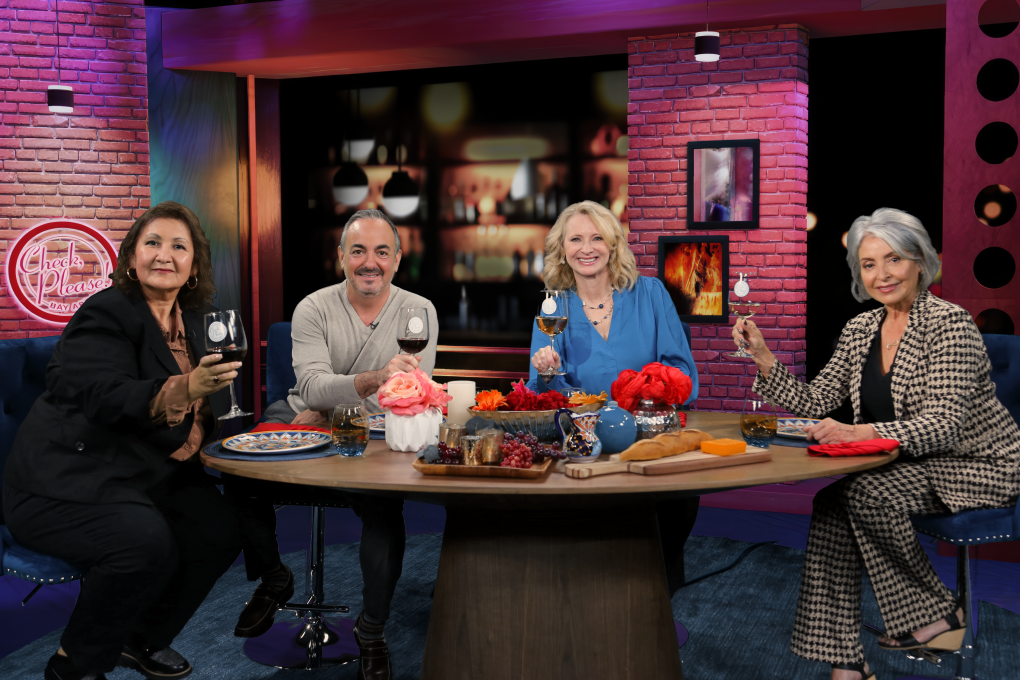
Guests and host Leslie Sbrocco taping episode 704 of Check, Please! Bay Area at KQED. Photo: Wendy Goodfriend

Check, Please! Bay Area Season 7 episode 4 (704) airs Thursday May 17 at 7:30pm on KQED 9. View other airtimes and channels.

You can watch individual restaurant segments as well as view the entire episode online. The website also provides restaurant information not specified on the show, written reviews from the guests and restaurant recipes. If you have opinions on the restaurants featured please feel free to share your thoughts. This season, Leslie Sbrocco will continue to share wine tips with each episode.

The fourth episode of the season features these restaurants: Rivoli Restaurant (Berkeley), The Chairman (Food Truck in San Francisco, Bay Area) and Station House Café (Point Reyes Station).

Leslie Sbrocco: Wine Tips -- About Decanting

posted by | posted in bay area, food and drink, KQED, restaurants, bars, cafes, street food and fast food, tv, film, video, photography | 0 Comments
tags: , , , , , , , ,

16th May 2012

Minette’s Feast: The Delicious Story of Julia Child and Her Cat

It appears to be the year of Julia Child and her cats, and as a cat and Child-lover, I am frankly thrilled. Minette's Feast: The Delicious Story of Julia Child and Her Cat, written by Susanna Reich and illustrated by Amy Bates, is the first of these two themed books from Abrams to hit our household, and it has already become a bedtime favorite with parents and child.

Julia and Paul Child did not have children, the discussion of which constitutes one of the more heartbreaking passages in My Life in France, but they did have cats. When Minette, their first cat, showed up on their doorstep, Julia noted, "Our domestic circle is complete." Pulling from Julia and Paul's letters as well as Julia's biographies, Minette's Feast tells the story of how Minette came to live and eat with the Childs in Paris.

Not only do Amy Bates' Hopper-esque illustrations capture the personalities of both Julia and Minette, but they make me want to spend so much time on individual pages -- absorbing every pinch of detail she's squirreled away in each one -- that Bug's two-year-old patience is sorely tried. I want to take in the length of Minette's whiskers, the shape and color of her eyes, every last morsel of food, and marvel over how Bates managed Julia's distinctive face and unruly hair. For his part, Bug just wants to get to the page where Minette chases a Brussels sprout tied to her tail. Once there, he chortles long and hard like he never has for any other book.

Minnettes Feast
Click on image for larger view

Not every bit of text rhymes or patterns out a beat, but the few cases it does are enchanting: "And day and night, she could smell the delicious smells of mayonnaise, hollandaise, cassoulets, cheese soufflés, and duck pâtés..." And then there's my favorite repetition and internal rhyme, "But of course, mouse and bird were much preferred." Sprinkled throughout the story are smidges of French words and expressions that are also contained in a glossary and pronunciation guide in the back of the book.

What I adore most about Minette's Feast is how Reich recasts Julia Child's famous culinary beginnings -- her trips to the markets, her culinary experiments at home, and her tenure at Le Cordon Bleu -- as merely a quest to get her tortoiseshell "poussiequette" to eat something other than mice.

A contributor to Bay Area Bites since its inception, Stephanie V.W. Lucianovic is a Bay Area food writer and editor. Her first book Suffering Succotash: A Picky Eater's Quest to Understand Why We Hate the Foods We Hate is a humorous non-fiction narrative and exposé on the lives of picky eaters. It releases from Perigee Books July 3rd.

posted by | posted in books, magazines, newspapers, chefs, food and drink, kids and family, reviews | 0 Comments
tags: , , ,

15th May 2012

The Lexicon of Sustainability: Q & A with Filmmaker Douglas Gayeton

What's in a name? For over three years, husband-and-wife team Douglas Gayeton and Laura Howard-Gayeton have been exploring this question with their multimedia project, "The Lexicon of Sustainability." When you see the words "cage-free," "organic" and "pasture-raised" on a carton of eggs, what does it really mean? Can these labels change a consumer's perception of quality and impact their decision-making? Can language influence the way food is produced and purchased today?

They've interviewed 200 individuals from across the country involved in all aspects of food -- from farming, animal husbandry, foraging, production -- to answer these and other related questions. They've spoken with Alice Waters on edible schoolyards, Wes Jackson on reinventing wheat farming, Joel Salatin on ethical farming practices, mycologist Paul Stamets, urban farmer Will Allen, Temple Grandin and many more.

In addition to their interactive website, there's photographs featured in traveling "pop-up shows" and three short films about these industry leaders that are being co-presented by PBS Food and ITVS online. Douglas Gayeton corresponded with me via email to answer several questions about their ambitious initiative.

douglas gayeton
Douglas Gayeton. Image Credit: The Lexicon of Sustainability

You've had a long and varied artistic career thus far as a filmmaker, photographer, writer and producer. What was the initial inspiration for creating this new multimedia series, "The Lexicon of Sustainability"?

I spent nearly ten years living in Pistoia, a Tuscan town set between Lucca and Florence. When I arrived my Italian was poor and I didn’t know many people. Then a comedic sequence of events led to my working in the kitchen of a trendy hillside restaurant. I say “comedic” because I didn’t really cook before that experience, nor did I have much interest in food. What I learned there became my introduction to Slow Food, even if I didn’t know what the term meant. That accidental awakening started me on a journey to document the people of my town, how they lived, and the role food played as a fundamental part of their lives. My work began as a film, then a series of essays which culminated in the information artworks that eventually were published in a book called "SLOW: Life in a Tuscan Town."

As I traveled around the USA with "Slow," I was struck by how little the principles of the Slow Food movement, borne from over 2000 years of Italian cultural evolution, made sense in America. Our experience in this country, our historic relationship with food, and primarily the broken state of our food system require us to look at food in a much different way.

Since World War II, we have raced to centralize our food system, to consolidate manufacturing and eliminate local distribution hubs. We have become dependent on inefficient and inequitable farm subsidies and addicted to chemical solutions to maintain agricultural production at artificial levels, with no care for the environmental consequences. In doing so we have turned food into a commodity utterly stripped of its most precious cultural aspects.

The solution? We need a Marshall Plan to fix our food system, one that rebuilds the infrastructure necessary for healthy local food hubs in each community. We do this first by living more sustainably. Our project is an attempt to identify the most authentic voices in this movement and illuminate the terms and principles that define their innovative work.

chicken and man
Image Credit: Douglas Gayeton / The Lexicon of Sustainability

"The Lexicon of Sustainability" is therefore based on a simple premise: people can’t be expected to live more sustainable lives if they don’t even know the most basic terms and principles that define sustainability. By illuminating the vocabulary of sustainable agriculture, and with it the conversation about America’s rapidly evolving food culture, the "Lexicon of Sustainability" can help people to pay closer attention to how they eat, what they buy, and where their responsibility begins for creating a healthier, safer food system in America.

The visuals for "Lexicon" are stunning, particularly the mosaic-like compositions that marry photographs, text, animation and video interview in a truly unique way. How did you develop this unique aesthetic?

The Italian images in my book “SLOW” began as a happy accident. I quickly learned that a single image was not enough. Not only were my images too small, but they also lacked the ability to convey the concept of “time,” of the beginning, middle and end of things. The idea of capturing hundreds of images, at times over long periods of time, then creating mosaics seemed like the only solution.

The decision to overlay these images with text came at about the same time. I wanted to convey what these people said to me as I worked. I wanted to share their insights, their observations. And I also wanted to solve another problem I had with photographs, namely that they often left so much unanswered. I wanted to provide as much information as possible within an image, to create what someone once called a “flat film,” a single image that actually uses time, that tells a story.

fifty percent live in cities
Image Credit: Douglas Gayeton / The Lexicon of Sustainability

Regarding my typographic process: after completing a photo collage, my staff assembles a list of every possible question a viewer might ask, ranging from “What’s that strange thing in the corner of the picture?” to “How does that machine work?” to “What is that person thinking?” After our subjects answer these questions their words are meticulously applied to the image. The process is lengthy. One image with noted farmer/photographer Michael Ableman -- from taking the initial photographs to building the photo collage with text -- took over a year to complete. The result is a handmade and hopefully authentic artifact that explains a fundamental principle of sustainability in highly personal terms.

How did you find the individuals to feature in "The Story of An Egg," and why were you drawn to them?

“Pasture Management” and “Pasture-Raised vs. Cage-Free” were among the first images I created for the project, so they will always be special, but also because the two individuals I profiled are such admiral folks. David Evans, featured in “Pasture Management,” is a renegade. He created Marin Sun Farms, which has pioneered a number of sustainable agricultural practices in the Bay Area.

pasture management
David Evans, Marin Sun Farms. Image Credit: Douglas Gayeton / The Lexicon of Sustainability

The second image features Alexis Koefoed from Soul Food Farm. She has a deep knowledge base on the poultry industry and is extremely eloquent. A real deep thinker. Way back in 2008, she told me that the terms “cage-free” and “free-range” were meaningless and that we needed to focus on a poultry practice called “pasture-raised.” Her convictions let me to make a short film called “The Story of An Egg." I find it very rewarding that four years after that image was created, supermarkets have started to carry “pastured” eggs. Some farmers markets (the Ferry Building in San Francisco being a notable example) have even decreed that “pastured” eggs and poultry are the only type available for sale. This shows, I think, that language is important. Consumer can make informed decisions -- and vote with their wallets -- if they know what the terms which define sustainability mean.

soul food farm
Alexis Koefoed, Soul Food Farm. Image Credit: Douglas Gayeton / The Lexicon of Sustainability

4) Can you give us an update on the current status of the project?

We have created almost 200 information artworks to explain how we can fix our food system. A selection of these are available as a "pop-up show." Anyone in the USA can apply to be a curator, unless they are actually curator. Farmers, students, teachers, librarians, activists and even government officials can go to our website to apply. They need to show how they will put on five shows in their community, involve their local food system, then serve as a “lending library” so that other schools and organization can use the show for their events. It’s a radical form of crowdsourcing, one taken from the web and applied to the real world. We anticipate over 500 shows in the USA in 2012.

pop up photo show
Image Credit: Douglas Gayeton / The Lexicon of Sustainability

pop up photo show
Image Credit: Douglas Gayeton / The Lexicon of Sustainability

In addition to the pop-up shows, we are making short films with ITVS and PBS, as well as a social network of ideas which we hope to launch later this year. And a book that sums everything up will become available next spring, while we turn our team’s attention to the next tasks at hand, namely taking on sustainability in water, energy and climate change.

Watch "The Story of an EGG" from the "Lexicon of Sustainability" series.

Can learning the meaning of a single term actually help change the food system? David Evans and Alexis Koefoed think so. These poultry farmers explain the real story behind such terms as “cage-free, “free-range” and “pasture-raised” so that consumers can make informed decisions when they go to their local supermarket.

Watch The Story of an Egg on PBS. See more from The Lexicon of Sustainability.

CREDITS

Produced by Laura Howard
Directed, Photographed and Written by Douglas Gayeton
Edited and Animated by Pier Giorgio Provenzano
Music by Rumplefarm and Kevin MacLeod (incompetech.com)

And learn more about Douglas Gayeton and his artistic process with this video "Douglas Gayeton At Work."

posted by | posted in bay area, economy and food costs, farmers and farms, farmers markets, food trends and technology, local food businesses, san francisco, sustainability, tv, film, video, photography | 1 Comment
tags: , , , , ,

14th May 2012

How Professional Eaters Stay Balanced

star chefs gala

When eating is your job, how do you stay in shape? I’ve often wondered how people in the biz do it. Some are just lucky. Ruth Reichl and Dana Cowin have both attributed their svelte physique to good genes. (Oh, if only I was blessed with a hummingbird’s metabolism. I’d be unstoppable.) For the rest of us, maintaining balance can be a daily struggle.

Michelin three-star chef Masa Takayama runs every morning…and has lost 30 pounds in the past five years doing so. Jonathan Kauffman, SF editor of Tasting Table and former food critic at SF Weekly, follows a sensible plan of exercising 4-5 times a week (a mix of biking and an hour of cardio at the gym) and eating healthy on nights off. He shares:

I don't believe in detoxing, or rather, I never have a few days away from reviewing restaurants. I do cook mostly vegetarian on my non-review nights, just to make sure I eat as many fruits and vegetables as I can.

marcia gagliardi_the tablehopper
Marcia Gagliardi (The Tablehopper) at the Wine Museum in Barolo, Italy

If you follow Marcia Gagliardi’s Tablehopper (and you should), you know that this woman’s life is a decadent flurry of wining and dining, so I was delighted to pick her brain on this topic. Here’s what she had to say:

How do you stay balanced?
This is a constant and daily challenge. If I know I am going out for dinner that evening, which is usually the case five or six nights a week, I try to eat very clean, low-fat, and simple food at home for breakfast and lunch. I try to stick with oatmeal, or yogurt, flax cereal, and fruit for breakfast (although I am a huge fan of eggs, and just finished a two–week long breakfast taco bender when my friend brought me tortillas from Austin—I am hopeless). I also allow myself to indulge twice a week in a bagel with cream cheese and lox, one of my very favorite things for breakfast. If I let myself enjoy the thing I love a few times, I find it easier to stick with oatmeal, cereal, or breakfast shakes made with kefir on the other days.

I absolutely SWEAR by drinking Green Vibrance every single morning. I call it the green menace, but it’s really my best friend, packed with every green thing you can imagine. It’s the first thing I eat or drink in the day, every single day. Makes me perk right up, especially after a night of indulgence.

On Monday when I am home writing all day against my deadline (and most of Tuesday), if I was organized, I will have made a nice soup on Sunday or the makings for some dish I can quickly put together on Monday night for dinner, like kale with chorizo tofu or something like that. Since I eat so much meat and fish when I dine out, I try to eat vegetarian at home on Mondays. I really adore cooking from Heidi Swanson’s cookbooks when I am home, Super Natural Cooking and Super Natural Every Day.

I also try not to schedule two meals out in a day—if I do lunch somewhere, then I try not to dine out (or at least eat a lighter dinner). If you want to see a week in my life of eating, check out this “San Francisco Diet” piece on Grub Street from a year ago.

I also don’t drink at home, unless I have company—just the occasional nip of bourbon, or a split of Champagne if I’m heading out on the town or about to go dancing.

Lastly, I get my sleep. People ask me why I have so much energy, and it’s because I try to get at least eight hours, five nights a week. It’s what my brain needs. Deadline nights I get much less, so I try to keep it steady on the other nights. I find I have more productivity and less hunger and cravings when I get my rest.

You've talked before about detoxing every once in awhile. What's your detox regiment?
I am so grateful I met Lawrence Kampf of Hermetic Workshop, who hosts a Core Vitality Detox twice a year. He gave me the tools to really step back and reprogram a couple times every year. It’s three weeks long, mostly about no meat/sugar/caffeine/booze/processed foods/gluten—it’s about eating whole foods, raw when possible. And there are many other components, from meditation to group workshops to yoga to hot steams. It’s great to say no to everything for a while, slow down, and get in touch with your body’s needs, instead of jacking it with coffee, booze, and foods that are hard to process. I really do love my morning shot of espresso, however. That’s a hard thing to say goodbye to.

Do you have a workout routine that you swear by?
Again, this is always an adjustment. I have an awesome trainer, Joe Peteque, who I interval train in Alamo Square with twice a week. He makes me do all the things I don’t like to do, like sprint up hills and do pushups. I also ride my bike a lot during the week to meetings and dinners and errands. I love it. I also go for a couple long, brisk walks every week—it’s good to clear the head. I started running again (am using the app From Couch to 5k), however, because right now I’m at my heaviest. It doesn’t feel good to have the calories winning at the moment, so I have to kick some more cardio back in, and try to eat less. The chefs in this town need to stop making everything taste so good, criminy! I have also been missing yoga, and that great mental space/break/energy/insight it gives you, so am planning to get a day or two of that back in my life. Setting intentions!

*****

Setting intentions is right. Goals are important, whether it’s training for that half-marathon, or that pretty summer dress hanging in the closet. For now, I’ve found a nice balance between getting in a healthy dose of veggies every day, juicing, and simply trying to burn more than I consume. How do you maintain balance in your life?

posted by | posted in bay area, food and drink, food bloggers and social media, health and nutrition | 2 Comments
tags: , , , , , ,

13th May 2012

Strawberry Lavender Muffins for Mother’s Day

Strawberry Lavender muffin

Happy Mother's Day, and happy strawberry season! While fresh-picked California strawberries have been brightening up the farmers' market for a while, those first fruits are never the sweetest ones. It's different with vegetables; the first pick of spring's tender young fava beans, English peas, asparagus, and new potatoes may well be the best.

But fruit needs a little time to bask in the newly warm sunshine and longer days, and right now, strawberries have finally come into their own, ripe and red and lovely, ready to perfume the table and delight moms everywhere. They are versatile and delicious every way, although you can't beat breakfast in bed highlighted with a simple bowl of strawberries and cream.

First, though, you need to pick your berries right. If your mom taught you lots of great stuff but not this, well, here's what you need to know. Having harvested strawberries every day for months during my time at the UCSC's Farm and Garden program, I learned a few protocols beyond the obvious one of red=ripe. There are gradations of red, for starters. Orange-red, pinky red: these aren't the reds you are looking for. A red somewhere between stop-sign and wine: that's what you want.

Then, no white shoulders. Look around the stem cap; is the berry red all the way up to the top, or is there a tell-tale patch of greenish-white up there? Berries ripen tip first, so they're not fully sweet and ripe until the very top is red, too. The second test is scent; a box of truly ripe berries will pamper your Mom with its sweet, summery perfume. Finally, a truly ripe berry will be red through and through; a white, chalky-looking core means the berry was picked too soon.

Finally, the berries shouldn't have soft, shriveled spots or squishy tips; a mushy spot in the morning is a rotten spot by afternoon. Especially in organic berries, a few peck-holes are OK; we called jabbed specimens "bird-certified ripe."

Different types of strawberry have different balances of sweetness, tartness, and flavor. Our coastal climate calls for berries that can handle cool nights and foggy days. Seascape, Chandler, and Quinalt are all delicious berries that do well here, in both farms and backyard gardens, but to my taste, Albion, a cultivar introduced by UC Davis in 2004, is the champ.

For making this excellent strawberry salsa, I picked up a great flat of organic berries from Watsonville's Rodriguez Ranch at the Diablo Valley Farmers' Market. Right now, they've got sensational Albion berries as well as great Seascapes. I'm also fond of the organic berries grown by Swanton Berry Farm, Tomatero Farm, and Yerena Farms. It's worth it to seek out organic berries; conventional strawberry farms are big pesticide consumers, as the recent debate over the use of methyl iodide revealed.

Once you've got your berries, remember that heat and moisture are the enemies of a fresh strawberry. While nothing's better than a freshly picked, sun-warmed berry, if you want to keep your berries for a few days, you need to keep them cool. For best results, lay your berries out in a single layer on a paper towel inside a glass or plastic box. Place another paper towel on top and cover. Held like this, berries should last up to 3 or 4 days. Don't rinse or hull your berries until just before you want to eat or use them.

So, you're well stocked with beautiful berries for Mom. Strawberries and cream, a surefire hit. But what if you want to dress up those berries a little, show Mom you've learned a thing or two since your macaroni-necklace days? Meyer Lemon Ricotta Pancakes or Cottage Cheese Pancakes would go perfectly with a scatter of cut-up fresh berries. You could impress Mom with a pink-and-green souffle or this can't-miss breakfast strata, strawberries on the side. Or you can whip up a plate of her very favorite breakfast just the way she likes it, and serve these lovely muffins in a basket alongside. The real appeal? Baking, they'll make the kitchen smell like heaven in springtime.

The secret ingredient in these early summer morning berries is lavender sugar, made from sugar scented with a handful of lavender blossoms. It's easy to make: just let a handful of fresh, unsprayed lavender blossoms dry out for a few days, then mix them into a jar or canister of sugar (the pale gold, organic kind, by my preference). Close tightly and let the lavender perfume the sugar for a few days before using. You can use a similar technique to make vanilla sugar. Plunging a few split whole vanilla beans into a canister of sugar; after a few days, the sugar will have a subtle but delicious whiff of vanilla (leave the beans in the sugar; the flavor will deepen with time). Or, for a quickie version, split a bean lengthwise and scrape out the seeds with the tip of a knife. Rub the vanilla seeds into 2 cups of sugar; store in a tightly closed container to preserve the flavor.

Strawberry Lavender Muffins
If you don't have lavender sugar available, you can substitute vanilla or citrus-flavored sugar in these muffins. For citrus sugar, finely grate the peel of 2 lemons or limes or 1 orange into 2 cups sugar. Mix peel thoroughly into the sugar and store in a tightly closed container.

Yield: 12 muffins
Prep Time: 10 minutes
Cook Time: 18-20 minutes
Total Time: 28-30 minutes

Ingredients
1 1/2 cups all-purpose flour or whole-wheat pastry flour, or a combination of the two
1/2 cup cornmeal
1/4 cup light brown sugar, packed
1/4 cup lavender sugar (see note)
2 tsp baking powder
1/2 tsp baking soda
1/4 tsp salt
2 eggs
1 cup milk
5 tbsp butter, melted
1 cup chopped strawberries, about 10-12 berries
2 tsp lavender sugar

Preparation:

Preheat oven to 400F. Lightly grease a 12-cup muffin pan or line with paper liners.

In a large bowl, sift flour, cornmeal, baking powder, soda and salt together. In a separate bowl, beat eggs and milk together. Pour egg mixture into dry ingredients and mix quickly but gently together. Pour in melted butter and stir a few more strokes. stir in strawberries.

Spoon batter (it will be wetter than most typical muffin batters) into muffin cups. Bake 18-20 minutes, until a tester comes out clean and muffins are golden brown. Cool on a rack for 10 minutes, then remove muffins from cups. Serve warm.

posted by | posted in baking and bakeries, farmers and farms, farmers markets, food and drink, holidays and traditions, recipes | 0 Comments
tags: , , , , , , ,

Subscribe to BABrss posts

BAB Archives

  • Sponsored by