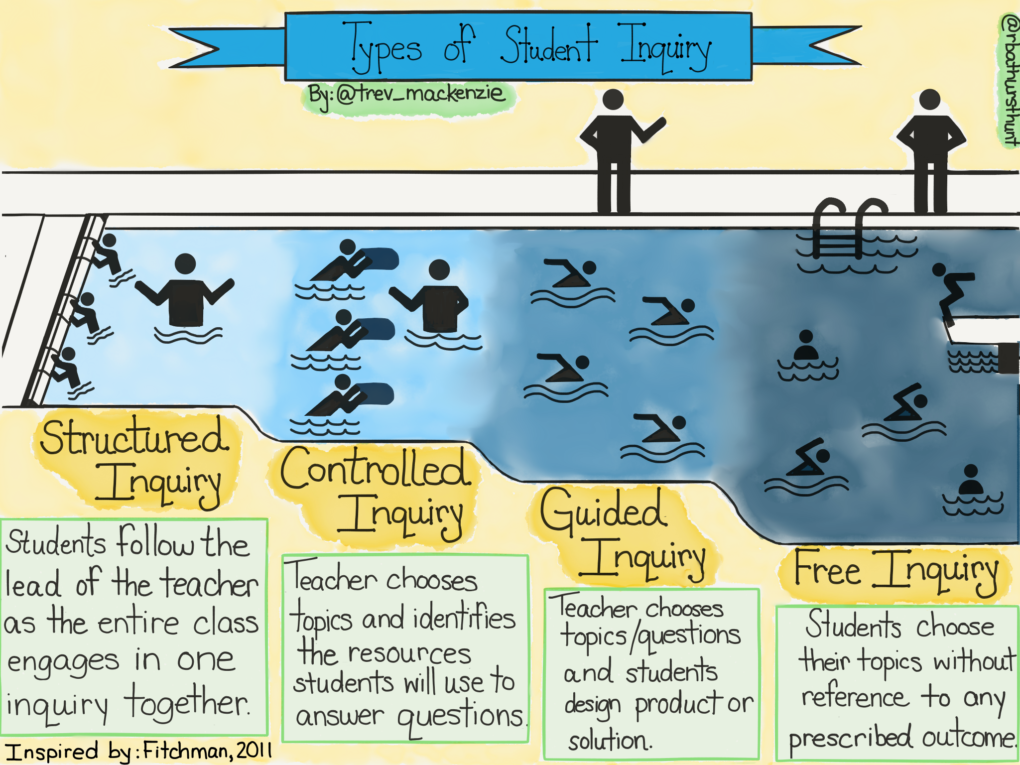
How To Ease Students Into Independent Inquiry Projects
Tips And Tricks To Keep Kids On Track During Genius Hour Projects
Making College A Powerful Experience For the Most Marginalized
How Giving Students Choice During the Day Can Create Unstoppable Learning
Watch Out TED Talks: Here Comes A New Generation
How the Heck Do You Implement "Student Empowerment"?
Dive Into Science With Zombies, Superheroes, and Fairies
Choice Equals Power: How to Motivate Students to Learn
Creating Classrooms We Need: 8 Ways Into Inquiry Learning
Sponsored
window.__IS_SSR__=true
window.__INITIAL_STATE__={"attachmentsReducer":{"audio_0":{"type":"attachments","id":"audio_0","imgSizes":{"kqedFullSize":{"file":"https://ww2.kqed.org/news/wp-content/themes/KQED-unified/img/audio_bgs/background0.jpg"}}},"audio_1":{"type":"attachments","id":"audio_1","imgSizes":{"kqedFullSize":{"file":"https://ww2.kqed.org/news/wp-content/themes/KQED-unified/img/audio_bgs/background1.jpg"}}},"audio_2":{"type":"attachments","id":"audio_2","imgSizes":{"kqedFullSize":{"file":"https://ww2.kqed.org/news/wp-content/themes/KQED-unified/img/audio_bgs/background2.jpg"}}},"audio_3":{"type":"attachments","id":"audio_3","imgSizes":{"kqedFullSize":{"file":"https://ww2.kqed.org/news/wp-content/themes/KQED-unified/img/audio_bgs/background3.jpg"}}},"audio_4":{"type":"attachments","id":"audio_4","imgSizes":{"kqedFullSize":{"file":"https://ww2.kqed.org/news/wp-content/themes/KQED-unified/img/audio_bgs/background4.jpg"}}},"placeholder":{"type":"attachments","id":"placeholder","imgSizes":{"thumbnail":{"file":"https://ww2.kqed.org/wp-content/uploads/sites/10/2018/01/GettyImages-896326950-160x96.jpg","width":160,"height":96,"mimeType":"image/jpeg"},"medium":{"file":"https://ww2.kqed.org/wp-content/uploads/sites/10/2018/01/GettyImages-896326950-800x478.jpg","width":800,"height":478,"mimeType":"image/jpeg"},"large":{"file":"https://ww2.kqed.org/wp-content/uploads/sites/10/2018/01/GettyImages-896326950-1020x610.jpg","width":1020,"height":610,"mimeType":"image/jpeg"},"fd-lrg":{"file":"https://ww2.kqed.org/wp-content/uploads/sites/10/2018/01/GettyImages-896326950-1920x1148.jpg","width":1920,"height":1148,"mimeType":"image/jpeg"},"fd-med":{"file":"https://ww2.kqed.org/wp-content/uploads/sites/10/2018/01/GettyImages-896326950-1180x705.jpg","width":1180,"height":705,"mimeType":"image/jpeg"},"fd-sm":{"file":"https://ww2.kqed.org/wp-content/uploads/sites/10/2018/01/GettyImages-896326950-960x574.jpg","width":960,"height":574,"mimeType":"image/jpeg"},"post-thumbnail":{"file":"https://ww2.kqed.org/wp-content/uploads/sites/10/2018/01/GettyImages-896326950-672x372.jpg","width":672,"height":372,"mimeType":"image/jpeg"},"twentyfourteen-full-width":{"file":"https://ww2.kqed.org/wp-content/uploads/sites/10/2018/01/GettyImages-896326950-1038x576.jpg","width":1038,"height":576,"mimeType":"image/jpeg"},"xxsmall":{"file":"https://ww2.kqed.org/wp-content/uploads/sites/10/2018/01/GettyImages-896326950-240x143.jpg","width":240,"height":143,"mimeType":"image/jpeg"},"xsmall":{"file":"https://ww2.kqed.org/wp-content/uploads/sites/10/2018/01/GettyImages-896326950-375x224.jpg","width":375,"height":224,"mimeType":"image/jpeg"},"small":{"file":"https://ww2.kqed.org/wp-content/uploads/sites/10/2018/01/GettyImages-896326950-520x311.jpg","width":520,"height":311,"mimeType":"image/jpeg"},"xlarge":{"file":"https://ww2.kqed.org/wp-content/uploads/sites/10/2018/01/GettyImages-896326950-1180x705.jpg","width":1180,"height":705,"mimeType":"image/jpeg"},"full-width":{"file":"https://ww2.kqed.org/wp-content/uploads/sites/10/2018/01/GettyImages-896326950-1920x1148.jpg","width":1920,"height":1148,"mimeType":"image/jpeg"},"guest-author-32":{"file":"https://ww2.kqed.org/wp-content/uploads/sites/10/2018/01/GettyImages-896326950-32x32.jpg","width":32,"height":32,"mimeType":"image/jpeg"},"guest-author-50":{"file":"https://ww2.kqed.org/wp-content/uploads/sites/10/2018/01/GettyImages-896326950-50x50.jpg","width":50,"height":50,"mimeType":"image/jpeg"},"guest-author-64":{"file":"https://ww2.kqed.org/wp-content/uploads/sites/10/2018/01/GettyImages-896326950-64x64.jpg","width":64,"height":64,"mimeType":"image/jpeg"},"guest-author-96":{"file":"https://ww2.kqed.org/wp-content/uploads/sites/10/2018/01/GettyImages-896326950-96x96.jpg","width":96,"height":96,"mimeType":"image/jpeg"},"guest-author-128":{"file":"https://ww2.kqed.org/wp-content/uploads/sites/10/2018/01/GettyImages-896326950-128x128.jpg","width":128,"height":128,"mimeType":"image/jpeg"},"detail":{"file":"https://ww2.kqed.org/wp-content/uploads/sites/10/2018/01/GettyImages-896326950-150x150.jpg","width":150,"height":150,"mimeType":"image/jpeg"},"kqedFullSize":{"file":"https://ww2.kqed.org/wp-content/uploads/sites/10/2018/01/GettyImages-896326950-e1514998105161.jpg","width":1920,"height":1148}}},"mindshift_50622":{"type":"attachments","id":"mindshift_50622","meta":{"index":"attachments_1591205162","site":"mindshift","id":"50622","found":true},"title":"1 Types of Student Inquiry","publishDate":1519346006,"status":"inherit","parent":50620,"modified":1519346316,"caption":"This sketch representing how a teacher can gradually remove scaffolds to give learners more independence is featured in Inquiry Mindsets.","credit":"Courtesy Trevor MacKenzie and Rebecca Bathurst-Hunt","description":null,"imgSizes":{"thumbnail":{"file":"https://ww2.kqed.org/app/uploads/sites/23/2018/02/1-Types-of-Student-Inquiry-160x120.png","width":160,"height":120,"mimeType":"image/png"},"medium":{"file":"https://ww2.kqed.org/app/uploads/sites/23/2018/02/1-Types-of-Student-Inquiry-800x600.png","width":800,"height":600,"mimeType":"image/png"},"medium_large":{"file":"https://ww2.kqed.org/app/uploads/sites/23/2018/02/1-Types-of-Student-Inquiry-768x576.png","width":768,"height":576,"mimeType":"image/png"},"large":{"file":"https://ww2.kqed.org/app/uploads/sites/23/2018/02/1-Types-of-Student-Inquiry-1020x765.png","width":1020,"height":765,"mimeType":"image/png"},"fd-lrg":{"file":"https://ww2.kqed.org/app/uploads/sites/23/2018/02/1-Types-of-Student-Inquiry-1920x1440.png","width":1920,"height":1440,"mimeType":"image/png"},"fd-med":{"file":"https://ww2.kqed.org/app/uploads/sites/23/2018/02/1-Types-of-Student-Inquiry-1180x885.png","width":1180,"height":885,"mimeType":"image/png"},"fd-sm":{"file":"https://ww2.kqed.org/app/uploads/sites/23/2018/02/1-Types-of-Student-Inquiry-960x720.png","width":960,"height":720,"mimeType":"image/png"},"post-thumbnail":{"file":"https://ww2.kqed.org/app/uploads/sites/23/2018/02/1-Types-of-Student-Inquiry-672x372.png","width":672,"height":372,"mimeType":"image/png"},"twentyfourteen-full-width":{"file":"https://ww2.kqed.org/app/uploads/sites/23/2018/02/1-Types-of-Student-Inquiry-1038x576.png","width":1038,"height":576,"mimeType":"image/png"},"xxsmall":{"file":"https://ww2.kqed.org/app/uploads/sites/23/2018/02/1-Types-of-Student-Inquiry-240x180.png","width":240,"height":180,"mimeType":"image/png"},"xsmall":{"file":"https://ww2.kqed.org/app/uploads/sites/23/2018/02/1-Types-of-Student-Inquiry-375x281.png","width":375,"height":281,"mimeType":"image/png"},"small":{"file":"https://ww2.kqed.org/app/uploads/sites/23/2018/02/1-Types-of-Student-Inquiry-520x390.png","width":520,"height":390,"mimeType":"image/png"},"xlarge":{"file":"https://ww2.kqed.org/app/uploads/sites/23/2018/02/1-Types-of-Student-Inquiry-1180x885.png","width":1180,"height":885,"mimeType":"image/png"},"full-width":{"file":"https://ww2.kqed.org/app/uploads/sites/23/2018/02/1-Types-of-Student-Inquiry-1920x1440.png","width":1920,"height":1440,"mimeType":"image/png"},"guest-author-32":{"file":"https://ww2.kqed.org/app/uploads/sites/23/2018/02/1-Types-of-Student-Inquiry-32x32.png","width":32,"height":32,"mimeType":"image/png"},"guest-author-50":{"file":"https://ww2.kqed.org/app/uploads/sites/23/2018/02/1-Types-of-Student-Inquiry-50x50.png","width":50,"height":50,"mimeType":"image/png"},"guest-author-64":{"file":"https://ww2.kqed.org/app/uploads/sites/23/2018/02/1-Types-of-Student-Inquiry-64x64.png","width":64,"height":64,"mimeType":"image/png"},"guest-author-96":{"file":"https://ww2.kqed.org/app/uploads/sites/23/2018/02/1-Types-of-Student-Inquiry-96x96.png","width":96,"height":96,"mimeType":"image/png"},"guest-author-128":{"file":"https://ww2.kqed.org/app/uploads/sites/23/2018/02/1-Types-of-Student-Inquiry-128x128.png","width":128,"height":128,"mimeType":"image/png"},"detail":{"file":"https://ww2.kqed.org/app/uploads/sites/23/2018/02/1-Types-of-Student-Inquiry-150x150.png","width":150,"height":150,"mimeType":"image/png"},"kqedFullSize":{"file":"https://ww2.kqed.org/app/uploads/sites/23/2018/02/1-Types-of-Student-Inquiry.png","width":2048,"height":1536}},"fetchFailed":false,"isLoading":false},"mindshift_49825":{"type":"attachments","id":"mindshift_49825","meta":{"index":"attachments_1591205162","site":"mindshift","id":"49825","found":true},"title":null,"publishDate":1512374966,"status":"inherit","parent":49184,"modified":1512374993,"caption":null,"credit":"iStock/NatanaelGinting","description":null,"imgSizes":{"thumbnail":{"file":"https://ww2.kqed.org/app/uploads/sites/23/2017/12/iStock-490376997-160x102.jpg","width":160,"height":102,"mimeType":"image/jpeg"},"medium":{"file":"https://ww2.kqed.org/app/uploads/sites/23/2017/12/iStock-490376997-800x511.jpg","width":800,"height":511,"mimeType":"image/jpeg"},"medium_large":{"file":"https://ww2.kqed.org/app/uploads/sites/23/2017/12/iStock-490376997-768x490.jpg","width":768,"height":490,"mimeType":"image/jpeg"},"large":{"file":"https://ww2.kqed.org/app/uploads/sites/23/2017/12/iStock-490376997-1020x651.jpg","width":1020,"height":651,"mimeType":"image/jpeg"},"fd-lrg":{"file":"https://ww2.kqed.org/app/uploads/sites/23/2017/12/iStock-490376997-1920x1225.jpg","width":1920,"height":1225,"mimeType":"image/jpeg"},"fd-med":{"file":"https://ww2.kqed.org/app/uploads/sites/23/2017/12/iStock-490376997-1180x753.jpg","width":1180,"height":753,"mimeType":"image/jpeg"},"fd-sm":{"file":"https://ww2.kqed.org/app/uploads/sites/23/2017/12/iStock-490376997-960x613.jpg","width":960,"height":613,"mimeType":"image/jpeg"},"post-thumbnail":{"file":"https://ww2.kqed.org/app/uploads/sites/23/2017/12/iStock-490376997-672x372.jpg","width":672,"height":372,"mimeType":"image/jpeg"},"twentyfourteen-full-width":{"file":"https://ww2.kqed.org/app/uploads/sites/23/2017/12/iStock-490376997-1038x576.jpg","width":1038,"height":576,"mimeType":"image/jpeg"},"xxsmall":{"file":"https://ww2.kqed.org/app/uploads/sites/23/2017/12/iStock-490376997-240x153.jpg","width":240,"height":153,"mimeType":"image/jpeg"},"xsmall":{"file":"https://ww2.kqed.org/app/uploads/sites/23/2017/12/iStock-490376997-375x239.jpg","width":375,"height":239,"mimeType":"image/jpeg"},"small":{"file":"https://ww2.kqed.org/app/uploads/sites/23/2017/12/iStock-490376997-520x332.jpg","width":520,"height":332,"mimeType":"image/jpeg"},"xlarge":{"file":"https://ww2.kqed.org/app/uploads/sites/23/2017/12/iStock-490376997-1180x753.jpg","width":1180,"height":753,"mimeType":"image/jpeg"},"full-width":{"file":"https://ww2.kqed.org/app/uploads/sites/23/2017/12/iStock-490376997-1920x1225.jpg","width":1920,"height":1225,"mimeType":"image/jpeg"},"guest-author-32":{"file":"https://ww2.kqed.org/app/uploads/sites/23/2017/12/iStock-490376997-32x32.jpg","width":32,"height":32,"mimeType":"image/jpeg"},"guest-author-50":{"file":"https://ww2.kqed.org/app/uploads/sites/23/2017/12/iStock-490376997-50x50.jpg","width":50,"height":50,"mimeType":"image/jpeg"},"guest-author-64":{"file":"https://ww2.kqed.org/app/uploads/sites/23/2017/12/iStock-490376997-64x64.jpg","width":64,"height":64,"mimeType":"image/jpeg"},"guest-author-96":{"file":"https://ww2.kqed.org/app/uploads/sites/23/2017/12/iStock-490376997-96x96.jpg","width":96,"height":96,"mimeType":"image/jpeg"},"guest-author-128":{"file":"https://ww2.kqed.org/app/uploads/sites/23/2017/12/iStock-490376997-128x128.jpg","width":128,"height":128,"mimeType":"image/jpeg"},"detail":{"file":"https://ww2.kqed.org/app/uploads/sites/23/2017/12/iStock-490376997-150x150.jpg","width":150,"height":150,"mimeType":"image/jpeg"},"kqedFullSize":{"file":"https://ww2.kqed.org/app/uploads/sites/23/2017/12/iStock-490376997-e1512374999824.jpg","width":1920,"height":1225}},"fetchFailed":false,"isLoading":false},"mindshift_46396":{"type":"attachments","id":"mindshift_46396","meta":{"index":"attachments_1591205162","site":"mindshift","id":"46396","found":true},"title":"CU","publishDate":1474314921,"status":"inherit","parent":46309,"modified":1474315021,"caption":"Anjel Newmann, a College Unbound student, speaks up during a weekly seminar.","credit":"Tracy Money/College Unbound","description":null,"imgSizes":{"thumbnail":{"file":"https://ww2.kqed.org/app/uploads/sites/23/2016/09/CU-400x225.png","width":400,"height":225,"mimeType":"image/png"},"medium":{"file":"https://ww2.kqed.org/app/uploads/sites/23/2016/09/CU-800x450.png","width":800,"height":450,"mimeType":"image/png"},"medium_large":{"file":"https://ww2.kqed.org/app/uploads/sites/23/2016/09/CU-768x432.png","width":768,"height":432,"mimeType":"image/png"},"large":{"file":"https://ww2.kqed.org/app/uploads/sites/23/2016/09/CU-1440x810.png","width":1440,"height":810,"mimeType":"image/png"},"fd-lrg":{"file":"https://ww2.kqed.org/app/uploads/sites/23/2016/09/CU-1920x1080.png","width":1920,"height":1080,"mimeType":"image/png"},"fd-med":{"file":"https://ww2.kqed.org/app/uploads/sites/23/2016/09/CU-1180x664.png","width":1180,"height":664,"mimeType":"image/png"},"fd-sm":{"file":"https://ww2.kqed.org/app/uploads/sites/23/2016/09/CU-960x540.png","width":960,"height":540,"mimeType":"image/png"},"post-thumbnail":{"file":"https://ww2.kqed.org/app/uploads/sites/23/2016/09/CU-672x372.png","width":672,"height":372,"mimeType":"image/png"},"twentyfourteen-full-width":{"file":"https://ww2.kqed.org/app/uploads/sites/23/2016/09/CU-1038x576.png","width":1038,"height":576,"mimeType":"image/png"},"cat_post_thumb_sizecategory-posts-2":{"file":"https://ww2.kqed.org/app/uploads/sites/23/2016/09/CU-50x50.png","width":50,"height":50,"mimeType":"image/png"},"guest-author-32":{"file":"https://ww2.kqed.org/app/uploads/sites/23/2016/09/CU-32x32.png","width":32,"height":32,"mimeType":"image/png"},"guest-author-50":{"file":"https://ww2.kqed.org/app/uploads/sites/23/2016/09/CU-50x50.png","width":50,"height":50,"mimeType":"image/png"},"guest-author-64":{"file":"https://ww2.kqed.org/app/uploads/sites/23/2016/09/CU-64x64.png","width":64,"height":64,"mimeType":"image/png"},"guest-author-96":{"file":"https://ww2.kqed.org/app/uploads/sites/23/2016/09/CU-96x96.png","width":96,"height":96,"mimeType":"image/png"},"guest-author-128":{"file":"https://ww2.kqed.org/app/uploads/sites/23/2016/09/CU-128x128.png","width":128,"height":128,"mimeType":"image/png"},"detail":{"file":"https://ww2.kqed.org/app/uploads/sites/23/2016/09/CU-150x150.png","width":150,"height":150,"mimeType":"image/png"},"kqedFullSize":{"file":"https://ww2.kqed.org/app/uploads/sites/23/2016/09/CU.png","width":1920,"height":1080}},"fetchFailed":false,"isLoading":false},"mindshift_44194":{"type":"attachments","id":"mindshift_44194","meta":{"index":"attachments_1591205162","site":"mindshift","id":"44194","found":true},"title":"InspirationTime5","publishDate":1457386769,"status":"inherit","parent":44188,"modified":1457386835,"caption":"Prompts on a class poster help students get started during Inspiration Time.","credit":"Courtesy Maricela Montoy-Wilson","description":null,"imgSizes":{"thumbnail":{"file":"https://ww2.kqed.org/app/uploads/sites/23/2016/03/InspirationTime5-400x225.jpg","width":400,"height":225,"mimeType":"image/jpeg"},"medium":{"file":"https://ww2.kqed.org/app/uploads/sites/23/2016/03/InspirationTime5-800x450.jpg","width":800,"height":450,"mimeType":"image/jpeg"},"medium_large":{"file":"https://ww2.kqed.org/app/uploads/sites/23/2016/03/InspirationTime5-768x432.jpg","width":768,"height":432,"mimeType":"image/jpeg"},"large":{"file":"https://ww2.kqed.org/app/uploads/sites/23/2016/03/InspirationTime5-1440x810.jpg","width":1440,"height":810,"mimeType":"image/jpeg"},"fd-lrg":{"file":"https://ww2.kqed.org/app/uploads/sites/23/2016/03/InspirationTime5-1920x1080.jpg","width":1920,"height":1080,"mimeType":"image/jpeg"},"fd-med":{"file":"https://ww2.kqed.org/app/uploads/sites/23/2016/03/InspirationTime5-1180x664.jpg","width":1180,"height":664,"mimeType":"image/jpeg"},"fd-sm":{"file":"https://ww2.kqed.org/app/uploads/sites/23/2016/03/InspirationTime5-960x540.jpg","width":960,"height":540,"mimeType":"image/jpeg"},"post-thumbnail":{"file":"https://ww2.kqed.org/app/uploads/sites/23/2016/03/InspirationTime5-672x372.jpg","width":672,"height":372,"mimeType":"image/jpeg"},"twentyfourteen-full-width":{"file":"https://ww2.kqed.org/app/uploads/sites/23/2016/03/InspirationTime5-1038x576.jpg","width":1038,"height":576,"mimeType":"image/jpeg"},"guest-author-32":{"file":"https://ww2.kqed.org/app/uploads/sites/23/2016/03/InspirationTime5-32x32.jpg","width":32,"height":32,"mimeType":"image/jpeg"},"guest-author-64":{"file":"https://ww2.kqed.org/app/uploads/sites/23/2016/03/InspirationTime5-64x64.jpg","width":64,"height":64,"mimeType":"image/jpeg"},"guest-author-96":{"file":"https://ww2.kqed.org/app/uploads/sites/23/2016/03/InspirationTime5-96x96.jpg","width":96,"height":96,"mimeType":"image/jpeg"},"guest-author-128":{"file":"https://ww2.kqed.org/app/uploads/sites/23/2016/03/InspirationTime5-128x128.jpg","width":128,"height":128,"mimeType":"image/jpeg"},"cat_post_thumb_sizecategory-posts-2":{"file":"https://ww2.kqed.org/app/uploads/sites/23/2016/03/InspirationTime5-50x50.jpg","width":50,"height":50,"mimeType":"image/jpeg"},"detail":{"file":"https://ww2.kqed.org/app/uploads/sites/23/2016/03/InspirationTime5-75x75.jpg","width":75,"height":75,"mimeType":"image/jpeg"},"kqedFullSize":{"file":"https://ww2.kqed.org/app/uploads/sites/23/2016/03/InspirationTime5.jpg","width":4032,"height":2268}},"fetchFailed":false,"isLoading":false},"mindshift_33429":{"type":"attachments","id":"mindshift_33429","meta":{"index":"attachments_1591205162","site":"mindshift","id":"33429","found":true},"title":"TED-Ed-clubs","publishDate":1389657143,"status":"inherit","parent":33426,"modified":1389657143,"caption":null,"credit":null,"description":null,"imgSizes":{"thumbnail":{"file":"https://ww2.kqed.org/app/uploads/sites/23/2014/01/TED-Ed-clubs-400x219.jpg","width":400,"height":219,"mimeType":"image/jpeg"},"fd-sm":{"file":"https://ww2.kqed.org/app/uploads/sites/23/2014/01/TED-Ed-clubs-320x175.jpg","width":320,"height":175,"mimeType":"image/jpeg"},"guest-author-32":{"file":"https://ww2.kqed.org/app/uploads/sites/23/2014/01/TED-Ed-clubs-32x32.jpg","width":32,"height":32,"mimeType":"image/jpeg"},"guest-author-64":{"file":"https://ww2.kqed.org/app/uploads/sites/23/2014/01/TED-Ed-clubs-64x64.jpg","width":64,"height":64,"mimeType":"image/jpeg"},"guest-author-96":{"file":"https://ww2.kqed.org/app/uploads/sites/23/2014/01/TED-Ed-clubs-96x96.jpg","width":96,"height":96,"mimeType":"image/jpeg"},"guest-author-128":{"file":"https://ww2.kqed.org/app/uploads/sites/23/2014/01/TED-Ed-clubs-128x128.jpg","width":128,"height":128,"mimeType":"image/jpeg"},"kqedFullSize":{"file":"https://ww2.kqed.org/app/uploads/sites/23/2014/01/TED-Ed-clubs.jpg","width":640,"height":350}},"fetchFailed":false,"isLoading":false},"mindshift_32819":{"type":"attachments","id":"mindshift_32819","meta":{"index":"attachments_1591205162","site":"mindshift","id":"32819","found":true},"title":"Superhero","publishDate":1385487147,"status":"inherit","parent":32595,"modified":1385487147,"caption":null,"credit":null,"description":"Superhero kid","imgSizes":{"thumbnail":{"file":"https://ww2.kqed.org/app/uploads/sites/23/2013/11/Superhero-400x224.jpg","width":400,"height":224,"mimeType":"image/jpeg"},"fd-sm":{"file":"https://ww2.kqed.org/app/uploads/sites/23/2013/11/Superhero-320x180.jpg","width":320,"height":180,"mimeType":"image/jpeg"},"guest-author-32":{"file":"https://ww2.kqed.org/app/uploads/sites/23/2013/11/Superhero-32x32.jpg","width":32,"height":32,"mimeType":"image/jpeg"},"guest-author-64":{"file":"https://ww2.kqed.org/app/uploads/sites/23/2013/11/Superhero-64x64.jpg","width":64,"height":64,"mimeType":"image/jpeg"},"guest-author-96":{"file":"https://ww2.kqed.org/app/uploads/sites/23/2013/11/Superhero-96x96.jpg","width":96,"height":96,"mimeType":"image/jpeg"},"guest-author-128":{"file":"https://ww2.kqed.org/app/uploads/sites/23/2013/11/Superhero-128x128.jpg","width":128,"height":128,"mimeType":"image/jpeg"},"detail":{"file":"https://ww2.kqed.org/app/uploads/sites/23/2013/11/Superhero-75x75.jpg","width":75,"height":75,"mimeType":"image/jpeg"},"kqedFullSize":{"file":"https://ww2.kqed.org/app/uploads/sites/23/2013/11/Superhero.jpg","width":640,"height":359}},"fetchFailed":false,"isLoading":false},"mindshift_32712":{"type":"attachments","id":"mindshift_32712","meta":{"index":"attachments_1591205162","site":"mindshift","id":"32712","found":true},"title":"3333915724_72f7480cca_z","publishDate":1384800149,"status":"inherit","parent":31615,"modified":1384800149,"caption":null,"credit":null,"description":null,"imgSizes":{"thumbnail":{"file":"https://ww2.kqed.org/app/uploads/sites/23/2013/11/3333915724_72f7480cca_z-400x161.jpg","width":400,"height":161,"mimeType":"image/jpeg"},"fd-sm":{"file":"https://ww2.kqed.org/app/uploads/sites/23/2013/11/3333915724_72f7480cca_z-320x129.jpg","width":320,"height":129,"mimeType":"image/jpeg"},"guest-author-32":{"file":"https://ww2.kqed.org/app/uploads/sites/23/2013/11/3333915724_72f7480cca_z-32x32.jpg","width":32,"height":32,"mimeType":"image/jpeg"},"guest-author-64":{"file":"https://ww2.kqed.org/app/uploads/sites/23/2013/11/3333915724_72f7480cca_z-64x64.jpg","width":64,"height":64,"mimeType":"image/jpeg"},"guest-author-96":{"file":"https://ww2.kqed.org/app/uploads/sites/23/2013/11/3333915724_72f7480cca_z-96x96.jpg","width":96,"height":96,"mimeType":"image/jpeg"},"guest-author-128":{"file":"https://ww2.kqed.org/app/uploads/sites/23/2013/11/3333915724_72f7480cca_z-128x128.jpg","width":128,"height":128,"mimeType":"image/jpeg"},"detail":{"file":"https://ww2.kqed.org/app/uploads/sites/23/2013/11/3333915724_72f7480cca_z-75x75.jpg","width":75,"height":75,"mimeType":"image/jpeg"},"kqedFullSize":{"file":"https://ww2.kqed.org/app/uploads/sites/23/2013/11/3333915724_72f7480cca_z.jpg","width":640,"height":258}},"fetchFailed":false,"isLoading":false},"mindshift_27623":{"type":"attachments","id":"mindshift_27623","meta":{"index":"attachments_1591205162","site":"mindshift","id":"27623","found":true},"title":"7171535345_65369bbb0b_z","publishDate":1363022120,"status":"inherit","parent":27529,"modified":1363022120,"caption":null,"credit":null,"description":null,"imgSizes":{"thumbnail":{"file":"https://ww2.kqed.org/app/uploads/sites/23/2013/03/7171535345_65369bbb0b_z-400x205.jpg","width":400,"height":205,"mimeType":"image/jpeg"},"fd-sm":{"file":"https://ww2.kqed.org/app/uploads/sites/23/2013/03/7171535345_65369bbb0b_z-320x164.jpg","width":320,"height":164,"mimeType":"image/jpeg"},"guest-author-32":{"file":"https://ww2.kqed.org/app/uploads/sites/23/2013/03/7171535345_65369bbb0b_z-32x32.jpg","width":32,"height":32,"mimeType":"image/jpeg"},"guest-author-64":{"file":"https://ww2.kqed.org/app/uploads/sites/23/2013/03/7171535345_65369bbb0b_z-64x64.jpg","width":64,"height":64,"mimeType":"image/jpeg"},"guest-author-96":{"file":"https://ww2.kqed.org/app/uploads/sites/23/2013/03/7171535345_65369bbb0b_z-96x96.jpg","width":96,"height":96,"mimeType":"image/jpeg"},"guest-author-128":{"file":"https://ww2.kqed.org/app/uploads/sites/23/2013/03/7171535345_65369bbb0b_z-128x128.jpg","width":128,"height":128,"mimeType":"image/jpeg"},"detail":{"file":"https://ww2.kqed.org/app/uploads/sites/23/2013/03/7171535345_65369bbb0b_z-75x75.jpg","width":75,"height":75,"mimeType":"image/jpeg"},"kqedFullSize":{"file":"https://ww2.kqed.org/app/uploads/sites/23/2013/03/7171535345_65369bbb0b_z.jpg","width":616,"height":316}},"fetchFailed":false,"isLoading":false}},"audioPlayerReducer":{"postId":"stream_live"},"authorsReducer":{"tbarseghian":{"type":"authors","id":"180","meta":{"index":"authors_1591205172","id":"180","found":true},"name":"Tina Barseghian","firstName":"Tina","lastName":"Barseghian","slug":"tbarseghian","email":"tbarseghian@kqed.org","display_author_email":false,"staff_mastheads":[],"title":null,"bio":null,"avatar":"https://secure.gravatar.com/avatar/de7e6ced1239b7018fe4d2b61f723c90?s=600&d=blank&r=g","twitter":null,"facebook":null,"instagram":null,"linkedin":null,"sites":[{"site":"styleguide","roles":["contributor"]},{"site":"news","roles":["subscriber"]},{"site":"mindshift","roles":["subscriber"]},{"site":"bayareabites","roles":["subscriber"]}],"headData":{"title":"Tina Barseghian | KQED","description":null,"ogImgSrc":"https://secure.gravatar.com/avatar/de7e6ced1239b7018fe4d2b61f723c90?s=600&d=blank&r=g","twImgSrc":"https://secure.gravatar.com/avatar/de7e6ced1239b7018fe4d2b61f723c90?s=600&d=blank&r=g"},"isLoading":false,"link":"/author/tbarseghian"},"katrinaschwartz":{"type":"authors","id":"234","meta":{"index":"authors_1591205172","id":"234","found":true},"name":"Katrina Schwartz","firstName":"Katrina","lastName":"Schwartz","slug":"katrinaschwartz","email":"kschwartz@kqed.org","display_author_email":false,"staff_mastheads":["news"],"title":"Producer","bio":"Katrina Schwartz is a journalist based in San Francisco. She's worked at KPCC public radio in LA and has reported on air and online for KQED since 2010. She covered how teaching and learning is changing for MindShift between 2012 and 2020. She is the co-host of the MindShift podcast and now produces KQED's Bay Curious podcast.","avatar":"https://secure.gravatar.com/avatar/a6a567574dafefa959593925eead665c?s=600&d=blank&r=g","twitter":"kschwart","facebook":null,"instagram":null,"linkedin":null,"sites":[{"site":"news","roles":["editor"]},{"site":"mindshift","roles":["administrator"]},{"site":"stateofhealth","roles":["author"]},{"site":"science","roles":["editor"]}],"headData":{"title":"Katrina Schwartz | KQED","description":"Producer","ogImgSrc":"https://secure.gravatar.com/avatar/a6a567574dafefa959593925eead665c?s=600&d=blank&r=g","twImgSrc":"https://secure.gravatar.com/avatar/a6a567574dafefa959593925eead665c?s=600&d=blank&r=g"},"isLoading":false,"link":"/author/katrinaschwartz"},"mindshift":{"type":"authors","id":"4354","meta":{"index":"authors_1591205172","id":"4354","found":true},"name":"MindShift","firstName":"MindShift","lastName":null,"slug":"mindshift","email":"tina@barseghian.com","display_author_email":false,"staff_mastheads":[],"title":null,"bio":null,"avatar":"https://secure.gravatar.com/avatar/ae7f1f73a229130205aa5f57b55eaf16?s=600&d=blank&r=g","twitter":null,"facebook":null,"instagram":null,"linkedin":null,"sites":[{"site":"arts","roles":["author"]},{"site":"mindshift","roles":["editor"]}],"headData":{"title":"MindShift | KQED","description":null,"ogImgSrc":"https://secure.gravatar.com/avatar/ae7f1f73a229130205aa5f57b55eaf16?s=600&d=blank&r=g","twImgSrc":"https://secure.gravatar.com/avatar/ae7f1f73a229130205aa5f57b55eaf16?s=600&d=blank&r=g"},"isLoading":false,"link":"/author/mindshift"}},"breakingNewsReducer":{},"campaignFinanceReducer":{},"firebase":{"requesting":{},"requested":{},"timestamps":{},"data":{},"ordered":{},"auth":{"isLoaded":false,"isEmpty":true},"authError":null,"profile":{"isLoaded":false,"isEmpty":true},"listeners":{"byId":{},"allIds":[]},"isInitializing":false,"errors":[]},"navBarReducer":{"navBarId":"home","fullView":true,"showPlayer":false},"navMenuReducer":{"menus":[{"key":"menu1","items":[{"name":"News","link":"/","type":"title"},{"name":"Politics","link":"/politics"},{"name":"Science","link":"/science"},{"name":"Education","link":"/educationnews"},{"name":"Housing","link":"/housing"},{"name":"Immigration","link":"/immigration"},{"name":"Criminal Justice","link":"/criminaljustice"},{"name":"Silicon Valley","link":"/siliconvalley"},{"name":"Forum","link":"/forum"},{"name":"The California Report","link":"/californiareport"}]},{"key":"menu2","items":[{"name":"Arts & Culture","link":"/arts","type":"title"},{"name":"Critics’ Picks","link":"/thedolist"},{"name":"Cultural Commentary","link":"/artscommentary"},{"name":"Food & Drink","link":"/food"},{"name":"Bay Area Hip-Hop","link":"/bayareahiphop"},{"name":"Rebel Girls","link":"/rebelgirls"},{"name":"Arts Video","link":"/artsvideos"}]},{"key":"menu3","items":[{"name":"Podcasts","link":"/podcasts","type":"title"},{"name":"Bay Curious","link":"/podcasts/baycurious"},{"name":"Rightnowish","link":"/podcasts/rightnowish"},{"name":"The Bay","link":"/podcasts/thebay"},{"name":"On Our Watch","link":"/podcasts/onourwatch"},{"name":"Mindshift","link":"/podcasts/mindshift"},{"name":"Consider This","link":"/podcasts/considerthis"},{"name":"Political Breakdown","link":"/podcasts/politicalbreakdown"}]},{"key":"menu4","items":[{"name":"Live Radio","link":"/radio","type":"title"},{"name":"TV","link":"/tv","type":"title"},{"name":"Events","link":"/events","type":"title"},{"name":"For Educators","link":"/education","type":"title"},{"name":"Support KQED","link":"/support","type":"title"},{"name":"About","link":"/about","type":"title"},{"name":"Help Center","link":"https://kqed-helpcenter.kqed.org/s","type":"title"}]}]},"pagesReducer":{},"postsReducer":{"stream_live":{"type":"live","id":"stream_live","audioUrl":"https://streams.kqed.org/kqedradio","title":"Live Stream","excerpt":"Live Stream information currently unavailable.","link":"/radio","featImg":"","label":{"name":"KQED Live","link":"/"}},"stream_kqedNewscast":{"type":"posts","id":"stream_kqedNewscast","audioUrl":"https://www.kqed.org/.stream/anon/radio/RDnews/newscast.mp3?_=1","title":"KQED Newscast","featImg":"","label":{"name":"88.5 FM","link":"/"}},"mindshift_50620":{"type":"posts","id":"mindshift_50620","meta":{"index":"posts_1591205157","site":"mindshift","id":"50620","score":null,"sort":[1519910645000]},"guestAuthors":[],"slug":"how-to-ease-students-into-independent-inquiry-projects","title":"How To Ease Students Into Independent Inquiry Projects","publishDate":1519910645,"format":"standard","headTitle":"MindShift | KQED News","labelTerm":{"site":"mindshift"},"content":"\u003cp>\u003cem>The excerpt below is from the book \u003ca href=\"https://www.trevormackenzie.com/\" target=\"_blank\" rel=\"noopener\">“Inquiry Mindsets: Nurturing the Dreams, Wonders, and Curiosities of Our Youngest Learners,”\u003c/a> by Trevor MacKenzie with Rebecca Bathurst-Hunt, published by EdTechTeam Press.\u003c/em>\u003c/p>\n\u003cp>\u003cstrong>By Trevor MacKenzie and Rebecca Bathurst-Hunt\u003c/strong>\u003c/p>\n\u003cp>When I (Trevor) first adopted an inquiry approach in my classroom, I discovered that when students explore a topic they are truly passionate about, amazing things happen: engagement increases, attendance and work ethic improve, twenty-first-century skills are acquired, classroom energy and collaboration are fostered, and my assessment of student understanding becomes more clear and accurate.\u003c/p>\n\u003cp>One early experience with a student in inquiry convinced me I was on to something. His name was Chris.\u003c/p>\n\u003cp>Chris was a shy, introverted student in my senior-level English class. Throughout the course I saw Chris raise his hand during a class discussion only once, and it was to ask permission to use the washroom. He didn't like sharing, and he certainly didn’t come across as a confident student. But when it came time to explore a passion in the form of a free inquiry project, Chris showed me a side of him that I didn't know existed.\u003c/p>\n\u003cp>[ad fullwidth]\u003c/p>\n\u003cp>Chris was an avid reader of fantasy novels and a dedicated artist. For his free inquiry project, Chris researched the essential question how can symbolism deepen the reader’s understanding of theme in a fantasy novel series? Chris decided to demonstrate his understanding in the form of a collection of paintings he would create and present in a gallery walk with our class. His plan for this presentation was thorough. He would complete twelve paintings for the four novels he explored. He would write an artist statement introducing his audience to the aim and scope of his collection. Each painting would be accompanied by a short written description of how Chris discovered symbolism in his reading and how symbolism was represented in each particular painting. He would then lead his classmates through a question-and-answer period to conclude the gallery walk.\u003c/p>\n\u003cp>When Chris’s presentation day came, we were all amazed by his talents. First, Chris spoke confidently about his collection. He knew his stuff, and he clearly loved sharing his research. Chris spoke more during his presentation than he had during the entire rest of the course. Speaking about something he was genuinely interested in and passionate about made all the difference in Chris’s confidence. Second, his artwork was enchanting. To say he was a “good artist” would be an understatement. Each painting was unique in its portrayal of symbolism, yet together the collection possessed powerful synergies from piece to piece. The class was enthralled with his presentation.\u003c/p>\n\u003cfigure id=\"attachment_50627\" class=\"wp-caption aligncenter\" style=\"max-width: 640px\">\u003cimg class=\"wp-image-50627 size-large\" src=\"https://ww2.kqed.org/mindshift/wp-content/uploads/sites/23/2018/02/Chris-art-no-flash-1020x804.jpg\" alt=\"\" width=\"640\" height=\"504\" srcset=\"https://ww2.kqed.org/app/uploads/sites/23/2018/02/Chris-art-no-flash-1020x804.jpg 1020w, https://ww2.kqed.org/app/uploads/sites/23/2018/02/Chris-art-no-flash-160x126.jpg 160w, https://ww2.kqed.org/app/uploads/sites/23/2018/02/Chris-art-no-flash-800x631.jpg 800w, https://ww2.kqed.org/app/uploads/sites/23/2018/02/Chris-art-no-flash-768x606.jpg 768w, https://ww2.kqed.org/app/uploads/sites/23/2018/02/Chris-art-no-flash-1180x930.jpg 1180w, https://ww2.kqed.org/app/uploads/sites/23/2018/02/Chris-art-no-flash-960x757.jpg 960w, https://ww2.kqed.org/app/uploads/sites/23/2018/02/Chris-art-no-flash-240x189.jpg 240w, https://ww2.kqed.org/app/uploads/sites/23/2018/02/Chris-art-no-flash-375x296.jpg 375w, https://ww2.kqed.org/app/uploads/sites/23/2018/02/Chris-art-no-flash-520x410.jpg 520w\" sizes=\"(max-width: 640px) 100vw, 640px\">\u003cfigcaption class=\"wp-caption-text\">Acrylic on canvas portraying hope and dreams as symbols in a fantasy genre series. \u003ccite>(Courtesy of Chris)\u003c/cite>\u003c/figcaption>\u003c/figure>\n\u003cp>During the Q&A portion of the gallery walk, one student asked Chris how he had become such a strong artist. Chris’s answer blew us all away. He shared that throughout his primary years in school, he didn’t speak. From kindergarten through grades one and two, Chris didn’t say a single word in school. Instead, he drew in his notebooks. He scribbled and sketched for three straight years rather than print or talk. Early in grade three, Chris underwent some testing with a school counsellor, and it was discovered that he was dyslexic. Chris’s drawing was a coping mechanism in his world of uncertainty. Because he didn’t understand what was happening in class, he tried to make sense of it through drawing. Now, years later, it was these early and frustrating years in school that formed the talent we were witnessing in class. Chris’s honesty was an incredibly moving experience for us all.\u003c/p>\n\u003cp>It was stories like Chris' that convinced me that I needed to explore more opportunities to provide students with free inquiry projects in class. I was certain that this would yield similar powerful experiences for other learners. However, the very next year some of my students felt overwhelmed and underprepared for this personalized approach to learning. They were anxious in free inquiry, and on reflection, I felt I was to blame. I had forced them into the deep end of the inquiry pool without helping them acquire the necessary skills and understandings to be successful with this increased agency over learning. This is where the Types of Student Inquiry come into play.\u003c/p>\n\u003cp>\u003ca href=\"https://www.trevormackenzie.com/\">\u003cimg class=\"alignright wp-image-50682 size-full\" src=\"https://ww2.kqed.org/mindshift/wp-content/uploads/sites/23/2018/02/InquiryCover-e1519854508492.jpg\" alt=\"\" width=\"275\" height=\"366\">\u003c/a>The Types of Student Inquiry is a scaffolded approach to inquiry in the classroom, gradually increasing student agency over learning while providing learners with the necessary skills, knowledge, and\u003cbr>\nunderstanding to be successful in their inquiry.\u003c/p>\n\u003cp>Introducing the Types of Student Inquiry early in the year is important. In the coming months, we break down how these will shape our learning and subsequent time. Inquiry is most successful when strongly scaffolded; therefore, we create an inquiry scope and sequence for the entire year. Simply put, we begin in a Structured Inquiry model, transition to a Controlled Inquiry, continue to a Guided Inquiry and, if all goes well, conclude with a Free Inquiry. Since these types reflect four large units of study, all framed by an essential question with elements of inquiry evident throughout, we organize our school year into these quarters and spend equal time in each type of inquiry.\u003c/p>\n\u003cp>Scaffolding is critical to our inquiry journey. Too often teachers enter the inquiry pool in the deep end, heading straight to Free Inquiry, as I had done with Chris. We can’t blame them; the essential questions students ask and the demonstrations of learning students create are incredibly meaningful and resonate with their audience. But beginning your adoption of inquiry by diving right into Free Inquiry could result in overwhelmed and underprepared inquiry students. In our experience, without flipping control in the classroom, empowering student learning, and scaffolding with the Types of Student Inquiry, students will not feel as confident, supported, or empowered through our inquiry journey.\u003c/p>\n\u003cfigure id=\"attachment_50633\" class=\"wp-caption aligncenter\" style=\"max-width: 640px\">\u003cimg class=\"size-large wp-image-50633\" src=\"https://ww2.kqed.org/mindshift/wp-content/uploads/sites/23/2018/02/8-Provocations-1020x765.png\" alt=\"\" width=\"640\" height=\"480\" srcset=\"https://ww2.kqed.org/app/uploads/sites/23/2018/02/8-Provocations-1020x765.png 1020w, https://ww2.kqed.org/app/uploads/sites/23/2018/02/8-Provocations-160x120.png 160w, https://ww2.kqed.org/app/uploads/sites/23/2018/02/8-Provocations-800x600.png 800w, https://ww2.kqed.org/app/uploads/sites/23/2018/02/8-Provocations-768x576.png 768w, https://ww2.kqed.org/app/uploads/sites/23/2018/02/8-Provocations-1180x885.png 1180w, https://ww2.kqed.org/app/uploads/sites/23/2018/02/8-Provocations-960x720.png 960w, https://ww2.kqed.org/app/uploads/sites/23/2018/02/8-Provocations-240x180.png 240w, https://ww2.kqed.org/app/uploads/sites/23/2018/02/8-Provocations-375x281.png 375w, https://ww2.kqed.org/app/uploads/sites/23/2018/02/8-Provocations-520x390.png 520w\" sizes=\"(max-width: 640px) 100vw, 640px\">\u003cfigcaption class=\"wp-caption-text\">Provocations are images, videos, or artifacts that are used to engage learners in inquiry. \u003ccite>(Courtesy of Trevor MacKenzie and Rebecca Bathurst-Hunt)\u003c/cite>\u003c/figcaption>\u003c/figure>\n\u003cp>The Types of Student Inquiry help equip our students to feel confident in their inquiry journey. They ensure students are connected to their learning, certain of how to explore their passions, interests, and curiosities, and comfortable with their role. The Types of Student Inquiry continue the gradual release of control of our learning that we started at the beginning of the course.\u003c/p>\n\u003cp>\u003cstrong>THE FOUR TYPES OF STUDENT INQUIRY\u003c/strong>\u003c/p>\n\u003cp>\u003cstrong>Structured:\u003c/strong> Students follow the lead of the teacher as the entire class engages in one inquiry together. On the Structured end of the inquiry pool, the teacher has complete control of the essential question, the resources students will use to create understanding, specific learning evidence students will use to document their learning, and the performance task students will complete as a demonstration of their understanding.\u003c/p>\n\u003cp>\u003cstrong>Controlled:\u003c/strong> The teacher chooses topics and identifies the resources students will use to answer the questions. In the Controlled section of the inquiry pool, the teacher provides several essential questions for students to unpack. Students deepen their understanding through several resources the teacher has predetermined to provide valuable context and rich meaning to the essential questions. Students demonstrate their learning by a common performance task.\u003c/p>\n\u003cp>\u003cstrong>Guided:\u003c/strong> The teacher chooses topics and questions, and students design the product or solution. In the Guided section of the inquiry pool, the teacher further empowers student agency by providing a single (or selection of) essential questions for students to study, and the learner selects where to search for answers and how they will demonstrate understanding.\u003c/p>\n\u003cp>\u003cstrong>\u003cbr>\nFree:\u003c/strong> Students choose their topics without reference to any prescribed outcome. In the deep end—Free inquiry—with the support and facilitation of the teacher, students construct their own essential question, research a wide array of resources, customize their learning evidence, and design their own performance task.\u003c/p>\n\u003cp>A common misconception of inquiry is that elementary learners will not be successful in Free Inquiry. We understand our colleagues' hesitancy to tackle thirty students working on thirty different essential questions. In this scenario, students are potentially seeking information from different resources and planning to demonstrate their learning in a unique fashion. We’re often asked, \"How can they be successful with this much independence?\"\u003c/p>\n\u003cp>By the time we get to the Free Inquiry unit, we have spent considerable time unpacking inquiry, deepening our understanding of essential questions, and cultivating an inquiry mindset. We reflect on the design of each unit of learning and each Type of Student Inquiry. In doing so, we slowly add the powerful skills needed to be successful in Free Inquiry. Students have:\u003c/p>\n\u003cp>• experienced a wide range of resources in a variety of\u003cbr>\nformats\u003cbr>\n• used a variety of tools to capture their learning (what we\u003cbr>\ncall Learning Evidence)\u003cbr>\n• demonstrated their learning in a number of ways\u003c/p>\n\u003cp>By the time we enter the Free Inquiry end of the inquiry pool, learners are more accustomed to their role as inquirers. They can identify their learning needs and how to harness the potential of inquiry in the classroom. The inquiry mindset they acquire helps curb the perceived risks of Free Inquiry in the younger grades. Additionally, the design of the course, by way of the Types of Student Inquiry, is scaffolded to support this final unit of Free Inquiry.\u003c/p>\n\u003cp>We love the Types of Student Inquiry framework because it provides us with a number of advantages to best prepare our learners for success in the inquiry classroom while simultaneously fostering a learning community to deepen understanding and nurture student agency.\u003cbr>\n\u003cem>\u003cbr>\n\u003cimg class=\"alignleft size-thumbnail wp-image-50625\" src=\"https://ww2.kqed.org/mindshift/wp-content/uploads/sites/23/2018/02/Trevor-resized-160x151.jpg\" alt=\"\" width=\"160\" height=\"151\" srcset=\"https://ww2.kqed.org/app/uploads/sites/23/2018/02/Trevor-resized-160x151.jpg 160w, https://ww2.kqed.org/app/uploads/sites/23/2018/02/Trevor-resized-240x226.jpg 240w, https://ww2.kqed.org/app/uploads/sites/23/2018/02/Trevor-resized.jpg 360w\" sizes=\"(max-width: 160px) 100vw, 160px\">\u003ca href=\"https://twitter.com/trev_mackenzie\">Trevor MacKenzie\u003c/a> is an award winning English teacher at Oak Bay High School in Victoria, BC, Canada, who believes that it is a \u003ca href=\"http://Trevmackenzie.wordpress.com\" target=\"_blank\" rel=\"noopener\">magical time to be an educator\u003c/a>. Trevor is so the author of \u003ca href=\"https://www.amazon.com/Dive-Into-Inquiry-Trevor-MacKenzie/dp/1945167157/ref=tmm_pap_swatch_0?_encoding=UTF8&qid=1517784142&sr=8-7&dpID=41bWKOfZtNL&preST=_SY344_BO1,204,203,200_QL70_&dpSrc=detail\">Dive into Inquiry: Amplify Learning and Empower Student Voice\u003c/a>.\u003c/em>\u003c/p>\n\u003cp>\u003cem>\u003cimg class=\"alignleft size-thumbnail wp-image-50626\" src=\"https://ww2.kqed.org/mindshift/wp-content/uploads/sites/23/2018/02/Rebecca-resized-160x214.jpg\" alt=\"\" width=\"160\" height=\"214\" srcset=\"https://ww2.kqed.org/app/uploads/sites/23/2018/02/Rebecca-resized-160x214.jpg 160w, https://ww2.kqed.org/app/uploads/sites/23/2018/02/Rebecca-resized-240x320.jpg 240w, https://ww2.kqed.org/app/uploads/sites/23/2018/02/Rebecca-resized-375x501.jpg 375w, https://ww2.kqed.org/app/uploads/sites/23/2018/02/Rebecca-resized-520x694.jpg 520w, https://ww2.kqed.org/app/uploads/sites/23/2018/02/Rebecca-resized.jpg 600w\" sizes=\"(max-width: 160px) 100vw, 160px\">\u003ca href=\"https://twitter.com/rbathursthunt\" target=\"_blank\" rel=\"noopener\">Rebecca Bathurst-Hunt\u003c/a> is a French Immersion Kindergarten teacher in the Greater Victoria School District, BC, Canada. She is passionate about empowering learners to ask deep questions that are connected to their interests and passions. Rebecca is a graduate student at the Vancouver Island University, a thoughtful sketchnote artist and an \u003ca href=\"http://rebeccabathursthunt.com/\" target=\"_blank\" rel=\"noopener\">enthusiastic blogger\u003c/a> in the education community. \u003c/em>\u003c/p>\n\u003cp>[ad floatright]\u003c/p>\n\u003cp>\u003cem>Published with consent of EdTechTeam Press. Under copyright law this can not be transmitted or shared in any form other than this website.\u003c/em>\u003c/p>\n\n","blocks":[],"excerpt":"Teachers Trevor MacKenzie and Rebecca Bathurst-Hunt share how they guide students to become independent learners.","status":"publish","parent":0,"modified":1519910645,"stats":{"hasAudio":false,"hasVideo":false,"hasChartOrMap":false,"iframeSrcs":[],"hasGoogleForm":false,"hasGallery":false,"hasHearkenModule":false,"hasPolis":false,"paragraphCount":27,"wordCount":1746},"headData":{"title":"How To Ease Students Into Independent Inquiry Projects | KQED","description":"Teachers Trevor MacKenzie and Rebecca Bathurst-Hunt share how they guide students to become independent learners.","ogTitle":"","ogDescription":"","ogImgId":"","twTitle":"","twDescription":"","twImgId":""},"disqusIdentifier":"50620 https://ww2.kqed.org/mindshift/?p=50620","disqusUrl":"https://ww2.kqed.org/mindshift/2018/03/01/how-to-ease-students-into-independent-inquiry-projects/","disqusTitle":"How To Ease Students Into Independent Inquiry Projects","path":"/mindshift/50620/how-to-ease-students-into-independent-inquiry-projects","audioTrackLength":null,"parsedContent":[{"type":"contentString","content":"\u003cdiv class=\"post-body\">\u003cp>\u003cp>\u003cem>The excerpt below is from the book \u003ca href=\"https://www.trevormackenzie.com/\" target=\"_blank\" rel=\"noopener\">“Inquiry Mindsets: Nurturing the Dreams, Wonders, and Curiosities of Our Youngest Learners,”\u003c/a> by Trevor MacKenzie with Rebecca Bathurst-Hunt, published by EdTechTeam Press.\u003c/em>\u003c/p>\n\u003cp>\u003cstrong>By Trevor MacKenzie and Rebecca Bathurst-Hunt\u003c/strong>\u003c/p>\n\u003cp>When I (Trevor) first adopted an inquiry approach in my classroom, I discovered that when students explore a topic they are truly passionate about, amazing things happen: engagement increases, attendance and work ethic improve, twenty-first-century skills are acquired, classroom energy and collaboration are fostered, and my assessment of student understanding becomes more clear and accurate.\u003c/p>\n\u003cp>One early experience with a student in inquiry convinced me I was on to something. His name was Chris.\u003c/p>\n\u003cp>Chris was a shy, introverted student in my senior-level English class. Throughout the course I saw Chris raise his hand during a class discussion only once, and it was to ask permission to use the washroom. He didn't like sharing, and he certainly didn’t come across as a confident student. But when it came time to explore a passion in the form of a free inquiry project, Chris showed me a side of him that I didn't know existed.\u003c/p>\n\u003cp>\u003c/p>\u003c/div>","attributes":{"named":{},"numeric":[]}},{"type":"component","content":"","name":"ad","attributes":{"named":{"label":"fullwidth"},"numeric":["fullwidth"]}},{"type":"contentString","content":"\u003cdiv class=\"post-body\">\u003cp>\u003c/p>\n\u003cp>Chris was an avid reader of fantasy novels and a dedicated artist. For his free inquiry project, Chris researched the essential question how can symbolism deepen the reader’s understanding of theme in a fantasy novel series? Chris decided to demonstrate his understanding in the form of a collection of paintings he would create and present in a gallery walk with our class. His plan for this presentation was thorough. He would complete twelve paintings for the four novels he explored. He would write an artist statement introducing his audience to the aim and scope of his collection. Each painting would be accompanied by a short written description of how Chris discovered symbolism in his reading and how symbolism was represented in each particular painting. He would then lead his classmates through a question-and-answer period to conclude the gallery walk.\u003c/p>\n\u003cp>When Chris’s presentation day came, we were all amazed by his talents. First, Chris spoke confidently about his collection. He knew his stuff, and he clearly loved sharing his research. Chris spoke more during his presentation than he had during the entire rest of the course. Speaking about something he was genuinely interested in and passionate about made all the difference in Chris’s confidence. Second, his artwork was enchanting. To say he was a “good artist” would be an understatement. Each painting was unique in its portrayal of symbolism, yet together the collection possessed powerful synergies from piece to piece. The class was enthralled with his presentation.\u003c/p>\n\u003cfigure id=\"attachment_50627\" class=\"wp-caption aligncenter\" style=\"max-width: 640px\">\u003cimg class=\"wp-image-50627 size-large\" src=\"https://ww2.kqed.org/mindshift/wp-content/uploads/sites/23/2018/02/Chris-art-no-flash-1020x804.jpg\" alt=\"\" width=\"640\" height=\"504\" srcset=\"https://ww2.kqed.org/app/uploads/sites/23/2018/02/Chris-art-no-flash-1020x804.jpg 1020w, https://ww2.kqed.org/app/uploads/sites/23/2018/02/Chris-art-no-flash-160x126.jpg 160w, https://ww2.kqed.org/app/uploads/sites/23/2018/02/Chris-art-no-flash-800x631.jpg 800w, https://ww2.kqed.org/app/uploads/sites/23/2018/02/Chris-art-no-flash-768x606.jpg 768w, https://ww2.kqed.org/app/uploads/sites/23/2018/02/Chris-art-no-flash-1180x930.jpg 1180w, https://ww2.kqed.org/app/uploads/sites/23/2018/02/Chris-art-no-flash-960x757.jpg 960w, https://ww2.kqed.org/app/uploads/sites/23/2018/02/Chris-art-no-flash-240x189.jpg 240w, https://ww2.kqed.org/app/uploads/sites/23/2018/02/Chris-art-no-flash-375x296.jpg 375w, https://ww2.kqed.org/app/uploads/sites/23/2018/02/Chris-art-no-flash-520x410.jpg 520w\" sizes=\"(max-width: 640px) 100vw, 640px\">\u003cfigcaption class=\"wp-caption-text\">Acrylic on canvas portraying hope and dreams as symbols in a fantasy genre series. \u003ccite>(Courtesy of Chris)\u003c/cite>\u003c/figcaption>\u003c/figure>\n\u003cp>During the Q&A portion of the gallery walk, one student asked Chris how he had become such a strong artist. Chris’s answer blew us all away. He shared that throughout his primary years in school, he didn’t speak. From kindergarten through grades one and two, Chris didn’t say a single word in school. Instead, he drew in his notebooks. He scribbled and sketched for three straight years rather than print or talk. Early in grade three, Chris underwent some testing with a school counsellor, and it was discovered that he was dyslexic. Chris’s drawing was a coping mechanism in his world of uncertainty. Because he didn’t understand what was happening in class, he tried to make sense of it through drawing. Now, years later, it was these early and frustrating years in school that formed the talent we were witnessing in class. Chris’s honesty was an incredibly moving experience for us all.\u003c/p>\n\u003cp>It was stories like Chris' that convinced me that I needed to explore more opportunities to provide students with free inquiry projects in class. I was certain that this would yield similar powerful experiences for other learners. However, the very next year some of my students felt overwhelmed and underprepared for this personalized approach to learning. They were anxious in free inquiry, and on reflection, I felt I was to blame. I had forced them into the deep end of the inquiry pool without helping them acquire the necessary skills and understandings to be successful with this increased agency over learning. This is where the Types of Student Inquiry come into play.\u003c/p>\n\u003cp>\u003ca href=\"https://www.trevormackenzie.com/\">\u003cimg class=\"alignright wp-image-50682 size-full\" src=\"https://ww2.kqed.org/mindshift/wp-content/uploads/sites/23/2018/02/InquiryCover-e1519854508492.jpg\" alt=\"\" width=\"275\" height=\"366\">\u003c/a>The Types of Student Inquiry is a scaffolded approach to inquiry in the classroom, gradually increasing student agency over learning while providing learners with the necessary skills, knowledge, and\u003cbr>\nunderstanding to be successful in their inquiry.\u003c/p>\n\u003cp>Introducing the Types of Student Inquiry early in the year is important. In the coming months, we break down how these will shape our learning and subsequent time. Inquiry is most successful when strongly scaffolded; therefore, we create an inquiry scope and sequence for the entire year. Simply put, we begin in a Structured Inquiry model, transition to a Controlled Inquiry, continue to a Guided Inquiry and, if all goes well, conclude with a Free Inquiry. Since these types reflect four large units of study, all framed by an essential question with elements of inquiry evident throughout, we organize our school year into these quarters and spend equal time in each type of inquiry.\u003c/p>\n\u003cp>Scaffolding is critical to our inquiry journey. Too often teachers enter the inquiry pool in the deep end, heading straight to Free Inquiry, as I had done with Chris. We can’t blame them; the essential questions students ask and the demonstrations of learning students create are incredibly meaningful and resonate with their audience. But beginning your adoption of inquiry by diving right into Free Inquiry could result in overwhelmed and underprepared inquiry students. In our experience, without flipping control in the classroom, empowering student learning, and scaffolding with the Types of Student Inquiry, students will not feel as confident, supported, or empowered through our inquiry journey.\u003c/p>\n\u003cfigure id=\"attachment_50633\" class=\"wp-caption aligncenter\" style=\"max-width: 640px\">\u003cimg class=\"size-large wp-image-50633\" src=\"https://ww2.kqed.org/mindshift/wp-content/uploads/sites/23/2018/02/8-Provocations-1020x765.png\" alt=\"\" width=\"640\" height=\"480\" srcset=\"https://ww2.kqed.org/app/uploads/sites/23/2018/02/8-Provocations-1020x765.png 1020w, https://ww2.kqed.org/app/uploads/sites/23/2018/02/8-Provocations-160x120.png 160w, https://ww2.kqed.org/app/uploads/sites/23/2018/02/8-Provocations-800x600.png 800w, https://ww2.kqed.org/app/uploads/sites/23/2018/02/8-Provocations-768x576.png 768w, https://ww2.kqed.org/app/uploads/sites/23/2018/02/8-Provocations-1180x885.png 1180w, https://ww2.kqed.org/app/uploads/sites/23/2018/02/8-Provocations-960x720.png 960w, https://ww2.kqed.org/app/uploads/sites/23/2018/02/8-Provocations-240x180.png 240w, https://ww2.kqed.org/app/uploads/sites/23/2018/02/8-Provocations-375x281.png 375w, https://ww2.kqed.org/app/uploads/sites/23/2018/02/8-Provocations-520x390.png 520w\" sizes=\"(max-width: 640px) 100vw, 640px\">\u003cfigcaption class=\"wp-caption-text\">Provocations are images, videos, or artifacts that are used to engage learners in inquiry. \u003ccite>(Courtesy of Trevor MacKenzie and Rebecca Bathurst-Hunt)\u003c/cite>\u003c/figcaption>\u003c/figure>\n\u003cp>The Types of Student Inquiry help equip our students to feel confident in their inquiry journey. They ensure students are connected to their learning, certain of how to explore their passions, interests, and curiosities, and comfortable with their role. The Types of Student Inquiry continue the gradual release of control of our learning that we started at the beginning of the course.\u003c/p>\n\u003cp>\u003cstrong>THE FOUR TYPES OF STUDENT INQUIRY\u003c/strong>\u003c/p>\n\u003cp>\u003cstrong>Structured:\u003c/strong> Students follow the lead of the teacher as the entire class engages in one inquiry together. On the Structured end of the inquiry pool, the teacher has complete control of the essential question, the resources students will use to create understanding, specific learning evidence students will use to document their learning, and the performance task students will complete as a demonstration of their understanding.\u003c/p>\n\u003cp>\u003cstrong>Controlled:\u003c/strong> The teacher chooses topics and identifies the resources students will use to answer the questions. In the Controlled section of the inquiry pool, the teacher provides several essential questions for students to unpack. Students deepen their understanding through several resources the teacher has predetermined to provide valuable context and rich meaning to the essential questions. Students demonstrate their learning by a common performance task.\u003c/p>\n\u003cp>\u003cstrong>Guided:\u003c/strong> The teacher chooses topics and questions, and students design the product or solution. In the Guided section of the inquiry pool, the teacher further empowers student agency by providing a single (or selection of) essential questions for students to study, and the learner selects where to search for answers and how they will demonstrate understanding.\u003c/p>\n\u003cp>\u003cstrong>\u003cbr>\nFree:\u003c/strong> Students choose their topics without reference to any prescribed outcome. In the deep end—Free inquiry—with the support and facilitation of the teacher, students construct their own essential question, research a wide array of resources, customize their learning evidence, and design their own performance task.\u003c/p>\n\u003cp>A common misconception of inquiry is that elementary learners will not be successful in Free Inquiry. We understand our colleagues' hesitancy to tackle thirty students working on thirty different essential questions. In this scenario, students are potentially seeking information from different resources and planning to demonstrate their learning in a unique fashion. We’re often asked, \"How can they be successful with this much independence?\"\u003c/p>\n\u003cp>By the time we get to the Free Inquiry unit, we have spent considerable time unpacking inquiry, deepening our understanding of essential questions, and cultivating an inquiry mindset. We reflect on the design of each unit of learning and each Type of Student Inquiry. In doing so, we slowly add the powerful skills needed to be successful in Free Inquiry. Students have:\u003c/p>\n\u003cp>• experienced a wide range of resources in a variety of\u003cbr>\nformats\u003cbr>\n• used a variety of tools to capture their learning (what we\u003cbr>\ncall Learning Evidence)\u003cbr>\n• demonstrated their learning in a number of ways\u003c/p>\n\u003cp>By the time we enter the Free Inquiry end of the inquiry pool, learners are more accustomed to their role as inquirers. They can identify their learning needs and how to harness the potential of inquiry in the classroom. The inquiry mindset they acquire helps curb the perceived risks of Free Inquiry in the younger grades. Additionally, the design of the course, by way of the Types of Student Inquiry, is scaffolded to support this final unit of Free Inquiry.\u003c/p>\n\u003cp>We love the Types of Student Inquiry framework because it provides us with a number of advantages to best prepare our learners for success in the inquiry classroom while simultaneously fostering a learning community to deepen understanding and nurture student agency.\u003cbr>\n\u003cem>\u003cbr>\n\u003cimg class=\"alignleft size-thumbnail wp-image-50625\" src=\"https://ww2.kqed.org/mindshift/wp-content/uploads/sites/23/2018/02/Trevor-resized-160x151.jpg\" alt=\"\" width=\"160\" height=\"151\" srcset=\"https://ww2.kqed.org/app/uploads/sites/23/2018/02/Trevor-resized-160x151.jpg 160w, https://ww2.kqed.org/app/uploads/sites/23/2018/02/Trevor-resized-240x226.jpg 240w, https://ww2.kqed.org/app/uploads/sites/23/2018/02/Trevor-resized.jpg 360w\" sizes=\"(max-width: 160px) 100vw, 160px\">\u003ca href=\"https://twitter.com/trev_mackenzie\">Trevor MacKenzie\u003c/a> is an award winning English teacher at Oak Bay High School in Victoria, BC, Canada, who believes that it is a \u003ca href=\"http://Trevmackenzie.wordpress.com\" target=\"_blank\" rel=\"noopener\">magical time to be an educator\u003c/a>. Trevor is so the author of \u003ca href=\"https://www.amazon.com/Dive-Into-Inquiry-Trevor-MacKenzie/dp/1945167157/ref=tmm_pap_swatch_0?_encoding=UTF8&qid=1517784142&sr=8-7&dpID=41bWKOfZtNL&preST=_SY344_BO1,204,203,200_QL70_&dpSrc=detail\">Dive into Inquiry: Amplify Learning and Empower Student Voice\u003c/a>.\u003c/em>\u003c/p>\n\u003cp>\u003cem>\u003cimg class=\"alignleft size-thumbnail wp-image-50626\" src=\"https://ww2.kqed.org/mindshift/wp-content/uploads/sites/23/2018/02/Rebecca-resized-160x214.jpg\" alt=\"\" width=\"160\" height=\"214\" srcset=\"https://ww2.kqed.org/app/uploads/sites/23/2018/02/Rebecca-resized-160x214.jpg 160w, https://ww2.kqed.org/app/uploads/sites/23/2018/02/Rebecca-resized-240x320.jpg 240w, https://ww2.kqed.org/app/uploads/sites/23/2018/02/Rebecca-resized-375x501.jpg 375w, https://ww2.kqed.org/app/uploads/sites/23/2018/02/Rebecca-resized-520x694.jpg 520w, https://ww2.kqed.org/app/uploads/sites/23/2018/02/Rebecca-resized.jpg 600w\" sizes=\"(max-width: 160px) 100vw, 160px\">\u003ca href=\"https://twitter.com/rbathursthunt\" target=\"_blank\" rel=\"noopener\">Rebecca Bathurst-Hunt\u003c/a> is a French Immersion Kindergarten teacher in the Greater Victoria School District, BC, Canada. She is passionate about empowering learners to ask deep questions that are connected to their interests and passions. Rebecca is a graduate student at the Vancouver Island University, a thoughtful sketchnote artist and an \u003ca href=\"http://rebeccabathursthunt.com/\" target=\"_blank\" rel=\"noopener\">enthusiastic blogger\u003c/a> in the education community. \u003c/em>\u003c/p>\n\u003cp>\u003c/p>\u003c/div>","attributes":{"named":{},"numeric":[]}},{"type":"component","content":"","name":"ad","attributes":{"named":{"label":"floatright"},"numeric":["floatright"]}},{"type":"contentString","content":"\u003cdiv class=\"post-body\">\u003cp>\u003c/p>\n\u003cp>\u003cem>Published with consent of EdTechTeam Press. Under copyright law this can not be transmitted or shared in any form other than this website.\u003c/em>\u003c/p>\n\n\u003c/div>\u003c/p>","attributes":{"named":{},"numeric":[]}}],"link":"/mindshift/50620/how-to-ease-students-into-independent-inquiry-projects","authors":["4354"],"categories":["mindshift_193"],"tags":["mindshift_20784","mindshift_1040","mindshift_20861","mindshift_797","mindshift_623","mindshift_20601"],"featImg":"mindshift_50622","label":"mindshift"},"mindshift_49184":{"type":"posts","id":"mindshift_49184","meta":{"index":"posts_1591205157","site":"mindshift","id":"49184","score":null,"sort":[1512375331000]},"guestAuthors":[],"slug":"tips-and-tricks-to-keep-kids-on-track-during-genius-hour-projects","title":"Tips And Tricks To Keep Kids On Track During Genius Hour Projects","publishDate":1512375331,"format":"standard","headTitle":"MindShift | KQED News","labelTerm":{"site":"mindshift"},"content":"\u003cp>When \u003ca href=\"https://twitter.com/BusEdCrev?ref_src=twsrc%5Egoogle%7Ctwcamp%5Eserp%7Ctwgr%5Eauthor\" target=\"_blank\" rel=\"noopener\">Sean Crevier\u003c/a> accidentally wandered into the room where educators at a Milwaukee Edcamp were discussing 20 percent time projects, also known as \u003ca href=\"https://ww2.kqed.org/mindshift/tag/genius-hour/\" target=\"_blank\" rel=\"noopener\">Genius Hour\u003c/a>, he stayed only out of politeness. He had no idea the stories colleagues shared there would change how he teaches. For the past six years, Crevier has been letting his students choose and drive the learning involved in these projects. And he has honed some systems and tools to help kids find success with a style of learning that is often quite different from their previous experiences of school.\u003c/p>\n\u003cp>\"You are going to have to sell it to your kids because for a lot of kids coming in, sitting down, taking notes and regurgitating is a lot easier,” Crevier told educators at the \u003ca href=\"http://www.iste.org/\" target=\"_blank\" rel=\"noopener\">International Society for Technology in Education conference\u003c/a>. And, he points out, this attitude from students is understandable; it’s the path of least resistance. But he still thinks it’s worth carving out the time in a busy school year to do \u003ca href=\"http://www.20timeineducation.com/\" target=\"_blank\" rel=\"noopener\">20 percent time projects\u003c/a> because of the life skills he has watched students develop along the way.\u003c/p>\n\u003cp>\"I'm a fixer,” Crevier admitted. He often finds himself helping too much, too eager to share all the resources and knowledge he’s already acquired. “And I think as teachers we are naturally fixers. But I think we don't always have to give them the answers for them to have those amazing experiences.\" He’s trying to remember to take a step back, to let kids try some solutions on their own first, and to step in only at the last possible moment. He’s all to aware how easy it is to let kids slide back into dependency on the teacher.\u003c/p>\n\u003cp>\u003cstrong>DEFINING THE PROBLEM\u003c/strong>\u003c/p>\n\u003cp>Crevier breaks this project into three parts: the problem, the solution, and the product. By far the most important step to ensure these projects go smoothly, in his experience, is the problem definition phase. He doesn’t allow students to do the project in groups, although he knows of other teachers that do, because he wants them to dig into something for which they truly have a passion. He worries that in a group students will compromise, lowering investment in the project.\u003c/p>\n\u003cp>[ad fullwidth]\u003c/p>\n\u003cp>As students work to define the problem they want to investigate, Crevier’s only requirement is that it connect to accounting and that it be something the student could feasibly accomplish within the 10-week time frame he has allotted. He usually gives them this project several weeks into the second semester, and he allocates a 50-minute period every Wednesday to in-class work.\u003c/p>\n\u003cfigure id=\"attachment_49186\" class=\"wp-caption aligncenter\" style=\"max-width: 640px\">\u003cimg class=\"size-large wp-image-49186\" src=\"https://ww2.kqed.org/mindshift/wp-content/uploads/sites/23/2017/09/Student-Brainstorming-1020x765.jpg\" alt=\"Crevier's students brainstorm ideas for their projects.\" width=\"640\" height=\"480\" srcset=\"https://ww2.kqed.org/app/uploads/sites/23/2017/09/Student-Brainstorming-1020x765.jpg 1020w, https://ww2.kqed.org/app/uploads/sites/23/2017/09/Student-Brainstorming-160x120.jpg 160w, https://ww2.kqed.org/app/uploads/sites/23/2017/09/Student-Brainstorming-800x600.jpg 800w, https://ww2.kqed.org/app/uploads/sites/23/2017/09/Student-Brainstorming-768x576.jpg 768w, https://ww2.kqed.org/app/uploads/sites/23/2017/09/Student-Brainstorming-1180x885.jpg 1180w, https://ww2.kqed.org/app/uploads/sites/23/2017/09/Student-Brainstorming-960x720.jpg 960w, https://ww2.kqed.org/app/uploads/sites/23/2017/09/Student-Brainstorming-240x180.jpg 240w, https://ww2.kqed.org/app/uploads/sites/23/2017/09/Student-Brainstorming-375x281.jpg 375w, https://ww2.kqed.org/app/uploads/sites/23/2017/09/Student-Brainstorming-520x390.jpg 520w\" sizes=\"(max-width: 640px) 100vw, 640px\">\u003cfigcaption class=\"wp-caption-text\">Crevier's students brainstorm ideas for their projects. \u003ccite>(Courtesy Sean Crevier)\u003c/cite>\u003c/figcaption>\u003c/figure>\n\u003cp>Crevier has designed some \u003ca href=\"https://docs.google.com/document/d/1XRlKaUXYnQ5jCvg2aneAAzSFT6SbFec9kT1g1pBqRPM/edit\" target=\"_blank\" rel=\"noopener\">tools to help students brainstorm ideas\u003c/a> and to help them realistically scope a project that will fit into the 10-week schedule. He mostly does this by holding individual conversations with students about the problem they want to tackle, helping them to shape it, make it more specific, and at times narrow the scope. Before they begin researching, he also makes them backwards-plan the 10-week cycle starting from a clearly defined end product. They have to map out what must happen each class period before that end goal, with deliverables for each day of work. If they reach the first class period and there’s clearly too much work left over, they have to rethink their project.\u003c/p>\n\u003cp>\"That's my favorite skill that they learn because I know they walk out of here with the ability to create, schedule and manage their own projects,” Crevier said. And, often students haven’t had many opportunities to practice this type of intentional planning because the teacher has done this work ahead of time, defining deadlines, deliverables and rubrics. One of Crevier’s favorite things about 20 percent time is that students do that work.\u003c/p>\n\u003cp>\u003c!-- iframe plugin v.4.3 wordpress.org/plugins/iframe/ -->\u003cbr>\n\u003ciframe width=\"640\" height=\"360\" src=\"https://www.youtube.com/embed/xupHuEk8p7g\" frameborder=\"0\" scrolling=\"yes\" class=\"iframe-class\">\u003c/iframe>\u003c/p>\n\u003cp>\u003cstrong>STAYING ORGANIZED\u003c/strong>\u003c/p>\n\u003cp>Crevier quickly learned that even when students have clearly defined problems and end products in mind, it’s easy to get off track when searching for digital resources. He helps students stay on task with a \u003ca href=\"https://docs.google.com/spreadsheets/d/1RedaUvSwV07FFxyj-7l8R6y2hjtwswSXbeufmP83yZ4/edit\" target=\"_blank\" rel=\"noopener\">project tracker\u003c/a>, a simple Google spreadsheet he developed.\u003c/p>\n\u003cp>Students write the objective for the day in the first box, and then at three times during the class period a timer goes off, telling students to fill in the next box with what they accomplished during that third of the period. Crevier likes to link this system to the business world through the idea of “billable hours.” At the end of class, there’s a box for “pre-work” needed to successfully stay on schedule for the next class period. That “pre-work” is homework before the next Wednesday in-class work period.\u003c/p>\n\u003cp>He has also built in reflection after each 20 percent work period with a Google Form he calls the “\u003ca href=\"https://docs.google.com/forms/d/1GhBuGByN-t00uFrTwzYbSPQFs5di04SnNEB6xZi-brk/viewform?edit_requested=true\" target=\"_blank\" rel=\"noopener\">3 N’s\u003c/a>.” Students have to answer three simple questions:\u003c/p>\n\u003cul>\n\u003cli>What do you need from me (the teacher)?\u003c/li>\n\u003cli>What’s your newest knowledge?\u003c/li>\n\u003cli>What would you never do again?\u003c/li>\n\u003c/ul>\n\u003cp>Crevier has found that requiring regular reflection as part of the process helps students recognize the process skills they are learning. Crevier values the process as much as the product, but wants students to see their growth along the way as well.\u003c/p>\n\u003cp>Crevier has also found that while students research things online all the time, they don’t always have good systems to stay organized for a long project that may morph along the way. To help scaffold the process, he gives students a \u003ca href=\"https://docs.google.com/document/d/1RZ3wzsXB3ZDiYWDCe7Vsw0H4AarIXBjbNoh4e2Neag4/edit\" target=\"_blank\" rel=\"noopener\">Google Doc for research\u003c/a>, shows them how to use the “Explore” function, and demonstrates how Google will automatically generate footnotes for them. This saves kids a lot of time going back to find resources when compiling their bibliographies.\u003c/p>\n\u003cp>\u003cstrong>ASSESSMENT\u003c/strong>\u003c/p>\n\u003cp>One of the goals of “Genius Hour” projects is to give students more independence in their learning. Crevier believes that should extend to assessment or else the whole endeavor rings false. So, he works with students to co-generate the grading rubric depending on the essential deliverables of their project. Crevier uses \u003ca href=\"http://rubistar.4teachers.org/index.php\" target=\"_blank\" rel=\"noopener\">RubiStar\u003c/a> to create these rubrics, although there are other digital rubric generators that work as well.\u003c/p>\n\u003cp>\"My main focus through all of it is that it's about the journey,” Crevier said. “They may end in a totally different place than they said they would.” That’s why half of students’ final grades on the project comes from the process -- the reflections, problem-solving and revelations that come up along the way. Crevier has found that if the process isn’t the number one target, then the content never gets as deep as he’d like.\u003c/p>\n\u003cp>Although students push back against this assignment at first, finding it confusing and challenging compared to the direct instruction they’re used to receiving in Crevier’s class, he has found that with scaffolding they do get better at managing their time, staying on task, and ultimately creating \u003ca href=\"https://docs.google.com/document/d/e/2PACX-1vQcLMymgwdNwOHYUop1UDpaXF2f11vWSgfuFZhvXVEy70xOLubgZZiQ7msEqLz5khMBkhjaJ-2E7moB/pub\" target=\"_blank\" rel=\"noopener\">interesting solutions and products to real problems\u003c/a>.\u003c/p>\n\u003cp>One of his students was undocumented and found the college application and scholarship process daunting because of her legal status. Her passion project was to create a web resource for other students in a similar situation, complete with scholarship resources, calculations for the cost of private school loans, and breakdowns on the benefits of spending the first few years of college at a less expensive community college.\u003c/p>\n\u003cp>Crevier has no doubt that the class time he has carved out for these projects is well spent and he encourages hesitant educators to dive in, even if letting go of control is scary at first.\u003c/p>\n\u003cp>[ad floatright]\u003c/p>\n\u003cp>\"If you are going to ask your kids to stumble through a learning process and fail, then you have to be willing to do it, too,” Crevier said. As so often happens, asking students to take initiative, to learn from missteps, and to become more independent starts with modeling from the teacher. Crevier readily admits he has spent the last six years learning what not to do, but along the way he has connected with students, watched them thrive, and has gotten re-energized about what’s possible in his classroom.\u003c/p>\n\n","blocks":[],"excerpt":"By giving students a chance to come up with their own passion projects, Genius Hour can help them develop skills they might not otherwise have an opportunity for in the classroom. ","status":"publish","parent":0,"modified":1512413811,"stats":{"hasAudio":false,"hasVideo":true,"hasChartOrMap":true,"iframeSrcs":["https://www.youtube.com/embed/xupHuEk8p7g"],"hasGoogleForm":false,"hasGallery":false,"hasHearkenModule":false,"hasPolis":false,"paragraphCount":24,"wordCount":1404},"headData":{"title":"Tips And Tricks To Keep Kids On Track During Genius Hour Projects | KQED","description":"By giving students a chance to come up with their own passion projects, Genius Hour can help them develop skills they might not otherwise have an opportunity for in the classroom. ","ogTitle":"","ogDescription":"","ogImgId":"","twTitle":"","twDescription":"","twImgId":""},"disqusIdentifier":"49184 https://ww2.kqed.org/mindshift/?p=49184","disqusUrl":"https://ww2.kqed.org/mindshift/2017/12/04/tips-and-tricks-to-keep-kids-on-track-during-genius-hour-projects/","disqusTitle":"Tips And Tricks To Keep Kids On Track During Genius Hour Projects","path":"/mindshift/49184/tips-and-tricks-to-keep-kids-on-track-during-genius-hour-projects","audioTrackLength":null,"parsedContent":[{"type":"contentString","content":"\u003cdiv class=\"post-body\">\u003cp>\u003cp>When \u003ca href=\"https://twitter.com/BusEdCrev?ref_src=twsrc%5Egoogle%7Ctwcamp%5Eserp%7Ctwgr%5Eauthor\" target=\"_blank\" rel=\"noopener\">Sean Crevier\u003c/a> accidentally wandered into the room where educators at a Milwaukee Edcamp were discussing 20 percent time projects, also known as \u003ca href=\"https://ww2.kqed.org/mindshift/tag/genius-hour/\" target=\"_blank\" rel=\"noopener\">Genius Hour\u003c/a>, he stayed only out of politeness. He had no idea the stories colleagues shared there would change how he teaches. For the past six years, Crevier has been letting his students choose and drive the learning involved in these projects. And he has honed some systems and tools to help kids find success with a style of learning that is often quite different from their previous experiences of school.\u003c/p>\n\u003cp>\"You are going to have to sell it to your kids because for a lot of kids coming in, sitting down, taking notes and regurgitating is a lot easier,” Crevier told educators at the \u003ca href=\"http://www.iste.org/\" target=\"_blank\" rel=\"noopener\">International Society for Technology in Education conference\u003c/a>. And, he points out, this attitude from students is understandable; it’s the path of least resistance. But he still thinks it’s worth carving out the time in a busy school year to do \u003ca href=\"http://www.20timeineducation.com/\" target=\"_blank\" rel=\"noopener\">20 percent time projects\u003c/a> because of the life skills he has watched students develop along the way.\u003c/p>\n\u003cp>\"I'm a fixer,” Crevier admitted. He often finds himself helping too much, too eager to share all the resources and knowledge he’s already acquired. “And I think as teachers we are naturally fixers. But I think we don't always have to give them the answers for them to have those amazing experiences.\" He’s trying to remember to take a step back, to let kids try some solutions on their own first, and to step in only at the last possible moment. He’s all to aware how easy it is to let kids slide back into dependency on the teacher.\u003c/p>\n\u003cp>\u003cstrong>DEFINING THE PROBLEM\u003c/strong>\u003c/p>\n\u003cp>Crevier breaks this project into three parts: the problem, the solution, and the product. By far the most important step to ensure these projects go smoothly, in his experience, is the problem definition phase. He doesn’t allow students to do the project in groups, although he knows of other teachers that do, because he wants them to dig into something for which they truly have a passion. He worries that in a group students will compromise, lowering investment in the project.\u003c/p>\n\u003cp>\u003c/p>\u003c/div>","attributes":{"named":{},"numeric":[]}},{"type":"component","content":"","name":"ad","attributes":{"named":{"label":"fullwidth"},"numeric":["fullwidth"]}},{"type":"contentString","content":"\u003cdiv class=\"post-body\">\u003cp>\u003c/p>\n\u003cp>As students work to define the problem they want to investigate, Crevier’s only requirement is that it connect to accounting and that it be something the student could feasibly accomplish within the 10-week time frame he has allotted. He usually gives them this project several weeks into the second semester, and he allocates a 50-minute period every Wednesday to in-class work.\u003c/p>\n\u003cfigure id=\"attachment_49186\" class=\"wp-caption aligncenter\" style=\"max-width: 640px\">\u003cimg class=\"size-large wp-image-49186\" src=\"https://ww2.kqed.org/mindshift/wp-content/uploads/sites/23/2017/09/Student-Brainstorming-1020x765.jpg\" alt=\"Crevier's students brainstorm ideas for their projects.\" width=\"640\" height=\"480\" srcset=\"https://ww2.kqed.org/app/uploads/sites/23/2017/09/Student-Brainstorming-1020x765.jpg 1020w, https://ww2.kqed.org/app/uploads/sites/23/2017/09/Student-Brainstorming-160x120.jpg 160w, https://ww2.kqed.org/app/uploads/sites/23/2017/09/Student-Brainstorming-800x600.jpg 800w, https://ww2.kqed.org/app/uploads/sites/23/2017/09/Student-Brainstorming-768x576.jpg 768w, https://ww2.kqed.org/app/uploads/sites/23/2017/09/Student-Brainstorming-1180x885.jpg 1180w, https://ww2.kqed.org/app/uploads/sites/23/2017/09/Student-Brainstorming-960x720.jpg 960w, https://ww2.kqed.org/app/uploads/sites/23/2017/09/Student-Brainstorming-240x180.jpg 240w, https://ww2.kqed.org/app/uploads/sites/23/2017/09/Student-Brainstorming-375x281.jpg 375w, https://ww2.kqed.org/app/uploads/sites/23/2017/09/Student-Brainstorming-520x390.jpg 520w\" sizes=\"(max-width: 640px) 100vw, 640px\">\u003cfigcaption class=\"wp-caption-text\">Crevier's students brainstorm ideas for their projects. \u003ccite>(Courtesy Sean Crevier)\u003c/cite>\u003c/figcaption>\u003c/figure>\n\u003cp>Crevier has designed some \u003ca href=\"https://docs.google.com/document/d/1XRlKaUXYnQ5jCvg2aneAAzSFT6SbFec9kT1g1pBqRPM/edit\" target=\"_blank\" rel=\"noopener\">tools to help students brainstorm ideas\u003c/a> and to help them realistically scope a project that will fit into the 10-week schedule. He mostly does this by holding individual conversations with students about the problem they want to tackle, helping them to shape it, make it more specific, and at times narrow the scope. Before they begin researching, he also makes them backwards-plan the 10-week cycle starting from a clearly defined end product. They have to map out what must happen each class period before that end goal, with deliverables for each day of work. If they reach the first class period and there’s clearly too much work left over, they have to rethink their project.\u003c/p>\n\u003cp>\"That's my favorite skill that they learn because I know they walk out of here with the ability to create, schedule and manage their own projects,” Crevier said. And, often students haven’t had many opportunities to practice this type of intentional planning because the teacher has done this work ahead of time, defining deadlines, deliverables and rubrics. One of Crevier’s favorite things about 20 percent time is that students do that work.\u003c/p>\n\u003cp>\u003c!-- iframe plugin v.4.3 wordpress.org/plugins/iframe/ -->\u003cbr>\n\u003ciframe width=\"640\" height=\"360\" src=\"https://www.youtube.com/embed/xupHuEk8p7g\" frameborder=\"0\" scrolling=\"yes\" class=\"iframe-class\">\u003c/iframe>\u003c/p>\n\u003cp>\u003cstrong>STAYING ORGANIZED\u003c/strong>\u003c/p>\n\u003cp>Crevier quickly learned that even when students have clearly defined problems and end products in mind, it’s easy to get off track when searching for digital resources. He helps students stay on task with a \u003ca href=\"https://docs.google.com/spreadsheets/d/1RedaUvSwV07FFxyj-7l8R6y2hjtwswSXbeufmP83yZ4/edit\" target=\"_blank\" rel=\"noopener\">project tracker\u003c/a>, a simple Google spreadsheet he developed.\u003c/p>\n\u003cp>Students write the objective for the day in the first box, and then at three times during the class period a timer goes off, telling students to fill in the next box with what they accomplished during that third of the period. Crevier likes to link this system to the business world through the idea of “billable hours.” At the end of class, there’s a box for “pre-work” needed to successfully stay on schedule for the next class period. That “pre-work” is homework before the next Wednesday in-class work period.\u003c/p>\n\u003cp>He has also built in reflection after each 20 percent work period with a Google Form he calls the “\u003ca href=\"https://docs.google.com/forms/d/1GhBuGByN-t00uFrTwzYbSPQFs5di04SnNEB6xZi-brk/viewform?edit_requested=true\" target=\"_blank\" rel=\"noopener\">3 N’s\u003c/a>.” Students have to answer three simple questions:\u003c/p>\n\u003cul>\n\u003cli>What do you need from me (the teacher)?\u003c/li>\n\u003cli>What’s your newest knowledge?\u003c/li>\n\u003cli>What would you never do again?\u003c/li>\n\u003c/ul>\n\u003cp>Crevier has found that requiring regular reflection as part of the process helps students recognize the process skills they are learning. Crevier values the process as much as the product, but wants students to see their growth along the way as well.\u003c/p>\n\u003cp>Crevier has also found that while students research things online all the time, they don’t always have good systems to stay organized for a long project that may morph along the way. To help scaffold the process, he gives students a \u003ca href=\"https://docs.google.com/document/d/1RZ3wzsXB3ZDiYWDCe7Vsw0H4AarIXBjbNoh4e2Neag4/edit\" target=\"_blank\" rel=\"noopener\">Google Doc for research\u003c/a>, shows them how to use the “Explore” function, and demonstrates how Google will automatically generate footnotes for them. This saves kids a lot of time going back to find resources when compiling their bibliographies.\u003c/p>\n\u003cp>\u003cstrong>ASSESSMENT\u003c/strong>\u003c/p>\n\u003cp>One of the goals of “Genius Hour” projects is to give students more independence in their learning. Crevier believes that should extend to assessment or else the whole endeavor rings false. So, he works with students to co-generate the grading rubric depending on the essential deliverables of their project. Crevier uses \u003ca href=\"http://rubistar.4teachers.org/index.php\" target=\"_blank\" rel=\"noopener\">RubiStar\u003c/a> to create these rubrics, although there are other digital rubric generators that work as well.\u003c/p>\n\u003cp>\"My main focus through all of it is that it's about the journey,” Crevier said. “They may end in a totally different place than they said they would.” That’s why half of students’ final grades on the project comes from the process -- the reflections, problem-solving and revelations that come up along the way. Crevier has found that if the process isn’t the number one target, then the content never gets as deep as he’d like.\u003c/p>\n\u003cp>Although students push back against this assignment at first, finding it confusing and challenging compared to the direct instruction they’re used to receiving in Crevier’s class, he has found that with scaffolding they do get better at managing their time, staying on task, and ultimately creating \u003ca href=\"https://docs.google.com/document/d/e/2PACX-1vQcLMymgwdNwOHYUop1UDpaXF2f11vWSgfuFZhvXVEy70xOLubgZZiQ7msEqLz5khMBkhjaJ-2E7moB/pub\" target=\"_blank\" rel=\"noopener\">interesting solutions and products to real problems\u003c/a>.\u003c/p>\n\u003cp>One of his students was undocumented and found the college application and scholarship process daunting because of her legal status. Her passion project was to create a web resource for other students in a similar situation, complete with scholarship resources, calculations for the cost of private school loans, and breakdowns on the benefits of spending the first few years of college at a less expensive community college.\u003c/p>\n\u003cp>Crevier has no doubt that the class time he has carved out for these projects is well spent and he encourages hesitant educators to dive in, even if letting go of control is scary at first.\u003c/p>\n\u003cp>\u003c/p>\u003c/div>","attributes":{"named":{},"numeric":[]}},{"type":"component","content":"","name":"ad","attributes":{"named":{"label":"floatright"},"numeric":["floatright"]}},{"type":"contentString","content":"\u003cdiv class=\"post-body\">\u003cp>\u003c/p>\n\u003cp>\"If you are going to ask your kids to stumble through a learning process and fail, then you have to be willing to do it, too,” Crevier said. As so often happens, asking students to take initiative, to learn from missteps, and to become more independent starts with modeling from the teacher. Crevier readily admits he has spent the last six years learning what not to do, but along the way he has connected with students, watched them thrive, and has gotten re-energized about what’s possible in his classroom.\u003c/p>\n\n\u003c/div>\u003c/p>","attributes":{"named":{},"numeric":[]}}],"link":"/mindshift/49184/tips-and-tricks-to-keep-kids-on-track-during-genius-hour-projects","authors":["234"],"categories":["mindshift_193"],"tags":["mindshift_20784","mindshift_1040","mindshift_20861","mindshift_623","mindshift_256","mindshift_20852"],"featImg":"mindshift_49825","label":"mindshift"},"mindshift_46309":{"type":"posts","id":"mindshift_46309","meta":{"index":"posts_1591205157","site":"mindshift","id":"46309","score":null,"sort":[1477483459000]},"guestAuthors":[],"slug":"making-college-a-powerful-experience-for-the-most-marginalized","title":"Making College A Powerful Experience For the Most Marginalized","publishDate":1477483459,"format":"standard","headTitle":"MindShift | KQED News","labelTerm":{"site":"mindshift"},"content":"\u003cp>Often times people who drop out of college do so not because the academics are too difficult, but because they are managing \u003ca href=\"https://ww2.kqed.org/mindshift/2016/06/27/why-community-college-completion-is-often-a-long-and-winding-road/\">the rest of their lives at the same time\u003c/a> and require more support than most institutions of higher education offer students. Childcare, work, documentation status, and the \u003ca href=\"https://ww2.kqed.org/mindshift/2016/07/13/belonging-and-believing-transforming-remedial-math-at-community-colleges/\">many “hoops” \u003c/a>students have to jump through to get a college degree are often some of the biggest barriers.\u003c/p>\n\u003cp>The founders of \u003ca href=\"http://www.collegeunbound.org/\">College Unbound\u003c/a>, an accredited college program, started out with the dream of creating a college experience that supports kids from low-income backgrounds to succeed; a program based on the principles of Big Picture Learning, where academics are connected to students’ passions and the real world of work and mentors. But they ended up discovering an adult population of learners driven to get a degree by life experiences, but scarred by attempts to navigate higher education.\u003c/p>\n\u003cp>“Several students have had deeply traumatic experiences with higher ed,” said Adam Bush, Provost of College Unbound. “They’ve been made to feel that they can’t succeed in higher ed. It’s not a safe space where they’re made to feel like a participant in their learning.”\u003c/p>\n\u003caside class=\"pullquote alignright\">'I think that because the learning is so much about what my project is, and that's how I want to spend the rest of my life, I'm completely invested.'\u003ccite>Erroll Lomba, College Unbound student\u003c/cite>\u003c/aside>\n\u003cp>That is certainly the case for Erroll Lomba who grew up in a family that valued college deeply. When he graduated high school in the 1990s his teachers told him he would probably struggle in college because they hadn’t prepared him well for the amount of writing that would be required of him. He spent the next several years bouncing between different colleges, in classes that were over his head, not sure how to ask for help, and struggling to pay for books and other expenses on a limited financial aid package.\u003c/p>\n\u003cp>Lomba continued to take college classes at institutions including Brown University, University of Rhode Island, and Rhode Island College over the next ten years, but said his “heart and focus” were somewhere else. Meanwhile, he’d accumulated debt by trying to struggle through while working and raising a family. He decided to focus on what he loved doing, working with youth, and spent twenty years doing that successfully. But when he negotiated for raises or asked for promotions his bosses always used his lack of a college degree to pay him less, despite years of experience and a track record of success.\u003c/p>\n\u003cp>[ad fullwidth]\u003c/p>\n\u003cp>“Hearing someone say that you’re not worthy, as indirectly as it is said, that’s really tough to overcome,” Lomba said. He knew he needed to get over his fear of writing and get a degree, but he was terrified of more failure in the traditional university setting. When he heard about College Unbound he was hopeful that school could be different.\u003c/p>\n\u003cfigure id=\"attachment_46398\" class=\"wp-caption aligncenter\" style=\"max-width: 1920px\">\u003cimg class=\"size-full wp-image-46398\" src=\"http://ww2.kqed.org/mindshift/wp-content/uploads/sites/23/2016/09/CU2.png\" alt=\"The first College Unbound class.\" width=\"1920\" height=\"1080\" srcset=\"https://ww2.kqed.org/app/uploads/sites/23/2016/09/CU2.png 1920w, https://ww2.kqed.org/app/uploads/sites/23/2016/09/CU2-400x225.png 400w, https://ww2.kqed.org/app/uploads/sites/23/2016/09/CU2-800x450.png 800w, https://ww2.kqed.org/app/uploads/sites/23/2016/09/CU2-768x432.png 768w, https://ww2.kqed.org/app/uploads/sites/23/2016/09/CU2-1440x810.png 1440w, https://ww2.kqed.org/app/uploads/sites/23/2016/09/CU2-1180x664.png 1180w, https://ww2.kqed.org/app/uploads/sites/23/2016/09/CU2-960x540.png 960w\" sizes=\"(max-width: 1920px) 100vw, 1920px\">\u003cfigcaption class=\"wp-caption-text\">The first College Unbound class. \u003ccite>(Tracy Money/College Unbound)\u003c/cite>\u003c/figcaption>\u003c/figure>\n\u003cp>“It’s been an awesome process and the way that the classes are structured is so different,” Lomba said. The cohort of 16 students meet once a week for three hours to discuss readings and how their individual projects connect to the theories they’re learning. Any time they meet in person the school provides childcare and food to make sure everyone can come. In between those meetings, students are working full time, but are also expected to complete between 20 and 30 hours of work at home. They document work experiences related to school, post writings and the readings, and upload everything to an online platform. There students are expected to engage with one another’s ideas by commenting and sharing relevant readings. Students also have a mentor, who checks in with them and helps them stay on track.\u003c/p>\n\u003cp>Lomba had taken courses at four different universities before College Unbound and feels he has finally found a style of learning that works for him. “The way these classes work and the way that we learn is by far superior to all of those because it’s all about these professors asking us great questions,” he said. Students are constantly filtering the readings through their own experiences of work and life, adding context and relevance to the learning experience. Each student applied with a project in mind related to their passions. Lomba is working on a media company he started several years ago that helps marginalized people and organizations serving them tell moving stories well.\u003c/p>\n\u003cp>“I think that because the learning is so much about what my project is, and that’s how I want to spend the rest of my life, I’m completely invested,” Lomba said. He hasn’t had the motivation problems he experienced with other college courses because everything he’s working on helps him in his real life. It’s a little like a business school student who enters with a company proposal in mind; every assignment meant as practice gets that student closer to a viable product. And College Unbound students are finding overlaps in their projects. Some in the group have independently started a WhatsApp group to continue conversations about school and work beyond the classroom.\u003c/p>\n\u003cp>\u003cstrong>COMPETENCY BASED LEARNING\u003c/strong>\u003c/p>\n\u003cp>Many adults returning to school have to start from square one. Any classes they took in previous attempts at university have expired and their work and life experiences don’t count towards formal academic credit. College Unbound is trying to upend that model by giving credit to students who can demonstrate they know something, regardless of how they learned about it. The program has been working with the nonprofit \u003ca href=\"http://www.cael.org/\">Council for Adult Experiential Learning (CAEL)\u003c/a> to verify the learning experiences of its students through interviews.\u003c/p>\n\u003cp>“It’s kind of a proud moment for a lot of us,” said Joyce Aboutaan, a student with two children who never thought she’d make it back to school. “I think we spend a lot of time shaming ourselves and feeling like it’s not enough.” She said her interview with CAEL felt like an empowering reflection of all that her many jobs and her life as a mother and community member have taught her.\u003c/p>\n\u003cp>“I’m somebody who has spent tons of years interning and volunteering and not getting paid and now I’m having this opportunity to get credit,” said Lauren Roy, another College Unbound student. Roy attended \u003ca href=\"http://www.themethighschool.org/\">The Metropolitan Regional Career and Technical Center \u003c/a>(better known as The MET high school), so had already come to terms with a less traditional type of education.\u003c/p>\n\u003cp>When she was 16 Roy's home life became unstable and she needed to move out. She ended up living with a mentor she had met through her high school internship at a law office, a woman who is still one of her best friends and staunchest supporters. After high school Roy tried to work full time and go to community college full time, but she was miserable. She was doing fine in her classes, but she wasn’t interested in them. With any spare time she tried to pursue her real passion of working with victims of sexual assault through volunteer activities. College Unbound has allowed her to pursue a degree while doing the work she cares about.\u003c/p>\n\u003cfigure id=\"attachment_46400\" class=\"wp-caption aligncenter\" style=\"max-width: 1920px\">\u003cimg class=\"size-full wp-image-46400\" src=\"http://ww2.kqed.org/mindshift/wp-content/uploads/sites/23/2016/09/CU3.png\" alt=\"College Unbound students discuss the week's readings.\" width=\"1920\" height=\"1080\" srcset=\"https://ww2.kqed.org/app/uploads/sites/23/2016/09/CU3.png 1920w, https://ww2.kqed.org/app/uploads/sites/23/2016/09/CU3-400x225.png 400w, https://ww2.kqed.org/app/uploads/sites/23/2016/09/CU3-800x450.png 800w, https://ww2.kqed.org/app/uploads/sites/23/2016/09/CU3-768x432.png 768w, https://ww2.kqed.org/app/uploads/sites/23/2016/09/CU3-1440x810.png 1440w, https://ww2.kqed.org/app/uploads/sites/23/2016/09/CU3-1180x664.png 1180w, https://ww2.kqed.org/app/uploads/sites/23/2016/09/CU3-960x540.png 960w\" sizes=\"(max-width: 1920px) 100vw, 1920px\">\u003cfigcaption class=\"wp-caption-text\">College Unbound students discuss the week's readings. \u003ccite>(Tracy Money/College Unbound)\u003c/cite>\u003c/figcaption>\u003c/figure>\n\u003cp>Roy loves that her course work directly relates to her project -- creating a zine written by and for women who have experienced sexual trauma. She wants the zine to be a resource to teenagers in every child advocacy agency in Rhode Island.\u003c/p>\n\u003cp>“[College Unbound is] literally here to fit around my life and not make it feel so disjointed,” Roy said. “And that’s how regular college felt to me.” In a class called “Contextualizing Work” students were asked to create foundational documents for their projects that laid out the mission, vision, desires, needs and a timeline. Roy is a person with lots of energy and passion, but a tendency to skip from one idea to another. Her class assignments forced her to take deliberate steps forward to complete her project.\u003c/p>\n\u003cp>“This is the first time I’ve ever been in the process of actually completing a project,” Roy said. She’s excited by the leadership and organizational skills she has learned, including how to manage the group of women she’s working with to create the zine.\u003c/p>\n\u003cp>\u003cstrong>REFRAMING THE COLLEGE EXPERIENCE\u003c/strong>\u003c/p>\n\u003cp>While College Unbound is certainly untraditional and a departure from traditional higher education models, it’s also rigorous and has been \u003ca href=\"http://www.npr.org/sections/ed/2015/05/27/408793531/a-new-kind-of-college-wins-state-approval-in-rhode-island\">designated an official degree-granting postsecondary option \u003c/a>by the Rhode Island Council on Postsecondary Education. Before it gained that official recognition, the program operated through a \u003ca href=\"http://www.collegeunbound.org/apps/pages/index.jsp?uREC_ID=385185&type=d&pREC_ID=875633\">partnership with Charter Oak State College\u003c/a>, an online public college. Students received credit from Charter Oaks, but the program was completely designed by College Unbound. The program is intentionally designed to work with the complicated needs of adult learners, and part of that is intentionally making courses sound less formal, even though the expectations are still high.\u003c/p>\n\u003cp>“The courses are named goofy things for a reason,” Bush said. He doesn’t want them to sound like scary college classes that these students already have too much experience failing. Instead classes are called things like “Introduction to Organizational Leadership and Change,” “Writing for Change,” “Contextualizing Work,” or “Reframing Failure.” The courses are taught by professors, and are planned with same rigor as other college courses. “Those first four classes created critical discussions for students to build the habits to succeed,” Bush said.\u003c/p>\n\u003caside class=\"alignleft\">\n\u003ch3>A Sampling of Required Reading for \"Contextualizing Work\" Course:\u003c/h3>\n\u003cul>\n\u003cli>\u003ci>\u003ca href=\"http://www.temple.edu/tempress/titles/1278_reg.html\" target=\"_blank\">Building America: The Democratic Promise of Public Work\u003c/a>\u003c/i>\u003c/li>\n\u003cli>\u003ca href=\"http://qix.sagepub.com/content/19/8/552.abstract\" target=\"_blank\">\"Activist Educational Research\"\u003c/a>\u003c/li>\n\u003cli>\"\u003ca href=\"https://www.researchgate.net/publication/254703924_Autoethnography_Personal_Narrative_Reflexivity_Researcher_as_Subject\" target=\"_blank\">Autoethnography, Personal Narrative, Reflexivity: Researcher as Subject\u003c/a>\"\u003c/li>\n\u003cli>\u003ca href=\"http://www.cengage.com/search/productOverview.do?N=16+4294963536&Ntk=P_EPI&Ntt=136824759214537028510266955641249067806&Ntx=mode%2Bmatchallpartial\">\u003ci>Primer for Critiquing Social Research: A Student Guide\u003c/i>\u003c/a>\u003c/li>\n\u003cli>\u003ca href=\"http://digilib.bc.edu/reserves/sc735/dods/sc73510.pdf\">“Ethnography and Ethnographic Representation”\u003c/a>\u003c/li>\n\u003c/ul>\n\u003c/aside>\n\u003cp>Some required readings from “Reframing Failure” include \u003ca href=\"https://www.dukeupress.edu/the-queer-art-of-failure\">\u003cem>The Queer Art of Failure\u003c/em>\u003c/a> and \u003ca href=\"http://www.susansontag.com/SusanSontag/books/againstInterpretation.shtml\">\u003cem>Against Interpretation and Other Essays\u003c/em>\u003c/a> among others. Students are also expected to find, write about and share relevant readings connected to their individual topics.\u003c/p>\n\u003cp>“It turns out to be way more personalized than any other college class,” said \u003ca href=\"http://www.bigpicture.org/apps/pages/index.jsp?uREC_ID=584289&type=u&pREC_ID=915338\">Dennis Littky\u003c/a>, the program’s founder. Littky doesn’t believe the current university system serves many students well. Too many low-income and non-white students drop out because the environment doesn’t support their needs.\u003c/p>\n\u003cp>“Everyone says students must be college ready. I say, colleges must be student ready,” Littky said. And, while College Unbound is still a small program, it’s helping to prove that when the right supports are present and students have a strong learning community based around things they are passionate about even the most marginalized succeed.\u003c/p>\n\u003cp>“They don’t want to see us fail,” said Zuli Vidal, a College Unbound student who tried hard to get a higher education even after becoming a teen mom, but who ultimately quit to support her kids. “They want to see us succeed. And they’re willing to really sit with us and figure it out.”\u003c/p>\n\u003cp>While some of the College Unbound program is online, it’s very different from the self-paced, hands off model of more well known e-learning programs. Littky doesn’t see those online learning as a solution for marginalized students.\u003c/p>\n\u003cp>“I think it’s horrible and the poorer you are the more horrible it is,” Littky said. “People say online is flexible and that’s what’s good about it. But it’s only flexible in two areas: time and speed.” The style of teaching and the material is the same. In his view, it’s hard enough for students to motivate themselves to learn something they aren’t interested in when there’s a living, breathing professor to disappoint, and much harder to push through the material on their own.\u003c/p>\n\u003cp>But, he does understand that for people with busy lives meeting in person three times a week is a hardship. That’s why the online portion of the College Unbound work is more of a digital portfolio than a content delivery system. Students will retain access to the materials on their personal sites long after the course ends or they graduate. It’s a repository of their work, documentation of their learning on the job or outside of class, and a community for collaboration.\u003c/p>\n\u003cp>“You can even forget it’s online in some ways,” Littky said. “We’re using online for convenience and to share.” Students seem to like the online portion for exactly that reason. They have personalized their digital portfolios, like a personal webpage or a Facebook profile, and can regularly share ideas about one another’s projects.\u003c/p>\n\u003cp>Lauren Roy believes College Unbound will soon catch on for many more people. She looks around the room at the cohort of people she’s learning with and is amazed at how diverse their experiences of life and education have been, and yet they all needed a program like College Unbound. “I always say that College Unbound is radical because it gives the most marginalized people access to a degree,” Roy said. She believes her own education has been enriched because of learning alongside those with very different experiences than her own.\u003c/p>\n\u003cp>[ad floatright]\u003c/p>\n\u003cp>Roy has wanted to be a lawyer since high school and she still wants that, but she needed an undergraduate degree to get there. She achieved at a high level in traditional college, but hated it. Now, she knows college doesn’t have to be something boring she forces herself to get through for the piece of paper at the end.\u003c/p>\n\n","blocks":[],"excerpt":"College can be a struggle for those raising a family, working full-time or lacking support systems. College Unbound helps its students by rethinking what it takes to pursue higher education. ","status":"publish","parent":0,"modified":1477585859,"stats":{"hasAudio":false,"hasVideo":false,"hasChartOrMap":false,"iframeSrcs":[],"hasGoogleForm":false,"hasGallery":false,"hasHearkenModule":false,"hasPolis":false,"paragraphCount":32,"wordCount":2387},"headData":{"title":"Making College A Powerful Experience For the Most Marginalized | KQED","description":"College can be a struggle for those raising a family, working full-time or lacking support systems. College Unbound helps its students by rethinking what it takes to pursue higher education. ","ogTitle":"","ogDescription":"","ogImgId":"","twTitle":"","twDescription":"","twImgId":""},"disqusIdentifier":"46309 http://ww2.kqed.org/mindshift/?p=46309","disqusUrl":"https://ww2.kqed.org/mindshift/2016/10/26/making-college-a-powerful-experience-for-the-most-marginalized/","disqusTitle":"Making College A Powerful Experience For the Most Marginalized","path":"/mindshift/46309/making-college-a-powerful-experience-for-the-most-marginalized","audioTrackLength":null,"parsedContent":[{"type":"contentString","content":"\u003cdiv class=\"post-body\">\u003cp>\u003cp>Often times people who drop out of college do so not because the academics are too difficult, but because they are managing \u003ca href=\"https://ww2.kqed.org/mindshift/2016/06/27/why-community-college-completion-is-often-a-long-and-winding-road/\">the rest of their lives at the same time\u003c/a> and require more support than most institutions of higher education offer students. Childcare, work, documentation status, and the \u003ca href=\"https://ww2.kqed.org/mindshift/2016/07/13/belonging-and-believing-transforming-remedial-math-at-community-colleges/\">many “hoops” \u003c/a>students have to jump through to get a college degree are often some of the biggest barriers.\u003c/p>\n\u003cp>The founders of \u003ca href=\"http://www.collegeunbound.org/\">College Unbound\u003c/a>, an accredited college program, started out with the dream of creating a college experience that supports kids from low-income backgrounds to succeed; a program based on the principles of Big Picture Learning, where academics are connected to students’ passions and the real world of work and mentors. But they ended up discovering an adult population of learners driven to get a degree by life experiences, but scarred by attempts to navigate higher education.\u003c/p>\n\u003cp>“Several students have had deeply traumatic experiences with higher ed,” said Adam Bush, Provost of College Unbound. “They’ve been made to feel that they can’t succeed in higher ed. It’s not a safe space where they’re made to feel like a participant in their learning.”\u003c/p>\n\u003caside class=\"pullquote alignright\">'I think that because the learning is so much about what my project is, and that's how I want to spend the rest of my life, I'm completely invested.'\u003ccite>Erroll Lomba, College Unbound student\u003c/cite>\u003c/aside>\n\u003cp>That is certainly the case for Erroll Lomba who grew up in a family that valued college deeply. When he graduated high school in the 1990s his teachers told him he would probably struggle in college because they hadn’t prepared him well for the amount of writing that would be required of him. He spent the next several years bouncing between different colleges, in classes that were over his head, not sure how to ask for help, and struggling to pay for books and other expenses on a limited financial aid package.\u003c/p>\n\u003cp>Lomba continued to take college classes at institutions including Brown University, University of Rhode Island, and Rhode Island College over the next ten years, but said his “heart and focus” were somewhere else. Meanwhile, he’d accumulated debt by trying to struggle through while working and raising a family. He decided to focus on what he loved doing, working with youth, and spent twenty years doing that successfully. But when he negotiated for raises or asked for promotions his bosses always used his lack of a college degree to pay him less, despite years of experience and a track record of success.\u003c/p>\n\u003cp>\u003c/p>\u003c/div>","attributes":{"named":{},"numeric":[]}},{"type":"component","content":"","name":"ad","attributes":{"named":{"label":"fullwidth"},"numeric":["fullwidth"]}},{"type":"contentString","content":"\u003cdiv class=\"post-body\">\u003cp>\u003c/p>\n\u003cp>“Hearing someone say that you’re not worthy, as indirectly as it is said, that’s really tough to overcome,” Lomba said. He knew he needed to get over his fear of writing and get a degree, but he was terrified of more failure in the traditional university setting. When he heard about College Unbound he was hopeful that school could be different.\u003c/p>\n\u003cfigure id=\"attachment_46398\" class=\"wp-caption aligncenter\" style=\"max-width: 1920px\">\u003cimg class=\"size-full wp-image-46398\" src=\"http://ww2.kqed.org/mindshift/wp-content/uploads/sites/23/2016/09/CU2.png\" alt=\"The first College Unbound class.\" width=\"1920\" height=\"1080\" srcset=\"https://ww2.kqed.org/app/uploads/sites/23/2016/09/CU2.png 1920w, https://ww2.kqed.org/app/uploads/sites/23/2016/09/CU2-400x225.png 400w, https://ww2.kqed.org/app/uploads/sites/23/2016/09/CU2-800x450.png 800w, https://ww2.kqed.org/app/uploads/sites/23/2016/09/CU2-768x432.png 768w, https://ww2.kqed.org/app/uploads/sites/23/2016/09/CU2-1440x810.png 1440w, https://ww2.kqed.org/app/uploads/sites/23/2016/09/CU2-1180x664.png 1180w, https://ww2.kqed.org/app/uploads/sites/23/2016/09/CU2-960x540.png 960w\" sizes=\"(max-width: 1920px) 100vw, 1920px\">\u003cfigcaption class=\"wp-caption-text\">The first College Unbound class. \u003ccite>(Tracy Money/College Unbound)\u003c/cite>\u003c/figcaption>\u003c/figure>\n\u003cp>“It’s been an awesome process and the way that the classes are structured is so different,” Lomba said. The cohort of 16 students meet once a week for three hours to discuss readings and how their individual projects connect to the theories they’re learning. Any time they meet in person the school provides childcare and food to make sure everyone can come. In between those meetings, students are working full time, but are also expected to complete between 20 and 30 hours of work at home. They document work experiences related to school, post writings and the readings, and upload everything to an online platform. There students are expected to engage with one another’s ideas by commenting and sharing relevant readings. Students also have a mentor, who checks in with them and helps them stay on track.\u003c/p>\n\u003cp>Lomba had taken courses at four different universities before College Unbound and feels he has finally found a style of learning that works for him. “The way these classes work and the way that we learn is by far superior to all of those because it’s all about these professors asking us great questions,” he said. Students are constantly filtering the readings through their own experiences of work and life, adding context and relevance to the learning experience. Each student applied with a project in mind related to their passions. Lomba is working on a media company he started several years ago that helps marginalized people and organizations serving them tell moving stories well.\u003c/p>\n\u003cp>“I think that because the learning is so much about what my project is, and that’s how I want to spend the rest of my life, I’m completely invested,” Lomba said. He hasn’t had the motivation problems he experienced with other college courses because everything he’s working on helps him in his real life. It’s a little like a business school student who enters with a company proposal in mind; every assignment meant as practice gets that student closer to a viable product. And College Unbound students are finding overlaps in their projects. Some in the group have independently started a WhatsApp group to continue conversations about school and work beyond the classroom.\u003c/p>\n\u003cp>\u003cstrong>COMPETENCY BASED LEARNING\u003c/strong>\u003c/p>\n\u003cp>Many adults returning to school have to start from square one. Any classes they took in previous attempts at university have expired and their work and life experiences don’t count towards formal academic credit. College Unbound is trying to upend that model by giving credit to students who can demonstrate they know something, regardless of how they learned about it. The program has been working with the nonprofit \u003ca href=\"http://www.cael.org/\">Council for Adult Experiential Learning (CAEL)\u003c/a> to verify the learning experiences of its students through interviews.\u003c/p>\n\u003cp>“It’s kind of a proud moment for a lot of us,” said Joyce Aboutaan, a student with two children who never thought she’d make it back to school. “I think we spend a lot of time shaming ourselves and feeling like it’s not enough.” She said her interview with CAEL felt like an empowering reflection of all that her many jobs and her life as a mother and community member have taught her.\u003c/p>\n\u003cp>“I’m somebody who has spent tons of years interning and volunteering and not getting paid and now I’m having this opportunity to get credit,” said Lauren Roy, another College Unbound student. Roy attended \u003ca href=\"http://www.themethighschool.org/\">The Metropolitan Regional Career and Technical Center \u003c/a>(better known as The MET high school), so had already come to terms with a less traditional type of education.\u003c/p>\n\u003cp>When she was 16 Roy's home life became unstable and she needed to move out. She ended up living with a mentor she had met through her high school internship at a law office, a woman who is still one of her best friends and staunchest supporters. After high school Roy tried to work full time and go to community college full time, but she was miserable. She was doing fine in her classes, but she wasn’t interested in them. With any spare time she tried to pursue her real passion of working with victims of sexual assault through volunteer activities. College Unbound has allowed her to pursue a degree while doing the work she cares about.\u003c/p>\n\u003cfigure id=\"attachment_46400\" class=\"wp-caption aligncenter\" style=\"max-width: 1920px\">\u003cimg class=\"size-full wp-image-46400\" src=\"http://ww2.kqed.org/mindshift/wp-content/uploads/sites/23/2016/09/CU3.png\" alt=\"College Unbound students discuss the week's readings.\" width=\"1920\" height=\"1080\" srcset=\"https://ww2.kqed.org/app/uploads/sites/23/2016/09/CU3.png 1920w, https://ww2.kqed.org/app/uploads/sites/23/2016/09/CU3-400x225.png 400w, https://ww2.kqed.org/app/uploads/sites/23/2016/09/CU3-800x450.png 800w, https://ww2.kqed.org/app/uploads/sites/23/2016/09/CU3-768x432.png 768w, https://ww2.kqed.org/app/uploads/sites/23/2016/09/CU3-1440x810.png 1440w, https://ww2.kqed.org/app/uploads/sites/23/2016/09/CU3-1180x664.png 1180w, https://ww2.kqed.org/app/uploads/sites/23/2016/09/CU3-960x540.png 960w\" sizes=\"(max-width: 1920px) 100vw, 1920px\">\u003cfigcaption class=\"wp-caption-text\">College Unbound students discuss the week's readings. \u003ccite>(Tracy Money/College Unbound)\u003c/cite>\u003c/figcaption>\u003c/figure>\n\u003cp>Roy loves that her course work directly relates to her project -- creating a zine written by and for women who have experienced sexual trauma. She wants the zine to be a resource to teenagers in every child advocacy agency in Rhode Island.\u003c/p>\n\u003cp>“[College Unbound is] literally here to fit around my life and not make it feel so disjointed,” Roy said. “And that’s how regular college felt to me.” In a class called “Contextualizing Work” students were asked to create foundational documents for their projects that laid out the mission, vision, desires, needs and a timeline. Roy is a person with lots of energy and passion, but a tendency to skip from one idea to another. Her class assignments forced her to take deliberate steps forward to complete her project.\u003c/p>\n\u003cp>“This is the first time I’ve ever been in the process of actually completing a project,” Roy said. She’s excited by the leadership and organizational skills she has learned, including how to manage the group of women she’s working with to create the zine.\u003c/p>\n\u003cp>\u003cstrong>REFRAMING THE COLLEGE EXPERIENCE\u003c/strong>\u003c/p>\n\u003cp>While College Unbound is certainly untraditional and a departure from traditional higher education models, it’s also rigorous and has been \u003ca href=\"http://www.npr.org/sections/ed/2015/05/27/408793531/a-new-kind-of-college-wins-state-approval-in-rhode-island\">designated an official degree-granting postsecondary option \u003c/a>by the Rhode Island Council on Postsecondary Education. Before it gained that official recognition, the program operated through a \u003ca href=\"http://www.collegeunbound.org/apps/pages/index.jsp?uREC_ID=385185&type=d&pREC_ID=875633\">partnership with Charter Oak State College\u003c/a>, an online public college. Students received credit from Charter Oaks, but the program was completely designed by College Unbound. The program is intentionally designed to work with the complicated needs of adult learners, and part of that is intentionally making courses sound less formal, even though the expectations are still high.\u003c/p>\n\u003cp>“The courses are named goofy things for a reason,” Bush said. He doesn’t want them to sound like scary college classes that these students already have too much experience failing. Instead classes are called things like “Introduction to Organizational Leadership and Change,” “Writing for Change,” “Contextualizing Work,” or “Reframing Failure.” The courses are taught by professors, and are planned with same rigor as other college courses. “Those first four classes created critical discussions for students to build the habits to succeed,” Bush said.\u003c/p>\n\u003caside class=\"alignleft\">\n\u003ch3>A Sampling of Required Reading for \"Contextualizing Work\" Course:\u003c/h3>\n\u003cul>\n\u003cli>\u003ci>\u003ca href=\"http://www.temple.edu/tempress/titles/1278_reg.html\" target=\"_blank\">Building America: The Democratic Promise of Public Work\u003c/a>\u003c/i>\u003c/li>\n\u003cli>\u003ca href=\"http://qix.sagepub.com/content/19/8/552.abstract\" target=\"_blank\">\"Activist Educational Research\"\u003c/a>\u003c/li>\n\u003cli>\"\u003ca href=\"https://www.researchgate.net/publication/254703924_Autoethnography_Personal_Narrative_Reflexivity_Researcher_as_Subject\" target=\"_blank\">Autoethnography, Personal Narrative, Reflexivity: Researcher as Subject\u003c/a>\"\u003c/li>\n\u003cli>\u003ca href=\"http://www.cengage.com/search/productOverview.do?N=16+4294963536&Ntk=P_EPI&Ntt=136824759214537028510266955641249067806&Ntx=mode%2Bmatchallpartial\">\u003ci>Primer for Critiquing Social Research: A Student Guide\u003c/i>\u003c/a>\u003c/li>\n\u003cli>\u003ca href=\"http://digilib.bc.edu/reserves/sc735/dods/sc73510.pdf\">“Ethnography and Ethnographic Representation”\u003c/a>\u003c/li>\n\u003c/ul>\n\u003c/aside>\n\u003cp>Some required readings from “Reframing Failure” include \u003ca href=\"https://www.dukeupress.edu/the-queer-art-of-failure\">\u003cem>The Queer Art of Failure\u003c/em>\u003c/a> and \u003ca href=\"http://www.susansontag.com/SusanSontag/books/againstInterpretation.shtml\">\u003cem>Against Interpretation and Other Essays\u003c/em>\u003c/a> among others. Students are also expected to find, write about and share relevant readings connected to their individual topics.\u003c/p>\n\u003cp>“It turns out to be way more personalized than any other college class,” said \u003ca href=\"http://www.bigpicture.org/apps/pages/index.jsp?uREC_ID=584289&type=u&pREC_ID=915338\">Dennis Littky\u003c/a>, the program’s founder. Littky doesn’t believe the current university system serves many students well. Too many low-income and non-white students drop out because the environment doesn’t support their needs.\u003c/p>\n\u003cp>“Everyone says students must be college ready. I say, colleges must be student ready,” Littky said. And, while College Unbound is still a small program, it’s helping to prove that when the right supports are present and students have a strong learning community based around things they are passionate about even the most marginalized succeed.\u003c/p>\n\u003cp>“They don’t want to see us fail,” said Zuli Vidal, a College Unbound student who tried hard to get a higher education even after becoming a teen mom, but who ultimately quit to support her kids. “They want to see us succeed. And they’re willing to really sit with us and figure it out.”\u003c/p>\n\u003cp>While some of the College Unbound program is online, it’s very different from the self-paced, hands off model of more well known e-learning programs. Littky doesn’t see those online learning as a solution for marginalized students.\u003c/p>\n\u003cp>“I think it’s horrible and the poorer you are the more horrible it is,” Littky said. “People say online is flexible and that’s what’s good about it. But it’s only flexible in two areas: time and speed.” The style of teaching and the material is the same. In his view, it’s hard enough for students to motivate themselves to learn something they aren’t interested in when there’s a living, breathing professor to disappoint, and much harder to push through the material on their own.\u003c/p>\n\u003cp>But, he does understand that for people with busy lives meeting in person three times a week is a hardship. That’s why the online portion of the College Unbound work is more of a digital portfolio than a content delivery system. Students will retain access to the materials on their personal sites long after the course ends or they graduate. It’s a repository of their work, documentation of their learning on the job or outside of class, and a community for collaboration.\u003c/p>\n\u003cp>“You can even forget it’s online in some ways,” Littky said. “We’re using online for convenience and to share.” Students seem to like the online portion for exactly that reason. They have personalized their digital portfolios, like a personal webpage or a Facebook profile, and can regularly share ideas about one another’s projects.\u003c/p>\n\u003cp>Lauren Roy believes College Unbound will soon catch on for many more people. She looks around the room at the cohort of people she’s learning with and is amazed at how diverse their experiences of life and education have been, and yet they all needed a program like College Unbound. “I always say that College Unbound is radical because it gives the most marginalized people access to a degree,” Roy said. She believes her own education has been enriched because of learning alongside those with very different experiences than her own.\u003c/p>\n\u003cp>\u003c/p>\u003c/div>","attributes":{"named":{},"numeric":[]}},{"type":"component","content":"","name":"ad","attributes":{"named":{"label":"floatright"},"numeric":["floatright"]}},{"type":"contentString","content":"\u003cdiv class=\"post-body\">\u003cp>\u003c/p>\n\u003cp>Roy has wanted to be a lawyer since high school and she still wants that, but she needed an undergraduate degree to get there. She achieved at a high level in traditional college, but hated it. Now, she knows college doesn’t have to be something boring she forces herself to get through for the piece of paper at the end.\u003c/p>\n\n\u003c/div>\u003c/p>","attributes":{"named":{},"numeric":[]}}],"link":"/mindshift/46309/making-college-a-powerful-experience-for-the-most-marginalized","authors":["234"],"categories":["mindshift_192"],"tags":["mindshift_20891","mindshift_21032","mindshift_20784","mindshift_1040","mindshift_68","mindshift_623"],"featImg":"mindshift_46396","label":"mindshift"},"mindshift_44188":{"type":"posts","id":"mindshift_44188","meta":{"index":"posts_1591205157","site":"mindshift","id":"44188","score":null,"sort":[1460698028000]},"guestAuthors":[],"slug":"how-giving-students-choice-during-the-day-can-create-unstoppable-learning","title":"How Giving Students Choice During the Day Can Create Unstoppable Learning","publishDate":1460698028,"format":"standard","headTitle":"MindShift | KQED News","labelTerm":{"site":"mindshift"},"content":"\u003cp>\u003cstrong>By Maricela Montoy-Wilson\u003c/strong>\u003c/p>\n\u003cp>\u003cem>A version of this post originally ran on the Teaching Channel's \u003ca href=\"https://www.teachingchannel.org/blog/2016/03/24/unstoppable-learning/\" target=\"_blank\">Tcher's Voice blog\u003c/a>.\u003c/em>\u003c/p>\n\u003cp>I came back from my morning run completely energized. I took my headphones out and continued to puzzle over \u003ca href=\"http://www.npr.org/2013/04/25/179010396/unstoppable-learning\" target=\"_blank\">Sugata Mitra’s compelling segment\u003c/a> on the TED Radio Hour of “Unstoppable Learning,” which suggested that in many ways, teachers are getting in the way of learning. A tough pill for me - a teacher of seven years - to swallow.\u003c/p>\n\u003cp>I scrawled some thoughts in my journal: “Students in pursuit of learning,” “fostering curiosity,” “CHOICE,” “unstoppable learning,” and grinned as I imagined what this transformation could look like in my classroom. A few weeks later, I told my students we'd be starting \"Inspiration Time.\" I explained this time was designed for them to ask themselves what they are curious about and what they want to pursue.\u003c/p>\n\u003cp>In the past, when I made space for “choice time,” I put options on the board and students got to choose, but not this time. I have come to realize how in so many instances, I rob students of the opportunity to think for themselves, to create, to imagine. I am reassured that I am offering them choice within blocks of time: my students choose their books, they choose their writing topics, they choose their strategies in math, justify which they used, and consider more efficient ways.\u003c/p>\n\u003cp>[ad fullwidth]\u003c/p>\n\u003cp>But I think I can do even better. I feel strongly that it is my responsibility to foster curiosity. To do that I’m trying to give them even more opportunities to make responsible choices for themselves, actively think about what they are curious about, and make a plan about how to pursue it.\u003c/p>\n\u003cfigure id=\"attachment_44732\" class=\"wp-caption aligncenter\" style=\"max-width: 640px\">\u003cimg src=\"http://ww2.kqed.org/mindshift/wp-content/uploads/sites/23/2016/04/game-1440x810.jpg\" alt=\"Students create a game, equipped with bleachers.\" width=\"640\" height=\"360\" class=\"size-large wp-image-44732\" srcset=\"https://ww2.kqed.org/app/uploads/sites/23/2016/04/game-1440x810.jpg 1440w, https://ww2.kqed.org/app/uploads/sites/23/2016/04/game-400x225.jpg 400w, https://ww2.kqed.org/app/uploads/sites/23/2016/04/game-800x450.jpg 800w, https://ww2.kqed.org/app/uploads/sites/23/2016/04/game-768x432.jpg 768w, https://ww2.kqed.org/app/uploads/sites/23/2016/04/game-1180x664.jpg 1180w, https://ww2.kqed.org/app/uploads/sites/23/2016/04/game-960x540.jpg 960w\" sizes=\"(max-width: 640px) 100vw, 640px\">\u003cfigcaption class=\"wp-caption-text\">Students create a game, equipped with bleachers. \u003ccite>(Courtesy Maricela Montoy-Wilson)\u003c/cite>\u003c/figcaption>\u003c/figure>\n\u003cp>Most teachers, like me, feel jam-packed in their days. I love the curricula we are using, and often wish we had more hours in our day to really pursue it. But our days and hours are limited. It would be easy to look at my schedule and think implementing Inspiration Time is impossible. But I have found this time has made the rest of my day more meaningful. Making space for this type of learning and exploration has produced some incredible results.\u003c/p>\n\u003cp>Inspiration Time has given my students a designated time to reflect and consider where they have gaps in their learning. When given complete liberty over how to spend their time, many ask peers for help with a concept they’re still struggling to grasp. It has helped provide the time to consolidate their learning that is often absent from the frenzied classroom.\u003c/p>\n\u003cp>Our current models of jam-packed school days starting in kindergarten with early start times, late release, and hours of homework are not conducive to true consolidation of learning. We need to carve out time for students to make deeper connections, identify gaps, and make plans for next steps.\u003c/p>\n\u003cp>Teachers can begin with questions like:\u003c/p>\n\u003cp>-What are you curious about?\u003cbr>\n-What is inspiring you?\u003cbr>\n-What is your plan to pursue it?\u003c/p>\n\u003cp>At first, students may need direction, but don’t steal an opportunity for them to grapple and problem solve. Give space and time for them to develop. Ask purposeful questions. Build their capacity as a class community that seeks out one another and collaborates. Offer frameworks instead of answers. Posting \"Office Hours,\" in which students can sign up for time with me or their peers is a framework I've introduced that has helped me let go of being directive and instead pay attention to where students' thoughts reside.\u003c/p>\n\u003cp>Here's some language I've used to help students build on the passions I've observed and insights they've shared: “I noticed how some of you really marveled at how developed Christian’s writing topic was on outer space. You might find him and ask him how you can develop and grow your topic of interest. Others of you really puzzled over Jaylene’s strategy in math, and you’re STILL wondering about it! What can you do if the wheels in your brain are still turning?”\u003c/p>\n\u003cp>Asking questions and giving purposeful feedback while still letting students hold the reins is critical. Let them decide what their plan is, and let them grapple with it. Asking questions like How will you know when you’ve met your goal? And debriefing as a class allows students to be reflective and thoughtful about their process.\u003c/p>\n\u003cfigure id=\"attachment_44734\" class=\"wp-caption aligncenter\" style=\"max-width: 640px\">\u003cimg src=\"http://ww2.kqed.org/mindshift/wp-content/uploads/sites/23/2016/04/girls-work-together-1440x810.jpg\" alt=\"Students work together during Inspiration Time.\" width=\"640\" height=\"360\" class=\"size-large wp-image-44734\" srcset=\"https://ww2.kqed.org/app/uploads/sites/23/2016/04/girls-work-together-1440x810.jpg 1440w, https://ww2.kqed.org/app/uploads/sites/23/2016/04/girls-work-together-400x225.jpg 400w, https://ww2.kqed.org/app/uploads/sites/23/2016/04/girls-work-together-800x450.jpg 800w, https://ww2.kqed.org/app/uploads/sites/23/2016/04/girls-work-together-768x432.jpg 768w, https://ww2.kqed.org/app/uploads/sites/23/2016/04/girls-work-together-1180x664.jpg 1180w, https://ww2.kqed.org/app/uploads/sites/23/2016/04/girls-work-together-960x540.jpg 960w\" sizes=\"(max-width: 640px) 100vw, 640px\">\u003cfigcaption class=\"wp-caption-text\">Students work together during Inspiration Time. \u003ccite>(Courtesy Maricela Montoy-Wilson)\u003c/cite>\u003c/figcaption>\u003c/figure>\n\u003cp>Inspiration Time has also helped my students build and strengthen connections with one another and with me. My struggling readers are seeking out their friends, asking them to coach them on a chapter book series that is just out of their reach. They’re working together to design and build games, sometimes even taking the work home and involving their parents in their passions. These experiences strengthen my students’ relationships with one another, and deepen their sense of class community. This time also offers me an authentic opportunity to get to know the individuals in my classroom; and to see the inner workings of all my students, not just those who are vocal and confident!\u003c/p>\n\u003cp>I’m happy to report that the energy and excitement I felt after my run, is now evident in my classroom. And when 25 students bubble over with excitement, they create a synergy and morale that is contagious. Inspiration Time is a tangible way to show students how fun it is to learn! The joy of learning and the connectedness we feel spills into other parts of our day. Students make deeper, more meaningful connections between content because they have engaged with it in personal and authentic ways.\u003c/p>\n\u003cp>I understand the doubt and concern teachers feel about whether students are capable of making responsible decisions, or apprehension that extended learning time won’t be as meaningful and valuable as a teacher-planned and led segment. But it’s precisely because of those concerns -- including the many demands on our time — that teachers must find a way to bring something like Inspiration Time into classrooms.\u003c/p>\n\u003cp>I marveled the first day I tried Inspiration Time at the topics, questions and offerings that turned up on the first office hours form I posted. Aleyda offered time to lecture on female wrestlers, while students pursued Aaron about his efficient use of the “doubling and halving” strategy he articulated during number talks. A handful of students pursued Brenda to set up office hours on how to become the expert speller she is, while other students signed up on my office hours to find other ways to learn about perimeter.\u003c/p>\n\u003cp>My job is for naught if I help develop intelligent students who don’t know how to make responsible decisions. There are few times in my day when my students truly hold the reins of their time, completely void of direction. But in college, in life beyond school, they won’t have someone directing their time. If they can’t exercise their responsibility and decision making in true, authentic ways as they develop starting now, how do we expect them to do it as adults?\u003c/p>\n\u003cp>Our students deserve opportunities to grow as critical thinkers, to be given purposeful feedback, to develop their passions and independence in pursuing meaningful work. And sometimes that requires us as teachers to take a step back and just make space.\u003c/p>\n\u003cp>[ad floatright]\u003c/p>\n\u003cp>\u003cem>Maricela Montoy-Wilson is a 2-3 master teacher at Aspire Public Schools, an East Palo Alto Charter School. She is a lifelong learner and hopes to impart her love of learning to her students.\u003c/em>\u003c/p>\n\n","blocks":[],"excerpt":"Teacher Marciela Montoy-Wilson explains how when she gave her second and third grade students space to explore their passions they learned more deeply in every part of the day.","status":"publish","parent":0,"modified":1460739566,"stats":{"hasAudio":false,"hasVideo":false,"hasChartOrMap":false,"iframeSrcs":[],"hasGoogleForm":false,"hasGallery":false,"hasHearkenModule":false,"hasPolis":false,"paragraphCount":23,"wordCount":1319},"headData":{"title":"How Giving Students Choice During the Day Can Create Unstoppable Learning | KQED","description":"Teacher Marciela Montoy-Wilson explains how when she gave her second and third grade students space to explore their passions they learned more deeply in every part of the day.","ogTitle":"","ogDescription":"","ogImgId":"","twTitle":"","twDescription":"","twImgId":""},"disqusIdentifier":"44188 http://ww2.kqed.org/mindshift/?p=44188","disqusUrl":"https://ww2.kqed.org/mindshift/2016/04/14/how-giving-students-choice-during-the-day-can-create-unstoppable-learning/","disqusTitle":"How Giving Students Choice During the Day Can Create Unstoppable Learning","path":"/mindshift/44188/how-giving-students-choice-during-the-day-can-create-unstoppable-learning","audioTrackLength":null,"parsedContent":[{"type":"contentString","content":"\u003cdiv class=\"post-body\">\u003cp>\u003cp>\u003cstrong>By Maricela Montoy-Wilson\u003c/strong>\u003c/p>\n\u003cp>\u003cem>A version of this post originally ran on the Teaching Channel's \u003ca href=\"https://www.teachingchannel.org/blog/2016/03/24/unstoppable-learning/\" target=\"_blank\">Tcher's Voice blog\u003c/a>.\u003c/em>\u003c/p>\n\u003cp>I came back from my morning run completely energized. I took my headphones out and continued to puzzle over \u003ca href=\"http://www.npr.org/2013/04/25/179010396/unstoppable-learning\" target=\"_blank\">Sugata Mitra’s compelling segment\u003c/a> on the TED Radio Hour of “Unstoppable Learning,” which suggested that in many ways, teachers are getting in the way of learning. A tough pill for me - a teacher of seven years - to swallow.\u003c/p>\n\u003cp>I scrawled some thoughts in my journal: “Students in pursuit of learning,” “fostering curiosity,” “CHOICE,” “unstoppable learning,” and grinned as I imagined what this transformation could look like in my classroom. A few weeks later, I told my students we'd be starting \"Inspiration Time.\" I explained this time was designed for them to ask themselves what they are curious about and what they want to pursue.\u003c/p>\n\u003cp>In the past, when I made space for “choice time,” I put options on the board and students got to choose, but not this time. I have come to realize how in so many instances, I rob students of the opportunity to think for themselves, to create, to imagine. I am reassured that I am offering them choice within blocks of time: my students choose their books, they choose their writing topics, they choose their strategies in math, justify which they used, and consider more efficient ways.\u003c/p>\n\u003cp>\u003c/p>\u003c/div>","attributes":{"named":{},"numeric":[]}},{"type":"component","content":"","name":"ad","attributes":{"named":{"label":"fullwidth"},"numeric":["fullwidth"]}},{"type":"contentString","content":"\u003cdiv class=\"post-body\">\u003cp>\u003c/p>\n\u003cp>But I think I can do even better. I feel strongly that it is my responsibility to foster curiosity. To do that I’m trying to give them even more opportunities to make responsible choices for themselves, actively think about what they are curious about, and make a plan about how to pursue it.\u003c/p>\n\u003cfigure id=\"attachment_44732\" class=\"wp-caption aligncenter\" style=\"max-width: 640px\">\u003cimg src=\"http://ww2.kqed.org/mindshift/wp-content/uploads/sites/23/2016/04/game-1440x810.jpg\" alt=\"Students create a game, equipped with bleachers.\" width=\"640\" height=\"360\" class=\"size-large wp-image-44732\" srcset=\"https://ww2.kqed.org/app/uploads/sites/23/2016/04/game-1440x810.jpg 1440w, https://ww2.kqed.org/app/uploads/sites/23/2016/04/game-400x225.jpg 400w, https://ww2.kqed.org/app/uploads/sites/23/2016/04/game-800x450.jpg 800w, https://ww2.kqed.org/app/uploads/sites/23/2016/04/game-768x432.jpg 768w, https://ww2.kqed.org/app/uploads/sites/23/2016/04/game-1180x664.jpg 1180w, https://ww2.kqed.org/app/uploads/sites/23/2016/04/game-960x540.jpg 960w\" sizes=\"(max-width: 640px) 100vw, 640px\">\u003cfigcaption class=\"wp-caption-text\">Students create a game, equipped with bleachers. \u003ccite>(Courtesy Maricela Montoy-Wilson)\u003c/cite>\u003c/figcaption>\u003c/figure>\n\u003cp>Most teachers, like me, feel jam-packed in their days. I love the curricula we are using, and often wish we had more hours in our day to really pursue it. But our days and hours are limited. It would be easy to look at my schedule and think implementing Inspiration Time is impossible. But I have found this time has made the rest of my day more meaningful. Making space for this type of learning and exploration has produced some incredible results.\u003c/p>\n\u003cp>Inspiration Time has given my students a designated time to reflect and consider where they have gaps in their learning. When given complete liberty over how to spend their time, many ask peers for help with a concept they’re still struggling to grasp. It has helped provide the time to consolidate their learning that is often absent from the frenzied classroom.\u003c/p>\n\u003cp>Our current models of jam-packed school days starting in kindergarten with early start times, late release, and hours of homework are not conducive to true consolidation of learning. We need to carve out time for students to make deeper connections, identify gaps, and make plans for next steps.\u003c/p>\n\u003cp>Teachers can begin with questions like:\u003c/p>\n\u003cp>-What are you curious about?\u003cbr>\n-What is inspiring you?\u003cbr>\n-What is your plan to pursue it?\u003c/p>\n\u003cp>At first, students may need direction, but don’t steal an opportunity for them to grapple and problem solve. Give space and time for them to develop. Ask purposeful questions. Build their capacity as a class community that seeks out one another and collaborates. Offer frameworks instead of answers. Posting \"Office Hours,\" in which students can sign up for time with me or their peers is a framework I've introduced that has helped me let go of being directive and instead pay attention to where students' thoughts reside.\u003c/p>\n\u003cp>Here's some language I've used to help students build on the passions I've observed and insights they've shared: “I noticed how some of you really marveled at how developed Christian’s writing topic was on outer space. You might find him and ask him how you can develop and grow your topic of interest. Others of you really puzzled over Jaylene’s strategy in math, and you’re STILL wondering about it! What can you do if the wheels in your brain are still turning?”\u003c/p>\n\u003cp>Asking questions and giving purposeful feedback while still letting students hold the reins is critical. Let them decide what their plan is, and let them grapple with it. Asking questions like How will you know when you’ve met your goal? And debriefing as a class allows students to be reflective and thoughtful about their process.\u003c/p>\n\u003cfigure id=\"attachment_44734\" class=\"wp-caption aligncenter\" style=\"max-width: 640px\">\u003cimg src=\"http://ww2.kqed.org/mindshift/wp-content/uploads/sites/23/2016/04/girls-work-together-1440x810.jpg\" alt=\"Students work together during Inspiration Time.\" width=\"640\" height=\"360\" class=\"size-large wp-image-44734\" srcset=\"https://ww2.kqed.org/app/uploads/sites/23/2016/04/girls-work-together-1440x810.jpg 1440w, https://ww2.kqed.org/app/uploads/sites/23/2016/04/girls-work-together-400x225.jpg 400w, https://ww2.kqed.org/app/uploads/sites/23/2016/04/girls-work-together-800x450.jpg 800w, https://ww2.kqed.org/app/uploads/sites/23/2016/04/girls-work-together-768x432.jpg 768w, https://ww2.kqed.org/app/uploads/sites/23/2016/04/girls-work-together-1180x664.jpg 1180w, https://ww2.kqed.org/app/uploads/sites/23/2016/04/girls-work-together-960x540.jpg 960w\" sizes=\"(max-width: 640px) 100vw, 640px\">\u003cfigcaption class=\"wp-caption-text\">Students work together during Inspiration Time. \u003ccite>(Courtesy Maricela Montoy-Wilson)\u003c/cite>\u003c/figcaption>\u003c/figure>\n\u003cp>Inspiration Time has also helped my students build and strengthen connections with one another and with me. My struggling readers are seeking out their friends, asking them to coach them on a chapter book series that is just out of their reach. They’re working together to design and build games, sometimes even taking the work home and involving their parents in their passions. These experiences strengthen my students’ relationships with one another, and deepen their sense of class community. This time also offers me an authentic opportunity to get to know the individuals in my classroom; and to see the inner workings of all my students, not just those who are vocal and confident!\u003c/p>\n\u003cp>I’m happy to report that the energy and excitement I felt after my run, is now evident in my classroom. And when 25 students bubble over with excitement, they create a synergy and morale that is contagious. Inspiration Time is a tangible way to show students how fun it is to learn! The joy of learning and the connectedness we feel spills into other parts of our day. Students make deeper, more meaningful connections between content because they have engaged with it in personal and authentic ways.\u003c/p>\n\u003cp>I understand the doubt and concern teachers feel about whether students are capable of making responsible decisions, or apprehension that extended learning time won’t be as meaningful and valuable as a teacher-planned and led segment. But it’s precisely because of those concerns -- including the many demands on our time — that teachers must find a way to bring something like Inspiration Time into classrooms.\u003c/p>\n\u003cp>I marveled the first day I tried Inspiration Time at the topics, questions and offerings that turned up on the first office hours form I posted. Aleyda offered time to lecture on female wrestlers, while students pursued Aaron about his efficient use of the “doubling and halving” strategy he articulated during number talks. A handful of students pursued Brenda to set up office hours on how to become the expert speller she is, while other students signed up on my office hours to find other ways to learn about perimeter.\u003c/p>\n\u003cp>My job is for naught if I help develop intelligent students who don’t know how to make responsible decisions. There are few times in my day when my students truly hold the reins of their time, completely void of direction. But in college, in life beyond school, they won’t have someone directing their time. If they can’t exercise their responsibility and decision making in true, authentic ways as they develop starting now, how do we expect them to do it as adults?\u003c/p>\n\u003cp>Our students deserve opportunities to grow as critical thinkers, to be given purposeful feedback, to develop their passions and independence in pursuing meaningful work. And sometimes that requires us as teachers to take a step back and just make space.\u003c/p>\n\u003cp>\u003c/p>\u003c/div>","attributes":{"named":{},"numeric":[]}},{"type":"component","content":"","name":"ad","attributes":{"named":{"label":"floatright"},"numeric":["floatright"]}},{"type":"contentString","content":"\u003cdiv class=\"post-body\">\u003cp>\u003c/p>\n\u003cp>\u003cem>Maricela Montoy-Wilson is a 2-3 master teacher at Aspire Public Schools, an East Palo Alto Charter School. She is a lifelong learner and hopes to impart her love of learning to her students.\u003c/em>\u003c/p>\n\n\u003c/div>\u003c/p>","attributes":{"named":{},"numeric":[]}}],"link":"/mindshift/44188/how-giving-students-choice-during-the-day-can-create-unstoppable-learning","authors":["4354"],"categories":["mindshift_193"],"tags":["mindshift_20784","mindshift_1040","mindshift_20861","mindshift_623"],"featImg":"mindshift_44194","label":"mindshift"},"mindshift_33426":{"type":"posts","id":"mindshift_33426","meta":{"index":"posts_1591205157","site":"mindshift","id":"33426","score":null,"sort":[1389709821000]},"guestAuthors":[],"slug":"watch-out-ted-talks-here-comes-a-new-generation","title":"Watch Out TED Talks: Here Comes A New Generation","publishDate":1389709821,"format":"aside","headTitle":"MindShift | KQED News","labelTerm":{"site":"mindshift"},"content":"\u003cfigure id=\"attachment_33429\" class=\"wp-caption center\" style=\"max-width: 640px\">\u003cimg class=\"size-full wp-image-33429\" src=\"http://ww2.kqed.org/mindshift/wp-content/uploads/sites/23/2014/01/TED-Ed-clubs.jpg\" alt=\"TED-Ed-clubs\" width=\"640\" height=\"350\" srcset=\"https://ww2.kqed.org/app/uploads/sites/23/2014/01/TED-Ed-clubs.jpg 640w, https://ww2.kqed.org/app/uploads/sites/23/2014/01/TED-Ed-clubs-400x219.jpg 400w, https://ww2.kqed.org/app/uploads/sites/23/2014/01/TED-Ed-clubs-320x175.jpg 320w\" sizes=\"(max-width: 640px) 100vw, 640px\">\u003cfigcaption class=\"wp-caption-text\"> \u003c/figcaption>\u003c/figure>\n\u003cp class=\"dropcap-serif\">TED’s educational arm is launching \u003ca href=\"http://ed.ted.com/clubs\">TED-Ed Clubs\u003c/a>, an effort to support students who research, write and present and record their own ideas in a TED talk format.\u003c/p>\n\u003cp>“The goal is to stimulate and celebrate the best ideas of students around the world,” said TED-Ed Director Logan Smalley. TED-Ed piloted the project with 100 schools, focusing mostly on middle and high school aged students. Most of the pilot schools started with TED-Ed clubs held during lunch or after school, but some teachers incorporated materials into the classroom. TED-Ed also offers free guiding materials for 13 club meetings, taking students through the step-by-step process of creating a TED talk.\u003c/p>\n\u003cp>“It's about sparking the question of what makes a great presentation, both content and how you present,” Smalley said. The program suggests starting with a meeting to talk about what students are passionate about. Each student pursues one idea over the next 13 weeks. In successive weeks students discuss the qualities of a great idea, research their topics, identify good and bad habits in presentations, give feedback to one another and ultimately give a TED-style talk, captured on video.\u003c/p>\n\u003cp>“Each meeting has a specific deliverable in terms of acquiring and thinking about a certain presentation skill,” Smalley said. The goal is to help students get comfortable with presenting their own ideas and taking ownership of something they’re passionate about. In the process they are researching, writing, working together and learn presentation literacy skills.\u003c/p>\n\u003caside class=\"pullquote alignleft\">\"We are going to be exposed to an incredible amount of uninhibited student creativity.” \u003c/aside>\n\u003cp>\u003cstrong>\u003c/strong>Jennifer Scheffer, a teacher and instructional technology specialist at \u003ca href=\"http://www.burlington.org/departments/schools/burlington_high_school/\">Burlington High School\u003c/a> in Massachusetts, ran a small club of five juniors and seniors who met at lunch. Their talks ranged from self-driving cars to creating energy out of anti-matter. “I found myself a lot of the times not saying much,” said Scheffer. “I’d love to do that in a regular classroom setting, but I think you have to have learners that are coming in with that intrinsic motivation.”\u003c/p>\n\u003cp>[ad fullwidth]\u003c/p>\n\u003cp>“They viewed TED as an opportunity to do research on a topic they were interested in, but weren't being exposed to in the classroom,” Scheffer said. She was impressed with how well students supported one another, even though their topics were vastly different. They asked thoughtful questions of one another and together honed in on the best approach to each idea. They weren't graded on any of the work the produced in the club, but they put in many extra hours perfecting their presentations. “To say they were impressive would be an understatement,” Scheffer said.\u003c/p>\n\u003cp>Scheffer's first group of students were familiar with TED talks and had an active interest in improving their public speaking skills. They were an extroverted group that saw the club as an opportunity for personal growth. Scheffer hopes that if she’s accepted to be part of the official TED-Ed Clubs launch she’ll be able to reach out to a more diverse group of students. She’d like to help shy kids find the confidence to present their ideas and to allow students who aren't as academically motivated find a passion to pursue. She’s also interested in networking with other facilitators and students through private Facebook pages.\u003c/p>\n\u003cp>Connecting students and their ideas to one another is a theme the TED-Ed team would like to pursue. “We want to connect one group and one school with another group at another school to give feedback,” said Smalley. He says the project is exciting because it taps into the creativity of a younger generation and helps bring it to light. “The ideas forming in their minds and their ability to communicate those ideas will literally define our future,” Smalley said.\u003c/p>\n\u003cp>TED-Ed also plans to create a sub-page on the website devoted to student presentation videos. Club facilitators can nominate student videos to be considered for placement. Smalley is also hoping that the new venture will help the organization identify great speakers for the \u003ca href=\"http://www.ted.com/pages/tedyouth\">TEDYouth conference\u003c/a> held once a year. TEDYouth is a one day conference with a focus on topics that might interest youth. A few speakers might be students themselves, but many are researchers, musicians and technologists working on interesting projects. TED live streams the event for free and encourages groups to host regional TEDxYouthDay events in conjunction with the main conference.\u003c/p>\n\u003cp>\"We are going to be exposed to an incredible amount of uninhibited student creativity,” Smalley said. “It typically just happens in the classroom, but this brings down those walls and allows those ideas to oxygenate.\"\u003c/p>\n\u003cp>\u003c/p>\n\u003cp> \u003c/p>\n\n","blocks":[],"excerpt":"TED-Ed is launching a new program for schools with materials to walk students through the process of identifying, developing and presenting their own big ideas in TED talk style.","status":"publish","parent":0,"modified":1389660257,"stats":{"hasAudio":false,"hasVideo":false,"hasChartOrMap":false,"iframeSrcs":[],"hasGoogleForm":false,"hasGallery":false,"hasHearkenModule":false,"hasPolis":false,"paragraphCount":11,"wordCount":809},"headData":{"title":"Watch Out TED Talks: Here Comes A New Generation | KQED","description":"TED-Ed is launching a new program for schools with materials to walk students through the process of identifying, developing and presenting their own big ideas in TED talk style.","ogTitle":"","ogDescription":"","ogImgId":"","twTitle":"","twDescription":"","twImgId":""},"disqusIdentifier":"33426 http://blogs.kqed.org/mindshift/?p=33426","disqusUrl":"https://ww2.kqed.org/mindshift/2014/01/14/watch-out-ted-talks-here-comes-a-new-generation/","disqusTitle":"Watch Out TED Talks: Here Comes A New Generation","path":"/mindshift/33426/watch-out-ted-talks-here-comes-a-new-generation","audioTrackLength":null,"parsedContent":[{"type":"contentString","content":"\u003cdiv class=\"post-body\">\u003cp>\u003cfigure id=\"attachment_33429\" class=\"wp-caption center\" style=\"max-width: 640px\">\u003cimg class=\"size-full wp-image-33429\" src=\"http://ww2.kqed.org/mindshift/wp-content/uploads/sites/23/2014/01/TED-Ed-clubs.jpg\" alt=\"TED-Ed-clubs\" width=\"640\" height=\"350\" srcset=\"https://ww2.kqed.org/app/uploads/sites/23/2014/01/TED-Ed-clubs.jpg 640w, https://ww2.kqed.org/app/uploads/sites/23/2014/01/TED-Ed-clubs-400x219.jpg 400w, https://ww2.kqed.org/app/uploads/sites/23/2014/01/TED-Ed-clubs-320x175.jpg 320w\" sizes=\"(max-width: 640px) 100vw, 640px\">\u003cfigcaption class=\"wp-caption-text\"> \u003c/figcaption>\u003c/figure>\n\u003cp class=\"dropcap-serif\">TED’s educational arm is launching \u003ca href=\"http://ed.ted.com/clubs\">TED-Ed Clubs\u003c/a>, an effort to support students who research, write and present and record their own ideas in a TED talk format.\u003c/p>\n\u003cp>“The goal is to stimulate and celebrate the best ideas of students around the world,” said TED-Ed Director Logan Smalley. TED-Ed piloted the project with 100 schools, focusing mostly on middle and high school aged students. Most of the pilot schools started with TED-Ed clubs held during lunch or after school, but some teachers incorporated materials into the classroom. TED-Ed also offers free guiding materials for 13 club meetings, taking students through the step-by-step process of creating a TED talk.\u003c/p>\n\u003cp>“It's about sparking the question of what makes a great presentation, both content and how you present,” Smalley said. The program suggests starting with a meeting to talk about what students are passionate about. Each student pursues one idea over the next 13 weeks. In successive weeks students discuss the qualities of a great idea, research their topics, identify good and bad habits in presentations, give feedback to one another and ultimately give a TED-style talk, captured on video.\u003c/p>\n\u003cp>“Each meeting has a specific deliverable in terms of acquiring and thinking about a certain presentation skill,” Smalley said. The goal is to help students get comfortable with presenting their own ideas and taking ownership of something they’re passionate about. In the process they are researching, writing, working together and learn presentation literacy skills.\u003c/p>\n\u003caside class=\"pullquote alignleft\">\"We are going to be exposed to an incredible amount of uninhibited student creativity.” \u003c/aside>\n\u003cp>\u003cstrong>\u003c/strong>Jennifer Scheffer, a teacher and instructional technology specialist at \u003ca href=\"http://www.burlington.org/departments/schools/burlington_high_school/\">Burlington High School\u003c/a> in Massachusetts, ran a small club of five juniors and seniors who met at lunch. Their talks ranged from self-driving cars to creating energy out of anti-matter. “I found myself a lot of the times not saying much,” said Scheffer. “I’d love to do that in a regular classroom setting, but I think you have to have learners that are coming in with that intrinsic motivation.”\u003c/p>\n\u003cp>\u003c/p>\u003c/div>","attributes":{"named":{},"numeric":[]}},{"type":"component","content":"","name":"ad","attributes":{"named":{"label":"fullwidth"},"numeric":["fullwidth"]}},{"type":"contentString","content":"\u003cdiv class=\"post-body\">\u003cp>\u003c/p>\n\u003cp>“They viewed TED as an opportunity to do research on a topic they were interested in, but weren't being exposed to in the classroom,” Scheffer said. She was impressed with how well students supported one another, even though their topics were vastly different. They asked thoughtful questions of one another and together honed in on the best approach to each idea. They weren't graded on any of the work the produced in the club, but they put in many extra hours perfecting their presentations. “To say they were impressive would be an understatement,” Scheffer said.\u003c/p>\n\u003cp>Scheffer's first group of students were familiar with TED talks and had an active interest in improving their public speaking skills. They were an extroverted group that saw the club as an opportunity for personal growth. Scheffer hopes that if she’s accepted to be part of the official TED-Ed Clubs launch she’ll be able to reach out to a more diverse group of students. She’d like to help shy kids find the confidence to present their ideas and to allow students who aren't as academically motivated find a passion to pursue. She’s also interested in networking with other facilitators and students through private Facebook pages.\u003c/p>\n\u003cp>Connecting students and their ideas to one another is a theme the TED-Ed team would like to pursue. “We want to connect one group and one school with another group at another school to give feedback,” said Smalley. He says the project is exciting because it taps into the creativity of a younger generation and helps bring it to light. “The ideas forming in their minds and their ability to communicate those ideas will literally define our future,” Smalley said.\u003c/p>\n\u003cp>TED-Ed also plans to create a sub-page on the website devoted to student presentation videos. Club facilitators can nominate student videos to be considered for placement. Smalley is also hoping that the new venture will help the organization identify great speakers for the \u003ca href=\"http://www.ted.com/pages/tedyouth\">TEDYouth conference\u003c/a> held once a year. TEDYouth is a one day conference with a focus on topics that might interest youth. A few speakers might be students themselves, but many are researchers, musicians and technologists working on interesting projects. TED live streams the event for free and encourages groups to host regional TEDxYouthDay events in conjunction with the main conference.\u003c/p>\n\u003cp>\"We are going to be exposed to an incredible amount of uninhibited student creativity,” Smalley said. “It typically just happens in the classroom, but this brings down those walls and allows those ideas to oxygenate.\"\u003c/p>\n\u003cp>\u003c/p>\n\u003cp> \u003c/p>\n\n\u003c/div>\u003c/p>","attributes":{"named":{},"numeric":[]}}],"link":"/mindshift/33426/watch-out-ted-talks-here-comes-a-new-generation","authors":["234"],"categories":["mindshift_193"],"tags":["mindshift_1040","mindshift_623","mindshift_875"],"featImg":"mindshift_33429","label":"mindshift"},"mindshift_33402":{"type":"posts","id":"mindshift_33402","meta":{"index":"posts_1591205157","site":"mindshift","id":"33402","score":null,"sort":[1389636356000]},"guestAuthors":[],"slug":"how-the-heck-do-you-implement-student-empowerment","title":"How the Heck Do You Implement \"Student Empowerment\"?","publishDate":1389636356,"format":"aside","headTitle":"MindShift | KQED News","labelTerm":{"site":"mindshift"},"content":"\u003cp>\u003cimg class=\"aligncenter size-large wp-image-33409\" src=\"http://ww2.kqed.org/mindshift/wp-content/uploads/sites/23/2014/01/185840498-640x425.jpg\" alt=\"185840498\" width=\"640\" height=\"425\">\u003c/p>\n\u003cp>\u003cem>The following is an excerpt from Marsha Ratzel's new book \u003ca href=\"http://shop.plpnetwork.com/highgear/\">In High Gear: My Shift Toward a Student-Driven, Inquiry Based Science Classroom\u003c/a>.\u003c/em>\u003c/p>\n\u003cp class=\"dropcap-serif\">Most classrooms follow a prescribed formula. Teachers plan and lay out what is going to be learned. Students come into class and have the responsibility of switching themselves into “ready” mode, waiting for the teacher to instruct and guide them in the day’s tasks. There is very little student ownership in this process.\u003c/p>\n\u003cdiv dir=\"ltr\">\n\u003cp>Surely there were parts of the learning process where the control could be shifted to the students – where I could hand them responsibility and freedom and give them a voice in what they would learn. Although it would be impractical for me to think they could run a classroom as well as a veteran teacher, I hoped I could guide them as they took control of the questions they would pursue.\u003c/p>\n\u003cp>Knowing that handing students most of the responsibility for learning without preparation was not a realistic first step, I designed “skill-builders” to transition the classroom. I used layers of traditional teaching/learning experiences and experiences where the process was open-ended but had a clearly defined endpoint. This built skills in both my own teaching practice and in my students’ learning practice. I tested things for effectiveness and they developed the new personal skills to stay on course as their control of their own learning increased. Notably, experiencing small obstacles helped to develop students’ coping ability—an important skill for open-ended, open-process activities.\u003c/p>\n\u003cp>What would my classroom look like and how would it sound? So often, I thought, articles and blogs chatter about the idea of student empowerment but offer little in the way of practical strategies. I suspect the reason I failed to find these strategies for shifting the classroom is that the paths to perfecting this blend of student/teacher cooperation are so variable that it would be difficult to reduce it down to a “how to” explanation. Even now I struggle to describe it well.\u003c/p>\n\u003cp>After some searching and thinking, I determined that it was one of those things I would know when I saw it. For me, student empowerment looked like kiddos investing more time in their work and showing more energy for learning. I would see a new cycle of learning begin to develop. In my blog, I wrote about what this looked like outside of the classroom:\u003c/p>\n\u003cp>\u003cem>Why are students so busy learning things at home? They are huge into video games, basketball, clothing and so many other things. They are doing what Sheryl Nussbaum-Beach calls passion based learning. I've always wondered how a student can remember the umpteenth level of the most recent video game. They can map every twist and turn of how to get to the \"nth\" location and they will know everything they need to have in order to magically open the door. So why can't students remember their math facts? There's a huge gap between what I want them to learn and what they want to learn. Duh.\u003c/em>\u003c/p>\n\u003cp>\u003cimg class=\"size-thumbnail wp-image-33413 alignright\" src=\"http://ww2.kqed.org/mindshift/wp-content/uploads/sites/23/2014/01/Screen-Shot-2014-01-13-at-9.54.49-AM-140x140.png\" alt=\"High Gear\" width=\"140\" height=\"140\">Although I had an idea for where I wanted to take my students, I was disheartened because I didn’t know how to structure the class so they wanted to learn. Even while taking Sheryl’s online class and hearing all about passion-based learning, I felt dumb for not understanding how to implement “student empowerment.” Never before had I wanted to do something for my students and not been able to figure it out. I was stuck. Stuck because I couldn’t see how to meet the obligations of my job, teach the curriculum, and also provide students with this chance.\u003c/p>\n\u003cp>Fortunately, Sheryl realized I was stumped and helped guide me to my “ah-ha” moment. She used an entire class period to show us how to plan for the transition. Here’s what I learned in that class meeting that changed things for me.\u003c/p>\n\u003cul>\n\u003cli>First make sure to meet the school curriculum guides. Although that may take a bit of moving things around and not doing them as you’ve always done them before, it proved to be do-able. We listed out all the required curriculum topics, objectives and targets. Immediately I felt better knowing that what I was required to teach would get covered.\u003c/li>\n\u003c/ul>\n\u003cul>\n\u003cli>Next we looked for places to condense teaching the required curriculum in order to make time at the end of the unit. This “extra” time really isn’t extra. It’s the time you recapture by not doing things that don’t really need to be done to learn the concepts. Maybe it’s repeated teachings that aren’t needed. You pare off small things that can give you a couple of “extra days” later in the unit.\u003c/li>\n\u003c/ul>\n\u003cul>\n\u003cli>Then design the student-owned learning phase. Here students pick their topical study, keeping in mind what will be possible within those “extra days.”\u003c/li>\n\u003c/ul>\n\u003cul>\n\u003cli>During the “extra days,” students have the freedom to pick the way in which they want to go about learning and/or the topic that interests them. In addition to the topical learning, students learn things that didn’t fit in before—such as managing their own time, researching their choices, or exploring questions that are tangentially related to the unit’s topic but excite interest.\u003c/li>\n\u003c/ul>\n\u003cp>\u003cem>Marsha Ratzel is a National Board-certified science and math teacher in the Blue Valley (KS) School District and a popular blogger (\u003ca href=\"http://teachingtechie.typepad.com/\">Reflections of a Techie\u003c/a>)\u003c/em>.\u003c/p>\n\u003c/div>\n\u003cp>[ad fullwidth]\u003c/p>\u003cp>\u003c/p>\n","blocks":[],"excerpt":"Most classrooms follow a prescribed formula. Teachers plan and lay out what is going to be learned. Students come into class and have the responsibility of switching themselves into “ready” mode, waiting for the teacher to instruct and guide them in the day’s tasks. Surely there are parts of the learning process where the control could be shifted to the students – where teachers can hand them responsibility and freedom and give them a voice in what they would learn.","status":"publish","parent":0,"modified":1389637248,"stats":{"hasAudio":false,"hasVideo":false,"hasChartOrMap":false,"iframeSrcs":[],"hasGoogleForm":false,"hasGallery":false,"hasHearkenModule":false,"hasPolis":false,"paragraphCount":12,"wordCount":956},"headData":{"title":"How the Heck Do You Implement \"Student Empowerment\"? | KQED","description":"Most classrooms follow a prescribed formula. Teachers plan and lay out what is going to be learned. Students come into class and have the responsibility of switching themselves into “ready” mode, waiting for the teacher to instruct and guide them in the day’s tasks. Surely there are parts of the learning process where the control could be shifted to the students – where teachers can hand them responsibility and freedom and give them a voice in what they would learn.","ogTitle":"","ogDescription":"","ogImgId":"","twTitle":"","twDescription":"","twImgId":""},"disqusIdentifier":"33402 http://blogs.kqed.org/mindshift/?p=33402","disqusUrl":"https://ww2.kqed.org/mindshift/2014/01/13/how-the-heck-do-you-implement-student-empowerment/","disqusTitle":"How the Heck Do You Implement \"Student Empowerment\"?","path":"/mindshift/33402/how-the-heck-do-you-implement-student-empowerment","audioTrackLength":null,"parsedContent":[{"type":"contentString","content":"\u003cdiv class=\"post-body\">\u003cp>\u003cp>\u003cimg class=\"aligncenter size-large wp-image-33409\" src=\"http://ww2.kqed.org/mindshift/wp-content/uploads/sites/23/2014/01/185840498-640x425.jpg\" alt=\"185840498\" width=\"640\" height=\"425\">\u003c/p>\n\u003cp>\u003cem>The following is an excerpt from Marsha Ratzel's new book \u003ca href=\"http://shop.plpnetwork.com/highgear/\">In High Gear: My Shift Toward a Student-Driven, Inquiry Based Science Classroom\u003c/a>.\u003c/em>\u003c/p>\n\u003cp class=\"dropcap-serif\">Most classrooms follow a prescribed formula. Teachers plan and lay out what is going to be learned. Students come into class and have the responsibility of switching themselves into “ready” mode, waiting for the teacher to instruct and guide them in the day’s tasks. There is very little student ownership in this process.\u003c/p>\n\u003cdiv dir=\"ltr\">\n\u003cp>Surely there were parts of the learning process where the control could be shifted to the students – where I could hand them responsibility and freedom and give them a voice in what they would learn. Although it would be impractical for me to think they could run a classroom as well as a veteran teacher, I hoped I could guide them as they took control of the questions they would pursue.\u003c/p>\n\u003cp>Knowing that handing students most of the responsibility for learning without preparation was not a realistic first step, I designed “skill-builders” to transition the classroom. I used layers of traditional teaching/learning experiences and experiences where the process was open-ended but had a clearly defined endpoint. This built skills in both my own teaching practice and in my students’ learning practice. I tested things for effectiveness and they developed the new personal skills to stay on course as their control of their own learning increased. Notably, experiencing small obstacles helped to develop students’ coping ability—an important skill for open-ended, open-process activities.\u003c/p>\n\u003cp>What would my classroom look like and how would it sound? So often, I thought, articles and blogs chatter about the idea of student empowerment but offer little in the way of practical strategies. I suspect the reason I failed to find these strategies for shifting the classroom is that the paths to perfecting this blend of student/teacher cooperation are so variable that it would be difficult to reduce it down to a “how to” explanation. Even now I struggle to describe it well.\u003c/p>\n\u003cp>After some searching and thinking, I determined that it was one of those things I would know when I saw it. For me, student empowerment looked like kiddos investing more time in their work and showing more energy for learning. I would see a new cycle of learning begin to develop. In my blog, I wrote about what this looked like outside of the classroom:\u003c/p>\n\u003cp>\u003cem>Why are students so busy learning things at home? They are huge into video games, basketball, clothing and so many other things. They are doing what Sheryl Nussbaum-Beach calls passion based learning. I've always wondered how a student can remember the umpteenth level of the most recent video game. They can map every twist and turn of how to get to the \"nth\" location and they will know everything they need to have in order to magically open the door. So why can't students remember their math facts? There's a huge gap between what I want them to learn and what they want to learn. Duh.\u003c/em>\u003c/p>\n\u003cp>\u003cimg class=\"size-thumbnail wp-image-33413 alignright\" src=\"http://ww2.kqed.org/mindshift/wp-content/uploads/sites/23/2014/01/Screen-Shot-2014-01-13-at-9.54.49-AM-140x140.png\" alt=\"High Gear\" width=\"140\" height=\"140\">Although I had an idea for where I wanted to take my students, I was disheartened because I didn’t know how to structure the class so they wanted to learn. Even while taking Sheryl’s online class and hearing all about passion-based learning, I felt dumb for not understanding how to implement “student empowerment.” Never before had I wanted to do something for my students and not been able to figure it out. I was stuck. Stuck because I couldn’t see how to meet the obligations of my job, teach the curriculum, and also provide students with this chance.\u003c/p>\n\u003cp>Fortunately, Sheryl realized I was stumped and helped guide me to my “ah-ha” moment. She used an entire class period to show us how to plan for the transition. Here’s what I learned in that class meeting that changed things for me.\u003c/p>\n\u003cul>\n\u003cli>First make sure to meet the school curriculum guides. Although that may take a bit of moving things around and not doing them as you’ve always done them before, it proved to be do-able. We listed out all the required curriculum topics, objectives and targets. Immediately I felt better knowing that what I was required to teach would get covered.\u003c/li>\n\u003c/ul>\n\u003cul>\n\u003cli>Next we looked for places to condense teaching the required curriculum in order to make time at the end of the unit. This “extra” time really isn’t extra. It’s the time you recapture by not doing things that don’t really need to be done to learn the concepts. Maybe it’s repeated teachings that aren’t needed. You pare off small things that can give you a couple of “extra days” later in the unit.\u003c/li>\n\u003c/ul>\n\u003cul>\n\u003cli>Then design the student-owned learning phase. Here students pick their topical study, keeping in mind what will be possible within those “extra days.”\u003c/li>\n\u003c/ul>\n\u003cul>\n\u003cli>During the “extra days,” students have the freedom to pick the way in which they want to go about learning and/or the topic that interests them. In addition to the topical learning, students learn things that didn’t fit in before—such as managing their own time, researching their choices, or exploring questions that are tangentially related to the unit’s topic but excite interest.\u003c/li>\n\u003c/ul>\n\u003cp>\u003cem>Marsha Ratzel is a National Board-certified science and math teacher in the Blue Valley (KS) School District and a popular blogger (\u003ca href=\"http://teachingtechie.typepad.com/\">Reflections of a Techie\u003c/a>)\u003c/em>.\u003c/p>\n\u003c/div>\n\u003cp>\u003c/p>\u003c/div>","attributes":{"named":{},"numeric":[]}},{"type":"component","content":"","name":"ad","attributes":{"named":{"label":"fullwidth"},"numeric":["fullwidth"]}},{"type":"contentString","content":"\u003cdiv class=\"post-body\">\u003cp>\u003c/p>\u003cp>\u003c/p>\n\u003c/div>\u003c/p>","attributes":{"named":{},"numeric":[]}}],"link":"/mindshift/33402/how-the-heck-do-you-implement-student-empowerment","authors":["4354"],"categories":["mindshift_193"],"tags":["mindshift_1040","mindshift_797","mindshift_623","mindshift_551"],"label":"mindshift"},"mindshift_32595":{"type":"posts","id":"mindshift_32595","meta":{"index":"posts_1591205157","site":"mindshift","id":"32595","score":null,"sort":[1385572319000]},"guestAuthors":[],"slug":"dive-into-science-with-zombies-superheroes-and-fairies","title":"Dive Into Science With Zombies, Superheroes, and Fairies","publishDate":1385572319,"format":"aside","headTitle":"MindShift | KQED News","labelTerm":{"site":"mindshift"},"content":"\u003cfigure id=\"attachment_32818\" class=\"wp-caption center\" style=\"max-width: 639px\">\u003cimg class=\"size-full wp-image-32818\" src=\"http://ww2.kqed.org/mindshift/wp-content/uploads/sites/23/2013/11/Superhero2.jpg\" alt=\"Superhero2\" width=\"639\" height=\"300\" srcset=\"https://ww2.kqed.org/app/uploads/sites/23/2013/11/Superhero2.jpg 639w, https://ww2.kqed.org/app/uploads/sites/23/2013/11/Superhero2-400x188.jpg 400w, https://ww2.kqed.org/app/uploads/sites/23/2013/11/Superhero2-320x150.jpg 320w\" sizes=\"(max-width: 639px) 100vw, 639px\">\u003cfigcaption class=\"wp-caption-text\"> \u003c/figcaption>\u003c/figure>\n\u003cp class=\"dropcap-serif\">Sometimes, being thrown into a new situation with few resources and little knowledge can be the best way to innovate. Educators, especially those who work in smaller rural districts, can sometimes be called on to teach classes without a lot of support or resources. While those moments can be terrifying, it’s also a good time to step back from the anxious swirl of curriculum and standards to think like a kid. What would they love? Zombies, superheroes, and fairies, of course!\u003c/p>\n\u003cp>“It was a great experience for me to realize I could do something that wasn’t in the textbook, something different,” said \u003ca href=\"https://twitter.com/cinnamonrene\">Cinnamon Holsclaw\u003c/a>, a middle school science and English teacher at Red Hills Middle School in Richfield, Utah. Holsclaw was asked to teach 7th grade science on short notice with no curriculum, no money for materials and only a few old computers with a filtering system that let almost nothing through. But she wasn’t tied to any guidelines and had ample freedom to choose how she’d tackle the challenge. She decided to let her students choose.\u003c/p>\n\u003cp>“If students want to study something you know nothing about, go on the journey with them,” Holsclaw said. Her basic premise for the course was to let her students choose topics that interested them and set them to investigate. They worked in small groups of three or four and investigated one issue per quarter. “All it took on my part was a willingness to let go of 100 percent of the control and a willingness to try and find a science tie to the things kids were interested in,” Holsclaw said.\u003c/p>\n\u003caside class=\"pullquote alignleft\">“If students want to study something you know nothing about, go on the journey with them.”\u003c/aside>\n\u003cp>In the first year, students investigated issues that were both local to Utah and had fairly clear science ties. Her students studied \u003ca href=\"http://science.howstuffworks.com/question73.htm\">sonic booms\u003c/a>, using Skype and email to connect with NASA experts about what they are and how they work. One group of students studied the \u003ca href=\"http://www.youtube.com/watch?v=JjKT0n5bUVE\">Pando Clone\u003c/a>, an aspen grove that is one of the largest living organism on earth. Another group of students studied “\u003ca href=\"http://historytogo.utah.gov/utah_chapters/utah_today/nucleartestingandthedownwinders.html\">downwinders\u003c/a>,” people who live downwind of nuclear test sites, a big issue in Utah. The students interviewed downwinders, studied the history of U.S. nuclear testing and learned the atomic science behind the bombs and the health effects of the tests.\u003c/p>\n\u003cp>“My confidence began to grow that I could teach a serious science class while allowing students the freedom to choose,” Holsclaw said. She realized science is in everything and it wasn’t too hard to find a link from almost any topic to serious scientific inquiry. When she could, Holsclaw tried to steer students towards Utah’s science standards (the state has not adopted the \u003ca href=\"http://ww2.kqed.org/mindshift/2013/04/new-science-standards-aim-to-relate-concepts-to-students-lives/\">Next Generation Science Standards\u003c/a> yet).\u003c/p>\n\u003cp>[ad fullwidth]\u003c/p>\n\u003cp>Holsclaw was also up against the challenge of being in a remote location. She lives in a town of 1,500 people with no major universities or research facilities nearby. But she didn’t want her students to miss out on inspirational connections with real scientists. “Through technology we were able to talk to experts in almost any area we needed,” she said. She was amazed at the time and care experts brought to their interactions with students. “Especially when they heard the kids asking the questions and coming up with the questions they were very willing to share their knowledge.”\u003c/p>\n\u003cp>Holsclaw also teaches English so she decided to make her science course interdisciplinary. She had students write formal research papers as they were gathering information, making sure to help them define and avoid plagiarism. Then, students used the information from their papers to build apps about the projects. Finally, Holsclaw asked students to use outlining and prewriting techniques as the basis for making iMovies about their topics, which were then added into the apps they’d made. “I really liked that combination. It was a really nice melding of English and science,” Holsclaw said.\u003c/p>\n\u003cp>The first year of the class was very successful and Holsclaw soon began to think of it as her favorite class. She only had 18 students, which gave her lots of time to work individually with different groups, helping them shape their projects. In the second year, the class became an elective and swelled in size, with many more students who were less naturally motivated.\u003c/p>\n\u003cp>[contextly_sidebar id=\"48b14fe7881b49debc04686ed13b81f8\"]\u003c/p>\n\u003cp>Her new students weren’t interested in traditional science topics, but they were obsessed by zombies. They wouldn’t believe Holsclaw when she told them zombies weren’t real. Rather than shutting them down, Holsclaw began casting about for ways to make zombies relevant to science. In the end, she asked them to investigate whether it’s physiologically possible for the body’s cells to transmit messages that would animate the body, after death.\u003c/p>\n\u003cp>As a bonus, the 7th grade science standards include cellular biology, so the student’s investigation tied in nicely. To help them understand, Holsclaw asked the Salt Lake City medical examiner to visit the school, explain her job and describe what really happens after death. “She takes them through the whole process for death and decay,” said Holsclaw, and finally the students believed that the zombie premise was impossible.\u003c/p>\n\u003cp>“I was not an expert in any of these topics when the students started,” Holsclaw said. But the projects were fun for her because she was learning alongside her students. And she said parents were behind the projects as well. “The kind of parents that let their parents watch Walking Dead don’t even bat an eye at the zombie project,” she said.\u003c/p>\n\u003cp>\u003cstrong>SUPERHEROES SAVE THE DAY\u003c/strong>\u003c/p>\n\u003cp>Another group wanted to do a project related to superheroes. “The students researched genetic mutations in superheroes like Peter Parker, the Incredible Hulk and X-men,” said Holsclaw. They used the background information provided in the comic books to piece together the stories of how each superhero got their powers. \u003cspan style=\"font-size: 13px\">Then they researched real life examples of genetic mutations like goats being genetically mutated to make silk proteins, genetically modified foods and genetic defects and diseases.\u003c/span>\u003c/p>\n\u003cp>“When you add the superhero element to it the kids get really excited about it and start making the connections you want them to make,” Holsclaw said. Students compared their research on real genetics to what was going on in the comic books.\u003c/p>\n\u003cp>One of the hardest to connect, but rewarding projects students wanted to do was one on fairies. “I had a group of kids begging to do fairies and I could not think of a science tie,” Holsclaw said. In the end, she said it was a great opportunity to talk about pseudo-science, how to find reliable sources and the best way to evaluate them. Additionally, the students researched plants that had purportedly magical connections like toadstools, thyme, rue and primrose.\u003c/p>\n\u003cp>“They put the mythical and the real botanical information together to show the history of the plant and what the plant really does,” Holsclaw said. What started out as a fantasy became a great lesson in botany.\u003c/p>\n\u003cp>[ad floatright]\u003c/p>\n\u003cp>Many of the projects Holsclaw’s students wanted to do seemed impossibly difficult to link back to science at first, but with a little creativity she was usually able to find one, often surprising herself at how scientifically relevant many of the topics were. And, since Holsclaw had made her class interdisciplinary, there were plenty of great ways for students to share their findings in interesting and creative ways.\u003c/p>\n\n","blocks":[],"excerpt":"Sometimes, being thrown into a new situation with few resources and little knowledge can be the best way to innovate. Educators, especially those who work in smaller rural districts, can sometimes be called on to teach classes without a lot of support or resources. While those moments can be terrifying, it’s also a good time to step back from the anxious swirl of curriculum and standards to think like a kid. What would they love? Zombies, superheroes, and fairies, of course!","status":"publish","parent":0,"modified":1385586939,"stats":{"hasAudio":false,"hasVideo":false,"hasChartOrMap":false,"iframeSrcs":[],"hasGoogleForm":false,"hasGallery":false,"hasHearkenModule":false,"hasPolis":false,"paragraphCount":19,"wordCount":1298},"headData":{"title":"Dive Into Science With Zombies, Superheroes, and Fairies | KQED","description":"Sometimes, being thrown into a new situation with few resources and little knowledge can be the best way to innovate. Educators, especially those who work in smaller rural districts, can sometimes be called on to teach classes without a lot of support or resources. While those moments can be terrifying, it’s also a good time to step back from the anxious swirl of curriculum and standards to think like a kid. What would they love? Zombies, superheroes, and fairies, of course!","ogTitle":"","ogDescription":"","ogImgId":"","twTitle":"","twDescription":"","twImgId":""},"disqusIdentifier":"32595 http://blogs.kqed.org/mindshift/?p=32595","disqusUrl":"https://ww2.kqed.org/mindshift/2013/11/27/dive-into-science-with-zombies-superheroes-and-fairies/","disqusTitle":"Dive Into Science With Zombies, Superheroes, and Fairies","path":"/mindshift/32595/dive-into-science-with-zombies-superheroes-and-fairies","audioTrackLength":null,"parsedContent":[{"type":"contentString","content":"\u003cdiv class=\"post-body\">\u003cp>\u003cfigure id=\"attachment_32818\" class=\"wp-caption center\" style=\"max-width: 639px\">\u003cimg class=\"size-full wp-image-32818\" src=\"http://ww2.kqed.org/mindshift/wp-content/uploads/sites/23/2013/11/Superhero2.jpg\" alt=\"Superhero2\" width=\"639\" height=\"300\" srcset=\"https://ww2.kqed.org/app/uploads/sites/23/2013/11/Superhero2.jpg 639w, https://ww2.kqed.org/app/uploads/sites/23/2013/11/Superhero2-400x188.jpg 400w, https://ww2.kqed.org/app/uploads/sites/23/2013/11/Superhero2-320x150.jpg 320w\" sizes=\"(max-width: 639px) 100vw, 639px\">\u003cfigcaption class=\"wp-caption-text\"> \u003c/figcaption>\u003c/figure>\n\u003cp class=\"dropcap-serif\">Sometimes, being thrown into a new situation with few resources and little knowledge can be the best way to innovate. Educators, especially those who work in smaller rural districts, can sometimes be called on to teach classes without a lot of support or resources. While those moments can be terrifying, it’s also a good time to step back from the anxious swirl of curriculum and standards to think like a kid. What would they love? Zombies, superheroes, and fairies, of course!\u003c/p>\n\u003cp>“It was a great experience for me to realize I could do something that wasn’t in the textbook, something different,” said \u003ca href=\"https://twitter.com/cinnamonrene\">Cinnamon Holsclaw\u003c/a>, a middle school science and English teacher at Red Hills Middle School in Richfield, Utah. Holsclaw was asked to teach 7th grade science on short notice with no curriculum, no money for materials and only a few old computers with a filtering system that let almost nothing through. But she wasn’t tied to any guidelines and had ample freedom to choose how she’d tackle the challenge. She decided to let her students choose.\u003c/p>\n\u003cp>“If students want to study something you know nothing about, go on the journey with them,” Holsclaw said. Her basic premise for the course was to let her students choose topics that interested them and set them to investigate. They worked in small groups of three or four and investigated one issue per quarter. “All it took on my part was a willingness to let go of 100 percent of the control and a willingness to try and find a science tie to the things kids were interested in,” Holsclaw said.\u003c/p>\n\u003caside class=\"pullquote alignleft\">“If students want to study something you know nothing about, go on the journey with them.”\u003c/aside>\n\u003cp>In the first year, students investigated issues that were both local to Utah and had fairly clear science ties. Her students studied \u003ca href=\"http://science.howstuffworks.com/question73.htm\">sonic booms\u003c/a>, using Skype and email to connect with NASA experts about what they are and how they work. One group of students studied the \u003ca href=\"http://www.youtube.com/watch?v=JjKT0n5bUVE\">Pando Clone\u003c/a>, an aspen grove that is one of the largest living organism on earth. Another group of students studied “\u003ca href=\"http://historytogo.utah.gov/utah_chapters/utah_today/nucleartestingandthedownwinders.html\">downwinders\u003c/a>,” people who live downwind of nuclear test sites, a big issue in Utah. The students interviewed downwinders, studied the history of U.S. nuclear testing and learned the atomic science behind the bombs and the health effects of the tests.\u003c/p>\n\u003cp>“My confidence began to grow that I could teach a serious science class while allowing students the freedom to choose,” Holsclaw said. She realized science is in everything and it wasn’t too hard to find a link from almost any topic to serious scientific inquiry. When she could, Holsclaw tried to steer students towards Utah’s science standards (the state has not adopted the \u003ca href=\"http://ww2.kqed.org/mindshift/2013/04/new-science-standards-aim-to-relate-concepts-to-students-lives/\">Next Generation Science Standards\u003c/a> yet).\u003c/p>\n\u003cp>\u003c/p>\u003c/div>","attributes":{"named":{},"numeric":[]}},{"type":"component","content":"","name":"ad","attributes":{"named":{"label":"fullwidth"},"numeric":["fullwidth"]}},{"type":"contentString","content":"\u003cdiv class=\"post-body\">\u003cp>\u003c/p>\n\u003cp>Holsclaw was also up against the challenge of being in a remote location. She lives in a town of 1,500 people with no major universities or research facilities nearby. But she didn’t want her students to miss out on inspirational connections with real scientists. “Through technology we were able to talk to experts in almost any area we needed,” she said. She was amazed at the time and care experts brought to their interactions with students. “Especially when they heard the kids asking the questions and coming up with the questions they were very willing to share their knowledge.”\u003c/p>\n\u003cp>Holsclaw also teaches English so she decided to make her science course interdisciplinary. She had students write formal research papers as they were gathering information, making sure to help them define and avoid plagiarism. Then, students used the information from their papers to build apps about the projects. Finally, Holsclaw asked students to use outlining and prewriting techniques as the basis for making iMovies about their topics, which were then added into the apps they’d made. “I really liked that combination. It was a really nice melding of English and science,” Holsclaw said.\u003c/p>\n\u003cp>The first year of the class was very successful and Holsclaw soon began to think of it as her favorite class. She only had 18 students, which gave her lots of time to work individually with different groups, helping them shape their projects. In the second year, the class became an elective and swelled in size, with many more students who were less naturally motivated.\u003c/p>\n\u003cp>\u003c/p>\u003cp>\u003c/p>\u003cp>\u003c/p>\n\u003cp>Her new students weren’t interested in traditional science topics, but they were obsessed by zombies. They wouldn’t believe Holsclaw when she told them zombies weren’t real. Rather than shutting them down, Holsclaw began casting about for ways to make zombies relevant to science. In the end, she asked them to investigate whether it’s physiologically possible for the body’s cells to transmit messages that would animate the body, after death.\u003c/p>\n\u003cp>As a bonus, the 7th grade science standards include cellular biology, so the student’s investigation tied in nicely. To help them understand, Holsclaw asked the Salt Lake City medical examiner to visit the school, explain her job and describe what really happens after death. “She takes them through the whole process for death and decay,” said Holsclaw, and finally the students believed that the zombie premise was impossible.\u003c/p>\n\u003cp>“I was not an expert in any of these topics when the students started,” Holsclaw said. But the projects were fun for her because she was learning alongside her students. And she said parents were behind the projects as well. “The kind of parents that let their parents watch Walking Dead don’t even bat an eye at the zombie project,” she said.\u003c/p>\n\u003cp>\u003cstrong>SUPERHEROES SAVE THE DAY\u003c/strong>\u003c/p>\n\u003cp>Another group wanted to do a project related to superheroes. “The students researched genetic mutations in superheroes like Peter Parker, the Incredible Hulk and X-men,” said Holsclaw. They used the background information provided in the comic books to piece together the stories of how each superhero got their powers. \u003cspan style=\"font-size: 13px\">Then they researched real life examples of genetic mutations like goats being genetically mutated to make silk proteins, genetically modified foods and genetic defects and diseases.\u003c/span>\u003c/p>\n\u003cp>“When you add the superhero element to it the kids get really excited about it and start making the connections you want them to make,” Holsclaw said. Students compared their research on real genetics to what was going on in the comic books.\u003c/p>\n\u003cp>One of the hardest to connect, but rewarding projects students wanted to do was one on fairies. “I had a group of kids begging to do fairies and I could not think of a science tie,” Holsclaw said. In the end, she said it was a great opportunity to talk about pseudo-science, how to find reliable sources and the best way to evaluate them. Additionally, the students researched plants that had purportedly magical connections like toadstools, thyme, rue and primrose.\u003c/p>\n\u003cp>“They put the mythical and the real botanical information together to show the history of the plant and what the plant really does,” Holsclaw said. What started out as a fantasy became a great lesson in botany.\u003c/p>\n\u003cp>\u003c/p>\u003c/div>","attributes":{"named":{},"numeric":[]}},{"type":"component","content":"","name":"ad","attributes":{"named":{"label":"floatright"},"numeric":["floatright"]}},{"type":"contentString","content":"\u003cdiv class=\"post-body\">\u003cp>\u003c/p>\n\u003cp>Many of the projects Holsclaw’s students wanted to do seemed impossibly difficult to link back to science at first, but with a little creativity she was usually able to find one, often surprising herself at how scientifically relevant many of the topics were. And, since Holsclaw had made her class interdisciplinary, there were plenty of great ways for students to share their findings in interesting and creative ways.\u003c/p>\n\n\u003c/div>\u003c/p>","attributes":{"named":{},"numeric":[]}}],"link":"/mindshift/32595/dive-into-science-with-zombies-superheroes-and-fairies","authors":["234"],"categories":["mindshift_193"],"tags":["mindshift_1040","mindshift_797","mindshift_623","mindshift_551"],"featImg":"mindshift_32819","label":"mindshift"},"mindshift_31615":{"type":"posts","id":"mindshift_31615","meta":{"index":"posts_1591205157","site":"mindshift","id":"31615","score":null,"sort":[1384799664000]},"guestAuthors":[],"slug":"how-to-help-students-develop-the-motivation-to-learn","title":"Choice Equals Power: How to Motivate Students to Learn","publishDate":1384799664,"format":"aside","headTitle":"MindShift | KQED News","labelTerm":{"site":"mindshift"},"content":"\u003cfigure id=\"attachment_32712\" class=\"wp-caption center\" style=\"max-width: 640px\">\u003cimg class=\"size-full wp-image-32712\" src=\"http://ww2.kqed.org/mindshift/wp-content/uploads/sites/23/2013/11/3333915724_72f7480cca_z.jpg\" alt=\"3333915724_72f7480cca_z\" width=\"640\" height=\"258\" srcset=\"https://ww2.kqed.org/app/uploads/sites/23/2013/11/3333915724_72f7480cca_z.jpg 640w, https://ww2.kqed.org/app/uploads/sites/23/2013/11/3333915724_72f7480cca_z-400x161.jpg 400w, https://ww2.kqed.org/app/uploads/sites/23/2013/11/3333915724_72f7480cca_z-320x129.jpg 320w\" sizes=\"(max-width: 640px) 100vw, 640px\">\u003cfigcaption class=\"wp-caption-text\"> \u003c/figcaption>\u003c/figure>\n\u003cp class=\"dropcap-serif\">“Everyone is interested in something, it just may not be the thing we want them to be interested in,” said Larry Ferlazzo, an English and Social Studies teacher at Luther Burbank High School in Sacramento, California in a recent conversation with \u003ca href=\"http://www.stevehargadon.com/\">Steve Hargadon\u003c/a> on the \u003ca href=\"http://www.futureofeducation.com/\">Future of Education\u003c/a>. Ferlazzo exemplifies the hardworking public school teacher balancing the demands of high stakes testing with everything else he wants his students to learn. He’s spent a lot of time researching the science of learning and has written several books, the most recent called \u003cem>Self-Driven Learning: Teaching Strategies for Student Motivation\u003c/em>.\u003c/p>\n\u003cp>“One of the key elements of helping students develop more intrinsic motivation is developing relationships, knowing what students are genuinely interested in and being able to connect with that,” Ferlazzo said. He had a student with a long history of academic under-performance. When Ferlazzo asked the class to write a persuasive essay about the most challenging natural disaster in history, the student refused. But when Ferlazzo told him he could write persuasively on why the Raiders are the best football team, he got to work. His success on the assignment inspired him to write another persuasive essay for extra credit and to proudly show his mom his work.\u003c/p>\n\u003cp>“Unfortunately, often times in our schools, the standardization of both testing and lessons do not leave time for trying to help students develop that inner capacity,” Ferlazzo said. “It’s more let’s get through the chapters, whether it’s connected to students’ lives and their vision, or not.” Ferlazzo kept his eye on the goal of writing persuasively and was able to show flexibility that gave the student space to learn on his own terms.\u003c/p>\n\u003cp>\u003cstrong>GIVING STUDENTS GENUINE CHOICE\u003c/strong>\u003c/p>\n\u003cp>Ferlazzo’s school is Title I; all the students qualify for free and reduced lunch. Some of his students don’t know where they will be sleeping each night and life outside of school can feel out of control to many of them. Ferlazzo recognizes the external challenges his students face, but still tries to give them authentic choices within the classroom to help them develop intrinsic motivation to learn.\u003c/p>\n\u003cp>[ad fullwidth]\u003c/p>\n\u003cp>[contextly_sidebar id=\"a329dba49f2515fc078577340a6752e3\"]\u003c/p>\n\u003cp>“Clearly the more power students have, the better, assuming they are in a position to use it and they have good judgment when they use it,” Ferlazzo said. He’s a realist and is interested in solutions that work in the world as it exists today, not how they might work in a fantasy school that doesn’t exist yet. In his class, some easy ways to give students genuine choice include discussing the seating chart, allowing them to help decide how misbehavior should be punished or inviting input on the cafeteria menu.\u003c/p>\n\u003cp>“For a lot of our students, having them just involved in deciding what kind of homework to get is a good first step for developing a sense of power,” Ferlazzo said. And when they are given that opportunity to make the learning experience their own they care more. Ferlazzo challenges his students to think about why learning to read and write is important in their lives as they envision it. His students keep “life skills notebooks” to think through how what they learn in school connects to their experience of life.\u003c/p>\n\u003cp>\u003cstrong>DO NO HARM TEST PREP\u003c/strong>\u003c/p>\n\u003cp>Any public school teacher will say that tests loom large in the classroom. No Child Left Behind tied school funding to test scores in math and English Language Arts, subjects that have increasingly dominated classroom time. Preparing students for tests that matter for their advancement and future success is important, but Ferlazzo points to studies showing prolonged focus on test prep produces a short term bump in scores accompanied by a long term deterioration in achievement. Ferlazzo finds that approach unethical and a disservice to his students.\u003c/p>\n\u003cp>He still does test prep, but for only a handful of classes. Instead, he focuses on giving his students strategies to deal with high stakes, high stress situations in the future. “The reality of it is these are high stakes for all of us, and students can develop skills or knowledge about how to be focused in high stakes situations that they can apply to job interviews in the future and other high stakes situations,” Ferlazzo said.\u003c/p>\n\u003cp>Ten minutes before the test, Ferlazzo has his students write about a successful ancestor because research shows recalling a personal success can help increase motivation. He also has students talk to one another about something that interests them because it activates the brain, helping them to be a little more “on.” He also advocates that his students take the tests in a familiar place, somewhere comfortable. His students take the exam in the English classroom with him as their proctor.\u003c/p>\n\u003cp>\u003cstrong>THE REAL PERSONALIZED LEARNING\u003c/strong>\u003c/p>\n\u003cp>Helping students to think about how they learn and to assess themselves is the Ferlazzo's big goal. “We want students to be able to see it in their self-interest to be thinking about their thinking when we’re not around, when they’re not even going to get graded on their meta-cognition and awareness,” he said. If students can do that, they will not only be more motivated, but they will have a deeper skill to take with them beyond the classroom.\u003c/p>\n\u003cp>\u003c/p>\n\u003cp>This version of personalized learning is quite different from the data-driven computer-based learning dominating education conversations today. Ferlazzo is all for data, but he doesn’t think tech-based data collectors are assessing some of the most critical data points. He’s thinking about the quality of student questions, whether they are relating topics to other things they’ve learned, and if they can effectively help a peer learn. Helping students to identify personal learning styles, tricks to improve research and studying and an awareness of how he or she learners, is much more personalized than any data report spit out by a computer.\u003c/p>\n\n","blocks":[],"excerpt":"Public school teacher Larry Ferlazzo shares ideas and tips about how to balance curriculum needs, test prep and the bigger goal of helping students develop the motivation to learn for themselves.","status":"publish","parent":0,"modified":1385427831,"stats":{"hasAudio":false,"hasVideo":false,"hasChartOrMap":false,"iframeSrcs":[],"hasGoogleForm":false,"hasGallery":false,"hasHearkenModule":false,"hasPolis":false,"paragraphCount":16,"wordCount":1026},"headData":{"title":"Choice Equals Power: How to Motivate Students to Learn | KQED","description":"Public school teacher Larry Ferlazzo shares ideas and tips about how to balance curriculum needs, test prep and the bigger goal of helping students develop the motivation to learn for themselves.","ogTitle":"","ogDescription":"","ogImgId":"","twTitle":"","twDescription":"","twImgId":""},"disqusIdentifier":"31615 http://blogs.kqed.org/mindshift/?p=31615","disqusUrl":"https://ww2.kqed.org/mindshift/2013/11/18/how-to-help-students-develop-the-motivation-to-learn/","disqusTitle":"Choice Equals Power: How to Motivate Students to Learn","path":"/mindshift/31615/how-to-help-students-develop-the-motivation-to-learn","audioTrackLength":null,"parsedContent":[{"type":"contentString","content":"\u003cdiv class=\"post-body\">\u003cp>\u003cfigure id=\"attachment_32712\" class=\"wp-caption center\" style=\"max-width: 640px\">\u003cimg class=\"size-full wp-image-32712\" src=\"http://ww2.kqed.org/mindshift/wp-content/uploads/sites/23/2013/11/3333915724_72f7480cca_z.jpg\" alt=\"3333915724_72f7480cca_z\" width=\"640\" height=\"258\" srcset=\"https://ww2.kqed.org/app/uploads/sites/23/2013/11/3333915724_72f7480cca_z.jpg 640w, https://ww2.kqed.org/app/uploads/sites/23/2013/11/3333915724_72f7480cca_z-400x161.jpg 400w, https://ww2.kqed.org/app/uploads/sites/23/2013/11/3333915724_72f7480cca_z-320x129.jpg 320w\" sizes=\"(max-width: 640px) 100vw, 640px\">\u003cfigcaption class=\"wp-caption-text\"> \u003c/figcaption>\u003c/figure>\n\u003cp class=\"dropcap-serif\">“Everyone is interested in something, it just may not be the thing we want them to be interested in,” said Larry Ferlazzo, an English and Social Studies teacher at Luther Burbank High School in Sacramento, California in a recent conversation with \u003ca href=\"http://www.stevehargadon.com/\">Steve Hargadon\u003c/a> on the \u003ca href=\"http://www.futureofeducation.com/\">Future of Education\u003c/a>. Ferlazzo exemplifies the hardworking public school teacher balancing the demands of high stakes testing with everything else he wants his students to learn. He’s spent a lot of time researching the science of learning and has written several books, the most recent called \u003cem>Self-Driven Learning: Teaching Strategies for Student Motivation\u003c/em>.\u003c/p>\n\u003cp>“One of the key elements of helping students develop more intrinsic motivation is developing relationships, knowing what students are genuinely interested in and being able to connect with that,” Ferlazzo said. He had a student with a long history of academic under-performance. When Ferlazzo asked the class to write a persuasive essay about the most challenging natural disaster in history, the student refused. But when Ferlazzo told him he could write persuasively on why the Raiders are the best football team, he got to work. His success on the assignment inspired him to write another persuasive essay for extra credit and to proudly show his mom his work.\u003c/p>\n\u003cp>“Unfortunately, often times in our schools, the standardization of both testing and lessons do not leave time for trying to help students develop that inner capacity,” Ferlazzo said. “It’s more let’s get through the chapters, whether it’s connected to students’ lives and their vision, or not.” Ferlazzo kept his eye on the goal of writing persuasively and was able to show flexibility that gave the student space to learn on his own terms.\u003c/p>\n\u003cp>\u003cstrong>GIVING STUDENTS GENUINE CHOICE\u003c/strong>\u003c/p>\n\u003cp>Ferlazzo’s school is Title I; all the students qualify for free and reduced lunch. Some of his students don’t know where they will be sleeping each night and life outside of school can feel out of control to many of them. Ferlazzo recognizes the external challenges his students face, but still tries to give them authentic choices within the classroom to help them develop intrinsic motivation to learn.\u003c/p>\n\u003cp>\u003c/p>\u003c/div>","attributes":{"named":{},"numeric":[]}},{"type":"component","content":"","name":"ad","attributes":{"named":{"label":"fullwidth"},"numeric":["fullwidth"]}},{"type":"contentString","content":"\u003cdiv class=\"post-body\">\u003cp>\u003c/p>\n\u003cp>\u003c/p>\u003cp>\u003c/p>\u003cp>\u003c/p>\n\u003cp>“Clearly the more power students have, the better, assuming they are in a position to use it and they have good judgment when they use it,” Ferlazzo said. He’s a realist and is interested in solutions that work in the world as it exists today, not how they might work in a fantasy school that doesn’t exist yet. In his class, some easy ways to give students genuine choice include discussing the seating chart, allowing them to help decide how misbehavior should be punished or inviting input on the cafeteria menu.\u003c/p>\n\u003cp>“For a lot of our students, having them just involved in deciding what kind of homework to get is a good first step for developing a sense of power,” Ferlazzo said. And when they are given that opportunity to make the learning experience their own they care more. Ferlazzo challenges his students to think about why learning to read and write is important in their lives as they envision it. His students keep “life skills notebooks” to think through how what they learn in school connects to their experience of life.\u003c/p>\n\u003cp>\u003cstrong>DO NO HARM TEST PREP\u003c/strong>\u003c/p>\n\u003cp>Any public school teacher will say that tests loom large in the classroom. No Child Left Behind tied school funding to test scores in math and English Language Arts, subjects that have increasingly dominated classroom time. Preparing students for tests that matter for their advancement and future success is important, but Ferlazzo points to studies showing prolonged focus on test prep produces a short term bump in scores accompanied by a long term deterioration in achievement. Ferlazzo finds that approach unethical and a disservice to his students.\u003c/p>\n\u003cp>He still does test prep, but for only a handful of classes. Instead, he focuses on giving his students strategies to deal with high stakes, high stress situations in the future. “The reality of it is these are high stakes for all of us, and students can develop skills or knowledge about how to be focused in high stakes situations that they can apply to job interviews in the future and other high stakes situations,” Ferlazzo said.\u003c/p>\n\u003cp>Ten minutes before the test, Ferlazzo has his students write about a successful ancestor because research shows recalling a personal success can help increase motivation. He also has students talk to one another about something that interests them because it activates the brain, helping them to be a little more “on.” He also advocates that his students take the tests in a familiar place, somewhere comfortable. His students take the exam in the English classroom with him as their proctor.\u003c/p>\n\u003cp>\u003cstrong>THE REAL PERSONALIZED LEARNING\u003c/strong>\u003c/p>\n\u003cp>Helping students to think about how they learn and to assess themselves is the Ferlazzo's big goal. “We want students to be able to see it in their self-interest to be thinking about their thinking when we’re not around, when they’re not even going to get graded on their meta-cognition and awareness,” he said. If students can do that, they will not only be more motivated, but they will have a deeper skill to take with them beyond the classroom.\u003c/p>\n\u003cp>\u003c/p>\n\u003cp>This version of personalized learning is quite different from the data-driven computer-based learning dominating education conversations today. Ferlazzo is all for data, but he doesn’t think tech-based data collectors are assessing some of the most critical data points. He’s thinking about the quality of student questions, whether they are relating topics to other things they’ve learned, and if they can effectively help a peer learn. Helping students to identify personal learning styles, tricks to improve research and studying and an awareness of how he or she learners, is much more personalized than any data report spit out by a computer.\u003c/p>\n\n\u003c/div>\u003c/p>","attributes":{"named":{},"numeric":[]}}],"link":"/mindshift/31615/how-to-help-students-develop-the-motivation-to-learn","authors":["234"],"categories":["mindshift_20827","mindshift_193"],"tags":["mindshift_797","mindshift_623","mindshift_20557"],"featImg":"mindshift_32712","label":"mindshift"},"mindshift_27529":{"type":"posts","id":"mindshift_27529","meta":{"index":"posts_1591205157","site":"mindshift","id":"27529","score":null,"sort":[1363024485000]},"guestAuthors":[],"slug":"creating-classrooms-we-need-8-ways-into-inquiry-learning","title":"Creating Classrooms We Need: 8 Ways Into Inquiry Learning","publishDate":1363024485,"format":"aside","headTitle":"MindShift | KQED News","labelTerm":{"site":"mindshift"},"content":"\u003cfigure id=\"attachment_27623\" class=\"wp-caption center\" style=\"max-width: 616px\">\u003ca href=\"http://www.flickr.com/photos/scratchpost/7171535345/sizes/z/in/photostream/\">\u003cimg class=\"size-full wp-image-27623\" title=\"\" src=\"http://ww2.kqed.org/mindshift/wp-content/uploads/sites/23/2013/03/7171535345_65369bbb0b_z.jpg\" alt=\"7171535345_65369bbb0b_z\" width=\"616\" height=\"316\" srcset=\"https://ww2.kqed.org/app/uploads/sites/23/2013/03/7171535345_65369bbb0b_z.jpg 616w, https://ww2.kqed.org/app/uploads/sites/23/2013/03/7171535345_65369bbb0b_z-400x205.jpg 400w, https://ww2.kqed.org/app/uploads/sites/23/2013/03/7171535345_65369bbb0b_z-320x164.jpg 320w\" sizes=\"(max-width: 616px) 100vw, 616px\">\u003c/a>\u003cfigcaption class=\"wp-caption-text\"> \u003c/figcaption>\u003c/figure>\n\u003cp class=\"dropcap-serif\">If kids can access information from sources other than school, and if school is no longer the only place where information lives, what, then happens to the role of this institution?\u003c/p>\n\u003cp>\"Our whole reason for showing up for school has changed, but infrastructure has stayed behind,\" said Diana Laufenberg, who taught history at the progressive public school \u003ca href=\"http://www.scienceleadership.org/http://\">Science Leadership Academy\u003c/a> for many years. Laufenberg provided some insight into how she guided students to find their own learning paths at school, and enumerated some of these ideas at \u003ca href=\"http://schedule.sxswedu.com/events/event_EDUP14151\">SXSWEdu\u003c/a> last week.\u003c/p>\n\u003cp>\u003cstrong>1. BE FLEXIBLE.\u003c/strong>\u003cbr>\nThe less educators try to control what kids learn, the more students' voices will be heard and, eventually, their ability to drive their own learning. But that requires a flexible mindset on the part of the teacher. \"That's a scary proposition for teachers,\" Laufenberg said. \"'What do you mean I'm going to have 60 kids doing 60 different projects,' teachers might say. But that's exactly the way for kids to do interesting, high-end work that they're invested in.\"\u003c/p>\n\u003cp>Laufenberg recalled a group of tenacious students who continued to ask permission to focus their video project on the subject of drugs, despite her repeated objections. She finally relented -- with the caveat that they not resort to cliches. In turn, the students turned in one of the best video projects she'd ever seen: a \u003ca href=\"http://www.schooltube.com/video/31acc2c8a0044660b2b9/There%27s%20A%20Pill%20For%20That:%20A%20Nation%20Of%20Pill-Poppers\">well-produced, polished video \u003c/a>about Americans' dependence on pharmaceutical drugs that was dense with facts backed up by students' research. \"And I almost killed this project,\" she said. \"There are vastly creative minds that are \u003c!--more-->capable of doing intensely wonderful things with their learning but often we don't let that live and breathe. Thankfully I got out of their way and let them do the work they were capable of.\"\u003c/p>\n\u003cp>\u003cstrong>2. FOSTER INQUIRY BY SCAFFOLDING CURIOSITY.\u003c/strong>\u003cbr>\nTeachers always come up to Laufenberg wanting to learn more about her progressive pedagogy -- and they invariably ask, \"But when do you just tell them things? Don't you have to just tell them sometimes?\"\u003c/p>\n\u003cp>[ad fullwidth]\u003c/p>\n\u003cp>Laufenberg's answer: Get them curious enough in the subject to do research on their own.\u003cbr>\n\"Kids don't come to class just burning to know about the War of 1812,\" she said. \"And you just saying they have to know the facts is not good enough. But here's your chance to bring them along as a person and get them to learn about it.\"\u003c/p>\n\u003cp>For example, in exploring the subject of American identity with her history students, Laufenberg asked them to come up with words that convey to them the abstract idea of America, or what it means to be American. Many of her students came up with the words \"greedy\" and \"ignorant\" -- a trend she saw echoed throughout many of her classes during her years teaching at SLA. \"I got a clear vision of where my students were,\" she said.\u003c/p>\n\u003cp>She asked her students to find images that epitomized America, then asked them to talk about their ideas with their peers, studying data about immigration, taking the American citizenship test themselves (most received an average score of 3, across the board regardless of age), so they could understand the processes and become personally invested in the subject.\u003c/p>\n\u003cp>\"Rather than saying, 'We're going to study immigration,' I took them through a process where they become interested in it themselves,\" she said.\u003c/p>\n\u003cp>\u003cstrong>3. DESIGN ARCHITECTURE FOR PARTICIPATION.\u003c/strong>\u003cbr>\n\"There are so many ways that kids can be active in their learning, beyond the standard call-and-respond business,\" Laufenberg said. It may be hard to do with 140 students, but if you consider all the available tools at your disposal, ideas can start to take shape.\u003c/p>\n\u003cp>Example: Laufenberg asked her students to watch President Obama's State of the Union address and respond to what they watched and heard. She gave her students the option to either post comments on Twitter (fully public), Facebook (semi-public), Moodle (walled garden) or for low-tech participants, play Bingo with key words the students anticipated they might hear.\u003c/p>\n\u003caside class=\"pullquote alignleft\">\n\u003ch5>RELATED:\u003c/h5>\n\u003cul>\n\u003cli>\u003ca href=\"http://ww2.kqed.org/mindshift/2013/01/what-does-it-take-to-fully-embrace-inquiry-learning/\">Why Inquiry Learning is Worth the Trouble\u003c/a>\u003c/li>\n\u003cli>\u003ca href=\"http://ww2.kqed.org/mindshift/2013/02/how-to-fuel-students-learning-through-their-interests/\">How to Fuel Students' Learning Through Their Interests\u003c/a>\u003c/li>\n\u003cli>\u003ca href=\"http://ww2.kqed.org/mindshift/2013/01/how-can-teachers-prepare-kids-for-a-connected-world/\">How Can Teachers Prepare Kids for a Connected World?\u003c/a>\u003c/li>\n\u003c/ul>\n\u003c/aside>\n\u003cp> \u003c/p>\n\u003cp>Though some goofed around a bit with comments (\"Our school is so cool, we're tweeting the State of the Union\"), at the end of the speech, students had posted a total of 438 tweets and 18 pages of Moodle chat. (Interestingly, no one went on Facebook, though she had set up a separate conversation on the school's Facebook page.)\u003c/p>\n\u003cp>Laufenberg was not surprised with the high quality of responses she saw from her students. \"Does Obama have the power to reform and adjust how the other branches work?\" one student tweeted. \"He's not touching on Iran issue… not a good sign,\" another posted. \"High school dropout laws, rebuilding jobs in our country, and more equipment in schools… me gusta,\" wrote yet another.\u003c/p>\n\u003cp>\"I could have them face off against any pundit the next day,\" she said. \"They understood it. None of it went over their head -- they were making meaning of it. They were offering their own opinions, participating in the conversation.\"\u003c/p>\n\u003cp>Laufenberg used every tool she had at her disposal as a framework for her students to build their learning around.\u003c/p>\n\u003cp>\u003cstrong>4. TEACHERS TEACH KIDS, NOT SUBJECTS.\u003c/strong>\u003cbr>\nAs most teachers know, when students recognize that teachers are personally invested in their success, they do better, and that affirmation of students' disposition can help students achieve more. \"You can't ask kids to take risks if they don't trust that you care about them,\" Laufenberg said.\u003c/p>\n\u003cp>\u003cstrong>5. PROVIDE OPPORTUNITIES FOR EXPERIENTIAL LEARNING.\u003c/strong>\u003cbr>\nDuring the weeks and months that led up to the election, Laufenberg's students got into the neighborhoods and brought back stories from voters at the polls. Though they didn't always feel comfortable asking strangers questions, they went ahead with their assignments anyway. \"If none of it is ever real to them, if it's only in books, it lacks interest,\" she said. \"They \u003cem>want\u003c/em> to do real stuff, but we are perpetually underestimating what kids can do.\"\u003c/p>\n\u003cp>\u003cstrong>6. EMBRACE FAILURE.\u003c/strong>\u003cbr>\nLaufenberg made a point of defining the difference between \"blameworthy\" and \"praiseworthy\" failure. Blameworthy failure is when the student just decided not to participate in a project. But praiseworthy failure is quite different: kids take risks and experiments knowing that they might not get it right the first time.\u003c/p>\n\u003cp>\"No one talks about cancer research as blameworthy failure,\" she said. \"We don't expect a five-year-old to be able to shoot free-throws immediately. It's a process, and we value it in other things, but not when it comes to school. Kids are not coming in as perfect little products or machines -- they're human beings in the process of becoming.\"\u003c/p>\n\u003cp>In the engineering industry, for example, there are \"failure festivals\" and \"failure reports\" during which engineers discuss the processes they've tried that didn't work. \"We need to have kids do that with their own learning,\" she said. \"Be self-aware enough to do something with that information.\"\u003c/p>\n\u003cp>\u003cstrong>7. DON'T BE BORING.\u003c/strong>\u003cbr>\n\"I always told my kids, if I got boring, they should let me know, and if they got boring, I'd let them know,\" Laufenberg said. But here's the twist: kids may actually choose boring because it's easier, it's known, it's quantifiable. \"They know what they need to do to get a good score,\" she said. When it's not boring, when the answer is not predictable, that's when kids are actually challenged more.\u003c/p>\n\u003cp>\u003cstrong>8. FOSTER JOY.\u003c/strong>\u003cbr>\nFor a government history teacher, this last directive has been a tall order. But Laufenberg made a point of trying to create a space where her students were valued, where creativity was paramount, and their voices were allowed to shine through.\u003c/p>\n\u003cp>\"It's incredibly taxing work, but one of the most exciting and meaningful ways to create transformative spaces,\" she said.\u003c/p>\n\u003cp>Above all, what she wants to instill in her students is a sense of self-sufficiency.\u003c/p>\n\u003cp>\"If by the end of the year, they still need me, I haven't done my job,\" she said. \"I'm not coming with them to college. They have to be self-driven, independent thinkers.\"\u003c/p>\n\u003cp>Watch Laufenberg's fascinating TED Talk \u003ca href=\"http://www.ted.com/talks/lang/en/diana_laufenberg_3_ways_to_teach.html\">\"How to Learn? From Mistakes.\"\u003c/a>\u003c/p>\n\u003cp>[ad floatright]\u003c/p>\n\u003cp>\u003ciframe src=\"http://embed.ted.com/talks/diana_laufenberg_3_ways_to_teach.html\" frameborder=\"0\" scrolling=\"no\" width=\"640\" height=\"360\">\u003c/iframe>\u003c/p>\n\n","blocks":[],"excerpt":null,"status":"publish","parent":0,"modified":1372302707,"stats":{"hasAudio":false,"hasVideo":false,"hasChartOrMap":true,"iframeSrcs":["http://embed.ted.com/talks/diana_laufenberg_3_ways_to_teach.html"],"hasGoogleForm":false,"hasGallery":false,"hasHearkenModule":false,"hasPolis":false,"paragraphCount":28,"wordCount":1417},"headData":{"title":"Creating Classrooms We Need: 8 Ways Into Inquiry Learning | KQED","description":"If kids can access information from sources other than school, and if school is no longer the only place where information lives, what, then happens to the role of this institution? "Our whole reason for showing up for school has changed, but infrastructure has stayed behind," said Diana Laufenberg, who taught history at the progressive","ogTitle":"","ogDescription":"","ogImgId":"","twTitle":"","twDescription":"","twImgId":""},"disqusIdentifier":"27529 http://blogs.kqed.org/mindshift/?p=27529","disqusUrl":"https://ww2.kqed.org/mindshift/2013/03/11/creating-classrooms-we-need-8-ways-into-inquiry-learning/","disqusTitle":"Creating Classrooms We Need: 8 Ways Into Inquiry Learning","path":"/mindshift/27529/creating-classrooms-we-need-8-ways-into-inquiry-learning","audioTrackLength":null,"parsedContent":[{"type":"contentString","content":"\u003cdiv class=\"post-body\">\u003cp>\u003cfigure id=\"attachment_27623\" class=\"wp-caption center\" style=\"max-width: 616px\">\u003ca href=\"http://www.flickr.com/photos/scratchpost/7171535345/sizes/z/in/photostream/\">\u003cimg class=\"size-full wp-image-27623\" title=\"\" src=\"http://ww2.kqed.org/mindshift/wp-content/uploads/sites/23/2013/03/7171535345_65369bbb0b_z.jpg\" alt=\"7171535345_65369bbb0b_z\" width=\"616\" height=\"316\" srcset=\"https://ww2.kqed.org/app/uploads/sites/23/2013/03/7171535345_65369bbb0b_z.jpg 616w, https://ww2.kqed.org/app/uploads/sites/23/2013/03/7171535345_65369bbb0b_z-400x205.jpg 400w, https://ww2.kqed.org/app/uploads/sites/23/2013/03/7171535345_65369bbb0b_z-320x164.jpg 320w\" sizes=\"(max-width: 616px) 100vw, 616px\">\u003c/a>\u003cfigcaption class=\"wp-caption-text\"> \u003c/figcaption>\u003c/figure>\n\u003cp class=\"dropcap-serif\">If kids can access information from sources other than school, and if school is no longer the only place where information lives, what, then happens to the role of this institution?\u003c/p>\n\u003cp>\"Our whole reason for showing up for school has changed, but infrastructure has stayed behind,\" said Diana Laufenberg, who taught history at the progressive public school \u003ca href=\"http://www.scienceleadership.org/http://\">Science Leadership Academy\u003c/a> for many years. Laufenberg provided some insight into how she guided students to find their own learning paths at school, and enumerated some of these ideas at \u003ca href=\"http://schedule.sxswedu.com/events/event_EDUP14151\">SXSWEdu\u003c/a> last week.\u003c/p>\n\u003cp>\u003cstrong>1. BE FLEXIBLE.\u003c/strong>\u003cbr>\nThe less educators try to control what kids learn, the more students' voices will be heard and, eventually, their ability to drive their own learning. But that requires a flexible mindset on the part of the teacher. \"That's a scary proposition for teachers,\" Laufenberg said. \"'What do you mean I'm going to have 60 kids doing 60 different projects,' teachers might say. But that's exactly the way for kids to do interesting, high-end work that they're invested in.\"\u003c/p>\n\u003cp>Laufenberg recalled a group of tenacious students who continued to ask permission to focus their video project on the subject of drugs, despite her repeated objections. She finally relented -- with the caveat that they not resort to cliches. In turn, the students turned in one of the best video projects she'd ever seen: a \u003ca href=\"http://www.schooltube.com/video/31acc2c8a0044660b2b9/There%27s%20A%20Pill%20For%20That:%20A%20Nation%20Of%20Pill-Poppers\">well-produced, polished video \u003c/a>about Americans' dependence on pharmaceutical drugs that was dense with facts backed up by students' research. \"And I almost killed this project,\" she said. \"There are vastly creative minds that are \u003c!--more-->capable of doing intensely wonderful things with their learning but often we don't let that live and breathe. Thankfully I got out of their way and let them do the work they were capable of.\"\u003c/p>\n\u003cp>\u003cstrong>2. FOSTER INQUIRY BY SCAFFOLDING CURIOSITY.\u003c/strong>\u003cbr>\nTeachers always come up to Laufenberg wanting to learn more about her progressive pedagogy -- and they invariably ask, \"But when do you just tell them things? Don't you have to just tell them sometimes?\"\u003c/p>\n\u003cp>\u003c/p>\u003c/div>","attributes":{"named":{},"numeric":[]}},{"type":"component","content":"","name":"ad","attributes":{"named":{"label":"fullwidth"},"numeric":["fullwidth"]}},{"type":"contentString","content":"\u003cdiv class=\"post-body\">\u003cp>\u003c/p>\n\u003cp>Laufenberg's answer: Get them curious enough in the subject to do research on their own.\u003cbr>\n\"Kids don't come to class just burning to know about the War of 1812,\" she said. \"And you just saying they have to know the facts is not good enough. But here's your chance to bring them along as a person and get them to learn about it.\"\u003c/p>\n\u003cp>For example, in exploring the subject of American identity with her history students, Laufenberg asked them to come up with words that convey to them the abstract idea of America, or what it means to be American. Many of her students came up with the words \"greedy\" and \"ignorant\" -- a trend she saw echoed throughout many of her classes during her years teaching at SLA. \"I got a clear vision of where my students were,\" she said.\u003c/p>\n\u003cp>She asked her students to find images that epitomized America, then asked them to talk about their ideas with their peers, studying data about immigration, taking the American citizenship test themselves (most received an average score of 3, across the board regardless of age), so they could understand the processes and become personally invested in the subject.\u003c/p>\n\u003cp>\"Rather than saying, 'We're going to study immigration,' I took them through a process where they become interested in it themselves,\" she said.\u003c/p>\n\u003cp>\u003cstrong>3. DESIGN ARCHITECTURE FOR PARTICIPATION.\u003c/strong>\u003cbr>\n\"There are so many ways that kids can be active in their learning, beyond the standard call-and-respond business,\" Laufenberg said. It may be hard to do with 140 students, but if you consider all the available tools at your disposal, ideas can start to take shape.\u003c/p>\n\u003cp>Example: Laufenberg asked her students to watch President Obama's State of the Union address and respond to what they watched and heard. She gave her students the option to either post comments on Twitter (fully public), Facebook (semi-public), Moodle (walled garden) or for low-tech participants, play Bingo with key words the students anticipated they might hear.\u003c/p>\n\u003caside class=\"pullquote alignleft\">\n\u003ch5>RELATED:\u003c/h5>\n\u003cul>\n\u003cli>\u003ca href=\"http://ww2.kqed.org/mindshift/2013/01/what-does-it-take-to-fully-embrace-inquiry-learning/\">Why Inquiry Learning is Worth the Trouble\u003c/a>\u003c/li>\n\u003cli>\u003ca href=\"http://ww2.kqed.org/mindshift/2013/02/how-to-fuel-students-learning-through-their-interests/\">How to Fuel Students' Learning Through Their Interests\u003c/a>\u003c/li>\n\u003cli>\u003ca href=\"http://ww2.kqed.org/mindshift/2013/01/how-can-teachers-prepare-kids-for-a-connected-world/\">How Can Teachers Prepare Kids for a Connected World?\u003c/a>\u003c/li>\n\u003c/ul>\n\u003c/aside>\n\u003cp> \u003c/p>\n\u003cp>Though some goofed around a bit with comments (\"Our school is so cool, we're tweeting the State of the Union\"), at the end of the speech, students had posted a total of 438 tweets and 18 pages of Moodle chat. (Interestingly, no one went on Facebook, though she had set up a separate conversation on the school's Facebook page.)\u003c/p>\n\u003cp>Laufenberg was not surprised with the high quality of responses she saw from her students. \"Does Obama have the power to reform and adjust how the other branches work?\" one student tweeted. \"He's not touching on Iran issue… not a good sign,\" another posted. \"High school dropout laws, rebuilding jobs in our country, and more equipment in schools… me gusta,\" wrote yet another.\u003c/p>\n\u003cp>\"I could have them face off against any pundit the next day,\" she said. \"They understood it. None of it went over their head -- they were making meaning of it. They were offering their own opinions, participating in the conversation.\"\u003c/p>\n\u003cp>Laufenberg used every tool she had at her disposal as a framework for her students to build their learning around.\u003c/p>\n\u003cp>\u003cstrong>4. TEACHERS TEACH KIDS, NOT SUBJECTS.\u003c/strong>\u003cbr>\nAs most teachers know, when students recognize that teachers are personally invested in their success, they do better, and that affirmation of students' disposition can help students achieve more. \"You can't ask kids to take risks if they don't trust that you care about them,\" Laufenberg said.\u003c/p>\n\u003cp>\u003cstrong>5. PROVIDE OPPORTUNITIES FOR EXPERIENTIAL LEARNING.\u003c/strong>\u003cbr>\nDuring the weeks and months that led up to the election, Laufenberg's students got into the neighborhoods and brought back stories from voters at the polls. Though they didn't always feel comfortable asking strangers questions, they went ahead with their assignments anyway. \"If none of it is ever real to them, if it's only in books, it lacks interest,\" she said. \"They \u003cem>want\u003c/em> to do real stuff, but we are perpetually underestimating what kids can do.\"\u003c/p>\n\u003cp>\u003cstrong>6. EMBRACE FAILURE.\u003c/strong>\u003cbr>\nLaufenberg made a point of defining the difference between \"blameworthy\" and \"praiseworthy\" failure. Blameworthy failure is when the student just decided not to participate in a project. But praiseworthy failure is quite different: kids take risks and experiments knowing that they might not get it right the first time.\u003c/p>\n\u003cp>\"No one talks about cancer research as blameworthy failure,\" she said. \"We don't expect a five-year-old to be able to shoot free-throws immediately. It's a process, and we value it in other things, but not when it comes to school. Kids are not coming in as perfect little products or machines -- they're human beings in the process of becoming.\"\u003c/p>\n\u003cp>In the engineering industry, for example, there are \"failure festivals\" and \"failure reports\" during which engineers discuss the processes they've tried that didn't work. \"We need to have kids do that with their own learning,\" she said. \"Be self-aware enough to do something with that information.\"\u003c/p>\n\u003cp>\u003cstrong>7. DON'T BE BORING.\u003c/strong>\u003cbr>\n\"I always told my kids, if I got boring, they should let me know, and if they got boring, I'd let them know,\" Laufenberg said. But here's the twist: kids may actually choose boring because it's easier, it's known, it's quantifiable. \"They know what they need to do to get a good score,\" she said. When it's not boring, when the answer is not predictable, that's when kids are actually challenged more.\u003c/p>\n\u003cp>\u003cstrong>8. FOSTER JOY.\u003c/strong>\u003cbr>\nFor a government history teacher, this last directive has been a tall order. But Laufenberg made a point of trying to create a space where her students were valued, where creativity was paramount, and their voices were allowed to shine through.\u003c/p>\n\u003cp>\"It's incredibly taxing work, but one of the most exciting and meaningful ways to create transformative spaces,\" she said.\u003c/p>\n\u003cp>Above all, what she wants to instill in her students is a sense of self-sufficiency.\u003c/p>\n\u003cp>\"If by the end of the year, they still need me, I haven't done my job,\" she said. \"I'm not coming with them to college. They have to be self-driven, independent thinkers.\"\u003c/p>\n\u003cp>Watch Laufenberg's fascinating TED Talk \u003ca href=\"http://www.ted.com/talks/lang/en/diana_laufenberg_3_ways_to_teach.html\">\"How to Learn? From Mistakes.\"\u003c/a>\u003c/p>\n\u003cp>\u003c/p>\u003c/div>","attributes":{"named":{},"numeric":[]}},{"type":"component","content":"","name":"ad","attributes":{"named":{"label":"floatright"},"numeric":["floatright"]}},{"type":"contentString","content":"\u003cdiv class=\"post-body\">\u003cp>\u003c/p>\n\u003cp>\u003ciframe src=\"http://embed.ted.com/talks/diana_laufenberg_3_ways_to_teach.html\" frameborder=\"0\" scrolling=\"no\" width=\"640\" height=\"360\">\u003c/iframe>\u003c/p>\n\n\u003c/div>\u003c/p>","attributes":{"named":{},"numeric":[]}}],"link":"/mindshift/27529/creating-classrooms-we-need-8-ways-into-inquiry-learning","authors":["180"],"categories":["mindshift_20524","mindshift_193"],"tags":["mindshift_862","mindshift_797","mindshift_623","mindshift_992","mindshift_956","mindshift_1011"],"featImg":"mindshift_27623","label":"mindshift"}},"programsReducer":{"possible":{"id":"possible","title":"Possible","info":"Possible is hosted by entrepreneur Reid Hoffman and writer Aria Finger. Together in Possible, Hoffman and Finger lead enlightening discussions about building a brighter collective future. The show features interviews with visionary guests like Trevor Noah, Sam Altman and Janette Sadik-Khan. Possible paints an optimistic portrait of the world we can create through science, policy, business, art and our shared humanity. It asks: What if everything goes right for once? How can we get there? Each episode also includes a short fiction story generated by advanced AI GPT-4, serving as a thought-provoking springboard to speculate how humanity could leverage technology for good.","airtime":"SUN 2pm","imageSrc":"https://cdn.kqed.org/wp-content/uploads/2024/04/Possible-Podcast-Tile-360x360-1.jpg","officialWebsiteLink":"https://www.possible.fm/","meta":{"site":"news","source":"Possible"},"link":"/radio/program/possible","subscribe":{"apple":"https://podcasts.apple.com/us/podcast/possible/id1677184070","spotify":"https://open.spotify.com/show/730YpdUSNlMyPQwNnyjp4k"}},"1a":{"id":"1a","title":"1A","info":"1A is home to the national conversation. 1A brings on great guests and frames the best debate in ways that make you think, share and engage.","airtime":"MON-THU 11pm-12am","imageSrc":"https://ww2.kqed.org/radio/wp-content/uploads/sites/50/2018/04/1a.jpg","officialWebsiteLink":"https://the1a.org/","meta":{"site":"news","source":"npr"},"link":"/radio/program/1a","subscribe":{"npr":"https://rpb3r.app.goo.gl/RBrW","apple":"https://itunes.apple.com/WebObjects/MZStore.woa/wa/viewPodcast?s=143441&mt=2&id=1188724250&at=11l79Y&ct=nprdirectory","tuneIn":"https://tunein.com/radio/1A-p947376/","rss":"https://feeds.npr.org/510316/podcast.xml"}},"all-things-considered":{"id":"all-things-considered","title":"All Things Considered","info":"Every weekday, \u003cem>All Things Considered\u003c/em> hosts Robert Siegel, Audie Cornish, Ari Shapiro, and Kelly McEvers present the program's trademark mix of news, interviews, commentaries, reviews, and offbeat features. Michel Martin hosts on the weekends.","airtime":"MON-FRI 1pm-2pm, 4:30pm-6:30pm\u003cbr />SAT-SUN 5pm-6pm","imageSrc":"https://cdn.kqed.org/wp-content/uploads/2024/04/All-Things-Considered-Podcast-Tile-360x360-1.jpg","officialWebsiteLink":"https://www.npr.org/programs/all-things-considered/","meta":{"site":"news","source":"npr"},"link":"/radio/program/all-things-considered"},"american-suburb-podcast":{"id":"american-suburb-podcast","title":"American Suburb: The Podcast","tagline":"The flip side of gentrification, told through one town","info":"Gentrification is changing cities across America, forcing people from neighborhoods they have long called home. Call them the displaced. Now those priced out of the Bay Area are looking for a better life in an unlikely place. American Suburb follows this migration to one California town along the Delta, 45 miles from San Francisco. But is this once sleepy suburb ready for them?","imageSrc":"https://cdn.kqed.org/wp-content/uploads/2024/04/American-Suburb-Podcast-Tile-703x703-1.jpg","officialWebsiteLink":"/news/series/american-suburb-podcast","meta":{"site":"news","source":"kqed","order":"13"},"link":"/news/series/american-suburb-podcast/","subscribe":{"npr":"https://rpb3r.app.goo.gl/RBrW","apple":"https://itunes.apple.com/WebObjects/MZStore.woa/wa/viewPodcast?mt=2&id=1287748328","tuneIn":"https://tunein.com/radio/American-Suburb-p1086805/","rss":"https://ww2.kqed.org/news/series/american-suburb-podcast/feed/podcast","google":"https://podcasts.google.com/feed/aHR0cHM6Ly9mZWVkcy5tZWdhcGhvbmUuZm0vS1FJTkMzMDExODgxNjA5"}},"baycurious":{"id":"baycurious","title":"Bay Curious","tagline":"Exploring the Bay Area, one question at a time","info":"KQED’s new podcast, Bay Curious, gets to the bottom of the mysteries — both profound and peculiar — that give the Bay Area its unique identity. And we’ll do it with your help! You ask the questions. You decide what Bay Curious investigates. And you join us on the journey to find the answers.","imageSrc":"https://cdn.kqed.org/wp-content/uploads/2024/04/Bay-Curious-Podcast-Tile-703x703-1.jpg","imageAlt":"\"KQED Bay Curious","officialWebsiteLink":"/news/series/baycurious","meta":{"site":"news","source":"kqed","order":"4"},"link":"/podcasts/baycurious","subscribe":{"apple":"https://podcasts.apple.com/us/podcast/bay-curious/id1172473406","npr":"https://www.npr.org/podcasts/500557090/bay-curious","rss":"https://ww2.kqed.org/news/category/bay-curious-podcast/feed/podcast","google":"https://podcasts.google.com/feed/aHR0cHM6Ly93dzIua3FlZC5vcmcvbmV3cy9jYXRlZ29yeS9iYXktY3VyaW91cy1wb2RjYXN0L2ZlZWQvcG9kY2FzdA","stitcher":"https://www.stitcher.com/podcast/kqed/bay-curious","spotify":"https://open.spotify.com/show/6O76IdmhixfijmhTZLIJ8k"}},"bbc-world-service":{"id":"bbc-world-service","title":"BBC World Service","info":"The day's top stories from BBC News compiled twice daily in the week, once at weekends.","airtime":"MON-FRI 9pm-10pm, TUE-FRI 1am-2am","imageSrc":"https://cdn.kqed.org/wp-content/uploads/2024/04/BBC-World-Service-Podcast-Tile-360x360-1.jpg","officialWebsiteLink":"https://www.bbc.co.uk/sounds/play/live:bbc_world_service","meta":{"site":"news","source":"BBC World Service"},"link":"/radio/program/bbc-world-service","subscribe":{"apple":"https://itunes.apple.com/us/podcast/global-news-podcast/id135067274?mt=2","tuneIn":"https://tunein.com/radio/BBC-World-Service-p455581/","rss":"https://podcasts.files.bbci.co.uk/p02nq0gn.rss"}},"code-switch-life-kit":{"id":"code-switch-life-kit","title":"Code Switch / Life Kit","info":"\u003cem>Code Switch\u003c/em>, which listeners will hear in the first part of the hour, has fearless and much-needed conversations about race. Hosted by journalists of color, the show tackles the subject of race head-on, exploring how it impacts every part of society — from politics and pop culture to history, sports and more.\u003cbr />\u003cbr />\u003cem>Life Kit\u003c/em>, which will be in the second part of the hour, guides you through spaces and feelings no one prepares you for — from finances to mental health, from workplace microaggressions to imposter syndrome, from relationships to parenting. The show features experts with real world experience and shares their knowledge. Because everyone needs a little help being human.\u003cbr />\u003cbr />\u003ca href=\"https://www.npr.org/podcasts/510312/codeswitch\">\u003cem>Code Switch\u003c/em> offical site and podcast\u003c/a>\u003cbr />\u003ca href=\"https://www.npr.org/lifekit\">\u003cem>Life Kit\u003c/em> offical site and podcast\u003c/a>\u003cbr />","airtime":"SUN 9pm-10pm","imageSrc":"https://cdn.kqed.org/wp-content/uploads/2024/04/Code-Switch-Life-Kit-Podcast-Tile-360x360-1.jpg","meta":{"site":"radio","source":"npr"},"link":"/radio/program/code-switch-life-kit","subscribe":{"apple":"https://podcasts.apple.com/podcast/1112190608?mt=2&at=11l79Y&ct=nprdirectory","google":"https://podcasts.google.com/feed/aHR0cHM6Ly93d3cubnByLm9yZy9yc3MvcG9kY2FzdC5waHA_aWQ9NTEwMzEy","spotify":"https://open.spotify.com/show/3bExJ9JQpkwNhoHvaIIuyV","rss":"https://feeds.npr.org/510312/podcast.xml"}},"commonwealth-club":{"id":"commonwealth-club","title":"Commonwealth Club of California Podcast","info":"The Commonwealth Club of California is the nation's oldest and largest public affairs forum. As a non-partisan forum, The Club brings to the public airwaves diverse viewpoints on important topics. The Club's weekly radio broadcast - the oldest in the U.S., dating back to 1924 - is carried across the nation on public radio stations and is now podcasting. Our website archive features audio of our recent programs, as well as selected speeches from our long and distinguished history. This podcast feed is usually updated twice a week and is always un-edited.","airtime":"THU 10pm, FRI 1am","imageSrc":"https://cdn.kqed.org/wp-content/uploads/2024/04/Commonwealth-Club-Podcast-Tile-360x360-1.jpg","officialWebsiteLink":"https://www.commonwealthclub.org/podcasts","meta":{"site":"news","source":"Commonwealth Club of California"},"link":"/radio/program/commonwealth-club","subscribe":{"apple":"https://itunes.apple.com/us/podcast/commonwealth-club-of-california-podcast/id976334034?mt=2","google":"https://podcasts.google.com/feed/aHR0cDovL3d3dy5jb21tb253ZWFsdGhjbHViLm9yZy9hdWRpby9wb2RjYXN0L3dlZWtseS54bWw","tuneIn":"https://tunein.com/radio/Commonwealth-Club-of-California-p1060/"}},"considerthis":{"id":"considerthis","title":"Consider This","tagline":"Make sense of the day","info":"Make sense of the day. Every weekday afternoon, Consider This helps you consider the major stories of the day in less than 15 minutes, featuring the reporting and storytelling resources of NPR. Plus, KQED’s Bianca Taylor brings you the local KQED news you need to know.","imageSrc":"https://cdn.kqed.org/wp-content/uploads/2024/04/Consider-This-Podcast-Tile-703x703-1.jpg","imageAlt":"Consider This from NPR and KQED","officialWebsiteLink":"/podcasts/considerthis","meta":{"site":"news","source":"kqed","order":"7"},"link":"/podcasts/considerthis","subscribe":{"apple":"https://podcasts.apple.com/podcast/id1503226625?mt=2&at=11l79Y&ct=nprdirectory","npr":"https://rpb3r.app.goo.gl/coronavirusdaily","google":"https://podcasts.google.com/feed/aHR0cHM6Ly9mZWVkcy5ucHIub3JnLzUxMDM1NS9wb2RjYXN0LnhtbA","spotify":"https://open.spotify.com/show/3Z6JdCS2d0eFEpXHKI6WqH"}},"forum":{"id":"forum","title":"Forum","tagline":"The conversation starts here","info":"KQED’s live call-in program discussing local, state, national and international issues, as well as in-depth interviews.","airtime":"MON-FRI 9am-11am, 10pm-11pm","imageSrc":"https://cdn.kqed.org/wp-content/uploads/2024/04/Forum-Podcast-Tile-703x703-1.jpg","imageAlt":"KQED Forum with Mina Kim and Alexis Madrigal","officialWebsiteLink":"/forum","meta":{"site":"news","source":"kqed","order":"8"},"link":"/forum","subscribe":{"apple":"https://podcasts.apple.com/us/podcast/kqeds-forum/id73329719","google":"https://podcasts.google.com/feed/aHR0cHM6Ly9mZWVkcy5tZWdhcGhvbmUuZm0vS1FJTkM5NTU3MzgxNjMz","npr":"https://www.npr.org/podcasts/432307980/forum","stitcher":"https://www.stitcher.com/podcast/kqedfm-kqeds-forum-podcast","rss":"https://feeds.megaphone.fm/KQINC9557381633"}},"freakonomics-radio":{"id":"freakonomics-radio","title":"Freakonomics Radio","info":"Freakonomics Radio is a one-hour award-winning podcast and public-radio project hosted by Stephen Dubner, with co-author Steve Levitt as a regular guest. It is produced in partnership with WNYC.","imageSrc":"https://ww2.kqed.org/news/wp-content/uploads/sites/10/2018/05/freakonomicsRadio.png","officialWebsiteLink":"http://freakonomics.com/","airtime":"SUN 1am-2am, SAT 3pm-4pm","meta":{"site":"radio","source":"WNYC"},"link":"/radio/program/freakonomics-radio","subscribe":{"npr":"https://rpb3r.app.goo.gl/4s8b","apple":"https://itunes.apple.com/us/podcast/freakonomics-radio/id354668519","tuneIn":"https://tunein.com/podcasts/WNYC-Podcasts/Freakonomics-Radio-p272293/","rss":"https://feeds.feedburner.com/freakonomicsradio"}},"fresh-air":{"id":"fresh-air","title":"Fresh Air","info":"Hosted by Terry Gross, \u003cem>Fresh Air from WHYY\u003c/em> is the Peabody Award-winning weekday magazine of contemporary arts and issues. One of public radio's most popular programs, Fresh Air features intimate conversations with today's biggest luminaries.","airtime":"MON-FRI 7pm-8pm","imageSrc":"https://cdn.kqed.org/wp-content/uploads/2024/04/Fresh-Air-Podcast-Tile-360x360-1.jpg","officialWebsiteLink":"https://www.npr.org/programs/fresh-air/","meta":{"site":"radio","source":"npr"},"link":"/radio/program/fresh-air","subscribe":{"npr":"https://rpb3r.app.goo.gl/4s8b","apple":"https://itunes.apple.com/WebObjects/MZStore.woa/wa/viewPodcast?s=143441&mt=2&id=214089682&at=11l79Y&ct=nprdirectory","tuneIn":"https://tunein.com/radio/Fresh-Air-p17/","rss":"https://feeds.npr.org/381444908/podcast.xml"}},"here-and-now":{"id":"here-and-now","title":"Here & Now","info":"A live production of NPR and WBUR Boston, in collaboration with stations across the country, Here & Now reflects the fluid world of news as it's happening in the middle of the day, with timely, in-depth news, interviews and conversation. Hosted by Robin Young, Jeremy Hobson and Tonya Mosley.","airtime":"MON-THU 11am-12pm","imageSrc":"https://cdn.kqed.org/wp-content/uploads/2024/04/Here-And-Now-Podcast-Tile-360x360-1.jpg","officialWebsiteLink":"http://www.wbur.org/hereandnow","meta":{"site":"news","source":"npr"},"link":"/radio/program/here-and-now","subsdcribe":{"apple":"https://itunes.apple.com/WebObjects/MZStore.woa/wa/viewPodcast?mt=2&id=426698661","tuneIn":"https://tunein.com/radio/Here--Now-p211/","rss":"https://feeds.npr.org/510051/podcast.xml"}},"how-i-built-this":{"id":"how-i-built-this","title":"How I Built This with Guy Raz","info":"Guy Raz dives into the stories behind some of the world's best known companies. How I Built This weaves a narrative journey about innovators, entrepreneurs and idealists—and the movements they built.","imageSrc":"https://ww2.kqed.org/news/wp-content/uploads/sites/10/2018/05/howIBuiltThis.png","officialWebsiteLink":"https://www.npr.org/podcasts/510313/how-i-built-this","airtime":"SUN 7:30pm-8pm","meta":{"site":"news","source":"npr"},"link":"/radio/program/how-i-built-this","subscribe":{"npr":"https://rpb3r.app.goo.gl/3zxy","apple":"https://itunes.apple.com/us/podcast/how-i-built-this-with-guy-raz/id1150510297?mt=2","tuneIn":"https://tunein.com/podcasts/Arts--Culture-Podcasts/How-I-Built-This-p910896/","rss":"https://feeds.npr.org/510313/podcast.xml"}},"inside-europe":{"id":"inside-europe","title":"Inside Europe","info":"Inside Europe, a one-hour weekly news magazine hosted by Helen Seeney and Keith Walker, explores the topical issues shaping the continent. No other part of the globe has experienced such dynamic political and social change in recent years.","airtime":"SAT 3am-4am","imageSrc":"https://cdn.kqed.org/wp-content/uploads/2024/04/Inside-Europe-Podcast-Tile-300x300-1.jpg","meta":{"site":"news","source":"Deutsche Welle"},"link":"/radio/program/inside-europe","subscribe":{"apple":"https://itunes.apple.com/us/podcast/inside-europe/id80106806?mt=2","tuneIn":"https://tunein.com/radio/Inside-Europe-p731/","rss":"https://partner.dw.com/xml/podcast_inside-europe"}},"latino-usa":{"id":"latino-usa","title":"Latino USA","airtime":"MON 1am-2am, SUN 6pm-7pm","info":"Latino USA, the radio journal of news and culture, is the only national, English-language radio program produced from a Latino perspective.","imageSrc":"https://ww2.kqed.org/radio/wp-content/uploads/sites/50/2018/04/latinoUsa.jpg","officialWebsiteLink":"http://latinousa.org/","meta":{"site":"news","source":"npr"},"link":"/radio/program/latino-usa","subscribe":{"npr":"https://rpb3r.app.goo.gl/xtTd","apple":"https://itunes.apple.com/WebObjects/MZStore.woa/wa/viewPodcast?s=143441&mt=2&id=79681317&at=11l79Y&ct=nprdirectory","tuneIn":"https://tunein.com/radio/Latino-USA-p621/","rss":"https://feeds.npr.org/510016/podcast.xml"}},"live-from-here-highlights":{"id":"live-from-here-highlights","title":"Live from Here Highlights","info":"Chris Thile steps to the mic as the host of Live from Here (formerly A Prairie Home Companion), a live public radio variety show. Download Chris’s Song of the Week plus other highlights from the broadcast. Produced by American Public Media.","airtime":"SAT 6pm-8pm, SUN 11am-1pm","imageSrc":"https://cdn.kqed.org/wp-content/uploads/2024/04/Live-From-Here-Podcast-Tile-360x360-1.jpg","officialWebsiteLink":"https://www.livefromhere.org/","meta":{"site":"arts","source":"american public media"},"link":"/radio/program/live-from-here-highlights","subscribe":{"apple":"https://itunes.apple.com/us/podcast/id1167173941","tuneIn":"https://tunein.com/radio/Live-from-Here-Highlights-p921744/","rss":"https://feeds.publicradio.org/public_feeds/a-prairie-home-companion-highlights/rss/rss"}},"marketplace":{"id":"marketplace","title":"Marketplace","info":"Our flagship program, helmed by Kai Ryssdal, examines what the day in money delivered, through stories, conversations, newsworthy numbers and more. Updated Monday through Friday at about 3:30 p.m. PT.","airtime":"MON-FRI 4pm-4:30pm, MON-WED 6:30pm-7pm","imageSrc":"https://cdn.kqed.org/wp-content/uploads/2024/04/Marketplace-Podcast-Tile-360x360-1.jpg","officialWebsiteLink":"https://www.marketplace.org/","meta":{"site":"news","source":"American Public Media"},"link":"/radio/program/marketplace","subscribe":{"apple":"https://itunes.apple.com/WebObjects/MZStore.woa/wa/viewPodcast?s=143441&mt=2&id=201853034&at=11l79Y&ct=nprdirectory","tuneIn":"https://tunein.com/radio/APM-Marketplace-p88/","rss":"https://feeds.publicradio.org/public_feeds/marketplace-pm/rss/rss"}},"mindshift":{"id":"mindshift","title":"MindShift","tagline":"A podcast about the future of learning and how we raise our kids","info":"The MindShift podcast explores the innovations in education that are shaping how kids learn. Hosts Ki Sung and Katrina Schwartz introduce listeners to educators, researchers, parents and students who are developing effective ways to improve how kids learn. We cover topics like how fed-up administrators are developing surprising tactics to deal with classroom disruptions; how listening to podcasts are helping kids develop reading skills; the consequences of overparenting; and why interdisciplinary learning can engage students on all ends of the traditional achievement spectrum. This podcast is part of the MindShift education site, a division of KQED News. KQED is an NPR/PBS member station based in San Francisco. You can also visit the MindShift website for episodes and supplemental blog posts or tweet us \u003ca href=\"https://twitter.com/MindShiftKQED\">@MindShiftKQED\u003c/a> or visit us at \u003ca href=\"/mindshift\">MindShift.KQED.org\u003c/a>","imageSrc":"https://cdn.kqed.org/wp-content/uploads/2024/04/Mindshift-Podcast-Tile-703x703-1.jpg","imageAlt":"KQED MindShift: How We Will Learn","officialWebsiteLink":"/mindshift/","meta":{"site":"news","source":"kqed","order":"2"},"link":"/podcasts/mindshift","subscribe":{"apple":"https://podcasts.apple.com/us/podcast/mindshift-podcast/id1078765985","google":"https://podcasts.google.com/feed/aHR0cHM6Ly9mZWVkcy5tZWdhcGhvbmUuZm0vS1FJTkM1NzY0NjAwNDI5","npr":"https://www.npr.org/podcasts/464615685/mind-shift-podcast","stitcher":"https://www.stitcher.com/podcast/kqed/stories-teachers-share","spotify":"https://open.spotify.com/show/0MxSpNYZKNprFLCl7eEtyx"}},"morning-edition":{"id":"morning-edition","title":"Morning Edition","info":"\u003cem>Morning Edition\u003c/em> takes listeners around the country and the world with multi-faceted stories and commentaries every weekday. Hosts Steve Inskeep, David Greene and Rachel Martin bring you the latest breaking news and features to prepare you for the day.","airtime":"MON-FRI 3am-9am","imageSrc":"https://cdn.kqed.org/wp-content/uploads/2024/04/Morning-Edition-Podcast-Tile-360x360-1.jpg","officialWebsiteLink":"https://www.npr.org/programs/morning-edition/","meta":{"site":"news","source":"npr"},"link":"/radio/program/morning-edition"},"onourwatch":{"id":"onourwatch","title":"On Our Watch","tagline":"Police secrets, unsealed","info":"For decades, the process for how police police themselves has been inconsistent – if not opaque. In some states, like California, these proceedings were completely hidden. After a new police transparency law unsealed scores of internal affairs files, our reporters set out to examine these cases and the shadow world of police discipline. On Our Watch brings listeners into the rooms where officers are questioned and witnesses are interrogated to find out who this system is really protecting. Is it the officers, or the public they've sworn to serve?","imageSrc":"https://cdn.kqed.org/wp-content/uploads/2024/04/On-Our-Watch-Podcast-Tile-703x703-1.jpg","imageAlt":"On Our Watch from NPR and KQED","officialWebsiteLink":"/podcasts/onourwatch","meta":{"site":"news","source":"kqed","order":"1"},"link":"/podcasts/onourwatch","subscribe":{"apple":"https://podcasts.apple.com/podcast/id1567098962","google":"https://podcasts.google.com/feed/aHR0cHM6Ly9mZWVkcy5ucHIub3JnLzUxMDM2MC9wb2RjYXN0LnhtbD9zYz1nb29nbGVwb2RjYXN0cw","npr":"https://rpb3r.app.goo.gl/onourwatch","spotify":"https://open.spotify.com/show/0OLWoyizopu6tY1XiuX70x","tuneIn":"https://tunein.com/radio/On-Our-Watch-p1436229/","stitcher":"https://www.stitcher.com/show/on-our-watch","rss":"https://feeds.npr.org/510360/podcast.xml"}},"on-the-media":{"id":"on-the-media","title":"On The Media","info":"Our weekly podcast explores how the media 'sausage' is made, casts an incisive eye on fluctuations in the marketplace of ideas, and examines threats to the freedom of information and expression in America and abroad. For one hour a week, the show tries to lift the veil from the process of \"making media,\" especially news media, because it's through that lens that we see the world and the world sees us","airtime":"SUN 2pm-3pm, MON 12am-1am","imageSrc":"https://ww2.kqed.org/radio/wp-content/uploads/sites/50/2018/04/onTheMedia.png","officialWebsiteLink":"https://www.wnycstudios.org/shows/otm","meta":{"site":"news","source":"wnyc"},"link":"/radio/program/on-the-media","subscribe":{"apple":"https://itunes.apple.com/us/podcast/on-the-media/id73330715?mt=2","tuneIn":"https://tunein.com/radio/On-the-Media-p69/","rss":"http://feeds.wnyc.org/onthemedia"}},"our-body-politic":{"id":"our-body-politic","title":"Our Body Politic","info":"Presented by KQED, KCRW and KPCC, and created and hosted by award-winning journalist Farai Chideya, Our Body Politic is unapologetically centered on reporting on not just how women of color experience the major political events of today, but how they’re impacting those very issues.","airtime":"SAT 6pm-7pm, SUN 1am-2am","imageSrc":"https://cdn.kqed.org/wp-content/uploads/2024/04/Our-Body-Politic-Podcast-Tile-360x360-1.jpg","officialWebsiteLink":"https://our-body-politic.simplecast.com/","meta":{"site":"news","source":"kcrw"},"link":"/radio/program/our-body-politic","subscribe":{"apple":"https://podcasts.apple.com/us/podcast/our-body-politic/id1533069868","google":"https://podcasts.google.com/feed/aHR0cHM6Ly9mZWVkcy5zaW1wbGVjYXN0LmNvbS9feGFQaHMxcw","spotify":"https://open.spotify.com/show/4ApAiLT1kV153TttWAmqmc","rss":"https://feeds.simplecast.com/_xaPhs1s","tuneIn":"https://tunein.com/podcasts/News--Politics-Podcasts/Our-Body-Politic-p1369211/"}},"pbs-newshour":{"id":"pbs-newshour","title":"PBS NewsHour","info":"Analysis, background reports and updates from the PBS NewsHour putting today's news in context.","airtime":"MON-FRI 3pm-4pm","imageSrc":"https://cdn.kqed.org/wp-content/uploads/2024/04/PBS-News-Hour-Podcast-Tile-360x360-1.jpg","officialWebsiteLink":"https://www.pbs.org/newshour/","meta":{"site":"news","source":"pbs"},"link":"/radio/program/pbs-newshour","subscribe":{"apple":"https://itunes.apple.com/us/podcast/pbs-newshour-full-show/id394432287?mt=2","tuneIn":"https://tunein.com/radio/PBS-NewsHour---Full-Show-p425698/","rss":"https://www.pbs.org/newshour/feeds/rss/podcasts/show"}},"perspectives":{"id":"perspectives","title":"Perspectives","tagline":"KQED's series of of daily listener commentaries since 1991","info":"KQED's series of of daily listener commentaries since 1991.","imageSrc":"https://cdn.kqed.org/wp-content/uploads/2024/04/Perspectives-Podcast-Tile-703x703-1.jpg","officialWebsiteLink":"/perspectives/","meta":{"site":"radio","source":"kqed","order":"15"},"link":"/perspectives","subscribe":{"apple":"https://podcasts.apple.com/us/podcast/id73801135","npr":"https://www.npr.org/podcasts/432309616/perspectives","rss":"https://ww2.kqed.org/perspectives/category/perspectives/feed/","google":"https://podcasts.google.com/feed/aHR0cHM6Ly93dzIua3FlZC5vcmcvcGVyc3BlY3RpdmVzL2NhdGVnb3J5L3BlcnNwZWN0aXZlcy9mZWVkLw"}},"planet-money":{"id":"planet-money","title":"Planet Money","info":"The economy explained. Imagine you could call up a friend and say, Meet me at the bar and tell me what's going on with the economy. Now imagine that's actually a fun evening.","airtime":"SUN 3pm-4pm","imageSrc":"https://ww2.kqed.org/radio/wp-content/uploads/sites/50/2018/04/planetmoney.jpg","officialWebsiteLink":"https://www.npr.org/sections/money/","meta":{"site":"news","source":"npr"},"link":"/radio/program/planet-money","subscribe":{"npr":"https://rpb3r.app.goo.gl/M4f5","apple":"https://itunes.apple.com/us/podcast/planet-money/id290783428?mt=2","tuneIn":"https://tunein.com/podcasts/Business--Economics-Podcasts/Planet-Money-p164680/","rss":"https://feeds.npr.org/510289/podcast.xml"}},"politicalbreakdown":{"id":"politicalbreakdown","title":"Political Breakdown","tagline":"Politics from a personal perspective","info":"Political Breakdown is a new series that explores the political intersection of California and the nation. Each week hosts Scott Shafer and Marisa Lagos are joined with a new special guest to unpack politics -- with personality — and offer an insider’s glimpse at how politics happens.","airtime":"THU 6:30pm-7pm","imageSrc":"https://cdn.kqed.org/wp-content/uploads/2024/04/Political-Breakdown-2024-Podcast-Tile-703x703-1.jpg","imageAlt":"KQED Political Breakdown","officialWebsiteLink":"/podcasts/politicalbreakdown","meta":{"site":"radio","source":"kqed","order":"11"},"link":"/podcasts/politicalbreakdown","subscribe":{"apple":"https://podcasts.apple.com/us/podcast/political-breakdown/id1327641087","google":"https://podcasts.google.com/feed/aHR0cHM6Ly9mZWVkcy5tZWdhcGhvbmUuZm0vS1FJTkM5Nzk2MzI2MTEx","npr":"https://www.npr.org/podcasts/572155894/political-breakdown","stitcher":"https://www.stitcher.com/podcast/kqed/political-breakdown","spotify":"https://open.spotify.com/show/07RVyIjIdk2WDuVehvBMoN","rss":"https://ww2.kqed.org/news/tag/political-breakdown/feed/podcast"}},"pri-the-world":{"id":"pri-the-world","title":"PRI's The World: Latest Edition","info":"Each weekday, host Marco Werman and his team of producers bring you the world's most interesting stories in an hour of radio that reminds us just how small our planet really is.","airtime":"MON-FRI 2pm-3pm","imageSrc":"https://cdn.kqed.org/wp-content/uploads/2024/04/The-World-Podcast-Tile-360x360-1.jpg","officialWebsiteLink":"https://www.pri.org/programs/the-world","meta":{"site":"news","source":"PRI"},"link":"/radio/program/pri-the-world","subscribe":{"apple":"https://itunes.apple.com/us/podcast/pris-the-world-latest-edition/id278196007?mt=2","tuneIn":"https://tunein.com/podcasts/News--Politics-Podcasts/PRIs-The-World-p24/","rss":"http://feeds.feedburner.com/pri/theworld"}},"radiolab":{"id":"radiolab","title":"Radiolab","info":"A two-time Peabody Award-winner, Radiolab is an investigation told through sounds and stories, and centered around one big idea. In the Radiolab world, information sounds like music and science and culture collide. Hosted by Jad Abumrad and Robert Krulwich, the show is designed for listeners who demand skepticism, but appreciate wonder. WNYC Studios is the producer of other leading podcasts including Freakonomics Radio, Death, Sex & Money, On the Media and many more.","airtime":"SUN 12am-1am, SAT 2pm-3pm","imageSrc":"https://ww2.kqed.org/radio/wp-content/uploads/sites/50/2018/04/radiolab1400.png","officialWebsiteLink":"https://www.wnycstudios.org/shows/radiolab/","meta":{"site":"science","source":"WNYC"},"link":"/radio/program/radiolab","subscribe":{"apple":"https://itunes.apple.com/us/podcast/radiolab/id152249110?mt=2","tuneIn":"https://tunein.com/radio/RadioLab-p68032/","rss":"https://feeds.wnyc.org/radiolab"}},"reveal":{"id":"reveal","title":"Reveal","info":"Created by The Center for Investigative Reporting and PRX, Reveal is public radios first one-hour weekly radio show and podcast dedicated to investigative reporting. Credible, fact based and without a partisan agenda, Reveal combines the power and artistry of driveway moment storytelling with data-rich reporting on critically important issues. The result is stories that inform and inspire, arming our listeners with information to right injustices, hold the powerful accountable and improve lives.Reveal is hosted by Al Letson and showcases the award-winning work of CIR and newsrooms large and small across the nation. In a radio and podcast market crowded with choices, Reveal focuses on important and often surprising stories that illuminate the world for our listeners.","airtime":"SAT 4pm-5pm","imageSrc":"https://ww2.kqed.org/radio/wp-content/uploads/sites/50/2018/04/reveal300px.png","officialWebsiteLink":"https://www.revealnews.org/episodes/","meta":{"site":"news","source":"npr"},"link":"/radio/program/reveal","subscribe":{"apple":"https://itunes.apple.com/us/podcast/reveal/id886009669","tuneIn":"https://tunein.com/radio/Reveal-p679597/","rss":"http://feeds.revealradio.org/revealpodcast"}},"says-you":{"id":"says-you","title":"Says You!","info":"Public radio's game show of bluff and bluster, words and whimsy. The warmest, wittiest cocktail party - it's spirited and civil, brainy and boisterous, peppered with musical interludes. Fast paced and playful, it's the most fun you can have with language without getting your mouth washed out with soap. Our motto: It's not important to know the answers, it's important to like the answers!","airtime":"SUN 4pm-5pm","imageSrc":"https://cdn.kqed.org/wp-content/uploads/2024/04/Says-You-Podcast-Tile-360x360-1.jpg","officialWebsiteLink":"http://www.saysyouradio.com/","meta":{"site":"comedy","source":"Pipit and Finch"},"link":"/radio/program/says-you","subscribe":{"apple":"https://itunes.apple.com/us/podcast/says-you!/id1050199826","tuneIn":"https://tunein.com/radio/Says-You-p480/","rss":"https://saysyou.libsyn.com/rss"}},"science-friday":{"id":"science-friday","title":"Science Friday","info":"Science Friday is a weekly science talk show, broadcast live over public radio stations nationwide. Each week, the show focuses on science topics that are in the news and tries to bring an educated, balanced discussion to bear on the scientific issues at hand. Panels of expert guests join host Ira Flatow, a veteran science journalist, to discuss science and to take questions from listeners during the call-in portion of the program.","airtime":"FRI 11am-1pm","imageSrc":"https://cdn.kqed.org/wp-content/uploads/2024/04/Science-Friday-Podcast-Tile-360x360-1.jpg","officialWebsiteLink":"https://www.wnycstudios.org/shows/science-friday","meta":{"site":"news","source":"npr"},"link":"/radio/program/science-friday","subscribe":{"apple":"https://itunes.apple.com/WebObjects/MZStore.woa/wa/viewPodcast?s=143441&mt=2&id=73329284&at=11l79Y&ct=nprdirectory","tuneIn":"https://tunein.com/radio/Science-Friday-p394/","rss":"http://feeds.wnyc.org/science-friday"}},"science-podcast":{"id":"science-podcast","title":"KQED Science News","tagline":"From the lab, to your ears","info":"KQED Science explores science and environment news, trends, and events from the Bay Area and beyond.","imageSrc":"https://cdn.kqed.org/wp-content/uploads/2024/04/Science-News-Podcast-Tile-703x703-1.jpg","officialWebsiteLink":"https://ww2.kqed.org/science/category/science-podcast/","meta":{"site":"science","source":"kqed","order":"17"},"link":"/science/category/science-podcast","subscribe":{"apple":"https://podcasts.apple.com/us/podcast/kqed-science-news/id214663465","google":"https://podcasts.google.com/feed/aHR0cDovL2Jsb2dzLmtxZWQub3JnL3NjaWVuY2UvZmVlZC8","stitcher":"https://www.stitcher.com/podcast/kqed-science-news","rss":"https://ww2.kqed.org/science/category/science-podcast/feed/podcast"}},"selected-shorts":{"id":"selected-shorts","title":"Selected Shorts","info":"Spellbinding short stories by established and emerging writers take on a new life when they are performed by stars of the stage and screen.","airtime":"SAT 8pm-9pm","imageSrc":"https://cdn.kqed.org/wp-content/uploads/2024/04/Selected-Shorts-Podcast-Tile-360x360-1.jpg","officialWebsiteLink":"https://www.pri.org/programs/selected-shorts","meta":{"site":"arts","source":"pri"},"link":"/radio/program/selected-shorts","subscribe":{"apple":"https://itunes.apple.com/WebObjects/MZStore.woa/wa/viewPodcast?s=143441&mt=2&id=253191824&at=11l79Y&ct=nprdirectory","tuneIn":"https://tunein.com/radio/Selected-Shorts-p31792/","rss":"https://feeds.megaphone.fm/selectedshorts"}},"snap-judgment":{"id":"snap-judgment","title":"Snap Judgment","info":"Snap Judgment (Storytelling, with a BEAT) mixes real stories with killer beats to produce cinematic, dramatic, kick-ass radio. Snap’s raw, musical brand of storytelling dares listeners to see the world through the eyes of another. WNYC studios is the producer of leading podcasts including Radiolab, Freakonomics Radio, Note To Self, Here’s The Thing With Alec Baldwin, and more.","airtime":"SAT 1pm-2pm, 9pm-10pm","imageSrc":"https://ww2.kqed.org/radio/wp-content/uploads/sites/50/2018/04/snapJudgement.jpg","officialWebsiteLink":"https://snapjudgment.org","meta":{"site":"arts","source":"WNYC"},"link":"/radio/program/snap-judgment","subscribe":{"apple":"https://itunes.apple.com/WebObjects/MZStore.woa/wa/viewPodcast?s=143441&mt=2&id=283657561&at=11l79Y&ct=nprdirectory","tuneIn":"https://tunein.com/radio/Snap-Judgment-p243817/","rss":"https://feeds.feedburner.com/snapjudgment-wnyc"}},"soldout":{"id":"soldout","title":"SOLD OUT: Rethinking Housing in America","tagline":"A new future for housing","info":"Sold Out: Rethinking Housing in America","imageSrc":"https://cdn.kqed.org/wp-content/uploads/2024/04/Sold-Out-Podcast-Tile-703x703-1.jpg","imageAlt":"KQED Sold Out: Rethinking Housing in America","officialWebsiteLink":"/podcasts/soldout","meta":{"site":"news","source":"kqed","order":3},"link":"/podcasts/soldout","subscribe":{"npr":"https://www.npr.org/podcasts/911586047/s-o-l-d-o-u-t-a-new-future-for-housing","apple":"https://podcasts.apple.com/us/podcast/introducing-sold-out-rethinking-housing-in-america/id1531354937","rss":"https://feeds.megaphone.fm/soldout","spotify":"https://open.spotify.com/show/38dTBSk2ISFoPiyYNoKn1X","stitcher":"https://www.stitcher.com/podcast/kqed/sold-out-rethinking-housing-in-america","tunein":"https://tunein.com/radio/SOLD-OUT-Rethinking-Housing-in-America-p1365871/","google":"https://podcasts.google.com/feed/aHR0cHM6Ly9mZWVkcy5tZWdhcGhvbmUuZm0vc29sZG91dA"}},"ted-radio-hour":{"id":"ted-radio-hour","title":"TED Radio Hour","info":"The TED Radio Hour is a journey through fascinating ideas, astonishing inventions, fresh approaches to old problems, and new ways to think and create.","airtime":"SUN 3pm-4pm, SAT 10pm-11pm","imageSrc":"https://ww2.kqed.org/radio/wp-content/uploads/sites/50/2018/04/tedRadioHour.jpg","officialWebsiteLink":"https://www.npr.org/programs/ted-radio-hour/?showDate=2018-06-22","meta":{"site":"news","source":"npr"},"link":"/radio/program/ted-radio-hour","subscribe":{"npr":"https://rpb3r.app.goo.gl/8vsS","apple":"https://itunes.apple.com/WebObjects/MZStore.woa/wa/viewPodcast?s=143441&mt=2&id=523121474&at=11l79Y&ct=nprdirectory","tuneIn":"https://tunein.com/radio/TED-Radio-Hour-p418021/","rss":"https://feeds.npr.org/510298/podcast.xml"}},"tech-nation":{"id":"tech-nation","title":"Tech Nation Radio Podcast","info":"Tech Nation is a weekly public radio program, hosted by Dr. Moira Gunn. Founded in 1993, it has grown from a simple interview show to a multi-faceted production, featuring conversations with noted technology and science leaders, and a weekly science and technology-related commentary.","airtime":"FRI 10pm","imageSrc":"https://cdn.kqed.org/wp-content/uploads/2024/04/Tech-Nation-Radio-Podcast-Tile-360x360-1.jpg","officialWebsiteLink":"http://technation.podomatic.com/","meta":{"site":"science","source":"Tech Nation Media"},"link":"/radio/program/tech-nation","subscribe":{"rss":"https://technation.podomatic.com/rss2.xml"}},"thebay":{"id":"thebay","title":"The Bay","tagline":"Local news to keep you rooted","info":"Host Devin Katayama walks you through the biggest story of the day with reporters and newsmakers.","imageSrc":"https://cdn.kqed.org/wp-content/uploads/2024/04/The-Bay-Podcast-Tile-703x703-1.jpg","imageAlt":"\"KQED The Bay","officialWebsiteLink":"/podcasts/thebay","meta":{"site":"radio","source":"kqed","order":"6"},"link":"/podcasts/thebay","subscribe":{"apple":"https://podcasts.apple.com/us/podcast/the-bay/id1350043452","google":"https://podcasts.google.com/feed/aHR0cHM6Ly9mZWVkcy5tZWdhcGhvbmUuZm0vS1FJTkM4MjU5Nzg2MzI3","npr":"https://www.npr.org/podcasts/586725995/the-bay","stitcher":"https://www.stitcher.com/podcast/kqed/the-bay","spotify":"https://open.spotify.com/show/4BIKBKIujizLHlIlBNaAqQ","rss":"https://feeds.megaphone.fm/KQINC8259786327"}},"californiareport":{"id":"californiareport","title":"The California Report","tagline":"California, day by day","info":"KQED’s statewide radio news program providing daily coverage of issues, trends and public policy decisions.","imageSrc":"https://cdn.kqed.org/wp-content/uploads/2024/04/The-California-Report-Podcast-Tile-703x703-1.jpg","imageAlt":"KQED The California Report","officialWebsiteLink":"/californiareport","meta":{"site":"news","source":"kqed","order":"9"},"link":"/californiareport","subscribe":{"apple":"https://podcasts.apple.com/us/podcast/kqeds-the-california-report/id79681292","google":"https://podcasts.google.com/feed/aHR0cHM6Ly9mZWVkcy5tZWdhcGhvbmUuZm0vS1FJTkM1MDAyODE4NTgz","npr":"https://www.npr.org/podcasts/432285393/the-california-report","stitcher":"https://www.stitcher.com/podcast/kqedfm-kqeds-the-california-report-podcast-8838","rss":"https://ww2.kqed.org/news/tag/tcram/feed/podcast"}},"californiareportmagazine":{"id":"californiareportmagazine","title":"The California Report Magazine","tagline":"Your state, your stories","info":"Every week, The California Report Magazine takes you on a road trip for the ears: to visit the places and meet the people who make California unique. The in-depth storytelling podcast from the California Report.","airtime":"FRI 4:30pm-5pm, 6:30pm-7pm, 11pm-11:30pm","imageSrc":"https://cdn.kqed.org/wp-content/uploads/2024/04/The-California-Report-Magazine-Podcast-Tile-703x703-1.jpg","officialWebsiteLink":"/californiareportmagazine","meta":{"site":"news","source":"kqed","order":"10"},"link":"/californiareportmagazine","subscribe":{"apple":"https://podcasts.apple.com/us/podcast/the-california-report-magazine/id1314750545","google":"https://podcasts.google.com/feed/aHR0cHM6Ly9mZWVkcy5tZWdhcGhvbmUuZm0vS1FJTkM3NjkwNjk1OTAz","npr":"https://www.npr.org/podcasts/564733126/the-california-report-magazine","stitcher":"https://www.stitcher.com/podcast/kqed/the-california-report-magazine","rss":"https://ww2.kqed.org/news/tag/tcrmag/feed/podcast"}},"theleap":{"id":"theleap","title":"The Leap","tagline":"What if you closed your eyes, and jumped?","info":"Stories about people making dramatic, risky changes, told by award-winning public radio reporter Judy Campbell.","imageSrc":"https://cdn.kqed.org/wp-content/uploads/2024/04/The-Leap-Podcast-Tile-703x703-1.jpg","imageAlt":"KQED The Leap","officialWebsiteLink":"/podcasts/theleap","meta":{"site":"news","source":"kqed","order":"14"},"link":"/podcasts/theleap","subscribe":{"apple":"https://podcasts.apple.com/us/podcast/the-leap/id1046668171","google":"https://podcasts.google.com/feed/aHR0cHM6Ly9mZWVkcy5tZWdhcGhvbmUuZm0vS1FJTkM0NTcwODQ2MjY2","npr":"https://www.npr.org/podcasts/447248267/the-leap","stitcher":"https://www.stitcher.com/podcast/kqed/the-leap","spotify":"https://open.spotify.com/show/3sSlVHHzU0ytLwuGs1SD1U","rss":"https://ww2.kqed.org/news/programs/the-leap/feed/podcast"}},"masters-of-scale":{"id":"masters-of-scale","title":"Masters of Scale","info":"Masters of Scale is an original podcast in which LinkedIn co-founder and Greylock Partner Reid Hoffman sets out to describe and prove theories that explain how great entrepreneurs take their companies from zero to a gazillion in ingenious fashion.","airtime":"Every other Wednesday June 12 through October 16 at 8pm (repeats Thursdays at 2am)","imageSrc":"https://cdn.kqed.org/wp-content/uploads/2024/04/Masters-of-Scale-Podcast-Tile-360x360-1.jpg","officialWebsiteLink":"https://mastersofscale.com/","meta":{"site":"radio","source":"WaitWhat"},"link":"/radio/program/masters-of-scale","subscribe":{"apple":"http://mastersofscale.app.link/","rss":"https://rss.art19.com/masters-of-scale"}},"the-moth-radio-hour":{"id":"the-moth-radio-hour","title":"The Moth Radio Hour","info":"Since its launch in 1997, The Moth has presented thousands of true stories, told live and without notes, to standing-room-only crowds worldwide. Moth storytellers stand alone, under a spotlight, with only a microphone and a roomful of strangers. The storyteller and the audience embark on a high-wire act of shared experience which is both terrifying and exhilarating. Since 2008, The Moth podcast has featured many of our favorite stories told live on Moth stages around the country. For information on all of our programs and live events, visit themoth.org.","airtime":"SAT 8pm-9pm and SUN 11am-12pm","imageSrc":"https://ww2.kqed.org/radio/wp-content/uploads/sites/50/2018/04/theMoth.jpg","officialWebsiteLink":"https://themoth.org/","meta":{"site":"arts","source":"prx"},"link":"/radio/program/the-moth-radio-hour","subscribe":{"apple":"https://itunes.apple.com/us/podcast/the-moth-podcast/id275699983?mt=2","tuneIn":"https://tunein.com/radio/The-Moth-p273888/","rss":"http://feeds.themoth.org/themothpodcast"}},"the-new-yorker-radio-hour":{"id":"the-new-yorker-radio-hour","title":"The New Yorker Radio Hour","info":"The New Yorker Radio Hour is a weekly program presented by the magazine's editor, David Remnick, and produced by WNYC Studios and The New Yorker. Each episode features a diverse mix of interviews, profiles, storytelling, and an occasional burst of humor inspired by the magazine, and shaped by its writers, artists, and editors. This isn't a radio version of a magazine, but something all its own, reflecting the rich possibilities of audio storytelling and conversation. Theme music for the show was composed and performed by Merrill Garbus of tUnE-YArDs.","airtime":"SAT 10am-11am","imageSrc":"https://cdn.kqed.org/wp-content/uploads/2024/04/The-New-Yorker-Podcast-Tile-360x360-1.jpg","officialWebsiteLink":"https://www.wnycstudios.org/shows/tnyradiohour","meta":{"site":"arts","source":"WNYC"},"link":"/radio/program/the-new-yorker-radio-hour","subscribe":{"apple":"https://itunes.apple.com/us/podcast/id1050430296","tuneIn":"https://tunein.com/podcasts/WNYC-Podcasts/New-Yorker-Radio-Hour-p803804/","rss":"https://feeds.feedburner.com/newyorkerradiohour"}},"the-takeaway":{"id":"the-takeaway","title":"The Takeaway","info":"The Takeaway is produced in partnership with its national audience. It delivers perspective and analysis to help us better understand the day’s news. Be a part of the American conversation on-air and online.","airtime":"MON-THU 12pm-1pm","imageSrc":"https://cdn.kqed.org/wp-content/uploads/2024/04/The-Takeaway-Podcast-Tile-360x360-1.jpg","officialWebsiteLink":"https://www.wnycstudios.org/shows/takeaway","meta":{"site":"news","source":"WNYC"},"link":"/radio/program/the-takeaway","subscribe":{"apple":"https://itunes.apple.com/us/podcast/the-takeaway/id363143310?mt=2","tuneIn":"http://tunein.com/radio/The-Takeaway-p150731/","rss":"https://feeds.feedburner.com/takeawaypodcast"}},"this-american-life":{"id":"this-american-life","title":"This American Life","info":"This American Life is a weekly public radio show, heard by 2.2 million people on more than 500 stations. Another 2.5 million people download the weekly podcast. It is hosted by Ira Glass, produced in collaboration with Chicago Public Media, delivered to stations by PRX The Public Radio Exchange, and has won all of the major broadcasting awards.","airtime":"SAT 12pm-1pm, 7pm-8pm","imageSrc":"https://ww2.kqed.org/radio/wp-content/uploads/sites/50/2018/04/thisAmericanLife.png","officialWebsiteLink":"https://www.thisamericanlife.org/","meta":{"site":"news","source":"wbez"},"link":"/radio/program/this-american-life","subscribe":{"apple":"https://itunes.apple.com/WebObjects/MZStore.woa/wa/viewPodcast?s=143441&mt=2&id=201671138&at=11l79Y&ct=nprdirectory","rss":"https://www.thisamericanlife.org/podcast/rss.xml"}},"truthbetold":{"id":"truthbetold","title":"Truth Be Told","tagline":"Advice by and for people of color","info":"We’re the friend you call after a long day, the one who gets it. Through wisdom from some of the greatest thinkers of our time, host Tonya Mosley explores what it means to grow and thrive as a Black person in America, while discovering new ways of being that serve as a portal to more love, more healing, and more joy.","airtime":"","imageSrc":"https://cdn.kqed.org/wp-content/uploads/2024/04/Truth-Be-Told-Podcast-Tile-360x360-1.jpg","imageAlt":"KQED Truth Be Told with Tonya Mosley","officialWebsiteLink":"https://www.kqed.ord/podcasts/truthbetold","meta":{"site":"news","source":"npr","order":"12"},"link":"/podcasts/truthbetold","subscribe":{"apple":"https://podcasts.apple.com/us/podcast/truth-be-told/id1462216572","google":"https://podcasts.google.com/feed/aHR0cHM6Ly93dzIua3FlZC5vcmcvbmV3cy9jYXRlZ29yeS90cnV0aC1iZS10b2xkLXBvZGNhc3QvZmVlZA","npr":"https://www.npr.org/podcasts/719210818/truth-be-told","stitcher":"https://www.stitcher.com/s?fid=398170&refid=stpr","spotify":"https://open.spotify.com/show/587DhwTBxke6uvfwDfaV5N"}},"wait-wait-dont-tell-me":{"id":"wait-wait-dont-tell-me","title":"Wait Wait... Don't Tell Me!","info":"Peter Sagal and Bill Kurtis host the weekly NPR News quiz show alongside some of the best and brightest news and entertainment personalities.","airtime":"SUN 10am-11am, SAT 11am-12pm, SAT 6pm-7pm","imageSrc":"https://cdn.kqed.org/wp-content/uploads/2024/04/Wait-Wait-Podcast-Tile-300x300-1.jpg","officialWebsiteLink":"https://www.npr.org/programs/wait-wait-dont-tell-me/","meta":{"site":"news","source":"npr"},"link":"/radio/program/wait-wait-dont-tell-me","subscribe":{"npr":"https://rpb3r.app.goo.gl/Xogv","apple":"https://itunes.apple.com/WebObjects/MZStore.woa/wa/viewPodcast?s=143441&mt=2&id=121493804&at=11l79Y&ct=nprdirectory","tuneIn":"https://tunein.com/radio/Wait-Wait-Dont-Tell-Me-p46/","rss":"https://feeds.npr.org/344098539/podcast.xml"}},"washington-week":{"id":"washington-week","title":"Washington Week","info":"For 50 years, Washington Week has been the most intelligent and up to date conversation about the most important news stories of the week. Washington Week is the longest-running news and public affairs program on PBS and features journalists -- not pundits -- lending insight and perspective to the week's important news stories.","airtime":"SAT 1:30am-2am","imageSrc":"https://ww2.kqed.org/radio/wp-content/uploads/sites/50/2018/04/washington-week.jpg","officialWebsiteLink":"http://www.pbs.org/weta/washingtonweek/","meta":{"site":"news","source":"pbs"},"link":"/radio/program/washington-week","subscribe":{"apple":"https://itunes.apple.com/us/podcast/washington-week-audio-pbs/id83324702?mt=2","tuneIn":"https://tunein.com/podcasts/Current-Affairs/Washington-Week-p693/","rss":"http://feeds.pbs.org/pbs/weta/washingtonweek-audio"}},"weekend-edition-saturday":{"id":"weekend-edition-saturday","title":"Weekend Edition Saturday","info":"Weekend Edition Saturday wraps up the week's news and offers a mix of analysis and features on a wide range of topics, including arts, sports, entertainment, and human interest stories. The two-hour program is hosted by NPR's Peabody Award-winning Scott Simon.","airtime":"SAT 5am-10am","imageSrc":"https://cdn.kqed.org/wp-content/uploads/2024/04/Weekend-Edition-Podcast-Tile-360x360-1.jpg","officialWebsiteLink":"https://www.npr.org/programs/weekend-edition-saturday/","meta":{"site":"news","source":"npr"},"link":"/radio/program/weekend-edition-saturday"},"weekend-edition-sunday":{"id":"weekend-edition-sunday","title":"Weekend Edition Sunday","info":"Weekend Edition Sunday features interviews with newsmakers, artists, scientists, politicians, musicians, writers, theologians and historians. The program has covered news events from Nelson Mandela's 1990 release from a South African prison to the capture of Saddam Hussein.","airtime":"SUN 5am-10am","imageSrc":"https://cdn.kqed.org/wp-content/uploads/2024/04/Weekend-Edition-Podcast-Tile-360x360-1.jpg","officialWebsiteLink":"https://www.npr.org/programs/weekend-edition-sunday/","meta":{"site":"news","source":"npr"},"link":"/radio/program/weekend-edition-sunday"},"world-affairs":{"id":"world-affairs","title":"World Affairs","info":"The world as we knew it is undergoing a rapid transformation…so what's next? Welcome to WorldAffairs, your guide to a changing world. We give you the context you need to navigate across borders and ideologies. Through sound-rich stories and in-depth interviews, we break down what it means to be a global citizen on a hot, crowded planet. Our hosts, Ray Suarez, Teresa Cotsirilos and Philip Yun help you make sense of an uncertain world, one story at a time.","airtime":"MON 10pm, TUE 1am, SAT 3am","imageSrc":"https://cdn.kqed.org/wp-content/uploads/2024/04/World-Affairs-Podcast-Tile-360x360-1.jpg ","officialWebsiteLink":"https://www.worldaffairs.org/","meta":{"site":"news","source":"World Affairs"},"link":"/radio/program/world-affairs","subscribe":{"apple":"https://itunes.apple.com/us/podcast/world-affairs/id101215657?mt=2","tuneIn":"https://tunein.com/radio/WorldAffairs-p1665/","rss":"https://worldaffairs.libsyn.com/rss"}},"on-shifting-ground":{"id":"on-shifting-ground","title":"On Shifting Ground with Ray Suarez","info":"Geopolitical turmoil. A warming planet. Authoritarians on the rise. We live in a chaotic world that’s rapidly shifting around us. “On Shifting Ground with Ray Suarez” explores international fault lines and how they impact us all. Each week, NPR veteran Ray Suarez hosts conversations with journalists, leaders and policy experts to help us read between the headlines – and give us hope for human resilience.","airtime":"MON 10pm, TUE 1am, SAT 3am","imageSrc":"https://ww2.kqed.org/app/uploads/2022/12/onshiftingground-600x600-1.png","officialWebsiteLink":"https://worldaffairs.org/radio-podcast/","meta":{"site":"news","source":"On Shifting Ground"},"link":"/radio/program/on-shifting-ground","subscribe":{"apple":"https://podcasts.apple.com/ie/podcast/on-shifting-ground/id101215657","rss":"https://feeds.libsyn.com/36668/rss"}},"hidden-brain":{"id":"hidden-brain","title":"Hidden Brain","info":"Shankar Vedantam uses science and storytelling to reveal the unconscious patterns that drive human behavior, shape our choices and direct our relationships.","imageSrc":"https://ww2.kqed.org/radio/wp-content/uploads/sites/50/2018/05/hiddenbrain.jpg","officialWebsiteLink":"https://www.npr.org/series/423302056/hidden-brain","airtime":"SUN 7pm-8pm","meta":{"site":"news","source":"NPR"},"link":"/radio/program/hidden-brain","subscribe":{"apple":"https://itunes.apple.com/us/podcast/hidden-brain/id1028908750?mt=2","tuneIn":"https://tunein.com/podcasts/Science-Podcasts/Hidden-Brain-p787503/","rss":"https://feeds.npr.org/510308/podcast.xml"}},"city-arts":{"id":"city-arts","title":"City Arts & Lectures","info":"A one-hour radio program to hear celebrated writers, artists and thinkers address contemporary ideas and values, often discussing the creative process. Please note: tapes or transcripts are not available","imageSrc":"https://ww2.kqed.org/radio/wp-content/uploads/sites/50/2018/05/cityartsandlecture-300x300.jpg","officialWebsiteLink":"https://www.cityarts.net/","airtime":"SUN 1pm-2pm, TUE 10pm, WED 1am","meta":{"site":"news","source":"City Arts & Lectures"},"link":"https://www.cityarts.net","subscribe":{"tuneIn":"https://tunein.com/radio/City-Arts-and-Lectures-p692/","rss":"https://www.cityarts.net/feed/"}},"white-lies":{"id":"white-lies","title":"White Lies","info":"In 1965, Rev. James Reeb was murdered in Selma, Alabama. Three men were tried and acquitted, but no one was ever held to account. Fifty years later, two journalists from Alabama return to the city where it happened, expose the lies that kept the murder from being solved and uncover a story about guilt and memory that says as much about America today as it does about the past.","imageSrc":"https://cdn.kqed.org/wp-content/uploads/2024/04/White-Lies-Podcast-Tile-360x360-1.jpg","officialWebsiteLink":"https://www.npr.org/podcasts/510343/white-lies","meta":{"site":"news","source":"npr"},"link":"/radio/program/white-lies","subscribe":{"npr":"https://rpb3r.app.goo.gl/whitelies","apple":"https://podcasts.apple.com/podcast/id1462650519?mt=2&at=11l79Y&ct=nprdirectory","google":"https://podcasts.google.com/feed/aHR0cHM6Ly9mZWVkcy5ucHIub3JnLzUxMDM0My9wb2RjYXN0LnhtbA","spotify":"https://open.spotify.com/show/12yZ2j8vxqhc0QZyRES3ft?si=LfWYEK6URA63hueKVxRLAw","rss":"https://feeds.npr.org/510343/podcast.xml"}},"rightnowish":{"id":"rightnowish","title":"Rightnowish","tagline":"Art is where you find it","info":"Rightnowish digs into life in the Bay Area right now… ish. Journalist Pendarvis Harshaw takes us to galleries painted on the sides of liquor stores in West Oakland. We'll dance in warehouses in the Bayview, make smoothies with kids in South Berkeley, and listen to classical music in a 1984 Cutlass Supreme in Richmond. Every week, Pen talks to movers and shakers about how the Bay Area shapes what they create, and how they shape the place we call home.","imageSrc":"https://cdn.kqed.org/wp-content/uploads/2024/04/Rightnowish-Podcast-Tile-500x500-1.jpg","imageAlt":"KQED Rightnowish with Pendarvis Harshaw","officialWebsiteLink":"/podcasts/rightnowish","meta":{"site":"arts","source":"kqed","order":"5"},"link":"/podcasts/rightnowish","subscribe":{"npr":"https://www.npr.org/podcasts/721590300/rightnowish","rss":"https://ww2.kqed.org/arts/programs/rightnowish/feed/podcast","apple":"https://podcasts.apple.com/us/podcast/rightnowish/id1482187648","stitcher":"https://www.stitcher.com/podcast/kqed/rightnowish","google":"https://podcasts.google.com/feed/aHR0cHM6Ly9mZWVkcy5tZWdhcGhvbmUuZm0vS1FJTkMxMjU5MTY3NDc4","spotify":"https://open.spotify.com/show/7kEJuafTzTVan7B78ttz1I"}},"jerrybrown":{"id":"jerrybrown","title":"The Political Mind of Jerry Brown","tagline":"Lessons from a lifetime in politics","info":"The Political Mind of Jerry Brown brings listeners the wisdom of the former Governor, Mayor, and presidential candidate. Scott Shafer interviewed Brown for more than 40 hours, covering the former governor's life and half-century in the political game – and Brown has some lessons he'd like to share. ","imageSrc":"https://cdn.kqed.org/wp-content/uploads/2024/04/The-Political-Mind-of-Jerry-Brown-Podcast-Tile-703x703-1.jpg","imageAlt":"KQED The Political Mind of Jerry Brown","officialWebsiteLink":"/podcasts/jerrybrown","meta":{"site":"news","source":"kqed","order":"16"},"link":"/podcasts/jerrybrown","subscribe":{"npr":"https://www.npr.org/podcasts/790253322/the-political-mind-of-jerry-brown","apple":"https://itunes.apple.com/us/podcast/id1492194549","rss":"https://ww2.kqed.org/news/series/jerrybrown/feed/podcast/","tuneIn":"http://tun.in/pjGcK","stitcher":"https://www.stitcher.com/podcast/kqed/the-political-mind-of-jerry-brown","spotify":"https://open.spotify.com/show/54C1dmuyFyKMFttY6X2j6r?si=K8SgRCoISNK6ZbjpXrX5-w","google":"https://podcasts.google.com/feed/aHR0cHM6Ly93dzIua3FlZC5vcmcvbmV3cy9zZXJpZXMvamVycnlicm93bi9mZWVkL3BvZGNhc3Qv"}},"the-splendid-table":{"id":"the-splendid-table","title":"The Splendid Table","info":"\u003cem>The Splendid Table\u003c/em> hosts our nation's conversations about cooking, sustainability and food culture.","imageSrc":"https://cdn.kqed.org/wp-content/uploads/2024/04/The-Splendid-Table-Podcast-Tile-360x360-1.jpg","officialWebsiteLink":"https://www.splendidtable.org/","airtime":"SUN 10-11 pm","meta":{"site":"radio","source":"npr"},"link":"/radio/program/the-splendid-table"}},"racesReducer":{"5921":{"id":"5921","type":"apRace","location":"State of California","raceName":"U.S. House of Representatives, District 7","raceDescription":"Top candidate wins seat.","raceType":"top2","totalVotes":158422,"precinctsReportPercentage":98.97,"eevp":99,"tabulationStatus":"Tabulation Paused","dateUpdated":"March 22, 2024","timeUpdated":"4:48 PM","source":"AP","candidates":[{"candidateName":"Doris Matsui","candidateIncumbent":true,"candidateParty":"D","voteCount":89456,"isWinner":true},{"candidateName":"Tom Silva","candidateIncumbent":false,"candidateParty":"R","voteCount":48920,"isWinner":true},{"candidateName":"David Mandel","candidateIncumbent":false,"candidateParty":"D","voteCount":20046,"isWinner":false}],"winnerDateTime":"2024-03-09T01:00:38.194Z"},"5922":{"id":"5922","type":"apRace","location":"State of California","raceName":"U.S. House of Representatives, District 8","raceDescription":"Top candidate wins seat.","raceType":"top2","totalVotes":0,"uncontested":true,"precinctsReportPercentage":0,"eevp":0,"tabulationStatus":"Tabulation Paused","dateUpdated":"March 22, 2024","timeUpdated":"4:20 PM","source":"AP","candidates":[{"candidateName":"Rudy Recile","candidateIncumbent":false,"candidateParty":"R","voteCount":0,"isWinner":true},{"candidateName":"John Garamendi","candidateIncumbent":true,"candidateParty":"D","voteCount":0,"isWinner":true}],"winnerDateTime":"2024-03-06T04:00:30.000Z"},"5924":{"id":"5924","type":"apRace","location":"State of California","raceName":"U.S. House of Representatives, District 10","raceDescription":"Top candidate wins seat.","raceType":"top2","totalVotes":185034,"precinctsReportPercentage":99.07,"eevp":99,"tabulationStatus":"Tabulation Paused","dateUpdated":"March 22, 2024","timeUpdated":"4:48 PM","source":"AP","candidates":[{"candidateName":"Mark DeSaulnier","candidateIncumbent":true,"candidateParty":"D","voteCount":121265,"isWinner":true},{"candidateName":"Katherine Piccinini","candidateIncumbent":false,"candidateParty":"R","voteCount":34883,"isWinner":true},{"candidateName":"Nolan Chen","candidateIncumbent":false,"candidateParty":"R","voteCount":19459,"isWinner":false},{"candidateName":"Joe Sweeney","candidateIncumbent":false,"candidateParty":"NPP","voteCount":7606,"isWinner":false},{"candidateName":"Mohamed Elsherbini","candidateIncumbent":false,"candidateParty":"NPP","voteCount":1821,"isWinner":false}],"winnerDateTime":"2024-03-09T01:02:32.415Z"},"5926":{"id":"5926","type":"apRace","location":"State of California","raceName":"U.S. House of Representatives, District 12","raceDescription":"Top candidate wins seat.","raceType":"top2","totalVotes":153801,"precinctsReportPercentage":98.88,"eevp":99,"tabulationStatus":"Tabulation Paused","dateUpdated":"March 20, 2024","timeUpdated":"4:41 PM","source":"AP","candidates":[{"candidateName":"Lateefah Simon","candidateIncumbent":false,"candidateParty":"D","voteCount":85905,"isWinner":true},{"candidateName":"Jennifer Tran","candidateIncumbent":false,"candidateParty":"D","voteCount":22964,"isWinner":true},{"candidateName":"Tony Daysog","candidateIncumbent":false,"candidateParty":"D","voteCount":17197,"isWinner":false},{"candidateName":"Stephen Slauson","candidateIncumbent":false,"candidateParty":"R","voteCount":9699,"isWinner":false},{"candidateName":"Glenn Kaplan","candidateIncumbent":false,"candidateParty":"D","voteCount":6785,"isWinner":false},{"candidateName":"Eric Wilson","candidateIncumbent":false,"candidateParty":"D","voteCount":4243,"isWinner":false},{"candidateName":"Abdur Sikder","candidateIncumbent":false,"candidateParty":"D","voteCount":2847,"isWinner":false},{"candidateName":"Ned Nuerge","candidateIncumbent":false,"candidateParty":"R","voteCount":2532,"isWinner":false},{"candidateName":"Andre Todd","candidateIncumbent":false,"candidateParty":"D","voteCount":1629,"isWinner":false}],"winnerDateTime":"2024-03-16T00:22:36.062Z"},"5928":{"id":"5928","type":"apRace","location":"State of California","raceName":"U.S. House of Representatives, District 14","raceDescription":"Top candidate wins seat.","raceType":"top2","totalVotes":125831,"precinctsReportPercentage":99.14,"eevp":99,"tabulationStatus":"Tabulation Paused","dateUpdated":"March 20, 2024","timeUpdated":"4:41 PM","source":"AP","candidates":[{"candidateName":"Eric Swalwell","candidateIncumbent":true,"candidateParty":"D","voteCount":83989,"isWinner":true},{"candidateName":"Vin Kruttiventi","candidateIncumbent":false,"candidateParty":"R","voteCount":22106,"isWinner":true},{"candidateName":"Alison Hayden","candidateIncumbent":false,"candidateParty":"R","voteCount":11928,"isWinner":false},{"candidateName":"Luis Reynoso","candidateIncumbent":false,"candidateParty":"R","voteCount":7808,"isWinner":false}],"winnerDateTime":"2024-03-12T00:51:36.366Z"},"5930":{"id":"5930","type":"apRace","location":"State of California","raceName":"U.S. House of Representatives, District 16","raceDescription":"Top candidate wins seat.","raceType":"top2","totalVotes":182135,"precinctsReportPercentage":98.91,"eevp":99,"tabulationStatus":"Tabulation Paused","dateUpdated":"April 3, 2024","timeUpdated":"3:04 PM","source":"AP","candidates":[{"candidateName":"Sam Liccardo","candidateIncumbent":false,"candidateParty":"D","voteCount":38489,"isWinner":true},{"candidateName":"Evan Low","candidateIncumbent":false,"candidateParty":"D","voteCount":30249,"isWinner":false},{"candidateName":"Joe Simitian","candidateIncumbent":false,"candidateParty":"D","voteCount":30249,"isWinner":false},{"candidateName":"Peter Ohtaki","candidateIncumbent":false,"candidateParty":"R","voteCount":23275,"isWinner":false},{"candidateName":"Peter Dixon","candidateIncumbent":false,"candidateParty":"D","voteCount":14673,"isWinner":false},{"candidateName":"Rishi Kumar","candidateIncumbent":false,"candidateParty":"D","voteCount":12377,"isWinner":false},{"candidateName":"Karl Ryan","candidateIncumbent":false,"candidateParty":"R","voteCount":11557,"isWinner":false},{"candidateName":"Julie Lythcott-Haims","candidateIncumbent":false,"candidateParty":"D","voteCount":11383,"isWinner":false},{"candidateName":"Ahmed Mostafa","candidateIncumbent":false,"candidateParty":"D","voteCount":5811,"isWinner":false},{"candidateName":"Greg Tanaka","candidateIncumbent":false,"candidateParty":"D","voteCount":2421,"isWinner":false},{"candidateName":"Joby Bernstein","candidateIncumbent":false,"candidateParty":"D","voteCount":1651,"isWinner":false}],"winnerDateTime":"2024-03-12T00:32:05.002Z"},"5931":{"id":"5931","type":"apRace","location":"State of California","raceName":"U.S. House of Representatives, District 17","raceDescription":"Top candidate wins seat.","raceType":"top2","totalVotes":117534,"precinctsReportPercentage":98.92,"eevp":99,"tabulationStatus":"Tabulation Paused","dateUpdated":"March 22, 2024","timeUpdated":"4:20 PM","source":"AP","candidates":[{"candidateName":"Ro Khanna","candidateIncumbent":true,"candidateParty":"D","voteCount":73941,"isWinner":true},{"candidateName":"Anita Chen","candidateIncumbent":false,"candidateParty":"R","voteCount":31539,"isWinner":true},{"candidateName":"Ritesh Tandon","candidateIncumbent":false,"candidateParty":"D","voteCount":5728,"isWinner":false},{"candidateName":"Mario Ramirez","candidateIncumbent":false,"candidateParty":"D","voteCount":4491,"isWinner":false},{"candidateName":"Joe Dehn","candidateIncumbent":false,"candidateParty":"Lib","voteCount":1835,"isWinner":false}],"winnerDateTime":"2024-03-08T01:50:53.956Z"},"5932":{"id":"5932","type":"apRace","location":"State of California","raceName":"U.S. House of Representatives, District 18","raceDescription":"Top candidate wins seat.","raceType":"top2","totalVotes":96302,"precinctsReportPercentage":98.93,"eevp":98.83,"tabulationStatus":"Tabulation Paused","dateUpdated":"March 25, 2024","timeUpdated":"5:47 AM","source":"AP","candidates":[{"candidateName":"Zoe Lofgren","candidateIncumbent":true,"candidateParty":"D","voteCount":49323,"isWinner":true},{"candidateName":"Peter Hernandez","candidateIncumbent":false,"candidateParty":"R","voteCount":31622,"isWinner":true},{"candidateName":"Charlene Nijmeh","candidateIncumbent":false,"candidateParty":"D","voteCount":10614,"isWinner":false},{"candidateName":"Lawrence Milan","candidateIncumbent":false,"candidateParty":"D","voteCount":2712,"isWinner":false},{"candidateName":"Luele Kifle","candidateIncumbent":false,"candidateParty":"D","voteCount":2031,"isWinner":false}],"winnerDateTime":"2024-03-12T00:26:02.706Z"},"5963":{"id":"5963","type":"apRace","location":"State of California","raceName":"State House, District 2","raceDescription":"Top candidate wins seat.","raceType":"top2","totalVotes":139085,"precinctsReportPercentage":98.62,"eevp":98.6,"tabulationStatus":"Tabulation Paused","dateUpdated":"March 22, 2024","timeUpdated":"4:20 PM","source":"AP","candidates":[{"candidateName":"Michael Greer","candidateIncumbent":false,"candidateParty":"R","voteCount":38079,"isWinner":true},{"candidateName":"Chris Rogers","candidateIncumbent":false,"candidateParty":"D","voteCount":27126,"isWinner":true},{"candidateName":"Rusty Hicks","candidateIncumbent":false,"candidateParty":"D","voteCount":25615,"isWinner":false},{"candidateName":"Ariel Kelley","candidateIncumbent":false,"candidateParty":"D","voteCount":19483,"isWinner":false},{"candidateName":"Frankie Myers","candidateIncumbent":false,"candidateParty":"D","voteCount":17694,"isWinner":false},{"candidateName":"Ted Williams","candidateIncumbent":false,"candidateParty":"D","voteCount":9550,"isWinner":false},{"candidateName":"Cynthia Click","candidateIncumbent":false,"candidateParty":"D","voteCount":1538,"isWinner":false}],"winnerDateTime":"2024-03-22T21:38:36.711Z"},"5972":{"id":"5972","type":"apRace","location":"State of California","raceName":"State House, District 11","raceDescription":"Top candidate wins seat.","raceType":"top2","totalVotes":99775,"precinctsReportPercentage":99,"eevp":99,"tabulationStatus":"Tabulation Paused","dateUpdated":"March 22, 2024","timeUpdated":"4:48 PM","source":"AP","candidates":[{"candidateName":"Lori Wilson","candidateIncumbent":true,"candidateParty":"D","voteCount":50085,"isWinner":true},{"candidateName":"Dave Ennis","candidateIncumbent":false,"candidateParty":"R","voteCount":26074,"isWinner":true},{"candidateName":"Wanda Wallis","candidateIncumbent":false,"candidateParty":"R","voteCount":14638,"isWinner":false},{"candidateName":"Jeffrey Flack","candidateIncumbent":false,"candidateParty":"D","voteCount":8978,"isWinner":false}],"winnerDateTime":"2024-03-08T02:01:24.524Z"},"5973":{"id":"5973","type":"apRace","location":"State of California","raceName":"State House, District 12","raceDescription":"Top candidate wins seat.","raceType":"top2","totalVotes":143532,"precinctsReportPercentage":99.19,"eevp":99,"tabulationStatus":"Tabulation Paused","dateUpdated":"March 22, 2024","timeUpdated":"4:38 PM","source":"AP","candidates":[{"candidateName":"Damon Connolly","candidateIncumbent":true,"candidateParty":"D","voteCount":111275,"isWinner":true},{"candidateName":"Andy Podshadley","candidateIncumbent":false,"candidateParty":"R","voteCount":17240,"isWinner":true},{"candidateName":"Eryn Cervantes","candidateIncumbent":false,"candidateParty":"R","voteCount":15017,"isWinner":false}],"winnerDateTime":"2024-03-21T00:25:32.262Z"},"5975":{"id":"5975","type":"apRace","location":"State of California","raceName":"State House, District 14","raceDescription":"Top candidate wins seat.","raceType":"top2","totalVotes":106997,"precinctsReportPercentage":99.06,"eevp":99,"tabulationStatus":"Tabulation Paused","dateUpdated":"March 22, 2024","timeUpdated":"4:48 PM","source":"AP","candidates":[{"candidateName":"Buffy Wicks","candidateIncumbent":true,"candidateParty":"D","voteCount":78678,"isWinner":true},{"candidateName":"Margot Smith","candidateIncumbent":false,"candidateParty":"D","voteCount":18251,"isWinner":true},{"candidateName":"Utkarsh Jain","candidateIncumbent":false,"candidateParty":"R","voteCount":10068,"isWinner":false}],"winnerDateTime":"2024-03-15T01:30:34.539Z"},"5976":{"id":"5976","type":"apRace","location":"State of California","raceName":"State House, District 15","raceDescription":"Top candidate wins seat.","raceType":"top2","totalVotes":97144,"precinctsReportPercentage":98.98,"eevp":99,"tabulationStatus":"Tabulation Paused","dateUpdated":"March 22, 2024","timeUpdated":"4:48 PM","source":"AP","candidates":[{"candidateName":"Sonia Ledo","candidateIncumbent":false,"candidateParty":"R","voteCount":30946,"isWinner":true},{"candidateName":"Anamarie Farias","candidateIncumbent":false,"candidateParty":"D","voteCount":29512,"isWinner":true},{"candidateName":"Monica Wilson","candidateIncumbent":false,"candidateParty":"D","voteCount":24775,"isWinner":false},{"candidateName":"Karen Mitchoff","candidateIncumbent":false,"candidateParty":"D","voteCount":11911,"isWinner":false}],"winnerDateTime":"2024-03-14T00:19:38.858Z"},"5977":{"id":"5977","type":"apRace","location":"State of California","raceName":"State House, District 16","raceDescription":"Top candidate wins seat.","raceType":"top2","totalVotes":0,"uncontested":true,"precinctsReportPercentage":0,"eevp":0,"tabulationStatus":"Tabulation Paused","dateUpdated":"March 22, 2024","timeUpdated":"4:20 PM","source":"AP","candidates":[{"candidateName":"Joseph Rubay","candidateIncumbent":false,"candidateParty":"R","voteCount":0,"isWinner":true},{"candidateName":"Rebecca Bauer-Kahan","candidateIncumbent":true,"candidateParty":"D","voteCount":0,"isWinner":true}],"winnerDateTime":"2024-03-06T04:00:30.000Z"},"5978":{"id":"5978","type":"apRace","location":"State of California","raceName":"State House, District 17","raceDescription":"Top candidate wins seat.","raceType":"top2","totalVotes":111003,"precinctsReportPercentage":98.99,"eevp":99,"tabulationStatus":"Tabulation Paused","dateUpdated":"March 22, 2024","timeUpdated":"8:25 AM","source":"AP","candidates":[{"candidateName":"Matt Haney","candidateIncumbent":true,"candidateParty":"D","voteCount":90915,"isWinner":true},{"candidateName":"Manuel Noris-Barrera","candidateIncumbent":false,"candidateParty":"R","voteCount":13843,"isWinner":true},{"candidateName":"Otto Duke","candidateIncumbent":false,"candidateParty":"D","voteCount":6245,"isWinner":false}],"winnerDateTime":"2024-03-12T00:36:19.697Z"},"5979":{"id":"5979","type":"apRace","location":"State of California","raceName":"State House, District 18","raceDescription":"Top candidate wins seat.","raceType":"top2","totalVotes":86008,"precinctsReportPercentage":99.1,"eevp":99,"tabulationStatus":"Tabulation Paused","dateUpdated":"March 20, 2024","timeUpdated":"4:41 PM","source":"AP","candidates":[{"candidateName":"Mia Bonta","candidateIncumbent":true,"candidateParty":"D","voteCount":73040,"isWinner":true},{"candidateName":"Andre Sandford","candidateIncumbent":false,"candidateParty":"AIP","voteCount":4575,"isWinner":false},{"candidateName":"Mindy Pechenuk","candidateIncumbent":false,"candidateParty":"R","voteCount":4389,"isWinner":false},{"candidateName":"Cheyenne Kenney","candidateIncumbent":false,"candidateParty":"R","voteCount":4004,"isWinner":false}],"winnerDateTime":"2024-03-06T08:03:23.729Z"},"5980":{"id":"5980","type":"apRace","location":"State of California","raceName":"State House, District 19","raceDescription":"Top candidate wins seat.","raceType":"top2","totalVotes":113959,"precinctsReportPercentage":98.8,"eevp":99,"tabulationStatus":"Tabulation Paused","dateUpdated":"March 22, 2024","timeUpdated":"4:20 PM","source":"AP","candidates":[{"candidateName":"Catherine Stefani","candidateIncumbent":false,"candidateParty":"D","voteCount":64960,"isWinner":true},{"candidateName":"David Lee","candidateIncumbent":false,"candidateParty":"D","voteCount":33035,"isWinner":true},{"candidateName":"Nadia Flamenco","candidateIncumbent":false,"candidateParty":"R","voteCount":8335,"isWinner":false},{"candidateName":"Arjun Sodhani","candidateIncumbent":false,"candidateParty":"R","voteCount":7629,"isWinner":false}],"winnerDateTime":"2024-03-11T23:50:23.109Z"},"5981":{"id":"5981","type":"apRace","location":"State of California","raceName":"State House, District 20","raceDescription":"Top candidate wins seat.","raceType":"top2","totalVotes":0,"uncontested":true,"precinctsReportPercentage":0,"eevp":0,"tabulationStatus":"Tabulation Paused","dateUpdated":"March 20, 2024","timeUpdated":"4:36 PM","source":"AP","candidates":[{"candidateName":"Liz Ortega","candidateIncumbent":true,"candidateParty":"D","voteCount":0,"isWinner":true}],"winnerDateTime":"2024-03-06T04:00:30.000Z"},"5982":{"id":"5982","type":"apRace","location":"State of California","raceName":"State House, District 21","raceDescription":"Top candidate wins seat.","raceType":"top2","totalVotes":0,"uncontested":true,"precinctsReportPercentage":0,"eevp":0,"tabulationStatus":"Tabulation Paused","dateUpdated":"March 22, 2024","timeUpdated":"4:20 PM","source":"AP","candidates":[{"candidateName":"Mark Gilham","candidateIncumbent":false,"candidateParty":"R","voteCount":0,"isWinner":true},{"candidateName":"Diane Papan","candidateIncumbent":true,"candidateParty":"D","voteCount":0,"isWinner":true}],"winnerDateTime":"2024-03-06T04:00:30.000Z"},"5984":{"id":"5984","type":"apRace","location":"State of California","raceName":"State House, District 23","raceDescription":"Top candidate wins seat.","raceType":"top2","totalVotes":116963,"precinctsReportPercentage":98.91,"eevp":99,"tabulationStatus":"Tabulation Paused","dateUpdated":"March 22, 2024","timeUpdated":"4:20 PM","source":"AP","candidates":[{"candidateName":"Marc Berman","candidateIncumbent":true,"candidateParty":"D","voteCount":67106,"isWinner":true},{"candidateName":"Lydia Kou","candidateIncumbent":false,"candidateParty":"D","voteCount":23699,"isWinner":true},{"candidateName":"Gus Mattammal","candidateIncumbent":false,"candidateParty":"R","voteCount":13277,"isWinner":false},{"candidateName":"Allan Marson","candidateIncumbent":false,"candidateParty":"R","voteCount":12881,"isWinner":false}],"winnerDateTime":"2024-03-12T01:13:06.280Z"},"5987":{"id":"5987","type":"apRace","location":"State of California","raceName":"State House, District 26","raceDescription":"Top candidate wins seat.","raceType":"top2","totalVotes":72753,"precinctsReportPercentage":99.19,"eevp":99,"tabulationStatus":"Tabulation Paused","dateUpdated":"March 22, 2024","timeUpdated":"4:20 PM","source":"AP","candidates":[{"candidateName":"Patrick Ahrens","candidateIncumbent":false,"candidateParty":"D","voteCount":25036,"isWinner":true},{"candidateName":"Tara Sreekrishnan","candidateIncumbent":false,"candidateParty":"D","voteCount":19600,"isWinner":true},{"candidateName":"Sophie Song","candidateIncumbent":false,"candidateParty":"R","voteCount":15954,"isWinner":false},{"candidateName":"Omar Din","candidateIncumbent":false,"candidateParty":"D","voteCount":8772,"isWinner":false},{"candidateName":"Bob Goodwyn","candidateIncumbent":false,"candidateParty":"Lib","voteCount":2170,"isWinner":false},{"candidateName":"Ashish Garg","candidateIncumbent":false,"candidateParty":"NPP","voteCount":1221,"isWinner":false}],"winnerDateTime":"2024-03-13T21:06:29.070Z"},"5989":{"id":"5989","type":"apRace","location":"State of California","raceName":"State House, District 28","raceDescription":"Top candidate wins seat.","raceType":"top2","totalVotes":0,"uncontested":true,"precinctsReportPercentage":0,"eevp":0,"tabulationStatus":"Tabulation Paused","dateUpdated":"March 22, 2024","timeUpdated":"5:10 PM","source":"AP","candidates":[{"candidateName":"Gail Pellerin","candidateIncumbent":true,"candidateParty":"D","voteCount":0,"isWinner":true},{"candidateName":"Liz Lawler","candidateIncumbent":false,"candidateParty":"R","voteCount":0,"isWinner":true}],"winnerDateTime":"2024-03-06T04:00:30.000Z"},"6010":{"id":"6010","type":"apRace","location":"State of California","raceName":"State House, District 49","raceDescription":"Top candidate wins seat.","raceType":"top2","totalVotes":0,"uncontested":true,"precinctsReportPercentage":0,"eevp":0,"tabulationStatus":"Tabulation Paused","dateUpdated":"March 22, 2024","timeUpdated":"4:36 PM","source":"AP","candidates":[{"candidateName":"Mike Fong","candidateIncumbent":true,"candidateParty":"D","voteCount":0,"isWinner":true},{"candidateName":"Long Liu","candidateIncumbent":false,"candidateParty":"R","voteCount":0,"isWinner":true}],"winnerDateTime":"2024-03-06T04:00:30.000Z"},"6018":{"id":"6018","type":"apRace","location":"State of California","raceName":"U.S. House of Representatives, District 2","raceDescription":"Top candidate wins seat.","raceType":"top2","totalVotes":229348,"precinctsReportPercentage":99.05,"eevp":99,"tabulationStatus":"Tabulation Paused","dateUpdated":"March 22, 2024","timeUpdated":"4:38 PM","source":"AP","candidates":[{"candidateName":"Jared Huffman","candidateIncumbent":true,"candidateParty":"D","voteCount":169005,"isWinner":true},{"candidateName":"Chris Coulombe","candidateIncumbent":false,"candidateParty":"R","voteCount":37372,"isWinner":true},{"candidateName":"Tief Gibbs","candidateIncumbent":false,"candidateParty":"R","voteCount":18437,"isWinner":false},{"candidateName":"Jolian Kangas","candidateIncumbent":false,"candidateParty":"NPP","voteCount":3166,"isWinner":false},{"candidateName":"Jason Brisendine","candidateIncumbent":false,"candidateParty":"NPP","voteCount":1368,"isWinner":false}],"winnerDateTime":"2024-03-12T00:46:10.103Z"},"6020":{"id":"6020","type":"apRace","location":"State of California","raceName":"U.S. House of Representatives, District 4","raceDescription":"Top candidate wins seat.","raceType":"top2","totalVotes":187640,"precinctsReportPercentage":96.32,"eevp":96.36,"tabulationStatus":"Tabulation Paused","dateUpdated":"March 22, 2024","timeUpdated":"4:20 PM","source":"AP","candidates":[{"candidateName":"Mike Thompson","candidateIncumbent":true,"candidateParty":"D","voteCount":118147,"isWinner":true},{"candidateName":"John Munn","candidateIncumbent":false,"candidateParty":"R","voteCount":56232,"isWinner":true},{"candidateName":"Andrew Engdahl","candidateIncumbent":false,"candidateParty":"D","voteCount":11202,"isWinner":false},{"candidateName":"Niket Patwardhan","candidateIncumbent":false,"candidateParty":"NPP","voteCount":2059,"isWinner":false}],"winnerDateTime":"2024-03-07T00:30:57.980Z"},"6025":{"id":"6025","type":"apRace","location":"State of California","raceName":"U.S. House of Representatives, District 9","raceDescription":"Top candidate wins seat.","raceType":"top2","totalVotes":121271,"precinctsReportPercentage":99.17,"eevp":99,"tabulationStatus":"Tabulation Paused","dateUpdated":"March 22, 2024","timeUpdated":"5:10 PM","source":"AP","candidates":[{"candidateName":"Josh Harder","candidateIncumbent":true,"candidateParty":"D","voteCount":60396,"isWinner":true},{"candidateName":"Kevin Lincoln","candidateIncumbent":false,"candidateParty":"R","voteCount":36346,"isWinner":true},{"candidateName":"John McBride","candidateIncumbent":false,"candidateParty":"R","voteCount":15525,"isWinner":false},{"candidateName":"Khalid Jafri","candidateIncumbent":false,"candidateParty":"R","voteCount":9004,"isWinner":false}],"winnerDateTime":"2024-03-12T00:49:44.113Z"},"6031":{"id":"6031","type":"apRace","location":"State of California","raceName":"U.S. House of Representatives, District 15","raceDescription":"Top candidate wins seat.","raceType":"top2","totalVotes":0,"uncontested":true,"precinctsReportPercentage":0,"eevp":0,"tabulationStatus":"Tabulation Paused","dateUpdated":"March 22, 2024","timeUpdated":"4:20 PM","source":"AP","candidates":[{"candidateName":"Anna Kramer","candidateIncumbent":false,"candidateParty":"R","voteCount":0,"isWinner":true},{"candidateName":"Kevin Mullin","candidateIncumbent":true,"candidateParty":"D","voteCount":0,"isWinner":true}],"winnerDateTime":"2024-03-06T04:00:30.000Z"},"6035":{"id":"6035","type":"apRace","location":"State of California","raceName":"U.S. House of Representatives, District 19","raceDescription":"Top candidate wins seat.","raceType":"top2","totalVotes":203670,"precinctsReportPercentage":99.11,"eevp":99,"tabulationStatus":"Tabulation Paused","dateUpdated":"March 25, 2024","timeUpdated":"5:47 AM","source":"AP","candidates":[{"candidateName":"Jimmy Panetta","candidateIncumbent":true,"candidateParty":"D","voteCount":132540,"isWinner":true},{"candidateName":"Jason Anderson","candidateIncumbent":false,"candidateParty":"R","voteCount":58120,"isWinner":true},{"candidateName":"Sean Dougherty","candidateIncumbent":false,"candidateParty":"Grn","voteCount":13010,"isWinner":false}],"winnerDateTime":"2024-03-07T00:23:46.779Z"},"6066":{"id":"6066","type":"apRace","location":"State of California","raceName":"State House, District 3","raceDescription":"Top candidate wins seat.","raceType":"top2","totalVotes":0,"uncontested":true,"precinctsReportPercentage":0,"eevp":0,"tabulationStatus":"Tabulation Paused","dateUpdated":"March 22, 2024","timeUpdated":"5:10 PM","source":"AP","candidates":[{"candidateName":"Jamie Gallagher","candidateIncumbent":true,"candidateParty":"R","voteCount":0,"isWinner":true},{"candidateName":"Aaron Draper","candidateIncumbent":false,"candidateParty":"D","voteCount":0,"isWinner":true}],"winnerDateTime":"2024-03-06T04:00:30.000Z"},"6067":{"id":"6067","type":"apRace","location":"State of California","raceName":"State House, District 4","raceDescription":"Top candidate wins seat.","raceType":"top2","totalVotes":0,"uncontested":true,"precinctsReportPercentage":0,"eevp":0,"tabulationStatus":"Tabulation Paused","dateUpdated":"March 22, 2024","timeUpdated":"4:20 PM","source":"AP","candidates":[{"candidateName":"Cecilia Aguiar-Curry","candidateIncumbent":true,"candidateParty":"D","voteCount":0,"isWinner":true}],"winnerDateTime":"2024-03-06T04:00:30.000Z"},"6087":{"id":"6087","type":"apRace","location":"State of California","raceName":"State House, District 24","raceDescription":"Top candidate wins seat.","raceType":"top2","totalVotes":66643,"precinctsReportPercentage":99.19,"eevp":99,"tabulationStatus":"Tabulation Paused","dateUpdated":"March 22, 2024","timeUpdated":"4:20 PM","source":"AP","candidates":[{"candidateName":"Alex Lee","candidateIncumbent":true,"candidateParty":"D","voteCount":45544,"isWinner":true},{"candidateName":"Bob Brunton","candidateIncumbent":false,"candidateParty":"R","voteCount":14951,"isWinner":true},{"candidateName":"Marti Souza","candidateIncumbent":false,"candidateParty":"R","voteCount":6148,"isWinner":false}],"winnerDateTime":"2024-03-14T23:23:49.770Z"},"6088":{"id":"6088","type":"apRace","location":"State of California","raceName":"State House, District 25","raceDescription":"Top candidate wins seat.","raceType":"top2","totalVotes":69560,"precinctsReportPercentage":99.31,"eevp":99,"tabulationStatus":"Tabulation Paused","dateUpdated":"March 22, 2024","timeUpdated":"4:20 PM","source":"AP","candidates":[{"candidateName":"Ash Kalra","candidateIncumbent":true,"candidateParty":"D","voteCount":35821,"isWinner":true},{"candidateName":"Ted Stroll","candidateIncumbent":false,"candidateParty":"R","voteCount":18255,"isWinner":true},{"candidateName":"Lan Ngo","candidateIncumbent":false,"candidateParty":"D","voteCount":15484,"isWinner":false}],"winnerDateTime":"2024-03-14T02:40:57.200Z"},"6092":{"id":"6092","type":"apRace","location":"State of California","raceName":"State House, District 29","raceDescription":"Top candidate wins seat.","raceType":"top2","totalVotes":0,"uncontested":true,"precinctsReportPercentage":0,"eevp":0,"tabulationStatus":"Tabulation Paused","dateUpdated":"March 25, 2024","timeUpdated":"5:47 AM","source":"AP","candidates":[{"candidateName":"Robert Rivas","candidateIncumbent":true,"candidateParty":"D","voteCount":0,"isWinner":true},{"candidateName":"J.W. Paine","candidateIncumbent":false,"candidateParty":"R","voteCount":0,"isWinner":true}],"winnerDateTime":"2024-03-06T04:00:30.000Z"},"6223":{"id":"6223","type":"apRace","location":"State of California","raceName":"U.S. House of Representatives, District 46","raceDescription":"Top candidate wins seat.","raceType":"top2","totalVotes":0,"uncontested":true,"precinctsReportPercentage":0,"eevp":0,"tabulationStatus":"Tabulation Paused","dateUpdated":"March 22, 2024","timeUpdated":"5:16 PM","source":"AP","candidates":[{"candidateName":"Lou Correa","candidateIncumbent":true,"candidateParty":"D","voteCount":0,"isWinner":true},{"candidateName":"David Pan","candidateIncumbent":false,"candidateParty":"R","voteCount":0,"isWinner":true}],"winnerDateTime":"2024-03-06T04:00:30.000Z"},"6530":{"id":"6530","type":"apRace","location":"State of California","raceName":"State Senate, District 3","raceDescription":"Top candidate wins seat.","raceType":"top2","totalVotes":222193,"precinctsReportPercentage":98.99,"eevp":99,"tabulationStatus":"Tabulation Paused","dateUpdated":"March 22, 2024","timeUpdated":"4:48 PM","source":"AP","candidates":[{"candidateName":"Thom Bogue","candidateIncumbent":false,"candidateParty":"R","voteCount":61776,"isWinner":true},{"candidateName":"Christopher Cabaldon","candidateIncumbent":false,"candidateParty":"D","voteCount":59041,"isWinner":true},{"candidateName":"Rozzana Verder-Aliga","candidateIncumbent":false,"candidateParty":"D","voteCount":45546,"isWinner":false},{"candidateName":"Jackie Elward","candidateIncumbent":false,"candidateParty":"D","voteCount":41127,"isWinner":false},{"candidateName":"Jimih Jones","candidateIncumbent":false,"candidateParty":"R","voteCount":14703,"isWinner":false}],"winnerDateTime":"2024-03-15T01:24:31.539Z"},"6531":{"id":"6531","type":"apRace","location":"State of California","raceName":"State Senate, District 5","raceDescription":"Top candidate wins seat.","raceType":"top2","totalVotes":171623,"precinctsReportPercentage":99.09,"eevp":99,"tabulationStatus":"Tabulation Paused","dateUpdated":"March 22, 2024","timeUpdated":"5:10 PM","source":"AP","candidates":[{"candidateName":"Jim Shoemaker","candidateIncumbent":false,"candidateParty":"R","voteCount":74935,"isWinner":true},{"candidateName":"Jerry McNerney","candidateIncumbent":false,"candidateParty":"D","voteCount":57040,"isWinner":true},{"candidateName":"Carlos Villapudua","candidateIncumbent":false,"candidateParty":"D","voteCount":39648,"isWinner":false}],"winnerDateTime":"2024-03-13T20:07:46.382Z"},"6532":{"id":"6532","type":"apRace","location":"State of California","raceName":"State Senate, District 7","raceDescription":"Top candidate wins seat.","raceType":"top2","totalVotes":192446,"precinctsReportPercentage":98.72,"eevp":98.78,"tabulationStatus":"Tabulation Paused","dateUpdated":"March 22, 2024","timeUpdated":"4:48 PM","source":"AP","candidates":[{"candidateName":"Jesse Arreguín","candidateIncumbent":false,"candidateParty":"D","voteCount":61837,"isWinner":true},{"candidateName":"Jovanka Beckles","candidateIncumbent":false,"candidateParty":"D","voteCount":34025,"isWinner":true},{"candidateName":"Dan Kalb","candidateIncumbent":false,"candidateParty":"D","voteCount":28842,"isWinner":false},{"candidateName":"Kathryn Lybarger","candidateIncumbent":false,"candidateParty":"D","voteCount":28041,"isWinner":false},{"candidateName":"Sandre Swanson","candidateIncumbent":false,"candidateParty":"D","voteCount":22862,"isWinner":false},{"candidateName":"Jeanne Solnordal","candidateIncumbent":false,"candidateParty":"R","voteCount":16839,"isWinner":false}],"winnerDateTime":"2024-03-16T00:58:11.533Z"},"6533":{"id":"6533","type":"apRace","location":"State of California","raceName":"State Senate, District 9","raceDescription":"Top candidate wins seat.","raceType":"top2","totalVotes":0,"uncontested":true,"precinctsReportPercentage":0,"eevp":0,"tabulationStatus":"Tabulation Paused","dateUpdated":"March 22, 2024","timeUpdated":"4:20 PM","source":"AP","candidates":[{"candidateName":"Tim Grayson","candidateIncumbent":false,"candidateParty":"D","voteCount":0,"isWinner":true},{"candidateName":"Marisol Rubio","candidateIncumbent":false,"candidateParty":"D","voteCount":0,"isWinner":true}],"winnerDateTime":"2024-03-06T04:00:30.000Z"},"6534":{"id":"6534","type":"apRace","location":"State of California","raceName":"State Senate, District 11","raceDescription":"Top candidate wins seat.","raceType":"top2","totalVotes":228260,"precinctsReportPercentage":99.09,"eevp":99,"tabulationStatus":"Tabulation Paused","dateUpdated":"March 22, 2024","timeUpdated":"4:20 PM","source":"AP","candidates":[{"candidateName":"Scott Wiener","candidateIncumbent":true,"candidateParty":"D","voteCount":166592,"isWinner":true},{"candidateName":"Yvette Corkrean","candidateIncumbent":false,"candidateParty":"R","voteCount":34438,"isWinner":true},{"candidateName":"Cynthia Cravens","candidateIncumbent":false,"candidateParty":"D","voteCount":18513,"isWinner":false},{"candidateName":"Jing Xiong","candidateIncumbent":false,"candidateParty":"NPP","voteCount":8717,"isWinner":false}],"winnerDateTime":"2024-03-12T02:01:51.597Z"},"6535":{"id":"6535","type":"apRace","location":"State of California","raceName":"State Senate, District 13","raceDescription":"Top candidate wins seat.","raceType":"top2","totalVotes":227191,"precinctsReportPercentage":98.88,"eevp":99,"tabulationStatus":"Tabulation Paused","dateUpdated":"March 22, 2024","timeUpdated":"4:20 PM","source":"AP","candidates":[{"candidateName":"Josh Becker","candidateIncumbent":true,"candidateParty":"D","voteCount":167127,"isWinner":true},{"candidateName":"Alexander Glew","candidateIncumbent":false,"candidateParty":"R","voteCount":42788,"isWinner":true},{"candidateName":"Christina Laskowski","candidateIncumbent":false,"candidateParty":"R","voteCount":17276,"isWinner":false}],"winnerDateTime":"2024-03-12T01:56:24.964Z"},"6536":{"id":"6536","type":"apRace","location":"State of California","raceName":"State Senate, District 15","raceDescription":"Top candidate wins seat.","raceType":"top2","totalVotes":180231,"precinctsReportPercentage":98.81,"eevp":98.95,"tabulationStatus":"Tabulation Paused","dateUpdated":"March 22, 2024","timeUpdated":"4:20 PM","source":"AP","candidates":[{"candidateName":"Dave Cortese","candidateIncumbent":true,"candidateParty":"D","voteCount":124440,"isWinner":true},{"candidateName":"Robert Howell","candidateIncumbent":false,"candidateParty":"R","voteCount":34173,"isWinner":true},{"candidateName":"Tony Loaiza","candidateIncumbent":false,"candidateParty":"R","voteCount":21618,"isWinner":false}],"winnerDateTime":"2024-03-13T01:15:45.365Z"},"6548":{"id":"6548","type":"apRace","location":"State of California","raceName":"State Senate, District 39","raceDescription":"Top candidate wins seat.","raceType":"top2","totalVotes":0,"uncontested":true,"precinctsReportPercentage":0,"eevp":0,"tabulationStatus":"Tabulation Paused","dateUpdated":"March 20, 2024","timeUpdated":"4:55 PM","source":"AP","candidates":[{"candidateName":"Akilah Weber","candidateIncumbent":false,"candidateParty":"D","voteCount":0,"isWinner":true},{"candidateName":"Bob Divine","candidateIncumbent":false,"candidateParty":"R","voteCount":0,"isWinner":true}],"winnerDateTime":"2024-03-06T04:00:30.000Z"},"6611":{"id":"6611","type":"apRace","location":"State of California","raceName":"U.S. House of Representatives, District 11","raceDescription":"Top candidate wins seat.","raceType":"top2","totalVotes":188732,"precinctsReportPercentage":98.89,"eevp":99,"tabulationStatus":"Tabulation Paused","dateUpdated":"March 22, 2024","timeUpdated":"8:25 AM","source":"AP","candidates":[{"candidateName":"Nancy Pelosi","candidateIncumbent":true,"candidateParty":"D","voteCount":138285,"isWinner":true},{"candidateName":"Bruce Lou","candidateIncumbent":false,"candidateParty":"R","voteCount":16285,"isWinner":true},{"candidateName":"Marjorie Mikels","candidateIncumbent":false,"candidateParty":"D","voteCount":9363,"isWinner":false},{"candidateName":"Bianca Von Krieg","candidateIncumbent":false,"candidateParty":"D","voteCount":7634,"isWinner":false},{"candidateName":"Jason Zeng","candidateIncumbent":false,"candidateParty":"R","voteCount":6607,"isWinner":false},{"candidateName":"Jason Boyce","candidateIncumbent":false,"candidateParty":"D","voteCount":4325,"isWinner":false},{"candidateName":"Larry Nichelson","candidateIncumbent":false,"candidateParty":"R","voteCount":3482,"isWinner":false},{"candidateName":"Eve Del Castello","candidateIncumbent":false,"candidateParty":"R","voteCount":2751,"isWinner":false}],"winnerDateTime":"2024-03-12T00:31:55.445Z"},"8589":{"id":"8589","type":"apRace","location":"State of California","raceName":"U.S. Senate, Class I","raceDescription":"Top candidate wins seat.","raceType":"top2","totalVotes":7276537,"precinctsReportPercentage":99,"eevp":99,"tabulationStatus":"Tabulation Paused","dateUpdated":"March 25, 2024","timeUpdated":"5:47 AM","source":"AP","candidates":[{"candidateName":"Adam Schiff","candidateIncumbent":false,"candidateParty":"D","voteCount":2299507,"isWinner":true},{"candidateName":"Steve Garvey","candidateIncumbent":false,"candidateParty":"R","voteCount":2292414,"isWinner":true},{"candidateName":"Katie Porter","candidateIncumbent":false,"candidateParty":"D","voteCount":1115606,"isWinner":false},{"candidateName":"Barbara Lee","candidateIncumbent":false,"candidateParty":"D","voteCount":714408,"isWinner":false},{"candidateName":"Eric Early","candidateIncumbent":false,"candidateParty":"R","voteCount":240723,"isWinner":false},{"candidateName":"James Bradley","candidateIncumbent":false,"candidateParty":"R","voteCount":98180,"isWinner":false},{"candidateName":"Christina Pascucci","candidateIncumbent":false,"candidateParty":"D","voteCount":61755,"isWinner":false},{"candidateName":"Sharleta Bassett","candidateIncumbent":false,"candidateParty":"R","voteCount":54422,"isWinner":false},{"candidateName":"Sarah Liew","candidateIncumbent":false,"candidateParty":"R","voteCount":38483,"isWinner":false},{"candidateName":"Laura Garza ","candidateIncumbent":false,"candidateParty":"NPP","voteCount":34320,"isWinner":false},{"candidateName":"Jonathan Reiss","candidateIncumbent":false,"candidateParty":"R","voteCount":34283,"isWinner":false},{"candidateName":"Sepi Gilani","candidateIncumbent":false,"candidateParty":"D","voteCount":34056,"isWinner":false},{"candidateName":"Gail Lightfoot","candidateIncumbent":false,"candidateParty":"Lib","voteCount":33046,"isWinner":false},{"candidateName":"Denice Gary-Pandol","candidateIncumbent":false,"candidateParty":"R","voteCount":25494,"isWinner":false},{"candidateName":"James Macauley","candidateIncumbent":false,"candidateParty":"R","voteCount":23168,"isWinner":false},{"candidateName":"Harmesh Kumar","candidateIncumbent":false,"candidateParty":"D","voteCount":21522,"isWinner":false},{"candidateName":"David Peterson","candidateIncumbent":false,"candidateParty":"D","voteCount":21076,"isWinner":false},{"candidateName":"Douglas Pierce","candidateIncumbent":false,"candidateParty":"D","voteCount":19371,"isWinner":false},{"candidateName":"Major Singh","candidateIncumbent":false,"candidateParty":"NPP","voteCount":16965,"isWinner":false},{"candidateName":"John Rose","candidateIncumbent":false,"candidateParty":"D","voteCount":14577,"isWinner":false},{"candidateName":"Perry Pound","candidateIncumbent":false,"candidateParty":"D","voteCount":14134,"isWinner":false},{"candidateName":"Raji Rab","candidateIncumbent":false,"candidateParty":"D","voteCount":13558,"isWinner":false},{"candidateName":"Mark Ruzon","candidateIncumbent":false,"candidateParty":"NPP","voteCount":13429,"isWinner":false},{"candidateName":"Forrest Jones","candidateIncumbent":false,"candidateParty":"AIP","voteCount":13027,"isWinner":false},{"candidateName":"Stefan Simchowitz","candidateIncumbent":false,"candidateParty":"R","voteCount":12717,"isWinner":false},{"candidateName":"Martin Veprauskas","candidateIncumbent":false,"candidateParty":"R","voteCount":9714,"isWinner":false},{"candidateName":"Don Grundmann","candidateIncumbent":false,"candidateParty":"NPP","voteCount":6582,"isWinner":false}],"winnerDateTime":"2024-03-06T05:01:46.589Z"},"8686":{"id":"8686","type":"apRace","location":"State of California","raceName":"President,","raceDescription":"Top candidate wins seat.","raceType":"top1","totalVotes":3589127,"precinctsReportPercentage":99,"eevp":99,"tabulationStatus":"Tabulation Paused","dateUpdated":"March 25, 2024","timeUpdated":"5:48 AM","source":"AP","candidates":[{"candidateName":"Joe Biden","candidateIncumbent":true,"candidateParty":"D","voteCount":3200188,"isWinner":true},{"candidateName":"Marianne Williamson","candidateIncumbent":false,"candidateParty":"D","voteCount":145690,"isWinner":false},{"candidateName":"Dean Phillips","candidateIncumbent":false,"candidateParty":"D","voteCount":99981,"isWinner":false},{"candidateName":"Armando Perez-Serrato","candidateIncumbent":false,"candidateParty":"D","voteCount":42925,"isWinner":false},{"candidateName":"Gabriel Cornejo","candidateIncumbent":false,"candidateParty":"D","voteCount":41261,"isWinner":false},{"candidateName":"President Boddie","candidateIncumbent":false,"candidateParty":"D","voteCount":25373,"isWinner":false},{"candidateName":"Stephen Lyons","candidateIncumbent":false,"candidateParty":"D","voteCount":21008,"isWinner":false},{"candidateName":"Eban Cambridge","candidateIncumbent":false,"candidateParty":"D","voteCount":12701,"isWinner":false}],"winnerDateTime":"2024-03-06T04:12:27.559Z"},"8688":{"id":"8688","type":"apRace","location":"State of California","raceName":"President,","raceDescription":"Top candidate wins seat.","raceType":"top1","totalVotes":2466569,"precinctsReportPercentage":99,"eevp":99,"tabulationStatus":"Tabulation Paused","dateUpdated":"March 25, 2024","timeUpdated":"5:47 AM","source":"AP","candidates":[{"candidateName":"Donald Trump","candidateIncumbent":false,"candidateParty":"R","voteCount":1953947,"isWinner":true},{"candidateName":"Nikki Haley","candidateIncumbent":false,"candidateParty":"R","voteCount":430792,"isWinner":false},{"candidateName":"Ron DeSantis","candidateIncumbent":false,"candidateParty":"R","voteCount":35581,"isWinner":false},{"candidateName":"Chris Christie","candidateIncumbent":false,"candidateParty":"R","voteCount":20164,"isWinner":false},{"candidateName":"Vivek Ramaswamy","candidateIncumbent":false,"candidateParty":"R","voteCount":11069,"isWinner":false},{"candidateName":"Rachel Swift","candidateIncumbent":false,"candidateParty":"R","voteCount":4231,"isWinner":false},{"candidateName":"David Stuckenberg","candidateIncumbent":false,"candidateParty":"R","voteCount":3895,"isWinner":false},{"candidateName":"Ryan Binkley","candidateIncumbent":false,"candidateParty":"R","voteCount":3563,"isWinner":false},{"candidateName":"Asa Hutchinson","candidateIncumbent":false,"candidateParty":"R","voteCount":3327,"isWinner":false}],"winnerDateTime":"2024-03-06T04:13:19.766Z"},"81993":{"id":"81993","type":"apRace","location":"State of California","raceName":"U.S. Senate, Class I Unexpired Term","raceDescription":"Top candidate wins seat.","raceType":"top2","totalVotes":7358837,"precinctsReportPercentage":99,"eevp":99,"tabulationStatus":"Tabulation Paused","dateUpdated":"March 25, 2024","timeUpdated":"5:47 AM","source":"AP","candidates":[{"candidateName":"Steve Garvey","candidateIncumbent":false,"candidateParty":"R","voteCount":2444940,"isWinner":true},{"candidateName":"Adam Schiff","candidateIncumbent":false,"candidateParty":"D","voteCount":2155146,"isWinner":true},{"candidateName":"Katie Porter","candidateIncumbent":false,"candidateParty":"D","voteCount":1269194,"isWinner":false},{"candidateName":"Barbara Lee","candidateIncumbent":false,"candidateParty":"D","voteCount":863278,"isWinner":false},{"candidateName":"Eric Early","candidateIncumbent":false,"candidateParty":"R","voteCount":448788,"isWinner":false},{"candidateName":"Christina Pascucci","candidateIncumbent":false,"candidateParty":"D","voteCount":109421,"isWinner":false},{"candidateName":"Sepi Gilani","candidateIncumbent":false,"candidateParty":"D","voteCount":68070,"isWinner":false}],"winnerDateTime":"2024-03-06T04:31:08.186Z"},"82014":{"id":"82014","type":"apRace","location":"State of California","raceName":"Proposition, 1 - Behavioral Health Services Program","raceDescription":"Top candidate wins seat.","raceType":"top1","totalVotes":7221972,"precinctsReportPercentage":99,"eevp":99,"tabulationStatus":"Tabulation Paused","dateUpdated":"March 25, 2024","timeUpdated":"5:47 AM","source":"AP","candidates":[{"candidateName":"Yes","candidateIncumbent":false,"candidateParty":null,"voteCount":3624998,"isWinner":true},{"candidateName":"No","candidateIncumbent":false,"candidateParty":null,"voteCount":3596974,"isWinner":false}],"winnerDateTime":"2024-03-21T00:11:06.265Z"},"timeLoaded":"April 18, 2024 7:13 PM","nationalRacesLoaded":true,"localRacesLoaded":true,"overrides":[{"id":"5921","raceName":"U.S. House of Representatives, District 7","raceDescription":"Top two candidates advance to general election.","raceReadTheStory":""},{"id":"5922","raceName":"U.S. House of Representatives, District 8","raceDescription":"Top two candidates advance to general election.","raceReadTheStory":""},{"id":"5924","raceName":"U.S. House of Representatives, District 10","raceDescription":"Top two candidates advance to general election.","raceReadTheStory":""},{"id":"5926","raceName":"U.S. House of Representatives, District 12","raceDescription":"Top two candidates advance to general election.","raceReadTheStory":"https://www.kqed.org/elections/results/alameda/congress-12th-district"},{"id":"5928","raceName":"U.S. House of Representatives, District 14","raceDescription":"Top two candidates advance to general election.","raceReadTheStory":""},{"id":"5930","raceName":"U.S. House of Representatives, District 16","raceDescription":"Top two candidates advance to general election.","raceReadTheStory":"https://www.kqed.org/elections/results/california/congress-16th-district"},{"id":"5931","raceName":"U.S. House of Representatives, District 17","raceDescription":"Top two candidates advance to general election.","raceReadTheStory":""},{"id":"5932","raceName":"U.S. House of Representatives, District 18","raceDescription":"Top two candidates advance to general election.","raceReadTheStory":""},{"id":"5963","raceName":"State Assembly, District 2","raceDescription":"Top two candidates advance to general election.","raceReadTheStory":""},{"id":"5972","raceName":"State Assembly, District 11","raceDescription":"Top two candidates advance to general election.","raceReadTheStory":""},{"id":"5973","raceName":"State Assembly, District 12","raceDescription":"Top two candidates advance to general election.","raceReadTheStory":""},{"id":"5975","raceName":"State Assembly, District 14","raceDescription":"Top two candidates advance to general election.","raceReadTheStory":""},{"id":"5976","raceName":"State Assembly, District 15","raceDescription":"Top two candidates advance to general election.","raceReadTheStory":"https://www.kqed.org/elections/results/contracosta/state-assembly"},{"id":"5977","raceName":"State Assembly, District 16","raceDescription":"Top two candidates advance to general election.","raceReadTheStory":""},{"id":"5978","raceName":"State Assembly, District 17","raceDescription":"Top two candidates advance to general election.","raceReadTheStory":""},{"id":"5979","raceName":"State Assembly, District 18","raceDescription":"Top two candidates advance to general election.","raceReadTheStory":""},{"id":"5980","raceName":"State Assembly, District 19","raceDescription":"Top two candidates advance to general election.","raceReadTheStory":""},{"id":"5981","raceName":"State Assembly, District 20","raceDescription":"Top two candidates advance to general election.","raceReadTheStory":""},{"id":"5982","raceName":"State Assembly, District 21","raceDescription":"Top two candidates advance to general election.","raceReadTheStory":""},{"id":"5984","raceName":"State Assembly, District 23","raceDescription":"Top two candidates advance to general election.","raceReadTheStory":"https://www.kqed.org/elections/results/california/state-assembly-23rd-district"},{"id":"5987","raceName":"State Assembly, District 26","raceDescription":"Top two candidates advance to general election.","raceReadTheStory":"https://www.kqed.org/elections/results/santaclara/state-assembly-26th-district"},{"id":"5989","raceName":"State Assembly, District 28","raceDescription":"Top two candidates advance to general election.","raceReadTheStory":""},{"id":"6010","raceName":"State Assembly, District 4","raceDescription":"Top two candidates advance to general election.","raceReadTheStory":""},{"id":"6018","raceName":"U.S. House of Representatives, District 2","raceDescription":"Top two candidates advance to general election.","raceReadTheStory":""},{"id":"6020","raceName":"U.S. House of Representatives, District 4","raceDescription":"Top two candidates advance to general election.","raceReadTheStory":""},{"id":"6025","raceName":"U.S. House of Representatives, District 9","raceDescription":"Top two candidates advance to general election.","raceReadTheStory":""},{"id":"6031","raceName":"U.S. House of Representatives, District 15","raceDescription":"Top two candidates advance to general election.","raceReadTheStory":""},{"id":"6035","raceName":"U.S. House of Representatives, District 19","raceDescription":"Top two candidates advance to general election.","raceReadTheStory":""},{"id":"6067","raceName":"State Assembly, District 4","raceDescription":"Top two candidates advance to general election.","raceReadTheStory":""},{"id":"6087","raceName":"State Assembly, District 24","raceDescription":"Top two candidates advance to general election.","raceReadTheStory":""},{"id":"6088","raceName":"State Assembly, District 25","raceDescription":"Top two candidates advance to general election.","raceReadTheStory":""},{"id":"6092","raceName":"State Assembly, District 29","raceDescription":"Top two candidates advance to general election.","raceReadTheStory":""},{"id":"6223","raceName":"U.S. House of Representatives, District 4","raceDescription":"Top two candidates advance to general election.","raceReadTheStory":""},{"id":"6530","raceName":"State Senate, District 3","raceDescription":"Top two candidates advance to general election.","raceReadTheStory":"https://www.kqed.org/elections/results/california/state-senate-3rd-district"},{"id":"6531","raceName":"State Senate, District 5","raceDescription":"Top two candidates advance to general election.","raceReadTheStory":""},{"id":"6532","raceName":"State Senate, District 7","raceDescription":"Top two candidates advance to general election.","raceReadTheStory":"https://www.kqed.org/elections/results/california/state-senate-7th-district"},{"id":"6533","raceName":"State Senate, District 9","raceDescription":"Top two candidates advance to general election.","raceReadTheStory":""},{"id":"6534","raceName":"State Senate, District 11","raceDescription":"Top two candidates advance to general election.","raceReadTheStory":""},{"id":"6535","raceName":"State Senate, District 13","raceDescription":"Top two candidates advance to general election.","raceReadTheStory":""},{"id":"6536","raceName":"State Senate, District 15","raceDescription":"Top two candidates advance to general election.","raceReadTheStory":""},{"id":"6611","raceName":"U.S. House of Representatives, District 11","raceDescription":"Top two candidates advance to general election.","raceReadTheStory":""},{"id":"8589","raceName":"U.S. Senate (Full Term)","raceDescription":"Top two candidates advance to general election.","raceReadTheStory":"https://www.kqed.org/elections/results/california/senator"},{"id":"8686","raceName":"California Democratic Presidential Primary","raceDescription":"Candidates are competing for 496 delegates.","raceReadTheStory":"https://www.kqed.org/elections/results/president/democrat"},{"id":"8688","raceName":"California Republican Presidential Primary","raceDescription":"Candidates are competing for 169 delegates.","raceReadTheStory":"https://kqed.org/elections/results/president/republican"},{"id":"81993","raceName":"U.S. Senate (Partial/Unexpired Term)","raceDescription":"Top two candidates advance to general election."},{"id":"82014","raceName":"Proposition 1","raceDescription":"Bond and mental health reforms. Passes with majority vote.","raceReadTheStory":"https://www.kqed.org/elections/results/california/proposition-1"}],"AlamedaJudge5":{"id":"AlamedaJudge5","type":"localRace","location":"Alameda","raceName":"Superior Court Judge, Office 5","raceDescription":"Top candidate wins seat.","raceReadTheStory":"","raceType":"top1","timeUpdated":"7:02 PM","dateUpdated":"April 1, 2024","totalVotes":200601,"candidates":[{"candidateName":"Terry Wiley","candidateIncumbent":true,"candidateParty":"","voteCount":200601}]},"AlamedaJudge12":{"id":"AlamedaJudge12","type":"localRace","location":"Alameda","raceName":"Superior Court Judge, Office 12","raceDescription":"Top candidate wins seat.","raceReadTheStory":"","raceType":"top1","timeUpdated":"7:02 PM","dateUpdated":"April 1, 2024","totalVotes":240853,"candidates":[{"candidateName":"Mark Fickes","candidateIncumbent":false,"candidateParty":"","voteCount":133009},{"candidateName":"Michael P. Johnson","candidateIncumbent":false,"candidateParty":"","voteCount":107844}]},"AlamedaBoard2":{"id":"AlamedaBoard2","type":"localRace","location":"Alameda","raceName":"Board of Education, Trustee Area 2","raceDescription":"Top candidate wins seat.","raceReadTheStory":"","raceType":"top1","timeUpdated":"7:02 PM","dateUpdated":"April 1, 2024","totalVotes":33580,"candidates":[{"candidateName":"John Lewis","candidateIncumbent":false,"candidateParty":"","voteCount":6943},{"candidateName":"Angela Normand","candidateIncumbent":true,"candidateParty":"","voteCount":26637}]},"AlamedaBoard5":{"id":"AlamedaBoard5","type":"localRace","location":"Alameda","raceName":"Board of Education, Trustee Area 5","raceDescription":"Top candidate wins seat.","raceReadTheStory":"","raceType":"top1","timeUpdated":"7:02 PM","dateUpdated":"April 1, 2024","totalVotes":26072,"candidates":[{"candidateName":"Guadalupe \"Lupe\" Angulo","candidateIncumbent":false,"candidateParty":"","voteCount":7521},{"candidateName":"Janevette Cole","candidateIncumbent":true,"candidateParty":"","voteCount":13338},{"candidateName":"Joe Orlando Ramos","candidateIncumbent":false,"candidateParty":"","voteCount":5213}]},"AlamedaBoard6":{"id":"AlamedaBoard6","type":"localRace","location":"Alameda","raceName":"Board of Education, Trustee Area 6","raceDescription":"Top candidate wins seat.","raceReadTheStory":"","raceType":"top1","timeUpdated":"7:02 PM","dateUpdated":"April 1, 2024","totalVotes":30864,"candidates":[{"candidateName":"John Guerrero","candidateIncumbent":false,"candidateParty":"","voteCount":9989},{"candidateName":"Eileen McDonald","candidateIncumbent":true,"candidateParty":"","voteCount":20875}]},"AlamedaSup1":{"id":"AlamedaSup1","type":"localRace","location":"Alameda","raceName":"Board of Supervisors, District 1","raceDescription":"Candidate with majority vote wins seat. If no candidate reaches majority, top two candidates advance to runoff in general election.","raceReadTheStory":"","raceType":"top1","timeUpdated":"7:02 PM","dateUpdated":"April 1, 2024","totalVotes":41038,"candidates":[{"candidateName":"David Haubert","candidateIncumbent":true,"candidateParty":"","voteCount":41038}]},"AlamedaSup2":{"id":"AlamedaSup2","type":"localRace","location":"Alameda","raceName":"Board of Supervisors, District 2","raceDescription":"Candidate with majority vote wins seat. If no candidate reaches majority, top two candidates advance to runoff in general election.","raceReadTheStory":"","raceType":"top2","timeUpdated":"7:02 PM","dateUpdated":"April 1, 2024","totalVotes":31034,"candidates":[{"candidateName":"Elisa Márquez","candidateIncumbent":true,"candidateParty":"","voteCount":31034}]},"AlamedaSup4":{"id":"AlamedaSup4","type":"localRace","location":"Alameda","raceName":"Board of Supervisors, District 4","raceDescription":"Candidate with majority vote wins seat. If no candidate reaches majority, top two candidates advance to runoff in general election.","raceReadTheStory":"https://www.kqed.org/elections/results/alameda/supervisor-4th-district","raceType":"top2","timeUpdated":"7:02 PM","dateUpdated":"April 1, 2024","totalVotes":57007,"candidates":[{"candidateName":"Jennifer Esteen","candidateIncumbent":false,"candidateParty":"","voteCount":22400},{"candidateName":"Nate Miley","candidateIncumbent":true,"candidateParty":"","voteCount":34607}]},"AlamedaSup5":{"id":"AlamedaSup5","type":"localRace","location":"Alameda","raceName":"Board of Supervisors, District 5","raceDescription":"Candidate with majority vote wins seat. If no candidate reaches majority, top two candidates advance to runoff in general election.","raceReadTheStory":"https://www.kqed.org/elections/results/alameda/supervisor-5th-district","raceType":"top2","timeUpdated":"7:02 PM","dateUpdated":"April 1, 2024","totalVotes":81059,"candidates":[{"candidateName":"Ben Bartlett","candidateIncumbent":false,"candidateParty":"","voteCount":13518},{"candidateName":"Nikki Fortunato Bas","candidateIncumbent":false,"candidateParty":"","voteCount":27597},{"candidateName":"John J. Bauters","candidateIncumbent":false,"candidateParty":"","voteCount":16783},{"candidateName":"Ken Berrick","candidateIncumbent":false,"candidateParty":"","voteCount":7520},{"candidateName":"Omar Farmer","candidateIncumbent":false,"candidateParty":"","voteCount":1240},{"candidateName":"Gregory Hodge","candidateIncumbent":false,"candidateParty":"","voteCount":3419},{"candidateName":"Chris Moore","candidateIncumbent":false,"candidateParty":"","voteCount":7428},{"candidateName":"Gerald Pechenuk","candidateIncumbent":false,"candidateParty":"","voteCount":305},{"candidateName":"Lorrel Plimier","candidateIncumbent":false,"candidateParty":"","voteCount":3249}]},"AlamedaBoard7":{"id":"AlamedaBoard7","type":"localRace","location":"Alameda","raceName":"Flood Control & Water Conservation District Director, Zone 7, Full Term","raceDescription":"Top three candidates win seat.","raceReadTheStory":"","raceType":"top3","timeUpdated":"7:02 PM","dateUpdated":"April 1, 2024","totalVotes":134340,"candidates":[{"candidateName":"Alan Burnham","candidateIncumbent":false,"candidateParty":"","voteCount":15723},{"candidateName":"Sandy Figuers","candidateIncumbent":false,"candidateParty":"","voteCount":22454},{"candidateName":"Laurene K. Green","candidateIncumbent":false,"candidateParty":"","voteCount":30343},{"candidateName":"Kathy Narum","candidateIncumbent":true,"candidateParty":"","voteCount":23833},{"candidateName":"Seema Badar","candidateIncumbent":false,"candidateParty":"","voteCount":7468},{"candidateName":"Catherine Brown","candidateIncumbent":false,"candidateParty":"","voteCount":34519}]},"AlamedaAuditor":{"id":"AlamedaAuditor","type":"localRace","location":"Alameda","raceName":"Oakland Auditor","raceDescription":"Top candidate wins seat.","raceReadTheStory":"","raceType":"top1","timeUpdated":"7:02 PM","dateUpdated":"April 1, 2024","totalVotes":59227,"candidates":[{"candidateName":"Michael Houston","candidateIncumbent":true,"candidateParty":"","voteCount":59227}]},"AlamedaMeasureA":{"id":"AlamedaMeasureA","type":"localRace","location":"Alameda","raceName":"Measure A","raceDescription":"Alameda County. Civil service. Passes with majority vote.","raceReadTheStory":"","raceType":"yesNo","timeUpdated":"7:02 PM","dateUpdated":"April 1, 2024","totalVotes":282335,"candidates":[{"candidateName":"Yes","candidateIncumbent":false,"candidateParty":"","voteCount":167903},{"candidateName":"No","candidateIncumbent":false,"candidateParty":"","voteCount":114432}]},"AlamedaMeasureB":{"id":"AlamedaMeasureB","type":"localRace","location":"Alameda","raceName":"Measure B","raceDescription":"Alameda County. Recall rules. Passes with majority vote.","raceReadTheStory":"https://www.kqed.org/elections/results/alameda/measure-b","raceType":"yesNo","timeUpdated":"7:02 PM","dateUpdated":"April 1, 2024","totalVotes":282683,"candidates":[{"candidateName":"Yes","candidateIncumbent":false,"candidateParty":"","voteCount":182200},{"candidateName":"No","candidateIncumbent":false,"candidateParty":"","voteCount":100483}]},"AlamedaMeasureD":{"id":"AlamedaMeasureD","type":"localRace","location":"Alameda","raceName":"Measure D","raceDescription":"Oakland. Appropriations limit. Passes with majority vote.","raceReadTheStory":"","raceType":"yesNo","timeUpdated":"7:02 PM","dateUpdated":"April 1, 2024","totalVotes":79797,"candidates":[{"candidateName":"Yes","candidateIncumbent":false,"candidateParty":"","voteCount":59852},{"candidateName":"No","candidateIncumbent":false,"candidateParty":"","voteCount":19945}]},"AlamedaMeasureE":{"id":"AlamedaMeasureE","type":"localRace","location":"Alameda","raceName":"Measure E","raceDescription":"Alameda Unified School District. Parcel tax. Passes with 2/3 vote.","raceReadTheStory":"","raceType":"yesNo","timeUpdated":"7:02 PM","dateUpdated":"April 1, 2024","totalVotes":22692,"candidates":[{"candidateName":"Yes","candidateIncumbent":false,"candidateParty":"","voteCount":17280},{"candidateName":"No","candidateIncumbent":false,"candidateParty":"","voteCount":5412}]},"AlamedaMeasureF":{"id":"AlamedaMeasureF","type":"localRace","location":"Alameda","raceName":"Measure F","raceDescription":"Piedmont. Parcel tax. Passes with 2/3 vote.","raceReadTheStory":"","raceType":"yesNo","timeUpdated":"7:02 PM","dateUpdated":"April 1, 2024","totalVotes":4855,"candidates":[{"candidateName":"Yes","candidateIncumbent":false,"candidateParty":"","voteCount":3673},{"candidateName":"No","candidateIncumbent":false,"candidateParty":"","voteCount":1182}]},"AlamedaMeasureG":{"id":"AlamedaMeasureG","type":"localRace","location":"Alameda","raceName":"Measure G","raceDescription":"Albany Unified School District. Parcel tax. Passes with 2/3 vote. ","raceReadTheStory":"","raceType":"yesNo","timeUpdated":"7:02 PM","dateUpdated":"April 1, 2024","totalVotes":5898,"candidates":[{"candidateName":"Yes","candidateIncumbent":false,"candidateParty":"","voteCount":4651},{"candidateName":"No","candidateIncumbent":false,"candidateParty":"","voteCount":1247}]},"AlamedaMeasureH":{"id":"AlamedaMeasureH","type":"localRace","location":"Alameda","raceName":"Measure H","raceDescription":"Berkeley Unified School District. Parcel tax. Passes with 2/3 vote.","raceReadTheStory":"","raceType":"yesNo","timeUpdated":"7:02 PM","dateUpdated":"April 1, 2024","totalVotes":33331,"candidates":[{"candidateName":"Yes","candidateIncumbent":false,"candidateParty":"","voteCount":29418},{"candidateName":"No","candidateIncumbent":false,"candidateParty":"","voteCount":3913}]},"AlamedaMeasureI":{"id":"AlamedaMeasureI","type":"localRace","location":"Alameda","raceName":"Measure I","raceDescription":"Hayward Unified School District. School bond. Passes with 55% vote.","raceReadTheStory":"","raceType":"yesNo","timeUpdated":"7:02 PM","dateUpdated":"April 1, 2024","totalVotes":21929,"candidates":[{"candidateName":"Yes","candidateIncumbent":false,"candidateParty":"","voteCount":14151},{"candidateName":"No","candidateIncumbent":false,"candidateParty":"","voteCount":7778}]},"AlamedaMeasureJ":{"id":"AlamedaMeasureJ","type":"localRace","location":"Alameda","raceName":"Measure J","raceDescription":"San Leandro Unified School District. School bond. Passes with 55% vote.","raceReadTheStory":"","raceType":"yesNo","timeUpdated":"7:02 PM","dateUpdated":"April 1, 2024","totalVotes":12338,"candidates":[{"candidateName":"Yes","candidateIncumbent":false,"candidateParty":"","voteCount":7784},{"candidateName":"No","candidateIncumbent":false,"candidateParty":"","voteCount":4554}]},"CCD2":{"id":"CCD2","type":"localRace","location":"Contra Costa","raceName":"Board of Supervisors, District 2","raceDescription":"Candidate with majority vote wins seat. If no candidate reaches majority, top two candidates advance to runoff in general election.","raceReadTheStory":"","raceType":"yesNo","timeUpdated":"6:45 PM","dateUpdated":"March 28, 2024","totalVotes":45776,"candidates":[{"candidateName":"Candace Andersen","candidateIncumbent":true,"candidateParty":"","voteCount":45776}]},"CCD3":{"id":"CCD3","type":"localRace","location":"Contra Costa","raceName":"Board of Supervisors, District 3","raceDescription":"Candidate with majority vote wins seat. If no candidate reaches majority, top two candidates advance to runoff in general election.","raceReadTheStory":"","raceType":"top1","timeUpdated":"6:45 PM","dateUpdated":"March 28, 2024","totalVotes":25120,"candidates":[{"candidateName":"Diane Burgis","candidateIncumbent":true,"candidateParty":"","voteCount":25120}]},"CCD5":{"id":"CCD5","type":"localRace","location":"Contra Costa","raceName":"Board of Supervisors, District 5","raceDescription":"Candidate with majority vote wins seat. If no candidate reaches majority, top two candidates advance to runoff in general election.","raceReadTheStory":"https://www.kqed.org/elections/results/contracosta/supervisor-5th-district","raceType":"top2","timeUpdated":"6:45 PM","dateUpdated":"March 28, 2024","totalVotes":37045,"candidates":[{"candidateName":"Mike Barbanica","candidateIncumbent":false,"candidateParty":"","voteCount":14338},{"candidateName":"Jelani Killings","candidateIncumbent":false,"candidateParty":"","voteCount":5683},{"candidateName":"Shanelle Scales-Preston","candidateIncumbent":false,"candidateParty":"","voteCount":12993},{"candidateName":"Iztaccuauhtli Hector Gonzalez","candidateIncumbent":false,"candidateParty":"","voteCount":4031}]},"CCMeasureA":{"id":"CCMeasureA","type":"localRace","location":"Contra Costa","raceName":"Measure A","raceDescription":"Martinez. Appoint City Clerk. Passes with a majority vote.","raceReadTheStory":"","raceType":"yesNo","timeUpdated":"6:45 PM","dateUpdated":"March 28, 2024","totalVotes":11513,"candidates":[{"candidateName":"Yes","candidateIncumbent":false,"candidateParty":"","voteCount":7554},{"candidateName":"No","candidateIncumbent":false,"candidateParty":"","voteCount":3959}]},"CCMeasureB":{"id":"CCMeasureB","type":"localRace","location":"Contra Costa","raceName":"Measure B","raceDescription":"Antioch Unified School District. School bond. Passes with 55% vote.","raceReadTheStory":"","raceType":"yesNo","timeUpdated":"6:45 PM","dateUpdated":"March 28, 2024","totalVotes":17971,"candidates":[{"candidateName":"Yes","candidateIncumbent":false,"candidateParty":"","voteCount":10397},{"candidateName":"No","candidateIncumbent":false,"candidateParty":"","voteCount":7574}]},"CCMeasureC":{"id":"CCMeasureC","type":"localRace","location":"Contra Costa","raceName":"Measure C","raceDescription":"Martinez Unified School District. Parcel tax. Passes with 2/3 vote.","raceReadTheStory":"","raceType":"yesNo","timeUpdated":"6:45 PM","dateUpdated":"March 28, 2024","totalVotes":9230,"candidates":[{"candidateName":"Yes","candidateIncumbent":false,"candidateParty":"","voteCount":6917},{"candidateName":"No","candidateIncumbent":false,"candidateParty":"","voteCount":2313}]},"CCMeasureD":{"id":"CCMeasureD","type":"localRace","location":"Contra Costa","raceName":"Measure D","raceDescription":"Moraga School District. School bond. Passes with 55% vote.","raceReadTheStory":"","raceType":"yesNo","timeUpdated":"6:45 PM","dateUpdated":"March 28, 2024","totalVotes":6007,"candidates":[{"candidateName":"Yes","candidateIncumbent":false,"candidateParty":"","voteCount":4052},{"candidateName":"No","candidateIncumbent":false,"candidateParty":"","voteCount":1955}]},"MarinD2":{"id":"MarinD2","type":"localRace","location":"Marin","raceName":"Board of Supervisors, District 2","raceDescription":"Candidate with majority vote wins seat. If no candidate reaches majority, top two candidates advance to runoff in general election.","raceReadTheStory":"https://www.kqed.org/elections/results/marin/supervisor-2nd-district","raceType":"top2","timeUpdated":"6:54 PM","dateUpdated":"March 27, 2024","totalVotes":18466,"candidates":[{"candidateName":"Brian Colbert","candidateIncumbent":false,"candidateParty":"","voteCount":7971},{"candidateName":"Heather McPhail Sridharan","candidateIncumbent":false,"candidateParty":"","voteCount":4851},{"candidateName":"Ryan O'Neil","candidateIncumbent":false,"candidateParty":"","voteCount":2647},{"candidateName":"Gabe Paulson","candidateIncumbent":false,"candidateParty":"","voteCount":2997}]},"MarinD3":{"id":"MarinD3","type":"localRace","location":"Marin","raceName":"Board of Supervisors, District 3","raceDescription":"Candidate with majority vote wins seat. If no candidate reaches majority, top two candidates advance to runoff in general election.","raceReadTheStory":"","raceType":"top1","timeUpdated":"6:54 PM","dateUpdated":"March 27, 2024","totalVotes":13274,"candidates":[{"candidateName":"Stephanie Moulton-Peters","candidateIncumbent":true,"candidateParty":"","voteCount":13274}]},"MarinD4":{"id":"MarinD4","type":"localRace","location":"Marin","raceName":"Board of Supervisors, District 4","raceDescription":"Candidate with majority vote wins seat. If no candidate reaches majority, top two candidates advance to runoff in general election.","raceReadTheStory":"","raceType":"top1","timeUpdated":"6:54 PM","dateUpdated":"March 27, 2024","totalVotes":12986,"candidates":[{"candidateName":"Dennis Rodoni","candidateIncumbent":true,"candidateParty":"","voteCount":10086},{"candidateName":"Francis Drouillard","candidateIncumbent":false,"candidateParty":"","voteCount":2900}]},"MarinLarkspurCC":{"id":"MarinLarkspurCC","type":"localRace","location":"Marin","raceName":"Larkspur City Council (Short Term)","raceDescription":"Top candidate wins seat.","raceReadTheStory":"","raceType":"top1","timeUpdated":"6:54 PM","dateUpdated":"March 27, 2024","totalVotes":4176,"candidates":[{"candidateName":"Stephanie Andre","candidateIncumbent":false,"candidateParty":"","voteCount":2514},{"candidateName":"Claire Paquette","candidateIncumbent":false,"candidateParty":"","voteCount":1008},{"candidateName":"Lana Scott","candidateIncumbent":false,"candidateParty":"","voteCount":654}]},"MarinRossCouncil":{"id":"MarinRossCouncil","type":"localRace","location":"Marin","raceName":"Ross Town Council","raceDescription":"Top three candidates win seat.","raceReadTheStory":"","raceType":"top3","timeUpdated":"6:54 PM","dateUpdated":"March 27, 2024","totalVotes":1740,"candidates":[{"candidateName":"Charles William \"Bill\" Kircher, Jr.","candidateIncumbent":false,"candidateParty":"","voteCount":536},{"candidateName":"Mathew Salter","candidateIncumbent":false,"candidateParty":"","voteCount":502},{"candidateName":"Shadi Aboukhater","candidateIncumbent":false,"candidateParty":"","voteCount":187},{"candidateName":"Teri Dowling","candidateIncumbent":false,"candidateParty":"","voteCount":515}]},"MarinMeasureA":{"id":"MarinMeasureA","type":"localRace","location":"Marin","raceName":"Measure A","raceDescription":"Tamalpais Union High School District. School bond. Passes with 55% vote.","raceReadTheStory":"","raceType":"yesNo","timeUpdated":"6:54 PM","dateUpdated":"March 27, 2024","totalVotes":45345,"candidates":[{"candidateName":"Yes","candidateIncumbent":false,"candidateParty":"","voteCount":24376},{"candidateName":"No","candidateIncumbent":false,"candidateParty":"","voteCount":20969}]},"MarinMeasureB":{"id":"MarinMeasureB","type":"localRace","location":"Marin","raceName":"Measure B","raceDescription":"Petaluma Joint Union High School District. Parcel tax. Passes with 2/3 vote.","raceReadTheStory":"","raceType":"yesNo","timeUpdated":"6:54 PM","dateUpdated":"March 27, 2024","totalVotes":132,"candidates":[{"candidateName":"Yes","candidateIncumbent":false,"candidateParty":"","voteCount":62},{"candidateName":"No","candidateIncumbent":false,"candidateParty":"","voteCount":70}]},"MarinMeasureC":{"id":"MarinMeasureC","type":"localRace","location":"Marin","raceName":"Measure C","raceDescription":"Belvedere. Appropriation limit. Passes with majority vote.","raceReadTheStory":"","raceType":"yesNo","timeUpdated":"6:54 PM","dateUpdated":"March 27, 2024","totalVotes":870,"candidates":[{"candidateName":"Yes","candidateIncumbent":false,"candidateParty":"","voteCount":679},{"candidateName":"No","candidateIncumbent":false,"candidateParty":"","voteCount":191}]},"MarinMeasureD":{"id":"MarinMeasureD","type":"localRace","location":"Marin","raceName":"Measure D","raceDescription":"Larkspur. Rent stabilization. Passes with majority vote.","raceReadTheStory":"https://www.kqed.org/elections/results/marin/measure-d","raceType":"yesNo","timeUpdated":"6:54 PM","dateUpdated":"March 27, 2024","totalVotes":4955,"candidates":[{"candidateName":"Yes","candidateIncumbent":false,"candidateParty":"","voteCount":2573},{"candidateName":"No","candidateIncumbent":false,"candidateParty":"","voteCount":2382}]},"MarinMeasureE":{"id":"MarinMeasureE","type":"localRace","location":"Marin","raceName":"Measure E","raceDescription":"Ross. Special tax. Passes with 2/3 vote.","raceReadTheStory":"https://www.kqed.org/elections/results/marin/measure-e","raceType":"yesNo","timeUpdated":"6:54 PM","dateUpdated":"March 27, 2024","totalVotes":874,"candidates":[{"candidateName":"Yes","candidateIncumbent":false,"candidateParty":"","voteCount":683},{"candidateName":"No","candidateIncumbent":false,"candidateParty":"","voteCount":191}]},"MarinMeasureF":{"id":"MarinMeasureF","type":"localRace","location":"Marin","raceName":"Measure F","raceDescription":"San Anselmo. Flood Control and Water Conservation District. Passes with majority vote.","raceReadTheStory":"","raceType":"yesNo","timeUpdated":"6:54 PM","dateUpdated":"March 27, 2024","totalVotes":5193,"candidates":[{"candidateName":"Yes","candidateIncumbent":false,"candidateParty":"","voteCount":3083},{"candidateName":"No","candidateIncumbent":false,"candidateParty":"","voteCount":2110}]},"MarinMeasureG":{"id":"MarinMeasureG","type":"localRace","location":"Marin","raceName":"Measure G","raceDescription":"Bel Marin Keys Community Services District. Special tax. Passes with 2/3 vote.","raceReadTheStory":"","raceType":"yesNo","timeUpdated":"6:54 PM","dateUpdated":"March 27, 2024","totalVotes":830,"candidates":[{"candidateName":"Yes","candidateIncumbent":false,"candidateParty":"","voteCount":661},{"candidateName":"No","candidateIncumbent":false,"candidateParty":"","voteCount":169}]},"MarinMeasureH":{"id":"MarinMeasureH","type":"localRace","location":"Marin","raceName":"Measure H","raceDescription":"Marinwood Community Services District. Appropriations limit, fire protection. Passes with a majority vote.","raceReadTheStory":"","raceType":"yesNo","timeUpdated":"6:54 PM","dateUpdated":"March 27, 2024","totalVotes":1738,"candidates":[{"candidateName":"Yes","candidateIncumbent":false,"candidateParty":"","voteCount":1369},{"candidateName":"No","candidateIncumbent":false,"candidateParty":"","voteCount":369}]},"MarinMeasureI":{"id":"MarinMeasureI","type":"localRace","location":"Marin","raceName":"Measure I","raceDescription":"Marinwood Community Services District. Appropriations limit, parks. Passes with a majority vote.","raceReadTheStory":"","raceType":"yesNo","timeUpdated":"6:54 PM","dateUpdated":"March 27, 2024","totalVotes":1735,"candidates":[{"candidateName":"Yes","candidateIncumbent":false,"candidateParty":"","voteCount":1336},{"candidateName":"No","candidateIncumbent":false,"candidateParty":"","voteCount":399}]},"NapaD2":{"id":"NapaD2","type":"localRace","location":"Napa","raceName":"Board of Supervisors, District 2","raceDescription":"Candidate with majority vote wins seat. If no candidate reaches majority, top two candidates advance to runoff in general election.","raceReadTheStory":"","raceType":"top1","timeUpdated":"6:50 PM","dateUpdated":"April 3, 2024","totalVotes":8351,"candidates":[{"candidateName":"Liz Alessio","candidateIncumbent":false,"candidateParty":"","voteCount":6340},{"candidateName":"Doris Gentry","candidateIncumbent":false,"candidateParty":"","voteCount":2011}]},"NapaD4":{"id":"NapaD4","type":"localRace","location":"Napa","raceName":"Board of Supervisors, District 4","raceDescription":"Candidate with majority vote wins seat. If no candidate reaches majority, top two candidates advance to runoff in general election.","raceReadTheStory":"https://www.kqed.org/elections/results/napa/supervisor-4th-district","raceType":"top1","timeUpdated":"6:50 PM","dateUpdated":"April 3, 2024","totalVotes":7306,"candidates":[{"candidateName":"Amber Manfree","candidateIncumbent":false,"candidateParty":"","voteCount":3913},{"candidateName":"Pete Mott","candidateIncumbent":false,"candidateParty":"","voteCount":3393}]},"NapaD5":{"id":"NapaD5","type":"localRace","location":"Napa","raceName":"Board of Supervisors, District 5","raceDescription":"Candidate with majority vote wins seat. If no candidate reaches majority, top two candidates advance to runoff in general election.","raceReadTheStory":"https://www.kqed.org/elections/results/napa/supervisor-5th-district","raceType":"top1","timeUpdated":"6:50 PM","dateUpdated":"April 3, 2024","totalVotes":5356,"candidates":[{"candidateName":"Mariam Aboudamous","candidateIncumbent":false,"candidateParty":"","voteCount":2379},{"candidateName":"Belia Ramos","candidateIncumbent":true,"candidateParty":"","voteCount":2977}]},"NapaMeasureD":{"id":"NapaMeasureD","type":"localRace","location":"Napa","raceName":"Measure D","raceDescription":"Howell Mountain Elementary School District. School bond. Passes with 55% vote.","raceReadTheStory":"","raceType":"yesNo","timeUpdated":"6:50 PM","dateUpdated":"April 3, 2024","totalVotes":741,"candidates":[{"candidateName":"Yes","candidateIncumbent":false,"candidateParty":"","voteCount":367},{"candidateName":"No","candidateIncumbent":false,"candidateParty":"","voteCount":374}]},"NapaMeasureU":{"id":"NapaMeasureU","type":"localRace","location":"Napa","raceName":"Measure U","raceDescription":"Lake Berryessa Resort Improvement District. Appropriations limit. Passes with majority vote. ","raceReadTheStory":"","raceType":"yesNo","timeUpdated":"6:50 PM","dateUpdated":"April 3, 2024","totalVotes":86,"candidates":[{"candidateName":"Yes","candidateIncumbent":false,"candidateParty":"","voteCount":63},{"candidateName":"No","candidateIncumbent":false,"candidateParty":"","voteCount":23}]},"NapaMeasureU1":{"id":"NapaMeasureU1","type":"localRace","location":"Napa","raceName":"Measure U","raceDescription":"Yountville. Appropriations limit. Passes with majority vote. ","raceReadTheStory":"","raceType":"yesNo","timeUpdated":"6:50 PM","dateUpdated":"April 3, 2024","totalVotes":925,"candidates":[{"candidateName":"Yes","candidateIncumbent":false,"candidateParty":"","voteCount":793},{"candidateName":"No","candidateIncumbent":false,"candidateParty":"","voteCount":132}]},"SFJudge1":{"id":"SFJudge1","type":"localRace","location":"San Francisco","raceName":"Superior Court Judge, Seat 1","raceDescription":"Candidate with majority vote wins seat. If no candidate reaches majority, top two candidates advance to runoff in general election.","raceReadTheStory":"https://www.kqed.org/elections/results/sanfrancisco/superior-court-seat-1","raceType":"top1","timeUpdated":"6:50 PM","dateUpdated":"March 21, 2024","totalVotes":202960,"candidates":[{"candidateName":"Michael Begert","candidateIncumbent":true,"candidateParty":"","voteCount":124943},{"candidateName":"Chip Zecher","candidateIncumbent":false,"candidateParty":"","voteCount":78017}]},"SFJudge13":{"id":"SFJudge13","type":"localRace","location":"San Francisco","raceName":"Superior Court Judge, Seat 13","raceDescription":"Candidate with majority vote wins seat. If no candidate reaches majority, top two candidates advance to runoff in general election.","raceReadTheStory":"https://www.kqed.org/elections/results/sanfrancisco/superior-court-seat-13","raceType":"top1","timeUpdated":"6:50 PM","dateUpdated":"March 21, 2024","totalVotes":202386,"candidates":[{"candidateName":"Jean Myungjin Roland","candidateIncumbent":false,"candidateParty":"","voteCount":90012},{"candidateName":"Patrick S. Thompson","candidateIncumbent":true,"candidateParty":"","voteCount":112374}]},"SFPropA":{"id":"SFPropA","type":"localRace","location":"San Francisco","raceName":"Proposition A","raceDescription":"Housing bond. Passes with 2/3 vote.","raceReadTheStory":"https://www.kqed.org/elections/results/sanfrancisco/proposition-a","raceType":"yesNo","timeUpdated":"6:50 PM","dateUpdated":"March 21, 2024","totalVotes":225187,"candidates":[{"candidateName":"Yes","candidateIncumbent":false,"candidateParty":"","voteCount":158497},{"candidateName":"No","candidateIncumbent":false,"candidateParty":"","voteCount":66690}]},"SFPropB":{"id":"SFPropB","type":"localRace","location":"San Francisco","raceName":"Proposition B","raceDescription":"Police staffing. Passes with majority vote.","raceReadTheStory":"","raceType":"yesNo","timeUpdated":"6:50 PM","dateUpdated":"March 21, 2024","totalVotes":222954,"candidates":[{"candidateName":"Yes","candidateIncumbent":false,"candidateParty":"","voteCount":61580},{"candidateName":"No","candidateIncumbent":false,"candidateParty":"","voteCount":161374}]},"SFPropC":{"id":"SFPropC","type":"localRace","location":"San Francisco","raceName":"Proposition C","raceDescription":"Transfer tax exemption. Passes with majority vote.","raceReadTheStory":"","raceType":"yesNo","timeUpdated":"6:50 PM","dateUpdated":"March 21, 2024","totalVotes":220349,"candidates":[{"candidateName":"Yes","candidateIncumbent":false,"candidateParty":"","voteCount":116311},{"candidateName":"No","candidateIncumbent":false,"candidateParty":"","voteCount":104038}]},"SFPropD":{"id":"SFPropD","type":"localRace","location":"San Francisco","raceName":"Proposition D","raceDescription":"Ethics laws. Passes with majority vote.","raceReadTheStory":"","raceType":"yesNo","timeUpdated":"6:50 PM","dateUpdated":"March 21, 2024","totalVotes":222615,"candidates":[{"candidateName":"Yes","candidateIncumbent":false,"candidateParty":"","voteCount":198584},{"candidateName":"No","candidateIncumbent":false,"candidateParty":"","voteCount":24031}]},"SFPropE":{"id":"SFPropE","type":"localRace","location":"San Francisco","raceName":"Proposition E","raceDescription":"Police policies. Passes with majority vote.","raceReadTheStory":"https://www.kqed.org/elections/results/sanfrancisco/proposition-e","raceType":"yesNo","timeUpdated":"6:50 PM","dateUpdated":"March 21, 2024","totalVotes":222817,"candidates":[{"candidateName":"Yes","candidateIncumbent":false,"candidateParty":"","voteCount":120529},{"candidateName":"No","candidateIncumbent":false,"candidateParty":"","voteCount":102288}]},"SFPropF":{"id":"SFPropF","type":"localRace","location":"San Francisco","raceName":"Proposition F","raceDescription":"Drug screening. Passes with majority vote.","raceReadTheStory":"https://www.kqed.org/elections/results/sanfrancisco/proposition-f","raceType":"yesNo","timeUpdated":"6:50 PM","dateUpdated":"March 21, 2024","totalVotes":224004,"candidates":[{"candidateName":"Yes","candidateIncumbent":false,"candidateParty":"","voteCount":130214},{"candidateName":"No","candidateIncumbent":false,"candidateParty":"","voteCount":93790}]},"SFPropG":{"id":"SFPropG","type":"localRace","location":"San Francisco","raceName":"Proposition G","raceDescription":"Eighth-grade algebra. Passes with majority vote.","raceReadTheStory":"","raceType":"yesNo","timeUpdated":"6:50 PM","dateUpdated":"March 21, 2024","totalVotes":222704,"candidates":[{"candidateName":"Yes","candidateIncumbent":false,"candidateParty":"","voteCount":182066},{"candidateName":"No","candidateIncumbent":false,"candidateParty":"","voteCount":40638}]},"SMJudge4":{"id":"SMJudge4","type":"localRace","location":"San Mateo","raceName":"Superior Court Judge, Office 4","raceDescription":"Candidate with majority vote wins seat. If no candidate reaches majority, top two candidates advance to runoff in general election.","raceReadTheStory":"","raceType":"top1","timeUpdated":"6:56 PM","dateUpdated":"April 4, 2024","totalVotes":108919,"candidates":[{"candidateName":"Sarah Burdick","candidateIncumbent":false,"candidateParty":"","voteCount":108919}]},"SMD1":{"id":"SMD1","type":"localRace","location":"San Mateo","raceName":"Board of Supervisors, District 1","raceDescription":"Candidate with majority vote wins seat. If no candidate reaches majority, top two candidates advance to runoff in general election.","raceReadTheStory":"https://www.kqed.org/elections/results/sanmateo/supervisor-1st-district","raceType":"top1","timeUpdated":"6:56 PM","dateUpdated":"April 4, 2024","totalVotes":29650,"candidates":[{"candidateName":"Jackie Speier","candidateIncumbent":false,"candidateParty":"","voteCount":20353},{"candidateName":"Ann Schneider","candidateIncumbent":false,"candidateParty":"","voteCount":9297}]},"SMD4":{"id":"SMD4","type":"localRace","location":"San Mateo","raceName":"Board of Supervisors, District 4","raceDescription":"Candidate with majority vote wins seat. If no candidate reaches majority, top two candidates advance to runoff in general election.","raceReadTheStory":"https://www.kqed.org/elections/results/sanmateo/supervisor-4th-district","raceType":"top2","timeUpdated":"6:56 PM","dateUpdated":"April 4, 2024","totalVotes":22725,"candidates":[{"candidateName":"Antonio Lopez","candidateIncumbent":false,"candidateParty":"","voteCount":5730},{"candidateName":"Lisa Gauthier","candidateIncumbent":false,"candidateParty":"","voteCount":10358},{"candidateName":"Celeste Brevard","candidateIncumbent":false,"candidateParty":"","voteCount":1268},{"candidateName":"Paul Bocanegra","candidateIncumbent":false,"candidateParty":"","voteCount":1909},{"candidateName":"Maggie Cornejo","candidateIncumbent":false,"candidateParty":"","voteCount":3460}]},"SMD5":{"id":"SMD5","type":"localRace","location":"San Mateo","raceName":"Board of Supervisors, District 5","raceDescription":"Candidate with majority vote wins seat. If no candidate reaches majority, top two candidates advance to runoff in general election.","raceReadTheStory":"","raceType":"top1","timeUpdated":"6:56 PM","dateUpdated":"April 4, 2024","totalVotes":19937,"candidates":[{"candidateName":"David Canepa","candidateIncumbent":true,"candidateParty":"","voteCount":19937}]},"SMMeasureB":{"id":"SMMeasureB","type":"localRace","location":"San Mateo","raceName":"Measure B","raceDescription":"County Service Area #1 (Highlands). Special tax. Passes with 2/3 vote.","raceReadTheStory":"","raceType":"yesNo","timeUpdated":"6:56 PM","dateUpdated":"April 4, 2024","totalVotes":1549,"candidates":[{"candidateName":"Yes","candidateIncumbent":false,"candidateParty":"","voteCount":1360},{"candidateName":"No","candidateIncumbent":false,"candidateParty":"","voteCount":189}]},"SMMeasureC":{"id":"SMMeasureC","type":"localRace","location":"San Mateo","raceName":"Measure C","raceDescription":"Jefferson Elementary School District. Parcel tax. Passes with 2/3 vote","raceReadTheStory":"","raceType":"yesNo","timeUpdated":"6:56 PM","dateUpdated":"April 4, 2024","totalVotes":12234,"candidates":[{"candidateName":"Yes","candidateIncumbent":false,"candidateParty":"","voteCount":8543},{"candidateName":"No","candidateIncumbent":false,"candidateParty":"","voteCount":3691}]},"SMMeasureE":{"id":"SMMeasureE","type":"localRace","location":"San Mateo","raceName":"Measure E","raceDescription":"Woodside Elementary School District. School bond. Passes with 55% vote.","raceReadTheStory":"","raceType":"yesNo","timeUpdated":"6:56 PM","dateUpdated":"April 4, 2024","totalVotes":1392,"candidates":[{"candidateName":"Yes","candidateIncumbent":false,"candidateParty":"","voteCount":910},{"candidateName":"No","candidateIncumbent":false,"candidateParty":"","voteCount":482}]},"SMMeasureG":{"id":"SMMeasureG","type":"localRace","location":"San Mateo","raceName":"Measure G","raceDescription":"Pacifica School District. School bond. Passes with 55% vote.","raceReadTheStory":"","raceType":"yesNo","timeUpdated":"6:56 PM","dateUpdated":"April 4, 2024","totalVotes":11548,"candidates":[{"candidateName":"Yes","candidateIncumbent":false,"candidateParty":"","voteCount":7067},{"candidateName":"No","candidateIncumbent":false,"candidateParty":"","voteCount":4481}]},"SMMeasureH":{"id":"SMMeasureH","type":"localRace","location":"San Mateo","raceName":"Measure H","raceDescription":"San Carlos School District. School bond. Passes with 55% vote.","raceReadTheStory":"","raceType":"yesNo","timeUpdated":"6:56 PM","dateUpdated":"April 4, 2024","totalVotes":9938,"candidates":[{"candidateName":"Yes","candidateIncumbent":false,"candidateParty":"","voteCount":6283},{"candidateName":"No","candidateIncumbent":false,"candidateParty":"","voteCount":3655}]},"SCJudge5":{"id":"SCJudge5","type":"localRace","location":"Santa Clara","raceName":"Superior Court Judge, Office 5","raceDescription":"Candidate with majority vote wins seat. If no candidate reaches majority, top two candidates advance to runoff in general election.","raceReadTheStory":"","raceType":"top1","timeUpdated":"7:05 PM","dateUpdated":"April 4, 2024","totalVotes":301953,"candidates":[{"candidateName":"Jay Boyarsky","candidateIncumbent":false,"candidateParty":"","voteCount":142549},{"candidateName":"Nicole M. Ford","candidateIncumbent":false,"candidateParty":"","voteCount":52147},{"candidateName":"Johnene Linda Stebbins","candidateIncumbent":false,"candidateParty":"","voteCount":107257}]},"SCD2":{"id":"SCD2","type":"localRace","location":"Santa Clara","raceName":"Board of Supervisors, District 2","raceDescription":"Candidate with majority vote wins seat. If no candidate reaches majority, top two candidates advance to runoff in general election.","raceReadTheStory":"https://www.kqed.org/elections/results/santaclara/supervisor-2nd-district","raceType":"top2","timeUpdated":"7:05 PM","dateUpdated":"April 4, 2024","totalVotes":44059,"candidates":[{"candidateName":"Corina Herrera-Loera","candidateIncumbent":false,"candidateParty":"","voteCount":10519},{"candidateName":"Jennifer Margaret Celaya","candidateIncumbent":false,"candidateParty":"","voteCount":2394},{"candidateName":"Madison Nguyen","candidateIncumbent":false,"candidateParty":"","voteCount":12794},{"candidateName":"Betty Duong","candidateIncumbent":false,"candidateParty":"","voteCount":14031},{"candidateName":"Nelson McElmurry","candidateIncumbent":false,"candidateParty":"","voteCount":4321}]},"SCD3":{"id":"SCD3","type":"localRace","location":"Santa Clara","raceName":"Board of Supervisors, District 3","raceDescription":"Candidate with majority vote wins seat. If no candidate reaches majority, top two candidates advance to runoff in general election.","raceReadTheStory":"","raceType":"top1","timeUpdated":"7:05 PM","dateUpdated":"April 4, 2024","totalVotes":42549,"candidates":[{"candidateName":"Otto Lee","candidateIncumbent":true,"candidateParty":"","voteCount":42549}]},"SCD5":{"id":"SCD5","type":"localRace","location":"Santa Clara","raceName":"Board of Supervisors, District 5","raceDescription":"Candidate with majority vote wins seat. If no candidate reaches majority, top two candidates advance to runoff in general election.","raceReadTheStory":"https://www.kqed.org/elections/results/santaclara/supervisor-5th-district","raceType":"top2","timeUpdated":"7:05 PM","dateUpdated":"April 4, 2024","totalVotes":88712,"candidates":[{"candidateName":"Margaret Abe-Koga","candidateIncumbent":false,"candidateParty":"","voteCount":37172},{"candidateName":"Sally J. Lieber","candidateIncumbent":false,"candidateParty":"","voteCount":21962},{"candidateName":"Barry Chang","candidateIncumbent":false,"candidateParty":"","voteCount":6164},{"candidateName":"Peter C. Fung","candidateIncumbent":false,"candidateParty":"","voteCount":17892},{"candidateName":"Sandy Sans","candidateIncumbent":false,"candidateParty":"","voteCount":5522}]},"SCSJMayor":{"id":"SCSJMayor","type":"localRace","location":"Santa Clara","raceName":"San José Mayor","raceDescription":"Candidate with majority vote wins seat. If no candidate reaches majority, top two candidates advance to runoff in general election.","raceReadTheStory":"","raceType":"top1","timeUpdated":"7:05 PM","dateUpdated":"April 4, 2024","totalVotes":167064,"candidates":[{"candidateName":"Matt Mahan","candidateIncumbent":true,"candidateParty":"","voteCount":144701},{"candidateName":"Tyrone Wade","candidateIncumbent":false,"candidateParty":"","voteCount":22363}]},"SCSJD2":{"id":"SCSJD2","type":"localRace","location":"Santa Clara","raceName":"San José City Council, District 2","raceDescription":"Candidate with majority vote wins seat. If no candidate reaches majority, top two candidates advance to runoff in general election.","raceReadTheStory":"","raceType":"top2","timeUpdated":"7:05 PM","dateUpdated":"April 4, 2024","totalVotes":14131,"candidates":[{"candidateName":"Joe Lopez","candidateIncumbent":false,"candidateParty":"","voteCount":4950},{"candidateName":"Pamela Campos","candidateIncumbent":false,"candidateParty":"","voteCount":3436},{"candidateName":"Vanessa Sandoval","candidateIncumbent":false,"candidateParty":"","voteCount":2719},{"candidateName":"Babu Prasad","candidateIncumbent":false,"candidateParty":"","voteCount":3026}]},"SCSJD4":{"id":"SCSJD4","type":"localRace","location":"Santa Clara","raceName":"San José City Council, District 4","raceDescription":"Candidate with majority vote wins seat. If no candidate reaches majority, top two candidates advance to runoff in general election.","raceReadTheStory":"","raceType":"top1","timeUpdated":"7:05 PM","dateUpdated":"April 4, 2024","totalVotes":14322,"candidates":[{"candidateName":"Kansen Chu","candidateIncumbent":false,"candidateParty":"","voteCount":5931},{"candidateName":"David Cohen","candidateIncumbent":true,"candidateParty":"","voteCount":8391}]},"SCSJD6":{"id":"SCSJD6","type":"localRace","location":"Santa Clara","raceName":"San José City Council, District 6","raceDescription":"Candidate with majority vote wins seat. If no candidate reaches majority, top two candidates advance to runoff in general election.","raceReadTheStory":"","raceType":"top2","timeUpdated":"7:05 PM","dateUpdated":"April 4, 2024","totalVotes":25108,"candidates":[{"candidateName":"David Cohen","candidateIncumbent":false,"candidateParty":"","voteCount":9875},{"candidateName":"Alex Shoor","candidateIncumbent":false,"candidateParty":"","voteCount":3850},{"candidateName":"Angelo \"A.J.\" Pasciuti","candidateIncumbent":false,"candidateParty":"","voteCount":2688},{"candidateName":"Michael Mulcahy","candidateIncumbent":false,"candidateParty":"","voteCount":8695}]},"SCSJD8":{"id":"SCSJD8","type":"localRace","location":"Santa Clara","raceName":"San José City Council, District 8","raceDescription":"Candidate with majority vote wins seat. If no candidate reaches majority, top two candidates advance to runoff in general election.","raceReadTheStory":"","raceType":"top2","timeUpdated":"7:05 PM","dateUpdated":"April 4, 2024","totalVotes":21462,"candidates":[{"candidateName":"Tam Truong","candidateIncumbent":false,"candidateParty":"","voteCount":6982},{"candidateName":"Domingo Candelas","candidateIncumbent":true,"candidateParty":"","voteCount":8466},{"candidateName":"Sukhdev Singh Bainiwal","candidateIncumbent":false,"candidateParty":"","voteCount":5513},{"candidateName":"Surinder Kaur Dhaliwal","candidateIncumbent":false,"candidateParty":"","voteCount":501}]},"SCSJD10":{"id":"SCSJD10","type":"localRace","location":"Santa Clara","raceName":"San José City Council, District 10","raceDescription":"Candidate with majority vote wins seat. If no candidate reaches majority, top two candidates advance to runoff in general election.","raceReadTheStory":"","raceType":"top2","timeUpdated":"7:05 PM","dateUpdated":"April 4, 2024","totalVotes":22799,"candidates":[{"candidateName":"George Casey","candidateIncumbent":false,"candidateParty":"","voteCount":8805},{"candidateName":"Arjun Batra","candidateIncumbent":true,"candidateParty":"","voteCount":8354},{"candidateName":"Lenka Wright","candidateIncumbent":false,"candidateParty":"","voteCount":5640}]},"SCMeasureA":{"id":"SCMeasureA","type":"localRace","location":"Santa Clara","raceName":"Measure A","raceDescription":"Santa Clara. Appointed city clerk. Passes with majority vote.","raceReadTheStory":"","raceType":"yesNo","timeUpdated":"7:05 PM","dateUpdated":"April 4, 2024","totalVotes":20315,"candidates":[{"candidateName":"Yes","candidateIncumbent":false,"candidateParty":"","voteCount":6580},{"candidateName":"No","candidateIncumbent":false,"candidateParty":"","voteCount":13735}]},"SCMeasureB":{"id":"SCMeasureB","type":"localRace","location":"Santa Clara","raceName":"Measure B","raceDescription":"Santa Clara. Appointed police chief. Passes with majority vote.","raceReadTheStory":"","raceType":"yesNo","timeUpdated":"7:05 PM","dateUpdated":"April 4, 2024","totalVotes":20567,"candidates":[{"candidateName":"Yes","candidateIncumbent":false,"candidateParty":"","voteCount":5680},{"candidateName":"No","candidateIncumbent":false,"candidateParty":"","voteCount":14887}]},"SCMeasureC":{"id":"SCMeasureC","type":"localRace","location":"Santa Clara","raceName":"Measure C","raceDescription":"Sunnyvale School District. School bond. Passes with 55% vote.","raceReadTheStory":"","raceType":"yesNo","timeUpdated":"7:05 PM","dateUpdated":"April 4, 2024","totalVotes":14656,"candidates":[{"candidateName":"Yes","candidateIncumbent":false,"candidateParty":"","voteCount":10261},{"candidateName":"No","candidateIncumbent":false,"candidateParty":"","voteCount":4395}]},"SolanoD15":{"id":"SolanoD15","type":"localRace","location":"Solano","raceName":"Superior Court Judge, Department 15","raceDescription":"Candidate with majority vote wins seat. If no candidate reaches majority, top two candidates advance to runoff in general election.","raceReadTheStory":"","raceType":"","timeUpdated":"7:08 PM","dateUpdated":"March 28, 2024","totalVotes":81709,"candidates":[{"candidateName":"Mike Thompson","candidateIncumbent":false,"candidateParty":"","voteCount":36844},{"candidateName":"Bryan J. Kim","candidateIncumbent":false,"candidateParty":"","voteCount":44865}]},"SolanoD1":{"id":"SolanoD1","type":"localRace","location":"Solano","raceName":"Board of Supervisors, District 1","raceDescription":"Candidate with majority vote wins seat. If no candidate reaches majority, top two candidates advance to runoff in general election.","raceReadTheStory":"https://www.kqed.org/elections/results/solano/supervisor-1st-district","raceType":"","timeUpdated":"7:08 PM","dateUpdated":"March 28, 2024","totalVotes":13786,"candidates":[{"candidateName":"Michael Wilson","candidateIncumbent":false,"candidateParty":"","voteCount":6401},{"candidateName":"Cassandra James","candidateIncumbent":false,"candidateParty":"","voteCount":7385}]},"SolanoD2":{"id":"SolanoD2","type":"localRace","location":"Solano","raceName":"Board of Supervisors, District 2","raceDescription":"Candidate with majority vote wins seat. If no candidate reaches majority, top two candidates advance to runoff in general election.","raceReadTheStory":"","raceType":"","timeUpdated":"7:08 PM","dateUpdated":"March 28, 2024","totalVotes":19903,"candidates":[{"candidateName":"Monica Brown","candidateIncumbent":true,"candidateParty":"","voteCount":10951},{"candidateName":"Nora Dizon","candidateIncumbent":false,"candidateParty":"","voteCount":3135},{"candidateName":"Rochelle Sherlock","candidateIncumbent":false,"candidateParty":"","voteCount":5817}]},"SolanoD5":{"id":"SolanoD5","type":"localRace","location":"Solano","raceName":"Board of Supervisors, District 5","raceDescription":"Candidate with majority vote wins seat. If no candidate reaches majority, top two candidates advance to runoff in general election.","raceReadTheStory":"","raceType":"","timeUpdated":"7:08 PM","dateUpdated":"March 28, 2024","totalVotes":17888,"candidates":[{"candidateName":"Mitch Mashburn","candidateIncumbent":true,"candidateParty":"","voteCount":11210},{"candidateName":"Chadwick J. Ledoux","candidateIncumbent":false,"candidateParty":"","voteCount":6678}]},"SolanoEducation":{"id":"SolanoEducation","type":"localRace","location":"Solano","raceName":"Sacramento County Board of Education","raceDescription":"Candidate with majority vote wins seat. If no candidate reaches majority, top two candidates advance to runoff in general election.","raceReadTheStory":"","raceType":"","timeUpdated":"7:08 PM","dateUpdated":"March 28, 2024","totalVotes":3650,"candidates":[{"candidateName":"Heather Davis","candidateIncumbent":true,"candidateParty":"","voteCount":2960},{"candidateName":"Shazleen Khan","candidateIncumbent":false,"candidateParty":"","voteCount":690}]},"SolanoMeasureA":{"id":"SolanoMeasureA","type":"localRace","location":"Solano","raceName":"Measure A","raceDescription":"Benicia. Hotel tax. Passes with majority vote.","raceReadTheStory":"https://www.kqed.org/elections/results/solano/measure-a","raceType":"yesNo","timeUpdated":"7:08 PM","dateUpdated":"March 28, 2024","totalVotes":10136,"candidates":[{"candidateName":"Yes","candidateIncumbent":false,"candidateParty":"","voteCount":7869},{"candidateName":"No","candidateIncumbent":false,"candidateParty":"","voteCount":2267}]},"SolanoMeasureB":{"id":"SolanoMeasureB","type":"localRace","location":"Solano","raceName":"Measure B","raceDescription":"Benicia. Sales tax. Passes with majority vote.","raceReadTheStory":"https://www.kqed.org/elections/results/solano/measure-b","raceType":"yesNo","timeUpdated":"7:08 PM","dateUpdated":"March 28, 2024","totalVotes":10164,"candidates":[{"candidateName":"Yes","candidateIncumbent":false,"candidateParty":"","voteCount":7335},{"candidateName":"No","candidateIncumbent":false,"candidateParty":"","voteCount":2829}]},"SolanoMeasureC":{"id":"SolanoMeasureC","type":"localRace","location":"Solano","raceName":"Measure C","raceDescription":"Benicia Unified School District. School bond. Passes with 55% vote.","raceReadTheStory":"","raceType":"yesNo","timeUpdated":"7:08 PM","dateUpdated":"March 28, 2024","totalVotes":10112,"candidates":[{"candidateName":"Yes","candidateIncumbent":false,"candidateParty":"","voteCount":6316},{"candidateName":"No","candidateIncumbent":false,"candidateParty":"","voteCount":3796}]},"SolanoMeasureN":{"id":"SolanoMeasureN","type":"localRace","location":"Solano","raceName":"Measure N","raceDescription":"Davis Joint Unified School District. Parcel tax. Passes with 2/3 vote.","raceReadTheStory":"","raceType":"yesNo","timeUpdated":"7:08 PM","dateUpdated":"March 28, 2024","totalVotes":15,"candidates":[{"candidateName":"Yes","candidateIncumbent":false,"candidateParty":"","voteCount":5},{"candidateName":"No","candidateIncumbent":false,"candidateParty":"","voteCount":10}]},"SonomaJudge3":{"id":"SonomaJudge3","type":"localRace","location":"Sonoma","raceName":"Superior Court Judge, Office 3","raceDescription":"Candidate with majority vote wins seat. If no candidate reaches majority, top two candidates advance to runoff in general election.","raceReadTheStory":"","raceType":"top1","timeUpdated":"6:51 PM","dateUpdated":"March 29, 2024","totalVotes":115405,"candidates":[{"candidateName":"Kristine M. Burk","candidateIncumbent":false,"candidateParty":"","voteCount":79498},{"candidateName":"Beki Berrey","candidateIncumbent":false,"candidateParty":"","voteCount":35907}]},"SonomaJudge4":{"id":"SonomaJudge4","type":"localRace","location":"Sonoma","raceName":"Superior Court Judge, Office 4","raceDescription":"Candidate with majority vote wins seat. If no candidate reaches majority, top two candidates advance to runoff in general election.","raceReadTheStory":"","raceType":"top1","timeUpdated":"6:51 PM","dateUpdated":"March 29, 2024","totalVotes":86789,"candidates":[{"candidateName":"Paul J. Lozada","candidateIncumbent":false,"candidateParty":"","voteCount":86789}]},"SonomaJudge6":{"id":"SonomaJudge6","type":"localRace","location":"Sonoma","raceName":"Superior Court Judge, Office 6","raceDescription":"Candidate with majority vote wins seat. If no candidate reaches majority, top two candidates advance to runoff in general election.","raceReadTheStory":"","raceType":"top1","timeUpdated":"6:51 PM","dateUpdated":"March 29, 2024","totalVotes":117990,"candidates":[{"candidateName":"Omar Figueroa","candidateIncumbent":false,"candidateParty":"","voteCount":42236},{"candidateName":"Kenneth English","candidateIncumbent":false,"candidateParty":"","voteCount":75754}]},"SonomaD1":{"id":"SonomaD1","type":"localRace","location":"Sonoma","raceName":"Board of Supervisors, District 1","raceDescription":"Candidate with majority vote wins seat. If no candidate reaches majority, top two candidates advance to runoff in general election.","raceReadTheStory":"","raceType":"top1","timeUpdated":"6:51 PM","dateUpdated":"March 29, 2024","totalVotes":30348,"candidates":[{"candidateName":"Rebecca Hermosillo","candidateIncumbent":false,"candidateParty":"","voteCount":23958},{"candidateName":"Jonathan Mathieu","candidateIncumbent":false,"candidateParty":"","voteCount":6390}]},"SonomaD3":{"id":"SonomaD3","type":"localRace","location":"Sonoma","raceName":"Board of Supervisors, District 3","raceDescription":"Candidate with majority vote wins seat. If no candidate reaches majority, top two candidates advance to runoff in general election.","raceReadTheStory":"https://www.kqed.org/elections/results/sonoma/supervisor-3rd-district","raceType":"top1","timeUpdated":"6:51 PM","dateUpdated":"March 29, 2024","totalVotes":16312,"candidates":[{"candidateName":"Chris Coursey","candidateIncumbent":true,"candidateParty":"","voteCount":11346},{"candidateName":"Omar Medina","candidateIncumbent":false,"candidateParty":"","voteCount":4966}]},"SonomaD5":{"id":"SonomaD5","type":"localRace","location":"Sonoma","raceName":"Board of Supervisors, District 5","raceDescription":"Candidate with majority vote wins seat. If no candidate reaches majority, top two candidates advance to runoff in general election.","raceReadTheStory":"","raceType":"top1","timeUpdated":"6:51 PM","dateUpdated":"March 29, 2024","totalVotes":23356,"candidates":[{"candidateName":"Lynda Hopkins","candidateIncumbent":true,"candidateParty":"","voteCount":23356}]},"SonomaMeasureA":{"id":"SonomaMeasureA","type":"localRace","location":"Sonoma","raceName":"Measure A","raceDescription":"Cotati-Rohnert Park Unified School District. Parcel tax. Passes with 2/3 vote.","raceReadTheStory":"","raceType":"yesNo","timeUpdated":"6:51 PM","dateUpdated":"March 29, 2024","totalVotes":13756,"candidates":[{"candidateName":"Yes","candidateIncumbent":false,"candidateParty":"","voteCount":10320},{"candidateName":"No","candidateIncumbent":false,"candidateParty":"","voteCount":3436}]},"SonomaMeasureB":{"id":"SonomaMeasureB","type":"localRace","location":"Sonoma","raceName":"Measure B","raceDescription":"Petaluma Joint Union High School District. Parcel tax. Passes with 2/3 vote.","raceReadTheStory":"","raceType":"yesNo","timeUpdated":"6:51 PM","dateUpdated":"March 29, 2024","totalVotes":24877,"candidates":[{"candidateName":"Yes","candidateIncumbent":false,"candidateParty":"","voteCount":15795},{"candidateName":"No","candidateIncumbent":false,"candidateParty":"","voteCount":9082}]},"SonomaMeasureC":{"id":"SonomaMeasureC","type":"localRace","location":"Sonoma","raceName":"Measure C","raceDescription":"Fort Ross School District. School bond. Passes with 55% vote.","raceReadTheStory":"","raceType":"yesNo","timeUpdated":"6:51 PM","dateUpdated":"March 29, 2024","totalVotes":286,"candidates":[{"candidateName":"Yes","candidateIncumbent":false,"candidateParty":"","voteCount":159},{"candidateName":"No","candidateIncumbent":false,"candidateParty":"","voteCount":127}]},"SonomaMeasureD":{"id":"SonomaMeasureD","type":"localRace","location":"Sonoma","raceName":"Measure D","raceDescription":"Harmony Union School District. School bond. Passes with 55% vote.","raceReadTheStory":"","raceType":"yesNo","timeUpdated":"6:51 PM","dateUpdated":"March 29, 2024","totalVotes":1925,"candidates":[{"candidateName":"Yes","candidateIncumbent":false,"candidateParty":"","voteCount":1089},{"candidateName":"No","candidateIncumbent":false,"candidateParty":"","voteCount":836}]},"SonomaMeasureE":{"id":"SonomaMeasureE","type":"localRace","location":"Sonoma","raceName":"Measure E","raceDescription":"Petaluma City (Elementary) School District. Parcel tax. Passes with 2/3 vote.","raceReadTheStory":"","raceType":"yesNo","timeUpdated":"6:51 PM","dateUpdated":"March 29, 2024","totalVotes":11133,"candidates":[{"candidateName":"Yes","candidateIncumbent":false,"candidateParty":"","voteCount":7622},{"candidateName":"No","candidateIncumbent":false,"candidateParty":"","voteCount":3511}]},"SonomaMeasureG":{"id":"SonomaMeasureG","type":"localRace","location":"Sonoma","raceName":"Measure G","raceDescription":"Rincon Valley Union School District. School bond. Passes with 55% vote.","raceReadTheStory":"","raceType":"yesNo","timeUpdated":"6:51 PM","dateUpdated":"March 29, 2024","totalVotes":14577,"candidates":[{"candidateName":"Yes","candidateIncumbent":false,"candidateParty":"","voteCount":8668},{"candidateName":"No","candidateIncumbent":false,"candidateParty":"","voteCount":5909}]},"SonomaMeasureH":{"id":"SonomaMeasureH","type":"localRace","location":"Sonoma","raceName":"Measure H","raceDescription":"Sonoma County. Sales tax. Passes with majority vote.","raceReadTheStory":"https://www.kqed.org/elections/results/sonoma/measure-h","raceType":"yesNo","timeUpdated":"6:51 PM","dateUpdated":"March 29, 2024","totalVotes":145261,"candidates":[{"candidateName":"Yes","candidateIncumbent":false,"candidateParty":"","voteCount":89646},{"candidateName":"No","candidateIncumbent":false,"candidateParty":"","voteCount":55615}]}},"radioSchedulesReducer":{},"listsReducer":{"posts/mindshift?tag=passion-based-learning":{"isFetching":false,"latestQuery":{"from":0,"postsToRender":9},"tag":null,"vitalsOnly":true,"totalRequested":9,"isLoading":false,"isLoadingMore":true,"total":16,"items":["mindshift_50620","mindshift_49184","mindshift_46309","mindshift_44188","mindshift_33426","mindshift_33402","mindshift_32595","mindshift_31615","mindshift_27529"]}},"recallGuideReducer":{"intros":{},"policy":{},"candidates":{}},"savedPostsReducer":{},"pfsSessionReducer":{},"siteSettingsReducer":{},"subscriptionsReducer":{},"termsReducer":{"about":{"name":"About","type":"terms","id":"about","slug":"about","link":"/about","taxonomy":"site"},"arts":{"name":"Arts & Culture","grouping":["arts","pop","trulyca"],"description":"KQED Arts provides daily in-depth coverage of the Bay Area's music, art, film, performing arts, literature and arts news, as well as cultural commentary and criticism.","type":"terms","id":"arts","slug":"arts","link":"/arts","taxonomy":"site"},"artschool":{"name":"Art School","parent":"arts","type":"terms","id":"artschool","slug":"artschool","link":"/artschool","taxonomy":"site"},"bayareabites":{"name":"KQED food","grouping":["food","bayareabites","checkplease"],"parent":"food","type":"terms","id":"bayareabites","slug":"bayareabites","link":"/food","taxonomy":"site"},"bayareahiphop":{"name":"Bay Area Hiphop","type":"terms","id":"bayareahiphop","slug":"bayareahiphop","link":"/bayareahiphop","taxonomy":"site"},"campaign21":{"name":"Campaign 21","type":"terms","id":"campaign21","slug":"campaign21","link":"/campaign21","taxonomy":"site"},"checkplease":{"name":"KQED food","grouping":["food","bayareabites","checkplease"],"parent":"food","type":"terms","id":"checkplease","slug":"checkplease","link":"/food","taxonomy":"site"},"education":{"name":"Education","grouping":["education"],"type":"terms","id":"education","slug":"education","link":"/education","taxonomy":"site"},"elections":{"name":"Elections","type":"terms","id":"elections","slug":"elections","link":"/elections","taxonomy":"site"},"events":{"name":"Events","type":"terms","id":"events","slug":"events","link":"/events","taxonomy":"site"},"event":{"name":"Event","alias":"events","type":"terms","id":"event","slug":"event","link":"/event","taxonomy":"site"},"filmschoolshorts":{"name":"Film School Shorts","type":"terms","id":"filmschoolshorts","slug":"filmschoolshorts","link":"/filmschoolshorts","taxonomy":"site"},"food":{"name":"KQED food","grouping":["food","bayareabites","checkplease"],"type":"terms","id":"food","slug":"food","link":"/food","taxonomy":"site"},"forum":{"name":"Forum","relatedContentQuery":"posts/forum?","parent":"news","type":"terms","id":"forum","slug":"forum","link":"/forum","taxonomy":"site"},"futureofyou":{"name":"Future of You","grouping":["science","futureofyou"],"parent":"science","type":"terms","id":"futureofyou","slug":"futureofyou","link":"/futureofyou","taxonomy":"site"},"jpepinheart":{"name":"KQED food","relatedContentQuery":"trending/food,bayareabites,checkplease","parent":"food","type":"terms","id":"jpepinheart","slug":"jpepinheart","link":"/food","taxonomy":"site"},"liveblog":{"name":"Live Blog","type":"terms","id":"liveblog","slug":"liveblog","link":"/liveblog","taxonomy":"site"},"livetv":{"name":"Live TV","parent":"tv","type":"terms","id":"livetv","slug":"livetv","link":"/livetv","taxonomy":"site"},"lowdown":{"name":"The Lowdown","relatedContentQuery":"posts/lowdown?","parent":"news","type":"terms","id":"lowdown","slug":"lowdown","link":"/lowdown","taxonomy":"site"},"mindshift":{"name":"Mindshift","parent":"news","description":"MindShift explores the future of education by highlighting the innovative – and sometimes counterintuitive – ways educators and parents are helping all children succeed.","type":"terms","id":"mindshift","slug":"mindshift","link":"/mindshift","taxonomy":"site"},"news":{"name":"News","grouping":["news","forum"],"type":"terms","id":"news","slug":"news","link":"/news","taxonomy":"site"},"perspectives":{"name":"Perspectives","parent":"radio","type":"terms","id":"perspectives","slug":"perspectives","link":"/perspectives","taxonomy":"site"},"podcasts":{"name":"Podcasts","type":"terms","id":"podcasts","slug":"podcasts","link":"/podcasts","taxonomy":"site"},"pop":{"name":"Pop","parent":"arts","type":"terms","id":"pop","slug":"pop","link":"/pop","taxonomy":"site"},"pressroom":{"name":"Pressroom","type":"terms","id":"pressroom","slug":"pressroom","link":"/pressroom","taxonomy":"site"},"quest":{"name":"Quest","parent":"science","type":"terms","id":"quest","slug":"quest","link":"/quest","taxonomy":"site"},"radio":{"name":"Radio","grouping":["forum","perspectives"],"description":"Listen to KQED Public Radio – home of Forum and The California Report – on 88.5 FM in San Francisco, 89.3 FM in Sacramento, 88.3 FM in Santa Rosa and 88.1 FM in Martinez.","type":"terms","id":"radio","slug":"radio","link":"/radio","taxonomy":"site"},"root":{"name":"KQED","image":"https://ww2.kqed.org/app/uploads/2020/02/KQED-OG-Image@1x.png","imageWidth":1200,"imageHeight":630,"headData":{"title":"KQED | News, Radio, Podcasts, TV | Public Media for Northern California","description":"KQED provides public radio, television, and independent reporting on issues that matter to the Bay Area. We’re the NPR and PBS member station for Northern California."},"type":"terms","id":"root","slug":"root","link":"/root","taxonomy":"site"},"science":{"name":"Science","grouping":["science","futureofyou"],"description":"KQED Science brings you award-winning science and environment coverage from the Bay Area and beyond.","type":"terms","id":"science","slug":"science","link":"/science","taxonomy":"site"},"stateofhealth":{"name":"State of Health","parent":"science","type":"terms","id":"stateofhealth","slug":"stateofhealth","link":"/stateofhealth","taxonomy":"site"},"support":{"name":"Support","type":"terms","id":"support","slug":"support","link":"/support","taxonomy":"site"},"thedolist":{"name":"The Do List","parent":"arts","type":"terms","id":"thedolist","slug":"thedolist","link":"/thedolist","taxonomy":"site"},"trulyca":{"name":"Truly CA","grouping":["arts","pop","trulyca"],"parent":"arts","type":"terms","id":"trulyca","slug":"trulyca","link":"/trulyca","taxonomy":"site"},"tv":{"name":"TV","type":"terms","id":"tv","slug":"tv","link":"/tv","taxonomy":"site"},"voterguide":{"name":"Voter Guide","parent":"elections","alias":"elections","type":"terms","id":"voterguide","slug":"voterguide","link":"/voterguide","taxonomy":"site"},"mindshift_623":{"type":"terms","id":"mindshift_623","meta":{"index":"terms_1591234321","site":"mindshift","id":"623","found":true},"relationships":{},"included":{},"name":"passion-based learning","slug":"passion-based-learning","taxonomy":"tag","description":null,"featImg":null,"headData":{"title":"passion-based learning Archives | KQED Mindshift","description":null,"ogTitle":null,"ogDescription":null,"ogImgId":null,"twTitle":null,"twDescription":null,"twImgId":null,"imageData":{"ogImageSize":{"file":"https://cdn.kqed.org/wp-content/uploads/2020/02/KQED-OG-Image@1x.png","width":1200,"height":630},"twImageSize":{"file":"https://cdn.kqed.org/wp-content/uploads/2020/02/KQED-OG-Image@1x.png"},"twitterCard":"summary_large_image"}},"ttid":626,"isLoading":false,"link":"/mindshift/tag/passion-based-learning"},"mindshift_193":{"type":"terms","id":"mindshift_193","meta":{"index":"terms_1591234321","site":"mindshift","id":"193","found":true},"relationships":{},"included":{},"name":"Teaching Strategies","slug":"teaching-strategies","taxonomy":"category","description":"Innovative ideas - projects, processes, curricula, and more - that are transforming how we teach and learn.","featImg":null,"headData":{"title":"Teaching Strategies Archives | KQED Mindshift","description":"Innovative ideas - projects, processes, curricula, and more - that are transforming how we teach and learn.","ogTitle":null,"ogDescription":null,"ogImgId":null,"twTitle":null,"twDescription":null,"twImgId":null},"ttid":193,"isLoading":false,"link":"/mindshift/category/teaching-strategies"},"mindshift_20784":{"type":"terms","id":"mindshift_20784","meta":{"index":"terms_1591234321","site":"mindshift","id":"20784","found":true},"relationships":{},"included":{},"name":"featured","slug":"featured","taxonomy":"tag","description":null,"featImg":null,"headData":{"title":"featured Archives | KQED Mindshift","description":null,"ogTitle":null,"ogDescription":null,"ogImgId":null,"twTitle":null,"twDescription":null,"twImgId":null},"ttid":20061,"isLoading":false,"link":"/mindshift/tag/featured"},"mindshift_1040":{"type":"terms","id":"mindshift_1040","meta":{"index":"terms_1591234321","site":"mindshift","id":"1040","found":true},"relationships":{},"included":{},"name":"full-image","slug":"full-image","taxonomy":"tag","description":null,"featImg":null,"headData":{"title":"full-image Archives | KQED Mindshift","description":null,"ogTitle":null,"ogDescription":null,"ogImgId":null,"twTitle":null,"twDescription":null,"twImgId":null},"ttid":1045,"isLoading":false,"link":"/mindshift/tag/full-image"},"mindshift_20861":{"type":"terms","id":"mindshift_20861","meta":{"index":"terms_1591234321","site":"mindshift","id":"20861","found":true},"relationships":{},"included":{},"name":"genius hour","slug":"genius-hour","taxonomy":"tag","description":null,"featImg":null,"headData":{"title":"genius hour Archives | KQED Mindshift","description":null,"ogTitle":null,"ogDescription":null,"ogImgId":null,"twTitle":null,"twDescription":null,"twImgId":null},"ttid":20139,"isLoading":false,"link":"/mindshift/tag/genius-hour"},"mindshift_797":{"type":"terms","id":"mindshift_797","meta":{"index":"terms_1591234321","site":"mindshift","id":"797","found":true},"relationships":{},"included":{},"name":"inquiry learning","slug":"inquiry-learning","taxonomy":"tag","description":null,"featImg":null,"headData":{"title":"inquiry learning Archives - KQED Mindshift","description":null,"ogTitle":null,"ogDescription":null,"ogImgId":null,"twTitle":null,"twDescription":null,"twImgId":null},"ttid":800,"isLoading":false,"link":"/mindshift/tag/inquiry-learning"},"mindshift_20601":{"type":"terms","id":"mindshift_20601","meta":{"index":"terms_1591234321","site":"mindshift","id":"20601","found":true},"relationships":{},"included":{},"name":"questions","slug":"questions","taxonomy":"tag","description":null,"featImg":null,"headData":{"title":"questions Archives | KQED Mindshift","description":null,"ogTitle":null,"ogDescription":null,"ogImgId":null,"twTitle":null,"twDescription":null,"twImgId":null},"ttid":19878,"isLoading":false,"link":"/mindshift/tag/questions"},"mindshift_256":{"type":"terms","id":"mindshift_256","meta":{"index":"terms_1591234321","site":"mindshift","id":"256","found":true},"relationships":{},"included":{},"name":"Project Based Learning","slug":"project-based-learning","taxonomy":"tag","description":"Educators use Project Based Learning to allow students to make projects as they learn certain subjects.","featImg":null,"headData":{"title":"Project Based Learning Archives - KQED Mindshift","description":"Educators use Project Based Learning to allow students to make projects as they learn certain subjects.","ogTitle":null,"ogDescription":null,"ogImgId":null,"twTitle":null,"twDescription":null,"twImgId":null},"ttid":256,"isLoading":false,"link":"/mindshift/tag/project-based-learning"},"mindshift_20852":{"type":"terms","id":"mindshift_20852","meta":{"index":"terms_1591234321","site":"mindshift","id":"20852","found":true},"relationships":{},"included":{},"name":"student-centered learning","slug":"student-centered-learning","taxonomy":"tag","description":null,"featImg":null,"headData":{"title":"student-centered learning Archives | KQED Mindshift","description":null,"ogTitle":null,"ogDescription":null,"ogImgId":null,"twTitle":null,"twDescription":null,"twImgId":null},"ttid":20130,"isLoading":false,"link":"/mindshift/tag/student-centered-learning"},"mindshift_192":{"type":"terms","id":"mindshift_192","meta":{"index":"terms_1591234321","site":"mindshift","id":"192","found":true},"relationships":{},"included":{},"name":"Big Ideas","slug":"big-ideas","taxonomy":"category","description":"The latest findings from experts in the field related to the future of learning.","featImg":null,"headData":{"title":"Big Ideas Archives | KQED Mindshift","description":"The latest findings from experts in the field related to the future of learning.","ogTitle":null,"ogDescription":null,"ogImgId":null,"twTitle":null,"twDescription":null,"twImgId":null},"ttid":192,"isLoading":false,"link":"/mindshift/category/big-ideas"},"mindshift_20891":{"type":"terms","id":"mindshift_20891","meta":{"index":"terms_1591234321","site":"mindshift","id":"20891","found":true},"relationships":{},"included":{},"name":"Big Picture Learning","slug":"big-picture-learning","taxonomy":"tag","description":null,"featImg":null,"headData":{"title":"Big Picture Learning Archives | KQED Mindshift","description":null,"ogTitle":null,"ogDescription":null,"ogImgId":null,"twTitle":null,"twDescription":null,"twImgId":null},"ttid":20169,"isLoading":false,"link":"/mindshift/tag/big-picture-learning"},"mindshift_21032":{"type":"terms","id":"mindshift_21032","meta":{"index":"terms_1591234321","site":"mindshift","id":"21032","found":true},"relationships":{},"included":{},"name":"College Unbound","slug":"college-unbound","taxonomy":"tag","description":null,"featImg":null,"headData":{"title":"College Unbound Archives | KQED Mindshift","description":null,"ogTitle":null,"ogDescription":null,"ogImgId":null,"twTitle":null,"twDescription":null,"twImgId":null},"ttid":20304,"isLoading":false,"link":"/mindshift/tag/college-unbound"},"mindshift_68":{"type":"terms","id":"mindshift_68","meta":{"index":"terms_1591234321","site":"mindshift","id":"68","found":true},"relationships":{},"included":{},"name":"Higher Education","slug":"higher-education","taxonomy":"tag","description":null,"featImg":null,"headData":{"title":"Higher Education Archives - KQED Mindshift","description":null,"ogTitle":null,"ogDescription":null,"ogImgId":null,"twTitle":null,"twDescription":null,"twImgId":null},"ttid":68,"isLoading":false,"link":"/mindshift/tag/higher-education"},"mindshift_875":{"type":"terms","id":"mindshift_875","meta":{"index":"terms_1591234321","site":"mindshift","id":"875","found":true},"relationships":{},"included":{},"name":"TED-Ed","slug":"ted-ed","taxonomy":"tag","description":null,"featImg":null,"headData":{"title":"TED-Ed Archives | KQED Mindshift","description":null,"ogTitle":null,"ogDescription":null,"ogImgId":null,"twTitle":null,"twDescription":null,"twImgId":null},"ttid":878,"isLoading":false,"link":"/mindshift/tag/ted-ed"},"mindshift_551":{"type":"terms","id":"mindshift_551","meta":{"index":"terms_1591234321","site":"mindshift","id":"551","found":true},"relationships":{},"included":{},"name":"science","slug":"science","taxonomy":"tag","description":null,"featImg":null,"headData":{"title":"science Archives | KQED Mindshift","description":null,"ogTitle":null,"ogDescription":null,"ogImgId":null,"twTitle":null,"twDescription":null,"twImgId":null},"ttid":554,"isLoading":false,"link":"/mindshift/tag/science"},"mindshift_20827":{"type":"terms","id":"mindshift_20827","meta":{"index":"terms_1591234321","site":"mindshift","id":"20827","found":true},"relationships":{},"included":{},"name":"Motivation","slug":"motivation","taxonomy":"category","description":null,"featImg":null,"headData":{"title":"Motivation Archives | KQED Mindshift","description":null,"ogTitle":null,"ogDescription":null,"ogImgId":null,"twTitle":null,"twDescription":null,"twImgId":null},"ttid":20105,"isLoading":false,"link":"/mindshift/category/motivation"},"mindshift_20557":{"type":"terms","id":"mindshift_20557","meta":{"index":"terms_1591234321","site":"mindshift","id":"20557","found":true},"relationships":{},"included":{},"name":"student motivation","slug":"student-motivation","taxonomy":"tag","description":null,"featImg":null,"headData":{"title":"student motivation Archives | KQED Mindshift","description":null,"ogTitle":null,"ogDescription":null,"ogImgId":null,"twTitle":null,"twDescription":null,"twImgId":null},"ttid":19834,"isLoading":false,"link":"/mindshift/tag/student-motivation"},"mindshift_20524":{"type":"terms","id":"mindshift_20524","meta":{"index":"terms_1591234321","site":"mindshift","id":"20524","found":true},"relationships":{},"included":{},"name":"Inquiry Learning","slug":"inquiry-learning-2","taxonomy":"category","description":null,"featImg":null,"headData":{"title":"Inquiry Learning Archives | KQED Mindshift","description":null,"ogTitle":null,"ogDescription":null,"ogImgId":null,"twTitle":null,"twDescription":null,"twImgId":null},"ttid":19801,"isLoading":false,"link":"/mindshift/category/inquiry-learning-2"},"mindshift_862":{"type":"terms","id":"mindshift_862","meta":{"index":"terms_1591234321","site":"mindshift","id":"862","found":true},"relationships":{},"included":{},"name":"creativity","slug":"creativity","taxonomy":"tag","description":null,"featImg":null,"headData":{"title":"creativity Archives | KQED Mindshift","description":null,"ogTitle":null,"ogDescription":null,"ogImgId":null,"twTitle":null,"twDescription":null,"twImgId":null},"ttid":865,"isLoading":false,"link":"/mindshift/tag/creativity"},"mindshift_992":{"type":"terms","id":"mindshift_992","meta":{"index":"terms_1591234321","site":"mindshift","id":"992","found":true},"relationships":{},"included":{},"name":"progressive education","slug":"progressive-education","taxonomy":"tag","description":null,"featImg":null,"headData":{"title":"progressive education Archives | KQED Mindshift","description":null,"ogTitle":null,"ogDescription":null,"ogImgId":null,"twTitle":null,"twDescription":null,"twImgId":null},"ttid":997,"isLoading":false,"link":"/mindshift/tag/progressive-education"},"mindshift_956":{"type":"terms","id":"mindshift_956","meta":{"index":"terms_1591234321","site":"mindshift","id":"956","found":true},"relationships":{},"included":{},"name":"Science Leadership Academy","slug":"science-leadership-academy","taxonomy":"tag","description":null,"featImg":null,"headData":{"title":"Science Leadership Academy Archives | KQED Mindshift","description":null,"ogTitle":null,"ogDescription":null,"ogImgId":null,"twTitle":null,"twDescription":null,"twImgId":null},"ttid":961,"isLoading":false,"link":"/mindshift/tag/science-leadership-academy"},"mindshift_1011":{"type":"terms","id":"mindshift_1011","meta":{"index":"terms_1591234321","site":"mindshift","id":"1011","found":true},"relationships":{},"included":{},"name":"SXSWEdu","slug":"sxswedu","taxonomy":"tag","description":null,"featImg":null,"headData":{"title":"SXSWEdu Archives | KQED Mindshift","description":null,"ogTitle":null,"ogDescription":null,"ogImgId":null,"twTitle":null,"twDescription":null,"twImgId":null},"ttid":1016,"isLoading":false,"link":"/mindshift/tag/sxswedu"}},"userAgentReducer":{"userAgent":"claudebot","isBot":true},"userPermissionsReducer":{"wpLoggedIn":false},"localStorageReducer":{},"browserHistoryReducer":[],"eventsReducer":{},"fssReducer":{},"tvDailyScheduleReducer":{},"tvWeeklyScheduleReducer":{},"tvPrimetimeScheduleReducer":{},"tvMonthlyScheduleReducer":{},"userAccountReducer":{"routeTo":"","showDeleteConfirmModal":false,"user":{"userId":"","isFound":false,"firstName":"","lastName":"","phoneNumber":"","email":"","articles":[]}},"youthMediaReducer":{},"checkPleaseReducer":{"filterData":{},"restaurantData":[]},"reframeReducer":{"attendee":null},"location":{"pathname":"/mindshift/tag/passion-based-learning/","previousPathname":"/"}}