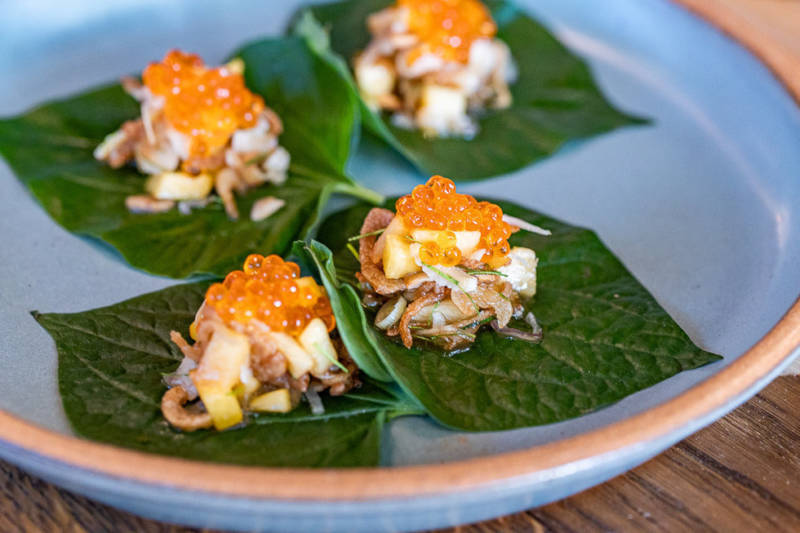
First Taste: Kin Khao sister restaurant Nari bursts with flavor and sophistication
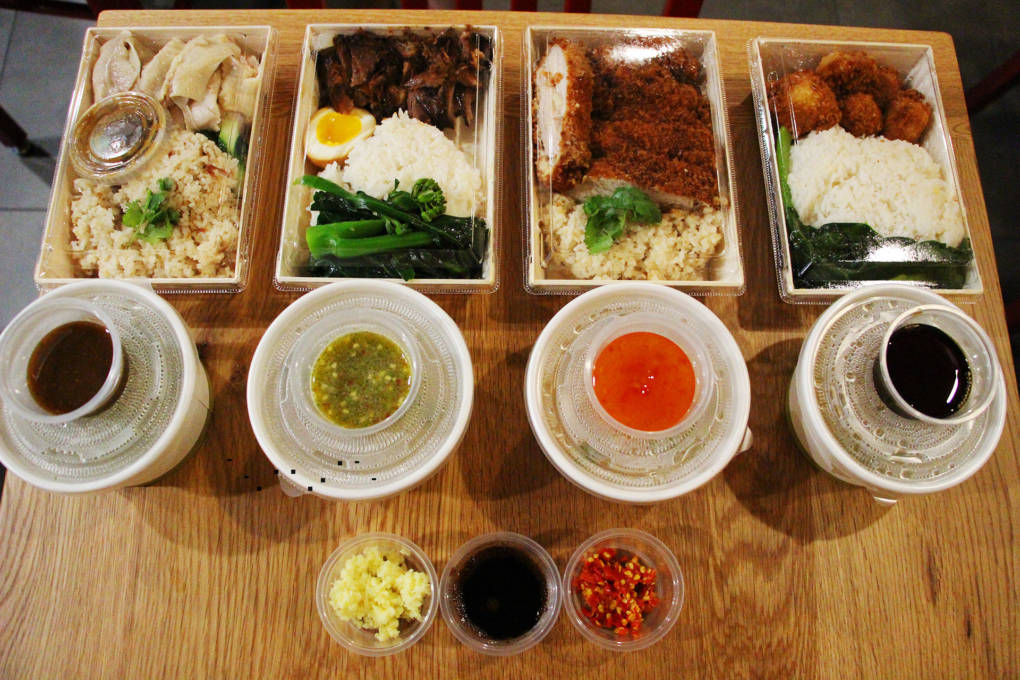
Preview: Chick’n Rice Khao Mun Gai in Berkeley Offers Tasty Thai-Style Street Food
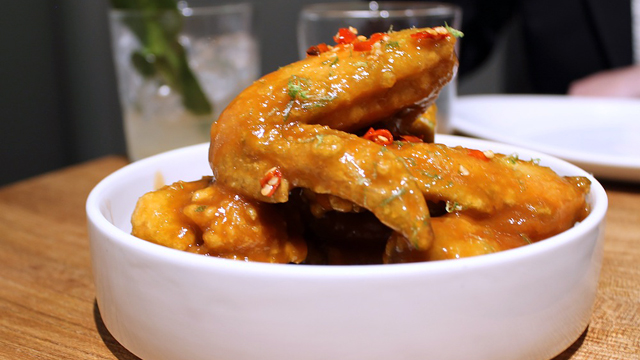
Tamarind Hall: Thai Street Food in North Beach
Bay Area Bites Guide to 5 Popular Thai Restaurants South of San Francisco
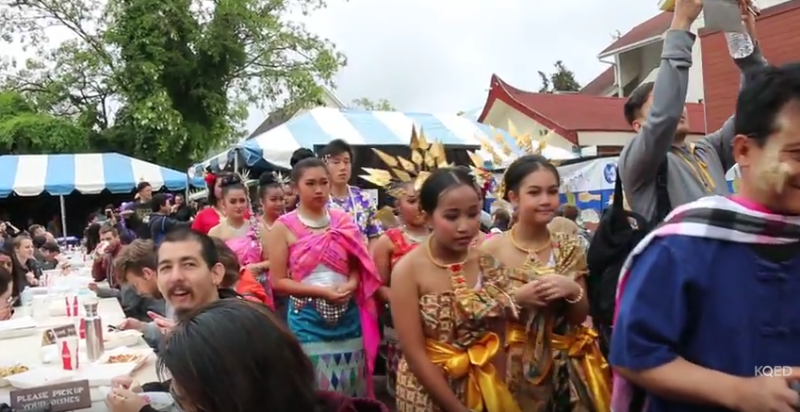
Wat Mongkolratanaram: Berkeley’s Thai Temple Celebrates the New Year
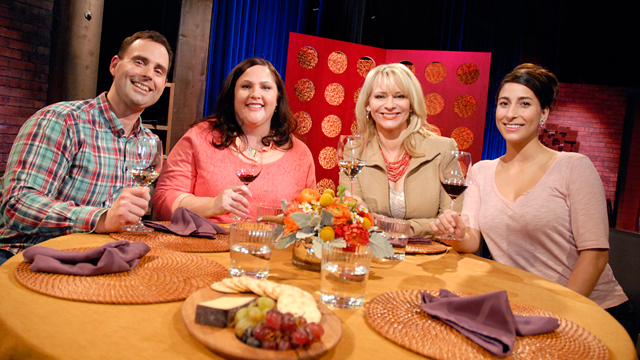
Watch Check, Please! Bay Area review: Lanna Thai, 20 Spot, Chalet Ticino
Kin Khao: Pim Techamuanvivit's fun, authentic Thai restaurant shows promise
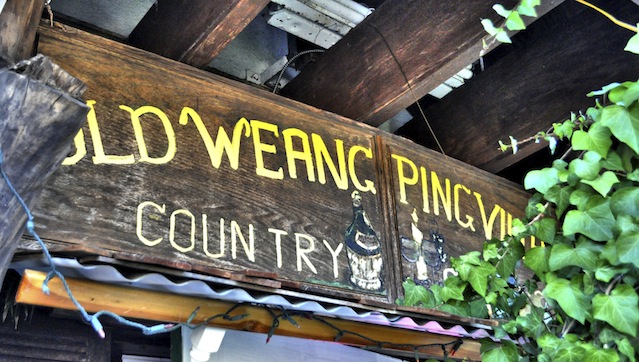
Old Weang Ping Village: Not a Business, a Sanctuary.
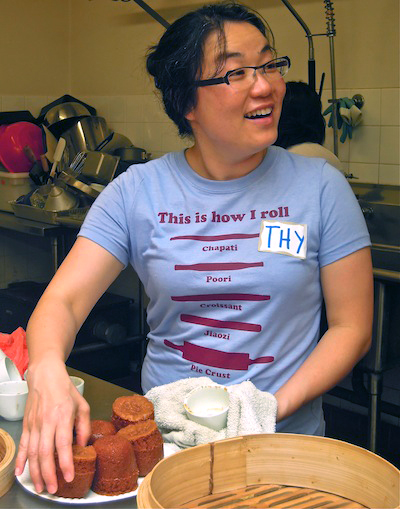
Thy Tran’s Asian-Themed Classes Empower Cooks on Both Sides of Bay
Sponsored
window.__IS_SSR__=true
window.__INITIAL_STATE__={"attachmentsReducer":{"audio_0":{"type":"attachments","id":"audio_0","imgSizes":{"kqedFullSize":{"file":"https://ww2.kqed.org/news/wp-content/themes/KQED-unified/img/audio_bgs/background0.jpg"}}},"audio_1":{"type":"attachments","id":"audio_1","imgSizes":{"kqedFullSize":{"file":"https://ww2.kqed.org/news/wp-content/themes/KQED-unified/img/audio_bgs/background1.jpg"}}},"audio_2":{"type":"attachments","id":"audio_2","imgSizes":{"kqedFullSize":{"file":"https://ww2.kqed.org/news/wp-content/themes/KQED-unified/img/audio_bgs/background2.jpg"}}},"audio_3":{"type":"attachments","id":"audio_3","imgSizes":{"kqedFullSize":{"file":"https://ww2.kqed.org/news/wp-content/themes/KQED-unified/img/audio_bgs/background3.jpg"}}},"audio_4":{"type":"attachments","id":"audio_4","imgSizes":{"kqedFullSize":{"file":"https://ww2.kqed.org/news/wp-content/themes/KQED-unified/img/audio_bgs/background4.jpg"}}},"placeholder":{"type":"attachments","id":"placeholder","imgSizes":{"thumbnail":{"file":"https://ww2.kqed.org/wp-content/uploads/sites/10/2018/01/GettyImages-896326950-160x96.jpg","width":160,"height":96,"mimeType":"image/jpeg"},"medium":{"file":"https://ww2.kqed.org/wp-content/uploads/sites/10/2018/01/GettyImages-896326950-800x478.jpg","width":800,"height":478,"mimeType":"image/jpeg"},"large":{"file":"https://ww2.kqed.org/wp-content/uploads/sites/10/2018/01/GettyImages-896326950-1020x610.jpg","width":1020,"height":610,"mimeType":"image/jpeg"},"fd-lrg":{"file":"https://ww2.kqed.org/wp-content/uploads/sites/10/2018/01/GettyImages-896326950-1920x1148.jpg","width":1920,"height":1148,"mimeType":"image/jpeg"},"fd-med":{"file":"https://ww2.kqed.org/wp-content/uploads/sites/10/2018/01/GettyImages-896326950-1180x705.jpg","width":1180,"height":705,"mimeType":"image/jpeg"},"fd-sm":{"file":"https://ww2.kqed.org/wp-content/uploads/sites/10/2018/01/GettyImages-896326950-960x574.jpg","width":960,"height":574,"mimeType":"image/jpeg"},"post-thumbnail":{"file":"https://ww2.kqed.org/wp-content/uploads/sites/10/2018/01/GettyImages-896326950-672x372.jpg","width":672,"height":372,"mimeType":"image/jpeg"},"twentyfourteen-full-width":{"file":"https://ww2.kqed.org/wp-content/uploads/sites/10/2018/01/GettyImages-896326950-1038x576.jpg","width":1038,"height":576,"mimeType":"image/jpeg"},"xxsmall":{"file":"https://ww2.kqed.org/wp-content/uploads/sites/10/2018/01/GettyImages-896326950-240x143.jpg","width":240,"height":143,"mimeType":"image/jpeg"},"xsmall":{"file":"https://ww2.kqed.org/wp-content/uploads/sites/10/2018/01/GettyImages-896326950-375x224.jpg","width":375,"height":224,"mimeType":"image/jpeg"},"small":{"file":"https://ww2.kqed.org/wp-content/uploads/sites/10/2018/01/GettyImages-896326950-520x311.jpg","width":520,"height":311,"mimeType":"image/jpeg"},"xlarge":{"file":"https://ww2.kqed.org/wp-content/uploads/sites/10/2018/01/GettyImages-896326950-1180x705.jpg","width":1180,"height":705,"mimeType":"image/jpeg"},"full-width":{"file":"https://ww2.kqed.org/wp-content/uploads/sites/10/2018/01/GettyImages-896326950-1920x1148.jpg","width":1920,"height":1148,"mimeType":"image/jpeg"},"guest-author-32":{"file":"https://ww2.kqed.org/wp-content/uploads/sites/10/2018/01/GettyImages-896326950-32x32.jpg","width":32,"height":32,"mimeType":"image/jpeg"},"guest-author-50":{"file":"https://ww2.kqed.org/wp-content/uploads/sites/10/2018/01/GettyImages-896326950-50x50.jpg","width":50,"height":50,"mimeType":"image/jpeg"},"guest-author-64":{"file":"https://ww2.kqed.org/wp-content/uploads/sites/10/2018/01/GettyImages-896326950-64x64.jpg","width":64,"height":64,"mimeType":"image/jpeg"},"guest-author-96":{"file":"https://ww2.kqed.org/wp-content/uploads/sites/10/2018/01/GettyImages-896326950-96x96.jpg","width":96,"height":96,"mimeType":"image/jpeg"},"guest-author-128":{"file":"https://ww2.kqed.org/wp-content/uploads/sites/10/2018/01/GettyImages-896326950-128x128.jpg","width":128,"height":128,"mimeType":"image/jpeg"},"detail":{"file":"https://ww2.kqed.org/wp-content/uploads/sites/10/2018/01/GettyImages-896326950-150x150.jpg","width":150,"height":150,"mimeType":"image/jpeg"},"kqedFullSize":{"file":"https://ww2.kqed.org/wp-content/uploads/sites/10/2018/01/GettyImages-896326950-e1514998105161.jpg","width":1920,"height":1148}}},"bayareabites_134954":{"type":"attachments","id":"bayareabites_134954","meta":{"index":"attachments_1591205162","site":"bayareabites","id":"134954","found":true},"title":"nari-feat-betelnut-leaves-trout","publishDate":1570212754,"status":"inherit","parent":134952,"modified":1570212800,"caption":"Begin dinner at Nari with a pop: These betelnut leaves topped with salty cured trout roe burst with flavor in one bite. ","credit":"Sarah Chorey","description":"Betelnut leaves topped with salty cured trout roe.","imgSizes":{"thumbnail":{"file":"https://ww2.kqed.org/app/uploads/sites/24/2019/10/nari-feat-betelnut-leaves-trout-160x107.jpg","width":160,"height":107,"mimeType":"image/jpeg"},"medium":{"file":"https://ww2.kqed.org/app/uploads/sites/24/2019/10/nari-feat-betelnut-leaves-trout-800x533.jpg","width":800,"height":533,"mimeType":"image/jpeg"},"medium_large":{"file":"https://ww2.kqed.org/app/uploads/sites/24/2019/10/nari-feat-betelnut-leaves-trout-768x512.jpg","width":768,"height":512,"mimeType":"image/jpeg"},"post-thumbnail":{"file":"https://ww2.kqed.org/app/uploads/sites/24/2019/10/nari-feat-betelnut-leaves-trout-672x372.jpg","width":672,"height":372,"mimeType":"image/jpeg"},"twentyfourteen-full-width":{"file":"https://ww2.kqed.org/app/uploads/sites/24/2019/10/nari-feat-betelnut-leaves-trout-980x576.jpg","width":980,"height":576,"mimeType":"image/jpeg"},"kqedFullSize":{"file":"https://ww2.kqed.org/app/uploads/sites/24/2019/10/nari-feat-betelnut-leaves-trout.jpg","width":980,"height":653}},"fetchFailed":false,"isLoading":false},"bayareabites_120452":{"type":"attachments","id":"bayareabites_120452","meta":{"index":"attachments_1591205162","site":"bayareabites","id":"120452","found":true},"title":"IMG_6209-new","publishDate":1504790006,"status":"inherit","parent":0,"modified":1504810565,"caption":"All items on the Chick’n Rice menu","credit":"Wendy Goodfriend","description":null,"imgSizes":{"thumbnail":{"file":"https://ww2.kqed.org/app/uploads/sites/24/2017/09/IMG_6209-new-160x107.jpg","width":160,"height":107,"mimeType":"image/jpeg"},"medium":{"file":"https://ww2.kqed.org/app/uploads/sites/24/2017/09/IMG_6209-new-800x533.jpg","width":800,"height":533,"mimeType":"image/jpeg"},"medium_large":{"file":"https://ww2.kqed.org/app/uploads/sites/24/2017/09/IMG_6209-new-768x512.jpg","width":768,"height":512,"mimeType":"image/jpeg"},"large":{"file":"https://ww2.kqed.org/app/uploads/sites/24/2017/09/IMG_6209-new-1020x680.jpg","width":1020,"height":680,"mimeType":"image/jpeg"},"fd-lrg":{"file":"https://ww2.kqed.org/app/uploads/sites/24/2017/09/IMG_6209-new-1920x1280.jpg","width":1920,"height":1280,"mimeType":"image/jpeg"},"fd-med":{"file":"https://ww2.kqed.org/app/uploads/sites/24/2017/09/IMG_6209-new-1180x787.jpg","width":1180,"height":787,"mimeType":"image/jpeg"},"fd-sm":{"file":"https://ww2.kqed.org/app/uploads/sites/24/2017/09/IMG_6209-new-960x640.jpg","width":960,"height":640,"mimeType":"image/jpeg"},"post-thumbnail":{"file":"https://ww2.kqed.org/app/uploads/sites/24/2017/09/IMG_6209-new-672x372.jpg","width":672,"height":372,"mimeType":"image/jpeg"},"twentyfourteen-full-width":{"file":"https://ww2.kqed.org/app/uploads/sites/24/2017/09/IMG_6209-new-1038x576.jpg","width":1038,"height":576,"mimeType":"image/jpeg"},"xxsmall":{"file":"https://ww2.kqed.org/app/uploads/sites/24/2017/09/IMG_6209-new-240x160.jpg","width":240,"height":160,"mimeType":"image/jpeg"},"xsmall":{"file":"https://ww2.kqed.org/app/uploads/sites/24/2017/09/IMG_6209-new-375x250.jpg","width":375,"height":250,"mimeType":"image/jpeg"},"small":{"file":"https://ww2.kqed.org/app/uploads/sites/24/2017/09/IMG_6209-new-520x347.jpg","width":520,"height":347,"mimeType":"image/jpeg"},"xlarge":{"file":"https://ww2.kqed.org/app/uploads/sites/24/2017/09/IMG_6209-new-1180x787.jpg","width":1180,"height":787,"mimeType":"image/jpeg"},"full-width":{"file":"https://ww2.kqed.org/app/uploads/sites/24/2017/09/IMG_6209-new-1920x1280.jpg","width":1920,"height":1280,"mimeType":"image/jpeg"},"guest-author-32":{"file":"https://ww2.kqed.org/app/uploads/sites/24/2017/09/IMG_6209-new-32x32.jpg","width":32,"height":32,"mimeType":"image/jpeg"},"guest-author-50":{"file":"https://ww2.kqed.org/app/uploads/sites/24/2017/09/IMG_6209-new-50x50.jpg","width":50,"height":50,"mimeType":"image/jpeg"},"guest-author-64":{"file":"https://ww2.kqed.org/app/uploads/sites/24/2017/09/IMG_6209-new-64x64.jpg","width":64,"height":64,"mimeType":"image/jpeg"},"guest-author-96":{"file":"https://ww2.kqed.org/app/uploads/sites/24/2017/09/IMG_6209-new-96x96.jpg","width":96,"height":96,"mimeType":"image/jpeg"},"guest-author-128":{"file":"https://ww2.kqed.org/app/uploads/sites/24/2017/09/IMG_6209-new-128x128.jpg","width":128,"height":128,"mimeType":"image/jpeg"},"detail":{"file":"https://ww2.kqed.org/app/uploads/sites/24/2017/09/IMG_6209-new-150x150.jpg","width":150,"height":150,"mimeType":"image/jpeg"},"kqedFullSize":{"file":"https://ww2.kqed.org/app/uploads/sites/24/2017/09/IMG_6209-new.jpg","width":1920,"height":1280}},"fetchFailed":false,"isLoading":false},"bayareabites_111446":{"type":"attachments","id":"bayareabites_111446","meta":{"index":"attachments_1591205162","site":"bayareabites","id":"111446","found":true},"title":"eggs-1920","publishDate":1471304371,"status":"inherit","parent":111442,"modified":1471305380,"caption":"Fried duck eggs with chile jam and house-cured bacon.","credit":"Kim Westerman","description":"Fried duck eggs with chile jam and house-cured bacon.","imgSizes":{"thumbnail":{"file":"https://ww2.kqed.org/app/uploads/sites/24/2016/08/eggs-1920-400x300.jpg","width":400,"height":300,"mimeType":"image/jpeg"},"medium":{"file":"https://ww2.kqed.org/app/uploads/sites/24/2016/08/eggs-1920-800x600.jpg","width":800,"height":600,"mimeType":"image/jpeg"},"medium_large":{"file":"https://ww2.kqed.org/app/uploads/sites/24/2016/08/eggs-1920-768x576.jpg","width":768,"height":576,"mimeType":"image/jpeg"},"large":{"file":"https://ww2.kqed.org/app/uploads/sites/24/2016/08/eggs-1920-1440x1080.jpg","width":1440,"height":1080,"mimeType":"image/jpeg"},"fd-lrg":{"file":"https://ww2.kqed.org/app/uploads/sites/24/2016/08/eggs-1920-1920x1440.jpg","width":1920,"height":1440,"mimeType":"image/jpeg"},"fd-med":{"file":"https://ww2.kqed.org/app/uploads/sites/24/2016/08/eggs-1920-1180x885.jpg","width":1180,"height":885,"mimeType":"image/jpeg"},"fd-sm":{"file":"https://ww2.kqed.org/app/uploads/sites/24/2016/08/eggs-1920-960x720.jpg","width":960,"height":720,"mimeType":"image/jpeg"},"post-thumbnail":{"file":"https://ww2.kqed.org/app/uploads/sites/24/2016/08/eggs-1920-672x372.jpg","width":672,"height":372,"mimeType":"image/jpeg"},"twentyfourteen-full-width":{"file":"https://ww2.kqed.org/app/uploads/sites/24/2016/08/eggs-1920-1038x576.jpg","width":1038,"height":576,"mimeType":"image/jpeg"},"cat_post_thumb_sizecategory-posts-2":{"file":"https://ww2.kqed.org/app/uploads/sites/24/2016/08/eggs-1920-150x150.jpg","width":150,"height":150,"mimeType":"image/jpeg"},"guest-author-32":{"file":"https://ww2.kqed.org/app/uploads/sites/24/2016/08/eggs-1920-32x32.jpg","width":32,"height":32,"mimeType":"image/jpeg"},"guest-author-50":{"file":"https://ww2.kqed.org/app/uploads/sites/24/2016/08/eggs-1920-50x50.jpg","width":50,"height":50,"mimeType":"image/jpeg"},"guest-author-64":{"file":"https://ww2.kqed.org/app/uploads/sites/24/2016/08/eggs-1920-64x64.jpg","width":64,"height":64,"mimeType":"image/jpeg"},"guest-author-96":{"file":"https://ww2.kqed.org/app/uploads/sites/24/2016/08/eggs-1920-96x96.jpg","width":96,"height":96,"mimeType":"image/jpeg"},"guest-author-128":{"file":"https://ww2.kqed.org/app/uploads/sites/24/2016/08/eggs-1920-128x128.jpg","width":128,"height":128,"mimeType":"image/jpeg"},"detail":{"file":"https://ww2.kqed.org/app/uploads/sites/24/2016/08/eggs-1920-150x150.jpg","width":150,"height":150,"mimeType":"image/jpeg"},"kqedFullSize":{"file":"https://ww2.kqed.org/app/uploads/sites/24/2016/08/eggs-1920.jpg","width":1920,"height":1440}},"fetchFailed":false,"isLoading":false},"bayareabites_111207":{"type":"attachments","id":"bayareabites_111207","meta":{"index":"attachments_1591205162","site":"bayareabites","id":"111207","found":true},"title":"SweetBasilFreshRolls","publishDate":1470180427,"status":"inherit","parent":111190,"modified":1470180740,"caption":"Fresh spring rolls with a sweet and spicy peanut sauce.","credit":"Jeff Cianci","description":null,"imgSizes":{"thumbnail":{"file":"https://ww2.kqed.org/app/uploads/sites/24/2016/08/SweetBasilFreshRolls-400x300.jpg","width":400,"height":300,"mimeType":"image/jpeg"},"medium":{"file":"https://ww2.kqed.org/app/uploads/sites/24/2016/08/SweetBasilFreshRolls-800x600.jpg","width":800,"height":600,"mimeType":"image/jpeg"},"medium_large":{"file":"https://ww2.kqed.org/app/uploads/sites/24/2016/08/SweetBasilFreshRolls-768x576.jpg","width":768,"height":576,"mimeType":"image/jpeg"},"large":{"file":"https://ww2.kqed.org/app/uploads/sites/24/2016/08/SweetBasilFreshRolls-1440x1080.jpg","width":1440,"height":1080,"mimeType":"image/jpeg"},"fd-lrg":{"file":"https://ww2.kqed.org/app/uploads/sites/24/2016/08/SweetBasilFreshRolls-1920x1440.jpg","width":1920,"height":1440,"mimeType":"image/jpeg"},"fd-med":{"file":"https://ww2.kqed.org/app/uploads/sites/24/2016/08/SweetBasilFreshRolls-1180x885.jpg","width":1180,"height":885,"mimeType":"image/jpeg"},"fd-sm":{"file":"https://ww2.kqed.org/app/uploads/sites/24/2016/08/SweetBasilFreshRolls-960x720.jpg","width":960,"height":720,"mimeType":"image/jpeg"},"post-thumbnail":{"file":"https://ww2.kqed.org/app/uploads/sites/24/2016/08/SweetBasilFreshRolls-672x372.jpg","width":672,"height":372,"mimeType":"image/jpeg"},"twentyfourteen-full-width":{"file":"https://ww2.kqed.org/app/uploads/sites/24/2016/08/SweetBasilFreshRolls-1038x576.jpg","width":1038,"height":576,"mimeType":"image/jpeg"},"cat_post_thumb_sizecategory-posts-2":{"file":"https://ww2.kqed.org/app/uploads/sites/24/2016/08/SweetBasilFreshRolls-150x150.jpg","width":150,"height":150,"mimeType":"image/jpeg"},"guest-author-32":{"file":"https://ww2.kqed.org/app/uploads/sites/24/2016/08/SweetBasilFreshRolls-32x32.jpg","width":32,"height":32,"mimeType":"image/jpeg"},"guest-author-50":{"file":"https://ww2.kqed.org/app/uploads/sites/24/2016/08/SweetBasilFreshRolls-50x50.jpg","width":50,"height":50,"mimeType":"image/jpeg"},"guest-author-64":{"file":"https://ww2.kqed.org/app/uploads/sites/24/2016/08/SweetBasilFreshRolls-64x64.jpg","width":64,"height":64,"mimeType":"image/jpeg"},"guest-author-96":{"file":"https://ww2.kqed.org/app/uploads/sites/24/2016/08/SweetBasilFreshRolls-96x96.jpg","width":96,"height":96,"mimeType":"image/jpeg"},"guest-author-128":{"file":"https://ww2.kqed.org/app/uploads/sites/24/2016/08/SweetBasilFreshRolls-128x128.jpg","width":128,"height":128,"mimeType":"image/jpeg"},"detail":{"file":"https://ww2.kqed.org/app/uploads/sites/24/2016/08/SweetBasilFreshRolls-150x150.jpg","width":150,"height":150,"mimeType":"image/jpeg"},"kqedFullSize":{"file":"https://ww2.kqed.org/app/uploads/sites/24/2016/08/SweetBasilFreshRolls.jpg","width":1920,"height":1440}},"fetchFailed":false,"isLoading":false},"bayareabites_108911":{"type":"attachments","id":"bayareabites_108911","meta":{"index":"attachments_1591205162","site":"bayareabites","id":"108911","found":true},"title":"Screen Shot 2016-04-23 at 9.34.03 AM","publishDate":1461429465,"status":"inherit","parent":108531,"modified":1461429634,"caption":"Congregants of Wat Mongkolratanaram begin the Songkran celebration with a processional leading to the performance area.","credit":"Kim Westerman","description":null,"imgSizes":{"thumbnail":{"file":"https://ww2.kqed.org/app/uploads/sites/24/2016/04/Screen-Shot-2016-04-23-at-9.34.03-AM-400x206.png","width":400,"height":206,"mimeType":"image/png"},"medium":{"file":"https://ww2.kqed.org/app/uploads/sites/24/2016/04/Screen-Shot-2016-04-23-at-9.34.03-AM-800x412.png","width":800,"height":412,"mimeType":"image/png"},"medium_large":{"file":"https://ww2.kqed.org/app/uploads/sites/24/2016/04/Screen-Shot-2016-04-23-at-9.34.03-AM-768x395.png","width":768,"height":395,"mimeType":"image/png"},"post-thumbnail":{"file":"https://ww2.kqed.org/app/uploads/sites/24/2016/04/Screen-Shot-2016-04-23-at-9.34.03-AM-672x372.png","width":672,"height":372,"mimeType":"image/png"},"guest-author-32":{"file":"https://ww2.kqed.org/app/uploads/sites/24/2016/04/Screen-Shot-2016-04-23-at-9.34.03-AM-32x32.png","width":32,"height":32,"mimeType":"image/png"},"guest-author-64":{"file":"https://ww2.kqed.org/app/uploads/sites/24/2016/04/Screen-Shot-2016-04-23-at-9.34.03-AM-64x64.png","width":64,"height":64,"mimeType":"image/png"},"guest-author-96":{"file":"https://ww2.kqed.org/app/uploads/sites/24/2016/04/Screen-Shot-2016-04-23-at-9.34.03-AM-96x96.png","width":96,"height":96,"mimeType":"image/png"},"guest-author-128":{"file":"https://ww2.kqed.org/app/uploads/sites/24/2016/04/Screen-Shot-2016-04-23-at-9.34.03-AM-128x128.png","width":128,"height":128,"mimeType":"image/png"},"cat_post_thumb_sizecategory-posts-2":{"file":"https://ww2.kqed.org/app/uploads/sites/24/2016/04/Screen-Shot-2016-04-23-at-9.34.03-AM-150x150.png","width":150,"height":150,"mimeType":"image/png"},"detail":{"file":"https://ww2.kqed.org/app/uploads/sites/24/2016/04/Screen-Shot-2016-04-23-at-9.34.03-AM-75x75.png","width":75,"height":75,"mimeType":"image/png"},"kqedFullSize":{"file":"https://ww2.kqed.org/app/uploads/sites/24/2016/04/Screen-Shot-2016-04-23-at-9.34.03-AM.png","width":849,"height":437}},"fetchFailed":false,"isLoading":false},"bayareabites_82852":{"type":"attachments","id":"bayareabites_82852","meta":{"index":"attachments_1591205162","site":"bayareabites","id":"82852","found":true},"title":"cp910-group640x360","publishDate":1401920459,"status":"inherit","parent":82829,"modified":1401920459,"caption":null,"credit":null,"description":null,"imgSizes":{"kqedFullSize":{"file":"https://ww2.kqed.org/app/uploads/sites/24/2014/06/cp910-group640x360.jpg","width":640,"height":360}},"fetchFailed":false,"isLoading":false},"bayareabites_81296":{"type":"attachments","id":"bayareabites_81296","meta":{"index":"attachments_1591205162","site":"bayareabites","id":"81296","found":true},"title":"wings640x360","publishDate":1399085976,"status":"inherit","parent":81166,"modified":1399085976,"caption":null,"credit":null,"description":null,"imgSizes":{"kqedFullSize":{"file":"https://ww2.kqed.org/app/uploads/sites/24/2014/05/wings640x360.jpg","width":640,"height":360}},"fetchFailed":false,"isLoading":false},"bayareabites_67352":{"type":"attachments","id":"bayareabites_67352","meta":{"index":"attachments_1591205162","site":"bayareabites","id":"67352","found":true},"title":"Old_Weang_Ping_FeaturedImage","publishDate":1375414989,"status":"inherit","parent":0,"modified":1375414989,"caption":null,"credit":null,"description":null,"imgSizes":{"kqedFullSize":{"file":"https://ww2.kqed.org/app/uploads/sites/24/2013/08/Old_Weang_Ping_FeaturedImage.jpg","width":639,"height":362}},"fetchFailed":false,"isLoading":false},"bayareabites_44931":{"type":"attachments","id":"bayareabites_44931","meta":{"index":"attachments_1591205162","site":"bayareabites","id":"44931","found":true},"title":"Thy Tran","publishDate":1340389938,"status":"inherit","parent":44631,"modified":1340389938,"caption":null,"credit":null,"description":null,"imgSizes":{"kqedFullSize":{"file":"https://ww2.kqed.org/app/uploads/sites/24/2012/06/Thy-Tran1.jpg","width":400,"height":509}},"fetchFailed":false,"isLoading":false}},"audioPlayerReducer":{"postId":"stream_live"},"authorsReducer":{"wendy-goodfriend":{"type":"authors","id":"5014","meta":{"index":"authors_1591205172","id":"5014","found":true},"name":"Wendy Goodfriend","firstName":"Wendy","lastName":"Goodfriend","slug":"wendy-goodfriend","email":"wendy@wendygoodfriend.com","display_author_email":false,"staff_mastheads":[],"title":null,"bio":"I was the Senior Digital Producer for KQED Food up until July, 2018. Since 2001, I designed, produced, managed and contributed to mostly food-related websites and blogs for KQED including: KQED.org; KQED Food; Bay Area Bites; Check, Please! Bay Area; Taste This; Celebrity Chefs; seven of Jacques Pepin's TV series websites; and Joanne Weir's Cooking in the City. I initiated the majority of KQED Food's social media feeds and maintained them up until 2017. As far as content creation, photography is my passion and I also shoot video and write stories. My photos have been used in articles for KQED Food, News, Arts, and Science as well as for promotional purposes in print and online. Professional education and training includes: clinical psychology, photography, commercial cooking, web design, information architecture and UX.","avatar":"https://secure.gravatar.com/avatar/dfba64372339cc34cf17e446e6f18fa8?s=600&d=blank&r=g","twitter":null,"facebook":"bayareabites","instagram":null,"linkedin":"wendygoodfriend","sites":[{"site":"jpepinheart","roles":["administrator"]},{"site":"about","roles":["editor"]},{"site":"bayareabites","roles":["subscriber"]},{"site":"science","roles":["administrator"]},{"site":"checkplease","roles":["subscriber"]},{"site":"food","roles":["author"]},{"site":"essentialpepin","roles":["administrator"]}],"headData":{"title":"Wendy Goodfriend | KQED","description":null,"ogImgSrc":"https://secure.gravatar.com/avatar/dfba64372339cc34cf17e446e6f18fa8?s=600&d=blank&r=g","twImgSrc":"https://secure.gravatar.com/avatar/dfba64372339cc34cf17e446e6f18fa8?s=600&d=blank&r=g"},"isLoading":false,"link":"/author/wendy-goodfriend"},"annamindess":{"type":"authors","id":"5283","meta":{"index":"authors_1591205172","id":"5283","found":true},"name":"Anna Mindess","firstName":"Anna","lastName":"Mindess","slug":"annamindess","email":"amindess@aol.com","display_author_email":false,"staff_mastheads":[],"title":null,"bio":"My passion is exploring the connections between food, travel and culture. I am a regular contributor to AFAR, Edible East Bay Magazine, Oakland Magazine, Berkeleyside's NOSH and other publications. I usually take a route that's slightly off the beaten path, like \u003ca href=\"http://edibleeastbay.com/online-magazine/fall-harvest-2017/fun-with-food-insults/\">collecting food-related insults\u003c/a> around the world or \u003ca href=\"https://www.afar.com/magazine/what-i-learned-hawking-sweet-potatoes-with-a-street-vendor-in-taiwan?email=amindess%40aol.com&utm_source=Sailthru&utm_medium=email&utm_campaign=Doctors%20Without%20Borders&utm_term=Daily%20Wander%20Newsletter\">volunteering with a Sweet Potato Mama\u003c/a> (street food seller) in Tapei.\r\n\r\nCulture is the thread that ties together my several careers. I also work as a sign language interpreter, educator and author. My study of Deaf culture has taken me around the world, where I am always on a quest to find Deaf-owned restaurants. I love making connections between my different worlds, for example in this AFAR story where I share \u003ca href=\"https://www.afar.com/magazine/tips-from-a-sign-language-interpreter-for-overcoming-language-barriers\">tips for communicating across cultures\u003c/a> that I learned from the real experts, Deaf people. Or this \u003ca href=\"http://edibleeastbay.com/online-magazine/fall-harvest-2017/deaf-chefs-compete/\">profile of a Deaf chef and culinary arts instructor\u003c/a> at the California School for the Deaf.\r\n\r\nTo see my visual/edible take on the world, follow me on Instagram: \u003ca href=\"https://www.instagram.com/annamindess/\">annamindess. \u003c/a>\r\n\r\nFor more of my stories: visit Contently \u003ca href=\"http://annamindess.contently.com\">annamindess.contently.com\u003c/a>","avatar":"https://secure.gravatar.com/avatar/5c0a68a51a07d3996f57634ef0cddaa6?s=600&d=blank&r=g","twitter":null,"facebook":null,"instagram":null,"linkedin":null,"sites":[{"site":"arts","roles":["author"]},{"site":"bayareabites","roles":["author"]},{"site":"food","roles":["contributor"]}],"headData":{"title":"Anna Mindess | KQED","description":null,"ogImgSrc":"https://secure.gravatar.com/avatar/5c0a68a51a07d3996f57634ef0cddaa6?s=600&d=blank&r=g","twImgSrc":"https://secure.gravatar.com/avatar/5c0a68a51a07d3996f57634ef0cddaa6?s=600&d=blank&r=g"},"isLoading":false,"link":"/author/annamindess"},"laurenbenichou":{"type":"authors","id":"5466","meta":{"index":"authors_1591205172","id":"5466","found":true},"name":"Lo Benichou","firstName":"Lo","lastName":"Benichou","slug":"laurenbenichou","email":"laurenbenichou@gmail.com","display_author_email":false,"staff_mastheads":[],"title":null,"bio":"My name is Lo. I am a multimedia journalist and interactive web developer. I currently work at WIRED. I like data and stories. I like coding. I tried to do both at once. I occasionally write about food because food is life.","avatar":"https://secure.gravatar.com/avatar/20ac556dc8ae6a2669bcc745dd30b24d?s=600&d=blank&r=g","twitter":"LoBenichou","facebook":null,"instagram":null,"linkedin":null,"sites":[{"site":"bayareabites","roles":["contributor"]},{"site":"food","roles":["contributor"]}],"headData":{"title":"Lo Benichou | KQED","description":null,"ogImgSrc":"https://secure.gravatar.com/avatar/20ac556dc8ae6a2669bcc745dd30b24d?s=600&d=blank&r=g","twImgSrc":"https://secure.gravatar.com/avatar/20ac556dc8ae6a2669bcc745dd30b24d?s=600&d=blank&r=g"},"isLoading":false,"link":"/author/laurenbenichou"},"katewilliams":{"type":"authors","id":"5485","meta":{"index":"authors_1591205172","id":"5485","found":true},"name":"Kate Williams","firstName":"Kate","lastName":"Williams","slug":"katewilliams","email":"williaka@gmail.com","display_author_email":false,"staff_mastheads":[],"title":null,"bio":"Kate Williams grew up outside of Atlanta, where twenty-pound baskets of peaches were an end-of-summer tradition. After spending time in Boston developing recipes for America's Test Kitchen and pretending to be a New Englander, she moved to sunny Berkeley. Here she works as a personal chef and food writer, covering topics ranging from taco trucks to modernist cookbooks. In addition to KQED's Bay Area Bites, Kate's work appears on Serious Eats, Berkeleyside NOSH, The Oxford American, America's Test Kitchen cookbooks, and Food52.","avatar":"https://secure.gravatar.com/avatar/25623fe56e181fe8b6ee92fd0ea077de?s=600&d=blank&r=g","twitter":"KateHWilliams","facebook":null,"instagram":null,"linkedin":null,"sites":[{"site":"bayareabites","roles":["contributor"]},{"site":"food","roles":["contributor"]}],"headData":{"title":"Kate Williams | KQED","description":null,"ogImgSrc":"https://secure.gravatar.com/avatar/25623fe56e181fe8b6ee92fd0ea077de?s=600&d=blank&r=g","twImgSrc":"https://secure.gravatar.com/avatar/25623fe56e181fe8b6ee92fd0ea077de?s=600&d=blank&r=g"},"isLoading":false,"link":"/author/katewilliams"},"alexandrawall":{"type":"authors","id":"5567","meta":{"index":"authors_1591205172","id":"5567","found":true},"name":"Alix Wall","firstName":"Alix","lastName":"Wall","slug":"alexandrawall","email":"alixwall@sbcglobal.net","display_author_email":false,"staff_mastheads":[],"title":null,"bio":"Alix Wall appeared in her hometown paper in Riverside, California as “Chef of the Week” when she was 15 years old, and in high school, she founded “The Bon Appetit Club.” After working as a journalist for many years, Alix became a certified natural foods chef from Bauman College in Berkeley. While she cooks part-time healthy, organic meals for busy families, she is also a contributing editor of j. weekly, the Bay Area’s Jewish newspaper, in which she has a monthly food column. Her food writing can also be found on Berkeleyside’s NOSH and in Edible East Bay. In addition to food, she loves writing about how couples met and fell in love, which she does for The San Francisco Chronicle’s Style section and j. weekly. In 2016, she founded The Illuminoshi: The Not-So-Secret Society of Bay Area Jewish Food Professionals. She is also writer/producer for a documentary-in-progress called \u003ca href=\"https://www.lonelychildmovie.com/\">The Lonely Child\u003c/a>. Follow Alix on Twitter \u003ca href=\"https://twitter.com/WallAlix\">@WallAlix\u003c/a>.","avatar":"https://secure.gravatar.com/avatar/421a27f26a185be932f8d567b499b1f1?s=600&d=blank&r=g","twitter":null,"facebook":null,"instagram":null,"linkedin":null,"sites":[{"site":"bayareabites","roles":["contributor"]},{"site":"food","roles":["contributor"]}],"headData":{"title":"Alix Wall | KQED","description":null,"ogImgSrc":"https://secure.gravatar.com/avatar/421a27f26a185be932f8d567b499b1f1?s=600&d=blank&r=g","twImgSrc":"https://secure.gravatar.com/avatar/421a27f26a185be932f8d567b499b1f1?s=600&d=blank&r=g"},"isLoading":false,"link":"/author/alexandrawall"},"kimwesterman":{"type":"authors","id":"5575","meta":{"index":"authors_1591205172","id":"5575","found":true},"name":"Kim Westerman","firstName":"Kim","lastName":"Westerman","slug":"kimwesterman","email":"kim.westerman@gmail.com","display_author_email":false,"staff_mastheads":[],"title":null,"bio":"Kim Westerman has been writing about food and wine for most of her adult life. Originally from North Carolina, she moved to Berkeley in 2006 to pursue the California dream, which, it turns out, is all it’s cracked up to be. She’s a farmers' market junkie, a lover of all things tomato, and Champagne-obsessed. She loves to cook with her kids, eight and three, and she makes frequent pilgrimages to International Boulevard in search of her next favorite Mexican dish. She spends an inordinate amount of time thinking about food and wine pairing, often starting with the wine and working backwards when planning menus. She is a Level I Sommelier and a Licensed Q-Grader. Her work has appeared in KQED's Bay Area Bites, Forbes.com, the New York Times, the San Francisco Chronicle, Tasting Table, Fodor’s Travel Guides, and lots of other publications. You can follow Kim on Twitter and Instagram @throughtraveler.","avatar":"https://secure.gravatar.com/avatar/2eb7f890ab19ead33f77fd8554ac4c39?s=600&d=blank&r=g","twitter":null,"facebook":null,"instagram":null,"linkedin":null,"sites":[{"site":"bayareabites","roles":["contributor"]},{"site":"food","roles":["contributor"]}],"headData":{"title":"Kim Westerman | KQED","description":null,"ogImgSrc":"https://secure.gravatar.com/avatar/2eb7f890ab19ead33f77fd8554ac4c39?s=600&d=blank&r=g","twImgSrc":"https://secure.gravatar.com/avatar/2eb7f890ab19ead33f77fd8554ac4c39?s=600&d=blank&r=g"},"isLoading":false,"link":"/author/kimwesterman"},"jeffcianci":{"type":"authors","id":"5580","meta":{"index":"authors_1591205172","id":"5580","found":true},"name":"Jeff Cianci","firstName":"Jeff","lastName":"Cianci","slug":"jeffcianci","email":"jcianci610@gmail.com","display_author_email":false,"staff_mastheads":[],"title":null,"bio":"Jeff Cianci is a freelance food writer based in San Jose. While studying journalism in college, Jeff’s curiosity landed him at a busy California bistro where he experienced a crash course in culinary training over two summer breaks, learning on the job with a very patient chef as his mentor. Around the same time, Jeff married his journalism degree to his appreciation for the restaurant world and determined food writing would be his career path. In his work Jeff most enjoys profiling chefs and learning their background, finding a new favorite restaurant and sharing his experiences with others through his reviews and social media. In addition to KQED's Bay Area Bites, Jeff writes restaurant reviews for Metro Silicon Valley and new restaurant guides for Eater National. Follow Jeff on Twitter \u003ca href=\"https://twitter.com/Cheffreycianci\" target=_blank\">@Cheffreycianci\u003c/a>.","avatar":"https://secure.gravatar.com/avatar/153d8e37568b0912b46a21bfecf27feb?s=600&d=blank&r=g","twitter":null,"facebook":null,"instagram":null,"linkedin":"jeffcianci","sites":[{"site":"bayareabites","roles":["contributor"]},{"site":"food","roles":["contributor"]}],"headData":{"title":"Jeff Cianci | KQED","description":null,"ogImgSrc":"https://secure.gravatar.com/avatar/153d8e37568b0912b46a21bfecf27feb?s=600&d=blank&r=g","twImgSrc":"https://secure.gravatar.com/avatar/153d8e37568b0912b46a21bfecf27feb?s=600&d=blank&r=g"},"isLoading":false,"link":"/author/jeffcianci"},"7x7bayarea":{"type":"authors","id":"11590","meta":{"index":"authors_1591205172","id":"11590","found":true},"name":"7x7 Bay Area","firstName":"7x7 Bay Area","lastName":null,"slug":"7x7bayarea","email":"edit@7x7.com","display_author_email":false,"staff_mastheads":[],"title":null,"bio":"Founded in 2001, 7x7 is an independently owned and totally authentic guide to life in the San Francisco Bay Area. Our 24/7 online resource serves up stories on the best food and drink, arts and culture, style and design, hikes and wellness, regional travel, and more. Visit us anytime at \u003ca href=\"https://www.7x7.com/\">7x7.com\u003c/a>, and also find us on \u003ca href=\"https://www.facebook.com/7x7/\">Facebook\u003c/a>, \u003ca href=\"https://www.instagram.com/7x7bayarea/\">Instagram\u003c/a>, and \u003ca href=\"https://twitter.com/7x7\">Twitter\u003c/a>. Plus, subscribe to our podcast, \u003ca href=\"https://itunes.apple.com/us/podcast/7x7-bay-area-people-will-talk/id1444756628\">\"People Will Talk,\"\u003c/a> for insightful interviews with Bay Area luminaries; you'll find it on iTunes and wherever you get your podcasts.","avatar":"https://secure.gravatar.com/avatar/1084e0a66476f14f77589475632b61a7?s=600&d=blank&r=g","twitter":null,"facebook":null,"instagram":null,"linkedin":null,"sites":[{"site":"bayareabites","roles":["author"]}],"headData":{"title":"7x7 Bay Area | KQED","description":null,"ogImgSrc":"https://secure.gravatar.com/avatar/1084e0a66476f14f77589475632b61a7?s=600&d=blank&r=g","twImgSrc":"https://secure.gravatar.com/avatar/1084e0a66476f14f77589475632b61a7?s=600&d=blank&r=g"},"isLoading":false,"link":"/author/7x7bayarea"}},"breakingNewsReducer":{},"campaignFinanceReducer":{},"firebase":{"requesting":{},"requested":{},"timestamps":{},"data":{},"ordered":{},"auth":{"isLoaded":false,"isEmpty":true},"authError":null,"profile":{"isLoaded":false,"isEmpty":true},"listeners":{"byId":{},"allIds":[]},"isInitializing":false,"errors":[]},"navBarReducer":{"navBarId":"arts","fullView":true,"showPlayer":false},"navMenuReducer":{"menus":[{"key":"menu1","items":[{"name":"News","link":"/","type":"title"},{"name":"Politics","link":"/politics"},{"name":"Science","link":"/science"},{"name":"Education","link":"/educationnews"},{"name":"Housing","link":"/housing"},{"name":"Immigration","link":"/immigration"},{"name":"Criminal Justice","link":"/criminaljustice"},{"name":"Silicon Valley","link":"/siliconvalley"},{"name":"Forum","link":"/forum"},{"name":"The California Report","link":"/californiareport"}]},{"key":"menu2","items":[{"name":"Arts & Culture","link":"/arts","type":"title"},{"name":"Critics’ Picks","link":"/thedolist"},{"name":"Cultural Commentary","link":"/artscommentary"},{"name":"Food & Drink","link":"/food"},{"name":"Bay Area Hip-Hop","link":"/bayareahiphop"},{"name":"Rebel Girls","link":"/rebelgirls"},{"name":"Arts Video","link":"/artsvideos"}]},{"key":"menu3","items":[{"name":"Podcasts","link":"/podcasts","type":"title"},{"name":"Bay Curious","link":"/podcasts/baycurious"},{"name":"Rightnowish","link":"/podcasts/rightnowish"},{"name":"The Bay","link":"/podcasts/thebay"},{"name":"On Our Watch","link":"/podcasts/onourwatch"},{"name":"Mindshift","link":"/podcasts/mindshift"},{"name":"Consider This","link":"/podcasts/considerthis"},{"name":"Political Breakdown","link":"/podcasts/politicalbreakdown"}]},{"key":"menu4","items":[{"name":"Live Radio","link":"/radio","type":"title"},{"name":"TV","link":"/tv","type":"title"},{"name":"Events","link":"/events","type":"title"},{"name":"For Educators","link":"/education","type":"title"},{"name":"Support KQED","link":"/support","type":"title"},{"name":"About","link":"/about","type":"title"},{"name":"Help Center","link":"https://kqed-helpcenter.kqed.org/s","type":"title"}]}]},"pagesReducer":{},"postsReducer":{"stream_live":{"type":"live","id":"stream_live","audioUrl":"https://streams.kqed.org/kqedradio","title":"Live Stream","excerpt":"Live Stream information currently unavailable.","link":"/radio","featImg":"","label":{"name":"KQED Live","link":"/"}},"stream_kqedNewscast":{"type":"posts","id":"stream_kqedNewscast","audioUrl":"https://www.kqed.org/.stream/anon/radio/RDnews/newscast.mp3?_=1","title":"KQED Newscast","featImg":"","label":{"name":"88.5 FM","link":"/"}},"bayareabites_134952":{"type":"posts","id":"bayareabites_134952","meta":{"index":"posts_1591205157","site":"bayareabites","id":"134952","score":null,"sort":[1570213648000]},"guestAuthors":[],"slug":"first-taste-kin-khao-sister-restaurant-nari-bursts-with-flavor-and-sophistication","title":"First Taste: Kin Khao sister restaurant Nari bursts with flavor and sophistication","publishDate":1570213648,"format":"standard","headTitle":"Bay Area Bites | KQED Food","labelTerm":{"site":"bayareabites"},"content":"\u003cp>[aside postID='checkplease_18170,bayareabites_81166' label='More on Pim from KQED']\u003cbr>\n\u003ci>by Sarah Chorey\u003c/i>\u003c/p>\n\u003cp>The words \"let's go for Thai\" are typically happy-making. Who doesn't love to dip into a platter of peanut-y pad Thai noodles or a rich, steaming bowl of red curry?\u003c/p>\n\u003cp>But while those dishes have a place in our hearts for cozy date nights or take-out at home, what we think of as \"traditional\" Thai food often isn't authentic at all (and more than likely it isn't fresh). Fortunately, we have Pim Techamuanvivit, a Michelin-class Thai chef, right here in our backyard. Through her first restaurant, the runaway success that is Kin Khao, and now her followup project, Nari, she's showing us the way to the true flavors of Thailand.\u003c/p>\n\u003cp>When \u003ca href=\"http://www.kinkhao.com/\">Kin Khao\u003c/a> opened in 2014 on the ground floor of downtown's Parc 55 Hotel (a place rarely visited by locals), the whole city was basically blown away. The restaurant served made-from-scratch, intense, and stunningly delicious Thai food in a funky, low-budget space and, in 2016, earned a Michelin star, which it has retained every year since.\u003c/p>\n\u003cp>But hold on, because Nari is not Kin Khao 2.0.\u003c/p>\n\u003cfigure id=\"attachment_134955\" class=\"wp-caption aligncenter\" style=\"max-width: 980px\">\u003cimg src=\"https://ww2.kqed.org/bayareabites/wp-content/uploads/sites/24/2019/10/nari-interior-greenery.jpg\" alt=\"Greenery sprouts up throughout the space, lending an urban oasis feel.\" width=\"980\" height=\"735\" class=\"size-full wp-image-134955\" srcset=\"https://ww2.kqed.org/app/uploads/sites/24/2019/10/nari-interior-greenery.jpg 980w, https://ww2.kqed.org/app/uploads/sites/24/2019/10/nari-interior-greenery-160x120.jpg 160w, https://ww2.kqed.org/app/uploads/sites/24/2019/10/nari-interior-greenery-800x600.jpg 800w, https://ww2.kqed.org/app/uploads/sites/24/2019/10/nari-interior-greenery-768x576.jpg 768w\" sizes=\"(max-width: 980px) 100vw, 980px\">\u003cfigcaption class=\"wp-caption-text\">Greenery sprouts up throughout the space, lending an urban oasis feel. \u003ccite>(Anson Smart)\u003c/cite>\u003c/figcaption>\u003c/figure>\n\u003cp>The scope of the place is your first clue. Inside Japantown's \u003ca href=\"https://www.7x7.com/first-taste-hotel-kabuki-japantown-2533728836.html\">Hotel Kabuki\u003c/a>, the dining room can seat up to 100 guests for dinner plus another 40 in the upstairs bar and lounge.\u003c/p>\n\u003cp>[ad fullwidth]\u003c/p>\n\u003cp>The interior is also decidedly more polished than Kin Khao's. Kitted out by \u003ca href=\"https://www.lundbergdesign.com/\">Lundberg Design\u003c/a>, the aesthetes behind the interiors at Mourad and Quince, Nari is modern and elegant—an open two-story space with floor-to-ceiling windows that shed light on lush ferns and trendy monstera growing up between half-circle booths upholstered in exquisite floral fabric. In Lundberg fashion, there is thoughtful woodwork and sculptural fixtures.\u003c/p>\n\u003cp>Design-wise, you might call Nari the brighter yang to Kin Khao's darker yin, and while Techamuanvivit has always helmed Kin Khao, there are strong feminine wiles at work here. The restaurant's name itself means \"women\" in Thai, and the operation is run by a powerhouse team of femmes. \u003c/p>\n\u003cp>Techamuanvivit, who developed the menu, is joined by chef de cuisine Meghan Clark (also of Kin Khao) and bar star Megan Daniel-Hoang (formerly of Whitechapel). The cocktails here are named after women characters in Thai novels; there is also an extensive wine list.\u003c/p>\n\u003cfigure id=\"attachment_134956\" class=\"wp-caption aligncenter\" style=\"max-width: 980px\">\u003cimg src=\"https://ww2.kqed.org/bayareabites/wp-content/uploads/sites/24/2019/10/nari-cocktails.jpg\" alt=\"Left to right: The Manora, the Rojana and the Montheo\" width=\"980\" height=\"653\" class=\"size-full wp-image-134956\" srcset=\"https://ww2.kqed.org/app/uploads/sites/24/2019/10/nari-cocktails.jpg 980w, https://ww2.kqed.org/app/uploads/sites/24/2019/10/nari-cocktails-160x107.jpg 160w, https://ww2.kqed.org/app/uploads/sites/24/2019/10/nari-cocktails-800x533.jpg 800w, https://ww2.kqed.org/app/uploads/sites/24/2019/10/nari-cocktails-768x512.jpg 768w\" sizes=\"(max-width: 980px) 100vw, 980px\">\u003cfigcaption class=\"wp-caption-text\">Left to right: The Manora, the Rojana and the Montheo \u003ccite>(Sarah Chorey)\u003c/cite>\u003c/figcaption>\u003c/figure>\n\u003cp>Nari's cocktail program is reason enough to visit. The Manora is similar to a Thai version of a pisco sour, made with egg whites, pineapple sherbert, yellow chartreuse falernum, and lime. The Rojana brings together a light rum, Smith & Cross rum, lime cordial, pineapple gum, orgeat, and Thai bitters for am elevated play on a daiquiri. The Montheo is pleasantly tart thanks to a bit of sea gin made with seaweed, sherry, chareau, vanilla, absinthe, cucumber, muddled basil, and a hint of lemon.\u003c/p>\n\u003cp>Once you've settled in, it's time to forget about pad Thai and open your taste buds to a new dimension. Salty meets sweet in most of the dishes here, and funky-intense flavors come through thanks to ingredients such as shrimp paste and fish sauce. The best approach: Order with an open mind and no expectations.\u003c/p>\n\u003cfigure id=\"attachment_134957\" class=\"wp-caption aligncenter\" style=\"max-width: 980px\">\u003cimg src=\"https://ww2.kqed.org/bayareabites/wp-content/uploads/sites/24/2019/10/nari-kapi-plah.jpg\" alt=\"The kapi plah is an intensely flavorful chilled dip is made with gulf prawns and shrimp paste relish and comes with a spread of crisp radishes, beans, and sliced pear.\" width=\"980\" height=\"653\" class=\"size-full wp-image-134957\" srcset=\"https://ww2.kqed.org/app/uploads/sites/24/2019/10/nari-kapi-plah.jpg 980w, https://ww2.kqed.org/app/uploads/sites/24/2019/10/nari-kapi-plah-160x107.jpg 160w, https://ww2.kqed.org/app/uploads/sites/24/2019/10/nari-kapi-plah-800x533.jpg 800w, https://ww2.kqed.org/app/uploads/sites/24/2019/10/nari-kapi-plah-768x512.jpg 768w\" sizes=\"(max-width: 980px) 100vw, 980px\">\u003cfigcaption class=\"wp-caption-text\">The kapi plah is an intensely flavorful chilled dip is made with gulf prawns and shrimp paste relish and comes with a spread of crisp radishes, beans, and sliced pear. \u003ccite>(Sarah Chorey)\u003c/cite>\u003c/figcaption>\u003c/figure>\n\u003cp>Start with the punchy miang, an intensely green betel leaf topped with stone fruit, trout roe, and fish sauce caramel. Sample the yum tawai, a platter of haricots vert with bits of chicken, peanuts, sesame, and coconut and tamarind sauce. Indulge in a pretty spicy version of gaeng bumbai aubergine, a curry of eggplant with hints of lemon basil and topped with crunchy fried shallots.\u003c/p>\n\u003cfigure id=\"attachment_134958\" class=\"wp-caption aligncenter\" style=\"max-width: 980px\">\u003cimg src=\"https://ww2.kqed.org/bayareabites/wp-content/uploads/sites/24/2019/10/gaeng-rawaeng-nari.jpg\" alt=\"Nari's gaeng rawaeng\" width=\"980\" height=\"653\" class=\"size-full wp-image-134958\" srcset=\"https://ww2.kqed.org/app/uploads/sites/24/2019/10/gaeng-rawaeng-nari.jpg 980w, https://ww2.kqed.org/app/uploads/sites/24/2019/10/gaeng-rawaeng-nari-160x107.jpg 160w, https://ww2.kqed.org/app/uploads/sites/24/2019/10/gaeng-rawaeng-nari-800x533.jpg 800w, https://ww2.kqed.org/app/uploads/sites/24/2019/10/gaeng-rawaeng-nari-768x512.jpg 768w\" sizes=\"(max-width: 980px) 100vw, 980px\">\u003cfigcaption class=\"wp-caption-text\">Nari's gaeng rawaeng \u003ccite>(Sarah Chorey)\u003c/cite>\u003c/figcaption>\u003c/figure>\n\u003cp>The gaeng rawaeng is a menu standout. The whole cornish game hen is cooked in a rich rawaeng curry sauce, and served with buttery roti bread perfect for dipping up all the juices. Like next-level comfort food, it's guaranteed to become a Nari signature dish.\u003c/p>\n\u003cp>The desserts, like the cocktails, shine. Saved room for the babin coconut cake, a thick, pudding-like slice of coconut, basil, and ginger, topped with toasted coconut flakes. We did also love the makrut lime tart with bright strawberries, creaming creamy citrus filling, and crispy rice puffs rolled in powdered sugar.\u003c/p>\n\u003cfigure id=\"attachment_134959\" class=\"wp-caption aligncenter\" style=\"max-width: 980px\">\u003cimg src=\"https://ww2.kqed.org/bayareabites/wp-content/uploads/sites/24/2019/10/makrut-lime-tart-nari.jpg\" alt=\"\" width=\"980\" height=\"653\" class=\"size-full wp-image-134959\" srcset=\"https://ww2.kqed.org/app/uploads/sites/24/2019/10/makrut-lime-tart-nari.jpg 980w, https://ww2.kqed.org/app/uploads/sites/24/2019/10/makrut-lime-tart-nari-160x107.jpg 160w, https://ww2.kqed.org/app/uploads/sites/24/2019/10/makrut-lime-tart-nari-800x533.jpg 800w, https://ww2.kqed.org/app/uploads/sites/24/2019/10/makrut-lime-tart-nari-768x512.jpg 768w\" sizes=\"(max-width: 980px) 100vw, 980px\">\u003cfigcaption class=\"wp-caption-text\">Nari's makrut lime tart \u003ccite>(Sarah Chorey)\u003c/cite>\u003c/figcaption>\u003c/figure>\n\u003cp>\u003c/p>\n\u003cp>\u003ci>This article originally appeared on \u003ca href=\"https://www.7x7.com/first-taste-nari-thai-restaurant-sf-2640493649.html\">7x7 Bay Area\u003c/a>.\u003c/i>\u003c/p>\n\n","blocks":[],"excerpt":"Through Pim Techamuanvivit's first restaurant, Kin Khao, and now her followup project, Nari, she's showing us the way to the true flavors of Thailand.","status":"publish","parent":0,"modified":1570213648,"stats":{"hasAudio":false,"hasVideo":false,"hasChartOrMap":false,"iframeSrcs":[],"hasGoogleForm":false,"hasGallery":false,"hasHearkenModule":false,"hasPolis":false,"paragraphCount":17,"wordCount":789},"headData":{"title":"First Taste: Kin Khao sister restaurant Nari bursts with flavor and sophistication | KQED","description":"Through Pim Techamuanvivit's first restaurant, Kin Khao, and now her followup project, Nari, she's showing us the way to the true flavors of Thailand.","ogTitle":"","ogDescription":"","ogImgId":"","twTitle":"","twDescription":"","twImgId":""},"disqusIdentifier":"134952 https://ww2.kqed.org/bayareabites/?p=134952","disqusUrl":"https://ww2.kqed.org/bayareabites/2019/10/04/first-taste-kin-khao-sister-restaurant-nari-bursts-with-flavor-and-sophistication/","disqusTitle":"First Taste: Kin Khao sister restaurant Nari bursts with flavor and sophistication","path":"/bayareabites/134952/first-taste-kin-khao-sister-restaurant-nari-bursts-with-flavor-and-sophistication","audioTrackLength":null,"parsedContent":[{"type":"contentString","content":"\u003cdiv class=\"post-body\">\u003cp>\u003cp>\u003c/p>\u003c/div>","attributes":{"named":{},"numeric":[]}},{"type":"component","content":"","name":"aside","attributes":{"named":{"postid":"checkplease_18170,bayareabites_81166","label":"More on Pim from KQED "},"numeric":[]}},{"type":"contentString","content":"\u003cdiv class=\"post-body\">\u003cp>\u003cbr>\n\u003ci>by Sarah Chorey\u003c/i>\u003c/p>\n\u003cp>The words \"let's go for Thai\" are typically happy-making. Who doesn't love to dip into a platter of peanut-y pad Thai noodles or a rich, steaming bowl of red curry?\u003c/p>\n\u003cp>But while those dishes have a place in our hearts for cozy date nights or take-out at home, what we think of as \"traditional\" Thai food often isn't authentic at all (and more than likely it isn't fresh). Fortunately, we have Pim Techamuanvivit, a Michelin-class Thai chef, right here in our backyard. Through her first restaurant, the runaway success that is Kin Khao, and now her followup project, Nari, she's showing us the way to the true flavors of Thailand.\u003c/p>\n\u003cp>When \u003ca href=\"http://www.kinkhao.com/\">Kin Khao\u003c/a> opened in 2014 on the ground floor of downtown's Parc 55 Hotel (a place rarely visited by locals), the whole city was basically blown away. The restaurant served made-from-scratch, intense, and stunningly delicious Thai food in a funky, low-budget space and, in 2016, earned a Michelin star, which it has retained every year since.\u003c/p>\n\u003cp>But hold on, because Nari is not Kin Khao 2.0.\u003c/p>\n\u003cfigure id=\"attachment_134955\" class=\"wp-caption aligncenter\" style=\"max-width: 980px\">\u003cimg src=\"https://ww2.kqed.org/bayareabites/wp-content/uploads/sites/24/2019/10/nari-interior-greenery.jpg\" alt=\"Greenery sprouts up throughout the space, lending an urban oasis feel.\" width=\"980\" height=\"735\" class=\"size-full wp-image-134955\" srcset=\"https://ww2.kqed.org/app/uploads/sites/24/2019/10/nari-interior-greenery.jpg 980w, https://ww2.kqed.org/app/uploads/sites/24/2019/10/nari-interior-greenery-160x120.jpg 160w, https://ww2.kqed.org/app/uploads/sites/24/2019/10/nari-interior-greenery-800x600.jpg 800w, https://ww2.kqed.org/app/uploads/sites/24/2019/10/nari-interior-greenery-768x576.jpg 768w\" sizes=\"(max-width: 980px) 100vw, 980px\">\u003cfigcaption class=\"wp-caption-text\">Greenery sprouts up throughout the space, lending an urban oasis feel. \u003ccite>(Anson Smart)\u003c/cite>\u003c/figcaption>\u003c/figure>\n\u003cp>The scope of the place is your first clue. Inside Japantown's \u003ca href=\"https://www.7x7.com/first-taste-hotel-kabuki-japantown-2533728836.html\">Hotel Kabuki\u003c/a>, the dining room can seat up to 100 guests for dinner plus another 40 in the upstairs bar and lounge.\u003c/p>\n\u003cp>\u003c/p>\u003c/div>","attributes":{"named":{},"numeric":[]}},{"type":"component","content":"","name":"ad","attributes":{"named":{"label":"fullwidth"},"numeric":["fullwidth"]}},{"type":"contentString","content":"\u003cdiv class=\"post-body\">\u003cp>\u003c/p>\n\u003cp>The interior is also decidedly more polished than Kin Khao's. Kitted out by \u003ca href=\"https://www.lundbergdesign.com/\">Lundberg Design\u003c/a>, the aesthetes behind the interiors at Mourad and Quince, Nari is modern and elegant—an open two-story space with floor-to-ceiling windows that shed light on lush ferns and trendy monstera growing up between half-circle booths upholstered in exquisite floral fabric. In Lundberg fashion, there is thoughtful woodwork and sculptural fixtures.\u003c/p>\n\u003cp>Design-wise, you might call Nari the brighter yang to Kin Khao's darker yin, and while Techamuanvivit has always helmed Kin Khao, there are strong feminine wiles at work here. The restaurant's name itself means \"women\" in Thai, and the operation is run by a powerhouse team of femmes. \u003c/p>\n\u003cp>Techamuanvivit, who developed the menu, is joined by chef de cuisine Meghan Clark (also of Kin Khao) and bar star Megan Daniel-Hoang (formerly of Whitechapel). The cocktails here are named after women characters in Thai novels; there is also an extensive wine list.\u003c/p>\n\u003cfigure id=\"attachment_134956\" class=\"wp-caption aligncenter\" style=\"max-width: 980px\">\u003cimg src=\"https://ww2.kqed.org/bayareabites/wp-content/uploads/sites/24/2019/10/nari-cocktails.jpg\" alt=\"Left to right: The Manora, the Rojana and the Montheo\" width=\"980\" height=\"653\" class=\"size-full wp-image-134956\" srcset=\"https://ww2.kqed.org/app/uploads/sites/24/2019/10/nari-cocktails.jpg 980w, https://ww2.kqed.org/app/uploads/sites/24/2019/10/nari-cocktails-160x107.jpg 160w, https://ww2.kqed.org/app/uploads/sites/24/2019/10/nari-cocktails-800x533.jpg 800w, https://ww2.kqed.org/app/uploads/sites/24/2019/10/nari-cocktails-768x512.jpg 768w\" sizes=\"(max-width: 980px) 100vw, 980px\">\u003cfigcaption class=\"wp-caption-text\">Left to right: The Manora, the Rojana and the Montheo \u003ccite>(Sarah Chorey)\u003c/cite>\u003c/figcaption>\u003c/figure>\n\u003cp>Nari's cocktail program is reason enough to visit. The Manora is similar to a Thai version of a pisco sour, made with egg whites, pineapple sherbert, yellow chartreuse falernum, and lime. The Rojana brings together a light rum, Smith & Cross rum, lime cordial, pineapple gum, orgeat, and Thai bitters for am elevated play on a daiquiri. The Montheo is pleasantly tart thanks to a bit of sea gin made with seaweed, sherry, chareau, vanilla, absinthe, cucumber, muddled basil, and a hint of lemon.\u003c/p>\n\u003cp>Once you've settled in, it's time to forget about pad Thai and open your taste buds to a new dimension. Salty meets sweet in most of the dishes here, and funky-intense flavors come through thanks to ingredients such as shrimp paste and fish sauce. The best approach: Order with an open mind and no expectations.\u003c/p>\n\u003cfigure id=\"attachment_134957\" class=\"wp-caption aligncenter\" style=\"max-width: 980px\">\u003cimg src=\"https://ww2.kqed.org/bayareabites/wp-content/uploads/sites/24/2019/10/nari-kapi-plah.jpg\" alt=\"The kapi plah is an intensely flavorful chilled dip is made with gulf prawns and shrimp paste relish and comes with a spread of crisp radishes, beans, and sliced pear.\" width=\"980\" height=\"653\" class=\"size-full wp-image-134957\" srcset=\"https://ww2.kqed.org/app/uploads/sites/24/2019/10/nari-kapi-plah.jpg 980w, https://ww2.kqed.org/app/uploads/sites/24/2019/10/nari-kapi-plah-160x107.jpg 160w, https://ww2.kqed.org/app/uploads/sites/24/2019/10/nari-kapi-plah-800x533.jpg 800w, https://ww2.kqed.org/app/uploads/sites/24/2019/10/nari-kapi-plah-768x512.jpg 768w\" sizes=\"(max-width: 980px) 100vw, 980px\">\u003cfigcaption class=\"wp-caption-text\">The kapi plah is an intensely flavorful chilled dip is made with gulf prawns and shrimp paste relish and comes with a spread of crisp radishes, beans, and sliced pear. \u003ccite>(Sarah Chorey)\u003c/cite>\u003c/figcaption>\u003c/figure>\n\u003cp>Start with the punchy miang, an intensely green betel leaf topped with stone fruit, trout roe, and fish sauce caramel. Sample the yum tawai, a platter of haricots vert with bits of chicken, peanuts, sesame, and coconut and tamarind sauce. Indulge in a pretty spicy version of gaeng bumbai aubergine, a curry of eggplant with hints of lemon basil and topped with crunchy fried shallots.\u003c/p>\n\u003cfigure id=\"attachment_134958\" class=\"wp-caption aligncenter\" style=\"max-width: 980px\">\u003cimg src=\"https://ww2.kqed.org/bayareabites/wp-content/uploads/sites/24/2019/10/gaeng-rawaeng-nari.jpg\" alt=\"Nari's gaeng rawaeng\" width=\"980\" height=\"653\" class=\"size-full wp-image-134958\" srcset=\"https://ww2.kqed.org/app/uploads/sites/24/2019/10/gaeng-rawaeng-nari.jpg 980w, https://ww2.kqed.org/app/uploads/sites/24/2019/10/gaeng-rawaeng-nari-160x107.jpg 160w, https://ww2.kqed.org/app/uploads/sites/24/2019/10/gaeng-rawaeng-nari-800x533.jpg 800w, https://ww2.kqed.org/app/uploads/sites/24/2019/10/gaeng-rawaeng-nari-768x512.jpg 768w\" sizes=\"(max-width: 980px) 100vw, 980px\">\u003cfigcaption class=\"wp-caption-text\">Nari's gaeng rawaeng \u003ccite>(Sarah Chorey)\u003c/cite>\u003c/figcaption>\u003c/figure>\n\u003cp>The gaeng rawaeng is a menu standout. The whole cornish game hen is cooked in a rich rawaeng curry sauce, and served with buttery roti bread perfect for dipping up all the juices. Like next-level comfort food, it's guaranteed to become a Nari signature dish.\u003c/p>\n\u003cp>The desserts, like the cocktails, shine. Saved room for the babin coconut cake, a thick, pudding-like slice of coconut, basil, and ginger, topped with toasted coconut flakes. We did also love the makrut lime tart with bright strawberries, creaming creamy citrus filling, and crispy rice puffs rolled in powdered sugar.\u003c/p>\n\u003cfigure id=\"attachment_134959\" class=\"wp-caption aligncenter\" style=\"max-width: 980px\">\u003cimg src=\"https://ww2.kqed.org/bayareabites/wp-content/uploads/sites/24/2019/10/makrut-lime-tart-nari.jpg\" alt=\"\" width=\"980\" height=\"653\" class=\"size-full wp-image-134959\" srcset=\"https://ww2.kqed.org/app/uploads/sites/24/2019/10/makrut-lime-tart-nari.jpg 980w, https://ww2.kqed.org/app/uploads/sites/24/2019/10/makrut-lime-tart-nari-160x107.jpg 160w, https://ww2.kqed.org/app/uploads/sites/24/2019/10/makrut-lime-tart-nari-800x533.jpg 800w, https://ww2.kqed.org/app/uploads/sites/24/2019/10/makrut-lime-tart-nari-768x512.jpg 768w\" sizes=\"(max-width: 980px) 100vw, 980px\">\u003cfigcaption class=\"wp-caption-text\">Nari's makrut lime tart \u003ccite>(Sarah Chorey)\u003c/cite>\u003c/figcaption>\u003c/figure>\n\u003cp>\u003c/p>\n\u003cp>\u003ci>This article originally appeared on \u003ca href=\"https://www.7x7.com/first-taste-nari-thai-restaurant-sf-2640493649.html\">7x7 Bay Area\u003c/a>.\u003c/i>\u003c/p>\n\n\u003c/div>\u003c/p>","attributes":{"named":{},"numeric":[]}}],"link":"/bayareabites/134952/first-taste-kin-khao-sister-restaurant-nari-bursts-with-flavor-and-sophistication","authors":["11590"],"categories":["bayareabites_2998","bayareabites_1653","bayareabites_2090","bayareabites_1807","bayareabites_10","bayareabites_90","bayareabites_61"],"tags":["bayareabites_3328","bayareabites_13312","bayareabites_16474","bayareabites_3743","bayareabites_14745","bayareabites_1190"],"featImg":"bayareabites_134954","label":"bayareabites"},"bayareabites_120471":{"type":"posts","id":"bayareabites_120471","meta":{"index":"posts_1591205157","site":"bayareabites","id":"120471","score":null,"sort":[1504819476000]},"guestAuthors":[],"slug":"preview-chickn-rice-khao-mun-gai-in-berkeley-offers-tasty-thai-style-street-food","title":"Preview: Chick’n Rice Khao Mun Gai in Berkeley Offers Tasty Thai-Style Street Food","publishDate":1504819476,"format":"image","headTitle":"Bay Area Bites | KQED Food","labelTerm":{},"content":"\u003cp>Perhaps it was only a matter of time before a restaurant came to fruition as a result of two obsessed diners following each other on Instagram. Well, of course that’s only part of the story, but it’s how Jason Wang connected with Chavayos (Bob) Rattakul, a Thai partner, to bring \u003ca href=\"http://www.eatchicknrice.com/\">Chick’n Rice\u003c/a> to downtown Berkeley.\u003c/p>\n\u003cp>Opening tomorrow, the fast-casual concept is built around one particular dish, Khao Mun Gai, in which a piece of poached chicken is offered with rice cooked in chicken broth and other aromatics, with a punchy sauce of soy, garlic, ginger and chilies. The dish also comes with a bowl of chicken soup.\u003c/p>\n\u003cfigure id=\"attachment_120453\" class=\"wp-caption aligncenter\" style=\"max-width: 1920px\">\u003cimg class=\"size-full wp-image-120453\" src=\"https://ww2.kqed.org/bayareabites/wp-content/uploads/sites/24/2017/09/IMG_6210-new.jpg\" alt=\"KMG - Khao Mun Gai\" width=\"1920\" height=\"1280\" srcset=\"https://ww2.kqed.org/app/uploads/sites/24/2017/09/IMG_6210-new.jpg 1920w, https://ww2.kqed.org/app/uploads/sites/24/2017/09/IMG_6210-new-160x107.jpg 160w, https://ww2.kqed.org/app/uploads/sites/24/2017/09/IMG_6210-new-800x533.jpg 800w, https://ww2.kqed.org/app/uploads/sites/24/2017/09/IMG_6210-new-768x512.jpg 768w, https://ww2.kqed.org/app/uploads/sites/24/2017/09/IMG_6210-new-1020x680.jpg 1020w, https://ww2.kqed.org/app/uploads/sites/24/2017/09/IMG_6210-new-1180x787.jpg 1180w, https://ww2.kqed.org/app/uploads/sites/24/2017/09/IMG_6210-new-960x640.jpg 960w, https://ww2.kqed.org/app/uploads/sites/24/2017/09/IMG_6210-new-240x160.jpg 240w, https://ww2.kqed.org/app/uploads/sites/24/2017/09/IMG_6210-new-375x250.jpg 375w, https://ww2.kqed.org/app/uploads/sites/24/2017/09/IMG_6210-new-520x347.jpg 520w\" sizes=\"(max-width: 1920px) 100vw, 1920px\">\u003cfigcaption class=\"wp-caption-text\">KMG - Khao Mun Gai \u003ccite>(Wendy Goodfriend)\u003c/cite>\u003c/figcaption>\u003c/figure>\n\u003cfigure id=\"attachment_120448\" class=\"wp-caption aligncenter\" style=\"max-width: 1920px\">\u003cimg class=\"size-full wp-image-120448\" src=\"https://ww2.kqed.org/bayareabites/wp-content/uploads/sites/24/2017/09/IMG_6168-new.jpg\" alt=\"Side of Chicken Broth Soup\" width=\"1920\" height=\"1280\" srcset=\"https://ww2.kqed.org/app/uploads/sites/24/2017/09/IMG_6168-new.jpg 1920w, https://ww2.kqed.org/app/uploads/sites/24/2017/09/IMG_6168-new-160x107.jpg 160w, https://ww2.kqed.org/app/uploads/sites/24/2017/09/IMG_6168-new-800x533.jpg 800w, https://ww2.kqed.org/app/uploads/sites/24/2017/09/IMG_6168-new-768x512.jpg 768w, https://ww2.kqed.org/app/uploads/sites/24/2017/09/IMG_6168-new-1020x680.jpg 1020w, https://ww2.kqed.org/app/uploads/sites/24/2017/09/IMG_6168-new-1180x787.jpg 1180w, https://ww2.kqed.org/app/uploads/sites/24/2017/09/IMG_6168-new-960x640.jpg 960w, https://ww2.kqed.org/app/uploads/sites/24/2017/09/IMG_6168-new-240x160.jpg 240w, https://ww2.kqed.org/app/uploads/sites/24/2017/09/IMG_6168-new-375x250.jpg 375w, https://ww2.kqed.org/app/uploads/sites/24/2017/09/IMG_6168-new-520x347.jpg 520w\" sizes=\"(max-width: 1920px) 100vw, 1920px\">\u003cfigcaption class=\"wp-caption-text\">Side of Chicken Broth Soup \u003ccite>(Wendy Goodfriend)\u003c/cite>\u003c/figcaption>\u003c/figure>\n\u003cp>A popular street food in Thailand, the dish has slowly been gaining popularity in the U.S., and thanks to the guys behind the Umai Hospitality Group, it will be introduced to many more people in the coming years.\u003c/p>\n\u003cp>“We’re planning a rapid expansion, maybe opening five more of these in the next three years,” John Keh told Bay Area Bites. “We’re already looking at a location in the South Bay.”\u003c/p>\n\u003cfigure id=\"attachment_120441\" class=\"wp-caption aligncenter\" style=\"max-width: 1920px\">\u003cimg class=\"size-full wp-image-120441\" src=\"https://ww2.kqed.org/bayareabites/wp-content/uploads/sites/24/2017/09/IMG_6134-new.jpg\" alt=\"John Keh at the media preview of Chick’n Rice\" width=\"1920\" height=\"1280\" srcset=\"https://ww2.kqed.org/app/uploads/sites/24/2017/09/IMG_6134-new.jpg 1920w, https://ww2.kqed.org/app/uploads/sites/24/2017/09/IMG_6134-new-160x107.jpg 160w, https://ww2.kqed.org/app/uploads/sites/24/2017/09/IMG_6134-new-800x533.jpg 800w, https://ww2.kqed.org/app/uploads/sites/24/2017/09/IMG_6134-new-768x512.jpg 768w, https://ww2.kqed.org/app/uploads/sites/24/2017/09/IMG_6134-new-1020x680.jpg 1020w, https://ww2.kqed.org/app/uploads/sites/24/2017/09/IMG_6134-new-1180x787.jpg 1180w, https://ww2.kqed.org/app/uploads/sites/24/2017/09/IMG_6134-new-960x640.jpg 960w, https://ww2.kqed.org/app/uploads/sites/24/2017/09/IMG_6134-new-240x160.jpg 240w, https://ww2.kqed.org/app/uploads/sites/24/2017/09/IMG_6134-new-375x250.jpg 375w, https://ww2.kqed.org/app/uploads/sites/24/2017/09/IMG_6134-new-520x347.jpg 520w\" sizes=\"(max-width: 1920px) 100vw, 1920px\">\u003cfigcaption class=\"wp-caption-text\">John Keh at the media preview of Chick’n Rice \u003ccite>(Wendy Goodfriend)\u003c/cite>\u003c/figcaption>\u003c/figure>\n\u003cp>Along with Wang, Keh is part of the Umai Hospitality Group; they along with two others, are all Cal graduates who founded and then sold the food delivery app \u003ca href=\"https://www.trycaviar.com/san-francisco\">Caviar\u003c/a>.\u003c/p>\n\u003cp>[ad fullwidth]\u003c/p>\n\u003cp>“We think this food is really accessible to the American palate as it’s interesting, different and healthy. And since the chicken is poached, it’s not too fatty,” said Keh.\u003c/p>\n\u003cp>The Berkeley location is on a restaurant row of sorts right near the Cal campus, at 2136 Center Street. Keh said the landlord was excited to get a Thai offering in the mix, since the street offers a wide range of international options already.\u003c/p>\n\u003cfigure id=\"attachment_120450\" class=\"wp-caption aligncenter\" style=\"max-width: 1920px\">\u003cimg class=\"size-full wp-image-120450\" src=\"https://ww2.kqed.org/bayareabites/wp-content/uploads/sites/24/2017/09/IMG_6192-new.jpg\" alt=\"The Berkeley location is on a restaurant row of sorts right near the Cal campus, at 2136 Center Street\" width=\"1920\" height=\"1280\" srcset=\"https://ww2.kqed.org/app/uploads/sites/24/2017/09/IMG_6192-new.jpg 1920w, https://ww2.kqed.org/app/uploads/sites/24/2017/09/IMG_6192-new-160x107.jpg 160w, https://ww2.kqed.org/app/uploads/sites/24/2017/09/IMG_6192-new-800x533.jpg 800w, https://ww2.kqed.org/app/uploads/sites/24/2017/09/IMG_6192-new-768x512.jpg 768w, https://ww2.kqed.org/app/uploads/sites/24/2017/09/IMG_6192-new-1020x680.jpg 1020w, https://ww2.kqed.org/app/uploads/sites/24/2017/09/IMG_6192-new-1180x787.jpg 1180w, https://ww2.kqed.org/app/uploads/sites/24/2017/09/IMG_6192-new-960x640.jpg 960w, https://ww2.kqed.org/app/uploads/sites/24/2017/09/IMG_6192-new-240x160.jpg 240w, https://ww2.kqed.org/app/uploads/sites/24/2017/09/IMG_6192-new-375x250.jpg 375w, https://ww2.kqed.org/app/uploads/sites/24/2017/09/IMG_6192-new-520x347.jpg 520w\" sizes=\"(max-width: 1920px) 100vw, 1920px\">\u003cfigcaption class=\"wp-caption-text\">The Berkeley location is on a restaurant row of sorts right near the Cal campus, at 2136 Center Street \u003ccite>(Wendy Goodfriend)\u003c/cite>\u003c/figcaption>\u003c/figure>\n\u003cfigure id=\"attachment_120446\" class=\"wp-caption aligncenter\" style=\"max-width: 1920px\">\u003cimg class=\"size-full wp-image-120446\" src=\"https://ww2.kqed.org/bayareabites/wp-content/uploads/sites/24/2017/09/IMG_6149-new.jpg\" alt=\"Chick’n Rice interior\" width=\"1920\" height=\"1280\" srcset=\"https://ww2.kqed.org/app/uploads/sites/24/2017/09/IMG_6149-new.jpg 1920w, https://ww2.kqed.org/app/uploads/sites/24/2017/09/IMG_6149-new-160x107.jpg 160w, https://ww2.kqed.org/app/uploads/sites/24/2017/09/IMG_6149-new-800x533.jpg 800w, https://ww2.kqed.org/app/uploads/sites/24/2017/09/IMG_6149-new-768x512.jpg 768w, https://ww2.kqed.org/app/uploads/sites/24/2017/09/IMG_6149-new-1020x680.jpg 1020w, https://ww2.kqed.org/app/uploads/sites/24/2017/09/IMG_6149-new-1180x787.jpg 1180w, https://ww2.kqed.org/app/uploads/sites/24/2017/09/IMG_6149-new-960x640.jpg 960w, https://ww2.kqed.org/app/uploads/sites/24/2017/09/IMG_6149-new-240x160.jpg 240w, https://ww2.kqed.org/app/uploads/sites/24/2017/09/IMG_6149-new-375x250.jpg 375w, https://ww2.kqed.org/app/uploads/sites/24/2017/09/IMG_6149-new-520x347.jpg 520w\" sizes=\"(max-width: 1920px) 100vw, 1920px\">\u003cfigcaption class=\"wp-caption-text\">Chick’n Rice interior \u003ccite>(Wendy Goodfriend)\u003c/cite>\u003c/figcaption>\u003c/figure>\n\u003cp>While one could think that it doesn’t take a lot to get such a simple dish right, she’d be wrong. Keh spent several months in Thailand with Rattakul, going from place to place, seeking out who did the most flavorful sauces; who made the most delicious rice. Rattakul then sought out their favorite recipes from these chefs, and in some cases, tasted their creations and guessed how to make them himself.\u003c/p>\n\u003cp>And because they knew they couldn’t build an entire restaurant – small as it may be – on one dish alone, they came up with three others to round out the menu.\u003c/p>\n\u003cfigure id=\"attachment_120442\" class=\"wp-caption aligncenter\" style=\"max-width: 1920px\">\u003cimg class=\"size-full wp-image-120442\" src=\"https://ww2.kqed.org/bayareabites/wp-content/uploads/sites/24/2017/09/IMG_6137-new.jpg\" alt=\"Chick’n Rice menu\" width=\"1920\" height=\"1280\" srcset=\"https://ww2.kqed.org/app/uploads/sites/24/2017/09/IMG_6137-new.jpg 1920w, https://ww2.kqed.org/app/uploads/sites/24/2017/09/IMG_6137-new-160x107.jpg 160w, https://ww2.kqed.org/app/uploads/sites/24/2017/09/IMG_6137-new-800x533.jpg 800w, https://ww2.kqed.org/app/uploads/sites/24/2017/09/IMG_6137-new-768x512.jpg 768w, https://ww2.kqed.org/app/uploads/sites/24/2017/09/IMG_6137-new-1020x680.jpg 1020w, https://ww2.kqed.org/app/uploads/sites/24/2017/09/IMG_6137-new-1180x787.jpg 1180w, https://ww2.kqed.org/app/uploads/sites/24/2017/09/IMG_6137-new-960x640.jpg 960w, https://ww2.kqed.org/app/uploads/sites/24/2017/09/IMG_6137-new-240x160.jpg 240w, https://ww2.kqed.org/app/uploads/sites/24/2017/09/IMG_6137-new-375x250.jpg 375w, https://ww2.kqed.org/app/uploads/sites/24/2017/09/IMG_6137-new-520x347.jpg 520w\" sizes=\"(max-width: 1920px) 100vw, 1920px\">\u003cfigcaption class=\"wp-caption-text\">Chick’n Rice menu \u003ccite>(Wendy Goodfriend)\u003c/cite>\u003c/figcaption>\u003c/figure>\n\u003cp>In addition to the Khao Mun Gai (known as KMG on their menu) there is Fried KMG, Braised Pork, which comes with a soy-marinated egg and Asian greens, and Fried Tofu, which also comes with Asian greens. All dishes come with rice, (the two non-chicken dishes come with plain Jasmine rice rather than the chicken rice) and soup.\u003c/p>\n\u003cfigure id=\"attachment_120520\" class=\"wp-caption aligncenter\" style=\"max-width: 1920px\">\u003cimg class=\"size-full wp-image-120520\" src=\"https://ww2.kqed.org/bayareabites/wp-content/uploads/sites/24/2017/09/IMG_6218-new1.jpg\" alt=\"Fried KMG - Khao Mun Gai Tod - with Chicken Rice\" width=\"1920\" height=\"1280\" srcset=\"https://ww2.kqed.org/app/uploads/sites/24/2017/09/IMG_6218-new1.jpg 1920w, https://ww2.kqed.org/app/uploads/sites/24/2017/09/IMG_6218-new1-160x107.jpg 160w, https://ww2.kqed.org/app/uploads/sites/24/2017/09/IMG_6218-new1-800x533.jpg 800w, https://ww2.kqed.org/app/uploads/sites/24/2017/09/IMG_6218-new1-768x512.jpg 768w, https://ww2.kqed.org/app/uploads/sites/24/2017/09/IMG_6218-new1-1020x680.jpg 1020w, https://ww2.kqed.org/app/uploads/sites/24/2017/09/IMG_6218-new1-1180x787.jpg 1180w, https://ww2.kqed.org/app/uploads/sites/24/2017/09/IMG_6218-new1-960x640.jpg 960w, https://ww2.kqed.org/app/uploads/sites/24/2017/09/IMG_6218-new1-240x160.jpg 240w, https://ww2.kqed.org/app/uploads/sites/24/2017/09/IMG_6218-new1-375x250.jpg 375w, https://ww2.kqed.org/app/uploads/sites/24/2017/09/IMG_6218-new1-520x347.jpg 520w\" sizes=\"(max-width: 1920px) 100vw, 1920px\">\u003cfigcaption class=\"wp-caption-text\">Fried KMG - Khao Mun Gai Tod - with Chicken Rice \u003ccite>(Wendy Goodfriend)\u003c/cite>\u003c/figcaption>\u003c/figure>\n\u003cfigure id=\"attachment_120456\" class=\"wp-caption aligncenter\" style=\"max-width: 1920px\">\u003cimg class=\"size-full wp-image-120456\" src=\"https://ww2.kqed.org/bayareabites/wp-content/uploads/sites/24/2017/09/IMG_6230-new.jpg\" alt=\"Braised Pork - Khao Kha Moo - with Egg & Greens with Jasmine Rice\" width=\"1920\" height=\"1280\" srcset=\"https://ww2.kqed.org/app/uploads/sites/24/2017/09/IMG_6230-new.jpg 1920w, https://ww2.kqed.org/app/uploads/sites/24/2017/09/IMG_6230-new-160x107.jpg 160w, https://ww2.kqed.org/app/uploads/sites/24/2017/09/IMG_6230-new-800x533.jpg 800w, https://ww2.kqed.org/app/uploads/sites/24/2017/09/IMG_6230-new-768x512.jpg 768w, https://ww2.kqed.org/app/uploads/sites/24/2017/09/IMG_6230-new-1020x680.jpg 1020w, https://ww2.kqed.org/app/uploads/sites/24/2017/09/IMG_6230-new-1180x787.jpg 1180w, https://ww2.kqed.org/app/uploads/sites/24/2017/09/IMG_6230-new-960x640.jpg 960w, https://ww2.kqed.org/app/uploads/sites/24/2017/09/IMG_6230-new-240x160.jpg 240w, https://ww2.kqed.org/app/uploads/sites/24/2017/09/IMG_6230-new-375x250.jpg 375w, https://ww2.kqed.org/app/uploads/sites/24/2017/09/IMG_6230-new-520x347.jpg 520w\" sizes=\"(max-width: 1920px) 100vw, 1920px\">\u003cfigcaption class=\"wp-caption-text\">Braised Pork - Khao Kha Moo - with Egg & Greens with Jasmine Rice \u003ccite>(Wendy Goodfriend)\u003c/cite>\u003c/figcaption>\u003c/figure>\n\u003cfigure id=\"attachment_120454\" class=\"wp-caption aligncenter\" style=\"max-width: 1920px\">\u003cimg class=\"size-full wp-image-120454\" src=\"https://ww2.kqed.org/bayareabites/wp-content/uploads/sites/24/2017/09/IMG_6216-new.jpg\" alt=\"Tofu - Khao Mun Tao Hoo - Greens with Jasmine Rice\" width=\"1920\" height=\"1280\" srcset=\"https://ww2.kqed.org/app/uploads/sites/24/2017/09/IMG_6216-new.jpg 1920w, https://ww2.kqed.org/app/uploads/sites/24/2017/09/IMG_6216-new-160x107.jpg 160w, https://ww2.kqed.org/app/uploads/sites/24/2017/09/IMG_6216-new-800x533.jpg 800w, https://ww2.kqed.org/app/uploads/sites/24/2017/09/IMG_6216-new-768x512.jpg 768w, https://ww2.kqed.org/app/uploads/sites/24/2017/09/IMG_6216-new-1020x680.jpg 1020w, https://ww2.kqed.org/app/uploads/sites/24/2017/09/IMG_6216-new-1180x787.jpg 1180w, https://ww2.kqed.org/app/uploads/sites/24/2017/09/IMG_6216-new-960x640.jpg 960w, https://ww2.kqed.org/app/uploads/sites/24/2017/09/IMG_6216-new-240x160.jpg 240w, https://ww2.kqed.org/app/uploads/sites/24/2017/09/IMG_6216-new-375x250.jpg 375w, https://ww2.kqed.org/app/uploads/sites/24/2017/09/IMG_6216-new-520x347.jpg 520w\" sizes=\"(max-width: 1920px) 100vw, 1920px\">\u003cfigcaption class=\"wp-caption-text\">Tofu - Khao Mun Tao Hoo - Greens with Jasmine Rice \u003ccite>(Wendy Goodfriend)\u003c/cite>\u003c/figcaption>\u003c/figure>\n\u003cp>All ingredients for the sauces are imported from Thailand, and all the meat comes from Marin Sun Farms. Vegetables are local as well.\u003c/p>\n\u003cfigure id=\"attachment_120447\" class=\"wp-caption aligncenter\" style=\"max-width: 1920px\">\u003cimg class=\"size-full wp-image-120447\" src=\"https://ww2.kqed.org/bayareabites/wp-content/uploads/sites/24/2017/09/IMG_6152-new.jpg\" alt=\"Sauces that accompany the dishes.\" width=\"1920\" height=\"1280\" srcset=\"https://ww2.kqed.org/app/uploads/sites/24/2017/09/IMG_6152-new.jpg 1920w, https://ww2.kqed.org/app/uploads/sites/24/2017/09/IMG_6152-new-160x107.jpg 160w, https://ww2.kqed.org/app/uploads/sites/24/2017/09/IMG_6152-new-800x533.jpg 800w, https://ww2.kqed.org/app/uploads/sites/24/2017/09/IMG_6152-new-768x512.jpg 768w, https://ww2.kqed.org/app/uploads/sites/24/2017/09/IMG_6152-new-1020x680.jpg 1020w, https://ww2.kqed.org/app/uploads/sites/24/2017/09/IMG_6152-new-1180x787.jpg 1180w, https://ww2.kqed.org/app/uploads/sites/24/2017/09/IMG_6152-new-960x640.jpg 960w, https://ww2.kqed.org/app/uploads/sites/24/2017/09/IMG_6152-new-240x160.jpg 240w, https://ww2.kqed.org/app/uploads/sites/24/2017/09/IMG_6152-new-375x250.jpg 375w, https://ww2.kqed.org/app/uploads/sites/24/2017/09/IMG_6152-new-520x347.jpg 520w\" sizes=\"(max-width: 1920px) 100vw, 1920px\">\u003cfigcaption class=\"wp-caption-text\">Sauces that accompany the dishes. \u003ccite>(Wendy Goodfriend)\u003c/cite>\u003c/figcaption>\u003c/figure>\n\u003cp>A small portion of each dish is $8.99, a regular is $10.99, making this a great bargain, especially for high-quality meat (we found the small large enough to satisfy one person, and the servings of rice are perhaps even a bit over generous).\u003c/p>\n\u003cp>We found all the proteins with the exception of the poached chicken to be well-seasoned even without the sauces, but to not use the sauces would be a crime. The fried items were not the least bit greasy and the pork was especially flavorful even pre-sauced.\u003c/p>\n\u003cp>We couldn’t help but wonder though, how many people except for the die-hard health nuts would order the KMG given the more attractive options of fried chicken or pork. But fear not, healthy people. Just a drizzle of this brown sauce elevates it to such a degree, that one need not fear. The only thing we didn’t like post-sauce was the skin; Keh confirmed that in Asia they eat every part of the chicken, but after poaching, the skin becomes limp and rubbery, everything you do not want chicken skin to be.\u003c/p>\n\u003cfigure id=\"attachment_120449\" class=\"wp-caption aligncenter\" style=\"max-width: 1920px\">\u003cimg class=\"size-full wp-image-120449\" src=\"https://ww2.kqed.org/bayareabites/wp-content/uploads/sites/24/2017/09/IMG_6173-new.jpg\" alt=\"All menu items at Chick'n Rice\" width=\"1920\" height=\"1280\" srcset=\"https://ww2.kqed.org/app/uploads/sites/24/2017/09/IMG_6173-new.jpg 1920w, https://ww2.kqed.org/app/uploads/sites/24/2017/09/IMG_6173-new-160x107.jpg 160w, https://ww2.kqed.org/app/uploads/sites/24/2017/09/IMG_6173-new-800x533.jpg 800w, https://ww2.kqed.org/app/uploads/sites/24/2017/09/IMG_6173-new-768x512.jpg 768w, https://ww2.kqed.org/app/uploads/sites/24/2017/09/IMG_6173-new-1020x680.jpg 1020w, https://ww2.kqed.org/app/uploads/sites/24/2017/09/IMG_6173-new-1180x787.jpg 1180w, https://ww2.kqed.org/app/uploads/sites/24/2017/09/IMG_6173-new-960x640.jpg 960w, https://ww2.kqed.org/app/uploads/sites/24/2017/09/IMG_6173-new-240x160.jpg 240w, https://ww2.kqed.org/app/uploads/sites/24/2017/09/IMG_6173-new-375x250.jpg 375w, https://ww2.kqed.org/app/uploads/sites/24/2017/09/IMG_6173-new-520x347.jpg 520w\" sizes=\"(max-width: 1920px) 100vw, 1920px\">\u003cfigcaption class=\"wp-caption-text\">All menu items at Chick'n Rice \u003ccite>(Wendy Goodfriend)\u003c/cite>\u003c/figcaption>\u003c/figure>\n\u003cp>The fried chicken came with sweet chili sauce; the tofu nuggets came with a different kind of soy based-sauce and the pork had a green sauce that was spicy and acidic and fragrant in the best possible way; it looked like a tomatillo salsa but of course it wasn’t; while we were told it had Thai green chilies, cilantro and vinegar in it, we tried without avail to guess what gave it its funk. It wasn’t fish sauce, and while Keh told us in a moment of weakness, he asked us to keep it a secret (and I will say that this writer, who knows a thing or two about food, had never heard of it).\u003c/p>\n\u003cp>We found the soup less interesting, but it too could be easily doctored up with the addition of more ginger and chilies, which they have on hand. We added some of the poached chicken to the soup, and with a bit of additional ginger and chilies, it was transformed into something an Asian grandmother might make.\u003c/p>\n\u003cp>Leaving Chick’n Rice without dessert would be a shame.\u003c/p>\n\u003cp>Keh called their dessert options an accident, in that they knew they wanted to offer a dessert, but had no idea what to do.\u003c/p>\n\u003cp>[gallery link=\"none\" size=\"medium\" ids=\"120459,120458,120457\"]\u003c/p>\n\u003cp>It was hot out in Thailand, as it often is, and they wandered into a market to see what they could get that would be cool and refreshing. They found the traditional sticky rice and mango, but with a scoop of coconut ice cream. That same dessert is on offer, with a base of sticky rice cooked in coconut milk with a scoop of coconut, lychee or Thai iced tea ice cream on top. The ice cream comes from \u003ca href=\"https://www.yelp.com/biz/polly-ann-ice-cream-san-francisco\">Polly Ann Ice Cream\u003c/a> in the Outer Sunset district of San Francisco, and next to that green sauce for the pork was our favorite dish of the night. One wouldn’t go wrong by ordering any of the three flavors, but we definitely preferred the coconut or Thai iced tea over the lychee.\u003c/p>\n\u003cfigure id=\"attachment_120462\" class=\"wp-caption aligncenter\" style=\"max-width: 1920px\">\u003cimg class=\"size-full wp-image-120462\" src=\"https://ww2.kqed.org/bayareabites/wp-content/uploads/sites/24/2017/09/IMG_6274-new.jpg\" alt=\"Chick’n Rice is open daily until 10pm\" width=\"1920\" height=\"1280\" srcset=\"https://ww2.kqed.org/app/uploads/sites/24/2017/09/IMG_6274-new.jpg 1920w, https://ww2.kqed.org/app/uploads/sites/24/2017/09/IMG_6274-new-160x107.jpg 160w, https://ww2.kqed.org/app/uploads/sites/24/2017/09/IMG_6274-new-800x533.jpg 800w, https://ww2.kqed.org/app/uploads/sites/24/2017/09/IMG_6274-new-768x512.jpg 768w, https://ww2.kqed.org/app/uploads/sites/24/2017/09/IMG_6274-new-1020x680.jpg 1020w, https://ww2.kqed.org/app/uploads/sites/24/2017/09/IMG_6274-new-1180x787.jpg 1180w, https://ww2.kqed.org/app/uploads/sites/24/2017/09/IMG_6274-new-960x640.jpg 960w, https://ww2.kqed.org/app/uploads/sites/24/2017/09/IMG_6274-new-240x160.jpg 240w, https://ww2.kqed.org/app/uploads/sites/24/2017/09/IMG_6274-new-375x250.jpg 375w, https://ww2.kqed.org/app/uploads/sites/24/2017/09/IMG_6274-new-520x347.jpg 520w\" sizes=\"(max-width: 1920px) 100vw, 1920px\">\u003cfigcaption class=\"wp-caption-text\">Chick’n Rice is open daily 11am until 10pm \u003ccite>(Wendy Goodfriend)\u003c/cite>\u003c/figcaption>\u003c/figure>\n\u003cp>[ad floatright]\u003c/p>\n\u003cp>\u003ca href=\"http://www.eatchicknrice.com/\">\u003cstrong>Chick’n Rice\u003c/strong>\u003c/a>\u003cbr>\n2136 Center St., Berkeley [\u003ca href=\"https://goo.gl/S2PfLs\">Map\u003c/a>]\u003cbr>\nHours: Open daily from 11am-10pm (Opens Friday 9/8/17)\u003cbr>\nFacebook: \u003ca href=\"https://www.facebook.com/eatchicknrice/\">Chick’n Rice\u003c/a>\u003cbr>\nInstagram: \u003ca href=\"https://www.instagram.com/eatchicknrice/\">@eatchicknrice\u003c/a>\u003cbr>\nPrice Range: $ ($8.99-$10.99 per entree)\u003c/p>\n\n","blocks":[],"excerpt":"Khao Mun Gai, or poached chicken and rice, is a popular street food in Thailand. The guys who brought you the Caviar food delivery app now want to popularize the dish here, starting in Berkeley with Chick’n Rice, their new fast-casual spot.","status":"publish","parent":0,"modified":1505149974,"stats":{"hasAudio":false,"hasVideo":false,"hasChartOrMap":false,"iframeSrcs":[],"hasGoogleForm":false,"hasGallery":true,"hasHearkenModule":false,"hasPolis":false,"paragraphCount":23,"wordCount":1204},"headData":{"title":"Preview: Chick’n Rice Khao Mun Gai in Berkeley Offers Tasty Thai-Style Street Food | KQED","description":"Khao Mun Gai, or poached chicken and rice, is a popular street food in Thailand. The guys who brought you the Caviar food delivery app now want to popularize the dish here, starting in Berkeley with Chick’n Rice, their new fast-casual spot.","ogTitle":"","ogDescription":"","ogImgId":"","twTitle":"","twDescription":"","twImgId":""},"disqusIdentifier":"120471 https://ww2.kqed.org/bayareabites/?p=120471","disqusUrl":"https://ww2.kqed.org/bayareabites/2017/09/07/preview-chickn-rice-khao-mun-gai-in-berkeley-offers-tasty-thai-style-street-food/","disqusTitle":"Preview: Chick’n Rice Khao Mun Gai in Berkeley Offers Tasty Thai-Style Street Food","source":"Asian Food and Drink","sourceUrl":"https://ww2.kqed.org/bayareabites/category/asian-food-and-drink/","path":"/bayareabites/120471/preview-chickn-rice-khao-mun-gai-in-berkeley-offers-tasty-thai-style-street-food","audioTrackLength":null,"parsedContent":[{"type":"contentString","content":"\u003cdiv class=\"post-body\">\u003cp>\u003cp>Perhaps it was only a matter of time before a restaurant came to fruition as a result of two obsessed diners following each other on Instagram. Well, of course that’s only part of the story, but it’s how Jason Wang connected with Chavayos (Bob) Rattakul, a Thai partner, to bring \u003ca href=\"http://www.eatchicknrice.com/\">Chick’n Rice\u003c/a> to downtown Berkeley.\u003c/p>\n\u003cp>Opening tomorrow, the fast-casual concept is built around one particular dish, Khao Mun Gai, in which a piece of poached chicken is offered with rice cooked in chicken broth and other aromatics, with a punchy sauce of soy, garlic, ginger and chilies. The dish also comes with a bowl of chicken soup.\u003c/p>\n\u003cfigure id=\"attachment_120453\" class=\"wp-caption aligncenter\" style=\"max-width: 1920px\">\u003cimg class=\"size-full wp-image-120453\" src=\"https://ww2.kqed.org/bayareabites/wp-content/uploads/sites/24/2017/09/IMG_6210-new.jpg\" alt=\"KMG - Khao Mun Gai\" width=\"1920\" height=\"1280\" srcset=\"https://ww2.kqed.org/app/uploads/sites/24/2017/09/IMG_6210-new.jpg 1920w, https://ww2.kqed.org/app/uploads/sites/24/2017/09/IMG_6210-new-160x107.jpg 160w, https://ww2.kqed.org/app/uploads/sites/24/2017/09/IMG_6210-new-800x533.jpg 800w, https://ww2.kqed.org/app/uploads/sites/24/2017/09/IMG_6210-new-768x512.jpg 768w, https://ww2.kqed.org/app/uploads/sites/24/2017/09/IMG_6210-new-1020x680.jpg 1020w, https://ww2.kqed.org/app/uploads/sites/24/2017/09/IMG_6210-new-1180x787.jpg 1180w, https://ww2.kqed.org/app/uploads/sites/24/2017/09/IMG_6210-new-960x640.jpg 960w, https://ww2.kqed.org/app/uploads/sites/24/2017/09/IMG_6210-new-240x160.jpg 240w, https://ww2.kqed.org/app/uploads/sites/24/2017/09/IMG_6210-new-375x250.jpg 375w, https://ww2.kqed.org/app/uploads/sites/24/2017/09/IMG_6210-new-520x347.jpg 520w\" sizes=\"(max-width: 1920px) 100vw, 1920px\">\u003cfigcaption class=\"wp-caption-text\">KMG - Khao Mun Gai \u003ccite>(Wendy Goodfriend)\u003c/cite>\u003c/figcaption>\u003c/figure>\n\u003cfigure id=\"attachment_120448\" class=\"wp-caption aligncenter\" style=\"max-width: 1920px\">\u003cimg class=\"size-full wp-image-120448\" src=\"https://ww2.kqed.org/bayareabites/wp-content/uploads/sites/24/2017/09/IMG_6168-new.jpg\" alt=\"Side of Chicken Broth Soup\" width=\"1920\" height=\"1280\" srcset=\"https://ww2.kqed.org/app/uploads/sites/24/2017/09/IMG_6168-new.jpg 1920w, https://ww2.kqed.org/app/uploads/sites/24/2017/09/IMG_6168-new-160x107.jpg 160w, https://ww2.kqed.org/app/uploads/sites/24/2017/09/IMG_6168-new-800x533.jpg 800w, https://ww2.kqed.org/app/uploads/sites/24/2017/09/IMG_6168-new-768x512.jpg 768w, https://ww2.kqed.org/app/uploads/sites/24/2017/09/IMG_6168-new-1020x680.jpg 1020w, https://ww2.kqed.org/app/uploads/sites/24/2017/09/IMG_6168-new-1180x787.jpg 1180w, https://ww2.kqed.org/app/uploads/sites/24/2017/09/IMG_6168-new-960x640.jpg 960w, https://ww2.kqed.org/app/uploads/sites/24/2017/09/IMG_6168-new-240x160.jpg 240w, https://ww2.kqed.org/app/uploads/sites/24/2017/09/IMG_6168-new-375x250.jpg 375w, https://ww2.kqed.org/app/uploads/sites/24/2017/09/IMG_6168-new-520x347.jpg 520w\" sizes=\"(max-width: 1920px) 100vw, 1920px\">\u003cfigcaption class=\"wp-caption-text\">Side of Chicken Broth Soup \u003ccite>(Wendy Goodfriend)\u003c/cite>\u003c/figcaption>\u003c/figure>\n\u003cp>A popular street food in Thailand, the dish has slowly been gaining popularity in the U.S., and thanks to the guys behind the Umai Hospitality Group, it will be introduced to many more people in the coming years.\u003c/p>\n\u003cp>“We’re planning a rapid expansion, maybe opening five more of these in the next three years,” John Keh told Bay Area Bites. “We’re already looking at a location in the South Bay.”\u003c/p>\n\u003cfigure id=\"attachment_120441\" class=\"wp-caption aligncenter\" style=\"max-width: 1920px\">\u003cimg class=\"size-full wp-image-120441\" src=\"https://ww2.kqed.org/bayareabites/wp-content/uploads/sites/24/2017/09/IMG_6134-new.jpg\" alt=\"John Keh at the media preview of Chick’n Rice\" width=\"1920\" height=\"1280\" srcset=\"https://ww2.kqed.org/app/uploads/sites/24/2017/09/IMG_6134-new.jpg 1920w, https://ww2.kqed.org/app/uploads/sites/24/2017/09/IMG_6134-new-160x107.jpg 160w, https://ww2.kqed.org/app/uploads/sites/24/2017/09/IMG_6134-new-800x533.jpg 800w, https://ww2.kqed.org/app/uploads/sites/24/2017/09/IMG_6134-new-768x512.jpg 768w, https://ww2.kqed.org/app/uploads/sites/24/2017/09/IMG_6134-new-1020x680.jpg 1020w, https://ww2.kqed.org/app/uploads/sites/24/2017/09/IMG_6134-new-1180x787.jpg 1180w, https://ww2.kqed.org/app/uploads/sites/24/2017/09/IMG_6134-new-960x640.jpg 960w, https://ww2.kqed.org/app/uploads/sites/24/2017/09/IMG_6134-new-240x160.jpg 240w, https://ww2.kqed.org/app/uploads/sites/24/2017/09/IMG_6134-new-375x250.jpg 375w, https://ww2.kqed.org/app/uploads/sites/24/2017/09/IMG_6134-new-520x347.jpg 520w\" sizes=\"(max-width: 1920px) 100vw, 1920px\">\u003cfigcaption class=\"wp-caption-text\">John Keh at the media preview of Chick’n Rice \u003ccite>(Wendy Goodfriend)\u003c/cite>\u003c/figcaption>\u003c/figure>\n\u003cp>Along with Wang, Keh is part of the Umai Hospitality Group; they along with two others, are all Cal graduates who founded and then sold the food delivery app \u003ca href=\"https://www.trycaviar.com/san-francisco\">Caviar\u003c/a>.\u003c/p>\n\u003cp>\u003c/p>\u003c/div>","attributes":{"named":{},"numeric":[]}},{"type":"component","content":"","name":"ad","attributes":{"named":{"label":"fullwidth"},"numeric":["fullwidth"]}},{"type":"contentString","content":"\u003cdiv class=\"post-body\">\u003cp>\u003c/p>\n\u003cp>“We think this food is really accessible to the American palate as it’s interesting, different and healthy. And since the chicken is poached, it’s not too fatty,” said Keh.\u003c/p>\n\u003cp>The Berkeley location is on a restaurant row of sorts right near the Cal campus, at 2136 Center Street. Keh said the landlord was excited to get a Thai offering in the mix, since the street offers a wide range of international options already.\u003c/p>\n\u003cfigure id=\"attachment_120450\" class=\"wp-caption aligncenter\" style=\"max-width: 1920px\">\u003cimg class=\"size-full wp-image-120450\" src=\"https://ww2.kqed.org/bayareabites/wp-content/uploads/sites/24/2017/09/IMG_6192-new.jpg\" alt=\"The Berkeley location is on a restaurant row of sorts right near the Cal campus, at 2136 Center Street\" width=\"1920\" height=\"1280\" srcset=\"https://ww2.kqed.org/app/uploads/sites/24/2017/09/IMG_6192-new.jpg 1920w, https://ww2.kqed.org/app/uploads/sites/24/2017/09/IMG_6192-new-160x107.jpg 160w, https://ww2.kqed.org/app/uploads/sites/24/2017/09/IMG_6192-new-800x533.jpg 800w, https://ww2.kqed.org/app/uploads/sites/24/2017/09/IMG_6192-new-768x512.jpg 768w, https://ww2.kqed.org/app/uploads/sites/24/2017/09/IMG_6192-new-1020x680.jpg 1020w, https://ww2.kqed.org/app/uploads/sites/24/2017/09/IMG_6192-new-1180x787.jpg 1180w, https://ww2.kqed.org/app/uploads/sites/24/2017/09/IMG_6192-new-960x640.jpg 960w, https://ww2.kqed.org/app/uploads/sites/24/2017/09/IMG_6192-new-240x160.jpg 240w, https://ww2.kqed.org/app/uploads/sites/24/2017/09/IMG_6192-new-375x250.jpg 375w, https://ww2.kqed.org/app/uploads/sites/24/2017/09/IMG_6192-new-520x347.jpg 520w\" sizes=\"(max-width: 1920px) 100vw, 1920px\">\u003cfigcaption class=\"wp-caption-text\">The Berkeley location is on a restaurant row of sorts right near the Cal campus, at 2136 Center Street \u003ccite>(Wendy Goodfriend)\u003c/cite>\u003c/figcaption>\u003c/figure>\n\u003cfigure id=\"attachment_120446\" class=\"wp-caption aligncenter\" style=\"max-width: 1920px\">\u003cimg class=\"size-full wp-image-120446\" src=\"https://ww2.kqed.org/bayareabites/wp-content/uploads/sites/24/2017/09/IMG_6149-new.jpg\" alt=\"Chick’n Rice interior\" width=\"1920\" height=\"1280\" srcset=\"https://ww2.kqed.org/app/uploads/sites/24/2017/09/IMG_6149-new.jpg 1920w, https://ww2.kqed.org/app/uploads/sites/24/2017/09/IMG_6149-new-160x107.jpg 160w, https://ww2.kqed.org/app/uploads/sites/24/2017/09/IMG_6149-new-800x533.jpg 800w, https://ww2.kqed.org/app/uploads/sites/24/2017/09/IMG_6149-new-768x512.jpg 768w, https://ww2.kqed.org/app/uploads/sites/24/2017/09/IMG_6149-new-1020x680.jpg 1020w, https://ww2.kqed.org/app/uploads/sites/24/2017/09/IMG_6149-new-1180x787.jpg 1180w, https://ww2.kqed.org/app/uploads/sites/24/2017/09/IMG_6149-new-960x640.jpg 960w, https://ww2.kqed.org/app/uploads/sites/24/2017/09/IMG_6149-new-240x160.jpg 240w, https://ww2.kqed.org/app/uploads/sites/24/2017/09/IMG_6149-new-375x250.jpg 375w, https://ww2.kqed.org/app/uploads/sites/24/2017/09/IMG_6149-new-520x347.jpg 520w\" sizes=\"(max-width: 1920px) 100vw, 1920px\">\u003cfigcaption class=\"wp-caption-text\">Chick’n Rice interior \u003ccite>(Wendy Goodfriend)\u003c/cite>\u003c/figcaption>\u003c/figure>\n\u003cp>While one could think that it doesn’t take a lot to get such a simple dish right, she’d be wrong. Keh spent several months in Thailand with Rattakul, going from place to place, seeking out who did the most flavorful sauces; who made the most delicious rice. Rattakul then sought out their favorite recipes from these chefs, and in some cases, tasted their creations and guessed how to make them himself.\u003c/p>\n\u003cp>And because they knew they couldn’t build an entire restaurant – small as it may be – on one dish alone, they came up with three others to round out the menu.\u003c/p>\n\u003cfigure id=\"attachment_120442\" class=\"wp-caption aligncenter\" style=\"max-width: 1920px\">\u003cimg class=\"size-full wp-image-120442\" src=\"https://ww2.kqed.org/bayareabites/wp-content/uploads/sites/24/2017/09/IMG_6137-new.jpg\" alt=\"Chick’n Rice menu\" width=\"1920\" height=\"1280\" srcset=\"https://ww2.kqed.org/app/uploads/sites/24/2017/09/IMG_6137-new.jpg 1920w, https://ww2.kqed.org/app/uploads/sites/24/2017/09/IMG_6137-new-160x107.jpg 160w, https://ww2.kqed.org/app/uploads/sites/24/2017/09/IMG_6137-new-800x533.jpg 800w, https://ww2.kqed.org/app/uploads/sites/24/2017/09/IMG_6137-new-768x512.jpg 768w, https://ww2.kqed.org/app/uploads/sites/24/2017/09/IMG_6137-new-1020x680.jpg 1020w, https://ww2.kqed.org/app/uploads/sites/24/2017/09/IMG_6137-new-1180x787.jpg 1180w, https://ww2.kqed.org/app/uploads/sites/24/2017/09/IMG_6137-new-960x640.jpg 960w, https://ww2.kqed.org/app/uploads/sites/24/2017/09/IMG_6137-new-240x160.jpg 240w, https://ww2.kqed.org/app/uploads/sites/24/2017/09/IMG_6137-new-375x250.jpg 375w, https://ww2.kqed.org/app/uploads/sites/24/2017/09/IMG_6137-new-520x347.jpg 520w\" sizes=\"(max-width: 1920px) 100vw, 1920px\">\u003cfigcaption class=\"wp-caption-text\">Chick’n Rice menu \u003ccite>(Wendy Goodfriend)\u003c/cite>\u003c/figcaption>\u003c/figure>\n\u003cp>In addition to the Khao Mun Gai (known as KMG on their menu) there is Fried KMG, Braised Pork, which comes with a soy-marinated egg and Asian greens, and Fried Tofu, which also comes with Asian greens. All dishes come with rice, (the two non-chicken dishes come with plain Jasmine rice rather than the chicken rice) and soup.\u003c/p>\n\u003cfigure id=\"attachment_120520\" class=\"wp-caption aligncenter\" style=\"max-width: 1920px\">\u003cimg class=\"size-full wp-image-120520\" src=\"https://ww2.kqed.org/bayareabites/wp-content/uploads/sites/24/2017/09/IMG_6218-new1.jpg\" alt=\"Fried KMG - Khao Mun Gai Tod - with Chicken Rice\" width=\"1920\" height=\"1280\" srcset=\"https://ww2.kqed.org/app/uploads/sites/24/2017/09/IMG_6218-new1.jpg 1920w, https://ww2.kqed.org/app/uploads/sites/24/2017/09/IMG_6218-new1-160x107.jpg 160w, https://ww2.kqed.org/app/uploads/sites/24/2017/09/IMG_6218-new1-800x533.jpg 800w, https://ww2.kqed.org/app/uploads/sites/24/2017/09/IMG_6218-new1-768x512.jpg 768w, https://ww2.kqed.org/app/uploads/sites/24/2017/09/IMG_6218-new1-1020x680.jpg 1020w, https://ww2.kqed.org/app/uploads/sites/24/2017/09/IMG_6218-new1-1180x787.jpg 1180w, https://ww2.kqed.org/app/uploads/sites/24/2017/09/IMG_6218-new1-960x640.jpg 960w, https://ww2.kqed.org/app/uploads/sites/24/2017/09/IMG_6218-new1-240x160.jpg 240w, https://ww2.kqed.org/app/uploads/sites/24/2017/09/IMG_6218-new1-375x250.jpg 375w, https://ww2.kqed.org/app/uploads/sites/24/2017/09/IMG_6218-new1-520x347.jpg 520w\" sizes=\"(max-width: 1920px) 100vw, 1920px\">\u003cfigcaption class=\"wp-caption-text\">Fried KMG - Khao Mun Gai Tod - with Chicken Rice \u003ccite>(Wendy Goodfriend)\u003c/cite>\u003c/figcaption>\u003c/figure>\n\u003cfigure id=\"attachment_120456\" class=\"wp-caption aligncenter\" style=\"max-width: 1920px\">\u003cimg class=\"size-full wp-image-120456\" src=\"https://ww2.kqed.org/bayareabites/wp-content/uploads/sites/24/2017/09/IMG_6230-new.jpg\" alt=\"Braised Pork - Khao Kha Moo - with Egg & Greens with Jasmine Rice\" width=\"1920\" height=\"1280\" srcset=\"https://ww2.kqed.org/app/uploads/sites/24/2017/09/IMG_6230-new.jpg 1920w, https://ww2.kqed.org/app/uploads/sites/24/2017/09/IMG_6230-new-160x107.jpg 160w, https://ww2.kqed.org/app/uploads/sites/24/2017/09/IMG_6230-new-800x533.jpg 800w, https://ww2.kqed.org/app/uploads/sites/24/2017/09/IMG_6230-new-768x512.jpg 768w, https://ww2.kqed.org/app/uploads/sites/24/2017/09/IMG_6230-new-1020x680.jpg 1020w, https://ww2.kqed.org/app/uploads/sites/24/2017/09/IMG_6230-new-1180x787.jpg 1180w, https://ww2.kqed.org/app/uploads/sites/24/2017/09/IMG_6230-new-960x640.jpg 960w, https://ww2.kqed.org/app/uploads/sites/24/2017/09/IMG_6230-new-240x160.jpg 240w, https://ww2.kqed.org/app/uploads/sites/24/2017/09/IMG_6230-new-375x250.jpg 375w, https://ww2.kqed.org/app/uploads/sites/24/2017/09/IMG_6230-new-520x347.jpg 520w\" sizes=\"(max-width: 1920px) 100vw, 1920px\">\u003cfigcaption class=\"wp-caption-text\">Braised Pork - Khao Kha Moo - with Egg & Greens with Jasmine Rice \u003ccite>(Wendy Goodfriend)\u003c/cite>\u003c/figcaption>\u003c/figure>\n\u003cfigure id=\"attachment_120454\" class=\"wp-caption aligncenter\" style=\"max-width: 1920px\">\u003cimg class=\"size-full wp-image-120454\" src=\"https://ww2.kqed.org/bayareabites/wp-content/uploads/sites/24/2017/09/IMG_6216-new.jpg\" alt=\"Tofu - Khao Mun Tao Hoo - Greens with Jasmine Rice\" width=\"1920\" height=\"1280\" srcset=\"https://ww2.kqed.org/app/uploads/sites/24/2017/09/IMG_6216-new.jpg 1920w, https://ww2.kqed.org/app/uploads/sites/24/2017/09/IMG_6216-new-160x107.jpg 160w, https://ww2.kqed.org/app/uploads/sites/24/2017/09/IMG_6216-new-800x533.jpg 800w, https://ww2.kqed.org/app/uploads/sites/24/2017/09/IMG_6216-new-768x512.jpg 768w, https://ww2.kqed.org/app/uploads/sites/24/2017/09/IMG_6216-new-1020x680.jpg 1020w, https://ww2.kqed.org/app/uploads/sites/24/2017/09/IMG_6216-new-1180x787.jpg 1180w, https://ww2.kqed.org/app/uploads/sites/24/2017/09/IMG_6216-new-960x640.jpg 960w, https://ww2.kqed.org/app/uploads/sites/24/2017/09/IMG_6216-new-240x160.jpg 240w, https://ww2.kqed.org/app/uploads/sites/24/2017/09/IMG_6216-new-375x250.jpg 375w, https://ww2.kqed.org/app/uploads/sites/24/2017/09/IMG_6216-new-520x347.jpg 520w\" sizes=\"(max-width: 1920px) 100vw, 1920px\">\u003cfigcaption class=\"wp-caption-text\">Tofu - Khao Mun Tao Hoo - Greens with Jasmine Rice \u003ccite>(Wendy Goodfriend)\u003c/cite>\u003c/figcaption>\u003c/figure>\n\u003cp>All ingredients for the sauces are imported from Thailand, and all the meat comes from Marin Sun Farms. Vegetables are local as well.\u003c/p>\n\u003cfigure id=\"attachment_120447\" class=\"wp-caption aligncenter\" style=\"max-width: 1920px\">\u003cimg class=\"size-full wp-image-120447\" src=\"https://ww2.kqed.org/bayareabites/wp-content/uploads/sites/24/2017/09/IMG_6152-new.jpg\" alt=\"Sauces that accompany the dishes.\" width=\"1920\" height=\"1280\" srcset=\"https://ww2.kqed.org/app/uploads/sites/24/2017/09/IMG_6152-new.jpg 1920w, https://ww2.kqed.org/app/uploads/sites/24/2017/09/IMG_6152-new-160x107.jpg 160w, https://ww2.kqed.org/app/uploads/sites/24/2017/09/IMG_6152-new-800x533.jpg 800w, https://ww2.kqed.org/app/uploads/sites/24/2017/09/IMG_6152-new-768x512.jpg 768w, https://ww2.kqed.org/app/uploads/sites/24/2017/09/IMG_6152-new-1020x680.jpg 1020w, https://ww2.kqed.org/app/uploads/sites/24/2017/09/IMG_6152-new-1180x787.jpg 1180w, https://ww2.kqed.org/app/uploads/sites/24/2017/09/IMG_6152-new-960x640.jpg 960w, https://ww2.kqed.org/app/uploads/sites/24/2017/09/IMG_6152-new-240x160.jpg 240w, https://ww2.kqed.org/app/uploads/sites/24/2017/09/IMG_6152-new-375x250.jpg 375w, https://ww2.kqed.org/app/uploads/sites/24/2017/09/IMG_6152-new-520x347.jpg 520w\" sizes=\"(max-width: 1920px) 100vw, 1920px\">\u003cfigcaption class=\"wp-caption-text\">Sauces that accompany the dishes. \u003ccite>(Wendy Goodfriend)\u003c/cite>\u003c/figcaption>\u003c/figure>\n\u003cp>A small portion of each dish is $8.99, a regular is $10.99, making this a great bargain, especially for high-quality meat (we found the small large enough to satisfy one person, and the servings of rice are perhaps even a bit over generous).\u003c/p>\n\u003cp>We found all the proteins with the exception of the poached chicken to be well-seasoned even without the sauces, but to not use the sauces would be a crime. The fried items were not the least bit greasy and the pork was especially flavorful even pre-sauced.\u003c/p>\n\u003cp>We couldn’t help but wonder though, how many people except for the die-hard health nuts would order the KMG given the more attractive options of fried chicken or pork. But fear not, healthy people. Just a drizzle of this brown sauce elevates it to such a degree, that one need not fear. The only thing we didn’t like post-sauce was the skin; Keh confirmed that in Asia they eat every part of the chicken, but after poaching, the skin becomes limp and rubbery, everything you do not want chicken skin to be.\u003c/p>\n\u003cfigure id=\"attachment_120449\" class=\"wp-caption aligncenter\" style=\"max-width: 1920px\">\u003cimg class=\"size-full wp-image-120449\" src=\"https://ww2.kqed.org/bayareabites/wp-content/uploads/sites/24/2017/09/IMG_6173-new.jpg\" alt=\"All menu items at Chick'n Rice\" width=\"1920\" height=\"1280\" srcset=\"https://ww2.kqed.org/app/uploads/sites/24/2017/09/IMG_6173-new.jpg 1920w, https://ww2.kqed.org/app/uploads/sites/24/2017/09/IMG_6173-new-160x107.jpg 160w, https://ww2.kqed.org/app/uploads/sites/24/2017/09/IMG_6173-new-800x533.jpg 800w, https://ww2.kqed.org/app/uploads/sites/24/2017/09/IMG_6173-new-768x512.jpg 768w, https://ww2.kqed.org/app/uploads/sites/24/2017/09/IMG_6173-new-1020x680.jpg 1020w, https://ww2.kqed.org/app/uploads/sites/24/2017/09/IMG_6173-new-1180x787.jpg 1180w, https://ww2.kqed.org/app/uploads/sites/24/2017/09/IMG_6173-new-960x640.jpg 960w, https://ww2.kqed.org/app/uploads/sites/24/2017/09/IMG_6173-new-240x160.jpg 240w, https://ww2.kqed.org/app/uploads/sites/24/2017/09/IMG_6173-new-375x250.jpg 375w, https://ww2.kqed.org/app/uploads/sites/24/2017/09/IMG_6173-new-520x347.jpg 520w\" sizes=\"(max-width: 1920px) 100vw, 1920px\">\u003cfigcaption class=\"wp-caption-text\">All menu items at Chick'n Rice \u003ccite>(Wendy Goodfriend)\u003c/cite>\u003c/figcaption>\u003c/figure>\n\u003cp>The fried chicken came with sweet chili sauce; the tofu nuggets came with a different kind of soy based-sauce and the pork had a green sauce that was spicy and acidic and fragrant in the best possible way; it looked like a tomatillo salsa but of course it wasn’t; while we were told it had Thai green chilies, cilantro and vinegar in it, we tried without avail to guess what gave it its funk. It wasn’t fish sauce, and while Keh told us in a moment of weakness, he asked us to keep it a secret (and I will say that this writer, who knows a thing or two about food, had never heard of it).\u003c/p>\n\u003cp>We found the soup less interesting, but it too could be easily doctored up with the addition of more ginger and chilies, which they have on hand. We added some of the poached chicken to the soup, and with a bit of additional ginger and chilies, it was transformed into something an Asian grandmother might make.\u003c/p>\n\u003cp>Leaving Chick’n Rice without dessert would be a shame.\u003c/p>\n\u003cp>Keh called their dessert options an accident, in that they knew they wanted to offer a dessert, but had no idea what to do.\u003c/p>\n\u003cp>\u003c/p>\u003c/div>","attributes":{"named":{},"numeric":[]}},{"type":"component","content":"","name":"gallery","attributes":{"named":{"link":"none","size":"medium","ids":"120459,120458,120457","label":""},"numeric":[]}},{"type":"contentString","content":"\u003cdiv class=\"post-body\">\u003cp>\u003c/p>\n\u003cp>It was hot out in Thailand, as it often is, and they wandered into a market to see what they could get that would be cool and refreshing. They found the traditional sticky rice and mango, but with a scoop of coconut ice cream. That same dessert is on offer, with a base of sticky rice cooked in coconut milk with a scoop of coconut, lychee or Thai iced tea ice cream on top. The ice cream comes from \u003ca href=\"https://www.yelp.com/biz/polly-ann-ice-cream-san-francisco\">Polly Ann Ice Cream\u003c/a> in the Outer Sunset district of San Francisco, and next to that green sauce for the pork was our favorite dish of the night. One wouldn’t go wrong by ordering any of the three flavors, but we definitely preferred the coconut or Thai iced tea over the lychee.\u003c/p>\n\u003cfigure id=\"attachment_120462\" class=\"wp-caption aligncenter\" style=\"max-width: 1920px\">\u003cimg class=\"size-full wp-image-120462\" src=\"https://ww2.kqed.org/bayareabites/wp-content/uploads/sites/24/2017/09/IMG_6274-new.jpg\" alt=\"Chick’n Rice is open daily until 10pm\" width=\"1920\" height=\"1280\" srcset=\"https://ww2.kqed.org/app/uploads/sites/24/2017/09/IMG_6274-new.jpg 1920w, https://ww2.kqed.org/app/uploads/sites/24/2017/09/IMG_6274-new-160x107.jpg 160w, https://ww2.kqed.org/app/uploads/sites/24/2017/09/IMG_6274-new-800x533.jpg 800w, https://ww2.kqed.org/app/uploads/sites/24/2017/09/IMG_6274-new-768x512.jpg 768w, https://ww2.kqed.org/app/uploads/sites/24/2017/09/IMG_6274-new-1020x680.jpg 1020w, https://ww2.kqed.org/app/uploads/sites/24/2017/09/IMG_6274-new-1180x787.jpg 1180w, https://ww2.kqed.org/app/uploads/sites/24/2017/09/IMG_6274-new-960x640.jpg 960w, https://ww2.kqed.org/app/uploads/sites/24/2017/09/IMG_6274-new-240x160.jpg 240w, https://ww2.kqed.org/app/uploads/sites/24/2017/09/IMG_6274-new-375x250.jpg 375w, https://ww2.kqed.org/app/uploads/sites/24/2017/09/IMG_6274-new-520x347.jpg 520w\" sizes=\"(max-width: 1920px) 100vw, 1920px\">\u003cfigcaption class=\"wp-caption-text\">Chick’n Rice is open daily 11am until 10pm \u003ccite>(Wendy Goodfriend)\u003c/cite>\u003c/figcaption>\u003c/figure>\n\u003cp>\u003c/p>\u003c/div>","attributes":{"named":{},"numeric":[]}},{"type":"component","content":"","name":"ad","attributes":{"named":{"label":"floatright"},"numeric":["floatright"]}},{"type":"contentString","content":"\u003cdiv class=\"post-body\">\u003cp>\u003c/p>\n\u003cp>\u003ca href=\"http://www.eatchicknrice.com/\">\u003cstrong>Chick’n Rice\u003c/strong>\u003c/a>\u003cbr>\n2136 Center St., Berkeley [\u003ca href=\"https://goo.gl/S2PfLs\">Map\u003c/a>]\u003cbr>\nHours: Open daily from 11am-10pm (Opens Friday 9/8/17)\u003cbr>\nFacebook: \u003ca href=\"https://www.facebook.com/eatchicknrice/\">Chick’n Rice\u003c/a>\u003cbr>\nInstagram: \u003ca href=\"https://www.instagram.com/eatchicknrice/\">@eatchicknrice\u003c/a>\u003cbr>\nPrice Range: $ ($8.99-$10.99 per entree)\u003c/p>\n\n\u003c/div>\u003c/p>","attributes":{"named":{},"numeric":[]}}],"link":"/bayareabites/120471/preview-chickn-rice-khao-mun-gai-in-berkeley-offers-tasty-thai-style-street-food","authors":["5567","5014"],"categories":["bayareabites_2998","bayareabites_264","bayareabites_8770","bayareabites_11028","bayareabites_1807","bayareabites_10","bayareabites_181"],"tags":["bayareabites_14938","bayareabites_1190"],"featImg":"bayareabites_120452","label":"source_bayareabites_120471"},"bayareabites_111442":{"type":"posts","id":"bayareabites_111442","meta":{"index":"posts_1591205157","site":"bayareabites","id":"111442","score":null,"sort":[1471360086000]},"guestAuthors":[],"slug":"tamarind-hall-thai-street-food-in-north-beach","title":"Tamarind Hall: Thai Street Food in North Beach","publishDate":1471360086,"format":"image","headTitle":"Bay Area Bites | KQED Food","labelTerm":{},"content":"\u003cp>An Italian friend of mine likes to say, “When in Rome, do as the Romanians do.” Over the years, this has encouraged me to seek out sushi in Italy, hamburgers in Shanghai and, most recently, Thai food in San Francisco’s North Beach, the city’s neighborhood with the greatest concentration of Italian restaurants and shops. \u003c/p>\n\u003cp>This lovely spot has upbeat music piped in as a backdrop for the dramatic, flavor-saturated food, modeled after chef-owner Salisa Skinner’s family cooking in their Bangkok home. Though she went off to study law, then worked for some time in intellectual property, these recipes that infused her consciousness have inspired the menu at Tamarind Hall, a dream for which she quit her day job to realize.\u003c/p>\n\u003cp>On the walls, giant oil paintings by Skinner’s sister Air invoke a sense of quiet power, which mirrors the food.\u003c/p>\n\u003cfigure id=\"attachment_111451\" class=\"wp-caption aligncenter\" style=\"max-width: 1920px\">\u003cimg src=\"http://ww2.kqed.org/bayareabites/wp-content/uploads/sites/24/2016/08/Salisa-1920.jpg\" alt=\"Chef-owner Salisa Skinner with one of her sister Air’s large oil paintings.\" width=\"1920\" height=\"1440\" class=\"size-full wp-image-111451\" srcset=\"https://ww2.kqed.org/app/uploads/sites/24/2016/08/Salisa-1920.jpg 1920w, https://ww2.kqed.org/app/uploads/sites/24/2016/08/Salisa-1920-400x300.jpg 400w, https://ww2.kqed.org/app/uploads/sites/24/2016/08/Salisa-1920-800x600.jpg 800w, https://ww2.kqed.org/app/uploads/sites/24/2016/08/Salisa-1920-768x576.jpg 768w, https://ww2.kqed.org/app/uploads/sites/24/2016/08/Salisa-1920-1440x1080.jpg 1440w, https://ww2.kqed.org/app/uploads/sites/24/2016/08/Salisa-1920-1180x885.jpg 1180w, https://ww2.kqed.org/app/uploads/sites/24/2016/08/Salisa-1920-960x720.jpg 960w\" sizes=\"(max-width: 1920px) 100vw, 1920px\">\u003cfigcaption class=\"wp-caption-text\">Chef-owner Salisa Skinner with one of her sister Air’s large oil paintings. \u003ccite>(Kim Westerman)\u003c/cite>\u003c/figcaption>\u003c/figure>\n\u003cp>There are two ways to go in planning a meal here, equally compelling. One is to make a meal of appetizers, as this section of the menu is large and designed for sharing. Or target the also-generously portioned main courses. We chose the former, simply in order to try more dishes.\u003c/p>\n\u003cp>We started with yum kai dao, an instant classic: two fried duck eggs topped with homemade chile jam, and house-cured bacon.\u003c/p>\n\u003cfigure id=\"attachment_111446\" class=\"wp-caption aligncenter\" style=\"max-width: 1920px\">\u003cimg src=\"http://ww2.kqed.org/bayareabites/wp-content/uploads/sites/24/2016/08/eggs-1920.jpg\" alt=\"Fried duck eggs with chile jam and house-cured bacon.\" width=\"1920\" height=\"1440\" class=\"size-full wp-image-111446\" srcset=\"https://ww2.kqed.org/app/uploads/sites/24/2016/08/eggs-1920.jpg 1920w, https://ww2.kqed.org/app/uploads/sites/24/2016/08/eggs-1920-400x300.jpg 400w, https://ww2.kqed.org/app/uploads/sites/24/2016/08/eggs-1920-800x600.jpg 800w, https://ww2.kqed.org/app/uploads/sites/24/2016/08/eggs-1920-768x576.jpg 768w, https://ww2.kqed.org/app/uploads/sites/24/2016/08/eggs-1920-1440x1080.jpg 1440w, https://ww2.kqed.org/app/uploads/sites/24/2016/08/eggs-1920-1180x885.jpg 1180w, https://ww2.kqed.org/app/uploads/sites/24/2016/08/eggs-1920-960x720.jpg 960w\" sizes=\"(max-width: 1920px) 100vw, 1920px\">\u003cfigcaption class=\"wp-caption-text\">Fried duck eggs with chile jam and house-cured bacon. \u003ccite>(Kim Westerman)\u003c/cite>\u003c/figcaption>\u003c/figure>\n\u003cp>Two cocktails paired beautifully with these aggressive, yet integrated, flavors: the Thai mango mojito with Bacardi mango rum, lime juice, soda and fresh mango, and the Siamese g-spot, with Cazadores blanco tequila, St. Germain, and lychee and grapefruit juices. In fact, these drinks go well with the whole menu, especially dishes that contain fish sauce and citrus, which is most of them. \u003c/p>\n\u003cfigure id=\"attachment_111449\" class=\"wp-caption aligncenter\" style=\"max-width: 1920px\">\u003cimg src=\"http://ww2.kqed.org/bayareabites/wp-content/uploads/sites/24/2016/08/mojito-1920.jpg\" alt=\"Mango mojito\" width=\"1920\" height=\"2560\" class=\"size-full wp-image-111449\" srcset=\"https://ww2.kqed.org/app/uploads/sites/24/2016/08/mojito-1920.jpg 1920w, https://ww2.kqed.org/app/uploads/sites/24/2016/08/mojito-1920-400x533.jpg 400w, https://ww2.kqed.org/app/uploads/sites/24/2016/08/mojito-1920-800x1067.jpg 800w, https://ww2.kqed.org/app/uploads/sites/24/2016/08/mojito-1920-768x1024.jpg 768w, https://ww2.kqed.org/app/uploads/sites/24/2016/08/mojito-1920-1440x1920.jpg 1440w, https://ww2.kqed.org/app/uploads/sites/24/2016/08/mojito-1920-1180x1573.jpg 1180w, https://ww2.kqed.org/app/uploads/sites/24/2016/08/mojito-1920-960x1280.jpg 960w\" sizes=\"(max-width: 1920px) 100vw, 1920px\">\u003cfigcaption class=\"wp-caption-text\">Mango mojito \u003ccite>(Kim Westerman)\u003c/cite>\u003c/figcaption>\u003c/figure>\n\u003cfigure id=\"attachment_111448\" class=\"wp-caption aligncenter\" style=\"max-width: 1920px\">\u003cimg src=\"http://ww2.kqed.org/bayareabites/wp-content/uploads/sites/24/2016/08/gspot-1920.jpg\" alt=\"Siamese g-spot\" width=\"1920\" height=\"2560\" class=\"size-full wp-image-111448\" srcset=\"https://ww2.kqed.org/app/uploads/sites/24/2016/08/gspot-1920.jpg 1920w, https://ww2.kqed.org/app/uploads/sites/24/2016/08/gspot-1920-400x533.jpg 400w, https://ww2.kqed.org/app/uploads/sites/24/2016/08/gspot-1920-800x1067.jpg 800w, https://ww2.kqed.org/app/uploads/sites/24/2016/08/gspot-1920-768x1024.jpg 768w, https://ww2.kqed.org/app/uploads/sites/24/2016/08/gspot-1920-1440x1920.jpg 1440w, https://ww2.kqed.org/app/uploads/sites/24/2016/08/gspot-1920-1180x1573.jpg 1180w, https://ww2.kqed.org/app/uploads/sites/24/2016/08/gspot-1920-960x1280.jpg 960w\" sizes=\"(max-width: 1920px) 100vw, 1920px\">\u003cfigcaption class=\"wp-caption-text\">Siamese g-spot \u003ccite>(Kim Westerman)\u003c/cite>\u003c/figcaption>\u003c/figure>\n\u003cp>We followed this with the mango salad, a bright, sweet green salad laden with slices of fresh mango, fried onions, cherry tomatoes, and roasted peanuts, topped with sesame-crusted anchovies. This was a good counterpoint for chicken satay, served with a mild (homemade) peanut sauce.\u003c/p>\n\u003cfigure id=\"attachment_111450\" class=\"wp-caption aligncenter\" style=\"max-width: 1920px\">\u003cimg src=\"http://ww2.kqed.org/bayareabites/wp-content/uploads/sites/24/2016/08/salad-1920.jpg\" alt=\"Mango salad with sesame-crusted anchovies.\" width=\"1920\" height=\"1440\" class=\"size-full wp-image-111450\" srcset=\"https://ww2.kqed.org/app/uploads/sites/24/2016/08/salad-1920.jpg 1920w, https://ww2.kqed.org/app/uploads/sites/24/2016/08/salad-1920-400x300.jpg 400w, https://ww2.kqed.org/app/uploads/sites/24/2016/08/salad-1920-800x600.jpg 800w, https://ww2.kqed.org/app/uploads/sites/24/2016/08/salad-1920-768x576.jpg 768w, https://ww2.kqed.org/app/uploads/sites/24/2016/08/salad-1920-1440x1080.jpg 1440w, https://ww2.kqed.org/app/uploads/sites/24/2016/08/salad-1920-1180x885.jpg 1180w, https://ww2.kqed.org/app/uploads/sites/24/2016/08/salad-1920-960x720.jpg 960w\" sizes=\"(max-width: 1920px) 100vw, 1920px\">\u003cfigcaption class=\"wp-caption-text\">Mango salad with sesame-crusted anchovies. \u003ccite>(Kim Westerman)\u003c/cite>\u003c/figcaption>\u003c/figure>\n\u003cfigure id=\"attachment_111452\" class=\"wp-caption aligncenter\" style=\"max-width: 1920px\">\u003cimg src=\"http://ww2.kqed.org/bayareabites/wp-content/uploads/sites/24/2016/08/satay-1920.jpg\" alt=\"Chicken satay with homemade peanut sauce.\" width=\"1920\" height=\"1440\" class=\"size-full wp-image-111452\" srcset=\"https://ww2.kqed.org/app/uploads/sites/24/2016/08/satay-1920.jpg 1920w, https://ww2.kqed.org/app/uploads/sites/24/2016/08/satay-1920-400x300.jpg 400w, https://ww2.kqed.org/app/uploads/sites/24/2016/08/satay-1920-800x600.jpg 800w, https://ww2.kqed.org/app/uploads/sites/24/2016/08/satay-1920-768x576.jpg 768w, https://ww2.kqed.org/app/uploads/sites/24/2016/08/satay-1920-1440x1080.jpg 1440w, https://ww2.kqed.org/app/uploads/sites/24/2016/08/satay-1920-1180x885.jpg 1180w, https://ww2.kqed.org/app/uploads/sites/24/2016/08/satay-1920-960x720.jpg 960w\" sizes=\"(max-width: 1920px) 100vw, 1920px\">\u003cfigcaption class=\"wp-caption-text\">Chicken satay with homemade peanut sauce. \u003ccite>(Kim Westerman)\u003c/cite>\u003c/figcaption>\u003c/figure>\n\u003cp>Perhaps the biggest hit of the night, besides the homemade mango sorbet our son ended on, was the e-saan sausage (also homemade), ground pork with lemongrass and chiles, grilled and chopped for easy tucking into crisp iceberg lettuce leaves. \u003c/p>\n\u003cfigure id=\"attachment_111453\" class=\"wp-caption aligncenter\" style=\"max-width: 1920px\">\u003cimg src=\"http://ww2.kqed.org/bayareabites/wp-content/uploads/sites/24/2016/08/sausage-1920.jpg\" alt=\"Homemade e-saan sausage and stacks of iceberg lettuce leaves to roll it up in.\" width=\"1920\" height=\"1440\" class=\"size-full wp-image-111453\" srcset=\"https://ww2.kqed.org/app/uploads/sites/24/2016/08/sausage-1920.jpg 1920w, https://ww2.kqed.org/app/uploads/sites/24/2016/08/sausage-1920-400x300.jpg 400w, https://ww2.kqed.org/app/uploads/sites/24/2016/08/sausage-1920-800x600.jpg 800w, https://ww2.kqed.org/app/uploads/sites/24/2016/08/sausage-1920-768x576.jpg 768w, https://ww2.kqed.org/app/uploads/sites/24/2016/08/sausage-1920-1440x1080.jpg 1440w, https://ww2.kqed.org/app/uploads/sites/24/2016/08/sausage-1920-1180x885.jpg 1180w, https://ww2.kqed.org/app/uploads/sites/24/2016/08/sausage-1920-960x720.jpg 960w\" sizes=\"(max-width: 1920px) 100vw, 1920px\">\u003cfigcaption class=\"wp-caption-text\">Homemade e-saan sausage and stacks of iceberg lettuce leaves to roll it up in. \u003ccite>(Kim Westerman)\u003c/cite>\u003c/figcaption>\u003c/figure>\n\u003cp>Fried tofu was another big hit, large cubes flash-fried, crispy on the outside and tender-soft inside. The cubes are stacked as a pyramid and sprinkled with sweet chile sauce and shredded nori.\u003c/p>\n\u003cfigure id=\"attachment_111455\" class=\"wp-caption aligncenter\" style=\"max-width: 1920px\">\u003cimg src=\"http://ww2.kqed.org/bayareabites/wp-content/uploads/sites/24/2016/08/tofu-1920.jpg\" alt=\"Fried tofu pyramid.\" width=\"1920\" height=\"1440\" class=\"size-full wp-image-111455\" srcset=\"https://ww2.kqed.org/app/uploads/sites/24/2016/08/tofu-1920.jpg 1920w, https://ww2.kqed.org/app/uploads/sites/24/2016/08/tofu-1920-400x300.jpg 400w, https://ww2.kqed.org/app/uploads/sites/24/2016/08/tofu-1920-800x600.jpg 800w, https://ww2.kqed.org/app/uploads/sites/24/2016/08/tofu-1920-768x576.jpg 768w, https://ww2.kqed.org/app/uploads/sites/24/2016/08/tofu-1920-1440x1080.jpg 1440w, https://ww2.kqed.org/app/uploads/sites/24/2016/08/tofu-1920-1180x885.jpg 1180w, https://ww2.kqed.org/app/uploads/sites/24/2016/08/tofu-1920-960x720.jpg 960w\" sizes=\"(max-width: 1920px) 100vw, 1920px\">\u003cfigcaption class=\"wp-caption-text\">Fried tofu pyramid. \u003ccite>(Kim Westerman)\u003c/cite>\u003c/figcaption>\u003c/figure>\n\u003cp>We were too full to consider dessert, but the seven-year-old was not, and he singlehandedly devoured the aforementioned homemade mango sorbet, delightfully presented in a frozen mango half, scooped out, the whole shebang slathered in whipped cream.\u003c/p>\n\u003cfigure id=\"attachment_111454\" class=\"wp-caption aligncenter\" style=\"max-width: 1920px\">\u003cimg src=\"http://ww2.kqed.org/bayareabites/wp-content/uploads/sites/24/2016/08/sorbet-1920.jpg\" alt=\"Homemade mango sorbet.\" width=\"1920\" height=\"2560\" class=\"size-full wp-image-111454\" srcset=\"https://ww2.kqed.org/app/uploads/sites/24/2016/08/sorbet-1920.jpg 1920w, https://ww2.kqed.org/app/uploads/sites/24/2016/08/sorbet-1920-400x533.jpg 400w, https://ww2.kqed.org/app/uploads/sites/24/2016/08/sorbet-1920-800x1067.jpg 800w, https://ww2.kqed.org/app/uploads/sites/24/2016/08/sorbet-1920-768x1024.jpg 768w, https://ww2.kqed.org/app/uploads/sites/24/2016/08/sorbet-1920-1440x1920.jpg 1440w, https://ww2.kqed.org/app/uploads/sites/24/2016/08/sorbet-1920-1180x1573.jpg 1180w, https://ww2.kqed.org/app/uploads/sites/24/2016/08/sorbet-1920-960x1280.jpg 960w\" sizes=\"(max-width: 1920px) 100vw, 1920px\">\u003cfigcaption class=\"wp-caption-text\">Homemade mango sorbet. \u003ccite>(Kim Westerman)\u003c/cite>\u003c/figcaption>\u003c/figure>\n\u003cp>Service is attentive and prompt, even when the place starts to fill up around 7pm. \u003c/p>\n\u003cp>[ad fullwidth]\u003c/p>\n\u003cp>All in all, this is a gracious new North Beach option and a worthy alternative to the usual restaurant suspects. \u003c/p>\n\u003cp>\u003c/p>\n\u003cp>\u003ca href=\"http://www.tamarindhall.com/\" target=\"_blank\">\u003cstrong>Tamarind Hall\u003c/strong>\u003c/a>\u003cbr>\n1268 Grant Ave. [\u003ca href=\"https://goo.gl/2OWtQq\" target=\"_blank\">Map\u003c/a>]\u003cbr>\nSan Francisco, CA 94133\u003cbr>\nPh: (415) 866-6337\u003cbr>\nHours: Mon-Wed, 11:30am-2:30pm and 5-10pm; Thu-Fri, 11:30am-2:30pm and 5-midnight; Sat, 11:30am-midnight; Sun, 11:30am-10pm\u003cbr>\nFacebook: \u003ca href=\"https://www.facebook.com/tamarindhall/?ref=hl\" target=\"_blank\">Tamarind Hall\u003c/a>\u003cbr>\nTwitter: \u003ca href=\"https://twitter.com/TamarindHall\" target=\"_blank\">@TamarindHall\u003c/a>\u003cbr>\nInstagram: \u003ca href=\"https://www.instagram.com/tamarindhallsf/\" target=\"_blank\">tamarindhallsf\u003c/a>\u003cbr>\nPrice Range: $$ (Entrees $10-$19)\u003c/p>\n\n","blocks":[],"excerpt":"Tamarind Hall offers boldly flavored Thai food in San Francisco’s Little Italy.","status":"publish","parent":0,"modified":1471465109,"stats":{"hasAudio":false,"hasVideo":false,"hasChartOrMap":false,"iframeSrcs":[],"hasGoogleForm":false,"hasGallery":false,"hasHearkenModule":false,"hasPolis":false,"paragraphCount":15,"wordCount":618},"headData":{"title":"Tamarind Hall: Thai Street Food in North Beach | KQED","description":"Tamarind Hall offers boldly flavored Thai food in San Francisco’s Little Italy.","ogTitle":"","ogDescription":"","ogImgId":"","twTitle":"","twDescription":"","twImgId":""},"disqusIdentifier":"111442 http://ww2.kqed.org/bayareabites/?p=111442","disqusUrl":"https://ww2.kqed.org/bayareabites/2016/08/16/tamarind-hall-thai-street-food-in-north-beach/","disqusTitle":"Tamarind Hall: Thai Street Food in North Beach","source":"Restaurants, Bars, Cafes, Pop-Ups","sourceUrl":"https://ww2.kqed.org/bayareabites/category/restaurants-and-bars/","path":"/bayareabites/111442/tamarind-hall-thai-street-food-in-north-beach","audioTrackLength":null,"parsedContent":[{"type":"contentString","content":"\u003cdiv class=\"post-body\">\u003cp>\u003cp>An Italian friend of mine likes to say, “When in Rome, do as the Romanians do.” Over the years, this has encouraged me to seek out sushi in Italy, hamburgers in Shanghai and, most recently, Thai food in San Francisco’s North Beach, the city’s neighborhood with the greatest concentration of Italian restaurants and shops. \u003c/p>\n\u003cp>This lovely spot has upbeat music piped in as a backdrop for the dramatic, flavor-saturated food, modeled after chef-owner Salisa Skinner’s family cooking in their Bangkok home. Though she went off to study law, then worked for some time in intellectual property, these recipes that infused her consciousness have inspired the menu at Tamarind Hall, a dream for which she quit her day job to realize.\u003c/p>\n\u003cp>On the walls, giant oil paintings by Skinner’s sister Air invoke a sense of quiet power, which mirrors the food.\u003c/p>\n\u003cfigure id=\"attachment_111451\" class=\"wp-caption aligncenter\" style=\"max-width: 1920px\">\u003cimg src=\"http://ww2.kqed.org/bayareabites/wp-content/uploads/sites/24/2016/08/Salisa-1920.jpg\" alt=\"Chef-owner Salisa Skinner with one of her sister Air’s large oil paintings.\" width=\"1920\" height=\"1440\" class=\"size-full wp-image-111451\" srcset=\"https://ww2.kqed.org/app/uploads/sites/24/2016/08/Salisa-1920.jpg 1920w, https://ww2.kqed.org/app/uploads/sites/24/2016/08/Salisa-1920-400x300.jpg 400w, https://ww2.kqed.org/app/uploads/sites/24/2016/08/Salisa-1920-800x600.jpg 800w, https://ww2.kqed.org/app/uploads/sites/24/2016/08/Salisa-1920-768x576.jpg 768w, https://ww2.kqed.org/app/uploads/sites/24/2016/08/Salisa-1920-1440x1080.jpg 1440w, https://ww2.kqed.org/app/uploads/sites/24/2016/08/Salisa-1920-1180x885.jpg 1180w, https://ww2.kqed.org/app/uploads/sites/24/2016/08/Salisa-1920-960x720.jpg 960w\" sizes=\"(max-width: 1920px) 100vw, 1920px\">\u003cfigcaption class=\"wp-caption-text\">Chef-owner Salisa Skinner with one of her sister Air’s large oil paintings. \u003ccite>(Kim Westerman)\u003c/cite>\u003c/figcaption>\u003c/figure>\n\u003cp>There are two ways to go in planning a meal here, equally compelling. One is to make a meal of appetizers, as this section of the menu is large and designed for sharing. Or target the also-generously portioned main courses. We chose the former, simply in order to try more dishes.\u003c/p>\n\u003cp>We started with yum kai dao, an instant classic: two fried duck eggs topped with homemade chile jam, and house-cured bacon.\u003c/p>\n\u003cfigure id=\"attachment_111446\" class=\"wp-caption aligncenter\" style=\"max-width: 1920px\">\u003cimg src=\"http://ww2.kqed.org/bayareabites/wp-content/uploads/sites/24/2016/08/eggs-1920.jpg\" alt=\"Fried duck eggs with chile jam and house-cured bacon.\" width=\"1920\" height=\"1440\" class=\"size-full wp-image-111446\" srcset=\"https://ww2.kqed.org/app/uploads/sites/24/2016/08/eggs-1920.jpg 1920w, https://ww2.kqed.org/app/uploads/sites/24/2016/08/eggs-1920-400x300.jpg 400w, https://ww2.kqed.org/app/uploads/sites/24/2016/08/eggs-1920-800x600.jpg 800w, https://ww2.kqed.org/app/uploads/sites/24/2016/08/eggs-1920-768x576.jpg 768w, https://ww2.kqed.org/app/uploads/sites/24/2016/08/eggs-1920-1440x1080.jpg 1440w, https://ww2.kqed.org/app/uploads/sites/24/2016/08/eggs-1920-1180x885.jpg 1180w, https://ww2.kqed.org/app/uploads/sites/24/2016/08/eggs-1920-960x720.jpg 960w\" sizes=\"(max-width: 1920px) 100vw, 1920px\">\u003cfigcaption class=\"wp-caption-text\">Fried duck eggs with chile jam and house-cured bacon. \u003ccite>(Kim Westerman)\u003c/cite>\u003c/figcaption>\u003c/figure>\n\u003cp>Two cocktails paired beautifully with these aggressive, yet integrated, flavors: the Thai mango mojito with Bacardi mango rum, lime juice, soda and fresh mango, and the Siamese g-spot, with Cazadores blanco tequila, St. Germain, and lychee and grapefruit juices. In fact, these drinks go well with the whole menu, especially dishes that contain fish sauce and citrus, which is most of them. \u003c/p>\n\u003cfigure id=\"attachment_111449\" class=\"wp-caption aligncenter\" style=\"max-width: 1920px\">\u003cimg src=\"http://ww2.kqed.org/bayareabites/wp-content/uploads/sites/24/2016/08/mojito-1920.jpg\" alt=\"Mango mojito\" width=\"1920\" height=\"2560\" class=\"size-full wp-image-111449\" srcset=\"https://ww2.kqed.org/app/uploads/sites/24/2016/08/mojito-1920.jpg 1920w, https://ww2.kqed.org/app/uploads/sites/24/2016/08/mojito-1920-400x533.jpg 400w, https://ww2.kqed.org/app/uploads/sites/24/2016/08/mojito-1920-800x1067.jpg 800w, https://ww2.kqed.org/app/uploads/sites/24/2016/08/mojito-1920-768x1024.jpg 768w, https://ww2.kqed.org/app/uploads/sites/24/2016/08/mojito-1920-1440x1920.jpg 1440w, https://ww2.kqed.org/app/uploads/sites/24/2016/08/mojito-1920-1180x1573.jpg 1180w, https://ww2.kqed.org/app/uploads/sites/24/2016/08/mojito-1920-960x1280.jpg 960w\" sizes=\"(max-width: 1920px) 100vw, 1920px\">\u003cfigcaption class=\"wp-caption-text\">Mango mojito \u003ccite>(Kim Westerman)\u003c/cite>\u003c/figcaption>\u003c/figure>\n\u003cfigure id=\"attachment_111448\" class=\"wp-caption aligncenter\" style=\"max-width: 1920px\">\u003cimg src=\"http://ww2.kqed.org/bayareabites/wp-content/uploads/sites/24/2016/08/gspot-1920.jpg\" alt=\"Siamese g-spot\" width=\"1920\" height=\"2560\" class=\"size-full wp-image-111448\" srcset=\"https://ww2.kqed.org/app/uploads/sites/24/2016/08/gspot-1920.jpg 1920w, https://ww2.kqed.org/app/uploads/sites/24/2016/08/gspot-1920-400x533.jpg 400w, https://ww2.kqed.org/app/uploads/sites/24/2016/08/gspot-1920-800x1067.jpg 800w, https://ww2.kqed.org/app/uploads/sites/24/2016/08/gspot-1920-768x1024.jpg 768w, https://ww2.kqed.org/app/uploads/sites/24/2016/08/gspot-1920-1440x1920.jpg 1440w, https://ww2.kqed.org/app/uploads/sites/24/2016/08/gspot-1920-1180x1573.jpg 1180w, https://ww2.kqed.org/app/uploads/sites/24/2016/08/gspot-1920-960x1280.jpg 960w\" sizes=\"(max-width: 1920px) 100vw, 1920px\">\u003cfigcaption class=\"wp-caption-text\">Siamese g-spot \u003ccite>(Kim Westerman)\u003c/cite>\u003c/figcaption>\u003c/figure>\n\u003cp>We followed this with the mango salad, a bright, sweet green salad laden with slices of fresh mango, fried onions, cherry tomatoes, and roasted peanuts, topped with sesame-crusted anchovies. This was a good counterpoint for chicken satay, served with a mild (homemade) peanut sauce.\u003c/p>\n\u003cfigure id=\"attachment_111450\" class=\"wp-caption aligncenter\" style=\"max-width: 1920px\">\u003cimg src=\"http://ww2.kqed.org/bayareabites/wp-content/uploads/sites/24/2016/08/salad-1920.jpg\" alt=\"Mango salad with sesame-crusted anchovies.\" width=\"1920\" height=\"1440\" class=\"size-full wp-image-111450\" srcset=\"https://ww2.kqed.org/app/uploads/sites/24/2016/08/salad-1920.jpg 1920w, https://ww2.kqed.org/app/uploads/sites/24/2016/08/salad-1920-400x300.jpg 400w, https://ww2.kqed.org/app/uploads/sites/24/2016/08/salad-1920-800x600.jpg 800w, https://ww2.kqed.org/app/uploads/sites/24/2016/08/salad-1920-768x576.jpg 768w, https://ww2.kqed.org/app/uploads/sites/24/2016/08/salad-1920-1440x1080.jpg 1440w, https://ww2.kqed.org/app/uploads/sites/24/2016/08/salad-1920-1180x885.jpg 1180w, https://ww2.kqed.org/app/uploads/sites/24/2016/08/salad-1920-960x720.jpg 960w\" sizes=\"(max-width: 1920px) 100vw, 1920px\">\u003cfigcaption class=\"wp-caption-text\">Mango salad with sesame-crusted anchovies. \u003ccite>(Kim Westerman)\u003c/cite>\u003c/figcaption>\u003c/figure>\n\u003cfigure id=\"attachment_111452\" class=\"wp-caption aligncenter\" style=\"max-width: 1920px\">\u003cimg src=\"http://ww2.kqed.org/bayareabites/wp-content/uploads/sites/24/2016/08/satay-1920.jpg\" alt=\"Chicken satay with homemade peanut sauce.\" width=\"1920\" height=\"1440\" class=\"size-full wp-image-111452\" srcset=\"https://ww2.kqed.org/app/uploads/sites/24/2016/08/satay-1920.jpg 1920w, https://ww2.kqed.org/app/uploads/sites/24/2016/08/satay-1920-400x300.jpg 400w, https://ww2.kqed.org/app/uploads/sites/24/2016/08/satay-1920-800x600.jpg 800w, https://ww2.kqed.org/app/uploads/sites/24/2016/08/satay-1920-768x576.jpg 768w, https://ww2.kqed.org/app/uploads/sites/24/2016/08/satay-1920-1440x1080.jpg 1440w, https://ww2.kqed.org/app/uploads/sites/24/2016/08/satay-1920-1180x885.jpg 1180w, https://ww2.kqed.org/app/uploads/sites/24/2016/08/satay-1920-960x720.jpg 960w\" sizes=\"(max-width: 1920px) 100vw, 1920px\">\u003cfigcaption class=\"wp-caption-text\">Chicken satay with homemade peanut sauce. \u003ccite>(Kim Westerman)\u003c/cite>\u003c/figcaption>\u003c/figure>\n\u003cp>Perhaps the biggest hit of the night, besides the homemade mango sorbet our son ended on, was the e-saan sausage (also homemade), ground pork with lemongrass and chiles, grilled and chopped for easy tucking into crisp iceberg lettuce leaves. \u003c/p>\n\u003cfigure id=\"attachment_111453\" class=\"wp-caption aligncenter\" style=\"max-width: 1920px\">\u003cimg src=\"http://ww2.kqed.org/bayareabites/wp-content/uploads/sites/24/2016/08/sausage-1920.jpg\" alt=\"Homemade e-saan sausage and stacks of iceberg lettuce leaves to roll it up in.\" width=\"1920\" height=\"1440\" class=\"size-full wp-image-111453\" srcset=\"https://ww2.kqed.org/app/uploads/sites/24/2016/08/sausage-1920.jpg 1920w, https://ww2.kqed.org/app/uploads/sites/24/2016/08/sausage-1920-400x300.jpg 400w, https://ww2.kqed.org/app/uploads/sites/24/2016/08/sausage-1920-800x600.jpg 800w, https://ww2.kqed.org/app/uploads/sites/24/2016/08/sausage-1920-768x576.jpg 768w, https://ww2.kqed.org/app/uploads/sites/24/2016/08/sausage-1920-1440x1080.jpg 1440w, https://ww2.kqed.org/app/uploads/sites/24/2016/08/sausage-1920-1180x885.jpg 1180w, https://ww2.kqed.org/app/uploads/sites/24/2016/08/sausage-1920-960x720.jpg 960w\" sizes=\"(max-width: 1920px) 100vw, 1920px\">\u003cfigcaption class=\"wp-caption-text\">Homemade e-saan sausage and stacks of iceberg lettuce leaves to roll it up in. \u003ccite>(Kim Westerman)\u003c/cite>\u003c/figcaption>\u003c/figure>\n\u003cp>Fried tofu was another big hit, large cubes flash-fried, crispy on the outside and tender-soft inside. The cubes are stacked as a pyramid and sprinkled with sweet chile sauce and shredded nori.\u003c/p>\n\u003cfigure id=\"attachment_111455\" class=\"wp-caption aligncenter\" style=\"max-width: 1920px\">\u003cimg src=\"http://ww2.kqed.org/bayareabites/wp-content/uploads/sites/24/2016/08/tofu-1920.jpg\" alt=\"Fried tofu pyramid.\" width=\"1920\" height=\"1440\" class=\"size-full wp-image-111455\" srcset=\"https://ww2.kqed.org/app/uploads/sites/24/2016/08/tofu-1920.jpg 1920w, https://ww2.kqed.org/app/uploads/sites/24/2016/08/tofu-1920-400x300.jpg 400w, https://ww2.kqed.org/app/uploads/sites/24/2016/08/tofu-1920-800x600.jpg 800w, https://ww2.kqed.org/app/uploads/sites/24/2016/08/tofu-1920-768x576.jpg 768w, https://ww2.kqed.org/app/uploads/sites/24/2016/08/tofu-1920-1440x1080.jpg 1440w, https://ww2.kqed.org/app/uploads/sites/24/2016/08/tofu-1920-1180x885.jpg 1180w, https://ww2.kqed.org/app/uploads/sites/24/2016/08/tofu-1920-960x720.jpg 960w\" sizes=\"(max-width: 1920px) 100vw, 1920px\">\u003cfigcaption class=\"wp-caption-text\">Fried tofu pyramid. \u003ccite>(Kim Westerman)\u003c/cite>\u003c/figcaption>\u003c/figure>\n\u003cp>We were too full to consider dessert, but the seven-year-old was not, and he singlehandedly devoured the aforementioned homemade mango sorbet, delightfully presented in a frozen mango half, scooped out, the whole shebang slathered in whipped cream.\u003c/p>\n\u003cfigure id=\"attachment_111454\" class=\"wp-caption aligncenter\" style=\"max-width: 1920px\">\u003cimg src=\"http://ww2.kqed.org/bayareabites/wp-content/uploads/sites/24/2016/08/sorbet-1920.jpg\" alt=\"Homemade mango sorbet.\" width=\"1920\" height=\"2560\" class=\"size-full wp-image-111454\" srcset=\"https://ww2.kqed.org/app/uploads/sites/24/2016/08/sorbet-1920.jpg 1920w, https://ww2.kqed.org/app/uploads/sites/24/2016/08/sorbet-1920-400x533.jpg 400w, https://ww2.kqed.org/app/uploads/sites/24/2016/08/sorbet-1920-800x1067.jpg 800w, https://ww2.kqed.org/app/uploads/sites/24/2016/08/sorbet-1920-768x1024.jpg 768w, https://ww2.kqed.org/app/uploads/sites/24/2016/08/sorbet-1920-1440x1920.jpg 1440w, https://ww2.kqed.org/app/uploads/sites/24/2016/08/sorbet-1920-1180x1573.jpg 1180w, https://ww2.kqed.org/app/uploads/sites/24/2016/08/sorbet-1920-960x1280.jpg 960w\" sizes=\"(max-width: 1920px) 100vw, 1920px\">\u003cfigcaption class=\"wp-caption-text\">Homemade mango sorbet. \u003ccite>(Kim Westerman)\u003c/cite>\u003c/figcaption>\u003c/figure>\n\u003cp>Service is attentive and prompt, even when the place starts to fill up around 7pm. \u003c/p>\n\u003cp>\u003c/p>\u003c/div>","attributes":{"named":{},"numeric":[]}},{"type":"component","content":"","name":"ad","attributes":{"named":{"label":"fullwidth"},"numeric":["fullwidth"]}},{"type":"contentString","content":"\u003cdiv class=\"post-body\">\u003cp>\u003c/p>\n\u003cp>All in all, this is a gracious new North Beach option and a worthy alternative to the usual restaurant suspects. \u003c/p>\n\u003cp>\u003c/p>\n\u003cp>\u003ca href=\"http://www.tamarindhall.com/\" target=\"_blank\">\u003cstrong>Tamarind Hall\u003c/strong>\u003c/a>\u003cbr>\n1268 Grant Ave. [\u003ca href=\"https://goo.gl/2OWtQq\" target=\"_blank\">Map\u003c/a>]\u003cbr>\nSan Francisco, CA 94133\u003cbr>\nPh: (415) 866-6337\u003cbr>\nHours: Mon-Wed, 11:30am-2:30pm and 5-10pm; Thu-Fri, 11:30am-2:30pm and 5-midnight; Sat, 11:30am-midnight; Sun, 11:30am-10pm\u003cbr>\nFacebook: \u003ca href=\"https://www.facebook.com/tamarindhall/?ref=hl\" target=\"_blank\">Tamarind Hall\u003c/a>\u003cbr>\nTwitter: \u003ca href=\"https://twitter.com/TamarindHall\" target=\"_blank\">@TamarindHall\u003c/a>\u003cbr>\nInstagram: \u003ca href=\"https://www.instagram.com/tamarindhallsf/\" target=\"_blank\">tamarindhallsf\u003c/a>\u003cbr>\nPrice Range: $$ (Entrees $10-$19)\u003c/p>\n\n\u003c/div>\u003c/p>","attributes":{"named":{},"numeric":[]}}],"link":"/bayareabites/111442/tamarind-hall-thai-street-food-in-north-beach","authors":["5575"],"categories":["bayareabites_2998","bayareabites_1807","bayareabites_10","bayareabites_90"],"tags":["bayareabites_15570","bayareabites_1190"],"featImg":"bayareabites_111446","label":"source_bayareabites_111442"},"bayareabites_111190":{"type":"posts","id":"bayareabites_111190","meta":{"index":"posts_1591205157","site":"bayareabites","id":"111190","score":null,"sort":[1470348046000]},"guestAuthors":[],"slug":"bay-area-bites-guide-to-5-popular-thai-restaurants-south-of-san-francisco","title":"Bay Area Bites Guide to 5 Popular Thai Restaurants South of San Francisco","publishDate":1470348046,"format":"standard","headTitle":"Bay Area Bites | KQED Food","labelTerm":{},"content":"\u003cp>The bold and unique flavors of Thai cuisine make it an adventurous yet thoroughly enjoyable dining option. Dishes can be light and simple such as Pork Larb served in crisp lettuce cups or they can be a carefully balanced marriage of flavors as with a great Pad Thai. That balance of contrasting flavors is what makes Thai food such a delicious cuisine: a fiery curry tamed by the sweetness of creamy coconut milk or brightened up with the zing of a lime and Thai basil. With the Bay Area being home to so many diverse cultures and flavors, of course great Thai restaurants abound. Here are five popular Thai restaurants south of San Francisco. If we missed your favorite please be sure to share it in the comments.\u003c/p>\n\u003ch2>Tee Nee Thai\u003c/h2>\n\u003cfigure id=\"attachment_111211\" class=\"wp-caption aligncenter\" style=\"max-width: 1920px\">\u003cimg src=\"http://ww2.kqed.org/bayareabites/wp-content/uploads/sites/24/2016/08/TeeNeeThaiTantic.jpg\" alt=\"The Thai-tanic eggplant at Tee Nee Thai Cuisine in San Jose.\" width=\"1920\" height=\"1440\" class=\"size-full wp-image-111211\" srcset=\"https://ww2.kqed.org/app/uploads/sites/24/2016/08/TeeNeeThaiTantic.jpg 1920w, https://ww2.kqed.org/app/uploads/sites/24/2016/08/TeeNeeThaiTantic-400x300.jpg 400w, https://ww2.kqed.org/app/uploads/sites/24/2016/08/TeeNeeThaiTantic-800x600.jpg 800w, https://ww2.kqed.org/app/uploads/sites/24/2016/08/TeeNeeThaiTantic-768x576.jpg 768w, https://ww2.kqed.org/app/uploads/sites/24/2016/08/TeeNeeThaiTantic-1440x1080.jpg 1440w, https://ww2.kqed.org/app/uploads/sites/24/2016/08/TeeNeeThaiTantic-1180x885.jpg 1180w, https://ww2.kqed.org/app/uploads/sites/24/2016/08/TeeNeeThaiTantic-960x720.jpg 960w\" sizes=\"(max-width: 1920px) 100vw, 1920px\">\u003cfigcaption class=\"wp-caption-text\">The Thai-tanic eggplant at Tee Nee Thai Cuisine in San Jose. \u003ccite>(Jeff Cianci)\u003c/cite>\u003c/figcaption>\u003c/figure>\n\u003cp>Tee Nee Thai is regularly selected as the best Thai restaurant in Silicon Valley for its menu of Thai staples served in an elegantly decorated setting. The menu features familiar dishes such as Tom Ka Gai soup, Pad Thai and Pad See Ewe. However, do be sure to try house specials such as the Thai-tanic eggplant with tender chunks of eggplant, sweet pieces of pineapple, and cashews in a coconut chili sauce. Also worth enjoying is the Tamarind Duck with rich pieces of roasted duck that have been deep-fried for perfectly crisp skin and then tossed with pineapple and vegetables in a sweet and tangy tamarind sauce. The restaurant serves an extensive menu of hard-to-find beers which will delight any beer aficionado.\u003c/p>\n\u003cfigure id=\"attachment_111210\" class=\"wp-caption aligncenter\" style=\"max-width: 1920px\">\u003cimg src=\"http://ww2.kqed.org/bayareabites/wp-content/uploads/sites/24/2016/08/TeeNeeThaiDuck.jpg\" alt=\"The Tamarind Glazed Duck at Tee Nee Thai Cuisine.\" width=\"1920\" height=\"1440\" class=\"size-full wp-image-111210\" srcset=\"https://ww2.kqed.org/app/uploads/sites/24/2016/08/TeeNeeThaiDuck.jpg 1920w, https://ww2.kqed.org/app/uploads/sites/24/2016/08/TeeNeeThaiDuck-400x300.jpg 400w, https://ww2.kqed.org/app/uploads/sites/24/2016/08/TeeNeeThaiDuck-800x600.jpg 800w, https://ww2.kqed.org/app/uploads/sites/24/2016/08/TeeNeeThaiDuck-768x576.jpg 768w, https://ww2.kqed.org/app/uploads/sites/24/2016/08/TeeNeeThaiDuck-1440x1080.jpg 1440w, https://ww2.kqed.org/app/uploads/sites/24/2016/08/TeeNeeThaiDuck-1180x885.jpg 1180w, https://ww2.kqed.org/app/uploads/sites/24/2016/08/TeeNeeThaiDuck-960x720.jpg 960w\" sizes=\"(max-width: 1920px) 100vw, 1920px\">\u003cfigcaption class=\"wp-caption-text\">The Tamarind Glazed Duck at Tee Nee Thai Cuisine \u003ccite>(Jeff Cianci)\u003c/cite>\u003c/figcaption>\u003c/figure>\n\u003cfigure id=\"attachment_111209\" class=\"wp-caption aligncenter\" style=\"max-width: 1920px\">\u003cimg src=\"http://ww2.kqed.org/bayareabites/wp-content/uploads/sites/24/2016/08/TeeNeeThai.jpg\" alt=\"Inside Tee Nee Thai Cuisine in San Jose.\" width=\"1920\" height=\"1440\" class=\"size-full wp-image-111209\" srcset=\"https://ww2.kqed.org/app/uploads/sites/24/2016/08/TeeNeeThai.jpg 1920w, https://ww2.kqed.org/app/uploads/sites/24/2016/08/TeeNeeThai-400x300.jpg 400w, https://ww2.kqed.org/app/uploads/sites/24/2016/08/TeeNeeThai-800x600.jpg 800w, https://ww2.kqed.org/app/uploads/sites/24/2016/08/TeeNeeThai-768x576.jpg 768w, https://ww2.kqed.org/app/uploads/sites/24/2016/08/TeeNeeThai-1440x1080.jpg 1440w, https://ww2.kqed.org/app/uploads/sites/24/2016/08/TeeNeeThai-1180x885.jpg 1180w, https://ww2.kqed.org/app/uploads/sites/24/2016/08/TeeNeeThai-960x720.jpg 960w\" sizes=\"(max-width: 1920px) 100vw, 1920px\">\u003cfigcaption class=\"wp-caption-text\">Inside Tee Nee Thai Cuisine in San Jose. \u003ccite>(Jeff Cianci)\u003c/cite>\u003c/figcaption>\u003c/figure>\n\u003cp>\u003ca href=\"http://www.teeneethaisanjose.com/\" target=\"_blank\">\u003cb>Tee Nee Thai\u003c/b>\u003c/a>\u003cbr>\n1423 The Alameda [\u003ca href=\"https://goo.gl/Jnijh2\" target=\"_blank\">map\u003c/a>]\u003cbr>\nSan Jose, CA 95126\u003cbr>\nPh: (408) 947-7927\u003cbr>\nHours: Mon-Thu 11:30am-2:30pm and 5-9:30pm; Fri 11:30am-2:30pm and 5-10pm; Sat 5-10pm; Sun 5-9:30pm\u003cbr>\nFacebook: \u003ca href=\"https://www.facebook.com/TeeNeeThaiSanJose/?fref=ts\" target=\"_blank\">Tee Nee Thai \u003c/a>\u003cbr>\nPrice Range: $$ Entrees ($11-$17)\u003c/p>\n\u003ch2>Bangkok Bay Thai Cuisine\u003c/h2>\n\u003cfigure id=\"attachment_111199\" class=\"wp-caption aligncenter\" style=\"max-width: 1920px\">\u003cimg src=\"http://ww2.kqed.org/bayareabites/wp-content/uploads/sites/24/2016/08/BangkokBayPumpkin.jpg\" alt=\"A pumpkin curry with chicken and steamed rice at Bangkok Bay Thai Cuisine.\" width=\"1920\" height=\"1440\" class=\"size-full wp-image-111199\" srcset=\"https://ww2.kqed.org/app/uploads/sites/24/2016/08/BangkokBayPumpkin.jpg 1920w, https://ww2.kqed.org/app/uploads/sites/24/2016/08/BangkokBayPumpkin-400x300.jpg 400w, https://ww2.kqed.org/app/uploads/sites/24/2016/08/BangkokBayPumpkin-800x600.jpg 800w, https://ww2.kqed.org/app/uploads/sites/24/2016/08/BangkokBayPumpkin-768x576.jpg 768w, https://ww2.kqed.org/app/uploads/sites/24/2016/08/BangkokBayPumpkin-1440x1080.jpg 1440w, https://ww2.kqed.org/app/uploads/sites/24/2016/08/BangkokBayPumpkin-1180x885.jpg 1180w, https://ww2.kqed.org/app/uploads/sites/24/2016/08/BangkokBayPumpkin-960x720.jpg 960w\" sizes=\"(max-width: 1920px) 100vw, 1920px\">\u003cfigcaption class=\"wp-caption-text\">A pumpkin curry with chicken and steamed rice at Bangkok Bay Thai Cuisine. \u003ccite>(Jeff Cianci)\u003c/cite>\u003c/figcaption>\u003c/figure>\n\u003cp>This family-owned restaurant has been a local favorite since 1993, and serves an inexpensive menu of Thai dishes in a comfortable setting. For those who want to enjoy a lighter dish while still experiencing the unique flavors of Thai cuisine, the Mango Salad with grilled prawns, mango, fresh herbs and roasted coconut tossed in spicy lime dressing, is a perfect option. For a heartier dish, the Roasted Pumpkin Curry is a delicious balance of sweet coconut milk and thai chili with tender chunks of red pumpkin, bell peppers and sweet basil.\u003c/p>\n\u003cfigure id=\"attachment_111198\" class=\"wp-caption aligncenter\" style=\"max-width: 1920px\">\u003cimg src=\"http://ww2.kqed.org/bayareabites/wp-content/uploads/sites/24/2016/08/BangkokBayMangoSalad.jpg\" alt=\"A mango salad with prawns at Bangkok Bay Thai Cuisine.\" width=\"1920\" height=\"1440\" class=\"size-full wp-image-111198\" srcset=\"https://ww2.kqed.org/app/uploads/sites/24/2016/08/BangkokBayMangoSalad.jpg 1920w, https://ww2.kqed.org/app/uploads/sites/24/2016/08/BangkokBayMangoSalad-400x300.jpg 400w, https://ww2.kqed.org/app/uploads/sites/24/2016/08/BangkokBayMangoSalad-800x600.jpg 800w, https://ww2.kqed.org/app/uploads/sites/24/2016/08/BangkokBayMangoSalad-768x576.jpg 768w, https://ww2.kqed.org/app/uploads/sites/24/2016/08/BangkokBayMangoSalad-1440x1080.jpg 1440w, https://ww2.kqed.org/app/uploads/sites/24/2016/08/BangkokBayMangoSalad-1180x885.jpg 1180w, https://ww2.kqed.org/app/uploads/sites/24/2016/08/BangkokBayMangoSalad-960x720.jpg 960w\" sizes=\"(max-width: 1920px) 100vw, 1920px\">\u003cfigcaption class=\"wp-caption-text\">A Mango Salad with prawns at Bangkok Bay Thai Cuisine. \u003ccite>(Jeff Cianci)\u003c/cite>\u003c/figcaption>\u003c/figure>\n\u003cfigure id=\"attachment_111197\" class=\"wp-caption aligncenter\" style=\"max-width: 1920px\">\u003cimg src=\"http://ww2.kqed.org/bayareabites/wp-content/uploads/sites/24/2016/08/BangkokBay.jpg\" alt=\"Inside Bangkok Bay Thai Cuisine in Redwood City.\" width=\"1920\" height=\"1440\" class=\"size-full wp-image-111197\" srcset=\"https://ww2.kqed.org/app/uploads/sites/24/2016/08/BangkokBay.jpg 1920w, https://ww2.kqed.org/app/uploads/sites/24/2016/08/BangkokBay-400x300.jpg 400w, https://ww2.kqed.org/app/uploads/sites/24/2016/08/BangkokBay-800x600.jpg 800w, https://ww2.kqed.org/app/uploads/sites/24/2016/08/BangkokBay-768x576.jpg 768w, https://ww2.kqed.org/app/uploads/sites/24/2016/08/BangkokBay-1440x1080.jpg 1440w, https://ww2.kqed.org/app/uploads/sites/24/2016/08/BangkokBay-1180x885.jpg 1180w, https://ww2.kqed.org/app/uploads/sites/24/2016/08/BangkokBay-960x720.jpg 960w\" sizes=\"(max-width: 1920px) 100vw, 1920px\">\u003cfigcaption class=\"wp-caption-text\">Inside Bangkok Bay Thai Cuisine in Redwood City. \u003ccite>(Jeff Cianci)\u003c/cite>\u003c/figcaption>\u003c/figure>\n\u003cp>\u003ca href=\"http://www.bangkokbay.com/\" target=\"_blank\">\u003cb>Bangkok Bay Thai Cuisine\u003c/b>\u003c/a>\u003cbr>\n825 El Camino Real [\u003ca href=\"https://goo.gl/u9X9xe\" target=\"_blank\">map\u003c/a>]\u003cbr>\nRedwood City, CA 94063\u003cbr>\nPh: 650) 365-5369\u003cbr>\nHours: Mon-Fri 11am-2:30pm and 5-9pm; Sat-Sun 5-9pm\u003cbr>\nFacebook: \u003ca href=\"https://www.facebook.com/BangkokBay/?fref=ts\" target=\"_blank\">Bangkok Bay Thai Cuisine\u003c/a>\u003cbr>\nPrice Range: $$ Entrees ($11-$17)\u003c/p>\n\u003ch2>Sweet Basil Thai Cuisine\u003c/h2>\n\u003cfigure id=\"attachment_111207\" class=\"wp-caption aligncenter\" style=\"max-width: 1920px\">\u003cimg src=\"http://ww2.kqed.org/bayareabites/wp-content/uploads/sites/24/2016/08/SweetBasilFreshRolls.jpg\" alt=\"Fresh Spring Rolls with a sweet and spicy peanut sauce.\" width=\"1920\" height=\"1440\" class=\"size-full wp-image-111207\" srcset=\"https://ww2.kqed.org/app/uploads/sites/24/2016/08/SweetBasilFreshRolls.jpg 1920w, https://ww2.kqed.org/app/uploads/sites/24/2016/08/SweetBasilFreshRolls-400x300.jpg 400w, https://ww2.kqed.org/app/uploads/sites/24/2016/08/SweetBasilFreshRolls-800x600.jpg 800w, https://ww2.kqed.org/app/uploads/sites/24/2016/08/SweetBasilFreshRolls-768x576.jpg 768w, https://ww2.kqed.org/app/uploads/sites/24/2016/08/SweetBasilFreshRolls-1440x1080.jpg 1440w, https://ww2.kqed.org/app/uploads/sites/24/2016/08/SweetBasilFreshRolls-1180x885.jpg 1180w, https://ww2.kqed.org/app/uploads/sites/24/2016/08/SweetBasilFreshRolls-960x720.jpg 960w\" sizes=\"(max-width: 1920px) 100vw, 1920px\">\u003cfigcaption class=\"wp-caption-text\">Fresh Spring Rolls with a sweet and spicy peanut sauce. \u003ccite>(Jeff Cianci)\u003c/cite>\u003c/figcaption>\u003c/figure>\n\u003cp>This hidden gem tucked away in a residential shopping center along the edge of the San Francisco Bay in Foster City, is regularly recognized by the Michelin Guide and Zagat for its delicious menu of Thai specialties. The dark wood tables, colorful light fixtures and artfully plated dishes contribute to the modern decor at Bangkok Bay Thai Cuisine. Even the appetizers are given a creative touch, such as the Fresh Spring Rolls are presented atop a sweet and slightly spicy peanut sauce garnished with a colorful lily flower. Seafood lovers will enjoy the Foster City Sea Curry which features a medley of seafood and fried eggplant in a beautifully fragrant coconut curry sauce seasoned with kaffir lime leaves.\u003c/p>\n\u003cfigure id=\"attachment_111208\" class=\"wp-caption aligncenter\" style=\"max-width: 1920px\">\u003cimg src=\"http://ww2.kqed.org/bayareabites/wp-content/uploads/sites/24/2016/08/SweetBasilSeafoodCurry.jpg\" alt=\"The Foster City Sea Curry at Sweet Basil Thai Cuisine.\" width=\"1920\" height=\"1440\" class=\"size-full wp-image-111208\" srcset=\"https://ww2.kqed.org/app/uploads/sites/24/2016/08/SweetBasilSeafoodCurry.jpg 1920w, https://ww2.kqed.org/app/uploads/sites/24/2016/08/SweetBasilSeafoodCurry-400x300.jpg 400w, https://ww2.kqed.org/app/uploads/sites/24/2016/08/SweetBasilSeafoodCurry-800x600.jpg 800w, https://ww2.kqed.org/app/uploads/sites/24/2016/08/SweetBasilSeafoodCurry-768x576.jpg 768w, https://ww2.kqed.org/app/uploads/sites/24/2016/08/SweetBasilSeafoodCurry-1440x1080.jpg 1440w, https://ww2.kqed.org/app/uploads/sites/24/2016/08/SweetBasilSeafoodCurry-1180x885.jpg 1180w, https://ww2.kqed.org/app/uploads/sites/24/2016/08/SweetBasilSeafoodCurry-960x720.jpg 960w\" sizes=\"(max-width: 1920px) 100vw, 1920px\">\u003cfigcaption class=\"wp-caption-text\">The Foster City Sea Curry at Sweet Basil Thai Cuisine. \u003ccite>(Jeff Cianci)\u003c/cite>\u003c/figcaption>\u003c/figure>\n\u003cfigure id=\"attachment_111206\" class=\"wp-caption aligncenter\" style=\"max-width: 1920px\">\u003cimg src=\"http://ww2.kqed.org/bayareabites/wp-content/uploads/sites/24/2016/08/SweetBasil.jpg\" alt=\"Inside Sweet Basil Thai Cuisine in Foster City.\" width=\"1920\" height=\"1440\" class=\"size-full wp-image-111206\" srcset=\"https://ww2.kqed.org/app/uploads/sites/24/2016/08/SweetBasil.jpg 1920w, https://ww2.kqed.org/app/uploads/sites/24/2016/08/SweetBasil-400x300.jpg 400w, https://ww2.kqed.org/app/uploads/sites/24/2016/08/SweetBasil-800x600.jpg 800w, https://ww2.kqed.org/app/uploads/sites/24/2016/08/SweetBasil-768x576.jpg 768w, https://ww2.kqed.org/app/uploads/sites/24/2016/08/SweetBasil-1440x1080.jpg 1440w, https://ww2.kqed.org/app/uploads/sites/24/2016/08/SweetBasil-1180x885.jpg 1180w, https://ww2.kqed.org/app/uploads/sites/24/2016/08/SweetBasil-960x720.jpg 960w\" sizes=\"(max-width: 1920px) 100vw, 1920px\">\u003cfigcaption class=\"wp-caption-text\">Inside Sweet Basil Thai Cuisine in Foster City \u003ccite>(Jeff Cianci)\u003c/cite>\u003c/figcaption>\u003c/figure>\n\u003cp>\u003ca href=\"http://sweetbasilthai.net/\" target=\"_blank\">\u003cb>Sweet Basil Thai Cuisine\u003c/b>\u003c/a>\u003cbr>\n1473 Beach Park Blvd. [\u003ca href=\"https://goo.gl/rPN8N3\" target=\"_blank\">map\u003c/a>]\u003cbr>\nFoster City, CA 94404\u003cbr>\nPh: (650) 212-5788\u003cbr>\nHours: Mon-Fri 11am-2pm and 5-9pm; Sat-Sun 5-9pm\u003cbr>\nFacebook: \u003ca href=\"https://www.facebook.com/Sweetbasilfoster/?fref=ts\" target=\"_blank\">Sweet Basil Thai Cuisine\u003c/a>\u003cbr>\nPrice Range: $$ Entrees ($11-$17)\u003c/p>\n\u003ch2>Shana Thai Restaurant\u003c/h2>\n\u003cfigure id=\"attachment_111204\" class=\"wp-caption aligncenter\" style=\"max-width: 1920px\">\u003cimg src=\"http://ww2.kqed.org/bayareabites/wp-content/uploads/sites/24/2016/08/ShanaPineapple.jpg\" alt=\"Pineapple fried rice served in a pineapple at Shana Thai.\" width=\"1920\" height=\"1440\" class=\"size-full wp-image-111204\" srcset=\"https://ww2.kqed.org/app/uploads/sites/24/2016/08/ShanaPineapple.jpg 1920w, https://ww2.kqed.org/app/uploads/sites/24/2016/08/ShanaPineapple-400x300.jpg 400w, https://ww2.kqed.org/app/uploads/sites/24/2016/08/ShanaPineapple-800x600.jpg 800w, https://ww2.kqed.org/app/uploads/sites/24/2016/08/ShanaPineapple-768x576.jpg 768w, https://ww2.kqed.org/app/uploads/sites/24/2016/08/ShanaPineapple-1440x1080.jpg 1440w, https://ww2.kqed.org/app/uploads/sites/24/2016/08/ShanaPineapple-1180x885.jpg 1180w, https://ww2.kqed.org/app/uploads/sites/24/2016/08/ShanaPineapple-960x720.jpg 960w\" sizes=\"(max-width: 1920px) 100vw, 1920px\">\u003cfigcaption class=\"wp-caption-text\">Pineapple fried rice served in a pineapple at Shana Thai. \u003ccite>(Jeff Cianci)\u003c/cite>\u003c/figcaption>\u003c/figure>\n\u003cp>This popular Thai restaurant, a stone's throw away from the bustling dining scene of downtown Mountain View, serves a menu of crowd-pleasing Thai dishes in a romantic setting. While you look over the menu, try one of the restaurant’s tropical soju cocktails or a sweet Thai iced tea. Enjoyable as both a side dish or main entree, the Pineapple Fried Rice is presented in a hollowed out pineapple half and features savory fried rice studded with juicy bites of pineapple and sweet raisins. Those who avoid spicy foods will enjoy Shana Thai’s Pad Thai with tender chunks of chicken and flat noodles in a delightful sweet and tangy sauce, garnished with crunchy peanuts for a pop of flavor and texture.\u003c/p>\n\u003cfigure id=\"attachment_111203\" class=\"wp-caption aligncenter\" style=\"max-width: 1920px\">\u003cimg src=\"http://ww2.kqed.org/bayareabites/wp-content/uploads/sites/24/2016/08/ShanaPadThai.jpg\" alt=\"The Pad Thai at Shana Thai in Mountain View.\" width=\"1920\" height=\"1440\" class=\"size-full wp-image-111203\" srcset=\"https://ww2.kqed.org/app/uploads/sites/24/2016/08/ShanaPadThai.jpg 1920w, https://ww2.kqed.org/app/uploads/sites/24/2016/08/ShanaPadThai-400x300.jpg 400w, https://ww2.kqed.org/app/uploads/sites/24/2016/08/ShanaPadThai-800x600.jpg 800w, https://ww2.kqed.org/app/uploads/sites/24/2016/08/ShanaPadThai-768x576.jpg 768w, https://ww2.kqed.org/app/uploads/sites/24/2016/08/ShanaPadThai-1440x1080.jpg 1440w, https://ww2.kqed.org/app/uploads/sites/24/2016/08/ShanaPadThai-1180x885.jpg 1180w, https://ww2.kqed.org/app/uploads/sites/24/2016/08/ShanaPadThai-960x720.jpg 960w\" sizes=\"(max-width: 1920px) 100vw, 1920px\">\u003cfigcaption class=\"wp-caption-text\">The Pad Thai at Shana Thai in Mountain View. \u003ccite>(Jeff Cianci)\u003c/cite>\u003c/figcaption>\u003c/figure>\n\u003cfigure id=\"attachment_111205\" class=\"wp-caption aligncenter\" style=\"max-width: 1920px\">\u003cimg src=\"http://ww2.kqed.org/bayareabites/wp-content/uploads/sites/24/2016/08/ShanaThai.jpg\" alt=\"Inside Shana Thai in Mountain View.\" width=\"1920\" height=\"1440\" class=\"size-full wp-image-111205\" srcset=\"https://ww2.kqed.org/app/uploads/sites/24/2016/08/ShanaThai.jpg 1920w, https://ww2.kqed.org/app/uploads/sites/24/2016/08/ShanaThai-400x300.jpg 400w, https://ww2.kqed.org/app/uploads/sites/24/2016/08/ShanaThai-800x600.jpg 800w, https://ww2.kqed.org/app/uploads/sites/24/2016/08/ShanaThai-768x576.jpg 768w, https://ww2.kqed.org/app/uploads/sites/24/2016/08/ShanaThai-1440x1080.jpg 1440w, https://ww2.kqed.org/app/uploads/sites/24/2016/08/ShanaThai-1180x885.jpg 1180w, https://ww2.kqed.org/app/uploads/sites/24/2016/08/ShanaThai-960x720.jpg 960w\" sizes=\"(max-width: 1920px) 100vw, 1920px\">\u003cfigcaption class=\"wp-caption-text\">Inside Shana Thai in Mountain View. \u003ccite>(Jeff Cianci)\u003c/cite>\u003c/figcaption>\u003c/figure>\n\u003cp>\u003ca href=\"http://www.shanathai.com/\" target=\"_blank\">\u003cb>Shana Thai Restaurant\u003c/b>\u003c/a>\u003cbr>\n311 Moffett Blvd. [\u003ca href=\"https://goo.gl/9hR8FG\" target=\"_blank\">map\u003c/a>]\u003cbr>\nMountain View, CA 94043\u003cbr>\nPh: (650) 940-9990\u003cbr>\nHours: Mon-Sun 11am-3pm and 5-10pm\u003cbr>\nFacebook: \u003ca href=\"https://www.facebook.com/shanathai/\" target=\"_blank\">Shana Thai Restaurant \u003c/a>\u003cbr>\nPrice Range: $$ Entrees ($11-$17)\u003c/p>\n\u003ch2>Dusita Thai Cuisine\u003c/h2>\n\u003cfigure id=\"attachment_111201\" class=\"wp-caption aligncenter\" style=\"max-width: 1920px\">\u003cimg src=\"http://ww2.kqed.org/bayareabites/wp-content/uploads/sites/24/2016/08/DusitaKaoSoy.jpg\" alt=\"Dusita’s Kao Soy featuring eggs noodles and chicken in a red and yellow curry sauce.\" width=\"1920\" height=\"1440\" class=\"size-full wp-image-111201\" srcset=\"https://ww2.kqed.org/app/uploads/sites/24/2016/08/DusitaKaoSoy.jpg 1920w, https://ww2.kqed.org/app/uploads/sites/24/2016/08/DusitaKaoSoy-400x300.jpg 400w, https://ww2.kqed.org/app/uploads/sites/24/2016/08/DusitaKaoSoy-800x600.jpg 800w, https://ww2.kqed.org/app/uploads/sites/24/2016/08/DusitaKaoSoy-768x576.jpg 768w, https://ww2.kqed.org/app/uploads/sites/24/2016/08/DusitaKaoSoy-1440x1080.jpg 1440w, https://ww2.kqed.org/app/uploads/sites/24/2016/08/DusitaKaoSoy-1180x885.jpg 1180w, https://ww2.kqed.org/app/uploads/sites/24/2016/08/DusitaKaoSoy-960x720.jpg 960w\" sizes=\"(max-width: 1920px) 100vw, 1920px\">\u003cfigcaption class=\"wp-caption-text\">Dusita’s Kao Soy featuring eggs noodles and chicken in a red and yellow curry sauce. \u003ccite>(Jeff Cianci)\u003c/cite>\u003c/figcaption>\u003c/figure>\n\u003cp>Like many popular restaurants in this neighborhood, Dusita Thai Cuisine is nestled among other restaurants serving various ethnic cuisines in small shopping mall along El Camino Real. The restaurant’s authentic Thai dishes are big on flavor but also spice, so be warned if you are new to Thai cuisine or sensitive to heat. Those who do enjoy spicy food should try Dusita’s Angry Pork featuring stir-fried pork with bell peppers and basil in a red curry. Green peppercorns, ginger and lime provide a tangy bite to the fiery dish while coconut milk adds to touch of sweetness. On the less spicy side of things, the popular Kao Soy Chicken features tender bites of chicken and fresh egg noodles simmered in a silky smooth red & yellow curry sauce, sweetened with coconut milk. A cold, crisp Chang beer or a sweet and smoky Thai iced tea are a delicious way to tame the heat if things get too intense.\u003c/p>\n\u003cfigure id=\"attachment_111200\" class=\"wp-caption aligncenter\" style=\"max-width: 1920px\">\u003cimg src=\"http://ww2.kqed.org/bayareabites/wp-content/uploads/sites/24/2016/08/DusitaAngryPork.jpg\" alt=\"A fiery dish of Dusita’s Angry Pork.\" width=\"1920\" height=\"1440\" class=\"size-full wp-image-111200\" srcset=\"https://ww2.kqed.org/app/uploads/sites/24/2016/08/DusitaAngryPork.jpg 1920w, https://ww2.kqed.org/app/uploads/sites/24/2016/08/DusitaAngryPork-400x300.jpg 400w, https://ww2.kqed.org/app/uploads/sites/24/2016/08/DusitaAngryPork-800x600.jpg 800w, https://ww2.kqed.org/app/uploads/sites/24/2016/08/DusitaAngryPork-768x576.jpg 768w, https://ww2.kqed.org/app/uploads/sites/24/2016/08/DusitaAngryPork-1440x1080.jpg 1440w, https://ww2.kqed.org/app/uploads/sites/24/2016/08/DusitaAngryPork-1180x885.jpg 1180w, https://ww2.kqed.org/app/uploads/sites/24/2016/08/DusitaAngryPork-960x720.jpg 960w\" sizes=\"(max-width: 1920px) 100vw, 1920px\">\u003cfigcaption class=\"wp-caption-text\">A fiery dish of Dusita’s Angry Pork. \u003ccite>(Jeff Cianci)\u003c/cite>\u003c/figcaption>\u003c/figure>\n\u003cfigure id=\"attachment_111202\" class=\"wp-caption aligncenter\" style=\"max-width: 1920px\">\u003cimg src=\"http://ww2.kqed.org/bayareabites/wp-content/uploads/sites/24/2016/08/DusitaThai.jpg\" alt=\"Inside Dusita Thai Cuisine in Santa Clara.\" width=\"1920\" height=\"1440\" class=\"size-full wp-image-111202\" srcset=\"https://ww2.kqed.org/app/uploads/sites/24/2016/08/DusitaThai.jpg 1920w, https://ww2.kqed.org/app/uploads/sites/24/2016/08/DusitaThai-400x300.jpg 400w, https://ww2.kqed.org/app/uploads/sites/24/2016/08/DusitaThai-800x600.jpg 800w, https://ww2.kqed.org/app/uploads/sites/24/2016/08/DusitaThai-768x576.jpg 768w, https://ww2.kqed.org/app/uploads/sites/24/2016/08/DusitaThai-1440x1080.jpg 1440w, https://ww2.kqed.org/app/uploads/sites/24/2016/08/DusitaThai-1180x885.jpg 1180w, https://ww2.kqed.org/app/uploads/sites/24/2016/08/DusitaThai-960x720.jpg 960w\" sizes=\"(max-width: 1920px) 100vw, 1920px\">\u003cfigcaption class=\"wp-caption-text\">Inside Dusita Thai Cuisine in Santa Clara. \u003ccite>(Jeff Cianci)\u003c/cite>\u003c/figcaption>\u003c/figure>\n\u003cp>\u003ca href=\"http://www.yelp.com/biz/dusita-thai-cuisine-santa-clara\" target=\"_blank\">\u003cb>Dusita Thai Cuisine\u003c/b>\u003c/a>\u003cbr>\n2325 El Camino Real [\u003ca href=\"https://goo.gl/CEfrK3\" target=\"_blank\">map\u003c/a>]\u003cbr>\nSanta Clara, CA 95050\u003cbr>\nPh: (408) 247-5199\u003cbr>\nHours: Mon-Fri 10am-3pm and 5-10pm\u003cbr>\nFacebook: \u003ca href=\"https://www.facebook.com/pages/Dusita-Thai-Cuisine/111382215561697?fref=ts\" target=\"_blank\">Dusita Thai Cuisine\u003c/a>\u003cbr>\nPrice Range: $$ Entrees ($11-$17)\u003c/p>\n\u003cp>[ad fullwidth]\u003c/p>\u003cp>[ad floatright]\u003c/p>\n","blocks":[],"excerpt":"With the Bay Area being home to so many diverse cultures and flavors, of course great Thai restaurants abound. Here are five popular Thai restaurants south of San Francisco. If we missed your favorite please be sure to share it in the comments.","status":"publish","parent":0,"modified":1470506644,"stats":{"hasAudio":false,"hasVideo":false,"hasChartOrMap":false,"iframeSrcs":[],"hasGoogleForm":false,"hasGallery":false,"hasHearkenModule":false,"hasPolis":false,"paragraphCount":13,"wordCount":1147},"headData":{"title":"Bay Area Bites Guide to 5 Popular Thai Restaurants South of San Francisco | KQED","description":"With the Bay Area being home to so many diverse cultures and flavors, of course great Thai restaurants abound. Here are five popular Thai restaurants south of San Francisco. If we missed your favorite please be sure to share it in the comments.","ogTitle":"","ogDescription":"","ogImgId":"","twTitle":"","twDescription":"","twImgId":""},"disqusIdentifier":"111190 http://ww2.kqed.org/bayareabites/?p=111190","disqusUrl":"https://ww2.kqed.org/bayareabites/2016/08/04/bay-area-bites-guide-to-5-popular-thai-restaurants-south-of-san-francisco/","disqusTitle":"Bay Area Bites Guide to 5 Popular Thai Restaurants South of San Francisco","source":"Restaurant Guides","sourceUrl":"https://ww2.kqed.org/bayareabites/category/guides-2/","path":"/bayareabites/111190/bay-area-bites-guide-to-5-popular-thai-restaurants-south-of-san-francisco","audioTrackLength":null,"parsedContent":[{"type":"contentString","content":"\u003cdiv class=\"post-body\">\u003cp>\u003cp>The bold and unique flavors of Thai cuisine make it an adventurous yet thoroughly enjoyable dining option. Dishes can be light and simple such as Pork Larb served in crisp lettuce cups or they can be a carefully balanced marriage of flavors as with a great Pad Thai. That balance of contrasting flavors is what makes Thai food such a delicious cuisine: a fiery curry tamed by the sweetness of creamy coconut milk or brightened up with the zing of a lime and Thai basil. With the Bay Area being home to so many diverse cultures and flavors, of course great Thai restaurants abound. Here are five popular Thai restaurants south of San Francisco. If we missed your favorite please be sure to share it in the comments.\u003c/p>\n\u003ch2>Tee Nee Thai\u003c/h2>\n\u003cfigure id=\"attachment_111211\" class=\"wp-caption aligncenter\" style=\"max-width: 1920px\">\u003cimg src=\"http://ww2.kqed.org/bayareabites/wp-content/uploads/sites/24/2016/08/TeeNeeThaiTantic.jpg\" alt=\"The Thai-tanic eggplant at Tee Nee Thai Cuisine in San Jose.\" width=\"1920\" height=\"1440\" class=\"size-full wp-image-111211\" srcset=\"https://ww2.kqed.org/app/uploads/sites/24/2016/08/TeeNeeThaiTantic.jpg 1920w, https://ww2.kqed.org/app/uploads/sites/24/2016/08/TeeNeeThaiTantic-400x300.jpg 400w, https://ww2.kqed.org/app/uploads/sites/24/2016/08/TeeNeeThaiTantic-800x600.jpg 800w, https://ww2.kqed.org/app/uploads/sites/24/2016/08/TeeNeeThaiTantic-768x576.jpg 768w, https://ww2.kqed.org/app/uploads/sites/24/2016/08/TeeNeeThaiTantic-1440x1080.jpg 1440w, https://ww2.kqed.org/app/uploads/sites/24/2016/08/TeeNeeThaiTantic-1180x885.jpg 1180w, https://ww2.kqed.org/app/uploads/sites/24/2016/08/TeeNeeThaiTantic-960x720.jpg 960w\" sizes=\"(max-width: 1920px) 100vw, 1920px\">\u003cfigcaption class=\"wp-caption-text\">The Thai-tanic eggplant at Tee Nee Thai Cuisine in San Jose. \u003ccite>(Jeff Cianci)\u003c/cite>\u003c/figcaption>\u003c/figure>\n\u003cp>Tee Nee Thai is regularly selected as the best Thai restaurant in Silicon Valley for its menu of Thai staples served in an elegantly decorated setting. The menu features familiar dishes such as Tom Ka Gai soup, Pad Thai and Pad See Ewe. However, do be sure to try house specials such as the Thai-tanic eggplant with tender chunks of eggplant, sweet pieces of pineapple, and cashews in a coconut chili sauce. Also worth enjoying is the Tamarind Duck with rich pieces of roasted duck that have been deep-fried for perfectly crisp skin and then tossed with pineapple and vegetables in a sweet and tangy tamarind sauce. The restaurant serves an extensive menu of hard-to-find beers which will delight any beer aficionado.\u003c/p>\n\u003cfigure id=\"attachment_111210\" class=\"wp-caption aligncenter\" style=\"max-width: 1920px\">\u003cimg src=\"http://ww2.kqed.org/bayareabites/wp-content/uploads/sites/24/2016/08/TeeNeeThaiDuck.jpg\" alt=\"The Tamarind Glazed Duck at Tee Nee Thai Cuisine.\" width=\"1920\" height=\"1440\" class=\"size-full wp-image-111210\" srcset=\"https://ww2.kqed.org/app/uploads/sites/24/2016/08/TeeNeeThaiDuck.jpg 1920w, https://ww2.kqed.org/app/uploads/sites/24/2016/08/TeeNeeThaiDuck-400x300.jpg 400w, https://ww2.kqed.org/app/uploads/sites/24/2016/08/TeeNeeThaiDuck-800x600.jpg 800w, https://ww2.kqed.org/app/uploads/sites/24/2016/08/TeeNeeThaiDuck-768x576.jpg 768w, https://ww2.kqed.org/app/uploads/sites/24/2016/08/TeeNeeThaiDuck-1440x1080.jpg 1440w, https://ww2.kqed.org/app/uploads/sites/24/2016/08/TeeNeeThaiDuck-1180x885.jpg 1180w, https://ww2.kqed.org/app/uploads/sites/24/2016/08/TeeNeeThaiDuck-960x720.jpg 960w\" sizes=\"(max-width: 1920px) 100vw, 1920px\">\u003cfigcaption class=\"wp-caption-text\">The Tamarind Glazed Duck at Tee Nee Thai Cuisine \u003ccite>(Jeff Cianci)\u003c/cite>\u003c/figcaption>\u003c/figure>\n\u003cfigure id=\"attachment_111209\" class=\"wp-caption aligncenter\" style=\"max-width: 1920px\">\u003cimg src=\"http://ww2.kqed.org/bayareabites/wp-content/uploads/sites/24/2016/08/TeeNeeThai.jpg\" alt=\"Inside Tee Nee Thai Cuisine in San Jose.\" width=\"1920\" height=\"1440\" class=\"size-full wp-image-111209\" srcset=\"https://ww2.kqed.org/app/uploads/sites/24/2016/08/TeeNeeThai.jpg 1920w, https://ww2.kqed.org/app/uploads/sites/24/2016/08/TeeNeeThai-400x300.jpg 400w, https://ww2.kqed.org/app/uploads/sites/24/2016/08/TeeNeeThai-800x600.jpg 800w, https://ww2.kqed.org/app/uploads/sites/24/2016/08/TeeNeeThai-768x576.jpg 768w, https://ww2.kqed.org/app/uploads/sites/24/2016/08/TeeNeeThai-1440x1080.jpg 1440w, https://ww2.kqed.org/app/uploads/sites/24/2016/08/TeeNeeThai-1180x885.jpg 1180w, https://ww2.kqed.org/app/uploads/sites/24/2016/08/TeeNeeThai-960x720.jpg 960w\" sizes=\"(max-width: 1920px) 100vw, 1920px\">\u003cfigcaption class=\"wp-caption-text\">Inside Tee Nee Thai Cuisine in San Jose. \u003ccite>(Jeff Cianci)\u003c/cite>\u003c/figcaption>\u003c/figure>\n\u003cp>\u003ca href=\"http://www.teeneethaisanjose.com/\" target=\"_blank\">\u003cb>Tee Nee Thai\u003c/b>\u003c/a>\u003cbr>\n1423 The Alameda [\u003ca href=\"https://goo.gl/Jnijh2\" target=\"_blank\">map\u003c/a>]\u003cbr>\nSan Jose, CA 95126\u003cbr>\nPh: (408) 947-7927\u003cbr>\nHours: Mon-Thu 11:30am-2:30pm and 5-9:30pm; Fri 11:30am-2:30pm and 5-10pm; Sat 5-10pm; Sun 5-9:30pm\u003cbr>\nFacebook: \u003ca href=\"https://www.facebook.com/TeeNeeThaiSanJose/?fref=ts\" target=\"_blank\">Tee Nee Thai \u003c/a>\u003cbr>\nPrice Range: $$ Entrees ($11-$17)\u003c/p>\n\u003ch2>Bangkok Bay Thai Cuisine\u003c/h2>\n\u003cfigure id=\"attachment_111199\" class=\"wp-caption aligncenter\" style=\"max-width: 1920px\">\u003cimg src=\"http://ww2.kqed.org/bayareabites/wp-content/uploads/sites/24/2016/08/BangkokBayPumpkin.jpg\" alt=\"A pumpkin curry with chicken and steamed rice at Bangkok Bay Thai Cuisine.\" width=\"1920\" height=\"1440\" class=\"size-full wp-image-111199\" srcset=\"https://ww2.kqed.org/app/uploads/sites/24/2016/08/BangkokBayPumpkin.jpg 1920w, https://ww2.kqed.org/app/uploads/sites/24/2016/08/BangkokBayPumpkin-400x300.jpg 400w, https://ww2.kqed.org/app/uploads/sites/24/2016/08/BangkokBayPumpkin-800x600.jpg 800w, https://ww2.kqed.org/app/uploads/sites/24/2016/08/BangkokBayPumpkin-768x576.jpg 768w, https://ww2.kqed.org/app/uploads/sites/24/2016/08/BangkokBayPumpkin-1440x1080.jpg 1440w, https://ww2.kqed.org/app/uploads/sites/24/2016/08/BangkokBayPumpkin-1180x885.jpg 1180w, https://ww2.kqed.org/app/uploads/sites/24/2016/08/BangkokBayPumpkin-960x720.jpg 960w\" sizes=\"(max-width: 1920px) 100vw, 1920px\">\u003cfigcaption class=\"wp-caption-text\">A pumpkin curry with chicken and steamed rice at Bangkok Bay Thai Cuisine. \u003ccite>(Jeff Cianci)\u003c/cite>\u003c/figcaption>\u003c/figure>\n\u003cp>This family-owned restaurant has been a local favorite since 1993, and serves an inexpensive menu of Thai dishes in a comfortable setting. For those who want to enjoy a lighter dish while still experiencing the unique flavors of Thai cuisine, the Mango Salad with grilled prawns, mango, fresh herbs and roasted coconut tossed in spicy lime dressing, is a perfect option. For a heartier dish, the Roasted Pumpkin Curry is a delicious balance of sweet coconut milk and thai chili with tender chunks of red pumpkin, bell peppers and sweet basil.\u003c/p>\n\u003cfigure id=\"attachment_111198\" class=\"wp-caption aligncenter\" style=\"max-width: 1920px\">\u003cimg src=\"http://ww2.kqed.org/bayareabites/wp-content/uploads/sites/24/2016/08/BangkokBayMangoSalad.jpg\" alt=\"A mango salad with prawns at Bangkok Bay Thai Cuisine.\" width=\"1920\" height=\"1440\" class=\"size-full wp-image-111198\" srcset=\"https://ww2.kqed.org/app/uploads/sites/24/2016/08/BangkokBayMangoSalad.jpg 1920w, https://ww2.kqed.org/app/uploads/sites/24/2016/08/BangkokBayMangoSalad-400x300.jpg 400w, https://ww2.kqed.org/app/uploads/sites/24/2016/08/BangkokBayMangoSalad-800x600.jpg 800w, https://ww2.kqed.org/app/uploads/sites/24/2016/08/BangkokBayMangoSalad-768x576.jpg 768w, https://ww2.kqed.org/app/uploads/sites/24/2016/08/BangkokBayMangoSalad-1440x1080.jpg 1440w, https://ww2.kqed.org/app/uploads/sites/24/2016/08/BangkokBayMangoSalad-1180x885.jpg 1180w, https://ww2.kqed.org/app/uploads/sites/24/2016/08/BangkokBayMangoSalad-960x720.jpg 960w\" sizes=\"(max-width: 1920px) 100vw, 1920px\">\u003cfigcaption class=\"wp-caption-text\">A Mango Salad with prawns at Bangkok Bay Thai Cuisine. \u003ccite>(Jeff Cianci)\u003c/cite>\u003c/figcaption>\u003c/figure>\n\u003cfigure id=\"attachment_111197\" class=\"wp-caption aligncenter\" style=\"max-width: 1920px\">\u003cimg src=\"http://ww2.kqed.org/bayareabites/wp-content/uploads/sites/24/2016/08/BangkokBay.jpg\" alt=\"Inside Bangkok Bay Thai Cuisine in Redwood City.\" width=\"1920\" height=\"1440\" class=\"size-full wp-image-111197\" srcset=\"https://ww2.kqed.org/app/uploads/sites/24/2016/08/BangkokBay.jpg 1920w, https://ww2.kqed.org/app/uploads/sites/24/2016/08/BangkokBay-400x300.jpg 400w, https://ww2.kqed.org/app/uploads/sites/24/2016/08/BangkokBay-800x600.jpg 800w, https://ww2.kqed.org/app/uploads/sites/24/2016/08/BangkokBay-768x576.jpg 768w, https://ww2.kqed.org/app/uploads/sites/24/2016/08/BangkokBay-1440x1080.jpg 1440w, https://ww2.kqed.org/app/uploads/sites/24/2016/08/BangkokBay-1180x885.jpg 1180w, https://ww2.kqed.org/app/uploads/sites/24/2016/08/BangkokBay-960x720.jpg 960w\" sizes=\"(max-width: 1920px) 100vw, 1920px\">\u003cfigcaption class=\"wp-caption-text\">Inside Bangkok Bay Thai Cuisine in Redwood City. \u003ccite>(Jeff Cianci)\u003c/cite>\u003c/figcaption>\u003c/figure>\n\u003cp>\u003ca href=\"http://www.bangkokbay.com/\" target=\"_blank\">\u003cb>Bangkok Bay Thai Cuisine\u003c/b>\u003c/a>\u003cbr>\n825 El Camino Real [\u003ca href=\"https://goo.gl/u9X9xe\" target=\"_blank\">map\u003c/a>]\u003cbr>\nRedwood City, CA 94063\u003cbr>\nPh: 650) 365-5369\u003cbr>\nHours: Mon-Fri 11am-2:30pm and 5-9pm; Sat-Sun 5-9pm\u003cbr>\nFacebook: \u003ca href=\"https://www.facebook.com/BangkokBay/?fref=ts\" target=\"_blank\">Bangkok Bay Thai Cuisine\u003c/a>\u003cbr>\nPrice Range: $$ Entrees ($11-$17)\u003c/p>\n\u003ch2>Sweet Basil Thai Cuisine\u003c/h2>\n\u003cfigure id=\"attachment_111207\" class=\"wp-caption aligncenter\" style=\"max-width: 1920px\">\u003cimg src=\"http://ww2.kqed.org/bayareabites/wp-content/uploads/sites/24/2016/08/SweetBasilFreshRolls.jpg\" alt=\"Fresh Spring Rolls with a sweet and spicy peanut sauce.\" width=\"1920\" height=\"1440\" class=\"size-full wp-image-111207\" srcset=\"https://ww2.kqed.org/app/uploads/sites/24/2016/08/SweetBasilFreshRolls.jpg 1920w, https://ww2.kqed.org/app/uploads/sites/24/2016/08/SweetBasilFreshRolls-400x300.jpg 400w, https://ww2.kqed.org/app/uploads/sites/24/2016/08/SweetBasilFreshRolls-800x600.jpg 800w, https://ww2.kqed.org/app/uploads/sites/24/2016/08/SweetBasilFreshRolls-768x576.jpg 768w, https://ww2.kqed.org/app/uploads/sites/24/2016/08/SweetBasilFreshRolls-1440x1080.jpg 1440w, https://ww2.kqed.org/app/uploads/sites/24/2016/08/SweetBasilFreshRolls-1180x885.jpg 1180w, https://ww2.kqed.org/app/uploads/sites/24/2016/08/SweetBasilFreshRolls-960x720.jpg 960w\" sizes=\"(max-width: 1920px) 100vw, 1920px\">\u003cfigcaption class=\"wp-caption-text\">Fresh Spring Rolls with a sweet and spicy peanut sauce. \u003ccite>(Jeff Cianci)\u003c/cite>\u003c/figcaption>\u003c/figure>\n\u003cp>This hidden gem tucked away in a residential shopping center along the edge of the San Francisco Bay in Foster City, is regularly recognized by the Michelin Guide and Zagat for its delicious menu of Thai specialties. The dark wood tables, colorful light fixtures and artfully plated dishes contribute to the modern decor at Bangkok Bay Thai Cuisine. Even the appetizers are given a creative touch, such as the Fresh Spring Rolls are presented atop a sweet and slightly spicy peanut sauce garnished with a colorful lily flower. Seafood lovers will enjoy the Foster City Sea Curry which features a medley of seafood and fried eggplant in a beautifully fragrant coconut curry sauce seasoned with kaffir lime leaves.\u003c/p>\n\u003cfigure id=\"attachment_111208\" class=\"wp-caption aligncenter\" style=\"max-width: 1920px\">\u003cimg src=\"http://ww2.kqed.org/bayareabites/wp-content/uploads/sites/24/2016/08/SweetBasilSeafoodCurry.jpg\" alt=\"The Foster City Sea Curry at Sweet Basil Thai Cuisine.\" width=\"1920\" height=\"1440\" class=\"size-full wp-image-111208\" srcset=\"https://ww2.kqed.org/app/uploads/sites/24/2016/08/SweetBasilSeafoodCurry.jpg 1920w, https://ww2.kqed.org/app/uploads/sites/24/2016/08/SweetBasilSeafoodCurry-400x300.jpg 400w, https://ww2.kqed.org/app/uploads/sites/24/2016/08/SweetBasilSeafoodCurry-800x600.jpg 800w, https://ww2.kqed.org/app/uploads/sites/24/2016/08/SweetBasilSeafoodCurry-768x576.jpg 768w, https://ww2.kqed.org/app/uploads/sites/24/2016/08/SweetBasilSeafoodCurry-1440x1080.jpg 1440w, https://ww2.kqed.org/app/uploads/sites/24/2016/08/SweetBasilSeafoodCurry-1180x885.jpg 1180w, https://ww2.kqed.org/app/uploads/sites/24/2016/08/SweetBasilSeafoodCurry-960x720.jpg 960w\" sizes=\"(max-width: 1920px) 100vw, 1920px\">\u003cfigcaption class=\"wp-caption-text\">The Foster City Sea Curry at Sweet Basil Thai Cuisine. \u003ccite>(Jeff Cianci)\u003c/cite>\u003c/figcaption>\u003c/figure>\n\u003cfigure id=\"attachment_111206\" class=\"wp-caption aligncenter\" style=\"max-width: 1920px\">\u003cimg src=\"http://ww2.kqed.org/bayareabites/wp-content/uploads/sites/24/2016/08/SweetBasil.jpg\" alt=\"Inside Sweet Basil Thai Cuisine in Foster City.\" width=\"1920\" height=\"1440\" class=\"size-full wp-image-111206\" srcset=\"https://ww2.kqed.org/app/uploads/sites/24/2016/08/SweetBasil.jpg 1920w, https://ww2.kqed.org/app/uploads/sites/24/2016/08/SweetBasil-400x300.jpg 400w, https://ww2.kqed.org/app/uploads/sites/24/2016/08/SweetBasil-800x600.jpg 800w, https://ww2.kqed.org/app/uploads/sites/24/2016/08/SweetBasil-768x576.jpg 768w, https://ww2.kqed.org/app/uploads/sites/24/2016/08/SweetBasil-1440x1080.jpg 1440w, https://ww2.kqed.org/app/uploads/sites/24/2016/08/SweetBasil-1180x885.jpg 1180w, https://ww2.kqed.org/app/uploads/sites/24/2016/08/SweetBasil-960x720.jpg 960w\" sizes=\"(max-width: 1920px) 100vw, 1920px\">\u003cfigcaption class=\"wp-caption-text\">Inside Sweet Basil Thai Cuisine in Foster City \u003ccite>(Jeff Cianci)\u003c/cite>\u003c/figcaption>\u003c/figure>\n\u003cp>\u003ca href=\"http://sweetbasilthai.net/\" target=\"_blank\">\u003cb>Sweet Basil Thai Cuisine\u003c/b>\u003c/a>\u003cbr>\n1473 Beach Park Blvd. [\u003ca href=\"https://goo.gl/rPN8N3\" target=\"_blank\">map\u003c/a>]\u003cbr>\nFoster City, CA 94404\u003cbr>\nPh: (650) 212-5788\u003cbr>\nHours: Mon-Fri 11am-2pm and 5-9pm; Sat-Sun 5-9pm\u003cbr>\nFacebook: \u003ca href=\"https://www.facebook.com/Sweetbasilfoster/?fref=ts\" target=\"_blank\">Sweet Basil Thai Cuisine\u003c/a>\u003cbr>\nPrice Range: $$ Entrees ($11-$17)\u003c/p>\n\u003ch2>Shana Thai Restaurant\u003c/h2>\n\u003cfigure id=\"attachment_111204\" class=\"wp-caption aligncenter\" style=\"max-width: 1920px\">\u003cimg src=\"http://ww2.kqed.org/bayareabites/wp-content/uploads/sites/24/2016/08/ShanaPineapple.jpg\" alt=\"Pineapple fried rice served in a pineapple at Shana Thai.\" width=\"1920\" height=\"1440\" class=\"size-full wp-image-111204\" srcset=\"https://ww2.kqed.org/app/uploads/sites/24/2016/08/ShanaPineapple.jpg 1920w, https://ww2.kqed.org/app/uploads/sites/24/2016/08/ShanaPineapple-400x300.jpg 400w, https://ww2.kqed.org/app/uploads/sites/24/2016/08/ShanaPineapple-800x600.jpg 800w, https://ww2.kqed.org/app/uploads/sites/24/2016/08/ShanaPineapple-768x576.jpg 768w, https://ww2.kqed.org/app/uploads/sites/24/2016/08/ShanaPineapple-1440x1080.jpg 1440w, https://ww2.kqed.org/app/uploads/sites/24/2016/08/ShanaPineapple-1180x885.jpg 1180w, https://ww2.kqed.org/app/uploads/sites/24/2016/08/ShanaPineapple-960x720.jpg 960w\" sizes=\"(max-width: 1920px) 100vw, 1920px\">\u003cfigcaption class=\"wp-caption-text\">Pineapple fried rice served in a pineapple at Shana Thai. \u003ccite>(Jeff Cianci)\u003c/cite>\u003c/figcaption>\u003c/figure>\n\u003cp>This popular Thai restaurant, a stone's throw away from the bustling dining scene of downtown Mountain View, serves a menu of crowd-pleasing Thai dishes in a romantic setting. While you look over the menu, try one of the restaurant’s tropical soju cocktails or a sweet Thai iced tea. Enjoyable as both a side dish or main entree, the Pineapple Fried Rice is presented in a hollowed out pineapple half and features savory fried rice studded with juicy bites of pineapple and sweet raisins. Those who avoid spicy foods will enjoy Shana Thai’s Pad Thai with tender chunks of chicken and flat noodles in a delightful sweet and tangy sauce, garnished with crunchy peanuts for a pop of flavor and texture.\u003c/p>\n\u003cfigure id=\"attachment_111203\" class=\"wp-caption aligncenter\" style=\"max-width: 1920px\">\u003cimg src=\"http://ww2.kqed.org/bayareabites/wp-content/uploads/sites/24/2016/08/ShanaPadThai.jpg\" alt=\"The Pad Thai at Shana Thai in Mountain View.\" width=\"1920\" height=\"1440\" class=\"size-full wp-image-111203\" srcset=\"https://ww2.kqed.org/app/uploads/sites/24/2016/08/ShanaPadThai.jpg 1920w, https://ww2.kqed.org/app/uploads/sites/24/2016/08/ShanaPadThai-400x300.jpg 400w, https://ww2.kqed.org/app/uploads/sites/24/2016/08/ShanaPadThai-800x600.jpg 800w, https://ww2.kqed.org/app/uploads/sites/24/2016/08/ShanaPadThai-768x576.jpg 768w, https://ww2.kqed.org/app/uploads/sites/24/2016/08/ShanaPadThai-1440x1080.jpg 1440w, https://ww2.kqed.org/app/uploads/sites/24/2016/08/ShanaPadThai-1180x885.jpg 1180w, https://ww2.kqed.org/app/uploads/sites/24/2016/08/ShanaPadThai-960x720.jpg 960w\" sizes=\"(max-width: 1920px) 100vw, 1920px\">\u003cfigcaption class=\"wp-caption-text\">The Pad Thai at Shana Thai in Mountain View. \u003ccite>(Jeff Cianci)\u003c/cite>\u003c/figcaption>\u003c/figure>\n\u003cfigure id=\"attachment_111205\" class=\"wp-caption aligncenter\" style=\"max-width: 1920px\">\u003cimg src=\"http://ww2.kqed.org/bayareabites/wp-content/uploads/sites/24/2016/08/ShanaThai.jpg\" alt=\"Inside Shana Thai in Mountain View.\" width=\"1920\" height=\"1440\" class=\"size-full wp-image-111205\" srcset=\"https://ww2.kqed.org/app/uploads/sites/24/2016/08/ShanaThai.jpg 1920w, https://ww2.kqed.org/app/uploads/sites/24/2016/08/ShanaThai-400x300.jpg 400w, https://ww2.kqed.org/app/uploads/sites/24/2016/08/ShanaThai-800x600.jpg 800w, https://ww2.kqed.org/app/uploads/sites/24/2016/08/ShanaThai-768x576.jpg 768w, https://ww2.kqed.org/app/uploads/sites/24/2016/08/ShanaThai-1440x1080.jpg 1440w, https://ww2.kqed.org/app/uploads/sites/24/2016/08/ShanaThai-1180x885.jpg 1180w, https://ww2.kqed.org/app/uploads/sites/24/2016/08/ShanaThai-960x720.jpg 960w\" sizes=\"(max-width: 1920px) 100vw, 1920px\">\u003cfigcaption class=\"wp-caption-text\">Inside Shana Thai in Mountain View. \u003ccite>(Jeff Cianci)\u003c/cite>\u003c/figcaption>\u003c/figure>\n\u003cp>\u003ca href=\"http://www.shanathai.com/\" target=\"_blank\">\u003cb>Shana Thai Restaurant\u003c/b>\u003c/a>\u003cbr>\n311 Moffett Blvd. [\u003ca href=\"https://goo.gl/9hR8FG\" target=\"_blank\">map\u003c/a>]\u003cbr>\nMountain View, CA 94043\u003cbr>\nPh: (650) 940-9990\u003cbr>\nHours: Mon-Sun 11am-3pm and 5-10pm\u003cbr>\nFacebook: \u003ca href=\"https://www.facebook.com/shanathai/\" target=\"_blank\">Shana Thai Restaurant \u003c/a>\u003cbr>\nPrice Range: $$ Entrees ($11-$17)\u003c/p>\n\u003ch2>Dusita Thai Cuisine\u003c/h2>\n\u003cfigure id=\"attachment_111201\" class=\"wp-caption aligncenter\" style=\"max-width: 1920px\">\u003cimg src=\"http://ww2.kqed.org/bayareabites/wp-content/uploads/sites/24/2016/08/DusitaKaoSoy.jpg\" alt=\"Dusita’s Kao Soy featuring eggs noodles and chicken in a red and yellow curry sauce.\" width=\"1920\" height=\"1440\" class=\"size-full wp-image-111201\" srcset=\"https://ww2.kqed.org/app/uploads/sites/24/2016/08/DusitaKaoSoy.jpg 1920w, https://ww2.kqed.org/app/uploads/sites/24/2016/08/DusitaKaoSoy-400x300.jpg 400w, https://ww2.kqed.org/app/uploads/sites/24/2016/08/DusitaKaoSoy-800x600.jpg 800w, https://ww2.kqed.org/app/uploads/sites/24/2016/08/DusitaKaoSoy-768x576.jpg 768w, https://ww2.kqed.org/app/uploads/sites/24/2016/08/DusitaKaoSoy-1440x1080.jpg 1440w, https://ww2.kqed.org/app/uploads/sites/24/2016/08/DusitaKaoSoy-1180x885.jpg 1180w, https://ww2.kqed.org/app/uploads/sites/24/2016/08/DusitaKaoSoy-960x720.jpg 960w\" sizes=\"(max-width: 1920px) 100vw, 1920px\">\u003cfigcaption class=\"wp-caption-text\">Dusita’s Kao Soy featuring eggs noodles and chicken in a red and yellow curry sauce. \u003ccite>(Jeff Cianci)\u003c/cite>\u003c/figcaption>\u003c/figure>\n\u003cp>Like many popular restaurants in this neighborhood, Dusita Thai Cuisine is nestled among other restaurants serving various ethnic cuisines in small shopping mall along El Camino Real. The restaurant’s authentic Thai dishes are big on flavor but also spice, so be warned if you are new to Thai cuisine or sensitive to heat. Those who do enjoy spicy food should try Dusita’s Angry Pork featuring stir-fried pork with bell peppers and basil in a red curry. Green peppercorns, ginger and lime provide a tangy bite to the fiery dish while coconut milk adds to touch of sweetness. On the less spicy side of things, the popular Kao Soy Chicken features tender bites of chicken and fresh egg noodles simmered in a silky smooth red & yellow curry sauce, sweetened with coconut milk. A cold, crisp Chang beer or a sweet and smoky Thai iced tea are a delicious way to tame the heat if things get too intense.\u003c/p>\n\u003cfigure id=\"attachment_111200\" class=\"wp-caption aligncenter\" style=\"max-width: 1920px\">\u003cimg src=\"http://ww2.kqed.org/bayareabites/wp-content/uploads/sites/24/2016/08/DusitaAngryPork.jpg\" alt=\"A fiery dish of Dusita’s Angry Pork.\" width=\"1920\" height=\"1440\" class=\"size-full wp-image-111200\" srcset=\"https://ww2.kqed.org/app/uploads/sites/24/2016/08/DusitaAngryPork.jpg 1920w, https://ww2.kqed.org/app/uploads/sites/24/2016/08/DusitaAngryPork-400x300.jpg 400w, https://ww2.kqed.org/app/uploads/sites/24/2016/08/DusitaAngryPork-800x600.jpg 800w, https://ww2.kqed.org/app/uploads/sites/24/2016/08/DusitaAngryPork-768x576.jpg 768w, https://ww2.kqed.org/app/uploads/sites/24/2016/08/DusitaAngryPork-1440x1080.jpg 1440w, https://ww2.kqed.org/app/uploads/sites/24/2016/08/DusitaAngryPork-1180x885.jpg 1180w, https://ww2.kqed.org/app/uploads/sites/24/2016/08/DusitaAngryPork-960x720.jpg 960w\" sizes=\"(max-width: 1920px) 100vw, 1920px\">\u003cfigcaption class=\"wp-caption-text\">A fiery dish of Dusita’s Angry Pork. \u003ccite>(Jeff Cianci)\u003c/cite>\u003c/figcaption>\u003c/figure>\n\u003cfigure id=\"attachment_111202\" class=\"wp-caption aligncenter\" style=\"max-width: 1920px\">\u003cimg src=\"http://ww2.kqed.org/bayareabites/wp-content/uploads/sites/24/2016/08/DusitaThai.jpg\" alt=\"Inside Dusita Thai Cuisine in Santa Clara.\" width=\"1920\" height=\"1440\" class=\"size-full wp-image-111202\" srcset=\"https://ww2.kqed.org/app/uploads/sites/24/2016/08/DusitaThai.jpg 1920w, https://ww2.kqed.org/app/uploads/sites/24/2016/08/DusitaThai-400x300.jpg 400w, https://ww2.kqed.org/app/uploads/sites/24/2016/08/DusitaThai-800x600.jpg 800w, https://ww2.kqed.org/app/uploads/sites/24/2016/08/DusitaThai-768x576.jpg 768w, https://ww2.kqed.org/app/uploads/sites/24/2016/08/DusitaThai-1440x1080.jpg 1440w, https://ww2.kqed.org/app/uploads/sites/24/2016/08/DusitaThai-1180x885.jpg 1180w, https://ww2.kqed.org/app/uploads/sites/24/2016/08/DusitaThai-960x720.jpg 960w\" sizes=\"(max-width: 1920px) 100vw, 1920px\">\u003cfigcaption class=\"wp-caption-text\">Inside Dusita Thai Cuisine in Santa Clara. \u003ccite>(Jeff Cianci)\u003c/cite>\u003c/figcaption>\u003c/figure>\n\u003cp>\u003ca href=\"http://www.yelp.com/biz/dusita-thai-cuisine-santa-clara\" target=\"_blank\">\u003cb>Dusita Thai Cuisine\u003c/b>\u003c/a>\u003cbr>\n2325 El Camino Real [\u003ca href=\"https://goo.gl/CEfrK3\" target=\"_blank\">map\u003c/a>]\u003cbr>\nSanta Clara, CA 95050\u003cbr>\nPh: (408) 247-5199\u003cbr>\nHours: Mon-Fri 10am-3pm and 5-10pm\u003cbr>\nFacebook: \u003ca href=\"https://www.facebook.com/pages/Dusita-Thai-Cuisine/111382215561697?fref=ts\" target=\"_blank\">Dusita Thai Cuisine\u003c/a>\u003cbr>\nPrice Range: $$ Entrees ($11-$17)\u003c/p>\n\u003cp>\u003c/p>\u003c/div>","attributes":{"named":{},"numeric":[]}},{"type":"component","content":"","name":"ad","attributes":{"named":{"label":"fullwidth"},"numeric":["fullwidth"]}},{"type":"contentString","content":"\u003cdiv class=\"post-body\">\u003cp>\u003c/p>\u003cp>\u003c/p>\u003c/div>","attributes":{"named":{},"numeric":[]}},{"type":"component","content":"","name":"ad","attributes":{"named":{"label":"floatright"},"numeric":["floatright"]}},{"type":"contentString","content":"\u003cdiv class=\"post-body\">\u003cp>\u003c/p>\n\u003c/div>\u003c/p>","attributes":{"named":{},"numeric":[]}}],"link":"/bayareabites/111190/bay-area-bites-guide-to-5-popular-thai-restaurants-south-of-san-francisco","authors":["5580"],"categories":["bayareabites_2998","bayareabites_109","bayareabites_13746","bayareabites_1875","bayareabites_1807","bayareabites_10","bayareabites_91"],"tags":["bayareabites_1190","bayareabites_2932"],"featImg":"bayareabites_111207","label":"source_bayareabites_111190"},"bayareabites_108531":{"type":"posts","id":"bayareabites_108531","meta":{"index":"posts_1591205157","site":"bayareabites","id":"108531","score":null,"sort":[1461426789000]},"guestAuthors":[],"slug":"wat-mongkolratanaram-berkeleys-thai-temple-celebrates-the-new-year","title":"Wat Mongkolratanaram: Berkeley’s Thai Temple Celebrates the New Year","publishDate":1461426789,"format":"standard","headTitle":"Bay Area Bites | KQED Food","labelTerm":{"site":"bayareabites"},"content":"\u003cp>\u003ci>This article was updated on April 2, 2019.\u003c/i>\u003c/p>\n\u003cp>On a quiet residential street in South Berkeley, \u003ca href=\"http://www.yelp.com/biz/wat-mongkolratanaram-berkeley\" target=\"_blank\" rel=\"noopener\">Wat Mongkolratanaram\u003c/a>, a Thai Buddhist Temple, is a splash of color on a street perfumed with pittosporum and citrus trees and wisteria dangling from the eaves of houses. Every morning you can find the monks outside sweeping up leaves and tidying the grounds.\u003c/p>\n\u003cfigure id=\"attachment_108850\" class=\"wp-caption aligncenter\" style=\"max-width: 1920px\">\u003cimg class=\"size-full wp-image-108850\" src=\"http://ww2.kqed.org/bayareabites/wp-content/uploads/sites/24/2016/04/IMG_4941-1920.jpg\" alt=\"Wat Mongkolratanaram, Berkeley’s Thai Buddhist Temple.\" width=\"1920\" height=\"2880\" srcset=\"https://ww2.kqed.org/app/uploads/sites/24/2016/04/IMG_4941-1920.jpg 1920w, https://ww2.kqed.org/app/uploads/sites/24/2016/04/IMG_4941-1920-400x600.jpg 400w, https://ww2.kqed.org/app/uploads/sites/24/2016/04/IMG_4941-1920-800x1200.jpg 800w, https://ww2.kqed.org/app/uploads/sites/24/2016/04/IMG_4941-1920-768x1152.jpg 768w, https://ww2.kqed.org/app/uploads/sites/24/2016/04/IMG_4941-1920-1440x2160.jpg 1440w, https://ww2.kqed.org/app/uploads/sites/24/2016/04/IMG_4941-1920-1180x1770.jpg 1180w, https://ww2.kqed.org/app/uploads/sites/24/2016/04/IMG_4941-1920-960x1440.jpg 960w\" sizes=\"(max-width: 1920px) 100vw, 1920px\">\u003cfigcaption class=\"wp-caption-text\">Wat Mongkolratanaram, Berkeley’s Thai Buddhist Temple. \u003ccite>(Kim Westerman)\u003c/cite>\u003c/figcaption>\u003c/figure>\n\u003cp>The temple is a popular spot for Sunday brunch, and every April they hold a New Year’s celebration, called Songkran. The event features music and dance performed by the children of the community\u003cb>.\u003c/b>\u003c/p>\n\u003cp>\u003cimg class=\"size-full wp-image-108849\" style=\"font-weight: bold;background-color: transparent;color: #767676\" src=\"http://ww2.kqed.org/bayareabites/wp-content/uploads/sites/24/2016/04/IMG_4940-1920.jpg\" alt=\" Welcoming neighbors to the annual Songkran (New Year’s) Festival.\" width=\"1920\" height=\"1280\" srcset=\"https://ww2.kqed.org/app/uploads/sites/24/2016/04/IMG_4940-1920.jpg 1920w, https://ww2.kqed.org/app/uploads/sites/24/2016/04/IMG_4940-1920-400x267.jpg 400w, https://ww2.kqed.org/app/uploads/sites/24/2016/04/IMG_4940-1920-800x533.jpg 800w, https://ww2.kqed.org/app/uploads/sites/24/2016/04/IMG_4940-1920-768x512.jpg 768w, https://ww2.kqed.org/app/uploads/sites/24/2016/04/IMG_4940-1920-1440x960.jpg 1440w, https://ww2.kqed.org/app/uploads/sites/24/2016/04/IMG_4940-1920-1180x787.jpg 1180w, https://ww2.kqed.org/app/uploads/sites/24/2016/04/IMG_4940-1920-960x640.jpg 960w\" sizes=\"(max-width: 1920px) 100vw, 1920px\">\u003c/p>\n\u003cp>Welcoming neighbors to the annual Songkran (New Year’s) Festival.\u003c/p>\n\u003cfigure id=\"attachment_108865\" class=\"wp-caption aligncenter\" style=\"max-width: 1920px\">\u003cimg class=\"size-full wp-image-108865\" src=\"http://ww2.kqed.org/bayareabites/wp-content/uploads/sites/24/2016/04/IMG_5012-1920.jpg\" alt=\"Young musicians ready to perform.\" width=\"1920\" height=\"1280\" srcset=\"https://ww2.kqed.org/app/uploads/sites/24/2016/04/IMG_5012-1920.jpg 1920w, https://ww2.kqed.org/app/uploads/sites/24/2016/04/IMG_5012-1920-400x267.jpg 400w, https://ww2.kqed.org/app/uploads/sites/24/2016/04/IMG_5012-1920-800x533.jpg 800w, https://ww2.kqed.org/app/uploads/sites/24/2016/04/IMG_5012-1920-768x512.jpg 768w, https://ww2.kqed.org/app/uploads/sites/24/2016/04/IMG_5012-1920-1440x960.jpg 1440w, https://ww2.kqed.org/app/uploads/sites/24/2016/04/IMG_5012-1920-1180x787.jpg 1180w, https://ww2.kqed.org/app/uploads/sites/24/2016/04/IMG_5012-1920-960x640.jpg 960w\" sizes=\"(max-width: 1920px) 100vw, 1920px\">\u003cfigcaption class=\"wp-caption-text\">Young musicians ready to perform. \u003ccite>(Kim Westerman)\u003c/cite>\u003c/figcaption>\u003c/figure>\n\u003cp>Congregants of Wat Mongkolratanaram begin the Songkran celebration with a processional leading to the performance area.\u003cbr>\nhttps://youtu.be/ANmCU-syCYE\u003c/p>\n\u003cp>[ad fullwidth]\u003c/p>\n\u003cp>Children of the Thai Cultural Council perform a concert at Songkran.\u003cbr>\nhttps://youtu.be/Mefs5WPiDdo\u003c/p>\n\u003cp>\u003cstrong>During this celebration,\u003c/strong> and every Sunday throughout the year, the temple hosts an outdoor Sunday brunch. The system is a bit complicated, as they accept cash only, but require you to purchase tokens in exchange for food. Because the temple is a non-profit, this allows them to keep more of your donation to further the temple’s mission. Allow about $12 per person in tokens ($1 each) if you’d like to try more than one dish, but remember the portions are large, so sharing is also feasible. And don’t fear over-purchasing; if you have leftover tokens at the end of your meal, servers are happy to return cash for the unused tokens.\u003c/p>\n\u003cfigure id=\"attachment_108851\" class=\"wp-caption aligncenter\" style=\"max-width: 1920px\">\u003cimg class=\"size-full wp-image-108851\" src=\"http://ww2.kqed.org/bayareabites/wp-content/uploads/sites/24/2016/04/IMG_4944-1920.jpg\" alt=\"Buy your tokens at the counter.\" width=\"1920\" height=\"1280\" srcset=\"https://ww2.kqed.org/app/uploads/sites/24/2016/04/IMG_4944-1920.jpg 1920w, https://ww2.kqed.org/app/uploads/sites/24/2016/04/IMG_4944-1920-400x267.jpg 400w, https://ww2.kqed.org/app/uploads/sites/24/2016/04/IMG_4944-1920-800x533.jpg 800w, https://ww2.kqed.org/app/uploads/sites/24/2016/04/IMG_4944-1920-768x512.jpg 768w, https://ww2.kqed.org/app/uploads/sites/24/2016/04/IMG_4944-1920-1440x960.jpg 1440w, https://ww2.kqed.org/app/uploads/sites/24/2016/04/IMG_4944-1920-1180x787.jpg 1180w, https://ww2.kqed.org/app/uploads/sites/24/2016/04/IMG_4944-1920-960x640.jpg 960w\" sizes=\"(max-width: 1920px) 100vw, 1920px\">\u003cfigcaption class=\"wp-caption-text\">Buy your tokens at the counter. \u003ccite>(Kim Westerman)\u003c/cite>\u003c/figcaption>\u003c/figure>\n\u003cfigure id=\"attachment_108852\" class=\"wp-caption aligncenter\" style=\"max-width: 1920px\">\u003cimg class=\"size-full wp-image-108852\" src=\"http://ww2.kqed.org/bayareabites/wp-content/uploads/sites/24/2016/04/IMG_4949-1920.jpg\" alt=\"Getting ready to spend some tokens at the Berkeley Thai Temple brunch.\" width=\"1920\" height=\"1280\" srcset=\"https://ww2.kqed.org/app/uploads/sites/24/2016/04/IMG_4949-1920.jpg 1920w, https://ww2.kqed.org/app/uploads/sites/24/2016/04/IMG_4949-1920-400x267.jpg 400w, https://ww2.kqed.org/app/uploads/sites/24/2016/04/IMG_4949-1920-800x533.jpg 800w, https://ww2.kqed.org/app/uploads/sites/24/2016/04/IMG_4949-1920-768x512.jpg 768w, https://ww2.kqed.org/app/uploads/sites/24/2016/04/IMG_4949-1920-1440x960.jpg 1440w, https://ww2.kqed.org/app/uploads/sites/24/2016/04/IMG_4949-1920-1180x787.jpg 1180w, https://ww2.kqed.org/app/uploads/sites/24/2016/04/IMG_4949-1920-960x640.jpg 960w\" sizes=\"(max-width: 1920px) 100vw, 1920px\">\u003cfigcaption class=\"wp-caption-text\">Getting ready to spend some tokens at the Berkeley Thai Temple brunch. \u003ccite>(Kim Westerman)\u003c/cite>\u003c/figcaption>\u003c/figure>\n\u003cp>Food service is divided into two lines, vegetarian and meat, but you are welcome to sample both. Highlights of the meat menu include skin-on barbecued chicken, mild and sweet, served with white rice and sweet chili sauce. Sweet and sour fried fish is a good choice if you get in line early when the food is hot, but not so much after it has been sitting on the buffet for awhile. Perhaps the best dish, at least the one with the most heat is spicy basil chicken.\u003c/p>\n\u003cfigure id=\"attachment_108854\" class=\"wp-caption aligncenter\" style=\"max-width: 1920px\">\u003cimg class=\"size-full wp-image-108854\" src=\"http://ww2.kqed.org/bayareabites/wp-content/uploads/sites/24/2016/04/IMG_4961-1920.jpg\" alt=\"A mixture of spicy basil chicken, fried fish, and green beans.\" width=\"1920\" height=\"1280\" srcset=\"https://ww2.kqed.org/app/uploads/sites/24/2016/04/IMG_4961-1920.jpg 1920w, https://ww2.kqed.org/app/uploads/sites/24/2016/04/IMG_4961-1920-400x267.jpg 400w, https://ww2.kqed.org/app/uploads/sites/24/2016/04/IMG_4961-1920-800x533.jpg 800w, https://ww2.kqed.org/app/uploads/sites/24/2016/04/IMG_4961-1920-768x512.jpg 768w, https://ww2.kqed.org/app/uploads/sites/24/2016/04/IMG_4961-1920-1440x960.jpg 1440w, https://ww2.kqed.org/app/uploads/sites/24/2016/04/IMG_4961-1920-1180x787.jpg 1180w, https://ww2.kqed.org/app/uploads/sites/24/2016/04/IMG_4961-1920-960x640.jpg 960w\" sizes=\"(max-width: 1920px) 100vw, 1920px\">\u003cfigcaption class=\"wp-caption-text\">A mixture of spicy basil chicken, fried fish, and green beans. \u003ccite>(Kim Westerman)\u003c/cite>\u003c/figcaption>\u003c/figure>\n\u003cfigure id=\"attachment_108858\" class=\"wp-caption aligncenter\" style=\"max-width: 1920px\">\u003cimg class=\"size-full wp-image-108858\" src=\"http://ww2.kqed.org/bayareabites/wp-content/uploads/sites/24/2016/04/IMG_4968-1920.jpg\" alt=\"Enjoying the kid-friendly barbecued chicken.\" width=\"1920\" height=\"1280\" srcset=\"https://ww2.kqed.org/app/uploads/sites/24/2016/04/IMG_4968-1920.jpg 1920w, https://ww2.kqed.org/app/uploads/sites/24/2016/04/IMG_4968-1920-400x267.jpg 400w, https://ww2.kqed.org/app/uploads/sites/24/2016/04/IMG_4968-1920-800x533.jpg 800w, https://ww2.kqed.org/app/uploads/sites/24/2016/04/IMG_4968-1920-768x512.jpg 768w, https://ww2.kqed.org/app/uploads/sites/24/2016/04/IMG_4968-1920-1440x960.jpg 1440w, https://ww2.kqed.org/app/uploads/sites/24/2016/04/IMG_4968-1920-1180x787.jpg 1180w, https://ww2.kqed.org/app/uploads/sites/24/2016/04/IMG_4968-1920-960x640.jpg 960w\" sizes=\"(max-width: 1920px) 100vw, 1920px\">\u003cfigcaption class=\"wp-caption-text\">Enjoying the kid-friendly barbecued chicken. \u003ccite>(Kim Westerman)\u003c/cite>\u003c/figcaption>\u003c/figure>\n\u003cp>Of the vegetarian dishes, the green papaya salad is one of the most popular. It’s very mild, but there are condiments that you can avail yourself of to take up the heat. Stir-fried green beans are the best vegetable side dish, served simply with mild chiles. Unless you order separate dishes, everything gets rather haphazardly piled up on one plate, something to consider if you’re sharing.\u003c/p>\n\u003cfigure id=\"attachment_108857\" class=\"wp-caption aligncenter\" style=\"max-width: 1920px\">\u003cimg class=\"size-full wp-image-108857\" src=\"http://ww2.kqed.org/bayareabites/wp-content/uploads/sites/24/2016/04/IMG_4965-1920.jpg\" alt=\"Green papaya salad.\" width=\"1920\" height=\"1280\" srcset=\"https://ww2.kqed.org/app/uploads/sites/24/2016/04/IMG_4965-1920.jpg 1920w, https://ww2.kqed.org/app/uploads/sites/24/2016/04/IMG_4965-1920-400x267.jpg 400w, https://ww2.kqed.org/app/uploads/sites/24/2016/04/IMG_4965-1920-800x533.jpg 800w, https://ww2.kqed.org/app/uploads/sites/24/2016/04/IMG_4965-1920-768x512.jpg 768w, https://ww2.kqed.org/app/uploads/sites/24/2016/04/IMG_4965-1920-1440x960.jpg 1440w, https://ww2.kqed.org/app/uploads/sites/24/2016/04/IMG_4965-1920-1180x787.jpg 1180w, https://ww2.kqed.org/app/uploads/sites/24/2016/04/IMG_4965-1920-960x640.jpg 960w\" sizes=\"(max-width: 1920px) 100vw, 1920px\">\u003cfigcaption class=\"wp-caption-text\">Green papaya salad. \u003ccite>(Kim Westerman)\u003c/cite>\u003c/figcaption>\u003c/figure>\n\u003cfigure id=\"attachment_108859\" class=\"wp-caption aligncenter\" style=\"max-width: 1920px\">\u003cimg class=\"size-full wp-image-108859\" src=\"http://ww2.kqed.org/bayareabites/wp-content/uploads/sites/24/2016/04/IMG_4970-1920.jpg\" alt=\"Spicy chili sauce at the condiment bar.\" width=\"1920\" height=\"1280\" srcset=\"https://ww2.kqed.org/app/uploads/sites/24/2016/04/IMG_4970-1920.jpg 1920w, https://ww2.kqed.org/app/uploads/sites/24/2016/04/IMG_4970-1920-400x267.jpg 400w, https://ww2.kqed.org/app/uploads/sites/24/2016/04/IMG_4970-1920-800x533.jpg 800w, https://ww2.kqed.org/app/uploads/sites/24/2016/04/IMG_4970-1920-768x512.jpg 768w, https://ww2.kqed.org/app/uploads/sites/24/2016/04/IMG_4970-1920-1440x960.jpg 1440w, https://ww2.kqed.org/app/uploads/sites/24/2016/04/IMG_4970-1920-1180x787.jpg 1180w, https://ww2.kqed.org/app/uploads/sites/24/2016/04/IMG_4970-1920-960x640.jpg 960w\" sizes=\"(max-width: 1920px) 100vw, 1920px\">\u003cfigcaption class=\"wp-caption-text\">Spicy chili sauce at the condiment bar. \u003ccite>(Kim Westerman)\u003c/cite>\u003c/figcaption>\u003c/figure>\n\u003cp>There’s also a separate line for beef noodle soup, with your choice of three thicknesses of noodles, laden with carrots, celery, cilantro and onion, in a rich, fragrant beef broth.\u003c/p>\n\u003cfigure id=\"attachment_108853\" class=\"wp-caption aligncenter\" style=\"max-width: 1920px\">\u003cimg class=\"size-full wp-image-108853\" src=\"http://ww2.kqed.org/bayareabites/wp-content/uploads/sites/24/2016/04/IMG_4954-1920.jpg\" alt=\"Beef noodle soup.\" width=\"1920\" height=\"1280\" srcset=\"https://ww2.kqed.org/app/uploads/sites/24/2016/04/IMG_4954-1920.jpg 1920w, https://ww2.kqed.org/app/uploads/sites/24/2016/04/IMG_4954-1920-400x267.jpg 400w, https://ww2.kqed.org/app/uploads/sites/24/2016/04/IMG_4954-1920-800x533.jpg 800w, https://ww2.kqed.org/app/uploads/sites/24/2016/04/IMG_4954-1920-768x512.jpg 768w, https://ww2.kqed.org/app/uploads/sites/24/2016/04/IMG_4954-1920-1440x960.jpg 1440w, https://ww2.kqed.org/app/uploads/sites/24/2016/04/IMG_4954-1920-1180x787.jpg 1180w, https://ww2.kqed.org/app/uploads/sites/24/2016/04/IMG_4954-1920-960x640.jpg 960w\" sizes=\"(max-width: 1920px) 100vw, 1920px\">\u003cfigcaption class=\"wp-caption-text\">Beef noodle soup. \u003ccite>(Kim Westerman)\u003c/cite>\u003c/figcaption>\u003c/figure>\n\u003cp>Desserts are a strong suit. Mango with coconut custard and kanom krok, little rice-flour pancake rounds made to order in a variation of a waffle iron, are a big hit with kids.\u003c/p>\n\u003cfigure id=\"attachment_108856\" class=\"wp-caption aligncenter\" style=\"max-width: 1920px\">\u003cimg class=\"size-full wp-image-108856\" src=\"http://ww2.kqed.org/bayareabites/wp-content/uploads/sites/24/2016/04/IMG_4964-1920.jpg\" alt=\"Mango with coconut custard.\" width=\"1920\" height=\"1280\" srcset=\"https://ww2.kqed.org/app/uploads/sites/24/2016/04/IMG_4964-1920.jpg 1920w, https://ww2.kqed.org/app/uploads/sites/24/2016/04/IMG_4964-1920-400x267.jpg 400w, https://ww2.kqed.org/app/uploads/sites/24/2016/04/IMG_4964-1920-800x533.jpg 800w, https://ww2.kqed.org/app/uploads/sites/24/2016/04/IMG_4964-1920-768x512.jpg 768w, https://ww2.kqed.org/app/uploads/sites/24/2016/04/IMG_4964-1920-1440x960.jpg 1440w, https://ww2.kqed.org/app/uploads/sites/24/2016/04/IMG_4964-1920-1180x787.jpg 1180w, https://ww2.kqed.org/app/uploads/sites/24/2016/04/IMG_4964-1920-960x640.jpg 960w\" sizes=\"(max-width: 1920px) 100vw, 1920px\">\u003cfigcaption class=\"wp-caption-text\">Mango with coconut custard. \u003ccite>(Kim Westerman)\u003c/cite>\u003c/figcaption>\u003c/figure>\n\u003cfigure id=\"attachment_108855\" class=\"wp-caption aligncenter\" style=\"max-width: 1920px\">\u003cimg class=\"size-full wp-image-108855\" src=\"http://ww2.kqed.org/bayareabites/wp-content/uploads/sites/24/2016/04/IMG_4963-1920.jpg\" alt=\"Kanom krok, rice-flour pancakes.\" width=\"1920\" height=\"1280\" srcset=\"https://ww2.kqed.org/app/uploads/sites/24/2016/04/IMG_4963-1920.jpg 1920w, https://ww2.kqed.org/app/uploads/sites/24/2016/04/IMG_4963-1920-400x267.jpg 400w, https://ww2.kqed.org/app/uploads/sites/24/2016/04/IMG_4963-1920-800x533.jpg 800w, https://ww2.kqed.org/app/uploads/sites/24/2016/04/IMG_4963-1920-768x512.jpg 768w, https://ww2.kqed.org/app/uploads/sites/24/2016/04/IMG_4963-1920-1440x960.jpg 1440w, https://ww2.kqed.org/app/uploads/sites/24/2016/04/IMG_4963-1920-1180x787.jpg 1180w, https://ww2.kqed.org/app/uploads/sites/24/2016/04/IMG_4963-1920-960x640.jpg 960w\" sizes=\"(max-width: 1920px) 100vw, 1920px\">\u003cfigcaption class=\"wp-caption-text\">Kanom krok, rice-flour pancakes. \u003ccite>(Kim Westerman)\u003c/cite>\u003c/figcaption>\u003c/figure>\n\u003cp>All seating is outdoors and open to all, but tightly packed, another reason to plan to arrive on the early side of service hours.\u003c/p>\n\u003cfigure id=\"attachment_108864\" class=\"wp-caption aligncenter\" style=\"max-width: 1920px\">\u003cimg class=\"size-full wp-image-108864\" src=\"http://ww2.kqed.org/bayareabites/wp-content/uploads/sites/24/2016/04/IMG_5000-1920.jpg\" alt=\"The crowded seating area outside the temple.\" width=\"1920\" height=\"1280\" srcset=\"https://ww2.kqed.org/app/uploads/sites/24/2016/04/IMG_5000-1920.jpg 1920w, https://ww2.kqed.org/app/uploads/sites/24/2016/04/IMG_5000-1920-400x267.jpg 400w, https://ww2.kqed.org/app/uploads/sites/24/2016/04/IMG_5000-1920-800x533.jpg 800w, https://ww2.kqed.org/app/uploads/sites/24/2016/04/IMG_5000-1920-768x512.jpg 768w, https://ww2.kqed.org/app/uploads/sites/24/2016/04/IMG_5000-1920-1440x960.jpg 1440w, https://ww2.kqed.org/app/uploads/sites/24/2016/04/IMG_5000-1920-1180x787.jpg 1180w, https://ww2.kqed.org/app/uploads/sites/24/2016/04/IMG_5000-1920-960x640.jpg 960w\" sizes=\"(max-width: 1920px) 100vw, 1920px\">\u003cfigcaption class=\"wp-caption-text\">The crowded seating area outside the temple. \u003ccite>(Kim Westerman)\u003c/cite>\u003c/figcaption>\u003c/figure>\n\u003cp>You’re also invited to go inside the temple, provided you take your shoes off and leave them by the door.\u003c/p>\n\u003cfigure id=\"attachment_108860\" class=\"wp-caption aligncenter\" style=\"max-width: 1920px\">\u003cimg class=\"size-full wp-image-108860\" src=\"http://ww2.kqed.org/bayareabites/wp-content/uploads/sites/24/2016/04/IMG_4980-1920.jpg\" alt=\"Shoes outside the doors of the temple.\" width=\"1920\" height=\"2880\" srcset=\"https://ww2.kqed.org/app/uploads/sites/24/2016/04/IMG_4980-1920.jpg 1920w, https://ww2.kqed.org/app/uploads/sites/24/2016/04/IMG_4980-1920-400x600.jpg 400w, https://ww2.kqed.org/app/uploads/sites/24/2016/04/IMG_4980-1920-800x1200.jpg 800w, https://ww2.kqed.org/app/uploads/sites/24/2016/04/IMG_4980-1920-768x1152.jpg 768w, https://ww2.kqed.org/app/uploads/sites/24/2016/04/IMG_4980-1920-1440x2160.jpg 1440w, https://ww2.kqed.org/app/uploads/sites/24/2016/04/IMG_4980-1920-1180x1770.jpg 1180w, https://ww2.kqed.org/app/uploads/sites/24/2016/04/IMG_4980-1920-960x1440.jpg 960w\" sizes=\"(max-width: 1920px) 100vw, 1920px\">\u003cfigcaption class=\"wp-caption-text\">Shoes outside the doors of the temple. \u003ccite>(Kim Westerman)\u003c/cite>\u003c/figcaption>\u003c/figure>\n\u003cp>Inside the small upstairs space is a gold altar and a money tree where community members can make donations to the temple. Monks sit in the corner in prayer or preparation for the ceremony.\u003c/p>\n\u003cfigure id=\"attachment_108861\" class=\"wp-caption aligncenter\" style=\"max-width: 1920px\">\u003cimg class=\"size-full wp-image-108861\" src=\"http://ww2.kqed.org/bayareabites/wp-content/uploads/sites/24/2016/04/IMG_4985-1920.jpg\" alt=\"Altar inside the Thai Temple.\" width=\"1920\" height=\"1280\" srcset=\"https://ww2.kqed.org/app/uploads/sites/24/2016/04/IMG_4985-1920.jpg 1920w, https://ww2.kqed.org/app/uploads/sites/24/2016/04/IMG_4985-1920-400x267.jpg 400w, https://ww2.kqed.org/app/uploads/sites/24/2016/04/IMG_4985-1920-800x533.jpg 800w, https://ww2.kqed.org/app/uploads/sites/24/2016/04/IMG_4985-1920-768x512.jpg 768w, https://ww2.kqed.org/app/uploads/sites/24/2016/04/IMG_4985-1920-1440x960.jpg 1440w, https://ww2.kqed.org/app/uploads/sites/24/2016/04/IMG_4985-1920-1180x787.jpg 1180w, https://ww2.kqed.org/app/uploads/sites/24/2016/04/IMG_4985-1920-960x640.jpg 960w\" sizes=\"(max-width: 1920px) 100vw, 1920px\">\u003cfigcaption class=\"wp-caption-text\">Altar inside the Thai Temple. \u003ccite>(Kim Westerman)\u003c/cite>\u003c/figcaption>\u003c/figure>\n\u003cfigure id=\"attachment_108862\" class=\"wp-caption aligncenter\" style=\"max-width: 1920px\">\u003cimg class=\"size-full wp-image-108862\" src=\"http://ww2.kqed.org/bayareabites/wp-content/uploads/sites/24/2016/04/IMG_4987-1920.jpg\" alt=\"A money tree for collecting donations.\" width=\"1920\" height=\"1280\" srcset=\"https://ww2.kqed.org/app/uploads/sites/24/2016/04/IMG_4987-1920.jpg 1920w, https://ww2.kqed.org/app/uploads/sites/24/2016/04/IMG_4987-1920-400x267.jpg 400w, https://ww2.kqed.org/app/uploads/sites/24/2016/04/IMG_4987-1920-800x533.jpg 800w, https://ww2.kqed.org/app/uploads/sites/24/2016/04/IMG_4987-1920-768x512.jpg 768w, https://ww2.kqed.org/app/uploads/sites/24/2016/04/IMG_4987-1920-1440x960.jpg 1440w, https://ww2.kqed.org/app/uploads/sites/24/2016/04/IMG_4987-1920-1180x787.jpg 1180w, https://ww2.kqed.org/app/uploads/sites/24/2016/04/IMG_4987-1920-960x640.jpg 960w\" sizes=\"(max-width: 1920px) 100vw, 1920px\">\u003cfigcaption class=\"wp-caption-text\">A money tree for collecting donations. \u003ccite>(Kim Westerman)\u003c/cite>\u003c/figcaption>\u003c/figure>\n\u003cfigure id=\"attachment_108863\" class=\"wp-caption aligncenter\" style=\"max-width: 1920px\">\u003cimg class=\"size-full wp-image-108863\" src=\"http://ww2.kqed.org/bayareabites/wp-content/uploads/sites/24/2016/04/IMG_4988-1920.jpg\" alt=\"A monk preparing to welcome congregants to the Songkran festival.\" width=\"1920\" height=\"1280\" srcset=\"https://ww2.kqed.org/app/uploads/sites/24/2016/04/IMG_4988-1920.jpg 1920w, https://ww2.kqed.org/app/uploads/sites/24/2016/04/IMG_4988-1920-400x267.jpg 400w, https://ww2.kqed.org/app/uploads/sites/24/2016/04/IMG_4988-1920-800x533.jpg 800w, https://ww2.kqed.org/app/uploads/sites/24/2016/04/IMG_4988-1920-768x512.jpg 768w, https://ww2.kqed.org/app/uploads/sites/24/2016/04/IMG_4988-1920-1440x960.jpg 1440w, https://ww2.kqed.org/app/uploads/sites/24/2016/04/IMG_4988-1920-1180x787.jpg 1180w, https://ww2.kqed.org/app/uploads/sites/24/2016/04/IMG_4988-1920-960x640.jpg 960w\" sizes=\"(max-width: 1920px) 100vw, 1920px\">\u003cfigcaption class=\"wp-caption-text\">A monk preparing to welcome congregants to the Songkran festival. \u003ccite>(Kim Westerman)\u003c/cite>\u003c/figcaption>\u003c/figure>\n\u003cp>While the Songkran celebration is a wonderful time to visit the temple, Sunday brunch throughout the year is a fun, kid-friendly, and inexpensive way to dive into Thai culture and enjoy some homemade cooking.\u003c/p>\n\u003cp>\u003c/p>\n\u003cp>\u003ca href=\"http://www.yelp.com/biz/wat-mongkolratanaram-berkeley\" target=\"_blank\" rel=\"noopener\">\u003cstrong>Wat Mongkolratanaram\u003c/strong>\u003c/a>\u003cbr>\n1911 Russell St. Berkeley, CA 94703 [\u003ca href=\"https://goo.gl/t7ma3O\" target=\"_blank\" rel=\"noopener\">Map\u003c/a>]\u003cbr>\nPh: (510) 849-3419\u003cbr>\nHours: Brunch every Sunday, 10am-1pm\u003cbr>\nPrice Range: $ (Small plates $5-$8)\u003cbr>\nFacebook: \u003ca href=\"https://www.facebook.com/pages/Thai-Temple-Brunch/128553380526321\" target=\"_blank\" rel=\"noopener\">Thai Temple Brunch\u003c/a>\u003c/p>\n\n","blocks":[],"excerpt":"The Thai Temple in South Berkeley also offers a weekly Sunday buffet brunch that’s one of the best Thai food values in the East Bay.","status":"publish","parent":0,"modified":1554246560,"stats":{"hasAudio":false,"hasVideo":false,"hasChartOrMap":false,"iframeSrcs":[],"hasGoogleForm":false,"hasGallery":false,"hasHearkenModule":false,"hasPolis":false,"paragraphCount":19,"wordCount":767},"headData":{"title":"Wat Mongkolratanaram: Berkeley’s Thai Temple Celebrates the New Year | KQED","description":"The Thai Temple in South Berkeley also offers a weekly Sunday buffet brunch that’s one of the best Thai food values in the East Bay.","ogTitle":"","ogDescription":"","ogImgId":"","twTitle":"","twDescription":"","twImgId":""},"disqusIdentifier":"108531 http://ww2.kqed.org/bayareabites/?p=108531","disqusUrl":"https://ww2.kqed.org/bayareabites/2016/04/23/wat-mongkolratanaram-berkeleys-thai-temple-celebrates-the-new-year/","disqusTitle":"Wat Mongkolratanaram: Berkeley’s Thai Temple Celebrates the New Year","path":"/bayareabites/108531/wat-mongkolratanaram-berkeleys-thai-temple-celebrates-the-new-year","audioTrackLength":null,"parsedContent":[{"type":"contentString","content":"\u003cdiv class=\"post-body\">\u003cp>\u003cp>\u003ci>This article was updated on April 2, 2019.\u003c/i>\u003c/p>\n\u003cp>On a quiet residential street in South Berkeley, \u003ca href=\"http://www.yelp.com/biz/wat-mongkolratanaram-berkeley\" target=\"_blank\" rel=\"noopener\">Wat Mongkolratanaram\u003c/a>, a Thai Buddhist Temple, is a splash of color on a street perfumed with pittosporum and citrus trees and wisteria dangling from the eaves of houses. Every morning you can find the monks outside sweeping up leaves and tidying the grounds.\u003c/p>\n\u003cfigure id=\"attachment_108850\" class=\"wp-caption aligncenter\" style=\"max-width: 1920px\">\u003cimg class=\"size-full wp-image-108850\" src=\"http://ww2.kqed.org/bayareabites/wp-content/uploads/sites/24/2016/04/IMG_4941-1920.jpg\" alt=\"Wat Mongkolratanaram, Berkeley’s Thai Buddhist Temple.\" width=\"1920\" height=\"2880\" srcset=\"https://ww2.kqed.org/app/uploads/sites/24/2016/04/IMG_4941-1920.jpg 1920w, https://ww2.kqed.org/app/uploads/sites/24/2016/04/IMG_4941-1920-400x600.jpg 400w, https://ww2.kqed.org/app/uploads/sites/24/2016/04/IMG_4941-1920-800x1200.jpg 800w, https://ww2.kqed.org/app/uploads/sites/24/2016/04/IMG_4941-1920-768x1152.jpg 768w, https://ww2.kqed.org/app/uploads/sites/24/2016/04/IMG_4941-1920-1440x2160.jpg 1440w, https://ww2.kqed.org/app/uploads/sites/24/2016/04/IMG_4941-1920-1180x1770.jpg 1180w, https://ww2.kqed.org/app/uploads/sites/24/2016/04/IMG_4941-1920-960x1440.jpg 960w\" sizes=\"(max-width: 1920px) 100vw, 1920px\">\u003cfigcaption class=\"wp-caption-text\">Wat Mongkolratanaram, Berkeley’s Thai Buddhist Temple. \u003ccite>(Kim Westerman)\u003c/cite>\u003c/figcaption>\u003c/figure>\n\u003cp>The temple is a popular spot for Sunday brunch, and every April they hold a New Year’s celebration, called Songkran. The event features music and dance performed by the children of the community\u003cb>.\u003c/b>\u003c/p>\n\u003cp>\u003cimg class=\"size-full wp-image-108849\" style=\"font-weight: bold;background-color: transparent;color: #767676\" src=\"http://ww2.kqed.org/bayareabites/wp-content/uploads/sites/24/2016/04/IMG_4940-1920.jpg\" alt=\" Welcoming neighbors to the annual Songkran (New Year’s) Festival.\" width=\"1920\" height=\"1280\" srcset=\"https://ww2.kqed.org/app/uploads/sites/24/2016/04/IMG_4940-1920.jpg 1920w, https://ww2.kqed.org/app/uploads/sites/24/2016/04/IMG_4940-1920-400x267.jpg 400w, https://ww2.kqed.org/app/uploads/sites/24/2016/04/IMG_4940-1920-800x533.jpg 800w, https://ww2.kqed.org/app/uploads/sites/24/2016/04/IMG_4940-1920-768x512.jpg 768w, https://ww2.kqed.org/app/uploads/sites/24/2016/04/IMG_4940-1920-1440x960.jpg 1440w, https://ww2.kqed.org/app/uploads/sites/24/2016/04/IMG_4940-1920-1180x787.jpg 1180w, https://ww2.kqed.org/app/uploads/sites/24/2016/04/IMG_4940-1920-960x640.jpg 960w\" sizes=\"(max-width: 1920px) 100vw, 1920px\">\u003c/p>\n\u003cp>Welcoming neighbors to the annual Songkran (New Year’s) Festival.\u003c/p>\n\u003cfigure id=\"attachment_108865\" class=\"wp-caption aligncenter\" style=\"max-width: 1920px\">\u003cimg class=\"size-full wp-image-108865\" src=\"http://ww2.kqed.org/bayareabites/wp-content/uploads/sites/24/2016/04/IMG_5012-1920.jpg\" alt=\"Young musicians ready to perform.\" width=\"1920\" height=\"1280\" srcset=\"https://ww2.kqed.org/app/uploads/sites/24/2016/04/IMG_5012-1920.jpg 1920w, https://ww2.kqed.org/app/uploads/sites/24/2016/04/IMG_5012-1920-400x267.jpg 400w, https://ww2.kqed.org/app/uploads/sites/24/2016/04/IMG_5012-1920-800x533.jpg 800w, https://ww2.kqed.org/app/uploads/sites/24/2016/04/IMG_5012-1920-768x512.jpg 768w, https://ww2.kqed.org/app/uploads/sites/24/2016/04/IMG_5012-1920-1440x960.jpg 1440w, https://ww2.kqed.org/app/uploads/sites/24/2016/04/IMG_5012-1920-1180x787.jpg 1180w, https://ww2.kqed.org/app/uploads/sites/24/2016/04/IMG_5012-1920-960x640.jpg 960w\" sizes=\"(max-width: 1920px) 100vw, 1920px\">\u003cfigcaption class=\"wp-caption-text\">Young musicians ready to perform. \u003ccite>(Kim Westerman)\u003c/cite>\u003c/figcaption>\u003c/figure>\n\u003cp>Congregants of Wat Mongkolratanaram begin the Songkran celebration with a processional leading to the performance area.\u003cbr>\u003c/p>\u003cp>\u003cspan class='utils-parseShortcode-shortcodes-__youtubeShortcode__embedYoutube'>\n \u003cspan class='utils-parseShortcode-shortcodes-__youtubeShortcode__embedYoutubeInside'>\n \u003ciframe\n loading='lazy'\n class='utils-parseShortcode-shortcodes-__youtubeShortcode__youtubePlayer'\n type='text/html'\n src='//www.youtube.com/embed/ANmCU-syCYE'\n title='//www.youtube.com/embed/ANmCU-syCYE'\n allowfullscreen='true'\n style='border:0;'>\u003c/iframe>\n \u003c/span>\n \u003c/span>\u003c/p>\u003cp>\u003cp>\u003c/p>\u003c/div>","attributes":{"named":{},"numeric":[]}},{"type":"component","content":"","name":"ad","attributes":{"named":{"label":"fullwidth"},"numeric":["fullwidth"]}},{"type":"contentString","content":"\u003cdiv class=\"post-body\">\u003cp>\u003c/p>\n\u003cp>Children of the Thai Cultural Council perform a concert at Songkran.\u003cbr>\u003c/p>\u003cp>\u003cspan class='utils-parseShortcode-shortcodes-__youtubeShortcode__embedYoutube'>\n \u003cspan class='utils-parseShortcode-shortcodes-__youtubeShortcode__embedYoutubeInside'>\n \u003ciframe\n loading='lazy'\n class='utils-parseShortcode-shortcodes-__youtubeShortcode__youtubePlayer'\n type='text/html'\n src='//www.youtube.com/embed/Mefs5WPiDdo'\n title='//www.youtube.com/embed/Mefs5WPiDdo'\n allowfullscreen='true'\n style='border:0;'>\u003c/iframe>\n \u003c/span>\n \u003c/span>\u003c/p>\u003cp>\u003cp>\u003cstrong>During this celebration,\u003c/strong> and every Sunday throughout the year, the temple hosts an outdoor Sunday brunch. The system is a bit complicated, as they accept cash only, but require you to purchase tokens in exchange for food. Because the temple is a non-profit, this allows them to keep more of your donation to further the temple’s mission. Allow about $12 per person in tokens ($1 each) if you’d like to try more than one dish, but remember the portions are large, so sharing is also feasible. And don’t fear over-purchasing; if you have leftover tokens at the end of your meal, servers are happy to return cash for the unused tokens.\u003c/p>\n\u003cfigure id=\"attachment_108851\" class=\"wp-caption aligncenter\" style=\"max-width: 1920px\">\u003cimg class=\"size-full wp-image-108851\" src=\"http://ww2.kqed.org/bayareabites/wp-content/uploads/sites/24/2016/04/IMG_4944-1920.jpg\" alt=\"Buy your tokens at the counter.\" width=\"1920\" height=\"1280\" srcset=\"https://ww2.kqed.org/app/uploads/sites/24/2016/04/IMG_4944-1920.jpg 1920w, https://ww2.kqed.org/app/uploads/sites/24/2016/04/IMG_4944-1920-400x267.jpg 400w, https://ww2.kqed.org/app/uploads/sites/24/2016/04/IMG_4944-1920-800x533.jpg 800w, https://ww2.kqed.org/app/uploads/sites/24/2016/04/IMG_4944-1920-768x512.jpg 768w, https://ww2.kqed.org/app/uploads/sites/24/2016/04/IMG_4944-1920-1440x960.jpg 1440w, https://ww2.kqed.org/app/uploads/sites/24/2016/04/IMG_4944-1920-1180x787.jpg 1180w, https://ww2.kqed.org/app/uploads/sites/24/2016/04/IMG_4944-1920-960x640.jpg 960w\" sizes=\"(max-width: 1920px) 100vw, 1920px\">\u003cfigcaption class=\"wp-caption-text\">Buy your tokens at the counter. \u003ccite>(Kim Westerman)\u003c/cite>\u003c/figcaption>\u003c/figure>\n\u003cfigure id=\"attachment_108852\" class=\"wp-caption aligncenter\" style=\"max-width: 1920px\">\u003cimg class=\"size-full wp-image-108852\" src=\"http://ww2.kqed.org/bayareabites/wp-content/uploads/sites/24/2016/04/IMG_4949-1920.jpg\" alt=\"Getting ready to spend some tokens at the Berkeley Thai Temple brunch.\" width=\"1920\" height=\"1280\" srcset=\"https://ww2.kqed.org/app/uploads/sites/24/2016/04/IMG_4949-1920.jpg 1920w, https://ww2.kqed.org/app/uploads/sites/24/2016/04/IMG_4949-1920-400x267.jpg 400w, https://ww2.kqed.org/app/uploads/sites/24/2016/04/IMG_4949-1920-800x533.jpg 800w, https://ww2.kqed.org/app/uploads/sites/24/2016/04/IMG_4949-1920-768x512.jpg 768w, https://ww2.kqed.org/app/uploads/sites/24/2016/04/IMG_4949-1920-1440x960.jpg 1440w, https://ww2.kqed.org/app/uploads/sites/24/2016/04/IMG_4949-1920-1180x787.jpg 1180w, https://ww2.kqed.org/app/uploads/sites/24/2016/04/IMG_4949-1920-960x640.jpg 960w\" sizes=\"(max-width: 1920px) 100vw, 1920px\">\u003cfigcaption class=\"wp-caption-text\">Getting ready to spend some tokens at the Berkeley Thai Temple brunch. \u003ccite>(Kim Westerman)\u003c/cite>\u003c/figcaption>\u003c/figure>\n\u003cp>Food service is divided into two lines, vegetarian and meat, but you are welcome to sample both. Highlights of the meat menu include skin-on barbecued chicken, mild and sweet, served with white rice and sweet chili sauce. Sweet and sour fried fish is a good choice if you get in line early when the food is hot, but not so much after it has been sitting on the buffet for awhile. Perhaps the best dish, at least the one with the most heat is spicy basil chicken.\u003c/p>\n\u003cfigure id=\"attachment_108854\" class=\"wp-caption aligncenter\" style=\"max-width: 1920px\">\u003cimg class=\"size-full wp-image-108854\" src=\"http://ww2.kqed.org/bayareabites/wp-content/uploads/sites/24/2016/04/IMG_4961-1920.jpg\" alt=\"A mixture of spicy basil chicken, fried fish, and green beans.\" width=\"1920\" height=\"1280\" srcset=\"https://ww2.kqed.org/app/uploads/sites/24/2016/04/IMG_4961-1920.jpg 1920w, https://ww2.kqed.org/app/uploads/sites/24/2016/04/IMG_4961-1920-400x267.jpg 400w, https://ww2.kqed.org/app/uploads/sites/24/2016/04/IMG_4961-1920-800x533.jpg 800w, https://ww2.kqed.org/app/uploads/sites/24/2016/04/IMG_4961-1920-768x512.jpg 768w, https://ww2.kqed.org/app/uploads/sites/24/2016/04/IMG_4961-1920-1440x960.jpg 1440w, https://ww2.kqed.org/app/uploads/sites/24/2016/04/IMG_4961-1920-1180x787.jpg 1180w, https://ww2.kqed.org/app/uploads/sites/24/2016/04/IMG_4961-1920-960x640.jpg 960w\" sizes=\"(max-width: 1920px) 100vw, 1920px\">\u003cfigcaption class=\"wp-caption-text\">A mixture of spicy basil chicken, fried fish, and green beans. \u003ccite>(Kim Westerman)\u003c/cite>\u003c/figcaption>\u003c/figure>\n\u003cfigure id=\"attachment_108858\" class=\"wp-caption aligncenter\" style=\"max-width: 1920px\">\u003cimg class=\"size-full wp-image-108858\" src=\"http://ww2.kqed.org/bayareabites/wp-content/uploads/sites/24/2016/04/IMG_4968-1920.jpg\" alt=\"Enjoying the kid-friendly barbecued chicken.\" width=\"1920\" height=\"1280\" srcset=\"https://ww2.kqed.org/app/uploads/sites/24/2016/04/IMG_4968-1920.jpg 1920w, https://ww2.kqed.org/app/uploads/sites/24/2016/04/IMG_4968-1920-400x267.jpg 400w, https://ww2.kqed.org/app/uploads/sites/24/2016/04/IMG_4968-1920-800x533.jpg 800w, https://ww2.kqed.org/app/uploads/sites/24/2016/04/IMG_4968-1920-768x512.jpg 768w, https://ww2.kqed.org/app/uploads/sites/24/2016/04/IMG_4968-1920-1440x960.jpg 1440w, https://ww2.kqed.org/app/uploads/sites/24/2016/04/IMG_4968-1920-1180x787.jpg 1180w, https://ww2.kqed.org/app/uploads/sites/24/2016/04/IMG_4968-1920-960x640.jpg 960w\" sizes=\"(max-width: 1920px) 100vw, 1920px\">\u003cfigcaption class=\"wp-caption-text\">Enjoying the kid-friendly barbecued chicken. \u003ccite>(Kim Westerman)\u003c/cite>\u003c/figcaption>\u003c/figure>\n\u003cp>Of the vegetarian dishes, the green papaya salad is one of the most popular. It’s very mild, but there are condiments that you can avail yourself of to take up the heat. Stir-fried green beans are the best vegetable side dish, served simply with mild chiles. Unless you order separate dishes, everything gets rather haphazardly piled up on one plate, something to consider if you’re sharing.\u003c/p>\n\u003cfigure id=\"attachment_108857\" class=\"wp-caption aligncenter\" style=\"max-width: 1920px\">\u003cimg class=\"size-full wp-image-108857\" src=\"http://ww2.kqed.org/bayareabites/wp-content/uploads/sites/24/2016/04/IMG_4965-1920.jpg\" alt=\"Green papaya salad.\" width=\"1920\" height=\"1280\" srcset=\"https://ww2.kqed.org/app/uploads/sites/24/2016/04/IMG_4965-1920.jpg 1920w, https://ww2.kqed.org/app/uploads/sites/24/2016/04/IMG_4965-1920-400x267.jpg 400w, https://ww2.kqed.org/app/uploads/sites/24/2016/04/IMG_4965-1920-800x533.jpg 800w, https://ww2.kqed.org/app/uploads/sites/24/2016/04/IMG_4965-1920-768x512.jpg 768w, https://ww2.kqed.org/app/uploads/sites/24/2016/04/IMG_4965-1920-1440x960.jpg 1440w, https://ww2.kqed.org/app/uploads/sites/24/2016/04/IMG_4965-1920-1180x787.jpg 1180w, https://ww2.kqed.org/app/uploads/sites/24/2016/04/IMG_4965-1920-960x640.jpg 960w\" sizes=\"(max-width: 1920px) 100vw, 1920px\">\u003cfigcaption class=\"wp-caption-text\">Green papaya salad. \u003ccite>(Kim Westerman)\u003c/cite>\u003c/figcaption>\u003c/figure>\n\u003cfigure id=\"attachment_108859\" class=\"wp-caption aligncenter\" style=\"max-width: 1920px\">\u003cimg class=\"size-full wp-image-108859\" src=\"http://ww2.kqed.org/bayareabites/wp-content/uploads/sites/24/2016/04/IMG_4970-1920.jpg\" alt=\"Spicy chili sauce at the condiment bar.\" width=\"1920\" height=\"1280\" srcset=\"https://ww2.kqed.org/app/uploads/sites/24/2016/04/IMG_4970-1920.jpg 1920w, https://ww2.kqed.org/app/uploads/sites/24/2016/04/IMG_4970-1920-400x267.jpg 400w, https://ww2.kqed.org/app/uploads/sites/24/2016/04/IMG_4970-1920-800x533.jpg 800w, https://ww2.kqed.org/app/uploads/sites/24/2016/04/IMG_4970-1920-768x512.jpg 768w, https://ww2.kqed.org/app/uploads/sites/24/2016/04/IMG_4970-1920-1440x960.jpg 1440w, https://ww2.kqed.org/app/uploads/sites/24/2016/04/IMG_4970-1920-1180x787.jpg 1180w, https://ww2.kqed.org/app/uploads/sites/24/2016/04/IMG_4970-1920-960x640.jpg 960w\" sizes=\"(max-width: 1920px) 100vw, 1920px\">\u003cfigcaption class=\"wp-caption-text\">Spicy chili sauce at the condiment bar. \u003ccite>(Kim Westerman)\u003c/cite>\u003c/figcaption>\u003c/figure>\n\u003cp>There’s also a separate line for beef noodle soup, with your choice of three thicknesses of noodles, laden with carrots, celery, cilantro and onion, in a rich, fragrant beef broth.\u003c/p>\n\u003cfigure id=\"attachment_108853\" class=\"wp-caption aligncenter\" style=\"max-width: 1920px\">\u003cimg class=\"size-full wp-image-108853\" src=\"http://ww2.kqed.org/bayareabites/wp-content/uploads/sites/24/2016/04/IMG_4954-1920.jpg\" alt=\"Beef noodle soup.\" width=\"1920\" height=\"1280\" srcset=\"https://ww2.kqed.org/app/uploads/sites/24/2016/04/IMG_4954-1920.jpg 1920w, https://ww2.kqed.org/app/uploads/sites/24/2016/04/IMG_4954-1920-400x267.jpg 400w, https://ww2.kqed.org/app/uploads/sites/24/2016/04/IMG_4954-1920-800x533.jpg 800w, https://ww2.kqed.org/app/uploads/sites/24/2016/04/IMG_4954-1920-768x512.jpg 768w, https://ww2.kqed.org/app/uploads/sites/24/2016/04/IMG_4954-1920-1440x960.jpg 1440w, https://ww2.kqed.org/app/uploads/sites/24/2016/04/IMG_4954-1920-1180x787.jpg 1180w, https://ww2.kqed.org/app/uploads/sites/24/2016/04/IMG_4954-1920-960x640.jpg 960w\" sizes=\"(max-width: 1920px) 100vw, 1920px\">\u003cfigcaption class=\"wp-caption-text\">Beef noodle soup. \u003ccite>(Kim Westerman)\u003c/cite>\u003c/figcaption>\u003c/figure>\n\u003cp>Desserts are a strong suit. Mango with coconut custard and kanom krok, little rice-flour pancake rounds made to order in a variation of a waffle iron, are a big hit with kids.\u003c/p>\n\u003cfigure id=\"attachment_108856\" class=\"wp-caption aligncenter\" style=\"max-width: 1920px\">\u003cimg class=\"size-full wp-image-108856\" src=\"http://ww2.kqed.org/bayareabites/wp-content/uploads/sites/24/2016/04/IMG_4964-1920.jpg\" alt=\"Mango with coconut custard.\" width=\"1920\" height=\"1280\" srcset=\"https://ww2.kqed.org/app/uploads/sites/24/2016/04/IMG_4964-1920.jpg 1920w, https://ww2.kqed.org/app/uploads/sites/24/2016/04/IMG_4964-1920-400x267.jpg 400w, https://ww2.kqed.org/app/uploads/sites/24/2016/04/IMG_4964-1920-800x533.jpg 800w, https://ww2.kqed.org/app/uploads/sites/24/2016/04/IMG_4964-1920-768x512.jpg 768w, https://ww2.kqed.org/app/uploads/sites/24/2016/04/IMG_4964-1920-1440x960.jpg 1440w, https://ww2.kqed.org/app/uploads/sites/24/2016/04/IMG_4964-1920-1180x787.jpg 1180w, https://ww2.kqed.org/app/uploads/sites/24/2016/04/IMG_4964-1920-960x640.jpg 960w\" sizes=\"(max-width: 1920px) 100vw, 1920px\">\u003cfigcaption class=\"wp-caption-text\">Mango with coconut custard. \u003ccite>(Kim Westerman)\u003c/cite>\u003c/figcaption>\u003c/figure>\n\u003cfigure id=\"attachment_108855\" class=\"wp-caption aligncenter\" style=\"max-width: 1920px\">\u003cimg class=\"size-full wp-image-108855\" src=\"http://ww2.kqed.org/bayareabites/wp-content/uploads/sites/24/2016/04/IMG_4963-1920.jpg\" alt=\"Kanom krok, rice-flour pancakes.\" width=\"1920\" height=\"1280\" srcset=\"https://ww2.kqed.org/app/uploads/sites/24/2016/04/IMG_4963-1920.jpg 1920w, https://ww2.kqed.org/app/uploads/sites/24/2016/04/IMG_4963-1920-400x267.jpg 400w, https://ww2.kqed.org/app/uploads/sites/24/2016/04/IMG_4963-1920-800x533.jpg 800w, https://ww2.kqed.org/app/uploads/sites/24/2016/04/IMG_4963-1920-768x512.jpg 768w, https://ww2.kqed.org/app/uploads/sites/24/2016/04/IMG_4963-1920-1440x960.jpg 1440w, https://ww2.kqed.org/app/uploads/sites/24/2016/04/IMG_4963-1920-1180x787.jpg 1180w, https://ww2.kqed.org/app/uploads/sites/24/2016/04/IMG_4963-1920-960x640.jpg 960w\" sizes=\"(max-width: 1920px) 100vw, 1920px\">\u003cfigcaption class=\"wp-caption-text\">Kanom krok, rice-flour pancakes. \u003ccite>(Kim Westerman)\u003c/cite>\u003c/figcaption>\u003c/figure>\n\u003cp>All seating is outdoors and open to all, but tightly packed, another reason to plan to arrive on the early side of service hours.\u003c/p>\n\u003cfigure id=\"attachment_108864\" class=\"wp-caption aligncenter\" style=\"max-width: 1920px\">\u003cimg class=\"size-full wp-image-108864\" src=\"http://ww2.kqed.org/bayareabites/wp-content/uploads/sites/24/2016/04/IMG_5000-1920.jpg\" alt=\"The crowded seating area outside the temple.\" width=\"1920\" height=\"1280\" srcset=\"https://ww2.kqed.org/app/uploads/sites/24/2016/04/IMG_5000-1920.jpg 1920w, https://ww2.kqed.org/app/uploads/sites/24/2016/04/IMG_5000-1920-400x267.jpg 400w, https://ww2.kqed.org/app/uploads/sites/24/2016/04/IMG_5000-1920-800x533.jpg 800w, https://ww2.kqed.org/app/uploads/sites/24/2016/04/IMG_5000-1920-768x512.jpg 768w, https://ww2.kqed.org/app/uploads/sites/24/2016/04/IMG_5000-1920-1440x960.jpg 1440w, https://ww2.kqed.org/app/uploads/sites/24/2016/04/IMG_5000-1920-1180x787.jpg 1180w, https://ww2.kqed.org/app/uploads/sites/24/2016/04/IMG_5000-1920-960x640.jpg 960w\" sizes=\"(max-width: 1920px) 100vw, 1920px\">\u003cfigcaption class=\"wp-caption-text\">The crowded seating area outside the temple. \u003ccite>(Kim Westerman)\u003c/cite>\u003c/figcaption>\u003c/figure>\n\u003cp>You’re also invited to go inside the temple, provided you take your shoes off and leave them by the door.\u003c/p>\n\u003cfigure id=\"attachment_108860\" class=\"wp-caption aligncenter\" style=\"max-width: 1920px\">\u003cimg class=\"size-full wp-image-108860\" src=\"http://ww2.kqed.org/bayareabites/wp-content/uploads/sites/24/2016/04/IMG_4980-1920.jpg\" alt=\"Shoes outside the doors of the temple.\" width=\"1920\" height=\"2880\" srcset=\"https://ww2.kqed.org/app/uploads/sites/24/2016/04/IMG_4980-1920.jpg 1920w, https://ww2.kqed.org/app/uploads/sites/24/2016/04/IMG_4980-1920-400x600.jpg 400w, https://ww2.kqed.org/app/uploads/sites/24/2016/04/IMG_4980-1920-800x1200.jpg 800w, https://ww2.kqed.org/app/uploads/sites/24/2016/04/IMG_4980-1920-768x1152.jpg 768w, https://ww2.kqed.org/app/uploads/sites/24/2016/04/IMG_4980-1920-1440x2160.jpg 1440w, https://ww2.kqed.org/app/uploads/sites/24/2016/04/IMG_4980-1920-1180x1770.jpg 1180w, https://ww2.kqed.org/app/uploads/sites/24/2016/04/IMG_4980-1920-960x1440.jpg 960w\" sizes=\"(max-width: 1920px) 100vw, 1920px\">\u003cfigcaption class=\"wp-caption-text\">Shoes outside the doors of the temple. \u003ccite>(Kim Westerman)\u003c/cite>\u003c/figcaption>\u003c/figure>\n\u003cp>Inside the small upstairs space is a gold altar and a money tree where community members can make donations to the temple. Monks sit in the corner in prayer or preparation for the ceremony.\u003c/p>\n\u003cfigure id=\"attachment_108861\" class=\"wp-caption aligncenter\" style=\"max-width: 1920px\">\u003cimg class=\"size-full wp-image-108861\" src=\"http://ww2.kqed.org/bayareabites/wp-content/uploads/sites/24/2016/04/IMG_4985-1920.jpg\" alt=\"Altar inside the Thai Temple.\" width=\"1920\" height=\"1280\" srcset=\"https://ww2.kqed.org/app/uploads/sites/24/2016/04/IMG_4985-1920.jpg 1920w, https://ww2.kqed.org/app/uploads/sites/24/2016/04/IMG_4985-1920-400x267.jpg 400w, https://ww2.kqed.org/app/uploads/sites/24/2016/04/IMG_4985-1920-800x533.jpg 800w, https://ww2.kqed.org/app/uploads/sites/24/2016/04/IMG_4985-1920-768x512.jpg 768w, https://ww2.kqed.org/app/uploads/sites/24/2016/04/IMG_4985-1920-1440x960.jpg 1440w, https://ww2.kqed.org/app/uploads/sites/24/2016/04/IMG_4985-1920-1180x787.jpg 1180w, https://ww2.kqed.org/app/uploads/sites/24/2016/04/IMG_4985-1920-960x640.jpg 960w\" sizes=\"(max-width: 1920px) 100vw, 1920px\">\u003cfigcaption class=\"wp-caption-text\">Altar inside the Thai Temple. \u003ccite>(Kim Westerman)\u003c/cite>\u003c/figcaption>\u003c/figure>\n\u003cfigure id=\"attachment_108862\" class=\"wp-caption aligncenter\" style=\"max-width: 1920px\">\u003cimg class=\"size-full wp-image-108862\" src=\"http://ww2.kqed.org/bayareabites/wp-content/uploads/sites/24/2016/04/IMG_4987-1920.jpg\" alt=\"A money tree for collecting donations.\" width=\"1920\" height=\"1280\" srcset=\"https://ww2.kqed.org/app/uploads/sites/24/2016/04/IMG_4987-1920.jpg 1920w, https://ww2.kqed.org/app/uploads/sites/24/2016/04/IMG_4987-1920-400x267.jpg 400w, https://ww2.kqed.org/app/uploads/sites/24/2016/04/IMG_4987-1920-800x533.jpg 800w, https://ww2.kqed.org/app/uploads/sites/24/2016/04/IMG_4987-1920-768x512.jpg 768w, https://ww2.kqed.org/app/uploads/sites/24/2016/04/IMG_4987-1920-1440x960.jpg 1440w, https://ww2.kqed.org/app/uploads/sites/24/2016/04/IMG_4987-1920-1180x787.jpg 1180w, https://ww2.kqed.org/app/uploads/sites/24/2016/04/IMG_4987-1920-960x640.jpg 960w\" sizes=\"(max-width: 1920px) 100vw, 1920px\">\u003cfigcaption class=\"wp-caption-text\">A money tree for collecting donations. \u003ccite>(Kim Westerman)\u003c/cite>\u003c/figcaption>\u003c/figure>\n\u003cfigure id=\"attachment_108863\" class=\"wp-caption aligncenter\" style=\"max-width: 1920px\">\u003cimg class=\"size-full wp-image-108863\" src=\"http://ww2.kqed.org/bayareabites/wp-content/uploads/sites/24/2016/04/IMG_4988-1920.jpg\" alt=\"A monk preparing to welcome congregants to the Songkran festival.\" width=\"1920\" height=\"1280\" srcset=\"https://ww2.kqed.org/app/uploads/sites/24/2016/04/IMG_4988-1920.jpg 1920w, https://ww2.kqed.org/app/uploads/sites/24/2016/04/IMG_4988-1920-400x267.jpg 400w, https://ww2.kqed.org/app/uploads/sites/24/2016/04/IMG_4988-1920-800x533.jpg 800w, https://ww2.kqed.org/app/uploads/sites/24/2016/04/IMG_4988-1920-768x512.jpg 768w, https://ww2.kqed.org/app/uploads/sites/24/2016/04/IMG_4988-1920-1440x960.jpg 1440w, https://ww2.kqed.org/app/uploads/sites/24/2016/04/IMG_4988-1920-1180x787.jpg 1180w, https://ww2.kqed.org/app/uploads/sites/24/2016/04/IMG_4988-1920-960x640.jpg 960w\" sizes=\"(max-width: 1920px) 100vw, 1920px\">\u003cfigcaption class=\"wp-caption-text\">A monk preparing to welcome congregants to the Songkran festival. \u003ccite>(Kim Westerman)\u003c/cite>\u003c/figcaption>\u003c/figure>\n\u003cp>While the Songkran celebration is a wonderful time to visit the temple, Sunday brunch throughout the year is a fun, kid-friendly, and inexpensive way to dive into Thai culture and enjoy some homemade cooking.\u003c/p>\n\u003cp>\u003c/p>\n\u003cp>\u003ca href=\"http://www.yelp.com/biz/wat-mongkolratanaram-berkeley\" target=\"_blank\" rel=\"noopener\">\u003cstrong>Wat Mongkolratanaram\u003c/strong>\u003c/a>\u003cbr>\n1911 Russell St. Berkeley, CA 94703 [\u003ca href=\"https://goo.gl/t7ma3O\" target=\"_blank\" rel=\"noopener\">Map\u003c/a>]\u003cbr>\nPh: (510) 849-3419\u003cbr>\nHours: Brunch every Sunday, 10am-1pm\u003cbr>\nPrice Range: $ (Small plates $5-$8)\u003cbr>\nFacebook: \u003ca href=\"https://www.facebook.com/pages/Thai-Temple-Brunch/128553380526321\" target=\"_blank\" rel=\"noopener\">Thai Temple Brunch\u003c/a>\u003c/p>\n\n\u003c/div>\u003c/p>","attributes":{"named":{},"numeric":[]}}],"link":"/bayareabites/108531/wat-mongkolratanaram-berkeleys-thai-temple-celebrates-the-new-year","authors":["5575"],"categories":["bayareabites_2998","bayareabites_109","bayareabites_264","bayareabites_8770","bayareabites_50","bayareabites_12493","bayareabites_1763","bayareabites_1246","bayareabites_1875","bayareabites_1807","bayareabites_10"],"tags":["bayareabites_14751","bayareabites_1368","bayareabites_92","bayareabites_15431","bayareabites_1190","bayareabites_15427"],"featImg":"bayareabites_108911","label":"bayareabites"},"bayareabites_82829":{"type":"posts","id":"bayareabites_82829","meta":{"index":"posts_1591205157","site":"bayareabites","id":"82829","score":null,"sort":[1401983211000]},"guestAuthors":[],"slug":"watch-check-please-bay-area-review-lanna-thai-20-spot-chalet-ticino","title":"Watch Check, Please! Bay Area review: Lanna Thai, 20 Spot, Chalet Ticino","publishDate":1401983211,"format":"aside","headTitle":"Bay Area Bites | KQED Food","labelTerm":{"site":"bayareabites"},"content":"\u003cfigure id=\"attachment_82853\" class=\"wp-caption aligncenter\" style=\"max-width: 1000px\">\u003ca href=\"http://ww2.kqed.org/bayareabites/wp-content/uploads/sites/24/2014/06/cp910-group1000.jpg\">\u003cimg src=\"http://ww2.kqed.org/bayareabites/wp-content/uploads/sites/24/2014/06/cp910-group1000.jpg\" alt=\"Guests and host Leslie Sbrocco tape the tenth episode of Season 9 of Check, Please! Bay Area at KQED. Photo: Wendy Goodfriend\" width=\"1000\" height=\"669\" class=\"size-full wp-image-82853\">\u003c/a>\u003cfigcaption class=\"wp-caption-text\">Guests and host Leslie Sbrocco tape the tenth episode of Season 9 of Check, Please! Bay Area at KQED. Photo: Wendy Goodfriend\u003c/figcaption>\u003c/figure>\n\u003cp>Check, Please! Bay Area's Season 9 episode 10 airs this eve, Thursday, June 5, at 7:30 p.m. on KQED 9. \u003ca href=\"http://www.kqed.org/tv/programs/index.jsp?pgmid=14084\" target=\"_blank\">View other airtimes\u003c/a>. And if you don't have a TV and want to watch the show online, the full episode is available on the \u003ca href=\"http://www.kqed.org/checkplease\" target=\"_blank\">Check, Please! Bay Area website\u003c/a>.\u003c/p>\n\u003cp>\u003cstrong>The \u003ca href=\"http://blogs.kqed.org/checkplease/2014/06/05/lanna-thai-20-spot-chalet-ticino-check-please-bay-area-reviews/\">tenth episode of Season 9\u003c/a> features these eateries:\u003c/strong>\u003c/p>\n\u003cul>\n\u003cli>\u003ca href=\"http://blogs.kqed.org/checkplease/2014/06/05/lanna-thai-restaurant-info/\" target=\"_blank\">\u003cstrong>Lanna Thai\u003c/strong>\u003c/a> serves Thai cuisine in Livermore.\u003c/li>\n\u003cfigure id=\"attachment_82847\" class=\"wp-caption aligncenter\" style=\"max-width: 1000px\">\u003ca href=\"http://ww2.kqed.org/bayareabites/wp-content/uploads/sites/24/2014/06/chix-dumpling-shooters1000.jpg\">\u003cimg src=\"http://ww2.kqed.org/bayareabites/wp-content/uploads/sites/24/2014/06/chix-dumpling-shooters1000.jpg\" alt=\"Lanna Thai's Chicken Dumpling Shooters\" width=\"1000\" height=\"558\" class=\"size-full wp-image-82847\">\u003c/a>\u003cfigcaption class=\"wp-caption-text\">Lanna Thai's Chicken Dumpling Shooters\u003c/figcaption>\u003c/figure>\n\u003cfigure id=\"attachment_82848\" class=\"wp-caption aligncenter\" style=\"max-width: 1000px\">\u003ca href=\"http://ww2.kqed.org/bayareabites/wp-content/uploads/sites/24/2014/06/chix-dumpling-shooters1000a.jpg\">\u003cimg src=\"http://ww2.kqed.org/bayareabites/wp-content/uploads/sites/24/2014/06/chix-dumpling-shooters1000a.jpg\" alt=\"Shooting Lanna Thai's Chicken Dumpling Shooters\" width=\"1000\" height=\"558\" class=\"size-full wp-image-82848\">\u003c/a>\u003cfigcaption class=\"wp-caption-text\">Shooting Lanna Thai's Chicken Dumpling Shooters\u003c/figcaption>\u003c/figure>\n\u003cli>\u003ca href=\"http://blogs.kqed.org/checkplease/2014/06/05/20-spot-restaurant-info/\" target=\"_blank\">\u003cstrong>20 Spot\u003c/strong>\u003c/a> serves French-influenced California small plates in San Francisco's Mission.\u003c/li>\n\u003cfigure id=\"attachment_82850\" class=\"wp-caption aligncenter\" style=\"max-width: 1000px\">\u003ca href=\"http://ww2.kqed.org/bayareabites/wp-content/uploads/sites/24/2014/06/20-spot1000-oysters.jpg\">\u003cimg src=\"http://ww2.kqed.org/bayareabites/wp-content/uploads/sites/24/2014/06/20-spot1000-oysters.jpg\" alt=\"20 Spot's Oysters on the Half Shell\" width=\"1000\" height=\"559\" class=\"size-full wp-image-82850\">\u003c/a>\u003cfigcaption class=\"wp-caption-text\">20 Spot's Oysters on the Half Shell\u003c/figcaption>\u003c/figure>\n\u003cfigure id=\"attachment_82849\" class=\"wp-caption aligncenter\" style=\"max-width: 1000px\">\u003ca href=\"http://ww2.kqed.org/bayareabites/wp-content/uploads/sites/24/2014/06/20-spot1000-cheeseplate.jpg\">\u003cimg src=\"http://ww2.kqed.org/bayareabites/wp-content/uploads/sites/24/2014/06/20-spot1000-cheeseplate.jpg\" alt=\"20 Spot's Cheese Plate \" width=\"1000\" height=\"560\" class=\"size-full wp-image-82849\">\u003c/a>\u003cfigcaption class=\"wp-caption-text\">20 Spot's Cheese Plate\u003c/figcaption>\u003c/figure>\n\u003cli>\u003ca href=\"http://blogs.kqed.org/checkplease/2014/06/05/chalet-ticino-restaurant-info/\" target=\"_blank\">\u003cstrong>Chalet Ticino\u003c/strong>\u003c/a> serves Swiss-Italian cuisine in Foster City. The dishes reflect the three regions of Switzerland: French, German and Italian.\u003c/li>\n\u003cfigure id=\"attachment_82851\" class=\"wp-caption aligncenter\" style=\"max-width: 1000px\">\u003ca href=\"http://ww2.kqed.org/bayareabites/wp-content/uploads/sites/24/2014/06/chalet-ticino1000.jpg\">\u003cimg src=\"http://ww2.kqed.org/bayareabites/wp-content/uploads/sites/24/2014/06/chalet-ticino1000.jpg\" alt=\"Chalet Ticino's Chicken Milanese with Gnocchi\" width=\"1000\" height=\"560\" class=\"size-full wp-image-82851\">\u003c/a>\u003cfigcaption class=\"wp-caption-text\">Chalet Ticino's Chicken Milanese with Gnocchi\u003c/figcaption>\u003c/figure>\n\u003c/ul>\n\u003cp>Host Leslie Sbrocco shares her \u003ca href=\"http://blogs.kqed.org/checkplease/category/wine-tips/\" target=\"_blank\">wine tips\u003c/a> on \u003ca href=\"http://blogs.kqed.org/checkplease/2014/06/05/red-wines-from-chile-check-please-bay-area-wine-tips/\">red wines from Chile\u003c/a>.\u003cbr>\n[youtube //www.youtube.com/watch?v=D0odpoZUhFo]\u003c/p>\n\u003cp>[ad fullwidth]\u003c/p>\u003cp>\u003c/p>\n","blocks":[],"excerpt":"Reviewed: Thai cuisine in Livermore, French-influenced California small plates in San Francisco, and Swiss-Italian cuisine in Foster City","status":"publish","parent":0,"modified":1546991561,"stats":{"hasAudio":false,"hasVideo":true,"hasChartOrMap":false,"iframeSrcs":[],"hasGoogleForm":false,"hasGallery":false,"hasHearkenModule":false,"hasPolis":false,"paragraphCount":5,"wordCount":179},"headData":{"title":"Watch Check, Please! Bay Area review: Lanna Thai, 20 Spot, Chalet Ticino | KQED","description":"Reviewed: Thai cuisine in Livermore, French-influenced California small plates in San Francisco, and Swiss-Italian cuisine in Foster City","ogTitle":"","ogDescription":"","ogImgId":"","twTitle":"","twDescription":"","twImgId":""},"disqusIdentifier":"82829 http://blogs.kqed.org/bayareabites/?p=82829","disqusUrl":"https://ww2.kqed.org/bayareabites/2014/06/05/watch-check-please-bay-area-review-lanna-thai-20-spot-chalet-ticino/","disqusTitle":"Watch Check, Please! Bay Area review: Lanna Thai, 20 Spot, Chalet Ticino","path":"/bayareabites/82829/watch-check-please-bay-area-review-lanna-thai-20-spot-chalet-ticino","audioTrackLength":null,"parsedContent":[{"type":"contentString","content":"\u003cdiv class=\"post-body\">\u003cp>\u003cfigure id=\"attachment_82853\" class=\"wp-caption aligncenter\" style=\"max-width: 1000px\">\u003ca href=\"http://ww2.kqed.org/bayareabites/wp-content/uploads/sites/24/2014/06/cp910-group1000.jpg\">\u003cimg src=\"http://ww2.kqed.org/bayareabites/wp-content/uploads/sites/24/2014/06/cp910-group1000.jpg\" alt=\"Guests and host Leslie Sbrocco tape the tenth episode of Season 9 of Check, Please! Bay Area at KQED. Photo: Wendy Goodfriend\" width=\"1000\" height=\"669\" class=\"size-full wp-image-82853\">\u003c/a>\u003cfigcaption class=\"wp-caption-text\">Guests and host Leslie Sbrocco tape the tenth episode of Season 9 of Check, Please! Bay Area at KQED. Photo: Wendy Goodfriend\u003c/figcaption>\u003c/figure>\n\u003cp>Check, Please! Bay Area's Season 9 episode 10 airs this eve, Thursday, June 5, at 7:30 p.m. on KQED 9. \u003ca href=\"http://www.kqed.org/tv/programs/index.jsp?pgmid=14084\" target=\"_blank\">View other airtimes\u003c/a>. And if you don't have a TV and want to watch the show online, the full episode is available on the \u003ca href=\"http://www.kqed.org/checkplease\" target=\"_blank\">Check, Please! Bay Area website\u003c/a>.\u003c/p>\n\u003cp>\u003cstrong>The \u003ca href=\"http://blogs.kqed.org/checkplease/2014/06/05/lanna-thai-20-spot-chalet-ticino-check-please-bay-area-reviews/\">tenth episode of Season 9\u003c/a> features these eateries:\u003c/strong>\u003c/p>\n\u003cul>\n\u003cli>\u003ca href=\"http://blogs.kqed.org/checkplease/2014/06/05/lanna-thai-restaurant-info/\" target=\"_blank\">\u003cstrong>Lanna Thai\u003c/strong>\u003c/a> serves Thai cuisine in Livermore.\u003c/li>\n\u003cfigure id=\"attachment_82847\" class=\"wp-caption aligncenter\" style=\"max-width: 1000px\">\u003ca href=\"http://ww2.kqed.org/bayareabites/wp-content/uploads/sites/24/2014/06/chix-dumpling-shooters1000.jpg\">\u003cimg src=\"http://ww2.kqed.org/bayareabites/wp-content/uploads/sites/24/2014/06/chix-dumpling-shooters1000.jpg\" alt=\"Lanna Thai's Chicken Dumpling Shooters\" width=\"1000\" height=\"558\" class=\"size-full wp-image-82847\">\u003c/a>\u003cfigcaption class=\"wp-caption-text\">Lanna Thai's Chicken Dumpling Shooters\u003c/figcaption>\u003c/figure>\n\u003cfigure id=\"attachment_82848\" class=\"wp-caption aligncenter\" style=\"max-width: 1000px\">\u003ca href=\"http://ww2.kqed.org/bayareabites/wp-content/uploads/sites/24/2014/06/chix-dumpling-shooters1000a.jpg\">\u003cimg src=\"http://ww2.kqed.org/bayareabites/wp-content/uploads/sites/24/2014/06/chix-dumpling-shooters1000a.jpg\" alt=\"Shooting Lanna Thai's Chicken Dumpling Shooters\" width=\"1000\" height=\"558\" class=\"size-full wp-image-82848\">\u003c/a>\u003cfigcaption class=\"wp-caption-text\">Shooting Lanna Thai's Chicken Dumpling Shooters\u003c/figcaption>\u003c/figure>\n\u003cli>\u003ca href=\"http://blogs.kqed.org/checkplease/2014/06/05/20-spot-restaurant-info/\" target=\"_blank\">\u003cstrong>20 Spot\u003c/strong>\u003c/a> serves French-influenced California small plates in San Francisco's Mission.\u003c/li>\n\u003cfigure id=\"attachment_82850\" class=\"wp-caption aligncenter\" style=\"max-width: 1000px\">\u003ca href=\"http://ww2.kqed.org/bayareabites/wp-content/uploads/sites/24/2014/06/20-spot1000-oysters.jpg\">\u003cimg src=\"http://ww2.kqed.org/bayareabites/wp-content/uploads/sites/24/2014/06/20-spot1000-oysters.jpg\" alt=\"20 Spot's Oysters on the Half Shell\" width=\"1000\" height=\"559\" class=\"size-full wp-image-82850\">\u003c/a>\u003cfigcaption class=\"wp-caption-text\">20 Spot's Oysters on the Half Shell\u003c/figcaption>\u003c/figure>\n\u003cfigure id=\"attachment_82849\" class=\"wp-caption aligncenter\" style=\"max-width: 1000px\">\u003ca href=\"http://ww2.kqed.org/bayareabites/wp-content/uploads/sites/24/2014/06/20-spot1000-cheeseplate.jpg\">\u003cimg src=\"http://ww2.kqed.org/bayareabites/wp-content/uploads/sites/24/2014/06/20-spot1000-cheeseplate.jpg\" alt=\"20 Spot's Cheese Plate \" width=\"1000\" height=\"560\" class=\"size-full wp-image-82849\">\u003c/a>\u003cfigcaption class=\"wp-caption-text\">20 Spot's Cheese Plate\u003c/figcaption>\u003c/figure>\n\u003cli>\u003ca href=\"http://blogs.kqed.org/checkplease/2014/06/05/chalet-ticino-restaurant-info/\" target=\"_blank\">\u003cstrong>Chalet Ticino\u003c/strong>\u003c/a> serves Swiss-Italian cuisine in Foster City. The dishes reflect the three regions of Switzerland: French, German and Italian.\u003c/li>\n\u003cfigure id=\"attachment_82851\" class=\"wp-caption aligncenter\" style=\"max-width: 1000px\">\u003ca href=\"http://ww2.kqed.org/bayareabites/wp-content/uploads/sites/24/2014/06/chalet-ticino1000.jpg\">\u003cimg src=\"http://ww2.kqed.org/bayareabites/wp-content/uploads/sites/24/2014/06/chalet-ticino1000.jpg\" alt=\"Chalet Ticino's Chicken Milanese with Gnocchi\" width=\"1000\" height=\"560\" class=\"size-full wp-image-82851\">\u003c/a>\u003cfigcaption class=\"wp-caption-text\">Chalet Ticino's Chicken Milanese with Gnocchi\u003c/figcaption>\u003c/figure>\n\u003c/ul>\n\u003cp>Host Leslie Sbrocco shares her \u003ca href=\"http://blogs.kqed.org/checkplease/category/wine-tips/\" target=\"_blank\">wine tips\u003c/a> on \u003ca href=\"http://blogs.kqed.org/checkplease/2014/06/05/red-wines-from-chile-check-please-bay-area-wine-tips/\">red wines from Chile\u003c/a>.\u003cbr>\n\u003c/p>\u003cp>\u003cspan class='utils-parseShortcode-shortcodes-__youtubeShortcode__embedYoutube'>\n \u003cspan class='utils-parseShortcode-shortcodes-__youtubeShortcode__embedYoutubeInside'>\n \u003ciframe\n loading='lazy'\n class='utils-parseShortcode-shortcodes-__youtubeShortcode__youtubePlayer'\n type='text/html'\n src='//www.youtube.com/embed/D0odpoZUhFo'\n title='//www.youtube.com/embed/D0odpoZUhFo'\n allowfullscreen='true'\n style='border:0;'>\u003c/iframe>\n \u003c/span>\n \u003c/span>\u003c/p>\u003cp>\u003c/p>\n\u003cp>\u003c/p>\u003c/div>","attributes":{"named":{},"numeric":[]}},{"type":"component","content":"","name":"ad","attributes":{"named":{"label":"fullwidth"},"numeric":["fullwidth"]}},{"type":"contentString","content":"\u003cdiv class=\"post-body\">\u003cp>\u003c/p>\u003cp>\u003c/p>\n\u003c/div>\u003c/p>","attributes":{"named":{},"numeric":[]}}],"link":"/bayareabites/82829/watch-check-please-bay-area-review-lanna-thai-20-spot-chalet-ticino","authors":["5014"],"categories":["bayareabites_2998","bayareabites_109","bayareabites_13306","bayareabites_45","bayareabites_1807","bayareabites_10","bayareabites_119"],"tags":["bayareabites_763","bayareabites_725","bayareabites_14745","bayareabites_1190"],"featImg":"bayareabites_82852","label":"bayareabites"},"bayareabites_81166":{"type":"posts","id":"bayareabites_81166","meta":{"index":"posts_1591205157","site":"bayareabites","id":"81166","score":null,"sort":[1399384393000]},"guestAuthors":[],"slug":"kin-khao-pim-techamuanvivits-fun-authentic-thai-restaurant-shows-promise","title":"Kin Khao: Pim Techamuanvivit's fun, authentic Thai restaurant shows promise","publishDate":1399384393,"format":"aside","headTitle":"Bay Area Bites | KQED Food","labelTerm":{"site":"bayareabites"},"content":"\u003cfigure id=\"attachment_81291\" class=\"wp-caption aligncenter\" style=\"max-width: 1000px\">\u003ca href=\"http://ww2.kqed.org/bayareabites/wp-content/uploads/sites/24/2014/05/rabbit-3.jpg\">\u003cimg src=\"http://ww2.kqed.org/bayareabites/wp-content/uploads/sites/24/2014/05/rabbit-3.jpg\" alt=\"Kin Khao’s green curry comes with braised rabbit, meatballs, and Thai eggplant. Photo: Kate Williams\" width=\"1000\" height=\"667\" class=\"size-full wp-image-81291\">\u003c/a>\u003cfigcaption class=\"wp-caption-text\">Kin Khao’s green curry comes with braised rabbit, meatballs, and Thai eggplant. Photo: Kate Williams\u003c/figcaption>\u003c/figure>\n\u003cp>When it comes to Thai food, I’m pretty picky—or at least I have been for the last eight years or so. Back in 2005, I moved to Portland, Oregon to go to college. It was there that I discovered a chicken shack tucked away on a quiet stretch of SE Division Street. Perhaps \u003cem>chicken\u003c/em> is a misnomer; this tiny building was selling Thai-style grill-roasted game hens stuffed full of ginger and lemongrass alongside sticky rice and optional papaya salad. My friends and I would make our way over there in the late afternoons, carrying stacks of take-out containers filled to the brim with the golden poultry across the street to devour with our hands while sitting on the hood of the car.\u003c/p>\n\u003cp>Over the next few years, this humble outpost grew, taking over the house next door in order to prepare and serve myriad authentic Thai dishes, painstakingly recreated from his trips abroad by Andy Ricker. These days, Ricker’s restaurant, \u003ca href=\"http://www.pokpokpdx.com/\">Pok Pok\u003c/a>, and its subsequent siblings in Portland and New York, has changed the way many of us perceive Thai food. His cuisine is often mercilessly funky, spicy, and sweet; it demands that eaters embrace the unfamiliar and learn to adapt our perception of taste.\u003c/p>\n\u003cfigure id=\"attachment_81350\" class=\"wp-caption aligncenter\" style=\"max-width: 1000px\">\u003ca href=\"http://ww2.kqed.org/bayareabites/wp-content/uploads/sites/24/2014/05/kin-khao-sign1.jpg\">\u003cimg src=\"http://ww2.kqed.org/bayareabites/wp-content/uploads/sites/24/2014/05/kin-khao-sign1.jpg\" alt=\"Kin Khao is located on the ground floor of the Parc 55 Hotel in downtown San Francisco. Photo: Kate Williams\" width=\"1000\" height=\"582\" class=\"size-full wp-image-81350\">\u003c/a>\u003cfigcaption class=\"wp-caption-text\">Kin Khao is located on the ground floor of the Parc 55 Hotel in downtown San Francisco. Photo: Kate Williams\u003c/figcaption>\u003c/figure>\n\u003cp>Given my history with this style of Thai food, I was undoubtedly excited to visit Kin Khao, the 2-month old brainchild of local \u003ca href=\"http://chezpim.com/\">blogger\u003c/a> and \u003ca href=\"http://shop.chezpim.com/\">jam-maker\u003c/a> \u003ca href=\"https://twitter.com/chezpim\">Pim Techamuanvivit\u003c/a> and former Manresa sous chef Michael Gaines. The restaurant, like Ricker’s, is an attempt to revamp our exposure to Thai dining; Techamuanvivit is, she explains on her website, “on a mission to liberate her beloved Thai cuisine from the tyranny of peanut sauce.” I think we should all get behind that plan.\u003c/p>\n\u003cp>Kin Khao is hidden in the \u003ca href=\"http://www.parc55hotel.com/\">Parc 55 Hotel\u003c/a> in Union Square. It is an odd place for a restaurant that seems geared toward a young, foodcentric crowd, but no matter—it’s super close to BART. Plus, once you’re inside the small, friendly dining room, it’s easy to forget that the building is surrounded by tourists.\u003c/p>\n\u003cfigure id=\"attachment_81294\" class=\"wp-caption aligncenter\" style=\"max-width: 500px\">\u003ca href=\"http://ww2.kqed.org/bayareabites/wp-content/uploads/sites/24/2014/05/tom-yum-cocktail.jpg\">\u003cimg src=\"http://ww2.kqed.org/bayareabites/wp-content/uploads/sites/24/2014/05/tom-yum-cocktail.jpg\" alt=\"The Tom Yum cocktail is an aromatic gin drink created by the Bon Vivants. Photo: Kate Williams\" width=\"500\" class=\"size-full wp-image-81294\">\u003c/a>\u003cfigcaption class=\"wp-caption-text\">The Tom Yum cocktail is an aromatic gin drink created by the Bon Vivants. Photo: Kate Williams\u003c/figcaption>\u003c/figure>\n\u003cp>The first thing to do once you’re in is to order a cocktail. Yes, Thai food often goes best with a cold beer. Yes, you will probably want one with your meal. But it’d be a shame to jump right to a lager when they’re serving a bevy of boozy libations created by the \u003ca href=\"http://www.bonvivants.com/\">Bon Vivants\u003c/a>. My pick was the Tom Yum (not the soup with the shrimp, the menu implores), a potent mix of gin and vermouth, accented with galangal, lemongrass, and floral kaffir lime ($12). Techamuanvivit says it’s the most popular drink in at the bar, and I can see why—aromatically complex yet easy-to-drink, it’s a perfect mix of the innovative and familiar.\u003c/p>\n\u003cp>[ad fullwidth]\u003c/p>\n\u003cp>Like most Thai menus in the city, Kin Khao’s menu is divided into small categories: appetizers, meat and fish dishes, a few curries and vegetables, and a short list of noodle and rice platters. But while the typical Thai menu is expansive and pages in length, Kin Khao’s is succinct and completely pad thai-less. Instead there are totally scratch-made curries, tamarind and fish sauce wings, and vegetables topped with a funky sauce of cured pork and dried shrimp.\u003c/p>\n\u003cp>I’m happy to order from such a small and exciting menu, but given its brevity, the dishes should be solid. They aren’t quite there yet.\u003c/p>\n\u003cfigure id=\"attachment_81295\" class=\"wp-caption aligncenter\" style=\"max-width: 1000px\">\u003ca href=\"http://ww2.kqed.org/bayareabites/wp-content/uploads/sites/24/2014/05/wings-2.jpg\">\u003cimg src=\"http://ww2.kqed.org/bayareabites/wp-content/uploads/sites/24/2014/05/wings-2.jpg\" alt=\"Kin Khao’s Pretty Hot Wings are glazed with a sriracha and tamarind sauce. Photo: Kate Williams\" width=\"1000\" height=\"664\" class=\"size-full wp-image-81295\">\u003c/a>\u003cfigcaption class=\"wp-caption-text\">Kin Khao’s Pretty Hot Wings are glazed with a sriracha and tamarind sauce. Photo: Kate Williams\u003c/figcaption>\u003c/figure>\n\u003cp>Those chicken wings? As their name implies, they are indeed “pretty hot,” battered, deep fried, and slicked with a spicy and sour glaze, flush with the unmistakable sheen of Sriracha. The wings are served whole, wing tips and all. It makes for an attractive presentation, but a challenge when it comes to the actual \u003cem>eating\u003c/em> part. I simply could not find a way to get through a wing without popping a joint and splattering sauce across the table. Still, the wings themselves are generously meaty and finger-licking good. Don’t be afraid of them; just be sure to ask for extra napkins.\u003c/p>\n\u003cp>You will likely need to ask for extra napkins and anything else more than once, as the service is as hit-or-miss as the food. Techamuanvivit will likely pop by your table as a friendly gesture; it’s nice, but I wish the servers were as friendly and helpful as she.\u003c/p>\n\u003cp>Less successful than the wings was the kanah pad XO sauce—sautéed Chinese broccoli with that aforementioned shrimp and pork sauce. The sauce itself is appropriately potent, and the greens earthy, slightly bitter, and refreshing (especially after those wings), but the resulting dish lacks cohesion and brightness. A generous squeeze of lime or sprinkle of rice vinegar would work wonders.\u003c/p>\n\u003cfigure id=\"attachment_81293\" class=\"wp-caption aligncenter\" style=\"max-width: 1000px\">\u003ca href=\"http://ww2.kqed.org/bayareabites/wp-content/uploads/sites/24/2014/05/broccoli-3.jpg\">\u003cimg src=\"http://ww2.kqed.org/bayareabites/wp-content/uploads/sites/24/2014/05/broccoli-3.jpg\" alt=\"The Chinese broccoli comes sautéed and dressed with sweet and salty XO sauce. Photo: Kate Williams\" width=\"1000\" height=\"662\" class=\"size-full wp-image-81293\">\u003c/a>\u003cfigcaption class=\"wp-caption-text\">The Chinese broccoli comes sautéed and dressed with sweet and salty XO sauce. Photo: Kate Williams\u003c/figcaption>\u003c/figure>\n\u003cp>The rabbit curry’s rich curry is a success in its subtlety. Quietly redolent of coconut, chiles, and lemongrass, it is a fine backdrop to gently braised rabbit and Thai eggplant. The leg meat served on the bone is tender, but the saddle verges on dry. Far more memorable are the rabbit meatballs, succulent and softly pink in the middle, with a mysterious sweetness that begs for another bite. I could only find a couple small pieces of eggplant buried beneath the rabbit; a few more bites of the vegetable would have been welcome.\u003c/p>\n\u003cp>Clearly Kin Khao still needs some time to come into its own. But Techamuanvivit has the right vision for the restaurant, and I’d be happy to keep on stopping by until it captures my excitement just like the fledgling chicken shack in Portland.\u003c/p>\n\u003cp>\u003cstrong>Information:\u003c/strong>\u003cbr>\n\u003ca href=\"http://kinkhao.com/\">Kin Khao\u003c/a>\u003cbr>\nAddress: \u003ca href=\"http://goo.gl/CFbJ9R\">Map\u003c/a>\u003cbr>\n55 Cyril Magnin (entrance at the corner of Mason and Ellis)\u003cbr>\nSan Francisco, CA 94102\u003cbr>\n(415) 8362-7456\u003cbr>\nHours: Mon-Sun 5:30pm-11pm (dinner), 11pm-1am (late night menu)\u003c/p>\n\u003cp>[ad floatright]\u003c/p>\n\u003cp>Facebook: \u003ca href=\"https://www.facebook.com/kinkhaoSF\">Kin Khao\u003c/a>\u003cbr>\nTwitter: \u003ca href=\"https://twitter.com/KinKhao\">@KinKhao\u003c/a>\u003c/p>\n\n","blocks":[],"excerpt":"Kin Khao, the new Thai restaurant from blogger and award-winning jam-making Pim Techamuanvivit, opened to much excitement this winter. Can this funky, pad Thai- and peanut sauce-less joint live up to the hype? Kate Williams takes a look.\r\n","status":"publish","parent":0,"modified":1399562072,"stats":{"hasAudio":false,"hasVideo":false,"hasChartOrMap":false,"iframeSrcs":[],"hasGoogleForm":false,"hasGallery":false,"hasHearkenModule":false,"hasPolis":false,"paragraphCount":16,"wordCount":1101},"headData":{"title":"Kin Khao: Pim Techamuanvivit's fun, authentic Thai restaurant shows promise | KQED","description":"Kin Khao, the new Thai restaurant from blogger and award-winning jam-making Pim Techamuanvivit, opened to much excitement this winter. Can this funky, pad Thai- and peanut sauce-less joint live up to the hype? Kate Williams takes a look.\r\n","ogTitle":"","ogDescription":"","ogImgId":"","twTitle":"","twDescription":"","twImgId":""},"disqusIdentifier":"81166 http://blogs.kqed.org/bayareabites/?p=81166","disqusUrl":"https://ww2.kqed.org/bayareabites/2014/05/06/kin-khao-pim-techamuanvivits-fun-authentic-thai-restaurant-shows-promise/","disqusTitle":"Kin Khao: Pim Techamuanvivit's fun, authentic Thai restaurant shows promise","path":"/bayareabites/81166/kin-khao-pim-techamuanvivits-fun-authentic-thai-restaurant-shows-promise","audioTrackLength":null,"parsedContent":[{"type":"contentString","content":"\u003cdiv class=\"post-body\">\u003cp>\u003cfigure id=\"attachment_81291\" class=\"wp-caption aligncenter\" style=\"max-width: 1000px\">\u003ca href=\"http://ww2.kqed.org/bayareabites/wp-content/uploads/sites/24/2014/05/rabbit-3.jpg\">\u003cimg src=\"http://ww2.kqed.org/bayareabites/wp-content/uploads/sites/24/2014/05/rabbit-3.jpg\" alt=\"Kin Khao’s green curry comes with braised rabbit, meatballs, and Thai eggplant. Photo: Kate Williams\" width=\"1000\" height=\"667\" class=\"size-full wp-image-81291\">\u003c/a>\u003cfigcaption class=\"wp-caption-text\">Kin Khao’s green curry comes with braised rabbit, meatballs, and Thai eggplant. Photo: Kate Williams\u003c/figcaption>\u003c/figure>\n\u003cp>When it comes to Thai food, I’m pretty picky—or at least I have been for the last eight years or so. Back in 2005, I moved to Portland, Oregon to go to college. It was there that I discovered a chicken shack tucked away on a quiet stretch of SE Division Street. Perhaps \u003cem>chicken\u003c/em> is a misnomer; this tiny building was selling Thai-style grill-roasted game hens stuffed full of ginger and lemongrass alongside sticky rice and optional papaya salad. My friends and I would make our way over there in the late afternoons, carrying stacks of take-out containers filled to the brim with the golden poultry across the street to devour with our hands while sitting on the hood of the car.\u003c/p>\n\u003cp>Over the next few years, this humble outpost grew, taking over the house next door in order to prepare and serve myriad authentic Thai dishes, painstakingly recreated from his trips abroad by Andy Ricker. These days, Ricker’s restaurant, \u003ca href=\"http://www.pokpokpdx.com/\">Pok Pok\u003c/a>, and its subsequent siblings in Portland and New York, has changed the way many of us perceive Thai food. His cuisine is often mercilessly funky, spicy, and sweet; it demands that eaters embrace the unfamiliar and learn to adapt our perception of taste.\u003c/p>\n\u003cfigure id=\"attachment_81350\" class=\"wp-caption aligncenter\" style=\"max-width: 1000px\">\u003ca href=\"http://ww2.kqed.org/bayareabites/wp-content/uploads/sites/24/2014/05/kin-khao-sign1.jpg\">\u003cimg src=\"http://ww2.kqed.org/bayareabites/wp-content/uploads/sites/24/2014/05/kin-khao-sign1.jpg\" alt=\"Kin Khao is located on the ground floor of the Parc 55 Hotel in downtown San Francisco. Photo: Kate Williams\" width=\"1000\" height=\"582\" class=\"size-full wp-image-81350\">\u003c/a>\u003cfigcaption class=\"wp-caption-text\">Kin Khao is located on the ground floor of the Parc 55 Hotel in downtown San Francisco. Photo: Kate Williams\u003c/figcaption>\u003c/figure>\n\u003cp>Given my history with this style of Thai food, I was undoubtedly excited to visit Kin Khao, the 2-month old brainchild of local \u003ca href=\"http://chezpim.com/\">blogger\u003c/a> and \u003ca href=\"http://shop.chezpim.com/\">jam-maker\u003c/a> \u003ca href=\"https://twitter.com/chezpim\">Pim Techamuanvivit\u003c/a> and former Manresa sous chef Michael Gaines. The restaurant, like Ricker’s, is an attempt to revamp our exposure to Thai dining; Techamuanvivit is, she explains on her website, “on a mission to liberate her beloved Thai cuisine from the tyranny of peanut sauce.” I think we should all get behind that plan.\u003c/p>\n\u003cp>Kin Khao is hidden in the \u003ca href=\"http://www.parc55hotel.com/\">Parc 55 Hotel\u003c/a> in Union Square. It is an odd place for a restaurant that seems geared toward a young, foodcentric crowd, but no matter—it’s super close to BART. Plus, once you’re inside the small, friendly dining room, it’s easy to forget that the building is surrounded by tourists.\u003c/p>\n\u003cfigure id=\"attachment_81294\" class=\"wp-caption aligncenter\" style=\"max-width: 500px\">\u003ca href=\"http://ww2.kqed.org/bayareabites/wp-content/uploads/sites/24/2014/05/tom-yum-cocktail.jpg\">\u003cimg src=\"http://ww2.kqed.org/bayareabites/wp-content/uploads/sites/24/2014/05/tom-yum-cocktail.jpg\" alt=\"The Tom Yum cocktail is an aromatic gin drink created by the Bon Vivants. Photo: Kate Williams\" width=\"500\" class=\"size-full wp-image-81294\">\u003c/a>\u003cfigcaption class=\"wp-caption-text\">The Tom Yum cocktail is an aromatic gin drink created by the Bon Vivants. Photo: Kate Williams\u003c/figcaption>\u003c/figure>\n\u003cp>The first thing to do once you’re in is to order a cocktail. Yes, Thai food often goes best with a cold beer. Yes, you will probably want one with your meal. But it’d be a shame to jump right to a lager when they’re serving a bevy of boozy libations created by the \u003ca href=\"http://www.bonvivants.com/\">Bon Vivants\u003c/a>. My pick was the Tom Yum (not the soup with the shrimp, the menu implores), a potent mix of gin and vermouth, accented with galangal, lemongrass, and floral kaffir lime ($12). Techamuanvivit says it’s the most popular drink in at the bar, and I can see why—aromatically complex yet easy-to-drink, it’s a perfect mix of the innovative and familiar.\u003c/p>\n\u003cp>\u003c/p>\u003c/div>","attributes":{"named":{},"numeric":[]}},{"type":"component","content":"","name":"ad","attributes":{"named":{"label":"fullwidth"},"numeric":["fullwidth"]}},{"type":"contentString","content":"\u003cdiv class=\"post-body\">\u003cp>\u003c/p>\n\u003cp>Like most Thai menus in the city, Kin Khao’s menu is divided into small categories: appetizers, meat and fish dishes, a few curries and vegetables, and a short list of noodle and rice platters. But while the typical Thai menu is expansive and pages in length, Kin Khao’s is succinct and completely pad thai-less. Instead there are totally scratch-made curries, tamarind and fish sauce wings, and vegetables topped with a funky sauce of cured pork and dried shrimp.\u003c/p>\n\u003cp>I’m happy to order from such a small and exciting menu, but given its brevity, the dishes should be solid. They aren’t quite there yet.\u003c/p>\n\u003cfigure id=\"attachment_81295\" class=\"wp-caption aligncenter\" style=\"max-width: 1000px\">\u003ca href=\"http://ww2.kqed.org/bayareabites/wp-content/uploads/sites/24/2014/05/wings-2.jpg\">\u003cimg src=\"http://ww2.kqed.org/bayareabites/wp-content/uploads/sites/24/2014/05/wings-2.jpg\" alt=\"Kin Khao’s Pretty Hot Wings are glazed with a sriracha and tamarind sauce. Photo: Kate Williams\" width=\"1000\" height=\"664\" class=\"size-full wp-image-81295\">\u003c/a>\u003cfigcaption class=\"wp-caption-text\">Kin Khao’s Pretty Hot Wings are glazed with a sriracha and tamarind sauce. Photo: Kate Williams\u003c/figcaption>\u003c/figure>\n\u003cp>Those chicken wings? As their name implies, they are indeed “pretty hot,” battered, deep fried, and slicked with a spicy and sour glaze, flush with the unmistakable sheen of Sriracha. The wings are served whole, wing tips and all. It makes for an attractive presentation, but a challenge when it comes to the actual \u003cem>eating\u003c/em> part. I simply could not find a way to get through a wing without popping a joint and splattering sauce across the table. Still, the wings themselves are generously meaty and finger-licking good. Don’t be afraid of them; just be sure to ask for extra napkins.\u003c/p>\n\u003cp>You will likely need to ask for extra napkins and anything else more than once, as the service is as hit-or-miss as the food. Techamuanvivit will likely pop by your table as a friendly gesture; it’s nice, but I wish the servers were as friendly and helpful as she.\u003c/p>\n\u003cp>Less successful than the wings was the kanah pad XO sauce—sautéed Chinese broccoli with that aforementioned shrimp and pork sauce. The sauce itself is appropriately potent, and the greens earthy, slightly bitter, and refreshing (especially after those wings), but the resulting dish lacks cohesion and brightness. A generous squeeze of lime or sprinkle of rice vinegar would work wonders.\u003c/p>\n\u003cfigure id=\"attachment_81293\" class=\"wp-caption aligncenter\" style=\"max-width: 1000px\">\u003ca href=\"http://ww2.kqed.org/bayareabites/wp-content/uploads/sites/24/2014/05/broccoli-3.jpg\">\u003cimg src=\"http://ww2.kqed.org/bayareabites/wp-content/uploads/sites/24/2014/05/broccoli-3.jpg\" alt=\"The Chinese broccoli comes sautéed and dressed with sweet and salty XO sauce. Photo: Kate Williams\" width=\"1000\" height=\"662\" class=\"size-full wp-image-81293\">\u003c/a>\u003cfigcaption class=\"wp-caption-text\">The Chinese broccoli comes sautéed and dressed with sweet and salty XO sauce. Photo: Kate Williams\u003c/figcaption>\u003c/figure>\n\u003cp>The rabbit curry’s rich curry is a success in its subtlety. Quietly redolent of coconut, chiles, and lemongrass, it is a fine backdrop to gently braised rabbit and Thai eggplant. The leg meat served on the bone is tender, but the saddle verges on dry. Far more memorable are the rabbit meatballs, succulent and softly pink in the middle, with a mysterious sweetness that begs for another bite. I could only find a couple small pieces of eggplant buried beneath the rabbit; a few more bites of the vegetable would have been welcome.\u003c/p>\n\u003cp>Clearly Kin Khao still needs some time to come into its own. But Techamuanvivit has the right vision for the restaurant, and I’d be happy to keep on stopping by until it captures my excitement just like the fledgling chicken shack in Portland.\u003c/p>\n\u003cp>\u003cstrong>Information:\u003c/strong>\u003cbr>\n\u003ca href=\"http://kinkhao.com/\">Kin Khao\u003c/a>\u003cbr>\nAddress: \u003ca href=\"http://goo.gl/CFbJ9R\">Map\u003c/a>\u003cbr>\n55 Cyril Magnin (entrance at the corner of Mason and Ellis)\u003cbr>\nSan Francisco, CA 94102\u003cbr>\n(415) 8362-7456\u003cbr>\nHours: Mon-Sun 5:30pm-11pm (dinner), 11pm-1am (late night menu)\u003c/p>\n\u003cp>\u003c/p>\u003c/div>","attributes":{"named":{},"numeric":[]}},{"type":"component","content":"","name":"ad","attributes":{"named":{"label":"floatright"},"numeric":["floatright"]}},{"type":"contentString","content":"\u003cdiv class=\"post-body\">\u003cp>\u003c/p>\n\u003cp>Facebook: \u003ca href=\"https://www.facebook.com/kinkhaoSF\">Kin Khao\u003c/a>\u003cbr>\nTwitter: \u003ca href=\"https://twitter.com/KinKhao\">@KinKhao\u003c/a>\u003c/p>\n\n\u003c/div>\u003c/p>","attributes":{"named":{},"numeric":[]}}],"link":"/bayareabites/81166/kin-khao-pim-techamuanvivits-fun-authentic-thai-restaurant-shows-promise","authors":["5485"],"categories":["bayareabites_2998","bayareabites_109","bayareabites_752","bayareabites_1807","bayareabites_10","bayareabites_90"],"tags":["bayareabites_587","bayareabites_13312","bayareabites_3997","bayareabites_13311","bayareabites_3743","bayareabites_2633","bayareabites_1190"],"featImg":"bayareabites_81296","label":"bayareabites"},"bayareabites_67221":{"type":"posts","id":"bayareabites_67221","meta":{"index":"posts_1591205157","site":"bayareabites","id":"67221","score":null,"sort":[1375462131000]},"guestAuthors":[],"slug":"old-weang-ping-village-not-a-business-a-sanctuary","title":"Old Weang Ping Village: Not a Business, a Sanctuary. ","publishDate":1375462131,"format":"aside","headTitle":"Bay Area Bites | KQED Food","labelTerm":{"site":"bayareabites"},"content":"\u003cfigure id=\"attachment_67319\" class=\"wp-caption aligncenter\" style=\"max-width: 1000px\">\u003ca href=\"http://ww2.kqed.org/bayareabites/wp-content/uploads/sites/24/2013/08/Old_Weang_Ping.jpg\">\u003cimg src=\"http://ww2.kqed.org/bayareabites/wp-content/uploads/sites/24/2013/08/Old_Weang_Ping.jpg\" alt=\"Old Weang Ping has been opened since 1983. Photo: Lauren Benichou\" width=\"1000\" height=\"664\" class=\"size-full wp-image-67319\">\u003c/a>\u003cfigcaption class=\"wp-caption-text\">Old Weang Ping has been opened since 1983. Photo: Lauren Benichou\u003c/figcaption>\u003c/figure>\n\u003cp>If you’ve lived in Oakland long enough, you’ve probably heard about Old Weang Ping Village, the worst kept secret in town. Located in a residential neighborhood of East Oakland, right behind Mills College, this little shack-like restaurant offers some of the best Thai food I’ve ever eaten. But after 30 years of running this little gem, owners Pat and Jook Sawanwatana are finally retiring. Does this mean the end of Old Weang Ping? Certainly not. \u003c/p>\n\u003cfigure id=\"attachment_67320\" class=\"wp-caption aligncenter\" style=\"max-width: 1000px\">\u003ca href=\"http://ww2.kqed.org/bayareabites/wp-content/uploads/sites/24/2013/08/Old_Weang_Ping1.jpg\">\u003cimg src=\"http://ww2.kqed.org/bayareabites/wp-content/uploads/sites/24/2013/08/Old_Weang_Ping1.jpg\" alt=\"You can't miss the place. Look for the "Country Cooking" sign over the thatched roof. Photo: Lauren Benichou\" width=\"1000\" height=\"664\" class=\"size-full wp-image-67320\">\u003c/a>\u003cfigcaption class=\"wp-caption-text\">You can't miss the place. Look for the \"Country Cooking\" sign over the thatched roof. Photo: Lauren Benichou\u003c/figcaption>\u003c/figure>\n\u003cp>Pat moved from Thailand to Oakland in the 1970s. He attended Lincoln University and got his B.A. in Political Science. After that, Pat took on a bunch of jobs until he decided it was time to do something new. \u003c/p>\n\u003cp>“Nobody was going to open a restaurant here,” Pat said. “I am the type of person who wants to do what nobody wants to do.” \u003c/p>\n\u003cfigure id=\"attachment_67335\" class=\"wp-caption aligncenter\" style=\"max-width: 1000px\">\u003ca href=\"http://ww2.kqed.org/bayareabites/wp-content/uploads/sites/24/2013/08/Old_Weang_Ping18.jpg\">\u003cimg src=\"http://ww2.kqed.org/bayareabites/wp-content/uploads/sites/24/2013/08/Old_Weang_Ping18.jpg\" alt=\"The entrance at Old Weang Ping is covered in vegetation, Buddhist symbols and twinkle lights. Photo: Lauren Benichou\" width=\"1000\" height=\"664\" class=\"size-full wp-image-67335\">\u003c/a>\u003cfigcaption class=\"wp-caption-text\">The entrance at Old Weang Ping is covered in vegetation, Buddhist symbols and twinkle lights. Photo: Lauren Benichou\u003c/figcaption>\u003c/figure>\n\u003cp>The Sawanwatanas opened the restaurant in 1983. But this investment was not about making a profit Pat told me.\u003c/p>\n\u003cp>“It’s not only a restaurant,\" he said. \"it’s promoting the community and providing a place to eat.” \u003c/p>\n\u003cp>[ad fullwidth]\u003c/p>\n\u003cp>And you know he means it. The most expensive dish on the menu, including the specials, is $7.75. Pat never tried to promote the restaurant. He actually said that the busiest time he had in the last 30 years was after he registered the restaurant on \u003ca href=\"http://www.yelp.com/biz/old-weang-ping-oakland\">Yelp\u003c/a>. \u003c/p>\n\u003cfigure id=\"attachment_67322\" class=\"wp-caption aligncenter\" style=\"max-width: 1000px\">\u003ca href=\"http://ww2.kqed.org/bayareabites/wp-content/uploads/sites/24/2013/08/Old_Weang_Ping4.jpg\">\u003cimg src=\"http://ww2.kqed.org/bayareabites/wp-content/uploads/sites/24/2013/08/Old_Weang_Ping4.jpg\" alt=\"Pat Sawanwatana is the owner of Old Weang Ping. Photo: Lauren Benichou. \" width=\"1000\" height=\"664\" class=\"size-full wp-image-67322\">\u003c/a>\u003cfigcaption class=\"wp-caption-text\">Pat Sawanwatana is the owner of Old Weang Ping. Photo: Lauren Benichou\u003c/figcaption>\u003c/figure>\n\u003cp>“It’s not a business, it’s a sanctuary,” he said. \u003c/p>\n\u003cp>Pat was born a Buddhist. While that aspect of his education definitely influenced his views on life, he isn’t the religious type. But his agreeable attitude and his joie de vivre transpire through the homey decor and the comforting food. \u003c/p>\n\u003cfigure id=\"attachment_67330\" class=\"wp-caption aligncenter\" style=\"max-width: 1000px\">\u003ca href=\"http://ww2.kqed.org/bayareabites/wp-content/uploads/sites/24/2013/08/Old_Weang_Ping13.jpg\">\u003cimg src=\"http://ww2.kqed.org/bayareabites/wp-content/uploads/sites/24/2013/08/Old_Weang_Ping13.jpg\" alt=\"Pat decorated the place. The result is this kitschy bamboo decor. Photo: Lauren Benichou. \" width=\"1000\" height=\"664\" class=\"size-full wp-image-67330\">\u003c/a>\u003cfigcaption class=\"wp-caption-text\">Pat decorated the place. The result is this kitschy bamboo decor. Photo: Lauren Benichou\u003c/figcaption>\u003c/figure>\n\u003cp>To make sure you can actually enter the restaurant, you should call and let Pat know that you’re coming. It’s good manners and if it’s too full, Pat will let you know! Once in the front, you may have to knock at the door. Pat usually leaves it locked. Inside, a tropical jungle path composed of fake plants and Buddhist decorations leads to the main room, also lusciously decorated with kitschy bamboo walls and twinkle lights. Overall, it feels like your kitschy grandmother's home. \u003c/p>\n\u003cfigure id=\"attachment_67332\" class=\"wp-caption aligncenter\" style=\"max-width: 1000px\">\u003ca href=\"http://ww2.kqed.org/bayareabites/wp-content/uploads/sites/24/2013/08/Old_Weang_Ping15.jpg\">\u003cimg src=\"http://ww2.kqed.org/bayareabites/wp-content/uploads/sites/24/2013/08/Old_Weang_Ping15.jpg\" alt=\"The unlimited Thai iced tea is on the house. Photo: Lauren Benichou.\" width=\"1000\" height=\"664\" class=\"size-full wp-image-67332\">\u003c/a>\u003cfigcaption class=\"wp-caption-text\">The unlimited Thai iced tea is on the house. Photo: Lauren Benichou.\u003c/figcaption>\u003c/figure>\n\u003cp>The food menu lists the ingredients and it’s up to the hungry customers to combine them in whichever way they desire. Pick the meat or fish, choose the sautéed sauce from a list of eight sauces or simply pick a curry sauce. You may end up with something like this: roasted duck with sweet basil sauce; pad see ew with chicken; bamboo shoot, eggplant and mushroom in green curry with Thai sticky rice. In other words, the combinations are endless. But if you don’t feel like thinking too hard, you can also pick one of the specials. Some of the most popular dishes are the pumpkin curry and the roast coconut and curry prawn with Indian crepes. Oh, and did I mention the free unlimited Thai iced tea? \u003c/p>\n\u003cfigure id=\"attachment_67327\" class=\"wp-caption aligncenter\" style=\"max-width: 1000px\">\u003ca href=\"http://ww2.kqed.org/bayareabites/wp-content/uploads/sites/24/2013/08/Old_Weang_Ping10.jpg\">\u003cimg src=\"http://ww2.kqed.org/bayareabites/wp-content/uploads/sites/24/2013/08/Old_Weang_Ping10.jpg\" alt=\"Coconut milk soup with chicken. Photo: Lauren Benichou\" width=\"1000\" height=\"664\" class=\"size-full wp-image-67327\">\u003c/a>\u003cfigcaption class=\"wp-caption-text\">Coconut milk soup with chicken. Photo: Lauren Benichou\u003c/figcaption>\u003c/figure>\n\u003cfigure id=\"attachment_67326\" class=\"wp-caption aligncenter\" style=\"max-width: 1000px\">\u003ca href=\"http://ww2.kqed.org/bayareabites/wp-content/uploads/sites/24/2013/08/Old_Weang_Ping8.jpg\">\u003cimg src=\"http://ww2.kqed.org/bayareabites/wp-content/uploads/sites/24/2013/08/Old_Weang_Ping8.jpg\" alt=\"Vegetarian egg rolls. Photo: Lauren Benichou.\" width=\"1000\" height=\"664\" class=\"size-full wp-image-67326\">\u003c/a>\u003cfigcaption class=\"wp-caption-text\">Vegetarian egg rolls. Photo: Lauren Benichou\u003c/figcaption>\u003c/figure>\n\u003cfigure id=\"attachment_67336\" class=\"wp-caption aligncenter\" style=\"max-width: 1000px\">\u003ca href=\"http://ww2.kqed.org/bayareabites/wp-content/uploads/sites/24/2013/08/Old_Weang_Ping19.jpg\">\u003cimg src=\"http://ww2.kqed.org/bayareabites/wp-content/uploads/sites/24/2013/08/Old_Weang_Ping19.jpg\" alt=\"Roast coconut curry prawn with Indian crepe. Photo: Lauren Benichou. \" width=\"1000\" height=\"664\" class=\"size-full wp-image-67336\">\u003c/a>\u003cfigcaption class=\"wp-caption-text\">Roast coconut curry prawn with Indian crepe. Photo: Lauren Benichou\u003c/figcaption>\u003c/figure>\n\u003cfigure id=\"attachment_67337\" class=\"wp-caption aligncenter\" style=\"max-width: 1000px\">\u003ca href=\"http://ww2.kqed.org/bayareabites/wp-content/uploads/sites/24/2013/08/Old_Weang_Ping9.jpg\">\u003cimg src=\"http://ww2.kqed.org/bayareabites/wp-content/uploads/sites/24/2013/08/Old_Weang_Ping9.jpg\" alt=\"Traditional pad thai with tofu and chicken. Photo: Lauren Benichou.\" width=\"1000\" height=\"664\" class=\"size-full wp-image-67337\">\u003c/a>\u003cfigcaption class=\"wp-caption-text\">Traditional pad thai with tofu and chicken. Photo: Lauren Benichou\u003c/figcaption>\u003c/figure>\n\u003cfigure id=\"attachment_67325\" class=\"wp-caption aligncenter\" style=\"max-width: 1000px\">\u003ca href=\"http://ww2.kqed.org/bayareabites/wp-content/uploads/sites/24/2013/08/Old_Weang_Ping7.jpg\">\u003cimg src=\"http://ww2.kqed.org/bayareabites/wp-content/uploads/sites/24/2013/08/Old_Weang_Ping7.jpg\" alt=\"Vegetable combo with eggplant, baby corn, mushrooms and green beans. Photo: Lauren Benichou. \" width=\"1000\" height=\"664\" class=\"size-full wp-image-67325\">\u003c/a>\u003cfigcaption class=\"wp-caption-text\">Vegetable combo with eggplant, baby corn, mushrooms and green beans. Photo: Lauren Benichou\u003c/figcaption>\u003c/figure>\n\u003cfigure id=\"attachment_67323\" class=\"wp-caption aligncenter\" style=\"max-width: 1000px\">\u003ca href=\"http://ww2.kqed.org/bayareabites/wp-content/uploads/sites/24/2013/08/Old_Weang_Ping5.jpg\">\u003cimg src=\"http://ww2.kqed.org/bayareabites/wp-content/uploads/sites/24/2013/08/Old_Weang_Ping5.jpg\" alt=\"Thai sticky rice comes in a small basket. Photo: Lauren Benichou.\" width=\"1000\" height=\"664\" class=\"size-full wp-image-67323\">\u003c/a>\u003cfigcaption class=\"wp-caption-text\">Thai sticky rice comes in a small basket. Photo: Lauren Benichou\u003c/figcaption>\u003c/figure>\n\u003cp>Every sanctuary needs a miracle-maker and that’s where Jook, Pat’s wife, comes in. I am careful not to use the word “cook” because she truly is a miracle-maker. According to Chris Peterson, the operator and, as of August 1, the new owner, Jook works with three burners, no timer and no measuring tools and she works alone.\u003c/p>\n\u003cp>“She is amazing,” Peterson said. “It’s incredible how quickly she does everything. It’s all accurate, fluid and always great.” \u003c/p>\n\u003cfigure id=\"attachment_67321\" class=\"wp-caption aligncenter\" style=\"max-width: 1000px\">\u003ca href=\"http://ww2.kqed.org/bayareabites/wp-content/uploads/sites/24/2013/08/Old_Weang_Ping3.jpg\">\u003cimg src=\"http://ww2.kqed.org/bayareabites/wp-content/uploads/sites/24/2013/08/Old_Weang_Ping3.jpg\" alt=\"Chris Peterson is officially the new owner of Old Weang Ping as of August 1st, 2013. Photo: Lauren Benichou.\" width=\"1000\" height=\"663\" class=\"size-full wp-image-67321\">\u003c/a>\u003cfigcaption class=\"wp-caption-text\">Chris Peterson is officially the new owner of Old Weang Ping as of August 1st, 2013. Photo: Lauren Benichou\u003c/figcaption>\u003c/figure>\n\u003cp>The fact that the restaurant has had a following for nearly 30 years, that Pat is an incredible man who built his own cabin in the woods and that Jook sometimes cooks for over 30 people by herself, Peterson feels like taking over the restaurant while retaining its authenticity might be daunting. But he is willing to try his best. \u003c/p>\n\u003cp>“Both of them are wizards,” Peterson said. “But this place is going to stay the way it is. It’s about balance.” \u003c/p>\n\u003cp>Peterson met Pat through a friend and they immediately bonded. \u003c/p>\n\u003cp>“I came in every Wednesday for 10 years,” Peterson said.” I also came for birthdays and special events.” \u003c/p>\n\u003cfigure id=\"attachment_67347\" class=\"wp-caption aligncenter\" style=\"max-width: 1000px\">\u003ca href=\"http://ww2.kqed.org/bayareabites/wp-content/uploads/sites/24/2013/08/Old_Weang_Ping20.jpg\">\u003cimg src=\"http://ww2.kqed.org/bayareabites/wp-content/uploads/sites/24/2013/08/Old_Weang_Ping20.jpg\" alt=\"Pat says "it's all about balance." Photo: Lauren Benichou\" width=\"1000\" height=\"664\" class=\"size-full wp-image-67347\">\u003c/a>\u003cfigcaption class=\"wp-caption-text\">Pat says \"it's all about balance.\" Photo: Lauren Benichou\u003c/figcaption>\u003c/figure>\n\u003cp>Pat and Jook had been trying to retire for years and they failed to find anyone to keep the “balance” that they worked so hard on maintaining. One day, Pat mentioned his retirement to Peterson. \u003c/p>\n\u003cp>“I didn’t think he was asking anything of me,” Peterson said. “Then our common friends told me that Pat would never ask directly but it was his way to ask.”\u003c/p>\n\u003cp>Peterson hasn’t work in a restaurant since he was 23 and he was, until recently, an elementary school teacher. \u003c/p>\n\u003cp>“I decided to call up Pat and I said hey, is this crazy? Should I be the one taking over? Pat proceeded to tell me all the horrible things that happen when you run a restaurant and then I said yes.” \u003c/p>\n\u003cp>Peterson gave notice to his old job in April and started training with Jook. \u003c/p>\n\u003cp>“If I mess up, Jook pushes me out of the way laughing,” he says. “That’s how I am learning right now.” \u003c/p>\n\u003cfigure id=\"attachment_67333\" class=\"wp-caption aligncenter\" style=\"max-width: 1000px\">\u003ca href=\"http://ww2.kqed.org/bayareabites/wp-content/uploads/sites/24/2013/08/Old_Weang_Ping16.jpg\">\u003cimg src=\"http://ww2.kqed.org/bayareabites/wp-content/uploads/sites/24/2013/08/Old_Weang_Ping16.jpg\" alt=\"Don't forget to lock the door behind you. Photo: Lauren Benichou.\" width=\"1000\" height=\"664\" class=\"size-full wp-image-67333\">\u003c/a>\u003cfigcaption class=\"wp-caption-text\">Don't forget to lock the door behind you. Photo: Lauren Benichou\u003c/figcaption>\u003c/figure>\n\u003cp>Peterson says that he has put out many dishes already and that people finds them excellent. They can’t see the difference. \u003c/p>\n\u003cp>So faithful followers of Old Weong Ping, don’t you fret! Pat seems to have chosen the right guy to take over the enterprise and maintain the restaurant as the peaceful sanctuary that it is. \u003c/p>\n\u003cp>[ad floatright]\u003c/p>\n\u003cp>\u003ca href=\"http://www.yelp.com/biz/old-weang-ping-oakland\">\u003cstrong>Old Weang Ping\u003c/strong>\u003c/a>\u003cbr>\nHours: Tue-Sun 5PM-9PM\u003cbr>\nCash Only!\u003cbr>\n6217 MacArthur Blvd (Between 62nd and 63rd Ave)\u003cbr>\nOakland, CA 94605 [\u003ca href=\"http://goo.gl/maps/O5NfI\" target=\"_blank\">Map\u003c/a>]\u003cbr>\nPh: (510) 430-8771\u003c/p>\n\n","blocks":[],"excerpt":"After 30 years of running the Thai restaurant Old Weang Ping, a locals' favorite in East Oakland, owners Pat and Jook Sawanwatana are finally retiring. Does this mean the end of Old Weang Ping Village as we know it? Certainly not. ","status":"publish","parent":0,"modified":1375551724,"stats":{"hasAudio":false,"hasVideo":false,"hasChartOrMap":false,"iframeSrcs":[],"hasGoogleForm":false,"hasGallery":false,"hasHearkenModule":false,"hasPolis":false,"paragraphCount":27,"wordCount":1186},"headData":{"title":"Old Weang Ping Village: Not a Business, a Sanctuary. | KQED","description":"After 30 years of running the Thai restaurant Old Weang Ping, a locals' favorite in East Oakland, owners Pat and Jook Sawanwatana are finally retiring. Does this mean the end of Old Weang Ping Village as we know it? Certainly not. ","ogTitle":"","ogDescription":"","ogImgId":"","twTitle":"","twDescription":"","twImgId":""},"disqusIdentifier":"67221 http://blogs.kqed.org/bayareabites/?p=67221","disqusUrl":"https://ww2.kqed.org/bayareabites/2013/08/02/old-weang-ping-village-not-a-business-a-sanctuary/","disqusTitle":"Old Weang Ping Village: Not a Business, a Sanctuary. ","path":"/bayareabites/67221/old-weang-ping-village-not-a-business-a-sanctuary","audioTrackLength":null,"parsedContent":[{"type":"contentString","content":"\u003cdiv class=\"post-body\">\u003cp>\u003cfigure id=\"attachment_67319\" class=\"wp-caption aligncenter\" style=\"max-width: 1000px\">\u003ca href=\"http://ww2.kqed.org/bayareabites/wp-content/uploads/sites/24/2013/08/Old_Weang_Ping.jpg\">\u003cimg src=\"http://ww2.kqed.org/bayareabites/wp-content/uploads/sites/24/2013/08/Old_Weang_Ping.jpg\" alt=\"Old Weang Ping has been opened since 1983. Photo: Lauren Benichou\" width=\"1000\" height=\"664\" class=\"size-full wp-image-67319\">\u003c/a>\u003cfigcaption class=\"wp-caption-text\">Old Weang Ping has been opened since 1983. Photo: Lauren Benichou\u003c/figcaption>\u003c/figure>\n\u003cp>If you’ve lived in Oakland long enough, you’ve probably heard about Old Weang Ping Village, the worst kept secret in town. Located in a residential neighborhood of East Oakland, right behind Mills College, this little shack-like restaurant offers some of the best Thai food I’ve ever eaten. But after 30 years of running this little gem, owners Pat and Jook Sawanwatana are finally retiring. Does this mean the end of Old Weang Ping? Certainly not. \u003c/p>\n\u003cfigure id=\"attachment_67320\" class=\"wp-caption aligncenter\" style=\"max-width: 1000px\">\u003ca href=\"http://ww2.kqed.org/bayareabites/wp-content/uploads/sites/24/2013/08/Old_Weang_Ping1.jpg\">\u003cimg src=\"http://ww2.kqed.org/bayareabites/wp-content/uploads/sites/24/2013/08/Old_Weang_Ping1.jpg\" alt=\"You can't miss the place. Look for the "Country Cooking" sign over the thatched roof. Photo: Lauren Benichou\" width=\"1000\" height=\"664\" class=\"size-full wp-image-67320\">\u003c/a>\u003cfigcaption class=\"wp-caption-text\">You can't miss the place. Look for the \"Country Cooking\" sign over the thatched roof. Photo: Lauren Benichou\u003c/figcaption>\u003c/figure>\n\u003cp>Pat moved from Thailand to Oakland in the 1970s. He attended Lincoln University and got his B.A. in Political Science. After that, Pat took on a bunch of jobs until he decided it was time to do something new. \u003c/p>\n\u003cp>“Nobody was going to open a restaurant here,” Pat said. “I am the type of person who wants to do what nobody wants to do.” \u003c/p>\n\u003cfigure id=\"attachment_67335\" class=\"wp-caption aligncenter\" style=\"max-width: 1000px\">\u003ca href=\"http://ww2.kqed.org/bayareabites/wp-content/uploads/sites/24/2013/08/Old_Weang_Ping18.jpg\">\u003cimg src=\"http://ww2.kqed.org/bayareabites/wp-content/uploads/sites/24/2013/08/Old_Weang_Ping18.jpg\" alt=\"The entrance at Old Weang Ping is covered in vegetation, Buddhist symbols and twinkle lights. Photo: Lauren Benichou\" width=\"1000\" height=\"664\" class=\"size-full wp-image-67335\">\u003c/a>\u003cfigcaption class=\"wp-caption-text\">The entrance at Old Weang Ping is covered in vegetation, Buddhist symbols and twinkle lights. Photo: Lauren Benichou\u003c/figcaption>\u003c/figure>\n\u003cp>The Sawanwatanas opened the restaurant in 1983. But this investment was not about making a profit Pat told me.\u003c/p>\n\u003cp>“It’s not only a restaurant,\" he said. \"it’s promoting the community and providing a place to eat.” \u003c/p>\n\u003cp>\u003c/p>\u003c/div>","attributes":{"named":{},"numeric":[]}},{"type":"component","content":"","name":"ad","attributes":{"named":{"label":"fullwidth"},"numeric":["fullwidth"]}},{"type":"contentString","content":"\u003cdiv class=\"post-body\">\u003cp>\u003c/p>\n\u003cp>And you know he means it. The most expensive dish on the menu, including the specials, is $7.75. Pat never tried to promote the restaurant. He actually said that the busiest time he had in the last 30 years was after he registered the restaurant on \u003ca href=\"http://www.yelp.com/biz/old-weang-ping-oakland\">Yelp\u003c/a>. \u003c/p>\n\u003cfigure id=\"attachment_67322\" class=\"wp-caption aligncenter\" style=\"max-width: 1000px\">\u003ca href=\"http://ww2.kqed.org/bayareabites/wp-content/uploads/sites/24/2013/08/Old_Weang_Ping4.jpg\">\u003cimg src=\"http://ww2.kqed.org/bayareabites/wp-content/uploads/sites/24/2013/08/Old_Weang_Ping4.jpg\" alt=\"Pat Sawanwatana is the owner of Old Weang Ping. Photo: Lauren Benichou. \" width=\"1000\" height=\"664\" class=\"size-full wp-image-67322\">\u003c/a>\u003cfigcaption class=\"wp-caption-text\">Pat Sawanwatana is the owner of Old Weang Ping. Photo: Lauren Benichou\u003c/figcaption>\u003c/figure>\n\u003cp>“It’s not a business, it’s a sanctuary,” he said. \u003c/p>\n\u003cp>Pat was born a Buddhist. While that aspect of his education definitely influenced his views on life, he isn’t the religious type. But his agreeable attitude and his joie de vivre transpire through the homey decor and the comforting food. \u003c/p>\n\u003cfigure id=\"attachment_67330\" class=\"wp-caption aligncenter\" style=\"max-width: 1000px\">\u003ca href=\"http://ww2.kqed.org/bayareabites/wp-content/uploads/sites/24/2013/08/Old_Weang_Ping13.jpg\">\u003cimg src=\"http://ww2.kqed.org/bayareabites/wp-content/uploads/sites/24/2013/08/Old_Weang_Ping13.jpg\" alt=\"Pat decorated the place. The result is this kitschy bamboo decor. Photo: Lauren Benichou. \" width=\"1000\" height=\"664\" class=\"size-full wp-image-67330\">\u003c/a>\u003cfigcaption class=\"wp-caption-text\">Pat decorated the place. The result is this kitschy bamboo decor. Photo: Lauren Benichou\u003c/figcaption>\u003c/figure>\n\u003cp>To make sure you can actually enter the restaurant, you should call and let Pat know that you’re coming. It’s good manners and if it’s too full, Pat will let you know! Once in the front, you may have to knock at the door. Pat usually leaves it locked. Inside, a tropical jungle path composed of fake plants and Buddhist decorations leads to the main room, also lusciously decorated with kitschy bamboo walls and twinkle lights. Overall, it feels like your kitschy grandmother's home. \u003c/p>\n\u003cfigure id=\"attachment_67332\" class=\"wp-caption aligncenter\" style=\"max-width: 1000px\">\u003ca href=\"http://ww2.kqed.org/bayareabites/wp-content/uploads/sites/24/2013/08/Old_Weang_Ping15.jpg\">\u003cimg src=\"http://ww2.kqed.org/bayareabites/wp-content/uploads/sites/24/2013/08/Old_Weang_Ping15.jpg\" alt=\"The unlimited Thai iced tea is on the house. Photo: Lauren Benichou.\" width=\"1000\" height=\"664\" class=\"size-full wp-image-67332\">\u003c/a>\u003cfigcaption class=\"wp-caption-text\">The unlimited Thai iced tea is on the house. Photo: Lauren Benichou.\u003c/figcaption>\u003c/figure>\n\u003cp>The food menu lists the ingredients and it’s up to the hungry customers to combine them in whichever way they desire. Pick the meat or fish, choose the sautéed sauce from a list of eight sauces or simply pick a curry sauce. You may end up with something like this: roasted duck with sweet basil sauce; pad see ew with chicken; bamboo shoot, eggplant and mushroom in green curry with Thai sticky rice. In other words, the combinations are endless. But if you don’t feel like thinking too hard, you can also pick one of the specials. Some of the most popular dishes are the pumpkin curry and the roast coconut and curry prawn with Indian crepes. Oh, and did I mention the free unlimited Thai iced tea? \u003c/p>\n\u003cfigure id=\"attachment_67327\" class=\"wp-caption aligncenter\" style=\"max-width: 1000px\">\u003ca href=\"http://ww2.kqed.org/bayareabites/wp-content/uploads/sites/24/2013/08/Old_Weang_Ping10.jpg\">\u003cimg src=\"http://ww2.kqed.org/bayareabites/wp-content/uploads/sites/24/2013/08/Old_Weang_Ping10.jpg\" alt=\"Coconut milk soup with chicken. Photo: Lauren Benichou\" width=\"1000\" height=\"664\" class=\"size-full wp-image-67327\">\u003c/a>\u003cfigcaption class=\"wp-caption-text\">Coconut milk soup with chicken. Photo: Lauren Benichou\u003c/figcaption>\u003c/figure>\n\u003cfigure id=\"attachment_67326\" class=\"wp-caption aligncenter\" style=\"max-width: 1000px\">\u003ca href=\"http://ww2.kqed.org/bayareabites/wp-content/uploads/sites/24/2013/08/Old_Weang_Ping8.jpg\">\u003cimg src=\"http://ww2.kqed.org/bayareabites/wp-content/uploads/sites/24/2013/08/Old_Weang_Ping8.jpg\" alt=\"Vegetarian egg rolls. Photo: Lauren Benichou.\" width=\"1000\" height=\"664\" class=\"size-full wp-image-67326\">\u003c/a>\u003cfigcaption class=\"wp-caption-text\">Vegetarian egg rolls. Photo: Lauren Benichou\u003c/figcaption>\u003c/figure>\n\u003cfigure id=\"attachment_67336\" class=\"wp-caption aligncenter\" style=\"max-width: 1000px\">\u003ca href=\"http://ww2.kqed.org/bayareabites/wp-content/uploads/sites/24/2013/08/Old_Weang_Ping19.jpg\">\u003cimg src=\"http://ww2.kqed.org/bayareabites/wp-content/uploads/sites/24/2013/08/Old_Weang_Ping19.jpg\" alt=\"Roast coconut curry prawn with Indian crepe. Photo: Lauren Benichou. \" width=\"1000\" height=\"664\" class=\"size-full wp-image-67336\">\u003c/a>\u003cfigcaption class=\"wp-caption-text\">Roast coconut curry prawn with Indian crepe. Photo: Lauren Benichou\u003c/figcaption>\u003c/figure>\n\u003cfigure id=\"attachment_67337\" class=\"wp-caption aligncenter\" style=\"max-width: 1000px\">\u003ca href=\"http://ww2.kqed.org/bayareabites/wp-content/uploads/sites/24/2013/08/Old_Weang_Ping9.jpg\">\u003cimg src=\"http://ww2.kqed.org/bayareabites/wp-content/uploads/sites/24/2013/08/Old_Weang_Ping9.jpg\" alt=\"Traditional pad thai with tofu and chicken. Photo: Lauren Benichou.\" width=\"1000\" height=\"664\" class=\"size-full wp-image-67337\">\u003c/a>\u003cfigcaption class=\"wp-caption-text\">Traditional pad thai with tofu and chicken. Photo: Lauren Benichou\u003c/figcaption>\u003c/figure>\n\u003cfigure id=\"attachment_67325\" class=\"wp-caption aligncenter\" style=\"max-width: 1000px\">\u003ca href=\"http://ww2.kqed.org/bayareabites/wp-content/uploads/sites/24/2013/08/Old_Weang_Ping7.jpg\">\u003cimg src=\"http://ww2.kqed.org/bayareabites/wp-content/uploads/sites/24/2013/08/Old_Weang_Ping7.jpg\" alt=\"Vegetable combo with eggplant, baby corn, mushrooms and green beans. Photo: Lauren Benichou. \" width=\"1000\" height=\"664\" class=\"size-full wp-image-67325\">\u003c/a>\u003cfigcaption class=\"wp-caption-text\">Vegetable combo with eggplant, baby corn, mushrooms and green beans. Photo: Lauren Benichou\u003c/figcaption>\u003c/figure>\n\u003cfigure id=\"attachment_67323\" class=\"wp-caption aligncenter\" style=\"max-width: 1000px\">\u003ca href=\"http://ww2.kqed.org/bayareabites/wp-content/uploads/sites/24/2013/08/Old_Weang_Ping5.jpg\">\u003cimg src=\"http://ww2.kqed.org/bayareabites/wp-content/uploads/sites/24/2013/08/Old_Weang_Ping5.jpg\" alt=\"Thai sticky rice comes in a small basket. Photo: Lauren Benichou.\" width=\"1000\" height=\"664\" class=\"size-full wp-image-67323\">\u003c/a>\u003cfigcaption class=\"wp-caption-text\">Thai sticky rice comes in a small basket. Photo: Lauren Benichou\u003c/figcaption>\u003c/figure>\n\u003cp>Every sanctuary needs a miracle-maker and that’s where Jook, Pat’s wife, comes in. I am careful not to use the word “cook” because she truly is a miracle-maker. According to Chris Peterson, the operator and, as of August 1, the new owner, Jook works with three burners, no timer and no measuring tools and she works alone.\u003c/p>\n\u003cp>“She is amazing,” Peterson said. “It’s incredible how quickly she does everything. It’s all accurate, fluid and always great.” \u003c/p>\n\u003cfigure id=\"attachment_67321\" class=\"wp-caption aligncenter\" style=\"max-width: 1000px\">\u003ca href=\"http://ww2.kqed.org/bayareabites/wp-content/uploads/sites/24/2013/08/Old_Weang_Ping3.jpg\">\u003cimg src=\"http://ww2.kqed.org/bayareabites/wp-content/uploads/sites/24/2013/08/Old_Weang_Ping3.jpg\" alt=\"Chris Peterson is officially the new owner of Old Weang Ping as of August 1st, 2013. Photo: Lauren Benichou.\" width=\"1000\" height=\"663\" class=\"size-full wp-image-67321\">\u003c/a>\u003cfigcaption class=\"wp-caption-text\">Chris Peterson is officially the new owner of Old Weang Ping as of August 1st, 2013. Photo: Lauren Benichou\u003c/figcaption>\u003c/figure>\n\u003cp>The fact that the restaurant has had a following for nearly 30 years, that Pat is an incredible man who built his own cabin in the woods and that Jook sometimes cooks for over 30 people by herself, Peterson feels like taking over the restaurant while retaining its authenticity might be daunting. But he is willing to try his best. \u003c/p>\n\u003cp>“Both of them are wizards,” Peterson said. “But this place is going to stay the way it is. It’s about balance.” \u003c/p>\n\u003cp>Peterson met Pat through a friend and they immediately bonded. \u003c/p>\n\u003cp>“I came in every Wednesday for 10 years,” Peterson said.” I also came for birthdays and special events.” \u003c/p>\n\u003cfigure id=\"attachment_67347\" class=\"wp-caption aligncenter\" style=\"max-width: 1000px\">\u003ca href=\"http://ww2.kqed.org/bayareabites/wp-content/uploads/sites/24/2013/08/Old_Weang_Ping20.jpg\">\u003cimg src=\"http://ww2.kqed.org/bayareabites/wp-content/uploads/sites/24/2013/08/Old_Weang_Ping20.jpg\" alt=\"Pat says "it's all about balance." Photo: Lauren Benichou\" width=\"1000\" height=\"664\" class=\"size-full wp-image-67347\">\u003c/a>\u003cfigcaption class=\"wp-caption-text\">Pat says \"it's all about balance.\" Photo: Lauren Benichou\u003c/figcaption>\u003c/figure>\n\u003cp>Pat and Jook had been trying to retire for years and they failed to find anyone to keep the “balance” that they worked so hard on maintaining. One day, Pat mentioned his retirement to Peterson. \u003c/p>\n\u003cp>“I didn’t think he was asking anything of me,” Peterson said. “Then our common friends told me that Pat would never ask directly but it was his way to ask.”\u003c/p>\n\u003cp>Peterson hasn’t work in a restaurant since he was 23 and he was, until recently, an elementary school teacher. \u003c/p>\n\u003cp>“I decided to call up Pat and I said hey, is this crazy? Should I be the one taking over? Pat proceeded to tell me all the horrible things that happen when you run a restaurant and then I said yes.” \u003c/p>\n\u003cp>Peterson gave notice to his old job in April and started training with Jook. \u003c/p>\n\u003cp>“If I mess up, Jook pushes me out of the way laughing,” he says. “That’s how I am learning right now.” \u003c/p>\n\u003cfigure id=\"attachment_67333\" class=\"wp-caption aligncenter\" style=\"max-width: 1000px\">\u003ca href=\"http://ww2.kqed.org/bayareabites/wp-content/uploads/sites/24/2013/08/Old_Weang_Ping16.jpg\">\u003cimg src=\"http://ww2.kqed.org/bayareabites/wp-content/uploads/sites/24/2013/08/Old_Weang_Ping16.jpg\" alt=\"Don't forget to lock the door behind you. Photo: Lauren Benichou.\" width=\"1000\" height=\"664\" class=\"size-full wp-image-67333\">\u003c/a>\u003cfigcaption class=\"wp-caption-text\">Don't forget to lock the door behind you. Photo: Lauren Benichou\u003c/figcaption>\u003c/figure>\n\u003cp>Peterson says that he has put out many dishes already and that people finds them excellent. They can’t see the difference. \u003c/p>\n\u003cp>So faithful followers of Old Weong Ping, don’t you fret! Pat seems to have chosen the right guy to take over the enterprise and maintain the restaurant as the peaceful sanctuary that it is. \u003c/p>\n\u003cp>\u003c/p>\u003c/div>","attributes":{"named":{},"numeric":[]}},{"type":"component","content":"","name":"ad","attributes":{"named":{"label":"floatright"},"numeric":["floatright"]}},{"type":"contentString","content":"\u003cdiv class=\"post-body\">\u003cp>\u003c/p>\n\u003cp>\u003ca href=\"http://www.yelp.com/biz/old-weang-ping-oakland\">\u003cstrong>Old Weang Ping\u003c/strong>\u003c/a>\u003cbr>\nHours: Tue-Sun 5PM-9PM\u003cbr>\nCash Only!\u003cbr>\n6217 MacArthur Blvd (Between 62nd and 63rd Ave)\u003cbr>\nOakland, CA 94605 [\u003ca href=\"http://goo.gl/maps/O5NfI\" target=\"_blank\">Map\u003c/a>]\u003cbr>\nPh: (510) 430-8771\u003c/p>\n\n\u003c/div>\u003c/p>","attributes":{"named":{},"numeric":[]}}],"link":"/bayareabites/67221/old-weang-ping-village-not-a-business-a-sanctuary","authors":["5466"],"categories":["bayareabites_2998","bayareabites_109","bayareabites_752","bayareabites_1962","bayareabites_2090","bayareabites_1146","bayareabites_1875","bayareabites_1807","bayareabites_10","bayareabites_61"],"tags":["bayareabites_985","bayareabites_12156","bayareabites_12160","bayareabites_2891","bayareabites_11449","bayareabites_12159","bayareabites_14757","bayareabites_12155","bayareabites_12157","bayareabites_2633","bayareabites_1190","bayareabites_12158","bayareabites_2932"],"featImg":"bayareabites_67352","label":"bayareabites"},"bayareabites_44631":{"type":"posts","id":"bayareabites_44631","meta":{"index":"posts_1591205157","site":"bayareabites","id":"44631","score":null,"sort":[1340388176000]},"guestAuthors":[],"slug":"thy-tran%e2%80%99s-asian-themed-classes-empower-cooks-on-both-sides-of-bay","title":"Thy Tran’s Asian-Themed Classes Empower Cooks on Both Sides of Bay","publishDate":1340388176,"format":"aside","headTitle":"Bay Area Bites | KQED Food","labelTerm":{"site":"bayareabites"},"content":"\u003cp>\u003ca href=\"http://ww2.kqed.org/bayareabites/wp-content/uploads/sites/24/2012/06/Thy-Tran1.jpg\">\u003cimg src=\"http://ww2.kqed.org/bayareabites/wp-content/uploads/sites/24/2012/06/Thy-Tran1.jpg\" alt=\"Thy Tran\" title=\"Thy Tran\" width=\"400\" height=\"509\" class=\"alignnone size-full wp-image-44931\">\u003c/a>\u003cbr>\n\u003cem>Thy Tran in \u003ca href=\"http://fancyham.com/shirts/Fancy_Shirts/This_is_how_I_roll.html\">shirt designed by her husband\u003c/a>\u003c/em>\u003c/p>\n\u003cp>I’m freaking out. The layered \u003cem>pandan\u003c/em> rice cake--for which I so carefully poured 6 alternating colored layers--is totally stuck to the pan. No worries. \u003ca href=\"http://www.wanderingspoon.com/ws/Wandering_Spoon_-_A_World_of_Food_-_Thy_Tran.html\">Thy Tran\u003c/a>, instructor of this Steamed Asian Sweets class at the \u003ca href=\"http://www.oacc.cc/programs/classes/culinaryworkshops.html\">Oakland Asian Cultural Center\u003c/a>, calmly comes to my rescue, directing me to put the cake in the frig for a quick cool-down, after which it effortlessly peels out of the pan.\u003c/p>\n\u003cp>\u003ca href=\"http://ww2.kqed.org/bayareabites/wp-content/uploads/sites/24/2012/06/pandan-layerd-rice-cake1.jpg\">\u003cimg src=\"http://ww2.kqed.org/bayareabites/wp-content/uploads/sites/24/2012/06/pandan-layerd-rice-cake1.jpg\" alt=\"pandan layered rice cake\" title=\"pandan layered rice cake\" width=\"560\" height=\"420\" class=\"alignnone size-full wp-image-44936\">\u003c/a>\u003cbr>\n\u003cem>Pandan layered rice cake\u003c/em>\u003c/p>\n\u003cp>After months of hearing about the wonderful range of Asian Cooking classes at OACC, I finally make it here for a four-hour class in their Oakland Chinatown kitchen. Sadly, it turns out this is the last class in a series entitled Cooking with the Senses, Fundamentals of Asian Food. \u003c/p>\n\u003cp>Previous classes centered on handmade noodles, flatbreads and crepes, wok cookery, fearless frying, all taught by noted chef, author, educator (and \u003ca href=\"http://ww2.kqed.org/bayareabites/author/thy-tran/\">Bay Area Bites blogger\u003c/a>) Thy Tran. Lucky for me, she saves dessert until last. Actually, Tran explains in her introductory remarks, “dessert” is a misnomer, because after a big Asian meal, the most common final course would be fruit. These sweet dishes are more often eaten as mid-morning or mid-afternoon snacks. Our class will be making 3 sweets: Thai coconut sticky rice with mango, Chinese burnt sugar teacup cakes and classic South East Asian layered rice cakes, flavored with fragrant \u003cem>pandan\u003c/em> leaves, which Tran calls, “the vanilla of South East Asia.”\u003c/p>\n\u003cp>[ad fullwidth]\u003c/p>\n\u003cp>\u003ca href=\"http://ww2.kqed.org/bayareabites/wp-content/uploads/sites/24/2012/06/pandan-Collage.jpg\">\u003cimg src=\"http://ww2.kqed.org/bayareabites/wp-content/uploads/sites/24/2012/06/pandan-Collage.jpg\" alt=\"pandan leaves and extract\" title=\"pandan leaves and extract\" width=\"560\" height=\"262\" class=\"alignnone size-full wp-image-44638\">\u003c/a>\u003cbr>\n\u003cem>Pandan leaves, extract and after chopping, blending and straining\u003c/em>\u003c/p>\n\u003cp>But first, an explanation of the benefits of steaming from Tran, who admits to being “wonky about food. I like how the science explains what’s happening in the kitchen.” This healthful way of cooking, she tells the eight of us, offers moist heat at a controllable 212 degrees that results in subtle flavors and textures. Traditionally, most people in Asia do not have ovens, and steaming their cakes and other sweets also conserves fuel.\u003c/p>\n\u003cp>\u003ca href=\"http://ww2.kqed.org/bayareabites/wp-content/uploads/sites/24/2012/06/tools.jpg\">\u003cimg src=\"http://ww2.kqed.org/bayareabites/wp-content/uploads/sites/24/2012/06/tools.jpg\" alt=\"tools\" title=\"tools\" width=\"560\" height=\"420\" class=\"alignnone size-full wp-image-44639\">\u003c/a>\u003c/p>\n\u003cp>After introducing us to a range of bamboo and metal steaming pans, Tran describes the ingredients we will be using today, including the pandan leaves, a Southeast Asian staple that has the option of a convenient bottled extract. Then, it’s on to tools and techniques. To easily split coconuts, Tran demonstrates how to turn a coconut with one hand, as you give it a series of smart thwacks along its “equator” with the back of a kitchen cleaver, until the sound changes, signaling an imminent split. Then one sits on a special coconut stool with a zig-zaggedy sharp tool held between the knees to scrape out the white flesh.\u003c/p>\n\u003cp>\u003ca href=\"http://ww2.kqed.org/bayareabites/wp-content/uploads/sites/24/2012/06/coconut.jpg\">\u003cimg src=\"http://ww2.kqed.org/bayareabites/wp-content/uploads/sites/24/2012/06/coconut.jpg\" alt=\"coconut\" title=\"coconut\" width=\"560\" height=\"420\" class=\"alignnone size-full wp-image-44641\">\u003c/a>\u003c/p>\n\u003cp>With that, we are on our own, in two teams, to make the three recipes on the sheets provided. Tran keeps a close eye on us, clarifying, adding information, or helping a stuck student (like me with my stubborn pandan cake). The enticing aroma of fresh coconut rides the steamy hot air above the range top, set with our steaming covered pans and pots. Magically, we see our teacups of batter sprout into puffy little cake mushrooms after their steam bath. \u003c/p>\n\u003cp>\u003ca href=\"http://ww2.kqed.org/bayareabites/wp-content/uploads/sites/24/2012/06/burnt-sugar-teacup-cakes.jpg\">\u003cimg src=\"http://ww2.kqed.org/bayareabites/wp-content/uploads/sites/24/2012/06/burnt-sugar-teacup-cakes.jpg\" alt=\"burnt sugar teacup cakes\" title=\"burnt sugar teacup cakes\" width=\"560\" height=\"280\" class=\"alignnone size-full wp-image-44637\">\u003c/a>\u003cbr>\n\u003cem>Chinese burnt sugar teacup cakes before and after their steam bath\u003c/em>\u003c/p>\n\u003cp>After enjoying the cakes and sticky rice with mango, I interview Tran about her cooking philosophy and upcoming classes, including a three class Sunday series in July at San Francisco’s \u003ca href=\"http://18reasons.org/\">18 Reasons\u003c/a>, entitled Fundamental Techniques of Asian Cooking: Fish, Chicken and Eggs.\u003c/p>\n\u003cp>\u003ca href=\"http://ww2.kqed.org/bayareabites/wp-content/uploads/sites/24/2012/06/steamed-sweets-Collage1.jpg\">\u003cimg src=\"http://ww2.kqed.org/bayareabites/wp-content/uploads/sites/24/2012/06/steamed-sweets-Collage1.jpg\" alt=\"steamed sweets Collage\" title=\"steamed sweets Collage\" width=\"560\" height=\"280\" class=\"alignnone size-full wp-image-44645\">\u003c/a>\u003cbr>\n\u003cem>Coconut sticky rice with mango and layered pandan rice cake\u003c/em>\u003c/p>\n\u003cp>\u003cstrong>I noticed that your classes tend to focus on teaching techniques, rather than a single dish or menu. Why is that?\u003c/strong>\u003c/p>\n\u003cp>My goal in focusing on techniques is to wean people away from a dependence on the literal words in a cookbook and empower them to trust what’s in front of them, and rely on their senses. If you are just learning how to cook a specific recipe and don't understand the techniques involved, that won’t necessarily build confidence. The way to dissipate fear is through practice, so students learn to view cooking as a cause and effect process: if I do this, then I can expect that to happen. It’s also true that the move away from prepared foods to whole, organic ingredients adds unpredictability. Non-engineered tomatoes come in a range of sizes, textures and flavors.\u003c/p>\n\u003cp>In my private classes I often teach a meal-based menu, but I love teaching a series because students can build on their skills. The three classes at 18 Reasons spotlight fundamental techniques in Asian cuisines, organized around three common ingredients, fish, chicken and eggs. It’s empowering to teach students a technique that they can use for a lifetime, even in non-Asian cooking. I think to myself, if I were stuck on an island, which would I rather have: a Thai cookbook or the knowledge of how to gut a fish and combine it with heat and salt?\u003c/p>\n\u003cp>\u003cstrong>How do your two current teaching venues compare?\u003c/strong>\u003c/p>\n\u003cp>I love working at both \u003ca href=\"http://www.oacc.cc/programs/classes/culinaryworkshops.html\">OACC\u003c/a> and \u003ca href=\"http://18reasons.org/\">18 Reasons\u003c/a> because they are both consciously working at building community in different ways. \u003c/p>\n\u003cp>OACC attracts mostly young Asian Americans, often from as far away as San Jose or even Santa Cruz. It's very community based and offers quite reasonably priced classes. The students are predominately young Asian Americans who are learning how to cook the foods they might have grown up with but never learned to prepare themselves. The younger generation is interested in all kinds of Asian foods, so I try to incorporate a variety of flavor profiles into each class.\u003c/p>\n\u003cp>18 Reasons has a more general approach regarding engaging our community through food and art. They also just moved and have a great new kitchen. They are really open to a wide range of issues and embrace fully the complexity of food. My classes there attract typical San Francisco foodies and that also happens to be a really diverse group.\u003c/p>\n\u003cp>\u003cstrong>What prompted your move to the Bay Area?\u003c/strong>\u003c/p>\n\u003cp>I grew up in the Midwest and after kind of burning-out working in community-based non-profits, I decided to take my life in a new direction. I came to the Bay Area in 1995 to attend cooking school. But I’ve always been comfortable in the kitchen. As the oldest child, I was my mother’s prep cook since I was 5 years old. The kitchen was where she told me her stories of growing up in Vietnam. Since she worked nights, I started making dinners at age 8. And my birthday gifts always were connected to food. I remember the thrill of getting a Peugeot pepper grinder for my 16th birthday! After culinary school, I worked in restaurants, but found it very isolating. I would put this plate of food up in the window and it would be taken away and I would never know who ate it. Since I think food is such an important way to build connections and since I want to instill confidence and courage, I decided that teaching was a better place for me.\u003c/p>\n\u003cp>\u003cstrong>Are you planning any future projects at the Oakland Asian Cultural Center?\u003c/strong>\u003c/p>\n\u003cp>We’re talking about a series of classes with an intergenerational focus, to facilitate a sense of learning about food and cooking within the family. We’re trying to create a space where parents and kids can learn together, where parents can relax and not feel pressure to be the expert on traditional dishes, because, quite honestly, they might not know how to make the dishes. Instead, they can experience how easy it is to include kids in their cooking time. It’s just so convenient to go out and have someone else make your wontons or mochi or spring rolls. Important skills and stories are being lost, though, so we’d like to encourage families to begin incorporating a little of that cooking-together time back into their lives in a fun and nonjudgmental way.\u003c/p>\n\u003cp>\u003cstrong>You are also the founder and director of the \u003ca href=\"http://www.asianculinaryforum.org/home\">Asian Culinary Forum\u003c/a>. How does that relate to your teaching?\u003c/strong>\u003c/p>\n\u003cp>[ad floatright]\u003c/p>\n\u003cp>ACForum grew out of my work in the cookbook publishing industry, actually. My co-founders, Ruta Kahate and Andrea Nguyen, are also cookbook authors. We realized that there was a need for discussions about Asian cuisine from a more matter-of-fact point of view, to explore innovation and change as well as history and culture. And to do it in a way that’s relevant to an extremely diverse audience. There are some pretty predictable tropes out there on ethnic food, and we wanted to dig deeper. Every other year, we host a symposium where we bring together experts across a multitude of disciplines to share their work. This year, we’re studying how Asian and Latino communities have influenced each other and how their common experiences influence our food here in California, from the strawberry fields to high-end restaurants to street food. It’s a huge topic and we’re still figuring out how best to present it, but we’re really excited about it!\u003c/p>\n\n","blocks":[],"excerpt":"Thy Tran's classes in Asian cooking focus on techniques to empower her students. Besides imparting the secrets to making tasty dishes from a range of Asian cuisines, the knowledgeable chef and author includes history, culture and science. ","status":"publish","parent":0,"modified":1546990965,"stats":{"hasAudio":false,"hasVideo":false,"hasChartOrMap":false,"iframeSrcs":[],"hasGoogleForm":false,"hasGallery":false,"hasHearkenModule":false,"hasPolis":false,"paragraphCount":29,"wordCount":1553},"headData":{"title":"Thy Tran’s Asian-Themed Classes Empower Cooks on Both Sides of Bay | KQED","description":"Thy Tran's classes in Asian cooking focus on techniques to empower her students. Besides imparting the secrets to making tasty dishes from a range of Asian cuisines, the knowledgeable chef and author includes history, culture and science. ","ogTitle":"","ogDescription":"","ogImgId":"","twTitle":"","twDescription":"","twImgId":""},"disqusIdentifier":"44631 http://blogs.kqed.org/bayareabites/?p=44631","disqusUrl":"https://ww2.kqed.org/bayareabites/2012/06/22/thy-tran%e2%80%99s-asian-themed-classes-empower-cooks-on-both-sides-of-bay/","disqusTitle":"Thy Tran’s Asian-Themed Classes Empower Cooks on Both Sides of Bay","path":"/bayareabites/44631/thy-tran%e2%80%99s-asian-themed-classes-empower-cooks-on-both-sides-of-bay","audioTrackLength":null,"parsedContent":[{"type":"contentString","content":"\u003cdiv class=\"post-body\">\u003cp>\u003cp>\u003ca href=\"http://ww2.kqed.org/bayareabites/wp-content/uploads/sites/24/2012/06/Thy-Tran1.jpg\">\u003cimg src=\"http://ww2.kqed.org/bayareabites/wp-content/uploads/sites/24/2012/06/Thy-Tran1.jpg\" alt=\"Thy Tran\" title=\"Thy Tran\" width=\"400\" height=\"509\" class=\"alignnone size-full wp-image-44931\">\u003c/a>\u003cbr>\n\u003cem>Thy Tran in \u003ca href=\"http://fancyham.com/shirts/Fancy_Shirts/This_is_how_I_roll.html\">shirt designed by her husband\u003c/a>\u003c/em>\u003c/p>\n\u003cp>I’m freaking out. The layered \u003cem>pandan\u003c/em> rice cake--for which I so carefully poured 6 alternating colored layers--is totally stuck to the pan. No worries. \u003ca href=\"http://www.wanderingspoon.com/ws/Wandering_Spoon_-_A_World_of_Food_-_Thy_Tran.html\">Thy Tran\u003c/a>, instructor of this Steamed Asian Sweets class at the \u003ca href=\"http://www.oacc.cc/programs/classes/culinaryworkshops.html\">Oakland Asian Cultural Center\u003c/a>, calmly comes to my rescue, directing me to put the cake in the frig for a quick cool-down, after which it effortlessly peels out of the pan.\u003c/p>\n\u003cp>\u003ca href=\"http://ww2.kqed.org/bayareabites/wp-content/uploads/sites/24/2012/06/pandan-layerd-rice-cake1.jpg\">\u003cimg src=\"http://ww2.kqed.org/bayareabites/wp-content/uploads/sites/24/2012/06/pandan-layerd-rice-cake1.jpg\" alt=\"pandan layered rice cake\" title=\"pandan layered rice cake\" width=\"560\" height=\"420\" class=\"alignnone size-full wp-image-44936\">\u003c/a>\u003cbr>\n\u003cem>Pandan layered rice cake\u003c/em>\u003c/p>\n\u003cp>After months of hearing about the wonderful range of Asian Cooking classes at OACC, I finally make it here for a four-hour class in their Oakland Chinatown kitchen. Sadly, it turns out this is the last class in a series entitled Cooking with the Senses, Fundamentals of Asian Food. \u003c/p>\n\u003cp>Previous classes centered on handmade noodles, flatbreads and crepes, wok cookery, fearless frying, all taught by noted chef, author, educator (and \u003ca href=\"http://ww2.kqed.org/bayareabites/author/thy-tran/\">Bay Area Bites blogger\u003c/a>) Thy Tran. Lucky for me, she saves dessert until last. Actually, Tran explains in her introductory remarks, “dessert” is a misnomer, because after a big Asian meal, the most common final course would be fruit. These sweet dishes are more often eaten as mid-morning or mid-afternoon snacks. Our class will be making 3 sweets: Thai coconut sticky rice with mango, Chinese burnt sugar teacup cakes and classic South East Asian layered rice cakes, flavored with fragrant \u003cem>pandan\u003c/em> leaves, which Tran calls, “the vanilla of South East Asia.”\u003c/p>\n\u003cp>\u003c/p>\u003c/div>","attributes":{"named":{},"numeric":[]}},{"type":"component","content":"","name":"ad","attributes":{"named":{"label":"fullwidth"},"numeric":["fullwidth"]}},{"type":"contentString","content":"\u003cdiv class=\"post-body\">\u003cp>\u003c/p>\n\u003cp>\u003ca href=\"http://ww2.kqed.org/bayareabites/wp-content/uploads/sites/24/2012/06/pandan-Collage.jpg\">\u003cimg src=\"http://ww2.kqed.org/bayareabites/wp-content/uploads/sites/24/2012/06/pandan-Collage.jpg\" alt=\"pandan leaves and extract\" title=\"pandan leaves and extract\" width=\"560\" height=\"262\" class=\"alignnone size-full wp-image-44638\">\u003c/a>\u003cbr>\n\u003cem>Pandan leaves, extract and after chopping, blending and straining\u003c/em>\u003c/p>\n\u003cp>But first, an explanation of the benefits of steaming from Tran, who admits to being “wonky about food. I like how the science explains what’s happening in the kitchen.” This healthful way of cooking, she tells the eight of us, offers moist heat at a controllable 212 degrees that results in subtle flavors and textures. Traditionally, most people in Asia do not have ovens, and steaming their cakes and other sweets also conserves fuel.\u003c/p>\n\u003cp>\u003ca href=\"http://ww2.kqed.org/bayareabites/wp-content/uploads/sites/24/2012/06/tools.jpg\">\u003cimg src=\"http://ww2.kqed.org/bayareabites/wp-content/uploads/sites/24/2012/06/tools.jpg\" alt=\"tools\" title=\"tools\" width=\"560\" height=\"420\" class=\"alignnone size-full wp-image-44639\">\u003c/a>\u003c/p>\n\u003cp>After introducing us to a range of bamboo and metal steaming pans, Tran describes the ingredients we will be using today, including the pandan leaves, a Southeast Asian staple that has the option of a convenient bottled extract. Then, it’s on to tools and techniques. To easily split coconuts, Tran demonstrates how to turn a coconut with one hand, as you give it a series of smart thwacks along its “equator” with the back of a kitchen cleaver, until the sound changes, signaling an imminent split. Then one sits on a special coconut stool with a zig-zaggedy sharp tool held between the knees to scrape out the white flesh.\u003c/p>\n\u003cp>\u003ca href=\"http://ww2.kqed.org/bayareabites/wp-content/uploads/sites/24/2012/06/coconut.jpg\">\u003cimg src=\"http://ww2.kqed.org/bayareabites/wp-content/uploads/sites/24/2012/06/coconut.jpg\" alt=\"coconut\" title=\"coconut\" width=\"560\" height=\"420\" class=\"alignnone size-full wp-image-44641\">\u003c/a>\u003c/p>\n\u003cp>With that, we are on our own, in two teams, to make the three recipes on the sheets provided. Tran keeps a close eye on us, clarifying, adding information, or helping a stuck student (like me with my stubborn pandan cake). The enticing aroma of fresh coconut rides the steamy hot air above the range top, set with our steaming covered pans and pots. Magically, we see our teacups of batter sprout into puffy little cake mushrooms after their steam bath. \u003c/p>\n\u003cp>\u003ca href=\"http://ww2.kqed.org/bayareabites/wp-content/uploads/sites/24/2012/06/burnt-sugar-teacup-cakes.jpg\">\u003cimg src=\"http://ww2.kqed.org/bayareabites/wp-content/uploads/sites/24/2012/06/burnt-sugar-teacup-cakes.jpg\" alt=\"burnt sugar teacup cakes\" title=\"burnt sugar teacup cakes\" width=\"560\" height=\"280\" class=\"alignnone size-full wp-image-44637\">\u003c/a>\u003cbr>\n\u003cem>Chinese burnt sugar teacup cakes before and after their steam bath\u003c/em>\u003c/p>\n\u003cp>After enjoying the cakes and sticky rice with mango, I interview Tran about her cooking philosophy and upcoming classes, including a three class Sunday series in July at San Francisco’s \u003ca href=\"http://18reasons.org/\">18 Reasons\u003c/a>, entitled Fundamental Techniques of Asian Cooking: Fish, Chicken and Eggs.\u003c/p>\n\u003cp>\u003ca href=\"http://ww2.kqed.org/bayareabites/wp-content/uploads/sites/24/2012/06/steamed-sweets-Collage1.jpg\">\u003cimg src=\"http://ww2.kqed.org/bayareabites/wp-content/uploads/sites/24/2012/06/steamed-sweets-Collage1.jpg\" alt=\"steamed sweets Collage\" title=\"steamed sweets Collage\" width=\"560\" height=\"280\" class=\"alignnone size-full wp-image-44645\">\u003c/a>\u003cbr>\n\u003cem>Coconut sticky rice with mango and layered pandan rice cake\u003c/em>\u003c/p>\n\u003cp>\u003cstrong>I noticed that your classes tend to focus on teaching techniques, rather than a single dish or menu. Why is that?\u003c/strong>\u003c/p>\n\u003cp>My goal in focusing on techniques is to wean people away from a dependence on the literal words in a cookbook and empower them to trust what’s in front of them, and rely on their senses. If you are just learning how to cook a specific recipe and don't understand the techniques involved, that won’t necessarily build confidence. The way to dissipate fear is through practice, so students learn to view cooking as a cause and effect process: if I do this, then I can expect that to happen. It’s also true that the move away from prepared foods to whole, organic ingredients adds unpredictability. Non-engineered tomatoes come in a range of sizes, textures and flavors.\u003c/p>\n\u003cp>In my private classes I often teach a meal-based menu, but I love teaching a series because students can build on their skills. The three classes at 18 Reasons spotlight fundamental techniques in Asian cuisines, organized around three common ingredients, fish, chicken and eggs. It’s empowering to teach students a technique that they can use for a lifetime, even in non-Asian cooking. I think to myself, if I were stuck on an island, which would I rather have: a Thai cookbook or the knowledge of how to gut a fish and combine it with heat and salt?\u003c/p>\n\u003cp>\u003cstrong>How do your two current teaching venues compare?\u003c/strong>\u003c/p>\n\u003cp>I love working at both \u003ca href=\"http://www.oacc.cc/programs/classes/culinaryworkshops.html\">OACC\u003c/a> and \u003ca href=\"http://18reasons.org/\">18 Reasons\u003c/a> because they are both consciously working at building community in different ways. \u003c/p>\n\u003cp>OACC attracts mostly young Asian Americans, often from as far away as San Jose or even Santa Cruz. It's very community based and offers quite reasonably priced classes. The students are predominately young Asian Americans who are learning how to cook the foods they might have grown up with but never learned to prepare themselves. The younger generation is interested in all kinds of Asian foods, so I try to incorporate a variety of flavor profiles into each class.\u003c/p>\n\u003cp>18 Reasons has a more general approach regarding engaging our community through food and art. They also just moved and have a great new kitchen. They are really open to a wide range of issues and embrace fully the complexity of food. My classes there attract typical San Francisco foodies and that also happens to be a really diverse group.\u003c/p>\n\u003cp>\u003cstrong>What prompted your move to the Bay Area?\u003c/strong>\u003c/p>\n\u003cp>I grew up in the Midwest and after kind of burning-out working in community-based non-profits, I decided to take my life in a new direction. I came to the Bay Area in 1995 to attend cooking school. But I’ve always been comfortable in the kitchen. As the oldest child, I was my mother’s prep cook since I was 5 years old. The kitchen was where she told me her stories of growing up in Vietnam. Since she worked nights, I started making dinners at age 8. And my birthday gifts always were connected to food. I remember the thrill of getting a Peugeot pepper grinder for my 16th birthday! After culinary school, I worked in restaurants, but found it very isolating. I would put this plate of food up in the window and it would be taken away and I would never know who ate it. Since I think food is such an important way to build connections and since I want to instill confidence and courage, I decided that teaching was a better place for me.\u003c/p>\n\u003cp>\u003cstrong>Are you planning any future projects at the Oakland Asian Cultural Center?\u003c/strong>\u003c/p>\n\u003cp>We’re talking about a series of classes with an intergenerational focus, to facilitate a sense of learning about food and cooking within the family. We’re trying to create a space where parents and kids can learn together, where parents can relax and not feel pressure to be the expert on traditional dishes, because, quite honestly, they might not know how to make the dishes. Instead, they can experience how easy it is to include kids in their cooking time. It’s just so convenient to go out and have someone else make your wontons or mochi or spring rolls. Important skills and stories are being lost, though, so we’d like to encourage families to begin incorporating a little of that cooking-together time back into their lives in a fun and nonjudgmental way.\u003c/p>\n\u003cp>\u003cstrong>You are also the founder and director of the \u003ca href=\"http://www.asianculinaryforum.org/home\">Asian Culinary Forum\u003c/a>. How does that relate to your teaching?\u003c/strong>\u003c/p>\n\u003cp>\u003c/p>\u003c/div>","attributes":{"named":{},"numeric":[]}},{"type":"component","content":"","name":"ad","attributes":{"named":{"label":"floatright"},"numeric":["floatright"]}},{"type":"contentString","content":"\u003cdiv class=\"post-body\">\u003cp>\u003c/p>\n\u003cp>ACForum grew out of my work in the cookbook publishing industry, actually. My co-founders, Ruta Kahate and Andrea Nguyen, are also cookbook authors. We realized that there was a need for discussions about Asian cuisine from a more matter-of-fact point of view, to explore innovation and change as well as history and culture. And to do it in a way that’s relevant to an extremely diverse audience. There are some pretty predictable tropes out there on ethnic food, and we wanted to dig deeper. Every other year, we host a symposium where we bring together experts across a multitude of disciplines to share their work. This year, we’re studying how Asian and Latino communities have influenced each other and how their common experiences influence our food here in California, from the strawberry fields to high-end restaurants to street food. It’s a huge topic and we’re still figuring out how best to present it, but we’re really excited about it!\u003c/p>\n\n\u003c/div>\u003c/p>","attributes":{"named":{},"numeric":[]}}],"link":"/bayareabites/44631/thy-tran%e2%80%99s-asian-themed-classes-empower-cooks-on-both-sides-of-bay","authors":["5283"],"categories":["bayareabites_2998","bayareabites_109","bayareabites_752","bayareabites_63","bayareabites_64","bayareabites_50"],"tags":["bayareabites_14453","bayareabites_2386","bayareabites_987","bayareabites_1121","bayareabites_1190"],"featImg":"bayareabites_44931","label":"bayareabites"}},"programsReducer":{"possible":{"id":"possible","title":"Possible","info":"Possible is hosted by entrepreneur Reid Hoffman and writer Aria Finger. Together in Possible, Hoffman and Finger lead enlightening discussions about building a brighter collective future. The show features interviews with visionary guests like Trevor Noah, Sam Altman and Janette Sadik-Khan. Possible paints an optimistic portrait of the world we can create through science, policy, business, art and our shared humanity. It asks: What if everything goes right for once? How can we get there? Each episode also includes a short fiction story generated by advanced AI GPT-4, serving as a thought-provoking springboard to speculate how humanity could leverage technology for good.","airtime":"SUN 2pm","imageSrc":"https://cdn.kqed.org/wp-content/uploads/2023/08/possible-5gxfizEbKOJ-pbF5ASgxrs_.1400x1400.jpg","officialWebsiteLink":"https://www.possible.fm/","meta":{"site":"news","source":"Possible"},"link":"/radio/program/possible","subscribe":{"apple":"https://podcasts.apple.com/us/podcast/possible/id1677184070","spotify":"https://open.spotify.com/show/730YpdUSNlMyPQwNnyjp4k"}},"1a":{"id":"1a","title":"1A","info":"1A is home to the national conversation. 1A brings on great guests and frames the best debate in ways that make you think, share and engage.","airtime":"MON-THU 11pm-12am","imageSrc":"https://ww2.kqed.org/radio/wp-content/uploads/sites/50/2018/04/1a.jpg","officialWebsiteLink":"https://the1a.org/","meta":{"site":"news","source":"npr"},"link":"/radio/program/1a","subscribe":{"npr":"https://rpb3r.app.goo.gl/RBrW","apple":"https://itunes.apple.com/WebObjects/MZStore.woa/wa/viewPodcast?s=143441&mt=2&id=1188724250&at=11l79Y&ct=nprdirectory","tuneIn":"https://tunein.com/radio/1A-p947376/","rss":"https://feeds.npr.org/510316/podcast.xml"}},"all-things-considered":{"id":"all-things-considered","title":"All Things Considered","info":"Every weekday, \u003cem>All Things Considered\u003c/em> hosts Robert Siegel, Audie Cornish, Ari Shapiro, and Kelly McEvers present the program's trademark mix of news, interviews, commentaries, reviews, and offbeat features. Michel Martin hosts on the weekends.","airtime":"MON-FRI 1pm-2pm, 4:30pm-6:30pm\u003cbr />SAT-SUN 5pm-6pm","imageSrc":"https://cdn.kqed.org/wp-content/uploads/2021/10/ATC_1400.jpg","officialWebsiteLink":"https://www.npr.org/programs/all-things-considered/","meta":{"site":"news","source":"npr"},"link":"/radio/program/all-things-considered"},"american-suburb-podcast":{"id":"american-suburb-podcast","title":"American Suburb: The Podcast","tagline":"The flip side of gentrification, told through one town","info":"Gentrification is changing cities across America, forcing people from neighborhoods they have long called home. Call them the displaced. Now those priced out of the Bay Area are looking for a better life in an unlikely place. American Suburb follows this migration to one California town along the Delta, 45 miles from San Francisco. But is this once sleepy suburb ready for them?","imageSrc":"https://ww2.kqed.org/news/wp-content/uploads/sites/10/powerpress/1440_0018_AmericanSuburb_iTunesTile_01.jpg","officialWebsiteLink":"/news/series/american-suburb-podcast","meta":{"site":"news","source":"kqed","order":"13"},"link":"/news/series/american-suburb-podcast/","subscribe":{"npr":"https://rpb3r.app.goo.gl/RBrW","apple":"https://itunes.apple.com/WebObjects/MZStore.woa/wa/viewPodcast?mt=2&id=1287748328","tuneIn":"https://tunein.com/radio/American-Suburb-p1086805/","rss":"https://ww2.kqed.org/news/series/american-suburb-podcast/feed/podcast","google":"https://podcasts.google.com/feed/aHR0cHM6Ly9mZWVkcy5tZWdhcGhvbmUuZm0vS1FJTkMzMDExODgxNjA5"}},"baycurious":{"id":"baycurious","title":"Bay Curious","tagline":"Exploring the Bay Area, one question at a time","info":"KQED’s new podcast, Bay Curious, gets to the bottom of the mysteries — both profound and peculiar — that give the Bay Area its unique identity. And we’ll do it with your help! You ask the questions. You decide what Bay Curious investigates. And you join us on the journey to find the answers.","imageSrc":"https://ww2.kqed.org/news/wp-content/uploads/sites/10/powerpress/1440_0017_BayCurious_iTunesTile_01.jpg","imageAlt":"\"KQED Bay Curious","officialWebsiteLink":"/news/series/baycurious","meta":{"site":"news","source":"kqed","order":"4"},"link":"/podcasts/baycurious","subscribe":{"apple":"https://podcasts.apple.com/us/podcast/bay-curious/id1172473406","npr":"https://www.npr.org/podcasts/500557090/bay-curious","rss":"https://ww2.kqed.org/news/category/bay-curious-podcast/feed/podcast","google":"https://podcasts.google.com/feed/aHR0cHM6Ly93dzIua3FlZC5vcmcvbmV3cy9jYXRlZ29yeS9iYXktY3VyaW91cy1wb2RjYXN0L2ZlZWQvcG9kY2FzdA","stitcher":"https://www.stitcher.com/podcast/kqed/bay-curious","spotify":"https://open.spotify.com/show/6O76IdmhixfijmhTZLIJ8k"}},"bbc-world-service":{"id":"bbc-world-service","title":"BBC World Service","info":"The day's top stories from BBC News compiled twice daily in the week, once at weekends.","airtime":"MON-FRI 9pm-10pm, TUE-FRI 1am-2am","imageSrc":"https://ww2.kqed.org/app/uploads/2021/10/BBC_1400.jpg","officialWebsiteLink":"https://www.bbc.co.uk/sounds/play/live:bbc_world_service","meta":{"site":"news","source":"BBC World Service"},"link":"/radio/program/bbc-world-service","subscribe":{"apple":"https://itunes.apple.com/us/podcast/global-news-podcast/id135067274?mt=2","tuneIn":"https://tunein.com/radio/BBC-World-Service-p455581/","rss":"https://podcasts.files.bbci.co.uk/p02nq0gn.rss"}},"code-switch-life-kit":{"id":"code-switch-life-kit","title":"Code Switch / Life Kit","info":"\u003cem>Code Switch\u003c/em>, which listeners will hear in the first part of the hour, has fearless and much-needed conversations about race. Hosted by journalists of color, the show tackles the subject of race head-on, exploring how it impacts every part of society — from politics and pop culture to history, sports and more.\u003cbr />\u003cbr />\u003cem>Life Kit\u003c/em>, which will be in the second part of the hour, guides you through spaces and feelings no one prepares you for — from finances to mental health, from workplace microaggressions to imposter syndrome, from relationships to parenting. The show features experts with real world experience and shares their knowledge. Because everyone needs a little help being human.\u003cbr />\u003cbr />\u003ca href=\"https://www.npr.org/podcasts/510312/codeswitch\">\u003cem>Code Switch\u003c/em> offical site and podcast\u003c/a>\u003cbr />\u003ca href=\"https://www.npr.org/lifekit\">\u003cem>Life Kit\u003c/em> offical site and podcast\u003c/a>\u003cbr />","airtime":"SUN 9pm-10pm","imageSrc":"https://cdn.kqed.org/wp-content/uploads/2021/12/CodeSwitchLifeKit_StationGraphics_300x300EmailGraphic.png","meta":{"site":"radio","source":"npr"},"link":"/radio/program/code-switch-life-kit","subscribe":{"apple":"https://podcasts.apple.com/podcast/1112190608?mt=2&at=11l79Y&ct=nprdirectory","google":"https://podcasts.google.com/feed/aHR0cHM6Ly93d3cubnByLm9yZy9yc3MvcG9kY2FzdC5waHA_aWQ9NTEwMzEy","spotify":"https://open.spotify.com/show/3bExJ9JQpkwNhoHvaIIuyV","rss":"https://feeds.npr.org/510312/podcast.xml"}},"commonwealth-club":{"id":"commonwealth-club","title":"Commonwealth Club of California Podcast","info":"The Commonwealth Club of California is the nation's oldest and largest public affairs forum. As a non-partisan forum, The Club brings to the public airwaves diverse viewpoints on important topics. The Club's weekly radio broadcast - the oldest in the U.S., dating back to 1924 - is carried across the nation on public radio stations and is now podcasting. Our website archive features audio of our recent programs, as well as selected speeches from our long and distinguished history. This podcast feed is usually updated twice a week and is always un-edited.","airtime":"THU 10pm, FRI 1am","imageSrc":"https://ww2.kqed.org/radio/wp-content/uploads/sites/50/2019/07/commonwealthclub.jpg","officialWebsiteLink":"https://www.commonwealthclub.org/podcasts","meta":{"site":"news","source":"Commonwealth Club of California"},"link":"/radio/program/commonwealth-club","subscribe":{"apple":"https://itunes.apple.com/us/podcast/commonwealth-club-of-california-podcast/id976334034?mt=2","google":"https://podcasts.google.com/feed/aHR0cDovL3d3dy5jb21tb253ZWFsdGhjbHViLm9yZy9hdWRpby9wb2RjYXN0L3dlZWtseS54bWw","tuneIn":"https://tunein.com/radio/Commonwealth-Club-of-California-p1060/"}},"considerthis":{"id":"considerthis","title":"Consider This","tagline":"Make sense of the day","info":"Make sense of the day. Every weekday afternoon, Consider This helps you consider the major stories of the day in less than 15 minutes, featuring the reporting and storytelling resources of NPR. Plus, KQED’s Bianca Taylor brings you the local KQED news you need to know.","imageSrc":"https://cdn.kqed.org/wp-content/uploads/2022/02/Consider-This_3000_V3-copy-scaled-1.jpg","imageAlt":"Consider This from NPR and KQED","officialWebsiteLink":"/podcasts/considerthis","meta":{"site":"news","source":"kqed","order":"7"},"link":"/podcasts/considerthis","subscribe":{"apple":"https://podcasts.apple.com/podcast/id1503226625?mt=2&at=11l79Y&ct=nprdirectory","npr":"https://rpb3r.app.goo.gl/coronavirusdaily","google":"https://podcasts.google.com/feed/aHR0cHM6Ly9mZWVkcy5ucHIub3JnLzUxMDM1NS9wb2RjYXN0LnhtbA","spotify":"https://open.spotify.com/show/3Z6JdCS2d0eFEpXHKI6WqH"}},"forum":{"id":"forum","title":"Forum","tagline":"The conversation starts here","info":"KQED’s live call-in program discussing local, state, national and international issues, as well as in-depth interviews.","airtime":"MON-FRI 9am-11am, 10pm-11pm","imageSrc":"https://ww2.kqed.org/app/uploads/2022/06/forum-logo-900x900tile-1.gif","imageAlt":"KQED Forum with Mina Kim and Alexis Madrigal","officialWebsiteLink":"/forum","meta":{"site":"news","source":"kqed","order":"8"},"link":"/forum","subscribe":{"apple":"https://podcasts.apple.com/us/podcast/kqeds-forum/id73329719","google":"https://podcasts.google.com/feed/aHR0cHM6Ly9mZWVkcy5tZWdhcGhvbmUuZm0vS1FJTkM5NTU3MzgxNjMz","npr":"https://www.npr.org/podcasts/432307980/forum","stitcher":"https://www.stitcher.com/podcast/kqedfm-kqeds-forum-podcast","rss":"https://feeds.megaphone.fm/KQINC9557381633"}},"freakonomics-radio":{"id":"freakonomics-radio","title":"Freakonomics Radio","info":"Freakonomics Radio is a one-hour award-winning podcast and public-radio project hosted by Stephen Dubner, with co-author Steve Levitt as a regular guest. It is produced in partnership with WNYC.","imageSrc":"https://ww2.kqed.org/news/wp-content/uploads/sites/10/2018/05/freakonomicsRadio.png","officialWebsiteLink":"http://freakonomics.com/","airtime":"SUN 1am-2am, SAT 3pm-4pm","meta":{"site":"radio","source":"WNYC"},"link":"/radio/program/freakonomics-radio","subscribe":{"npr":"https://rpb3r.app.goo.gl/4s8b","apple":"https://itunes.apple.com/us/podcast/freakonomics-radio/id354668519","tuneIn":"https://tunein.com/podcasts/WNYC-Podcasts/Freakonomics-Radio-p272293/","rss":"https://feeds.feedburner.com/freakonomicsradio"}},"fresh-air":{"id":"fresh-air","title":"Fresh Air","info":"Hosted by Terry Gross, \u003cem>Fresh Air from WHYY\u003c/em> is the Peabody Award-winning weekday magazine of contemporary arts and issues. One of public radio's most popular programs, Fresh Air features intimate conversations with today's biggest luminaries.","airtime":"MON-FRI 7pm-8pm","imageSrc":"https://ww2.kqed.org/app/uploads/2021/10/FreshAir_1400.jpg","officialWebsiteLink":"https://www.npr.org/programs/fresh-air/","meta":{"site":"radio","source":"npr"},"link":"/radio/program/fresh-air","subscribe":{"npr":"https://rpb3r.app.goo.gl/4s8b","apple":"https://itunes.apple.com/WebObjects/MZStore.woa/wa/viewPodcast?s=143441&mt=2&id=214089682&at=11l79Y&ct=nprdirectory","tuneIn":"https://tunein.com/radio/Fresh-Air-p17/","rss":"https://feeds.npr.org/381444908/podcast.xml"}},"here-and-now":{"id":"here-and-now","title":"Here & Now","info":"A live production of NPR and WBUR Boston, in collaboration with stations across the country, Here & Now reflects the fluid world of news as it's happening in the middle of the day, with timely, in-depth news, interviews and conversation. Hosted by Robin Young, Jeremy Hobson and Tonya Mosley.","airtime":"MON-THU 11am-12pm","imageSrc":"https://ww2.kqed.org/app/uploads/2021/10/HereNow_1400.jpg","officialWebsiteLink":"http://www.wbur.org/hereandnow","meta":{"site":"news","source":"npr"},"link":"/radio/program/here-and-now","subsdcribe":{"apple":"https://itunes.apple.com/WebObjects/MZStore.woa/wa/viewPodcast?mt=2&id=426698661","tuneIn":"https://tunein.com/radio/Here--Now-p211/","rss":"https://feeds.npr.org/510051/podcast.xml"}},"how-i-built-this":{"id":"how-i-built-this","title":"How I Built This with Guy Raz","info":"Guy Raz dives into the stories behind some of the world's best known companies. How I Built This weaves a narrative journey about innovators, entrepreneurs and idealists—and the movements they built.","imageSrc":"https://ww2.kqed.org/news/wp-content/uploads/sites/10/2018/05/howIBuiltThis.png","officialWebsiteLink":"https://www.npr.org/podcasts/510313/how-i-built-this","airtime":"SUN 7:30pm-8pm","meta":{"site":"news","source":"npr"},"link":"/radio/program/how-i-built-this","subscribe":{"npr":"https://rpb3r.app.goo.gl/3zxy","apple":"https://itunes.apple.com/us/podcast/how-i-built-this-with-guy-raz/id1150510297?mt=2","tuneIn":"https://tunein.com/podcasts/Arts--Culture-Podcasts/How-I-Built-This-p910896/","rss":"https://feeds.npr.org/510313/podcast.xml"}},"inside-europe":{"id":"inside-europe","title":"Inside Europe","info":"Inside Europe, a one-hour weekly news magazine hosted by Helen Seeney and Keith Walker, explores the topical issues shaping the continent. No other part of the globe has experienced such dynamic political and social change in recent years.","airtime":"SAT 3am-4am","imageSrc":"https://ww2.kqed.org/radio/wp-content/uploads/sites/50/2018/04/insideEurope.jpg","meta":{"site":"news","source":"Deutsche Welle"},"link":"/radio/program/inside-europe","subscribe":{"apple":"https://itunes.apple.com/us/podcast/inside-europe/id80106806?mt=2","tuneIn":"https://tunein.com/radio/Inside-Europe-p731/","rss":"https://partner.dw.com/xml/podcast_inside-europe"}},"latino-usa":{"id":"latino-usa","title":"Latino USA","airtime":"MON 1am-2am, SUN 6pm-7pm","info":"Latino USA, the radio journal of news and culture, is the only national, English-language radio program produced from a Latino perspective.","imageSrc":"https://ww2.kqed.org/radio/wp-content/uploads/sites/50/2018/04/latinoUsa.jpg","officialWebsiteLink":"http://latinousa.org/","meta":{"site":"news","source":"npr"},"link":"/radio/program/latino-usa","subscribe":{"npr":"https://rpb3r.app.goo.gl/xtTd","apple":"https://itunes.apple.com/WebObjects/MZStore.woa/wa/viewPodcast?s=143441&mt=2&id=79681317&at=11l79Y&ct=nprdirectory","tuneIn":"https://tunein.com/radio/Latino-USA-p621/","rss":"https://feeds.npr.org/510016/podcast.xml"}},"live-from-here-highlights":{"id":"live-from-here-highlights","title":"Live from Here Highlights","info":"Chris Thile steps to the mic as the host of Live from Here (formerly A Prairie Home Companion), a live public radio variety show. Download Chris’s Song of the Week plus other highlights from the broadcast. Produced by American Public Media.","airtime":"SAT 6pm-8pm, SUN 11am-1pm","imageSrc":"https://ww2.kqed.org/radio/wp-content/uploads/sites/50/2018/04/liveFromHere.png","officialWebsiteLink":"https://www.livefromhere.org/","meta":{"site":"arts","source":"american public media"},"link":"/radio/program/live-from-here-highlights","subscribe":{"apple":"https://itunes.apple.com/us/podcast/id1167173941","tuneIn":"https://tunein.com/radio/Live-from-Here-Highlights-p921744/","rss":"https://feeds.publicradio.org/public_feeds/a-prairie-home-companion-highlights/rss/rss"}},"marketplace":{"id":"marketplace","title":"Marketplace","info":"Our flagship program, helmed by Kai Ryssdal, examines what the day in money delivered, through stories, conversations, newsworthy numbers and more. Updated Monday through Friday at about 3:30 p.m. PT.","airtime":"MON-FRI 4pm-4:30pm, MON-WED 6:30pm-7pm","imageSrc":"https://ww2.kqed.org/app/uploads/2021/10/Marketplace_1400.jpg","officialWebsiteLink":"https://www.marketplace.org/","meta":{"site":"news","source":"American Public Media"},"link":"/radio/program/marketplace","subscribe":{"apple":"https://itunes.apple.com/WebObjects/MZStore.woa/wa/viewPodcast?s=143441&mt=2&id=201853034&at=11l79Y&ct=nprdirectory","tuneIn":"https://tunein.com/radio/APM-Marketplace-p88/","rss":"https://feeds.publicradio.org/public_feeds/marketplace-pm/rss/rss"}},"mindshift":{"id":"mindshift","title":"MindShift","tagline":"A podcast about the future of learning and how we raise our kids","info":"The MindShift podcast explores the innovations in education that are shaping how kids learn. Hosts Ki Sung and Katrina Schwartz introduce listeners to educators, researchers, parents and students who are developing effective ways to improve how kids learn. We cover topics like how fed-up administrators are developing surprising tactics to deal with classroom disruptions; how listening to podcasts are helping kids develop reading skills; the consequences of overparenting; and why interdisciplinary learning can engage students on all ends of the traditional achievement spectrum. This podcast is part of the MindShift education site, a division of KQED News. KQED is an NPR/PBS member station based in San Francisco. You can also visit the MindShift website for episodes and supplemental blog posts or tweet us \u003ca href=\"https://twitter.com/MindShiftKQED\">@MindShiftKQED\u003c/a> or visit us at \u003ca href=\"/mindshift\">MindShift.KQED.org\u003c/a>","imageSrc":"https://cdn.kqed.org/wp-content/uploads/2022/02/mindshift2021-tile-3000x3000-1-scaled-1.jpg","imageAlt":"KQED MindShift: How We Will Learn","officialWebsiteLink":"/mindshift/","meta":{"site":"news","source":"kqed","order":"2"},"link":"/podcasts/mindshift","subscribe":{"apple":"https://podcasts.apple.com/us/podcast/mindshift-podcast/id1078765985","google":"https://podcasts.google.com/feed/aHR0cHM6Ly9mZWVkcy5tZWdhcGhvbmUuZm0vS1FJTkM1NzY0NjAwNDI5","npr":"https://www.npr.org/podcasts/464615685/mind-shift-podcast","stitcher":"https://www.stitcher.com/podcast/kqed/stories-teachers-share","spotify":"https://open.spotify.com/show/0MxSpNYZKNprFLCl7eEtyx"}},"morning-edition":{"id":"morning-edition","title":"Morning Edition","info":"\u003cem>Morning Edition\u003c/em> takes listeners around the country and the world with multi-faceted stories and commentaries every weekday. Hosts Steve Inskeep, David Greene and Rachel Martin bring you the latest breaking news and features to prepare you for the day.","airtime":"MON-FRI 3am-9am","imageSrc":"https://ww2.kqed.org/app/uploads/2021/10/ME_1400.jpg","officialWebsiteLink":"https://www.npr.org/programs/morning-edition/","meta":{"site":"news","source":"npr"},"link":"/radio/program/morning-edition"},"onourwatch":{"id":"onourwatch","title":"On Our Watch","tagline":"Police secrets, unsealed","info":"For decades, the process for how police police themselves has been inconsistent – if not opaque. In some states, like California, these proceedings were completely hidden. After a new police transparency law unsealed scores of internal affairs files, our reporters set out to examine these cases and the shadow world of police discipline. On Our Watch brings listeners into the rooms where officers are questioned and witnesses are interrogated to find out who this system is really protecting. Is it the officers, or the public they've sworn to serve?","imageSrc":"https://cdn.kqed.org/wp-content/uploads/2024/01/OOW_Tile_Final.png","imageAlt":"On Our Watch from NPR and KQED","officialWebsiteLink":"/podcasts/onourwatch","meta":{"site":"news","source":"kqed","order":"1"},"link":"/podcasts/onourwatch","subscribe":{"apple":"https://podcasts.apple.com/podcast/id1567098962","google":"https://podcasts.google.com/feed/aHR0cHM6Ly9mZWVkcy5ucHIub3JnLzUxMDM2MC9wb2RjYXN0LnhtbD9zYz1nb29nbGVwb2RjYXN0cw","npr":"https://rpb3r.app.goo.gl/onourwatch","spotify":"https://open.spotify.com/show/0OLWoyizopu6tY1XiuX70x","tuneIn":"https://tunein.com/radio/On-Our-Watch-p1436229/","stitcher":"https://www.stitcher.com/show/on-our-watch","rss":"https://feeds.npr.org/510360/podcast.xml"}},"on-the-media":{"id":"on-the-media","title":"On The Media","info":"Our weekly podcast explores how the media 'sausage' is made, casts an incisive eye on fluctuations in the marketplace of ideas, and examines threats to the freedom of information and expression in America and abroad. For one hour a week, the show tries to lift the veil from the process of \"making media,\" especially news media, because it's through that lens that we see the world and the world sees us","airtime":"SUN 2pm-3pm, MON 12am-1am","imageSrc":"https://ww2.kqed.org/radio/wp-content/uploads/sites/50/2018/04/onTheMedia.png","officialWebsiteLink":"https://www.wnycstudios.org/shows/otm","meta":{"site":"news","source":"wnyc"},"link":"/radio/program/on-the-media","subscribe":{"apple":"https://itunes.apple.com/us/podcast/on-the-media/id73330715?mt=2","tuneIn":"https://tunein.com/radio/On-the-Media-p69/","rss":"http://feeds.wnyc.org/onthemedia"}},"our-body-politic":{"id":"our-body-politic","title":"Our Body Politic","info":"Presented by KQED, KCRW and KPCC, and created and hosted by award-winning journalist Farai Chideya, Our Body Politic is unapologetically centered on reporting on not just how women of color experience the major political events of today, but how they’re impacting those very issues.","airtime":"SAT 6pm-7pm, SUN 1am-2am","imageSrc":"https://cdn.kqed.org/wp-content/uploads/sites/77/2020/10/Our-Body-Politic_1600.jpg","officialWebsiteLink":"https://our-body-politic.simplecast.com/","meta":{"site":"news","source":"kcrw"},"link":"/radio/program/our-body-politic","subscribe":{"apple":"https://podcasts.apple.com/us/podcast/our-body-politic/id1533069868","google":"https://podcasts.google.com/feed/aHR0cHM6Ly9mZWVkcy5zaW1wbGVjYXN0LmNvbS9feGFQaHMxcw","spotify":"https://open.spotify.com/show/4ApAiLT1kV153TttWAmqmc","rss":"https://feeds.simplecast.com/_xaPhs1s","tuneIn":"https://tunein.com/podcasts/News--Politics-Podcasts/Our-Body-Politic-p1369211/"}},"pbs-newshour":{"id":"pbs-newshour","title":"PBS NewsHour","info":"Analysis, background reports and updates from the PBS NewsHour putting today's news in context.","airtime":"MON-FRI 3pm-4pm","imageSrc":"https://ww2.kqed.org/app/uploads/2021/10/PBS_1400.jpg","officialWebsiteLink":"https://www.pbs.org/newshour/","meta":{"site":"news","source":"pbs"},"link":"/radio/program/pbs-newshour","subscribe":{"apple":"https://itunes.apple.com/us/podcast/pbs-newshour-full-show/id394432287?mt=2","tuneIn":"https://tunein.com/radio/PBS-NewsHour---Full-Show-p425698/","rss":"https://www.pbs.org/newshour/feeds/rss/podcasts/show"}},"perspectives":{"id":"perspectives","title":"Perspectives","tagline":"KQED's series of of daily listener commentaries since 1991","info":"KQED's series of of daily listener commentaries since 1991.","imageSrc":"https://ww2.kqed.org/perspectives/wp-content/uploads/sites/44/powerpress/1440_0010_Perspectives_iTunesTile_01.jpg","officialWebsiteLink":"/perspectives/","meta":{"site":"radio","source":"kqed","order":"15"},"link":"/perspectives","subscribe":{"apple":"https://podcasts.apple.com/us/podcast/id73801135","npr":"https://www.npr.org/podcasts/432309616/perspectives","rss":"https://ww2.kqed.org/perspectives/category/perspectives/feed/","google":"https://podcasts.google.com/feed/aHR0cHM6Ly93dzIua3FlZC5vcmcvcGVyc3BlY3RpdmVzL2NhdGVnb3J5L3BlcnNwZWN0aXZlcy9mZWVkLw"}},"planet-money":{"id":"planet-money","title":"Planet Money","info":"The economy explained. Imagine you could call up a friend and say, Meet me at the bar and tell me what's going on with the economy. Now imagine that's actually a fun evening.","airtime":"SUN 3pm-4pm","imageSrc":"https://ww2.kqed.org/radio/wp-content/uploads/sites/50/2018/04/planetmoney.jpg","officialWebsiteLink":"https://www.npr.org/sections/money/","meta":{"site":"news","source":"npr"},"link":"/radio/program/planet-money","subscribe":{"npr":"https://rpb3r.app.goo.gl/M4f5","apple":"https://itunes.apple.com/us/podcast/planet-money/id290783428?mt=2","tuneIn":"https://tunein.com/podcasts/Business--Economics-Podcasts/Planet-Money-p164680/","rss":"https://feeds.npr.org/510289/podcast.xml"}},"politicalbreakdown":{"id":"politicalbreakdown","title":"Political Breakdown","tagline":"Politics from a personal perspective","info":"Political Breakdown is a new series that explores the political intersection of California and the nation. Each week hosts Scott Shafer and Marisa Lagos are joined with a new special guest to unpack politics -- with personality — and offer an insider’s glimpse at how politics happens.","airtime":"THU 6:30pm-7pm","imageSrc":"https://cdn.kqed.org/wp-content/uploads/2024/01/PB24_Final-scaled.jpg","imageAlt":"KQED Political Breakdown","officialWebsiteLink":"/podcasts/politicalbreakdown","meta":{"site":"radio","source":"kqed","order":"11"},"link":"/podcasts/politicalbreakdown","subscribe":{"apple":"https://podcasts.apple.com/us/podcast/political-breakdown/id1327641087","google":"https://podcasts.google.com/feed/aHR0cHM6Ly9mZWVkcy5tZWdhcGhvbmUuZm0vS1FJTkM5Nzk2MzI2MTEx","npr":"https://www.npr.org/podcasts/572155894/political-breakdown","stitcher":"https://www.stitcher.com/podcast/kqed/political-breakdown","spotify":"https://open.spotify.com/show/07RVyIjIdk2WDuVehvBMoN","rss":"https://ww2.kqed.org/news/tag/political-breakdown/feed/podcast"}},"pri-the-world":{"id":"pri-the-world","title":"PRI's The World: Latest Edition","info":"Each weekday, host Marco Werman and his team of producers bring you the world's most interesting stories in an hour of radio that reminds us just how small our planet really is.","airtime":"MON-FRI 2pm-3pm","imageSrc":"https://ww2.kqed.org/app/uploads/2021/10/TheWorld_1400.jpg","officialWebsiteLink":"https://www.pri.org/programs/the-world","meta":{"site":"news","source":"PRI"},"link":"/radio/program/pri-the-world","subscribe":{"apple":"https://itunes.apple.com/us/podcast/pris-the-world-latest-edition/id278196007?mt=2","tuneIn":"https://tunein.com/podcasts/News--Politics-Podcasts/PRIs-The-World-p24/","rss":"http://feeds.feedburner.com/pri/theworld"}},"radiolab":{"id":"radiolab","title":"Radiolab","info":"A two-time Peabody Award-winner, Radiolab is an investigation told through sounds and stories, and centered around one big idea. In the Radiolab world, information sounds like music and science and culture collide. Hosted by Jad Abumrad and Robert Krulwich, the show is designed for listeners who demand skepticism, but appreciate wonder. WNYC Studios is the producer of other leading podcasts including Freakonomics Radio, Death, Sex & Money, On the Media and many more.","airtime":"SUN 12am-1am, SAT 2pm-3pm","imageSrc":"https://ww2.kqed.org/radio/wp-content/uploads/sites/50/2018/04/radiolab1400.png","officialWebsiteLink":"https://www.wnycstudios.org/shows/radiolab/","meta":{"site":"science","source":"WNYC"},"link":"/radio/program/radiolab","subscribe":{"apple":"https://itunes.apple.com/us/podcast/radiolab/id152249110?mt=2","tuneIn":"https://tunein.com/radio/RadioLab-p68032/","rss":"https://feeds.wnyc.org/radiolab"}},"reveal":{"id":"reveal","title":"Reveal","info":"Created by The Center for Investigative Reporting and PRX, Reveal is public radios first one-hour weekly radio show and podcast dedicated to investigative reporting. Credible, fact based and without a partisan agenda, Reveal combines the power and artistry of driveway moment storytelling with data-rich reporting on critically important issues. The result is stories that inform and inspire, arming our listeners with information to right injustices, hold the powerful accountable and improve lives.Reveal is hosted by Al Letson and showcases the award-winning work of CIR and newsrooms large and small across the nation. In a radio and podcast market crowded with choices, Reveal focuses on important and often surprising stories that illuminate the world for our listeners.","airtime":"SAT 4pm-5pm","imageSrc":"https://ww2.kqed.org/radio/wp-content/uploads/sites/50/2018/04/reveal300px.png","officialWebsiteLink":"https://www.revealnews.org/episodes/","meta":{"site":"news","source":"npr"},"link":"/radio/program/reveal","subscribe":{"apple":"https://itunes.apple.com/us/podcast/reveal/id886009669","tuneIn":"https://tunein.com/radio/Reveal-p679597/","rss":"http://feeds.revealradio.org/revealpodcast"}},"says-you":{"id":"says-you","title":"Says You!","info":"Public radio's game show of bluff and bluster, words and whimsy. The warmest, wittiest cocktail party - it's spirited and civil, brainy and boisterous, peppered with musical interludes. Fast paced and playful, it's the most fun you can have with language without getting your mouth washed out with soap. Our motto: It's not important to know the answers, it's important to like the answers!","airtime":"SUN 4pm-5pm","imageSrc":"https://ww2.kqed.org/radio/wp-content/uploads/sites/50/2018/04/saysYou.jpg","officialWebsiteLink":"http://www.saysyouradio.com/","meta":{"site":"comedy","source":"Pipit and Finch"},"link":"/radio/program/says-you","subscribe":{"apple":"https://itunes.apple.com/us/podcast/says-you!/id1050199826","tuneIn":"https://tunein.com/radio/Says-You-p480/","rss":"https://saysyou.libsyn.com/rss"}},"science-friday":{"id":"science-friday","title":"Science Friday","info":"Science Friday is a weekly science talk show, broadcast live over public radio stations nationwide. Each week, the show focuses on science topics that are in the news and tries to bring an educated, balanced discussion to bear on the scientific issues at hand. Panels of expert guests join host Ira Flatow, a veteran science journalist, to discuss science and to take questions from listeners during the call-in portion of the program.","airtime":"FRI 11am-1pm","imageSrc":"https://ww2.kqed.org/radio/wp-content/uploads/sites/50/2018/04/scienceFriday.jpg","officialWebsiteLink":"https://www.wnycstudios.org/shows/science-friday","meta":{"site":"news","source":"npr"},"link":"/radio/program/science-friday","subscribe":{"apple":"https://itunes.apple.com/WebObjects/MZStore.woa/wa/viewPodcast?s=143441&mt=2&id=73329284&at=11l79Y&ct=nprdirectory","tuneIn":"https://tunein.com/radio/Science-Friday-p394/","rss":"http://feeds.wnyc.org/science-friday"}},"science-podcast":{"id":"science-podcast","title":"KQED Science News","tagline":"From the lab, to your ears","info":"KQED Science explores science and environment news, trends, and events from the Bay Area and beyond.","imageSrc":"https://ww2.kqed.org/science/wp-content/uploads/sites/35/powerpress/1440_0006_SciNews_iTunesTile_01.jpg","officialWebsiteLink":"https://ww2.kqed.org/science/category/science-podcast/","meta":{"site":"science","source":"kqed","order":"17"},"link":"/science/category/science-podcast","subscribe":{"apple":"https://podcasts.apple.com/us/podcast/kqed-science-news/id214663465","google":"https://podcasts.google.com/feed/aHR0cDovL2Jsb2dzLmtxZWQub3JnL3NjaWVuY2UvZmVlZC8","stitcher":"https://www.stitcher.com/podcast/kqed-science-news","rss":"https://ww2.kqed.org/science/category/science-podcast/feed/podcast"}},"selected-shorts":{"id":"selected-shorts","title":"Selected Shorts","info":"Spellbinding short stories by established and emerging writers take on a new life when they are performed by stars of the stage and screen.","airtime":"SAT 8pm-9pm","imageSrc":"https://ww2.kqed.org/radio/wp-content/uploads/sites/50/2018/04/selectedShorts.jpg","officialWebsiteLink":"https://www.pri.org/programs/selected-shorts","meta":{"site":"arts","source":"pri"},"link":"/radio/program/selected-shorts","subscribe":{"apple":"https://itunes.apple.com/WebObjects/MZStore.woa/wa/viewPodcast?s=143441&mt=2&id=253191824&at=11l79Y&ct=nprdirectory","tuneIn":"https://tunein.com/radio/Selected-Shorts-p31792/","rss":"https://feeds.megaphone.fm/selectedshorts"}},"snap-judgment":{"id":"snap-judgment","title":"Snap Judgment","info":"Snap Judgment (Storytelling, with a BEAT) mixes real stories with killer beats to produce cinematic, dramatic, kick-ass radio. Snap’s raw, musical brand of storytelling dares listeners to see the world through the eyes of another. WNYC studios is the producer of leading podcasts including Radiolab, Freakonomics Radio, Note To Self, Here’s The Thing With Alec Baldwin, and more.","airtime":"SAT 1pm-2pm, 9pm-10pm","imageSrc":"https://ww2.kqed.org/radio/wp-content/uploads/sites/50/2018/04/snapJudgement.jpg","officialWebsiteLink":"https://snapjudgment.org","meta":{"site":"arts","source":"WNYC"},"link":"/radio/program/snap-judgment","subscribe":{"apple":"https://itunes.apple.com/WebObjects/MZStore.woa/wa/viewPodcast?s=143441&mt=2&id=283657561&at=11l79Y&ct=nprdirectory","tuneIn":"https://tunein.com/radio/Snap-Judgment-p243817/","rss":"https://feeds.feedburner.com/snapjudgment-wnyc"}},"soldout":{"id":"soldout","title":"SOLD OUT: Rethinking Housing in America","tagline":"A new future for housing","info":"Sold Out: Rethinking Housing in America","imageSrc":"https://cdn.kqed.org/wp-content/uploads/2023/10/Final-Tile-Design.png","imageAlt":"KQED Sold Out: Rethinking Housing in America","officialWebsiteLink":"/podcasts/soldout","meta":{"site":"news","source":"kqed","order":3},"link":"/podcasts/soldout","subscribe":{"npr":"https://www.npr.org/podcasts/911586047/s-o-l-d-o-u-t-a-new-future-for-housing","apple":"https://podcasts.apple.com/us/podcast/introducing-sold-out-rethinking-housing-in-america/id1531354937","rss":"https://feeds.megaphone.fm/soldout","spotify":"https://open.spotify.com/show/38dTBSk2ISFoPiyYNoKn1X","stitcher":"https://www.stitcher.com/podcast/kqed/sold-out-rethinking-housing-in-america","tunein":"https://tunein.com/radio/SOLD-OUT-Rethinking-Housing-in-America-p1365871/","google":"https://podcasts.google.com/feed/aHR0cHM6Ly9mZWVkcy5tZWdhcGhvbmUuZm0vc29sZG91dA"}},"ted-radio-hour":{"id":"ted-radio-hour","title":"TED Radio Hour","info":"The TED Radio Hour is a journey through fascinating ideas, astonishing inventions, fresh approaches to old problems, and new ways to think and create.","airtime":"SUN 3pm-4pm, SAT 10pm-11pm","imageSrc":"https://ww2.kqed.org/radio/wp-content/uploads/sites/50/2018/04/tedRadioHour.jpg","officialWebsiteLink":"https://www.npr.org/programs/ted-radio-hour/?showDate=2018-06-22","meta":{"site":"news","source":"npr"},"link":"/radio/program/ted-radio-hour","subscribe":{"npr":"https://rpb3r.app.goo.gl/8vsS","apple":"https://itunes.apple.com/WebObjects/MZStore.woa/wa/viewPodcast?s=143441&mt=2&id=523121474&at=11l79Y&ct=nprdirectory","tuneIn":"https://tunein.com/radio/TED-Radio-Hour-p418021/","rss":"https://feeds.npr.org/510298/podcast.xml"}},"tech-nation":{"id":"tech-nation","title":"Tech Nation Radio Podcast","info":"Tech Nation is a weekly public radio program, hosted by Dr. Moira Gunn. Founded in 1993, it has grown from a simple interview show to a multi-faceted production, featuring conversations with noted technology and science leaders, and a weekly science and technology-related commentary.","airtime":"FRI 10pm","imageSrc":"https://ww2.kqed.org/radio/wp-content/uploads/sites/50/2018/04/techNation.jpg","officialWebsiteLink":"http://technation.podomatic.com/","meta":{"site":"science","source":"Tech Nation Media"},"link":"/radio/program/tech-nation","subscribe":{"rss":"https://technation.podomatic.com/rss2.xml"}},"thebay":{"id":"thebay","title":"The Bay","tagline":"Local news to keep you rooted","info":"Host Devin Katayama walks you through the biggest story of the day with reporters and newsmakers.","imageSrc":"https://cdn.kqed.org/wp-content/uploads/2022/02/1440_0002_TheBay_iTunesTile_01.jpg","imageAlt":"\"KQED The Bay","officialWebsiteLink":"/podcasts/thebay","meta":{"site":"radio","source":"kqed","order":"6"},"link":"/podcasts/thebay","subscribe":{"apple":"https://podcasts.apple.com/us/podcast/the-bay/id1350043452","google":"https://podcasts.google.com/feed/aHR0cHM6Ly9mZWVkcy5tZWdhcGhvbmUuZm0vS1FJTkM4MjU5Nzg2MzI3","npr":"https://www.npr.org/podcasts/586725995/the-bay","stitcher":"https://www.stitcher.com/podcast/kqed/the-bay","spotify":"https://open.spotify.com/show/4BIKBKIujizLHlIlBNaAqQ","rss":"https://feeds.megaphone.fm/KQINC8259786327"}},"californiareport":{"id":"californiareport","title":"The California Report","tagline":"California, day by day","info":"KQED’s statewide radio news program providing daily coverage of issues, trends and public policy decisions.","imageSrc":"https://cdn.kqed.org/wp-content/uploads/sites/77/2020/12/TCR-scaled.jpg","imageAlt":"KQED The California Report","officialWebsiteLink":"/californiareport","meta":{"site":"news","source":"kqed","order":"9"},"link":"/californiareport","subscribe":{"apple":"https://podcasts.apple.com/us/podcast/kqeds-the-california-report/id79681292","google":"https://podcasts.google.com/feed/aHR0cHM6Ly9mZWVkcy5tZWdhcGhvbmUuZm0vS1FJTkM1MDAyODE4NTgz","npr":"https://www.npr.org/podcasts/432285393/the-california-report","stitcher":"https://www.stitcher.com/podcast/kqedfm-kqeds-the-california-report-podcast-8838","rss":"https://ww2.kqed.org/news/tag/tcram/feed/podcast"}},"californiareportmagazine":{"id":"californiareportmagazine","title":"The California Report Magazine","tagline":"Your state, your stories","info":"Every week, The California Report Magazine takes you on a road trip for the ears: to visit the places and meet the people who make California unique. The in-depth storytelling podcast from the California Report.","airtime":"FRI 4:30pm-5pm, 6:30pm-7pm, 11pm-11:30pm","imageSrc":"https://cdn.kqed.org/wp-content/uploads/sites/77/2020/12/TCRmag-scaled.jpg","officialWebsiteLink":"/californiareportmagazine","meta":{"site":"news","source":"kqed","order":"10"},"link":"/californiareportmagazine","subscribe":{"apple":"https://podcasts.apple.com/us/podcast/the-california-report-magazine/id1314750545","google":"https://podcasts.google.com/feed/aHR0cHM6Ly9mZWVkcy5tZWdhcGhvbmUuZm0vS1FJTkM3NjkwNjk1OTAz","npr":"https://www.npr.org/podcasts/564733126/the-california-report-magazine","stitcher":"https://www.stitcher.com/podcast/kqed/the-california-report-magazine","rss":"https://ww2.kqed.org/news/tag/tcrmag/feed/podcast"}},"theleap":{"id":"theleap","title":"The Leap","tagline":"What if you closed your eyes, and jumped?","info":"Stories about people making dramatic, risky changes, told by award-winning public radio reporter Judy Campbell.","imageSrc":"https://ww2.kqed.org/news/wp-content/uploads/sites/10/powerpress/1440_0000_TheLeap_iTunestile_01.jpg","imageAlt":"KQED The Leap","officialWebsiteLink":"/podcasts/theleap","meta":{"site":"news","source":"kqed","order":"14"},"link":"/podcasts/theleap","subscribe":{"apple":"https://podcasts.apple.com/us/podcast/the-leap/id1046668171","google":"https://podcasts.google.com/feed/aHR0cHM6Ly9mZWVkcy5tZWdhcGhvbmUuZm0vS1FJTkM0NTcwODQ2MjY2","npr":"https://www.npr.org/podcasts/447248267/the-leap","stitcher":"https://www.stitcher.com/podcast/kqed/the-leap","spotify":"https://open.spotify.com/show/3sSlVHHzU0ytLwuGs1SD1U","rss":"https://ww2.kqed.org/news/programs/the-leap/feed/podcast"}},"masters-of-scale":{"id":"masters-of-scale","title":"Masters of Scale","info":"Masters of Scale is an original podcast in which LinkedIn co-founder and Greylock Partner Reid Hoffman sets out to describe and prove theories that explain how great entrepreneurs take their companies from zero to a gazillion in ingenious fashion.","airtime":"Every other Wednesday June 12 through October 16 at 8pm (repeats Thursdays at 2am)","imageSrc":"https://ww2.kqed.org/radio/wp-content/uploads/sites/50/2019/06/mastersofscale.jpeg","officialWebsiteLink":"https://mastersofscale.com/","meta":{"site":"radio","source":"WaitWhat"},"link":"/radio/program/masters-of-scale","subscribe":{"apple":"http://mastersofscale.app.link/","rss":"https://rss.art19.com/masters-of-scale"}},"the-moth-radio-hour":{"id":"the-moth-radio-hour","title":"The Moth Radio Hour","info":"Since its launch in 1997, The Moth has presented thousands of true stories, told live and without notes, to standing-room-only crowds worldwide. Moth storytellers stand alone, under a spotlight, with only a microphone and a roomful of strangers. The storyteller and the audience embark on a high-wire act of shared experience which is both terrifying and exhilarating. Since 2008, The Moth podcast has featured many of our favorite stories told live on Moth stages around the country. For information on all of our programs and live events, visit themoth.org.","airtime":"SAT 8pm-9pm and SUN 11am-12pm","imageSrc":"https://ww2.kqed.org/radio/wp-content/uploads/sites/50/2018/04/theMoth.jpg","officialWebsiteLink":"https://themoth.org/","meta":{"site":"arts","source":"prx"},"link":"/radio/program/the-moth-radio-hour","subscribe":{"apple":"https://itunes.apple.com/us/podcast/the-moth-podcast/id275699983?mt=2","tuneIn":"https://tunein.com/radio/The-Moth-p273888/","rss":"http://feeds.themoth.org/themothpodcast"}},"the-new-yorker-radio-hour":{"id":"the-new-yorker-radio-hour","title":"The New Yorker Radio Hour","info":"The New Yorker Radio Hour is a weekly program presented by the magazine's editor, David Remnick, and produced by WNYC Studios and The New Yorker. Each episode features a diverse mix of interviews, profiles, storytelling, and an occasional burst of humor inspired by the magazine, and shaped by its writers, artists, and editors. This isn't a radio version of a magazine, but something all its own, reflecting the rich possibilities of audio storytelling and conversation. Theme music for the show was composed and performed by Merrill Garbus of tUnE-YArDs.","airtime":"SAT 10am-11am","imageSrc":"https://ww2.kqed.org/radio/wp-content/uploads/sites/50/2018/04/theNewYorker.png","officialWebsiteLink":"https://www.wnycstudios.org/shows/tnyradiohour","meta":{"site":"arts","source":"WNYC"},"link":"/radio/program/the-new-yorker-radio-hour","subscribe":{"apple":"https://itunes.apple.com/us/podcast/id1050430296","tuneIn":"https://tunein.com/podcasts/WNYC-Podcasts/New-Yorker-Radio-Hour-p803804/","rss":"https://feeds.feedburner.com/newyorkerradiohour"}},"the-takeaway":{"id":"the-takeaway","title":"The Takeaway","info":"The Takeaway is produced in partnership with its national audience. It delivers perspective and analysis to help us better understand the day’s news. Be a part of the American conversation on-air and online.","airtime":"MON-THU 12pm-1pm","imageSrc":"https://ww2.kqed.org/app/uploads/2021/10/TheTakeaway_1400.jpg","officialWebsiteLink":"https://www.wnycstudios.org/shows/takeaway","meta":{"site":"news","source":"WNYC"},"link":"/radio/program/the-takeaway","subscribe":{"apple":"https://itunes.apple.com/us/podcast/the-takeaway/id363143310?mt=2","tuneIn":"http://tunein.com/radio/The-Takeaway-p150731/","rss":"https://feeds.feedburner.com/takeawaypodcast"}},"this-american-life":{"id":"this-american-life","title":"This American Life","info":"This American Life is a weekly public radio show, heard by 2.2 million people on more than 500 stations. Another 2.5 million people download the weekly podcast. It is hosted by Ira Glass, produced in collaboration with Chicago Public Media, delivered to stations by PRX The Public Radio Exchange, and has won all of the major broadcasting awards.","airtime":"SAT 12pm-1pm, 7pm-8pm","imageSrc":"https://ww2.kqed.org/radio/wp-content/uploads/sites/50/2018/04/thisAmericanLife.png","officialWebsiteLink":"https://www.thisamericanlife.org/","meta":{"site":"news","source":"wbez"},"link":"/radio/program/this-american-life","subscribe":{"apple":"https://itunes.apple.com/WebObjects/MZStore.woa/wa/viewPodcast?s=143441&mt=2&id=201671138&at=11l79Y&ct=nprdirectory","rss":"https://www.thisamericanlife.org/podcast/rss.xml"}},"truthbetold":{"id":"truthbetold","title":"Truth Be Told","tagline":"Advice by and for people of color","info":"We’re the friend you call after a long day, the one who gets it. Through wisdom from some of the greatest thinkers of our time, host Tonya Mosley explores what it means to grow and thrive as a Black person in America, while discovering new ways of being that serve as a portal to more love, more healing, and more joy.","airtime":"","imageSrc":"https://ww2.kqed.org/app/uploads/sites/10/2020/08/TBT_2020tile_3000x3000-scaled.jpg","imageAlt":"KQED Truth Be Told with Tonya Mosley","officialWebsiteLink":"https://www.kqed.ord/podcasts/truthbetold","meta":{"site":"news","source":"npr","order":"12"},"link":"/podcasts/truthbetold","subscribe":{"apple":"https://podcasts.apple.com/us/podcast/truth-be-told/id1462216572","google":"https://podcasts.google.com/feed/aHR0cHM6Ly93dzIua3FlZC5vcmcvbmV3cy9jYXRlZ29yeS90cnV0aC1iZS10b2xkLXBvZGNhc3QvZmVlZA","npr":"https://www.npr.org/podcasts/719210818/truth-be-told","stitcher":"https://www.stitcher.com/s?fid=398170&refid=stpr","spotify":"https://open.spotify.com/show/587DhwTBxke6uvfwDfaV5N"}},"wait-wait-dont-tell-me":{"id":"wait-wait-dont-tell-me","title":"Wait Wait... Don't Tell Me!","info":"Peter Sagal and Bill Kurtis host the weekly NPR News quiz show alongside some of the best and brightest news and entertainment personalities.","airtime":"SUN 10am-11am, SAT 11am-12pm, SAT 6pm-7pm","imageSrc":"https://ww2.kqed.org/radio/wp-content/uploads/sites/50/2018/04/waitWait.jpg","officialWebsiteLink":"https://www.npr.org/programs/wait-wait-dont-tell-me/","meta":{"site":"news","source":"npr"},"link":"/radio/program/wait-wait-dont-tell-me","subscribe":{"npr":"https://rpb3r.app.goo.gl/Xogv","apple":"https://itunes.apple.com/WebObjects/MZStore.woa/wa/viewPodcast?s=143441&mt=2&id=121493804&at=11l79Y&ct=nprdirectory","tuneIn":"https://tunein.com/radio/Wait-Wait-Dont-Tell-Me-p46/","rss":"https://feeds.npr.org/344098539/podcast.xml"}},"washington-week":{"id":"washington-week","title":"Washington Week","info":"For 50 years, Washington Week has been the most intelligent and up to date conversation about the most important news stories of the week. Washington Week is the longest-running news and public affairs program on PBS and features journalists -- not pundits -- lending insight and perspective to the week's important news stories.","airtime":"SAT 1:30am-2am","imageSrc":"https://ww2.kqed.org/radio/wp-content/uploads/sites/50/2018/04/washington-week.jpg","officialWebsiteLink":"http://www.pbs.org/weta/washingtonweek/","meta":{"site":"news","source":"pbs"},"link":"/radio/program/washington-week","subscribe":{"apple":"https://itunes.apple.com/us/podcast/washington-week-audio-pbs/id83324702?mt=2","tuneIn":"https://tunein.com/podcasts/Current-Affairs/Washington-Week-p693/","rss":"http://feeds.pbs.org/pbs/weta/washingtonweek-audio"}},"weekend-edition-saturday":{"id":"weekend-edition-saturday","title":"Weekend Edition Saturday","info":"Weekend Edition Saturday wraps up the week's news and offers a mix of analysis and features on a wide range of topics, including arts, sports, entertainment, and human interest stories. The two-hour program is hosted by NPR's Peabody Award-winning Scott Simon.","airtime":"SAT 5am-10am","imageSrc":"https://ww2.kqed.org/app/uploads/2021/10/WE_1400.jpg","officialWebsiteLink":"https://www.npr.org/programs/weekend-edition-saturday/","meta":{"site":"news","source":"npr"},"link":"/radio/program/weekend-edition-saturday"},"weekend-edition-sunday":{"id":"weekend-edition-sunday","title":"Weekend Edition Sunday","info":"Weekend Edition Sunday features interviews with newsmakers, artists, scientists, politicians, musicians, writers, theologians and historians. The program has covered news events from Nelson Mandela's 1990 release from a South African prison to the capture of Saddam Hussein.","airtime":"SUN 5am-10am","imageSrc":"https://ww2.kqed.org/app/uploads/2021/10/WE_1400.jpg","officialWebsiteLink":"https://www.npr.org/programs/weekend-edition-sunday/","meta":{"site":"news","source":"npr"},"link":"/radio/program/weekend-edition-sunday"},"world-affairs":{"id":"world-affairs","title":"World Affairs","info":"The world as we knew it is undergoing a rapid transformation…so what's next? Welcome to WorldAffairs, your guide to a changing world. We give you the context you need to navigate across borders and ideologies. Through sound-rich stories and in-depth interviews, we break down what it means to be a global citizen on a hot, crowded planet. Our hosts, Ray Suarez, Teresa Cotsirilos and Philip Yun help you make sense of an uncertain world, one story at a time.","airtime":"MON 10pm, TUE 1am, SAT 3am","imageSrc":"https://cdn.kqed.org/wp-content/uploads/2021/09/worldaffairs-podcastlogo2021-scaled.jpg","officialWebsiteLink":"https://www.worldaffairs.org/","meta":{"site":"news","source":"World Affairs"},"link":"/radio/program/world-affairs","subscribe":{"apple":"https://itunes.apple.com/us/podcast/world-affairs/id101215657?mt=2","tuneIn":"https://tunein.com/radio/WorldAffairs-p1665/","rss":"https://worldaffairs.libsyn.com/rss"}},"on-shifting-ground":{"id":"on-shifting-ground","title":"On Shifting Ground with Ray Suarez","info":"Geopolitical turmoil. A warming planet. Authoritarians on the rise. We live in a chaotic world that’s rapidly shifting around us. “On Shifting Ground with Ray Suarez” explores international fault lines and how they impact us all. Each week, NPR veteran Ray Suarez hosts conversations with journalists, leaders and policy experts to help us read between the headlines – and give us hope for human resilience.","airtime":"MON 10pm, TUE 1am, SAT 3am","imageSrc":"https://ww2.kqed.org/app/uploads/2022/12/onshiftingground-600x600-1.png","officialWebsiteLink":"https://worldaffairs.org/radio-podcast/","meta":{"site":"news","source":"On Shifting Ground"},"link":"/radio/program/on-shifting-ground","subscribe":{"apple":"https://podcasts.apple.com/ie/podcast/on-shifting-ground/id101215657","rss":"https://feeds.libsyn.com/36668/rss"}},"hidden-brain":{"id":"hidden-brain","title":"Hidden Brain","info":"Shankar Vedantam uses science and storytelling to reveal the unconscious patterns that drive human behavior, shape our choices and direct our relationships.","imageSrc":"https://ww2.kqed.org/radio/wp-content/uploads/sites/50/2018/05/hiddenbrain.jpg","officialWebsiteLink":"https://www.npr.org/series/423302056/hidden-brain","airtime":"SUN 7pm-8pm","meta":{"site":"news","source":"NPR"},"link":"/radio/program/hidden-brain","subscribe":{"apple":"https://itunes.apple.com/us/podcast/hidden-brain/id1028908750?mt=2","tuneIn":"https://tunein.com/podcasts/Science-Podcasts/Hidden-Brain-p787503/","rss":"https://feeds.npr.org/510308/podcast.xml"}},"city-arts":{"id":"city-arts","title":"City Arts & Lectures","info":"A one-hour radio program to hear celebrated writers, artists and thinkers address contemporary ideas and values, often discussing the creative process. Please note: tapes or transcripts are not available","imageSrc":"https://ww2.kqed.org/radio/wp-content/uploads/sites/50/2018/05/cityartsandlecture-300x300.jpg","officialWebsiteLink":"https://www.cityarts.net/","airtime":"SUN 1pm-2pm, TUE 10pm, WED 1am","meta":{"site":"news","source":"City Arts & Lectures"},"link":"https://www.cityarts.net","subscribe":{"tuneIn":"https://tunein.com/radio/City-Arts-and-Lectures-p692/","rss":"https://www.cityarts.net/feed/"}},"white-lies":{"id":"white-lies","title":"White Lies","info":"In 1965, Rev. James Reeb was murdered in Selma, Alabama. Three men were tried and acquitted, but no one was ever held to account. Fifty years later, two journalists from Alabama return to the city where it happened, expose the lies that kept the murder from being solved and uncover a story about guilt and memory that says as much about America today as it does about the past.","imageSrc":"https://media.npr.org/assets/img/2019/04/16/white-lies_final_sq-b1391789cfa7562bf3a4cd0c9cdae27fc4fa01b9.jpg?s=800","officialWebsiteLink":"https://www.npr.org/podcasts/510343/white-lies","meta":{"site":"news","source":"npr"},"link":"/radio/program/white-lies","subscribe":{"npr":"https://rpb3r.app.goo.gl/whitelies","apple":"https://podcasts.apple.com/podcast/id1462650519?mt=2&at=11l79Y&ct=nprdirectory","google":"https://podcasts.google.com/feed/aHR0cHM6Ly9mZWVkcy5ucHIub3JnLzUxMDM0My9wb2RjYXN0LnhtbA","spotify":"https://open.spotify.com/show/12yZ2j8vxqhc0QZyRES3ft?si=LfWYEK6URA63hueKVxRLAw","rss":"https://feeds.npr.org/510343/podcast.xml"}},"rightnowish":{"id":"rightnowish","title":"Rightnowish","tagline":"Art is where you find it","info":"Rightnowish digs into life in the Bay Area right now… ish. Journalist Pendarvis Harshaw takes us to galleries painted on the sides of liquor stores in West Oakland. We'll dance in warehouses in the Bayview, make smoothies with kids in South Berkeley, and listen to classical music in a 1984 Cutlass Supreme in Richmond. Every week, Pen talks to movers and shakers about how the Bay Area shapes what they create, and how they shape the place we call home.","imageSrc":"https://cdn.kqed.org/wp-content/uploads/2022/02/Rightnowish_tile2021.jpg","imageAlt":"KQED Rightnowish with Pendarvis Harshaw","officialWebsiteLink":"/podcasts/rightnowish","meta":{"site":"arts","source":"kqed","order":"5"},"link":"/podcasts/rightnowish","subscribe":{"npr":"https://www.npr.org/podcasts/721590300/rightnowish","rss":"https://ww2.kqed.org/arts/programs/rightnowish/feed/podcast","apple":"https://podcasts.apple.com/us/podcast/rightnowish/id1482187648","stitcher":"https://www.stitcher.com/podcast/kqed/rightnowish","google":"https://podcasts.google.com/feed/aHR0cHM6Ly9mZWVkcy5tZWdhcGhvbmUuZm0vS1FJTkMxMjU5MTY3NDc4","spotify":"https://open.spotify.com/show/7kEJuafTzTVan7B78ttz1I"}},"jerrybrown":{"id":"jerrybrown","title":"The Political Mind of Jerry Brown","tagline":"Lessons from a lifetime in politics","info":"The Political Mind of Jerry Brown brings listeners the wisdom of the former Governor, Mayor, and presidential candidate. Scott Shafer interviewed Brown for more than 40 hours, covering the former governor's life and half-century in the political game – and Brown has some lessons he'd like to share. ","imageSrc":"https://ww2.kqed.org/app/uploads/sites/10/powerpress/jerrybrownpodcast.jpg","imageAlt":"KQED The Political Mind of Jerry Brown","officialWebsiteLink":"/podcasts/jerrybrown","meta":{"site":"news","source":"kqed","order":"16"},"link":"/podcasts/jerrybrown","subscribe":{"npr":"https://www.npr.org/podcasts/790253322/the-political-mind-of-jerry-brown","apple":"https://itunes.apple.com/us/podcast/id1492194549","rss":"https://ww2.kqed.org/news/series/jerrybrown/feed/podcast/","tuneIn":"http://tun.in/pjGcK","stitcher":"https://www.stitcher.com/podcast/kqed/the-political-mind-of-jerry-brown","spotify":"https://open.spotify.com/show/54C1dmuyFyKMFttY6X2j6r?si=K8SgRCoISNK6ZbjpXrX5-w","google":"https://podcasts.google.com/feed/aHR0cHM6Ly93dzIua3FlZC5vcmcvbmV3cy9zZXJpZXMvamVycnlicm93bi9mZWVkL3BvZGNhc3Qv"}},"the-splendid-table":{"id":"the-splendid-table","title":"The Splendid Table","info":"\u003cem>The Splendid Table\u003c/em> hosts our nation's conversations about cooking, sustainability and food culture.","imageSrc":"https://cdn.kqed.org/wp-content/uploads/sites/10/2022/08/splendidtable-logo.jpeg","officialWebsiteLink":"https://www.splendidtable.org/","airtime":"SUN 10-11 pm","meta":{"site":"radio","source":"npr"},"link":"/radio/program/the-splendid-table"}},"racesReducer":{"5921":{"id":"5921","type":"apRace","location":"State of California","raceName":"U.S. House of Representatives, District 7","raceDescription":"Top candidate wins seat.","raceType":"top2","totalVotes":158422,"precinctsReportPercentage":98.97,"eevp":99,"tabulationStatus":"Tabulation Paused","dateUpdated":"March 22, 2024","timeUpdated":"4:48 PM","source":"AP","candidates":[{"candidateName":"Doris Matsui","candidateIncumbent":true,"candidateParty":"D","voteCount":89456,"isWinner":true},{"candidateName":"Tom Silva","candidateIncumbent":false,"candidateParty":"R","voteCount":48920,"isWinner":true},{"candidateName":"David Mandel","candidateIncumbent":false,"candidateParty":"D","voteCount":20046,"isWinner":false}],"winnerDateTime":"2024-03-09T01:00:38.194Z"},"5922":{"id":"5922","type":"apRace","location":"State of California","raceName":"U.S. House of Representatives, District 8","raceDescription":"Top candidate wins seat.","raceType":"top2","totalVotes":0,"uncontested":true,"precinctsReportPercentage":0,"eevp":0,"tabulationStatus":"Tabulation Paused","dateUpdated":"March 22, 2024","timeUpdated":"4:20 PM","source":"AP","candidates":[{"candidateName":"Rudy Recile","candidateIncumbent":false,"candidateParty":"R","voteCount":0,"isWinner":true},{"candidateName":"John Garamendi","candidateIncumbent":true,"candidateParty":"D","voteCount":0,"isWinner":true}],"winnerDateTime":"2024-03-06T04:00:30.000Z"},"5924":{"id":"5924","type":"apRace","location":"State of California","raceName":"U.S. House of Representatives, District 10","raceDescription":"Top candidate wins seat.","raceType":"top2","totalVotes":185034,"precinctsReportPercentage":99.07,"eevp":99,"tabulationStatus":"Tabulation Paused","dateUpdated":"March 22, 2024","timeUpdated":"4:48 PM","source":"AP","candidates":[{"candidateName":"Mark DeSaulnier","candidateIncumbent":true,"candidateParty":"D","voteCount":121265,"isWinner":true},{"candidateName":"Katherine Piccinini","candidateIncumbent":false,"candidateParty":"R","voteCount":34883,"isWinner":true},{"candidateName":"Nolan Chen","candidateIncumbent":false,"candidateParty":"R","voteCount":19459,"isWinner":false},{"candidateName":"Joe Sweeney","candidateIncumbent":false,"candidateParty":"NPP","voteCount":7606,"isWinner":false},{"candidateName":"Mohamed Elsherbini","candidateIncumbent":false,"candidateParty":"NPP","voteCount":1821,"isWinner":false}],"winnerDateTime":"2024-03-09T01:02:32.415Z"},"5926":{"id":"5926","type":"apRace","location":"State of California","raceName":"U.S. House of Representatives, District 12","raceDescription":"Top candidate wins seat.","raceType":"top2","totalVotes":153801,"precinctsReportPercentage":98.88,"eevp":99,"tabulationStatus":"Tabulation Paused","dateUpdated":"March 20, 2024","timeUpdated":"4:41 PM","source":"AP","candidates":[{"candidateName":"Lateefah Simon","candidateIncumbent":false,"candidateParty":"D","voteCount":85905,"isWinner":true},{"candidateName":"Jennifer Tran","candidateIncumbent":false,"candidateParty":"D","voteCount":22964,"isWinner":true},{"candidateName":"Tony Daysog","candidateIncumbent":false,"candidateParty":"D","voteCount":17197,"isWinner":false},{"candidateName":"Stephen Slauson","candidateIncumbent":false,"candidateParty":"R","voteCount":9699,"isWinner":false},{"candidateName":"Glenn Kaplan","candidateIncumbent":false,"candidateParty":"D","voteCount":6785,"isWinner":false},{"candidateName":"Eric Wilson","candidateIncumbent":false,"candidateParty":"D","voteCount":4243,"isWinner":false},{"candidateName":"Abdur Sikder","candidateIncumbent":false,"candidateParty":"D","voteCount":2847,"isWinner":false},{"candidateName":"Ned Nuerge","candidateIncumbent":false,"candidateParty":"R","voteCount":2532,"isWinner":false},{"candidateName":"Andre Todd","candidateIncumbent":false,"candidateParty":"D","voteCount":1629,"isWinner":false}],"winnerDateTime":"2024-03-16T00:22:36.062Z"},"5928":{"id":"5928","type":"apRace","location":"State of California","raceName":"U.S. House of Representatives, District 14","raceDescription":"Top candidate wins seat.","raceType":"top2","totalVotes":125831,"precinctsReportPercentage":99.14,"eevp":99,"tabulationStatus":"Tabulation Paused","dateUpdated":"March 20, 2024","timeUpdated":"4:41 PM","source":"AP","candidates":[{"candidateName":"Eric Swalwell","candidateIncumbent":true,"candidateParty":"D","voteCount":83989,"isWinner":true},{"candidateName":"Vin Kruttiventi","candidateIncumbent":false,"candidateParty":"R","voteCount":22106,"isWinner":true},{"candidateName":"Alison Hayden","candidateIncumbent":false,"candidateParty":"R","voteCount":11928,"isWinner":false},{"candidateName":"Luis Reynoso","candidateIncumbent":false,"candidateParty":"R","voteCount":7808,"isWinner":false}],"winnerDateTime":"2024-03-12T00:51:36.366Z"},"5930":{"id":"5930","type":"apRace","location":"State of California","raceName":"U.S. House of Representatives, District 16","raceDescription":"Top candidate wins seat.","raceType":"top2","totalVotes":182135,"precinctsReportPercentage":98.91,"eevp":99,"tabulationStatus":"Tabulation Paused","dateUpdated":"April 3, 2024","timeUpdated":"3:04 PM","source":"AP","candidates":[{"candidateName":"Sam Liccardo","candidateIncumbent":false,"candidateParty":"D","voteCount":38489,"isWinner":true},{"candidateName":"Evan Low","candidateIncumbent":false,"candidateParty":"D","voteCount":30249,"isWinner":false},{"candidateName":"Joe Simitian","candidateIncumbent":false,"candidateParty":"D","voteCount":30249,"isWinner":false},{"candidateName":"Peter Ohtaki","candidateIncumbent":false,"candidateParty":"R","voteCount":23275,"isWinner":false},{"candidateName":"Peter Dixon","candidateIncumbent":false,"candidateParty":"D","voteCount":14673,"isWinner":false},{"candidateName":"Rishi Kumar","candidateIncumbent":false,"candidateParty":"D","voteCount":12377,"isWinner":false},{"candidateName":"Karl Ryan","candidateIncumbent":false,"candidateParty":"R","voteCount":11557,"isWinner":false},{"candidateName":"Julie Lythcott-Haims","candidateIncumbent":false,"candidateParty":"D","voteCount":11383,"isWinner":false},{"candidateName":"Ahmed Mostafa","candidateIncumbent":false,"candidateParty":"D","voteCount":5811,"isWinner":false},{"candidateName":"Greg Tanaka","candidateIncumbent":false,"candidateParty":"D","voteCount":2421,"isWinner":false},{"candidateName":"Joby Bernstein","candidateIncumbent":false,"candidateParty":"D","voteCount":1651,"isWinner":false}],"winnerDateTime":"2024-03-12T00:32:05.002Z"},"5931":{"id":"5931","type":"apRace","location":"State of California","raceName":"U.S. House of Representatives, District 17","raceDescription":"Top candidate wins seat.","raceType":"top2","totalVotes":117534,"precinctsReportPercentage":98.92,"eevp":99,"tabulationStatus":"Tabulation Paused","dateUpdated":"March 22, 2024","timeUpdated":"4:20 PM","source":"AP","candidates":[{"candidateName":"Ro Khanna","candidateIncumbent":true,"candidateParty":"D","voteCount":73941,"isWinner":true},{"candidateName":"Anita Chen","candidateIncumbent":false,"candidateParty":"R","voteCount":31539,"isWinner":true},{"candidateName":"Ritesh Tandon","candidateIncumbent":false,"candidateParty":"D","voteCount":5728,"isWinner":false},{"candidateName":"Mario Ramirez","candidateIncumbent":false,"candidateParty":"D","voteCount":4491,"isWinner":false},{"candidateName":"Joe Dehn","candidateIncumbent":false,"candidateParty":"Lib","voteCount":1835,"isWinner":false}],"winnerDateTime":"2024-03-08T01:50:53.956Z"},"5932":{"id":"5932","type":"apRace","location":"State of California","raceName":"U.S. House of Representatives, District 18","raceDescription":"Top candidate wins seat.","raceType":"top2","totalVotes":96302,"precinctsReportPercentage":98.93,"eevp":98.83,"tabulationStatus":"Tabulation Paused","dateUpdated":"March 25, 2024","timeUpdated":"5:47 AM","source":"AP","candidates":[{"candidateName":"Zoe Lofgren","candidateIncumbent":true,"candidateParty":"D","voteCount":49323,"isWinner":true},{"candidateName":"Peter Hernandez","candidateIncumbent":false,"candidateParty":"R","voteCount":31622,"isWinner":true},{"candidateName":"Charlene Nijmeh","candidateIncumbent":false,"candidateParty":"D","voteCount":10614,"isWinner":false},{"candidateName":"Lawrence Milan","candidateIncumbent":false,"candidateParty":"D","voteCount":2712,"isWinner":false},{"candidateName":"Luele Kifle","candidateIncumbent":false,"candidateParty":"D","voteCount":2031,"isWinner":false}],"winnerDateTime":"2024-03-12T00:26:02.706Z"},"5963":{"id":"5963","type":"apRace","location":"State of California","raceName":"State House, District 2","raceDescription":"Top candidate wins seat.","raceType":"top2","totalVotes":139085,"precinctsReportPercentage":98.62,"eevp":98.6,"tabulationStatus":"Tabulation Paused","dateUpdated":"March 22, 2024","timeUpdated":"4:20 PM","source":"AP","candidates":[{"candidateName":"Michael Greer","candidateIncumbent":false,"candidateParty":"R","voteCount":38079,"isWinner":true},{"candidateName":"Chris Rogers","candidateIncumbent":false,"candidateParty":"D","voteCount":27126,"isWinner":true},{"candidateName":"Rusty Hicks","candidateIncumbent":false,"candidateParty":"D","voteCount":25615,"isWinner":false},{"candidateName":"Ariel Kelley","candidateIncumbent":false,"candidateParty":"D","voteCount":19483,"isWinner":false},{"candidateName":"Frankie Myers","candidateIncumbent":false,"candidateParty":"D","voteCount":17694,"isWinner":false},{"candidateName":"Ted Williams","candidateIncumbent":false,"candidateParty":"D","voteCount":9550,"isWinner":false},{"candidateName":"Cynthia Click","candidateIncumbent":false,"candidateParty":"D","voteCount":1538,"isWinner":false}],"winnerDateTime":"2024-03-22T21:38:36.711Z"},"5972":{"id":"5972","type":"apRace","location":"State of California","raceName":"State House, District 11","raceDescription":"Top candidate wins seat.","raceType":"top2","totalVotes":99775,"precinctsReportPercentage":99,"eevp":99,"tabulationStatus":"Tabulation Paused","dateUpdated":"March 22, 2024","timeUpdated":"4:48 PM","source":"AP","candidates":[{"candidateName":"Lori Wilson","candidateIncumbent":true,"candidateParty":"D","voteCount":50085,"isWinner":true},{"candidateName":"Dave Ennis","candidateIncumbent":false,"candidateParty":"R","voteCount":26074,"isWinner":true},{"candidateName":"Wanda Wallis","candidateIncumbent":false,"candidateParty":"R","voteCount":14638,"isWinner":false},{"candidateName":"Jeffrey Flack","candidateIncumbent":false,"candidateParty":"D","voteCount":8978,"isWinner":false}],"winnerDateTime":"2024-03-08T02:01:24.524Z"},"5973":{"id":"5973","type":"apRace","location":"State of California","raceName":"State House, District 12","raceDescription":"Top candidate wins seat.","raceType":"top2","totalVotes":143532,"precinctsReportPercentage":99.19,"eevp":99,"tabulationStatus":"Tabulation Paused","dateUpdated":"March 22, 2024","timeUpdated":"4:38 PM","source":"AP","candidates":[{"candidateName":"Damon Connolly","candidateIncumbent":true,"candidateParty":"D","voteCount":111275,"isWinner":true},{"candidateName":"Andy Podshadley","candidateIncumbent":false,"candidateParty":"R","voteCount":17240,"isWinner":true},{"candidateName":"Eryn Cervantes","candidateIncumbent":false,"candidateParty":"R","voteCount":15017,"isWinner":false}],"winnerDateTime":"2024-03-21T00:25:32.262Z"},"5975":{"id":"5975","type":"apRace","location":"State of California","raceName":"State House, District 14","raceDescription":"Top candidate wins seat.","raceType":"top2","totalVotes":106997,"precinctsReportPercentage":99.06,"eevp":99,"tabulationStatus":"Tabulation Paused","dateUpdated":"March 22, 2024","timeUpdated":"4:48 PM","source":"AP","candidates":[{"candidateName":"Buffy Wicks","candidateIncumbent":true,"candidateParty":"D","voteCount":78678,"isWinner":true},{"candidateName":"Margot Smith","candidateIncumbent":false,"candidateParty":"D","voteCount":18251,"isWinner":true},{"candidateName":"Utkarsh Jain","candidateIncumbent":false,"candidateParty":"R","voteCount":10068,"isWinner":false}],"winnerDateTime":"2024-03-15T01:30:34.539Z"},"5976":{"id":"5976","type":"apRace","location":"State of California","raceName":"State House, District 15","raceDescription":"Top candidate wins seat.","raceType":"top2","totalVotes":97144,"precinctsReportPercentage":98.98,"eevp":99,"tabulationStatus":"Tabulation Paused","dateUpdated":"March 22, 2024","timeUpdated":"4:48 PM","source":"AP","candidates":[{"candidateName":"Sonia Ledo","candidateIncumbent":false,"candidateParty":"R","voteCount":30946,"isWinner":true},{"candidateName":"Anamarie Farias","candidateIncumbent":false,"candidateParty":"D","voteCount":29512,"isWinner":true},{"candidateName":"Monica Wilson","candidateIncumbent":false,"candidateParty":"D","voteCount":24775,"isWinner":false},{"candidateName":"Karen Mitchoff","candidateIncumbent":false,"candidateParty":"D","voteCount":11911,"isWinner":false}],"winnerDateTime":"2024-03-14T00:19:38.858Z"},"5977":{"id":"5977","type":"apRace","location":"State of California","raceName":"State House, District 16","raceDescription":"Top candidate wins seat.","raceType":"top2","totalVotes":0,"uncontested":true,"precinctsReportPercentage":0,"eevp":0,"tabulationStatus":"Tabulation Paused","dateUpdated":"March 22, 2024","timeUpdated":"4:20 PM","source":"AP","candidates":[{"candidateName":"Joseph Rubay","candidateIncumbent":false,"candidateParty":"R","voteCount":0,"isWinner":true},{"candidateName":"Rebecca Bauer-Kahan","candidateIncumbent":true,"candidateParty":"D","voteCount":0,"isWinner":true}],"winnerDateTime":"2024-03-06T04:00:30.000Z"},"5978":{"id":"5978","type":"apRace","location":"State of California","raceName":"State House, District 17","raceDescription":"Top candidate wins seat.","raceType":"top2","totalVotes":111003,"precinctsReportPercentage":98.99,"eevp":99,"tabulationStatus":"Tabulation Paused","dateUpdated":"March 22, 2024","timeUpdated":"8:25 AM","source":"AP","candidates":[{"candidateName":"Matt Haney","candidateIncumbent":true,"candidateParty":"D","voteCount":90915,"isWinner":true},{"candidateName":"Manuel Noris-Barrera","candidateIncumbent":false,"candidateParty":"R","voteCount":13843,"isWinner":true},{"candidateName":"Otto Duke","candidateIncumbent":false,"candidateParty":"D","voteCount":6245,"isWinner":false}],"winnerDateTime":"2024-03-12T00:36:19.697Z"},"5979":{"id":"5979","type":"apRace","location":"State of California","raceName":"State House, District 18","raceDescription":"Top candidate wins seat.","raceType":"top2","totalVotes":86008,"precinctsReportPercentage":99.1,"eevp":99,"tabulationStatus":"Tabulation Paused","dateUpdated":"March 20, 2024","timeUpdated":"4:41 PM","source":"AP","candidates":[{"candidateName":"Mia Bonta","candidateIncumbent":true,"candidateParty":"D","voteCount":73040,"isWinner":true},{"candidateName":"Andre Sandford","candidateIncumbent":false,"candidateParty":"AIP","voteCount":4575,"isWinner":false},{"candidateName":"Mindy Pechenuk","candidateIncumbent":false,"candidateParty":"R","voteCount":4389,"isWinner":false},{"candidateName":"Cheyenne Kenney","candidateIncumbent":false,"candidateParty":"R","voteCount":4004,"isWinner":false}],"winnerDateTime":"2024-03-06T08:03:23.729Z"},"5980":{"id":"5980","type":"apRace","location":"State of California","raceName":"State House, District 19","raceDescription":"Top candidate wins seat.","raceType":"top2","totalVotes":113959,"precinctsReportPercentage":98.8,"eevp":99,"tabulationStatus":"Tabulation Paused","dateUpdated":"March 22, 2024","timeUpdated":"4:20 PM","source":"AP","candidates":[{"candidateName":"Catherine Stefani","candidateIncumbent":false,"candidateParty":"D","voteCount":64960,"isWinner":true},{"candidateName":"David Lee","candidateIncumbent":false,"candidateParty":"D","voteCount":33035,"isWinner":true},{"candidateName":"Nadia Flamenco","candidateIncumbent":false,"candidateParty":"R","voteCount":8335,"isWinner":false},{"candidateName":"Arjun Sodhani","candidateIncumbent":false,"candidateParty":"R","voteCount":7629,"isWinner":false}],"winnerDateTime":"2024-03-11T23:50:23.109Z"},"5981":{"id":"5981","type":"apRace","location":"State of California","raceName":"State House, District 20","raceDescription":"Top candidate wins seat.","raceType":"top2","totalVotes":0,"uncontested":true,"precinctsReportPercentage":0,"eevp":0,"tabulationStatus":"Tabulation Paused","dateUpdated":"March 20, 2024","timeUpdated":"4:36 PM","source":"AP","candidates":[{"candidateName":"Liz Ortega","candidateIncumbent":true,"candidateParty":"D","voteCount":0,"isWinner":true}],"winnerDateTime":"2024-03-06T04:00:30.000Z"},"5982":{"id":"5982","type":"apRace","location":"State of California","raceName":"State House, District 21","raceDescription":"Top candidate wins seat.","raceType":"top2","totalVotes":0,"uncontested":true,"precinctsReportPercentage":0,"eevp":0,"tabulationStatus":"Tabulation Paused","dateUpdated":"March 22, 2024","timeUpdated":"4:20 PM","source":"AP","candidates":[{"candidateName":"Mark Gilham","candidateIncumbent":false,"candidateParty":"R","voteCount":0,"isWinner":true},{"candidateName":"Diane Papan","candidateIncumbent":true,"candidateParty":"D","voteCount":0,"isWinner":true}],"winnerDateTime":"2024-03-06T04:00:30.000Z"},"5984":{"id":"5984","type":"apRace","location":"State of California","raceName":"State House, District 23","raceDescription":"Top candidate wins seat.","raceType":"top2","totalVotes":116963,"precinctsReportPercentage":98.91,"eevp":99,"tabulationStatus":"Tabulation Paused","dateUpdated":"March 22, 2024","timeUpdated":"4:20 PM","source":"AP","candidates":[{"candidateName":"Marc Berman","candidateIncumbent":true,"candidateParty":"D","voteCount":67106,"isWinner":true},{"candidateName":"Lydia Kou","candidateIncumbent":false,"candidateParty":"D","voteCount":23699,"isWinner":true},{"candidateName":"Gus Mattammal","candidateIncumbent":false,"candidateParty":"R","voteCount":13277,"isWinner":false},{"candidateName":"Allan Marson","candidateIncumbent":false,"candidateParty":"R","voteCount":12881,"isWinner":false}],"winnerDateTime":"2024-03-12T01:13:06.280Z"},"5987":{"id":"5987","type":"apRace","location":"State of California","raceName":"State House, District 26","raceDescription":"Top candidate wins seat.","raceType":"top2","totalVotes":72753,"precinctsReportPercentage":99.19,"eevp":99,"tabulationStatus":"Tabulation Paused","dateUpdated":"March 22, 2024","timeUpdated":"4:20 PM","source":"AP","candidates":[{"candidateName":"Patrick Ahrens","candidateIncumbent":false,"candidateParty":"D","voteCount":25036,"isWinner":true},{"candidateName":"Tara Sreekrishnan","candidateIncumbent":false,"candidateParty":"D","voteCount":19600,"isWinner":true},{"candidateName":"Sophie Song","candidateIncumbent":false,"candidateParty":"R","voteCount":15954,"isWinner":false},{"candidateName":"Omar Din","candidateIncumbent":false,"candidateParty":"D","voteCount":8772,"isWinner":false},{"candidateName":"Bob Goodwyn","candidateIncumbent":false,"candidateParty":"Lib","voteCount":2170,"isWinner":false},{"candidateName":"Ashish Garg","candidateIncumbent":false,"candidateParty":"NPP","voteCount":1221,"isWinner":false}],"winnerDateTime":"2024-03-13T21:06:29.070Z"},"5989":{"id":"5989","type":"apRace","location":"State of California","raceName":"State House, District 28","raceDescription":"Top candidate wins seat.","raceType":"top2","totalVotes":0,"uncontested":true,"precinctsReportPercentage":0,"eevp":0,"tabulationStatus":"Tabulation Paused","dateUpdated":"March 22, 2024","timeUpdated":"5:10 PM","source":"AP","candidates":[{"candidateName":"Gail Pellerin","candidateIncumbent":true,"candidateParty":"D","voteCount":0,"isWinner":true},{"candidateName":"Liz Lawler","candidateIncumbent":false,"candidateParty":"R","voteCount":0,"isWinner":true}],"winnerDateTime":"2024-03-06T04:00:30.000Z"},"6010":{"id":"6010","type":"apRace","location":"State of California","raceName":"State House, District 49","raceDescription":"Top candidate wins seat.","raceType":"top2","totalVotes":0,"uncontested":true,"precinctsReportPercentage":0,"eevp":0,"tabulationStatus":"Tabulation Paused","dateUpdated":"March 22, 2024","timeUpdated":"4:36 PM","source":"AP","candidates":[{"candidateName":"Mike Fong","candidateIncumbent":true,"candidateParty":"D","voteCount":0,"isWinner":true},{"candidateName":"Long Liu","candidateIncumbent":false,"candidateParty":"R","voteCount":0,"isWinner":true}],"winnerDateTime":"2024-03-06T04:00:30.000Z"},"6018":{"id":"6018","type":"apRace","location":"State of California","raceName":"U.S. House of Representatives, District 2","raceDescription":"Top candidate wins seat.","raceType":"top2","totalVotes":229348,"precinctsReportPercentage":99.05,"eevp":99,"tabulationStatus":"Tabulation Paused","dateUpdated":"March 22, 2024","timeUpdated":"4:38 PM","source":"AP","candidates":[{"candidateName":"Jared Huffman","candidateIncumbent":true,"candidateParty":"D","voteCount":169005,"isWinner":true},{"candidateName":"Chris Coulombe","candidateIncumbent":false,"candidateParty":"R","voteCount":37372,"isWinner":true},{"candidateName":"Tief Gibbs","candidateIncumbent":false,"candidateParty":"R","voteCount":18437,"isWinner":false},{"candidateName":"Jolian Kangas","candidateIncumbent":false,"candidateParty":"NPP","voteCount":3166,"isWinner":false},{"candidateName":"Jason Brisendine","candidateIncumbent":false,"candidateParty":"NPP","voteCount":1368,"isWinner":false}],"winnerDateTime":"2024-03-12T00:46:10.103Z"},"6020":{"id":"6020","type":"apRace","location":"State of California","raceName":"U.S. House of Representatives, District 4","raceDescription":"Top candidate wins seat.","raceType":"top2","totalVotes":187640,"precinctsReportPercentage":96.32,"eevp":96.36,"tabulationStatus":"Tabulation Paused","dateUpdated":"March 22, 2024","timeUpdated":"4:20 PM","source":"AP","candidates":[{"candidateName":"Mike Thompson","candidateIncumbent":true,"candidateParty":"D","voteCount":118147,"isWinner":true},{"candidateName":"John Munn","candidateIncumbent":false,"candidateParty":"R","voteCount":56232,"isWinner":true},{"candidateName":"Andrew Engdahl","candidateIncumbent":false,"candidateParty":"D","voteCount":11202,"isWinner":false},{"candidateName":"Niket Patwardhan","candidateIncumbent":false,"candidateParty":"NPP","voteCount":2059,"isWinner":false}],"winnerDateTime":"2024-03-07T00:30:57.980Z"},"6025":{"id":"6025","type":"apRace","location":"State of California","raceName":"U.S. House of Representatives, District 9","raceDescription":"Top candidate wins seat.","raceType":"top2","totalVotes":121271,"precinctsReportPercentage":99.17,"eevp":99,"tabulationStatus":"Tabulation Paused","dateUpdated":"March 22, 2024","timeUpdated":"5:10 PM","source":"AP","candidates":[{"candidateName":"Josh Harder","candidateIncumbent":true,"candidateParty":"D","voteCount":60396,"isWinner":true},{"candidateName":"Kevin Lincoln","candidateIncumbent":false,"candidateParty":"R","voteCount":36346,"isWinner":true},{"candidateName":"John McBride","candidateIncumbent":false,"candidateParty":"R","voteCount":15525,"isWinner":false},{"candidateName":"Khalid Jafri","candidateIncumbent":false,"candidateParty":"R","voteCount":9004,"isWinner":false}],"winnerDateTime":"2024-03-12T00:49:44.113Z"},"6031":{"id":"6031","type":"apRace","location":"State of California","raceName":"U.S. House of Representatives, District 15","raceDescription":"Top candidate wins seat.","raceType":"top2","totalVotes":0,"uncontested":true,"precinctsReportPercentage":0,"eevp":0,"tabulationStatus":"Tabulation Paused","dateUpdated":"March 22, 2024","timeUpdated":"4:20 PM","source":"AP","candidates":[{"candidateName":"Anna Kramer","candidateIncumbent":false,"candidateParty":"R","voteCount":0,"isWinner":true},{"candidateName":"Kevin Mullin","candidateIncumbent":true,"candidateParty":"D","voteCount":0,"isWinner":true}],"winnerDateTime":"2024-03-06T04:00:30.000Z"},"6035":{"id":"6035","type":"apRace","location":"State of California","raceName":"U.S. House of Representatives, District 19","raceDescription":"Top candidate wins seat.","raceType":"top2","totalVotes":203670,"precinctsReportPercentage":99.11,"eevp":99,"tabulationStatus":"Tabulation Paused","dateUpdated":"March 25, 2024","timeUpdated":"5:47 AM","source":"AP","candidates":[{"candidateName":"Jimmy Panetta","candidateIncumbent":true,"candidateParty":"D","voteCount":132540,"isWinner":true},{"candidateName":"Jason Anderson","candidateIncumbent":false,"candidateParty":"R","voteCount":58120,"isWinner":true},{"candidateName":"Sean Dougherty","candidateIncumbent":false,"candidateParty":"Grn","voteCount":13010,"isWinner":false}],"winnerDateTime":"2024-03-07T00:23:46.779Z"},"6066":{"id":"6066","type":"apRace","location":"State of California","raceName":"State House, District 3","raceDescription":"Top candidate wins seat.","raceType":"top2","totalVotes":0,"uncontested":true,"precinctsReportPercentage":0,"eevp":0,"tabulationStatus":"Tabulation Paused","dateUpdated":"March 22, 2024","timeUpdated":"5:10 PM","source":"AP","candidates":[{"candidateName":"Jamie Gallagher","candidateIncumbent":true,"candidateParty":"R","voteCount":0,"isWinner":true},{"candidateName":"Aaron Draper","candidateIncumbent":false,"candidateParty":"D","voteCount":0,"isWinner":true}],"winnerDateTime":"2024-03-06T04:00:30.000Z"},"6067":{"id":"6067","type":"apRace","location":"State of California","raceName":"State House, District 4","raceDescription":"Top candidate wins seat.","raceType":"top2","totalVotes":0,"uncontested":true,"precinctsReportPercentage":0,"eevp":0,"tabulationStatus":"Tabulation Paused","dateUpdated":"March 22, 2024","timeUpdated":"4:20 PM","source":"AP","candidates":[{"candidateName":"Cecilia Aguiar-Curry","candidateIncumbent":true,"candidateParty":"D","voteCount":0,"isWinner":true}],"winnerDateTime":"2024-03-06T04:00:30.000Z"},"6087":{"id":"6087","type":"apRace","location":"State of California","raceName":"State House, District 24","raceDescription":"Top candidate wins seat.","raceType":"top2","totalVotes":66643,"precinctsReportPercentage":99.19,"eevp":99,"tabulationStatus":"Tabulation Paused","dateUpdated":"March 22, 2024","timeUpdated":"4:20 PM","source":"AP","candidates":[{"candidateName":"Alex Lee","candidateIncumbent":true,"candidateParty":"D","voteCount":45544,"isWinner":true},{"candidateName":"Bob Brunton","candidateIncumbent":false,"candidateParty":"R","voteCount":14951,"isWinner":true},{"candidateName":"Marti Souza","candidateIncumbent":false,"candidateParty":"R","voteCount":6148,"isWinner":false}],"winnerDateTime":"2024-03-14T23:23:49.770Z"},"6088":{"id":"6088","type":"apRace","location":"State of California","raceName":"State House, District 25","raceDescription":"Top candidate wins seat.","raceType":"top2","totalVotes":69560,"precinctsReportPercentage":99.31,"eevp":99,"tabulationStatus":"Tabulation Paused","dateUpdated":"March 22, 2024","timeUpdated":"4:20 PM","source":"AP","candidates":[{"candidateName":"Ash Kalra","candidateIncumbent":true,"candidateParty":"D","voteCount":35821,"isWinner":true},{"candidateName":"Ted Stroll","candidateIncumbent":false,"candidateParty":"R","voteCount":18255,"isWinner":true},{"candidateName":"Lan Ngo","candidateIncumbent":false,"candidateParty":"D","voteCount":15484,"isWinner":false}],"winnerDateTime":"2024-03-14T02:40:57.200Z"},"6092":{"id":"6092","type":"apRace","location":"State of California","raceName":"State House, District 29","raceDescription":"Top candidate wins seat.","raceType":"top2","totalVotes":0,"uncontested":true,"precinctsReportPercentage":0,"eevp":0,"tabulationStatus":"Tabulation Paused","dateUpdated":"March 25, 2024","timeUpdated":"5:47 AM","source":"AP","candidates":[{"candidateName":"Robert Rivas","candidateIncumbent":true,"candidateParty":"D","voteCount":0,"isWinner":true},{"candidateName":"J.W. Paine","candidateIncumbent":false,"candidateParty":"R","voteCount":0,"isWinner":true}],"winnerDateTime":"2024-03-06T04:00:30.000Z"},"6223":{"id":"6223","type":"apRace","location":"State of California","raceName":"U.S. House of Representatives, District 46","raceDescription":"Top candidate wins seat.","raceType":"top2","totalVotes":0,"uncontested":true,"precinctsReportPercentage":0,"eevp":0,"tabulationStatus":"Tabulation Paused","dateUpdated":"March 22, 2024","timeUpdated":"5:16 PM","source":"AP","candidates":[{"candidateName":"Lou Correa","candidateIncumbent":true,"candidateParty":"D","voteCount":0,"isWinner":true},{"candidateName":"David Pan","candidateIncumbent":false,"candidateParty":"R","voteCount":0,"isWinner":true}],"winnerDateTime":"2024-03-06T04:00:30.000Z"},"6530":{"id":"6530","type":"apRace","location":"State of California","raceName":"State Senate, District 3","raceDescription":"Top candidate wins seat.","raceType":"top2","totalVotes":222193,"precinctsReportPercentage":98.99,"eevp":99,"tabulationStatus":"Tabulation Paused","dateUpdated":"March 22, 2024","timeUpdated":"4:48 PM","source":"AP","candidates":[{"candidateName":"Thom Bogue","candidateIncumbent":false,"candidateParty":"R","voteCount":61776,"isWinner":true},{"candidateName":"Christopher Cabaldon","candidateIncumbent":false,"candidateParty":"D","voteCount":59041,"isWinner":true},{"candidateName":"Rozzana Verder-Aliga","candidateIncumbent":false,"candidateParty":"D","voteCount":45546,"isWinner":false},{"candidateName":"Jackie Elward","candidateIncumbent":false,"candidateParty":"D","voteCount":41127,"isWinner":false},{"candidateName":"Jimih Jones","candidateIncumbent":false,"candidateParty":"R","voteCount":14703,"isWinner":false}],"winnerDateTime":"2024-03-15T01:24:31.539Z"},"6531":{"id":"6531","type":"apRace","location":"State of California","raceName":"State Senate, District 5","raceDescription":"Top candidate wins seat.","raceType":"top2","totalVotes":171623,"precinctsReportPercentage":99.09,"eevp":99,"tabulationStatus":"Tabulation Paused","dateUpdated":"March 22, 2024","timeUpdated":"5:10 PM","source":"AP","candidates":[{"candidateName":"Jim Shoemaker","candidateIncumbent":false,"candidateParty":"R","voteCount":74935,"isWinner":true},{"candidateName":"Jerry McNerney","candidateIncumbent":false,"candidateParty":"D","voteCount":57040,"isWinner":true},{"candidateName":"Carlos Villapudua","candidateIncumbent":false,"candidateParty":"D","voteCount":39648,"isWinner":false}],"winnerDateTime":"2024-03-13T20:07:46.382Z"},"6532":{"id":"6532","type":"apRace","location":"State of California","raceName":"State Senate, District 7","raceDescription":"Top candidate wins seat.","raceType":"top2","totalVotes":192446,"precinctsReportPercentage":98.72,"eevp":98.78,"tabulationStatus":"Tabulation Paused","dateUpdated":"March 22, 2024","timeUpdated":"4:48 PM","source":"AP","candidates":[{"candidateName":"Jesse Arreguín","candidateIncumbent":false,"candidateParty":"D","voteCount":61837,"isWinner":true},{"candidateName":"Jovanka Beckles","candidateIncumbent":false,"candidateParty":"D","voteCount":34025,"isWinner":true},{"candidateName":"Dan Kalb","candidateIncumbent":false,"candidateParty":"D","voteCount":28842,"isWinner":false},{"candidateName":"Kathryn Lybarger","candidateIncumbent":false,"candidateParty":"D","voteCount":28041,"isWinner":false},{"candidateName":"Sandre Swanson","candidateIncumbent":false,"candidateParty":"D","voteCount":22862,"isWinner":false},{"candidateName":"Jeanne Solnordal","candidateIncumbent":false,"candidateParty":"R","voteCount":16839,"isWinner":false}],"winnerDateTime":"2024-03-16T00:58:11.533Z"},"6533":{"id":"6533","type":"apRace","location":"State of California","raceName":"State Senate, District 9","raceDescription":"Top candidate wins seat.","raceType":"top2","totalVotes":0,"uncontested":true,"precinctsReportPercentage":0,"eevp":0,"tabulationStatus":"Tabulation Paused","dateUpdated":"March 22, 2024","timeUpdated":"4:20 PM","source":"AP","candidates":[{"candidateName":"Tim Grayson","candidateIncumbent":false,"candidateParty":"D","voteCount":0,"isWinner":true},{"candidateName":"Marisol Rubio","candidateIncumbent":false,"candidateParty":"D","voteCount":0,"isWinner":true}],"winnerDateTime":"2024-03-06T04:00:30.000Z"},"6534":{"id":"6534","type":"apRace","location":"State of California","raceName":"State Senate, District 11","raceDescription":"Top candidate wins seat.","raceType":"top2","totalVotes":228260,"precinctsReportPercentage":99.09,"eevp":99,"tabulationStatus":"Tabulation Paused","dateUpdated":"March 22, 2024","timeUpdated":"4:20 PM","source":"AP","candidates":[{"candidateName":"Scott Wiener","candidateIncumbent":true,"candidateParty":"D","voteCount":166592,"isWinner":true},{"candidateName":"Yvette Corkrean","candidateIncumbent":false,"candidateParty":"R","voteCount":34438,"isWinner":true},{"candidateName":"Cynthia Cravens","candidateIncumbent":false,"candidateParty":"D","voteCount":18513,"isWinner":false},{"candidateName":"Jing Xiong","candidateIncumbent":false,"candidateParty":"NPP","voteCount":8717,"isWinner":false}],"winnerDateTime":"2024-03-12T02:01:51.597Z"},"6535":{"id":"6535","type":"apRace","location":"State of California","raceName":"State Senate, District 13","raceDescription":"Top candidate wins seat.","raceType":"top2","totalVotes":227191,"precinctsReportPercentage":98.88,"eevp":99,"tabulationStatus":"Tabulation Paused","dateUpdated":"March 22, 2024","timeUpdated":"4:20 PM","source":"AP","candidates":[{"candidateName":"Josh Becker","candidateIncumbent":true,"candidateParty":"D","voteCount":167127,"isWinner":true},{"candidateName":"Alexander Glew","candidateIncumbent":false,"candidateParty":"R","voteCount":42788,"isWinner":true},{"candidateName":"Christina Laskowski","candidateIncumbent":false,"candidateParty":"R","voteCount":17276,"isWinner":false}],"winnerDateTime":"2024-03-12T01:56:24.964Z"},"6536":{"id":"6536","type":"apRace","location":"State of California","raceName":"State Senate, District 15","raceDescription":"Top candidate wins seat.","raceType":"top2","totalVotes":180231,"precinctsReportPercentage":98.81,"eevp":98.95,"tabulationStatus":"Tabulation Paused","dateUpdated":"March 22, 2024","timeUpdated":"4:20 PM","source":"AP","candidates":[{"candidateName":"Dave Cortese","candidateIncumbent":true,"candidateParty":"D","voteCount":124440,"isWinner":true},{"candidateName":"Robert Howell","candidateIncumbent":false,"candidateParty":"R","voteCount":34173,"isWinner":true},{"candidateName":"Tony Loaiza","candidateIncumbent":false,"candidateParty":"R","voteCount":21618,"isWinner":false}],"winnerDateTime":"2024-03-13T01:15:45.365Z"},"6548":{"id":"6548","type":"apRace","location":"State of California","raceName":"State Senate, District 39","raceDescription":"Top candidate wins seat.","raceType":"top2","totalVotes":0,"uncontested":true,"precinctsReportPercentage":0,"eevp":0,"tabulationStatus":"Tabulation Paused","dateUpdated":"March 20, 2024","timeUpdated":"4:55 PM","source":"AP","candidates":[{"candidateName":"Akilah Weber","candidateIncumbent":false,"candidateParty":"D","voteCount":0,"isWinner":true},{"candidateName":"Bob Divine","candidateIncumbent":false,"candidateParty":"R","voteCount":0,"isWinner":true}],"winnerDateTime":"2024-03-06T04:00:30.000Z"},"6611":{"id":"6611","type":"apRace","location":"State of California","raceName":"U.S. House of Representatives, District 11","raceDescription":"Top candidate wins seat.","raceType":"top2","totalVotes":188732,"precinctsReportPercentage":98.89,"eevp":99,"tabulationStatus":"Tabulation Paused","dateUpdated":"March 22, 2024","timeUpdated":"8:25 AM","source":"AP","candidates":[{"candidateName":"Nancy Pelosi","candidateIncumbent":true,"candidateParty":"D","voteCount":138285,"isWinner":true},{"candidateName":"Bruce Lou","candidateIncumbent":false,"candidateParty":"R","voteCount":16285,"isWinner":true},{"candidateName":"Marjorie Mikels","candidateIncumbent":false,"candidateParty":"D","voteCount":9363,"isWinner":false},{"candidateName":"Bianca Von Krieg","candidateIncumbent":false,"candidateParty":"D","voteCount":7634,"isWinner":false},{"candidateName":"Jason Zeng","candidateIncumbent":false,"candidateParty":"R","voteCount":6607,"isWinner":false},{"candidateName":"Jason Boyce","candidateIncumbent":false,"candidateParty":"D","voteCount":4325,"isWinner":false},{"candidateName":"Larry Nichelson","candidateIncumbent":false,"candidateParty":"R","voteCount":3482,"isWinner":false},{"candidateName":"Eve Del Castello","candidateIncumbent":false,"candidateParty":"R","voteCount":2751,"isWinner":false}],"winnerDateTime":"2024-03-12T00:31:55.445Z"},"8589":{"id":"8589","type":"apRace","location":"State of California","raceName":"U.S. Senate, Class I","raceDescription":"Top candidate wins seat.","raceType":"top2","totalVotes":7276537,"precinctsReportPercentage":99,"eevp":99,"tabulationStatus":"Tabulation Paused","dateUpdated":"March 25, 2024","timeUpdated":"5:47 AM","source":"AP","candidates":[{"candidateName":"Adam Schiff","candidateIncumbent":false,"candidateParty":"D","voteCount":2299507,"isWinner":true},{"candidateName":"Steve Garvey","candidateIncumbent":false,"candidateParty":"R","voteCount":2292414,"isWinner":true},{"candidateName":"Katie Porter","candidateIncumbent":false,"candidateParty":"D","voteCount":1115606,"isWinner":false},{"candidateName":"Barbara Lee","candidateIncumbent":false,"candidateParty":"D","voteCount":714408,"isWinner":false},{"candidateName":"Eric Early","candidateIncumbent":false,"candidateParty":"R","voteCount":240723,"isWinner":false},{"candidateName":"James Bradley","candidateIncumbent":false,"candidateParty":"R","voteCount":98180,"isWinner":false},{"candidateName":"Christina Pascucci","candidateIncumbent":false,"candidateParty":"D","voteCount":61755,"isWinner":false},{"candidateName":"Sharleta Bassett","candidateIncumbent":false,"candidateParty":"R","voteCount":54422,"isWinner":false},{"candidateName":"Sarah Liew","candidateIncumbent":false,"candidateParty":"R","voteCount":38483,"isWinner":false},{"candidateName":"Laura Garza ","candidateIncumbent":false,"candidateParty":"NPP","voteCount":34320,"isWinner":false},{"candidateName":"Jonathan Reiss","candidateIncumbent":false,"candidateParty":"R","voteCount":34283,"isWinner":false},{"candidateName":"Sepi Gilani","candidateIncumbent":false,"candidateParty":"D","voteCount":34056,"isWinner":false},{"candidateName":"Gail Lightfoot","candidateIncumbent":false,"candidateParty":"Lib","voteCount":33046,"isWinner":false},{"candidateName":"Denice Gary-Pandol","candidateIncumbent":false,"candidateParty":"R","voteCount":25494,"isWinner":false},{"candidateName":"James Macauley","candidateIncumbent":false,"candidateParty":"R","voteCount":23168,"isWinner":false},{"candidateName":"Harmesh Kumar","candidateIncumbent":false,"candidateParty":"D","voteCount":21522,"isWinner":false},{"candidateName":"David Peterson","candidateIncumbent":false,"candidateParty":"D","voteCount":21076,"isWinner":false},{"candidateName":"Douglas Pierce","candidateIncumbent":false,"candidateParty":"D","voteCount":19371,"isWinner":false},{"candidateName":"Major Singh","candidateIncumbent":false,"candidateParty":"NPP","voteCount":16965,"isWinner":false},{"candidateName":"John Rose","candidateIncumbent":false,"candidateParty":"D","voteCount":14577,"isWinner":false},{"candidateName":"Perry Pound","candidateIncumbent":false,"candidateParty":"D","voteCount":14134,"isWinner":false},{"candidateName":"Raji Rab","candidateIncumbent":false,"candidateParty":"D","voteCount":13558,"isWinner":false},{"candidateName":"Mark Ruzon","candidateIncumbent":false,"candidateParty":"NPP","voteCount":13429,"isWinner":false},{"candidateName":"Forrest Jones","candidateIncumbent":false,"candidateParty":"AIP","voteCount":13027,"isWinner":false},{"candidateName":"Stefan Simchowitz","candidateIncumbent":false,"candidateParty":"R","voteCount":12717,"isWinner":false},{"candidateName":"Martin Veprauskas","candidateIncumbent":false,"candidateParty":"R","voteCount":9714,"isWinner":false},{"candidateName":"Don Grundmann","candidateIncumbent":false,"candidateParty":"NPP","voteCount":6582,"isWinner":false}],"winnerDateTime":"2024-03-06T05:01:46.589Z"},"8686":{"id":"8686","type":"apRace","location":"State of California","raceName":"President,","raceDescription":"Top candidate wins seat.","raceType":"top1","totalVotes":3589127,"precinctsReportPercentage":99,"eevp":99,"tabulationStatus":"Tabulation Paused","dateUpdated":"March 25, 2024","timeUpdated":"5:48 AM","source":"AP","candidates":[{"candidateName":"Joe Biden","candidateIncumbent":true,"candidateParty":"D","voteCount":3200188,"isWinner":true},{"candidateName":"Marianne Williamson","candidateIncumbent":false,"candidateParty":"D","voteCount":145690,"isWinner":false},{"candidateName":"Dean Phillips","candidateIncumbent":false,"candidateParty":"D","voteCount":99981,"isWinner":false},{"candidateName":"Armando Perez-Serrato","candidateIncumbent":false,"candidateParty":"D","voteCount":42925,"isWinner":false},{"candidateName":"Gabriel Cornejo","candidateIncumbent":false,"candidateParty":"D","voteCount":41261,"isWinner":false},{"candidateName":"President Boddie","candidateIncumbent":false,"candidateParty":"D","voteCount":25373,"isWinner":false},{"candidateName":"Stephen Lyons","candidateIncumbent":false,"candidateParty":"D","voteCount":21008,"isWinner":false},{"candidateName":"Eban Cambridge","candidateIncumbent":false,"candidateParty":"D","voteCount":12701,"isWinner":false}],"winnerDateTime":"2024-03-06T04:12:27.559Z"},"8688":{"id":"8688","type":"apRace","location":"State of California","raceName":"President,","raceDescription":"Top candidate wins seat.","raceType":"top1","totalVotes":2466569,"precinctsReportPercentage":99,"eevp":99,"tabulationStatus":"Tabulation Paused","dateUpdated":"March 25, 2024","timeUpdated":"5:47 AM","source":"AP","candidates":[{"candidateName":"Donald Trump","candidateIncumbent":false,"candidateParty":"R","voteCount":1953947,"isWinner":true},{"candidateName":"Nikki Haley","candidateIncumbent":false,"candidateParty":"R","voteCount":430792,"isWinner":false},{"candidateName":"Ron DeSantis","candidateIncumbent":false,"candidateParty":"R","voteCount":35581,"isWinner":false},{"candidateName":"Chris Christie","candidateIncumbent":false,"candidateParty":"R","voteCount":20164,"isWinner":false},{"candidateName":"Vivek Ramaswamy","candidateIncumbent":false,"candidateParty":"R","voteCount":11069,"isWinner":false},{"candidateName":"Rachel Swift","candidateIncumbent":false,"candidateParty":"R","voteCount":4231,"isWinner":false},{"candidateName":"David Stuckenberg","candidateIncumbent":false,"candidateParty":"R","voteCount":3895,"isWinner":false},{"candidateName":"Ryan Binkley","candidateIncumbent":false,"candidateParty":"R","voteCount":3563,"isWinner":false},{"candidateName":"Asa Hutchinson","candidateIncumbent":false,"candidateParty":"R","voteCount":3327,"isWinner":false}],"winnerDateTime":"2024-03-06T04:13:19.766Z"},"81993":{"id":"81993","type":"apRace","location":"State of California","raceName":"U.S. Senate, Class I Unexpired Term","raceDescription":"Top candidate wins seat.","raceType":"top2","totalVotes":7358837,"precinctsReportPercentage":99,"eevp":99,"tabulationStatus":"Tabulation Paused","dateUpdated":"March 25, 2024","timeUpdated":"5:47 AM","source":"AP","candidates":[{"candidateName":"Steve Garvey","candidateIncumbent":false,"candidateParty":"R","voteCount":2444940,"isWinner":true},{"candidateName":"Adam Schiff","candidateIncumbent":false,"candidateParty":"D","voteCount":2155146,"isWinner":true},{"candidateName":"Katie Porter","candidateIncumbent":false,"candidateParty":"D","voteCount":1269194,"isWinner":false},{"candidateName":"Barbara Lee","candidateIncumbent":false,"candidateParty":"D","voteCount":863278,"isWinner":false},{"candidateName":"Eric Early","candidateIncumbent":false,"candidateParty":"R","voteCount":448788,"isWinner":false},{"candidateName":"Christina Pascucci","candidateIncumbent":false,"candidateParty":"D","voteCount":109421,"isWinner":false},{"candidateName":"Sepi Gilani","candidateIncumbent":false,"candidateParty":"D","voteCount":68070,"isWinner":false}],"winnerDateTime":"2024-03-06T04:31:08.186Z"},"82014":{"id":"82014","type":"apRace","location":"State of California","raceName":"Proposition, 1 - Behavioral Health Services Program","raceDescription":"Top candidate wins seat.","raceType":"top1","totalVotes":7221972,"precinctsReportPercentage":99,"eevp":99,"tabulationStatus":"Tabulation Paused","dateUpdated":"March 25, 2024","timeUpdated":"5:47 AM","source":"AP","candidates":[{"candidateName":"Yes","candidateIncumbent":false,"candidateParty":null,"voteCount":3624998,"isWinner":true},{"candidateName":"No","candidateIncumbent":false,"candidateParty":null,"voteCount":3596974,"isWinner":false}],"winnerDateTime":"2024-03-21T00:11:06.265Z"},"timeLoaded":"April 16, 2024 11:57 AM","nationalRacesLoaded":true,"localRacesLoaded":true,"overrides":[{"id":"5921","raceName":"U.S. House of Representatives, District 7","raceDescription":"Top two candidates advance to general election.","raceReadTheStory":""},{"id":"5922","raceName":"U.S. House of Representatives, District 8","raceDescription":"Top two candidates advance to general election.","raceReadTheStory":""},{"id":"5924","raceName":"U.S. House of Representatives, District 10","raceDescription":"Top two candidates advance to general election.","raceReadTheStory":""},{"id":"5926","raceName":"U.S. House of Representatives, District 12","raceDescription":"Top two candidates advance to general election.","raceReadTheStory":"https://www.kqed.org/elections/results/alameda/congress-12th-district"},{"id":"5928","raceName":"U.S. House of Representatives, District 14","raceDescription":"Top two candidates advance to general election.","raceReadTheStory":""},{"id":"5930","raceName":"U.S. House of Representatives, District 16","raceDescription":"Top two candidates advance to general election.","raceReadTheStory":"https://www.kqed.org/elections/results/california/congress-16th-district"},{"id":"5931","raceName":"U.S. House of Representatives, District 17","raceDescription":"Top two candidates advance to general election.","raceReadTheStory":""},{"id":"5932","raceName":"U.S. House of Representatives, District 18","raceDescription":"Top two candidates advance to general election.","raceReadTheStory":""},{"id":"5963","raceName":"State Assembly, District 2","raceDescription":"Top two candidates advance to general election.","raceReadTheStory":""},{"id":"5972","raceName":"State Assembly, District 11","raceDescription":"Top two candidates advance to general election.","raceReadTheStory":""},{"id":"5973","raceName":"State Assembly, District 12","raceDescription":"Top two candidates advance to general election.","raceReadTheStory":""},{"id":"5975","raceName":"State Assembly, District 14","raceDescription":"Top two candidates advance to general election.","raceReadTheStory":""},{"id":"5976","raceName":"State Assembly, District 15","raceDescription":"Top two candidates advance to general election.","raceReadTheStory":"https://www.kqed.org/elections/results/contracosta/state-assembly"},{"id":"5977","raceName":"State Assembly, District 16","raceDescription":"Top two candidates advance to general election.","raceReadTheStory":""},{"id":"5978","raceName":"State Assembly, District 17","raceDescription":"Top two candidates advance to general election.","raceReadTheStory":""},{"id":"5979","raceName":"State Assembly, District 18","raceDescription":"Top two candidates advance to general election.","raceReadTheStory":""},{"id":"5980","raceName":"State Assembly, District 19","raceDescription":"Top two candidates advance to general election.","raceReadTheStory":""},{"id":"5981","raceName":"State Assembly, District 20","raceDescription":"Top two candidates advance to general election.","raceReadTheStory":""},{"id":"5982","raceName":"State Assembly, District 21","raceDescription":"Top two candidates advance to general election.","raceReadTheStory":""},{"id":"5984","raceName":"State Assembly, District 23","raceDescription":"Top two candidates advance to general election.","raceReadTheStory":"https://www.kqed.org/elections/results/california/state-assembly-23rd-district"},{"id":"5987","raceName":"State Assembly, District 26","raceDescription":"Top two candidates advance to general election.","raceReadTheStory":"https://www.kqed.org/elections/results/santaclara/state-assembly-26th-district"},{"id":"5989","raceName":"State Assembly, District 28","raceDescription":"Top two candidates advance to general election.","raceReadTheStory":""},{"id":"6010","raceName":"State Assembly, District 4","raceDescription":"Top two candidates advance to general election.","raceReadTheStory":""},{"id":"6018","raceName":"U.S. House of Representatives, District 2","raceDescription":"Top two candidates advance to general election.","raceReadTheStory":""},{"id":"6020","raceName":"U.S. House of Representatives, District 4","raceDescription":"Top two candidates advance to general election.","raceReadTheStory":""},{"id":"6025","raceName":"U.S. House of Representatives, District 9","raceDescription":"Top two candidates advance to general election.","raceReadTheStory":""},{"id":"6031","raceName":"U.S. House of Representatives, District 15","raceDescription":"Top two candidates advance to general election.","raceReadTheStory":""},{"id":"6035","raceName":"U.S. House of Representatives, District 19","raceDescription":"Top two candidates advance to general election.","raceReadTheStory":""},{"id":"6067","raceName":"State Assembly, District 4","raceDescription":"Top two candidates advance to general election.","raceReadTheStory":""},{"id":"6087","raceName":"State Assembly, District 24","raceDescription":"Top two candidates advance to general election.","raceReadTheStory":""},{"id":"6088","raceName":"State Assembly, District 25","raceDescription":"Top two candidates advance to general election.","raceReadTheStory":""},{"id":"6092","raceName":"State Assembly, District 29","raceDescription":"Top two candidates advance to general election.","raceReadTheStory":""},{"id":"6223","raceName":"U.S. House of Representatives, District 4","raceDescription":"Top two candidates advance to general election.","raceReadTheStory":""},{"id":"6530","raceName":"State Senate, District 3","raceDescription":"Top two candidates advance to general election.","raceReadTheStory":"https://www.kqed.org/elections/results/california/state-senate-3rd-district"},{"id":"6531","raceName":"State Senate, District 5","raceDescription":"Top two candidates advance to general election.","raceReadTheStory":""},{"id":"6532","raceName":"State Senate, District 7","raceDescription":"Top two candidates advance to general election.","raceReadTheStory":"https://www.kqed.org/elections/results/california/state-senate-7th-district"},{"id":"6533","raceName":"State Senate, District 9","raceDescription":"Top two candidates advance to general election.","raceReadTheStory":""},{"id":"6534","raceName":"State Senate, District 11","raceDescription":"Top two candidates advance to general election.","raceReadTheStory":""},{"id":"6535","raceName":"State Senate, District 13","raceDescription":"Top two candidates advance to general election.","raceReadTheStory":""},{"id":"6536","raceName":"State Senate, District 15","raceDescription":"Top two candidates advance to general election.","raceReadTheStory":""},{"id":"6611","raceName":"U.S. House of Representatives, District 11","raceDescription":"Top two candidates advance to general election.","raceReadTheStory":""},{"id":"8589","raceName":"U.S. Senate (Full Term)","raceDescription":"Top two candidates advance to general election.","raceReadTheStory":"https://www.kqed.org/elections/results/california/senator"},{"id":"8686","raceName":"California Democratic Presidential Primary","raceDescription":"Candidates are competing for 496 delegates.","raceReadTheStory":"https://www.kqed.org/elections/results/president/democrat"},{"id":"8688","raceName":"California Republican Presidential Primary","raceDescription":"Candidates are competing for 169 delegates.","raceReadTheStory":"https://kqed.org/elections/results/president/republican"},{"id":"81993","raceName":"U.S. Senate (Partial/Unexpired Term)","raceDescription":"Top two candidates advance to general election."},{"id":"82014","raceName":"Proposition 1","raceDescription":"Bond and mental health reforms. Passes with majority vote.","raceReadTheStory":"https://www.kqed.org/elections/results/california/proposition-1"}],"AlamedaJudge5":{"id":"AlamedaJudge5","type":"localRace","location":"Alameda","raceName":"Superior Court Judge, Office 5","raceDescription":"Top candidate wins seat.","raceReadTheStory":"","raceType":"top1","timeUpdated":"7:02 PM","dateUpdated":"April 1, 2024","totalVotes":200601,"candidates":[{"candidateName":"Terry Wiley","candidateIncumbent":true,"candidateParty":"","voteCount":200601}]},"AlamedaJudge12":{"id":"AlamedaJudge12","type":"localRace","location":"Alameda","raceName":"Superior Court Judge, Office 12","raceDescription":"Top candidate wins seat.","raceReadTheStory":"","raceType":"top1","timeUpdated":"7:02 PM","dateUpdated":"April 1, 2024","totalVotes":240853,"candidates":[{"candidateName":"Mark Fickes","candidateIncumbent":false,"candidateParty":"","voteCount":133009},{"candidateName":"Michael P. Johnson","candidateIncumbent":false,"candidateParty":"","voteCount":107844}]},"AlamedaBoard2":{"id":"AlamedaBoard2","type":"localRace","location":"Alameda","raceName":"Board of Education, Trustee Area 2","raceDescription":"Top candidate wins seat.","raceReadTheStory":"","raceType":"top1","timeUpdated":"7:02 PM","dateUpdated":"April 1, 2024","totalVotes":33580,"candidates":[{"candidateName":"John Lewis","candidateIncumbent":false,"candidateParty":"","voteCount":6943},{"candidateName":"Angela Normand","candidateIncumbent":true,"candidateParty":"","voteCount":26637}]},"AlamedaBoard5":{"id":"AlamedaBoard5","type":"localRace","location":"Alameda","raceName":"Board of Education, Trustee Area 5","raceDescription":"Top candidate wins seat.","raceReadTheStory":"","raceType":"top1","timeUpdated":"7:02 PM","dateUpdated":"April 1, 2024","totalVotes":26072,"candidates":[{"candidateName":"Guadalupe \"Lupe\" Angulo","candidateIncumbent":false,"candidateParty":"","voteCount":7521},{"candidateName":"Janevette Cole","candidateIncumbent":true,"candidateParty":"","voteCount":13338},{"candidateName":"Joe Orlando Ramos","candidateIncumbent":false,"candidateParty":"","voteCount":5213}]},"AlamedaBoard6":{"id":"AlamedaBoard6","type":"localRace","location":"Alameda","raceName":"Board of Education, Trustee Area 6","raceDescription":"Top candidate wins seat.","raceReadTheStory":"","raceType":"top1","timeUpdated":"7:02 PM","dateUpdated":"April 1, 2024","totalVotes":30864,"candidates":[{"candidateName":"John Guerrero","candidateIncumbent":false,"candidateParty":"","voteCount":9989},{"candidateName":"Eileen McDonald","candidateIncumbent":true,"candidateParty":"","voteCount":20875}]},"AlamedaSup1":{"id":"AlamedaSup1","type":"localRace","location":"Alameda","raceName":"Board of Supervisors, District 1","raceDescription":"Candidate with majority vote wins seat. If no candidate reaches majority, top two candidates advance to runoff in general election.","raceReadTheStory":"","raceType":"top1","timeUpdated":"7:02 PM","dateUpdated":"April 1, 2024","totalVotes":41038,"candidates":[{"candidateName":"David Haubert","candidateIncumbent":true,"candidateParty":"","voteCount":41038}]},"AlamedaSup2":{"id":"AlamedaSup2","type":"localRace","location":"Alameda","raceName":"Board of Supervisors, District 2","raceDescription":"Candidate with majority vote wins seat. If no candidate reaches majority, top two candidates advance to runoff in general election.","raceReadTheStory":"","raceType":"top2","timeUpdated":"7:02 PM","dateUpdated":"April 1, 2024","totalVotes":31034,"candidates":[{"candidateName":"Elisa Márquez","candidateIncumbent":true,"candidateParty":"","voteCount":31034}]},"AlamedaSup4":{"id":"AlamedaSup4","type":"localRace","location":"Alameda","raceName":"Board of Supervisors, District 4","raceDescription":"Candidate with majority vote wins seat. If no candidate reaches majority, top two candidates advance to runoff in general election.","raceReadTheStory":"https://www.kqed.org/elections/results/alameda/supervisor-4th-district","raceType":"top2","timeUpdated":"7:02 PM","dateUpdated":"April 1, 2024","totalVotes":57007,"candidates":[{"candidateName":"Jennifer Esteen","candidateIncumbent":false,"candidateParty":"","voteCount":22400},{"candidateName":"Nate Miley","candidateIncumbent":true,"candidateParty":"","voteCount":34607}]},"AlamedaSup5":{"id":"AlamedaSup5","type":"localRace","location":"Alameda","raceName":"Board of Supervisors, District 5","raceDescription":"Candidate with majority vote wins seat. If no candidate reaches majority, top two candidates advance to runoff in general election.","raceReadTheStory":"https://www.kqed.org/elections/results/alameda/supervisor-5th-district","raceType":"top2","timeUpdated":"7:02 PM","dateUpdated":"April 1, 2024","totalVotes":81059,"candidates":[{"candidateName":"Ben Bartlett","candidateIncumbent":false,"candidateParty":"","voteCount":13518},{"candidateName":"Nikki Fortunato Bas","candidateIncumbent":false,"candidateParty":"","voteCount":27597},{"candidateName":"John J. Bauters","candidateIncumbent":false,"candidateParty":"","voteCount":16783},{"candidateName":"Ken Berrick","candidateIncumbent":false,"candidateParty":"","voteCount":7520},{"candidateName":"Omar Farmer","candidateIncumbent":false,"candidateParty":"","voteCount":1240},{"candidateName":"Gregory Hodge","candidateIncumbent":false,"candidateParty":"","voteCount":3419},{"candidateName":"Chris Moore","candidateIncumbent":false,"candidateParty":"","voteCount":7428},{"candidateName":"Gerald Pechenuk","candidateIncumbent":false,"candidateParty":"","voteCount":305},{"candidateName":"Lorrel Plimier","candidateIncumbent":false,"candidateParty":"","voteCount":3249}]},"AlamedaBoard7":{"id":"AlamedaBoard7","type":"localRace","location":"Alameda","raceName":"Flood Control & Water Conservation District Director, Zone 7, Full Term","raceDescription":"Top three candidates win seat.","raceReadTheStory":"","raceType":"top3","timeUpdated":"7:02 PM","dateUpdated":"April 1, 2024","totalVotes":134340,"candidates":[{"candidateName":"Alan Burnham","candidateIncumbent":false,"candidateParty":"","voteCount":15723},{"candidateName":"Sandy Figuers","candidateIncumbent":false,"candidateParty":"","voteCount":22454},{"candidateName":"Laurene K. Green","candidateIncumbent":false,"candidateParty":"","voteCount":30343},{"candidateName":"Kathy Narum","candidateIncumbent":true,"candidateParty":"","voteCount":23833},{"candidateName":"Seema Badar","candidateIncumbent":false,"candidateParty":"","voteCount":7468},{"candidateName":"Catherine Brown","candidateIncumbent":false,"candidateParty":"","voteCount":34519}]},"AlamedaAuditor":{"id":"AlamedaAuditor","type":"localRace","location":"Alameda","raceName":"Oakland Auditor","raceDescription":"Top candidate wins seat.","raceReadTheStory":"","raceType":"top1","timeUpdated":"7:02 PM","dateUpdated":"April 1, 2024","totalVotes":59227,"candidates":[{"candidateName":"Michael Houston","candidateIncumbent":true,"candidateParty":"","voteCount":59227}]},"AlamedaMeasureA":{"id":"AlamedaMeasureA","type":"localRace","location":"Alameda","raceName":"Measure A","raceDescription":"Alameda County. Civil service. Passes with majority vote.","raceReadTheStory":"","raceType":"yesNo","timeUpdated":"7:02 PM","dateUpdated":"April 1, 2024","totalVotes":282335,"candidates":[{"candidateName":"Yes","candidateIncumbent":false,"candidateParty":"","voteCount":167903},{"candidateName":"No","candidateIncumbent":false,"candidateParty":"","voteCount":114432}]},"AlamedaMeasureB":{"id":"AlamedaMeasureB","type":"localRace","location":"Alameda","raceName":"Measure B","raceDescription":"Alameda County. Recall rules. Passes with majority vote.","raceReadTheStory":"https://www.kqed.org/elections/results/alameda/measure-b","raceType":"yesNo","timeUpdated":"7:02 PM","dateUpdated":"April 1, 2024","totalVotes":282683,"candidates":[{"candidateName":"Yes","candidateIncumbent":false,"candidateParty":"","voteCount":182200},{"candidateName":"No","candidateIncumbent":false,"candidateParty":"","voteCount":100483}]},"AlamedaMeasureD":{"id":"AlamedaMeasureD","type":"localRace","location":"Alameda","raceName":"Measure D","raceDescription":"Oakland. Appropriations limit. Passes with majority vote.","raceReadTheStory":"","raceType":"yesNo","timeUpdated":"7:02 PM","dateUpdated":"April 1, 2024","totalVotes":79797,"candidates":[{"candidateName":"Yes","candidateIncumbent":false,"candidateParty":"","voteCount":59852},{"candidateName":"No","candidateIncumbent":false,"candidateParty":"","voteCount":19945}]},"AlamedaMeasureE":{"id":"AlamedaMeasureE","type":"localRace","location":"Alameda","raceName":"Measure E","raceDescription":"Alameda Unified School District. Parcel tax. Passes with 2/3 vote.","raceReadTheStory":"","raceType":"yesNo","timeUpdated":"7:02 PM","dateUpdated":"April 1, 2024","totalVotes":22692,"candidates":[{"candidateName":"Yes","candidateIncumbent":false,"candidateParty":"","voteCount":17280},{"candidateName":"No","candidateIncumbent":false,"candidateParty":"","voteCount":5412}]},"AlamedaMeasureF":{"id":"AlamedaMeasureF","type":"localRace","location":"Alameda","raceName":"Measure F","raceDescription":"Piedmont. Parcel tax. Passes with 2/3 vote.","raceReadTheStory":"","raceType":"yesNo","timeUpdated":"7:02 PM","dateUpdated":"April 1, 2024","totalVotes":4855,"candidates":[{"candidateName":"Yes","candidateIncumbent":false,"candidateParty":"","voteCount":3673},{"candidateName":"No","candidateIncumbent":false,"candidateParty":"","voteCount":1182}]},"AlamedaMeasureG":{"id":"AlamedaMeasureG","type":"localRace","location":"Alameda","raceName":"Measure G","raceDescription":"Albany Unified School District. Parcel tax. Passes with 2/3 vote. ","raceReadTheStory":"","raceType":"yesNo","timeUpdated":"7:02 PM","dateUpdated":"April 1, 2024","totalVotes":5898,"candidates":[{"candidateName":"Yes","candidateIncumbent":false,"candidateParty":"","voteCount":4651},{"candidateName":"No","candidateIncumbent":false,"candidateParty":"","voteCount":1247}]},"AlamedaMeasureH":{"id":"AlamedaMeasureH","type":"localRace","location":"Alameda","raceName":"Measure H","raceDescription":"Berkeley Unified School District. Parcel tax. Passes with 2/3 vote.","raceReadTheStory":"","raceType":"yesNo","timeUpdated":"7:02 PM","dateUpdated":"April 1, 2024","totalVotes":33331,"candidates":[{"candidateName":"Yes","candidateIncumbent":false,"candidateParty":"","voteCount":29418},{"candidateName":"No","candidateIncumbent":false,"candidateParty":"","voteCount":3913}]},"AlamedaMeasureI":{"id":"AlamedaMeasureI","type":"localRace","location":"Alameda","raceName":"Measure I","raceDescription":"Hayward Unified School District. School bond. Passes with 55% vote.","raceReadTheStory":"","raceType":"yesNo","timeUpdated":"7:02 PM","dateUpdated":"April 1, 2024","totalVotes":21929,"candidates":[{"candidateName":"Yes","candidateIncumbent":false,"candidateParty":"","voteCount":14151},{"candidateName":"No","candidateIncumbent":false,"candidateParty":"","voteCount":7778}]},"AlamedaMeasureJ":{"id":"AlamedaMeasureJ","type":"localRace","location":"Alameda","raceName":"Measure J","raceDescription":"San Leandro Unified School District. School bond. Passes with 55% vote.","raceReadTheStory":"","raceType":"yesNo","timeUpdated":"7:02 PM","dateUpdated":"April 1, 2024","totalVotes":12338,"candidates":[{"candidateName":"Yes","candidateIncumbent":false,"candidateParty":"","voteCount":7784},{"candidateName":"No","candidateIncumbent":false,"candidateParty":"","voteCount":4554}]},"CCD2":{"id":"CCD2","type":"localRace","location":"Contra Costa","raceName":"Board of Supervisors, District 2","raceDescription":"Candidate with majority vote wins seat. If no candidate reaches majority, top two candidates advance to runoff in general election.","raceReadTheStory":"","raceType":"yesNo","timeUpdated":"6:45 PM","dateUpdated":"March 28, 2024","totalVotes":45776,"candidates":[{"candidateName":"Candace Andersen","candidateIncumbent":true,"candidateParty":"","voteCount":45776}]},"CCD3":{"id":"CCD3","type":"localRace","location":"Contra Costa","raceName":"Board of Supervisors, District 3","raceDescription":"Candidate with majority vote wins seat. If no candidate reaches majority, top two candidates advance to runoff in general election.","raceReadTheStory":"","raceType":"top1","timeUpdated":"6:45 PM","dateUpdated":"March 28, 2024","totalVotes":25120,"candidates":[{"candidateName":"Diane Burgis","candidateIncumbent":true,"candidateParty":"","voteCount":25120}]},"CCD5":{"id":"CCD5","type":"localRace","location":"Contra Costa","raceName":"Board of Supervisors, District 5","raceDescription":"Candidate with majority vote wins seat. If no candidate reaches majority, top two candidates advance to runoff in general election.","raceReadTheStory":"https://www.kqed.org/elections/results/contracosta/supervisor-5th-district","raceType":"top2","timeUpdated":"6:45 PM","dateUpdated":"March 28, 2024","totalVotes":37045,"candidates":[{"candidateName":"Mike Barbanica","candidateIncumbent":false,"candidateParty":"","voteCount":14338},{"candidateName":"Jelani Killings","candidateIncumbent":false,"candidateParty":"","voteCount":5683},{"candidateName":"Shanelle Scales-Preston","candidateIncumbent":false,"candidateParty":"","voteCount":12993},{"candidateName":"Iztaccuauhtli Hector Gonzalez","candidateIncumbent":false,"candidateParty":"","voteCount":4031}]},"CCMeasureA":{"id":"CCMeasureA","type":"localRace","location":"Contra Costa","raceName":"Measure A","raceDescription":"Martinez. Appoint City Clerk. Passes with a majority vote.","raceReadTheStory":"","raceType":"yesNo","timeUpdated":"6:45 PM","dateUpdated":"March 28, 2024","totalVotes":11513,"candidates":[{"candidateName":"Yes","candidateIncumbent":false,"candidateParty":"","voteCount":7554},{"candidateName":"No","candidateIncumbent":false,"candidateParty":"","voteCount":3959}]},"CCMeasureB":{"id":"CCMeasureB","type":"localRace","location":"Contra Costa","raceName":"Measure B","raceDescription":"Antioch Unified School District. School bond. Passes with 55% vote.","raceReadTheStory":"","raceType":"yesNo","timeUpdated":"6:45 PM","dateUpdated":"March 28, 2024","totalVotes":17971,"candidates":[{"candidateName":"Yes","candidateIncumbent":false,"candidateParty":"","voteCount":10397},{"candidateName":"No","candidateIncumbent":false,"candidateParty":"","voteCount":7574}]},"CCMeasureC":{"id":"CCMeasureC","type":"localRace","location":"Contra Costa","raceName":"Measure C","raceDescription":"Martinez Unified School District. Parcel tax. Passes with 2/3 vote.","raceReadTheStory":"","raceType":"yesNo","timeUpdated":"6:45 PM","dateUpdated":"March 28, 2024","totalVotes":9230,"candidates":[{"candidateName":"Yes","candidateIncumbent":false,"candidateParty":"","voteCount":6917},{"candidateName":"No","candidateIncumbent":false,"candidateParty":"","voteCount":2313}]},"CCMeasureD":{"id":"CCMeasureD","type":"localRace","location":"Contra Costa","raceName":"Measure D","raceDescription":"Moraga School District. School bond. Passes with 55% vote.","raceReadTheStory":"","raceType":"yesNo","timeUpdated":"6:45 PM","dateUpdated":"March 28, 2024","totalVotes":6007,"candidates":[{"candidateName":"Yes","candidateIncumbent":false,"candidateParty":"","voteCount":4052},{"candidateName":"No","candidateIncumbent":false,"candidateParty":"","voteCount":1955}]},"MarinD2":{"id":"MarinD2","type":"localRace","location":"Marin","raceName":"Board of Supervisors, District 2","raceDescription":"Candidate with majority vote wins seat. If no candidate reaches majority, top two candidates advance to runoff in general election.","raceReadTheStory":"https://www.kqed.org/elections/results/marin/supervisor-2nd-district","raceType":"top2","timeUpdated":"6:54 PM","dateUpdated":"March 27, 2024","totalVotes":18466,"candidates":[{"candidateName":"Brian Colbert","candidateIncumbent":false,"candidateParty":"","voteCount":7971},{"candidateName":"Heather McPhail Sridharan","candidateIncumbent":false,"candidateParty":"","voteCount":4851},{"candidateName":"Ryan O'Neil","candidateIncumbent":false,"candidateParty":"","voteCount":2647},{"candidateName":"Gabe Paulson","candidateIncumbent":false,"candidateParty":"","voteCount":2997}]},"MarinD3":{"id":"MarinD3","type":"localRace","location":"Marin","raceName":"Board of Supervisors, District 3","raceDescription":"Candidate with majority vote wins seat. If no candidate reaches majority, top two candidates advance to runoff in general election.","raceReadTheStory":"","raceType":"top1","timeUpdated":"6:54 PM","dateUpdated":"March 27, 2024","totalVotes":13274,"candidates":[{"candidateName":"Stephanie Moulton-Peters","candidateIncumbent":true,"candidateParty":"","voteCount":13274}]},"MarinD4":{"id":"MarinD4","type":"localRace","location":"Marin","raceName":"Board of Supervisors, District 4","raceDescription":"Candidate with majority vote wins seat. If no candidate reaches majority, top two candidates advance to runoff in general election.","raceReadTheStory":"","raceType":"top1","timeUpdated":"6:54 PM","dateUpdated":"March 27, 2024","totalVotes":12986,"candidates":[{"candidateName":"Dennis Rodoni","candidateIncumbent":true,"candidateParty":"","voteCount":10086},{"candidateName":"Francis Drouillard","candidateIncumbent":false,"candidateParty":"","voteCount":2900}]},"MarinLarkspurCC":{"id":"MarinLarkspurCC","type":"localRace","location":"Marin","raceName":"Larkspur City Council (Short Term)","raceDescription":"Top candidate wins seat.","raceReadTheStory":"","raceType":"top1","timeUpdated":"6:54 PM","dateUpdated":"March 27, 2024","totalVotes":4176,"candidates":[{"candidateName":"Stephanie Andre","candidateIncumbent":false,"candidateParty":"","voteCount":2514},{"candidateName":"Claire Paquette","candidateIncumbent":false,"candidateParty":"","voteCount":1008},{"candidateName":"Lana Scott","candidateIncumbent":false,"candidateParty":"","voteCount":654}]},"MarinRossCouncil":{"id":"MarinRossCouncil","type":"localRace","location":"Marin","raceName":"Ross Town Council","raceDescription":"Top three candidates win seat.","raceReadTheStory":"","raceType":"top3","timeUpdated":"6:54 PM","dateUpdated":"March 27, 2024","totalVotes":1740,"candidates":[{"candidateName":"Charles William \"Bill\" Kircher, Jr.","candidateIncumbent":false,"candidateParty":"","voteCount":536},{"candidateName":"Mathew Salter","candidateIncumbent":false,"candidateParty":"","voteCount":502},{"candidateName":"Shadi Aboukhater","candidateIncumbent":false,"candidateParty":"","voteCount":187},{"candidateName":"Teri Dowling","candidateIncumbent":false,"candidateParty":"","voteCount":515}]},"MarinMeasureA":{"id":"MarinMeasureA","type":"localRace","location":"Marin","raceName":"Measure A","raceDescription":"Tamalpais Union High School District. School bond. Passes with 55% vote.","raceReadTheStory":"","raceType":"yesNo","timeUpdated":"6:54 PM","dateUpdated":"March 27, 2024","totalVotes":45345,"candidates":[{"candidateName":"Yes","candidateIncumbent":false,"candidateParty":"","voteCount":24376},{"candidateName":"No","candidateIncumbent":false,"candidateParty":"","voteCount":20969}]},"MarinMeasureB":{"id":"MarinMeasureB","type":"localRace","location":"Marin","raceName":"Measure B","raceDescription":"Petaluma Joint Union High School District. Parcel tax. Passes with 2/3 vote.","raceReadTheStory":"","raceType":"yesNo","timeUpdated":"6:54 PM","dateUpdated":"March 27, 2024","totalVotes":132,"candidates":[{"candidateName":"Yes","candidateIncumbent":false,"candidateParty":"","voteCount":62},{"candidateName":"No","candidateIncumbent":false,"candidateParty":"","voteCount":70}]},"MarinMeasureC":{"id":"MarinMeasureC","type":"localRace","location":"Marin","raceName":"Measure C","raceDescription":"Belvedere. Appropriation limit. Passes with majority vote.","raceReadTheStory":"","raceType":"yesNo","timeUpdated":"6:54 PM","dateUpdated":"March 27, 2024","totalVotes":870,"candidates":[{"candidateName":"Yes","candidateIncumbent":false,"candidateParty":"","voteCount":679},{"candidateName":"No","candidateIncumbent":false,"candidateParty":"","voteCount":191}]},"MarinMeasureD":{"id":"MarinMeasureD","type":"localRace","location":"Marin","raceName":"Measure D","raceDescription":"Larkspur. Rent stabilization. Passes with majority vote.","raceReadTheStory":"https://www.kqed.org/elections/results/marin/measure-d","raceType":"yesNo","timeUpdated":"6:54 PM","dateUpdated":"March 27, 2024","totalVotes":4955,"candidates":[{"candidateName":"Yes","candidateIncumbent":false,"candidateParty":"","voteCount":2573},{"candidateName":"No","candidateIncumbent":false,"candidateParty":"","voteCount":2382}]},"MarinMeasureE":{"id":"MarinMeasureE","type":"localRace","location":"Marin","raceName":"Measure E","raceDescription":"Ross. Special tax. Passes with 2/3 vote.","raceReadTheStory":"https://www.kqed.org/elections/results/marin/measure-e","raceType":"yesNo","timeUpdated":"6:54 PM","dateUpdated":"March 27, 2024","totalVotes":874,"candidates":[{"candidateName":"Yes","candidateIncumbent":false,"candidateParty":"","voteCount":683},{"candidateName":"No","candidateIncumbent":false,"candidateParty":"","voteCount":191}]},"MarinMeasureF":{"id":"MarinMeasureF","type":"localRace","location":"Marin","raceName":"Measure F","raceDescription":"San Anselmo. Flood Control and Water Conservation District. Passes with majority vote.","raceReadTheStory":"","raceType":"yesNo","timeUpdated":"6:54 PM","dateUpdated":"March 27, 2024","totalVotes":5193,"candidates":[{"candidateName":"Yes","candidateIncumbent":false,"candidateParty":"","voteCount":3083},{"candidateName":"No","candidateIncumbent":false,"candidateParty":"","voteCount":2110}]},"MarinMeasureG":{"id":"MarinMeasureG","type":"localRace","location":"Marin","raceName":"Measure G","raceDescription":"Bel Marin Keys Community Services District. Special tax. Passes with 2/3 vote.","raceReadTheStory":"","raceType":"yesNo","timeUpdated":"6:54 PM","dateUpdated":"March 27, 2024","totalVotes":830,"candidates":[{"candidateName":"Yes","candidateIncumbent":false,"candidateParty":"","voteCount":661},{"candidateName":"No","candidateIncumbent":false,"candidateParty":"","voteCount":169}]},"MarinMeasureH":{"id":"MarinMeasureH","type":"localRace","location":"Marin","raceName":"Measure H","raceDescription":"Marinwood Community Services District. Appropriations limit, fire protection. Passes with a majority vote.","raceReadTheStory":"","raceType":"yesNo","timeUpdated":"6:54 PM","dateUpdated":"March 27, 2024","totalVotes":1738,"candidates":[{"candidateName":"Yes","candidateIncumbent":false,"candidateParty":"","voteCount":1369},{"candidateName":"No","candidateIncumbent":false,"candidateParty":"","voteCount":369}]},"MarinMeasureI":{"id":"MarinMeasureI","type":"localRace","location":"Marin","raceName":"Measure I","raceDescription":"Marinwood Community Services District. Appropriations limit, parks. Passes with a majority vote.","raceReadTheStory":"","raceType":"yesNo","timeUpdated":"6:54 PM","dateUpdated":"March 27, 2024","totalVotes":1735,"candidates":[{"candidateName":"Yes","candidateIncumbent":false,"candidateParty":"","voteCount":1336},{"candidateName":"No","candidateIncumbent":false,"candidateParty":"","voteCount":399}]},"NapaD2":{"id":"NapaD2","type":"localRace","location":"Napa","raceName":"Board of Supervisors, District 2","raceDescription":"Candidate with majority vote wins seat. If no candidate reaches majority, top two candidates advance to runoff in general election.","raceReadTheStory":"","raceType":"top1","timeUpdated":"6:50 PM","dateUpdated":"April 3, 2024","totalVotes":8351,"candidates":[{"candidateName":"Liz Alessio","candidateIncumbent":false,"candidateParty":"","voteCount":6340},{"candidateName":"Doris Gentry","candidateIncumbent":false,"candidateParty":"","voteCount":2011}]},"NapaD4":{"id":"NapaD4","type":"localRace","location":"Napa","raceName":"Board of Supervisors, District 4","raceDescription":"Candidate with majority vote wins seat. If no candidate reaches majority, top two candidates advance to runoff in general election.","raceReadTheStory":"https://www.kqed.org/elections/results/napa/supervisor-4th-district","raceType":"top1","timeUpdated":"6:50 PM","dateUpdated":"April 3, 2024","totalVotes":7306,"candidates":[{"candidateName":"Amber Manfree","candidateIncumbent":false,"candidateParty":"","voteCount":3913},{"candidateName":"Pete Mott","candidateIncumbent":false,"candidateParty":"","voteCount":3393}]},"NapaD5":{"id":"NapaD5","type":"localRace","location":"Napa","raceName":"Board of Supervisors, District 5","raceDescription":"Candidate with majority vote wins seat. If no candidate reaches majority, top two candidates advance to runoff in general election.","raceReadTheStory":"https://www.kqed.org/elections/results/napa/supervisor-5th-district","raceType":"top1","timeUpdated":"6:50 PM","dateUpdated":"April 3, 2024","totalVotes":5356,"candidates":[{"candidateName":"Mariam Aboudamous","candidateIncumbent":false,"candidateParty":"","voteCount":2379},{"candidateName":"Belia Ramos","candidateIncumbent":true,"candidateParty":"","voteCount":2977}]},"NapaMeasureD":{"id":"NapaMeasureD","type":"localRace","location":"Napa","raceName":"Measure D","raceDescription":"Howell Mountain Elementary School District. School bond. Passes with 55% vote.","raceReadTheStory":"","raceType":"yesNo","timeUpdated":"6:50 PM","dateUpdated":"April 3, 2024","totalVotes":741,"candidates":[{"candidateName":"Yes","candidateIncumbent":false,"candidateParty":"","voteCount":367},{"candidateName":"No","candidateIncumbent":false,"candidateParty":"","voteCount":374}]},"NapaMeasureU":{"id":"NapaMeasureU","type":"localRace","location":"Napa","raceName":"Measure U","raceDescription":"Lake Berryessa Resort Improvement District. Appropriations limit. Passes with majority vote. ","raceReadTheStory":"","raceType":"yesNo","timeUpdated":"6:50 PM","dateUpdated":"April 3, 2024","totalVotes":86,"candidates":[{"candidateName":"Yes","candidateIncumbent":false,"candidateParty":"","voteCount":63},{"candidateName":"No","candidateIncumbent":false,"candidateParty":"","voteCount":23}]},"NapaMeasureU1":{"id":"NapaMeasureU1","type":"localRace","location":"Napa","raceName":"Measure U","raceDescription":"Yountville. Appropriations limit. Passes with majority vote. ","raceReadTheStory":"","raceType":"yesNo","timeUpdated":"6:50 PM","dateUpdated":"April 3, 2024","totalVotes":925,"candidates":[{"candidateName":"Yes","candidateIncumbent":false,"candidateParty":"","voteCount":793},{"candidateName":"No","candidateIncumbent":false,"candidateParty":"","voteCount":132}]},"SFJudge1":{"id":"SFJudge1","type":"localRace","location":"San Francisco","raceName":"Superior Court Judge, Seat 1","raceDescription":"Candidate with majority vote wins seat. If no candidate reaches majority, top two candidates advance to runoff in general election.","raceReadTheStory":"https://www.kqed.org/elections/results/sanfrancisco/superior-court-seat-1","raceType":"top1","timeUpdated":"6:50 PM","dateUpdated":"March 21, 2024","totalVotes":202960,"candidates":[{"candidateName":"Michael Begert","candidateIncumbent":true,"candidateParty":"","voteCount":124943},{"candidateName":"Chip Zecher","candidateIncumbent":false,"candidateParty":"","voteCount":78017}]},"SFJudge13":{"id":"SFJudge13","type":"localRace","location":"San Francisco","raceName":"Superior Court Judge, Seat 13","raceDescription":"Candidate with majority vote wins seat. If no candidate reaches majority, top two candidates advance to runoff in general election.","raceReadTheStory":"https://www.kqed.org/elections/results/sanfrancisco/superior-court-seat-13","raceType":"top1","timeUpdated":"6:50 PM","dateUpdated":"March 21, 2024","totalVotes":202386,"candidates":[{"candidateName":"Jean Myungjin Roland","candidateIncumbent":false,"candidateParty":"","voteCount":90012},{"candidateName":"Patrick S. Thompson","candidateIncumbent":true,"candidateParty":"","voteCount":112374}]},"SFPropA":{"id":"SFPropA","type":"localRace","location":"San Francisco","raceName":"Proposition A","raceDescription":"Housing bond. Passes with 2/3 vote.","raceReadTheStory":"https://www.kqed.org/elections/results/sanfrancisco/proposition-a","raceType":"yesNo","timeUpdated":"6:50 PM","dateUpdated":"March 21, 2024","totalVotes":225187,"candidates":[{"candidateName":"Yes","candidateIncumbent":false,"candidateParty":"","voteCount":158497},{"candidateName":"No","candidateIncumbent":false,"candidateParty":"","voteCount":66690}]},"SFPropB":{"id":"SFPropB","type":"localRace","location":"San Francisco","raceName":"Proposition B","raceDescription":"Police staffing. Passes with majority vote.","raceReadTheStory":"","raceType":"yesNo","timeUpdated":"6:50 PM","dateUpdated":"March 21, 2024","totalVotes":222954,"candidates":[{"candidateName":"Yes","candidateIncumbent":false,"candidateParty":"","voteCount":61580},{"candidateName":"No","candidateIncumbent":false,"candidateParty":"","voteCount":161374}]},"SFPropC":{"id":"SFPropC","type":"localRace","location":"San Francisco","raceName":"Proposition C","raceDescription":"Transfer tax exemption. Passes with majority vote.","raceReadTheStory":"","raceType":"yesNo","timeUpdated":"6:50 PM","dateUpdated":"March 21, 2024","totalVotes":220349,"candidates":[{"candidateName":"Yes","candidateIncumbent":false,"candidateParty":"","voteCount":116311},{"candidateName":"No","candidateIncumbent":false,"candidateParty":"","voteCount":104038}]},"SFPropD":{"id":"SFPropD","type":"localRace","location":"San Francisco","raceName":"Proposition D","raceDescription":"Ethics laws. Passes with majority vote.","raceReadTheStory":"","raceType":"yesNo","timeUpdated":"6:50 PM","dateUpdated":"March 21, 2024","totalVotes":222615,"candidates":[{"candidateName":"Yes","candidateIncumbent":false,"candidateParty":"","voteCount":198584},{"candidateName":"No","candidateIncumbent":false,"candidateParty":"","voteCount":24031}]},"SFPropE":{"id":"SFPropE","type":"localRace","location":"San Francisco","raceName":"Proposition E","raceDescription":"Police policies. Passes with majority vote.","raceReadTheStory":"https://www.kqed.org/elections/results/sanfrancisco/proposition-e","raceType":"yesNo","timeUpdated":"6:50 PM","dateUpdated":"March 21, 2024","totalVotes":222817,"candidates":[{"candidateName":"Yes","candidateIncumbent":false,"candidateParty":"","voteCount":120529},{"candidateName":"No","candidateIncumbent":false,"candidateParty":"","voteCount":102288}]},"SFPropF":{"id":"SFPropF","type":"localRace","location":"San Francisco","raceName":"Proposition F","raceDescription":"Drug screening. Passes with majority vote.","raceReadTheStory":"https://www.kqed.org/elections/results/sanfrancisco/proposition-f","raceType":"yesNo","timeUpdated":"6:50 PM","dateUpdated":"March 21, 2024","totalVotes":224004,"candidates":[{"candidateName":"Yes","candidateIncumbent":false,"candidateParty":"","voteCount":130214},{"candidateName":"No","candidateIncumbent":false,"candidateParty":"","voteCount":93790}]},"SFPropG":{"id":"SFPropG","type":"localRace","location":"San Francisco","raceName":"Proposition G","raceDescription":"Eighth-grade algebra. Passes with majority vote.","raceReadTheStory":"","raceType":"yesNo","timeUpdated":"6:50 PM","dateUpdated":"March 21, 2024","totalVotes":222704,"candidates":[{"candidateName":"Yes","candidateIncumbent":false,"candidateParty":"","voteCount":182066},{"candidateName":"No","candidateIncumbent":false,"candidateParty":"","voteCount":40638}]},"SMJudge4":{"id":"SMJudge4","type":"localRace","location":"San Mateo","raceName":"Superior Court Judge, Office 4","raceDescription":"Candidate with majority vote wins seat. If no candidate reaches majority, top two candidates advance to runoff in general election.","raceReadTheStory":"","raceType":"top1","timeUpdated":"6:56 PM","dateUpdated":"April 4, 2024","totalVotes":108919,"candidates":[{"candidateName":"Sarah Burdick","candidateIncumbent":false,"candidateParty":"","voteCount":108919}]},"SMD1":{"id":"SMD1","type":"localRace","location":"San Mateo","raceName":"Board of Supervisors, District 1","raceDescription":"Candidate with majority vote wins seat. If no candidate reaches majority, top two candidates advance to runoff in general election.","raceReadTheStory":"https://www.kqed.org/elections/results/sanmateo/supervisor-1st-district","raceType":"top1","timeUpdated":"6:56 PM","dateUpdated":"April 4, 2024","totalVotes":29650,"candidates":[{"candidateName":"Jackie Speier","candidateIncumbent":false,"candidateParty":"","voteCount":20353},{"candidateName":"Ann Schneider","candidateIncumbent":false,"candidateParty":"","voteCount":9297}]},"SMD4":{"id":"SMD4","type":"localRace","location":"San Mateo","raceName":"Board of Supervisors, District 4","raceDescription":"Candidate with majority vote wins seat. If no candidate reaches majority, top two candidates advance to runoff in general election.","raceReadTheStory":"https://www.kqed.org/elections/results/sanmateo/supervisor-4th-district","raceType":"top2","timeUpdated":"6:56 PM","dateUpdated":"April 4, 2024","totalVotes":22725,"candidates":[{"candidateName":"Antonio Lopez","candidateIncumbent":false,"candidateParty":"","voteCount":5730},{"candidateName":"Lisa Gauthier","candidateIncumbent":false,"candidateParty":"","voteCount":10358},{"candidateName":"Celeste Brevard","candidateIncumbent":false,"candidateParty":"","voteCount":1268},{"candidateName":"Paul Bocanegra","candidateIncumbent":false,"candidateParty":"","voteCount":1909},{"candidateName":"Maggie Cornejo","candidateIncumbent":false,"candidateParty":"","voteCount":3460}]},"SMD5":{"id":"SMD5","type":"localRace","location":"San Mateo","raceName":"Board of Supervisors, District 5","raceDescription":"Candidate with majority vote wins seat. If no candidate reaches majority, top two candidates advance to runoff in general election.","raceReadTheStory":"","raceType":"top1","timeUpdated":"6:56 PM","dateUpdated":"April 4, 2024","totalVotes":19937,"candidates":[{"candidateName":"David Canepa","candidateIncumbent":true,"candidateParty":"","voteCount":19937}]},"SMMeasureB":{"id":"SMMeasureB","type":"localRace","location":"San Mateo","raceName":"Measure B","raceDescription":"County Service Area #1 (Highlands). Special tax. Passes with 2/3 vote.","raceReadTheStory":"","raceType":"yesNo","timeUpdated":"6:56 PM","dateUpdated":"April 4, 2024","totalVotes":1549,"candidates":[{"candidateName":"Yes","candidateIncumbent":false,"candidateParty":"","voteCount":1360},{"candidateName":"No","candidateIncumbent":false,"candidateParty":"","voteCount":189}]},"SMMeasureC":{"id":"SMMeasureC","type":"localRace","location":"San Mateo","raceName":"Measure C","raceDescription":"Jefferson Elementary School District. Parcel tax. Passes with 2/3 vote","raceReadTheStory":"","raceType":"yesNo","timeUpdated":"6:56 PM","dateUpdated":"April 4, 2024","totalVotes":12234,"candidates":[{"candidateName":"Yes","candidateIncumbent":false,"candidateParty":"","voteCount":8543},{"candidateName":"No","candidateIncumbent":false,"candidateParty":"","voteCount":3691}]},"SMMeasureE":{"id":"SMMeasureE","type":"localRace","location":"San Mateo","raceName":"Measure E","raceDescription":"Woodside Elementary School District. School bond. Passes with 55% vote.","raceReadTheStory":"","raceType":"yesNo","timeUpdated":"6:56 PM","dateUpdated":"April 4, 2024","totalVotes":1392,"candidates":[{"candidateName":"Yes","candidateIncumbent":false,"candidateParty":"","voteCount":910},{"candidateName":"No","candidateIncumbent":false,"candidateParty":"","voteCount":482}]},"SMMeasureG":{"id":"SMMeasureG","type":"localRace","location":"San Mateo","raceName":"Measure G","raceDescription":"Pacifica School District. School bond. Passes with 55% vote.","raceReadTheStory":"","raceType":"yesNo","timeUpdated":"6:56 PM","dateUpdated":"April 4, 2024","totalVotes":11548,"candidates":[{"candidateName":"Yes","candidateIncumbent":false,"candidateParty":"","voteCount":7067},{"candidateName":"No","candidateIncumbent":false,"candidateParty":"","voteCount":4481}]},"SMMeasureH":{"id":"SMMeasureH","type":"localRace","location":"San Mateo","raceName":"Measure H","raceDescription":"San Carlos School District. School bond. Passes with 55% vote.","raceReadTheStory":"","raceType":"yesNo","timeUpdated":"6:56 PM","dateUpdated":"April 4, 2024","totalVotes":9938,"candidates":[{"candidateName":"Yes","candidateIncumbent":false,"candidateParty":"","voteCount":6283},{"candidateName":"No","candidateIncumbent":false,"candidateParty":"","voteCount":3655}]},"SCJudge5":{"id":"SCJudge5","type":"localRace","location":"Santa Clara","raceName":"Superior Court Judge, Office 5","raceDescription":"Candidate with majority vote wins seat. If no candidate reaches majority, top two candidates advance to runoff in general election.","raceReadTheStory":"","raceType":"top1","timeUpdated":"7:05 PM","dateUpdated":"April 4, 2024","totalVotes":301953,"candidates":[{"candidateName":"Jay Boyarsky","candidateIncumbent":false,"candidateParty":"","voteCount":142549},{"candidateName":"Nicole M. Ford","candidateIncumbent":false,"candidateParty":"","voteCount":52147},{"candidateName":"Johnene Linda Stebbins","candidateIncumbent":false,"candidateParty":"","voteCount":107257}]},"SCD2":{"id":"SCD2","type":"localRace","location":"Santa Clara","raceName":"Board of Supervisors, District 2","raceDescription":"Candidate with majority vote wins seat. If no candidate reaches majority, top two candidates advance to runoff in general election.","raceReadTheStory":"https://www.kqed.org/elections/results/santaclara/supervisor-2nd-district","raceType":"top2","timeUpdated":"7:05 PM","dateUpdated":"April 4, 2024","totalVotes":44059,"candidates":[{"candidateName":"Corina Herrera-Loera","candidateIncumbent":false,"candidateParty":"","voteCount":10519},{"candidateName":"Jennifer Margaret Celaya","candidateIncumbent":false,"candidateParty":"","voteCount":2394},{"candidateName":"Madison Nguyen","candidateIncumbent":false,"candidateParty":"","voteCount":12794},{"candidateName":"Betty Duong","candidateIncumbent":false,"candidateParty":"","voteCount":14031},{"candidateName":"Nelson McElmurry","candidateIncumbent":false,"candidateParty":"","voteCount":4321}]},"SCD3":{"id":"SCD3","type":"localRace","location":"Santa Clara","raceName":"Board of Supervisors, District 3","raceDescription":"Candidate with majority vote wins seat. If no candidate reaches majority, top two candidates advance to runoff in general election.","raceReadTheStory":"","raceType":"top1","timeUpdated":"7:05 PM","dateUpdated":"April 4, 2024","totalVotes":42549,"candidates":[{"candidateName":"Otto Lee","candidateIncumbent":true,"candidateParty":"","voteCount":42549}]},"SCD5":{"id":"SCD5","type":"localRace","location":"Santa Clara","raceName":"Board of Supervisors, District 5","raceDescription":"Candidate with majority vote wins seat. If no candidate reaches majority, top two candidates advance to runoff in general election.","raceReadTheStory":"https://www.kqed.org/elections/results/santaclara/supervisor-5th-district","raceType":"top2","timeUpdated":"7:05 PM","dateUpdated":"April 4, 2024","totalVotes":88712,"candidates":[{"candidateName":"Margaret Abe-Koga","candidateIncumbent":false,"candidateParty":"","voteCount":37172},{"candidateName":"Sally J. Lieber","candidateIncumbent":false,"candidateParty":"","voteCount":21962},{"candidateName":"Barry Chang","candidateIncumbent":false,"candidateParty":"","voteCount":6164},{"candidateName":"Peter C. Fung","candidateIncumbent":false,"candidateParty":"","voteCount":17892},{"candidateName":"Sandy Sans","candidateIncumbent":false,"candidateParty":"","voteCount":5522}]},"SCSJMayor":{"id":"SCSJMayor","type":"localRace","location":"Santa Clara","raceName":"San José Mayor","raceDescription":"Candidate with majority vote wins seat. If no candidate reaches majority, top two candidates advance to runoff in general election.","raceReadTheStory":"","raceType":"top1","timeUpdated":"7:05 PM","dateUpdated":"April 4, 2024","totalVotes":167064,"candidates":[{"candidateName":"Matt Mahan","candidateIncumbent":true,"candidateParty":"","voteCount":144701},{"candidateName":"Tyrone Wade","candidateIncumbent":false,"candidateParty":"","voteCount":22363}]},"SCSJD2":{"id":"SCSJD2","type":"localRace","location":"Santa Clara","raceName":"San José City Council, District 2","raceDescription":"Candidate with majority vote wins seat. If no candidate reaches majority, top two candidates advance to runoff in general election.","raceReadTheStory":"","raceType":"top2","timeUpdated":"7:05 PM","dateUpdated":"April 4, 2024","totalVotes":14131,"candidates":[{"candidateName":"Joe Lopez","candidateIncumbent":false,"candidateParty":"","voteCount":4950},{"candidateName":"Pamela Campos","candidateIncumbent":false,"candidateParty":"","voteCount":3436},{"candidateName":"Vanessa Sandoval","candidateIncumbent":false,"candidateParty":"","voteCount":2719},{"candidateName":"Babu Prasad","candidateIncumbent":false,"candidateParty":"","voteCount":3026}]},"SCSJD4":{"id":"SCSJD4","type":"localRace","location":"Santa Clara","raceName":"San José City Council, District 4","raceDescription":"Candidate with majority vote wins seat. If no candidate reaches majority, top two candidates advance to runoff in general election.","raceReadTheStory":"","raceType":"top1","timeUpdated":"7:05 PM","dateUpdated":"April 4, 2024","totalVotes":14322,"candidates":[{"candidateName":"Kansen Chu","candidateIncumbent":false,"candidateParty":"","voteCount":5931},{"candidateName":"David Cohen","candidateIncumbent":true,"candidateParty":"","voteCount":8391}]},"SCSJD6":{"id":"SCSJD6","type":"localRace","location":"Santa Clara","raceName":"San José City Council, District 6","raceDescription":"Candidate with majority vote wins seat. If no candidate reaches majority, top two candidates advance to runoff in general election.","raceReadTheStory":"","raceType":"top2","timeUpdated":"7:05 PM","dateUpdated":"April 4, 2024","totalVotes":25108,"candidates":[{"candidateName":"David Cohen","candidateIncumbent":false,"candidateParty":"","voteCount":9875},{"candidateName":"Alex Shoor","candidateIncumbent":false,"candidateParty":"","voteCount":3850},{"candidateName":"Angelo \"A.J.\" Pasciuti","candidateIncumbent":false,"candidateParty":"","voteCount":2688},{"candidateName":"Michael Mulcahy","candidateIncumbent":false,"candidateParty":"","voteCount":8695}]},"SCSJD8":{"id":"SCSJD8","type":"localRace","location":"Santa Clara","raceName":"San José City Council, District 8","raceDescription":"Candidate with majority vote wins seat. If no candidate reaches majority, top two candidates advance to runoff in general election.","raceReadTheStory":"","raceType":"top2","timeUpdated":"7:05 PM","dateUpdated":"April 4, 2024","totalVotes":21462,"candidates":[{"candidateName":"Tam Truong","candidateIncumbent":false,"candidateParty":"","voteCount":6982},{"candidateName":"Domingo Candelas","candidateIncumbent":true,"candidateParty":"","voteCount":8466},{"candidateName":"Sukhdev Singh Bainiwal","candidateIncumbent":false,"candidateParty":"","voteCount":5513},{"candidateName":"Surinder Kaur Dhaliwal","candidateIncumbent":false,"candidateParty":"","voteCount":501}]},"SCSJD10":{"id":"SCSJD10","type":"localRace","location":"Santa Clara","raceName":"San José City Council, District 10","raceDescription":"Candidate with majority vote wins seat. If no candidate reaches majority, top two candidates advance to runoff in general election.","raceReadTheStory":"","raceType":"top2","timeUpdated":"7:05 PM","dateUpdated":"April 4, 2024","totalVotes":22799,"candidates":[{"candidateName":"George Casey","candidateIncumbent":false,"candidateParty":"","voteCount":8805},{"candidateName":"Arjun Batra","candidateIncumbent":true,"candidateParty":"","voteCount":8354},{"candidateName":"Lenka Wright","candidateIncumbent":false,"candidateParty":"","voteCount":5640}]},"SCMeasureA":{"id":"SCMeasureA","type":"localRace","location":"Santa Clara","raceName":"Measure A","raceDescription":"Santa Clara. Appointed city clerk. Passes with majority vote.","raceReadTheStory":"","raceType":"yesNo","timeUpdated":"7:05 PM","dateUpdated":"April 4, 2024","totalVotes":20315,"candidates":[{"candidateName":"Yes","candidateIncumbent":false,"candidateParty":"","voteCount":6580},{"candidateName":"No","candidateIncumbent":false,"candidateParty":"","voteCount":13735}]},"SCMeasureB":{"id":"SCMeasureB","type":"localRace","location":"Santa Clara","raceName":"Measure B","raceDescription":"Santa Clara. Appointed police chief. Passes with majority vote.","raceReadTheStory":"","raceType":"yesNo","timeUpdated":"7:05 PM","dateUpdated":"April 4, 2024","totalVotes":20567,"candidates":[{"candidateName":"Yes","candidateIncumbent":false,"candidateParty":"","voteCount":5680},{"candidateName":"No","candidateIncumbent":false,"candidateParty":"","voteCount":14887}]},"SCMeasureC":{"id":"SCMeasureC","type":"localRace","location":"Santa Clara","raceName":"Measure C","raceDescription":"Sunnyvale School District. School bond. Passes with 55% vote.","raceReadTheStory":"","raceType":"yesNo","timeUpdated":"7:05 PM","dateUpdated":"April 4, 2024","totalVotes":14656,"candidates":[{"candidateName":"Yes","candidateIncumbent":false,"candidateParty":"","voteCount":10261},{"candidateName":"No","candidateIncumbent":false,"candidateParty":"","voteCount":4395}]},"SolanoD15":{"id":"SolanoD15","type":"localRace","location":"Solano","raceName":"Superior Court Judge, Department 15","raceDescription":"Candidate with majority vote wins seat. If no candidate reaches majority, top two candidates advance to runoff in general election.","raceReadTheStory":"","raceType":"","timeUpdated":"7:08 PM","dateUpdated":"March 28, 2024","totalVotes":81709,"candidates":[{"candidateName":"Mike Thompson","candidateIncumbent":false,"candidateParty":"","voteCount":36844},{"candidateName":"Bryan J. Kim","candidateIncumbent":false,"candidateParty":"","voteCount":44865}]},"SolanoD1":{"id":"SolanoD1","type":"localRace","location":"Solano","raceName":"Board of Supervisors, District 1","raceDescription":"Candidate with majority vote wins seat. If no candidate reaches majority, top two candidates advance to runoff in general election.","raceReadTheStory":"https://www.kqed.org/elections/results/solano/supervisor-1st-district","raceType":"","timeUpdated":"7:08 PM","dateUpdated":"March 28, 2024","totalVotes":13786,"candidates":[{"candidateName":"Michael Wilson","candidateIncumbent":false,"candidateParty":"","voteCount":6401},{"candidateName":"Cassandra James","candidateIncumbent":false,"candidateParty":"","voteCount":7385}]},"SolanoD2":{"id":"SolanoD2","type":"localRace","location":"Solano","raceName":"Board of Supervisors, District 2","raceDescription":"Candidate with majority vote wins seat. If no candidate reaches majority, top two candidates advance to runoff in general election.","raceReadTheStory":"","raceType":"","timeUpdated":"7:08 PM","dateUpdated":"March 28, 2024","totalVotes":19903,"candidates":[{"candidateName":"Monica Brown","candidateIncumbent":true,"candidateParty":"","voteCount":10951},{"candidateName":"Nora Dizon","candidateIncumbent":false,"candidateParty":"","voteCount":3135},{"candidateName":"Rochelle Sherlock","candidateIncumbent":false,"candidateParty":"","voteCount":5817}]},"SolanoD5":{"id":"SolanoD5","type":"localRace","location":"Solano","raceName":"Board of Supervisors, District 5","raceDescription":"Candidate with majority vote wins seat. If no candidate reaches majority, top two candidates advance to runoff in general election.","raceReadTheStory":"","raceType":"","timeUpdated":"7:08 PM","dateUpdated":"March 28, 2024","totalVotes":17888,"candidates":[{"candidateName":"Mitch Mashburn","candidateIncumbent":true,"candidateParty":"","voteCount":11210},{"candidateName":"Chadwick J. Ledoux","candidateIncumbent":false,"candidateParty":"","voteCount":6678}]},"SolanoEducation":{"id":"SolanoEducation","type":"localRace","location":"Solano","raceName":"Sacramento County Board of Education","raceDescription":"Candidate with majority vote wins seat. If no candidate reaches majority, top two candidates advance to runoff in general election.","raceReadTheStory":"","raceType":"","timeUpdated":"7:08 PM","dateUpdated":"March 28, 2024","totalVotes":3650,"candidates":[{"candidateName":"Heather Davis","candidateIncumbent":true,"candidateParty":"","voteCount":2960},{"candidateName":"Shazleen Khan","candidateIncumbent":false,"candidateParty":"","voteCount":690}]},"SolanoMeasureA":{"id":"SolanoMeasureA","type":"localRace","location":"Solano","raceName":"Measure A","raceDescription":"Benicia. Hotel tax. Passes with majority vote.","raceReadTheStory":"https://www.kqed.org/elections/results/solano/measure-a","raceType":"yesNo","timeUpdated":"7:08 PM","dateUpdated":"March 28, 2024","totalVotes":10136,"candidates":[{"candidateName":"Yes","candidateIncumbent":false,"candidateParty":"","voteCount":7869},{"candidateName":"No","candidateIncumbent":false,"candidateParty":"","voteCount":2267}]},"SolanoMeasureB":{"id":"SolanoMeasureB","type":"localRace","location":"Solano","raceName":"Measure B","raceDescription":"Benicia. Sales tax. Passes with majority vote.","raceReadTheStory":"https://www.kqed.org/elections/results/solano/measure-b","raceType":"yesNo","timeUpdated":"7:08 PM","dateUpdated":"March 28, 2024","totalVotes":10164,"candidates":[{"candidateName":"Yes","candidateIncumbent":false,"candidateParty":"","voteCount":7335},{"candidateName":"No","candidateIncumbent":false,"candidateParty":"","voteCount":2829}]},"SolanoMeasureC":{"id":"SolanoMeasureC","type":"localRace","location":"Solano","raceName":"Measure C","raceDescription":"Benicia Unified School District. School bond. Passes with 55% vote.","raceReadTheStory":"","raceType":"yesNo","timeUpdated":"7:08 PM","dateUpdated":"March 28, 2024","totalVotes":10112,"candidates":[{"candidateName":"Yes","candidateIncumbent":false,"candidateParty":"","voteCount":6316},{"candidateName":"No","candidateIncumbent":false,"candidateParty":"","voteCount":3796}]},"SolanoMeasureN":{"id":"SolanoMeasureN","type":"localRace","location":"Solano","raceName":"Measure N","raceDescription":"Davis Joint Unified School District. Parcel tax. Passes with 2/3 vote.","raceReadTheStory":"","raceType":"yesNo","timeUpdated":"7:08 PM","dateUpdated":"March 28, 2024","totalVotes":15,"candidates":[{"candidateName":"Yes","candidateIncumbent":false,"candidateParty":"","voteCount":5},{"candidateName":"No","candidateIncumbent":false,"candidateParty":"","voteCount":10}]},"SonomaJudge3":{"id":"SonomaJudge3","type":"localRace","location":"Sonoma","raceName":"Superior Court Judge, Office 3","raceDescription":"Candidate with majority vote wins seat. If no candidate reaches majority, top two candidates advance to runoff in general election.","raceReadTheStory":"","raceType":"top1","timeUpdated":"6:51 PM","dateUpdated":"March 29, 2024","totalVotes":115405,"candidates":[{"candidateName":"Kristine M. Burk","candidateIncumbent":false,"candidateParty":"","voteCount":79498},{"candidateName":"Beki Berrey","candidateIncumbent":false,"candidateParty":"","voteCount":35907}]},"SonomaJudge4":{"id":"SonomaJudge4","type":"localRace","location":"Sonoma","raceName":"Superior Court Judge, Office 4","raceDescription":"Candidate with majority vote wins seat. If no candidate reaches majority, top two candidates advance to runoff in general election.","raceReadTheStory":"","raceType":"top1","timeUpdated":"6:51 PM","dateUpdated":"March 29, 2024","totalVotes":86789,"candidates":[{"candidateName":"Paul J. Lozada","candidateIncumbent":false,"candidateParty":"","voteCount":86789}]},"SonomaJudge6":{"id":"SonomaJudge6","type":"localRace","location":"Sonoma","raceName":"Superior Court Judge, Office 6","raceDescription":"Candidate with majority vote wins seat. If no candidate reaches majority, top two candidates advance to runoff in general election.","raceReadTheStory":"","raceType":"top1","timeUpdated":"6:51 PM","dateUpdated":"March 29, 2024","totalVotes":117990,"candidates":[{"candidateName":"Omar Figueroa","candidateIncumbent":false,"candidateParty":"","voteCount":42236},{"candidateName":"Kenneth English","candidateIncumbent":false,"candidateParty":"","voteCount":75754}]},"SonomaD1":{"id":"SonomaD1","type":"localRace","location":"Sonoma","raceName":"Board of Supervisors, District 1","raceDescription":"Candidate with majority vote wins seat. If no candidate reaches majority, top two candidates advance to runoff in general election.","raceReadTheStory":"","raceType":"top1","timeUpdated":"6:51 PM","dateUpdated":"March 29, 2024","totalVotes":30348,"candidates":[{"candidateName":"Rebecca Hermosillo","candidateIncumbent":false,"candidateParty":"","voteCount":23958},{"candidateName":"Jonathan Mathieu","candidateIncumbent":false,"candidateParty":"","voteCount":6390}]},"SonomaD3":{"id":"SonomaD3","type":"localRace","location":"Sonoma","raceName":"Board of Supervisors, District 3","raceDescription":"Candidate with majority vote wins seat. If no candidate reaches majority, top two candidates advance to runoff in general election.","raceReadTheStory":"https://www.kqed.org/elections/results/sonoma/supervisor-3rd-district","raceType":"top1","timeUpdated":"6:51 PM","dateUpdated":"March 29, 2024","totalVotes":16312,"candidates":[{"candidateName":"Chris Coursey","candidateIncumbent":true,"candidateParty":"","voteCount":11346},{"candidateName":"Omar Medina","candidateIncumbent":false,"candidateParty":"","voteCount":4966}]},"SonomaD5":{"id":"SonomaD5","type":"localRace","location":"Sonoma","raceName":"Board of Supervisors, District 5","raceDescription":"Candidate with majority vote wins seat. If no candidate reaches majority, top two candidates advance to runoff in general election.","raceReadTheStory":"","raceType":"top1","timeUpdated":"6:51 PM","dateUpdated":"March 29, 2024","totalVotes":23356,"candidates":[{"candidateName":"Lynda Hopkins","candidateIncumbent":true,"candidateParty":"","voteCount":23356}]},"SonomaMeasureA":{"id":"SonomaMeasureA","type":"localRace","location":"Sonoma","raceName":"Measure A","raceDescription":"Cotati-Rohnert Park Unified School District. Parcel tax. Passes with 2/3 vote.","raceReadTheStory":"","raceType":"yesNo","timeUpdated":"6:51 PM","dateUpdated":"March 29, 2024","totalVotes":13756,"candidates":[{"candidateName":"Yes","candidateIncumbent":false,"candidateParty":"","voteCount":10320},{"candidateName":"No","candidateIncumbent":false,"candidateParty":"","voteCount":3436}]},"SonomaMeasureB":{"id":"SonomaMeasureB","type":"localRace","location":"Sonoma","raceName":"Measure B","raceDescription":"Petaluma Joint Union High School District. Parcel tax. Passes with 2/3 vote.","raceReadTheStory":"","raceType":"yesNo","timeUpdated":"6:51 PM","dateUpdated":"March 29, 2024","totalVotes":24877,"candidates":[{"candidateName":"Yes","candidateIncumbent":false,"candidateParty":"","voteCount":15795},{"candidateName":"No","candidateIncumbent":false,"candidateParty":"","voteCount":9082}]},"SonomaMeasureC":{"id":"SonomaMeasureC","type":"localRace","location":"Sonoma","raceName":"Measure C","raceDescription":"Fort Ross School District. School bond. Passes with 55% vote.","raceReadTheStory":"","raceType":"yesNo","timeUpdated":"6:51 PM","dateUpdated":"March 29, 2024","totalVotes":286,"candidates":[{"candidateName":"Yes","candidateIncumbent":false,"candidateParty":"","voteCount":159},{"candidateName":"No","candidateIncumbent":false,"candidateParty":"","voteCount":127}]},"SonomaMeasureD":{"id":"SonomaMeasureD","type":"localRace","location":"Sonoma","raceName":"Measure D","raceDescription":"Harmony Union School District. School bond. Passes with 55% vote.","raceReadTheStory":"","raceType":"yesNo","timeUpdated":"6:51 PM","dateUpdated":"March 29, 2024","totalVotes":1925,"candidates":[{"candidateName":"Yes","candidateIncumbent":false,"candidateParty":"","voteCount":1089},{"candidateName":"No","candidateIncumbent":false,"candidateParty":"","voteCount":836}]},"SonomaMeasureE":{"id":"SonomaMeasureE","type":"localRace","location":"Sonoma","raceName":"Measure E","raceDescription":"Petaluma City (Elementary) School District. Parcel tax. Passes with 2/3 vote.","raceReadTheStory":"","raceType":"yesNo","timeUpdated":"6:51 PM","dateUpdated":"March 29, 2024","totalVotes":11133,"candidates":[{"candidateName":"Yes","candidateIncumbent":false,"candidateParty":"","voteCount":7622},{"candidateName":"No","candidateIncumbent":false,"candidateParty":"","voteCount":3511}]},"SonomaMeasureG":{"id":"SonomaMeasureG","type":"localRace","location":"Sonoma","raceName":"Measure G","raceDescription":"Rincon Valley Union School District. School bond. Passes with 55% vote.","raceReadTheStory":"","raceType":"yesNo","timeUpdated":"6:51 PM","dateUpdated":"March 29, 2024","totalVotes":14577,"candidates":[{"candidateName":"Yes","candidateIncumbent":false,"candidateParty":"","voteCount":8668},{"candidateName":"No","candidateIncumbent":false,"candidateParty":"","voteCount":5909}]},"SonomaMeasureH":{"id":"SonomaMeasureH","type":"localRace","location":"Sonoma","raceName":"Measure H","raceDescription":"Sonoma County. Sales tax. Passes with majority vote.","raceReadTheStory":"https://www.kqed.org/elections/results/sonoma/measure-h","raceType":"yesNo","timeUpdated":"6:51 PM","dateUpdated":"March 29, 2024","totalVotes":145261,"candidates":[{"candidateName":"Yes","candidateIncumbent":false,"candidateParty":"","voteCount":89646},{"candidateName":"No","candidateIncumbent":false,"candidateParty":"","voteCount":55615}]}},"radioSchedulesReducer":{},"listsReducer":{"posts/bayareabites?tag=thai-food":{"isFetching":false,"latestQuery":{"from":0,"postsToRender":9},"tag":null,"vitalsOnly":true,"totalRequested":9,"isLoading":false,"isLoadingMore":true,"total":14,"items":["bayareabites_134952","bayareabites_120471","bayareabites_111442","bayareabites_111190","bayareabites_108531","bayareabites_82829","bayareabites_81166","bayareabites_67221","bayareabites_44631"]}},"recallGuideReducer":{"intros":{},"policy":{},"candidates":{}},"savedPostsReducer":{},"sessionReducer":{},"siteSettingsReducer":{},"subscriptionsReducer":{},"termsReducer":{"about":{"name":"About","type":"terms","id":"about","slug":"about","link":"/about","taxonomy":"site"},"arts":{"name":"Arts & Culture","grouping":["arts","pop","trulyca"],"description":"KQED Arts provides daily in-depth coverage of the Bay Area's music, art, film, performing arts, literature and arts news, as well as cultural commentary and criticism.","type":"terms","id":"arts","slug":"arts","link":"/arts","taxonomy":"site"},"artschool":{"name":"Art School","parent":"arts","type":"terms","id":"artschool","slug":"artschool","link":"/artschool","taxonomy":"site"},"bayareabites":{"name":"KQED food","grouping":["food","bayareabites","checkplease"],"parent":"food","type":"terms","id":"bayareabites","slug":"bayareabites","link":"/food","taxonomy":"site"},"bayareahiphop":{"name":"Bay Area Hiphop","type":"terms","id":"bayareahiphop","slug":"bayareahiphop","link":"/bayareahiphop","taxonomy":"site"},"campaign21":{"name":"Campaign 21","type":"terms","id":"campaign21","slug":"campaign21","link":"/campaign21","taxonomy":"site"},"checkplease":{"name":"KQED food","grouping":["food","bayareabites","checkplease"],"parent":"food","type":"terms","id":"checkplease","slug":"checkplease","link":"/food","taxonomy":"site"},"education":{"name":"Education","grouping":["education"],"type":"terms","id":"education","slug":"education","link":"/education","taxonomy":"site"},"elections":{"name":"Elections","type":"terms","id":"elections","slug":"elections","link":"/elections","taxonomy":"site"},"events":{"name":"Events","type":"terms","id":"events","slug":"events","link":"/events","taxonomy":"site"},"event":{"name":"Event","alias":"events","type":"terms","id":"event","slug":"event","link":"/event","taxonomy":"site"},"filmschoolshorts":{"name":"Film School Shorts","type":"terms","id":"filmschoolshorts","slug":"filmschoolshorts","link":"/filmschoolshorts","taxonomy":"site"},"food":{"name":"KQED food","grouping":["food","bayareabites","checkplease"],"type":"terms","id":"food","slug":"food","link":"/food","taxonomy":"site"},"forum":{"name":"Forum","relatedContentQuery":"posts/forum?","parent":"news","type":"terms","id":"forum","slug":"forum","link":"/forum","taxonomy":"site"},"futureofyou":{"name":"Future of You","grouping":["science","futureofyou"],"parent":"science","type":"terms","id":"futureofyou","slug":"futureofyou","link":"/futureofyou","taxonomy":"site"},"jpepinheart":{"name":"KQED food","relatedContentQuery":"trending/food,bayareabites,checkplease","parent":"food","type":"terms","id":"jpepinheart","slug":"jpepinheart","link":"/food","taxonomy":"site"},"liveblog":{"name":"Live Blog","type":"terms","id":"liveblog","slug":"liveblog","link":"/liveblog","taxonomy":"site"},"livetv":{"name":"Live TV","parent":"tv","type":"terms","id":"livetv","slug":"livetv","link":"/livetv","taxonomy":"site"},"lowdown":{"name":"The Lowdown","relatedContentQuery":"posts/lowdown?","parent":"news","type":"terms","id":"lowdown","slug":"lowdown","link":"/lowdown","taxonomy":"site"},"mindshift":{"name":"Mindshift","parent":"news","description":"MindShift explores the future of education by highlighting the innovative – and sometimes counterintuitive – ways educators and parents are helping all children succeed.","type":"terms","id":"mindshift","slug":"mindshift","link":"/mindshift","taxonomy":"site"},"news":{"name":"News","grouping":["news","forum"],"type":"terms","id":"news","slug":"news","link":"/news","taxonomy":"site"},"perspectives":{"name":"Perspectives","parent":"radio","type":"terms","id":"perspectives","slug":"perspectives","link":"/perspectives","taxonomy":"site"},"podcasts":{"name":"Podcasts","type":"terms","id":"podcasts","slug":"podcasts","link":"/podcasts","taxonomy":"site"},"pop":{"name":"Pop","parent":"arts","type":"terms","id":"pop","slug":"pop","link":"/pop","taxonomy":"site"},"pressroom":{"name":"Pressroom","type":"terms","id":"pressroom","slug":"pressroom","link":"/pressroom","taxonomy":"site"},"quest":{"name":"Quest","parent":"science","type":"terms","id":"quest","slug":"quest","link":"/quest","taxonomy":"site"},"radio":{"name":"Radio","grouping":["forum","perspectives"],"description":"Listen to KQED Public Radio – home of Forum and The California Report – on 88.5 FM in San Francisco, 89.3 FM in Sacramento, 88.3 FM in Santa Rosa and 88.1 FM in Martinez.","type":"terms","id":"radio","slug":"radio","link":"/radio","taxonomy":"site"},"root":{"name":"KQED","image":"https://ww2.kqed.org/app/uploads/2020/02/KQED-OG-Image@1x.png","imageWidth":1200,"imageHeight":630,"headData":{"title":"KQED | News, Radio, Podcasts, TV | Public Media for Northern California","description":"KQED provides public radio, television, and independent reporting on issues that matter to the Bay Area. We’re the NPR and PBS member station for Northern California."},"type":"terms","id":"root","slug":"root","link":"/root","taxonomy":"site"},"science":{"name":"Science","grouping":["science","futureofyou"],"description":"KQED Science brings you award-winning science and environment coverage from the Bay Area and beyond.","type":"terms","id":"science","slug":"science","link":"/science","taxonomy":"site"},"stateofhealth":{"name":"State of Health","parent":"science","type":"terms","id":"stateofhealth","slug":"stateofhealth","link":"/stateofhealth","taxonomy":"site"},"support":{"name":"Support","type":"terms","id":"support","slug":"support","link":"/support","taxonomy":"site"},"thedolist":{"name":"The Do List","parent":"arts","type":"terms","id":"thedolist","slug":"thedolist","link":"/thedolist","taxonomy":"site"},"trulyca":{"name":"Truly CA","grouping":["arts","pop","trulyca"],"parent":"arts","type":"terms","id":"trulyca","slug":"trulyca","link":"/trulyca","taxonomy":"site"},"tv":{"name":"TV","type":"terms","id":"tv","slug":"tv","link":"/tv","taxonomy":"site"},"voterguide":{"name":"Voter Guide","parent":"elections","alias":"elections","type":"terms","id":"voterguide","slug":"voterguide","link":"/voterguide","taxonomy":"site"},"bayareabites_1190":{"type":"terms","id":"bayareabites_1190","meta":{"index":"terms_1591234321","site":"bayareabites","id":"1190","found":true},"relationships":{},"included":{},"name":"thai food","slug":"thai-food","taxonomy":"tag","description":null,"featImg":null,"headData":{"title":"thai food Archives | KQED Bay Area Bites","description":null,"ogTitle":null,"ogDescription":null,"ogImgId":null,"twTitle":null,"twDescription":null,"twImgId":null,"imageData":{"ogImageSize":{"file":"https://cdn.kqed.org/wp-content/uploads/2020/02/KQED-OG-Image@1x.png","width":1200,"height":630},"twImageSize":{"file":"https://cdn.kqed.org/wp-content/uploads/2020/02/KQED-OG-Image@1x.png"},"twitterCard":"summary_large_image"}},"ttid":1049,"isLoading":false,"link":"/bayareabites/tag/thai-food"},"source_bayareabites_120471":{"type":"terms","id":"source_bayareabites_120471","meta":{"override":true},"name":"Asian Food and Drink","link":"https://ww2.kqed.org/bayareabites/category/asian-food-and-drink/","isLoading":false},"source_bayareabites_111442":{"type":"terms","id":"source_bayareabites_111442","meta":{"override":true},"name":"Restaurants, Bars, Cafes, Pop-Ups","link":"https://ww2.kqed.org/bayareabites/category/restaurants-and-bars/","isLoading":false},"source_bayareabites_111190":{"type":"terms","id":"source_bayareabites_111190","meta":{"override":true},"name":"Restaurant Guides","link":"https://ww2.kqed.org/bayareabites/category/guides-2/","isLoading":false},"bayareabites_2998":{"type":"terms","id":"bayareabites_2998","meta":{"index":"terms_1591234321","site":"bayareabites","id":"2998","found":true},"relationships":{},"included":{},"name":"asian food and drink","slug":"asian-food-and-drink","taxonomy":"category","description":null,"featImg":null,"headData":{"title":"asian food and drink Archives | KQED Bay Area Bites","description":null,"ogTitle":null,"ogDescription":null,"ogImgId":null,"twTitle":null,"twDescription":null,"twImgId":null},"ttid":58,"isLoading":false,"link":"/bayareabites/category/asian-food-and-drink"},"bayareabites_1653":{"type":"terms","id":"bayareabites_1653","meta":{"index":"terms_1591234321","site":"bayareabites","id":"1653","found":true},"relationships":{},"included":{},"name":"dessert and chocolate","slug":"dessert-and-chocolate","taxonomy":"category","description":null,"featImg":null,"headData":{"title":"dessert and chocolate Archives | KQED Bay Area Bites","description":null,"ogTitle":null,"ogDescription":null,"ogImgId":null,"twTitle":null,"twDescription":null,"twImgId":null},"ttid":12,"isLoading":false,"link":"/bayareabites/category/dessert-and-chocolate"},"bayareabites_2090":{"type":"terms","id":"bayareabites_2090","meta":{"index":"terms_1591234321","site":"bayareabites","id":"2090","found":true},"relationships":{},"included":{},"name":"food history and celebrities","slug":"food-history-and-celebrities","taxonomy":"category","description":null,"featImg":null,"headData":{"title":"food history and celebrities Archives | KQED Bay Area Bites","description":null,"ogTitle":null,"ogDescription":null,"ogImgId":null,"twTitle":null,"twDescription":null,"twImgId":null},"ttid":1561,"isLoading":false,"link":"/bayareabites/category/food-history-and-celebrities"},"bayareabites_1807":{"type":"terms","id":"bayareabites_1807","meta":{"index":"terms_1591234321","site":"bayareabites","id":"1807","found":true},"relationships":{},"included":{},"name":"restaurants, bars, cafes, pop-ups","slug":"restaurants-and-bars","taxonomy":"category","description":null,"featImg":null,"headData":{"title":"restaurants, bars, cafes, pop-ups Archives | KQED Bay Area Bites","description":null,"ogTitle":null,"ogDescription":null,"ogImgId":null,"twTitle":null,"twDescription":null,"twImgId":null},"ttid":56,"isLoading":false,"link":"/bayareabites/category/restaurants-and-bars"},"bayareabites_10":{"type":"terms","id":"bayareabites_10","meta":{"index":"terms_1591234321","site":"bayareabites","id":"10","found":true},"relationships":{},"included":{},"name":"reviews","slug":"reviews","taxonomy":"category","description":null,"featImg":null,"headData":{"title":"reviews Archives | KQED Bay Area Bites","description":null,"ogTitle":null,"ogDescription":null,"ogImgId":null,"twTitle":null,"twDescription":null,"twImgId":null},"ttid":24,"isLoading":false,"link":"/bayareabites/category/reviews"},"bayareabites_90":{"type":"terms","id":"bayareabites_90","meta":{"index":"terms_1591234321","site":"bayareabites","id":"90","found":true},"relationships":{},"included":{},"name":"san francisco","slug":"san-francisco","taxonomy":"category","description":null,"featImg":null,"headData":{"title":"san francisco Archives | KQED Bay Area Bites","description":null,"ogTitle":null,"ogDescription":null,"ogImgId":null,"twTitle":null,"twDescription":null,"twImgId":null},"ttid":54,"isLoading":false,"link":"/bayareabites/category/san-francisco"},"bayareabites_61":{"type":"terms","id":"bayareabites_61","meta":{"index":"terms_1591234321","site":"bayareabites","id":"61","found":true},"relationships":{},"included":{},"name":"travel","slug":"travel","taxonomy":"category","description":null,"featImg":null,"headData":{"title":"travel Archives | KQED Bay Area Bites","description":null,"ogTitle":null,"ogDescription":null,"ogImgId":null,"twTitle":null,"twDescription":null,"twImgId":null},"ttid":1216,"isLoading":false,"link":"/bayareabites/category/travel"},"bayareabites_3328":{"type":"terms","id":"bayareabites_3328","meta":{"index":"terms_1591234321","site":"bayareabites","id":"3328","found":true},"relationships":{},"included":{},"name":"7x7","slug":"7x7","taxonomy":"tag","description":null,"featImg":null,"headData":{"title":"7x7 Archives | KQED Bay Area Bites","description":null,"ogTitle":null,"ogDescription":null,"ogImgId":null,"twTitle":null,"twDescription":null,"twImgId":null},"ttid":2248,"isLoading":false,"link":"/bayareabites/tag/7x7"},"bayareabites_13312":{"type":"terms","id":"bayareabites_13312","meta":{"index":"terms_1591234321","site":"bayareabites","id":"13312","found":true},"relationships":{},"included":{},"name":"Kin Khao","slug":"kin-khao","taxonomy":"tag","description":null,"featImg":null,"headData":{"title":"Kin Khao Archives | KQED Bay Area Bites","description":null,"ogTitle":null,"ogDescription":null,"ogImgId":null,"twTitle":null,"twDescription":null,"twImgId":null},"ttid":7780,"isLoading":false,"link":"/bayareabites/tag/kin-khao"},"bayareabites_16474":{"type":"terms","id":"bayareabites_16474","meta":{"index":"terms_1591234321","site":"bayareabites","id":"16474","found":true},"relationships":{},"included":{},"name":"nari","slug":"nari","taxonomy":"tag","description":null,"featImg":null,"headData":{"title":"nari Archives | KQED Bay Area Bites","description":null,"ogTitle":null,"ogDescription":null,"ogImgId":null,"twTitle":null,"twDescription":null,"twImgId":null},"ttid":100804,"isLoading":false,"link":"/bayareabites/tag/nari"},"bayareabites_3743":{"type":"terms","id":"bayareabites_3743","meta":{"index":"terms_1591234321","site":"bayareabites","id":"3743","found":true},"relationships":{},"included":{},"name":"Pim Techamuanvivit","slug":"pim-techamuanvivit","taxonomy":"tag","description":null,"featImg":null,"headData":{"title":"Pim Techamuanvivit Archives | KQED Bay Area Bites","description":null,"ogTitle":null,"ogDescription":null,"ogImgId":null,"twTitle":null,"twDescription":null,"twImgId":null},"ttid":2461,"isLoading":false,"link":"/bayareabites/tag/pim-techamuanvivit"},"bayareabites_14745":{"type":"terms","id":"bayareabites_14745","meta":{"index":"terms_1591234321","site":"bayareabites","id":"14745","found":true},"relationships":{},"included":{},"name":"san francisco","slug":"san-francisco","taxonomy":"tag","description":null,"featImg":null,"headData":{"title":"san francisco Archives | KQED Bay Area Bites","description":null,"ogTitle":null,"ogDescription":null,"ogImgId":null,"twTitle":null,"twDescription":null,"twImgId":null},"ttid":817,"isLoading":false,"link":"/bayareabites/tag/san-francisco"},"bayareabites_264":{"type":"terms","id":"bayareabites_264","meta":{"index":"terms_1591234321","site":"bayareabites","id":"264","found":true},"relationships":{},"included":{},"name":"berkeley","slug":"berkeley","taxonomy":"category","description":null,"featImg":null,"headData":{"title":"berkeley Archives | KQED Bay Area Bites","description":null,"ogTitle":null,"ogDescription":null,"ogImgId":null,"twTitle":null,"twDescription":null,"twImgId":null},"ttid":7636,"isLoading":false,"link":"/bayareabites/category/berkeley"},"bayareabites_8770":{"type":"terms","id":"bayareabites_8770","meta":{"index":"terms_1591234321","site":"bayareabites","id":"8770","found":true},"relationships":{},"included":{},"name":"east bay","slug":"east-bay","taxonomy":"category","description":null,"featImg":null,"headData":{"title":"east bay Archives | KQED Bay Area Bites","description":null,"ogTitle":null,"ogDescription":null,"ogImgId":null,"twTitle":null,"twDescription":null,"twImgId":null},"ttid":7634,"isLoading":false,"link":"/bayareabites/category/east-bay"},"bayareabites_11028":{"type":"terms","id":"bayareabites_11028","meta":{"index":"terms_1591234321","site":"bayareabites","id":"11028","found":true},"relationships":{},"included":{},"name":"food art","slug":"food-art","taxonomy":"category","description":null,"featImg":null,"headData":{"title":"food art Archives | KQED Bay Area Bites","description":null,"ogTitle":null,"ogDescription":null,"ogImgId":null,"twTitle":null,"twDescription":null,"twImgId":null},"ttid":7736,"isLoading":false,"link":"/bayareabites/category/food-art"},"bayareabites_181":{"type":"terms","id":"bayareabites_181","meta":{"index":"terms_1591234321","site":"bayareabites","id":"181","found":true},"relationships":{},"included":{},"name":"street food and fast food","slug":"street-food","taxonomy":"category","description":null,"featImg":null,"headData":{"title":"street food and fast food Archives | KQED Bay Area Bites","description":null,"ogTitle":null,"ogDescription":null,"ogImgId":null,"twTitle":null,"twDescription":null,"twImgId":null},"ttid":1872,"isLoading":false,"link":"/bayareabites/category/street-food"},"bayareabites_14938":{"type":"terms","id":"bayareabites_14938","meta":{"index":"terms_1591234321","site":"bayareabites","id":"14938","found":true},"relationships":{},"included":{},"name":"khao mun gai","slug":"khao-mun-gai","taxonomy":"tag","description":null,"featImg":null,"headData":{"title":"khao mun gai Archives | KQED Bay Area Bites","description":null,"ogTitle":null,"ogDescription":null,"ogImgId":null,"twTitle":null,"twDescription":null,"twImgId":null},"ttid":99268,"isLoading":false,"link":"/bayareabites/tag/khao-mun-gai"},"bayareabites_15570":{"type":"terms","id":"bayareabites_15570","meta":{"index":"terms_1591234321","site":"bayareabites","id":"15570","found":true},"relationships":{},"included":{},"name":"Tamarind Hall","slug":"tamarind-hall","taxonomy":"tag","description":null,"featImg":null,"headData":{"title":"Tamarind Hall Archives | KQED Bay Area Bites","description":null,"ogTitle":null,"ogDescription":null,"ogImgId":null,"twTitle":null,"twDescription":null,"twImgId":null},"ttid":99900,"isLoading":false,"link":"/bayareabites/tag/tamarind-hall"},"bayareabites_109":{"type":"terms","id":"bayareabites_109","meta":{"index":"terms_1591234321","site":"bayareabites","id":"109","found":true},"relationships":{},"included":{},"name":"bay area","slug":"bay-area","taxonomy":"category","description":null,"featImg":null,"headData":{"title":"bay area Archives | KQED Bay Area Bites","description":null,"ogTitle":null,"ogDescription":null,"ogImgId":null,"twTitle":null,"twDescription":null,"twImgId":null},"ttid":73,"isLoading":false,"link":"/bayareabites/category/bay-area"},"bayareabites_13746":{"type":"terms","id":"bayareabites_13746","meta":{"index":"terms_1591234321","site":"bayareabites","id":"13746","found":true},"relationships":{},"included":{},"name":"guides","slug":"guides-2","taxonomy":"category","description":null,"featImg":null,"headData":{"title":"guides Archives | KQED Bay Area Bites","description":null,"ogTitle":null,"ogDescription":null,"ogImgId":null,"twTitle":null,"twDescription":null,"twImgId":null},"ttid":8219,"isLoading":false,"link":"/bayareabites/category/guides-2"},"bayareabites_1875":{"type":"terms","id":"bayareabites_1875","meta":{"index":"terms_1591234321","site":"bayareabites","id":"1875","found":true},"relationships":{},"included":{},"name":"local food businesses","slug":"local-food-businesses","taxonomy":"category","description":null,"featImg":null,"headData":{"title":"local food businesses Archives | KQED Bay Area Bites","description":null,"ogTitle":null,"ogDescription":null,"ogImgId":null,"twTitle":null,"twDescription":null,"twImgId":null},"ttid":1453,"isLoading":false,"link":"/bayareabites/category/local-food-businesses"},"bayareabites_91":{"type":"terms","id":"bayareabites_91","meta":{"index":"terms_1591234321","site":"bayareabites","id":"91","found":true},"relationships":{},"included":{},"name":"south bay","slug":"south-bay","taxonomy":"category","description":null,"featImg":null,"headData":{"title":"south bay Archives | KQED Bay Area Bites","description":null,"ogTitle":null,"ogDescription":null,"ogImgId":null,"twTitle":null,"twDescription":null,"twImgId":null},"ttid":8157,"isLoading":false,"link":"/bayareabites/category/south-bay"},"bayareabites_2932":{"type":"terms","id":"bayareabites_2932","meta":{"index":"terms_1591234321","site":"bayareabites","id":"2932","found":true},"relationships":{},"included":{},"name":"thailand","slug":"thailand","taxonomy":"tag","description":null,"featImg":null,"headData":{"title":"thailand Archives | KQED Bay Area Bites","description":null,"ogTitle":null,"ogDescription":null,"ogImgId":null,"twTitle":null,"twDescription":null,"twImgId":null},"ttid":2043,"isLoading":false,"link":"/bayareabites/tag/thailand"},"bayareabites_50":{"type":"terms","id":"bayareabites_50","meta":{"index":"terms_1591234321","site":"bayareabites","id":"50","found":true},"relationships":{},"included":{},"name":"events","slug":"events","taxonomy":"category","description":null,"featImg":null,"headData":{"title":"events Archives | KQED Bay Area Bites","description":null,"ogTitle":null,"ogDescription":null,"ogImgId":null,"twTitle":null,"twDescription":null,"twImgId":null},"ttid":750,"isLoading":false,"link":"/bayareabites/category/events"},"bayareabites_12493":{"type":"terms","id":"bayareabites_12493","meta":{"index":"terms_1591234321","site":"bayareabites","id":"12493","found":true},"relationships":{},"included":{},"name":"Food & Spirituality","slug":"food-spirituality","taxonomy":"category","description":null,"featImg":null,"headData":{"title":"Food & Spirituality Archives | KQED Bay Area Bites","description":null,"ogTitle":null,"ogDescription":null,"ogImgId":null,"twTitle":null,"twDescription":null,"twImgId":null},"ttid":6956,"isLoading":false,"link":"/bayareabites/category/food-spirituality"},"bayareabites_1763":{"type":"terms","id":"bayareabites_1763","meta":{"index":"terms_1591234321","site":"bayareabites","id":"1763","found":true},"relationships":{},"included":{},"name":"holidays and traditions","slug":"holidays-and-traditions","taxonomy":"category","description":null,"featImg":null,"headData":{"title":"holidays and traditions Archives | KQED Bay Area Bites","description":null,"ogTitle":null,"ogDescription":null,"ogImgId":null,"twTitle":null,"twDescription":null,"twImgId":null},"ttid":1254,"isLoading":false,"link":"/bayareabites/category/holidays-and-traditions"},"bayareabites_1246":{"type":"terms","id":"bayareabites_1246","meta":{"index":"terms_1591234321","site":"bayareabites","id":"1246","found":true},"relationships":{},"included":{},"name":"kids and family","slug":"kids-and-family","taxonomy":"category","description":null,"featImg":null,"headData":{"title":"kids and family Archives | KQED Bay Area Bites","description":null,"ogTitle":null,"ogDescription":null,"ogImgId":null,"twTitle":null,"twDescription":null,"twImgId":null},"ttid":1085,"isLoading":false,"link":"/bayareabites/category/kids-and-family"},"bayareabites_14751":{"type":"terms","id":"bayareabites_14751","meta":{"index":"terms_1591234321","site":"bayareabites","id":"14751","found":true},"relationships":{},"included":{},"name":"berkeley","slug":"berkeley","taxonomy":"tag","description":null,"featImg":null,"headData":{"title":"berkeley Archives | KQED Bay Area Bites","description":null,"ogTitle":null,"ogDescription":null,"ogImgId":null,"twTitle":null,"twDescription":null,"twImgId":null},"ttid":229,"isLoading":false,"link":"/bayareabites/tag/berkeley"},"bayareabites_1368":{"type":"terms","id":"bayareabites_1368","meta":{"index":"terms_1591234321","site":"bayareabites","id":"1368","found":true},"relationships":{},"included":{},"name":"brunch","slug":"brunch","taxonomy":"tag","description":null,"featImg":null,"headData":{"title":"brunch Archives | KQED Bay Area Bites","description":null,"ogTitle":null,"ogDescription":null,"ogImgId":null,"twTitle":null,"twDescription":null,"twImgId":null},"ttid":1182,"isLoading":false,"link":"/bayareabites/tag/brunch"},"bayareabites_92":{"type":"terms","id":"bayareabites_92","meta":{"index":"terms_1591234321","site":"bayareabites","id":"92","found":true},"relationships":{},"included":{},"name":"restaurants","slug":"restaurants","taxonomy":"tag","description":null,"featImg":null,"headData":{"title":"restaurants Archives | KQED Bay Area Bites","description":null,"ogTitle":null,"ogDescription":null,"ogImgId":null,"twTitle":null,"twDescription":null,"twImgId":null},"ttid":1598,"isLoading":false,"link":"/bayareabites/tag/restaurants"},"bayareabites_15431":{"type":"terms","id":"bayareabites_15431","meta":{"index":"terms_1591234321","site":"bayareabites","id":"15431","found":true},"relationships":{},"included":{},"name":"Songkran","slug":"songkran","taxonomy":"tag","description":null,"featImg":null,"headData":{"title":"Songkran Archives | KQED Bay Area Bites","description":null,"ogTitle":null,"ogDescription":null,"ogImgId":null,"twTitle":null,"twDescription":null,"twImgId":null},"ttid":99761,"isLoading":false,"link":"/bayareabites/tag/songkran"},"bayareabites_15427":{"type":"terms","id":"bayareabites_15427","meta":{"index":"terms_1591234321","site":"bayareabites","id":"15427","found":true},"relationships":{},"included":{},"name":"Wat Mongkolratanaram","slug":"wat-mongkolratanaram","taxonomy":"tag","description":null,"featImg":null,"headData":{"title":"Wat Mongkolratanaram Archives | KQED Bay Area Bites","description":null,"ogTitle":null,"ogDescription":null,"ogImgId":null,"twTitle":null,"twDescription":null,"twImgId":null},"ttid":99757,"isLoading":false,"link":"/bayareabites/tag/wat-mongkolratanaram"},"bayareabites_13306":{"type":"terms","id":"bayareabites_13306","meta":{"index":"terms_1591234321","site":"bayareabites","id":"13306","found":true},"relationships":{},"included":{},"name":"beverages","slug":"beverages","taxonomy":"category","description":null,"featImg":null,"headData":{"title":"beverages Archives | KQED Bay Area Bites","description":null,"ogTitle":null,"ogDescription":null,"ogImgId":null,"twTitle":null,"twDescription":null,"twImgId":null},"ttid":7773,"isLoading":false,"link":"/bayareabites/category/beverages"},"bayareabites_45":{"type":"terms","id":"bayareabites_45","meta":{"index":"terms_1591234321","site":"bayareabites","id":"45","found":true},"relationships":{},"included":{},"name":"KQED","slug":"kqed","taxonomy":"category","description":null,"featImg":null,"headData":{"title":"KQED Archives | KQED Bay Area Bites","description":null,"ogTitle":null,"ogDescription":null,"ogImgId":null,"twTitle":null,"twDescription":null,"twImgId":null},"ttid":7,"isLoading":false,"link":"/bayareabites/category/kqed"},"bayareabites_119":{"type":"terms","id":"bayareabites_119","meta":{"index":"terms_1591234321","site":"bayareabites","id":"119","found":true},"relationships":{},"included":{},"name":"wine","slug":"wine","taxonomy":"category","description":null,"featImg":null,"headData":{"title":"wine Archives | KQED Bay Area Bites","description":null,"ogTitle":null,"ogDescription":null,"ogImgId":null,"twTitle":null,"twDescription":null,"twImgId":null},"ttid":83,"isLoading":false,"link":"/bayareabites/category/wine"},"bayareabites_763":{"type":"terms","id":"bayareabites_763","meta":{"index":"terms_1591234321","site":"bayareabites","id":"763","found":true},"relationships":{},"included":{},"name":"check please bay area","slug":"check-please-bay-area","taxonomy":"tag","description":null,"featImg":null,"headData":{"title":"check please bay area Archives | KQED Bay Area Bites","description":null,"ogTitle":null,"ogDescription":null,"ogImgId":null,"twTitle":null,"twDescription":null,"twImgId":null},"ttid":2241,"isLoading":false,"link":"/bayareabites/tag/check-please-bay-area"},"bayareabites_725":{"type":"terms","id":"bayareabites_725","meta":{"index":"terms_1591234321","site":"bayareabites","id":"725","found":true},"relationships":{},"included":{},"name":"italian food","slug":"italian-food","taxonomy":"tag","description":null,"featImg":null,"headData":{"title":"italian food Archives | KQED Bay Area Bites","description":null,"ogTitle":null,"ogDescription":null,"ogImgId":null,"twTitle":null,"twDescription":null,"twImgId":null},"ttid":690,"isLoading":false,"link":"/bayareabites/tag/italian-food"},"bayareabites_752":{"type":"terms","id":"bayareabites_752","meta":{"index":"terms_1591234321","site":"bayareabites","id":"752","found":true},"relationships":{},"included":{},"name":"Bay Area Bites Food + Drink","slug":"food-and-drink","taxonomy":"category","description":null,"featImg":null,"headData":{"title":"Bay Area Bites Food + Drink Archives | KQED Bay Area Bites","description":null,"ogTitle":null,"ogDescription":null,"ogImgId":null,"twTitle":null,"twDescription":null,"twImgId":null},"ttid":1,"isLoading":false,"link":"/bayareabites/category/food-and-drink"},"bayareabites_587":{"type":"terms","id":"bayareabites_587","meta":{"index":"terms_1591234321","site":"bayareabites","id":"587","found":true},"relationships":{},"included":{},"name":"chez pim","slug":"chez-pim","taxonomy":"tag","description":null,"featImg":null,"headData":{"title":"chez pim Archives | KQED Bay Area Bites","description":null,"ogTitle":null,"ogDescription":null,"ogImgId":null,"twTitle":null,"twDescription":null,"twImgId":null},"ttid":552,"isLoading":false,"link":"/bayareabites/tag/chez-pim"},"bayareabites_3997":{"type":"terms","id":"bayareabites_3997","meta":{"index":"terms_1591234321","site":"bayareabites","id":"3997","found":true},"relationships":{},"included":{},"name":"manresa","slug":"manresa","taxonomy":"tag","description":null,"featImg":null,"headData":{"title":"manresa Archives | KQED Bay Area Bites","description":null,"ogTitle":null,"ogDescription":null,"ogImgId":null,"twTitle":null,"twDescription":null,"twImgId":null},"ttid":2525,"isLoading":false,"link":"/bayareabites/tag/manresa"},"bayareabites_13311":{"type":"terms","id":"bayareabites_13311","meta":{"index":"terms_1591234321","site":"bayareabites","id":"13311","found":true},"relationships":{},"included":{},"name":"Michael Gaines","slug":"michael-gaines","taxonomy":"tag","description":null,"featImg":null,"headData":{"title":"Michael Gaines Archives | KQED Bay Area Bites","description":null,"ogTitle":null,"ogDescription":null,"ogImgId":null,"twTitle":null,"twDescription":null,"twImgId":null},"ttid":7779,"isLoading":false,"link":"/bayareabites/tag/michael-gaines"},"bayareabites_2633":{"type":"terms","id":"bayareabites_2633","meta":{"index":"terms_1591234321","site":"bayareabites","id":"2633","found":true},"relationships":{},"included":{},"name":"Thai","slug":"thai","taxonomy":"tag","description":null,"featImg":null,"headData":{"title":"Thai Archives | KQED Bay Area Bites","description":null,"ogTitle":null,"ogDescription":null,"ogImgId":null,"twTitle":null,"twDescription":null,"twImgId":null},"ttid":1875,"isLoading":false,"link":"/bayareabites/tag/thai"},"bayareabites_1962":{"type":"terms","id":"bayareabites_1962","meta":{"index":"terms_1591234321","site":"bayareabites","id":"1962","found":true},"relationships":{},"included":{},"name":"economy and food costs","slug":"economy-and-food-costs","taxonomy":"category","description":null,"featImg":null,"headData":{"title":"economy and food costs Archives | KQED Bay Area Bites","description":null,"ogTitle":null,"ogDescription":null,"ogImgId":null,"twTitle":null,"twDescription":null,"twImgId":null},"ttid":1488,"isLoading":false,"link":"/bayareabites/category/economy-and-food-costs"},"bayareabites_1146":{"type":"terms","id":"bayareabites_1146","meta":{"index":"terms_1591234321","site":"bayareabites","id":"1146","found":true},"relationships":{},"included":{},"name":"hospitality","slug":"hospitality","taxonomy":"category","description":null,"featImg":null,"headData":{"title":"hospitality Archives | KQED Bay Area Bites","description":null,"ogTitle":null,"ogDescription":null,"ogImgId":null,"twTitle":null,"twDescription":null,"twImgId":null},"ttid":1460,"isLoading":false,"link":"/bayareabites/category/hospitality"},"bayareabites_985":{"type":"terms","id":"bayareabites_985","meta":{"index":"terms_1591234321","site":"bayareabites","id":"985","found":true},"relationships":{},"included":{},"name":"cheap eats","slug":"cheap-eats","taxonomy":"tag","description":null,"featImg":null,"headData":{"title":"cheap eats Archives | KQED Bay Area Bites","description":null,"ogTitle":null,"ogDescription":null,"ogImgId":null,"twTitle":null,"twDescription":null,"twImgId":null},"ttid":895,"isLoading":false,"link":"/bayareabites/tag/cheap-eats"},"bayareabites_12156":{"type":"terms","id":"bayareabites_12156","meta":{"index":"terms_1591234321","site":"bayareabites","id":"12156","found":true},"relationships":{},"included":{},"name":"Chris Peterson","slug":"chris-peterson","taxonomy":"tag","description":null,"featImg":null,"headData":{"title":"Chris Peterson Archives | KQED Bay Area Bites","description":null,"ogTitle":null,"ogDescription":null,"ogImgId":null,"twTitle":null,"twDescription":null,"twImgId":null},"ttid":6618,"isLoading":false,"link":"/bayareabites/tag/chris-peterson"},"bayareabites_12160":{"type":"terms","id":"bayareabites_12160","meta":{"index":"terms_1591234321","site":"bayareabites","id":"12160","found":true},"relationships":{},"included":{},"name":"country cooking","slug":"country-cooking","taxonomy":"tag","description":null,"featImg":null,"headData":{"title":"country cooking Archives | KQED Bay Area Bites","description":null,"ogTitle":null,"ogDescription":null,"ogImgId":null,"twTitle":null,"twDescription":null,"twImgId":null},"ttid":6622,"isLoading":false,"link":"/bayareabites/tag/country-cooking"},"bayareabites_2891":{"type":"terms","id":"bayareabites_2891","meta":{"index":"terms_1591234321","site":"bayareabites","id":"2891","found":true},"relationships":{},"included":{},"name":"east oakland","slug":"east-oakland","taxonomy":"tag","description":null,"featImg":null,"headData":{"title":"east oakland Archives | KQED Bay Area Bites","description":null,"ogTitle":null,"ogDescription":null,"ogImgId":null,"twTitle":null,"twDescription":null,"twImgId":null},"ttid":2021,"isLoading":false,"link":"/bayareabites/tag/east-oakland"},"bayareabites_11449":{"type":"terms","id":"bayareabites_11449","meta":{"index":"terms_1591234321","site":"bayareabites","id":"11449","found":true},"relationships":{},"included":{},"name":"full-image","slug":"full-image","taxonomy":"tag","description":null,"featImg":null,"headData":{"title":"full-image Archives | KQED Bay Area Bites","description":null,"ogTitle":null,"ogDescription":null,"ogImgId":null,"twTitle":null,"twDescription":null,"twImgId":null},"ttid":5909,"isLoading":false,"link":"/bayareabites/tag/full-image"},"bayareabites_12159":{"type":"terms","id":"bayareabites_12159","meta":{"index":"terms_1591234321","site":"bayareabites","id":"12159","found":true},"relationships":{},"included":{},"name":"hidden gem","slug":"hidden-gem","taxonomy":"tag","description":null,"featImg":null,"headData":{"title":"hidden gem Archives | KQED Bay Area Bites","description":null,"ogTitle":null,"ogDescription":null,"ogImgId":null,"twTitle":null,"twDescription":null,"twImgId":null},"ttid":6621,"isLoading":false,"link":"/bayareabites/tag/hidden-gem"},"bayareabites_14757":{"type":"terms","id":"bayareabites_14757","meta":{"index":"terms_1591234321","site":"bayareabites","id":"14757","found":true},"relationships":{},"included":{},"name":"oakland","slug":"oakland","taxonomy":"tag","description":null,"featImg":null,"headData":{"title":"oakland Archives | KQED Bay Area Bites","description":null,"ogTitle":null,"ogDescription":null,"ogImgId":null,"twTitle":null,"twDescription":null,"twImgId":null},"ttid":331,"isLoading":false,"link":"/bayareabites/tag/oakland"},"bayareabites_12155":{"type":"terms","id":"bayareabites_12155","meta":{"index":"terms_1591234321","site":"bayareabites","id":"12155","found":true},"relationships":{},"included":{},"name":"Old Weang Ping","slug":"old-weang-ping","taxonomy":"tag","description":null,"featImg":null,"headData":{"title":"Old Weang Ping Archives | KQED Bay Area Bites","description":null,"ogTitle":null,"ogDescription":null,"ogImgId":null,"twTitle":null,"twDescription":null,"twImgId":null},"ttid":6617,"isLoading":false,"link":"/bayareabites/tag/old-weang-ping"},"bayareabites_12157":{"type":"terms","id":"bayareabites_12157","meta":{"index":"terms_1591234321","site":"bayareabites","id":"12157","found":true},"relationships":{},"included":{},"name":"Pat Sawanwatana","slug":"pat-sawanwatana","taxonomy":"tag","description":null,"featImg":null,"headData":{"title":"Pat Sawanwatana Archives | KQED Bay Area Bites","description":null,"ogTitle":null,"ogDescription":null,"ogImgId":null,"twTitle":null,"twDescription":null,"twImgId":null},"ttid":6619,"isLoading":false,"link":"/bayareabites/tag/pat-sawanwatana"},"bayareabites_12158":{"type":"terms","id":"bayareabites_12158","meta":{"index":"terms_1591234321","site":"bayareabites","id":"12158","found":true},"relationships":{},"included":{},"name":"Thai restaurant","slug":"thai-restaurant","taxonomy":"tag","description":null,"featImg":null,"headData":{"title":"Thai restaurant Archives | KQED Bay Area Bites","description":null,"ogTitle":null,"ogDescription":null,"ogImgId":null,"twTitle":null,"twDescription":null,"twImgId":null},"ttid":6620,"isLoading":false,"link":"/bayareabites/tag/thai-restaurant"},"bayareabites_63":{"type":"terms","id":"bayareabites_63","meta":{"index":"terms_1591234321","site":"bayareabites","id":"63","found":true},"relationships":{},"included":{},"name":"chefs","slug":"chefs","taxonomy":"category","description":null,"featImg":null,"headData":{"title":"chefs Archives | KQED Bay Area Bites","description":null,"ogTitle":null,"ogDescription":null,"ogImgId":null,"twTitle":null,"twDescription":null,"twImgId":null},"ttid":27,"isLoading":false,"link":"/bayareabites/category/chefs"},"bayareabites_64":{"type":"terms","id":"bayareabites_64","meta":{"index":"terms_1591234321","site":"bayareabites","id":"64","found":true},"relationships":{},"included":{},"name":"culinary education and classes","slug":"culinary-education","taxonomy":"category","description":null,"featImg":null,"headData":{"title":"culinary education and classes Archives | KQED Bay Area Bites","description":null,"ogTitle":null,"ogDescription":null,"ogImgId":null,"twTitle":null,"twDescription":null,"twImgId":null},"ttid":28,"isLoading":false,"link":"/bayareabites/category/culinary-education"},"bayareabites_14453":{"type":"terms","id":"bayareabites_14453","meta":{"index":"terms_1591234321","site":"bayareabites","id":"14453","found":true},"relationships":{},"included":{},"name":"bay area","slug":"bay-area","taxonomy":"tag","description":null,"featImg":null,"headData":{"title":"bay area Archives | KQED Bay Area Bites","description":null,"ogTitle":null,"ogDescription":null,"ogImgId":null,"twTitle":null,"twDescription":null,"twImgId":null},"ttid":98829,"isLoading":false,"link":"/bayareabites/tag/bay-area"},"bayareabites_2386":{"type":"terms","id":"bayareabites_2386","meta":{"index":"terms_1591234321","site":"bayareabites","id":"2386","found":true},"relationships":{},"included":{},"name":"chinese food","slug":"chinese-food","taxonomy":"tag","description":null,"featImg":null,"headData":{"title":"chinese food Archives | KQED Bay Area Bites","description":null,"ogTitle":null,"ogDescription":null,"ogImgId":null,"twTitle":null,"twDescription":null,"twImgId":null},"ttid":1773,"isLoading":false,"link":"/bayareabites/tag/chinese-food"},"bayareabites_987":{"type":"terms","id":"bayareabites_987","meta":{"index":"terms_1591234321","site":"bayareabites","id":"987","found":true},"relationships":{},"included":{},"name":"DIY","slug":"diy","taxonomy":"tag","description":null,"featImg":null,"headData":{"title":"DIY Archives | KQED Bay Area Bites","description":null,"ogTitle":null,"ogDescription":null,"ogImgId":null,"twTitle":null,"twDescription":null,"twImgId":null},"ttid":898,"isLoading":false,"link":"/bayareabites/tag/diy"},"bayareabites_1121":{"type":"terms","id":"bayareabites_1121","meta":{"index":"terms_1591234321","site":"bayareabites","id":"1121","found":true},"relationships":{},"included":{},"name":"event","slug":"event","taxonomy":"tag","description":null,"featImg":null,"headData":{"title":"event Archives | KQED Bay Area Bites","description":null,"ogTitle":null,"ogDescription":null,"ogImgId":null,"twTitle":null,"twDescription":null,"twImgId":null},"ttid":1000,"isLoading":false,"link":"/bayareabites/tag/event"}},"userAgentReducer":{"userAgent":"claudebot","isBot":true},"userPermissionsReducer":{"wpLoggedIn":false},"localStorageReducer":{},"browserHistoryReducer":[],"eventsReducer":{},"fssReducer":{},"tvDailyScheduleReducer":{},"tvWeeklyScheduleReducer":{},"tvPrimetimeScheduleReducer":{},"tvMonthlyScheduleReducer":{},"userAccountReducer":{"routeTo":"","showDeleteConfirmModal":false,"user":{"userId":"","isFound":false,"firstName":"","lastName":"","phoneNumber":"","email":"","articles":[]}},"youthMediaReducer":{},"checkPleaseReducer":{"filterData":{},"restaurantData":[]},"location":{"pathname":"/bayareabites/tag/thai-food/","previousPathname":"/"}}