• Bay Area Bites

  • Culinary Rants & Raves from Bay Area Foodies and Professionals

Posts Tagged ‘jam’


Recipe: Apricot Jam

Saturday, June 13th, 2009

Underappreciated fruits and vegetables will always have a special place in my heart. Rhubarb, nettles, quince: all these things, so tasty when cooked, used to be very popular until they got shouldered aside by easier pleasures that didn't sting the unwary picker into welts, or weren't so sour or astringent at first bite as to make you wince. Artichokes' dip-scooping leaves were probably its saving grace. But for its use as a nifty delivery system for melted butter and lemon mayonnaise, it would be a forgotten thistle today.

Apricots, while more accessible, still have a certain forgotten-fruit quality to them. Just as quince gets described as apple's tough, weird older sister, so apricots are often just a placeholder for peach-lovers, something sweet and orange with a pit that will do until the real goodies come along.

But apricots are good for cooking in a way that peaches aren't, their flavor intensifying into an ineffable tangy sweetness that leans just right against a crumbly, buttery short crust or a piece of whole-grain toast, especially one spread with mild fresh chevre. Too often, though, all that the marketplace offers is the big bland Patterson, so smooth-skinned, so bright, so uniform and so utterly dull.

What you really want, especially for jam, are Blenheims, also called Royal Blenheims. You have to trust in these, because they're not so pretty. Mostly they're small, often green-shouldered, often freckly. At peak ripeness, they're almost deliquescent, their pulp turning to jam right inside the skin.

But, oh, what juicy, sticky-dripping flavor! Slurpy-good right off the tree, they're sublime for jam. I like to use the same overnight-sugar macerating technique as for strawberries, although these apricots don't throw off enough liquid to make straining necessary. Instead, they subside gracefully into a pool of satiny slush that's part pulp, part skin, part juice, and all divine.

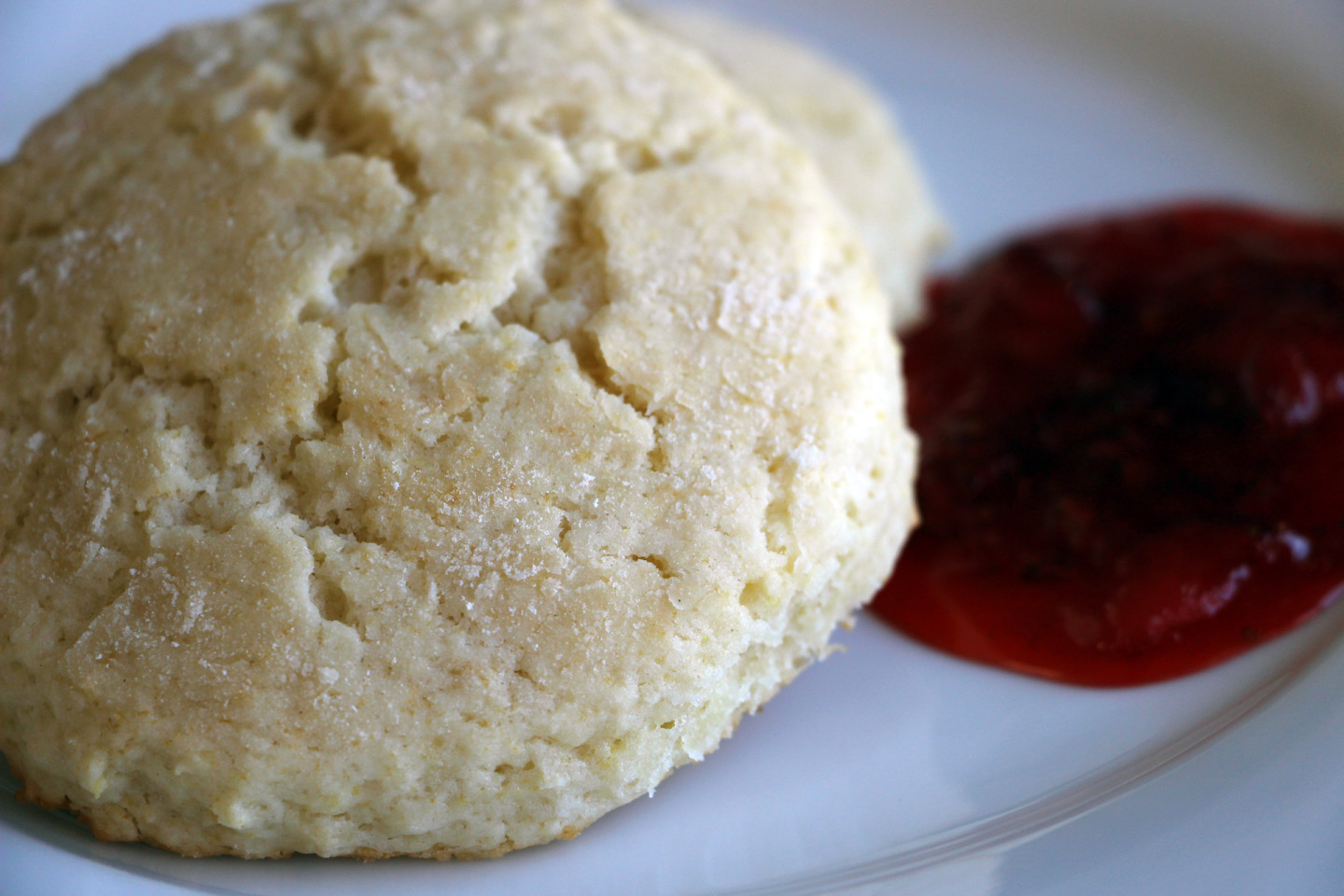
apricot jam

Being wildly uncommercial—too small, too funny-looking, too mushy, too short a season—Blenheims have to be hunted out, either from soft-hearted orchardists or friends with an old tree in the backyard. Everything Under the Sun (the folks with the "Sampling is Mandatory-We're Watching!" sign) at the Ferry Plaza Farmers' Market had them last week, and probably this week, but not for much longer. Carpe diem! Get out your jars!

Apricot Jam

Makes: 4 to 5 8-oz jars.

Ingredients:
3 lb apricots
2 1/2 cups sugar
1/4 cup fresh lemon juice (1-2 lemons)

Preparation:
1. Halve apricots and pop out pits. Cut fruit into quarters if large. Toss apricots, sugar, and lemon juice together in a glass or ceramic bowl. Cover with a towel and set aside for several hours at room temperature, or overnight in the refrigerator. Stir occasionally to help the sugar dissolve evenly, if you feel like it.

2. When all the sugar has been dissolved, pour the mixture into a wide, heavy-bottomed nonreactive pot and bring to a boil over medium heat. Reduce heat to low and simmer 10 minutes, stirring gently but frequently. Cook for another 8 minutes, until the fruit looks translucent and is beginning to break down. It's easy to scorch it at this stage, so stir frequently and don't wander off.

3. Pour mixture back into the bowl, let cool, then cover with a towel and set aside at room temperature for at least six hours, or overnight in the refrigerator.

4. Return fruit mixture to the large pot. Over low heat, bring to a simmer, stirring frequently. Cook for another 10-12 minutes, until fruit has mostly broken down and juices look syrupy. Scoop a small amount of juice onto a clean metal spoon. Tip the spoon sideways and let juice run off the edge. When juice has reached the jelly point, the last few drops will look thicker and run together into one viscous drop. Remove from heat. Ladle into clean, sterilized jars.

5. Set jars on a clean towel and do not touch or move them until they are completely cool. If you're using canning jars, listen for the slurpy sucking pop of the jars vacuum-sealing. Sealed jars will keep up to 1 year in a cool, dry place. If jar isn't sealed, store in fridge and eat within 2-3 weeks.

posted by Stephanie Rosenbaum | posted in farmers markets, food and drink, recipes | 7 Comments
tags: , , ,

Strawberry Jam

Sunday, June 7th, 2009

Chickens pecking around the backyard, kombucha fermenting on the shelf, beer brewing in the closet: there's been a lot of interest in DIY urban homesteading lately. For months now, I've been meaning to get into the slow-process stuff, like curing my own olives and making my own vinegar.

Then again, my homestead is a wee share house in Bernal, already stuffed with other people's tchotchkes. I've commandeered the tiny back patio with my buckets of tomato and potato plants; adding an olive crock and a vinegar barrel might be pushing it.

And honestly, I'm still wedded to the easy delights of jam. Like pie, it's a little bit of a production, but just like pie, no matter what you do, fruit+sugar=sweet fruity goodness. And like homemade pie, homemade jam is better than anything you can buy. Why? Because anywhere this side of Smuckers, you're using more fruit and less sugar when you make your jam at home.

Ah yes, the sugar issue. First off: most cookbooks call for way too much sugar. Why? The more sugar you put in, the easier it is to get a firm and reliable set. Sugar is also a preservative, and jam with a lot of sugar will last longer in your fridge. But capturing the essence of beautiful fruit is the whole point of jam, rounded out with just enough sweetness to bring a smile to your toast. Halve the amount of sugar in most recipes, and you'll do just fine.

For the same reason, I never use commercial pectins, like Sure-Jel. There's nothing wrong with pectin itself; it's a natural compound found in varying levels in all fruits. However, commercial pectin requires a lot of sugar to jump-start that jelling reaction, and the precise formulas turn canning into chemistry, with no adjustments for personal taste.

But with less sugar and no added pectin, won't your jam be a runny mess? Nope! There's an easy, just about foolproof way to get good jam every time, and all you need is sugar, lemon juice, and time.

strawberriesTake a look at this bowl.

That's 4 pints of strawberries, sliced, mixed with sugar and left to sit overnight until they've shrunken into little berry quarters bobbing in a sea of juice. All that liquid was originally trapped in the berries themselves, and you'd be boiling it mightily for a long time if you just threw the fruit and sugar together and tossed them on the stove.

But separate the liquid from the fruit, add a little lemon juice (which is rich in pectin), and--here's the trick-- cook down the liquid, not the fruit. By cooking the liquid by itself first, you can evaporate any excess water without exhausting the fruit's delicate flavors. There's also less risk of burning and sticking when you're just simmering juice.

This is a technique I first picked up from Helen Witty's invaluable, library-available collection, The Good Stuff Cookbook. In my copy, the jam chapter is wrinkled and spattered on every page, with annotations, additions, and comments in pen and pencil from years of messing around. I use a lot less sugar than Witty does, but her method (streamlined here) still works like a charm to produce delicious jams just thick enough to cling to your biscuit, redolent of ripe, sunwarmed summer fruit.

Since strawberries are ripe and wonderful this week, now's the time to grab a case of jars, a flat of fruit, and get your birthday-and-holiday gifts nailed down. I love Albion berries in particular, but Seascapes, Tristars and Chandlers, all varieties that do well in our cool coastal climate, won't do you wrong, either.

If you want your sealed jars to be able to sit around in the pantry, you need real canning jars topped with two-part lids. Otherwise, if you're just going to stick your jam in the fridge immediately and eat it soon, you can reuse any clean, cute glass jar you have. For best results, sterilize any jar in a boiling-water bath for 10 minutes before using.

Strawberry Jam

Ingredients:
4 pint boxes whole strawberries (2 1/2 lbs)
1 1/2-2 cups granulated sugar, depending on sweetness of berries
juice of 1 lemon, about 2 tablespoons

Preparation:
1. Rinse, drain, and hull strawberries. Slice in halves or quarters. In a nonreactive bowl, toss berries with sugar and lemon juice. Cover and let stand for 3-4 hours at room temperature or 6 hours to overnight in the refrigerator. Stir occasionally, scraping the bottom of the bowl to distribute and dissolve the sugar.

2. When sugar is dissolved and berries are floating in a bright-red syrup, pour into a large nonreactive pot. Bring to a frothy simmer, stirring frequently. Let simmer for 2 minutes, then pour back into bowl. Let cool. Cover and let stand for 2-3 hours at room temperature, or in the refrigerator for 6 hours or overnight.

3. Meanwhile, sterilize your jars, lids, and rings. Set a colander or strainer over a wide, large, and heavy stainless steel or enameled cast-iron pot. Pour berries into colander, letting all the syrup drip into the pot. Remove colander full of berries and set aside.

4. Bring syrup to a boil over medium heat, stirring frequently. Once syrup comes to a boil, stir and watch: it will move from what looks like a pot full of Kool-Aid to a seething, deep-garnet mass of thick, glossy bubbles. Dip a metal spoon into the syrup and let syrup drip off the side of the spoon; it's ready when the last few drops are fairly thick and sticky.

5. Pour in reserved berries. Bring to a boil, stirring constantly. If you'd like a thicker jam, mash berries lightly with a potato masher. Simmer for 5-8 minutes, until berries are translucent and mixture has thickened slightly. Scoop into jars and seal.

6. Set jars on a clean towel and do not touch or move them until they are completely cool. If you're using canning jars, listen for the slurpy sucking pop of the jars vacuum-sealing. Sealed jars will keep up to 1 year in a cool, dry place. If jar isn't sealed, store in fridge and eat within 2-3 weeks.

posted by Stephanie Rosenbaum | posted in recipes | 9 Comments
tags: , , , ,

Event: Public Jam

Wednesday, October 22nd, 2008

jam"A specter is haunting our cities: barren landscapes with foliage and flowers, but nothing to eat. Fruit can grow almost anywhere, and can be harvested by everyone. Our cities are planted with frivolous and ugly landscaping, sad shrubs and neglected trees, whereas they should burst with ripe produce. Great sums of money are spent on young trees, water and maintenance. While these trees are beautiful, they could be healthy, fruitful and beautiful."

-- From the Fallen Fruit manifesto


Fallen Fruit identifies where you can find free fruit that has fallen and encourages public consumption. The movement began in Los Angeles but public jam making events take place in various locations.

At Yerba Buena Center for the Arts you an will bring your own fresh fruit and clean jars and learn to make jam with the folks from Fallen Fruit. Fallen Fruit will also lead a discussion about the basics of jam and jelly making, pectin and bindings, the aesthetics of sweetness, as well as the communal power of shared food and the liberation of public fruit.

What: Public Jam, a fruit jam and jelly making event

Where: YAAW Lounge, Yerba Buena, 700 Howard St, San Francisco

When: November 1, 2008

How: Free, but tickets required call YBCA box office 415.978.2787

Why: Learn how to make jam, and at the end of the event trade jars with other participants.

One of the most common fruit found in backyards around the Bay Area is plums. Use purple plums for this recipe to make a small batch of fresh jam.

Plum Freezer Jam
3 cups pitted, coarsely chopped plums
1/3 cup sugar
1/3 cup water
2 tablespoons lemon juice
1/8 teaspoon cinnamon
2 tablespoons honey

Combine all the ingredients except the honey in a medium saucepan. Bring to the boil, reduce heat and simmer. Stir and mash occasionally with back of spoon for about 15 minutes, or until thickened. Remove from heat, stir in honey and taste, adjust seasonings as desired. Allow to cool to room temperature and pour into clean jars. Refrigerate for up to 2 weeks or freeze for up to one year.

posted by Amy Sherman | posted in events, recipes | 0 Comments
tags:

Plumalicious Summer Plum Jam

Thursday, July 10th, 2008

plums for making plum jam"splat"
"splat"
"splat"

Every night, for the past week, we've been awakened by the sound of fat, juicy plums plummeting from the trees in our backyard to the ground. We pick them as fast as we can, but some are simply out of reach, and others just sneak up on us, ripening suddenly and then hurling themselves out of the tree.

We somehow managed to pick about six pounds of plums before I decided that something must be done.

So, as I did last year, I decided to make plum jam.

A few things have changed, though, since I last made jam. First of all, I moved. Last year's plums were harvested in the heart of the Mission: small yellow plums that were subtle and pleasantly sweet-tart. We managed to spin those into many jars of jam and chutney before we moved.

Secondly, I realized that over the past year I've learned a bit about pectin. The jam we made last year, while delicious, was a bit thin and watery. I wasn't about to make that mistake again. Pectin causes jams and jellies to gel, and some fruits have more and some have less. Apples, it turns out, have a lot of pectin. So when you are trying to make jam with fruits that are low in pectin, like berries or plums, it's a good idea to use an apple, peel and all (trust me, you will never know it's even in the jam). Also, you need the right balance of pectin, acid, and sugar with the fruit to make it all balance and gel correctly.

Anyway, here in our new house we have not only one, or two, but four different plum trees. Lucky for the trees that I love plum jam too, since they've been somewhat neglected over the years (we unfortunately moved just after the plum harvest last year and missed the whole thing). And lucky for me that my husband is tall and can reach all those rogue plums, even though we still wake up every morning to a smattering of plums.

Plumalicious Jam

plum jam

Makes: 13 half-pint jars

Ingredients:
About 12 cups (about 6 lbs) pitted and roughly chopped plums
1 or 2 green apples
Juice of 1 lemon or lime
2 lbs granulated sugar
2 small plates in the freezer

Preparation:
1. Cut up all the plums and put them into a heavy, 5-quart stockpot.

put plums in 5-quart stockpot

2. Grate the apple, skin and all (but not the core), on a box shredder-grater. Add the apples, lemon or lime juice, and sugar to the plums.

grate the apple on a box shredder-grater

3. Stir the plum mixture thoroughly, place over medium-high heat, and bring to a boil.

plum jam cooking

4. Lower the heat to medium and let boil, skimming the foam occasionally and smashing the fruit as it cooks. Boil for about 20 minutes.

plum jam cooking

5. When the jam starts to look thickened, start testing it by spooning a small amount onto one of the chilled plates. This will chill it quickly and let you see how thick it is. Keep testing it until the jam is thick enough, but don't cook it longer than about 30-35 minutes. If it's not thick enough for your liking, next time add an extra apple. Don’t worry, the jam will still be great.

6. Once the jam has thickened, get your clean jars set up. You can re-use the glass jars, but you should get new lids and rings each time. If you have a canning funnel, it makes your life a lot easier for filling jars.

plum jam jars

7. Fill each jar to about 1/2 inch from the top, leaving a little breathing room. Screw on the lid, but not too tight.

plum jam in jar

8. Turn the jars over at once so they stand upside down on their lids and let them cool to room temperature. This should seal the lids. If the lids are sealed, the top will be indented. You can store the jam in a cool dark place for up to a year. If not, store in the refrigerator and use within about 1 month.

plum jam jars turned over

posted by Kim Laidlaw | posted in recipes | 3 Comments
tags: , , , , , ,

We Love Jam!

Thursday, August 23rd, 2007


Earlier this year, I read about a jam made by two guys from an apricot tree in their backyard. It was seriously small-batch -- think 100 jars a year -- and the only way to get it was to sign up for the waiting list. "A waiting list, for jam?" I thought to myself. "That's nuts!" But I figured what the hell, and signed up.

Fast forward to the summer, when I got an email from Eric and Phineas at We Love Jam telling me their apricot jam was almost ready, and I could buy up to four 8-ounce jars. I bought the maximum, and sat back to wait.

When it arrived, it took a few days for me to try it. One morning I nonchalantly asked my jam-loving boyfriend if he'd tried it yet. "It's good," came the reply.

So I was in no way prepared for the unsurpassably delicious, unconscionably good, irresistably perfect taste sensation that hit my tongue when I finally tried it. I swear, I nearly fainted. It tasted like apricots, honey, and gold. It was so smooth, it glided over my tongue like a silk cloth over polished wood. I tossed manners to the wind and started eating it straight from the jar.

As I licked pure happiness off my spoon, I wondered about the guys who made this amazing stuff. I'd already been in touch with them a few times and I liked their sense of humor, hiding jars of jam in the San Francisco main library for people to find. So I decided to interview them and learn more about the operation. What I found out is that they are totally devoted -- to their jam, to small farmers, and to saving the Blenheim apricot. They are also a total hoot.

Who is Eric?
The son of crazy art collectors. My dad is Swiss, from the French region, so I grew up on French cuisine and desserts. My mom is an amazing cook and I grew up helping my mom in the kitchen where she spent lots of time experimenting. Our jam, and the food products we will be offering are all the result of relaxing and having fun in the kitchen.

Who is Phineas?
Former educator, barista, part-time writer, amateur baker. Up until the jam-making started, I always lived in places with a non-functional kitchen. It wasn't until being in a full working kitchen that I started to do anything other than microwave popcorn. Go figure, but I'm pretty good with food. One day it would be nice to open up a small bakery/cafe.

When did you first make your apricot jam?
We met in March of 2002 and took a trip throughout Europe shortly thereafter -- a true test of our relationship! Anyhow, [at] a tiny, deserted restaurant in Grasse, a mind-blowing white peach dessert Eric ordered lingered in our minds. When we returned from Europe, Eric ventured into Phineas' Santa Clara backyard and saw a fruit tree. "What is that?" he asked. "An apricot tree," Phineas responded. "What do you do with the fruit?" Eric asked. "Nothing. My mom eats it -- the rest falls on the ground and rots," Phineas said. "Let's make jam!" said Eric.

So we picked the fruit and took it up to San Francisco and cooked up a batch. The white peach dessert served as our inspiration and the rest is history.

Tell me about the apricots.
We didn't know what variety it was right away but did some research and discovered it was Blenheim -- the most flavorful but most delicate apricot variety. Most of the Silicon Valley area was Blenheim and cherry orchards. Only a few remain and Slow Food USA classifies the Blenheim as endangered. One of the orchards we called told us they ripped up all their trees and planted a more profitable crop. It was then we knew our jam-making wasn't just about making delicious jam, but saving a way of life. We feel passionately about keeping the Blenheim a viable crop and giving these farmers a reason to continue growing it and not selling their land for housing.

When did you start selling the jam?
We had been making this jam for almost five years from the backyard tree. Each year we made around 100 jars and just gave them away. For some crazy reason we decided to send out a press release to two food magazines about the jam being for sale -- just 100 jars for 2007. In November of 2006 we had a voicemail from Food & Wine saying they loved the jam and wanted to write about it. All of a sudden the idea that this was now a business hit us and we had no idea what to think. They had us ship a jar to be photographed. Several phone interviews took place with lots of questions like how we were going to sell it. We told them it would be online. We built the website in a weekend. They asked since we had so few jars if we had a waiting list. We said yes. When the blurb came out in Food & Wine we were simply deluged with requests. Thousands of people emailed us. It took us by complete surprise.

How much time did you spend making jam this year?
This year, between our tree and the fruit from the other orchard, we processed about 7000 pounds of jam. Completely by hand. Washing individual fruit, hand pitting the fruit, using water bath canning. This is a very labor- and time-consuming method. Our priority this year was to make people happy no matter the expense on our end. So far, we have succeeded with this and that has made all the disasters that happened (there were countless) worth it.

What was the hardest thing about jam-making this year?
The sheer stress and labor. We went from making about 100 jars in a few days to making around 6000 -- in three weeks. The fruit doesn't last very long in the refrigerator, so we had to work basically day and night to make the jam. There was a huge sense of urgency.

You also sell a BBQ sauce. Might you expand your food enterprise any further with more products?
We have a whole lineup of products planned, all based on what we have made for years for friends and family. These include not just jams, but our pickles, biscotti and cookies, a taste bud-shattering preserved Meyer lemon Mediterranean rub that makes any chicken dish an instant cult hit. We also want to sell products from very small farms or from farms that maybe just have a few trees. We want to establish relationships with farmers and get excellent quality stuff that normally would never be available. We also want to work with tiny vineyards selling wine. We know one farmer who grows his own grapes and makes only about 7 cases a year. That is what we are looking for -- extremely small production and extremely high quality. And to always have something new available that you can't get anywhere else.

I know there are still a few jars of jam left online, but how do you get on the mailing list for next year?
Anyone who purchased jam from us this year is on the waiting list for life. [Whoever] wants to be on the list just has to email us. It is all chronological, who emailed on what day. And we work down the list like that. There will always be a waiting list and our website will be the only place to buy it. We deeply value the personal connection with our customers through emails and phone calls and that could never be preserved if someone else sold our product. For example, if a customer says they like a certain variety of plum jam, we will find that fruit and make a small batch and put it up for sale. This very close contact with customers and working with them to make them happy is the greatest joy of this venture.

To join the mailing list, email contact@welovejam.com

posted by Catherine Nash | posted in Uncategorized | 3 Comments
tags: , , ,

Plum Chutney: Tales from the Backyard

Saturday, July 28th, 2007

Canning for me conjures up childhood memories of being in the kitchen with my mom and her friends, usually on a hot steamy Texas summer day, and "putting up" bread and butter pickles, fresh raspberry jam (with seeds!), and ripe whole tomatoes. Even with the sweat pouring down your face, there's no better time to can than in the middle of the summer, at the height of the season, when everything is bursting with flavor: crisp cucumbers, ripe red tomatoes, juicy stone fruits, plump berries. Better still when you can pick that fruit out of your own garden.

We are lucky enough to have a big shady plum tree, right smack in the middle of our little garden, right smack in the heart of the Mission in San Francisco. If you think that isn't fair, then start making friends with people who have fruit trees and vegetable gardens; we always seem to have more than we can eat or harvest and are looking for others who will enjoy it.

Tales of plum wine gone awry (think essence of gasoline) from years past still haunt my flat and the flats above me. And last year we missed the boat and the plums ripened before we could harvest them. Which meant tracking slimy fruit globs into the house, sticky matted fur on the cat, and drunken birds and rats feasting on the fermenting fruit. In an effort to avoid that joyous occurrence (have I not painted a lovely picture?), my roommate Gary (staunch believer in preparing for the revolution) made a concerted effort to rally the troops and plan for the big harvest.

So a few weeks ago, when the tree was bursting with perfectly ripe, big juicy green plums, we set aside our sunny Sunday and three of us--armed with our giant canning pot, a ladder, and numerous plastic grocery bags--plucked all of the plums we could reach.

After throwing around elaborate ideas of jams and jellies and syrups and pickles and more, including drawing up a chart of flavors that go well with plum (including but not limited to cardamom, ginger, and whisky) as well as different preparations (including roasting the plums) we arrived at a consensus: to prepare a simple plum jam that would let the tart yet subtle plum flavor shine, and a more interesting plum and apple chutney.

It took all day, but after a while, the cold beers came out, the sweat started pouring down our faces, and it was all worth it.

G-Street Plum Chutney
Makes about 14 8-oz jars

2 cups sugar (or a bit less if the plums are very sweet)
1 1/2 cups white vinegar
1 cup water
1 teaspoon salt
2 sticks cinnamon, broken into 1-inch pieces
1 2-inch piece fresh ginger, peeled and thickly sliced
1 teaspoon whole allspice
Cheesecloth
About 6 1/2 lbs plums, pitted and quartered
2 large apples, such as Granny Smith, peeled, cored, and diced
1/2 large yellow onion, peeled and finely diced

In a large, heavy pot, combine the sugar, vinegar, water, and salt. In a 6-inch square of cheesecloth, tie the cinnamon sticks, ginger, and allspice into a pouch and add it to the pot. Heat the mixture over medium-high heat until boiling, stirring occasionally. Reduce the heat to medium and simmer for about 5 minutes until the mixture becomes syrupy.

Add the plums, apples, and onions. Cook, stirring often, over low heat, until the mixture is thickened, about 40-60 minutes. Remove the spice bag. Seal in hot sterilized jars.

For proper canning instructions, check out:

A very serious and official guide

A good online step-by-step guide

Paul and Bernice, who are awesome!

special thanks to Gary and Keith for the lovely plummy pix

posted by Kim Laidlaw | posted in food and drink, recipes | 0 Comments
tags: , , , , ,

BAB Archives

  • Calendar

  • November 2009
    M T W T F S S
    « Oct    
     1
    2345678
    9101112131415
    16171819202122
    23242526272829
    30  
  • Sponsored by