• Bay Area Bites

  • Culinary Rants & Raves from Bay Area Foodies and Professionals

Posts Tagged ‘italian food’


How to make your ragu sing like Pavarotti

Saturday, June 20th, 2009

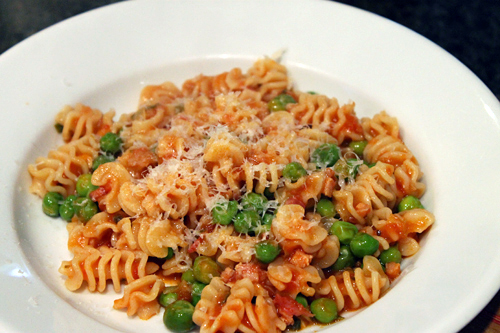
mostaccioli with pork shoulder ragu
Mostaccioli with pork shoulder ragu

I've been making meat sauces for years, but only now -- after two months as an apprentice at Oliveto -- have I learned some of the secrets behind a superlative ragu.

A ragu is a basic meat sauce for pasta. The first authentic version I tried was years ago, in Emilia-Romagna, the region of Italy that invented the classic Bolognese sauce.

That first ragu was bold and brooding -- much like a Pavarotti opera. The sauce was entangled in a nest of perfectly cooked tagliatelle, with the flavor infused into the noodle.

Numerous cookbooks offer suggestions on making a Bolognese sauce and other forms of ragu. Yet nearly all of these recipes, in my opinion, are flawed. Most suggest cooking a mixture of diced onion, carrots and celery before adding your meat to brown it. The sauce that results tends to be lifeless or, even worse, infused with chunks of burnt vegetables.

Vegetables sweating on top of meat as the meat brown

At Oliveto, the chefs have reversed the sequence. First they brown the meat and then allow the vegetables to steam, or "sweat," on top of the meat. This process produces a dark layer of caramelized meat solids at the bottom of the pan -- a foundation of flavor. This foundation, or "fond" as the chefs call it, is then deglazed by the natural juices of the vegetables when added on top. This is allowed to cook down so the fond is rebuilt and deglazed two or three times.

Paul Bertolli, the former head chef at Oliveto, describes the technique in his 2003 book, "Cooking By Hand." Bertolli's successor, Paul Canales, who had a role in developing this technique, has continued to refine and perfect it since becoming executive chef.

Cooking a ragu in this manner is not difficult, but it cannot be whipped out in an hour or two. A ragu is truly slow food -- time-tested and refined by Italian grandmothers over many centuries.

Ragu ready for a long simmer, after broth and tomato paste have been added

Ragu for pasta

Makes: 8-10 servings of sauce

Ingredients:
2 pounds ground meat (Beef, pork or equal amounts of both. For beef, try ground chuck or get adventurous with ground hanger steak, beef cheeks, etc. For the pig, try ground pork shoulder.)
4 medium yellow onions
5 stalks celery
5 carrots
4 tablespoons finely chopped fresh sage
2 tablespoons finely chopped fresh oregano
6 cups dark chicken or veal stock
½ cup white wine
½ cup high-quality tomato paste
1 cup cream (optional)
Salt and pepper to taste

Preparation:

1. Dice the onions, celery and carrots into a mirepoix -- cubes smaller than 1/4 inch in size. As you are dicing the vegetables and mincing the fresh herbs, start cooking your meat. Use a heavy bottomed Dutch oven or stew pot. This is essential. The bottom of the pan has to be thick and heavy enough to brown the meat, without scorching it.

2. Use high heat to start your browning process. But keep an eye on it, and adjust the flame accordingly. It’s okay for the meat to stick and brown, but you don't want it to blacken or burn.

3. After you have built an even layer of fond on the bottom, toss your vegetables on top of the meat. Leave them there for at least 15 minutes, allowing them to release their juices to the bottom of the pan.

4. Give your meat and vegetable a rigorous stir with a wooden spoon, and scrape up the fond layer that has now been deglazed by the vegetables.

5. Turn up heat slightly, and allow this to cook down and brown again, then add a shot of wine -- no more than a cup. Stir and scrape.

6. Allow this to cook down again. When browned, add a cup of stock. Repeat the process and add your tomato paste, diluted with a half cup of stock.

7. Watch your ragu carefully at this point. The addition of tomato paste could lead to scorching. Keep the heat up, but stir it regularly as the fond starts to reform. When it is nice and brown, but not scorched, add two or three cups of stock -- enough to make it slightly more soupy than you'd want for a sauce.

8. At this point, your ragu should have a lovely, brownish-red color. Bring it to a boil and then turn down to a simmer. Allow it to simmer for two to four hours, stirring occasionally and adding more stock, if necessary.

9. Before serving, you have the option of adding cream -- as much or as little as you want. Too much cream will dilute the intensity of the sauce, so be judicious at first.

10. You can take this basic sauce in many different directions. Add minced porcini mushrooms early in the cooking for an earthier flavor, or cinnamon or nutmeg to give it a spicy edge. Use different combinations of fresh herbs.

11. The final step, of course, is marrying the ragu with the pasta. Don't just ladle it on top. Cook your pasta just short of al dente, then mix it thoroughly in a skillet with an appropriate amount of sauce and then serve it immediately. Sprinkle some Parmesan cheese on top, and you will be ready to sing.

ragu
This is what ragu should look like when finished

posted by Stuart Leavenworth | posted in bay area, chefs, culinary education, recipes, restaurants and bars | 9 Comments
tags: , , , , , ,

Massimo's Italian Kitchen & Pork Spareribs and Cabbage Recipe

Wednesday, February 27th, 2008


Lee's favorite food is Japanese. When we celebrate his birthday or really any occasion it's Japanese food that he wants. Much as I love Japanese food, and I really do, I have to say Italian is still my all-time favorite. Italian food just spells comfort to me. I love rustic food and great ingredients treated well but not fussed over. Ok, I like them fussed over some of the time. But on a day to day basis nothing makes me happier than a plate of pasta, risotto, or even polenta.

It should come as no surprise that I was utterly charmed by Massimo's Italian Kitchen. The subtitle is not totally accurate, "authentic one-dish meals from a seasoned chef" because there are plenty of desserts and side dishes too. That said, there isn't a recipe in this book I wouldn't make, except perhaps the tripe soup, I'm still a bit squeamish about tripe. The photos really do a good job of showing the food, which when it comes to rustic food is not always so easy. A fancy plated dessert is much easier to shoot than say rice and pea soup or handmade noodles with ragu.

The recipes are written in a very conversational style, but are generally not that complicated or long. One of the things I particularly like about the book is the large number of both vegetable dishes and one pot meals that include less common vegetables like radicchio and cabbage. Living in Italy I discovered how much vegetables were loved. In fact, they were usually served as their own course to be totally savored without distraction.

This book covers the different regions that the chef has knowledge of and is a nice compilation for the intermediate home cook looking for something beyond Italian-American classics. Recipes include Winter Salad with Potatoes and Apples, Garganelli with Fava Beans and Crispy Prosciutto, Risotto with White Asparagus, Black Pepper and Wild Strawberries and Baked Cardoons with Pecorino.

Pork Spareribs and Cabbage
Costine di Mailale e Verze

Makes 4 servings

4 whole racks baby back ribs
salt and pepper
1 Tablespoon sugar
3 Tablespoons extra virgin olive oil
2 cloves garlic
1 cup julienned onion
1/2 cup white wine
2 Tablespoons red wine vinegar
1 Tablespoon tomato paste
1 cup chopped fresh tomatoes (note: I think canned would be fine here)
1 cup chicken stock
1 head cabbage

Wash the rib and pat dry. Cut between each bone to separate them, and season with salt, pepper, and sugar.

Heat the olive oil in a heavy-bottomoed pot over medium-high heat. Add the ribs and sear until golden brown. Add the garlic and onion and cook for a few minutes.

Pour in the wine and vinegar and cook until they evaporate. Stir in the tomato paste and then the tomatoes. Pour in the chicken stock, reduce the heat, and simmer for about 20 minutes, covered.

In the meantime remove each leaf from the cabbage and cut our the center spine, splitting the leaf in two. Cut the cabbage into wide juliennes. Add the cabbage to the meat, season with salt and pepper, stir, and cover. SImmer until the cabbage is tender about 10 minutes.

Reprinted from Massimo's Italian Kitchen, Seller's Publishing 2008

posted by Amy Sherman | posted in cookbooks | 1 Comment
tags: ,

BAB Archives

  • Sponsored by