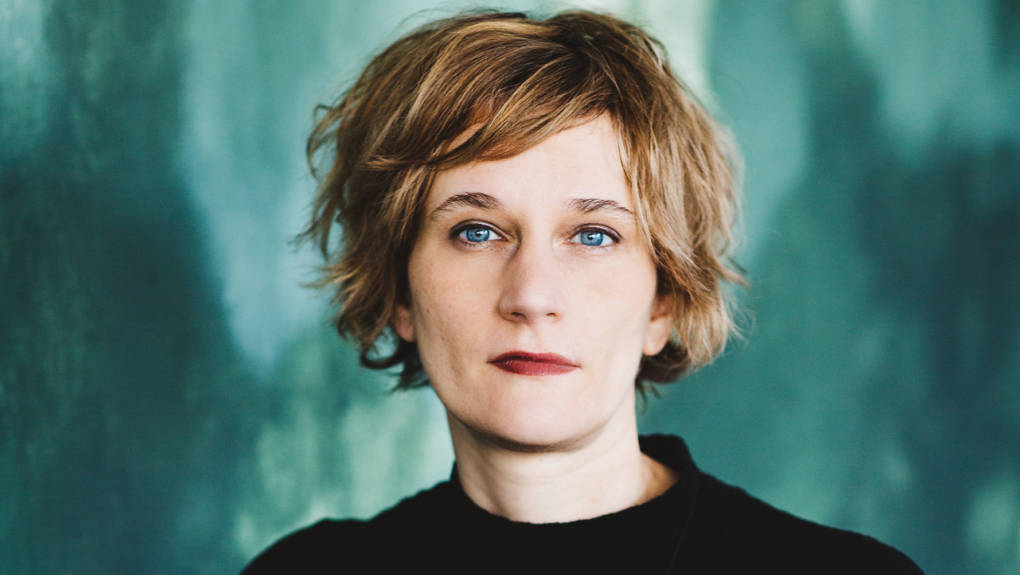
Food Writer Becomes A Butcher To Better Understand The Value Of Meat
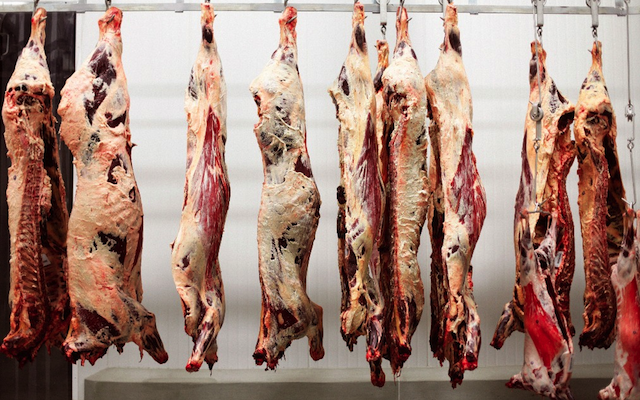
Whole Animal Butchery: The Growth, the Problems, and the Future
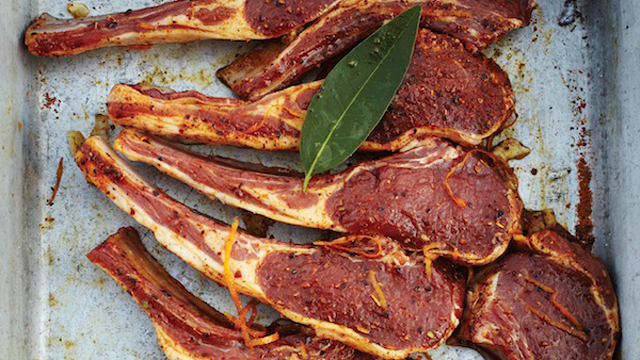
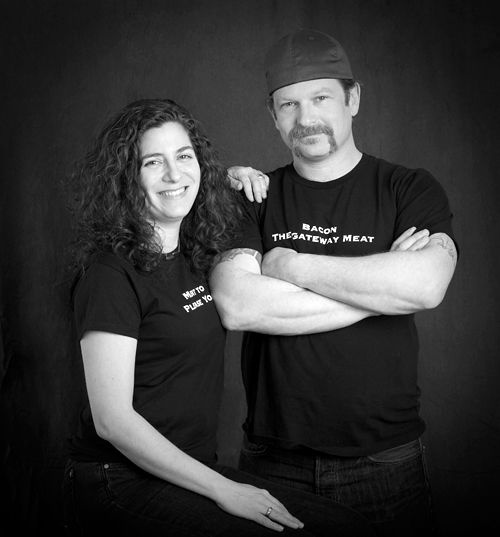
The Fatted Calf's New Cookbook Brings Charcuterie Favorites Into Your Kitchen
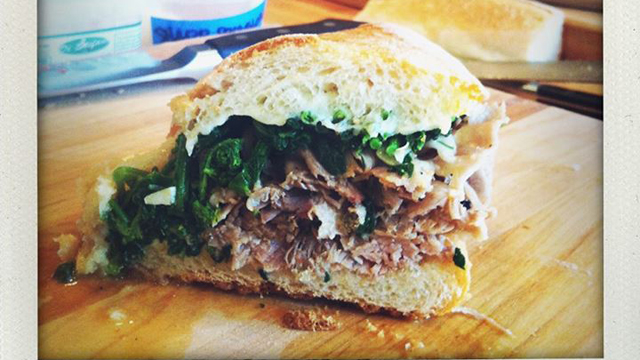
Chef Liza Shaw Talks About Her East-Coast-Inspired "Merigan Sub Shop" -- Opening Soon in SoMa
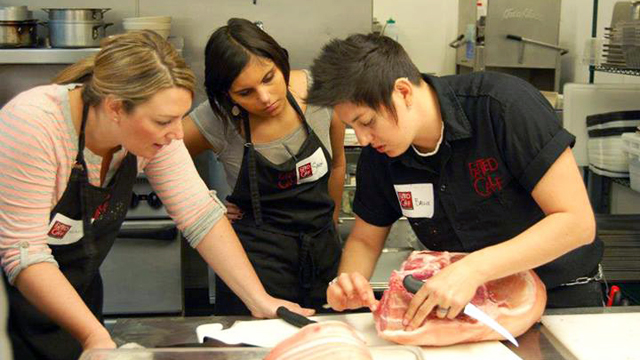
Pig + Woman + Knife: Butchery with Bailie at Fatted Calf
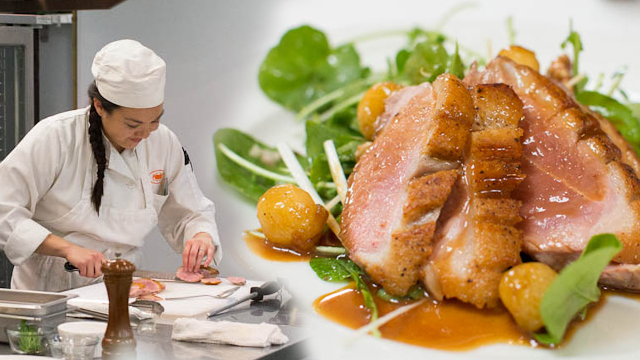
7 Essential Cooking Lessons I Learned at San Francisco Cooking School
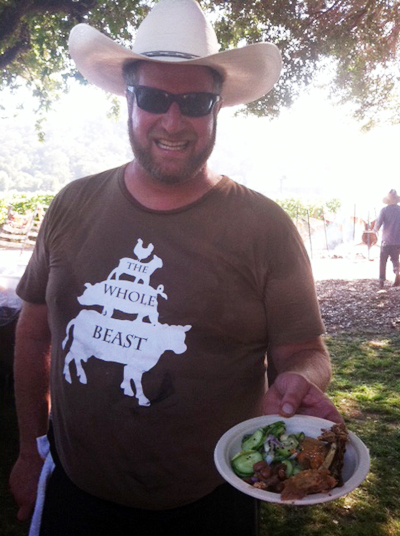
Ryan Farr's Bible For Whole Beast Butchery
Cochon Heritage Fire
Book Review: The Butcher's Guide to Well-Raised Meat
Sponsored
window.__IS_SSR__=true
window.__INITIAL_STATE__={"attachmentsReducer":{"audio_0":{"type":"attachments","id":"audio_0","imgSizes":{"kqedFullSize":{"file":"https://ww2.kqed.org/news/wp-content/themes/KQED-unified/img/audio_bgs/background0.jpg"}}},"audio_1":{"type":"attachments","id":"audio_1","imgSizes":{"kqedFullSize":{"file":"https://ww2.kqed.org/news/wp-content/themes/KQED-unified/img/audio_bgs/background1.jpg"}}},"audio_2":{"type":"attachments","id":"audio_2","imgSizes":{"kqedFullSize":{"file":"https://ww2.kqed.org/news/wp-content/themes/KQED-unified/img/audio_bgs/background2.jpg"}}},"audio_3":{"type":"attachments","id":"audio_3","imgSizes":{"kqedFullSize":{"file":"https://ww2.kqed.org/news/wp-content/themes/KQED-unified/img/audio_bgs/background3.jpg"}}},"audio_4":{"type":"attachments","id":"audio_4","imgSizes":{"kqedFullSize":{"file":"https://ww2.kqed.org/news/wp-content/themes/KQED-unified/img/audio_bgs/background4.jpg"}}},"placeholder":{"type":"attachments","id":"placeholder","imgSizes":{"thumbnail":{"file":"https://ww2.kqed.org/wp-content/uploads/sites/10/2018/01/GettyImages-896326950-160x96.jpg","width":160,"height":96,"mimeType":"image/jpeg"},"medium":{"file":"https://ww2.kqed.org/wp-content/uploads/sites/10/2018/01/GettyImages-896326950-800x478.jpg","width":800,"height":478,"mimeType":"image/jpeg"},"large":{"file":"https://ww2.kqed.org/wp-content/uploads/sites/10/2018/01/GettyImages-896326950-1020x610.jpg","width":1020,"height":610,"mimeType":"image/jpeg"},"fd-lrg":{"file":"https://ww2.kqed.org/wp-content/uploads/sites/10/2018/01/GettyImages-896326950-1920x1148.jpg","width":1920,"height":1148,"mimeType":"image/jpeg"},"fd-med":{"file":"https://ww2.kqed.org/wp-content/uploads/sites/10/2018/01/GettyImages-896326950-1180x705.jpg","width":1180,"height":705,"mimeType":"image/jpeg"},"fd-sm":{"file":"https://ww2.kqed.org/wp-content/uploads/sites/10/2018/01/GettyImages-896326950-960x574.jpg","width":960,"height":574,"mimeType":"image/jpeg"},"post-thumbnail":{"file":"https://ww2.kqed.org/wp-content/uploads/sites/10/2018/01/GettyImages-896326950-672x372.jpg","width":672,"height":372,"mimeType":"image/jpeg"},"twentyfourteen-full-width":{"file":"https://ww2.kqed.org/wp-content/uploads/sites/10/2018/01/GettyImages-896326950-1038x576.jpg","width":1038,"height":576,"mimeType":"image/jpeg"},"xxsmall":{"file":"https://ww2.kqed.org/wp-content/uploads/sites/10/2018/01/GettyImages-896326950-240x143.jpg","width":240,"height":143,"mimeType":"image/jpeg"},"xsmall":{"file":"https://ww2.kqed.org/wp-content/uploads/sites/10/2018/01/GettyImages-896326950-375x224.jpg","width":375,"height":224,"mimeType":"image/jpeg"},"small":{"file":"https://ww2.kqed.org/wp-content/uploads/sites/10/2018/01/GettyImages-896326950-520x311.jpg","width":520,"height":311,"mimeType":"image/jpeg"},"xlarge":{"file":"https://ww2.kqed.org/wp-content/uploads/sites/10/2018/01/GettyImages-896326950-1180x705.jpg","width":1180,"height":705,"mimeType":"image/jpeg"},"full-width":{"file":"https://ww2.kqed.org/wp-content/uploads/sites/10/2018/01/GettyImages-896326950-1920x1148.jpg","width":1920,"height":1148,"mimeType":"image/jpeg"},"guest-author-32":{"file":"https://ww2.kqed.org/wp-content/uploads/sites/10/2018/01/GettyImages-896326950-32x32.jpg","width":32,"height":32,"mimeType":"image/jpeg"},"guest-author-50":{"file":"https://ww2.kqed.org/wp-content/uploads/sites/10/2018/01/GettyImages-896326950-50x50.jpg","width":50,"height":50,"mimeType":"image/jpeg"},"guest-author-64":{"file":"https://ww2.kqed.org/wp-content/uploads/sites/10/2018/01/GettyImages-896326950-64x64.jpg","width":64,"height":64,"mimeType":"image/jpeg"},"guest-author-96":{"file":"https://ww2.kqed.org/wp-content/uploads/sites/10/2018/01/GettyImages-896326950-96x96.jpg","width":96,"height":96,"mimeType":"image/jpeg"},"guest-author-128":{"file":"https://ww2.kqed.org/wp-content/uploads/sites/10/2018/01/GettyImages-896326950-128x128.jpg","width":128,"height":128,"mimeType":"image/jpeg"},"detail":{"file":"https://ww2.kqed.org/wp-content/uploads/sites/10/2018/01/GettyImages-896326950-150x150.jpg","width":150,"height":150,"mimeType":"image/jpeg"},"kqedFullSize":{"file":"https://ww2.kqed.org/wp-content/uploads/sites/10/2018/01/GettyImages-896326950-e1514998105161.jpg","width":1920,"height":1148}}},"bayareabites_129686":{"type":"attachments","id":"bayareabites_129686","meta":{"index":"attachments_1591205162","site":"bayareabites","id":"129686","found":true},"title":"Camas Davis is the founder of the Portland Meat Collective. \"Because I now am involved in the processes that get that meat to my table, I just understand the value of it,\" she says.","publishDate":1532530905,"status":"inherit","parent":129685,"modified":1532532294,"caption":"Camas Davis is the founder of the Portland Meat Collective. \"Because I now am involved in the processes that get that meat to my table, I just understand the value of it,\" she says.","credit":"Cheryl Juetten/Penguin Random House","description":"Camas Davis is the founder of the Portland Meat Collective. \"Because I now am involved in the processes that get that meat to my table, I just understand the value of it,\" she says.","imgSizes":{"thumbnail":{"file":"https://ww2.kqed.org/app/uploads/sites/24/2018/07/camas-davis-c.-cheryl-juetten-color-_wide-dbc5e0fd511fefc1307c945ca6121fefcf6d99a5-160x90.jpg","width":160,"height":90,"mimeType":"image/jpeg"},"medium":{"file":"https://ww2.kqed.org/app/uploads/sites/24/2018/07/camas-davis-c.-cheryl-juetten-color-_wide-dbc5e0fd511fefc1307c945ca6121fefcf6d99a5-800x451.jpg","width":800,"height":451,"mimeType":"image/jpeg"},"medium_large":{"file":"https://ww2.kqed.org/app/uploads/sites/24/2018/07/camas-davis-c.-cheryl-juetten-color-_wide-dbc5e0fd511fefc1307c945ca6121fefcf6d99a5-768x433.jpg","width":768,"height":433,"mimeType":"image/jpeg"},"large":{"file":"https://ww2.kqed.org/app/uploads/sites/24/2018/07/camas-davis-c.-cheryl-juetten-color-_wide-dbc5e0fd511fefc1307c945ca6121fefcf6d99a5-1020x575.jpg","width":1020,"height":575,"mimeType":"image/jpeg"},"complete_open_graph":{"file":"https://ww2.kqed.org/app/uploads/sites/24/2018/07/camas-davis-c.-cheryl-juetten-color-_wide-dbc5e0fd511fefc1307c945ca6121fefcf6d99a5-1200x676.jpg","width":1200,"height":676,"mimeType":"image/jpeg"},"fd-med":{"file":"https://ww2.kqed.org/app/uploads/sites/24/2018/07/camas-davis-c.-cheryl-juetten-color-_wide-dbc5e0fd511fefc1307c945ca6121fefcf6d99a5-1180x665.jpg","width":1180,"height":665,"mimeType":"image/jpeg"},"fd-sm":{"file":"https://ww2.kqed.org/app/uploads/sites/24/2018/07/camas-davis-c.-cheryl-juetten-color-_wide-dbc5e0fd511fefc1307c945ca6121fefcf6d99a5-960x541.jpg","width":960,"height":541,"mimeType":"image/jpeg"},"post-thumbnail":{"file":"https://ww2.kqed.org/app/uploads/sites/24/2018/07/camas-davis-c.-cheryl-juetten-color-_wide-dbc5e0fd511fefc1307c945ca6121fefcf6d99a5-672x372.jpg","width":672,"height":372,"mimeType":"image/jpeg"},"twentyfourteen-full-width":{"file":"https://ww2.kqed.org/app/uploads/sites/24/2018/07/camas-davis-c.-cheryl-juetten-color-_wide-dbc5e0fd511fefc1307c945ca6121fefcf6d99a5-1038x576.jpg","width":1038,"height":576,"mimeType":"image/jpeg"},"xxsmall":{"file":"https://ww2.kqed.org/app/uploads/sites/24/2018/07/camas-davis-c.-cheryl-juetten-color-_wide-dbc5e0fd511fefc1307c945ca6121fefcf6d99a5-240x135.jpg","width":240,"height":135,"mimeType":"image/jpeg"},"xsmall":{"file":"https://ww2.kqed.org/app/uploads/sites/24/2018/07/camas-davis-c.-cheryl-juetten-color-_wide-dbc5e0fd511fefc1307c945ca6121fefcf6d99a5-375x211.jpg","width":375,"height":211,"mimeType":"image/jpeg"},"small":{"file":"https://ww2.kqed.org/app/uploads/sites/24/2018/07/camas-davis-c.-cheryl-juetten-color-_wide-dbc5e0fd511fefc1307c945ca6121fefcf6d99a5-520x293.jpg","width":520,"height":293,"mimeType":"image/jpeg"},"xlarge":{"file":"https://ww2.kqed.org/app/uploads/sites/24/2018/07/camas-davis-c.-cheryl-juetten-color-_wide-dbc5e0fd511fefc1307c945ca6121fefcf6d99a5-1180x665.jpg","width":1180,"height":665,"mimeType":"image/jpeg"},"guest-author-32":{"file":"https://ww2.kqed.org/app/uploads/sites/24/2018/07/camas-davis-c.-cheryl-juetten-color-_wide-dbc5e0fd511fefc1307c945ca6121fefcf6d99a5-32x32.jpg","width":32,"height":32,"mimeType":"image/jpeg"},"guest-author-50":{"file":"https://ww2.kqed.org/app/uploads/sites/24/2018/07/camas-davis-c.-cheryl-juetten-color-_wide-dbc5e0fd511fefc1307c945ca6121fefcf6d99a5-50x50.jpg","width":50,"height":50,"mimeType":"image/jpeg"},"guest-author-64":{"file":"https://ww2.kqed.org/app/uploads/sites/24/2018/07/camas-davis-c.-cheryl-juetten-color-_wide-dbc5e0fd511fefc1307c945ca6121fefcf6d99a5-64x64.jpg","width":64,"height":64,"mimeType":"image/jpeg"},"guest-author-96":{"file":"https://ww2.kqed.org/app/uploads/sites/24/2018/07/camas-davis-c.-cheryl-juetten-color-_wide-dbc5e0fd511fefc1307c945ca6121fefcf6d99a5-96x96.jpg","width":96,"height":96,"mimeType":"image/jpeg"},"guest-author-128":{"file":"https://ww2.kqed.org/app/uploads/sites/24/2018/07/camas-davis-c.-cheryl-juetten-color-_wide-dbc5e0fd511fefc1307c945ca6121fefcf6d99a5-128x128.jpg","width":128,"height":128,"mimeType":"image/jpeg"},"detail":{"file":"https://ww2.kqed.org/app/uploads/sites/24/2018/07/camas-davis-c.-cheryl-juetten-color-_wide-dbc5e0fd511fefc1307c945ca6121fefcf6d99a5-150x150.jpg","width":150,"height":150,"mimeType":"image/jpeg"},"kqedFullSize":{"file":"https://ww2.kqed.org/app/uploads/sites/24/2018/07/camas-davis-c.-cheryl-juetten-color-_wide-dbc5e0fd511fefc1307c945ca6121fefcf6d99a5.jpg","width":1779,"height":1002}},"fetchFailed":false,"isLoading":false},"bayareabites_79096":{"type":"attachments","id":"bayareabites_79096","meta":{"index":"attachments_1591205162","site":"bayareabites","id":"79096","found":true},"title":"featured","publishDate":1394755056,"status":"inherit","parent":79084,"modified":1394755056,"caption":"Meat hanging in the shop at Belcampo. Photo: Courtesy of Belcampo","credit":null,"description":null,"imgSizes":{"kqedFullSize":{"file":"https://ww2.kqed.org/app/uploads/sites/24/2014/03/featured.png","width":640,"height":400}},"fetchFailed":false,"isLoading":false},"bayareabites_70461":{"type":"attachments","id":"bayareabites_70461","meta":{"index":"attachments_1591205162","site":"bayareabites","id":"70461","found":true},"title":"Lamb-Rib-Chops-with-Ras-el-Hanout640x360","publishDate":1379473204,"status":"inherit","parent":70428,"modified":1379473204,"caption":null,"credit":null,"description":null,"imgSizes":{"kqedFullSize":{"file":"https://ww2.kqed.org/app/uploads/sites/24/2013/09/Lamb-Rib-Chops-with-Ras-el-Hanout640x360.jpg","width":640,"height":360}},"fetchFailed":false,"isLoading":false},"bayareabites_69836":{"type":"attachments","id":"bayareabites_69836","meta":{"index":"attachments_1591205162","site":"bayareabites","id":"69836","found":true},"title":"roast-pork-liza640x360","publishDate":1378800134,"status":"inherit","parent":69521,"modified":1378800134,"caption":null,"credit":null,"description":null,"imgSizes":{"kqedFullSize":{"file":"https://ww2.kqed.org/app/uploads/sites/24/2013/09/roast-pork-liza640x360.jpg","width":640,"height":360}},"fetchFailed":false,"isLoading":false},"bayareabites_67307":{"type":"attachments","id":"bayareabites_67307","meta":{"index":"attachments_1591205162","site":"bayareabites","id":"67307","found":true},"title":"pig-woman-knife640x360","publishDate":1375409173,"status":"inherit","parent":66883,"modified":1375409173,"caption":null,"credit":null,"description":null,"imgSizes":{"kqedFullSize":{"file":"https://ww2.kqed.org/app/uploads/sites/24/2013/08/pig-woman-knife640x360.jpg","width":640,"height":360}},"fetchFailed":false,"isLoading":false},"bayareabites_62484":{"type":"attachments","id":"bayareabites_62484","meta":{"index":"attachments_1591205162","site":"bayareabites","id":"62484","found":true},"title":"stephanie-sfcookingschool","publishDate":1369263835,"status":"inherit","parent":62359,"modified":1369263835,"caption":null,"credit":null,"description":null,"imgSizes":{"kqedFullSize":{"file":"https://ww2.kqed.org/app/uploads/sites/24/2013/05/stephanie-sfcookingschool.jpg","width":640,"height":360}},"fetchFailed":false,"isLoading":false},"bayareabites_35221":{"type":"attachments","id":"bayareabites_35221","meta":{"index":"attachments_1591205162","site":"bayareabites","id":"35221","found":true},"title":"whole beast butchery","publishDate":1320793607,"status":"inherit","parent":35137,"modified":1320793607,"caption":null,"credit":null,"description":null,"imgSizes":{"kqedFullSize":{"file":"https://ww2.kqed.org/app/uploads/sites/24/2011/11/book.cover_.web_.02-e1320824125371.jpg","width":550,"height":329}},"fetchFailed":false,"isLoading":false},"bayareabites_31613":{"type":"attachments","id":"bayareabites_31613","meta":{"index":"attachments_1591205162","site":"bayareabites","id":"31613","found":true},"title":"Chef John Fink at Heritage Fire. Photo by Laiko Bahrs","publishDate":1313454947,"status":"inherit","parent":31503,"modified":1313454947,"caption":null,"credit":null,"description":null,"imgSizes":{"kqedFullSize":{"file":"https://ww2.kqed.org/app/uploads/sites/24/2011/08/chef-john-fink.jpg","width":400,"height":536}},"fetchFailed":false,"isLoading":false},"bayareabites_31326":{"type":"attachments","id":"bayareabites_31326","meta":{"index":"attachments_1591205162","site":"bayareabites","id":"31326","found":true},"title":"Jessica and Joshua Applestone. Photo by Jessica May","publishDate":1313174465,"status":"inherit","parent":31260,"modified":1313174465,"caption":null,"credit":null,"description":null,"imgSizes":{"kqedFullSize":{"file":"https://ww2.kqed.org/app/uploads/sites/24/2011/08/fleishers500.jpg","width":500,"height":537}},"fetchFailed":false,"isLoading":false}},"audioPlayerReducer":{"postId":"stream_live"},"authorsReducer":{"byline_bayareabites_129685":{"type":"authors","id":"byline_bayareabites_129685","meta":{"override":true},"slug":"byline_bayareabites_129685","name":"Terry Gross, Fresh Air, NPR","isLoading":false},"kdomara":{"type":"authors","id":"1459","meta":{"index":"authors_1591205172","id":"1459","found":true},"name":"Kelly O'Mara","firstName":"Kelly","lastName":"O'Mara","slug":"kdomara","email":"komara@kqed.org","display_author_email":false,"staff_mastheads":["news"],"title":"KQED Contributor","bio":"Kelly O'Mara is a writer and reporter in the San Francisco Bay Area. She writes about food, health, sports, travel, business and California news. Her work has appeared on KQED, online for Outside Magazine, epsnW, VICE and in Competitor Magazine, among others. Follow Kelly on Twitter \u003ca href=\"https://twitter.com/kellydomara\">@kellydomara\u003c/a>.","avatar":"https://secure.gravatar.com/avatar/768fec7412028b72f13bdd0f5f9d8186?s=600&d=blank&r=g","twitter":null,"facebook":null,"instagram":null,"linkedin":null,"sites":[{"site":"arts","roles":["author"]},{"site":"news","roles":["editor"]},{"site":"futureofyou","roles":["editor"]},{"site":"bayareabites","roles":["administrator"]},{"site":"stateofhealth","roles":["editor"]},{"site":"science","roles":["editor"]},{"site":"checkplease","roles":["editor"]},{"site":"food","roles":["administrator"]},{"site":"forum","roles":["editor"]},{"site":"liveblog","roles":["editor"]}],"headData":{"title":"Kelly O'Mara | KQED","description":"KQED Contributor","ogImgSrc":"https://secure.gravatar.com/avatar/768fec7412028b72f13bdd0f5f9d8186?s=600&d=blank&r=g","twImgSrc":"https://secure.gravatar.com/avatar/768fec7412028b72f13bdd0f5f9d8186?s=600&d=blank&r=g"},"isLoading":false,"link":"/author/kdomara"},"jennyoh":{"type":"authors","id":"2100","meta":{"index":"authors_1591205172","id":"2100","found":true},"name":"Jenny Oh","firstName":"Jenny","lastName":"Oh","slug":"jennyoh","email":"joh@kqed.org","display_author_email":false,"staff_mastheads":["science"],"title":"Audience Engagement Producer, Deep Look","bio":"Jenny is an Emmy Award-winning producer and is currently the Audience Engagement Producer for KQED Science's \u003cem>Deep Look\u003c/em> online video series. She was also a long-time contributor to Bay Area Bites, KQED's popular food blog. Jenny graduated with honors from New York University’s Tisch School of the Arts Film and Television program and has worked for WNET/PBS, The Learning Channel, Sundance Channel, HBO and the University of California.","avatar":"https://secure.gravatar.com/avatar/7ddda0ed657e46dbe66083f569967752?s=600&d=blank&r=g","twitter":null,"facebook":null,"instagram":null,"linkedin":null,"sites":[{"site":"arts","roles":["editor"]},{"site":"pop","roles":["contributor"]},{"site":"futureofyou","roles":["editor"]},{"site":"jpepinheart","roles":["editor"]},{"site":"about","roles":["editor"]},{"site":"bayareabites","roles":["editor"]},{"site":"science","roles":["administrator"]},{"site":"education","roles":["author"]},{"site":"quest","roles":["editor"]},{"site":"food","roles":["administrator"]}],"headData":{"title":"Jenny Oh | KQED","description":"Audience Engagement Producer, Deep Look","ogImgSrc":"https://secure.gravatar.com/avatar/7ddda0ed657e46dbe66083f569967752?s=600&d=blank&r=g","twImgSrc":"https://secure.gravatar.com/avatar/7ddda0ed657e46dbe66083f569967752?s=600&d=blank&r=g"},"isLoading":false,"link":"/author/jennyoh"},"stephanie-im":{"type":"authors","id":"5037","meta":{"index":"authors_1591205172","id":"5037","found":true},"name":"Stephanie Hua","firstName":"Stephanie","lastName":"Hua","slug":"stephanie-im","email":"stephanieim1023@gmail.com","display_author_email":false,"staff_mastheads":[],"title":null,"bio":"Stephanie Hua is the creator of \u003ca href=\"http://lickmyspoon.com\">Lick My Spoon\u003c/a>, a place for all things delicious. So far she has learned that she very much enjoys salted caramel anything, a good soup dumpling is worth a scalded tongue, and there is no room in life for non-fat cheese and crappy chocolate. Also, a barrel of cheese balls never ends well. \r\n\r\nStephanie has been known to choose her company based on how much they can pack it down. Ability to endure cramped quarters, sketchy back alleys, and uncharted paths to seek out that special dish is also a plus in her book. If you fit the criteria, drop a note. You’ll probably get along just fine.\r\n\r\nStephanie's writing and photography have been featured in Fodor's Travel, Wine Enthusiast Magazine, Serious Eats, and Sundance Channel. Follow her on \u003ca href=\"http://www.facebook.com/pages/Lick-My-Spoon/124276040932644\">Facebook\u003c/a> and \u003ca href=\"https://twitter.com/lickmyspoon\">@lickmyspoon\u003c/a>.","avatar":"https://secure.gravatar.com/avatar/beae4012a280097aebdfcd32bcd3c64d?s=600&d=blank&r=g","twitter":"LickMySpoon","facebook":"pages/Lick-My-Spoon/124276040932644","instagram":null,"linkedin":"StephanieHua","sites":[{"site":"bayareabites","roles":["contributor"]},{"site":"food","roles":["contributor"]}],"headData":{"title":"Stephanie Hua | KQED","description":null,"ogImgSrc":"https://secure.gravatar.com/avatar/beae4012a280097aebdfcd32bcd3c64d?s=600&d=blank&r=g","twImgSrc":"https://secure.gravatar.com/avatar/beae4012a280097aebdfcd32bcd3c64d?s=600&d=blank&r=g"},"isLoading":false,"link":"/author/stephanie-im"},"stephanie-rosenbaum":{"type":"authors","id":"5038","meta":{"index":"authors_1591205172","id":"5038","found":true},"name":"Stephanie Rosenbaum Klassen","firstName":"Stephanie","lastName":"Rosenbaum Klassen","slug":"stephanie-rosenbaum","email":"dixieday@aol.com","display_author_email":false,"staff_mastheads":[],"title":null,"bio":"Stephanie Rosenbaum Klassen is a longtime local food writer, author, and cook. Her books include The Art of Vintage Cocktails (Egg & Dart Press), World of Doughnuts (Egg & Dart Press); Kids in the Kitchen: Fun Food (Williams Sonoma); Honey from Flower to Table (Chronicle Books) and The Astrology Cookbook: A Cosmic Guide to Feasts of Love (Manic D Press). She has studied organic farming at UCSC and holds a certificate in Ecological Horticulture from the Center for Agroecology and Sustainable Food Systems. She does frequent cooking demonstrations at local farmers’ markets and has taught food writing at Media Alliance in San Francisco and the Continuing Education program at Stanford University. She has been the lead restaurant critic for the San Francisco Bay Guardian as well as for San Francisco magazine. She has been an assistant chef at the Headlands Center for the Arts, an artists' residency program located in the Marin Headlands, and a production cook at the Marin Sun Farms Cafe in Pt Reyes Station. After some 20 years in San Francisco interspersed with stints in Oakland, Santa Cruz, Brooklyn, and Manhattan, she recently moved to Sonoma county but still writes in San Francisco several days a week.","avatar":"https://secure.gravatar.com/avatar/46bf004da7b42de11bfd2b1614ecadcf?s=600&d=blank&r=g","twitter":"sjrosenbaum","facebook":null,"instagram":null,"linkedin":null,"sites":[{"site":"bayareabites","roles":["author"]},{"site":"food","roles":["contributor"]}],"headData":{"title":"Stephanie Rosenbaum Klassen | KQED","description":null,"ogImgSrc":"https://secure.gravatar.com/avatar/46bf004da7b42de11bfd2b1614ecadcf?s=600&d=blank&r=g","twImgSrc":"https://secure.gravatar.com/avatar/46bf004da7b42de11bfd2b1614ecadcf?s=600&d=blank&r=g"},"isLoading":false,"link":"/author/stephanie-rosenbaum"},"maryladd":{"type":"authors","id":"5092","meta":{"index":"authors_1591205172","id":"5092","found":true},"name":"Mary Ladd","firstName":"Mary","lastName":"Ladd","slug":"maryladd","email":"writereadeat@gmail.com","display_author_email":false,"staff_mastheads":[],"title":null,"bio":"Mary Ladd is a freelance writer and event professional based in her hometown of San Francisco. Her writing has been featured in SF Weekly, Tasting Table, the San Francisco Chronicle and elsewhere. She has shuttled \u003ca href=\"http://sf.eater.com/archives/2009/03/26/eater_map_mr_bourdains_san_francisco_whereabouts.php\">Anthony Bourdain\u003c/a> around town and mastered the art of properly loading a catering van in a flash. Mary has eaten the world’s hottest burger and loves to cook and eat. Follow her at \u003ca href=\"https://twitter.com/mladdfood\">@mladdfood\u003c/a>","avatar":"https://secure.gravatar.com/avatar/dab53b49e4e893d0d1e6a7ec6ed29e27?s=600&d=blank&r=g","twitter":"mladdfood","facebook":null,"instagram":null,"linkedin":null,"sites":[{"site":"bayareabites","roles":["contributor"]}],"headData":{"title":"Mary Ladd | KQED","description":null,"ogImgSrc":"https://secure.gravatar.com/avatar/dab53b49e4e893d0d1e6a7ec6ed29e27?s=600&d=blank&r=g","twImgSrc":"https://secure.gravatar.com/avatar/dab53b49e4e893d0d1e6a7ec6ed29e27?s=600&d=blank&r=g"},"isLoading":false,"link":"/author/maryladd"},"katewilliams":{"type":"authors","id":"5485","meta":{"index":"authors_1591205172","id":"5485","found":true},"name":"Kate Williams","firstName":"Kate","lastName":"Williams","slug":"katewilliams","email":"williaka@gmail.com","display_author_email":false,"staff_mastheads":[],"title":null,"bio":"Kate Williams grew up outside of Atlanta, where twenty-pound baskets of peaches were an end-of-summer tradition. After spending time in Boston developing recipes for America's Test Kitchen and pretending to be a New Englander, she moved to sunny Berkeley. Here she works as a personal chef and food writer, covering topics ranging from taco trucks to modernist cookbooks. In addition to KQED's Bay Area Bites, Kate's work appears on Serious Eats, Berkeleyside NOSH, The Oxford American, America's Test Kitchen cookbooks, and Food52.","avatar":"https://secure.gravatar.com/avatar/25623fe56e181fe8b6ee92fd0ea077de?s=600&d=blank&r=g","twitter":"KateHWilliams","facebook":null,"instagram":null,"linkedin":null,"sites":[{"site":"bayareabites","roles":["contributor"]},{"site":"food","roles":["contributor"]}],"headData":{"title":"Kate Williams | KQED","description":null,"ogImgSrc":"https://secure.gravatar.com/avatar/25623fe56e181fe8b6ee92fd0ea077de?s=600&d=blank&r=g","twImgSrc":"https://secure.gravatar.com/avatar/25623fe56e181fe8b6ee92fd0ea077de?s=600&d=blank&r=g"},"isLoading":false,"link":"/author/katewilliams"}},"breakingNewsReducer":{},"campaignFinanceReducer":{},"firebase":{"requesting":{},"requested":{},"timestamps":{},"data":{},"ordered":{},"auth":{"isLoaded":false,"isEmpty":true},"authError":null,"profile":{"isLoaded":false,"isEmpty":true},"listeners":{"byId":{},"allIds":[]},"isInitializing":false,"errors":[]},"navBarReducer":{"navBarId":"arts","fullView":true,"showPlayer":false},"navMenuReducer":{"menus":[{"key":"menu1","items":[{"name":"News","link":"/","type":"title"},{"name":"Politics","link":"/politics"},{"name":"Science","link":"/science"},{"name":"Education","link":"/educationnews"},{"name":"Housing","link":"/housing"},{"name":"Immigration","link":"/immigration"},{"name":"Criminal Justice","link":"/criminaljustice"},{"name":"Silicon Valley","link":"/siliconvalley"},{"name":"Forum","link":"/forum"},{"name":"The California Report","link":"/californiareport"}]},{"key":"menu2","items":[{"name":"Arts & Culture","link":"/arts","type":"title"},{"name":"Critics’ Picks","link":"/thedolist"},{"name":"Cultural Commentary","link":"/artscommentary"},{"name":"Food & Drink","link":"/food"},{"name":"Bay Area Hip-Hop","link":"/bayareahiphop"},{"name":"Rebel Girls","link":"/rebelgirls"},{"name":"Arts Video","link":"/artsvideos"}]},{"key":"menu3","items":[{"name":"Podcasts","link":"/podcasts","type":"title"},{"name":"Bay Curious","link":"/podcasts/baycurious"},{"name":"Rightnowish","link":"/podcasts/rightnowish"},{"name":"The Bay","link":"/podcasts/thebay"},{"name":"On Our Watch","link":"/podcasts/onourwatch"},{"name":"Mindshift","link":"/podcasts/mindshift"},{"name":"Consider This","link":"/podcasts/considerthis"},{"name":"Political Breakdown","link":"/podcasts/politicalbreakdown"}]},{"key":"menu4","items":[{"name":"Live Radio","link":"/radio","type":"title"},{"name":"TV","link":"/tv","type":"title"},{"name":"Events","link":"/events","type":"title"},{"name":"For Educators","link":"/education","type":"title"},{"name":"Support KQED","link":"/support","type":"title"},{"name":"About","link":"/about","type":"title"},{"name":"Help Center","link":"https://kqed-helpcenter.kqed.org/s","type":"title"}]}]},"pagesReducer":{},"postsReducer":{"stream_live":{"type":"live","id":"stream_live","audioUrl":"https://streams.kqed.org/kqedradio","title":"Live Stream","excerpt":"Live Stream information currently unavailable.","link":"/radio","featImg":"","label":{"name":"KQED Live","link":"/"}},"stream_kqedNewscast":{"type":"posts","id":"stream_kqedNewscast","audioUrl":"https://www.kqed.org/.stream/anon/radio/RDnews/newscast.mp3?_=1","title":"KQED Newscast","featImg":"","label":{"name":"88.5 FM","link":"/"}},"bayareabites_129685":{"type":"posts","id":"bayareabites_129685","meta":{"index":"posts_1591205157","site":"bayareabites","id":"129685","score":null,"sort":[1532532407000]},"guestAuthors":[],"slug":"food-writer-becomes-a-butcher-to-better-understand-the-value-of-meat","title":"Food Writer Becomes A Butcher To Better Understand The Value Of Meat","publishDate":1532532407,"format":"audio","headTitle":"Bay Area Bites | KQED Food","labelTerm":{"site":"bayareabites"},"content":"\u003cp>Is it possible to slaughter animals and eat meat in an an ethical way? That's the question food writer Camas Davis set out to answer when she moved to the southwest of France to apprentice as a butcher on a small, family-run farm and slaughterhouse.\u003c/p>\n\u003cp>Being so close to the butchering process took some getting used to — \"I had to really confront my own moments of cringing or turning away or not wanting to see or know,\" she says. But ultimately Davis felt she had the answer to her question.\u003c/p>\n\u003cp>https://ondemand.npr.org/anon.npr-mp3/npr/fa/2018/07/20180724_fa_01.mp3\u003c/p>\n\u003cp>Davis came away from France feeling that \"not all meat is created equal — and subsequently not all animal farming is created equal.\" She says the key to being an ethical carnivore is thinking carefully about how the animals are treated and where the meat is coming from.\u003c/p>\n\u003cp>\"It's my theory — or it's a theory that I've developed over time, through my own education — that the further in we go, the better choices we make, the more agency we have in changing [the] system that brings food to our table,\" she says.\u003c/p>\n\u003cp>[ad fullwidth]\u003c/p>\n\u003cp>Davis is the founder of the Portland Meat Collective, which teaches people about conscientious farming, slaughtering and eating. Her new memoir is \u003cem>Killing It.\u003c/em>\u003c/p>\n\u003chr>\n\u003ch3>\u003cstrong>Interview Highlights\u003c/strong>\u003c/h3>\n\u003cp>\u003cstrong>On what goes into \"ethical meat\" \u003c/strong>\u003c/p>\n\u003cp>I don't think we all sit on the exact same part of what I think of as the \"spectrum\" of meat eating. And so it really depends on where you come from. On a basic level, I'm interested in a couple of things: How land is used to raise the animals that we eat for meat. ... I'm interested in ... pollution practices. I'm interested in resource management. And is the food safe for us? Do the animals have a good life? Do they have a good death? And then, on our end, when we're eating that meat, is it is it safe? Is it nutritious? Is it delicious? So all of those things play into this complicated puzzle that is ethical meat.\u003c/p>\n\u003cp>\u003cstrong>On how electrocution is used in slaughter \u003c/strong>\u003c/p>\n\u003cp>I know that sounds terrible, but essentially the idea behind humanely slaughtering an animal is that you quickly render them senseless to pain, and electric electrocution is one of the ways that they do that. And then once they are rendered unconscious ... then you would bleed them and then they are dead. ... It was all very quick and quiet and surprisingly not violent-looking, which was, I think, the most surprising part of it.\u003c/p>\n\u003cp>If it's done wrong — if the pig is not stunned correctly, and \"stunned\" is the term we usually use in the industry to describe that part of the process — then the animal will feel it, and you'll know pretty immediately. So the whole goal is to keep it pain free.\u003c/p>\n\u003cp>\u003cstrong>On how stress affects the quality of the meat \u003c/strong>\u003c/p>\n\u003cp>The more stressed we are, the more adrenaline we have running through our body, the more lactic acid builds up in our muscles. And all of these things can — if not relieved before or during the death — result in tough meat. It can result in dark meat. It can result in mushy meat. So there are a lot of chemical reactions that can occur based on how that stress happened and when it happened.\u003c/p>\n\u003cp>\u003cstrong>On eating less meat than she used to \u003c/strong>\u003c/p>\n\u003cp>I don't buy it from the grocery store anymore. I fill a freezer that I have in my basement with a side of pig for my family and friends, too, and maybe a quarter of beef, if that, and a few chickens and that's mostly it. Sometimes we do supplement with a visit to the farmer's market or sometimes my husband sneaks in some grocery store meat and we have a little interaction about that.\u003c/p>\n\u003cp>I just eat less of it. It's also more of an accent to my meal; it's not a main course. Because I now am involved in the processes that get that meat to my table, I just understand the value of it. I pay a lot more money for it and therefore can't afford to eat as much as I used to. It's just really a special occasion for me, and an accent, more than anything else.\u003c/p>\n\u003cp>\u003cstrong>On the misleading labels on grocery store meat \u003c/strong>\u003c/p>\n\u003cp>It's a tricky landscape and unfortunately, most of the labels that exist are very vague, vaguely regulated if regulated at all, and can sometimes mean very little. Even in sort of mainstream grocery chains that I go to now, I see signs that say, \"farm to table,\" or \"family farms,\" or \"natural meat,\" and, in fact, the way the regulations are worded, that doesn't have to mean anything whatsoever. So, it's hard. It's very it's very difficult to navigate that landscape. The only thing I say is you have to ask questions.\u003c/p>\n\u003cp>\u003c/p>\n\u003cp>\u003cem>Roberta Shorrock and Mooj Zadie produced and edited the audio of this interview. Bridget Bentz, Molly Seavy-Nesper and Maria Godoy adapted it for the Web.\u003c/em> \u003c/p>\n\u003cdiv class=\"fullattribution\">Copyright 2018 Fresh Air. To see more, visit \u003ca href=\"http://www.npr.org/programs/fresh-air/\">Fresh Air\u003c/a>.\u003cimg src=\"https://www.google-analytics.com/__utm.gif?utmac=UA-5828686-4&utmdt=Food+Writer+Becomes+A+Butcher+To+Better+Understand+The+Value+Of+Meat+&utme=8(APIKey)9(MDAxOTAwOTE4MDEyMTkxMDAzNjczZDljZA004)\">\u003c/div>\n\n","blocks":[],"excerpt":"Camas Davis wanted to learn about conscientious farming, slaughtering and eating, so she moved to France and became an apprentice at a small, family-run slaughterhouse. Her memoir is \u003cem>Killing it.\u003c/em>","status":"publish","parent":0,"modified":1532717823,"stats":{"hasAudio":false,"hasVideo":false,"hasChartOrMap":false,"iframeSrcs":[],"hasGoogleForm":false,"hasGallery":false,"hasHearkenModule":false,"hasPolis":false,"paragraphCount":20,"wordCount":891},"headData":{"title":"Food Writer Becomes A Butcher To Better Understand The Value Of Meat | KQED","description":"Camas Davis wanted to learn about conscientious farming, slaughtering and eating, so she moved to France and became an apprentice at a small, family-run slaughterhouse. Her memoir is Killing it.","ogTitle":"","ogDescription":"","ogImgId":"","twTitle":"","twDescription":"","twImgId":"","schema":{"@context":"http://schema.org","@type":"Article","headline":"Food Writer Becomes A Butcher To Better Understand The Value Of Meat","datePublished":"2018-07-25T15:26:47.000Z","dateModified":"2018-07-27T18:57:03.000Z","image":"https://cdn.kqed.org/wp-content/uploads/2020/02/KQED-OG-Image@1x.png"}},"disqusIdentifier":"129685 https://ww2.kqed.org/bayareabites/?p=129685","disqusUrl":"https://ww2.kqed.org/bayareabites/2018/07/25/food-writer-becomes-a-butcher-to-better-understand-the-value-of-meat/","disqusTitle":"Food Writer Becomes A Butcher To Better Understand The Value Of Meat","nprImageCredit":"Cheryl Juetten","nprByline":"Terry Gross, Fresh Air, NPR","nprImageAgency":"Penguin Random House","nprStoryId":"631845582","nprApiLink":"http://api.npr.org/query?id=631845582&apiKey=MDAxOTAwOTE4MDEyMTkxMDAzNjczZDljZA004","nprHtmlLink":"https://www.npr.org/sections/thesalt/2018/07/24/631845582/food-writer-becomes-a-butcher-to-better-understand-the-value-of-meat?ft=nprml&f=631845582","nprRetrievedStory":"1","nprPubDate":"Tue, 24 Jul 2018 14:50:00 -0400","nprStoryDate":"Tue, 24 Jul 2018 14:37:00 -0400","nprLastModifiedDate":"Tue, 24 Jul 2018 14:38:11 -0400","nprAudio":"https://ondemand.npr.org/anon.npr-mp3/npr/fa/2018/07/20180724_fa_01.mp3?orgId=427869011&topicId=1053&d=1730&p=13&story=631845582&ft=nprml&f=631845582","nprAudioM3u":"http://api.npr.org/m3u/1631929951-e9c68c.m3u?orgId=427869011&topicId=1053&d=1730&p=13&story=631845582&ft=nprml&f=631845582","audioTrackLength":1730,"path":"/bayareabites/129685/food-writer-becomes-a-butcher-to-better-understand-the-value-of-meat","audioUrl":"https://ondemand.npr.org/anon.npr-mp3/npr/fa/2018/07/20180724_fa_01.mp3?orgId=427869011&topicId=1053&d=1730&p=13&story=631845582&ft=nprml&f=631845582","parsedContent":[{"type":"contentString","content":"\u003cdiv class=\"post-body\">\u003cp>\u003cp>Is it possible to slaughter animals and eat meat in an an ethical way? That's the question food writer Camas Davis set out to answer when she moved to the southwest of France to apprentice as a butcher on a small, family-run farm and slaughterhouse.\u003c/p>\n\u003cp>Being so close to the butchering process took some getting used to — \"I had to really confront my own moments of cringing or turning away or not wanting to see or know,\" she says. But ultimately Davis felt she had the answer to her question.\u003c/p>\n\u003cp>\u003c/p>\u003c/div>","attributes":{"named":{},"numeric":[]}},{"type":"component","content":"","name":"nprOneAudioLink","attributes":{"named":{"src":"https://ondemand.npr.org/anon.npr-mp3/npr/fa/2018/07/20180724_fa_01.mp3"},"numeric":[]}},{"type":"contentString","content":"\u003cdiv class=\"post-body\">\u003cp>\u003c/p>\n\u003cp>Davis came away from France feeling that \"not all meat is created equal — and subsequently not all animal farming is created equal.\" She says the key to being an ethical carnivore is thinking carefully about how the animals are treated and where the meat is coming from.\u003c/p>\n\u003cp>\"It's my theory — or it's a theory that I've developed over time, through my own education — that the further in we go, the better choices we make, the more agency we have in changing [the] system that brings food to our table,\" she says.\u003c/p>\n\u003cp>\u003c/p>\u003c/div>","attributes":{"named":{},"numeric":[]}},{"type":"component","content":"","name":"ad","attributes":{"named":{"label":"fullwidth"},"numeric":["fullwidth"]}},{"type":"contentString","content":"\u003cdiv class=\"post-body\">\u003cp>\u003c/p>\n\u003cp>Davis is the founder of the Portland Meat Collective, which teaches people about conscientious farming, slaughtering and eating. Her new memoir is \u003cem>Killing It.\u003c/em>\u003c/p>\n\u003chr>\n\u003ch3>\u003cstrong>Interview Highlights\u003c/strong>\u003c/h3>\n\u003cp>\u003cstrong>On what goes into \"ethical meat\" \u003c/strong>\u003c/p>\n\u003cp>I don't think we all sit on the exact same part of what I think of as the \"spectrum\" of meat eating. And so it really depends on where you come from. On a basic level, I'm interested in a couple of things: How land is used to raise the animals that we eat for meat. ... I'm interested in ... pollution practices. I'm interested in resource management. And is the food safe for us? Do the animals have a good life? Do they have a good death? And then, on our end, when we're eating that meat, is it is it safe? Is it nutritious? Is it delicious? So all of those things play into this complicated puzzle that is ethical meat.\u003c/p>\n\u003cp>\u003cstrong>On how electrocution is used in slaughter \u003c/strong>\u003c/p>\n\u003cp>I know that sounds terrible, but essentially the idea behind humanely slaughtering an animal is that you quickly render them senseless to pain, and electric electrocution is one of the ways that they do that. And then once they are rendered unconscious ... then you would bleed them and then they are dead. ... It was all very quick and quiet and surprisingly not violent-looking, which was, I think, the most surprising part of it.\u003c/p>\n\u003cp>If it's done wrong — if the pig is not stunned correctly, and \"stunned\" is the term we usually use in the industry to describe that part of the process — then the animal will feel it, and you'll know pretty immediately. So the whole goal is to keep it pain free.\u003c/p>\n\u003cp>\u003cstrong>On how stress affects the quality of the meat \u003c/strong>\u003c/p>\n\u003cp>The more stressed we are, the more adrenaline we have running through our body, the more lactic acid builds up in our muscles. And all of these things can — if not relieved before or during the death — result in tough meat. It can result in dark meat. It can result in mushy meat. So there are a lot of chemical reactions that can occur based on how that stress happened and when it happened.\u003c/p>\n\u003cp>\u003cstrong>On eating less meat than she used to \u003c/strong>\u003c/p>\n\u003cp>I don't buy it from the grocery store anymore. I fill a freezer that I have in my basement with a side of pig for my family and friends, too, and maybe a quarter of beef, if that, and a few chickens and that's mostly it. Sometimes we do supplement with a visit to the farmer's market or sometimes my husband sneaks in some grocery store meat and we have a little interaction about that.\u003c/p>\n\u003cp>I just eat less of it. It's also more of an accent to my meal; it's not a main course. Because I now am involved in the processes that get that meat to my table, I just understand the value of it. I pay a lot more money for it and therefore can't afford to eat as much as I used to. It's just really a special occasion for me, and an accent, more than anything else.\u003c/p>\n\u003cp>\u003cstrong>On the misleading labels on grocery store meat \u003c/strong>\u003c/p>\n\u003cp>It's a tricky landscape and unfortunately, most of the labels that exist are very vague, vaguely regulated if regulated at all, and can sometimes mean very little. Even in sort of mainstream grocery chains that I go to now, I see signs that say, \"farm to table,\" or \"family farms,\" or \"natural meat,\" and, in fact, the way the regulations are worded, that doesn't have to mean anything whatsoever. So, it's hard. It's very it's very difficult to navigate that landscape. The only thing I say is you have to ask questions.\u003c/p>\n\u003cp>\u003c/p>\n\u003cp>\u003cem>Roberta Shorrock and Mooj Zadie produced and edited the audio of this interview. Bridget Bentz, Molly Seavy-Nesper and Maria Godoy adapted it for the Web.\u003c/em> \u003c/p>\n\u003cdiv class=\"fullattribution\">Copyright 2018 Fresh Air. To see more, visit \u003ca href=\"http://www.npr.org/programs/fresh-air/\">Fresh Air\u003c/a>.\u003cimg src=\"https://www.google-analytics.com/__utm.gif?utmac=UA-5828686-4&utmdt=Food+Writer+Becomes+A+Butcher+To+Better+Understand+The+Value+Of+Meat+&utme=8(APIKey)9(MDAxOTAwOTE4MDEyMTkxMDAzNjczZDljZA004)\">\u003c/div>\n\n\u003c/div>\u003c/p>","attributes":{"named":{},"numeric":[]}}],"link":"/bayareabites/129685/food-writer-becomes-a-butcher-to-better-understand-the-value-of-meat","authors":["byline_bayareabites_129685"],"categories":["bayareabites_11028","bayareabites_10028","bayareabites_4084","bayareabites_2035","bayareabites_358","bayareabites_60"],"tags":["bayareabites_13253","bayareabites_1596","bayareabites_8901","bayareabites_243"],"featImg":"bayareabites_129686","label":"bayareabites"},"bayareabites_79084":{"type":"posts","id":"bayareabites_79084","meta":{"index":"posts_1591205157","site":"bayareabites","id":"79084","score":null,"sort":[1394812834000]},"guestAuthors":[],"slug":"whole-animal-butchery-the-growth-the-problems-and-the-future","title":"Whole Animal Butchery: The Growth, the Problems, and the Future","publishDate":1394812834,"format":"aside","headTitle":"Bay Area Bites | KQED Food","labelTerm":{"site":"bayareabites"},"content":"\u003cfigure id=\"attachment_79094\" class=\"wp-caption aligncenter\" style=\"max-width: 1013px\">\u003ca href=\"http://ww2.kqed.org/bayareabites/wp-content/uploads/sites/24/2014/03/Meat_hanging.jpg.client.x675.jpg\">\u003cimg class=\"size-full wp-image-79094\" src=\"http://ww2.kqed.org/bayareabites/wp-content/uploads/sites/24/2014/03/Meat_hanging.jpg.client.x675.jpg\" alt=\"Meat hanging in the shop at Belcampo. Photo: Courtesy of Belcampo\" width=\"1013\" height=\"675\">\u003c/a>\u003cfigcaption class=\"wp-caption-text\">Meat hanging in the shop at Belcampo. Photo: Courtesy of Belcampo\u003c/figcaption>\u003c/figure>\n\u003cp>Ten years ago -- even five years ago -- whole animal butchery was just \"something you'd experience in rural areas,\" said Ryan Farr, head of \u003ca href=\"http://4505meats.com/\" target=\"_blank\" rel=\"noopener\">4505 Meats\u003c/a>, and that was only out of necessity. When he started buying whole animals in Northern California, back in the late 1990s, \"it was kind of weird.\"\u003c/p>\n\u003cp>But, slowly, as diners started to ask more and more questions about where their vegetables were coming from, they began to wonder about their meat too.\u003c/p>\n\u003cp>\"Folks just want to know more about what they're eating,\" he said. That caught on quickly in cities and foodie hotspots, like San Francisco. Now, there are probably a dozen to two dozen butchers in the Bay Area and maybe 50 restaurants that do some form of whole animal butchery, including all the local favorites like \u003ca href=\"http://www.fattedcalf.com/\" target=\"_blank\" rel=\"noopener\">Fatted Calf\u003c/a>, \u003ca href=\"http://www.avedanos.com/\" target=\"_blank\" rel=\"noopener\">Avedano's\u003c/a>, and \u003ca href=\"http://www.drewesmeats.com/\" target=\"_blank\" rel=\"noopener\">Drewes Bros. Meats\u003c/a>.\u003c/p>\n\u003cp>'Whole animal' or 'whole beast' refers to using the entire animal -- all the bits that are left after cutting out a couple of flank steaks. Some shops buy whole animals -- chickens or pigs or cows -- and do the cutting themselves. Some restaurants buy all the pieces after they've been cut by a trusted butcher. Many places instead buy a surplus of popular cuts for most of their meals, but do some entrees as whole animals or special events, such as whole pig roasts. The benefits are multi-fold, said Farr. It makes it easier to know where what you're eating came from and to track the quality from small local farmers. The taste can also be very different for animals that are stored and aged whole before being cut. And, using every single piece of an animal -- \u003ca title=\"Why We Should Quit Tossing Fish Heads and Eat ‘Em Up Instead. Yum!\" href=\"http://ww2.kqed.org/bayareabites/2014/03/08/why-we-should-quit-tossing-fish-heads-and-eat-em-up-instead-yum/\" target=\"_blank\" rel=\"noopener\">instead of throwing food out\u003c/a> -- is important for creating a sustainable food system.\u003c/p>\n\u003cp>While most in-the-know diners may think of whole animal butchery as normal (or even a passing trend), that doesn't mean it's actually become mainstream yet. There's still a wealth of challenges and problems.\u003c/p>\n\u003cp>[ad fullwidth]\u003c/p>\n\u003cp>\"You have to educate the diner, so they know they're not always getting a ribeye,\" said Farr. In restaurants that comes down to the waiter knowing the difference between obscure cuts of meat, and in butcher shops it means people asking questions.\u003c/p>\n\u003cp>There's also practical issues of money and what exactly do you do with \u003cem>all\u003c/em> the parts of the animal. It can be more expensive to buy whole animals and more labor-intensive to do unique and strange cuts. And, then, you're still left over with a lot of bits.\u003c/p>\n\u003cfigure id=\"attachment_79100\" class=\"wp-caption aligncenter\" style=\"max-width: 920px\">\u003ca href=\"http://ww2.kqed.org/bayareabites/wp-content/uploads/sites/24/2014/03/Coarse_Chapter-Heading.jpg\">\u003cimg class=\"size-full wp-image-79100\" src=\"http://ww2.kqed.org/bayareabites/wp-content/uploads/sites/24/2014/03/Coarse_Chapter-Heading.jpg\" alt=\"Farr's new book explains how to make sausage. Photo: Courtesy of Ryan Farr\" width=\"920\" height=\"581\">\u003c/a>\u003cfigcaption class=\"wp-caption-text\">Farr's new book explains how to make sausage. Photo: Courtesy of Ryan Farr\u003c/figcaption>\u003c/figure>\n\u003cp>That's why Farr is just about to release a second book on how to make sausage, because a whole lot of those bits end up becoming sausage. His first book, \u003cem>\u003ca title=\"Ryan Farr’s Bible For Whole Beast Butchery\" href=\"http://ww2.kqed.org/bayareabites/2011/11/09/ryan-farrs-bible-for-whole-beast-butchery/\" target=\"_blank\" rel=\"noopener\">Whole Beast Butchery\u003c/a>\u003c/em>, tried to explain to the home butcher how to go about doing this themselves. Now, he's trying to help them make sausage, since that's the easiest thing to do with the leftovers if you're genuinely trying to use all of the animal.\u003c/p>\n\u003cp>Farr is optimistic that as more people learn about the meat they're eating (and even try some butchering themselves), whole animal butchery will go from niche market to mainstream. The challenge will be that with the majority of demand currently being met by small shops and small farms and not always enough slaughterhouses, there will have to be a growth and shift in the supply. For him the next question is how to expand beyond high-end diners. What if instead of going to Burger King, families stopped for an affordable burger from their local butcher?\u003c/p>\n\u003cp>\"A Whopper Jr. has been $1 since I was a kid,\" said Farr.\u003c/p>\n\u003ch3>A Guild Again\u003c/h3>\n\u003cp>Farr had to do things by trial and error, but that's not true for the next batch of up-and-coming butchers. Part of the shift in the supply is coming with a growth in the number of highly-trained butchers.\u003c/p>\n\u003cp>In 2011, Marissa Guggiana, author of \u003cem>\u003ca href=\"http://www.welcomebooks.com/primalcuts/\" target=\"_blank\" rel=\"noopener\">Primal Cuts\u003c/a>\u003c/em>, and Tia Harrison, of Avedano's, founded \u003ca href=\"http://www.thebutchersguild.org/\" target=\"_blank\" rel=\"noopener\">The Butcher's Guild\u003c/a>.\u003c/p>\n\u003cp>Traditionally, guilds help to preserve a craft and ensure that the next generation can carry on the art. That is exactly what they're trying to do. In the last five years they've added over 200 members from all over -- the Bay Area, New York, Atlanta, Austin. The only qualification is that \"you have to be doing at least some whole animal butchery,\" said Guggiana.\u003c/p>\n\u003cp>The group wanted to be inclusive and wanted to acknowledge that 100% whole animal butchery is very hard. There are lots of places, she said, that are doing 20-25% whole animal and supplementing with chicken breasts or ribeyes.\u003c/p>\n\u003cp>Part of what makes whole animal butchery hard -- besides needing the training and skills, which the guild is working to pass on -- is that you also need the infrastructure to support you: farmers and distributors and slaughterhouses and processing plants. Many of those things used to be in every community, much like local butcher shops used to be mainstays in each neighborhood or town, but all of that was very centralized in the last 50 years, said Guggiana. Rebuilding that infrastructure \"takes money and it takes expertise,\" she said.\u003c/p>\n\u003cp>But, it's coming. It's hard to deny the unprecedented growth in whole animal butchery and the momentum building. It's important for people, and for the natural system, to have diversity, said Guggiana.\u003c/p>\n\u003cp>\"If you just drink the fruit of the juice all the time, it becomes poison,\" she said.\u003c/p>\n\u003cfigure id=\"attachment_79092\" class=\"wp-caption aligncenter\" style=\"max-width: 969px\">\u003ca href=\"http://ww2.kqed.org/bayareabites/wp-content/uploads/sites/24/2014/03/2_meat-1.png.client.x675.png\">\u003cimg class=\"size-full wp-image-79092\" src=\"http://ww2.kqed.org/bayareabites/wp-content/uploads/sites/24/2014/03/2_meat-1.png.client.x675.png\" alt=\"Cuts of meat from Belcampo. Photo: Courtesy of Belcampo\" width=\"969\" height=\"675\">\u003c/a>\u003cfigcaption class=\"wp-caption-text\">Cuts of meat from Belcampo. Photo: Courtesy of Belcampo\u003c/figcaption>\u003c/figure>\n\u003ch3>Vertically Integrated Animals\u003c/h3>\n\u003cp>Most whole animal butchers and restaurants that buy whole animals don't have control over where the animal is slaughtered or what happens in that process. It's part of the challenges that Guggiana sees the industry having to overcome. And, it's why some places are trying to break out on their own.\u003c/p>\n\u003cp>When \u003ca href=\"http://www.belcampomeatco.com/\" target=\"_blank\" rel=\"noopener\">Belcampo Meat Company\u003c/a> began considering the business of butchery and providing whole animals to customers, they came against one big problem: slaughterhouses. Bronwen Hanna-Korpi, the president of Belcampo Meat Co., studied the food system while getting her Masters and realized one of the biggest holes in accountability comes when the ranchers and farmers drive their animals to the slaughterhouse. \"Great, local places have to drive eight hours to a facility,\" she said. And, they don't always have control over what's happening in that facility -- as \u003ca title=\"Saving the Local Slaughterhouse\" href=\"http://ww2.kqed.org/bayareabites/2014/03/12/saving-the-local-slaughterhouse/\" target=\"_blank\" rel=\"noopener\">the recent Rancho Feeding Corp. recall and shutdown \u003c/a>highlighted.\u003c/p>\n\u003cp>That's why when Belcampo was founded in 2011 it was founded as three integrated parts: the farm, the slaughterhouse, and the butcher shops and restaurant.\u003c/p>\n\u003cp>\"For reasons of safety and transparency and quality, we wanted to be totally integrated,\" said Hanna-Korpi. It's a sentiment that any local butcher or whole animal advocate can appreciate.\u003c/p>\n\u003cfigure id=\"attachment_79093\" class=\"wp-caption aligncenter\" style=\"max-width: 1012px\">\u003ca href=\"http://ww2.kqed.org/bayareabites/wp-content/uploads/sites/24/2014/03/4_Belcampo_2-Photo-credit-Nick-Weidner-.jpg.0x675.2cnwyyjk8y7xecdipoktob03il51att9.jpg\">\u003cimg class=\"size-full wp-image-79093\" src=\"http://ww2.kqed.org/bayareabites/wp-content/uploads/sites/24/2014/03/4_Belcampo_2-Photo-credit-Nick-Weidner-.jpg.0x675.2cnwyyjk8y7xecdipoktob03il51att9.jpg\" alt=\"The Belcampo Farm in Shasta. Photo: Nick Weidner\" width=\"1012\" height=\"675\">\u003c/a>\u003cfigcaption class=\"wp-caption-text\">The Belcampo Farm in Shasta. Photo: Nick Weidner\u003c/figcaption>\u003c/figure>\n\u003cp>The company operates two farms up near Mt. Shasta, a slaughterhouse facility that also takes orders from small local ranchers, and a restaurant in Larkspur. They're hoping that ensures that they can track the meat from start all the way to the table, which -- ideally -- means it doesn't have the same problems as some of the mass-processed and mass-produced meat.\u003c/p>\n\u003cp>But, Belcampo still faces all the same problems that come with dealing with whole animals. Most of the time, when butchers cut meat, they're left with trim, which gets turned into ground beef or sausage. But, that's a \u003cem>whole lot\u003c/em> of ground beef that the restaurant and butcher shop would have to move. (The company doesn't do wholesale.) So, instead, they've had to be creative about how to use all the meat on the animal.\u003c/p>\n\u003cp>\"We raise a whole cow, we have to figure out a way to move the whole animal itself,\" she said. That often means taking the time to do a more labor-intensive cut of an obscure piece, which is more exciting to eat and can be sold for a higher price. It also means being flexible about what gets moved from the butcher shop to the restaurant. If quail isn't selling one week out of the cases, then the restaurant may find itself delivering a quail special that weekend. And, that means the diners that come to the restaurant have to be prepared for cuts they've never heard of and menus that change frequently.\u003c/p>\n\u003cp>Whole animal butchery, she believes, though, is now here to stay -- at least in some form. \"It's now a term that people use,\" she said. At least, Belcampo is banking on it being here to stay. They're opening a Los Angeles restaurant this week, to go with their Marin County restaurant, and then will open five more restaurants this year.\u003c/p>\n\u003cp>\"Butchery is really becoming more of a craft again,\" she said. With the mass production of meat post-World War II, the skill was lost. Butchers, frequently, were just opening boxes and taking out patties. But, no more. Now skilled butchers are taking over shops and restaurants. Small farms are raising whole animals to be sold. A number of slaughterhouse business models are being tested. Some will be like Belcampo's, taking orders from other small local farms, and some will be like what \u003ca title=\"Saving the Local Slaughterhouse\" href=\"http://ww2.kqed.org/bayareabites/2014/03/12/saving-the-local-slaughterhouse/\" target=\"_blank\" rel=\"noopener\">Marin Sun Farms proposes in taking over the Rancho Feeding Corp. slaughterhouse\u003c/a>. All these things are necessary to continue to rebuild the meat production system. And, for our part, we'll have to continue to ask questions and opt for the higher-quality, whole animal cuts -- even when it means less meat, but better meat.\u003c/p>\n\u003cp>[ad floatright]\u003c/p>\n\u003cp>Who wants to go back to eating boxed patties anyway, when they could eat hand-crafted cuts from the whole animal?\u003c/p>\n\n","blocks":[],"excerpt":"Whole animal, or whole beast, butchery has become wildly popular in the last five years. But, that doesn't mean it's not without its challenges -- still. Top local butchers talk about how the industry has changed and if this trend is here to stay.","status":"publish","parent":0,"modified":1550604719,"stats":{"hasAudio":false,"hasVideo":false,"hasChartOrMap":false,"iframeSrcs":[],"hasGoogleForm":false,"hasGallery":false,"hasHearkenModule":false,"hasPolis":false,"paragraphCount":29,"wordCount":1665},"headData":{"title":"Whole Animal Butchery: The Growth, the Problems, and the Future | KQED","description":"Whole animal, or whole beast, butchery has become wildly popular in the last five years. But, that doesn't mean it's not without its challenges -- still. Top local butchers talk about how the industry has changed and if this trend is here to stay.","ogTitle":"","ogDescription":"","ogImgId":"","twTitle":"","twDescription":"","twImgId":"","schema":{"@context":"http://schema.org","@type":"Article","headline":"Whole Animal Butchery: The Growth, the Problems, and the Future","datePublished":"2014-03-14T16:00:34.000Z","dateModified":"2019-02-19T19:31:59.000Z","image":"https://cdn.kqed.org/wp-content/uploads/2020/02/KQED-OG-Image@1x.png"}},"disqusIdentifier":"79084 http://blogs.kqed.org/bayareabites/?p=79084","disqusUrl":"https://ww2.kqed.org/bayareabites/2014/03/14/whole-animal-butchery-the-growth-the-problems-and-the-future/","disqusTitle":"Whole Animal Butchery: The Growth, the Problems, and the Future","path":"/bayareabites/79084/whole-animal-butchery-the-growth-the-problems-and-the-future","audioTrackLength":null,"parsedContent":[{"type":"contentString","content":"\u003cdiv class=\"post-body\">\u003cp>\u003cfigure id=\"attachment_79094\" class=\"wp-caption aligncenter\" style=\"max-width: 1013px\">\u003ca href=\"http://ww2.kqed.org/bayareabites/wp-content/uploads/sites/24/2014/03/Meat_hanging.jpg.client.x675.jpg\">\u003cimg class=\"size-full wp-image-79094\" src=\"http://ww2.kqed.org/bayareabites/wp-content/uploads/sites/24/2014/03/Meat_hanging.jpg.client.x675.jpg\" alt=\"Meat hanging in the shop at Belcampo. Photo: Courtesy of Belcampo\" width=\"1013\" height=\"675\">\u003c/a>\u003cfigcaption class=\"wp-caption-text\">Meat hanging in the shop at Belcampo. Photo: Courtesy of Belcampo\u003c/figcaption>\u003c/figure>\n\u003cp>Ten years ago -- even five years ago -- whole animal butchery was just \"something you'd experience in rural areas,\" said Ryan Farr, head of \u003ca href=\"http://4505meats.com/\" target=\"_blank\" rel=\"noopener\">4505 Meats\u003c/a>, and that was only out of necessity. When he started buying whole animals in Northern California, back in the late 1990s, \"it was kind of weird.\"\u003c/p>\n\u003cp>But, slowly, as diners started to ask more and more questions about where their vegetables were coming from, they began to wonder about their meat too.\u003c/p>\n\u003cp>\"Folks just want to know more about what they're eating,\" he said. That caught on quickly in cities and foodie hotspots, like San Francisco. Now, there are probably a dozen to two dozen butchers in the Bay Area and maybe 50 restaurants that do some form of whole animal butchery, including all the local favorites like \u003ca href=\"http://www.fattedcalf.com/\" target=\"_blank\" rel=\"noopener\">Fatted Calf\u003c/a>, \u003ca href=\"http://www.avedanos.com/\" target=\"_blank\" rel=\"noopener\">Avedano's\u003c/a>, and \u003ca href=\"http://www.drewesmeats.com/\" target=\"_blank\" rel=\"noopener\">Drewes Bros. Meats\u003c/a>.\u003c/p>\n\u003cp>'Whole animal' or 'whole beast' refers to using the entire animal -- all the bits that are left after cutting out a couple of flank steaks. Some shops buy whole animals -- chickens or pigs or cows -- and do the cutting themselves. Some restaurants buy all the pieces after they've been cut by a trusted butcher. Many places instead buy a surplus of popular cuts for most of their meals, but do some entrees as whole animals or special events, such as whole pig roasts. The benefits are multi-fold, said Farr. It makes it easier to know where what you're eating came from and to track the quality from small local farmers. The taste can also be very different for animals that are stored and aged whole before being cut. And, using every single piece of an animal -- \u003ca title=\"Why We Should Quit Tossing Fish Heads and Eat ‘Em Up Instead. Yum!\" href=\"http://ww2.kqed.org/bayareabites/2014/03/08/why-we-should-quit-tossing-fish-heads-and-eat-em-up-instead-yum/\" target=\"_blank\" rel=\"noopener\">instead of throwing food out\u003c/a> -- is important for creating a sustainable food system.\u003c/p>\n\u003cp>While most in-the-know diners may think of whole animal butchery as normal (or even a passing trend), that doesn't mean it's actually become mainstream yet. There's still a wealth of challenges and problems.\u003c/p>\n\u003cp>\u003c/p>\u003c/div>","attributes":{"named":{},"numeric":[]}},{"type":"component","content":"","name":"ad","attributes":{"named":{"label":"fullwidth"},"numeric":["fullwidth"]}},{"type":"contentString","content":"\u003cdiv class=\"post-body\">\u003cp>\u003c/p>\n\u003cp>\"You have to educate the diner, so they know they're not always getting a ribeye,\" said Farr. In restaurants that comes down to the waiter knowing the difference between obscure cuts of meat, and in butcher shops it means people asking questions.\u003c/p>\n\u003cp>There's also practical issues of money and what exactly do you do with \u003cem>all\u003c/em> the parts of the animal. It can be more expensive to buy whole animals and more labor-intensive to do unique and strange cuts. And, then, you're still left over with a lot of bits.\u003c/p>\n\u003cfigure id=\"attachment_79100\" class=\"wp-caption aligncenter\" style=\"max-width: 920px\">\u003ca href=\"http://ww2.kqed.org/bayareabites/wp-content/uploads/sites/24/2014/03/Coarse_Chapter-Heading.jpg\">\u003cimg class=\"size-full wp-image-79100\" src=\"http://ww2.kqed.org/bayareabites/wp-content/uploads/sites/24/2014/03/Coarse_Chapter-Heading.jpg\" alt=\"Farr's new book explains how to make sausage. Photo: Courtesy of Ryan Farr\" width=\"920\" height=\"581\">\u003c/a>\u003cfigcaption class=\"wp-caption-text\">Farr's new book explains how to make sausage. Photo: Courtesy of Ryan Farr\u003c/figcaption>\u003c/figure>\n\u003cp>That's why Farr is just about to release a second book on how to make sausage, because a whole lot of those bits end up becoming sausage. His first book, \u003cem>\u003ca title=\"Ryan Farr’s Bible For Whole Beast Butchery\" href=\"http://ww2.kqed.org/bayareabites/2011/11/09/ryan-farrs-bible-for-whole-beast-butchery/\" target=\"_blank\" rel=\"noopener\">Whole Beast Butchery\u003c/a>\u003c/em>, tried to explain to the home butcher how to go about doing this themselves. Now, he's trying to help them make sausage, since that's the easiest thing to do with the leftovers if you're genuinely trying to use all of the animal.\u003c/p>\n\u003cp>Farr is optimistic that as more people learn about the meat they're eating (and even try some butchering themselves), whole animal butchery will go from niche market to mainstream. The challenge will be that with the majority of demand currently being met by small shops and small farms and not always enough slaughterhouses, there will have to be a growth and shift in the supply. For him the next question is how to expand beyond high-end diners. What if instead of going to Burger King, families stopped for an affordable burger from their local butcher?\u003c/p>\n\u003cp>\"A Whopper Jr. has been $1 since I was a kid,\" said Farr.\u003c/p>\n\u003ch3>A Guild Again\u003c/h3>\n\u003cp>Farr had to do things by trial and error, but that's not true for the next batch of up-and-coming butchers. Part of the shift in the supply is coming with a growth in the number of highly-trained butchers.\u003c/p>\n\u003cp>In 2011, Marissa Guggiana, author of \u003cem>\u003ca href=\"http://www.welcomebooks.com/primalcuts/\" target=\"_blank\" rel=\"noopener\">Primal Cuts\u003c/a>\u003c/em>, and Tia Harrison, of Avedano's, founded \u003ca href=\"http://www.thebutchersguild.org/\" target=\"_blank\" rel=\"noopener\">The Butcher's Guild\u003c/a>.\u003c/p>\n\u003cp>Traditionally, guilds help to preserve a craft and ensure that the next generation can carry on the art. That is exactly what they're trying to do. In the last five years they've added over 200 members from all over -- the Bay Area, New York, Atlanta, Austin. The only qualification is that \"you have to be doing at least some whole animal butchery,\" said Guggiana.\u003c/p>\n\u003cp>The group wanted to be inclusive and wanted to acknowledge that 100% whole animal butchery is very hard. There are lots of places, she said, that are doing 20-25% whole animal and supplementing with chicken breasts or ribeyes.\u003c/p>\n\u003cp>Part of what makes whole animal butchery hard -- besides needing the training and skills, which the guild is working to pass on -- is that you also need the infrastructure to support you: farmers and distributors and slaughterhouses and processing plants. Many of those things used to be in every community, much like local butcher shops used to be mainstays in each neighborhood or town, but all of that was very centralized in the last 50 years, said Guggiana. Rebuilding that infrastructure \"takes money and it takes expertise,\" she said.\u003c/p>\n\u003cp>But, it's coming. It's hard to deny the unprecedented growth in whole animal butchery and the momentum building. It's important for people, and for the natural system, to have diversity, said Guggiana.\u003c/p>\n\u003cp>\"If you just drink the fruit of the juice all the time, it becomes poison,\" she said.\u003c/p>\n\u003cfigure id=\"attachment_79092\" class=\"wp-caption aligncenter\" style=\"max-width: 969px\">\u003ca href=\"http://ww2.kqed.org/bayareabites/wp-content/uploads/sites/24/2014/03/2_meat-1.png.client.x675.png\">\u003cimg class=\"size-full wp-image-79092\" src=\"http://ww2.kqed.org/bayareabites/wp-content/uploads/sites/24/2014/03/2_meat-1.png.client.x675.png\" alt=\"Cuts of meat from Belcampo. Photo: Courtesy of Belcampo\" width=\"969\" height=\"675\">\u003c/a>\u003cfigcaption class=\"wp-caption-text\">Cuts of meat from Belcampo. Photo: Courtesy of Belcampo\u003c/figcaption>\u003c/figure>\n\u003ch3>Vertically Integrated Animals\u003c/h3>\n\u003cp>Most whole animal butchers and restaurants that buy whole animals don't have control over where the animal is slaughtered or what happens in that process. It's part of the challenges that Guggiana sees the industry having to overcome. And, it's why some places are trying to break out on their own.\u003c/p>\n\u003cp>When \u003ca href=\"http://www.belcampomeatco.com/\" target=\"_blank\" rel=\"noopener\">Belcampo Meat Company\u003c/a> began considering the business of butchery and providing whole animals to customers, they came against one big problem: slaughterhouses. Bronwen Hanna-Korpi, the president of Belcampo Meat Co., studied the food system while getting her Masters and realized one of the biggest holes in accountability comes when the ranchers and farmers drive their animals to the slaughterhouse. \"Great, local places have to drive eight hours to a facility,\" she said. And, they don't always have control over what's happening in that facility -- as \u003ca title=\"Saving the Local Slaughterhouse\" href=\"http://ww2.kqed.org/bayareabites/2014/03/12/saving-the-local-slaughterhouse/\" target=\"_blank\" rel=\"noopener\">the recent Rancho Feeding Corp. recall and shutdown \u003c/a>highlighted.\u003c/p>\n\u003cp>That's why when Belcampo was founded in 2011 it was founded as three integrated parts: the farm, the slaughterhouse, and the butcher shops and restaurant.\u003c/p>\n\u003cp>\"For reasons of safety and transparency and quality, we wanted to be totally integrated,\" said Hanna-Korpi. It's a sentiment that any local butcher or whole animal advocate can appreciate.\u003c/p>\n\u003cfigure id=\"attachment_79093\" class=\"wp-caption aligncenter\" style=\"max-width: 1012px\">\u003ca href=\"http://ww2.kqed.org/bayareabites/wp-content/uploads/sites/24/2014/03/4_Belcampo_2-Photo-credit-Nick-Weidner-.jpg.0x675.2cnwyyjk8y7xecdipoktob03il51att9.jpg\">\u003cimg class=\"size-full wp-image-79093\" src=\"http://ww2.kqed.org/bayareabites/wp-content/uploads/sites/24/2014/03/4_Belcampo_2-Photo-credit-Nick-Weidner-.jpg.0x675.2cnwyyjk8y7xecdipoktob03il51att9.jpg\" alt=\"The Belcampo Farm in Shasta. Photo: Nick Weidner\" width=\"1012\" height=\"675\">\u003c/a>\u003cfigcaption class=\"wp-caption-text\">The Belcampo Farm in Shasta. Photo: Nick Weidner\u003c/figcaption>\u003c/figure>\n\u003cp>The company operates two farms up near Mt. Shasta, a slaughterhouse facility that also takes orders from small local ranchers, and a restaurant in Larkspur. They're hoping that ensures that they can track the meat from start all the way to the table, which -- ideally -- means it doesn't have the same problems as some of the mass-processed and mass-produced meat.\u003c/p>\n\u003cp>But, Belcampo still faces all the same problems that come with dealing with whole animals. Most of the time, when butchers cut meat, they're left with trim, which gets turned into ground beef or sausage. But, that's a \u003cem>whole lot\u003c/em> of ground beef that the restaurant and butcher shop would have to move. (The company doesn't do wholesale.) So, instead, they've had to be creative about how to use all the meat on the animal.\u003c/p>\n\u003cp>\"We raise a whole cow, we have to figure out a way to move the whole animal itself,\" she said. That often means taking the time to do a more labor-intensive cut of an obscure piece, which is more exciting to eat and can be sold for a higher price. It also means being flexible about what gets moved from the butcher shop to the restaurant. If quail isn't selling one week out of the cases, then the restaurant may find itself delivering a quail special that weekend. And, that means the diners that come to the restaurant have to be prepared for cuts they've never heard of and menus that change frequently.\u003c/p>\n\u003cp>Whole animal butchery, she believes, though, is now here to stay -- at least in some form. \"It's now a term that people use,\" she said. At least, Belcampo is banking on it being here to stay. They're opening a Los Angeles restaurant this week, to go with their Marin County restaurant, and then will open five more restaurants this year.\u003c/p>\n\u003cp>\"Butchery is really becoming more of a craft again,\" she said. With the mass production of meat post-World War II, the skill was lost. Butchers, frequently, were just opening boxes and taking out patties. But, no more. Now skilled butchers are taking over shops and restaurants. Small farms are raising whole animals to be sold. A number of slaughterhouse business models are being tested. Some will be like Belcampo's, taking orders from other small local farms, and some will be like what \u003ca title=\"Saving the Local Slaughterhouse\" href=\"http://ww2.kqed.org/bayareabites/2014/03/12/saving-the-local-slaughterhouse/\" target=\"_blank\" rel=\"noopener\">Marin Sun Farms proposes in taking over the Rancho Feeding Corp. slaughterhouse\u003c/a>. All these things are necessary to continue to rebuild the meat production system. And, for our part, we'll have to continue to ask questions and opt for the higher-quality, whole animal cuts -- even when it means less meat, but better meat.\u003c/p>\n\u003cp>\u003c/p>\u003c/div>","attributes":{"named":{},"numeric":[]}},{"type":"component","content":"","name":"ad","attributes":{"named":{"label":"floatright"},"numeric":["floatright"]}},{"type":"contentString","content":"\u003cdiv class=\"post-body\">\u003cp>\u003c/p>\n\u003cp>Who wants to go back to eating boxed patties anyway, when they could eat hand-crafted cuts from the whole animal?\u003c/p>\n\n\u003c/div>\u003c/p>","attributes":{"named":{},"numeric":[]}}],"link":"/bayareabites/79084/whole-animal-butchery-the-growth-the-problems-and-the-future","authors":["1459"],"categories":["bayareabites_109","bayareabites_752","bayareabites_1874","bayareabites_4084"],"tags":["bayareabites_2959","bayareabites_1596","bayareabites_13162","bayareabites_16292"],"featImg":"bayareabites_79096","label":"bayareabites"},"bayareabites_70428":{"type":"posts","id":"bayareabites_70428","meta":{"index":"posts_1591205157","site":"bayareabites","id":"70428","score":null,"sort":[1379521456000]},"guestAuthors":[],"slug":"the-fatted-calfs-new-cookbook-brings-charcuterie-favorites-into-your-kitchen","title":"The Fatted Calf's New Cookbook Brings Charcuterie Favorites Into Your Kitchen","publishDate":1379521456,"format":"aside","headTitle":"Bay Area Bites | KQED Food","labelTerm":{"site":"bayareabites"},"content":"\u003cfigure id=\"attachment_70450\" class=\"wp-caption aligncenter\" style=\"max-width: 600px\">\u003ca href=\"http://ww2.kqed.org/bayareabites/wp-content/uploads/sites/24/2013/09/Boet_In-the-Charcuterie.jpg\">\u003cimg src=\"http://ww2.kqed.org/bayareabites/wp-content/uploads/sites/24/2013/09/Boet_In-the-Charcuterie.jpg\" alt=\"This fantastically detailed cookbook from celebrated Fatted Calf chefs Taylor Boetticher and Toponia Miller comes out this week. Cover Photo: Alex Farnum\" width=\"600\" height=\"666\" class=\"size-full wp-image-70450\">\u003c/a>\u003cfigcaption class=\"wp-caption-text\">This fantastically detailed cookbook from celebrated Fatted Calf chefs Taylor Boetticher and Toponia Miller comes out this week. Cover Photo: Alex Farnum\u003c/figcaption>\u003c/figure>\n\u003cp>DIY charcuterie is, admittedly, not something every home cook is dying to tackle. On top of the fact that there is equipment to buy and meat to source, there is something magical about well-made sausages, terrines, and confits that makes them seem out of reach for the average kitchen weekend warrior. With the arrival of their new cookbook, \u003ca href=\"http://www.amazon.com/In-The-Charcuterie-Sausage-Confits/dp/1607743434\">\u003cem>In the Charcuterie\u003c/em>\u003c/a>, Taylor Boetticher and Toponia Miller, the acclaimed husband-and-wife duo from the \u003ca href=\"http://www.fattedcalf.com/\">Fatted Calf Charcuterie\u003c/a>, aim to change that perception.\u003c/p>\n\u003cfigure id=\"attachment_70465\" class=\"wp-caption aligncenter\" style=\"max-width: 1000px\">\u003ca href=\"http://ww2.kqed.org/bayareabites/wp-content/uploads/sites/24/2013/09/boetticher-and-miller.jpg\">\u003cimg src=\"http://ww2.kqed.org/bayareabites/wp-content/uploads/sites/24/2013/09/boetticher-and-miller.jpg\" alt=\"Taylor Boetticher and Toponia Miller. Photo: Jessica Goodson\" width=\"1000\" height=\"647\" class=\"size-full wp-image-70465\">\u003c/a>\u003cfigcaption class=\"wp-caption-text\">Taylor Boetticher and Toponia Miller. Photo: Jessica Goodson\u003c/figcaption>\u003c/figure>\n\u003cp>Boetticher and Miller’s book is at once a glossy showpiece, a culinary reference, and a hands-on cookbook. Like most cookbooks coming out of \u003ca href=\"http://crownpublishing.com/imprint/ten-speed-press/\">Ten Speed Press\u003c/a>, it is beautifully designed and photographed; in addition, it is hard to flip through a few pages without learning something. “We wanted it to be, you know, a good reference point for people’s culinary adventures and for it to be...a way of thinking about food and how certain flavors work together,” said Boetticher. \u003c/p>\n\u003cp>Boetticher and Miller started the Fatted Calf back in 2003. At first, their charcuterie operation was small-scale and focused only on selling at the \u003ca href=\"http://ecologycenter.org/fm/\">Saturday Berkeley Farmers' Market\u003c/a>. Each worked part-time jobs—Boetticher at \u003ca href=\"http://www.lanesplitterpizza.com/\">Lanesplitter Pizza\u003c/a> in West Berkeley and Miller at \u003ca href=\"http://www.stonehouseoliveoil.com/\">Stonehouse Olive Oil\u003c/a> in the Ferry Plaza—to support their fledgling business. Once they were admitted into the \u003ca href=\"http://www.cuesa.org/markets\">Ferry Plaza Farmers’ Market\u003c/a>, their business really picked up and they decided it was time to open a brick-and-mortar shop.\u003c/p>\n\u003cp>The pair knew they wanted to stay within a public market context. The Ferry Building was all booked up, but there was an opening at the newly emerging \u003ca href=\"http://oxbowpublicmarket.com/\">Oxbow Public Market\u003c/a> in Napa. It was a “huge life change” but in the end, Boetticher said, it was the right move. The Fatted Calf store opened up at the end of January 2008, just in time for the stock market to tumble. “In hindsight, it made me stronger, but at the time it was absolutely terrifying,” he said.\u003c/p>\n\u003cfigure id=\"attachment_70454\" class=\"wp-caption aligncenter\" style=\"max-width: 1000px\">\u003ca href=\"http://ww2.kqed.org/bayareabites/wp-content/uploads/sites/24/2013/09/salad-with-gizzards1.jpg\">\u003cimg src=\"http://ww2.kqed.org/bayareabites/wp-content/uploads/sites/24/2013/09/salad-with-gizzards1.jpg\" alt=\"A chicory salad featuring the Fatted Calf’s duck gizzard confit was served at the book’s launch event in Napa. Photo: Kate Williams\" width=\"1000\" height=\"667\" class=\"size-full wp-image-70454\">\u003c/a>\u003cfigcaption class=\"wp-caption-text\">A chicory salad featuring the Fatted Calf’s duck gizzard confit was served at the book’s launch event in Napa. Photo: Kate Williams\u003c/figcaption>\u003c/figure>\n\u003cp>Despite the hard opening, Boetticher and Miller’s store has proven to be wildly successful. Right around the time that they were opening up their Hayes Valley store, the pair started talking to Ten Speed about putting together a cookbook. “At this point we had developed enough recipes, we worked with enough good vendors, and we also had enough really good staff working with us that we would be able to step away for a day or so a week,” Boetticher said. “It was something that Toponia and I had wanted to do for a long time. We didn’t know what it was going to be [yet], but after making charcuterie for this amount of time, it seemed to make sense.”\u003c/p>\n\u003cp>[ad fullwidth]\u003c/p>\n\u003cp>Luckily, they had found a good team over at Ten Speed that was willing to let Boetticher and Miller shape an untraditional meat cookbook. Despite the fact that there are close to 40 pages detailing the precise method for breaking down cows, pigs, goats, lambs, rabbits, ducks, and chickens, \u003cem>In the Charcuterie\u003c/em> is not a particularly masculine book. As Boetticher explained, “We didn’t want it to be a dude food, ‘Let's throw a ton of animals on the fire’ kind of thing. We wanted it to have a little bit more of a refined sensibility.” \u003c/p>\n\u003cfigure id=\"attachment_70451\" class=\"wp-caption aligncenter\" style=\"max-width: 1000px\">\u003ca href=\"http://ww2.kqed.org/bayareabites/wp-content/uploads/sites/24/2013/09/fig-stuffed-quail1.jpg\">\u003cimg src=\"http://ww2.kqed.org/bayareabites/wp-content/uploads/sites/24/2013/09/fig-stuffed-quail1.jpg\" alt=\"Boetticher and Miller’s recipe for fig and sausage stuffed quail, which is a hit in their stores, is included in the cookbook. Photo: Kate Williams\" width=\"1000\" height=\"667\" class=\"size-full wp-image-70451\">\u003c/a>\u003cfigcaption class=\"wp-caption-text\">Boetticher and Miller’s recipe for fig and sausage stuffed quail, which is a hit in their stores, is included in the cookbook. Photo: Kate Williams\u003c/figcaption>\u003c/figure>\n\u003cp>The book, like the philosophy of the shop itself, strays away from the more modernist trends in cooking. \u003ca href=\"http://www.sousvidesupreme.com/\">Immersion circulators\u003c/a>, \u003ca href=\"https://www.vitamix.com/\">Vitamixes\u003c/a>, and \u003ca href=\"http://www.pacojet.com/en/\">PacoJets\u003c/a> are not required. Instead, the recipes blend classic French technique with updated flavors.\u003c/p>\n\u003cp>This emphasis on traditional methods helps to keep the book accessible. Yes, some recipes, like the headcheese or blood sausage, require a great deal of work and many days of commitment. However, many of the others (like the recipes featured below) require little more than a knife, some string, and patience. Natural kitchen skills are not necessarily required. To the Fatted Calf duo, making charcuterie is “more about preparation and planning than it is about raw talent or being a natural genius at something. It’s a lot more important than having a natural palate or having a good touch with a boning knife.” \u003c/p>\n\u003cp>In addition, the two clearly recognize that great charcuterie takes practice. The recipes are written in great detail, with encouragement and experimentation in mind. Boetticher noted, “One of the things we try to hammer home a lot is that these things take practice, and not to get discouraged if your first efforts don’t go the way you intended them to. But also that if you pay attention and you take the time you need and you don’t take shortcuts, then your food will be phenomenal.”\u003c/p>\n\u003cp>But what of those complex terrines and fermented sausages, you ask? How can an ordinary home cook tackle projects that large? Boetticher recommends a charcuterie party.\u003c/p>\n\u003cblockquote>\u003cp> “Because [charcuterie] is pretty labor intensive, it’s [a good thing] to do with friends or with family, whether it’s making a two pound batch of sausage or cutting up a whole hog for the freezer. It really fosters a sense of community.”\u003c/p>\u003c/blockquote>\n\u003ch3>Events:\u003c/h3>\n\u003cp>Saturday September 21, 3pm (Free)\u003cbr>\nBook signing at \u003ca href=\"http://www.omnivorebooks.com/events.html\">Omnivore Books\u003c/a>, 3885a Cesar Chavez St., San Francisco, CA 94131\u003c/p>\n\u003cp>Sunday September 22, 11am ($50 with copy of book, $35 without book)\u003cbr>\nTasting and book signing at \u003ca href=\"http://www.robertsinskey.com/fetes/book-signing-with-fatted-calf/\">Robert Sinskey Vineyards\u003c/a>, 6320 Silverado Trail, Napa, CA 94558\u003c/p>\n\u003ch3>Information:\u003c/h3>\n\u003cp>\u003ca href=\"http://www.fattedcalf.com/\">Fatted Calf Charcuterie\u003c/a>\u003cbr>\n\u003cstrong>Napa Address:\u003c/strong> \u003ca href=\"http://goo.gl/AM3dKN\">Map\u003c/a>\u003cbr>\n644 C First Street\u003cbr>\nNapa, CA 94559\u003cbr>\n\u003cstrong>Phone:\u003c/strong> (707) 256-3684\u003c/p>\n\u003cp>\u003cstrong>San Francisco Address:\u003c/strong> \u003ca href=\"http://goo.gl/77UK8v\">Map\u003c/a>\u003cbr>\n320 Fell Street\u003cbr>\nSan Francisco, CA\u003cbr>\n\u003cstrong>Phone:\u003c/strong> (415) 400-5614\u003cbr>\n\u003cstrong>Facebook:\u003c/strong> \u003ca href=\"https://www.facebook.com/FattedCalf\">Fatted Calf Charcuterie\u003c/a>\u003cbr>\n\u003cstrong>Twitter:\u003c/strong> \u003ca href=\"https://twitter.com/FattedCalf\">@FattedCalf\u003c/a>\u003c/p>\n\u003cfigure id=\"attachment_70453\" class=\"wp-caption aligncenter\" style=\"max-width: 600px\">\u003ca href=\"http://ww2.kqed.org/bayareabites/wp-content/uploads/sites/24/2013/09/Pork-Shoulder-Pot-Roast-Stuffed-with-Garlic.jpg\">\u003cimg src=\"http://ww2.kqed.org/bayareabites/wp-content/uploads/sites/24/2013/09/Pork-Shoulder-Pot-Roast-Stuffed-with-Garlic.jpg\" alt=\"Pork Shoulder Pot Roast with Garlic. Photo: Alex Farnum\" width=\"600\" height=\"669\" class=\"size-full wp-image-70453\">\u003c/a>\u003cfigcaption class=\"wp-caption-text\">Pork Shoulder Pot Roast with Garlic. Photo: Alex Farnum\u003c/figcaption>\u003c/figure>\n\u003ch3>Recipe: Pork Shoulder Pot Roast Stuffed with Garlic, Greens, and Walnuts\u003c/h3>\n\u003cp>\u003cem>Chock-full of greens, this simple pork shoulder pot roast, made with Boston butt, makes a nourishing and comforting supper. Abundant, leafy Swiss chard tends to be available year-round and is the standard for this stuffing, but it is equally good made with spinach, mustard, kale, or other seasonal greens.\u003c/em> \u003c/p>\n\u003cp>\u003cstrong>Serves 8 to 10\u003c/strong>\u003c/p>\n\u003cul>\n\u003cstrong>Ingredients:\u003c/strong>\n\u003cli>1 whole boneless, skinless pork Boston butt, about 8 pounds (3.6 kg)\u003c/li>\n\u003cli>\nFine sea salt and freshly ground pepper\u003c/li>\n\u003cli>3 bunches Swiss chard or other leafy greens, stemmed\u003c/li>\n\u003cli>10 cloves garlic, sliced paper-thin\u003c/li>\n\u003cli>3/4 cup (85 g) chopped toasted walnuts\u003c/li>\n\u003cli>1 1/2 cups (360 ml) pork, chicken, or duck broth\u003c/li>\n\u003cli>1 1/2 cups (360 ml) cups dry red wine\u003c/li>\n\u003c/ul>\n\u003col>\n\u003cstrong>Instructions:\u003c/strong>\n\u003cli>One day in advance of cooking, season and ready the roast for stuffing. First, make the pocket for the stuffing by making a horizontal cut through the middle of the roast, following the seam where the bone was removed. Leave one of the four edges completely intact. Open the roast like a book. Season liberally on both sides with salt and pepper. Close the book, wrap tightly with plastic wrap, and refrigerate overnight.\u003c/li>\n\u003cli>Remove the roast from the refrigerator and allow it to temper for 2 hours. Preheat the oven to 350°F (180°C).\u003c/li>\n\u003cli>Bring a large pot of salted water to a rolling boil. Add the chard leaves and blanch for about 2 minutes. Drain and let cool, then squeeze out any excess water. Chop the chard coarsely.\u003c/li>\n\u003cli>Open the pork shoulder like a book, with the intact edge on your left. Arrange the chard in the center of the roast in a neat layer, leaving a 1-inch (2.5 cm) border uncovered surrounding it. Distribute the garlic evenly over the chard, followed by the walnuts. Fold the top part of the roast over the stuffing and tie tightly with butcher’s twine in three places, spacing the loops evenly and reinforcing the book shape.\u003c/li>\n\u003cli>Outfit a large braiser with a rack. Place the pork shoulder, fatty side facing up, on the rack. (If you don’t have a rack that fits your pot, halve a few leeks lengthwise, place them on the bottom of the pot, and put the roast on the leeks; they will support the roast nicely during cooking.)\u003c/li>\n\u003cli>Transfer the pot to the oven and roast for about 45 minutes. Remove the pot from the oven and carefully pour off the rendered fat. Reserve these pan drippings for another use. Add the broth and wine to the pot and return it to the oven. Turn down the oven temperature to 300°F (150°C) and continue to cook, basting the roast every 30 minutes, for about 21/2 hours. The roast is ready when it is a rich golden brown, fork-tender, and a bit wobbly.\u003c/li>\n\u003cli>Transfer the roast to a cutting board and let it rest for 20 minutes. Snip the twine and cut the roast into thick slices. Bathe each serving with a spoonful of the cooking juices.\u003c/li>\n\u003c/ol>\n\u003cfigure id=\"attachment_70452\" class=\"wp-caption aligncenter\" style=\"max-width: 600px\">\u003ca href=\"http://ww2.kqed.org/bayareabites/wp-content/uploads/sites/24/2013/09/Lamb-Rib-Chops-with-Ras-el-Hanout.jpg\">\u003cimg src=\"http://ww2.kqed.org/bayareabites/wp-content/uploads/sites/24/2013/09/Lamb-Rib-Chops-with-Ras-el-Hanout.jpg\" alt=\"Lamb Rib Chops with Ras el Hanout. Photo: Alex Farnum\" width=\"600\" height=\"669\" class=\"size-full wp-image-70452\">\u003c/a>\u003cfigcaption class=\"wp-caption-text\">Lamb Rib Chops with Ras el Hanout. Photo: Alex Farnum\u003c/figcaption>\u003c/figure>\n\u003ch3>Recipe: Lamb Rib Chops with Ras el Hanout\u003c/h3>\n\u003cp>\u003cem>Ras el hanout is a classic North African spice blend. Loosely translated it means “head of the shop,” symbolizing the best the spice merchant has to offer. Traditionally, the blend contains a panorama of different spices, usually about twenty but sometimes many more, and each merchant has his or her own recipe. Although we generally advocate toasting and grinding your own spices, we love the perfectly balanced blend available from our neighbors at Whole Spice in Napa. In their version, allspice, bay leaf, black pepper, white pepper, cardamom, cinnamon, chile, clove, cumin, ginger, mace, nutmeg, saffron, rosebuds, and more are carefully combined and ground to produce a truly aromatic mix perfect for seasoning lamb.\u003c/em> \u003c/p>\n\u003cp>\u003cstrong>Serves 4\u003c/strong>\u003c/p>\n\u003cul>\n\u003cstrong>Ingredients:\u003c/strong>\n\u003cli>8 lamb rib chops\u003c/li>\n\u003cli>Fine sea salt\u003c/li>\n\u003cli>2 cloves garlic, crushed\u003c/li>\n\u003cli>2 dried bay leaves\u003c/li>\n\u003cli>1 tablespoon thinly sliced orange rind\u003c/li>\n\u003cli>2 tablespoons extra-virgin olive oil\u003c/li>\n\u003cli>1 tablespoon \u003cem>ras el hanout\u003c/em>\u003c/li>\n\u003c/ul>\n\u003col>\n\u003cstrong>Instructions:\u003c/strong>\n\u003cli>Season the lamb chops on both sides with salt.\u003c/li>\n\u003cli>In a large, shallow bowl, combine the garlic, bay, orange rind, and olive oil and mix well. Add the lamb chops to the bowl and turn as needed to coat evenly. Sprinkle the \u003cem>ras el hanout\u003c/em> over the lamb chops and again turn as needed to coat evenly.\u003c/li>\n\u003cli>To grill the chops, prepare a medium-hot fire for direct-heat grilling in a charcoal grill. Place the chops on the grill grate directly over the coals and grill, turning them once, for about 2 minutes on each side for rare or about 3 minutes on each side for medium-rare to medium. Serve at once.\u003c/li>\n\u003cli>Alternatively, to cook on the stove top, heat a large cast-iron skillet over medium-high heat until hot. Add the chops and cook, turning often, for about 5 to 7 minutes total. Serve at once.\u003c/li>\n\u003c/ol>\n\u003cp>[ad floatright]\u003c/p>\n\u003cp>\u003cem>Recipes reprinted with permission from In the Charcuterie by Taylor Boetticher and Toponia Miller, copyright (c) 2013. Published by Ten Speed Press, a division of Random House, Inc.\u003c/em>\u003c/p>\n\n","blocks":[],"excerpt":"Taylor Boetticher and Toponia Miller, the husband-and-wife team behind Napa and S.F.'s Fatted Calf, released their first cookbook this week. Boetticher sat down with BAB's Kate Williams to talk the ins-and-outs of butchery and book publication.","status":"publish","parent":0,"modified":1379566044,"stats":{"hasAudio":false,"hasVideo":false,"hasChartOrMap":false,"iframeSrcs":[],"hasGoogleForm":false,"hasGallery":false,"hasHearkenModule":false,"hasPolis":false,"paragraphCount":22,"wordCount":1938},"headData":{"title":"The Fatted Calf's New Cookbook Brings Charcuterie Favorites Into Your Kitchen | KQED","description":"Taylor Boetticher and Toponia Miller, the husband-and-wife team behind Napa and S.F.'s Fatted Calf, released their first cookbook this week. Boetticher sat down with BAB's Kate Williams to talk the ins-and-outs of butchery and book publication.","ogTitle":"","ogDescription":"","ogImgId":"","twTitle":"","twDescription":"","twImgId":"","schema":{"@context":"http://schema.org","@type":"Article","headline":"The Fatted Calf's New Cookbook Brings Charcuterie Favorites Into Your Kitchen","datePublished":"2013-09-18T16:24:16.000Z","dateModified":"2013-09-19T04:47:24.000Z","image":"https://cdn.kqed.org/wp-content/uploads/2020/02/KQED-OG-Image@1x.png"}},"disqusIdentifier":"70428 http://blogs.kqed.org/bayareabites/?p=70428","disqusUrl":"https://ww2.kqed.org/bayareabites/2013/09/18/the-fatted-calfs-new-cookbook-brings-charcuterie-favorites-into-your-kitchen/","disqusTitle":"The Fatted Calf's New Cookbook Brings Charcuterie Favorites Into Your Kitchen","path":"/bayareabites/70428/the-fatted-calfs-new-cookbook-brings-charcuterie-favorites-into-your-kitchen","audioTrackLength":null,"parsedContent":[{"type":"contentString","content":"\u003cdiv class=\"post-body\">\u003cp>\u003cfigure id=\"attachment_70450\" class=\"wp-caption aligncenter\" style=\"max-width: 600px\">\u003ca href=\"http://ww2.kqed.org/bayareabites/wp-content/uploads/sites/24/2013/09/Boet_In-the-Charcuterie.jpg\">\u003cimg src=\"http://ww2.kqed.org/bayareabites/wp-content/uploads/sites/24/2013/09/Boet_In-the-Charcuterie.jpg\" alt=\"This fantastically detailed cookbook from celebrated Fatted Calf chefs Taylor Boetticher and Toponia Miller comes out this week. Cover Photo: Alex Farnum\" width=\"600\" height=\"666\" class=\"size-full wp-image-70450\">\u003c/a>\u003cfigcaption class=\"wp-caption-text\">This fantastically detailed cookbook from celebrated Fatted Calf chefs Taylor Boetticher and Toponia Miller comes out this week. Cover Photo: Alex Farnum\u003c/figcaption>\u003c/figure>\n\u003cp>DIY charcuterie is, admittedly, not something every home cook is dying to tackle. On top of the fact that there is equipment to buy and meat to source, there is something magical about well-made sausages, terrines, and confits that makes them seem out of reach for the average kitchen weekend warrior. With the arrival of their new cookbook, \u003ca href=\"http://www.amazon.com/In-The-Charcuterie-Sausage-Confits/dp/1607743434\">\u003cem>In the Charcuterie\u003c/em>\u003c/a>, Taylor Boetticher and Toponia Miller, the acclaimed husband-and-wife duo from the \u003ca href=\"http://www.fattedcalf.com/\">Fatted Calf Charcuterie\u003c/a>, aim to change that perception.\u003c/p>\n\u003cfigure id=\"attachment_70465\" class=\"wp-caption aligncenter\" style=\"max-width: 1000px\">\u003ca href=\"http://ww2.kqed.org/bayareabites/wp-content/uploads/sites/24/2013/09/boetticher-and-miller.jpg\">\u003cimg src=\"http://ww2.kqed.org/bayareabites/wp-content/uploads/sites/24/2013/09/boetticher-and-miller.jpg\" alt=\"Taylor Boetticher and Toponia Miller. Photo: Jessica Goodson\" width=\"1000\" height=\"647\" class=\"size-full wp-image-70465\">\u003c/a>\u003cfigcaption class=\"wp-caption-text\">Taylor Boetticher and Toponia Miller. Photo: Jessica Goodson\u003c/figcaption>\u003c/figure>\n\u003cp>Boetticher and Miller’s book is at once a glossy showpiece, a culinary reference, and a hands-on cookbook. Like most cookbooks coming out of \u003ca href=\"http://crownpublishing.com/imprint/ten-speed-press/\">Ten Speed Press\u003c/a>, it is beautifully designed and photographed; in addition, it is hard to flip through a few pages without learning something. “We wanted it to be, you know, a good reference point for people’s culinary adventures and for it to be...a way of thinking about food and how certain flavors work together,” said Boetticher. \u003c/p>\n\u003cp>Boetticher and Miller started the Fatted Calf back in 2003. At first, their charcuterie operation was small-scale and focused only on selling at the \u003ca href=\"http://ecologycenter.org/fm/\">Saturday Berkeley Farmers' Market\u003c/a>. Each worked part-time jobs—Boetticher at \u003ca href=\"http://www.lanesplitterpizza.com/\">Lanesplitter Pizza\u003c/a> in West Berkeley and Miller at \u003ca href=\"http://www.stonehouseoliveoil.com/\">Stonehouse Olive Oil\u003c/a> in the Ferry Plaza—to support their fledgling business. Once they were admitted into the \u003ca href=\"http://www.cuesa.org/markets\">Ferry Plaza Farmers’ Market\u003c/a>, their business really picked up and they decided it was time to open a brick-and-mortar shop.\u003c/p>\n\u003cp>The pair knew they wanted to stay within a public market context. The Ferry Building was all booked up, but there was an opening at the newly emerging \u003ca href=\"http://oxbowpublicmarket.com/\">Oxbow Public Market\u003c/a> in Napa. It was a “huge life change” but in the end, Boetticher said, it was the right move. The Fatted Calf store opened up at the end of January 2008, just in time for the stock market to tumble. “In hindsight, it made me stronger, but at the time it was absolutely terrifying,” he said.\u003c/p>\n\u003cfigure id=\"attachment_70454\" class=\"wp-caption aligncenter\" style=\"max-width: 1000px\">\u003ca href=\"http://ww2.kqed.org/bayareabites/wp-content/uploads/sites/24/2013/09/salad-with-gizzards1.jpg\">\u003cimg src=\"http://ww2.kqed.org/bayareabites/wp-content/uploads/sites/24/2013/09/salad-with-gizzards1.jpg\" alt=\"A chicory salad featuring the Fatted Calf’s duck gizzard confit was served at the book’s launch event in Napa. Photo: Kate Williams\" width=\"1000\" height=\"667\" class=\"size-full wp-image-70454\">\u003c/a>\u003cfigcaption class=\"wp-caption-text\">A chicory salad featuring the Fatted Calf’s duck gizzard confit was served at the book’s launch event in Napa. Photo: Kate Williams\u003c/figcaption>\u003c/figure>\n\u003cp>Despite the hard opening, Boetticher and Miller’s store has proven to be wildly successful. Right around the time that they were opening up their Hayes Valley store, the pair started talking to Ten Speed about putting together a cookbook. “At this point we had developed enough recipes, we worked with enough good vendors, and we also had enough really good staff working with us that we would be able to step away for a day or so a week,” Boetticher said. “It was something that Toponia and I had wanted to do for a long time. We didn’t know what it was going to be [yet], but after making charcuterie for this amount of time, it seemed to make sense.”\u003c/p>\n\u003cp>\u003c/p>\u003c/div>","attributes":{"named":{},"numeric":[]}},{"type":"component","content":"","name":"ad","attributes":{"named":{"label":"fullwidth"},"numeric":["fullwidth"]}},{"type":"contentString","content":"\u003cdiv class=\"post-body\">\u003cp>\u003c/p>\n\u003cp>Luckily, they had found a good team over at Ten Speed that was willing to let Boetticher and Miller shape an untraditional meat cookbook. Despite the fact that there are close to 40 pages detailing the precise method for breaking down cows, pigs, goats, lambs, rabbits, ducks, and chickens, \u003cem>In the Charcuterie\u003c/em> is not a particularly masculine book. As Boetticher explained, “We didn’t want it to be a dude food, ‘Let's throw a ton of animals on the fire’ kind of thing. We wanted it to have a little bit more of a refined sensibility.” \u003c/p>\n\u003cfigure id=\"attachment_70451\" class=\"wp-caption aligncenter\" style=\"max-width: 1000px\">\u003ca href=\"http://ww2.kqed.org/bayareabites/wp-content/uploads/sites/24/2013/09/fig-stuffed-quail1.jpg\">\u003cimg src=\"http://ww2.kqed.org/bayareabites/wp-content/uploads/sites/24/2013/09/fig-stuffed-quail1.jpg\" alt=\"Boetticher and Miller’s recipe for fig and sausage stuffed quail, which is a hit in their stores, is included in the cookbook. Photo: Kate Williams\" width=\"1000\" height=\"667\" class=\"size-full wp-image-70451\">\u003c/a>\u003cfigcaption class=\"wp-caption-text\">Boetticher and Miller’s recipe for fig and sausage stuffed quail, which is a hit in their stores, is included in the cookbook. Photo: Kate Williams\u003c/figcaption>\u003c/figure>\n\u003cp>The book, like the philosophy of the shop itself, strays away from the more modernist trends in cooking. \u003ca href=\"http://www.sousvidesupreme.com/\">Immersion circulators\u003c/a>, \u003ca href=\"https://www.vitamix.com/\">Vitamixes\u003c/a>, and \u003ca href=\"http://www.pacojet.com/en/\">PacoJets\u003c/a> are not required. Instead, the recipes blend classic French technique with updated flavors.\u003c/p>\n\u003cp>This emphasis on traditional methods helps to keep the book accessible. Yes, some recipes, like the headcheese or blood sausage, require a great deal of work and many days of commitment. However, many of the others (like the recipes featured below) require little more than a knife, some string, and patience. Natural kitchen skills are not necessarily required. To the Fatted Calf duo, making charcuterie is “more about preparation and planning than it is about raw talent or being a natural genius at something. It’s a lot more important than having a natural palate or having a good touch with a boning knife.” \u003c/p>\n\u003cp>In addition, the two clearly recognize that great charcuterie takes practice. The recipes are written in great detail, with encouragement and experimentation in mind. Boetticher noted, “One of the things we try to hammer home a lot is that these things take practice, and not to get discouraged if your first efforts don’t go the way you intended them to. But also that if you pay attention and you take the time you need and you don’t take shortcuts, then your food will be phenomenal.”\u003c/p>\n\u003cp>But what of those complex terrines and fermented sausages, you ask? How can an ordinary home cook tackle projects that large? Boetticher recommends a charcuterie party.\u003c/p>\n\u003cblockquote>\u003cp> “Because [charcuterie] is pretty labor intensive, it’s [a good thing] to do with friends or with family, whether it’s making a two pound batch of sausage or cutting up a whole hog for the freezer. It really fosters a sense of community.”\u003c/p>\u003c/blockquote>\n\u003ch3>Events:\u003c/h3>\n\u003cp>Saturday September 21, 3pm (Free)\u003cbr>\nBook signing at \u003ca href=\"http://www.omnivorebooks.com/events.html\">Omnivore Books\u003c/a>, 3885a Cesar Chavez St., San Francisco, CA 94131\u003c/p>\n\u003cp>Sunday September 22, 11am ($50 with copy of book, $35 without book)\u003cbr>\nTasting and book signing at \u003ca href=\"http://www.robertsinskey.com/fetes/book-signing-with-fatted-calf/\">Robert Sinskey Vineyards\u003c/a>, 6320 Silverado Trail, Napa, CA 94558\u003c/p>\n\u003ch3>Information:\u003c/h3>\n\u003cp>\u003ca href=\"http://www.fattedcalf.com/\">Fatted Calf Charcuterie\u003c/a>\u003cbr>\n\u003cstrong>Napa Address:\u003c/strong> \u003ca href=\"http://goo.gl/AM3dKN\">Map\u003c/a>\u003cbr>\n644 C First Street\u003cbr>\nNapa, CA 94559\u003cbr>\n\u003cstrong>Phone:\u003c/strong> (707) 256-3684\u003c/p>\n\u003cp>\u003cstrong>San Francisco Address:\u003c/strong> \u003ca href=\"http://goo.gl/77UK8v\">Map\u003c/a>\u003cbr>\n320 Fell Street\u003cbr>\nSan Francisco, CA\u003cbr>\n\u003cstrong>Phone:\u003c/strong> (415) 400-5614\u003cbr>\n\u003cstrong>Facebook:\u003c/strong> \u003ca href=\"https://www.facebook.com/FattedCalf\">Fatted Calf Charcuterie\u003c/a>\u003cbr>\n\u003cstrong>Twitter:\u003c/strong> \u003ca href=\"https://twitter.com/FattedCalf\">@FattedCalf\u003c/a>\u003c/p>\n\u003cfigure id=\"attachment_70453\" class=\"wp-caption aligncenter\" style=\"max-width: 600px\">\u003ca href=\"http://ww2.kqed.org/bayareabites/wp-content/uploads/sites/24/2013/09/Pork-Shoulder-Pot-Roast-Stuffed-with-Garlic.jpg\">\u003cimg src=\"http://ww2.kqed.org/bayareabites/wp-content/uploads/sites/24/2013/09/Pork-Shoulder-Pot-Roast-Stuffed-with-Garlic.jpg\" alt=\"Pork Shoulder Pot Roast with Garlic. Photo: Alex Farnum\" width=\"600\" height=\"669\" class=\"size-full wp-image-70453\">\u003c/a>\u003cfigcaption class=\"wp-caption-text\">Pork Shoulder Pot Roast with Garlic. Photo: Alex Farnum\u003c/figcaption>\u003c/figure>\n\u003ch3>Recipe: Pork Shoulder Pot Roast Stuffed with Garlic, Greens, and Walnuts\u003c/h3>\n\u003cp>\u003cem>Chock-full of greens, this simple pork shoulder pot roast, made with Boston butt, makes a nourishing and comforting supper. Abundant, leafy Swiss chard tends to be available year-round and is the standard for this stuffing, but it is equally good made with spinach, mustard, kale, or other seasonal greens.\u003c/em> \u003c/p>\n\u003cp>\u003cstrong>Serves 8 to 10\u003c/strong>\u003c/p>\n\u003cul>\n\u003cstrong>Ingredients:\u003c/strong>\n\u003cli>1 whole boneless, skinless pork Boston butt, about 8 pounds (3.6 kg)\u003c/li>\n\u003cli>\nFine sea salt and freshly ground pepper\u003c/li>\n\u003cli>3 bunches Swiss chard or other leafy greens, stemmed\u003c/li>\n\u003cli>10 cloves garlic, sliced paper-thin\u003c/li>\n\u003cli>3/4 cup (85 g) chopped toasted walnuts\u003c/li>\n\u003cli>1 1/2 cups (360 ml) pork, chicken, or duck broth\u003c/li>\n\u003cli>1 1/2 cups (360 ml) cups dry red wine\u003c/li>\n\u003c/ul>\n\u003col>\n\u003cstrong>Instructions:\u003c/strong>\n\u003cli>One day in advance of cooking, season and ready the roast for stuffing. First, make the pocket for the stuffing by making a horizontal cut through the middle of the roast, following the seam where the bone was removed. Leave one of the four edges completely intact. Open the roast like a book. Season liberally on both sides with salt and pepper. Close the book, wrap tightly with plastic wrap, and refrigerate overnight.\u003c/li>\n\u003cli>Remove the roast from the refrigerator and allow it to temper for 2 hours. Preheat the oven to 350°F (180°C).\u003c/li>\n\u003cli>Bring a large pot of salted water to a rolling boil. Add the chard leaves and blanch for about 2 minutes. Drain and let cool, then squeeze out any excess water. Chop the chard coarsely.\u003c/li>\n\u003cli>Open the pork shoulder like a book, with the intact edge on your left. Arrange the chard in the center of the roast in a neat layer, leaving a 1-inch (2.5 cm) border uncovered surrounding it. Distribute the garlic evenly over the chard, followed by the walnuts. Fold the top part of the roast over the stuffing and tie tightly with butcher’s twine in three places, spacing the loops evenly and reinforcing the book shape.\u003c/li>\n\u003cli>Outfit a large braiser with a rack. Place the pork shoulder, fatty side facing up, on the rack. (If you don’t have a rack that fits your pot, halve a few leeks lengthwise, place them on the bottom of the pot, and put the roast on the leeks; they will support the roast nicely during cooking.)\u003c/li>\n\u003cli>Transfer the pot to the oven and roast for about 45 minutes. Remove the pot from the oven and carefully pour off the rendered fat. Reserve these pan drippings for another use. Add the broth and wine to the pot and return it to the oven. Turn down the oven temperature to 300°F (150°C) and continue to cook, basting the roast every 30 minutes, for about 21/2 hours. The roast is ready when it is a rich golden brown, fork-tender, and a bit wobbly.\u003c/li>\n\u003cli>Transfer the roast to a cutting board and let it rest for 20 minutes. Snip the twine and cut the roast into thick slices. Bathe each serving with a spoonful of the cooking juices.\u003c/li>\n\u003c/ol>\n\u003cfigure id=\"attachment_70452\" class=\"wp-caption aligncenter\" style=\"max-width: 600px\">\u003ca href=\"http://ww2.kqed.org/bayareabites/wp-content/uploads/sites/24/2013/09/Lamb-Rib-Chops-with-Ras-el-Hanout.jpg\">\u003cimg src=\"http://ww2.kqed.org/bayareabites/wp-content/uploads/sites/24/2013/09/Lamb-Rib-Chops-with-Ras-el-Hanout.jpg\" alt=\"Lamb Rib Chops with Ras el Hanout. Photo: Alex Farnum\" width=\"600\" height=\"669\" class=\"size-full wp-image-70452\">\u003c/a>\u003cfigcaption class=\"wp-caption-text\">Lamb Rib Chops with Ras el Hanout. Photo: Alex Farnum\u003c/figcaption>\u003c/figure>\n\u003ch3>Recipe: Lamb Rib Chops with Ras el Hanout\u003c/h3>\n\u003cp>\u003cem>Ras el hanout is a classic North African spice blend. Loosely translated it means “head of the shop,” symbolizing the best the spice merchant has to offer. Traditionally, the blend contains a panorama of different spices, usually about twenty but sometimes many more, and each merchant has his or her own recipe. Although we generally advocate toasting and grinding your own spices, we love the perfectly balanced blend available from our neighbors at Whole Spice in Napa. In their version, allspice, bay leaf, black pepper, white pepper, cardamom, cinnamon, chile, clove, cumin, ginger, mace, nutmeg, saffron, rosebuds, and more are carefully combined and ground to produce a truly aromatic mix perfect for seasoning lamb.\u003c/em> \u003c/p>\n\u003cp>\u003cstrong>Serves 4\u003c/strong>\u003c/p>\n\u003cul>\n\u003cstrong>Ingredients:\u003c/strong>\n\u003cli>8 lamb rib chops\u003c/li>\n\u003cli>Fine sea salt\u003c/li>\n\u003cli>2 cloves garlic, crushed\u003c/li>\n\u003cli>2 dried bay leaves\u003c/li>\n\u003cli>1 tablespoon thinly sliced orange rind\u003c/li>\n\u003cli>2 tablespoons extra-virgin olive oil\u003c/li>\n\u003cli>1 tablespoon \u003cem>ras el hanout\u003c/em>\u003c/li>\n\u003c/ul>\n\u003col>\n\u003cstrong>Instructions:\u003c/strong>\n\u003cli>Season the lamb chops on both sides with salt.\u003c/li>\n\u003cli>In a large, shallow bowl, combine the garlic, bay, orange rind, and olive oil and mix well. Add the lamb chops to the bowl and turn as needed to coat evenly. Sprinkle the \u003cem>ras el hanout\u003c/em> over the lamb chops and again turn as needed to coat evenly.\u003c/li>\n\u003cli>To grill the chops, prepare a medium-hot fire for direct-heat grilling in a charcoal grill. Place the chops on the grill grate directly over the coals and grill, turning them once, for about 2 minutes on each side for rare or about 3 minutes on each side for medium-rare to medium. Serve at once.\u003c/li>\n\u003cli>Alternatively, to cook on the stove top, heat a large cast-iron skillet over medium-high heat until hot. Add the chops and cook, turning often, for about 5 to 7 minutes total. Serve at once.\u003c/li>\n\u003c/ol>\n\u003cp>\u003c/p>\u003c/div>","attributes":{"named":{},"numeric":[]}},{"type":"component","content":"","name":"ad","attributes":{"named":{"label":"floatright"},"numeric":["floatright"]}},{"type":"contentString","content":"\u003cdiv class=\"post-body\">\u003cp>\u003c/p>\n\u003cp>\u003cem>Recipes reprinted with permission from In the Charcuterie by Taylor Boetticher and Toponia Miller, copyright (c) 2013. Published by Ten Speed Press, a division of Random House, Inc.\u003c/em>\u003c/p>\n\n\u003c/div>\u003c/p>","attributes":{"named":{},"numeric":[]}}],"link":"/bayareabites/70428/the-fatted-calfs-new-cookbook-brings-charcuterie-favorites-into-your-kitchen","authors":["5485"],"categories":["bayareabites_109","bayareabites_752","bayareabites_2254","bayareabites_63","bayareabites_588","bayareabites_50","bayareabites_1875","bayareabites_12"],"tags":["bayareabites_1596","bayareabites_320","bayareabites_12419","bayareabites_12145","bayareabites_12420","bayareabites_12144"],"featImg":"bayareabites_70461","label":"bayareabites"},"bayareabites_69521":{"type":"posts","id":"bayareabites_69521","meta":{"index":"posts_1591205157","site":"bayareabites","id":"69521","score":null,"sort":[1378826227000]},"guestAuthors":[],"slug":"chef-liza-shaw-talks-about-her-east-coast-inspired-merigan-sub-shop-opening-soon-in-soma","title":"Chef Liza Shaw Talks About Her East-Coast-Inspired \"Merigan Sub Shop\" -- Opening Soon in SoMa","publishDate":1378826227,"format":"aside","headTitle":"Bay Area Bites | KQED Food","labelTerm":{"site":"bayareabites"},"content":"\u003cfigure id=\"attachment_69806\" class=\"wp-caption aligncenter\" style=\"max-width: 550px\">\u003ca href=\"http://ww2.kqed.org/bayareabites/wp-content/uploads/sites/24/2013/09/Liza-by-Todd-Brilliant.jpg\">\u003cimg class=\"size-full wp-image-69806\" src=\"http://ww2.kqed.org/bayareabites/wp-content/uploads/sites/24/2013/09/Liza-by-Todd-Brilliant.jpg\" alt=\"Chef Liza Shaw. Photo by Todd Brilliant\" width=\"550\" height=\"550\">\u003c/a>\u003cfigcaption class=\"wp-caption-text\">Chef Liza Shaw. Photo by Todd Brilliant\u003c/figcaption>\u003c/figure>\n\u003cp>For those who pine for an East Coast-style sub sandwich fix, complete with the chunky pickled pepper spread known as \"hots,\" the opening of \u003ca href=\"https://www.facebook.com/MeriganSubShop\">Merigan Sub Shop\u003c/a> from Chef Liza Shaw should be on your culinary radar. Shaw's SoMa project is opening next month on the same street as Chronicle Books and 7x7 Magazine's headquarters -- which happens to be around the corner from the \u003ca href=\"http://sanfrancisco.giants.mlb.com/sf/ballpark/index.jsp\">Giants home stadium\u003c/a>. Highlights aside from the menu of meaty and veg-tastic sandwiches include: meatballs (enough said!), red wine on tap from \u003ca href=\"http://www.untivineyards.com/\">Unti Vineyards\u003c/a>, daily whole animal butchery, and turkey and roast beef made in house.\u003c/p>\n\u003cp>Shaw lives in San Francisco and hails from Baltimore. She talked with Bay Area Bites recently about her plans and confirmed that East Coast hoagie shops were the inspiration for her shop—and yes, there are plans for more shops if all goes well. Recently, \u003ca href=\"http://www.tablehopper.com/chatterbox/coming-in-september-from-liza-shaw-merigan-sub-shop/\">Tablehopper reported\u003c/a> on Shaw's menu highlights including: “a porchetta sandwich, a terrina with coppa di testa and pork liver terrina, housemade meatballs, spicy Italian sausage, and of course a killer Italian combo” and Shaw told BAB about her plans to include sides of \u003cem>ceci\u003c/em> bean fritters and Italian shaved ice and \u003cem>zeppole\u003c/em> pastries for dessert.\u003c/p>\n\u003cfigure id=\"attachment_69805\" class=\"wp-caption aligncenter\" style=\"max-width: 720px\">\u003ca href=\"http://ww2.kqed.org/bayareabites/wp-content/uploads/sites/24/2013/09/roast-pork-liza.jpg\">\u003cimg class=\"size-full wp-image-69805\" src=\"http://ww2.kqed.org/bayareabites/wp-content/uploads/sites/24/2013/09/roast-pork-liza.jpg\" alt=\"Roast pork Arista sandwich. Photo courtesy of Merigan Sub Shop\" width=\"720\" height=\"703\">\u003c/a>\u003cfigcaption class=\"wp-caption-text\">Roast pork Arista sandwich. Photo courtesy of Merigan Sub Shop\u003c/figcaption>\u003c/figure>\n\u003cp>The chef was on the opening team for \u003ca href=\"http://www.a16sf.com/\">A16\u003c/a>, and is considered something of a pizza and pasta badass. While she waited and negotiated the perfect space for her sub shop to come about—the current location of \u003ca href=\"http://hardwaterbar.com/\">Hard Water\u003c/a> was almost a go for a bit—she worked as consulting chef up north on the pizza programs for \u003ca href=\"http://pizzandohealdsburg.com/\">Pizzando\u003c/a> and \u003ca href=\"http://www.redd-wood.com/\">Redd Wood\u003c/a> restaurants, respectively. Shaw has also had stints at \u003ca href=\"http://www.acquerello.com/\">Acquerello\u003c/a> and is a graduate of the California Culinary Academy. Her comments have been edited for clarity.\u003c/p>\n\u003cp>\u003cstrong>Bay Area Bites: What does Merigan mean?\u003c/strong>\u003cbr>\n\u003cstrong>Shaw:\u003c/strong> \u003cem>Merigano\u003c/em> is a phrase that was used by Italians for people who aren’t Italian. I’m not Italian.\u003c/p>\n\u003cp>\u003cstrong>Bay Area Bites: Do you see the shop as high end?\u003c/strong>\u003cbr>\n\u003cstrong>Shaw:\u003c/strong> I don’t know. I wouldn’t say upscale for this shop. I think I want it to be sandwiches that are done restaurant style. We are going to be cooking everything here: grinding the meat, making the sausage, butchering the pigs. The same values I have at home or in a restaurant will be there, but put into a sandwich. So you’ll see upscale preparation, and my techniques and ethics. But still, it’s just a sandwich when you get it but you know some thought, care and love has gone into it. I’m still going to be going to farmers’ markets and sourcing locally from \u003ca href=\"http://llanoseco.com/\">Llano Seco\u003c/a>, a place that has great pigs and is getting a beef program going.\u003c/p>\n\u003cp>[ad fullwidth]\u003c/p>\n\u003cp>\u003cstrong>Bay Area Bites: You are doing things by hand here, and sourcing bread that will be a seeded roll or unseeded roll. Another touch is your pickling program and use of “hots” for the sandwiches.\u003c/strong>\u003cbr>\n\u003cstrong>Shaw:\u003c/strong> Back East, you get a pickled pepper chunky spread called hots with your sandwiches. No one really does that out here and so two years ago I was looking at spaces and thought everything would open a lot faster. I got a million tomatoes and peppers and started making a tomato \u003cem>conserva\u003c/em> to put on the sandwiches. That was two years ago. For a long time, my bottom shelf on my fridge was pickled stuff.\u003c/p>\n\u003cfigure id=\"attachment_69807\" class=\"wp-caption aligncenter\" style=\"max-width: 400px\">\u003ca href=\"http://ww2.kqed.org/bayareabites/wp-content/uploads/sites/24/2013/09/pickled-eggs.jpg\">\u003cimg class=\"size-full wp-image-69807\" src=\"http://ww2.kqed.org/bayareabites/wp-content/uploads/sites/24/2013/09/pickled-eggs.jpg\" alt=\"Pickled Eggs. Photo courtesy of Merigan Sub Shop\" width=\"400\">\u003c/a>\u003cfigcaption class=\"wp-caption-text\">Pickled Eggs. Photo courtesy of Merigan Sub Shop\u003c/figcaption>\u003c/figure>\n\u003cp>\u003cstrong>Bay Area Bites: The spot is set up for to-go orders and you have wisely decided to include soup, which is great for our chilly Indian summers.\u003c/strong>\u003cbr>\n\u003cstrong>Shaw:\u003c/strong> You kind of have to do a soup and my fail safe soup is called “beans, greens and protein” a great use for turkey or meat. I can do a vegetarian one as well, and probably will.\u003c/p>\n\u003cp>\u003cstrong>Bay Area Bites: Whole animal butchery is a skill you definitely have. Can guests expect to see you doing butchery here, behind the counter?\u003c/strong>\u003cbr>\n\u003cstrong>Shaw:\u003c/strong> If the space allows. I imagine prep for butchery and grinding could happen early morning or before service. We’ll probably go through a pig and a half every week--it could be more, we’ll see.\u003c/p>\n\u003cp>\u003cstrong>Bay Area Bites: Do you have partners for this business?\u003c/strong>\u003cbr>\n\u003cstrong>Shaw:\u003c/strong> No, it’s just me. It’s crazy.\u003c/p>\n\u003cp>\u003cstrong>Bay Area Bites: Has anyone been walking you through the process?\u003c/strong>\u003cbr>\n\u003cstrong>Shaw:\u003c/strong> For sure. \u003ca href=\"http://www.aocsf.com/Laurie.html\">Laurie Aaronson\u003c/a>. She’s very involved. Between \u003ca href=\"http://www.frances-sf.com/\">Frances\u003c/a> and \u003ca href=\"http://statebirdsf.com/\">State Bird\u003c/a> here we have six or seven of the same investors, the same lawyer, the same consultant. It’s funny, because I better do well, since these other two restaurants are doing well. The investors think it’s so fun to invest in restaurants.\u003c/p>\n\u003cp>Seeking investors was fairly painless. Laurie had a friend in business school. Then he invited his friend. Then a friend of Melissa Perello’s came on. All of the sudden I have this great community. My friend Andy from college invested. The investors have been equal parts A16 regulars, family, friends and people who are three degrees of separation.\u003c/p>\n\u003cfigure id=\"attachment_69808\" class=\"wp-caption aligncenter\" style=\"max-width: 400px\">\u003ca href=\"http://ww2.kqed.org/bayareabites/wp-content/uploads/sites/24/2013/09/972034_221070778051700_961430478_n.jpg\">\u003cimg class=\"size-full wp-image-69808\" src=\"http://ww2.kqed.org/bayareabites/wp-content/uploads/sites/24/2013/09/972034_221070778051700_961430478_n.jpg\" alt=\"The Buildout coming together. Photo courtesy of Merigan Sub Shop\" width=\"400\">\u003c/a>\u003cfigcaption class=\"wp-caption-text\">The Buildout coming together. Photo courtesy of Merigan Sub Shop\u003c/figcaption>\u003c/figure>\n\u003cp>\u003cstrong>Bay Area Bites: A lot of your friends and friends of friends are helping make this a reality.\u003c/strong>\u003cbr>\n\u003cstrong>Shaw:\u003c/strong> My graphic designer is Robert Van Horne, and he also did Frances and Bel Campo. He does a lot of wine labels and did my logo and signage, website, and menus. Robert is a friend from Middlebury College and a former A16 food runner. Jen Corteville of Yellow House Design did the design work and is one of my best friends. Iain Rizzo of Healdsburg is making my tables and he also made tables at \u003ca href=\"http://campo-fina.com/\">Campo Fina\u003c/a> and \u003ca href=\"http://www.scopahealdsburg.com/\">Scopa\u003c/a> in Healdsburg. The table at the bar will be made out of wood from a sycamore tree. That same tree was used for the communal table at \u003ca href=\"http://thespinstersisters.com/press/\">Spinster Sisters\u003c/a> in Santa Rosa. Liza Hinman is the chef there. We're both chefs, and both named Liza, and have been best friends since college.\u003c/p>\n\u003cp>I want to look out every day and say to myself here, someone I’m friends with helped me.\u003c/p>\n\u003cp>I have a group of people that I do info sourcing: call Thomas Mcnaughton from \u003ca href=\"http://www.centralkitchensf.com/\">Central Kitchen\u003c/a> or Melissa Perello from \u003ca href=\"http://www.frances-sf.com/\">Frances\u003c/a>, Stuart Brioza from \u003ca href=\"http://statebirdsf.com/\">State Bird\u003c/a> or the guys from \u003ca href=\"http://www.namusf.com/\">Namu\u003c/a>, “OK is $104 a month a good price for a dishwasher?” They’ll tell me, “Yeah, go for it.”\u003c/p>\n\u003cp>[ad floatright]\u003c/p>\n\u003cp>\u003ca href=\"http://merigansubshop.com/\">Merigan Sub Shop\u003c/a>\u003cbr>\n636 Second Street\u003cbr>\nSan Francisco, California 94107\u003cbr>\nFacebook: \u003ca href=\"https://www.facebook.com/MeriganSubShop\">Merigan Sub Shop\u003c/a>\u003c/p>\n\n","blocks":[],"excerpt":"Chef Liza Shaw has worked in some of the hottest Bay Area restaurants: Redd Wood, Pizzando and A16. Now she is gearing up to open her own place near the Giants ballpark: Merigan Sub Shop. ","status":"publish","parent":0,"modified":1551227754,"stats":{"hasAudio":false,"hasVideo":false,"hasChartOrMap":false,"iframeSrcs":[],"hasGoogleForm":false,"hasGallery":false,"hasHearkenModule":false,"hasPolis":false,"paragraphCount":17,"wordCount":1146},"headData":{"title":"Chef Liza Shaw Talks About Her East-Coast-Inspired \"Merigan Sub Shop\" -- Opening Soon in SoMa | KQED","description":"Chef Liza Shaw has worked in some of the hottest Bay Area restaurants: Redd Wood, Pizzando and A16. Now she is gearing up to open her own place near the Giants ballpark: Merigan Sub Shop. ","ogTitle":"","ogDescription":"","ogImgId":"","twTitle":"","twDescription":"","twImgId":"","schema":{"@context":"http://schema.org","@type":"Article","headline":"Chef Liza Shaw Talks About Her East-Coast-Inspired \"Merigan Sub Shop\" -- Opening Soon in SoMa","datePublished":"2013-09-10T15:17:07.000Z","dateModified":"2019-02-27T00:35:54.000Z","image":"https://cdn.kqed.org/wp-content/uploads/2020/02/KQED-OG-Image@1x.png"}},"disqusIdentifier":"69521 http://blogs.kqed.org/bayareabites/?p=69521","disqusUrl":"https://ww2.kqed.org/bayareabites/2013/09/10/chef-liza-shaw-talks-about-her-east-coast-inspired-merigan-sub-shop-opening-soon-in-soma/","disqusTitle":"Chef Liza Shaw Talks About Her East-Coast-Inspired \"Merigan Sub Shop\" -- Opening Soon in SoMa","path":"/bayareabites/69521/chef-liza-shaw-talks-about-her-east-coast-inspired-merigan-sub-shop-opening-soon-in-soma","audioTrackLength":null,"parsedContent":[{"type":"contentString","content":"\u003cdiv class=\"post-body\">\u003cp>\u003cfigure id=\"attachment_69806\" class=\"wp-caption aligncenter\" style=\"max-width: 550px\">\u003ca href=\"http://ww2.kqed.org/bayareabites/wp-content/uploads/sites/24/2013/09/Liza-by-Todd-Brilliant.jpg\">\u003cimg class=\"size-full wp-image-69806\" src=\"http://ww2.kqed.org/bayareabites/wp-content/uploads/sites/24/2013/09/Liza-by-Todd-Brilliant.jpg\" alt=\"Chef Liza Shaw. Photo by Todd Brilliant\" width=\"550\" height=\"550\">\u003c/a>\u003cfigcaption class=\"wp-caption-text\">Chef Liza Shaw. Photo by Todd Brilliant\u003c/figcaption>\u003c/figure>\n\u003cp>For those who pine for an East Coast-style sub sandwich fix, complete with the chunky pickled pepper spread known as \"hots,\" the opening of \u003ca href=\"https://www.facebook.com/MeriganSubShop\">Merigan Sub Shop\u003c/a> from Chef Liza Shaw should be on your culinary radar. Shaw's SoMa project is opening next month on the same street as Chronicle Books and 7x7 Magazine's headquarters -- which happens to be around the corner from the \u003ca href=\"http://sanfrancisco.giants.mlb.com/sf/ballpark/index.jsp\">Giants home stadium\u003c/a>. Highlights aside from the menu of meaty and veg-tastic sandwiches include: meatballs (enough said!), red wine on tap from \u003ca href=\"http://www.untivineyards.com/\">Unti Vineyards\u003c/a>, daily whole animal butchery, and turkey and roast beef made in house.\u003c/p>\n\u003cp>Shaw lives in San Francisco and hails from Baltimore. She talked with Bay Area Bites recently about her plans and confirmed that East Coast hoagie shops were the inspiration for her shop—and yes, there are plans for more shops if all goes well. Recently, \u003ca href=\"http://www.tablehopper.com/chatterbox/coming-in-september-from-liza-shaw-merigan-sub-shop/\">Tablehopper reported\u003c/a> on Shaw's menu highlights including: “a porchetta sandwich, a terrina with coppa di testa and pork liver terrina, housemade meatballs, spicy Italian sausage, and of course a killer Italian combo” and Shaw told BAB about her plans to include sides of \u003cem>ceci\u003c/em> bean fritters and Italian shaved ice and \u003cem>zeppole\u003c/em> pastries for dessert.\u003c/p>\n\u003cfigure id=\"attachment_69805\" class=\"wp-caption aligncenter\" style=\"max-width: 720px\">\u003ca href=\"http://ww2.kqed.org/bayareabites/wp-content/uploads/sites/24/2013/09/roast-pork-liza.jpg\">\u003cimg class=\"size-full wp-image-69805\" src=\"http://ww2.kqed.org/bayareabites/wp-content/uploads/sites/24/2013/09/roast-pork-liza.jpg\" alt=\"Roast pork Arista sandwich. Photo courtesy of Merigan Sub Shop\" width=\"720\" height=\"703\">\u003c/a>\u003cfigcaption class=\"wp-caption-text\">Roast pork Arista sandwich. Photo courtesy of Merigan Sub Shop\u003c/figcaption>\u003c/figure>\n\u003cp>The chef was on the opening team for \u003ca href=\"http://www.a16sf.com/\">A16\u003c/a>, and is considered something of a pizza and pasta badass. While she waited and negotiated the perfect space for her sub shop to come about—the current location of \u003ca href=\"http://hardwaterbar.com/\">Hard Water\u003c/a> was almost a go for a bit—she worked as consulting chef up north on the pizza programs for \u003ca href=\"http://pizzandohealdsburg.com/\">Pizzando\u003c/a> and \u003ca href=\"http://www.redd-wood.com/\">Redd Wood\u003c/a> restaurants, respectively. Shaw has also had stints at \u003ca href=\"http://www.acquerello.com/\">Acquerello\u003c/a> and is a graduate of the California Culinary Academy. Her comments have been edited for clarity.\u003c/p>\n\u003cp>\u003cstrong>Bay Area Bites: What does Merigan mean?\u003c/strong>\u003cbr>\n\u003cstrong>Shaw:\u003c/strong> \u003cem>Merigano\u003c/em> is a phrase that was used by Italians for people who aren’t Italian. I’m not Italian.\u003c/p>\n\u003cp>\u003cstrong>Bay Area Bites: Do you see the shop as high end?\u003c/strong>\u003cbr>\n\u003cstrong>Shaw:\u003c/strong> I don’t know. I wouldn’t say upscale for this shop. I think I want it to be sandwiches that are done restaurant style. We are going to be cooking everything here: grinding the meat, making the sausage, butchering the pigs. The same values I have at home or in a restaurant will be there, but put into a sandwich. So you’ll see upscale preparation, and my techniques and ethics. But still, it’s just a sandwich when you get it but you know some thought, care and love has gone into it. I’m still going to be going to farmers’ markets and sourcing locally from \u003ca href=\"http://llanoseco.com/\">Llano Seco\u003c/a>, a place that has great pigs and is getting a beef program going.\u003c/p>\n\u003cp>\u003c/p>\u003c/div>","attributes":{"named":{},"numeric":[]}},{"type":"component","content":"","name":"ad","attributes":{"named":{"label":"fullwidth"},"numeric":["fullwidth"]}},{"type":"contentString","content":"\u003cdiv class=\"post-body\">\u003cp>\u003c/p>\n\u003cp>\u003cstrong>Bay Area Bites: You are doing things by hand here, and sourcing bread that will be a seeded roll or unseeded roll. Another touch is your pickling program and use of “hots” for the sandwiches.\u003c/strong>\u003cbr>\n\u003cstrong>Shaw:\u003c/strong> Back East, you get a pickled pepper chunky spread called hots with your sandwiches. No one really does that out here and so two years ago I was looking at spaces and thought everything would open a lot faster. I got a million tomatoes and peppers and started making a tomato \u003cem>conserva\u003c/em> to put on the sandwiches. That was two years ago. For a long time, my bottom shelf on my fridge was pickled stuff.\u003c/p>\n\u003cfigure id=\"attachment_69807\" class=\"wp-caption aligncenter\" style=\"max-width: 400px\">\u003ca href=\"http://ww2.kqed.org/bayareabites/wp-content/uploads/sites/24/2013/09/pickled-eggs.jpg\">\u003cimg class=\"size-full wp-image-69807\" src=\"http://ww2.kqed.org/bayareabites/wp-content/uploads/sites/24/2013/09/pickled-eggs.jpg\" alt=\"Pickled Eggs. Photo courtesy of Merigan Sub Shop\" width=\"400\">\u003c/a>\u003cfigcaption class=\"wp-caption-text\">Pickled Eggs. Photo courtesy of Merigan Sub Shop\u003c/figcaption>\u003c/figure>\n\u003cp>\u003cstrong>Bay Area Bites: The spot is set up for to-go orders and you have wisely decided to include soup, which is great for our chilly Indian summers.\u003c/strong>\u003cbr>\n\u003cstrong>Shaw:\u003c/strong> You kind of have to do a soup and my fail safe soup is called “beans, greens and protein” a great use for turkey or meat. I can do a vegetarian one as well, and probably will.\u003c/p>\n\u003cp>\u003cstrong>Bay Area Bites: Whole animal butchery is a skill you definitely have. Can guests expect to see you doing butchery here, behind the counter?\u003c/strong>\u003cbr>\n\u003cstrong>Shaw:\u003c/strong> If the space allows. I imagine prep for butchery and grinding could happen early morning or before service. We’ll probably go through a pig and a half every week--it could be more, we’ll see.\u003c/p>\n\u003cp>\u003cstrong>Bay Area Bites: Do you have partners for this business?\u003c/strong>\u003cbr>\n\u003cstrong>Shaw:\u003c/strong> No, it’s just me. It’s crazy.\u003c/p>\n\u003cp>\u003cstrong>Bay Area Bites: Has anyone been walking you through the process?\u003c/strong>\u003cbr>\n\u003cstrong>Shaw:\u003c/strong> For sure. \u003ca href=\"http://www.aocsf.com/Laurie.html\">Laurie Aaronson\u003c/a>. She’s very involved. Between \u003ca href=\"http://www.frances-sf.com/\">Frances\u003c/a> and \u003ca href=\"http://statebirdsf.com/\">State Bird\u003c/a> here we have six or seven of the same investors, the same lawyer, the same consultant. It’s funny, because I better do well, since these other two restaurants are doing well. The investors think it’s so fun to invest in restaurants.\u003c/p>\n\u003cp>Seeking investors was fairly painless. Laurie had a friend in business school. Then he invited his friend. Then a friend of Melissa Perello’s came on. All of the sudden I have this great community. My friend Andy from college invested. The investors have been equal parts A16 regulars, family, friends and people who are three degrees of separation.\u003c/p>\n\u003cfigure id=\"attachment_69808\" class=\"wp-caption aligncenter\" style=\"max-width: 400px\">\u003ca href=\"http://ww2.kqed.org/bayareabites/wp-content/uploads/sites/24/2013/09/972034_221070778051700_961430478_n.jpg\">\u003cimg class=\"size-full wp-image-69808\" src=\"http://ww2.kqed.org/bayareabites/wp-content/uploads/sites/24/2013/09/972034_221070778051700_961430478_n.jpg\" alt=\"The Buildout coming together. Photo courtesy of Merigan Sub Shop\" width=\"400\">\u003c/a>\u003cfigcaption class=\"wp-caption-text\">The Buildout coming together. Photo courtesy of Merigan Sub Shop\u003c/figcaption>\u003c/figure>\n\u003cp>\u003cstrong>Bay Area Bites: A lot of your friends and friends of friends are helping make this a reality.\u003c/strong>\u003cbr>\n\u003cstrong>Shaw:\u003c/strong> My graphic designer is Robert Van Horne, and he also did Frances and Bel Campo. He does a lot of wine labels and did my logo and signage, website, and menus. Robert is a friend from Middlebury College and a former A16 food runner. Jen Corteville of Yellow House Design did the design work and is one of my best friends. Iain Rizzo of Healdsburg is making my tables and he also made tables at \u003ca href=\"http://campo-fina.com/\">Campo Fina\u003c/a> and \u003ca href=\"http://www.scopahealdsburg.com/\">Scopa\u003c/a> in Healdsburg. The table at the bar will be made out of wood from a sycamore tree. That same tree was used for the communal table at \u003ca href=\"http://thespinstersisters.com/press/\">Spinster Sisters\u003c/a> in Santa Rosa. Liza Hinman is the chef there. We're both chefs, and both named Liza, and have been best friends since college.\u003c/p>\n\u003cp>I want to look out every day and say to myself here, someone I’m friends with helped me.\u003c/p>\n\u003cp>I have a group of people that I do info sourcing: call Thomas Mcnaughton from \u003ca href=\"http://www.centralkitchensf.com/\">Central Kitchen\u003c/a> or Melissa Perello from \u003ca href=\"http://www.frances-sf.com/\">Frances\u003c/a>, Stuart Brioza from \u003ca href=\"http://statebirdsf.com/\">State Bird\u003c/a> or the guys from \u003ca href=\"http://www.namusf.com/\">Namu\u003c/a>, “OK is $104 a month a good price for a dishwasher?” They’ll tell me, “Yeah, go for it.”\u003c/p>\n\u003cp>\u003c/p>\u003c/div>","attributes":{"named":{},"numeric":[]}},{"type":"component","content":"","name":"ad","attributes":{"named":{"label":"floatright"},"numeric":["floatright"]}},{"type":"contentString","content":"\u003cdiv class=\"post-body\">\u003cp>\u003c/p>\n\u003cp>\u003ca href=\"http://merigansubshop.com/\">Merigan Sub Shop\u003c/a>\u003cbr>\n636 Second Street\u003cbr>\nSan Francisco, California 94107\u003cbr>\nFacebook: \u003ca href=\"https://www.facebook.com/MeriganSubShop\">Merigan Sub Shop\u003c/a>\u003c/p>\n\n\u003c/div>\u003c/p>","attributes":{"named":{},"numeric":[]}}],"link":"/bayareabites/69521/chef-liza-shaw-talks-about-her-east-coast-inspired-merigan-sub-shop-opening-soon-in-soma","authors":["5092"],"categories":["bayareabites_109","bayareabites_752","bayareabites_63","bayareabites_1875","bayareabites_1807","bayareabites_90"],"tags":["bayareabites_1596","bayareabites_13029","bayareabites_1180","bayareabites_13162"],"featImg":"bayareabites_69836","label":"bayareabites"},"bayareabites_66883":{"type":"posts","id":"bayareabites_66883","meta":{"index":"posts_1591205157","site":"bayareabites","id":"66883","score":null,"sort":[1376578801000]},"guestAuthors":[],"slug":"pig-woman-knife-butchery-with-bailie-at-fatted-calf","title":"Pig + Woman + Knife: Butchery with Bailie at Fatted Calf ","publishDate":1376578801,"format":"aside","headTitle":"Bay Area Bites | KQED Food","labelTerm":{"site":"bayareabites"},"content":"\u003cfigure id=\"attachment_67288\" class=\"wp-caption aligncenter\" style=\"max-width: 720px\">\u003ca href=\"http://ww2.kqed.org/bayareabites/wp-content/uploads/sites/24/2013/08/pig-woman-knife.jpg\">\u003cimg src=\"http://ww2.kqed.org/bayareabites/wp-content/uploads/sites/24/2013/08/pig-woman-knife.jpg\" alt=\"Bailie (R) and guests. Photo: Ryan Harri\" width=\"720\" height=\"479\" class=\"size-full wp-image-67288\">\u003c/a>\u003cfigcaption class=\"wp-caption-text\">Bailie (R) and guests. Photo: Ryan Harris\u003c/figcaption>\u003c/figure>\n\u003cp>Heather Bailie—widely known as Bailie—is a Bay Area charcuterie and meat expert via her work as a butcher, operations manager and partner for Fatted Calf, the meat emporium with shops in Napa and San Francisco. \u003ca href=\"http://www.fattedcalf.com/\">Fatted Calf\u003c/a> sells meat from smaller family farms, alongside handcrafted (and delectable) pates, beef jerky, terrines, sausage, bacon and salumi (pancetta \u003cem>tesa\u003c/em>, salame Toscano, and a personal favorite: an herby roll of cured pork belly). \u003c/p>\n\u003cp>Bailie currently lives in Napa and has a meaty side project called \u003ca href=\"http://pigwomanknife.com/\">Pig + Woman + Knife\u003c/a>, which has two components. The Pig + Woman + Knife blog demystifies meat buying and butchery, and has photos and tips. She also takes the Pig + Woman + Knife meat knowledge directly to people by giving butchery classes and hands-on demonstrations for smaller groups. Yes, women can take her classes, but she also teaches groups with both genders. Baile told Bay Area Bites that she helps at “Pig Parties” for her friends, and will bring her hacksaw and knives to break down a pig and, say, help the group make sausage.\u003c/p>\n\u003cp>\u003cstrong> Her reasons for creating Pig + Woman + Knife:\u003c/strong> \u003c/p>\n\u003cblockquote>\u003cp>“Stemmed from my experience working with the \"fathers\" of the Bay Area butchery and charcuterie scene. During my culinary upbringing, I was fortunate to work alongside some very talented meat masters, all of whom inspired me to keep a knife in my hand. This interest in butchery, paired with a background in animal right's activism, a degree in Women's Studies and a strong urge to do something creative, led me to create Pig + Woman + Knife.\"\u003c/p>\n\u003cp>\"What started as a simple blog to share knowledge with other women cooks and build community through cutting meat, eventually evolved into an educational site to reach a much broader audience—from home butchers to professionals alike. This website is devoted to showing people how buying whole animals (or rather large pieces of one) and learning a few skills will save money and time and can be a fun hobby! Going whole animal also supports local family farms and small businesses. I hope viewing this site helps to take the intimidation and confusion out of buying meat, clearly demonstrates what to do with it and inspires you to learn some traditional preparations and cooking techniques.”\u003c/p>\u003c/blockquote>\n\u003cp> [youtube //www.youtube.com/watch?v=sa1otNuqVlE]\u003c/p>\n\u003cp>Baile has a degree from the California Culinary Academy and did restaurant work at \u003ca href=\"http://www.acquerello.com/\">Acquerello\u003c/a> and Ubuntu before “stalking” Taylor Boetticher and Toponia Miller, the husband and wife team behind Fatted Calf. Bailie has an animal activist background and was a “card carrying PETA member and vegetarian.” Her gateway meat to break her vegetarian diet did eventually come: a late night drive-thru meal of a Jack in the Box hamburger caused her to indulge a strong meat craving with a friend. Bailie now eats slices of mortadella for breakfast daily and samples meat freely for work and pleasure. Bay Area Bites caught up with Bailie recently while she butchered at the \u003ca href=\"http://www.fattedcalf.com/classes/\">Fatted Calf Butcher's Happy Hour\u003c/a> on a Wednesday night with Ren Rossini in San Francisco. We first talked in Napa at the Oxbow Market. Her comments have been edited for clarity and grammar. \u003c/p>\n\u003cp>[ad fullwidth]\u003c/p>\n\u003cp>\u003cstrong>Bay Area Bites: What’s the biggest challenge in your work at Fatted Calf?\u003c/strong>\u003cbr>\n\u003cstrong>Bailie:\u003c/strong> In my position, I’m dealing with people, products and things changing all the time. Examples: a pig that I ordered two weeks ago will arrive thirty pounds smaller. Or a lamb I need is one day late. Or someone forgets to communicate a special order. There’s also business stuff and situations like staff turnover to handle. I try to deal with things, be a leader, not get pissed off and act with a level of coolness. \u003c/p>\n\u003cp>\u003cstrong>Bay Area Bites: You’ve taught classes for Fatted Calf and CUESA, work the Fatted Calf Butcher’s Happy Hour and do butchery demos at both locations. Did Pig + Woman + Knife grow out of those experiences?\u003c/strong>\u003cbr>\n\u003cstrong>Bailie:\u003c/strong> It is a passion of mine teaching women. There are a lot of women in the industry who will come to me and say things like, “The guys don’t let me break down lamb.” So I will show them how. As much as I can, I give back. There are women who taught me all that stuff and it’s fun. \u003c/p>\n\u003cfigure id=\"attachment_67291\" class=\"wp-caption aligncenter\" style=\"max-width: 720px\">\u003ca href=\"http://ww2.kqed.org/bayareabites/wp-content/uploads/sites/24/2013/08/pig-woman-knife2.jpg\">\u003cimg src=\"http://ww2.kqed.org/bayareabites/wp-content/uploads/sites/24/2013/08/pig-woman-knife2.jpg\" alt=\"Bailie (center) working on a whole pig with class guests Photo: Ryan Harris\" width=\"720\" height=\"479\" class=\"size-full wp-image-67291\">\u003c/a>\u003cfigcaption class=\"wp-caption-text\">Bailie (center) working on a whole pig with class guests Photo: Ryan Harris\u003c/figcaption>\u003c/figure>\n\u003cp>\u003cstrong>Bay Area Bites: The Fatted Calf has a cookbook coming out in September. What’s that like? \u003c/strong>\u003cbr>\n\u003cstrong>Bailie:\u003c/strong> It’s been a good ride. There will be a book tour in the East Bay, in California and New York. We’re all really excited about that.\u003c/p>\n\u003cp>\u003cstrong>Bay Area Bites: You have mentors that have helped you. Teaching classes for others, have you become a mentor yourself?\u003c/strong>\u003cbr>\n\u003cstrong>Bailie: \u003c/strong>It’s been fun and I’ve mentored Ren. I don’t just help females, I’ll help any employee or person who may not have known they have a flair for knives and butchery. When that shows up, it means they’ve got a knack for breaking things down. \u003c/p>\n\u003cp>It can be the opposite, too—when people are not good behind the knife, we find something else for them.\u003c/p>\n\u003cp>\u003cstrong>Bay Area Bites: Like what?\u003c/strong>\u003cbr>\n\u003cstrong>Bailie:\u003c/strong> Usually it means they are good at talking with the customers and describing the product, or passionate about farms and sustainability. It could be that they can be the person who wraps the beef jerky (laughs). Or that sign you’re looking at, that details the specials, I could never do that. But someone who is an art major is good at that.\u003c/p>\n\u003cp>\u003cstrong>Bay Area Bites: Do you find that someone who is good with butchery has a certain strength, or maybe height? Or some sort of personality skill set?\u003c/strong>\u003cbr>\n\u003cstrong>Bailie:\u003c/strong> You’ll see they have a natural intuition and an understanding of how to look at muscles and seams. Ren was really good at watching what we did. People like that do well because they are perceptive. We can train and show them. When people come here from somewhere else, they may have training, so we’ll need to show them our way of doing things. That transition is fairly easy. \u003c/p>\n\u003cfigure id=\"attachment_67292\" class=\"wp-caption aligncenter\" style=\"max-width: 400px\">\u003ca href=\"http://ww2.kqed.org/bayareabites/wp-content/uploads/sites/24/2013/08/pig-woman-knife3.jpg\">\u003cimg src=\"http://ww2.kqed.org/bayareabites/wp-content/uploads/sites/24/2013/08/pig-woman-knife3.jpg\" alt=\"Bailie (R) doing knife work for a butchery class. Photo: Ryan Harris\" width=\"400\" class=\"size-full wp-image-67292\">\u003c/a>\u003cfigcaption class=\"wp-caption-text\">Bailie (R) doing knife work for a butchery class. Photo: Ryan Harris\u003c/figcaption>\u003c/figure>\n\u003cp>\u003cstrong>Bay Area Bites: What is it like to make salumi at Fatted Calf?\u003c/strong>\u003cbr>\n\u003cstrong>Bailie: \u003c/strong>A lot of the salumi has been here two to six months. The small guys in the middle usually cure in two months. The larger ones usually take anywhere from three to four months. It all depends on temperature and humidity. When it’s hotter, we notice a fluctuation. The process is monitored day by day. I come in here and I spray and move things around and feel it. If it’s too dry, I’ll spray with water to get moisture. Or if it’s too moist in here, I’ll open the door. We do have it regulated with a machine but sometimes I like to be in here and know what’s going on -- feel it, taste it, know what’s going on. \u003c/p>\n\u003cp>There has to be quality control and mold has a distinct flavor. You can sometimes smell if there’s something ‘not awesome’ going on -- a bad mold or ammonia smell, something like that. You want to stop that when it happens. You have to smell it, taste it and see it and use your olfactory senses to keep everything going. \u003c/p>\n\u003cp>[ad floatright]\u003c/p>\n\u003cp>\u003cstrong>Bay Area Bites: What role can Fatted Calf play in the consumer marketplace?\u003c/strong>\u003cbr>\n\u003cstrong>Bailie:\u003c/strong> Compared to other meat markets in the Bay Area, we’re really on the lower end of things, price-wise. That’s because we can get away with a high-quality product and not gouge people. We maintain our inventory and our costs. Ideally, I don’t want Fatted Calf to be seen as the place to go for a special occasion purchase. I want the market to be an alternative to shopping at Safeway and buying a pork loin for $1.99. Instead the customer is going to get something really nice from Fatted Calf and they will spend a little bit more but they will know that they're supporting a different system and going against the grain. There’s just more awareness about knowing where your meat comes from these days. Eating a little bit less meat while being more conscientious—knowing where you spend your dollar—that right there, is a political act. I’ve definitely seen a change.\u003c/p>\n\n","blocks":[],"excerpt":"Bailie is the woman behind Pig + Woman + Knife, which gives hunters, home and restaurant cooks hands-on knowledge and tutorials on breaking down pig, duck and lamb. Bailie practices her butchery and charcuterie craft while working at Fatted Calf, which has locations in San Francisco and Napa.","status":"publish","parent":0,"modified":1376690636,"stats":{"hasAudio":false,"hasVideo":true,"hasChartOrMap":false,"iframeSrcs":[],"hasGoogleForm":false,"hasGallery":false,"hasHearkenModule":false,"hasPolis":false,"paragraphCount":19,"wordCount":1488},"headData":{"title":"Pig + Woman + Knife: Butchery with Bailie at Fatted Calf | KQED","description":"Bailie is the woman behind Pig + Woman + Knife, which gives hunters, home and restaurant cooks hands-on knowledge and tutorials on breaking down pig, duck and lamb. Bailie practices her butchery and charcuterie craft while working at Fatted Calf, which has locations in San Francisco and Napa.","ogTitle":"","ogDescription":"","ogImgId":"","twTitle":"","twDescription":"","twImgId":"","schema":{"@context":"http://schema.org","@type":"Article","headline":"Pig + Woman + Knife: Butchery with Bailie at Fatted Calf ","datePublished":"2013-08-15T15:00:01.000Z","dateModified":"2013-08-16T22:03:56.000Z","image":"https://cdn.kqed.org/wp-content/uploads/2020/02/KQED-OG-Image@1x.png"}},"disqusIdentifier":"66883 http://blogs.kqed.org/bayareabites/?p=66883","disqusUrl":"https://ww2.kqed.org/bayareabites/2013/08/15/pig-woman-knife-butchery-with-bailie-at-fatted-calf/","disqusTitle":"Pig + Woman + Knife: Butchery with Bailie at Fatted Calf ","path":"/bayareabites/66883/pig-woman-knife-butchery-with-bailie-at-fatted-calf","audioTrackLength":null,"parsedContent":[{"type":"contentString","content":"\u003cdiv class=\"post-body\">\u003cp>\u003cfigure id=\"attachment_67288\" class=\"wp-caption aligncenter\" style=\"max-width: 720px\">\u003ca href=\"http://ww2.kqed.org/bayareabites/wp-content/uploads/sites/24/2013/08/pig-woman-knife.jpg\">\u003cimg src=\"http://ww2.kqed.org/bayareabites/wp-content/uploads/sites/24/2013/08/pig-woman-knife.jpg\" alt=\"Bailie (R) and guests. Photo: Ryan Harri\" width=\"720\" height=\"479\" class=\"size-full wp-image-67288\">\u003c/a>\u003cfigcaption class=\"wp-caption-text\">Bailie (R) and guests. Photo: Ryan Harris\u003c/figcaption>\u003c/figure>\n\u003cp>Heather Bailie—widely known as Bailie—is a Bay Area charcuterie and meat expert via her work as a butcher, operations manager and partner for Fatted Calf, the meat emporium with shops in Napa and San Francisco. \u003ca href=\"http://www.fattedcalf.com/\">Fatted Calf\u003c/a> sells meat from smaller family farms, alongside handcrafted (and delectable) pates, beef jerky, terrines, sausage, bacon and salumi (pancetta \u003cem>tesa\u003c/em>, salame Toscano, and a personal favorite: an herby roll of cured pork belly). \u003c/p>\n\u003cp>Bailie currently lives in Napa and has a meaty side project called \u003ca href=\"http://pigwomanknife.com/\">Pig + Woman + Knife\u003c/a>, which has two components. The Pig + Woman + Knife blog demystifies meat buying and butchery, and has photos and tips. She also takes the Pig + Woman + Knife meat knowledge directly to people by giving butchery classes and hands-on demonstrations for smaller groups. Yes, women can take her classes, but she also teaches groups with both genders. Baile told Bay Area Bites that she helps at “Pig Parties” for her friends, and will bring her hacksaw and knives to break down a pig and, say, help the group make sausage.\u003c/p>\n\u003cp>\u003cstrong> Her reasons for creating Pig + Woman + Knife:\u003c/strong> \u003c/p>\n\u003cblockquote>\u003cp>“Stemmed from my experience working with the \"fathers\" of the Bay Area butchery and charcuterie scene. During my culinary upbringing, I was fortunate to work alongside some very talented meat masters, all of whom inspired me to keep a knife in my hand. This interest in butchery, paired with a background in animal right's activism, a degree in Women's Studies and a strong urge to do something creative, led me to create Pig + Woman + Knife.\"\u003c/p>\n\u003cp>\"What started as a simple blog to share knowledge with other women cooks and build community through cutting meat, eventually evolved into an educational site to reach a much broader audience—from home butchers to professionals alike. This website is devoted to showing people how buying whole animals (or rather large pieces of one) and learning a few skills will save money and time and can be a fun hobby! Going whole animal also supports local family farms and small businesses. I hope viewing this site helps to take the intimidation and confusion out of buying meat, clearly demonstrates what to do with it and inspires you to learn some traditional preparations and cooking techniques.”\u003c/p>\u003c/blockquote>\n\u003cp> \u003c/p>\u003cp>\u003cspan class='utils-parseShortcode-shortcodes-__youtubeShortcode__embedYoutube'>\n \u003cspan class='utils-parseShortcode-shortcodes-__youtubeShortcode__embedYoutubeInside'>\n \u003ciframe\n loading='lazy'\n class='utils-parseShortcode-shortcodes-__youtubeShortcode__youtubePlayer'\n type='text/html'\n src='//www.youtube.com/embed/sa1otNuqVlE'\n title='//www.youtube.com/embed/sa1otNuqVlE'\n allowfullscreen='true'\n style='border:0;'>\u003c/iframe>\n \u003c/span>\n \u003c/span>\u003c/p>\u003cp>\u003c/p>\n\u003cp>Baile has a degree from the California Culinary Academy and did restaurant work at \u003ca href=\"http://www.acquerello.com/\">Acquerello\u003c/a> and Ubuntu before “stalking” Taylor Boetticher and Toponia Miller, the husband and wife team behind Fatted Calf. Bailie has an animal activist background and was a “card carrying PETA member and vegetarian.” Her gateway meat to break her vegetarian diet did eventually come: a late night drive-thru meal of a Jack in the Box hamburger caused her to indulge a strong meat craving with a friend. Bailie now eats slices of mortadella for breakfast daily and samples meat freely for work and pleasure. Bay Area Bites caught up with Bailie recently while she butchered at the \u003ca href=\"http://www.fattedcalf.com/classes/\">Fatted Calf Butcher's Happy Hour\u003c/a> on a Wednesday night with Ren Rossini in San Francisco. We first talked in Napa at the Oxbow Market. Her comments have been edited for clarity and grammar. \u003c/p>\n\u003cp>\u003c/p>\u003c/div>","attributes":{"named":{},"numeric":[]}},{"type":"component","content":"","name":"ad","attributes":{"named":{"label":"fullwidth"},"numeric":["fullwidth"]}},{"type":"contentString","content":"\u003cdiv class=\"post-body\">\u003cp>\u003c/p>\n\u003cp>\u003cstrong>Bay Area Bites: What’s the biggest challenge in your work at Fatted Calf?\u003c/strong>\u003cbr>\n\u003cstrong>Bailie:\u003c/strong> In my position, I’m dealing with people, products and things changing all the time. Examples: a pig that I ordered two weeks ago will arrive thirty pounds smaller. Or a lamb I need is one day late. Or someone forgets to communicate a special order. There’s also business stuff and situations like staff turnover to handle. I try to deal with things, be a leader, not get pissed off and act with a level of coolness. \u003c/p>\n\u003cp>\u003cstrong>Bay Area Bites: You’ve taught classes for Fatted Calf and CUESA, work the Fatted Calf Butcher’s Happy Hour and do butchery demos at both locations. Did Pig + Woman + Knife grow out of those experiences?\u003c/strong>\u003cbr>\n\u003cstrong>Bailie:\u003c/strong> It is a passion of mine teaching women. There are a lot of women in the industry who will come to me and say things like, “The guys don’t let me break down lamb.” So I will show them how. As much as I can, I give back. There are women who taught me all that stuff and it’s fun. \u003c/p>\n\u003cfigure id=\"attachment_67291\" class=\"wp-caption aligncenter\" style=\"max-width: 720px\">\u003ca href=\"http://ww2.kqed.org/bayareabites/wp-content/uploads/sites/24/2013/08/pig-woman-knife2.jpg\">\u003cimg src=\"http://ww2.kqed.org/bayareabites/wp-content/uploads/sites/24/2013/08/pig-woman-knife2.jpg\" alt=\"Bailie (center) working on a whole pig with class guests Photo: Ryan Harris\" width=\"720\" height=\"479\" class=\"size-full wp-image-67291\">\u003c/a>\u003cfigcaption class=\"wp-caption-text\">Bailie (center) working on a whole pig with class guests Photo: Ryan Harris\u003c/figcaption>\u003c/figure>\n\u003cp>\u003cstrong>Bay Area Bites: The Fatted Calf has a cookbook coming out in September. What’s that like? \u003c/strong>\u003cbr>\n\u003cstrong>Bailie:\u003c/strong> It’s been a good ride. There will be a book tour in the East Bay, in California and New York. We’re all really excited about that.\u003c/p>\n\u003cp>\u003cstrong>Bay Area Bites: You have mentors that have helped you. Teaching classes for others, have you become a mentor yourself?\u003c/strong>\u003cbr>\n\u003cstrong>Bailie: \u003c/strong>It’s been fun and I’ve mentored Ren. I don’t just help females, I’ll help any employee or person who may not have known they have a flair for knives and butchery. When that shows up, it means they’ve got a knack for breaking things down. \u003c/p>\n\u003cp>It can be the opposite, too—when people are not good behind the knife, we find something else for them.\u003c/p>\n\u003cp>\u003cstrong>Bay Area Bites: Like what?\u003c/strong>\u003cbr>\n\u003cstrong>Bailie:\u003c/strong> Usually it means they are good at talking with the customers and describing the product, or passionate about farms and sustainability. It could be that they can be the person who wraps the beef jerky (laughs). Or that sign you’re looking at, that details the specials, I could never do that. But someone who is an art major is good at that.\u003c/p>\n\u003cp>\u003cstrong>Bay Area Bites: Do you find that someone who is good with butchery has a certain strength, or maybe height? Or some sort of personality skill set?\u003c/strong>\u003cbr>\n\u003cstrong>Bailie:\u003c/strong> You’ll see they have a natural intuition and an understanding of how to look at muscles and seams. Ren was really good at watching what we did. People like that do well because they are perceptive. We can train and show them. When people come here from somewhere else, they may have training, so we’ll need to show them our way of doing things. That transition is fairly easy. \u003c/p>\n\u003cfigure id=\"attachment_67292\" class=\"wp-caption aligncenter\" style=\"max-width: 400px\">\u003ca href=\"http://ww2.kqed.org/bayareabites/wp-content/uploads/sites/24/2013/08/pig-woman-knife3.jpg\">\u003cimg src=\"http://ww2.kqed.org/bayareabites/wp-content/uploads/sites/24/2013/08/pig-woman-knife3.jpg\" alt=\"Bailie (R) doing knife work for a butchery class. Photo: Ryan Harris\" width=\"400\" class=\"size-full wp-image-67292\">\u003c/a>\u003cfigcaption class=\"wp-caption-text\">Bailie (R) doing knife work for a butchery class. Photo: Ryan Harris\u003c/figcaption>\u003c/figure>\n\u003cp>\u003cstrong>Bay Area Bites: What is it like to make salumi at Fatted Calf?\u003c/strong>\u003cbr>\n\u003cstrong>Bailie: \u003c/strong>A lot of the salumi has been here two to six months. The small guys in the middle usually cure in two months. The larger ones usually take anywhere from three to four months. It all depends on temperature and humidity. When it’s hotter, we notice a fluctuation. The process is monitored day by day. I come in here and I spray and move things around and feel it. If it’s too dry, I’ll spray with water to get moisture. Or if it’s too moist in here, I’ll open the door. We do have it regulated with a machine but sometimes I like to be in here and know what’s going on -- feel it, taste it, know what’s going on. \u003c/p>\n\u003cp>There has to be quality control and mold has a distinct flavor. You can sometimes smell if there’s something ‘not awesome’ going on -- a bad mold or ammonia smell, something like that. You want to stop that when it happens. You have to smell it, taste it and see it and use your olfactory senses to keep everything going. \u003c/p>\n\u003cp>\u003c/p>\u003c/div>","attributes":{"named":{},"numeric":[]}},{"type":"component","content":"","name":"ad","attributes":{"named":{"label":"floatright"},"numeric":["floatright"]}},{"type":"contentString","content":"\u003cdiv class=\"post-body\">\u003cp>\u003c/p>\n\u003cp>\u003cstrong>Bay Area Bites: What role can Fatted Calf play in the consumer marketplace?\u003c/strong>\u003cbr>\n\u003cstrong>Bailie:\u003c/strong> Compared to other meat markets in the Bay Area, we’re really on the lower end of things, price-wise. That’s because we can get away with a high-quality product and not gouge people. We maintain our inventory and our costs. Ideally, I don’t want Fatted Calf to be seen as the place to go for a special occasion purchase. I want the market to be an alternative to shopping at Safeway and buying a pork loin for $1.99. Instead the customer is going to get something really nice from Fatted Calf and they will spend a little bit more but they will know that they're supporting a different system and going against the grain. There’s just more awareness about knowing where your meat comes from these days. Eating a little bit less meat while being more conscientious—knowing where you spend your dollar—that right there, is a political act. I’ve definitely seen a change.\u003c/p>\n\n\u003c/div>\u003c/p>","attributes":{"named":{},"numeric":[]}}],"link":"/bayareabites/66883/pig-woman-knife-butchery-with-bailie-at-fatted-calf","authors":["5092"],"categories":["bayareabites_109","bayareabites_752","bayareabites_63","bayareabites_64","bayareabites_1875"],"tags":["bayareabites_8700","bayareabites_1596","bayareabites_320","bayareabites_1531","bayareabites_12154","bayareabites_11449","bayareabites_8864","bayareabites_12143","bayareabites_243","bayareabites_187","bayareabites_12145","bayareabites_12144"],"featImg":"bayareabites_67307","label":"bayareabites"},"bayareabites_62359":{"type":"posts","id":"bayareabites_62359","meta":{"index":"posts_1591205157","site":"bayareabites","id":"62359","score":null,"sort":[1369325860000]},"guestAuthors":[],"slug":"7-essential-cooking-lessons-i-learned-at-san-francisco-cooking-school","title":"7 Essential Cooking Lessons I Learned at San Francisco Cooking School","publishDate":1369325860,"format":"aside","headTitle":"Bay Area Bites | KQED Food","labelTerm":{"site":"bayareabites"},"content":"\u003cp>\u003ca href=\"http://ww2.kqed.org/bayareabites/wp-content/uploads/sites/24/2013/05/2013-04-25-SFCS-restaurant-week-571.jpg\">\u003cimg class=\"alignnone size-full wp-image-62550\" src=\"http://ww2.kqed.org/bayareabites/wp-content/uploads/sites/24/2013/05/2013-04-25-SFCS-restaurant-week-571.jpg\" alt=\"Stephanie Hua, SF Cooking School\" width=\"1000\" height=\"667\">\u003c/a>\u003c/p>\n\u003cp>Over the past four months, I’ve developed a new appreciation for pants with stretchy elastic bands. I’ve traded in cute shoes for kitchen clogs. And, I’ve certainly given up on manicures – I’ll consider it a win if my nails are simply clean and don’t smell like onions. Or fish.\u003c/p>\n\u003cp>\u003ca href=\"http://ww2.kqed.org/bayareabites/wp-content/uploads/sites/24/2013/05/first-filet.jpeg\">\u003cimg class=\"alignnone size-full wp-image-62551\" src=\"http://ww2.kqed.org/bayareabites/wp-content/uploads/sites/24/2013/05/first-filet.jpeg\" alt=\"first filet at SF Cooking School\" width=\"600\" height=\"600\">\u003c/a>\u003c/p>\n\u003cp>I’ve been immersed life at the \u003ca href=\"http://www.sfcooking.com/\">San Francisco Cooking School\u003c/a>, and fat pants and fishy hands aside, I am loving every minute of it.\u003c/p>\n\u003cp>\u003ca href=\"http://ww2.kqed.org/bayareabites/wp-content/uploads/sites/24/2013/05/2012-11-07-sf-cooking-school-stephanie-hua-lick-my-spoon-34.jpg\">\u003cimg class=\"alignnone size-full wp-image-62360\" src=\"http://ww2.kqed.org/bayareabites/wp-content/uploads/sites/24/2013/05/2012-11-07-sf-cooking-school-stephanie-hua-lick-my-spoon-34.jpg\" alt=\"SF Cooking School\" width=\"1000\" height=\"667\">\u003c/a>\u003c/p>\n\u003cp>[ad fullwidth]\u003c/p>\n\u003cp>SF Cooking School came into my life somewhat fortuitously. I had been invited to cover the \u003ca href=\"http://ww2.kqed.org/bayareabites/2012/10/15/san-francisco-cooking-school-a-preview/\">opening of the school\u003c/a> for a preview story and the more I learned about the school, the more I fell in love with school’s philosophy, curriculum, and culture.\u003c/p>\n\u003cp>[youtube http://www.youtube.com/watch?v=8zJ9ilOxl08]\u003c/p>\n\u003cp>A small, intimate class. Hands-on, practical learning. And access to some of the best chefs and resources San Francisco has to offer. Sign me up! I pulled the trigger and so began \u003ca href=\"http://lickmyspoon.com/news/san-francisco-cooking-school/\">my adventures in cooking school\u003c/a>. It’s impossible to distill everything I’ve learned into a few short paragraphs, but here are a few of the big takeaways:\u003c/p>\n\u003cp>\u003cstrong>EFFICIENCY\u003c/strong>\u003cbr>\nPerhaps one of the biggest differences between cooking for pleasure at home and cooking with a purpose in a professional setting is the pace at which you are expected and required to work. At school, we are taught from day one to work with a sense of urgency. Whether it is a matter of using the right tool for the job, organizing your \u003cem>mise en place\u003c/em>, or even walking with purpose, your goal is to work fast and work smart.\u003c/p>\n\u003cp>\u003cstrong>BATCH MOTIONS\u003c/strong>\u003cbr>\nAlong the same lines of efficiency, you’ll work quickest if you batch together similar motions. For example, if you are forming meatballs, you wouldn’t portion out and roll each meatball one at a time. Instead, you would want to portion out the entire batch, then roll out the meatballs all at once. The work will go twice as fast. Trust me, I learned the hard way. At school, we are taught to pay attention to what are “wasted motions” or wasted effort. If you find that you have to put down and pick up your knife/utensil a lot, or if you find yourself in an awkward position, stop and reevaluate your work flow. Always arrange your work in a way that lets you complete your task with minimal effort.\u003c/p>\n\u003cp>\u003cstrong>ON BUTCHERY\u003c/strong>\u003cbr>\nOne of the most memorable lessons we had was taking down a half hog with \u003ca href=\"http://4505meats.com/\">4505 Meats\u003c/a>. What a treat to be able to be able to learn about butchery from one of the leading butchers in town.\u003c/p>\n\u003cp>It’s amazing how similar most animals are structured. If you learn the basics of breaking down a chicken, for example, you can follow the same rules of thumb for breaking down a whole hog. Use your fingers and look for joints and natural breaking points. Follow the bone when you’re trying to remove meat from bone. Let gravity work for you.\u003c/p>\n\u003cp>Don’t waste anything. We used every bit of that beautiful hog. We made sausage and cured salumi, we used the leaf lard for pie dough, saved the bones for stock, made chicharrones with the skin, and even fried up the ears (PSA: pig ears splatter. A lot.)\u003c/p>\n\u003cp>\u003cstrong>TASTE. TASTE. TASTE.\u003c/strong>\u003cbr>\nThis is probably a no brainer, but of course, one of the most important things about cooking is learning how to taste your food and then having both the know-how and ability to correct it. That second part is where it can get tricky. In order to know how to correct a flavor, you need to have some understanding about how tastes work together (how does salt balance bitterness for example), and what flavors complement one another. You need to develop your library of taste memories and then be able to draw on that information when the time comes.\u003c/p>\n\u003cp>Within the first week of school, we had a taste workshop with \u003ca href=\"http://barbstuckey.com/\">Barb Stuckey\u003c/a>. We delved into the science of taste and learned a lot -- You can smell through your mouth! Butter has no taste!! (what you perceive as the taste of butter is just aroma and texture) -- ultimately, this workshop set the stage for what we were all there to learn: how do you make food taste good?\u003c/p>\n\u003cp>Over the past few months, we worked on tasting critically and building up our taste library. As we cooked, a tasting spoon was always at the ready. We learned to taste throughout different stages of a dish, and were even blind-tested on scent recognition of spices.\u003c/p>\n\u003cp>\u003cstrong>GEEK OUT\u003c/strong>\u003cbr>\nAt SF Cooking School, we’re taught not just how to follow a recipe, but how to understand how and why it works so that we can fix it if something doesn’t go as planned. Understanding the whys involves a bit of science. What is happening on a molecular level when a mayonnaise breaks? Why does it then make sense to add a bit of warm water to fix it? You can go down a rabbit hole of information on any given topic when it comes to food. What I’ve come away with is to never stop seeking out the \"why.\"\u003c/p>\n\u003cp>\u003cstrong>IT’S NOT ALL SUNSHINE AND RAINBOWS\u003c/strong>\u003cbr>\nAs lovely and romantic as it sounds, a career in professional cooking has its hard realities. Pep talks from SF Cooking School deans \u003cstrong>Craig Stoll\u003c/strong> and \u003cstrong>Daniel Patterson\u003c/strong> were half pep, half tell-it-as-it-really-is reality checks. Life in the kitchen is serious physical work. Hours are long. Pay is…sobering. Running a restaurant is a business and being a chef is as much about managing costs as it is about creating delicious food. And, as much as we love our local, organic, responsibly grown goods here, when breaking down a case of artichokes is one of a gazillion things on your prep list for the day, you are not being paid to fondle the produce. Which is not to say there isn’t the utmost respect for the product, there is…just, fondle on your own time.\u003c/p>\n\u003cp>\u003cstrong>CALIFORNIA CUISINE\u003c/strong>\u003cbr>\nIt may not be all sunshine and rainbows, but we still have it pretty darn great here in San Francisco, and SF Cooking School will be the first ones to celebrate that. One of the big draws to the school for me was the focus on making use of the Bay Area as a learning ground. We hit the \u003ca href=\"http://www.montereyfish.com/\">Monterey Fish Market\u003c/a> on a 5 a.m. field trip and learned about sustainable fishing. We went foraging with local foraging legend, \u003ca href=\"http://honest-food.net/\">Hank Shaw\u003c/a>. We pickled and fermented everything we could get our hands on with \u003cstrong>Courtney Burns\u003c/strong> from \u003ca href=\"http://www.bartartine.com/\">Bar Tartine\u003c/a>.\u003c/p>\n\u003cp>SF Cooking School gave us a strong foundation of classic French techniques. We learned the mother sauces. We consumed more butter and cream in four months than we probably had cumulatively in life to date. We suffered through turning vegetables that were not meant to be perfect little six-sided footballs into perfect little six-sided footballs. But, we also embraced modern California cuisine. We cooked with the season. We feasted on local fruits and vegetables, knew the name of the farmer our hog came from, and made our own sourdough bread (Lil Spence, our starter, was a fantastic class pet).\u003c/p>\n\u003cp>\u003ca href=\"http://ww2.kqed.org/bayareabites/wp-content/uploads/sites/24/2013/05/2013-04-25-SFCS-restaurant-week-41.jpg\">\u003cimg class=\"alignnone size-full wp-image-62361\" src=\"http://ww2.kqed.org/bayareabites/wp-content/uploads/sites/24/2013/05/2013-04-25-SFCS-restaurant-week-41.jpg\" alt=\"SF Cooking School Restaurant Week\" width=\"1000\" height=\"667\">\u003c/a>\u003c/p>\n\u003cp>Our time in the classroom culminated with Restaurant Week, when we transformed the school into a restaurant and served friends and family a menu we developed and prepared. Here’s a peek at what we made:\u003c/p>\n\u003cp>\u003ca href=\"http://ww2.kqed.org/bayareabites/wp-content/uploads/sites/24/2013/05/2013-04-25-SFCS-restaurant-week-55.jpg\">\u003cimg class=\"alignnone size-full wp-image-62362\" src=\"http://ww2.kqed.org/bayareabites/wp-content/uploads/sites/24/2013/05/2013-04-25-SFCS-restaurant-week-55.jpg\" alt=\"SF Cooking School Restaurant Week\" width=\"1000\" height=\"667\">\u003c/a>\u003c/p>\n\u003cp>\u003ca href=\"http://ww2.kqed.org/bayareabites/wp-content/uploads/sites/24/2013/05/2013-04-25-SFCS-restaurant-week-9.jpg\">\u003cimg class=\"alignnone size-thumbnail wp-image-62380\" src=\"http://ww2.kqed.org/bayareabites/wp-content/uploads/sites/24/2013/05/2013-04-25-SFCS-restaurant-week-9-190x190.jpg\" alt=\"Homemade Tartine-Style Bread\" width=\"190\" height=\"190\">\u003c/a>\u003ca href=\"http://ww2.kqed.org/bayareabites/wp-content/uploads/sites/24/2013/05/2013-04-25-SFCS-restaurant-week-46.jpg\">\u003cimg class=\"alignnone size-thumbnail wp-image-62367\" src=\"http://ww2.kqed.org/bayareabites/wp-content/uploads/sites/24/2013/05/2013-04-25-SFCS-restaurant-week-46-190x190.jpg\" alt=\"House-made Charcuterie: salami, rabbit terrine, chicken liver mousse, vegetable escabeche\" width=\"190\" height=\"190\">\u003c/a>\u003ca href=\"http://ww2.kqed.org/bayareabites/wp-content/uploads/sites/24/2013/05/2013-04-25-SFCS-restaurant-week-49.jpg\">\u003cimg class=\"alignnone size-thumbnail wp-image-62368\" src=\"http://ww2.kqed.org/bayareabites/wp-content/uploads/sites/24/2013/05/2013-04-25-SFCS-restaurant-week-49-190x190.jpg\" alt=\"Zucchini Carpaccio, preserved lemon, kalamata olives\" width=\"190\" height=\"190\">\u003c/a>\u003ca href=\"http://ww2.kqed.org/bayareabites/wp-content/uploads/sites/24/2013/05/2013-04-25-SFCS-restaurant-week-52.jpg\">\u003cimg class=\"alignnone size-thumbnail wp-image-62369\" src=\"http://ww2.kqed.org/bayareabites/wp-content/uploads/sites/24/2013/05/2013-04-25-SFCS-restaurant-week-52-190x190.jpg\" alt=\"Ricotta Gnocchi, fava beans, fava leaves, parmesan cheese\" width=\"190\" height=\"190\">\u003c/a>\u003ca href=\"http://ww2.kqed.org/bayareabites/wp-content/uploads/sites/24/2013/05/2013-04-25-SFCS-restaurant-week-90.jpg\">\u003cimg class=\"alignnone size-thumbnail wp-image-62375\" src=\"http://ww2.kqed.org/bayareabites/wp-content/uploads/sites/24/2013/05/2013-04-25-SFCS-restaurant-week-90-190x190.jpg\" alt=\"Duck Breast, apple gastrique, watercress salad\" width=\"190\" height=\"190\">\u003c/a>\u003ca href=\"http://ww2.kqed.org/bayareabites/wp-content/uploads/sites/24/2013/05/2013-04-25-SFCS-restaurant-week-67.jpg\">\u003cimg class=\"alignnone size-thumbnail wp-image-62371\" src=\"http://ww2.kqed.org/bayareabites/wp-content/uploads/sites/24/2013/05/2013-04-25-SFCS-restaurant-week-67-190x190.jpg\" alt=\"Sheri Codiana, on the line\" width=\"190\" height=\"190\">\u003c/a>\u003cbr>\n\u003ca href=\"http://ww2.kqed.org/bayareabites/wp-content/uploads/sites/24/2013/05/2013-04-25-SFCS-restaurant-week-87.jpg\">\u003cimg class=\"alignnone size-full wp-image-62374\" src=\"http://ww2.kqed.org/bayareabites/wp-content/uploads/sites/24/2013/05/2013-04-25-SFCS-restaurant-week-87.jpg\" alt=\"Seared Sea Scallops, curry beurre blanc, potatoes, radishes, english peas\" width=\"1000\" height=\"667\">\u003c/a>\u003cbr>\n\u003ca href=\"http://ww2.kqed.org/bayareabites/wp-content/uploads/sites/24/2013/05/2013-04-25-SFCS-restaurant-week-81.jpg\">\u003cimg class=\"alignnone size-thumbnail wp-image-62373\" src=\"http://ww2.kqed.org/bayareabites/wp-content/uploads/sites/24/2013/05/2013-04-25-SFCS-restaurant-week-81-190x190.jpg\" alt=\"Nettle Raviolo, egg yolk, mushroom butter, green garlic, fresh mushrooms\" width=\"190\" height=\"190\">\u003c/a>\u003ca href=\"http://ww2.kqed.org/bayareabites/wp-content/uploads/sites/24/2013/05/2013-04-25-SFCS-restaurant-week-75.jpg\">\u003cimg class=\"alignnone size-thumbnail wp-image-62372\" src=\"http://ww2.kqed.org/bayareabites/wp-content/uploads/sites/24/2013/05/2013-04-25-SFCS-restaurant-week-75-190x190.jpg\" alt=\"Lisa Rossi, prepping caramelized bananas\" width=\"190\" height=\"190\">\u003c/a>\u003ca href=\"http://ww2.kqed.org/bayareabites/wp-content/uploads/sites/24/2013/05/2013-04-25-SFCS-restaurant-week-92.jpg\">\u003cimg class=\"alignnone size-thumbnail wp-image-62376\" src=\"http://ww2.kqed.org/bayareabites/wp-content/uploads/sites/24/2013/05/2013-04-25-SFCS-restaurant-week-92-190x190.jpg\" alt=\"Hazelnut Financière, caramelized bananas, chocolate sauce\" width=\"190\" height=\"190\">\u003c/a>\u003ca href=\"http://ww2.kqed.org/bayareabites/wp-content/uploads/sites/24/2013/05/2013-04-25-SFCS-restaurant-week-97.jpg\">\u003cimg class=\"alignnone size-thumbnail wp-image-62377\" src=\"http://ww2.kqed.org/bayareabites/wp-content/uploads/sites/24/2013/05/2013-04-25-SFCS-restaurant-week-97-190x190.jpg\" alt=\"Candied Fennel Tart, star anise ice cream\" width=\"190\" height=\"190\">\u003c/a>\u003ca href=\"http://ww2.kqed.org/bayareabites/wp-content/uploads/sites/24/2013/05/2013-04-25-SFCS-restaurant-week-100.jpg\">\u003cimg class=\"alignnone size-thumbnail wp-image-62378\" src=\"http://ww2.kqed.org/bayareabites/wp-content/uploads/sites/24/2013/05/2013-04-25-SFCS-restaurant-week-100-190x190.jpg\" alt=\"Soufflè Milanese, matcha-poppy seed tuile\" width=\"190\" height=\"190\">\u003c/a>\u003ca href=\"http://ww2.kqed.org/bayareabites/wp-content/uploads/sites/24/2013/05/2013-04-25-SFCS-restaurant-week-1051.jpg\">\u003cimg class=\"alignnone size-thumbnail wp-image-62552\" src=\"http://ww2.kqed.org/bayareabites/wp-content/uploads/sites/24/2013/05/2013-04-25-SFCS-restaurant-week-1051-190x190.jpg\" alt=\"Dessert Spread, SF Cooking School Restaurant Week\" width=\"190\" height=\"190\">\u003c/a>\u003cbr>\n\u003ca href=\"http://ww2.kqed.org/bayareabites/wp-content/uploads/sites/24/2013/05/2013-04-25-SFCS-restaurant-week-120.jpg\">\u003cimg class=\"alignnone size-full wp-image-62379\" src=\"http://ww2.kqed.org/bayareabites/wp-content/uploads/sites/24/2013/05/2013-04-25-SFCS-restaurant-week-120.jpg\" alt=\"San Francisco Cooking School, inaugural class\" width=\"1000\" height=\"667\">\u003c/a>\u003c/p>\n\u003cp>Over the next two months, I’ll be continuing my education at \u003ca href=\"http://www.locandasf.com/\">Locanda\u003c/a> where I’m externing! I have no doubt that I will learn a ton from Chef \u003cstrong>Anthony Strong\u003c/strong> and his talented team. I have a feeling I will get pretty good at prepping \u003ca href=\"http://blogs.sfweekly.com/foodie/2012/04/number_27_the_jewish-style_art.php\">artichokes\u003c/a> by the end of my externship. Rest assured, they will remain unmolested on the job.\u003c/p>\n\u003cp>[ad floatright]\u003c/p>\n\u003cp>\u003cem>For your viewing pleasure, here are a few snapshots from a day in my life at San Francisco Cooking School:\u003c/em>\u003c/p>\n\n","blocks":[],"excerpt":"Over the past four months I've immersed myself in San Francisco Cooking School. Here's a peek into my experience and a few lessons I've learned.","status":"publish","parent":0,"modified":1550605298,"stats":{"hasAudio":false,"hasVideo":true,"hasChartOrMap":false,"iframeSrcs":[],"hasGoogleForm":false,"hasGallery":false,"hasHearkenModule":false,"hasPolis":false,"paragraphCount":28,"wordCount":1383},"headData":{"title":"7 Essential Cooking Lessons I Learned at San Francisco Cooking School | KQED","description":"Over the past four months I've immersed myself in San Francisco Cooking School. Here's a peek into my experience and a few lessons I've learned.","ogTitle":"","ogDescription":"","ogImgId":"","twTitle":"","twDescription":"","twImgId":"","schema":{"@context":"http://schema.org","@type":"Article","headline":"7 Essential Cooking Lessons I Learned at San Francisco Cooking School","datePublished":"2013-05-23T16:17:40.000Z","dateModified":"2019-02-19T19:41:38.000Z","image":"https://cdn.kqed.org/wp-content/uploads/2020/02/KQED-OG-Image@1x.png"}},"disqusIdentifier":"62359 http://blogs.kqed.org/bayareabites/?p=62359","disqusUrl":"https://ww2.kqed.org/bayareabites/2013/05/23/7-essential-cooking-lessons-i-learned-at-san-francisco-cooking-school/","disqusTitle":"7 Essential Cooking Lessons I Learned at San Francisco Cooking School","path":"/bayareabites/62359/7-essential-cooking-lessons-i-learned-at-san-francisco-cooking-school","audioTrackLength":null,"parsedContent":[{"type":"contentString","content":"\u003cdiv class=\"post-body\">\u003cp>\u003cp>\u003ca href=\"http://ww2.kqed.org/bayareabites/wp-content/uploads/sites/24/2013/05/2013-04-25-SFCS-restaurant-week-571.jpg\">\u003cimg class=\"alignnone size-full wp-image-62550\" src=\"http://ww2.kqed.org/bayareabites/wp-content/uploads/sites/24/2013/05/2013-04-25-SFCS-restaurant-week-571.jpg\" alt=\"Stephanie Hua, SF Cooking School\" width=\"1000\" height=\"667\">\u003c/a>\u003c/p>\n\u003cp>Over the past four months, I’ve developed a new appreciation for pants with stretchy elastic bands. I’ve traded in cute shoes for kitchen clogs. And, I’ve certainly given up on manicures – I’ll consider it a win if my nails are simply clean and don’t smell like onions. Or fish.\u003c/p>\n\u003cp>\u003ca href=\"http://ww2.kqed.org/bayareabites/wp-content/uploads/sites/24/2013/05/first-filet.jpeg\">\u003cimg class=\"alignnone size-full wp-image-62551\" src=\"http://ww2.kqed.org/bayareabites/wp-content/uploads/sites/24/2013/05/first-filet.jpeg\" alt=\"first filet at SF Cooking School\" width=\"600\" height=\"600\">\u003c/a>\u003c/p>\n\u003cp>I’ve been immersed life at the \u003ca href=\"http://www.sfcooking.com/\">San Francisco Cooking School\u003c/a>, and fat pants and fishy hands aside, I am loving every minute of it.\u003c/p>\n\u003cp>\u003ca href=\"http://ww2.kqed.org/bayareabites/wp-content/uploads/sites/24/2013/05/2012-11-07-sf-cooking-school-stephanie-hua-lick-my-spoon-34.jpg\">\u003cimg class=\"alignnone size-full wp-image-62360\" src=\"http://ww2.kqed.org/bayareabites/wp-content/uploads/sites/24/2013/05/2012-11-07-sf-cooking-school-stephanie-hua-lick-my-spoon-34.jpg\" alt=\"SF Cooking School\" width=\"1000\" height=\"667\">\u003c/a>\u003c/p>\n\u003cp>\u003c/p>\u003c/div>","attributes":{"named":{},"numeric":[]}},{"type":"component","content":"","name":"ad","attributes":{"named":{"label":"fullwidth"},"numeric":["fullwidth"]}},{"type":"contentString","content":"\u003cdiv class=\"post-body\">\u003cp>\u003c/p>\n\u003cp>SF Cooking School came into my life somewhat fortuitously. I had been invited to cover the \u003ca href=\"http://ww2.kqed.org/bayareabites/2012/10/15/san-francisco-cooking-school-a-preview/\">opening of the school\u003c/a> for a preview story and the more I learned about the school, the more I fell in love with school’s philosophy, curriculum, and culture.\u003c/p>\n\u003cp>\u003c/p>\u003cp>\u003cspan class='utils-parseShortcode-shortcodes-__youtubeShortcode__embedYoutube'>\n \u003cspan class='utils-parseShortcode-shortcodes-__youtubeShortcode__embedYoutubeInside'>\n \u003ciframe\n loading='lazy'\n class='utils-parseShortcode-shortcodes-__youtubeShortcode__youtubePlayer'\n type='text/html'\n src='//www.youtube.com/embed/8zJ9ilOxl08'\n title='//www.youtube.com/embed/8zJ9ilOxl08'\n allowfullscreen='true'\n style='border:0;'>\u003c/iframe>\n \u003c/span>\n \u003c/span>\u003c/p>\u003cp>\u003c/p>\n\u003cp>A small, intimate class. Hands-on, practical learning. And access to some of the best chefs and resources San Francisco has to offer. Sign me up! I pulled the trigger and so began \u003ca href=\"http://lickmyspoon.com/news/san-francisco-cooking-school/\">my adventures in cooking school\u003c/a>. It’s impossible to distill everything I’ve learned into a few short paragraphs, but here are a few of the big takeaways:\u003c/p>\n\u003cp>\u003cstrong>EFFICIENCY\u003c/strong>\u003cbr>\nPerhaps one of the biggest differences between cooking for pleasure at home and cooking with a purpose in a professional setting is the pace at which you are expected and required to work. At school, we are taught from day one to work with a sense of urgency. Whether it is a matter of using the right tool for the job, organizing your \u003cem>mise en place\u003c/em>, or even walking with purpose, your goal is to work fast and work smart.\u003c/p>\n\u003cp>\u003cstrong>BATCH MOTIONS\u003c/strong>\u003cbr>\nAlong the same lines of efficiency, you’ll work quickest if you batch together similar motions. For example, if you are forming meatballs, you wouldn’t portion out and roll each meatball one at a time. Instead, you would want to portion out the entire batch, then roll out the meatballs all at once. The work will go twice as fast. Trust me, I learned the hard way. At school, we are taught to pay attention to what are “wasted motions” or wasted effort. If you find that you have to put down and pick up your knife/utensil a lot, or if you find yourself in an awkward position, stop and reevaluate your work flow. Always arrange your work in a way that lets you complete your task with minimal effort.\u003c/p>\n\u003cp>\u003cstrong>ON BUTCHERY\u003c/strong>\u003cbr>\nOne of the most memorable lessons we had was taking down a half hog with \u003ca href=\"http://4505meats.com/\">4505 Meats\u003c/a>. What a treat to be able to be able to learn about butchery from one of the leading butchers in town.\u003c/p>\n\u003cp>It’s amazing how similar most animals are structured. If you learn the basics of breaking down a chicken, for example, you can follow the same rules of thumb for breaking down a whole hog. Use your fingers and look for joints and natural breaking points. Follow the bone when you’re trying to remove meat from bone. Let gravity work for you.\u003c/p>\n\u003cp>Don’t waste anything. We used every bit of that beautiful hog. We made sausage and cured salumi, we used the leaf lard for pie dough, saved the bones for stock, made chicharrones with the skin, and even fried up the ears (PSA: pig ears splatter. A lot.)\u003c/p>\n\u003cp>\u003cstrong>TASTE. TASTE. TASTE.\u003c/strong>\u003cbr>\nThis is probably a no brainer, but of course, one of the most important things about cooking is learning how to taste your food and then having both the know-how and ability to correct it. That second part is where it can get tricky. In order to know how to correct a flavor, you need to have some understanding about how tastes work together (how does salt balance bitterness for example), and what flavors complement one another. You need to develop your library of taste memories and then be able to draw on that information when the time comes.\u003c/p>\n\u003cp>Within the first week of school, we had a taste workshop with \u003ca href=\"http://barbstuckey.com/\">Barb Stuckey\u003c/a>. We delved into the science of taste and learned a lot -- You can smell through your mouth! Butter has no taste!! (what you perceive as the taste of butter is just aroma and texture) -- ultimately, this workshop set the stage for what we were all there to learn: how do you make food taste good?\u003c/p>\n\u003cp>Over the past few months, we worked on tasting critically and building up our taste library. As we cooked, a tasting spoon was always at the ready. We learned to taste throughout different stages of a dish, and were even blind-tested on scent recognition of spices.\u003c/p>\n\u003cp>\u003cstrong>GEEK OUT\u003c/strong>\u003cbr>\nAt SF Cooking School, we’re taught not just how to follow a recipe, but how to understand how and why it works so that we can fix it if something doesn’t go as planned. Understanding the whys involves a bit of science. What is happening on a molecular level when a mayonnaise breaks? Why does it then make sense to add a bit of warm water to fix it? You can go down a rabbit hole of information on any given topic when it comes to food. What I’ve come away with is to never stop seeking out the \"why.\"\u003c/p>\n\u003cp>\u003cstrong>IT’S NOT ALL SUNSHINE AND RAINBOWS\u003c/strong>\u003cbr>\nAs lovely and romantic as it sounds, a career in professional cooking has its hard realities. Pep talks from SF Cooking School deans \u003cstrong>Craig Stoll\u003c/strong> and \u003cstrong>Daniel Patterson\u003c/strong> were half pep, half tell-it-as-it-really-is reality checks. Life in the kitchen is serious physical work. Hours are long. Pay is…sobering. Running a restaurant is a business and being a chef is as much about managing costs as it is about creating delicious food. And, as much as we love our local, organic, responsibly grown goods here, when breaking down a case of artichokes is one of a gazillion things on your prep list for the day, you are not being paid to fondle the produce. Which is not to say there isn’t the utmost respect for the product, there is…just, fondle on your own time.\u003c/p>\n\u003cp>\u003cstrong>CALIFORNIA CUISINE\u003c/strong>\u003cbr>\nIt may not be all sunshine and rainbows, but we still have it pretty darn great here in San Francisco, and SF Cooking School will be the first ones to celebrate that. One of the big draws to the school for me was the focus on making use of the Bay Area as a learning ground. We hit the \u003ca href=\"http://www.montereyfish.com/\">Monterey Fish Market\u003c/a> on a 5 a.m. field trip and learned about sustainable fishing. We went foraging with local foraging legend, \u003ca href=\"http://honest-food.net/\">Hank Shaw\u003c/a>. We pickled and fermented everything we could get our hands on with \u003cstrong>Courtney Burns\u003c/strong> from \u003ca href=\"http://www.bartartine.com/\">Bar Tartine\u003c/a>.\u003c/p>\n\u003cp>SF Cooking School gave us a strong foundation of classic French techniques. We learned the mother sauces. We consumed more butter and cream in four months than we probably had cumulatively in life to date. We suffered through turning vegetables that were not meant to be perfect little six-sided footballs into perfect little six-sided footballs. But, we also embraced modern California cuisine. We cooked with the season. We feasted on local fruits and vegetables, knew the name of the farmer our hog came from, and made our own sourdough bread (Lil Spence, our starter, was a fantastic class pet).\u003c/p>\n\u003cp>\u003ca href=\"http://ww2.kqed.org/bayareabites/wp-content/uploads/sites/24/2013/05/2013-04-25-SFCS-restaurant-week-41.jpg\">\u003cimg class=\"alignnone size-full wp-image-62361\" src=\"http://ww2.kqed.org/bayareabites/wp-content/uploads/sites/24/2013/05/2013-04-25-SFCS-restaurant-week-41.jpg\" alt=\"SF Cooking School Restaurant Week\" width=\"1000\" height=\"667\">\u003c/a>\u003c/p>\n\u003cp>Our time in the classroom culminated with Restaurant Week, when we transformed the school into a restaurant and served friends and family a menu we developed and prepared. Here’s a peek at what we made:\u003c/p>\n\u003cp>\u003ca href=\"http://ww2.kqed.org/bayareabites/wp-content/uploads/sites/24/2013/05/2013-04-25-SFCS-restaurant-week-55.jpg\">\u003cimg class=\"alignnone size-full wp-image-62362\" src=\"http://ww2.kqed.org/bayareabites/wp-content/uploads/sites/24/2013/05/2013-04-25-SFCS-restaurant-week-55.jpg\" alt=\"SF Cooking School Restaurant Week\" width=\"1000\" height=\"667\">\u003c/a>\u003c/p>\n\u003cp>\u003ca href=\"http://ww2.kqed.org/bayareabites/wp-content/uploads/sites/24/2013/05/2013-04-25-SFCS-restaurant-week-9.jpg\">\u003cimg class=\"alignnone size-thumbnail wp-image-62380\" src=\"http://ww2.kqed.org/bayareabites/wp-content/uploads/sites/24/2013/05/2013-04-25-SFCS-restaurant-week-9-190x190.jpg\" alt=\"Homemade Tartine-Style Bread\" width=\"190\" height=\"190\">\u003c/a>\u003ca href=\"http://ww2.kqed.org/bayareabites/wp-content/uploads/sites/24/2013/05/2013-04-25-SFCS-restaurant-week-46.jpg\">\u003cimg class=\"alignnone size-thumbnail wp-image-62367\" src=\"http://ww2.kqed.org/bayareabites/wp-content/uploads/sites/24/2013/05/2013-04-25-SFCS-restaurant-week-46-190x190.jpg\" alt=\"House-made Charcuterie: salami, rabbit terrine, chicken liver mousse, vegetable escabeche\" width=\"190\" height=\"190\">\u003c/a>\u003ca href=\"http://ww2.kqed.org/bayareabites/wp-content/uploads/sites/24/2013/05/2013-04-25-SFCS-restaurant-week-49.jpg\">\u003cimg class=\"alignnone size-thumbnail wp-image-62368\" src=\"http://ww2.kqed.org/bayareabites/wp-content/uploads/sites/24/2013/05/2013-04-25-SFCS-restaurant-week-49-190x190.jpg\" alt=\"Zucchini Carpaccio, preserved lemon, kalamata olives\" width=\"190\" height=\"190\">\u003c/a>\u003ca href=\"http://ww2.kqed.org/bayareabites/wp-content/uploads/sites/24/2013/05/2013-04-25-SFCS-restaurant-week-52.jpg\">\u003cimg class=\"alignnone size-thumbnail wp-image-62369\" src=\"http://ww2.kqed.org/bayareabites/wp-content/uploads/sites/24/2013/05/2013-04-25-SFCS-restaurant-week-52-190x190.jpg\" alt=\"Ricotta Gnocchi, fava beans, fava leaves, parmesan cheese\" width=\"190\" height=\"190\">\u003c/a>\u003ca href=\"http://ww2.kqed.org/bayareabites/wp-content/uploads/sites/24/2013/05/2013-04-25-SFCS-restaurant-week-90.jpg\">\u003cimg class=\"alignnone size-thumbnail wp-image-62375\" src=\"http://ww2.kqed.org/bayareabites/wp-content/uploads/sites/24/2013/05/2013-04-25-SFCS-restaurant-week-90-190x190.jpg\" alt=\"Duck Breast, apple gastrique, watercress salad\" width=\"190\" height=\"190\">\u003c/a>\u003ca href=\"http://ww2.kqed.org/bayareabites/wp-content/uploads/sites/24/2013/05/2013-04-25-SFCS-restaurant-week-67.jpg\">\u003cimg class=\"alignnone size-thumbnail wp-image-62371\" src=\"http://ww2.kqed.org/bayareabites/wp-content/uploads/sites/24/2013/05/2013-04-25-SFCS-restaurant-week-67-190x190.jpg\" alt=\"Sheri Codiana, on the line\" width=\"190\" height=\"190\">\u003c/a>\u003cbr>\n\u003ca href=\"http://ww2.kqed.org/bayareabites/wp-content/uploads/sites/24/2013/05/2013-04-25-SFCS-restaurant-week-87.jpg\">\u003cimg class=\"alignnone size-full wp-image-62374\" src=\"http://ww2.kqed.org/bayareabites/wp-content/uploads/sites/24/2013/05/2013-04-25-SFCS-restaurant-week-87.jpg\" alt=\"Seared Sea Scallops, curry beurre blanc, potatoes, radishes, english peas\" width=\"1000\" height=\"667\">\u003c/a>\u003cbr>\n\u003ca href=\"http://ww2.kqed.org/bayareabites/wp-content/uploads/sites/24/2013/05/2013-04-25-SFCS-restaurant-week-81.jpg\">\u003cimg class=\"alignnone size-thumbnail wp-image-62373\" src=\"http://ww2.kqed.org/bayareabites/wp-content/uploads/sites/24/2013/05/2013-04-25-SFCS-restaurant-week-81-190x190.jpg\" alt=\"Nettle Raviolo, egg yolk, mushroom butter, green garlic, fresh mushrooms\" width=\"190\" height=\"190\">\u003c/a>\u003ca href=\"http://ww2.kqed.org/bayareabites/wp-content/uploads/sites/24/2013/05/2013-04-25-SFCS-restaurant-week-75.jpg\">\u003cimg class=\"alignnone size-thumbnail wp-image-62372\" src=\"http://ww2.kqed.org/bayareabites/wp-content/uploads/sites/24/2013/05/2013-04-25-SFCS-restaurant-week-75-190x190.jpg\" alt=\"Lisa Rossi, prepping caramelized bananas\" width=\"190\" height=\"190\">\u003c/a>\u003ca href=\"http://ww2.kqed.org/bayareabites/wp-content/uploads/sites/24/2013/05/2013-04-25-SFCS-restaurant-week-92.jpg\">\u003cimg class=\"alignnone size-thumbnail wp-image-62376\" src=\"http://ww2.kqed.org/bayareabites/wp-content/uploads/sites/24/2013/05/2013-04-25-SFCS-restaurant-week-92-190x190.jpg\" alt=\"Hazelnut Financière, caramelized bananas, chocolate sauce\" width=\"190\" height=\"190\">\u003c/a>\u003ca href=\"http://ww2.kqed.org/bayareabites/wp-content/uploads/sites/24/2013/05/2013-04-25-SFCS-restaurant-week-97.jpg\">\u003cimg class=\"alignnone size-thumbnail wp-image-62377\" src=\"http://ww2.kqed.org/bayareabites/wp-content/uploads/sites/24/2013/05/2013-04-25-SFCS-restaurant-week-97-190x190.jpg\" alt=\"Candied Fennel Tart, star anise ice cream\" width=\"190\" height=\"190\">\u003c/a>\u003ca href=\"http://ww2.kqed.org/bayareabites/wp-content/uploads/sites/24/2013/05/2013-04-25-SFCS-restaurant-week-100.jpg\">\u003cimg class=\"alignnone size-thumbnail wp-image-62378\" src=\"http://ww2.kqed.org/bayareabites/wp-content/uploads/sites/24/2013/05/2013-04-25-SFCS-restaurant-week-100-190x190.jpg\" alt=\"Soufflè Milanese, matcha-poppy seed tuile\" width=\"190\" height=\"190\">\u003c/a>\u003ca href=\"http://ww2.kqed.org/bayareabites/wp-content/uploads/sites/24/2013/05/2013-04-25-SFCS-restaurant-week-1051.jpg\">\u003cimg class=\"alignnone size-thumbnail wp-image-62552\" src=\"http://ww2.kqed.org/bayareabites/wp-content/uploads/sites/24/2013/05/2013-04-25-SFCS-restaurant-week-1051-190x190.jpg\" alt=\"Dessert Spread, SF Cooking School Restaurant Week\" width=\"190\" height=\"190\">\u003c/a>\u003cbr>\n\u003ca href=\"http://ww2.kqed.org/bayareabites/wp-content/uploads/sites/24/2013/05/2013-04-25-SFCS-restaurant-week-120.jpg\">\u003cimg class=\"alignnone size-full wp-image-62379\" src=\"http://ww2.kqed.org/bayareabites/wp-content/uploads/sites/24/2013/05/2013-04-25-SFCS-restaurant-week-120.jpg\" alt=\"San Francisco Cooking School, inaugural class\" width=\"1000\" height=\"667\">\u003c/a>\u003c/p>\n\u003cp>Over the next two months, I’ll be continuing my education at \u003ca href=\"http://www.locandasf.com/\">Locanda\u003c/a> where I’m externing! I have no doubt that I will learn a ton from Chef \u003cstrong>Anthony Strong\u003c/strong> and his talented team. I have a feeling I will get pretty good at prepping \u003ca href=\"http://blogs.sfweekly.com/foodie/2012/04/number_27_the_jewish-style_art.php\">artichokes\u003c/a> by the end of my externship. Rest assured, they will remain unmolested on the job.\u003c/p>\n\u003cp>\u003c/p>\u003c/div>","attributes":{"named":{},"numeric":[]}},{"type":"component","content":"","name":"ad","attributes":{"named":{"label":"floatright"},"numeric":["floatright"]}},{"type":"contentString","content":"\u003cdiv class=\"post-body\">\u003cp>\u003c/p>\n\u003cp>\u003cem>For your viewing pleasure, here are a few snapshots from a day in my life at San Francisco Cooking School:\u003c/em>\u003c/p>\n\n\u003c/div>\u003c/p>","attributes":{"named":{},"numeric":[]}}],"link":"/bayareabites/62359/7-essential-cooking-lessons-i-learned-at-san-francisco-cooking-school","authors":["5037"],"categories":["bayareabites_752","bayareabites_64","bayareabites_10851","bayareabites_90"],"tags":["bayareabites_2959","bayareabites_1596","bayareabites_4000","bayareabites_10803"],"featImg":"bayareabites_62484","label":"bayareabites"},"bayareabites_35137":{"type":"posts","id":"bayareabites_35137","meta":{"index":"posts_1591205157","site":"bayareabites","id":"35137","score":null,"sort":[1320862649000]},"guestAuthors":[],"slug":"ryan-farrs-bible-for-whole-beast-butchery","title":"Ryan Farr's Bible For Whole Beast Butchery","publishDate":1320862649,"format":"aside","headTitle":"Bay Area Bites | KQED Food","labelTerm":{"site":"bayareabites"},"content":"\u003cp>\u003ca href=\"http://ww2.kqed.org/bayareabites/wp-content/uploads/sites/24/2011/11/book.cover_.web_.02-e1320824125371.jpg\">\u003cimg class=\"alignnone size-full wp-image-35221\" title=\"whole beast butchery\" src=\"http://ww2.kqed.org/bayareabites/wp-content/uploads/sites/24/2011/11/book.cover_.web_.02-e1320824125371.jpg\" alt=\"whole beast butchery\" width=\"550\" height=\"329\">\u003c/a>\u003c/p>\n\u003cp>There's a new family member in \u003ca href=\"http://www.4505meats.com\">4505 Meats'\u003c/a> \"Swine So Fine Product Line\" making its debut this month. Aside from their \u003ca href=\"http://www.4505meats.com/chicharrones/\">transcendental chicharrones\u003c/a> (pillowy clouds of fried pork skin that melts in your mouth), \u003ca href=\"http://www.4505meats.com/fmStore/list.php?itemtypeID=it000027\">turduckens\u003c/a>, \u003ca href=\"http://www.4505meats.com/fmStore/list.php?itemtypeID=it000003\">spiritual t-shirts\u003c/a>, \u003ca href=\"http://www.4505meats.com/fmStore/list.php?itemtypeID=it000002\">letterpress posters\u003c/a>, and the masterminds behind the \u003ca href=\"http://www.4505meats.com/fmStore/list.php?itemtypeID=it000019\">best burger in the Bay Area\u003c/a> (if not the country, aside from \u003ca href=\"http://www.peterluger.com/\">Peter Luger\u003c/a>'s in Brooklyn), they're releasing their visually stunning, prodigious tome of meat wisdom: \u003ca href=\"http://us2.campaign-archive2.com/?u=07f9e1374f8ec02650ee8bd75&id=e6bba17636\">Whole Beast Butchery: The Complete Visual Guide to Beef, Lamb and Pork\u003c/a>.\u003c/p>\n\u003cp>I've been an ardent fan of chef \u003ca href=\"http://ww2.kqed.org/bayareabites/2010/06/05/farr-out-bay-area-eats-with-ryan-and-cesalee-farr-of-4505-meats/\">Ryan Farr\u003c/a> since my fellow KQED colleague and I attended a panel discussion \u003ca href=\"http://science.kqed.org/quest/2009/03/06/from-snout-to-tail/\">UC Berkeley\u003c/a> titled, \"The Art of the Butcher.\" We watched in awe as he proceeded to expertly break down an entire side of a pig in front of the audience. (And later on, when hunting for a caterer to roast a whole pig at my wedding, I knew who to call. Ryan and his talented crew prepared this amazing \u003ca href=\"http://www.flickr.com/photos/plattyjo/4025217614/in/photostream\">porchetta\u003c/a> for our picnic reception several years ago.) Since then, I've also seen him work his magic at various \u003ca href=\"http://ww2.kqed.org/bayareabites/2011/09/26/will-wait-for-good-food-eat-real-festival-2011/\">street food festivals\u003c/a> and his \u003ca href=\"http://www.4505meats.com/eat/lunch/index.html\">weekly lunch gig\u003c/a> at the Ferry Building.\u003c/p>\n\u003cp>\u003ca href=\"http://ww2.kqed.org/bayareabites/2011/09/26/will-wait-for-good-food-eat-real-festival-2011/\">\u003cimg class=\"alignnone size-full wp-image-35254\" title=\"Ryan Farr 4505 Meats at Eat Real Fest 2011. Photo by Wendy Goodfriend\" src=\"http://ww2.kqed.org/bayareabites/wp-content/uploads/sites/24/2011/11/ryan-farr-4505-560.jpg\" alt=\"Ryan Farr 4505 Meats at Eat Real Fest 2011. Photo by Wendy Goodfriend\" width=\"560\" height=\"375\">\u003c/a>\u003cbr>\n\u003cem>\u003cstrong>Ryan Farr holding his book \"Whole Beast Butchery\" at Eat Real Fest 2011.\u003c/strong> Photo by Wendy Goodfriend\u003c/em>\u003c/p>\n\u003cp>With the release of \"Whole Beast Butchery,\" he's adding author to his list of talents. Ryan teaches butcher and sausage-making \u003ca href=\"http://www.4505meats.com/fmStore/list.php?itemtypeID=it000012\">classes\u003c/a>, but as they're sold out for the rest of the year -- this is the next best thing. This hefty book is beautifully illustrated with color photographs by Ed Anderson that comprehensively depicts the labor-intensive process of cutting up whole slabs of beef, lamb and pork. This short video from \u003ca href=\"http://www.chroniclebooks.com/\">Chronicle Books\u003c/a> gives a great overview of what you'll find inside.\u003c/p>\n\u003cp>[ad fullwidth]\u003c/p>\n\u003cp>[youtube https://www.youtube.com/watch?v=9hLrqQ8_xns]\u003c/p>\n\u003cp>\u003cem>Whole Beast Butchery\u003c/em> starts off with an introduction that outlines why there's an increased interest in taking this ambitious culinary step.\u003c/p>\n\u003cblockquote>\u003cp>\"Home butchering is the next logical step for those who raise their own vegetables and chickens, preserve the bounty of the land and field of off-season meals, and care deeply about what they feed themselves and their families. When you decide to butcher a whole animal or a part of one by yourself, as I hope you will, you are almost always going to be buying that animal locally. By doing so, you are supporting a local business as well as your community.\"\u003c/p>\u003c/blockquote>\n\u003cp>Ryan then outlines the basic tools you'll need to get started: a hatchet, an array of knives, bone saw, hooks and other accoutrements to break down an animal. But the best advice he gives is to plan ahead -- partner with other families to share the labor and costs of a whole animal, and decide ahead of time how you want to butcher the meat.\u003c/p>\n\u003cblockquote>\u003cp>\"You will need to understand all the different options in order to make the best decision based on your needs. Not every cut of meat with which you are familiar can physically come from the same animal...If you want tenderloin medallions or filet mignon, you won't be able to cut porterhouse or T-bones from the same side of the animal.\"\u003c/p>\u003c/blockquote>\n\u003cp>Ryan also advises to follow \"whole-animal utilization,\" which is \"not just about using all the parts of the animal -- including the offal, the lesser-known cuts and organs -- it's also about making sure there are no scraps left behind, which is also a great way to get the most value from your whole animals. Use the best scraps to make sausage and other scraps to make stock. Then poach your sausage in the stock. Then reduce the stock and make a sauce.\"\u003c/p>\n\u003cp>There's loads of recipes in the book how to prepare your cuts of meat once you're done butchering (or if you're just interested in cooking), from spice-cured beef brisket with curry to crispy pork shoulder with shank. Here's one for smoked pork sirloin if you want to prepare yourself a decadent breakfast.\u003c/p>\n\u003cp>\u003cstrong>Smoked Pork Sirloin\u003c/strong>\u003cbr>\nServes 4\u003c/p>\n\u003cp>Master Brine, completely cold - 8.5 cups (67 oz, 1900 g, 28.7%)\u003c/p>\n\u003cp>Boneless pork sirloin or cowboy \"ham\" steak - 1 whole (27 oz, 766 g, 71.3%)\u003c/p>\n\u003cp>Rendered pork fat for cooking (optional) as needed\u003c/p>\n\u003cp>1. In a nonreactive container, brine the sirloin, fully submerged, in your refrigerator for 24 hours. Rinse well under cold water.\u003c/p>\n\u003cp>2. Prepare a smoker with about 2 cups / 8 ounces of apple or hickory wood chips. Insert a probe thermometer into the center of the sirloin and smoke the meat, ideally at about 230°F / 110°C, until the internal temperature at the center reaches 150°F / 65°C. (The smoke will peter out after a while; don't add more chips, or the meat will be too smoky.\u003c/p>\n\u003cp>3. Let the meat cool, the refrigerate until ready to serve. Cut into thick slices and fry until crispy and golden, adding a little rendered pork fat to the pan, if you like. Enjoy for breakfast (or anytime of day).\u003c/p>\n\u003cp>\u003cstrong>Master Brine\u003c/strong>\u003c/p>\n\u003cp>Yield: 4.73 liters / 1 gallon and 1 quart\u003c/p>\n\u003cp>This recipe is a starting point, but there are many possible variations. If you're not a fan of hot flavors, go ahead and omit the chiles. Always use a tall, narrow nonreactive container only just large enough to hold the protein, so the brine will go up as far up as possible. The brine must cover the protein completely, so scale the quantities here up or down as necessary.\u003c/p>\n\u003cp>Granulated sugar - 2 cups (13.6 oz/385 g / 6.5%)\u003c/p>\n\u003cp>Kosher salt - 2.5 cups (20.4 oz / 578 g / 12.7%)\u003c/p>\n\u003cp>Whole black peppercorns - 1/4 c (1.2 oz / 34 g / 0.7%)\u003c/p>\n\u003cp>Whole coriander seeds - 6 tbsp (0.8 oz / 24 g / 5%)\u003c/p>\n\u003cp>Dried bird's-eye chile or Thai chile - 3 small ( 6 oz / 17 g / 0.4%)\u003c/p>\n\u003cp>Water - 16 cups (123 oz / 3500 g / 77.1%)\u003c/p>\n\u003cp>Combine everything in a large pot and bring to a boil. Once the sugar and salt have dissolved, remove form the heat. Transfer to a tall nonreactive container that will fit in your refrigerator and let it sit uncovered to cool. When the brine is at room temperature, refrigerate until it is completely cold. Add the meat, and brine as directed.\u003c/p>\n\u003cp>\u003ca href=\"http://us2.campaign-archive2.com/?u=07f9e1374f8ec02650ee8bd75&id=e6bba17636\">Whole Beast Butchery: The Complete Visual Guide to Beef, Lamb, and Pork\u003c/a> by chef Ryan Farr and Birgit Binns. Photographs by Ed Anderson. Published by Chronicle Books.\u003c/p>\n\u003cp>\u003ca href=\"http://www.4505meats.com/\">\u003cstrong>4505 Meats\u003c/strong>\u003c/a>\u003cbr>\n\u003cstrong>San Francisco Ferry Building\u003c/strong>\u003cbr>\n\u003cstrong>Saturday market:\u003c/strong> 8AM - 2PM\u003cbr>\n\u003cstrong>Thursday market:\u003c/strong> 10AM - 2PM\u003c/p>\n\u003cp>[ad floatright]\u003c/p>\n\u003cp>\u003cstrong>Facebook:\u003c/strong> \u003ca href=\"http://www.facebook.com/4505meats\">Facebook\u003c/a>\u003cbr>\n\u003cstrong>Twitter:\u003c/strong> \u003ca href=\"http://twitter.com/#!/4505_Meats\">@4505_Meats\u003c/a>\u003c/p>\n\n","blocks":[],"excerpt":"There's a new family member in 4505 Meats' \"Swine So Fine Product Line\" making its debut this month: Whole Beast Butchery: The Complete Visual Guide to Beef, Lamb and Pork.","status":"publish","parent":0,"modified":1550607113,"stats":{"hasAudio":false,"hasVideo":true,"hasChartOrMap":false,"iframeSrcs":[],"hasGoogleForm":false,"hasGallery":false,"hasHearkenModule":false,"hasPolis":false,"paragraphCount":34,"wordCount":1119},"headData":{"title":"Ryan Farr's Bible For Whole Beast Butchery | KQED","description":"There's a new family member in 4505 Meats' "Swine So Fine Product Line" making its debut this month: Whole Beast Butchery: The Complete Visual Guide to Beef, Lamb and Pork.","ogTitle":"","ogDescription":"","ogImgId":"","twTitle":"","twDescription":"","twImgId":"","schema":{"@context":"http://schema.org","@type":"Article","headline":"Ryan Farr's Bible For Whole Beast Butchery","datePublished":"2011-11-09T18:17:29.000Z","dateModified":"2019-02-19T20:11:53.000Z","image":"https://cdn.kqed.org/wp-content/uploads/2020/02/KQED-OG-Image@1x.png"}},"disqusIdentifier":"35137 http://blogs.kqed.org/bayareabites/?p=35137","disqusUrl":"https://ww2.kqed.org/bayareabites/2011/11/09/ryan-farrs-bible-for-whole-beast-butchery/","disqusTitle":"Ryan Farr's Bible For Whole Beast Butchery","path":"/bayareabites/35137/ryan-farrs-bible-for-whole-beast-butchery","audioTrackLength":null,"parsedContent":[{"type":"contentString","content":"\u003cdiv class=\"post-body\">\u003cp>\u003cp>\u003ca href=\"http://ww2.kqed.org/bayareabites/wp-content/uploads/sites/24/2011/11/book.cover_.web_.02-e1320824125371.jpg\">\u003cimg class=\"alignnone size-full wp-image-35221\" title=\"whole beast butchery\" src=\"http://ww2.kqed.org/bayareabites/wp-content/uploads/sites/24/2011/11/book.cover_.web_.02-e1320824125371.jpg\" alt=\"whole beast butchery\" width=\"550\" height=\"329\">\u003c/a>\u003c/p>\n\u003cp>There's a new family member in \u003ca href=\"http://www.4505meats.com\">4505 Meats'\u003c/a> \"Swine So Fine Product Line\" making its debut this month. Aside from their \u003ca href=\"http://www.4505meats.com/chicharrones/\">transcendental chicharrones\u003c/a> (pillowy clouds of fried pork skin that melts in your mouth), \u003ca href=\"http://www.4505meats.com/fmStore/list.php?itemtypeID=it000027\">turduckens\u003c/a>, \u003ca href=\"http://www.4505meats.com/fmStore/list.php?itemtypeID=it000003\">spiritual t-shirts\u003c/a>, \u003ca href=\"http://www.4505meats.com/fmStore/list.php?itemtypeID=it000002\">letterpress posters\u003c/a>, and the masterminds behind the \u003ca href=\"http://www.4505meats.com/fmStore/list.php?itemtypeID=it000019\">best burger in the Bay Area\u003c/a> (if not the country, aside from \u003ca href=\"http://www.peterluger.com/\">Peter Luger\u003c/a>'s in Brooklyn), they're releasing their visually stunning, prodigious tome of meat wisdom: \u003ca href=\"http://us2.campaign-archive2.com/?u=07f9e1374f8ec02650ee8bd75&id=e6bba17636\">Whole Beast Butchery: The Complete Visual Guide to Beef, Lamb and Pork\u003c/a>.\u003c/p>\n\u003cp>I've been an ardent fan of chef \u003ca href=\"http://ww2.kqed.org/bayareabites/2010/06/05/farr-out-bay-area-eats-with-ryan-and-cesalee-farr-of-4505-meats/\">Ryan Farr\u003c/a> since my fellow KQED colleague and I attended a panel discussion \u003ca href=\"http://science.kqed.org/quest/2009/03/06/from-snout-to-tail/\">UC Berkeley\u003c/a> titled, \"The Art of the Butcher.\" We watched in awe as he proceeded to expertly break down an entire side of a pig in front of the audience. (And later on, when hunting for a caterer to roast a whole pig at my wedding, I knew who to call. Ryan and his talented crew prepared this amazing \u003ca href=\"http://www.flickr.com/photos/plattyjo/4025217614/in/photostream\">porchetta\u003c/a> for our picnic reception several years ago.) Since then, I've also seen him work his magic at various \u003ca href=\"http://ww2.kqed.org/bayareabites/2011/09/26/will-wait-for-good-food-eat-real-festival-2011/\">street food festivals\u003c/a> and his \u003ca href=\"http://www.4505meats.com/eat/lunch/index.html\">weekly lunch gig\u003c/a> at the Ferry Building.\u003c/p>\n\u003cp>\u003ca href=\"http://ww2.kqed.org/bayareabites/2011/09/26/will-wait-for-good-food-eat-real-festival-2011/\">\u003cimg class=\"alignnone size-full wp-image-35254\" title=\"Ryan Farr 4505 Meats at Eat Real Fest 2011. Photo by Wendy Goodfriend\" src=\"http://ww2.kqed.org/bayareabites/wp-content/uploads/sites/24/2011/11/ryan-farr-4505-560.jpg\" alt=\"Ryan Farr 4505 Meats at Eat Real Fest 2011. Photo by Wendy Goodfriend\" width=\"560\" height=\"375\">\u003c/a>\u003cbr>\n\u003cem>\u003cstrong>Ryan Farr holding his book \"Whole Beast Butchery\" at Eat Real Fest 2011.\u003c/strong> Photo by Wendy Goodfriend\u003c/em>\u003c/p>\n\u003cp>With the release of \"Whole Beast Butchery,\" he's adding author to his list of talents. Ryan teaches butcher and sausage-making \u003ca href=\"http://www.4505meats.com/fmStore/list.php?itemtypeID=it000012\">classes\u003c/a>, but as they're sold out for the rest of the year -- this is the next best thing. This hefty book is beautifully illustrated with color photographs by Ed Anderson that comprehensively depicts the labor-intensive process of cutting up whole slabs of beef, lamb and pork. This short video from \u003ca href=\"http://www.chroniclebooks.com/\">Chronicle Books\u003c/a> gives a great overview of what you'll find inside.\u003c/p>\n\u003cp>\u003c/p>\u003c/div>","attributes":{"named":{},"numeric":[]}},{"type":"component","content":"","name":"ad","attributes":{"named":{"label":"fullwidth"},"numeric":["fullwidth"]}},{"type":"contentString","content":"\u003cdiv class=\"post-body\">\u003cp>\u003c/p>\n\u003cp>\u003c/p>\u003cp>\u003cspan class='utils-parseShortcode-shortcodes-__youtubeShortcode__embedYoutube'>\n \u003cspan class='utils-parseShortcode-shortcodes-__youtubeShortcode__embedYoutubeInside'>\n \u003ciframe\n loading='lazy'\n class='utils-parseShortcode-shortcodes-__youtubeShortcode__youtubePlayer'\n type='text/html'\n src='//www.youtube.com/embed/9hLrqQ8_xns'\n title='//www.youtube.com/embed/9hLrqQ8_xns'\n allowfullscreen='true'\n style='border:0;'>\u003c/iframe>\n \u003c/span>\n \u003c/span>\u003c/p>\u003cp>\u003c/p>\n\u003cp>\u003cem>Whole Beast Butchery\u003c/em> starts off with an introduction that outlines why there's an increased interest in taking this ambitious culinary step.\u003c/p>\n\u003cblockquote>\u003cp>\"Home butchering is the next logical step for those who raise their own vegetables and chickens, preserve the bounty of the land and field of off-season meals, and care deeply about what they feed themselves and their families. When you decide to butcher a whole animal or a part of one by yourself, as I hope you will, you are almost always going to be buying that animal locally. By doing so, you are supporting a local business as well as your community.\"\u003c/p>\u003c/blockquote>\n\u003cp>Ryan then outlines the basic tools you'll need to get started: a hatchet, an array of knives, bone saw, hooks and other accoutrements to break down an animal. But the best advice he gives is to plan ahead -- partner with other families to share the labor and costs of a whole animal, and decide ahead of time how you want to butcher the meat.\u003c/p>\n\u003cblockquote>\u003cp>\"You will need to understand all the different options in order to make the best decision based on your needs. Not every cut of meat with which you are familiar can physically come from the same animal...If you want tenderloin medallions or filet mignon, you won't be able to cut porterhouse or T-bones from the same side of the animal.\"\u003c/p>\u003c/blockquote>\n\u003cp>Ryan also advises to follow \"whole-animal utilization,\" which is \"not just about using all the parts of the animal -- including the offal, the lesser-known cuts and organs -- it's also about making sure there are no scraps left behind, which is also a great way to get the most value from your whole animals. Use the best scraps to make sausage and other scraps to make stock. Then poach your sausage in the stock. Then reduce the stock and make a sauce.\"\u003c/p>\n\u003cp>There's loads of recipes in the book how to prepare your cuts of meat once you're done butchering (or if you're just interested in cooking), from spice-cured beef brisket with curry to crispy pork shoulder with shank. Here's one for smoked pork sirloin if you want to prepare yourself a decadent breakfast.\u003c/p>\n\u003cp>\u003cstrong>Smoked Pork Sirloin\u003c/strong>\u003cbr>\nServes 4\u003c/p>\n\u003cp>Master Brine, completely cold - 8.5 cups (67 oz, 1900 g, 28.7%)\u003c/p>\n\u003cp>Boneless pork sirloin or cowboy \"ham\" steak - 1 whole (27 oz, 766 g, 71.3%)\u003c/p>\n\u003cp>Rendered pork fat for cooking (optional) as needed\u003c/p>\n\u003cp>1. In a nonreactive container, brine the sirloin, fully submerged, in your refrigerator for 24 hours. Rinse well under cold water.\u003c/p>\n\u003cp>2. Prepare a smoker with about 2 cups / 8 ounces of apple or hickory wood chips. Insert a probe thermometer into the center of the sirloin and smoke the meat, ideally at about 230°F / 110°C, until the internal temperature at the center reaches 150°F / 65°C. (The smoke will peter out after a while; don't add more chips, or the meat will be too smoky.\u003c/p>\n\u003cp>3. Let the meat cool, the refrigerate until ready to serve. Cut into thick slices and fry until crispy and golden, adding a little rendered pork fat to the pan, if you like. Enjoy for breakfast (or anytime of day).\u003c/p>\n\u003cp>\u003cstrong>Master Brine\u003c/strong>\u003c/p>\n\u003cp>Yield: 4.73 liters / 1 gallon and 1 quart\u003c/p>\n\u003cp>This recipe is a starting point, but there are many possible variations. If you're not a fan of hot flavors, go ahead and omit the chiles. Always use a tall, narrow nonreactive container only just large enough to hold the protein, so the brine will go up as far up as possible. The brine must cover the protein completely, so scale the quantities here up or down as necessary.\u003c/p>\n\u003cp>Granulated sugar - 2 cups (13.6 oz/385 g / 6.5%)\u003c/p>\n\u003cp>Kosher salt - 2.5 cups (20.4 oz / 578 g / 12.7%)\u003c/p>\n\u003cp>Whole black peppercorns - 1/4 c (1.2 oz / 34 g / 0.7%)\u003c/p>\n\u003cp>Whole coriander seeds - 6 tbsp (0.8 oz / 24 g / 5%)\u003c/p>\n\u003cp>Dried bird's-eye chile or Thai chile - 3 small ( 6 oz / 17 g / 0.4%)\u003c/p>\n\u003cp>Water - 16 cups (123 oz / 3500 g / 77.1%)\u003c/p>\n\u003cp>Combine everything in a large pot and bring to a boil. Once the sugar and salt have dissolved, remove form the heat. Transfer to a tall nonreactive container that will fit in your refrigerator and let it sit uncovered to cool. When the brine is at room temperature, refrigerate until it is completely cold. Add the meat, and brine as directed.\u003c/p>\n\u003cp>\u003ca href=\"http://us2.campaign-archive2.com/?u=07f9e1374f8ec02650ee8bd75&id=e6bba17636\">Whole Beast Butchery: The Complete Visual Guide to Beef, Lamb, and Pork\u003c/a> by chef Ryan Farr and Birgit Binns. Photographs by Ed Anderson. Published by Chronicle Books.\u003c/p>\n\u003cp>\u003ca href=\"http://www.4505meats.com/\">\u003cstrong>4505 Meats\u003c/strong>\u003c/a>\u003cbr>\n\u003cstrong>San Francisco Ferry Building\u003c/strong>\u003cbr>\n\u003cstrong>Saturday market:\u003c/strong> 8AM - 2PM\u003cbr>\n\u003cstrong>Thursday market:\u003c/strong> 10AM - 2PM\u003c/p>\n\u003cp>\u003c/p>\u003c/div>","attributes":{"named":{},"numeric":[]}},{"type":"component","content":"","name":"ad","attributes":{"named":{"label":"floatright"},"numeric":["floatright"]}},{"type":"contentString","content":"\u003cdiv class=\"post-body\">\u003cp>\u003c/p>\n\u003cp>\u003cstrong>Facebook:\u003c/strong> \u003ca href=\"http://www.facebook.com/4505meats\">Facebook\u003c/a>\u003cbr>\n\u003cstrong>Twitter:\u003c/strong> \u003ca href=\"http://twitter.com/#!/4505_Meats\">@4505_Meats\u003c/a>\u003c/p>\n\n\u003c/div>\u003c/p>","attributes":{"named":{},"numeric":[]}}],"link":"/bayareabites/35137/ryan-farrs-bible-for-whole-beast-butchery","authors":["2100"],"categories":["bayareabites_109","bayareabites_2254","bayareabites_63","bayareabites_588","bayareabites_2695","bayareabites_1875"],"tags":["bayareabites_2959","bayareabites_1596","bayareabites_112","bayareabites_13162","bayareabites_16292"],"featImg":"bayareabites_35221","label":"bayareabites"},"bayareabites_31503":{"type":"posts","id":"bayareabites_31503","meta":{"index":"posts_1591205157","site":"bayareabites","id":"31503","score":null,"sort":[1313456191000]},"guestAuthors":[],"slug":"cochon-heritage-fire","title":"Cochon Heritage Fire","publishDate":1313456191,"format":"aside","headTitle":"Bay Area Bites | KQED Food","labelTerm":{"site":"bayareabites"},"content":"\u003cp>\u003ca href=\"http://ww2.kqed.org/bayareabites/wp-content/uploads/sites/24/2011/08/chef-john-fink.jpg\">\u003cimg src=\"http://ww2.kqed.org/bayareabites/wp-content/uploads/sites/24/2011/08/chef-john-fink.jpg\" alt=\"Chef John Fink at Heritage Fire. Photo by Laiko Bahrs\" title=\"Chef John Fink at Heritage Fire. Photo by Laiko Bahrs\" width=\"400\" height=\"536\" class=\"alignnone size-full wp-image-31613\">\u003c/a>\u003cbr>\n\u003cem>Chef John Fink at Heritage Fire. Photo: Laiko Bahrs\u003c/em>\u003c/p>\n\u003cul>\n\u003cli>\u003cstrong>Juicy Loins, Tender Rumps\u003c/strong>\u003c/li>\n\u003cli>\u003cstrong> Bacon, the Gateway Meat \u003c/strong>\u003c/li>\n\u003cli>\u003cstrong>Needs Salt\u003c/strong>\u003c/li>\n\u003cli>\u003cstrong>Smells Good in Here\u003c/strong>\u003c/li>\n\u003cli>\u003cstrong>Ms. Delicious\u003c/strong>\u003c/li>\n\u003cli>\u003cstrong>Pigs are Magic\u003c/strong>\u003c/li>\n\u003c/ul>\n\u003cp>And let's not forget my very favorite bit of meat geekery, \u003cstrong>Bacon Gives Me a Lardon.\u003c/strong>\u003c/p>\n\u003cp>What is it about studly-butcher culture that loves a pun? (The fondness for bacon needs no explanation.) Whatever it is about long days spent with a knife and cleaver, or all-nighters tending the smoky maw of the barbecue pit, the t-shirt slogans that result are always worth wearing. Especially if you've stained it, proudly, with the ducky goodness dripping off something as mind-bendingly awesome as a handmade duck hot dog piled high with duck confit, chicharrones, diced duck egg \u003cem>and\u003c/em> duck foie gras. \u003c/p>\n\u003cp>\u003ca href=\"http://ww2.kqed.org/bayareabites/wp-content/uploads/sites/24/2011/08/sausages500.jpg\">\u003cimg src=\"http://ww2.kqed.org/bayareabites/wp-content/uploads/sites/24/2011/08/sausages500.jpg\" alt=\"Sausages from Smoakville. Photo by Laiko Bahrs\" title=\"Sausages from Smoakville. Photo by Laiko Bahrs\" width=\"500\" height=\"373\" class=\"alignnone size-full wp-image-31611\">\u003c/a>\u003cbr>\n\u003cem>Sausages from Smoakville. Photo: Laiko Bahrs\u003c/em>\u003c/p>\n\u003cp>But even if, like me, you arrived just a little too late to snatch up one of those already legendary duck dogs, there was plenty of meat for the munching on offer at last Saturday's \u003ca href=\"http://www.cochon555.com/menu/2011-tour-dates/cochon-heritage-fire/\">Cochon Heritage Fire\u003c/a> in St. Helena. Cochon 555, the parent organization, is known for its celebrity chef spectacles celebrating the pig across the country (\"cochon\" is French for \"pig\"). But once a year, in Napa, the all-pig menu is diversified to celebrate heritage breeds of beef, lamb, goat, and poultry, many of which are staked whole and slow-cooked outdoors over a wood fire. \u003c/p>\n\u003cp>[ad fullwidth]\u003c/p>\n\u003cp>Perhaps the setting--the shady emerald lawn, complete with fountain, fairy lights and gazebo, of the very posh \u003ca href=\"http://www.charleskrug.com\">Charles Krug\u003c/a> winery--inspired a little more decorum in this year's organizers and chefs. Participants couldn't really wander from roasting goat to spitted feet-dangling chickens as they could at last year's slightly more rustic event (then called \u003ca href=\"http://ww2.kqed.org/bayareabites/2009/11/15/primal-napa/\">Primal Napa\u003c/a>). Whole beasts were definitely being cooked, but their funkier bits weren’t so much in evidence. No pumpkins filled with pork liver, no skewers of heart, no smoky lamb jawbones (tongues included) for Neanderthal gnawing. The offerings were a little more restaurant-refined, the gluttony a little less greasy. The butchering demos, by \u003ca href=\"http://www.askyourbutcher.com\">Dave the Butcher\u003c/a> (\u003ca href=\"http://www.marinameats.com\">Marina Meats\u003c/a>, the pork happy hour at \u003ca href=\"http://fattedcalf.com/menu.php\">Fatted Calf\u003c/a>) and \u003ca href=\"http://ww2.kqed.org/bayareabites/2011/08/12/book-review-the-butchers-guide-to-well-raised-meat/\">Joshua Applestone\u003c/a> (Fleisher’s), were held upstairs at the tasting room, not with the meaty carcasses strung up on a rock-star stage in the middle of the feast. \u003c/p>\n\u003cp>\u003ca href=\"http://ww2.kqed.org/bayareabites/wp-content/uploads/sites/24/2011/08/whole-animals500.jpg\">\u003cimg src=\"http://ww2.kqed.org/bayareabites/wp-content/uploads/sites/24/2011/08/whole-animals500.jpg\" alt=\"Whole animals cooking at Heritage Fire. Photo by Laiko Bahrs.\" title=\"Whole animals cooking at Heritage Fire. Photo by Laiko Bahrs.\" width=\"500\" height=\"373\" class=\"alignnone size-full wp-image-31612\">\u003c/a>\u003cbr>\n\u003cem>Whole animals cooking at Heritage Fire. Photo: Laiko Bahrs\u003c/em>\u003c/p>\n\u003cp>That said, the meats on offer were absolutely delicious. What did I love best, the pink, tender slices of lamb cupped in Boston lettuce leaves with fresh mint and pickled red onion, or the succulent Indian-spiced lamb masala patties? The crackling skin sliced off the enormous chanterelle-stuffed porchetta, as good as any I’ve had at farmers' markets in Italy? The moist chunks of fennel-rubbed rabbit? John Fink of the \u003ca href=\"http://www.thewholebeastsf.com/\">Whole Beast's\u003c/a> treyf special, roasted tandoori-spiced goat with goat yogurt? The snappy, ruddy Italian sausages from \u003ca href=\"http://www.facebook.com/pages/Smoakville/213909991970437\">Smoakville BBQ\u003c/a> in Napa? The long, slow chew of \u003ca href=\"http://www.woodlandspork.com\">Woodlands Pork's\u003c/a> \u003cdel datetime=\"2011-08-17T18:31:31+00:00\">country\u003c/del> Mountain Ham, made from forest-reared, terroir-expressing pigs rooting through the hollers of West Virginia? According to Woodlands' Irish-born president and ham obsessive Nicholas Heckett, this is no dainty appetizer ham. Said Heckett, \"I like it after dinner, with whiskey and a fine cigar.\" The finish is so long, and the taste so concentrated and intense, he explains, that it would knock out any less robust entrée to follow. Like the famous French chef Joel Robuchon, who frequently included a plate of utterly unadorned \u003cem>jamon iberico\u003c/em> as part of his tasting menus, Heckett staunchly believes that high-quality ham needs no adornments. (Then again, Robuchon, sad man, has probably never had a warm Southern-made buttermilk biscuit, split and stuffed with slivers of country ham and a dab of homemade peach chutney.) \u003c/p>\n\u003cp>\u003ca href=\"http://ww2.kqed.org/bayareabites/wp-content/uploads/sites/24/2011/08/rabbit-menu.jpg\">\u003cimg src=\"http://ww2.kqed.org/bayareabites/wp-content/uploads/sites/24/2011/08/rabbit-menu.jpg\" alt=\"Rabbit menu from Heritage Fire. Photo by Laiko Bahrs\" title=\"Rabbit menu from Heritage Fire. Photo by Laiko Bahrs\" width=\"400\" height=\"536\" class=\"alignnone size-full wp-image-31610\">\u003c/a>\u003cbr>\n\u003cem>Rabbit menu from Heritage Fire. Photo: Laiko Bahrs\u003c/em>\u003c/p>\n\u003cp>We end up, as one does at these events, lying under the trees, drinking wine out of GoVino’s reusable plastic cups (picture a Riedel stemless wine glass, reimagined for picnicking), conjuring up the outrageousness of meats past. \"Remember those bacon eclairs?\" says one friend, dreamily. They were thumb-sized, she said, filled with something bacon-fatty, with a crunchy slice of bacon on top, where the chocolate glaze would otherwise go. Another friend toyed with recipe ideas for the twine-wrapped package of lamb liver that he’d begged off the crew doing the lamb butchering demonstration, using a whole lamb from local \u003ca href=\"http://www.stemplecreek.com\">Stemple Creek\u003c/a>. (The various cuts of meat from each demo were raffled off at the end of the evening.)\u003c/p>\n\u003cp>\u003c/p>\n\u003cp>This being a chef event, the eating and drinking had to continue at an after-party held down the street at \u003ca href=\"http://www.farmsteadnapa.com\">Farmstead\u003c/a>. And naturally, there had to be a fire, in this case a roaring bonfire built in the sand pit out back by Heather Shouse, a red-headed, Southern-twanged food writer on hand from Chicago. Shouse, the author of \u003ca href=\"http://www.amazon.com/exec/obidos/ASIN/158008351X/kqedorg-20\">Food Trucks: Dispatches and Recipes from the Best Kitchens on Wheels\u003c/a>, is criss-crossing the country as a Cochon camp follower as she works on an upcoming Cochon cookbook. Before becoming a writer, \"I worked in restaurants all my life,\" she said, and she has the tattoo sleeves to prove it. One chef brought out a plate of salmon he'd smoked the day before; another crew arrived bearing a deep hotel pan filled with bite-sized chunks of pork, juicy and sweet, carved off the last animal left over the coals. A bright full moon shone down. There was meat, beer, cigars, and a ring of sweaty, smoky men and women kicking back after doing what they do best: taking care of the people who love to eat. \u003c/p>\n\n","blocks":[],"excerpt":"Meat, wine, smoke, and punning t-shirts galore on offer at Cochon's Heritage Fire event in St. Helena. ","status":"publish","parent":0,"modified":1313606029,"stats":{"hasAudio":false,"hasVideo":false,"hasChartOrMap":false,"iframeSrcs":[],"hasGoogleForm":false,"hasGallery":false,"hasHearkenModule":false,"hasPolis":false,"paragraphCount":13,"wordCount":973},"headData":{"title":"Cochon Heritage Fire | KQED","description":"Meat, wine, smoke, and punning t-shirts galore on offer at Cochon's Heritage Fire event in St. Helena. ","ogTitle":"","ogDescription":"","ogImgId":"","twTitle":"","twDescription":"","twImgId":"","schema":{"@context":"http://schema.org","@type":"Article","headline":"Cochon Heritage Fire","datePublished":"2011-08-16T00:56:31.000Z","dateModified":"2011-08-17T18:33:49.000Z","image":"https://cdn.kqed.org/wp-content/uploads/2020/02/KQED-OG-Image@1x.png"}},"disqusIdentifier":"31503 http://blogs.kqed.org/bayareabites/?p=31503","disqusUrl":"https://ww2.kqed.org/bayareabites/2011/08/15/cochon-heritage-fire/","disqusTitle":"Cochon Heritage Fire","path":"/bayareabites/31503/cochon-heritage-fire","audioTrackLength":null,"parsedContent":[{"type":"contentString","content":"\u003cdiv class=\"post-body\">\u003cp>\u003cp>\u003ca href=\"http://ww2.kqed.org/bayareabites/wp-content/uploads/sites/24/2011/08/chef-john-fink.jpg\">\u003cimg src=\"http://ww2.kqed.org/bayareabites/wp-content/uploads/sites/24/2011/08/chef-john-fink.jpg\" alt=\"Chef John Fink at Heritage Fire. Photo by Laiko Bahrs\" title=\"Chef John Fink at Heritage Fire. Photo by Laiko Bahrs\" width=\"400\" height=\"536\" class=\"alignnone size-full wp-image-31613\">\u003c/a>\u003cbr>\n\u003cem>Chef John Fink at Heritage Fire. Photo: Laiko Bahrs\u003c/em>\u003c/p>\n\u003cul>\n\u003cli>\u003cstrong>Juicy Loins, Tender Rumps\u003c/strong>\u003c/li>\n\u003cli>\u003cstrong> Bacon, the Gateway Meat \u003c/strong>\u003c/li>\n\u003cli>\u003cstrong>Needs Salt\u003c/strong>\u003c/li>\n\u003cli>\u003cstrong>Smells Good in Here\u003c/strong>\u003c/li>\n\u003cli>\u003cstrong>Ms. Delicious\u003c/strong>\u003c/li>\n\u003cli>\u003cstrong>Pigs are Magic\u003c/strong>\u003c/li>\n\u003c/ul>\n\u003cp>And let's not forget my very favorite bit of meat geekery, \u003cstrong>Bacon Gives Me a Lardon.\u003c/strong>\u003c/p>\n\u003cp>What is it about studly-butcher culture that loves a pun? (The fondness for bacon needs no explanation.) Whatever it is about long days spent with a knife and cleaver, or all-nighters tending the smoky maw of the barbecue pit, the t-shirt slogans that result are always worth wearing. Especially if you've stained it, proudly, with the ducky goodness dripping off something as mind-bendingly awesome as a handmade duck hot dog piled high with duck confit, chicharrones, diced duck egg \u003cem>and\u003c/em> duck foie gras. \u003c/p>\n\u003cp>\u003ca href=\"http://ww2.kqed.org/bayareabites/wp-content/uploads/sites/24/2011/08/sausages500.jpg\">\u003cimg src=\"http://ww2.kqed.org/bayareabites/wp-content/uploads/sites/24/2011/08/sausages500.jpg\" alt=\"Sausages from Smoakville. Photo by Laiko Bahrs\" title=\"Sausages from Smoakville. Photo by Laiko Bahrs\" width=\"500\" height=\"373\" class=\"alignnone size-full wp-image-31611\">\u003c/a>\u003cbr>\n\u003cem>Sausages from Smoakville. Photo: Laiko Bahrs\u003c/em>\u003c/p>\n\u003cp>But even if, like me, you arrived just a little too late to snatch up one of those already legendary duck dogs, there was plenty of meat for the munching on offer at last Saturday's \u003ca href=\"http://www.cochon555.com/menu/2011-tour-dates/cochon-heritage-fire/\">Cochon Heritage Fire\u003c/a> in St. Helena. Cochon 555, the parent organization, is known for its celebrity chef spectacles celebrating the pig across the country (\"cochon\" is French for \"pig\"). But once a year, in Napa, the all-pig menu is diversified to celebrate heritage breeds of beef, lamb, goat, and poultry, many of which are staked whole and slow-cooked outdoors over a wood fire. \u003c/p>\n\u003cp>\u003c/p>\u003c/div>","attributes":{"named":{},"numeric":[]}},{"type":"component","content":"","name":"ad","attributes":{"named":{"label":"fullwidth"},"numeric":["fullwidth"]}},{"type":"contentString","content":"\u003cdiv class=\"post-body\">\u003cp>\u003c/p>\n\u003cp>Perhaps the setting--the shady emerald lawn, complete with fountain, fairy lights and gazebo, of the very posh \u003ca href=\"http://www.charleskrug.com\">Charles Krug\u003c/a> winery--inspired a little more decorum in this year's organizers and chefs. Participants couldn't really wander from roasting goat to spitted feet-dangling chickens as they could at last year's slightly more rustic event (then called \u003ca href=\"http://ww2.kqed.org/bayareabites/2009/11/15/primal-napa/\">Primal Napa\u003c/a>). Whole beasts were definitely being cooked, but their funkier bits weren’t so much in evidence. No pumpkins filled with pork liver, no skewers of heart, no smoky lamb jawbones (tongues included) for Neanderthal gnawing. The offerings were a little more restaurant-refined, the gluttony a little less greasy. The butchering demos, by \u003ca href=\"http://www.askyourbutcher.com\">Dave the Butcher\u003c/a> (\u003ca href=\"http://www.marinameats.com\">Marina Meats\u003c/a>, the pork happy hour at \u003ca href=\"http://fattedcalf.com/menu.php\">Fatted Calf\u003c/a>) and \u003ca href=\"http://ww2.kqed.org/bayareabites/2011/08/12/book-review-the-butchers-guide-to-well-raised-meat/\">Joshua Applestone\u003c/a> (Fleisher’s), were held upstairs at the tasting room, not with the meaty carcasses strung up on a rock-star stage in the middle of the feast. \u003c/p>\n\u003cp>\u003ca href=\"http://ww2.kqed.org/bayareabites/wp-content/uploads/sites/24/2011/08/whole-animals500.jpg\">\u003cimg src=\"http://ww2.kqed.org/bayareabites/wp-content/uploads/sites/24/2011/08/whole-animals500.jpg\" alt=\"Whole animals cooking at Heritage Fire. Photo by Laiko Bahrs.\" title=\"Whole animals cooking at Heritage Fire. Photo by Laiko Bahrs.\" width=\"500\" height=\"373\" class=\"alignnone size-full wp-image-31612\">\u003c/a>\u003cbr>\n\u003cem>Whole animals cooking at Heritage Fire. Photo: Laiko Bahrs\u003c/em>\u003c/p>\n\u003cp>That said, the meats on offer were absolutely delicious. What did I love best, the pink, tender slices of lamb cupped in Boston lettuce leaves with fresh mint and pickled red onion, or the succulent Indian-spiced lamb masala patties? The crackling skin sliced off the enormous chanterelle-stuffed porchetta, as good as any I’ve had at farmers' markets in Italy? The moist chunks of fennel-rubbed rabbit? John Fink of the \u003ca href=\"http://www.thewholebeastsf.com/\">Whole Beast's\u003c/a> treyf special, roasted tandoori-spiced goat with goat yogurt? The snappy, ruddy Italian sausages from \u003ca href=\"http://www.facebook.com/pages/Smoakville/213909991970437\">Smoakville BBQ\u003c/a> in Napa? The long, slow chew of \u003ca href=\"http://www.woodlandspork.com\">Woodlands Pork's\u003c/a> \u003cdel datetime=\"2011-08-17T18:31:31+00:00\">country\u003c/del> Mountain Ham, made from forest-reared, terroir-expressing pigs rooting through the hollers of West Virginia? According to Woodlands' Irish-born president and ham obsessive Nicholas Heckett, this is no dainty appetizer ham. Said Heckett, \"I like it after dinner, with whiskey and a fine cigar.\" The finish is so long, and the taste so concentrated and intense, he explains, that it would knock out any less robust entrée to follow. Like the famous French chef Joel Robuchon, who frequently included a plate of utterly unadorned \u003cem>jamon iberico\u003c/em> as part of his tasting menus, Heckett staunchly believes that high-quality ham needs no adornments. (Then again, Robuchon, sad man, has probably never had a warm Southern-made buttermilk biscuit, split and stuffed with slivers of country ham and a dab of homemade peach chutney.) \u003c/p>\n\u003cp>\u003ca href=\"http://ww2.kqed.org/bayareabites/wp-content/uploads/sites/24/2011/08/rabbit-menu.jpg\">\u003cimg src=\"http://ww2.kqed.org/bayareabites/wp-content/uploads/sites/24/2011/08/rabbit-menu.jpg\" alt=\"Rabbit menu from Heritage Fire. Photo by Laiko Bahrs\" title=\"Rabbit menu from Heritage Fire. Photo by Laiko Bahrs\" width=\"400\" height=\"536\" class=\"alignnone size-full wp-image-31610\">\u003c/a>\u003cbr>\n\u003cem>Rabbit menu from Heritage Fire. Photo: Laiko Bahrs\u003c/em>\u003c/p>\n\u003cp>We end up, as one does at these events, lying under the trees, drinking wine out of GoVino’s reusable plastic cups (picture a Riedel stemless wine glass, reimagined for picnicking), conjuring up the outrageousness of meats past. \"Remember those bacon eclairs?\" says one friend, dreamily. They were thumb-sized, she said, filled with something bacon-fatty, with a crunchy slice of bacon on top, where the chocolate glaze would otherwise go. Another friend toyed with recipe ideas for the twine-wrapped package of lamb liver that he’d begged off the crew doing the lamb butchering demonstration, using a whole lamb from local \u003ca href=\"http://www.stemplecreek.com\">Stemple Creek\u003c/a>. (The various cuts of meat from each demo were raffled off at the end of the evening.)\u003c/p>\n\u003cp>\u003c/p>\n\u003cp>This being a chef event, the eating and drinking had to continue at an after-party held down the street at \u003ca href=\"http://www.farmsteadnapa.com\">Farmstead\u003c/a>. And naturally, there had to be a fire, in this case a roaring bonfire built in the sand pit out back by Heather Shouse, a red-headed, Southern-twanged food writer on hand from Chicago. Shouse, the author of \u003ca href=\"http://www.amazon.com/exec/obidos/ASIN/158008351X/kqedorg-20\">Food Trucks: Dispatches and Recipes from the Best Kitchens on Wheels\u003c/a>, is criss-crossing the country as a Cochon camp follower as she works on an upcoming Cochon cookbook. Before becoming a writer, \"I worked in restaurants all my life,\" she said, and she has the tattoo sleeves to prove it. One chef brought out a plate of salmon he'd smoked the day before; another crew arrived bearing a deep hotel pan filled with bite-sized chunks of pork, juicy and sweet, carved off the last animal left over the coals. A bright full moon shone down. There was meat, beer, cigars, and a ring of sweaty, smoky men and women kicking back after doing what they do best: taking care of the people who love to eat. \u003c/p>\n\n\u003c/div>\u003c/p>","attributes":{"named":{},"numeric":[]}}],"link":"/bayareabites/31503/cochon-heritage-fire","authors":["5038"],"categories":["bayareabites_752","bayareabites_63","bayareabites_50","bayareabites_10"],"tags":["bayareabites_1596","bayareabites_9340","bayareabites_9634","bayareabites_243","bayareabites_187"],"featImg":"bayareabites_31613","label":"bayareabites"},"bayareabites_31260":{"type":"posts","id":"bayareabites_31260","meta":{"index":"posts_1591205157","site":"bayareabites","id":"31260","score":null,"sort":[1313175213000]},"guestAuthors":[],"slug":"book-review-the-butchers-guide-to-well-raised-meat","title":"Book Review: The Butcher's Guide to Well-Raised Meat","publishDate":1313175213,"format":"aside","headTitle":"Bay Area Bites | KQED Food","labelTerm":{"site":"bayareabites"},"content":"\u003cp>\u003ca href=\"http://www.amazon.com/exec/obidos/ASIN/0307716627/kqedorg-20\">\u003cimg src=\"http://ww2.kqed.org/bayareabites/wp-content/uploads/sites/24/2011/08/Butchers-Guide-cover300.jpg\" alt=\"The Butchers Guide to Well-Raised Meat\" title=\"The Butchers Guide to Well-Raised Meat\" width=\"300\" height=\"369\" class=\"alignleft size-full wp-image-31324\">\u003c/a>Jessica and Joshua Applestone's story is, by now, a familiar one. Vegetarian/vegan couple gets interested in sustainability, organics, and the implications of ethical eating. They start reading and going to farms and farmers' markets, realize that the staff (and signage) at most big food retailers--even the ones that tout their eco-friendliness--are uninformed and unreliable. Who to believe? How to make a difference? What to make for dinner? \u003c/p>\n\u003cp>This is where the Applestones' story veers off from the typical hipster vegan-turned-ethical omnivore trajectory. They didn't just find a meat CSA and fill their freezer with grass-fed hangar steak and pork belly destined for homemade ramen or home-cured bacon. That's what might happen now, in 2011, here in San Francisco. But this was 2004, only a couple of years after Eric Schlosser's \u003ca href=\"http://www.amazon.com/exec/obidos/ASIN/0395977894/kqedorg-20\">Fast Food Nation\u003c/a> had been published. Michael Pollan's \u003cem>New York Times Magazine\u003c/em> article, \u003ca href=\"http://michaelpollan.com/articles-archive/power-steer/\">Power Steer\u003c/a>, which followed the short, unhappy life of one young, burger-destined steer in a Kansas feedlot, had just made millions of beef-eating Americans realize that most of the corn- and soy-stuffed animals they were buying had never come near a blade of grass. Grass-fed meat, what little there was of it, was hard to find, and usually available only shipped frozen from the Midwest. So what did they do? They started a butcher shop in New York's Hudson Valley selling only pasture-raised meats, a butcher shop that bought only whole animals from small farmers and ranchers they knew. Joshua, still vegan at the time they started the business, learned the butchery side, a trade plied by both his grandfather and great-grandfather. They called the shop \u003ca href=\"http://www.fleishers.com\">Fleisher's Grass-Fed Organic Meats\u003c/a>, from Joshua's family name. They got advice from dozens of retired butchers, almost all of whom told them that they were crazy, that they'd be out of business and worse, divorced, in a matter of months. \u003c/p>\n\u003cp>Now, some 7 years later, their business (and their marriage) is not just intact, but thriving. This fall, they're opening their second shop, in Brooklyn's Park Slope neighborhood, with a third one planned for the Upper West Side. (Take that, Zabar's!) The food culture has caught up with them, and \"grass-fed\" and \"pasture-raised\" have entered the common dialogue of more than just a few provenance-obsessed food folks. This week, Joshua and Jessica made the trek West for a series of events promoting their new book, \u003ca href=\"http://www.amazon.com/exec/obidos/ASIN/0307716627/kqedorg-20\">The Butcher's Guide to Well-Raised Meat: How to Buy, Cut, and Cook Great Beef, Lamb, Pork, Poultry, and More\u003c/a>. I caught up with them at an after-party at Bernal Heights butcher shop \u003ca href=\"http://www.avedanos.com\">Avedano's\u003c/a>, following their book-signing at nearby \u003ca href=\"http://www.omnivorebooks.com\">Omnivore Books\u003c/a> and their on-air appearance on KQED's \u003ca href=\"http://www.kqed.org/a/forum/R201108101000\">Forum\u003c/a> with Avedano's butcher and co-owner Tia Harrison. (Harrison is also the chef at \u003ca href=\"http://www.caffesociale.com\">Sociale\u003c/a> and a co-founder of the \u003ca href=\"http://thebutchersguild.org\">Butchers' Guild\u003c/a>.)\u003c/p>\n\u003cp>Like a lot of New Yorkers, Jessica has a San Francisco connection; while she was raised in Long Island, her father grew up here, and she lived in the city from 1989-1991, working at the San Francisco Bay Guardian and Mercury Press before moving to Tokyo and New York City. \"I miss the real foodie culture here, the diversity of ethnicities. And the Mexican food!\" she said as we stood near a candlelit platter of ham. She and her husband have dubbed Kingston, NY, where they have their shop, \"Park Slope North\" for the number of Brooklynites from that Berkeley-ish neighborhood who spend their weekends up in their locale. Woodstock (yes, \u003cem>that\u003c/em> Woodstock) is close by, as is New Paltz, a busy college town whose young mayor made headlines in 2004 for issuing marriage licenses and performing civic weddings for 25 same-sex couples, six years before gay marriage was legalized in New York. Without customers from these bourgeois-bohemian enclaves, she admits, much of their painstakingly sourced, meticulously cut meat wouldn't get bought, week after week. Although their learning curve was steep (says Jessica, \"We didn't have a learning curve; it just went straight up from the minute we started\"), their butcher shop has become, amazingly, something almost exactly what they envisioned: a source not just of meat but of community, a place where the butchers know their customers by name, and where people chat and ask questions, take classes, share recipes and swap neighborhood gossip, and in the process, use their food dollars to support a whole network of local farmers, ranchers, slaughterhouses, and more. \u003c/p>\n\u003cp>Their book is an unintimidating, user-friendly guide for the home cook, one who's curious about this whole whole-beast thing but doesn't yet have the chops, or the knowledge, to get busy with a boning knife. It's a primer on primals, the \"big cuts\" that well-trained butchers break down into the more familiar chops, ribs, sirloins and roasts. This is no encyclopedia of meats; the type is big, there are lots of chatty sidebars and plenty of weekday-dinner recipes. Even if you never follow their instructions for butterflying a leg of lamb or frenching a crown roast, you can still learn a lot of useful basics to make you feel much more at home in front of a meat case. Particularly useful are the pages championing their favorite lesser-known butcher's cuts, like lamb sirloin (one of my favorites, and frequently on hand at Avedano's), the cuts that a butcher knows but rarely sells. \u003c/p>\n\u003cp>[ad fullwidth]\u003c/p>\n\u003cp>\u003ca href=\"http://ww2.kqed.org/bayareabites/wp-content/uploads/sites/24/2011/08/fleishers500.jpg\">\u003cimg src=\"http://ww2.kqed.org/bayareabites/wp-content/uploads/sites/24/2011/08/fleishers500.jpg\" alt=\"Jessica and Joshua Applestone. Photo by Jessica May\" title=\"Jessica and Joshua Applestone. Photo by Jessica May\" width=\"500\" height=\"537\" class=\"alignnone size-full wp-image-31326\">\u003c/a>\u003cbr>\n\u003cem>Jessica and Joshua Applestone. Photo by Jennifer May\u003c/em>\u003c/p>\n\u003cp>While Joshua cuts the meat, Jessica talks to the customers, explaining everything from how grass-fed meat is a seasonal product to the best way to cook bacon (the details are in the book, but suffice it to say that you're probably doing it wrong. Low and slow, that's the ticket). You've probably seen the dotted-line cow or pig in a dozen cookbooks, segmented and labeled to show where the shank, loin, chuck roast or top round come from. Jessica discovered a faster way to teach customers why some cuts are tender, others tough: the dotted-line human. Just imagine yourself down on all fours, and you can feel where your tougher, working muscles are (like the shoulders, neck, and legs) and what's placid and fatty, like the belly, the back and the meat around the ribs. \"I fought hard to get the human in the book!\" she laughs, and while it's off-putting at first sight, it does the job. You're not likely to forget where a tenderloin comes from once you've seen it labeled right over a navel like your own. \u003c/p>\n\u003cp>Hard-core wanna-be butchers may find the book a little too basic for their cleaver-and-chain-mail tastes. For them, there's Ryan Farr's \u003ca href=\"http://www.amazon.com/exec/obidos/ASIN/1452100594/kqedorg-20\">Whole Beast Butchery\u003c/a> slated for publication later this fall. Farr, a butcher's butcher who started \u003ca href=\"http://www.4505meats.com\">4505 Meats\u003c/a>, the man who made putting (artisanal) chicharrones on a (handmade) hot dog seem like the ultimate in porky deliciousness, will be offering more step-by-step photographs and specialized instruction, with no stinting on the tongues, ears, and brains. But as an introduction to being a thoughtful carnivore in the kitchen, \u003cem>The Butcher's Guide to Well-Raised Meat \u003c/em>makes a fine argument for knowing your meats and knowing your butcher. \u003c/p>\n\u003cp>[ad floatright]\u003c/p>\n\u003cp>\u003cem>Joshua and Jessica Applestone will be participating in the \u003ca href=\"http://www.cochon555.com/menu/2011-tour-dates/cochon-heritage-fire/\">Cochon 555's Heritage Fire\u003c/a> event at Charles Krug Winery in Napa on Saturday, Aug 13. Tickets $100-$200. \u003c/em>\u003c/p>\n\n","blocks":[],"excerpt":"A vegetarian and a vegan open a butcher shop...Stephanie Rosenbaum catches up with Joshua and Jessica Applestone, owners of Fleisher's Grass-Fed Organic Meats and authors of The Butcher's Guide to Well-Raised Meat.","status":"publish","parent":0,"modified":1313719733,"stats":{"hasAudio":false,"hasVideo":false,"hasChartOrMap":false,"iframeSrcs":[],"hasGoogleForm":false,"hasGallery":false,"hasHearkenModule":false,"hasPolis":false,"paragraphCount":11,"wordCount":1282},"headData":{"title":"Book Review: The Butcher's Guide to Well-Raised Meat | KQED","description":"A vegetarian and a vegan open a butcher shop...Stephanie Rosenbaum catches up with Joshua and Jessica Applestone, owners of Fleisher's Grass-Fed Organic Meats and authors of The Butcher's Guide to Well-Raised Meat.","ogTitle":"","ogDescription":"","ogImgId":"","twTitle":"","twDescription":"","twImgId":"","schema":{"@context":"http://schema.org","@type":"Article","headline":"Book Review: The Butcher's Guide to Well-Raised Meat","datePublished":"2011-08-12T18:53:33.000Z","dateModified":"2011-08-19T02:08:53.000Z","image":"https://cdn.kqed.org/wp-content/uploads/2020/02/KQED-OG-Image@1x.png"}},"disqusIdentifier":"31260 http://blogs.kqed.org/bayareabites/?p=31260","disqusUrl":"https://ww2.kqed.org/bayareabites/2011/08/12/book-review-the-butchers-guide-to-well-raised-meat/","disqusTitle":"Book Review: The Butcher's Guide to Well-Raised Meat","path":"/bayareabites/31260/book-review-the-butchers-guide-to-well-raised-meat","audioTrackLength":null,"parsedContent":[{"type":"contentString","content":"\u003cdiv class=\"post-body\">\u003cp>\u003cp>\u003ca href=\"http://www.amazon.com/exec/obidos/ASIN/0307716627/kqedorg-20\">\u003cimg src=\"http://ww2.kqed.org/bayareabites/wp-content/uploads/sites/24/2011/08/Butchers-Guide-cover300.jpg\" alt=\"The Butchers Guide to Well-Raised Meat\" title=\"The Butchers Guide to Well-Raised Meat\" width=\"300\" height=\"369\" class=\"alignleft size-full wp-image-31324\">\u003c/a>Jessica and Joshua Applestone's story is, by now, a familiar one. Vegetarian/vegan couple gets interested in sustainability, organics, and the implications of ethical eating. They start reading and going to farms and farmers' markets, realize that the staff (and signage) at most big food retailers--even the ones that tout their eco-friendliness--are uninformed and unreliable. Who to believe? How to make a difference? What to make for dinner? \u003c/p>\n\u003cp>This is where the Applestones' story veers off from the typical hipster vegan-turned-ethical omnivore trajectory. They didn't just find a meat CSA and fill their freezer with grass-fed hangar steak and pork belly destined for homemade ramen or home-cured bacon. That's what might happen now, in 2011, here in San Francisco. But this was 2004, only a couple of years after Eric Schlosser's \u003ca href=\"http://www.amazon.com/exec/obidos/ASIN/0395977894/kqedorg-20\">Fast Food Nation\u003c/a> had been published. Michael Pollan's \u003cem>New York Times Magazine\u003c/em> article, \u003ca href=\"http://michaelpollan.com/articles-archive/power-steer/\">Power Steer\u003c/a>, which followed the short, unhappy life of one young, burger-destined steer in a Kansas feedlot, had just made millions of beef-eating Americans realize that most of the corn- and soy-stuffed animals they were buying had never come near a blade of grass. Grass-fed meat, what little there was of it, was hard to find, and usually available only shipped frozen from the Midwest. So what did they do? They started a butcher shop in New York's Hudson Valley selling only pasture-raised meats, a butcher shop that bought only whole animals from small farmers and ranchers they knew. Joshua, still vegan at the time they started the business, learned the butchery side, a trade plied by both his grandfather and great-grandfather. They called the shop \u003ca href=\"http://www.fleishers.com\">Fleisher's Grass-Fed Organic Meats\u003c/a>, from Joshua's family name. They got advice from dozens of retired butchers, almost all of whom told them that they were crazy, that they'd be out of business and worse, divorced, in a matter of months. \u003c/p>\n\u003cp>Now, some 7 years later, their business (and their marriage) is not just intact, but thriving. This fall, they're opening their second shop, in Brooklyn's Park Slope neighborhood, with a third one planned for the Upper West Side. (Take that, Zabar's!) The food culture has caught up with them, and \"grass-fed\" and \"pasture-raised\" have entered the common dialogue of more than just a few provenance-obsessed food folks. This week, Joshua and Jessica made the trek West for a series of events promoting their new book, \u003ca href=\"http://www.amazon.com/exec/obidos/ASIN/0307716627/kqedorg-20\">The Butcher's Guide to Well-Raised Meat: How to Buy, Cut, and Cook Great Beef, Lamb, Pork, Poultry, and More\u003c/a>. I caught up with them at an after-party at Bernal Heights butcher shop \u003ca href=\"http://www.avedanos.com\">Avedano's\u003c/a>, following their book-signing at nearby \u003ca href=\"http://www.omnivorebooks.com\">Omnivore Books\u003c/a> and their on-air appearance on KQED's \u003ca href=\"http://www.kqed.org/a/forum/R201108101000\">Forum\u003c/a> with Avedano's butcher and co-owner Tia Harrison. (Harrison is also the chef at \u003ca href=\"http://www.caffesociale.com\">Sociale\u003c/a> and a co-founder of the \u003ca href=\"http://thebutchersguild.org\">Butchers' Guild\u003c/a>.)\u003c/p>\n\u003cp>Like a lot of New Yorkers, Jessica has a San Francisco connection; while she was raised in Long Island, her father grew up here, and she lived in the city from 1989-1991, working at the San Francisco Bay Guardian and Mercury Press before moving to Tokyo and New York City. \"I miss the real foodie culture here, the diversity of ethnicities. And the Mexican food!\" she said as we stood near a candlelit platter of ham. She and her husband have dubbed Kingston, NY, where they have their shop, \"Park Slope North\" for the number of Brooklynites from that Berkeley-ish neighborhood who spend their weekends up in their locale. Woodstock (yes, \u003cem>that\u003c/em> Woodstock) is close by, as is New Paltz, a busy college town whose young mayor made headlines in 2004 for issuing marriage licenses and performing civic weddings for 25 same-sex couples, six years before gay marriage was legalized in New York. Without customers from these bourgeois-bohemian enclaves, she admits, much of their painstakingly sourced, meticulously cut meat wouldn't get bought, week after week. Although their learning curve was steep (says Jessica, \"We didn't have a learning curve; it just went straight up from the minute we started\"), their butcher shop has become, amazingly, something almost exactly what they envisioned: a source not just of meat but of community, a place where the butchers know their customers by name, and where people chat and ask questions, take classes, share recipes and swap neighborhood gossip, and in the process, use their food dollars to support a whole network of local farmers, ranchers, slaughterhouses, and more. \u003c/p>\n\u003cp>Their book is an unintimidating, user-friendly guide for the home cook, one who's curious about this whole whole-beast thing but doesn't yet have the chops, or the knowledge, to get busy with a boning knife. It's a primer on primals, the \"big cuts\" that well-trained butchers break down into the more familiar chops, ribs, sirloins and roasts. This is no encyclopedia of meats; the type is big, there are lots of chatty sidebars and plenty of weekday-dinner recipes. Even if you never follow their instructions for butterflying a leg of lamb or frenching a crown roast, you can still learn a lot of useful basics to make you feel much more at home in front of a meat case. Particularly useful are the pages championing their favorite lesser-known butcher's cuts, like lamb sirloin (one of my favorites, and frequently on hand at Avedano's), the cuts that a butcher knows but rarely sells. \u003c/p>\n\u003cp>\u003c/p>\u003c/div>","attributes":{"named":{},"numeric":[]}},{"type":"component","content":"","name":"ad","attributes":{"named":{"label":"fullwidth"},"numeric":["fullwidth"]}},{"type":"contentString","content":"\u003cdiv class=\"post-body\">\u003cp>\u003c/p>\n\u003cp>\u003ca href=\"http://ww2.kqed.org/bayareabites/wp-content/uploads/sites/24/2011/08/fleishers500.jpg\">\u003cimg src=\"http://ww2.kqed.org/bayareabites/wp-content/uploads/sites/24/2011/08/fleishers500.jpg\" alt=\"Jessica and Joshua Applestone. Photo by Jessica May\" title=\"Jessica and Joshua Applestone. Photo by Jessica May\" width=\"500\" height=\"537\" class=\"alignnone size-full wp-image-31326\">\u003c/a>\u003cbr>\n\u003cem>Jessica and Joshua Applestone. Photo by Jennifer May\u003c/em>\u003c/p>\n\u003cp>While Joshua cuts the meat, Jessica talks to the customers, explaining everything from how grass-fed meat is a seasonal product to the best way to cook bacon (the details are in the book, but suffice it to say that you're probably doing it wrong. Low and slow, that's the ticket). You've probably seen the dotted-line cow or pig in a dozen cookbooks, segmented and labeled to show where the shank, loin, chuck roast or top round come from. Jessica discovered a faster way to teach customers why some cuts are tender, others tough: the dotted-line human. Just imagine yourself down on all fours, and you can feel where your tougher, working muscles are (like the shoulders, neck, and legs) and what's placid and fatty, like the belly, the back and the meat around the ribs. \"I fought hard to get the human in the book!\" she laughs, and while it's off-putting at first sight, it does the job. You're not likely to forget where a tenderloin comes from once you've seen it labeled right over a navel like your own. \u003c/p>\n\u003cp>Hard-core wanna-be butchers may find the book a little too basic for their cleaver-and-chain-mail tastes. For them, there's Ryan Farr's \u003ca href=\"http://www.amazon.com/exec/obidos/ASIN/1452100594/kqedorg-20\">Whole Beast Butchery\u003c/a> slated for publication later this fall. Farr, a butcher's butcher who started \u003ca href=\"http://www.4505meats.com\">4505 Meats\u003c/a>, the man who made putting (artisanal) chicharrones on a (handmade) hot dog seem like the ultimate in porky deliciousness, will be offering more step-by-step photographs and specialized instruction, with no stinting on the tongues, ears, and brains. But as an introduction to being a thoughtful carnivore in the kitchen, \u003cem>The Butcher's Guide to Well-Raised Meat \u003c/em>makes a fine argument for knowing your meats and knowing your butcher. \u003c/p>\n\u003cp>\u003c/p>\u003c/div>","attributes":{"named":{},"numeric":[]}},{"type":"component","content":"","name":"ad","attributes":{"named":{"label":"floatright"},"numeric":["floatright"]}},{"type":"contentString","content":"\u003cdiv class=\"post-body\">\u003cp>\u003c/p>\n\u003cp>\u003cem>Joshua and Jessica Applestone will be participating in the \u003ca href=\"http://www.cochon555.com/menu/2011-tour-dates/cochon-heritage-fire/\">Cochon 555's Heritage Fire\u003c/a> event at Charles Krug Winery in Napa on Saturday, Aug 13. Tickets $100-$200. \u003c/em>\u003c/p>\n\n\u003c/div>\u003c/p>","attributes":{"named":{},"numeric":[]}}],"link":"/bayareabites/31260/book-review-the-butchers-guide-to-well-raised-meat","authors":["5038"],"categories":["bayareabites_752","bayareabites_2254","bayareabites_588","bayareabites_2695","bayareabites_2638","bayareabites_10","bayareabites_60"],"tags":["bayareabites_8700","bayareabites_1596","bayareabites_9588","bayareabites_9592","bayareabites_9593","bayareabites_243"],"featImg":"bayareabites_31326","label":"bayareabites"}},"programsReducer":{"possible":{"id":"possible","title":"Possible","info":"Possible is hosted by entrepreneur Reid Hoffman and writer Aria Finger. Together in Possible, Hoffman and Finger lead enlightening discussions about building a brighter collective future. The show features interviews with visionary guests like Trevor Noah, Sam Altman and Janette Sadik-Khan. Possible paints an optimistic portrait of the world we can create through science, policy, business, art and our shared humanity. It asks: What if everything goes right for once? How can we get there? Each episode also includes a short fiction story generated by advanced AI GPT-4, serving as a thought-provoking springboard to speculate how humanity could leverage technology for good.","airtime":"SUN 2pm","imageSrc":"https://cdn.kqed.org/wp-content/uploads/2024/04/Possible-Podcast-Tile-360x360-1.jpg","officialWebsiteLink":"https://www.possible.fm/","meta":{"site":"news","source":"Possible"},"link":"/radio/program/possible","subscribe":{"apple":"https://podcasts.apple.com/us/podcast/possible/id1677184070","spotify":"https://open.spotify.com/show/730YpdUSNlMyPQwNnyjp4k"}},"1a":{"id":"1a","title":"1A","info":"1A is home to the national conversation. 1A brings on great guests and frames the best debate in ways that make you think, share and engage.","airtime":"MON-THU 11pm-12am","imageSrc":"https://ww2.kqed.org/radio/wp-content/uploads/sites/50/2018/04/1a.jpg","officialWebsiteLink":"https://the1a.org/","meta":{"site":"news","source":"npr"},"link":"/radio/program/1a","subscribe":{"npr":"https://rpb3r.app.goo.gl/RBrW","apple":"https://itunes.apple.com/WebObjects/MZStore.woa/wa/viewPodcast?s=143441&mt=2&id=1188724250&at=11l79Y&ct=nprdirectory","tuneIn":"https://tunein.com/radio/1A-p947376/","rss":"https://feeds.npr.org/510316/podcast.xml"}},"all-things-considered":{"id":"all-things-considered","title":"All Things Considered","info":"Every weekday, \u003cem>All Things Considered\u003c/em> hosts Robert Siegel, Audie Cornish, Ari Shapiro, and Kelly McEvers present the program's trademark mix of news, interviews, commentaries, reviews, and offbeat features. Michel Martin hosts on the weekends.","airtime":"MON-FRI 1pm-2pm, 4:30pm-6:30pm\u003cbr />SAT-SUN 5pm-6pm","imageSrc":"https://cdn.kqed.org/wp-content/uploads/2024/04/All-Things-Considered-Podcast-Tile-360x360-1.jpg","officialWebsiteLink":"https://www.npr.org/programs/all-things-considered/","meta":{"site":"news","source":"npr"},"link":"/radio/program/all-things-considered"},"american-suburb-podcast":{"id":"american-suburb-podcast","title":"American Suburb: The Podcast","tagline":"The flip side of gentrification, told through one town","info":"Gentrification is changing cities across America, forcing people from neighborhoods they have long called home. Call them the displaced. Now those priced out of the Bay Area are looking for a better life in an unlikely place. American Suburb follows this migration to one California town along the Delta, 45 miles from San Francisco. But is this once sleepy suburb ready for them?","imageSrc":"https://cdn.kqed.org/wp-content/uploads/2024/04/American-Suburb-Podcast-Tile-703x703-1.jpg","officialWebsiteLink":"/news/series/american-suburb-podcast","meta":{"site":"news","source":"kqed","order":"13"},"link":"/news/series/american-suburb-podcast/","subscribe":{"npr":"https://rpb3r.app.goo.gl/RBrW","apple":"https://itunes.apple.com/WebObjects/MZStore.woa/wa/viewPodcast?mt=2&id=1287748328","tuneIn":"https://tunein.com/radio/American-Suburb-p1086805/","rss":"https://ww2.kqed.org/news/series/american-suburb-podcast/feed/podcast","google":"https://podcasts.google.com/feed/aHR0cHM6Ly9mZWVkcy5tZWdhcGhvbmUuZm0vS1FJTkMzMDExODgxNjA5"}},"baycurious":{"id":"baycurious","title":"Bay Curious","tagline":"Exploring the Bay Area, one question at a time","info":"KQED’s new podcast, Bay Curious, gets to the bottom of the mysteries — both profound and peculiar — that give the Bay Area its unique identity. And we’ll do it with your help! You ask the questions. You decide what Bay Curious investigates. And you join us on the journey to find the answers.","imageSrc":"https://cdn.kqed.org/wp-content/uploads/2024/04/Bay-Curious-Podcast-Tile-703x703-1.jpg","imageAlt":"\"KQED Bay Curious","officialWebsiteLink":"/news/series/baycurious","meta":{"site":"news","source":"kqed","order":"4"},"link":"/podcasts/baycurious","subscribe":{"apple":"https://podcasts.apple.com/us/podcast/bay-curious/id1172473406","npr":"https://www.npr.org/podcasts/500557090/bay-curious","rss":"https://ww2.kqed.org/news/category/bay-curious-podcast/feed/podcast","google":"https://podcasts.google.com/feed/aHR0cHM6Ly93dzIua3FlZC5vcmcvbmV3cy9jYXRlZ29yeS9iYXktY3VyaW91cy1wb2RjYXN0L2ZlZWQvcG9kY2FzdA","stitcher":"https://www.stitcher.com/podcast/kqed/bay-curious","spotify":"https://open.spotify.com/show/6O76IdmhixfijmhTZLIJ8k"}},"bbc-world-service":{"id":"bbc-world-service","title":"BBC World Service","info":"The day's top stories from BBC News compiled twice daily in the week, once at weekends.","airtime":"MON-FRI 9pm-10pm, TUE-FRI 1am-2am","imageSrc":"https://cdn.kqed.org/wp-content/uploads/2024/04/BBC-World-Service-Podcast-Tile-360x360-1.jpg","officialWebsiteLink":"https://www.bbc.co.uk/sounds/play/live:bbc_world_service","meta":{"site":"news","source":"BBC World Service"},"link":"/radio/program/bbc-world-service","subscribe":{"apple":"https://itunes.apple.com/us/podcast/global-news-podcast/id135067274?mt=2","tuneIn":"https://tunein.com/radio/BBC-World-Service-p455581/","rss":"https://podcasts.files.bbci.co.uk/p02nq0gn.rss"}},"code-switch-life-kit":{"id":"code-switch-life-kit","title":"Code Switch / Life Kit","info":"\u003cem>Code Switch\u003c/em>, which listeners will hear in the first part of the hour, has fearless and much-needed conversations about race. Hosted by journalists of color, the show tackles the subject of race head-on, exploring how it impacts every part of society — from politics and pop culture to history, sports and more.\u003cbr />\u003cbr />\u003cem>Life Kit\u003c/em>, which will be in the second part of the hour, guides you through spaces and feelings no one prepares you for — from finances to mental health, from workplace microaggressions to imposter syndrome, from relationships to parenting. The show features experts with real world experience and shares their knowledge. Because everyone needs a little help being human.\u003cbr />\u003cbr />\u003ca href=\"https://www.npr.org/podcasts/510312/codeswitch\">\u003cem>Code Switch\u003c/em> offical site and podcast\u003c/a>\u003cbr />\u003ca href=\"https://www.npr.org/lifekit\">\u003cem>Life Kit\u003c/em> offical site and podcast\u003c/a>\u003cbr />","airtime":"SUN 9pm-10pm","imageSrc":"https://cdn.kqed.org/wp-content/uploads/2024/04/Code-Switch-Life-Kit-Podcast-Tile-360x360-1.jpg","meta":{"site":"radio","source":"npr"},"link":"/radio/program/code-switch-life-kit","subscribe":{"apple":"https://podcasts.apple.com/podcast/1112190608?mt=2&at=11l79Y&ct=nprdirectory","google":"https://podcasts.google.com/feed/aHR0cHM6Ly93d3cubnByLm9yZy9yc3MvcG9kY2FzdC5waHA_aWQ9NTEwMzEy","spotify":"https://open.spotify.com/show/3bExJ9JQpkwNhoHvaIIuyV","rss":"https://feeds.npr.org/510312/podcast.xml"}},"commonwealth-club":{"id":"commonwealth-club","title":"Commonwealth Club of California Podcast","info":"The Commonwealth Club of California is the nation's oldest and largest public affairs forum. As a non-partisan forum, The Club brings to the public airwaves diverse viewpoints on important topics. The Club's weekly radio broadcast - the oldest in the U.S., dating back to 1924 - is carried across the nation on public radio stations and is now podcasting. Our website archive features audio of our recent programs, as well as selected speeches from our long and distinguished history. This podcast feed is usually updated twice a week and is always un-edited.","airtime":"THU 10pm, FRI 1am","imageSrc":"https://cdn.kqed.org/wp-content/uploads/2024/04/Commonwealth-Club-Podcast-Tile-360x360-1.jpg","officialWebsiteLink":"https://www.commonwealthclub.org/podcasts","meta":{"site":"news","source":"Commonwealth Club of California"},"link":"/radio/program/commonwealth-club","subscribe":{"apple":"https://itunes.apple.com/us/podcast/commonwealth-club-of-california-podcast/id976334034?mt=2","google":"https://podcasts.google.com/feed/aHR0cDovL3d3dy5jb21tb253ZWFsdGhjbHViLm9yZy9hdWRpby9wb2RjYXN0L3dlZWtseS54bWw","tuneIn":"https://tunein.com/radio/Commonwealth-Club-of-California-p1060/"}},"considerthis":{"id":"considerthis","title":"Consider This","tagline":"Make sense of the day","info":"Make sense of the day. Every weekday afternoon, Consider This helps you consider the major stories of the day in less than 15 minutes, featuring the reporting and storytelling resources of NPR. Plus, KQED’s Bianca Taylor brings you the local KQED news you need to know.","imageSrc":"https://cdn.kqed.org/wp-content/uploads/2024/04/Consider-This-Podcast-Tile-703x703-1.jpg","imageAlt":"Consider This from NPR and KQED","officialWebsiteLink":"/podcasts/considerthis","meta":{"site":"news","source":"kqed","order":"7"},"link":"/podcasts/considerthis","subscribe":{"apple":"https://podcasts.apple.com/podcast/id1503226625?mt=2&at=11l79Y&ct=nprdirectory","npr":"https://rpb3r.app.goo.gl/coronavirusdaily","google":"https://podcasts.google.com/feed/aHR0cHM6Ly9mZWVkcy5ucHIub3JnLzUxMDM1NS9wb2RjYXN0LnhtbA","spotify":"https://open.spotify.com/show/3Z6JdCS2d0eFEpXHKI6WqH"}},"forum":{"id":"forum","title":"Forum","tagline":"The conversation starts here","info":"KQED’s live call-in program discussing local, state, national and international issues, as well as in-depth interviews.","airtime":"MON-FRI 9am-11am, 10pm-11pm","imageSrc":"https://cdn.kqed.org/wp-content/uploads/2024/04/Forum-Podcast-Tile-703x703-1.jpg","imageAlt":"KQED Forum with Mina Kim and Alexis Madrigal","officialWebsiteLink":"/forum","meta":{"site":"news","source":"kqed","order":"8"},"link":"/forum","subscribe":{"apple":"https://podcasts.apple.com/us/podcast/kqeds-forum/id73329719","google":"https://podcasts.google.com/feed/aHR0cHM6Ly9mZWVkcy5tZWdhcGhvbmUuZm0vS1FJTkM5NTU3MzgxNjMz","npr":"https://www.npr.org/podcasts/432307980/forum","stitcher":"https://www.stitcher.com/podcast/kqedfm-kqeds-forum-podcast","rss":"https://feeds.megaphone.fm/KQINC9557381633"}},"freakonomics-radio":{"id":"freakonomics-radio","title":"Freakonomics Radio","info":"Freakonomics Radio is a one-hour award-winning podcast and public-radio project hosted by Stephen Dubner, with co-author Steve Levitt as a regular guest. It is produced in partnership with WNYC.","imageSrc":"https://ww2.kqed.org/news/wp-content/uploads/sites/10/2018/05/freakonomicsRadio.png","officialWebsiteLink":"http://freakonomics.com/","airtime":"SUN 1am-2am, SAT 3pm-4pm","meta":{"site":"radio","source":"WNYC"},"link":"/radio/program/freakonomics-radio","subscribe":{"npr":"https://rpb3r.app.goo.gl/4s8b","apple":"https://itunes.apple.com/us/podcast/freakonomics-radio/id354668519","tuneIn":"https://tunein.com/podcasts/WNYC-Podcasts/Freakonomics-Radio-p272293/","rss":"https://feeds.feedburner.com/freakonomicsradio"}},"fresh-air":{"id":"fresh-air","title":"Fresh Air","info":"Hosted by Terry Gross, \u003cem>Fresh Air from WHYY\u003c/em> is the Peabody Award-winning weekday magazine of contemporary arts and issues. One of public radio's most popular programs, Fresh Air features intimate conversations with today's biggest luminaries.","airtime":"MON-FRI 7pm-8pm","imageSrc":"https://cdn.kqed.org/wp-content/uploads/2024/04/Fresh-Air-Podcast-Tile-360x360-1.jpg","officialWebsiteLink":"https://www.npr.org/programs/fresh-air/","meta":{"site":"radio","source":"npr"},"link":"/radio/program/fresh-air","subscribe":{"npr":"https://rpb3r.app.goo.gl/4s8b","apple":"https://itunes.apple.com/WebObjects/MZStore.woa/wa/viewPodcast?s=143441&mt=2&id=214089682&at=11l79Y&ct=nprdirectory","tuneIn":"https://tunein.com/radio/Fresh-Air-p17/","rss":"https://feeds.npr.org/381444908/podcast.xml"}},"here-and-now":{"id":"here-and-now","title":"Here & Now","info":"A live production of NPR and WBUR Boston, in collaboration with stations across the country, Here & Now reflects the fluid world of news as it's happening in the middle of the day, with timely, in-depth news, interviews and conversation. Hosted by Robin Young, Jeremy Hobson and Tonya Mosley.","airtime":"MON-THU 11am-12pm","imageSrc":"https://cdn.kqed.org/wp-content/uploads/2024/04/Here-And-Now-Podcast-Tile-360x360-1.jpg","officialWebsiteLink":"http://www.wbur.org/hereandnow","meta":{"site":"news","source":"npr"},"link":"/radio/program/here-and-now","subsdcribe":{"apple":"https://itunes.apple.com/WebObjects/MZStore.woa/wa/viewPodcast?mt=2&id=426698661","tuneIn":"https://tunein.com/radio/Here--Now-p211/","rss":"https://feeds.npr.org/510051/podcast.xml"}},"how-i-built-this":{"id":"how-i-built-this","title":"How I Built This with Guy Raz","info":"Guy Raz dives into the stories behind some of the world's best known companies. How I Built This weaves a narrative journey about innovators, entrepreneurs and idealists—and the movements they built.","imageSrc":"https://ww2.kqed.org/news/wp-content/uploads/sites/10/2018/05/howIBuiltThis.png","officialWebsiteLink":"https://www.npr.org/podcasts/510313/how-i-built-this","airtime":"SUN 7:30pm-8pm","meta":{"site":"news","source":"npr"},"link":"/radio/program/how-i-built-this","subscribe":{"npr":"https://rpb3r.app.goo.gl/3zxy","apple":"https://itunes.apple.com/us/podcast/how-i-built-this-with-guy-raz/id1150510297?mt=2","tuneIn":"https://tunein.com/podcasts/Arts--Culture-Podcasts/How-I-Built-This-p910896/","rss":"https://feeds.npr.org/510313/podcast.xml"}},"inside-europe":{"id":"inside-europe","title":"Inside Europe","info":"Inside Europe, a one-hour weekly news magazine hosted by Helen Seeney and Keith Walker, explores the topical issues shaping the continent. No other part of the globe has experienced such dynamic political and social change in recent years.","airtime":"SAT 3am-4am","imageSrc":"https://cdn.kqed.org/wp-content/uploads/2024/04/Inside-Europe-Podcast-Tile-300x300-1.jpg","meta":{"site":"news","source":"Deutsche Welle"},"link":"/radio/program/inside-europe","subscribe":{"apple":"https://itunes.apple.com/us/podcast/inside-europe/id80106806?mt=2","tuneIn":"https://tunein.com/radio/Inside-Europe-p731/","rss":"https://partner.dw.com/xml/podcast_inside-europe"}},"latino-usa":{"id":"latino-usa","title":"Latino USA","airtime":"MON 1am-2am, SUN 6pm-7pm","info":"Latino USA, the radio journal of news and culture, is the only national, English-language radio program produced from a Latino perspective.","imageSrc":"https://ww2.kqed.org/radio/wp-content/uploads/sites/50/2018/04/latinoUsa.jpg","officialWebsiteLink":"http://latinousa.org/","meta":{"site":"news","source":"npr"},"link":"/radio/program/latino-usa","subscribe":{"npr":"https://rpb3r.app.goo.gl/xtTd","apple":"https://itunes.apple.com/WebObjects/MZStore.woa/wa/viewPodcast?s=143441&mt=2&id=79681317&at=11l79Y&ct=nprdirectory","tuneIn":"https://tunein.com/radio/Latino-USA-p621/","rss":"https://feeds.npr.org/510016/podcast.xml"}},"live-from-here-highlights":{"id":"live-from-here-highlights","title":"Live from Here Highlights","info":"Chris Thile steps to the mic as the host of Live from Here (formerly A Prairie Home Companion), a live public radio variety show. Download Chris’s Song of the Week plus other highlights from the broadcast. Produced by American Public Media.","airtime":"SAT 6pm-8pm, SUN 11am-1pm","imageSrc":"https://cdn.kqed.org/wp-content/uploads/2024/04/Live-From-Here-Podcast-Tile-360x360-1.jpg","officialWebsiteLink":"https://www.livefromhere.org/","meta":{"site":"arts","source":"american public media"},"link":"/radio/program/live-from-here-highlights","subscribe":{"apple":"https://itunes.apple.com/us/podcast/id1167173941","tuneIn":"https://tunein.com/radio/Live-from-Here-Highlights-p921744/","rss":"https://feeds.publicradio.org/public_feeds/a-prairie-home-companion-highlights/rss/rss"}},"marketplace":{"id":"marketplace","title":"Marketplace","info":"Our flagship program, helmed by Kai Ryssdal, examines what the day in money delivered, through stories, conversations, newsworthy numbers and more. Updated Monday through Friday at about 3:30 p.m. PT.","airtime":"MON-FRI 4pm-4:30pm, MON-WED 6:30pm-7pm","imageSrc":"https://cdn.kqed.org/wp-content/uploads/2024/04/Marketplace-Podcast-Tile-360x360-1.jpg","officialWebsiteLink":"https://www.marketplace.org/","meta":{"site":"news","source":"American Public Media"},"link":"/radio/program/marketplace","subscribe":{"apple":"https://itunes.apple.com/WebObjects/MZStore.woa/wa/viewPodcast?s=143441&mt=2&id=201853034&at=11l79Y&ct=nprdirectory","tuneIn":"https://tunein.com/radio/APM-Marketplace-p88/","rss":"https://feeds.publicradio.org/public_feeds/marketplace-pm/rss/rss"}},"mindshift":{"id":"mindshift","title":"MindShift","tagline":"A podcast about the future of learning and how we raise our kids","info":"The MindShift podcast explores the innovations in education that are shaping how kids learn. Hosts Ki Sung and Katrina Schwartz introduce listeners to educators, researchers, parents and students who are developing effective ways to improve how kids learn. We cover topics like how fed-up administrators are developing surprising tactics to deal with classroom disruptions; how listening to podcasts are helping kids develop reading skills; the consequences of overparenting; and why interdisciplinary learning can engage students on all ends of the traditional achievement spectrum. This podcast is part of the MindShift education site, a division of KQED News. KQED is an NPR/PBS member station based in San Francisco. You can also visit the MindShift website for episodes and supplemental blog posts or tweet us \u003ca href=\"https://twitter.com/MindShiftKQED\">@MindShiftKQED\u003c/a> or visit us at \u003ca href=\"/mindshift\">MindShift.KQED.org\u003c/a>","imageSrc":"https://cdn.kqed.org/wp-content/uploads/2024/04/Mindshift-Podcast-Tile-703x703-1.jpg","imageAlt":"KQED MindShift: How We Will Learn","officialWebsiteLink":"/mindshift/","meta":{"site":"news","source":"kqed","order":"2"},"link":"/podcasts/mindshift","subscribe":{"apple":"https://podcasts.apple.com/us/podcast/mindshift-podcast/id1078765985","google":"https://podcasts.google.com/feed/aHR0cHM6Ly9mZWVkcy5tZWdhcGhvbmUuZm0vS1FJTkM1NzY0NjAwNDI5","npr":"https://www.npr.org/podcasts/464615685/mind-shift-podcast","stitcher":"https://www.stitcher.com/podcast/kqed/stories-teachers-share","spotify":"https://open.spotify.com/show/0MxSpNYZKNprFLCl7eEtyx"}},"morning-edition":{"id":"morning-edition","title":"Morning Edition","info":"\u003cem>Morning Edition\u003c/em> takes listeners around the country and the world with multi-faceted stories and commentaries every weekday. Hosts Steve Inskeep, David Greene and Rachel Martin bring you the latest breaking news and features to prepare you for the day.","airtime":"MON-FRI 3am-9am","imageSrc":"https://cdn.kqed.org/wp-content/uploads/2024/04/Morning-Edition-Podcast-Tile-360x360-1.jpg","officialWebsiteLink":"https://www.npr.org/programs/morning-edition/","meta":{"site":"news","source":"npr"},"link":"/radio/program/morning-edition"},"onourwatch":{"id":"onourwatch","title":"On Our Watch","tagline":"Police secrets, unsealed","info":"For decades, the process for how police police themselves has been inconsistent – if not opaque. In some states, like California, these proceedings were completely hidden. After a new police transparency law unsealed scores of internal affairs files, our reporters set out to examine these cases and the shadow world of police discipline. On Our Watch brings listeners into the rooms where officers are questioned and witnesses are interrogated to find out who this system is really protecting. Is it the officers, or the public they've sworn to serve?","imageSrc":"https://cdn.kqed.org/wp-content/uploads/2024/04/On-Our-Watch-Podcast-Tile-703x703-1.jpg","imageAlt":"On Our Watch from NPR and KQED","officialWebsiteLink":"/podcasts/onourwatch","meta":{"site":"news","source":"kqed","order":"1"},"link":"/podcasts/onourwatch","subscribe":{"apple":"https://podcasts.apple.com/podcast/id1567098962","google":"https://podcasts.google.com/feed/aHR0cHM6Ly9mZWVkcy5ucHIub3JnLzUxMDM2MC9wb2RjYXN0LnhtbD9zYz1nb29nbGVwb2RjYXN0cw","npr":"https://rpb3r.app.goo.gl/onourwatch","spotify":"https://open.spotify.com/show/0OLWoyizopu6tY1XiuX70x","tuneIn":"https://tunein.com/radio/On-Our-Watch-p1436229/","stitcher":"https://www.stitcher.com/show/on-our-watch","rss":"https://feeds.npr.org/510360/podcast.xml"}},"on-the-media":{"id":"on-the-media","title":"On The Media","info":"Our weekly podcast explores how the media 'sausage' is made, casts an incisive eye on fluctuations in the marketplace of ideas, and examines threats to the freedom of information and expression in America and abroad. For one hour a week, the show tries to lift the veil from the process of \"making media,\" especially news media, because it's through that lens that we see the world and the world sees us","airtime":"SUN 2pm-3pm, MON 12am-1am","imageSrc":"https://ww2.kqed.org/radio/wp-content/uploads/sites/50/2018/04/onTheMedia.png","officialWebsiteLink":"https://www.wnycstudios.org/shows/otm","meta":{"site":"news","source":"wnyc"},"link":"/radio/program/on-the-media","subscribe":{"apple":"https://itunes.apple.com/us/podcast/on-the-media/id73330715?mt=2","tuneIn":"https://tunein.com/radio/On-the-Media-p69/","rss":"http://feeds.wnyc.org/onthemedia"}},"our-body-politic":{"id":"our-body-politic","title":"Our Body Politic","info":"Presented by KQED, KCRW and KPCC, and created and hosted by award-winning journalist Farai Chideya, Our Body Politic is unapologetically centered on reporting on not just how women of color experience the major political events of today, but how they’re impacting those very issues.","airtime":"SAT 6pm-7pm, SUN 1am-2am","imageSrc":"https://cdn.kqed.org/wp-content/uploads/2024/04/Our-Body-Politic-Podcast-Tile-360x360-1.jpg","officialWebsiteLink":"https://our-body-politic.simplecast.com/","meta":{"site":"news","source":"kcrw"},"link":"/radio/program/our-body-politic","subscribe":{"apple":"https://podcasts.apple.com/us/podcast/our-body-politic/id1533069868","google":"https://podcasts.google.com/feed/aHR0cHM6Ly9mZWVkcy5zaW1wbGVjYXN0LmNvbS9feGFQaHMxcw","spotify":"https://open.spotify.com/show/4ApAiLT1kV153TttWAmqmc","rss":"https://feeds.simplecast.com/_xaPhs1s","tuneIn":"https://tunein.com/podcasts/News--Politics-Podcasts/Our-Body-Politic-p1369211/"}},"pbs-newshour":{"id":"pbs-newshour","title":"PBS NewsHour","info":"Analysis, background reports and updates from the PBS NewsHour putting today's news in context.","airtime":"MON-FRI 3pm-4pm","imageSrc":"https://cdn.kqed.org/wp-content/uploads/2024/04/PBS-News-Hour-Podcast-Tile-360x360-1.jpg","officialWebsiteLink":"https://www.pbs.org/newshour/","meta":{"site":"news","source":"pbs"},"link":"/radio/program/pbs-newshour","subscribe":{"apple":"https://itunes.apple.com/us/podcast/pbs-newshour-full-show/id394432287?mt=2","tuneIn":"https://tunein.com/radio/PBS-NewsHour---Full-Show-p425698/","rss":"https://www.pbs.org/newshour/feeds/rss/podcasts/show"}},"perspectives":{"id":"perspectives","title":"Perspectives","tagline":"KQED's series of of daily listener commentaries since 1991","info":"KQED's series of of daily listener commentaries since 1991.","imageSrc":"https://cdn.kqed.org/wp-content/uploads/2024/04/Perspectives-Podcast-Tile-703x703-1.jpg","officialWebsiteLink":"/perspectives/","meta":{"site":"radio","source":"kqed","order":"15"},"link":"/perspectives","subscribe":{"apple":"https://podcasts.apple.com/us/podcast/id73801135","npr":"https://www.npr.org/podcasts/432309616/perspectives","rss":"https://ww2.kqed.org/perspectives/category/perspectives/feed/","google":"https://podcasts.google.com/feed/aHR0cHM6Ly93dzIua3FlZC5vcmcvcGVyc3BlY3RpdmVzL2NhdGVnb3J5L3BlcnNwZWN0aXZlcy9mZWVkLw"}},"planet-money":{"id":"planet-money","title":"Planet Money","info":"The economy explained. Imagine you could call up a friend and say, Meet me at the bar and tell me what's going on with the economy. Now imagine that's actually a fun evening.","airtime":"SUN 3pm-4pm","imageSrc":"https://ww2.kqed.org/radio/wp-content/uploads/sites/50/2018/04/planetmoney.jpg","officialWebsiteLink":"https://www.npr.org/sections/money/","meta":{"site":"news","source":"npr"},"link":"/radio/program/planet-money","subscribe":{"npr":"https://rpb3r.app.goo.gl/M4f5","apple":"https://itunes.apple.com/us/podcast/planet-money/id290783428?mt=2","tuneIn":"https://tunein.com/podcasts/Business--Economics-Podcasts/Planet-Money-p164680/","rss":"https://feeds.npr.org/510289/podcast.xml"}},"politicalbreakdown":{"id":"politicalbreakdown","title":"Political Breakdown","tagline":"Politics from a personal perspective","info":"Political Breakdown is a new series that explores the political intersection of California and the nation. Each week hosts Scott Shafer and Marisa Lagos are joined with a new special guest to unpack politics -- with personality — and offer an insider’s glimpse at how politics happens.","airtime":"THU 6:30pm-7pm","imageSrc":"https://cdn.kqed.org/wp-content/uploads/2024/04/Political-Breakdown-2024-Podcast-Tile-703x703-1.jpg","imageAlt":"KQED Political Breakdown","officialWebsiteLink":"/podcasts/politicalbreakdown","meta":{"site":"radio","source":"kqed","order":"11"},"link":"/podcasts/politicalbreakdown","subscribe":{"apple":"https://podcasts.apple.com/us/podcast/political-breakdown/id1327641087","google":"https://podcasts.google.com/feed/aHR0cHM6Ly9mZWVkcy5tZWdhcGhvbmUuZm0vS1FJTkM5Nzk2MzI2MTEx","npr":"https://www.npr.org/podcasts/572155894/political-breakdown","stitcher":"https://www.stitcher.com/podcast/kqed/political-breakdown","spotify":"https://open.spotify.com/show/07RVyIjIdk2WDuVehvBMoN","rss":"https://ww2.kqed.org/news/tag/political-breakdown/feed/podcast"}},"pri-the-world":{"id":"pri-the-world","title":"PRI's The World: Latest Edition","info":"Each weekday, host Marco Werman and his team of producers bring you the world's most interesting stories in an hour of radio that reminds us just how small our planet really is.","airtime":"MON-FRI 2pm-3pm","imageSrc":"https://cdn.kqed.org/wp-content/uploads/2024/04/The-World-Podcast-Tile-360x360-1.jpg","officialWebsiteLink":"https://www.pri.org/programs/the-world","meta":{"site":"news","source":"PRI"},"link":"/radio/program/pri-the-world","subscribe":{"apple":"https://itunes.apple.com/us/podcast/pris-the-world-latest-edition/id278196007?mt=2","tuneIn":"https://tunein.com/podcasts/News--Politics-Podcasts/PRIs-The-World-p24/","rss":"http://feeds.feedburner.com/pri/theworld"}},"radiolab":{"id":"radiolab","title":"Radiolab","info":"A two-time Peabody Award-winner, Radiolab is an investigation told through sounds and stories, and centered around one big idea. In the Radiolab world, information sounds like music and science and culture collide. Hosted by Jad Abumrad and Robert Krulwich, the show is designed for listeners who demand skepticism, but appreciate wonder. WNYC Studios is the producer of other leading podcasts including Freakonomics Radio, Death, Sex & Money, On the Media and many more.","airtime":"SUN 12am-1am, SAT 2pm-3pm","imageSrc":"https://ww2.kqed.org/radio/wp-content/uploads/sites/50/2018/04/radiolab1400.png","officialWebsiteLink":"https://www.wnycstudios.org/shows/radiolab/","meta":{"site":"science","source":"WNYC"},"link":"/radio/program/radiolab","subscribe":{"apple":"https://itunes.apple.com/us/podcast/radiolab/id152249110?mt=2","tuneIn":"https://tunein.com/radio/RadioLab-p68032/","rss":"https://feeds.wnyc.org/radiolab"}},"reveal":{"id":"reveal","title":"Reveal","info":"Created by The Center for Investigative Reporting and PRX, Reveal is public radios first one-hour weekly radio show and podcast dedicated to investigative reporting. Credible, fact based and without a partisan agenda, Reveal combines the power and artistry of driveway moment storytelling with data-rich reporting on critically important issues. The result is stories that inform and inspire, arming our listeners with information to right injustices, hold the powerful accountable and improve lives.Reveal is hosted by Al Letson and showcases the award-winning work of CIR and newsrooms large and small across the nation. In a radio and podcast market crowded with choices, Reveal focuses on important and often surprising stories that illuminate the world for our listeners.","airtime":"SAT 4pm-5pm","imageSrc":"https://ww2.kqed.org/radio/wp-content/uploads/sites/50/2018/04/reveal300px.png","officialWebsiteLink":"https://www.revealnews.org/episodes/","meta":{"site":"news","source":"npr"},"link":"/radio/program/reveal","subscribe":{"apple":"https://itunes.apple.com/us/podcast/reveal/id886009669","tuneIn":"https://tunein.com/radio/Reveal-p679597/","rss":"http://feeds.revealradio.org/revealpodcast"}},"says-you":{"id":"says-you","title":"Says You!","info":"Public radio's game show of bluff and bluster, words and whimsy. The warmest, wittiest cocktail party - it's spirited and civil, brainy and boisterous, peppered with musical interludes. Fast paced and playful, it's the most fun you can have with language without getting your mouth washed out with soap. Our motto: It's not important to know the answers, it's important to like the answers!","airtime":"SUN 4pm-5pm","imageSrc":"https://cdn.kqed.org/wp-content/uploads/2024/04/Says-You-Podcast-Tile-360x360-1.jpg","officialWebsiteLink":"http://www.saysyouradio.com/","meta":{"site":"comedy","source":"Pipit and Finch"},"link":"/radio/program/says-you","subscribe":{"apple":"https://itunes.apple.com/us/podcast/says-you!/id1050199826","tuneIn":"https://tunein.com/radio/Says-You-p480/","rss":"https://saysyou.libsyn.com/rss"}},"science-friday":{"id":"science-friday","title":"Science Friday","info":"Science Friday is a weekly science talk show, broadcast live over public radio stations nationwide. Each week, the show focuses on science topics that are in the news and tries to bring an educated, balanced discussion to bear on the scientific issues at hand. Panels of expert guests join host Ira Flatow, a veteran science journalist, to discuss science and to take questions from listeners during the call-in portion of the program.","airtime":"FRI 11am-1pm","imageSrc":"https://cdn.kqed.org/wp-content/uploads/2024/04/Science-Friday-Podcast-Tile-360x360-1.jpg","officialWebsiteLink":"https://www.wnycstudios.org/shows/science-friday","meta":{"site":"news","source":"npr"},"link":"/radio/program/science-friday","subscribe":{"apple":"https://itunes.apple.com/WebObjects/MZStore.woa/wa/viewPodcast?s=143441&mt=2&id=73329284&at=11l79Y&ct=nprdirectory","tuneIn":"https://tunein.com/radio/Science-Friday-p394/","rss":"http://feeds.wnyc.org/science-friday"}},"science-podcast":{"id":"science-podcast","title":"KQED Science News","tagline":"From the lab, to your ears","info":"KQED Science explores science and environment news, trends, and events from the Bay Area and beyond.","imageSrc":"https://cdn.kqed.org/wp-content/uploads/2024/04/Science-News-Podcast-Tile-703x703-1.jpg","officialWebsiteLink":"https://ww2.kqed.org/science/category/science-podcast/","meta":{"site":"science","source":"kqed","order":"17"},"link":"/science/category/science-podcast","subscribe":{"apple":"https://podcasts.apple.com/us/podcast/kqed-science-news/id214663465","google":"https://podcasts.google.com/feed/aHR0cDovL2Jsb2dzLmtxZWQub3JnL3NjaWVuY2UvZmVlZC8","stitcher":"https://www.stitcher.com/podcast/kqed-science-news","rss":"https://ww2.kqed.org/science/category/science-podcast/feed/podcast"}},"selected-shorts":{"id":"selected-shorts","title":"Selected Shorts","info":"Spellbinding short stories by established and emerging writers take on a new life when they are performed by stars of the stage and screen.","airtime":"SAT 8pm-9pm","imageSrc":"https://cdn.kqed.org/wp-content/uploads/2024/04/Selected-Shorts-Podcast-Tile-360x360-1.jpg","officialWebsiteLink":"https://www.pri.org/programs/selected-shorts","meta":{"site":"arts","source":"pri"},"link":"/radio/program/selected-shorts","subscribe":{"apple":"https://itunes.apple.com/WebObjects/MZStore.woa/wa/viewPodcast?s=143441&mt=2&id=253191824&at=11l79Y&ct=nprdirectory","tuneIn":"https://tunein.com/radio/Selected-Shorts-p31792/","rss":"https://feeds.megaphone.fm/selectedshorts"}},"snap-judgment":{"id":"snap-judgment","title":"Snap Judgment","info":"Snap Judgment (Storytelling, with a BEAT) mixes real stories with killer beats to produce cinematic, dramatic, kick-ass radio. Snap’s raw, musical brand of storytelling dares listeners to see the world through the eyes of another. WNYC studios is the producer of leading podcasts including Radiolab, Freakonomics Radio, Note To Self, Here’s The Thing With Alec Baldwin, and more.","airtime":"SAT 1pm-2pm, 9pm-10pm","imageSrc":"https://ww2.kqed.org/radio/wp-content/uploads/sites/50/2018/04/snapJudgement.jpg","officialWebsiteLink":"https://snapjudgment.org","meta":{"site":"arts","source":"WNYC"},"link":"/radio/program/snap-judgment","subscribe":{"apple":"https://itunes.apple.com/WebObjects/MZStore.woa/wa/viewPodcast?s=143441&mt=2&id=283657561&at=11l79Y&ct=nprdirectory","tuneIn":"https://tunein.com/radio/Snap-Judgment-p243817/","rss":"https://feeds.feedburner.com/snapjudgment-wnyc"}},"soldout":{"id":"soldout","title":"SOLD OUT: Rethinking Housing in America","tagline":"A new future for housing","info":"Sold Out: Rethinking Housing in America","imageSrc":"https://cdn.kqed.org/wp-content/uploads/2024/04/Sold-Out-Podcast-Tile-703x703-1.jpg","imageAlt":"KQED Sold Out: Rethinking Housing in America","officialWebsiteLink":"/podcasts/soldout","meta":{"site":"news","source":"kqed","order":3},"link":"/podcasts/soldout","subscribe":{"npr":"https://www.npr.org/podcasts/911586047/s-o-l-d-o-u-t-a-new-future-for-housing","apple":"https://podcasts.apple.com/us/podcast/introducing-sold-out-rethinking-housing-in-america/id1531354937","rss":"https://feeds.megaphone.fm/soldout","spotify":"https://open.spotify.com/show/38dTBSk2ISFoPiyYNoKn1X","stitcher":"https://www.stitcher.com/podcast/kqed/sold-out-rethinking-housing-in-america","tunein":"https://tunein.com/radio/SOLD-OUT-Rethinking-Housing-in-America-p1365871/","google":"https://podcasts.google.com/feed/aHR0cHM6Ly9mZWVkcy5tZWdhcGhvbmUuZm0vc29sZG91dA"}},"ted-radio-hour":{"id":"ted-radio-hour","title":"TED Radio Hour","info":"The TED Radio Hour is a journey through fascinating ideas, astonishing inventions, fresh approaches to old problems, and new ways to think and create.","airtime":"SUN 3pm-4pm, SAT 10pm-11pm","imageSrc":"https://ww2.kqed.org/radio/wp-content/uploads/sites/50/2018/04/tedRadioHour.jpg","officialWebsiteLink":"https://www.npr.org/programs/ted-radio-hour/?showDate=2018-06-22","meta":{"site":"news","source":"npr"},"link":"/radio/program/ted-radio-hour","subscribe":{"npr":"https://rpb3r.app.goo.gl/8vsS","apple":"https://itunes.apple.com/WebObjects/MZStore.woa/wa/viewPodcast?s=143441&mt=2&id=523121474&at=11l79Y&ct=nprdirectory","tuneIn":"https://tunein.com/radio/TED-Radio-Hour-p418021/","rss":"https://feeds.npr.org/510298/podcast.xml"}},"tech-nation":{"id":"tech-nation","title":"Tech Nation Radio Podcast","info":"Tech Nation is a weekly public radio program, hosted by Dr. Moira Gunn. Founded in 1993, it has grown from a simple interview show to a multi-faceted production, featuring conversations with noted technology and science leaders, and a weekly science and technology-related commentary.","airtime":"FRI 10pm","imageSrc":"https://cdn.kqed.org/wp-content/uploads/2024/04/Tech-Nation-Radio-Podcast-Tile-360x360-1.jpg","officialWebsiteLink":"http://technation.podomatic.com/","meta":{"site":"science","source":"Tech Nation Media"},"link":"/radio/program/tech-nation","subscribe":{"rss":"https://technation.podomatic.com/rss2.xml"}},"thebay":{"id":"thebay","title":"The Bay","tagline":"Local news to keep you rooted","info":"Host Devin Katayama walks you through the biggest story of the day with reporters and newsmakers.","imageSrc":"https://cdn.kqed.org/wp-content/uploads/2024/04/The-Bay-Podcast-Tile-703x703-1.jpg","imageAlt":"\"KQED The Bay","officialWebsiteLink":"/podcasts/thebay","meta":{"site":"radio","source":"kqed","order":"6"},"link":"/podcasts/thebay","subscribe":{"apple":"https://podcasts.apple.com/us/podcast/the-bay/id1350043452","google":"https://podcasts.google.com/feed/aHR0cHM6Ly9mZWVkcy5tZWdhcGhvbmUuZm0vS1FJTkM4MjU5Nzg2MzI3","npr":"https://www.npr.org/podcasts/586725995/the-bay","stitcher":"https://www.stitcher.com/podcast/kqed/the-bay","spotify":"https://open.spotify.com/show/4BIKBKIujizLHlIlBNaAqQ","rss":"https://feeds.megaphone.fm/KQINC8259786327"}},"californiareport":{"id":"californiareport","title":"The California Report","tagline":"California, day by day","info":"KQED’s statewide radio news program providing daily coverage of issues, trends and public policy decisions.","imageSrc":"https://cdn.kqed.org/wp-content/uploads/2024/04/The-California-Report-Podcast-Tile-703x703-1.jpg","imageAlt":"KQED The California Report","officialWebsiteLink":"/californiareport","meta":{"site":"news","source":"kqed","order":"9"},"link":"/californiareport","subscribe":{"apple":"https://podcasts.apple.com/us/podcast/kqeds-the-california-report/id79681292","google":"https://podcasts.google.com/feed/aHR0cHM6Ly9mZWVkcy5tZWdhcGhvbmUuZm0vS1FJTkM1MDAyODE4NTgz","npr":"https://www.npr.org/podcasts/432285393/the-california-report","stitcher":"https://www.stitcher.com/podcast/kqedfm-kqeds-the-california-report-podcast-8838","rss":"https://ww2.kqed.org/news/tag/tcram/feed/podcast"}},"californiareportmagazine":{"id":"californiareportmagazine","title":"The California Report Magazine","tagline":"Your state, your stories","info":"Every week, The California Report Magazine takes you on a road trip for the ears: to visit the places and meet the people who make California unique. The in-depth storytelling podcast from the California Report.","airtime":"FRI 4:30pm-5pm, 6:30pm-7pm, 11pm-11:30pm","imageSrc":"https://cdn.kqed.org/wp-content/uploads/2024/04/The-California-Report-Magazine-Podcast-Tile-703x703-1.jpg","officialWebsiteLink":"/californiareportmagazine","meta":{"site":"news","source":"kqed","order":"10"},"link":"/californiareportmagazine","subscribe":{"apple":"https://podcasts.apple.com/us/podcast/the-california-report-magazine/id1314750545","google":"https://podcasts.google.com/feed/aHR0cHM6Ly9mZWVkcy5tZWdhcGhvbmUuZm0vS1FJTkM3NjkwNjk1OTAz","npr":"https://www.npr.org/podcasts/564733126/the-california-report-magazine","stitcher":"https://www.stitcher.com/podcast/kqed/the-california-report-magazine","rss":"https://ww2.kqed.org/news/tag/tcrmag/feed/podcast"}},"theleap":{"id":"theleap","title":"The Leap","tagline":"What if you closed your eyes, and jumped?","info":"Stories about people making dramatic, risky changes, told by award-winning public radio reporter Judy Campbell.","imageSrc":"https://cdn.kqed.org/wp-content/uploads/2024/04/The-Leap-Podcast-Tile-703x703-1.jpg","imageAlt":"KQED The Leap","officialWebsiteLink":"/podcasts/theleap","meta":{"site":"news","source":"kqed","order":"14"},"link":"/podcasts/theleap","subscribe":{"apple":"https://podcasts.apple.com/us/podcast/the-leap/id1046668171","google":"https://podcasts.google.com/feed/aHR0cHM6Ly9mZWVkcy5tZWdhcGhvbmUuZm0vS1FJTkM0NTcwODQ2MjY2","npr":"https://www.npr.org/podcasts/447248267/the-leap","stitcher":"https://www.stitcher.com/podcast/kqed/the-leap","spotify":"https://open.spotify.com/show/3sSlVHHzU0ytLwuGs1SD1U","rss":"https://ww2.kqed.org/news/programs/the-leap/feed/podcast"}},"masters-of-scale":{"id":"masters-of-scale","title":"Masters of Scale","info":"Masters of Scale is an original podcast in which LinkedIn co-founder and Greylock Partner Reid Hoffman sets out to describe and prove theories that explain how great entrepreneurs take their companies from zero to a gazillion in ingenious fashion.","airtime":"Every other Wednesday June 12 through October 16 at 8pm (repeats Thursdays at 2am)","imageSrc":"https://cdn.kqed.org/wp-content/uploads/2024/04/Masters-of-Scale-Podcast-Tile-360x360-1.jpg","officialWebsiteLink":"https://mastersofscale.com/","meta":{"site":"radio","source":"WaitWhat"},"link":"/radio/program/masters-of-scale","subscribe":{"apple":"http://mastersofscale.app.link/","rss":"https://rss.art19.com/masters-of-scale"}},"the-moth-radio-hour":{"id":"the-moth-radio-hour","title":"The Moth Radio Hour","info":"Since its launch in 1997, The Moth has presented thousands of true stories, told live and without notes, to standing-room-only crowds worldwide. Moth storytellers stand alone, under a spotlight, with only a microphone and a roomful of strangers. The storyteller and the audience embark on a high-wire act of shared experience which is both terrifying and exhilarating. Since 2008, The Moth podcast has featured many of our favorite stories told live on Moth stages around the country. For information on all of our programs and live events, visit themoth.org.","airtime":"SAT 8pm-9pm and SUN 11am-12pm","imageSrc":"https://ww2.kqed.org/radio/wp-content/uploads/sites/50/2018/04/theMoth.jpg","officialWebsiteLink":"https://themoth.org/","meta":{"site":"arts","source":"prx"},"link":"/radio/program/the-moth-radio-hour","subscribe":{"apple":"https://itunes.apple.com/us/podcast/the-moth-podcast/id275699983?mt=2","tuneIn":"https://tunein.com/radio/The-Moth-p273888/","rss":"http://feeds.themoth.org/themothpodcast"}},"the-new-yorker-radio-hour":{"id":"the-new-yorker-radio-hour","title":"The New Yorker Radio Hour","info":"The New Yorker Radio Hour is a weekly program presented by the magazine's editor, David Remnick, and produced by WNYC Studios and The New Yorker. Each episode features a diverse mix of interviews, profiles, storytelling, and an occasional burst of humor inspired by the magazine, and shaped by its writers, artists, and editors. This isn't a radio version of a magazine, but something all its own, reflecting the rich possibilities of audio storytelling and conversation. Theme music for the show was composed and performed by Merrill Garbus of tUnE-YArDs.","airtime":"SAT 10am-11am","imageSrc":"https://cdn.kqed.org/wp-content/uploads/2024/04/The-New-Yorker-Podcast-Tile-360x360-1.jpg","officialWebsiteLink":"https://www.wnycstudios.org/shows/tnyradiohour","meta":{"site":"arts","source":"WNYC"},"link":"/radio/program/the-new-yorker-radio-hour","subscribe":{"apple":"https://itunes.apple.com/us/podcast/id1050430296","tuneIn":"https://tunein.com/podcasts/WNYC-Podcasts/New-Yorker-Radio-Hour-p803804/","rss":"https://feeds.feedburner.com/newyorkerradiohour"}},"the-takeaway":{"id":"the-takeaway","title":"The Takeaway","info":"The Takeaway is produced in partnership with its national audience. It delivers perspective and analysis to help us better understand the day’s news. Be a part of the American conversation on-air and online.","airtime":"MON-THU 12pm-1pm","imageSrc":"https://cdn.kqed.org/wp-content/uploads/2024/04/The-Takeaway-Podcast-Tile-360x360-1.jpg","officialWebsiteLink":"https://www.wnycstudios.org/shows/takeaway","meta":{"site":"news","source":"WNYC"},"link":"/radio/program/the-takeaway","subscribe":{"apple":"https://itunes.apple.com/us/podcast/the-takeaway/id363143310?mt=2","tuneIn":"http://tunein.com/radio/The-Takeaway-p150731/","rss":"https://feeds.feedburner.com/takeawaypodcast"}},"this-american-life":{"id":"this-american-life","title":"This American Life","info":"This American Life is a weekly public radio show, heard by 2.2 million people on more than 500 stations. Another 2.5 million people download the weekly podcast. It is hosted by Ira Glass, produced in collaboration with Chicago Public Media, delivered to stations by PRX The Public Radio Exchange, and has won all of the major broadcasting awards.","airtime":"SAT 12pm-1pm, 7pm-8pm","imageSrc":"https://ww2.kqed.org/radio/wp-content/uploads/sites/50/2018/04/thisAmericanLife.png","officialWebsiteLink":"https://www.thisamericanlife.org/","meta":{"site":"news","source":"wbez"},"link":"/radio/program/this-american-life","subscribe":{"apple":"https://itunes.apple.com/WebObjects/MZStore.woa/wa/viewPodcast?s=143441&mt=2&id=201671138&at=11l79Y&ct=nprdirectory","rss":"https://www.thisamericanlife.org/podcast/rss.xml"}},"truthbetold":{"id":"truthbetold","title":"Truth Be Told","tagline":"Advice by and for people of color","info":"We’re the friend you call after a long day, the one who gets it. Through wisdom from some of the greatest thinkers of our time, host Tonya Mosley explores what it means to grow and thrive as a Black person in America, while discovering new ways of being that serve as a portal to more love, more healing, and more joy.","airtime":"","imageSrc":"https://cdn.kqed.org/wp-content/uploads/2024/04/Truth-Be-Told-Podcast-Tile-360x360-1.jpg","imageAlt":"KQED Truth Be Told with Tonya Mosley","officialWebsiteLink":"https://www.kqed.ord/podcasts/truthbetold","meta":{"site":"news","source":"npr","order":"12"},"link":"/podcasts/truthbetold","subscribe":{"apple":"https://podcasts.apple.com/us/podcast/truth-be-told/id1462216572","google":"https://podcasts.google.com/feed/aHR0cHM6Ly93dzIua3FlZC5vcmcvbmV3cy9jYXRlZ29yeS90cnV0aC1iZS10b2xkLXBvZGNhc3QvZmVlZA","npr":"https://www.npr.org/podcasts/719210818/truth-be-told","stitcher":"https://www.stitcher.com/s?fid=398170&refid=stpr","spotify":"https://open.spotify.com/show/587DhwTBxke6uvfwDfaV5N"}},"wait-wait-dont-tell-me":{"id":"wait-wait-dont-tell-me","title":"Wait Wait... Don't Tell Me!","info":"Peter Sagal and Bill Kurtis host the weekly NPR News quiz show alongside some of the best and brightest news and entertainment personalities.","airtime":"SUN 10am-11am, SAT 11am-12pm, SAT 6pm-7pm","imageSrc":"https://cdn.kqed.org/wp-content/uploads/2024/04/Wait-Wait-Podcast-Tile-300x300-1.jpg","officialWebsiteLink":"https://www.npr.org/programs/wait-wait-dont-tell-me/","meta":{"site":"news","source":"npr"},"link":"/radio/program/wait-wait-dont-tell-me","subscribe":{"npr":"https://rpb3r.app.goo.gl/Xogv","apple":"https://itunes.apple.com/WebObjects/MZStore.woa/wa/viewPodcast?s=143441&mt=2&id=121493804&at=11l79Y&ct=nprdirectory","tuneIn":"https://tunein.com/radio/Wait-Wait-Dont-Tell-Me-p46/","rss":"https://feeds.npr.org/344098539/podcast.xml"}},"washington-week":{"id":"washington-week","title":"Washington Week","info":"For 50 years, Washington Week has been the most intelligent and up to date conversation about the most important news stories of the week. Washington Week is the longest-running news and public affairs program on PBS and features journalists -- not pundits -- lending insight and perspective to the week's important news stories.","airtime":"SAT 1:30am-2am","imageSrc":"https://ww2.kqed.org/radio/wp-content/uploads/sites/50/2018/04/washington-week.jpg","officialWebsiteLink":"http://www.pbs.org/weta/washingtonweek/","meta":{"site":"news","source":"pbs"},"link":"/radio/program/washington-week","subscribe":{"apple":"https://itunes.apple.com/us/podcast/washington-week-audio-pbs/id83324702?mt=2","tuneIn":"https://tunein.com/podcasts/Current-Affairs/Washington-Week-p693/","rss":"http://feeds.pbs.org/pbs/weta/washingtonweek-audio"}},"weekend-edition-saturday":{"id":"weekend-edition-saturday","title":"Weekend Edition Saturday","info":"Weekend Edition Saturday wraps up the week's news and offers a mix of analysis and features on a wide range of topics, including arts, sports, entertainment, and human interest stories. The two-hour program is hosted by NPR's Peabody Award-winning Scott Simon.","airtime":"SAT 5am-10am","imageSrc":"https://cdn.kqed.org/wp-content/uploads/2024/04/Weekend-Edition-Podcast-Tile-360x360-1.jpg","officialWebsiteLink":"https://www.npr.org/programs/weekend-edition-saturday/","meta":{"site":"news","source":"npr"},"link":"/radio/program/weekend-edition-saturday"},"weekend-edition-sunday":{"id":"weekend-edition-sunday","title":"Weekend Edition Sunday","info":"Weekend Edition Sunday features interviews with newsmakers, artists, scientists, politicians, musicians, writers, theologians and historians. The program has covered news events from Nelson Mandela's 1990 release from a South African prison to the capture of Saddam Hussein.","airtime":"SUN 5am-10am","imageSrc":"https://cdn.kqed.org/wp-content/uploads/2024/04/Weekend-Edition-Podcast-Tile-360x360-1.jpg","officialWebsiteLink":"https://www.npr.org/programs/weekend-edition-sunday/","meta":{"site":"news","source":"npr"},"link":"/radio/program/weekend-edition-sunday"},"world-affairs":{"id":"world-affairs","title":"World Affairs","info":"The world as we knew it is undergoing a rapid transformation…so what's next? Welcome to WorldAffairs, your guide to a changing world. We give you the context you need to navigate across borders and ideologies. Through sound-rich stories and in-depth interviews, we break down what it means to be a global citizen on a hot, crowded planet. Our hosts, Ray Suarez, Teresa Cotsirilos and Philip Yun help you make sense of an uncertain world, one story at a time.","airtime":"MON 10pm, TUE 1am, SAT 3am","imageSrc":"https://cdn.kqed.org/wp-content/uploads/2024/04/World-Affairs-Podcast-Tile-360x360-1.jpg ","officialWebsiteLink":"https://www.worldaffairs.org/","meta":{"site":"news","source":"World Affairs"},"link":"/radio/program/world-affairs","subscribe":{"apple":"https://itunes.apple.com/us/podcast/world-affairs/id101215657?mt=2","tuneIn":"https://tunein.com/radio/WorldAffairs-p1665/","rss":"https://worldaffairs.libsyn.com/rss"}},"on-shifting-ground":{"id":"on-shifting-ground","title":"On Shifting Ground with Ray Suarez","info":"Geopolitical turmoil. A warming planet. Authoritarians on the rise. We live in a chaotic world that’s rapidly shifting around us. “On Shifting Ground with Ray Suarez” explores international fault lines and how they impact us all. Each week, NPR veteran Ray Suarez hosts conversations with journalists, leaders and policy experts to help us read between the headlines – and give us hope for human resilience.","airtime":"MON 10pm, TUE 1am, SAT 3am","imageSrc":"https://ww2.kqed.org/app/uploads/2022/12/onshiftingground-600x600-1.png","officialWebsiteLink":"https://worldaffairs.org/radio-podcast/","meta":{"site":"news","source":"On Shifting Ground"},"link":"/radio/program/on-shifting-ground","subscribe":{"apple":"https://podcasts.apple.com/ie/podcast/on-shifting-ground/id101215657","rss":"https://feeds.libsyn.com/36668/rss"}},"hidden-brain":{"id":"hidden-brain","title":"Hidden Brain","info":"Shankar Vedantam uses science and storytelling to reveal the unconscious patterns that drive human behavior, shape our choices and direct our relationships.","imageSrc":"https://ww2.kqed.org/radio/wp-content/uploads/sites/50/2018/05/hiddenbrain.jpg","officialWebsiteLink":"https://www.npr.org/series/423302056/hidden-brain","airtime":"SUN 7pm-8pm","meta":{"site":"news","source":"NPR"},"link":"/radio/program/hidden-brain","subscribe":{"apple":"https://itunes.apple.com/us/podcast/hidden-brain/id1028908750?mt=2","tuneIn":"https://tunein.com/podcasts/Science-Podcasts/Hidden-Brain-p787503/","rss":"https://feeds.npr.org/510308/podcast.xml"}},"city-arts":{"id":"city-arts","title":"City Arts & Lectures","info":"A one-hour radio program to hear celebrated writers, artists and thinkers address contemporary ideas and values, often discussing the creative process. Please note: tapes or transcripts are not available","imageSrc":"https://ww2.kqed.org/radio/wp-content/uploads/sites/50/2018/05/cityartsandlecture-300x300.jpg","officialWebsiteLink":"https://www.cityarts.net/","airtime":"SUN 1pm-2pm, TUE 10pm, WED 1am","meta":{"site":"news","source":"City Arts & Lectures"},"link":"https://www.cityarts.net","subscribe":{"tuneIn":"https://tunein.com/radio/City-Arts-and-Lectures-p692/","rss":"https://www.cityarts.net/feed/"}},"white-lies":{"id":"white-lies","title":"White Lies","info":"In 1965, Rev. James Reeb was murdered in Selma, Alabama. Three men were tried and acquitted, but no one was ever held to account. Fifty years later, two journalists from Alabama return to the city where it happened, expose the lies that kept the murder from being solved and uncover a story about guilt and memory that says as much about America today as it does about the past.","imageSrc":"https://cdn.kqed.org/wp-content/uploads/2024/04/White-Lies-Podcast-Tile-360x360-1.jpg","officialWebsiteLink":"https://www.npr.org/podcasts/510343/white-lies","meta":{"site":"news","source":"npr"},"link":"/radio/program/white-lies","subscribe":{"npr":"https://rpb3r.app.goo.gl/whitelies","apple":"https://podcasts.apple.com/podcast/id1462650519?mt=2&at=11l79Y&ct=nprdirectory","google":"https://podcasts.google.com/feed/aHR0cHM6Ly9mZWVkcy5ucHIub3JnLzUxMDM0My9wb2RjYXN0LnhtbA","spotify":"https://open.spotify.com/show/12yZ2j8vxqhc0QZyRES3ft?si=LfWYEK6URA63hueKVxRLAw","rss":"https://feeds.npr.org/510343/podcast.xml"}},"rightnowish":{"id":"rightnowish","title":"Rightnowish","tagline":"Art is where you find it","info":"Rightnowish digs into life in the Bay Area right now… ish. Journalist Pendarvis Harshaw takes us to galleries painted on the sides of liquor stores in West Oakland. We'll dance in warehouses in the Bayview, make smoothies with kids in South Berkeley, and listen to classical music in a 1984 Cutlass Supreme in Richmond. Every week, Pen talks to movers and shakers about how the Bay Area shapes what they create, and how they shape the place we call home.","imageSrc":"https://cdn.kqed.org/wp-content/uploads/2024/04/Rightnowish-Podcast-Tile-500x500-1.jpg","imageAlt":"KQED Rightnowish with Pendarvis Harshaw","officialWebsiteLink":"/podcasts/rightnowish","meta":{"site":"arts","source":"kqed","order":"5"},"link":"/podcasts/rightnowish","subscribe":{"npr":"https://www.npr.org/podcasts/721590300/rightnowish","rss":"https://ww2.kqed.org/arts/programs/rightnowish/feed/podcast","apple":"https://podcasts.apple.com/us/podcast/rightnowish/id1482187648","stitcher":"https://www.stitcher.com/podcast/kqed/rightnowish","google":"https://podcasts.google.com/feed/aHR0cHM6Ly9mZWVkcy5tZWdhcGhvbmUuZm0vS1FJTkMxMjU5MTY3NDc4","spotify":"https://open.spotify.com/show/7kEJuafTzTVan7B78ttz1I"}},"jerrybrown":{"id":"jerrybrown","title":"The Political Mind of Jerry Brown","tagline":"Lessons from a lifetime in politics","info":"The Political Mind of Jerry Brown brings listeners the wisdom of the former Governor, Mayor, and presidential candidate. Scott Shafer interviewed Brown for more than 40 hours, covering the former governor's life and half-century in the political game – and Brown has some lessons he'd like to share. ","imageSrc":"https://cdn.kqed.org/wp-content/uploads/2024/04/The-Political-Mind-of-Jerry-Brown-Podcast-Tile-703x703-1.jpg","imageAlt":"KQED The Political Mind of Jerry Brown","officialWebsiteLink":"/podcasts/jerrybrown","meta":{"site":"news","source":"kqed","order":"16"},"link":"/podcasts/jerrybrown","subscribe":{"npr":"https://www.npr.org/podcasts/790253322/the-political-mind-of-jerry-brown","apple":"https://itunes.apple.com/us/podcast/id1492194549","rss":"https://ww2.kqed.org/news/series/jerrybrown/feed/podcast/","tuneIn":"http://tun.in/pjGcK","stitcher":"https://www.stitcher.com/podcast/kqed/the-political-mind-of-jerry-brown","spotify":"https://open.spotify.com/show/54C1dmuyFyKMFttY6X2j6r?si=K8SgRCoISNK6ZbjpXrX5-w","google":"https://podcasts.google.com/feed/aHR0cHM6Ly93dzIua3FlZC5vcmcvbmV3cy9zZXJpZXMvamVycnlicm93bi9mZWVkL3BvZGNhc3Qv"}},"the-splendid-table":{"id":"the-splendid-table","title":"The Splendid Table","info":"\u003cem>The Splendid Table\u003c/em> hosts our nation's conversations about cooking, sustainability and food culture.","imageSrc":"https://cdn.kqed.org/wp-content/uploads/2024/04/The-Splendid-Table-Podcast-Tile-360x360-1.jpg","officialWebsiteLink":"https://www.splendidtable.org/","airtime":"SUN 10-11 pm","meta":{"site":"radio","source":"npr"},"link":"/radio/program/the-splendid-table"}},"racesReducer":{"5921":{"id":"5921","type":"apRace","location":"State of California","raceName":"U.S. House of Representatives, District 7","raceDescription":"Top candidate wins seat.","raceType":"top2","totalVotes":158422,"precinctsReportPercentage":98.97,"eevp":99,"tabulationStatus":"Tabulation Paused","dateUpdated":"March 22, 2024","timeUpdated":"4:48 PM","source":"AP","candidates":[{"candidateName":"Doris Matsui","candidateIncumbent":true,"candidateParty":"D","voteCount":89456,"isWinner":true},{"candidateName":"Tom Silva","candidateIncumbent":false,"candidateParty":"R","voteCount":48920,"isWinner":true},{"candidateName":"David Mandel","candidateIncumbent":false,"candidateParty":"D","voteCount":20046,"isWinner":false}],"winnerDateTime":"2024-03-09T01:00:38.194Z"},"5922":{"id":"5922","type":"apRace","location":"State of California","raceName":"U.S. House of Representatives, District 8","raceDescription":"Top candidate wins seat.","raceType":"top2","totalVotes":0,"uncontested":true,"precinctsReportPercentage":0,"eevp":0,"tabulationStatus":"Tabulation Paused","dateUpdated":"March 22, 2024","timeUpdated":"4:20 PM","source":"AP","candidates":[{"candidateName":"Rudy Recile","candidateIncumbent":false,"candidateParty":"R","voteCount":0,"isWinner":true},{"candidateName":"John Garamendi","candidateIncumbent":true,"candidateParty":"D","voteCount":0,"isWinner":true}],"winnerDateTime":"2024-03-06T04:00:30.000Z"},"5924":{"id":"5924","type":"apRace","location":"State of California","raceName":"U.S. House of Representatives, District 10","raceDescription":"Top candidate wins seat.","raceType":"top2","totalVotes":185034,"precinctsReportPercentage":99.07,"eevp":99,"tabulationStatus":"Tabulation Paused","dateUpdated":"March 22, 2024","timeUpdated":"4:48 PM","source":"AP","candidates":[{"candidateName":"Mark DeSaulnier","candidateIncumbent":true,"candidateParty":"D","voteCount":121265,"isWinner":true},{"candidateName":"Katherine Piccinini","candidateIncumbent":false,"candidateParty":"R","voteCount":34883,"isWinner":true},{"candidateName":"Nolan Chen","candidateIncumbent":false,"candidateParty":"R","voteCount":19459,"isWinner":false},{"candidateName":"Joe Sweeney","candidateIncumbent":false,"candidateParty":"NPP","voteCount":7606,"isWinner":false},{"candidateName":"Mohamed Elsherbini","candidateIncumbent":false,"candidateParty":"NPP","voteCount":1821,"isWinner":false}],"winnerDateTime":"2024-03-09T01:02:32.415Z"},"5926":{"id":"5926","type":"apRace","location":"State of California","raceName":"U.S. House of Representatives, District 12","raceDescription":"Top candidate wins seat.","raceType":"top2","totalVotes":153801,"precinctsReportPercentage":98.88,"eevp":99,"tabulationStatus":"Tabulation Paused","dateUpdated":"March 20, 2024","timeUpdated":"4:41 PM","source":"AP","candidates":[{"candidateName":"Lateefah Simon","candidateIncumbent":false,"candidateParty":"D","voteCount":85905,"isWinner":true},{"candidateName":"Jennifer Tran","candidateIncumbent":false,"candidateParty":"D","voteCount":22964,"isWinner":true},{"candidateName":"Tony Daysog","candidateIncumbent":false,"candidateParty":"D","voteCount":17197,"isWinner":false},{"candidateName":"Stephen Slauson","candidateIncumbent":false,"candidateParty":"R","voteCount":9699,"isWinner":false},{"candidateName":"Glenn Kaplan","candidateIncumbent":false,"candidateParty":"D","voteCount":6785,"isWinner":false},{"candidateName":"Eric Wilson","candidateIncumbent":false,"candidateParty":"D","voteCount":4243,"isWinner":false},{"candidateName":"Abdur Sikder","candidateIncumbent":false,"candidateParty":"D","voteCount":2847,"isWinner":false},{"candidateName":"Ned Nuerge","candidateIncumbent":false,"candidateParty":"R","voteCount":2532,"isWinner":false},{"candidateName":"Andre Todd","candidateIncumbent":false,"candidateParty":"D","voteCount":1629,"isWinner":false}],"winnerDateTime":"2024-03-16T00:22:36.062Z"},"5928":{"id":"5928","type":"apRace","location":"State of California","raceName":"U.S. House of Representatives, District 14","raceDescription":"Top candidate wins seat.","raceType":"top2","totalVotes":125831,"precinctsReportPercentage":99.14,"eevp":99,"tabulationStatus":"Tabulation Paused","dateUpdated":"March 20, 2024","timeUpdated":"4:41 PM","source":"AP","candidates":[{"candidateName":"Eric Swalwell","candidateIncumbent":true,"candidateParty":"D","voteCount":83989,"isWinner":true},{"candidateName":"Vin Kruttiventi","candidateIncumbent":false,"candidateParty":"R","voteCount":22106,"isWinner":true},{"candidateName":"Alison Hayden","candidateIncumbent":false,"candidateParty":"R","voteCount":11928,"isWinner":false},{"candidateName":"Luis Reynoso","candidateIncumbent":false,"candidateParty":"R","voteCount":7808,"isWinner":false}],"winnerDateTime":"2024-03-12T00:51:36.366Z"},"5930":{"id":"5930","type":"apRace","location":"State of California","raceName":"U.S. House of Representatives, District 16","raceDescription":"Top candidate wins seat.","raceType":"top2","totalVotes":182135,"precinctsReportPercentage":98.91,"eevp":99,"tabulationStatus":"Tabulation Paused","dateUpdated":"April 3, 2024","timeUpdated":"3:04 PM","source":"AP","candidates":[{"candidateName":"Sam Liccardo","candidateIncumbent":false,"candidateParty":"D","voteCount":38489,"isWinner":true},{"candidateName":"Evan Low","candidateIncumbent":false,"candidateParty":"D","voteCount":30249,"isWinner":false},{"candidateName":"Joe Simitian","candidateIncumbent":false,"candidateParty":"D","voteCount":30249,"isWinner":false},{"candidateName":"Peter Ohtaki","candidateIncumbent":false,"candidateParty":"R","voteCount":23275,"isWinner":false},{"candidateName":"Peter Dixon","candidateIncumbent":false,"candidateParty":"D","voteCount":14673,"isWinner":false},{"candidateName":"Rishi Kumar","candidateIncumbent":false,"candidateParty":"D","voteCount":12377,"isWinner":false},{"candidateName":"Karl Ryan","candidateIncumbent":false,"candidateParty":"R","voteCount":11557,"isWinner":false},{"candidateName":"Julie Lythcott-Haims","candidateIncumbent":false,"candidateParty":"D","voteCount":11383,"isWinner":false},{"candidateName":"Ahmed Mostafa","candidateIncumbent":false,"candidateParty":"D","voteCount":5811,"isWinner":false},{"candidateName":"Greg Tanaka","candidateIncumbent":false,"candidateParty":"D","voteCount":2421,"isWinner":false},{"candidateName":"Joby Bernstein","candidateIncumbent":false,"candidateParty":"D","voteCount":1651,"isWinner":false}],"winnerDateTime":"2024-03-12T00:32:05.002Z"},"5931":{"id":"5931","type":"apRace","location":"State of California","raceName":"U.S. House of Representatives, District 17","raceDescription":"Top candidate wins seat.","raceType":"top2","totalVotes":117534,"precinctsReportPercentage":98.92,"eevp":99,"tabulationStatus":"Tabulation Paused","dateUpdated":"March 22, 2024","timeUpdated":"4:20 PM","source":"AP","candidates":[{"candidateName":"Ro Khanna","candidateIncumbent":true,"candidateParty":"D","voteCount":73941,"isWinner":true},{"candidateName":"Anita Chen","candidateIncumbent":false,"candidateParty":"R","voteCount":31539,"isWinner":true},{"candidateName":"Ritesh Tandon","candidateIncumbent":false,"candidateParty":"D","voteCount":5728,"isWinner":false},{"candidateName":"Mario Ramirez","candidateIncumbent":false,"candidateParty":"D","voteCount":4491,"isWinner":false},{"candidateName":"Joe Dehn","candidateIncumbent":false,"candidateParty":"Lib","voteCount":1835,"isWinner":false}],"winnerDateTime":"2024-03-08T01:50:53.956Z"},"5932":{"id":"5932","type":"apRace","location":"State of California","raceName":"U.S. House of Representatives, District 18","raceDescription":"Top candidate wins seat.","raceType":"top2","totalVotes":96302,"precinctsReportPercentage":98.93,"eevp":98.83,"tabulationStatus":"Tabulation Paused","dateUpdated":"March 25, 2024","timeUpdated":"5:47 AM","source":"AP","candidates":[{"candidateName":"Zoe Lofgren","candidateIncumbent":true,"candidateParty":"D","voteCount":49323,"isWinner":true},{"candidateName":"Peter Hernandez","candidateIncumbent":false,"candidateParty":"R","voteCount":31622,"isWinner":true},{"candidateName":"Charlene Nijmeh","candidateIncumbent":false,"candidateParty":"D","voteCount":10614,"isWinner":false},{"candidateName":"Lawrence Milan","candidateIncumbent":false,"candidateParty":"D","voteCount":2712,"isWinner":false},{"candidateName":"Luele Kifle","candidateIncumbent":false,"candidateParty":"D","voteCount":2031,"isWinner":false}],"winnerDateTime":"2024-03-12T00:26:02.706Z"},"5963":{"id":"5963","type":"apRace","location":"State of California","raceName":"State House, District 2","raceDescription":"Top candidate wins seat.","raceType":"top2","totalVotes":139085,"precinctsReportPercentage":98.62,"eevp":98.6,"tabulationStatus":"Tabulation Paused","dateUpdated":"March 22, 2024","timeUpdated":"4:20 PM","source":"AP","candidates":[{"candidateName":"Michael Greer","candidateIncumbent":false,"candidateParty":"R","voteCount":38079,"isWinner":true},{"candidateName":"Chris Rogers","candidateIncumbent":false,"candidateParty":"D","voteCount":27126,"isWinner":true},{"candidateName":"Rusty Hicks","candidateIncumbent":false,"candidateParty":"D","voteCount":25615,"isWinner":false},{"candidateName":"Ariel Kelley","candidateIncumbent":false,"candidateParty":"D","voteCount":19483,"isWinner":false},{"candidateName":"Frankie Myers","candidateIncumbent":false,"candidateParty":"D","voteCount":17694,"isWinner":false},{"candidateName":"Ted Williams","candidateIncumbent":false,"candidateParty":"D","voteCount":9550,"isWinner":false},{"candidateName":"Cynthia Click","candidateIncumbent":false,"candidateParty":"D","voteCount":1538,"isWinner":false}],"winnerDateTime":"2024-03-22T21:38:36.711Z"},"5972":{"id":"5972","type":"apRace","location":"State of California","raceName":"State House, District 11","raceDescription":"Top candidate wins seat.","raceType":"top2","totalVotes":99775,"precinctsReportPercentage":99,"eevp":99,"tabulationStatus":"Tabulation Paused","dateUpdated":"March 22, 2024","timeUpdated":"4:48 PM","source":"AP","candidates":[{"candidateName":"Lori Wilson","candidateIncumbent":true,"candidateParty":"D","voteCount":50085,"isWinner":true},{"candidateName":"Dave Ennis","candidateIncumbent":false,"candidateParty":"R","voteCount":26074,"isWinner":true},{"candidateName":"Wanda Wallis","candidateIncumbent":false,"candidateParty":"R","voteCount":14638,"isWinner":false},{"candidateName":"Jeffrey Flack","candidateIncumbent":false,"candidateParty":"D","voteCount":8978,"isWinner":false}],"winnerDateTime":"2024-03-08T02:01:24.524Z"},"5973":{"id":"5973","type":"apRace","location":"State of California","raceName":"State House, District 12","raceDescription":"Top candidate wins seat.","raceType":"top2","totalVotes":143532,"precinctsReportPercentage":99.19,"eevp":99,"tabulationStatus":"Tabulation Paused","dateUpdated":"March 22, 2024","timeUpdated":"4:38 PM","source":"AP","candidates":[{"candidateName":"Damon Connolly","candidateIncumbent":true,"candidateParty":"D","voteCount":111275,"isWinner":true},{"candidateName":"Andy Podshadley","candidateIncumbent":false,"candidateParty":"R","voteCount":17240,"isWinner":true},{"candidateName":"Eryn Cervantes","candidateIncumbent":false,"candidateParty":"R","voteCount":15017,"isWinner":false}],"winnerDateTime":"2024-03-21T00:25:32.262Z"},"5975":{"id":"5975","type":"apRace","location":"State of California","raceName":"State House, District 14","raceDescription":"Top candidate wins seat.","raceType":"top2","totalVotes":106997,"precinctsReportPercentage":99.06,"eevp":99,"tabulationStatus":"Tabulation Paused","dateUpdated":"March 22, 2024","timeUpdated":"4:48 PM","source":"AP","candidates":[{"candidateName":"Buffy Wicks","candidateIncumbent":true,"candidateParty":"D","voteCount":78678,"isWinner":true},{"candidateName":"Margot Smith","candidateIncumbent":false,"candidateParty":"D","voteCount":18251,"isWinner":true},{"candidateName":"Utkarsh Jain","candidateIncumbent":false,"candidateParty":"R","voteCount":10068,"isWinner":false}],"winnerDateTime":"2024-03-15T01:30:34.539Z"},"5976":{"id":"5976","type":"apRace","location":"State of California","raceName":"State House, District 15","raceDescription":"Top candidate wins seat.","raceType":"top2","totalVotes":97144,"precinctsReportPercentage":98.98,"eevp":99,"tabulationStatus":"Tabulation Paused","dateUpdated":"March 22, 2024","timeUpdated":"4:48 PM","source":"AP","candidates":[{"candidateName":"Sonia Ledo","candidateIncumbent":false,"candidateParty":"R","voteCount":30946,"isWinner":true},{"candidateName":"Anamarie Farias","candidateIncumbent":false,"candidateParty":"D","voteCount":29512,"isWinner":true},{"candidateName":"Monica Wilson","candidateIncumbent":false,"candidateParty":"D","voteCount":24775,"isWinner":false},{"candidateName":"Karen Mitchoff","candidateIncumbent":false,"candidateParty":"D","voteCount":11911,"isWinner":false}],"winnerDateTime":"2024-03-14T00:19:38.858Z"},"5977":{"id":"5977","type":"apRace","location":"State of California","raceName":"State House, District 16","raceDescription":"Top candidate wins seat.","raceType":"top2","totalVotes":0,"uncontested":true,"precinctsReportPercentage":0,"eevp":0,"tabulationStatus":"Tabulation Paused","dateUpdated":"March 22, 2024","timeUpdated":"4:20 PM","source":"AP","candidates":[{"candidateName":"Joseph Rubay","candidateIncumbent":false,"candidateParty":"R","voteCount":0,"isWinner":true},{"candidateName":"Rebecca Bauer-Kahan","candidateIncumbent":true,"candidateParty":"D","voteCount":0,"isWinner":true}],"winnerDateTime":"2024-03-06T04:00:30.000Z"},"5978":{"id":"5978","type":"apRace","location":"State of California","raceName":"State House, District 17","raceDescription":"Top candidate wins seat.","raceType":"top2","totalVotes":111003,"precinctsReportPercentage":98.99,"eevp":99,"tabulationStatus":"Tabulation Paused","dateUpdated":"March 22, 2024","timeUpdated":"8:25 AM","source":"AP","candidates":[{"candidateName":"Matt Haney","candidateIncumbent":true,"candidateParty":"D","voteCount":90915,"isWinner":true},{"candidateName":"Manuel Noris-Barrera","candidateIncumbent":false,"candidateParty":"R","voteCount":13843,"isWinner":true},{"candidateName":"Otto Duke","candidateIncumbent":false,"candidateParty":"D","voteCount":6245,"isWinner":false}],"winnerDateTime":"2024-03-12T00:36:19.697Z"},"5979":{"id":"5979","type":"apRace","location":"State of California","raceName":"State House, District 18","raceDescription":"Top candidate wins seat.","raceType":"top2","totalVotes":86008,"precinctsReportPercentage":99.1,"eevp":99,"tabulationStatus":"Tabulation Paused","dateUpdated":"March 20, 2024","timeUpdated":"4:41 PM","source":"AP","candidates":[{"candidateName":"Mia Bonta","candidateIncumbent":true,"candidateParty":"D","voteCount":73040,"isWinner":true},{"candidateName":"Andre Sandford","candidateIncumbent":false,"candidateParty":"AIP","voteCount":4575,"isWinner":false},{"candidateName":"Mindy Pechenuk","candidateIncumbent":false,"candidateParty":"R","voteCount":4389,"isWinner":false},{"candidateName":"Cheyenne Kenney","candidateIncumbent":false,"candidateParty":"R","voteCount":4004,"isWinner":false}],"winnerDateTime":"2024-03-06T08:03:23.729Z"},"5980":{"id":"5980","type":"apRace","location":"State of California","raceName":"State House, District 19","raceDescription":"Top candidate wins seat.","raceType":"top2","totalVotes":113959,"precinctsReportPercentage":98.8,"eevp":99,"tabulationStatus":"Tabulation Paused","dateUpdated":"March 22, 2024","timeUpdated":"4:20 PM","source":"AP","candidates":[{"candidateName":"Catherine Stefani","candidateIncumbent":false,"candidateParty":"D","voteCount":64960,"isWinner":true},{"candidateName":"David Lee","candidateIncumbent":false,"candidateParty":"D","voteCount":33035,"isWinner":true},{"candidateName":"Nadia Flamenco","candidateIncumbent":false,"candidateParty":"R","voteCount":8335,"isWinner":false},{"candidateName":"Arjun Sodhani","candidateIncumbent":false,"candidateParty":"R","voteCount":7629,"isWinner":false}],"winnerDateTime":"2024-03-11T23:50:23.109Z"},"5981":{"id":"5981","type":"apRace","location":"State of California","raceName":"State House, District 20","raceDescription":"Top candidate wins seat.","raceType":"top2","totalVotes":0,"uncontested":true,"precinctsReportPercentage":0,"eevp":0,"tabulationStatus":"Tabulation Paused","dateUpdated":"March 20, 2024","timeUpdated":"4:36 PM","source":"AP","candidates":[{"candidateName":"Liz Ortega","candidateIncumbent":true,"candidateParty":"D","voteCount":0,"isWinner":true}],"winnerDateTime":"2024-03-06T04:00:30.000Z"},"5982":{"id":"5982","type":"apRace","location":"State of California","raceName":"State House, District 21","raceDescription":"Top candidate wins seat.","raceType":"top2","totalVotes":0,"uncontested":true,"precinctsReportPercentage":0,"eevp":0,"tabulationStatus":"Tabulation Paused","dateUpdated":"March 22, 2024","timeUpdated":"4:20 PM","source":"AP","candidates":[{"candidateName":"Mark Gilham","candidateIncumbent":false,"candidateParty":"R","voteCount":0,"isWinner":true},{"candidateName":"Diane Papan","candidateIncumbent":true,"candidateParty":"D","voteCount":0,"isWinner":true}],"winnerDateTime":"2024-03-06T04:00:30.000Z"},"5984":{"id":"5984","type":"apRace","location":"State of California","raceName":"State House, District 23","raceDescription":"Top candidate wins seat.","raceType":"top2","totalVotes":116963,"precinctsReportPercentage":98.91,"eevp":99,"tabulationStatus":"Tabulation Paused","dateUpdated":"March 22, 2024","timeUpdated":"4:20 PM","source":"AP","candidates":[{"candidateName":"Marc Berman","candidateIncumbent":true,"candidateParty":"D","voteCount":67106,"isWinner":true},{"candidateName":"Lydia Kou","candidateIncumbent":false,"candidateParty":"D","voteCount":23699,"isWinner":true},{"candidateName":"Gus Mattammal","candidateIncumbent":false,"candidateParty":"R","voteCount":13277,"isWinner":false},{"candidateName":"Allan Marson","candidateIncumbent":false,"candidateParty":"R","voteCount":12881,"isWinner":false}],"winnerDateTime":"2024-03-12T01:13:06.280Z"},"5987":{"id":"5987","type":"apRace","location":"State of California","raceName":"State House, District 26","raceDescription":"Top candidate wins seat.","raceType":"top2","totalVotes":72753,"precinctsReportPercentage":99.19,"eevp":99,"tabulationStatus":"Tabulation Paused","dateUpdated":"March 22, 2024","timeUpdated":"4:20 PM","source":"AP","candidates":[{"candidateName":"Patrick Ahrens","candidateIncumbent":false,"candidateParty":"D","voteCount":25036,"isWinner":true},{"candidateName":"Tara Sreekrishnan","candidateIncumbent":false,"candidateParty":"D","voteCount":19600,"isWinner":true},{"candidateName":"Sophie Song","candidateIncumbent":false,"candidateParty":"R","voteCount":15954,"isWinner":false},{"candidateName":"Omar Din","candidateIncumbent":false,"candidateParty":"D","voteCount":8772,"isWinner":false},{"candidateName":"Bob Goodwyn","candidateIncumbent":false,"candidateParty":"Lib","voteCount":2170,"isWinner":false},{"candidateName":"Ashish Garg","candidateIncumbent":false,"candidateParty":"NPP","voteCount":1221,"isWinner":false}],"winnerDateTime":"2024-03-13T21:06:29.070Z"},"5989":{"id":"5989","type":"apRace","location":"State of California","raceName":"State House, District 28","raceDescription":"Top candidate wins seat.","raceType":"top2","totalVotes":0,"uncontested":true,"precinctsReportPercentage":0,"eevp":0,"tabulationStatus":"Tabulation Paused","dateUpdated":"March 22, 2024","timeUpdated":"5:10 PM","source":"AP","candidates":[{"candidateName":"Gail Pellerin","candidateIncumbent":true,"candidateParty":"D","voteCount":0,"isWinner":true},{"candidateName":"Liz Lawler","candidateIncumbent":false,"candidateParty":"R","voteCount":0,"isWinner":true}],"winnerDateTime":"2024-03-06T04:00:30.000Z"},"6010":{"id":"6010","type":"apRace","location":"State of California","raceName":"State House, District 49","raceDescription":"Top candidate wins seat.","raceType":"top2","totalVotes":0,"uncontested":true,"precinctsReportPercentage":0,"eevp":0,"tabulationStatus":"Tabulation Paused","dateUpdated":"March 22, 2024","timeUpdated":"4:36 PM","source":"AP","candidates":[{"candidateName":"Mike Fong","candidateIncumbent":true,"candidateParty":"D","voteCount":0,"isWinner":true},{"candidateName":"Long Liu","candidateIncumbent":false,"candidateParty":"R","voteCount":0,"isWinner":true}],"winnerDateTime":"2024-03-06T04:00:30.000Z"},"6018":{"id":"6018","type":"apRace","location":"State of California","raceName":"U.S. House of Representatives, District 2","raceDescription":"Top candidate wins seat.","raceType":"top2","totalVotes":229348,"precinctsReportPercentage":99.05,"eevp":99,"tabulationStatus":"Tabulation Paused","dateUpdated":"March 22, 2024","timeUpdated":"4:38 PM","source":"AP","candidates":[{"candidateName":"Jared Huffman","candidateIncumbent":true,"candidateParty":"D","voteCount":169005,"isWinner":true},{"candidateName":"Chris Coulombe","candidateIncumbent":false,"candidateParty":"R","voteCount":37372,"isWinner":true},{"candidateName":"Tief Gibbs","candidateIncumbent":false,"candidateParty":"R","voteCount":18437,"isWinner":false},{"candidateName":"Jolian Kangas","candidateIncumbent":false,"candidateParty":"NPP","voteCount":3166,"isWinner":false},{"candidateName":"Jason Brisendine","candidateIncumbent":false,"candidateParty":"NPP","voteCount":1368,"isWinner":false}],"winnerDateTime":"2024-03-12T00:46:10.103Z"},"6020":{"id":"6020","type":"apRace","location":"State of California","raceName":"U.S. House of Representatives, District 4","raceDescription":"Top candidate wins seat.","raceType":"top2","totalVotes":187640,"precinctsReportPercentage":96.32,"eevp":96.36,"tabulationStatus":"Tabulation Paused","dateUpdated":"March 22, 2024","timeUpdated":"4:20 PM","source":"AP","candidates":[{"candidateName":"Mike Thompson","candidateIncumbent":true,"candidateParty":"D","voteCount":118147,"isWinner":true},{"candidateName":"John Munn","candidateIncumbent":false,"candidateParty":"R","voteCount":56232,"isWinner":true},{"candidateName":"Andrew Engdahl","candidateIncumbent":false,"candidateParty":"D","voteCount":11202,"isWinner":false},{"candidateName":"Niket Patwardhan","candidateIncumbent":false,"candidateParty":"NPP","voteCount":2059,"isWinner":false}],"winnerDateTime":"2024-03-07T00:30:57.980Z"},"6025":{"id":"6025","type":"apRace","location":"State of California","raceName":"U.S. House of Representatives, District 9","raceDescription":"Top candidate wins seat.","raceType":"top2","totalVotes":121271,"precinctsReportPercentage":99.17,"eevp":99,"tabulationStatus":"Tabulation Paused","dateUpdated":"March 22, 2024","timeUpdated":"5:10 PM","source":"AP","candidates":[{"candidateName":"Josh Harder","candidateIncumbent":true,"candidateParty":"D","voteCount":60396,"isWinner":true},{"candidateName":"Kevin Lincoln","candidateIncumbent":false,"candidateParty":"R","voteCount":36346,"isWinner":true},{"candidateName":"John McBride","candidateIncumbent":false,"candidateParty":"R","voteCount":15525,"isWinner":false},{"candidateName":"Khalid Jafri","candidateIncumbent":false,"candidateParty":"R","voteCount":9004,"isWinner":false}],"winnerDateTime":"2024-03-12T00:49:44.113Z"},"6031":{"id":"6031","type":"apRace","location":"State of California","raceName":"U.S. House of Representatives, District 15","raceDescription":"Top candidate wins seat.","raceType":"top2","totalVotes":0,"uncontested":true,"precinctsReportPercentage":0,"eevp":0,"tabulationStatus":"Tabulation Paused","dateUpdated":"March 22, 2024","timeUpdated":"4:20 PM","source":"AP","candidates":[{"candidateName":"Anna Kramer","candidateIncumbent":false,"candidateParty":"R","voteCount":0,"isWinner":true},{"candidateName":"Kevin Mullin","candidateIncumbent":true,"candidateParty":"D","voteCount":0,"isWinner":true}],"winnerDateTime":"2024-03-06T04:00:30.000Z"},"6035":{"id":"6035","type":"apRace","location":"State of California","raceName":"U.S. House of Representatives, District 19","raceDescription":"Top candidate wins seat.","raceType":"top2","totalVotes":203670,"precinctsReportPercentage":99.11,"eevp":99,"tabulationStatus":"Tabulation Paused","dateUpdated":"March 25, 2024","timeUpdated":"5:47 AM","source":"AP","candidates":[{"candidateName":"Jimmy Panetta","candidateIncumbent":true,"candidateParty":"D","voteCount":132540,"isWinner":true},{"candidateName":"Jason Anderson","candidateIncumbent":false,"candidateParty":"R","voteCount":58120,"isWinner":true},{"candidateName":"Sean Dougherty","candidateIncumbent":false,"candidateParty":"Grn","voteCount":13010,"isWinner":false}],"winnerDateTime":"2024-03-07T00:23:46.779Z"},"6066":{"id":"6066","type":"apRace","location":"State of California","raceName":"State House, District 3","raceDescription":"Top candidate wins seat.","raceType":"top2","totalVotes":0,"uncontested":true,"precinctsReportPercentage":0,"eevp":0,"tabulationStatus":"Tabulation Paused","dateUpdated":"March 22, 2024","timeUpdated":"5:10 PM","source":"AP","candidates":[{"candidateName":"Jamie Gallagher","candidateIncumbent":true,"candidateParty":"R","voteCount":0,"isWinner":true},{"candidateName":"Aaron Draper","candidateIncumbent":false,"candidateParty":"D","voteCount":0,"isWinner":true}],"winnerDateTime":"2024-03-06T04:00:30.000Z"},"6067":{"id":"6067","type":"apRace","location":"State of California","raceName":"State House, District 4","raceDescription":"Top candidate wins seat.","raceType":"top2","totalVotes":0,"uncontested":true,"precinctsReportPercentage":0,"eevp":0,"tabulationStatus":"Tabulation Paused","dateUpdated":"March 22, 2024","timeUpdated":"4:20 PM","source":"AP","candidates":[{"candidateName":"Cecilia Aguiar-Curry","candidateIncumbent":true,"candidateParty":"D","voteCount":0,"isWinner":true}],"winnerDateTime":"2024-03-06T04:00:30.000Z"},"6087":{"id":"6087","type":"apRace","location":"State of California","raceName":"State House, District 24","raceDescription":"Top candidate wins seat.","raceType":"top2","totalVotes":66643,"precinctsReportPercentage":99.19,"eevp":99,"tabulationStatus":"Tabulation Paused","dateUpdated":"March 22, 2024","timeUpdated":"4:20 PM","source":"AP","candidates":[{"candidateName":"Alex Lee","candidateIncumbent":true,"candidateParty":"D","voteCount":45544,"isWinner":true},{"candidateName":"Bob Brunton","candidateIncumbent":false,"candidateParty":"R","voteCount":14951,"isWinner":true},{"candidateName":"Marti Souza","candidateIncumbent":false,"candidateParty":"R","voteCount":6148,"isWinner":false}],"winnerDateTime":"2024-03-14T23:23:49.770Z"},"6088":{"id":"6088","type":"apRace","location":"State of California","raceName":"State House, District 25","raceDescription":"Top candidate wins seat.","raceType":"top2","totalVotes":69560,"precinctsReportPercentage":99.31,"eevp":99,"tabulationStatus":"Tabulation Paused","dateUpdated":"March 22, 2024","timeUpdated":"4:20 PM","source":"AP","candidates":[{"candidateName":"Ash Kalra","candidateIncumbent":true,"candidateParty":"D","voteCount":35821,"isWinner":true},{"candidateName":"Ted Stroll","candidateIncumbent":false,"candidateParty":"R","voteCount":18255,"isWinner":true},{"candidateName":"Lan Ngo","candidateIncumbent":false,"candidateParty":"D","voteCount":15484,"isWinner":false}],"winnerDateTime":"2024-03-14T02:40:57.200Z"},"6092":{"id":"6092","type":"apRace","location":"State of California","raceName":"State House, District 29","raceDescription":"Top candidate wins seat.","raceType":"top2","totalVotes":0,"uncontested":true,"precinctsReportPercentage":0,"eevp":0,"tabulationStatus":"Tabulation Paused","dateUpdated":"March 25, 2024","timeUpdated":"5:47 AM","source":"AP","candidates":[{"candidateName":"Robert Rivas","candidateIncumbent":true,"candidateParty":"D","voteCount":0,"isWinner":true},{"candidateName":"J.W. Paine","candidateIncumbent":false,"candidateParty":"R","voteCount":0,"isWinner":true}],"winnerDateTime":"2024-03-06T04:00:30.000Z"},"6223":{"id":"6223","type":"apRace","location":"State of California","raceName":"U.S. House of Representatives, District 46","raceDescription":"Top candidate wins seat.","raceType":"top2","totalVotes":0,"uncontested":true,"precinctsReportPercentage":0,"eevp":0,"tabulationStatus":"Tabulation Paused","dateUpdated":"March 22, 2024","timeUpdated":"5:16 PM","source":"AP","candidates":[{"candidateName":"Lou Correa","candidateIncumbent":true,"candidateParty":"D","voteCount":0,"isWinner":true},{"candidateName":"David Pan","candidateIncumbent":false,"candidateParty":"R","voteCount":0,"isWinner":true}],"winnerDateTime":"2024-03-06T04:00:30.000Z"},"6530":{"id":"6530","type":"apRace","location":"State of California","raceName":"State Senate, District 3","raceDescription":"Top candidate wins seat.","raceType":"top2","totalVotes":222193,"precinctsReportPercentage":98.99,"eevp":99,"tabulationStatus":"Tabulation Paused","dateUpdated":"March 22, 2024","timeUpdated":"4:48 PM","source":"AP","candidates":[{"candidateName":"Thom Bogue","candidateIncumbent":false,"candidateParty":"R","voteCount":61776,"isWinner":true},{"candidateName":"Christopher Cabaldon","candidateIncumbent":false,"candidateParty":"D","voteCount":59041,"isWinner":true},{"candidateName":"Rozzana Verder-Aliga","candidateIncumbent":false,"candidateParty":"D","voteCount":45546,"isWinner":false},{"candidateName":"Jackie Elward","candidateIncumbent":false,"candidateParty":"D","voteCount":41127,"isWinner":false},{"candidateName":"Jimih Jones","candidateIncumbent":false,"candidateParty":"R","voteCount":14703,"isWinner":false}],"winnerDateTime":"2024-03-15T01:24:31.539Z"},"6531":{"id":"6531","type":"apRace","location":"State of California","raceName":"State Senate, District 5","raceDescription":"Top candidate wins seat.","raceType":"top2","totalVotes":171623,"precinctsReportPercentage":99.09,"eevp":99,"tabulationStatus":"Tabulation Paused","dateUpdated":"March 22, 2024","timeUpdated":"5:10 PM","source":"AP","candidates":[{"candidateName":"Jim Shoemaker","candidateIncumbent":false,"candidateParty":"R","voteCount":74935,"isWinner":true},{"candidateName":"Jerry McNerney","candidateIncumbent":false,"candidateParty":"D","voteCount":57040,"isWinner":true},{"candidateName":"Carlos Villapudua","candidateIncumbent":false,"candidateParty":"D","voteCount":39648,"isWinner":false}],"winnerDateTime":"2024-03-13T20:07:46.382Z"},"6532":{"id":"6532","type":"apRace","location":"State of California","raceName":"State Senate, District 7","raceDescription":"Top candidate wins seat.","raceType":"top2","totalVotes":192446,"precinctsReportPercentage":98.72,"eevp":98.78,"tabulationStatus":"Tabulation Paused","dateUpdated":"March 22, 2024","timeUpdated":"4:48 PM","source":"AP","candidates":[{"candidateName":"Jesse Arreguín","candidateIncumbent":false,"candidateParty":"D","voteCount":61837,"isWinner":true},{"candidateName":"Jovanka Beckles","candidateIncumbent":false,"candidateParty":"D","voteCount":34025,"isWinner":true},{"candidateName":"Dan Kalb","candidateIncumbent":false,"candidateParty":"D","voteCount":28842,"isWinner":false},{"candidateName":"Kathryn Lybarger","candidateIncumbent":false,"candidateParty":"D","voteCount":28041,"isWinner":false},{"candidateName":"Sandre Swanson","candidateIncumbent":false,"candidateParty":"D","voteCount":22862,"isWinner":false},{"candidateName":"Jeanne Solnordal","candidateIncumbent":false,"candidateParty":"R","voteCount":16839,"isWinner":false}],"winnerDateTime":"2024-03-16T00:58:11.533Z"},"6533":{"id":"6533","type":"apRace","location":"State of California","raceName":"State Senate, District 9","raceDescription":"Top candidate wins seat.","raceType":"top2","totalVotes":0,"uncontested":true,"precinctsReportPercentage":0,"eevp":0,"tabulationStatus":"Tabulation Paused","dateUpdated":"March 22, 2024","timeUpdated":"4:20 PM","source":"AP","candidates":[{"candidateName":"Tim Grayson","candidateIncumbent":false,"candidateParty":"D","voteCount":0,"isWinner":true},{"candidateName":"Marisol Rubio","candidateIncumbent":false,"candidateParty":"D","voteCount":0,"isWinner":true}],"winnerDateTime":"2024-03-06T04:00:30.000Z"},"6534":{"id":"6534","type":"apRace","location":"State of California","raceName":"State Senate, District 11","raceDescription":"Top candidate wins seat.","raceType":"top2","totalVotes":228260,"precinctsReportPercentage":99.09,"eevp":99,"tabulationStatus":"Tabulation Paused","dateUpdated":"March 22, 2024","timeUpdated":"4:20 PM","source":"AP","candidates":[{"candidateName":"Scott Wiener","candidateIncumbent":true,"candidateParty":"D","voteCount":166592,"isWinner":true},{"candidateName":"Yvette Corkrean","candidateIncumbent":false,"candidateParty":"R","voteCount":34438,"isWinner":true},{"candidateName":"Cynthia Cravens","candidateIncumbent":false,"candidateParty":"D","voteCount":18513,"isWinner":false},{"candidateName":"Jing Xiong","candidateIncumbent":false,"candidateParty":"NPP","voteCount":8717,"isWinner":false}],"winnerDateTime":"2024-03-12T02:01:51.597Z"},"6535":{"id":"6535","type":"apRace","location":"State of California","raceName":"State Senate, District 13","raceDescription":"Top candidate wins seat.","raceType":"top2","totalVotes":227191,"precinctsReportPercentage":98.88,"eevp":99,"tabulationStatus":"Tabulation Paused","dateUpdated":"March 22, 2024","timeUpdated":"4:20 PM","source":"AP","candidates":[{"candidateName":"Josh Becker","candidateIncumbent":true,"candidateParty":"D","voteCount":167127,"isWinner":true},{"candidateName":"Alexander Glew","candidateIncumbent":false,"candidateParty":"R","voteCount":42788,"isWinner":true},{"candidateName":"Christina Laskowski","candidateIncumbent":false,"candidateParty":"R","voteCount":17276,"isWinner":false}],"winnerDateTime":"2024-03-12T01:56:24.964Z"},"6536":{"id":"6536","type":"apRace","location":"State of California","raceName":"State Senate, District 15","raceDescription":"Top candidate wins seat.","raceType":"top2","totalVotes":180231,"precinctsReportPercentage":98.81,"eevp":98.95,"tabulationStatus":"Tabulation Paused","dateUpdated":"March 22, 2024","timeUpdated":"4:20 PM","source":"AP","candidates":[{"candidateName":"Dave Cortese","candidateIncumbent":true,"candidateParty":"D","voteCount":124440,"isWinner":true},{"candidateName":"Robert Howell","candidateIncumbent":false,"candidateParty":"R","voteCount":34173,"isWinner":true},{"candidateName":"Tony Loaiza","candidateIncumbent":false,"candidateParty":"R","voteCount":21618,"isWinner":false}],"winnerDateTime":"2024-03-13T01:15:45.365Z"},"6548":{"id":"6548","type":"apRace","location":"State of California","raceName":"State Senate, District 39","raceDescription":"Top candidate wins seat.","raceType":"top2","totalVotes":0,"uncontested":true,"precinctsReportPercentage":0,"eevp":0,"tabulationStatus":"Tabulation Paused","dateUpdated":"March 20, 2024","timeUpdated":"4:55 PM","source":"AP","candidates":[{"candidateName":"Akilah Weber","candidateIncumbent":false,"candidateParty":"D","voteCount":0,"isWinner":true},{"candidateName":"Bob Divine","candidateIncumbent":false,"candidateParty":"R","voteCount":0,"isWinner":true}],"winnerDateTime":"2024-03-06T04:00:30.000Z"},"6611":{"id":"6611","type":"apRace","location":"State of California","raceName":"U.S. House of Representatives, District 11","raceDescription":"Top candidate wins seat.","raceType":"top2","totalVotes":188732,"precinctsReportPercentage":98.89,"eevp":99,"tabulationStatus":"Tabulation Paused","dateUpdated":"March 22, 2024","timeUpdated":"8:25 AM","source":"AP","candidates":[{"candidateName":"Nancy Pelosi","candidateIncumbent":true,"candidateParty":"D","voteCount":138285,"isWinner":true},{"candidateName":"Bruce Lou","candidateIncumbent":false,"candidateParty":"R","voteCount":16285,"isWinner":true},{"candidateName":"Marjorie Mikels","candidateIncumbent":false,"candidateParty":"D","voteCount":9363,"isWinner":false},{"candidateName":"Bianca Von Krieg","candidateIncumbent":false,"candidateParty":"D","voteCount":7634,"isWinner":false},{"candidateName":"Jason Zeng","candidateIncumbent":false,"candidateParty":"R","voteCount":6607,"isWinner":false},{"candidateName":"Jason Boyce","candidateIncumbent":false,"candidateParty":"D","voteCount":4325,"isWinner":false},{"candidateName":"Larry Nichelson","candidateIncumbent":false,"candidateParty":"R","voteCount":3482,"isWinner":false},{"candidateName":"Eve Del Castello","candidateIncumbent":false,"candidateParty":"R","voteCount":2751,"isWinner":false}],"winnerDateTime":"2024-03-12T00:31:55.445Z"},"8589":{"id":"8589","type":"apRace","location":"State of California","raceName":"U.S. Senate, Class I","raceDescription":"Top candidate wins seat.","raceType":"top2","totalVotes":7276537,"precinctsReportPercentage":99,"eevp":99,"tabulationStatus":"Tabulation Paused","dateUpdated":"March 25, 2024","timeUpdated":"5:47 AM","source":"AP","candidates":[{"candidateName":"Adam Schiff","candidateIncumbent":false,"candidateParty":"D","voteCount":2299507,"isWinner":true},{"candidateName":"Steve Garvey","candidateIncumbent":false,"candidateParty":"R","voteCount":2292414,"isWinner":true},{"candidateName":"Katie Porter","candidateIncumbent":false,"candidateParty":"D","voteCount":1115606,"isWinner":false},{"candidateName":"Barbara Lee","candidateIncumbent":false,"candidateParty":"D","voteCount":714408,"isWinner":false},{"candidateName":"Eric Early","candidateIncumbent":false,"candidateParty":"R","voteCount":240723,"isWinner":false},{"candidateName":"James Bradley","candidateIncumbent":false,"candidateParty":"R","voteCount":98180,"isWinner":false},{"candidateName":"Christina Pascucci","candidateIncumbent":false,"candidateParty":"D","voteCount":61755,"isWinner":false},{"candidateName":"Sharleta Bassett","candidateIncumbent":false,"candidateParty":"R","voteCount":54422,"isWinner":false},{"candidateName":"Sarah Liew","candidateIncumbent":false,"candidateParty":"R","voteCount":38483,"isWinner":false},{"candidateName":"Laura Garza ","candidateIncumbent":false,"candidateParty":"NPP","voteCount":34320,"isWinner":false},{"candidateName":"Jonathan Reiss","candidateIncumbent":false,"candidateParty":"R","voteCount":34283,"isWinner":false},{"candidateName":"Sepi Gilani","candidateIncumbent":false,"candidateParty":"D","voteCount":34056,"isWinner":false},{"candidateName":"Gail Lightfoot","candidateIncumbent":false,"candidateParty":"Lib","voteCount":33046,"isWinner":false},{"candidateName":"Denice Gary-Pandol","candidateIncumbent":false,"candidateParty":"R","voteCount":25494,"isWinner":false},{"candidateName":"James Macauley","candidateIncumbent":false,"candidateParty":"R","voteCount":23168,"isWinner":false},{"candidateName":"Harmesh Kumar","candidateIncumbent":false,"candidateParty":"D","voteCount":21522,"isWinner":false},{"candidateName":"David Peterson","candidateIncumbent":false,"candidateParty":"D","voteCount":21076,"isWinner":false},{"candidateName":"Douglas Pierce","candidateIncumbent":false,"candidateParty":"D","voteCount":19371,"isWinner":false},{"candidateName":"Major Singh","candidateIncumbent":false,"candidateParty":"NPP","voteCount":16965,"isWinner":false},{"candidateName":"John Rose","candidateIncumbent":false,"candidateParty":"D","voteCount":14577,"isWinner":false},{"candidateName":"Perry Pound","candidateIncumbent":false,"candidateParty":"D","voteCount":14134,"isWinner":false},{"candidateName":"Raji Rab","candidateIncumbent":false,"candidateParty":"D","voteCount":13558,"isWinner":false},{"candidateName":"Mark Ruzon","candidateIncumbent":false,"candidateParty":"NPP","voteCount":13429,"isWinner":false},{"candidateName":"Forrest Jones","candidateIncumbent":false,"candidateParty":"AIP","voteCount":13027,"isWinner":false},{"candidateName":"Stefan Simchowitz","candidateIncumbent":false,"candidateParty":"R","voteCount":12717,"isWinner":false},{"candidateName":"Martin Veprauskas","candidateIncumbent":false,"candidateParty":"R","voteCount":9714,"isWinner":false},{"candidateName":"Don Grundmann","candidateIncumbent":false,"candidateParty":"NPP","voteCount":6582,"isWinner":false}],"winnerDateTime":"2024-03-06T05:01:46.589Z"},"8686":{"id":"8686","type":"apRace","location":"State of California","raceName":"President,","raceDescription":"Top candidate wins seat.","raceType":"top1","totalVotes":3589127,"precinctsReportPercentage":99,"eevp":99,"tabulationStatus":"Tabulation Paused","dateUpdated":"March 25, 2024","timeUpdated":"5:48 AM","source":"AP","candidates":[{"candidateName":"Joe Biden","candidateIncumbent":true,"candidateParty":"D","voteCount":3200188,"isWinner":true},{"candidateName":"Marianne Williamson","candidateIncumbent":false,"candidateParty":"D","voteCount":145690,"isWinner":false},{"candidateName":"Dean Phillips","candidateIncumbent":false,"candidateParty":"D","voteCount":99981,"isWinner":false},{"candidateName":"Armando Perez-Serrato","candidateIncumbent":false,"candidateParty":"D","voteCount":42925,"isWinner":false},{"candidateName":"Gabriel Cornejo","candidateIncumbent":false,"candidateParty":"D","voteCount":41261,"isWinner":false},{"candidateName":"President Boddie","candidateIncumbent":false,"candidateParty":"D","voteCount":25373,"isWinner":false},{"candidateName":"Stephen Lyons","candidateIncumbent":false,"candidateParty":"D","voteCount":21008,"isWinner":false},{"candidateName":"Eban Cambridge","candidateIncumbent":false,"candidateParty":"D","voteCount":12701,"isWinner":false}],"winnerDateTime":"2024-03-06T04:12:27.559Z"},"8688":{"id":"8688","type":"apRace","location":"State of California","raceName":"President,","raceDescription":"Top candidate wins seat.","raceType":"top1","totalVotes":2466569,"precinctsReportPercentage":99,"eevp":99,"tabulationStatus":"Tabulation Paused","dateUpdated":"March 25, 2024","timeUpdated":"5:47 AM","source":"AP","candidates":[{"candidateName":"Donald Trump","candidateIncumbent":false,"candidateParty":"R","voteCount":1953947,"isWinner":true},{"candidateName":"Nikki Haley","candidateIncumbent":false,"candidateParty":"R","voteCount":430792,"isWinner":false},{"candidateName":"Ron DeSantis","candidateIncumbent":false,"candidateParty":"R","voteCount":35581,"isWinner":false},{"candidateName":"Chris Christie","candidateIncumbent":false,"candidateParty":"R","voteCount":20164,"isWinner":false},{"candidateName":"Vivek Ramaswamy","candidateIncumbent":false,"candidateParty":"R","voteCount":11069,"isWinner":false},{"candidateName":"Rachel Swift","candidateIncumbent":false,"candidateParty":"R","voteCount":4231,"isWinner":false},{"candidateName":"David Stuckenberg","candidateIncumbent":false,"candidateParty":"R","voteCount":3895,"isWinner":false},{"candidateName":"Ryan Binkley","candidateIncumbent":false,"candidateParty":"R","voteCount":3563,"isWinner":false},{"candidateName":"Asa Hutchinson","candidateIncumbent":false,"candidateParty":"R","voteCount":3327,"isWinner":false}],"winnerDateTime":"2024-03-06T04:13:19.766Z"},"81993":{"id":"81993","type":"apRace","location":"State of California","raceName":"U.S. Senate, Class I Unexpired Term","raceDescription":"Top candidate wins seat.","raceType":"top2","totalVotes":7358837,"precinctsReportPercentage":99,"eevp":99,"tabulationStatus":"Tabulation Paused","dateUpdated":"March 25, 2024","timeUpdated":"5:47 AM","source":"AP","candidates":[{"candidateName":"Steve Garvey","candidateIncumbent":false,"candidateParty":"R","voteCount":2444940,"isWinner":true},{"candidateName":"Adam Schiff","candidateIncumbent":false,"candidateParty":"D","voteCount":2155146,"isWinner":true},{"candidateName":"Katie Porter","candidateIncumbent":false,"candidateParty":"D","voteCount":1269194,"isWinner":false},{"candidateName":"Barbara Lee","candidateIncumbent":false,"candidateParty":"D","voteCount":863278,"isWinner":false},{"candidateName":"Eric Early","candidateIncumbent":false,"candidateParty":"R","voteCount":448788,"isWinner":false},{"candidateName":"Christina Pascucci","candidateIncumbent":false,"candidateParty":"D","voteCount":109421,"isWinner":false},{"candidateName":"Sepi Gilani","candidateIncumbent":false,"candidateParty":"D","voteCount":68070,"isWinner":false}],"winnerDateTime":"2024-03-06T04:31:08.186Z"},"82014":{"id":"82014","type":"apRace","location":"State of California","raceName":"Proposition, 1 - Behavioral Health Services Program","raceDescription":"Top candidate wins seat.","raceType":"top1","totalVotes":7221972,"precinctsReportPercentage":99,"eevp":99,"tabulationStatus":"Tabulation Paused","dateUpdated":"March 25, 2024","timeUpdated":"5:47 AM","source":"AP","candidates":[{"candidateName":"Yes","candidateIncumbent":false,"candidateParty":null,"voteCount":3624998,"isWinner":true},{"candidateName":"No","candidateIncumbent":false,"candidateParty":null,"voteCount":3596974,"isWinner":false}],"winnerDateTime":"2024-03-21T00:11:06.265Z"},"timeLoaded":"April 25, 2024 8:09 AM","nationalRacesLoaded":true,"localRacesLoaded":true,"overrides":[{"id":"5921","raceName":"U.S. House of Representatives, District 7","raceDescription":"Top two candidates advance to general election.","raceReadTheStory":""},{"id":"5922","raceName":"U.S. House of Representatives, District 8","raceDescription":"Top two candidates advance to general election.","raceReadTheStory":""},{"id":"5924","raceName":"U.S. House of Representatives, District 10","raceDescription":"Top two candidates advance to general election.","raceReadTheStory":""},{"id":"5926","raceName":"U.S. House of Representatives, District 12","raceDescription":"Top two candidates advance to general election.","raceReadTheStory":"https://www.kqed.org/elections/results/alameda/congress-12th-district"},{"id":"5928","raceName":"U.S. House of Representatives, District 14","raceDescription":"Top two candidates advance to general election.","raceReadTheStory":""},{"id":"5930","raceName":"U.S. House of Representatives, District 16","raceDescription":"Top two candidates advance to general election.","raceReadTheStory":"https://www.kqed.org/elections/results/california/congress-16th-district"},{"id":"5931","raceName":"U.S. House of Representatives, District 17","raceDescription":"Top two candidates advance to general election.","raceReadTheStory":""},{"id":"5932","raceName":"U.S. House of Representatives, District 18","raceDescription":"Top two candidates advance to general election.","raceReadTheStory":""},{"id":"5963","raceName":"State Assembly, District 2","raceDescription":"Top two candidates advance to general election.","raceReadTheStory":""},{"id":"5972","raceName":"State Assembly, District 11","raceDescription":"Top two candidates advance to general election.","raceReadTheStory":""},{"id":"5973","raceName":"State Assembly, District 12","raceDescription":"Top two candidates advance to general election.","raceReadTheStory":""},{"id":"5975","raceName":"State Assembly, District 14","raceDescription":"Top two candidates advance to general election.","raceReadTheStory":""},{"id":"5976","raceName":"State Assembly, District 15","raceDescription":"Top two candidates advance to general election.","raceReadTheStory":"https://www.kqed.org/elections/results/contracosta/state-assembly"},{"id":"5977","raceName":"State Assembly, District 16","raceDescription":"Top two candidates advance to general election.","raceReadTheStory":""},{"id":"5978","raceName":"State Assembly, District 17","raceDescription":"Top two candidates advance to general election.","raceReadTheStory":""},{"id":"5979","raceName":"State Assembly, District 18","raceDescription":"Top two candidates advance to general election.","raceReadTheStory":""},{"id":"5980","raceName":"State Assembly, District 19","raceDescription":"Top two candidates advance to general election.","raceReadTheStory":""},{"id":"5981","raceName":"State Assembly, District 20","raceDescription":"Top two candidates advance to general election.","raceReadTheStory":""},{"id":"5982","raceName":"State Assembly, District 21","raceDescription":"Top two candidates advance to general election.","raceReadTheStory":""},{"id":"5984","raceName":"State Assembly, District 23","raceDescription":"Top two candidates advance to general election.","raceReadTheStory":"https://www.kqed.org/elections/results/california/state-assembly-23rd-district"},{"id":"5987","raceName":"State Assembly, District 26","raceDescription":"Top two candidates advance to general election.","raceReadTheStory":"https://www.kqed.org/elections/results/santaclara/state-assembly-26th-district"},{"id":"5989","raceName":"State Assembly, District 28","raceDescription":"Top two candidates advance to general election.","raceReadTheStory":""},{"id":"6010","raceName":"State Assembly, District 4","raceDescription":"Top two candidates advance to general election.","raceReadTheStory":""},{"id":"6018","raceName":"U.S. House of Representatives, District 2","raceDescription":"Top two candidates advance to general election.","raceReadTheStory":""},{"id":"6020","raceName":"U.S. House of Representatives, District 4","raceDescription":"Top two candidates advance to general election.","raceReadTheStory":""},{"id":"6025","raceName":"U.S. House of Representatives, District 9","raceDescription":"Top two candidates advance to general election.","raceReadTheStory":""},{"id":"6031","raceName":"U.S. House of Representatives, District 15","raceDescription":"Top two candidates advance to general election.","raceReadTheStory":""},{"id":"6035","raceName":"U.S. House of Representatives, District 19","raceDescription":"Top two candidates advance to general election.","raceReadTheStory":""},{"id":"6067","raceName":"State Assembly, District 4","raceDescription":"Top two candidates advance to general election.","raceReadTheStory":""},{"id":"6087","raceName":"State Assembly, District 24","raceDescription":"Top two candidates advance to general election.","raceReadTheStory":""},{"id":"6088","raceName":"State Assembly, District 25","raceDescription":"Top two candidates advance to general election.","raceReadTheStory":""},{"id":"6092","raceName":"State Assembly, District 29","raceDescription":"Top two candidates advance to general election.","raceReadTheStory":""},{"id":"6223","raceName":"U.S. House of Representatives, District 4","raceDescription":"Top two candidates advance to general election.","raceReadTheStory":""},{"id":"6530","raceName":"State Senate, District 3","raceDescription":"Top two candidates advance to general election.","raceReadTheStory":"https://www.kqed.org/elections/results/california/state-senate-3rd-district"},{"id":"6531","raceName":"State Senate, District 5","raceDescription":"Top two candidates advance to general election.","raceReadTheStory":""},{"id":"6532","raceName":"State Senate, District 7","raceDescription":"Top two candidates advance to general election.","raceReadTheStory":"https://www.kqed.org/elections/results/california/state-senate-7th-district"},{"id":"6533","raceName":"State Senate, District 9","raceDescription":"Top two candidates advance to general election.","raceReadTheStory":""},{"id":"6534","raceName":"State Senate, District 11","raceDescription":"Top two candidates advance to general election.","raceReadTheStory":""},{"id":"6535","raceName":"State Senate, District 13","raceDescription":"Top two candidates advance to general election.","raceReadTheStory":""},{"id":"6536","raceName":"State Senate, District 15","raceDescription":"Top two candidates advance to general election.","raceReadTheStory":""},{"id":"6611","raceName":"U.S. House of Representatives, District 11","raceDescription":"Top two candidates advance to general election.","raceReadTheStory":""},{"id":"8589","raceName":"U.S. Senate (Full Term)","raceDescription":"Top two candidates advance to general election.","raceReadTheStory":"https://www.kqed.org/elections/results/california/senator"},{"id":"8686","raceName":"California Democratic Presidential Primary","raceDescription":"Candidates are competing for 496 delegates.","raceReadTheStory":"https://www.kqed.org/elections/results/president/democrat"},{"id":"8688","raceName":"California Republican Presidential Primary","raceDescription":"Candidates are competing for 169 delegates.","raceReadTheStory":"https://kqed.org/elections/results/president/republican"},{"id":"81993","raceName":"U.S. Senate (Partial/Unexpired Term)","raceDescription":"Top two candidates advance to general election."},{"id":"82014","raceName":"Proposition 1","raceDescription":"Bond and mental health reforms. Passes with majority vote.","raceReadTheStory":"https://www.kqed.org/elections/results/california/proposition-1"}],"AlamedaJudge5":{"id":"AlamedaJudge5","type":"localRace","location":"Alameda","raceName":"Superior Court Judge, Office 5","raceDescription":"Top candidate wins seat.","raceReadTheStory":"","raceType":"top1","timeUpdated":"7:02 PM","dateUpdated":"April 1, 2024","totalVotes":200601,"candidates":[{"candidateName":"Terry Wiley","candidateIncumbent":true,"candidateParty":"","voteCount":200601}]},"AlamedaJudge12":{"id":"AlamedaJudge12","type":"localRace","location":"Alameda","raceName":"Superior Court Judge, Office 12","raceDescription":"Top candidate wins seat.","raceReadTheStory":"","raceType":"top1","timeUpdated":"7:02 PM","dateUpdated":"April 1, 2024","totalVotes":240853,"candidates":[{"candidateName":"Mark Fickes","candidateIncumbent":false,"candidateParty":"","voteCount":133009},{"candidateName":"Michael P. Johnson","candidateIncumbent":false,"candidateParty":"","voteCount":107844}]},"AlamedaBoard2":{"id":"AlamedaBoard2","type":"localRace","location":"Alameda","raceName":"Board of Education, Trustee Area 2","raceDescription":"Top candidate wins seat.","raceReadTheStory":"","raceType":"top1","timeUpdated":"7:02 PM","dateUpdated":"April 1, 2024","totalVotes":33580,"candidates":[{"candidateName":"John Lewis","candidateIncumbent":false,"candidateParty":"","voteCount":6943},{"candidateName":"Angela Normand","candidateIncumbent":true,"candidateParty":"","voteCount":26637}]},"AlamedaBoard5":{"id":"AlamedaBoard5","type":"localRace","location":"Alameda","raceName":"Board of Education, Trustee Area 5","raceDescription":"Top candidate wins seat.","raceReadTheStory":"","raceType":"top1","timeUpdated":"7:02 PM","dateUpdated":"April 1, 2024","totalVotes":26072,"candidates":[{"candidateName":"Guadalupe \"Lupe\" Angulo","candidateIncumbent":false,"candidateParty":"","voteCount":7521},{"candidateName":"Janevette Cole","candidateIncumbent":true,"candidateParty":"","voteCount":13338},{"candidateName":"Joe Orlando Ramos","candidateIncumbent":false,"candidateParty":"","voteCount":5213}]},"AlamedaBoard6":{"id":"AlamedaBoard6","type":"localRace","location":"Alameda","raceName":"Board of Education, Trustee Area 6","raceDescription":"Top candidate wins seat.","raceReadTheStory":"","raceType":"top1","timeUpdated":"7:02 PM","dateUpdated":"April 1, 2024","totalVotes":30864,"candidates":[{"candidateName":"John Guerrero","candidateIncumbent":false,"candidateParty":"","voteCount":9989},{"candidateName":"Eileen McDonald","candidateIncumbent":true,"candidateParty":"","voteCount":20875}]},"AlamedaSup1":{"id":"AlamedaSup1","type":"localRace","location":"Alameda","raceName":"Board of Supervisors, District 1","raceDescription":"Candidate with majority vote wins seat. If no candidate reaches majority, top two candidates advance to runoff in general election.","raceReadTheStory":"","raceType":"top1","timeUpdated":"7:02 PM","dateUpdated":"April 1, 2024","totalVotes":41038,"candidates":[{"candidateName":"David Haubert","candidateIncumbent":true,"candidateParty":"","voteCount":41038}]},"AlamedaSup2":{"id":"AlamedaSup2","type":"localRace","location":"Alameda","raceName":"Board of Supervisors, District 2","raceDescription":"Candidate with majority vote wins seat. If no candidate reaches majority, top two candidates advance to runoff in general election.","raceReadTheStory":"","raceType":"top2","timeUpdated":"7:02 PM","dateUpdated":"April 1, 2024","totalVotes":31034,"candidates":[{"candidateName":"Elisa Márquez","candidateIncumbent":true,"candidateParty":"","voteCount":31034}]},"AlamedaSup4":{"id":"AlamedaSup4","type":"localRace","location":"Alameda","raceName":"Board of Supervisors, District 4","raceDescription":"Candidate with majority vote wins seat. If no candidate reaches majority, top two candidates advance to runoff in general election.","raceReadTheStory":"https://www.kqed.org/elections/results/alameda/supervisor-4th-district","raceType":"top2","timeUpdated":"7:02 PM","dateUpdated":"April 1, 2024","totalVotes":57007,"candidates":[{"candidateName":"Jennifer Esteen","candidateIncumbent":false,"candidateParty":"","voteCount":22400},{"candidateName":"Nate Miley","candidateIncumbent":true,"candidateParty":"","voteCount":34607}]},"AlamedaSup5":{"id":"AlamedaSup5","type":"localRace","location":"Alameda","raceName":"Board of Supervisors, District 5","raceDescription":"Candidate with majority vote wins seat. If no candidate reaches majority, top two candidates advance to runoff in general election.","raceReadTheStory":"https://www.kqed.org/elections/results/alameda/supervisor-5th-district","raceType":"top2","timeUpdated":"7:02 PM","dateUpdated":"April 1, 2024","totalVotes":81059,"candidates":[{"candidateName":"Ben Bartlett","candidateIncumbent":false,"candidateParty":"","voteCount":13518},{"candidateName":"Nikki Fortunato Bas","candidateIncumbent":false,"candidateParty":"","voteCount":27597},{"candidateName":"John J. Bauters","candidateIncumbent":false,"candidateParty":"","voteCount":16783},{"candidateName":"Ken Berrick","candidateIncumbent":false,"candidateParty":"","voteCount":7520},{"candidateName":"Omar Farmer","candidateIncumbent":false,"candidateParty":"","voteCount":1240},{"candidateName":"Gregory Hodge","candidateIncumbent":false,"candidateParty":"","voteCount":3419},{"candidateName":"Chris Moore","candidateIncumbent":false,"candidateParty":"","voteCount":7428},{"candidateName":"Gerald Pechenuk","candidateIncumbent":false,"candidateParty":"","voteCount":305},{"candidateName":"Lorrel Plimier","candidateIncumbent":false,"candidateParty":"","voteCount":3249}]},"AlamedaBoard7":{"id":"AlamedaBoard7","type":"localRace","location":"Alameda","raceName":"Flood Control & Water Conservation District Director, Zone 7, Full Term","raceDescription":"Top three candidates win seat.","raceReadTheStory":"","raceType":"top3","timeUpdated":"7:02 PM","dateUpdated":"April 1, 2024","totalVotes":134340,"candidates":[{"candidateName":"Alan Burnham","candidateIncumbent":false,"candidateParty":"","voteCount":15723},{"candidateName":"Sandy Figuers","candidateIncumbent":false,"candidateParty":"","voteCount":22454},{"candidateName":"Laurene K. Green","candidateIncumbent":false,"candidateParty":"","voteCount":30343},{"candidateName":"Kathy Narum","candidateIncumbent":true,"candidateParty":"","voteCount":23833},{"candidateName":"Seema Badar","candidateIncumbent":false,"candidateParty":"","voteCount":7468},{"candidateName":"Catherine Brown","candidateIncumbent":false,"candidateParty":"","voteCount":34519}]},"AlamedaAuditor":{"id":"AlamedaAuditor","type":"localRace","location":"Alameda","raceName":"Oakland Auditor","raceDescription":"Top candidate wins seat.","raceReadTheStory":"","raceType":"top1","timeUpdated":"7:02 PM","dateUpdated":"April 1, 2024","totalVotes":59227,"candidates":[{"candidateName":"Michael Houston","candidateIncumbent":true,"candidateParty":"","voteCount":59227}]},"AlamedaMeasureA":{"id":"AlamedaMeasureA","type":"localRace","location":"Alameda","raceName":"Measure A","raceDescription":"Alameda County. Civil service. Passes with majority vote.","raceReadTheStory":"","raceType":"yesNo","timeUpdated":"7:02 PM","dateUpdated":"April 1, 2024","totalVotes":282335,"candidates":[{"candidateName":"Yes","candidateIncumbent":false,"candidateParty":"","voteCount":167903},{"candidateName":"No","candidateIncumbent":false,"candidateParty":"","voteCount":114432}]},"AlamedaMeasureB":{"id":"AlamedaMeasureB","type":"localRace","location":"Alameda","raceName":"Measure B","raceDescription":"Alameda County. Recall rules. Passes with majority vote.","raceReadTheStory":"https://www.kqed.org/elections/results/alameda/measure-b","raceType":"yesNo","timeUpdated":"7:02 PM","dateUpdated":"April 1, 2024","totalVotes":282683,"candidates":[{"candidateName":"Yes","candidateIncumbent":false,"candidateParty":"","voteCount":182200},{"candidateName":"No","candidateIncumbent":false,"candidateParty":"","voteCount":100483}]},"AlamedaMeasureD":{"id":"AlamedaMeasureD","type":"localRace","location":"Alameda","raceName":"Measure D","raceDescription":"Oakland. Appropriations limit. Passes with majority vote.","raceReadTheStory":"","raceType":"yesNo","timeUpdated":"7:02 PM","dateUpdated":"April 1, 2024","totalVotes":79797,"candidates":[{"candidateName":"Yes","candidateIncumbent":false,"candidateParty":"","voteCount":59852},{"candidateName":"No","candidateIncumbent":false,"candidateParty":"","voteCount":19945}]},"AlamedaMeasureE":{"id":"AlamedaMeasureE","type":"localRace","location":"Alameda","raceName":"Measure E","raceDescription":"Alameda Unified School District. Parcel tax. Passes with 2/3 vote.","raceReadTheStory":"","raceType":"yesNo","timeUpdated":"7:02 PM","dateUpdated":"April 1, 2024","totalVotes":22692,"candidates":[{"candidateName":"Yes","candidateIncumbent":false,"candidateParty":"","voteCount":17280},{"candidateName":"No","candidateIncumbent":false,"candidateParty":"","voteCount":5412}]},"AlamedaMeasureF":{"id":"AlamedaMeasureF","type":"localRace","location":"Alameda","raceName":"Measure F","raceDescription":"Piedmont. Parcel tax. Passes with 2/3 vote.","raceReadTheStory":"","raceType":"yesNo","timeUpdated":"7:02 PM","dateUpdated":"April 1, 2024","totalVotes":4855,"candidates":[{"candidateName":"Yes","candidateIncumbent":false,"candidateParty":"","voteCount":3673},{"candidateName":"No","candidateIncumbent":false,"candidateParty":"","voteCount":1182}]},"AlamedaMeasureG":{"id":"AlamedaMeasureG","type":"localRace","location":"Alameda","raceName":"Measure G","raceDescription":"Albany Unified School District. Parcel tax. Passes with 2/3 vote. ","raceReadTheStory":"","raceType":"yesNo","timeUpdated":"7:02 PM","dateUpdated":"April 1, 2024","totalVotes":5898,"candidates":[{"candidateName":"Yes","candidateIncumbent":false,"candidateParty":"","voteCount":4651},{"candidateName":"No","candidateIncumbent":false,"candidateParty":"","voteCount":1247}]},"AlamedaMeasureH":{"id":"AlamedaMeasureH","type":"localRace","location":"Alameda","raceName":"Measure H","raceDescription":"Berkeley Unified School District. Parcel tax. Passes with 2/3 vote.","raceReadTheStory":"","raceType":"yesNo","timeUpdated":"7:02 PM","dateUpdated":"April 1, 2024","totalVotes":33331,"candidates":[{"candidateName":"Yes","candidateIncumbent":false,"candidateParty":"","voteCount":29418},{"candidateName":"No","candidateIncumbent":false,"candidateParty":"","voteCount":3913}]},"AlamedaMeasureI":{"id":"AlamedaMeasureI","type":"localRace","location":"Alameda","raceName":"Measure I","raceDescription":"Hayward Unified School District. School bond. Passes with 55% vote.","raceReadTheStory":"","raceType":"yesNo","timeUpdated":"7:02 PM","dateUpdated":"April 1, 2024","totalVotes":21929,"candidates":[{"candidateName":"Yes","candidateIncumbent":false,"candidateParty":"","voteCount":14151},{"candidateName":"No","candidateIncumbent":false,"candidateParty":"","voteCount":7778}]},"AlamedaMeasureJ":{"id":"AlamedaMeasureJ","type":"localRace","location":"Alameda","raceName":"Measure J","raceDescription":"San Leandro Unified School District. School bond. Passes with 55% vote.","raceReadTheStory":"","raceType":"yesNo","timeUpdated":"7:02 PM","dateUpdated":"April 1, 2024","totalVotes":12338,"candidates":[{"candidateName":"Yes","candidateIncumbent":false,"candidateParty":"","voteCount":7784},{"candidateName":"No","candidateIncumbent":false,"candidateParty":"","voteCount":4554}]},"CCD2":{"id":"CCD2","type":"localRace","location":"Contra Costa","raceName":"Board of Supervisors, District 2","raceDescription":"Candidate with majority vote wins seat. If no candidate reaches majority, top two candidates advance to runoff in general election.","raceReadTheStory":"","raceType":"yesNo","timeUpdated":"6:45 PM","dateUpdated":"March 28, 2024","totalVotes":45776,"candidates":[{"candidateName":"Candace Andersen","candidateIncumbent":true,"candidateParty":"","voteCount":45776}]},"CCD3":{"id":"CCD3","type":"localRace","location":"Contra Costa","raceName":"Board of Supervisors, District 3","raceDescription":"Candidate with majority vote wins seat. If no candidate reaches majority, top two candidates advance to runoff in general election.","raceReadTheStory":"","raceType":"top1","timeUpdated":"6:45 PM","dateUpdated":"March 28, 2024","totalVotes":25120,"candidates":[{"candidateName":"Diane Burgis","candidateIncumbent":true,"candidateParty":"","voteCount":25120}]},"CCD5":{"id":"CCD5","type":"localRace","location":"Contra Costa","raceName":"Board of Supervisors, District 5","raceDescription":"Candidate with majority vote wins seat. If no candidate reaches majority, top two candidates advance to runoff in general election.","raceReadTheStory":"https://www.kqed.org/elections/results/contracosta/supervisor-5th-district","raceType":"top2","timeUpdated":"6:45 PM","dateUpdated":"March 28, 2024","totalVotes":37045,"candidates":[{"candidateName":"Mike Barbanica","candidateIncumbent":false,"candidateParty":"","voteCount":14338},{"candidateName":"Jelani Killings","candidateIncumbent":false,"candidateParty":"","voteCount":5683},{"candidateName":"Shanelle Scales-Preston","candidateIncumbent":false,"candidateParty":"","voteCount":12993},{"candidateName":"Iztaccuauhtli Hector Gonzalez","candidateIncumbent":false,"candidateParty":"","voteCount":4031}]},"CCMeasureA":{"id":"CCMeasureA","type":"localRace","location":"Contra Costa","raceName":"Measure A","raceDescription":"Martinez. Appoint City Clerk. Passes with a majority vote.","raceReadTheStory":"","raceType":"yesNo","timeUpdated":"6:45 PM","dateUpdated":"March 28, 2024","totalVotes":11513,"candidates":[{"candidateName":"Yes","candidateIncumbent":false,"candidateParty":"","voteCount":7554},{"candidateName":"No","candidateIncumbent":false,"candidateParty":"","voteCount":3959}]},"CCMeasureB":{"id":"CCMeasureB","type":"localRace","location":"Contra Costa","raceName":"Measure B","raceDescription":"Antioch Unified School District. School bond. Passes with 55% vote.","raceReadTheStory":"","raceType":"yesNo","timeUpdated":"6:45 PM","dateUpdated":"March 28, 2024","totalVotes":17971,"candidates":[{"candidateName":"Yes","candidateIncumbent":false,"candidateParty":"","voteCount":10397},{"candidateName":"No","candidateIncumbent":false,"candidateParty":"","voteCount":7574}]},"CCMeasureC":{"id":"CCMeasureC","type":"localRace","location":"Contra Costa","raceName":"Measure C","raceDescription":"Martinez Unified School District. Parcel tax. Passes with 2/3 vote.","raceReadTheStory":"","raceType":"yesNo","timeUpdated":"6:45 PM","dateUpdated":"March 28, 2024","totalVotes":9230,"candidates":[{"candidateName":"Yes","candidateIncumbent":false,"candidateParty":"","voteCount":6917},{"candidateName":"No","candidateIncumbent":false,"candidateParty":"","voteCount":2313}]},"CCMeasureD":{"id":"CCMeasureD","type":"localRace","location":"Contra Costa","raceName":"Measure D","raceDescription":"Moraga School District. School bond. Passes with 55% vote.","raceReadTheStory":"","raceType":"yesNo","timeUpdated":"6:45 PM","dateUpdated":"March 28, 2024","totalVotes":6007,"candidates":[{"candidateName":"Yes","candidateIncumbent":false,"candidateParty":"","voteCount":4052},{"candidateName":"No","candidateIncumbent":false,"candidateParty":"","voteCount":1955}]},"MarinD2":{"id":"MarinD2","type":"localRace","location":"Marin","raceName":"Board of Supervisors, District 2","raceDescription":"Candidate with majority vote wins seat. If no candidate reaches majority, top two candidates advance to runoff in general election.","raceReadTheStory":"https://www.kqed.org/elections/results/marin/supervisor-2nd-district","raceType":"top2","timeUpdated":"6:54 PM","dateUpdated":"March 27, 2024","totalVotes":18466,"candidates":[{"candidateName":"Brian Colbert","candidateIncumbent":false,"candidateParty":"","voteCount":7971},{"candidateName":"Heather McPhail Sridharan","candidateIncumbent":false,"candidateParty":"","voteCount":4851},{"candidateName":"Ryan O'Neil","candidateIncumbent":false,"candidateParty":"","voteCount":2647},{"candidateName":"Gabe Paulson","candidateIncumbent":false,"candidateParty":"","voteCount":2997}]},"MarinD3":{"id":"MarinD3","type":"localRace","location":"Marin","raceName":"Board of Supervisors, District 3","raceDescription":"Candidate with majority vote wins seat. If no candidate reaches majority, top two candidates advance to runoff in general election.","raceReadTheStory":"","raceType":"top1","timeUpdated":"6:54 PM","dateUpdated":"March 27, 2024","totalVotes":13274,"candidates":[{"candidateName":"Stephanie Moulton-Peters","candidateIncumbent":true,"candidateParty":"","voteCount":13274}]},"MarinD4":{"id":"MarinD4","type":"localRace","location":"Marin","raceName":"Board of Supervisors, District 4","raceDescription":"Candidate with majority vote wins seat. If no candidate reaches majority, top two candidates advance to runoff in general election.","raceReadTheStory":"","raceType":"top1","timeUpdated":"6:54 PM","dateUpdated":"March 27, 2024","totalVotes":12986,"candidates":[{"candidateName":"Dennis Rodoni","candidateIncumbent":true,"candidateParty":"","voteCount":10086},{"candidateName":"Francis Drouillard","candidateIncumbent":false,"candidateParty":"","voteCount":2900}]},"MarinLarkspurCC":{"id":"MarinLarkspurCC","type":"localRace","location":"Marin","raceName":"Larkspur City Council (Short Term)","raceDescription":"Top candidate wins seat.","raceReadTheStory":"","raceType":"top1","timeUpdated":"6:54 PM","dateUpdated":"March 27, 2024","totalVotes":4176,"candidates":[{"candidateName":"Stephanie Andre","candidateIncumbent":false,"candidateParty":"","voteCount":2514},{"candidateName":"Claire Paquette","candidateIncumbent":false,"candidateParty":"","voteCount":1008},{"candidateName":"Lana Scott","candidateIncumbent":false,"candidateParty":"","voteCount":654}]},"MarinRossCouncil":{"id":"MarinRossCouncil","type":"localRace","location":"Marin","raceName":"Ross Town Council","raceDescription":"Top three candidates win seat.","raceReadTheStory":"","raceType":"top3","timeUpdated":"6:54 PM","dateUpdated":"March 27, 2024","totalVotes":1740,"candidates":[{"candidateName":"Charles William \"Bill\" Kircher, Jr.","candidateIncumbent":false,"candidateParty":"","voteCount":536},{"candidateName":"Mathew Salter","candidateIncumbent":false,"candidateParty":"","voteCount":502},{"candidateName":"Shadi Aboukhater","candidateIncumbent":false,"candidateParty":"","voteCount":187},{"candidateName":"Teri Dowling","candidateIncumbent":false,"candidateParty":"","voteCount":515}]},"MarinMeasureA":{"id":"MarinMeasureA","type":"localRace","location":"Marin","raceName":"Measure A","raceDescription":"Tamalpais Union High School District. School bond. Passes with 55% vote.","raceReadTheStory":"","raceType":"yesNo","timeUpdated":"6:54 PM","dateUpdated":"March 27, 2024","totalVotes":45345,"candidates":[{"candidateName":"Yes","candidateIncumbent":false,"candidateParty":"","voteCount":24376},{"candidateName":"No","candidateIncumbent":false,"candidateParty":"","voteCount":20969}]},"MarinMeasureB":{"id":"MarinMeasureB","type":"localRace","location":"Marin","raceName":"Measure B","raceDescription":"Petaluma Joint Union High School District. Parcel tax. Passes with 2/3 vote.","raceReadTheStory":"","raceType":"yesNo","timeUpdated":"6:54 PM","dateUpdated":"March 27, 2024","totalVotes":132,"candidates":[{"candidateName":"Yes","candidateIncumbent":false,"candidateParty":"","voteCount":62},{"candidateName":"No","candidateIncumbent":false,"candidateParty":"","voteCount":70}]},"MarinMeasureC":{"id":"MarinMeasureC","type":"localRace","location":"Marin","raceName":"Measure C","raceDescription":"Belvedere. Appropriation limit. Passes with majority vote.","raceReadTheStory":"","raceType":"yesNo","timeUpdated":"6:54 PM","dateUpdated":"March 27, 2024","totalVotes":870,"candidates":[{"candidateName":"Yes","candidateIncumbent":false,"candidateParty":"","voteCount":679},{"candidateName":"No","candidateIncumbent":false,"candidateParty":"","voteCount":191}]},"MarinMeasureD":{"id":"MarinMeasureD","type":"localRace","location":"Marin","raceName":"Measure D","raceDescription":"Larkspur. Rent stabilization. Passes with majority vote.","raceReadTheStory":"https://www.kqed.org/elections/results/marin/measure-d","raceType":"yesNo","timeUpdated":"6:54 PM","dateUpdated":"March 27, 2024","totalVotes":4955,"candidates":[{"candidateName":"Yes","candidateIncumbent":false,"candidateParty":"","voteCount":2573},{"candidateName":"No","candidateIncumbent":false,"candidateParty":"","voteCount":2382}]},"MarinMeasureE":{"id":"MarinMeasureE","type":"localRace","location":"Marin","raceName":"Measure E","raceDescription":"Ross. Special tax. Passes with 2/3 vote.","raceReadTheStory":"https://www.kqed.org/elections/results/marin/measure-e","raceType":"yesNo","timeUpdated":"6:54 PM","dateUpdated":"March 27, 2024","totalVotes":874,"candidates":[{"candidateName":"Yes","candidateIncumbent":false,"candidateParty":"","voteCount":683},{"candidateName":"No","candidateIncumbent":false,"candidateParty":"","voteCount":191}]},"MarinMeasureF":{"id":"MarinMeasureF","type":"localRace","location":"Marin","raceName":"Measure F","raceDescription":"San Anselmo. Flood Control and Water Conservation District. Passes with majority vote.","raceReadTheStory":"","raceType":"yesNo","timeUpdated":"6:54 PM","dateUpdated":"March 27, 2024","totalVotes":5193,"candidates":[{"candidateName":"Yes","candidateIncumbent":false,"candidateParty":"","voteCount":3083},{"candidateName":"No","candidateIncumbent":false,"candidateParty":"","voteCount":2110}]},"MarinMeasureG":{"id":"MarinMeasureG","type":"localRace","location":"Marin","raceName":"Measure G","raceDescription":"Bel Marin Keys Community Services District. Special tax. Passes with 2/3 vote.","raceReadTheStory":"","raceType":"yesNo","timeUpdated":"6:54 PM","dateUpdated":"March 27, 2024","totalVotes":830,"candidates":[{"candidateName":"Yes","candidateIncumbent":false,"candidateParty":"","voteCount":661},{"candidateName":"No","candidateIncumbent":false,"candidateParty":"","voteCount":169}]},"MarinMeasureH":{"id":"MarinMeasureH","type":"localRace","location":"Marin","raceName":"Measure H","raceDescription":"Marinwood Community Services District. Appropriations limit, fire protection. Passes with a majority vote.","raceReadTheStory":"","raceType":"yesNo","timeUpdated":"6:54 PM","dateUpdated":"March 27, 2024","totalVotes":1738,"candidates":[{"candidateName":"Yes","candidateIncumbent":false,"candidateParty":"","voteCount":1369},{"candidateName":"No","candidateIncumbent":false,"candidateParty":"","voteCount":369}]},"MarinMeasureI":{"id":"MarinMeasureI","type":"localRace","location":"Marin","raceName":"Measure I","raceDescription":"Marinwood Community Services District. Appropriations limit, parks. Passes with a majority vote.","raceReadTheStory":"","raceType":"yesNo","timeUpdated":"6:54 PM","dateUpdated":"March 27, 2024","totalVotes":1735,"candidates":[{"candidateName":"Yes","candidateIncumbent":false,"candidateParty":"","voteCount":1336},{"candidateName":"No","candidateIncumbent":false,"candidateParty":"","voteCount":399}]},"NapaD2":{"id":"NapaD2","type":"localRace","location":"Napa","raceName":"Board of Supervisors, District 2","raceDescription":"Candidate with majority vote wins seat. If no candidate reaches majority, top two candidates advance to runoff in general election.","raceReadTheStory":"","raceType":"top1","timeUpdated":"6:50 PM","dateUpdated":"April 3, 2024","totalVotes":8351,"candidates":[{"candidateName":"Liz Alessio","candidateIncumbent":false,"candidateParty":"","voteCount":6340},{"candidateName":"Doris Gentry","candidateIncumbent":false,"candidateParty":"","voteCount":2011}]},"NapaD4":{"id":"NapaD4","type":"localRace","location":"Napa","raceName":"Board of Supervisors, District 4","raceDescription":"Candidate with majority vote wins seat. If no candidate reaches majority, top two candidates advance to runoff in general election.","raceReadTheStory":"https://www.kqed.org/elections/results/napa/supervisor-4th-district","raceType":"top1","timeUpdated":"6:50 PM","dateUpdated":"April 3, 2024","totalVotes":7306,"candidates":[{"candidateName":"Amber Manfree","candidateIncumbent":false,"candidateParty":"","voteCount":3913},{"candidateName":"Pete Mott","candidateIncumbent":false,"candidateParty":"","voteCount":3393}]},"NapaD5":{"id":"NapaD5","type":"localRace","location":"Napa","raceName":"Board of Supervisors, District 5","raceDescription":"Candidate with majority vote wins seat. If no candidate reaches majority, top two candidates advance to runoff in general election.","raceReadTheStory":"https://www.kqed.org/elections/results/napa/supervisor-5th-district","raceType":"top1","timeUpdated":"6:50 PM","dateUpdated":"April 3, 2024","totalVotes":5356,"candidates":[{"candidateName":"Mariam Aboudamous","candidateIncumbent":false,"candidateParty":"","voteCount":2379},{"candidateName":"Belia Ramos","candidateIncumbent":true,"candidateParty":"","voteCount":2977}]},"NapaMeasureD":{"id":"NapaMeasureD","type":"localRace","location":"Napa","raceName":"Measure D","raceDescription":"Howell Mountain Elementary School District. School bond. Passes with 55% vote.","raceReadTheStory":"","raceType":"yesNo","timeUpdated":"6:50 PM","dateUpdated":"April 3, 2024","totalVotes":741,"candidates":[{"candidateName":"Yes","candidateIncumbent":false,"candidateParty":"","voteCount":367},{"candidateName":"No","candidateIncumbent":false,"candidateParty":"","voteCount":374}]},"NapaMeasureU":{"id":"NapaMeasureU","type":"localRace","location":"Napa","raceName":"Measure U","raceDescription":"Lake Berryessa Resort Improvement District. Appropriations limit. Passes with majority vote. ","raceReadTheStory":"","raceType":"yesNo","timeUpdated":"6:50 PM","dateUpdated":"April 3, 2024","totalVotes":86,"candidates":[{"candidateName":"Yes","candidateIncumbent":false,"candidateParty":"","voteCount":63},{"candidateName":"No","candidateIncumbent":false,"candidateParty":"","voteCount":23}]},"NapaMeasureU1":{"id":"NapaMeasureU1","type":"localRace","location":"Napa","raceName":"Measure U","raceDescription":"Yountville. Appropriations limit. Passes with majority vote. ","raceReadTheStory":"","raceType":"yesNo","timeUpdated":"6:50 PM","dateUpdated":"April 3, 2024","totalVotes":925,"candidates":[{"candidateName":"Yes","candidateIncumbent":false,"candidateParty":"","voteCount":793},{"candidateName":"No","candidateIncumbent":false,"candidateParty":"","voteCount":132}]},"SFJudge1":{"id":"SFJudge1","type":"localRace","location":"San Francisco","raceName":"Superior Court Judge, Seat 1","raceDescription":"Candidate with majority vote wins seat. If no candidate reaches majority, top two candidates advance to runoff in general election.","raceReadTheStory":"https://www.kqed.org/elections/results/sanfrancisco/superior-court-seat-1","raceType":"top1","timeUpdated":"6:50 PM","dateUpdated":"March 21, 2024","totalVotes":202960,"candidates":[{"candidateName":"Michael Begert","candidateIncumbent":true,"candidateParty":"","voteCount":124943},{"candidateName":"Chip Zecher","candidateIncumbent":false,"candidateParty":"","voteCount":78017}]},"SFJudge13":{"id":"SFJudge13","type":"localRace","location":"San Francisco","raceName":"Superior Court Judge, Seat 13","raceDescription":"Candidate with majority vote wins seat. If no candidate reaches majority, top two candidates advance to runoff in general election.","raceReadTheStory":"https://www.kqed.org/elections/results/sanfrancisco/superior-court-seat-13","raceType":"top1","timeUpdated":"6:50 PM","dateUpdated":"March 21, 2024","totalVotes":202386,"candidates":[{"candidateName":"Jean Myungjin Roland","candidateIncumbent":false,"candidateParty":"","voteCount":90012},{"candidateName":"Patrick S. Thompson","candidateIncumbent":true,"candidateParty":"","voteCount":112374}]},"SFPropA":{"id":"SFPropA","type":"localRace","location":"San Francisco","raceName":"Proposition A","raceDescription":"Housing bond. Passes with 2/3 vote.","raceReadTheStory":"https://www.kqed.org/elections/results/sanfrancisco/proposition-a","raceType":"yesNo","timeUpdated":"6:50 PM","dateUpdated":"March 21, 2024","totalVotes":225187,"candidates":[{"candidateName":"Yes","candidateIncumbent":false,"candidateParty":"","voteCount":158497},{"candidateName":"No","candidateIncumbent":false,"candidateParty":"","voteCount":66690}]},"SFPropB":{"id":"SFPropB","type":"localRace","location":"San Francisco","raceName":"Proposition B","raceDescription":"Police staffing. Passes with majority vote.","raceReadTheStory":"","raceType":"yesNo","timeUpdated":"6:50 PM","dateUpdated":"March 21, 2024","totalVotes":222954,"candidates":[{"candidateName":"Yes","candidateIncumbent":false,"candidateParty":"","voteCount":61580},{"candidateName":"No","candidateIncumbent":false,"candidateParty":"","voteCount":161374}]},"SFPropC":{"id":"SFPropC","type":"localRace","location":"San Francisco","raceName":"Proposition C","raceDescription":"Transfer tax exemption. Passes with majority vote.","raceReadTheStory":"","raceType":"yesNo","timeUpdated":"6:50 PM","dateUpdated":"March 21, 2024","totalVotes":220349,"candidates":[{"candidateName":"Yes","candidateIncumbent":false,"candidateParty":"","voteCount":116311},{"candidateName":"No","candidateIncumbent":false,"candidateParty":"","voteCount":104038}]},"SFPropD":{"id":"SFPropD","type":"localRace","location":"San Francisco","raceName":"Proposition D","raceDescription":"Ethics laws. Passes with majority vote.","raceReadTheStory":"","raceType":"yesNo","timeUpdated":"6:50 PM","dateUpdated":"March 21, 2024","totalVotes":222615,"candidates":[{"candidateName":"Yes","candidateIncumbent":false,"candidateParty":"","voteCount":198584},{"candidateName":"No","candidateIncumbent":false,"candidateParty":"","voteCount":24031}]},"SFPropE":{"id":"SFPropE","type":"localRace","location":"San Francisco","raceName":"Proposition E","raceDescription":"Police policies. Passes with majority vote.","raceReadTheStory":"https://www.kqed.org/elections/results/sanfrancisco/proposition-e","raceType":"yesNo","timeUpdated":"6:50 PM","dateUpdated":"March 21, 2024","totalVotes":222817,"candidates":[{"candidateName":"Yes","candidateIncumbent":false,"candidateParty":"","voteCount":120529},{"candidateName":"No","candidateIncumbent":false,"candidateParty":"","voteCount":102288}]},"SFPropF":{"id":"SFPropF","type":"localRace","location":"San Francisco","raceName":"Proposition F","raceDescription":"Drug screening. Passes with majority vote.","raceReadTheStory":"https://www.kqed.org/elections/results/sanfrancisco/proposition-f","raceType":"yesNo","timeUpdated":"6:50 PM","dateUpdated":"March 21, 2024","totalVotes":224004,"candidates":[{"candidateName":"Yes","candidateIncumbent":false,"candidateParty":"","voteCount":130214},{"candidateName":"No","candidateIncumbent":false,"candidateParty":"","voteCount":93790}]},"SFPropG":{"id":"SFPropG","type":"localRace","location":"San Francisco","raceName":"Proposition G","raceDescription":"Eighth-grade algebra. Passes with majority vote.","raceReadTheStory":"","raceType":"yesNo","timeUpdated":"6:50 PM","dateUpdated":"March 21, 2024","totalVotes":222704,"candidates":[{"candidateName":"Yes","candidateIncumbent":false,"candidateParty":"","voteCount":182066},{"candidateName":"No","candidateIncumbent":false,"candidateParty":"","voteCount":40638}]},"SMJudge4":{"id":"SMJudge4","type":"localRace","location":"San Mateo","raceName":"Superior Court Judge, Office 4","raceDescription":"Candidate with majority vote wins seat. If no candidate reaches majority, top two candidates advance to runoff in general election.","raceReadTheStory":"","raceType":"top1","timeUpdated":"6:56 PM","dateUpdated":"April 4, 2024","totalVotes":108919,"candidates":[{"candidateName":"Sarah Burdick","candidateIncumbent":false,"candidateParty":"","voteCount":108919}]},"SMD1":{"id":"SMD1","type":"localRace","location":"San Mateo","raceName":"Board of Supervisors, District 1","raceDescription":"Candidate with majority vote wins seat. If no candidate reaches majority, top two candidates advance to runoff in general election.","raceReadTheStory":"https://www.kqed.org/elections/results/sanmateo/supervisor-1st-district","raceType":"top1","timeUpdated":"6:56 PM","dateUpdated":"April 4, 2024","totalVotes":29650,"candidates":[{"candidateName":"Jackie Speier","candidateIncumbent":false,"candidateParty":"","voteCount":20353},{"candidateName":"Ann Schneider","candidateIncumbent":false,"candidateParty":"","voteCount":9297}]},"SMD4":{"id":"SMD4","type":"localRace","location":"San Mateo","raceName":"Board of Supervisors, District 4","raceDescription":"Candidate with majority vote wins seat. If no candidate reaches majority, top two candidates advance to runoff in general election.","raceReadTheStory":"https://www.kqed.org/elections/results/sanmateo/supervisor-4th-district","raceType":"top2","timeUpdated":"6:56 PM","dateUpdated":"April 4, 2024","totalVotes":22725,"candidates":[{"candidateName":"Antonio Lopez","candidateIncumbent":false,"candidateParty":"","voteCount":5730},{"candidateName":"Lisa Gauthier","candidateIncumbent":false,"candidateParty":"","voteCount":10358},{"candidateName":"Celeste Brevard","candidateIncumbent":false,"candidateParty":"","voteCount":1268},{"candidateName":"Paul Bocanegra","candidateIncumbent":false,"candidateParty":"","voteCount":1909},{"candidateName":"Maggie Cornejo","candidateIncumbent":false,"candidateParty":"","voteCount":3460}]},"SMD5":{"id":"SMD5","type":"localRace","location":"San Mateo","raceName":"Board of Supervisors, District 5","raceDescription":"Candidate with majority vote wins seat. If no candidate reaches majority, top two candidates advance to runoff in general election.","raceReadTheStory":"","raceType":"top1","timeUpdated":"6:56 PM","dateUpdated":"April 4, 2024","totalVotes":19937,"candidates":[{"candidateName":"David Canepa","candidateIncumbent":true,"candidateParty":"","voteCount":19937}]},"SMMeasureB":{"id":"SMMeasureB","type":"localRace","location":"San Mateo","raceName":"Measure B","raceDescription":"County Service Area #1 (Highlands). Special tax. Passes with 2/3 vote.","raceReadTheStory":"","raceType":"yesNo","timeUpdated":"6:56 PM","dateUpdated":"April 4, 2024","totalVotes":1549,"candidates":[{"candidateName":"Yes","candidateIncumbent":false,"candidateParty":"","voteCount":1360},{"candidateName":"No","candidateIncumbent":false,"candidateParty":"","voteCount":189}]},"SMMeasureC":{"id":"SMMeasureC","type":"localRace","location":"San Mateo","raceName":"Measure C","raceDescription":"Jefferson Elementary School District. Parcel tax. Passes with 2/3 vote","raceReadTheStory":"","raceType":"yesNo","timeUpdated":"6:56 PM","dateUpdated":"April 4, 2024","totalVotes":12234,"candidates":[{"candidateName":"Yes","candidateIncumbent":false,"candidateParty":"","voteCount":8543},{"candidateName":"No","candidateIncumbent":false,"candidateParty":"","voteCount":3691}]},"SMMeasureE":{"id":"SMMeasureE","type":"localRace","location":"San Mateo","raceName":"Measure E","raceDescription":"Woodside Elementary School District. School bond. Passes with 55% vote.","raceReadTheStory":"","raceType":"yesNo","timeUpdated":"6:56 PM","dateUpdated":"April 4, 2024","totalVotes":1392,"candidates":[{"candidateName":"Yes","candidateIncumbent":false,"candidateParty":"","voteCount":910},{"candidateName":"No","candidateIncumbent":false,"candidateParty":"","voteCount":482}]},"SMMeasureG":{"id":"SMMeasureG","type":"localRace","location":"San Mateo","raceName":"Measure G","raceDescription":"Pacifica School District. School bond. Passes with 55% vote.","raceReadTheStory":"","raceType":"yesNo","timeUpdated":"6:56 PM","dateUpdated":"April 4, 2024","totalVotes":11548,"candidates":[{"candidateName":"Yes","candidateIncumbent":false,"candidateParty":"","voteCount":7067},{"candidateName":"No","candidateIncumbent":false,"candidateParty":"","voteCount":4481}]},"SMMeasureH":{"id":"SMMeasureH","type":"localRace","location":"San Mateo","raceName":"Measure H","raceDescription":"San Carlos School District. School bond. Passes with 55% vote.","raceReadTheStory":"","raceType":"yesNo","timeUpdated":"6:56 PM","dateUpdated":"April 4, 2024","totalVotes":9938,"candidates":[{"candidateName":"Yes","candidateIncumbent":false,"candidateParty":"","voteCount":6283},{"candidateName":"No","candidateIncumbent":false,"candidateParty":"","voteCount":3655}]},"SCJudge5":{"id":"SCJudge5","type":"localRace","location":"Santa Clara","raceName":"Superior Court Judge, Office 5","raceDescription":"Candidate with majority vote wins seat. If no candidate reaches majority, top two candidates advance to runoff in general election.","raceReadTheStory":"","raceType":"top1","timeUpdated":"7:05 PM","dateUpdated":"April 4, 2024","totalVotes":301953,"candidates":[{"candidateName":"Jay Boyarsky","candidateIncumbent":false,"candidateParty":"","voteCount":142549},{"candidateName":"Nicole M. Ford","candidateIncumbent":false,"candidateParty":"","voteCount":52147},{"candidateName":"Johnene Linda Stebbins","candidateIncumbent":false,"candidateParty":"","voteCount":107257}]},"SCD2":{"id":"SCD2","type":"localRace","location":"Santa Clara","raceName":"Board of Supervisors, District 2","raceDescription":"Candidate with majority vote wins seat. If no candidate reaches majority, top two candidates advance to runoff in general election.","raceReadTheStory":"https://www.kqed.org/elections/results/santaclara/supervisor-2nd-district","raceType":"top2","timeUpdated":"7:05 PM","dateUpdated":"April 4, 2024","totalVotes":44059,"candidates":[{"candidateName":"Corina Herrera-Loera","candidateIncumbent":false,"candidateParty":"","voteCount":10519},{"candidateName":"Jennifer Margaret Celaya","candidateIncumbent":false,"candidateParty":"","voteCount":2394},{"candidateName":"Madison Nguyen","candidateIncumbent":false,"candidateParty":"","voteCount":12794},{"candidateName":"Betty Duong","candidateIncumbent":false,"candidateParty":"","voteCount":14031},{"candidateName":"Nelson McElmurry","candidateIncumbent":false,"candidateParty":"","voteCount":4321}]},"SCD3":{"id":"SCD3","type":"localRace","location":"Santa Clara","raceName":"Board of Supervisors, District 3","raceDescription":"Candidate with majority vote wins seat. If no candidate reaches majority, top two candidates advance to runoff in general election.","raceReadTheStory":"","raceType":"top1","timeUpdated":"7:05 PM","dateUpdated":"April 4, 2024","totalVotes":42549,"candidates":[{"candidateName":"Otto Lee","candidateIncumbent":true,"candidateParty":"","voteCount":42549}]},"SCD5":{"id":"SCD5","type":"localRace","location":"Santa Clara","raceName":"Board of Supervisors, District 5","raceDescription":"Candidate with majority vote wins seat. If no candidate reaches majority, top two candidates advance to runoff in general election.","raceReadTheStory":"https://www.kqed.org/elections/results/santaclara/supervisor-5th-district","raceType":"top2","timeUpdated":"7:05 PM","dateUpdated":"April 4, 2024","totalVotes":88712,"candidates":[{"candidateName":"Margaret Abe-Koga","candidateIncumbent":false,"candidateParty":"","voteCount":37172},{"candidateName":"Sally J. Lieber","candidateIncumbent":false,"candidateParty":"","voteCount":21962},{"candidateName":"Barry Chang","candidateIncumbent":false,"candidateParty":"","voteCount":6164},{"candidateName":"Peter C. Fung","candidateIncumbent":false,"candidateParty":"","voteCount":17892},{"candidateName":"Sandy Sans","candidateIncumbent":false,"candidateParty":"","voteCount":5522}]},"SCSJMayor":{"id":"SCSJMayor","type":"localRace","location":"Santa Clara","raceName":"San José Mayor","raceDescription":"Candidate with majority vote wins seat. If no candidate reaches majority, top two candidates advance to runoff in general election.","raceReadTheStory":"","raceType":"top1","timeUpdated":"7:05 PM","dateUpdated":"April 4, 2024","totalVotes":167064,"candidates":[{"candidateName":"Matt Mahan","candidateIncumbent":true,"candidateParty":"","voteCount":144701},{"candidateName":"Tyrone Wade","candidateIncumbent":false,"candidateParty":"","voteCount":22363}]},"SCSJD2":{"id":"SCSJD2","type":"localRace","location":"Santa Clara","raceName":"San José City Council, District 2","raceDescription":"Candidate with majority vote wins seat. If no candidate reaches majority, top two candidates advance to runoff in general election.","raceReadTheStory":"","raceType":"top2","timeUpdated":"7:05 PM","dateUpdated":"April 4, 2024","totalVotes":14131,"candidates":[{"candidateName":"Joe Lopez","candidateIncumbent":false,"candidateParty":"","voteCount":4950},{"candidateName":"Pamela Campos","candidateIncumbent":false,"candidateParty":"","voteCount":3436},{"candidateName":"Vanessa Sandoval","candidateIncumbent":false,"candidateParty":"","voteCount":2719},{"candidateName":"Babu Prasad","candidateIncumbent":false,"candidateParty":"","voteCount":3026}]},"SCSJD4":{"id":"SCSJD4","type":"localRace","location":"Santa Clara","raceName":"San José City Council, District 4","raceDescription":"Candidate with majority vote wins seat. If no candidate reaches majority, top two candidates advance to runoff in general election.","raceReadTheStory":"","raceType":"top1","timeUpdated":"7:05 PM","dateUpdated":"April 4, 2024","totalVotes":14322,"candidates":[{"candidateName":"Kansen Chu","candidateIncumbent":false,"candidateParty":"","voteCount":5931},{"candidateName":"David Cohen","candidateIncumbent":true,"candidateParty":"","voteCount":8391}]},"SCSJD6":{"id":"SCSJD6","type":"localRace","location":"Santa Clara","raceName":"San José City Council, District 6","raceDescription":"Candidate with majority vote wins seat. If no candidate reaches majority, top two candidates advance to runoff in general election.","raceReadTheStory":"","raceType":"top2","timeUpdated":"7:05 PM","dateUpdated":"April 4, 2024","totalVotes":25108,"candidates":[{"candidateName":"David Cohen","candidateIncumbent":false,"candidateParty":"","voteCount":9875},{"candidateName":"Alex Shoor","candidateIncumbent":false,"candidateParty":"","voteCount":3850},{"candidateName":"Angelo \"A.J.\" Pasciuti","candidateIncumbent":false,"candidateParty":"","voteCount":2688},{"candidateName":"Michael Mulcahy","candidateIncumbent":false,"candidateParty":"","voteCount":8695}]},"SCSJD8":{"id":"SCSJD8","type":"localRace","location":"Santa Clara","raceName":"San José City Council, District 8","raceDescription":"Candidate with majority vote wins seat. If no candidate reaches majority, top two candidates advance to runoff in general election.","raceReadTheStory":"","raceType":"top2","timeUpdated":"7:05 PM","dateUpdated":"April 4, 2024","totalVotes":21462,"candidates":[{"candidateName":"Tam Truong","candidateIncumbent":false,"candidateParty":"","voteCount":6982},{"candidateName":"Domingo Candelas","candidateIncumbent":true,"candidateParty":"","voteCount":8466},{"candidateName":"Sukhdev Singh Bainiwal","candidateIncumbent":false,"candidateParty":"","voteCount":5513},{"candidateName":"Surinder Kaur Dhaliwal","candidateIncumbent":false,"candidateParty":"","voteCount":501}]},"SCSJD10":{"id":"SCSJD10","type":"localRace","location":"Santa Clara","raceName":"San José City Council, District 10","raceDescription":"Candidate with majority vote wins seat. If no candidate reaches majority, top two candidates advance to runoff in general election.","raceReadTheStory":"","raceType":"top2","timeUpdated":"7:05 PM","dateUpdated":"April 4, 2024","totalVotes":22799,"candidates":[{"candidateName":"George Casey","candidateIncumbent":false,"candidateParty":"","voteCount":8805},{"candidateName":"Arjun Batra","candidateIncumbent":true,"candidateParty":"","voteCount":8354},{"candidateName":"Lenka Wright","candidateIncumbent":false,"candidateParty":"","voteCount":5640}]},"SCMeasureA":{"id":"SCMeasureA","type":"localRace","location":"Santa Clara","raceName":"Measure A","raceDescription":"Santa Clara. Appointed city clerk. Passes with majority vote.","raceReadTheStory":"","raceType":"yesNo","timeUpdated":"7:05 PM","dateUpdated":"April 4, 2024","totalVotes":20315,"candidates":[{"candidateName":"Yes","candidateIncumbent":false,"candidateParty":"","voteCount":6580},{"candidateName":"No","candidateIncumbent":false,"candidateParty":"","voteCount":13735}]},"SCMeasureB":{"id":"SCMeasureB","type":"localRace","location":"Santa Clara","raceName":"Measure B","raceDescription":"Santa Clara. Appointed police chief. Passes with majority vote.","raceReadTheStory":"","raceType":"yesNo","timeUpdated":"7:05 PM","dateUpdated":"April 4, 2024","totalVotes":20567,"candidates":[{"candidateName":"Yes","candidateIncumbent":false,"candidateParty":"","voteCount":5680},{"candidateName":"No","candidateIncumbent":false,"candidateParty":"","voteCount":14887}]},"SCMeasureC":{"id":"SCMeasureC","type":"localRace","location":"Santa Clara","raceName":"Measure C","raceDescription":"Sunnyvale School District. School bond. Passes with 55% vote.","raceReadTheStory":"","raceType":"yesNo","timeUpdated":"7:05 PM","dateUpdated":"April 4, 2024","totalVotes":14656,"candidates":[{"candidateName":"Yes","candidateIncumbent":false,"candidateParty":"","voteCount":10261},{"candidateName":"No","candidateIncumbent":false,"candidateParty":"","voteCount":4395}]},"SolanoD15":{"id":"SolanoD15","type":"localRace","location":"Solano","raceName":"Superior Court Judge, Department 15","raceDescription":"Candidate with majority vote wins seat. If no candidate reaches majority, top two candidates advance to runoff in general election.","raceReadTheStory":"","raceType":"","timeUpdated":"7:08 PM","dateUpdated":"March 28, 2024","totalVotes":81709,"candidates":[{"candidateName":"Mike Thompson","candidateIncumbent":false,"candidateParty":"","voteCount":36844},{"candidateName":"Bryan J. Kim","candidateIncumbent":false,"candidateParty":"","voteCount":44865}]},"SolanoD1":{"id":"SolanoD1","type":"localRace","location":"Solano","raceName":"Board of Supervisors, District 1","raceDescription":"Candidate with majority vote wins seat. If no candidate reaches majority, top two candidates advance to runoff in general election.","raceReadTheStory":"https://www.kqed.org/elections/results/solano/supervisor-1st-district","raceType":"","timeUpdated":"7:08 PM","dateUpdated":"March 28, 2024","totalVotes":13786,"candidates":[{"candidateName":"Michael Wilson","candidateIncumbent":false,"candidateParty":"","voteCount":6401},{"candidateName":"Cassandra James","candidateIncumbent":false,"candidateParty":"","voteCount":7385}]},"SolanoD2":{"id":"SolanoD2","type":"localRace","location":"Solano","raceName":"Board of Supervisors, District 2","raceDescription":"Candidate with majority vote wins seat. If no candidate reaches majority, top two candidates advance to runoff in general election.","raceReadTheStory":"","raceType":"","timeUpdated":"7:08 PM","dateUpdated":"March 28, 2024","totalVotes":19903,"candidates":[{"candidateName":"Monica Brown","candidateIncumbent":true,"candidateParty":"","voteCount":10951},{"candidateName":"Nora Dizon","candidateIncumbent":false,"candidateParty":"","voteCount":3135},{"candidateName":"Rochelle Sherlock","candidateIncumbent":false,"candidateParty":"","voteCount":5817}]},"SolanoD5":{"id":"SolanoD5","type":"localRace","location":"Solano","raceName":"Board of Supervisors, District 5","raceDescription":"Candidate with majority vote wins seat. If no candidate reaches majority, top two candidates advance to runoff in general election.","raceReadTheStory":"","raceType":"","timeUpdated":"7:08 PM","dateUpdated":"March 28, 2024","totalVotes":17888,"candidates":[{"candidateName":"Mitch Mashburn","candidateIncumbent":true,"candidateParty":"","voteCount":11210},{"candidateName":"Chadwick J. Ledoux","candidateIncumbent":false,"candidateParty":"","voteCount":6678}]},"SolanoEducation":{"id":"SolanoEducation","type":"localRace","location":"Solano","raceName":"Sacramento County Board of Education","raceDescription":"Candidate with majority vote wins seat. If no candidate reaches majority, top two candidates advance to runoff in general election.","raceReadTheStory":"","raceType":"","timeUpdated":"7:08 PM","dateUpdated":"March 28, 2024","totalVotes":3650,"candidates":[{"candidateName":"Heather Davis","candidateIncumbent":true,"candidateParty":"","voteCount":2960},{"candidateName":"Shazleen Khan","candidateIncumbent":false,"candidateParty":"","voteCount":690}]},"SolanoMeasureA":{"id":"SolanoMeasureA","type":"localRace","location":"Solano","raceName":"Measure A","raceDescription":"Benicia. Hotel tax. Passes with majority vote.","raceReadTheStory":"https://www.kqed.org/elections/results/solano/measure-a","raceType":"yesNo","timeUpdated":"7:08 PM","dateUpdated":"March 28, 2024","totalVotes":10136,"candidates":[{"candidateName":"Yes","candidateIncumbent":false,"candidateParty":"","voteCount":7869},{"candidateName":"No","candidateIncumbent":false,"candidateParty":"","voteCount":2267}]},"SolanoMeasureB":{"id":"SolanoMeasureB","type":"localRace","location":"Solano","raceName":"Measure B","raceDescription":"Benicia. Sales tax. Passes with majority vote.","raceReadTheStory":"https://www.kqed.org/elections/results/solano/measure-b","raceType":"yesNo","timeUpdated":"7:08 PM","dateUpdated":"March 28, 2024","totalVotes":10164,"candidates":[{"candidateName":"Yes","candidateIncumbent":false,"candidateParty":"","voteCount":7335},{"candidateName":"No","candidateIncumbent":false,"candidateParty":"","voteCount":2829}]},"SolanoMeasureC":{"id":"SolanoMeasureC","type":"localRace","location":"Solano","raceName":"Measure C","raceDescription":"Benicia Unified School District. School bond. Passes with 55% vote.","raceReadTheStory":"","raceType":"yesNo","timeUpdated":"7:08 PM","dateUpdated":"March 28, 2024","totalVotes":10112,"candidates":[{"candidateName":"Yes","candidateIncumbent":false,"candidateParty":"","voteCount":6316},{"candidateName":"No","candidateIncumbent":false,"candidateParty":"","voteCount":3796}]},"SolanoMeasureN":{"id":"SolanoMeasureN","type":"localRace","location":"Solano","raceName":"Measure N","raceDescription":"Davis Joint Unified School District. Parcel tax. Passes with 2/3 vote.","raceReadTheStory":"","raceType":"yesNo","timeUpdated":"7:08 PM","dateUpdated":"March 28, 2024","totalVotes":15,"candidates":[{"candidateName":"Yes","candidateIncumbent":false,"candidateParty":"","voteCount":5},{"candidateName":"No","candidateIncumbent":false,"candidateParty":"","voteCount":10}]},"SonomaJudge3":{"id":"SonomaJudge3","type":"localRace","location":"Sonoma","raceName":"Superior Court Judge, Office 3","raceDescription":"Candidate with majority vote wins seat. If no candidate reaches majority, top two candidates advance to runoff in general election.","raceReadTheStory":"","raceType":"top1","timeUpdated":"6:51 PM","dateUpdated":"March 29, 2024","totalVotes":115405,"candidates":[{"candidateName":"Kristine M. Burk","candidateIncumbent":false,"candidateParty":"","voteCount":79498},{"candidateName":"Beki Berrey","candidateIncumbent":false,"candidateParty":"","voteCount":35907}]},"SonomaJudge4":{"id":"SonomaJudge4","type":"localRace","location":"Sonoma","raceName":"Superior Court Judge, Office 4","raceDescription":"Candidate with majority vote wins seat. If no candidate reaches majority, top two candidates advance to runoff in general election.","raceReadTheStory":"","raceType":"top1","timeUpdated":"6:51 PM","dateUpdated":"March 29, 2024","totalVotes":86789,"candidates":[{"candidateName":"Paul J. Lozada","candidateIncumbent":false,"candidateParty":"","voteCount":86789}]},"SonomaJudge6":{"id":"SonomaJudge6","type":"localRace","location":"Sonoma","raceName":"Superior Court Judge, Office 6","raceDescription":"Candidate with majority vote wins seat. If no candidate reaches majority, top two candidates advance to runoff in general election.","raceReadTheStory":"","raceType":"top1","timeUpdated":"6:51 PM","dateUpdated":"March 29, 2024","totalVotes":117990,"candidates":[{"candidateName":"Omar Figueroa","candidateIncumbent":false,"candidateParty":"","voteCount":42236},{"candidateName":"Kenneth English","candidateIncumbent":false,"candidateParty":"","voteCount":75754}]},"SonomaD1":{"id":"SonomaD1","type":"localRace","location":"Sonoma","raceName":"Board of Supervisors, District 1","raceDescription":"Candidate with majority vote wins seat. If no candidate reaches majority, top two candidates advance to runoff in general election.","raceReadTheStory":"","raceType":"top1","timeUpdated":"6:51 PM","dateUpdated":"March 29, 2024","totalVotes":30348,"candidates":[{"candidateName":"Rebecca Hermosillo","candidateIncumbent":false,"candidateParty":"","voteCount":23958},{"candidateName":"Jonathan Mathieu","candidateIncumbent":false,"candidateParty":"","voteCount":6390}]},"SonomaD3":{"id":"SonomaD3","type":"localRace","location":"Sonoma","raceName":"Board of Supervisors, District 3","raceDescription":"Candidate with majority vote wins seat. If no candidate reaches majority, top two candidates advance to runoff in general election.","raceReadTheStory":"https://www.kqed.org/elections/results/sonoma/supervisor-3rd-district","raceType":"top1","timeUpdated":"6:51 PM","dateUpdated":"March 29, 2024","totalVotes":16312,"candidates":[{"candidateName":"Chris Coursey","candidateIncumbent":true,"candidateParty":"","voteCount":11346},{"candidateName":"Omar Medina","candidateIncumbent":false,"candidateParty":"","voteCount":4966}]},"SonomaD5":{"id":"SonomaD5","type":"localRace","location":"Sonoma","raceName":"Board of Supervisors, District 5","raceDescription":"Candidate with majority vote wins seat. If no candidate reaches majority, top two candidates advance to runoff in general election.","raceReadTheStory":"","raceType":"top1","timeUpdated":"6:51 PM","dateUpdated":"March 29, 2024","totalVotes":23356,"candidates":[{"candidateName":"Lynda Hopkins","candidateIncumbent":true,"candidateParty":"","voteCount":23356}]},"SonomaMeasureA":{"id":"SonomaMeasureA","type":"localRace","location":"Sonoma","raceName":"Measure A","raceDescription":"Cotati-Rohnert Park Unified School District. Parcel tax. Passes with 2/3 vote.","raceReadTheStory":"","raceType":"yesNo","timeUpdated":"6:51 PM","dateUpdated":"March 29, 2024","totalVotes":13756,"candidates":[{"candidateName":"Yes","candidateIncumbent":false,"candidateParty":"","voteCount":10320},{"candidateName":"No","candidateIncumbent":false,"candidateParty":"","voteCount":3436}]},"SonomaMeasureB":{"id":"SonomaMeasureB","type":"localRace","location":"Sonoma","raceName":"Measure B","raceDescription":"Petaluma Joint Union High School District. Parcel tax. Passes with 2/3 vote.","raceReadTheStory":"","raceType":"yesNo","timeUpdated":"6:51 PM","dateUpdated":"March 29, 2024","totalVotes":24877,"candidates":[{"candidateName":"Yes","candidateIncumbent":false,"candidateParty":"","voteCount":15795},{"candidateName":"No","candidateIncumbent":false,"candidateParty":"","voteCount":9082}]},"SonomaMeasureC":{"id":"SonomaMeasureC","type":"localRace","location":"Sonoma","raceName":"Measure C","raceDescription":"Fort Ross School District. School bond. Passes with 55% vote.","raceReadTheStory":"","raceType":"yesNo","timeUpdated":"6:51 PM","dateUpdated":"March 29, 2024","totalVotes":286,"candidates":[{"candidateName":"Yes","candidateIncumbent":false,"candidateParty":"","voteCount":159},{"candidateName":"No","candidateIncumbent":false,"candidateParty":"","voteCount":127}]},"SonomaMeasureD":{"id":"SonomaMeasureD","type":"localRace","location":"Sonoma","raceName":"Measure D","raceDescription":"Harmony Union School District. School bond. Passes with 55% vote.","raceReadTheStory":"","raceType":"yesNo","timeUpdated":"6:51 PM","dateUpdated":"March 29, 2024","totalVotes":1925,"candidates":[{"candidateName":"Yes","candidateIncumbent":false,"candidateParty":"","voteCount":1089},{"candidateName":"No","candidateIncumbent":false,"candidateParty":"","voteCount":836}]},"SonomaMeasureE":{"id":"SonomaMeasureE","type":"localRace","location":"Sonoma","raceName":"Measure E","raceDescription":"Petaluma City (Elementary) School District. Parcel tax. Passes with 2/3 vote.","raceReadTheStory":"","raceType":"yesNo","timeUpdated":"6:51 PM","dateUpdated":"March 29, 2024","totalVotes":11133,"candidates":[{"candidateName":"Yes","candidateIncumbent":false,"candidateParty":"","voteCount":7622},{"candidateName":"No","candidateIncumbent":false,"candidateParty":"","voteCount":3511}]},"SonomaMeasureG":{"id":"SonomaMeasureG","type":"localRace","location":"Sonoma","raceName":"Measure G","raceDescription":"Rincon Valley Union School District. School bond. Passes with 55% vote.","raceReadTheStory":"","raceType":"yesNo","timeUpdated":"6:51 PM","dateUpdated":"March 29, 2024","totalVotes":14577,"candidates":[{"candidateName":"Yes","candidateIncumbent":false,"candidateParty":"","voteCount":8668},{"candidateName":"No","candidateIncumbent":false,"candidateParty":"","voteCount":5909}]},"SonomaMeasureH":{"id":"SonomaMeasureH","type":"localRace","location":"Sonoma","raceName":"Measure H","raceDescription":"Sonoma County. Sales tax. Passes with majority vote.","raceReadTheStory":"https://www.kqed.org/elections/results/sonoma/measure-h","raceType":"yesNo","timeUpdated":"6:51 PM","dateUpdated":"March 29, 2024","totalVotes":145261,"candidates":[{"candidateName":"Yes","candidateIncumbent":false,"candidateParty":"","voteCount":89646},{"candidateName":"No","candidateIncumbent":false,"candidateParty":"","voteCount":55615}]}},"radioSchedulesReducer":{},"listsReducer":{"posts/bayareabites?tag=butchery":{"isFetching":false,"latestQuery":{"from":0,"postsToRender":9},"tag":null,"vitalsOnly":true,"totalRequested":9,"isLoading":false,"isLoadingMore":true,"total":16,"items":["bayareabites_129685","bayareabites_79084","bayareabites_70428","bayareabites_69521","bayareabites_66883","bayareabites_62359","bayareabites_35137","bayareabites_31503","bayareabites_31260"]}},"recallGuideReducer":{"intros":{},"policy":{},"candidates":{}},"savedPostsReducer":{},"pfsSessionReducer":{},"siteSettingsReducer":{},"subscriptionsReducer":{},"termsReducer":{"about":{"name":"About","type":"terms","id":"about","slug":"about","link":"/about","taxonomy":"site"},"arts":{"name":"Arts & Culture","grouping":["arts","pop","trulyca"],"description":"KQED Arts provides daily in-depth coverage of the Bay Area's music, art, film, performing arts, literature and arts news, as well as cultural commentary and criticism.","type":"terms","id":"arts","slug":"arts","link":"/arts","taxonomy":"site"},"artschool":{"name":"Art School","parent":"arts","type":"terms","id":"artschool","slug":"artschool","link":"/artschool","taxonomy":"site"},"bayareabites":{"name":"KQED food","grouping":["food","bayareabites","checkplease"],"parent":"food","type":"terms","id":"bayareabites","slug":"bayareabites","link":"/food","taxonomy":"site"},"bayareahiphop":{"name":"Bay Area Hiphop","type":"terms","id":"bayareahiphop","slug":"bayareahiphop","link":"/bayareahiphop","taxonomy":"site"},"campaign21":{"name":"Campaign 21","type":"terms","id":"campaign21","slug":"campaign21","link":"/campaign21","taxonomy":"site"},"checkplease":{"name":"KQED food","grouping":["food","bayareabites","checkplease"],"parent":"food","type":"terms","id":"checkplease","slug":"checkplease","link":"/food","taxonomy":"site"},"education":{"name":"Education","grouping":["education"],"type":"terms","id":"education","slug":"education","link":"/education","taxonomy":"site"},"elections":{"name":"Elections","type":"terms","id":"elections","slug":"elections","link":"/elections","taxonomy":"site"},"events":{"name":"Events","type":"terms","id":"events","slug":"events","link":"/events","taxonomy":"site"},"event":{"name":"Event","alias":"events","type":"terms","id":"event","slug":"event","link":"/event","taxonomy":"site"},"filmschoolshorts":{"name":"Film School Shorts","type":"terms","id":"filmschoolshorts","slug":"filmschoolshorts","link":"/filmschoolshorts","taxonomy":"site"},"food":{"name":"KQED food","grouping":["food","bayareabites","checkplease"],"type":"terms","id":"food","slug":"food","link":"/food","taxonomy":"site"},"forum":{"name":"Forum","relatedContentQuery":"posts/forum?","parent":"news","type":"terms","id":"forum","slug":"forum","link":"/forum","taxonomy":"site"},"futureofyou":{"name":"Future of You","grouping":["science","futureofyou"],"parent":"science","type":"terms","id":"futureofyou","slug":"futureofyou","link":"/futureofyou","taxonomy":"site"},"jpepinheart":{"name":"KQED food","relatedContentQuery":"trending/food,bayareabites,checkplease","parent":"food","type":"terms","id":"jpepinheart","slug":"jpepinheart","link":"/food","taxonomy":"site"},"liveblog":{"name":"Live Blog","type":"terms","id":"liveblog","slug":"liveblog","link":"/liveblog","taxonomy":"site"},"livetv":{"name":"Live TV","parent":"tv","type":"terms","id":"livetv","slug":"livetv","link":"/livetv","taxonomy":"site"},"lowdown":{"name":"The Lowdown","relatedContentQuery":"posts/lowdown?","parent":"news","type":"terms","id":"lowdown","slug":"lowdown","link":"/lowdown","taxonomy":"site"},"mindshift":{"name":"Mindshift","parent":"news","description":"MindShift explores the future of education by highlighting the innovative – and sometimes counterintuitive – ways educators and parents are helping all children succeed.","type":"terms","id":"mindshift","slug":"mindshift","link":"/mindshift","taxonomy":"site"},"news":{"name":"News","grouping":["news","forum"],"type":"terms","id":"news","slug":"news","link":"/news","taxonomy":"site"},"perspectives":{"name":"Perspectives","parent":"radio","type":"terms","id":"perspectives","slug":"perspectives","link":"/perspectives","taxonomy":"site"},"podcasts":{"name":"Podcasts","type":"terms","id":"podcasts","slug":"podcasts","link":"/podcasts","taxonomy":"site"},"pop":{"name":"Pop","parent":"arts","type":"terms","id":"pop","slug":"pop","link":"/pop","taxonomy":"site"},"pressroom":{"name":"Pressroom","type":"terms","id":"pressroom","slug":"pressroom","link":"/pressroom","taxonomy":"site"},"quest":{"name":"Quest","parent":"science","type":"terms","id":"quest","slug":"quest","link":"/quest","taxonomy":"site"},"radio":{"name":"Radio","grouping":["forum","perspectives"],"description":"Listen to KQED Public Radio – home of Forum and The California Report – on 88.5 FM in San Francisco, 89.3 FM in Sacramento, 88.3 FM in Santa Rosa and 88.1 FM in Martinez.","type":"terms","id":"radio","slug":"radio","link":"/radio","taxonomy":"site"},"root":{"name":"KQED","image":"https://ww2.kqed.org/app/uploads/2020/02/KQED-OG-Image@1x.png","imageWidth":1200,"imageHeight":630,"headData":{"title":"KQED | News, Radio, Podcasts, TV | Public Media for Northern California","description":"KQED provides public radio, television, and independent reporting on issues that matter to the Bay Area. We’re the NPR and PBS member station for Northern California."},"type":"terms","id":"root","slug":"root","link":"/root","taxonomy":"site"},"science":{"name":"Science","grouping":["science","futureofyou"],"description":"KQED Science brings you award-winning science and environment coverage from the Bay Area and beyond.","type":"terms","id":"science","slug":"science","link":"/science","taxonomy":"site"},"stateofhealth":{"name":"State of Health","parent":"science","type":"terms","id":"stateofhealth","slug":"stateofhealth","link":"/stateofhealth","taxonomy":"site"},"support":{"name":"Support","type":"terms","id":"support","slug":"support","link":"/support","taxonomy":"site"},"thedolist":{"name":"The Do List","parent":"arts","type":"terms","id":"thedolist","slug":"thedolist","link":"/thedolist","taxonomy":"site"},"trulyca":{"name":"Truly CA","grouping":["arts","pop","trulyca"],"parent":"arts","type":"terms","id":"trulyca","slug":"trulyca","link":"/trulyca","taxonomy":"site"},"tv":{"name":"TV","type":"terms","id":"tv","slug":"tv","link":"/tv","taxonomy":"site"},"voterguide":{"name":"Voter Guide","parent":"elections","alias":"elections","type":"terms","id":"voterguide","slug":"voterguide","link":"/voterguide","taxonomy":"site"},"bayareabites_1596":{"type":"terms","id":"bayareabites_1596","meta":{"index":"terms_1591234321","site":"bayareabites","id":"1596","found":true},"relationships":{},"included":{},"name":"butchery","slug":"butchery","taxonomy":"tag","description":null,"featImg":null,"headData":{"title":"butchery Archives | KQED Bay Area Bites","description":null,"ogTitle":null,"ogDescription":null,"ogImgId":null,"twTitle":null,"twDescription":null,"twImgId":null,"imageData":{"ogImageSize":{"file":"https://cdn.kqed.org/wp-content/uploads/2020/02/KQED-OG-Image@1x.png","width":1200,"height":630},"twImageSize":{"file":"https://cdn.kqed.org/wp-content/uploads/2020/02/KQED-OG-Image@1x.png"},"twitterCard":"summary_large_image"}},"ttid":1298,"isLoading":false,"link":"/bayareabites/tag/butchery"},"bayareabites_11028":{"type":"terms","id":"bayareabites_11028","meta":{"index":"terms_1591234321","site":"bayareabites","id":"11028","found":true},"relationships":{},"included":{},"name":"food art","slug":"food-art","taxonomy":"category","description":null,"featImg":null,"headData":{"title":"food art Archives | KQED Bay Area Bites","description":null,"ogTitle":null,"ogDescription":null,"ogImgId":null,"twTitle":null,"twDescription":null,"twImgId":null},"ttid":7736,"isLoading":false,"link":"/bayareabites/category/food-art"},"bayareabites_10028":{"type":"terms","id":"bayareabites_10028","meta":{"index":"terms_1591234321","site":"bayareabites","id":"10028","found":true},"relationships":{},"included":{},"name":"food news","slug":"food-news","taxonomy":"category","description":null,"featImg":null,"headData":{"title":"food news Archives | KQED Bay Area Bites","description":null,"ogTitle":null,"ogDescription":null,"ogImgId":null,"twTitle":null,"twDescription":null,"twImgId":null},"ttid":8301,"isLoading":false,"link":"/bayareabites/category/food-news"},"bayareabites_4084":{"type":"terms","id":"bayareabites_4084","meta":{"index":"terms_1591234321","site":"bayareabites","id":"4084","found":true},"relationships":{},"included":{},"name":"food trends and technology","slug":"food-and-technology","taxonomy":"category","description":null,"featImg":null,"headData":{"title":"food trends and technology Archives | KQED Bay Area Bites","description":null,"ogTitle":null,"ogDescription":null,"ogImgId":null,"twTitle":null,"twDescription":null,"twImgId":null},"ttid":2573,"isLoading":false,"link":"/bayareabites/category/food-and-technology"},"bayareabites_2035":{"type":"terms","id":"bayareabites_2035","meta":{"index":"terms_1591234321","site":"bayareabites","id":"2035","found":true},"relationships":{},"included":{},"name":"politics, activism, food safety","slug":"politics-activism-food-safety","taxonomy":"category","description":null,"featImg":null,"headData":{"title":"politics, activism, food safety Archives | KQED Bay Area Bites","description":null,"ogTitle":null,"ogDescription":null,"ogImgId":null,"twTitle":null,"twDescription":null,"twImgId":null},"ttid":943,"isLoading":false,"link":"/bayareabites/category/politics-activism-food-safety"},"bayareabites_358":{"type":"terms","id":"bayareabites_358","meta":{"index":"terms_1591234321","site":"bayareabites","id":"358","found":true},"relationships":{},"included":{},"name":"science","slug":"science","taxonomy":"category","description":null,"featImg":null,"headData":{"title":"science Archives | KQED Bay Area Bites","description":null,"ogTitle":null,"ogDescription":null,"ogImgId":null,"twTitle":null,"twDescription":null,"twImgId":null},"ttid":7943,"isLoading":false,"link":"/bayareabites/category/science"},"bayareabites_60":{"type":"terms","id":"bayareabites_60","meta":{"index":"terms_1591234321","site":"bayareabites","id":"60","found":true},"relationships":{},"included":{},"name":"sustainability, environment, climate change","slug":"sustainability","taxonomy":"category","description":null,"featImg":null,"headData":{"title":"sustainability, environment, climate change Archives | KQED Bay Area Bites","description":null,"ogTitle":null,"ogDescription":null,"ogImgId":null,"twTitle":null,"twDescription":null,"twImgId":null},"ttid":23,"isLoading":false,"link":"/bayareabites/category/sustainability"},"bayareabites_13253":{"type":"terms","id":"bayareabites_13253","meta":{"index":"terms_1591234321","site":"bayareabites","id":"13253","found":true},"relationships":{},"included":{},"name":"animal slaughter","slug":"animal-slaughter","taxonomy":"tag","description":null,"featImg":null,"headData":{"title":"animal slaughter Archives | KQED Bay Area Bites","description":null,"ogTitle":null,"ogDescription":null,"ogImgId":null,"twTitle":null,"twDescription":null,"twImgId":null},"ttid":7719,"isLoading":false,"link":"/bayareabites/tag/animal-slaughter"},"bayareabites_8901":{"type":"terms","id":"bayareabites_8901","meta":{"index":"terms_1591234321","site":"bayareabites","id":"8901","found":true},"relationships":{},"included":{},"name":"humane meat","slug":"humane-meat","taxonomy":"tag","description":null,"featImg":null,"headData":{"title":"humane meat Archives | KQED Bay Area Bites","description":null,"ogTitle":null,"ogDescription":null,"ogImgId":null,"twTitle":null,"twDescription":null,"twImgId":null},"ttid":3354,"isLoading":false,"link":"/bayareabites/tag/humane-meat"},"bayareabites_243":{"type":"terms","id":"bayareabites_243","meta":{"index":"terms_1591234321","site":"bayareabites","id":"243","found":true},"relationships":{},"included":{},"name":"meat","slug":"meat","taxonomy":"tag","description":null,"featImg":null,"headData":{"title":"meat Archives | KQED Bay Area Bites","description":null,"ogTitle":null,"ogDescription":null,"ogImgId":null,"twTitle":null,"twDescription":null,"twImgId":null},"ttid":208,"isLoading":false,"link":"/bayareabites/tag/meat"},"bayareabites_109":{"type":"terms","id":"bayareabites_109","meta":{"index":"terms_1591234321","site":"bayareabites","id":"109","found":true},"relationships":{},"included":{},"name":"bay area","slug":"bay-area","taxonomy":"category","description":null,"featImg":null,"headData":{"title":"bay area Archives | KQED Bay Area Bites","description":null,"ogTitle":null,"ogDescription":null,"ogImgId":null,"twTitle":null,"twDescription":null,"twImgId":null},"ttid":73,"isLoading":false,"link":"/bayareabites/category/bay-area"},"bayareabites_752":{"type":"terms","id":"bayareabites_752","meta":{"index":"terms_1591234321","site":"bayareabites","id":"752","found":true},"relationships":{},"included":{},"name":"Bay Area Bites Food + Drink","slug":"food-and-drink","taxonomy":"category","description":null,"featImg":null,"headData":{"title":"Bay Area Bites Food + Drink Archives | KQED Bay Area Bites","description":null,"ogTitle":null,"ogDescription":null,"ogImgId":null,"twTitle":null,"twDescription":null,"twImgId":null},"ttid":1,"isLoading":false,"link":"/bayareabites/category/food-and-drink"},"bayareabites_1874":{"type":"terms","id":"bayareabites_1874","meta":{"index":"terms_1591234321","site":"bayareabites","id":"1874","found":true},"relationships":{},"included":{},"name":"farmers and farms","slug":"farmers-farmers-markets","taxonomy":"category","description":null,"featImg":null,"headData":{"title":"farmers and farms Archives | KQED Bay Area Bites","description":null,"ogTitle":null,"ogDescription":null,"ogImgId":null,"twTitle":null,"twDescription":null,"twImgId":null},"ttid":1452,"isLoading":false,"link":"/bayareabites/category/farmers-farmers-markets"},"bayareabites_2959":{"type":"terms","id":"bayareabites_2959","meta":{"index":"terms_1591234321","site":"bayareabites","id":"2959","found":true},"relationships":{},"included":{},"name":"4505 meats","slug":"4505-meats","taxonomy":"tag","description":null,"featImg":null,"headData":{"title":"4505 meats Archives | KQED Bay Area Bites","description":null,"ogTitle":null,"ogDescription":null,"ogImgId":null,"twTitle":null,"twDescription":null,"twImgId":null},"ttid":2065,"isLoading":false,"link":"/bayareabites/tag/4505-meats"},"bayareabites_13162":{"type":"terms","id":"bayareabites_13162","meta":{"index":"terms_1591234321","site":"bayareabites","id":"13162","found":true},"relationships":{},"included":{},"name":"whole animal","slug":"whole-animal","taxonomy":"tag","description":null,"featImg":null,"headData":{"title":"whole animal Archives | KQED Bay Area Bites","description":null,"ogTitle":null,"ogDescription":null,"ogImgId":null,"twTitle":null,"twDescription":null,"twImgId":null},"ttid":7625,"isLoading":false,"link":"/bayareabites/tag/whole-animal"},"bayareabites_16292":{"type":"terms","id":"bayareabites_16292","meta":{"index":"terms_1591234321","site":"bayareabites","id":"16292","found":true},"relationships":{},"included":{},"name":"whole beast","slug":"whole-beast","taxonomy":"tag","description":null,"featImg":null,"headData":{"title":"whole beast Archives | KQED Bay Area Bites","description":null,"ogTitle":null,"ogDescription":null,"ogImgId":null,"twTitle":null,"twDescription":null,"twImgId":null},"ttid":100622,"isLoading":false,"link":"/bayareabites/tag/whole-beast"},"bayareabites_2254":{"type":"terms","id":"bayareabites_2254","meta":{"index":"terms_1591234321","site":"bayareabites","id":"2254","found":true},"relationships":{},"included":{},"name":"books, magazines, newspapers","slug":"books-and-magazines","taxonomy":"category","description":null,"featImg":null,"headData":{"title":"books, magazines, newspapers Archives | KQED Bay Area Bites","description":null,"ogTitle":null,"ogDescription":null,"ogImgId":null,"twTitle":null,"twDescription":null,"twImgId":null},"ttid":11,"isLoading":false,"link":"/bayareabites/category/books-and-magazines"},"bayareabites_63":{"type":"terms","id":"bayareabites_63","meta":{"index":"terms_1591234321","site":"bayareabites","id":"63","found":true},"relationships":{},"included":{},"name":"chefs","slug":"chefs","taxonomy":"category","description":null,"featImg":null,"headData":{"title":"chefs Archives | KQED Bay Area Bites","description":null,"ogTitle":null,"ogDescription":null,"ogImgId":null,"twTitle":null,"twDescription":null,"twImgId":null},"ttid":27,"isLoading":false,"link":"/bayareabites/category/chefs"},"bayareabites_588":{"type":"terms","id":"bayareabites_588","meta":{"index":"terms_1591234321","site":"bayareabites","id":"588","found":true},"relationships":{},"included":{},"name":"cookbooks","slug":"cookbooks","taxonomy":"category","description":null,"featImg":null,"headData":{"title":"cookbooks Archives | KQED Bay Area Bites","description":null,"ogTitle":null,"ogDescription":null,"ogImgId":null,"twTitle":null,"twDescription":null,"twImgId":null},"ttid":76,"isLoading":false,"link":"/bayareabites/category/cookbooks"},"bayareabites_50":{"type":"terms","id":"bayareabites_50","meta":{"index":"terms_1591234321","site":"bayareabites","id":"50","found":true},"relationships":{},"included":{},"name":"events","slug":"events","taxonomy":"category","description":null,"featImg":null,"headData":{"title":"events Archives | KQED Bay Area Bites","description":null,"ogTitle":null,"ogDescription":null,"ogImgId":null,"twTitle":null,"twDescription":null,"twImgId":null},"ttid":750,"isLoading":false,"link":"/bayareabites/category/events"},"bayareabites_1875":{"type":"terms","id":"bayareabites_1875","meta":{"index":"terms_1591234321","site":"bayareabites","id":"1875","found":true},"relationships":{},"included":{},"name":"local food businesses","slug":"local-food-businesses","taxonomy":"category","description":null,"featImg":null,"headData":{"title":"local food businesses Archives | KQED Bay Area Bites","description":null,"ogTitle":null,"ogDescription":null,"ogImgId":null,"twTitle":null,"twDescription":null,"twImgId":null},"ttid":1453,"isLoading":false,"link":"/bayareabites/category/local-food-businesses"},"bayareabites_12":{"type":"terms","id":"bayareabites_12","meta":{"index":"terms_1591234321","site":"bayareabites","id":"12","found":true},"relationships":{},"included":{},"name":"recipes","slug":"recipes","taxonomy":"category","description":null,"featImg":null,"headData":{"title":"recipes Archives | KQED Bay Area Bites","description":null,"ogTitle":null,"ogDescription":null,"ogImgId":null,"twTitle":null,"twDescription":null,"twImgId":null},"ttid":10,"isLoading":false,"link":"/bayareabites/category/recipes"},"bayareabites_320":{"type":"terms","id":"bayareabites_320","meta":{"index":"terms_1591234321","site":"bayareabites","id":"320","found":true},"relationships":{},"included":{},"name":"charcuterie","slug":"charcuterie","taxonomy":"tag","description":null,"featImg":null,"headData":{"title":"charcuterie Archives | KQED Bay Area Bites","description":null,"ogTitle":null,"ogDescription":null,"ogImgId":null,"twTitle":null,"twDescription":null,"twImgId":null},"ttid":285,"isLoading":false,"link":"/bayareabites/tag/charcuterie"},"bayareabites_12419":{"type":"terms","id":"bayareabites_12419","meta":{"index":"terms_1591234321","site":"bayareabites","id":"12419","found":true},"relationships":{},"included":{},"name":"In the Charcuterie","slug":"in-the-charcuterie","taxonomy":"tag","description":null,"featImg":null,"headData":{"title":"In the Charcuterie Archives | KQED Bay Area Bites","description":null,"ogTitle":null,"ogDescription":null,"ogImgId":null,"twTitle":null,"twDescription":null,"twImgId":null},"ttid":6881,"isLoading":false,"link":"/bayareabites/tag/in-the-charcuterie"},"bayareabites_12145":{"type":"terms","id":"bayareabites_12145","meta":{"index":"terms_1591234321","site":"bayareabites","id":"12145","found":true},"relationships":{},"included":{},"name":"taylor boetticher","slug":"taylor-boetticher","taxonomy":"tag","description":null,"featImg":null,"headData":{"title":"taylor boetticher Archives | KQED Bay Area Bites","description":null,"ogTitle":null,"ogDescription":null,"ogImgId":null,"twTitle":null,"twDescription":null,"twImgId":null},"ttid":6607,"isLoading":false,"link":"/bayareabites/tag/taylor-boetticher"},"bayareabites_12420":{"type":"terms","id":"bayareabites_12420","meta":{"index":"terms_1591234321","site":"bayareabites","id":"12420","found":true},"relationships":{},"included":{},"name":"The Fatted Calf","slug":"the-fatted-calf","taxonomy":"tag","description":null,"featImg":null,"headData":{"title":"The Fatted Calf Archives | KQED Bay Area Bites","description":null,"ogTitle":null,"ogDescription":null,"ogImgId":null,"twTitle":null,"twDescription":null,"twImgId":null},"ttid":6882,"isLoading":false,"link":"/bayareabites/tag/the-fatted-calf"},"bayareabites_12144":{"type":"terms","id":"bayareabites_12144","meta":{"index":"terms_1591234321","site":"bayareabites","id":"12144","found":true},"relationships":{},"included":{},"name":"toponia miller","slug":"toponia-miller","taxonomy":"tag","description":null,"featImg":null,"headData":{"title":"toponia miller Archives | KQED Bay Area Bites","description":null,"ogTitle":null,"ogDescription":null,"ogImgId":null,"twTitle":null,"twDescription":null,"twImgId":null},"ttid":6606,"isLoading":false,"link":"/bayareabites/tag/toponia-miller"},"bayareabites_1807":{"type":"terms","id":"bayareabites_1807","meta":{"index":"terms_1591234321","site":"bayareabites","id":"1807","found":true},"relationships":{},"included":{},"name":"restaurants, bars, cafes, pop-ups","slug":"restaurants-and-bars","taxonomy":"category","description":null,"featImg":null,"headData":{"title":"restaurants, bars, cafes, pop-ups Archives | KQED Bay Area Bites","description":null,"ogTitle":null,"ogDescription":null,"ogImgId":null,"twTitle":null,"twDescription":null,"twImgId":null},"ttid":56,"isLoading":false,"link":"/bayareabites/category/restaurants-and-bars"},"bayareabites_90":{"type":"terms","id":"bayareabites_90","meta":{"index":"terms_1591234321","site":"bayareabites","id":"90","found":true},"relationships":{},"included":{},"name":"san francisco","slug":"san-francisco","taxonomy":"category","description":null,"featImg":null,"headData":{"title":"san francisco Archives | KQED Bay Area Bites","description":null,"ogTitle":null,"ogDescription":null,"ogImgId":null,"twTitle":null,"twDescription":null,"twImgId":null},"ttid":54,"isLoading":false,"link":"/bayareabites/category/san-francisco"},"bayareabites_13029":{"type":"terms","id":"bayareabites_13029","meta":{"index":"terms_1591234321","site":"bayareabites","id":"13029","found":true},"relationships":{},"included":{},"name":"Merigan Sub Shop","slug":"merigan-sub-shop","taxonomy":"tag","description":null,"featImg":null,"headData":{"title":"Merigan Sub Shop Archives | KQED Bay Area Bites","description":null,"ogTitle":null,"ogDescription":null,"ogImgId":null,"twTitle":null,"twDescription":null,"twImgId":null},"ttid":7492,"isLoading":false,"link":"/bayareabites/tag/merigan-sub-shop"},"bayareabites_1180":{"type":"terms","id":"bayareabites_1180","meta":{"index":"terms_1591234321","site":"bayareabites","id":"1180","found":true},"relationships":{},"included":{},"name":"sandwiches","slug":"sandwiches","taxonomy":"tag","description":null,"featImg":null,"headData":{"title":"sandwiches Archives | KQED Bay Area Bites","description":null,"ogTitle":null,"ogDescription":null,"ogImgId":null,"twTitle":null,"twDescription":null,"twImgId":null},"ttid":1040,"isLoading":false,"link":"/bayareabites/tag/sandwiches"},"bayareabites_64":{"type":"terms","id":"bayareabites_64","meta":{"index":"terms_1591234321","site":"bayareabites","id":"64","found":true},"relationships":{},"included":{},"name":"culinary education and classes","slug":"culinary-education","taxonomy":"category","description":null,"featImg":null,"headData":{"title":"culinary education and classes Archives | KQED Bay Area Bites","description":null,"ogTitle":null,"ogDescription":null,"ogImgId":null,"twTitle":null,"twDescription":null,"twImgId":null},"ttid":28,"isLoading":false,"link":"/bayareabites/category/culinary-education"},"bayareabites_8700":{"type":"terms","id":"bayareabites_8700","meta":{"index":"terms_1591234321","site":"bayareabites","id":"8700","found":true},"relationships":{},"included":{},"name":"butchers","slug":"butchers","taxonomy":"tag","description":null,"featImg":null,"headData":{"title":"butchers Archives | KQED Bay Area Bites","description":null,"ogTitle":null,"ogDescription":null,"ogImgId":null,"twTitle":null,"twDescription":null,"twImgId":null},"ttid":3153,"isLoading":false,"link":"/bayareabites/tag/butchers"},"bayareabites_1531":{"type":"terms","id":"bayareabites_1531","meta":{"index":"terms_1591234321","site":"bayareabites","id":"1531","found":true},"relationships":{},"included":{},"name":"fatted calf","slug":"fatted-calf","taxonomy":"tag","description":null,"featImg":null,"headData":{"title":"fatted calf Archives | KQED Bay Area Bites","description":null,"ogTitle":null,"ogDescription":null,"ogImgId":null,"twTitle":null,"twDescription":null,"twImgId":null},"ttid":1259,"isLoading":false,"link":"/bayareabites/tag/fatted-calf"},"bayareabites_12154":{"type":"terms","id":"bayareabites_12154","meta":{"index":"terms_1591234321","site":"bayareabites","id":"12154","found":true},"relationships":{},"included":{},"name":"female butchers","slug":"female-butchers","taxonomy":"tag","description":null,"featImg":null,"headData":{"title":"female butchers Archives | KQED Bay Area Bites","description":null,"ogTitle":null,"ogDescription":null,"ogImgId":null,"twTitle":null,"twDescription":null,"twImgId":null},"ttid":6616,"isLoading":false,"link":"/bayareabites/tag/female-butchers"},"bayareabites_11449":{"type":"terms","id":"bayareabites_11449","meta":{"index":"terms_1591234321","site":"bayareabites","id":"11449","found":true},"relationships":{},"included":{},"name":"full-image","slug":"full-image","taxonomy":"tag","description":null,"featImg":null,"headData":{"title":"full-image Archives | KQED Bay Area Bites","description":null,"ogTitle":null,"ogDescription":null,"ogImgId":null,"twTitle":null,"twDescription":null,"twImgId":null},"ttid":5909,"isLoading":false,"link":"/bayareabites/tag/full-image"},"bayareabites_8864":{"type":"terms","id":"bayareabites_8864","meta":{"index":"terms_1591234321","site":"bayareabites","id":"8864","found":true},"relationships":{},"included":{},"name":"Hayes Valley","slug":"hayes-valley","taxonomy":"tag","description":null,"featImg":null,"headData":{"title":"Hayes Valley Archives | KQED Bay Area Bites","description":null,"ogTitle":null,"ogDescription":null,"ogImgId":null,"twTitle":null,"twDescription":null,"twImgId":null},"ttid":3317,"isLoading":false,"link":"/bayareabites/tag/hayes-valley"},"bayareabites_12143":{"type":"terms","id":"bayareabites_12143","meta":{"index":"terms_1591234321","site":"bayareabites","id":"12143","found":true},"relationships":{},"included":{},"name":"heather bailie","slug":"heather-bailie","taxonomy":"tag","description":null,"featImg":null,"headData":{"title":"heather bailie Archives | KQED Bay Area Bites","description":null,"ogTitle":null,"ogDescription":null,"ogImgId":null,"twTitle":null,"twDescription":null,"twImgId":null},"ttid":6605,"isLoading":false,"link":"/bayareabites/tag/heather-bailie"},"bayareabites_187":{"type":"terms","id":"bayareabites_187","meta":{"index":"terms_1591234321","site":"bayareabites","id":"187","found":true},"relationships":{},"included":{},"name":"Napa","slug":"napa","taxonomy":"tag","description":null,"featImg":null,"headData":{"title":"Napa Archives | KQED Bay Area Bites","description":null,"ogTitle":null,"ogDescription":null,"ogImgId":null,"twTitle":null,"twDescription":null,"twImgId":null},"ttid":152,"isLoading":false,"link":"/bayareabites/tag/napa"},"bayareabites_10851":{"type":"terms","id":"bayareabites_10851","meta":{"index":"terms_1591234321","site":"bayareabites","id":"10851","found":true},"relationships":{},"included":{},"name":"photo gallery","slug":"photo-gallery","taxonomy":"category","description":null,"featImg":null,"headData":{"title":"photo gallery Archives | KQED Bay Area Bites","description":null,"ogTitle":null,"ogDescription":null,"ogImgId":null,"twTitle":null,"twDescription":null,"twImgId":null},"ttid":5305,"isLoading":false,"link":"/bayareabites/category/photo-gallery"},"bayareabites_4000":{"type":"terms","id":"bayareabites_4000","meta":{"index":"terms_1591234321","site":"bayareabites","id":"4000","found":true},"relationships":{},"included":{},"name":"california cuisine","slug":"california-cuisine","taxonomy":"tag","description":null,"featImg":null,"headData":{"title":"california cuisine Archives | KQED Bay Area Bites","description":null,"ogTitle":null,"ogDescription":null,"ogImgId":null,"twTitle":null,"twDescription":null,"twImgId":null},"ttid":2528,"isLoading":false,"link":"/bayareabites/tag/california-cuisine"},"bayareabites_10803":{"type":"terms","id":"bayareabites_10803","meta":{"index":"terms_1591234321","site":"bayareabites","id":"10803","found":true},"relationships":{},"included":{},"name":"san francisco cooking school","slug":"san-francisco-cooking-school","taxonomy":"tag","description":null,"featImg":null,"headData":{"title":"san francisco cooking school Archives | KQED Bay Area Bites","description":null,"ogTitle":null,"ogDescription":null,"ogImgId":null,"twTitle":null,"twDescription":null,"twImgId":null},"ttid":5257,"isLoading":false,"link":"/bayareabites/tag/san-francisco-cooking-school"},"bayareabites_2695":{"type":"terms","id":"bayareabites_2695","meta":{"index":"terms_1591234321","site":"bayareabites","id":"2695","found":true},"relationships":{},"included":{},"name":"cooking techniques and tips","slug":"cooking-techniques-and-tips","taxonomy":"category","description":null,"featImg":null,"headData":{"title":"cooking techniques and tips Archives | KQED Bay Area Bites","description":null,"ogTitle":null,"ogDescription":null,"ogImgId":null,"twTitle":null,"twDescription":null,"twImgId":null},"ttid":1905,"isLoading":false,"link":"/bayareabites/category/cooking-techniques-and-tips"},"bayareabites_112":{"type":"terms","id":"bayareabites_112","meta":{"index":"terms_1591234321","site":"bayareabites","id":"112","found":true},"relationships":{},"included":{},"name":"cookbook","slug":"cookbook","taxonomy":"tag","description":null,"featImg":null,"headData":{"title":"cookbook Archives | KQED Bay Area Bites","description":null,"ogTitle":null,"ogDescription":null,"ogImgId":null,"twTitle":null,"twDescription":null,"twImgId":null},"ttid":786,"isLoading":false,"link":"/bayareabites/tag/cookbook"},"bayareabites_10":{"type":"terms","id":"bayareabites_10","meta":{"index":"terms_1591234321","site":"bayareabites","id":"10","found":true},"relationships":{},"included":{},"name":"reviews","slug":"reviews","taxonomy":"category","description":null,"featImg":null,"headData":{"title":"reviews Archives | KQED Bay Area Bites","description":null,"ogTitle":null,"ogDescription":null,"ogImgId":null,"twTitle":null,"twDescription":null,"twImgId":null},"ttid":24,"isLoading":false,"link":"/bayareabites/category/reviews"},"bayareabites_9340":{"type":"terms","id":"bayareabites_9340","meta":{"index":"terms_1591234321","site":"bayareabites","id":"9340","found":true},"relationships":{},"included":{},"name":"Cochon 555","slug":"cochon-555","taxonomy":"tag","description":null,"featImg":null,"headData":{"title":"Cochon 555 Archives | KQED Bay Area Bites","description":null,"ogTitle":null,"ogDescription":null,"ogImgId":null,"twTitle":null,"twDescription":null,"twImgId":null},"ttid":3794,"isLoading":false,"link":"/bayareabites/tag/cochon-555"},"bayareabites_9634":{"type":"terms","id":"bayareabites_9634","meta":{"index":"terms_1591234321","site":"bayareabites","id":"9634","found":true},"relationships":{},"included":{},"name":"Cochon Heritage Fire","slug":"cochon-heritage-fire","taxonomy":"tag","description":null,"featImg":null,"headData":{"title":"Cochon Heritage Fire Archives | KQED Bay Area Bites","description":null,"ogTitle":null,"ogDescription":null,"ogImgId":null,"twTitle":null,"twDescription":null,"twImgId":null},"ttid":4088,"isLoading":false,"link":"/bayareabites/tag/cochon-heritage-fire"},"bayareabites_2638":{"type":"terms","id":"bayareabites_2638","meta":{"index":"terms_1591234321","site":"bayareabites","id":"2638","found":true},"relationships":{},"included":{},"name":"DIY, foraging, urban homesteading","slug":"diy-and-urban-homesteading","taxonomy":"category","description":null,"featImg":null,"headData":{"title":"DIY, foraging, urban homesteading Archives | KQED Bay Area Bites","description":null,"ogTitle":null,"ogDescription":null,"ogImgId":null,"twTitle":null,"twDescription":null,"twImgId":null},"ttid":1880,"isLoading":false,"link":"/bayareabites/category/diy-and-urban-homesteading"},"bayareabites_9588":{"type":"terms","id":"bayareabites_9588","meta":{"index":"terms_1591234321","site":"bayareabites","id":"9588","found":true},"relationships":{},"included":{},"name":"Fleisher's","slug":"fleishers","taxonomy":"tag","description":null,"featImg":null,"headData":{"title":"Fleisher's Archives | KQED Bay Area Bites","description":null,"ogTitle":null,"ogDescription":null,"ogImgId":null,"twTitle":null,"twDescription":null,"twImgId":null},"ttid":4042,"isLoading":false,"link":"/bayareabites/tag/fleishers"},"bayareabites_9592":{"type":"terms","id":"bayareabites_9592","meta":{"index":"terms_1591234321","site":"bayareabites","id":"9592","found":true},"relationships":{},"included":{},"name":"Jessica Applestone","slug":"jessica-applestone","taxonomy":"tag","description":null,"featImg":null,"headData":{"title":"Jessica Applestone Archives | KQED Bay Area Bites","description":null,"ogTitle":null,"ogDescription":null,"ogImgId":null,"twTitle":null,"twDescription":null,"twImgId":null},"ttid":4046,"isLoading":false,"link":"/bayareabites/tag/jessica-applestone"},"bayareabites_9593":{"type":"terms","id":"bayareabites_9593","meta":{"index":"terms_1591234321","site":"bayareabites","id":"9593","found":true},"relationships":{},"included":{},"name":"Joshua Applestone","slug":"joshua-applestone","taxonomy":"tag","description":null,"featImg":null,"headData":{"title":"Joshua Applestone Archives | KQED Bay Area Bites","description":null,"ogTitle":null,"ogDescription":null,"ogImgId":null,"twTitle":null,"twDescription":null,"twImgId":null},"ttid":4047,"isLoading":false,"link":"/bayareabites/tag/joshua-applestone"}},"userAgentReducer":{"userAgent":"Mozilla/5.0 AppleWebKit/537.36 (KHTML, like Gecko; compatible; ClaudeBot/1.0; +claudebot@anthropic.com)","isBot":true},"userPermissionsReducer":{"wpLoggedIn":false},"localStorageReducer":{},"browserHistoryReducer":[],"eventsReducer":{},"fssReducer":{},"tvDailyScheduleReducer":{},"tvWeeklyScheduleReducer":{},"tvPrimetimeScheduleReducer":{},"tvMonthlyScheduleReducer":{},"userAccountReducer":{"routeTo":"","showDeleteConfirmModal":false,"user":{"userId":"","isFound":false,"firstName":"","lastName":"","phoneNumber":"","email":"","articles":[]}},"youthMediaReducer":{},"checkPleaseReducer":{"filterData":{},"restaurantData":[]},"reframeReducer":{"attendee":null},"location":{"pathname":"/bayareabites/tag/butchery/","previousPathname":"/"}}