food history and celebritiesfood history and celebrities
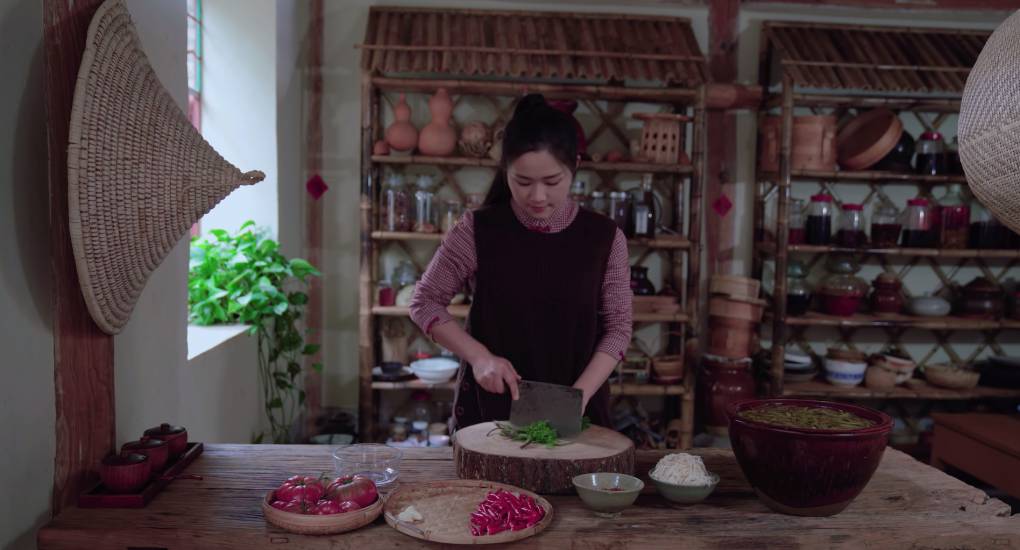
5 Strange, Wonderful Food Video Series to Keep You Company in the Kitchen
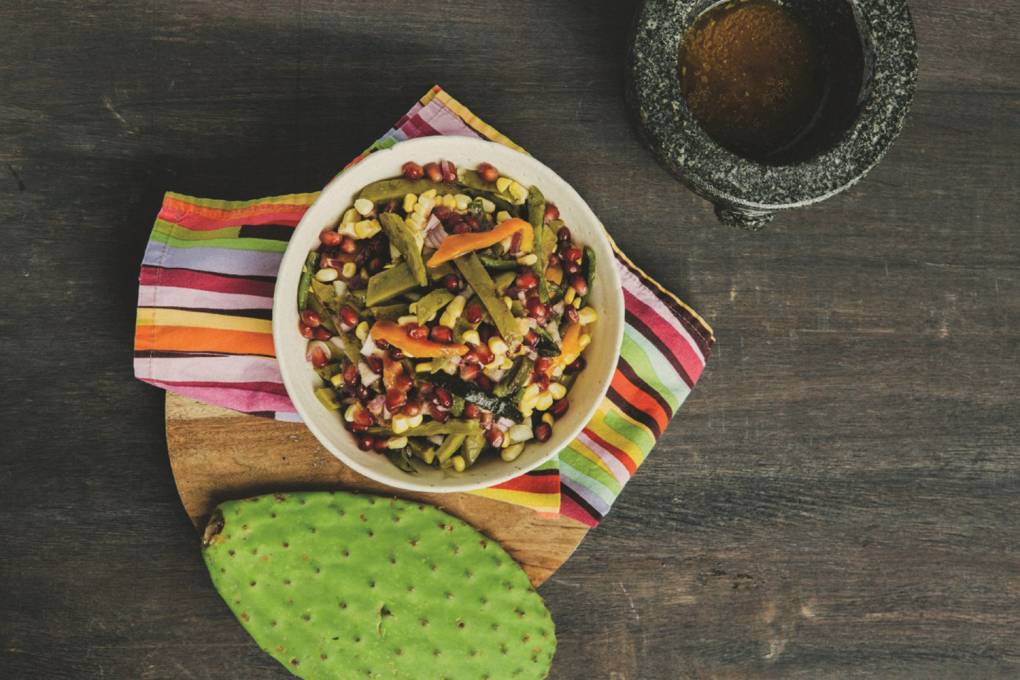
Veganism Isn’t Restrictive in Bryant Terry’s Abundant 'Vegetable Kingdom'
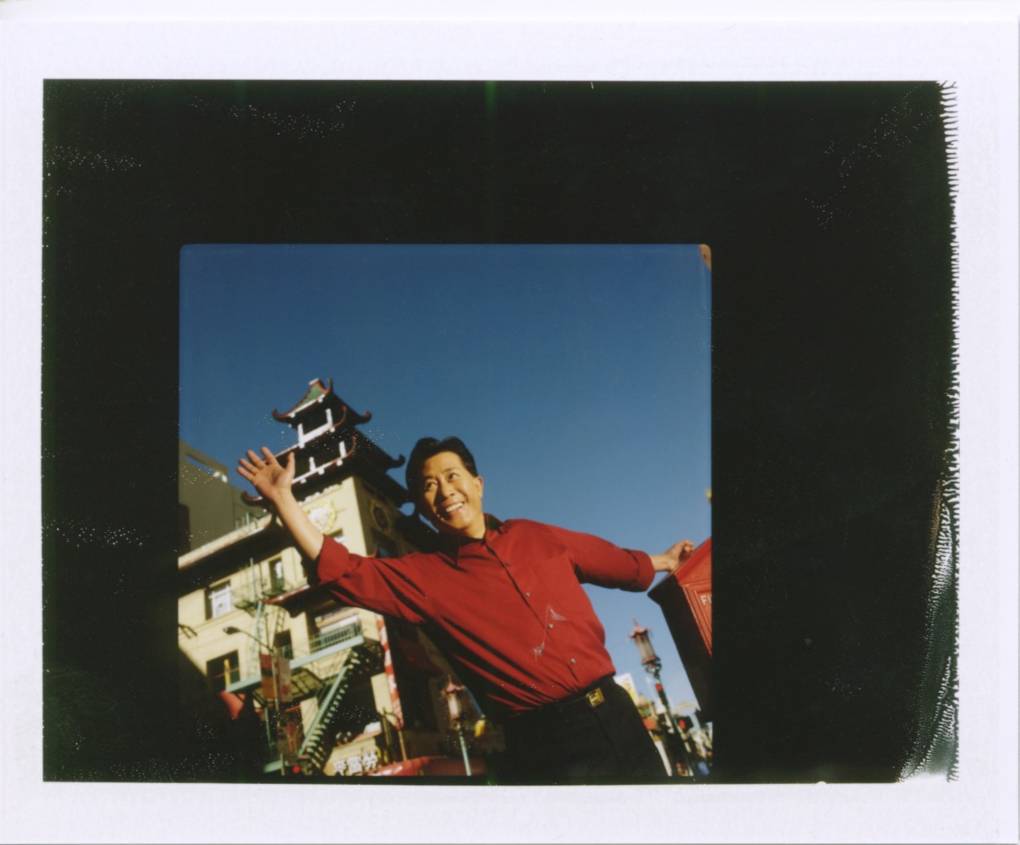
Martin Yan Was a YouTube Celebrity Chef Before There Was YouTube
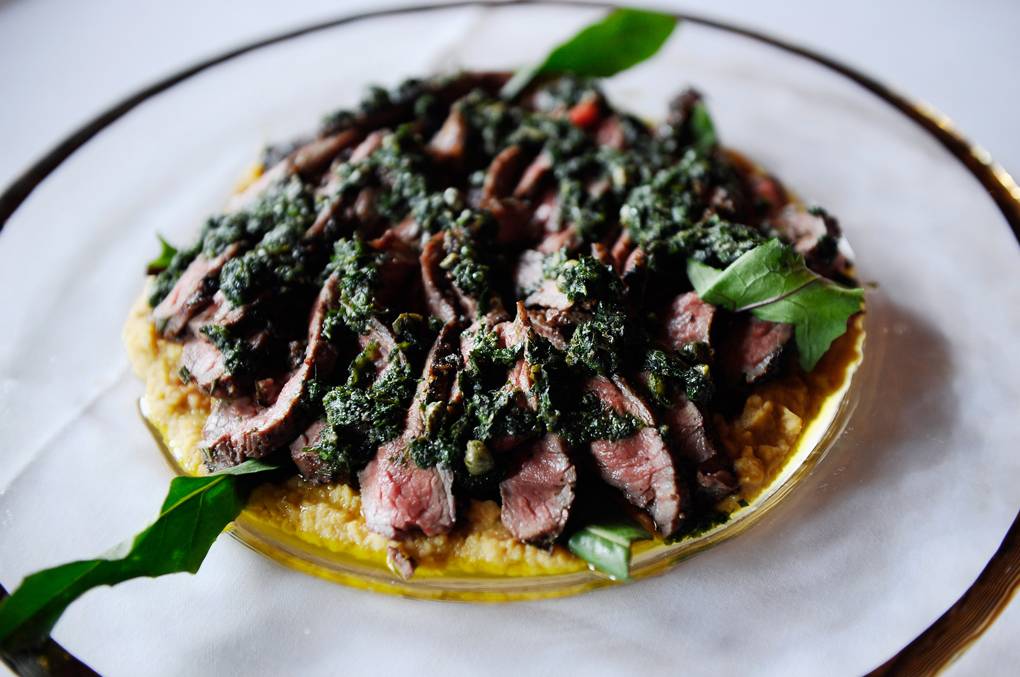
After WWII, Mutton Fell Out Of Favor In The U.S. Can It Make A Comeback?
What It Means to Decolonize Your Diet
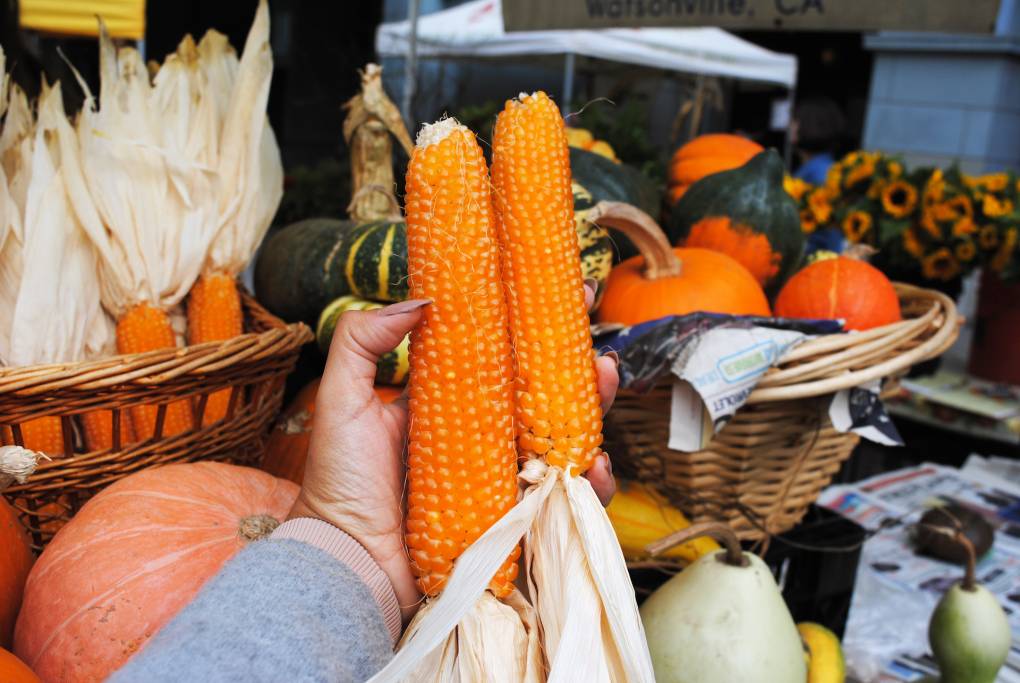
6 Foods Native to the Americas
Eat & Drink Like You're in the 1920s, Two Nights a Week
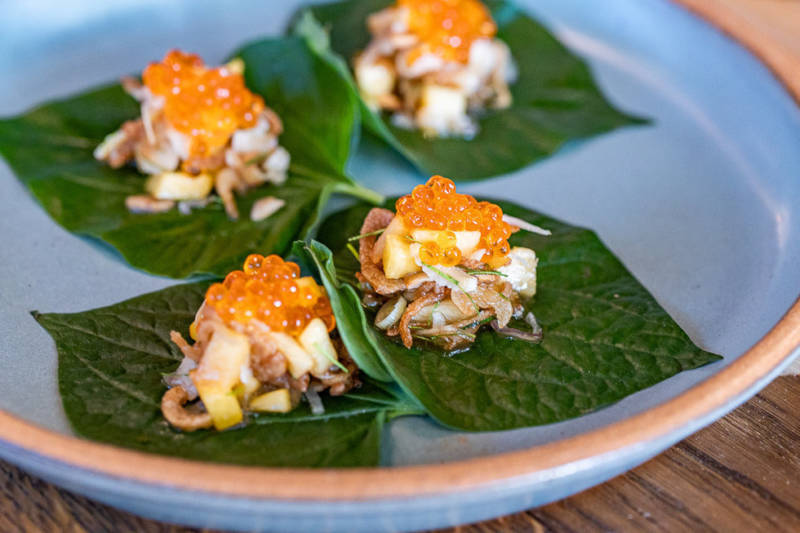
First Taste: Kin Khao sister restaurant Nari bursts with flavor and sophistication
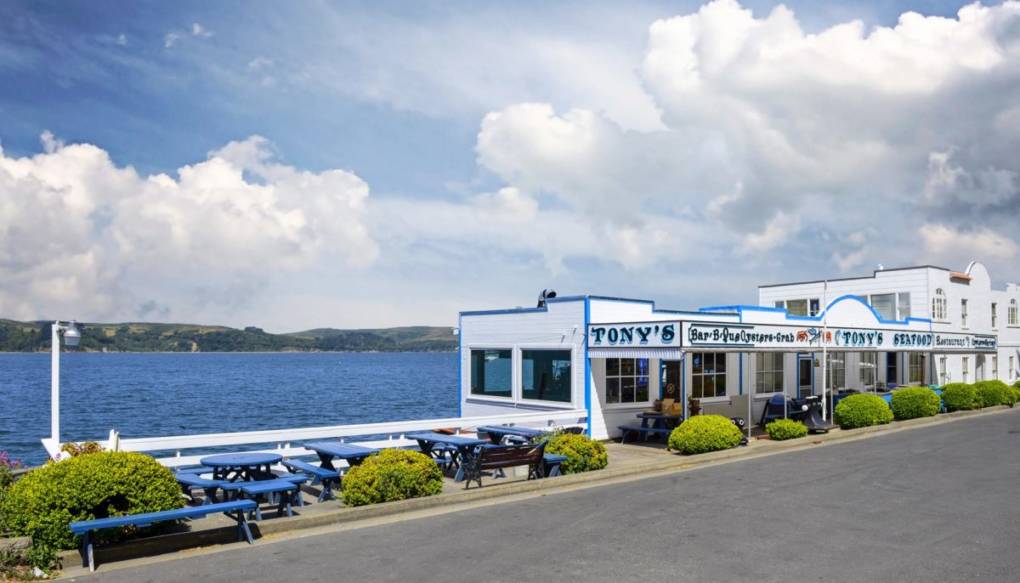
25 Historic Sonoma County Restaurants That Are Still Going Strong
Sponsored
window.__IS_SSR__=true
window.__INITIAL_STATE__={"attachmentsReducer":{"audio_0":{"type":"attachments","id":"audio_0","imgSizes":{"kqedFullSize":{"file":"https://ww2.kqed.org/news/wp-content/themes/KQED-unified/img/audio_bgs/background0.jpg"}}},"audio_1":{"type":"attachments","id":"audio_1","imgSizes":{"kqedFullSize":{"file":"https://ww2.kqed.org/news/wp-content/themes/KQED-unified/img/audio_bgs/background1.jpg"}}},"audio_2":{"type":"attachments","id":"audio_2","imgSizes":{"kqedFullSize":{"file":"https://ww2.kqed.org/news/wp-content/themes/KQED-unified/img/audio_bgs/background2.jpg"}}},"audio_3":{"type":"attachments","id":"audio_3","imgSizes":{"kqedFullSize":{"file":"https://ww2.kqed.org/news/wp-content/themes/KQED-unified/img/audio_bgs/background3.jpg"}}},"audio_4":{"type":"attachments","id":"audio_4","imgSizes":{"kqedFullSize":{"file":"https://ww2.kqed.org/news/wp-content/themes/KQED-unified/img/audio_bgs/background4.jpg"}}},"placeholder":{"type":"attachments","id":"placeholder","imgSizes":{"thumbnail":{"file":"https://ww2.kqed.org/wp-content/uploads/sites/10/2018/01/GettyImages-896326950-160x96.jpg","width":160,"height":96,"mimeType":"image/jpeg"},"medium":{"file":"https://ww2.kqed.org/wp-content/uploads/sites/10/2018/01/GettyImages-896326950-800x478.jpg","width":800,"height":478,"mimeType":"image/jpeg"},"large":{"file":"https://ww2.kqed.org/wp-content/uploads/sites/10/2018/01/GettyImages-896326950-1020x610.jpg","width":1020,"height":610,"mimeType":"image/jpeg"},"fd-lrg":{"file":"https://ww2.kqed.org/wp-content/uploads/sites/10/2018/01/GettyImages-896326950-1920x1148.jpg","width":1920,"height":1148,"mimeType":"image/jpeg"},"fd-med":{"file":"https://ww2.kqed.org/wp-content/uploads/sites/10/2018/01/GettyImages-896326950-1180x705.jpg","width":1180,"height":705,"mimeType":"image/jpeg"},"fd-sm":{"file":"https://ww2.kqed.org/wp-content/uploads/sites/10/2018/01/GettyImages-896326950-960x574.jpg","width":960,"height":574,"mimeType":"image/jpeg"},"post-thumbnail":{"file":"https://ww2.kqed.org/wp-content/uploads/sites/10/2018/01/GettyImages-896326950-672x372.jpg","width":672,"height":372,"mimeType":"image/jpeg"},"twentyfourteen-full-width":{"file":"https://ww2.kqed.org/wp-content/uploads/sites/10/2018/01/GettyImages-896326950-1038x576.jpg","width":1038,"height":576,"mimeType":"image/jpeg"},"xxsmall":{"file":"https://ww2.kqed.org/wp-content/uploads/sites/10/2018/01/GettyImages-896326950-240x143.jpg","width":240,"height":143,"mimeType":"image/jpeg"},"xsmall":{"file":"https://ww2.kqed.org/wp-content/uploads/sites/10/2018/01/GettyImages-896326950-375x224.jpg","width":375,"height":224,"mimeType":"image/jpeg"},"small":{"file":"https://ww2.kqed.org/wp-content/uploads/sites/10/2018/01/GettyImages-896326950-520x311.jpg","width":520,"height":311,"mimeType":"image/jpeg"},"xlarge":{"file":"https://ww2.kqed.org/wp-content/uploads/sites/10/2018/01/GettyImages-896326950-1180x705.jpg","width":1180,"height":705,"mimeType":"image/jpeg"},"full-width":{"file":"https://ww2.kqed.org/wp-content/uploads/sites/10/2018/01/GettyImages-896326950-1920x1148.jpg","width":1920,"height":1148,"mimeType":"image/jpeg"},"guest-author-32":{"file":"https://ww2.kqed.org/wp-content/uploads/sites/10/2018/01/GettyImages-896326950-32x32.jpg","width":32,"height":32,"mimeType":"image/jpeg"},"guest-author-50":{"file":"https://ww2.kqed.org/wp-content/uploads/sites/10/2018/01/GettyImages-896326950-50x50.jpg","width":50,"height":50,"mimeType":"image/jpeg"},"guest-author-64":{"file":"https://ww2.kqed.org/wp-content/uploads/sites/10/2018/01/GettyImages-896326950-64x64.jpg","width":64,"height":64,"mimeType":"image/jpeg"},"guest-author-96":{"file":"https://ww2.kqed.org/wp-content/uploads/sites/10/2018/01/GettyImages-896326950-96x96.jpg","width":96,"height":96,"mimeType":"image/jpeg"},"guest-author-128":{"file":"https://ww2.kqed.org/wp-content/uploads/sites/10/2018/01/GettyImages-896326950-128x128.jpg","width":128,"height":128,"mimeType":"image/jpeg"},"detail":{"file":"https://ww2.kqed.org/wp-content/uploads/sites/10/2018/01/GettyImages-896326950-150x150.jpg","width":150,"height":150,"mimeType":"image/jpeg"},"kqedFullSize":{"file":"https://ww2.kqed.org/wp-content/uploads/sites/10/2018/01/GettyImages-896326950-e1514998105161.jpg","width":1920,"height":1148}}},"bayareabites_136534":{"type":"attachments","id":"bayareabites_136534","meta":{"index":"attachments_1591205162","site":"bayareabites","id":"136534","found":true},"title":"dianxi_kqed","publishDate":1585094467,"status":"inherit","parent":136504,"modified":1585095523,"caption":"Dianxi Xiaoge is the self-proclaimed Yunnan girl whose YouTube videos of idyllic farming and cooking garner millions of views. ","credit":"Courtesy of Dianxi Xiaoge's YouTube ","description":"Dianxi Xiaoge cooks in her kitchen which is filled with gourds, wooden baskets, bowls holding chilis, tomatoes and garlic. ","imgSizes":{"thumbnail":{"file":"https://ww2.kqed.org/app/uploads/sites/24/2020/03/dianxi_kqed-160x86.jpg","width":160,"height":86,"mimeType":"image/jpeg"},"medium":{"file":"https://ww2.kqed.org/app/uploads/sites/24/2020/03/dianxi_kqed-800x432.jpg","width":800,"height":432,"mimeType":"image/jpeg"},"medium_large":{"file":"https://ww2.kqed.org/app/uploads/sites/24/2020/03/dianxi_kqed-768x414.jpg","width":768,"height":414,"mimeType":"image/jpeg"},"large":{"file":"https://ww2.kqed.org/app/uploads/sites/24/2020/03/dianxi_kqed-1020x550.jpg","width":1020,"height":550,"mimeType":"image/jpeg"},"post-thumbnail":{"file":"https://ww2.kqed.org/app/uploads/sites/24/2020/03/dianxi_kqed-672x372.jpg","width":672,"height":372,"mimeType":"image/jpeg"},"twentyfourteen-full-width":{"file":"https://ww2.kqed.org/app/uploads/sites/24/2020/03/dianxi_kqed-1038x576.jpg","width":1038,"height":576,"mimeType":"image/jpeg"},"kqedFullSize":{"file":"https://ww2.kqed.org/app/uploads/sites/24/2020/03/dianxi_kqed.jpg","width":1896,"height":1023}},"fetchFailed":false,"isLoading":false},"bayareabites_136246":{"type":"attachments","id":"bayareabites_136246","meta":{"index":"attachments_1591205162","site":"bayareabites","id":"136246","found":true},"title":"Bryant Terry by Celeste Noche","publishDate":1581453430,"status":"inherit","parent":136244,"modified":1581455900,"caption":"Chef and cookbook author Bryant Terry also serves as the Chef-in-Residence at the Museum of African Diaspora. ","credit":"Celeste Noche","description":null,"imgSizes":{"thumbnail":{"file":"https://ww2.kqed.org/app/uploads/sites/24/2020/02/Bryant-Terry-by-Celeste-Noche-160x163.jpg","width":160,"height":163,"mimeType":"image/jpeg"},"medium":{"file":"https://ww2.kqed.org/app/uploads/sites/24/2020/02/Bryant-Terry-by-Celeste-Noche-800x816.jpg","width":800,"height":816,"mimeType":"image/jpeg"},"medium_large":{"file":"https://ww2.kqed.org/app/uploads/sites/24/2020/02/Bryant-Terry-by-Celeste-Noche-768x783.jpg","width":768,"height":783,"mimeType":"image/jpeg"},"large":{"file":"https://ww2.kqed.org/app/uploads/sites/24/2020/02/Bryant-Terry-by-Celeste-Noche-1020x1040.jpg","width":1020,"height":1040,"mimeType":"image/jpeg"},"post-thumbnail":{"file":"https://ww2.kqed.org/app/uploads/sites/24/2020/02/Bryant-Terry-by-Celeste-Noche-672x372.jpg","width":672,"height":372,"mimeType":"image/jpeg"},"twentyfourteen-full-width":{"file":"https://ww2.kqed.org/app/uploads/sites/24/2020/02/Bryant-Terry-by-Celeste-Noche-1038x576.jpg","width":1038,"height":576,"mimeType":"image/jpeg"},"kqedFullSize":{"file":"https://ww2.kqed.org/app/uploads/sites/24/2020/02/Bryant-Terry-by-Celeste-Noche.jpg","width":1883,"height":1920}},"fetchFailed":false,"isLoading":false},"bayareabites_136188":{"type":"attachments","id":"bayareabites_136188","meta":{"index":"attachments_1591205162","site":"bayareabites","id":"136188","found":true},"title":"Chef Yan Chinatown Serie-5-2002","publishDate":1580546816,"status":"inherit","parent":136185,"modified":1580546907,"caption":"Chef Martin Yan has been entertaining audiences across the nation for nearly four decades on his program Yan Can Cook.","credit":"KQED Archives","description":"Celebrated television host and chef Martin Yan waves to the camera in front of Chinatown.","imgSizes":{"thumbnail":{"file":"https://ww2.kqed.org/app/uploads/sites/24/2020/02/Chef-Yan-Chinatown-Serie-5-2002-160x133.jpg","width":160,"height":133,"mimeType":"image/jpeg"},"medium":{"file":"https://ww2.kqed.org/app/uploads/sites/24/2020/02/Chef-Yan-Chinatown-Serie-5-2002-800x663.jpg","width":800,"height":663,"mimeType":"image/jpeg"},"medium_large":{"file":"https://ww2.kqed.org/app/uploads/sites/24/2020/02/Chef-Yan-Chinatown-Serie-5-2002-768x636.jpg","width":768,"height":636,"mimeType":"image/jpeg"},"large":{"file":"https://ww2.kqed.org/app/uploads/sites/24/2020/02/Chef-Yan-Chinatown-Serie-5-2002-1020x845.jpg","width":1020,"height":845,"mimeType":"image/jpeg"},"post-thumbnail":{"file":"https://ww2.kqed.org/app/uploads/sites/24/2020/02/Chef-Yan-Chinatown-Serie-5-2002-672x372.jpg","width":672,"height":372,"mimeType":"image/jpeg"},"twentyfourteen-full-width":{"file":"https://ww2.kqed.org/app/uploads/sites/24/2020/02/Chef-Yan-Chinatown-Serie-5-2002-1038x576.jpg","width":1038,"height":576,"mimeType":"image/jpeg"},"full-width":{"file":"https://ww2.kqed.org/app/uploads/sites/24/2020/02/Chef-Yan-Chinatown-Serie-5-2002-1920x1590.jpg","width":1920,"height":1590,"mimeType":"image/jpeg"},"kqedFullSize":{"file":"https://ww2.kqed.org/app/uploads/sites/24/2020/02/Chef-Yan-Chinatown-Serie-5-2002.jpg","width":1920,"height":1590}},"fetchFailed":false,"isLoading":false},"bayareabites_136577":{"type":"attachments","id":"bayareabites_136577","meta":{"index":"attachments_1591205162","site":"bayareabites","id":"136577","found":true},"title":"GettyImages-108296393","publishDate":1585417900,"status":"inherit","parent":135723,"modified":1585417931,"caption":" plate of slow roasted lamb with chickpeas, black olives and feta salsa verde prepared by Lucques chef Suzanne Goin is on display during food and wine event at Lucques.","credit":"Kevork Djansezian/Getty Images","description":" plate of slow roasted lamb with chickpeas, black olives and feta salsa verde prepared by Lucques chef Suzanne Goin is on display during food and wine event at Lucques.","imgSizes":{"thumbnail":{"file":"https://ww2.kqed.org/app/uploads/sites/24/2019/11/GettyImages-108296393-160x106.jpg","width":160,"height":106,"mimeType":"image/jpeg"},"medium":{"file":"https://ww2.kqed.org/app/uploads/sites/24/2019/11/GettyImages-108296393-800x531.jpg","width":800,"height":531,"mimeType":"image/jpeg"},"medium_large":{"file":"https://ww2.kqed.org/app/uploads/sites/24/2019/11/GettyImages-108296393-768x510.jpg","width":768,"height":510,"mimeType":"image/jpeg"},"large":{"file":"https://ww2.kqed.org/app/uploads/sites/24/2019/11/GettyImages-108296393-1020x677.jpg","width":1020,"height":677,"mimeType":"image/jpeg"},"post-thumbnail":{"file":"https://ww2.kqed.org/app/uploads/sites/24/2019/11/GettyImages-108296393-672x372.jpg","width":672,"height":372,"mimeType":"image/jpeg"},"twentyfourteen-full-width":{"file":"https://ww2.kqed.org/app/uploads/sites/24/2019/11/GettyImages-108296393-1020x576.jpg","width":1020,"height":576,"mimeType":"image/jpeg"},"kqedFullSize":{"file":"https://ww2.kqed.org/app/uploads/sites/24/2019/11/GettyImages-108296393.jpg","width":1020,"height":677}},"fetchFailed":false,"isLoading":false},"bayareabites_135520":{"type":"attachments","id":"bayareabites_135520","meta":{"index":"attachments_1591205162","site":"bayareabites","id":"135520","found":true},"title":"nopales_14","publishDate":1574119757,"status":"inherit","parent":135518,"modified":1574119998,"caption":"A dish made with nopales","credit":"Tracey Kusiewicz/Foodie Photography","description":"A dish made with nopales","imgSizes":{"thumbnail":{"file":"https://ww2.kqed.org/app/uploads/sites/24/2019/11/nopales_14-160x107.jpg","width":160,"height":107,"mimeType":"image/jpeg"},"medium":{"file":"https://ww2.kqed.org/app/uploads/sites/24/2019/11/nopales_14-800x533.jpg","width":800,"height":533,"mimeType":"image/jpeg"},"medium_large":{"file":"https://ww2.kqed.org/app/uploads/sites/24/2019/11/nopales_14-768x512.jpg","width":768,"height":512,"mimeType":"image/jpeg"},"large":{"file":"https://ww2.kqed.org/app/uploads/sites/24/2019/11/nopales_14-1020x680.jpg","width":1020,"height":680,"mimeType":"image/jpeg"},"complete_open_graph":{"file":"https://ww2.kqed.org/app/uploads/sites/24/2019/11/nopales_14-1200x800.jpg","width":1200,"height":800,"mimeType":"image/jpeg"},"post-thumbnail":{"file":"https://ww2.kqed.org/app/uploads/sites/24/2019/11/nopales_14-672x372.jpg","width":672,"height":372,"mimeType":"image/jpeg"},"twentyfourteen-full-width":{"file":"https://ww2.kqed.org/app/uploads/sites/24/2019/11/nopales_14-1038x576.jpg","width":1038,"height":576,"mimeType":"image/jpeg"},"kqedFullSize":{"file":"https://ww2.kqed.org/app/uploads/sites/24/2019/11/nopales_14.jpg","width":1500,"height":1000}},"fetchFailed":false,"isLoading":false},"bayareabites_135457":{"type":"attachments","id":"bayareabites_135457","meta":{"index":"attachments_1591205162","site":"bayareabites","id":"135457","found":true},"title":"corn_mcginnis","publishDate":1573750356,"status":"inherit","parent":135453,"modified":1573751515,"caption":"Corn from McGinnis Farms","credit":"CUESA","description":"Corn from McGinnis Farms","imgSizes":{"thumbnail":{"file":"https://ww2.kqed.org/app/uploads/sites/24/2019/11/corn_mcginnis-160x107.jpg","width":160,"height":107,"mimeType":"image/jpeg"},"medium":{"file":"https://ww2.kqed.org/app/uploads/sites/24/2019/11/corn_mcginnis-800x535.jpg","width":800,"height":535,"mimeType":"image/jpeg"},"medium_large":{"file":"https://ww2.kqed.org/app/uploads/sites/24/2019/11/corn_mcginnis-768x514.jpg","width":768,"height":514,"mimeType":"image/jpeg"},"large":{"file":"https://ww2.kqed.org/app/uploads/sites/24/2019/11/corn_mcginnis-1020x683.jpg","width":1020,"height":683,"mimeType":"image/jpeg"},"complete_open_graph":{"file":"https://ww2.kqed.org/app/uploads/sites/24/2019/11/corn_mcginnis-1200x803.jpg","width":1200,"height":803,"mimeType":"image/jpeg"},"post-thumbnail":{"file":"https://ww2.kqed.org/app/uploads/sites/24/2019/11/corn_mcginnis-672x372.jpg","width":672,"height":372,"mimeType":"image/jpeg"},"twentyfourteen-full-width":{"file":"https://ww2.kqed.org/app/uploads/sites/24/2019/11/corn_mcginnis-1038x576.jpg","width":1038,"height":576,"mimeType":"image/jpeg"},"full-width":{"file":"https://ww2.kqed.org/app/uploads/sites/24/2019/11/corn_mcginnis-1920x1285.jpg","width":1920,"height":1285,"mimeType":"image/jpeg"},"kqedFullSize":{"file":"https://ww2.kqed.org/app/uploads/sites/24/2019/11/corn_mcginnis.jpg","width":1920,"height":1285}},"fetchFailed":false,"isLoading":false},"bayareabites_135309":{"type":"attachments","id":"bayareabites_135309","meta":{"index":"attachments_1591205162","site":"bayareabites","id":"135309","found":true},"title":"Orchestria Palm Court 1","publishDate":1572987588,"status":"inherit","parent":135303,"modified":1572987713,"caption":"Orchestria Palm Court holds dozens of self-playing music machines.","credit":"Shoshi Parks/KQED","description":null,"imgSizes":{"thumbnail":{"file":"https://ww2.kqed.org/app/uploads/sites/24/2019/11/Orchestria-Palm-Court-1-160x120.jpg","width":160,"height":120,"mimeType":"image/jpeg"},"medium":{"file":"https://ww2.kqed.org/app/uploads/sites/24/2019/11/Orchestria-Palm-Court-1-800x600.jpg","width":800,"height":600,"mimeType":"image/jpeg"},"medium_large":{"file":"https://ww2.kqed.org/app/uploads/sites/24/2019/11/Orchestria-Palm-Court-1-768x576.jpg","width":768,"height":576,"mimeType":"image/jpeg"},"large":{"file":"https://ww2.kqed.org/app/uploads/sites/24/2019/11/Orchestria-Palm-Court-1-1020x765.jpg","width":1020,"height":765,"mimeType":"image/jpeg"},"complete_open_graph":{"file":"https://ww2.kqed.org/app/uploads/sites/24/2019/11/Orchestria-Palm-Court-1-1200x900.jpg","width":1200,"height":900,"mimeType":"image/jpeg"},"post-thumbnail":{"file":"https://ww2.kqed.org/app/uploads/sites/24/2019/11/Orchestria-Palm-Court-1-672x372.jpg","width":672,"height":372,"mimeType":"image/jpeg"},"twentyfourteen-full-width":{"file":"https://ww2.kqed.org/app/uploads/sites/24/2019/11/Orchestria-Palm-Court-1-1038x576.jpg","width":1038,"height":576,"mimeType":"image/jpeg"},"full-width":{"file":"https://ww2.kqed.org/app/uploads/sites/24/2019/11/Orchestria-Palm-Court-1-1920x1440.jpg","width":1920,"height":1440,"mimeType":"image/jpeg"},"kqedFullSize":{"file":"https://ww2.kqed.org/app/uploads/sites/24/2019/11/Orchestria-Palm-Court-1.jpg","width":1920,"height":1440}},"fetchFailed":false,"isLoading":false},"bayareabites_134954":{"type":"attachments","id":"bayareabites_134954","meta":{"index":"attachments_1591205162","site":"bayareabites","id":"134954","found":true},"title":"nari-feat-betelnut-leaves-trout","publishDate":1570212754,"status":"inherit","parent":134952,"modified":1570212800,"caption":"Begin dinner at Nari with a pop: These betelnut leaves topped with salty cured trout roe burst with flavor in one bite. ","credit":"Sarah Chorey","description":"Betelnut leaves topped with salty cured trout roe.","imgSizes":{"thumbnail":{"file":"https://ww2.kqed.org/app/uploads/sites/24/2019/10/nari-feat-betelnut-leaves-trout-160x107.jpg","width":160,"height":107,"mimeType":"image/jpeg"},"medium":{"file":"https://ww2.kqed.org/app/uploads/sites/24/2019/10/nari-feat-betelnut-leaves-trout-800x533.jpg","width":800,"height":533,"mimeType":"image/jpeg"},"medium_large":{"file":"https://ww2.kqed.org/app/uploads/sites/24/2019/10/nari-feat-betelnut-leaves-trout-768x512.jpg","width":768,"height":512,"mimeType":"image/jpeg"},"post-thumbnail":{"file":"https://ww2.kqed.org/app/uploads/sites/24/2019/10/nari-feat-betelnut-leaves-trout-672x372.jpg","width":672,"height":372,"mimeType":"image/jpeg"},"twentyfourteen-full-width":{"file":"https://ww2.kqed.org/app/uploads/sites/24/2019/10/nari-feat-betelnut-leaves-trout-980x576.jpg","width":980,"height":576,"mimeType":"image/jpeg"},"kqedFullSize":{"file":"https://ww2.kqed.org/app/uploads/sites/24/2019/10/nari-feat-betelnut-leaves-trout.jpg","width":980,"height":653}},"fetchFailed":false,"isLoading":false},"bayareabites_134943":{"type":"attachments","id":"bayareabites_134943","meta":{"index":"attachments_1591205162","site":"bayareabites","id":"134943","found":true},"title":"tonys","publishDate":1570137957,"status":"inherit","parent":134907,"modified":1570138020,"caption":"Tony’s Seafood Restaurant, established in 1948, located in beautiful Marshall.","credit":"Tony's Seafood Restaurant","description":"Tony’s Seafood Restaurant, established in 1948, located in beautiful Marshall.","imgSizes":{"thumbnail":{"file":"https://ww2.kqed.org/app/uploads/sites/24/2019/10/tonys-160x91.jpg","width":160,"height":91,"mimeType":"image/jpeg"},"medium":{"file":"https://ww2.kqed.org/app/uploads/sites/24/2019/10/tonys-800x457.jpg","width":800,"height":457,"mimeType":"image/jpeg"},"medium_large":{"file":"https://ww2.kqed.org/app/uploads/sites/24/2019/10/tonys-768x439.jpg","width":768,"height":439,"mimeType":"image/jpeg"},"large":{"file":"https://ww2.kqed.org/app/uploads/sites/24/2019/10/tonys-1020x583.jpg","width":1020,"height":583,"mimeType":"image/jpeg"},"complete_open_graph":{"file":"https://ww2.kqed.org/app/uploads/sites/24/2019/10/tonys-1200x686.jpg","width":1200,"height":686,"mimeType":"image/jpeg"},"post-thumbnail":{"file":"https://ww2.kqed.org/app/uploads/sites/24/2019/10/tonys-672x372.jpg","width":672,"height":372,"mimeType":"image/jpeg"},"twentyfourteen-full-width":{"file":"https://ww2.kqed.org/app/uploads/sites/24/2019/10/tonys-1038x576.jpg","width":1038,"height":576,"mimeType":"image/jpeg"},"kqedFullSize":{"file":"https://ww2.kqed.org/app/uploads/sites/24/2019/10/tonys.jpg","width":1200,"height":686}},"fetchFailed":false,"isLoading":false}},"audioPlayerReducer":{"postId":"stream_live"},"authorsReducer":{"byline_bayareabites_135723":{"type":"authors","id":"byline_bayareabites_135723","meta":{"override":true},"slug":"byline_bayareabites_135723","name":"Lisa Fogarty, NPR Food","isLoading":false},"cuesa":{"type":"authors","id":"5484","meta":{"index":"authors_1591205172","id":"5484","found":true},"name":"CUESA","firstName":"CUESA","lastName":null,"slug":"cuesa","email":"brie@cuesa.org","display_author_email":false,"staff_mastheads":[],"title":null,"bio":"CUESA (Center for Urban Education about Sustainable Agriculture) is a nonprofit organization dedicated to cultivating a sustainable food system through the operation of the Ferry Plaza Farmers Market and its educational programs. Learn more at \u003ca href=\"http://www.cuesa.org/\">cuesa.org\u003c/a>.","avatar":"https://secure.gravatar.com/avatar/323b5bab8e802e76af5b72a66b7c6987?s=600&d=blank&r=g","twitter":"cuesa","facebook":"CUESA","instagram":null,"linkedin":null,"sites":[{"site":"arts","roles":["author"]},{"site":"bayareabites","roles":["contributor"]},{"site":"food","roles":["contributor"]}],"headData":{"title":"CUESA | KQED","description":null,"ogImgSrc":"https://secure.gravatar.com/avatar/323b5bab8e802e76af5b72a66b7c6987?s=600&d=blank&r=g","twImgSrc":"https://secure.gravatar.com/avatar/323b5bab8e802e76af5b72a66b7c6987?s=600&d=blank&r=g"},"isLoading":false,"link":"/author/cuesa"},"sonomamagazine":{"type":"authors","id":"11349","meta":{"index":"authors_1591205172","id":"11349","found":true},"name":"Sonoma Magazine","firstName":"Sonoma","lastName":"Magazine","slug":"sonomamagazine","email":"sonomamag@gmail.com","display_author_email":false,"staff_mastheads":[],"title":null,"bio":"\u003cp class=\"p1\">Sonoma Magazine is an award-winning, bi-monthly publication that celebrates the Sonoma landscape and lifestyle. Through in-depth stories and vivid photography, Sonoma Magazine keeps readers on the pulse of the restaurants, wineries, arts, entertainment, culture and style that make Sonoma a destination, a haven, and a way of life. Visit \u003ca href=\"http://sonomamag.com\">sonomamag.com\u003c/a> to sign up for a subscription and find out what’s new in Wine Country.\u003c/p>","avatar":"https://secure.gravatar.com/avatar/7f30e2b81d7fa7b716644bdceabc490b?s=600&d=blank&r=g","twitter":null,"facebook":null,"instagram":null,"linkedin":null,"sites":[{"site":"bayareabites","roles":["contributor"]},{"site":"food","roles":["contributor"]}],"headData":{"title":"Sonoma Magazine | KQED","description":null,"ogImgSrc":"https://secure.gravatar.com/avatar/7f30e2b81d7fa7b716644bdceabc490b?s=600&d=blank&r=g","twImgSrc":"https://secure.gravatar.com/avatar/7f30e2b81d7fa7b716644bdceabc490b?s=600&d=blank&r=g"},"isLoading":false,"link":"/author/sonomamagazine"},"7x7bayarea":{"type":"authors","id":"11590","meta":{"index":"authors_1591205172","id":"11590","found":true},"name":"7x7 Bay Area","firstName":"7x7 Bay Area","lastName":null,"slug":"7x7bayarea","email":"edit@7x7.com","display_author_email":false,"staff_mastheads":[],"title":null,"bio":"Founded in 2001, 7x7 is an independently owned and totally authentic guide to life in the San Francisco Bay Area. Our 24/7 online resource serves up stories on the best food and drink, arts and culture, style and design, hikes and wellness, regional travel, and more. Visit us anytime at \u003ca href=\"https://www.7x7.com/\">7x7.com\u003c/a>, and also find us on \u003ca href=\"https://www.facebook.com/7x7/\">Facebook\u003c/a>, \u003ca href=\"https://www.instagram.com/7x7bayarea/\">Instagram\u003c/a>, and \u003ca href=\"https://twitter.com/7x7\">Twitter\u003c/a>. Plus, subscribe to our podcast, \u003ca href=\"https://itunes.apple.com/us/podcast/7x7-bay-area-people-will-talk/id1444756628\">\"People Will Talk,\"\u003c/a> for insightful interviews with Bay Area luminaries; you'll find it on iTunes and wherever you get your podcasts.","avatar":"https://secure.gravatar.com/avatar/1084e0a66476f14f77589475632b61a7?s=600&d=blank&r=g","twitter":null,"facebook":null,"instagram":null,"linkedin":null,"sites":[{"site":"bayareabites","roles":["author"]}],"headData":{"title":"7x7 Bay Area | KQED","description":null,"ogImgSrc":"https://secure.gravatar.com/avatar/1084e0a66476f14f77589475632b61a7?s=600&d=blank&r=g","twImgSrc":"https://secure.gravatar.com/avatar/1084e0a66476f14f77589475632b61a7?s=600&d=blank&r=g"},"isLoading":false,"link":"/author/7x7bayarea"},"rgebreyesus":{"type":"authors","id":"11625","meta":{"index":"authors_1591205172","id":"11625","found":true},"name":"Ruth Gebreyesus","firstName":"Ruth","lastName":"Gebreyesus","slug":"rgebreyesus","email":"rgebreyesus@KQED.org","display_author_email":false,"staff_mastheads":[],"title":"Food Writer","bio":"Ruth Gebreyesus is a freelance writer and producer based in the Bay Area. Through stories across various mediums, Ruth explores the creation and consumption of cultural products. You can find more of her work \u003ca href=\"https://www.kotetakotet.com/\">here\u003c/a>.","avatar":"https://secure.gravatar.com/avatar/68980beab511750abbb1a58f1c768b45?s=600&d=blank&r=g","twitter":"root_g","facebook":null,"instagram":null,"linkedin":null,"sites":[{"site":"arts","roles":["subscriber"]},{"site":"bayareabites","roles":["subscriber"]},{"site":"checkplease","roles":["editor"]},{"site":"food","roles":["editor"]}],"headData":{"title":"Ruth Gebreyesus | KQED","description":"Food Writer","ogImgSrc":"https://secure.gravatar.com/avatar/68980beab511750abbb1a58f1c768b45?s=600&d=blank&r=g","twImgSrc":"https://secure.gravatar.com/avatar/68980beab511750abbb1a58f1c768b45?s=600&d=blank&r=g"},"isLoading":false,"link":"/author/rgebreyesus"},"shoshiparks":{"type":"authors","id":"11636","meta":{"index":"authors_1591205172","id":"11636","found":true},"name":"shoshiparks","firstName":"Shoshi","lastName":"Parks","slug":"shoshiparks","email":"shoshiparks@gmail.com","display_author_email":false,"staff_mastheads":[],"title":null,"bio":"Shoshi Parks is an anthropologist and freelance Bay Area writer specializing in food, history and travel. She is a regular contributor to Time Out San Francisco and Fodor's Travel and \u003ca href=\"http://www.shoshiparks.net\">her work\u003c/a> has appeared at a number publications including NPR, Smithsonian.com, Atlas Obscura, Vice, and Yes! Magazine.","avatar":"https://secure.gravatar.com/avatar/d3ad55d5a83906929eb479b80b7f58c5?s=600&d=blank&r=g","twitter":null,"facebook":null,"instagram":null,"linkedin":null,"sites":[{"site":"bayareabites","roles":["contributor"]}],"headData":{"title":"shoshiparks | KQED","description":null,"ogImgSrc":"https://secure.gravatar.com/avatar/d3ad55d5a83906929eb479b80b7f58c5?s=600&d=blank&r=g","twImgSrc":"https://secure.gravatar.com/avatar/d3ad55d5a83906929eb479b80b7f58c5?s=600&d=blank&r=g"},"isLoading":false,"link":"/author/shoshiparks"}},"breakingNewsReducer":{},"campaignFinanceReducer":{},"firebase":{"requesting":{},"requested":{},"timestamps":{},"data":{},"ordered":{},"auth":{"isLoaded":false,"isEmpty":true},"authError":null,"profile":{"isLoaded":false,"isEmpty":true},"listeners":{"byId":{},"allIds":[]},"isInitializing":false,"errors":[]},"navBarReducer":{"navBarId":"arts","fullView":true,"showPlayer":false},"navMenuReducer":{"menus":[{"key":"menu1","items":[{"name":"News","link":"/","type":"title"},{"name":"Politics","link":"/politics"},{"name":"Science","link":"/science"},{"name":"Education","link":"/educationnews"},{"name":"Housing","link":"/housing"},{"name":"Immigration","link":"/immigration"},{"name":"Criminal Justice","link":"/criminaljustice"},{"name":"Silicon Valley","link":"/siliconvalley"},{"name":"Forum","link":"/forum"},{"name":"The California Report","link":"/californiareport"}]},{"key":"menu2","items":[{"name":"Arts & Culture","link":"/arts","type":"title"},{"name":"Critics’ Picks","link":"/thedolist"},{"name":"Cultural Commentary","link":"/artscommentary"},{"name":"Food & Drink","link":"/food"},{"name":"Bay Area Hip-Hop","link":"/bayareahiphop"},{"name":"Rebel Girls","link":"/rebelgirls"},{"name":"Arts Video","link":"/artsvideos"}]},{"key":"menu3","items":[{"name":"Podcasts","link":"/podcasts","type":"title"},{"name":"Bay Curious","link":"/podcasts/baycurious"},{"name":"Rightnowish","link":"/podcasts/rightnowish"},{"name":"The Bay","link":"/podcasts/thebay"},{"name":"On Our Watch","link":"/podcasts/onourwatch"},{"name":"Mindshift","link":"/podcasts/mindshift"},{"name":"Consider This","link":"/podcasts/considerthis"},{"name":"Political Breakdown","link":"/podcasts/politicalbreakdown"}]},{"key":"menu4","items":[{"name":"Live Radio","link":"/radio","type":"title"},{"name":"TV","link":"/tv","type":"title"},{"name":"Events","link":"/events","type":"title"},{"name":"For Educators","link":"/education","type":"title"},{"name":"Support KQED","link":"/support","type":"title"},{"name":"About","link":"/about","type":"title"},{"name":"Help Center","link":"https://kqed-helpcenter.kqed.org/s","type":"title"}]}]},"pagesReducer":{},"postsReducer":{"stream_live":{"type":"live","id":"stream_live","audioUrl":"https://streams.kqed.org/kqedradio","title":"Live Stream","excerpt":"Live Stream information currently unavailable.","link":"/radio","featImg":"","label":{"name":"KQED Live","link":"/"}},"stream_kqedNewscast":{"type":"posts","id":"stream_kqedNewscast","audioUrl":"https://www.kqed.org/.stream/anon/radio/RDnews/newscast.mp3?_=1","title":"KQED Newscast","featImg":"","label":{"name":"88.5 FM","link":"/"}},"bayareabites_136504":{"type":"posts","id":"bayareabites_136504","meta":{"index":"posts_1591205157","site":"bayareabites","id":"136504","score":null,"sort":[1585096209000]},"guestAuthors":[],"slug":"5-strange-wonderful-food-video-series-to-keep-you-company-in-the-kitchen","title":"5 Strange, Wonderful Food Video Series to Keep You Company in the Kitchen","publishDate":1585096209,"format":"standard","headTitle":"Bay Area Bites | KQED Food","labelTerm":{"site":"bayareabites"},"content":"\u003cp>Whether it's due to quarantine, unexpected unemployment or another consequence of COVID-19, you might find yourself with more hours to fill at home these days. Though there are endless ways to spend that time, these food videos from across the globe should provide some relief. Let them feed your escapist tendencies as you shelter in place, all the while giving you ideas—some more bizarre than others—on how to spend your time in the kitchen.\u003c/p>\n\u003ch2>Dianxi Xiaoge's Yunnan Countryside Missives\u003c/h2>\n\u003cp>Hailing from China's southwestern Yunnan province, \u003ca href=\"https://www.youtube.com/channel/UCQG_fzADCunBTV1KwjkfAQQ/featured\">Dianxi Xiaoge\u003c/a>, a self-proclaimed \"local Yunnan girl,\" releases videos of herself farming, cooking and on occasion playing with her dog Dawang. Dianxi Xiaoge's videos are as much a visual delight as they are a sonic feast. Roots are plucked from the soil, rinsed in a bucket of water, chopped in her gorgeous wood kitchen and thrown into a fiery pan to sizzle. Dianxi barely speaks in the videos, but the impeccable quality and her expertise on the farm and in her kitchen are deeply compelling. One episode after another, her bucolic Yunnan life is a respite from the realities of quarantine and city life.\u003cbr>\n[youtube https://www.youtube.com/watch?v=bmDs7zkrzuY]\u003c/p>\n\u003ch2>The Strange Delight of Watching Bread Face\u003c/h2>\n\u003cp>\u003ca href=\"https://www.instagram.com/breadfaceblog/?hl=en\">Bread Face\u003c/a> is the pseudonym of the anonymous woman who smashes her face into bread and other starch food items like waffles, beignets, hush puppies and neatly stacked hard shell tacos. Her tagline reads, \"Giving the people something they didn't ask for,\" and she's amassed almost 200,000 followers on Instagram doing just that. There seems to be some catharsis Bread Face experiences by plunging her face into baked goods, and her popularity suggests that maybe her audience experiences something similar by proxy. In warmly lit corners of her apartment and at restaurants, Bread Face has kept up her work since 2016. On one occasion, the New York City-based blogger posted a recipe for a tofu, scallion and onion dish—but smashing her face into bread remains her staple.\u003c/p>\n\u003cp>https://www.instagram.com/p/B69Mjl_p4U-/\u003c/p>\n\u003ch2>Bon Appétit Bustling Test Kitchen\u003c/h2>\n\u003cp>Sometime early last year, the Bon Appétit Test Kitchen's YouTube channel hit peak popularity among my friends. We exchanged memes from the \u003ca href=\"https://www.instagram.com/meme_appetit/?hl=en\">Meme Appétit\u003c/a> account, and discussed our favorite chefs and series on the channel. The test kitchen's cast of characters, often filmed with the comedic timing and cuts of \u003cem>The\u003c/em> \u003cem>Office\u003c/em>, provide great entertainment through their quips and idiosyncrasies while sharing recipes and techniques that can easily be adapted in a home kitchen. On \u003cem>Gourmet Makes\u003c/em>, pastry chef Claire Saffitz swings from resolute to desperate while making gourmet versions of childhood classic treats like Bagel Bites and Butterfingers. Brad Leone's \u003cem>It's Alive\u003c/em> series features all things fermented, with lots of useful wisdom on preserving food couched in humor from the affable New Jersey chef. Over the last two weeks, the test kitchen chefs have hinted on social media that they'll be filming from home while they obey New York's stay-at-home orders, so stay tuned for more pantry pasta and comforting classics.\u003c/p>\n\u003cp>[ad fullwidth]\u003c/p>\n\u003cp>[youtube https://www.youtube.com/watch?v=IYOa54hxulQ]\u003c/p>\n\u003ch2>Thai Fruit Carving with Chef Namtarn\u003c/h2>\n\u003cp>The art of fruit carving in Thailand has entire schools devoted to it. Centering floral motifs on fruits and willing vegetables, Thai fruit carving has been adopted by chefs and artists across the world, gaining lots of traction on Instagram and other visual social networks. Watching fruit carvers meticulously wield their sleek, sharp knives is a sort of visual ASMR where a bouquet appears from a watermelon or a daisy from a mango. For her videos, Chef Namtarn show off her deft carving skills and creative vision backed by upbeat music building up to reveal her floral masterpieces.\u003c/p>\n\u003cp>[youtube https://www.youtube.com/watch?v=jsRgsAZE-XU]\u003c/p>\n\u003ch2>Ghetto Gastro's Gastronomical Cribs\u003c/h2>\n\u003cp>Entrepreneur Jon Gray and chefs Lester Walker, Malcolm Livingston II and Pierre Serrao are the quartet behind culinary collective \u003ca href=\"https://ghettogastro.com/\">Ghetto Gastro\u003c/a>. Hailing from the Bronx, the group creates food experiences in collaboration with fashion brands, movie studios and food brands like Beyond Meats among others. This month, they launched \u003cem>Gastronomical Cribs\u003c/em>, a series on Instagram where they interface with a chef or person of interest in their home. Their latest guest, Oakland-based chef and writer Samin Nosrat, made a buckwheat cornbread and baked beans while chatting about her favorite recipes from Chez Panisse and how she maintains her health through a shelter-in-place order. You can catch up on the chat with Nosrat in their Instagram archives and dig into their \u003ca href=\"https://www.youtube.com/channel/UCr5C6oLBSFNhdppHz5XFMhw/videos\">YouTube channel\u003c/a> as well.\u003c/p>\n\u003cp>\u003c/p>\n\u003cp>https://www.instagram.com/p/B-GFEmcDnXl/\u003c/p>\n\n","blocks":[],"excerpt":"These YouTube and Instagram series satisfy our escapist tendencies while teaching us a thing or two about cooking. ","status":"publish","parent":0,"modified":1585336707,"stats":{"hasAudio":false,"hasVideo":true,"hasChartOrMap":false,"iframeSrcs":[],"hasGoogleForm":false,"hasGallery":false,"hasHearkenModule":false,"hasPolis":false,"paragraphCount":10,"wordCount":802},"headData":{"title":"5 Strange, Wonderful Food Video Series to Keep You Company in the Kitchen | KQED","description":"These YouTube and Instagram series satisfy our escapist tendencies while teaching us a thing or two about cooking. ","ogTitle":"","ogDescription":"","ogImgId":"","twTitle":"","twDescription":"","twImgId":"","schema":{"@context":"http://schema.org","@type":"Article","headline":"5 Strange, Wonderful Food Video Series to Keep You Company in the Kitchen","datePublished":"2020-03-25T00:30:09.000Z","dateModified":"2020-03-27T19:18:27.000Z","image":"https://cdn.kqed.org/wp-content/uploads/2020/02/KQED-OG-Image@1x.png"}},"disqusIdentifier":"136504 https://ww2.kqed.org/bayareabites/?p=136504","disqusUrl":"https://ww2.kqed.org/bayareabites/2020/03/24/5-strange-wonderful-food-video-series-to-keep-you-company-in-the-kitchen/","disqusTitle":"5 Strange, Wonderful Food Video Series to Keep You Company in the Kitchen","templateType":"standard","featuredImageType":"standard","path":"/bayareabites/136504/5-strange-wonderful-food-video-series-to-keep-you-company-in-the-kitchen","audioTrackLength":null,"parsedContent":[{"type":"contentString","content":"\u003cdiv class=\"post-body\">\u003cp>\u003cp>Whether it's due to quarantine, unexpected unemployment or another consequence of COVID-19, you might find yourself with more hours to fill at home these days. Though there are endless ways to spend that time, these food videos from across the globe should provide some relief. Let them feed your escapist tendencies as you shelter in place, all the while giving you ideas—some more bizarre than others—on how to spend your time in the kitchen.\u003c/p>\n\u003ch2>Dianxi Xiaoge's Yunnan Countryside Missives\u003c/h2>\n\u003cp>Hailing from China's southwestern Yunnan province, \u003ca href=\"https://www.youtube.com/channel/UCQG_fzADCunBTV1KwjkfAQQ/featured\">Dianxi Xiaoge\u003c/a>, a self-proclaimed \"local Yunnan girl,\" releases videos of herself farming, cooking and on occasion playing with her dog Dawang. Dianxi Xiaoge's videos are as much a visual delight as they are a sonic feast. Roots are plucked from the soil, rinsed in a bucket of water, chopped in her gorgeous wood kitchen and thrown into a fiery pan to sizzle. Dianxi barely speaks in the videos, but the impeccable quality and her expertise on the farm and in her kitchen are deeply compelling. One episode after another, her bucolic Yunnan life is a respite from the realities of quarantine and city life.\u003cbr>\n\u003c/p>\u003cp>\u003cspan class='utils-parseShortcode-shortcodes-__youtubeShortcode__embedYoutube'>\n \u003cspan class='utils-parseShortcode-shortcodes-__youtubeShortcode__embedYoutubeInside'>\n \u003ciframe\n loading='lazy'\n class='utils-parseShortcode-shortcodes-__youtubeShortcode__youtubePlayer'\n type='text/html'\n src='//www.youtube.com/embed/bmDs7zkrzuY'\n title='//www.youtube.com/embed/bmDs7zkrzuY'\n allowfullscreen='true'\n style='border:0;'>\u003c/iframe>\n \u003c/span>\n \u003c/span>\u003c/p>\u003cp>\u003c/p>\n\u003ch2>The Strange Delight of Watching Bread Face\u003c/h2>\n\u003cp>\u003ca href=\"https://www.instagram.com/breadfaceblog/?hl=en\">Bread Face\u003c/a> is the pseudonym of the anonymous woman who smashes her face into bread and other starch food items like waffles, beignets, hush puppies and neatly stacked hard shell tacos. Her tagline reads, \"Giving the people something they didn't ask for,\" and she's amassed almost 200,000 followers on Instagram doing just that. There seems to be some catharsis Bread Face experiences by plunging her face into baked goods, and her popularity suggests that maybe her audience experiences something similar by proxy. In warmly lit corners of her apartment and at restaurants, Bread Face has kept up her work since 2016. On one occasion, the New York City-based blogger posted a recipe for a tofu, scallion and onion dish—but smashing her face into bread remains her staple.\u003c/p>\u003c/p>\u003c/div>","attributes":{"named":{},"numeric":[]}},{"type":"component","content":"","name":"instagramLink","attributes":{"named":{"instagramId":"B69Mjl_p4U-"},"numeric":[]}},{"type":"contentString","content":"\u003cdiv class=\"post-body\">\u003cp>\u003ch2>Bon Appétit Bustling Test Kitchen\u003c/h2>\n\u003cp>Sometime early last year, the Bon Appétit Test Kitchen's YouTube channel hit peak popularity among my friends. We exchanged memes from the \u003ca href=\"https://www.instagram.com/meme_appetit/?hl=en\">Meme Appétit\u003c/a> account, and discussed our favorite chefs and series on the channel. The test kitchen's cast of characters, often filmed with the comedic timing and cuts of \u003cem>The\u003c/em> \u003cem>Office\u003c/em>, provide great entertainment through their quips and idiosyncrasies while sharing recipes and techniques that can easily be adapted in a home kitchen. On \u003cem>Gourmet Makes\u003c/em>, pastry chef Claire Saffitz swings from resolute to desperate while making gourmet versions of childhood classic treats like Bagel Bites and Butterfingers. Brad Leone's \u003cem>It's Alive\u003c/em> series features all things fermented, with lots of useful wisdom on preserving food couched in humor from the affable New Jersey chef. Over the last two weeks, the test kitchen chefs have hinted on social media that they'll be filming from home while they obey New York's stay-at-home orders, so stay tuned for more pantry pasta and comforting classics.\u003c/p>\n\u003cp>\u003c/p>\u003c/div>","attributes":{"named":{},"numeric":[]}},{"type":"component","content":"","name":"ad","attributes":{"named":{"label":"fullwidth"},"numeric":["fullwidth"]}},{"type":"contentString","content":"\u003cdiv class=\"post-body\">\u003cp>\u003c/p>\n\u003cp>\u003c/p>\u003cp>\u003cspan class='utils-parseShortcode-shortcodes-__youtubeShortcode__embedYoutube'>\n \u003cspan class='utils-parseShortcode-shortcodes-__youtubeShortcode__embedYoutubeInside'>\n \u003ciframe\n loading='lazy'\n class='utils-parseShortcode-shortcodes-__youtubeShortcode__youtubePlayer'\n type='text/html'\n src='//www.youtube.com/embed/IYOa54hxulQ'\n title='//www.youtube.com/embed/IYOa54hxulQ'\n allowfullscreen='true'\n style='border:0;'>\u003c/iframe>\n \u003c/span>\n \u003c/span>\u003c/p>\u003cp>\u003c/p>\n\u003ch2>Thai Fruit Carving with Chef Namtarn\u003c/h2>\n\u003cp>The art of fruit carving in Thailand has entire schools devoted to it. Centering floral motifs on fruits and willing vegetables, Thai fruit carving has been adopted by chefs and artists across the world, gaining lots of traction on Instagram and other visual social networks. Watching fruit carvers meticulously wield their sleek, sharp knives is a sort of visual ASMR where a bouquet appears from a watermelon or a daisy from a mango. For her videos, Chef Namtarn show off her deft carving skills and creative vision backed by upbeat music building up to reveal her floral masterpieces.\u003c/p>\n\u003cp>\u003c/p>\u003cp>\u003cspan class='utils-parseShortcode-shortcodes-__youtubeShortcode__embedYoutube'>\n \u003cspan class='utils-parseShortcode-shortcodes-__youtubeShortcode__embedYoutubeInside'>\n \u003ciframe\n loading='lazy'\n class='utils-parseShortcode-shortcodes-__youtubeShortcode__youtubePlayer'\n type='text/html'\n src='//www.youtube.com/embed/jsRgsAZE-XU'\n title='//www.youtube.com/embed/jsRgsAZE-XU'\n allowfullscreen='true'\n style='border:0;'>\u003c/iframe>\n \u003c/span>\n \u003c/span>\u003c/p>\u003cp>\u003c/p>\n\u003ch2>Ghetto Gastro's Gastronomical Cribs\u003c/h2>\n\u003cp>Entrepreneur Jon Gray and chefs Lester Walker, Malcolm Livingston II and Pierre Serrao are the quartet behind culinary collective \u003ca href=\"https://ghettogastro.com/\">Ghetto Gastro\u003c/a>. Hailing from the Bronx, the group creates food experiences in collaboration with fashion brands, movie studios and food brands like Beyond Meats among others. This month, they launched \u003cem>Gastronomical Cribs\u003c/em>, a series on Instagram where they interface with a chef or person of interest in their home. Their latest guest, Oakland-based chef and writer Samin Nosrat, made a buckwheat cornbread and baked beans while chatting about her favorite recipes from Chez Panisse and how she maintains her health through a shelter-in-place order. You can catch up on the chat with Nosrat in their Instagram archives and dig into their \u003ca href=\"https://www.youtube.com/channel/UCr5C6oLBSFNhdppHz5XFMhw/videos\">YouTube channel\u003c/a> as well.\u003c/p>\n\u003cp>\u003c/p>\u003c/p>\u003c/div>","attributes":{"named":{},"numeric":[]}},{"type":"component","content":"","name":"instagramLink","attributes":{"named":{"instagramId":"B-GFEmcDnXl"},"numeric":[]}},{"type":"contentString","content":"\u003cdiv class=\"post-body\">\u003cp>\n\u003c/div>\u003c/p>","attributes":{"named":{},"numeric":[]}}],"link":"/bayareabites/136504/5-strange-wonderful-food-video-series-to-keep-you-company-in-the-kitchen","authors":["11625"],"categories":["bayareabites_16558","bayareabites_2695","bayareabites_1865","bayareabites_2090","bayareabites_1593"],"tags":["bayareabites_9710","bayareabites_16557","bayareabites_16552","bayareabites_9298"],"featImg":"bayareabites_136534","label":"bayareabites"},"bayareabites_136244":{"type":"posts","id":"bayareabites_136244","meta":{"index":"posts_1591205157","site":"bayareabites","id":"136244","score":null,"sort":[1581460218000]},"guestAuthors":[],"slug":"veganism-isnt-restrictive-in-bryant-terrys-abundant-vegetable-kingdom","title":"Veganism Isn’t Restrictive in Bryant Terry’s Abundant 'Vegetable Kingdom'","publishDate":1581460218,"format":"standard","headTitle":"Bay Area Bites | KQED Food","labelTerm":{"site":"bayareabites"},"content":"\u003cp>\u003cspan style=\"font-weight: 400\">Vegetables reign supreme in Bryant Terry’s world. In his new cookbook, \u003c/span>\u003ca href=\"https://www.penguinrandomhouse.com/books/564101/vegetable-kingdom-by-bryant-terry/9780399581045/\">\u003ci>\u003cspan style=\"font-weight: 400\">Vegetable Kingdom: The Abundant World of Vegan Recipes\u003c/span>\u003c/i>\u003c/a>\u003cspan style=\"font-weight: 400\">, the James Beard Award-winning chef and author presents a collection of 150 recipes in which vegetables are the unabashed stars of the table, not the paltry side dishes. \u003c/span>\u003c/p>\n\u003cp>\u003cspan style=\"font-weight: 400\">Terry’s latest cookbook comes six years after his critically acclaimed \u003c/span>\u003ci>\u003cspan style=\"font-weight: 400\">Afro-Vegan: Farm-Fresh African, Caribbean, and Southern Flavors Remixed\u003c/span>\u003c/i>\u003cspan style=\"font-weight: 400\">. “I very intentionally pulled back from book writing and overburdening myself with projects because I wanted to be as present as possible with my children,” explains the father of two. In the introduction to \u003c/span>\u003ci>\u003cspan style=\"font-weight: 400\">Vegetable Kingdom\u003c/span>\u003c/i>\u003cspan style=\"font-weight: 400\">, Terry writes that his daughters, ages five and eight, inspired the book and were among his dishes' first tasters. \u003c/span>\u003c/p>\n\u003cp>\u003cspan style=\"font-weight: 400\">“One of the litmus tests for the recipes was if they liked it,” he says. “Kids are brutally honest.” \u003c/span>\u003c/p>\n\u003cp>\u003cspan style=\"font-weight: 400\">The world of vegetables can be intimidatingly vast, yet Terry’s book lays it out in an accessible way alongside his takes on marinades, sauces and spice blends influenced by American Southern, Caribbean, sub-Saharan African and Asian cuisines. Terry credits his daughter’s gardening class for the approachable architecture of the book, which categorizes recipes by which part of the plant the central ingredient comes from. Starting with seeds such as beans and corns, recipes grow into bulbs (fennel, leeks and the like), then into stems (asparagus and such), flowers (broccoli and its floreted cousins), fruits (squashes and peppers), leaves (greens of every kind) and back down to fungus, tubers and roots. \u003c/span>\u003c/p>\n\u003cfigure id=\"attachment_136245\" class=\"wp-caption alignleft\" style=\"max-width: 800px\">\u003cimg class=\"size-medium wp-image-136245\" src=\"https://ww2.kqed.org/app/uploads/sites/24/2020/02/Vegetable-Kingdom-COV-800x995.jpg\" alt=\"Terry's latest cookbook dives deep into the world of vegetables with more than 150 vegan recipes.\" width=\"800\" height=\"995\" srcset=\"https://ww2.kqed.org/app/uploads/sites/24/2020/02/Vegetable-Kingdom-COV-800x995.jpg 800w, https://ww2.kqed.org/app/uploads/sites/24/2020/02/Vegetable-Kingdom-COV-160x199.jpg 160w, https://ww2.kqed.org/app/uploads/sites/24/2020/02/Vegetable-Kingdom-COV-768x955.jpg 768w, https://ww2.kqed.org/app/uploads/sites/24/2020/02/Vegetable-Kingdom-COV-1020x1268.jpg 1020w, https://ww2.kqed.org/app/uploads/sites/24/2020/02/Vegetable-Kingdom-COV.jpg 1544w\" sizes=\"(max-width: 800px) 100vw, 800px\">\u003cfigcaption class=\"wp-caption-text\">Terry's latest cookbook dives deep into the world of vegetables with more than 150 vegan recipes. \u003ccite>(Ed Anderson)\u003c/cite>\u003c/figcaption>\u003c/figure>\n\u003cp>\u003cspan style=\"font-weight: 400\">“When I was composing the recipes, I was mindful of the fact that there’ll be a diversity of readers,” he says noting that his audience has varying degrees of comfort in the kitchen. To that end, he’s included a couple of beginner-level recipes in each section. (“If you could boil a pot of water, you can make this recipe,” he says.) These are interspersed with more elaborate meals fit for dinner parties and leisurely, late weekend lunches. \u003c/span>\u003c/p>\n\u003cp>[ad fullwidth]\u003c/p>\n\u003cp>\u003cspan style=\"font-weight: 400\">Terry continues his tradition of marrying music and food in his newest book by pairing recipes with a playlist of songs—Israel Kamakawiwo’ole’s “\u003ca href=\"https://www.youtube.com/watch?v=V1bFr2SWP1I\">Over the Rainbow\u003c/a>” for roasted Okinawan sweet potatoes, “\u003ca href=\"https://www.youtube.com/watch?v=_W14wK4QGh4\">Stay Flo\u003c/a>” from Solange for a mashed kabocha spread and “\u003ca href=\"https://www.youtube.com/watch?v=3TsYIQv0sX8\">Big Rings\u003c/a>” from Drake and Future for a beans, buns and broccoli recipe.\u003c/span>\u003c/p>\n\u003cp>[aside postID='bayareabites_136250' hero='https://ww2.kqed.org/app/uploads/sites/24/2020/02/bunsbeansbroccoli.jpeg' 'label='Cook up chef Bryant Terry's Beans and Broccoli sandwich for dinner this week']\u003c/p>\n\u003cp>\u003cspan style=\"font-weight: 400\">Growing up in Memphis and visiting his family’s farms in nearby Mississippi, Terry’s love of vegetables is decades deep. “As a child, I was fully immersed in the vegetable kingdom because my family has agrarian roots,” he says. \u003c/span>\u003c/p>\n\u003cp>\u003cspan style=\"font-weight: 400\">“They brought with them the values and traditions and [a] true understanding of the importance of growing one’s own food,” he adds, reminiscing about the urban garden that occupied much of the yard of his childhood home. \u003c/span>\u003c/p>\n\u003cp>\u003cspan style=\"font-weight: 400\">Watching his grandfather not just grow food, but prepare it to feed his family, was also a transformative experience that’s stayed with Terry. In raising his own children, the vegan chef and his non-vegan wife try their best to model similarly healthy behaviors. “I don’t eat animal products and my wife does eat some animal products. It’s always been this negotiation and we met somewhere in the middle,” he says adding that his children have dairy and eggs once in a while. “When parents try to force something on kids or be dogmatic, it can often push them away and go in the opposite direction so I’ve been mindful of that.” \u003c/span>\u003c/p>\n\u003cp>\u003cspan style=\"font-weight: 400\">Though there’s plenty of age-appropriate lessons about the benefits of eating local, vegetable-centric and organic food, Terry is certain lasting lessons start with what's on the plate: “What resonates with everyone is delicious food.” \u003c/span>\u003c/p>\n\u003cp>\u003c/p>\n\u003cp>\u003ci>\u003cspan style=\"font-weight: 400\">Catch Bryant Terry at \u003c/span>\u003c/i>\u003ca href=\"https://www.bryant-terry.com/events/2020/2/15/vegetable-kingdom-national-book-release-party\">\u003ci>\u003cspan style=\"font-weight: 400\">his book release party\u003c/span>\u003c/i>\u003c/a>\u003ci>\u003cspan style=\"font-weight: 400\"> this Saturday, Feb. 15 at Red Bay Coffee in Oakland, and at various other \u003c/span>\u003c/i>\u003ca href=\"https://www.bryant-terry.com/events\">\u003ci>\u003cspan style=\"font-weight: 400\">book events\u003c/span>\u003c/i>\u003c/a>\u003ci>\u003cspan style=\"font-weight: 400\"> for \u003c/span>\u003c/i>\u003cspan style=\"font-weight: 400\">Vegetable Kingdom\u003c/span>\u003ci>\u003cspan style=\"font-weight: 400\"> in the coming weeks. \u003c/span>\u003c/i>\u003c/p>\n\n","blocks":[],"excerpt":"The Oakland-based chef and author’s newest cookbook is an ode to the glory of vegetables.","status":"publish","parent":0,"modified":1581467814,"stats":{"hasAudio":false,"hasVideo":false,"hasChartOrMap":false,"iframeSrcs":[],"hasGoogleForm":false,"hasGallery":false,"hasHearkenModule":false,"hasPolis":false,"paragraphCount":14,"wordCount":760},"headData":{"title":"Veganism Isn’t Restrictive in Bryant Terry’s Abundant 'Vegetable Kingdom' | KQED","description":"The Oakland-based chef and author’s newest cookbook is an ode to the glory of vegetables.","ogTitle":"","ogDescription":"","ogImgId":"","twTitle":"","twDescription":"","twImgId":"","schema":{"@context":"http://schema.org","@type":"Article","headline":"Veganism Isn’t Restrictive in Bryant Terry’s Abundant 'Vegetable Kingdom'","datePublished":"2020-02-11T22:30:18.000Z","dateModified":"2020-02-12T00:36:54.000Z","image":"https://cdn.kqed.org/wp-content/uploads/2020/02/KQED-OG-Image@1x.png"}},"disqusIdentifier":"136244 https://ww2.kqed.org/bayareabites/?p=136244","disqusUrl":"https://ww2.kqed.org/bayareabites/2020/02/11/veganism-isnt-restrictive-in-bryant-terrys-abundant-vegetable-kingdom/","disqusTitle":"Veganism Isn’t Restrictive in Bryant Terry’s Abundant 'Vegetable Kingdom'","templateType":"standard","featuredImageType":"standard","path":"/bayareabites/136244/veganism-isnt-restrictive-in-bryant-terrys-abundant-vegetable-kingdom","audioTrackLength":null,"parsedContent":[{"type":"contentString","content":"\u003cdiv class=\"post-body\">\u003cp>\u003cp>\u003cspan style=\"font-weight: 400\">Vegetables reign supreme in Bryant Terry’s world. In his new cookbook, \u003c/span>\u003ca href=\"https://www.penguinrandomhouse.com/books/564101/vegetable-kingdom-by-bryant-terry/9780399581045/\">\u003ci>\u003cspan style=\"font-weight: 400\">Vegetable Kingdom: The Abundant World of Vegan Recipes\u003c/span>\u003c/i>\u003c/a>\u003cspan style=\"font-weight: 400\">, the James Beard Award-winning chef and author presents a collection of 150 recipes in which vegetables are the unabashed stars of the table, not the paltry side dishes. \u003c/span>\u003c/p>\n\u003cp>\u003cspan style=\"font-weight: 400\">Terry’s latest cookbook comes six years after his critically acclaimed \u003c/span>\u003ci>\u003cspan style=\"font-weight: 400\">Afro-Vegan: Farm-Fresh African, Caribbean, and Southern Flavors Remixed\u003c/span>\u003c/i>\u003cspan style=\"font-weight: 400\">. “I very intentionally pulled back from book writing and overburdening myself with projects because I wanted to be as present as possible with my children,” explains the father of two. In the introduction to \u003c/span>\u003ci>\u003cspan style=\"font-weight: 400\">Vegetable Kingdom\u003c/span>\u003c/i>\u003cspan style=\"font-weight: 400\">, Terry writes that his daughters, ages five and eight, inspired the book and were among his dishes' first tasters. \u003c/span>\u003c/p>\n\u003cp>\u003cspan style=\"font-weight: 400\">“One of the litmus tests for the recipes was if they liked it,” he says. “Kids are brutally honest.” \u003c/span>\u003c/p>\n\u003cp>\u003cspan style=\"font-weight: 400\">The world of vegetables can be intimidatingly vast, yet Terry’s book lays it out in an accessible way alongside his takes on marinades, sauces and spice blends influenced by American Southern, Caribbean, sub-Saharan African and Asian cuisines. Terry credits his daughter’s gardening class for the approachable architecture of the book, which categorizes recipes by which part of the plant the central ingredient comes from. Starting with seeds such as beans and corns, recipes grow into bulbs (fennel, leeks and the like), then into stems (asparagus and such), flowers (broccoli and its floreted cousins), fruits (squashes and peppers), leaves (greens of every kind) and back down to fungus, tubers and roots. \u003c/span>\u003c/p>\n\u003cfigure id=\"attachment_136245\" class=\"wp-caption alignleft\" style=\"max-width: 800px\">\u003cimg class=\"size-medium wp-image-136245\" src=\"https://ww2.kqed.org/app/uploads/sites/24/2020/02/Vegetable-Kingdom-COV-800x995.jpg\" alt=\"Terry's latest cookbook dives deep into the world of vegetables with more than 150 vegan recipes.\" width=\"800\" height=\"995\" srcset=\"https://ww2.kqed.org/app/uploads/sites/24/2020/02/Vegetable-Kingdom-COV-800x995.jpg 800w, https://ww2.kqed.org/app/uploads/sites/24/2020/02/Vegetable-Kingdom-COV-160x199.jpg 160w, https://ww2.kqed.org/app/uploads/sites/24/2020/02/Vegetable-Kingdom-COV-768x955.jpg 768w, https://ww2.kqed.org/app/uploads/sites/24/2020/02/Vegetable-Kingdom-COV-1020x1268.jpg 1020w, https://ww2.kqed.org/app/uploads/sites/24/2020/02/Vegetable-Kingdom-COV.jpg 1544w\" sizes=\"(max-width: 800px) 100vw, 800px\">\u003cfigcaption class=\"wp-caption-text\">Terry's latest cookbook dives deep into the world of vegetables with more than 150 vegan recipes. \u003ccite>(Ed Anderson)\u003c/cite>\u003c/figcaption>\u003c/figure>\n\u003cp>\u003cspan style=\"font-weight: 400\">“When I was composing the recipes, I was mindful of the fact that there’ll be a diversity of readers,” he says noting that his audience has varying degrees of comfort in the kitchen. To that end, he’s included a couple of beginner-level recipes in each section. (“If you could boil a pot of water, you can make this recipe,” he says.) These are interspersed with more elaborate meals fit for dinner parties and leisurely, late weekend lunches. \u003c/span>\u003c/p>\n\u003cp>\u003c/p>\u003c/div>","attributes":{"named":{},"numeric":[]}},{"type":"component","content":"","name":"ad","attributes":{"named":{"label":"fullwidth"},"numeric":["fullwidth"]}},{"type":"contentString","content":"\u003cdiv class=\"post-body\">\u003cp>\u003c/p>\n\u003cp>\u003cspan style=\"font-weight: 400\">Terry continues his tradition of marrying music and food in his newest book by pairing recipes with a playlist of songs—Israel Kamakawiwo’ole’s “\u003ca href=\"https://www.youtube.com/watch?v=V1bFr2SWP1I\">Over the Rainbow\u003c/a>” for roasted Okinawan sweet potatoes, “\u003ca href=\"https://www.youtube.com/watch?v=_W14wK4QGh4\">Stay Flo\u003c/a>” from Solange for a mashed kabocha spread and “\u003ca href=\"https://www.youtube.com/watch?v=3TsYIQv0sX8\">Big Rings\u003c/a>” from Drake and Future for a beans, buns and broccoli recipe.\u003c/span>\u003c/p>\n\u003cp>\u003c/p>\u003c/div>","attributes":{"named":{},"numeric":[]}},{"type":"component","content":"","name":"aside","attributes":{"named":{"postid":"bayareabites_136250","hero":"https://ww2.kqed.org/app/uploads/sites/24/2020/02/bunsbeansbroccoli.jpeg","label":"'label='Cook up chef Bryant Terry's Beans and Broccoli sandwich for dinner this week'"},"numeric":["'label='Cook","up","chef","Bryant","Terry's","Beans","and","Broccoli","sandwich","for","dinner","this","week'"]}},{"type":"contentString","content":"\u003cdiv class=\"post-body\">\u003cp>\u003c/p>\n\u003cp>\u003cspan style=\"font-weight: 400\">Growing up in Memphis and visiting his family’s farms in nearby Mississippi, Terry’s love of vegetables is decades deep. “As a child, I was fully immersed in the vegetable kingdom because my family has agrarian roots,” he says. \u003c/span>\u003c/p>\n\u003cp>\u003cspan style=\"font-weight: 400\">“They brought with them the values and traditions and [a] true understanding of the importance of growing one’s own food,” he adds, reminiscing about the urban garden that occupied much of the yard of his childhood home. \u003c/span>\u003c/p>\n\u003cp>\u003cspan style=\"font-weight: 400\">Watching his grandfather not just grow food, but prepare it to feed his family, was also a transformative experience that’s stayed with Terry. In raising his own children, the vegan chef and his non-vegan wife try their best to model similarly healthy behaviors. “I don’t eat animal products and my wife does eat some animal products. It’s always been this negotiation and we met somewhere in the middle,” he says adding that his children have dairy and eggs once in a while. “When parents try to force something on kids or be dogmatic, it can often push them away and go in the opposite direction so I’ve been mindful of that.” \u003c/span>\u003c/p>\n\u003cp>\u003cspan style=\"font-weight: 400\">Though there’s plenty of age-appropriate lessons about the benefits of eating local, vegetable-centric and organic food, Terry is certain lasting lessons start with what's on the plate: “What resonates with everyone is delicious food.” \u003c/span>\u003c/p>\n\u003cp>\u003c/p>\n\u003cp>\u003ci>\u003cspan style=\"font-weight: 400\">Catch Bryant Terry at \u003c/span>\u003c/i>\u003ca href=\"https://www.bryant-terry.com/events/2020/2/15/vegetable-kingdom-national-book-release-party\">\u003ci>\u003cspan style=\"font-weight: 400\">his book release party\u003c/span>\u003c/i>\u003c/a>\u003ci>\u003cspan style=\"font-weight: 400\"> this Saturday, Feb. 15 at Red Bay Coffee in Oakland, and at various other \u003c/span>\u003c/i>\u003ca href=\"https://www.bryant-terry.com/events\">\u003ci>\u003cspan style=\"font-weight: 400\">book events\u003c/span>\u003c/i>\u003c/a>\u003ci>\u003cspan style=\"font-weight: 400\"> for \u003c/span>\u003c/i>\u003cspan style=\"font-weight: 400\">Vegetable Kingdom\u003c/span>\u003ci>\u003cspan style=\"font-weight: 400\"> in the coming weeks. \u003c/span>\u003c/i>\u003c/p>\n\n\u003c/div>\u003c/p>","attributes":{"named":{},"numeric":[]}}],"link":"/bayareabites/136244/veganism-isnt-restrictive-in-bryant-terrys-abundant-vegetable-kingdom","authors":["11625"],"categories":["bayareabites_109","bayareabites_752","bayareabites_2254","bayareabites_63","bayareabites_588","bayareabites_2695","bayareabites_8770","bayareabites_2407","bayareabites_2090","bayareabites_10028","bayareabites_2554","bayareabites_366","bayareabites_90"],"tags":["bayareabites_1931","bayareabites_9094","bayareabites_112","bayareabites_9710","bayareabites_236","bayareabites_15850","bayareabites_1871","bayareabites_16399"],"featImg":"bayareabites_136246","label":"bayareabites"},"bayareabites_136185":{"type":"posts","id":"bayareabites_136185","meta":{"index":"posts_1591205157","site":"bayareabites","id":"136185","score":null,"sort":[1580756414000]},"guestAuthors":[],"slug":"martin-yan-was-a-youtube-celebrity-chef-before-there-was-youtube","title":"Martin Yan Was a YouTube Celebrity Chef Before There Was YouTube","publishDate":1580756414,"format":"standard","headTitle":"Bay Area Bites | KQED Food","labelTerm":{"site":"bayareabites"},"content":"\u003cp>\u003cspan style=\"font-weight: 400\">Martin Yan is still convinced that if he can cook, so can you. At 71, the celebrated television show host and master chef is deeply optimistic about the power of food to bring people together. “Food brings the family together. Food brings friends closer. Food is diplomacy,” he says. \u003c/span>\u003c/p>\n\u003cp>[aside postID='bayareabites_125031' label='What does chef Yan cook at home?']\u003c/p>\n\u003cp>\u003cspan style=\"font-weight: 400\">In 1983, KQED broadcast the first season of \u003c/span>\u003ci>\u003cspan style=\"font-weight: 400\">Yan Can Cook \u003c/span>\u003c/i>\u003cspan style=\"font-weight: 400\">(the chef appeared on a Canadian television program a few years earlier). Zany and educational, Yan’s show, which still airs new episodes, gained a following across the nation. Like public television cooking favorites Julia Child and Jacques Pepin’s shows, the success of Yan’s cooking program was driven by his personality—an indisputable expertise made accessible by his commitment to silliness. \u003c/span>\u003c/p>\n\u003cp>\u003cspan style=\"font-weight: 400\">A more singular challenge Yan faced was introducing Chinese cooking techniques to an audience whose idea of the cuisine was far less complex in 1983 than it is today. He recalls his weekly pilgrimages to San Francisco’s Chinatown to gather ingredients. “Thirty, forty years ago when we started, it was hard to find ingredients. Now there’s a whole isle of ethnic food,” he says. “A chef can go and pick up anything they want.”\u003c/span>\u003c/p>\n\u003cfigure id=\"attachment_136189\" class=\"wp-caption alignnone\" style=\"max-width: 1920px\">\u003cimg class=\"size-full wp-image-136189\" src=\"https://ww2.kqed.org/app/uploads/sites/24/2020/02/Chef-Yan-w_-Dishes-1.jpg\" alt='With his famous catchphrase \"If Yan can cook, you can too!\", chef Martin Yan introduced audiences to Chinese cooking techniques. ' width=\"1920\" height=\"1699\" srcset=\"https://ww2.kqed.org/app/uploads/sites/24/2020/02/Chef-Yan-w_-Dishes-1.jpg 1920w, https://ww2.kqed.org/app/uploads/sites/24/2020/02/Chef-Yan-w_-Dishes-1-160x142.jpg 160w, https://ww2.kqed.org/app/uploads/sites/24/2020/02/Chef-Yan-w_-Dishes-1-800x708.jpg 800w, https://ww2.kqed.org/app/uploads/sites/24/2020/02/Chef-Yan-w_-Dishes-1-768x680.jpg 768w, https://ww2.kqed.org/app/uploads/sites/24/2020/02/Chef-Yan-w_-Dishes-1-1020x903.jpg 1020w\" sizes=\"(max-width: 1920px) 100vw, 1920px\">\u003cfigcaption class=\"wp-caption-text\">With his famous catchphrase \"If Yan can cook, you can too!\", chef Martin Yan introduced audiences to Chinese cooking techniques. \u003ccite>(KQED Archives)\u003c/cite>\u003c/figcaption>\u003c/figure>\n\u003cp>\u003cspan style=\"font-weight: 400\">These days, personality-driven cooking shows are ubiquitous on television and streaming platforms. Among those, \u003c/span>\u003ci>\u003cspan style=\"font-weight: 400\">Bon Appétit\u003c/span>\u003c/i>\u003cspan style=\"font-weight: 400\">’s YouTube channel boasts over a billion views with shows focusing on the adventures and experiments of the editorial team from its bustling test kitchen. Moving away from “hands-and-pans” shots that insinuate neutral professionalism,\u003c/span>\u003ci>\u003cspan style=\"font-weight: 400\"> Bon Appétit \u003c/span>\u003c/i>\u003cspan style=\"font-weight: 400\">along with YouTube celebrities have placed humor and narrative at the center of their videos. \u003c/span>\u003c/p>\n\u003cp>[ad fullwidth]\u003c/p>\n\u003cp>\u003cspan style=\"font-weight: 400\">All this is something Yan has done since the beginning. “Some people do it with passion, some people do it as a job,” he says. “We have done this with passion and only when you have passion you don’t feel like you’re working.” His passion is contagious, as seen in the active comment section of fan uploads of \u003cem>Yan Can Cook\u003c/em>, with people recalling watching when they stayed home from school and on weekend mornings. \u003c/span>\u003c/p>\n\u003cp>\u003cspan style=\"font-weight: 400\">Today, Yan is still cooking and touring the world with his show, exploring different regional cuisines in China and nearby nations in east Asia. He also runs the successful M.Y. China restaurant on the 4th floor of San Francisco’s Westfield Center. “I continue to believe that if I do a good job, people will come together and cook more,” he says. “So if I can do it on air, everybody can do it.” \u003c/span>\u003c/p>\n\u003cp>\u003cspan style=\"font-weight: 400\">For those of you want to relive the classic days of\u003c/span>\u003ca href=\"https://www.youtube.com/playlist?list=PL_PgxS3FkP7CL6Jg_8VENIhPSS8vul6cZ\">\u003ci>\u003cspan style=\"font-weight: 400\"> Yan Can Cook\u003c/span>\u003c/i>\u003c/a>\u003cspan style=\"font-weight: 400\">, KQED is releasing past episodes every Monday in 2020. \u003c/span>\u003c/p>\n\u003cp>[youtube https://www.youtube.com/watch?v=XT5-z1dGL70&w=560&h=315]\u003c/p>\n\u003cp> \u003c/p>\n\u003cp>\u003c/p>\n\u003cp> \u003c/p>\n\n","blocks":[],"excerpt":"The ever-enthusiastic chef still believes if he can cook, you can too. ","status":"publish","parent":0,"modified":1580752298,"stats":{"hasAudio":false,"hasVideo":true,"hasChartOrMap":false,"iframeSrcs":[],"hasGoogleForm":false,"hasGallery":false,"hasHearkenModule":false,"hasPolis":false,"paragraphCount":11,"wordCount":534},"headData":{"title":"Martin Yan Was a YouTube Celebrity Chef Before There Was YouTube | KQED","description":"The ever-enthusiastic chef still believes if he can cook, you can too. ","ogTitle":"","ogDescription":"","ogImgId":"","twTitle":"","twDescription":"","twImgId":"","schema":{"@context":"http://schema.org","@type":"Article","headline":"Martin Yan Was a YouTube Celebrity Chef Before There Was YouTube","datePublished":"2020-02-03T19:00:14.000Z","dateModified":"2020-02-03T17:51:38.000Z","image":"https://cdn.kqed.org/wp-content/uploads/2020/02/KQED-OG-Image@1x.png"}},"disqusIdentifier":"136185 https://ww2.kqed.org/bayareabites/?p=136185","disqusUrl":"https://ww2.kqed.org/bayareabites/2020/02/03/martin-yan-was-a-youtube-celebrity-chef-before-there-was-youtube/","disqusTitle":"Martin Yan Was a YouTube Celebrity Chef Before There Was YouTube","templateType":"standard","featuredImageType":"standard","path":"/bayareabites/136185/martin-yan-was-a-youtube-celebrity-chef-before-there-was-youtube","audioTrackLength":null,"parsedContent":[{"type":"contentString","content":"\u003cdiv class=\"post-body\">\u003cp>\u003cp>\u003cspan style=\"font-weight: 400\">Martin Yan is still convinced that if he can cook, so can you. At 71, the celebrated television show host and master chef is deeply optimistic about the power of food to bring people together. “Food brings the family together. Food brings friends closer. Food is diplomacy,” he says. \u003c/span>\u003c/p>\n\u003cp>\u003c/p>\u003c/div>","attributes":{"named":{},"numeric":[]}},{"type":"component","content":"","name":"aside","attributes":{"named":{"postid":"bayareabites_125031","label":"What does chef Yan cook at home? "},"numeric":[]}},{"type":"contentString","content":"\u003cdiv class=\"post-body\">\u003cp>\u003c/p>\n\u003cp>\u003cspan style=\"font-weight: 400\">In 1983, KQED broadcast the first season of \u003c/span>\u003ci>\u003cspan style=\"font-weight: 400\">Yan Can Cook \u003c/span>\u003c/i>\u003cspan style=\"font-weight: 400\">(the chef appeared on a Canadian television program a few years earlier). Zany and educational, Yan’s show, which still airs new episodes, gained a following across the nation. Like public television cooking favorites Julia Child and Jacques Pepin’s shows, the success of Yan’s cooking program was driven by his personality—an indisputable expertise made accessible by his commitment to silliness. \u003c/span>\u003c/p>\n\u003cp>\u003cspan style=\"font-weight: 400\">A more singular challenge Yan faced was introducing Chinese cooking techniques to an audience whose idea of the cuisine was far less complex in 1983 than it is today. He recalls his weekly pilgrimages to San Francisco’s Chinatown to gather ingredients. “Thirty, forty years ago when we started, it was hard to find ingredients. Now there’s a whole isle of ethnic food,” he says. “A chef can go and pick up anything they want.”\u003c/span>\u003c/p>\n\u003cfigure id=\"attachment_136189\" class=\"wp-caption alignnone\" style=\"max-width: 1920px\">\u003cimg class=\"size-full wp-image-136189\" src=\"https://ww2.kqed.org/app/uploads/sites/24/2020/02/Chef-Yan-w_-Dishes-1.jpg\" alt='With his famous catchphrase \"If Yan can cook, you can too!\", chef Martin Yan introduced audiences to Chinese cooking techniques. ' width=\"1920\" height=\"1699\" srcset=\"https://ww2.kqed.org/app/uploads/sites/24/2020/02/Chef-Yan-w_-Dishes-1.jpg 1920w, https://ww2.kqed.org/app/uploads/sites/24/2020/02/Chef-Yan-w_-Dishes-1-160x142.jpg 160w, https://ww2.kqed.org/app/uploads/sites/24/2020/02/Chef-Yan-w_-Dishes-1-800x708.jpg 800w, https://ww2.kqed.org/app/uploads/sites/24/2020/02/Chef-Yan-w_-Dishes-1-768x680.jpg 768w, https://ww2.kqed.org/app/uploads/sites/24/2020/02/Chef-Yan-w_-Dishes-1-1020x903.jpg 1020w\" sizes=\"(max-width: 1920px) 100vw, 1920px\">\u003cfigcaption class=\"wp-caption-text\">With his famous catchphrase \"If Yan can cook, you can too!\", chef Martin Yan introduced audiences to Chinese cooking techniques. \u003ccite>(KQED Archives)\u003c/cite>\u003c/figcaption>\u003c/figure>\n\u003cp>\u003cspan style=\"font-weight: 400\">These days, personality-driven cooking shows are ubiquitous on television and streaming platforms. Among those, \u003c/span>\u003ci>\u003cspan style=\"font-weight: 400\">Bon Appétit\u003c/span>\u003c/i>\u003cspan style=\"font-weight: 400\">’s YouTube channel boasts over a billion views with shows focusing on the adventures and experiments of the editorial team from its bustling test kitchen. Moving away from “hands-and-pans” shots that insinuate neutral professionalism,\u003c/span>\u003ci>\u003cspan style=\"font-weight: 400\"> Bon Appétit \u003c/span>\u003c/i>\u003cspan style=\"font-weight: 400\">along with YouTube celebrities have placed humor and narrative at the center of their videos. \u003c/span>\u003c/p>\n\u003cp>\u003c/p>\u003c/div>","attributes":{"named":{},"numeric":[]}},{"type":"component","content":"","name":"ad","attributes":{"named":{"label":"fullwidth"},"numeric":["fullwidth"]}},{"type":"contentString","content":"\u003cdiv class=\"post-body\">\u003cp>\u003c/p>\n\u003cp>\u003cspan style=\"font-weight: 400\">All this is something Yan has done since the beginning. “Some people do it with passion, some people do it as a job,” he says. “We have done this with passion and only when you have passion you don’t feel like you’re working.” His passion is contagious, as seen in the active comment section of fan uploads of \u003cem>Yan Can Cook\u003c/em>, with people recalling watching when they stayed home from school and on weekend mornings. \u003c/span>\u003c/p>\n\u003cp>\u003cspan style=\"font-weight: 400\">Today, Yan is still cooking and touring the world with his show, exploring different regional cuisines in China and nearby nations in east Asia. He also runs the successful M.Y. China restaurant on the 4th floor of San Francisco’s Westfield Center. “I continue to believe that if I do a good job, people will come together and cook more,” he says. “So if I can do it on air, everybody can do it.” \u003c/span>\u003c/p>\n\u003cp>\u003cspan style=\"font-weight: 400\">For those of you want to relive the classic days of\u003c/span>\u003ca href=\"https://www.youtube.com/playlist?list=PL_PgxS3FkP7CL6Jg_8VENIhPSS8vul6cZ\">\u003ci>\u003cspan style=\"font-weight: 400\"> Yan Can Cook\u003c/span>\u003c/i>\u003c/a>\u003cspan style=\"font-weight: 400\">, KQED is releasing past episodes every Monday in 2020. \u003c/span>\u003c/p>\n\u003cp>\u003c/p>\u003cp>\u003cspan class='utils-parseShortcode-shortcodes-__youtubeShortcode__embedYoutube'>\n \u003cspan class='utils-parseShortcode-shortcodes-__youtubeShortcode__embedYoutubeInside'>\n \u003ciframe\n loading='lazy'\n class='utils-parseShortcode-shortcodes-__youtubeShortcode__youtubePlayer'\n type='text/html'\n src='//www.youtube.com/embed/XT5-z1dGL70'\n title='//www.youtube.com/embed/XT5-z1dGL70'\n allowfullscreen='true'\n style='border:0;'>\u003c/iframe>\n \u003c/span>\n \u003c/span>\u003c/p>\u003cp>\u003c/p>\n\u003cp> \u003c/p>\n\u003cp>\u003c/p>\n\u003cp> \u003c/p>\n\n\u003c/div>\u003c/p>","attributes":{"named":{},"numeric":[]}}],"link":"/bayareabites/136185/martin-yan-was-a-youtube-celebrity-chef-before-there-was-youtube","authors":["11625"],"categories":["bayareabites_2998","bayareabites_109","bayareabites_752","bayareabites_63","bayareabites_2090","bayareabites_45","bayareabites_1875","bayareabites_61","bayareabites_316"],"tags":["bayareabites_8410","bayareabites_2386","bayareabites_10655","bayareabites_9710","bayareabites_14740","bayareabites_11091"],"featImg":"bayareabites_136188","label":"bayareabites"},"bayareabites_135723":{"type":"posts","id":"bayareabites_135723","meta":{"index":"posts_1591205157","site":"bayareabites","id":"135723","score":null,"sort":[1574875719000]},"guestAuthors":[],"slug":"after-wwii-mutton-fell-out-of-favor-in-the-u-s-can-it-make-a-comeback","title":"After WWII, Mutton Fell Out Of Favor In The U.S. Can It Make A Comeback?","publishDate":1574875719,"format":"standard","headTitle":"Bay Area Bites | KQED Food","labelTerm":{"site":"bayareabites"},"content":"\u003cp>When D'Abruzzo opened its first food kiosk in New York City's Bryant Park a few years ago, I dashed over to taste the Italian mountainous region's trademark mutton arrosticini and capture photographic proof of its existence in America, as this is not a dish often seen on our shores.\u003cbr>\n[aside tag='npr-food' num='2' label='More NPR Stories on KQED']\u003cbr>\nThanks to D'Abruzzo, hundreds, maybe thousands, of Americans would be able to sample the region's savory, salted, grilled sheep-meat-on-a-stick that is cooked with passion in Abruzzo, on its own specialized grill, called \u003cem>la furnacell\u003c/em>.\u003c/p>\n\u003cp>Moments after posting photos of D'Abruzzo's arrosticini and its menu on Facebook, responses from Abruzzese friends and family came flooding in. They were excited. Proud.\u003c/p>\n\u003cp>\u003cem>One of us — in Manhattan!\u003c/em>\u003c/p>\n\u003cp>They were also uniformly thrown into a state of irascibility over one unforgivable sin.\u003c/p>\n\u003cp>\"They use lamb, not mutton!\" venomously typed my Abruzzese friend, Ugo Budani, from 4,000 miles away. \"There can be no substitute!\"\u003c/p>\n\u003cp>[ad fullwidth]\u003c/p>\n\u003cp>I should note that D'Abruzzo's lamb arrosticini tastes like heaven on a stick. But that's beside the point: On this side of the Atlantic, \u003cem>not \u003c/em>having a substitute for mutton in eateries could be professional suicide — because sheep meat never got a fighting chance in the United States.\u003c/p>\n\u003cp>\"It is close to impossible to even find mutton in the U.S.,\" says Ken Albala, professor of history at California's University of the Pacific. \"It costs more to raise sheep for longer periods of time, and the decline in wool production in the U.S. is directly related to the decline in mutton as a culinary delicacy.\"\u003c/p>\n\u003cp>That wasn't always the case. Old restaurant menus from the New York Public Library archives tell a different tale about mutton's desirability. A 1915 menu from Fraunces Tavern in New York City offered broiled English mutton chops with baked potatoes for $1.50 — 25 cents more than the price of its roast spring lamb. First-class passengers on the \u003cem>RMS Titanic\u003c/em> were served grilled mutton chops, while spring lamb was reserved for second class. And, at Keens Chophouse in NYC in 1941, the English mutton chop, kidney, sausage and bacon cost $1.61, just 60 cents less than its pricey filet mignon.\u003c/p>\n\u003cp>\"In the early 1900s there were 237 menus with mutton,\" says Keens Steakhouse manager Bonnie Jenkins. \"But after World War II, people were celebrating. They were forced to eat mutton during war time and they wanted to get away from it. You don't see it on menus in the 1950s and '60s.\"\u003c/p>\n\u003ch3>\u003cstrong>Mutton: a casualty of war\u003c/strong>\u003c/h3>\n\u003cp>Few foods suffered quite the same public relations calamity as a result of war.\u003c/p>\n\u003cp>\"U.S. GI's were fed canned Australian mutton, which by all accounts was just awful,\" says Bob Kennard, author of \u003ca href=\"http://www.muchadoaboutmutton.com/\">Much Ado About Mutton\u003c/a>. Wherever he travels, the Welsh mutton expert says he hears a similar story: \"I am told that someone's uncle or father came home from the war and wouldn't allow sheep meat in the house — they never wanted to see it again. It just went completely out of fashion.\"\u003cbr>\n[aside postID='news_11788566' align='left']\u003cbr>\nThe fact that mutton ever even rose to the ranks of high culinary fashion in the U.S. is nothing short of a miracle. The infamous sheep and cattle wars that took place in Western states like Texas, Arizona, Colorado and Wyoming between 1870 and 1920 threatened to bring the sheep industry to its knees. Shepherds, who were generally Native American or Latin American, required a free range and plenty of grass, which often left cattle subsiding on weeds and fighting for the same territory. Cattle farmers, who benefited from the support of government officials, viewed sheep as invaders. Armed conflicts ensued, leading to the slaughter of sheep — and men.\u003c/p>\n\u003cp>Thanks to the 1934 Taylor Grazing Act that regulated grazing on public land, shepherds and cattlemen could peacefully co-exist. But the fact that burgers — and not mutton chops — are served at every diner in America tells you all you need to know about who won the war.\u003c/p>\n\u003cp>The development of railroads and refrigerated railroad cars also meant that beef could be shipped all over the country, says Sarah Wassberg Johnson, a \u003ca href=\"http://www.thefoodhistorian.com/\">food historian\u003c/a>. \"Once livestock husbandry began to become more and more specialized in the United States and people were no longer subsistence producers, mutton was relegated to more regional status — the purview of shepherds culling stock, rather than John Doe consumers in Chicago or New York City buying from the butcher,\" she says.\u003c/p>\n\u003cfigure id=\"attachment_135732\" class=\"wp-caption aligncenter\" style=\"max-width: 800px\">\u003cimg class=\"wp-image-135732 size-medium\" src=\"https://ww2.kqed.org/app/uploads/sites/24/2019/11/mutton1_wide-beba25933c16ea876de444e3218f4eeb4b178dc4-s1100-c15-800x449.jpg\" alt=\"\" width=\"800\" height=\"449\" srcset=\"https://ww2.kqed.org/app/uploads/sites/24/2019/11/mutton1_wide-beba25933c16ea876de444e3218f4eeb4b178dc4-s1100-c15-800x449.jpg 800w, https://ww2.kqed.org/app/uploads/sites/24/2019/11/mutton1_wide-beba25933c16ea876de444e3218f4eeb4b178dc4-s1100-c15-160x90.jpg 160w, https://ww2.kqed.org/app/uploads/sites/24/2019/11/mutton1_wide-beba25933c16ea876de444e3218f4eeb4b178dc4-s1100-c15-768x431.jpg 768w, https://ww2.kqed.org/app/uploads/sites/24/2019/11/mutton1_wide-beba25933c16ea876de444e3218f4eeb4b178dc4-s1100-c15-1020x573.jpg 1020w, https://ww2.kqed.org/app/uploads/sites/24/2019/11/mutton1_wide-beba25933c16ea876de444e3218f4eeb4b178dc4-s1100-c15.jpg 1100w\" sizes=\"(max-width: 800px) 100vw, 800px\">\u003cfigcaption class=\"wp-caption-text\">Millennials and more experimental diners might be open to eating mutton. \u003ccite>(Robert Nickelsberg/Getty Images)\u003c/cite>\u003c/figcaption>\u003c/figure>\n\u003ch3>\u003cstrong>Slow meat in a fast-paced world\u003c/strong>\u003c/h3>\n\u003cp>Even if sheep had come out as victors, our faster paced post-war lifestyle — a shift from butcher shops to grocery stores, wool clothing to polyester blends, and an increase in women leaving kitchens and entering workplaces — may not have supported mutton.\u003c/p>\n\u003cp>Mutton is a high-maintenance meat.\u003c/p>\n\u003cp>\"You've got to cook mutton long and slow, which makes it less tough,\" Kennard says. \"A leg of mutton takes 25 minutes a pound to cook.\"\u003c/p>\n\u003cp>And that's assuming you can even find mutton.\u003c/p>\n\u003cp>In countries like the U.K., lamb meat comes from sheep aged up to 1 year, hogget from animals 1 to 2 years old, and true mutton from those 2 years and older. It's worth noting that Kennard says these categories are purely unofficial, but are what are generally accepted. There is no legal definition, apart from that of lamb. But the U.S. is limited in its categories and the majority of sheep butchered is what the U.K. would consider hogget — the U.S. doesn't recognize the difference between hogget and mutton, according to Eugenie McGuire, who breeds Black Welsh Mountain sheep at \u003ca href=\"http://desertweyr.com/\">Desert Weyr\u003c/a> ranch in Colorado.\u003cbr>\n[aside postID='bayareabites_134870']\u003cbr>\nKeens Steakhouse (formerly known as Keens Chophouse), one of the few traditional restaurants that serves what they refer to as a mutton chop, purchases older lambs aged 10 months to one year, and usually a bit older, says Jenkins. While not considered mutton by U.K. standards, the taste of a 10-month-old lamb is still very different than that of a 6- to 8-month-old spring lamb.\u003c/p>\n\u003cp>The quest to score actual mutton is tricky. The meat is popular among Navajo and Pueblo peoples, is often used in Pakistani, South African and Indian curry dishes, and can be found at small suppliers like Apple Creek Farm in Maine, which sells rosemary mutton sausage.\u003c/p>\n\u003ch3>\u003cstrong>A hard find\u003c/strong>\u003c/h3>\n\u003cp>Outside of farms and niche markets, mutton still poses unique challenges. To create a tender meat, it needs to be hung in a cold room that allows its enzymes to break down. When supermarkets took over meat production, they weren't eager to hang meat because it's money in the fridge, Kennard says.\u003c/p>\n\u003cp>McGuire, who owns a modest farm, says she pays more than $150 per sheep just to have it processed, and that a severe lack of infrastructure to support sheep farming is to blame for why the meat is so expensive to maintain and ship. A local brewery buys her mutton to make a sausage dish affectionately called Baahwurst, but a local upscale chef, also a buyer, labels his \"lamb\"on menus. Despite the popularity of the dish, McGuire says customers can't get past the label \"mutton.\"\u003c/p>\n\u003cp>Millennials and more experimental diners on both coasts might be open to eating mutton, McGuire says, but when one high-end restaurant in New York City purchased her USDA-inspected mutton, it \"cost a bloody fortune to ship — three times the cost of other meat.\" Mutton must be shipped overnight and packed in dry ice, and the additional costs, McGuire explains, include a Hazmat charge on top of an overnight shipping charge.\u003c/p>\n\u003ch3>\u003cstrong>A mutton revival on the horizon?\u003c/strong>\u003c/h3>\n\u003cp>Still, McGuire, Kennard and other champions for mutton say the meat has a lot to offer and that rebranding, re-education and investment in small processing plants are needed to create new buzz around the industry. In the U.K., where the Mutton Renaissance Campaign was founded by Prince Charles, those efforts include a push to categorize mutton by location and breed. In the U.S., farmers like McGuire are also eager to differentiate between breeds and diet (grass-fed mutton is tastier, according to experts), while celebrity butchers like \u003ca href=\"https://www.instagram.com/adam_danforth/?hl=en\">Adam Danforth\u003c/a> are using social media to impart knowledge on the delicious benefits of dry-aging sheep.\u003c/p>\n\u003cp>According to Danforth, Americans have been informed, told, reminded and marketed by a commercial industry that tenderness is the ultimate characteristic of good meat, and he calls it a ploy that plays into their model — because tenderness comes from the opposite conditions that flavor does. Mutton is neither tough nor gamey, he argues, and is a superior eating experience to lamb. \"In fact, lamb these days is more and more being developed to taste less like the species of sheep and more like beef to better appeal to the mainstream,\" Danforth says.\u003c/p>\n\u003cp>Mutton's best days may actually be ahead of us.\u003c/p>\n\u003cp>\"Good mutton is like the best steak you've ever had,\" McGuire says. \"The biggest problem is getting people to try it.\"\u003c/p>\n\u003chr>\n\u003cp>\u003cem>Lisa Fogarty is a freelance writer from New York who covers food, health and culture. \u003c/em>\u003c/p>\n\u003cp>[ad floatright]\u003c/p>\n\u003cp>Copyright 2019 NPR. To see more, visit \u003ca href=\"https://www.npr.org/sections/thesalt/2019/11/26/781652195/after-wwii-mutton-fell-out-of-favor-in-the-u-s-can-it-make-a-comeback\">NPR.org\u003c/a>.\u003c/p>\n\n","blocks":[],"excerpt":" Once the stuff of high-end cuisine, mutton consumption tanked thanks to competition from the cattle industry and GIs fed up with rations. Fans say it's time to re-embrace this underappreciated meat. ","status":"publish","parent":0,"modified":1585418046,"stats":{"hasAudio":false,"hasVideo":false,"hasChartOrMap":false,"iframeSrcs":[],"hasGoogleForm":false,"hasGallery":false,"hasHearkenModule":false,"hasPolis":false,"paragraphCount":30,"wordCount":1604},"headData":{"title":"After WWII, Mutton Fell Out Of Favor In The U.S. Can It Make A Comeback? | KQED","description":" Once the stuff of high-end cuisine, mutton consumption tanked thanks to competition from the cattle industry and GIs fed up with rations. Fans say it's time to re-embrace this underappreciated meat. ","ogTitle":"","ogDescription":"","ogImgId":"","twTitle":"","twDescription":"","twImgId":"","schema":{"@context":"http://schema.org","@type":"Article","headline":"After WWII, Mutton Fell Out Of Favor In The U.S. Can It Make A Comeback?","datePublished":"2019-11-27T17:28:39.000Z","dateModified":"2020-03-28T17:54:06.000Z","image":"https://cdn.kqed.org/wp-content/uploads/2020/02/KQED-OG-Image@1x.png"}},"disqusIdentifier":"135723 https://ww2.kqed.org/bayareabites/?p=135723","disqusUrl":"https://ww2.kqed.org/bayareabites/2019/11/27/after-wwii-mutton-fell-out-of-favor-in-the-u-s-can-it-make-a-comeback/","disqusTitle":"After WWII, Mutton Fell Out Of Favor In The U.S. Can It Make A Comeback?","nprImageCredit":"Robert Nickelsberg","nprByline":"Lisa Fogarty, NPR Food","nprImageAgency":"Getty Images","nprStoryId":"781652195","nprApiLink":"http://api.npr.org/query?id=781652195&apiKey=MDAxOTAwOTE4MDEyMTkxMDAzNjczZDljZA004","nprHtmlLink":"https://www.npr.org/sections/thesalt/2019/11/26/781652195/after-wwii-mutton-fell-out-of-favor-in-the-u-s-can-it-make-a-comeback?ft=nprml&f=781652195","nprRetrievedStory":"1","nprPubDate":"Tue, 26 Nov 2019 10:37:00 -0500","nprStoryDate":"Tue, 26 Nov 2019 10:35:05 -0500","nprLastModifiedDate":"Tue, 26 Nov 2019 10:37:58 -0500","path":"/bayareabites/135723/after-wwii-mutton-fell-out-of-favor-in-the-u-s-can-it-make-a-comeback","audioTrackLength":null,"parsedContent":[{"type":"contentString","content":"\u003cdiv class=\"post-body\">\u003cp>\u003cp>When D'Abruzzo opened its first food kiosk in New York City's Bryant Park a few years ago, I dashed over to taste the Italian mountainous region's trademark mutton arrosticini and capture photographic proof of its existence in America, as this is not a dish often seen on our shores.\u003cbr>\n\u003c/p>\u003c/div>","attributes":{"named":{},"numeric":[]}},{"type":"component","content":"","name":"aside","attributes":{"named":{"tag":"npr-food","num":"2","label":"More NPR Stories on KQED "},"numeric":[]}},{"type":"contentString","content":"\u003cdiv class=\"post-body\">\u003cp>\u003cbr>\nThanks to D'Abruzzo, hundreds, maybe thousands, of Americans would be able to sample the region's savory, salted, grilled sheep-meat-on-a-stick that is cooked with passion in Abruzzo, on its own specialized grill, called \u003cem>la furnacell\u003c/em>.\u003c/p>\n\u003cp>Moments after posting photos of D'Abruzzo's arrosticini and its menu on Facebook, responses from Abruzzese friends and family came flooding in. They were excited. Proud.\u003c/p>\n\u003cp>\u003cem>One of us — in Manhattan!\u003c/em>\u003c/p>\n\u003cp>They were also uniformly thrown into a state of irascibility over one unforgivable sin.\u003c/p>\n\u003cp>\"They use lamb, not mutton!\" venomously typed my Abruzzese friend, Ugo Budani, from 4,000 miles away. \"There can be no substitute!\"\u003c/p>\n\u003cp>\u003c/p>\u003c/div>","attributes":{"named":{},"numeric":[]}},{"type":"component","content":"","name":"ad","attributes":{"named":{"label":"fullwidth"},"numeric":["fullwidth"]}},{"type":"contentString","content":"\u003cdiv class=\"post-body\">\u003cp>\u003c/p>\n\u003cp>I should note that D'Abruzzo's lamb arrosticini tastes like heaven on a stick. But that's beside the point: On this side of the Atlantic, \u003cem>not \u003c/em>having a substitute for mutton in eateries could be professional suicide — because sheep meat never got a fighting chance in the United States.\u003c/p>\n\u003cp>\"It is close to impossible to even find mutton in the U.S.,\" says Ken Albala, professor of history at California's University of the Pacific. \"It costs more to raise sheep for longer periods of time, and the decline in wool production in the U.S. is directly related to the decline in mutton as a culinary delicacy.\"\u003c/p>\n\u003cp>That wasn't always the case. Old restaurant menus from the New York Public Library archives tell a different tale about mutton's desirability. A 1915 menu from Fraunces Tavern in New York City offered broiled English mutton chops with baked potatoes for $1.50 — 25 cents more than the price of its roast spring lamb. First-class passengers on the \u003cem>RMS Titanic\u003c/em> were served grilled mutton chops, while spring lamb was reserved for second class. And, at Keens Chophouse in NYC in 1941, the English mutton chop, kidney, sausage and bacon cost $1.61, just 60 cents less than its pricey filet mignon.\u003c/p>\n\u003cp>\"In the early 1900s there were 237 menus with mutton,\" says Keens Steakhouse manager Bonnie Jenkins. \"But after World War II, people were celebrating. They were forced to eat mutton during war time and they wanted to get away from it. You don't see it on menus in the 1950s and '60s.\"\u003c/p>\n\u003ch3>\u003cstrong>Mutton: a casualty of war\u003c/strong>\u003c/h3>\n\u003cp>Few foods suffered quite the same public relations calamity as a result of war.\u003c/p>\n\u003cp>\"U.S. GI's were fed canned Australian mutton, which by all accounts was just awful,\" says Bob Kennard, author of \u003ca href=\"http://www.muchadoaboutmutton.com/\">Much Ado About Mutton\u003c/a>. Wherever he travels, the Welsh mutton expert says he hears a similar story: \"I am told that someone's uncle or father came home from the war and wouldn't allow sheep meat in the house — they never wanted to see it again. It just went completely out of fashion.\"\u003cbr>\n\u003c/p>\u003c/div>","attributes":{"named":{},"numeric":[]}},{"type":"component","content":"","name":"aside","attributes":{"named":{"postid":"news_11788566","align":"left","label":""},"numeric":[]}},{"type":"contentString","content":"\u003cdiv class=\"post-body\">\u003cp>\u003cbr>\nThe fact that mutton ever even rose to the ranks of high culinary fashion in the U.S. is nothing short of a miracle. The infamous sheep and cattle wars that took place in Western states like Texas, Arizona, Colorado and Wyoming between 1870 and 1920 threatened to bring the sheep industry to its knees. Shepherds, who were generally Native American or Latin American, required a free range and plenty of grass, which often left cattle subsiding on weeds and fighting for the same territory. Cattle farmers, who benefited from the support of government officials, viewed sheep as invaders. Armed conflicts ensued, leading to the slaughter of sheep — and men.\u003c/p>\n\u003cp>Thanks to the 1934 Taylor Grazing Act that regulated grazing on public land, shepherds and cattlemen could peacefully co-exist. But the fact that burgers — and not mutton chops — are served at every diner in America tells you all you need to know about who won the war.\u003c/p>\n\u003cp>The development of railroads and refrigerated railroad cars also meant that beef could be shipped all over the country, says Sarah Wassberg Johnson, a \u003ca href=\"http://www.thefoodhistorian.com/\">food historian\u003c/a>. \"Once livestock husbandry began to become more and more specialized in the United States and people were no longer subsistence producers, mutton was relegated to more regional status — the purview of shepherds culling stock, rather than John Doe consumers in Chicago or New York City buying from the butcher,\" she says.\u003c/p>\n\u003cfigure id=\"attachment_135732\" class=\"wp-caption aligncenter\" style=\"max-width: 800px\">\u003cimg class=\"wp-image-135732 size-medium\" src=\"https://ww2.kqed.org/app/uploads/sites/24/2019/11/mutton1_wide-beba25933c16ea876de444e3218f4eeb4b178dc4-s1100-c15-800x449.jpg\" alt=\"\" width=\"800\" height=\"449\" srcset=\"https://ww2.kqed.org/app/uploads/sites/24/2019/11/mutton1_wide-beba25933c16ea876de444e3218f4eeb4b178dc4-s1100-c15-800x449.jpg 800w, https://ww2.kqed.org/app/uploads/sites/24/2019/11/mutton1_wide-beba25933c16ea876de444e3218f4eeb4b178dc4-s1100-c15-160x90.jpg 160w, https://ww2.kqed.org/app/uploads/sites/24/2019/11/mutton1_wide-beba25933c16ea876de444e3218f4eeb4b178dc4-s1100-c15-768x431.jpg 768w, https://ww2.kqed.org/app/uploads/sites/24/2019/11/mutton1_wide-beba25933c16ea876de444e3218f4eeb4b178dc4-s1100-c15-1020x573.jpg 1020w, https://ww2.kqed.org/app/uploads/sites/24/2019/11/mutton1_wide-beba25933c16ea876de444e3218f4eeb4b178dc4-s1100-c15.jpg 1100w\" sizes=\"(max-width: 800px) 100vw, 800px\">\u003cfigcaption class=\"wp-caption-text\">Millennials and more experimental diners might be open to eating mutton. \u003ccite>(Robert Nickelsberg/Getty Images)\u003c/cite>\u003c/figcaption>\u003c/figure>\n\u003ch3>\u003cstrong>Slow meat in a fast-paced world\u003c/strong>\u003c/h3>\n\u003cp>Even if sheep had come out as victors, our faster paced post-war lifestyle — a shift from butcher shops to grocery stores, wool clothing to polyester blends, and an increase in women leaving kitchens and entering workplaces — may not have supported mutton.\u003c/p>\n\u003cp>Mutton is a high-maintenance meat.\u003c/p>\n\u003cp>\"You've got to cook mutton long and slow, which makes it less tough,\" Kennard says. \"A leg of mutton takes 25 minutes a pound to cook.\"\u003c/p>\n\u003cp>And that's assuming you can even find mutton.\u003c/p>\n\u003cp>In countries like the U.K., lamb meat comes from sheep aged up to 1 year, hogget from animals 1 to 2 years old, and true mutton from those 2 years and older. It's worth noting that Kennard says these categories are purely unofficial, but are what are generally accepted. There is no legal definition, apart from that of lamb. But the U.S. is limited in its categories and the majority of sheep butchered is what the U.K. would consider hogget — the U.S. doesn't recognize the difference between hogget and mutton, according to Eugenie McGuire, who breeds Black Welsh Mountain sheep at \u003ca href=\"http://desertweyr.com/\">Desert Weyr\u003c/a> ranch in Colorado.\u003cbr>\n\u003c/p>\u003c/div>","attributes":{"named":{},"numeric":[]}},{"type":"component","content":"","name":"aside","attributes":{"named":{"postid":"bayareabites_134870","label":""},"numeric":[]}},{"type":"contentString","content":"\u003cdiv class=\"post-body\">\u003cp>\u003cbr>\nKeens Steakhouse (formerly known as Keens Chophouse), one of the few traditional restaurants that serves what they refer to as a mutton chop, purchases older lambs aged 10 months to one year, and usually a bit older, says Jenkins. While not considered mutton by U.K. standards, the taste of a 10-month-old lamb is still very different than that of a 6- to 8-month-old spring lamb.\u003c/p>\n\u003cp>The quest to score actual mutton is tricky. The meat is popular among Navajo and Pueblo peoples, is often used in Pakistani, South African and Indian curry dishes, and can be found at small suppliers like Apple Creek Farm in Maine, which sells rosemary mutton sausage.\u003c/p>\n\u003ch3>\u003cstrong>A hard find\u003c/strong>\u003c/h3>\n\u003cp>Outside of farms and niche markets, mutton still poses unique challenges. To create a tender meat, it needs to be hung in a cold room that allows its enzymes to break down. When supermarkets took over meat production, they weren't eager to hang meat because it's money in the fridge, Kennard says.\u003c/p>\n\u003cp>McGuire, who owns a modest farm, says she pays more than $150 per sheep just to have it processed, and that a severe lack of infrastructure to support sheep farming is to blame for why the meat is so expensive to maintain and ship. A local brewery buys her mutton to make a sausage dish affectionately called Baahwurst, but a local upscale chef, also a buyer, labels his \"lamb\"on menus. Despite the popularity of the dish, McGuire says customers can't get past the label \"mutton.\"\u003c/p>\n\u003cp>Millennials and more experimental diners on both coasts might be open to eating mutton, McGuire says, but when one high-end restaurant in New York City purchased her USDA-inspected mutton, it \"cost a bloody fortune to ship — three times the cost of other meat.\" Mutton must be shipped overnight and packed in dry ice, and the additional costs, McGuire explains, include a Hazmat charge on top of an overnight shipping charge.\u003c/p>\n\u003ch3>\u003cstrong>A mutton revival on the horizon?\u003c/strong>\u003c/h3>\n\u003cp>Still, McGuire, Kennard and other champions for mutton say the meat has a lot to offer and that rebranding, re-education and investment in small processing plants are needed to create new buzz around the industry. In the U.K., where the Mutton Renaissance Campaign was founded by Prince Charles, those efforts include a push to categorize mutton by location and breed. In the U.S., farmers like McGuire are also eager to differentiate between breeds and diet (grass-fed mutton is tastier, according to experts), while celebrity butchers like \u003ca href=\"https://www.instagram.com/adam_danforth/?hl=en\">Adam Danforth\u003c/a> are using social media to impart knowledge on the delicious benefits of dry-aging sheep.\u003c/p>\n\u003cp>According to Danforth, Americans have been informed, told, reminded and marketed by a commercial industry that tenderness is the ultimate characteristic of good meat, and he calls it a ploy that plays into their model — because tenderness comes from the opposite conditions that flavor does. Mutton is neither tough nor gamey, he argues, and is a superior eating experience to lamb. \"In fact, lamb these days is more and more being developed to taste less like the species of sheep and more like beef to better appeal to the mainstream,\" Danforth says.\u003c/p>\n\u003cp>Mutton's best days may actually be ahead of us.\u003c/p>\n\u003cp>\"Good mutton is like the best steak you've ever had,\" McGuire says. \"The biggest problem is getting people to try it.\"\u003c/p>\n\u003chr>\n\u003cp>\u003cem>Lisa Fogarty is a freelance writer from New York who covers food, health and culture. \u003c/em>\u003c/p>\n\u003cp>\u003c/p>\u003c/div>","attributes":{"named":{},"numeric":[]}},{"type":"component","content":"","name":"ad","attributes":{"named":{"label":"floatright"},"numeric":["floatright"]}},{"type":"contentString","content":"\u003cdiv class=\"post-body\">\u003cp>\u003c/p>\n\u003cp>Copyright 2019 NPR. To see more, visit \u003ca href=\"https://www.npr.org/sections/thesalt/2019/11/26/781652195/after-wwii-mutton-fell-out-of-favor-in-the-u-s-can-it-make-a-comeback\">NPR.org\u003c/a>.\u003c/p>\n\n\u003c/div>\u003c/p>","attributes":{"named":{},"numeric":[]}}],"link":"/bayareabites/135723/after-wwii-mutton-fell-out-of-favor-in-the-u-s-can-it-make-a-comeback","authors":["byline_bayareabites_135723"],"categories":["bayareabites_1962","bayareabites_2090","bayareabites_10916"],"tags":["bayareabites_1608","bayareabites_16507","bayareabites_16272"],"featImg":"bayareabites_136577","label":"bayareabites"},"bayareabites_135518":{"type":"posts","id":"bayareabites_135518","meta":{"index":"posts_1591205157","site":"bayareabites","id":"135518","score":null,"sort":[1574180736000]},"guestAuthors":[],"slug":"what-it-means-to-decolonize-your-diet","title":"What It Means to Decolonize Your Diet","publishDate":1574180736,"format":"standard","headTitle":"Bay Area Bites | KQED Food","labelTerm":{"site":"bayareabites"},"content":"\u003cp>\u003ci>by Savannah Kuang, CUESA Staff\u003c/i>\u003c/p>\n\u003cp>As we approach Thanksgiving and the holiday season, many families are preparing to celebrate this holiday with gratitude, food, and quality time together. However, Thanksgiving also comes with painful colonial origins and a reminder of the atrocities indigenous peoples had to face, and still face to this day. Stories told about the first Thanksgiving \u003ca href=\"https://www.nytimes.com/2017/11/21/us/thanksgiving-myths-fact-check.html\" target=\"_blank\" rel=\"noopener noreferrer\">erase that history and cover up difficult truths\u003c/a>.\u003cbr>\n[aside postID='news_11638976,arts_13850246']\u003cbr>\nThanksgiving also provides an opportunity to dismantle that narrative and decolonize the American tradition, which can be done through food, standing in solidarity with indigenous communities, and learning about the history that goes against the American mythos.\u003c/p>\n\u003cp>In their cookbook \u003cem>\u003ca href=\"https://www.indiebound.org/book/9781551525921\" target=\"_blank\" rel=\"noopener noreferrer\">Decolonize Your Diet: Plant-Based Mexican-American Recipes for Health and Healing\u003c/a>\u003c/em>, Bay Area professors Luz Calvo and Catriona Rueda Esquibel reclaim the pre-colonial roots of Mexican cuisine, exploring indigenous traditions that are still kept alive today. They promote a plant-based diet rich in plants native to the Americas while embracing food as medicine.\u003c/p>\n\u003cp>We spoke with Luz about how our American food system has been colonized, how we can disrupt that system, and what we can do to honor and preserve the foodways of America’s native and rightful inhabitants.\u003c/p>\n\u003cfigure id=\"attachment_135521\" class=\"wp-caption aligncenter\" style=\"max-width: 1500px\">\u003cimg class=\"size-full wp-image-135521\" src=\"https://ww2.kqed.org/app/uploads/sites/24/2019/11/calvo_esquibel.jpg\" alt=\"Bay Area professors Luz Calvo and Catriona Rueda Esquibel\" width=\"1500\" height=\"1000\" srcset=\"https://ww2.kqed.org/app/uploads/sites/24/2019/11/calvo_esquibel.jpg 1500w, https://ww2.kqed.org/app/uploads/sites/24/2019/11/calvo_esquibel-160x107.jpg 160w, https://ww2.kqed.org/app/uploads/sites/24/2019/11/calvo_esquibel-800x533.jpg 800w, https://ww2.kqed.org/app/uploads/sites/24/2019/11/calvo_esquibel-768x512.jpg 768w, https://ww2.kqed.org/app/uploads/sites/24/2019/11/calvo_esquibel-1020x680.jpg 1020w, https://ww2.kqed.org/app/uploads/sites/24/2019/11/calvo_esquibel-1200x800.jpg 1200w\" sizes=\"(max-width: 1500px) 100vw, 1500px\">\u003cfigcaption class=\"wp-caption-text\">Bay Area professors Luz Calvo and Catriona Rueda Esquibel \u003ccite>(Tracey Kusiewicz/Foodie Photography)\u003c/cite>\u003c/figcaption>\u003c/figure>\n\u003cp>\u003cstrong>CUESA: Can you tell us a bit about your and Catriona’s backgrounds, and what inspired you to write this cookbook?\u003c/strong>\u003c/p>\n\u003cp>[ad fullwidth]\u003c/p>\n\u003cp>\u003cstrong>Luz Calvo:\u003c/strong> Catriona and I are both Latinx and scholars of Latinx studies, and one side of both of our families are from Sonora, Mexico. But what really motivated us to write this cookbook was my breast cancer diagnosis in 2006. It was a big moment for me because I needed to figure out what constitutes healthy eating, but also what I should be eating. I did tons of research, and my findings on cancer-related diets were mostly based on the Mediterranean diet as a model for healthy eating, which wasn’t satisfying to me in terms of the food I grew up eating. So both of us started researching ancestral Mexican diets and food.\u003c/p>\n\u003cp>We found a \u003ca href=\"https://cebp.aacrjournals.org/content/14/12/2905\" target=\"_blank\" rel=\"noopener noreferrer\">2005 San Francisco based study\u003c/a> that showed Latinx born in the United States have twice the risk of breast cancer compared to Latinx who were born in their home country. This flipped the switch for us because we started to wonder about why one group is impacted by this more than the other, and this turned into more questions. Dietary factors were briefly mentioned in the study, but it didn’t explain why.\u003c/p>\n\u003cp>Then, we did more research and found a phenomenon called the Latina/o Immigrant Paradox, which is that overall, Latinx immigrants arrive in the United States a lot healthier, and throughout generations, they start to lose the health benefits they had when they arrived. With that in mind, it started to feel right to eat this way, and we dove deeper into this way of eating.\u003c/p>\n\u003cfigure id=\"attachment_135522\" class=\"wp-caption aligncenter\" style=\"max-width: 1500px\">\u003cimg class=\"size-full wp-image-135522\" src=\"https://ww2.kqed.org/app/uploads/sites/24/2019/11/decolonizeyourdiet.jpg\" alt=\"Decolonize Your Diet by Luz Calvo and Catriona Rueda Esquibel\" width=\"1500\" height=\"1687\" srcset=\"https://ww2.kqed.org/app/uploads/sites/24/2019/11/decolonizeyourdiet.jpg 1500w, https://ww2.kqed.org/app/uploads/sites/24/2019/11/decolonizeyourdiet-160x180.jpg 160w, https://ww2.kqed.org/app/uploads/sites/24/2019/11/decolonizeyourdiet-800x900.jpg 800w, https://ww2.kqed.org/app/uploads/sites/24/2019/11/decolonizeyourdiet-768x864.jpg 768w, https://ww2.kqed.org/app/uploads/sites/24/2019/11/decolonizeyourdiet-1020x1147.jpg 1020w, https://ww2.kqed.org/app/uploads/sites/24/2019/11/decolonizeyourdiet-1067x1200.jpg 1067w\" sizes=\"(max-width: 1500px) 100vw, 1500px\">\u003cfigcaption class=\"wp-caption-text\">Decolonize Your Diet by Luz Calvo and Catriona Rueda Esquibel\u003c/figcaption>\u003c/figure>\n\u003cp>\u003cstrong>How has the food system been colonized in the Americas?\u003c/strong>\u003c/p>\n\u003cp>When we looked at the foods of Mesoamerica, we looked at the healthiest foods that were grown by indigenous peoples for thousands of years and that continue to be grown today, such as beans, corn, squash, \u003cem>quelites\u003c/em> (edible wild greens, specifically \u003ca href=\"https://cuesa.org/food/lambsquarters\" target=\"_blank\" rel=\"noopener noreferrer\">lambsquarters\u003c/a>), and \u003cem>verdolagas\u003c/em> (\u003ca href=\"https://cuesa.org/food/purslane\" target=\"_blank\" rel=\"noopener noreferrer\">purslane\u003c/a>). Most of this diet is plant-based. When the Spaniards came, they introduced meat such as pork and beef, as well as sugar. These types of food have historically caused many health problems. So, as a political statement and analysis, we wanted to draw attention to the multi-facets of colonization toward Chicanx/Latinx people.\u003c/p>\n\u003cp>Of course, there’s also the colonization of the Southwest, which imposed the American diet on Mexican communities. At the turn of the century, Americans have tried to convince Mexican mothers to start feeding their kids sandwiches instead of tacos, and that white bread was better than corn tortillas.\u003c/p>\n\u003cp>When I think about decolonizing our diet, it’s not just about health because our bodies are connected to the air, the water, and the food supply. We have to be thinking about bigger issues and focus on decolonization as a framework. Moreover, we have to acknowledge that farmworkers are also being exploited in the fields so that we can eat fresh vegetables, and the water is being polluted while indigenous peoples have been denied access to their land for ceremonies and growing their food.\u003c/p>\n\u003cfigure id=\"attachment_135523\" class=\"wp-caption aligncenter\" style=\"max-width: 1500px\">\u003cimg class=\"size-full wp-image-135523\" src=\"https://ww2.kqed.org/app/uploads/sites/24/2019/11/decolonize-dishes.jpg\" alt=\"Plant-based dishes discussed in 'Decolonize Your Diet'\" width=\"1500\" height=\"1000\" srcset=\"https://ww2.kqed.org/app/uploads/sites/24/2019/11/decolonize-dishes.jpg 1500w, https://ww2.kqed.org/app/uploads/sites/24/2019/11/decolonize-dishes-160x107.jpg 160w, https://ww2.kqed.org/app/uploads/sites/24/2019/11/decolonize-dishes-800x533.jpg 800w, https://ww2.kqed.org/app/uploads/sites/24/2019/11/decolonize-dishes-768x512.jpg 768w, https://ww2.kqed.org/app/uploads/sites/24/2019/11/decolonize-dishes-1020x680.jpg 1020w, https://ww2.kqed.org/app/uploads/sites/24/2019/11/decolonize-dishes-1200x800.jpg 1200w\" sizes=\"(max-width: 1500px) 100vw, 1500px\">\u003cfigcaption class=\"wp-caption-text\">When the Spaniards came, they introduced meat such as pork and beef, as well as sugar. \u003ccite>(Tracey Kusiewicz/Foodie Photography)\u003c/cite>\u003c/figcaption>\u003c/figure>\n\u003cp>\u003cstrong>What are some of the common misconceptions about Mexican food that you’re addressing in your cookbook?\u003c/strong>\u003c/p>\n\u003cp>If you look at Mexican cuisine regionally and also throughout time, there have been infinite variations on every dish. For example, we like to talk about tamales. Here in the United States, especially California, there are particular varieties of tamales that have been considered “authentic.” But that’s not quite true. If you go to Mexico today, you can see so many different kinds of tamales that we have never heard of. Also, if you look at this historically, tamales were sold with a wide array of fillings, many of which were plant-based, sweet, or filled with animal meat that was hunted beforehand. There’s also that misconception where Mexican food is very meat- and cheese-based. It’s not that common for people to eat that way in Mexico.\u003c/p>\n\u003cp>\u003cstrong>What are some native ingredients available here in the Bay Area that folks may not be aware of?\u003c/strong>\u003c/p>\n\u003cp>There’s a huge lack of knowledge around these ingredients, such as tomatoes, squash, and corn. The assumption is that tomatoes originated in Italy, which isn’t true because the seeds are cultivated from here. You can also find squash in farmers markets with Italian names, when in fact they’re native to the Americas. I’ve also seen \u003cem>verdolaga\u003c/em> (purslane) in farmers markets, which I think is cool to be reclaimed, as well as \u003cem>quelites\u003c/em> (lambsquarters) and wild onions. Verdolaga tends to grow wild in the fields and has traditionally been a part of Mexican diets.\u003c/p>\n\u003cfigure id=\"attachment_135524\" class=\"wp-caption aligncenter\" style=\"max-width: 1200px\">\u003cimg class=\"size-full wp-image-135524\" src=\"https://ww2.kqed.org/app/uploads/sites/24/2019/11/lambsquarters.jpeg\" alt=\"Edible wild greens (lambsquarters)\" width=\"1200\" height=\"800\" srcset=\"https://ww2.kqed.org/app/uploads/sites/24/2019/11/lambsquarters.jpeg 1200w, https://ww2.kqed.org/app/uploads/sites/24/2019/11/lambsquarters-160x107.jpeg 160w, https://ww2.kqed.org/app/uploads/sites/24/2019/11/lambsquarters-800x533.jpeg 800w, https://ww2.kqed.org/app/uploads/sites/24/2019/11/lambsquarters-768x512.jpeg 768w, https://ww2.kqed.org/app/uploads/sites/24/2019/11/lambsquarters-1020x680.jpeg 1020w\" sizes=\"(max-width: 1200px) 100vw, 1200px\">\u003cfigcaption class=\"wp-caption-text\">Edible wild greens (lambsquarters) \u003ccite>(CUESA)\u003c/cite>\u003c/figcaption>\u003c/figure>\n\u003cp>\u003cstrong>Thinking about Thanksgiving, a holiday rooted in America’s colonial history, what are some ways we can start decolonizing what we eat?\u003c/strong>\u003c/p>\n\u003cp>One thing we always think about in terms of decolonization is the importance of having gratitude, offering blessings, and recognizing the labor that went into the food. Grounding ourselves in gratitude and appreciation as a daily practice can be vital toward food decolonization.\u003c/p>\n\u003cp>I also want to point out that we can take personal steps to decolonize how we eat, but I also think that we should take active stances of solidarity with indigenous peoples on this land. Learn about the food you’re eating and the labor that made it possible for that food to come to your table. Because all of this is interconnected, we have to step up our engagement in political processes that are affecting us as humans and the planet. America has a complex colonial history, so we have to start becoming more aware of these issues in order to get there.\u003c/p>\n\u003cp>[ad floatright]\u003c/p>\n\u003cp>\u003cem>Find more tips in Luz Calvo and Catriona Rueda Esquibel’s cookbook \u003c/em>\u003ca href=\"https://www.indiebound.org/book/9781551525921\" target=\"_blank\" rel=\"noopener noreferrer\">Decolonize Your Diet\u003c/a>\u003cem>, and \u003ca href=\"https://ww2.kqed.org/bayareabites/2019/11/15/6-foods-native-to-the-americas/\" target=\"_blank\" rel=\"noopener noreferrer\">learn more about foods that are native to the Americas\u003c/a>.\u003c/em>\u003c/p>\n\n","blocks":[],"excerpt":"In 'Decolonize Your Diet', Bay Area professors Luz Calvo and Catriona Rueda Esquibel redefine \"traditional\" Mexican food and explore indigenous traditions that are still kept alive today.","status":"publish","parent":0,"modified":1574789284,"stats":{"hasAudio":false,"hasVideo":false,"hasChartOrMap":false,"iframeSrcs":[],"hasGoogleForm":false,"hasGallery":false,"hasHearkenModule":false,"hasPolis":false,"paragraphCount":22,"wordCount":1256},"headData":{"title":"What It Means to Decolonize Your Diet | KQED","description":"In 'Decolonize Your Diet', Bay Area professors Luz Calvo and Catriona Rueda Esquibel redefine "traditional" Mexican food and explore indigenous traditions that are still kept alive today.","ogTitle":"","ogDescription":"","ogImgId":"","twTitle":"","twDescription":"","twImgId":"","schema":{"@context":"http://schema.org","@type":"Article","headline":"What It Means to Decolonize Your Diet","datePublished":"2019-11-19T16:25:36.000Z","dateModified":"2019-11-26T17:28:04.000Z","image":"https://cdn.kqed.org/wp-content/uploads/2020/02/KQED-OG-Image@1x.png"}},"disqusIdentifier":"135518 https://ww2.kqed.org/bayareabites/?p=135518","disqusUrl":"https://ww2.kqed.org/bayareabites/2019/11/19/what-it-means-to-decolonize-your-diet/","disqusTitle":"What It Means to Decolonize Your Diet","path":"/bayareabites/135518/what-it-means-to-decolonize-your-diet","audioTrackLength":null,"parsedContent":[{"type":"contentString","content":"\u003cdiv class=\"post-body\">\u003cp>\u003cp>\u003ci>by Savannah Kuang, CUESA Staff\u003c/i>\u003c/p>\n\u003cp>As we approach Thanksgiving and the holiday season, many families are preparing to celebrate this holiday with gratitude, food, and quality time together. However, Thanksgiving also comes with painful colonial origins and a reminder of the atrocities indigenous peoples had to face, and still face to this day. Stories told about the first Thanksgiving \u003ca href=\"https://www.nytimes.com/2017/11/21/us/thanksgiving-myths-fact-check.html\" target=\"_blank\" rel=\"noopener noreferrer\">erase that history and cover up difficult truths\u003c/a>.\u003cbr>\n\u003c/p>\u003c/div>","attributes":{"named":{},"numeric":[]}},{"type":"component","content":"","name":"aside","attributes":{"named":{"postid":"news_11638976,arts_13850246","label":""},"numeric":[]}},{"type":"contentString","content":"\u003cdiv class=\"post-body\">\u003cp>\u003cbr>\nThanksgiving also provides an opportunity to dismantle that narrative and decolonize the American tradition, which can be done through food, standing in solidarity with indigenous communities, and learning about the history that goes against the American mythos.\u003c/p>\n\u003cp>In their cookbook \u003cem>\u003ca href=\"https://www.indiebound.org/book/9781551525921\" target=\"_blank\" rel=\"noopener noreferrer\">Decolonize Your Diet: Plant-Based Mexican-American Recipes for Health and Healing\u003c/a>\u003c/em>, Bay Area professors Luz Calvo and Catriona Rueda Esquibel reclaim the pre-colonial roots of Mexican cuisine, exploring indigenous traditions that are still kept alive today. They promote a plant-based diet rich in plants native to the Americas while embracing food as medicine.\u003c/p>\n\u003cp>We spoke with Luz about how our American food system has been colonized, how we can disrupt that system, and what we can do to honor and preserve the foodways of America’s native and rightful inhabitants.\u003c/p>\n\u003cfigure id=\"attachment_135521\" class=\"wp-caption aligncenter\" style=\"max-width: 1500px\">\u003cimg class=\"size-full wp-image-135521\" src=\"https://ww2.kqed.org/app/uploads/sites/24/2019/11/calvo_esquibel.jpg\" alt=\"Bay Area professors Luz Calvo and Catriona Rueda Esquibel\" width=\"1500\" height=\"1000\" srcset=\"https://ww2.kqed.org/app/uploads/sites/24/2019/11/calvo_esquibel.jpg 1500w, https://ww2.kqed.org/app/uploads/sites/24/2019/11/calvo_esquibel-160x107.jpg 160w, https://ww2.kqed.org/app/uploads/sites/24/2019/11/calvo_esquibel-800x533.jpg 800w, https://ww2.kqed.org/app/uploads/sites/24/2019/11/calvo_esquibel-768x512.jpg 768w, https://ww2.kqed.org/app/uploads/sites/24/2019/11/calvo_esquibel-1020x680.jpg 1020w, https://ww2.kqed.org/app/uploads/sites/24/2019/11/calvo_esquibel-1200x800.jpg 1200w\" sizes=\"(max-width: 1500px) 100vw, 1500px\">\u003cfigcaption class=\"wp-caption-text\">Bay Area professors Luz Calvo and Catriona Rueda Esquibel \u003ccite>(Tracey Kusiewicz/Foodie Photography)\u003c/cite>\u003c/figcaption>\u003c/figure>\n\u003cp>\u003cstrong>CUESA: Can you tell us a bit about your and Catriona’s backgrounds, and what inspired you to write this cookbook?\u003c/strong>\u003c/p>\n\u003cp>\u003c/p>\u003c/div>","attributes":{"named":{},"numeric":[]}},{"type":"component","content":"","name":"ad","attributes":{"named":{"label":"fullwidth"},"numeric":["fullwidth"]}},{"type":"contentString","content":"\u003cdiv class=\"post-body\">\u003cp>\u003c/p>\n\u003cp>\u003cstrong>Luz Calvo:\u003c/strong> Catriona and I are both Latinx and scholars of Latinx studies, and one side of both of our families are from Sonora, Mexico. But what really motivated us to write this cookbook was my breast cancer diagnosis in 2006. It was a big moment for me because I needed to figure out what constitutes healthy eating, but also what I should be eating. I did tons of research, and my findings on cancer-related diets were mostly based on the Mediterranean diet as a model for healthy eating, which wasn’t satisfying to me in terms of the food I grew up eating. So both of us started researching ancestral Mexican diets and food.\u003c/p>\n\u003cp>We found a \u003ca href=\"https://cebp.aacrjournals.org/content/14/12/2905\" target=\"_blank\" rel=\"noopener noreferrer\">2005 San Francisco based study\u003c/a> that showed Latinx born in the United States have twice the risk of breast cancer compared to Latinx who were born in their home country. This flipped the switch for us because we started to wonder about why one group is impacted by this more than the other, and this turned into more questions. Dietary factors were briefly mentioned in the study, but it didn’t explain why.\u003c/p>\n\u003cp>Then, we did more research and found a phenomenon called the Latina/o Immigrant Paradox, which is that overall, Latinx immigrants arrive in the United States a lot healthier, and throughout generations, they start to lose the health benefits they had when they arrived. With that in mind, it started to feel right to eat this way, and we dove deeper into this way of eating.\u003c/p>\n\u003cfigure id=\"attachment_135522\" class=\"wp-caption aligncenter\" style=\"max-width: 1500px\">\u003cimg class=\"size-full wp-image-135522\" src=\"https://ww2.kqed.org/app/uploads/sites/24/2019/11/decolonizeyourdiet.jpg\" alt=\"Decolonize Your Diet by Luz Calvo and Catriona Rueda Esquibel\" width=\"1500\" height=\"1687\" srcset=\"https://ww2.kqed.org/app/uploads/sites/24/2019/11/decolonizeyourdiet.jpg 1500w, https://ww2.kqed.org/app/uploads/sites/24/2019/11/decolonizeyourdiet-160x180.jpg 160w, https://ww2.kqed.org/app/uploads/sites/24/2019/11/decolonizeyourdiet-800x900.jpg 800w, https://ww2.kqed.org/app/uploads/sites/24/2019/11/decolonizeyourdiet-768x864.jpg 768w, https://ww2.kqed.org/app/uploads/sites/24/2019/11/decolonizeyourdiet-1020x1147.jpg 1020w, https://ww2.kqed.org/app/uploads/sites/24/2019/11/decolonizeyourdiet-1067x1200.jpg 1067w\" sizes=\"(max-width: 1500px) 100vw, 1500px\">\u003cfigcaption class=\"wp-caption-text\">Decolonize Your Diet by Luz Calvo and Catriona Rueda Esquibel\u003c/figcaption>\u003c/figure>\n\u003cp>\u003cstrong>How has the food system been colonized in the Americas?\u003c/strong>\u003c/p>\n\u003cp>When we looked at the foods of Mesoamerica, we looked at the healthiest foods that were grown by indigenous peoples for thousands of years and that continue to be grown today, such as beans, corn, squash, \u003cem>quelites\u003c/em> (edible wild greens, specifically \u003ca href=\"https://cuesa.org/food/lambsquarters\" target=\"_blank\" rel=\"noopener noreferrer\">lambsquarters\u003c/a>), and \u003cem>verdolagas\u003c/em> (\u003ca href=\"https://cuesa.org/food/purslane\" target=\"_blank\" rel=\"noopener noreferrer\">purslane\u003c/a>). Most of this diet is plant-based. When the Spaniards came, they introduced meat such as pork and beef, as well as sugar. These types of food have historically caused many health problems. So, as a political statement and analysis, we wanted to draw attention to the multi-facets of colonization toward Chicanx/Latinx people.\u003c/p>\n\u003cp>Of course, there’s also the colonization of the Southwest, which imposed the American diet on Mexican communities. At the turn of the century, Americans have tried to convince Mexican mothers to start feeding their kids sandwiches instead of tacos, and that white bread was better than corn tortillas.\u003c/p>\n\u003cp>When I think about decolonizing our diet, it’s not just about health because our bodies are connected to the air, the water, and the food supply. We have to be thinking about bigger issues and focus on decolonization as a framework. Moreover, we have to acknowledge that farmworkers are also being exploited in the fields so that we can eat fresh vegetables, and the water is being polluted while indigenous peoples have been denied access to their land for ceremonies and growing their food.\u003c/p>\n\u003cfigure id=\"attachment_135523\" class=\"wp-caption aligncenter\" style=\"max-width: 1500px\">\u003cimg class=\"size-full wp-image-135523\" src=\"https://ww2.kqed.org/app/uploads/sites/24/2019/11/decolonize-dishes.jpg\" alt=\"Plant-based dishes discussed in 'Decolonize Your Diet'\" width=\"1500\" height=\"1000\" srcset=\"https://ww2.kqed.org/app/uploads/sites/24/2019/11/decolonize-dishes.jpg 1500w, https://ww2.kqed.org/app/uploads/sites/24/2019/11/decolonize-dishes-160x107.jpg 160w, https://ww2.kqed.org/app/uploads/sites/24/2019/11/decolonize-dishes-800x533.jpg 800w, https://ww2.kqed.org/app/uploads/sites/24/2019/11/decolonize-dishes-768x512.jpg 768w, https://ww2.kqed.org/app/uploads/sites/24/2019/11/decolonize-dishes-1020x680.jpg 1020w, https://ww2.kqed.org/app/uploads/sites/24/2019/11/decolonize-dishes-1200x800.jpg 1200w\" sizes=\"(max-width: 1500px) 100vw, 1500px\">\u003cfigcaption class=\"wp-caption-text\">When the Spaniards came, they introduced meat such as pork and beef, as well as sugar. \u003ccite>(Tracey Kusiewicz/Foodie Photography)\u003c/cite>\u003c/figcaption>\u003c/figure>\n\u003cp>\u003cstrong>What are some of the common misconceptions about Mexican food that you’re addressing in your cookbook?\u003c/strong>\u003c/p>\n\u003cp>If you look at Mexican cuisine regionally and also throughout time, there have been infinite variations on every dish. For example, we like to talk about tamales. Here in the United States, especially California, there are particular varieties of tamales that have been considered “authentic.” But that’s not quite true. If you go to Mexico today, you can see so many different kinds of tamales that we have never heard of. Also, if you look at this historically, tamales were sold with a wide array of fillings, many of which were plant-based, sweet, or filled with animal meat that was hunted beforehand. There’s also that misconception where Mexican food is very meat- and cheese-based. It’s not that common for people to eat that way in Mexico.\u003c/p>\n\u003cp>\u003cstrong>What are some native ingredients available here in the Bay Area that folks may not be aware of?\u003c/strong>\u003c/p>\n\u003cp>There’s a huge lack of knowledge around these ingredients, such as tomatoes, squash, and corn. The assumption is that tomatoes originated in Italy, which isn’t true because the seeds are cultivated from here. You can also find squash in farmers markets with Italian names, when in fact they’re native to the Americas. I’ve also seen \u003cem>verdolaga\u003c/em> (purslane) in farmers markets, which I think is cool to be reclaimed, as well as \u003cem>quelites\u003c/em> (lambsquarters) and wild onions. Verdolaga tends to grow wild in the fields and has traditionally been a part of Mexican diets.\u003c/p>\n\u003cfigure id=\"attachment_135524\" class=\"wp-caption aligncenter\" style=\"max-width: 1200px\">\u003cimg class=\"size-full wp-image-135524\" src=\"https://ww2.kqed.org/app/uploads/sites/24/2019/11/lambsquarters.jpeg\" alt=\"Edible wild greens (lambsquarters)\" width=\"1200\" height=\"800\" srcset=\"https://ww2.kqed.org/app/uploads/sites/24/2019/11/lambsquarters.jpeg 1200w, https://ww2.kqed.org/app/uploads/sites/24/2019/11/lambsquarters-160x107.jpeg 160w, https://ww2.kqed.org/app/uploads/sites/24/2019/11/lambsquarters-800x533.jpeg 800w, https://ww2.kqed.org/app/uploads/sites/24/2019/11/lambsquarters-768x512.jpeg 768w, https://ww2.kqed.org/app/uploads/sites/24/2019/11/lambsquarters-1020x680.jpeg 1020w\" sizes=\"(max-width: 1200px) 100vw, 1200px\">\u003cfigcaption class=\"wp-caption-text\">Edible wild greens (lambsquarters) \u003ccite>(CUESA)\u003c/cite>\u003c/figcaption>\u003c/figure>\n\u003cp>\u003cstrong>Thinking about Thanksgiving, a holiday rooted in America’s colonial history, what are some ways we can start decolonizing what we eat?\u003c/strong>\u003c/p>\n\u003cp>One thing we always think about in terms of decolonization is the importance of having gratitude, offering blessings, and recognizing the labor that went into the food. Grounding ourselves in gratitude and appreciation as a daily practice can be vital toward food decolonization.\u003c/p>\n\u003cp>I also want to point out that we can take personal steps to decolonize how we eat, but I also think that we should take active stances of solidarity with indigenous peoples on this land. Learn about the food you’re eating and the labor that made it possible for that food to come to your table. Because all of this is interconnected, we have to step up our engagement in political processes that are affecting us as humans and the planet. America has a complex colonial history, so we have to start becoming more aware of these issues in order to get there.\u003c/p>\n\u003cp>\u003c/p>\u003c/div>","attributes":{"named":{},"numeric":[]}},{"type":"component","content":"","name":"ad","attributes":{"named":{"label":"floatright"},"numeric":["floatright"]}},{"type":"contentString","content":"\u003cdiv class=\"post-body\">\u003cp>\u003c/p>\n\u003cp>\u003cem>Find more tips in Luz Calvo and Catriona Rueda Esquibel’s cookbook \u003c/em>\u003ca href=\"https://www.indiebound.org/book/9781551525921\" target=\"_blank\" rel=\"noopener noreferrer\">Decolonize Your Diet\u003c/a>\u003cem>, and \u003ca href=\"https://ww2.kqed.org/bayareabites/2019/11/15/6-foods-native-to-the-americas/\" target=\"_blank\" rel=\"noopener noreferrer\">learn more about foods that are native to the Americas\u003c/a>.\u003c/em>\u003c/p>\n\n\u003c/div>\u003c/p>","attributes":{"named":{},"numeric":[]}}],"link":"/bayareabites/135518/what-it-means-to-decolonize-your-diet","authors":["5484"],"categories":["bayareabites_2254","bayareabites_95","bayareabites_11028","bayareabites_2407","bayareabites_2090","bayareabites_1763"],"tags":["bayareabites_237","bayareabites_758","bayareabites_15584"],"featImg":"bayareabites_135520","label":"bayareabites"},"bayareabites_135453":{"type":"posts","id":"bayareabites_135453","meta":{"index":"posts_1591205157","site":"bayareabites","id":"135453","score":null,"sort":[1573837545000]},"guestAuthors":[],"slug":"6-foods-native-to-the-americas","title":"6 Foods Native to the Americas","publishDate":1573837545,"format":"standard","headTitle":"Bay Area Bites | KQED Food","labelTerm":{"site":"bayareabites"},"content":"\u003cp>\u003ci>by Daisy Prado, CUESA Staff\u003c/i>\u003cbr>\n[aside postID='bayareabites_130002' label='More from CUESA']\u003cbr>\nFor thousands of years, indigenous peoples cultivated the land that is now known to be North America. With its versatile and fertile soil, the people native to the region were able to feed their families and communities. Today the abundant and nutritious foods native to the Americas are cultivated in most continents, fulfilling different cuisines and feeding the world.\u003c/p>\n\u003cp>As we gather around the dining tables this holiday season, let us acknowledge that the land we inhabit in the Bay Area is the traditional land of the Ohlone people. Let’s take a moment to appreciate all of the bounty native to our region, and honor the knowledge and work of the indigenous peoples who domesticated these crops.\u003c/p>\n\u003cp>Here are a few foods that are native to the Americas, many of them available at our farmers markets in the winter.\u003c/p>\n\u003ch2>Squash\u003c/h2>\n\u003cfigure id=\"attachment_135484\" class=\"wp-caption aligncenter\" style=\"max-width: 1500px\">\u003cimg class=\"size-full wp-image-135484\" src=\"https://ww2.kqed.org/app/uploads/sites/24/2019/11/squash_lonely_mountain.jpg\" alt=\"Squash from Lonely Mountain Farms\" width=\"1500\" height=\"1000\" srcset=\"https://ww2.kqed.org/app/uploads/sites/24/2019/11/squash_lonely_mountain.jpg 1500w, https://ww2.kqed.org/app/uploads/sites/24/2019/11/squash_lonely_mountain-160x107.jpg 160w, https://ww2.kqed.org/app/uploads/sites/24/2019/11/squash_lonely_mountain-800x533.jpg 800w, https://ww2.kqed.org/app/uploads/sites/24/2019/11/squash_lonely_mountain-768x512.jpg 768w, https://ww2.kqed.org/app/uploads/sites/24/2019/11/squash_lonely_mountain-1020x680.jpg 1020w, https://ww2.kqed.org/app/uploads/sites/24/2019/11/squash_lonely_mountain-1200x800.jpg 1200w\" sizes=\"(max-width: 1500px) 100vw, 1500px\">\u003cfigcaption class=\"wp-caption-text\">Squash from Lonely Mountain Farms \u003ccite>(CUESA)\u003c/cite>\u003c/figcaption>\u003c/figure>\n\u003cp>As one of the “\u003ca href=\"https://en.wikipedia.org/wiki/Three_Sisters_(agriculture)\" target=\"_blank\" rel=\"noopener noreferrer\">Three Sisters,\u003c/a>” three main agricultural crops native to North America, \u003ca href=\"https://cuesa.org/food/squash-winter\" target=\"_blank\" rel=\"noopener noreferrer\">squash\u003c/a> varieties come in different shapes and sizes. Native Americans would grow winter squash and pole beans alongside the tall corn stalks, so that the squash would benefit from the shade, in a technique known as companion planting. It is believed to be one of the first domesticated American crops.\u003c/p>\n\u003ch2>Corn (Maize)\u003c/h2>\n\u003cfigure id=\"attachment_135490\" class=\"wp-caption aligncenter\" style=\"max-width: 1920px\">\u003cimg class=\"size-full wp-image-135490\" src=\"https://ww2.kqed.org/app/uploads/sites/24/2019/11/corn_green_thumb.jpeg\" alt=\"An array of corns in different colors\" width=\"1920\" height=\"1285\" srcset=\"https://ww2.kqed.org/app/uploads/sites/24/2019/11/corn_green_thumb.jpeg 1920w, https://ww2.kqed.org/app/uploads/sites/24/2019/11/corn_green_thumb-160x107.jpeg 160w, https://ww2.kqed.org/app/uploads/sites/24/2019/11/corn_green_thumb-800x535.jpeg 800w, https://ww2.kqed.org/app/uploads/sites/24/2019/11/corn_green_thumb-768x514.jpeg 768w, https://ww2.kqed.org/app/uploads/sites/24/2019/11/corn_green_thumb-1020x683.jpeg 1020w, https://ww2.kqed.org/app/uploads/sites/24/2019/11/corn_green_thumb-1200x803.jpeg 1200w\" sizes=\"(max-width: 1920px) 100vw, 1920px\">\u003cfigcaption class=\"wp-caption-text\">Corn was the name that English settlers gave to maize. \u003ccite>(CUESA)\u003c/cite>\u003c/figcaption>\u003c/figure>\n\u003cp>\u003ca href=\"https://cuesa.org/food/corn\" target=\"_blank\" rel=\"noopener noreferrer\">Corn\u003c/a> (known traditionally as “maize”) was domesticated by Olmec and Mayan peoples in the region now known as Mexico some 10,000 years ago, and it is said to be one of the most ancient of the domesticated crops. Corn was the name that English settlers gave the crop, and it became a vital source of food for them because it could be stored or eaten fresh. Corn is a summer crop, but early Mesoamerican cultures developed the process of \u003ca href=\"https://www.cooksillustrated.com/science/789-articles/feature/transforming-corn\" target=\"_blank\" rel=\"noopener noreferrer\">nixtamalization\u003c/a> to create masa, a flour used in tortillas, tamales, and other staple foods to be enjoyed year-round.\u003c/p>\n\u003ch2>Avocados\u003c/h2>\n\u003cfigure id=\"attachment_135491\" class=\"wp-caption aligncenter\" style=\"max-width: 1200px\">\u003cimg class=\"size-full wp-image-135491\" src=\"https://ww2.kqed.org/app/uploads/sites/24/2019/11/Avocado.jpeg\" alt=\"A bunch of avocados\" width=\"1200\" height=\"800\" srcset=\"https://ww2.kqed.org/app/uploads/sites/24/2019/11/Avocado.jpeg 1200w, https://ww2.kqed.org/app/uploads/sites/24/2019/11/Avocado-160x107.jpeg 160w, https://ww2.kqed.org/app/uploads/sites/24/2019/11/Avocado-800x533.jpeg 800w, https://ww2.kqed.org/app/uploads/sites/24/2019/11/Avocado-768x512.jpeg 768w, https://ww2.kqed.org/app/uploads/sites/24/2019/11/Avocado-1020x680.jpeg 1020w\" sizes=\"(max-width: 1200px) 100vw, 1200px\">\u003cfigcaption class=\"wp-caption-text\">A bunch of avocados \u003ccite>(CUESA)\u003c/cite>\u003c/figcaption>\u003c/figure>\n\u003cp>Centuries before they became trendy on toast, \u003ca href=\"https://cuesa.org/food/avocados\" target=\"_blank\" rel=\"noopener noreferrer\">avocados\u003c/a> were cultivated and highly regarded by people native to region of Mexico and Central America. The Mayans even used a \u003ca href=\"https://ancientmayalife.blogspot.com/2018/01/avocados-and-ancient-maya.html\">glyph\u003c/a> of an avocado to represent the 14th month on their calendar. In modern days, California is now the largest producer of avocados in the country.\u003c/p>\n\u003ch2>Peppers\u003c/h2>\n\u003cfigure id=\"attachment_135492\" class=\"wp-caption aligncenter\" style=\"max-width: 1920px\">\u003cimg class=\"size-full wp-image-135492\" src=\"https://ww2.kqed.org/app/uploads/sites/24/2019/11/CUESA_chile_pepper_jalapeno_baskets.jpeg\" alt=\"An assortment of peppers\" width=\"1920\" height=\"1289\" srcset=\"https://ww2.kqed.org/app/uploads/sites/24/2019/11/CUESA_chile_pepper_jalapeno_baskets.jpeg 1920w, https://ww2.kqed.org/app/uploads/sites/24/2019/11/CUESA_chile_pepper_jalapeno_baskets-160x107.jpeg 160w, https://ww2.kqed.org/app/uploads/sites/24/2019/11/CUESA_chile_pepper_jalapeno_baskets-800x537.jpeg 800w, https://ww2.kqed.org/app/uploads/sites/24/2019/11/CUESA_chile_pepper_jalapeno_baskets-768x516.jpeg 768w, https://ww2.kqed.org/app/uploads/sites/24/2019/11/CUESA_chile_pepper_jalapeno_baskets-1020x685.jpeg 1020w, https://ww2.kqed.org/app/uploads/sites/24/2019/11/CUESA_chile_pepper_jalapeno_baskets-1200x806.jpeg 1200w\" sizes=\"(max-width: 1920px) 100vw, 1920px\">\u003cfigcaption class=\"wp-caption-text\">Peppers, both hot and sweet, are dated back to over 10,000 years ago in the Americas. \u003ccite>(CUESA)\u003c/cite>\u003c/figcaption>\u003c/figure>\n\u003cp>Indigenous peoples of Mexico, Central America, and South America spiced up their meals thousands of years ago, cultivating chili peppers for both medicinal and culinary use. \u003ca href=\"https://cuesa.org/food/peppers-chile\" target=\"_blank\" rel=\"noopener noreferrer\">Peppers\u003c/a>, both hot and sweet, are dated back to over 10,000 years ago in the Americas. The name “chili” or “chile” comes from the Nahuatl (Aztec) language. The name “pepper” was given to the crop after Christopher Columbus thought it tasted like the Asian spice known at that time as peppercorn.\u003c/p>\n\u003ch2>Potatoes\u003c/h2>\n\u003cfigure id=\"attachment_135493\" class=\"wp-caption aligncenter\" style=\"max-width: 1200px\">\u003cimg class=\"size-full wp-image-135493\" src=\"https://ww2.kqed.org/app/uploads/sites/24/2019/11/potatoes_thomas.jpeg\" alt=\"A bushel of potatoes\" width=\"1200\" height=\"800\" srcset=\"https://ww2.kqed.org/app/uploads/sites/24/2019/11/potatoes_thomas.jpeg 1200w, https://ww2.kqed.org/app/uploads/sites/24/2019/11/potatoes_thomas-160x107.jpeg 160w, https://ww2.kqed.org/app/uploads/sites/24/2019/11/potatoes_thomas-800x533.jpeg 800w, https://ww2.kqed.org/app/uploads/sites/24/2019/11/potatoes_thomas-768x512.jpeg 768w, https://ww2.kqed.org/app/uploads/sites/24/2019/11/potatoes_thomas-1020x680.jpeg 1020w\" sizes=\"(max-width: 1200px) 100vw, 1200px\">\u003cfigcaption class=\"wp-caption-text\">The origins of potatoes can be traced back to the Andes region of South America. \u003ccite>(CUESA)\u003c/cite>\u003c/figcaption>\u003c/figure>\n\u003cp>Though \u003ca href=\"https://cuesa.org/food/potatoes\" target=\"_blank\" rel=\"noopener noreferrer\">potatoes\u003c/a> are often mistaken as an Irish crop, “explorers” brought this starchy vegetable back to Europe from their expeditions. The origins of potatoes can be traced back to the Andes region of South America, where Incas cultivated the crop more than 1,800 years ago. More than a thousand cultivars of potatoes exist today, and over \u003ca href=\"https://en.wikipedia.org/wiki/Potato\" target=\"_blank\" rel=\"noopener noreferrer\">99%\u003c/a> of cultivated varieties originated from Chile.\u003c/p>\n\u003ch2>Beans\u003c/h2>\n\u003cfigure id=\"attachment_135499\" class=\"wp-caption aligncenter\" style=\"max-width: 1200px\">\u003cimg class=\"size-full wp-image-135499\" src=\"https://ww2.kqed.org/app/uploads/sites/24/2019/11/Dried-Cranberry-Beans.jpg\" alt=\"A large bowl of dried cranberry beans\" width=\"1200\" height=\"800\" srcset=\"https://ww2.kqed.org/app/uploads/sites/24/2019/11/Dried-Cranberry-Beans.jpg 1200w, https://ww2.kqed.org/app/uploads/sites/24/2019/11/Dried-Cranberry-Beans-160x107.jpg 160w, https://ww2.kqed.org/app/uploads/sites/24/2019/11/Dried-Cranberry-Beans-800x533.jpg 800w, https://ww2.kqed.org/app/uploads/sites/24/2019/11/Dried-Cranberry-Beans-768x512.jpg 768w, https://ww2.kqed.org/app/uploads/sites/24/2019/11/Dried-Cranberry-Beans-1020x680.jpg 1020w\" sizes=\"(max-width: 1200px) 100vw, 1200px\">\u003cfigcaption class=\"wp-caption-text\">A large bowl of dried cranberry beans \u003ccite>(CUESA)\u003c/cite>\u003c/figcaption>\u003c/figure>\n\u003cp>Also one of the staple “Three Sisters” alongside beans and corn, beans completed the trifecta that was vital for a nutritious diet. Native Americans planted beans alongside the corn stalks so the vines would grow on the stalks themselves. Common beans became a domesticated crop in pre-colonial times.\u003c/p>\n\u003cp>[ad fullwidth]\u003c/p>\n\u003cp>\u003cem>Find recipes and learn more at \u003ca href=\"http://decolonizeyourdiet.org/\">decolonizeyourdiet.org\u003c/a>.\u003c/em>\u003c/p>\n\u003cp>\u003c/p>\n\u003cp>\u003ci>This article originally appeared on \u003ca href=\"https://cuesa.org/article/6-foods-native-americas\" target=\"_blank\" rel=\"noopener noreferrer\">CUESA\u003c/a>.\u003c/i>\u003c/p>\n\n","blocks":[],"excerpt":"As we gather around the dining tables this holiday season, take a moment to appreciate all of the bounty native to our region.","status":"publish","parent":0,"modified":1573837545,"stats":{"hasAudio":false,"hasVideo":false,"hasChartOrMap":false,"iframeSrcs":[],"hasGoogleForm":false,"hasGallery":false,"hasHearkenModule":false,"hasPolis":false,"paragraphCount":13,"wordCount":662},"headData":{"title":"6 Foods Native to the Americas | KQED","description":"As we gather around the dining tables this holiday season, take a moment to appreciate all of the bounty native to our region.","ogTitle":"","ogDescription":"","ogImgId":"","twTitle":"","twDescription":"","twImgId":"","schema":{"@context":"http://schema.org","@type":"Article","headline":"6 Foods Native to the Americas","datePublished":"2019-11-15T17:05:45.000Z","dateModified":"2019-11-15T17:05:45.000Z","image":"https://cdn.kqed.org/wp-content/uploads/2020/02/KQED-OG-Image@1x.png"}},"disqusIdentifier":"135453 https://ww2.kqed.org/bayareabites/?p=135453","disqusUrl":"https://ww2.kqed.org/bayareabites/2019/11/15/6-foods-native-to-the-americas/","disqusTitle":"6 Foods Native to the Americas","path":"/bayareabites/135453/6-foods-native-to-the-americas","audioTrackLength":null,"parsedContent":[{"type":"contentString","content":"\u003cdiv class=\"post-body\">\u003cp>\u003cp>\u003ci>by Daisy Prado, CUESA Staff\u003c/i>\u003cbr>\n\u003c/p>\u003c/div>","attributes":{"named":{},"numeric":[]}},{"type":"component","content":"","name":"aside","attributes":{"named":{"postid":"bayareabites_130002","label":"More from CUESA "},"numeric":[]}},{"type":"contentString","content":"\u003cdiv class=\"post-body\">\u003cp>\u003cbr>\nFor thousands of years, indigenous peoples cultivated the land that is now known to be North America. With its versatile and fertile soil, the people native to the region were able to feed their families and communities. Today the abundant and nutritious foods native to the Americas are cultivated in most continents, fulfilling different cuisines and feeding the world.\u003c/p>\n\u003cp>As we gather around the dining tables this holiday season, let us acknowledge that the land we inhabit in the Bay Area is the traditional land of the Ohlone people. Let’s take a moment to appreciate all of the bounty native to our region, and honor the knowledge and work of the indigenous peoples who domesticated these crops.\u003c/p>\n\u003cp>Here are a few foods that are native to the Americas, many of them available at our farmers markets in the winter.\u003c/p>\n\u003ch2>Squash\u003c/h2>\n\u003cfigure id=\"attachment_135484\" class=\"wp-caption aligncenter\" style=\"max-width: 1500px\">\u003cimg class=\"size-full wp-image-135484\" src=\"https://ww2.kqed.org/app/uploads/sites/24/2019/11/squash_lonely_mountain.jpg\" alt=\"Squash from Lonely Mountain Farms\" width=\"1500\" height=\"1000\" srcset=\"https://ww2.kqed.org/app/uploads/sites/24/2019/11/squash_lonely_mountain.jpg 1500w, https://ww2.kqed.org/app/uploads/sites/24/2019/11/squash_lonely_mountain-160x107.jpg 160w, https://ww2.kqed.org/app/uploads/sites/24/2019/11/squash_lonely_mountain-800x533.jpg 800w, https://ww2.kqed.org/app/uploads/sites/24/2019/11/squash_lonely_mountain-768x512.jpg 768w, https://ww2.kqed.org/app/uploads/sites/24/2019/11/squash_lonely_mountain-1020x680.jpg 1020w, https://ww2.kqed.org/app/uploads/sites/24/2019/11/squash_lonely_mountain-1200x800.jpg 1200w\" sizes=\"(max-width: 1500px) 100vw, 1500px\">\u003cfigcaption class=\"wp-caption-text\">Squash from Lonely Mountain Farms \u003ccite>(CUESA)\u003c/cite>\u003c/figcaption>\u003c/figure>\n\u003cp>As one of the “\u003ca href=\"https://en.wikipedia.org/wiki/Three_Sisters_(agriculture)\" target=\"_blank\" rel=\"noopener noreferrer\">Three Sisters,\u003c/a>” three main agricultural crops native to North America, \u003ca href=\"https://cuesa.org/food/squash-winter\" target=\"_blank\" rel=\"noopener noreferrer\">squash\u003c/a> varieties come in different shapes and sizes. Native Americans would grow winter squash and pole beans alongside the tall corn stalks, so that the squash would benefit from the shade, in a technique known as companion planting. It is believed to be one of the first domesticated American crops.\u003c/p>\n\u003ch2>Corn (Maize)\u003c/h2>\n\u003cfigure id=\"attachment_135490\" class=\"wp-caption aligncenter\" style=\"max-width: 1920px\">\u003cimg class=\"size-full wp-image-135490\" src=\"https://ww2.kqed.org/app/uploads/sites/24/2019/11/corn_green_thumb.jpeg\" alt=\"An array of corns in different colors\" width=\"1920\" height=\"1285\" srcset=\"https://ww2.kqed.org/app/uploads/sites/24/2019/11/corn_green_thumb.jpeg 1920w, https://ww2.kqed.org/app/uploads/sites/24/2019/11/corn_green_thumb-160x107.jpeg 160w, https://ww2.kqed.org/app/uploads/sites/24/2019/11/corn_green_thumb-800x535.jpeg 800w, https://ww2.kqed.org/app/uploads/sites/24/2019/11/corn_green_thumb-768x514.jpeg 768w, https://ww2.kqed.org/app/uploads/sites/24/2019/11/corn_green_thumb-1020x683.jpeg 1020w, https://ww2.kqed.org/app/uploads/sites/24/2019/11/corn_green_thumb-1200x803.jpeg 1200w\" sizes=\"(max-width: 1920px) 100vw, 1920px\">\u003cfigcaption class=\"wp-caption-text\">Corn was the name that English settlers gave to maize. \u003ccite>(CUESA)\u003c/cite>\u003c/figcaption>\u003c/figure>\n\u003cp>\u003ca href=\"https://cuesa.org/food/corn\" target=\"_blank\" rel=\"noopener noreferrer\">Corn\u003c/a> (known traditionally as “maize”) was domesticated by Olmec and Mayan peoples in the region now known as Mexico some 10,000 years ago, and it is said to be one of the most ancient of the domesticated crops. Corn was the name that English settlers gave the crop, and it became a vital source of food for them because it could be stored or eaten fresh. Corn is a summer crop, but early Mesoamerican cultures developed the process of \u003ca href=\"https://www.cooksillustrated.com/science/789-articles/feature/transforming-corn\" target=\"_blank\" rel=\"noopener noreferrer\">nixtamalization\u003c/a> to create masa, a flour used in tortillas, tamales, and other staple foods to be enjoyed year-round.\u003c/p>\n\u003ch2>Avocados\u003c/h2>\n\u003cfigure id=\"attachment_135491\" class=\"wp-caption aligncenter\" style=\"max-width: 1200px\">\u003cimg class=\"size-full wp-image-135491\" src=\"https://ww2.kqed.org/app/uploads/sites/24/2019/11/Avocado.jpeg\" alt=\"A bunch of avocados\" width=\"1200\" height=\"800\" srcset=\"https://ww2.kqed.org/app/uploads/sites/24/2019/11/Avocado.jpeg 1200w, https://ww2.kqed.org/app/uploads/sites/24/2019/11/Avocado-160x107.jpeg 160w, https://ww2.kqed.org/app/uploads/sites/24/2019/11/Avocado-800x533.jpeg 800w, https://ww2.kqed.org/app/uploads/sites/24/2019/11/Avocado-768x512.jpeg 768w, https://ww2.kqed.org/app/uploads/sites/24/2019/11/Avocado-1020x680.jpeg 1020w\" sizes=\"(max-width: 1200px) 100vw, 1200px\">\u003cfigcaption class=\"wp-caption-text\">A bunch of avocados \u003ccite>(CUESA)\u003c/cite>\u003c/figcaption>\u003c/figure>\n\u003cp>Centuries before they became trendy on toast, \u003ca href=\"https://cuesa.org/food/avocados\" target=\"_blank\" rel=\"noopener noreferrer\">avocados\u003c/a> were cultivated and highly regarded by people native to region of Mexico and Central America. The Mayans even used a \u003ca href=\"https://ancientmayalife.blogspot.com/2018/01/avocados-and-ancient-maya.html\">glyph\u003c/a> of an avocado to represent the 14th month on their calendar. In modern days, California is now the largest producer of avocados in the country.\u003c/p>\n\u003ch2>Peppers\u003c/h2>\n\u003cfigure id=\"attachment_135492\" class=\"wp-caption aligncenter\" style=\"max-width: 1920px\">\u003cimg class=\"size-full wp-image-135492\" src=\"https://ww2.kqed.org/app/uploads/sites/24/2019/11/CUESA_chile_pepper_jalapeno_baskets.jpeg\" alt=\"An assortment of peppers\" width=\"1920\" height=\"1289\" srcset=\"https://ww2.kqed.org/app/uploads/sites/24/2019/11/CUESA_chile_pepper_jalapeno_baskets.jpeg 1920w, https://ww2.kqed.org/app/uploads/sites/24/2019/11/CUESA_chile_pepper_jalapeno_baskets-160x107.jpeg 160w, https://ww2.kqed.org/app/uploads/sites/24/2019/11/CUESA_chile_pepper_jalapeno_baskets-800x537.jpeg 800w, https://ww2.kqed.org/app/uploads/sites/24/2019/11/CUESA_chile_pepper_jalapeno_baskets-768x516.jpeg 768w, https://ww2.kqed.org/app/uploads/sites/24/2019/11/CUESA_chile_pepper_jalapeno_baskets-1020x685.jpeg 1020w, https://ww2.kqed.org/app/uploads/sites/24/2019/11/CUESA_chile_pepper_jalapeno_baskets-1200x806.jpeg 1200w\" sizes=\"(max-width: 1920px) 100vw, 1920px\">\u003cfigcaption class=\"wp-caption-text\">Peppers, both hot and sweet, are dated back to over 10,000 years ago in the Americas. \u003ccite>(CUESA)\u003c/cite>\u003c/figcaption>\u003c/figure>\n\u003cp>Indigenous peoples of Mexico, Central America, and South America spiced up their meals thousands of years ago, cultivating chili peppers for both medicinal and culinary use. \u003ca href=\"https://cuesa.org/food/peppers-chile\" target=\"_blank\" rel=\"noopener noreferrer\">Peppers\u003c/a>, both hot and sweet, are dated back to over 10,000 years ago in the Americas. The name “chili” or “chile” comes from the Nahuatl (Aztec) language. The name “pepper” was given to the crop after Christopher Columbus thought it tasted like the Asian spice known at that time as peppercorn.\u003c/p>\n\u003ch2>Potatoes\u003c/h2>\n\u003cfigure id=\"attachment_135493\" class=\"wp-caption aligncenter\" style=\"max-width: 1200px\">\u003cimg class=\"size-full wp-image-135493\" src=\"https://ww2.kqed.org/app/uploads/sites/24/2019/11/potatoes_thomas.jpeg\" alt=\"A bushel of potatoes\" width=\"1200\" height=\"800\" srcset=\"https://ww2.kqed.org/app/uploads/sites/24/2019/11/potatoes_thomas.jpeg 1200w, https://ww2.kqed.org/app/uploads/sites/24/2019/11/potatoes_thomas-160x107.jpeg 160w, https://ww2.kqed.org/app/uploads/sites/24/2019/11/potatoes_thomas-800x533.jpeg 800w, https://ww2.kqed.org/app/uploads/sites/24/2019/11/potatoes_thomas-768x512.jpeg 768w, https://ww2.kqed.org/app/uploads/sites/24/2019/11/potatoes_thomas-1020x680.jpeg 1020w\" sizes=\"(max-width: 1200px) 100vw, 1200px\">\u003cfigcaption class=\"wp-caption-text\">The origins of potatoes can be traced back to the Andes region of South America. \u003ccite>(CUESA)\u003c/cite>\u003c/figcaption>\u003c/figure>\n\u003cp>Though \u003ca href=\"https://cuesa.org/food/potatoes\" target=\"_blank\" rel=\"noopener noreferrer\">potatoes\u003c/a> are often mistaken as an Irish crop, “explorers” brought this starchy vegetable back to Europe from their expeditions. The origins of potatoes can be traced back to the Andes region of South America, where Incas cultivated the crop more than 1,800 years ago. More than a thousand cultivars of potatoes exist today, and over \u003ca href=\"https://en.wikipedia.org/wiki/Potato\" target=\"_blank\" rel=\"noopener noreferrer\">99%\u003c/a> of cultivated varieties originated from Chile.\u003c/p>\n\u003ch2>Beans\u003c/h2>\n\u003cfigure id=\"attachment_135499\" class=\"wp-caption aligncenter\" style=\"max-width: 1200px\">\u003cimg class=\"size-full wp-image-135499\" src=\"https://ww2.kqed.org/app/uploads/sites/24/2019/11/Dried-Cranberry-Beans.jpg\" alt=\"A large bowl of dried cranberry beans\" width=\"1200\" height=\"800\" srcset=\"https://ww2.kqed.org/app/uploads/sites/24/2019/11/Dried-Cranberry-Beans.jpg 1200w, https://ww2.kqed.org/app/uploads/sites/24/2019/11/Dried-Cranberry-Beans-160x107.jpg 160w, https://ww2.kqed.org/app/uploads/sites/24/2019/11/Dried-Cranberry-Beans-800x533.jpg 800w, https://ww2.kqed.org/app/uploads/sites/24/2019/11/Dried-Cranberry-Beans-768x512.jpg 768w, https://ww2.kqed.org/app/uploads/sites/24/2019/11/Dried-Cranberry-Beans-1020x680.jpg 1020w\" sizes=\"(max-width: 1200px) 100vw, 1200px\">\u003cfigcaption class=\"wp-caption-text\">A large bowl of dried cranberry beans \u003ccite>(CUESA)\u003c/cite>\u003c/figcaption>\u003c/figure>\n\u003cp>Also one of the staple “Three Sisters” alongside beans and corn, beans completed the trifecta that was vital for a nutritious diet. Native Americans planted beans alongside the corn stalks so the vines would grow on the stalks themselves. Common beans became a domesticated crop in pre-colonial times.\u003c/p>\n\u003cp>\u003c/p>\u003c/div>","attributes":{"named":{},"numeric":[]}},{"type":"component","content":"","name":"ad","attributes":{"named":{"label":"fullwidth"},"numeric":["fullwidth"]}},{"type":"contentString","content":"\u003cdiv class=\"post-body\">\u003cp>\u003c/p>\n\u003cp>\u003cem>Find recipes and learn more at \u003ca href=\"http://decolonizeyourdiet.org/\">decolonizeyourdiet.org\u003c/a>.\u003c/em>\u003c/p>\n\u003cp>\u003c/p>\n\u003cp>\u003ci>This article originally appeared on \u003ca href=\"https://cuesa.org/article/6-foods-native-americas\" target=\"_blank\" rel=\"noopener noreferrer\">CUESA\u003c/a>.\u003c/i>\u003c/p>\n\n\u003c/div>\u003c/p>","attributes":{"named":{},"numeric":[]}}],"link":"/bayareabites/135453/6-foods-native-to-the-americas","authors":["5484"],"categories":["bayareabites_1874","bayareabites_95","bayareabites_2090"],"tags":["bayareabites_237","bayareabites_16495","bayareabites_16308"],"featImg":"bayareabites_135457","label":"bayareabites"},"bayareabites_135303":{"type":"posts","id":"bayareabites_135303","meta":{"index":"posts_1591205157","site":"bayareabites","id":"135303","score":null,"sort":[1573055432000]},"guestAuthors":[],"slug":"eat-drink-like-youre-in-the-1920s-two-nights-a-week","title":"Eat & Drink Like You're in the 1920s, Two Nights a Week","publishDate":1573055432,"format":"standard","headTitle":"Bay Area Bites | KQED Food","labelTerm":{"site":"bayareabites"},"content":"\u003cp>During opening hours at San Jose restaurant \u003ca href=\"orchestriapalmcourt.com\">Orchestria Palm Court\u003c/a>, more than a dozen instruments combine to create a soundtrack of ragtime and early 20th century jazz. But don’t expect to find musicians seated at the piano benches or rosining their violin bows. Orchestria’s vintage pianos, violins, pipes, bells and drums make music all on their own.\u003cbr>\n[aside postID='bayareabites_134907,bayareabites_133626' label='More Food History Articles']\u003cbr>\n“Quirky” is the word most often used to describe this Continental European-style restaurant in San Jose’s SoFA District, says owner Mark Williams, but it’s not just the stable of mechanical music machines that encircle the dining room and stand sentinel on the upstairs balcony that has earned the restaurant its moniker.\u003c/p>\n\u003cp>The brick-walled, turn-of-the-century warehouse is full of nods to early Americana, from a soda fountain churning out Prohibition-era fizzes like black forest phosphates and raspberry ambrosias to an old-school phone booth which patrons are encouraged to use for any cell phone chatter. Bookcases around the restaurant are stocked with hundreds of player piano rolls and Art Deco posters and Tiffany-style lamps are arranged throughout the space.\u003c/p>\n\u003cfigure id=\"attachment_135306\" class=\"wp-caption aligncenter\" style=\"max-width: 1512px\">\u003cimg class=\"size-full wp-image-135306\" src=\"https://ww2.kqed.org/bayareabites/wp-content/uploads/sites/24/2019/11/Orchestria-Palm-Court-4.jpg\" alt=\"A player piano at Orchestria Palm Court.\" width=\"1512\" height=\"2016\" srcset=\"https://ww2.kqed.org/app/uploads/sites/24/2019/11/Orchestria-Palm-Court-4.jpg 1512w, https://ww2.kqed.org/app/uploads/sites/24/2019/11/Orchestria-Palm-Court-4-160x213.jpg 160w, https://ww2.kqed.org/app/uploads/sites/24/2019/11/Orchestria-Palm-Court-4-800x1067.jpg 800w, https://ww2.kqed.org/app/uploads/sites/24/2019/11/Orchestria-Palm-Court-4-768x1024.jpg 768w, https://ww2.kqed.org/app/uploads/sites/24/2019/11/Orchestria-Palm-Court-4-1020x1360.jpg 1020w, https://ww2.kqed.org/app/uploads/sites/24/2019/11/Orchestria-Palm-Court-4-900x1200.jpg 900w\" sizes=\"(max-width: 1512px) 100vw, 1512px\">\u003cfigcaption class=\"wp-caption-text\">A player piano at Orchestria Palm Court. \u003ccite>(Shoshi Parks/KQED)\u003c/cite>\u003c/figcaption>\u003c/figure>\n\u003cp>It’s the self-playing music machines, though — the player pianos, the Wurlitzers, the phonograph jukeboxes — that really make the Orchestria Palm Court stand out.\u003c/p>\n\u003cp>Though relatively rare today, for a brief period in the early 20th century, bars and restaurants everywhere were stocked with a mechanical music machine. It was the first time in history that recorded music became accessible to all. Now that same music, all-but-forgotten novelty songs and syncopated dance tunes that were hits in their day, are resurrected within the walls of the Orchestria.\u003c/p>\n\u003ch2>Music enters a new era with the help of the earliest computers\u003c/h2>\n\u003cfigure id=\"attachment_135313\" class=\"wp-caption aligncenter\" style=\"max-width: 1512px\">\u003cimg class=\"size-full wp-image-135313\" src=\"https://ww2.kqed.org/bayareabites/wp-content/uploads/sites/24/2019/11/Orchestria-Palm-Court-6.jpg\" alt=\"It’s the self-playing music machines that really make the Orchestria Palm Court stand out.\" width=\"1512\" height=\"2016\" srcset=\"https://ww2.kqed.org/app/uploads/sites/24/2019/11/Orchestria-Palm-Court-6.jpg 1512w, https://ww2.kqed.org/app/uploads/sites/24/2019/11/Orchestria-Palm-Court-6-160x213.jpg 160w, https://ww2.kqed.org/app/uploads/sites/24/2019/11/Orchestria-Palm-Court-6-800x1067.jpg 800w, https://ww2.kqed.org/app/uploads/sites/24/2019/11/Orchestria-Palm-Court-6-768x1024.jpg 768w, https://ww2.kqed.org/app/uploads/sites/24/2019/11/Orchestria-Palm-Court-6-1020x1360.jpg 1020w, https://ww2.kqed.org/app/uploads/sites/24/2019/11/Orchestria-Palm-Court-6-900x1200.jpg 900w\" sizes=\"(max-width: 1512px) 100vw, 1512px\">\u003cfigcaption class=\"wp-caption-text\">It’s the self-playing music machines that really make the Orchestria Palm Court stand out. \u003ccite>(Shoshi Parks/KQED)\u003c/cite>\u003c/figcaption>\u003c/figure>\n\u003cp>Before the late 19th century, music only existed when musicians played it. So when early player pianos, or Pianolas, and phonographs began to appear, they were a massive technological shift. The first \u003ca href=\"http://www.pianola.com/ppworks.htm\" target=\"_blank\" rel=\"noopener\">fully-pneumatic commercial player piano\u003c/a> arrived in the 1890s. Using pressurized air, the piano contained concealed mechanisms that turned a paper roll printed with perforated holes. The distribution of the holes and the speed of the turning roll determined the tone and melody of the song.\u003c/p>\n\u003cp>[ad fullwidth]\u003c/p>\n\u003cp>Some of the bigger machines could play rolls that contained up to ten songs, strung together one after another, while smaller pianos could only play rolls containing a single song at a time.\u003c/p>\n\u003cp>After World War I, the popularity of the player piano skyrocketed, ushering in the “Jazz Age” of the 1920s. “The early hot music was the cakewalks and those morphed into ragtime,” explains Williams, “Jazz started coming in the mid-teens and by the ‘30s they were getting into swing.” But along with a change in musical style came a change in technology. As quickly as the pianola had risen, it fell back into obscurity.\u003c/p>\n\u003cp>“Basically this era was dead by ‘31,” Williams continues, \u003ca href=\"http://www.pianola.com/pphist.htm\" target=\"_blank\" rel=\"noopener\">due to\u003c/a> the one-two punch thrown by the crash of the industry along with the stock market in 1929 and the rise of new methods of electrical amplification and radio.\u003c/p>\n\u003cp>For decades America’s leftover Pianolas gathered dust in basements and attics and warehouses around the country but, following the 1973 release of \u003ca href=\"https://en.wikipedia.org/wiki/The_Sting\" target=\"_blank\" rel=\"noopener\">\u003cem>The Sting\u003c/em>\u003c/a>, a Paul Newman and Robert Redford film with a ragtime soundtrack, collectors developed a renewed interest in the vintage machines along with early jukeboxes like the Deca Disc phonograph which contained five records and the Electramuse which could play up to ten records. Williams was among them.\u003c/p>\n\u003cp>A small-time collector with a few player pianos to his name, Williams was inspired to enter the restaurant world in order to create a showcase for the musical technology that was once an essential aspect of eating out. An electrical engineer by trade, a job at which he still works 40 hours a week, Williams had become jaded with the start-up culture of Silicon Valley. \u003c/p>\n\u003cp>“All your successes are so fleeting,” he says.“The point of the [restaurant] was to acknowledge that all the stuff you’re doing now, something preceded it. This technology, these were the early computers.”\u003c/p>\n\u003cfigure id=\"attachment_135307\" class=\"wp-caption aligncenter\" style=\"max-width: 1512px\">\u003cimg class=\"size-full wp-image-135307\" src=\"https://ww2.kqed.org/bayareabites/wp-content/uploads/sites/24/2019/11/Orchestria-Palm-Court-3-player-piano-rolls.jpg\" alt=\"Bookcases around the restaurant are stocked with hundreds of player piano rolls.\" width=\"1512\" height=\"2016\" srcset=\"https://ww2.kqed.org/app/uploads/sites/24/2019/11/Orchestria-Palm-Court-3-player-piano-rolls.jpg 1512w, https://ww2.kqed.org/app/uploads/sites/24/2019/11/Orchestria-Palm-Court-3-player-piano-rolls-160x213.jpg 160w, https://ww2.kqed.org/app/uploads/sites/24/2019/11/Orchestria-Palm-Court-3-player-piano-rolls-800x1067.jpg 800w, https://ww2.kqed.org/app/uploads/sites/24/2019/11/Orchestria-Palm-Court-3-player-piano-rolls-768x1024.jpg 768w, https://ww2.kqed.org/app/uploads/sites/24/2019/11/Orchestria-Palm-Court-3-player-piano-rolls-1020x1360.jpg 1020w, https://ww2.kqed.org/app/uploads/sites/24/2019/11/Orchestria-Palm-Court-3-player-piano-rolls-900x1200.jpg 900w\" sizes=\"(max-width: 1512px) 100vw, 1512px\">\u003cfigcaption class=\"wp-caption-text\">Bookcases around the restaurant are stocked with hundreds of player piano rolls. \u003ccite>(Shoshi Parks/KQED)\u003c/cite>\u003c/figcaption>\u003c/figure>\n\u003cp>The \u003ca href=\"http://www.orchestriapalmcourt.com/opcabout.htm\" target=\"_blank\" rel=\"noopener\">mechanical instruments and players\u003c/a> that now call the Orchestria Palm Court home have come from all over. Some, like the Imhof & Mukle “Commandant 2” Orchstrian (circa 1920), a high-backed wooden beauty with piano and violin pipes and percussion instruments hidden inside, were donated. Others were purchased by Williams and his partner. The Violano-Virtuoso Player Violin, a highly-advanced invention dating to around 1925 and Williams’ favorite machine, was acquired from the widow of a hobby collector in Southern California.\u003c/p>\n\u003cp>Pianolas can be purchased cheaply Williams says — you can even find them on Craigslist for free — but restoring them to playing condition is often a complex and expensive task.\u003c/p>\n\u003ch2>Classic foods from a simpler time\u003c/h2>\n\u003cfigure id=\"attachment_135311\" class=\"wp-caption aligncenter\" style=\"max-width: 1920px\">\u003cimg class=\"size-full wp-image-135311\" src=\"https://ww2.kqed.org/bayareabites/wp-content/uploads/sites/24/2019/11/black-forest-phos.jpg\" alt=\"A Black Forest Phosphate\" width=\"1920\" height=\"3411\" srcset=\"https://ww2.kqed.org/app/uploads/sites/24/2019/11/black-forest-phos.jpg 1920w, https://ww2.kqed.org/app/uploads/sites/24/2019/11/black-forest-phos-160x284.jpg 160w, https://ww2.kqed.org/app/uploads/sites/24/2019/11/black-forest-phos-800x1421.jpg 800w, https://ww2.kqed.org/app/uploads/sites/24/2019/11/black-forest-phos-768x1364.jpg 768w, https://ww2.kqed.org/app/uploads/sites/24/2019/11/black-forest-phos-1020x1812.jpg 1020w, https://ww2.kqed.org/app/uploads/sites/24/2019/11/black-forest-phos-675x1200.jpg 675w\" sizes=\"(max-width: 1920px) 100vw, 1920px\">\u003cfigcaption class=\"wp-caption-text\">A Black Forest Phosphate \u003ccite>(Courtesy of Orchestria Palm Court Restaurant)\u003c/cite>\u003c/figcaption>\u003c/figure>\n\u003cp>Music may be the soul of the Orchestria Palm Court, but it’s the restaurant’s food that is at its heart. Orchestria produces rich, classic European dishes like Austrian goulash, chicken breast saltimbocca, and butternut-Marsala pasta made with organic produce and dairy, free-range chicken, and grass-fed beef. There’s no microwave or deep fryer in the kitchen and the menu changes weekly to feature fresh, seasonal foods.\u003c/p>\n\u003cp>The quality of the food is, in fact, so important that, when the restaurant was struggling to fill its seats after opening in 2012, Williams chose to cut its hours to two evenings a week rather than compromise ingredients.\u003c/p>\n\u003cfigure id=\"attachment_135308\" class=\"wp-caption aligncenter\" style=\"max-width: 1920px\">\u003cimg class=\"size-full wp-image-135308\" src=\"https://ww2.kqed.org/bayareabites/wp-content/uploads/sites/24/2019/11/Orchestria-Palm-Court-2.jpg\" alt=\"Beer and wine are available but it’s the fountain drinks that really make the restaurant’s beverage program unique.\" width=\"1920\" height=\"2560\" srcset=\"https://ww2.kqed.org/app/uploads/sites/24/2019/11/Orchestria-Palm-Court-2.jpg 1920w, https://ww2.kqed.org/app/uploads/sites/24/2019/11/Orchestria-Palm-Court-2-160x213.jpg 160w, https://ww2.kqed.org/app/uploads/sites/24/2019/11/Orchestria-Palm-Court-2-800x1067.jpg 800w, https://ww2.kqed.org/app/uploads/sites/24/2019/11/Orchestria-Palm-Court-2-768x1024.jpg 768w, https://ww2.kqed.org/app/uploads/sites/24/2019/11/Orchestria-Palm-Court-2-1020x1360.jpg 1020w, https://ww2.kqed.org/app/uploads/sites/24/2019/11/Orchestria-Palm-Court-2-900x1200.jpg 900w\" sizes=\"(max-width: 1920px) 100vw, 1920px\">\u003cfigcaption class=\"wp-caption-text\">Beer and wine are available but it’s the fountain drinks that really make the restaurant’s beverage program unique. \u003ccite>(Shoshi Parks/KQED)\u003c/cite>\u003c/figcaption>\u003c/figure>\n\u003cp>Beer and wine are also on order but it’s the fountain drinks that really make the restaurant’s beverage program unique. “In the ‘20s, soda fountains were all the rage because of Prohibition. They came up with all sorts of varieties and the stuff tastes so different than what you get out of a can. We’ve lost a lot there,” Williams says. Indeed, this may be the only place in the Bay Area where crafted sodas like the poppy dew, a sweet, tart orange drink, and the New York-style chocolate phosphate still appear.\u003c/p>\n\u003cp>From its carefully crafted menu to its lovingly restored 1910 digs, there’s a nostalgic authenticity to the Orchestria Palm Court. The 4-bit computer code technology used in the Pianolas and early jukeboxes here didn’t just form the foundation of early recorded music, but the foundation of early Silicon Valley, too.\u003c/p>\n\u003cp>Still, while the rest of the Bay Area is looking for the next big breakthrough, Williams is happy with his vintage machines. They’ll keep singing for their supper every Friday and Saturday night for the foreseeable future.\u003c/p>\n\u003cp>[ad floatright]\u003c/p>\n\u003cp>\u003cb>Orchestria Palm Court\u003c/b>\u003cbr>\n\u003ca href=\"orchestriapalmcourt.com\">Website\u003c/a>\u003cbr>\n\u003ca href=\"https://goo.gl/maps/eNBWZDPzJixxenYu7\">27 E William St.\u003c/a>\u003cbr>\nSan Jose 95112\u003cbr>\nOpen Friday & Saturday, 5:45-8:30pm\u003c/p>\n\n","blocks":[],"excerpt":"At San Jose's Orchestria Palm Court, time stands still with nods to early Americana like Prohibition-era fizzes and a beloved collection of self-playing music machines.","status":"publish","parent":0,"modified":1572991237,"stats":{"hasAudio":false,"hasVideo":false,"hasChartOrMap":false,"iframeSrcs":[],"hasGoogleForm":false,"hasGallery":false,"hasHearkenModule":false,"hasPolis":false,"paragraphCount":21,"wordCount":1255},"headData":{"title":"Eat & Drink Like You're in the 1920s, Two Nights a Week | KQED","description":"At San Jose's Orchestria Palm Court, time stands still with nods to early Americana like Prohibition-era fizzes and a beloved collection of self-playing music machines.","ogTitle":"","ogDescription":"","ogImgId":"","twTitle":"","twDescription":"","twImgId":"","schema":{"@context":"http://schema.org","@type":"Article","headline":"Eat & Drink Like You're in the 1920s, Two Nights a Week","datePublished":"2019-11-06T15:50:32.000Z","dateModified":"2019-11-05T22:00:37.000Z","image":"https://cdn.kqed.org/wp-content/uploads/2020/02/KQED-OG-Image@1x.png"}},"disqusIdentifier":"135303 https://ww2.kqed.org/bayareabites/?p=135303","disqusUrl":"https://ww2.kqed.org/bayareabites/2019/11/06/eat-drink-like-youre-in-the-1920s-two-nights-a-week/","disqusTitle":"Eat & Drink Like You're in the 1920s, Two Nights a Week","path":"/bayareabites/135303/eat-drink-like-youre-in-the-1920s-two-nights-a-week","audioTrackLength":null,"parsedContent":[{"type":"contentString","content":"\u003cdiv class=\"post-body\">\u003cp>\u003cp>During opening hours at San Jose restaurant \u003ca href=\"orchestriapalmcourt.com\">Orchestria Palm Court\u003c/a>, more than a dozen instruments combine to create a soundtrack of ragtime and early 20th century jazz. But don’t expect to find musicians seated at the piano benches or rosining their violin bows. Orchestria’s vintage pianos, violins, pipes, bells and drums make music all on their own.\u003cbr>\n\u003c/p>\u003c/div>","attributes":{"named":{},"numeric":[]}},{"type":"component","content":"","name":"aside","attributes":{"named":{"postid":"bayareabites_134907,bayareabites_133626","label":"More Food History Articles "},"numeric":[]}},{"type":"contentString","content":"\u003cdiv class=\"post-body\">\u003cp>\u003cbr>\n“Quirky” is the word most often used to describe this Continental European-style restaurant in San Jose’s SoFA District, says owner Mark Williams, but it’s not just the stable of mechanical music machines that encircle the dining room and stand sentinel on the upstairs balcony that has earned the restaurant its moniker.\u003c/p>\n\u003cp>The brick-walled, turn-of-the-century warehouse is full of nods to early Americana, from a soda fountain churning out Prohibition-era fizzes like black forest phosphates and raspberry ambrosias to an old-school phone booth which patrons are encouraged to use for any cell phone chatter. Bookcases around the restaurant are stocked with hundreds of player piano rolls and Art Deco posters and Tiffany-style lamps are arranged throughout the space.\u003c/p>\n\u003cfigure id=\"attachment_135306\" class=\"wp-caption aligncenter\" style=\"max-width: 1512px\">\u003cimg class=\"size-full wp-image-135306\" src=\"https://ww2.kqed.org/bayareabites/wp-content/uploads/sites/24/2019/11/Orchestria-Palm-Court-4.jpg\" alt=\"A player piano at Orchestria Palm Court.\" width=\"1512\" height=\"2016\" srcset=\"https://ww2.kqed.org/app/uploads/sites/24/2019/11/Orchestria-Palm-Court-4.jpg 1512w, https://ww2.kqed.org/app/uploads/sites/24/2019/11/Orchestria-Palm-Court-4-160x213.jpg 160w, https://ww2.kqed.org/app/uploads/sites/24/2019/11/Orchestria-Palm-Court-4-800x1067.jpg 800w, https://ww2.kqed.org/app/uploads/sites/24/2019/11/Orchestria-Palm-Court-4-768x1024.jpg 768w, https://ww2.kqed.org/app/uploads/sites/24/2019/11/Orchestria-Palm-Court-4-1020x1360.jpg 1020w, https://ww2.kqed.org/app/uploads/sites/24/2019/11/Orchestria-Palm-Court-4-900x1200.jpg 900w\" sizes=\"(max-width: 1512px) 100vw, 1512px\">\u003cfigcaption class=\"wp-caption-text\">A player piano at Orchestria Palm Court. \u003ccite>(Shoshi Parks/KQED)\u003c/cite>\u003c/figcaption>\u003c/figure>\n\u003cp>It’s the self-playing music machines, though — the player pianos, the Wurlitzers, the phonograph jukeboxes — that really make the Orchestria Palm Court stand out.\u003c/p>\n\u003cp>Though relatively rare today, for a brief period in the early 20th century, bars and restaurants everywhere were stocked with a mechanical music machine. It was the first time in history that recorded music became accessible to all. Now that same music, all-but-forgotten novelty songs and syncopated dance tunes that were hits in their day, are resurrected within the walls of the Orchestria.\u003c/p>\n\u003ch2>Music enters a new era with the help of the earliest computers\u003c/h2>\n\u003cfigure id=\"attachment_135313\" class=\"wp-caption aligncenter\" style=\"max-width: 1512px\">\u003cimg class=\"size-full wp-image-135313\" src=\"https://ww2.kqed.org/bayareabites/wp-content/uploads/sites/24/2019/11/Orchestria-Palm-Court-6.jpg\" alt=\"It’s the self-playing music machines that really make the Orchestria Palm Court stand out.\" width=\"1512\" height=\"2016\" srcset=\"https://ww2.kqed.org/app/uploads/sites/24/2019/11/Orchestria-Palm-Court-6.jpg 1512w, https://ww2.kqed.org/app/uploads/sites/24/2019/11/Orchestria-Palm-Court-6-160x213.jpg 160w, https://ww2.kqed.org/app/uploads/sites/24/2019/11/Orchestria-Palm-Court-6-800x1067.jpg 800w, https://ww2.kqed.org/app/uploads/sites/24/2019/11/Orchestria-Palm-Court-6-768x1024.jpg 768w, https://ww2.kqed.org/app/uploads/sites/24/2019/11/Orchestria-Palm-Court-6-1020x1360.jpg 1020w, https://ww2.kqed.org/app/uploads/sites/24/2019/11/Orchestria-Palm-Court-6-900x1200.jpg 900w\" sizes=\"(max-width: 1512px) 100vw, 1512px\">\u003cfigcaption class=\"wp-caption-text\">It’s the self-playing music machines that really make the Orchestria Palm Court stand out. \u003ccite>(Shoshi Parks/KQED)\u003c/cite>\u003c/figcaption>\u003c/figure>\n\u003cp>Before the late 19th century, music only existed when musicians played it. So when early player pianos, or Pianolas, and phonographs began to appear, they were a massive technological shift. The first \u003ca href=\"http://www.pianola.com/ppworks.htm\" target=\"_blank\" rel=\"noopener\">fully-pneumatic commercial player piano\u003c/a> arrived in the 1890s. Using pressurized air, the piano contained concealed mechanisms that turned a paper roll printed with perforated holes. The distribution of the holes and the speed of the turning roll determined the tone and melody of the song.\u003c/p>\n\u003cp>\u003c/p>\u003c/div>","attributes":{"named":{},"numeric":[]}},{"type":"component","content":"","name":"ad","attributes":{"named":{"label":"fullwidth"},"numeric":["fullwidth"]}},{"type":"contentString","content":"\u003cdiv class=\"post-body\">\u003cp>\u003c/p>\n\u003cp>Some of the bigger machines could play rolls that contained up to ten songs, strung together one after another, while smaller pianos could only play rolls containing a single song at a time.\u003c/p>\n\u003cp>After World War I, the popularity of the player piano skyrocketed, ushering in the “Jazz Age” of the 1920s. “The early hot music was the cakewalks and those morphed into ragtime,” explains Williams, “Jazz started coming in the mid-teens and by the ‘30s they were getting into swing.” But along with a change in musical style came a change in technology. As quickly as the pianola had risen, it fell back into obscurity.\u003c/p>\n\u003cp>“Basically this era was dead by ‘31,” Williams continues, \u003ca href=\"http://www.pianola.com/pphist.htm\" target=\"_blank\" rel=\"noopener\">due to\u003c/a> the one-two punch thrown by the crash of the industry along with the stock market in 1929 and the rise of new methods of electrical amplification and radio.\u003c/p>\n\u003cp>For decades America’s leftover Pianolas gathered dust in basements and attics and warehouses around the country but, following the 1973 release of \u003ca href=\"https://en.wikipedia.org/wiki/The_Sting\" target=\"_blank\" rel=\"noopener\">\u003cem>The Sting\u003c/em>\u003c/a>, a Paul Newman and Robert Redford film with a ragtime soundtrack, collectors developed a renewed interest in the vintage machines along with early jukeboxes like the Deca Disc phonograph which contained five records and the Electramuse which could play up to ten records. Williams was among them.\u003c/p>\n\u003cp>A small-time collector with a few player pianos to his name, Williams was inspired to enter the restaurant world in order to create a showcase for the musical technology that was once an essential aspect of eating out. An electrical engineer by trade, a job at which he still works 40 hours a week, Williams had become jaded with the start-up culture of Silicon Valley. \u003c/p>\n\u003cp>“All your successes are so fleeting,” he says.“The point of the [restaurant] was to acknowledge that all the stuff you’re doing now, something preceded it. This technology, these were the early computers.”\u003c/p>\n\u003cfigure id=\"attachment_135307\" class=\"wp-caption aligncenter\" style=\"max-width: 1512px\">\u003cimg class=\"size-full wp-image-135307\" src=\"https://ww2.kqed.org/bayareabites/wp-content/uploads/sites/24/2019/11/Orchestria-Palm-Court-3-player-piano-rolls.jpg\" alt=\"Bookcases around the restaurant are stocked with hundreds of player piano rolls.\" width=\"1512\" height=\"2016\" srcset=\"https://ww2.kqed.org/app/uploads/sites/24/2019/11/Orchestria-Palm-Court-3-player-piano-rolls.jpg 1512w, https://ww2.kqed.org/app/uploads/sites/24/2019/11/Orchestria-Palm-Court-3-player-piano-rolls-160x213.jpg 160w, https://ww2.kqed.org/app/uploads/sites/24/2019/11/Orchestria-Palm-Court-3-player-piano-rolls-800x1067.jpg 800w, https://ww2.kqed.org/app/uploads/sites/24/2019/11/Orchestria-Palm-Court-3-player-piano-rolls-768x1024.jpg 768w, https://ww2.kqed.org/app/uploads/sites/24/2019/11/Orchestria-Palm-Court-3-player-piano-rolls-1020x1360.jpg 1020w, https://ww2.kqed.org/app/uploads/sites/24/2019/11/Orchestria-Palm-Court-3-player-piano-rolls-900x1200.jpg 900w\" sizes=\"(max-width: 1512px) 100vw, 1512px\">\u003cfigcaption class=\"wp-caption-text\">Bookcases around the restaurant are stocked with hundreds of player piano rolls. \u003ccite>(Shoshi Parks/KQED)\u003c/cite>\u003c/figcaption>\u003c/figure>\n\u003cp>The \u003ca href=\"http://www.orchestriapalmcourt.com/opcabout.htm\" target=\"_blank\" rel=\"noopener\">mechanical instruments and players\u003c/a> that now call the Orchestria Palm Court home have come from all over. Some, like the Imhof & Mukle “Commandant 2” Orchstrian (circa 1920), a high-backed wooden beauty with piano and violin pipes and percussion instruments hidden inside, were donated. Others were purchased by Williams and his partner. The Violano-Virtuoso Player Violin, a highly-advanced invention dating to around 1925 and Williams’ favorite machine, was acquired from the widow of a hobby collector in Southern California.\u003c/p>\n\u003cp>Pianolas can be purchased cheaply Williams says — you can even find them on Craigslist for free — but restoring them to playing condition is often a complex and expensive task.\u003c/p>\n\u003ch2>Classic foods from a simpler time\u003c/h2>\n\u003cfigure id=\"attachment_135311\" class=\"wp-caption aligncenter\" style=\"max-width: 1920px\">\u003cimg class=\"size-full wp-image-135311\" src=\"https://ww2.kqed.org/bayareabites/wp-content/uploads/sites/24/2019/11/black-forest-phos.jpg\" alt=\"A Black Forest Phosphate\" width=\"1920\" height=\"3411\" srcset=\"https://ww2.kqed.org/app/uploads/sites/24/2019/11/black-forest-phos.jpg 1920w, https://ww2.kqed.org/app/uploads/sites/24/2019/11/black-forest-phos-160x284.jpg 160w, https://ww2.kqed.org/app/uploads/sites/24/2019/11/black-forest-phos-800x1421.jpg 800w, https://ww2.kqed.org/app/uploads/sites/24/2019/11/black-forest-phos-768x1364.jpg 768w, https://ww2.kqed.org/app/uploads/sites/24/2019/11/black-forest-phos-1020x1812.jpg 1020w, https://ww2.kqed.org/app/uploads/sites/24/2019/11/black-forest-phos-675x1200.jpg 675w\" sizes=\"(max-width: 1920px) 100vw, 1920px\">\u003cfigcaption class=\"wp-caption-text\">A Black Forest Phosphate \u003ccite>(Courtesy of Orchestria Palm Court Restaurant)\u003c/cite>\u003c/figcaption>\u003c/figure>\n\u003cp>Music may be the soul of the Orchestria Palm Court, but it’s the restaurant’s food that is at its heart. Orchestria produces rich, classic European dishes like Austrian goulash, chicken breast saltimbocca, and butternut-Marsala pasta made with organic produce and dairy, free-range chicken, and grass-fed beef. There’s no microwave or deep fryer in the kitchen and the menu changes weekly to feature fresh, seasonal foods.\u003c/p>\n\u003cp>The quality of the food is, in fact, so important that, when the restaurant was struggling to fill its seats after opening in 2012, Williams chose to cut its hours to two evenings a week rather than compromise ingredients.\u003c/p>\n\u003cfigure id=\"attachment_135308\" class=\"wp-caption aligncenter\" style=\"max-width: 1920px\">\u003cimg class=\"size-full wp-image-135308\" src=\"https://ww2.kqed.org/bayareabites/wp-content/uploads/sites/24/2019/11/Orchestria-Palm-Court-2.jpg\" alt=\"Beer and wine are available but it’s the fountain drinks that really make the restaurant’s beverage program unique.\" width=\"1920\" height=\"2560\" srcset=\"https://ww2.kqed.org/app/uploads/sites/24/2019/11/Orchestria-Palm-Court-2.jpg 1920w, https://ww2.kqed.org/app/uploads/sites/24/2019/11/Orchestria-Palm-Court-2-160x213.jpg 160w, https://ww2.kqed.org/app/uploads/sites/24/2019/11/Orchestria-Palm-Court-2-800x1067.jpg 800w, https://ww2.kqed.org/app/uploads/sites/24/2019/11/Orchestria-Palm-Court-2-768x1024.jpg 768w, https://ww2.kqed.org/app/uploads/sites/24/2019/11/Orchestria-Palm-Court-2-1020x1360.jpg 1020w, https://ww2.kqed.org/app/uploads/sites/24/2019/11/Orchestria-Palm-Court-2-900x1200.jpg 900w\" sizes=\"(max-width: 1920px) 100vw, 1920px\">\u003cfigcaption class=\"wp-caption-text\">Beer and wine are available but it’s the fountain drinks that really make the restaurant’s beverage program unique. \u003ccite>(Shoshi Parks/KQED)\u003c/cite>\u003c/figcaption>\u003c/figure>\n\u003cp>Beer and wine are also on order but it’s the fountain drinks that really make the restaurant’s beverage program unique. “In the ‘20s, soda fountains were all the rage because of Prohibition. They came up with all sorts of varieties and the stuff tastes so different than what you get out of a can. We’ve lost a lot there,” Williams says. Indeed, this may be the only place in the Bay Area where crafted sodas like the poppy dew, a sweet, tart orange drink, and the New York-style chocolate phosphate still appear.\u003c/p>\n\u003cp>From its carefully crafted menu to its lovingly restored 1910 digs, there’s a nostalgic authenticity to the Orchestria Palm Court. The 4-bit computer code technology used in the Pianolas and early jukeboxes here didn’t just form the foundation of early recorded music, but the foundation of early Silicon Valley, too.\u003c/p>\n\u003cp>Still, while the rest of the Bay Area is looking for the next big breakthrough, Williams is happy with his vintage machines. They’ll keep singing for their supper every Friday and Saturday night for the foreseeable future.\u003c/p>\n\u003cp>\u003c/p>\u003c/div>","attributes":{"named":{},"numeric":[]}},{"type":"component","content":"","name":"ad","attributes":{"named":{"label":"floatright"},"numeric":["floatright"]}},{"type":"contentString","content":"\u003cdiv class=\"post-body\">\u003cp>\u003c/p>\n\u003cp>\u003cb>Orchestria Palm Court\u003c/b>\u003cbr>\n\u003ca href=\"orchestriapalmcourt.com\">Website\u003c/a>\u003cbr>\n\u003ca href=\"https://goo.gl/maps/eNBWZDPzJixxenYu7\">27 E William St.\u003c/a>\u003cbr>\nSan Jose 95112\u003cbr>\nOpen Friday & Saturday, 5:45-8:30pm\u003c/p>\n\n\u003c/div>\u003c/p>","attributes":{"named":{},"numeric":[]}}],"link":"/bayareabites/135303/eat-drink-like-youre-in-the-1920s-two-nights-a-week","authors":["11636"],"categories":["bayareabites_13306","bayareabites_11028","bayareabites_2090","bayareabites_265","bayareabites_91","bayareabites_1593"],"tags":["bayareabites_9710","bayareabites_14780","bayareabites_16490","bayareabites_14752"],"featImg":"bayareabites_135309","label":"bayareabites"},"bayareabites_134952":{"type":"posts","id":"bayareabites_134952","meta":{"index":"posts_1591205157","site":"bayareabites","id":"134952","score":null,"sort":[1570213648000]},"guestAuthors":[],"slug":"first-taste-kin-khao-sister-restaurant-nari-bursts-with-flavor-and-sophistication","title":"First Taste: Kin Khao sister restaurant Nari bursts with flavor and sophistication","publishDate":1570213648,"format":"standard","headTitle":"Bay Area Bites | KQED Food","labelTerm":{"site":"bayareabites"},"content":"\u003cp>[aside postID='checkplease_18170,bayareabites_81166' label='More on Pim from KQED']\u003cbr>\n\u003ci>by Sarah Chorey\u003c/i>\u003c/p>\n\u003cp>The words \"let's go for Thai\" are typically happy-making. Who doesn't love to dip into a platter of peanut-y pad Thai noodles or a rich, steaming bowl of red curry?\u003c/p>\n\u003cp>But while those dishes have a place in our hearts for cozy date nights or take-out at home, what we think of as \"traditional\" Thai food often isn't authentic at all (and more than likely it isn't fresh). Fortunately, we have Pim Techamuanvivit, a Michelin-class Thai chef, right here in our backyard. Through her first restaurant, the runaway success that is Kin Khao, and now her followup project, Nari, she's showing us the way to the true flavors of Thailand.\u003c/p>\n\u003cp>When \u003ca href=\"http://www.kinkhao.com/\">Kin Khao\u003c/a> opened in 2014 on the ground floor of downtown's Parc 55 Hotel (a place rarely visited by locals), the whole city was basically blown away. The restaurant served made-from-scratch, intense, and stunningly delicious Thai food in a funky, low-budget space and, in 2016, earned a Michelin star, which it has retained every year since.\u003c/p>\n\u003cp>But hold on, because Nari is not Kin Khao 2.0.\u003c/p>\n\u003cfigure id=\"attachment_134955\" class=\"wp-caption aligncenter\" style=\"max-width: 980px\">\u003cimg src=\"https://ww2.kqed.org/bayareabites/wp-content/uploads/sites/24/2019/10/nari-interior-greenery.jpg\" alt=\"Greenery sprouts up throughout the space, lending an urban oasis feel.\" width=\"980\" height=\"735\" class=\"size-full wp-image-134955\" srcset=\"https://ww2.kqed.org/app/uploads/sites/24/2019/10/nari-interior-greenery.jpg 980w, https://ww2.kqed.org/app/uploads/sites/24/2019/10/nari-interior-greenery-160x120.jpg 160w, https://ww2.kqed.org/app/uploads/sites/24/2019/10/nari-interior-greenery-800x600.jpg 800w, https://ww2.kqed.org/app/uploads/sites/24/2019/10/nari-interior-greenery-768x576.jpg 768w\" sizes=\"(max-width: 980px) 100vw, 980px\">\u003cfigcaption class=\"wp-caption-text\">Greenery sprouts up throughout the space, lending an urban oasis feel. \u003ccite>(Anson Smart)\u003c/cite>\u003c/figcaption>\u003c/figure>\n\u003cp>The scope of the place is your first clue. Inside Japantown's \u003ca href=\"https://www.7x7.com/first-taste-hotel-kabuki-japantown-2533728836.html\">Hotel Kabuki\u003c/a>, the dining room can seat up to 100 guests for dinner plus another 40 in the upstairs bar and lounge.\u003c/p>\n\u003cp>[ad fullwidth]\u003c/p>\n\u003cp>The interior is also decidedly more polished than Kin Khao's. Kitted out by \u003ca href=\"https://www.lundbergdesign.com/\">Lundberg Design\u003c/a>, the aesthetes behind the interiors at Mourad and Quince, Nari is modern and elegant—an open two-story space with floor-to-ceiling windows that shed light on lush ferns and trendy monstera growing up between half-circle booths upholstered in exquisite floral fabric. In Lundberg fashion, there is thoughtful woodwork and sculptural fixtures.\u003c/p>\n\u003cp>Design-wise, you might call Nari the brighter yang to Kin Khao's darker yin, and while Techamuanvivit has always helmed Kin Khao, there are strong feminine wiles at work here. The restaurant's name itself means \"women\" in Thai, and the operation is run by a powerhouse team of femmes. \u003c/p>\n\u003cp>Techamuanvivit, who developed the menu, is joined by chef de cuisine Meghan Clark (also of Kin Khao) and bar star Megan Daniel-Hoang (formerly of Whitechapel). The cocktails here are named after women characters in Thai novels; there is also an extensive wine list.\u003c/p>\n\u003cfigure id=\"attachment_134956\" class=\"wp-caption aligncenter\" style=\"max-width: 980px\">\u003cimg src=\"https://ww2.kqed.org/bayareabites/wp-content/uploads/sites/24/2019/10/nari-cocktails.jpg\" alt=\"Left to right: The Manora, the Rojana and the Montheo\" width=\"980\" height=\"653\" class=\"size-full wp-image-134956\" srcset=\"https://ww2.kqed.org/app/uploads/sites/24/2019/10/nari-cocktails.jpg 980w, https://ww2.kqed.org/app/uploads/sites/24/2019/10/nari-cocktails-160x107.jpg 160w, https://ww2.kqed.org/app/uploads/sites/24/2019/10/nari-cocktails-800x533.jpg 800w, https://ww2.kqed.org/app/uploads/sites/24/2019/10/nari-cocktails-768x512.jpg 768w\" sizes=\"(max-width: 980px) 100vw, 980px\">\u003cfigcaption class=\"wp-caption-text\">Left to right: The Manora, the Rojana and the Montheo \u003ccite>(Sarah Chorey)\u003c/cite>\u003c/figcaption>\u003c/figure>\n\u003cp>Nari's cocktail program is reason enough to visit. The Manora is similar to a Thai version of a pisco sour, made with egg whites, pineapple sherbert, yellow chartreuse falernum, and lime. The Rojana brings together a light rum, Smith & Cross rum, lime cordial, pineapple gum, orgeat, and Thai bitters for am elevated play on a daiquiri. The Montheo is pleasantly tart thanks to a bit of sea gin made with seaweed, sherry, chareau, vanilla, absinthe, cucumber, muddled basil, and a hint of lemon.\u003c/p>\n\u003cp>Once you've settled in, it's time to forget about pad Thai and open your taste buds to a new dimension. Salty meets sweet in most of the dishes here, and funky-intense flavors come through thanks to ingredients such as shrimp paste and fish sauce. The best approach: Order with an open mind and no expectations.\u003c/p>\n\u003cfigure id=\"attachment_134957\" class=\"wp-caption aligncenter\" style=\"max-width: 980px\">\u003cimg src=\"https://ww2.kqed.org/bayareabites/wp-content/uploads/sites/24/2019/10/nari-kapi-plah.jpg\" alt=\"The kapi plah is an intensely flavorful chilled dip is made with gulf prawns and shrimp paste relish and comes with a spread of crisp radishes, beans, and sliced pear.\" width=\"980\" height=\"653\" class=\"size-full wp-image-134957\" srcset=\"https://ww2.kqed.org/app/uploads/sites/24/2019/10/nari-kapi-plah.jpg 980w, https://ww2.kqed.org/app/uploads/sites/24/2019/10/nari-kapi-plah-160x107.jpg 160w, https://ww2.kqed.org/app/uploads/sites/24/2019/10/nari-kapi-plah-800x533.jpg 800w, https://ww2.kqed.org/app/uploads/sites/24/2019/10/nari-kapi-plah-768x512.jpg 768w\" sizes=\"(max-width: 980px) 100vw, 980px\">\u003cfigcaption class=\"wp-caption-text\">The kapi plah is an intensely flavorful chilled dip is made with gulf prawns and shrimp paste relish and comes with a spread of crisp radishes, beans, and sliced pear. \u003ccite>(Sarah Chorey)\u003c/cite>\u003c/figcaption>\u003c/figure>\n\u003cp>Start with the punchy miang, an intensely green betel leaf topped with stone fruit, trout roe, and fish sauce caramel. Sample the yum tawai, a platter of haricots vert with bits of chicken, peanuts, sesame, and coconut and tamarind sauce. Indulge in a pretty spicy version of gaeng bumbai aubergine, a curry of eggplant with hints of lemon basil and topped with crunchy fried shallots.\u003c/p>\n\u003cfigure id=\"attachment_134958\" class=\"wp-caption aligncenter\" style=\"max-width: 980px\">\u003cimg src=\"https://ww2.kqed.org/bayareabites/wp-content/uploads/sites/24/2019/10/gaeng-rawaeng-nari.jpg\" alt=\"Nari's gaeng rawaeng\" width=\"980\" height=\"653\" class=\"size-full wp-image-134958\" srcset=\"https://ww2.kqed.org/app/uploads/sites/24/2019/10/gaeng-rawaeng-nari.jpg 980w, https://ww2.kqed.org/app/uploads/sites/24/2019/10/gaeng-rawaeng-nari-160x107.jpg 160w, https://ww2.kqed.org/app/uploads/sites/24/2019/10/gaeng-rawaeng-nari-800x533.jpg 800w, https://ww2.kqed.org/app/uploads/sites/24/2019/10/gaeng-rawaeng-nari-768x512.jpg 768w\" sizes=\"(max-width: 980px) 100vw, 980px\">\u003cfigcaption class=\"wp-caption-text\">Nari's gaeng rawaeng \u003ccite>(Sarah Chorey)\u003c/cite>\u003c/figcaption>\u003c/figure>\n\u003cp>The gaeng rawaeng is a menu standout. The whole cornish game hen is cooked in a rich rawaeng curry sauce, and served with buttery roti bread perfect for dipping up all the juices. Like next-level comfort food, it's guaranteed to become a Nari signature dish.\u003c/p>\n\u003cp>The desserts, like the cocktails, shine. Saved room for the babin coconut cake, a thick, pudding-like slice of coconut, basil, and ginger, topped with toasted coconut flakes. We did also love the makrut lime tart with bright strawberries, creaming creamy citrus filling, and crispy rice puffs rolled in powdered sugar.\u003c/p>\n\u003cfigure id=\"attachment_134959\" class=\"wp-caption aligncenter\" style=\"max-width: 980px\">\u003cimg src=\"https://ww2.kqed.org/bayareabites/wp-content/uploads/sites/24/2019/10/makrut-lime-tart-nari.jpg\" alt=\"\" width=\"980\" height=\"653\" class=\"size-full wp-image-134959\" srcset=\"https://ww2.kqed.org/app/uploads/sites/24/2019/10/makrut-lime-tart-nari.jpg 980w, https://ww2.kqed.org/app/uploads/sites/24/2019/10/makrut-lime-tart-nari-160x107.jpg 160w, https://ww2.kqed.org/app/uploads/sites/24/2019/10/makrut-lime-tart-nari-800x533.jpg 800w, https://ww2.kqed.org/app/uploads/sites/24/2019/10/makrut-lime-tart-nari-768x512.jpg 768w\" sizes=\"(max-width: 980px) 100vw, 980px\">\u003cfigcaption class=\"wp-caption-text\">Nari's makrut lime tart \u003ccite>(Sarah Chorey)\u003c/cite>\u003c/figcaption>\u003c/figure>\n\u003cp>\u003c/p>\n\u003cp>\u003ci>This article originally appeared on \u003ca href=\"https://www.7x7.com/first-taste-nari-thai-restaurant-sf-2640493649.html\">7x7 Bay Area\u003c/a>.\u003c/i>\u003c/p>\n\n","blocks":[],"excerpt":"Through Pim Techamuanvivit's first restaurant, Kin Khao, and now her followup project, Nari, she's showing us the way to the true flavors of Thailand.","status":"publish","parent":0,"modified":1570213648,"stats":{"hasAudio":false,"hasVideo":false,"hasChartOrMap":false,"iframeSrcs":[],"hasGoogleForm":false,"hasGallery":false,"hasHearkenModule":false,"hasPolis":false,"paragraphCount":17,"wordCount":789},"headData":{"title":"First Taste: Kin Khao sister restaurant Nari bursts with flavor and sophistication | KQED","description":"Through Pim Techamuanvivit's first restaurant, Kin Khao, and now her followup project, Nari, she's showing us the way to the true flavors of Thailand.","ogTitle":"","ogDescription":"","ogImgId":"","twTitle":"","twDescription":"","twImgId":"","schema":{"@context":"http://schema.org","@type":"Article","headline":"First Taste: Kin Khao sister restaurant Nari bursts with flavor and sophistication","datePublished":"2019-10-04T18:27:28.000Z","dateModified":"2019-10-04T18:27:28.000Z","image":"https://cdn.kqed.org/wp-content/uploads/2020/02/KQED-OG-Image@1x.png"}},"disqusIdentifier":"134952 https://ww2.kqed.org/bayareabites/?p=134952","disqusUrl":"https://ww2.kqed.org/bayareabites/2019/10/04/first-taste-kin-khao-sister-restaurant-nari-bursts-with-flavor-and-sophistication/","disqusTitle":"First Taste: Kin Khao sister restaurant Nari bursts with flavor and sophistication","path":"/bayareabites/134952/first-taste-kin-khao-sister-restaurant-nari-bursts-with-flavor-and-sophistication","audioTrackLength":null,"parsedContent":[{"type":"contentString","content":"\u003cdiv class=\"post-body\">\u003cp>\u003cp>\u003c/p>\u003c/div>","attributes":{"named":{},"numeric":[]}},{"type":"component","content":"","name":"aside","attributes":{"named":{"postid":"checkplease_18170,bayareabites_81166","label":"More on Pim from KQED "},"numeric":[]}},{"type":"contentString","content":"\u003cdiv class=\"post-body\">\u003cp>\u003cbr>\n\u003ci>by Sarah Chorey\u003c/i>\u003c/p>\n\u003cp>The words \"let's go for Thai\" are typically happy-making. Who doesn't love to dip into a platter of peanut-y pad Thai noodles or a rich, steaming bowl of red curry?\u003c/p>\n\u003cp>But while those dishes have a place in our hearts for cozy date nights or take-out at home, what we think of as \"traditional\" Thai food often isn't authentic at all (and more than likely it isn't fresh). Fortunately, we have Pim Techamuanvivit, a Michelin-class Thai chef, right here in our backyard. Through her first restaurant, the runaway success that is Kin Khao, and now her followup project, Nari, she's showing us the way to the true flavors of Thailand.\u003c/p>\n\u003cp>When \u003ca href=\"http://www.kinkhao.com/\">Kin Khao\u003c/a> opened in 2014 on the ground floor of downtown's Parc 55 Hotel (a place rarely visited by locals), the whole city was basically blown away. The restaurant served made-from-scratch, intense, and stunningly delicious Thai food in a funky, low-budget space and, in 2016, earned a Michelin star, which it has retained every year since.\u003c/p>\n\u003cp>But hold on, because Nari is not Kin Khao 2.0.\u003c/p>\n\u003cfigure id=\"attachment_134955\" class=\"wp-caption aligncenter\" style=\"max-width: 980px\">\u003cimg src=\"https://ww2.kqed.org/bayareabites/wp-content/uploads/sites/24/2019/10/nari-interior-greenery.jpg\" alt=\"Greenery sprouts up throughout the space, lending an urban oasis feel.\" width=\"980\" height=\"735\" class=\"size-full wp-image-134955\" srcset=\"https://ww2.kqed.org/app/uploads/sites/24/2019/10/nari-interior-greenery.jpg 980w, https://ww2.kqed.org/app/uploads/sites/24/2019/10/nari-interior-greenery-160x120.jpg 160w, https://ww2.kqed.org/app/uploads/sites/24/2019/10/nari-interior-greenery-800x600.jpg 800w, https://ww2.kqed.org/app/uploads/sites/24/2019/10/nari-interior-greenery-768x576.jpg 768w\" sizes=\"(max-width: 980px) 100vw, 980px\">\u003cfigcaption class=\"wp-caption-text\">Greenery sprouts up throughout the space, lending an urban oasis feel. \u003ccite>(Anson Smart)\u003c/cite>\u003c/figcaption>\u003c/figure>\n\u003cp>The scope of the place is your first clue. Inside Japantown's \u003ca href=\"https://www.7x7.com/first-taste-hotel-kabuki-japantown-2533728836.html\">Hotel Kabuki\u003c/a>, the dining room can seat up to 100 guests for dinner plus another 40 in the upstairs bar and lounge.\u003c/p>\n\u003cp>\u003c/p>\u003c/div>","attributes":{"named":{},"numeric":[]}},{"type":"component","content":"","name":"ad","attributes":{"named":{"label":"fullwidth"},"numeric":["fullwidth"]}},{"type":"contentString","content":"\u003cdiv class=\"post-body\">\u003cp>\u003c/p>\n\u003cp>The interior is also decidedly more polished than Kin Khao's. Kitted out by \u003ca href=\"https://www.lundbergdesign.com/\">Lundberg Design\u003c/a>, the aesthetes behind the interiors at Mourad and Quince, Nari is modern and elegant—an open two-story space with floor-to-ceiling windows that shed light on lush ferns and trendy monstera growing up between half-circle booths upholstered in exquisite floral fabric. In Lundberg fashion, there is thoughtful woodwork and sculptural fixtures.\u003c/p>\n\u003cp>Design-wise, you might call Nari the brighter yang to Kin Khao's darker yin, and while Techamuanvivit has always helmed Kin Khao, there are strong feminine wiles at work here. The restaurant's name itself means \"women\" in Thai, and the operation is run by a powerhouse team of femmes. \u003c/p>\n\u003cp>Techamuanvivit, who developed the menu, is joined by chef de cuisine Meghan Clark (also of Kin Khao) and bar star Megan Daniel-Hoang (formerly of Whitechapel). The cocktails here are named after women characters in Thai novels; there is also an extensive wine list.\u003c/p>\n\u003cfigure id=\"attachment_134956\" class=\"wp-caption aligncenter\" style=\"max-width: 980px\">\u003cimg src=\"https://ww2.kqed.org/bayareabites/wp-content/uploads/sites/24/2019/10/nari-cocktails.jpg\" alt=\"Left to right: The Manora, the Rojana and the Montheo\" width=\"980\" height=\"653\" class=\"size-full wp-image-134956\" srcset=\"https://ww2.kqed.org/app/uploads/sites/24/2019/10/nari-cocktails.jpg 980w, https://ww2.kqed.org/app/uploads/sites/24/2019/10/nari-cocktails-160x107.jpg 160w, https://ww2.kqed.org/app/uploads/sites/24/2019/10/nari-cocktails-800x533.jpg 800w, https://ww2.kqed.org/app/uploads/sites/24/2019/10/nari-cocktails-768x512.jpg 768w\" sizes=\"(max-width: 980px) 100vw, 980px\">\u003cfigcaption class=\"wp-caption-text\">Left to right: The Manora, the Rojana and the Montheo \u003ccite>(Sarah Chorey)\u003c/cite>\u003c/figcaption>\u003c/figure>\n\u003cp>Nari's cocktail program is reason enough to visit. The Manora is similar to a Thai version of a pisco sour, made with egg whites, pineapple sherbert, yellow chartreuse falernum, and lime. The Rojana brings together a light rum, Smith & Cross rum, lime cordial, pineapple gum, orgeat, and Thai bitters for am elevated play on a daiquiri. The Montheo is pleasantly tart thanks to a bit of sea gin made with seaweed, sherry, chareau, vanilla, absinthe, cucumber, muddled basil, and a hint of lemon.\u003c/p>\n\u003cp>Once you've settled in, it's time to forget about pad Thai and open your taste buds to a new dimension. Salty meets sweet in most of the dishes here, and funky-intense flavors come through thanks to ingredients such as shrimp paste and fish sauce. The best approach: Order with an open mind and no expectations.\u003c/p>\n\u003cfigure id=\"attachment_134957\" class=\"wp-caption aligncenter\" style=\"max-width: 980px\">\u003cimg src=\"https://ww2.kqed.org/bayareabites/wp-content/uploads/sites/24/2019/10/nari-kapi-plah.jpg\" alt=\"The kapi plah is an intensely flavorful chilled dip is made with gulf prawns and shrimp paste relish and comes with a spread of crisp radishes, beans, and sliced pear.\" width=\"980\" height=\"653\" class=\"size-full wp-image-134957\" srcset=\"https://ww2.kqed.org/app/uploads/sites/24/2019/10/nari-kapi-plah.jpg 980w, https://ww2.kqed.org/app/uploads/sites/24/2019/10/nari-kapi-plah-160x107.jpg 160w, https://ww2.kqed.org/app/uploads/sites/24/2019/10/nari-kapi-plah-800x533.jpg 800w, https://ww2.kqed.org/app/uploads/sites/24/2019/10/nari-kapi-plah-768x512.jpg 768w\" sizes=\"(max-width: 980px) 100vw, 980px\">\u003cfigcaption class=\"wp-caption-text\">The kapi plah is an intensely flavorful chilled dip is made with gulf prawns and shrimp paste relish and comes with a spread of crisp radishes, beans, and sliced pear. \u003ccite>(Sarah Chorey)\u003c/cite>\u003c/figcaption>\u003c/figure>\n\u003cp>Start with the punchy miang, an intensely green betel leaf topped with stone fruit, trout roe, and fish sauce caramel. Sample the yum tawai, a platter of haricots vert with bits of chicken, peanuts, sesame, and coconut and tamarind sauce. Indulge in a pretty spicy version of gaeng bumbai aubergine, a curry of eggplant with hints of lemon basil and topped with crunchy fried shallots.\u003c/p>\n\u003cfigure id=\"attachment_134958\" class=\"wp-caption aligncenter\" style=\"max-width: 980px\">\u003cimg src=\"https://ww2.kqed.org/bayareabites/wp-content/uploads/sites/24/2019/10/gaeng-rawaeng-nari.jpg\" alt=\"Nari's gaeng rawaeng\" width=\"980\" height=\"653\" class=\"size-full wp-image-134958\" srcset=\"https://ww2.kqed.org/app/uploads/sites/24/2019/10/gaeng-rawaeng-nari.jpg 980w, https://ww2.kqed.org/app/uploads/sites/24/2019/10/gaeng-rawaeng-nari-160x107.jpg 160w, https://ww2.kqed.org/app/uploads/sites/24/2019/10/gaeng-rawaeng-nari-800x533.jpg 800w, https://ww2.kqed.org/app/uploads/sites/24/2019/10/gaeng-rawaeng-nari-768x512.jpg 768w\" sizes=\"(max-width: 980px) 100vw, 980px\">\u003cfigcaption class=\"wp-caption-text\">Nari's gaeng rawaeng \u003ccite>(Sarah Chorey)\u003c/cite>\u003c/figcaption>\u003c/figure>\n\u003cp>The gaeng rawaeng is a menu standout. The whole cornish game hen is cooked in a rich rawaeng curry sauce, and served with buttery roti bread perfect for dipping up all the juices. Like next-level comfort food, it's guaranteed to become a Nari signature dish.\u003c/p>\n\u003cp>The desserts, like the cocktails, shine. Saved room for the babin coconut cake, a thick, pudding-like slice of coconut, basil, and ginger, topped with toasted coconut flakes. We did also love the makrut lime tart with bright strawberries, creaming creamy citrus filling, and crispy rice puffs rolled in powdered sugar.\u003c/p>\n\u003cfigure id=\"attachment_134959\" class=\"wp-caption aligncenter\" style=\"max-width: 980px\">\u003cimg src=\"https://ww2.kqed.org/bayareabites/wp-content/uploads/sites/24/2019/10/makrut-lime-tart-nari.jpg\" alt=\"\" width=\"980\" height=\"653\" class=\"size-full wp-image-134959\" srcset=\"https://ww2.kqed.org/app/uploads/sites/24/2019/10/makrut-lime-tart-nari.jpg 980w, https://ww2.kqed.org/app/uploads/sites/24/2019/10/makrut-lime-tart-nari-160x107.jpg 160w, https://ww2.kqed.org/app/uploads/sites/24/2019/10/makrut-lime-tart-nari-800x533.jpg 800w, https://ww2.kqed.org/app/uploads/sites/24/2019/10/makrut-lime-tart-nari-768x512.jpg 768w\" sizes=\"(max-width: 980px) 100vw, 980px\">\u003cfigcaption class=\"wp-caption-text\">Nari's makrut lime tart \u003ccite>(Sarah Chorey)\u003c/cite>\u003c/figcaption>\u003c/figure>\n\u003cp>\u003c/p>\n\u003cp>\u003ci>This article originally appeared on \u003ca href=\"https://www.7x7.com/first-taste-nari-thai-restaurant-sf-2640493649.html\">7x7 Bay Area\u003c/a>.\u003c/i>\u003c/p>\n\n\u003c/div>\u003c/p>","attributes":{"named":{},"numeric":[]}}],"link":"/bayareabites/134952/first-taste-kin-khao-sister-restaurant-nari-bursts-with-flavor-and-sophistication","authors":["11590"],"categories":["bayareabites_2998","bayareabites_1653","bayareabites_2090","bayareabites_1807","bayareabites_10","bayareabites_90","bayareabites_61"],"tags":["bayareabites_3328","bayareabites_13312","bayareabites_16474","bayareabites_3743","bayareabites_14745","bayareabites_1190"],"featImg":"bayareabites_134954","label":"bayareabites"},"bayareabites_134907":{"type":"posts","id":"bayareabites_134907","meta":{"index":"posts_1591205157","site":"bayareabites","id":"134907","score":null,"sort":[1570143240000]},"guestAuthors":[],"slug":"25-historic-sonoma-county-restaurants-that-are-still-going-strong","title":"25 Historic Sonoma County Restaurants That Are Still Going Strong","publishDate":1570143240,"format":"standard","headTitle":"Bay Area Bites | KQED Food","labelTerm":{"site":"bayareabites"},"content":"\u003cp>[aside postID='bayareabites_129955,bayareabites_134158' label='More Sonoma Bites']\u003c/p>\n\u003cp>In the restaurant business, it’s saying something to make it through the first year, and rare to last more than ten. But in Sonoma County, there are more than a dozen that have survived well past their 30th year, and a handful which have outlasted generations of diners, stretching back more than a century.\u003c/p>\n\u003cp>These are well-worn eateries that have a proven formula. Most share a common heritage, built by Italian immigrants to the region, serving hearty family-style meals at approachable prices. It’s not a stretch to say that the farms, timber mills, railroads and vineyards of Sonoma County were built on pasta and meatballs. And maybe a steak or two.\u003c/p>\n\u003cp>We pay homage to 25 tried and true restaurants that have stood the test of time and are still going strong.\u003c/p>\n\u003ch2>Stormy’s Spirits and Supper, Petaluma (1854)\u003c/h2>\n\u003cp>\u003cem>6650 Bloomfield Road, Petaluma, 795-0127, \u003ca href=\"http://www.stormysrestaurant.com/\">stormysrestaurant.com\u003c/a>\u003c/em>\u003c/p>\n\u003cfigure id=\"attachment_134909\" class=\"wp-caption alignnone\" style=\"max-width: 800px\">\u003cimg class=\"size-medium wp-image-134909\" src=\"https://ww2.kqed.org/bayareabites/wp-content/uploads/sites/24/2019/10/AJ1008_STORMYSSPIRITSSUPPER_10_800304-800x533.jpg\" alt=\"\" width=\"800\" height=\"533\" srcset=\"https://ww2.kqed.org/app/uploads/sites/24/2019/10/AJ1008_STORMYSSPIRITSSUPPER_10_800304-800x533.jpg 800w, https://ww2.kqed.org/app/uploads/sites/24/2019/10/AJ1008_STORMYSSPIRITSSUPPER_10_800304-160x107.jpg 160w, https://ww2.kqed.org/app/uploads/sites/24/2019/10/AJ1008_STORMYSSPIRITSSUPPER_10_800304-768x512.jpg 768w, https://ww2.kqed.org/app/uploads/sites/24/2019/10/AJ1008_STORMYSSPIRITSSUPPER_10_800304-1020x680.jpg 1020w, https://ww2.kqed.org/app/uploads/sites/24/2019/10/AJ1008_STORMYSSPIRITSSUPPER_10_800304-1200x800.jpg 1200w, https://ww2.kqed.org/app/uploads/sites/24/2019/10/AJ1008_STORMYSSPIRITSSUPPER_10_800304.jpg 1280w\" sizes=\"(max-width: 800px) 100vw, 800px\">\u003cfigcaption class=\"wp-caption-text\">Stormy's Spirits and Supper, in Bloomfield, California \u003ccite>(Alvin Jornada)\u003c/cite>\u003c/figcaption>\u003c/figure>\n\u003cp>Established as a roadhouse, Stormy’s has hosted generations of West County diners. The restaurant turned into a steakhouse in the early 1970s, and \u003ca href=\"https://www.sonomamag.com/stormys-spirits-and-supper-still-thrives-in-bloomfield/\">remains a family-style dining destination\u003c/a> in Bloomfield.\u003c/p>\n\u003ch2>Washoe House, Petaluma (1859)\u003c/h2>\n\u003cp>\u003cem>2840 Stony Point, Petaluma, 795-4544.\u003c/em>\u003c/p>\n\u003cfigure id=\"attachment_134910\" class=\"wp-caption alignnone\" style=\"max-width: 800px\">\u003cimg class=\"size-medium wp-image-134910\" src=\"https://ww2.kqed.org/bayareabites/wp-content/uploads/sites/24/2019/10/washoe-house-800x600.jpg\" alt=\"\" width=\"800\" height=\"600\" srcset=\"https://ww2.kqed.org/app/uploads/sites/24/2019/10/washoe-house.jpg 800w, https://ww2.kqed.org/app/uploads/sites/24/2019/10/washoe-house-160x120.jpg 160w, https://ww2.kqed.org/app/uploads/sites/24/2019/10/washoe-house-768x576.jpg 768w\" sizes=\"(max-width: 800px) 100vw, 800px\">\u003cfigcaption class=\"wp-caption-text\">Washoe House, illuminated at night. \u003ccite>(Chris Hardy)\u003c/cite>\u003c/figcaption>\u003c/figure>\n\u003cp>A former stagecoach stop connecting Petaluma, Santa Rosa and Bodega, this historic roadhouse is best known for two things: Dollar bills pinned to the bar ceiling and The Battle of the Washoe House. According to legend, following the 1865 assassination of Abraham Lincoln, a group of Petaluma militia were intent on creating trouble for Southern-leaning Santa Rosans. Their thirst got the best of them, and the group ended up getting drunk instead of rabble-rousing. The Washoe House was sold in 2015 to Petaluma Creamery owner Larry Peter.\u003c/p>\n\u003cfigure id=\"attachment_134911\" class=\"wp-caption alignnone\" style=\"max-width: 800px\">\u003cimg class=\"size-medium wp-image-134911\" src=\"https://ww2.kqed.org/bayareabites/wp-content/uploads/sites/24/2019/10/washoe-dollars-800x533.jpg\" alt=\"\" width=\"800\" height=\"533\" srcset=\"https://ww2.kqed.org/app/uploads/sites/24/2019/10/washoe-dollars-800x533.jpg 800w, https://ww2.kqed.org/app/uploads/sites/24/2019/10/washoe-dollars-160x107.jpg 160w, https://ww2.kqed.org/app/uploads/sites/24/2019/10/washoe-dollars-768x512.jpg 768w, https://ww2.kqed.org/app/uploads/sites/24/2019/10/washoe-dollars-1020x680.jpg 1020w, https://ww2.kqed.org/app/uploads/sites/24/2019/10/washoe-dollars.jpg 1200w\" sizes=\"(max-width: 800px) 100vw, 800px\">\u003cfigcaption class=\"wp-caption-text\">Personalized dollar bills hang from the ceiling at Washoe House in Petaluma. \u003ccite>(Beth Schlanker)\u003c/cite>\u003c/figcaption>\u003c/figure>\n\u003ch2>Volpi’s Grocery, Petaluma (1925)\u003c/h2>\n\u003cp>\u003cem>124 Washington St., Petaluma, 762-2371.\u003c/em>\u003c/p>\n\u003cfigure id=\"attachment_134912\" class=\"wp-caption alignnone\" style=\"max-width: 800px\">\u003cimg class=\"size-medium wp-image-134912\" src=\"https://ww2.kqed.org/bayareabites/wp-content/uploads/sites/24/2019/10/volpis-800x560.jpg\" alt=\"\" width=\"800\" height=\"560\" srcset=\"https://ww2.kqed.org/app/uploads/sites/24/2019/10/volpis-800x560.jpg 800w, https://ww2.kqed.org/app/uploads/sites/24/2019/10/volpis-160x112.jpg 160w, https://ww2.kqed.org/app/uploads/sites/24/2019/10/volpis-768x538.jpg 768w, https://ww2.kqed.org/app/uploads/sites/24/2019/10/volpis-1020x714.jpg 1020w, https://ww2.kqed.org/app/uploads/sites/24/2019/10/volpis-1200x840.jpg 1200w, https://ww2.kqed.org/app/uploads/sites/24/2019/10/volpis.jpg 1280w\" sizes=\"(max-width: 800px) 100vw, 800px\">\u003cfigcaption class=\"wp-caption-text\">Volpi's Ristorante and Historical Bar in Petaluma. \u003ccite>(Kent Porter)\u003c/cite>\u003c/figcaption>\u003c/figure>\n\u003cp>Though it's operated as a grocery for most of its existence, Volpi’s major claim to fame was as a speakeasy in the 1920s. Locals know that the “secret” bar is still in operation, with a convenient escape door to the alley in case of a raid. Or your ex-wife. \u003c/p>\n\u003cfigure id=\"attachment_134913\" class=\"wp-caption alignnone\" style=\"max-width: 800px\">\u003cimg class=\"size-medium wp-image-134913\" src=\"https://ww2.kqed.org/bayareabites/wp-content/uploads/sites/24/2019/10/volpis-old-800x1057.jpg\" alt=\"\" width=\"800\" height=\"1057\" srcset=\"https://ww2.kqed.org/app/uploads/sites/24/2019/10/volpis-old-800x1057.jpg 800w, https://ww2.kqed.org/app/uploads/sites/24/2019/10/volpis-old-160x211.jpg 160w, https://ww2.kqed.org/app/uploads/sites/24/2019/10/volpis-old-768x1014.jpg 768w, https://ww2.kqed.org/app/uploads/sites/24/2019/10/volpis-old-908x1200.jpg 908w, https://ww2.kqed.org/app/uploads/sites/24/2019/10/volpis-old.jpg 969w\" sizes=\"(max-width: 800px) 100vw, 800px\">\u003cfigcaption class=\"wp-caption-text\">Brother and sister John and Sylvia Volpi grew up in an accordion-playing family and used to play Friday and Saturday nights and for special occasions at Volpi's Ristorante and Bar in Petaluma. Sylvia passed away in 2017. \u003ccite>(Kent Porter)\u003c/cite>\u003c/figcaption>\u003c/figure>\n\u003cp>The grocery became a restaurant in 1992, though there’s still an old Italian grocery vibe with well-worn wooden floors and walls lined with Italian tchotchkes, accordions, and candle wax-covered chianti bottles.\u003c/p>\n\u003ch2>Pinky's Pizza, Petaluma (1962)\u003c/h2>\n\u003cp>\u003cem>321 Petaluma Blvd. South, Petaluma, 707-763-2510, \u003ca href=\"http://pinkyspizzaparlor.com/\">pinkyspizzaparlor.com\u003c/a>.\u003c/em>\u003c/p>\n\u003cfigure id=\"attachment_134914\" class=\"wp-caption alignnone\" style=\"max-width: 800px\">\u003cimg class=\"size-medium wp-image-134914\" src=\"https://ww2.kqed.org/bayareabites/wp-content/uploads/sites/24/2019/10/pinkys-800x533.jpeg\" alt=\"\" width=\"800\" height=\"533\" srcset=\"https://ww2.kqed.org/app/uploads/sites/24/2019/10/pinkys.jpeg 800w, https://ww2.kqed.org/app/uploads/sites/24/2019/10/pinkys-160x107.jpeg 160w, https://ww2.kqed.org/app/uploads/sites/24/2019/10/pinkys-768x512.jpeg 768w\" sizes=\"(max-width: 800px) 100vw, 800px\">\u003cfigcaption class=\"wp-caption-text\">Pinky's Pizza. \u003ccite>(Biteclub)\u003c/cite>\u003c/figcaption>\u003c/figure>\n\u003cp>A hometown classic pizza joint loved by generations of Petalumans.\u003c/p>\n\u003ch2>Union Hotel, Occidental (1891)\u003c/h2>\n\u003cp>\u003cem>3731 Main St., Occidental, 874-3555, \u003ca href=\"http://www.unionhoteloccidental.com/\">unionhoteloccidental.com\u003c/a>. \u003c/em>\u003c/p>\n\u003cfigure id=\"attachment_134915\" class=\"wp-caption alignnone\" style=\"max-width: 800px\">\u003cimg class=\"size-medium wp-image-134915\" src=\"https://ww2.kqed.org/bayareabites/wp-content/uploads/sites/24/2019/10/union-hotel-800x529.jpg\" alt=\"\" width=\"800\" height=\"529\" srcset=\"https://ww2.kqed.org/app/uploads/sites/24/2019/10/union-hotel-800x529.jpg 800w, https://ww2.kqed.org/app/uploads/sites/24/2019/10/union-hotel-160x106.jpg 160w, https://ww2.kqed.org/app/uploads/sites/24/2019/10/union-hotel-768x508.jpg 768w, https://ww2.kqed.org/app/uploads/sites/24/2019/10/union-hotel-1020x675.jpg 1020w, https://ww2.kqed.org/app/uploads/sites/24/2019/10/union-hotel.jpg 1200w\" sizes=\"(max-width: 800px) 100vw, 800px\">\u003cfigcaption class=\"wp-caption-text\">The Union Hotel, in Occidental. \u003ccite>(Christopher Chung)\u003c/cite>\u003c/figcaption>\u003c/figure>\n\u003cp>Though there are several newer locations of this classic restaurant, the Occidental restaurant has been around for more than 125 years. What began as the Union Saloon and General Store grew into a family business, with four generations managing the restaurant serving Italian dinners over the years. The bakery and cafe is packed on the weekends, and rightly so, with some of the best pastries around.\u003c/p>\n\u003cfigure id=\"attachment_134916\" class=\"wp-caption alignnone\" style=\"max-width: 800px\">\u003cimg class=\"size-medium wp-image-134916\" src=\"https://ww2.kqed.org/bayareabites/wp-content/uploads/sites/24/2019/10/union-hotel-historic-800x637.jpeg\" alt=\"\" width=\"800\" height=\"637\" srcset=\"https://ww2.kqed.org/app/uploads/sites/24/2019/10/union-hotel-historic.jpeg 800w, https://ww2.kqed.org/app/uploads/sites/24/2019/10/union-hotel-historic-160x127.jpeg 160w, https://ww2.kqed.org/app/uploads/sites/24/2019/10/union-hotel-historic-768x612.jpeg 768w\" sizes=\"(max-width: 800px) 100vw, 800px\">\u003cfigcaption class=\"wp-caption-text\">Hotel staff on the porch in 1918. \u003ccite>(Sonoma Heritage Collection -- Sonoma County Library)\u003c/cite>\u003c/figcaption>\u003c/figure>\n\u003ch2>Catelli’s, Geyserville (1936)\u003c/h2>\n\u003cp>\u003cem>21047 Geyserville Ave., Geyserville, 857-7142, \u003ca href=\"http://www.mycatellis.com/\">mycatellis.com\u003c/a>.\u003c/em>\u003c/p>\n\u003cfigure id=\"attachment_134917\" class=\"wp-caption alignnone\" style=\"max-width: 800px\">\u003cimg class=\"size-medium wp-image-134917\" src=\"https://ww2.kqed.org/bayareabites/wp-content/uploads/sites/24/2019/10/catellis-800x558.jpg\" alt=\"\" width=\"800\" height=\"558\" srcset=\"https://ww2.kqed.org/app/uploads/sites/24/2019/10/catellis-800x558.jpg 800w, https://ww2.kqed.org/app/uploads/sites/24/2019/10/catellis-160x112.jpg 160w, https://ww2.kqed.org/app/uploads/sites/24/2019/10/catellis-768x536.jpg 768w, https://ww2.kqed.org/app/uploads/sites/24/2019/10/catellis-1020x712.jpg 1020w, https://ww2.kqed.org/app/uploads/sites/24/2019/10/catellis-1200x837.jpg 1200w, https://ww2.kqed.org/app/uploads/sites/24/2019/10/catellis.jpg 1390w\" sizes=\"(max-width: 800px) 100vw, 800px\">\u003cfigcaption class=\"wp-caption-text\">Dinner in the dinning room at Catelli's The Rex restaurant in Geyserville. \u003ccite>(Catelli's)\u003c/cite>\u003c/figcaption>\u003c/figure>\n\u003cp>Italian immigrants Santi and Virginia Catelli opened Catelli’s “The Rex” in tiny Geyserville as an unpretentious family eatery featuring spaghetti, minestrone and ravioli. The family closed the restaurant in 1986, but it was reopened in Healdsburg, where it stood until 2004. \u003c/p>\n\u003cfigure id=\"attachment_134918\" class=\"wp-caption alignnone\" style=\"max-width: 800px\">\u003cimg class=\"size-medium wp-image-134918\" src=\"https://ww2.kqed.org/bayareabites/wp-content/uploads/sites/24/2019/10/catellis-lasagna-800x567.jpg\" alt=\"\" width=\"800\" height=\"567\" srcset=\"https://ww2.kqed.org/app/uploads/sites/24/2019/10/catellis-lasagna-800x567.jpg 800w, https://ww2.kqed.org/app/uploads/sites/24/2019/10/catellis-lasagna-160x113.jpg 160w, https://ww2.kqed.org/app/uploads/sites/24/2019/10/catellis-lasagna-768x544.jpg 768w, https://ww2.kqed.org/app/uploads/sites/24/2019/10/catellis-lasagna-1020x723.jpg 1020w, https://ww2.kqed.org/app/uploads/sites/24/2019/10/catellis-lasagna.jpg 1200w\" sizes=\"(max-width: 800px) 100vw, 800px\">\u003cfigcaption class=\"wp-caption-text\">Richard's meat sauce over ten layer lasagna at Catelli's in Geyserville. \u003ccite>(Jeff Kan Lee)\u003c/cite>\u003c/figcaption>\u003c/figure>\n\u003cp>In 2010, siblings Domenica and Nick Catelli reopened the restaurant at the original Geyserville location, where its been host to a number of celebrities, but remains an approachable family-style restaurant. Their paper-thin layers of lasagna noodles makes Catelli’s version one of the best in the region.\u003c/p>\n\u003ch2>Dinucci's Italian Dinners, Valley Ford (1939)\u003c/h2>\n\u003cp>\u003cem>14485 Hwy. 1, Valley Ford, 876-3260, \u003ca href=\"http://www.dinuccisrestaurant.com/\">dinuccisrestaurant.com\u003c/a>. \u003c/em>\u003c/p>\n\u003cfigure id=\"attachment_134919\" class=\"wp-caption alignnone\" style=\"max-width: 800px\">\u003cimg class=\"size-medium wp-image-134919\" src=\"https://ww2.kqed.org/bayareabites/wp-content/uploads/sites/24/2019/10/dinuccis-800x533.jpg\" alt=\"\" width=\"800\" height=\"533\" srcset=\"https://ww2.kqed.org/app/uploads/sites/24/2019/10/dinuccis-800x533.jpg 800w, https://ww2.kqed.org/app/uploads/sites/24/2019/10/dinuccis-160x107.jpg 160w, https://ww2.kqed.org/app/uploads/sites/24/2019/10/dinuccis-768x512.jpg 768w, https://ww2.kqed.org/app/uploads/sites/24/2019/10/dinuccis-1020x680.jpg 1020w, https://ww2.kqed.org/app/uploads/sites/24/2019/10/dinuccis.jpg 1200w\" sizes=\"(max-width: 800px) 100vw, 800px\">\u003cfigcaption class=\"wp-caption-text\">Dinucci's Italian Dinners in Valley Ford, California. \u003ccite>(Alvin Jornada)\u003c/cite>\u003c/figcaption>\u003c/figure>\n\u003cp>Though the building dates to 1908, serving train travelers, the current restaurant didn’t open until 1939. Run by Henry and Mabel Dinucci, the restaurant was a welcome stop for hearty family-style Italian dinners. The restaurant was sold to the Wagner family in 1968, but some of Mabel's recipes have stood the test of time, and are still in use today. The historic interior hasn’t changed much, with red and white checkered tablecloths right out of the 1940s.\u003c/p>\n\u003cfigure id=\"attachment_134920\" class=\"wp-caption alignnone\" style=\"max-width: 800px\">\u003cimg class=\"size-medium wp-image-134920\" src=\"https://ww2.kqed.org/bayareabites/wp-content/uploads/sites/24/2019/10/historic-dinnucis-800x533.jpg\" alt=\"\" width=\"800\" height=\"533\" srcset=\"https://ww2.kqed.org/app/uploads/sites/24/2019/10/historic-dinnucis-800x533.jpg 800w, https://ww2.kqed.org/app/uploads/sites/24/2019/10/historic-dinnucis-160x107.jpg 160w, https://ww2.kqed.org/app/uploads/sites/24/2019/10/historic-dinnucis-768x512.jpg 768w, https://ww2.kqed.org/app/uploads/sites/24/2019/10/historic-dinnucis-1020x680.jpg 1020w, https://ww2.kqed.org/app/uploads/sites/24/2019/10/historic-dinnucis.jpg 1200w\" sizes=\"(max-width: 800px) 100vw, 800px\">\u003cfigcaption class=\"wp-caption-text\">A photo of owner Jeanne Garcia's mother Betty Wagner, who originally owned the restaurant with her husband, hangs above the dining room at Dinucci's Italian Dinners in Valley Ford, California. \u003ccite>(Alvin Jornada)\u003c/cite>\u003c/figcaption>\u003c/figure>\n\u003ch2>Negri’s, Occidental (1942)\u003c/h2>\n\u003cp>\u003cem>3700 Bohemian Hwy., Occidental, \u003ca href=\"http://negrisrestaurant.com/\">negrisrestaurant.com\u003c/a>.\u003c/em>\u003c/p>\n\u003cfigure id=\"attachment_134921\" class=\"wp-caption alignnone\" style=\"max-width: 800px\">\u003cimg class=\"size-medium wp-image-134921\" src=\"https://ww2.kqed.org/bayareabites/wp-content/uploads/sites/24/2019/10/negris-800x581.jpeg\" alt=\"\" width=\"800\" height=\"581\" srcset=\"https://ww2.kqed.org/app/uploads/sites/24/2019/10/negris.jpeg 800w, https://ww2.kqed.org/app/uploads/sites/24/2019/10/negris-160x116.jpeg 160w, https://ww2.kqed.org/app/uploads/sites/24/2019/10/negris-768x558.jpeg 768w\" sizes=\"(max-width: 800px) 100vw, 800px\">\u003cfigcaption class=\"wp-caption-text\">Negri's has been an Occidental mainstay, serving family style Italian dinners for over half a century. \u003ccite>(Sonoma Heritage Collection- Sonoma County Library)\u003c/cite>\u003c/figcaption>\u003c/figure>\n\u003cp>This family-owned Italian restaurant started as a stopover for train travelers going from San Francisco to Eureka. The restaurant lore is that the original owner, Joe Negri Sr., an Italian immigrant, was once the personal chef of movie legend Rudolph Valentino. After moving to Santa Rosa, he opened Negri’s, which has continued to serve up traditional Italian pasta dinners, many using original recipes from the 1930s, ever since.\u003c/p>\n\u003cfigure id=\"attachment_134922\" class=\"wp-caption alignnone\" style=\"max-width: 800px\">\u003cimg class=\"size-medium wp-image-134922\" src=\"https://ww2.kqed.org/bayareabites/wp-content/uploads/sites/24/2019/10/negris-800x526.jpg\" alt=\"\" width=\"800\" height=\"526\" srcset=\"https://ww2.kqed.org/app/uploads/sites/24/2019/10/negris-800x526.jpg 800w, https://ww2.kqed.org/app/uploads/sites/24/2019/10/negris-160x105.jpg 160w, https://ww2.kqed.org/app/uploads/sites/24/2019/10/negris-768x505.jpg 768w, https://ww2.kqed.org/app/uploads/sites/24/2019/10/negris-1020x671.jpg 1020w, https://ww2.kqed.org/app/uploads/sites/24/2019/10/negris.jpg 1200w\" sizes=\"(max-width: 800px) 100vw, 800px\">\u003cfigcaption class=\"wp-caption-text\">Nonni's Ravioli features house made pasta, beef, pork, swiss chard, herbs and parmesan from Negri's Italian Dinners and Joe's Bar in Occidental. \u003ccite>(John Burgess)\u003c/cite>\u003c/figcaption>\u003c/figure>\n\u003ch2>Swiss Hotel, Sonoma(1892)\u003c/h2>\n\u003cp>\u003cem>18 W. Spain St., Sonoma, 707-938-3298, \u003ca href=\"http://swisshotelsonoma.com/\">swisshotelsonoma.com\u003c/a>.\u003c/em>\u003c/p>\n\u003cfigure id=\"attachment_134923\" class=\"wp-caption alignnone\" style=\"max-width: 800px\">\u003cimg class=\"size-medium wp-image-134923\" src=\"https://ww2.kqed.org/bayareabites/wp-content/uploads/sites/24/2019/10/swiss-hotel-800x536.jpg\" alt=\"\" width=\"800\" height=\"536\" srcset=\"https://ww2.kqed.org/app/uploads/sites/24/2019/10/swiss-hotel-800x536.jpg 800w, https://ww2.kqed.org/app/uploads/sites/24/2019/10/swiss-hotel-160x107.jpg 160w, https://ww2.kqed.org/app/uploads/sites/24/2019/10/swiss-hotel-768x515.jpg 768w, https://ww2.kqed.org/app/uploads/sites/24/2019/10/swiss-hotel-1020x683.jpg 1020w, https://ww2.kqed.org/app/uploads/sites/24/2019/10/swiss-hotel.jpg 1200w\" sizes=\"(max-width: 800px) 100vw, 800px\">\u003cfigcaption class=\"wp-caption-text\">The Swiss Hotel in Sonoma, \u003ccite>(Crista Jeremiason)\u003c/cite>\u003c/figcaption>\u003c/figure>\n\u003cp>The history of Sonoma is written on the walls of this historic inn, restaurant and bar. An Italian-focused menu reflects the generations oof family ownership.\u003c/p>\n\u003ch2>Depot Hotel, Sonoma (1985)\u003c/h2>\n\u003cp>\u003cem>241 First St. West, Sonoma, 938-2980, \u003ca href=\"http://www.depotsonoma.com/\">depotsonoma.com\u003c/a>.\u003c/em>\u003c/p>\n\u003cfigure id=\"attachment_134924\" class=\"wp-caption alignnone\" style=\"max-width: 800px\">\u003cimg class=\"size-medium wp-image-134924\" src=\"https://ww2.kqed.org/bayareabites/wp-content/uploads/sites/24/2019/10/depot-800x533.jpeg\" alt=\"\" width=\"800\" height=\"533\" srcset=\"https://ww2.kqed.org/app/uploads/sites/24/2019/10/depot.jpeg 800w, https://ww2.kqed.org/app/uploads/sites/24/2019/10/depot-160x107.jpeg 160w, https://ww2.kqed.org/app/uploads/sites/24/2019/10/depot-768x512.jpeg 768w\" sizes=\"(max-width: 800px) 100vw, 800px\">\u003cfigcaption class=\"wp-caption-text\">Depot Hotel, Sonoma. \u003ccite>(Biteclub)\u003c/cite>\u003c/figcaption>\u003c/figure>\n\u003cp>Though it's a bit of a sleeper, the off-square restaurant is located inside a historic 19th-century hotel, and features a hidden pool on the outdoor patio. Owner Michael Ghilarducci and his wife founded a cooking school in1987, and now their son, Antonio is the executive chef.\u003c/p>\n\u003ch2>La Casa, Sonoma (1967)\u003c/h2>\n\u003cp>\u003cem>121 East Spain St., Sonoma, 996-3406, \u003ca href=\"http://www.lacasarestaurant.com/\">lacasarestaurant.com\u003c/a>. \u003c/em>\u003c/p>\n\u003cfigure id=\"attachment_134925\" class=\"wp-caption alignnone\" style=\"max-width: 800px\">\u003cimg class=\"size-medium wp-image-134925\" src=\"https://ww2.kqed.org/bayareabites/wp-content/uploads/sites/24/2019/10/la-casa-800x533.jpg\" alt=\"\" width=\"800\" height=\"533\" srcset=\"https://ww2.kqed.org/app/uploads/sites/24/2019/10/la-casa-800x533.jpg 800w, https://ww2.kqed.org/app/uploads/sites/24/2019/10/la-casa-160x107.jpg 160w, https://ww2.kqed.org/app/uploads/sites/24/2019/10/la-casa-768x512.jpg 768w, https://ww2.kqed.org/app/uploads/sites/24/2019/10/la-casa-1020x680.jpg 1020w, https://ww2.kqed.org/app/uploads/sites/24/2019/10/la-casa.jpg 1200w\" sizes=\"(max-width: 800px) 100vw, 800px\">\u003cfigcaption class=\"wp-caption-text\">Tacos at La Casa. \u003ccite>(Tom Ipri)\u003c/cite>\u003c/figcaption>\u003c/figure>\n\u003cp>With simple, traditional Mexican food just off the Sonoma Square, La Casa has seen the transformation of this sleepy rural town into the tourist destination it is today. The restaurant was purchased in 2015 by the Sherpa Brothers Group, Nepalese restaurateurs who’ve reinvigorated several of the town’s restaurant spaces. If you go, don’t miss the margaritas.\u003c/p>\n\u003ch2>Mary's Pizza Shack, Various Locations(1959)\u003c/h2>\n\u003cp>\u003cem>\u003ca href=\"http://maryspizzashack.com/\">maryspizzashack.com\u003c/a>. \u003c/em>\u003c/p>\n\u003cfigure id=\"attachment_134926\" class=\"wp-caption alignnone\" style=\"max-width: 800px\">\u003cimg class=\"size-medium wp-image-134926\" src=\"https://ww2.kqed.org/bayareabites/wp-content/uploads/sites/24/2019/10/marys-pizza-shack-800x600.jpg\" alt=\"\" width=\"800\" height=\"600\" srcset=\"https://ww2.kqed.org/app/uploads/sites/24/2019/10/marys-pizza-shack-800x600.jpg 800w, https://ww2.kqed.org/app/uploads/sites/24/2019/10/marys-pizza-shack-160x120.jpg 160w, https://ww2.kqed.org/app/uploads/sites/24/2019/10/marys-pizza-shack-768x576.jpg 768w, https://ww2.kqed.org/app/uploads/sites/24/2019/10/marys-pizza-shack-1020x765.jpg 1020w, https://ww2.kqed.org/app/uploads/sites/24/2019/10/marys-pizza-shack.jpg 1200w\" sizes=\"(max-width: 800px) 100vw, 800px\">\u003cfigcaption class=\"wp-caption-text\">Mary's Pizza Shack Mary Fazio opened her first Mary's Pizza Shack in Boyes Hot Springs in 1959. Fazio died in 1999 but her restaurant now has 18 locations all the stores remain family owned with 750 employees. \u003ccite>(Mary's Pizza Shack)\u003c/cite>\u003c/figcaption>\u003c/figure>\n\u003cp>Though the original Boyes Springs location is gone, Mary Fazio opened her first pizzeria with her family's recipes and her own pots and pans from home. The chain has grown exponentially throughout the Bay Area with 17 locations now in business.\u003c/p>\n\u003ch2>Mac's Deli, Santa Rosa (1952)\u003c/h2>\n\u003cp>\u003cem>630 4th St, Santa Rosa, 707-545-3785, \u003ca href=\"http://macsdeliandcafe.com./\">macsdeliandcafe.com.\u003c/a> \u003c/em>\u003c/p>\n\u003cfigure id=\"attachment_134927\" class=\"wp-caption alignnone\" style=\"max-width: 800px\">\u003cimg class=\"size-medium wp-image-134927\" src=\"https://ww2.kqed.org/bayareabites/wp-content/uploads/sites/24/2019/10/macs-deli-800x543.jpg\" alt=\"\" width=\"800\" height=\"543\" srcset=\"https://ww2.kqed.org/app/uploads/sites/24/2019/10/macs-deli-800x543.jpg 800w, https://ww2.kqed.org/app/uploads/sites/24/2019/10/macs-deli-160x109.jpg 160w, https://ww2.kqed.org/app/uploads/sites/24/2019/10/macs-deli-768x522.jpg 768w, https://ww2.kqed.org/app/uploads/sites/24/2019/10/macs-deli-1020x693.jpg 1020w, https://ww2.kqed.org/app/uploads/sites/24/2019/10/macs-deli.jpg 1200w\" sizes=\"(max-width: 800px) 100vw, 800px\">\u003cfigcaption class=\"wp-caption-text\">A cup of Joe with a club sandwich from Mac's Deli in downtown Santa Rosa. \u003ccite>(John Burgess)\u003c/cite>\u003c/figcaption>\u003c/figure>\n\u003cp>Billing itself as the oldest continuing breakfast and sandwich cafe in Sonoma County, it was originally opened by Mac Nesmon as a New York-style deli. The Soltani family bought the place in 1970 and have been running it since. The Rueben sandwich is a can't miss.\u003c/p>\n\u003ch2>The Villa, Santa Rosa (1976)\u003c/h2>\n\u003cp>\u003cem>3901 Montgomery Dr., Santa Rosa, 528-7755, \u003ca href=\"http://www.thevillarestaurant.com/\">thevillarestaurant.com\u003c/a>.\u003c/em>\u003c/p>\n\u003cfigure id=\"attachment_134928\" class=\"wp-caption alignnone\" style=\"max-width: 800px\">\u003cimg class=\"size-medium wp-image-134928\" src=\"https://ww2.kqed.org/bayareabites/wp-content/uploads/sites/24/2019/10/the-villa-800x533.jpg\" alt=\"\" width=\"800\" height=\"533\" srcset=\"https://ww2.kqed.org/app/uploads/sites/24/2019/10/the-villa.jpg 800w, https://ww2.kqed.org/app/uploads/sites/24/2019/10/the-villa-160x107.jpg 160w, https://ww2.kqed.org/app/uploads/sites/24/2019/10/the-villa-768x512.jpg 768w\" sizes=\"(max-width: 800px) 100vw, 800px\">\u003cfigcaption class=\"wp-caption-text\">Great views at The Villa. \u003ccite>(The Villa )\u003c/cite>\u003c/figcaption>\u003c/figure>\n\u003cp>Great views and a popular bar have made this Italian restaurant a destination for generations. The fare is right out of the 1950s, with dishes like Beef Stroganoff, Sole Dore, Veal Picatta and Scaloppine, Shrimp Louie and spaghetti and meatballs, but newer additions like pizza and risotto are also popular. \u003c/p>\n\u003cp>[ad fullwidth]\u003c/p>\n\u003cp>You’ll find plenty of goombas and early bird diners (dinner starts at 3pm), along with a newer generation at Happy Hour, enjoying the hilltop gathering place.\u003c/p>\n\u003ch2>Don Taylor’s Omelette Express, Santa Rosa (1978)\u003c/h2>\n\u003cp>\u003cem>112 Fourth St., Santa Rosa, 525-1690; 150 Windsor River Road, Windsor, 838-6920, \u003ca href=\"http://www.omeletteexpress.com/\">omeletteexpress.com\u003c/a>\u003c/em>\u003c/p>\n\u003cfigure id=\"attachment_134929\" class=\"wp-caption alignnone\" style=\"max-width: 800px\">\u003cimg class=\"size-medium wp-image-134929\" src=\"https://ww2.kqed.org/bayareabites/wp-content/uploads/sites/24/2019/10/omlette-express-800x600.jpg\" alt=\"\" width=\"800\" height=\"600\" srcset=\"https://ww2.kqed.org/app/uploads/sites/24/2019/10/omlette-express-800x600.jpg 800w, https://ww2.kqed.org/app/uploads/sites/24/2019/10/omlette-express-160x120.jpg 160w, https://ww2.kqed.org/app/uploads/sites/24/2019/10/omlette-express-768x576.jpg 768w, https://ww2.kqed.org/app/uploads/sites/24/2019/10/omlette-express.jpg 960w\" sizes=\"(max-width: 800px) 100vw, 800px\">\u003cfigcaption class=\"wp-caption-text\">Don Taylor in front of Don Taylor’s Omelette Express. \u003ccite>(Don Taylor’s Omelette Express)\u003c/cite>\u003c/figcaption>\u003c/figure>\n\u003cp>You’ll find owner Don Taylor at the door of the original Santa Rosa location most weekends, welcoming generations of families who’ve made breakfast at Omelette Express a tradition. Omelettes are, of course, a best bet, but there’s plenty more on the lengthy menu, including Benedicts, burgers, sandwiches, salads and some of the best coffee in town.\u003c/p>\n\u003ch2>La Gare, Santa Rosa (1979)\u003c/h2>\n\u003cp>208 Wilson St., Santa Rosa. \u003ca href=\"http://lagarerestaurant.com/\">lagarerestaurant.com.\u003c/a>\u003c/p>\n\u003cfigure id=\"attachment_134930\" class=\"wp-caption alignnone\" style=\"max-width: 800px\">\u003cimg class=\"size-medium wp-image-134930\" src=\"https://ww2.kqed.org/bayareabites/wp-content/uploads/sites/24/2019/10/la-gare-ambience-800x515.jpg\" alt=\"\" width=\"800\" height=\"515\" srcset=\"https://ww2.kqed.org/app/uploads/sites/24/2019/10/la-gare-ambience-800x515.jpg 800w, https://ww2.kqed.org/app/uploads/sites/24/2019/10/la-gare-ambience-160x103.jpg 160w, https://ww2.kqed.org/app/uploads/sites/24/2019/10/la-gare-ambience-768x494.jpg 768w, https://ww2.kqed.org/app/uploads/sites/24/2019/10/la-gare-ambience-1020x656.jpg 1020w, https://ww2.kqed.org/app/uploads/sites/24/2019/10/la-gare-ambience.jpg 1200w\" sizes=\"(max-width: 800px) 100vw, 800px\">\u003cfigcaption class=\"wp-caption-text\">La Gare restaurant in 2002. \u003ccite>(La Gare )\u003c/cite>\u003c/figcaption>\u003c/figure>\n\u003cp>Roger Praplan relishes the fact that he’s serving the grandchildren of some of La Gare’s early customers. Praplan’s parents were early entrepreneurs in Santa Rosa’s Railroad Square, purchasing their lot for $25,000 in 1977. Though dining trends have come and gone during the restaurant’s 30-plus years, Praplan stays laser-focused on the traditional French cuisine that’s made the restaurant a popular birthday, anniversary and holiday restaurant for decades. \u003c/p>\n\u003cp>“People always want to reinvent. Just readjust, and stick to your vision,” said Praplan.\u003c/p>\n\u003ch2>John Ash & Co, Santa Rosa (1980)\u003c/h2>\n\u003cp>\u003cem>4330 Barnes Road, Santa Rosa, \u003ca href=\"https://www.vintnersinn.com/dining/john-ash-co/\">vintnersinn.com/dining/john-ash-co/\u003c/a>\u003c/em>\u003c/p>\n\u003cfigure id=\"attachment_134931\" class=\"wp-caption alignnone\" style=\"max-width: 800px\">\u003cimg class=\"size-medium wp-image-134931\" src=\"https://ww2.kqed.org/bayareabites/wp-content/uploads/sites/24/2019/10/john-ash-co-800x533.jpg\" alt=\"\" width=\"800\" height=\"533\" srcset=\"https://ww2.kqed.org/app/uploads/sites/24/2019/10/john-ash-co-800x533.jpg 800w, https://ww2.kqed.org/app/uploads/sites/24/2019/10/john-ash-co-160x107.jpg 160w, https://ww2.kqed.org/app/uploads/sites/24/2019/10/john-ash-co-768x512.jpg 768w, https://ww2.kqed.org/app/uploads/sites/24/2019/10/john-ash-co-1020x679.jpg 1020w, https://ww2.kqed.org/app/uploads/sites/24/2019/10/john-ash-co.jpg 1024w\" sizes=\"(max-width: 800px) 100vw, 800px\">\u003cfigcaption class=\"wp-caption-text\">John Ash Camp & Co, Santa Rosa \u003ccite>(John Ash & Co)\u003c/cite>\u003c/figcaption>\u003c/figure>\n\u003cp>It’s impossible to talk about Sonoma’s longstanding food scene without paying homage to its patriarch, John Ash. What began as an idea became a revolution — using nearby produce, meats and cheeses to create wholesome, ethical, lush food and pairing it with great local wines. Though it seems almost quaint now, Ash was an early pioneer at his Montgomery Village restaurant. \u003c/p>\n\u003cp>Though Ash is no longer in the kitchen of his eponymous restaurant, some of the top chefs and winemakers (Jeffrey Madura, Dan Kosta, Michael Browne) are alums of the historic eatery. Now headed by Chef Tom Schmidt, the restaurant still holds close its original vision.\u003c/p>\n\u003ch2>Cattlemens, Santa Rosa and Petaluma (1968)\u003c/h2>\n\u003cp>\u003cem>Locations in Santa Rosa's Montgomery Village and Petaluma, \u003ca href=\"http://cattlemens.com/\">cattlemens.com\u003c/a>.\u003c/em>\u003c/p>\n\u003cfigure id=\"attachment_134932\" class=\"wp-caption alignnone\" style=\"max-width: 800px\">\u003cimg class=\"size-medium wp-image-134932\" src=\"https://ww2.kqed.org/bayareabites/wp-content/uploads/sites/24/2019/10/cattlemens-800x549.jpg\" alt=\"\" width=\"800\" height=\"549\" srcset=\"https://ww2.kqed.org/app/uploads/sites/24/2019/10/cattlemens-800x549.jpg 800w, https://ww2.kqed.org/app/uploads/sites/24/2019/10/cattlemens-160x110.jpg 160w, https://ww2.kqed.org/app/uploads/sites/24/2019/10/cattlemens-768x527.jpg 768w, https://ww2.kqed.org/app/uploads/sites/24/2019/10/cattlemens-1020x700.jpg 1020w, https://ww2.kqed.org/app/uploads/sites/24/2019/10/cattlemens.jpg 1200w\" sizes=\"(max-width: 800px) 100vw, 800px\">\u003cfigcaption class=\"wp-caption-text\">Saturday dinner hour at Cattlemens in Santa Rosa. \u003ccite>(Crista Jeremiason)\u003c/cite>\u003c/figcaption>\u003c/figure>\n\u003cp>This family-friendly steakhouse was started by ranchers, and quickly became a go-to for giant slabs of beef, beans and the Cowpie Brownie Sundae.\u003c/p>\n\u003ch2>Betty's Fish and Chips, Santa Rosa (1967)\u003c/h2>\n\u003cp>\u003cem>4046 Sonoma Hwy., Santa Rosa, 707-539-0899, \u003ca href=\"http://bettysfishandchips.com/\">bettysfishandchips.com\u003c/a>.\u003c/em>\u003c/p>\n\u003cfigure id=\"attachment_134933\" class=\"wp-caption alignnone\" style=\"max-width: 800px\">\u003cimg class=\"size-medium wp-image-134933\" src=\"https://ww2.kqed.org/bayareabites/wp-content/uploads/sites/24/2019/10/bettys-fish-and-chips-800x496.jpg\" alt=\"\" width=\"800\" height=\"496\" srcset=\"https://ww2.kqed.org/app/uploads/sites/24/2019/10/bettys-fish-and-chips-800x496.jpg 800w, https://ww2.kqed.org/app/uploads/sites/24/2019/10/bettys-fish-and-chips-160x99.jpg 160w, https://ww2.kqed.org/app/uploads/sites/24/2019/10/bettys-fish-and-chips-768x476.jpg 768w, https://ww2.kqed.org/app/uploads/sites/24/2019/10/bettys-fish-and-chips-1020x632.jpg 1020w, https://ww2.kqed.org/app/uploads/sites/24/2019/10/bettys-fish-and-chips.jpg 1200w\" sizes=\"(max-width: 800px) 100vw, 800px\">\u003cfigcaption class=\"wp-caption-text\">Betty's Fish 'n Chips is located on Sonoma Highway just east of Farmers Lane. \u003ccite>(Jeff Kan Lee)\u003c/cite>\u003c/figcaption>\u003c/figure>\n\u003cp>English-style fish and chips served up with the world's best lemon pie have been Santa Rosa favorites for more than 50 years. The restaurant got a facelift in 1996 and has continued on the tradition.\u003c/p>\n\u003ch2>Restaurant at Madrona Manor, Healdsburg (1981)\u003c/h2>\n\u003cp>\u003cem>1001 Westside Road, Healdsburg, 433-4321, \u003ca href=\"http://www.madronamanor.com/\">madronamanor.com\u003c/a>.\u003c/em>\u003c/p>\n\u003cfigure id=\"attachment_134934\" class=\"wp-caption alignnone\" style=\"max-width: 800px\">\u003cimg class=\"size-medium wp-image-134934\" src=\"https://ww2.kqed.org/bayareabites/wp-content/uploads/sites/24/2019/10/mardona-manor-800x525.jpg\" alt=\"\" width=\"800\" height=\"525\" srcset=\"https://ww2.kqed.org/app/uploads/sites/24/2019/10/mardona-manor-800x525.jpg 800w, https://ww2.kqed.org/app/uploads/sites/24/2019/10/mardona-manor-160x105.jpg 160w, https://ww2.kqed.org/app/uploads/sites/24/2019/10/mardona-manor-768x504.jpg 768w, https://ww2.kqed.org/app/uploads/sites/24/2019/10/mardona-manor-1020x669.jpg 1020w, https://ww2.kqed.org/app/uploads/sites/24/2019/10/mardona-manor.jpg 1200w\" sizes=\"(max-width: 800px) 100vw, 800px\">\u003cfigcaption class=\"wp-caption-text\">The Madrona Manor, a Victorian estate built in 1881. \u003ccite>(Scott Manchester)\u003c/cite>\u003c/figcaption>\u003c/figure>\n\u003cp>As Healdsburg has grown up, so has this once-unassuming restaurant inside this Victorian bed and breakfast. In 1999, when Bill and Trudi Konrad purchased the property, they hired Chef Jesse Mallgren. An alum of Gary Danko’s at Chateau Souverain and SF’s legendary Stars, Mallgren grew up in Sonoma County. \u003c/p>\n\u003cfigure id=\"attachment_134935\" class=\"wp-caption alignnone\" style=\"max-width: 800px\">\u003cimg class=\"size-medium wp-image-134935\" src=\"https://ww2.kqed.org/bayareabites/wp-content/uploads/sites/24/2019/10/fancy-madrona-800x506.jpg\" alt=\"\" width=\"800\" height=\"506\" srcset=\"https://ww2.kqed.org/app/uploads/sites/24/2019/10/fancy-madrona-800x506.jpg 800w, https://ww2.kqed.org/app/uploads/sites/24/2019/10/fancy-madrona-160x101.jpg 160w, https://ww2.kqed.org/app/uploads/sites/24/2019/10/fancy-madrona-768x486.jpg 768w, https://ww2.kqed.org/app/uploads/sites/24/2019/10/fancy-madrona-1020x645.jpg 1020w, https://ww2.kqed.org/app/uploads/sites/24/2019/10/fancy-madrona.jpg 1200w\" sizes=\"(max-width: 800px) 100vw, 800px\">\u003cfigcaption class=\"wp-caption-text\">Vanilla Passion Roulade with raspberry gel, almond streusel, calamansi sorbet and chocolate feather from Madrona Manor in Healdsburg. \u003ccite>(John Burgess)\u003c/cite>\u003c/figcaption>\u003c/figure>\n\u003cp>Though he defines his cuisine as first and foremost local and seasonally-inspired, about 10 years ago Mallgren began pushing boundaries with molecular gastronomy techniques that include using liquid nitrogen to make ice cream. “We use the best techniques with the best products,” he said. What he credits with the restaurant’s continued success: Creative control in the kitchen. \u003c/p>\n\u003cp>Free of financial and time constraints of many other chefs, Mallgren can channel his energy into a showcase tasting menu.\u003c/p>\n\u003ch2>Pick's Drive In, Cloverdale (1923)\u003c/h2>\n\u003cp>\u003cem>117 S. Cloverdale Blvd. Cloverdale, 707-894-2962, \u003ca href=\"http://healdsburger.com/\">healdsburger.com\u003c/a>. \u003c/em>\u003c/p>\n\u003cfigure id=\"attachment_134936\" class=\"wp-caption alignnone\" style=\"max-width: 800px\">\u003cimg class=\"size-medium wp-image-134936\" src=\"https://ww2.kqed.org/bayareabites/wp-content/uploads/sites/24/2019/10/picks-drive-in-800x538.jpg\" alt=\"\" width=\"800\" height=\"538\" srcset=\"https://ww2.kqed.org/app/uploads/sites/24/2019/10/picks-drive-in-800x538.jpg 800w, https://ww2.kqed.org/app/uploads/sites/24/2019/10/picks-drive-in-160x108.jpg 160w, https://ww2.kqed.org/app/uploads/sites/24/2019/10/picks-drive-in-768x516.jpg 768w, https://ww2.kqed.org/app/uploads/sites/24/2019/10/picks-drive-in-1020x686.jpg 1020w, https://ww2.kqed.org/app/uploads/sites/24/2019/10/picks-drive-in.jpg 1200w\" sizes=\"(max-width: 800px) 100vw, 800px\">\u003cfigcaption class=\"wp-caption-text\">Pick's Drive In, one of the oldest hamburger restaurants in America. \u003ccite>(Beth Schlanker)\u003c/cite>\u003c/figcaption>\u003c/figure>\n\u003cp>One of the oldest hamburger restaurants in America, this Cloverdale drive-in has been serving up beefy burgers, hot dogs and shakes for nearly a century. The restaurant was acquired by David Alioto.\u003c/p>\n\u003ch2>Tide's Wharf, Bodega Bay (1950s)\u003c/h2>\n\u003cp>\u003cem>835 Bay Hwy, Bodega Bay,707-875-3652, \u003ca href=\"http://innatthetides.com/tides-wharf-restaurant.\">innatthetides.com/tides-wharf-restaurant.\u003c/a>\u003c/em>\u003c/p>\n\u003cfigure id=\"attachment_134937\" class=\"wp-caption alignnone\" style=\"max-width: 800px\">\u003cimg class=\"size-medium wp-image-134937\" src=\"https://ww2.kqed.org/bayareabites/wp-content/uploads/sites/24/2019/10/tides-wharf-800x549.jpg\" alt=\"\" width=\"800\" height=\"549\" srcset=\"https://ww2.kqed.org/app/uploads/sites/24/2019/10/tides-wharf-800x549.jpg 800w, https://ww2.kqed.org/app/uploads/sites/24/2019/10/tides-wharf-160x110.jpg 160w, https://ww2.kqed.org/app/uploads/sites/24/2019/10/tides-wharf-768x527.jpg 768w, https://ww2.kqed.org/app/uploads/sites/24/2019/10/tides-wharf-1020x700.jpg 1020w, https://ww2.kqed.org/app/uploads/sites/24/2019/10/tides-wharf.jpg 1200w\" sizes=\"(max-width: 800px) 100vw, 800px\">\u003cfigcaption class=\"wp-caption-text\">Visitors dine and enjoy drinks outside the Inn at the Tides restaurant in Bodega Bay, California. \u003ccite>(Alvin Jornada)\u003c/cite>\u003c/figcaption>\u003c/figure>\n\u003cp>Made popular by the 1960's Alfred Hitchcock movie, \"The Birds\", this Bodega seafood restaurant has been a destination for more than 50 years. Stellar views of the Bay make it a magical place for a coastal stop.\u003c/p>\n\u003cfigure id=\"attachment_134938\" class=\"wp-caption alignnone\" style=\"max-width: 800px\">\u003cimg class=\"size-medium wp-image-134938\" src=\"https://ww2.kqed.org/bayareabites/wp-content/uploads/sites/24/2019/10/tides-histroric-800x568.jpg\" alt=\"\" width=\"800\" height=\"568\" srcset=\"https://ww2.kqed.org/app/uploads/sites/24/2019/10/tides-histroric-800x568.jpg 800w, https://ww2.kqed.org/app/uploads/sites/24/2019/10/tides-histroric-160x114.jpg 160w, https://ww2.kqed.org/app/uploads/sites/24/2019/10/tides-histroric-768x545.jpg 768w, https://ww2.kqed.org/app/uploads/sites/24/2019/10/tides-histroric-1020x724.jpg 1020w, https://ww2.kqed.org/app/uploads/sites/24/2019/10/tides-histroric-1200x852.jpg 1200w, https://ww2.kqed.org/app/uploads/sites/24/2019/10/tides-histroric.jpg 1392w\" sizes=\"(max-width: 800px) 100vw, 800px\">\u003cfigcaption class=\"wp-caption-text\">Hazel Mitchell, on the set of \"The Birds\" in Bodega Bay in 1962. A waitress at the old Tides restaurant, she served film director Alfred Hitchcock the same meal each day during the filming - a piece of sole, a lettuce leaf and a few string beans. \u003ccite>(Biteclub)\u003c/cite>\u003c/figcaption>\u003c/figure>\n\u003ch2>Blue Heron, Duncans Mills (1977)\u003c/h2>\n\u003cp>\u003cem>25275 Steelhead Blvd, Duncans Mills, 707- 865-2261, \u003ca href=\"http://blueheronrestaurant.com/\">blueheronrestaurant.com\u003c/a>.\u003c/em>\u003c/p>\n\u003cfigure id=\"attachment_134939\" class=\"wp-caption alignnone\" style=\"max-width: 800px\">\u003cimg class=\"size-medium wp-image-134939\" src=\"https://ww2.kqed.org/bayareabites/wp-content/uploads/sites/24/2019/10/blue-heron-800x450.jpg\" alt=\"\" width=\"800\" height=\"450\" srcset=\"https://ww2.kqed.org/app/uploads/sites/24/2019/10/blue-heron-800x450.jpg 800w, https://ww2.kqed.org/app/uploads/sites/24/2019/10/blue-heron-160x90.jpg 160w, https://ww2.kqed.org/app/uploads/sites/24/2019/10/blue-heron-768x432.jpg 768w, https://ww2.kqed.org/app/uploads/sites/24/2019/10/blue-heron.jpg 1000w\" sizes=\"(max-width: 800px) 100vw, 800px\">\u003cfigcaption class=\"wp-caption-text\">The Blue Heron, Duncan Mills. \u003ccite>(The Blue Heron)\u003c/cite>\u003c/figcaption>\u003c/figure>\n\u003cp>Though the building was originally constructed in the late 1800s, the 1906 earthquake mostly destroyed the town. In 1976, a restoration project brought the town back to life. The Blue Heron has a lengthy menu that includes local seafood, burgers, salad and chowder.\u003c/p>\n\u003ch2>Tony’s Seafood Restaurant, Marshall (1948)\u003c/h2>\n\u003cp>\u003cem>18863 Shoreline Highway, Marshall, 415-663-1107, \u003ca href=\"http://tonysseafoodrestaurant.com/\">tonysseafoodrestaurant.com\u003c/a>.\u003c/em>\u003c/p>\n\u003cfigure id=\"attachment_134940\" class=\"wp-caption alignnone\" style=\"max-width: 800px\">\u003cimg class=\"size-medium wp-image-134940\" src=\"https://ww2.kqed.org/bayareabites/wp-content/uploads/sites/24/2019/10/tonys-clam-800x545.jpg\" alt=\"\" width=\"800\" height=\"545\" srcset=\"https://ww2.kqed.org/app/uploads/sites/24/2019/10/tonys-clam-800x545.jpg 800w, https://ww2.kqed.org/app/uploads/sites/24/2019/10/tonys-clam-160x109.jpg 160w, https://ww2.kqed.org/app/uploads/sites/24/2019/10/tonys-clam-768x524.jpg 768w, https://ww2.kqed.org/app/uploads/sites/24/2019/10/tonys-clam-1020x695.jpg 1020w, https://ww2.kqed.org/app/uploads/sites/24/2019/10/tonys-clam.jpg 1200w\" sizes=\"(max-width: 800px) 100vw, 800px\">\u003cfigcaption class=\"wp-caption-text\">Clam chowder at Tony’s Seafood in Marshall. \u003ccite>(Heather Irwin)\u003c/cite>\u003c/figcaption>\u003c/figure>\n\u003cp>For almost 70 years, the ramshackle little fish house was a coastal favorite run by a Croatian fishing family. But by the time the restaurant changed hands in 2017, the restaurant was a fading relic from another era. After a two-year remodel by the owners of Hog Island Oyster Co., Tony’s has been reborn into a vibrant, modern seafood house with some of the best food and best views of Tomales Bay.\u003c/p>\n\u003ch2>William Tell House, Tomales (1877)\u003c/h2>\n\u003cp>\u003cem>26955 CA-1, Tomales, 707-879-2002, \u003ca href=\"http://williamtellhouse.com/\">williamtellhouse.com\u003c/a>. \u003c/em>\u003c/p>\n\u003cfigure id=\"attachment_134941\" class=\"wp-caption alignnone\" style=\"max-width: 800px\">\u003cimg class=\"size-medium wp-image-134941\" src=\"https://ww2.kqed.org/bayareabites/wp-content/uploads/sites/24/2019/10/william-tell-house-800x529.jpg\" alt=\"\" width=\"800\" height=\"529\" srcset=\"https://ww2.kqed.org/app/uploads/sites/24/2019/10/william-tell-house-800x529.jpg 800w, https://ww2.kqed.org/app/uploads/sites/24/2019/10/william-tell-house-160x106.jpg 160w, https://ww2.kqed.org/app/uploads/sites/24/2019/10/william-tell-house-768x508.jpg 768w, https://ww2.kqed.org/app/uploads/sites/24/2019/10/william-tell-house-1020x674.jpg 1020w, https://ww2.kqed.org/app/uploads/sites/24/2019/10/william-tell-house.jpg 1200w\" sizes=\"(max-width: 800px) 100vw, 800px\">\u003cfigcaption class=\"wp-caption-text\">Local friends enjoy a a drink and appetizers at the bar at the William Tell House in Tomales. \u003ccite>(John Burgess)\u003c/cite>\u003c/figcaption>\u003c/figure>\n\u003cp>Though the original house burned in the early 20th century, there’s still a historic feeling to what’s been called Marin’s Oldest Bar. \u003ca href=\"https://www.pressdemocrat.com/lifestyle/10023746-181/tomales-iconic-william-tell-house\">The menu was recently expanded\u003c/a> to include locally-sourced burgers, steaks, chowder and a seafood tower.\u003c/p>\n\u003cfigure id=\"attachment_134942\" class=\"wp-caption alignnone\" style=\"max-width: 800px\">\u003cimg class=\"size-medium wp-image-134942\" src=\"https://ww2.kqed.org/bayareabites/wp-content/uploads/sites/24/2019/10/tell-house-historic-800x453.jpg\" alt=\"\" width=\"800\" height=\"453\" srcset=\"https://ww2.kqed.org/app/uploads/sites/24/2019/10/tell-house-historic-800x453.jpg 800w, https://ww2.kqed.org/app/uploads/sites/24/2019/10/tell-house-historic-160x91.jpg 160w, https://ww2.kqed.org/app/uploads/sites/24/2019/10/tell-house-historic-768x435.jpg 768w, https://ww2.kqed.org/app/uploads/sites/24/2019/10/tell-house-historic-1020x578.jpg 1020w, https://ww2.kqed.org/app/uploads/sites/24/2019/10/tell-house-historic.jpg 1200w\" sizes=\"(max-width: 800px) 100vw, 800px\">\u003cfigcaption class=\"wp-caption-text\">The William Tell House in Tomales was built in 1877, and burned down in 1906. \u003ccite>(Biteclub)\u003c/cite>\u003c/figcaption>\u003c/figure>\n\u003cp>[ad floatright]\u003c/p>\n\u003cp>\u003ci>This article originally appeared on \u003ca href=\"https://www.sonomamag.com/historic-restaurants-of-sonoma-county/?slide=59#slide-59\">Sonoma Magazine\u003c/a>.\u003c/i>\u003c/p>\n\n","blocks":[],"excerpt":"In Sonoma County, there are a handful of restaurants that have outlasted generations of diners, stretching back more than a century.","status":"publish","parent":0,"modified":1570143371,"stats":{"hasAudio":false,"hasVideo":false,"hasChartOrMap":false,"iframeSrcs":[],"hasGoogleForm":false,"hasGallery":false,"hasHearkenModule":false,"hasPolis":false,"paragraphCount":64,"wordCount":2657},"headData":{"title":"25 Historic Sonoma County Restaurants That Are Still Going Strong | KQED","description":"In Sonoma County, there are a handful of restaurants that have outlasted generations of diners, stretching back more than a century.","ogTitle":"","ogDescription":"","ogImgId":"","twTitle":"","twDescription":"","twImgId":"","schema":{"@context":"http://schema.org","@type":"Article","headline":"25 Historic Sonoma County Restaurants That Are Still Going Strong","datePublished":"2019-10-03T22:54:00.000Z","dateModified":"2019-10-03T22:56:11.000Z","image":"https://cdn.kqed.org/wp-content/uploads/2020/02/KQED-OG-Image@1x.png"}},"disqusIdentifier":"134907 https://ww2.kqed.org/bayareabites/?p=134907","disqusUrl":"https://ww2.kqed.org/bayareabites/2019/10/03/25-historic-sonoma-county-restaurants-that-are-still-going-strong/","disqusTitle":"25 Historic Sonoma County Restaurants That Are Still Going Strong","path":"/bayareabites/134907/25-historic-sonoma-county-restaurants-that-are-still-going-strong","audioTrackLength":null,"parsedContent":[{"type":"contentString","content":"\u003cdiv class=\"post-body\">\u003cp>\u003cp>\u003c/p>\u003c/div>","attributes":{"named":{},"numeric":[]}},{"type":"component","content":"","name":"aside","attributes":{"named":{"postid":"bayareabites_129955,bayareabites_134158","label":"More Sonoma Bites "},"numeric":[]}},{"type":"contentString","content":"\u003cdiv class=\"post-body\">\u003cp>\u003c/p>\n\u003cp>In the restaurant business, it’s saying something to make it through the first year, and rare to last more than ten. But in Sonoma County, there are more than a dozen that have survived well past their 30th year, and a handful which have outlasted generations of diners, stretching back more than a century.\u003c/p>\n\u003cp>These are well-worn eateries that have a proven formula. Most share a common heritage, built by Italian immigrants to the region, serving hearty family-style meals at approachable prices. It’s not a stretch to say that the farms, timber mills, railroads and vineyards of Sonoma County were built on pasta and meatballs. And maybe a steak or two.\u003c/p>\n\u003cp>We pay homage to 25 tried and true restaurants that have stood the test of time and are still going strong.\u003c/p>\n\u003ch2>Stormy’s Spirits and Supper, Petaluma (1854)\u003c/h2>\n\u003cp>\u003cem>6650 Bloomfield Road, Petaluma, 795-0127, \u003ca href=\"http://www.stormysrestaurant.com/\">stormysrestaurant.com\u003c/a>\u003c/em>\u003c/p>\n\u003cfigure id=\"attachment_134909\" class=\"wp-caption alignnone\" style=\"max-width: 800px\">\u003cimg class=\"size-medium wp-image-134909\" src=\"https://ww2.kqed.org/bayareabites/wp-content/uploads/sites/24/2019/10/AJ1008_STORMYSSPIRITSSUPPER_10_800304-800x533.jpg\" alt=\"\" width=\"800\" height=\"533\" srcset=\"https://ww2.kqed.org/app/uploads/sites/24/2019/10/AJ1008_STORMYSSPIRITSSUPPER_10_800304-800x533.jpg 800w, https://ww2.kqed.org/app/uploads/sites/24/2019/10/AJ1008_STORMYSSPIRITSSUPPER_10_800304-160x107.jpg 160w, https://ww2.kqed.org/app/uploads/sites/24/2019/10/AJ1008_STORMYSSPIRITSSUPPER_10_800304-768x512.jpg 768w, https://ww2.kqed.org/app/uploads/sites/24/2019/10/AJ1008_STORMYSSPIRITSSUPPER_10_800304-1020x680.jpg 1020w, https://ww2.kqed.org/app/uploads/sites/24/2019/10/AJ1008_STORMYSSPIRITSSUPPER_10_800304-1200x800.jpg 1200w, https://ww2.kqed.org/app/uploads/sites/24/2019/10/AJ1008_STORMYSSPIRITSSUPPER_10_800304.jpg 1280w\" sizes=\"(max-width: 800px) 100vw, 800px\">\u003cfigcaption class=\"wp-caption-text\">Stormy's Spirits and Supper, in Bloomfield, California \u003ccite>(Alvin Jornada)\u003c/cite>\u003c/figcaption>\u003c/figure>\n\u003cp>Established as a roadhouse, Stormy’s has hosted generations of West County diners. The restaurant turned into a steakhouse in the early 1970s, and \u003ca href=\"https://www.sonomamag.com/stormys-spirits-and-supper-still-thrives-in-bloomfield/\">remains a family-style dining destination\u003c/a> in Bloomfield.\u003c/p>\n\u003ch2>Washoe House, Petaluma (1859)\u003c/h2>\n\u003cp>\u003cem>2840 Stony Point, Petaluma, 795-4544.\u003c/em>\u003c/p>\n\u003cfigure id=\"attachment_134910\" class=\"wp-caption alignnone\" style=\"max-width: 800px\">\u003cimg class=\"size-medium wp-image-134910\" src=\"https://ww2.kqed.org/bayareabites/wp-content/uploads/sites/24/2019/10/washoe-house-800x600.jpg\" alt=\"\" width=\"800\" height=\"600\" srcset=\"https://ww2.kqed.org/app/uploads/sites/24/2019/10/washoe-house.jpg 800w, https://ww2.kqed.org/app/uploads/sites/24/2019/10/washoe-house-160x120.jpg 160w, https://ww2.kqed.org/app/uploads/sites/24/2019/10/washoe-house-768x576.jpg 768w\" sizes=\"(max-width: 800px) 100vw, 800px\">\u003cfigcaption class=\"wp-caption-text\">Washoe House, illuminated at night. \u003ccite>(Chris Hardy)\u003c/cite>\u003c/figcaption>\u003c/figure>\n\u003cp>A former stagecoach stop connecting Petaluma, Santa Rosa and Bodega, this historic roadhouse is best known for two things: Dollar bills pinned to the bar ceiling and The Battle of the Washoe House. According to legend, following the 1865 assassination of Abraham Lincoln, a group of Petaluma militia were intent on creating trouble for Southern-leaning Santa Rosans. Their thirst got the best of them, and the group ended up getting drunk instead of rabble-rousing. The Washoe House was sold in 2015 to Petaluma Creamery owner Larry Peter.\u003c/p>\n\u003cfigure id=\"attachment_134911\" class=\"wp-caption alignnone\" style=\"max-width: 800px\">\u003cimg class=\"size-medium wp-image-134911\" src=\"https://ww2.kqed.org/bayareabites/wp-content/uploads/sites/24/2019/10/washoe-dollars-800x533.jpg\" alt=\"\" width=\"800\" height=\"533\" srcset=\"https://ww2.kqed.org/app/uploads/sites/24/2019/10/washoe-dollars-800x533.jpg 800w, https://ww2.kqed.org/app/uploads/sites/24/2019/10/washoe-dollars-160x107.jpg 160w, https://ww2.kqed.org/app/uploads/sites/24/2019/10/washoe-dollars-768x512.jpg 768w, https://ww2.kqed.org/app/uploads/sites/24/2019/10/washoe-dollars-1020x680.jpg 1020w, https://ww2.kqed.org/app/uploads/sites/24/2019/10/washoe-dollars.jpg 1200w\" sizes=\"(max-width: 800px) 100vw, 800px\">\u003cfigcaption class=\"wp-caption-text\">Personalized dollar bills hang from the ceiling at Washoe House in Petaluma. \u003ccite>(Beth Schlanker)\u003c/cite>\u003c/figcaption>\u003c/figure>\n\u003ch2>Volpi’s Grocery, Petaluma (1925)\u003c/h2>\n\u003cp>\u003cem>124 Washington St., Petaluma, 762-2371.\u003c/em>\u003c/p>\n\u003cfigure id=\"attachment_134912\" class=\"wp-caption alignnone\" style=\"max-width: 800px\">\u003cimg class=\"size-medium wp-image-134912\" src=\"https://ww2.kqed.org/bayareabites/wp-content/uploads/sites/24/2019/10/volpis-800x560.jpg\" alt=\"\" width=\"800\" height=\"560\" srcset=\"https://ww2.kqed.org/app/uploads/sites/24/2019/10/volpis-800x560.jpg 800w, https://ww2.kqed.org/app/uploads/sites/24/2019/10/volpis-160x112.jpg 160w, https://ww2.kqed.org/app/uploads/sites/24/2019/10/volpis-768x538.jpg 768w, https://ww2.kqed.org/app/uploads/sites/24/2019/10/volpis-1020x714.jpg 1020w, https://ww2.kqed.org/app/uploads/sites/24/2019/10/volpis-1200x840.jpg 1200w, https://ww2.kqed.org/app/uploads/sites/24/2019/10/volpis.jpg 1280w\" sizes=\"(max-width: 800px) 100vw, 800px\">\u003cfigcaption class=\"wp-caption-text\">Volpi's Ristorante and Historical Bar in Petaluma. \u003ccite>(Kent Porter)\u003c/cite>\u003c/figcaption>\u003c/figure>\n\u003cp>Though it's operated as a grocery for most of its existence, Volpi’s major claim to fame was as a speakeasy in the 1920s. Locals know that the “secret” bar is still in operation, with a convenient escape door to the alley in case of a raid. Or your ex-wife. \u003c/p>\n\u003cfigure id=\"attachment_134913\" class=\"wp-caption alignnone\" style=\"max-width: 800px\">\u003cimg class=\"size-medium wp-image-134913\" src=\"https://ww2.kqed.org/bayareabites/wp-content/uploads/sites/24/2019/10/volpis-old-800x1057.jpg\" alt=\"\" width=\"800\" height=\"1057\" srcset=\"https://ww2.kqed.org/app/uploads/sites/24/2019/10/volpis-old-800x1057.jpg 800w, https://ww2.kqed.org/app/uploads/sites/24/2019/10/volpis-old-160x211.jpg 160w, https://ww2.kqed.org/app/uploads/sites/24/2019/10/volpis-old-768x1014.jpg 768w, https://ww2.kqed.org/app/uploads/sites/24/2019/10/volpis-old-908x1200.jpg 908w, https://ww2.kqed.org/app/uploads/sites/24/2019/10/volpis-old.jpg 969w\" sizes=\"(max-width: 800px) 100vw, 800px\">\u003cfigcaption class=\"wp-caption-text\">Brother and sister John and Sylvia Volpi grew up in an accordion-playing family and used to play Friday and Saturday nights and for special occasions at Volpi's Ristorante and Bar in Petaluma. Sylvia passed away in 2017. \u003ccite>(Kent Porter)\u003c/cite>\u003c/figcaption>\u003c/figure>\n\u003cp>The grocery became a restaurant in 1992, though there’s still an old Italian grocery vibe with well-worn wooden floors and walls lined with Italian tchotchkes, accordions, and candle wax-covered chianti bottles.\u003c/p>\n\u003ch2>Pinky's Pizza, Petaluma (1962)\u003c/h2>\n\u003cp>\u003cem>321 Petaluma Blvd. South, Petaluma, 707-763-2510, \u003ca href=\"http://pinkyspizzaparlor.com/\">pinkyspizzaparlor.com\u003c/a>.\u003c/em>\u003c/p>\n\u003cfigure id=\"attachment_134914\" class=\"wp-caption alignnone\" style=\"max-width: 800px\">\u003cimg class=\"size-medium wp-image-134914\" src=\"https://ww2.kqed.org/bayareabites/wp-content/uploads/sites/24/2019/10/pinkys-800x533.jpeg\" alt=\"\" width=\"800\" height=\"533\" srcset=\"https://ww2.kqed.org/app/uploads/sites/24/2019/10/pinkys.jpeg 800w, https://ww2.kqed.org/app/uploads/sites/24/2019/10/pinkys-160x107.jpeg 160w, https://ww2.kqed.org/app/uploads/sites/24/2019/10/pinkys-768x512.jpeg 768w\" sizes=\"(max-width: 800px) 100vw, 800px\">\u003cfigcaption class=\"wp-caption-text\">Pinky's Pizza. \u003ccite>(Biteclub)\u003c/cite>\u003c/figcaption>\u003c/figure>\n\u003cp>A hometown classic pizza joint loved by generations of Petalumans.\u003c/p>\n\u003ch2>Union Hotel, Occidental (1891)\u003c/h2>\n\u003cp>\u003cem>3731 Main St., Occidental, 874-3555, \u003ca href=\"http://www.unionhoteloccidental.com/\">unionhoteloccidental.com\u003c/a>. \u003c/em>\u003c/p>\n\u003cfigure id=\"attachment_134915\" class=\"wp-caption alignnone\" style=\"max-width: 800px\">\u003cimg class=\"size-medium wp-image-134915\" src=\"https://ww2.kqed.org/bayareabites/wp-content/uploads/sites/24/2019/10/union-hotel-800x529.jpg\" alt=\"\" width=\"800\" height=\"529\" srcset=\"https://ww2.kqed.org/app/uploads/sites/24/2019/10/union-hotel-800x529.jpg 800w, https://ww2.kqed.org/app/uploads/sites/24/2019/10/union-hotel-160x106.jpg 160w, https://ww2.kqed.org/app/uploads/sites/24/2019/10/union-hotel-768x508.jpg 768w, https://ww2.kqed.org/app/uploads/sites/24/2019/10/union-hotel-1020x675.jpg 1020w, https://ww2.kqed.org/app/uploads/sites/24/2019/10/union-hotel.jpg 1200w\" sizes=\"(max-width: 800px) 100vw, 800px\">\u003cfigcaption class=\"wp-caption-text\">The Union Hotel, in Occidental. \u003ccite>(Christopher Chung)\u003c/cite>\u003c/figcaption>\u003c/figure>\n\u003cp>Though there are several newer locations of this classic restaurant, the Occidental restaurant has been around for more than 125 years. What began as the Union Saloon and General Store grew into a family business, with four generations managing the restaurant serving Italian dinners over the years. The bakery and cafe is packed on the weekends, and rightly so, with some of the best pastries around.\u003c/p>\n\u003cfigure id=\"attachment_134916\" class=\"wp-caption alignnone\" style=\"max-width: 800px\">\u003cimg class=\"size-medium wp-image-134916\" src=\"https://ww2.kqed.org/bayareabites/wp-content/uploads/sites/24/2019/10/union-hotel-historic-800x637.jpeg\" alt=\"\" width=\"800\" height=\"637\" srcset=\"https://ww2.kqed.org/app/uploads/sites/24/2019/10/union-hotel-historic.jpeg 800w, https://ww2.kqed.org/app/uploads/sites/24/2019/10/union-hotel-historic-160x127.jpeg 160w, https://ww2.kqed.org/app/uploads/sites/24/2019/10/union-hotel-historic-768x612.jpeg 768w\" sizes=\"(max-width: 800px) 100vw, 800px\">\u003cfigcaption class=\"wp-caption-text\">Hotel staff on the porch in 1918. \u003ccite>(Sonoma Heritage Collection -- Sonoma County Library)\u003c/cite>\u003c/figcaption>\u003c/figure>\n\u003ch2>Catelli’s, Geyserville (1936)\u003c/h2>\n\u003cp>\u003cem>21047 Geyserville Ave., Geyserville, 857-7142, \u003ca href=\"http://www.mycatellis.com/\">mycatellis.com\u003c/a>.\u003c/em>\u003c/p>\n\u003cfigure id=\"attachment_134917\" class=\"wp-caption alignnone\" style=\"max-width: 800px\">\u003cimg class=\"size-medium wp-image-134917\" src=\"https://ww2.kqed.org/bayareabites/wp-content/uploads/sites/24/2019/10/catellis-800x558.jpg\" alt=\"\" width=\"800\" height=\"558\" srcset=\"https://ww2.kqed.org/app/uploads/sites/24/2019/10/catellis-800x558.jpg 800w, https://ww2.kqed.org/app/uploads/sites/24/2019/10/catellis-160x112.jpg 160w, https://ww2.kqed.org/app/uploads/sites/24/2019/10/catellis-768x536.jpg 768w, https://ww2.kqed.org/app/uploads/sites/24/2019/10/catellis-1020x712.jpg 1020w, https://ww2.kqed.org/app/uploads/sites/24/2019/10/catellis-1200x837.jpg 1200w, https://ww2.kqed.org/app/uploads/sites/24/2019/10/catellis.jpg 1390w\" sizes=\"(max-width: 800px) 100vw, 800px\">\u003cfigcaption class=\"wp-caption-text\">Dinner in the dinning room at Catelli's The Rex restaurant in Geyserville. \u003ccite>(Catelli's)\u003c/cite>\u003c/figcaption>\u003c/figure>\n\u003cp>Italian immigrants Santi and Virginia Catelli opened Catelli’s “The Rex” in tiny Geyserville as an unpretentious family eatery featuring spaghetti, minestrone and ravioli. The family closed the restaurant in 1986, but it was reopened in Healdsburg, where it stood until 2004. \u003c/p>\n\u003cfigure id=\"attachment_134918\" class=\"wp-caption alignnone\" style=\"max-width: 800px\">\u003cimg class=\"size-medium wp-image-134918\" src=\"https://ww2.kqed.org/bayareabites/wp-content/uploads/sites/24/2019/10/catellis-lasagna-800x567.jpg\" alt=\"\" width=\"800\" height=\"567\" srcset=\"https://ww2.kqed.org/app/uploads/sites/24/2019/10/catellis-lasagna-800x567.jpg 800w, https://ww2.kqed.org/app/uploads/sites/24/2019/10/catellis-lasagna-160x113.jpg 160w, https://ww2.kqed.org/app/uploads/sites/24/2019/10/catellis-lasagna-768x544.jpg 768w, https://ww2.kqed.org/app/uploads/sites/24/2019/10/catellis-lasagna-1020x723.jpg 1020w, https://ww2.kqed.org/app/uploads/sites/24/2019/10/catellis-lasagna.jpg 1200w\" sizes=\"(max-width: 800px) 100vw, 800px\">\u003cfigcaption class=\"wp-caption-text\">Richard's meat sauce over ten layer lasagna at Catelli's in Geyserville. \u003ccite>(Jeff Kan Lee)\u003c/cite>\u003c/figcaption>\u003c/figure>\n\u003cp>In 2010, siblings Domenica and Nick Catelli reopened the restaurant at the original Geyserville location, where its been host to a number of celebrities, but remains an approachable family-style restaurant. Their paper-thin layers of lasagna noodles makes Catelli’s version one of the best in the region.\u003c/p>\n\u003ch2>Dinucci's Italian Dinners, Valley Ford (1939)\u003c/h2>\n\u003cp>\u003cem>14485 Hwy. 1, Valley Ford, 876-3260, \u003ca href=\"http://www.dinuccisrestaurant.com/\">dinuccisrestaurant.com\u003c/a>. \u003c/em>\u003c/p>\n\u003cfigure id=\"attachment_134919\" class=\"wp-caption alignnone\" style=\"max-width: 800px\">\u003cimg class=\"size-medium wp-image-134919\" src=\"https://ww2.kqed.org/bayareabites/wp-content/uploads/sites/24/2019/10/dinuccis-800x533.jpg\" alt=\"\" width=\"800\" height=\"533\" srcset=\"https://ww2.kqed.org/app/uploads/sites/24/2019/10/dinuccis-800x533.jpg 800w, https://ww2.kqed.org/app/uploads/sites/24/2019/10/dinuccis-160x107.jpg 160w, https://ww2.kqed.org/app/uploads/sites/24/2019/10/dinuccis-768x512.jpg 768w, https://ww2.kqed.org/app/uploads/sites/24/2019/10/dinuccis-1020x680.jpg 1020w, https://ww2.kqed.org/app/uploads/sites/24/2019/10/dinuccis.jpg 1200w\" sizes=\"(max-width: 800px) 100vw, 800px\">\u003cfigcaption class=\"wp-caption-text\">Dinucci's Italian Dinners in Valley Ford, California. \u003ccite>(Alvin Jornada)\u003c/cite>\u003c/figcaption>\u003c/figure>\n\u003cp>Though the building dates to 1908, serving train travelers, the current restaurant didn’t open until 1939. Run by Henry and Mabel Dinucci, the restaurant was a welcome stop for hearty family-style Italian dinners. The restaurant was sold to the Wagner family in 1968, but some of Mabel's recipes have stood the test of time, and are still in use today. The historic interior hasn’t changed much, with red and white checkered tablecloths right out of the 1940s.\u003c/p>\n\u003cfigure id=\"attachment_134920\" class=\"wp-caption alignnone\" style=\"max-width: 800px\">\u003cimg class=\"size-medium wp-image-134920\" src=\"https://ww2.kqed.org/bayareabites/wp-content/uploads/sites/24/2019/10/historic-dinnucis-800x533.jpg\" alt=\"\" width=\"800\" height=\"533\" srcset=\"https://ww2.kqed.org/app/uploads/sites/24/2019/10/historic-dinnucis-800x533.jpg 800w, https://ww2.kqed.org/app/uploads/sites/24/2019/10/historic-dinnucis-160x107.jpg 160w, https://ww2.kqed.org/app/uploads/sites/24/2019/10/historic-dinnucis-768x512.jpg 768w, https://ww2.kqed.org/app/uploads/sites/24/2019/10/historic-dinnucis-1020x680.jpg 1020w, https://ww2.kqed.org/app/uploads/sites/24/2019/10/historic-dinnucis.jpg 1200w\" sizes=\"(max-width: 800px) 100vw, 800px\">\u003cfigcaption class=\"wp-caption-text\">A photo of owner Jeanne Garcia's mother Betty Wagner, who originally owned the restaurant with her husband, hangs above the dining room at Dinucci's Italian Dinners in Valley Ford, California. \u003ccite>(Alvin Jornada)\u003c/cite>\u003c/figcaption>\u003c/figure>\n\u003ch2>Negri’s, Occidental (1942)\u003c/h2>\n\u003cp>\u003cem>3700 Bohemian Hwy., Occidental, \u003ca href=\"http://negrisrestaurant.com/\">negrisrestaurant.com\u003c/a>.\u003c/em>\u003c/p>\n\u003cfigure id=\"attachment_134921\" class=\"wp-caption alignnone\" style=\"max-width: 800px\">\u003cimg class=\"size-medium wp-image-134921\" src=\"https://ww2.kqed.org/bayareabites/wp-content/uploads/sites/24/2019/10/negris-800x581.jpeg\" alt=\"\" width=\"800\" height=\"581\" srcset=\"https://ww2.kqed.org/app/uploads/sites/24/2019/10/negris.jpeg 800w, https://ww2.kqed.org/app/uploads/sites/24/2019/10/negris-160x116.jpeg 160w, https://ww2.kqed.org/app/uploads/sites/24/2019/10/negris-768x558.jpeg 768w\" sizes=\"(max-width: 800px) 100vw, 800px\">\u003cfigcaption class=\"wp-caption-text\">Negri's has been an Occidental mainstay, serving family style Italian dinners for over half a century. \u003ccite>(Sonoma Heritage Collection- Sonoma County Library)\u003c/cite>\u003c/figcaption>\u003c/figure>\n\u003cp>This family-owned Italian restaurant started as a stopover for train travelers going from San Francisco to Eureka. The restaurant lore is that the original owner, Joe Negri Sr., an Italian immigrant, was once the personal chef of movie legend Rudolph Valentino. After moving to Santa Rosa, he opened Negri’s, which has continued to serve up traditional Italian pasta dinners, many using original recipes from the 1930s, ever since.\u003c/p>\n\u003cfigure id=\"attachment_134922\" class=\"wp-caption alignnone\" style=\"max-width: 800px\">\u003cimg class=\"size-medium wp-image-134922\" src=\"https://ww2.kqed.org/bayareabites/wp-content/uploads/sites/24/2019/10/negris-800x526.jpg\" alt=\"\" width=\"800\" height=\"526\" srcset=\"https://ww2.kqed.org/app/uploads/sites/24/2019/10/negris-800x526.jpg 800w, https://ww2.kqed.org/app/uploads/sites/24/2019/10/negris-160x105.jpg 160w, https://ww2.kqed.org/app/uploads/sites/24/2019/10/negris-768x505.jpg 768w, https://ww2.kqed.org/app/uploads/sites/24/2019/10/negris-1020x671.jpg 1020w, https://ww2.kqed.org/app/uploads/sites/24/2019/10/negris.jpg 1200w\" sizes=\"(max-width: 800px) 100vw, 800px\">\u003cfigcaption class=\"wp-caption-text\">Nonni's Ravioli features house made pasta, beef, pork, swiss chard, herbs and parmesan from Negri's Italian Dinners and Joe's Bar in Occidental. \u003ccite>(John Burgess)\u003c/cite>\u003c/figcaption>\u003c/figure>\n\u003ch2>Swiss Hotel, Sonoma(1892)\u003c/h2>\n\u003cp>\u003cem>18 W. Spain St., Sonoma, 707-938-3298, \u003ca href=\"http://swisshotelsonoma.com/\">swisshotelsonoma.com\u003c/a>.\u003c/em>\u003c/p>\n\u003cfigure id=\"attachment_134923\" class=\"wp-caption alignnone\" style=\"max-width: 800px\">\u003cimg class=\"size-medium wp-image-134923\" src=\"https://ww2.kqed.org/bayareabites/wp-content/uploads/sites/24/2019/10/swiss-hotel-800x536.jpg\" alt=\"\" width=\"800\" height=\"536\" srcset=\"https://ww2.kqed.org/app/uploads/sites/24/2019/10/swiss-hotel-800x536.jpg 800w, https://ww2.kqed.org/app/uploads/sites/24/2019/10/swiss-hotel-160x107.jpg 160w, https://ww2.kqed.org/app/uploads/sites/24/2019/10/swiss-hotel-768x515.jpg 768w, https://ww2.kqed.org/app/uploads/sites/24/2019/10/swiss-hotel-1020x683.jpg 1020w, https://ww2.kqed.org/app/uploads/sites/24/2019/10/swiss-hotel.jpg 1200w\" sizes=\"(max-width: 800px) 100vw, 800px\">\u003cfigcaption class=\"wp-caption-text\">The Swiss Hotel in Sonoma, \u003ccite>(Crista Jeremiason)\u003c/cite>\u003c/figcaption>\u003c/figure>\n\u003cp>The history of Sonoma is written on the walls of this historic inn, restaurant and bar. An Italian-focused menu reflects the generations oof family ownership.\u003c/p>\n\u003ch2>Depot Hotel, Sonoma (1985)\u003c/h2>\n\u003cp>\u003cem>241 First St. West, Sonoma, 938-2980, \u003ca href=\"http://www.depotsonoma.com/\">depotsonoma.com\u003c/a>.\u003c/em>\u003c/p>\n\u003cfigure id=\"attachment_134924\" class=\"wp-caption alignnone\" style=\"max-width: 800px\">\u003cimg class=\"size-medium wp-image-134924\" src=\"https://ww2.kqed.org/bayareabites/wp-content/uploads/sites/24/2019/10/depot-800x533.jpeg\" alt=\"\" width=\"800\" height=\"533\" srcset=\"https://ww2.kqed.org/app/uploads/sites/24/2019/10/depot.jpeg 800w, https://ww2.kqed.org/app/uploads/sites/24/2019/10/depot-160x107.jpeg 160w, https://ww2.kqed.org/app/uploads/sites/24/2019/10/depot-768x512.jpeg 768w\" sizes=\"(max-width: 800px) 100vw, 800px\">\u003cfigcaption class=\"wp-caption-text\">Depot Hotel, Sonoma. \u003ccite>(Biteclub)\u003c/cite>\u003c/figcaption>\u003c/figure>\n\u003cp>Though it's a bit of a sleeper, the off-square restaurant is located inside a historic 19th-century hotel, and features a hidden pool on the outdoor patio. Owner Michael Ghilarducci and his wife founded a cooking school in1987, and now their son, Antonio is the executive chef.\u003c/p>\n\u003ch2>La Casa, Sonoma (1967)\u003c/h2>\n\u003cp>\u003cem>121 East Spain St., Sonoma, 996-3406, \u003ca href=\"http://www.lacasarestaurant.com/\">lacasarestaurant.com\u003c/a>. \u003c/em>\u003c/p>\n\u003cfigure id=\"attachment_134925\" class=\"wp-caption alignnone\" style=\"max-width: 800px\">\u003cimg class=\"size-medium wp-image-134925\" src=\"https://ww2.kqed.org/bayareabites/wp-content/uploads/sites/24/2019/10/la-casa-800x533.jpg\" alt=\"\" width=\"800\" height=\"533\" srcset=\"https://ww2.kqed.org/app/uploads/sites/24/2019/10/la-casa-800x533.jpg 800w, https://ww2.kqed.org/app/uploads/sites/24/2019/10/la-casa-160x107.jpg 160w, https://ww2.kqed.org/app/uploads/sites/24/2019/10/la-casa-768x512.jpg 768w, https://ww2.kqed.org/app/uploads/sites/24/2019/10/la-casa-1020x680.jpg 1020w, https://ww2.kqed.org/app/uploads/sites/24/2019/10/la-casa.jpg 1200w\" sizes=\"(max-width: 800px) 100vw, 800px\">\u003cfigcaption class=\"wp-caption-text\">Tacos at La Casa. \u003ccite>(Tom Ipri)\u003c/cite>\u003c/figcaption>\u003c/figure>\n\u003cp>With simple, traditional Mexican food just off the Sonoma Square, La Casa has seen the transformation of this sleepy rural town into the tourist destination it is today. The restaurant was purchased in 2015 by the Sherpa Brothers Group, Nepalese restaurateurs who’ve reinvigorated several of the town’s restaurant spaces. If you go, don’t miss the margaritas.\u003c/p>\n\u003ch2>Mary's Pizza Shack, Various Locations(1959)\u003c/h2>\n\u003cp>\u003cem>\u003ca href=\"http://maryspizzashack.com/\">maryspizzashack.com\u003c/a>. \u003c/em>\u003c/p>\n\u003cfigure id=\"attachment_134926\" class=\"wp-caption alignnone\" style=\"max-width: 800px\">\u003cimg class=\"size-medium wp-image-134926\" src=\"https://ww2.kqed.org/bayareabites/wp-content/uploads/sites/24/2019/10/marys-pizza-shack-800x600.jpg\" alt=\"\" width=\"800\" height=\"600\" srcset=\"https://ww2.kqed.org/app/uploads/sites/24/2019/10/marys-pizza-shack-800x600.jpg 800w, https://ww2.kqed.org/app/uploads/sites/24/2019/10/marys-pizza-shack-160x120.jpg 160w, https://ww2.kqed.org/app/uploads/sites/24/2019/10/marys-pizza-shack-768x576.jpg 768w, https://ww2.kqed.org/app/uploads/sites/24/2019/10/marys-pizza-shack-1020x765.jpg 1020w, https://ww2.kqed.org/app/uploads/sites/24/2019/10/marys-pizza-shack.jpg 1200w\" sizes=\"(max-width: 800px) 100vw, 800px\">\u003cfigcaption class=\"wp-caption-text\">Mary's Pizza Shack Mary Fazio opened her first Mary's Pizza Shack in Boyes Hot Springs in 1959. Fazio died in 1999 but her restaurant now has 18 locations all the stores remain family owned with 750 employees. \u003ccite>(Mary's Pizza Shack)\u003c/cite>\u003c/figcaption>\u003c/figure>\n\u003cp>Though the original Boyes Springs location is gone, Mary Fazio opened her first pizzeria with her family's recipes and her own pots and pans from home. The chain has grown exponentially throughout the Bay Area with 17 locations now in business.\u003c/p>\n\u003ch2>Mac's Deli, Santa Rosa (1952)\u003c/h2>\n\u003cp>\u003cem>630 4th St, Santa Rosa, 707-545-3785, \u003ca href=\"http://macsdeliandcafe.com./\">macsdeliandcafe.com.\u003c/a> \u003c/em>\u003c/p>\n\u003cfigure id=\"attachment_134927\" class=\"wp-caption alignnone\" style=\"max-width: 800px\">\u003cimg class=\"size-medium wp-image-134927\" src=\"https://ww2.kqed.org/bayareabites/wp-content/uploads/sites/24/2019/10/macs-deli-800x543.jpg\" alt=\"\" width=\"800\" height=\"543\" srcset=\"https://ww2.kqed.org/app/uploads/sites/24/2019/10/macs-deli-800x543.jpg 800w, https://ww2.kqed.org/app/uploads/sites/24/2019/10/macs-deli-160x109.jpg 160w, https://ww2.kqed.org/app/uploads/sites/24/2019/10/macs-deli-768x522.jpg 768w, https://ww2.kqed.org/app/uploads/sites/24/2019/10/macs-deli-1020x693.jpg 1020w, https://ww2.kqed.org/app/uploads/sites/24/2019/10/macs-deli.jpg 1200w\" sizes=\"(max-width: 800px) 100vw, 800px\">\u003cfigcaption class=\"wp-caption-text\">A cup of Joe with a club sandwich from Mac's Deli in downtown Santa Rosa. \u003ccite>(John Burgess)\u003c/cite>\u003c/figcaption>\u003c/figure>\n\u003cp>Billing itself as the oldest continuing breakfast and sandwich cafe in Sonoma County, it was originally opened by Mac Nesmon as a New York-style deli. The Soltani family bought the place in 1970 and have been running it since. The Rueben sandwich is a can't miss.\u003c/p>\n\u003ch2>The Villa, Santa Rosa (1976)\u003c/h2>\n\u003cp>\u003cem>3901 Montgomery Dr., Santa Rosa, 528-7755, \u003ca href=\"http://www.thevillarestaurant.com/\">thevillarestaurant.com\u003c/a>.\u003c/em>\u003c/p>\n\u003cfigure id=\"attachment_134928\" class=\"wp-caption alignnone\" style=\"max-width: 800px\">\u003cimg class=\"size-medium wp-image-134928\" src=\"https://ww2.kqed.org/bayareabites/wp-content/uploads/sites/24/2019/10/the-villa-800x533.jpg\" alt=\"\" width=\"800\" height=\"533\" srcset=\"https://ww2.kqed.org/app/uploads/sites/24/2019/10/the-villa.jpg 800w, https://ww2.kqed.org/app/uploads/sites/24/2019/10/the-villa-160x107.jpg 160w, https://ww2.kqed.org/app/uploads/sites/24/2019/10/the-villa-768x512.jpg 768w\" sizes=\"(max-width: 800px) 100vw, 800px\">\u003cfigcaption class=\"wp-caption-text\">Great views at The Villa. \u003ccite>(The Villa )\u003c/cite>\u003c/figcaption>\u003c/figure>\n\u003cp>Great views and a popular bar have made this Italian restaurant a destination for generations. The fare is right out of the 1950s, with dishes like Beef Stroganoff, Sole Dore, Veal Picatta and Scaloppine, Shrimp Louie and spaghetti and meatballs, but newer additions like pizza and risotto are also popular. \u003c/p>\n\u003cp>\u003c/p>\u003c/div>","attributes":{"named":{},"numeric":[]}},{"type":"component","content":"","name":"ad","attributes":{"named":{"label":"fullwidth"},"numeric":["fullwidth"]}},{"type":"contentString","content":"\u003cdiv class=\"post-body\">\u003cp>\u003c/p>\n\u003cp>You’ll find plenty of goombas and early bird diners (dinner starts at 3pm), along with a newer generation at Happy Hour, enjoying the hilltop gathering place.\u003c/p>\n\u003ch2>Don Taylor’s Omelette Express, Santa Rosa (1978)\u003c/h2>\n\u003cp>\u003cem>112 Fourth St., Santa Rosa, 525-1690; 150 Windsor River Road, Windsor, 838-6920, \u003ca href=\"http://www.omeletteexpress.com/\">omeletteexpress.com\u003c/a>\u003c/em>\u003c/p>\n\u003cfigure id=\"attachment_134929\" class=\"wp-caption alignnone\" style=\"max-width: 800px\">\u003cimg class=\"size-medium wp-image-134929\" src=\"https://ww2.kqed.org/bayareabites/wp-content/uploads/sites/24/2019/10/omlette-express-800x600.jpg\" alt=\"\" width=\"800\" height=\"600\" srcset=\"https://ww2.kqed.org/app/uploads/sites/24/2019/10/omlette-express-800x600.jpg 800w, https://ww2.kqed.org/app/uploads/sites/24/2019/10/omlette-express-160x120.jpg 160w, https://ww2.kqed.org/app/uploads/sites/24/2019/10/omlette-express-768x576.jpg 768w, https://ww2.kqed.org/app/uploads/sites/24/2019/10/omlette-express.jpg 960w\" sizes=\"(max-width: 800px) 100vw, 800px\">\u003cfigcaption class=\"wp-caption-text\">Don Taylor in front of Don Taylor’s Omelette Express. \u003ccite>(Don Taylor’s Omelette Express)\u003c/cite>\u003c/figcaption>\u003c/figure>\n\u003cp>You’ll find owner Don Taylor at the door of the original Santa Rosa location most weekends, welcoming generations of families who’ve made breakfast at Omelette Express a tradition. Omelettes are, of course, a best bet, but there’s plenty more on the lengthy menu, including Benedicts, burgers, sandwiches, salads and some of the best coffee in town.\u003c/p>\n\u003ch2>La Gare, Santa Rosa (1979)\u003c/h2>\n\u003cp>208 Wilson St., Santa Rosa. \u003ca href=\"http://lagarerestaurant.com/\">lagarerestaurant.com.\u003c/a>\u003c/p>\n\u003cfigure id=\"attachment_134930\" class=\"wp-caption alignnone\" style=\"max-width: 800px\">\u003cimg class=\"size-medium wp-image-134930\" src=\"https://ww2.kqed.org/bayareabites/wp-content/uploads/sites/24/2019/10/la-gare-ambience-800x515.jpg\" alt=\"\" width=\"800\" height=\"515\" srcset=\"https://ww2.kqed.org/app/uploads/sites/24/2019/10/la-gare-ambience-800x515.jpg 800w, https://ww2.kqed.org/app/uploads/sites/24/2019/10/la-gare-ambience-160x103.jpg 160w, https://ww2.kqed.org/app/uploads/sites/24/2019/10/la-gare-ambience-768x494.jpg 768w, https://ww2.kqed.org/app/uploads/sites/24/2019/10/la-gare-ambience-1020x656.jpg 1020w, https://ww2.kqed.org/app/uploads/sites/24/2019/10/la-gare-ambience.jpg 1200w\" sizes=\"(max-width: 800px) 100vw, 800px\">\u003cfigcaption class=\"wp-caption-text\">La Gare restaurant in 2002. \u003ccite>(La Gare )\u003c/cite>\u003c/figcaption>\u003c/figure>\n\u003cp>Roger Praplan relishes the fact that he’s serving the grandchildren of some of La Gare’s early customers. Praplan’s parents were early entrepreneurs in Santa Rosa’s Railroad Square, purchasing their lot for $25,000 in 1977. Though dining trends have come and gone during the restaurant’s 30-plus years, Praplan stays laser-focused on the traditional French cuisine that’s made the restaurant a popular birthday, anniversary and holiday restaurant for decades. \u003c/p>\n\u003cp>“People always want to reinvent. Just readjust, and stick to your vision,” said Praplan.\u003c/p>\n\u003ch2>John Ash & Co, Santa Rosa (1980)\u003c/h2>\n\u003cp>\u003cem>4330 Barnes Road, Santa Rosa, \u003ca href=\"https://www.vintnersinn.com/dining/john-ash-co/\">vintnersinn.com/dining/john-ash-co/\u003c/a>\u003c/em>\u003c/p>\n\u003cfigure id=\"attachment_134931\" class=\"wp-caption alignnone\" style=\"max-width: 800px\">\u003cimg class=\"size-medium wp-image-134931\" src=\"https://ww2.kqed.org/bayareabites/wp-content/uploads/sites/24/2019/10/john-ash-co-800x533.jpg\" alt=\"\" width=\"800\" height=\"533\" srcset=\"https://ww2.kqed.org/app/uploads/sites/24/2019/10/john-ash-co-800x533.jpg 800w, https://ww2.kqed.org/app/uploads/sites/24/2019/10/john-ash-co-160x107.jpg 160w, https://ww2.kqed.org/app/uploads/sites/24/2019/10/john-ash-co-768x512.jpg 768w, https://ww2.kqed.org/app/uploads/sites/24/2019/10/john-ash-co-1020x679.jpg 1020w, https://ww2.kqed.org/app/uploads/sites/24/2019/10/john-ash-co.jpg 1024w\" sizes=\"(max-width: 800px) 100vw, 800px\">\u003cfigcaption class=\"wp-caption-text\">John Ash Camp & Co, Santa Rosa \u003ccite>(John Ash & Co)\u003c/cite>\u003c/figcaption>\u003c/figure>\n\u003cp>It’s impossible to talk about Sonoma’s longstanding food scene without paying homage to its patriarch, John Ash. What began as an idea became a revolution — using nearby produce, meats and cheeses to create wholesome, ethical, lush food and pairing it with great local wines. Though it seems almost quaint now, Ash was an early pioneer at his Montgomery Village restaurant. \u003c/p>\n\u003cp>Though Ash is no longer in the kitchen of his eponymous restaurant, some of the top chefs and winemakers (Jeffrey Madura, Dan Kosta, Michael Browne) are alums of the historic eatery. Now headed by Chef Tom Schmidt, the restaurant still holds close its original vision.\u003c/p>\n\u003ch2>Cattlemens, Santa Rosa and Petaluma (1968)\u003c/h2>\n\u003cp>\u003cem>Locations in Santa Rosa's Montgomery Village and Petaluma, \u003ca href=\"http://cattlemens.com/\">cattlemens.com\u003c/a>.\u003c/em>\u003c/p>\n\u003cfigure id=\"attachment_134932\" class=\"wp-caption alignnone\" style=\"max-width: 800px\">\u003cimg class=\"size-medium wp-image-134932\" src=\"https://ww2.kqed.org/bayareabites/wp-content/uploads/sites/24/2019/10/cattlemens-800x549.jpg\" alt=\"\" width=\"800\" height=\"549\" srcset=\"https://ww2.kqed.org/app/uploads/sites/24/2019/10/cattlemens-800x549.jpg 800w, https://ww2.kqed.org/app/uploads/sites/24/2019/10/cattlemens-160x110.jpg 160w, https://ww2.kqed.org/app/uploads/sites/24/2019/10/cattlemens-768x527.jpg 768w, https://ww2.kqed.org/app/uploads/sites/24/2019/10/cattlemens-1020x700.jpg 1020w, https://ww2.kqed.org/app/uploads/sites/24/2019/10/cattlemens.jpg 1200w\" sizes=\"(max-width: 800px) 100vw, 800px\">\u003cfigcaption class=\"wp-caption-text\">Saturday dinner hour at Cattlemens in Santa Rosa. \u003ccite>(Crista Jeremiason)\u003c/cite>\u003c/figcaption>\u003c/figure>\n\u003cp>This family-friendly steakhouse was started by ranchers, and quickly became a go-to for giant slabs of beef, beans and the Cowpie Brownie Sundae.\u003c/p>\n\u003ch2>Betty's Fish and Chips, Santa Rosa (1967)\u003c/h2>\n\u003cp>\u003cem>4046 Sonoma Hwy., Santa Rosa, 707-539-0899, \u003ca href=\"http://bettysfishandchips.com/\">bettysfishandchips.com\u003c/a>.\u003c/em>\u003c/p>\n\u003cfigure id=\"attachment_134933\" class=\"wp-caption alignnone\" style=\"max-width: 800px\">\u003cimg class=\"size-medium wp-image-134933\" src=\"https://ww2.kqed.org/bayareabites/wp-content/uploads/sites/24/2019/10/bettys-fish-and-chips-800x496.jpg\" alt=\"\" width=\"800\" height=\"496\" srcset=\"https://ww2.kqed.org/app/uploads/sites/24/2019/10/bettys-fish-and-chips-800x496.jpg 800w, https://ww2.kqed.org/app/uploads/sites/24/2019/10/bettys-fish-and-chips-160x99.jpg 160w, https://ww2.kqed.org/app/uploads/sites/24/2019/10/bettys-fish-and-chips-768x476.jpg 768w, https://ww2.kqed.org/app/uploads/sites/24/2019/10/bettys-fish-and-chips-1020x632.jpg 1020w, https://ww2.kqed.org/app/uploads/sites/24/2019/10/bettys-fish-and-chips.jpg 1200w\" sizes=\"(max-width: 800px) 100vw, 800px\">\u003cfigcaption class=\"wp-caption-text\">Betty's Fish 'n Chips is located on Sonoma Highway just east of Farmers Lane. \u003ccite>(Jeff Kan Lee)\u003c/cite>\u003c/figcaption>\u003c/figure>\n\u003cp>English-style fish and chips served up with the world's best lemon pie have been Santa Rosa favorites for more than 50 years. The restaurant got a facelift in 1996 and has continued on the tradition.\u003c/p>\n\u003ch2>Restaurant at Madrona Manor, Healdsburg (1981)\u003c/h2>\n\u003cp>\u003cem>1001 Westside Road, Healdsburg, 433-4321, \u003ca href=\"http://www.madronamanor.com/\">madronamanor.com\u003c/a>.\u003c/em>\u003c/p>\n\u003cfigure id=\"attachment_134934\" class=\"wp-caption alignnone\" style=\"max-width: 800px\">\u003cimg class=\"size-medium wp-image-134934\" src=\"https://ww2.kqed.org/bayareabites/wp-content/uploads/sites/24/2019/10/mardona-manor-800x525.jpg\" alt=\"\" width=\"800\" height=\"525\" srcset=\"https://ww2.kqed.org/app/uploads/sites/24/2019/10/mardona-manor-800x525.jpg 800w, https://ww2.kqed.org/app/uploads/sites/24/2019/10/mardona-manor-160x105.jpg 160w, https://ww2.kqed.org/app/uploads/sites/24/2019/10/mardona-manor-768x504.jpg 768w, https://ww2.kqed.org/app/uploads/sites/24/2019/10/mardona-manor-1020x669.jpg 1020w, https://ww2.kqed.org/app/uploads/sites/24/2019/10/mardona-manor.jpg 1200w\" sizes=\"(max-width: 800px) 100vw, 800px\">\u003cfigcaption class=\"wp-caption-text\">The Madrona Manor, a Victorian estate built in 1881. \u003ccite>(Scott Manchester)\u003c/cite>\u003c/figcaption>\u003c/figure>\n\u003cp>As Healdsburg has grown up, so has this once-unassuming restaurant inside this Victorian bed and breakfast. In 1999, when Bill and Trudi Konrad purchased the property, they hired Chef Jesse Mallgren. An alum of Gary Danko’s at Chateau Souverain and SF’s legendary Stars, Mallgren grew up in Sonoma County. \u003c/p>\n\u003cfigure id=\"attachment_134935\" class=\"wp-caption alignnone\" style=\"max-width: 800px\">\u003cimg class=\"size-medium wp-image-134935\" src=\"https://ww2.kqed.org/bayareabites/wp-content/uploads/sites/24/2019/10/fancy-madrona-800x506.jpg\" alt=\"\" width=\"800\" height=\"506\" srcset=\"https://ww2.kqed.org/app/uploads/sites/24/2019/10/fancy-madrona-800x506.jpg 800w, https://ww2.kqed.org/app/uploads/sites/24/2019/10/fancy-madrona-160x101.jpg 160w, https://ww2.kqed.org/app/uploads/sites/24/2019/10/fancy-madrona-768x486.jpg 768w, https://ww2.kqed.org/app/uploads/sites/24/2019/10/fancy-madrona-1020x645.jpg 1020w, https://ww2.kqed.org/app/uploads/sites/24/2019/10/fancy-madrona.jpg 1200w\" sizes=\"(max-width: 800px) 100vw, 800px\">\u003cfigcaption class=\"wp-caption-text\">Vanilla Passion Roulade with raspberry gel, almond streusel, calamansi sorbet and chocolate feather from Madrona Manor in Healdsburg. \u003ccite>(John Burgess)\u003c/cite>\u003c/figcaption>\u003c/figure>\n\u003cp>Though he defines his cuisine as first and foremost local and seasonally-inspired, about 10 years ago Mallgren began pushing boundaries with molecular gastronomy techniques that include using liquid nitrogen to make ice cream. “We use the best techniques with the best products,” he said. What he credits with the restaurant’s continued success: Creative control in the kitchen. \u003c/p>\n\u003cp>Free of financial and time constraints of many other chefs, Mallgren can channel his energy into a showcase tasting menu.\u003c/p>\n\u003ch2>Pick's Drive In, Cloverdale (1923)\u003c/h2>\n\u003cp>\u003cem>117 S. Cloverdale Blvd. Cloverdale, 707-894-2962, \u003ca href=\"http://healdsburger.com/\">healdsburger.com\u003c/a>. \u003c/em>\u003c/p>\n\u003cfigure id=\"attachment_134936\" class=\"wp-caption alignnone\" style=\"max-width: 800px\">\u003cimg class=\"size-medium wp-image-134936\" src=\"https://ww2.kqed.org/bayareabites/wp-content/uploads/sites/24/2019/10/picks-drive-in-800x538.jpg\" alt=\"\" width=\"800\" height=\"538\" srcset=\"https://ww2.kqed.org/app/uploads/sites/24/2019/10/picks-drive-in-800x538.jpg 800w, https://ww2.kqed.org/app/uploads/sites/24/2019/10/picks-drive-in-160x108.jpg 160w, https://ww2.kqed.org/app/uploads/sites/24/2019/10/picks-drive-in-768x516.jpg 768w, https://ww2.kqed.org/app/uploads/sites/24/2019/10/picks-drive-in-1020x686.jpg 1020w, https://ww2.kqed.org/app/uploads/sites/24/2019/10/picks-drive-in.jpg 1200w\" sizes=\"(max-width: 800px) 100vw, 800px\">\u003cfigcaption class=\"wp-caption-text\">Pick's Drive In, one of the oldest hamburger restaurants in America. \u003ccite>(Beth Schlanker)\u003c/cite>\u003c/figcaption>\u003c/figure>\n\u003cp>One of the oldest hamburger restaurants in America, this Cloverdale drive-in has been serving up beefy burgers, hot dogs and shakes for nearly a century. The restaurant was acquired by David Alioto.\u003c/p>\n\u003ch2>Tide's Wharf, Bodega Bay (1950s)\u003c/h2>\n\u003cp>\u003cem>835 Bay Hwy, Bodega Bay,707-875-3652, \u003ca href=\"http://innatthetides.com/tides-wharf-restaurant.\">innatthetides.com/tides-wharf-restaurant.\u003c/a>\u003c/em>\u003c/p>\n\u003cfigure id=\"attachment_134937\" class=\"wp-caption alignnone\" style=\"max-width: 800px\">\u003cimg class=\"size-medium wp-image-134937\" src=\"https://ww2.kqed.org/bayareabites/wp-content/uploads/sites/24/2019/10/tides-wharf-800x549.jpg\" alt=\"\" width=\"800\" height=\"549\" srcset=\"https://ww2.kqed.org/app/uploads/sites/24/2019/10/tides-wharf-800x549.jpg 800w, https://ww2.kqed.org/app/uploads/sites/24/2019/10/tides-wharf-160x110.jpg 160w, https://ww2.kqed.org/app/uploads/sites/24/2019/10/tides-wharf-768x527.jpg 768w, https://ww2.kqed.org/app/uploads/sites/24/2019/10/tides-wharf-1020x700.jpg 1020w, https://ww2.kqed.org/app/uploads/sites/24/2019/10/tides-wharf.jpg 1200w\" sizes=\"(max-width: 800px) 100vw, 800px\">\u003cfigcaption class=\"wp-caption-text\">Visitors dine and enjoy drinks outside the Inn at the Tides restaurant in Bodega Bay, California. \u003ccite>(Alvin Jornada)\u003c/cite>\u003c/figcaption>\u003c/figure>\n\u003cp>Made popular by the 1960's Alfred Hitchcock movie, \"The Birds\", this Bodega seafood restaurant has been a destination for more than 50 years. Stellar views of the Bay make it a magical place for a coastal stop.\u003c/p>\n\u003cfigure id=\"attachment_134938\" class=\"wp-caption alignnone\" style=\"max-width: 800px\">\u003cimg class=\"size-medium wp-image-134938\" src=\"https://ww2.kqed.org/bayareabites/wp-content/uploads/sites/24/2019/10/tides-histroric-800x568.jpg\" alt=\"\" width=\"800\" height=\"568\" srcset=\"https://ww2.kqed.org/app/uploads/sites/24/2019/10/tides-histroric-800x568.jpg 800w, https://ww2.kqed.org/app/uploads/sites/24/2019/10/tides-histroric-160x114.jpg 160w, https://ww2.kqed.org/app/uploads/sites/24/2019/10/tides-histroric-768x545.jpg 768w, https://ww2.kqed.org/app/uploads/sites/24/2019/10/tides-histroric-1020x724.jpg 1020w, https://ww2.kqed.org/app/uploads/sites/24/2019/10/tides-histroric-1200x852.jpg 1200w, https://ww2.kqed.org/app/uploads/sites/24/2019/10/tides-histroric.jpg 1392w\" sizes=\"(max-width: 800px) 100vw, 800px\">\u003cfigcaption class=\"wp-caption-text\">Hazel Mitchell, on the set of \"The Birds\" in Bodega Bay in 1962. A waitress at the old Tides restaurant, she served film director Alfred Hitchcock the same meal each day during the filming - a piece of sole, a lettuce leaf and a few string beans. \u003ccite>(Biteclub)\u003c/cite>\u003c/figcaption>\u003c/figure>\n\u003ch2>Blue Heron, Duncans Mills (1977)\u003c/h2>\n\u003cp>\u003cem>25275 Steelhead Blvd, Duncans Mills, 707- 865-2261, \u003ca href=\"http://blueheronrestaurant.com/\">blueheronrestaurant.com\u003c/a>.\u003c/em>\u003c/p>\n\u003cfigure id=\"attachment_134939\" class=\"wp-caption alignnone\" style=\"max-width: 800px\">\u003cimg class=\"size-medium wp-image-134939\" src=\"https://ww2.kqed.org/bayareabites/wp-content/uploads/sites/24/2019/10/blue-heron-800x450.jpg\" alt=\"\" width=\"800\" height=\"450\" srcset=\"https://ww2.kqed.org/app/uploads/sites/24/2019/10/blue-heron-800x450.jpg 800w, https://ww2.kqed.org/app/uploads/sites/24/2019/10/blue-heron-160x90.jpg 160w, https://ww2.kqed.org/app/uploads/sites/24/2019/10/blue-heron-768x432.jpg 768w, https://ww2.kqed.org/app/uploads/sites/24/2019/10/blue-heron.jpg 1000w\" sizes=\"(max-width: 800px) 100vw, 800px\">\u003cfigcaption class=\"wp-caption-text\">The Blue Heron, Duncan Mills. \u003ccite>(The Blue Heron)\u003c/cite>\u003c/figcaption>\u003c/figure>\n\u003cp>Though the building was originally constructed in the late 1800s, the 1906 earthquake mostly destroyed the town. In 1976, a restoration project brought the town back to life. The Blue Heron has a lengthy menu that includes local seafood, burgers, salad and chowder.\u003c/p>\n\u003ch2>Tony’s Seafood Restaurant, Marshall (1948)\u003c/h2>\n\u003cp>\u003cem>18863 Shoreline Highway, Marshall, 415-663-1107, \u003ca href=\"http://tonysseafoodrestaurant.com/\">tonysseafoodrestaurant.com\u003c/a>.\u003c/em>\u003c/p>\n\u003cfigure id=\"attachment_134940\" class=\"wp-caption alignnone\" style=\"max-width: 800px\">\u003cimg class=\"size-medium wp-image-134940\" src=\"https://ww2.kqed.org/bayareabites/wp-content/uploads/sites/24/2019/10/tonys-clam-800x545.jpg\" alt=\"\" width=\"800\" height=\"545\" srcset=\"https://ww2.kqed.org/app/uploads/sites/24/2019/10/tonys-clam-800x545.jpg 800w, https://ww2.kqed.org/app/uploads/sites/24/2019/10/tonys-clam-160x109.jpg 160w, https://ww2.kqed.org/app/uploads/sites/24/2019/10/tonys-clam-768x524.jpg 768w, https://ww2.kqed.org/app/uploads/sites/24/2019/10/tonys-clam-1020x695.jpg 1020w, https://ww2.kqed.org/app/uploads/sites/24/2019/10/tonys-clam.jpg 1200w\" sizes=\"(max-width: 800px) 100vw, 800px\">\u003cfigcaption class=\"wp-caption-text\">Clam chowder at Tony’s Seafood in Marshall. \u003ccite>(Heather Irwin)\u003c/cite>\u003c/figcaption>\u003c/figure>\n\u003cp>For almost 70 years, the ramshackle little fish house was a coastal favorite run by a Croatian fishing family. But by the time the restaurant changed hands in 2017, the restaurant was a fading relic from another era. After a two-year remodel by the owners of Hog Island Oyster Co., Tony’s has been reborn into a vibrant, modern seafood house with some of the best food and best views of Tomales Bay.\u003c/p>\n\u003ch2>William Tell House, Tomales (1877)\u003c/h2>\n\u003cp>\u003cem>26955 CA-1, Tomales, 707-879-2002, \u003ca href=\"http://williamtellhouse.com/\">williamtellhouse.com\u003c/a>. \u003c/em>\u003c/p>\n\u003cfigure id=\"attachment_134941\" class=\"wp-caption alignnone\" style=\"max-width: 800px\">\u003cimg class=\"size-medium wp-image-134941\" src=\"https://ww2.kqed.org/bayareabites/wp-content/uploads/sites/24/2019/10/william-tell-house-800x529.jpg\" alt=\"\" width=\"800\" height=\"529\" srcset=\"https://ww2.kqed.org/app/uploads/sites/24/2019/10/william-tell-house-800x529.jpg 800w, https://ww2.kqed.org/app/uploads/sites/24/2019/10/william-tell-house-160x106.jpg 160w, https://ww2.kqed.org/app/uploads/sites/24/2019/10/william-tell-house-768x508.jpg 768w, https://ww2.kqed.org/app/uploads/sites/24/2019/10/william-tell-house-1020x674.jpg 1020w, https://ww2.kqed.org/app/uploads/sites/24/2019/10/william-tell-house.jpg 1200w\" sizes=\"(max-width: 800px) 100vw, 800px\">\u003cfigcaption class=\"wp-caption-text\">Local friends enjoy a a drink and appetizers at the bar at the William Tell House in Tomales. \u003ccite>(John Burgess)\u003c/cite>\u003c/figcaption>\u003c/figure>\n\u003cp>Though the original house burned in the early 20th century, there’s still a historic feeling to what’s been called Marin’s Oldest Bar. \u003ca href=\"https://www.pressdemocrat.com/lifestyle/10023746-181/tomales-iconic-william-tell-house\">The menu was recently expanded\u003c/a> to include locally-sourced burgers, steaks, chowder and a seafood tower.\u003c/p>\n\u003cfigure id=\"attachment_134942\" class=\"wp-caption alignnone\" style=\"max-width: 800px\">\u003cimg class=\"size-medium wp-image-134942\" src=\"https://ww2.kqed.org/bayareabites/wp-content/uploads/sites/24/2019/10/tell-house-historic-800x453.jpg\" alt=\"\" width=\"800\" height=\"453\" srcset=\"https://ww2.kqed.org/app/uploads/sites/24/2019/10/tell-house-historic-800x453.jpg 800w, https://ww2.kqed.org/app/uploads/sites/24/2019/10/tell-house-historic-160x91.jpg 160w, https://ww2.kqed.org/app/uploads/sites/24/2019/10/tell-house-historic-768x435.jpg 768w, https://ww2.kqed.org/app/uploads/sites/24/2019/10/tell-house-historic-1020x578.jpg 1020w, https://ww2.kqed.org/app/uploads/sites/24/2019/10/tell-house-historic.jpg 1200w\" sizes=\"(max-width: 800px) 100vw, 800px\">\u003cfigcaption class=\"wp-caption-text\">The William Tell House in Tomales was built in 1877, and burned down in 1906. \u003ccite>(Biteclub)\u003c/cite>\u003c/figcaption>\u003c/figure>\n\u003cp>\u003c/p>\u003c/div>","attributes":{"named":{},"numeric":[]}},{"type":"component","content":"","name":"ad","attributes":{"named":{"label":"floatright"},"numeric":["floatright"]}},{"type":"contentString","content":"\u003cdiv class=\"post-body\">\u003cp>\u003c/p>\n\u003cp>\u003ci>This article originally appeared on \u003ca href=\"https://www.sonomamag.com/historic-restaurants-of-sonoma-county/?slide=59#slide-59\">Sonoma Magazine\u003c/a>.\u003c/i>\u003c/p>\n\n\u003c/div>\u003c/p>","attributes":{"named":{},"numeric":[]}}],"link":"/bayareabites/134907/25-historic-sonoma-county-restaurants-that-are-still-going-strong","authors":["11349"],"categories":["bayareabites_109","bayareabites_2090","bayareabites_15155","bayareabites_1807","bayareabites_15156","bayareabites_61"],"tags":["bayareabites_16473","bayareabites_8579","bayareabites_187","bayareabites_15921","bayareabites_356","bayareabites_16340"],"featImg":"bayareabites_134943","label":"bayareabites"}},"programsReducer":{"possible":{"id":"possible","title":"Possible","info":"Possible is hosted by entrepreneur Reid Hoffman and writer Aria Finger. Together in Possible, Hoffman and Finger lead enlightening discussions about building a brighter collective future. The show features interviews with visionary guests like Trevor Noah, Sam Altman and Janette Sadik-Khan. Possible paints an optimistic portrait of the world we can create through science, policy, business, art and our shared humanity. It asks: What if everything goes right for once? How can we get there? Each episode also includes a short fiction story generated by advanced AI GPT-4, serving as a thought-provoking springboard to speculate how humanity could leverage technology for good.","airtime":"SUN 2pm","imageSrc":"https://cdn.kqed.org/wp-content/uploads/2024/04/Possible-Podcast-Tile-360x360-1.jpg","officialWebsiteLink":"https://www.possible.fm/","meta":{"site":"news","source":"Possible"},"link":"/radio/program/possible","subscribe":{"apple":"https://podcasts.apple.com/us/podcast/possible/id1677184070","spotify":"https://open.spotify.com/show/730YpdUSNlMyPQwNnyjp4k"}},"1a":{"id":"1a","title":"1A","info":"1A is home to the national conversation. 1A brings on great guests and frames the best debate in ways that make you think, share and engage.","airtime":"MON-THU 11pm-12am","imageSrc":"https://ww2.kqed.org/radio/wp-content/uploads/sites/50/2018/04/1a.jpg","officialWebsiteLink":"https://the1a.org/","meta":{"site":"news","source":"npr"},"link":"/radio/program/1a","subscribe":{"npr":"https://rpb3r.app.goo.gl/RBrW","apple":"https://itunes.apple.com/WebObjects/MZStore.woa/wa/viewPodcast?s=143441&mt=2&id=1188724250&at=11l79Y&ct=nprdirectory","tuneIn":"https://tunein.com/radio/1A-p947376/","rss":"https://feeds.npr.org/510316/podcast.xml"}},"all-things-considered":{"id":"all-things-considered","title":"All Things Considered","info":"Every weekday, \u003cem>All Things Considered\u003c/em> hosts Robert Siegel, Audie Cornish, Ari Shapiro, and Kelly McEvers present the program's trademark mix of news, interviews, commentaries, reviews, and offbeat features. Michel Martin hosts on the weekends.","airtime":"MON-FRI 1pm-2pm, 4:30pm-6:30pm\u003cbr />SAT-SUN 5pm-6pm","imageSrc":"https://cdn.kqed.org/wp-content/uploads/2024/04/All-Things-Considered-Podcast-Tile-360x360-1.jpg","officialWebsiteLink":"https://www.npr.org/programs/all-things-considered/","meta":{"site":"news","source":"npr"},"link":"/radio/program/all-things-considered"},"american-suburb-podcast":{"id":"american-suburb-podcast","title":"American Suburb: The Podcast","tagline":"The flip side of gentrification, told through one town","info":"Gentrification is changing cities across America, forcing people from neighborhoods they have long called home. Call them the displaced. Now those priced out of the Bay Area are looking for a better life in an unlikely place. American Suburb follows this migration to one California town along the Delta, 45 miles from San Francisco. But is this once sleepy suburb ready for them?","imageSrc":"https://cdn.kqed.org/wp-content/uploads/2024/04/American-Suburb-Podcast-Tile-703x703-1.jpg","officialWebsiteLink":"/news/series/american-suburb-podcast","meta":{"site":"news","source":"kqed","order":"13"},"link":"/news/series/american-suburb-podcast/","subscribe":{"npr":"https://rpb3r.app.goo.gl/RBrW","apple":"https://itunes.apple.com/WebObjects/MZStore.woa/wa/viewPodcast?mt=2&id=1287748328","tuneIn":"https://tunein.com/radio/American-Suburb-p1086805/","rss":"https://ww2.kqed.org/news/series/american-suburb-podcast/feed/podcast","google":"https://podcasts.google.com/feed/aHR0cHM6Ly9mZWVkcy5tZWdhcGhvbmUuZm0vS1FJTkMzMDExODgxNjA5"}},"baycurious":{"id":"baycurious","title":"Bay Curious","tagline":"Exploring the Bay Area, one question at a time","info":"KQED’s new podcast, Bay Curious, gets to the bottom of the mysteries — both profound and peculiar — that give the Bay Area its unique identity. And we’ll do it with your help! You ask the questions. You decide what Bay Curious investigates. And you join us on the journey to find the answers.","imageSrc":"https://cdn.kqed.org/wp-content/uploads/2024/04/Bay-Curious-Podcast-Tile-703x703-1.jpg","imageAlt":"\"KQED Bay Curious","officialWebsiteLink":"/news/series/baycurious","meta":{"site":"news","source":"kqed","order":"4"},"link":"/podcasts/baycurious","subscribe":{"apple":"https://podcasts.apple.com/us/podcast/bay-curious/id1172473406","npr":"https://www.npr.org/podcasts/500557090/bay-curious","rss":"https://ww2.kqed.org/news/category/bay-curious-podcast/feed/podcast","google":"https://podcasts.google.com/feed/aHR0cHM6Ly93dzIua3FlZC5vcmcvbmV3cy9jYXRlZ29yeS9iYXktY3VyaW91cy1wb2RjYXN0L2ZlZWQvcG9kY2FzdA","stitcher":"https://www.stitcher.com/podcast/kqed/bay-curious","spotify":"https://open.spotify.com/show/6O76IdmhixfijmhTZLIJ8k"}},"bbc-world-service":{"id":"bbc-world-service","title":"BBC World Service","info":"The day's top stories from BBC News compiled twice daily in the week, once at weekends.","airtime":"MON-FRI 9pm-10pm, TUE-FRI 1am-2am","imageSrc":"https://cdn.kqed.org/wp-content/uploads/2024/04/BBC-World-Service-Podcast-Tile-360x360-1.jpg","officialWebsiteLink":"https://www.bbc.co.uk/sounds/play/live:bbc_world_service","meta":{"site":"news","source":"BBC World Service"},"link":"/radio/program/bbc-world-service","subscribe":{"apple":"https://itunes.apple.com/us/podcast/global-news-podcast/id135067274?mt=2","tuneIn":"https://tunein.com/radio/BBC-World-Service-p455581/","rss":"https://podcasts.files.bbci.co.uk/p02nq0gn.rss"}},"code-switch-life-kit":{"id":"code-switch-life-kit","title":"Code Switch / Life Kit","info":"\u003cem>Code Switch\u003c/em>, which listeners will hear in the first part of the hour, has fearless and much-needed conversations about race. Hosted by journalists of color, the show tackles the subject of race head-on, exploring how it impacts every part of society — from politics and pop culture to history, sports and more.\u003cbr />\u003cbr />\u003cem>Life Kit\u003c/em>, which will be in the second part of the hour, guides you through spaces and feelings no one prepares you for — from finances to mental health, from workplace microaggressions to imposter syndrome, from relationships to parenting. The show features experts with real world experience and shares their knowledge. Because everyone needs a little help being human.\u003cbr />\u003cbr />\u003ca href=\"https://www.npr.org/podcasts/510312/codeswitch\">\u003cem>Code Switch\u003c/em> offical site and podcast\u003c/a>\u003cbr />\u003ca href=\"https://www.npr.org/lifekit\">\u003cem>Life Kit\u003c/em> offical site and podcast\u003c/a>\u003cbr />","airtime":"SUN 9pm-10pm","imageSrc":"https://cdn.kqed.org/wp-content/uploads/2024/04/Code-Switch-Life-Kit-Podcast-Tile-360x360-1.jpg","meta":{"site":"radio","source":"npr"},"link":"/radio/program/code-switch-life-kit","subscribe":{"apple":"https://podcasts.apple.com/podcast/1112190608?mt=2&at=11l79Y&ct=nprdirectory","google":"https://podcasts.google.com/feed/aHR0cHM6Ly93d3cubnByLm9yZy9yc3MvcG9kY2FzdC5waHA_aWQ9NTEwMzEy","spotify":"https://open.spotify.com/show/3bExJ9JQpkwNhoHvaIIuyV","rss":"https://feeds.npr.org/510312/podcast.xml"}},"commonwealth-club":{"id":"commonwealth-club","title":"Commonwealth Club of California Podcast","info":"The Commonwealth Club of California is the nation's oldest and largest public affairs forum. As a non-partisan forum, The Club brings to the public airwaves diverse viewpoints on important topics. The Club's weekly radio broadcast - the oldest in the U.S., dating back to 1924 - is carried across the nation on public radio stations and is now podcasting. Our website archive features audio of our recent programs, as well as selected speeches from our long and distinguished history. This podcast feed is usually updated twice a week and is always un-edited.","airtime":"THU 10pm, FRI 1am","imageSrc":"https://cdn.kqed.org/wp-content/uploads/2024/04/Commonwealth-Club-Podcast-Tile-360x360-1.jpg","officialWebsiteLink":"https://www.commonwealthclub.org/podcasts","meta":{"site":"news","source":"Commonwealth Club of California"},"link":"/radio/program/commonwealth-club","subscribe":{"apple":"https://itunes.apple.com/us/podcast/commonwealth-club-of-california-podcast/id976334034?mt=2","google":"https://podcasts.google.com/feed/aHR0cDovL3d3dy5jb21tb253ZWFsdGhjbHViLm9yZy9hdWRpby9wb2RjYXN0L3dlZWtseS54bWw","tuneIn":"https://tunein.com/radio/Commonwealth-Club-of-California-p1060/"}},"considerthis":{"id":"considerthis","title":"Consider This","tagline":"Make sense of the day","info":"Make sense of the day. Every weekday afternoon, Consider This helps you consider the major stories of the day in less than 15 minutes, featuring the reporting and storytelling resources of NPR. Plus, KQED’s Bianca Taylor brings you the local KQED news you need to know.","imageSrc":"https://cdn.kqed.org/wp-content/uploads/2024/04/Consider-This-Podcast-Tile-703x703-1.jpg","imageAlt":"Consider This from NPR and KQED","officialWebsiteLink":"/podcasts/considerthis","meta":{"site":"news","source":"kqed","order":"7"},"link":"/podcasts/considerthis","subscribe":{"apple":"https://podcasts.apple.com/podcast/id1503226625?mt=2&at=11l79Y&ct=nprdirectory","npr":"https://rpb3r.app.goo.gl/coronavirusdaily","google":"https://podcasts.google.com/feed/aHR0cHM6Ly9mZWVkcy5ucHIub3JnLzUxMDM1NS9wb2RjYXN0LnhtbA","spotify":"https://open.spotify.com/show/3Z6JdCS2d0eFEpXHKI6WqH"}},"forum":{"id":"forum","title":"Forum","tagline":"The conversation starts here","info":"KQED’s live call-in program discussing local, state, national and international issues, as well as in-depth interviews.","airtime":"MON-FRI 9am-11am, 10pm-11pm","imageSrc":"https://cdn.kqed.org/wp-content/uploads/2024/04/Forum-Podcast-Tile-703x703-1.jpg","imageAlt":"KQED Forum with Mina Kim and Alexis Madrigal","officialWebsiteLink":"/forum","meta":{"site":"news","source":"kqed","order":"8"},"link":"/forum","subscribe":{"apple":"https://podcasts.apple.com/us/podcast/kqeds-forum/id73329719","google":"https://podcasts.google.com/feed/aHR0cHM6Ly9mZWVkcy5tZWdhcGhvbmUuZm0vS1FJTkM5NTU3MzgxNjMz","npr":"https://www.npr.org/podcasts/432307980/forum","stitcher":"https://www.stitcher.com/podcast/kqedfm-kqeds-forum-podcast","rss":"https://feeds.megaphone.fm/KQINC9557381633"}},"freakonomics-radio":{"id":"freakonomics-radio","title":"Freakonomics Radio","info":"Freakonomics Radio is a one-hour award-winning podcast and public-radio project hosted by Stephen Dubner, with co-author Steve Levitt as a regular guest. It is produced in partnership with WNYC.","imageSrc":"https://ww2.kqed.org/news/wp-content/uploads/sites/10/2018/05/freakonomicsRadio.png","officialWebsiteLink":"http://freakonomics.com/","airtime":"SUN 1am-2am, SAT 3pm-4pm","meta":{"site":"radio","source":"WNYC"},"link":"/radio/program/freakonomics-radio","subscribe":{"npr":"https://rpb3r.app.goo.gl/4s8b","apple":"https://itunes.apple.com/us/podcast/freakonomics-radio/id354668519","tuneIn":"https://tunein.com/podcasts/WNYC-Podcasts/Freakonomics-Radio-p272293/","rss":"https://feeds.feedburner.com/freakonomicsradio"}},"fresh-air":{"id":"fresh-air","title":"Fresh Air","info":"Hosted by Terry Gross, \u003cem>Fresh Air from WHYY\u003c/em> is the Peabody Award-winning weekday magazine of contemporary arts and issues. One of public radio's most popular programs, Fresh Air features intimate conversations with today's biggest luminaries.","airtime":"MON-FRI 7pm-8pm","imageSrc":"https://cdn.kqed.org/wp-content/uploads/2024/04/Fresh-Air-Podcast-Tile-360x360-1.jpg","officialWebsiteLink":"https://www.npr.org/programs/fresh-air/","meta":{"site":"radio","source":"npr"},"link":"/radio/program/fresh-air","subscribe":{"npr":"https://rpb3r.app.goo.gl/4s8b","apple":"https://itunes.apple.com/WebObjects/MZStore.woa/wa/viewPodcast?s=143441&mt=2&id=214089682&at=11l79Y&ct=nprdirectory","tuneIn":"https://tunein.com/radio/Fresh-Air-p17/","rss":"https://feeds.npr.org/381444908/podcast.xml"}},"here-and-now":{"id":"here-and-now","title":"Here & Now","info":"A live production of NPR and WBUR Boston, in collaboration with stations across the country, Here & Now reflects the fluid world of news as it's happening in the middle of the day, with timely, in-depth news, interviews and conversation. Hosted by Robin Young, Jeremy Hobson and Tonya Mosley.","airtime":"MON-THU 11am-12pm","imageSrc":"https://cdn.kqed.org/wp-content/uploads/2024/04/Here-And-Now-Podcast-Tile-360x360-1.jpg","officialWebsiteLink":"http://www.wbur.org/hereandnow","meta":{"site":"news","source":"npr"},"link":"/radio/program/here-and-now","subsdcribe":{"apple":"https://itunes.apple.com/WebObjects/MZStore.woa/wa/viewPodcast?mt=2&id=426698661","tuneIn":"https://tunein.com/radio/Here--Now-p211/","rss":"https://feeds.npr.org/510051/podcast.xml"}},"how-i-built-this":{"id":"how-i-built-this","title":"How I Built This with Guy Raz","info":"Guy Raz dives into the stories behind some of the world's best known companies. How I Built This weaves a narrative journey about innovators, entrepreneurs and idealists—and the movements they built.","imageSrc":"https://ww2.kqed.org/news/wp-content/uploads/sites/10/2018/05/howIBuiltThis.png","officialWebsiteLink":"https://www.npr.org/podcasts/510313/how-i-built-this","airtime":"SUN 7:30pm-8pm","meta":{"site":"news","source":"npr"},"link":"/radio/program/how-i-built-this","subscribe":{"npr":"https://rpb3r.app.goo.gl/3zxy","apple":"https://itunes.apple.com/us/podcast/how-i-built-this-with-guy-raz/id1150510297?mt=2","tuneIn":"https://tunein.com/podcasts/Arts--Culture-Podcasts/How-I-Built-This-p910896/","rss":"https://feeds.npr.org/510313/podcast.xml"}},"inside-europe":{"id":"inside-europe","title":"Inside Europe","info":"Inside Europe, a one-hour weekly news magazine hosted by Helen Seeney and Keith Walker, explores the topical issues shaping the continent. No other part of the globe has experienced such dynamic political and social change in recent years.","airtime":"SAT 3am-4am","imageSrc":"https://cdn.kqed.org/wp-content/uploads/2024/04/Inside-Europe-Podcast-Tile-300x300-1.jpg","meta":{"site":"news","source":"Deutsche Welle"},"link":"/radio/program/inside-europe","subscribe":{"apple":"https://itunes.apple.com/us/podcast/inside-europe/id80106806?mt=2","tuneIn":"https://tunein.com/radio/Inside-Europe-p731/","rss":"https://partner.dw.com/xml/podcast_inside-europe"}},"latino-usa":{"id":"latino-usa","title":"Latino USA","airtime":"MON 1am-2am, SUN 6pm-7pm","info":"Latino USA, the radio journal of news and culture, is the only national, English-language radio program produced from a Latino perspective.","imageSrc":"https://ww2.kqed.org/radio/wp-content/uploads/sites/50/2018/04/latinoUsa.jpg","officialWebsiteLink":"http://latinousa.org/","meta":{"site":"news","source":"npr"},"link":"/radio/program/latino-usa","subscribe":{"npr":"https://rpb3r.app.goo.gl/xtTd","apple":"https://itunes.apple.com/WebObjects/MZStore.woa/wa/viewPodcast?s=143441&mt=2&id=79681317&at=11l79Y&ct=nprdirectory","tuneIn":"https://tunein.com/radio/Latino-USA-p621/","rss":"https://feeds.npr.org/510016/podcast.xml"}},"live-from-here-highlights":{"id":"live-from-here-highlights","title":"Live from Here Highlights","info":"Chris Thile steps to the mic as the host of Live from Here (formerly A Prairie Home Companion), a live public radio variety show. Download Chris’s Song of the Week plus other highlights from the broadcast. Produced by American Public Media.","airtime":"SAT 6pm-8pm, SUN 11am-1pm","imageSrc":"https://cdn.kqed.org/wp-content/uploads/2024/04/Live-From-Here-Podcast-Tile-360x360-1.jpg","officialWebsiteLink":"https://www.livefromhere.org/","meta":{"site":"arts","source":"american public media"},"link":"/radio/program/live-from-here-highlights","subscribe":{"apple":"https://itunes.apple.com/us/podcast/id1167173941","tuneIn":"https://tunein.com/radio/Live-from-Here-Highlights-p921744/","rss":"https://feeds.publicradio.org/public_feeds/a-prairie-home-companion-highlights/rss/rss"}},"marketplace":{"id":"marketplace","title":"Marketplace","info":"Our flagship program, helmed by Kai Ryssdal, examines what the day in money delivered, through stories, conversations, newsworthy numbers and more. Updated Monday through Friday at about 3:30 p.m. PT.","airtime":"MON-FRI 4pm-4:30pm, MON-WED 6:30pm-7pm","imageSrc":"https://cdn.kqed.org/wp-content/uploads/2024/04/Marketplace-Podcast-Tile-360x360-1.jpg","officialWebsiteLink":"https://www.marketplace.org/","meta":{"site":"news","source":"American Public Media"},"link":"/radio/program/marketplace","subscribe":{"apple":"https://itunes.apple.com/WebObjects/MZStore.woa/wa/viewPodcast?s=143441&mt=2&id=201853034&at=11l79Y&ct=nprdirectory","tuneIn":"https://tunein.com/radio/APM-Marketplace-p88/","rss":"https://feeds.publicradio.org/public_feeds/marketplace-pm/rss/rss"}},"mindshift":{"id":"mindshift","title":"MindShift","tagline":"A podcast about the future of learning and how we raise our kids","info":"The MindShift podcast explores the innovations in education that are shaping how kids learn. Hosts Ki Sung and Katrina Schwartz introduce listeners to educators, researchers, parents and students who are developing effective ways to improve how kids learn. We cover topics like how fed-up administrators are developing surprising tactics to deal with classroom disruptions; how listening to podcasts are helping kids develop reading skills; the consequences of overparenting; and why interdisciplinary learning can engage students on all ends of the traditional achievement spectrum. This podcast is part of the MindShift education site, a division of KQED News. KQED is an NPR/PBS member station based in San Francisco. You can also visit the MindShift website for episodes and supplemental blog posts or tweet us \u003ca href=\"https://twitter.com/MindShiftKQED\">@MindShiftKQED\u003c/a> or visit us at \u003ca href=\"/mindshift\">MindShift.KQED.org\u003c/a>","imageSrc":"https://cdn.kqed.org/wp-content/uploads/2024/04/Mindshift-Podcast-Tile-703x703-1.jpg","imageAlt":"KQED MindShift: How We Will Learn","officialWebsiteLink":"/mindshift/","meta":{"site":"news","source":"kqed","order":"2"},"link":"/podcasts/mindshift","subscribe":{"apple":"https://podcasts.apple.com/us/podcast/mindshift-podcast/id1078765985","google":"https://podcasts.google.com/feed/aHR0cHM6Ly9mZWVkcy5tZWdhcGhvbmUuZm0vS1FJTkM1NzY0NjAwNDI5","npr":"https://www.npr.org/podcasts/464615685/mind-shift-podcast","stitcher":"https://www.stitcher.com/podcast/kqed/stories-teachers-share","spotify":"https://open.spotify.com/show/0MxSpNYZKNprFLCl7eEtyx"}},"morning-edition":{"id":"morning-edition","title":"Morning Edition","info":"\u003cem>Morning Edition\u003c/em> takes listeners around the country and the world with multi-faceted stories and commentaries every weekday. Hosts Steve Inskeep, David Greene and Rachel Martin bring you the latest breaking news and features to prepare you for the day.","airtime":"MON-FRI 3am-9am","imageSrc":"https://cdn.kqed.org/wp-content/uploads/2024/04/Morning-Edition-Podcast-Tile-360x360-1.jpg","officialWebsiteLink":"https://www.npr.org/programs/morning-edition/","meta":{"site":"news","source":"npr"},"link":"/radio/program/morning-edition"},"onourwatch":{"id":"onourwatch","title":"On Our Watch","tagline":"Police secrets, unsealed","info":"For decades, the process for how police police themselves has been inconsistent – if not opaque. In some states, like California, these proceedings were completely hidden. After a new police transparency law unsealed scores of internal affairs files, our reporters set out to examine these cases and the shadow world of police discipline. On Our Watch brings listeners into the rooms where officers are questioned and witnesses are interrogated to find out who this system is really protecting. Is it the officers, or the public they've sworn to serve?","imageSrc":"https://cdn.kqed.org/wp-content/uploads/2024/04/On-Our-Watch-Podcast-Tile-703x703-1.jpg","imageAlt":"On Our Watch from NPR and KQED","officialWebsiteLink":"/podcasts/onourwatch","meta":{"site":"news","source":"kqed","order":"1"},"link":"/podcasts/onourwatch","subscribe":{"apple":"https://podcasts.apple.com/podcast/id1567098962","google":"https://podcasts.google.com/feed/aHR0cHM6Ly9mZWVkcy5ucHIub3JnLzUxMDM2MC9wb2RjYXN0LnhtbD9zYz1nb29nbGVwb2RjYXN0cw","npr":"https://rpb3r.app.goo.gl/onourwatch","spotify":"https://open.spotify.com/show/0OLWoyizopu6tY1XiuX70x","tuneIn":"https://tunein.com/radio/On-Our-Watch-p1436229/","stitcher":"https://www.stitcher.com/show/on-our-watch","rss":"https://feeds.npr.org/510360/podcast.xml"}},"on-the-media":{"id":"on-the-media","title":"On The Media","info":"Our weekly podcast explores how the media 'sausage' is made, casts an incisive eye on fluctuations in the marketplace of ideas, and examines threats to the freedom of information and expression in America and abroad. For one hour a week, the show tries to lift the veil from the process of \"making media,\" especially news media, because it's through that lens that we see the world and the world sees us","airtime":"SUN 2pm-3pm, MON 12am-1am","imageSrc":"https://ww2.kqed.org/radio/wp-content/uploads/sites/50/2018/04/onTheMedia.png","officialWebsiteLink":"https://www.wnycstudios.org/shows/otm","meta":{"site":"news","source":"wnyc"},"link":"/radio/program/on-the-media","subscribe":{"apple":"https://itunes.apple.com/us/podcast/on-the-media/id73330715?mt=2","tuneIn":"https://tunein.com/radio/On-the-Media-p69/","rss":"http://feeds.wnyc.org/onthemedia"}},"our-body-politic":{"id":"our-body-politic","title":"Our Body Politic","info":"Presented by KQED, KCRW and KPCC, and created and hosted by award-winning journalist Farai Chideya, Our Body Politic is unapologetically centered on reporting on not just how women of color experience the major political events of today, but how they’re impacting those very issues.","airtime":"SAT 6pm-7pm, SUN 1am-2am","imageSrc":"https://cdn.kqed.org/wp-content/uploads/2024/04/Our-Body-Politic-Podcast-Tile-360x360-1.jpg","officialWebsiteLink":"https://our-body-politic.simplecast.com/","meta":{"site":"news","source":"kcrw"},"link":"/radio/program/our-body-politic","subscribe":{"apple":"https://podcasts.apple.com/us/podcast/our-body-politic/id1533069868","google":"https://podcasts.google.com/feed/aHR0cHM6Ly9mZWVkcy5zaW1wbGVjYXN0LmNvbS9feGFQaHMxcw","spotify":"https://open.spotify.com/show/4ApAiLT1kV153TttWAmqmc","rss":"https://feeds.simplecast.com/_xaPhs1s","tuneIn":"https://tunein.com/podcasts/News--Politics-Podcasts/Our-Body-Politic-p1369211/"}},"pbs-newshour":{"id":"pbs-newshour","title":"PBS NewsHour","info":"Analysis, background reports and updates from the PBS NewsHour putting today's news in context.","airtime":"MON-FRI 3pm-4pm","imageSrc":"https://cdn.kqed.org/wp-content/uploads/2024/04/PBS-News-Hour-Podcast-Tile-360x360-1.jpg","officialWebsiteLink":"https://www.pbs.org/newshour/","meta":{"site":"news","source":"pbs"},"link":"/radio/program/pbs-newshour","subscribe":{"apple":"https://itunes.apple.com/us/podcast/pbs-newshour-full-show/id394432287?mt=2","tuneIn":"https://tunein.com/radio/PBS-NewsHour---Full-Show-p425698/","rss":"https://www.pbs.org/newshour/feeds/rss/podcasts/show"}},"perspectives":{"id":"perspectives","title":"Perspectives","tagline":"KQED's series of of daily listener commentaries since 1991","info":"KQED's series of of daily listener commentaries since 1991.","imageSrc":"https://cdn.kqed.org/wp-content/uploads/2024/04/Perspectives-Podcast-Tile-703x703-1.jpg","officialWebsiteLink":"/perspectives/","meta":{"site":"radio","source":"kqed","order":"15"},"link":"/perspectives","subscribe":{"apple":"https://podcasts.apple.com/us/podcast/id73801135","npr":"https://www.npr.org/podcasts/432309616/perspectives","rss":"https://ww2.kqed.org/perspectives/category/perspectives/feed/","google":"https://podcasts.google.com/feed/aHR0cHM6Ly93dzIua3FlZC5vcmcvcGVyc3BlY3RpdmVzL2NhdGVnb3J5L3BlcnNwZWN0aXZlcy9mZWVkLw"}},"planet-money":{"id":"planet-money","title":"Planet Money","info":"The economy explained. Imagine you could call up a friend and say, Meet me at the bar and tell me what's going on with the economy. Now imagine that's actually a fun evening.","airtime":"SUN 3pm-4pm","imageSrc":"https://ww2.kqed.org/radio/wp-content/uploads/sites/50/2018/04/planetmoney.jpg","officialWebsiteLink":"https://www.npr.org/sections/money/","meta":{"site":"news","source":"npr"},"link":"/radio/program/planet-money","subscribe":{"npr":"https://rpb3r.app.goo.gl/M4f5","apple":"https://itunes.apple.com/us/podcast/planet-money/id290783428?mt=2","tuneIn":"https://tunein.com/podcasts/Business--Economics-Podcasts/Planet-Money-p164680/","rss":"https://feeds.npr.org/510289/podcast.xml"}},"politicalbreakdown":{"id":"politicalbreakdown","title":"Political Breakdown","tagline":"Politics from a personal perspective","info":"Political Breakdown is a new series that explores the political intersection of California and the nation. Each week hosts Scott Shafer and Marisa Lagos are joined with a new special guest to unpack politics -- with personality — and offer an insider’s glimpse at how politics happens.","airtime":"THU 6:30pm-7pm","imageSrc":"https://cdn.kqed.org/wp-content/uploads/2024/04/Political-Breakdown-2024-Podcast-Tile-703x703-1.jpg","imageAlt":"KQED Political Breakdown","officialWebsiteLink":"/podcasts/politicalbreakdown","meta":{"site":"radio","source":"kqed","order":"11"},"link":"/podcasts/politicalbreakdown","subscribe":{"apple":"https://podcasts.apple.com/us/podcast/political-breakdown/id1327641087","google":"https://podcasts.google.com/feed/aHR0cHM6Ly9mZWVkcy5tZWdhcGhvbmUuZm0vS1FJTkM5Nzk2MzI2MTEx","npr":"https://www.npr.org/podcasts/572155894/political-breakdown","stitcher":"https://www.stitcher.com/podcast/kqed/political-breakdown","spotify":"https://open.spotify.com/show/07RVyIjIdk2WDuVehvBMoN","rss":"https://ww2.kqed.org/news/tag/political-breakdown/feed/podcast"}},"pri-the-world":{"id":"pri-the-world","title":"PRI's The World: Latest Edition","info":"Each weekday, host Marco Werman and his team of producers bring you the world's most interesting stories in an hour of radio that reminds us just how small our planet really is.","airtime":"MON-FRI 2pm-3pm","imageSrc":"https://cdn.kqed.org/wp-content/uploads/2024/04/The-World-Podcast-Tile-360x360-1.jpg","officialWebsiteLink":"https://www.pri.org/programs/the-world","meta":{"site":"news","source":"PRI"},"link":"/radio/program/pri-the-world","subscribe":{"apple":"https://itunes.apple.com/us/podcast/pris-the-world-latest-edition/id278196007?mt=2","tuneIn":"https://tunein.com/podcasts/News--Politics-Podcasts/PRIs-The-World-p24/","rss":"http://feeds.feedburner.com/pri/theworld"}},"radiolab":{"id":"radiolab","title":"Radiolab","info":"A two-time Peabody Award-winner, Radiolab is an investigation told through sounds and stories, and centered around one big idea. In the Radiolab world, information sounds like music and science and culture collide. Hosted by Jad Abumrad and Robert Krulwich, the show is designed for listeners who demand skepticism, but appreciate wonder. WNYC Studios is the producer of other leading podcasts including Freakonomics Radio, Death, Sex & Money, On the Media and many more.","airtime":"SUN 12am-1am, SAT 2pm-3pm","imageSrc":"https://ww2.kqed.org/radio/wp-content/uploads/sites/50/2018/04/radiolab1400.png","officialWebsiteLink":"https://www.wnycstudios.org/shows/radiolab/","meta":{"site":"science","source":"WNYC"},"link":"/radio/program/radiolab","subscribe":{"apple":"https://itunes.apple.com/us/podcast/radiolab/id152249110?mt=2","tuneIn":"https://tunein.com/radio/RadioLab-p68032/","rss":"https://feeds.wnyc.org/radiolab"}},"reveal":{"id":"reveal","title":"Reveal","info":"Created by The Center for Investigative Reporting and PRX, Reveal is public radios first one-hour weekly radio show and podcast dedicated to investigative reporting. Credible, fact based and without a partisan agenda, Reveal combines the power and artistry of driveway moment storytelling with data-rich reporting on critically important issues. The result is stories that inform and inspire, arming our listeners with information to right injustices, hold the powerful accountable and improve lives.Reveal is hosted by Al Letson and showcases the award-winning work of CIR and newsrooms large and small across the nation. In a radio and podcast market crowded with choices, Reveal focuses on important and often surprising stories that illuminate the world for our listeners.","airtime":"SAT 4pm-5pm","imageSrc":"https://ww2.kqed.org/radio/wp-content/uploads/sites/50/2018/04/reveal300px.png","officialWebsiteLink":"https://www.revealnews.org/episodes/","meta":{"site":"news","source":"npr"},"link":"/radio/program/reveal","subscribe":{"apple":"https://itunes.apple.com/us/podcast/reveal/id886009669","tuneIn":"https://tunein.com/radio/Reveal-p679597/","rss":"http://feeds.revealradio.org/revealpodcast"}},"says-you":{"id":"says-you","title":"Says You!","info":"Public radio's game show of bluff and bluster, words and whimsy. The warmest, wittiest cocktail party - it's spirited and civil, brainy and boisterous, peppered with musical interludes. Fast paced and playful, it's the most fun you can have with language without getting your mouth washed out with soap. Our motto: It's not important to know the answers, it's important to like the answers!","airtime":"SUN 4pm-5pm","imageSrc":"https://cdn.kqed.org/wp-content/uploads/2024/04/Says-You-Podcast-Tile-360x360-1.jpg","officialWebsiteLink":"http://www.saysyouradio.com/","meta":{"site":"comedy","source":"Pipit and Finch"},"link":"/radio/program/says-you","subscribe":{"apple":"https://itunes.apple.com/us/podcast/says-you!/id1050199826","tuneIn":"https://tunein.com/radio/Says-You-p480/","rss":"https://saysyou.libsyn.com/rss"}},"science-friday":{"id":"science-friday","title":"Science Friday","info":"Science Friday is a weekly science talk show, broadcast live over public radio stations nationwide. Each week, the show focuses on science topics that are in the news and tries to bring an educated, balanced discussion to bear on the scientific issues at hand. Panels of expert guests join host Ira Flatow, a veteran science journalist, to discuss science and to take questions from listeners during the call-in portion of the program.","airtime":"FRI 11am-1pm","imageSrc":"https://cdn.kqed.org/wp-content/uploads/2024/04/Science-Friday-Podcast-Tile-360x360-1.jpg","officialWebsiteLink":"https://www.wnycstudios.org/shows/science-friday","meta":{"site":"news","source":"npr"},"link":"/radio/program/science-friday","subscribe":{"apple":"https://itunes.apple.com/WebObjects/MZStore.woa/wa/viewPodcast?s=143441&mt=2&id=73329284&at=11l79Y&ct=nprdirectory","tuneIn":"https://tunein.com/radio/Science-Friday-p394/","rss":"http://feeds.wnyc.org/science-friday"}},"science-podcast":{"id":"science-podcast","title":"KQED Science News","tagline":"From the lab, to your ears","info":"KQED Science explores science and environment news, trends, and events from the Bay Area and beyond.","imageSrc":"https://cdn.kqed.org/wp-content/uploads/2024/04/Science-News-Podcast-Tile-703x703-1.jpg","officialWebsiteLink":"https://ww2.kqed.org/science/category/science-podcast/","meta":{"site":"science","source":"kqed","order":"17"},"link":"/science/category/science-podcast","subscribe":{"apple":"https://podcasts.apple.com/us/podcast/kqed-science-news/id214663465","google":"https://podcasts.google.com/feed/aHR0cDovL2Jsb2dzLmtxZWQub3JnL3NjaWVuY2UvZmVlZC8","stitcher":"https://www.stitcher.com/podcast/kqed-science-news","rss":"https://ww2.kqed.org/science/category/science-podcast/feed/podcast"}},"selected-shorts":{"id":"selected-shorts","title":"Selected Shorts","info":"Spellbinding short stories by established and emerging writers take on a new life when they are performed by stars of the stage and screen.","airtime":"SAT 8pm-9pm","imageSrc":"https://cdn.kqed.org/wp-content/uploads/2024/04/Selected-Shorts-Podcast-Tile-360x360-1.jpg","officialWebsiteLink":"https://www.pri.org/programs/selected-shorts","meta":{"site":"arts","source":"pri"},"link":"/radio/program/selected-shorts","subscribe":{"apple":"https://itunes.apple.com/WebObjects/MZStore.woa/wa/viewPodcast?s=143441&mt=2&id=253191824&at=11l79Y&ct=nprdirectory","tuneIn":"https://tunein.com/radio/Selected-Shorts-p31792/","rss":"https://feeds.megaphone.fm/selectedshorts"}},"snap-judgment":{"id":"snap-judgment","title":"Snap Judgment","info":"Snap Judgment (Storytelling, with a BEAT) mixes real stories with killer beats to produce cinematic, dramatic, kick-ass radio. Snap’s raw, musical brand of storytelling dares listeners to see the world through the eyes of another. WNYC studios is the producer of leading podcasts including Radiolab, Freakonomics Radio, Note To Self, Here’s The Thing With Alec Baldwin, and more.","airtime":"SAT 1pm-2pm, 9pm-10pm","imageSrc":"https://ww2.kqed.org/radio/wp-content/uploads/sites/50/2018/04/snapJudgement.jpg","officialWebsiteLink":"https://snapjudgment.org","meta":{"site":"arts","source":"WNYC"},"link":"/radio/program/snap-judgment","subscribe":{"apple":"https://itunes.apple.com/WebObjects/MZStore.woa/wa/viewPodcast?s=143441&mt=2&id=283657561&at=11l79Y&ct=nprdirectory","tuneIn":"https://tunein.com/radio/Snap-Judgment-p243817/","rss":"https://feeds.feedburner.com/snapjudgment-wnyc"}},"soldout":{"id":"soldout","title":"SOLD OUT: Rethinking Housing in America","tagline":"A new future for housing","info":"Sold Out: Rethinking Housing in America","imageSrc":"https://cdn.kqed.org/wp-content/uploads/2024/04/Sold-Out-Podcast-Tile-703x703-1.jpg","imageAlt":"KQED Sold Out: Rethinking Housing in America","officialWebsiteLink":"/podcasts/soldout","meta":{"site":"news","source":"kqed","order":3},"link":"/podcasts/soldout","subscribe":{"npr":"https://www.npr.org/podcasts/911586047/s-o-l-d-o-u-t-a-new-future-for-housing","apple":"https://podcasts.apple.com/us/podcast/introducing-sold-out-rethinking-housing-in-america/id1531354937","rss":"https://feeds.megaphone.fm/soldout","spotify":"https://open.spotify.com/show/38dTBSk2ISFoPiyYNoKn1X","stitcher":"https://www.stitcher.com/podcast/kqed/sold-out-rethinking-housing-in-america","tunein":"https://tunein.com/radio/SOLD-OUT-Rethinking-Housing-in-America-p1365871/","google":"https://podcasts.google.com/feed/aHR0cHM6Ly9mZWVkcy5tZWdhcGhvbmUuZm0vc29sZG91dA"}},"ted-radio-hour":{"id":"ted-radio-hour","title":"TED Radio Hour","info":"The TED Radio Hour is a journey through fascinating ideas, astonishing inventions, fresh approaches to old problems, and new ways to think and create.","airtime":"SUN 3pm-4pm, SAT 10pm-11pm","imageSrc":"https://ww2.kqed.org/radio/wp-content/uploads/sites/50/2018/04/tedRadioHour.jpg","officialWebsiteLink":"https://www.npr.org/programs/ted-radio-hour/?showDate=2018-06-22","meta":{"site":"news","source":"npr"},"link":"/radio/program/ted-radio-hour","subscribe":{"npr":"https://rpb3r.app.goo.gl/8vsS","apple":"https://itunes.apple.com/WebObjects/MZStore.woa/wa/viewPodcast?s=143441&mt=2&id=523121474&at=11l79Y&ct=nprdirectory","tuneIn":"https://tunein.com/radio/TED-Radio-Hour-p418021/","rss":"https://feeds.npr.org/510298/podcast.xml"}},"tech-nation":{"id":"tech-nation","title":"Tech Nation Radio Podcast","info":"Tech Nation is a weekly public radio program, hosted by Dr. Moira Gunn. Founded in 1993, it has grown from a simple interview show to a multi-faceted production, featuring conversations with noted technology and science leaders, and a weekly science and technology-related commentary.","airtime":"FRI 10pm","imageSrc":"https://cdn.kqed.org/wp-content/uploads/2024/04/Tech-Nation-Radio-Podcast-Tile-360x360-1.jpg","officialWebsiteLink":"http://technation.podomatic.com/","meta":{"site":"science","source":"Tech Nation Media"},"link":"/radio/program/tech-nation","subscribe":{"rss":"https://technation.podomatic.com/rss2.xml"}},"thebay":{"id":"thebay","title":"The Bay","tagline":"Local news to keep you rooted","info":"Host Devin Katayama walks you through the biggest story of the day with reporters and newsmakers.","imageSrc":"https://cdn.kqed.org/wp-content/uploads/2024/04/The-Bay-Podcast-Tile-703x703-1.jpg","imageAlt":"\"KQED The Bay","officialWebsiteLink":"/podcasts/thebay","meta":{"site":"radio","source":"kqed","order":"6"},"link":"/podcasts/thebay","subscribe":{"apple":"https://podcasts.apple.com/us/podcast/the-bay/id1350043452","google":"https://podcasts.google.com/feed/aHR0cHM6Ly9mZWVkcy5tZWdhcGhvbmUuZm0vS1FJTkM4MjU5Nzg2MzI3","npr":"https://www.npr.org/podcasts/586725995/the-bay","stitcher":"https://www.stitcher.com/podcast/kqed/the-bay","spotify":"https://open.spotify.com/show/4BIKBKIujizLHlIlBNaAqQ","rss":"https://feeds.megaphone.fm/KQINC8259786327"}},"californiareport":{"id":"californiareport","title":"The California Report","tagline":"California, day by day","info":"KQED’s statewide radio news program providing daily coverage of issues, trends and public policy decisions.","imageSrc":"https://cdn.kqed.org/wp-content/uploads/2024/04/The-California-Report-Podcast-Tile-703x703-1.jpg","imageAlt":"KQED The California Report","officialWebsiteLink":"/californiareport","meta":{"site":"news","source":"kqed","order":"9"},"link":"/californiareport","subscribe":{"apple":"https://podcasts.apple.com/us/podcast/kqeds-the-california-report/id79681292","google":"https://podcasts.google.com/feed/aHR0cHM6Ly9mZWVkcy5tZWdhcGhvbmUuZm0vS1FJTkM1MDAyODE4NTgz","npr":"https://www.npr.org/podcasts/432285393/the-california-report","stitcher":"https://www.stitcher.com/podcast/kqedfm-kqeds-the-california-report-podcast-8838","rss":"https://ww2.kqed.org/news/tag/tcram/feed/podcast"}},"californiareportmagazine":{"id":"californiareportmagazine","title":"The California Report Magazine","tagline":"Your state, your stories","info":"Every week, The California Report Magazine takes you on a road trip for the ears: to visit the places and meet the people who make California unique. The in-depth storytelling podcast from the California Report.","airtime":"FRI 4:30pm-5pm, 6:30pm-7pm, 11pm-11:30pm","imageSrc":"https://cdn.kqed.org/wp-content/uploads/2024/04/The-California-Report-Magazine-Podcast-Tile-703x703-1.jpg","officialWebsiteLink":"/californiareportmagazine","meta":{"site":"news","source":"kqed","order":"10"},"link":"/californiareportmagazine","subscribe":{"apple":"https://podcasts.apple.com/us/podcast/the-california-report-magazine/id1314750545","google":"https://podcasts.google.com/feed/aHR0cHM6Ly9mZWVkcy5tZWdhcGhvbmUuZm0vS1FJTkM3NjkwNjk1OTAz","npr":"https://www.npr.org/podcasts/564733126/the-california-report-magazine","stitcher":"https://www.stitcher.com/podcast/kqed/the-california-report-magazine","rss":"https://ww2.kqed.org/news/tag/tcrmag/feed/podcast"}},"theleap":{"id":"theleap","title":"The Leap","tagline":"What if you closed your eyes, and jumped?","info":"Stories about people making dramatic, risky changes, told by award-winning public radio reporter Judy Campbell.","imageSrc":"https://cdn.kqed.org/wp-content/uploads/2024/04/The-Leap-Podcast-Tile-703x703-1.jpg","imageAlt":"KQED The Leap","officialWebsiteLink":"/podcasts/theleap","meta":{"site":"news","source":"kqed","order":"14"},"link":"/podcasts/theleap","subscribe":{"apple":"https://podcasts.apple.com/us/podcast/the-leap/id1046668171","google":"https://podcasts.google.com/feed/aHR0cHM6Ly9mZWVkcy5tZWdhcGhvbmUuZm0vS1FJTkM0NTcwODQ2MjY2","npr":"https://www.npr.org/podcasts/447248267/the-leap","stitcher":"https://www.stitcher.com/podcast/kqed/the-leap","spotify":"https://open.spotify.com/show/3sSlVHHzU0ytLwuGs1SD1U","rss":"https://ww2.kqed.org/news/programs/the-leap/feed/podcast"}},"masters-of-scale":{"id":"masters-of-scale","title":"Masters of Scale","info":"Masters of Scale is an original podcast in which LinkedIn co-founder and Greylock Partner Reid Hoffman sets out to describe and prove theories that explain how great entrepreneurs take their companies from zero to a gazillion in ingenious fashion.","airtime":"Every other Wednesday June 12 through October 16 at 8pm (repeats Thursdays at 2am)","imageSrc":"https://cdn.kqed.org/wp-content/uploads/2024/04/Masters-of-Scale-Podcast-Tile-360x360-1.jpg","officialWebsiteLink":"https://mastersofscale.com/","meta":{"site":"radio","source":"WaitWhat"},"link":"/radio/program/masters-of-scale","subscribe":{"apple":"http://mastersofscale.app.link/","rss":"https://rss.art19.com/masters-of-scale"}},"the-moth-radio-hour":{"id":"the-moth-radio-hour","title":"The Moth Radio Hour","info":"Since its launch in 1997, The Moth has presented thousands of true stories, told live and without notes, to standing-room-only crowds worldwide. Moth storytellers stand alone, under a spotlight, with only a microphone and a roomful of strangers. The storyteller and the audience embark on a high-wire act of shared experience which is both terrifying and exhilarating. Since 2008, The Moth podcast has featured many of our favorite stories told live on Moth stages around the country. For information on all of our programs and live events, visit themoth.org.","airtime":"SAT 8pm-9pm and SUN 11am-12pm","imageSrc":"https://ww2.kqed.org/radio/wp-content/uploads/sites/50/2018/04/theMoth.jpg","officialWebsiteLink":"https://themoth.org/","meta":{"site":"arts","source":"prx"},"link":"/radio/program/the-moth-radio-hour","subscribe":{"apple":"https://itunes.apple.com/us/podcast/the-moth-podcast/id275699983?mt=2","tuneIn":"https://tunein.com/radio/The-Moth-p273888/","rss":"http://feeds.themoth.org/themothpodcast"}},"the-new-yorker-radio-hour":{"id":"the-new-yorker-radio-hour","title":"The New Yorker Radio Hour","info":"The New Yorker Radio Hour is a weekly program presented by the magazine's editor, David Remnick, and produced by WNYC Studios and The New Yorker. Each episode features a diverse mix of interviews, profiles, storytelling, and an occasional burst of humor inspired by the magazine, and shaped by its writers, artists, and editors. This isn't a radio version of a magazine, but something all its own, reflecting the rich possibilities of audio storytelling and conversation. Theme music for the show was composed and performed by Merrill Garbus of tUnE-YArDs.","airtime":"SAT 10am-11am","imageSrc":"https://cdn.kqed.org/wp-content/uploads/2024/04/The-New-Yorker-Podcast-Tile-360x360-1.jpg","officialWebsiteLink":"https://www.wnycstudios.org/shows/tnyradiohour","meta":{"site":"arts","source":"WNYC"},"link":"/radio/program/the-new-yorker-radio-hour","subscribe":{"apple":"https://itunes.apple.com/us/podcast/id1050430296","tuneIn":"https://tunein.com/podcasts/WNYC-Podcasts/New-Yorker-Radio-Hour-p803804/","rss":"https://feeds.feedburner.com/newyorkerradiohour"}},"the-takeaway":{"id":"the-takeaway","title":"The Takeaway","info":"The Takeaway is produced in partnership with its national audience. It delivers perspective and analysis to help us better understand the day’s news. Be a part of the American conversation on-air and online.","airtime":"MON-THU 12pm-1pm","imageSrc":"https://cdn.kqed.org/wp-content/uploads/2024/04/The-Takeaway-Podcast-Tile-360x360-1.jpg","officialWebsiteLink":"https://www.wnycstudios.org/shows/takeaway","meta":{"site":"news","source":"WNYC"},"link":"/radio/program/the-takeaway","subscribe":{"apple":"https://itunes.apple.com/us/podcast/the-takeaway/id363143310?mt=2","tuneIn":"http://tunein.com/radio/The-Takeaway-p150731/","rss":"https://feeds.feedburner.com/takeawaypodcast"}},"this-american-life":{"id":"this-american-life","title":"This American Life","info":"This American Life is a weekly public radio show, heard by 2.2 million people on more than 500 stations. Another 2.5 million people download the weekly podcast. It is hosted by Ira Glass, produced in collaboration with Chicago Public Media, delivered to stations by PRX The Public Radio Exchange, and has won all of the major broadcasting awards.","airtime":"SAT 12pm-1pm, 7pm-8pm","imageSrc":"https://ww2.kqed.org/radio/wp-content/uploads/sites/50/2018/04/thisAmericanLife.png","officialWebsiteLink":"https://www.thisamericanlife.org/","meta":{"site":"news","source":"wbez"},"link":"/radio/program/this-american-life","subscribe":{"apple":"https://itunes.apple.com/WebObjects/MZStore.woa/wa/viewPodcast?s=143441&mt=2&id=201671138&at=11l79Y&ct=nprdirectory","rss":"https://www.thisamericanlife.org/podcast/rss.xml"}},"truthbetold":{"id":"truthbetold","title":"Truth Be Told","tagline":"Advice by and for people of color","info":"We’re the friend you call after a long day, the one who gets it. Through wisdom from some of the greatest thinkers of our time, host Tonya Mosley explores what it means to grow and thrive as a Black person in America, while discovering new ways of being that serve as a portal to more love, more healing, and more joy.","airtime":"","imageSrc":"https://cdn.kqed.org/wp-content/uploads/2024/04/Truth-Be-Told-Podcast-Tile-360x360-1.jpg","imageAlt":"KQED Truth Be Told with Tonya Mosley","officialWebsiteLink":"https://www.kqed.ord/podcasts/truthbetold","meta":{"site":"news","source":"npr","order":"12"},"link":"/podcasts/truthbetold","subscribe":{"apple":"https://podcasts.apple.com/us/podcast/truth-be-told/id1462216572","google":"https://podcasts.google.com/feed/aHR0cHM6Ly93dzIua3FlZC5vcmcvbmV3cy9jYXRlZ29yeS90cnV0aC1iZS10b2xkLXBvZGNhc3QvZmVlZA","npr":"https://www.npr.org/podcasts/719210818/truth-be-told","stitcher":"https://www.stitcher.com/s?fid=398170&refid=stpr","spotify":"https://open.spotify.com/show/587DhwTBxke6uvfwDfaV5N"}},"wait-wait-dont-tell-me":{"id":"wait-wait-dont-tell-me","title":"Wait Wait... Don't Tell Me!","info":"Peter Sagal and Bill Kurtis host the weekly NPR News quiz show alongside some of the best and brightest news and entertainment personalities.","airtime":"SUN 10am-11am, SAT 11am-12pm, SAT 6pm-7pm","imageSrc":"https://cdn.kqed.org/wp-content/uploads/2024/04/Wait-Wait-Podcast-Tile-300x300-1.jpg","officialWebsiteLink":"https://www.npr.org/programs/wait-wait-dont-tell-me/","meta":{"site":"news","source":"npr"},"link":"/radio/program/wait-wait-dont-tell-me","subscribe":{"npr":"https://rpb3r.app.goo.gl/Xogv","apple":"https://itunes.apple.com/WebObjects/MZStore.woa/wa/viewPodcast?s=143441&mt=2&id=121493804&at=11l79Y&ct=nprdirectory","tuneIn":"https://tunein.com/radio/Wait-Wait-Dont-Tell-Me-p46/","rss":"https://feeds.npr.org/344098539/podcast.xml"}},"washington-week":{"id":"washington-week","title":"Washington Week","info":"For 50 years, Washington Week has been the most intelligent and up to date conversation about the most important news stories of the week. Washington Week is the longest-running news and public affairs program on PBS and features journalists -- not pundits -- lending insight and perspective to the week's important news stories.","airtime":"SAT 1:30am-2am","imageSrc":"https://ww2.kqed.org/radio/wp-content/uploads/sites/50/2018/04/washington-week.jpg","officialWebsiteLink":"http://www.pbs.org/weta/washingtonweek/","meta":{"site":"news","source":"pbs"},"link":"/radio/program/washington-week","subscribe":{"apple":"https://itunes.apple.com/us/podcast/washington-week-audio-pbs/id83324702?mt=2","tuneIn":"https://tunein.com/podcasts/Current-Affairs/Washington-Week-p693/","rss":"http://feeds.pbs.org/pbs/weta/washingtonweek-audio"}},"weekend-edition-saturday":{"id":"weekend-edition-saturday","title":"Weekend Edition Saturday","info":"Weekend Edition Saturday wraps up the week's news and offers a mix of analysis and features on a wide range of topics, including arts, sports, entertainment, and human interest stories. The two-hour program is hosted by NPR's Peabody Award-winning Scott Simon.","airtime":"SAT 5am-10am","imageSrc":"https://cdn.kqed.org/wp-content/uploads/2024/04/Weekend-Edition-Podcast-Tile-360x360-1.jpg","officialWebsiteLink":"https://www.npr.org/programs/weekend-edition-saturday/","meta":{"site":"news","source":"npr"},"link":"/radio/program/weekend-edition-saturday"},"weekend-edition-sunday":{"id":"weekend-edition-sunday","title":"Weekend Edition Sunday","info":"Weekend Edition Sunday features interviews with newsmakers, artists, scientists, politicians, musicians, writers, theologians and historians. The program has covered news events from Nelson Mandela's 1990 release from a South African prison to the capture of Saddam Hussein.","airtime":"SUN 5am-10am","imageSrc":"https://cdn.kqed.org/wp-content/uploads/2024/04/Weekend-Edition-Podcast-Tile-360x360-1.jpg","officialWebsiteLink":"https://www.npr.org/programs/weekend-edition-sunday/","meta":{"site":"news","source":"npr"},"link":"/radio/program/weekend-edition-sunday"},"world-affairs":{"id":"world-affairs","title":"World Affairs","info":"The world as we knew it is undergoing a rapid transformation…so what's next? Welcome to WorldAffairs, your guide to a changing world. We give you the context you need to navigate across borders and ideologies. Through sound-rich stories and in-depth interviews, we break down what it means to be a global citizen on a hot, crowded planet. Our hosts, Ray Suarez, Teresa Cotsirilos and Philip Yun help you make sense of an uncertain world, one story at a time.","airtime":"MON 10pm, TUE 1am, SAT 3am","imageSrc":"https://cdn.kqed.org/wp-content/uploads/2024/04/World-Affairs-Podcast-Tile-360x360-1.jpg ","officialWebsiteLink":"https://www.worldaffairs.org/","meta":{"site":"news","source":"World Affairs"},"link":"/radio/program/world-affairs","subscribe":{"apple":"https://itunes.apple.com/us/podcast/world-affairs/id101215657?mt=2","tuneIn":"https://tunein.com/radio/WorldAffairs-p1665/","rss":"https://worldaffairs.libsyn.com/rss"}},"on-shifting-ground":{"id":"on-shifting-ground","title":"On Shifting Ground with Ray Suarez","info":"Geopolitical turmoil. A warming planet. Authoritarians on the rise. We live in a chaotic world that’s rapidly shifting around us. “On Shifting Ground with Ray Suarez” explores international fault lines and how they impact us all. Each week, NPR veteran Ray Suarez hosts conversations with journalists, leaders and policy experts to help us read between the headlines – and give us hope for human resilience.","airtime":"MON 10pm, TUE 1am, SAT 3am","imageSrc":"https://ww2.kqed.org/app/uploads/2022/12/onshiftingground-600x600-1.png","officialWebsiteLink":"https://worldaffairs.org/radio-podcast/","meta":{"site":"news","source":"On Shifting Ground"},"link":"/radio/program/on-shifting-ground","subscribe":{"apple":"https://podcasts.apple.com/ie/podcast/on-shifting-ground/id101215657","rss":"https://feeds.libsyn.com/36668/rss"}},"hidden-brain":{"id":"hidden-brain","title":"Hidden Brain","info":"Shankar Vedantam uses science and storytelling to reveal the unconscious patterns that drive human behavior, shape our choices and direct our relationships.","imageSrc":"https://ww2.kqed.org/radio/wp-content/uploads/sites/50/2018/05/hiddenbrain.jpg","officialWebsiteLink":"https://www.npr.org/series/423302056/hidden-brain","airtime":"SUN 7pm-8pm","meta":{"site":"news","source":"NPR"},"link":"/radio/program/hidden-brain","subscribe":{"apple":"https://itunes.apple.com/us/podcast/hidden-brain/id1028908750?mt=2","tuneIn":"https://tunein.com/podcasts/Science-Podcasts/Hidden-Brain-p787503/","rss":"https://feeds.npr.org/510308/podcast.xml"}},"city-arts":{"id":"city-arts","title":"City Arts & Lectures","info":"A one-hour radio program to hear celebrated writers, artists and thinkers address contemporary ideas and values, often discussing the creative process. Please note: tapes or transcripts are not available","imageSrc":"https://ww2.kqed.org/radio/wp-content/uploads/sites/50/2018/05/cityartsandlecture-300x300.jpg","officialWebsiteLink":"https://www.cityarts.net/","airtime":"SUN 1pm-2pm, TUE 10pm, WED 1am","meta":{"site":"news","source":"City Arts & Lectures"},"link":"https://www.cityarts.net","subscribe":{"tuneIn":"https://tunein.com/radio/City-Arts-and-Lectures-p692/","rss":"https://www.cityarts.net/feed/"}},"white-lies":{"id":"white-lies","title":"White Lies","info":"In 1965, Rev. James Reeb was murdered in Selma, Alabama. Three men were tried and acquitted, but no one was ever held to account. Fifty years later, two journalists from Alabama return to the city where it happened, expose the lies that kept the murder from being solved and uncover a story about guilt and memory that says as much about America today as it does about the past.","imageSrc":"https://cdn.kqed.org/wp-content/uploads/2024/04/White-Lies-Podcast-Tile-360x360-1.jpg","officialWebsiteLink":"https://www.npr.org/podcasts/510343/white-lies","meta":{"site":"news","source":"npr"},"link":"/radio/program/white-lies","subscribe":{"npr":"https://rpb3r.app.goo.gl/whitelies","apple":"https://podcasts.apple.com/podcast/id1462650519?mt=2&at=11l79Y&ct=nprdirectory","google":"https://podcasts.google.com/feed/aHR0cHM6Ly9mZWVkcy5ucHIub3JnLzUxMDM0My9wb2RjYXN0LnhtbA","spotify":"https://open.spotify.com/show/12yZ2j8vxqhc0QZyRES3ft?si=LfWYEK6URA63hueKVxRLAw","rss":"https://feeds.npr.org/510343/podcast.xml"}},"rightnowish":{"id":"rightnowish","title":"Rightnowish","tagline":"Art is where you find it","info":"Rightnowish digs into life in the Bay Area right now… ish. Journalist Pendarvis Harshaw takes us to galleries painted on the sides of liquor stores in West Oakland. We'll dance in warehouses in the Bayview, make smoothies with kids in South Berkeley, and listen to classical music in a 1984 Cutlass Supreme in Richmond. Every week, Pen talks to movers and shakers about how the Bay Area shapes what they create, and how they shape the place we call home.","imageSrc":"https://cdn.kqed.org/wp-content/uploads/2024/04/Rightnowish-Podcast-Tile-500x500-1.jpg","imageAlt":"KQED Rightnowish with Pendarvis Harshaw","officialWebsiteLink":"/podcasts/rightnowish","meta":{"site":"arts","source":"kqed","order":"5"},"link":"/podcasts/rightnowish","subscribe":{"npr":"https://www.npr.org/podcasts/721590300/rightnowish","rss":"https://ww2.kqed.org/arts/programs/rightnowish/feed/podcast","apple":"https://podcasts.apple.com/us/podcast/rightnowish/id1482187648","stitcher":"https://www.stitcher.com/podcast/kqed/rightnowish","google":"https://podcasts.google.com/feed/aHR0cHM6Ly9mZWVkcy5tZWdhcGhvbmUuZm0vS1FJTkMxMjU5MTY3NDc4","spotify":"https://open.spotify.com/show/7kEJuafTzTVan7B78ttz1I"}},"jerrybrown":{"id":"jerrybrown","title":"The Political Mind of Jerry Brown","tagline":"Lessons from a lifetime in politics","info":"The Political Mind of Jerry Brown brings listeners the wisdom of the former Governor, Mayor, and presidential candidate. Scott Shafer interviewed Brown for more than 40 hours, covering the former governor's life and half-century in the political game – and Brown has some lessons he'd like to share. ","imageSrc":"https://cdn.kqed.org/wp-content/uploads/2024/04/The-Political-Mind-of-Jerry-Brown-Podcast-Tile-703x703-1.jpg","imageAlt":"KQED The Political Mind of Jerry Brown","officialWebsiteLink":"/podcasts/jerrybrown","meta":{"site":"news","source":"kqed","order":"16"},"link":"/podcasts/jerrybrown","subscribe":{"npr":"https://www.npr.org/podcasts/790253322/the-political-mind-of-jerry-brown","apple":"https://itunes.apple.com/us/podcast/id1492194549","rss":"https://ww2.kqed.org/news/series/jerrybrown/feed/podcast/","tuneIn":"http://tun.in/pjGcK","stitcher":"https://www.stitcher.com/podcast/kqed/the-political-mind-of-jerry-brown","spotify":"https://open.spotify.com/show/54C1dmuyFyKMFttY6X2j6r?si=K8SgRCoISNK6ZbjpXrX5-w","google":"https://podcasts.google.com/feed/aHR0cHM6Ly93dzIua3FlZC5vcmcvbmV3cy9zZXJpZXMvamVycnlicm93bi9mZWVkL3BvZGNhc3Qv"}},"the-splendid-table":{"id":"the-splendid-table","title":"The Splendid Table","info":"\u003cem>The Splendid Table\u003c/em> hosts our nation's conversations about cooking, sustainability and food culture.","imageSrc":"https://cdn.kqed.org/wp-content/uploads/2024/04/The-Splendid-Table-Podcast-Tile-360x360-1.jpg","officialWebsiteLink":"https://www.splendidtable.org/","airtime":"SUN 10-11 pm","meta":{"site":"radio","source":"npr"},"link":"/radio/program/the-splendid-table"}},"racesReducer":{"5921":{"id":"5921","type":"apRace","location":"State of California","raceName":"U.S. House of Representatives, District 7","raceDescription":"Top candidate wins seat.","raceType":"top2","totalVotes":158422,"precinctsReportPercentage":98.97,"eevp":99,"tabulationStatus":"Tabulation Paused","dateUpdated":"March 22, 2024","timeUpdated":"4:48 PM","source":"AP","candidates":[{"candidateName":"Doris Matsui","candidateIncumbent":true,"candidateParty":"D","voteCount":89456,"isWinner":true},{"candidateName":"Tom Silva","candidateIncumbent":false,"candidateParty":"R","voteCount":48920,"isWinner":true},{"candidateName":"David Mandel","candidateIncumbent":false,"candidateParty":"D","voteCount":20046,"isWinner":false}],"winnerDateTime":"2024-03-09T01:00:38.194Z"},"5922":{"id":"5922","type":"apRace","location":"State of California","raceName":"U.S. House of Representatives, District 8","raceDescription":"Top candidate wins seat.","raceType":"top2","totalVotes":0,"uncontested":true,"precinctsReportPercentage":0,"eevp":0,"tabulationStatus":"Tabulation Paused","dateUpdated":"March 22, 2024","timeUpdated":"4:20 PM","source":"AP","candidates":[{"candidateName":"Rudy Recile","candidateIncumbent":false,"candidateParty":"R","voteCount":0,"isWinner":true},{"candidateName":"John Garamendi","candidateIncumbent":true,"candidateParty":"D","voteCount":0,"isWinner":true}],"winnerDateTime":"2024-03-06T04:00:30.000Z"},"5924":{"id":"5924","type":"apRace","location":"State of California","raceName":"U.S. House of Representatives, District 10","raceDescription":"Top candidate wins seat.","raceType":"top2","totalVotes":185034,"precinctsReportPercentage":99.07,"eevp":99,"tabulationStatus":"Tabulation Paused","dateUpdated":"March 22, 2024","timeUpdated":"4:48 PM","source":"AP","candidates":[{"candidateName":"Mark DeSaulnier","candidateIncumbent":true,"candidateParty":"D","voteCount":121265,"isWinner":true},{"candidateName":"Katherine Piccinini","candidateIncumbent":false,"candidateParty":"R","voteCount":34883,"isWinner":true},{"candidateName":"Nolan Chen","candidateIncumbent":false,"candidateParty":"R","voteCount":19459,"isWinner":false},{"candidateName":"Joe Sweeney","candidateIncumbent":false,"candidateParty":"NPP","voteCount":7606,"isWinner":false},{"candidateName":"Mohamed Elsherbini","candidateIncumbent":false,"candidateParty":"NPP","voteCount":1821,"isWinner":false}],"winnerDateTime":"2024-03-09T01:02:32.415Z"},"5926":{"id":"5926","type":"apRace","location":"State of California","raceName":"U.S. House of Representatives, District 12","raceDescription":"Top candidate wins seat.","raceType":"top2","totalVotes":153801,"precinctsReportPercentage":98.88,"eevp":99,"tabulationStatus":"Tabulation Paused","dateUpdated":"March 20, 2024","timeUpdated":"4:41 PM","source":"AP","candidates":[{"candidateName":"Lateefah Simon","candidateIncumbent":false,"candidateParty":"D","voteCount":85905,"isWinner":true},{"candidateName":"Jennifer Tran","candidateIncumbent":false,"candidateParty":"D","voteCount":22964,"isWinner":true},{"candidateName":"Tony Daysog","candidateIncumbent":false,"candidateParty":"D","voteCount":17197,"isWinner":false},{"candidateName":"Stephen Slauson","candidateIncumbent":false,"candidateParty":"R","voteCount":9699,"isWinner":false},{"candidateName":"Glenn Kaplan","candidateIncumbent":false,"candidateParty":"D","voteCount":6785,"isWinner":false},{"candidateName":"Eric Wilson","candidateIncumbent":false,"candidateParty":"D","voteCount":4243,"isWinner":false},{"candidateName":"Abdur Sikder","candidateIncumbent":false,"candidateParty":"D","voteCount":2847,"isWinner":false},{"candidateName":"Ned Nuerge","candidateIncumbent":false,"candidateParty":"R","voteCount":2532,"isWinner":false},{"candidateName":"Andre Todd","candidateIncumbent":false,"candidateParty":"D","voteCount":1629,"isWinner":false}],"winnerDateTime":"2024-03-16T00:22:36.062Z"},"5928":{"id":"5928","type":"apRace","location":"State of California","raceName":"U.S. House of Representatives, District 14","raceDescription":"Top candidate wins seat.","raceType":"top2","totalVotes":125831,"precinctsReportPercentage":99.14,"eevp":99,"tabulationStatus":"Tabulation Paused","dateUpdated":"March 20, 2024","timeUpdated":"4:41 PM","source":"AP","candidates":[{"candidateName":"Eric Swalwell","candidateIncumbent":true,"candidateParty":"D","voteCount":83989,"isWinner":true},{"candidateName":"Vin Kruttiventi","candidateIncumbent":false,"candidateParty":"R","voteCount":22106,"isWinner":true},{"candidateName":"Alison Hayden","candidateIncumbent":false,"candidateParty":"R","voteCount":11928,"isWinner":false},{"candidateName":"Luis Reynoso","candidateIncumbent":false,"candidateParty":"R","voteCount":7808,"isWinner":false}],"winnerDateTime":"2024-03-12T00:51:36.366Z"},"5930":{"id":"5930","type":"apRace","location":"State of California","raceName":"U.S. House of Representatives, District 16","raceDescription":"Top candidate wins seat.","raceType":"top2","totalVotes":182135,"precinctsReportPercentage":98.91,"eevp":99,"tabulationStatus":"Tabulation Paused","dateUpdated":"April 3, 2024","timeUpdated":"3:04 PM","source":"AP","candidates":[{"candidateName":"Sam Liccardo","candidateIncumbent":false,"candidateParty":"D","voteCount":38489,"isWinner":true},{"candidateName":"Evan Low","candidateIncumbent":false,"candidateParty":"D","voteCount":30249,"isWinner":false},{"candidateName":"Joe Simitian","candidateIncumbent":false,"candidateParty":"D","voteCount":30249,"isWinner":false},{"candidateName":"Peter Ohtaki","candidateIncumbent":false,"candidateParty":"R","voteCount":23275,"isWinner":false},{"candidateName":"Peter Dixon","candidateIncumbent":false,"candidateParty":"D","voteCount":14673,"isWinner":false},{"candidateName":"Rishi Kumar","candidateIncumbent":false,"candidateParty":"D","voteCount":12377,"isWinner":false},{"candidateName":"Karl Ryan","candidateIncumbent":false,"candidateParty":"R","voteCount":11557,"isWinner":false},{"candidateName":"Julie Lythcott-Haims","candidateIncumbent":false,"candidateParty":"D","voteCount":11383,"isWinner":false},{"candidateName":"Ahmed Mostafa","candidateIncumbent":false,"candidateParty":"D","voteCount":5811,"isWinner":false},{"candidateName":"Greg Tanaka","candidateIncumbent":false,"candidateParty":"D","voteCount":2421,"isWinner":false},{"candidateName":"Joby Bernstein","candidateIncumbent":false,"candidateParty":"D","voteCount":1651,"isWinner":false}],"winnerDateTime":"2024-03-12T00:32:05.002Z"},"5931":{"id":"5931","type":"apRace","location":"State of California","raceName":"U.S. House of Representatives, District 17","raceDescription":"Top candidate wins seat.","raceType":"top2","totalVotes":117534,"precinctsReportPercentage":98.92,"eevp":99,"tabulationStatus":"Tabulation Paused","dateUpdated":"March 22, 2024","timeUpdated":"4:20 PM","source":"AP","candidates":[{"candidateName":"Ro Khanna","candidateIncumbent":true,"candidateParty":"D","voteCount":73941,"isWinner":true},{"candidateName":"Anita Chen","candidateIncumbent":false,"candidateParty":"R","voteCount":31539,"isWinner":true},{"candidateName":"Ritesh Tandon","candidateIncumbent":false,"candidateParty":"D","voteCount":5728,"isWinner":false},{"candidateName":"Mario Ramirez","candidateIncumbent":false,"candidateParty":"D","voteCount":4491,"isWinner":false},{"candidateName":"Joe Dehn","candidateIncumbent":false,"candidateParty":"Lib","voteCount":1835,"isWinner":false}],"winnerDateTime":"2024-03-08T01:50:53.956Z"},"5932":{"id":"5932","type":"apRace","location":"State of California","raceName":"U.S. House of Representatives, District 18","raceDescription":"Top candidate wins seat.","raceType":"top2","totalVotes":96302,"precinctsReportPercentage":98.93,"eevp":98.83,"tabulationStatus":"Tabulation Paused","dateUpdated":"March 25, 2024","timeUpdated":"5:47 AM","source":"AP","candidates":[{"candidateName":"Zoe Lofgren","candidateIncumbent":true,"candidateParty":"D","voteCount":49323,"isWinner":true},{"candidateName":"Peter Hernandez","candidateIncumbent":false,"candidateParty":"R","voteCount":31622,"isWinner":true},{"candidateName":"Charlene Nijmeh","candidateIncumbent":false,"candidateParty":"D","voteCount":10614,"isWinner":false},{"candidateName":"Lawrence Milan","candidateIncumbent":false,"candidateParty":"D","voteCount":2712,"isWinner":false},{"candidateName":"Luele Kifle","candidateIncumbent":false,"candidateParty":"D","voteCount":2031,"isWinner":false}],"winnerDateTime":"2024-03-12T00:26:02.706Z"},"5963":{"id":"5963","type":"apRace","location":"State of California","raceName":"State House, District 2","raceDescription":"Top candidate wins seat.","raceType":"top2","totalVotes":139085,"precinctsReportPercentage":98.62,"eevp":98.6,"tabulationStatus":"Tabulation Paused","dateUpdated":"March 22, 2024","timeUpdated":"4:20 PM","source":"AP","candidates":[{"candidateName":"Michael Greer","candidateIncumbent":false,"candidateParty":"R","voteCount":38079,"isWinner":true},{"candidateName":"Chris Rogers","candidateIncumbent":false,"candidateParty":"D","voteCount":27126,"isWinner":true},{"candidateName":"Rusty Hicks","candidateIncumbent":false,"candidateParty":"D","voteCount":25615,"isWinner":false},{"candidateName":"Ariel Kelley","candidateIncumbent":false,"candidateParty":"D","voteCount":19483,"isWinner":false},{"candidateName":"Frankie Myers","candidateIncumbent":false,"candidateParty":"D","voteCount":17694,"isWinner":false},{"candidateName":"Ted Williams","candidateIncumbent":false,"candidateParty":"D","voteCount":9550,"isWinner":false},{"candidateName":"Cynthia Click","candidateIncumbent":false,"candidateParty":"D","voteCount":1538,"isWinner":false}],"winnerDateTime":"2024-03-22T21:38:36.711Z"},"5972":{"id":"5972","type":"apRace","location":"State of California","raceName":"State House, District 11","raceDescription":"Top candidate wins seat.","raceType":"top2","totalVotes":99775,"precinctsReportPercentage":99,"eevp":99,"tabulationStatus":"Tabulation Paused","dateUpdated":"March 22, 2024","timeUpdated":"4:48 PM","source":"AP","candidates":[{"candidateName":"Lori Wilson","candidateIncumbent":true,"candidateParty":"D","voteCount":50085,"isWinner":true},{"candidateName":"Dave Ennis","candidateIncumbent":false,"candidateParty":"R","voteCount":26074,"isWinner":true},{"candidateName":"Wanda Wallis","candidateIncumbent":false,"candidateParty":"R","voteCount":14638,"isWinner":false},{"candidateName":"Jeffrey Flack","candidateIncumbent":false,"candidateParty":"D","voteCount":8978,"isWinner":false}],"winnerDateTime":"2024-03-08T02:01:24.524Z"},"5973":{"id":"5973","type":"apRace","location":"State of California","raceName":"State House, District 12","raceDescription":"Top candidate wins seat.","raceType":"top2","totalVotes":143532,"precinctsReportPercentage":99.19,"eevp":99,"tabulationStatus":"Tabulation Paused","dateUpdated":"March 22, 2024","timeUpdated":"4:38 PM","source":"AP","candidates":[{"candidateName":"Damon Connolly","candidateIncumbent":true,"candidateParty":"D","voteCount":111275,"isWinner":true},{"candidateName":"Andy Podshadley","candidateIncumbent":false,"candidateParty":"R","voteCount":17240,"isWinner":true},{"candidateName":"Eryn Cervantes","candidateIncumbent":false,"candidateParty":"R","voteCount":15017,"isWinner":false}],"winnerDateTime":"2024-03-21T00:25:32.262Z"},"5975":{"id":"5975","type":"apRace","location":"State of California","raceName":"State House, District 14","raceDescription":"Top candidate wins seat.","raceType":"top2","totalVotes":106997,"precinctsReportPercentage":99.06,"eevp":99,"tabulationStatus":"Tabulation Paused","dateUpdated":"March 22, 2024","timeUpdated":"4:48 PM","source":"AP","candidates":[{"candidateName":"Buffy Wicks","candidateIncumbent":true,"candidateParty":"D","voteCount":78678,"isWinner":true},{"candidateName":"Margot Smith","candidateIncumbent":false,"candidateParty":"D","voteCount":18251,"isWinner":true},{"candidateName":"Utkarsh Jain","candidateIncumbent":false,"candidateParty":"R","voteCount":10068,"isWinner":false}],"winnerDateTime":"2024-03-15T01:30:34.539Z"},"5976":{"id":"5976","type":"apRace","location":"State of California","raceName":"State House, District 15","raceDescription":"Top candidate wins seat.","raceType":"top2","totalVotes":97144,"precinctsReportPercentage":98.98,"eevp":99,"tabulationStatus":"Tabulation Paused","dateUpdated":"March 22, 2024","timeUpdated":"4:48 PM","source":"AP","candidates":[{"candidateName":"Sonia Ledo","candidateIncumbent":false,"candidateParty":"R","voteCount":30946,"isWinner":true},{"candidateName":"Anamarie Farias","candidateIncumbent":false,"candidateParty":"D","voteCount":29512,"isWinner":true},{"candidateName":"Monica Wilson","candidateIncumbent":false,"candidateParty":"D","voteCount":24775,"isWinner":false},{"candidateName":"Karen Mitchoff","candidateIncumbent":false,"candidateParty":"D","voteCount":11911,"isWinner":false}],"winnerDateTime":"2024-03-14T00:19:38.858Z"},"5977":{"id":"5977","type":"apRace","location":"State of California","raceName":"State House, District 16","raceDescription":"Top candidate wins seat.","raceType":"top2","totalVotes":0,"uncontested":true,"precinctsReportPercentage":0,"eevp":0,"tabulationStatus":"Tabulation Paused","dateUpdated":"March 22, 2024","timeUpdated":"4:20 PM","source":"AP","candidates":[{"candidateName":"Joseph Rubay","candidateIncumbent":false,"candidateParty":"R","voteCount":0,"isWinner":true},{"candidateName":"Rebecca Bauer-Kahan","candidateIncumbent":true,"candidateParty":"D","voteCount":0,"isWinner":true}],"winnerDateTime":"2024-03-06T04:00:30.000Z"},"5978":{"id":"5978","type":"apRace","location":"State of California","raceName":"State House, District 17","raceDescription":"Top candidate wins seat.","raceType":"top2","totalVotes":111003,"precinctsReportPercentage":98.99,"eevp":99,"tabulationStatus":"Tabulation Paused","dateUpdated":"March 22, 2024","timeUpdated":"8:25 AM","source":"AP","candidates":[{"candidateName":"Matt Haney","candidateIncumbent":true,"candidateParty":"D","voteCount":90915,"isWinner":true},{"candidateName":"Manuel Noris-Barrera","candidateIncumbent":false,"candidateParty":"R","voteCount":13843,"isWinner":true},{"candidateName":"Otto Duke","candidateIncumbent":false,"candidateParty":"D","voteCount":6245,"isWinner":false}],"winnerDateTime":"2024-03-12T00:36:19.697Z"},"5979":{"id":"5979","type":"apRace","location":"State of California","raceName":"State House, District 18","raceDescription":"Top candidate wins seat.","raceType":"top2","totalVotes":86008,"precinctsReportPercentage":99.1,"eevp":99,"tabulationStatus":"Tabulation Paused","dateUpdated":"March 20, 2024","timeUpdated":"4:41 PM","source":"AP","candidates":[{"candidateName":"Mia Bonta","candidateIncumbent":true,"candidateParty":"D","voteCount":73040,"isWinner":true},{"candidateName":"Andre Sandford","candidateIncumbent":false,"candidateParty":"AIP","voteCount":4575,"isWinner":false},{"candidateName":"Mindy Pechenuk","candidateIncumbent":false,"candidateParty":"R","voteCount":4389,"isWinner":false},{"candidateName":"Cheyenne Kenney","candidateIncumbent":false,"candidateParty":"R","voteCount":4004,"isWinner":false}],"winnerDateTime":"2024-03-06T08:03:23.729Z"},"5980":{"id":"5980","type":"apRace","location":"State of California","raceName":"State House, District 19","raceDescription":"Top candidate wins seat.","raceType":"top2","totalVotes":113959,"precinctsReportPercentage":98.8,"eevp":99,"tabulationStatus":"Tabulation Paused","dateUpdated":"March 22, 2024","timeUpdated":"4:20 PM","source":"AP","candidates":[{"candidateName":"Catherine Stefani","candidateIncumbent":false,"candidateParty":"D","voteCount":64960,"isWinner":true},{"candidateName":"David Lee","candidateIncumbent":false,"candidateParty":"D","voteCount":33035,"isWinner":true},{"candidateName":"Nadia Flamenco","candidateIncumbent":false,"candidateParty":"R","voteCount":8335,"isWinner":false},{"candidateName":"Arjun Sodhani","candidateIncumbent":false,"candidateParty":"R","voteCount":7629,"isWinner":false}],"winnerDateTime":"2024-03-11T23:50:23.109Z"},"5981":{"id":"5981","type":"apRace","location":"State of California","raceName":"State House, District 20","raceDescription":"Top candidate wins seat.","raceType":"top2","totalVotes":0,"uncontested":true,"precinctsReportPercentage":0,"eevp":0,"tabulationStatus":"Tabulation Paused","dateUpdated":"March 20, 2024","timeUpdated":"4:36 PM","source":"AP","candidates":[{"candidateName":"Liz Ortega","candidateIncumbent":true,"candidateParty":"D","voteCount":0,"isWinner":true}],"winnerDateTime":"2024-03-06T04:00:30.000Z"},"5982":{"id":"5982","type":"apRace","location":"State of California","raceName":"State House, District 21","raceDescription":"Top candidate wins seat.","raceType":"top2","totalVotes":0,"uncontested":true,"precinctsReportPercentage":0,"eevp":0,"tabulationStatus":"Tabulation Paused","dateUpdated":"March 22, 2024","timeUpdated":"4:20 PM","source":"AP","candidates":[{"candidateName":"Mark Gilham","candidateIncumbent":false,"candidateParty":"R","voteCount":0,"isWinner":true},{"candidateName":"Diane Papan","candidateIncumbent":true,"candidateParty":"D","voteCount":0,"isWinner":true}],"winnerDateTime":"2024-03-06T04:00:30.000Z"},"5984":{"id":"5984","type":"apRace","location":"State of California","raceName":"State House, District 23","raceDescription":"Top candidate wins seat.","raceType":"top2","totalVotes":116963,"precinctsReportPercentage":98.91,"eevp":99,"tabulationStatus":"Tabulation Paused","dateUpdated":"March 22, 2024","timeUpdated":"4:20 PM","source":"AP","candidates":[{"candidateName":"Marc Berman","candidateIncumbent":true,"candidateParty":"D","voteCount":67106,"isWinner":true},{"candidateName":"Lydia Kou","candidateIncumbent":false,"candidateParty":"D","voteCount":23699,"isWinner":true},{"candidateName":"Gus Mattammal","candidateIncumbent":false,"candidateParty":"R","voteCount":13277,"isWinner":false},{"candidateName":"Allan Marson","candidateIncumbent":false,"candidateParty":"R","voteCount":12881,"isWinner":false}],"winnerDateTime":"2024-03-12T01:13:06.280Z"},"5987":{"id":"5987","type":"apRace","location":"State of California","raceName":"State House, District 26","raceDescription":"Top candidate wins seat.","raceType":"top2","totalVotes":72753,"precinctsReportPercentage":99.19,"eevp":99,"tabulationStatus":"Tabulation Paused","dateUpdated":"March 22, 2024","timeUpdated":"4:20 PM","source":"AP","candidates":[{"candidateName":"Patrick Ahrens","candidateIncumbent":false,"candidateParty":"D","voteCount":25036,"isWinner":true},{"candidateName":"Tara Sreekrishnan","candidateIncumbent":false,"candidateParty":"D","voteCount":19600,"isWinner":true},{"candidateName":"Sophie Song","candidateIncumbent":false,"candidateParty":"R","voteCount":15954,"isWinner":false},{"candidateName":"Omar Din","candidateIncumbent":false,"candidateParty":"D","voteCount":8772,"isWinner":false},{"candidateName":"Bob Goodwyn","candidateIncumbent":false,"candidateParty":"Lib","voteCount":2170,"isWinner":false},{"candidateName":"Ashish Garg","candidateIncumbent":false,"candidateParty":"NPP","voteCount":1221,"isWinner":false}],"winnerDateTime":"2024-03-13T21:06:29.070Z"},"5989":{"id":"5989","type":"apRace","location":"State of California","raceName":"State House, District 28","raceDescription":"Top candidate wins seat.","raceType":"top2","totalVotes":0,"uncontested":true,"precinctsReportPercentage":0,"eevp":0,"tabulationStatus":"Tabulation Paused","dateUpdated":"March 22, 2024","timeUpdated":"5:10 PM","source":"AP","candidates":[{"candidateName":"Gail Pellerin","candidateIncumbent":true,"candidateParty":"D","voteCount":0,"isWinner":true},{"candidateName":"Liz Lawler","candidateIncumbent":false,"candidateParty":"R","voteCount":0,"isWinner":true}],"winnerDateTime":"2024-03-06T04:00:30.000Z"},"6010":{"id":"6010","type":"apRace","location":"State of California","raceName":"State House, District 49","raceDescription":"Top candidate wins seat.","raceType":"top2","totalVotes":0,"uncontested":true,"precinctsReportPercentage":0,"eevp":0,"tabulationStatus":"Tabulation Paused","dateUpdated":"March 22, 2024","timeUpdated":"4:36 PM","source":"AP","candidates":[{"candidateName":"Mike Fong","candidateIncumbent":true,"candidateParty":"D","voteCount":0,"isWinner":true},{"candidateName":"Long Liu","candidateIncumbent":false,"candidateParty":"R","voteCount":0,"isWinner":true}],"winnerDateTime":"2024-03-06T04:00:30.000Z"},"6018":{"id":"6018","type":"apRace","location":"State of California","raceName":"U.S. House of Representatives, District 2","raceDescription":"Top candidate wins seat.","raceType":"top2","totalVotes":229348,"precinctsReportPercentage":99.05,"eevp":99,"tabulationStatus":"Tabulation Paused","dateUpdated":"March 22, 2024","timeUpdated":"4:38 PM","source":"AP","candidates":[{"candidateName":"Jared Huffman","candidateIncumbent":true,"candidateParty":"D","voteCount":169005,"isWinner":true},{"candidateName":"Chris Coulombe","candidateIncumbent":false,"candidateParty":"R","voteCount":37372,"isWinner":true},{"candidateName":"Tief Gibbs","candidateIncumbent":false,"candidateParty":"R","voteCount":18437,"isWinner":false},{"candidateName":"Jolian Kangas","candidateIncumbent":false,"candidateParty":"NPP","voteCount":3166,"isWinner":false},{"candidateName":"Jason Brisendine","candidateIncumbent":false,"candidateParty":"NPP","voteCount":1368,"isWinner":false}],"winnerDateTime":"2024-03-12T00:46:10.103Z"},"6020":{"id":"6020","type":"apRace","location":"State of California","raceName":"U.S. House of Representatives, District 4","raceDescription":"Top candidate wins seat.","raceType":"top2","totalVotes":187640,"precinctsReportPercentage":96.32,"eevp":96.36,"tabulationStatus":"Tabulation Paused","dateUpdated":"March 22, 2024","timeUpdated":"4:20 PM","source":"AP","candidates":[{"candidateName":"Mike Thompson","candidateIncumbent":true,"candidateParty":"D","voteCount":118147,"isWinner":true},{"candidateName":"John Munn","candidateIncumbent":false,"candidateParty":"R","voteCount":56232,"isWinner":true},{"candidateName":"Andrew Engdahl","candidateIncumbent":false,"candidateParty":"D","voteCount":11202,"isWinner":false},{"candidateName":"Niket Patwardhan","candidateIncumbent":false,"candidateParty":"NPP","voteCount":2059,"isWinner":false}],"winnerDateTime":"2024-03-07T00:30:57.980Z"},"6025":{"id":"6025","type":"apRace","location":"State of California","raceName":"U.S. House of Representatives, District 9","raceDescription":"Top candidate wins seat.","raceType":"top2","totalVotes":121271,"precinctsReportPercentage":99.17,"eevp":99,"tabulationStatus":"Tabulation Paused","dateUpdated":"March 22, 2024","timeUpdated":"5:10 PM","source":"AP","candidates":[{"candidateName":"Josh Harder","candidateIncumbent":true,"candidateParty":"D","voteCount":60396,"isWinner":true},{"candidateName":"Kevin Lincoln","candidateIncumbent":false,"candidateParty":"R","voteCount":36346,"isWinner":true},{"candidateName":"John McBride","candidateIncumbent":false,"candidateParty":"R","voteCount":15525,"isWinner":false},{"candidateName":"Khalid Jafri","candidateIncumbent":false,"candidateParty":"R","voteCount":9004,"isWinner":false}],"winnerDateTime":"2024-03-12T00:49:44.113Z"},"6031":{"id":"6031","type":"apRace","location":"State of California","raceName":"U.S. House of Representatives, District 15","raceDescription":"Top candidate wins seat.","raceType":"top2","totalVotes":0,"uncontested":true,"precinctsReportPercentage":0,"eevp":0,"tabulationStatus":"Tabulation Paused","dateUpdated":"March 22, 2024","timeUpdated":"4:20 PM","source":"AP","candidates":[{"candidateName":"Anna Kramer","candidateIncumbent":false,"candidateParty":"R","voteCount":0,"isWinner":true},{"candidateName":"Kevin Mullin","candidateIncumbent":true,"candidateParty":"D","voteCount":0,"isWinner":true}],"winnerDateTime":"2024-03-06T04:00:30.000Z"},"6035":{"id":"6035","type":"apRace","location":"State of California","raceName":"U.S. House of Representatives, District 19","raceDescription":"Top candidate wins seat.","raceType":"top2","totalVotes":203670,"precinctsReportPercentage":99.11,"eevp":99,"tabulationStatus":"Tabulation Paused","dateUpdated":"March 25, 2024","timeUpdated":"5:47 AM","source":"AP","candidates":[{"candidateName":"Jimmy Panetta","candidateIncumbent":true,"candidateParty":"D","voteCount":132540,"isWinner":true},{"candidateName":"Jason Anderson","candidateIncumbent":false,"candidateParty":"R","voteCount":58120,"isWinner":true},{"candidateName":"Sean Dougherty","candidateIncumbent":false,"candidateParty":"Grn","voteCount":13010,"isWinner":false}],"winnerDateTime":"2024-03-07T00:23:46.779Z"},"6066":{"id":"6066","type":"apRace","location":"State of California","raceName":"State House, District 3","raceDescription":"Top candidate wins seat.","raceType":"top2","totalVotes":0,"uncontested":true,"precinctsReportPercentage":0,"eevp":0,"tabulationStatus":"Tabulation Paused","dateUpdated":"March 22, 2024","timeUpdated":"5:10 PM","source":"AP","candidates":[{"candidateName":"Jamie Gallagher","candidateIncumbent":true,"candidateParty":"R","voteCount":0,"isWinner":true},{"candidateName":"Aaron Draper","candidateIncumbent":false,"candidateParty":"D","voteCount":0,"isWinner":true}],"winnerDateTime":"2024-03-06T04:00:30.000Z"},"6067":{"id":"6067","type":"apRace","location":"State of California","raceName":"State House, District 4","raceDescription":"Top candidate wins seat.","raceType":"top2","totalVotes":0,"uncontested":true,"precinctsReportPercentage":0,"eevp":0,"tabulationStatus":"Tabulation Paused","dateUpdated":"March 22, 2024","timeUpdated":"4:20 PM","source":"AP","candidates":[{"candidateName":"Cecilia Aguiar-Curry","candidateIncumbent":true,"candidateParty":"D","voteCount":0,"isWinner":true}],"winnerDateTime":"2024-03-06T04:00:30.000Z"},"6087":{"id":"6087","type":"apRace","location":"State of California","raceName":"State House, District 24","raceDescription":"Top candidate wins seat.","raceType":"top2","totalVotes":66643,"precinctsReportPercentage":99.19,"eevp":99,"tabulationStatus":"Tabulation Paused","dateUpdated":"March 22, 2024","timeUpdated":"4:20 PM","source":"AP","candidates":[{"candidateName":"Alex Lee","candidateIncumbent":true,"candidateParty":"D","voteCount":45544,"isWinner":true},{"candidateName":"Bob Brunton","candidateIncumbent":false,"candidateParty":"R","voteCount":14951,"isWinner":true},{"candidateName":"Marti Souza","candidateIncumbent":false,"candidateParty":"R","voteCount":6148,"isWinner":false}],"winnerDateTime":"2024-03-14T23:23:49.770Z"},"6088":{"id":"6088","type":"apRace","location":"State of California","raceName":"State House, District 25","raceDescription":"Top candidate wins seat.","raceType":"top2","totalVotes":69560,"precinctsReportPercentage":99.31,"eevp":99,"tabulationStatus":"Tabulation Paused","dateUpdated":"March 22, 2024","timeUpdated":"4:20 PM","source":"AP","candidates":[{"candidateName":"Ash Kalra","candidateIncumbent":true,"candidateParty":"D","voteCount":35821,"isWinner":true},{"candidateName":"Ted Stroll","candidateIncumbent":false,"candidateParty":"R","voteCount":18255,"isWinner":true},{"candidateName":"Lan Ngo","candidateIncumbent":false,"candidateParty":"D","voteCount":15484,"isWinner":false}],"winnerDateTime":"2024-03-14T02:40:57.200Z"},"6092":{"id":"6092","type":"apRace","location":"State of California","raceName":"State House, District 29","raceDescription":"Top candidate wins seat.","raceType":"top2","totalVotes":0,"uncontested":true,"precinctsReportPercentage":0,"eevp":0,"tabulationStatus":"Tabulation Paused","dateUpdated":"March 25, 2024","timeUpdated":"5:47 AM","source":"AP","candidates":[{"candidateName":"Robert Rivas","candidateIncumbent":true,"candidateParty":"D","voteCount":0,"isWinner":true},{"candidateName":"J.W. Paine","candidateIncumbent":false,"candidateParty":"R","voteCount":0,"isWinner":true}],"winnerDateTime":"2024-03-06T04:00:30.000Z"},"6223":{"id":"6223","type":"apRace","location":"State of California","raceName":"U.S. House of Representatives, District 46","raceDescription":"Top candidate wins seat.","raceType":"top2","totalVotes":0,"uncontested":true,"precinctsReportPercentage":0,"eevp":0,"tabulationStatus":"Tabulation Paused","dateUpdated":"March 22, 2024","timeUpdated":"5:16 PM","source":"AP","candidates":[{"candidateName":"Lou Correa","candidateIncumbent":true,"candidateParty":"D","voteCount":0,"isWinner":true},{"candidateName":"David Pan","candidateIncumbent":false,"candidateParty":"R","voteCount":0,"isWinner":true}],"winnerDateTime":"2024-03-06T04:00:30.000Z"},"6530":{"id":"6530","type":"apRace","location":"State of California","raceName":"State Senate, District 3","raceDescription":"Top candidate wins seat.","raceType":"top2","totalVotes":222193,"precinctsReportPercentage":98.99,"eevp":99,"tabulationStatus":"Tabulation Paused","dateUpdated":"March 22, 2024","timeUpdated":"4:48 PM","source":"AP","candidates":[{"candidateName":"Thom Bogue","candidateIncumbent":false,"candidateParty":"R","voteCount":61776,"isWinner":true},{"candidateName":"Christopher Cabaldon","candidateIncumbent":false,"candidateParty":"D","voteCount":59041,"isWinner":true},{"candidateName":"Rozzana Verder-Aliga","candidateIncumbent":false,"candidateParty":"D","voteCount":45546,"isWinner":false},{"candidateName":"Jackie Elward","candidateIncumbent":false,"candidateParty":"D","voteCount":41127,"isWinner":false},{"candidateName":"Jimih Jones","candidateIncumbent":false,"candidateParty":"R","voteCount":14703,"isWinner":false}],"winnerDateTime":"2024-03-15T01:24:31.539Z"},"6531":{"id":"6531","type":"apRace","location":"State of California","raceName":"State Senate, District 5","raceDescription":"Top candidate wins seat.","raceType":"top2","totalVotes":171623,"precinctsReportPercentage":99.09,"eevp":99,"tabulationStatus":"Tabulation Paused","dateUpdated":"March 22, 2024","timeUpdated":"5:10 PM","source":"AP","candidates":[{"candidateName":"Jim Shoemaker","candidateIncumbent":false,"candidateParty":"R","voteCount":74935,"isWinner":true},{"candidateName":"Jerry McNerney","candidateIncumbent":false,"candidateParty":"D","voteCount":57040,"isWinner":true},{"candidateName":"Carlos Villapudua","candidateIncumbent":false,"candidateParty":"D","voteCount":39648,"isWinner":false}],"winnerDateTime":"2024-03-13T20:07:46.382Z"},"6532":{"id":"6532","type":"apRace","location":"State of California","raceName":"State Senate, District 7","raceDescription":"Top candidate wins seat.","raceType":"top2","totalVotes":192446,"precinctsReportPercentage":98.72,"eevp":98.78,"tabulationStatus":"Tabulation Paused","dateUpdated":"March 22, 2024","timeUpdated":"4:48 PM","source":"AP","candidates":[{"candidateName":"Jesse Arreguín","candidateIncumbent":false,"candidateParty":"D","voteCount":61837,"isWinner":true},{"candidateName":"Jovanka Beckles","candidateIncumbent":false,"candidateParty":"D","voteCount":34025,"isWinner":true},{"candidateName":"Dan Kalb","candidateIncumbent":false,"candidateParty":"D","voteCount":28842,"isWinner":false},{"candidateName":"Kathryn Lybarger","candidateIncumbent":false,"candidateParty":"D","voteCount":28041,"isWinner":false},{"candidateName":"Sandre Swanson","candidateIncumbent":false,"candidateParty":"D","voteCount":22862,"isWinner":false},{"candidateName":"Jeanne Solnordal","candidateIncumbent":false,"candidateParty":"R","voteCount":16839,"isWinner":false}],"winnerDateTime":"2024-03-16T00:58:11.533Z"},"6533":{"id":"6533","type":"apRace","location":"State of California","raceName":"State Senate, District 9","raceDescription":"Top candidate wins seat.","raceType":"top2","totalVotes":0,"uncontested":true,"precinctsReportPercentage":0,"eevp":0,"tabulationStatus":"Tabulation Paused","dateUpdated":"March 22, 2024","timeUpdated":"4:20 PM","source":"AP","candidates":[{"candidateName":"Tim Grayson","candidateIncumbent":false,"candidateParty":"D","voteCount":0,"isWinner":true},{"candidateName":"Marisol Rubio","candidateIncumbent":false,"candidateParty":"D","voteCount":0,"isWinner":true}],"winnerDateTime":"2024-03-06T04:00:30.000Z"},"6534":{"id":"6534","type":"apRace","location":"State of California","raceName":"State Senate, District 11","raceDescription":"Top candidate wins seat.","raceType":"top2","totalVotes":228260,"precinctsReportPercentage":99.09,"eevp":99,"tabulationStatus":"Tabulation Paused","dateUpdated":"March 22, 2024","timeUpdated":"4:20 PM","source":"AP","candidates":[{"candidateName":"Scott Wiener","candidateIncumbent":true,"candidateParty":"D","voteCount":166592,"isWinner":true},{"candidateName":"Yvette Corkrean","candidateIncumbent":false,"candidateParty":"R","voteCount":34438,"isWinner":true},{"candidateName":"Cynthia Cravens","candidateIncumbent":false,"candidateParty":"D","voteCount":18513,"isWinner":false},{"candidateName":"Jing Xiong","candidateIncumbent":false,"candidateParty":"NPP","voteCount":8717,"isWinner":false}],"winnerDateTime":"2024-03-12T02:01:51.597Z"},"6535":{"id":"6535","type":"apRace","location":"State of California","raceName":"State Senate, District 13","raceDescription":"Top candidate wins seat.","raceType":"top2","totalVotes":227191,"precinctsReportPercentage":98.88,"eevp":99,"tabulationStatus":"Tabulation Paused","dateUpdated":"March 22, 2024","timeUpdated":"4:20 PM","source":"AP","candidates":[{"candidateName":"Josh Becker","candidateIncumbent":true,"candidateParty":"D","voteCount":167127,"isWinner":true},{"candidateName":"Alexander Glew","candidateIncumbent":false,"candidateParty":"R","voteCount":42788,"isWinner":true},{"candidateName":"Christina Laskowski","candidateIncumbent":false,"candidateParty":"R","voteCount":17276,"isWinner":false}],"winnerDateTime":"2024-03-12T01:56:24.964Z"},"6536":{"id":"6536","type":"apRace","location":"State of California","raceName":"State Senate, District 15","raceDescription":"Top candidate wins seat.","raceType":"top2","totalVotes":180231,"precinctsReportPercentage":98.81,"eevp":98.95,"tabulationStatus":"Tabulation Paused","dateUpdated":"March 22, 2024","timeUpdated":"4:20 PM","source":"AP","candidates":[{"candidateName":"Dave Cortese","candidateIncumbent":true,"candidateParty":"D","voteCount":124440,"isWinner":true},{"candidateName":"Robert Howell","candidateIncumbent":false,"candidateParty":"R","voteCount":34173,"isWinner":true},{"candidateName":"Tony Loaiza","candidateIncumbent":false,"candidateParty":"R","voteCount":21618,"isWinner":false}],"winnerDateTime":"2024-03-13T01:15:45.365Z"},"6548":{"id":"6548","type":"apRace","location":"State of California","raceName":"State Senate, District 39","raceDescription":"Top candidate wins seat.","raceType":"top2","totalVotes":0,"uncontested":true,"precinctsReportPercentage":0,"eevp":0,"tabulationStatus":"Tabulation Paused","dateUpdated":"March 20, 2024","timeUpdated":"4:55 PM","source":"AP","candidates":[{"candidateName":"Akilah Weber","candidateIncumbent":false,"candidateParty":"D","voteCount":0,"isWinner":true},{"candidateName":"Bob Divine","candidateIncumbent":false,"candidateParty":"R","voteCount":0,"isWinner":true}],"winnerDateTime":"2024-03-06T04:00:30.000Z"},"6611":{"id":"6611","type":"apRace","location":"State of California","raceName":"U.S. House of Representatives, District 11","raceDescription":"Top candidate wins seat.","raceType":"top2","totalVotes":188732,"precinctsReportPercentage":98.89,"eevp":99,"tabulationStatus":"Tabulation Paused","dateUpdated":"March 22, 2024","timeUpdated":"8:25 AM","source":"AP","candidates":[{"candidateName":"Nancy Pelosi","candidateIncumbent":true,"candidateParty":"D","voteCount":138285,"isWinner":true},{"candidateName":"Bruce Lou","candidateIncumbent":false,"candidateParty":"R","voteCount":16285,"isWinner":true},{"candidateName":"Marjorie Mikels","candidateIncumbent":false,"candidateParty":"D","voteCount":9363,"isWinner":false},{"candidateName":"Bianca Von Krieg","candidateIncumbent":false,"candidateParty":"D","voteCount":7634,"isWinner":false},{"candidateName":"Jason Zeng","candidateIncumbent":false,"candidateParty":"R","voteCount":6607,"isWinner":false},{"candidateName":"Jason Boyce","candidateIncumbent":false,"candidateParty":"D","voteCount":4325,"isWinner":false},{"candidateName":"Larry Nichelson","candidateIncumbent":false,"candidateParty":"R","voteCount":3482,"isWinner":false},{"candidateName":"Eve Del Castello","candidateIncumbent":false,"candidateParty":"R","voteCount":2751,"isWinner":false}],"winnerDateTime":"2024-03-12T00:31:55.445Z"},"8589":{"id":"8589","type":"apRace","location":"State of California","raceName":"U.S. Senate, Class I","raceDescription":"Top candidate wins seat.","raceType":"top2","totalVotes":7276537,"precinctsReportPercentage":99,"eevp":99,"tabulationStatus":"Tabulation Paused","dateUpdated":"March 25, 2024","timeUpdated":"5:47 AM","source":"AP","candidates":[{"candidateName":"Adam Schiff","candidateIncumbent":false,"candidateParty":"D","voteCount":2299507,"isWinner":true},{"candidateName":"Steve Garvey","candidateIncumbent":false,"candidateParty":"R","voteCount":2292414,"isWinner":true},{"candidateName":"Katie Porter","candidateIncumbent":false,"candidateParty":"D","voteCount":1115606,"isWinner":false},{"candidateName":"Barbara Lee","candidateIncumbent":false,"candidateParty":"D","voteCount":714408,"isWinner":false},{"candidateName":"Eric Early","candidateIncumbent":false,"candidateParty":"R","voteCount":240723,"isWinner":false},{"candidateName":"James Bradley","candidateIncumbent":false,"candidateParty":"R","voteCount":98180,"isWinner":false},{"candidateName":"Christina Pascucci","candidateIncumbent":false,"candidateParty":"D","voteCount":61755,"isWinner":false},{"candidateName":"Sharleta Bassett","candidateIncumbent":false,"candidateParty":"R","voteCount":54422,"isWinner":false},{"candidateName":"Sarah Liew","candidateIncumbent":false,"candidateParty":"R","voteCount":38483,"isWinner":false},{"candidateName":"Laura Garza ","candidateIncumbent":false,"candidateParty":"NPP","voteCount":34320,"isWinner":false},{"candidateName":"Jonathan Reiss","candidateIncumbent":false,"candidateParty":"R","voteCount":34283,"isWinner":false},{"candidateName":"Sepi Gilani","candidateIncumbent":false,"candidateParty":"D","voteCount":34056,"isWinner":false},{"candidateName":"Gail Lightfoot","candidateIncumbent":false,"candidateParty":"Lib","voteCount":33046,"isWinner":false},{"candidateName":"Denice Gary-Pandol","candidateIncumbent":false,"candidateParty":"R","voteCount":25494,"isWinner":false},{"candidateName":"James Macauley","candidateIncumbent":false,"candidateParty":"R","voteCount":23168,"isWinner":false},{"candidateName":"Harmesh Kumar","candidateIncumbent":false,"candidateParty":"D","voteCount":21522,"isWinner":false},{"candidateName":"David Peterson","candidateIncumbent":false,"candidateParty":"D","voteCount":21076,"isWinner":false},{"candidateName":"Douglas Pierce","candidateIncumbent":false,"candidateParty":"D","voteCount":19371,"isWinner":false},{"candidateName":"Major Singh","candidateIncumbent":false,"candidateParty":"NPP","voteCount":16965,"isWinner":false},{"candidateName":"John Rose","candidateIncumbent":false,"candidateParty":"D","voteCount":14577,"isWinner":false},{"candidateName":"Perry Pound","candidateIncumbent":false,"candidateParty":"D","voteCount":14134,"isWinner":false},{"candidateName":"Raji Rab","candidateIncumbent":false,"candidateParty":"D","voteCount":13558,"isWinner":false},{"candidateName":"Mark Ruzon","candidateIncumbent":false,"candidateParty":"NPP","voteCount":13429,"isWinner":false},{"candidateName":"Forrest Jones","candidateIncumbent":false,"candidateParty":"AIP","voteCount":13027,"isWinner":false},{"candidateName":"Stefan Simchowitz","candidateIncumbent":false,"candidateParty":"R","voteCount":12717,"isWinner":false},{"candidateName":"Martin Veprauskas","candidateIncumbent":false,"candidateParty":"R","voteCount":9714,"isWinner":false},{"candidateName":"Don Grundmann","candidateIncumbent":false,"candidateParty":"NPP","voteCount":6582,"isWinner":false}],"winnerDateTime":"2024-03-06T05:01:46.589Z"},"8686":{"id":"8686","type":"apRace","location":"State of California","raceName":"President,","raceDescription":"Top candidate wins seat.","raceType":"top1","totalVotes":3589127,"precinctsReportPercentage":99,"eevp":99,"tabulationStatus":"Tabulation Paused","dateUpdated":"March 25, 2024","timeUpdated":"5:48 AM","source":"AP","candidates":[{"candidateName":"Joe Biden","candidateIncumbent":true,"candidateParty":"D","voteCount":3200188,"isWinner":true},{"candidateName":"Marianne Williamson","candidateIncumbent":false,"candidateParty":"D","voteCount":145690,"isWinner":false},{"candidateName":"Dean Phillips","candidateIncumbent":false,"candidateParty":"D","voteCount":99981,"isWinner":false},{"candidateName":"Armando Perez-Serrato","candidateIncumbent":false,"candidateParty":"D","voteCount":42925,"isWinner":false},{"candidateName":"Gabriel Cornejo","candidateIncumbent":false,"candidateParty":"D","voteCount":41261,"isWinner":false},{"candidateName":"President Boddie","candidateIncumbent":false,"candidateParty":"D","voteCount":25373,"isWinner":false},{"candidateName":"Stephen Lyons","candidateIncumbent":false,"candidateParty":"D","voteCount":21008,"isWinner":false},{"candidateName":"Eban Cambridge","candidateIncumbent":false,"candidateParty":"D","voteCount":12701,"isWinner":false}],"winnerDateTime":"2024-03-06T04:12:27.559Z"},"8688":{"id":"8688","type":"apRace","location":"State of California","raceName":"President,","raceDescription":"Top candidate wins seat.","raceType":"top1","totalVotes":2466569,"precinctsReportPercentage":99,"eevp":99,"tabulationStatus":"Tabulation Paused","dateUpdated":"March 25, 2024","timeUpdated":"5:47 AM","source":"AP","candidates":[{"candidateName":"Donald Trump","candidateIncumbent":false,"candidateParty":"R","voteCount":1953947,"isWinner":true},{"candidateName":"Nikki Haley","candidateIncumbent":false,"candidateParty":"R","voteCount":430792,"isWinner":false},{"candidateName":"Ron DeSantis","candidateIncumbent":false,"candidateParty":"R","voteCount":35581,"isWinner":false},{"candidateName":"Chris Christie","candidateIncumbent":false,"candidateParty":"R","voteCount":20164,"isWinner":false},{"candidateName":"Vivek Ramaswamy","candidateIncumbent":false,"candidateParty":"R","voteCount":11069,"isWinner":false},{"candidateName":"Rachel Swift","candidateIncumbent":false,"candidateParty":"R","voteCount":4231,"isWinner":false},{"candidateName":"David Stuckenberg","candidateIncumbent":false,"candidateParty":"R","voteCount":3895,"isWinner":false},{"candidateName":"Ryan Binkley","candidateIncumbent":false,"candidateParty":"R","voteCount":3563,"isWinner":false},{"candidateName":"Asa Hutchinson","candidateIncumbent":false,"candidateParty":"R","voteCount":3327,"isWinner":false}],"winnerDateTime":"2024-03-06T04:13:19.766Z"},"81993":{"id":"81993","type":"apRace","location":"State of California","raceName":"U.S. Senate, Class I Unexpired Term","raceDescription":"Top candidate wins seat.","raceType":"top2","totalVotes":7358837,"precinctsReportPercentage":99,"eevp":99,"tabulationStatus":"Tabulation Paused","dateUpdated":"March 25, 2024","timeUpdated":"5:47 AM","source":"AP","candidates":[{"candidateName":"Steve Garvey","candidateIncumbent":false,"candidateParty":"R","voteCount":2444940,"isWinner":true},{"candidateName":"Adam Schiff","candidateIncumbent":false,"candidateParty":"D","voteCount":2155146,"isWinner":true},{"candidateName":"Katie Porter","candidateIncumbent":false,"candidateParty":"D","voteCount":1269194,"isWinner":false},{"candidateName":"Barbara Lee","candidateIncumbent":false,"candidateParty":"D","voteCount":863278,"isWinner":false},{"candidateName":"Eric Early","candidateIncumbent":false,"candidateParty":"R","voteCount":448788,"isWinner":false},{"candidateName":"Christina Pascucci","candidateIncumbent":false,"candidateParty":"D","voteCount":109421,"isWinner":false},{"candidateName":"Sepi Gilani","candidateIncumbent":false,"candidateParty":"D","voteCount":68070,"isWinner":false}],"winnerDateTime":"2024-03-06T04:31:08.186Z"},"82014":{"id":"82014","type":"apRace","location":"State of California","raceName":"Proposition, 1 - Behavioral Health Services Program","raceDescription":"Top candidate wins seat.","raceType":"top1","totalVotes":7221972,"precinctsReportPercentage":99,"eevp":99,"tabulationStatus":"Tabulation Paused","dateUpdated":"March 25, 2024","timeUpdated":"5:47 AM","source":"AP","candidates":[{"candidateName":"Yes","candidateIncumbent":false,"candidateParty":null,"voteCount":3624998,"isWinner":true},{"candidateName":"No","candidateIncumbent":false,"candidateParty":null,"voteCount":3596974,"isWinner":false}],"winnerDateTime":"2024-03-21T00:11:06.265Z"},"timeLoaded":"April 20, 2024 4:47 AM","nationalRacesLoaded":true,"localRacesLoaded":true,"overrides":[{"id":"5921","raceName":"U.S. House of Representatives, District 7","raceDescription":"Top two candidates advance to general election.","raceReadTheStory":""},{"id":"5922","raceName":"U.S. House of Representatives, District 8","raceDescription":"Top two candidates advance to general election.","raceReadTheStory":""},{"id":"5924","raceName":"U.S. House of Representatives, District 10","raceDescription":"Top two candidates advance to general election.","raceReadTheStory":""},{"id":"5926","raceName":"U.S. House of Representatives, District 12","raceDescription":"Top two candidates advance to general election.","raceReadTheStory":"https://www.kqed.org/elections/results/alameda/congress-12th-district"},{"id":"5928","raceName":"U.S. House of Representatives, District 14","raceDescription":"Top two candidates advance to general election.","raceReadTheStory":""},{"id":"5930","raceName":"U.S. House of Representatives, District 16","raceDescription":"Top two candidates advance to general election.","raceReadTheStory":"https://www.kqed.org/elections/results/california/congress-16th-district"},{"id":"5931","raceName":"U.S. House of Representatives, District 17","raceDescription":"Top two candidates advance to general election.","raceReadTheStory":""},{"id":"5932","raceName":"U.S. House of Representatives, District 18","raceDescription":"Top two candidates advance to general election.","raceReadTheStory":""},{"id":"5963","raceName":"State Assembly, District 2","raceDescription":"Top two candidates advance to general election.","raceReadTheStory":""},{"id":"5972","raceName":"State Assembly, District 11","raceDescription":"Top two candidates advance to general election.","raceReadTheStory":""},{"id":"5973","raceName":"State Assembly, District 12","raceDescription":"Top two candidates advance to general election.","raceReadTheStory":""},{"id":"5975","raceName":"State Assembly, District 14","raceDescription":"Top two candidates advance to general election.","raceReadTheStory":""},{"id":"5976","raceName":"State Assembly, District 15","raceDescription":"Top two candidates advance to general election.","raceReadTheStory":"https://www.kqed.org/elections/results/contracosta/state-assembly"},{"id":"5977","raceName":"State Assembly, District 16","raceDescription":"Top two candidates advance to general election.","raceReadTheStory":""},{"id":"5978","raceName":"State Assembly, District 17","raceDescription":"Top two candidates advance to general election.","raceReadTheStory":""},{"id":"5979","raceName":"State Assembly, District 18","raceDescription":"Top two candidates advance to general election.","raceReadTheStory":""},{"id":"5980","raceName":"State Assembly, District 19","raceDescription":"Top two candidates advance to general election.","raceReadTheStory":""},{"id":"5981","raceName":"State Assembly, District 20","raceDescription":"Top two candidates advance to general election.","raceReadTheStory":""},{"id":"5982","raceName":"State Assembly, District 21","raceDescription":"Top two candidates advance to general election.","raceReadTheStory":""},{"id":"5984","raceName":"State Assembly, District 23","raceDescription":"Top two candidates advance to general election.","raceReadTheStory":"https://www.kqed.org/elections/results/california/state-assembly-23rd-district"},{"id":"5987","raceName":"State Assembly, District 26","raceDescription":"Top two candidates advance to general election.","raceReadTheStory":"https://www.kqed.org/elections/results/santaclara/state-assembly-26th-district"},{"id":"5989","raceName":"State Assembly, District 28","raceDescription":"Top two candidates advance to general election.","raceReadTheStory":""},{"id":"6010","raceName":"State Assembly, District 4","raceDescription":"Top two candidates advance to general election.","raceReadTheStory":""},{"id":"6018","raceName":"U.S. House of Representatives, District 2","raceDescription":"Top two candidates advance to general election.","raceReadTheStory":""},{"id":"6020","raceName":"U.S. House of Representatives, District 4","raceDescription":"Top two candidates advance to general election.","raceReadTheStory":""},{"id":"6025","raceName":"U.S. House of Representatives, District 9","raceDescription":"Top two candidates advance to general election.","raceReadTheStory":""},{"id":"6031","raceName":"U.S. House of Representatives, District 15","raceDescription":"Top two candidates advance to general election.","raceReadTheStory":""},{"id":"6035","raceName":"U.S. House of Representatives, District 19","raceDescription":"Top two candidates advance to general election.","raceReadTheStory":""},{"id":"6067","raceName":"State Assembly, District 4","raceDescription":"Top two candidates advance to general election.","raceReadTheStory":""},{"id":"6087","raceName":"State Assembly, District 24","raceDescription":"Top two candidates advance to general election.","raceReadTheStory":""},{"id":"6088","raceName":"State Assembly, District 25","raceDescription":"Top two candidates advance to general election.","raceReadTheStory":""},{"id":"6092","raceName":"State Assembly, District 29","raceDescription":"Top two candidates advance to general election.","raceReadTheStory":""},{"id":"6223","raceName":"U.S. House of Representatives, District 4","raceDescription":"Top two candidates advance to general election.","raceReadTheStory":""},{"id":"6530","raceName":"State Senate, District 3","raceDescription":"Top two candidates advance to general election.","raceReadTheStory":"https://www.kqed.org/elections/results/california/state-senate-3rd-district"},{"id":"6531","raceName":"State Senate, District 5","raceDescription":"Top two candidates advance to general election.","raceReadTheStory":""},{"id":"6532","raceName":"State Senate, District 7","raceDescription":"Top two candidates advance to general election.","raceReadTheStory":"https://www.kqed.org/elections/results/california/state-senate-7th-district"},{"id":"6533","raceName":"State Senate, District 9","raceDescription":"Top two candidates advance to general election.","raceReadTheStory":""},{"id":"6534","raceName":"State Senate, District 11","raceDescription":"Top two candidates advance to general election.","raceReadTheStory":""},{"id":"6535","raceName":"State Senate, District 13","raceDescription":"Top two candidates advance to general election.","raceReadTheStory":""},{"id":"6536","raceName":"State Senate, District 15","raceDescription":"Top two candidates advance to general election.","raceReadTheStory":""},{"id":"6611","raceName":"U.S. House of Representatives, District 11","raceDescription":"Top two candidates advance to general election.","raceReadTheStory":""},{"id":"8589","raceName":"U.S. Senate (Full Term)","raceDescription":"Top two candidates advance to general election.","raceReadTheStory":"https://www.kqed.org/elections/results/california/senator"},{"id":"8686","raceName":"California Democratic Presidential Primary","raceDescription":"Candidates are competing for 496 delegates.","raceReadTheStory":"https://www.kqed.org/elections/results/president/democrat"},{"id":"8688","raceName":"California Republican Presidential Primary","raceDescription":"Candidates are competing for 169 delegates.","raceReadTheStory":"https://kqed.org/elections/results/president/republican"},{"id":"81993","raceName":"U.S. Senate (Partial/Unexpired Term)","raceDescription":"Top two candidates advance to general election."},{"id":"82014","raceName":"Proposition 1","raceDescription":"Bond and mental health reforms. Passes with majority vote.","raceReadTheStory":"https://www.kqed.org/elections/results/california/proposition-1"}],"AlamedaJudge5":{"id":"AlamedaJudge5","type":"localRace","location":"Alameda","raceName":"Superior Court Judge, Office 5","raceDescription":"Top candidate wins seat.","raceReadTheStory":"","raceType":"top1","timeUpdated":"7:02 PM","dateUpdated":"April 1, 2024","totalVotes":200601,"candidates":[{"candidateName":"Terry Wiley","candidateIncumbent":true,"candidateParty":"","voteCount":200601}]},"AlamedaJudge12":{"id":"AlamedaJudge12","type":"localRace","location":"Alameda","raceName":"Superior Court Judge, Office 12","raceDescription":"Top candidate wins seat.","raceReadTheStory":"","raceType":"top1","timeUpdated":"7:02 PM","dateUpdated":"April 1, 2024","totalVotes":240853,"candidates":[{"candidateName":"Mark Fickes","candidateIncumbent":false,"candidateParty":"","voteCount":133009},{"candidateName":"Michael P. Johnson","candidateIncumbent":false,"candidateParty":"","voteCount":107844}]},"AlamedaBoard2":{"id":"AlamedaBoard2","type":"localRace","location":"Alameda","raceName":"Board of Education, Trustee Area 2","raceDescription":"Top candidate wins seat.","raceReadTheStory":"","raceType":"top1","timeUpdated":"7:02 PM","dateUpdated":"April 1, 2024","totalVotes":33580,"candidates":[{"candidateName":"John Lewis","candidateIncumbent":false,"candidateParty":"","voteCount":6943},{"candidateName":"Angela Normand","candidateIncumbent":true,"candidateParty":"","voteCount":26637}]},"AlamedaBoard5":{"id":"AlamedaBoard5","type":"localRace","location":"Alameda","raceName":"Board of Education, Trustee Area 5","raceDescription":"Top candidate wins seat.","raceReadTheStory":"","raceType":"top1","timeUpdated":"7:02 PM","dateUpdated":"April 1, 2024","totalVotes":26072,"candidates":[{"candidateName":"Guadalupe \"Lupe\" Angulo","candidateIncumbent":false,"candidateParty":"","voteCount":7521},{"candidateName":"Janevette Cole","candidateIncumbent":true,"candidateParty":"","voteCount":13338},{"candidateName":"Joe Orlando Ramos","candidateIncumbent":false,"candidateParty":"","voteCount":5213}]},"AlamedaBoard6":{"id":"AlamedaBoard6","type":"localRace","location":"Alameda","raceName":"Board of Education, Trustee Area 6","raceDescription":"Top candidate wins seat.","raceReadTheStory":"","raceType":"top1","timeUpdated":"7:02 PM","dateUpdated":"April 1, 2024","totalVotes":30864,"candidates":[{"candidateName":"John Guerrero","candidateIncumbent":false,"candidateParty":"","voteCount":9989},{"candidateName":"Eileen McDonald","candidateIncumbent":true,"candidateParty":"","voteCount":20875}]},"AlamedaSup1":{"id":"AlamedaSup1","type":"localRace","location":"Alameda","raceName":"Board of Supervisors, District 1","raceDescription":"Candidate with majority vote wins seat. If no candidate reaches majority, top two candidates advance to runoff in general election.","raceReadTheStory":"","raceType":"top1","timeUpdated":"7:02 PM","dateUpdated":"April 1, 2024","totalVotes":41038,"candidates":[{"candidateName":"David Haubert","candidateIncumbent":true,"candidateParty":"","voteCount":41038}]},"AlamedaSup2":{"id":"AlamedaSup2","type":"localRace","location":"Alameda","raceName":"Board of Supervisors, District 2","raceDescription":"Candidate with majority vote wins seat. If no candidate reaches majority, top two candidates advance to runoff in general election.","raceReadTheStory":"","raceType":"top2","timeUpdated":"7:02 PM","dateUpdated":"April 1, 2024","totalVotes":31034,"candidates":[{"candidateName":"Elisa Márquez","candidateIncumbent":true,"candidateParty":"","voteCount":31034}]},"AlamedaSup4":{"id":"AlamedaSup4","type":"localRace","location":"Alameda","raceName":"Board of Supervisors, District 4","raceDescription":"Candidate with majority vote wins seat. If no candidate reaches majority, top two candidates advance to runoff in general election.","raceReadTheStory":"https://www.kqed.org/elections/results/alameda/supervisor-4th-district","raceType":"top2","timeUpdated":"7:02 PM","dateUpdated":"April 1, 2024","totalVotes":57007,"candidates":[{"candidateName":"Jennifer Esteen","candidateIncumbent":false,"candidateParty":"","voteCount":22400},{"candidateName":"Nate Miley","candidateIncumbent":true,"candidateParty":"","voteCount":34607}]},"AlamedaSup5":{"id":"AlamedaSup5","type":"localRace","location":"Alameda","raceName":"Board of Supervisors, District 5","raceDescription":"Candidate with majority vote wins seat. If no candidate reaches majority, top two candidates advance to runoff in general election.","raceReadTheStory":"https://www.kqed.org/elections/results/alameda/supervisor-5th-district","raceType":"top2","timeUpdated":"7:02 PM","dateUpdated":"April 1, 2024","totalVotes":81059,"candidates":[{"candidateName":"Ben Bartlett","candidateIncumbent":false,"candidateParty":"","voteCount":13518},{"candidateName":"Nikki Fortunato Bas","candidateIncumbent":false,"candidateParty":"","voteCount":27597},{"candidateName":"John J. Bauters","candidateIncumbent":false,"candidateParty":"","voteCount":16783},{"candidateName":"Ken Berrick","candidateIncumbent":false,"candidateParty":"","voteCount":7520},{"candidateName":"Omar Farmer","candidateIncumbent":false,"candidateParty":"","voteCount":1240},{"candidateName":"Gregory Hodge","candidateIncumbent":false,"candidateParty":"","voteCount":3419},{"candidateName":"Chris Moore","candidateIncumbent":false,"candidateParty":"","voteCount":7428},{"candidateName":"Gerald Pechenuk","candidateIncumbent":false,"candidateParty":"","voteCount":305},{"candidateName":"Lorrel Plimier","candidateIncumbent":false,"candidateParty":"","voteCount":3249}]},"AlamedaBoard7":{"id":"AlamedaBoard7","type":"localRace","location":"Alameda","raceName":"Flood Control & Water Conservation District Director, Zone 7, Full Term","raceDescription":"Top three candidates win seat.","raceReadTheStory":"","raceType":"top3","timeUpdated":"7:02 PM","dateUpdated":"April 1, 2024","totalVotes":134340,"candidates":[{"candidateName":"Alan Burnham","candidateIncumbent":false,"candidateParty":"","voteCount":15723},{"candidateName":"Sandy Figuers","candidateIncumbent":false,"candidateParty":"","voteCount":22454},{"candidateName":"Laurene K. Green","candidateIncumbent":false,"candidateParty":"","voteCount":30343},{"candidateName":"Kathy Narum","candidateIncumbent":true,"candidateParty":"","voteCount":23833},{"candidateName":"Seema Badar","candidateIncumbent":false,"candidateParty":"","voteCount":7468},{"candidateName":"Catherine Brown","candidateIncumbent":false,"candidateParty":"","voteCount":34519}]},"AlamedaAuditor":{"id":"AlamedaAuditor","type":"localRace","location":"Alameda","raceName":"Oakland Auditor","raceDescription":"Top candidate wins seat.","raceReadTheStory":"","raceType":"top1","timeUpdated":"7:02 PM","dateUpdated":"April 1, 2024","totalVotes":59227,"candidates":[{"candidateName":"Michael Houston","candidateIncumbent":true,"candidateParty":"","voteCount":59227}]},"AlamedaMeasureA":{"id":"AlamedaMeasureA","type":"localRace","location":"Alameda","raceName":"Measure A","raceDescription":"Alameda County. Civil service. Passes with majority vote.","raceReadTheStory":"","raceType":"yesNo","timeUpdated":"7:02 PM","dateUpdated":"April 1, 2024","totalVotes":282335,"candidates":[{"candidateName":"Yes","candidateIncumbent":false,"candidateParty":"","voteCount":167903},{"candidateName":"No","candidateIncumbent":false,"candidateParty":"","voteCount":114432}]},"AlamedaMeasureB":{"id":"AlamedaMeasureB","type":"localRace","location":"Alameda","raceName":"Measure B","raceDescription":"Alameda County. Recall rules. Passes with majority vote.","raceReadTheStory":"https://www.kqed.org/elections/results/alameda/measure-b","raceType":"yesNo","timeUpdated":"7:02 PM","dateUpdated":"April 1, 2024","totalVotes":282683,"candidates":[{"candidateName":"Yes","candidateIncumbent":false,"candidateParty":"","voteCount":182200},{"candidateName":"No","candidateIncumbent":false,"candidateParty":"","voteCount":100483}]},"AlamedaMeasureD":{"id":"AlamedaMeasureD","type":"localRace","location":"Alameda","raceName":"Measure D","raceDescription":"Oakland. Appropriations limit. Passes with majority vote.","raceReadTheStory":"","raceType":"yesNo","timeUpdated":"7:02 PM","dateUpdated":"April 1, 2024","totalVotes":79797,"candidates":[{"candidateName":"Yes","candidateIncumbent":false,"candidateParty":"","voteCount":59852},{"candidateName":"No","candidateIncumbent":false,"candidateParty":"","voteCount":19945}]},"AlamedaMeasureE":{"id":"AlamedaMeasureE","type":"localRace","location":"Alameda","raceName":"Measure E","raceDescription":"Alameda Unified School District. Parcel tax. Passes with 2/3 vote.","raceReadTheStory":"","raceType":"yesNo","timeUpdated":"7:02 PM","dateUpdated":"April 1, 2024","totalVotes":22692,"candidates":[{"candidateName":"Yes","candidateIncumbent":false,"candidateParty":"","voteCount":17280},{"candidateName":"No","candidateIncumbent":false,"candidateParty":"","voteCount":5412}]},"AlamedaMeasureF":{"id":"AlamedaMeasureF","type":"localRace","location":"Alameda","raceName":"Measure F","raceDescription":"Piedmont. Parcel tax. Passes with 2/3 vote.","raceReadTheStory":"","raceType":"yesNo","timeUpdated":"7:02 PM","dateUpdated":"April 1, 2024","totalVotes":4855,"candidates":[{"candidateName":"Yes","candidateIncumbent":false,"candidateParty":"","voteCount":3673},{"candidateName":"No","candidateIncumbent":false,"candidateParty":"","voteCount":1182}]},"AlamedaMeasureG":{"id":"AlamedaMeasureG","type":"localRace","location":"Alameda","raceName":"Measure G","raceDescription":"Albany Unified School District. Parcel tax. Passes with 2/3 vote. ","raceReadTheStory":"","raceType":"yesNo","timeUpdated":"7:02 PM","dateUpdated":"April 1, 2024","totalVotes":5898,"candidates":[{"candidateName":"Yes","candidateIncumbent":false,"candidateParty":"","voteCount":4651},{"candidateName":"No","candidateIncumbent":false,"candidateParty":"","voteCount":1247}]},"AlamedaMeasureH":{"id":"AlamedaMeasureH","type":"localRace","location":"Alameda","raceName":"Measure H","raceDescription":"Berkeley Unified School District. Parcel tax. Passes with 2/3 vote.","raceReadTheStory":"","raceType":"yesNo","timeUpdated":"7:02 PM","dateUpdated":"April 1, 2024","totalVotes":33331,"candidates":[{"candidateName":"Yes","candidateIncumbent":false,"candidateParty":"","voteCount":29418},{"candidateName":"No","candidateIncumbent":false,"candidateParty":"","voteCount":3913}]},"AlamedaMeasureI":{"id":"AlamedaMeasureI","type":"localRace","location":"Alameda","raceName":"Measure I","raceDescription":"Hayward Unified School District. School bond. Passes with 55% vote.","raceReadTheStory":"","raceType":"yesNo","timeUpdated":"7:02 PM","dateUpdated":"April 1, 2024","totalVotes":21929,"candidates":[{"candidateName":"Yes","candidateIncumbent":false,"candidateParty":"","voteCount":14151},{"candidateName":"No","candidateIncumbent":false,"candidateParty":"","voteCount":7778}]},"AlamedaMeasureJ":{"id":"AlamedaMeasureJ","type":"localRace","location":"Alameda","raceName":"Measure J","raceDescription":"San Leandro Unified School District. School bond. Passes with 55% vote.","raceReadTheStory":"","raceType":"yesNo","timeUpdated":"7:02 PM","dateUpdated":"April 1, 2024","totalVotes":12338,"candidates":[{"candidateName":"Yes","candidateIncumbent":false,"candidateParty":"","voteCount":7784},{"candidateName":"No","candidateIncumbent":false,"candidateParty":"","voteCount":4554}]},"CCD2":{"id":"CCD2","type":"localRace","location":"Contra Costa","raceName":"Board of Supervisors, District 2","raceDescription":"Candidate with majority vote wins seat. If no candidate reaches majority, top two candidates advance to runoff in general election.","raceReadTheStory":"","raceType":"yesNo","timeUpdated":"6:45 PM","dateUpdated":"March 28, 2024","totalVotes":45776,"candidates":[{"candidateName":"Candace Andersen","candidateIncumbent":true,"candidateParty":"","voteCount":45776}]},"CCD3":{"id":"CCD3","type":"localRace","location":"Contra Costa","raceName":"Board of Supervisors, District 3","raceDescription":"Candidate with majority vote wins seat. If no candidate reaches majority, top two candidates advance to runoff in general election.","raceReadTheStory":"","raceType":"top1","timeUpdated":"6:45 PM","dateUpdated":"March 28, 2024","totalVotes":25120,"candidates":[{"candidateName":"Diane Burgis","candidateIncumbent":true,"candidateParty":"","voteCount":25120}]},"CCD5":{"id":"CCD5","type":"localRace","location":"Contra Costa","raceName":"Board of Supervisors, District 5","raceDescription":"Candidate with majority vote wins seat. If no candidate reaches majority, top two candidates advance to runoff in general election.","raceReadTheStory":"https://www.kqed.org/elections/results/contracosta/supervisor-5th-district","raceType":"top2","timeUpdated":"6:45 PM","dateUpdated":"March 28, 2024","totalVotes":37045,"candidates":[{"candidateName":"Mike Barbanica","candidateIncumbent":false,"candidateParty":"","voteCount":14338},{"candidateName":"Jelani Killings","candidateIncumbent":false,"candidateParty":"","voteCount":5683},{"candidateName":"Shanelle Scales-Preston","candidateIncumbent":false,"candidateParty":"","voteCount":12993},{"candidateName":"Iztaccuauhtli Hector Gonzalez","candidateIncumbent":false,"candidateParty":"","voteCount":4031}]},"CCMeasureA":{"id":"CCMeasureA","type":"localRace","location":"Contra Costa","raceName":"Measure A","raceDescription":"Martinez. Appoint City Clerk. Passes with a majority vote.","raceReadTheStory":"","raceType":"yesNo","timeUpdated":"6:45 PM","dateUpdated":"March 28, 2024","totalVotes":11513,"candidates":[{"candidateName":"Yes","candidateIncumbent":false,"candidateParty":"","voteCount":7554},{"candidateName":"No","candidateIncumbent":false,"candidateParty":"","voteCount":3959}]},"CCMeasureB":{"id":"CCMeasureB","type":"localRace","location":"Contra Costa","raceName":"Measure B","raceDescription":"Antioch Unified School District. School bond. Passes with 55% vote.","raceReadTheStory":"","raceType":"yesNo","timeUpdated":"6:45 PM","dateUpdated":"March 28, 2024","totalVotes":17971,"candidates":[{"candidateName":"Yes","candidateIncumbent":false,"candidateParty":"","voteCount":10397},{"candidateName":"No","candidateIncumbent":false,"candidateParty":"","voteCount":7574}]},"CCMeasureC":{"id":"CCMeasureC","type":"localRace","location":"Contra Costa","raceName":"Measure C","raceDescription":"Martinez Unified School District. Parcel tax. Passes with 2/3 vote.","raceReadTheStory":"","raceType":"yesNo","timeUpdated":"6:45 PM","dateUpdated":"March 28, 2024","totalVotes":9230,"candidates":[{"candidateName":"Yes","candidateIncumbent":false,"candidateParty":"","voteCount":6917},{"candidateName":"No","candidateIncumbent":false,"candidateParty":"","voteCount":2313}]},"CCMeasureD":{"id":"CCMeasureD","type":"localRace","location":"Contra Costa","raceName":"Measure D","raceDescription":"Moraga School District. School bond. Passes with 55% vote.","raceReadTheStory":"","raceType":"yesNo","timeUpdated":"6:45 PM","dateUpdated":"March 28, 2024","totalVotes":6007,"candidates":[{"candidateName":"Yes","candidateIncumbent":false,"candidateParty":"","voteCount":4052},{"candidateName":"No","candidateIncumbent":false,"candidateParty":"","voteCount":1955}]},"MarinD2":{"id":"MarinD2","type":"localRace","location":"Marin","raceName":"Board of Supervisors, District 2","raceDescription":"Candidate with majority vote wins seat. If no candidate reaches majority, top two candidates advance to runoff in general election.","raceReadTheStory":"https://www.kqed.org/elections/results/marin/supervisor-2nd-district","raceType":"top2","timeUpdated":"6:54 PM","dateUpdated":"March 27, 2024","totalVotes":18466,"candidates":[{"candidateName":"Brian Colbert","candidateIncumbent":false,"candidateParty":"","voteCount":7971},{"candidateName":"Heather McPhail Sridharan","candidateIncumbent":false,"candidateParty":"","voteCount":4851},{"candidateName":"Ryan O'Neil","candidateIncumbent":false,"candidateParty":"","voteCount":2647},{"candidateName":"Gabe Paulson","candidateIncumbent":false,"candidateParty":"","voteCount":2997}]},"MarinD3":{"id":"MarinD3","type":"localRace","location":"Marin","raceName":"Board of Supervisors, District 3","raceDescription":"Candidate with majority vote wins seat. If no candidate reaches majority, top two candidates advance to runoff in general election.","raceReadTheStory":"","raceType":"top1","timeUpdated":"6:54 PM","dateUpdated":"March 27, 2024","totalVotes":13274,"candidates":[{"candidateName":"Stephanie Moulton-Peters","candidateIncumbent":true,"candidateParty":"","voteCount":13274}]},"MarinD4":{"id":"MarinD4","type":"localRace","location":"Marin","raceName":"Board of Supervisors, District 4","raceDescription":"Candidate with majority vote wins seat. If no candidate reaches majority, top two candidates advance to runoff in general election.","raceReadTheStory":"","raceType":"top1","timeUpdated":"6:54 PM","dateUpdated":"March 27, 2024","totalVotes":12986,"candidates":[{"candidateName":"Dennis Rodoni","candidateIncumbent":true,"candidateParty":"","voteCount":10086},{"candidateName":"Francis Drouillard","candidateIncumbent":false,"candidateParty":"","voteCount":2900}]},"MarinLarkspurCC":{"id":"MarinLarkspurCC","type":"localRace","location":"Marin","raceName":"Larkspur City Council (Short Term)","raceDescription":"Top candidate wins seat.","raceReadTheStory":"","raceType":"top1","timeUpdated":"6:54 PM","dateUpdated":"March 27, 2024","totalVotes":4176,"candidates":[{"candidateName":"Stephanie Andre","candidateIncumbent":false,"candidateParty":"","voteCount":2514},{"candidateName":"Claire Paquette","candidateIncumbent":false,"candidateParty":"","voteCount":1008},{"candidateName":"Lana Scott","candidateIncumbent":false,"candidateParty":"","voteCount":654}]},"MarinRossCouncil":{"id":"MarinRossCouncil","type":"localRace","location":"Marin","raceName":"Ross Town Council","raceDescription":"Top three candidates win seat.","raceReadTheStory":"","raceType":"top3","timeUpdated":"6:54 PM","dateUpdated":"March 27, 2024","totalVotes":1740,"candidates":[{"candidateName":"Charles William \"Bill\" Kircher, Jr.","candidateIncumbent":false,"candidateParty":"","voteCount":536},{"candidateName":"Mathew Salter","candidateIncumbent":false,"candidateParty":"","voteCount":502},{"candidateName":"Shadi Aboukhater","candidateIncumbent":false,"candidateParty":"","voteCount":187},{"candidateName":"Teri Dowling","candidateIncumbent":false,"candidateParty":"","voteCount":515}]},"MarinMeasureA":{"id":"MarinMeasureA","type":"localRace","location":"Marin","raceName":"Measure A","raceDescription":"Tamalpais Union High School District. School bond. Passes with 55% vote.","raceReadTheStory":"","raceType":"yesNo","timeUpdated":"6:54 PM","dateUpdated":"March 27, 2024","totalVotes":45345,"candidates":[{"candidateName":"Yes","candidateIncumbent":false,"candidateParty":"","voteCount":24376},{"candidateName":"No","candidateIncumbent":false,"candidateParty":"","voteCount":20969}]},"MarinMeasureB":{"id":"MarinMeasureB","type":"localRace","location":"Marin","raceName":"Measure B","raceDescription":"Petaluma Joint Union High School District. Parcel tax. Passes with 2/3 vote.","raceReadTheStory":"","raceType":"yesNo","timeUpdated":"6:54 PM","dateUpdated":"March 27, 2024","totalVotes":132,"candidates":[{"candidateName":"Yes","candidateIncumbent":false,"candidateParty":"","voteCount":62},{"candidateName":"No","candidateIncumbent":false,"candidateParty":"","voteCount":70}]},"MarinMeasureC":{"id":"MarinMeasureC","type":"localRace","location":"Marin","raceName":"Measure C","raceDescription":"Belvedere. Appropriation limit. Passes with majority vote.","raceReadTheStory":"","raceType":"yesNo","timeUpdated":"6:54 PM","dateUpdated":"March 27, 2024","totalVotes":870,"candidates":[{"candidateName":"Yes","candidateIncumbent":false,"candidateParty":"","voteCount":679},{"candidateName":"No","candidateIncumbent":false,"candidateParty":"","voteCount":191}]},"MarinMeasureD":{"id":"MarinMeasureD","type":"localRace","location":"Marin","raceName":"Measure D","raceDescription":"Larkspur. Rent stabilization. Passes with majority vote.","raceReadTheStory":"https://www.kqed.org/elections/results/marin/measure-d","raceType":"yesNo","timeUpdated":"6:54 PM","dateUpdated":"March 27, 2024","totalVotes":4955,"candidates":[{"candidateName":"Yes","candidateIncumbent":false,"candidateParty":"","voteCount":2573},{"candidateName":"No","candidateIncumbent":false,"candidateParty":"","voteCount":2382}]},"MarinMeasureE":{"id":"MarinMeasureE","type":"localRace","location":"Marin","raceName":"Measure E","raceDescription":"Ross. Special tax. Passes with 2/3 vote.","raceReadTheStory":"https://www.kqed.org/elections/results/marin/measure-e","raceType":"yesNo","timeUpdated":"6:54 PM","dateUpdated":"March 27, 2024","totalVotes":874,"candidates":[{"candidateName":"Yes","candidateIncumbent":false,"candidateParty":"","voteCount":683},{"candidateName":"No","candidateIncumbent":false,"candidateParty":"","voteCount":191}]},"MarinMeasureF":{"id":"MarinMeasureF","type":"localRace","location":"Marin","raceName":"Measure F","raceDescription":"San Anselmo. Flood Control and Water Conservation District. Passes with majority vote.","raceReadTheStory":"","raceType":"yesNo","timeUpdated":"6:54 PM","dateUpdated":"March 27, 2024","totalVotes":5193,"candidates":[{"candidateName":"Yes","candidateIncumbent":false,"candidateParty":"","voteCount":3083},{"candidateName":"No","candidateIncumbent":false,"candidateParty":"","voteCount":2110}]},"MarinMeasureG":{"id":"MarinMeasureG","type":"localRace","location":"Marin","raceName":"Measure G","raceDescription":"Bel Marin Keys Community Services District. Special tax. Passes with 2/3 vote.","raceReadTheStory":"","raceType":"yesNo","timeUpdated":"6:54 PM","dateUpdated":"March 27, 2024","totalVotes":830,"candidates":[{"candidateName":"Yes","candidateIncumbent":false,"candidateParty":"","voteCount":661},{"candidateName":"No","candidateIncumbent":false,"candidateParty":"","voteCount":169}]},"MarinMeasureH":{"id":"MarinMeasureH","type":"localRace","location":"Marin","raceName":"Measure H","raceDescription":"Marinwood Community Services District. Appropriations limit, fire protection. Passes with a majority vote.","raceReadTheStory":"","raceType":"yesNo","timeUpdated":"6:54 PM","dateUpdated":"March 27, 2024","totalVotes":1738,"candidates":[{"candidateName":"Yes","candidateIncumbent":false,"candidateParty":"","voteCount":1369},{"candidateName":"No","candidateIncumbent":false,"candidateParty":"","voteCount":369}]},"MarinMeasureI":{"id":"MarinMeasureI","type":"localRace","location":"Marin","raceName":"Measure I","raceDescription":"Marinwood Community Services District. Appropriations limit, parks. Passes with a majority vote.","raceReadTheStory":"","raceType":"yesNo","timeUpdated":"6:54 PM","dateUpdated":"March 27, 2024","totalVotes":1735,"candidates":[{"candidateName":"Yes","candidateIncumbent":false,"candidateParty":"","voteCount":1336},{"candidateName":"No","candidateIncumbent":false,"candidateParty":"","voteCount":399}]},"NapaD2":{"id":"NapaD2","type":"localRace","location":"Napa","raceName":"Board of Supervisors, District 2","raceDescription":"Candidate with majority vote wins seat. If no candidate reaches majority, top two candidates advance to runoff in general election.","raceReadTheStory":"","raceType":"top1","timeUpdated":"6:50 PM","dateUpdated":"April 3, 2024","totalVotes":8351,"candidates":[{"candidateName":"Liz Alessio","candidateIncumbent":false,"candidateParty":"","voteCount":6340},{"candidateName":"Doris Gentry","candidateIncumbent":false,"candidateParty":"","voteCount":2011}]},"NapaD4":{"id":"NapaD4","type":"localRace","location":"Napa","raceName":"Board of Supervisors, District 4","raceDescription":"Candidate with majority vote wins seat. If no candidate reaches majority, top two candidates advance to runoff in general election.","raceReadTheStory":"https://www.kqed.org/elections/results/napa/supervisor-4th-district","raceType":"top1","timeUpdated":"6:50 PM","dateUpdated":"April 3, 2024","totalVotes":7306,"candidates":[{"candidateName":"Amber Manfree","candidateIncumbent":false,"candidateParty":"","voteCount":3913},{"candidateName":"Pete Mott","candidateIncumbent":false,"candidateParty":"","voteCount":3393}]},"NapaD5":{"id":"NapaD5","type":"localRace","location":"Napa","raceName":"Board of Supervisors, District 5","raceDescription":"Candidate with majority vote wins seat. If no candidate reaches majority, top two candidates advance to runoff in general election.","raceReadTheStory":"https://www.kqed.org/elections/results/napa/supervisor-5th-district","raceType":"top1","timeUpdated":"6:50 PM","dateUpdated":"April 3, 2024","totalVotes":5356,"candidates":[{"candidateName":"Mariam Aboudamous","candidateIncumbent":false,"candidateParty":"","voteCount":2379},{"candidateName":"Belia Ramos","candidateIncumbent":true,"candidateParty":"","voteCount":2977}]},"NapaMeasureD":{"id":"NapaMeasureD","type":"localRace","location":"Napa","raceName":"Measure D","raceDescription":"Howell Mountain Elementary School District. School bond. Passes with 55% vote.","raceReadTheStory":"","raceType":"yesNo","timeUpdated":"6:50 PM","dateUpdated":"April 3, 2024","totalVotes":741,"candidates":[{"candidateName":"Yes","candidateIncumbent":false,"candidateParty":"","voteCount":367},{"candidateName":"No","candidateIncumbent":false,"candidateParty":"","voteCount":374}]},"NapaMeasureU":{"id":"NapaMeasureU","type":"localRace","location":"Napa","raceName":"Measure U","raceDescription":"Lake Berryessa Resort Improvement District. Appropriations limit. Passes with majority vote. ","raceReadTheStory":"","raceType":"yesNo","timeUpdated":"6:50 PM","dateUpdated":"April 3, 2024","totalVotes":86,"candidates":[{"candidateName":"Yes","candidateIncumbent":false,"candidateParty":"","voteCount":63},{"candidateName":"No","candidateIncumbent":false,"candidateParty":"","voteCount":23}]},"NapaMeasureU1":{"id":"NapaMeasureU1","type":"localRace","location":"Napa","raceName":"Measure U","raceDescription":"Yountville. Appropriations limit. Passes with majority vote. ","raceReadTheStory":"","raceType":"yesNo","timeUpdated":"6:50 PM","dateUpdated":"April 3, 2024","totalVotes":925,"candidates":[{"candidateName":"Yes","candidateIncumbent":false,"candidateParty":"","voteCount":793},{"candidateName":"No","candidateIncumbent":false,"candidateParty":"","voteCount":132}]},"SFJudge1":{"id":"SFJudge1","type":"localRace","location":"San Francisco","raceName":"Superior Court Judge, Seat 1","raceDescription":"Candidate with majority vote wins seat. If no candidate reaches majority, top two candidates advance to runoff in general election.","raceReadTheStory":"https://www.kqed.org/elections/results/sanfrancisco/superior-court-seat-1","raceType":"top1","timeUpdated":"6:50 PM","dateUpdated":"March 21, 2024","totalVotes":202960,"candidates":[{"candidateName":"Michael Begert","candidateIncumbent":true,"candidateParty":"","voteCount":124943},{"candidateName":"Chip Zecher","candidateIncumbent":false,"candidateParty":"","voteCount":78017}]},"SFJudge13":{"id":"SFJudge13","type":"localRace","location":"San Francisco","raceName":"Superior Court Judge, Seat 13","raceDescription":"Candidate with majority vote wins seat. If no candidate reaches majority, top two candidates advance to runoff in general election.","raceReadTheStory":"https://www.kqed.org/elections/results/sanfrancisco/superior-court-seat-13","raceType":"top1","timeUpdated":"6:50 PM","dateUpdated":"March 21, 2024","totalVotes":202386,"candidates":[{"candidateName":"Jean Myungjin Roland","candidateIncumbent":false,"candidateParty":"","voteCount":90012},{"candidateName":"Patrick S. Thompson","candidateIncumbent":true,"candidateParty":"","voteCount":112374}]},"SFPropA":{"id":"SFPropA","type":"localRace","location":"San Francisco","raceName":"Proposition A","raceDescription":"Housing bond. Passes with 2/3 vote.","raceReadTheStory":"https://www.kqed.org/elections/results/sanfrancisco/proposition-a","raceType":"yesNo","timeUpdated":"6:50 PM","dateUpdated":"March 21, 2024","totalVotes":225187,"candidates":[{"candidateName":"Yes","candidateIncumbent":false,"candidateParty":"","voteCount":158497},{"candidateName":"No","candidateIncumbent":false,"candidateParty":"","voteCount":66690}]},"SFPropB":{"id":"SFPropB","type":"localRace","location":"San Francisco","raceName":"Proposition B","raceDescription":"Police staffing. Passes with majority vote.","raceReadTheStory":"","raceType":"yesNo","timeUpdated":"6:50 PM","dateUpdated":"March 21, 2024","totalVotes":222954,"candidates":[{"candidateName":"Yes","candidateIncumbent":false,"candidateParty":"","voteCount":61580},{"candidateName":"No","candidateIncumbent":false,"candidateParty":"","voteCount":161374}]},"SFPropC":{"id":"SFPropC","type":"localRace","location":"San Francisco","raceName":"Proposition C","raceDescription":"Transfer tax exemption. Passes with majority vote.","raceReadTheStory":"","raceType":"yesNo","timeUpdated":"6:50 PM","dateUpdated":"March 21, 2024","totalVotes":220349,"candidates":[{"candidateName":"Yes","candidateIncumbent":false,"candidateParty":"","voteCount":116311},{"candidateName":"No","candidateIncumbent":false,"candidateParty":"","voteCount":104038}]},"SFPropD":{"id":"SFPropD","type":"localRace","location":"San Francisco","raceName":"Proposition D","raceDescription":"Ethics laws. Passes with majority vote.","raceReadTheStory":"","raceType":"yesNo","timeUpdated":"6:50 PM","dateUpdated":"March 21, 2024","totalVotes":222615,"candidates":[{"candidateName":"Yes","candidateIncumbent":false,"candidateParty":"","voteCount":198584},{"candidateName":"No","candidateIncumbent":false,"candidateParty":"","voteCount":24031}]},"SFPropE":{"id":"SFPropE","type":"localRace","location":"San Francisco","raceName":"Proposition E","raceDescription":"Police policies. Passes with majority vote.","raceReadTheStory":"https://www.kqed.org/elections/results/sanfrancisco/proposition-e","raceType":"yesNo","timeUpdated":"6:50 PM","dateUpdated":"March 21, 2024","totalVotes":222817,"candidates":[{"candidateName":"Yes","candidateIncumbent":false,"candidateParty":"","voteCount":120529},{"candidateName":"No","candidateIncumbent":false,"candidateParty":"","voteCount":102288}]},"SFPropF":{"id":"SFPropF","type":"localRace","location":"San Francisco","raceName":"Proposition F","raceDescription":"Drug screening. Passes with majority vote.","raceReadTheStory":"https://www.kqed.org/elections/results/sanfrancisco/proposition-f","raceType":"yesNo","timeUpdated":"6:50 PM","dateUpdated":"March 21, 2024","totalVotes":224004,"candidates":[{"candidateName":"Yes","candidateIncumbent":false,"candidateParty":"","voteCount":130214},{"candidateName":"No","candidateIncumbent":false,"candidateParty":"","voteCount":93790}]},"SFPropG":{"id":"SFPropG","type":"localRace","location":"San Francisco","raceName":"Proposition G","raceDescription":"Eighth-grade algebra. Passes with majority vote.","raceReadTheStory":"","raceType":"yesNo","timeUpdated":"6:50 PM","dateUpdated":"March 21, 2024","totalVotes":222704,"candidates":[{"candidateName":"Yes","candidateIncumbent":false,"candidateParty":"","voteCount":182066},{"candidateName":"No","candidateIncumbent":false,"candidateParty":"","voteCount":40638}]},"SMJudge4":{"id":"SMJudge4","type":"localRace","location":"San Mateo","raceName":"Superior Court Judge, Office 4","raceDescription":"Candidate with majority vote wins seat. If no candidate reaches majority, top two candidates advance to runoff in general election.","raceReadTheStory":"","raceType":"top1","timeUpdated":"6:56 PM","dateUpdated":"April 4, 2024","totalVotes":108919,"candidates":[{"candidateName":"Sarah Burdick","candidateIncumbent":false,"candidateParty":"","voteCount":108919}]},"SMD1":{"id":"SMD1","type":"localRace","location":"San Mateo","raceName":"Board of Supervisors, District 1","raceDescription":"Candidate with majority vote wins seat. If no candidate reaches majority, top two candidates advance to runoff in general election.","raceReadTheStory":"https://www.kqed.org/elections/results/sanmateo/supervisor-1st-district","raceType":"top1","timeUpdated":"6:56 PM","dateUpdated":"April 4, 2024","totalVotes":29650,"candidates":[{"candidateName":"Jackie Speier","candidateIncumbent":false,"candidateParty":"","voteCount":20353},{"candidateName":"Ann Schneider","candidateIncumbent":false,"candidateParty":"","voteCount":9297}]},"SMD4":{"id":"SMD4","type":"localRace","location":"San Mateo","raceName":"Board of Supervisors, District 4","raceDescription":"Candidate with majority vote wins seat. If no candidate reaches majority, top two candidates advance to runoff in general election.","raceReadTheStory":"https://www.kqed.org/elections/results/sanmateo/supervisor-4th-district","raceType":"top2","timeUpdated":"6:56 PM","dateUpdated":"April 4, 2024","totalVotes":22725,"candidates":[{"candidateName":"Antonio Lopez","candidateIncumbent":false,"candidateParty":"","voteCount":5730},{"candidateName":"Lisa Gauthier","candidateIncumbent":false,"candidateParty":"","voteCount":10358},{"candidateName":"Celeste Brevard","candidateIncumbent":false,"candidateParty":"","voteCount":1268},{"candidateName":"Paul Bocanegra","candidateIncumbent":false,"candidateParty":"","voteCount":1909},{"candidateName":"Maggie Cornejo","candidateIncumbent":false,"candidateParty":"","voteCount":3460}]},"SMD5":{"id":"SMD5","type":"localRace","location":"San Mateo","raceName":"Board of Supervisors, District 5","raceDescription":"Candidate with majority vote wins seat. If no candidate reaches majority, top two candidates advance to runoff in general election.","raceReadTheStory":"","raceType":"top1","timeUpdated":"6:56 PM","dateUpdated":"April 4, 2024","totalVotes":19937,"candidates":[{"candidateName":"David Canepa","candidateIncumbent":true,"candidateParty":"","voteCount":19937}]},"SMMeasureB":{"id":"SMMeasureB","type":"localRace","location":"San Mateo","raceName":"Measure B","raceDescription":"County Service Area #1 (Highlands). Special tax. Passes with 2/3 vote.","raceReadTheStory":"","raceType":"yesNo","timeUpdated":"6:56 PM","dateUpdated":"April 4, 2024","totalVotes":1549,"candidates":[{"candidateName":"Yes","candidateIncumbent":false,"candidateParty":"","voteCount":1360},{"candidateName":"No","candidateIncumbent":false,"candidateParty":"","voteCount":189}]},"SMMeasureC":{"id":"SMMeasureC","type":"localRace","location":"San Mateo","raceName":"Measure C","raceDescription":"Jefferson Elementary School District. Parcel tax. Passes with 2/3 vote","raceReadTheStory":"","raceType":"yesNo","timeUpdated":"6:56 PM","dateUpdated":"April 4, 2024","totalVotes":12234,"candidates":[{"candidateName":"Yes","candidateIncumbent":false,"candidateParty":"","voteCount":8543},{"candidateName":"No","candidateIncumbent":false,"candidateParty":"","voteCount":3691}]},"SMMeasureE":{"id":"SMMeasureE","type":"localRace","location":"San Mateo","raceName":"Measure E","raceDescription":"Woodside Elementary School District. School bond. Passes with 55% vote.","raceReadTheStory":"","raceType":"yesNo","timeUpdated":"6:56 PM","dateUpdated":"April 4, 2024","totalVotes":1392,"candidates":[{"candidateName":"Yes","candidateIncumbent":false,"candidateParty":"","voteCount":910},{"candidateName":"No","candidateIncumbent":false,"candidateParty":"","voteCount":482}]},"SMMeasureG":{"id":"SMMeasureG","type":"localRace","location":"San Mateo","raceName":"Measure G","raceDescription":"Pacifica School District. School bond. Passes with 55% vote.","raceReadTheStory":"","raceType":"yesNo","timeUpdated":"6:56 PM","dateUpdated":"April 4, 2024","totalVotes":11548,"candidates":[{"candidateName":"Yes","candidateIncumbent":false,"candidateParty":"","voteCount":7067},{"candidateName":"No","candidateIncumbent":false,"candidateParty":"","voteCount":4481}]},"SMMeasureH":{"id":"SMMeasureH","type":"localRace","location":"San Mateo","raceName":"Measure H","raceDescription":"San Carlos School District. School bond. Passes with 55% vote.","raceReadTheStory":"","raceType":"yesNo","timeUpdated":"6:56 PM","dateUpdated":"April 4, 2024","totalVotes":9938,"candidates":[{"candidateName":"Yes","candidateIncumbent":false,"candidateParty":"","voteCount":6283},{"candidateName":"No","candidateIncumbent":false,"candidateParty":"","voteCount":3655}]},"SCJudge5":{"id":"SCJudge5","type":"localRace","location":"Santa Clara","raceName":"Superior Court Judge, Office 5","raceDescription":"Candidate with majority vote wins seat. If no candidate reaches majority, top two candidates advance to runoff in general election.","raceReadTheStory":"","raceType":"top1","timeUpdated":"7:05 PM","dateUpdated":"April 4, 2024","totalVotes":301953,"candidates":[{"candidateName":"Jay Boyarsky","candidateIncumbent":false,"candidateParty":"","voteCount":142549},{"candidateName":"Nicole M. Ford","candidateIncumbent":false,"candidateParty":"","voteCount":52147},{"candidateName":"Johnene Linda Stebbins","candidateIncumbent":false,"candidateParty":"","voteCount":107257}]},"SCD2":{"id":"SCD2","type":"localRace","location":"Santa Clara","raceName":"Board of Supervisors, District 2","raceDescription":"Candidate with majority vote wins seat. If no candidate reaches majority, top two candidates advance to runoff in general election.","raceReadTheStory":"https://www.kqed.org/elections/results/santaclara/supervisor-2nd-district","raceType":"top2","timeUpdated":"7:05 PM","dateUpdated":"April 4, 2024","totalVotes":44059,"candidates":[{"candidateName":"Corina Herrera-Loera","candidateIncumbent":false,"candidateParty":"","voteCount":10519},{"candidateName":"Jennifer Margaret Celaya","candidateIncumbent":false,"candidateParty":"","voteCount":2394},{"candidateName":"Madison Nguyen","candidateIncumbent":false,"candidateParty":"","voteCount":12794},{"candidateName":"Betty Duong","candidateIncumbent":false,"candidateParty":"","voteCount":14031},{"candidateName":"Nelson McElmurry","candidateIncumbent":false,"candidateParty":"","voteCount":4321}]},"SCD3":{"id":"SCD3","type":"localRace","location":"Santa Clara","raceName":"Board of Supervisors, District 3","raceDescription":"Candidate with majority vote wins seat. If no candidate reaches majority, top two candidates advance to runoff in general election.","raceReadTheStory":"","raceType":"top1","timeUpdated":"7:05 PM","dateUpdated":"April 4, 2024","totalVotes":42549,"candidates":[{"candidateName":"Otto Lee","candidateIncumbent":true,"candidateParty":"","voteCount":42549}]},"SCD5":{"id":"SCD5","type":"localRace","location":"Santa Clara","raceName":"Board of Supervisors, District 5","raceDescription":"Candidate with majority vote wins seat. If no candidate reaches majority, top two candidates advance to runoff in general election.","raceReadTheStory":"https://www.kqed.org/elections/results/santaclara/supervisor-5th-district","raceType":"top2","timeUpdated":"7:05 PM","dateUpdated":"April 4, 2024","totalVotes":88712,"candidates":[{"candidateName":"Margaret Abe-Koga","candidateIncumbent":false,"candidateParty":"","voteCount":37172},{"candidateName":"Sally J. Lieber","candidateIncumbent":false,"candidateParty":"","voteCount":21962},{"candidateName":"Barry Chang","candidateIncumbent":false,"candidateParty":"","voteCount":6164},{"candidateName":"Peter C. Fung","candidateIncumbent":false,"candidateParty":"","voteCount":17892},{"candidateName":"Sandy Sans","candidateIncumbent":false,"candidateParty":"","voteCount":5522}]},"SCSJMayor":{"id":"SCSJMayor","type":"localRace","location":"Santa Clara","raceName":"San José Mayor","raceDescription":"Candidate with majority vote wins seat. If no candidate reaches majority, top two candidates advance to runoff in general election.","raceReadTheStory":"","raceType":"top1","timeUpdated":"7:05 PM","dateUpdated":"April 4, 2024","totalVotes":167064,"candidates":[{"candidateName":"Matt Mahan","candidateIncumbent":true,"candidateParty":"","voteCount":144701},{"candidateName":"Tyrone Wade","candidateIncumbent":false,"candidateParty":"","voteCount":22363}]},"SCSJD2":{"id":"SCSJD2","type":"localRace","location":"Santa Clara","raceName":"San José City Council, District 2","raceDescription":"Candidate with majority vote wins seat. If no candidate reaches majority, top two candidates advance to runoff in general election.","raceReadTheStory":"","raceType":"top2","timeUpdated":"7:05 PM","dateUpdated":"April 4, 2024","totalVotes":14131,"candidates":[{"candidateName":"Joe Lopez","candidateIncumbent":false,"candidateParty":"","voteCount":4950},{"candidateName":"Pamela Campos","candidateIncumbent":false,"candidateParty":"","voteCount":3436},{"candidateName":"Vanessa Sandoval","candidateIncumbent":false,"candidateParty":"","voteCount":2719},{"candidateName":"Babu Prasad","candidateIncumbent":false,"candidateParty":"","voteCount":3026}]},"SCSJD4":{"id":"SCSJD4","type":"localRace","location":"Santa Clara","raceName":"San José City Council, District 4","raceDescription":"Candidate with majority vote wins seat. If no candidate reaches majority, top two candidates advance to runoff in general election.","raceReadTheStory":"","raceType":"top1","timeUpdated":"7:05 PM","dateUpdated":"April 4, 2024","totalVotes":14322,"candidates":[{"candidateName":"Kansen Chu","candidateIncumbent":false,"candidateParty":"","voteCount":5931},{"candidateName":"David Cohen","candidateIncumbent":true,"candidateParty":"","voteCount":8391}]},"SCSJD6":{"id":"SCSJD6","type":"localRace","location":"Santa Clara","raceName":"San José City Council, District 6","raceDescription":"Candidate with majority vote wins seat. If no candidate reaches majority, top two candidates advance to runoff in general election.","raceReadTheStory":"","raceType":"top2","timeUpdated":"7:05 PM","dateUpdated":"April 4, 2024","totalVotes":25108,"candidates":[{"candidateName":"David Cohen","candidateIncumbent":false,"candidateParty":"","voteCount":9875},{"candidateName":"Alex Shoor","candidateIncumbent":false,"candidateParty":"","voteCount":3850},{"candidateName":"Angelo \"A.J.\" Pasciuti","candidateIncumbent":false,"candidateParty":"","voteCount":2688},{"candidateName":"Michael Mulcahy","candidateIncumbent":false,"candidateParty":"","voteCount":8695}]},"SCSJD8":{"id":"SCSJD8","type":"localRace","location":"Santa Clara","raceName":"San José City Council, District 8","raceDescription":"Candidate with majority vote wins seat. If no candidate reaches majority, top two candidates advance to runoff in general election.","raceReadTheStory":"","raceType":"top2","timeUpdated":"7:05 PM","dateUpdated":"April 4, 2024","totalVotes":21462,"candidates":[{"candidateName":"Tam Truong","candidateIncumbent":false,"candidateParty":"","voteCount":6982},{"candidateName":"Domingo Candelas","candidateIncumbent":true,"candidateParty":"","voteCount":8466},{"candidateName":"Sukhdev Singh Bainiwal","candidateIncumbent":false,"candidateParty":"","voteCount":5513},{"candidateName":"Surinder Kaur Dhaliwal","candidateIncumbent":false,"candidateParty":"","voteCount":501}]},"SCSJD10":{"id":"SCSJD10","type":"localRace","location":"Santa Clara","raceName":"San José City Council, District 10","raceDescription":"Candidate with majority vote wins seat. If no candidate reaches majority, top two candidates advance to runoff in general election.","raceReadTheStory":"","raceType":"top2","timeUpdated":"7:05 PM","dateUpdated":"April 4, 2024","totalVotes":22799,"candidates":[{"candidateName":"George Casey","candidateIncumbent":false,"candidateParty":"","voteCount":8805},{"candidateName":"Arjun Batra","candidateIncumbent":true,"candidateParty":"","voteCount":8354},{"candidateName":"Lenka Wright","candidateIncumbent":false,"candidateParty":"","voteCount":5640}]},"SCMeasureA":{"id":"SCMeasureA","type":"localRace","location":"Santa Clara","raceName":"Measure A","raceDescription":"Santa Clara. Appointed city clerk. Passes with majority vote.","raceReadTheStory":"","raceType":"yesNo","timeUpdated":"7:05 PM","dateUpdated":"April 4, 2024","totalVotes":20315,"candidates":[{"candidateName":"Yes","candidateIncumbent":false,"candidateParty":"","voteCount":6580},{"candidateName":"No","candidateIncumbent":false,"candidateParty":"","voteCount":13735}]},"SCMeasureB":{"id":"SCMeasureB","type":"localRace","location":"Santa Clara","raceName":"Measure B","raceDescription":"Santa Clara. Appointed police chief. Passes with majority vote.","raceReadTheStory":"","raceType":"yesNo","timeUpdated":"7:05 PM","dateUpdated":"April 4, 2024","totalVotes":20567,"candidates":[{"candidateName":"Yes","candidateIncumbent":false,"candidateParty":"","voteCount":5680},{"candidateName":"No","candidateIncumbent":false,"candidateParty":"","voteCount":14887}]},"SCMeasureC":{"id":"SCMeasureC","type":"localRace","location":"Santa Clara","raceName":"Measure C","raceDescription":"Sunnyvale School District. School bond. Passes with 55% vote.","raceReadTheStory":"","raceType":"yesNo","timeUpdated":"7:05 PM","dateUpdated":"April 4, 2024","totalVotes":14656,"candidates":[{"candidateName":"Yes","candidateIncumbent":false,"candidateParty":"","voteCount":10261},{"candidateName":"No","candidateIncumbent":false,"candidateParty":"","voteCount":4395}]},"SolanoD15":{"id":"SolanoD15","type":"localRace","location":"Solano","raceName":"Superior Court Judge, Department 15","raceDescription":"Candidate with majority vote wins seat. If no candidate reaches majority, top two candidates advance to runoff in general election.","raceReadTheStory":"","raceType":"","timeUpdated":"7:08 PM","dateUpdated":"March 28, 2024","totalVotes":81709,"candidates":[{"candidateName":"Mike Thompson","candidateIncumbent":false,"candidateParty":"","voteCount":36844},{"candidateName":"Bryan J. Kim","candidateIncumbent":false,"candidateParty":"","voteCount":44865}]},"SolanoD1":{"id":"SolanoD1","type":"localRace","location":"Solano","raceName":"Board of Supervisors, District 1","raceDescription":"Candidate with majority vote wins seat. If no candidate reaches majority, top two candidates advance to runoff in general election.","raceReadTheStory":"https://www.kqed.org/elections/results/solano/supervisor-1st-district","raceType":"","timeUpdated":"7:08 PM","dateUpdated":"March 28, 2024","totalVotes":13786,"candidates":[{"candidateName":"Michael Wilson","candidateIncumbent":false,"candidateParty":"","voteCount":6401},{"candidateName":"Cassandra James","candidateIncumbent":false,"candidateParty":"","voteCount":7385}]},"SolanoD2":{"id":"SolanoD2","type":"localRace","location":"Solano","raceName":"Board of Supervisors, District 2","raceDescription":"Candidate with majority vote wins seat. If no candidate reaches majority, top two candidates advance to runoff in general election.","raceReadTheStory":"","raceType":"","timeUpdated":"7:08 PM","dateUpdated":"March 28, 2024","totalVotes":19903,"candidates":[{"candidateName":"Monica Brown","candidateIncumbent":true,"candidateParty":"","voteCount":10951},{"candidateName":"Nora Dizon","candidateIncumbent":false,"candidateParty":"","voteCount":3135},{"candidateName":"Rochelle Sherlock","candidateIncumbent":false,"candidateParty":"","voteCount":5817}]},"SolanoD5":{"id":"SolanoD5","type":"localRace","location":"Solano","raceName":"Board of Supervisors, District 5","raceDescription":"Candidate with majority vote wins seat. If no candidate reaches majority, top two candidates advance to runoff in general election.","raceReadTheStory":"","raceType":"","timeUpdated":"7:08 PM","dateUpdated":"March 28, 2024","totalVotes":17888,"candidates":[{"candidateName":"Mitch Mashburn","candidateIncumbent":true,"candidateParty":"","voteCount":11210},{"candidateName":"Chadwick J. Ledoux","candidateIncumbent":false,"candidateParty":"","voteCount":6678}]},"SolanoEducation":{"id":"SolanoEducation","type":"localRace","location":"Solano","raceName":"Sacramento County Board of Education","raceDescription":"Candidate with majority vote wins seat. If no candidate reaches majority, top two candidates advance to runoff in general election.","raceReadTheStory":"","raceType":"","timeUpdated":"7:08 PM","dateUpdated":"March 28, 2024","totalVotes":3650,"candidates":[{"candidateName":"Heather Davis","candidateIncumbent":true,"candidateParty":"","voteCount":2960},{"candidateName":"Shazleen Khan","candidateIncumbent":false,"candidateParty":"","voteCount":690}]},"SolanoMeasureA":{"id":"SolanoMeasureA","type":"localRace","location":"Solano","raceName":"Measure A","raceDescription":"Benicia. Hotel tax. Passes with majority vote.","raceReadTheStory":"https://www.kqed.org/elections/results/solano/measure-a","raceType":"yesNo","timeUpdated":"7:08 PM","dateUpdated":"March 28, 2024","totalVotes":10136,"candidates":[{"candidateName":"Yes","candidateIncumbent":false,"candidateParty":"","voteCount":7869},{"candidateName":"No","candidateIncumbent":false,"candidateParty":"","voteCount":2267}]},"SolanoMeasureB":{"id":"SolanoMeasureB","type":"localRace","location":"Solano","raceName":"Measure B","raceDescription":"Benicia. Sales tax. Passes with majority vote.","raceReadTheStory":"https://www.kqed.org/elections/results/solano/measure-b","raceType":"yesNo","timeUpdated":"7:08 PM","dateUpdated":"March 28, 2024","totalVotes":10164,"candidates":[{"candidateName":"Yes","candidateIncumbent":false,"candidateParty":"","voteCount":7335},{"candidateName":"No","candidateIncumbent":false,"candidateParty":"","voteCount":2829}]},"SolanoMeasureC":{"id":"SolanoMeasureC","type":"localRace","location":"Solano","raceName":"Measure C","raceDescription":"Benicia Unified School District. School bond. Passes with 55% vote.","raceReadTheStory":"","raceType":"yesNo","timeUpdated":"7:08 PM","dateUpdated":"March 28, 2024","totalVotes":10112,"candidates":[{"candidateName":"Yes","candidateIncumbent":false,"candidateParty":"","voteCount":6316},{"candidateName":"No","candidateIncumbent":false,"candidateParty":"","voteCount":3796}]},"SolanoMeasureN":{"id":"SolanoMeasureN","type":"localRace","location":"Solano","raceName":"Measure N","raceDescription":"Davis Joint Unified School District. Parcel tax. Passes with 2/3 vote.","raceReadTheStory":"","raceType":"yesNo","timeUpdated":"7:08 PM","dateUpdated":"March 28, 2024","totalVotes":15,"candidates":[{"candidateName":"Yes","candidateIncumbent":false,"candidateParty":"","voteCount":5},{"candidateName":"No","candidateIncumbent":false,"candidateParty":"","voteCount":10}]},"SonomaJudge3":{"id":"SonomaJudge3","type":"localRace","location":"Sonoma","raceName":"Superior Court Judge, Office 3","raceDescription":"Candidate with majority vote wins seat. If no candidate reaches majority, top two candidates advance to runoff in general election.","raceReadTheStory":"","raceType":"top1","timeUpdated":"6:51 PM","dateUpdated":"March 29, 2024","totalVotes":115405,"candidates":[{"candidateName":"Kristine M. Burk","candidateIncumbent":false,"candidateParty":"","voteCount":79498},{"candidateName":"Beki Berrey","candidateIncumbent":false,"candidateParty":"","voteCount":35907}]},"SonomaJudge4":{"id":"SonomaJudge4","type":"localRace","location":"Sonoma","raceName":"Superior Court Judge, Office 4","raceDescription":"Candidate with majority vote wins seat. If no candidate reaches majority, top two candidates advance to runoff in general election.","raceReadTheStory":"","raceType":"top1","timeUpdated":"6:51 PM","dateUpdated":"March 29, 2024","totalVotes":86789,"candidates":[{"candidateName":"Paul J. Lozada","candidateIncumbent":false,"candidateParty":"","voteCount":86789}]},"SonomaJudge6":{"id":"SonomaJudge6","type":"localRace","location":"Sonoma","raceName":"Superior Court Judge, Office 6","raceDescription":"Candidate with majority vote wins seat. If no candidate reaches majority, top two candidates advance to runoff in general election.","raceReadTheStory":"","raceType":"top1","timeUpdated":"6:51 PM","dateUpdated":"March 29, 2024","totalVotes":117990,"candidates":[{"candidateName":"Omar Figueroa","candidateIncumbent":false,"candidateParty":"","voteCount":42236},{"candidateName":"Kenneth English","candidateIncumbent":false,"candidateParty":"","voteCount":75754}]},"SonomaD1":{"id":"SonomaD1","type":"localRace","location":"Sonoma","raceName":"Board of Supervisors, District 1","raceDescription":"Candidate with majority vote wins seat. If no candidate reaches majority, top two candidates advance to runoff in general election.","raceReadTheStory":"","raceType":"top1","timeUpdated":"6:51 PM","dateUpdated":"March 29, 2024","totalVotes":30348,"candidates":[{"candidateName":"Rebecca Hermosillo","candidateIncumbent":false,"candidateParty":"","voteCount":23958},{"candidateName":"Jonathan Mathieu","candidateIncumbent":false,"candidateParty":"","voteCount":6390}]},"SonomaD3":{"id":"SonomaD3","type":"localRace","location":"Sonoma","raceName":"Board of Supervisors, District 3","raceDescription":"Candidate with majority vote wins seat. If no candidate reaches majority, top two candidates advance to runoff in general election.","raceReadTheStory":"https://www.kqed.org/elections/results/sonoma/supervisor-3rd-district","raceType":"top1","timeUpdated":"6:51 PM","dateUpdated":"March 29, 2024","totalVotes":16312,"candidates":[{"candidateName":"Chris Coursey","candidateIncumbent":true,"candidateParty":"","voteCount":11346},{"candidateName":"Omar Medina","candidateIncumbent":false,"candidateParty":"","voteCount":4966}]},"SonomaD5":{"id":"SonomaD5","type":"localRace","location":"Sonoma","raceName":"Board of Supervisors, District 5","raceDescription":"Candidate with majority vote wins seat. If no candidate reaches majority, top two candidates advance to runoff in general election.","raceReadTheStory":"","raceType":"top1","timeUpdated":"6:51 PM","dateUpdated":"March 29, 2024","totalVotes":23356,"candidates":[{"candidateName":"Lynda Hopkins","candidateIncumbent":true,"candidateParty":"","voteCount":23356}]},"SonomaMeasureA":{"id":"SonomaMeasureA","type":"localRace","location":"Sonoma","raceName":"Measure A","raceDescription":"Cotati-Rohnert Park Unified School District. Parcel tax. Passes with 2/3 vote.","raceReadTheStory":"","raceType":"yesNo","timeUpdated":"6:51 PM","dateUpdated":"March 29, 2024","totalVotes":13756,"candidates":[{"candidateName":"Yes","candidateIncumbent":false,"candidateParty":"","voteCount":10320},{"candidateName":"No","candidateIncumbent":false,"candidateParty":"","voteCount":3436}]},"SonomaMeasureB":{"id":"SonomaMeasureB","type":"localRace","location":"Sonoma","raceName":"Measure B","raceDescription":"Petaluma Joint Union High School District. Parcel tax. Passes with 2/3 vote.","raceReadTheStory":"","raceType":"yesNo","timeUpdated":"6:51 PM","dateUpdated":"March 29, 2024","totalVotes":24877,"candidates":[{"candidateName":"Yes","candidateIncumbent":false,"candidateParty":"","voteCount":15795},{"candidateName":"No","candidateIncumbent":false,"candidateParty":"","voteCount":9082}]},"SonomaMeasureC":{"id":"SonomaMeasureC","type":"localRace","location":"Sonoma","raceName":"Measure C","raceDescription":"Fort Ross School District. School bond. Passes with 55% vote.","raceReadTheStory":"","raceType":"yesNo","timeUpdated":"6:51 PM","dateUpdated":"March 29, 2024","totalVotes":286,"candidates":[{"candidateName":"Yes","candidateIncumbent":false,"candidateParty":"","voteCount":159},{"candidateName":"No","candidateIncumbent":false,"candidateParty":"","voteCount":127}]},"SonomaMeasureD":{"id":"SonomaMeasureD","type":"localRace","location":"Sonoma","raceName":"Measure D","raceDescription":"Harmony Union School District. School bond. Passes with 55% vote.","raceReadTheStory":"","raceType":"yesNo","timeUpdated":"6:51 PM","dateUpdated":"March 29, 2024","totalVotes":1925,"candidates":[{"candidateName":"Yes","candidateIncumbent":false,"candidateParty":"","voteCount":1089},{"candidateName":"No","candidateIncumbent":false,"candidateParty":"","voteCount":836}]},"SonomaMeasureE":{"id":"SonomaMeasureE","type":"localRace","location":"Sonoma","raceName":"Measure E","raceDescription":"Petaluma City (Elementary) School District. Parcel tax. Passes with 2/3 vote.","raceReadTheStory":"","raceType":"yesNo","timeUpdated":"6:51 PM","dateUpdated":"March 29, 2024","totalVotes":11133,"candidates":[{"candidateName":"Yes","candidateIncumbent":false,"candidateParty":"","voteCount":7622},{"candidateName":"No","candidateIncumbent":false,"candidateParty":"","voteCount":3511}]},"SonomaMeasureG":{"id":"SonomaMeasureG","type":"localRace","location":"Sonoma","raceName":"Measure G","raceDescription":"Rincon Valley Union School District. School bond. Passes with 55% vote.","raceReadTheStory":"","raceType":"yesNo","timeUpdated":"6:51 PM","dateUpdated":"March 29, 2024","totalVotes":14577,"candidates":[{"candidateName":"Yes","candidateIncumbent":false,"candidateParty":"","voteCount":8668},{"candidateName":"No","candidateIncumbent":false,"candidateParty":"","voteCount":5909}]},"SonomaMeasureH":{"id":"SonomaMeasureH","type":"localRace","location":"Sonoma","raceName":"Measure H","raceDescription":"Sonoma County. Sales tax. Passes with majority vote.","raceReadTheStory":"https://www.kqed.org/elections/results/sonoma/measure-h","raceType":"yesNo","timeUpdated":"6:51 PM","dateUpdated":"March 29, 2024","totalVotes":145261,"candidates":[{"candidateName":"Yes","candidateIncumbent":false,"candidateParty":"","voteCount":89646},{"candidateName":"No","candidateIncumbent":false,"candidateParty":"","voteCount":55615}]}},"radioSchedulesReducer":{},"listsReducer":{"posts/bayareabites?category=food-history-and-celebrities":{"isFetching":false,"latestQuery":{"from":0,"postsToRender":9},"tag":null,"vitalsOnly":true,"totalRequested":9,"isLoading":false,"isLoadingMore":true,"total":325,"items":["bayareabites_136504","bayareabites_136244","bayareabites_136185","bayareabites_135723","bayareabites_135518","bayareabites_135453","bayareabites_135303","bayareabites_134952","bayareabites_134907"]}},"recallGuideReducer":{"intros":{},"policy":{},"candidates":{}},"savedPostsReducer":{},"pfsSessionReducer":{},"siteSettingsReducer":{},"subscriptionsReducer":{},"termsReducer":{"about":{"name":"About","type":"terms","id":"about","slug":"about","link":"/about","taxonomy":"site"},"arts":{"name":"Arts & Culture","grouping":["arts","pop","trulyca"],"description":"KQED Arts provides daily in-depth coverage of the Bay Area's music, art, film, performing arts, literature and arts news, as well as cultural commentary and criticism.","type":"terms","id":"arts","slug":"arts","link":"/arts","taxonomy":"site"},"artschool":{"name":"Art School","parent":"arts","type":"terms","id":"artschool","slug":"artschool","link":"/artschool","taxonomy":"site"},"bayareabites":{"name":"KQED food","grouping":["food","bayareabites","checkplease"],"parent":"food","type":"terms","id":"bayareabites","slug":"bayareabites","link":"/food","taxonomy":"site"},"bayareahiphop":{"name":"Bay Area Hiphop","type":"terms","id":"bayareahiphop","slug":"bayareahiphop","link":"/bayareahiphop","taxonomy":"site"},"campaign21":{"name":"Campaign 21","type":"terms","id":"campaign21","slug":"campaign21","link":"/campaign21","taxonomy":"site"},"checkplease":{"name":"KQED food","grouping":["food","bayareabites","checkplease"],"parent":"food","type":"terms","id":"checkplease","slug":"checkplease","link":"/food","taxonomy":"site"},"education":{"name":"Education","grouping":["education"],"type":"terms","id":"education","slug":"education","link":"/education","taxonomy":"site"},"elections":{"name":"Elections","type":"terms","id":"elections","slug":"elections","link":"/elections","taxonomy":"site"},"events":{"name":"Events","type":"terms","id":"events","slug":"events","link":"/events","taxonomy":"site"},"event":{"name":"Event","alias":"events","type":"terms","id":"event","slug":"event","link":"/event","taxonomy":"site"},"filmschoolshorts":{"name":"Film School Shorts","type":"terms","id":"filmschoolshorts","slug":"filmschoolshorts","link":"/filmschoolshorts","taxonomy":"site"},"food":{"name":"KQED food","grouping":["food","bayareabites","checkplease"],"type":"terms","id":"food","slug":"food","link":"/food","taxonomy":"site"},"forum":{"name":"Forum","relatedContentQuery":"posts/forum?","parent":"news","type":"terms","id":"forum","slug":"forum","link":"/forum","taxonomy":"site"},"futureofyou":{"name":"Future of You","grouping":["science","futureofyou"],"parent":"science","type":"terms","id":"futureofyou","slug":"futureofyou","link":"/futureofyou","taxonomy":"site"},"jpepinheart":{"name":"KQED food","relatedContentQuery":"trending/food,bayareabites,checkplease","parent":"food","type":"terms","id":"jpepinheart","slug":"jpepinheart","link":"/food","taxonomy":"site"},"liveblog":{"name":"Live Blog","type":"terms","id":"liveblog","slug":"liveblog","link":"/liveblog","taxonomy":"site"},"livetv":{"name":"Live TV","parent":"tv","type":"terms","id":"livetv","slug":"livetv","link":"/livetv","taxonomy":"site"},"lowdown":{"name":"The Lowdown","relatedContentQuery":"posts/lowdown?","parent":"news","type":"terms","id":"lowdown","slug":"lowdown","link":"/lowdown","taxonomy":"site"},"mindshift":{"name":"Mindshift","parent":"news","description":"MindShift explores the future of education by highlighting the innovative – and sometimes counterintuitive – ways educators and parents are helping all children succeed.","type":"terms","id":"mindshift","slug":"mindshift","link":"/mindshift","taxonomy":"site"},"news":{"name":"News","grouping":["news","forum"],"type":"terms","id":"news","slug":"news","link":"/news","taxonomy":"site"},"perspectives":{"name":"Perspectives","parent":"radio","type":"terms","id":"perspectives","slug":"perspectives","link":"/perspectives","taxonomy":"site"},"podcasts":{"name":"Podcasts","type":"terms","id":"podcasts","slug":"podcasts","link":"/podcasts","taxonomy":"site"},"pop":{"name":"Pop","parent":"arts","type":"terms","id":"pop","slug":"pop","link":"/pop","taxonomy":"site"},"pressroom":{"name":"Pressroom","type":"terms","id":"pressroom","slug":"pressroom","link":"/pressroom","taxonomy":"site"},"quest":{"name":"Quest","parent":"science","type":"terms","id":"quest","slug":"quest","link":"/quest","taxonomy":"site"},"radio":{"name":"Radio","grouping":["forum","perspectives"],"description":"Listen to KQED Public Radio – home of Forum and The California Report – on 88.5 FM in San Francisco, 89.3 FM in Sacramento, 88.3 FM in Santa Rosa and 88.1 FM in Martinez.","type":"terms","id":"radio","slug":"radio","link":"/radio","taxonomy":"site"},"root":{"name":"KQED","image":"https://ww2.kqed.org/app/uploads/2020/02/KQED-OG-Image@1x.png","imageWidth":1200,"imageHeight":630,"headData":{"title":"KQED | News, Radio, Podcasts, TV | Public Media for Northern California","description":"KQED provides public radio, television, and independent reporting on issues that matter to the Bay Area. We’re the NPR and PBS member station for Northern California."},"type":"terms","id":"root","slug":"root","link":"/root","taxonomy":"site"},"science":{"name":"Science","grouping":["science","futureofyou"],"description":"KQED Science brings you award-winning science and environment coverage from the Bay Area and beyond.","type":"terms","id":"science","slug":"science","link":"/science","taxonomy":"site"},"stateofhealth":{"name":"State of Health","parent":"science","type":"terms","id":"stateofhealth","slug":"stateofhealth","link":"/stateofhealth","taxonomy":"site"},"support":{"name":"Support","type":"terms","id":"support","slug":"support","link":"/support","taxonomy":"site"},"thedolist":{"name":"The Do List","parent":"arts","type":"terms","id":"thedolist","slug":"thedolist","link":"/thedolist","taxonomy":"site"},"trulyca":{"name":"Truly CA","grouping":["arts","pop","trulyca"],"parent":"arts","type":"terms","id":"trulyca","slug":"trulyca","link":"/trulyca","taxonomy":"site"},"tv":{"name":"TV","type":"terms","id":"tv","slug":"tv","link":"/tv","taxonomy":"site"},"voterguide":{"name":"Voter Guide","parent":"elections","alias":"elections","type":"terms","id":"voterguide","slug":"voterguide","link":"/voterguide","taxonomy":"site"},"bayareabites_2090":{"type":"terms","id":"bayareabites_2090","meta":{"index":"terms_1591234321","site":"bayareabites","id":"2090","found":true},"relationships":{},"included":{},"name":"food history and celebrities","slug":"food-history-and-celebrities","taxonomy":"category","description":null,"featImg":null,"headData":{"title":"food history and celebrities Archives | KQED Bay Area Bites","description":null,"ogTitle":null,"ogDescription":null,"ogImgId":null,"twTitle":null,"twDescription":null,"twImgId":null,"imageData":{"ogImageSize":{"file":"https://cdn.kqed.org/wp-content/uploads/2020/02/KQED-OG-Image@1x.png","width":1200,"height":630},"twImageSize":{"file":"https://cdn.kqed.org/wp-content/uploads/2020/02/KQED-OG-Image@1x.png"},"twitterCard":"summary_large_image"}},"ttid":1561,"isLoading":false,"link":"/bayareabites/category/food-history-and-celebrities"},"bayareabites_16558":{"type":"terms","id":"bayareabites_16558","meta":{"index":"terms_1591234321","site":"bayareabites","id":"16558","found":true},"relationships":{},"included":{},"name":"Arts","slug":"arts","taxonomy":"category","description":null,"featImg":null,"headData":{"title":"Arts Archives | KQED Bay Area Bites","description":null,"ogTitle":null,"ogDescription":null,"ogImgId":null,"twTitle":null,"twDescription":null,"twImgId":null},"ttid":100888,"isLoading":false,"link":"/bayareabites/category/arts"},"bayareabites_2695":{"type":"terms","id":"bayareabites_2695","meta":{"index":"terms_1591234321","site":"bayareabites","id":"2695","found":true},"relationships":{},"included":{},"name":"cooking techniques and tips","slug":"cooking-techniques-and-tips","taxonomy":"category","description":null,"featImg":null,"headData":{"title":"cooking techniques and tips Archives | KQED Bay Area Bites","description":null,"ogTitle":null,"ogDescription":null,"ogImgId":null,"twTitle":null,"twDescription":null,"twImgId":null},"ttid":1905,"isLoading":false,"link":"/bayareabites/category/cooking-techniques-and-tips"},"bayareabites_1865":{"type":"terms","id":"bayareabites_1865","meta":{"index":"terms_1591234321","site":"bayareabites","id":"1865","found":true},"relationships":{},"included":{},"name":"food bloggers and social media","slug":"food-bloggers-and-social-media","taxonomy":"category","description":null,"featImg":null,"headData":{"title":"food bloggers and social media Archives | KQED Bay Area Bites","description":null,"ogTitle":null,"ogDescription":null,"ogImgId":null,"twTitle":null,"twDescription":null,"twImgId":null},"ttid":1240,"isLoading":false,"link":"/bayareabites/category/food-bloggers-and-social-media"},"bayareabites_1593":{"type":"terms","id":"bayareabites_1593","meta":{"index":"terms_1591234321","site":"bayareabites","id":"1593","found":true},"relationships":{},"included":{},"name":"tv, film, video, photography","slug":"tv-film-video","taxonomy":"category","description":null,"featImg":null,"headData":{"title":"tv, film, video, photography Archives | KQED Bay Area Bites","description":null,"ogTitle":null,"ogDescription":null,"ogImgId":null,"twTitle":null,"twDescription":null,"twImgId":null},"ttid":9,"isLoading":false,"link":"/bayareabites/category/tv-film-video"},"bayareabites_9710":{"type":"terms","id":"bayareabites_9710","meta":{"index":"terms_1591234321","site":"bayareabites","id":"9710","found":true},"relationships":{},"included":{},"name":"featured","slug":"featured","taxonomy":"tag","description":null,"featImg":null,"headData":{"title":"featured Archives | KQED Bay Area Bites","description":null,"ogTitle":null,"ogDescription":null,"ogImgId":null,"twTitle":null,"twDescription":null,"twImgId":null},"ttid":4164,"isLoading":false,"link":"/bayareabites/tag/featured"},"bayareabites_16557":{"type":"terms","id":"bayareabites_16557","meta":{"index":"terms_1591234321","site":"bayareabites","id":"16557","found":true},"relationships":{},"included":{},"name":"featured-food","slug":"featured-food","taxonomy":"tag","description":null,"featImg":null,"headData":{"title":"featured-food Archives | KQED Bay Area Bites","description":null,"ogTitle":null,"ogDescription":null,"ogImgId":null,"twTitle":null,"twDescription":null,"twImgId":null},"ttid":100887,"isLoading":false,"link":"/bayareabites/tag/featured-food"},"bayareabites_16552":{"type":"terms","id":"bayareabites_16552","meta":{"index":"terms_1591234321","site":"bayareabites","id":"16552","found":true},"relationships":{},"included":{},"name":"thedolist","slug":"thedolist","taxonomy":"tag","description":null,"featImg":null,"headData":{"title":"thedolist Archives | KQED Bay Area Bites","description":null,"ogTitle":null,"ogDescription":null,"ogImgId":null,"twTitle":null,"twDescription":null,"twImgId":null},"ttid":100882,"isLoading":false,"link":"/bayareabites/tag/thedolist"},"bayareabites_9298":{"type":"terms","id":"bayareabites_9298","meta":{"index":"terms_1591234321","site":"bayareabites","id":"9298","found":true},"relationships":{},"included":{},"name":"videos","slug":"videos","taxonomy":"tag","description":null,"featImg":null,"headData":{"title":"videos Archives | KQED Bay Area Bites","description":null,"ogTitle":null,"ogDescription":null,"ogImgId":null,"twTitle":null,"twDescription":null,"twImgId":null},"ttid":3752,"isLoading":false,"link":"/bayareabites/tag/videos"},"bayareabites_109":{"type":"terms","id":"bayareabites_109","meta":{"index":"terms_1591234321","site":"bayareabites","id":"109","found":true},"relationships":{},"included":{},"name":"bay area","slug":"bay-area","taxonomy":"category","description":null,"featImg":null,"headData":{"title":"bay area Archives | KQED Bay Area Bites","description":null,"ogTitle":null,"ogDescription":null,"ogImgId":null,"twTitle":null,"twDescription":null,"twImgId":null},"ttid":73,"isLoading":false,"link":"/bayareabites/category/bay-area"},"bayareabites_752":{"type":"terms","id":"bayareabites_752","meta":{"index":"terms_1591234321","site":"bayareabites","id":"752","found":true},"relationships":{},"included":{},"name":"Bay Area Bites Food + Drink","slug":"food-and-drink","taxonomy":"category","description":null,"featImg":null,"headData":{"title":"Bay Area Bites Food + Drink Archives | KQED Bay Area Bites","description":null,"ogTitle":null,"ogDescription":null,"ogImgId":null,"twTitle":null,"twDescription":null,"twImgId":null},"ttid":1,"isLoading":false,"link":"/bayareabites/category/food-and-drink"},"bayareabites_2254":{"type":"terms","id":"bayareabites_2254","meta":{"index":"terms_1591234321","site":"bayareabites","id":"2254","found":true},"relationships":{},"included":{},"name":"books, magazines, newspapers","slug":"books-and-magazines","taxonomy":"category","description":null,"featImg":null,"headData":{"title":"books, magazines, newspapers Archives | KQED Bay Area Bites","description":null,"ogTitle":null,"ogDescription":null,"ogImgId":null,"twTitle":null,"twDescription":null,"twImgId":null},"ttid":11,"isLoading":false,"link":"/bayareabites/category/books-and-magazines"},"bayareabites_63":{"type":"terms","id":"bayareabites_63","meta":{"index":"terms_1591234321","site":"bayareabites","id":"63","found":true},"relationships":{},"included":{},"name":"chefs","slug":"chefs","taxonomy":"category","description":null,"featImg":null,"headData":{"title":"chefs Archives | KQED Bay Area Bites","description":null,"ogTitle":null,"ogDescription":null,"ogImgId":null,"twTitle":null,"twDescription":null,"twImgId":null},"ttid":27,"isLoading":false,"link":"/bayareabites/category/chefs"},"bayareabites_588":{"type":"terms","id":"bayareabites_588","meta":{"index":"terms_1591234321","site":"bayareabites","id":"588","found":true},"relationships":{},"included":{},"name":"cookbooks","slug":"cookbooks","taxonomy":"category","description":null,"featImg":null,"headData":{"title":"cookbooks Archives | KQED Bay Area Bites","description":null,"ogTitle":null,"ogDescription":null,"ogImgId":null,"twTitle":null,"twDescription":null,"twImgId":null},"ttid":76,"isLoading":false,"link":"/bayareabites/category/cookbooks"},"bayareabites_8770":{"type":"terms","id":"bayareabites_8770","meta":{"index":"terms_1591234321","site":"bayareabites","id":"8770","found":true},"relationships":{},"included":{},"name":"east bay","slug":"east-bay","taxonomy":"category","description":null,"featImg":null,"headData":{"title":"east bay Archives | KQED Bay Area Bites","description":null,"ogTitle":null,"ogDescription":null,"ogImgId":null,"twTitle":null,"twDescription":null,"twImgId":null},"ttid":7634,"isLoading":false,"link":"/bayareabites/category/east-bay"},"bayareabites_2407":{"type":"terms","id":"bayareabites_2407","meta":{"index":"terms_1591234321","site":"bayareabites","id":"2407","found":true},"relationships":{},"included":{},"name":"food art, writing, music, dance","slug":"food-art-writing-music","taxonomy":"category","description":null,"featImg":null,"headData":{"title":"food art, writing, music, dance Archives | KQED Bay Area Bites","description":null,"ogTitle":null,"ogDescription":null,"ogImgId":null,"twTitle":null,"twDescription":null,"twImgId":null},"ttid":941,"isLoading":false,"link":"/bayareabites/category/food-art-writing-music"},"bayareabites_10028":{"type":"terms","id":"bayareabites_10028","meta":{"index":"terms_1591234321","site":"bayareabites","id":"10028","found":true},"relationships":{},"included":{},"name":"food news","slug":"food-news","taxonomy":"category","description":null,"featImg":null,"headData":{"title":"food news Archives | KQED Bay Area Bites","description":null,"ogTitle":null,"ogDescription":null,"ogImgId":null,"twTitle":null,"twDescription":null,"twImgId":null},"ttid":8301,"isLoading":false,"link":"/bayareabites/category/food-news"},"bayareabites_2554":{"type":"terms","id":"bayareabites_2554","meta":{"index":"terms_1591234321","site":"bayareabites","id":"2554","found":true},"relationships":{},"included":{},"name":"gardening and urban farming","slug":"gardening-and-urban-farming","taxonomy":"category","description":null,"featImg":null,"headData":{"title":"gardening and urban farming Archives | KQED Bay Area Bites","description":null,"ogTitle":null,"ogDescription":null,"ogImgId":null,"twTitle":null,"twDescription":null,"twImgId":null},"ttid":1016,"isLoading":false,"link":"/bayareabites/category/gardening-and-urban-farming"},"bayareabites_366":{"type":"terms","id":"bayareabites_366","meta":{"index":"terms_1591234321","site":"bayareabites","id":"366","found":true},"relationships":{},"included":{},"name":"oakland","slug":"oakland","taxonomy":"category","description":null,"featImg":null,"headData":{"title":"oakland Archives | KQED Bay Area Bites","description":null,"ogTitle":null,"ogDescription":null,"ogImgId":null,"twTitle":null,"twDescription":null,"twImgId":null},"ttid":7635,"isLoading":false,"link":"/bayareabites/category/oakland"},"bayareabites_90":{"type":"terms","id":"bayareabites_90","meta":{"index":"terms_1591234321","site":"bayareabites","id":"90","found":true},"relationships":{},"included":{},"name":"san francisco","slug":"san-francisco","taxonomy":"category","description":null,"featImg":null,"headData":{"title":"san francisco Archives | KQED Bay Area Bites","description":null,"ogTitle":null,"ogDescription":null,"ogImgId":null,"twTitle":null,"twDescription":null,"twImgId":null},"ttid":54,"isLoading":false,"link":"/bayareabites/category/san-francisco"},"bayareabites_1931":{"type":"terms","id":"bayareabites_1931","meta":{"index":"terms_1591234321","site":"bayareabites","id":"1931","found":true},"relationships":{},"included":{},"name":"beans","slug":"beans","taxonomy":"tag","description":null,"featImg":null,"headData":{"title":"beans Archives | KQED Bay Area Bites","description":null,"ogTitle":null,"ogDescription":null,"ogImgId":null,"twTitle":null,"twDescription":null,"twImgId":null},"ttid":1473,"isLoading":false,"link":"/bayareabites/tag/beans"},"bayareabites_9094":{"type":"terms","id":"bayareabites_9094","meta":{"index":"terms_1591234321","site":"bayareabites","id":"9094","found":true},"relationships":{},"included":{},"name":"bryant terry","slug":"bryant-terry","taxonomy":"tag","description":null,"featImg":null,"headData":{"title":"bryant terry Archives | KQED Bay Area Bites","description":null,"ogTitle":null,"ogDescription":null,"ogImgId":null,"twTitle":null,"twDescription":null,"twImgId":null},"ttid":3548,"isLoading":false,"link":"/bayareabites/tag/bryant-terry"},"bayareabites_112":{"type":"terms","id":"bayareabites_112","meta":{"index":"terms_1591234321","site":"bayareabites","id":"112","found":true},"relationships":{},"included":{},"name":"cookbook","slug":"cookbook","taxonomy":"tag","description":null,"featImg":null,"headData":{"title":"cookbook Archives | KQED Bay Area Bites","description":null,"ogTitle":null,"ogDescription":null,"ogImgId":null,"twTitle":null,"twDescription":null,"twImgId":null},"ttid":786,"isLoading":false,"link":"/bayareabites/tag/cookbook"},"bayareabites_236":{"type":"terms","id":"bayareabites_236","meta":{"index":"terms_1591234321","site":"bayareabites","id":"236","found":true},"relationships":{},"included":{},"name":"rancho gordo","slug":"rancho-gordo","taxonomy":"tag","description":null,"featImg":null,"headData":{"title":"rancho gordo Archives | KQED Bay Area Bites","description":null,"ogTitle":null,"ogDescription":null,"ogImgId":null,"twTitle":null,"twDescription":null,"twImgId":null},"ttid":201,"isLoading":false,"link":"/bayareabites/tag/rancho-gordo"},"bayareabites_15850":{"type":"terms","id":"bayareabites_15850","meta":{"index":"terms_1591234321","site":"bayareabites","id":"15850","found":true},"relationships":{},"included":{},"name":"Red Bay Coffee","slug":"red-bay-coffee","taxonomy":"tag","description":null,"featImg":null,"headData":{"title":"Red Bay Coffee Archives | KQED Bay Area Bites","description":null,"ogTitle":null,"ogDescription":null,"ogImgId":null,"twTitle":null,"twDescription":null,"twImgId":null},"ttid":100180,"isLoading":false,"link":"/bayareabites/tag/red-bay-coffee"},"bayareabites_1871":{"type":"terms","id":"bayareabites_1871","meta":{"index":"terms_1591234321","site":"bayareabites","id":"1871","found":true},"relationships":{},"included":{},"name":"vegan","slug":"vegan","taxonomy":"tag","description":null,"featImg":null,"headData":{"title":"vegan Archives | KQED Bay Area Bites","description":null,"ogTitle":null,"ogDescription":null,"ogImgId":null,"twTitle":null,"twDescription":null,"twImgId":null},"ttid":1450,"isLoading":false,"link":"/bayareabites/tag/vegan"},"bayareabites_16399":{"type":"terms","id":"bayareabites_16399","meta":{"index":"terms_1591234321","site":"bayareabites","id":"16399","found":true},"relationships":{},"included":{},"name":"vegan recipes","slug":"vegan-recipes","taxonomy":"tag","description":null,"featImg":null,"headData":{"title":"vegan recipes Archives | KQED Bay Area Bites","description":null,"ogTitle":null,"ogDescription":null,"ogImgId":null,"twTitle":null,"twDescription":null,"twImgId":null},"ttid":100729,"isLoading":false,"link":"/bayareabites/tag/vegan-recipes"},"bayareabites_2998":{"type":"terms","id":"bayareabites_2998","meta":{"index":"terms_1591234321","site":"bayareabites","id":"2998","found":true},"relationships":{},"included":{},"name":"asian food and drink","slug":"asian-food-and-drink","taxonomy":"category","description":null,"featImg":null,"headData":{"title":"asian food and drink Archives | KQED Bay Area Bites","description":null,"ogTitle":null,"ogDescription":null,"ogImgId":null,"twTitle":null,"twDescription":null,"twImgId":null},"ttid":58,"isLoading":false,"link":"/bayareabites/category/asian-food-and-drink"},"bayareabites_45":{"type":"terms","id":"bayareabites_45","meta":{"index":"terms_1591234321","site":"bayareabites","id":"45","found":true},"relationships":{},"included":{},"name":"KQED","slug":"kqed","taxonomy":"category","description":null,"featImg":null,"headData":{"title":"KQED Archives | KQED Bay Area Bites","description":null,"ogTitle":null,"ogDescription":null,"ogImgId":null,"twTitle":null,"twDescription":null,"twImgId":null},"ttid":7,"isLoading":false,"link":"/bayareabites/category/kqed"},"bayareabites_1875":{"type":"terms","id":"bayareabites_1875","meta":{"index":"terms_1591234321","site":"bayareabites","id":"1875","found":true},"relationships":{},"included":{},"name":"local food businesses","slug":"local-food-businesses","taxonomy":"category","description":null,"featImg":null,"headData":{"title":"local food businesses Archives | KQED Bay Area Bites","description":null,"ogTitle":null,"ogDescription":null,"ogImgId":null,"twTitle":null,"twDescription":null,"twImgId":null},"ttid":1453,"isLoading":false,"link":"/bayareabites/category/local-food-businesses"},"bayareabites_61":{"type":"terms","id":"bayareabites_61","meta":{"index":"terms_1591234321","site":"bayareabites","id":"61","found":true},"relationships":{},"included":{},"name":"travel","slug":"travel","taxonomy":"category","description":null,"featImg":null,"headData":{"title":"travel Archives | KQED Bay Area Bites","description":null,"ogTitle":null,"ogDescription":null,"ogImgId":null,"twTitle":null,"twDescription":null,"twImgId":null},"ttid":1216,"isLoading":false,"link":"/bayareabites/category/travel"},"bayareabites_316":{"type":"terms","id":"bayareabites_316","meta":{"index":"terms_1591234321","site":"bayareabites","id":"316","found":true},"relationships":{},"included":{},"name":"video","slug":"video","taxonomy":"category","description":null,"featImg":null,"headData":{"title":"video Archives | KQED Bay Area Bites","description":null,"ogTitle":null,"ogDescription":null,"ogImgId":null,"twTitle":null,"twDescription":null,"twImgId":null},"ttid":5360,"isLoading":false,"link":"/bayareabites/category/video"},"bayareabites_8410":{"type":"terms","id":"bayareabites_8410","meta":{"index":"terms_1591234321","site":"bayareabites","id":"8410","found":true},"relationships":{},"included":{},"name":"chinese cooking","slug":"chinese-cooking","taxonomy":"tag","description":null,"featImg":null,"headData":{"title":"chinese cooking Archives | KQED Bay Area Bites","description":null,"ogTitle":null,"ogDescription":null,"ogImgId":null,"twTitle":null,"twDescription":null,"twImgId":null},"ttid":2863,"isLoading":false,"link":"/bayareabites/tag/chinese-cooking"},"bayareabites_2386":{"type":"terms","id":"bayareabites_2386","meta":{"index":"terms_1591234321","site":"bayareabites","id":"2386","found":true},"relationships":{},"included":{},"name":"chinese food","slug":"chinese-food","taxonomy":"tag","description":null,"featImg":null,"headData":{"title":"chinese food Archives | KQED Bay Area Bites","description":null,"ogTitle":null,"ogDescription":null,"ogImgId":null,"twTitle":null,"twDescription":null,"twImgId":null},"ttid":1773,"isLoading":false,"link":"/bayareabites/tag/chinese-food"},"bayareabites_10655":{"type":"terms","id":"bayareabites_10655","meta":{"index":"terms_1591234321","site":"bayareabites","id":"10655","found":true},"relationships":{},"included":{},"name":"cooking shows","slug":"cooking-shows","taxonomy":"tag","description":null,"featImg":null,"headData":{"title":"cooking shows Archives | KQED Bay Area Bites","description":null,"ogTitle":null,"ogDescription":null,"ogImgId":null,"twTitle":null,"twDescription":null,"twImgId":null},"ttid":5109,"isLoading":false,"link":"/bayareabites/tag/cooking-shows"},"bayareabites_14740":{"type":"terms","id":"bayareabites_14740","meta":{"index":"terms_1591234321","site":"bayareabites","id":"14740","found":true},"relationships":{},"included":{},"name":"KQED","slug":"kqed","taxonomy":"tag","description":null,"featImg":null,"headData":{"title":"KQED Archives | KQED Bay Area Bites","description":null,"ogTitle":null,"ogDescription":null,"ogImgId":null,"twTitle":null,"twDescription":null,"twImgId":null},"ttid":1199,"isLoading":false,"link":"/bayareabites/tag/kqed"},"bayareabites_11091":{"type":"terms","id":"bayareabites_11091","meta":{"index":"terms_1591234321","site":"bayareabites","id":"11091","found":true},"relationships":{},"included":{},"name":"martin yan","slug":"martin-yan","taxonomy":"tag","description":null,"featImg":null,"headData":{"title":"martin yan Archives | KQED Bay Area Bites","description":null,"ogTitle":null,"ogDescription":null,"ogImgId":null,"twTitle":null,"twDescription":null,"twImgId":null},"ttid":5550,"isLoading":false,"link":"/bayareabites/tag/martin-yan"},"bayareabites_1962":{"type":"terms","id":"bayareabites_1962","meta":{"index":"terms_1591234321","site":"bayareabites","id":"1962","found":true},"relationships":{},"included":{},"name":"economy and food costs","slug":"economy-and-food-costs","taxonomy":"category","description":null,"featImg":null,"headData":{"title":"economy and food costs Archives | KQED Bay Area Bites","description":null,"ogTitle":null,"ogDescription":null,"ogImgId":null,"twTitle":null,"twDescription":null,"twImgId":null},"ttid":1488,"isLoading":false,"link":"/bayareabites/category/economy-and-food-costs"},"bayareabites_10916":{"type":"terms","id":"bayareabites_10916","meta":{"index":"terms_1591234321","site":"bayareabites","id":"10916","found":true},"relationships":{},"included":{},"name":"NPR food","slug":"npr-food","taxonomy":"category","description":null,"featImg":null,"headData":{"title":"NPR food Archives | KQED Bay Area Bites","description":null,"ogTitle":null,"ogDescription":null,"ogImgId":null,"twTitle":null,"twDescription":null,"twImgId":null},"ttid":5375,"isLoading":false,"link":"/bayareabites/category/npr-food"},"bayareabites_1608":{"type":"terms","id":"bayareabites_1608","meta":{"index":"terms_1591234321","site":"bayareabites","id":"1608","found":true},"relationships":{},"included":{},"name":"food history","slug":"food-history","taxonomy":"tag","description":null,"featImg":null,"headData":{"title":"food history Archives | KQED Bay Area Bites","description":null,"ogTitle":null,"ogDescription":null,"ogImgId":null,"twTitle":null,"twDescription":null,"twImgId":null},"ttid":1310,"isLoading":false,"link":"/bayareabites/tag/food-history"},"bayareabites_16507":{"type":"terms","id":"bayareabites_16507","meta":{"index":"terms_1591234321","site":"bayareabites","id":"16507","found":true},"relationships":{},"included":{},"name":"mutton","slug":"mutton","taxonomy":"tag","description":null,"featImg":null,"headData":{"title":"mutton Archives | KQED Bay Area Bites","description":null,"ogTitle":null,"ogDescription":null,"ogImgId":null,"twTitle":null,"twDescription":null,"twImgId":null},"ttid":100837,"isLoading":false,"link":"/bayareabites/tag/mutton"},"bayareabites_16272":{"type":"terms","id":"bayareabites_16272","meta":{"index":"terms_1591234321","site":"bayareabites","id":"16272","found":true},"relationships":{},"included":{},"name":"npr food","slug":"npr-food","taxonomy":"tag","description":null,"featImg":null,"headData":{"title":"npr food Archives | KQED Bay Area Bites","description":null,"ogTitle":null,"ogDescription":null,"ogImgId":null,"twTitle":null,"twDescription":null,"twImgId":null},"ttid":100602,"isLoading":false,"link":"/bayareabites/tag/npr-food"},"bayareabites_95":{"type":"terms","id":"bayareabites_95","meta":{"index":"terms_1591234321","site":"bayareabites","id":"95","found":true},"relationships":{},"included":{},"name":"farmers markets","slug":"farmers-markets","taxonomy":"category","description":null,"featImg":null,"headData":{"title":"farmers markets Archives | KQED Bay Area Bites","description":null,"ogTitle":null,"ogDescription":null,"ogImgId":null,"twTitle":null,"twDescription":null,"twImgId":null},"ttid":59,"isLoading":false,"link":"/bayareabites/category/farmers-markets"},"bayareabites_11028":{"type":"terms","id":"bayareabites_11028","meta":{"index":"terms_1591234321","site":"bayareabites","id":"11028","found":true},"relationships":{},"included":{},"name":"food art","slug":"food-art","taxonomy":"category","description":null,"featImg":null,"headData":{"title":"food art Archives | KQED Bay Area Bites","description":null,"ogTitle":null,"ogDescription":null,"ogImgId":null,"twTitle":null,"twDescription":null,"twImgId":null},"ttid":7736,"isLoading":false,"link":"/bayareabites/category/food-art"},"bayareabites_1763":{"type":"terms","id":"bayareabites_1763","meta":{"index":"terms_1591234321","site":"bayareabites","id":"1763","found":true},"relationships":{},"included":{},"name":"holidays and traditions","slug":"holidays-and-traditions","taxonomy":"category","description":null,"featImg":null,"headData":{"title":"holidays and traditions Archives | KQED Bay Area Bites","description":null,"ogTitle":null,"ogDescription":null,"ogImgId":null,"twTitle":null,"twDescription":null,"twImgId":null},"ttid":1254,"isLoading":false,"link":"/bayareabites/category/holidays-and-traditions"},"bayareabites_237":{"type":"terms","id":"bayareabites_237","meta":{"index":"terms_1591234321","site":"bayareabites","id":"237","found":true},"relationships":{},"included":{},"name":"cuesa","slug":"cuesa","taxonomy":"tag","description":null,"featImg":null,"headData":{"title":"cuesa Archives | KQED Bay Area Bites","description":null,"ogTitle":null,"ogDescription":null,"ogImgId":null,"twTitle":null,"twDescription":null,"twImgId":null},"ttid":202,"isLoading":false,"link":"/bayareabites/tag/cuesa"},"bayareabites_758":{"type":"terms","id":"bayareabites_758","meta":{"index":"terms_1591234321","site":"bayareabites","id":"758","found":true},"relationships":{},"included":{},"name":"mexican food","slug":"mexican-food","taxonomy":"tag","description":null,"featImg":null,"headData":{"title":"mexican food Archives | KQED Bay Area Bites","description":null,"ogTitle":null,"ogDescription":null,"ogImgId":null,"twTitle":null,"twDescription":null,"twImgId":null},"ttid":1868,"isLoading":false,"link":"/bayareabites/tag/mexican-food"},"bayareabites_15584":{"type":"terms","id":"bayareabites_15584","meta":{"index":"terms_1591234321","site":"bayareabites","id":"15584","found":true},"relationships":{},"included":{},"name":"native plants","slug":"native-plants","taxonomy":"tag","description":null,"featImg":null,"headData":{"title":"native plants Archives | KQED Bay Area Bites","description":null,"ogTitle":null,"ogDescription":null,"ogImgId":null,"twTitle":null,"twDescription":null,"twImgId":null},"ttid":99914,"isLoading":false,"link":"/bayareabites/tag/native-plants"},"bayareabites_1874":{"type":"terms","id":"bayareabites_1874","meta":{"index":"terms_1591234321","site":"bayareabites","id":"1874","found":true},"relationships":{},"included":{},"name":"farmers and farms","slug":"farmers-farmers-markets","taxonomy":"category","description":null,"featImg":null,"headData":{"title":"farmers and farms Archives | KQED Bay Area Bites","description":null,"ogTitle":null,"ogDescription":null,"ogImgId":null,"twTitle":null,"twDescription":null,"twImgId":null},"ttid":1452,"isLoading":false,"link":"/bayareabites/category/farmers-farmers-markets"},"bayareabites_16495":{"type":"terms","id":"bayareabites_16495","meta":{"index":"terms_1591234321","site":"bayareabites","id":"16495","found":true},"relationships":{},"included":{},"name":"famers market","slug":"famers-market","taxonomy":"tag","description":null,"featImg":null,"headData":{"title":"famers market Archives | KQED Bay Area Bites","description":null,"ogTitle":null,"ogDescription":null,"ogImgId":null,"twTitle":null,"twDescription":null,"twImgId":null},"ttid":100825,"isLoading":false,"link":"/bayareabites/tag/famers-market"},"bayareabites_16308":{"type":"terms","id":"bayareabites_16308","meta":{"index":"terms_1591234321","site":"bayareabites","id":"16308","found":true},"relationships":{},"included":{},"name":"indigenous cuisine","slug":"indigenous-cuisine","taxonomy":"tag","description":null,"featImg":null,"headData":{"title":"indigenous cuisine Archives | KQED Bay Area Bites","description":null,"ogTitle":null,"ogDescription":null,"ogImgId":null,"twTitle":null,"twDescription":null,"twImgId":null},"ttid":100638,"isLoading":false,"link":"/bayareabites/tag/indigenous-cuisine"},"bayareabites_13306":{"type":"terms","id":"bayareabites_13306","meta":{"index":"terms_1591234321","site":"bayareabites","id":"13306","found":true},"relationships":{},"included":{},"name":"beverages","slug":"beverages","taxonomy":"category","description":null,"featImg":null,"headData":{"title":"beverages Archives | KQED Bay Area Bites","description":null,"ogTitle":null,"ogDescription":null,"ogImgId":null,"twTitle":null,"twDescription":null,"twImgId":null},"ttid":7773,"isLoading":false,"link":"/bayareabites/category/beverages"},"bayareabites_265":{"type":"terms","id":"bayareabites_265","meta":{"index":"terms_1591234321","site":"bayareabites","id":"265","found":true},"relationships":{},"included":{},"name":"san jose","slug":"san-jose","taxonomy":"category","description":null,"featImg":null,"headData":{"title":"san jose Archives | KQED Bay Area Bites","description":null,"ogTitle":null,"ogDescription":null,"ogImgId":null,"twTitle":null,"twDescription":null,"twImgId":null},"ttid":8158,"isLoading":false,"link":"/bayareabites/category/san-jose"},"bayareabites_91":{"type":"terms","id":"bayareabites_91","meta":{"index":"terms_1591234321","site":"bayareabites","id":"91","found":true},"relationships":{},"included":{},"name":"south bay","slug":"south-bay","taxonomy":"category","description":null,"featImg":null,"headData":{"title":"south bay Archives | KQED Bay Area Bites","description":null,"ogTitle":null,"ogDescription":null,"ogImgId":null,"twTitle":null,"twDescription":null,"twImgId":null},"ttid":8157,"isLoading":false,"link":"/bayareabites/category/south-bay"},"bayareabites_14780":{"type":"terms","id":"bayareabites_14780","meta":{"index":"terms_1591234321","site":"bayareabites","id":"14780","found":true},"relationships":{},"included":{},"name":"food art","slug":"food-art","taxonomy":"tag","description":null,"featImg":null,"headData":{"title":"food art Archives | KQED Bay Area Bites","description":null,"ogTitle":null,"ogDescription":null,"ogImgId":null,"twTitle":null,"twDescription":null,"twImgId":null},"ttid":5487,"isLoading":false,"link":"/bayareabites/tag/food-art"},"bayareabites_16490":{"type":"terms","id":"bayareabites_16490","meta":{"index":"terms_1591234321","site":"bayareabites","id":"16490","found":true},"relationships":{},"included":{},"name":"orchestria palm court","slug":"orchestria-palm-court","taxonomy":"tag","description":null,"featImg":null,"headData":{"title":"orchestria palm court Archives | KQED Bay Area Bites","description":null,"ogTitle":null,"ogDescription":null,"ogImgId":null,"twTitle":null,"twDescription":null,"twImgId":null},"ttid":100820,"isLoading":false,"link":"/bayareabites/tag/orchestria-palm-court"},"bayareabites_14752":{"type":"terms","id":"bayareabites_14752","meta":{"index":"terms_1591234321","site":"bayareabites","id":"14752","found":true},"relationships":{},"included":{},"name":"san jose","slug":"san-jose","taxonomy":"tag","description":null,"featImg":null,"headData":{"title":"san jose Archives | KQED Bay Area Bites","description":null,"ogTitle":null,"ogDescription":null,"ogImgId":null,"twTitle":null,"twDescription":null,"twImgId":null},"ttid":230,"isLoading":false,"link":"/bayareabites/tag/san-jose"},"bayareabites_1653":{"type":"terms","id":"bayareabites_1653","meta":{"index":"terms_1591234321","site":"bayareabites","id":"1653","found":true},"relationships":{},"included":{},"name":"dessert and chocolate","slug":"dessert-and-chocolate","taxonomy":"category","description":null,"featImg":null,"headData":{"title":"dessert and chocolate Archives | KQED Bay Area Bites","description":null,"ogTitle":null,"ogDescription":null,"ogImgId":null,"twTitle":null,"twDescription":null,"twImgId":null},"ttid":12,"isLoading":false,"link":"/bayareabites/category/dessert-and-chocolate"},"bayareabites_1807":{"type":"terms","id":"bayareabites_1807","meta":{"index":"terms_1591234321","site":"bayareabites","id":"1807","found":true},"relationships":{},"included":{},"name":"restaurants, bars, cafes, pop-ups","slug":"restaurants-and-bars","taxonomy":"category","description":null,"featImg":null,"headData":{"title":"restaurants, bars, cafes, pop-ups Archives | KQED Bay Area Bites","description":null,"ogTitle":null,"ogDescription":null,"ogImgId":null,"twTitle":null,"twDescription":null,"twImgId":null},"ttid":56,"isLoading":false,"link":"/bayareabites/category/restaurants-and-bars"},"bayareabites_10":{"type":"terms","id":"bayareabites_10","meta":{"index":"terms_1591234321","site":"bayareabites","id":"10","found":true},"relationships":{},"included":{},"name":"reviews","slug":"reviews","taxonomy":"category","description":null,"featImg":null,"headData":{"title":"reviews Archives | KQED Bay Area Bites","description":null,"ogTitle":null,"ogDescription":null,"ogImgId":null,"twTitle":null,"twDescription":null,"twImgId":null},"ttid":24,"isLoading":false,"link":"/bayareabites/category/reviews"},"bayareabites_3328":{"type":"terms","id":"bayareabites_3328","meta":{"index":"terms_1591234321","site":"bayareabites","id":"3328","found":true},"relationships":{},"included":{},"name":"7x7","slug":"7x7","taxonomy":"tag","description":null,"featImg":null,"headData":{"title":"7x7 Archives | KQED Bay Area Bites","description":null,"ogTitle":null,"ogDescription":null,"ogImgId":null,"twTitle":null,"twDescription":null,"twImgId":null},"ttid":2248,"isLoading":false,"link":"/bayareabites/tag/7x7"},"bayareabites_13312":{"type":"terms","id":"bayareabites_13312","meta":{"index":"terms_1591234321","site":"bayareabites","id":"13312","found":true},"relationships":{},"included":{},"name":"Kin Khao","slug":"kin-khao","taxonomy":"tag","description":null,"featImg":null,"headData":{"title":"Kin Khao Archives | KQED Bay Area Bites","description":null,"ogTitle":null,"ogDescription":null,"ogImgId":null,"twTitle":null,"twDescription":null,"twImgId":null},"ttid":7780,"isLoading":false,"link":"/bayareabites/tag/kin-khao"},"bayareabites_16474":{"type":"terms","id":"bayareabites_16474","meta":{"index":"terms_1591234321","site":"bayareabites","id":"16474","found":true},"relationships":{},"included":{},"name":"nari","slug":"nari","taxonomy":"tag","description":null,"featImg":null,"headData":{"title":"nari Archives | KQED Bay Area Bites","description":null,"ogTitle":null,"ogDescription":null,"ogImgId":null,"twTitle":null,"twDescription":null,"twImgId":null},"ttid":100804,"isLoading":false,"link":"/bayareabites/tag/nari"},"bayareabites_3743":{"type":"terms","id":"bayareabites_3743","meta":{"index":"terms_1591234321","site":"bayareabites","id":"3743","found":true},"relationships":{},"included":{},"name":"Pim Techamuanvivit","slug":"pim-techamuanvivit","taxonomy":"tag","description":null,"featImg":null,"headData":{"title":"Pim Techamuanvivit Archives | KQED Bay Area Bites","description":null,"ogTitle":null,"ogDescription":null,"ogImgId":null,"twTitle":null,"twDescription":null,"twImgId":null},"ttid":2461,"isLoading":false,"link":"/bayareabites/tag/pim-techamuanvivit"},"bayareabites_14745":{"type":"terms","id":"bayareabites_14745","meta":{"index":"terms_1591234321","site":"bayareabites","id":"14745","found":true},"relationships":{},"included":{},"name":"san francisco","slug":"san-francisco","taxonomy":"tag","description":null,"featImg":null,"headData":{"title":"san francisco Archives | KQED Bay Area Bites","description":null,"ogTitle":null,"ogDescription":null,"ogImgId":null,"twTitle":null,"twDescription":null,"twImgId":null},"ttid":817,"isLoading":false,"link":"/bayareabites/tag/san-francisco"},"bayareabites_1190":{"type":"terms","id":"bayareabites_1190","meta":{"index":"terms_1591234321","site":"bayareabites","id":"1190","found":true},"relationships":{},"included":{},"name":"thai food","slug":"thai-food","taxonomy":"tag","description":null,"featImg":null,"headData":{"title":"thai food Archives | KQED Bay Area Bites","description":null,"ogTitle":null,"ogDescription":null,"ogImgId":null,"twTitle":null,"twDescription":null,"twImgId":null},"ttid":1049,"isLoading":false,"link":"/bayareabites/tag/thai-food"},"bayareabites_15155":{"type":"terms","id":"bayareabites_15155","meta":{"index":"terms_1591234321","site":"bayareabites","id":"15155","found":true},"relationships":{},"included":{},"name":"north bay","slug":"north-bay","taxonomy":"category","description":null,"featImg":null,"headData":{"title":"north bay Archives | KQED Bay Area Bites","description":null,"ogTitle":null,"ogDescription":null,"ogImgId":null,"twTitle":null,"twDescription":null,"twImgId":null},"ttid":99485,"isLoading":false,"link":"/bayareabites/category/north-bay"},"bayareabites_15156":{"type":"terms","id":"bayareabites_15156","meta":{"index":"terms_1591234321","site":"bayareabites","id":"15156","found":true},"relationships":{},"included":{},"name":"sonoma","slug":"sonoma","taxonomy":"category","description":null,"featImg":null,"headData":{"title":"sonoma Archives | KQED Bay Area Bites","description":null,"ogTitle":null,"ogDescription":null,"ogImgId":null,"twTitle":null,"twDescription":null,"twImgId":null},"ttid":99486,"isLoading":false,"link":"/bayareabites/category/sonoma"},"bayareabites_16473":{"type":"terms","id":"bayareabites_16473","meta":{"index":"terms_1591234321","site":"bayareabites","id":"16473","found":true},"relationships":{},"included":{},"name":"geyserville","slug":"geyserville","taxonomy":"tag","description":null,"featImg":null,"headData":{"title":"geyserville Archives | KQED Bay Area Bites","description":null,"ogTitle":null,"ogDescription":null,"ogImgId":null,"twTitle":null,"twDescription":null,"twImgId":null},"ttid":100803,"isLoading":false,"link":"/bayareabites/tag/geyserville"},"bayareabites_8579":{"type":"terms","id":"bayareabites_8579","meta":{"index":"terms_1591234321","site":"bayareabites","id":"8579","found":true},"relationships":{},"included":{},"name":"historic restaurants","slug":"historic-restaurants","taxonomy":"tag","description":null,"featImg":null,"headData":{"title":"historic restaurants Archives | KQED Bay Area Bites","description":null,"ogTitle":null,"ogDescription":null,"ogImgId":null,"twTitle":null,"twDescription":null,"twImgId":null},"ttid":3032,"isLoading":false,"link":"/bayareabites/tag/historic-restaurants"},"bayareabites_187":{"type":"terms","id":"bayareabites_187","meta":{"index":"terms_1591234321","site":"bayareabites","id":"187","found":true},"relationships":{},"included":{},"name":"Napa","slug":"napa","taxonomy":"tag","description":null,"featImg":null,"headData":{"title":"Napa Archives | KQED Bay Area Bites","description":null,"ogTitle":null,"ogDescription":null,"ogImgId":null,"twTitle":null,"twDescription":null,"twImgId":null},"ttid":152,"isLoading":false,"link":"/bayareabites/tag/napa"},"bayareabites_15921":{"type":"terms","id":"bayareabites_15921","meta":{"index":"terms_1591234321","site":"bayareabites","id":"15921","found":true},"relationships":{},"included":{},"name":"santa rosa","slug":"santa-rosa","taxonomy":"tag","description":null,"featImg":null,"headData":{"title":"santa rosa Archives | KQED Bay Area Bites","description":null,"ogTitle":null,"ogDescription":null,"ogImgId":null,"twTitle":null,"twDescription":null,"twImgId":null},"ttid":100251,"isLoading":false,"link":"/bayareabites/tag/santa-rosa"},"bayareabites_356":{"type":"terms","id":"bayareabites_356","meta":{"index":"terms_1591234321","site":"bayareabites","id":"356","found":true},"relationships":{},"included":{},"name":"sonoma","slug":"sonoma","taxonomy":"tag","description":null,"featImg":null,"headData":{"title":"sonoma Archives | KQED Bay Area Bites","description":null,"ogTitle":null,"ogDescription":null,"ogImgId":null,"twTitle":null,"twDescription":null,"twImgId":null},"ttid":321,"isLoading":false,"link":"/bayareabites/tag/sonoma"},"bayareabites_16340":{"type":"terms","id":"bayareabites_16340","meta":{"index":"terms_1591234321","site":"bayareabites","id":"16340","found":true},"relationships":{},"included":{},"name":"sonoma magazine","slug":"sonoma-magazine","taxonomy":"tag","description":null,"featImg":null,"headData":{"title":"sonoma magazine Archives | KQED Bay Area Bites","description":null,"ogTitle":null,"ogDescription":null,"ogImgId":null,"twTitle":null,"twDescription":null,"twImgId":null},"ttid":100670,"isLoading":false,"link":"/bayareabites/tag/sonoma-magazine"}},"userAgentReducer":{"userAgent":"Mozilla/5.0 AppleWebKit/537.36 (KHTML, like Gecko; compatible; ClaudeBot/1.0; +claudebot@anthropic.com)","isBot":true},"userPermissionsReducer":{"wpLoggedIn":false},"localStorageReducer":{},"browserHistoryReducer":[],"eventsReducer":{},"fssReducer":{},"tvDailyScheduleReducer":{},"tvWeeklyScheduleReducer":{},"tvPrimetimeScheduleReducer":{},"tvMonthlyScheduleReducer":{},"userAccountReducer":{"routeTo":"","showDeleteConfirmModal":false,"user":{"userId":"","isFound":false,"firstName":"","lastName":"","phoneNumber":"","email":"","articles":[]}},"youthMediaReducer":{},"checkPleaseReducer":{"filterData":{},"restaurantData":[]},"reframeReducer":{"attendee":null},"location":{"pathname":"/bayareabites/category/food-history-and-celebrities/","previousPathname":"/"}}