food bloggers and social mediafood bloggers and social media
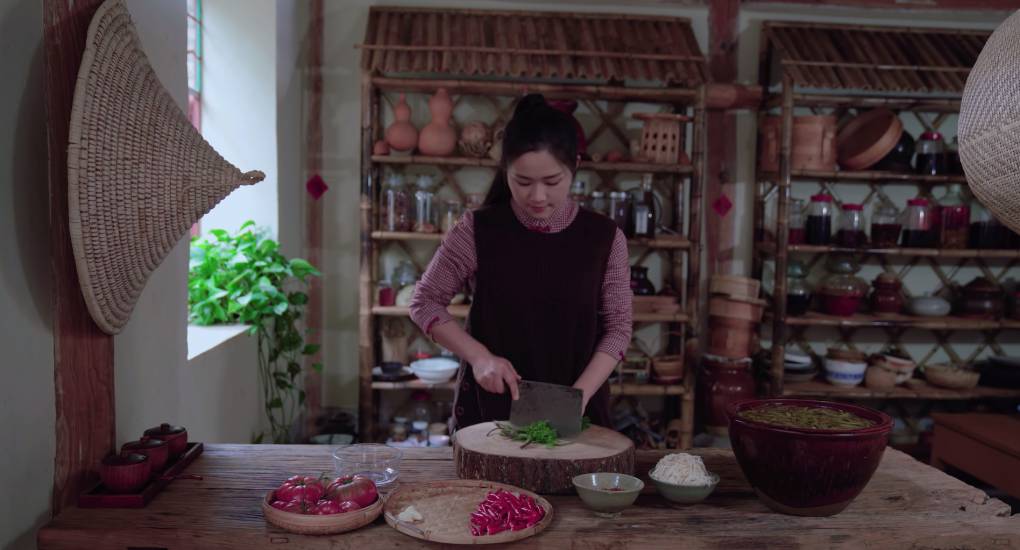
5 Strange, Wonderful Food Video Series to Keep You Company in the Kitchen
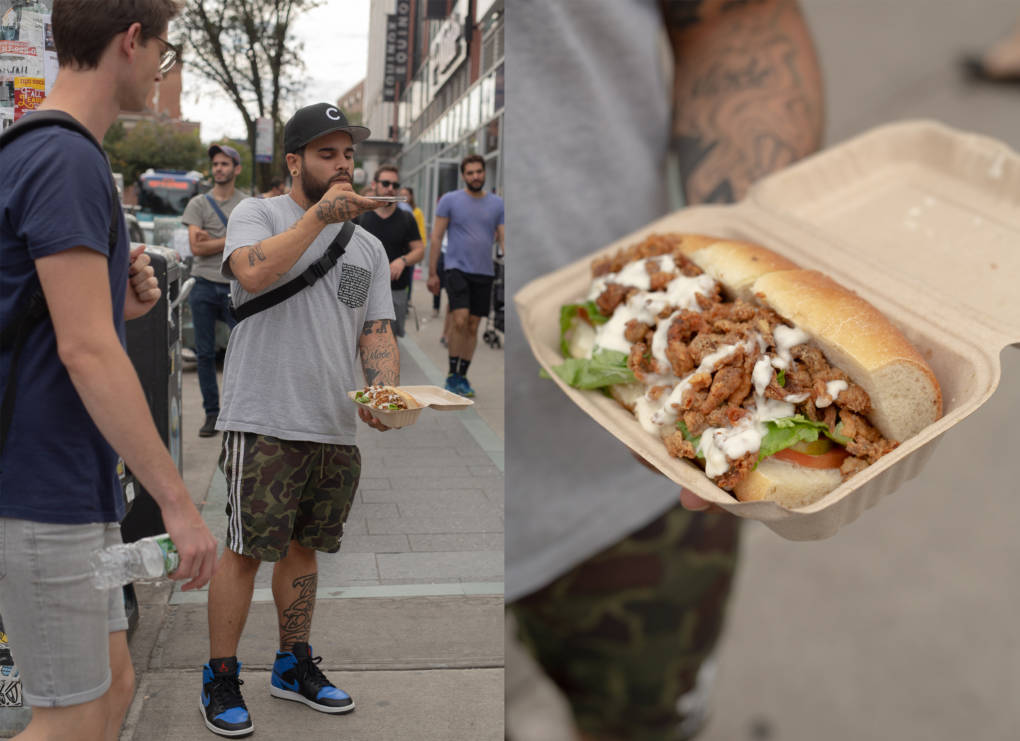
Beyond Bodega Bites: This Man Wants More People To Eat 'Vegan In The Hood'
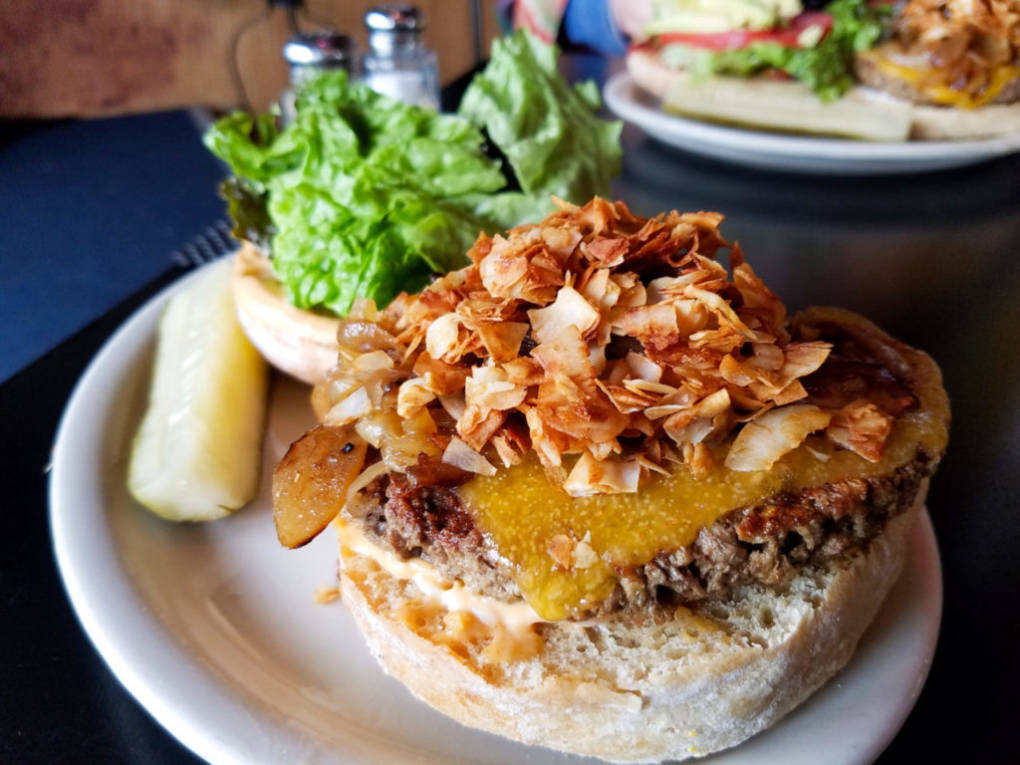
Hot Instagram Food Trends and Where to Find Them in Sonoma County
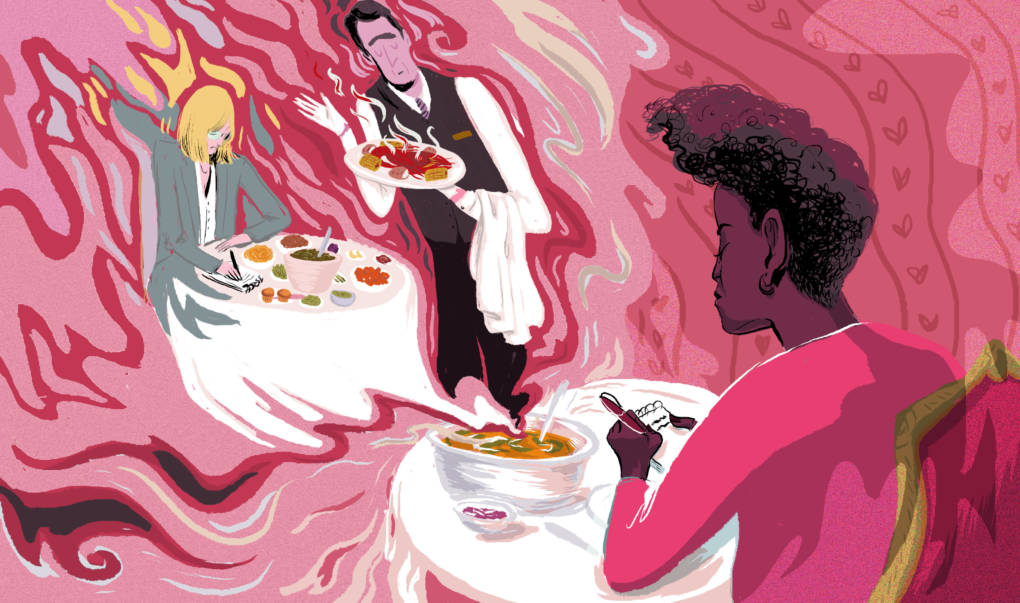
Breaking The Bubble Of Food Writing: Cultivating Diverse Stories
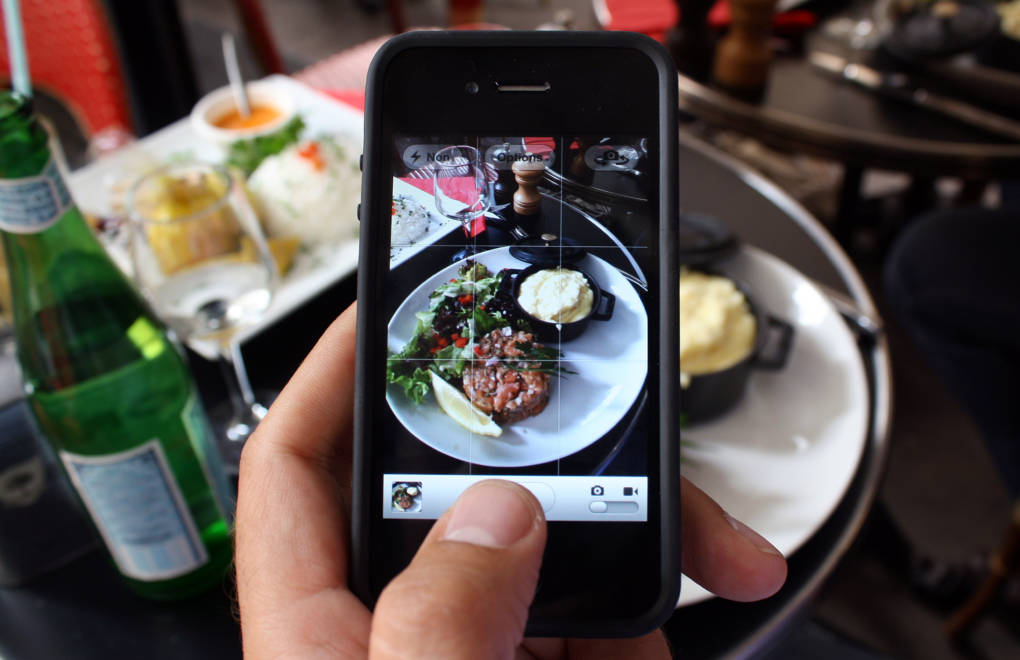
Oh, Snap! Scientists Are Turning People's Food Photos Into Recipes
PHOTOS: 'Chicano Eats' Food Blog Dishes Up Bicultural Flavors
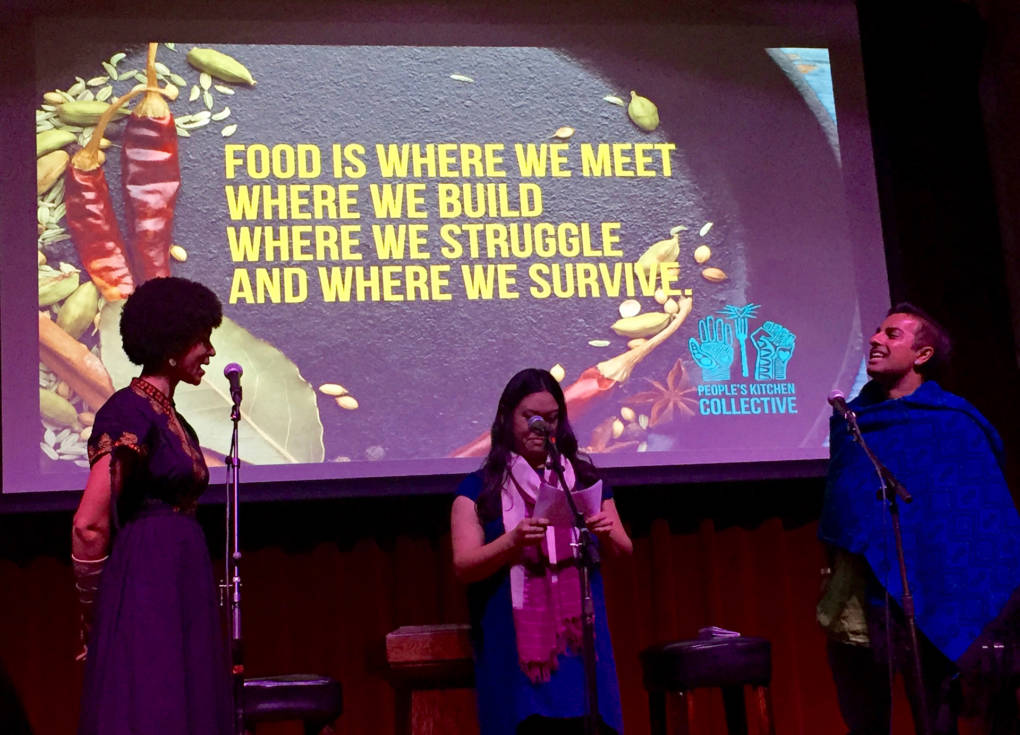
La Cocina's 'Voices from the Kitchen' Speak Passionately on Race
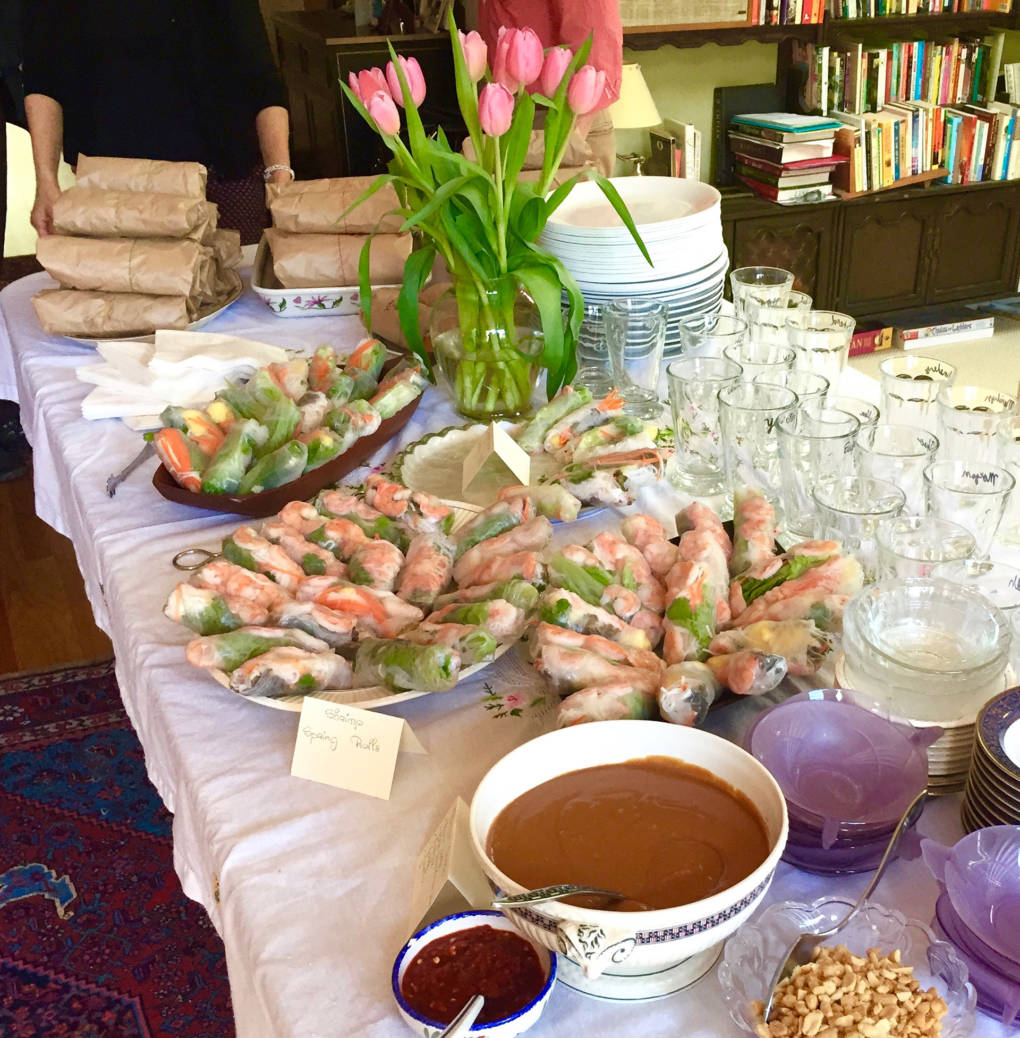
Tapestry Suppers Serve Up Immigrants’ Stories with Good Food and Company
GUIDE: Bay Area Restaurants On Film (For Hungry Movie Buffs)
Sponsored
window.__IS_SSR__=true
window.__INITIAL_STATE__={"attachmentsReducer":{"audio_0":{"type":"attachments","id":"audio_0","imgSizes":{"kqedFullSize":{"file":"https://ww2.kqed.org/news/wp-content/themes/KQED-unified/img/audio_bgs/background0.jpg"}}},"audio_1":{"type":"attachments","id":"audio_1","imgSizes":{"kqedFullSize":{"file":"https://ww2.kqed.org/news/wp-content/themes/KQED-unified/img/audio_bgs/background1.jpg"}}},"audio_2":{"type":"attachments","id":"audio_2","imgSizes":{"kqedFullSize":{"file":"https://ww2.kqed.org/news/wp-content/themes/KQED-unified/img/audio_bgs/background2.jpg"}}},"audio_3":{"type":"attachments","id":"audio_3","imgSizes":{"kqedFullSize":{"file":"https://ww2.kqed.org/news/wp-content/themes/KQED-unified/img/audio_bgs/background3.jpg"}}},"audio_4":{"type":"attachments","id":"audio_4","imgSizes":{"kqedFullSize":{"file":"https://ww2.kqed.org/news/wp-content/themes/KQED-unified/img/audio_bgs/background4.jpg"}}},"placeholder":{"type":"attachments","id":"placeholder","imgSizes":{"thumbnail":{"file":"https://ww2.kqed.org/wp-content/uploads/sites/10/2018/01/GettyImages-896326950-160x96.jpg","width":160,"height":96,"mimeType":"image/jpeg"},"medium":{"file":"https://ww2.kqed.org/wp-content/uploads/sites/10/2018/01/GettyImages-896326950-800x478.jpg","width":800,"height":478,"mimeType":"image/jpeg"},"large":{"file":"https://ww2.kqed.org/wp-content/uploads/sites/10/2018/01/GettyImages-896326950-1020x610.jpg","width":1020,"height":610,"mimeType":"image/jpeg"},"fd-lrg":{"file":"https://ww2.kqed.org/wp-content/uploads/sites/10/2018/01/GettyImages-896326950-1920x1148.jpg","width":1920,"height":1148,"mimeType":"image/jpeg"},"fd-med":{"file":"https://ww2.kqed.org/wp-content/uploads/sites/10/2018/01/GettyImages-896326950-1180x705.jpg","width":1180,"height":705,"mimeType":"image/jpeg"},"fd-sm":{"file":"https://ww2.kqed.org/wp-content/uploads/sites/10/2018/01/GettyImages-896326950-960x574.jpg","width":960,"height":574,"mimeType":"image/jpeg"},"post-thumbnail":{"file":"https://ww2.kqed.org/wp-content/uploads/sites/10/2018/01/GettyImages-896326950-672x372.jpg","width":672,"height":372,"mimeType":"image/jpeg"},"twentyfourteen-full-width":{"file":"https://ww2.kqed.org/wp-content/uploads/sites/10/2018/01/GettyImages-896326950-1038x576.jpg","width":1038,"height":576,"mimeType":"image/jpeg"},"xxsmall":{"file":"https://ww2.kqed.org/wp-content/uploads/sites/10/2018/01/GettyImages-896326950-240x143.jpg","width":240,"height":143,"mimeType":"image/jpeg"},"xsmall":{"file":"https://ww2.kqed.org/wp-content/uploads/sites/10/2018/01/GettyImages-896326950-375x224.jpg","width":375,"height":224,"mimeType":"image/jpeg"},"small":{"file":"https://ww2.kqed.org/wp-content/uploads/sites/10/2018/01/GettyImages-896326950-520x311.jpg","width":520,"height":311,"mimeType":"image/jpeg"},"xlarge":{"file":"https://ww2.kqed.org/wp-content/uploads/sites/10/2018/01/GettyImages-896326950-1180x705.jpg","width":1180,"height":705,"mimeType":"image/jpeg"},"full-width":{"file":"https://ww2.kqed.org/wp-content/uploads/sites/10/2018/01/GettyImages-896326950-1920x1148.jpg","width":1920,"height":1148,"mimeType":"image/jpeg"},"guest-author-32":{"file":"https://ww2.kqed.org/wp-content/uploads/sites/10/2018/01/GettyImages-896326950-32x32.jpg","width":32,"height":32,"mimeType":"image/jpeg"},"guest-author-50":{"file":"https://ww2.kqed.org/wp-content/uploads/sites/10/2018/01/GettyImages-896326950-50x50.jpg","width":50,"height":50,"mimeType":"image/jpeg"},"guest-author-64":{"file":"https://ww2.kqed.org/wp-content/uploads/sites/10/2018/01/GettyImages-896326950-64x64.jpg","width":64,"height":64,"mimeType":"image/jpeg"},"guest-author-96":{"file":"https://ww2.kqed.org/wp-content/uploads/sites/10/2018/01/GettyImages-896326950-96x96.jpg","width":96,"height":96,"mimeType":"image/jpeg"},"guest-author-128":{"file":"https://ww2.kqed.org/wp-content/uploads/sites/10/2018/01/GettyImages-896326950-128x128.jpg","width":128,"height":128,"mimeType":"image/jpeg"},"detail":{"file":"https://ww2.kqed.org/wp-content/uploads/sites/10/2018/01/GettyImages-896326950-150x150.jpg","width":150,"height":150,"mimeType":"image/jpeg"},"kqedFullSize":{"file":"https://ww2.kqed.org/wp-content/uploads/sites/10/2018/01/GettyImages-896326950-e1514998105161.jpg","width":1920,"height":1148}}},"bayareabites_136534":{"type":"attachments","id":"bayareabites_136534","meta":{"index":"attachments_1591205162","site":"bayareabites","id":"136534","found":true},"title":"dianxi_kqed","publishDate":1585094467,"status":"inherit","parent":136504,"modified":1585095523,"caption":"Dianxi Xiaoge is the self-proclaimed Yunnan girl whose YouTube videos of idyllic farming and cooking garner millions of views. ","credit":"Courtesy of Dianxi Xiaoge's YouTube ","description":"Dianxi Xiaoge cooks in her kitchen which is filled with gourds, wooden baskets, bowls holding chilis, tomatoes and garlic. ","imgSizes":{"thumbnail":{"file":"https://ww2.kqed.org/app/uploads/sites/24/2020/03/dianxi_kqed-160x86.jpg","width":160,"height":86,"mimeType":"image/jpeg"},"medium":{"file":"https://ww2.kqed.org/app/uploads/sites/24/2020/03/dianxi_kqed-800x432.jpg","width":800,"height":432,"mimeType":"image/jpeg"},"medium_large":{"file":"https://ww2.kqed.org/app/uploads/sites/24/2020/03/dianxi_kqed-768x414.jpg","width":768,"height":414,"mimeType":"image/jpeg"},"large":{"file":"https://ww2.kqed.org/app/uploads/sites/24/2020/03/dianxi_kqed-1020x550.jpg","width":1020,"height":550,"mimeType":"image/jpeg"},"post-thumbnail":{"file":"https://ww2.kqed.org/app/uploads/sites/24/2020/03/dianxi_kqed-672x372.jpg","width":672,"height":372,"mimeType":"image/jpeg"},"twentyfourteen-full-width":{"file":"https://ww2.kqed.org/app/uploads/sites/24/2020/03/dianxi_kqed-1038x576.jpg","width":1038,"height":576,"mimeType":"image/jpeg"},"kqedFullSize":{"file":"https://ww2.kqed.org/app/uploads/sites/24/2020/03/dianxi_kqed.jpg","width":1896,"height":1023}},"fetchFailed":false,"isLoading":false},"bayareabites_131501":{"type":"attachments","id":"bayareabites_131501","meta":{"index":"attachments_1591205162","site":"bayareabites","id":"131501","found":true},"title":"Erick Castro photographs his vegan fried-oyster-mushroom po'boy outside of a Whole Foods in Brooklyn. The sandwich is made by local vegan food business Chickpea and Olive.","publishDate":1543255214,"status":"inherit","parent":131500,"modified":1543255367,"caption":"Erick Castro photographs his vegan fried-oyster-mushroom po'boy outside of a Whole Foods in Brooklyn. The sandwich is made by local vegan food business \u003ca href=\"http://www.chickpeaandolive.com/\">Chickpea and Olive\u003c/a>.","credit":"Mary Mathis/NPR","description":"Erick Castro photographs his vegan fried-oyster-mushroom po'boy outside of a Whole Foods in Brooklyn. The sandwich is made by local vegan food business \u003ca href=\"http://www.chickpeaandolive.com/\">Chickpea and Olive\u003c/a>.","imgSizes":{"thumbnail":{"file":"https://ww2.kqed.org/app/uploads/sites/24/2018/11/dyptich_enl-7d23ed75f9ec9b2b258cec3fe3e8d715f237172e-160x116.jpg","width":160,"height":116,"mimeType":"image/jpeg"},"medium":{"file":"https://ww2.kqed.org/app/uploads/sites/24/2018/11/dyptich_enl-7d23ed75f9ec9b2b258cec3fe3e8d715f237172e-800x581.jpg","width":800,"height":581,"mimeType":"image/jpeg"},"medium_large":{"file":"https://ww2.kqed.org/app/uploads/sites/24/2018/11/dyptich_enl-7d23ed75f9ec9b2b258cec3fe3e8d715f237172e-768x558.jpg","width":768,"height":558,"mimeType":"image/jpeg"},"large":{"file":"https://ww2.kqed.org/app/uploads/sites/24/2018/11/dyptich_enl-7d23ed75f9ec9b2b258cec3fe3e8d715f237172e-1020x741.jpg","width":1020,"height":741,"mimeType":"image/jpeg"},"complete_open_graph":{"file":"https://ww2.kqed.org/app/uploads/sites/24/2018/11/dyptich_enl-7d23ed75f9ec9b2b258cec3fe3e8d715f237172e-1200x872.jpg","width":1200,"height":872,"mimeType":"image/jpeg"},"fd-lrg":{"file":"https://ww2.kqed.org/app/uploads/sites/24/2018/11/dyptich_enl-7d23ed75f9ec9b2b258cec3fe3e8d715f237172e-1920x1395.jpg","width":1920,"height":1395,"mimeType":"image/jpeg"},"fd-med":{"file":"https://ww2.kqed.org/app/uploads/sites/24/2018/11/dyptich_enl-7d23ed75f9ec9b2b258cec3fe3e8d715f237172e-1180x857.jpg","width":1180,"height":857,"mimeType":"image/jpeg"},"fd-sm":{"file":"https://ww2.kqed.org/app/uploads/sites/24/2018/11/dyptich_enl-7d23ed75f9ec9b2b258cec3fe3e8d715f237172e-960x698.jpg","width":960,"height":698,"mimeType":"image/jpeg"},"post-thumbnail":{"file":"https://ww2.kqed.org/app/uploads/sites/24/2018/11/dyptich_enl-7d23ed75f9ec9b2b258cec3fe3e8d715f237172e-672x372.jpg","width":672,"height":372,"mimeType":"image/jpeg"},"twentyfourteen-full-width":{"file":"https://ww2.kqed.org/app/uploads/sites/24/2018/11/dyptich_enl-7d23ed75f9ec9b2b258cec3fe3e8d715f237172e-1038x576.jpg","width":1038,"height":576,"mimeType":"image/jpeg"},"xxsmall":{"file":"https://ww2.kqed.org/app/uploads/sites/24/2018/11/dyptich_enl-7d23ed75f9ec9b2b258cec3fe3e8d715f237172e-240x174.jpg","width":240,"height":174,"mimeType":"image/jpeg"},"xsmall":{"file":"https://ww2.kqed.org/app/uploads/sites/24/2018/11/dyptich_enl-7d23ed75f9ec9b2b258cec3fe3e8d715f237172e-375x273.jpg","width":375,"height":273,"mimeType":"image/jpeg"},"small":{"file":"https://ww2.kqed.org/app/uploads/sites/24/2018/11/dyptich_enl-7d23ed75f9ec9b2b258cec3fe3e8d715f237172e-520x378.jpg","width":520,"height":378,"mimeType":"image/jpeg"},"xlarge":{"file":"https://ww2.kqed.org/app/uploads/sites/24/2018/11/dyptich_enl-7d23ed75f9ec9b2b258cec3fe3e8d715f237172e-1180x857.jpg","width":1180,"height":857,"mimeType":"image/jpeg"},"full-width":{"file":"https://ww2.kqed.org/app/uploads/sites/24/2018/11/dyptich_enl-7d23ed75f9ec9b2b258cec3fe3e8d715f237172e-1920x1395.jpg","width":1920,"height":1395,"mimeType":"image/jpeg"},"guest-author-32":{"file":"https://ww2.kqed.org/app/uploads/sites/24/2018/11/dyptich_enl-7d23ed75f9ec9b2b258cec3fe3e8d715f237172e-32x32.jpg","width":32,"height":32,"mimeType":"image/jpeg"},"guest-author-50":{"file":"https://ww2.kqed.org/app/uploads/sites/24/2018/11/dyptich_enl-7d23ed75f9ec9b2b258cec3fe3e8d715f237172e-50x50.jpg","width":50,"height":50,"mimeType":"image/jpeg"},"guest-author-64":{"file":"https://ww2.kqed.org/app/uploads/sites/24/2018/11/dyptich_enl-7d23ed75f9ec9b2b258cec3fe3e8d715f237172e-64x64.jpg","width":64,"height":64,"mimeType":"image/jpeg"},"guest-author-96":{"file":"https://ww2.kqed.org/app/uploads/sites/24/2018/11/dyptich_enl-7d23ed75f9ec9b2b258cec3fe3e8d715f237172e-96x96.jpg","width":96,"height":96,"mimeType":"image/jpeg"},"guest-author-128":{"file":"https://ww2.kqed.org/app/uploads/sites/24/2018/11/dyptich_enl-7d23ed75f9ec9b2b258cec3fe3e8d715f237172e-128x128.jpg","width":128,"height":128,"mimeType":"image/jpeg"},"detail":{"file":"https://ww2.kqed.org/app/uploads/sites/24/2018/11/dyptich_enl-7d23ed75f9ec9b2b258cec3fe3e8d715f237172e-150x150.jpg","width":150,"height":150,"mimeType":"image/jpeg"},"kqedFullSize":{"file":"https://ww2.kqed.org/app/uploads/sites/24/2018/11/dyptich_enl-7d23ed75f9ec9b2b258cec3fe3e8d715f237172e-e1543255352841.jpg","width":1920,"height":1395}},"fetchFailed":false,"isLoading":false},"bayareabites_129296":{"type":"attachments","id":"bayareabites_129296","meta":{"index":"attachments_1591205162","site":"bayareabites","id":"129296","found":true},"title":"Impossible Burger","publishDate":1530807781,"status":"inherit","parent":129283,"modified":1530808527,"caption":"The Impossible Burger at Gaia’s Garden in Santa Rosa looks, tastes and eats like a beef burger. Mostly. ","credit":"Heather Irwin","description":null,"imgSizes":{"thumbnail":{"file":"https://ww2.kqed.org/app/uploads/sites/24/2018/07/HI_0318_IMPOSSIBLEBURGER_867889-1024x768-160x120.jpg","width":160,"height":120,"mimeType":"image/jpeg"},"medium":{"file":"https://ww2.kqed.org/app/uploads/sites/24/2018/07/HI_0318_IMPOSSIBLEBURGER_867889-1024x768-800x600.jpg","width":800,"height":600,"mimeType":"image/jpeg"},"medium_large":{"file":"https://ww2.kqed.org/app/uploads/sites/24/2018/07/HI_0318_IMPOSSIBLEBURGER_867889-1024x768-768x576.jpg","width":768,"height":576,"mimeType":"image/jpeg"},"large":{"file":"https://ww2.kqed.org/app/uploads/sites/24/2018/07/HI_0318_IMPOSSIBLEBURGER_867889-1024x768-1020x765.jpg","width":1020,"height":765,"mimeType":"image/jpeg"},"fd-sm":{"file":"https://ww2.kqed.org/app/uploads/sites/24/2018/07/HI_0318_IMPOSSIBLEBURGER_867889-1024x768-960x720.jpg","width":960,"height":720,"mimeType":"image/jpeg"},"post-thumbnail":{"file":"https://ww2.kqed.org/app/uploads/sites/24/2018/07/HI_0318_IMPOSSIBLEBURGER_867889-1024x768-672x372.jpg","width":672,"height":372,"mimeType":"image/jpeg"},"twentyfourteen-full-width":{"file":"https://ww2.kqed.org/app/uploads/sites/24/2018/07/HI_0318_IMPOSSIBLEBURGER_867889-1024x768-1024x576.jpg","width":1024,"height":576,"mimeType":"image/jpeg"},"xxsmall":{"file":"https://ww2.kqed.org/app/uploads/sites/24/2018/07/HI_0318_IMPOSSIBLEBURGER_867889-1024x768-240x180.jpg","width":240,"height":180,"mimeType":"image/jpeg"},"xsmall":{"file":"https://ww2.kqed.org/app/uploads/sites/24/2018/07/HI_0318_IMPOSSIBLEBURGER_867889-1024x768-375x281.jpg","width":375,"height":281,"mimeType":"image/jpeg"},"small":{"file":"https://ww2.kqed.org/app/uploads/sites/24/2018/07/HI_0318_IMPOSSIBLEBURGER_867889-1024x768-520x390.jpg","width":520,"height":390,"mimeType":"image/jpeg"},"guest-author-32":{"file":"https://ww2.kqed.org/app/uploads/sites/24/2018/07/HI_0318_IMPOSSIBLEBURGER_867889-1024x768-32x32.jpg","width":32,"height":32,"mimeType":"image/jpeg"},"guest-author-50":{"file":"https://ww2.kqed.org/app/uploads/sites/24/2018/07/HI_0318_IMPOSSIBLEBURGER_867889-1024x768-50x50.jpg","width":50,"height":50,"mimeType":"image/jpeg"},"guest-author-64":{"file":"https://ww2.kqed.org/app/uploads/sites/24/2018/07/HI_0318_IMPOSSIBLEBURGER_867889-1024x768-64x64.jpg","width":64,"height":64,"mimeType":"image/jpeg"},"guest-author-96":{"file":"https://ww2.kqed.org/app/uploads/sites/24/2018/07/HI_0318_IMPOSSIBLEBURGER_867889-1024x768-96x96.jpg","width":96,"height":96,"mimeType":"image/jpeg"},"guest-author-128":{"file":"https://ww2.kqed.org/app/uploads/sites/24/2018/07/HI_0318_IMPOSSIBLEBURGER_867889-1024x768-128x128.jpg","width":128,"height":128,"mimeType":"image/jpeg"},"detail":{"file":"https://ww2.kqed.org/app/uploads/sites/24/2018/07/HI_0318_IMPOSSIBLEBURGER_867889-1024x768-150x150.jpg","width":150,"height":150,"mimeType":"image/jpeg"},"kqedFullSize":{"file":"https://ww2.kqed.org/app/uploads/sites/24/2018/07/HI_0318_IMPOSSIBLEBURGER_867889-1024x768.jpg","width":1024,"height":768}},"fetchFailed":false,"isLoading":false},"bayareabites_123212":{"type":"attachments","id":"bayareabites_123212","meta":{"index":"attachments_1591205162","site":"bayareabites","id":"123212","found":true},"title":"Americans are more curious about different cuisines than ever before. But who gets to write about these cuisines, and which ones get covered?","publishDate":1512358253,"status":"inherit","parent":123211,"modified":1512358287,"caption":"Americans are more curious about different cuisines than ever before. But who gets to write about these cuisines, and which ones get covered?","credit":"LA Johnson/NPR","description":"Americans are more curious about different cuisines than ever before. But who gets to write about these cuisines, and which ones get covered?","imgSizes":{"thumbnail":{"file":"https://ww2.kqed.org/app/uploads/sites/24/2017/12/unknown_custom-cafa0aea6e055974a39c367140261f2eff58c058-160x95.jpe","width":160,"height":95,"mimeType":"image/jpeg"},"medium":{"file":"https://ww2.kqed.org/app/uploads/sites/24/2017/12/unknown_custom-cafa0aea6e055974a39c367140261f2eff58c058-800x473.jpe","width":800,"height":473,"mimeType":"image/jpeg"},"medium_large":{"file":"https://ww2.kqed.org/app/uploads/sites/24/2017/12/unknown_custom-cafa0aea6e055974a39c367140261f2eff58c058-768x454.jpe","width":768,"height":454,"mimeType":"image/jpeg"},"large":{"file":"https://ww2.kqed.org/app/uploads/sites/24/2017/12/unknown_custom-cafa0aea6e055974a39c367140261f2eff58c058-1020x603.jpe","width":1020,"height":603,"mimeType":"image/jpeg"},"fd-lrg":{"file":"https://ww2.kqed.org/app/uploads/sites/24/2017/12/unknown_custom-cafa0aea6e055974a39c367140261f2eff58c058-1920x1135.jpe","width":1920,"height":1135,"mimeType":"image/jpeg"},"fd-med":{"file":"https://ww2.kqed.org/app/uploads/sites/24/2017/12/unknown_custom-cafa0aea6e055974a39c367140261f2eff58c058-1180x698.jpe","width":1180,"height":698,"mimeType":"image/jpeg"},"fd-sm":{"file":"https://ww2.kqed.org/app/uploads/sites/24/2017/12/unknown_custom-cafa0aea6e055974a39c367140261f2eff58c058-960x567.jpe","width":960,"height":567,"mimeType":"image/jpeg"},"post-thumbnail":{"file":"https://ww2.kqed.org/app/uploads/sites/24/2017/12/unknown_custom-cafa0aea6e055974a39c367140261f2eff58c058-672x372.jpe","width":672,"height":372,"mimeType":"image/jpeg"},"twentyfourteen-full-width":{"file":"https://ww2.kqed.org/app/uploads/sites/24/2017/12/unknown_custom-cafa0aea6e055974a39c367140261f2eff58c058-1038x576.jpe","width":1038,"height":576,"mimeType":"image/jpeg"},"xxsmall":{"file":"https://ww2.kqed.org/app/uploads/sites/24/2017/12/unknown_custom-cafa0aea6e055974a39c367140261f2eff58c058-240x142.jpe","width":240,"height":142,"mimeType":"image/jpeg"},"xsmall":{"file":"https://ww2.kqed.org/app/uploads/sites/24/2017/12/unknown_custom-cafa0aea6e055974a39c367140261f2eff58c058-375x222.jpe","width":375,"height":222,"mimeType":"image/jpeg"},"small":{"file":"https://ww2.kqed.org/app/uploads/sites/24/2017/12/unknown_custom-cafa0aea6e055974a39c367140261f2eff58c058-520x307.jpe","width":520,"height":307,"mimeType":"image/jpeg"},"xlarge":{"file":"https://ww2.kqed.org/app/uploads/sites/24/2017/12/unknown_custom-cafa0aea6e055974a39c367140261f2eff58c058-1180x698.jpe","width":1180,"height":698,"mimeType":"image/jpeg"},"full-width":{"file":"https://ww2.kqed.org/app/uploads/sites/24/2017/12/unknown_custom-cafa0aea6e055974a39c367140261f2eff58c058-1920x1135.jpe","width":1920,"height":1135,"mimeType":"image/jpeg"},"guest-author-32":{"file":"https://ww2.kqed.org/app/uploads/sites/24/2017/12/unknown_custom-cafa0aea6e055974a39c367140261f2eff58c058-32x32.jpe","width":32,"height":32,"mimeType":"image/jpeg"},"guest-author-50":{"file":"https://ww2.kqed.org/app/uploads/sites/24/2017/12/unknown_custom-cafa0aea6e055974a39c367140261f2eff58c058-50x50.jpe","width":50,"height":50,"mimeType":"image/jpeg"},"guest-author-64":{"file":"https://ww2.kqed.org/app/uploads/sites/24/2017/12/unknown_custom-cafa0aea6e055974a39c367140261f2eff58c058-64x64.jpe","width":64,"height":64,"mimeType":"image/jpeg"},"guest-author-96":{"file":"https://ww2.kqed.org/app/uploads/sites/24/2017/12/unknown_custom-cafa0aea6e055974a39c367140261f2eff58c058-96x96.jpe","width":96,"height":96,"mimeType":"image/jpeg"},"guest-author-128":{"file":"https://ww2.kqed.org/app/uploads/sites/24/2017/12/unknown_custom-cafa0aea6e055974a39c367140261f2eff58c058-128x128.jpe","width":128,"height":128,"mimeType":"image/jpeg"},"detail":{"file":"https://ww2.kqed.org/app/uploads/sites/24/2017/12/unknown_custom-cafa0aea6e055974a39c367140261f2eff58c058-150x150.jpe","width":150,"height":150,"mimeType":"image/jpeg"},"kqedFullSize":{"file":"https://ww2.kqed.org/app/uploads/sites/24/2017/12/unknown_custom-cafa0aea6e055974a39c367140261f2eff58c058.jpe","width":3742,"height":2212}},"fetchFailed":false,"isLoading":false},"bayareabites_119573":{"type":"attachments","id":"bayareabites_119573","meta":{"index":"attachments_1591205162","site":"bayareabites","id":"119573","found":true},"title":"FRANCE-INTERNET-FOOD","publishDate":1501709693,"status":"inherit","parent":119570,"modified":1501709939,"caption":"You already know what all of your friends are eating, so you might as well know how to make it, too.","credit":"Ana Arevalo/AFP/GettyImages","description":null,"imgSizes":{"thumbnail":{"file":"https://ww2.kqed.org/app/uploads/sites/24/2017/08/GettyImages-148737600-160x104.jpg","width":160,"height":104,"mimeType":"image/jpeg"},"medium":{"file":"https://ww2.kqed.org/app/uploads/sites/24/2017/08/GettyImages-148737600-800x518.jpg","width":800,"height":518,"mimeType":"image/jpeg"},"medium_large":{"file":"https://ww2.kqed.org/app/uploads/sites/24/2017/08/GettyImages-148737600-768x497.jpg","width":768,"height":497,"mimeType":"image/jpeg"},"large":{"file":"https://ww2.kqed.org/app/uploads/sites/24/2017/08/GettyImages-148737600-1020x660.jpg","width":1020,"height":660,"mimeType":"image/jpeg"},"fd-lrg":{"file":"https://ww2.kqed.org/app/uploads/sites/24/2017/08/GettyImages-148737600-1920x1243.jpg","width":1920,"height":1243,"mimeType":"image/jpeg"},"fd-med":{"file":"https://ww2.kqed.org/app/uploads/sites/24/2017/08/GettyImages-148737600-1180x764.jpg","width":1180,"height":764,"mimeType":"image/jpeg"},"fd-sm":{"file":"https://ww2.kqed.org/app/uploads/sites/24/2017/08/GettyImages-148737600-960x621.jpg","width":960,"height":621,"mimeType":"image/jpeg"},"post-thumbnail":{"file":"https://ww2.kqed.org/app/uploads/sites/24/2017/08/GettyImages-148737600-672x372.jpg","width":672,"height":372,"mimeType":"image/jpeg"},"twentyfourteen-full-width":{"file":"https://ww2.kqed.org/app/uploads/sites/24/2017/08/GettyImages-148737600-1038x576.jpg","width":1038,"height":576,"mimeType":"image/jpeg"},"xxsmall":{"file":"https://ww2.kqed.org/app/uploads/sites/24/2017/08/GettyImages-148737600-240x155.jpg","width":240,"height":155,"mimeType":"image/jpeg"},"xsmall":{"file":"https://ww2.kqed.org/app/uploads/sites/24/2017/08/GettyImages-148737600-375x243.jpg","width":375,"height":243,"mimeType":"image/jpeg"},"small":{"file":"https://ww2.kqed.org/app/uploads/sites/24/2017/08/GettyImages-148737600-520x337.jpg","width":520,"height":337,"mimeType":"image/jpeg"},"xlarge":{"file":"https://ww2.kqed.org/app/uploads/sites/24/2017/08/GettyImages-148737600-1180x764.jpg","width":1180,"height":764,"mimeType":"image/jpeg"},"full-width":{"file":"https://ww2.kqed.org/app/uploads/sites/24/2017/08/GettyImages-148737600-1920x1243.jpg","width":1920,"height":1243,"mimeType":"image/jpeg"},"guest-author-32":{"file":"https://ww2.kqed.org/app/uploads/sites/24/2017/08/GettyImages-148737600-32x32.jpg","width":32,"height":32,"mimeType":"image/jpeg"},"guest-author-50":{"file":"https://ww2.kqed.org/app/uploads/sites/24/2017/08/GettyImages-148737600-50x50.jpg","width":50,"height":50,"mimeType":"image/jpeg"},"guest-author-64":{"file":"https://ww2.kqed.org/app/uploads/sites/24/2017/08/GettyImages-148737600-64x64.jpg","width":64,"height":64,"mimeType":"image/jpeg"},"guest-author-96":{"file":"https://ww2.kqed.org/app/uploads/sites/24/2017/08/GettyImages-148737600-96x96.jpg","width":96,"height":96,"mimeType":"image/jpeg"},"guest-author-128":{"file":"https://ww2.kqed.org/app/uploads/sites/24/2017/08/GettyImages-148737600-128x128.jpg","width":128,"height":128,"mimeType":"image/jpeg"},"detail":{"file":"https://ww2.kqed.org/app/uploads/sites/24/2017/08/GettyImages-148737600-150x150.jpg","width":150,"height":150,"mimeType":"image/jpeg"},"kqedFullSize":{"file":"https://ww2.kqed.org/app/uploads/sites/24/2017/08/GettyImages-148737600-e1501709870484.jpg","width":1920,"height":1243}},"fetchFailed":false,"isLoading":false},"bayareabites_118175":{"type":"attachments","id":"bayareabites_118175","meta":{"index":"attachments_1591205162","site":"bayareabites","id":"118175","found":true},"title":"Baked crema Mexicana doughnuts with a blood orange glaze, as featured in the food blog Chicano Eats. On his bilingual blog, Esteban Castillo shares traditional and fusion Mexican recipes. The blog has a stunning, minimalist aesthetic meant to challenge the way people see Mexican food.","publishDate":1497403598,"status":"inherit","parent":118174,"modified":1497404666,"caption":"Baked crema Mexicana doughnuts with a blood orange glaze, as featured in the food blog Chicano Eats. On his bilingual blog, Esteban Castillo shares traditional and fusion Mexican recipes. The blog has a stunning, minimalist aesthetic meant to challenge the way people see Mexican food.","credit":"Esteban Castillo","description":"Baked crema Mexicana doughnuts with a blood orange glaze, as featured in the food blog Chicano Eats. On his bilingual blog, Esteban Castillo shares traditional and fusion Mexican recipes. The blog has a stunning, minimalist aesthetic meant to challenge the way people see Mexican food.","imgSizes":{"thumbnail":{"file":"https://ww2.kqed.org/app/uploads/sites/24/2017/06/img_1210_custom-42a7d8b55991938569dd446133e41c67eac56e3a-160x160.jpg","width":160,"height":160,"mimeType":"image/jpeg"},"medium":{"file":"https://ww2.kqed.org/app/uploads/sites/24/2017/06/img_1210_custom-42a7d8b55991938569dd446133e41c67eac56e3a-800x800.jpg","width":800,"height":800,"mimeType":"image/jpeg"},"medium_large":{"file":"https://ww2.kqed.org/app/uploads/sites/24/2017/06/img_1210_custom-42a7d8b55991938569dd446133e41c67eac56e3a-768x768.jpg","width":768,"height":768,"mimeType":"image/jpeg"},"large":{"file":"https://ww2.kqed.org/app/uploads/sites/24/2017/06/img_1210_custom-42a7d8b55991938569dd446133e41c67eac56e3a-1020x1020.jpg","width":1020,"height":1020,"mimeType":"image/jpeg"},"fd-lrg":{"file":"https://ww2.kqed.org/app/uploads/sites/24/2017/06/img_1210_custom-42a7d8b55991938569dd446133e41c67eac56e3a-1920x1920.jpg","width":1920,"height":1920,"mimeType":"image/jpeg"},"fd-med":{"file":"https://ww2.kqed.org/app/uploads/sites/24/2017/06/img_1210_custom-42a7d8b55991938569dd446133e41c67eac56e3a-1180x1180.jpg","width":1180,"height":1180,"mimeType":"image/jpeg"},"fd-sm":{"file":"https://ww2.kqed.org/app/uploads/sites/24/2017/06/img_1210_custom-42a7d8b55991938569dd446133e41c67eac56e3a-960x960.jpg","width":960,"height":960,"mimeType":"image/jpeg"},"post-thumbnail":{"file":"https://ww2.kqed.org/app/uploads/sites/24/2017/06/img_1210_custom-42a7d8b55991938569dd446133e41c67eac56e3a-672x372.jpg","width":672,"height":372,"mimeType":"image/jpeg"},"twentyfourteen-full-width":{"file":"https://ww2.kqed.org/app/uploads/sites/24/2017/06/img_1210_custom-42a7d8b55991938569dd446133e41c67eac56e3a-1038x576.jpg","width":1038,"height":576,"mimeType":"image/jpeg"},"xxsmall":{"file":"https://ww2.kqed.org/app/uploads/sites/24/2017/06/img_1210_custom-42a7d8b55991938569dd446133e41c67eac56e3a-240x240.jpg","width":240,"height":240,"mimeType":"image/jpeg"},"xsmall":{"file":"https://ww2.kqed.org/app/uploads/sites/24/2017/06/img_1210_custom-42a7d8b55991938569dd446133e41c67eac56e3a-375x375.jpg","width":375,"height":375,"mimeType":"image/jpeg"},"small":{"file":"https://ww2.kqed.org/app/uploads/sites/24/2017/06/img_1210_custom-42a7d8b55991938569dd446133e41c67eac56e3a-520x520.jpg","width":520,"height":520,"mimeType":"image/jpeg"},"xlarge":{"file":"https://ww2.kqed.org/app/uploads/sites/24/2017/06/img_1210_custom-42a7d8b55991938569dd446133e41c67eac56e3a-1180x1180.jpg","width":1180,"height":1180,"mimeType":"image/jpeg"},"full-width":{"file":"https://ww2.kqed.org/app/uploads/sites/24/2017/06/img_1210_custom-42a7d8b55991938569dd446133e41c67eac56e3a-1920x1920.jpg","width":1920,"height":1920,"mimeType":"image/jpeg"},"guest-author-32":{"file":"https://ww2.kqed.org/app/uploads/sites/24/2017/06/img_1210_custom-42a7d8b55991938569dd446133e41c67eac56e3a-32x32.jpg","width":32,"height":32,"mimeType":"image/jpeg"},"guest-author-50":{"file":"https://ww2.kqed.org/app/uploads/sites/24/2017/06/img_1210_custom-42a7d8b55991938569dd446133e41c67eac56e3a-50x50.jpg","width":50,"height":50,"mimeType":"image/jpeg"},"guest-author-64":{"file":"https://ww2.kqed.org/app/uploads/sites/24/2017/06/img_1210_custom-42a7d8b55991938569dd446133e41c67eac56e3a-64x64.jpg","width":64,"height":64,"mimeType":"image/jpeg"},"guest-author-96":{"file":"https://ww2.kqed.org/app/uploads/sites/24/2017/06/img_1210_custom-42a7d8b55991938569dd446133e41c67eac56e3a-96x96.jpg","width":96,"height":96,"mimeType":"image/jpeg"},"guest-author-128":{"file":"https://ww2.kqed.org/app/uploads/sites/24/2017/06/img_1210_custom-42a7d8b55991938569dd446133e41c67eac56e3a-128x128.jpg","width":128,"height":128,"mimeType":"image/jpeg"},"detail":{"file":"https://ww2.kqed.org/app/uploads/sites/24/2017/06/img_1210_custom-42a7d8b55991938569dd446133e41c67eac56e3a-150x150.jpg","width":150,"height":150,"mimeType":"image/jpeg"},"kqedFullSize":{"file":"https://ww2.kqed.org/app/uploads/sites/24/2017/06/img_1210_custom-42a7d8b55991938569dd446133e41c67eac56e3a.jpg","width":2200,"height":2200}},"fetchFailed":false,"isLoading":false},"bayareabites_116768":{"type":"attachments","id":"bayareabites_116768","meta":{"index":"attachments_1591205162","site":"bayareabites","id":"116768","found":true},"title":"Saqib Keval, Sita Kuratomi Bhaumik and Jocelyn Jackson inspired the crowd with their words and songs.","publishDate":1492047682,"status":"inherit","parent":116718,"modified":1492049188,"caption":"Saqib Keval, Sita Kuratomi Bhaumik and Jocelyn Jackson inspired the crowd with their words and songs.","credit":"Anna Mindess","description":null,"imgSizes":{"thumbnail":{"file":"https://ww2.kqed.org/app/uploads/sites/24/2017/04/1-PKC-NEW-160x115.jpg","width":160,"height":115,"mimeType":"image/jpeg"},"medium":{"file":"https://ww2.kqed.org/app/uploads/sites/24/2017/04/1-PKC-NEW-800x577.jpg","width":800,"height":577,"mimeType":"image/jpeg"},"medium_large":{"file":"https://ww2.kqed.org/app/uploads/sites/24/2017/04/1-PKC-NEW-768x554.jpg","width":768,"height":554,"mimeType":"image/jpeg"},"large":{"file":"https://ww2.kqed.org/app/uploads/sites/24/2017/04/1-PKC-NEW-1020x735.jpg","width":1020,"height":735,"mimeType":"image/jpeg"},"fd-lrg":{"file":"https://ww2.kqed.org/app/uploads/sites/24/2017/04/1-PKC-NEW-1920x1384.jpg","width":1920,"height":1384,"mimeType":"image/jpeg"},"fd-med":{"file":"https://ww2.kqed.org/app/uploads/sites/24/2017/04/1-PKC-NEW-1180x851.jpg","width":1180,"height":851,"mimeType":"image/jpeg"},"fd-sm":{"file":"https://ww2.kqed.org/app/uploads/sites/24/2017/04/1-PKC-NEW-960x692.jpg","width":960,"height":692,"mimeType":"image/jpeg"},"post-thumbnail":{"file":"https://ww2.kqed.org/app/uploads/sites/24/2017/04/1-PKC-NEW-672x372.jpg","width":672,"height":372,"mimeType":"image/jpeg"},"twentyfourteen-full-width":{"file":"https://ww2.kqed.org/app/uploads/sites/24/2017/04/1-PKC-NEW-1038x576.jpg","width":1038,"height":576,"mimeType":"image/jpeg"},"xxsmall":{"file":"https://ww2.kqed.org/app/uploads/sites/24/2017/04/1-PKC-NEW-240x173.jpg","width":240,"height":173,"mimeType":"image/jpeg"},"xsmall":{"file":"https://ww2.kqed.org/app/uploads/sites/24/2017/04/1-PKC-NEW-375x270.jpg","width":375,"height":270,"mimeType":"image/jpeg"},"small":{"file":"https://ww2.kqed.org/app/uploads/sites/24/2017/04/1-PKC-NEW-520x375.jpg","width":520,"height":375,"mimeType":"image/jpeg"},"xlarge":{"file":"https://ww2.kqed.org/app/uploads/sites/24/2017/04/1-PKC-NEW-1180x851.jpg","width":1180,"height":851,"mimeType":"image/jpeg"},"full-width":{"file":"https://ww2.kqed.org/app/uploads/sites/24/2017/04/1-PKC-NEW-1920x1384.jpg","width":1920,"height":1384,"mimeType":"image/jpeg"},"guest-author-32":{"file":"https://ww2.kqed.org/app/uploads/sites/24/2017/04/1-PKC-NEW-32x32.jpg","width":32,"height":32,"mimeType":"image/jpeg"},"guest-author-50":{"file":"https://ww2.kqed.org/app/uploads/sites/24/2017/04/1-PKC-NEW-50x50.jpg","width":50,"height":50,"mimeType":"image/jpeg"},"guest-author-64":{"file":"https://ww2.kqed.org/app/uploads/sites/24/2017/04/1-PKC-NEW-64x64.jpg","width":64,"height":64,"mimeType":"image/jpeg"},"guest-author-96":{"file":"https://ww2.kqed.org/app/uploads/sites/24/2017/04/1-PKC-NEW-96x96.jpg","width":96,"height":96,"mimeType":"image/jpeg"},"guest-author-128":{"file":"https://ww2.kqed.org/app/uploads/sites/24/2017/04/1-PKC-NEW-128x128.jpg","width":128,"height":128,"mimeType":"image/jpeg"},"detail":{"file":"https://ww2.kqed.org/app/uploads/sites/24/2017/04/1-PKC-NEW-150x150.jpg","width":150,"height":150,"mimeType":"image/jpeg"},"kqedFullSize":{"file":"https://ww2.kqed.org/app/uploads/sites/24/2017/04/1-PKC-NEW.jpg","width":1920,"height":1384}},"fetchFailed":false,"isLoading":false},"bayareabites_116556":{"type":"attachments","id":"bayareabites_116556","meta":{"index":"attachments_1591205162","site":"bayareabites","id":"116556","found":true},"title":"1-table-new","publishDate":1491356101,"status":"inherit","parent":116500,"modified":1491356473,"caption":"A Vietnamese lunch prepared by Thoa van Seventer.","credit":"Anna Mindess","description":null,"imgSizes":{"thumbnail":{"file":"https://ww2.kqed.org/app/uploads/sites/24/2017/04/1-table-new-160x163.jpg","width":160,"height":163,"mimeType":"image/jpeg"},"medium":{"file":"https://ww2.kqed.org/app/uploads/sites/24/2017/04/1-table-new-800x814.jpg","width":800,"height":814,"mimeType":"image/jpeg"},"medium_large":{"file":"https://ww2.kqed.org/app/uploads/sites/24/2017/04/1-table-new-768x781.jpg","width":768,"height":781,"mimeType":"image/jpeg"},"large":{"file":"https://ww2.kqed.org/app/uploads/sites/24/2017/04/1-table-new-1020x1038.jpg","width":1020,"height":1038,"mimeType":"image/jpeg"},"fd-lrg":{"file":"https://ww2.kqed.org/app/uploads/sites/24/2017/04/1-table-new-1920x1953.jpg","width":1920,"height":1953,"mimeType":"image/jpeg"},"fd-med":{"file":"https://ww2.kqed.org/app/uploads/sites/24/2017/04/1-table-new-1180x1200.jpg","width":1180,"height":1200,"mimeType":"image/jpeg"},"fd-sm":{"file":"https://ww2.kqed.org/app/uploads/sites/24/2017/04/1-table-new-960x977.jpg","width":960,"height":977,"mimeType":"image/jpeg"},"post-thumbnail":{"file":"https://ww2.kqed.org/app/uploads/sites/24/2017/04/1-table-new-672x372.jpg","width":672,"height":372,"mimeType":"image/jpeg"},"twentyfourteen-full-width":{"file":"https://ww2.kqed.org/app/uploads/sites/24/2017/04/1-table-new-1038x576.jpg","width":1038,"height":576,"mimeType":"image/jpeg"},"xxsmall":{"file":"https://ww2.kqed.org/app/uploads/sites/24/2017/04/1-table-new-240x244.jpg","width":240,"height":244,"mimeType":"image/jpeg"},"xsmall":{"file":"https://ww2.kqed.org/app/uploads/sites/24/2017/04/1-table-new-375x381.jpg","width":375,"height":381,"mimeType":"image/jpeg"},"small":{"file":"https://ww2.kqed.org/app/uploads/sites/24/2017/04/1-table-new-520x529.jpg","width":520,"height":529,"mimeType":"image/jpeg"},"xlarge":{"file":"https://ww2.kqed.org/app/uploads/sites/24/2017/04/1-table-new-1180x1200.jpg","width":1180,"height":1200,"mimeType":"image/jpeg"},"full-width":{"file":"https://ww2.kqed.org/app/uploads/sites/24/2017/04/1-table-new-1920x1953.jpg","width":1920,"height":1953,"mimeType":"image/jpeg"},"guest-author-32":{"file":"https://ww2.kqed.org/app/uploads/sites/24/2017/04/1-table-new-32x32.jpg","width":32,"height":32,"mimeType":"image/jpeg"},"guest-author-50":{"file":"https://ww2.kqed.org/app/uploads/sites/24/2017/04/1-table-new-50x50.jpg","width":50,"height":50,"mimeType":"image/jpeg"},"guest-author-64":{"file":"https://ww2.kqed.org/app/uploads/sites/24/2017/04/1-table-new-64x64.jpg","width":64,"height":64,"mimeType":"image/jpeg"},"guest-author-96":{"file":"https://ww2.kqed.org/app/uploads/sites/24/2017/04/1-table-new-96x96.jpg","width":96,"height":96,"mimeType":"image/jpeg"},"guest-author-128":{"file":"https://ww2.kqed.org/app/uploads/sites/24/2017/04/1-table-new-128x128.jpg","width":128,"height":128,"mimeType":"image/jpeg"},"detail":{"file":"https://ww2.kqed.org/app/uploads/sites/24/2017/04/1-table-new-150x150.jpg","width":150,"height":150,"mimeType":"image/jpeg"},"kqedFullSize":{"file":"https://ww2.kqed.org/app/uploads/sites/24/2017/04/1-table-new.jpg","width":1920,"height":1953}},"fetchFailed":false,"isLoading":false},"bayareabites_96536":{"type":"attachments","id":"bayareabites_96536","meta":{"index":"attachments_1591205162","site":"bayareabites","id":"96536","found":true},"title":"vertigo-blue-green-evening-dress","publishDate":1433130731,"status":"inherit","parent":96513,"modified":1433130784,"caption":"Kim Novak entering Ernie's in a scene from Vertigo","credit":"Screenshot: Paramount Pictures","description":"Kim Novak entering Ernie's in a scene from Vertigo","imgSizes":{"thumbnail":{"file":"https://ww2.kqed.org/app/uploads/sites/24/2015/05/vertigo-blue-green-evening-dress-400x224.jpg","width":400,"height":224,"mimeType":"image/jpeg"},"medium":{"file":"https://ww2.kqed.org/app/uploads/sites/24/2015/05/vertigo-blue-green-evening-dress-800x448.jpg","width":800,"height":448,"mimeType":"image/jpeg"},"post-thumbnail":{"file":"https://ww2.kqed.org/app/uploads/sites/24/2015/05/vertigo-blue-green-evening-dress-672x372.jpg","width":672,"height":372,"mimeType":"image/jpeg"},"guest-author-32":{"file":"https://ww2.kqed.org/app/uploads/sites/24/2015/05/vertigo-blue-green-evening-dress-32x32.jpg","width":32,"height":32,"mimeType":"image/jpeg"},"guest-author-64":{"file":"https://ww2.kqed.org/app/uploads/sites/24/2015/05/vertigo-blue-green-evening-dress-64x64.jpg","width":64,"height":64,"mimeType":"image/jpeg"},"guest-author-96":{"file":"https://ww2.kqed.org/app/uploads/sites/24/2015/05/vertigo-blue-green-evening-dress-96x96.jpg","width":96,"height":96,"mimeType":"image/jpeg"},"guest-author-128":{"file":"https://ww2.kqed.org/app/uploads/sites/24/2015/05/vertigo-blue-green-evening-dress-128x128.jpg","width":128,"height":128,"mimeType":"image/jpeg"},"cat_post_thumb_sizecategory-posts-2":{"file":"https://ww2.kqed.org/app/uploads/sites/24/2015/05/vertigo-blue-green-evening-dress-150x150.jpg","width":150,"height":150,"mimeType":"image/jpeg"},"detail":{"file":"https://ww2.kqed.org/app/uploads/sites/24/2015/05/vertigo-blue-green-evening-dress-75x75.jpg","width":75,"height":75,"mimeType":"image/jpeg"},"kqedFullSize":{"file":"https://ww2.kqed.org/app/uploads/sites/24/2015/05/vertigo-blue-green-evening-dress.jpg","width":800,"height":448}},"fetchFailed":false,"isLoading":false}},"audioPlayerReducer":{"postId":"stream_live"},"authorsReducer":{"byline_bayareabites_131500":{"type":"authors","id":"byline_bayareabites_131500","meta":{"override":true},"slug":"byline_bayareabites_131500","name":"Mary Mathis, NPR Food","isLoading":false},"byline_bayareabites_129283":{"type":"authors","id":"byline_bayareabites_129283","meta":{"override":true},"slug":"byline_bayareabites_129283","name":"\u003ca href=\"http://www.sonomamag.com/author/clairepelote/\">Claire Pelote\u003c/a>, \u003ca href=\"https://www.kqed.org/author/sonomamagazine\">Sonoma Magazine\u003c/a>","isLoading":false},"byline_bayareabites_123211":{"type":"authors","id":"byline_bayareabites_123211","meta":{"override":true},"slug":"byline_bayareabites_123211","name":"Adrian Miller, \u003ca href=\"https://ww2.kqed.org/bayareabites/author/nprfood/\">NPR Food\u003c/a>","isLoading":false},"byline_bayareabites_119570":{"type":"authors","id":"byline_bayareabites_119570","meta":{"override":true},"slug":"byline_bayareabites_119570","name":"Laurel Dalrymple, NPR Food","isLoading":false},"byline_bayareabites_118174":{"type":"authors","id":"byline_bayareabites_118174","meta":{"override":true},"slug":"byline_bayareabites_118174","name":"Jessica Diaz-Hurtado, NPR Food","isLoading":false},"carlysevern":{"type":"authors","id":"3243","meta":{"index":"authors_1591205172","id":"3243","found":true},"name":"Carly Severn","firstName":"Carly","lastName":"Severn","slug":"carlysevern","email":"csevern@kqed.org","display_author_email":false,"staff_mastheads":["news"],"title":"Senior Editor, Audience News ","bio":"Carly is KQED's Senior Editor of Audience News on the Digital News team, and has reported for the California Report Magazine, Bay Curious and KQED Arts. She's formerly the host of \u003ca href=\"http://ww2.kqed.org/pop/category/the-cooler/\" rel=\"noopener noreferrer\">The Cooler\u003c/a> podcast.","avatar":"https://secure.gravatar.com/avatar/2d8d6765f186e64c798cf7f0c8088a41?s=600&d=blank&r=g","twitter":"teacupinthebay","facebook":null,"instagram":null,"linkedin":null,"sites":[{"site":"","roles":["editor"]},{"site":"arts","roles":["editor"]},{"site":"news","roles":["administrator"]},{"site":"pop","roles":["editor"]},{"site":"futureofyou","roles":["editor"]},{"site":"about","roles":["administrator"]},{"site":"mindshift","roles":["editor"]},{"site":"bayareabites","roles":["editor"]},{"site":"stateofhealth","roles":["editor"]},{"site":"science","roles":["editor"]},{"site":"food","roles":["contributor"]},{"site":"forum","roles":["editor"]},{"site":"perspectives","roles":["administrator"]}],"headData":{"title":"Carly Severn | KQED","description":"Senior Editor, Audience News ","ogImgSrc":"https://secure.gravatar.com/avatar/2d8d6765f186e64c798cf7f0c8088a41?s=600&d=blank&r=g","twImgSrc":"https://secure.gravatar.com/avatar/2d8d6765f186e64c798cf7f0c8088a41?s=600&d=blank&r=g"},"isLoading":false,"link":"/author/carlysevern"},"annamindess":{"type":"authors","id":"5283","meta":{"index":"authors_1591205172","id":"5283","found":true},"name":"Anna Mindess","firstName":"Anna","lastName":"Mindess","slug":"annamindess","email":"amindess@aol.com","display_author_email":false,"staff_mastheads":[],"title":null,"bio":"My passion is exploring the connections between food, travel and culture. I am a regular contributor to AFAR, Edible East Bay Magazine, Oakland Magazine, Berkeleyside's NOSH and other publications. I usually take a route that's slightly off the beaten path, like \u003ca href=\"http://edibleeastbay.com/online-magazine/fall-harvest-2017/fun-with-food-insults/\">collecting food-related insults\u003c/a> around the world or \u003ca href=\"https://www.afar.com/magazine/what-i-learned-hawking-sweet-potatoes-with-a-street-vendor-in-taiwan?email=amindess%40aol.com&utm_source=Sailthru&utm_medium=email&utm_campaign=Doctors%20Without%20Borders&utm_term=Daily%20Wander%20Newsletter\">volunteering with a Sweet Potato Mama\u003c/a> (street food seller) in Tapei.\r\n\r\nCulture is the thread that ties together my several careers. I also work as a sign language interpreter, educator and author. My study of Deaf culture has taken me around the world, where I am always on a quest to find Deaf-owned restaurants. I love making connections between my different worlds, for example in this AFAR story where I share \u003ca href=\"https://www.afar.com/magazine/tips-from-a-sign-language-interpreter-for-overcoming-language-barriers\">tips for communicating across cultures\u003c/a> that I learned from the real experts, Deaf people. Or this \u003ca href=\"http://edibleeastbay.com/online-magazine/fall-harvest-2017/deaf-chefs-compete/\">profile of a Deaf chef and culinary arts instructor\u003c/a> at the California School for the Deaf.\r\n\r\nTo see my visual/edible take on the world, follow me on Instagram: \u003ca href=\"https://www.instagram.com/annamindess/\">annamindess. \u003c/a>\r\n\r\nFor more of my stories: visit Contently \u003ca href=\"http://annamindess.contently.com\">annamindess.contently.com\u003c/a>","avatar":"https://secure.gravatar.com/avatar/5c0a68a51a07d3996f57634ef0cddaa6?s=600&d=blank&r=g","twitter":null,"facebook":null,"instagram":null,"linkedin":null,"sites":[{"site":"arts","roles":["author"]},{"site":"bayareabites","roles":["author"]},{"site":"food","roles":["contributor"]}],"headData":{"title":"Anna Mindess | KQED","description":null,"ogImgSrc":"https://secure.gravatar.com/avatar/5c0a68a51a07d3996f57634ef0cddaa6?s=600&d=blank&r=g","twImgSrc":"https://secure.gravatar.com/avatar/5c0a68a51a07d3996f57634ef0cddaa6?s=600&d=blank&r=g"},"isLoading":false,"link":"/author/annamindess"},"rgebreyesus":{"type":"authors","id":"11625","meta":{"index":"authors_1591205172","id":"11625","found":true},"name":"Ruth Gebreyesus","firstName":"Ruth","lastName":"Gebreyesus","slug":"rgebreyesus","email":"rgebreyesus@KQED.org","display_author_email":false,"staff_mastheads":[],"title":"Food Writer","bio":"Ruth Gebreyesus is a freelance writer and producer based in the Bay Area. Through stories across various mediums, Ruth explores the creation and consumption of cultural products. You can find more of her work \u003ca href=\"https://www.kotetakotet.com/\">here\u003c/a>.","avatar":"https://secure.gravatar.com/avatar/68980beab511750abbb1a58f1c768b45?s=600&d=blank&r=g","twitter":"root_g","facebook":null,"instagram":null,"linkedin":null,"sites":[{"site":"arts","roles":["subscriber"]},{"site":"bayareabites","roles":["subscriber"]},{"site":"checkplease","roles":["editor"]},{"site":"food","roles":["editor"]}],"headData":{"title":"Ruth Gebreyesus | KQED","description":"Food Writer","ogImgSrc":"https://secure.gravatar.com/avatar/68980beab511750abbb1a58f1c768b45?s=600&d=blank&r=g","twImgSrc":"https://secure.gravatar.com/avatar/68980beab511750abbb1a58f1c768b45?s=600&d=blank&r=g"},"isLoading":false,"link":"/author/rgebreyesus"}},"breakingNewsReducer":{},"campaignFinanceReducer":{},"firebase":{"requesting":{},"requested":{},"timestamps":{},"data":{},"ordered":{},"auth":{"isLoaded":false,"isEmpty":true},"authError":null,"profile":{"isLoaded":false,"isEmpty":true},"listeners":{"byId":{},"allIds":[]},"isInitializing":false,"errors":[]},"navBarReducer":{"navBarId":"arts","fullView":true,"showPlayer":false},"navMenuReducer":{"menus":[{"key":"menu1","items":[{"name":"News","link":"/","type":"title"},{"name":"Politics","link":"/politics"},{"name":"Science","link":"/science"},{"name":"Education","link":"/educationnews"},{"name":"Housing","link":"/housing"},{"name":"Immigration","link":"/immigration"},{"name":"Criminal Justice","link":"/criminaljustice"},{"name":"Silicon Valley","link":"/siliconvalley"},{"name":"Forum","link":"/forum"},{"name":"The California Report","link":"/californiareport"}]},{"key":"menu2","items":[{"name":"Arts & Culture","link":"/arts","type":"title"},{"name":"Critics’ Picks","link":"/thedolist"},{"name":"Cultural Commentary","link":"/artscommentary"},{"name":"Food & Drink","link":"/food"},{"name":"Bay Area Hip-Hop","link":"/bayareahiphop"},{"name":"Rebel Girls","link":"/rebelgirls"},{"name":"Arts Video","link":"/artsvideos"}]},{"key":"menu3","items":[{"name":"Podcasts","link":"/podcasts","type":"title"},{"name":"Bay Curious","link":"/podcasts/baycurious"},{"name":"Rightnowish","link":"/podcasts/rightnowish"},{"name":"The Bay","link":"/podcasts/thebay"},{"name":"On Our Watch","link":"/podcasts/onourwatch"},{"name":"Mindshift","link":"/podcasts/mindshift"},{"name":"Consider This","link":"/podcasts/considerthis"},{"name":"Political Breakdown","link":"/podcasts/politicalbreakdown"}]},{"key":"menu4","items":[{"name":"Live Radio","link":"/radio","type":"title"},{"name":"TV","link":"/tv","type":"title"},{"name":"Events","link":"/events","type":"title"},{"name":"For Educators","link":"/education","type":"title"},{"name":"Support KQED","link":"/support","type":"title"},{"name":"About","link":"/about","type":"title"},{"name":"Help Center","link":"https://kqed-helpcenter.kqed.org/s","type":"title"}]}]},"pagesReducer":{},"postsReducer":{"stream_live":{"type":"live","id":"stream_live","audioUrl":"https://streams.kqed.org/kqedradio","title":"Live Stream","excerpt":"Live Stream information currently unavailable.","link":"/radio","featImg":"","label":{"name":"KQED Live","link":"/"}},"stream_kqedNewscast":{"type":"posts","id":"stream_kqedNewscast","audioUrl":"https://www.kqed.org/.stream/anon/radio/RDnews/newscast.mp3?_=1","title":"KQED Newscast","featImg":"","label":{"name":"88.5 FM","link":"/"}},"bayareabites_136504":{"type":"posts","id":"bayareabites_136504","meta":{"index":"posts_1591205157","site":"bayareabites","id":"136504","score":null,"sort":[1585096209000]},"guestAuthors":[],"slug":"5-strange-wonderful-food-video-series-to-keep-you-company-in-the-kitchen","title":"5 Strange, Wonderful Food Video Series to Keep You Company in the Kitchen","publishDate":1585096209,"format":"standard","headTitle":"Bay Area Bites | KQED Food","labelTerm":{"site":"bayareabites"},"content":"\u003cp>Whether it's due to quarantine, unexpected unemployment or another consequence of COVID-19, you might find yourself with more hours to fill at home these days. Though there are endless ways to spend that time, these food videos from across the globe should provide some relief. Let them feed your escapist tendencies as you shelter in place, all the while giving you ideas—some more bizarre than others—on how to spend your time in the kitchen.\u003c/p>\n\u003ch2>Dianxi Xiaoge's Yunnan Countryside Missives\u003c/h2>\n\u003cp>Hailing from China's southwestern Yunnan province, \u003ca href=\"https://www.youtube.com/channel/UCQG_fzADCunBTV1KwjkfAQQ/featured\">Dianxi Xiaoge\u003c/a>, a self-proclaimed \"local Yunnan girl,\" releases videos of herself farming, cooking and on occasion playing with her dog Dawang. Dianxi Xiaoge's videos are as much a visual delight as they are a sonic feast. Roots are plucked from the soil, rinsed in a bucket of water, chopped in her gorgeous wood kitchen and thrown into a fiery pan to sizzle. Dianxi barely speaks in the videos, but the impeccable quality and her expertise on the farm and in her kitchen are deeply compelling. One episode after another, her bucolic Yunnan life is a respite from the realities of quarantine and city life.\u003cbr>\n[youtube https://www.youtube.com/watch?v=bmDs7zkrzuY]\u003c/p>\n\u003ch2>The Strange Delight of Watching Bread Face\u003c/h2>\n\u003cp>\u003ca href=\"https://www.instagram.com/breadfaceblog/?hl=en\">Bread Face\u003c/a> is the pseudonym of the anonymous woman who smashes her face into bread and other starch food items like waffles, beignets, hush puppies and neatly stacked hard shell tacos. Her tagline reads, \"Giving the people something they didn't ask for,\" and she's amassed almost 200,000 followers on Instagram doing just that. There seems to be some catharsis Bread Face experiences by plunging her face into baked goods, and her popularity suggests that maybe her audience experiences something similar by proxy. In warmly lit corners of her apartment and at restaurants, Bread Face has kept up her work since 2016. On one occasion, the New York City-based blogger posted a recipe for a tofu, scallion and onion dish—but smashing her face into bread remains her staple.\u003c/p>\n\u003cp>https://www.instagram.com/p/B69Mjl_p4U-/\u003c/p>\n\u003ch2>Bon Appétit Bustling Test Kitchen\u003c/h2>\n\u003cp>Sometime early last year, the Bon Appétit Test Kitchen's YouTube channel hit peak popularity among my friends. We exchanged memes from the \u003ca href=\"https://www.instagram.com/meme_appetit/?hl=en\">Meme Appétit\u003c/a> account, and discussed our favorite chefs and series on the channel. The test kitchen's cast of characters, often filmed with the comedic timing and cuts of \u003cem>The\u003c/em> \u003cem>Office\u003c/em>, provide great entertainment through their quips and idiosyncrasies while sharing recipes and techniques that can easily be adapted in a home kitchen. On \u003cem>Gourmet Makes\u003c/em>, pastry chef Claire Saffitz swings from resolute to desperate while making gourmet versions of childhood classic treats like Bagel Bites and Butterfingers. Brad Leone's \u003cem>It's Alive\u003c/em> series features all things fermented, with lots of useful wisdom on preserving food couched in humor from the affable New Jersey chef. Over the last two weeks, the test kitchen chefs have hinted on social media that they'll be filming from home while they obey New York's stay-at-home orders, so stay tuned for more pantry pasta and comforting classics.\u003c/p>\n\u003cp>[ad fullwidth]\u003c/p>\n\u003cp>[youtube https://www.youtube.com/watch?v=IYOa54hxulQ]\u003c/p>\n\u003ch2>Thai Fruit Carving with Chef Namtarn\u003c/h2>\n\u003cp>The art of fruit carving in Thailand has entire schools devoted to it. Centering floral motifs on fruits and willing vegetables, Thai fruit carving has been adopted by chefs and artists across the world, gaining lots of traction on Instagram and other visual social networks. Watching fruit carvers meticulously wield their sleek, sharp knives is a sort of visual ASMR where a bouquet appears from a watermelon or a daisy from a mango. For her videos, Chef Namtarn show off her deft carving skills and creative vision backed by upbeat music building up to reveal her floral masterpieces.\u003c/p>\n\u003cp>[youtube https://www.youtube.com/watch?v=jsRgsAZE-XU]\u003c/p>\n\u003ch2>Ghetto Gastro's Gastronomical Cribs\u003c/h2>\n\u003cp>Entrepreneur Jon Gray and chefs Lester Walker, Malcolm Livingston II and Pierre Serrao are the quartet behind culinary collective \u003ca href=\"https://ghettogastro.com/\">Ghetto Gastro\u003c/a>. Hailing from the Bronx, the group creates food experiences in collaboration with fashion brands, movie studios and food brands like Beyond Meats among others. This month, they launched \u003cem>Gastronomical Cribs\u003c/em>, a series on Instagram where they interface with a chef or person of interest in their home. Their latest guest, Oakland-based chef and writer Samin Nosrat, made a buckwheat cornbread and baked beans while chatting about her favorite recipes from Chez Panisse and how she maintains her health through a shelter-in-place order. You can catch up on the chat with Nosrat in their Instagram archives and dig into their \u003ca href=\"https://www.youtube.com/channel/UCr5C6oLBSFNhdppHz5XFMhw/videos\">YouTube channel\u003c/a> as well.\u003c/p>\n\u003cp>\u003c/p>\n\u003cp>https://www.instagram.com/p/B-GFEmcDnXl/\u003c/p>\n\n","blocks":[],"excerpt":"These YouTube and Instagram series satisfy our escapist tendencies while teaching us a thing or two about cooking. ","status":"publish","parent":0,"modified":1585336707,"stats":{"hasAudio":false,"hasVideo":true,"hasChartOrMap":false,"iframeSrcs":[],"hasGoogleForm":false,"hasGallery":false,"hasHearkenModule":false,"hasPolis":false,"paragraphCount":10,"wordCount":802},"headData":{"title":"5 Strange, Wonderful Food Video Series to Keep You Company in the Kitchen | KQED","description":"These YouTube and Instagram series satisfy our escapist tendencies while teaching us a thing or two about cooking. ","ogTitle":"","ogDescription":"","ogImgId":"","twTitle":"","twDescription":"","twImgId":"","schema":{"@context":"http://schema.org","@type":"Article","headline":"5 Strange, Wonderful Food Video Series to Keep You Company in the Kitchen","datePublished":"2020-03-25T00:30:09.000Z","dateModified":"2020-03-27T19:18:27.000Z","image":"https://cdn.kqed.org/wp-content/uploads/2020/02/KQED-OG-Image@1x.png"}},"disqusIdentifier":"136504 https://ww2.kqed.org/bayareabites/?p=136504","disqusUrl":"https://ww2.kqed.org/bayareabites/2020/03/24/5-strange-wonderful-food-video-series-to-keep-you-company-in-the-kitchen/","disqusTitle":"5 Strange, Wonderful Food Video Series to Keep You Company in the Kitchen","templateType":"standard","featuredImageType":"standard","path":"/bayareabites/136504/5-strange-wonderful-food-video-series-to-keep-you-company-in-the-kitchen","audioTrackLength":null,"parsedContent":[{"type":"contentString","content":"\u003cdiv class=\"post-body\">\u003cp>\u003cp>Whether it's due to quarantine, unexpected unemployment or another consequence of COVID-19, you might find yourself with more hours to fill at home these days. Though there are endless ways to spend that time, these food videos from across the globe should provide some relief. Let them feed your escapist tendencies as you shelter in place, all the while giving you ideas—some more bizarre than others—on how to spend your time in the kitchen.\u003c/p>\n\u003ch2>Dianxi Xiaoge's Yunnan Countryside Missives\u003c/h2>\n\u003cp>Hailing from China's southwestern Yunnan province, \u003ca href=\"https://www.youtube.com/channel/UCQG_fzADCunBTV1KwjkfAQQ/featured\">Dianxi Xiaoge\u003c/a>, a self-proclaimed \"local Yunnan girl,\" releases videos of herself farming, cooking and on occasion playing with her dog Dawang. Dianxi Xiaoge's videos are as much a visual delight as they are a sonic feast. Roots are plucked from the soil, rinsed in a bucket of water, chopped in her gorgeous wood kitchen and thrown into a fiery pan to sizzle. Dianxi barely speaks in the videos, but the impeccable quality and her expertise on the farm and in her kitchen are deeply compelling. One episode after another, her bucolic Yunnan life is a respite from the realities of quarantine and city life.\u003cbr>\n\u003c/p>\u003cp>\u003cspan class='utils-parseShortcode-shortcodes-__youtubeShortcode__embedYoutube'>\n \u003cspan class='utils-parseShortcode-shortcodes-__youtubeShortcode__embedYoutubeInside'>\n \u003ciframe\n loading='lazy'\n class='utils-parseShortcode-shortcodes-__youtubeShortcode__youtubePlayer'\n type='text/html'\n src='//www.youtube.com/embed/bmDs7zkrzuY'\n title='//www.youtube.com/embed/bmDs7zkrzuY'\n allowfullscreen='true'\n style='border:0;'>\u003c/iframe>\n \u003c/span>\n \u003c/span>\u003c/p>\u003cp>\u003c/p>\n\u003ch2>The Strange Delight of Watching Bread Face\u003c/h2>\n\u003cp>\u003ca href=\"https://www.instagram.com/breadfaceblog/?hl=en\">Bread Face\u003c/a> is the pseudonym of the anonymous woman who smashes her face into bread and other starch food items like waffles, beignets, hush puppies and neatly stacked hard shell tacos. Her tagline reads, \"Giving the people something they didn't ask for,\" and she's amassed almost 200,000 followers on Instagram doing just that. There seems to be some catharsis Bread Face experiences by plunging her face into baked goods, and her popularity suggests that maybe her audience experiences something similar by proxy. In warmly lit corners of her apartment and at restaurants, Bread Face has kept up her work since 2016. On one occasion, the New York City-based blogger posted a recipe for a tofu, scallion and onion dish—but smashing her face into bread remains her staple.\u003c/p>\u003c/p>\u003c/div>","attributes":{"named":{},"numeric":[]}},{"type":"component","content":"","name":"instagramLink","attributes":{"named":{"instagramId":"B69Mjl_p4U-"},"numeric":[]}},{"type":"contentString","content":"\u003cdiv class=\"post-body\">\u003cp>\u003ch2>Bon Appétit Bustling Test Kitchen\u003c/h2>\n\u003cp>Sometime early last year, the Bon Appétit Test Kitchen's YouTube channel hit peak popularity among my friends. We exchanged memes from the \u003ca href=\"https://www.instagram.com/meme_appetit/?hl=en\">Meme Appétit\u003c/a> account, and discussed our favorite chefs and series on the channel. The test kitchen's cast of characters, often filmed with the comedic timing and cuts of \u003cem>The\u003c/em> \u003cem>Office\u003c/em>, provide great entertainment through their quips and idiosyncrasies while sharing recipes and techniques that can easily be adapted in a home kitchen. On \u003cem>Gourmet Makes\u003c/em>, pastry chef Claire Saffitz swings from resolute to desperate while making gourmet versions of childhood classic treats like Bagel Bites and Butterfingers. Brad Leone's \u003cem>It's Alive\u003c/em> series features all things fermented, with lots of useful wisdom on preserving food couched in humor from the affable New Jersey chef. Over the last two weeks, the test kitchen chefs have hinted on social media that they'll be filming from home while they obey New York's stay-at-home orders, so stay tuned for more pantry pasta and comforting classics.\u003c/p>\n\u003cp>\u003c/p>\u003c/div>","attributes":{"named":{},"numeric":[]}},{"type":"component","content":"","name":"ad","attributes":{"named":{"label":"fullwidth"},"numeric":["fullwidth"]}},{"type":"contentString","content":"\u003cdiv class=\"post-body\">\u003cp>\u003c/p>\n\u003cp>\u003c/p>\u003cp>\u003cspan class='utils-parseShortcode-shortcodes-__youtubeShortcode__embedYoutube'>\n \u003cspan class='utils-parseShortcode-shortcodes-__youtubeShortcode__embedYoutubeInside'>\n \u003ciframe\n loading='lazy'\n class='utils-parseShortcode-shortcodes-__youtubeShortcode__youtubePlayer'\n type='text/html'\n src='//www.youtube.com/embed/IYOa54hxulQ'\n title='//www.youtube.com/embed/IYOa54hxulQ'\n allowfullscreen='true'\n style='border:0;'>\u003c/iframe>\n \u003c/span>\n \u003c/span>\u003c/p>\u003cp>\u003c/p>\n\u003ch2>Thai Fruit Carving with Chef Namtarn\u003c/h2>\n\u003cp>The art of fruit carving in Thailand has entire schools devoted to it. Centering floral motifs on fruits and willing vegetables, Thai fruit carving has been adopted by chefs and artists across the world, gaining lots of traction on Instagram and other visual social networks. Watching fruit carvers meticulously wield their sleek, sharp knives is a sort of visual ASMR where a bouquet appears from a watermelon or a daisy from a mango. For her videos, Chef Namtarn show off her deft carving skills and creative vision backed by upbeat music building up to reveal her floral masterpieces.\u003c/p>\n\u003cp>\u003c/p>\u003cp>\u003cspan class='utils-parseShortcode-shortcodes-__youtubeShortcode__embedYoutube'>\n \u003cspan class='utils-parseShortcode-shortcodes-__youtubeShortcode__embedYoutubeInside'>\n \u003ciframe\n loading='lazy'\n class='utils-parseShortcode-shortcodes-__youtubeShortcode__youtubePlayer'\n type='text/html'\n src='//www.youtube.com/embed/jsRgsAZE-XU'\n title='//www.youtube.com/embed/jsRgsAZE-XU'\n allowfullscreen='true'\n style='border:0;'>\u003c/iframe>\n \u003c/span>\n \u003c/span>\u003c/p>\u003cp>\u003c/p>\n\u003ch2>Ghetto Gastro's Gastronomical Cribs\u003c/h2>\n\u003cp>Entrepreneur Jon Gray and chefs Lester Walker, Malcolm Livingston II and Pierre Serrao are the quartet behind culinary collective \u003ca href=\"https://ghettogastro.com/\">Ghetto Gastro\u003c/a>. Hailing from the Bronx, the group creates food experiences in collaboration with fashion brands, movie studios and food brands like Beyond Meats among others. This month, they launched \u003cem>Gastronomical Cribs\u003c/em>, a series on Instagram where they interface with a chef or person of interest in their home. Their latest guest, Oakland-based chef and writer Samin Nosrat, made a buckwheat cornbread and baked beans while chatting about her favorite recipes from Chez Panisse and how she maintains her health through a shelter-in-place order. You can catch up on the chat with Nosrat in their Instagram archives and dig into their \u003ca href=\"https://www.youtube.com/channel/UCr5C6oLBSFNhdppHz5XFMhw/videos\">YouTube channel\u003c/a> as well.\u003c/p>\n\u003cp>\u003c/p>\u003c/p>\u003c/div>","attributes":{"named":{},"numeric":[]}},{"type":"component","content":"","name":"instagramLink","attributes":{"named":{"instagramId":"B-GFEmcDnXl"},"numeric":[]}},{"type":"contentString","content":"\u003cdiv class=\"post-body\">\u003cp>\n\u003c/div>\u003c/p>","attributes":{"named":{},"numeric":[]}}],"link":"/bayareabites/136504/5-strange-wonderful-food-video-series-to-keep-you-company-in-the-kitchen","authors":["11625"],"categories":["bayareabites_16558","bayareabites_2695","bayareabites_1865","bayareabites_2090","bayareabites_1593"],"tags":["bayareabites_9710","bayareabites_16557","bayareabites_16552","bayareabites_9298"],"featImg":"bayareabites_136534","label":"bayareabites"},"bayareabites_131500":{"type":"posts","id":"bayareabites_131500","meta":{"index":"posts_1591205157","site":"bayareabites","id":"131500","score":null,"sort":[1543255659000]},"guestAuthors":[],"slug":"beyond-bodega-bites-this-man-wants-more-people-to-eat-vegan-in-the-hood","title":"Beyond Bodega Bites: This Man Wants More People To Eat 'Vegan In The Hood'","publishDate":1543255659,"format":"standard","headTitle":"Bay Area Bites | KQED Food","labelTerm":{"site":"bayareabites"},"content":"\u003cp>Erick Castro is standing outside a Whole Foods in Brooklyn, carefully and unabashedly photographing the vegan, fried-oyster-mushroom po'boy he just bought inside. People are staring, but Castro doesn't seem to notice.\u003c/p>\n\u003cp>Castro, 28, is a vegan restaurant owner and the creator of \u003ca href=\"https://www.instagram.com/howtobeveganinthehood/?hl=en\">How To Be Vegan in the Hood\u003c/a>, an Instagram account with over 16,000 followers that spreads the gospel of an affordable plant-based diet – especially to bodega-eating residents of New York City's boroughs. He posts gorgeous, appetizing photos of cheap and simple meals that followers can make at home — like jackfruit paired with pan-fried pesto potatoes — or grab from nearby vendors.\u003c/p>\n\u003cp>Since launching his account last September, he's become somewhat of a local vegan celebrity. \"Hey, you're Vegan in the Hood!\" a diner says to Castro as we walk out of By Chloe, a vegan chain restaurant in Brooklyn's Williamsburg neighborhood.\u003c/p>\n\u003cp>The trendy area has undergone rapid gentrification since 2000 and has experienced a \u003ca href=\"https://nypost.com/2017/11/06/hipsters-are-driving-low-income-hispanics-out-of-brooklyn/\">dramatic drop\u003c/a> in the number of residents who are Latinos, particularly those who, like Castro, are of Puerto Rican descent.\u003c/p>\n\u003cfigure id=\"attachment_131502\" class=\"wp-caption aligncenter\" style=\"max-width: 1920px\">\u003cimg class=\"size-full wp-image-131502\" src=\"https://ww2.kqed.org/bayareabites/wp-content/uploads/sites/24/2018/11/fw5a9205_enl-43f1bcd2605a138bbbb931af3b6b5c9180afeeb8-e1543255406501.jpg\" alt=\"Castro digs into a vegan raspberry cupcake on a discarded desk outside of By Chloe.\" width=\"1920\" height=\"1264\">\u003cfigcaption class=\"wp-caption-text\">Castro digs into a vegan raspberry cupcake on a discarded desk outside of By Chloe. \u003ccite>(Mary Mathis/NPR)\u003c/cite>\u003c/figcaption>\u003c/figure>\n\u003cp>These days, Williamsburg also has more vegan dining options. As we pass by one — the restaurant Farmer's Daughter — Castro notes that it's filled with white customers, and he shows hesitation to eat inside. We opt to eat our vegan raspberry cupcake from By Chloe on a discarded desk outside.\u003c/p>\n\u003cp>[ad fullwidth]\u003c/p>\n\u003cp>The observation Castro makes on the demographics inside Farmer's Daughter feeds into a common perception that veganism is a diet for a certain kind of person – an affluent, liberal leaning, white \u003cem>Portlandia \u003c/em>character. \"I was never really welcomed into the vegan community,\" Castro says. \"They show love, but at a distance.\"\u003c/p>\n\u003cp>The reality is that veganism is hardly new for people of color. Plant-based eating has deep roots among African-Americans, and it's gaining traction\u003ca href=\"https://www.npr.org/sections/thesalt/2018/07/19/629629261/carne-asada-hold-the-meat-why-latinos-are-embracing-vegan-mexican-cuisine\"> among Latinos in the U.S.\u003c/a> The first\u003ca href=\"https://blackvegfest.org/\"> Black Veg Fest\u003c/a> was held in Brooklyn this year. Castro's own Instagram account is an effort to show veganism as an option for all.\u003c/p>\n\u003cp>\"Anyone can do it,\" he says. \"Anyone can eat plant-based.\"\u003c/p>\n\u003cp>Castro himself switched to veganism three years ago. Growing up in Queens, his diet consisted mostly of bodega food.\u003c/p>\n\u003cp>\"The gas station down the block [had] a pizzeria \u003cem>and \u003c/em>a burger spot in it. In the projects, everything you need is in the block radius,\" Castro says. He was raised by a single mother in Queens and the family moved around often. \"We were just grateful to eat food. Nutrition wasn't even a thought.\"\u003c/p>\n\u003cfigure id=\"attachment_131503\" class=\"wp-caption aligncenter\" style=\"max-width: 1920px\">\u003cimg class=\"size-full wp-image-131503\" src=\"https://ww2.kqed.org/bayareabites/wp-content/uploads/sites/24/2018/11/fw5a9418_enl-5d19b49457f917fc654b0eac3efb633476962889-e1543255444851.jpg\" alt=\"Erick Castro is pictured inside of Rip's, a vegan malt shop he recently opened with partners near the Brooklyn Navy Yard.\" width=\"1920\" height=\"1295\">\u003cfigcaption class=\"wp-caption-text\">Erick Castro is pictured inside of Rip's, a vegan malt shop he recently opened with partners near the Brooklyn Navy Yard. \u003ccite>(Mary Mathis/NPR)\u003c/cite>\u003c/figcaption>\u003c/figure>\n\u003cp>A friend of Castro's was constantly encouraging him to go vegan for health purposes, but Castro balked. \"I'm Puerto Rican; we eat pork, we eat meat.\"\u003c/p>\n\u003cp>But Castro says paranoia about his consumption of unhealthy foods in his younger years began to make him worry about his future health, so he decided to go pescatarian. Two years after that, he made the full switch to veganism, citing animal rights. \"[I thought,] Why am I letting animals live on the land but eating all the animals in the sea?\"\u003c/p>\n\u003cp>That same night, he saw on TV that Waka Flocka Flame, an American rapper, was eating vegan, and decided if Waka Flocka could eat vegan, so could he. He woke his roommate up on the fourth day of eating plant-based with, \"Bro, my skin feels so good right now.\" Castro has been vegan since. (Waka Flocka, on the other hand, is \u003ca href=\"https://www.billboard.com/articles/columns/hip-hop/8095942/waka-flocka-flame-interview-paper-magazine-vegan-quit\">apparently not\u003c/a>.)\u003c/p>\n\u003cp>The switch earned Castro ribbing from his meat-eating friends because of the stereotypes around veganism being for white people and a lack of knowledge surrounding what a plant-based diet looks like. \"We'd go out to dinner and they'd say, 'Can you get this guy a bowl of dirt?' \" Castro recalls.\u003c/p>\n\u003cfigure id=\"attachment_131504\" class=\"wp-caption aligncenter\" style=\"max-width: 1920px\">\u003cimg class=\"size-full wp-image-131504\" src=\"https://ww2.kqed.org/bayareabites/wp-content/uploads/sites/24/2018/11/fw5a9356_enl-aedb2eadc40eb3a329c3925ff9430bf9856c246b-e1543255481290.jpg\" alt=\"Rip's employee Rachely Hernandez makes a vegan chocolate and marshmallow sundae for frequent customer Marianne Stephan, and her niece, Maddie. The ice cream is made from coconut cream and cashews.\" width=\"1920\" height=\"1329\">\u003cfigcaption class=\"wp-caption-text\">Rip's employee Rachely Hernandez makes a vegan chocolate and marshmallow sundae for frequent customer Marianne Stephan, and her niece, Maddie. The ice cream is made from coconut cream and cashews. \u003ccite>(Mary Mathis/NPR)\u003c/cite>\u003c/figcaption>\u003c/figure>\n\u003cp>Castro says that the teasing helped inspire How To Be Vegan in the Hood. He bought an iPhone 8 Plus with portrait mode to prove a point to his friends. \"You know what? I'm going to make an Instagram and show you I can eat everything you're eating without having to kill an animal.\"\u003c/p>\n\u003cp>So why the name 'How To Be Vegan in the Hood'? \"That's who's always asking me: people from the hood. [They'll say to me:] 'I don't have a Whole Foods by me, I don't have a Trader Joe's ... how are you vegan?' \" Castro says, \"The truth is you can always afford it, you just weren't taught how to.\"\u003c/p>\n\u003cp>\u003ca href=\"https://www.instagram.com/veganeatsnyc/?hl=en\">Crystal Pang\u003c/a>, Castro's fellow vegan-Instagrammer, grew up in Queens, too. \"Accessibility is a huge thing in the vegan community that people often kind of mock. They say, 'Oh, you can only be vegan if you're rich and white and if you're this certain ideal' . . . That's not true.\"\u003c/p>\n\u003cp>When Pang stumbled upon Castro's Instagram, she was interested in the accessibility and information he was offering his followers. \"He's trying to do exactly what I think veganism should move more towards,\" she says.\u003c/p>\n\u003cfigure id=\"attachment_131505\" class=\"wp-caption aligncenter\" style=\"max-width: 1920px\">\u003cimg class=\"size-full wp-image-131505\" src=\"https://ww2.kqed.org/bayareabites/wp-content/uploads/sites/24/2018/11/fw5a9406_enl-7032c0e484d5c0391c99c01ba58b8aceb8a61c93-e1543255517531.jpg\" alt=\"Castro makes a vegan coffee ice cream sundae at Rip's.\" width=\"1920\" height=\"1279\">\u003cfigcaption class=\"wp-caption-text\">Castro makes a vegan coffee ice cream sundae at Rip's. \u003ccite>(Mary Mathis/NPR)\u003c/cite>\u003c/figcaption>\u003c/figure>\n\u003cp>Castro has been hopping around New York City most of his adult life. In his early 20s, he co-founded an art gallery in Brooklyn called \"City Don't Sleep.\" After that closed, he started a couple of clothing brands and used social media to sell T-shirts and vintage finds. For a while, he helped run food trucks in Manhattan – until he got the inspiration for How To Be Vegan in the Hood in September 2017.\u003c/p>\n\u003cp>He'd go to vegan restaurants around the city and photograph his food, share his recipes from home, and talk about what to buy at the bodega using Instagram. \"You're hungry and you have six bucks? I can get you full on six bucks,\" he says.\u003c/p>\n\u003cp>In May, David Schneider, owner of the Oaxaca Taqueria chain of restaurants in New York, reached out to Castro with the prospect of starting a vegan restaurant. That's how Rip's Malt Shop was born.\u003c/p>\n\u003cp>Castro is the only partner in Rip's who eats plant-based. Schneider thinks it's an asset to have owners on both sides of the diet. \"You really do want someone who's vegan and who understands. It's good to have a partner who sees it from their perspective, too,\" Schneider says.\u003c/p>\n\u003cp>Located near the Brooklyn Navy Yard, Rip's Malt Shop has a large, colorful arrow pointing to its narrow entrance. The shop is sandwiched in between an auto repair business and residential buildings. It's clearly a destination for customers, not a place one happens to drop in.\u003c/p>\n\u003cfigure id=\"attachment_131506\" class=\"wp-caption aligncenter\" style=\"max-width: 1920px\">\u003cimg class=\"size-full wp-image-131506\" src=\"https://ww2.kqed.org/bayareabites/wp-content/uploads/sites/24/2018/11/fw5a9482_enl-3aecf62bc83f918c5a3bed51cf7b97c05ffb7d16-e1543255562636.jpg\" alt=\"The vegan chopped cheese sandwich is a popular item at Rip's. Instead of ground beef, it's made with diced a Beyond Meat burger and dairy-free Daiya cheese.\" width=\"1920\" height=\"1272\">\u003cfigcaption class=\"wp-caption-text\">The vegan chopped cheese sandwich is a popular item at Rip's. Instead of ground beef, it's made with diced a Beyond Meat burger and dairy-free Daiya cheese. \u003ccite>(Mary Mathis/NPR)\u003c/cite>\u003c/figcaption>\u003c/figure>\n\u003cp>One of the chef's at Rip's, Sebastian Matheus, makes me the eatery's popular chopped cheese sandwich – a vegan riff on a beloved bodega favorite sometimes described as New York's version of the Philly cheesesteak, but made with ground beef instead of sliced steak. It's a sandwich that Castro's family and friends begged him to make at gatherings.\u003c/p>\n\u003cp>The sandwich consists of a Beyond Meat veggie burger, diced up and grilled with sweet relish and diced onions mixed in. Once it's almost done cooking, Daiya dairy-free cheese, made of cassava and arrowroot, is added in. The onions caramelize with the cheese, and the concoction is served on a club roll with signature Rip's sauce, which resembles the Big Mac sauce from McDonald's. Lettuce and tomato top the sandwich. Finally, a tiny yellow flag is poked into the top of the roll, and a sliced dill pickle is placed inside the red-checked, paper food dish, Coney Island-style.\u003c/p>\n\u003cp>The result fools my taste buds: It tastes like meat, it tastes like cheese, it tastes somewhat like a Philly cheesesteak.\u003c/p>\n\u003cp>[ad floatright]\u003c/p>\n\u003cp>\"It's like a beautiful mess,\" Castro says of his creation.\u003c/p>\n\u003cdiv class=\"fullattribution\">Copyright 2018 NPR. To see more, visit https://www.npr.org.\u003cimg src=\"https://www.google-analytics.com/__utm.gif?utmac=UA-5828686-4&utmdt=Beyond+Bodega+Bites%3A+This+Man+Wants+More+People+To+Eat+%27Vegan+In+The+Hood%27&utme=8(APIKey)9(MDAxOTAwOTE4MDEyMTkxMDAzNjczZDljZA004)\">\u003c/div>\n\n","blocks":[],"excerpt":"Erick Castro's Instagram account is spreading the gospel of an affordable plant-based diet, especially to lower-income residents of New York. Now, he's got a vegan restaurant, too.","status":"publish","parent":0,"modified":1543344490,"stats":{"hasAudio":false,"hasVideo":false,"hasChartOrMap":false,"iframeSrcs":[],"hasGoogleForm":false,"hasGallery":false,"hasHearkenModule":false,"hasPolis":false,"paragraphCount":29,"wordCount":1460},"headData":{"title":"Beyond Bodega Bites: This Man Wants More People To Eat 'Vegan In The Hood' | KQED","description":"Erick Castro's Instagram account is spreading the gospel of an affordable plant-based diet, especially to lower-income residents of New York. Now, he's got a vegan restaurant, too.","ogTitle":"","ogDescription":"","ogImgId":"","twTitle":"","twDescription":"","twImgId":"","schema":{"@context":"http://schema.org","@type":"Article","headline":"Beyond Bodega Bites: This Man Wants More People To Eat 'Vegan In The Hood'","datePublished":"2018-11-26T18:07:39.000Z","dateModified":"2018-11-27T18:48:10.000Z","image":"https://cdn.kqed.org/wp-content/uploads/2020/02/KQED-OG-Image@1x.png"}},"disqusIdentifier":"131500 https://ww2.kqed.org/bayareabites/?p=131500","disqusUrl":"https://ww2.kqed.org/bayareabites/2018/11/26/beyond-bodega-bites-this-man-wants-more-people-to-eat-vegan-in-the-hood/","disqusTitle":"Beyond Bodega Bites: This Man Wants More People To Eat 'Vegan In The Hood'","nprByline":"Mary Mathis, NPR Food","nprImageAgency":"Mary Mathis/NPR","nprStoryId":"654023181","nprApiLink":"http://api.npr.org/query?id=654023181&apiKey=MDAxOTAwOTE4MDEyMTkxMDAzNjczZDljZA004","nprHtmlLink":"https://www.npr.org/sections/thesalt/2018/11/25/654023181/beyond-bodega-bites-this-man-wants-more-people-to-eat-vegan-in-the-hood?ft=nprml&f=654023181","nprRetrievedStory":"1","nprPubDate":"Mon, 26 Nov 2018 11:08:00 -0500","nprStoryDate":"Sun, 25 Nov 2018 07:00:26 -0500","nprLastModifiedDate":"Mon, 26 Nov 2018 11:08:47 -0500","path":"/bayareabites/131500/beyond-bodega-bites-this-man-wants-more-people-to-eat-vegan-in-the-hood","audioTrackLength":null,"parsedContent":[{"type":"contentString","content":"\u003cdiv class=\"post-body\">\u003cp>\u003cp>Erick Castro is standing outside a Whole Foods in Brooklyn, carefully and unabashedly photographing the vegan, fried-oyster-mushroom po'boy he just bought inside. People are staring, but Castro doesn't seem to notice.\u003c/p>\n\u003cp>Castro, 28, is a vegan restaurant owner and the creator of \u003ca href=\"https://www.instagram.com/howtobeveganinthehood/?hl=en\">How To Be Vegan in the Hood\u003c/a>, an Instagram account with over 16,000 followers that spreads the gospel of an affordable plant-based diet – especially to bodega-eating residents of New York City's boroughs. He posts gorgeous, appetizing photos of cheap and simple meals that followers can make at home — like jackfruit paired with pan-fried pesto potatoes — or grab from nearby vendors.\u003c/p>\n\u003cp>Since launching his account last September, he's become somewhat of a local vegan celebrity. \"Hey, you're Vegan in the Hood!\" a diner says to Castro as we walk out of By Chloe, a vegan chain restaurant in Brooklyn's Williamsburg neighborhood.\u003c/p>\n\u003cp>The trendy area has undergone rapid gentrification since 2000 and has experienced a \u003ca href=\"https://nypost.com/2017/11/06/hipsters-are-driving-low-income-hispanics-out-of-brooklyn/\">dramatic drop\u003c/a> in the number of residents who are Latinos, particularly those who, like Castro, are of Puerto Rican descent.\u003c/p>\n\u003cfigure id=\"attachment_131502\" class=\"wp-caption aligncenter\" style=\"max-width: 1920px\">\u003cimg class=\"size-full wp-image-131502\" src=\"https://ww2.kqed.org/bayareabites/wp-content/uploads/sites/24/2018/11/fw5a9205_enl-43f1bcd2605a138bbbb931af3b6b5c9180afeeb8-e1543255406501.jpg\" alt=\"Castro digs into a vegan raspberry cupcake on a discarded desk outside of By Chloe.\" width=\"1920\" height=\"1264\">\u003cfigcaption class=\"wp-caption-text\">Castro digs into a vegan raspberry cupcake on a discarded desk outside of By Chloe. \u003ccite>(Mary Mathis/NPR)\u003c/cite>\u003c/figcaption>\u003c/figure>\n\u003cp>These days, Williamsburg also has more vegan dining options. As we pass by one — the restaurant Farmer's Daughter — Castro notes that it's filled with white customers, and he shows hesitation to eat inside. We opt to eat our vegan raspberry cupcake from By Chloe on a discarded desk outside.\u003c/p>\n\u003cp>\u003c/p>\u003c/div>","attributes":{"named":{},"numeric":[]}},{"type":"component","content":"","name":"ad","attributes":{"named":{"label":"fullwidth"},"numeric":["fullwidth"]}},{"type":"contentString","content":"\u003cdiv class=\"post-body\">\u003cp>\u003c/p>\n\u003cp>The observation Castro makes on the demographics inside Farmer's Daughter feeds into a common perception that veganism is a diet for a certain kind of person – an affluent, liberal leaning, white \u003cem>Portlandia \u003c/em>character. \"I was never really welcomed into the vegan community,\" Castro says. \"They show love, but at a distance.\"\u003c/p>\n\u003cp>The reality is that veganism is hardly new for people of color. Plant-based eating has deep roots among African-Americans, and it's gaining traction\u003ca href=\"https://www.npr.org/sections/thesalt/2018/07/19/629629261/carne-asada-hold-the-meat-why-latinos-are-embracing-vegan-mexican-cuisine\"> among Latinos in the U.S.\u003c/a> The first\u003ca href=\"https://blackvegfest.org/\"> Black Veg Fest\u003c/a> was held in Brooklyn this year. Castro's own Instagram account is an effort to show veganism as an option for all.\u003c/p>\n\u003cp>\"Anyone can do it,\" he says. \"Anyone can eat plant-based.\"\u003c/p>\n\u003cp>Castro himself switched to veganism three years ago. Growing up in Queens, his diet consisted mostly of bodega food.\u003c/p>\n\u003cp>\"The gas station down the block [had] a pizzeria \u003cem>and \u003c/em>a burger spot in it. In the projects, everything you need is in the block radius,\" Castro says. He was raised by a single mother in Queens and the family moved around often. \"We were just grateful to eat food. Nutrition wasn't even a thought.\"\u003c/p>\n\u003cfigure id=\"attachment_131503\" class=\"wp-caption aligncenter\" style=\"max-width: 1920px\">\u003cimg class=\"size-full wp-image-131503\" src=\"https://ww2.kqed.org/bayareabites/wp-content/uploads/sites/24/2018/11/fw5a9418_enl-5d19b49457f917fc654b0eac3efb633476962889-e1543255444851.jpg\" alt=\"Erick Castro is pictured inside of Rip's, a vegan malt shop he recently opened with partners near the Brooklyn Navy Yard.\" width=\"1920\" height=\"1295\">\u003cfigcaption class=\"wp-caption-text\">Erick Castro is pictured inside of Rip's, a vegan malt shop he recently opened with partners near the Brooklyn Navy Yard. \u003ccite>(Mary Mathis/NPR)\u003c/cite>\u003c/figcaption>\u003c/figure>\n\u003cp>A friend of Castro's was constantly encouraging him to go vegan for health purposes, but Castro balked. \"I'm Puerto Rican; we eat pork, we eat meat.\"\u003c/p>\n\u003cp>But Castro says paranoia about his consumption of unhealthy foods in his younger years began to make him worry about his future health, so he decided to go pescatarian. Two years after that, he made the full switch to veganism, citing animal rights. \"[I thought,] Why am I letting animals live on the land but eating all the animals in the sea?\"\u003c/p>\n\u003cp>That same night, he saw on TV that Waka Flocka Flame, an American rapper, was eating vegan, and decided if Waka Flocka could eat vegan, so could he. He woke his roommate up on the fourth day of eating plant-based with, \"Bro, my skin feels so good right now.\" Castro has been vegan since. (Waka Flocka, on the other hand, is \u003ca href=\"https://www.billboard.com/articles/columns/hip-hop/8095942/waka-flocka-flame-interview-paper-magazine-vegan-quit\">apparently not\u003c/a>.)\u003c/p>\n\u003cp>The switch earned Castro ribbing from his meat-eating friends because of the stereotypes around veganism being for white people and a lack of knowledge surrounding what a plant-based diet looks like. \"We'd go out to dinner and they'd say, 'Can you get this guy a bowl of dirt?' \" Castro recalls.\u003c/p>\n\u003cfigure id=\"attachment_131504\" class=\"wp-caption aligncenter\" style=\"max-width: 1920px\">\u003cimg class=\"size-full wp-image-131504\" src=\"https://ww2.kqed.org/bayareabites/wp-content/uploads/sites/24/2018/11/fw5a9356_enl-aedb2eadc40eb3a329c3925ff9430bf9856c246b-e1543255481290.jpg\" alt=\"Rip's employee Rachely Hernandez makes a vegan chocolate and marshmallow sundae for frequent customer Marianne Stephan, and her niece, Maddie. The ice cream is made from coconut cream and cashews.\" width=\"1920\" height=\"1329\">\u003cfigcaption class=\"wp-caption-text\">Rip's employee Rachely Hernandez makes a vegan chocolate and marshmallow sundae for frequent customer Marianne Stephan, and her niece, Maddie. The ice cream is made from coconut cream and cashews. \u003ccite>(Mary Mathis/NPR)\u003c/cite>\u003c/figcaption>\u003c/figure>\n\u003cp>Castro says that the teasing helped inspire How To Be Vegan in the Hood. He bought an iPhone 8 Plus with portrait mode to prove a point to his friends. \"You know what? I'm going to make an Instagram and show you I can eat everything you're eating without having to kill an animal.\"\u003c/p>\n\u003cp>So why the name 'How To Be Vegan in the Hood'? \"That's who's always asking me: people from the hood. [They'll say to me:] 'I don't have a Whole Foods by me, I don't have a Trader Joe's ... how are you vegan?' \" Castro says, \"The truth is you can always afford it, you just weren't taught how to.\"\u003c/p>\n\u003cp>\u003ca href=\"https://www.instagram.com/veganeatsnyc/?hl=en\">Crystal Pang\u003c/a>, Castro's fellow vegan-Instagrammer, grew up in Queens, too. \"Accessibility is a huge thing in the vegan community that people often kind of mock. They say, 'Oh, you can only be vegan if you're rich and white and if you're this certain ideal' . . . That's not true.\"\u003c/p>\n\u003cp>When Pang stumbled upon Castro's Instagram, she was interested in the accessibility and information he was offering his followers. \"He's trying to do exactly what I think veganism should move more towards,\" she says.\u003c/p>\n\u003cfigure id=\"attachment_131505\" class=\"wp-caption aligncenter\" style=\"max-width: 1920px\">\u003cimg class=\"size-full wp-image-131505\" src=\"https://ww2.kqed.org/bayareabites/wp-content/uploads/sites/24/2018/11/fw5a9406_enl-7032c0e484d5c0391c99c01ba58b8aceb8a61c93-e1543255517531.jpg\" alt=\"Castro makes a vegan coffee ice cream sundae at Rip's.\" width=\"1920\" height=\"1279\">\u003cfigcaption class=\"wp-caption-text\">Castro makes a vegan coffee ice cream sundae at Rip's. \u003ccite>(Mary Mathis/NPR)\u003c/cite>\u003c/figcaption>\u003c/figure>\n\u003cp>Castro has been hopping around New York City most of his adult life. In his early 20s, he co-founded an art gallery in Brooklyn called \"City Don't Sleep.\" After that closed, he started a couple of clothing brands and used social media to sell T-shirts and vintage finds. For a while, he helped run food trucks in Manhattan – until he got the inspiration for How To Be Vegan in the Hood in September 2017.\u003c/p>\n\u003cp>He'd go to vegan restaurants around the city and photograph his food, share his recipes from home, and talk about what to buy at the bodega using Instagram. \"You're hungry and you have six bucks? I can get you full on six bucks,\" he says.\u003c/p>\n\u003cp>In May, David Schneider, owner of the Oaxaca Taqueria chain of restaurants in New York, reached out to Castro with the prospect of starting a vegan restaurant. That's how Rip's Malt Shop was born.\u003c/p>\n\u003cp>Castro is the only partner in Rip's who eats plant-based. Schneider thinks it's an asset to have owners on both sides of the diet. \"You really do want someone who's vegan and who understands. It's good to have a partner who sees it from their perspective, too,\" Schneider says.\u003c/p>\n\u003cp>Located near the Brooklyn Navy Yard, Rip's Malt Shop has a large, colorful arrow pointing to its narrow entrance. The shop is sandwiched in between an auto repair business and residential buildings. It's clearly a destination for customers, not a place one happens to drop in.\u003c/p>\n\u003cfigure id=\"attachment_131506\" class=\"wp-caption aligncenter\" style=\"max-width: 1920px\">\u003cimg class=\"size-full wp-image-131506\" src=\"https://ww2.kqed.org/bayareabites/wp-content/uploads/sites/24/2018/11/fw5a9482_enl-3aecf62bc83f918c5a3bed51cf7b97c05ffb7d16-e1543255562636.jpg\" alt=\"The vegan chopped cheese sandwich is a popular item at Rip's. Instead of ground beef, it's made with diced a Beyond Meat burger and dairy-free Daiya cheese.\" width=\"1920\" height=\"1272\">\u003cfigcaption class=\"wp-caption-text\">The vegan chopped cheese sandwich is a popular item at Rip's. Instead of ground beef, it's made with diced a Beyond Meat burger and dairy-free Daiya cheese. \u003ccite>(Mary Mathis/NPR)\u003c/cite>\u003c/figcaption>\u003c/figure>\n\u003cp>One of the chef's at Rip's, Sebastian Matheus, makes me the eatery's popular chopped cheese sandwich – a vegan riff on a beloved bodega favorite sometimes described as New York's version of the Philly cheesesteak, but made with ground beef instead of sliced steak. It's a sandwich that Castro's family and friends begged him to make at gatherings.\u003c/p>\n\u003cp>The sandwich consists of a Beyond Meat veggie burger, diced up and grilled with sweet relish and diced onions mixed in. Once it's almost done cooking, Daiya dairy-free cheese, made of cassava and arrowroot, is added in. The onions caramelize with the cheese, and the concoction is served on a club roll with signature Rip's sauce, which resembles the Big Mac sauce from McDonald's. Lettuce and tomato top the sandwich. Finally, a tiny yellow flag is poked into the top of the roll, and a sliced dill pickle is placed inside the red-checked, paper food dish, Coney Island-style.\u003c/p>\n\u003cp>The result fools my taste buds: It tastes like meat, it tastes like cheese, it tastes somewhat like a Philly cheesesteak.\u003c/p>\n\u003cp>\u003c/p>\u003c/div>","attributes":{"named":{},"numeric":[]}},{"type":"component","content":"","name":"ad","attributes":{"named":{"label":"floatright"},"numeric":["floatright"]}},{"type":"contentString","content":"\u003cdiv class=\"post-body\">\u003cp>\u003c/p>\n\u003cp>\"It's like a beautiful mess,\" Castro says of his creation.\u003c/p>\n\u003cdiv class=\"fullattribution\">Copyright 2018 NPR. To see more, visit https://www.npr.org.\u003cimg src=\"https://www.google-analytics.com/__utm.gif?utmac=UA-5828686-4&utmdt=Beyond+Bodega+Bites%3A+This+Man+Wants+More+People+To+Eat+%27Vegan+In+The+Hood%27&utme=8(APIKey)9(MDAxOTAwOTE4MDEyMTkxMDAzNjczZDljZA004)\">\u003c/div>\n\n\u003c/div>\u003c/p>","attributes":{"named":{},"numeric":[]}}],"link":"/bayareabites/131500/beyond-bodega-bites-this-man-wants-more-people-to-eat-vegan-in-the-hood","authors":["byline_bayareabites_131500"],"categories":["bayareabites_11028","bayareabites_1865","bayareabites_10028","bayareabites_10916","bayareabites_358","bayareabites_181","bayareabites_1873"],"featImg":"bayareabites_131501","label":"bayareabites"},"bayareabites_129283":{"type":"posts","id":"bayareabites_129283","meta":{"index":"posts_1591205157","site":"bayareabites","id":"129283","score":null,"sort":[1530808777000]},"guestAuthors":[],"slug":"hot-instagram-food-trends-and-where-to-find-them-in-sonoma-county","title":"Hot Instagram Food Trends and Where to Find Them in Sonoma County","publishDate":1530808777,"format":"standard","headTitle":"Bay Area Bites | KQED Food","labelTerm":{"site":"bayareabites"},"content":"\u003cp>It’s hard to dine out these days without seeing at least a couple of people hovering with smartphones over their plates. Taking a bite before it’s been immortalized on Instagram is pretty much a cardinal sin. Gone are the days when a well-thumbed copy of Zagat served as the restaurant bible. Today, #foodtrends and #foodporn are the new guiding principles. But, in the ever expanding Instagram universe, it’s hard to keep track of what’s new and what’s old: one day, unicorn cake and cloud eggs are hot; the next, they’re not. To give you a taste of the latest foodie fad, we’ve rounded up the new kids on the block: the hottest Instagram food trends (at least at this particular moment) and where to find them in Sonoma County.\u003c/p>\n\u003cp>\u003cstrong>Impossible Burger\u003c/strong>: This burger is the real deal. Well, sort of. Crafted from wheat, coconut oil, and potatoes, it is bound to make even a carnivore drool. The secret ingredient? Heme - a molecule that gives ground beef its color and taste (when derived from blood's hemoglobin) but that can also be found in plants. Plant heme makes the Impossible Burger not only taste but smell, sizzle, and cook like, you guessed it, angus beef. Don't believe us? Try it for yourself. \u003ca href=\"http://www.sonomamag.com/biteclub/a-burger-thats-not-actually-a-burger-thats-impossible/\">\u003cstrong>Gaia's Garden in Santa Rosa\u003c/strong>\u003c/a> serves up this meat-free burger with a variety of toppings, including pesto aioli and vegan coconut \"bacon,\" and tops it with a house-made whole grain bun. Sign us up!\u003c/p>\n\u003cfigure id=\"attachment_129298\" class=\"wp-caption aligncenter\" style=\"max-width: 536px\">\u003cimg src=\"https://ww2.kqed.org/bayareabites/wp-content/uploads/sites/24/2018/07/JB0110_IZAKAYA_013_857071-536x800.jpg\" alt=\"From top, macaron ice cream sandwiches Cookies and Cream, Ube Coconut and Blueberry Matcha from Izakaya Kitaru restaurant in Petaluma.\" width=\"536\" height=\"800\" class=\"size-full wp-image-129298\" srcset=\"https://ww2.kqed.org/app/uploads/sites/24/2018/07/JB0110_IZAKAYA_013_857071-536x800.jpg 536w, https://ww2.kqed.org/app/uploads/sites/24/2018/07/JB0110_IZAKAYA_013_857071-536x800-160x239.jpg 160w, https://ww2.kqed.org/app/uploads/sites/24/2018/07/JB0110_IZAKAYA_013_857071-536x800-240x358.jpg 240w, https://ww2.kqed.org/app/uploads/sites/24/2018/07/JB0110_IZAKAYA_013_857071-536x800-375x560.jpg 375w, https://ww2.kqed.org/app/uploads/sites/24/2018/07/JB0110_IZAKAYA_013_857071-536x800-520x776.jpg 520w\" sizes=\"(max-width: 536px) 100vw, 536px\">\u003cfigcaption class=\"wp-caption-text\">Matcha 2.0 \u003ccite>(John Burgess)\u003c/cite>\u003c/figcaption>\u003c/figure>\n\u003cp>\u003cstrong>Matcha 2.0: \u003c/strong>In Japan, matcha has been around for centuries as part of the traditional tea ceremony - in the Instagram world, the finely ground green powder has been hot for at least a year, or two. Matcha first took social media by storm in the form of hot tea and latte, now it's popping up in new iterations like macaroons and parfaits. \"Traditionalists\" can find matcha tea at \u003cstrong>\u003ca href=\"http://thetasteoftea.com/\">The Taste of Tea in Healdsburg\u003c/a>\u003c/strong>, and matcha latte at \u003cstrong>\u003ca href=\"http://www.brewcoffeeandbeer.com/\">Brew in Santa Rosa\u003c/a>\u003c/strong>, and \u003cstrong>\u003ca href=\"https://www.acrecoffee.com/\">Acre Coffee in Santa Rosa and Petaluma\u003c/a>\u003c/strong> (Acre source their matcha from Samovar Tea in San Francisco). Want to add a new twist to your matcha fix? Try Blueberry Matcha macaron ice cream sandwiches from \u003cstrong>\u003ca href=\"https://kitarupetaluma.business.site/\">Izakaya Kitaru restaurant in Petaluma\u003c/a>.\u003c/strong>\u003c/p>\n\u003cfigure id=\"attachment_129294\" class=\"wp-caption aligncenter\" style=\"max-width: 629px\">\u003cimg src=\"https://ww2.kqed.org/bayareabites/wp-content/uploads/sites/24/2018/07/AJ0824_REVIVEKOMBUCHAOLIVERS_02_838517-629x800.jpg\" alt=\"Gut-Friendly Foods\" width=\"629\" height=\"800\" class=\"size-full wp-image-129294\" srcset=\"https://ww2.kqed.org/app/uploads/sites/24/2018/07/AJ0824_REVIVEKOMBUCHAOLIVERS_02_838517-629x800.jpg 629w, https://ww2.kqed.org/app/uploads/sites/24/2018/07/AJ0824_REVIVEKOMBUCHAOLIVERS_02_838517-629x800-160x203.jpg 160w, https://ww2.kqed.org/app/uploads/sites/24/2018/07/AJ0824_REVIVEKOMBUCHAOLIVERS_02_838517-629x800-240x305.jpg 240w, https://ww2.kqed.org/app/uploads/sites/24/2018/07/AJ0824_REVIVEKOMBUCHAOLIVERS_02_838517-629x800-375x477.jpg 375w, https://ww2.kqed.org/app/uploads/sites/24/2018/07/AJ0824_REVIVEKOMBUCHAOLIVERS_02_838517-629x800-520x661.jpg 520w\" sizes=\"(max-width: 629px) 100vw, 629px\">\u003cfigcaption class=\"wp-caption-text\">Gut-Friendly Foods \u003ccite>(Alvin Jornada)\u003c/cite>\u003c/figcaption>\u003c/figure>\n\u003cp>\u003cstrong>Gut-Friendly Foods: \u003c/strong>According to \u003ca href=\"https://www.health.harvard.edu/blog/fermented-foods-for-better-gut-health-2018051613841\">research\u003c/a>, fermented foods and drinks like sauerkraut, kimchi, kombucha and kefir can help strengthen your gut microbiome (the 100 trillion bacteria and microorganisms that live in your digestive tract) by giving your body a healthy dose of probiotics. As it turns out, fermented foods are not only good to your gut, they \u003ca href=\"https://www.scientificamerican.com/article/mental-health-may-depend-on-creatures-in-the-gut/\">might make you happier\u003c/a>, too. If you'd like to take care of your gut, you're in luck: Sonoma County is pretty much the capital of fermented foods (and we're not only talking wine and sourdough). There's an annual \u003ca href=\"http://www.sonomamag.com/biteclub/get-pickled-at-the-fermentation-festival-in-petaluma/\">Fermentation Festival\u003c/a> and plenty of probiotic-rich foods and drinks, found in local stores and restaurants. \u003cstrong>A few to check out:\u003c/strong> fermented drinks from \u003cstrong>\u003ca href=\"https://www.revivekombucha.com/\">Revive Kombucha\u003c/a> \u003c/strong>and \u003cstrong>\u003ca href=\"http://www.thekefiry.com/\">The Kefiry\u003c/a>, \u003c/strong>sauerkrauts, kimchis, fermented live shots, salsas and sugar-free srirachas from \u003ca href=\"http://wildbrine.com/where-to-get-wild/\">\u003cstrong>Wildbrine\u003c/strong>\u003c/a>, and fresh pickled vegetables from \u003ca href=\"http://sonomabrinery.com/products/\">\u003cstrong>Sonoma Brinery\u003c/strong>\u003c/a>.\u003c/p>\n\u003cfigure id=\"attachment_129299\" class=\"wp-caption aligncenter\" style=\"max-width: 1024px\">\u003cimg src=\"https://ww2.kqed.org/bayareabites/wp-content/uploads/sites/24/2018/07/JB0523_EDIBLE_001_874010-1024x708.jpg\" alt=\"Charred Cucumber Salad with yogurt, nasturtium, marigold and watercress from SHED chef Perry Hoffman in Healdsburg. \" width=\"1024\" height=\"708\" class=\"size-full wp-image-129299\" srcset=\"https://ww2.kqed.org/app/uploads/sites/24/2018/07/JB0523_EDIBLE_001_874010-1024x708.jpg 1024w, https://ww2.kqed.org/app/uploads/sites/24/2018/07/JB0523_EDIBLE_001_874010-1024x708-160x111.jpg 160w, https://ww2.kqed.org/app/uploads/sites/24/2018/07/JB0523_EDIBLE_001_874010-1024x708-800x553.jpg 800w, https://ww2.kqed.org/app/uploads/sites/24/2018/07/JB0523_EDIBLE_001_874010-1024x708-768x531.jpg 768w, https://ww2.kqed.org/app/uploads/sites/24/2018/07/JB0523_EDIBLE_001_874010-1024x708-1020x705.jpg 1020w, https://ww2.kqed.org/app/uploads/sites/24/2018/07/JB0523_EDIBLE_001_874010-1024x708-960x664.jpg 960w, https://ww2.kqed.org/app/uploads/sites/24/2018/07/JB0523_EDIBLE_001_874010-1024x708-240x166.jpg 240w, https://ww2.kqed.org/app/uploads/sites/24/2018/07/JB0523_EDIBLE_001_874010-1024x708-375x259.jpg 375w, https://ww2.kqed.org/app/uploads/sites/24/2018/07/JB0523_EDIBLE_001_874010-1024x708-520x360.jpg 520w\" sizes=\"(max-width: 1024px) 100vw, 1024px\">\u003cfigcaption class=\"wp-caption-text\">Edible Flowers \u003ccite>(John Burgess)\u003c/cite>\u003c/figcaption>\u003c/figure>\n\u003cp>\u003cstrong>Edible Flowers: \u003c/strong>They may have been around for a while, but edible flowers never seem to wilt on Instagram. This 'gram is all about aesthetics, which makes edible flowers fit right in with the rest of the #foodtrends, while also standing out among them with their vibrant color. In Sonoma County, they're a regular on farm-to-table menus. \u003ca href=\"https://healdsburgshed.com/\">\u003cstrong>Healdsburg SHED\u003c/strong>\u003c/a> grows their own flowers year-round at Home Farm (pictured) - Anise Hyssop, Borage, Calendula, Chive Blossoms, Cornflower, Dianthus, Johnny Jump-Ups, and Nasturtium are a few of the flowers you can find on their menu. Other local spots for flower loving foodies include \u003ca href=\"https://www.singlethreadfarms.com/\">\u003cstrong>Single Thread\u003c/strong>\u003c/a> and \u003ca href=\"http://www.barndiva.com/\">\u003cstrong>Barndiva\u003c/strong>\u003c/a> in Healdsburg, \u003ca href=\"https://www.farmhouseinn.com/\">\u003cstrong>Farmhouse Inn and Restaurant\u003c/strong>\u003c/a> in Forestville, \u003ca href=\"https://www.kj.com/\">\u003cstrong>Kendall-Jackson Wine Estate & Gardens\u003c/strong>\u003c/a> and \u003ca href=\"http://zazukitchen.com/\">\u003cstrong>Zazu Kitchen + Farm\u003c/strong>\u003c/a> in Sebastopol.\u003c/p>\n\u003cfigure id=\"attachment_129300\" class=\"wp-caption aligncenter\" style=\"max-width: 600px\">\u003cimg src=\"https://ww2.kqed.org/bayareabites/wp-content/uploads/sites/24/2018/07/ThePharmacyFacebookturmeric-600x800.jpg\" alt=\"Turmeric\" width=\"600\" height=\"800\" class=\"size-full wp-image-129300\" srcset=\"https://ww2.kqed.org/app/uploads/sites/24/2018/07/ThePharmacyFacebookturmeric-600x800.jpg 600w, https://ww2.kqed.org/app/uploads/sites/24/2018/07/ThePharmacyFacebookturmeric-600x800-160x213.jpg 160w, https://ww2.kqed.org/app/uploads/sites/24/2018/07/ThePharmacyFacebookturmeric-600x800-240x320.jpg 240w, https://ww2.kqed.org/app/uploads/sites/24/2018/07/ThePharmacyFacebookturmeric-600x800-375x500.jpg 375w, https://ww2.kqed.org/app/uploads/sites/24/2018/07/ThePharmacyFacebookturmeric-600x800-520x693.jpg 520w\" sizes=\"(max-width: 600px) 100vw, 600px\">\u003cfigcaption class=\"wp-caption-text\">Turmeric \u003ccite>(Courtesy of Sonoma Magazine)\u003c/cite>\u003c/figcaption>\u003c/figure>\n\u003cp>\u003cstrong>Turmeric: \u003c/strong>Turmeric, a spice commonly used in India, Southeast Asia and the Middle East, is being touted for all of its (potential) health benefits. From fighting inflammation to aiding digestion, it's is the latest \"must-have\" for healthy people. \u003ca href=\"https://www.thepharmacysonomacounty.com/\">\u003cstrong>The Pharmacy in Santa Rosa\u003c/strong>\u003c/a>, a source for \u003ca href=\"http://www.sonomamag.com/biteclub/the-pharmacy-cafe-opens/\">\"thoughtfully-crafted foods that nourish and enrich our bodies\u003c/a>,\" serves up two food trends in one - turmeric and gut-friendly probiotics - with turmeric ginger kefir and turmeric ginger lassi. Want to make a cup of \u003ca href=\"https://minimalistbaker.com/5-minute-vegan-golden-milk/\">soothing Golden Milk\u003c/a>? \u003cstrong>Healdsburg SHED\u003c/strong> has got \u003ca href=\"https://shop.healdsburgshed.com/products/shed-turmeric\">all the spice you need\u003c/a>. Crave more turmeric? Insta health gurus are getting creative with turmeric French toast and turmeric rice noodle stir fry, showing how versatile this spice can be.\u003c/p>\n\u003cfigure id=\"attachment_129293\" class=\"wp-caption aligncenter\" style=\"max-width: 643px\">\u003cimg src=\"https://ww2.kqed.org/bayareabites/wp-content/uploads/sites/24/2018/07/ACAIBOWLLALASCREAMERY-643x800.jpg\" alt=\"Acai Bowls\" width=\"643\" height=\"800\" class=\"size-full wp-image-129293\" srcset=\"https://ww2.kqed.org/app/uploads/sites/24/2018/07/ACAIBOWLLALASCREAMERY-643x800.jpg 643w, https://ww2.kqed.org/app/uploads/sites/24/2018/07/ACAIBOWLLALASCREAMERY-643x800-160x199.jpg 160w, https://ww2.kqed.org/app/uploads/sites/24/2018/07/ACAIBOWLLALASCREAMERY-643x800-240x299.jpg 240w, https://ww2.kqed.org/app/uploads/sites/24/2018/07/ACAIBOWLLALASCREAMERY-643x800-375x467.jpg 375w, https://ww2.kqed.org/app/uploads/sites/24/2018/07/ACAIBOWLLALASCREAMERY-643x800-520x647.jpg 520w\" sizes=\"(max-width: 643px) 100vw, 643px\">\u003cfigcaption class=\"wp-caption-text\">Acai Bowls \u003ccite>(Courtesy of Sonoma Magazine)\u003c/cite>\u003c/figcaption>\u003c/figure>\n\u003cp>\u003cstrong>Acai Bowls: \u003c/strong>Instagram health nuts have been obsessing over bowl food since... forever (even the British royals have caught on to the trend: \u003ca href=\"https://www.bbc.com/news/uk-44184941\">Prince Harry and Meghan Markle served it at their wedding reception\u003c/a>). Among the latest bowls to be added to the foodie trend list are those containing acai - paired with fresh fruit, nut butters, coconut, chia seeds and even collagen. Acai, antioxidant-rich purple berries from Brazil, also happen to be counted as a \"superfood,\" and the health claims are many: in addition to boosting energy, these magic berries are supposed to improve sleep and aid weight loss. As with most health trends, none of this has been scientifically proven, yet. Incredibly healthy or not, acai bowls are pretty delicious. In Sonoma County, you can find them at \u003cstrong>\u003ca href=\"http://lalascreamery.com/#/home\">Lala's Creamery\u003c/a> \u003c/strong>in Petaluma (pictured), \u003cstrong>\u003ca href=\"https://www.thenectary.net/\">The Nectary\u003c/a>\u003c/strong> in Sebastopol and Healdsburg, \u003cstrong>\u003ca href=\"https://www.facebook.com/elhuertoofsonoma/\">El Huerto\u003c/a>\u003c/strong> in Sonoma and \u003cstrong>\u003ca href=\"http://www.jambajuice.com/\">Jamba Juice\u003c/a>\u003c/strong> in Santa Rosa.\u003c/p>\n\u003cfigure id=\"attachment_129297\" class=\"wp-caption aligncenter\" style=\"max-width: 1024px\">\u003cimg src=\"https://ww2.kqed.org/bayareabites/wp-content/uploads/sites/24/2018/07/HI0817_MISOGOODRAMEN_POKE_840020-1024x750.jpg\" alt=\"Salmon poke bowl at Miso Good Ramen with avocado, sprouts, cucumber in Santa Rosa. \" width=\"1024\" height=\"750\" class=\"size-full wp-image-129297\" srcset=\"https://ww2.kqed.org/app/uploads/sites/24/2018/07/HI0817_MISOGOODRAMEN_POKE_840020-1024x750.jpg 1024w, https://ww2.kqed.org/app/uploads/sites/24/2018/07/HI0817_MISOGOODRAMEN_POKE_840020-1024x750-160x117.jpg 160w, https://ww2.kqed.org/app/uploads/sites/24/2018/07/HI0817_MISOGOODRAMEN_POKE_840020-1024x750-800x586.jpg 800w, https://ww2.kqed.org/app/uploads/sites/24/2018/07/HI0817_MISOGOODRAMEN_POKE_840020-1024x750-768x563.jpg 768w, https://ww2.kqed.org/app/uploads/sites/24/2018/07/HI0817_MISOGOODRAMEN_POKE_840020-1024x750-1020x747.jpg 1020w, https://ww2.kqed.org/app/uploads/sites/24/2018/07/HI0817_MISOGOODRAMEN_POKE_840020-1024x750-960x703.jpg 960w, https://ww2.kqed.org/app/uploads/sites/24/2018/07/HI0817_MISOGOODRAMEN_POKE_840020-1024x750-240x176.jpg 240w, https://ww2.kqed.org/app/uploads/sites/24/2018/07/HI0817_MISOGOODRAMEN_POKE_840020-1024x750-375x275.jpg 375w, https://ww2.kqed.org/app/uploads/sites/24/2018/07/HI0817_MISOGOODRAMEN_POKE_840020-1024x750-520x381.jpg 520w\" sizes=\"(max-width: 1024px) 100vw, 1024px\">\u003cfigcaption class=\"wp-caption-text\">Poke Bowls \u003ccite>(Heather Irwin)\u003c/cite>\u003c/figcaption>\u003c/figure>\n\u003cp>\u003cstrong>Poke Bowls:\u003c/strong> Another bowl that's caught the attention of Instagrammers, this Hawaiian delicacy pairs cubed raw fish with pretty much anything (with the emphasis on \"healthy.\") From ahi poke to \"deconstructed sushi,\" in the form of a California roll bowl, there's something for every palate (including vegan tofu options). In Sonoma County, \u003ca href=\"http://www.sanfranciscocrabshipping.com/raw-bar-grill/\">\u003cstrong>Santa Rosa Raw Seafood Bar and Grill\u003c/strong>\u003c/a> offers a poke bowl with Ahi sashimi, capers, roast bell peppers, parsley, and good old extra virgin olive oil. Other local spots that serve poke include \u003ca href=\"https://www.yelp.com/biz/t4-and-poke-santa-rosa-2\">\u003cstrong>T4 and Poke, \u003c/strong>\u003c/a>\u003cstrong>\u003ca href=\"https://www.zoftigeatery.com/\">Zoftig Eatery\u003c/a>\u003c/strong> and \u003cstrong>\u003ca href=\"http://misogoodramen.com/\">Miso Good Ramen\u003c/a>\u003c/strong> (pictured) in Santa Rosa. For a warm Sonoma summer day, any excuse to avoid the oven is exactly what we're looking for.\u003c/p>\n\u003cfigure id=\"attachment_129295\" class=\"wp-caption aligncenter\" style=\"max-width: 800px\">\u003cimg src=\"https://ww2.kqed.org/bayareabites/wp-content/uploads/sites/24/2018/07/AVOCADOTOAST-800x800.jpg\" alt=\"Avocado Toast\" width=\"800\" height=\"800\" class=\"size-full wp-image-129295\" srcset=\"https://ww2.kqed.org/app/uploads/sites/24/2018/07/AVOCADOTOAST-800x800.jpg 800w, https://ww2.kqed.org/app/uploads/sites/24/2018/07/AVOCADOTOAST-800x800-160x160.jpg 160w, https://ww2.kqed.org/app/uploads/sites/24/2018/07/AVOCADOTOAST-800x800-768x768.jpg 768w, https://ww2.kqed.org/app/uploads/sites/24/2018/07/AVOCADOTOAST-800x800-240x240.jpg 240w, https://ww2.kqed.org/app/uploads/sites/24/2018/07/AVOCADOTOAST-800x800-375x375.jpg 375w, https://ww2.kqed.org/app/uploads/sites/24/2018/07/AVOCADOTOAST-800x800-520x520.jpg 520w, https://ww2.kqed.org/app/uploads/sites/24/2018/07/AVOCADOTOAST-800x800-32x32.jpg 32w, https://ww2.kqed.org/app/uploads/sites/24/2018/07/AVOCADOTOAST-800x800-50x50.jpg 50w, https://ww2.kqed.org/app/uploads/sites/24/2018/07/AVOCADOTOAST-800x800-64x64.jpg 64w, https://ww2.kqed.org/app/uploads/sites/24/2018/07/AVOCADOTOAST-800x800-96x96.jpg 96w, https://ww2.kqed.org/app/uploads/sites/24/2018/07/AVOCADOTOAST-800x800-128x128.jpg 128w, https://ww2.kqed.org/app/uploads/sites/24/2018/07/AVOCADOTOAST-800x800-150x150.jpg 150w\" sizes=\"(max-width: 800px) 100vw, 800px\">\u003cfigcaption class=\"wp-caption-text\">Avocado Toast \u003ccite>(Courtesy of Sonoma Magazine)\u003c/cite>\u003c/figcaption>\u003c/figure>\n\u003cp>\u003cstrong>Avocado Toast: \u003c/strong>Before you call this article \"fake news,\" hear us out. Yes, in the world of fleeting food trends, avocado toast is not as hot as it used to be. But, in California - the promised avocado land - it can never totally go out of style. While a snap of a perfectly sliced avocado or a shot of a green, creamy smoothie may be cool, nothing beats the beauty of a simple \"avo\" toast. For a taste of an Instagram trend that never goes cold, visit \u003cstrong>\u003ca href=\"http://www.brewcoffeeandbeer.com/\">Brew \u003c/a>\u003c/strong>(pictured) or \u003cstrong>\u003ca href=\"https://www.thepharmacysonomacounty.com/\">The Pharmacy\u003c/a> \u003c/strong>in Santa Rosa,\u003ca href=\"https://www.facebook.com/elhuertoofsonoma/\">\u003cstrong> El Huerto\u003c/strong>\u003c/a> in Sonoma, and \u003ca href=\"http://dellafattoria.com/\">\u003cstrong>Della Fattoria\u003c/strong>\u003c/a> in Petaluma.\u003c/p>\n\u003cp>[ad fullwidth]\u003c/p>\n\u003cp>[ad floatright]\u003c/p>\n\u003cp>\u003cem>This article was originally published on \u003ca href=\"http://www.sonomamag.com/hot-instagram-food-trends-and-where-to-try-them-in-sonoma-county/\">Sonoma Magazine\u003c/a>.\u003c/em>\u003c/p>\n\n","blocks":[],"excerpt":"To give you a taste of the latest foodie fad, we’ve rounded up the new kids on the block: the hottest Instagram food trends (at least at this particular moment) and where to find them in Sonoma County. ","status":"publish","parent":0,"modified":1531158241,"stats":{"hasAudio":false,"hasVideo":false,"hasChartOrMap":false,"iframeSrcs":[],"hasGoogleForm":false,"hasGallery":false,"hasHearkenModule":false,"hasPolis":false,"paragraphCount":12,"wordCount":1279},"headData":{"title":"Hot Instagram Food Trends and Where to Find Them in Sonoma County | KQED","description":"To give you a taste of the latest foodie fad, we’ve rounded up the new kids on the block: the hottest Instagram food trends (at least at this particular moment) and where to find them in Sonoma County. ","ogTitle":"","ogDescription":"","ogImgId":"","twTitle":"","twDescription":"","twImgId":"","schema":{"@context":"http://schema.org","@type":"Article","headline":"Hot Instagram Food Trends and Where to Find Them in Sonoma County","datePublished":"2018-07-05T16:39:37.000Z","dateModified":"2018-07-09T17:44:01.000Z","image":"https://cdn.kqed.org/wp-content/uploads/2020/02/KQED-OG-Image@1x.png"}},"disqusIdentifier":"129283 https://ww2.kqed.org/bayareabites/?p=129283","disqusUrl":"https://ww2.kqed.org/bayareabites/2018/07/05/hot-instagram-food-trends-and-where-to-find-them-in-sonoma-county/","disqusTitle":"Hot Instagram Food Trends and Where to Find Them in Sonoma County","nprByline":"\u003ca href=\"http://www.sonomamag.com/author/clairepelote/\">Claire Pelote\u003c/a>, \u003ca href=\"https://www.kqed.org/author/sonomamagazine\">Sonoma Magazine\u003c/a>","path":"/bayareabites/129283/hot-instagram-food-trends-and-where-to-find-them-in-sonoma-county","audioTrackLength":null,"parsedContent":[{"type":"contentString","content":"\u003cdiv class=\"post-body\">\u003cp>\u003cp>It’s hard to dine out these days without seeing at least a couple of people hovering with smartphones over their plates. Taking a bite before it’s been immortalized on Instagram is pretty much a cardinal sin. Gone are the days when a well-thumbed copy of Zagat served as the restaurant bible. Today, #foodtrends and #foodporn are the new guiding principles. But, in the ever expanding Instagram universe, it’s hard to keep track of what’s new and what’s old: one day, unicorn cake and cloud eggs are hot; the next, they’re not. To give you a taste of the latest foodie fad, we’ve rounded up the new kids on the block: the hottest Instagram food trends (at least at this particular moment) and where to find them in Sonoma County.\u003c/p>\n\u003cp>\u003cstrong>Impossible Burger\u003c/strong>: This burger is the real deal. Well, sort of. Crafted from wheat, coconut oil, and potatoes, it is bound to make even a carnivore drool. The secret ingredient? Heme - a molecule that gives ground beef its color and taste (when derived from blood's hemoglobin) but that can also be found in plants. Plant heme makes the Impossible Burger not only taste but smell, sizzle, and cook like, you guessed it, angus beef. Don't believe us? Try it for yourself. \u003ca href=\"http://www.sonomamag.com/biteclub/a-burger-thats-not-actually-a-burger-thats-impossible/\">\u003cstrong>Gaia's Garden in Santa Rosa\u003c/strong>\u003c/a> serves up this meat-free burger with a variety of toppings, including pesto aioli and vegan coconut \"bacon,\" and tops it with a house-made whole grain bun. Sign us up!\u003c/p>\n\u003cfigure id=\"attachment_129298\" class=\"wp-caption aligncenter\" style=\"max-width: 536px\">\u003cimg src=\"https://ww2.kqed.org/bayareabites/wp-content/uploads/sites/24/2018/07/JB0110_IZAKAYA_013_857071-536x800.jpg\" alt=\"From top, macaron ice cream sandwiches Cookies and Cream, Ube Coconut and Blueberry Matcha from Izakaya Kitaru restaurant in Petaluma.\" width=\"536\" height=\"800\" class=\"size-full wp-image-129298\" srcset=\"https://ww2.kqed.org/app/uploads/sites/24/2018/07/JB0110_IZAKAYA_013_857071-536x800.jpg 536w, https://ww2.kqed.org/app/uploads/sites/24/2018/07/JB0110_IZAKAYA_013_857071-536x800-160x239.jpg 160w, https://ww2.kqed.org/app/uploads/sites/24/2018/07/JB0110_IZAKAYA_013_857071-536x800-240x358.jpg 240w, https://ww2.kqed.org/app/uploads/sites/24/2018/07/JB0110_IZAKAYA_013_857071-536x800-375x560.jpg 375w, https://ww2.kqed.org/app/uploads/sites/24/2018/07/JB0110_IZAKAYA_013_857071-536x800-520x776.jpg 520w\" sizes=\"(max-width: 536px) 100vw, 536px\">\u003cfigcaption class=\"wp-caption-text\">Matcha 2.0 \u003ccite>(John Burgess)\u003c/cite>\u003c/figcaption>\u003c/figure>\n\u003cp>\u003cstrong>Matcha 2.0: \u003c/strong>In Japan, matcha has been around for centuries as part of the traditional tea ceremony - in the Instagram world, the finely ground green powder has been hot for at least a year, or two. Matcha first took social media by storm in the form of hot tea and latte, now it's popping up in new iterations like macaroons and parfaits. \"Traditionalists\" can find matcha tea at \u003cstrong>\u003ca href=\"http://thetasteoftea.com/\">The Taste of Tea in Healdsburg\u003c/a>\u003c/strong>, and matcha latte at \u003cstrong>\u003ca href=\"http://www.brewcoffeeandbeer.com/\">Brew in Santa Rosa\u003c/a>\u003c/strong>, and \u003cstrong>\u003ca href=\"https://www.acrecoffee.com/\">Acre Coffee in Santa Rosa and Petaluma\u003c/a>\u003c/strong> (Acre source their matcha from Samovar Tea in San Francisco). Want to add a new twist to your matcha fix? Try Blueberry Matcha macaron ice cream sandwiches from \u003cstrong>\u003ca href=\"https://kitarupetaluma.business.site/\">Izakaya Kitaru restaurant in Petaluma\u003c/a>.\u003c/strong>\u003c/p>\n\u003cfigure id=\"attachment_129294\" class=\"wp-caption aligncenter\" style=\"max-width: 629px\">\u003cimg src=\"https://ww2.kqed.org/bayareabites/wp-content/uploads/sites/24/2018/07/AJ0824_REVIVEKOMBUCHAOLIVERS_02_838517-629x800.jpg\" alt=\"Gut-Friendly Foods\" width=\"629\" height=\"800\" class=\"size-full wp-image-129294\" srcset=\"https://ww2.kqed.org/app/uploads/sites/24/2018/07/AJ0824_REVIVEKOMBUCHAOLIVERS_02_838517-629x800.jpg 629w, https://ww2.kqed.org/app/uploads/sites/24/2018/07/AJ0824_REVIVEKOMBUCHAOLIVERS_02_838517-629x800-160x203.jpg 160w, https://ww2.kqed.org/app/uploads/sites/24/2018/07/AJ0824_REVIVEKOMBUCHAOLIVERS_02_838517-629x800-240x305.jpg 240w, https://ww2.kqed.org/app/uploads/sites/24/2018/07/AJ0824_REVIVEKOMBUCHAOLIVERS_02_838517-629x800-375x477.jpg 375w, https://ww2.kqed.org/app/uploads/sites/24/2018/07/AJ0824_REVIVEKOMBUCHAOLIVERS_02_838517-629x800-520x661.jpg 520w\" sizes=\"(max-width: 629px) 100vw, 629px\">\u003cfigcaption class=\"wp-caption-text\">Gut-Friendly Foods \u003ccite>(Alvin Jornada)\u003c/cite>\u003c/figcaption>\u003c/figure>\n\u003cp>\u003cstrong>Gut-Friendly Foods: \u003c/strong>According to \u003ca href=\"https://www.health.harvard.edu/blog/fermented-foods-for-better-gut-health-2018051613841\">research\u003c/a>, fermented foods and drinks like sauerkraut, kimchi, kombucha and kefir can help strengthen your gut microbiome (the 100 trillion bacteria and microorganisms that live in your digestive tract) by giving your body a healthy dose of probiotics. As it turns out, fermented foods are not only good to your gut, they \u003ca href=\"https://www.scientificamerican.com/article/mental-health-may-depend-on-creatures-in-the-gut/\">might make you happier\u003c/a>, too. If you'd like to take care of your gut, you're in luck: Sonoma County is pretty much the capital of fermented foods (and we're not only talking wine and sourdough). There's an annual \u003ca href=\"http://www.sonomamag.com/biteclub/get-pickled-at-the-fermentation-festival-in-petaluma/\">Fermentation Festival\u003c/a> and plenty of probiotic-rich foods and drinks, found in local stores and restaurants. \u003cstrong>A few to check out:\u003c/strong> fermented drinks from \u003cstrong>\u003ca href=\"https://www.revivekombucha.com/\">Revive Kombucha\u003c/a> \u003c/strong>and \u003cstrong>\u003ca href=\"http://www.thekefiry.com/\">The Kefiry\u003c/a>, \u003c/strong>sauerkrauts, kimchis, fermented live shots, salsas and sugar-free srirachas from \u003ca href=\"http://wildbrine.com/where-to-get-wild/\">\u003cstrong>Wildbrine\u003c/strong>\u003c/a>, and fresh pickled vegetables from \u003ca href=\"http://sonomabrinery.com/products/\">\u003cstrong>Sonoma Brinery\u003c/strong>\u003c/a>.\u003c/p>\n\u003cfigure id=\"attachment_129299\" class=\"wp-caption aligncenter\" style=\"max-width: 1024px\">\u003cimg src=\"https://ww2.kqed.org/bayareabites/wp-content/uploads/sites/24/2018/07/JB0523_EDIBLE_001_874010-1024x708.jpg\" alt=\"Charred Cucumber Salad with yogurt, nasturtium, marigold and watercress from SHED chef Perry Hoffman in Healdsburg. \" width=\"1024\" height=\"708\" class=\"size-full wp-image-129299\" srcset=\"https://ww2.kqed.org/app/uploads/sites/24/2018/07/JB0523_EDIBLE_001_874010-1024x708.jpg 1024w, https://ww2.kqed.org/app/uploads/sites/24/2018/07/JB0523_EDIBLE_001_874010-1024x708-160x111.jpg 160w, https://ww2.kqed.org/app/uploads/sites/24/2018/07/JB0523_EDIBLE_001_874010-1024x708-800x553.jpg 800w, https://ww2.kqed.org/app/uploads/sites/24/2018/07/JB0523_EDIBLE_001_874010-1024x708-768x531.jpg 768w, https://ww2.kqed.org/app/uploads/sites/24/2018/07/JB0523_EDIBLE_001_874010-1024x708-1020x705.jpg 1020w, https://ww2.kqed.org/app/uploads/sites/24/2018/07/JB0523_EDIBLE_001_874010-1024x708-960x664.jpg 960w, https://ww2.kqed.org/app/uploads/sites/24/2018/07/JB0523_EDIBLE_001_874010-1024x708-240x166.jpg 240w, https://ww2.kqed.org/app/uploads/sites/24/2018/07/JB0523_EDIBLE_001_874010-1024x708-375x259.jpg 375w, https://ww2.kqed.org/app/uploads/sites/24/2018/07/JB0523_EDIBLE_001_874010-1024x708-520x360.jpg 520w\" sizes=\"(max-width: 1024px) 100vw, 1024px\">\u003cfigcaption class=\"wp-caption-text\">Edible Flowers \u003ccite>(John Burgess)\u003c/cite>\u003c/figcaption>\u003c/figure>\n\u003cp>\u003cstrong>Edible Flowers: \u003c/strong>They may have been around for a while, but edible flowers never seem to wilt on Instagram. This 'gram is all about aesthetics, which makes edible flowers fit right in with the rest of the #foodtrends, while also standing out among them with their vibrant color. In Sonoma County, they're a regular on farm-to-table menus. \u003ca href=\"https://healdsburgshed.com/\">\u003cstrong>Healdsburg SHED\u003c/strong>\u003c/a> grows their own flowers year-round at Home Farm (pictured) - Anise Hyssop, Borage, Calendula, Chive Blossoms, Cornflower, Dianthus, Johnny Jump-Ups, and Nasturtium are a few of the flowers you can find on their menu. Other local spots for flower loving foodies include \u003ca href=\"https://www.singlethreadfarms.com/\">\u003cstrong>Single Thread\u003c/strong>\u003c/a> and \u003ca href=\"http://www.barndiva.com/\">\u003cstrong>Barndiva\u003c/strong>\u003c/a> in Healdsburg, \u003ca href=\"https://www.farmhouseinn.com/\">\u003cstrong>Farmhouse Inn and Restaurant\u003c/strong>\u003c/a> in Forestville, \u003ca href=\"https://www.kj.com/\">\u003cstrong>Kendall-Jackson Wine Estate & Gardens\u003c/strong>\u003c/a> and \u003ca href=\"http://zazukitchen.com/\">\u003cstrong>Zazu Kitchen + Farm\u003c/strong>\u003c/a> in Sebastopol.\u003c/p>\n\u003cfigure id=\"attachment_129300\" class=\"wp-caption aligncenter\" style=\"max-width: 600px\">\u003cimg src=\"https://ww2.kqed.org/bayareabites/wp-content/uploads/sites/24/2018/07/ThePharmacyFacebookturmeric-600x800.jpg\" alt=\"Turmeric\" width=\"600\" height=\"800\" class=\"size-full wp-image-129300\" srcset=\"https://ww2.kqed.org/app/uploads/sites/24/2018/07/ThePharmacyFacebookturmeric-600x800.jpg 600w, https://ww2.kqed.org/app/uploads/sites/24/2018/07/ThePharmacyFacebookturmeric-600x800-160x213.jpg 160w, https://ww2.kqed.org/app/uploads/sites/24/2018/07/ThePharmacyFacebookturmeric-600x800-240x320.jpg 240w, https://ww2.kqed.org/app/uploads/sites/24/2018/07/ThePharmacyFacebookturmeric-600x800-375x500.jpg 375w, https://ww2.kqed.org/app/uploads/sites/24/2018/07/ThePharmacyFacebookturmeric-600x800-520x693.jpg 520w\" sizes=\"(max-width: 600px) 100vw, 600px\">\u003cfigcaption class=\"wp-caption-text\">Turmeric \u003ccite>(Courtesy of Sonoma Magazine)\u003c/cite>\u003c/figcaption>\u003c/figure>\n\u003cp>\u003cstrong>Turmeric: \u003c/strong>Turmeric, a spice commonly used in India, Southeast Asia and the Middle East, is being touted for all of its (potential) health benefits. From fighting inflammation to aiding digestion, it's is the latest \"must-have\" for healthy people. \u003ca href=\"https://www.thepharmacysonomacounty.com/\">\u003cstrong>The Pharmacy in Santa Rosa\u003c/strong>\u003c/a>, a source for \u003ca href=\"http://www.sonomamag.com/biteclub/the-pharmacy-cafe-opens/\">\"thoughtfully-crafted foods that nourish and enrich our bodies\u003c/a>,\" serves up two food trends in one - turmeric and gut-friendly probiotics - with turmeric ginger kefir and turmeric ginger lassi. Want to make a cup of \u003ca href=\"https://minimalistbaker.com/5-minute-vegan-golden-milk/\">soothing Golden Milk\u003c/a>? \u003cstrong>Healdsburg SHED\u003c/strong> has got \u003ca href=\"https://shop.healdsburgshed.com/products/shed-turmeric\">all the spice you need\u003c/a>. Crave more turmeric? Insta health gurus are getting creative with turmeric French toast and turmeric rice noodle stir fry, showing how versatile this spice can be.\u003c/p>\n\u003cfigure id=\"attachment_129293\" class=\"wp-caption aligncenter\" style=\"max-width: 643px\">\u003cimg src=\"https://ww2.kqed.org/bayareabites/wp-content/uploads/sites/24/2018/07/ACAIBOWLLALASCREAMERY-643x800.jpg\" alt=\"Acai Bowls\" width=\"643\" height=\"800\" class=\"size-full wp-image-129293\" srcset=\"https://ww2.kqed.org/app/uploads/sites/24/2018/07/ACAIBOWLLALASCREAMERY-643x800.jpg 643w, https://ww2.kqed.org/app/uploads/sites/24/2018/07/ACAIBOWLLALASCREAMERY-643x800-160x199.jpg 160w, https://ww2.kqed.org/app/uploads/sites/24/2018/07/ACAIBOWLLALASCREAMERY-643x800-240x299.jpg 240w, https://ww2.kqed.org/app/uploads/sites/24/2018/07/ACAIBOWLLALASCREAMERY-643x800-375x467.jpg 375w, https://ww2.kqed.org/app/uploads/sites/24/2018/07/ACAIBOWLLALASCREAMERY-643x800-520x647.jpg 520w\" sizes=\"(max-width: 643px) 100vw, 643px\">\u003cfigcaption class=\"wp-caption-text\">Acai Bowls \u003ccite>(Courtesy of Sonoma Magazine)\u003c/cite>\u003c/figcaption>\u003c/figure>\n\u003cp>\u003cstrong>Acai Bowls: \u003c/strong>Instagram health nuts have been obsessing over bowl food since... forever (even the British royals have caught on to the trend: \u003ca href=\"https://www.bbc.com/news/uk-44184941\">Prince Harry and Meghan Markle served it at their wedding reception\u003c/a>). Among the latest bowls to be added to the foodie trend list are those containing acai - paired with fresh fruit, nut butters, coconut, chia seeds and even collagen. Acai, antioxidant-rich purple berries from Brazil, also happen to be counted as a \"superfood,\" and the health claims are many: in addition to boosting energy, these magic berries are supposed to improve sleep and aid weight loss. As with most health trends, none of this has been scientifically proven, yet. Incredibly healthy or not, acai bowls are pretty delicious. In Sonoma County, you can find them at \u003cstrong>\u003ca href=\"http://lalascreamery.com/#/home\">Lala's Creamery\u003c/a> \u003c/strong>in Petaluma (pictured), \u003cstrong>\u003ca href=\"https://www.thenectary.net/\">The Nectary\u003c/a>\u003c/strong> in Sebastopol and Healdsburg, \u003cstrong>\u003ca href=\"https://www.facebook.com/elhuertoofsonoma/\">El Huerto\u003c/a>\u003c/strong> in Sonoma and \u003cstrong>\u003ca href=\"http://www.jambajuice.com/\">Jamba Juice\u003c/a>\u003c/strong> in Santa Rosa.\u003c/p>\n\u003cfigure id=\"attachment_129297\" class=\"wp-caption aligncenter\" style=\"max-width: 1024px\">\u003cimg src=\"https://ww2.kqed.org/bayareabites/wp-content/uploads/sites/24/2018/07/HI0817_MISOGOODRAMEN_POKE_840020-1024x750.jpg\" alt=\"Salmon poke bowl at Miso Good Ramen with avocado, sprouts, cucumber in Santa Rosa. \" width=\"1024\" height=\"750\" class=\"size-full wp-image-129297\" srcset=\"https://ww2.kqed.org/app/uploads/sites/24/2018/07/HI0817_MISOGOODRAMEN_POKE_840020-1024x750.jpg 1024w, https://ww2.kqed.org/app/uploads/sites/24/2018/07/HI0817_MISOGOODRAMEN_POKE_840020-1024x750-160x117.jpg 160w, https://ww2.kqed.org/app/uploads/sites/24/2018/07/HI0817_MISOGOODRAMEN_POKE_840020-1024x750-800x586.jpg 800w, https://ww2.kqed.org/app/uploads/sites/24/2018/07/HI0817_MISOGOODRAMEN_POKE_840020-1024x750-768x563.jpg 768w, https://ww2.kqed.org/app/uploads/sites/24/2018/07/HI0817_MISOGOODRAMEN_POKE_840020-1024x750-1020x747.jpg 1020w, https://ww2.kqed.org/app/uploads/sites/24/2018/07/HI0817_MISOGOODRAMEN_POKE_840020-1024x750-960x703.jpg 960w, https://ww2.kqed.org/app/uploads/sites/24/2018/07/HI0817_MISOGOODRAMEN_POKE_840020-1024x750-240x176.jpg 240w, https://ww2.kqed.org/app/uploads/sites/24/2018/07/HI0817_MISOGOODRAMEN_POKE_840020-1024x750-375x275.jpg 375w, https://ww2.kqed.org/app/uploads/sites/24/2018/07/HI0817_MISOGOODRAMEN_POKE_840020-1024x750-520x381.jpg 520w\" sizes=\"(max-width: 1024px) 100vw, 1024px\">\u003cfigcaption class=\"wp-caption-text\">Poke Bowls \u003ccite>(Heather Irwin)\u003c/cite>\u003c/figcaption>\u003c/figure>\n\u003cp>\u003cstrong>Poke Bowls:\u003c/strong> Another bowl that's caught the attention of Instagrammers, this Hawaiian delicacy pairs cubed raw fish with pretty much anything (with the emphasis on \"healthy.\") From ahi poke to \"deconstructed sushi,\" in the form of a California roll bowl, there's something for every palate (including vegan tofu options). In Sonoma County, \u003ca href=\"http://www.sanfranciscocrabshipping.com/raw-bar-grill/\">\u003cstrong>Santa Rosa Raw Seafood Bar and Grill\u003c/strong>\u003c/a> offers a poke bowl with Ahi sashimi, capers, roast bell peppers, parsley, and good old extra virgin olive oil. Other local spots that serve poke include \u003ca href=\"https://www.yelp.com/biz/t4-and-poke-santa-rosa-2\">\u003cstrong>T4 and Poke, \u003c/strong>\u003c/a>\u003cstrong>\u003ca href=\"https://www.zoftigeatery.com/\">Zoftig Eatery\u003c/a>\u003c/strong> and \u003cstrong>\u003ca href=\"http://misogoodramen.com/\">Miso Good Ramen\u003c/a>\u003c/strong> (pictured) in Santa Rosa. For a warm Sonoma summer day, any excuse to avoid the oven is exactly what we're looking for.\u003c/p>\n\u003cfigure id=\"attachment_129295\" class=\"wp-caption aligncenter\" style=\"max-width: 800px\">\u003cimg src=\"https://ww2.kqed.org/bayareabites/wp-content/uploads/sites/24/2018/07/AVOCADOTOAST-800x800.jpg\" alt=\"Avocado Toast\" width=\"800\" height=\"800\" class=\"size-full wp-image-129295\" srcset=\"https://ww2.kqed.org/app/uploads/sites/24/2018/07/AVOCADOTOAST-800x800.jpg 800w, https://ww2.kqed.org/app/uploads/sites/24/2018/07/AVOCADOTOAST-800x800-160x160.jpg 160w, https://ww2.kqed.org/app/uploads/sites/24/2018/07/AVOCADOTOAST-800x800-768x768.jpg 768w, https://ww2.kqed.org/app/uploads/sites/24/2018/07/AVOCADOTOAST-800x800-240x240.jpg 240w, https://ww2.kqed.org/app/uploads/sites/24/2018/07/AVOCADOTOAST-800x800-375x375.jpg 375w, https://ww2.kqed.org/app/uploads/sites/24/2018/07/AVOCADOTOAST-800x800-520x520.jpg 520w, https://ww2.kqed.org/app/uploads/sites/24/2018/07/AVOCADOTOAST-800x800-32x32.jpg 32w, https://ww2.kqed.org/app/uploads/sites/24/2018/07/AVOCADOTOAST-800x800-50x50.jpg 50w, https://ww2.kqed.org/app/uploads/sites/24/2018/07/AVOCADOTOAST-800x800-64x64.jpg 64w, https://ww2.kqed.org/app/uploads/sites/24/2018/07/AVOCADOTOAST-800x800-96x96.jpg 96w, https://ww2.kqed.org/app/uploads/sites/24/2018/07/AVOCADOTOAST-800x800-128x128.jpg 128w, https://ww2.kqed.org/app/uploads/sites/24/2018/07/AVOCADOTOAST-800x800-150x150.jpg 150w\" sizes=\"(max-width: 800px) 100vw, 800px\">\u003cfigcaption class=\"wp-caption-text\">Avocado Toast \u003ccite>(Courtesy of Sonoma Magazine)\u003c/cite>\u003c/figcaption>\u003c/figure>\n\u003cp>\u003cstrong>Avocado Toast: \u003c/strong>Before you call this article \"fake news,\" hear us out. Yes, in the world of fleeting food trends, avocado toast is not as hot as it used to be. But, in California - the promised avocado land - it can never totally go out of style. While a snap of a perfectly sliced avocado or a shot of a green, creamy smoothie may be cool, nothing beats the beauty of a simple \"avo\" toast. For a taste of an Instagram trend that never goes cold, visit \u003cstrong>\u003ca href=\"http://www.brewcoffeeandbeer.com/\">Brew \u003c/a>\u003c/strong>(pictured) or \u003cstrong>\u003ca href=\"https://www.thepharmacysonomacounty.com/\">The Pharmacy\u003c/a> \u003c/strong>in Santa Rosa,\u003ca href=\"https://www.facebook.com/elhuertoofsonoma/\">\u003cstrong> El Huerto\u003c/strong>\u003c/a> in Sonoma, and \u003ca href=\"http://dellafattoria.com/\">\u003cstrong>Della Fattoria\u003c/strong>\u003c/a> in Petaluma.\u003c/p>\n\u003cp>\u003c/p>\u003c/div>","attributes":{"named":{},"numeric":[]}},{"type":"component","content":"","name":"ad","attributes":{"named":{"label":"fullwidth"},"numeric":["fullwidth"]}},{"type":"contentString","content":"\u003cdiv class=\"post-body\">\u003cp>\u003c/p>\n\u003cp>\u003c/p>\u003c/div>","attributes":{"named":{},"numeric":[]}},{"type":"component","content":"","name":"ad","attributes":{"named":{"label":"floatright"},"numeric":["floatright"]}},{"type":"contentString","content":"\u003cdiv class=\"post-body\">\u003cp>\u003c/p>\n\u003cp>\u003cem>This article was originally published on \u003ca href=\"http://www.sonomamag.com/hot-instagram-food-trends-and-where-to-try-them-in-sonoma-county/\">Sonoma Magazine\u003c/a>.\u003c/em>\u003c/p>\n\n\u003c/div>\u003c/p>","attributes":{"named":{},"numeric":[]}}],"link":"/bayareabites/129283/hot-instagram-food-trends-and-where-to-find-them-in-sonoma-county","authors":["byline_bayareabites_129283"],"categories":["bayareabites_109","bayareabites_11028","bayareabites_1865","bayareabites_10028","bayareabites_4084","bayareabites_1245","bayareabites_1875","bayareabites_15155","bayareabites_1807","bayareabites_358","bayareabites_15156"],"tags":["bayareabites_15459","bayareabites_15750","bayareabites_13159"],"featImg":"bayareabites_129296","label":"bayareabites"},"bayareabites_123211":{"type":"posts","id":"bayareabites_123211","meta":{"index":"posts_1591205157","site":"bayareabites","id":"123211","score":null,"sort":[1512358644000]},"guestAuthors":[],"slug":"breaking-the-bubble-of-food-writing-cultivating-diverse-stories","title":"Breaking The Bubble Of Food Writing: Cultivating Diverse Stories","publishDate":1512358644,"format":"standard","headTitle":"Bay Area Bites | KQED Food","labelTerm":{"site":"bayareabites"},"content":"\u003cp>In the late 1980s, a friend gave me a T-shirt emblazoned with the words \"BLACK BY POPULAR DEMAND.\" That gift came during a time when strong expressions and affirmations of black identity enjoyed a surge of popularity not seen since the 1960s. I've been thinking a lot about that catch phrase in the context of the recent, vibrant discussions about the place of African-Americans in today's national food scene. For people of color who want to tell food stories, \"Black by Popular Demand\" poignantly exposes the twin challenges we face: getting the key decision-makers in mainstream food media (I call them \"gatekeepers\") to desire our stories, and getting our own communities to devour our work.\u003c/p>\n\u003cp>Except for those times we self-publish, food writers try to persuade gatekeepers to publish our work. Gatekeepers are those who determine what content will go in magazines, newspapers, radio shows or websites; those who decide which book manuscripts to purchase, publish and market; those who book speakers for events, and those who approve projects and book appearances for television shows. I've been involved in food media for a decade, and I've interacted with gatekeepers in all of the fields above. Overwhelmingly, the food media gatekeepers I've met and worked with are white.\u003c/p>\n\u003cp>Just because a gatekeeper is white doesn't mean a dead end for my food-writing endeavors. In fact, many have seen value in my work, and have given me opportunities to share my passion for African-American foodways. Though I fantasize about it, I certainly don't expect every gatekeeper to immediately fall in love with my ideas for content. Rejection is part of the game. Yet, collectively, these gatekeepers continue to do things that are frustrating. Things that unnecessarily limit the opportunities for writers who want to share diverse food stories with a broader audience. Things that remain puzzling in the year 2017. What follows bears on my experience as someone who writes about African-American foodways, but other food writers of color have shared similar experiences with me.\u003c/p>\n\u003cp>The first, and probably most pervasive, challenge is that writers of color are often limited to writing about their traditional foods, while white writers are given much more latitude to explore a wide variety of cuisines beyond their immediate expertise. This not only applies to writing assignments from an employer or freelance work, but to getting a food media job. An established food writer of color, speaking on the condition of anonymity for fear of jeopardizing her ability to get assignments from editors, shared with me a failed attempt to get a senior-level editing job at a major food magazine. Despite an excellent resume featuring this person's work experience as a trained chef, author and ghost-writer of several successful and award-winning cookbooks and freelance pieces on several types of cuisines, this person was turned down for the position. Why? Because the magazine's gatekeeper making the hiring decision said that\u003cstrong> \u003c/strong>the applicant's expertise in ethnic cuisine wasn't transferable to a mainstream publication.\u003c/p>\n\u003cp>My personal \"favorite\" is the pervading and persistent belief that the only appropriate time for disseminating African-American food stories is on the Martin Luther King Jr. federal holiday or during \"Black History Month,\" which happens in February. I thought the word was out by now that black people, just like everyone else, cook and eat all year long. Perhaps not. Yet, other ethnic groups aren't so arbitrarily constrained. Imagine mostly reading about Chinese food around the lunar New Year celebration, about French food on Bastille Day, about Italian food on Columbus Day and about Mexican food on Cinco de Mayo. I have pitched stories that offered a roundup of black-owned restaurants in a particular city in order to highlight the diverse culinary expressions of African-heritage cuisines in that city's dining scene. In order to get a \"hook\" for their readers, editors have suggested running the piece in February. There's an entire world of food out there waiting to be explored, but we tend to hear about the same cuisines over and over again. This happens despite growing evidence that Americans are more curious about different cuisines than ever before. For the moment, diverse food writers take comfort that stories are getting published at all.\u003c/p>\n\u003cp>[ad fullwidth]\u003c/p>\n\u003cp>Another mystifying occurrence is the ongoing invisibility of African-Americans in food stories that have an obvious African-American connection. How many more \"Best Southern Chef,\" \"Best Southern Restaurant\" or \"Best Barbecue\" articles (particularly ones with lists) and television shows must we read and watch that overwhelmingly feature white people? With 46 million black people living in the United States, isn't it possible that there's one African-American who can cook and has a good story to tell?\u003c/p>\n\u003cp>The final head-scratcher comes when media outlets finally choose to feature an African-American food story, and a white writer gets the assignment. Am I arguing that only people of a certain race should write food stories about their culture? No. I'm arguing for more balance in who gets the writing assignment. Depending upon the angle sought, an African-American writer may be able to tell a story with more dimension than someone unfamiliar with the culture. At the very least, that writer will avoid the kinds of mistakes that get people in a lot of trouble on social media.\u003c/p>\n\u003cp>I could go on, but one must ask, \"Why does this stuff keep happening?\" Having worked with a lot of these gatekeepers, I don't think that the main problem is overt racism. We're seeing the end product of an industry full of people living in a bubble. The gatekeepers tend to be cut from the same cheesecloth in terms of race, class and culture, and their professional and social circles are filled with similar people. This mix leads to a very narrow view of what's possible and interesting in the food universe, and an echo chamber in terms of what's trendy. Thus, the gatekeepers believe that their customers want stories from a certain range of subjects, and we readers and viewers get those stories \u003cem>ad nauseum\u003c/em>. The gatekeepers may believe that they are casting a broad net, but it's actually fairly limited when diverse perspectives are taken into account.\u003c/p>\n\u003cp>Given the intense competition for consumers, one would think that the gatekeepers would try to grow their following with diverse stories and writers. Instead, they squeeze every ounce from proven formulas of success in terms of subjects and storytellers. So, how do we get the gatekeepers to realize that diversity doesn't mean showcasing different types of fascinating white people? The simplest answers are that we need more diversity amongst the gatekeepers, and more white gatekeepers who truly make diverse storytelling a priority, take more risks and make more of an effort to find and hire diverse food writers.\u003c/p>\n\u003cp>Yet, not all of the heavy lifting on this subject needs to be done by the gatekeepers. Food writers of color need to keep pitching ideas, continue seeking innovative ways to share diverse stories, keep the gatekeepers accountable when they fall short, and seek gate-keeping jobs when they become available. Consumers who want diverse stories need to support food writers of color by purchasing our creative products, reading our blogs, attending our presentations, suggesting we speak at presentations, and sharing our content on social media, because that has become the way that many gatekeepers measure success.\u003c/p>\n\u003cp>Most importantly, we have to continue growing our consumer market beyond cookbooks to include writing about food culture and food history. This will be challenging. As one person said while contemplating whether or not to attend one of my book talks: \"I don't want to hear some brother talk about soul food. \u003cem>I want to eat it!\u003c/em>\" It was kind of hard to argue with him. The main point is that gatekeepers are constantly making business decisions, and evidence of a strong consumer demand should tip the scales in favor of more diversity.\u003c/p>\n\u003cp>We all have some work to do to raise the visibility of diverse food stories and have diverse cultures acknowledged for their culinary contributions to our national food scene. Given the recent success of African-American-authored blogs, cookbooks and culinary histories, one can no longer argue with a straight face that there is no market for these stories. Unfortunately, some gatekeepers will continue to limit the opportunity for diverse food stories to be told, but others are trying.\u003c/p>\n\u003cp>Just recently, a gatekeeper for a popular, food-oriented website reached out to me to find diverse voices to include in a regional barbecue story. Diverse food stories are out there, and they are easier to find than one might think. Who's ready to forage and harvest the bounty?\u003c/p>\n\u003chr>\n\u003cp>\u003cem>Adrian Miller is the author of the James Beard Award-winning book\u003c/em> Soul Food: The Surprising Story of an American Cuisine, One Plate at a Time.\u003cem> His latest book is \u003c/em>The President's Kitchen Cabinet: The Story of the African Americans Who Have Fed Our First Families, from the Washingtons to the Obamas.\u003c/p>\n\u003cp>\u003cem>This essay was crafted in response to a summit on racism and difference in food, staged at \u003c/em>\u003ca href=\"http://rivendellwriterscolony.org/\">\u003cem>Rivendell Writers Colony\u003c/em>\u003c/a>\u003cem> by \u003c/em>\u003ca href=\"https://www.southernfoodways.org/\">\u003cem>The Southern Foodways Alliance \u003c/em>\u003c/a>\u003cem>and \u003c/em>\u003ca href=\"http://tonitiptonmartin.com/foundation/\">\u003cem>Soul Summit\u003c/em>\u003c/a>\u003cem>.\u003c/em> \u003c/p>\n\u003cp>[ad floatright]\u003c/p>\n\u003cp>\u003cem>Copyright 2017 \u003ca href=\"http://www.npr.org/\">NPR\u003c/a>.\u003c/em> \u003c/p>\n\n","blocks":[],"excerpt":"The world of food is vast, but we tend to hear about the same cuisines over and over again. So how do we tip the scales in favor of more diversity among food writers?","status":"publish","parent":0,"modified":1512358644,"stats":{"hasAudio":false,"hasVideo":false,"hasChartOrMap":false,"iframeSrcs":[],"hasGoogleForm":false,"hasGallery":false,"hasHearkenModule":false,"hasPolis":false,"paragraphCount":18,"wordCount":1568},"headData":{"title":"Breaking The Bubble Of Food Writing: Cultivating Diverse Stories | KQED","description":"The world of food is vast, but we tend to hear about the same cuisines over and over again. So how do we tip the scales in favor of more diversity among food writers?","ogTitle":"","ogDescription":"","ogImgId":"","twTitle":"","twDescription":"","twImgId":"","schema":{"@context":"http://schema.org","@type":"Article","headline":"Breaking The Bubble Of Food Writing: Cultivating Diverse Stories","datePublished":"2017-12-04T03:37:24.000Z","dateModified":"2017-12-04T03:37:24.000Z","image":"https://cdn.kqed.org/wp-content/uploads/2020/02/KQED-OG-Image@1x.png"}},"disqusIdentifier":"123211 https://ww2.kqed.org/bayareabites/?p=123211","disqusUrl":"https://ww2.kqed.org/bayareabites/2017/12/03/breaking-the-bubble-of-food-writing-cultivating-diverse-stories/","disqusTitle":"Breaking The Bubble Of Food Writing: Cultivating Diverse Stories","nprByline":"Adrian Miller, \u003ca href=\"https://ww2.kqed.org/bayareabites/author/nprfood/\">NPR Food\u003c/a>","nprImageAgency":"LA Johnson/NPR","nprStoryId":"567810864","nprApiLink":"http://api.npr.org/query?id=567810864&apiKey=MDAxOTAwOTE4MDEyMTkxMDAzNjczZDljZA004","nprHtmlLink":"https://www.npr.org/sections/thesalt/2017/12/03/567810864/breaking-the-bubble-of-food-writing-cultivating-diverse-stories?ft=nprml&f=567810864","nprRetrievedStory":"1","nprPubDate":"Sun, 03 Dec 2017 08:00:00 -0500","nprStoryDate":"Sun, 03 Dec 2017 08:00:19 -0500","nprLastModifiedDate":"Sun, 03 Dec 2017 08:00:19 -0500","path":"/bayareabites/123211/breaking-the-bubble-of-food-writing-cultivating-diverse-stories","audioTrackLength":null,"parsedContent":[{"type":"contentString","content":"\u003cdiv class=\"post-body\">\u003cp>\u003cp>In the late 1980s, a friend gave me a T-shirt emblazoned with the words \"BLACK BY POPULAR DEMAND.\" That gift came during a time when strong expressions and affirmations of black identity enjoyed a surge of popularity not seen since the 1960s. I've been thinking a lot about that catch phrase in the context of the recent, vibrant discussions about the place of African-Americans in today's national food scene. For people of color who want to tell food stories, \"Black by Popular Demand\" poignantly exposes the twin challenges we face: getting the key decision-makers in mainstream food media (I call them \"gatekeepers\") to desire our stories, and getting our own communities to devour our work.\u003c/p>\n\u003cp>Except for those times we self-publish, food writers try to persuade gatekeepers to publish our work. Gatekeepers are those who determine what content will go in magazines, newspapers, radio shows or websites; those who decide which book manuscripts to purchase, publish and market; those who book speakers for events, and those who approve projects and book appearances for television shows. I've been involved in food media for a decade, and I've interacted with gatekeepers in all of the fields above. Overwhelmingly, the food media gatekeepers I've met and worked with are white.\u003c/p>\n\u003cp>Just because a gatekeeper is white doesn't mean a dead end for my food-writing endeavors. In fact, many have seen value in my work, and have given me opportunities to share my passion for African-American foodways. Though I fantasize about it, I certainly don't expect every gatekeeper to immediately fall in love with my ideas for content. Rejection is part of the game. Yet, collectively, these gatekeepers continue to do things that are frustrating. Things that unnecessarily limit the opportunities for writers who want to share diverse food stories with a broader audience. Things that remain puzzling in the year 2017. What follows bears on my experience as someone who writes about African-American foodways, but other food writers of color have shared similar experiences with me.\u003c/p>\n\u003cp>The first, and probably most pervasive, challenge is that writers of color are often limited to writing about their traditional foods, while white writers are given much more latitude to explore a wide variety of cuisines beyond their immediate expertise. This not only applies to writing assignments from an employer or freelance work, but to getting a food media job. An established food writer of color, speaking on the condition of anonymity for fear of jeopardizing her ability to get assignments from editors, shared with me a failed attempt to get a senior-level editing job at a major food magazine. Despite an excellent resume featuring this person's work experience as a trained chef, author and ghost-writer of several successful and award-winning cookbooks and freelance pieces on several types of cuisines, this person was turned down for the position. Why? Because the magazine's gatekeeper making the hiring decision said that\u003cstrong> \u003c/strong>the applicant's expertise in ethnic cuisine wasn't transferable to a mainstream publication.\u003c/p>\n\u003cp>My personal \"favorite\" is the pervading and persistent belief that the only appropriate time for disseminating African-American food stories is on the Martin Luther King Jr. federal holiday or during \"Black History Month,\" which happens in February. I thought the word was out by now that black people, just like everyone else, cook and eat all year long. Perhaps not. Yet, other ethnic groups aren't so arbitrarily constrained. Imagine mostly reading about Chinese food around the lunar New Year celebration, about French food on Bastille Day, about Italian food on Columbus Day and about Mexican food on Cinco de Mayo. I have pitched stories that offered a roundup of black-owned restaurants in a particular city in order to highlight the diverse culinary expressions of African-heritage cuisines in that city's dining scene. In order to get a \"hook\" for their readers, editors have suggested running the piece in February. There's an entire world of food out there waiting to be explored, but we tend to hear about the same cuisines over and over again. This happens despite growing evidence that Americans are more curious about different cuisines than ever before. For the moment, diverse food writers take comfort that stories are getting published at all.\u003c/p>\n\u003cp>\u003c/p>\u003c/div>","attributes":{"named":{},"numeric":[]}},{"type":"component","content":"","name":"ad","attributes":{"named":{"label":"fullwidth"},"numeric":["fullwidth"]}},{"type":"contentString","content":"\u003cdiv class=\"post-body\">\u003cp>\u003c/p>\n\u003cp>Another mystifying occurrence is the ongoing invisibility of African-Americans in food stories that have an obvious African-American connection. How many more \"Best Southern Chef,\" \"Best Southern Restaurant\" or \"Best Barbecue\" articles (particularly ones with lists) and television shows must we read and watch that overwhelmingly feature white people? With 46 million black people living in the United States, isn't it possible that there's one African-American who can cook and has a good story to tell?\u003c/p>\n\u003cp>The final head-scratcher comes when media outlets finally choose to feature an African-American food story, and a white writer gets the assignment. Am I arguing that only people of a certain race should write food stories about their culture? No. I'm arguing for more balance in who gets the writing assignment. Depending upon the angle sought, an African-American writer may be able to tell a story with more dimension than someone unfamiliar with the culture. At the very least, that writer will avoid the kinds of mistakes that get people in a lot of trouble on social media.\u003c/p>\n\u003cp>I could go on, but one must ask, \"Why does this stuff keep happening?\" Having worked with a lot of these gatekeepers, I don't think that the main problem is overt racism. We're seeing the end product of an industry full of people living in a bubble. The gatekeepers tend to be cut from the same cheesecloth in terms of race, class and culture, and their professional and social circles are filled with similar people. This mix leads to a very narrow view of what's possible and interesting in the food universe, and an echo chamber in terms of what's trendy. Thus, the gatekeepers believe that their customers want stories from a certain range of subjects, and we readers and viewers get those stories \u003cem>ad nauseum\u003c/em>. The gatekeepers may believe that they are casting a broad net, but it's actually fairly limited when diverse perspectives are taken into account.\u003c/p>\n\u003cp>Given the intense competition for consumers, one would think that the gatekeepers would try to grow their following with diverse stories and writers. Instead, they squeeze every ounce from proven formulas of success in terms of subjects and storytellers. So, how do we get the gatekeepers to realize that diversity doesn't mean showcasing different types of fascinating white people? The simplest answers are that we need more diversity amongst the gatekeepers, and more white gatekeepers who truly make diverse storytelling a priority, take more risks and make more of an effort to find and hire diverse food writers.\u003c/p>\n\u003cp>Yet, not all of the heavy lifting on this subject needs to be done by the gatekeepers. Food writers of color need to keep pitching ideas, continue seeking innovative ways to share diverse stories, keep the gatekeepers accountable when they fall short, and seek gate-keeping jobs when they become available. Consumers who want diverse stories need to support food writers of color by purchasing our creative products, reading our blogs, attending our presentations, suggesting we speak at presentations, and sharing our content on social media, because that has become the way that many gatekeepers measure success.\u003c/p>\n\u003cp>Most importantly, we have to continue growing our consumer market beyond cookbooks to include writing about food culture and food history. This will be challenging. As one person said while contemplating whether or not to attend one of my book talks: \"I don't want to hear some brother talk about soul food. \u003cem>I want to eat it!\u003c/em>\" It was kind of hard to argue with him. The main point is that gatekeepers are constantly making business decisions, and evidence of a strong consumer demand should tip the scales in favor of more diversity.\u003c/p>\n\u003cp>We all have some work to do to raise the visibility of diverse food stories and have diverse cultures acknowledged for their culinary contributions to our national food scene. Given the recent success of African-American-authored blogs, cookbooks and culinary histories, one can no longer argue with a straight face that there is no market for these stories. Unfortunately, some gatekeepers will continue to limit the opportunity for diverse food stories to be told, but others are trying.\u003c/p>\n\u003cp>Just recently, a gatekeeper for a popular, food-oriented website reached out to me to find diverse voices to include in a regional barbecue story. Diverse food stories are out there, and they are easier to find than one might think. Who's ready to forage and harvest the bounty?\u003c/p>\n\u003chr>\n\u003cp>\u003cem>Adrian Miller is the author of the James Beard Award-winning book\u003c/em> Soul Food: The Surprising Story of an American Cuisine, One Plate at a Time.\u003cem> His latest book is \u003c/em>The President's Kitchen Cabinet: The Story of the African Americans Who Have Fed Our First Families, from the Washingtons to the Obamas.\u003c/p>\n\u003cp>\u003cem>This essay was crafted in response to a summit on racism and difference in food, staged at \u003c/em>\u003ca href=\"http://rivendellwriterscolony.org/\">\u003cem>Rivendell Writers Colony\u003c/em>\u003c/a>\u003cem> by \u003c/em>\u003ca href=\"https://www.southernfoodways.org/\">\u003cem>The Southern Foodways Alliance \u003c/em>\u003c/a>\u003cem>and \u003c/em>\u003ca href=\"http://tonitiptonmartin.com/foundation/\">\u003cem>Soul Summit\u003c/em>\u003c/a>\u003cem>.\u003c/em> \u003c/p>\n\u003cp>\u003c/p>\u003c/div>","attributes":{"named":{},"numeric":[]}},{"type":"component","content":"","name":"ad","attributes":{"named":{"label":"floatright"},"numeric":["floatright"]}},{"type":"contentString","content":"\u003cdiv class=\"post-body\">\u003cp>\u003c/p>\n\u003cp>\u003cem>Copyright 2017 \u003ca href=\"http://www.npr.org/\">NPR\u003c/a>.\u003c/em> \u003c/p>\n\n\u003c/div>\u003c/p>","attributes":{"named":{},"numeric":[]}}],"link":"/bayareabites/123211/breaking-the-bubble-of-food-writing-cultivating-diverse-stories","authors":["byline_bayareabites_123211"],"categories":["bayareabites_11028","bayareabites_2407","bayareabites_1865"],"tags":["bayareabites_8948"],"featImg":"bayareabites_123212","label":"bayareabites"},"bayareabites_119570":{"type":"posts","id":"bayareabites_119570","meta":{"index":"posts_1591205157","site":"bayareabites","id":"119570","score":null,"sort":[1501710476000]},"guestAuthors":[],"slug":"oh-snap-scientists-are-turning-peoples-food-photos-into-recipes","title":"Oh, Snap! Scientists Are Turning People's Food Photos Into Recipes","publishDate":1501710476,"format":"standard","headTitle":"Bay Area Bites | KQED Food","labelTerm":{},"content":"\u003cp>When someone posts a photo of food on social media, do you get cranky? Is it because you just don't care what other people are eating? Or is it because they're enjoying an herb-and-garlic crusted halibut at a seaside restaurant while you sit at your computer with a slice of two-day-old pizza?\u003c/p>\n\u003cp>Maybe you'd like to have what they're having, but don't know how to make it. If only there were a way to get their recipe without commenting on the photo.\u003c/p>\n\u003cp>Researchers at the Massachusetts Institute of Technology's \u003ca href=\"https://www.csail.mit.edu/\">Computer Science and Artificial Intelligence Laboratory\u003c/a> (CSAIL) would like that for you, too. That's why they're creating an artificial neural network — a computer system modeled after the human brain — to examine those photos and break them down into recipes.\u003c/p>\n\u003cp>The growth of the Internet has supported the ability to collect and publish several large-scale datasets, allowing for great advances in the field of artificial intelligence (AI), says Javier Marin, a postdoctoral research associate at CSAIL and co-author of \u003ca href=\"http://im2recipe.csail.mit.edu/im2recipe.pdf\">a paper\u003c/a> published this July at the Conference on Computer Vision and Pattern Recognition in Honolulu.\u003c/p>\n\u003cp>\"However, when it comes to food, there was not any large-scale dataset available in the research community until now,\" Marin says. \"There was a clear need to better understand people's eating habits and dietary preferences.\"\u003c/p>\n\u003cp>[ad fullwidth]\u003c/p>\n\u003cp>To do this, researchers have been feeding the computer pairs of photos and their corresponding recipes — about 800,000 of them. The AI network, called Recipe 1M, chews on all of that for a while, learning patterns and connections between the ingredients in the recipes and the photos of food.\u003c/p>\n\u003cp>\"What we've developed is a novel machine learning model that powers an app. The \u003ca href=\"http://tuesday.csail.mit.edu:4242/\">demo\u003c/a> that you see is just a pretty interface to that model,\" says Nicholas Hynes, an MIT graduate student at CSAIL who also co-authored the paper.\u003c/p>\n\u003cp>You, too, can try out this interface, called \u003ca href=\"http://tuesday.csail.mit.edu:4242/\">Pic2Recipe\u003c/a>. To use it, just upload your food photo. The computer will analyze it and retrieve a recipe from a collection of test recipes that best matches your image.\u003c/p>\n\u003cp>It usually works pretty well, although it can miss an ingredient or two sometimes. Take for example, this \u003ca href=\"https://www.youtube.com/watch?v=qp5yOfcBXq0\">video\u003c/a>, in which the MIT team uploads a photo of sugar cookies.\u003c/p>\n\u003cp>https://youtu.be/qp5yOfcBXq0\u003c/p>\n\u003cp>\"The app took the image, figured out what was in it and how it was prepared, and gave us the recipe that it thinks was most likely to have produced the image,\" says Hynes.\u003c/p>\n\u003cp>Pic2Recipe did correctly identify eight out of the 11 ingredients. And it did accurately find a recipe for sugar cookies. Alas, it missed the icing.\u003c/p>\n\u003cp>But the program doesn't need to visually recognize every ingredient in the photo to find an accurate recipe.\u003c/p>\n\u003cp>\"Just like a human, it can infer the presence of invisible, homogenized or obscured ingredients using context. For instance, if I see a green colored soup, it probably contains peas — and most definitely salt!\" says Hynes. \"When the model finds the best match, it's really taking a holistic view of the entire image or the entire recipe. That's part of why the model is interesting: It learns a lot about recipes in a very unstructured way.\"\u003c/p>\n\u003cp>But as with every new technology, there are some kinks to work out.\u003c/p>\n\u003cp>The current model sometimes has trouble making fine distinctions between similar recipes, Hynes says. \"For instance, it may detect a ham sandwich as pastrami or not recognize that brioche contains milk and egg. We're still actively improving the vision portion of the model.\"\u003c/p>\n\u003cp>Another issue, Hynes says, is that the current model has no explicit knowledge of basic concepts like flavor and texture. \"Without this, it might replace one ingredient with another because they're used in similar contexts, but, doing so would significantly alter this dish,\" Hynes says. \"For example, there are two very similar Korean fermented ingredients called \u003cem>gochujang\u003c/em> and \u003cem>doenjang\u003c/em>, but the former is spicy and sweet while the latter is savory and salty.\" \u003cstrong>\u003c/strong>\u003c/p>\n\u003cp>There are other refinements to be made, such as how to recognize an ingredient as diced, chopped or sliced. Or how to tell the difference between different types of mushrooms or tomatoes.\u003c/p>\n\u003cp>And when a reporter at \u003ca href=\"https://www.theverge.com/tldr/2017/7/20/16005826/mit-csail-recipes-ai-neural-network-algorithm\">The Verge\u003c/a> tried the demo, photos of ramen and potato chips turned up no matches. How could the program miss such basics?\u003c/p>\n\u003cp>\"This is simply explained by not having recipes for those foods in the dataset,\" Hynes says. \"For things like ramen and potato chips, people generally don't post recipes for things that come out of a bag.\"\u003c/p>\n\u003cp>In the future, the MIT researchers want to do more than just let you have what they're having. They are seeking insight into health and eating habits.\u003c/p>\n\u003cp>\"Determining the ingredients — and therefore how healthy they are — of images posted in a specific region, we could see how health habits change through time,\" says Marin.\u003c/p>\n\u003cp>Hynes would like to take the technology a step farther and is working on a way to automatically link from an image or ingredient list to nutrition information.\u003c/p>\n\u003cp>\"Using it to improve peoples' health is definitely big; when I go to community/potluck dinners, it always astonishes me how people don't pay attention to preparation and how it relates to plausible serving sizes,\" he says.\u003c/p>\n\u003cp>Hynes also can see how aspiring cooks might appreciate a system that takes a restaurant item and tells them how to make it. \"Even everyday people with dietary restrictions — gluten free, vegan, sparse pantry — would appreciate a tool that could minimally modify a complicated dish like Beef Wellington so that it fits the constraints.\"\u003c/p>\n\u003cp>And why stop there? These are MIT scientists, after all, collaborating with researchers from the \u003ca href=\"http://www.qcri.org.qa/\">Qatar Computing Research Institute\u003c/a> and the \u003ca href=\"http://www.upc.edu/\">Polytechnic University of Catalonia\u003c/a> in Spain.\u003c/p>\n\u003cp>\"In the far future, one might envision a robo-chef that fully understands food and does the cooking for you!\" Hynes says. \u003c/p>\n\u003cp>\u003c/p>\n\u003cp>\u003cem>Copyright 2017 \u003ca href=\"http://www.npr.org/\">NPR\u003c/a>.\u003c/em>\u003c/p>\n\n","blocks":[],"excerpt":"Researchers have created an artificial neural network that analyzes an image of a dish and tells you how to make it. Still in the early stages, the technology might help improve our dietary health.","status":"publish","parent":0,"modified":1501710476,"stats":{"hasAudio":false,"hasVideo":false,"hasChartOrMap":false,"iframeSrcs":[],"hasGoogleForm":false,"hasGallery":false,"hasHearkenModule":false,"hasPolis":false,"paragraphCount":29,"wordCount":1017},"headData":{"title":"Oh, Snap! Scientists Are Turning People's Food Photos Into Recipes | KQED","description":"Researchers have created an artificial neural network that analyzes an image of a dish and tells you how to make it. Still in the early stages, the technology might help improve our dietary health.","ogTitle":"","ogDescription":"","ogImgId":"","twTitle":"","twDescription":"","twImgId":"","schema":{"@context":"http://schema.org","@type":"Article","headline":"Oh, Snap! Scientists Are Turning People's Food Photos Into Recipes","datePublished":"2017-08-02T21:47:56.000Z","dateModified":"2017-08-02T21:47:56.000Z","image":"https://cdn.kqed.org/wp-content/uploads/2020/02/KQED-OG-Image@1x.png"}},"disqusIdentifier":"119570 https://ww2.kqed.org/bayareabites/?p=119570","disqusUrl":"https://ww2.kqed.org/bayareabites/2017/08/02/oh-snap-scientists-are-turning-peoples-food-photos-into-recipes/","disqusTitle":"Oh, Snap! Scientists Are Turning People's Food Photos Into Recipes","source":"Food Trends and Technology","sourceUrl":"https://ww2.kqed.org/bayareabites/category/food-and-technology/","nprImageCredit":"Carlina Teteris","nprByline":"Laurel Dalrymple, NPR Food","nprImageAgency":"Getty Images","nprStoryId":"540022733","nprApiLink":"http://api.npr.org/query?id=540022733&apiKey=MDAxOTAwOTE4MDEyMTkxMDAzNjczZDljZA004","nprHtmlLink":"http://www.npr.org/sections/thesalt/2017/08/02/540022733/oh-snap-scientists-are-turning-peoples-food-photos-into-recipes?ft=nprml&f=540022733","nprRetrievedStory":"1","nprPubDate":"Wed, 02 Aug 2017 12:13:00 -0400","nprStoryDate":"Wed, 02 Aug 2017 12:13:00 -0400","nprLastModifiedDate":"Wed, 02 Aug 2017 12:13:56 -0400","path":"/bayareabites/119570/oh-snap-scientists-are-turning-peoples-food-photos-into-recipes","audioTrackLength":null,"parsedContent":[{"type":"contentString","content":"\u003cdiv class=\"post-body\">\u003cp>\u003cp>When someone posts a photo of food on social media, do you get cranky? Is it because you just don't care what other people are eating? Or is it because they're enjoying an herb-and-garlic crusted halibut at a seaside restaurant while you sit at your computer with a slice of two-day-old pizza?\u003c/p>\n\u003cp>Maybe you'd like to have what they're having, but don't know how to make it. If only there were a way to get their recipe without commenting on the photo.\u003c/p>\n\u003cp>Researchers at the Massachusetts Institute of Technology's \u003ca href=\"https://www.csail.mit.edu/\">Computer Science and Artificial Intelligence Laboratory\u003c/a> (CSAIL) would like that for you, too. That's why they're creating an artificial neural network — a computer system modeled after the human brain — to examine those photos and break them down into recipes.\u003c/p>\n\u003cp>The growth of the Internet has supported the ability to collect and publish several large-scale datasets, allowing for great advances in the field of artificial intelligence (AI), says Javier Marin, a postdoctoral research associate at CSAIL and co-author of \u003ca href=\"http://im2recipe.csail.mit.edu/im2recipe.pdf\">a paper\u003c/a> published this July at the Conference on Computer Vision and Pattern Recognition in Honolulu.\u003c/p>\n\u003cp>\"However, when it comes to food, there was not any large-scale dataset available in the research community until now,\" Marin says. \"There was a clear need to better understand people's eating habits and dietary preferences.\"\u003c/p>\n\u003cp>\u003c/p>\u003c/div>","attributes":{"named":{},"numeric":[]}},{"type":"component","content":"","name":"ad","attributes":{"named":{"label":"fullwidth"},"numeric":["fullwidth"]}},{"type":"contentString","content":"\u003cdiv class=\"post-body\">\u003cp>\u003c/p>\n\u003cp>To do this, researchers have been feeding the computer pairs of photos and their corresponding recipes — about 800,000 of them. The AI network, called Recipe 1M, chews on all of that for a while, learning patterns and connections between the ingredients in the recipes and the photos of food.\u003c/p>\n\u003cp>\"What we've developed is a novel machine learning model that powers an app. The \u003ca href=\"http://tuesday.csail.mit.edu:4242/\">demo\u003c/a> that you see is just a pretty interface to that model,\" says Nicholas Hynes, an MIT graduate student at CSAIL who also co-authored the paper.\u003c/p>\n\u003cp>You, too, can try out this interface, called \u003ca href=\"http://tuesday.csail.mit.edu:4242/\">Pic2Recipe\u003c/a>. To use it, just upload your food photo. The computer will analyze it and retrieve a recipe from a collection of test recipes that best matches your image.\u003c/p>\n\u003cp>It usually works pretty well, although it can miss an ingredient or two sometimes. Take for example, this \u003ca href=\"https://www.youtube.com/watch?v=qp5yOfcBXq0\">video\u003c/a>, in which the MIT team uploads a photo of sugar cookies.\u003c/p>\u003c/p>\u003cp>\u003cspan class='utils-parseShortcode-shortcodes-__youtubeShortcode__embedYoutube'>\n \u003cspan class='utils-parseShortcode-shortcodes-__youtubeShortcode__embedYoutubeInside'>\n \u003ciframe\n loading='lazy'\n class='utils-parseShortcode-shortcodes-__youtubeShortcode__youtubePlayer'\n type='text/html'\n src='//www.youtube.com/embed/qp5yOfcBXq0'\n title='//www.youtube.com/embed/qp5yOfcBXq0'\n allowfullscreen='true'\n style='border:0;'>\u003c/iframe>\n \u003c/span>\n \u003c/span>\u003c/p>\u003cp>\u003cp>\"The app took the image, figured out what was in it and how it was prepared, and gave us the recipe that it thinks was most likely to have produced the image,\" says Hynes.\u003c/p>\n\u003cp>Pic2Recipe did correctly identify eight out of the 11 ingredients. And it did accurately find a recipe for sugar cookies. Alas, it missed the icing.\u003c/p>\n\u003cp>But the program doesn't need to visually recognize every ingredient in the photo to find an accurate recipe.\u003c/p>\n\u003cp>\"Just like a human, it can infer the presence of invisible, homogenized or obscured ingredients using context. For instance, if I see a green colored soup, it probably contains peas — and most definitely salt!\" says Hynes. \"When the model finds the best match, it's really taking a holistic view of the entire image or the entire recipe. That's part of why the model is interesting: It learns a lot about recipes in a very unstructured way.\"\u003c/p>\n\u003cp>But as with every new technology, there are some kinks to work out.\u003c/p>\n\u003cp>The current model sometimes has trouble making fine distinctions between similar recipes, Hynes says. \"For instance, it may detect a ham sandwich as pastrami or not recognize that brioche contains milk and egg. We're still actively improving the vision portion of the model.\"\u003c/p>\n\u003cp>Another issue, Hynes says, is that the current model has no explicit knowledge of basic concepts like flavor and texture. \"Without this, it might replace one ingredient with another because they're used in similar contexts, but, doing so would significantly alter this dish,\" Hynes says. \"For example, there are two very similar Korean fermented ingredients called \u003cem>gochujang\u003c/em> and \u003cem>doenjang\u003c/em>, but the former is spicy and sweet while the latter is savory and salty.\" \u003cstrong>\u003c/strong>\u003c/p>\n\u003cp>There are other refinements to be made, such as how to recognize an ingredient as diced, chopped or sliced. Or how to tell the difference between different types of mushrooms or tomatoes.\u003c/p>\n\u003cp>And when a reporter at \u003ca href=\"https://www.theverge.com/tldr/2017/7/20/16005826/mit-csail-recipes-ai-neural-network-algorithm\">The Verge\u003c/a> tried the demo, photos of ramen and potato chips turned up no matches. How could the program miss such basics?\u003c/p>\n\u003cp>\"This is simply explained by not having recipes for those foods in the dataset,\" Hynes says. \"For things like ramen and potato chips, people generally don't post recipes for things that come out of a bag.\"\u003c/p>\n\u003cp>In the future, the MIT researchers want to do more than just let you have what they're having. They are seeking insight into health and eating habits.\u003c/p>\n\u003cp>\"Determining the ingredients — and therefore how healthy they are — of images posted in a specific region, we could see how health habits change through time,\" says Marin.\u003c/p>\n\u003cp>Hynes would like to take the technology a step farther and is working on a way to automatically link from an image or ingredient list to nutrition information.\u003c/p>\n\u003cp>\"Using it to improve peoples' health is definitely big; when I go to community/potluck dinners, it always astonishes me how people don't pay attention to preparation and how it relates to plausible serving sizes,\" he says.\u003c/p>\n\u003cp>Hynes also can see how aspiring cooks might appreciate a system that takes a restaurant item and tells them how to make it. \"Even everyday people with dietary restrictions — gluten free, vegan, sparse pantry — would appreciate a tool that could minimally modify a complicated dish like Beef Wellington so that it fits the constraints.\"\u003c/p>\n\u003cp>And why stop there? These are MIT scientists, after all, collaborating with researchers from the \u003ca href=\"http://www.qcri.org.qa/\">Qatar Computing Research Institute\u003c/a> and the \u003ca href=\"http://www.upc.edu/\">Polytechnic University of Catalonia\u003c/a> in Spain.\u003c/p>\n\u003cp>\"In the far future, one might envision a robo-chef that fully understands food and does the cooking for you!\" Hynes says. \u003c/p>\n\u003cp>\u003c/p>\n\u003cp>\u003cem>Copyright 2017 \u003ca href=\"http://www.npr.org/\">NPR\u003c/a>.\u003c/em>\u003c/p>\n\n\u003c/div>\u003c/p>","attributes":{"named":{},"numeric":[]}}],"link":"/bayareabites/119570/oh-snap-scientists-are-turning-peoples-food-photos-into-recipes","authors":["byline_bayareabites_119570"],"categories":["bayareabites_11028","bayareabites_1865","bayareabites_10028","bayareabites_4084","bayareabites_358"],"tags":["bayareabites_15929","bayareabites_522","bayareabites_15930","bayareabites_15931"],"featImg":"bayareabites_119573","label":"source_bayareabites_119570"},"bayareabites_118174":{"type":"posts","id":"bayareabites_118174","meta":{"index":"posts_1591205157","site":"bayareabites","id":"118174","score":null,"sort":[1497405407000]},"guestAuthors":[],"slug":"photos-chicano-eats-food-blog-dishes-up-bicultural-flavors","title":"PHOTOS: 'Chicano Eats' Food Blog Dishes Up Bicultural Flavors","publishDate":1497405407,"format":"standard","headTitle":"Bay Area Bites | KQED Food","labelTerm":{"site":"bayareabites"},"content":"\u003cp>Whenever Esteban Castillo visited his grandparents in Colima, Mexico, he'd sit by his grandfather's taco stand and watch him cook. He'd also see his grandmother carry her homemade cheeses on her back and go door to door, selling them in different neighborhoods. To this day, his grandparents still make a living off of food.\u003c/p>\n\u003cp>\"They basically transform their living room into a restaurant during the weekends to make ends meet,\" says Castillo.\u003c/p>\n\u003cp>Castillo grew up in Santa Ana, Calif., where more than 75 percent of the population is Latino. He says Mexican food was the foundation of his childhood. So when he started to see popular food blogs present recipes as traditional Mexican dishes when they were anything but, it got him riled up — and motivated him to mesh his love for design, cooking and culture.\u003c/p>\n\u003cp>And, so, \u003ca href=\"http://www.chicanoeats.com/\">Chicano Eats\u003c/a> was born. It's a bicultural and bilingual food blog where Castillo shares traditional and fusion Mexican recipes — presented with a stunning visual sensibility.\u003c/p>\n\u003cfigure id=\"attachment_118183\" class=\"wp-caption aligncenter\" style=\"max-width: 1300px\">\u003cimg src=\"https://ww2.kqed.org/bayareabites/wp-content/uploads/sites/24/2017/06/3_custom-a9803ae991cb041c1e425c3ec46fdee7c325d401-s1300-c85.jpg\" alt='(Left) Tacos de Papa. (Right) \"El Vampiro,\" a blood orange mezcal margarita.' width=\"1300\" height=\"795\" class=\"size-full wp-image-118183\" srcset=\"https://ww2.kqed.org/app/uploads/sites/24/2017/06/3_custom-a9803ae991cb041c1e425c3ec46fdee7c325d401-s1300-c85.jpg 1300w, https://ww2.kqed.org/app/uploads/sites/24/2017/06/3_custom-a9803ae991cb041c1e425c3ec46fdee7c325d401-s1300-c85-160x98.jpg 160w, https://ww2.kqed.org/app/uploads/sites/24/2017/06/3_custom-a9803ae991cb041c1e425c3ec46fdee7c325d401-s1300-c85-800x489.jpg 800w, https://ww2.kqed.org/app/uploads/sites/24/2017/06/3_custom-a9803ae991cb041c1e425c3ec46fdee7c325d401-s1300-c85-768x470.jpg 768w, https://ww2.kqed.org/app/uploads/sites/24/2017/06/3_custom-a9803ae991cb041c1e425c3ec46fdee7c325d401-s1300-c85-1020x624.jpg 1020w, https://ww2.kqed.org/app/uploads/sites/24/2017/06/3_custom-a9803ae991cb041c1e425c3ec46fdee7c325d401-s1300-c85-1180x722.jpg 1180w, https://ww2.kqed.org/app/uploads/sites/24/2017/06/3_custom-a9803ae991cb041c1e425c3ec46fdee7c325d401-s1300-c85-960x587.jpg 960w, https://ww2.kqed.org/app/uploads/sites/24/2017/06/3_custom-a9803ae991cb041c1e425c3ec46fdee7c325d401-s1300-c85-240x147.jpg 240w, https://ww2.kqed.org/app/uploads/sites/24/2017/06/3_custom-a9803ae991cb041c1e425c3ec46fdee7c325d401-s1300-c85-375x229.jpg 375w, https://ww2.kqed.org/app/uploads/sites/24/2017/06/3_custom-a9803ae991cb041c1e425c3ec46fdee7c325d401-s1300-c85-520x318.jpg 520w\" sizes=\"(max-width: 1300px) 100vw, 1300px\">\u003cfigcaption class=\"wp-caption-text\">(Left) Tacos de Papa. (Right) \"El Vampiro,\" a blood orange mezcal margarita. \u003ccite>(Esteban Castillo)\u003c/cite>\u003c/figcaption>\u003c/figure>\n\u003cp>His photos have a vibrant and crisp aesthetic that reflect his background in graphic design and marketing. He says his colorful, minimalist presentation is meant to challenge the way people see Mexican food.\u003c/p>\n\u003cp>[ad fullwidth]\u003c/p>\n\u003cp>\"When you think of Mexican food, I feel like people envision this very rustic feeling, where everything is in a clay pot and stuff like that,\" Castillo says, adding, \"I wanted to give Mexican food this minimalist, very colorful treatment, because that's what I always gravitated to when I was in school.\"\u003c/p>\n\u003cp>His visual style is also a way to challenge how Mexican food is often perceived in the U.S., he says. \"Here in the U.S., Mexican food doesn't really hold a lot of clout. A lot of people think it's not something you would see at a five-star restaurant. They think it's street food. It's something we try to fight.\"\u003c/p>\n\u003cp>And when Castillo fuses Mexican flavors with American classics in his recipes, he says it's a way to honor his own upbringing. With innovative dishes like homemade \u003ca href=\"http://www.chicanoeats.com/mango-con-limon-peeps/\">Peeps covered with Tajin\u003c/a>, a Mexican spice mix of chili peppers, salt and lime, and \u003ca href=\"http://www.chicanoeats.com/chocomil-cupcakes/\">cupcakes made with Chocomil\u003c/a>, the powdered chocolate milk beloved south of the border, he is literally mixing his cultures.\u003c/p>\n\u003cfigure id=\"attachment_118187\" class=\"wp-caption aligncenter\" style=\"max-width: 1300px\">\u003cimg src=\"https://ww2.kqed.org/bayareabites/wp-content/uploads/sites/24/2017/06/4_custom-728a45530ff0d7ba85b80f2845fffabf5027d8a3-s1300-c85.jpg\" alt=\"(Left) Chocomíl Cupcakes with a Milk Chocolate Whipped Topping. (Right) Mole Brownie Tart with a Milk Chocolate Ganache.\" width=\"1300\" height=\"820\" class=\"size-full wp-image-118187\" srcset=\"https://ww2.kqed.org/app/uploads/sites/24/2017/06/4_custom-728a45530ff0d7ba85b80f2845fffabf5027d8a3-s1300-c85.jpg 1300w, https://ww2.kqed.org/app/uploads/sites/24/2017/06/4_custom-728a45530ff0d7ba85b80f2845fffabf5027d8a3-s1300-c85-160x101.jpg 160w, https://ww2.kqed.org/app/uploads/sites/24/2017/06/4_custom-728a45530ff0d7ba85b80f2845fffabf5027d8a3-s1300-c85-800x505.jpg 800w, https://ww2.kqed.org/app/uploads/sites/24/2017/06/4_custom-728a45530ff0d7ba85b80f2845fffabf5027d8a3-s1300-c85-768x484.jpg 768w, https://ww2.kqed.org/app/uploads/sites/24/2017/06/4_custom-728a45530ff0d7ba85b80f2845fffabf5027d8a3-s1300-c85-1020x643.jpg 1020w, https://ww2.kqed.org/app/uploads/sites/24/2017/06/4_custom-728a45530ff0d7ba85b80f2845fffabf5027d8a3-s1300-c85-1180x744.jpg 1180w, https://ww2.kqed.org/app/uploads/sites/24/2017/06/4_custom-728a45530ff0d7ba85b80f2845fffabf5027d8a3-s1300-c85-960x606.jpg 960w, https://ww2.kqed.org/app/uploads/sites/24/2017/06/4_custom-728a45530ff0d7ba85b80f2845fffabf5027d8a3-s1300-c85-240x151.jpg 240w, https://ww2.kqed.org/app/uploads/sites/24/2017/06/4_custom-728a45530ff0d7ba85b80f2845fffabf5027d8a3-s1300-c85-375x237.jpg 375w, https://ww2.kqed.org/app/uploads/sites/24/2017/06/4_custom-728a45530ff0d7ba85b80f2845fffabf5027d8a3-s1300-c85-520x328.jpg 520w\" sizes=\"(max-width: 1300px) 100vw, 1300px\">\u003cfigcaption class=\"wp-caption-text\">(Left) Chocomíl Cupcakes with a Milk Chocolate Whipped Topping. (Right) Mole Brownie Tart with a Milk Chocolate Ganache. \u003ccite>(Esteban Castillo)\u003c/cite>\u003c/figcaption>\u003c/figure>\n\u003cp>\"I see it as a nod to my bicultural identity — and how we've ... immersed ourselves into this culture, too,\" he says.\u003c/p>\n\u003cp>Castillo says these days, millennials want to connect with their history and culture. So when he saw a popular food site's social media sharing a \u003ca href=\"https://themodernproper.com/posts/turkey-pozole-rojo\">recipe\u003c/a> that called for using a jar of sweet salsa to make \u003cem>pozole rojo\u003c/em> — a traditional Mexican soup made with hominy, meat and chilies — he was reminded that context is key.\u003c/p>\n\u003cp>\"If you've ever made \u003cem>pozole\u003c/em>, or if you've ever had \u003cem>pozole\u003c/em>, you know that salsa is not used in it. So I was just kind of like, is anybody doing their research? I feel like nowadays, this is a huge piece that's being left out\" of the conversation around food. \"Where did things originate and how is it important to that specific culture?\" says Castillo.\u003c/p>\n\u003cfigure id=\"attachment_118186\" class=\"wp-caption aligncenter\" style=\"max-width: 1300px\">\u003cimg src=\"https://ww2.kqed.org/bayareabites/wp-content/uploads/sites/24/2017/06/img_3521_custom-92f404c798b228b4a3e4a2c36e72dfd50066d7a1-s1300-c85.jpg\" alt=\"Guacamole\" width=\"1300\" height=\"1300\" class=\"size-full wp-image-118186\" srcset=\"https://ww2.kqed.org/app/uploads/sites/24/2017/06/img_3521_custom-92f404c798b228b4a3e4a2c36e72dfd50066d7a1-s1300-c85.jpg 1300w, https://ww2.kqed.org/app/uploads/sites/24/2017/06/img_3521_custom-92f404c798b228b4a3e4a2c36e72dfd50066d7a1-s1300-c85-160x160.jpg 160w, https://ww2.kqed.org/app/uploads/sites/24/2017/06/img_3521_custom-92f404c798b228b4a3e4a2c36e72dfd50066d7a1-s1300-c85-800x800.jpg 800w, https://ww2.kqed.org/app/uploads/sites/24/2017/06/img_3521_custom-92f404c798b228b4a3e4a2c36e72dfd50066d7a1-s1300-c85-768x768.jpg 768w, https://ww2.kqed.org/app/uploads/sites/24/2017/06/img_3521_custom-92f404c798b228b4a3e4a2c36e72dfd50066d7a1-s1300-c85-1020x1020.jpg 1020w, https://ww2.kqed.org/app/uploads/sites/24/2017/06/img_3521_custom-92f404c798b228b4a3e4a2c36e72dfd50066d7a1-s1300-c85-1180x1180.jpg 1180w, https://ww2.kqed.org/app/uploads/sites/24/2017/06/img_3521_custom-92f404c798b228b4a3e4a2c36e72dfd50066d7a1-s1300-c85-960x960.jpg 960w, https://ww2.kqed.org/app/uploads/sites/24/2017/06/img_3521_custom-92f404c798b228b4a3e4a2c36e72dfd50066d7a1-s1300-c85-240x240.jpg 240w, https://ww2.kqed.org/app/uploads/sites/24/2017/06/img_3521_custom-92f404c798b228b4a3e4a2c36e72dfd50066d7a1-s1300-c85-375x375.jpg 375w, https://ww2.kqed.org/app/uploads/sites/24/2017/06/img_3521_custom-92f404c798b228b4a3e4a2c36e72dfd50066d7a1-s1300-c85-520x520.jpg 520w, https://ww2.kqed.org/app/uploads/sites/24/2017/06/img_3521_custom-92f404c798b228b4a3e4a2c36e72dfd50066d7a1-s1300-c85-32x32.jpg 32w, https://ww2.kqed.org/app/uploads/sites/24/2017/06/img_3521_custom-92f404c798b228b4a3e4a2c36e72dfd50066d7a1-s1300-c85-50x50.jpg 50w, https://ww2.kqed.org/app/uploads/sites/24/2017/06/img_3521_custom-92f404c798b228b4a3e4a2c36e72dfd50066d7a1-s1300-c85-64x64.jpg 64w, https://ww2.kqed.org/app/uploads/sites/24/2017/06/img_3521_custom-92f404c798b228b4a3e4a2c36e72dfd50066d7a1-s1300-c85-96x96.jpg 96w, https://ww2.kqed.org/app/uploads/sites/24/2017/06/img_3521_custom-92f404c798b228b4a3e4a2c36e72dfd50066d7a1-s1300-c85-128x128.jpg 128w, https://ww2.kqed.org/app/uploads/sites/24/2017/06/img_3521_custom-92f404c798b228b4a3e4a2c36e72dfd50066d7a1-s1300-c85-150x150.jpg 150w\" sizes=\"(max-width: 1300px) 100vw, 1300px\">\u003cfigcaption class=\"wp-caption-text\">Guacamole \u003ccite>( Esteban Castillo)\u003c/cite>\u003c/figcaption>\u003c/figure>\n\u003cp>Castillo isn't the only one having these kind of conversations about food and culture.\u003c/p>\n\u003cp>Take the recent uproar over Kooks Burritos, a Portland, Ore., food pop-up. In an interview with the \u003ca href=\"http://www.wweek.com/uncategorized/2017/05/16/kooks-serves-pop-up-breakfast-burritos-with-handmade-tortillas-out-of-a-food-cart-on-cesar-chavez/\">Willamette Week\u003c/a>, a local alt-weekly newspaper, the two white American women behind the enterprise revealed that they learned how to make the burritos on a trip to Mexico by spying on all the \"tortilla ladies\" they would meet and grilling them for recipe information — seemingly without compensating them for their guidance or disclosing they were profiting from it. The incident rekindled the long-running conversation in the food world on the role of \u003ca href=\"http://www.npr.org/sections/thesalt/2016/03/22/471309991/when-chefs-become-famous-cooking-other-cultures-food\">cultural appropriation in food\u003c/a> and restaurants. The backlash was so strong, Kooks closed.\u003c/p>\n\u003cp>Castillo says it's important to understand the culture that food comes from.\u003c/p>\n\u003cp>\"It's such a sensitive topic. I feel like if people are going to be talking about food or making food that is out of their culture, I feel like [the dishes] just need to be well-researched and really pay tribute to those cultures and honor them.\"\u003c/p>\n\u003cfigure id=\"attachment_118184\" class=\"wp-caption aligncenter\" style=\"max-width: 1300px\">\u003cimg src=\"https://ww2.kqed.org/bayareabites/wp-content/uploads/sites/24/2017/06/2_custom-4bfb2d457845443b172a543ba5a75ae394acf357-s1300-c85.jpg\" alt=\"(Left) Cucumber slices seasoned with Tajín and lime wedges. (Right) Vegan churros.\" width=\"1300\" height=\"638\" class=\"size-full wp-image-118184\" srcset=\"https://ww2.kqed.org/app/uploads/sites/24/2017/06/2_custom-4bfb2d457845443b172a543ba5a75ae394acf357-s1300-c85.jpg 1300w, https://ww2.kqed.org/app/uploads/sites/24/2017/06/2_custom-4bfb2d457845443b172a543ba5a75ae394acf357-s1300-c85-160x79.jpg 160w, https://ww2.kqed.org/app/uploads/sites/24/2017/06/2_custom-4bfb2d457845443b172a543ba5a75ae394acf357-s1300-c85-800x393.jpg 800w, https://ww2.kqed.org/app/uploads/sites/24/2017/06/2_custom-4bfb2d457845443b172a543ba5a75ae394acf357-s1300-c85-768x377.jpg 768w, https://ww2.kqed.org/app/uploads/sites/24/2017/06/2_custom-4bfb2d457845443b172a543ba5a75ae394acf357-s1300-c85-1020x501.jpg 1020w, https://ww2.kqed.org/app/uploads/sites/24/2017/06/2_custom-4bfb2d457845443b172a543ba5a75ae394acf357-s1300-c85-1180x579.jpg 1180w, https://ww2.kqed.org/app/uploads/sites/24/2017/06/2_custom-4bfb2d457845443b172a543ba5a75ae394acf357-s1300-c85-960x471.jpg 960w, https://ww2.kqed.org/app/uploads/sites/24/2017/06/2_custom-4bfb2d457845443b172a543ba5a75ae394acf357-s1300-c85-240x118.jpg 240w, https://ww2.kqed.org/app/uploads/sites/24/2017/06/2_custom-4bfb2d457845443b172a543ba5a75ae394acf357-s1300-c85-375x184.jpg 375w, https://ww2.kqed.org/app/uploads/sites/24/2017/06/2_custom-4bfb2d457845443b172a543ba5a75ae394acf357-s1300-c85-520x255.jpg 520w\" sizes=\"(max-width: 1300px) 100vw, 1300px\">\u003cfigcaption class=\"wp-caption-text\">(Left) Cucumber slices seasoned with Tajín and lime wedges. (Right) Vegan churros. \u003ccite>(Esteban Castillo)\u003c/cite>\u003c/figcaption>\u003c/figure>\n\u003cp>That's what he tries to do with his creations. At an event a couple of weeks ago, he was contracted to create a cocktail. So he decided to play with\u003cem> tepache\u003c/em>, a pre-Columbian drink from Mexico consisting of fermented pineapple peels and rinds, brown sugar and cinnamon.\u003c/p>\n\u003cp>The event attracted a racially and ethnically mixed crowd, but he was surprised to learn that many people didn't know about this ancient drink, and found it an opportunity to create conversations on its origins. As for the guests who did recognize \u003cem>tepache\u003c/em> — mostly Mexicans and Mexican-Americans — he says the beverage stirred up memories of drinking it in Mexico.\u003c/p>\n\u003cp>Castillo has called his blogging a kind of activism, and he says he hopes to see more people of color take up food blogging.\u003c/p>\n\u003cp>\"When it comes to food blogging, I would like to see more diversity,\" he says. \"I feel like when it comes to other ethnicities blogging, we don't have that representation.\"\u003c/p>\n\u003cp>\u003c/p>\n\u003cp>And he says that now is the best time to show that representation. \"People aren't afraid to voice their opinions or feelings on things. Our voice is really coming out to the spotlight. It's the time.\"\u003cbr>\n\u003cem>\u003cbr>\nCopyright 2017 \u003ca href=\"http://www.npr.org/\">NPR\u003c/a>.\u003c/em>\u003c/p>\n\n","blocks":[],"excerpt":"On his bilingual food blog, Esteban Castillo shares traditional and fusion Mexican recipes. The blog has a stunning, minimalist aesthetic meant to challenge the way people see Mexican food.","status":"publish","parent":0,"modified":1497405407,"stats":{"hasAudio":false,"hasVideo":false,"hasChartOrMap":false,"iframeSrcs":[],"hasGoogleForm":false,"hasGallery":false,"hasHearkenModule":false,"hasPolis":false,"paragraphCount":22,"wordCount":980},"headData":{"title":"PHOTOS: 'Chicano Eats' Food Blog Dishes Up Bicultural Flavors | KQED","description":"On his bilingual food blog, Esteban Castillo shares traditional and fusion Mexican recipes. The blog has a stunning, minimalist aesthetic meant to challenge the way people see Mexican food.","ogTitle":"","ogDescription":"","ogImgId":"","twTitle":"","twDescription":"","twImgId":"","schema":{"@context":"http://schema.org","@type":"Article","headline":"PHOTOS: 'Chicano Eats' Food Blog Dishes Up Bicultural Flavors","datePublished":"2017-06-14T01:56:47.000Z","dateModified":"2017-06-14T01:56:47.000Z","image":"https://cdn.kqed.org/wp-content/uploads/2020/02/KQED-OG-Image@1x.png"}},"disqusIdentifier":"118174 https://ww2.kqed.org/bayareabites/?p=118174","disqusUrl":"https://ww2.kqed.org/bayareabites/2017/06/13/photos-chicano-eats-food-blog-dishes-up-bicultural-flavors/","disqusTitle":"PHOTOS: 'Chicano Eats' Food Blog Dishes Up Bicultural Flavors","nprByline":"Jessica Diaz-Hurtado, NPR Food","nprImageAgency":"Esteban Castillo","nprStoryId":"532127938","nprApiLink":"http://api.npr.org/query?id=532127938&apiKey=MDAxOTAwOTE4MDEyMTkxMDAzNjczZDljZA004","nprHtmlLink":"http://www.npr.org/sections/thesalt/2017/06/13/532127938/photos-chicano-eats-food-blog-dishes-up-bicultural-flavors?ft=nprml&f=532127938","nprRetrievedStory":"1","nprPubDate":"Tue, 13 Jun 2017 17:26:00 -0400","nprStoryDate":"Tue, 13 Jun 2017 16:23:00 -0400","nprLastModifiedDate":"Tue, 13 Jun 2017 17:26:51 -0400","path":"/bayareabites/118174/photos-chicano-eats-food-blog-dishes-up-bicultural-flavors","audioTrackLength":null,"parsedContent":[{"type":"contentString","content":"\u003cdiv class=\"post-body\">\u003cp>\u003cp>Whenever Esteban Castillo visited his grandparents in Colima, Mexico, he'd sit by his grandfather's taco stand and watch him cook. He'd also see his grandmother carry her homemade cheeses on her back and go door to door, selling them in different neighborhoods. To this day, his grandparents still make a living off of food.\u003c/p>\n\u003cp>\"They basically transform their living room into a restaurant during the weekends to make ends meet,\" says Castillo.\u003c/p>\n\u003cp>Castillo grew up in Santa Ana, Calif., where more than 75 percent of the population is Latino. He says Mexican food was the foundation of his childhood. So when he started to see popular food blogs present recipes as traditional Mexican dishes when they were anything but, it got him riled up — and motivated him to mesh his love for design, cooking and culture.\u003c/p>\n\u003cp>And, so, \u003ca href=\"http://www.chicanoeats.com/\">Chicano Eats\u003c/a> was born. It's a bicultural and bilingual food blog where Castillo shares traditional and fusion Mexican recipes — presented with a stunning visual sensibility.\u003c/p>\n\u003cfigure id=\"attachment_118183\" class=\"wp-caption aligncenter\" style=\"max-width: 1300px\">\u003cimg src=\"https://ww2.kqed.org/bayareabites/wp-content/uploads/sites/24/2017/06/3_custom-a9803ae991cb041c1e425c3ec46fdee7c325d401-s1300-c85.jpg\" alt='(Left) Tacos de Papa. (Right) \"El Vampiro,\" a blood orange mezcal margarita.' width=\"1300\" height=\"795\" class=\"size-full wp-image-118183\" srcset=\"https://ww2.kqed.org/app/uploads/sites/24/2017/06/3_custom-a9803ae991cb041c1e425c3ec46fdee7c325d401-s1300-c85.jpg 1300w, https://ww2.kqed.org/app/uploads/sites/24/2017/06/3_custom-a9803ae991cb041c1e425c3ec46fdee7c325d401-s1300-c85-160x98.jpg 160w, https://ww2.kqed.org/app/uploads/sites/24/2017/06/3_custom-a9803ae991cb041c1e425c3ec46fdee7c325d401-s1300-c85-800x489.jpg 800w, https://ww2.kqed.org/app/uploads/sites/24/2017/06/3_custom-a9803ae991cb041c1e425c3ec46fdee7c325d401-s1300-c85-768x470.jpg 768w, https://ww2.kqed.org/app/uploads/sites/24/2017/06/3_custom-a9803ae991cb041c1e425c3ec46fdee7c325d401-s1300-c85-1020x624.jpg 1020w, https://ww2.kqed.org/app/uploads/sites/24/2017/06/3_custom-a9803ae991cb041c1e425c3ec46fdee7c325d401-s1300-c85-1180x722.jpg 1180w, https://ww2.kqed.org/app/uploads/sites/24/2017/06/3_custom-a9803ae991cb041c1e425c3ec46fdee7c325d401-s1300-c85-960x587.jpg 960w, https://ww2.kqed.org/app/uploads/sites/24/2017/06/3_custom-a9803ae991cb041c1e425c3ec46fdee7c325d401-s1300-c85-240x147.jpg 240w, https://ww2.kqed.org/app/uploads/sites/24/2017/06/3_custom-a9803ae991cb041c1e425c3ec46fdee7c325d401-s1300-c85-375x229.jpg 375w, https://ww2.kqed.org/app/uploads/sites/24/2017/06/3_custom-a9803ae991cb041c1e425c3ec46fdee7c325d401-s1300-c85-520x318.jpg 520w\" sizes=\"(max-width: 1300px) 100vw, 1300px\">\u003cfigcaption class=\"wp-caption-text\">(Left) Tacos de Papa. (Right) \"El Vampiro,\" a blood orange mezcal margarita. \u003ccite>(Esteban Castillo)\u003c/cite>\u003c/figcaption>\u003c/figure>\n\u003cp>His photos have a vibrant and crisp aesthetic that reflect his background in graphic design and marketing. He says his colorful, minimalist presentation is meant to challenge the way people see Mexican food.\u003c/p>\n\u003cp>\u003c/p>\u003c/div>","attributes":{"named":{},"numeric":[]}},{"type":"component","content":"","name":"ad","attributes":{"named":{"label":"fullwidth"},"numeric":["fullwidth"]}},{"type":"contentString","content":"\u003cdiv class=\"post-body\">\u003cp>\u003c/p>\n\u003cp>\"When you think of Mexican food, I feel like people envision this very rustic feeling, where everything is in a clay pot and stuff like that,\" Castillo says, adding, \"I wanted to give Mexican food this minimalist, very colorful treatment, because that's what I always gravitated to when I was in school.\"\u003c/p>\n\u003cp>His visual style is also a way to challenge how Mexican food is often perceived in the U.S., he says. \"Here in the U.S., Mexican food doesn't really hold a lot of clout. A lot of people think it's not something you would see at a five-star restaurant. They think it's street food. It's something we try to fight.\"\u003c/p>\n\u003cp>And when Castillo fuses Mexican flavors with American classics in his recipes, he says it's a way to honor his own upbringing. With innovative dishes like homemade \u003ca href=\"http://www.chicanoeats.com/mango-con-limon-peeps/\">Peeps covered with Tajin\u003c/a>, a Mexican spice mix of chili peppers, salt and lime, and \u003ca href=\"http://www.chicanoeats.com/chocomil-cupcakes/\">cupcakes made with Chocomil\u003c/a>, the powdered chocolate milk beloved south of the border, he is literally mixing his cultures.\u003c/p>\n\u003cfigure id=\"attachment_118187\" class=\"wp-caption aligncenter\" style=\"max-width: 1300px\">\u003cimg src=\"https://ww2.kqed.org/bayareabites/wp-content/uploads/sites/24/2017/06/4_custom-728a45530ff0d7ba85b80f2845fffabf5027d8a3-s1300-c85.jpg\" alt=\"(Left) Chocomíl Cupcakes with a Milk Chocolate Whipped Topping. (Right) Mole Brownie Tart with a Milk Chocolate Ganache.\" width=\"1300\" height=\"820\" class=\"size-full wp-image-118187\" srcset=\"https://ww2.kqed.org/app/uploads/sites/24/2017/06/4_custom-728a45530ff0d7ba85b80f2845fffabf5027d8a3-s1300-c85.jpg 1300w, https://ww2.kqed.org/app/uploads/sites/24/2017/06/4_custom-728a45530ff0d7ba85b80f2845fffabf5027d8a3-s1300-c85-160x101.jpg 160w, https://ww2.kqed.org/app/uploads/sites/24/2017/06/4_custom-728a45530ff0d7ba85b80f2845fffabf5027d8a3-s1300-c85-800x505.jpg 800w, https://ww2.kqed.org/app/uploads/sites/24/2017/06/4_custom-728a45530ff0d7ba85b80f2845fffabf5027d8a3-s1300-c85-768x484.jpg 768w, https://ww2.kqed.org/app/uploads/sites/24/2017/06/4_custom-728a45530ff0d7ba85b80f2845fffabf5027d8a3-s1300-c85-1020x643.jpg 1020w, https://ww2.kqed.org/app/uploads/sites/24/2017/06/4_custom-728a45530ff0d7ba85b80f2845fffabf5027d8a3-s1300-c85-1180x744.jpg 1180w, https://ww2.kqed.org/app/uploads/sites/24/2017/06/4_custom-728a45530ff0d7ba85b80f2845fffabf5027d8a3-s1300-c85-960x606.jpg 960w, https://ww2.kqed.org/app/uploads/sites/24/2017/06/4_custom-728a45530ff0d7ba85b80f2845fffabf5027d8a3-s1300-c85-240x151.jpg 240w, https://ww2.kqed.org/app/uploads/sites/24/2017/06/4_custom-728a45530ff0d7ba85b80f2845fffabf5027d8a3-s1300-c85-375x237.jpg 375w, https://ww2.kqed.org/app/uploads/sites/24/2017/06/4_custom-728a45530ff0d7ba85b80f2845fffabf5027d8a3-s1300-c85-520x328.jpg 520w\" sizes=\"(max-width: 1300px) 100vw, 1300px\">\u003cfigcaption class=\"wp-caption-text\">(Left) Chocomíl Cupcakes with a Milk Chocolate Whipped Topping. (Right) Mole Brownie Tart with a Milk Chocolate Ganache. \u003ccite>(Esteban Castillo)\u003c/cite>\u003c/figcaption>\u003c/figure>\n\u003cp>\"I see it as a nod to my bicultural identity — and how we've ... immersed ourselves into this culture, too,\" he says.\u003c/p>\n\u003cp>Castillo says these days, millennials want to connect with their history and culture. So when he saw a popular food site's social media sharing a \u003ca href=\"https://themodernproper.com/posts/turkey-pozole-rojo\">recipe\u003c/a> that called for using a jar of sweet salsa to make \u003cem>pozole rojo\u003c/em> — a traditional Mexican soup made with hominy, meat and chilies — he was reminded that context is key.\u003c/p>\n\u003cp>\"If you've ever made \u003cem>pozole\u003c/em>, or if you've ever had \u003cem>pozole\u003c/em>, you know that salsa is not used in it. So I was just kind of like, is anybody doing their research? I feel like nowadays, this is a huge piece that's being left out\" of the conversation around food. \"Where did things originate and how is it important to that specific culture?\" says Castillo.\u003c/p>\n\u003cfigure id=\"attachment_118186\" class=\"wp-caption aligncenter\" style=\"max-width: 1300px\">\u003cimg src=\"https://ww2.kqed.org/bayareabites/wp-content/uploads/sites/24/2017/06/img_3521_custom-92f404c798b228b4a3e4a2c36e72dfd50066d7a1-s1300-c85.jpg\" alt=\"Guacamole\" width=\"1300\" height=\"1300\" class=\"size-full wp-image-118186\" srcset=\"https://ww2.kqed.org/app/uploads/sites/24/2017/06/img_3521_custom-92f404c798b228b4a3e4a2c36e72dfd50066d7a1-s1300-c85.jpg 1300w, https://ww2.kqed.org/app/uploads/sites/24/2017/06/img_3521_custom-92f404c798b228b4a3e4a2c36e72dfd50066d7a1-s1300-c85-160x160.jpg 160w, https://ww2.kqed.org/app/uploads/sites/24/2017/06/img_3521_custom-92f404c798b228b4a3e4a2c36e72dfd50066d7a1-s1300-c85-800x800.jpg 800w, https://ww2.kqed.org/app/uploads/sites/24/2017/06/img_3521_custom-92f404c798b228b4a3e4a2c36e72dfd50066d7a1-s1300-c85-768x768.jpg 768w, https://ww2.kqed.org/app/uploads/sites/24/2017/06/img_3521_custom-92f404c798b228b4a3e4a2c36e72dfd50066d7a1-s1300-c85-1020x1020.jpg 1020w, https://ww2.kqed.org/app/uploads/sites/24/2017/06/img_3521_custom-92f404c798b228b4a3e4a2c36e72dfd50066d7a1-s1300-c85-1180x1180.jpg 1180w, https://ww2.kqed.org/app/uploads/sites/24/2017/06/img_3521_custom-92f404c798b228b4a3e4a2c36e72dfd50066d7a1-s1300-c85-960x960.jpg 960w, https://ww2.kqed.org/app/uploads/sites/24/2017/06/img_3521_custom-92f404c798b228b4a3e4a2c36e72dfd50066d7a1-s1300-c85-240x240.jpg 240w, https://ww2.kqed.org/app/uploads/sites/24/2017/06/img_3521_custom-92f404c798b228b4a3e4a2c36e72dfd50066d7a1-s1300-c85-375x375.jpg 375w, https://ww2.kqed.org/app/uploads/sites/24/2017/06/img_3521_custom-92f404c798b228b4a3e4a2c36e72dfd50066d7a1-s1300-c85-520x520.jpg 520w, https://ww2.kqed.org/app/uploads/sites/24/2017/06/img_3521_custom-92f404c798b228b4a3e4a2c36e72dfd50066d7a1-s1300-c85-32x32.jpg 32w, https://ww2.kqed.org/app/uploads/sites/24/2017/06/img_3521_custom-92f404c798b228b4a3e4a2c36e72dfd50066d7a1-s1300-c85-50x50.jpg 50w, https://ww2.kqed.org/app/uploads/sites/24/2017/06/img_3521_custom-92f404c798b228b4a3e4a2c36e72dfd50066d7a1-s1300-c85-64x64.jpg 64w, https://ww2.kqed.org/app/uploads/sites/24/2017/06/img_3521_custom-92f404c798b228b4a3e4a2c36e72dfd50066d7a1-s1300-c85-96x96.jpg 96w, https://ww2.kqed.org/app/uploads/sites/24/2017/06/img_3521_custom-92f404c798b228b4a3e4a2c36e72dfd50066d7a1-s1300-c85-128x128.jpg 128w, https://ww2.kqed.org/app/uploads/sites/24/2017/06/img_3521_custom-92f404c798b228b4a3e4a2c36e72dfd50066d7a1-s1300-c85-150x150.jpg 150w\" sizes=\"(max-width: 1300px) 100vw, 1300px\">\u003cfigcaption class=\"wp-caption-text\">Guacamole \u003ccite>( Esteban Castillo)\u003c/cite>\u003c/figcaption>\u003c/figure>\n\u003cp>Castillo isn't the only one having these kind of conversations about food and culture.\u003c/p>\n\u003cp>Take the recent uproar over Kooks Burritos, a Portland, Ore., food pop-up. In an interview with the \u003ca href=\"http://www.wweek.com/uncategorized/2017/05/16/kooks-serves-pop-up-breakfast-burritos-with-handmade-tortillas-out-of-a-food-cart-on-cesar-chavez/\">Willamette Week\u003c/a>, a local alt-weekly newspaper, the two white American women behind the enterprise revealed that they learned how to make the burritos on a trip to Mexico by spying on all the \"tortilla ladies\" they would meet and grilling them for recipe information — seemingly without compensating them for their guidance or disclosing they were profiting from it. The incident rekindled the long-running conversation in the food world on the role of \u003ca href=\"http://www.npr.org/sections/thesalt/2016/03/22/471309991/when-chefs-become-famous-cooking-other-cultures-food\">cultural appropriation in food\u003c/a> and restaurants. The backlash was so strong, Kooks closed.\u003c/p>\n\u003cp>Castillo says it's important to understand the culture that food comes from.\u003c/p>\n\u003cp>\"It's such a sensitive topic. I feel like if people are going to be talking about food or making food that is out of their culture, I feel like [the dishes] just need to be well-researched and really pay tribute to those cultures and honor them.\"\u003c/p>\n\u003cfigure id=\"attachment_118184\" class=\"wp-caption aligncenter\" style=\"max-width: 1300px\">\u003cimg src=\"https://ww2.kqed.org/bayareabites/wp-content/uploads/sites/24/2017/06/2_custom-4bfb2d457845443b172a543ba5a75ae394acf357-s1300-c85.jpg\" alt=\"(Left) Cucumber slices seasoned with Tajín and lime wedges. (Right) Vegan churros.\" width=\"1300\" height=\"638\" class=\"size-full wp-image-118184\" srcset=\"https://ww2.kqed.org/app/uploads/sites/24/2017/06/2_custom-4bfb2d457845443b172a543ba5a75ae394acf357-s1300-c85.jpg 1300w, https://ww2.kqed.org/app/uploads/sites/24/2017/06/2_custom-4bfb2d457845443b172a543ba5a75ae394acf357-s1300-c85-160x79.jpg 160w, https://ww2.kqed.org/app/uploads/sites/24/2017/06/2_custom-4bfb2d457845443b172a543ba5a75ae394acf357-s1300-c85-800x393.jpg 800w, https://ww2.kqed.org/app/uploads/sites/24/2017/06/2_custom-4bfb2d457845443b172a543ba5a75ae394acf357-s1300-c85-768x377.jpg 768w, https://ww2.kqed.org/app/uploads/sites/24/2017/06/2_custom-4bfb2d457845443b172a543ba5a75ae394acf357-s1300-c85-1020x501.jpg 1020w, https://ww2.kqed.org/app/uploads/sites/24/2017/06/2_custom-4bfb2d457845443b172a543ba5a75ae394acf357-s1300-c85-1180x579.jpg 1180w, https://ww2.kqed.org/app/uploads/sites/24/2017/06/2_custom-4bfb2d457845443b172a543ba5a75ae394acf357-s1300-c85-960x471.jpg 960w, https://ww2.kqed.org/app/uploads/sites/24/2017/06/2_custom-4bfb2d457845443b172a543ba5a75ae394acf357-s1300-c85-240x118.jpg 240w, https://ww2.kqed.org/app/uploads/sites/24/2017/06/2_custom-4bfb2d457845443b172a543ba5a75ae394acf357-s1300-c85-375x184.jpg 375w, https://ww2.kqed.org/app/uploads/sites/24/2017/06/2_custom-4bfb2d457845443b172a543ba5a75ae394acf357-s1300-c85-520x255.jpg 520w\" sizes=\"(max-width: 1300px) 100vw, 1300px\">\u003cfigcaption class=\"wp-caption-text\">(Left) Cucumber slices seasoned with Tajín and lime wedges. (Right) Vegan churros. \u003ccite>(Esteban Castillo)\u003c/cite>\u003c/figcaption>\u003c/figure>\n\u003cp>That's what he tries to do with his creations. At an event a couple of weeks ago, he was contracted to create a cocktail. So he decided to play with\u003cem> tepache\u003c/em>, a pre-Columbian drink from Mexico consisting of fermented pineapple peels and rinds, brown sugar and cinnamon.\u003c/p>\n\u003cp>The event attracted a racially and ethnically mixed crowd, but he was surprised to learn that many people didn't know about this ancient drink, and found it an opportunity to create conversations on its origins. As for the guests who did recognize \u003cem>tepache\u003c/em> — mostly Mexicans and Mexican-Americans — he says the beverage stirred up memories of drinking it in Mexico.\u003c/p>\n\u003cp>Castillo has called his blogging a kind of activism, and he says he hopes to see more people of color take up food blogging.\u003c/p>\n\u003cp>\"When it comes to food blogging, I would like to see more diversity,\" he says. \"I feel like when it comes to other ethnicities blogging, we don't have that representation.\"\u003c/p>\n\u003cp>\u003c/p>\n\u003cp>And he says that now is the best time to show that representation. \"People aren't afraid to voice their opinions or feelings on things. Our voice is really coming out to the spotlight. It's the time.\"\u003cbr>\n\u003cem>\u003cbr>\nCopyright 2017 \u003ca href=\"http://www.npr.org/\">NPR\u003c/a>.\u003c/em>\u003c/p>\n\n\u003c/div>\u003c/p>","attributes":{"named":{},"numeric":[]}}],"link":"/bayareabites/118174/photos-chicano-eats-food-blog-dishes-up-bicultural-flavors","authors":["byline_bayareabites_118174"],"categories":["bayareabites_11028","bayareabites_1865","bayareabites_2035"],"tags":["bayareabites_15881","bayareabites_15365","bayareabites_180"],"featImg":"bayareabites_118175","label":"bayareabites"},"bayareabites_116718":{"type":"posts","id":"bayareabites_116718","meta":{"index":"posts_1591205157","site":"bayareabites","id":"116718","score":null,"sort":[1492102241000]},"guestAuthors":[],"slug":"la-cocinas-voices-from-the-kitchen-speak-passionately-on-race","title":"La Cocina's 'Voices from the Kitchen' Speak Passionately on Race","publishDate":1492102241,"format":"aside","headTitle":"Bay Area Bites | KQED Food","labelTerm":{},"content":"\u003cfigure id=\"attachment_116767\" class=\"wp-caption aligncenter\" style=\"max-width: 1050px\">\u003cimg class=\"size-full wp-image-116767\" src=\"https://ww2.kqed.org/bayareabites/wp-content/uploads/sites/24/2017/04/@JenBaxterSF-the-crowd-.jpg\" alt=\"A full house of engaged audience members learn from Voices from the Kitchen.\" width=\"1050\" height=\"700\" srcset=\"https://ww2.kqed.org/app/uploads/sites/24/2017/04/@JenBaxterSF-the-crowd-.jpg 1050w, https://ww2.kqed.org/app/uploads/sites/24/2017/04/@JenBaxterSF-the-crowd--160x107.jpg 160w, https://ww2.kqed.org/app/uploads/sites/24/2017/04/@JenBaxterSF-the-crowd--800x533.jpg 800w, https://ww2.kqed.org/app/uploads/sites/24/2017/04/@JenBaxterSF-the-crowd--768x512.jpg 768w, https://ww2.kqed.org/app/uploads/sites/24/2017/04/@JenBaxterSF-the-crowd--1020x680.jpg 1020w, https://ww2.kqed.org/app/uploads/sites/24/2017/04/@JenBaxterSF-the-crowd--960x640.jpg 960w, https://ww2.kqed.org/app/uploads/sites/24/2017/04/@JenBaxterSF-the-crowd--240x160.jpg 240w, https://ww2.kqed.org/app/uploads/sites/24/2017/04/@JenBaxterSF-the-crowd--375x250.jpg 375w, https://ww2.kqed.org/app/uploads/sites/24/2017/04/@JenBaxterSF-the-crowd--520x347.jpg 520w\" sizes=\"(max-width: 1050px) 100vw, 1050px\">\u003cfigcaption class=\"wp-caption-text\">A full house of engaged audience members learn from Voices from the Kitchen. \u003ccite>(\u003ca href=\"https://www.instagram.com/JenBaxterSF/\">@JenBaxterSF\u003c/a>)\u003c/cite>\u003c/figcaption>\u003c/figure>\n\u003cp>\u003ca href=\"http://voicesfromthekitchen.org/\" target=\"_blank\">F&B: Voices from the Kitchen\u003c/a>, \u003ca href=\"https://www.lacocinasf.org/\" target=\"_blank\">La Cocina\u003c/a>’s latest storytelling performance on April 7 at The Swedish American Hall featured the impassioned words of more than a dozen chefs, poets, writers, historians and activists on the topic of \u003ca href=\"http://voicesfromthekitchen.org/storytellers-1-1/\">\u003cstrong>Race\u003c/strong>\u003c/a>. The evening started with food and drinks from both well-known chefs and a couple of graduates from La Cocina’s Incubator program.\u003c/p>\n\u003cp>\u003cstrong>Some highlights from the two-hour performance:\u003c/strong>\u003c/p>\n\u003cfigure id=\"attachment_116768\" class=\"wp-caption aligncenter\" style=\"max-width: 1920px\">\u003cimg class=\"size-full wp-image-116768\" src=\"https://ww2.kqed.org/bayareabites/wp-content/uploads/sites/24/2017/04/1-PKC-NEW.jpg\" alt=\"People’s Kitchen Collective: Saqib Keval, Sita Kuratomi Bhaumik and Jocelyn Jackson inspired the crowd with their words and songs.\" width=\"1920\" height=\"1384\" srcset=\"https://ww2.kqed.org/app/uploads/sites/24/2017/04/1-PKC-NEW.jpg 1920w, https://ww2.kqed.org/app/uploads/sites/24/2017/04/1-PKC-NEW-160x115.jpg 160w, https://ww2.kqed.org/app/uploads/sites/24/2017/04/1-PKC-NEW-800x577.jpg 800w, https://ww2.kqed.org/app/uploads/sites/24/2017/04/1-PKC-NEW-768x554.jpg 768w, https://ww2.kqed.org/app/uploads/sites/24/2017/04/1-PKC-NEW-1020x735.jpg 1020w, https://ww2.kqed.org/app/uploads/sites/24/2017/04/1-PKC-NEW-1180x851.jpg 1180w, https://ww2.kqed.org/app/uploads/sites/24/2017/04/1-PKC-NEW-960x692.jpg 960w, https://ww2.kqed.org/app/uploads/sites/24/2017/04/1-PKC-NEW-240x173.jpg 240w, https://ww2.kqed.org/app/uploads/sites/24/2017/04/1-PKC-NEW-375x270.jpg 375w, https://ww2.kqed.org/app/uploads/sites/24/2017/04/1-PKC-NEW-520x375.jpg 520w\" sizes=\"(max-width: 1920px) 100vw, 1920px\">\u003cfigcaption class=\"wp-caption-text\">People’s Kitchen Collective: Saqib Keval, Sita Kuratomi Bhaumik and Jocelyn Jackson inspired the crowd with their words and songs. \u003ccite>(Anna Mindess)\u003c/cite>\u003c/figcaption>\u003c/figure>\n\u003cp>Co-founders of the \u003ca href=\"http://peopleskitchencollective.com/\">People’s Kitchen Collective\u003c/a> (PKC) Saqib Keval, Sita Kuratomi Bhaumik and Jocelyn Jackson entered from the audience, while Jackson sang in a deep throaty voice, “We who believe in freedom cannot rest…until it’s found.” Then all three alternated with a barrage of wisdom: “We have so much fucking faith in the power of food to fix everything.” “For centuries, food has been a weapon...keeping us stuffed and starved.” “Food deserts are not a naturally occurring phenomenon.” “Food is a strategy for resistance.”\u003c/p>\n\u003cfigure id=\"attachment_116769\" class=\"wp-caption aligncenter\" style=\"max-width: 1920px\">\u003cimg class=\"size-full wp-image-116769\" src=\"https://ww2.kqed.org/bayareabites/wp-content/uploads/sites/24/2017/04/2-PKC-BPP-NEW.jpg\" alt=\"The PKC shared the story of the Black Panther Party's hugely successful Free Breakfast Program.\" width=\"1920\" height=\"1502\" srcset=\"https://ww2.kqed.org/app/uploads/sites/24/2017/04/2-PKC-BPP-NEW.jpg 1920w, https://ww2.kqed.org/app/uploads/sites/24/2017/04/2-PKC-BPP-NEW-160x125.jpg 160w, https://ww2.kqed.org/app/uploads/sites/24/2017/04/2-PKC-BPP-NEW-800x626.jpg 800w, https://ww2.kqed.org/app/uploads/sites/24/2017/04/2-PKC-BPP-NEW-768x601.jpg 768w, https://ww2.kqed.org/app/uploads/sites/24/2017/04/2-PKC-BPP-NEW-1020x798.jpg 1020w, https://ww2.kqed.org/app/uploads/sites/24/2017/04/2-PKC-BPP-NEW-1180x923.jpg 1180w, https://ww2.kqed.org/app/uploads/sites/24/2017/04/2-PKC-BPP-NEW-960x751.jpg 960w, https://ww2.kqed.org/app/uploads/sites/24/2017/04/2-PKC-BPP-NEW-240x188.jpg 240w, https://ww2.kqed.org/app/uploads/sites/24/2017/04/2-PKC-BPP-NEW-375x293.jpg 375w, https://ww2.kqed.org/app/uploads/sites/24/2017/04/2-PKC-BPP-NEW-520x407.jpg 520w\" sizes=\"(max-width: 1920px) 100vw, 1920px\">\u003cfigcaption class=\"wp-caption-text\">The PKC shared the story of the Black Panther Party's hugely successful Free Breakfast Program. \u003ccite>(Anna Mindess)\u003c/cite>\u003c/figcaption>\u003c/figure>\n\u003cp>As inspiration, they described the \u003ca href=\"http://www.pbs.org/independentlens/videos/free-breakfast-program/\">Black Panther Party’s Free Breakfast for School Children program\u003c/a> that began in Oakland in 1969 and in a few years fed over 100,000 children nationwide. It was so successful that it inspired fear in J. Edgar Hoover, the head of the FBI, who called it “the most dangerous domestic threat to national security.” The PKC explained that while the state was trying to keep food out of the hands of black and brown children, the Black Panther Party viewed breakfast as an active tool of resistance. The breakfast program was revolutionary. And now there are free breakfast and lunch programs in schools. Why don't they come with a history lesson? they ask. Why don’t we teach children the roots of that meal?\u003c/p>\n\u003cp>The three co-founders of the PKC then challenged the so-called “Farm to Table” movement to acknowledge that food does not magically make it from the farm to the table without the toil of people in the middle. It would be more accurately termed “Farm to Kitchen to Table.” And why, they asked, should this food be enjoyed only in restaurants? The meal can’t end at the table. It should be accessible to all people, so a better motto would be “Farm to Kitchen to Table to Streets.” And they exhorted the audience to take this message out on the streets.\u003c/p>\n\u003cfigure id=\"attachment_116770\" class=\"wp-caption aligncenter\" style=\"max-width: 1920px\">\u003cimg class=\"size-full wp-image-116770\" src=\"https://ww2.kqed.org/bayareabites/wp-content/uploads/sites/24/2017/04/3-Asian-salad-NEW.jpg\" alt='Bonnie Tsui showed some of the offensive names used for the supposedly \"Asian salad\" that is a mainstay on restaurant menus all over the country.' width=\"1920\" height=\"1607\" srcset=\"https://ww2.kqed.org/app/uploads/sites/24/2017/04/3-Asian-salad-NEW.jpg 1920w, https://ww2.kqed.org/app/uploads/sites/24/2017/04/3-Asian-salad-NEW-160x134.jpg 160w, https://ww2.kqed.org/app/uploads/sites/24/2017/04/3-Asian-salad-NEW-800x670.jpg 800w, https://ww2.kqed.org/app/uploads/sites/24/2017/04/3-Asian-salad-NEW-768x643.jpg 768w, https://ww2.kqed.org/app/uploads/sites/24/2017/04/3-Asian-salad-NEW-1020x854.jpg 1020w, https://ww2.kqed.org/app/uploads/sites/24/2017/04/3-Asian-salad-NEW-1180x988.jpg 1180w, https://ww2.kqed.org/app/uploads/sites/24/2017/04/3-Asian-salad-NEW-960x804.jpg 960w, https://ww2.kqed.org/app/uploads/sites/24/2017/04/3-Asian-salad-NEW-240x201.jpg 240w, https://ww2.kqed.org/app/uploads/sites/24/2017/04/3-Asian-salad-NEW-375x314.jpg 375w, https://ww2.kqed.org/app/uploads/sites/24/2017/04/3-Asian-salad-NEW-520x435.jpg 520w\" sizes=\"(max-width: 1920px) 100vw, 1920px\">\u003cfigcaption class=\"wp-caption-text\">Bonnie Tsui showed some of the offensive names used for the supposedly \"Asian salad\" that is a mainstay on restaurant menus all over the country. \u003ccite>(Anna Mindess)\u003c/cite>\u003c/figcaption>\u003c/figure>\n\u003cp>Journalist \u003ca href=\"http://www.bonnietsui.com/\">Bonnie Tsui\u003c/a> shared her quest to solve “the curious case of the Asian salad,” a dish cooked up by non-Asians, which is so common on a swath of American restaurant menus that we don’t even question its Asian-ness. The mystery stems from its raw vegetable ingredients, which are not traditionally served in China. In the popular imagination, adding soy sauce or sesame oil somehow transforms it to being “Asian.”\u003c/p>\n\u003cp>[ad fullwidth]\u003c/p>\n\u003cp>But Tsui’s issue with this ubiquitous dish is less with its supposedly “Asian” ingredients and more with the variety of offensive names with which it is labeled at places like TGIFridays, Cheesecake Factory, Rainforest Café, and Applebee's. She showed slides of menus with names like “Asian Emperor salad,” “Oriental chop chop,” “Mr. Mao’s” and “secret Asian man.”\u003c/p>\n\u003cp>Even though the subject is just salad, Tsui views the use of broad terms to reference an entire continent as stereotypical. The problem is that the words are a blind spot for white people who don’t consider themselves racist. And even with a bowl of salad, words do matter.\u003c/p>\n\u003cfigure id=\"attachment_116773\" class=\"wp-caption aligncenter\" style=\"max-width: 1920px\">\u003cimg class=\"size-full wp-image-116773\" src=\"https://ww2.kqed.org/bayareabites/wp-content/uploads/sites/24/2017/04/nourish-resist-NEW.jpg\" alt='Three members of the woman-led collaborative of people of color, Nourish/Resist, who spoke about micro-aggressions, macro-impact, \"staying woke\" and creating safe spaces.' width=\"1920\" height=\"1285\" srcset=\"https://ww2.kqed.org/app/uploads/sites/24/2017/04/nourish-resist-NEW.jpg 1920w, https://ww2.kqed.org/app/uploads/sites/24/2017/04/nourish-resist-NEW-160x107.jpg 160w, https://ww2.kqed.org/app/uploads/sites/24/2017/04/nourish-resist-NEW-800x535.jpg 800w, https://ww2.kqed.org/app/uploads/sites/24/2017/04/nourish-resist-NEW-768x514.jpg 768w, https://ww2.kqed.org/app/uploads/sites/24/2017/04/nourish-resist-NEW-1020x683.jpg 1020w, https://ww2.kqed.org/app/uploads/sites/24/2017/04/nourish-resist-NEW-1180x790.jpg 1180w, https://ww2.kqed.org/app/uploads/sites/24/2017/04/nourish-resist-NEW-960x643.jpg 960w, https://ww2.kqed.org/app/uploads/sites/24/2017/04/nourish-resist-NEW-240x161.jpg 240w, https://ww2.kqed.org/app/uploads/sites/24/2017/04/nourish-resist-NEW-375x251.jpg 375w, https://ww2.kqed.org/app/uploads/sites/24/2017/04/nourish-resist-NEW-520x348.jpg 520w\" sizes=\"(max-width: 1920px) 100vw, 1920px\">\u003cfigcaption class=\"wp-caption-text\">Members of the woman-led collaborative of people of color, Nourish/Resist, urged people to disrupt micro-aggressions. \u003ccite>(Anna Mindess)\u003c/cite>\u003c/figcaption>\u003c/figure>\n\u003cp>Three members of the \u003ca href=\"https://nourishresist.org/\">woman-led collaborative\u003c/a> of people of color, \u003ca href=\"https://ww2.kqed.org/bayareabites/2017/04/04/fighting-trump-one-delicious-meal-at-a-time-with-nourishresist/\">Nourish/Resist\u003c/a>, encouraged audience members to check their language and privilege, \"stay woke\" and create safe spaces for stories of struggle and survival. They use food as a tool for resistance.\u003c/p>\n\u003cfigure id=\"attachment_116765\" class=\"wp-caption aligncenter\" style=\"max-width: 467px\">\u003cimg class=\"size-full wp-image-116765\" src=\"https://ww2.kqed.org/bayareabites/wp-content/uploads/sites/24/2017/04/@JenBaxterSF-Michael-Twitty-2.jpg\" alt=\"Culinary historian Michael Twitty shares stories from his childhood that ultimately led him to focus on preparing, preserving and promoting African American foodways.\" width=\"467\" height=\"700\" srcset=\"https://ww2.kqed.org/app/uploads/sites/24/2017/04/@JenBaxterSF-Michael-Twitty-2.jpg 467w, https://ww2.kqed.org/app/uploads/sites/24/2017/04/@JenBaxterSF-Michael-Twitty-2-160x240.jpg 160w, https://ww2.kqed.org/app/uploads/sites/24/2017/04/@JenBaxterSF-Michael-Twitty-2-240x360.jpg 240w, https://ww2.kqed.org/app/uploads/sites/24/2017/04/@JenBaxterSF-Michael-Twitty-2-375x562.jpg 375w\" sizes=\"(max-width: 467px) 100vw, 467px\">\u003cfigcaption class=\"wp-caption-text\">Culinary historian Michael Twitty shares stories from his childhood that ultimately led him to focus on preparing, preserving and promoting African American foodways. \u003ccite>(\u003ca href=\"https://www.instagram.com/JenBaxterSF/\">@JenBaxterSF\u003c/a>)\u003c/cite>\u003c/figcaption>\u003c/figure>\n\u003cp>Culinary historian Michael Twitty, author of the award-winning blog \u003ca href=\"https://afroculinaria.com/\">Afroculinaria\u003c/a>, recounted that as a kid, he hated soul food and hated being black, even though he was “the great-grandson of Jim Crow people.” If he didn’t like The Wiz, of course, he hated collard greens and chitterlings. He called okra “an instrument of Black medieval torture” and longed for fast food.\u003c/p>\n\u003cp>Until one day when his grandmother said, “we’re gonna make some lemonade” and started singing a song “lemonade, lemonade, made in the shade, stirred with a spade…” When he asked her about the song she told him it was a slave song passed down from her great-grandfather who was born into slavery. That piqued his curiosity and once he started asking questions, “the kitchen was filled with ancestors and I got to meet them.” He also learned the stories behind the iconic dishes.\u003c/p>\n\u003cp>“Chitterlings was the story of using the whole animal. People who had nothing could waste nothing. Collard greens represented strength.” When his grandmother said “we carried okra seeds in our hair,” he understood, that while seeds may not have literally been carried in hair, “they represent the seeds for everything we had carried in our heads and you couldn’t take that away from us.” So in teaching him about food, his grandmother taught him his own black history. As Twitty put it, “Teaching me not to hate my soul, but how to love it. “\u003c/p>\n\u003cfigure id=\"attachment_116771\" class=\"wp-caption aligncenter\" style=\"max-width: 1000px\">\u003cimg class=\"size-full wp-image-116771\" src=\"https://ww2.kqed.org/bayareabites/wp-content/uploads/sites/24/2017/04/5-Saru-NEW.jpg\" alt=\"Saru Jayaraman of ROC exhorts the crowd to take action to end low wages, unfair practices and segregation in the restaurant industry.\" width=\"1000\" height=\"730\" srcset=\"https://ww2.kqed.org/app/uploads/sites/24/2017/04/5-Saru-NEW.jpg 1000w, https://ww2.kqed.org/app/uploads/sites/24/2017/04/5-Saru-NEW-160x117.jpg 160w, https://ww2.kqed.org/app/uploads/sites/24/2017/04/5-Saru-NEW-800x584.jpg 800w, https://ww2.kqed.org/app/uploads/sites/24/2017/04/5-Saru-NEW-768x561.jpg 768w, https://ww2.kqed.org/app/uploads/sites/24/2017/04/5-Saru-NEW-960x701.jpg 960w, https://ww2.kqed.org/app/uploads/sites/24/2017/04/5-Saru-NEW-240x175.jpg 240w, https://ww2.kqed.org/app/uploads/sites/24/2017/04/5-Saru-NEW-375x274.jpg 375w, https://ww2.kqed.org/app/uploads/sites/24/2017/04/5-Saru-NEW-520x380.jpg 520w\" sizes=\"(max-width: 1000px) 100vw, 1000px\">\u003cfigcaption class=\"wp-caption-text\">Saru Jayaraman of ROC exhorts the crowd to take action to end low wages, unfair practices and segregation in the restaurant industry. \u003ccite>(Anna Mindess)\u003c/cite>\u003c/figcaption>\u003c/figure>\n\u003cp>In her talk, entitled \"On Ending Jim Crow In The Bay Area Restaurant Industry,\" Saru Jayaraman of \u003ca href=\"http://rocunited.org/\">ROC United\u003c/a> (Restaurant Opportunities Centers United) discussed her organization’s goal to improve wages and working conditions for the nation’s 12 million restaurant workers. She reminded the audience that while white men can earn $150,000/year as fine dining servers or bartenders, the majority of food service workers are the lowest paid of all employees.\u003c/p>\n\u003cp>Jayaraman also shared the shocking news that numerous surveys in cities across the U.S. have found that the largest race-based wage gap in the country is found right here in the Bay Area, where there is a $5.50/hour gap between white workers and workers of color. “We are better than this,\" she told the audience. “We think we are progressive, but we are not and we participate in segregation every time we eat out. Each of us has to take a part in changing the way we eat out.”\u003c/p>\n\u003cp>Then she introduced noted chef, restaurateur and author \u003ca href=\"https://en.wikipedia.org/wiki/Daniel_Patterson_(chef)\">Daniel Patterson\u003c/a>, who is spearheading a project with other chefs to desegregate their kitchens and collaborate on the \u003ca href=\"http://www.eastbayexpress.com/WhatTheFork/archives/2016/02/16/a-nonprofit-restaurant-in-east-oakland-will-aim-to-prioritize-people-over-profits\">upcoming COLORS restaurant\u003c/a> in Oakland. Located near the Fruitvale BART station, it will train hundred of workers of color. Patterson wants to create a model for standardizing hiring and promotions because “as long as there is implicit bias, you can train all the workers in the world but they will never get hired.” His goal is to change the face of fine dining “until fine dining does not resemble Trump's America.”\u003c/p>\n\u003cfigure id=\"attachment_116766\" class=\"wp-caption aligncenter\" style=\"max-width: 1050px\">\u003cimg class=\"size-full wp-image-116766\" src=\"https://ww2.kqed.org/bayareabites/wp-content/uploads/sites/24/2017/04/@JenBaxterSF-Sugarfoot-2.jpg\" alt=\"Stephanie Fields shares her stories of growing up in the rural South and discovering La Cocina, where she got support for her business Sugarfoot.\" width=\"1050\" height=\"700\" srcset=\"https://ww2.kqed.org/app/uploads/sites/24/2017/04/@JenBaxterSF-Sugarfoot-2.jpg 1050w, https://ww2.kqed.org/app/uploads/sites/24/2017/04/@JenBaxterSF-Sugarfoot-2-160x107.jpg 160w, https://ww2.kqed.org/app/uploads/sites/24/2017/04/@JenBaxterSF-Sugarfoot-2-800x533.jpg 800w, https://ww2.kqed.org/app/uploads/sites/24/2017/04/@JenBaxterSF-Sugarfoot-2-768x512.jpg 768w, https://ww2.kqed.org/app/uploads/sites/24/2017/04/@JenBaxterSF-Sugarfoot-2-1020x680.jpg 1020w, https://ww2.kqed.org/app/uploads/sites/24/2017/04/@JenBaxterSF-Sugarfoot-2-960x640.jpg 960w, https://ww2.kqed.org/app/uploads/sites/24/2017/04/@JenBaxterSF-Sugarfoot-2-240x160.jpg 240w, https://ww2.kqed.org/app/uploads/sites/24/2017/04/@JenBaxterSF-Sugarfoot-2-375x250.jpg 375w, https://ww2.kqed.org/app/uploads/sites/24/2017/04/@JenBaxterSF-Sugarfoot-2-520x347.jpg 520w\" sizes=\"(max-width: 1050px) 100vw, 1050px\">\u003cfigcaption class=\"wp-caption-text\">Stephanie Fields shares her stories of growing up in the rural South and discovering La Cocina, where she got support for her business Sugarfoot. \u003ccite>(\u003ca href=\"https://www.instagram.com/JenBaxterSF/\">@JenBaxterSF\u003c/a>)\u003c/cite>\u003c/figcaption>\u003c/figure>\n\u003cp>One of the most compelling stories of the evening was delivered by Stephanie Fields, of \u003ca href=\"http://www.sugarfootkitchen.com\">Sugarfoot Kitchen\u003c/a>, a “Southern comfort catering company,” and a graduate of La Cocina. Her pepper jelly turkey meatballs were a standout at the pre-show food tasting.\u003c/p>\n\u003cp>Fields described her hometown of Henderson, North Carolina in the rural South, a place where the working poor are disillusioned and angry and 36% of residents live in poverty. In a town where 60% of the population is Black, she told us, “You can still call up the KKK for your daily dose of hate from Grand Wizard Mr. Bobbit (and she played his offensive phone recording to prove it). While her family often used the n-word in anger, Fields grew up with friends from both cultures.\u003c/p>\n\u003cfigure id=\"attachment_116774\" class=\"wp-caption aligncenter\" style=\"max-width: 1920px\">\u003cimg class=\"size-full wp-image-116774\" src=\"https://ww2.kqed.org/bayareabites/wp-content/uploads/sites/24/2017/04/turkey-meatballs-NEW.jpg\" alt=\"Stephanie Fields' moist and flavorful pepper turkey meatballs were a crowd pleaser.\" width=\"1920\" height=\"1440\" srcset=\"https://ww2.kqed.org/app/uploads/sites/24/2017/04/turkey-meatballs-NEW.jpg 1920w, https://ww2.kqed.org/app/uploads/sites/24/2017/04/turkey-meatballs-NEW-160x120.jpg 160w, https://ww2.kqed.org/app/uploads/sites/24/2017/04/turkey-meatballs-NEW-800x600.jpg 800w, https://ww2.kqed.org/app/uploads/sites/24/2017/04/turkey-meatballs-NEW-768x576.jpg 768w, https://ww2.kqed.org/app/uploads/sites/24/2017/04/turkey-meatballs-NEW-1020x765.jpg 1020w, https://ww2.kqed.org/app/uploads/sites/24/2017/04/turkey-meatballs-NEW-1180x885.jpg 1180w, https://ww2.kqed.org/app/uploads/sites/24/2017/04/turkey-meatballs-NEW-960x720.jpg 960w, https://ww2.kqed.org/app/uploads/sites/24/2017/04/turkey-meatballs-NEW-240x180.jpg 240w, https://ww2.kqed.org/app/uploads/sites/24/2017/04/turkey-meatballs-NEW-375x281.jpg 375w, https://ww2.kqed.org/app/uploads/sites/24/2017/04/turkey-meatballs-NEW-520x390.jpg 520w\" sizes=\"(max-width: 1920px) 100vw, 1920px\">\u003cfigcaption class=\"wp-caption-text\">Stephanie Fields' moist and flavorful pepper turkey meatballs were a crowd pleaser. \u003ccite>(Anna Mindess)\u003c/cite>\u003c/figcaption>\u003c/figure>\n\u003cp>She started her business through La Cocina’s incubator program in 2013 and plans to open her Southern restaurant in San Francisco’s Portola district this fall. But Fields confessed that a crisis of conscience almost caused her to close Sugarfoot just one month after she opened it. It happened when she read an open letter that Michael Twitty penned to \u003ca href=\"http://www.huffingtonpost.com/2013/06/19/paula-deen-racist-comments-n-word-caught-on-video_n_3467287.html\">Paula Deen after the uproar\u003c/a> about her use of racist comments. He wrote, “We are surrounded by culinary injustice where some Southerners take credit for things that enslaved Africans and their descendants played key roles in disseminating.”\u003c/p>\n\u003cp>Fields stated, “I had to make a choice not to be “some southerner.” After reading Twitty’s words, she realized that there would be no Southern food without slavery and wondered if she could still claim the food she grew up on -- the okra, collard greens and cheese grits -- as her own. After doing research and talking to friends across race and gender lines, she decided, “I am Southern and I had to eat something.”\u003c/p>\n\u003cp>She also realized: “I cannot undo the pain, undo the shame and undo the history, but what I can do is acknowledge where this food comes from and I can be grateful and be kind.” “Empathy,” she added, “is being a member of a tribe that isn’t yours, but still is.\"\u003c/p>\n\u003cp>[ad floatright]\u003c/p>\n\u003cp>\u003cem>The next \u003ca href=\"http://voicesfromthekitchen.org/\">F&B: Voices from the Kitchen\u003c/a> event will be on October 19 with the theme: \u003cstrong>Refuge\u003c/strong>.\u003c/em>\u003c/p>\n\n","blocks":[],"excerpt":"La Cocina’s stirring storytelling performance on Race had writers, historians and activists discussing the connection between food and resistance. ","status":"publish","parent":0,"modified":1492474573,"stats":{"hasAudio":false,"hasVideo":false,"hasChartOrMap":false,"iframeSrcs":[],"hasGoogleForm":false,"hasGallery":false,"hasHearkenModule":false,"hasPolis":false,"paragraphCount":23,"wordCount":1821},"headData":{"title":"La Cocina's 'Voices from the Kitchen' Speak Passionately on Race | KQED","description":"La Cocina’s stirring storytelling performance on Race had writers, historians and activists discussing the connection between food and resistance. ","ogTitle":"","ogDescription":"","ogImgId":"","twTitle":"","twDescription":"","twImgId":"","schema":{"@context":"http://schema.org","@type":"Article","headline":"La Cocina's 'Voices from the Kitchen' Speak Passionately on Race","datePublished":"2017-04-13T16:50:41.000Z","dateModified":"2017-04-18T00:16:13.000Z","image":"https://cdn.kqed.org/wp-content/uploads/2020/02/KQED-OG-Image@1x.png"}},"disqusIdentifier":"116718 https://ww2.kqed.org/bayareabites/?p=116718","disqusUrl":"https://ww2.kqed.org/bayareabites/2017/04/13/la-cocinas-voices-from-the-kitchen-speak-passionately-on-race/","disqusTitle":"La Cocina's 'Voices from the Kitchen' Speak Passionately on Race","source":"Politics & Activism","sourceUrl":"https://ww2.kqed.org/bayareabites/category/politics-activism-food-safety/","path":"/bayareabites/116718/la-cocinas-voices-from-the-kitchen-speak-passionately-on-race","audioTrackLength":null,"parsedContent":[{"type":"contentString","content":"\u003cdiv class=\"post-body\">\u003cp>\u003cfigure id=\"attachment_116767\" class=\"wp-caption aligncenter\" style=\"max-width: 1050px\">\u003cimg class=\"size-full wp-image-116767\" src=\"https://ww2.kqed.org/bayareabites/wp-content/uploads/sites/24/2017/04/@JenBaxterSF-the-crowd-.jpg\" alt=\"A full house of engaged audience members learn from Voices from the Kitchen.\" width=\"1050\" height=\"700\" srcset=\"https://ww2.kqed.org/app/uploads/sites/24/2017/04/@JenBaxterSF-the-crowd-.jpg 1050w, https://ww2.kqed.org/app/uploads/sites/24/2017/04/@JenBaxterSF-the-crowd--160x107.jpg 160w, https://ww2.kqed.org/app/uploads/sites/24/2017/04/@JenBaxterSF-the-crowd--800x533.jpg 800w, https://ww2.kqed.org/app/uploads/sites/24/2017/04/@JenBaxterSF-the-crowd--768x512.jpg 768w, https://ww2.kqed.org/app/uploads/sites/24/2017/04/@JenBaxterSF-the-crowd--1020x680.jpg 1020w, https://ww2.kqed.org/app/uploads/sites/24/2017/04/@JenBaxterSF-the-crowd--960x640.jpg 960w, https://ww2.kqed.org/app/uploads/sites/24/2017/04/@JenBaxterSF-the-crowd--240x160.jpg 240w, https://ww2.kqed.org/app/uploads/sites/24/2017/04/@JenBaxterSF-the-crowd--375x250.jpg 375w, https://ww2.kqed.org/app/uploads/sites/24/2017/04/@JenBaxterSF-the-crowd--520x347.jpg 520w\" sizes=\"(max-width: 1050px) 100vw, 1050px\">\u003cfigcaption class=\"wp-caption-text\">A full house of engaged audience members learn from Voices from the Kitchen. \u003ccite>(\u003ca href=\"https://www.instagram.com/JenBaxterSF/\">@JenBaxterSF\u003c/a>)\u003c/cite>\u003c/figcaption>\u003c/figure>\n\u003cp>\u003ca href=\"http://voicesfromthekitchen.org/\" target=\"_blank\">F&B: Voices from the Kitchen\u003c/a>, \u003ca href=\"https://www.lacocinasf.org/\" target=\"_blank\">La Cocina\u003c/a>’s latest storytelling performance on April 7 at The Swedish American Hall featured the impassioned words of more than a dozen chefs, poets, writers, historians and activists on the topic of \u003ca href=\"http://voicesfromthekitchen.org/storytellers-1-1/\">\u003cstrong>Race\u003c/strong>\u003c/a>. The evening started with food and drinks from both well-known chefs and a couple of graduates from La Cocina’s Incubator program.\u003c/p>\n\u003cp>\u003cstrong>Some highlights from the two-hour performance:\u003c/strong>\u003c/p>\n\u003cfigure id=\"attachment_116768\" class=\"wp-caption aligncenter\" style=\"max-width: 1920px\">\u003cimg class=\"size-full wp-image-116768\" src=\"https://ww2.kqed.org/bayareabites/wp-content/uploads/sites/24/2017/04/1-PKC-NEW.jpg\" alt=\"People’s Kitchen Collective: Saqib Keval, Sita Kuratomi Bhaumik and Jocelyn Jackson inspired the crowd with their words and songs.\" width=\"1920\" height=\"1384\" srcset=\"https://ww2.kqed.org/app/uploads/sites/24/2017/04/1-PKC-NEW.jpg 1920w, https://ww2.kqed.org/app/uploads/sites/24/2017/04/1-PKC-NEW-160x115.jpg 160w, https://ww2.kqed.org/app/uploads/sites/24/2017/04/1-PKC-NEW-800x577.jpg 800w, https://ww2.kqed.org/app/uploads/sites/24/2017/04/1-PKC-NEW-768x554.jpg 768w, https://ww2.kqed.org/app/uploads/sites/24/2017/04/1-PKC-NEW-1020x735.jpg 1020w, https://ww2.kqed.org/app/uploads/sites/24/2017/04/1-PKC-NEW-1180x851.jpg 1180w, https://ww2.kqed.org/app/uploads/sites/24/2017/04/1-PKC-NEW-960x692.jpg 960w, https://ww2.kqed.org/app/uploads/sites/24/2017/04/1-PKC-NEW-240x173.jpg 240w, https://ww2.kqed.org/app/uploads/sites/24/2017/04/1-PKC-NEW-375x270.jpg 375w, https://ww2.kqed.org/app/uploads/sites/24/2017/04/1-PKC-NEW-520x375.jpg 520w\" sizes=\"(max-width: 1920px) 100vw, 1920px\">\u003cfigcaption class=\"wp-caption-text\">People’s Kitchen Collective: Saqib Keval, Sita Kuratomi Bhaumik and Jocelyn Jackson inspired the crowd with their words and songs. \u003ccite>(Anna Mindess)\u003c/cite>\u003c/figcaption>\u003c/figure>\n\u003cp>Co-founders of the \u003ca href=\"http://peopleskitchencollective.com/\">People’s Kitchen Collective\u003c/a> (PKC) Saqib Keval, Sita Kuratomi Bhaumik and Jocelyn Jackson entered from the audience, while Jackson sang in a deep throaty voice, “We who believe in freedom cannot rest…until it’s found.” Then all three alternated with a barrage of wisdom: “We have so much fucking faith in the power of food to fix everything.” “For centuries, food has been a weapon...keeping us stuffed and starved.” “Food deserts are not a naturally occurring phenomenon.” “Food is a strategy for resistance.”\u003c/p>\n\u003cfigure id=\"attachment_116769\" class=\"wp-caption aligncenter\" style=\"max-width: 1920px\">\u003cimg class=\"size-full wp-image-116769\" src=\"https://ww2.kqed.org/bayareabites/wp-content/uploads/sites/24/2017/04/2-PKC-BPP-NEW.jpg\" alt=\"The PKC shared the story of the Black Panther Party's hugely successful Free Breakfast Program.\" width=\"1920\" height=\"1502\" srcset=\"https://ww2.kqed.org/app/uploads/sites/24/2017/04/2-PKC-BPP-NEW.jpg 1920w, https://ww2.kqed.org/app/uploads/sites/24/2017/04/2-PKC-BPP-NEW-160x125.jpg 160w, https://ww2.kqed.org/app/uploads/sites/24/2017/04/2-PKC-BPP-NEW-800x626.jpg 800w, https://ww2.kqed.org/app/uploads/sites/24/2017/04/2-PKC-BPP-NEW-768x601.jpg 768w, https://ww2.kqed.org/app/uploads/sites/24/2017/04/2-PKC-BPP-NEW-1020x798.jpg 1020w, https://ww2.kqed.org/app/uploads/sites/24/2017/04/2-PKC-BPP-NEW-1180x923.jpg 1180w, https://ww2.kqed.org/app/uploads/sites/24/2017/04/2-PKC-BPP-NEW-960x751.jpg 960w, https://ww2.kqed.org/app/uploads/sites/24/2017/04/2-PKC-BPP-NEW-240x188.jpg 240w, https://ww2.kqed.org/app/uploads/sites/24/2017/04/2-PKC-BPP-NEW-375x293.jpg 375w, https://ww2.kqed.org/app/uploads/sites/24/2017/04/2-PKC-BPP-NEW-520x407.jpg 520w\" sizes=\"(max-width: 1920px) 100vw, 1920px\">\u003cfigcaption class=\"wp-caption-text\">The PKC shared the story of the Black Panther Party's hugely successful Free Breakfast Program. \u003ccite>(Anna Mindess)\u003c/cite>\u003c/figcaption>\u003c/figure>\n\u003cp>As inspiration, they described the \u003ca href=\"http://www.pbs.org/independentlens/videos/free-breakfast-program/\">Black Panther Party’s Free Breakfast for School Children program\u003c/a> that began in Oakland in 1969 and in a few years fed over 100,000 children nationwide. It was so successful that it inspired fear in J. Edgar Hoover, the head of the FBI, who called it “the most dangerous domestic threat to national security.” The PKC explained that while the state was trying to keep food out of the hands of black and brown children, the Black Panther Party viewed breakfast as an active tool of resistance. The breakfast program was revolutionary. And now there are free breakfast and lunch programs in schools. Why don't they come with a history lesson? they ask. Why don’t we teach children the roots of that meal?\u003c/p>\n\u003cp>The three co-founders of the PKC then challenged the so-called “Farm to Table” movement to acknowledge that food does not magically make it from the farm to the table without the toil of people in the middle. It would be more accurately termed “Farm to Kitchen to Table.” And why, they asked, should this food be enjoyed only in restaurants? The meal can’t end at the table. It should be accessible to all people, so a better motto would be “Farm to Kitchen to Table to Streets.” And they exhorted the audience to take this message out on the streets.\u003c/p>\n\u003cfigure id=\"attachment_116770\" class=\"wp-caption aligncenter\" style=\"max-width: 1920px\">\u003cimg class=\"size-full wp-image-116770\" src=\"https://ww2.kqed.org/bayareabites/wp-content/uploads/sites/24/2017/04/3-Asian-salad-NEW.jpg\" alt='Bonnie Tsui showed some of the offensive names used for the supposedly \"Asian salad\" that is a mainstay on restaurant menus all over the country.' width=\"1920\" height=\"1607\" srcset=\"https://ww2.kqed.org/app/uploads/sites/24/2017/04/3-Asian-salad-NEW.jpg 1920w, https://ww2.kqed.org/app/uploads/sites/24/2017/04/3-Asian-salad-NEW-160x134.jpg 160w, https://ww2.kqed.org/app/uploads/sites/24/2017/04/3-Asian-salad-NEW-800x670.jpg 800w, https://ww2.kqed.org/app/uploads/sites/24/2017/04/3-Asian-salad-NEW-768x643.jpg 768w, https://ww2.kqed.org/app/uploads/sites/24/2017/04/3-Asian-salad-NEW-1020x854.jpg 1020w, https://ww2.kqed.org/app/uploads/sites/24/2017/04/3-Asian-salad-NEW-1180x988.jpg 1180w, https://ww2.kqed.org/app/uploads/sites/24/2017/04/3-Asian-salad-NEW-960x804.jpg 960w, https://ww2.kqed.org/app/uploads/sites/24/2017/04/3-Asian-salad-NEW-240x201.jpg 240w, https://ww2.kqed.org/app/uploads/sites/24/2017/04/3-Asian-salad-NEW-375x314.jpg 375w, https://ww2.kqed.org/app/uploads/sites/24/2017/04/3-Asian-salad-NEW-520x435.jpg 520w\" sizes=\"(max-width: 1920px) 100vw, 1920px\">\u003cfigcaption class=\"wp-caption-text\">Bonnie Tsui showed some of the offensive names used for the supposedly \"Asian salad\" that is a mainstay on restaurant menus all over the country. \u003ccite>(Anna Mindess)\u003c/cite>\u003c/figcaption>\u003c/figure>\n\u003cp>Journalist \u003ca href=\"http://www.bonnietsui.com/\">Bonnie Tsui\u003c/a> shared her quest to solve “the curious case of the Asian salad,” a dish cooked up by non-Asians, which is so common on a swath of American restaurant menus that we don’t even question its Asian-ness. The mystery stems from its raw vegetable ingredients, which are not traditionally served in China. In the popular imagination, adding soy sauce or sesame oil somehow transforms it to being “Asian.”\u003c/p>\n\u003cp>\u003c/p>\u003c/div>","attributes":{"named":{},"numeric":[]}},{"type":"component","content":"","name":"ad","attributes":{"named":{"label":"fullwidth"},"numeric":["fullwidth"]}},{"type":"contentString","content":"\u003cdiv class=\"post-body\">\u003cp>\u003c/p>\n\u003cp>But Tsui’s issue with this ubiquitous dish is less with its supposedly “Asian” ingredients and more with the variety of offensive names with which it is labeled at places like TGIFridays, Cheesecake Factory, Rainforest Café, and Applebee's. She showed slides of menus with names like “Asian Emperor salad,” “Oriental chop chop,” “Mr. Mao’s” and “secret Asian man.”\u003c/p>\n\u003cp>Even though the subject is just salad, Tsui views the use of broad terms to reference an entire continent as stereotypical. The problem is that the words are a blind spot for white people who don’t consider themselves racist. And even with a bowl of salad, words do matter.\u003c/p>\n\u003cfigure id=\"attachment_116773\" class=\"wp-caption aligncenter\" style=\"max-width: 1920px\">\u003cimg class=\"size-full wp-image-116773\" src=\"https://ww2.kqed.org/bayareabites/wp-content/uploads/sites/24/2017/04/nourish-resist-NEW.jpg\" alt='Three members of the woman-led collaborative of people of color, Nourish/Resist, who spoke about micro-aggressions, macro-impact, \"staying woke\" and creating safe spaces.' width=\"1920\" height=\"1285\" srcset=\"https://ww2.kqed.org/app/uploads/sites/24/2017/04/nourish-resist-NEW.jpg 1920w, https://ww2.kqed.org/app/uploads/sites/24/2017/04/nourish-resist-NEW-160x107.jpg 160w, https://ww2.kqed.org/app/uploads/sites/24/2017/04/nourish-resist-NEW-800x535.jpg 800w, https://ww2.kqed.org/app/uploads/sites/24/2017/04/nourish-resist-NEW-768x514.jpg 768w, https://ww2.kqed.org/app/uploads/sites/24/2017/04/nourish-resist-NEW-1020x683.jpg 1020w, https://ww2.kqed.org/app/uploads/sites/24/2017/04/nourish-resist-NEW-1180x790.jpg 1180w, https://ww2.kqed.org/app/uploads/sites/24/2017/04/nourish-resist-NEW-960x643.jpg 960w, https://ww2.kqed.org/app/uploads/sites/24/2017/04/nourish-resist-NEW-240x161.jpg 240w, https://ww2.kqed.org/app/uploads/sites/24/2017/04/nourish-resist-NEW-375x251.jpg 375w, https://ww2.kqed.org/app/uploads/sites/24/2017/04/nourish-resist-NEW-520x348.jpg 520w\" sizes=\"(max-width: 1920px) 100vw, 1920px\">\u003cfigcaption class=\"wp-caption-text\">Members of the woman-led collaborative of people of color, Nourish/Resist, urged people to disrupt micro-aggressions. \u003ccite>(Anna Mindess)\u003c/cite>\u003c/figcaption>\u003c/figure>\n\u003cp>Three members of the \u003ca href=\"https://nourishresist.org/\">woman-led collaborative\u003c/a> of people of color, \u003ca href=\"https://ww2.kqed.org/bayareabites/2017/04/04/fighting-trump-one-delicious-meal-at-a-time-with-nourishresist/\">Nourish/Resist\u003c/a>, encouraged audience members to check their language and privilege, \"stay woke\" and create safe spaces for stories of struggle and survival. They use food as a tool for resistance.\u003c/p>\n\u003cfigure id=\"attachment_116765\" class=\"wp-caption aligncenter\" style=\"max-width: 467px\">\u003cimg class=\"size-full wp-image-116765\" src=\"https://ww2.kqed.org/bayareabites/wp-content/uploads/sites/24/2017/04/@JenBaxterSF-Michael-Twitty-2.jpg\" alt=\"Culinary historian Michael Twitty shares stories from his childhood that ultimately led him to focus on preparing, preserving and promoting African American foodways.\" width=\"467\" height=\"700\" srcset=\"https://ww2.kqed.org/app/uploads/sites/24/2017/04/@JenBaxterSF-Michael-Twitty-2.jpg 467w, https://ww2.kqed.org/app/uploads/sites/24/2017/04/@JenBaxterSF-Michael-Twitty-2-160x240.jpg 160w, https://ww2.kqed.org/app/uploads/sites/24/2017/04/@JenBaxterSF-Michael-Twitty-2-240x360.jpg 240w, https://ww2.kqed.org/app/uploads/sites/24/2017/04/@JenBaxterSF-Michael-Twitty-2-375x562.jpg 375w\" sizes=\"(max-width: 467px) 100vw, 467px\">\u003cfigcaption class=\"wp-caption-text\">Culinary historian Michael Twitty shares stories from his childhood that ultimately led him to focus on preparing, preserving and promoting African American foodways. \u003ccite>(\u003ca href=\"https://www.instagram.com/JenBaxterSF/\">@JenBaxterSF\u003c/a>)\u003c/cite>\u003c/figcaption>\u003c/figure>\n\u003cp>Culinary historian Michael Twitty, author of the award-winning blog \u003ca href=\"https://afroculinaria.com/\">Afroculinaria\u003c/a>, recounted that as a kid, he hated soul food and hated being black, even though he was “the great-grandson of Jim Crow people.” If he didn’t like The Wiz, of course, he hated collard greens and chitterlings. He called okra “an instrument of Black medieval torture” and longed for fast food.\u003c/p>\n\u003cp>Until one day when his grandmother said, “we’re gonna make some lemonade” and started singing a song “lemonade, lemonade, made in the shade, stirred with a spade…” When he asked her about the song she told him it was a slave song passed down from her great-grandfather who was born into slavery. That piqued his curiosity and once he started asking questions, “the kitchen was filled with ancestors and I got to meet them.” He also learned the stories behind the iconic dishes.\u003c/p>\n\u003cp>“Chitterlings was the story of using the whole animal. People who had nothing could waste nothing. Collard greens represented strength.” When his grandmother said “we carried okra seeds in our hair,” he understood, that while seeds may not have literally been carried in hair, “they represent the seeds for everything we had carried in our heads and you couldn’t take that away from us.” So in teaching him about food, his grandmother taught him his own black history. As Twitty put it, “Teaching me not to hate my soul, but how to love it. “\u003c/p>\n\u003cfigure id=\"attachment_116771\" class=\"wp-caption aligncenter\" style=\"max-width: 1000px\">\u003cimg class=\"size-full wp-image-116771\" src=\"https://ww2.kqed.org/bayareabites/wp-content/uploads/sites/24/2017/04/5-Saru-NEW.jpg\" alt=\"Saru Jayaraman of ROC exhorts the crowd to take action to end low wages, unfair practices and segregation in the restaurant industry.\" width=\"1000\" height=\"730\" srcset=\"https://ww2.kqed.org/app/uploads/sites/24/2017/04/5-Saru-NEW.jpg 1000w, https://ww2.kqed.org/app/uploads/sites/24/2017/04/5-Saru-NEW-160x117.jpg 160w, https://ww2.kqed.org/app/uploads/sites/24/2017/04/5-Saru-NEW-800x584.jpg 800w, https://ww2.kqed.org/app/uploads/sites/24/2017/04/5-Saru-NEW-768x561.jpg 768w, https://ww2.kqed.org/app/uploads/sites/24/2017/04/5-Saru-NEW-960x701.jpg 960w, https://ww2.kqed.org/app/uploads/sites/24/2017/04/5-Saru-NEW-240x175.jpg 240w, https://ww2.kqed.org/app/uploads/sites/24/2017/04/5-Saru-NEW-375x274.jpg 375w, https://ww2.kqed.org/app/uploads/sites/24/2017/04/5-Saru-NEW-520x380.jpg 520w\" sizes=\"(max-width: 1000px) 100vw, 1000px\">\u003cfigcaption class=\"wp-caption-text\">Saru Jayaraman of ROC exhorts the crowd to take action to end low wages, unfair practices and segregation in the restaurant industry. \u003ccite>(Anna Mindess)\u003c/cite>\u003c/figcaption>\u003c/figure>\n\u003cp>In her talk, entitled \"On Ending Jim Crow In The Bay Area Restaurant Industry,\" Saru Jayaraman of \u003ca href=\"http://rocunited.org/\">ROC United\u003c/a> (Restaurant Opportunities Centers United) discussed her organization’s goal to improve wages and working conditions for the nation’s 12 million restaurant workers. She reminded the audience that while white men can earn $150,000/year as fine dining servers or bartenders, the majority of food service workers are the lowest paid of all employees.\u003c/p>\n\u003cp>Jayaraman also shared the shocking news that numerous surveys in cities across the U.S. have found that the largest race-based wage gap in the country is found right here in the Bay Area, where there is a $5.50/hour gap between white workers and workers of color. “We are better than this,\" she told the audience. “We think we are progressive, but we are not and we participate in segregation every time we eat out. Each of us has to take a part in changing the way we eat out.”\u003c/p>\n\u003cp>Then she introduced noted chef, restaurateur and author \u003ca href=\"https://en.wikipedia.org/wiki/Daniel_Patterson_(chef)\">Daniel Patterson\u003c/a>, who is spearheading a project with other chefs to desegregate their kitchens and collaborate on the \u003ca href=\"http://www.eastbayexpress.com/WhatTheFork/archives/2016/02/16/a-nonprofit-restaurant-in-east-oakland-will-aim-to-prioritize-people-over-profits\">upcoming COLORS restaurant\u003c/a> in Oakland. Located near the Fruitvale BART station, it will train hundred of workers of color. Patterson wants to create a model for standardizing hiring and promotions because “as long as there is implicit bias, you can train all the workers in the world but they will never get hired.” His goal is to change the face of fine dining “until fine dining does not resemble Trump's America.”\u003c/p>\n\u003cfigure id=\"attachment_116766\" class=\"wp-caption aligncenter\" style=\"max-width: 1050px\">\u003cimg class=\"size-full wp-image-116766\" src=\"https://ww2.kqed.org/bayareabites/wp-content/uploads/sites/24/2017/04/@JenBaxterSF-Sugarfoot-2.jpg\" alt=\"Stephanie Fields shares her stories of growing up in the rural South and discovering La Cocina, where she got support for her business Sugarfoot.\" width=\"1050\" height=\"700\" srcset=\"https://ww2.kqed.org/app/uploads/sites/24/2017/04/@JenBaxterSF-Sugarfoot-2.jpg 1050w, https://ww2.kqed.org/app/uploads/sites/24/2017/04/@JenBaxterSF-Sugarfoot-2-160x107.jpg 160w, https://ww2.kqed.org/app/uploads/sites/24/2017/04/@JenBaxterSF-Sugarfoot-2-800x533.jpg 800w, https://ww2.kqed.org/app/uploads/sites/24/2017/04/@JenBaxterSF-Sugarfoot-2-768x512.jpg 768w, https://ww2.kqed.org/app/uploads/sites/24/2017/04/@JenBaxterSF-Sugarfoot-2-1020x680.jpg 1020w, https://ww2.kqed.org/app/uploads/sites/24/2017/04/@JenBaxterSF-Sugarfoot-2-960x640.jpg 960w, https://ww2.kqed.org/app/uploads/sites/24/2017/04/@JenBaxterSF-Sugarfoot-2-240x160.jpg 240w, https://ww2.kqed.org/app/uploads/sites/24/2017/04/@JenBaxterSF-Sugarfoot-2-375x250.jpg 375w, https://ww2.kqed.org/app/uploads/sites/24/2017/04/@JenBaxterSF-Sugarfoot-2-520x347.jpg 520w\" sizes=\"(max-width: 1050px) 100vw, 1050px\">\u003cfigcaption class=\"wp-caption-text\">Stephanie Fields shares her stories of growing up in the rural South and discovering La Cocina, where she got support for her business Sugarfoot. \u003ccite>(\u003ca href=\"https://www.instagram.com/JenBaxterSF/\">@JenBaxterSF\u003c/a>)\u003c/cite>\u003c/figcaption>\u003c/figure>\n\u003cp>One of the most compelling stories of the evening was delivered by Stephanie Fields, of \u003ca href=\"http://www.sugarfootkitchen.com\">Sugarfoot Kitchen\u003c/a>, a “Southern comfort catering company,” and a graduate of La Cocina. Her pepper jelly turkey meatballs were a standout at the pre-show food tasting.\u003c/p>\n\u003cp>Fields described her hometown of Henderson, North Carolina in the rural South, a place where the working poor are disillusioned and angry and 36% of residents live in poverty. In a town where 60% of the population is Black, she told us, “You can still call up the KKK for your daily dose of hate from Grand Wizard Mr. Bobbit (and she played his offensive phone recording to prove it). While her family often used the n-word in anger, Fields grew up with friends from both cultures.\u003c/p>\n\u003cfigure id=\"attachment_116774\" class=\"wp-caption aligncenter\" style=\"max-width: 1920px\">\u003cimg class=\"size-full wp-image-116774\" src=\"https://ww2.kqed.org/bayareabites/wp-content/uploads/sites/24/2017/04/turkey-meatballs-NEW.jpg\" alt=\"Stephanie Fields' moist and flavorful pepper turkey meatballs were a crowd pleaser.\" width=\"1920\" height=\"1440\" srcset=\"https://ww2.kqed.org/app/uploads/sites/24/2017/04/turkey-meatballs-NEW.jpg 1920w, https://ww2.kqed.org/app/uploads/sites/24/2017/04/turkey-meatballs-NEW-160x120.jpg 160w, https://ww2.kqed.org/app/uploads/sites/24/2017/04/turkey-meatballs-NEW-800x600.jpg 800w, https://ww2.kqed.org/app/uploads/sites/24/2017/04/turkey-meatballs-NEW-768x576.jpg 768w, https://ww2.kqed.org/app/uploads/sites/24/2017/04/turkey-meatballs-NEW-1020x765.jpg 1020w, https://ww2.kqed.org/app/uploads/sites/24/2017/04/turkey-meatballs-NEW-1180x885.jpg 1180w, https://ww2.kqed.org/app/uploads/sites/24/2017/04/turkey-meatballs-NEW-960x720.jpg 960w, https://ww2.kqed.org/app/uploads/sites/24/2017/04/turkey-meatballs-NEW-240x180.jpg 240w, https://ww2.kqed.org/app/uploads/sites/24/2017/04/turkey-meatballs-NEW-375x281.jpg 375w, https://ww2.kqed.org/app/uploads/sites/24/2017/04/turkey-meatballs-NEW-520x390.jpg 520w\" sizes=\"(max-width: 1920px) 100vw, 1920px\">\u003cfigcaption class=\"wp-caption-text\">Stephanie Fields' moist and flavorful pepper turkey meatballs were a crowd pleaser. \u003ccite>(Anna Mindess)\u003c/cite>\u003c/figcaption>\u003c/figure>\n\u003cp>She started her business through La Cocina’s incubator program in 2013 and plans to open her Southern restaurant in San Francisco’s Portola district this fall. But Fields confessed that a crisis of conscience almost caused her to close Sugarfoot just one month after she opened it. It happened when she read an open letter that Michael Twitty penned to \u003ca href=\"http://www.huffingtonpost.com/2013/06/19/paula-deen-racist-comments-n-word-caught-on-video_n_3467287.html\">Paula Deen after the uproar\u003c/a> about her use of racist comments. He wrote, “We are surrounded by culinary injustice where some Southerners take credit for things that enslaved Africans and their descendants played key roles in disseminating.”\u003c/p>\n\u003cp>Fields stated, “I had to make a choice not to be “some southerner.” After reading Twitty’s words, she realized that there would be no Southern food without slavery and wondered if she could still claim the food she grew up on -- the okra, collard greens and cheese grits -- as her own. After doing research and talking to friends across race and gender lines, she decided, “I am Southern and I had to eat something.”\u003c/p>\n\u003cp>She also realized: “I cannot undo the pain, undo the shame and undo the history, but what I can do is acknowledge where this food comes from and I can be grateful and be kind.” “Empathy,” she added, “is being a member of a tribe that isn’t yours, but still is.\"\u003c/p>\n\u003cp>\u003c/p>\u003c/div>","attributes":{"named":{},"numeric":[]}},{"type":"component","content":"","name":"ad","attributes":{"named":{"label":"floatright"},"numeric":["floatright"]}},{"type":"contentString","content":"\u003cdiv class=\"post-body\">\u003cp>\u003c/p>\n\u003cp>\u003cem>The next \u003ca href=\"http://voicesfromthekitchen.org/\">F&B: Voices from the Kitchen\u003c/a> event will be on October 19 with the theme: \u003cstrong>Refuge\u003c/strong>.\u003c/em>\u003c/p>\n\n\u003c/div>\u003c/p>","attributes":{"named":{},"numeric":[]}}],"link":"/bayareabites/116718/la-cocinas-voices-from-the-kitchen-speak-passionately-on-race","authors":["5283"],"categories":["bayareabites_2998","bayareabites_109","bayareabites_50","bayareabites_2407","bayareabites_1865","bayareabites_2090","bayareabites_1875","bayareabites_2035","bayareabites_90"],"tags":["bayareabites_295","bayareabites_15821","bayareabites_15810","bayareabites_15822","bayareabites_14803","bayareabites_11424"],"featImg":"bayareabites_116768","label":"source_bayareabites_116718"},"bayareabites_116500":{"type":"posts","id":"bayareabites_116500","meta":{"index":"posts_1591205157","site":"bayareabites","id":"116500","score":null,"sort":[1491502180000]},"guestAuthors":[],"slug":"tapestry-suppers-serve-up-immigrants-stories-with-good-food-and-company","title":"Tapestry Suppers Serve Up Immigrants’ Stories with Good Food and Company","publishDate":1491502180,"format":"standard","headTitle":"Bay Area Bites | KQED Food","labelTerm":{},"content":"\u003cp>A lovely garden party. Inviting platters of delicate shrimp rolls and crusty \u003cem>banh mi\u003c/em> sandwiches. Groups of people in lively conversations, getting to know each other. But there is another powerful thread running through this recent South Bay get-together, brought into focus as hostess Thoa van Seventer shares her story of leaving Vietnam and suddenly chokes up with emotion. When American troops pulled out of Vietnam in 1975, Thoa was 17 years old. Six years later, her father succumbed to despair and passed away. Thoa, her mother and sisters remained in Saigon under Viet Cong rule until 1985 when the former French Ambassador to Vietnam sponsored her family for French residency. But at that point, Thoa had a hard choice to make since she had just received a marriage proposal from a chief military officer's son in Vietnam.\u003c/p>\n\u003cfigure id=\"attachment_116557\" class=\"wp-caption aligncenter\" style=\"max-width: 1920px\">\u003cimg class=\"size-full wp-image-116557\" src=\"https://ww2.kqed.org/bayareabites/wp-content/uploads/sites/24/2017/04/2-Thoa-new.jpg\" alt=\"Thoa van Seventer shares her story with guests at the first Tapestry Supper.\" width=\"1920\" height=\"1513\" srcset=\"https://ww2.kqed.org/app/uploads/sites/24/2017/04/2-Thoa-new.jpg 1920w, https://ww2.kqed.org/app/uploads/sites/24/2017/04/2-Thoa-new-160x126.jpg 160w, https://ww2.kqed.org/app/uploads/sites/24/2017/04/2-Thoa-new-800x630.jpg 800w, https://ww2.kqed.org/app/uploads/sites/24/2017/04/2-Thoa-new-768x605.jpg 768w, https://ww2.kqed.org/app/uploads/sites/24/2017/04/2-Thoa-new-1020x804.jpg 1020w, https://ww2.kqed.org/app/uploads/sites/24/2017/04/2-Thoa-new-1180x930.jpg 1180w, https://ww2.kqed.org/app/uploads/sites/24/2017/04/2-Thoa-new-960x757.jpg 960w, https://ww2.kqed.org/app/uploads/sites/24/2017/04/2-Thoa-new-240x189.jpg 240w, https://ww2.kqed.org/app/uploads/sites/24/2017/04/2-Thoa-new-375x296.jpg 375w, https://ww2.kqed.org/app/uploads/sites/24/2017/04/2-Thoa-new-520x410.jpg 520w\" sizes=\"(max-width: 1920px) 100vw, 1920px\">\u003cfigcaption class=\"wp-caption-text\">Thoa van Seventer shares her story with guests at the first Tapestry Supper. \u003ccite>(Anna Mindess)\u003c/cite>\u003c/figcaption>\u003c/figure>\n\u003cp>Her voice breaks as she explains to the assembled guests, “I told him ‘No, thank you’ because freedom is everything; freedom is more important than a broken heart. I made a hard choice to leave everything behind.” Thoa and her family had few possessions when they arrived in Paris in the freezing cold winter of 1985. “We came to France as beggars,” she says. “When we landed, we didn’t know if we would be welcome. But I felt like a child, who was lovingly adopted by the French people. They helped us a lot. I am so grateful to the country that adopted me.”\u003c/p>\n\u003cp>“When I see pictures of the refugees now,” she adds, “I feel respect for the refugees and for the people who help them.” And with that, Thoa serves a tray of flavorful crab and asparagus soup to her guests.\u003c/p>\n\u003cfigure id=\"attachment_116558\" class=\"wp-caption aligncenter\" style=\"max-width: 1920px\">\u003cimg class=\"size-full wp-image-116558\" src=\"https://ww2.kqed.org/bayareabites/wp-content/uploads/sites/24/2017/04/3-soup-new.jpg\" alt=\"Crab and asparagus soup, a traditional dish for Vietnamese weddings.\" width=\"1920\" height=\"1920\" srcset=\"https://ww2.kqed.org/app/uploads/sites/24/2017/04/3-soup-new.jpg 1920w, https://ww2.kqed.org/app/uploads/sites/24/2017/04/3-soup-new-160x160.jpg 160w, https://ww2.kqed.org/app/uploads/sites/24/2017/04/3-soup-new-800x800.jpg 800w, https://ww2.kqed.org/app/uploads/sites/24/2017/04/3-soup-new-768x768.jpg 768w, https://ww2.kqed.org/app/uploads/sites/24/2017/04/3-soup-new-1020x1020.jpg 1020w, https://ww2.kqed.org/app/uploads/sites/24/2017/04/3-soup-new-1180x1180.jpg 1180w, https://ww2.kqed.org/app/uploads/sites/24/2017/04/3-soup-new-960x960.jpg 960w, https://ww2.kqed.org/app/uploads/sites/24/2017/04/3-soup-new-240x240.jpg 240w, https://ww2.kqed.org/app/uploads/sites/24/2017/04/3-soup-new-375x375.jpg 375w, https://ww2.kqed.org/app/uploads/sites/24/2017/04/3-soup-new-520x520.jpg 520w, https://ww2.kqed.org/app/uploads/sites/24/2017/04/3-soup-new-32x32.jpg 32w, https://ww2.kqed.org/app/uploads/sites/24/2017/04/3-soup-new-50x50.jpg 50w, https://ww2.kqed.org/app/uploads/sites/24/2017/04/3-soup-new-64x64.jpg 64w, https://ww2.kqed.org/app/uploads/sites/24/2017/04/3-soup-new-96x96.jpg 96w, https://ww2.kqed.org/app/uploads/sites/24/2017/04/3-soup-new-128x128.jpg 128w, https://ww2.kqed.org/app/uploads/sites/24/2017/04/3-soup-new-150x150.jpg 150w\" sizes=\"(max-width: 1920px) 100vw, 1920px\">\u003cfigcaption class=\"wp-caption-text\">Crab and asparagus soup, a traditional dish for Vietnamese weddings. \u003ccite>(Anna Mindess)\u003c/cite>\u003c/figcaption>\u003c/figure>\n\u003cp>This moving encounter is from the first in a series of “Tapestry Suppers” organized by Danielle Tsi, a freelance photographer and owner of the blog \u003ca href=\"http://www.beyondtheplate.net/\">Beyond the Plate\u003c/a>. Her goal is to get people together to share their experiences and break down barriers by showcasing immigrant stories and cuisines. “I want to bring people together to connect offline, instead of just getting sucked into the digital black hole of news,” says Tsi, who emigrated from Singapore ten years ago.\u003c/p>\n\u003cfigure id=\"attachment_116559\" class=\"wp-caption aligncenter\" style=\"max-width: 1920px\">\u003cimg class=\"size-full wp-image-116559\" src=\"https://ww2.kqed.org/bayareabites/wp-content/uploads/sites/24/2017/04/4-Danielle-new.jpg\" alt=\"Danielle Tsi, founder of Tapestry Suppers and owner of Beyond the Plate blog.\" width=\"1920\" height=\"1536\" srcset=\"https://ww2.kqed.org/app/uploads/sites/24/2017/04/4-Danielle-new.jpg 1920w, https://ww2.kqed.org/app/uploads/sites/24/2017/04/4-Danielle-new-160x128.jpg 160w, https://ww2.kqed.org/app/uploads/sites/24/2017/04/4-Danielle-new-800x640.jpg 800w, https://ww2.kqed.org/app/uploads/sites/24/2017/04/4-Danielle-new-768x614.jpg 768w, https://ww2.kqed.org/app/uploads/sites/24/2017/04/4-Danielle-new-1020x816.jpg 1020w, https://ww2.kqed.org/app/uploads/sites/24/2017/04/4-Danielle-new-1180x944.jpg 1180w, https://ww2.kqed.org/app/uploads/sites/24/2017/04/4-Danielle-new-960x768.jpg 960w, https://ww2.kqed.org/app/uploads/sites/24/2017/04/4-Danielle-new-240x192.jpg 240w, https://ww2.kqed.org/app/uploads/sites/24/2017/04/4-Danielle-new-375x300.jpg 375w, https://ww2.kqed.org/app/uploads/sites/24/2017/04/4-Danielle-new-520x416.jpg 520w\" sizes=\"(max-width: 1920px) 100vw, 1920px\">\u003cfigcaption class=\"wp-caption-text\">Danielle Tsi, founder of Tapestry Suppers and owner of Beyond the Plate blog. \u003ccite>(Anna Mindess)\u003c/cite>\u003c/figcaption>\u003c/figure>\n\u003cp>“As an immigrant myself who is not a citizen and can’t vote, what can I do? Give money to causes. But I want to do more. There is so much culture and diversity in the Bay Area,” says Tsi. “In Singapore, enjoying food together is a big unifier across all the different cultural groups there. People often underestimate the power of food—besides feeding and nurturing it can also to foster empathy. And food is a way to chip away at the public’s ignorance.”\u003c/p>\n\u003cp>[ad fullwidth]\u003c/p>\n\u003cp>Tsi combined the ideas of people sharing food, learning about immigrants and raising money for good causes. Each get-together features a different immigrant home chef and raise money for a cause of their choice. (This one raised $350 for \u003ca href=\"http://www.rescue.org\">The International Rescue Committee\u003c/a>.) Her idea seems to resonate in these unsettled times. The first event sold out in four days, which may partly be due to the fact that Thoa van Seventer is a beloved yoga instructor. Many of the 30 guests who gathered at her home in Palo Alto were her students and fellow yogis, including Danielle Tsi.\u003c/p>\n\u003cp>While Thoa’s oldest sister left Viet Nam two years after the communists took over in 1975, she, her younger sisters and mother did not get out until ten years later. In the intervening years, her mother advised: “you better learn something” and arranged for her daughters to take cooking lessons. The guests at the Tapestry Supper lunch enjoyed the benefits of her mother’s forethought.\u003c/p>\n\u003cfigure id=\"attachment_116560\" class=\"wp-caption aligncenter\" style=\"max-width: 1920px\">\u003cimg class=\"size-full wp-image-116560\" src=\"https://ww2.kqed.org/bayareabites/wp-content/uploads/sites/24/2017/04/5-plate-new.jpg\" alt=\"Shrimp rolls and banh mi sandwich made by Thoa van Seventer.\" width=\"1920\" height=\"1440\" srcset=\"https://ww2.kqed.org/app/uploads/sites/24/2017/04/5-plate-new.jpg 1920w, https://ww2.kqed.org/app/uploads/sites/24/2017/04/5-plate-new-160x120.jpg 160w, https://ww2.kqed.org/app/uploads/sites/24/2017/04/5-plate-new-800x600.jpg 800w, https://ww2.kqed.org/app/uploads/sites/24/2017/04/5-plate-new-768x576.jpg 768w, https://ww2.kqed.org/app/uploads/sites/24/2017/04/5-plate-new-1020x765.jpg 1020w, https://ww2.kqed.org/app/uploads/sites/24/2017/04/5-plate-new-1180x885.jpg 1180w, https://ww2.kqed.org/app/uploads/sites/24/2017/04/5-plate-new-960x720.jpg 960w, https://ww2.kqed.org/app/uploads/sites/24/2017/04/5-plate-new-240x180.jpg 240w, https://ww2.kqed.org/app/uploads/sites/24/2017/04/5-plate-new-375x281.jpg 375w, https://ww2.kqed.org/app/uploads/sites/24/2017/04/5-plate-new-520x390.jpg 520w\" sizes=\"(max-width: 1920px) 100vw, 1920px\">\u003cfigcaption class=\"wp-caption-text\">Shrimp rolls and banh mi sandwich made by Thoa van Seventer. \u003ccite>(Anna Mindess)\u003c/cite>\u003c/figcaption>\u003c/figure>\n\u003cp>The dishes Thoa prepared were familiar, but the execution exquisite. They drew high praise from the other Vietnamese guests. The rice paper on the delicate shrimp rolls was perfectly tender, the filling held a surprise bite of fresh pineapple. The varied ingredients in the banh mi sandwich combined in harmony, and the crab and asparagus soup, a traditional dish for weddings, was sublime.\u003c/p>\n\u003cp>Thoa confides that she is puzzled and saddened by a friend of hers, who is also Vietnamese, but has a completely different attitude to the refugees who are desperately trying to escape persecution right now. The friend states she doesn’t want them here in the U.S. “She says that we should just take care of ourselves and our country and keep everything we can,” Thoa reports. She is dumbstruck by this lack of empathy, knowing full well that the refugees are not coming by choice, but face a stark choice: leave or die.\u003c/p>\n\u003cfigure id=\"attachment_116561\" class=\"wp-caption aligncenter\" style=\"max-width: 1920px\">\u003cimg class=\"size-full wp-image-116561\" src=\"https://ww2.kqed.org/bayareabites/wp-content/uploads/sites/24/2017/04/6-Anh-new.jpg\" alt=\"Anh Hodges also has a story to share.\" width=\"1920\" height=\"1367\" srcset=\"https://ww2.kqed.org/app/uploads/sites/24/2017/04/6-Anh-new.jpg 1920w, https://ww2.kqed.org/app/uploads/sites/24/2017/04/6-Anh-new-160x114.jpg 160w, https://ww2.kqed.org/app/uploads/sites/24/2017/04/6-Anh-new-800x570.jpg 800w, https://ww2.kqed.org/app/uploads/sites/24/2017/04/6-Anh-new-768x547.jpg 768w, https://ww2.kqed.org/app/uploads/sites/24/2017/04/6-Anh-new-1020x726.jpg 1020w, https://ww2.kqed.org/app/uploads/sites/24/2017/04/6-Anh-new-1180x840.jpg 1180w, https://ww2.kqed.org/app/uploads/sites/24/2017/04/6-Anh-new-960x684.jpg 960w, https://ww2.kqed.org/app/uploads/sites/24/2017/04/6-Anh-new-240x171.jpg 240w, https://ww2.kqed.org/app/uploads/sites/24/2017/04/6-Anh-new-375x267.jpg 375w, https://ww2.kqed.org/app/uploads/sites/24/2017/04/6-Anh-new-520x370.jpg 520w\" sizes=\"(max-width: 1920px) 100vw, 1920px\">\u003cfigcaption class=\"wp-caption-text\">Anh Hodges also has a story to share. \u003ccite>(Anna Mindess)\u003c/cite>\u003c/figcaption>\u003c/figure>\n\u003cp>One of the guests, Anh Hodges, shared with her tablemates her own harrowing story of numerous thwarted attempts to escape Vietnam throughout her childhood. In 1978, four brothers and one sister in her family of 11 children did escape to avoid the Cambodian draft. But when Anh and her other sisters repeatedly tried to leave they were often caught, sometimes beaten, or sent to prison for several months. Her mother would pay money to men who were supposed to help them escape by boat, but took advantage of them and just kept their money.\u003c/p>\n\u003cp>The family would not give up. After 13 failed attempts, in 1989, they finally made it out by plane. Sponsored by one of her older brothers, Anh stayed in Los Angeles for a year and then came up north. In Vietnam, she had been a high school teacher of English and math. She wanted to continue her studies, but there was no money for that. So she attended beauty school instead, became a hairstylist and eventually owned her own salon in San Jose for 20 years, with 20 employees. A friend at the table tells of Ahn’s contributions: donating the produce from her organic garden to a local school; her volunteering at the local hospital; and other good deeds.\u003c/p>\n\u003cfigure id=\"attachment_116562\" class=\"wp-caption aligncenter\" style=\"max-width: 1920px\">\u003cimg class=\"size-full wp-image-116562\" src=\"https://ww2.kqed.org/bayareabites/wp-content/uploads/sites/24/2017/04/7-group-new.jpg\" alt=\"The point of Tapestry Suppers is for people to get to know each other and share their stories.\" width=\"1920\" height=\"1429\" srcset=\"https://ww2.kqed.org/app/uploads/sites/24/2017/04/7-group-new.jpg 1920w, https://ww2.kqed.org/app/uploads/sites/24/2017/04/7-group-new-160x119.jpg 160w, https://ww2.kqed.org/app/uploads/sites/24/2017/04/7-group-new-800x595.jpg 800w, https://ww2.kqed.org/app/uploads/sites/24/2017/04/7-group-new-768x572.jpg 768w, https://ww2.kqed.org/app/uploads/sites/24/2017/04/7-group-new-1020x759.jpg 1020w, https://ww2.kqed.org/app/uploads/sites/24/2017/04/7-group-new-1180x878.jpg 1180w, https://ww2.kqed.org/app/uploads/sites/24/2017/04/7-group-new-960x715.jpg 960w, https://ww2.kqed.org/app/uploads/sites/24/2017/04/7-group-new-240x179.jpg 240w, https://ww2.kqed.org/app/uploads/sites/24/2017/04/7-group-new-375x279.jpg 375w, https://ww2.kqed.org/app/uploads/sites/24/2017/04/7-group-new-520x387.jpg 520w\" sizes=\"(max-width: 1920px) 100vw, 1920px\">\u003cfigcaption class=\"wp-caption-text\">The point of Tapestry Suppers is for people to get to know each other and share their stories. \u003ccite>(Anna Mindess)\u003c/cite>\u003c/figcaption>\u003c/figure>\n\u003cp>The host of the next Tapestry Supper, April Chou, left Burma in 1977 at age 15, as an immigrant. She says, “when the military junta took over in 1962, no one had freedom, no one dared to speak up, as often relatives and friends ended up in jail. They shut down all private businesses and food was often rationed. Schools, especially universities, were shut down regularly due to student uprisings. Then came the massacre in 1988. Some of my old friends survived by living in the jungle. It’s sad to see Burma become one of the poorest countries with the lowest GDP despite its rich natural resources.”\u003c/p>\n\u003cfigure id=\"attachment_116563\" class=\"wp-caption aligncenter\" style=\"max-width: 1920px\">\u003cimg class=\"size-full wp-image-116563\" src=\"https://ww2.kqed.org/bayareabites/wp-content/uploads/sites/24/2017/04/8-April-new.jpg\" alt=\"April Chou will be the host of the next Tapestry Supper and cook food from her native Burma.\" width=\"1920\" height=\"1537\" srcset=\"https://ww2.kqed.org/app/uploads/sites/24/2017/04/8-April-new.jpg 1920w, https://ww2.kqed.org/app/uploads/sites/24/2017/04/8-April-new-160x128.jpg 160w, https://ww2.kqed.org/app/uploads/sites/24/2017/04/8-April-new-800x640.jpg 800w, https://ww2.kqed.org/app/uploads/sites/24/2017/04/8-April-new-768x615.jpg 768w, https://ww2.kqed.org/app/uploads/sites/24/2017/04/8-April-new-1020x817.jpg 1020w, https://ww2.kqed.org/app/uploads/sites/24/2017/04/8-April-new-1180x945.jpg 1180w, https://ww2.kqed.org/app/uploads/sites/24/2017/04/8-April-new-960x769.jpg 960w, https://ww2.kqed.org/app/uploads/sites/24/2017/04/8-April-new-240x192.jpg 240w, https://ww2.kqed.org/app/uploads/sites/24/2017/04/8-April-new-375x300.jpg 375w, https://ww2.kqed.org/app/uploads/sites/24/2017/04/8-April-new-520x416.jpg 520w\" sizes=\"(max-width: 1920px) 100vw, 1920px\">\u003cfigcaption class=\"wp-caption-text\">April Chou will be the host of the next Tapestry Supper and cook food from her native Burma. \u003ccite>(Anna Mindess)\u003c/cite>\u003c/figcaption>\u003c/figure>\n\u003cp>After many years working in high tech, Chou got more involved with Ashtanga yoga and Vipassana mediation, became vegan, switched gears and attended \u003ca href=\"https://www.baumancollege.org/\">Bauman College\u003c/a>’s Natural Chef training program. She is still finalizing the menu for April 23, and says she will probably make crudités and dips, tea leaf salad, coconut rice, and chicken/vegetable curry.\u003c/p>\n\u003cp>The next Tapestry Supper will be held in Sunnyvale on April 23. Tickets will be available for purchase starting Monday April 10 at 9am. Monthly dinners will follow through the summer, with different chefs. May's dinner will be an Iranian meal and Tsi is exploring possibility of featuring Tanzanian, Indian and Syrian cuisines. She does not yet have a website and advises that the best way to stay informed about future events is to sign up for her \u003ca href=\"http://eepurl.com/cFMhND\">newsletter and mailing list\u003c/a>.\u003c/p>\n\u003cp>[ad floatright]\u003c/p>\n\u003cp>As Tsi states \u003ca href=\"http://www.beyondtheplate.net/2017/03/tapestry-suppers-immigrant-stories/\">on her blog\u003c/a> \"At a time of strong anti-immigrant sentiment in the U.S., our gatherings are the antidote to this zeitgeist by bringing people around the table to share a meal and learn about the multitude of cultures that make the Bay Area such a vibrant place to live. We believe that a society is made stronger by the diversity of its parts, and that the best way to learn about cultures foreign to us is through their cuisine.\"\u003c/p>\n\n","blocks":[],"excerpt":"Tapestry Suppers pair immigrant home chefs with guests who want to learn about their experiences, culture and cuisine. ","status":"publish","parent":0,"modified":1492041876,"stats":{"hasAudio":false,"hasVideo":false,"hasChartOrMap":false,"iframeSrcs":[],"hasGoogleForm":false,"hasGallery":false,"hasHearkenModule":false,"hasPolis":false,"paragraphCount":17,"wordCount":1478},"headData":{"title":"Tapestry Suppers Serve Up Immigrants’ Stories with Good Food and Company | KQED","description":"Tapestry Suppers pair immigrant home chefs with guests who want to learn about their experiences, culture and cuisine. ","ogTitle":"","ogDescription":"","ogImgId":"","twTitle":"","twDescription":"","twImgId":"","schema":{"@context":"http://schema.org","@type":"Article","headline":"Tapestry Suppers Serve Up Immigrants’ Stories with Good Food and Company","datePublished":"2017-04-06T18:09:40.000Z","dateModified":"2017-04-13T00:04:36.000Z","image":"https://cdn.kqed.org/wp-content/uploads/2020/02/KQED-OG-Image@1x.png"}},"disqusIdentifier":"116500 https://ww2.kqed.org/bayareabites/?p=116500","disqusUrl":"https://ww2.kqed.org/bayareabites/2017/04/06/tapestry-suppers-serve-up-immigrants-stories-with-good-food-and-company/","disqusTitle":"Tapestry Suppers Serve Up Immigrants’ Stories with Good Food and Company","source":"Pop-Ups, Dinner Parties","sourceUrl":"https://ww2.kqed.org/bayareabites/category/restaurants-and-bars/","path":"/bayareabites/116500/tapestry-suppers-serve-up-immigrants-stories-with-good-food-and-company","audioTrackLength":null,"parsedContent":[{"type":"contentString","content":"\u003cdiv class=\"post-body\">\u003cp>\u003cp>A lovely garden party. Inviting platters of delicate shrimp rolls and crusty \u003cem>banh mi\u003c/em> sandwiches. Groups of people in lively conversations, getting to know each other. But there is another powerful thread running through this recent South Bay get-together, brought into focus as hostess Thoa van Seventer shares her story of leaving Vietnam and suddenly chokes up with emotion. When American troops pulled out of Vietnam in 1975, Thoa was 17 years old. Six years later, her father succumbed to despair and passed away. Thoa, her mother and sisters remained in Saigon under Viet Cong rule until 1985 when the former French Ambassador to Vietnam sponsored her family for French residency. But at that point, Thoa had a hard choice to make since she had just received a marriage proposal from a chief military officer's son in Vietnam.\u003c/p>\n\u003cfigure id=\"attachment_116557\" class=\"wp-caption aligncenter\" style=\"max-width: 1920px\">\u003cimg class=\"size-full wp-image-116557\" src=\"https://ww2.kqed.org/bayareabites/wp-content/uploads/sites/24/2017/04/2-Thoa-new.jpg\" alt=\"Thoa van Seventer shares her story with guests at the first Tapestry Supper.\" width=\"1920\" height=\"1513\" srcset=\"https://ww2.kqed.org/app/uploads/sites/24/2017/04/2-Thoa-new.jpg 1920w, https://ww2.kqed.org/app/uploads/sites/24/2017/04/2-Thoa-new-160x126.jpg 160w, https://ww2.kqed.org/app/uploads/sites/24/2017/04/2-Thoa-new-800x630.jpg 800w, https://ww2.kqed.org/app/uploads/sites/24/2017/04/2-Thoa-new-768x605.jpg 768w, https://ww2.kqed.org/app/uploads/sites/24/2017/04/2-Thoa-new-1020x804.jpg 1020w, https://ww2.kqed.org/app/uploads/sites/24/2017/04/2-Thoa-new-1180x930.jpg 1180w, https://ww2.kqed.org/app/uploads/sites/24/2017/04/2-Thoa-new-960x757.jpg 960w, https://ww2.kqed.org/app/uploads/sites/24/2017/04/2-Thoa-new-240x189.jpg 240w, https://ww2.kqed.org/app/uploads/sites/24/2017/04/2-Thoa-new-375x296.jpg 375w, https://ww2.kqed.org/app/uploads/sites/24/2017/04/2-Thoa-new-520x410.jpg 520w\" sizes=\"(max-width: 1920px) 100vw, 1920px\">\u003cfigcaption class=\"wp-caption-text\">Thoa van Seventer shares her story with guests at the first Tapestry Supper. \u003ccite>(Anna Mindess)\u003c/cite>\u003c/figcaption>\u003c/figure>\n\u003cp>Her voice breaks as she explains to the assembled guests, “I told him ‘No, thank you’ because freedom is everything; freedom is more important than a broken heart. I made a hard choice to leave everything behind.” Thoa and her family had few possessions when they arrived in Paris in the freezing cold winter of 1985. “We came to France as beggars,” she says. “When we landed, we didn’t know if we would be welcome. But I felt like a child, who was lovingly adopted by the French people. They helped us a lot. I am so grateful to the country that adopted me.”\u003c/p>\n\u003cp>“When I see pictures of the refugees now,” she adds, “I feel respect for the refugees and for the people who help them.” And with that, Thoa serves a tray of flavorful crab and asparagus soup to her guests.\u003c/p>\n\u003cfigure id=\"attachment_116558\" class=\"wp-caption aligncenter\" style=\"max-width: 1920px\">\u003cimg class=\"size-full wp-image-116558\" src=\"https://ww2.kqed.org/bayareabites/wp-content/uploads/sites/24/2017/04/3-soup-new.jpg\" alt=\"Crab and asparagus soup, a traditional dish for Vietnamese weddings.\" width=\"1920\" height=\"1920\" srcset=\"https://ww2.kqed.org/app/uploads/sites/24/2017/04/3-soup-new.jpg 1920w, https://ww2.kqed.org/app/uploads/sites/24/2017/04/3-soup-new-160x160.jpg 160w, https://ww2.kqed.org/app/uploads/sites/24/2017/04/3-soup-new-800x800.jpg 800w, https://ww2.kqed.org/app/uploads/sites/24/2017/04/3-soup-new-768x768.jpg 768w, https://ww2.kqed.org/app/uploads/sites/24/2017/04/3-soup-new-1020x1020.jpg 1020w, https://ww2.kqed.org/app/uploads/sites/24/2017/04/3-soup-new-1180x1180.jpg 1180w, https://ww2.kqed.org/app/uploads/sites/24/2017/04/3-soup-new-960x960.jpg 960w, https://ww2.kqed.org/app/uploads/sites/24/2017/04/3-soup-new-240x240.jpg 240w, https://ww2.kqed.org/app/uploads/sites/24/2017/04/3-soup-new-375x375.jpg 375w, https://ww2.kqed.org/app/uploads/sites/24/2017/04/3-soup-new-520x520.jpg 520w, https://ww2.kqed.org/app/uploads/sites/24/2017/04/3-soup-new-32x32.jpg 32w, https://ww2.kqed.org/app/uploads/sites/24/2017/04/3-soup-new-50x50.jpg 50w, https://ww2.kqed.org/app/uploads/sites/24/2017/04/3-soup-new-64x64.jpg 64w, https://ww2.kqed.org/app/uploads/sites/24/2017/04/3-soup-new-96x96.jpg 96w, https://ww2.kqed.org/app/uploads/sites/24/2017/04/3-soup-new-128x128.jpg 128w, https://ww2.kqed.org/app/uploads/sites/24/2017/04/3-soup-new-150x150.jpg 150w\" sizes=\"(max-width: 1920px) 100vw, 1920px\">\u003cfigcaption class=\"wp-caption-text\">Crab and asparagus soup, a traditional dish for Vietnamese weddings. \u003ccite>(Anna Mindess)\u003c/cite>\u003c/figcaption>\u003c/figure>\n\u003cp>This moving encounter is from the first in a series of “Tapestry Suppers” organized by Danielle Tsi, a freelance photographer and owner of the blog \u003ca href=\"http://www.beyondtheplate.net/\">Beyond the Plate\u003c/a>. Her goal is to get people together to share their experiences and break down barriers by showcasing immigrant stories and cuisines. “I want to bring people together to connect offline, instead of just getting sucked into the digital black hole of news,” says Tsi, who emigrated from Singapore ten years ago.\u003c/p>\n\u003cfigure id=\"attachment_116559\" class=\"wp-caption aligncenter\" style=\"max-width: 1920px\">\u003cimg class=\"size-full wp-image-116559\" src=\"https://ww2.kqed.org/bayareabites/wp-content/uploads/sites/24/2017/04/4-Danielle-new.jpg\" alt=\"Danielle Tsi, founder of Tapestry Suppers and owner of Beyond the Plate blog.\" width=\"1920\" height=\"1536\" srcset=\"https://ww2.kqed.org/app/uploads/sites/24/2017/04/4-Danielle-new.jpg 1920w, https://ww2.kqed.org/app/uploads/sites/24/2017/04/4-Danielle-new-160x128.jpg 160w, https://ww2.kqed.org/app/uploads/sites/24/2017/04/4-Danielle-new-800x640.jpg 800w, https://ww2.kqed.org/app/uploads/sites/24/2017/04/4-Danielle-new-768x614.jpg 768w, https://ww2.kqed.org/app/uploads/sites/24/2017/04/4-Danielle-new-1020x816.jpg 1020w, https://ww2.kqed.org/app/uploads/sites/24/2017/04/4-Danielle-new-1180x944.jpg 1180w, https://ww2.kqed.org/app/uploads/sites/24/2017/04/4-Danielle-new-960x768.jpg 960w, https://ww2.kqed.org/app/uploads/sites/24/2017/04/4-Danielle-new-240x192.jpg 240w, https://ww2.kqed.org/app/uploads/sites/24/2017/04/4-Danielle-new-375x300.jpg 375w, https://ww2.kqed.org/app/uploads/sites/24/2017/04/4-Danielle-new-520x416.jpg 520w\" sizes=\"(max-width: 1920px) 100vw, 1920px\">\u003cfigcaption class=\"wp-caption-text\">Danielle Tsi, founder of Tapestry Suppers and owner of Beyond the Plate blog. \u003ccite>(Anna Mindess)\u003c/cite>\u003c/figcaption>\u003c/figure>\n\u003cp>“As an immigrant myself who is not a citizen and can’t vote, what can I do? Give money to causes. But I want to do more. There is so much culture and diversity in the Bay Area,” says Tsi. “In Singapore, enjoying food together is a big unifier across all the different cultural groups there. People often underestimate the power of food—besides feeding and nurturing it can also to foster empathy. And food is a way to chip away at the public’s ignorance.”\u003c/p>\n\u003cp>\u003c/p>\u003c/div>","attributes":{"named":{},"numeric":[]}},{"type":"component","content":"","name":"ad","attributes":{"named":{"label":"fullwidth"},"numeric":["fullwidth"]}},{"type":"contentString","content":"\u003cdiv class=\"post-body\">\u003cp>\u003c/p>\n\u003cp>Tsi combined the ideas of people sharing food, learning about immigrants and raising money for good causes. Each get-together features a different immigrant home chef and raise money for a cause of their choice. (This one raised $350 for \u003ca href=\"http://www.rescue.org\">The International Rescue Committee\u003c/a>.) Her idea seems to resonate in these unsettled times. The first event sold out in four days, which may partly be due to the fact that Thoa van Seventer is a beloved yoga instructor. Many of the 30 guests who gathered at her home in Palo Alto were her students and fellow yogis, including Danielle Tsi.\u003c/p>\n\u003cp>While Thoa’s oldest sister left Viet Nam two years after the communists took over in 1975, she, her younger sisters and mother did not get out until ten years later. In the intervening years, her mother advised: “you better learn something” and arranged for her daughters to take cooking lessons. The guests at the Tapestry Supper lunch enjoyed the benefits of her mother’s forethought.\u003c/p>\n\u003cfigure id=\"attachment_116560\" class=\"wp-caption aligncenter\" style=\"max-width: 1920px\">\u003cimg class=\"size-full wp-image-116560\" src=\"https://ww2.kqed.org/bayareabites/wp-content/uploads/sites/24/2017/04/5-plate-new.jpg\" alt=\"Shrimp rolls and banh mi sandwich made by Thoa van Seventer.\" width=\"1920\" height=\"1440\" srcset=\"https://ww2.kqed.org/app/uploads/sites/24/2017/04/5-plate-new.jpg 1920w, https://ww2.kqed.org/app/uploads/sites/24/2017/04/5-plate-new-160x120.jpg 160w, https://ww2.kqed.org/app/uploads/sites/24/2017/04/5-plate-new-800x600.jpg 800w, https://ww2.kqed.org/app/uploads/sites/24/2017/04/5-plate-new-768x576.jpg 768w, https://ww2.kqed.org/app/uploads/sites/24/2017/04/5-plate-new-1020x765.jpg 1020w, https://ww2.kqed.org/app/uploads/sites/24/2017/04/5-plate-new-1180x885.jpg 1180w, https://ww2.kqed.org/app/uploads/sites/24/2017/04/5-plate-new-960x720.jpg 960w, https://ww2.kqed.org/app/uploads/sites/24/2017/04/5-plate-new-240x180.jpg 240w, https://ww2.kqed.org/app/uploads/sites/24/2017/04/5-plate-new-375x281.jpg 375w, https://ww2.kqed.org/app/uploads/sites/24/2017/04/5-plate-new-520x390.jpg 520w\" sizes=\"(max-width: 1920px) 100vw, 1920px\">\u003cfigcaption class=\"wp-caption-text\">Shrimp rolls and banh mi sandwich made by Thoa van Seventer. \u003ccite>(Anna Mindess)\u003c/cite>\u003c/figcaption>\u003c/figure>\n\u003cp>The dishes Thoa prepared were familiar, but the execution exquisite. They drew high praise from the other Vietnamese guests. The rice paper on the delicate shrimp rolls was perfectly tender, the filling held a surprise bite of fresh pineapple. The varied ingredients in the banh mi sandwich combined in harmony, and the crab and asparagus soup, a traditional dish for weddings, was sublime.\u003c/p>\n\u003cp>Thoa confides that she is puzzled and saddened by a friend of hers, who is also Vietnamese, but has a completely different attitude to the refugees who are desperately trying to escape persecution right now. The friend states she doesn’t want them here in the U.S. “She says that we should just take care of ourselves and our country and keep everything we can,” Thoa reports. She is dumbstruck by this lack of empathy, knowing full well that the refugees are not coming by choice, but face a stark choice: leave or die.\u003c/p>\n\u003cfigure id=\"attachment_116561\" class=\"wp-caption aligncenter\" style=\"max-width: 1920px\">\u003cimg class=\"size-full wp-image-116561\" src=\"https://ww2.kqed.org/bayareabites/wp-content/uploads/sites/24/2017/04/6-Anh-new.jpg\" alt=\"Anh Hodges also has a story to share.\" width=\"1920\" height=\"1367\" srcset=\"https://ww2.kqed.org/app/uploads/sites/24/2017/04/6-Anh-new.jpg 1920w, https://ww2.kqed.org/app/uploads/sites/24/2017/04/6-Anh-new-160x114.jpg 160w, https://ww2.kqed.org/app/uploads/sites/24/2017/04/6-Anh-new-800x570.jpg 800w, https://ww2.kqed.org/app/uploads/sites/24/2017/04/6-Anh-new-768x547.jpg 768w, https://ww2.kqed.org/app/uploads/sites/24/2017/04/6-Anh-new-1020x726.jpg 1020w, https://ww2.kqed.org/app/uploads/sites/24/2017/04/6-Anh-new-1180x840.jpg 1180w, https://ww2.kqed.org/app/uploads/sites/24/2017/04/6-Anh-new-960x684.jpg 960w, https://ww2.kqed.org/app/uploads/sites/24/2017/04/6-Anh-new-240x171.jpg 240w, https://ww2.kqed.org/app/uploads/sites/24/2017/04/6-Anh-new-375x267.jpg 375w, https://ww2.kqed.org/app/uploads/sites/24/2017/04/6-Anh-new-520x370.jpg 520w\" sizes=\"(max-width: 1920px) 100vw, 1920px\">\u003cfigcaption class=\"wp-caption-text\">Anh Hodges also has a story to share. \u003ccite>(Anna Mindess)\u003c/cite>\u003c/figcaption>\u003c/figure>\n\u003cp>One of the guests, Anh Hodges, shared with her tablemates her own harrowing story of numerous thwarted attempts to escape Vietnam throughout her childhood. In 1978, four brothers and one sister in her family of 11 children did escape to avoid the Cambodian draft. But when Anh and her other sisters repeatedly tried to leave they were often caught, sometimes beaten, or sent to prison for several months. Her mother would pay money to men who were supposed to help them escape by boat, but took advantage of them and just kept their money.\u003c/p>\n\u003cp>The family would not give up. After 13 failed attempts, in 1989, they finally made it out by plane. Sponsored by one of her older brothers, Anh stayed in Los Angeles for a year and then came up north. In Vietnam, she had been a high school teacher of English and math. She wanted to continue her studies, but there was no money for that. So she attended beauty school instead, became a hairstylist and eventually owned her own salon in San Jose for 20 years, with 20 employees. A friend at the table tells of Ahn’s contributions: donating the produce from her organic garden to a local school; her volunteering at the local hospital; and other good deeds.\u003c/p>\n\u003cfigure id=\"attachment_116562\" class=\"wp-caption aligncenter\" style=\"max-width: 1920px\">\u003cimg class=\"size-full wp-image-116562\" src=\"https://ww2.kqed.org/bayareabites/wp-content/uploads/sites/24/2017/04/7-group-new.jpg\" alt=\"The point of Tapestry Suppers is for people to get to know each other and share their stories.\" width=\"1920\" height=\"1429\" srcset=\"https://ww2.kqed.org/app/uploads/sites/24/2017/04/7-group-new.jpg 1920w, https://ww2.kqed.org/app/uploads/sites/24/2017/04/7-group-new-160x119.jpg 160w, https://ww2.kqed.org/app/uploads/sites/24/2017/04/7-group-new-800x595.jpg 800w, https://ww2.kqed.org/app/uploads/sites/24/2017/04/7-group-new-768x572.jpg 768w, https://ww2.kqed.org/app/uploads/sites/24/2017/04/7-group-new-1020x759.jpg 1020w, https://ww2.kqed.org/app/uploads/sites/24/2017/04/7-group-new-1180x878.jpg 1180w, https://ww2.kqed.org/app/uploads/sites/24/2017/04/7-group-new-960x715.jpg 960w, https://ww2.kqed.org/app/uploads/sites/24/2017/04/7-group-new-240x179.jpg 240w, https://ww2.kqed.org/app/uploads/sites/24/2017/04/7-group-new-375x279.jpg 375w, https://ww2.kqed.org/app/uploads/sites/24/2017/04/7-group-new-520x387.jpg 520w\" sizes=\"(max-width: 1920px) 100vw, 1920px\">\u003cfigcaption class=\"wp-caption-text\">The point of Tapestry Suppers is for people to get to know each other and share their stories. \u003ccite>(Anna Mindess)\u003c/cite>\u003c/figcaption>\u003c/figure>\n\u003cp>The host of the next Tapestry Supper, April Chou, left Burma in 1977 at age 15, as an immigrant. She says, “when the military junta took over in 1962, no one had freedom, no one dared to speak up, as often relatives and friends ended up in jail. They shut down all private businesses and food was often rationed. Schools, especially universities, were shut down regularly due to student uprisings. Then came the massacre in 1988. Some of my old friends survived by living in the jungle. It’s sad to see Burma become one of the poorest countries with the lowest GDP despite its rich natural resources.”\u003c/p>\n\u003cfigure id=\"attachment_116563\" class=\"wp-caption aligncenter\" style=\"max-width: 1920px\">\u003cimg class=\"size-full wp-image-116563\" src=\"https://ww2.kqed.org/bayareabites/wp-content/uploads/sites/24/2017/04/8-April-new.jpg\" alt=\"April Chou will be the host of the next Tapestry Supper and cook food from her native Burma.\" width=\"1920\" height=\"1537\" srcset=\"https://ww2.kqed.org/app/uploads/sites/24/2017/04/8-April-new.jpg 1920w, https://ww2.kqed.org/app/uploads/sites/24/2017/04/8-April-new-160x128.jpg 160w, https://ww2.kqed.org/app/uploads/sites/24/2017/04/8-April-new-800x640.jpg 800w, https://ww2.kqed.org/app/uploads/sites/24/2017/04/8-April-new-768x615.jpg 768w, https://ww2.kqed.org/app/uploads/sites/24/2017/04/8-April-new-1020x817.jpg 1020w, https://ww2.kqed.org/app/uploads/sites/24/2017/04/8-April-new-1180x945.jpg 1180w, https://ww2.kqed.org/app/uploads/sites/24/2017/04/8-April-new-960x769.jpg 960w, https://ww2.kqed.org/app/uploads/sites/24/2017/04/8-April-new-240x192.jpg 240w, https://ww2.kqed.org/app/uploads/sites/24/2017/04/8-April-new-375x300.jpg 375w, https://ww2.kqed.org/app/uploads/sites/24/2017/04/8-April-new-520x416.jpg 520w\" sizes=\"(max-width: 1920px) 100vw, 1920px\">\u003cfigcaption class=\"wp-caption-text\">April Chou will be the host of the next Tapestry Supper and cook food from her native Burma. \u003ccite>(Anna Mindess)\u003c/cite>\u003c/figcaption>\u003c/figure>\n\u003cp>After many years working in high tech, Chou got more involved with Ashtanga yoga and Vipassana mediation, became vegan, switched gears and attended \u003ca href=\"https://www.baumancollege.org/\">Bauman College\u003c/a>’s Natural Chef training program. She is still finalizing the menu for April 23, and says she will probably make crudités and dips, tea leaf salad, coconut rice, and chicken/vegetable curry.\u003c/p>\n\u003cp>The next Tapestry Supper will be held in Sunnyvale on April 23. Tickets will be available for purchase starting Monday April 10 at 9am. Monthly dinners will follow through the summer, with different chefs. May's dinner will be an Iranian meal and Tsi is exploring possibility of featuring Tanzanian, Indian and Syrian cuisines. She does not yet have a website and advises that the best way to stay informed about future events is to sign up for her \u003ca href=\"http://eepurl.com/cFMhND\">newsletter and mailing list\u003c/a>.\u003c/p>\n\u003cp>\u003c/p>\u003c/div>","attributes":{"named":{},"numeric":[]}},{"type":"component","content":"","name":"ad","attributes":{"named":{"label":"floatright"},"numeric":["floatright"]}},{"type":"contentString","content":"\u003cdiv class=\"post-body\">\u003cp>\u003c/p>\n\u003cp>As Tsi states \u003ca href=\"http://www.beyondtheplate.net/2017/03/tapestry-suppers-immigrant-stories/\">on her blog\u003c/a> \"At a time of strong anti-immigrant sentiment in the U.S., our gatherings are the antidote to this zeitgeist by bringing people around the table to share a meal and learn about the multitude of cultures that make the Bay Area such a vibrant place to live. We believe that a society is made stronger by the diversity of its parts, and that the best way to learn about cultures foreign to us is through their cuisine.\"\u003c/p>\n\n\u003c/div>\u003c/p>","attributes":{"named":{},"numeric":[]}}],"link":"/bayareabites/116500/tapestry-suppers-serve-up-immigrants-stories-with-good-food-and-company","authors":["5283"],"categories":["bayareabites_2998","bayareabites_109","bayareabites_1865","bayareabites_2332","bayareabites_2035","bayareabites_1807","bayareabites_91"],"tags":["bayareabites_15806","bayareabites_14117","bayareabites_15803","bayareabites_452","bayareabites_12834","bayareabites_15805","bayareabites_15802","bayareabites_15804","bayareabites_10793","bayareabites_10756","bayareabites_10985","bayareabites_13581","bayareabites_1130"],"featImg":"bayareabites_116556","label":"source_bayareabites_116500"},"bayareabites_96513":{"type":"posts","id":"bayareabites_96513","meta":{"index":"posts_1591205157","site":"bayareabites","id":"96513","score":null,"sort":[1434041953000]},"guestAuthors":[],"slug":"guide-bay-area-restaurants-on-film-for-hungry-movie-buffs","title":"GUIDE: Bay Area Restaurants On Film (For Hungry Movie Buffs)","publishDate":1434041953,"format":"aside","headTitle":"Our Top 20 Guides From 2015 | Bay Area Bites | KQED Food","labelTerm":{"term":15150,"site":"bayareabites"},"content":"\u003cfigure id=\"attachment_96543\" class=\"wp-caption aligncenter\" style=\"max-width: 700px\">\u003cimg class=\"size-full wp-image-96543\" src=\"http://ww2.kqed.org/bayareabites/wp-content/uploads/sites/24/2015/06/doubtfire21.jpg\" alt=\"Mrs Doubtfire's Sally Field and Pierce Brosnan in Bridges, Danville\" width=\"700\" height=\"300\" srcset=\"https://ww2.kqed.org/app/uploads/sites/24/2015/06/doubtfire21.jpg 700w, https://ww2.kqed.org/app/uploads/sites/24/2015/06/doubtfire21-400x171.jpg 400w\" sizes=\"(max-width: 700px) 100vw, 700px\">\u003cfigcaption class=\"wp-caption-text\">Mrs Doubtfire's Sally Field and Pierce Brosnan in Bridges, Danville \u003ccite>(Screenshot: 20th Century Fox)\u003c/cite>\u003c/figcaption>\u003c/figure>\n\u003cp>The San Francisco Bay Area may lack many things -- rain, summer, affordable housing -- but at least you can’t quibble with our place in cinema history. From the classics like \u003ci>Vertigo\u003c/i>, \u003ci>Bullitt\u003c/i> and \u003ci>The Birds \u003c/i>to more recent on-screen roles in movies like \u003ci>Zodiac\u003c/i>, \u003ci>Godzilla\u003c/i> and, uh, \u003ci>San Andreas\u003c/i>, it's entirely possible to while away a very pleasant weekend sightseeing this region’s many movie filming locations. And if you’re a movie fan who loves to eat: what could be better than to tour the Bay Area restaurants you've seen on screen?\u003c/p>\n\u003cfigure id=\"attachment_96546\" class=\"wp-caption alignnone\" style=\"max-width: 800px\">\u003cimg class=\"size-medium wp-image-96546\" src=\"http://ww2.kqed.org/bayareabites/wp-content/uploads/sites/24/2015/06/Picture-19-800x349.png\" alt=\"Mark Ruffalo and Jake Gyllenhaal in Zodiac, nowhere near San Francisco\" width=\"800\" height=\"349\" srcset=\"https://ww2.kqed.org/app/uploads/sites/24/2015/06/Picture-19-800x349.png 800w, https://ww2.kqed.org/app/uploads/sites/24/2015/06/Picture-19-400x175.png 400w, https://ww2.kqed.org/app/uploads/sites/24/2015/06/Picture-19.png 811w\" sizes=\"(max-width: 800px) 100vw, 800px\">\u003cfigcaption class=\"wp-caption-text\">Mark Ruffalo and Jake Gyllenhaal in Zodiac, nowhere near San Francisco \u003ccite>(Screenshot: Paramount Pictures)\u003c/cite>\u003c/figcaption>\u003c/figure>\n\u003cp>Disclaimer: a staggering proportion of interior scenes in Bay Area-set movies aren’t filmed here at all, but rather on a soundstage somewhere in Los Angeles. It may be standard movie practice, but it does mean that you can’t \u003ci>actually\u003c/i> have coffee in a place like the seeming 'classic San Francisco diner' where Jake Gyllenhaal and Mark Ruffalo come close to cracking the case in David Fincher’s \u003ci>\u003ca href=\"http://www.imdb.com/title/tt0443706/\" target=\"_blank\">Zodiac\u003c/a> \u003c/i>(above.) But take heart, and come with me on a tour of the Bay's food spots that really have been seen onscreen -- from the ones you \u003cem>can\u003c/em> still visit to some long-shuttered, dearly-departed relics.\u003c/p>\n\u003ch3>Still Playing: Four Bay Area Film Locations You \u003cem>Can\u003c/em> Still Eat In\u003c/h3>\n\u003cp>\u003cb>Bridges, Danville\u003c/b>\u003cbr>\nFeatured in: \u003ci>Mrs Doubtfire\u003c/i> (1993)\u003c/p>\n\u003cfigure id=\"attachment_96549\" class=\"wp-caption alignnone\" style=\"max-width: 800px\">\u003cimg class=\"size-medium wp-image-96549\" src=\"http://ww2.kqed.org/bayareabites/wp-content/uploads/sites/24/2015/06/Screenshot-2015-06-01-at-9.55.12-PM1-800x343.png\" alt=\"Robin Williams in character as the eponymous Mrs Doubtfire, dining at Bridges in Danville\" width=\"800\" height=\"343\" srcset=\"https://ww2.kqed.org/app/uploads/sites/24/2015/06/Screenshot-2015-06-01-at-9.55.12-PM1-800x343.png 800w, https://ww2.kqed.org/app/uploads/sites/24/2015/06/Screenshot-2015-06-01-at-9.55.12-PM1-400x172.png 400w, https://ww2.kqed.org/app/uploads/sites/24/2015/06/Screenshot-2015-06-01-at-9.55.12-PM1.png 841w\" sizes=\"(max-width: 800px) 100vw, 800px\">\u003cfigcaption class=\"wp-caption-text\">Robin Williams in character as the eponymous Mrs. Doubtfire, dining at Bridges in Danville \u003ccite>(Screenshot: 20th Century Fox)\u003c/cite>\u003c/figcaption>\u003c/figure>\n\u003cp>This pilgrimage may feel a little bittersweet with the passing of Mrs. Doubtfire’s iconic star Robin Williams last year, but it's worth the trip to Danville to relive the movie's climactic set piece -- Williams juggling two simultaneous dinner dates while alternately dressed as elderly alter-ego Mrs. Doubtfire. In real life alas, this upscale East Bay spot's menu does \u003ci>not\u003c/i> feature the infamous “hot jambalaya” that causes Williams to administer a life-saving Heimlich Maneuver to love rival Pierce Brosnan. (Although \u003ca href=\"http://www.pleasantonweekly.com/print/story/2011/01/07/mrs-doubtfire-lives-on-in-danville-memories\" target=\"_blank\">the Pleasanton Weekly reports\u003c/a> that despite forcing the restaurant to close for a whole month during filming back in 1993, the Doubtfire connection consequently doubled Bridges’ business, so it’s fair to guess that they’re used to fans of 90s comedy still dropping in and asking for this particular menu item.)\u003c/p>\n\u003cfigure id=\"attachment_96515\" class=\"wp-caption alignnone\" style=\"max-width: 793px\">\u003ca href=\"http://ww2.kqed.org/bayareabites/wp-content/uploads/sites/24/2015/05/Screenshot-2015-05-30-at-8.17.32-PM.png\">\u003cimg class=\"size-full wp-image-96515\" src=\"http://ww2.kqed.org/bayareabites/wp-content/uploads/sites/24/2015/05/Screenshot-2015-05-30-at-8.17.32-PM.png\" alt=\"Robin Williams in character as Mrs Doubtfire at the Claremont\" width=\"793\" height=\"426\" srcset=\"https://ww2.kqed.org/app/uploads/sites/24/2015/05/Screenshot-2015-05-30-at-8.17.32-PM.png 793w, https://ww2.kqed.org/app/uploads/sites/24/2015/05/Screenshot-2015-05-30-at-8.17.32-PM-400x215.png 400w\" sizes=\"(max-width: 793px) 100vw, 793px\">\u003c/a>\u003cfigcaption class=\"wp-caption-text\">Robin Williams in character as Mrs Doubtfire at the Claremont \u003ccite>(Screenshot courtesy 20th Century Fox)\u003c/cite>\u003c/figcaption>\u003c/figure>\n\u003cp>Tip: to complete your \u003ci>Mrs Doubtfire\u003c/i> pilgrimage, head north-west to Berkeley and grab a day-pass to the \u003ca href=\"http://www.claremontresort.com/\" target=\"_blank\">Claremont Spa and Hotel\u003c/a>, where the movie’s pool scenes were filmed. If you’re a guest at the hotel or a Club Member, you too can get tipsy at their poolside bar and subject handsome Irishmen to a “run-by fruiting.”\u003c/p>\n\u003cp>[ad fullwidth]\u003c/p>\n\u003cp>\u003cb>Tosca Cafe\u003c/b>\u003cbr>\nFeatured in: \u003ci>Basic Instinct\u003c/i> (1992)\u003c/p>\n\u003cfigure id=\"attachment_96514\" class=\"wp-caption alignnone\" style=\"max-width: 800px\">\u003ca href=\"http://ww2.kqed.org/bayareabites/wp-content/uploads/sites/24/2015/05/Screenshot-2015-05-25-at-5.43.07-PM.png\">\u003cimg class=\"size-medium wp-image-96514\" src=\"http://ww2.kqed.org/bayareabites/wp-content/uploads/sites/24/2015/05/Screenshot-2015-05-25-at-5.43.07-PM-800x372.png\" alt=\"Michael Douglas, hanging out in character in San Francisco's Tosca Cafe \" width=\"800\" height=\"372\" srcset=\"https://ww2.kqed.org/app/uploads/sites/24/2015/05/Screenshot-2015-05-25-at-5.43.07-PM-800x372.png 800w, https://ww2.kqed.org/app/uploads/sites/24/2015/05/Screenshot-2015-05-25-at-5.43.07-PM-400x186.png 400w, https://ww2.kqed.org/app/uploads/sites/24/2015/05/Screenshot-2015-05-25-at-5.43.07-PM.png 949w\" sizes=\"(max-width: 800px) 100vw, 800px\">\u003c/a>\u003cfigcaption class=\"wp-caption-text\">Michael Douglas, hanging out in character in San Francisco's Tosca Cafe \u003ccite>(Screenshot courtesy TriStar)\u003c/cite>\u003c/figcaption>\u003c/figure>\n\u003cp>Alright, so nobody in 2015 is exactly clamoring for the \u003ci>Basic Instinct\u003c/i> San Francisco Bus Tour, and Bay Area locals are far more likely to snidely remind you of the geographical ludicrousness of this movie’s dramatic car chase north across the Golden Gate Bridge that suddenly cuts to Hwy 1... \u003ci>south\u003c/i> of San Francisco. But a visit to SF’s North Beach neighborhood is still made even more fun with a visit to the century-old \u003ca href=\"http://toscacafesf.com/\" target=\"_blank\">Tosca Cafe\u003c/a>, which has a sort-of-starring role as the SFPD watering hole where detective Michael Douglas, rattled by \u003ci>that \u003c/i>notorious Sharon Stone interrogation, dramatically abandons his sobriety.\u003c/p>\n\u003cfigure id=\"attachment_96522\" class=\"wp-caption alignnone\" style=\"max-width: 800px\">\u003ca href=\"https://www.flickr.com/photos/thomashawk/15772616470/in/photolist-q2LMnh-oDgVKW-kacwXs-i4Vk11-fUheVV-dPwNhQ-dPro1S-9URwAi-9UUrGf-9UUozb-9Sru2u-9E8MZJ-9E8MQ9-8d9fRW-8d5Xxc-8d5Xwp-8d9fRd-8d9fQu-8d5XuH-7My9aW-9VntKT-9UUuou-9UUp8G-9SBFC9-9SyNhi-9SoB7R-9EqFdp-9EqF3e-9EtzD3-9EtzpL-9EqEkz-84ZZ5y-84ZZ5q-7My9d1-7My9bY-6EuGri-6yC9tE-6t3ExU-5433Xp-547esj-542Znz-542Zet-547e7S-547dZS-547dS7-547dqS-542Ybe-542XRg-547cBW-542TZ6\">\u003cimg class=\"wp-image-96522 size-medium\" src=\"http://ww2.kqed.org/bayareabites/wp-content/uploads/sites/24/2015/05/15772616470_b7ba555958_k-800x533.jpg\" alt=\"The bar at Tosca Cafe in San Francisco\" width=\"800\" height=\"533\" srcset=\"https://ww2.kqed.org/app/uploads/sites/24/2015/05/15772616470_b7ba555958_k-800x533.jpg 800w, https://ww2.kqed.org/app/uploads/sites/24/2015/05/15772616470_b7ba555958_k-400x267.jpg 400w, https://ww2.kqed.org/app/uploads/sites/24/2015/05/15772616470_b7ba555958_k-1440x960.jpg 1440w, https://ww2.kqed.org/app/uploads/sites/24/2015/05/15772616470_b7ba555958_k-1180x786.jpg 1180w, https://ww2.kqed.org/app/uploads/sites/24/2015/05/15772616470_b7ba555958_k-960x640.jpg 960w\" sizes=\"(max-width: 800px) 100vw, 800px\">\u003c/a>\u003cfigcaption class=\"wp-caption-text\">The bar at Tosca Cafe in San Francisco \u003ccite>(Thomas Hawk via Flickr)\u003c/cite>\u003c/figcaption>\u003c/figure>\n\u003cp>These days Tosca’s almost certainly prefers to be known for its 2013 reinvention as a restaurant than for its brief appearance in a dubious classic of nineties erotica. But it’s still fun to spot its stenciled door and distinctive red booths onscreen, and let’s face it: given Tosca’s popularity, its growing number of awards and its invitation-only back room’s reputation as the place to spot visiting celebrities, Netflix might be the \u003ci>only\u003c/i> way you’ll see the inside of this North Beach institution for a while.\u003c/p>\n\u003cp>\u003cb>The Tides Restaurant, Bodega Bay\u003c/b>\u003cbr>\nFeatured in: \u003ci>The Birds\u003c/i> (1960)\u003c/p>\n\u003cfigure id=\"attachment_96551\" class=\"wp-caption alignnone\" style=\"max-width: 600px\">\u003cimg class=\"size-full wp-image-96551\" src=\"http://ww2.kqed.org/bayareabites/wp-content/uploads/sites/24/2015/06/birds17.jpg\" alt=\"The Tides Restaurant, as featured in The Birds\" width=\"600\" height=\"300\" srcset=\"https://ww2.kqed.org/app/uploads/sites/24/2015/06/birds17.jpg 600w, https://ww2.kqed.org/app/uploads/sites/24/2015/06/birds17-400x200.jpg 400w\" sizes=\"(max-width: 600px) 100vw, 600px\">\u003cfigcaption class=\"wp-caption-text\">The Tides Restaurant, as featured in The Birds \u003ccite>(Screenshot: Universal Pictures)\u003c/cite>\u003c/figcaption>\u003c/figure>\n\u003cp>Ever noticed that small-town movie settings -- particularly ones subjected to strange things -- are often given fictionalized, generic names? Not Bodega Bay, the North Bay setting for Alfred Hitchcock’s \u003cem>The Birds\u003c/em> which is why visiting this windswept spot off Hwy 1 is such a fun experience for movie buffs. The town's \u003ca href=\"http://www.innatthetides.com/default.aspx?pg=tideswharf\" target=\"_blank\">Tides Wharf Restaurant\u003c/a> provided the backdrop for multiple moments, although the actual cafe scenes were filmed (you guessed it) hundreds of miles away on the Universal Studios lot.\u003c/p>\n\u003cfigure id=\"attachment_96539\" class=\"wp-caption alignnone\" style=\"max-width: 800px\">\u003cimg class=\"size-medium wp-image-96539\" src=\"http://ww2.kqed.org/bayareabites/wp-content/uploads/sites/24/2015/05/Hitchcock-The-Birds-800x447.jpg\" alt=\"The Tides complex in Bodega Bay under bird attack in The Birds\" width=\"800\" height=\"447\" srcset=\"https://ww2.kqed.org/app/uploads/sites/24/2015/05/Hitchcock-The-Birds-800x447.jpg 800w, https://ww2.kqed.org/app/uploads/sites/24/2015/05/Hitchcock-The-Birds-400x223.jpg 400w, https://ww2.kqed.org/app/uploads/sites/24/2015/05/Hitchcock-The-Birds.jpg 852w\" sizes=\"(max-width: 800px) 100vw, 800px\">\u003cfigcaption class=\"wp-caption-text\">The Tides complex in Bodega Bay under bird attack in The Birds \u003ccite>(Screenshot: Universal )\u003c/cite>\u003c/figcaption>\u003c/figure>\n\u003cp>Although the Tides complex has been remodeled several times since those days, it’s still a real kick for Hitchcock fans to experience its windswept, slightly dilapidated charms, especially since the buildings and parking lot were also used for the boat dock scenes and gas station scenes. (Bodega Bay was thankfully spared the famous “gas station explosion” in real life, which took place at the studio.)\u003c/p>\n\u003cp>\u003cb>The Ramp\u003c/b>\u003cbr>\nFeatured in: \u003ci>Blue Jasmine\u003c/i> (2013)\u003c/p>\n\u003cfigure id=\"attachment_96517\" class=\"wp-caption alignnone\" style=\"max-width: 800px\">\u003ca href=\"http://ww2.kqed.org/bayareabites/wp-content/uploads/sites/24/2015/05/Screenshot-2015-05-25-at-6.56.01-PM.png\">\u003cimg class=\"size-medium wp-image-96517\" src=\"http://ww2.kqed.org/bayareabites/wp-content/uploads/sites/24/2015/05/Screenshot-2015-05-25-at-6.56.01-PM-800x341.png\" alt=\"Cate Blanchett and Sally Hawkins\" width=\"800\" height=\"341\" srcset=\"https://ww2.kqed.org/app/uploads/sites/24/2015/05/Screenshot-2015-05-25-at-6.56.01-PM-800x341.png 800w, https://ww2.kqed.org/app/uploads/sites/24/2015/05/Screenshot-2015-05-25-at-6.56.01-PM-400x170.png 400w, https://ww2.kqed.org/app/uploads/sites/24/2015/05/Screenshot-2015-05-25-at-6.56.01-PM.png 845w\" sizes=\"(max-width: 800px) 100vw, 800px\">\u003c/a>\u003cfigcaption class=\"wp-caption-text\">Cate Blanchett and Sally Hawkins drink at The Ramp in Blue Jasmine \u003ccite>(Screenshot courtesy Sony Pictures Classics)\u003c/cite>\u003c/figcaption>\u003c/figure>\n\u003cp>\u003ca href=\"http://www.hollywoodreporter.com/news/woody-allen-san-francisco-making-656275\" target=\"_blank\">According to his cinematographer\u003c/a>, Woody Allen “always wanted to avoid the postcard sights” while filming his San Francisco-set \u003ci>\u003ca href=\"http://www.imdb.com/title/tt2334873/\" target=\"_blank\">Blue Jasmine\u003c/a>\u003c/i>. Chinatown scenes aside, this commitment to showing the “real” San Francisco results in a cameo for Mission Bay spot \u003ca href=\"http://www.theramprestaurant.com/\" target=\"_blank\">The Ramp\u003c/a>: the waterfront setting for an excruciating first meeting between a Martini-oiled Cate Blanchett and onscreen sister Sally Hawkins, her boyfriend and his dimwit pal.\u003c/p>\n\u003cfigure id=\"attachment_96518\" class=\"wp-caption alignnone\" style=\"max-width: 800px\">\u003ca href=\"http://ww2.kqed.org/bayareabites/wp-content/uploads/sites/24/2015/05/Screenshot-2015-05-25-at-6.56.49-PM.png\">\u003cimg class=\"size-medium wp-image-96518\" src=\"http://ww2.kqed.org/bayareabites/wp-content/uploads/sites/24/2015/05/Screenshot-2015-05-25-at-6.56.49-PM-800x337.png\" alt=\"Caption\" width=\"800\" height=\"337\" srcset=\"https://ww2.kqed.org/app/uploads/sites/24/2015/05/Screenshot-2015-05-25-at-6.56.49-PM-800x337.png 800w, https://ww2.kqed.org/app/uploads/sites/24/2015/05/Screenshot-2015-05-25-at-6.56.49-PM-400x169.png 400w, https://ww2.kqed.org/app/uploads/sites/24/2015/05/Screenshot-2015-05-25-at-6.56.49-PM.png 845w\" sizes=\"(max-width: 800px) 100vw, 800px\">\u003c/a>\u003cfigcaption class=\"wp-caption-text\">The Ramp, as featured in Blue Jasmine \u003ccite>(Screenshot: Sony Pictures Classics)\u003c/cite>\u003c/figcaption>\u003c/figure>\n\u003cp>You’re meant to think Jasmine somewhat pompous when she proclaims the location “reminds me of the Mediterranean” but The Ramp really does boast legimately beautiful views of the bay, and you’re so close to the water on its foliage-filled deck that it’s easy to forget you’re within spitting distance of the freeway.\u003c/p>\n\u003ch3>That's a Wrap: The Bay Area Foodie Film Locations That Are Long Gone\u003c/h3>\n\u003cp>\u003cb>Ernie’s, San Francisco\u003c/b>\u003cbr>\nFeatured in: \u003ci>Vertigo\u003c/i> (1958)\u003c/p>\n\u003cfigure id=\"attachment_96536\" class=\"wp-caption alignnone\" style=\"max-width: 800px\">\u003cimg class=\"size-medium wp-image-96536\" src=\"http://ww2.kqed.org/bayareabites/wp-content/uploads/sites/24/2015/05/vertigo-blue-green-evening-dress-800x448.jpg\" alt=\"Kim Novak entering Ernie's in a scene from Vertigo\" width=\"800\" height=\"448\" srcset=\"https://ww2.kqed.org/app/uploads/sites/24/2015/05/vertigo-blue-green-evening-dress.jpg 800w, https://ww2.kqed.org/app/uploads/sites/24/2015/05/vertigo-blue-green-evening-dress-400x224.jpg 400w\" sizes=\"(max-width: 800px) 100vw, 800px\">\u003cfigcaption class=\"wp-caption-text\">Kim Novak entering Ernie's in a scene from Vertigo \u003ccite>(Screenshot: Paramount Pictures)\u003c/cite>\u003c/figcaption>\u003c/figure>\n\u003cp>With its deep-red silk wallpaper and chandeliered opulence, Ernie’s just \u003ci>looks\u003c/i> like the cinematic ideal of a classic restaurant on-screen in \u003ci>Vertigo. \u003c/i>By all accounts this SF institution, which opened on Montgomery Street at the turn of the 20th century and finally closed in 1995, was quite the hot spot in its heyday but here’s the thing: the restaurant interior James Stewart and Kim Novak are dining in onscreen is actually a painstaking \u003cem>recreation\u003c/em> of Ernie’s.\u003c/p>\n\u003cfigure id=\"attachment_96537\" class=\"wp-caption alignnone\" style=\"max-width: 800px\">\u003cimg class=\"size-medium wp-image-96537\" src=\"http://ww2.kqed.org/bayareabites/wp-content/uploads/sites/24/2015/05/vertigo-archi-detail-800x500.png\" alt=\"Ernie's as seen onscreen in Vertigo\" width=\"800\" height=\"500\" srcset=\"https://ww2.kqed.org/app/uploads/sites/24/2015/05/vertigo-archi-detail-800x500.png 800w, https://ww2.kqed.org/app/uploads/sites/24/2015/05/vertigo-archi-detail-400x250.png 400w, https://ww2.kqed.org/app/uploads/sites/24/2015/05/vertigo-archi-detail-1180x738.png 1180w, https://ww2.kqed.org/app/uploads/sites/24/2015/05/vertigo-archi-detail-960x600.png 960w, https://ww2.kqed.org/app/uploads/sites/24/2015/05/vertigo-archi-detail.png 1280w\" sizes=\"(max-width: 800px) 100vw, 800px\">\u003cfigcaption class=\"wp-caption-text\">Ernie's as seen onscreen in Vertigo \u003ccite>(Screenshot: Paramount Pictures)\u003c/cite>\u003c/figcaption>\u003c/figure>\n\u003cp>Hitchcock wanted to have this authentic San Francisco location featured in his movie but when he discovered its size wouldn’t accommodate the panoramic shots he wanted, he just built a fake Ernie’s on the Paramount Studios lot in Hollywood. According to local food writer T.J. Jacobberger’s \u003ca href=\"http://insidescoopsf.sfgate.com/blog/2011/02/11/the-strory-behind-ernies-restaurant-and-alfred-hitchcocks-vertigo/\" target=\"_blank\">fantastic account\u003c/a>, Hitchcock’s dedication to authenticity also extended to flying Ernie’s proprietors Roland and Victor Gotti to L.A. to play the maitre d’ and bartender onscreen.\u003c/p>\n\u003cp>\u003cb>Coffee Cantata\u003c/b>\u003cbr>\nFeatured in \u003ci>Bullitt\u003c/i> (1968)\u003c/p>\n\u003cfigure id=\"attachment_96534\" class=\"wp-caption alignnone\" style=\"max-width: 602px\">\u003cimg class=\"size-full wp-image-96534\" src=\"http://ww2.kqed.org/bayareabites/wp-content/uploads/sites/24/2015/05/Screenshot-2015-05-31-at-8.37.49-PM.png\" alt=\"Steve McQueen hangs out at the long-departed Cantata Cafe in San Francisco\" width=\"602\" height=\"333\" srcset=\"https://ww2.kqed.org/app/uploads/sites/24/2015/05/Screenshot-2015-05-31-at-8.37.49-PM.png 602w, https://ww2.kqed.org/app/uploads/sites/24/2015/05/Screenshot-2015-05-31-at-8.37.49-PM-400x221.png 400w\" sizes=\"(max-width: 602px) 100vw, 602px\">\u003cfigcaption class=\"wp-caption-text\">Steve McQueen hangs out at the long-departed Cantata Cafe in San Francisco \u003ccite>(Screenshot: Warner Bros. Seven Arts)\u003c/cite>\u003c/figcaption>\u003c/figure>\n\u003cp>Don’t you just want to hang out in \u003ci>\u003ca href=\"http://www.imdb.com/title/tt0062765/\" target=\"_blank\">Bullitt\u003c/a>\u003c/i>’s impossibly \u003cem>Mad Men\u003c/em>-esque jazz cafe Coffee Cantata, where Steve McQueen drinks with Jacqueline Bisset? Well tough, because you can’t. This place in SF’s Cow Hollow neighborhood really \u003ci>was\u003c/i> called Coffee Cantata, but it’s long-gone, and in its place lies culinary hotspot Betelnut. There is actually still a spot called Cantata Coffee on Haight Street, but it’s no relation.\u003c/p>\n\u003cfigure id=\"attachment_96533\" class=\"wp-caption alignnone\" style=\"max-width: 800px\">\u003cimg class=\"wp-image-96533 size-medium\" src=\"http://ww2.kqed.org/bayareabites/wp-content/uploads/sites/24/2015/05/Screenshot-2015-05-31-at-8.35.58-PM-800x436.png\" alt=\"Steve McQueen and Jacqueline Bisset hang out at the long-departed Cantata Cafe in San Francisco\" width=\"800\" height=\"436\" srcset=\"https://ww2.kqed.org/app/uploads/sites/24/2015/05/Screenshot-2015-05-31-at-8.35.58-PM-800x436.png 800w, https://ww2.kqed.org/app/uploads/sites/24/2015/05/Screenshot-2015-05-31-at-8.35.58-PM-400x218.png 400w, https://ww2.kqed.org/app/uploads/sites/24/2015/05/Screenshot-2015-05-31-at-8.35.58-PM-960x523.png 960w, https://ww2.kqed.org/app/uploads/sites/24/2015/05/Screenshot-2015-05-31-at-8.35.58-PM.png 1136w\" sizes=\"(max-width: 800px) 100vw, 800px\">\u003cfigcaption class=\"wp-caption-text\">Steve McQueen and Jacqueline Bisset dine out at Cantata Cafe in San Francisco -- but you can't \u003ccite>(Screenshot: Warner Bros. Seven Arts)\u003c/cite>\u003c/figcaption>\u003c/figure>\n\u003cp>While you’re watching this movie, look also for dearly departed North Beach cafe Enrico’s on Broadway, where Bullitt meets an informant: it’s now the site of the restaurant Naked Lunch.\u003c/p>\n\u003cp>\u003cb>Mel’s Drive-In\u003c/b>\u003cbr>\nFeatured in: \u003ci>American Graffiti\u003c/i> (1973)\u003c/p>\n\u003cfigure id=\"attachment_96529\" class=\"wp-caption alignnone\" style=\"max-width: 800px\">\u003ca href=\"http://ww2.kqed.org/bayareabites/wp-content/uploads/sites/24/2015/05/graffiti12.jpg\">\u003cimg class=\"size-medium wp-image-96529\" src=\"http://ww2.kqed.org/bayareabites/wp-content/uploads/sites/24/2015/05/graffiti12-800x339.jpg\" alt=\"Mel's Drive in, as featured in George Lucas' American Graffiti\" width=\"800\" height=\"339\" srcset=\"https://ww2.kqed.org/app/uploads/sites/24/2015/05/graffiti12-800x339.jpg 800w, https://ww2.kqed.org/app/uploads/sites/24/2015/05/graffiti12-400x169.jpg 400w, https://ww2.kqed.org/app/uploads/sites/24/2015/05/graffiti12-1440x610.jpg 1440w, https://ww2.kqed.org/app/uploads/sites/24/2015/05/graffiti12-1180x500.jpg 1180w, https://ww2.kqed.org/app/uploads/sites/24/2015/05/graffiti12-960x406.jpg 960w\" sizes=\"(max-width: 800px) 100vw, 800px\">\u003c/a>\u003cfigcaption class=\"wp-caption-text\">Mel's Drive in, as featured in George Lucas' American Graffiti \u003ccite>(Screenshot: Universal Pictures)\u003c/cite>\u003c/figcaption>\u003c/figure>\n\u003cp>Not even burger-happy film fans back in the 70s got to pay pilgrimage to this one. \u003ca href=\"http://www.melsdrive-in.com/aboutus/history.html\" target=\"_blank\">George Lucas used Mel’s Drive-In\u003c/a> on South Van Ness Ave. in San Francisco as a location for his Modesto-set coming-of-age tale \u003cem>\u003ca href=\"http://www.imdb.com/title/tt0069704/\" target=\"_blank\">American Graffiti\u003c/a>\u003c/em> just prior to its scheduled demolition, and by the time it was released, this particular drive-in was reduced to rubble.\u003c/p>\n\u003cfigure id=\"attachment_96531\" class=\"wp-caption alignnone\" style=\"max-width: 800px\">\u003ca href=\"https://www.flickr.com/photos/thomashawk/2416957021/in/photolist-4Fzx7M-GnyjN-iPMFuX-6oZ3A5-7WqAiC\">\u003cimg class=\"size-medium wp-image-96531\" src=\"http://ww2.kqed.org/bayareabites/wp-content/uploads/sites/24/2015/05/2416957021_3073efbbee_b-800x550.jpg\" alt=\"Mel's Drive-In on Geary Street in San Francisco\" width=\"800\" height=\"550\" srcset=\"https://ww2.kqed.org/app/uploads/sites/24/2015/05/2416957021_3073efbbee_b-800x550.jpg 800w, https://ww2.kqed.org/app/uploads/sites/24/2015/05/2416957021_3073efbbee_b-400x275.jpg 400w, https://ww2.kqed.org/app/uploads/sites/24/2015/05/2416957021_3073efbbee_b-960x660.jpg 960w, https://ww2.kqed.org/app/uploads/sites/24/2015/05/2416957021_3073efbbee_b.jpg 1024w\" sizes=\"(max-width: 800px) 100vw, 800px\">\u003c/a>\u003cfigcaption class=\"wp-caption-text\">Mel's Drive-In on Geary Street in San Francisco \u003ccite>(Thomas Hawk via Flickr)\u003c/cite>\u003c/figcaption>\u003c/figure>\n\u003cp>Happily, if you really want to recreate scenes from the movie you can head to one of the \u003ca href=\"http://www.melsdrive-in.com/hoursandlocations/sanfrancisco.html\" target=\"_blank\">many other Mel’s Drive-in incarnations\u003c/a> in San Francisco. They’re novelty pastiches now of course, but of all of them, \u003ca href=\"http://www.melsdrive-in.com/hoursandlocations/gearyboulevard.html\" target=\"_blank\">the Geary Street location\u003c/a> probably most resembles the Mel’s onscreen.\u003c/p>\n\u003cp>\u003cb>Burger Island (a.k.a “Acorn Cafe”)\u003c/b>\u003cbr>\nFeatured in: \u003ci>Sudden Impact\u003c/i> (1983)\u003c/p>\n\u003cfigure id=\"attachment_96526\" class=\"wp-caption alignnone\" style=\"max-width: 631px\">\u003ca href=\"http://ww2.kqed.org/bayareabites/wp-content/uploads/sites/24/2015/05/Screenshot-2015-05-31-at-8.16.23-PM.png\">\u003cimg class=\"size-full wp-image-96526\" src=\"http://ww2.kqed.org/bayareabites/wp-content/uploads/sites/24/2015/05/Screenshot-2015-05-31-at-8.16.23-PM.png\" alt=\"Harry Callahan (Clint Eastwood) waits for his coffee at the 'Acorn Cafe' in San Francisco\" width=\"631\" height=\"264\" srcset=\"https://ww2.kqed.org/app/uploads/sites/24/2015/05/Screenshot-2015-05-31-at-8.16.23-PM.png 631w, https://ww2.kqed.org/app/uploads/sites/24/2015/05/Screenshot-2015-05-31-at-8.16.23-PM-400x167.png 400w\" sizes=\"(max-width: 631px) 100vw, 631px\">\u003c/a>\u003cfigcaption class=\"wp-caption-text\">Harry Callahan (Clint Eastwood) waits for his coffee at the 'Acorn Cafe' in San Francisco \u003ccite>(Screenshot courtesy Warner Bros.)\u003c/cite>\u003c/figcaption>\u003c/figure>\n\u003cp>“Go ahead… make my day” has become so iconic a pop culture reference that it’s easy to forget which scene this line is actually spoken in (or indeed, in what Dirty Harry movie.) But of course, it’s the climax to \u003ca href=\"http://www.imdb.com/title/tt0086383/\" target=\"_blank\">the cafe robbery \u003c/a>in \u003cem>\u003ca href=\"http://www.imdb.com/title/tt0086383/\" target=\"_blank\">Sudden Impact\u003c/a>\u003c/em>, set in what was called the 'Acorn Cafe' in the movie, but actually filmed in an unremarkable corner spot called Burger Island in SOMA.\u003c/p>\n\u003cfigure id=\"attachment_96527\" class=\"wp-caption alignnone\" style=\"max-width: 628px\">\u003ca href=\"http://ww2.kqed.org/bayareabites/wp-content/uploads/sites/24/2015/05/Screenshot-2015-05-31-at-8.15.19-PM.png\">\u003cimg class=\"size-full wp-image-96527\" src=\"http://ww2.kqed.org/bayareabites/wp-content/uploads/sites/24/2015/05/Screenshot-2015-05-31-at-8.15.19-PM.png\" alt=\"Sudden Impact's hold-up at the Acorn Cafe\" width=\"628\" height=\"266\" srcset=\"https://ww2.kqed.org/app/uploads/sites/24/2015/05/Screenshot-2015-05-31-at-8.15.19-PM.png 628w, https://ww2.kqed.org/app/uploads/sites/24/2015/05/Screenshot-2015-05-31-at-8.15.19-PM-400x169.png 400w\" sizes=\"(max-width: 628px) 100vw, 628px\">\u003c/a>\u003cfigcaption class=\"wp-caption-text\">Sudden Impact's hold-up at the Acorn Cafe \u003ccite>(Screenshot courtesy Warner Bros.)\u003c/cite>\u003c/figcaption>\u003c/figure>\n\u003cp>It’s \u003ca href=\"http://laughingsquid.com/dirty-harry-sudden-impact-then-now-in-san-francisco-go-ahead-make-my-latte/\" target=\"_blank\">now a McDonald’s\u003c/a>, so technically you \u003ci>can\u003c/i> still go there and order a coffee like Harry... but that’s almost certainly where your homage should end.\u003c/p>\n\u003cp>\u003cstrong>What Bay Area foodie film locations have I missed? Let me know in the comments!\u003c/strong>\u003c/p>\n\u003cp>[ad floatright]\u003c/p>\n\u003cp>\u003cem>CORRECTION: A previous version of this post stated that fans of \u003c/em>The Birds\u003cem> could attend \u003ca href=\"http://www.innatthetides.com/default.aspx?pg=birds\" target=\"_blank\">a signing at the Tides Inn in August\u003c/a> by star Tippi Hedren. This signing actually took place in 2014, and the post has been updated to reflect that.\u003c/em>\u003c/p>\n\n","blocks":[],"excerpt":"A tour of the Bay Area eateries that have graced the silver screen over the years.","status":"publish","parent":0,"modified":1450204158,"stats":{"hasAudio":false,"hasVideo":false,"hasChartOrMap":false,"iframeSrcs":[],"hasGoogleForm":false,"hasGallery":false,"hasHearkenModule":false,"hasPolis":false,"paragraphCount":30,"wordCount":1881},"headData":{"title":"GUIDE: Bay Area Restaurants On Film (For Hungry Movie Buffs) | KQED","description":"A tour of the Bay Area eateries that have graced the silver screen over the years.","ogTitle":"","ogDescription":"","ogImgId":"","twTitle":"","twDescription":"","twImgId":"","schema":{"@context":"http://schema.org","@type":"Article","headline":"GUIDE: Bay Area Restaurants On Film (For Hungry Movie Buffs)","datePublished":"2015-06-11T16:59:13.000Z","dateModified":"2015-12-15T18:29:18.000Z","image":"https://cdn.kqed.org/wp-content/uploads/2020/02/KQED-OG-Image@1x.png"}},"disqusIdentifier":"96513 http://ww2.kqed.org/bayareabites/?p=96513","disqusUrl":"https://ww2.kqed.org/bayareabites/2015/06/11/guide-bay-area-restaurants-on-film-for-hungry-movie-buffs/","disqusTitle":"GUIDE: Bay Area Restaurants On Film (For Hungry Movie Buffs)","path":"/bayareabites/96513/guide-bay-area-restaurants-on-film-for-hungry-movie-buffs","audioTrackLength":null,"parsedContent":[{"type":"contentString","content":"\u003cdiv class=\"post-body\">\u003cp>\u003cfigure id=\"attachment_96543\" class=\"wp-caption aligncenter\" style=\"max-width: 700px\">\u003cimg class=\"size-full wp-image-96543\" src=\"http://ww2.kqed.org/bayareabites/wp-content/uploads/sites/24/2015/06/doubtfire21.jpg\" alt=\"Mrs Doubtfire's Sally Field and Pierce Brosnan in Bridges, Danville\" width=\"700\" height=\"300\" srcset=\"https://ww2.kqed.org/app/uploads/sites/24/2015/06/doubtfire21.jpg 700w, https://ww2.kqed.org/app/uploads/sites/24/2015/06/doubtfire21-400x171.jpg 400w\" sizes=\"(max-width: 700px) 100vw, 700px\">\u003cfigcaption class=\"wp-caption-text\">Mrs Doubtfire's Sally Field and Pierce Brosnan in Bridges, Danville \u003ccite>(Screenshot: 20th Century Fox)\u003c/cite>\u003c/figcaption>\u003c/figure>\n\u003cp>The San Francisco Bay Area may lack many things -- rain, summer, affordable housing -- but at least you can’t quibble with our place in cinema history. From the classics like \u003ci>Vertigo\u003c/i>, \u003ci>Bullitt\u003c/i> and \u003ci>The Birds \u003c/i>to more recent on-screen roles in movies like \u003ci>Zodiac\u003c/i>, \u003ci>Godzilla\u003c/i> and, uh, \u003ci>San Andreas\u003c/i>, it's entirely possible to while away a very pleasant weekend sightseeing this region’s many movie filming locations. And if you’re a movie fan who loves to eat: what could be better than to tour the Bay Area restaurants you've seen on screen?\u003c/p>\n\u003cfigure id=\"attachment_96546\" class=\"wp-caption alignnone\" style=\"max-width: 800px\">\u003cimg class=\"size-medium wp-image-96546\" src=\"http://ww2.kqed.org/bayareabites/wp-content/uploads/sites/24/2015/06/Picture-19-800x349.png\" alt=\"Mark Ruffalo and Jake Gyllenhaal in Zodiac, nowhere near San Francisco\" width=\"800\" height=\"349\" srcset=\"https://ww2.kqed.org/app/uploads/sites/24/2015/06/Picture-19-800x349.png 800w, https://ww2.kqed.org/app/uploads/sites/24/2015/06/Picture-19-400x175.png 400w, https://ww2.kqed.org/app/uploads/sites/24/2015/06/Picture-19.png 811w\" sizes=\"(max-width: 800px) 100vw, 800px\">\u003cfigcaption class=\"wp-caption-text\">Mark Ruffalo and Jake Gyllenhaal in Zodiac, nowhere near San Francisco \u003ccite>(Screenshot: Paramount Pictures)\u003c/cite>\u003c/figcaption>\u003c/figure>\n\u003cp>Disclaimer: a staggering proportion of interior scenes in Bay Area-set movies aren’t filmed here at all, but rather on a soundstage somewhere in Los Angeles. It may be standard movie practice, but it does mean that you can’t \u003ci>actually\u003c/i> have coffee in a place like the seeming 'classic San Francisco diner' where Jake Gyllenhaal and Mark Ruffalo come close to cracking the case in David Fincher’s \u003ci>\u003ca href=\"http://www.imdb.com/title/tt0443706/\" target=\"_blank\">Zodiac\u003c/a> \u003c/i>(above.) But take heart, and come with me on a tour of the Bay's food spots that really have been seen onscreen -- from the ones you \u003cem>can\u003c/em> still visit to some long-shuttered, dearly-departed relics.\u003c/p>\n\u003ch3>Still Playing: Four Bay Area Film Locations You \u003cem>Can\u003c/em> Still Eat In\u003c/h3>\n\u003cp>\u003cb>Bridges, Danville\u003c/b>\u003cbr>\nFeatured in: \u003ci>Mrs Doubtfire\u003c/i> (1993)\u003c/p>\n\u003cfigure id=\"attachment_96549\" class=\"wp-caption alignnone\" style=\"max-width: 800px\">\u003cimg class=\"size-medium wp-image-96549\" src=\"http://ww2.kqed.org/bayareabites/wp-content/uploads/sites/24/2015/06/Screenshot-2015-06-01-at-9.55.12-PM1-800x343.png\" alt=\"Robin Williams in character as the eponymous Mrs Doubtfire, dining at Bridges in Danville\" width=\"800\" height=\"343\" srcset=\"https://ww2.kqed.org/app/uploads/sites/24/2015/06/Screenshot-2015-06-01-at-9.55.12-PM1-800x343.png 800w, https://ww2.kqed.org/app/uploads/sites/24/2015/06/Screenshot-2015-06-01-at-9.55.12-PM1-400x172.png 400w, https://ww2.kqed.org/app/uploads/sites/24/2015/06/Screenshot-2015-06-01-at-9.55.12-PM1.png 841w\" sizes=\"(max-width: 800px) 100vw, 800px\">\u003cfigcaption class=\"wp-caption-text\">Robin Williams in character as the eponymous Mrs. Doubtfire, dining at Bridges in Danville \u003ccite>(Screenshot: 20th Century Fox)\u003c/cite>\u003c/figcaption>\u003c/figure>\n\u003cp>This pilgrimage may feel a little bittersweet with the passing of Mrs. Doubtfire’s iconic star Robin Williams last year, but it's worth the trip to Danville to relive the movie's climactic set piece -- Williams juggling two simultaneous dinner dates while alternately dressed as elderly alter-ego Mrs. Doubtfire. In real life alas, this upscale East Bay spot's menu does \u003ci>not\u003c/i> feature the infamous “hot jambalaya” that causes Williams to administer a life-saving Heimlich Maneuver to love rival Pierce Brosnan. (Although \u003ca href=\"http://www.pleasantonweekly.com/print/story/2011/01/07/mrs-doubtfire-lives-on-in-danville-memories\" target=\"_blank\">the Pleasanton Weekly reports\u003c/a> that despite forcing the restaurant to close for a whole month during filming back in 1993, the Doubtfire connection consequently doubled Bridges’ business, so it’s fair to guess that they’re used to fans of 90s comedy still dropping in and asking for this particular menu item.)\u003c/p>\n\u003cfigure id=\"attachment_96515\" class=\"wp-caption alignnone\" style=\"max-width: 793px\">\u003ca href=\"http://ww2.kqed.org/bayareabites/wp-content/uploads/sites/24/2015/05/Screenshot-2015-05-30-at-8.17.32-PM.png\">\u003cimg class=\"size-full wp-image-96515\" src=\"http://ww2.kqed.org/bayareabites/wp-content/uploads/sites/24/2015/05/Screenshot-2015-05-30-at-8.17.32-PM.png\" alt=\"Robin Williams in character as Mrs Doubtfire at the Claremont\" width=\"793\" height=\"426\" srcset=\"https://ww2.kqed.org/app/uploads/sites/24/2015/05/Screenshot-2015-05-30-at-8.17.32-PM.png 793w, https://ww2.kqed.org/app/uploads/sites/24/2015/05/Screenshot-2015-05-30-at-8.17.32-PM-400x215.png 400w\" sizes=\"(max-width: 793px) 100vw, 793px\">\u003c/a>\u003cfigcaption class=\"wp-caption-text\">Robin Williams in character as Mrs Doubtfire at the Claremont \u003ccite>(Screenshot courtesy 20th Century Fox)\u003c/cite>\u003c/figcaption>\u003c/figure>\n\u003cp>Tip: to complete your \u003ci>Mrs Doubtfire\u003c/i> pilgrimage, head north-west to Berkeley and grab a day-pass to the \u003ca href=\"http://www.claremontresort.com/\" target=\"_blank\">Claremont Spa and Hotel\u003c/a>, where the movie’s pool scenes were filmed. If you’re a guest at the hotel or a Club Member, you too can get tipsy at their poolside bar and subject handsome Irishmen to a “run-by fruiting.”\u003c/p>\n\u003cp>\u003c/p>\u003c/div>","attributes":{"named":{},"numeric":[]}},{"type":"component","content":"","name":"ad","attributes":{"named":{"label":"fullwidth"},"numeric":["fullwidth"]}},{"type":"contentString","content":"\u003cdiv class=\"post-body\">\u003cp>\u003c/p>\n\u003cp>\u003cb>Tosca Cafe\u003c/b>\u003cbr>\nFeatured in: \u003ci>Basic Instinct\u003c/i> (1992)\u003c/p>\n\u003cfigure id=\"attachment_96514\" class=\"wp-caption alignnone\" style=\"max-width: 800px\">\u003ca href=\"http://ww2.kqed.org/bayareabites/wp-content/uploads/sites/24/2015/05/Screenshot-2015-05-25-at-5.43.07-PM.png\">\u003cimg class=\"size-medium wp-image-96514\" src=\"http://ww2.kqed.org/bayareabites/wp-content/uploads/sites/24/2015/05/Screenshot-2015-05-25-at-5.43.07-PM-800x372.png\" alt=\"Michael Douglas, hanging out in character in San Francisco's Tosca Cafe \" width=\"800\" height=\"372\" srcset=\"https://ww2.kqed.org/app/uploads/sites/24/2015/05/Screenshot-2015-05-25-at-5.43.07-PM-800x372.png 800w, https://ww2.kqed.org/app/uploads/sites/24/2015/05/Screenshot-2015-05-25-at-5.43.07-PM-400x186.png 400w, https://ww2.kqed.org/app/uploads/sites/24/2015/05/Screenshot-2015-05-25-at-5.43.07-PM.png 949w\" sizes=\"(max-width: 800px) 100vw, 800px\">\u003c/a>\u003cfigcaption class=\"wp-caption-text\">Michael Douglas, hanging out in character in San Francisco's Tosca Cafe \u003ccite>(Screenshot courtesy TriStar)\u003c/cite>\u003c/figcaption>\u003c/figure>\n\u003cp>Alright, so nobody in 2015 is exactly clamoring for the \u003ci>Basic Instinct\u003c/i> San Francisco Bus Tour, and Bay Area locals are far more likely to snidely remind you of the geographical ludicrousness of this movie’s dramatic car chase north across the Golden Gate Bridge that suddenly cuts to Hwy 1... \u003ci>south\u003c/i> of San Francisco. But a visit to SF’s North Beach neighborhood is still made even more fun with a visit to the century-old \u003ca href=\"http://toscacafesf.com/\" target=\"_blank\">Tosca Cafe\u003c/a>, which has a sort-of-starring role as the SFPD watering hole where detective Michael Douglas, rattled by \u003ci>that \u003c/i>notorious Sharon Stone interrogation, dramatically abandons his sobriety.\u003c/p>\n\u003cfigure id=\"attachment_96522\" class=\"wp-caption alignnone\" style=\"max-width: 800px\">\u003ca href=\"https://www.flickr.com/photos/thomashawk/15772616470/in/photolist-q2LMnh-oDgVKW-kacwXs-i4Vk11-fUheVV-dPwNhQ-dPro1S-9URwAi-9UUrGf-9UUozb-9Sru2u-9E8MZJ-9E8MQ9-8d9fRW-8d5Xxc-8d5Xwp-8d9fRd-8d9fQu-8d5XuH-7My9aW-9VntKT-9UUuou-9UUp8G-9SBFC9-9SyNhi-9SoB7R-9EqFdp-9EqF3e-9EtzD3-9EtzpL-9EqEkz-84ZZ5y-84ZZ5q-7My9d1-7My9bY-6EuGri-6yC9tE-6t3ExU-5433Xp-547esj-542Znz-542Zet-547e7S-547dZS-547dS7-547dqS-542Ybe-542XRg-547cBW-542TZ6\">\u003cimg class=\"wp-image-96522 size-medium\" src=\"http://ww2.kqed.org/bayareabites/wp-content/uploads/sites/24/2015/05/15772616470_b7ba555958_k-800x533.jpg\" alt=\"The bar at Tosca Cafe in San Francisco\" width=\"800\" height=\"533\" srcset=\"https://ww2.kqed.org/app/uploads/sites/24/2015/05/15772616470_b7ba555958_k-800x533.jpg 800w, https://ww2.kqed.org/app/uploads/sites/24/2015/05/15772616470_b7ba555958_k-400x267.jpg 400w, https://ww2.kqed.org/app/uploads/sites/24/2015/05/15772616470_b7ba555958_k-1440x960.jpg 1440w, https://ww2.kqed.org/app/uploads/sites/24/2015/05/15772616470_b7ba555958_k-1180x786.jpg 1180w, https://ww2.kqed.org/app/uploads/sites/24/2015/05/15772616470_b7ba555958_k-960x640.jpg 960w\" sizes=\"(max-width: 800px) 100vw, 800px\">\u003c/a>\u003cfigcaption class=\"wp-caption-text\">The bar at Tosca Cafe in San Francisco \u003ccite>(Thomas Hawk via Flickr)\u003c/cite>\u003c/figcaption>\u003c/figure>\n\u003cp>These days Tosca’s almost certainly prefers to be known for its 2013 reinvention as a restaurant than for its brief appearance in a dubious classic of nineties erotica. But it’s still fun to spot its stenciled door and distinctive red booths onscreen, and let’s face it: given Tosca’s popularity, its growing number of awards and its invitation-only back room’s reputation as the place to spot visiting celebrities, Netflix might be the \u003ci>only\u003c/i> way you’ll see the inside of this North Beach institution for a while.\u003c/p>\n\u003cp>\u003cb>The Tides Restaurant, Bodega Bay\u003c/b>\u003cbr>\nFeatured in: \u003ci>The Birds\u003c/i> (1960)\u003c/p>\n\u003cfigure id=\"attachment_96551\" class=\"wp-caption alignnone\" style=\"max-width: 600px\">\u003cimg class=\"size-full wp-image-96551\" src=\"http://ww2.kqed.org/bayareabites/wp-content/uploads/sites/24/2015/06/birds17.jpg\" alt=\"The Tides Restaurant, as featured in The Birds\" width=\"600\" height=\"300\" srcset=\"https://ww2.kqed.org/app/uploads/sites/24/2015/06/birds17.jpg 600w, https://ww2.kqed.org/app/uploads/sites/24/2015/06/birds17-400x200.jpg 400w\" sizes=\"(max-width: 600px) 100vw, 600px\">\u003cfigcaption class=\"wp-caption-text\">The Tides Restaurant, as featured in The Birds \u003ccite>(Screenshot: Universal Pictures)\u003c/cite>\u003c/figcaption>\u003c/figure>\n\u003cp>Ever noticed that small-town movie settings -- particularly ones subjected to strange things -- are often given fictionalized, generic names? Not Bodega Bay, the North Bay setting for Alfred Hitchcock’s \u003cem>The Birds\u003c/em> which is why visiting this windswept spot off Hwy 1 is such a fun experience for movie buffs. The town's \u003ca href=\"http://www.innatthetides.com/default.aspx?pg=tideswharf\" target=\"_blank\">Tides Wharf Restaurant\u003c/a> provided the backdrop for multiple moments, although the actual cafe scenes were filmed (you guessed it) hundreds of miles away on the Universal Studios lot.\u003c/p>\n\u003cfigure id=\"attachment_96539\" class=\"wp-caption alignnone\" style=\"max-width: 800px\">\u003cimg class=\"size-medium wp-image-96539\" src=\"http://ww2.kqed.org/bayareabites/wp-content/uploads/sites/24/2015/05/Hitchcock-The-Birds-800x447.jpg\" alt=\"The Tides complex in Bodega Bay under bird attack in The Birds\" width=\"800\" height=\"447\" srcset=\"https://ww2.kqed.org/app/uploads/sites/24/2015/05/Hitchcock-The-Birds-800x447.jpg 800w, https://ww2.kqed.org/app/uploads/sites/24/2015/05/Hitchcock-The-Birds-400x223.jpg 400w, https://ww2.kqed.org/app/uploads/sites/24/2015/05/Hitchcock-The-Birds.jpg 852w\" sizes=\"(max-width: 800px) 100vw, 800px\">\u003cfigcaption class=\"wp-caption-text\">The Tides complex in Bodega Bay under bird attack in The Birds \u003ccite>(Screenshot: Universal )\u003c/cite>\u003c/figcaption>\u003c/figure>\n\u003cp>Although the Tides complex has been remodeled several times since those days, it’s still a real kick for Hitchcock fans to experience its windswept, slightly dilapidated charms, especially since the buildings and parking lot were also used for the boat dock scenes and gas station scenes. (Bodega Bay was thankfully spared the famous “gas station explosion” in real life, which took place at the studio.)\u003c/p>\n\u003cp>\u003cb>The Ramp\u003c/b>\u003cbr>\nFeatured in: \u003ci>Blue Jasmine\u003c/i> (2013)\u003c/p>\n\u003cfigure id=\"attachment_96517\" class=\"wp-caption alignnone\" style=\"max-width: 800px\">\u003ca href=\"http://ww2.kqed.org/bayareabites/wp-content/uploads/sites/24/2015/05/Screenshot-2015-05-25-at-6.56.01-PM.png\">\u003cimg class=\"size-medium wp-image-96517\" src=\"http://ww2.kqed.org/bayareabites/wp-content/uploads/sites/24/2015/05/Screenshot-2015-05-25-at-6.56.01-PM-800x341.png\" alt=\"Cate Blanchett and Sally Hawkins\" width=\"800\" height=\"341\" srcset=\"https://ww2.kqed.org/app/uploads/sites/24/2015/05/Screenshot-2015-05-25-at-6.56.01-PM-800x341.png 800w, https://ww2.kqed.org/app/uploads/sites/24/2015/05/Screenshot-2015-05-25-at-6.56.01-PM-400x170.png 400w, https://ww2.kqed.org/app/uploads/sites/24/2015/05/Screenshot-2015-05-25-at-6.56.01-PM.png 845w\" sizes=\"(max-width: 800px) 100vw, 800px\">\u003c/a>\u003cfigcaption class=\"wp-caption-text\">Cate Blanchett and Sally Hawkins drink at The Ramp in Blue Jasmine \u003ccite>(Screenshot courtesy Sony Pictures Classics)\u003c/cite>\u003c/figcaption>\u003c/figure>\n\u003cp>\u003ca href=\"http://www.hollywoodreporter.com/news/woody-allen-san-francisco-making-656275\" target=\"_blank\">According to his cinematographer\u003c/a>, Woody Allen “always wanted to avoid the postcard sights” while filming his San Francisco-set \u003ci>\u003ca href=\"http://www.imdb.com/title/tt2334873/\" target=\"_blank\">Blue Jasmine\u003c/a>\u003c/i>. Chinatown scenes aside, this commitment to showing the “real” San Francisco results in a cameo for Mission Bay spot \u003ca href=\"http://www.theramprestaurant.com/\" target=\"_blank\">The Ramp\u003c/a>: the waterfront setting for an excruciating first meeting between a Martini-oiled Cate Blanchett and onscreen sister Sally Hawkins, her boyfriend and his dimwit pal.\u003c/p>\n\u003cfigure id=\"attachment_96518\" class=\"wp-caption alignnone\" style=\"max-width: 800px\">\u003ca href=\"http://ww2.kqed.org/bayareabites/wp-content/uploads/sites/24/2015/05/Screenshot-2015-05-25-at-6.56.49-PM.png\">\u003cimg class=\"size-medium wp-image-96518\" src=\"http://ww2.kqed.org/bayareabites/wp-content/uploads/sites/24/2015/05/Screenshot-2015-05-25-at-6.56.49-PM-800x337.png\" alt=\"Caption\" width=\"800\" height=\"337\" srcset=\"https://ww2.kqed.org/app/uploads/sites/24/2015/05/Screenshot-2015-05-25-at-6.56.49-PM-800x337.png 800w, https://ww2.kqed.org/app/uploads/sites/24/2015/05/Screenshot-2015-05-25-at-6.56.49-PM-400x169.png 400w, https://ww2.kqed.org/app/uploads/sites/24/2015/05/Screenshot-2015-05-25-at-6.56.49-PM.png 845w\" sizes=\"(max-width: 800px) 100vw, 800px\">\u003c/a>\u003cfigcaption class=\"wp-caption-text\">The Ramp, as featured in Blue Jasmine \u003ccite>(Screenshot: Sony Pictures Classics)\u003c/cite>\u003c/figcaption>\u003c/figure>\n\u003cp>You’re meant to think Jasmine somewhat pompous when she proclaims the location “reminds me of the Mediterranean” but The Ramp really does boast legimately beautiful views of the bay, and you’re so close to the water on its foliage-filled deck that it’s easy to forget you’re within spitting distance of the freeway.\u003c/p>\n\u003ch3>That's a Wrap: The Bay Area Foodie Film Locations That Are Long Gone\u003c/h3>\n\u003cp>\u003cb>Ernie’s, San Francisco\u003c/b>\u003cbr>\nFeatured in: \u003ci>Vertigo\u003c/i> (1958)\u003c/p>\n\u003cfigure id=\"attachment_96536\" class=\"wp-caption alignnone\" style=\"max-width: 800px\">\u003cimg class=\"size-medium wp-image-96536\" src=\"http://ww2.kqed.org/bayareabites/wp-content/uploads/sites/24/2015/05/vertigo-blue-green-evening-dress-800x448.jpg\" alt=\"Kim Novak entering Ernie's in a scene from Vertigo\" width=\"800\" height=\"448\" srcset=\"https://ww2.kqed.org/app/uploads/sites/24/2015/05/vertigo-blue-green-evening-dress.jpg 800w, https://ww2.kqed.org/app/uploads/sites/24/2015/05/vertigo-blue-green-evening-dress-400x224.jpg 400w\" sizes=\"(max-width: 800px) 100vw, 800px\">\u003cfigcaption class=\"wp-caption-text\">Kim Novak entering Ernie's in a scene from Vertigo \u003ccite>(Screenshot: Paramount Pictures)\u003c/cite>\u003c/figcaption>\u003c/figure>\n\u003cp>With its deep-red silk wallpaper and chandeliered opulence, Ernie’s just \u003ci>looks\u003c/i> like the cinematic ideal of a classic restaurant on-screen in \u003ci>Vertigo. \u003c/i>By all accounts this SF institution, which opened on Montgomery Street at the turn of the 20th century and finally closed in 1995, was quite the hot spot in its heyday but here’s the thing: the restaurant interior James Stewart and Kim Novak are dining in onscreen is actually a painstaking \u003cem>recreation\u003c/em> of Ernie’s.\u003c/p>\n\u003cfigure id=\"attachment_96537\" class=\"wp-caption alignnone\" style=\"max-width: 800px\">\u003cimg class=\"size-medium wp-image-96537\" src=\"http://ww2.kqed.org/bayareabites/wp-content/uploads/sites/24/2015/05/vertigo-archi-detail-800x500.png\" alt=\"Ernie's as seen onscreen in Vertigo\" width=\"800\" height=\"500\" srcset=\"https://ww2.kqed.org/app/uploads/sites/24/2015/05/vertigo-archi-detail-800x500.png 800w, https://ww2.kqed.org/app/uploads/sites/24/2015/05/vertigo-archi-detail-400x250.png 400w, https://ww2.kqed.org/app/uploads/sites/24/2015/05/vertigo-archi-detail-1180x738.png 1180w, https://ww2.kqed.org/app/uploads/sites/24/2015/05/vertigo-archi-detail-960x600.png 960w, https://ww2.kqed.org/app/uploads/sites/24/2015/05/vertigo-archi-detail.png 1280w\" sizes=\"(max-width: 800px) 100vw, 800px\">\u003cfigcaption class=\"wp-caption-text\">Ernie's as seen onscreen in Vertigo \u003ccite>(Screenshot: Paramount Pictures)\u003c/cite>\u003c/figcaption>\u003c/figure>\n\u003cp>Hitchcock wanted to have this authentic San Francisco location featured in his movie but when he discovered its size wouldn’t accommodate the panoramic shots he wanted, he just built a fake Ernie’s on the Paramount Studios lot in Hollywood. According to local food writer T.J. Jacobberger’s \u003ca href=\"http://insidescoopsf.sfgate.com/blog/2011/02/11/the-strory-behind-ernies-restaurant-and-alfred-hitchcocks-vertigo/\" target=\"_blank\">fantastic account\u003c/a>, Hitchcock’s dedication to authenticity also extended to flying Ernie’s proprietors Roland and Victor Gotti to L.A. to play the maitre d’ and bartender onscreen.\u003c/p>\n\u003cp>\u003cb>Coffee Cantata\u003c/b>\u003cbr>\nFeatured in \u003ci>Bullitt\u003c/i> (1968)\u003c/p>\n\u003cfigure id=\"attachment_96534\" class=\"wp-caption alignnone\" style=\"max-width: 602px\">\u003cimg class=\"size-full wp-image-96534\" src=\"http://ww2.kqed.org/bayareabites/wp-content/uploads/sites/24/2015/05/Screenshot-2015-05-31-at-8.37.49-PM.png\" alt=\"Steve McQueen hangs out at the long-departed Cantata Cafe in San Francisco\" width=\"602\" height=\"333\" srcset=\"https://ww2.kqed.org/app/uploads/sites/24/2015/05/Screenshot-2015-05-31-at-8.37.49-PM.png 602w, https://ww2.kqed.org/app/uploads/sites/24/2015/05/Screenshot-2015-05-31-at-8.37.49-PM-400x221.png 400w\" sizes=\"(max-width: 602px) 100vw, 602px\">\u003cfigcaption class=\"wp-caption-text\">Steve McQueen hangs out at the long-departed Cantata Cafe in San Francisco \u003ccite>(Screenshot: Warner Bros. Seven Arts)\u003c/cite>\u003c/figcaption>\u003c/figure>\n\u003cp>Don’t you just want to hang out in \u003ci>\u003ca href=\"http://www.imdb.com/title/tt0062765/\" target=\"_blank\">Bullitt\u003c/a>\u003c/i>’s impossibly \u003cem>Mad Men\u003c/em>-esque jazz cafe Coffee Cantata, where Steve McQueen drinks with Jacqueline Bisset? Well tough, because you can’t. This place in SF’s Cow Hollow neighborhood really \u003ci>was\u003c/i> called Coffee Cantata, but it’s long-gone, and in its place lies culinary hotspot Betelnut. There is actually still a spot called Cantata Coffee on Haight Street, but it’s no relation.\u003c/p>\n\u003cfigure id=\"attachment_96533\" class=\"wp-caption alignnone\" style=\"max-width: 800px\">\u003cimg class=\"wp-image-96533 size-medium\" src=\"http://ww2.kqed.org/bayareabites/wp-content/uploads/sites/24/2015/05/Screenshot-2015-05-31-at-8.35.58-PM-800x436.png\" alt=\"Steve McQueen and Jacqueline Bisset hang out at the long-departed Cantata Cafe in San Francisco\" width=\"800\" height=\"436\" srcset=\"https://ww2.kqed.org/app/uploads/sites/24/2015/05/Screenshot-2015-05-31-at-8.35.58-PM-800x436.png 800w, https://ww2.kqed.org/app/uploads/sites/24/2015/05/Screenshot-2015-05-31-at-8.35.58-PM-400x218.png 400w, https://ww2.kqed.org/app/uploads/sites/24/2015/05/Screenshot-2015-05-31-at-8.35.58-PM-960x523.png 960w, https://ww2.kqed.org/app/uploads/sites/24/2015/05/Screenshot-2015-05-31-at-8.35.58-PM.png 1136w\" sizes=\"(max-width: 800px) 100vw, 800px\">\u003cfigcaption class=\"wp-caption-text\">Steve McQueen and Jacqueline Bisset dine out at Cantata Cafe in San Francisco -- but you can't \u003ccite>(Screenshot: Warner Bros. Seven Arts)\u003c/cite>\u003c/figcaption>\u003c/figure>\n\u003cp>While you’re watching this movie, look also for dearly departed North Beach cafe Enrico’s on Broadway, where Bullitt meets an informant: it’s now the site of the restaurant Naked Lunch.\u003c/p>\n\u003cp>\u003cb>Mel’s Drive-In\u003c/b>\u003cbr>\nFeatured in: \u003ci>American Graffiti\u003c/i> (1973)\u003c/p>\n\u003cfigure id=\"attachment_96529\" class=\"wp-caption alignnone\" style=\"max-width: 800px\">\u003ca href=\"http://ww2.kqed.org/bayareabites/wp-content/uploads/sites/24/2015/05/graffiti12.jpg\">\u003cimg class=\"size-medium wp-image-96529\" src=\"http://ww2.kqed.org/bayareabites/wp-content/uploads/sites/24/2015/05/graffiti12-800x339.jpg\" alt=\"Mel's Drive in, as featured in George Lucas' American Graffiti\" width=\"800\" height=\"339\" srcset=\"https://ww2.kqed.org/app/uploads/sites/24/2015/05/graffiti12-800x339.jpg 800w, https://ww2.kqed.org/app/uploads/sites/24/2015/05/graffiti12-400x169.jpg 400w, https://ww2.kqed.org/app/uploads/sites/24/2015/05/graffiti12-1440x610.jpg 1440w, https://ww2.kqed.org/app/uploads/sites/24/2015/05/graffiti12-1180x500.jpg 1180w, https://ww2.kqed.org/app/uploads/sites/24/2015/05/graffiti12-960x406.jpg 960w\" sizes=\"(max-width: 800px) 100vw, 800px\">\u003c/a>\u003cfigcaption class=\"wp-caption-text\">Mel's Drive in, as featured in George Lucas' American Graffiti \u003ccite>(Screenshot: Universal Pictures)\u003c/cite>\u003c/figcaption>\u003c/figure>\n\u003cp>Not even burger-happy film fans back in the 70s got to pay pilgrimage to this one. \u003ca href=\"http://www.melsdrive-in.com/aboutus/history.html\" target=\"_blank\">George Lucas used Mel’s Drive-In\u003c/a> on South Van Ness Ave. in San Francisco as a location for his Modesto-set coming-of-age tale \u003cem>\u003ca href=\"http://www.imdb.com/title/tt0069704/\" target=\"_blank\">American Graffiti\u003c/a>\u003c/em> just prior to its scheduled demolition, and by the time it was released, this particular drive-in was reduced to rubble.\u003c/p>\n\u003cfigure id=\"attachment_96531\" class=\"wp-caption alignnone\" style=\"max-width: 800px\">\u003ca href=\"https://www.flickr.com/photos/thomashawk/2416957021/in/photolist-4Fzx7M-GnyjN-iPMFuX-6oZ3A5-7WqAiC\">\u003cimg class=\"size-medium wp-image-96531\" src=\"http://ww2.kqed.org/bayareabites/wp-content/uploads/sites/24/2015/05/2416957021_3073efbbee_b-800x550.jpg\" alt=\"Mel's Drive-In on Geary Street in San Francisco\" width=\"800\" height=\"550\" srcset=\"https://ww2.kqed.org/app/uploads/sites/24/2015/05/2416957021_3073efbbee_b-800x550.jpg 800w, https://ww2.kqed.org/app/uploads/sites/24/2015/05/2416957021_3073efbbee_b-400x275.jpg 400w, https://ww2.kqed.org/app/uploads/sites/24/2015/05/2416957021_3073efbbee_b-960x660.jpg 960w, https://ww2.kqed.org/app/uploads/sites/24/2015/05/2416957021_3073efbbee_b.jpg 1024w\" sizes=\"(max-width: 800px) 100vw, 800px\">\u003c/a>\u003cfigcaption class=\"wp-caption-text\">Mel's Drive-In on Geary Street in San Francisco \u003ccite>(Thomas Hawk via Flickr)\u003c/cite>\u003c/figcaption>\u003c/figure>\n\u003cp>Happily, if you really want to recreate scenes from the movie you can head to one of the \u003ca href=\"http://www.melsdrive-in.com/hoursandlocations/sanfrancisco.html\" target=\"_blank\">many other Mel’s Drive-in incarnations\u003c/a> in San Francisco. They’re novelty pastiches now of course, but of all of them, \u003ca href=\"http://www.melsdrive-in.com/hoursandlocations/gearyboulevard.html\" target=\"_blank\">the Geary Street location\u003c/a> probably most resembles the Mel’s onscreen.\u003c/p>\n\u003cp>\u003cb>Burger Island (a.k.a “Acorn Cafe”)\u003c/b>\u003cbr>\nFeatured in: \u003ci>Sudden Impact\u003c/i> (1983)\u003c/p>\n\u003cfigure id=\"attachment_96526\" class=\"wp-caption alignnone\" style=\"max-width: 631px\">\u003ca href=\"http://ww2.kqed.org/bayareabites/wp-content/uploads/sites/24/2015/05/Screenshot-2015-05-31-at-8.16.23-PM.png\">\u003cimg class=\"size-full wp-image-96526\" src=\"http://ww2.kqed.org/bayareabites/wp-content/uploads/sites/24/2015/05/Screenshot-2015-05-31-at-8.16.23-PM.png\" alt=\"Harry Callahan (Clint Eastwood) waits for his coffee at the 'Acorn Cafe' in San Francisco\" width=\"631\" height=\"264\" srcset=\"https://ww2.kqed.org/app/uploads/sites/24/2015/05/Screenshot-2015-05-31-at-8.16.23-PM.png 631w, https://ww2.kqed.org/app/uploads/sites/24/2015/05/Screenshot-2015-05-31-at-8.16.23-PM-400x167.png 400w\" sizes=\"(max-width: 631px) 100vw, 631px\">\u003c/a>\u003cfigcaption class=\"wp-caption-text\">Harry Callahan (Clint Eastwood) waits for his coffee at the 'Acorn Cafe' in San Francisco \u003ccite>(Screenshot courtesy Warner Bros.)\u003c/cite>\u003c/figcaption>\u003c/figure>\n\u003cp>“Go ahead… make my day” has become so iconic a pop culture reference that it’s easy to forget which scene this line is actually spoken in (or indeed, in what Dirty Harry movie.) But of course, it’s the climax to \u003ca href=\"http://www.imdb.com/title/tt0086383/\" target=\"_blank\">the cafe robbery \u003c/a>in \u003cem>\u003ca href=\"http://www.imdb.com/title/tt0086383/\" target=\"_blank\">Sudden Impact\u003c/a>\u003c/em>, set in what was called the 'Acorn Cafe' in the movie, but actually filmed in an unremarkable corner spot called Burger Island in SOMA.\u003c/p>\n\u003cfigure id=\"attachment_96527\" class=\"wp-caption alignnone\" style=\"max-width: 628px\">\u003ca href=\"http://ww2.kqed.org/bayareabites/wp-content/uploads/sites/24/2015/05/Screenshot-2015-05-31-at-8.15.19-PM.png\">\u003cimg class=\"size-full wp-image-96527\" src=\"http://ww2.kqed.org/bayareabites/wp-content/uploads/sites/24/2015/05/Screenshot-2015-05-31-at-8.15.19-PM.png\" alt=\"Sudden Impact's hold-up at the Acorn Cafe\" width=\"628\" height=\"266\" srcset=\"https://ww2.kqed.org/app/uploads/sites/24/2015/05/Screenshot-2015-05-31-at-8.15.19-PM.png 628w, https://ww2.kqed.org/app/uploads/sites/24/2015/05/Screenshot-2015-05-31-at-8.15.19-PM-400x169.png 400w\" sizes=\"(max-width: 628px) 100vw, 628px\">\u003c/a>\u003cfigcaption class=\"wp-caption-text\">Sudden Impact's hold-up at the Acorn Cafe \u003ccite>(Screenshot courtesy Warner Bros.)\u003c/cite>\u003c/figcaption>\u003c/figure>\n\u003cp>It’s \u003ca href=\"http://laughingsquid.com/dirty-harry-sudden-impact-then-now-in-san-francisco-go-ahead-make-my-latte/\" target=\"_blank\">now a McDonald’s\u003c/a>, so technically you \u003ci>can\u003c/i> still go there and order a coffee like Harry... but that’s almost certainly where your homage should end.\u003c/p>\n\u003cp>\u003cstrong>What Bay Area foodie film locations have I missed? Let me know in the comments!\u003c/strong>\u003c/p>\n\u003cp>\u003c/p>\u003c/div>","attributes":{"named":{},"numeric":[]}},{"type":"component","content":"","name":"ad","attributes":{"named":{"label":"floatright"},"numeric":["floatright"]}},{"type":"contentString","content":"\u003cdiv class=\"post-body\">\u003cp>\u003c/p>\n\u003cp>\u003cem>CORRECTION: A previous version of this post stated that fans of \u003c/em>The Birds\u003cem> could attend \u003ca href=\"http://www.innatthetides.com/default.aspx?pg=birds\" target=\"_blank\">a signing at the Tides Inn in August\u003c/a> by star Tippi Hedren. This signing actually took place in 2014, and the post has been updated to reflect that.\u003c/em>\u003c/p>\n\n\u003c/div>\u003c/p>","attributes":{"named":{},"numeric":[]}}],"link":"/bayareabites/96513/guide-bay-area-restaurants-on-film-for-hungry-movie-buffs","authors":["3243"],"series":["bayareabites_15150"],"categories":["bayareabites_752","bayareabites_13306","bayareabites_8770","bayareabites_2407","bayareabites_1865","bayareabites_2090","bayareabites_13746","bayareabites_334","bayareabites_45","bayareabites_10851","bayareabites_1807","bayareabites_90","bayareabites_61","bayareabites_1593"],"tags":["bayareabites_14453","bayareabites_14538","bayareabites_14536","bayareabites_14773","bayareabites_143","bayareabites_13419","bayareabites_1223","bayareabites_3472","bayareabites_14535","bayareabites_14745","bayareabites_14540","bayareabites_14539","bayareabites_12928","bayareabites_14537"],"featImg":"bayareabites_96536","label":"bayareabites_15150"}},"programsReducer":{"possible":{"id":"possible","title":"Possible","info":"Possible is hosted by entrepreneur Reid Hoffman and writer Aria Finger. Together in Possible, Hoffman and Finger lead enlightening discussions about building a brighter collective future. The show features interviews with visionary guests like Trevor Noah, Sam Altman and Janette Sadik-Khan. Possible paints an optimistic portrait of the world we can create through science, policy, business, art and our shared humanity. It asks: What if everything goes right for once? How can we get there? Each episode also includes a short fiction story generated by advanced AI GPT-4, serving as a thought-provoking springboard to speculate how humanity could leverage technology for good.","airtime":"SUN 2pm","imageSrc":"https://cdn.kqed.org/wp-content/uploads/2024/04/Possible-Podcast-Tile-360x360-1.jpg","officialWebsiteLink":"https://www.possible.fm/","meta":{"site":"news","source":"Possible"},"link":"/radio/program/possible","subscribe":{"apple":"https://podcasts.apple.com/us/podcast/possible/id1677184070","spotify":"https://open.spotify.com/show/730YpdUSNlMyPQwNnyjp4k"}},"1a":{"id":"1a","title":"1A","info":"1A is home to the national conversation. 1A brings on great guests and frames the best debate in ways that make you think, share and engage.","airtime":"MON-THU 11pm-12am","imageSrc":"https://ww2.kqed.org/radio/wp-content/uploads/sites/50/2018/04/1a.jpg","officialWebsiteLink":"https://the1a.org/","meta":{"site":"news","source":"npr"},"link":"/radio/program/1a","subscribe":{"npr":"https://rpb3r.app.goo.gl/RBrW","apple":"https://itunes.apple.com/WebObjects/MZStore.woa/wa/viewPodcast?s=143441&mt=2&id=1188724250&at=11l79Y&ct=nprdirectory","tuneIn":"https://tunein.com/radio/1A-p947376/","rss":"https://feeds.npr.org/510316/podcast.xml"}},"all-things-considered":{"id":"all-things-considered","title":"All Things Considered","info":"Every weekday, \u003cem>All Things Considered\u003c/em> hosts Robert Siegel, Audie Cornish, Ari Shapiro, and Kelly McEvers present the program's trademark mix of news, interviews, commentaries, reviews, and offbeat features. Michel Martin hosts on the weekends.","airtime":"MON-FRI 1pm-2pm, 4:30pm-6:30pm\u003cbr />SAT-SUN 5pm-6pm","imageSrc":"https://cdn.kqed.org/wp-content/uploads/2024/04/All-Things-Considered-Podcast-Tile-360x360-1.jpg","officialWebsiteLink":"https://www.npr.org/programs/all-things-considered/","meta":{"site":"news","source":"npr"},"link":"/radio/program/all-things-considered"},"american-suburb-podcast":{"id":"american-suburb-podcast","title":"American Suburb: The Podcast","tagline":"The flip side of gentrification, told through one town","info":"Gentrification is changing cities across America, forcing people from neighborhoods they have long called home. Call them the displaced. Now those priced out of the Bay Area are looking for a better life in an unlikely place. American Suburb follows this migration to one California town along the Delta, 45 miles from San Francisco. But is this once sleepy suburb ready for them?","imageSrc":"https://cdn.kqed.org/wp-content/uploads/2024/04/American-Suburb-Podcast-Tile-703x703-1.jpg","officialWebsiteLink":"/news/series/american-suburb-podcast","meta":{"site":"news","source":"kqed","order":"13"},"link":"/news/series/american-suburb-podcast/","subscribe":{"npr":"https://rpb3r.app.goo.gl/RBrW","apple":"https://itunes.apple.com/WebObjects/MZStore.woa/wa/viewPodcast?mt=2&id=1287748328","tuneIn":"https://tunein.com/radio/American-Suburb-p1086805/","rss":"https://ww2.kqed.org/news/series/american-suburb-podcast/feed/podcast","google":"https://podcasts.google.com/feed/aHR0cHM6Ly9mZWVkcy5tZWdhcGhvbmUuZm0vS1FJTkMzMDExODgxNjA5"}},"baycurious":{"id":"baycurious","title":"Bay Curious","tagline":"Exploring the Bay Area, one question at a time","info":"KQED’s new podcast, Bay Curious, gets to the bottom of the mysteries — both profound and peculiar — that give the Bay Area its unique identity. And we’ll do it with your help! You ask the questions. You decide what Bay Curious investigates. And you join us on the journey to find the answers.","imageSrc":"https://cdn.kqed.org/wp-content/uploads/2024/04/Bay-Curious-Podcast-Tile-703x703-1.jpg","imageAlt":"\"KQED Bay Curious","officialWebsiteLink":"/news/series/baycurious","meta":{"site":"news","source":"kqed","order":"4"},"link":"/podcasts/baycurious","subscribe":{"apple":"https://podcasts.apple.com/us/podcast/bay-curious/id1172473406","npr":"https://www.npr.org/podcasts/500557090/bay-curious","rss":"https://ww2.kqed.org/news/category/bay-curious-podcast/feed/podcast","google":"https://podcasts.google.com/feed/aHR0cHM6Ly93dzIua3FlZC5vcmcvbmV3cy9jYXRlZ29yeS9iYXktY3VyaW91cy1wb2RjYXN0L2ZlZWQvcG9kY2FzdA","stitcher":"https://www.stitcher.com/podcast/kqed/bay-curious","spotify":"https://open.spotify.com/show/6O76IdmhixfijmhTZLIJ8k"}},"bbc-world-service":{"id":"bbc-world-service","title":"BBC World Service","info":"The day's top stories from BBC News compiled twice daily in the week, once at weekends.","airtime":"MON-FRI 9pm-10pm, TUE-FRI 1am-2am","imageSrc":"https://cdn.kqed.org/wp-content/uploads/2024/04/BBC-World-Service-Podcast-Tile-360x360-1.jpg","officialWebsiteLink":"https://www.bbc.co.uk/sounds/play/live:bbc_world_service","meta":{"site":"news","source":"BBC World Service"},"link":"/radio/program/bbc-world-service","subscribe":{"apple":"https://itunes.apple.com/us/podcast/global-news-podcast/id135067274?mt=2","tuneIn":"https://tunein.com/radio/BBC-World-Service-p455581/","rss":"https://podcasts.files.bbci.co.uk/p02nq0gn.rss"}},"code-switch-life-kit":{"id":"code-switch-life-kit","title":"Code Switch / Life Kit","info":"\u003cem>Code Switch\u003c/em>, which listeners will hear in the first part of the hour, has fearless and much-needed conversations about race. Hosted by journalists of color, the show tackles the subject of race head-on, exploring how it impacts every part of society — from politics and pop culture to history, sports and more.\u003cbr />\u003cbr />\u003cem>Life Kit\u003c/em>, which will be in the second part of the hour, guides you through spaces and feelings no one prepares you for — from finances to mental health, from workplace microaggressions to imposter syndrome, from relationships to parenting. The show features experts with real world experience and shares their knowledge. Because everyone needs a little help being human.\u003cbr />\u003cbr />\u003ca href=\"https://www.npr.org/podcasts/510312/codeswitch\">\u003cem>Code Switch\u003c/em> offical site and podcast\u003c/a>\u003cbr />\u003ca href=\"https://www.npr.org/lifekit\">\u003cem>Life Kit\u003c/em> offical site and podcast\u003c/a>\u003cbr />","airtime":"SUN 9pm-10pm","imageSrc":"https://cdn.kqed.org/wp-content/uploads/2024/04/Code-Switch-Life-Kit-Podcast-Tile-360x360-1.jpg","meta":{"site":"radio","source":"npr"},"link":"/radio/program/code-switch-life-kit","subscribe":{"apple":"https://podcasts.apple.com/podcast/1112190608?mt=2&at=11l79Y&ct=nprdirectory","google":"https://podcasts.google.com/feed/aHR0cHM6Ly93d3cubnByLm9yZy9yc3MvcG9kY2FzdC5waHA_aWQ9NTEwMzEy","spotify":"https://open.spotify.com/show/3bExJ9JQpkwNhoHvaIIuyV","rss":"https://feeds.npr.org/510312/podcast.xml"}},"commonwealth-club":{"id":"commonwealth-club","title":"Commonwealth Club of California Podcast","info":"The Commonwealth Club of California is the nation's oldest and largest public affairs forum. As a non-partisan forum, The Club brings to the public airwaves diverse viewpoints on important topics. The Club's weekly radio broadcast - the oldest in the U.S., dating back to 1924 - is carried across the nation on public radio stations and is now podcasting. Our website archive features audio of our recent programs, as well as selected speeches from our long and distinguished history. This podcast feed is usually updated twice a week and is always un-edited.","airtime":"THU 10pm, FRI 1am","imageSrc":"https://cdn.kqed.org/wp-content/uploads/2024/04/Commonwealth-Club-Podcast-Tile-360x360-1.jpg","officialWebsiteLink":"https://www.commonwealthclub.org/podcasts","meta":{"site":"news","source":"Commonwealth Club of California"},"link":"/radio/program/commonwealth-club","subscribe":{"apple":"https://itunes.apple.com/us/podcast/commonwealth-club-of-california-podcast/id976334034?mt=2","google":"https://podcasts.google.com/feed/aHR0cDovL3d3dy5jb21tb253ZWFsdGhjbHViLm9yZy9hdWRpby9wb2RjYXN0L3dlZWtseS54bWw","tuneIn":"https://tunein.com/radio/Commonwealth-Club-of-California-p1060/"}},"considerthis":{"id":"considerthis","title":"Consider This","tagline":"Make sense of the day","info":"Make sense of the day. Every weekday afternoon, Consider This helps you consider the major stories of the day in less than 15 minutes, featuring the reporting and storytelling resources of NPR. Plus, KQED’s Bianca Taylor brings you the local KQED news you need to know.","imageSrc":"https://cdn.kqed.org/wp-content/uploads/2024/04/Consider-This-Podcast-Tile-703x703-1.jpg","imageAlt":"Consider This from NPR and KQED","officialWebsiteLink":"/podcasts/considerthis","meta":{"site":"news","source":"kqed","order":"7"},"link":"/podcasts/considerthis","subscribe":{"apple":"https://podcasts.apple.com/podcast/id1503226625?mt=2&at=11l79Y&ct=nprdirectory","npr":"https://rpb3r.app.goo.gl/coronavirusdaily","google":"https://podcasts.google.com/feed/aHR0cHM6Ly9mZWVkcy5ucHIub3JnLzUxMDM1NS9wb2RjYXN0LnhtbA","spotify":"https://open.spotify.com/show/3Z6JdCS2d0eFEpXHKI6WqH"}},"forum":{"id":"forum","title":"Forum","tagline":"The conversation starts here","info":"KQED’s live call-in program discussing local, state, national and international issues, as well as in-depth interviews.","airtime":"MON-FRI 9am-11am, 10pm-11pm","imageSrc":"https://cdn.kqed.org/wp-content/uploads/2024/04/Forum-Podcast-Tile-703x703-1.jpg","imageAlt":"KQED Forum with Mina Kim and Alexis Madrigal","officialWebsiteLink":"/forum","meta":{"site":"news","source":"kqed","order":"8"},"link":"/forum","subscribe":{"apple":"https://podcasts.apple.com/us/podcast/kqeds-forum/id73329719","google":"https://podcasts.google.com/feed/aHR0cHM6Ly9mZWVkcy5tZWdhcGhvbmUuZm0vS1FJTkM5NTU3MzgxNjMz","npr":"https://www.npr.org/podcasts/432307980/forum","stitcher":"https://www.stitcher.com/podcast/kqedfm-kqeds-forum-podcast","rss":"https://feeds.megaphone.fm/KQINC9557381633"}},"freakonomics-radio":{"id":"freakonomics-radio","title":"Freakonomics Radio","info":"Freakonomics Radio is a one-hour award-winning podcast and public-radio project hosted by Stephen Dubner, with co-author Steve Levitt as a regular guest. It is produced in partnership with WNYC.","imageSrc":"https://ww2.kqed.org/news/wp-content/uploads/sites/10/2018/05/freakonomicsRadio.png","officialWebsiteLink":"http://freakonomics.com/","airtime":"SUN 1am-2am, SAT 3pm-4pm","meta":{"site":"radio","source":"WNYC"},"link":"/radio/program/freakonomics-radio","subscribe":{"npr":"https://rpb3r.app.goo.gl/4s8b","apple":"https://itunes.apple.com/us/podcast/freakonomics-radio/id354668519","tuneIn":"https://tunein.com/podcasts/WNYC-Podcasts/Freakonomics-Radio-p272293/","rss":"https://feeds.feedburner.com/freakonomicsradio"}},"fresh-air":{"id":"fresh-air","title":"Fresh Air","info":"Hosted by Terry Gross, \u003cem>Fresh Air from WHYY\u003c/em> is the Peabody Award-winning weekday magazine of contemporary arts and issues. One of public radio's most popular programs, Fresh Air features intimate conversations with today's biggest luminaries.","airtime":"MON-FRI 7pm-8pm","imageSrc":"https://cdn.kqed.org/wp-content/uploads/2024/04/Fresh-Air-Podcast-Tile-360x360-1.jpg","officialWebsiteLink":"https://www.npr.org/programs/fresh-air/","meta":{"site":"radio","source":"npr"},"link":"/radio/program/fresh-air","subscribe":{"npr":"https://rpb3r.app.goo.gl/4s8b","apple":"https://itunes.apple.com/WebObjects/MZStore.woa/wa/viewPodcast?s=143441&mt=2&id=214089682&at=11l79Y&ct=nprdirectory","tuneIn":"https://tunein.com/radio/Fresh-Air-p17/","rss":"https://feeds.npr.org/381444908/podcast.xml"}},"here-and-now":{"id":"here-and-now","title":"Here & Now","info":"A live production of NPR and WBUR Boston, in collaboration with stations across the country, Here & Now reflects the fluid world of news as it's happening in the middle of the day, with timely, in-depth news, interviews and conversation. Hosted by Robin Young, Jeremy Hobson and Tonya Mosley.","airtime":"MON-THU 11am-12pm","imageSrc":"https://cdn.kqed.org/wp-content/uploads/2024/04/Here-And-Now-Podcast-Tile-360x360-1.jpg","officialWebsiteLink":"http://www.wbur.org/hereandnow","meta":{"site":"news","source":"npr"},"link":"/radio/program/here-and-now","subsdcribe":{"apple":"https://itunes.apple.com/WebObjects/MZStore.woa/wa/viewPodcast?mt=2&id=426698661","tuneIn":"https://tunein.com/radio/Here--Now-p211/","rss":"https://feeds.npr.org/510051/podcast.xml"}},"how-i-built-this":{"id":"how-i-built-this","title":"How I Built This with Guy Raz","info":"Guy Raz dives into the stories behind some of the world's best known companies. How I Built This weaves a narrative journey about innovators, entrepreneurs and idealists—and the movements they built.","imageSrc":"https://ww2.kqed.org/news/wp-content/uploads/sites/10/2018/05/howIBuiltThis.png","officialWebsiteLink":"https://www.npr.org/podcasts/510313/how-i-built-this","airtime":"SUN 7:30pm-8pm","meta":{"site":"news","source":"npr"},"link":"/radio/program/how-i-built-this","subscribe":{"npr":"https://rpb3r.app.goo.gl/3zxy","apple":"https://itunes.apple.com/us/podcast/how-i-built-this-with-guy-raz/id1150510297?mt=2","tuneIn":"https://tunein.com/podcasts/Arts--Culture-Podcasts/How-I-Built-This-p910896/","rss":"https://feeds.npr.org/510313/podcast.xml"}},"inside-europe":{"id":"inside-europe","title":"Inside Europe","info":"Inside Europe, a one-hour weekly news magazine hosted by Helen Seeney and Keith Walker, explores the topical issues shaping the continent. No other part of the globe has experienced such dynamic political and social change in recent years.","airtime":"SAT 3am-4am","imageSrc":"https://cdn.kqed.org/wp-content/uploads/2024/04/Inside-Europe-Podcast-Tile-300x300-1.jpg","meta":{"site":"news","source":"Deutsche Welle"},"link":"/radio/program/inside-europe","subscribe":{"apple":"https://itunes.apple.com/us/podcast/inside-europe/id80106806?mt=2","tuneIn":"https://tunein.com/radio/Inside-Europe-p731/","rss":"https://partner.dw.com/xml/podcast_inside-europe"}},"latino-usa":{"id":"latino-usa","title":"Latino USA","airtime":"MON 1am-2am, SUN 6pm-7pm","info":"Latino USA, the radio journal of news and culture, is the only national, English-language radio program produced from a Latino perspective.","imageSrc":"https://ww2.kqed.org/radio/wp-content/uploads/sites/50/2018/04/latinoUsa.jpg","officialWebsiteLink":"http://latinousa.org/","meta":{"site":"news","source":"npr"},"link":"/radio/program/latino-usa","subscribe":{"npr":"https://rpb3r.app.goo.gl/xtTd","apple":"https://itunes.apple.com/WebObjects/MZStore.woa/wa/viewPodcast?s=143441&mt=2&id=79681317&at=11l79Y&ct=nprdirectory","tuneIn":"https://tunein.com/radio/Latino-USA-p621/","rss":"https://feeds.npr.org/510016/podcast.xml"}},"live-from-here-highlights":{"id":"live-from-here-highlights","title":"Live from Here Highlights","info":"Chris Thile steps to the mic as the host of Live from Here (formerly A Prairie Home Companion), a live public radio variety show. Download Chris’s Song of the Week plus other highlights from the broadcast. Produced by American Public Media.","airtime":"SAT 6pm-8pm, SUN 11am-1pm","imageSrc":"https://cdn.kqed.org/wp-content/uploads/2024/04/Live-From-Here-Podcast-Tile-360x360-1.jpg","officialWebsiteLink":"https://www.livefromhere.org/","meta":{"site":"arts","source":"american public media"},"link":"/radio/program/live-from-here-highlights","subscribe":{"apple":"https://itunes.apple.com/us/podcast/id1167173941","tuneIn":"https://tunein.com/radio/Live-from-Here-Highlights-p921744/","rss":"https://feeds.publicradio.org/public_feeds/a-prairie-home-companion-highlights/rss/rss"}},"marketplace":{"id":"marketplace","title":"Marketplace","info":"Our flagship program, helmed by Kai Ryssdal, examines what the day in money delivered, through stories, conversations, newsworthy numbers and more. Updated Monday through Friday at about 3:30 p.m. PT.","airtime":"MON-FRI 4pm-4:30pm, MON-WED 6:30pm-7pm","imageSrc":"https://cdn.kqed.org/wp-content/uploads/2024/04/Marketplace-Podcast-Tile-360x360-1.jpg","officialWebsiteLink":"https://www.marketplace.org/","meta":{"site":"news","source":"American Public Media"},"link":"/radio/program/marketplace","subscribe":{"apple":"https://itunes.apple.com/WebObjects/MZStore.woa/wa/viewPodcast?s=143441&mt=2&id=201853034&at=11l79Y&ct=nprdirectory","tuneIn":"https://tunein.com/radio/APM-Marketplace-p88/","rss":"https://feeds.publicradio.org/public_feeds/marketplace-pm/rss/rss"}},"mindshift":{"id":"mindshift","title":"MindShift","tagline":"A podcast about the future of learning and how we raise our kids","info":"The MindShift podcast explores the innovations in education that are shaping how kids learn. Hosts Ki Sung and Katrina Schwartz introduce listeners to educators, researchers, parents and students who are developing effective ways to improve how kids learn. We cover topics like how fed-up administrators are developing surprising tactics to deal with classroom disruptions; how listening to podcasts are helping kids develop reading skills; the consequences of overparenting; and why interdisciplinary learning can engage students on all ends of the traditional achievement spectrum. This podcast is part of the MindShift education site, a division of KQED News. KQED is an NPR/PBS member station based in San Francisco. You can also visit the MindShift website for episodes and supplemental blog posts or tweet us \u003ca href=\"https://twitter.com/MindShiftKQED\">@MindShiftKQED\u003c/a> or visit us at \u003ca href=\"/mindshift\">MindShift.KQED.org\u003c/a>","imageSrc":"https://cdn.kqed.org/wp-content/uploads/2024/04/Mindshift-Podcast-Tile-703x703-1.jpg","imageAlt":"KQED MindShift: How We Will Learn","officialWebsiteLink":"/mindshift/","meta":{"site":"news","source":"kqed","order":"2"},"link":"/podcasts/mindshift","subscribe":{"apple":"https://podcasts.apple.com/us/podcast/mindshift-podcast/id1078765985","google":"https://podcasts.google.com/feed/aHR0cHM6Ly9mZWVkcy5tZWdhcGhvbmUuZm0vS1FJTkM1NzY0NjAwNDI5","npr":"https://www.npr.org/podcasts/464615685/mind-shift-podcast","stitcher":"https://www.stitcher.com/podcast/kqed/stories-teachers-share","spotify":"https://open.spotify.com/show/0MxSpNYZKNprFLCl7eEtyx"}},"morning-edition":{"id":"morning-edition","title":"Morning Edition","info":"\u003cem>Morning Edition\u003c/em> takes listeners around the country and the world with multi-faceted stories and commentaries every weekday. Hosts Steve Inskeep, David Greene and Rachel Martin bring you the latest breaking news and features to prepare you for the day.","airtime":"MON-FRI 3am-9am","imageSrc":"https://cdn.kqed.org/wp-content/uploads/2024/04/Morning-Edition-Podcast-Tile-360x360-1.jpg","officialWebsiteLink":"https://www.npr.org/programs/morning-edition/","meta":{"site":"news","source":"npr"},"link":"/radio/program/morning-edition"},"onourwatch":{"id":"onourwatch","title":"On Our Watch","tagline":"Police secrets, unsealed","info":"For decades, the process for how police police themselves has been inconsistent – if not opaque. In some states, like California, these proceedings were completely hidden. After a new police transparency law unsealed scores of internal affairs files, our reporters set out to examine these cases and the shadow world of police discipline. On Our Watch brings listeners into the rooms where officers are questioned and witnesses are interrogated to find out who this system is really protecting. Is it the officers, or the public they've sworn to serve?","imageSrc":"https://cdn.kqed.org/wp-content/uploads/2024/04/On-Our-Watch-Podcast-Tile-703x703-1.jpg","imageAlt":"On Our Watch from NPR and KQED","officialWebsiteLink":"/podcasts/onourwatch","meta":{"site":"news","source":"kqed","order":"1"},"link":"/podcasts/onourwatch","subscribe":{"apple":"https://podcasts.apple.com/podcast/id1567098962","google":"https://podcasts.google.com/feed/aHR0cHM6Ly9mZWVkcy5ucHIub3JnLzUxMDM2MC9wb2RjYXN0LnhtbD9zYz1nb29nbGVwb2RjYXN0cw","npr":"https://rpb3r.app.goo.gl/onourwatch","spotify":"https://open.spotify.com/show/0OLWoyizopu6tY1XiuX70x","tuneIn":"https://tunein.com/radio/On-Our-Watch-p1436229/","stitcher":"https://www.stitcher.com/show/on-our-watch","rss":"https://feeds.npr.org/510360/podcast.xml"}},"on-the-media":{"id":"on-the-media","title":"On The Media","info":"Our weekly podcast explores how the media 'sausage' is made, casts an incisive eye on fluctuations in the marketplace of ideas, and examines threats to the freedom of information and expression in America and abroad. For one hour a week, the show tries to lift the veil from the process of \"making media,\" especially news media, because it's through that lens that we see the world and the world sees us","airtime":"SUN 2pm-3pm, MON 12am-1am","imageSrc":"https://ww2.kqed.org/radio/wp-content/uploads/sites/50/2018/04/onTheMedia.png","officialWebsiteLink":"https://www.wnycstudios.org/shows/otm","meta":{"site":"news","source":"wnyc"},"link":"/radio/program/on-the-media","subscribe":{"apple":"https://itunes.apple.com/us/podcast/on-the-media/id73330715?mt=2","tuneIn":"https://tunein.com/radio/On-the-Media-p69/","rss":"http://feeds.wnyc.org/onthemedia"}},"our-body-politic":{"id":"our-body-politic","title":"Our Body Politic","info":"Presented by KQED, KCRW and KPCC, and created and hosted by award-winning journalist Farai Chideya, Our Body Politic is unapologetically centered on reporting on not just how women of color experience the major political events of today, but how they’re impacting those very issues.","airtime":"SAT 6pm-7pm, SUN 1am-2am","imageSrc":"https://cdn.kqed.org/wp-content/uploads/2024/04/Our-Body-Politic-Podcast-Tile-360x360-1.jpg","officialWebsiteLink":"https://our-body-politic.simplecast.com/","meta":{"site":"news","source":"kcrw"},"link":"/radio/program/our-body-politic","subscribe":{"apple":"https://podcasts.apple.com/us/podcast/our-body-politic/id1533069868","google":"https://podcasts.google.com/feed/aHR0cHM6Ly9mZWVkcy5zaW1wbGVjYXN0LmNvbS9feGFQaHMxcw","spotify":"https://open.spotify.com/show/4ApAiLT1kV153TttWAmqmc","rss":"https://feeds.simplecast.com/_xaPhs1s","tuneIn":"https://tunein.com/podcasts/News--Politics-Podcasts/Our-Body-Politic-p1369211/"}},"pbs-newshour":{"id":"pbs-newshour","title":"PBS NewsHour","info":"Analysis, background reports and updates from the PBS NewsHour putting today's news in context.","airtime":"MON-FRI 3pm-4pm","imageSrc":"https://cdn.kqed.org/wp-content/uploads/2024/04/PBS-News-Hour-Podcast-Tile-360x360-1.jpg","officialWebsiteLink":"https://www.pbs.org/newshour/","meta":{"site":"news","source":"pbs"},"link":"/radio/program/pbs-newshour","subscribe":{"apple":"https://itunes.apple.com/us/podcast/pbs-newshour-full-show/id394432287?mt=2","tuneIn":"https://tunein.com/radio/PBS-NewsHour---Full-Show-p425698/","rss":"https://www.pbs.org/newshour/feeds/rss/podcasts/show"}},"perspectives":{"id":"perspectives","title":"Perspectives","tagline":"KQED's series of of daily listener commentaries since 1991","info":"KQED's series of of daily listener commentaries since 1991.","imageSrc":"https://cdn.kqed.org/wp-content/uploads/2024/04/Perspectives-Podcast-Tile-703x703-1.jpg","officialWebsiteLink":"/perspectives/","meta":{"site":"radio","source":"kqed","order":"15"},"link":"/perspectives","subscribe":{"apple":"https://podcasts.apple.com/us/podcast/id73801135","npr":"https://www.npr.org/podcasts/432309616/perspectives","rss":"https://ww2.kqed.org/perspectives/category/perspectives/feed/","google":"https://podcasts.google.com/feed/aHR0cHM6Ly93dzIua3FlZC5vcmcvcGVyc3BlY3RpdmVzL2NhdGVnb3J5L3BlcnNwZWN0aXZlcy9mZWVkLw"}},"planet-money":{"id":"planet-money","title":"Planet Money","info":"The economy explained. Imagine you could call up a friend and say, Meet me at the bar and tell me what's going on with the economy. Now imagine that's actually a fun evening.","airtime":"SUN 3pm-4pm","imageSrc":"https://ww2.kqed.org/radio/wp-content/uploads/sites/50/2018/04/planetmoney.jpg","officialWebsiteLink":"https://www.npr.org/sections/money/","meta":{"site":"news","source":"npr"},"link":"/radio/program/planet-money","subscribe":{"npr":"https://rpb3r.app.goo.gl/M4f5","apple":"https://itunes.apple.com/us/podcast/planet-money/id290783428?mt=2","tuneIn":"https://tunein.com/podcasts/Business--Economics-Podcasts/Planet-Money-p164680/","rss":"https://feeds.npr.org/510289/podcast.xml"}},"politicalbreakdown":{"id":"politicalbreakdown","title":"Political Breakdown","tagline":"Politics from a personal perspective","info":"Political Breakdown is a new series that explores the political intersection of California and the nation. Each week hosts Scott Shafer and Marisa Lagos are joined with a new special guest to unpack politics -- with personality — and offer an insider’s glimpse at how politics happens.","airtime":"THU 6:30pm-7pm","imageSrc":"https://cdn.kqed.org/wp-content/uploads/2024/04/Political-Breakdown-2024-Podcast-Tile-703x703-1.jpg","imageAlt":"KQED Political Breakdown","officialWebsiteLink":"/podcasts/politicalbreakdown","meta":{"site":"radio","source":"kqed","order":"11"},"link":"/podcasts/politicalbreakdown","subscribe":{"apple":"https://podcasts.apple.com/us/podcast/political-breakdown/id1327641087","google":"https://podcasts.google.com/feed/aHR0cHM6Ly9mZWVkcy5tZWdhcGhvbmUuZm0vS1FJTkM5Nzk2MzI2MTEx","npr":"https://www.npr.org/podcasts/572155894/political-breakdown","stitcher":"https://www.stitcher.com/podcast/kqed/political-breakdown","spotify":"https://open.spotify.com/show/07RVyIjIdk2WDuVehvBMoN","rss":"https://ww2.kqed.org/news/tag/political-breakdown/feed/podcast"}},"pri-the-world":{"id":"pri-the-world","title":"PRI's The World: Latest Edition","info":"Each weekday, host Marco Werman and his team of producers bring you the world's most interesting stories in an hour of radio that reminds us just how small our planet really is.","airtime":"MON-FRI 2pm-3pm","imageSrc":"https://cdn.kqed.org/wp-content/uploads/2024/04/The-World-Podcast-Tile-360x360-1.jpg","officialWebsiteLink":"https://www.pri.org/programs/the-world","meta":{"site":"news","source":"PRI"},"link":"/radio/program/pri-the-world","subscribe":{"apple":"https://itunes.apple.com/us/podcast/pris-the-world-latest-edition/id278196007?mt=2","tuneIn":"https://tunein.com/podcasts/News--Politics-Podcasts/PRIs-The-World-p24/","rss":"http://feeds.feedburner.com/pri/theworld"}},"radiolab":{"id":"radiolab","title":"Radiolab","info":"A two-time Peabody Award-winner, Radiolab is an investigation told through sounds and stories, and centered around one big idea. In the Radiolab world, information sounds like music and science and culture collide. Hosted by Jad Abumrad and Robert Krulwich, the show is designed for listeners who demand skepticism, but appreciate wonder. WNYC Studios is the producer of other leading podcasts including Freakonomics Radio, Death, Sex & Money, On the Media and many more.","airtime":"SUN 12am-1am, SAT 2pm-3pm","imageSrc":"https://ww2.kqed.org/radio/wp-content/uploads/sites/50/2018/04/radiolab1400.png","officialWebsiteLink":"https://www.wnycstudios.org/shows/radiolab/","meta":{"site":"science","source":"WNYC"},"link":"/radio/program/radiolab","subscribe":{"apple":"https://itunes.apple.com/us/podcast/radiolab/id152249110?mt=2","tuneIn":"https://tunein.com/radio/RadioLab-p68032/","rss":"https://feeds.wnyc.org/radiolab"}},"reveal":{"id":"reveal","title":"Reveal","info":"Created by The Center for Investigative Reporting and PRX, Reveal is public radios first one-hour weekly radio show and podcast dedicated to investigative reporting. Credible, fact based and without a partisan agenda, Reveal combines the power and artistry of driveway moment storytelling with data-rich reporting on critically important issues. The result is stories that inform and inspire, arming our listeners with information to right injustices, hold the powerful accountable and improve lives.Reveal is hosted by Al Letson and showcases the award-winning work of CIR and newsrooms large and small across the nation. In a radio and podcast market crowded with choices, Reveal focuses on important and often surprising stories that illuminate the world for our listeners.","airtime":"SAT 4pm-5pm","imageSrc":"https://ww2.kqed.org/radio/wp-content/uploads/sites/50/2018/04/reveal300px.png","officialWebsiteLink":"https://www.revealnews.org/episodes/","meta":{"site":"news","source":"npr"},"link":"/radio/program/reveal","subscribe":{"apple":"https://itunes.apple.com/us/podcast/reveal/id886009669","tuneIn":"https://tunein.com/radio/Reveal-p679597/","rss":"http://feeds.revealradio.org/revealpodcast"}},"says-you":{"id":"says-you","title":"Says You!","info":"Public radio's game show of bluff and bluster, words and whimsy. The warmest, wittiest cocktail party - it's spirited and civil, brainy and boisterous, peppered with musical interludes. Fast paced and playful, it's the most fun you can have with language without getting your mouth washed out with soap. Our motto: It's not important to know the answers, it's important to like the answers!","airtime":"SUN 4pm-5pm","imageSrc":"https://cdn.kqed.org/wp-content/uploads/2024/04/Says-You-Podcast-Tile-360x360-1.jpg","officialWebsiteLink":"http://www.saysyouradio.com/","meta":{"site":"comedy","source":"Pipit and Finch"},"link":"/radio/program/says-you","subscribe":{"apple":"https://itunes.apple.com/us/podcast/says-you!/id1050199826","tuneIn":"https://tunein.com/radio/Says-You-p480/","rss":"https://saysyou.libsyn.com/rss"}},"science-friday":{"id":"science-friday","title":"Science Friday","info":"Science Friday is a weekly science talk show, broadcast live over public radio stations nationwide. Each week, the show focuses on science topics that are in the news and tries to bring an educated, balanced discussion to bear on the scientific issues at hand. Panels of expert guests join host Ira Flatow, a veteran science journalist, to discuss science and to take questions from listeners during the call-in portion of the program.","airtime":"FRI 11am-1pm","imageSrc":"https://cdn.kqed.org/wp-content/uploads/2024/04/Science-Friday-Podcast-Tile-360x360-1.jpg","officialWebsiteLink":"https://www.wnycstudios.org/shows/science-friday","meta":{"site":"news","source":"npr"},"link":"/radio/program/science-friday","subscribe":{"apple":"https://itunes.apple.com/WebObjects/MZStore.woa/wa/viewPodcast?s=143441&mt=2&id=73329284&at=11l79Y&ct=nprdirectory","tuneIn":"https://tunein.com/radio/Science-Friday-p394/","rss":"http://feeds.wnyc.org/science-friday"}},"science-podcast":{"id":"science-podcast","title":"KQED Science News","tagline":"From the lab, to your ears","info":"KQED Science explores science and environment news, trends, and events from the Bay Area and beyond.","imageSrc":"https://cdn.kqed.org/wp-content/uploads/2024/04/Science-News-Podcast-Tile-703x703-1.jpg","officialWebsiteLink":"https://ww2.kqed.org/science/category/science-podcast/","meta":{"site":"science","source":"kqed","order":"17"},"link":"/science/category/science-podcast","subscribe":{"apple":"https://podcasts.apple.com/us/podcast/kqed-science-news/id214663465","google":"https://podcasts.google.com/feed/aHR0cDovL2Jsb2dzLmtxZWQub3JnL3NjaWVuY2UvZmVlZC8","stitcher":"https://www.stitcher.com/podcast/kqed-science-news","rss":"https://ww2.kqed.org/science/category/science-podcast/feed/podcast"}},"selected-shorts":{"id":"selected-shorts","title":"Selected Shorts","info":"Spellbinding short stories by established and emerging writers take on a new life when they are performed by stars of the stage and screen.","airtime":"SAT 8pm-9pm","imageSrc":"https://cdn.kqed.org/wp-content/uploads/2024/04/Selected-Shorts-Podcast-Tile-360x360-1.jpg","officialWebsiteLink":"https://www.pri.org/programs/selected-shorts","meta":{"site":"arts","source":"pri"},"link":"/radio/program/selected-shorts","subscribe":{"apple":"https://itunes.apple.com/WebObjects/MZStore.woa/wa/viewPodcast?s=143441&mt=2&id=253191824&at=11l79Y&ct=nprdirectory","tuneIn":"https://tunein.com/radio/Selected-Shorts-p31792/","rss":"https://feeds.megaphone.fm/selectedshorts"}},"snap-judgment":{"id":"snap-judgment","title":"Snap Judgment","info":"Snap Judgment (Storytelling, with a BEAT) mixes real stories with killer beats to produce cinematic, dramatic, kick-ass radio. Snap’s raw, musical brand of storytelling dares listeners to see the world through the eyes of another. WNYC studios is the producer of leading podcasts including Radiolab, Freakonomics Radio, Note To Self, Here’s The Thing With Alec Baldwin, and more.","airtime":"SAT 1pm-2pm, 9pm-10pm","imageSrc":"https://ww2.kqed.org/radio/wp-content/uploads/sites/50/2018/04/snapJudgement.jpg","officialWebsiteLink":"https://snapjudgment.org","meta":{"site":"arts","source":"WNYC"},"link":"/radio/program/snap-judgment","subscribe":{"apple":"https://itunes.apple.com/WebObjects/MZStore.woa/wa/viewPodcast?s=143441&mt=2&id=283657561&at=11l79Y&ct=nprdirectory","tuneIn":"https://tunein.com/radio/Snap-Judgment-p243817/","rss":"https://feeds.feedburner.com/snapjudgment-wnyc"}},"soldout":{"id":"soldout","title":"SOLD OUT: Rethinking Housing in America","tagline":"A new future for housing","info":"Sold Out: Rethinking Housing in America","imageSrc":"https://cdn.kqed.org/wp-content/uploads/2024/04/Sold-Out-Podcast-Tile-703x703-1.jpg","imageAlt":"KQED Sold Out: Rethinking Housing in America","officialWebsiteLink":"/podcasts/soldout","meta":{"site":"news","source":"kqed","order":3},"link":"/podcasts/soldout","subscribe":{"npr":"https://www.npr.org/podcasts/911586047/s-o-l-d-o-u-t-a-new-future-for-housing","apple":"https://podcasts.apple.com/us/podcast/introducing-sold-out-rethinking-housing-in-america/id1531354937","rss":"https://feeds.megaphone.fm/soldout","spotify":"https://open.spotify.com/show/38dTBSk2ISFoPiyYNoKn1X","stitcher":"https://www.stitcher.com/podcast/kqed/sold-out-rethinking-housing-in-america","tunein":"https://tunein.com/radio/SOLD-OUT-Rethinking-Housing-in-America-p1365871/","google":"https://podcasts.google.com/feed/aHR0cHM6Ly9mZWVkcy5tZWdhcGhvbmUuZm0vc29sZG91dA"}},"ted-radio-hour":{"id":"ted-radio-hour","title":"TED Radio Hour","info":"The TED Radio Hour is a journey through fascinating ideas, astonishing inventions, fresh approaches to old problems, and new ways to think and create.","airtime":"SUN 3pm-4pm, SAT 10pm-11pm","imageSrc":"https://ww2.kqed.org/radio/wp-content/uploads/sites/50/2018/04/tedRadioHour.jpg","officialWebsiteLink":"https://www.npr.org/programs/ted-radio-hour/?showDate=2018-06-22","meta":{"site":"news","source":"npr"},"link":"/radio/program/ted-radio-hour","subscribe":{"npr":"https://rpb3r.app.goo.gl/8vsS","apple":"https://itunes.apple.com/WebObjects/MZStore.woa/wa/viewPodcast?s=143441&mt=2&id=523121474&at=11l79Y&ct=nprdirectory","tuneIn":"https://tunein.com/radio/TED-Radio-Hour-p418021/","rss":"https://feeds.npr.org/510298/podcast.xml"}},"tech-nation":{"id":"tech-nation","title":"Tech Nation Radio Podcast","info":"Tech Nation is a weekly public radio program, hosted by Dr. Moira Gunn. Founded in 1993, it has grown from a simple interview show to a multi-faceted production, featuring conversations with noted technology and science leaders, and a weekly science and technology-related commentary.","airtime":"FRI 10pm","imageSrc":"https://cdn.kqed.org/wp-content/uploads/2024/04/Tech-Nation-Radio-Podcast-Tile-360x360-1.jpg","officialWebsiteLink":"http://technation.podomatic.com/","meta":{"site":"science","source":"Tech Nation Media"},"link":"/radio/program/tech-nation","subscribe":{"rss":"https://technation.podomatic.com/rss2.xml"}},"thebay":{"id":"thebay","title":"The Bay","tagline":"Local news to keep you rooted","info":"Host Devin Katayama walks you through the biggest story of the day with reporters and newsmakers.","imageSrc":"https://cdn.kqed.org/wp-content/uploads/2024/04/The-Bay-Podcast-Tile-703x703-1.jpg","imageAlt":"\"KQED The Bay","officialWebsiteLink":"/podcasts/thebay","meta":{"site":"radio","source":"kqed","order":"6"},"link":"/podcasts/thebay","subscribe":{"apple":"https://podcasts.apple.com/us/podcast/the-bay/id1350043452","google":"https://podcasts.google.com/feed/aHR0cHM6Ly9mZWVkcy5tZWdhcGhvbmUuZm0vS1FJTkM4MjU5Nzg2MzI3","npr":"https://www.npr.org/podcasts/586725995/the-bay","stitcher":"https://www.stitcher.com/podcast/kqed/the-bay","spotify":"https://open.spotify.com/show/4BIKBKIujizLHlIlBNaAqQ","rss":"https://feeds.megaphone.fm/KQINC8259786327"}},"californiareport":{"id":"californiareport","title":"The California Report","tagline":"California, day by day","info":"KQED’s statewide radio news program providing daily coverage of issues, trends and public policy decisions.","imageSrc":"https://cdn.kqed.org/wp-content/uploads/2024/04/The-California-Report-Podcast-Tile-703x703-1.jpg","imageAlt":"KQED The California Report","officialWebsiteLink":"/californiareport","meta":{"site":"news","source":"kqed","order":"9"},"link":"/californiareport","subscribe":{"apple":"https://podcasts.apple.com/us/podcast/kqeds-the-california-report/id79681292","google":"https://podcasts.google.com/feed/aHR0cHM6Ly9mZWVkcy5tZWdhcGhvbmUuZm0vS1FJTkM1MDAyODE4NTgz","npr":"https://www.npr.org/podcasts/432285393/the-california-report","stitcher":"https://www.stitcher.com/podcast/kqedfm-kqeds-the-california-report-podcast-8838","rss":"https://ww2.kqed.org/news/tag/tcram/feed/podcast"}},"californiareportmagazine":{"id":"californiareportmagazine","title":"The California Report Magazine","tagline":"Your state, your stories","info":"Every week, The California Report Magazine takes you on a road trip for the ears: to visit the places and meet the people who make California unique. The in-depth storytelling podcast from the California Report.","airtime":"FRI 4:30pm-5pm, 6:30pm-7pm, 11pm-11:30pm","imageSrc":"https://cdn.kqed.org/wp-content/uploads/2024/04/The-California-Report-Magazine-Podcast-Tile-703x703-1.jpg","officialWebsiteLink":"/californiareportmagazine","meta":{"site":"news","source":"kqed","order":"10"},"link":"/californiareportmagazine","subscribe":{"apple":"https://podcasts.apple.com/us/podcast/the-california-report-magazine/id1314750545","google":"https://podcasts.google.com/feed/aHR0cHM6Ly9mZWVkcy5tZWdhcGhvbmUuZm0vS1FJTkM3NjkwNjk1OTAz","npr":"https://www.npr.org/podcasts/564733126/the-california-report-magazine","stitcher":"https://www.stitcher.com/podcast/kqed/the-california-report-magazine","rss":"https://ww2.kqed.org/news/tag/tcrmag/feed/podcast"}},"theleap":{"id":"theleap","title":"The Leap","tagline":"What if you closed your eyes, and jumped?","info":"Stories about people making dramatic, risky changes, told by award-winning public radio reporter Judy Campbell.","imageSrc":"https://cdn.kqed.org/wp-content/uploads/2024/04/The-Leap-Podcast-Tile-703x703-1.jpg","imageAlt":"KQED The Leap","officialWebsiteLink":"/podcasts/theleap","meta":{"site":"news","source":"kqed","order":"14"},"link":"/podcasts/theleap","subscribe":{"apple":"https://podcasts.apple.com/us/podcast/the-leap/id1046668171","google":"https://podcasts.google.com/feed/aHR0cHM6Ly9mZWVkcy5tZWdhcGhvbmUuZm0vS1FJTkM0NTcwODQ2MjY2","npr":"https://www.npr.org/podcasts/447248267/the-leap","stitcher":"https://www.stitcher.com/podcast/kqed/the-leap","spotify":"https://open.spotify.com/show/3sSlVHHzU0ytLwuGs1SD1U","rss":"https://ww2.kqed.org/news/programs/the-leap/feed/podcast"}},"masters-of-scale":{"id":"masters-of-scale","title":"Masters of Scale","info":"Masters of Scale is an original podcast in which LinkedIn co-founder and Greylock Partner Reid Hoffman sets out to describe and prove theories that explain how great entrepreneurs take their companies from zero to a gazillion in ingenious fashion.","airtime":"Every other Wednesday June 12 through October 16 at 8pm (repeats Thursdays at 2am)","imageSrc":"https://cdn.kqed.org/wp-content/uploads/2024/04/Masters-of-Scale-Podcast-Tile-360x360-1.jpg","officialWebsiteLink":"https://mastersofscale.com/","meta":{"site":"radio","source":"WaitWhat"},"link":"/radio/program/masters-of-scale","subscribe":{"apple":"http://mastersofscale.app.link/","rss":"https://rss.art19.com/masters-of-scale"}},"the-moth-radio-hour":{"id":"the-moth-radio-hour","title":"The Moth Radio Hour","info":"Since its launch in 1997, The Moth has presented thousands of true stories, told live and without notes, to standing-room-only crowds worldwide. Moth storytellers stand alone, under a spotlight, with only a microphone and a roomful of strangers. The storyteller and the audience embark on a high-wire act of shared experience which is both terrifying and exhilarating. Since 2008, The Moth podcast has featured many of our favorite stories told live on Moth stages around the country. For information on all of our programs and live events, visit themoth.org.","airtime":"SAT 8pm-9pm and SUN 11am-12pm","imageSrc":"https://ww2.kqed.org/radio/wp-content/uploads/sites/50/2018/04/theMoth.jpg","officialWebsiteLink":"https://themoth.org/","meta":{"site":"arts","source":"prx"},"link":"/radio/program/the-moth-radio-hour","subscribe":{"apple":"https://itunes.apple.com/us/podcast/the-moth-podcast/id275699983?mt=2","tuneIn":"https://tunein.com/radio/The-Moth-p273888/","rss":"http://feeds.themoth.org/themothpodcast"}},"the-new-yorker-radio-hour":{"id":"the-new-yorker-radio-hour","title":"The New Yorker Radio Hour","info":"The New Yorker Radio Hour is a weekly program presented by the magazine's editor, David Remnick, and produced by WNYC Studios and The New Yorker. Each episode features a diverse mix of interviews, profiles, storytelling, and an occasional burst of humor inspired by the magazine, and shaped by its writers, artists, and editors. This isn't a radio version of a magazine, but something all its own, reflecting the rich possibilities of audio storytelling and conversation. Theme music for the show was composed and performed by Merrill Garbus of tUnE-YArDs.","airtime":"SAT 10am-11am","imageSrc":"https://cdn.kqed.org/wp-content/uploads/2024/04/The-New-Yorker-Podcast-Tile-360x360-1.jpg","officialWebsiteLink":"https://www.wnycstudios.org/shows/tnyradiohour","meta":{"site":"arts","source":"WNYC"},"link":"/radio/program/the-new-yorker-radio-hour","subscribe":{"apple":"https://itunes.apple.com/us/podcast/id1050430296","tuneIn":"https://tunein.com/podcasts/WNYC-Podcasts/New-Yorker-Radio-Hour-p803804/","rss":"https://feeds.feedburner.com/newyorkerradiohour"}},"the-takeaway":{"id":"the-takeaway","title":"The Takeaway","info":"The Takeaway is produced in partnership with its national audience. It delivers perspective and analysis to help us better understand the day’s news. Be a part of the American conversation on-air and online.","airtime":"MON-THU 12pm-1pm","imageSrc":"https://cdn.kqed.org/wp-content/uploads/2024/04/The-Takeaway-Podcast-Tile-360x360-1.jpg","officialWebsiteLink":"https://www.wnycstudios.org/shows/takeaway","meta":{"site":"news","source":"WNYC"},"link":"/radio/program/the-takeaway","subscribe":{"apple":"https://itunes.apple.com/us/podcast/the-takeaway/id363143310?mt=2","tuneIn":"http://tunein.com/radio/The-Takeaway-p150731/","rss":"https://feeds.feedburner.com/takeawaypodcast"}},"this-american-life":{"id":"this-american-life","title":"This American Life","info":"This American Life is a weekly public radio show, heard by 2.2 million people on more than 500 stations. Another 2.5 million people download the weekly podcast. It is hosted by Ira Glass, produced in collaboration with Chicago Public Media, delivered to stations by PRX The Public Radio Exchange, and has won all of the major broadcasting awards.","airtime":"SAT 12pm-1pm, 7pm-8pm","imageSrc":"https://ww2.kqed.org/radio/wp-content/uploads/sites/50/2018/04/thisAmericanLife.png","officialWebsiteLink":"https://www.thisamericanlife.org/","meta":{"site":"news","source":"wbez"},"link":"/radio/program/this-american-life","subscribe":{"apple":"https://itunes.apple.com/WebObjects/MZStore.woa/wa/viewPodcast?s=143441&mt=2&id=201671138&at=11l79Y&ct=nprdirectory","rss":"https://www.thisamericanlife.org/podcast/rss.xml"}},"truthbetold":{"id":"truthbetold","title":"Truth Be Told","tagline":"Advice by and for people of color","info":"We’re the friend you call after a long day, the one who gets it. Through wisdom from some of the greatest thinkers of our time, host Tonya Mosley explores what it means to grow and thrive as a Black person in America, while discovering new ways of being that serve as a portal to more love, more healing, and more joy.","airtime":"","imageSrc":"https://cdn.kqed.org/wp-content/uploads/2024/04/Truth-Be-Told-Podcast-Tile-360x360-1.jpg","imageAlt":"KQED Truth Be Told with Tonya Mosley","officialWebsiteLink":"https://www.kqed.ord/podcasts/truthbetold","meta":{"site":"news","source":"npr","order":"12"},"link":"/podcasts/truthbetold","subscribe":{"apple":"https://podcasts.apple.com/us/podcast/truth-be-told/id1462216572","google":"https://podcasts.google.com/feed/aHR0cHM6Ly93dzIua3FlZC5vcmcvbmV3cy9jYXRlZ29yeS90cnV0aC1iZS10b2xkLXBvZGNhc3QvZmVlZA","npr":"https://www.npr.org/podcasts/719210818/truth-be-told","stitcher":"https://www.stitcher.com/s?fid=398170&refid=stpr","spotify":"https://open.spotify.com/show/587DhwTBxke6uvfwDfaV5N"}},"wait-wait-dont-tell-me":{"id":"wait-wait-dont-tell-me","title":"Wait Wait... Don't Tell Me!","info":"Peter Sagal and Bill Kurtis host the weekly NPR News quiz show alongside some of the best and brightest news and entertainment personalities.","airtime":"SUN 10am-11am, SAT 11am-12pm, SAT 6pm-7pm","imageSrc":"https://cdn.kqed.org/wp-content/uploads/2024/04/Wait-Wait-Podcast-Tile-300x300-1.jpg","officialWebsiteLink":"https://www.npr.org/programs/wait-wait-dont-tell-me/","meta":{"site":"news","source":"npr"},"link":"/radio/program/wait-wait-dont-tell-me","subscribe":{"npr":"https://rpb3r.app.goo.gl/Xogv","apple":"https://itunes.apple.com/WebObjects/MZStore.woa/wa/viewPodcast?s=143441&mt=2&id=121493804&at=11l79Y&ct=nprdirectory","tuneIn":"https://tunein.com/radio/Wait-Wait-Dont-Tell-Me-p46/","rss":"https://feeds.npr.org/344098539/podcast.xml"}},"washington-week":{"id":"washington-week","title":"Washington Week","info":"For 50 years, Washington Week has been the most intelligent and up to date conversation about the most important news stories of the week. Washington Week is the longest-running news and public affairs program on PBS and features journalists -- not pundits -- lending insight and perspective to the week's important news stories.","airtime":"SAT 1:30am-2am","imageSrc":"https://ww2.kqed.org/radio/wp-content/uploads/sites/50/2018/04/washington-week.jpg","officialWebsiteLink":"http://www.pbs.org/weta/washingtonweek/","meta":{"site":"news","source":"pbs"},"link":"/radio/program/washington-week","subscribe":{"apple":"https://itunes.apple.com/us/podcast/washington-week-audio-pbs/id83324702?mt=2","tuneIn":"https://tunein.com/podcasts/Current-Affairs/Washington-Week-p693/","rss":"http://feeds.pbs.org/pbs/weta/washingtonweek-audio"}},"weekend-edition-saturday":{"id":"weekend-edition-saturday","title":"Weekend Edition Saturday","info":"Weekend Edition Saturday wraps up the week's news and offers a mix of analysis and features on a wide range of topics, including arts, sports, entertainment, and human interest stories. The two-hour program is hosted by NPR's Peabody Award-winning Scott Simon.","airtime":"SAT 5am-10am","imageSrc":"https://cdn.kqed.org/wp-content/uploads/2024/04/Weekend-Edition-Podcast-Tile-360x360-1.jpg","officialWebsiteLink":"https://www.npr.org/programs/weekend-edition-saturday/","meta":{"site":"news","source":"npr"},"link":"/radio/program/weekend-edition-saturday"},"weekend-edition-sunday":{"id":"weekend-edition-sunday","title":"Weekend Edition Sunday","info":"Weekend Edition Sunday features interviews with newsmakers, artists, scientists, politicians, musicians, writers, theologians and historians. The program has covered news events from Nelson Mandela's 1990 release from a South African prison to the capture of Saddam Hussein.","airtime":"SUN 5am-10am","imageSrc":"https://cdn.kqed.org/wp-content/uploads/2024/04/Weekend-Edition-Podcast-Tile-360x360-1.jpg","officialWebsiteLink":"https://www.npr.org/programs/weekend-edition-sunday/","meta":{"site":"news","source":"npr"},"link":"/radio/program/weekend-edition-sunday"},"world-affairs":{"id":"world-affairs","title":"World Affairs","info":"The world as we knew it is undergoing a rapid transformation…so what's next? Welcome to WorldAffairs, your guide to a changing world. We give you the context you need to navigate across borders and ideologies. Through sound-rich stories and in-depth interviews, we break down what it means to be a global citizen on a hot, crowded planet. Our hosts, Ray Suarez, Teresa Cotsirilos and Philip Yun help you make sense of an uncertain world, one story at a time.","airtime":"MON 10pm, TUE 1am, SAT 3am","imageSrc":"https://cdn.kqed.org/wp-content/uploads/2024/04/World-Affairs-Podcast-Tile-360x360-1.jpg ","officialWebsiteLink":"https://www.worldaffairs.org/","meta":{"site":"news","source":"World Affairs"},"link":"/radio/program/world-affairs","subscribe":{"apple":"https://itunes.apple.com/us/podcast/world-affairs/id101215657?mt=2","tuneIn":"https://tunein.com/radio/WorldAffairs-p1665/","rss":"https://worldaffairs.libsyn.com/rss"}},"on-shifting-ground":{"id":"on-shifting-ground","title":"On Shifting Ground with Ray Suarez","info":"Geopolitical turmoil. A warming planet. Authoritarians on the rise. We live in a chaotic world that’s rapidly shifting around us. “On Shifting Ground with Ray Suarez” explores international fault lines and how they impact us all. Each week, NPR veteran Ray Suarez hosts conversations with journalists, leaders and policy experts to help us read between the headlines – and give us hope for human resilience.","airtime":"MON 10pm, TUE 1am, SAT 3am","imageSrc":"https://ww2.kqed.org/app/uploads/2022/12/onshiftingground-600x600-1.png","officialWebsiteLink":"https://worldaffairs.org/radio-podcast/","meta":{"site":"news","source":"On Shifting Ground"},"link":"/radio/program/on-shifting-ground","subscribe":{"apple":"https://podcasts.apple.com/ie/podcast/on-shifting-ground/id101215657","rss":"https://feeds.libsyn.com/36668/rss"}},"hidden-brain":{"id":"hidden-brain","title":"Hidden Brain","info":"Shankar Vedantam uses science and storytelling to reveal the unconscious patterns that drive human behavior, shape our choices and direct our relationships.","imageSrc":"https://ww2.kqed.org/radio/wp-content/uploads/sites/50/2018/05/hiddenbrain.jpg","officialWebsiteLink":"https://www.npr.org/series/423302056/hidden-brain","airtime":"SUN 7pm-8pm","meta":{"site":"news","source":"NPR"},"link":"/radio/program/hidden-brain","subscribe":{"apple":"https://itunes.apple.com/us/podcast/hidden-brain/id1028908750?mt=2","tuneIn":"https://tunein.com/podcasts/Science-Podcasts/Hidden-Brain-p787503/","rss":"https://feeds.npr.org/510308/podcast.xml"}},"city-arts":{"id":"city-arts","title":"City Arts & Lectures","info":"A one-hour radio program to hear celebrated writers, artists and thinkers address contemporary ideas and values, often discussing the creative process. Please note: tapes or transcripts are not available","imageSrc":"https://ww2.kqed.org/radio/wp-content/uploads/sites/50/2018/05/cityartsandlecture-300x300.jpg","officialWebsiteLink":"https://www.cityarts.net/","airtime":"SUN 1pm-2pm, TUE 10pm, WED 1am","meta":{"site":"news","source":"City Arts & Lectures"},"link":"https://www.cityarts.net","subscribe":{"tuneIn":"https://tunein.com/radio/City-Arts-and-Lectures-p692/","rss":"https://www.cityarts.net/feed/"}},"white-lies":{"id":"white-lies","title":"White Lies","info":"In 1965, Rev. James Reeb was murdered in Selma, Alabama. Three men were tried and acquitted, but no one was ever held to account. Fifty years later, two journalists from Alabama return to the city where it happened, expose the lies that kept the murder from being solved and uncover a story about guilt and memory that says as much about America today as it does about the past.","imageSrc":"https://cdn.kqed.org/wp-content/uploads/2024/04/White-Lies-Podcast-Tile-360x360-1.jpg","officialWebsiteLink":"https://www.npr.org/podcasts/510343/white-lies","meta":{"site":"news","source":"npr"},"link":"/radio/program/white-lies","subscribe":{"npr":"https://rpb3r.app.goo.gl/whitelies","apple":"https://podcasts.apple.com/podcast/id1462650519?mt=2&at=11l79Y&ct=nprdirectory","google":"https://podcasts.google.com/feed/aHR0cHM6Ly9mZWVkcy5ucHIub3JnLzUxMDM0My9wb2RjYXN0LnhtbA","spotify":"https://open.spotify.com/show/12yZ2j8vxqhc0QZyRES3ft?si=LfWYEK6URA63hueKVxRLAw","rss":"https://feeds.npr.org/510343/podcast.xml"}},"rightnowish":{"id":"rightnowish","title":"Rightnowish","tagline":"Art is where you find it","info":"Rightnowish digs into life in the Bay Area right now… ish. Journalist Pendarvis Harshaw takes us to galleries painted on the sides of liquor stores in West Oakland. We'll dance in warehouses in the Bayview, make smoothies with kids in South Berkeley, and listen to classical music in a 1984 Cutlass Supreme in Richmond. Every week, Pen talks to movers and shakers about how the Bay Area shapes what they create, and how they shape the place we call home.","imageSrc":"https://cdn.kqed.org/wp-content/uploads/2024/04/Rightnowish-Podcast-Tile-500x500-1.jpg","imageAlt":"KQED Rightnowish with Pendarvis Harshaw","officialWebsiteLink":"/podcasts/rightnowish","meta":{"site":"arts","source":"kqed","order":"5"},"link":"/podcasts/rightnowish","subscribe":{"npr":"https://www.npr.org/podcasts/721590300/rightnowish","rss":"https://ww2.kqed.org/arts/programs/rightnowish/feed/podcast","apple":"https://podcasts.apple.com/us/podcast/rightnowish/id1482187648","stitcher":"https://www.stitcher.com/podcast/kqed/rightnowish","google":"https://podcasts.google.com/feed/aHR0cHM6Ly9mZWVkcy5tZWdhcGhvbmUuZm0vS1FJTkMxMjU5MTY3NDc4","spotify":"https://open.spotify.com/show/7kEJuafTzTVan7B78ttz1I"}},"jerrybrown":{"id":"jerrybrown","title":"The Political Mind of Jerry Brown","tagline":"Lessons from a lifetime in politics","info":"The Political Mind of Jerry Brown brings listeners the wisdom of the former Governor, Mayor, and presidential candidate. Scott Shafer interviewed Brown for more than 40 hours, covering the former governor's life and half-century in the political game – and Brown has some lessons he'd like to share. ","imageSrc":"https://cdn.kqed.org/wp-content/uploads/2024/04/The-Political-Mind-of-Jerry-Brown-Podcast-Tile-703x703-1.jpg","imageAlt":"KQED The Political Mind of Jerry Brown","officialWebsiteLink":"/podcasts/jerrybrown","meta":{"site":"news","source":"kqed","order":"16"},"link":"/podcasts/jerrybrown","subscribe":{"npr":"https://www.npr.org/podcasts/790253322/the-political-mind-of-jerry-brown","apple":"https://itunes.apple.com/us/podcast/id1492194549","rss":"https://ww2.kqed.org/news/series/jerrybrown/feed/podcast/","tuneIn":"http://tun.in/pjGcK","stitcher":"https://www.stitcher.com/podcast/kqed/the-political-mind-of-jerry-brown","spotify":"https://open.spotify.com/show/54C1dmuyFyKMFttY6X2j6r?si=K8SgRCoISNK6ZbjpXrX5-w","google":"https://podcasts.google.com/feed/aHR0cHM6Ly93dzIua3FlZC5vcmcvbmV3cy9zZXJpZXMvamVycnlicm93bi9mZWVkL3BvZGNhc3Qv"}},"the-splendid-table":{"id":"the-splendid-table","title":"The Splendid Table","info":"\u003cem>The Splendid Table\u003c/em> hosts our nation's conversations about cooking, sustainability and food culture.","imageSrc":"https://cdn.kqed.org/wp-content/uploads/2024/04/The-Splendid-Table-Podcast-Tile-360x360-1.jpg","officialWebsiteLink":"https://www.splendidtable.org/","airtime":"SUN 10-11 pm","meta":{"site":"radio","source":"npr"},"link":"/radio/program/the-splendid-table"}},"racesReducer":{"5921":{"id":"5921","type":"apRace","location":"State of California","raceName":"U.S. House of Representatives, District 7","raceDescription":"Top candidate wins seat.","raceType":"top2","totalVotes":158422,"precinctsReportPercentage":98.97,"eevp":99,"tabulationStatus":"Tabulation Paused","dateUpdated":"March 22, 2024","timeUpdated":"4:48 PM","source":"AP","candidates":[{"candidateName":"Doris Matsui","candidateIncumbent":true,"candidateParty":"D","voteCount":89456,"isWinner":true},{"candidateName":"Tom Silva","candidateIncumbent":false,"candidateParty":"R","voteCount":48920,"isWinner":true},{"candidateName":"David Mandel","candidateIncumbent":false,"candidateParty":"D","voteCount":20046,"isWinner":false}],"winnerDateTime":"2024-03-09T01:00:38.194Z"},"5922":{"id":"5922","type":"apRace","location":"State of California","raceName":"U.S. House of Representatives, District 8","raceDescription":"Top candidate wins seat.","raceType":"top2","totalVotes":0,"uncontested":true,"precinctsReportPercentage":0,"eevp":0,"tabulationStatus":"Tabulation Paused","dateUpdated":"March 22, 2024","timeUpdated":"4:20 PM","source":"AP","candidates":[{"candidateName":"Rudy Recile","candidateIncumbent":false,"candidateParty":"R","voteCount":0,"isWinner":true},{"candidateName":"John Garamendi","candidateIncumbent":true,"candidateParty":"D","voteCount":0,"isWinner":true}],"winnerDateTime":"2024-03-06T04:00:30.000Z"},"5924":{"id":"5924","type":"apRace","location":"State of California","raceName":"U.S. House of Representatives, District 10","raceDescription":"Top candidate wins seat.","raceType":"top2","totalVotes":185034,"precinctsReportPercentage":99.07,"eevp":99,"tabulationStatus":"Tabulation Paused","dateUpdated":"March 22, 2024","timeUpdated":"4:48 PM","source":"AP","candidates":[{"candidateName":"Mark DeSaulnier","candidateIncumbent":true,"candidateParty":"D","voteCount":121265,"isWinner":true},{"candidateName":"Katherine Piccinini","candidateIncumbent":false,"candidateParty":"R","voteCount":34883,"isWinner":true},{"candidateName":"Nolan Chen","candidateIncumbent":false,"candidateParty":"R","voteCount":19459,"isWinner":false},{"candidateName":"Joe Sweeney","candidateIncumbent":false,"candidateParty":"NPP","voteCount":7606,"isWinner":false},{"candidateName":"Mohamed Elsherbini","candidateIncumbent":false,"candidateParty":"NPP","voteCount":1821,"isWinner":false}],"winnerDateTime":"2024-03-09T01:02:32.415Z"},"5926":{"id":"5926","type":"apRace","location":"State of California","raceName":"U.S. House of Representatives, District 12","raceDescription":"Top candidate wins seat.","raceType":"top2","totalVotes":153801,"precinctsReportPercentage":98.88,"eevp":99,"tabulationStatus":"Tabulation Paused","dateUpdated":"March 20, 2024","timeUpdated":"4:41 PM","source":"AP","candidates":[{"candidateName":"Lateefah Simon","candidateIncumbent":false,"candidateParty":"D","voteCount":85905,"isWinner":true},{"candidateName":"Jennifer Tran","candidateIncumbent":false,"candidateParty":"D","voteCount":22964,"isWinner":true},{"candidateName":"Tony Daysog","candidateIncumbent":false,"candidateParty":"D","voteCount":17197,"isWinner":false},{"candidateName":"Stephen Slauson","candidateIncumbent":false,"candidateParty":"R","voteCount":9699,"isWinner":false},{"candidateName":"Glenn Kaplan","candidateIncumbent":false,"candidateParty":"D","voteCount":6785,"isWinner":false},{"candidateName":"Eric Wilson","candidateIncumbent":false,"candidateParty":"D","voteCount":4243,"isWinner":false},{"candidateName":"Abdur Sikder","candidateIncumbent":false,"candidateParty":"D","voteCount":2847,"isWinner":false},{"candidateName":"Ned Nuerge","candidateIncumbent":false,"candidateParty":"R","voteCount":2532,"isWinner":false},{"candidateName":"Andre Todd","candidateIncumbent":false,"candidateParty":"D","voteCount":1629,"isWinner":false}],"winnerDateTime":"2024-03-16T00:22:36.062Z"},"5928":{"id":"5928","type":"apRace","location":"State of California","raceName":"U.S. House of Representatives, District 14","raceDescription":"Top candidate wins seat.","raceType":"top2","totalVotes":125831,"precinctsReportPercentage":99.14,"eevp":99,"tabulationStatus":"Tabulation Paused","dateUpdated":"March 20, 2024","timeUpdated":"4:41 PM","source":"AP","candidates":[{"candidateName":"Eric Swalwell","candidateIncumbent":true,"candidateParty":"D","voteCount":83989,"isWinner":true},{"candidateName":"Vin Kruttiventi","candidateIncumbent":false,"candidateParty":"R","voteCount":22106,"isWinner":true},{"candidateName":"Alison Hayden","candidateIncumbent":false,"candidateParty":"R","voteCount":11928,"isWinner":false},{"candidateName":"Luis Reynoso","candidateIncumbent":false,"candidateParty":"R","voteCount":7808,"isWinner":false}],"winnerDateTime":"2024-03-12T00:51:36.366Z"},"5930":{"id":"5930","type":"apRace","location":"State of California","raceName":"U.S. House of Representatives, District 16","raceDescription":"Top candidate wins seat.","raceType":"top2","totalVotes":182135,"precinctsReportPercentage":98.91,"eevp":99,"tabulationStatus":"Tabulation Paused","dateUpdated":"April 3, 2024","timeUpdated":"3:04 PM","source":"AP","candidates":[{"candidateName":"Sam Liccardo","candidateIncumbent":false,"candidateParty":"D","voteCount":38489,"isWinner":true},{"candidateName":"Evan Low","candidateIncumbent":false,"candidateParty":"D","voteCount":30249,"isWinner":false},{"candidateName":"Joe Simitian","candidateIncumbent":false,"candidateParty":"D","voteCount":30249,"isWinner":false},{"candidateName":"Peter Ohtaki","candidateIncumbent":false,"candidateParty":"R","voteCount":23275,"isWinner":false},{"candidateName":"Peter Dixon","candidateIncumbent":false,"candidateParty":"D","voteCount":14673,"isWinner":false},{"candidateName":"Rishi Kumar","candidateIncumbent":false,"candidateParty":"D","voteCount":12377,"isWinner":false},{"candidateName":"Karl Ryan","candidateIncumbent":false,"candidateParty":"R","voteCount":11557,"isWinner":false},{"candidateName":"Julie Lythcott-Haims","candidateIncumbent":false,"candidateParty":"D","voteCount":11383,"isWinner":false},{"candidateName":"Ahmed Mostafa","candidateIncumbent":false,"candidateParty":"D","voteCount":5811,"isWinner":false},{"candidateName":"Greg Tanaka","candidateIncumbent":false,"candidateParty":"D","voteCount":2421,"isWinner":false},{"candidateName":"Joby Bernstein","candidateIncumbent":false,"candidateParty":"D","voteCount":1651,"isWinner":false}],"winnerDateTime":"2024-03-12T00:32:05.002Z"},"5931":{"id":"5931","type":"apRace","location":"State of California","raceName":"U.S. House of Representatives, District 17","raceDescription":"Top candidate wins seat.","raceType":"top2","totalVotes":117534,"precinctsReportPercentage":98.92,"eevp":99,"tabulationStatus":"Tabulation Paused","dateUpdated":"March 22, 2024","timeUpdated":"4:20 PM","source":"AP","candidates":[{"candidateName":"Ro Khanna","candidateIncumbent":true,"candidateParty":"D","voteCount":73941,"isWinner":true},{"candidateName":"Anita Chen","candidateIncumbent":false,"candidateParty":"R","voteCount":31539,"isWinner":true},{"candidateName":"Ritesh Tandon","candidateIncumbent":false,"candidateParty":"D","voteCount":5728,"isWinner":false},{"candidateName":"Mario Ramirez","candidateIncumbent":false,"candidateParty":"D","voteCount":4491,"isWinner":false},{"candidateName":"Joe Dehn","candidateIncumbent":false,"candidateParty":"Lib","voteCount":1835,"isWinner":false}],"winnerDateTime":"2024-03-08T01:50:53.956Z"},"5932":{"id":"5932","type":"apRace","location":"State of California","raceName":"U.S. House of Representatives, District 18","raceDescription":"Top candidate wins seat.","raceType":"top2","totalVotes":96302,"precinctsReportPercentage":98.93,"eevp":98.83,"tabulationStatus":"Tabulation Paused","dateUpdated":"March 25, 2024","timeUpdated":"5:47 AM","source":"AP","candidates":[{"candidateName":"Zoe Lofgren","candidateIncumbent":true,"candidateParty":"D","voteCount":49323,"isWinner":true},{"candidateName":"Peter Hernandez","candidateIncumbent":false,"candidateParty":"R","voteCount":31622,"isWinner":true},{"candidateName":"Charlene Nijmeh","candidateIncumbent":false,"candidateParty":"D","voteCount":10614,"isWinner":false},{"candidateName":"Lawrence Milan","candidateIncumbent":false,"candidateParty":"D","voteCount":2712,"isWinner":false},{"candidateName":"Luele Kifle","candidateIncumbent":false,"candidateParty":"D","voteCount":2031,"isWinner":false}],"winnerDateTime":"2024-03-12T00:26:02.706Z"},"5963":{"id":"5963","type":"apRace","location":"State of California","raceName":"State House, District 2","raceDescription":"Top candidate wins seat.","raceType":"top2","totalVotes":139085,"precinctsReportPercentage":98.62,"eevp":98.6,"tabulationStatus":"Tabulation Paused","dateUpdated":"March 22, 2024","timeUpdated":"4:20 PM","source":"AP","candidates":[{"candidateName":"Michael Greer","candidateIncumbent":false,"candidateParty":"R","voteCount":38079,"isWinner":true},{"candidateName":"Chris Rogers","candidateIncumbent":false,"candidateParty":"D","voteCount":27126,"isWinner":true},{"candidateName":"Rusty Hicks","candidateIncumbent":false,"candidateParty":"D","voteCount":25615,"isWinner":false},{"candidateName":"Ariel Kelley","candidateIncumbent":false,"candidateParty":"D","voteCount":19483,"isWinner":false},{"candidateName":"Frankie Myers","candidateIncumbent":false,"candidateParty":"D","voteCount":17694,"isWinner":false},{"candidateName":"Ted Williams","candidateIncumbent":false,"candidateParty":"D","voteCount":9550,"isWinner":false},{"candidateName":"Cynthia Click","candidateIncumbent":false,"candidateParty":"D","voteCount":1538,"isWinner":false}],"winnerDateTime":"2024-03-22T21:38:36.711Z"},"5972":{"id":"5972","type":"apRace","location":"State of California","raceName":"State House, District 11","raceDescription":"Top candidate wins seat.","raceType":"top2","totalVotes":99775,"precinctsReportPercentage":99,"eevp":99,"tabulationStatus":"Tabulation Paused","dateUpdated":"March 22, 2024","timeUpdated":"4:48 PM","source":"AP","candidates":[{"candidateName":"Lori Wilson","candidateIncumbent":true,"candidateParty":"D","voteCount":50085,"isWinner":true},{"candidateName":"Dave Ennis","candidateIncumbent":false,"candidateParty":"R","voteCount":26074,"isWinner":true},{"candidateName":"Wanda Wallis","candidateIncumbent":false,"candidateParty":"R","voteCount":14638,"isWinner":false},{"candidateName":"Jeffrey Flack","candidateIncumbent":false,"candidateParty":"D","voteCount":8978,"isWinner":false}],"winnerDateTime":"2024-03-08T02:01:24.524Z"},"5973":{"id":"5973","type":"apRace","location":"State of California","raceName":"State House, District 12","raceDescription":"Top candidate wins seat.","raceType":"top2","totalVotes":143532,"precinctsReportPercentage":99.19,"eevp":99,"tabulationStatus":"Tabulation Paused","dateUpdated":"March 22, 2024","timeUpdated":"4:38 PM","source":"AP","candidates":[{"candidateName":"Damon Connolly","candidateIncumbent":true,"candidateParty":"D","voteCount":111275,"isWinner":true},{"candidateName":"Andy Podshadley","candidateIncumbent":false,"candidateParty":"R","voteCount":17240,"isWinner":true},{"candidateName":"Eryn Cervantes","candidateIncumbent":false,"candidateParty":"R","voteCount":15017,"isWinner":false}],"winnerDateTime":"2024-03-21T00:25:32.262Z"},"5975":{"id":"5975","type":"apRace","location":"State of California","raceName":"State House, District 14","raceDescription":"Top candidate wins seat.","raceType":"top2","totalVotes":106997,"precinctsReportPercentage":99.06,"eevp":99,"tabulationStatus":"Tabulation Paused","dateUpdated":"March 22, 2024","timeUpdated":"4:48 PM","source":"AP","candidates":[{"candidateName":"Buffy Wicks","candidateIncumbent":true,"candidateParty":"D","voteCount":78678,"isWinner":true},{"candidateName":"Margot Smith","candidateIncumbent":false,"candidateParty":"D","voteCount":18251,"isWinner":true},{"candidateName":"Utkarsh Jain","candidateIncumbent":false,"candidateParty":"R","voteCount":10068,"isWinner":false}],"winnerDateTime":"2024-03-15T01:30:34.539Z"},"5976":{"id":"5976","type":"apRace","location":"State of California","raceName":"State House, District 15","raceDescription":"Top candidate wins seat.","raceType":"top2","totalVotes":97144,"precinctsReportPercentage":98.98,"eevp":99,"tabulationStatus":"Tabulation Paused","dateUpdated":"March 22, 2024","timeUpdated":"4:48 PM","source":"AP","candidates":[{"candidateName":"Sonia Ledo","candidateIncumbent":false,"candidateParty":"R","voteCount":30946,"isWinner":true},{"candidateName":"Anamarie Farias","candidateIncumbent":false,"candidateParty":"D","voteCount":29512,"isWinner":true},{"candidateName":"Monica Wilson","candidateIncumbent":false,"candidateParty":"D","voteCount":24775,"isWinner":false},{"candidateName":"Karen Mitchoff","candidateIncumbent":false,"candidateParty":"D","voteCount":11911,"isWinner":false}],"winnerDateTime":"2024-03-14T00:19:38.858Z"},"5977":{"id":"5977","type":"apRace","location":"State of California","raceName":"State House, District 16","raceDescription":"Top candidate wins seat.","raceType":"top2","totalVotes":0,"uncontested":true,"precinctsReportPercentage":0,"eevp":0,"tabulationStatus":"Tabulation Paused","dateUpdated":"March 22, 2024","timeUpdated":"4:20 PM","source":"AP","candidates":[{"candidateName":"Joseph Rubay","candidateIncumbent":false,"candidateParty":"R","voteCount":0,"isWinner":true},{"candidateName":"Rebecca Bauer-Kahan","candidateIncumbent":true,"candidateParty":"D","voteCount":0,"isWinner":true}],"winnerDateTime":"2024-03-06T04:00:30.000Z"},"5978":{"id":"5978","type":"apRace","location":"State of California","raceName":"State House, District 17","raceDescription":"Top candidate wins seat.","raceType":"top2","totalVotes":111003,"precinctsReportPercentage":98.99,"eevp":99,"tabulationStatus":"Tabulation Paused","dateUpdated":"March 22, 2024","timeUpdated":"8:25 AM","source":"AP","candidates":[{"candidateName":"Matt Haney","candidateIncumbent":true,"candidateParty":"D","voteCount":90915,"isWinner":true},{"candidateName":"Manuel Noris-Barrera","candidateIncumbent":false,"candidateParty":"R","voteCount":13843,"isWinner":true},{"candidateName":"Otto Duke","candidateIncumbent":false,"candidateParty":"D","voteCount":6245,"isWinner":false}],"winnerDateTime":"2024-03-12T00:36:19.697Z"},"5979":{"id":"5979","type":"apRace","location":"State of California","raceName":"State House, District 18","raceDescription":"Top candidate wins seat.","raceType":"top2","totalVotes":86008,"precinctsReportPercentage":99.1,"eevp":99,"tabulationStatus":"Tabulation Paused","dateUpdated":"March 20, 2024","timeUpdated":"4:41 PM","source":"AP","candidates":[{"candidateName":"Mia Bonta","candidateIncumbent":true,"candidateParty":"D","voteCount":73040,"isWinner":true},{"candidateName":"Andre Sandford","candidateIncumbent":false,"candidateParty":"AIP","voteCount":4575,"isWinner":false},{"candidateName":"Mindy Pechenuk","candidateIncumbent":false,"candidateParty":"R","voteCount":4389,"isWinner":false},{"candidateName":"Cheyenne Kenney","candidateIncumbent":false,"candidateParty":"R","voteCount":4004,"isWinner":false}],"winnerDateTime":"2024-03-06T08:03:23.729Z"},"5980":{"id":"5980","type":"apRace","location":"State of California","raceName":"State House, District 19","raceDescription":"Top candidate wins seat.","raceType":"top2","totalVotes":113959,"precinctsReportPercentage":98.8,"eevp":99,"tabulationStatus":"Tabulation Paused","dateUpdated":"March 22, 2024","timeUpdated":"4:20 PM","source":"AP","candidates":[{"candidateName":"Catherine Stefani","candidateIncumbent":false,"candidateParty":"D","voteCount":64960,"isWinner":true},{"candidateName":"David Lee","candidateIncumbent":false,"candidateParty":"D","voteCount":33035,"isWinner":true},{"candidateName":"Nadia Flamenco","candidateIncumbent":false,"candidateParty":"R","voteCount":8335,"isWinner":false},{"candidateName":"Arjun Sodhani","candidateIncumbent":false,"candidateParty":"R","voteCount":7629,"isWinner":false}],"winnerDateTime":"2024-03-11T23:50:23.109Z"},"5981":{"id":"5981","type":"apRace","location":"State of California","raceName":"State House, District 20","raceDescription":"Top candidate wins seat.","raceType":"top2","totalVotes":0,"uncontested":true,"precinctsReportPercentage":0,"eevp":0,"tabulationStatus":"Tabulation Paused","dateUpdated":"March 20, 2024","timeUpdated":"4:36 PM","source":"AP","candidates":[{"candidateName":"Liz Ortega","candidateIncumbent":true,"candidateParty":"D","voteCount":0,"isWinner":true}],"winnerDateTime":"2024-03-06T04:00:30.000Z"},"5982":{"id":"5982","type":"apRace","location":"State of California","raceName":"State House, District 21","raceDescription":"Top candidate wins seat.","raceType":"top2","totalVotes":0,"uncontested":true,"precinctsReportPercentage":0,"eevp":0,"tabulationStatus":"Tabulation Paused","dateUpdated":"March 22, 2024","timeUpdated":"4:20 PM","source":"AP","candidates":[{"candidateName":"Mark Gilham","candidateIncumbent":false,"candidateParty":"R","voteCount":0,"isWinner":true},{"candidateName":"Diane Papan","candidateIncumbent":true,"candidateParty":"D","voteCount":0,"isWinner":true}],"winnerDateTime":"2024-03-06T04:00:30.000Z"},"5984":{"id":"5984","type":"apRace","location":"State of California","raceName":"State House, District 23","raceDescription":"Top candidate wins seat.","raceType":"top2","totalVotes":116963,"precinctsReportPercentage":98.91,"eevp":99,"tabulationStatus":"Tabulation Paused","dateUpdated":"March 22, 2024","timeUpdated":"4:20 PM","source":"AP","candidates":[{"candidateName":"Marc Berman","candidateIncumbent":true,"candidateParty":"D","voteCount":67106,"isWinner":true},{"candidateName":"Lydia Kou","candidateIncumbent":false,"candidateParty":"D","voteCount":23699,"isWinner":true},{"candidateName":"Gus Mattammal","candidateIncumbent":false,"candidateParty":"R","voteCount":13277,"isWinner":false},{"candidateName":"Allan Marson","candidateIncumbent":false,"candidateParty":"R","voteCount":12881,"isWinner":false}],"winnerDateTime":"2024-03-12T01:13:06.280Z"},"5987":{"id":"5987","type":"apRace","location":"State of California","raceName":"State House, District 26","raceDescription":"Top candidate wins seat.","raceType":"top2","totalVotes":72753,"precinctsReportPercentage":99.19,"eevp":99,"tabulationStatus":"Tabulation Paused","dateUpdated":"March 22, 2024","timeUpdated":"4:20 PM","source":"AP","candidates":[{"candidateName":"Patrick Ahrens","candidateIncumbent":false,"candidateParty":"D","voteCount":25036,"isWinner":true},{"candidateName":"Tara Sreekrishnan","candidateIncumbent":false,"candidateParty":"D","voteCount":19600,"isWinner":true},{"candidateName":"Sophie Song","candidateIncumbent":false,"candidateParty":"R","voteCount":15954,"isWinner":false},{"candidateName":"Omar Din","candidateIncumbent":false,"candidateParty":"D","voteCount":8772,"isWinner":false},{"candidateName":"Bob Goodwyn","candidateIncumbent":false,"candidateParty":"Lib","voteCount":2170,"isWinner":false},{"candidateName":"Ashish Garg","candidateIncumbent":false,"candidateParty":"NPP","voteCount":1221,"isWinner":false}],"winnerDateTime":"2024-03-13T21:06:29.070Z"},"5989":{"id":"5989","type":"apRace","location":"State of California","raceName":"State House, District 28","raceDescription":"Top candidate wins seat.","raceType":"top2","totalVotes":0,"uncontested":true,"precinctsReportPercentage":0,"eevp":0,"tabulationStatus":"Tabulation Paused","dateUpdated":"March 22, 2024","timeUpdated":"5:10 PM","source":"AP","candidates":[{"candidateName":"Gail Pellerin","candidateIncumbent":true,"candidateParty":"D","voteCount":0,"isWinner":true},{"candidateName":"Liz Lawler","candidateIncumbent":false,"candidateParty":"R","voteCount":0,"isWinner":true}],"winnerDateTime":"2024-03-06T04:00:30.000Z"},"6010":{"id":"6010","type":"apRace","location":"State of California","raceName":"State House, District 49","raceDescription":"Top candidate wins seat.","raceType":"top2","totalVotes":0,"uncontested":true,"precinctsReportPercentage":0,"eevp":0,"tabulationStatus":"Tabulation Paused","dateUpdated":"March 22, 2024","timeUpdated":"4:36 PM","source":"AP","candidates":[{"candidateName":"Mike Fong","candidateIncumbent":true,"candidateParty":"D","voteCount":0,"isWinner":true},{"candidateName":"Long Liu","candidateIncumbent":false,"candidateParty":"R","voteCount":0,"isWinner":true}],"winnerDateTime":"2024-03-06T04:00:30.000Z"},"6018":{"id":"6018","type":"apRace","location":"State of California","raceName":"U.S. House of Representatives, District 2","raceDescription":"Top candidate wins seat.","raceType":"top2","totalVotes":229348,"precinctsReportPercentage":99.05,"eevp":99,"tabulationStatus":"Tabulation Paused","dateUpdated":"March 22, 2024","timeUpdated":"4:38 PM","source":"AP","candidates":[{"candidateName":"Jared Huffman","candidateIncumbent":true,"candidateParty":"D","voteCount":169005,"isWinner":true},{"candidateName":"Chris Coulombe","candidateIncumbent":false,"candidateParty":"R","voteCount":37372,"isWinner":true},{"candidateName":"Tief Gibbs","candidateIncumbent":false,"candidateParty":"R","voteCount":18437,"isWinner":false},{"candidateName":"Jolian Kangas","candidateIncumbent":false,"candidateParty":"NPP","voteCount":3166,"isWinner":false},{"candidateName":"Jason Brisendine","candidateIncumbent":false,"candidateParty":"NPP","voteCount":1368,"isWinner":false}],"winnerDateTime":"2024-03-12T00:46:10.103Z"},"6020":{"id":"6020","type":"apRace","location":"State of California","raceName":"U.S. House of Representatives, District 4","raceDescription":"Top candidate wins seat.","raceType":"top2","totalVotes":187640,"precinctsReportPercentage":96.32,"eevp":96.36,"tabulationStatus":"Tabulation Paused","dateUpdated":"March 22, 2024","timeUpdated":"4:20 PM","source":"AP","candidates":[{"candidateName":"Mike Thompson","candidateIncumbent":true,"candidateParty":"D","voteCount":118147,"isWinner":true},{"candidateName":"John Munn","candidateIncumbent":false,"candidateParty":"R","voteCount":56232,"isWinner":true},{"candidateName":"Andrew Engdahl","candidateIncumbent":false,"candidateParty":"D","voteCount":11202,"isWinner":false},{"candidateName":"Niket Patwardhan","candidateIncumbent":false,"candidateParty":"NPP","voteCount":2059,"isWinner":false}],"winnerDateTime":"2024-03-07T00:30:57.980Z"},"6025":{"id":"6025","type":"apRace","location":"State of California","raceName":"U.S. House of Representatives, District 9","raceDescription":"Top candidate wins seat.","raceType":"top2","totalVotes":121271,"precinctsReportPercentage":99.17,"eevp":99,"tabulationStatus":"Tabulation Paused","dateUpdated":"March 22, 2024","timeUpdated":"5:10 PM","source":"AP","candidates":[{"candidateName":"Josh Harder","candidateIncumbent":true,"candidateParty":"D","voteCount":60396,"isWinner":true},{"candidateName":"Kevin Lincoln","candidateIncumbent":false,"candidateParty":"R","voteCount":36346,"isWinner":true},{"candidateName":"John McBride","candidateIncumbent":false,"candidateParty":"R","voteCount":15525,"isWinner":false},{"candidateName":"Khalid Jafri","candidateIncumbent":false,"candidateParty":"R","voteCount":9004,"isWinner":false}],"winnerDateTime":"2024-03-12T00:49:44.113Z"},"6031":{"id":"6031","type":"apRace","location":"State of California","raceName":"U.S. House of Representatives, District 15","raceDescription":"Top candidate wins seat.","raceType":"top2","totalVotes":0,"uncontested":true,"precinctsReportPercentage":0,"eevp":0,"tabulationStatus":"Tabulation Paused","dateUpdated":"March 22, 2024","timeUpdated":"4:20 PM","source":"AP","candidates":[{"candidateName":"Anna Kramer","candidateIncumbent":false,"candidateParty":"R","voteCount":0,"isWinner":true},{"candidateName":"Kevin Mullin","candidateIncumbent":true,"candidateParty":"D","voteCount":0,"isWinner":true}],"winnerDateTime":"2024-03-06T04:00:30.000Z"},"6035":{"id":"6035","type":"apRace","location":"State of California","raceName":"U.S. House of Representatives, District 19","raceDescription":"Top candidate wins seat.","raceType":"top2","totalVotes":203670,"precinctsReportPercentage":99.11,"eevp":99,"tabulationStatus":"Tabulation Paused","dateUpdated":"March 25, 2024","timeUpdated":"5:47 AM","source":"AP","candidates":[{"candidateName":"Jimmy Panetta","candidateIncumbent":true,"candidateParty":"D","voteCount":132540,"isWinner":true},{"candidateName":"Jason Anderson","candidateIncumbent":false,"candidateParty":"R","voteCount":58120,"isWinner":true},{"candidateName":"Sean Dougherty","candidateIncumbent":false,"candidateParty":"Grn","voteCount":13010,"isWinner":false}],"winnerDateTime":"2024-03-07T00:23:46.779Z"},"6066":{"id":"6066","type":"apRace","location":"State of California","raceName":"State House, District 3","raceDescription":"Top candidate wins seat.","raceType":"top2","totalVotes":0,"uncontested":true,"precinctsReportPercentage":0,"eevp":0,"tabulationStatus":"Tabulation Paused","dateUpdated":"March 22, 2024","timeUpdated":"5:10 PM","source":"AP","candidates":[{"candidateName":"Jamie Gallagher","candidateIncumbent":true,"candidateParty":"R","voteCount":0,"isWinner":true},{"candidateName":"Aaron Draper","candidateIncumbent":false,"candidateParty":"D","voteCount":0,"isWinner":true}],"winnerDateTime":"2024-03-06T04:00:30.000Z"},"6067":{"id":"6067","type":"apRace","location":"State of California","raceName":"State House, District 4","raceDescription":"Top candidate wins seat.","raceType":"top2","totalVotes":0,"uncontested":true,"precinctsReportPercentage":0,"eevp":0,"tabulationStatus":"Tabulation Paused","dateUpdated":"March 22, 2024","timeUpdated":"4:20 PM","source":"AP","candidates":[{"candidateName":"Cecilia Aguiar-Curry","candidateIncumbent":true,"candidateParty":"D","voteCount":0,"isWinner":true}],"winnerDateTime":"2024-03-06T04:00:30.000Z"},"6087":{"id":"6087","type":"apRace","location":"State of California","raceName":"State House, District 24","raceDescription":"Top candidate wins seat.","raceType":"top2","totalVotes":66643,"precinctsReportPercentage":99.19,"eevp":99,"tabulationStatus":"Tabulation Paused","dateUpdated":"March 22, 2024","timeUpdated":"4:20 PM","source":"AP","candidates":[{"candidateName":"Alex Lee","candidateIncumbent":true,"candidateParty":"D","voteCount":45544,"isWinner":true},{"candidateName":"Bob Brunton","candidateIncumbent":false,"candidateParty":"R","voteCount":14951,"isWinner":true},{"candidateName":"Marti Souza","candidateIncumbent":false,"candidateParty":"R","voteCount":6148,"isWinner":false}],"winnerDateTime":"2024-03-14T23:23:49.770Z"},"6088":{"id":"6088","type":"apRace","location":"State of California","raceName":"State House, District 25","raceDescription":"Top candidate wins seat.","raceType":"top2","totalVotes":69560,"precinctsReportPercentage":99.31,"eevp":99,"tabulationStatus":"Tabulation Paused","dateUpdated":"March 22, 2024","timeUpdated":"4:20 PM","source":"AP","candidates":[{"candidateName":"Ash Kalra","candidateIncumbent":true,"candidateParty":"D","voteCount":35821,"isWinner":true},{"candidateName":"Ted Stroll","candidateIncumbent":false,"candidateParty":"R","voteCount":18255,"isWinner":true},{"candidateName":"Lan Ngo","candidateIncumbent":false,"candidateParty":"D","voteCount":15484,"isWinner":false}],"winnerDateTime":"2024-03-14T02:40:57.200Z"},"6092":{"id":"6092","type":"apRace","location":"State of California","raceName":"State House, District 29","raceDescription":"Top candidate wins seat.","raceType":"top2","totalVotes":0,"uncontested":true,"precinctsReportPercentage":0,"eevp":0,"tabulationStatus":"Tabulation Paused","dateUpdated":"March 25, 2024","timeUpdated":"5:47 AM","source":"AP","candidates":[{"candidateName":"Robert Rivas","candidateIncumbent":true,"candidateParty":"D","voteCount":0,"isWinner":true},{"candidateName":"J.W. Paine","candidateIncumbent":false,"candidateParty":"R","voteCount":0,"isWinner":true}],"winnerDateTime":"2024-03-06T04:00:30.000Z"},"6223":{"id":"6223","type":"apRace","location":"State of California","raceName":"U.S. House of Representatives, District 46","raceDescription":"Top candidate wins seat.","raceType":"top2","totalVotes":0,"uncontested":true,"precinctsReportPercentage":0,"eevp":0,"tabulationStatus":"Tabulation Paused","dateUpdated":"March 22, 2024","timeUpdated":"5:16 PM","source":"AP","candidates":[{"candidateName":"Lou Correa","candidateIncumbent":true,"candidateParty":"D","voteCount":0,"isWinner":true},{"candidateName":"David Pan","candidateIncumbent":false,"candidateParty":"R","voteCount":0,"isWinner":true}],"winnerDateTime":"2024-03-06T04:00:30.000Z"},"6530":{"id":"6530","type":"apRace","location":"State of California","raceName":"State Senate, District 3","raceDescription":"Top candidate wins seat.","raceType":"top2","totalVotes":222193,"precinctsReportPercentage":98.99,"eevp":99,"tabulationStatus":"Tabulation Paused","dateUpdated":"March 22, 2024","timeUpdated":"4:48 PM","source":"AP","candidates":[{"candidateName":"Thom Bogue","candidateIncumbent":false,"candidateParty":"R","voteCount":61776,"isWinner":true},{"candidateName":"Christopher Cabaldon","candidateIncumbent":false,"candidateParty":"D","voteCount":59041,"isWinner":true},{"candidateName":"Rozzana Verder-Aliga","candidateIncumbent":false,"candidateParty":"D","voteCount":45546,"isWinner":false},{"candidateName":"Jackie Elward","candidateIncumbent":false,"candidateParty":"D","voteCount":41127,"isWinner":false},{"candidateName":"Jimih Jones","candidateIncumbent":false,"candidateParty":"R","voteCount":14703,"isWinner":false}],"winnerDateTime":"2024-03-15T01:24:31.539Z"},"6531":{"id":"6531","type":"apRace","location":"State of California","raceName":"State Senate, District 5","raceDescription":"Top candidate wins seat.","raceType":"top2","totalVotes":171623,"precinctsReportPercentage":99.09,"eevp":99,"tabulationStatus":"Tabulation Paused","dateUpdated":"March 22, 2024","timeUpdated":"5:10 PM","source":"AP","candidates":[{"candidateName":"Jim Shoemaker","candidateIncumbent":false,"candidateParty":"R","voteCount":74935,"isWinner":true},{"candidateName":"Jerry McNerney","candidateIncumbent":false,"candidateParty":"D","voteCount":57040,"isWinner":true},{"candidateName":"Carlos Villapudua","candidateIncumbent":false,"candidateParty":"D","voteCount":39648,"isWinner":false}],"winnerDateTime":"2024-03-13T20:07:46.382Z"},"6532":{"id":"6532","type":"apRace","location":"State of California","raceName":"State Senate, District 7","raceDescription":"Top candidate wins seat.","raceType":"top2","totalVotes":192446,"precinctsReportPercentage":98.72,"eevp":98.78,"tabulationStatus":"Tabulation Paused","dateUpdated":"March 22, 2024","timeUpdated":"4:48 PM","source":"AP","candidates":[{"candidateName":"Jesse Arreguín","candidateIncumbent":false,"candidateParty":"D","voteCount":61837,"isWinner":true},{"candidateName":"Jovanka Beckles","candidateIncumbent":false,"candidateParty":"D","voteCount":34025,"isWinner":true},{"candidateName":"Dan Kalb","candidateIncumbent":false,"candidateParty":"D","voteCount":28842,"isWinner":false},{"candidateName":"Kathryn Lybarger","candidateIncumbent":false,"candidateParty":"D","voteCount":28041,"isWinner":false},{"candidateName":"Sandre Swanson","candidateIncumbent":false,"candidateParty":"D","voteCount":22862,"isWinner":false},{"candidateName":"Jeanne Solnordal","candidateIncumbent":false,"candidateParty":"R","voteCount":16839,"isWinner":false}],"winnerDateTime":"2024-03-16T00:58:11.533Z"},"6533":{"id":"6533","type":"apRace","location":"State of California","raceName":"State Senate, District 9","raceDescription":"Top candidate wins seat.","raceType":"top2","totalVotes":0,"uncontested":true,"precinctsReportPercentage":0,"eevp":0,"tabulationStatus":"Tabulation Paused","dateUpdated":"March 22, 2024","timeUpdated":"4:20 PM","source":"AP","candidates":[{"candidateName":"Tim Grayson","candidateIncumbent":false,"candidateParty":"D","voteCount":0,"isWinner":true},{"candidateName":"Marisol Rubio","candidateIncumbent":false,"candidateParty":"D","voteCount":0,"isWinner":true}],"winnerDateTime":"2024-03-06T04:00:30.000Z"},"6534":{"id":"6534","type":"apRace","location":"State of California","raceName":"State Senate, District 11","raceDescription":"Top candidate wins seat.","raceType":"top2","totalVotes":228260,"precinctsReportPercentage":99.09,"eevp":99,"tabulationStatus":"Tabulation Paused","dateUpdated":"March 22, 2024","timeUpdated":"4:20 PM","source":"AP","candidates":[{"candidateName":"Scott Wiener","candidateIncumbent":true,"candidateParty":"D","voteCount":166592,"isWinner":true},{"candidateName":"Yvette Corkrean","candidateIncumbent":false,"candidateParty":"R","voteCount":34438,"isWinner":true},{"candidateName":"Cynthia Cravens","candidateIncumbent":false,"candidateParty":"D","voteCount":18513,"isWinner":false},{"candidateName":"Jing Xiong","candidateIncumbent":false,"candidateParty":"NPP","voteCount":8717,"isWinner":false}],"winnerDateTime":"2024-03-12T02:01:51.597Z"},"6535":{"id":"6535","type":"apRace","location":"State of California","raceName":"State Senate, District 13","raceDescription":"Top candidate wins seat.","raceType":"top2","totalVotes":227191,"precinctsReportPercentage":98.88,"eevp":99,"tabulationStatus":"Tabulation Paused","dateUpdated":"March 22, 2024","timeUpdated":"4:20 PM","source":"AP","candidates":[{"candidateName":"Josh Becker","candidateIncumbent":true,"candidateParty":"D","voteCount":167127,"isWinner":true},{"candidateName":"Alexander Glew","candidateIncumbent":false,"candidateParty":"R","voteCount":42788,"isWinner":true},{"candidateName":"Christina Laskowski","candidateIncumbent":false,"candidateParty":"R","voteCount":17276,"isWinner":false}],"winnerDateTime":"2024-03-12T01:56:24.964Z"},"6536":{"id":"6536","type":"apRace","location":"State of California","raceName":"State Senate, District 15","raceDescription":"Top candidate wins seat.","raceType":"top2","totalVotes":180231,"precinctsReportPercentage":98.81,"eevp":98.95,"tabulationStatus":"Tabulation Paused","dateUpdated":"March 22, 2024","timeUpdated":"4:20 PM","source":"AP","candidates":[{"candidateName":"Dave Cortese","candidateIncumbent":true,"candidateParty":"D","voteCount":124440,"isWinner":true},{"candidateName":"Robert Howell","candidateIncumbent":false,"candidateParty":"R","voteCount":34173,"isWinner":true},{"candidateName":"Tony Loaiza","candidateIncumbent":false,"candidateParty":"R","voteCount":21618,"isWinner":false}],"winnerDateTime":"2024-03-13T01:15:45.365Z"},"6548":{"id":"6548","type":"apRace","location":"State of California","raceName":"State Senate, District 39","raceDescription":"Top candidate wins seat.","raceType":"top2","totalVotes":0,"uncontested":true,"precinctsReportPercentage":0,"eevp":0,"tabulationStatus":"Tabulation Paused","dateUpdated":"March 20, 2024","timeUpdated":"4:55 PM","source":"AP","candidates":[{"candidateName":"Akilah Weber","candidateIncumbent":false,"candidateParty":"D","voteCount":0,"isWinner":true},{"candidateName":"Bob Divine","candidateIncumbent":false,"candidateParty":"R","voteCount":0,"isWinner":true}],"winnerDateTime":"2024-03-06T04:00:30.000Z"},"6611":{"id":"6611","type":"apRace","location":"State of California","raceName":"U.S. House of Representatives, District 11","raceDescription":"Top candidate wins seat.","raceType":"top2","totalVotes":188732,"precinctsReportPercentage":98.89,"eevp":99,"tabulationStatus":"Tabulation Paused","dateUpdated":"March 22, 2024","timeUpdated":"8:25 AM","source":"AP","candidates":[{"candidateName":"Nancy Pelosi","candidateIncumbent":true,"candidateParty":"D","voteCount":138285,"isWinner":true},{"candidateName":"Bruce Lou","candidateIncumbent":false,"candidateParty":"R","voteCount":16285,"isWinner":true},{"candidateName":"Marjorie Mikels","candidateIncumbent":false,"candidateParty":"D","voteCount":9363,"isWinner":false},{"candidateName":"Bianca Von Krieg","candidateIncumbent":false,"candidateParty":"D","voteCount":7634,"isWinner":false},{"candidateName":"Jason Zeng","candidateIncumbent":false,"candidateParty":"R","voteCount":6607,"isWinner":false},{"candidateName":"Jason Boyce","candidateIncumbent":false,"candidateParty":"D","voteCount":4325,"isWinner":false},{"candidateName":"Larry Nichelson","candidateIncumbent":false,"candidateParty":"R","voteCount":3482,"isWinner":false},{"candidateName":"Eve Del Castello","candidateIncumbent":false,"candidateParty":"R","voteCount":2751,"isWinner":false}],"winnerDateTime":"2024-03-12T00:31:55.445Z"},"8589":{"id":"8589","type":"apRace","location":"State of California","raceName":"U.S. Senate, Class I","raceDescription":"Top candidate wins seat.","raceType":"top2","totalVotes":7276537,"precinctsReportPercentage":99,"eevp":99,"tabulationStatus":"Tabulation Paused","dateUpdated":"March 25, 2024","timeUpdated":"5:47 AM","source":"AP","candidates":[{"candidateName":"Adam Schiff","candidateIncumbent":false,"candidateParty":"D","voteCount":2299507,"isWinner":true},{"candidateName":"Steve Garvey","candidateIncumbent":false,"candidateParty":"R","voteCount":2292414,"isWinner":true},{"candidateName":"Katie Porter","candidateIncumbent":false,"candidateParty":"D","voteCount":1115606,"isWinner":false},{"candidateName":"Barbara Lee","candidateIncumbent":false,"candidateParty":"D","voteCount":714408,"isWinner":false},{"candidateName":"Eric Early","candidateIncumbent":false,"candidateParty":"R","voteCount":240723,"isWinner":false},{"candidateName":"James Bradley","candidateIncumbent":false,"candidateParty":"R","voteCount":98180,"isWinner":false},{"candidateName":"Christina Pascucci","candidateIncumbent":false,"candidateParty":"D","voteCount":61755,"isWinner":false},{"candidateName":"Sharleta Bassett","candidateIncumbent":false,"candidateParty":"R","voteCount":54422,"isWinner":false},{"candidateName":"Sarah Liew","candidateIncumbent":false,"candidateParty":"R","voteCount":38483,"isWinner":false},{"candidateName":"Laura Garza ","candidateIncumbent":false,"candidateParty":"NPP","voteCount":34320,"isWinner":false},{"candidateName":"Jonathan Reiss","candidateIncumbent":false,"candidateParty":"R","voteCount":34283,"isWinner":false},{"candidateName":"Sepi Gilani","candidateIncumbent":false,"candidateParty":"D","voteCount":34056,"isWinner":false},{"candidateName":"Gail Lightfoot","candidateIncumbent":false,"candidateParty":"Lib","voteCount":33046,"isWinner":false},{"candidateName":"Denice Gary-Pandol","candidateIncumbent":false,"candidateParty":"R","voteCount":25494,"isWinner":false},{"candidateName":"James Macauley","candidateIncumbent":false,"candidateParty":"R","voteCount":23168,"isWinner":false},{"candidateName":"Harmesh Kumar","candidateIncumbent":false,"candidateParty":"D","voteCount":21522,"isWinner":false},{"candidateName":"David Peterson","candidateIncumbent":false,"candidateParty":"D","voteCount":21076,"isWinner":false},{"candidateName":"Douglas Pierce","candidateIncumbent":false,"candidateParty":"D","voteCount":19371,"isWinner":false},{"candidateName":"Major Singh","candidateIncumbent":false,"candidateParty":"NPP","voteCount":16965,"isWinner":false},{"candidateName":"John Rose","candidateIncumbent":false,"candidateParty":"D","voteCount":14577,"isWinner":false},{"candidateName":"Perry Pound","candidateIncumbent":false,"candidateParty":"D","voteCount":14134,"isWinner":false},{"candidateName":"Raji Rab","candidateIncumbent":false,"candidateParty":"D","voteCount":13558,"isWinner":false},{"candidateName":"Mark Ruzon","candidateIncumbent":false,"candidateParty":"NPP","voteCount":13429,"isWinner":false},{"candidateName":"Forrest Jones","candidateIncumbent":false,"candidateParty":"AIP","voteCount":13027,"isWinner":false},{"candidateName":"Stefan Simchowitz","candidateIncumbent":false,"candidateParty":"R","voteCount":12717,"isWinner":false},{"candidateName":"Martin Veprauskas","candidateIncumbent":false,"candidateParty":"R","voteCount":9714,"isWinner":false},{"candidateName":"Don Grundmann","candidateIncumbent":false,"candidateParty":"NPP","voteCount":6582,"isWinner":false}],"winnerDateTime":"2024-03-06T05:01:46.589Z"},"8686":{"id":"8686","type":"apRace","location":"State of California","raceName":"President,","raceDescription":"Top candidate wins seat.","raceType":"top1","totalVotes":3589127,"precinctsReportPercentage":99,"eevp":99,"tabulationStatus":"Tabulation Paused","dateUpdated":"March 25, 2024","timeUpdated":"5:48 AM","source":"AP","candidates":[{"candidateName":"Joe Biden","candidateIncumbent":true,"candidateParty":"D","voteCount":3200188,"isWinner":true},{"candidateName":"Marianne Williamson","candidateIncumbent":false,"candidateParty":"D","voteCount":145690,"isWinner":false},{"candidateName":"Dean Phillips","candidateIncumbent":false,"candidateParty":"D","voteCount":99981,"isWinner":false},{"candidateName":"Armando Perez-Serrato","candidateIncumbent":false,"candidateParty":"D","voteCount":42925,"isWinner":false},{"candidateName":"Gabriel Cornejo","candidateIncumbent":false,"candidateParty":"D","voteCount":41261,"isWinner":false},{"candidateName":"President Boddie","candidateIncumbent":false,"candidateParty":"D","voteCount":25373,"isWinner":false},{"candidateName":"Stephen Lyons","candidateIncumbent":false,"candidateParty":"D","voteCount":21008,"isWinner":false},{"candidateName":"Eban Cambridge","candidateIncumbent":false,"candidateParty":"D","voteCount":12701,"isWinner":false}],"winnerDateTime":"2024-03-06T04:12:27.559Z"},"8688":{"id":"8688","type":"apRace","location":"State of California","raceName":"President,","raceDescription":"Top candidate wins seat.","raceType":"top1","totalVotes":2466569,"precinctsReportPercentage":99,"eevp":99,"tabulationStatus":"Tabulation Paused","dateUpdated":"March 25, 2024","timeUpdated":"5:47 AM","source":"AP","candidates":[{"candidateName":"Donald Trump","candidateIncumbent":false,"candidateParty":"R","voteCount":1953947,"isWinner":true},{"candidateName":"Nikki Haley","candidateIncumbent":false,"candidateParty":"R","voteCount":430792,"isWinner":false},{"candidateName":"Ron DeSantis","candidateIncumbent":false,"candidateParty":"R","voteCount":35581,"isWinner":false},{"candidateName":"Chris Christie","candidateIncumbent":false,"candidateParty":"R","voteCount":20164,"isWinner":false},{"candidateName":"Vivek Ramaswamy","candidateIncumbent":false,"candidateParty":"R","voteCount":11069,"isWinner":false},{"candidateName":"Rachel Swift","candidateIncumbent":false,"candidateParty":"R","voteCount":4231,"isWinner":false},{"candidateName":"David Stuckenberg","candidateIncumbent":false,"candidateParty":"R","voteCount":3895,"isWinner":false},{"candidateName":"Ryan Binkley","candidateIncumbent":false,"candidateParty":"R","voteCount":3563,"isWinner":false},{"candidateName":"Asa Hutchinson","candidateIncumbent":false,"candidateParty":"R","voteCount":3327,"isWinner":false}],"winnerDateTime":"2024-03-06T04:13:19.766Z"},"81993":{"id":"81993","type":"apRace","location":"State of California","raceName":"U.S. Senate, Class I Unexpired Term","raceDescription":"Top candidate wins seat.","raceType":"top2","totalVotes":7358837,"precinctsReportPercentage":99,"eevp":99,"tabulationStatus":"Tabulation Paused","dateUpdated":"March 25, 2024","timeUpdated":"5:47 AM","source":"AP","candidates":[{"candidateName":"Steve Garvey","candidateIncumbent":false,"candidateParty":"R","voteCount":2444940,"isWinner":true},{"candidateName":"Adam Schiff","candidateIncumbent":false,"candidateParty":"D","voteCount":2155146,"isWinner":true},{"candidateName":"Katie Porter","candidateIncumbent":false,"candidateParty":"D","voteCount":1269194,"isWinner":false},{"candidateName":"Barbara Lee","candidateIncumbent":false,"candidateParty":"D","voteCount":863278,"isWinner":false},{"candidateName":"Eric Early","candidateIncumbent":false,"candidateParty":"R","voteCount":448788,"isWinner":false},{"candidateName":"Christina Pascucci","candidateIncumbent":false,"candidateParty":"D","voteCount":109421,"isWinner":false},{"candidateName":"Sepi Gilani","candidateIncumbent":false,"candidateParty":"D","voteCount":68070,"isWinner":false}],"winnerDateTime":"2024-03-06T04:31:08.186Z"},"82014":{"id":"82014","type":"apRace","location":"State of California","raceName":"Proposition, 1 - Behavioral Health Services Program","raceDescription":"Top candidate wins seat.","raceType":"top1","totalVotes":7221972,"precinctsReportPercentage":99,"eevp":99,"tabulationStatus":"Tabulation Paused","dateUpdated":"March 25, 2024","timeUpdated":"5:47 AM","source":"AP","candidates":[{"candidateName":"Yes","candidateIncumbent":false,"candidateParty":null,"voteCount":3624998,"isWinner":true},{"candidateName":"No","candidateIncumbent":false,"candidateParty":null,"voteCount":3596974,"isWinner":false}],"winnerDateTime":"2024-03-21T00:11:06.265Z"},"timeLoaded":"April 19, 2024 2:12 PM","nationalRacesLoaded":true,"localRacesLoaded":true,"overrides":[{"id":"5921","raceName":"U.S. House of Representatives, District 7","raceDescription":"Top two candidates advance to general election.","raceReadTheStory":""},{"id":"5922","raceName":"U.S. House of Representatives, District 8","raceDescription":"Top two candidates advance to general election.","raceReadTheStory":""},{"id":"5924","raceName":"U.S. House of Representatives, District 10","raceDescription":"Top two candidates advance to general election.","raceReadTheStory":""},{"id":"5926","raceName":"U.S. House of Representatives, District 12","raceDescription":"Top two candidates advance to general election.","raceReadTheStory":"https://www.kqed.org/elections/results/alameda/congress-12th-district"},{"id":"5928","raceName":"U.S. House of Representatives, District 14","raceDescription":"Top two candidates advance to general election.","raceReadTheStory":""},{"id":"5930","raceName":"U.S. House of Representatives, District 16","raceDescription":"Top two candidates advance to general election.","raceReadTheStory":"https://www.kqed.org/elections/results/california/congress-16th-district"},{"id":"5931","raceName":"U.S. House of Representatives, District 17","raceDescription":"Top two candidates advance to general election.","raceReadTheStory":""},{"id":"5932","raceName":"U.S. House of Representatives, District 18","raceDescription":"Top two candidates advance to general election.","raceReadTheStory":""},{"id":"5963","raceName":"State Assembly, District 2","raceDescription":"Top two candidates advance to general election.","raceReadTheStory":""},{"id":"5972","raceName":"State Assembly, District 11","raceDescription":"Top two candidates advance to general election.","raceReadTheStory":""},{"id":"5973","raceName":"State Assembly, District 12","raceDescription":"Top two candidates advance to general election.","raceReadTheStory":""},{"id":"5975","raceName":"State Assembly, District 14","raceDescription":"Top two candidates advance to general election.","raceReadTheStory":""},{"id":"5976","raceName":"State Assembly, District 15","raceDescription":"Top two candidates advance to general election.","raceReadTheStory":"https://www.kqed.org/elections/results/contracosta/state-assembly"},{"id":"5977","raceName":"State Assembly, District 16","raceDescription":"Top two candidates advance to general election.","raceReadTheStory":""},{"id":"5978","raceName":"State Assembly, District 17","raceDescription":"Top two candidates advance to general election.","raceReadTheStory":""},{"id":"5979","raceName":"State Assembly, District 18","raceDescription":"Top two candidates advance to general election.","raceReadTheStory":""},{"id":"5980","raceName":"State Assembly, District 19","raceDescription":"Top two candidates advance to general election.","raceReadTheStory":""},{"id":"5981","raceName":"State Assembly, District 20","raceDescription":"Top two candidates advance to general election.","raceReadTheStory":""},{"id":"5982","raceName":"State Assembly, District 21","raceDescription":"Top two candidates advance to general election.","raceReadTheStory":""},{"id":"5984","raceName":"State Assembly, District 23","raceDescription":"Top two candidates advance to general election.","raceReadTheStory":"https://www.kqed.org/elections/results/california/state-assembly-23rd-district"},{"id":"5987","raceName":"State Assembly, District 26","raceDescription":"Top two candidates advance to general election.","raceReadTheStory":"https://www.kqed.org/elections/results/santaclara/state-assembly-26th-district"},{"id":"5989","raceName":"State Assembly, District 28","raceDescription":"Top two candidates advance to general election.","raceReadTheStory":""},{"id":"6010","raceName":"State Assembly, District 4","raceDescription":"Top two candidates advance to general election.","raceReadTheStory":""},{"id":"6018","raceName":"U.S. House of Representatives, District 2","raceDescription":"Top two candidates advance to general election.","raceReadTheStory":""},{"id":"6020","raceName":"U.S. House of Representatives, District 4","raceDescription":"Top two candidates advance to general election.","raceReadTheStory":""},{"id":"6025","raceName":"U.S. House of Representatives, District 9","raceDescription":"Top two candidates advance to general election.","raceReadTheStory":""},{"id":"6031","raceName":"U.S. House of Representatives, District 15","raceDescription":"Top two candidates advance to general election.","raceReadTheStory":""},{"id":"6035","raceName":"U.S. House of Representatives, District 19","raceDescription":"Top two candidates advance to general election.","raceReadTheStory":""},{"id":"6067","raceName":"State Assembly, District 4","raceDescription":"Top two candidates advance to general election.","raceReadTheStory":""},{"id":"6087","raceName":"State Assembly, District 24","raceDescription":"Top two candidates advance to general election.","raceReadTheStory":""},{"id":"6088","raceName":"State Assembly, District 25","raceDescription":"Top two candidates advance to general election.","raceReadTheStory":""},{"id":"6092","raceName":"State Assembly, District 29","raceDescription":"Top two candidates advance to general election.","raceReadTheStory":""},{"id":"6223","raceName":"U.S. House of Representatives, District 4","raceDescription":"Top two candidates advance to general election.","raceReadTheStory":""},{"id":"6530","raceName":"State Senate, District 3","raceDescription":"Top two candidates advance to general election.","raceReadTheStory":"https://www.kqed.org/elections/results/california/state-senate-3rd-district"},{"id":"6531","raceName":"State Senate, District 5","raceDescription":"Top two candidates advance to general election.","raceReadTheStory":""},{"id":"6532","raceName":"State Senate, District 7","raceDescription":"Top two candidates advance to general election.","raceReadTheStory":"https://www.kqed.org/elections/results/california/state-senate-7th-district"},{"id":"6533","raceName":"State Senate, District 9","raceDescription":"Top two candidates advance to general election.","raceReadTheStory":""},{"id":"6534","raceName":"State Senate, District 11","raceDescription":"Top two candidates advance to general election.","raceReadTheStory":""},{"id":"6535","raceName":"State Senate, District 13","raceDescription":"Top two candidates advance to general election.","raceReadTheStory":""},{"id":"6536","raceName":"State Senate, District 15","raceDescription":"Top two candidates advance to general election.","raceReadTheStory":""},{"id":"6611","raceName":"U.S. House of Representatives, District 11","raceDescription":"Top two candidates advance to general election.","raceReadTheStory":""},{"id":"8589","raceName":"U.S. Senate (Full Term)","raceDescription":"Top two candidates advance to general election.","raceReadTheStory":"https://www.kqed.org/elections/results/california/senator"},{"id":"8686","raceName":"California Democratic Presidential Primary","raceDescription":"Candidates are competing for 496 delegates.","raceReadTheStory":"https://www.kqed.org/elections/results/president/democrat"},{"id":"8688","raceName":"California Republican Presidential Primary","raceDescription":"Candidates are competing for 169 delegates.","raceReadTheStory":"https://kqed.org/elections/results/president/republican"},{"id":"81993","raceName":"U.S. Senate (Partial/Unexpired Term)","raceDescription":"Top two candidates advance to general election."},{"id":"82014","raceName":"Proposition 1","raceDescription":"Bond and mental health reforms. Passes with majority vote.","raceReadTheStory":"https://www.kqed.org/elections/results/california/proposition-1"}],"AlamedaJudge5":{"id":"AlamedaJudge5","type":"localRace","location":"Alameda","raceName":"Superior Court Judge, Office 5","raceDescription":"Top candidate wins seat.","raceReadTheStory":"","raceType":"top1","timeUpdated":"7:02 PM","dateUpdated":"April 1, 2024","totalVotes":200601,"candidates":[{"candidateName":"Terry Wiley","candidateIncumbent":true,"candidateParty":"","voteCount":200601}]},"AlamedaJudge12":{"id":"AlamedaJudge12","type":"localRace","location":"Alameda","raceName":"Superior Court Judge, Office 12","raceDescription":"Top candidate wins seat.","raceReadTheStory":"","raceType":"top1","timeUpdated":"7:02 PM","dateUpdated":"April 1, 2024","totalVotes":240853,"candidates":[{"candidateName":"Mark Fickes","candidateIncumbent":false,"candidateParty":"","voteCount":133009},{"candidateName":"Michael P. Johnson","candidateIncumbent":false,"candidateParty":"","voteCount":107844}]},"AlamedaBoard2":{"id":"AlamedaBoard2","type":"localRace","location":"Alameda","raceName":"Board of Education, Trustee Area 2","raceDescription":"Top candidate wins seat.","raceReadTheStory":"","raceType":"top1","timeUpdated":"7:02 PM","dateUpdated":"April 1, 2024","totalVotes":33580,"candidates":[{"candidateName":"John Lewis","candidateIncumbent":false,"candidateParty":"","voteCount":6943},{"candidateName":"Angela Normand","candidateIncumbent":true,"candidateParty":"","voteCount":26637}]},"AlamedaBoard5":{"id":"AlamedaBoard5","type":"localRace","location":"Alameda","raceName":"Board of Education, Trustee Area 5","raceDescription":"Top candidate wins seat.","raceReadTheStory":"","raceType":"top1","timeUpdated":"7:02 PM","dateUpdated":"April 1, 2024","totalVotes":26072,"candidates":[{"candidateName":"Guadalupe \"Lupe\" Angulo","candidateIncumbent":false,"candidateParty":"","voteCount":7521},{"candidateName":"Janevette Cole","candidateIncumbent":true,"candidateParty":"","voteCount":13338},{"candidateName":"Joe Orlando Ramos","candidateIncumbent":false,"candidateParty":"","voteCount":5213}]},"AlamedaBoard6":{"id":"AlamedaBoard6","type":"localRace","location":"Alameda","raceName":"Board of Education, Trustee Area 6","raceDescription":"Top candidate wins seat.","raceReadTheStory":"","raceType":"top1","timeUpdated":"7:02 PM","dateUpdated":"April 1, 2024","totalVotes":30864,"candidates":[{"candidateName":"John Guerrero","candidateIncumbent":false,"candidateParty":"","voteCount":9989},{"candidateName":"Eileen McDonald","candidateIncumbent":true,"candidateParty":"","voteCount":20875}]},"AlamedaSup1":{"id":"AlamedaSup1","type":"localRace","location":"Alameda","raceName":"Board of Supervisors, District 1","raceDescription":"Candidate with majority vote wins seat. If no candidate reaches majority, top two candidates advance to runoff in general election.","raceReadTheStory":"","raceType":"top1","timeUpdated":"7:02 PM","dateUpdated":"April 1, 2024","totalVotes":41038,"candidates":[{"candidateName":"David Haubert","candidateIncumbent":true,"candidateParty":"","voteCount":41038}]},"AlamedaSup2":{"id":"AlamedaSup2","type":"localRace","location":"Alameda","raceName":"Board of Supervisors, District 2","raceDescription":"Candidate with majority vote wins seat. If no candidate reaches majority, top two candidates advance to runoff in general election.","raceReadTheStory":"","raceType":"top2","timeUpdated":"7:02 PM","dateUpdated":"April 1, 2024","totalVotes":31034,"candidates":[{"candidateName":"Elisa Márquez","candidateIncumbent":true,"candidateParty":"","voteCount":31034}]},"AlamedaSup4":{"id":"AlamedaSup4","type":"localRace","location":"Alameda","raceName":"Board of Supervisors, District 4","raceDescription":"Candidate with majority vote wins seat. If no candidate reaches majority, top two candidates advance to runoff in general election.","raceReadTheStory":"https://www.kqed.org/elections/results/alameda/supervisor-4th-district","raceType":"top2","timeUpdated":"7:02 PM","dateUpdated":"April 1, 2024","totalVotes":57007,"candidates":[{"candidateName":"Jennifer Esteen","candidateIncumbent":false,"candidateParty":"","voteCount":22400},{"candidateName":"Nate Miley","candidateIncumbent":true,"candidateParty":"","voteCount":34607}]},"AlamedaSup5":{"id":"AlamedaSup5","type":"localRace","location":"Alameda","raceName":"Board of Supervisors, District 5","raceDescription":"Candidate with majority vote wins seat. If no candidate reaches majority, top two candidates advance to runoff in general election.","raceReadTheStory":"https://www.kqed.org/elections/results/alameda/supervisor-5th-district","raceType":"top2","timeUpdated":"7:02 PM","dateUpdated":"April 1, 2024","totalVotes":81059,"candidates":[{"candidateName":"Ben Bartlett","candidateIncumbent":false,"candidateParty":"","voteCount":13518},{"candidateName":"Nikki Fortunato Bas","candidateIncumbent":false,"candidateParty":"","voteCount":27597},{"candidateName":"John J. Bauters","candidateIncumbent":false,"candidateParty":"","voteCount":16783},{"candidateName":"Ken Berrick","candidateIncumbent":false,"candidateParty":"","voteCount":7520},{"candidateName":"Omar Farmer","candidateIncumbent":false,"candidateParty":"","voteCount":1240},{"candidateName":"Gregory Hodge","candidateIncumbent":false,"candidateParty":"","voteCount":3419},{"candidateName":"Chris Moore","candidateIncumbent":false,"candidateParty":"","voteCount":7428},{"candidateName":"Gerald Pechenuk","candidateIncumbent":false,"candidateParty":"","voteCount":305},{"candidateName":"Lorrel Plimier","candidateIncumbent":false,"candidateParty":"","voteCount":3249}]},"AlamedaBoard7":{"id":"AlamedaBoard7","type":"localRace","location":"Alameda","raceName":"Flood Control & Water Conservation District Director, Zone 7, Full Term","raceDescription":"Top three candidates win seat.","raceReadTheStory":"","raceType":"top3","timeUpdated":"7:02 PM","dateUpdated":"April 1, 2024","totalVotes":134340,"candidates":[{"candidateName":"Alan Burnham","candidateIncumbent":false,"candidateParty":"","voteCount":15723},{"candidateName":"Sandy Figuers","candidateIncumbent":false,"candidateParty":"","voteCount":22454},{"candidateName":"Laurene K. Green","candidateIncumbent":false,"candidateParty":"","voteCount":30343},{"candidateName":"Kathy Narum","candidateIncumbent":true,"candidateParty":"","voteCount":23833},{"candidateName":"Seema Badar","candidateIncumbent":false,"candidateParty":"","voteCount":7468},{"candidateName":"Catherine Brown","candidateIncumbent":false,"candidateParty":"","voteCount":34519}]},"AlamedaAuditor":{"id":"AlamedaAuditor","type":"localRace","location":"Alameda","raceName":"Oakland Auditor","raceDescription":"Top candidate wins seat.","raceReadTheStory":"","raceType":"top1","timeUpdated":"7:02 PM","dateUpdated":"April 1, 2024","totalVotes":59227,"candidates":[{"candidateName":"Michael Houston","candidateIncumbent":true,"candidateParty":"","voteCount":59227}]},"AlamedaMeasureA":{"id":"AlamedaMeasureA","type":"localRace","location":"Alameda","raceName":"Measure A","raceDescription":"Alameda County. Civil service. Passes with majority vote.","raceReadTheStory":"","raceType":"yesNo","timeUpdated":"7:02 PM","dateUpdated":"April 1, 2024","totalVotes":282335,"candidates":[{"candidateName":"Yes","candidateIncumbent":false,"candidateParty":"","voteCount":167903},{"candidateName":"No","candidateIncumbent":false,"candidateParty":"","voteCount":114432}]},"AlamedaMeasureB":{"id":"AlamedaMeasureB","type":"localRace","location":"Alameda","raceName":"Measure B","raceDescription":"Alameda County. Recall rules. Passes with majority vote.","raceReadTheStory":"https://www.kqed.org/elections/results/alameda/measure-b","raceType":"yesNo","timeUpdated":"7:02 PM","dateUpdated":"April 1, 2024","totalVotes":282683,"candidates":[{"candidateName":"Yes","candidateIncumbent":false,"candidateParty":"","voteCount":182200},{"candidateName":"No","candidateIncumbent":false,"candidateParty":"","voteCount":100483}]},"AlamedaMeasureD":{"id":"AlamedaMeasureD","type":"localRace","location":"Alameda","raceName":"Measure D","raceDescription":"Oakland. Appropriations limit. Passes with majority vote.","raceReadTheStory":"","raceType":"yesNo","timeUpdated":"7:02 PM","dateUpdated":"April 1, 2024","totalVotes":79797,"candidates":[{"candidateName":"Yes","candidateIncumbent":false,"candidateParty":"","voteCount":59852},{"candidateName":"No","candidateIncumbent":false,"candidateParty":"","voteCount":19945}]},"AlamedaMeasureE":{"id":"AlamedaMeasureE","type":"localRace","location":"Alameda","raceName":"Measure E","raceDescription":"Alameda Unified School District. Parcel tax. Passes with 2/3 vote.","raceReadTheStory":"","raceType":"yesNo","timeUpdated":"7:02 PM","dateUpdated":"April 1, 2024","totalVotes":22692,"candidates":[{"candidateName":"Yes","candidateIncumbent":false,"candidateParty":"","voteCount":17280},{"candidateName":"No","candidateIncumbent":false,"candidateParty":"","voteCount":5412}]},"AlamedaMeasureF":{"id":"AlamedaMeasureF","type":"localRace","location":"Alameda","raceName":"Measure F","raceDescription":"Piedmont. Parcel tax. Passes with 2/3 vote.","raceReadTheStory":"","raceType":"yesNo","timeUpdated":"7:02 PM","dateUpdated":"April 1, 2024","totalVotes":4855,"candidates":[{"candidateName":"Yes","candidateIncumbent":false,"candidateParty":"","voteCount":3673},{"candidateName":"No","candidateIncumbent":false,"candidateParty":"","voteCount":1182}]},"AlamedaMeasureG":{"id":"AlamedaMeasureG","type":"localRace","location":"Alameda","raceName":"Measure G","raceDescription":"Albany Unified School District. Parcel tax. Passes with 2/3 vote. ","raceReadTheStory":"","raceType":"yesNo","timeUpdated":"7:02 PM","dateUpdated":"April 1, 2024","totalVotes":5898,"candidates":[{"candidateName":"Yes","candidateIncumbent":false,"candidateParty":"","voteCount":4651},{"candidateName":"No","candidateIncumbent":false,"candidateParty":"","voteCount":1247}]},"AlamedaMeasureH":{"id":"AlamedaMeasureH","type":"localRace","location":"Alameda","raceName":"Measure H","raceDescription":"Berkeley Unified School District. Parcel tax. Passes with 2/3 vote.","raceReadTheStory":"","raceType":"yesNo","timeUpdated":"7:02 PM","dateUpdated":"April 1, 2024","totalVotes":33331,"candidates":[{"candidateName":"Yes","candidateIncumbent":false,"candidateParty":"","voteCount":29418},{"candidateName":"No","candidateIncumbent":false,"candidateParty":"","voteCount":3913}]},"AlamedaMeasureI":{"id":"AlamedaMeasureI","type":"localRace","location":"Alameda","raceName":"Measure I","raceDescription":"Hayward Unified School District. School bond. Passes with 55% vote.","raceReadTheStory":"","raceType":"yesNo","timeUpdated":"7:02 PM","dateUpdated":"April 1, 2024","totalVotes":21929,"candidates":[{"candidateName":"Yes","candidateIncumbent":false,"candidateParty":"","voteCount":14151},{"candidateName":"No","candidateIncumbent":false,"candidateParty":"","voteCount":7778}]},"AlamedaMeasureJ":{"id":"AlamedaMeasureJ","type":"localRace","location":"Alameda","raceName":"Measure J","raceDescription":"San Leandro Unified School District. School bond. Passes with 55% vote.","raceReadTheStory":"","raceType":"yesNo","timeUpdated":"7:02 PM","dateUpdated":"April 1, 2024","totalVotes":12338,"candidates":[{"candidateName":"Yes","candidateIncumbent":false,"candidateParty":"","voteCount":7784},{"candidateName":"No","candidateIncumbent":false,"candidateParty":"","voteCount":4554}]},"CCD2":{"id":"CCD2","type":"localRace","location":"Contra Costa","raceName":"Board of Supervisors, District 2","raceDescription":"Candidate with majority vote wins seat. If no candidate reaches majority, top two candidates advance to runoff in general election.","raceReadTheStory":"","raceType":"yesNo","timeUpdated":"6:45 PM","dateUpdated":"March 28, 2024","totalVotes":45776,"candidates":[{"candidateName":"Candace Andersen","candidateIncumbent":true,"candidateParty":"","voteCount":45776}]},"CCD3":{"id":"CCD3","type":"localRace","location":"Contra Costa","raceName":"Board of Supervisors, District 3","raceDescription":"Candidate with majority vote wins seat. If no candidate reaches majority, top two candidates advance to runoff in general election.","raceReadTheStory":"","raceType":"top1","timeUpdated":"6:45 PM","dateUpdated":"March 28, 2024","totalVotes":25120,"candidates":[{"candidateName":"Diane Burgis","candidateIncumbent":true,"candidateParty":"","voteCount":25120}]},"CCD5":{"id":"CCD5","type":"localRace","location":"Contra Costa","raceName":"Board of Supervisors, District 5","raceDescription":"Candidate with majority vote wins seat. If no candidate reaches majority, top two candidates advance to runoff in general election.","raceReadTheStory":"https://www.kqed.org/elections/results/contracosta/supervisor-5th-district","raceType":"top2","timeUpdated":"6:45 PM","dateUpdated":"March 28, 2024","totalVotes":37045,"candidates":[{"candidateName":"Mike Barbanica","candidateIncumbent":false,"candidateParty":"","voteCount":14338},{"candidateName":"Jelani Killings","candidateIncumbent":false,"candidateParty":"","voteCount":5683},{"candidateName":"Shanelle Scales-Preston","candidateIncumbent":false,"candidateParty":"","voteCount":12993},{"candidateName":"Iztaccuauhtli Hector Gonzalez","candidateIncumbent":false,"candidateParty":"","voteCount":4031}]},"CCMeasureA":{"id":"CCMeasureA","type":"localRace","location":"Contra Costa","raceName":"Measure A","raceDescription":"Martinez. Appoint City Clerk. Passes with a majority vote.","raceReadTheStory":"","raceType":"yesNo","timeUpdated":"6:45 PM","dateUpdated":"March 28, 2024","totalVotes":11513,"candidates":[{"candidateName":"Yes","candidateIncumbent":false,"candidateParty":"","voteCount":7554},{"candidateName":"No","candidateIncumbent":false,"candidateParty":"","voteCount":3959}]},"CCMeasureB":{"id":"CCMeasureB","type":"localRace","location":"Contra Costa","raceName":"Measure B","raceDescription":"Antioch Unified School District. School bond. Passes with 55% vote.","raceReadTheStory":"","raceType":"yesNo","timeUpdated":"6:45 PM","dateUpdated":"March 28, 2024","totalVotes":17971,"candidates":[{"candidateName":"Yes","candidateIncumbent":false,"candidateParty":"","voteCount":10397},{"candidateName":"No","candidateIncumbent":false,"candidateParty":"","voteCount":7574}]},"CCMeasureC":{"id":"CCMeasureC","type":"localRace","location":"Contra Costa","raceName":"Measure C","raceDescription":"Martinez Unified School District. Parcel tax. Passes with 2/3 vote.","raceReadTheStory":"","raceType":"yesNo","timeUpdated":"6:45 PM","dateUpdated":"March 28, 2024","totalVotes":9230,"candidates":[{"candidateName":"Yes","candidateIncumbent":false,"candidateParty":"","voteCount":6917},{"candidateName":"No","candidateIncumbent":false,"candidateParty":"","voteCount":2313}]},"CCMeasureD":{"id":"CCMeasureD","type":"localRace","location":"Contra Costa","raceName":"Measure D","raceDescription":"Moraga School District. School bond. Passes with 55% vote.","raceReadTheStory":"","raceType":"yesNo","timeUpdated":"6:45 PM","dateUpdated":"March 28, 2024","totalVotes":6007,"candidates":[{"candidateName":"Yes","candidateIncumbent":false,"candidateParty":"","voteCount":4052},{"candidateName":"No","candidateIncumbent":false,"candidateParty":"","voteCount":1955}]},"MarinD2":{"id":"MarinD2","type":"localRace","location":"Marin","raceName":"Board of Supervisors, District 2","raceDescription":"Candidate with majority vote wins seat. If no candidate reaches majority, top two candidates advance to runoff in general election.","raceReadTheStory":"https://www.kqed.org/elections/results/marin/supervisor-2nd-district","raceType":"top2","timeUpdated":"6:54 PM","dateUpdated":"March 27, 2024","totalVotes":18466,"candidates":[{"candidateName":"Brian Colbert","candidateIncumbent":false,"candidateParty":"","voteCount":7971},{"candidateName":"Heather McPhail Sridharan","candidateIncumbent":false,"candidateParty":"","voteCount":4851},{"candidateName":"Ryan O'Neil","candidateIncumbent":false,"candidateParty":"","voteCount":2647},{"candidateName":"Gabe Paulson","candidateIncumbent":false,"candidateParty":"","voteCount":2997}]},"MarinD3":{"id":"MarinD3","type":"localRace","location":"Marin","raceName":"Board of Supervisors, District 3","raceDescription":"Candidate with majority vote wins seat. If no candidate reaches majority, top two candidates advance to runoff in general election.","raceReadTheStory":"","raceType":"top1","timeUpdated":"6:54 PM","dateUpdated":"March 27, 2024","totalVotes":13274,"candidates":[{"candidateName":"Stephanie Moulton-Peters","candidateIncumbent":true,"candidateParty":"","voteCount":13274}]},"MarinD4":{"id":"MarinD4","type":"localRace","location":"Marin","raceName":"Board of Supervisors, District 4","raceDescription":"Candidate with majority vote wins seat. If no candidate reaches majority, top two candidates advance to runoff in general election.","raceReadTheStory":"","raceType":"top1","timeUpdated":"6:54 PM","dateUpdated":"March 27, 2024","totalVotes":12986,"candidates":[{"candidateName":"Dennis Rodoni","candidateIncumbent":true,"candidateParty":"","voteCount":10086},{"candidateName":"Francis Drouillard","candidateIncumbent":false,"candidateParty":"","voteCount":2900}]},"MarinLarkspurCC":{"id":"MarinLarkspurCC","type":"localRace","location":"Marin","raceName":"Larkspur City Council (Short Term)","raceDescription":"Top candidate wins seat.","raceReadTheStory":"","raceType":"top1","timeUpdated":"6:54 PM","dateUpdated":"March 27, 2024","totalVotes":4176,"candidates":[{"candidateName":"Stephanie Andre","candidateIncumbent":false,"candidateParty":"","voteCount":2514},{"candidateName":"Claire Paquette","candidateIncumbent":false,"candidateParty":"","voteCount":1008},{"candidateName":"Lana Scott","candidateIncumbent":false,"candidateParty":"","voteCount":654}]},"MarinRossCouncil":{"id":"MarinRossCouncil","type":"localRace","location":"Marin","raceName":"Ross Town Council","raceDescription":"Top three candidates win seat.","raceReadTheStory":"","raceType":"top3","timeUpdated":"6:54 PM","dateUpdated":"March 27, 2024","totalVotes":1740,"candidates":[{"candidateName":"Charles William \"Bill\" Kircher, Jr.","candidateIncumbent":false,"candidateParty":"","voteCount":536},{"candidateName":"Mathew Salter","candidateIncumbent":false,"candidateParty":"","voteCount":502},{"candidateName":"Shadi Aboukhater","candidateIncumbent":false,"candidateParty":"","voteCount":187},{"candidateName":"Teri Dowling","candidateIncumbent":false,"candidateParty":"","voteCount":515}]},"MarinMeasureA":{"id":"MarinMeasureA","type":"localRace","location":"Marin","raceName":"Measure A","raceDescription":"Tamalpais Union High School District. School bond. Passes with 55% vote.","raceReadTheStory":"","raceType":"yesNo","timeUpdated":"6:54 PM","dateUpdated":"March 27, 2024","totalVotes":45345,"candidates":[{"candidateName":"Yes","candidateIncumbent":false,"candidateParty":"","voteCount":24376},{"candidateName":"No","candidateIncumbent":false,"candidateParty":"","voteCount":20969}]},"MarinMeasureB":{"id":"MarinMeasureB","type":"localRace","location":"Marin","raceName":"Measure B","raceDescription":"Petaluma Joint Union High School District. Parcel tax. Passes with 2/3 vote.","raceReadTheStory":"","raceType":"yesNo","timeUpdated":"6:54 PM","dateUpdated":"March 27, 2024","totalVotes":132,"candidates":[{"candidateName":"Yes","candidateIncumbent":false,"candidateParty":"","voteCount":62},{"candidateName":"No","candidateIncumbent":false,"candidateParty":"","voteCount":70}]},"MarinMeasureC":{"id":"MarinMeasureC","type":"localRace","location":"Marin","raceName":"Measure C","raceDescription":"Belvedere. Appropriation limit. Passes with majority vote.","raceReadTheStory":"","raceType":"yesNo","timeUpdated":"6:54 PM","dateUpdated":"March 27, 2024","totalVotes":870,"candidates":[{"candidateName":"Yes","candidateIncumbent":false,"candidateParty":"","voteCount":679},{"candidateName":"No","candidateIncumbent":false,"candidateParty":"","voteCount":191}]},"MarinMeasureD":{"id":"MarinMeasureD","type":"localRace","location":"Marin","raceName":"Measure D","raceDescription":"Larkspur. Rent stabilization. Passes with majority vote.","raceReadTheStory":"https://www.kqed.org/elections/results/marin/measure-d","raceType":"yesNo","timeUpdated":"6:54 PM","dateUpdated":"March 27, 2024","totalVotes":4955,"candidates":[{"candidateName":"Yes","candidateIncumbent":false,"candidateParty":"","voteCount":2573},{"candidateName":"No","candidateIncumbent":false,"candidateParty":"","voteCount":2382}]},"MarinMeasureE":{"id":"MarinMeasureE","type":"localRace","location":"Marin","raceName":"Measure E","raceDescription":"Ross. Special tax. Passes with 2/3 vote.","raceReadTheStory":"https://www.kqed.org/elections/results/marin/measure-e","raceType":"yesNo","timeUpdated":"6:54 PM","dateUpdated":"March 27, 2024","totalVotes":874,"candidates":[{"candidateName":"Yes","candidateIncumbent":false,"candidateParty":"","voteCount":683},{"candidateName":"No","candidateIncumbent":false,"candidateParty":"","voteCount":191}]},"MarinMeasureF":{"id":"MarinMeasureF","type":"localRace","location":"Marin","raceName":"Measure F","raceDescription":"San Anselmo. Flood Control and Water Conservation District. Passes with majority vote.","raceReadTheStory":"","raceType":"yesNo","timeUpdated":"6:54 PM","dateUpdated":"March 27, 2024","totalVotes":5193,"candidates":[{"candidateName":"Yes","candidateIncumbent":false,"candidateParty":"","voteCount":3083},{"candidateName":"No","candidateIncumbent":false,"candidateParty":"","voteCount":2110}]},"MarinMeasureG":{"id":"MarinMeasureG","type":"localRace","location":"Marin","raceName":"Measure G","raceDescription":"Bel Marin Keys Community Services District. Special tax. Passes with 2/3 vote.","raceReadTheStory":"","raceType":"yesNo","timeUpdated":"6:54 PM","dateUpdated":"March 27, 2024","totalVotes":830,"candidates":[{"candidateName":"Yes","candidateIncumbent":false,"candidateParty":"","voteCount":661},{"candidateName":"No","candidateIncumbent":false,"candidateParty":"","voteCount":169}]},"MarinMeasureH":{"id":"MarinMeasureH","type":"localRace","location":"Marin","raceName":"Measure H","raceDescription":"Marinwood Community Services District. Appropriations limit, fire protection. Passes with a majority vote.","raceReadTheStory":"","raceType":"yesNo","timeUpdated":"6:54 PM","dateUpdated":"March 27, 2024","totalVotes":1738,"candidates":[{"candidateName":"Yes","candidateIncumbent":false,"candidateParty":"","voteCount":1369},{"candidateName":"No","candidateIncumbent":false,"candidateParty":"","voteCount":369}]},"MarinMeasureI":{"id":"MarinMeasureI","type":"localRace","location":"Marin","raceName":"Measure I","raceDescription":"Marinwood Community Services District. Appropriations limit, parks. Passes with a majority vote.","raceReadTheStory":"","raceType":"yesNo","timeUpdated":"6:54 PM","dateUpdated":"March 27, 2024","totalVotes":1735,"candidates":[{"candidateName":"Yes","candidateIncumbent":false,"candidateParty":"","voteCount":1336},{"candidateName":"No","candidateIncumbent":false,"candidateParty":"","voteCount":399}]},"NapaD2":{"id":"NapaD2","type":"localRace","location":"Napa","raceName":"Board of Supervisors, District 2","raceDescription":"Candidate with majority vote wins seat. If no candidate reaches majority, top two candidates advance to runoff in general election.","raceReadTheStory":"","raceType":"top1","timeUpdated":"6:50 PM","dateUpdated":"April 3, 2024","totalVotes":8351,"candidates":[{"candidateName":"Liz Alessio","candidateIncumbent":false,"candidateParty":"","voteCount":6340},{"candidateName":"Doris Gentry","candidateIncumbent":false,"candidateParty":"","voteCount":2011}]},"NapaD4":{"id":"NapaD4","type":"localRace","location":"Napa","raceName":"Board of Supervisors, District 4","raceDescription":"Candidate with majority vote wins seat. If no candidate reaches majority, top two candidates advance to runoff in general election.","raceReadTheStory":"https://www.kqed.org/elections/results/napa/supervisor-4th-district","raceType":"top1","timeUpdated":"6:50 PM","dateUpdated":"April 3, 2024","totalVotes":7306,"candidates":[{"candidateName":"Amber Manfree","candidateIncumbent":false,"candidateParty":"","voteCount":3913},{"candidateName":"Pete Mott","candidateIncumbent":false,"candidateParty":"","voteCount":3393}]},"NapaD5":{"id":"NapaD5","type":"localRace","location":"Napa","raceName":"Board of Supervisors, District 5","raceDescription":"Candidate with majority vote wins seat. If no candidate reaches majority, top two candidates advance to runoff in general election.","raceReadTheStory":"https://www.kqed.org/elections/results/napa/supervisor-5th-district","raceType":"top1","timeUpdated":"6:50 PM","dateUpdated":"April 3, 2024","totalVotes":5356,"candidates":[{"candidateName":"Mariam Aboudamous","candidateIncumbent":false,"candidateParty":"","voteCount":2379},{"candidateName":"Belia Ramos","candidateIncumbent":true,"candidateParty":"","voteCount":2977}]},"NapaMeasureD":{"id":"NapaMeasureD","type":"localRace","location":"Napa","raceName":"Measure D","raceDescription":"Howell Mountain Elementary School District. School bond. Passes with 55% vote.","raceReadTheStory":"","raceType":"yesNo","timeUpdated":"6:50 PM","dateUpdated":"April 3, 2024","totalVotes":741,"candidates":[{"candidateName":"Yes","candidateIncumbent":false,"candidateParty":"","voteCount":367},{"candidateName":"No","candidateIncumbent":false,"candidateParty":"","voteCount":374}]},"NapaMeasureU":{"id":"NapaMeasureU","type":"localRace","location":"Napa","raceName":"Measure U","raceDescription":"Lake Berryessa Resort Improvement District. Appropriations limit. Passes with majority vote. ","raceReadTheStory":"","raceType":"yesNo","timeUpdated":"6:50 PM","dateUpdated":"April 3, 2024","totalVotes":86,"candidates":[{"candidateName":"Yes","candidateIncumbent":false,"candidateParty":"","voteCount":63},{"candidateName":"No","candidateIncumbent":false,"candidateParty":"","voteCount":23}]},"NapaMeasureU1":{"id":"NapaMeasureU1","type":"localRace","location":"Napa","raceName":"Measure U","raceDescription":"Yountville. Appropriations limit. Passes with majority vote. ","raceReadTheStory":"","raceType":"yesNo","timeUpdated":"6:50 PM","dateUpdated":"April 3, 2024","totalVotes":925,"candidates":[{"candidateName":"Yes","candidateIncumbent":false,"candidateParty":"","voteCount":793},{"candidateName":"No","candidateIncumbent":false,"candidateParty":"","voteCount":132}]},"SFJudge1":{"id":"SFJudge1","type":"localRace","location":"San Francisco","raceName":"Superior Court Judge, Seat 1","raceDescription":"Candidate with majority vote wins seat. If no candidate reaches majority, top two candidates advance to runoff in general election.","raceReadTheStory":"https://www.kqed.org/elections/results/sanfrancisco/superior-court-seat-1","raceType":"top1","timeUpdated":"6:50 PM","dateUpdated":"March 21, 2024","totalVotes":202960,"candidates":[{"candidateName":"Michael Begert","candidateIncumbent":true,"candidateParty":"","voteCount":124943},{"candidateName":"Chip Zecher","candidateIncumbent":false,"candidateParty":"","voteCount":78017}]},"SFJudge13":{"id":"SFJudge13","type":"localRace","location":"San Francisco","raceName":"Superior Court Judge, Seat 13","raceDescription":"Candidate with majority vote wins seat. If no candidate reaches majority, top two candidates advance to runoff in general election.","raceReadTheStory":"https://www.kqed.org/elections/results/sanfrancisco/superior-court-seat-13","raceType":"top1","timeUpdated":"6:50 PM","dateUpdated":"March 21, 2024","totalVotes":202386,"candidates":[{"candidateName":"Jean Myungjin Roland","candidateIncumbent":false,"candidateParty":"","voteCount":90012},{"candidateName":"Patrick S. Thompson","candidateIncumbent":true,"candidateParty":"","voteCount":112374}]},"SFPropA":{"id":"SFPropA","type":"localRace","location":"San Francisco","raceName":"Proposition A","raceDescription":"Housing bond. Passes with 2/3 vote.","raceReadTheStory":"https://www.kqed.org/elections/results/sanfrancisco/proposition-a","raceType":"yesNo","timeUpdated":"6:50 PM","dateUpdated":"March 21, 2024","totalVotes":225187,"candidates":[{"candidateName":"Yes","candidateIncumbent":false,"candidateParty":"","voteCount":158497},{"candidateName":"No","candidateIncumbent":false,"candidateParty":"","voteCount":66690}]},"SFPropB":{"id":"SFPropB","type":"localRace","location":"San Francisco","raceName":"Proposition B","raceDescription":"Police staffing. Passes with majority vote.","raceReadTheStory":"","raceType":"yesNo","timeUpdated":"6:50 PM","dateUpdated":"March 21, 2024","totalVotes":222954,"candidates":[{"candidateName":"Yes","candidateIncumbent":false,"candidateParty":"","voteCount":61580},{"candidateName":"No","candidateIncumbent":false,"candidateParty":"","voteCount":161374}]},"SFPropC":{"id":"SFPropC","type":"localRace","location":"San Francisco","raceName":"Proposition C","raceDescription":"Transfer tax exemption. Passes with majority vote.","raceReadTheStory":"","raceType":"yesNo","timeUpdated":"6:50 PM","dateUpdated":"March 21, 2024","totalVotes":220349,"candidates":[{"candidateName":"Yes","candidateIncumbent":false,"candidateParty":"","voteCount":116311},{"candidateName":"No","candidateIncumbent":false,"candidateParty":"","voteCount":104038}]},"SFPropD":{"id":"SFPropD","type":"localRace","location":"San Francisco","raceName":"Proposition D","raceDescription":"Ethics laws. Passes with majority vote.","raceReadTheStory":"","raceType":"yesNo","timeUpdated":"6:50 PM","dateUpdated":"March 21, 2024","totalVotes":222615,"candidates":[{"candidateName":"Yes","candidateIncumbent":false,"candidateParty":"","voteCount":198584},{"candidateName":"No","candidateIncumbent":false,"candidateParty":"","voteCount":24031}]},"SFPropE":{"id":"SFPropE","type":"localRace","location":"San Francisco","raceName":"Proposition E","raceDescription":"Police policies. Passes with majority vote.","raceReadTheStory":"https://www.kqed.org/elections/results/sanfrancisco/proposition-e","raceType":"yesNo","timeUpdated":"6:50 PM","dateUpdated":"March 21, 2024","totalVotes":222817,"candidates":[{"candidateName":"Yes","candidateIncumbent":false,"candidateParty":"","voteCount":120529},{"candidateName":"No","candidateIncumbent":false,"candidateParty":"","voteCount":102288}]},"SFPropF":{"id":"SFPropF","type":"localRace","location":"San Francisco","raceName":"Proposition F","raceDescription":"Drug screening. Passes with majority vote.","raceReadTheStory":"https://www.kqed.org/elections/results/sanfrancisco/proposition-f","raceType":"yesNo","timeUpdated":"6:50 PM","dateUpdated":"March 21, 2024","totalVotes":224004,"candidates":[{"candidateName":"Yes","candidateIncumbent":false,"candidateParty":"","voteCount":130214},{"candidateName":"No","candidateIncumbent":false,"candidateParty":"","voteCount":93790}]},"SFPropG":{"id":"SFPropG","type":"localRace","location":"San Francisco","raceName":"Proposition G","raceDescription":"Eighth-grade algebra. Passes with majority vote.","raceReadTheStory":"","raceType":"yesNo","timeUpdated":"6:50 PM","dateUpdated":"March 21, 2024","totalVotes":222704,"candidates":[{"candidateName":"Yes","candidateIncumbent":false,"candidateParty":"","voteCount":182066},{"candidateName":"No","candidateIncumbent":false,"candidateParty":"","voteCount":40638}]},"SMJudge4":{"id":"SMJudge4","type":"localRace","location":"San Mateo","raceName":"Superior Court Judge, Office 4","raceDescription":"Candidate with majority vote wins seat. If no candidate reaches majority, top two candidates advance to runoff in general election.","raceReadTheStory":"","raceType":"top1","timeUpdated":"6:56 PM","dateUpdated":"April 4, 2024","totalVotes":108919,"candidates":[{"candidateName":"Sarah Burdick","candidateIncumbent":false,"candidateParty":"","voteCount":108919}]},"SMD1":{"id":"SMD1","type":"localRace","location":"San Mateo","raceName":"Board of Supervisors, District 1","raceDescription":"Candidate with majority vote wins seat. If no candidate reaches majority, top two candidates advance to runoff in general election.","raceReadTheStory":"https://www.kqed.org/elections/results/sanmateo/supervisor-1st-district","raceType":"top1","timeUpdated":"6:56 PM","dateUpdated":"April 4, 2024","totalVotes":29650,"candidates":[{"candidateName":"Jackie Speier","candidateIncumbent":false,"candidateParty":"","voteCount":20353},{"candidateName":"Ann Schneider","candidateIncumbent":false,"candidateParty":"","voteCount":9297}]},"SMD4":{"id":"SMD4","type":"localRace","location":"San Mateo","raceName":"Board of Supervisors, District 4","raceDescription":"Candidate with majority vote wins seat. If no candidate reaches majority, top two candidates advance to runoff in general election.","raceReadTheStory":"https://www.kqed.org/elections/results/sanmateo/supervisor-4th-district","raceType":"top2","timeUpdated":"6:56 PM","dateUpdated":"April 4, 2024","totalVotes":22725,"candidates":[{"candidateName":"Antonio Lopez","candidateIncumbent":false,"candidateParty":"","voteCount":5730},{"candidateName":"Lisa Gauthier","candidateIncumbent":false,"candidateParty":"","voteCount":10358},{"candidateName":"Celeste Brevard","candidateIncumbent":false,"candidateParty":"","voteCount":1268},{"candidateName":"Paul Bocanegra","candidateIncumbent":false,"candidateParty":"","voteCount":1909},{"candidateName":"Maggie Cornejo","candidateIncumbent":false,"candidateParty":"","voteCount":3460}]},"SMD5":{"id":"SMD5","type":"localRace","location":"San Mateo","raceName":"Board of Supervisors, District 5","raceDescription":"Candidate with majority vote wins seat. If no candidate reaches majority, top two candidates advance to runoff in general election.","raceReadTheStory":"","raceType":"top1","timeUpdated":"6:56 PM","dateUpdated":"April 4, 2024","totalVotes":19937,"candidates":[{"candidateName":"David Canepa","candidateIncumbent":true,"candidateParty":"","voteCount":19937}]},"SMMeasureB":{"id":"SMMeasureB","type":"localRace","location":"San Mateo","raceName":"Measure B","raceDescription":"County Service Area #1 (Highlands). Special tax. Passes with 2/3 vote.","raceReadTheStory":"","raceType":"yesNo","timeUpdated":"6:56 PM","dateUpdated":"April 4, 2024","totalVotes":1549,"candidates":[{"candidateName":"Yes","candidateIncumbent":false,"candidateParty":"","voteCount":1360},{"candidateName":"No","candidateIncumbent":false,"candidateParty":"","voteCount":189}]},"SMMeasureC":{"id":"SMMeasureC","type":"localRace","location":"San Mateo","raceName":"Measure C","raceDescription":"Jefferson Elementary School District. Parcel tax. Passes with 2/3 vote","raceReadTheStory":"","raceType":"yesNo","timeUpdated":"6:56 PM","dateUpdated":"April 4, 2024","totalVotes":12234,"candidates":[{"candidateName":"Yes","candidateIncumbent":false,"candidateParty":"","voteCount":8543},{"candidateName":"No","candidateIncumbent":false,"candidateParty":"","voteCount":3691}]},"SMMeasureE":{"id":"SMMeasureE","type":"localRace","location":"San Mateo","raceName":"Measure E","raceDescription":"Woodside Elementary School District. School bond. Passes with 55% vote.","raceReadTheStory":"","raceType":"yesNo","timeUpdated":"6:56 PM","dateUpdated":"April 4, 2024","totalVotes":1392,"candidates":[{"candidateName":"Yes","candidateIncumbent":false,"candidateParty":"","voteCount":910},{"candidateName":"No","candidateIncumbent":false,"candidateParty":"","voteCount":482}]},"SMMeasureG":{"id":"SMMeasureG","type":"localRace","location":"San Mateo","raceName":"Measure G","raceDescription":"Pacifica School District. School bond. Passes with 55% vote.","raceReadTheStory":"","raceType":"yesNo","timeUpdated":"6:56 PM","dateUpdated":"April 4, 2024","totalVotes":11548,"candidates":[{"candidateName":"Yes","candidateIncumbent":false,"candidateParty":"","voteCount":7067},{"candidateName":"No","candidateIncumbent":false,"candidateParty":"","voteCount":4481}]},"SMMeasureH":{"id":"SMMeasureH","type":"localRace","location":"San Mateo","raceName":"Measure H","raceDescription":"San Carlos School District. School bond. Passes with 55% vote.","raceReadTheStory":"","raceType":"yesNo","timeUpdated":"6:56 PM","dateUpdated":"April 4, 2024","totalVotes":9938,"candidates":[{"candidateName":"Yes","candidateIncumbent":false,"candidateParty":"","voteCount":6283},{"candidateName":"No","candidateIncumbent":false,"candidateParty":"","voteCount":3655}]},"SCJudge5":{"id":"SCJudge5","type":"localRace","location":"Santa Clara","raceName":"Superior Court Judge, Office 5","raceDescription":"Candidate with majority vote wins seat. If no candidate reaches majority, top two candidates advance to runoff in general election.","raceReadTheStory":"","raceType":"top1","timeUpdated":"7:05 PM","dateUpdated":"April 4, 2024","totalVotes":301953,"candidates":[{"candidateName":"Jay Boyarsky","candidateIncumbent":false,"candidateParty":"","voteCount":142549},{"candidateName":"Nicole M. Ford","candidateIncumbent":false,"candidateParty":"","voteCount":52147},{"candidateName":"Johnene Linda Stebbins","candidateIncumbent":false,"candidateParty":"","voteCount":107257}]},"SCD2":{"id":"SCD2","type":"localRace","location":"Santa Clara","raceName":"Board of Supervisors, District 2","raceDescription":"Candidate with majority vote wins seat. If no candidate reaches majority, top two candidates advance to runoff in general election.","raceReadTheStory":"https://www.kqed.org/elections/results/santaclara/supervisor-2nd-district","raceType":"top2","timeUpdated":"7:05 PM","dateUpdated":"April 4, 2024","totalVotes":44059,"candidates":[{"candidateName":"Corina Herrera-Loera","candidateIncumbent":false,"candidateParty":"","voteCount":10519},{"candidateName":"Jennifer Margaret Celaya","candidateIncumbent":false,"candidateParty":"","voteCount":2394},{"candidateName":"Madison Nguyen","candidateIncumbent":false,"candidateParty":"","voteCount":12794},{"candidateName":"Betty Duong","candidateIncumbent":false,"candidateParty":"","voteCount":14031},{"candidateName":"Nelson McElmurry","candidateIncumbent":false,"candidateParty":"","voteCount":4321}]},"SCD3":{"id":"SCD3","type":"localRace","location":"Santa Clara","raceName":"Board of Supervisors, District 3","raceDescription":"Candidate with majority vote wins seat. If no candidate reaches majority, top two candidates advance to runoff in general election.","raceReadTheStory":"","raceType":"top1","timeUpdated":"7:05 PM","dateUpdated":"April 4, 2024","totalVotes":42549,"candidates":[{"candidateName":"Otto Lee","candidateIncumbent":true,"candidateParty":"","voteCount":42549}]},"SCD5":{"id":"SCD5","type":"localRace","location":"Santa Clara","raceName":"Board of Supervisors, District 5","raceDescription":"Candidate with majority vote wins seat. If no candidate reaches majority, top two candidates advance to runoff in general election.","raceReadTheStory":"https://www.kqed.org/elections/results/santaclara/supervisor-5th-district","raceType":"top2","timeUpdated":"7:05 PM","dateUpdated":"April 4, 2024","totalVotes":88712,"candidates":[{"candidateName":"Margaret Abe-Koga","candidateIncumbent":false,"candidateParty":"","voteCount":37172},{"candidateName":"Sally J. Lieber","candidateIncumbent":false,"candidateParty":"","voteCount":21962},{"candidateName":"Barry Chang","candidateIncumbent":false,"candidateParty":"","voteCount":6164},{"candidateName":"Peter C. Fung","candidateIncumbent":false,"candidateParty":"","voteCount":17892},{"candidateName":"Sandy Sans","candidateIncumbent":false,"candidateParty":"","voteCount":5522}]},"SCSJMayor":{"id":"SCSJMayor","type":"localRace","location":"Santa Clara","raceName":"San José Mayor","raceDescription":"Candidate with majority vote wins seat. If no candidate reaches majority, top two candidates advance to runoff in general election.","raceReadTheStory":"","raceType":"top1","timeUpdated":"7:05 PM","dateUpdated":"April 4, 2024","totalVotes":167064,"candidates":[{"candidateName":"Matt Mahan","candidateIncumbent":true,"candidateParty":"","voteCount":144701},{"candidateName":"Tyrone Wade","candidateIncumbent":false,"candidateParty":"","voteCount":22363}]},"SCSJD2":{"id":"SCSJD2","type":"localRace","location":"Santa Clara","raceName":"San José City Council, District 2","raceDescription":"Candidate with majority vote wins seat. If no candidate reaches majority, top two candidates advance to runoff in general election.","raceReadTheStory":"","raceType":"top2","timeUpdated":"7:05 PM","dateUpdated":"April 4, 2024","totalVotes":14131,"candidates":[{"candidateName":"Joe Lopez","candidateIncumbent":false,"candidateParty":"","voteCount":4950},{"candidateName":"Pamela Campos","candidateIncumbent":false,"candidateParty":"","voteCount":3436},{"candidateName":"Vanessa Sandoval","candidateIncumbent":false,"candidateParty":"","voteCount":2719},{"candidateName":"Babu Prasad","candidateIncumbent":false,"candidateParty":"","voteCount":3026}]},"SCSJD4":{"id":"SCSJD4","type":"localRace","location":"Santa Clara","raceName":"San José City Council, District 4","raceDescription":"Candidate with majority vote wins seat. If no candidate reaches majority, top two candidates advance to runoff in general election.","raceReadTheStory":"","raceType":"top1","timeUpdated":"7:05 PM","dateUpdated":"April 4, 2024","totalVotes":14322,"candidates":[{"candidateName":"Kansen Chu","candidateIncumbent":false,"candidateParty":"","voteCount":5931},{"candidateName":"David Cohen","candidateIncumbent":true,"candidateParty":"","voteCount":8391}]},"SCSJD6":{"id":"SCSJD6","type":"localRace","location":"Santa Clara","raceName":"San José City Council, District 6","raceDescription":"Candidate with majority vote wins seat. If no candidate reaches majority, top two candidates advance to runoff in general election.","raceReadTheStory":"","raceType":"top2","timeUpdated":"7:05 PM","dateUpdated":"April 4, 2024","totalVotes":25108,"candidates":[{"candidateName":"David Cohen","candidateIncumbent":false,"candidateParty":"","voteCount":9875},{"candidateName":"Alex Shoor","candidateIncumbent":false,"candidateParty":"","voteCount":3850},{"candidateName":"Angelo \"A.J.\" Pasciuti","candidateIncumbent":false,"candidateParty":"","voteCount":2688},{"candidateName":"Michael Mulcahy","candidateIncumbent":false,"candidateParty":"","voteCount":8695}]},"SCSJD8":{"id":"SCSJD8","type":"localRace","location":"Santa Clara","raceName":"San José City Council, District 8","raceDescription":"Candidate with majority vote wins seat. If no candidate reaches majority, top two candidates advance to runoff in general election.","raceReadTheStory":"","raceType":"top2","timeUpdated":"7:05 PM","dateUpdated":"April 4, 2024","totalVotes":21462,"candidates":[{"candidateName":"Tam Truong","candidateIncumbent":false,"candidateParty":"","voteCount":6982},{"candidateName":"Domingo Candelas","candidateIncumbent":true,"candidateParty":"","voteCount":8466},{"candidateName":"Sukhdev Singh Bainiwal","candidateIncumbent":false,"candidateParty":"","voteCount":5513},{"candidateName":"Surinder Kaur Dhaliwal","candidateIncumbent":false,"candidateParty":"","voteCount":501}]},"SCSJD10":{"id":"SCSJD10","type":"localRace","location":"Santa Clara","raceName":"San José City Council, District 10","raceDescription":"Candidate with majority vote wins seat. If no candidate reaches majority, top two candidates advance to runoff in general election.","raceReadTheStory":"","raceType":"top2","timeUpdated":"7:05 PM","dateUpdated":"April 4, 2024","totalVotes":22799,"candidates":[{"candidateName":"George Casey","candidateIncumbent":false,"candidateParty":"","voteCount":8805},{"candidateName":"Arjun Batra","candidateIncumbent":true,"candidateParty":"","voteCount":8354},{"candidateName":"Lenka Wright","candidateIncumbent":false,"candidateParty":"","voteCount":5640}]},"SCMeasureA":{"id":"SCMeasureA","type":"localRace","location":"Santa Clara","raceName":"Measure A","raceDescription":"Santa Clara. Appointed city clerk. Passes with majority vote.","raceReadTheStory":"","raceType":"yesNo","timeUpdated":"7:05 PM","dateUpdated":"April 4, 2024","totalVotes":20315,"candidates":[{"candidateName":"Yes","candidateIncumbent":false,"candidateParty":"","voteCount":6580},{"candidateName":"No","candidateIncumbent":false,"candidateParty":"","voteCount":13735}]},"SCMeasureB":{"id":"SCMeasureB","type":"localRace","location":"Santa Clara","raceName":"Measure B","raceDescription":"Santa Clara. Appointed police chief. Passes with majority vote.","raceReadTheStory":"","raceType":"yesNo","timeUpdated":"7:05 PM","dateUpdated":"April 4, 2024","totalVotes":20567,"candidates":[{"candidateName":"Yes","candidateIncumbent":false,"candidateParty":"","voteCount":5680},{"candidateName":"No","candidateIncumbent":false,"candidateParty":"","voteCount":14887}]},"SCMeasureC":{"id":"SCMeasureC","type":"localRace","location":"Santa Clara","raceName":"Measure C","raceDescription":"Sunnyvale School District. School bond. Passes with 55% vote.","raceReadTheStory":"","raceType":"yesNo","timeUpdated":"7:05 PM","dateUpdated":"April 4, 2024","totalVotes":14656,"candidates":[{"candidateName":"Yes","candidateIncumbent":false,"candidateParty":"","voteCount":10261},{"candidateName":"No","candidateIncumbent":false,"candidateParty":"","voteCount":4395}]},"SolanoD15":{"id":"SolanoD15","type":"localRace","location":"Solano","raceName":"Superior Court Judge, Department 15","raceDescription":"Candidate with majority vote wins seat. If no candidate reaches majority, top two candidates advance to runoff in general election.","raceReadTheStory":"","raceType":"","timeUpdated":"7:08 PM","dateUpdated":"March 28, 2024","totalVotes":81709,"candidates":[{"candidateName":"Mike Thompson","candidateIncumbent":false,"candidateParty":"","voteCount":36844},{"candidateName":"Bryan J. Kim","candidateIncumbent":false,"candidateParty":"","voteCount":44865}]},"SolanoD1":{"id":"SolanoD1","type":"localRace","location":"Solano","raceName":"Board of Supervisors, District 1","raceDescription":"Candidate with majority vote wins seat. If no candidate reaches majority, top two candidates advance to runoff in general election.","raceReadTheStory":"https://www.kqed.org/elections/results/solano/supervisor-1st-district","raceType":"","timeUpdated":"7:08 PM","dateUpdated":"March 28, 2024","totalVotes":13786,"candidates":[{"candidateName":"Michael Wilson","candidateIncumbent":false,"candidateParty":"","voteCount":6401},{"candidateName":"Cassandra James","candidateIncumbent":false,"candidateParty":"","voteCount":7385}]},"SolanoD2":{"id":"SolanoD2","type":"localRace","location":"Solano","raceName":"Board of Supervisors, District 2","raceDescription":"Candidate with majority vote wins seat. If no candidate reaches majority, top two candidates advance to runoff in general election.","raceReadTheStory":"","raceType":"","timeUpdated":"7:08 PM","dateUpdated":"March 28, 2024","totalVotes":19903,"candidates":[{"candidateName":"Monica Brown","candidateIncumbent":true,"candidateParty":"","voteCount":10951},{"candidateName":"Nora Dizon","candidateIncumbent":false,"candidateParty":"","voteCount":3135},{"candidateName":"Rochelle Sherlock","candidateIncumbent":false,"candidateParty":"","voteCount":5817}]},"SolanoD5":{"id":"SolanoD5","type":"localRace","location":"Solano","raceName":"Board of Supervisors, District 5","raceDescription":"Candidate with majority vote wins seat. If no candidate reaches majority, top two candidates advance to runoff in general election.","raceReadTheStory":"","raceType":"","timeUpdated":"7:08 PM","dateUpdated":"March 28, 2024","totalVotes":17888,"candidates":[{"candidateName":"Mitch Mashburn","candidateIncumbent":true,"candidateParty":"","voteCount":11210},{"candidateName":"Chadwick J. Ledoux","candidateIncumbent":false,"candidateParty":"","voteCount":6678}]},"SolanoEducation":{"id":"SolanoEducation","type":"localRace","location":"Solano","raceName":"Sacramento County Board of Education","raceDescription":"Candidate with majority vote wins seat. If no candidate reaches majority, top two candidates advance to runoff in general election.","raceReadTheStory":"","raceType":"","timeUpdated":"7:08 PM","dateUpdated":"March 28, 2024","totalVotes":3650,"candidates":[{"candidateName":"Heather Davis","candidateIncumbent":true,"candidateParty":"","voteCount":2960},{"candidateName":"Shazleen Khan","candidateIncumbent":false,"candidateParty":"","voteCount":690}]},"SolanoMeasureA":{"id":"SolanoMeasureA","type":"localRace","location":"Solano","raceName":"Measure A","raceDescription":"Benicia. Hotel tax. Passes with majority vote.","raceReadTheStory":"https://www.kqed.org/elections/results/solano/measure-a","raceType":"yesNo","timeUpdated":"7:08 PM","dateUpdated":"March 28, 2024","totalVotes":10136,"candidates":[{"candidateName":"Yes","candidateIncumbent":false,"candidateParty":"","voteCount":7869},{"candidateName":"No","candidateIncumbent":false,"candidateParty":"","voteCount":2267}]},"SolanoMeasureB":{"id":"SolanoMeasureB","type":"localRace","location":"Solano","raceName":"Measure B","raceDescription":"Benicia. Sales tax. Passes with majority vote.","raceReadTheStory":"https://www.kqed.org/elections/results/solano/measure-b","raceType":"yesNo","timeUpdated":"7:08 PM","dateUpdated":"March 28, 2024","totalVotes":10164,"candidates":[{"candidateName":"Yes","candidateIncumbent":false,"candidateParty":"","voteCount":7335},{"candidateName":"No","candidateIncumbent":false,"candidateParty":"","voteCount":2829}]},"SolanoMeasureC":{"id":"SolanoMeasureC","type":"localRace","location":"Solano","raceName":"Measure C","raceDescription":"Benicia Unified School District. School bond. Passes with 55% vote.","raceReadTheStory":"","raceType":"yesNo","timeUpdated":"7:08 PM","dateUpdated":"March 28, 2024","totalVotes":10112,"candidates":[{"candidateName":"Yes","candidateIncumbent":false,"candidateParty":"","voteCount":6316},{"candidateName":"No","candidateIncumbent":false,"candidateParty":"","voteCount":3796}]},"SolanoMeasureN":{"id":"SolanoMeasureN","type":"localRace","location":"Solano","raceName":"Measure N","raceDescription":"Davis Joint Unified School District. Parcel tax. Passes with 2/3 vote.","raceReadTheStory":"","raceType":"yesNo","timeUpdated":"7:08 PM","dateUpdated":"March 28, 2024","totalVotes":15,"candidates":[{"candidateName":"Yes","candidateIncumbent":false,"candidateParty":"","voteCount":5},{"candidateName":"No","candidateIncumbent":false,"candidateParty":"","voteCount":10}]},"SonomaJudge3":{"id":"SonomaJudge3","type":"localRace","location":"Sonoma","raceName":"Superior Court Judge, Office 3","raceDescription":"Candidate with majority vote wins seat. If no candidate reaches majority, top two candidates advance to runoff in general election.","raceReadTheStory":"","raceType":"top1","timeUpdated":"6:51 PM","dateUpdated":"March 29, 2024","totalVotes":115405,"candidates":[{"candidateName":"Kristine M. Burk","candidateIncumbent":false,"candidateParty":"","voteCount":79498},{"candidateName":"Beki Berrey","candidateIncumbent":false,"candidateParty":"","voteCount":35907}]},"SonomaJudge4":{"id":"SonomaJudge4","type":"localRace","location":"Sonoma","raceName":"Superior Court Judge, Office 4","raceDescription":"Candidate with majority vote wins seat. If no candidate reaches majority, top two candidates advance to runoff in general election.","raceReadTheStory":"","raceType":"top1","timeUpdated":"6:51 PM","dateUpdated":"March 29, 2024","totalVotes":86789,"candidates":[{"candidateName":"Paul J. Lozada","candidateIncumbent":false,"candidateParty":"","voteCount":86789}]},"SonomaJudge6":{"id":"SonomaJudge6","type":"localRace","location":"Sonoma","raceName":"Superior Court Judge, Office 6","raceDescription":"Candidate with majority vote wins seat. If no candidate reaches majority, top two candidates advance to runoff in general election.","raceReadTheStory":"","raceType":"top1","timeUpdated":"6:51 PM","dateUpdated":"March 29, 2024","totalVotes":117990,"candidates":[{"candidateName":"Omar Figueroa","candidateIncumbent":false,"candidateParty":"","voteCount":42236},{"candidateName":"Kenneth English","candidateIncumbent":false,"candidateParty":"","voteCount":75754}]},"SonomaD1":{"id":"SonomaD1","type":"localRace","location":"Sonoma","raceName":"Board of Supervisors, District 1","raceDescription":"Candidate with majority vote wins seat. If no candidate reaches majority, top two candidates advance to runoff in general election.","raceReadTheStory":"","raceType":"top1","timeUpdated":"6:51 PM","dateUpdated":"March 29, 2024","totalVotes":30348,"candidates":[{"candidateName":"Rebecca Hermosillo","candidateIncumbent":false,"candidateParty":"","voteCount":23958},{"candidateName":"Jonathan Mathieu","candidateIncumbent":false,"candidateParty":"","voteCount":6390}]},"SonomaD3":{"id":"SonomaD3","type":"localRace","location":"Sonoma","raceName":"Board of Supervisors, District 3","raceDescription":"Candidate with majority vote wins seat. If no candidate reaches majority, top two candidates advance to runoff in general election.","raceReadTheStory":"https://www.kqed.org/elections/results/sonoma/supervisor-3rd-district","raceType":"top1","timeUpdated":"6:51 PM","dateUpdated":"March 29, 2024","totalVotes":16312,"candidates":[{"candidateName":"Chris Coursey","candidateIncumbent":true,"candidateParty":"","voteCount":11346},{"candidateName":"Omar Medina","candidateIncumbent":false,"candidateParty":"","voteCount":4966}]},"SonomaD5":{"id":"SonomaD5","type":"localRace","location":"Sonoma","raceName":"Board of Supervisors, District 5","raceDescription":"Candidate with majority vote wins seat. If no candidate reaches majority, top two candidates advance to runoff in general election.","raceReadTheStory":"","raceType":"top1","timeUpdated":"6:51 PM","dateUpdated":"March 29, 2024","totalVotes":23356,"candidates":[{"candidateName":"Lynda Hopkins","candidateIncumbent":true,"candidateParty":"","voteCount":23356}]},"SonomaMeasureA":{"id":"SonomaMeasureA","type":"localRace","location":"Sonoma","raceName":"Measure A","raceDescription":"Cotati-Rohnert Park Unified School District. Parcel tax. Passes with 2/3 vote.","raceReadTheStory":"","raceType":"yesNo","timeUpdated":"6:51 PM","dateUpdated":"March 29, 2024","totalVotes":13756,"candidates":[{"candidateName":"Yes","candidateIncumbent":false,"candidateParty":"","voteCount":10320},{"candidateName":"No","candidateIncumbent":false,"candidateParty":"","voteCount":3436}]},"SonomaMeasureB":{"id":"SonomaMeasureB","type":"localRace","location":"Sonoma","raceName":"Measure B","raceDescription":"Petaluma Joint Union High School District. Parcel tax. Passes with 2/3 vote.","raceReadTheStory":"","raceType":"yesNo","timeUpdated":"6:51 PM","dateUpdated":"March 29, 2024","totalVotes":24877,"candidates":[{"candidateName":"Yes","candidateIncumbent":false,"candidateParty":"","voteCount":15795},{"candidateName":"No","candidateIncumbent":false,"candidateParty":"","voteCount":9082}]},"SonomaMeasureC":{"id":"SonomaMeasureC","type":"localRace","location":"Sonoma","raceName":"Measure C","raceDescription":"Fort Ross School District. School bond. Passes with 55% vote.","raceReadTheStory":"","raceType":"yesNo","timeUpdated":"6:51 PM","dateUpdated":"March 29, 2024","totalVotes":286,"candidates":[{"candidateName":"Yes","candidateIncumbent":false,"candidateParty":"","voteCount":159},{"candidateName":"No","candidateIncumbent":false,"candidateParty":"","voteCount":127}]},"SonomaMeasureD":{"id":"SonomaMeasureD","type":"localRace","location":"Sonoma","raceName":"Measure D","raceDescription":"Harmony Union School District. School bond. Passes with 55% vote.","raceReadTheStory":"","raceType":"yesNo","timeUpdated":"6:51 PM","dateUpdated":"March 29, 2024","totalVotes":1925,"candidates":[{"candidateName":"Yes","candidateIncumbent":false,"candidateParty":"","voteCount":1089},{"candidateName":"No","candidateIncumbent":false,"candidateParty":"","voteCount":836}]},"SonomaMeasureE":{"id":"SonomaMeasureE","type":"localRace","location":"Sonoma","raceName":"Measure E","raceDescription":"Petaluma City (Elementary) School District. Parcel tax. Passes with 2/3 vote.","raceReadTheStory":"","raceType":"yesNo","timeUpdated":"6:51 PM","dateUpdated":"March 29, 2024","totalVotes":11133,"candidates":[{"candidateName":"Yes","candidateIncumbent":false,"candidateParty":"","voteCount":7622},{"candidateName":"No","candidateIncumbent":false,"candidateParty":"","voteCount":3511}]},"SonomaMeasureG":{"id":"SonomaMeasureG","type":"localRace","location":"Sonoma","raceName":"Measure G","raceDescription":"Rincon Valley Union School District. School bond. Passes with 55% vote.","raceReadTheStory":"","raceType":"yesNo","timeUpdated":"6:51 PM","dateUpdated":"March 29, 2024","totalVotes":14577,"candidates":[{"candidateName":"Yes","candidateIncumbent":false,"candidateParty":"","voteCount":8668},{"candidateName":"No","candidateIncumbent":false,"candidateParty":"","voteCount":5909}]},"SonomaMeasureH":{"id":"SonomaMeasureH","type":"localRace","location":"Sonoma","raceName":"Measure H","raceDescription":"Sonoma County. Sales tax. Passes with majority vote.","raceReadTheStory":"https://www.kqed.org/elections/results/sonoma/measure-h","raceType":"yesNo","timeUpdated":"6:51 PM","dateUpdated":"March 29, 2024","totalVotes":145261,"candidates":[{"candidateName":"Yes","candidateIncumbent":false,"candidateParty":"","voteCount":89646},{"candidateName":"No","candidateIncumbent":false,"candidateParty":"","voteCount":55615}]}},"radioSchedulesReducer":{},"listsReducer":{"posts/bayareabites?category=food-bloggers-and-social-media":{"isFetching":false,"latestQuery":{"from":0,"postsToRender":9},"tag":null,"vitalsOnly":true,"totalRequested":9,"isLoading":false,"isLoadingMore":true,"total":100,"items":["bayareabites_136504","bayareabites_131500","bayareabites_129283","bayareabites_123211","bayareabites_119570","bayareabites_118174","bayareabites_116718","bayareabites_116500","bayareabites_96513"]}},"recallGuideReducer":{"intros":{},"policy":{},"candidates":{}},"savedPostsReducer":{},"pfsSessionReducer":{},"siteSettingsReducer":{},"subscriptionsReducer":{},"termsReducer":{"about":{"name":"About","type":"terms","id":"about","slug":"about","link":"/about","taxonomy":"site"},"arts":{"name":"Arts & Culture","grouping":["arts","pop","trulyca"],"description":"KQED Arts provides daily in-depth coverage of the Bay Area's music, art, film, performing arts, literature and arts news, as well as cultural commentary and criticism.","type":"terms","id":"arts","slug":"arts","link":"/arts","taxonomy":"site"},"artschool":{"name":"Art School","parent":"arts","type":"terms","id":"artschool","slug":"artschool","link":"/artschool","taxonomy":"site"},"bayareabites":{"name":"KQED food","grouping":["food","bayareabites","checkplease"],"parent":"food","type":"terms","id":"bayareabites","slug":"bayareabites","link":"/food","taxonomy":"site"},"bayareahiphop":{"name":"Bay Area Hiphop","type":"terms","id":"bayareahiphop","slug":"bayareahiphop","link":"/bayareahiphop","taxonomy":"site"},"campaign21":{"name":"Campaign 21","type":"terms","id":"campaign21","slug":"campaign21","link":"/campaign21","taxonomy":"site"},"checkplease":{"name":"KQED food","grouping":["food","bayareabites","checkplease"],"parent":"food","type":"terms","id":"checkplease","slug":"checkplease","link":"/food","taxonomy":"site"},"education":{"name":"Education","grouping":["education"],"type":"terms","id":"education","slug":"education","link":"/education","taxonomy":"site"},"elections":{"name":"Elections","type":"terms","id":"elections","slug":"elections","link":"/elections","taxonomy":"site"},"events":{"name":"Events","type":"terms","id":"events","slug":"events","link":"/events","taxonomy":"site"},"event":{"name":"Event","alias":"events","type":"terms","id":"event","slug":"event","link":"/event","taxonomy":"site"},"filmschoolshorts":{"name":"Film School Shorts","type":"terms","id":"filmschoolshorts","slug":"filmschoolshorts","link":"/filmschoolshorts","taxonomy":"site"},"food":{"name":"KQED food","grouping":["food","bayareabites","checkplease"],"type":"terms","id":"food","slug":"food","link":"/food","taxonomy":"site"},"forum":{"name":"Forum","relatedContentQuery":"posts/forum?","parent":"news","type":"terms","id":"forum","slug":"forum","link":"/forum","taxonomy":"site"},"futureofyou":{"name":"Future of You","grouping":["science","futureofyou"],"parent":"science","type":"terms","id":"futureofyou","slug":"futureofyou","link":"/futureofyou","taxonomy":"site"},"jpepinheart":{"name":"KQED food","relatedContentQuery":"trending/food,bayareabites,checkplease","parent":"food","type":"terms","id":"jpepinheart","slug":"jpepinheart","link":"/food","taxonomy":"site"},"liveblog":{"name":"Live Blog","type":"terms","id":"liveblog","slug":"liveblog","link":"/liveblog","taxonomy":"site"},"livetv":{"name":"Live TV","parent":"tv","type":"terms","id":"livetv","slug":"livetv","link":"/livetv","taxonomy":"site"},"lowdown":{"name":"The Lowdown","relatedContentQuery":"posts/lowdown?","parent":"news","type":"terms","id":"lowdown","slug":"lowdown","link":"/lowdown","taxonomy":"site"},"mindshift":{"name":"Mindshift","parent":"news","description":"MindShift explores the future of education by highlighting the innovative – and sometimes counterintuitive – ways educators and parents are helping all children succeed.","type":"terms","id":"mindshift","slug":"mindshift","link":"/mindshift","taxonomy":"site"},"news":{"name":"News","grouping":["news","forum"],"type":"terms","id":"news","slug":"news","link":"/news","taxonomy":"site"},"perspectives":{"name":"Perspectives","parent":"radio","type":"terms","id":"perspectives","slug":"perspectives","link":"/perspectives","taxonomy":"site"},"podcasts":{"name":"Podcasts","type":"terms","id":"podcasts","slug":"podcasts","link":"/podcasts","taxonomy":"site"},"pop":{"name":"Pop","parent":"arts","type":"terms","id":"pop","slug":"pop","link":"/pop","taxonomy":"site"},"pressroom":{"name":"Pressroom","type":"terms","id":"pressroom","slug":"pressroom","link":"/pressroom","taxonomy":"site"},"quest":{"name":"Quest","parent":"science","type":"terms","id":"quest","slug":"quest","link":"/quest","taxonomy":"site"},"radio":{"name":"Radio","grouping":["forum","perspectives"],"description":"Listen to KQED Public Radio – home of Forum and The California Report – on 88.5 FM in San Francisco, 89.3 FM in Sacramento, 88.3 FM in Santa Rosa and 88.1 FM in Martinez.","type":"terms","id":"radio","slug":"radio","link":"/radio","taxonomy":"site"},"root":{"name":"KQED","image":"https://ww2.kqed.org/app/uploads/2020/02/KQED-OG-Image@1x.png","imageWidth":1200,"imageHeight":630,"headData":{"title":"KQED | News, Radio, Podcasts, TV | Public Media for Northern California","description":"KQED provides public radio, television, and independent reporting on issues that matter to the Bay Area. We’re the NPR and PBS member station for Northern California."},"type":"terms","id":"root","slug":"root","link":"/root","taxonomy":"site"},"science":{"name":"Science","grouping":["science","futureofyou"],"description":"KQED Science brings you award-winning science and environment coverage from the Bay Area and beyond.","type":"terms","id":"science","slug":"science","link":"/science","taxonomy":"site"},"stateofhealth":{"name":"State of Health","parent":"science","type":"terms","id":"stateofhealth","slug":"stateofhealth","link":"/stateofhealth","taxonomy":"site"},"support":{"name":"Support","type":"terms","id":"support","slug":"support","link":"/support","taxonomy":"site"},"thedolist":{"name":"The Do List","parent":"arts","type":"terms","id":"thedolist","slug":"thedolist","link":"/thedolist","taxonomy":"site"},"trulyca":{"name":"Truly CA","grouping":["arts","pop","trulyca"],"parent":"arts","type":"terms","id":"trulyca","slug":"trulyca","link":"/trulyca","taxonomy":"site"},"tv":{"name":"TV","type":"terms","id":"tv","slug":"tv","link":"/tv","taxonomy":"site"},"voterguide":{"name":"Voter Guide","parent":"elections","alias":"elections","type":"terms","id":"voterguide","slug":"voterguide","link":"/voterguide","taxonomy":"site"},"bayareabites_1865":{"type":"terms","id":"bayareabites_1865","meta":{"index":"terms_1591234321","site":"bayareabites","id":"1865","found":true},"relationships":{},"included":{},"name":"food bloggers and social media","slug":"food-bloggers-and-social-media","taxonomy":"category","description":null,"featImg":null,"headData":{"title":"food bloggers and social media Archives | KQED Bay Area Bites","description":null,"ogTitle":null,"ogDescription":null,"ogImgId":null,"twTitle":null,"twDescription":null,"twImgId":null,"imageData":{"ogImageSize":{"file":"https://cdn.kqed.org/wp-content/uploads/2020/02/KQED-OG-Image@1x.png","width":1200,"height":630},"twImageSize":{"file":"https://cdn.kqed.org/wp-content/uploads/2020/02/KQED-OG-Image@1x.png"},"twitterCard":"summary_large_image"}},"ttid":1240,"isLoading":false,"link":"/bayareabites/category/food-bloggers-and-social-media"},"source_bayareabites_119570":{"type":"terms","id":"source_bayareabites_119570","meta":{"override":true},"name":"Food Trends and Technology","link":"https://ww2.kqed.org/bayareabites/category/food-and-technology/","isLoading":false},"source_bayareabites_116718":{"type":"terms","id":"source_bayareabites_116718","meta":{"override":true},"name":"Politics & Activism","link":"https://ww2.kqed.org/bayareabites/category/politics-activism-food-safety/","isLoading":false},"source_bayareabites_116500":{"type":"terms","id":"source_bayareabites_116500","meta":{"override":true},"name":"Pop-Ups, Dinner Parties","link":"https://ww2.kqed.org/bayareabites/category/restaurants-and-bars/","isLoading":false},"bayareabites_16558":{"type":"terms","id":"bayareabites_16558","meta":{"index":"terms_1591234321","site":"bayareabites","id":"16558","found":true},"relationships":{},"included":{},"name":"Arts","slug":"arts","taxonomy":"category","description":null,"featImg":null,"headData":{"title":"Arts Archives | KQED Bay Area Bites","description":null,"ogTitle":null,"ogDescription":null,"ogImgId":null,"twTitle":null,"twDescription":null,"twImgId":null},"ttid":100888,"isLoading":false,"link":"/bayareabites/category/arts"},"bayareabites_2695":{"type":"terms","id":"bayareabites_2695","meta":{"index":"terms_1591234321","site":"bayareabites","id":"2695","found":true},"relationships":{},"included":{},"name":"cooking techniques and tips","slug":"cooking-techniques-and-tips","taxonomy":"category","description":null,"featImg":null,"headData":{"title":"cooking techniques and tips Archives | KQED Bay Area Bites","description":null,"ogTitle":null,"ogDescription":null,"ogImgId":null,"twTitle":null,"twDescription":null,"twImgId":null},"ttid":1905,"isLoading":false,"link":"/bayareabites/category/cooking-techniques-and-tips"},"bayareabites_2090":{"type":"terms","id":"bayareabites_2090","meta":{"index":"terms_1591234321","site":"bayareabites","id":"2090","found":true},"relationships":{},"included":{},"name":"food history and celebrities","slug":"food-history-and-celebrities","taxonomy":"category","description":null,"featImg":null,"headData":{"title":"food history and celebrities Archives | KQED Bay Area Bites","description":null,"ogTitle":null,"ogDescription":null,"ogImgId":null,"twTitle":null,"twDescription":null,"twImgId":null},"ttid":1561,"isLoading":false,"link":"/bayareabites/category/food-history-and-celebrities"},"bayareabites_1593":{"type":"terms","id":"bayareabites_1593","meta":{"index":"terms_1591234321","site":"bayareabites","id":"1593","found":true},"relationships":{},"included":{},"name":"tv, film, video, photography","slug":"tv-film-video","taxonomy":"category","description":null,"featImg":null,"headData":{"title":"tv, film, video, photography Archives | KQED Bay Area Bites","description":null,"ogTitle":null,"ogDescription":null,"ogImgId":null,"twTitle":null,"twDescription":null,"twImgId":null},"ttid":9,"isLoading":false,"link":"/bayareabites/category/tv-film-video"},"bayareabites_9710":{"type":"terms","id":"bayareabites_9710","meta":{"index":"terms_1591234321","site":"bayareabites","id":"9710","found":true},"relationships":{},"included":{},"name":"featured","slug":"featured","taxonomy":"tag","description":null,"featImg":null,"headData":{"title":"featured Archives | KQED Bay Area Bites","description":null,"ogTitle":null,"ogDescription":null,"ogImgId":null,"twTitle":null,"twDescription":null,"twImgId":null},"ttid":4164,"isLoading":false,"link":"/bayareabites/tag/featured"},"bayareabites_16557":{"type":"terms","id":"bayareabites_16557","meta":{"index":"terms_1591234321","site":"bayareabites","id":"16557","found":true},"relationships":{},"included":{},"name":"featured-food","slug":"featured-food","taxonomy":"tag","description":null,"featImg":null,"headData":{"title":"featured-food Archives | KQED Bay Area Bites","description":null,"ogTitle":null,"ogDescription":null,"ogImgId":null,"twTitle":null,"twDescription":null,"twImgId":null},"ttid":100887,"isLoading":false,"link":"/bayareabites/tag/featured-food"},"bayareabites_16552":{"type":"terms","id":"bayareabites_16552","meta":{"index":"terms_1591234321","site":"bayareabites","id":"16552","found":true},"relationships":{},"included":{},"name":"thedolist","slug":"thedolist","taxonomy":"tag","description":null,"featImg":null,"headData":{"title":"thedolist Archives | KQED Bay Area Bites","description":null,"ogTitle":null,"ogDescription":null,"ogImgId":null,"twTitle":null,"twDescription":null,"twImgId":null},"ttid":100882,"isLoading":false,"link":"/bayareabites/tag/thedolist"},"bayareabites_9298":{"type":"terms","id":"bayareabites_9298","meta":{"index":"terms_1591234321","site":"bayareabites","id":"9298","found":true},"relationships":{},"included":{},"name":"videos","slug":"videos","taxonomy":"tag","description":null,"featImg":null,"headData":{"title":"videos Archives | KQED Bay Area Bites","description":null,"ogTitle":null,"ogDescription":null,"ogImgId":null,"twTitle":null,"twDescription":null,"twImgId":null},"ttid":3752,"isLoading":false,"link":"/bayareabites/tag/videos"},"bayareabites_11028":{"type":"terms","id":"bayareabites_11028","meta":{"index":"terms_1591234321","site":"bayareabites","id":"11028","found":true},"relationships":{},"included":{},"name":"food art","slug":"food-art","taxonomy":"category","description":null,"featImg":null,"headData":{"title":"food art Archives | KQED Bay Area Bites","description":null,"ogTitle":null,"ogDescription":null,"ogImgId":null,"twTitle":null,"twDescription":null,"twImgId":null},"ttid":7736,"isLoading":false,"link":"/bayareabites/category/food-art"},"bayareabites_10028":{"type":"terms","id":"bayareabites_10028","meta":{"index":"terms_1591234321","site":"bayareabites","id":"10028","found":true},"relationships":{},"included":{},"name":"food news","slug":"food-news","taxonomy":"category","description":null,"featImg":null,"headData":{"title":"food news Archives | KQED Bay Area Bites","description":null,"ogTitle":null,"ogDescription":null,"ogImgId":null,"twTitle":null,"twDescription":null,"twImgId":null},"ttid":8301,"isLoading":false,"link":"/bayareabites/category/food-news"},"bayareabites_10916":{"type":"terms","id":"bayareabites_10916","meta":{"index":"terms_1591234321","site":"bayareabites","id":"10916","found":true},"relationships":{},"included":{},"name":"NPR food","slug":"npr-food","taxonomy":"category","description":null,"featImg":null,"headData":{"title":"NPR food Archives | KQED Bay Area Bites","description":null,"ogTitle":null,"ogDescription":null,"ogImgId":null,"twTitle":null,"twDescription":null,"twImgId":null},"ttid":5375,"isLoading":false,"link":"/bayareabites/category/npr-food"},"bayareabites_358":{"type":"terms","id":"bayareabites_358","meta":{"index":"terms_1591234321","site":"bayareabites","id":"358","found":true},"relationships":{},"included":{},"name":"science","slug":"science","taxonomy":"category","description":null,"featImg":null,"headData":{"title":"science Archives | KQED Bay Area Bites","description":null,"ogTitle":null,"ogDescription":null,"ogImgId":null,"twTitle":null,"twDescription":null,"twImgId":null},"ttid":7943,"isLoading":false,"link":"/bayareabites/category/science"},"bayareabites_181":{"type":"terms","id":"bayareabites_181","meta":{"index":"terms_1591234321","site":"bayareabites","id":"181","found":true},"relationships":{},"included":{},"name":"street food and fast food","slug":"street-food","taxonomy":"category","description":null,"featImg":null,"headData":{"title":"street food and fast food Archives | KQED Bay Area Bites","description":null,"ogTitle":null,"ogDescription":null,"ogImgId":null,"twTitle":null,"twDescription":null,"twImgId":null},"ttid":1872,"isLoading":false,"link":"/bayareabites/category/street-food"},"bayareabites_1873":{"type":"terms","id":"bayareabites_1873","meta":{"index":"terms_1591234321","site":"bayareabites","id":"1873","found":true},"relationships":{},"included":{},"name":"vegetarian and vegan","slug":"vegetarian-and-vegan","taxonomy":"category","description":null,"featImg":null,"headData":{"title":"vegetarian and vegan Archives | KQED Bay Area Bites","description":null,"ogTitle":null,"ogDescription":null,"ogImgId":null,"twTitle":null,"twDescription":null,"twImgId":null},"ttid":1451,"isLoading":false,"link":"/bayareabites/category/vegetarian-and-vegan"},"bayareabites_109":{"type":"terms","id":"bayareabites_109","meta":{"index":"terms_1591234321","site":"bayareabites","id":"109","found":true},"relationships":{},"included":{},"name":"bay area","slug":"bay-area","taxonomy":"category","description":null,"featImg":null,"headData":{"title":"bay area Archives | KQED Bay Area Bites","description":null,"ogTitle":null,"ogDescription":null,"ogImgId":null,"twTitle":null,"twDescription":null,"twImgId":null},"ttid":73,"isLoading":false,"link":"/bayareabites/category/bay-area"},"bayareabites_4084":{"type":"terms","id":"bayareabites_4084","meta":{"index":"terms_1591234321","site":"bayareabites","id":"4084","found":true},"relationships":{},"included":{},"name":"food trends and technology","slug":"food-and-technology","taxonomy":"category","description":null,"featImg":null,"headData":{"title":"food trends and technology Archives | KQED Bay Area Bites","description":null,"ogTitle":null,"ogDescription":null,"ogImgId":null,"twTitle":null,"twDescription":null,"twImgId":null},"ttid":2573,"isLoading":false,"link":"/bayareabites/category/food-and-technology"},"bayareabites_1245":{"type":"terms","id":"bayareabites_1245","meta":{"index":"terms_1591234321","site":"bayareabites","id":"1245","found":true},"relationships":{},"included":{},"name":"health and nutrition","slug":"health-and-nutrition","taxonomy":"category","description":null,"featImg":null,"headData":{"title":"health and nutrition Archives | KQED Bay Area Bites","description":null,"ogTitle":null,"ogDescription":null,"ogImgId":null,"twTitle":null,"twDescription":null,"twImgId":null},"ttid":1078,"isLoading":false,"link":"/bayareabites/category/health-and-nutrition"},"bayareabites_1875":{"type":"terms","id":"bayareabites_1875","meta":{"index":"terms_1591234321","site":"bayareabites","id":"1875","found":true},"relationships":{},"included":{},"name":"local food businesses","slug":"local-food-businesses","taxonomy":"category","description":null,"featImg":null,"headData":{"title":"local food businesses Archives | KQED Bay Area Bites","description":null,"ogTitle":null,"ogDescription":null,"ogImgId":null,"twTitle":null,"twDescription":null,"twImgId":null},"ttid":1453,"isLoading":false,"link":"/bayareabites/category/local-food-businesses"},"bayareabites_15155":{"type":"terms","id":"bayareabites_15155","meta":{"index":"terms_1591234321","site":"bayareabites","id":"15155","found":true},"relationships":{},"included":{},"name":"north bay","slug":"north-bay","taxonomy":"category","description":null,"featImg":null,"headData":{"title":"north bay Archives | KQED Bay Area Bites","description":null,"ogTitle":null,"ogDescription":null,"ogImgId":null,"twTitle":null,"twDescription":null,"twImgId":null},"ttid":99485,"isLoading":false,"link":"/bayareabites/category/north-bay"},"bayareabites_1807":{"type":"terms","id":"bayareabites_1807","meta":{"index":"terms_1591234321","site":"bayareabites","id":"1807","found":true},"relationships":{},"included":{},"name":"restaurants, bars, cafes, pop-ups","slug":"restaurants-and-bars","taxonomy":"category","description":null,"featImg":null,"headData":{"title":"restaurants, bars, cafes, pop-ups Archives | KQED Bay Area Bites","description":null,"ogTitle":null,"ogDescription":null,"ogImgId":null,"twTitle":null,"twDescription":null,"twImgId":null},"ttid":56,"isLoading":false,"link":"/bayareabites/category/restaurants-and-bars"},"bayareabites_15156":{"type":"terms","id":"bayareabites_15156","meta":{"index":"terms_1591234321","site":"bayareabites","id":"15156","found":true},"relationships":{},"included":{},"name":"sonoma","slug":"sonoma","taxonomy":"category","description":null,"featImg":null,"headData":{"title":"sonoma Archives | KQED Bay Area Bites","description":null,"ogTitle":null,"ogDescription":null,"ogImgId":null,"twTitle":null,"twDescription":null,"twImgId":null},"ttid":99486,"isLoading":false,"link":"/bayareabites/category/sonoma"},"bayareabites_15459":{"type":"terms","id":"bayareabites_15459","meta":{"index":"terms_1591234321","site":"bayareabites","id":"15459","found":true},"relationships":{},"included":{},"name":"avocado toast","slug":"avocado-toast","taxonomy":"tag","description":null,"featImg":null,"headData":{"title":"avocado toast Archives | KQED Bay Area Bites","description":null,"ogTitle":null,"ogDescription":null,"ogImgId":null,"twTitle":null,"twDescription":null,"twImgId":null},"ttid":99789,"isLoading":false,"link":"/bayareabites/tag/avocado-toast"},"bayareabites_15750":{"type":"terms","id":"bayareabites_15750","meta":{"index":"terms_1591234321","site":"bayareabites","id":"15750","found":true},"relationships":{},"included":{},"name":"impossible burger","slug":"impossible-burger","taxonomy":"tag","description":null,"featImg":null,"headData":{"title":"impossible burger Archives | KQED Bay Area Bites","description":null,"ogTitle":null,"ogDescription":null,"ogImgId":null,"twTitle":null,"twDescription":null,"twImgId":null},"ttid":100080,"isLoading":false,"link":"/bayareabites/tag/impossible-burger"},"bayareabites_13159":{"type":"terms","id":"bayareabites_13159","meta":{"index":"terms_1591234321","site":"bayareabites","id":"13159","found":true},"relationships":{},"included":{},"name":"instagram","slug":"instagram","taxonomy":"tag","description":null,"featImg":null,"headData":{"title":"instagram Archives | KQED Bay Area Bites","description":null,"ogTitle":null,"ogDescription":null,"ogImgId":null,"twTitle":null,"twDescription":null,"twImgId":null},"ttid":7622,"isLoading":false,"link":"/bayareabites/tag/instagram"},"bayareabites_2407":{"type":"terms","id":"bayareabites_2407","meta":{"index":"terms_1591234321","site":"bayareabites","id":"2407","found":true},"relationships":{},"included":{},"name":"food art, writing, music, dance","slug":"food-art-writing-music","taxonomy":"category","description":null,"featImg":null,"headData":{"title":"food art, writing, music, dance Archives | KQED Bay Area Bites","description":null,"ogTitle":null,"ogDescription":null,"ogImgId":null,"twTitle":null,"twDescription":null,"twImgId":null},"ttid":941,"isLoading":false,"link":"/bayareabites/category/food-art-writing-music"},"bayareabites_8948":{"type":"terms","id":"bayareabites_8948","meta":{"index":"terms_1591234321","site":"bayareabites","id":"8948","found":true},"relationships":{},"included":{},"name":"food writing","slug":"food-writing","taxonomy":"tag","description":null,"featImg":null,"headData":{"title":"food writing Archives | KQED Bay Area Bites","description":null,"ogTitle":null,"ogDescription":null,"ogImgId":null,"twTitle":null,"twDescription":null,"twImgId":null},"ttid":3401,"isLoading":false,"link":"/bayareabites/tag/food-writing"},"bayareabites_15929":{"type":"terms","id":"bayareabites_15929","meta":{"index":"terms_1591234321","site":"bayareabites","id":"15929","found":true},"relationships":{},"included":{},"name":"artificial intelligence","slug":"artificial-intelligence","taxonomy":"tag","description":null,"featImg":null,"headData":{"title":"artificial intelligence Archives | KQED Bay Area Bites","description":null,"ogTitle":null,"ogDescription":null,"ogImgId":null,"twTitle":null,"twDescription":null,"twImgId":null},"ttid":100259,"isLoading":false,"link":"/bayareabites/tag/artificial-intelligence"},"bayareabites_522":{"type":"terms","id":"bayareabites_522","meta":{"index":"terms_1591234321","site":"bayareabites","id":"522","found":true},"relationships":{},"included":{},"name":"photography","slug":"photography","taxonomy":"tag","description":null,"featImg":null,"headData":{"title":"photography Archives | KQED Bay Area Bites","description":null,"ogTitle":null,"ogDescription":null,"ogImgId":null,"twTitle":null,"twDescription":null,"twImgId":null},"ttid":487,"isLoading":false,"link":"/bayareabites/tag/photography"},"bayareabites_15930":{"type":"terms","id":"bayareabites_15930","meta":{"index":"terms_1591234321","site":"bayareabites","id":"15930","found":true},"relationships":{},"included":{},"name":"Recipe 1M","slug":"recipe-1m","taxonomy":"tag","description":null,"featImg":null,"headData":{"title":"Recipe 1M Archives | KQED Bay Area Bites","description":null,"ogTitle":null,"ogDescription":null,"ogImgId":null,"twTitle":null,"twDescription":null,"twImgId":null},"ttid":100260,"isLoading":false,"link":"/bayareabites/tag/recipe-1m"},"bayareabites_15931":{"type":"terms","id":"bayareabites_15931","meta":{"index":"terms_1591234321","site":"bayareabites","id":"15931","found":true},"relationships":{},"included":{},"name":"robo-chef","slug":"robo-chef","taxonomy":"tag","description":null,"featImg":null,"headData":{"title":"robo-chef Archives | KQED Bay Area Bites","description":null,"ogTitle":null,"ogDescription":null,"ogImgId":null,"twTitle":null,"twDescription":null,"twImgId":null},"ttid":100261,"isLoading":false,"link":"/bayareabites/tag/robo-chef"},"bayareabites_2035":{"type":"terms","id":"bayareabites_2035","meta":{"index":"terms_1591234321","site":"bayareabites","id":"2035","found":true},"relationships":{},"included":{},"name":"politics, activism, food safety","slug":"politics-activism-food-safety","taxonomy":"category","description":null,"featImg":null,"headData":{"title":"politics, activism, food safety Archives | KQED Bay Area Bites","description":null,"ogTitle":null,"ogDescription":null,"ogImgId":null,"twTitle":null,"twDescription":null,"twImgId":null},"ttid":943,"isLoading":false,"link":"/bayareabites/category/politics-activism-food-safety"},"bayareabites_15881":{"type":"terms","id":"bayareabites_15881","meta":{"index":"terms_1591234321","site":"bayareabites","id":"15881","found":true},"relationships":{},"included":{},"name":"Chicano Eats","slug":"chicano-eats","taxonomy":"tag","description":null,"featImg":null,"headData":{"title":"Chicano Eats Archives | KQED Bay Area Bites","description":null,"ogTitle":null,"ogDescription":null,"ogImgId":null,"twTitle":null,"twDescription":null,"twImgId":null},"ttid":100211,"isLoading":false,"link":"/bayareabites/tag/chicano-eats"},"bayareabites_15365":{"type":"terms","id":"bayareabites_15365","meta":{"index":"terms_1591234321","site":"bayareabites","id":"15365","found":true},"relationships":{},"included":{},"name":"cultural appropriation","slug":"cultural-appropriation","taxonomy":"tag","description":null,"featImg":null,"headData":{"title":"cultural appropriation Archives | KQED Bay Area Bites","description":null,"ogTitle":null,"ogDescription":null,"ogImgId":null,"twTitle":null,"twDescription":null,"twImgId":null},"ttid":99695,"isLoading":false,"link":"/bayareabites/tag/cultural-appropriation"},"bayareabites_180":{"type":"terms","id":"bayareabites_180","meta":{"index":"terms_1591234321","site":"bayareabites","id":"180","found":true},"relationships":{},"included":{},"name":"mexican","slug":"mexican","taxonomy":"tag","description":null,"featImg":null,"headData":{"title":"mexican Archives | KQED Bay Area Bites","description":null,"ogTitle":null,"ogDescription":null,"ogImgId":null,"twTitle":null,"twDescription":null,"twImgId":null},"ttid":145,"isLoading":false,"link":"/bayareabites/tag/mexican"},"bayareabites_2998":{"type":"terms","id":"bayareabites_2998","meta":{"index":"terms_1591234321","site":"bayareabites","id":"2998","found":true},"relationships":{},"included":{},"name":"asian food and drink","slug":"asian-food-and-drink","taxonomy":"category","description":null,"featImg":null,"headData":{"title":"asian food and drink Archives | KQED Bay Area Bites","description":null,"ogTitle":null,"ogDescription":null,"ogImgId":null,"twTitle":null,"twDescription":null,"twImgId":null},"ttid":58,"isLoading":false,"link":"/bayareabites/category/asian-food-and-drink"},"bayareabites_50":{"type":"terms","id":"bayareabites_50","meta":{"index":"terms_1591234321","site":"bayareabites","id":"50","found":true},"relationships":{},"included":{},"name":"events","slug":"events","taxonomy":"category","description":null,"featImg":null,"headData":{"title":"events Archives | KQED Bay Area Bites","description":null,"ogTitle":null,"ogDescription":null,"ogImgId":null,"twTitle":null,"twDescription":null,"twImgId":null},"ttid":750,"isLoading":false,"link":"/bayareabites/category/events"},"bayareabites_90":{"type":"terms","id":"bayareabites_90","meta":{"index":"terms_1591234321","site":"bayareabites","id":"90","found":true},"relationships":{},"included":{},"name":"san francisco","slug":"san-francisco","taxonomy":"category","description":null,"featImg":null,"headData":{"title":"san francisco Archives | KQED Bay Area Bites","description":null,"ogTitle":null,"ogDescription":null,"ogImgId":null,"twTitle":null,"twDescription":null,"twImgId":null},"ttid":54,"isLoading":false,"link":"/bayareabites/category/san-francisco"},"bayareabites_295":{"type":"terms","id":"bayareabites_295","meta":{"index":"terms_1591234321","site":"bayareabites","id":"295","found":true},"relationships":{},"included":{},"name":"La Cocina","slug":"la-cocina","taxonomy":"tag","description":null,"featImg":null,"headData":{"title":"La Cocina Archives | KQED Bay Area Bites","description":null,"ogTitle":null,"ogDescription":null,"ogImgId":null,"twTitle":null,"twDescription":null,"twImgId":null},"ttid":260,"isLoading":false,"link":"/bayareabites/tag/la-cocina"},"bayareabites_15821":{"type":"terms","id":"bayareabites_15821","meta":{"index":"terms_1591234321","site":"bayareabites","id":"15821","found":true},"relationships":{},"included":{},"name":"Michael Twitty","slug":"michael-twitty","taxonomy":"tag","description":null,"featImg":null,"headData":{"title":"Michael Twitty Archives | KQED Bay Area Bites","description":null,"ogTitle":null,"ogDescription":null,"ogImgId":null,"twTitle":null,"twDescription":null,"twImgId":null},"ttid":100151,"isLoading":false,"link":"/bayareabites/tag/michael-twitty"},"bayareabites_15810":{"type":"terms","id":"bayareabites_15810","meta":{"index":"terms_1591234321","site":"bayareabites","id":"15810","found":true},"relationships":{},"included":{},"name":"Nourish/Resist","slug":"nourishresist","taxonomy":"tag","description":null,"featImg":null,"headData":{"title":"Nourish/Resist Archives | KQED Bay Area Bites","description":null,"ogTitle":null,"ogDescription":null,"ogImgId":null,"twTitle":null,"twDescription":null,"twImgId":null},"ttid":100140,"isLoading":false,"link":"/bayareabites/tag/nourishresist"},"bayareabites_15822":{"type":"terms","id":"bayareabites_15822","meta":{"index":"terms_1591234321","site":"bayareabites","id":"15822","found":true},"relationships":{},"included":{},"name":"People’s Kitchen Collective","slug":"peoples-kitchen-collective","taxonomy":"tag","description":null,"featImg":null,"headData":{"title":"People’s Kitchen Collective Archives | KQED Bay Area Bites","description":null,"ogTitle":null,"ogDescription":null,"ogImgId":null,"twTitle":null,"twDescription":null,"twImgId":null},"ttid":100152,"isLoading":false,"link":"/bayareabites/tag/peoples-kitchen-collective"},"bayareabites_14803":{"type":"terms","id":"bayareabites_14803","meta":{"index":"terms_1591234321","site":"bayareabites","id":"14803","found":true},"relationships":{},"included":{},"name":"race","slug":"race","taxonomy":"tag","description":null,"featImg":null,"headData":{"title":"race Archives | KQED Bay Area Bites","description":null,"ogTitle":null,"ogDescription":null,"ogImgId":null,"twTitle":null,"twDescription":null,"twImgId":null},"ttid":99133,"isLoading":false,"link":"/bayareabites/tag/race"},"bayareabites_11424":{"type":"terms","id":"bayareabites_11424","meta":{"index":"terms_1591234321","site":"bayareabites","id":"11424","found":true},"relationships":{},"included":{},"name":"saru jayaraman","slug":"saru-jayaraman","taxonomy":"tag","description":null,"featImg":null,"headData":{"title":"saru jayaraman Archives | KQED Bay Area Bites","description":null,"ogTitle":null,"ogDescription":null,"ogImgId":null,"twTitle":null,"twDescription":null,"twImgId":null},"ttid":5884,"isLoading":false,"link":"/bayareabites/tag/saru-jayaraman"},"bayareabites_2332":{"type":"terms","id":"bayareabites_2332","meta":{"index":"terms_1591234321","site":"bayareabites","id":"2332","found":true},"relationships":{},"included":{},"name":"palo alto","slug":"palo-alto","taxonomy":"category","description":null,"featImg":null,"headData":{"title":"palo alto Archives | KQED Bay Area Bites","description":null,"ogTitle":null,"ogDescription":null,"ogImgId":null,"twTitle":null,"twDescription":null,"twImgId":null},"ttid":8586,"isLoading":false,"link":"/bayareabites/category/palo-alto"},"bayareabites_91":{"type":"terms","id":"bayareabites_91","meta":{"index":"terms_1591234321","site":"bayareabites","id":"91","found":true},"relationships":{},"included":{},"name":"south bay","slug":"south-bay","taxonomy":"category","description":null,"featImg":null,"headData":{"title":"south bay Archives | KQED Bay Area Bites","description":null,"ogTitle":null,"ogDescription":null,"ogImgId":null,"twTitle":null,"twDescription":null,"twImgId":null},"ttid":8157,"isLoading":false,"link":"/bayareabites/category/south-bay"},"bayareabites_15806":{"type":"terms","id":"bayareabites_15806","meta":{"index":"terms_1591234321","site":"bayareabites","id":"15806","found":true},"relationships":{},"included":{},"name":"asparagus crab soup","slug":"asparagus-crab-soup","taxonomy":"tag","description":null,"featImg":null,"headData":{"title":"asparagus crab soup Archives | KQED Bay Area Bites","description":null,"ogTitle":null,"ogDescription":null,"ogImgId":null,"twTitle":null,"twDescription":null,"twImgId":null},"ttid":100136,"isLoading":false,"link":"/bayareabites/tag/asparagus-crab-soup"},"bayareabites_14117":{"type":"terms","id":"bayareabites_14117","meta":{"index":"terms_1591234321","site":"bayareabites","id":"14117","found":true},"relationships":{},"included":{},"name":"banh mi sandwiches","slug":"banh-mi-sandwiches","taxonomy":"tag","description":null,"featImg":null,"headData":{"title":"banh mi sandwiches Archives | KQED Bay Area Bites","description":null,"ogTitle":null,"ogDescription":null,"ogImgId":null,"twTitle":null,"twDescription":null,"twImgId":null},"ttid":8593,"isLoading":false,"link":"/bayareabites/tag/banh-mi-sandwiches"},"bayareabites_15803":{"type":"terms","id":"bayareabites_15803","meta":{"index":"terms_1591234321","site":"bayareabites","id":"15803","found":true},"relationships":{},"included":{},"name":"Danielle Tsi","slug":"danielle-tsi","taxonomy":"tag","description":null,"featImg":null,"headData":{"title":"Danielle Tsi Archives | KQED Bay Area Bites","description":null,"ogTitle":null,"ogDescription":null,"ogImgId":null,"twTitle":null,"twDescription":null,"twImgId":null},"ttid":100133,"isLoading":false,"link":"/bayareabites/tag/danielle-tsi"},"bayareabites_452":{"type":"terms","id":"bayareabites_452","meta":{"index":"terms_1591234321","site":"bayareabites","id":"452","found":true},"relationships":{},"included":{},"name":"immigrants","slug":"immigrants","taxonomy":"tag","description":null,"featImg":null,"headData":{"title":"immigrants Archives | KQED Bay Area Bites","description":null,"ogTitle":null,"ogDescription":null,"ogImgId":null,"twTitle":null,"twDescription":null,"twImgId":null},"ttid":417,"isLoading":false,"link":"/bayareabites/tag/immigrants"},"bayareabites_12834":{"type":"terms","id":"bayareabites_12834","meta":{"index":"terms_1591234321","site":"bayareabites","id":"12834","found":true},"relationships":{},"included":{},"name":"refugees","slug":"refugees","taxonomy":"tag","description":null,"featImg":null,"headData":{"title":"refugees Archives | KQED Bay Area Bites","description":null,"ogTitle":null,"ogDescription":null,"ogImgId":null,"twTitle":null,"twDescription":null,"twImgId":null},"ttid":7297,"isLoading":false,"link":"/bayareabites/tag/refugees"},"bayareabites_15805":{"type":"terms","id":"bayareabites_15805","meta":{"index":"terms_1591234321","site":"bayareabites","id":"15805","found":true},"relationships":{},"included":{},"name":"shrimp rolls","slug":"shrimp-rolls","taxonomy":"tag","description":null,"featImg":null,"headData":{"title":"shrimp rolls Archives | KQED Bay Area Bites","description":null,"ogTitle":null,"ogDescription":null,"ogImgId":null,"twTitle":null,"twDescription":null,"twImgId":null},"ttid":100135,"isLoading":false,"link":"/bayareabites/tag/shrimp-rolls"},"bayareabites_15802":{"type":"terms","id":"bayareabites_15802","meta":{"index":"terms_1591234321","site":"bayareabites","id":"15802","found":true},"relationships":{},"included":{},"name":"Tapestry Suppers","slug":"tapestry-suppers","taxonomy":"tag","description":null,"featImg":null,"headData":{"title":"Tapestry Suppers Archives | KQED Bay Area Bites","description":null,"ogTitle":null,"ogDescription":null,"ogImgId":null,"twTitle":null,"twDescription":null,"twImgId":null},"ttid":100132,"isLoading":false,"link":"/bayareabites/tag/tapestry-suppers"},"bayareabites_15804":{"type":"terms","id":"bayareabites_15804","meta":{"index":"terms_1591234321","site":"bayareabites","id":"15804","found":true},"relationships":{},"included":{},"name":"Thoa van Seventer","slug":"thoa-van-seventer","taxonomy":"tag","description":null,"featImg":null,"headData":{"title":"Thoa van Seventer Archives | KQED Bay Area Bites","description":null,"ogTitle":null,"ogDescription":null,"ogImgId":null,"twTitle":null,"twDescription":null,"twImgId":null},"ttid":100134,"isLoading":false,"link":"/bayareabites/tag/thoa-van-seventer"},"bayareabites_10793":{"type":"terms","id":"bayareabites_10793","meta":{"index":"terms_1591234321","site":"bayareabites","id":"10793","found":true},"relationships":{},"included":{},"name":"vietnamese cooking","slug":"vietnamese-cooking","taxonomy":"tag","description":null,"featImg":null,"headData":{"title":"vietnamese cooking Archives | KQED Bay Area Bites","description":null,"ogTitle":null,"ogDescription":null,"ogImgId":null,"twTitle":null,"twDescription":null,"twImgId":null},"ttid":5247,"isLoading":false,"link":"/bayareabites/tag/vietnamese-cooking"},"bayareabites_10756":{"type":"terms","id":"bayareabites_10756","meta":{"index":"terms_1591234321","site":"bayareabites","id":"10756","found":true},"relationships":{},"included":{},"name":"vietnamese food","slug":"vietnamese-food","taxonomy":"tag","description":null,"featImg":null,"headData":{"title":"vietnamese food Archives | KQED Bay Area Bites","description":null,"ogTitle":null,"ogDescription":null,"ogImgId":null,"twTitle":null,"twDescription":null,"twImgId":null},"ttid":5210,"isLoading":false,"link":"/bayareabites/tag/vietnamese-food"},"bayareabites_10985":{"type":"terms","id":"bayareabites_10985","meta":{"index":"terms_1591234321","site":"bayareabites","id":"10985","found":true},"relationships":{},"included":{},"name":"Vietnamese Home Cooking","slug":"vietnamese-home-cooking","taxonomy":"tag","description":null,"featImg":null,"headData":{"title":"Vietnamese Home Cooking Archives | KQED Bay Area Bites","description":null,"ogTitle":null,"ogDescription":null,"ogImgId":null,"twTitle":null,"twDescription":null,"twImgId":null},"ttid":5444,"isLoading":false,"link":"/bayareabites/tag/vietnamese-home-cooking"},"bayareabites_13581":{"type":"terms","id":"bayareabites_13581","meta":{"index":"terms_1591234321","site":"bayareabites","id":"13581","found":true},"relationships":{},"included":{},"name":"vietnamese sandwiches","slug":"vietnamese-sandwiches","taxonomy":"tag","description":null,"featImg":null,"headData":{"title":"vietnamese sandwiches Archives | KQED Bay Area Bites","description":null,"ogTitle":null,"ogDescription":null,"ogImgId":null,"twTitle":null,"twDescription":null,"twImgId":null},"ttid":8051,"isLoading":false,"link":"/bayareabites/tag/vietnamese-sandwiches"},"bayareabites_1130":{"type":"terms","id":"bayareabites_1130","meta":{"index":"terms_1591234321","site":"bayareabites","id":"1130","found":true},"relationships":{},"included":{},"name":"vietnamese soup","slug":"vietnamese-soup","taxonomy":"tag","description":null,"featImg":null,"headData":{"title":"vietnamese soup Archives | KQED Bay Area Bites","description":null,"ogTitle":null,"ogDescription":null,"ogImgId":null,"twTitle":null,"twDescription":null,"twImgId":null},"ttid":1010,"isLoading":false,"link":"/bayareabites/tag/vietnamese-soup"},"bayareabites_15150":{"type":"terms","id":"bayareabites_15150","meta":{"index":"terms_1591234321","site":"bayareabites","id":"15150","found":true},"relationships":{},"included":{},"name":"Our Top 20 Guides From 2015","slug":"our-top-20-guides-from-2015","taxonomy":"series","description":"[caption id=\"attachment_92613\" align=\"aligncenter\" width=\"1000\"]\u003ca href=\"https://ww2.kqed.org/bayareabites/2015/02/02/bay-area-bites-guide-to-10-popular-south-bay-banh-mi-shops/\" rel=\"attachment wp-att-92613\">\u003cimg src=\"https://ww2.kqed.org/bayareabites/wp-content/uploads/sites/24/2015/01/PhatTriSpecial.jpg\" alt=\"The Phat Tri special bánh mì with a generous smear of pâté. Photo: Jeff Cianci\" width=\"1000\" height=\"667\" class=\"size-full wp-image-92613\" />\u003c/a> The Phat Tri special bánh mì with a generous smear of pâté[/caption]\r\n\r\n\u003ca href=\"https://ww2.kqed.org/bayareabites/2015/02/02/bay-area-bites-guide-to-10-popular-south-bay-banh-mi-shops/\" target=\"_blank\">Bánh mì\u003c/a> topped the list of your favorite foods to eat in 2015 (and in the \u003ca href=\"https://ww2.kqed.org/bayareabites/2015/04/21/bay-area-bites-guide-to-8-favorite-east-bay-banh-mi-spots/\" target=\"_blank\">East Bay\u003c/a>, too.) Here's your favorite guides from our Bay Area Bites contributors -- visit these restaurants and shops again by bookmarking this handy list.","featImg":null,"headData":{"title":"Our Top 20 Guides From 2015 Archives | KQED Bay Area Bites","description":"[caption id=\"attachment_92613\" align=\"aligncenter\" width=\"1000\"] The Phat Tri special bánh mì with a generous smear of pâté[/caption] Bánh mì topped the list of your favorite foods to eat in 2015 (and in the East Bay, too.) Here's your favorite guides from our Bay Area Bites contributors -- visit these restaurants and shops again by bookmarking this handy list.","ogTitle":null,"ogDescription":null,"ogImgId":null,"twTitle":null,"twDescription":null,"twImgId":null},"ttid":99480,"isLoading":false,"link":"/bayareabites/series/our-top-20-guides-from-2015"},"bayareabites_752":{"type":"terms","id":"bayareabites_752","meta":{"index":"terms_1591234321","site":"bayareabites","id":"752","found":true},"relationships":{},"included":{},"name":"Bay Area Bites Food + Drink","slug":"food-and-drink","taxonomy":"category","description":null,"featImg":null,"headData":{"title":"Bay Area Bites Food + Drink Archives | KQED Bay Area Bites","description":null,"ogTitle":null,"ogDescription":null,"ogImgId":null,"twTitle":null,"twDescription":null,"twImgId":null},"ttid":1,"isLoading":false,"link":"/bayareabites/category/food-and-drink"},"bayareabites_13306":{"type":"terms","id":"bayareabites_13306","meta":{"index":"terms_1591234321","site":"bayareabites","id":"13306","found":true},"relationships":{},"included":{},"name":"beverages","slug":"beverages","taxonomy":"category","description":null,"featImg":null,"headData":{"title":"beverages Archives | KQED Bay Area Bites","description":null,"ogTitle":null,"ogDescription":null,"ogImgId":null,"twTitle":null,"twDescription":null,"twImgId":null},"ttid":7773,"isLoading":false,"link":"/bayareabites/category/beverages"},"bayareabites_8770":{"type":"terms","id":"bayareabites_8770","meta":{"index":"terms_1591234321","site":"bayareabites","id":"8770","found":true},"relationships":{},"included":{},"name":"east bay","slug":"east-bay","taxonomy":"category","description":null,"featImg":null,"headData":{"title":"east bay Archives | KQED Bay Area Bites","description":null,"ogTitle":null,"ogDescription":null,"ogImgId":null,"twTitle":null,"twDescription":null,"twImgId":null},"ttid":7634,"isLoading":false,"link":"/bayareabites/category/east-bay"},"bayareabites_13746":{"type":"terms","id":"bayareabites_13746","meta":{"index":"terms_1591234321","site":"bayareabites","id":"13746","found":true},"relationships":{},"included":{},"name":"guides","slug":"guides-2","taxonomy":"category","description":null,"featImg":null,"headData":{"title":"guides Archives | KQED Bay Area Bites","description":null,"ogTitle":null,"ogDescription":null,"ogImgId":null,"twTitle":null,"twDescription":null,"twImgId":null},"ttid":8219,"isLoading":false,"link":"/bayareabites/category/guides-2"},"bayareabites_334":{"type":"terms","id":"bayareabites_334","meta":{"index":"terms_1591234321","site":"bayareabites","id":"334","found":true},"relationships":{},"included":{},"name":"humor","slug":"humor","taxonomy":"category","description":null,"featImg":null,"headData":{"title":"humor Archives | KQED Bay Area Bites","description":null,"ogTitle":null,"ogDescription":null,"ogImgId":null,"twTitle":null,"twDescription":null,"twImgId":null},"ttid":5913,"isLoading":false,"link":"/bayareabites/category/humor"},"bayareabites_45":{"type":"terms","id":"bayareabites_45","meta":{"index":"terms_1591234321","site":"bayareabites","id":"45","found":true},"relationships":{},"included":{},"name":"KQED","slug":"kqed","taxonomy":"category","description":null,"featImg":null,"headData":{"title":"KQED Archives | KQED Bay Area Bites","description":null,"ogTitle":null,"ogDescription":null,"ogImgId":null,"twTitle":null,"twDescription":null,"twImgId":null},"ttid":7,"isLoading":false,"link":"/bayareabites/category/kqed"},"bayareabites_10851":{"type":"terms","id":"bayareabites_10851","meta":{"index":"terms_1591234321","site":"bayareabites","id":"10851","found":true},"relationships":{},"included":{},"name":"photo gallery","slug":"photo-gallery","taxonomy":"category","description":null,"featImg":null,"headData":{"title":"photo gallery Archives | KQED Bay Area Bites","description":null,"ogTitle":null,"ogDescription":null,"ogImgId":null,"twTitle":null,"twDescription":null,"twImgId":null},"ttid":5305,"isLoading":false,"link":"/bayareabites/category/photo-gallery"},"bayareabites_61":{"type":"terms","id":"bayareabites_61","meta":{"index":"terms_1591234321","site":"bayareabites","id":"61","found":true},"relationships":{},"included":{},"name":"travel","slug":"travel","taxonomy":"category","description":null,"featImg":null,"headData":{"title":"travel Archives | KQED Bay Area Bites","description":null,"ogTitle":null,"ogDescription":null,"ogImgId":null,"twTitle":null,"twDescription":null,"twImgId":null},"ttid":1216,"isLoading":false,"link":"/bayareabites/category/travel"},"bayareabites_14453":{"type":"terms","id":"bayareabites_14453","meta":{"index":"terms_1591234321","site":"bayareabites","id":"14453","found":true},"relationships":{},"included":{},"name":"bay area","slug":"bay-area","taxonomy":"tag","description":null,"featImg":null,"headData":{"title":"bay area Archives | KQED Bay Area Bites","description":null,"ogTitle":null,"ogDescription":null,"ogImgId":null,"twTitle":null,"twDescription":null,"twImgId":null},"ttid":98829,"isLoading":false,"link":"/bayareabites/tag/bay-area"},"bayareabites_14538":{"type":"terms","id":"bayareabites_14538","meta":{"index":"terms_1591234321","site":"bayareabites","id":"14538","found":true},"relationships":{},"included":{},"name":"Bridges","slug":"bridges","taxonomy":"tag","description":null,"featImg":null,"headData":{"title":"Bridges Archives | KQED Bay Area Bites","description":null,"ogTitle":null,"ogDescription":null,"ogImgId":null,"twTitle":null,"twDescription":null,"twImgId":null},"ttid":98914,"isLoading":false,"link":"/bayareabites/tag/bridges"},"bayareabites_14536":{"type":"terms","id":"bayareabites_14536","meta":{"index":"terms_1591234321","site":"bayareabites","id":"14536","found":true},"relationships":{},"included":{},"name":"cinema","slug":"cinema","taxonomy":"tag","description":null,"featImg":null,"headData":{"title":"cinema Archives | KQED Bay Area Bites","description":null,"ogTitle":null,"ogDescription":null,"ogImgId":null,"twTitle":null,"twDescription":null,"twImgId":null},"ttid":98912,"isLoading":false,"link":"/bayareabites/tag/cinema"},"bayareabites_14773":{"type":"terms","id":"bayareabites_14773","meta":{"index":"terms_1591234321","site":"bayareabites","id":"14773","found":true},"relationships":{},"included":{},"name":"east bay","slug":"east-bay","taxonomy":"tag","description":null,"featImg":null,"headData":{"title":"east bay Archives | KQED Bay Area Bites","description":null,"ogTitle":null,"ogDescription":null,"ogImgId":null,"twTitle":null,"twDescription":null,"twImgId":null},"ttid":3223,"isLoading":false,"link":"/bayareabites/tag/east-bay"},"bayareabites_143":{"type":"terms","id":"bayareabites_143","meta":{"index":"terms_1591234321","site":"bayareabites","id":"143","found":true},"relationships":{},"included":{},"name":"film","slug":"film","taxonomy":"tag","description":null,"featImg":null,"headData":{"title":"film Archives | KQED Bay Area Bites","description":null,"ogTitle":null,"ogDescription":null,"ogImgId":null,"twTitle":null,"twDescription":null,"twImgId":null},"ttid":108,"isLoading":false,"link":"/bayareabites/tag/film"},"bayareabites_13419":{"type":"terms","id":"bayareabites_13419","meta":{"index":"terms_1591234321","site":"bayareabites","id":"13419","found":true},"relationships":{},"included":{},"name":"guides","slug":"guides","taxonomy":"tag","description":null,"featImg":null,"headData":{"title":"guides Archives | KQED Bay Area Bites","description":null,"ogTitle":null,"ogDescription":null,"ogImgId":null,"twTitle":null,"twDescription":null,"twImgId":null},"ttid":7888,"isLoading":false,"link":"/bayareabites/tag/guides"},"bayareabites_1223":{"type":"terms","id":"bayareabites_1223","meta":{"index":"terms_1591234321","site":"bayareabites","id":"1223","found":true},"relationships":{},"included":{},"name":"movies","slug":"movies","taxonomy":"tag","description":null,"featImg":null,"headData":{"title":"movies Archives | KQED Bay Area Bites","description":null,"ogTitle":null,"ogDescription":null,"ogImgId":null,"twTitle":null,"twDescription":null,"twImgId":null},"ttid":1079,"isLoading":false,"link":"/bayareabites/tag/movies"},"bayareabites_3472":{"type":"terms","id":"bayareabites_3472","meta":{"index":"terms_1591234321","site":"bayareabites","id":"3472","found":true},"relationships":{},"included":{},"name":"north bay","slug":"north-bay","taxonomy":"tag","description":null,"featImg":null,"headData":{"title":"north bay Archives | KQED Bay Area Bites","description":null,"ogTitle":null,"ogDescription":null,"ogImgId":null,"twTitle":null,"twDescription":null,"twImgId":null},"ttid":2322,"isLoading":false,"link":"/bayareabites/tag/north-bay"},"bayareabites_14535":{"type":"terms","id":"bayareabites_14535","meta":{"index":"terms_1591234321","site":"bayareabites","id":"14535","found":true},"relationships":{},"included":{},"name":"robin williams","slug":"robin-williams","taxonomy":"tag","description":null,"featImg":null,"headData":{"title":"robin williams Archives | KQED Bay Area Bites","description":null,"ogTitle":null,"ogDescription":null,"ogImgId":null,"twTitle":null,"twDescription":null,"twImgId":null},"ttid":98911,"isLoading":false,"link":"/bayareabites/tag/robin-williams"},"bayareabites_14745":{"type":"terms","id":"bayareabites_14745","meta":{"index":"terms_1591234321","site":"bayareabites","id":"14745","found":true},"relationships":{},"included":{},"name":"san francisco","slug":"san-francisco","taxonomy":"tag","description":null,"featImg":null,"headData":{"title":"san francisco Archives | KQED Bay Area Bites","description":null,"ogTitle":null,"ogDescription":null,"ogImgId":null,"twTitle":null,"twDescription":null,"twImgId":null},"ttid":817,"isLoading":false,"link":"/bayareabites/tag/san-francisco"},"bayareabites_14540":{"type":"terms","id":"bayareabites_14540","meta":{"index":"terms_1591234321","site":"bayareabites","id":"14540","found":true},"relationships":{},"included":{},"name":"The Ramp","slug":"the-ramp","taxonomy":"tag","description":null,"featImg":null,"headData":{"title":"The Ramp Archives | KQED Bay Area Bites","description":null,"ogTitle":null,"ogDescription":null,"ogImgId":null,"twTitle":null,"twDescription":null,"twImgId":null},"ttid":98916,"isLoading":false,"link":"/bayareabites/tag/the-ramp"},"bayareabites_14539":{"type":"terms","id":"bayareabites_14539","meta":{"index":"terms_1591234321","site":"bayareabites","id":"14539","found":true},"relationships":{},"included":{},"name":"The Tides","slug":"the-tides","taxonomy":"tag","description":null,"featImg":null,"headData":{"title":"The Tides Archives | KQED Bay Area Bites","description":null,"ogTitle":null,"ogDescription":null,"ogImgId":null,"twTitle":null,"twDescription":null,"twImgId":null},"ttid":98915,"isLoading":false,"link":"/bayareabites/tag/the-tides"},"bayareabites_12928":{"type":"terms","id":"bayareabites_12928","meta":{"index":"terms_1591234321","site":"bayareabites","id":"12928","found":true},"relationships":{},"included":{},"name":"Tosca Café","slug":"tosca-cafe","taxonomy":"tag","description":null,"featImg":null,"headData":{"title":"Tosca Café Archives | KQED Bay Area Bites","description":null,"ogTitle":null,"ogDescription":null,"ogImgId":null,"twTitle":null,"twDescription":null,"twImgId":null},"ttid":7391,"isLoading":false,"link":"/bayareabites/tag/tosca-cafe"},"bayareabites_14537":{"type":"terms","id":"bayareabites_14537","meta":{"index":"terms_1591234321","site":"bayareabites","id":"14537","found":true},"relationships":{},"included":{},"name":"tours","slug":"tours","taxonomy":"tag","description":null,"featImg":null,"headData":{"title":"tours Archives | KQED Bay Area Bites","description":null,"ogTitle":null,"ogDescription":null,"ogImgId":null,"twTitle":null,"twDescription":null,"twImgId":null},"ttid":98913,"isLoading":false,"link":"/bayareabites/tag/tours"}},"userAgentReducer":{"userAgent":"Mozilla/5.0 AppleWebKit/537.36 (KHTML, like Gecko; compatible; ClaudeBot/1.0; +claudebot@anthropic.com)","isBot":true},"userPermissionsReducer":{"wpLoggedIn":false},"localStorageReducer":{},"browserHistoryReducer":[],"eventsReducer":{},"fssReducer":{},"tvDailyScheduleReducer":{},"tvWeeklyScheduleReducer":{},"tvPrimetimeScheduleReducer":{},"tvMonthlyScheduleReducer":{},"userAccountReducer":{"routeTo":"","showDeleteConfirmModal":false,"user":{"userId":"","isFound":false,"firstName":"","lastName":"","phoneNumber":"","email":"","articles":[]}},"youthMediaReducer":{},"checkPleaseReducer":{"filterData":{},"restaurantData":[]},"reframeReducer":{"attendee":null},"location":{"pathname":"/bayareabites/category/food-bloggers-and-social-media/","previousPathname":"/"}}